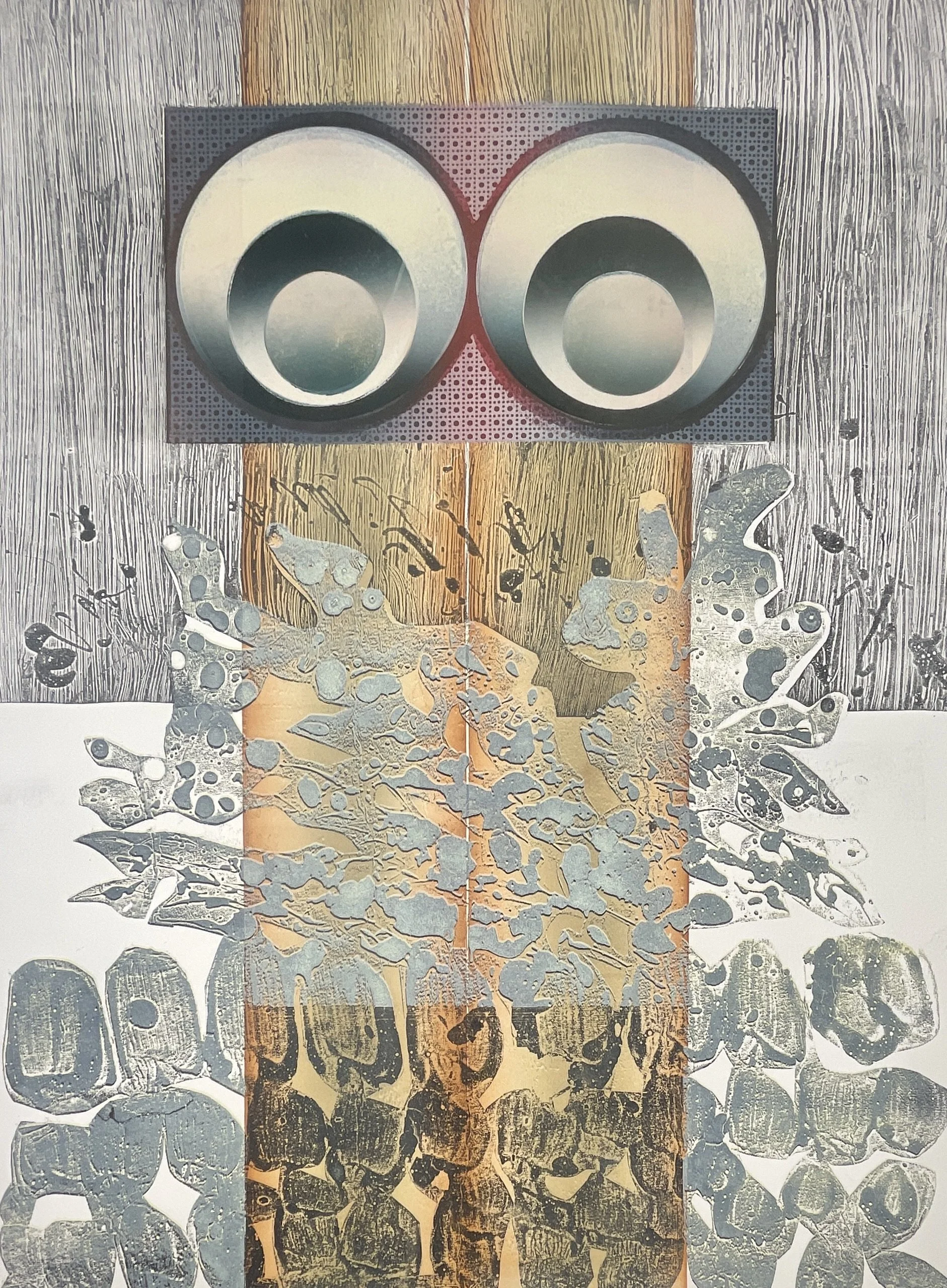
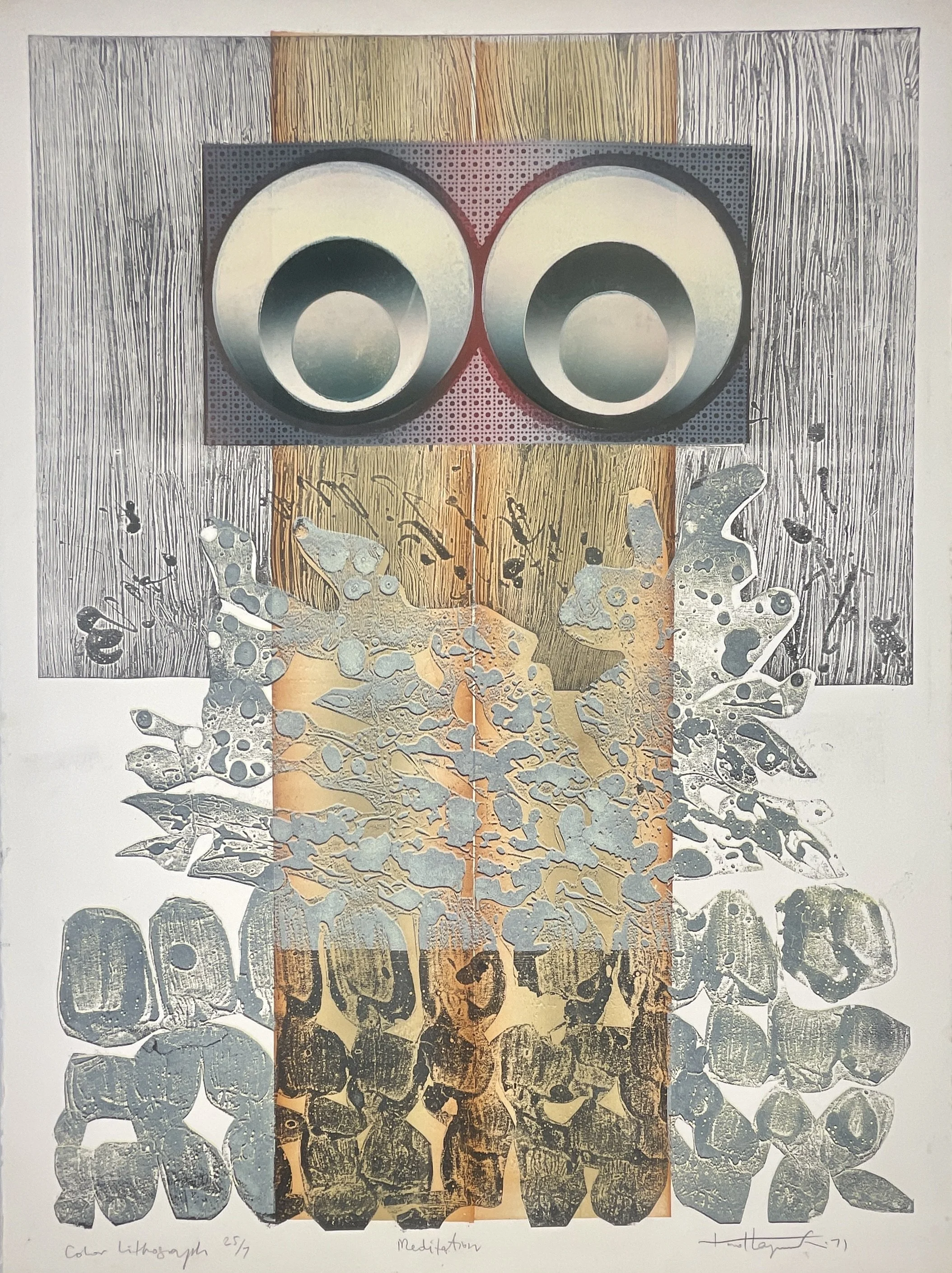
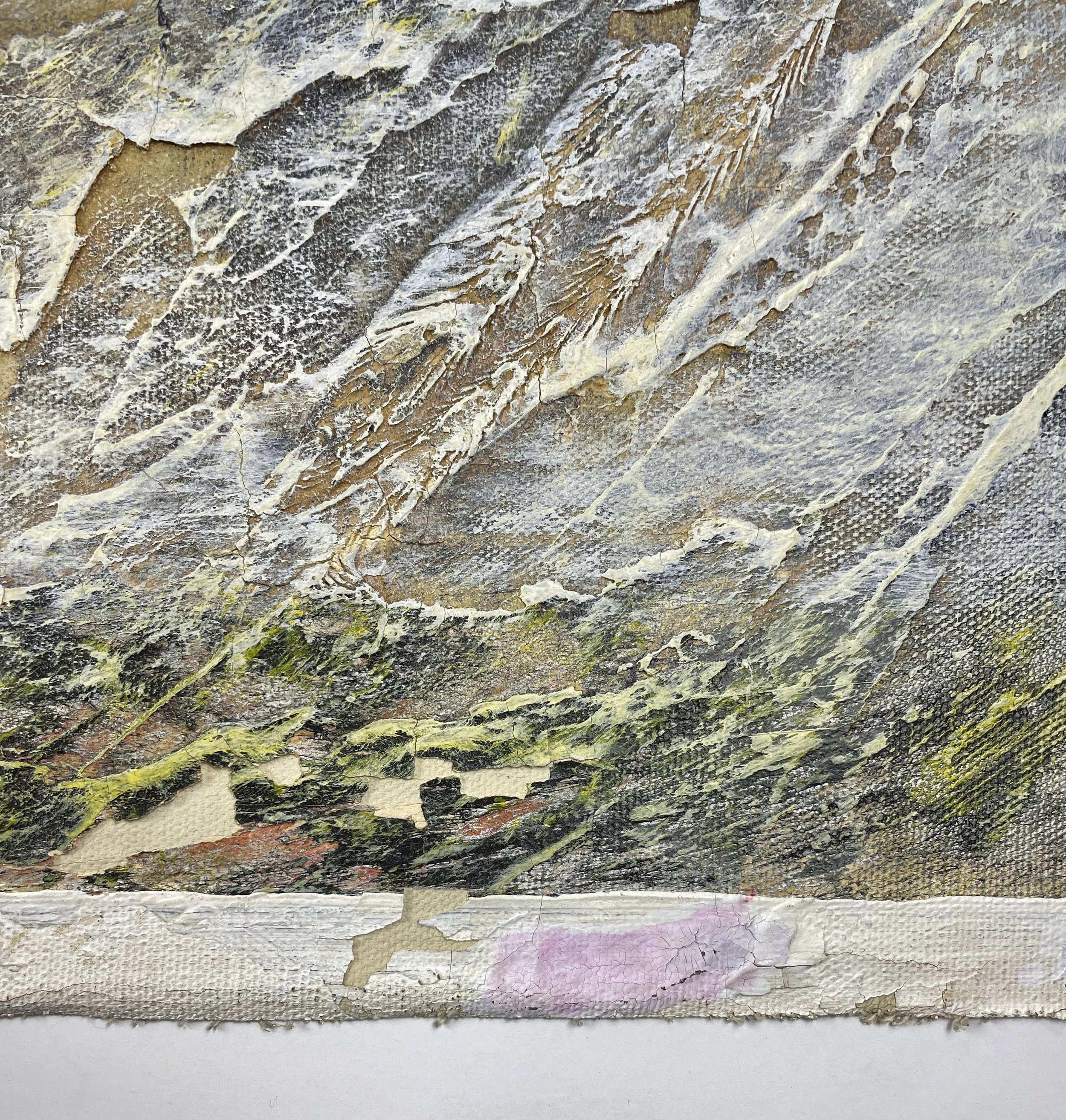
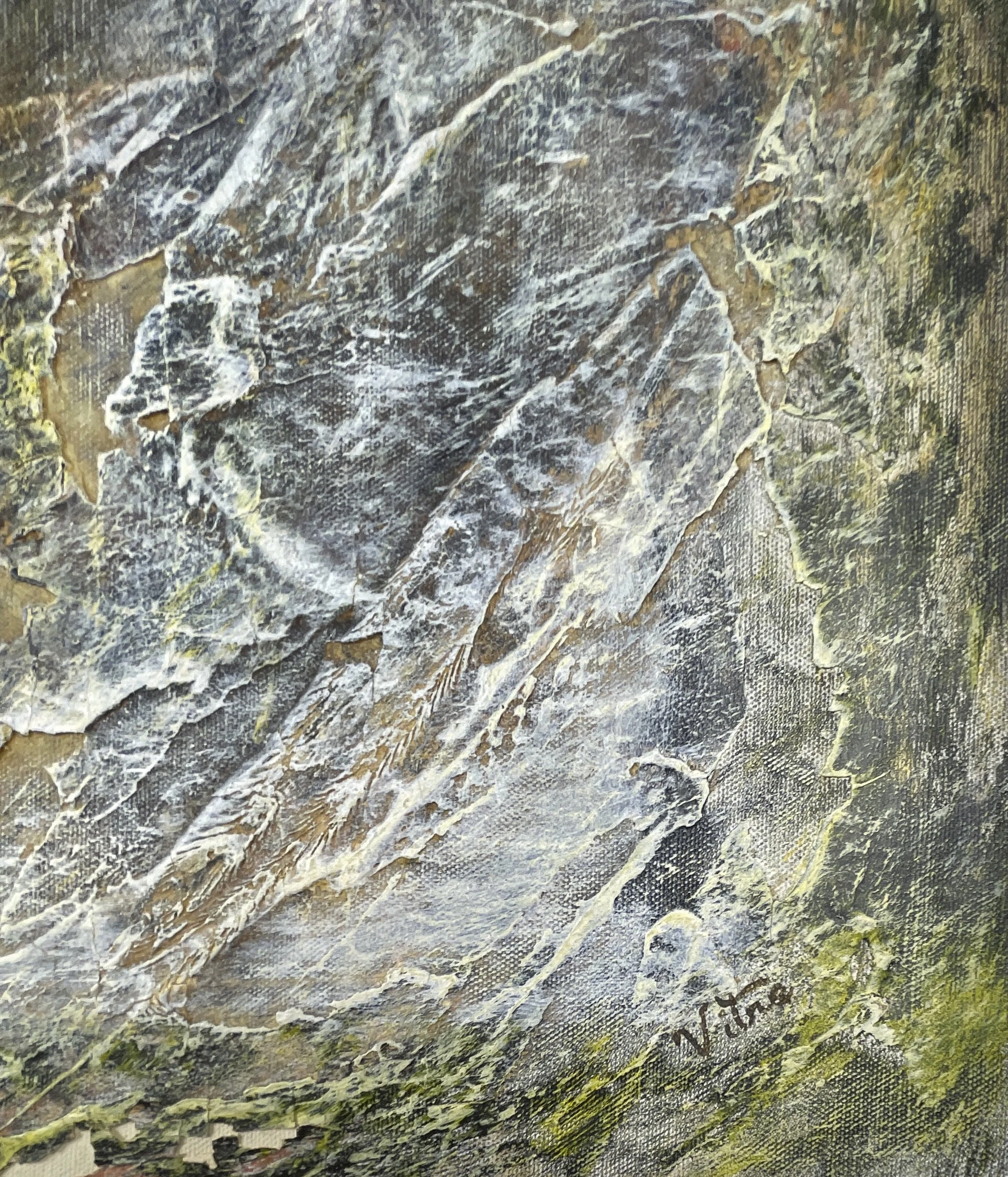
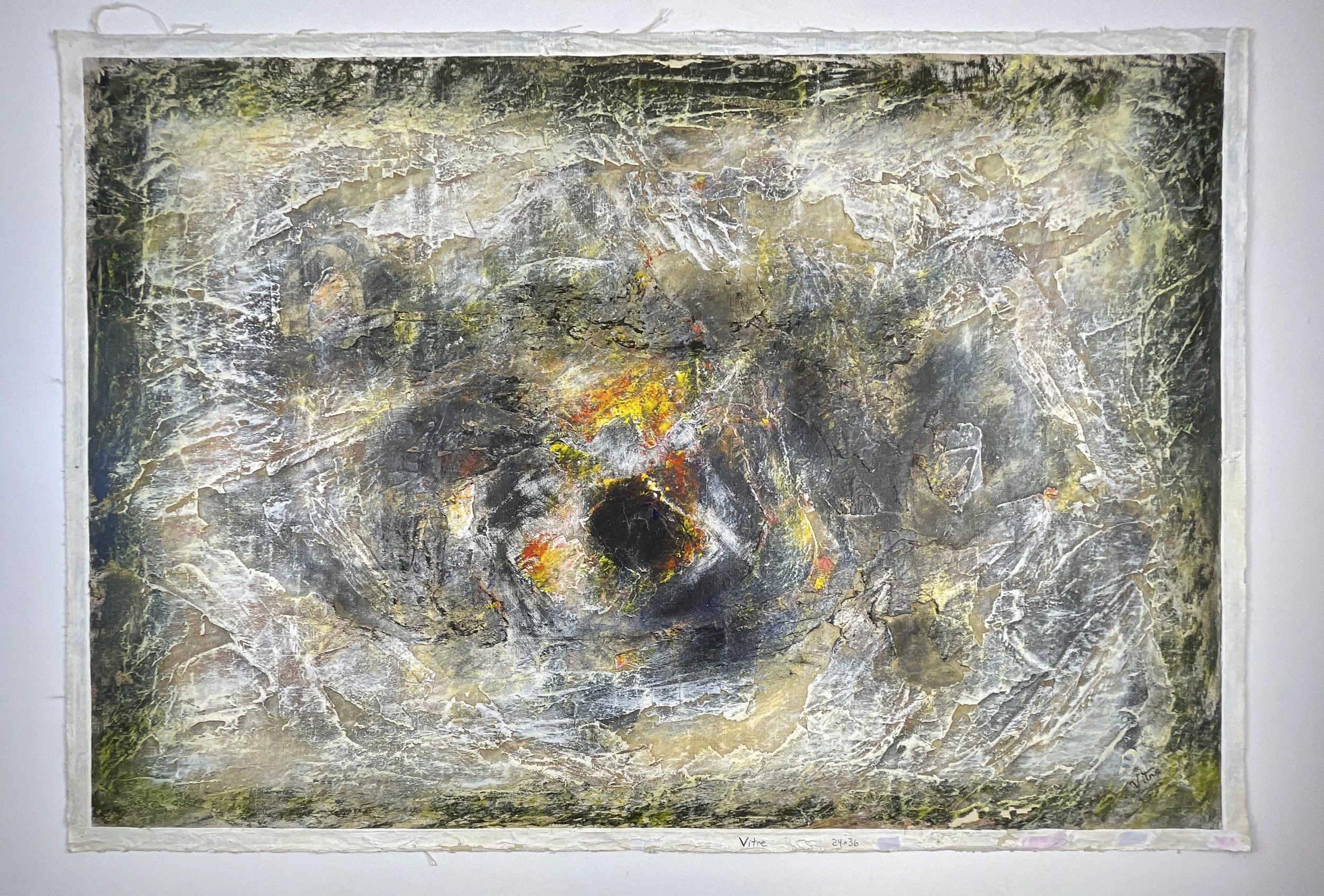
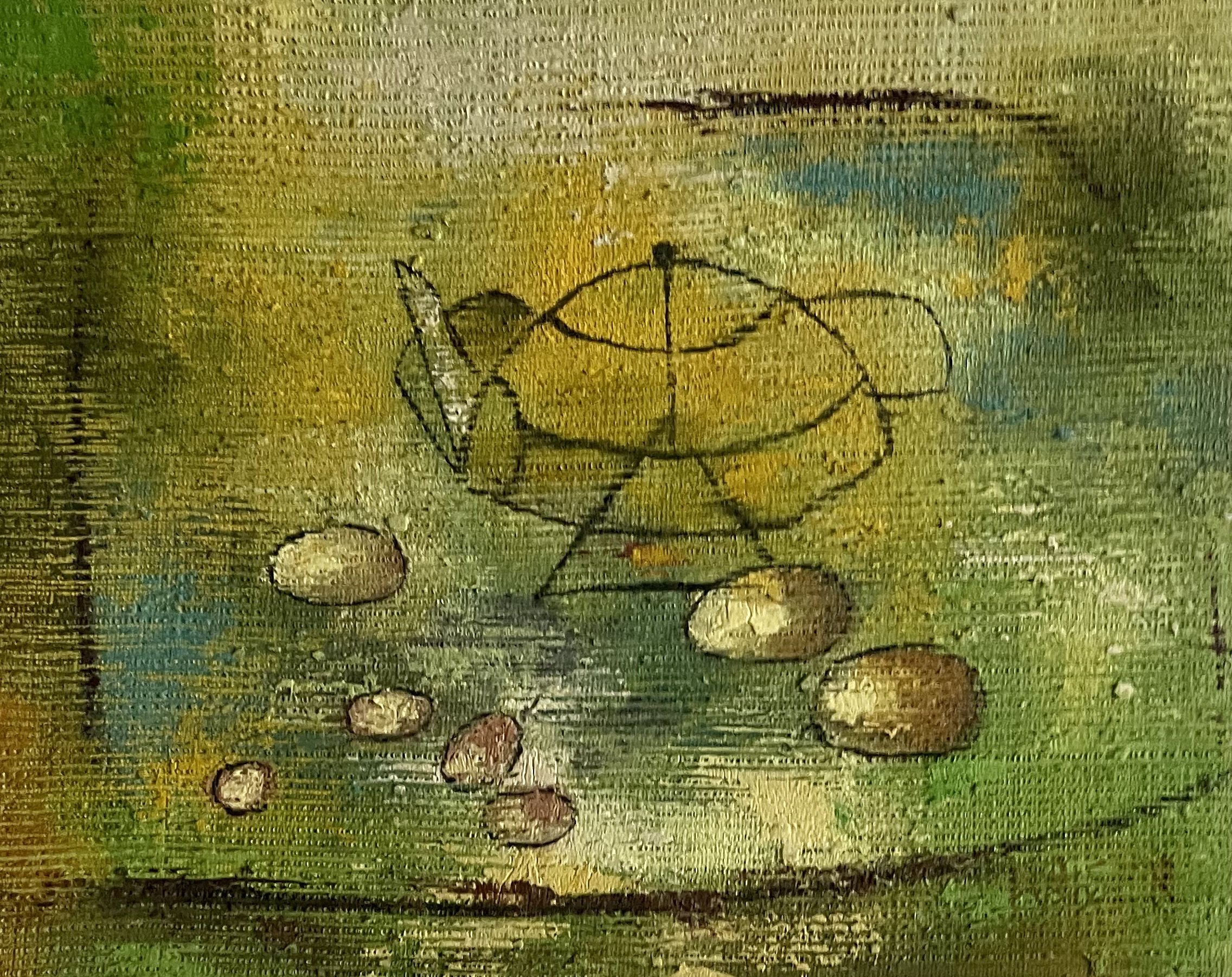
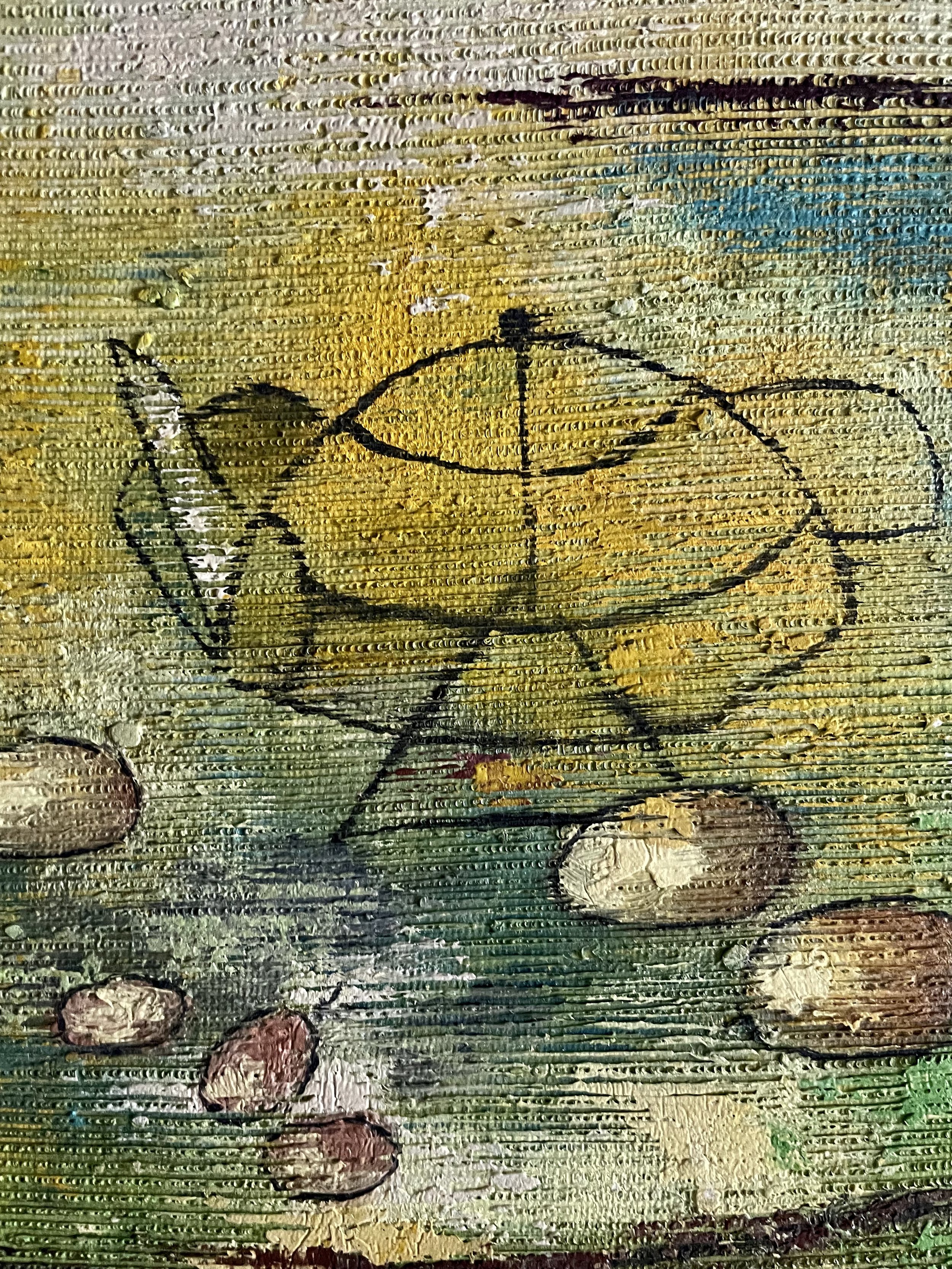
Legs (from “A New Perspective on Floors”), Allen Jones (b.1937), c.1968–1969, serigraph on paper, approx. 14 × 22 in., signed lower right, E.A. artist’s proof.
A striking Pop Art serigraph by celebrated British artist Allen Jones, whose provocative imagery and bold graphic language helped define the visual culture of Swinging London. This artist’s proof relates to Jones’ famous “Legs” motif from the late 1960s, a period in which he explored fetishized imagery, graphic design aesthetics, and sculptural multiples that blurred the line between painting, printmaking, and object.
Artwork Description
This striking Pop Art serigraph belongs to the celebrated “Legs” imagery developed by Allen Jones during the late 1960s, a period that marked the height of the British Pop movement and the moment when Jones established his distinctive visual language. In the present composition, a stylized female figure appears dramatically framed against a bold geometric form rendered in saturated orange and green. The figure’s theatrical expression, elongated arm clad in a black glove, and sharply modeled highlights evoke the visual conventions of fashion photography, advertising illustration, and popular magazines—sources Jones frequently mined for imagery.
The figure’s pose, with extended gloved arm and exaggerated expression, evokes the visual language of advertising, fashion photography, and fetish magazines—sources Jones openly acknowledged as inspiration. The hard-edged color planes and sharply defined contours demonstrate the technical qualities of screenprinting, where layered inks create dense, opaque fields of color with crisp boundaries.
The composition demonstrates the graphic clarity and chromatic intensity associated with screenprinting. Layers of opaque ink create flat, luminous color fields with crisp edges, allowing the stylized figure to emerge from the simplified background with striking immediacy. The dramatic palette—dominated by vibrant orange tones contrasted with cool greens and deep black—reinforces the sense of spectacle typical of late-1960s Pop Art.
The composition appears to relate to Jones’ broader graphic project “A New Perspective on Floors” (1966), which explored the leg as both sculptural form and symbolic object. In this period Jones began producing works that merged two-dimensional printmaking with industrial materials such as polystyrene and fiberglass, resulting in editioned multiples that challenged traditional distinctions between painting, print, and sculpture.
Jones’ “Legs” motif emerged from his exploration of the female body as both image and symbol within consumer culture. Rather than presenting traditional figuration, Jones isolates fragments of gesture, costume, and pose drawn from mass media sources, transforming them into graphic elements that operate simultaneously as figure, object, and sign. This approach aligns his work with the broader Pop Art project of translating imagery from commercial culture into high art.
The present example is an E.A. (épreuve d’artiste / artist’s proof), indicating it was printed outside the numbered edition for the artist’s archive or for special distribution. The sheet bears Jones’ signature at lower right and retains the bold chromatic palette and stylized eroticism that made his work both controversial and iconic. Works such as this represent Jones’ transition from traditional painting toward the hybrid territory between printmaking, sculpture, and conceptual multiples that defined his late-1960s practice.
Artist Biography
Allen Jones (b. 1937, Southampton, England) is one of the most influential figures associated with British Pop Art. Emerging during the early 1960s alongside artists such as David Hockney, Peter Blake, and Richard Hamilton, Jones developed a visual language that fused commercial imagery, erotic symbolism, and sculptural experimentation.
Jones studied at Hornsey College of Art and later at the Royal College of Art in London, where a generation of artists reshaped British art by incorporating imagery drawn from popular culture, advertising, cinema, and fashion. While many of his contemporaries focused on consumer goods or celebrity imagery, Jones turned toward the human figure, particularly the female form, which he transformed into stylized objects within highly graphic compositions.
By the mid-1960s Jones had gained international recognition. His works were exhibited widely across Europe and the United States, including major exhibitions in London, Liverpool, San Francisco, Dallas, Santa Barbara, Chicago, Los Angeles, The Hague, and Düsseldorf. His work entered the collections of major institutions such as the Museum of Modern Art in New York, the Philadelphia Museum of Art, the Pasadena Art Museum, the Chicago Art Institute, the Victoria and Albert Museum in London, and the French government collections in Paris.
A pivotal moment in Jones’ career came in the late 1960s when he began producing sculptural works and multiples that merged Pop Art imagery with furniture and fetishized forms. His notorious sculptures such as “Chair,” “Table,” and “Hatstand” (1969) depicted stylized female figures transformed into functional furniture objects. While controversial, these works cemented his reputation as one of the most provocative artists of the Pop generation.
Parallel to his sculptural practice, Jones maintained an extensive career in printmaking. Screenprints and lithographs allowed him to explore the graphic clarity and saturated color that define his aesthetic. His prints often incorporate bold silhouettes, theatrical lighting effects, and exaggerated poses drawn from fashion illustration, cinema stills, and advertising imagery.
During the 1970s and 1980s Jones expanded his practice into painting, drawing, and large-scale sculpture, while continuing to exhibit internationally. His work has appeared in major museums including Tate Britain, the Museum of Modern Art, the Guggenheim Museum, and the National Museum of Modern Art in Tokyo. Retrospectives and scholarly studies have examined the complex interplay between eroticism, consumer culture, and gender representation in his work.
By the early twenty-first century, Jones’ influence on contemporary art had become widely acknowledged. Artists exploring pop iconography, media imagery, and provocative figuration often cite his work as a precursor. His prints and sculptures remain highly sought after by collectors, particularly works from the late 1960s Pop Art period when his imagery was at its most experimental and culturally resonant.
As of 2026, Allen Jones continues to be regarded as a pivotal figure in the history of British Pop Art. His work stands at the intersection of painting, design, sculpture, and printmaking, capturing the energy and contradictions of late-twentieth-century visual culture.
Allen Jones (b.1937)
Legs (Pop Art motif), c.1968–69
Serigraph on paper
Signed lower right
Artist’s Proof (E.A.)
Sheet approx. 14 × 22 in.
British Pop Art print related to the “Legs” series.
Certificate of Authentication
This certifies that the artwork titled Legs (from “A New Perspective on Floors”) by Allen Jones (b.1937) is an original serigraph on paper produced circa 1968–1969.
The work is signed by the artist and marked E.A. indicating an artist’s proof outside the numbered edition. Based on stylistic characteristics and supporting documentation, the print relates to the celebrated “Legs” imagery associated with Jones’ Pop Art period and his sculptural multiples of the late 1960s.
Medium: Serigraph (screenprint) on paper
Dimensions: approximately 14 × 22 inches
Signature: signed lower right
Edition: E.A. (artist’s proof)
Provenance: Mitch Morse Gallery; Artfind Gallery, Washington DC.
Condition
Very good vintage condition.
Sheet retains strong color saturation and clean margins. Minor handling and age-related toning visible on verso consistent with works of this period. No significant tears or restoration observed.
Provenance
Mitch Morse Gallery, New York / international acquisitions
Private collection distribution via Mitch Morse Gallery
Artfind Gallery, Washington DC (current owner)
Citations
Tate Gallery artist records
Museum of Modern Art artist files
Victoria & Albert Museum Pop Art archives
Art Institute of Chicago collection records
British Pop Art scholarship and exhibition catalogs.
Why this image is tied to Jones’ most controversial work
Allen Jones’ late-1960s “Legs” imagery sits directly in the same conceptual lane as the works that made him a lightning rod: his 1969 “furniture” sculptures commonly known as Chair, Table, and Hatstand (sometimes discussed together as a group even though they were not necessarily conceived as a single set). These pieces depict fetish-styled women transformed into functional furniture, and they have provoked intense debate for decades about objectification, misogyny, and the boundary between satire and complicity.
Your print is relevant because the “Legs” motif and related series from this period helped establish the visual vocabulary Jones then pushed into three-dimensional form: stylized erotic display, commercial polish, and the reduction of the body into a graphic “device” (his term) that can function as an image-object. In other words, the print doesn’t just look like the era—it connects to the same set of ideas that culminated in the most debated works of his career.
What, specifically, was controversial about the 1969 sculptures
They triggered public and feminist protest because the female figure is literally instrumentalized—made into a chair, table, or hatstand—presented with fetish styling (boots, corsets, gloves) and posed in overtly submissive configurations. Critics argued this aestheticized women’s objectification; defenders argued Jones was holding up a mirror to the culture and its commodification of desire. The debate has persisted across decades, including renewed discussion in recent years.
“Produced during Jones’ late-1960s Pop Art peak, this artist’s proof relates to the period in which his ‘Legs’ imagery and fetish-aesthetic figuration culminated in the artist’s most debated sculptural works of 1969.”
Legs (from “A New Perspective on Floors”), Allen Jones (b.1937), c.1968–1969, serigraph on paper, approx. 14 × 22 in., signed lower right, E.A. artist’s proof.
A striking Pop Art serigraph by celebrated British artist Allen Jones, whose provocative imagery and bold graphic language helped define the visual culture of Swinging London. This artist’s proof relates to Jones’ famous “Legs” motif from the late 1960s, a period in which he explored fetishized imagery, graphic design aesthetics, and sculptural multiples that blurred the line between painting, printmaking, and object.
Artwork Description
This striking Pop Art serigraph belongs to the celebrated “Legs” imagery developed by Allen Jones during the late 1960s, a period that marked the height of the British Pop movement and the moment when Jones established his distinctive visual language. In the present composition, a stylized female figure appears dramatically framed against a bold geometric form rendered in saturated orange and green. The figure’s theatrical expression, elongated arm clad in a black glove, and sharply modeled highlights evoke the visual conventions of fashion photography, advertising illustration, and popular magazines—sources Jones frequently mined for imagery.
The figure’s pose, with extended gloved arm and exaggerated expression, evokes the visual language of advertising, fashion photography, and fetish magazines—sources Jones openly acknowledged as inspiration. The hard-edged color planes and sharply defined contours demonstrate the technical qualities of screenprinting, where layered inks create dense, opaque fields of color with crisp boundaries.
The composition demonstrates the graphic clarity and chromatic intensity associated with screenprinting. Layers of opaque ink create flat, luminous color fields with crisp edges, allowing the stylized figure to emerge from the simplified background with striking immediacy. The dramatic palette—dominated by vibrant orange tones contrasted with cool greens and deep black—reinforces the sense of spectacle typical of late-1960s Pop Art.
The composition appears to relate to Jones’ broader graphic project “A New Perspective on Floors” (1966), which explored the leg as both sculptural form and symbolic object. In this period Jones began producing works that merged two-dimensional printmaking with industrial materials such as polystyrene and fiberglass, resulting in editioned multiples that challenged traditional distinctions between painting, print, and sculpture.
Jones’ “Legs” motif emerged from his exploration of the female body as both image and symbol within consumer culture. Rather than presenting traditional figuration, Jones isolates fragments of gesture, costume, and pose drawn from mass media sources, transforming them into graphic elements that operate simultaneously as figure, object, and sign. This approach aligns his work with the broader Pop Art project of translating imagery from commercial culture into high art.
The present example is an E.A. (épreuve d’artiste / artist’s proof), indicating it was printed outside the numbered edition for the artist’s archive or for special distribution. The sheet bears Jones’ signature at lower right and retains the bold chromatic palette and stylized eroticism that made his work both controversial and iconic. Works such as this represent Jones’ transition from traditional painting toward the hybrid territory between printmaking, sculpture, and conceptual multiples that defined his late-1960s practice.
Artist Biography
Allen Jones (b. 1937, Southampton, England) is one of the most influential figures associated with British Pop Art. Emerging during the early 1960s alongside artists such as David Hockney, Peter Blake, and Richard Hamilton, Jones developed a visual language that fused commercial imagery, erotic symbolism, and sculptural experimentation.
Jones studied at Hornsey College of Art and later at the Royal College of Art in London, where a generation of artists reshaped British art by incorporating imagery drawn from popular culture, advertising, cinema, and fashion. While many of his contemporaries focused on consumer goods or celebrity imagery, Jones turned toward the human figure, particularly the female form, which he transformed into stylized objects within highly graphic compositions.
By the mid-1960s Jones had gained international recognition. His works were exhibited widely across Europe and the United States, including major exhibitions in London, Liverpool, San Francisco, Dallas, Santa Barbara, Chicago, Los Angeles, The Hague, and Düsseldorf. His work entered the collections of major institutions such as the Museum of Modern Art in New York, the Philadelphia Museum of Art, the Pasadena Art Museum, the Chicago Art Institute, the Victoria and Albert Museum in London, and the French government collections in Paris.
A pivotal moment in Jones’ career came in the late 1960s when he began producing sculptural works and multiples that merged Pop Art imagery with furniture and fetishized forms. His notorious sculptures such as “Chair,” “Table,” and “Hatstand” (1969) depicted stylized female figures transformed into functional furniture objects. While controversial, these works cemented his reputation as one of the most provocative artists of the Pop generation.
Parallel to his sculptural practice, Jones maintained an extensive career in printmaking. Screenprints and lithographs allowed him to explore the graphic clarity and saturated color that define his aesthetic. His prints often incorporate bold silhouettes, theatrical lighting effects, and exaggerated poses drawn from fashion illustration, cinema stills, and advertising imagery.
During the 1970s and 1980s Jones expanded his practice into painting, drawing, and large-scale sculpture, while continuing to exhibit internationally. His work has appeared in major museums including Tate Britain, the Museum of Modern Art, the Guggenheim Museum, and the National Museum of Modern Art in Tokyo. Retrospectives and scholarly studies have examined the complex interplay between eroticism, consumer culture, and gender representation in his work.
By the early twenty-first century, Jones’ influence on contemporary art had become widely acknowledged. Artists exploring pop iconography, media imagery, and provocative figuration often cite his work as a precursor. His prints and sculptures remain highly sought after by collectors, particularly works from the late 1960s Pop Art period when his imagery was at its most experimental and culturally resonant.
As of 2026, Allen Jones continues to be regarded as a pivotal figure in the history of British Pop Art. His work stands at the intersection of painting, design, sculpture, and printmaking, capturing the energy and contradictions of late-twentieth-century visual culture.
Allen Jones (b.1937)
Legs (Pop Art motif), c.1968–69
Serigraph on paper
Signed lower right
Artist’s Proof (E.A.)
Sheet approx. 14 × 22 in.
British Pop Art print related to the “Legs” series.
Certificate of Authentication
This certifies that the artwork titled Legs (from “A New Perspective on Floors”) by Allen Jones (b.1937) is an original serigraph on paper produced circa 1968–1969.
The work is signed by the artist and marked E.A. indicating an artist’s proof outside the numbered edition. Based on stylistic characteristics and supporting documentation, the print relates to the celebrated “Legs” imagery associated with Jones’ Pop Art period and his sculptural multiples of the late 1960s.
Medium: Serigraph (screenprint) on paper
Dimensions: approximately 14 × 22 inches
Signature: signed lower right
Edition: E.A. (artist’s proof)
Provenance: Mitch Morse Gallery; Artfind Gallery, Washington DC.
Condition
Very good vintage condition.
Sheet retains strong color saturation and clean margins. Minor handling and age-related toning visible on verso consistent with works of this period. No significant tears or restoration observed.
Provenance
Mitch Morse Gallery, New York / international acquisitions
Private collection distribution via Mitch Morse Gallery
Artfind Gallery, Washington DC (current owner)
Citations
Tate Gallery artist records
Museum of Modern Art artist files
Victoria & Albert Museum Pop Art archives
Art Institute of Chicago collection records
British Pop Art scholarship and exhibition catalogs.
Why this image is tied to Jones’ most controversial work
Allen Jones’ late-1960s “Legs” imagery sits directly in the same conceptual lane as the works that made him a lightning rod: his 1969 “furniture” sculptures commonly known as Chair, Table, and Hatstand (sometimes discussed together as a group even though they were not necessarily conceived as a single set). These pieces depict fetish-styled women transformed into functional furniture, and they have provoked intense debate for decades about objectification, misogyny, and the boundary between satire and complicity.
Your print is relevant because the “Legs” motif and related series from this period helped establish the visual vocabulary Jones then pushed into three-dimensional form: stylized erotic display, commercial polish, and the reduction of the body into a graphic “device” (his term) that can function as an image-object. In other words, the print doesn’t just look like the era—it connects to the same set of ideas that culminated in the most debated works of his career.
What, specifically, was controversial about the 1969 sculptures
They triggered public and feminist protest because the female figure is literally instrumentalized—made into a chair, table, or hatstand—presented with fetish styling (boots, corsets, gloves) and posed in overtly submissive configurations. Critics argued this aestheticized women’s objectification; defenders argued Jones was holding up a mirror to the culture and its commodification of desire. The debate has persisted across decades, including renewed discussion in recent years.
“Produced during Jones’ late-1960s Pop Art peak, this artist’s proof relates to the period in which his ‘Legs’ imagery and fetish-aesthetic figuration culminated in the artist’s most debated sculptural works of 1969.”
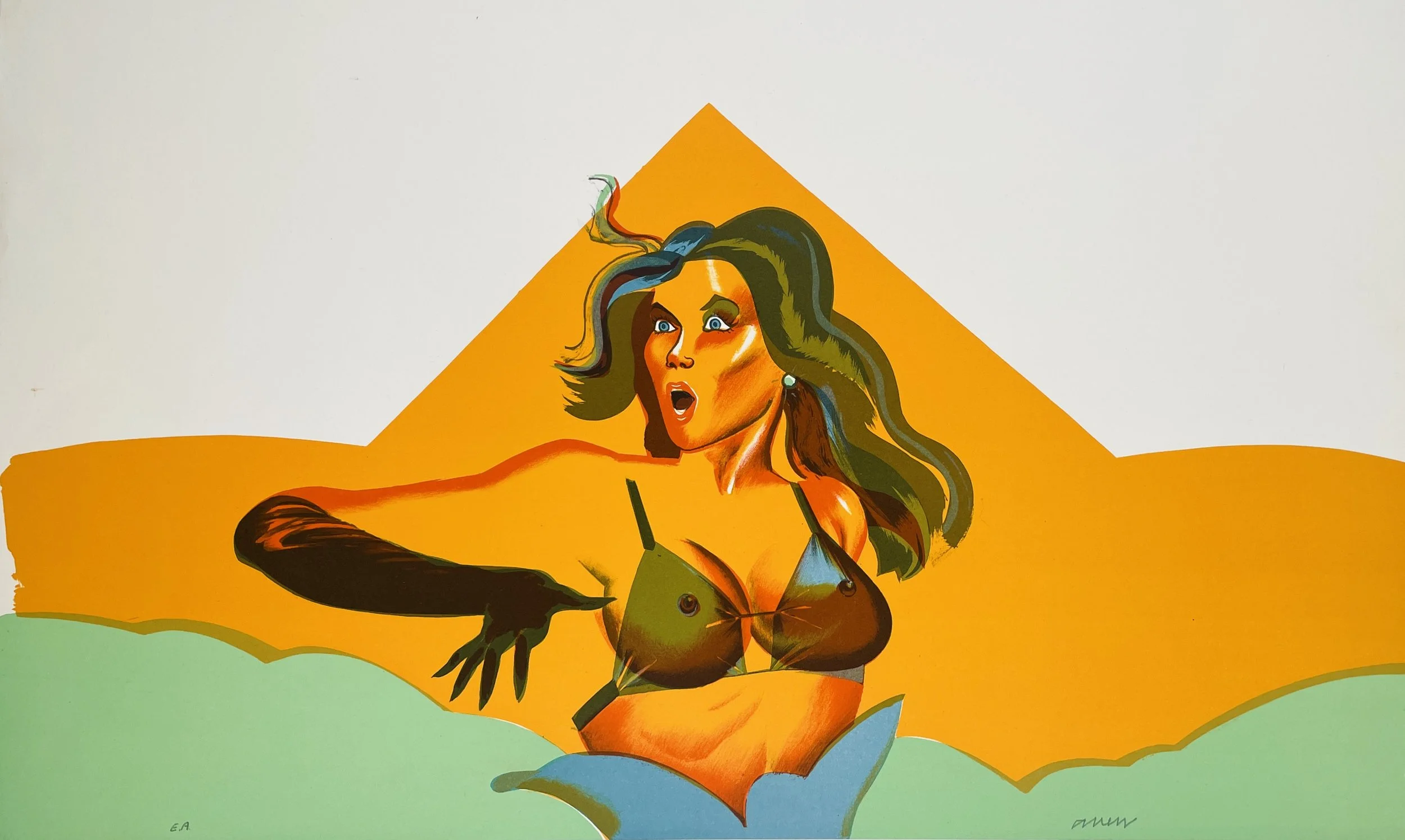 Image 1 of 5
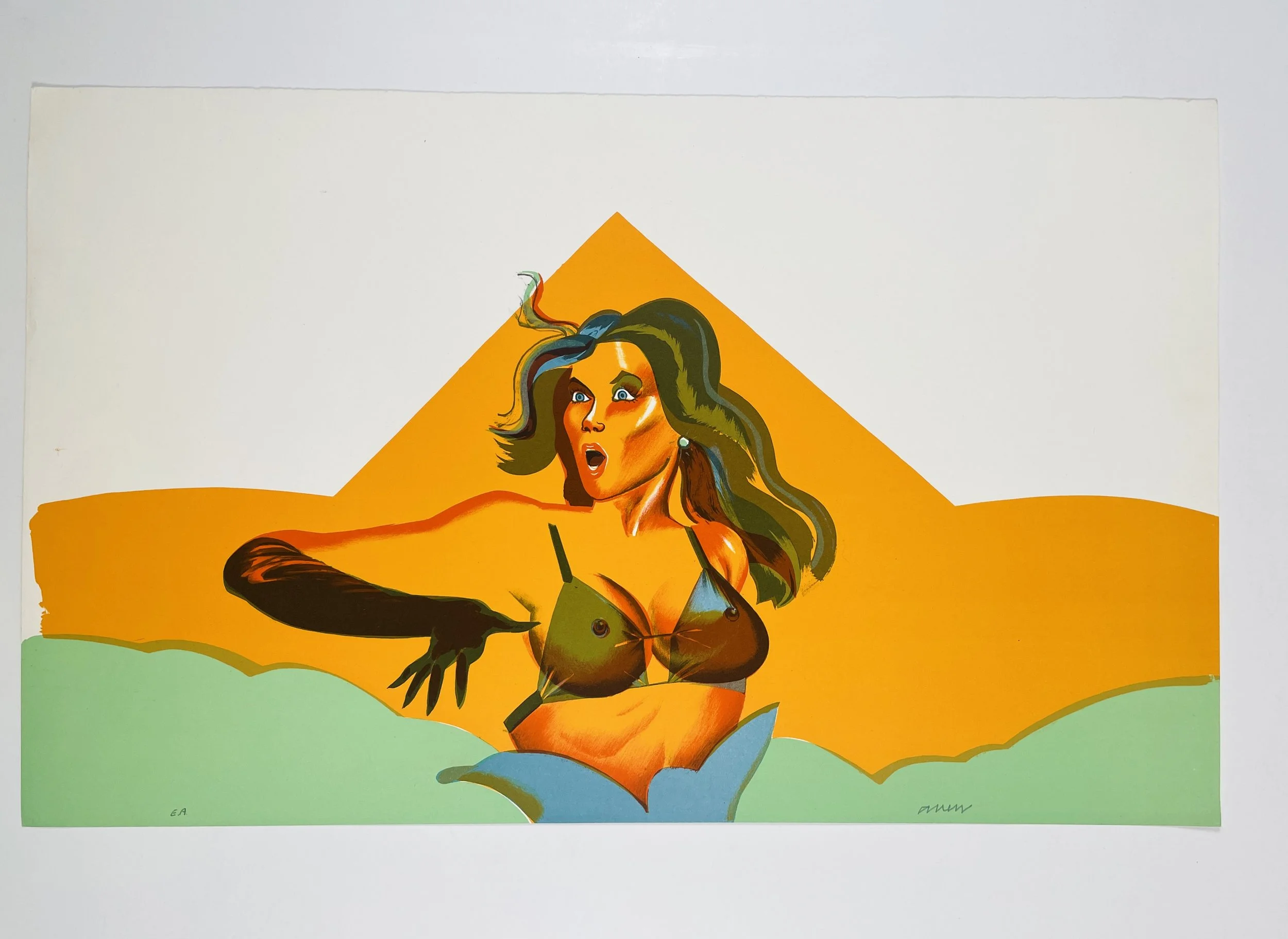 Image 2 of 5
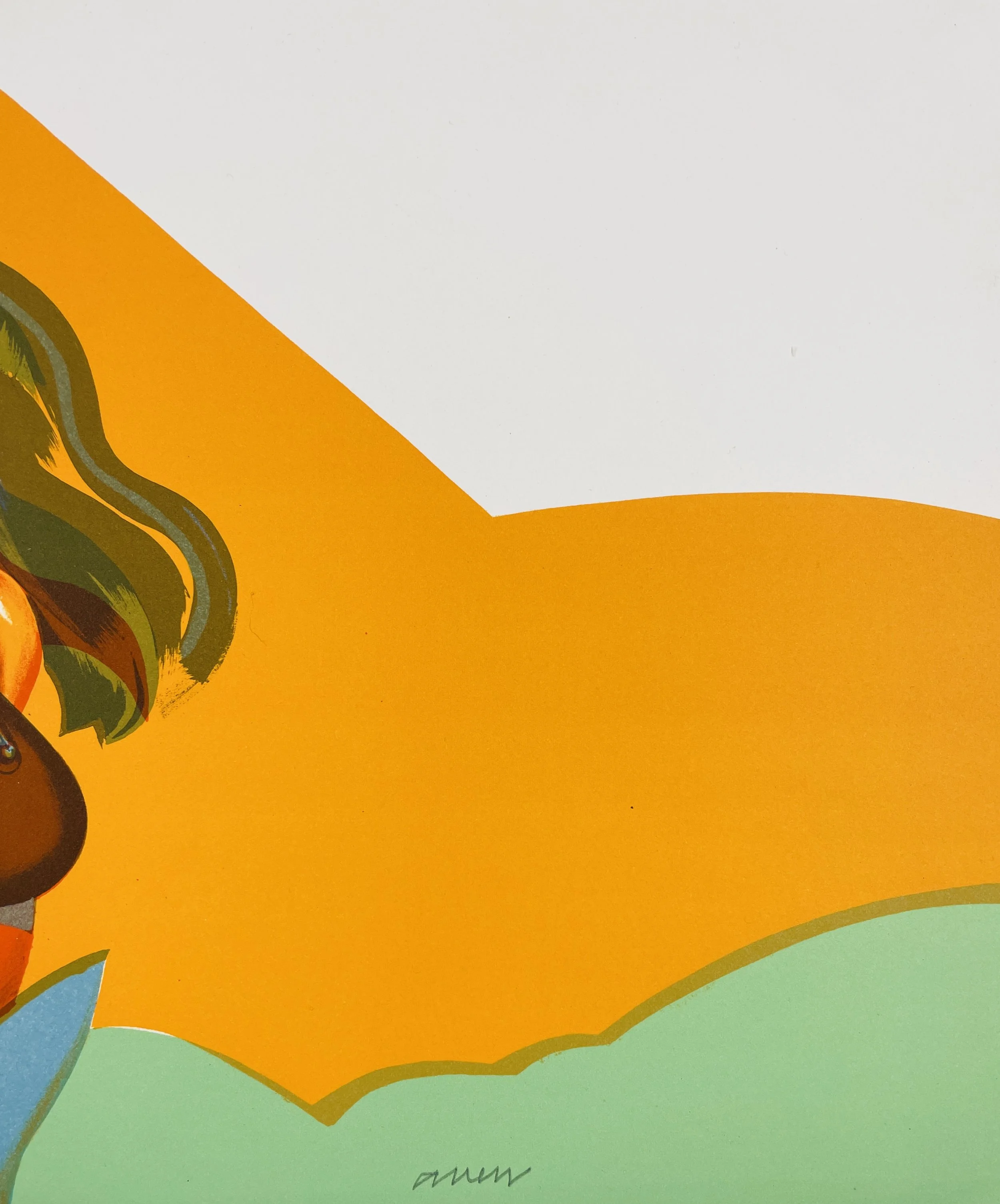 Image 3 of 5
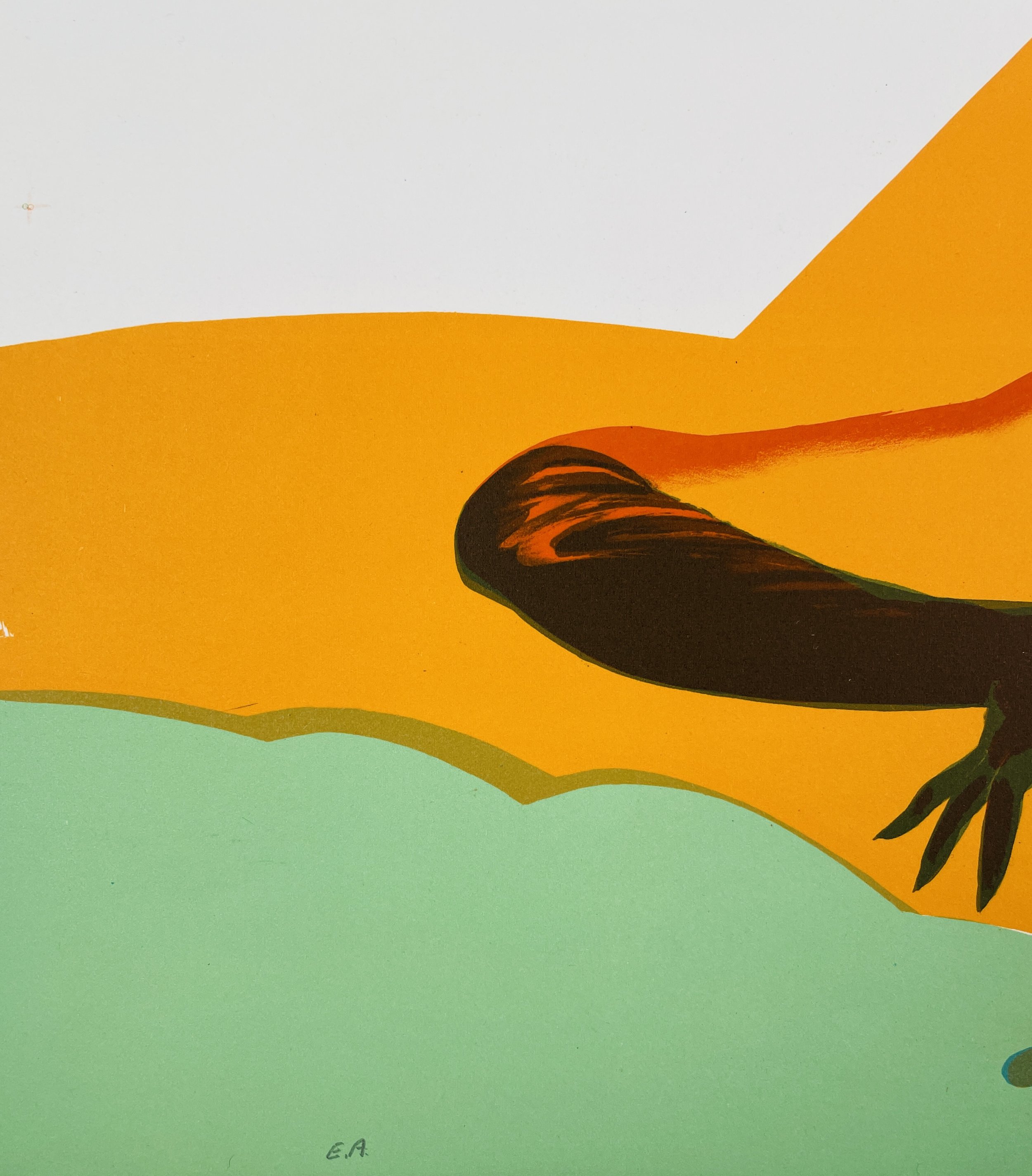 Image 4 of 5
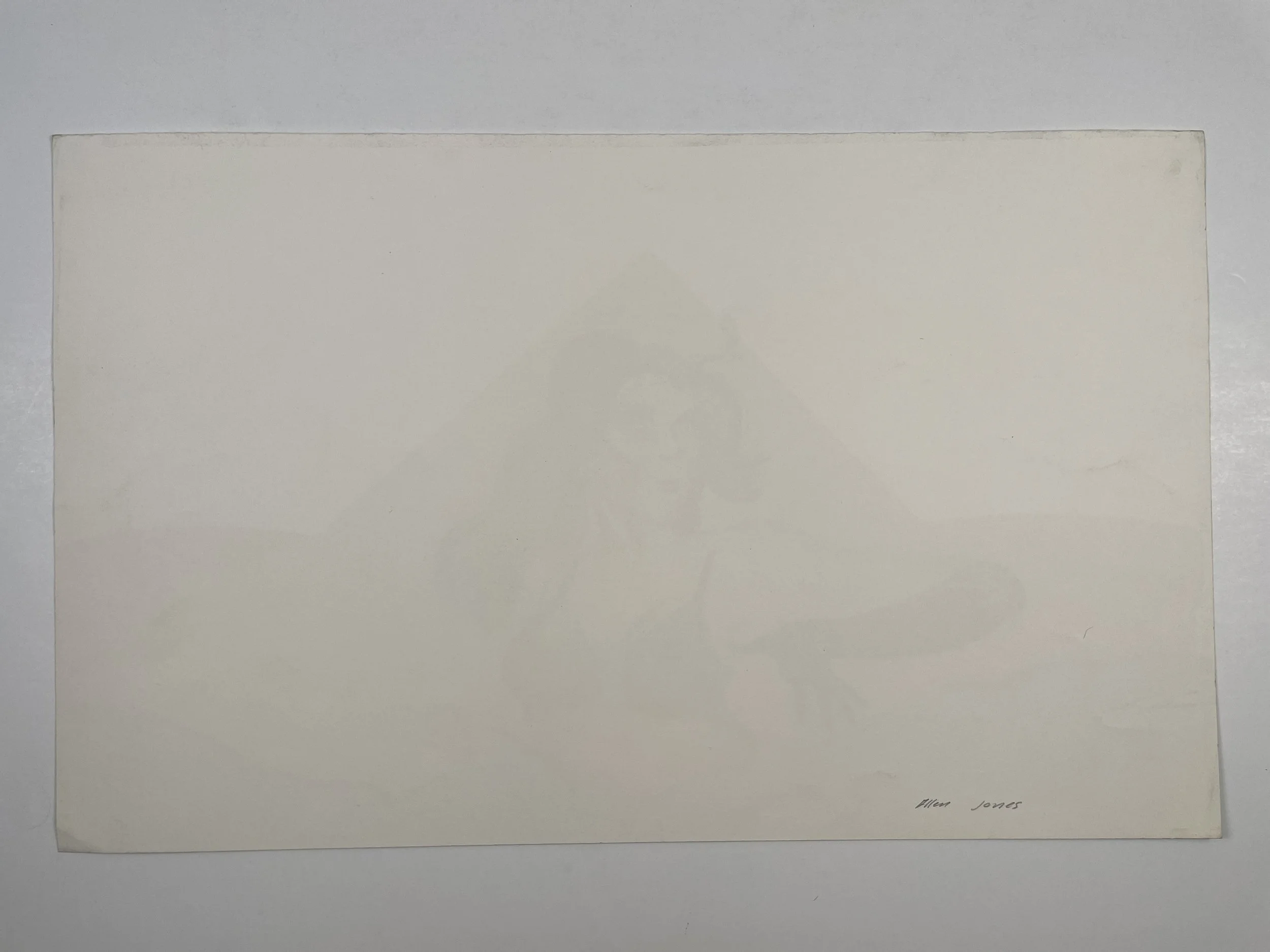 Image 5 of 5