 Image 1 of 4
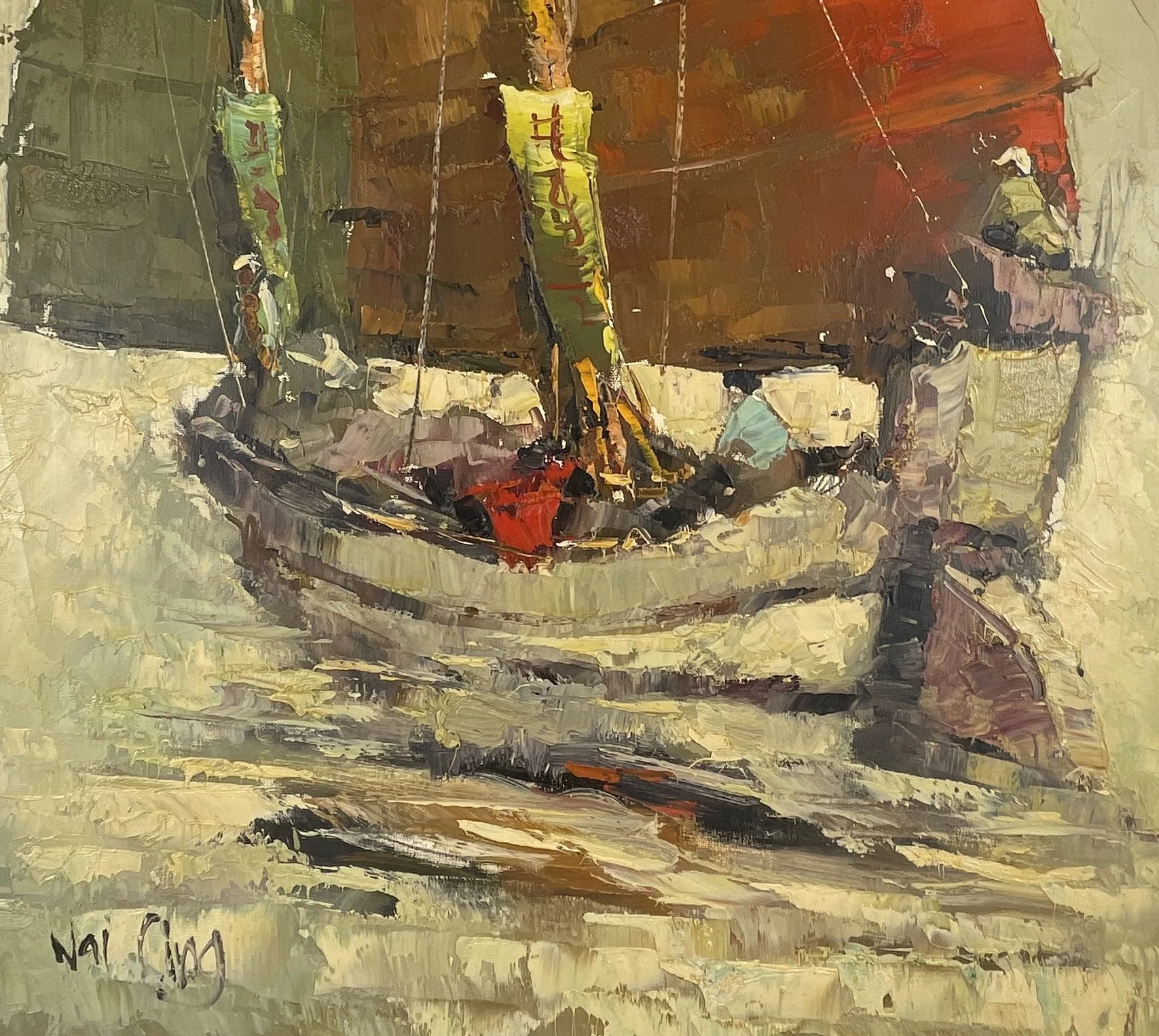 Image 2 of 4
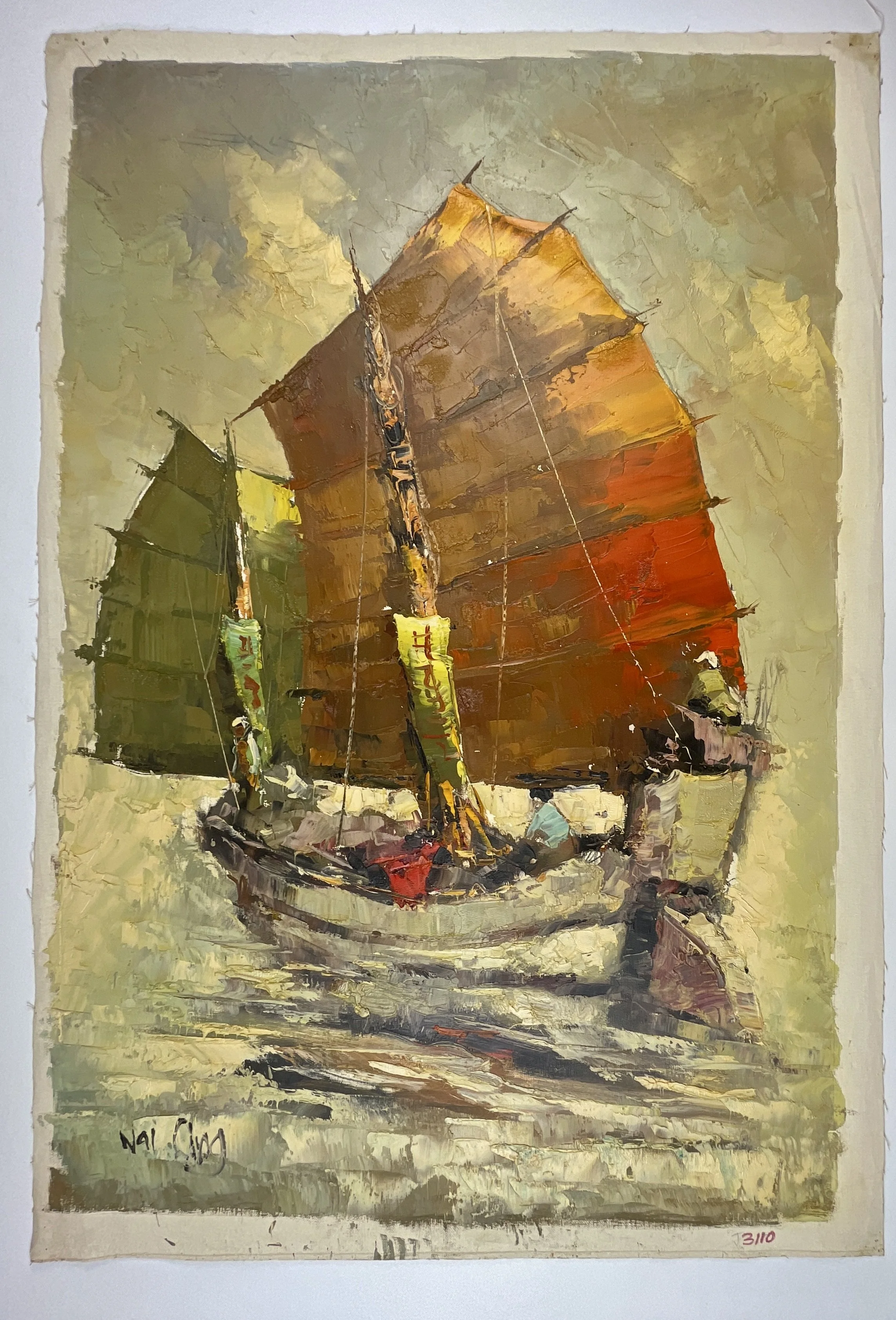 Image 3 of 4
 Image 4 of 4
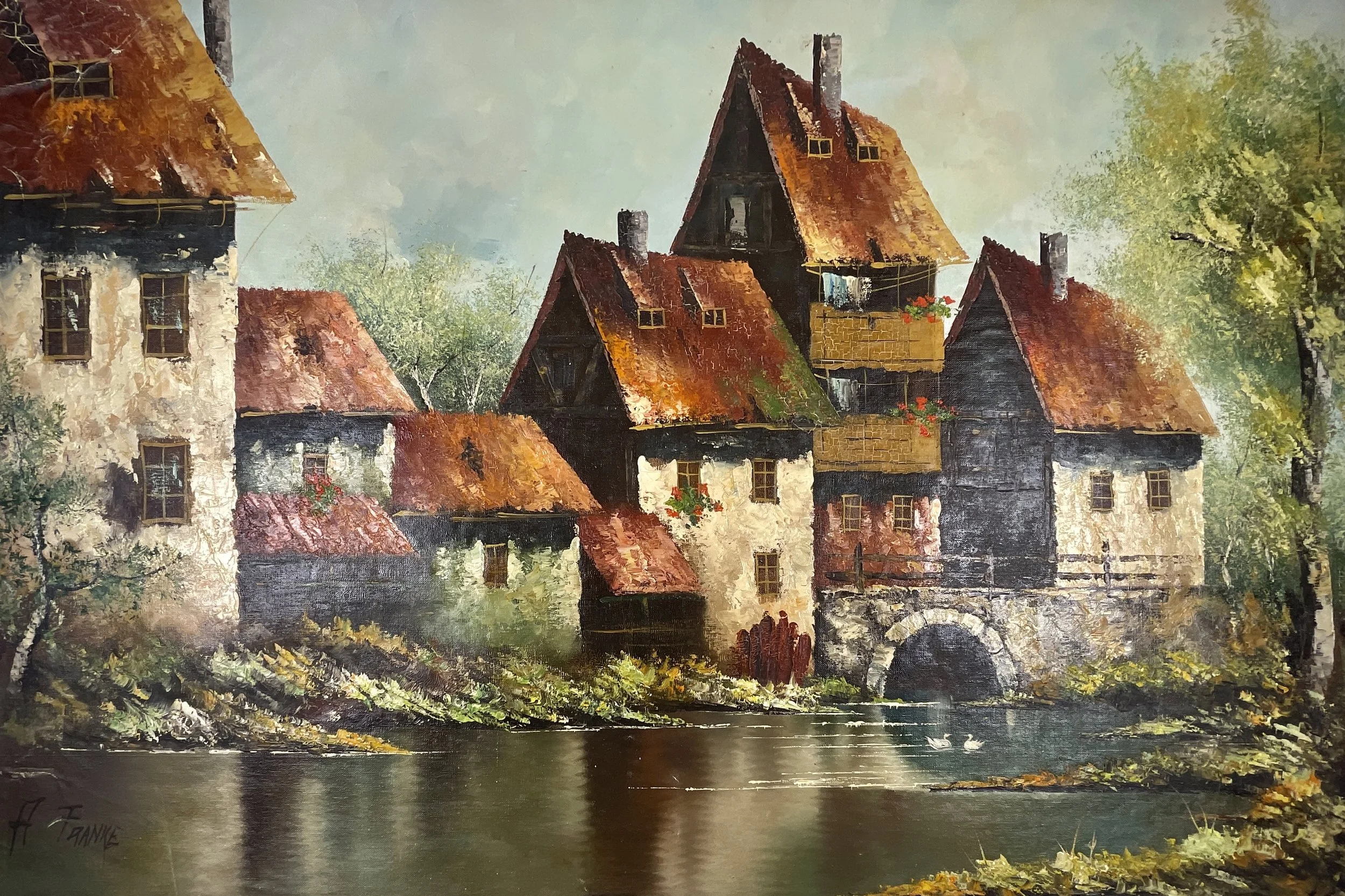
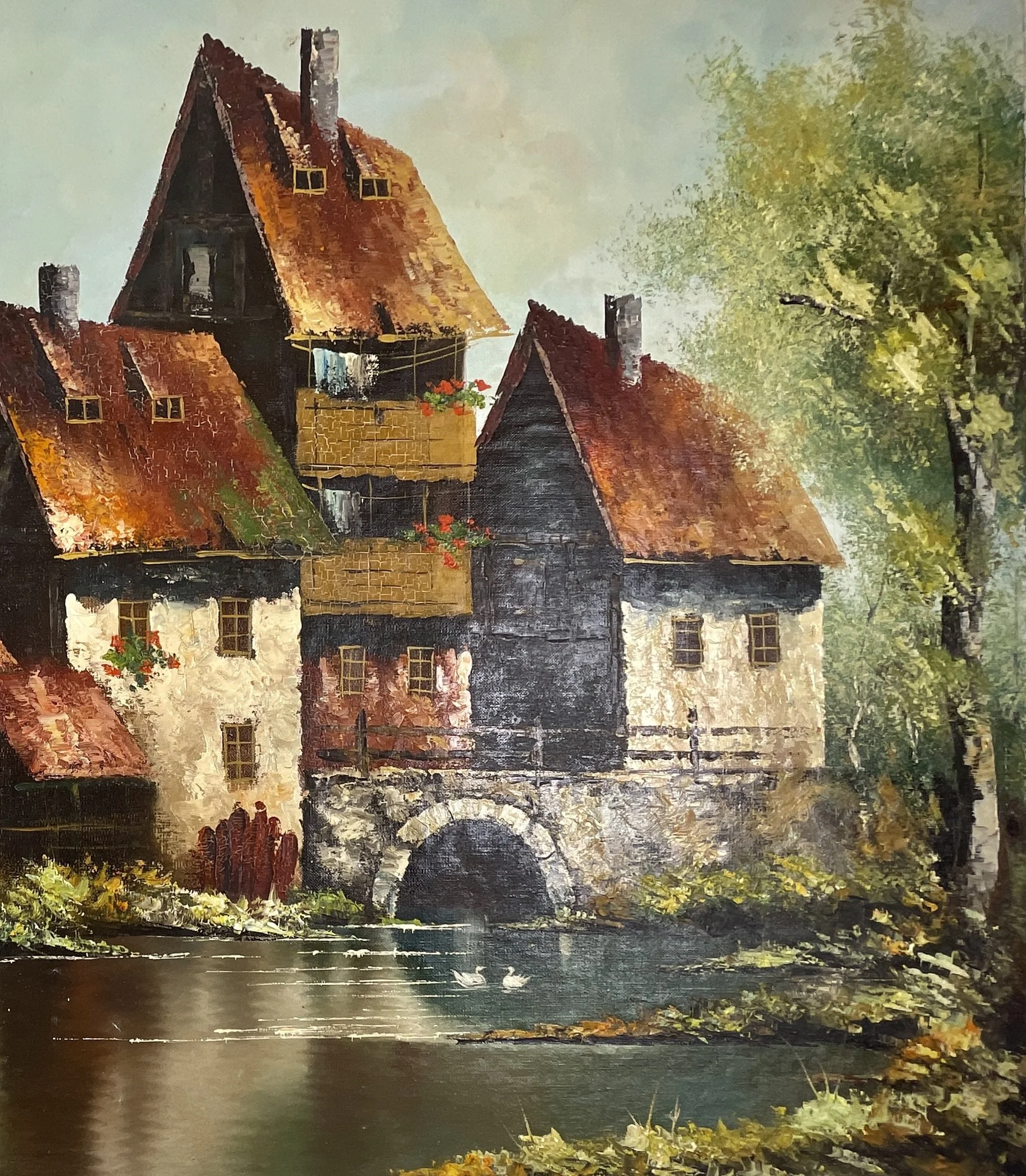
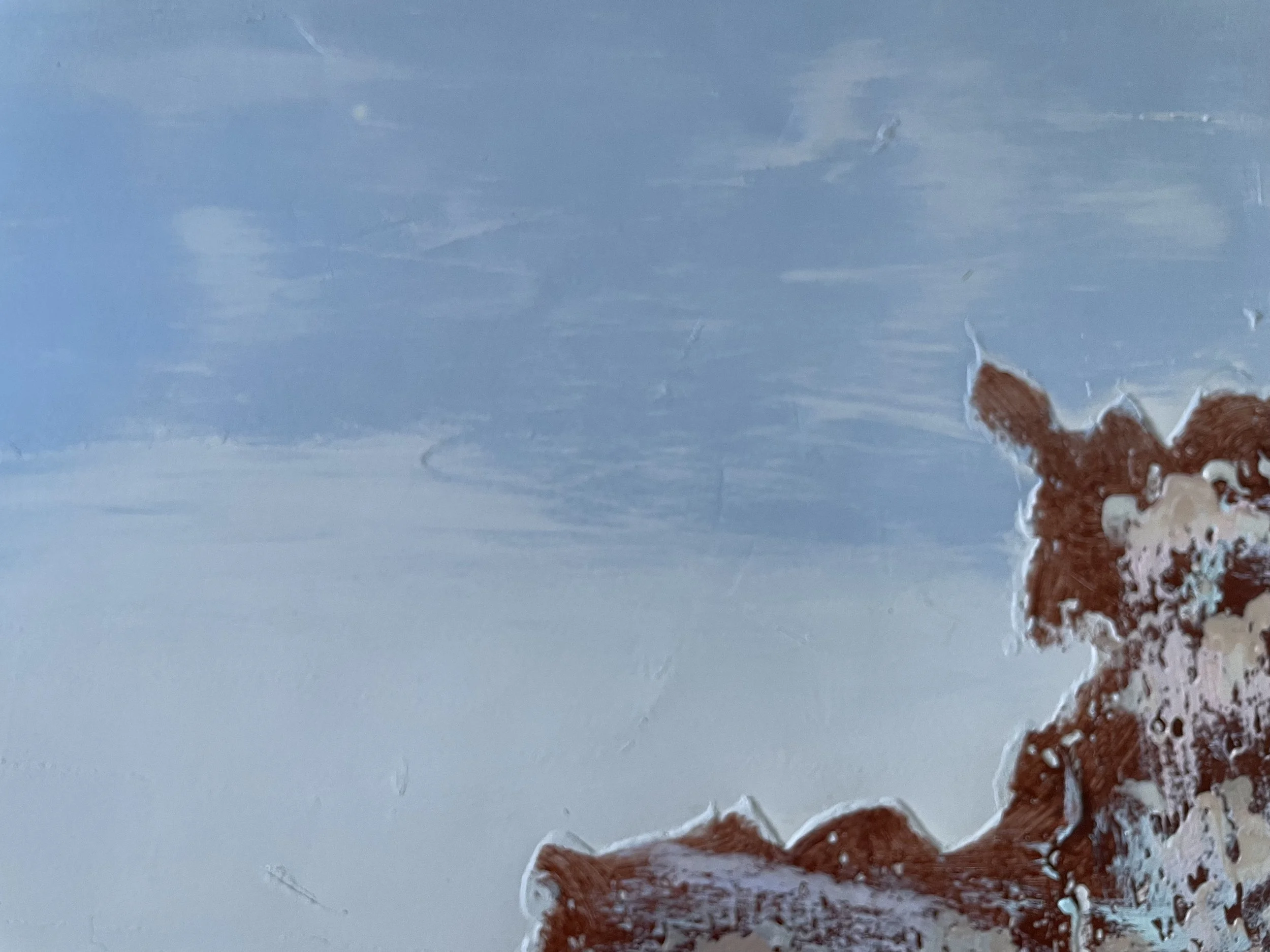
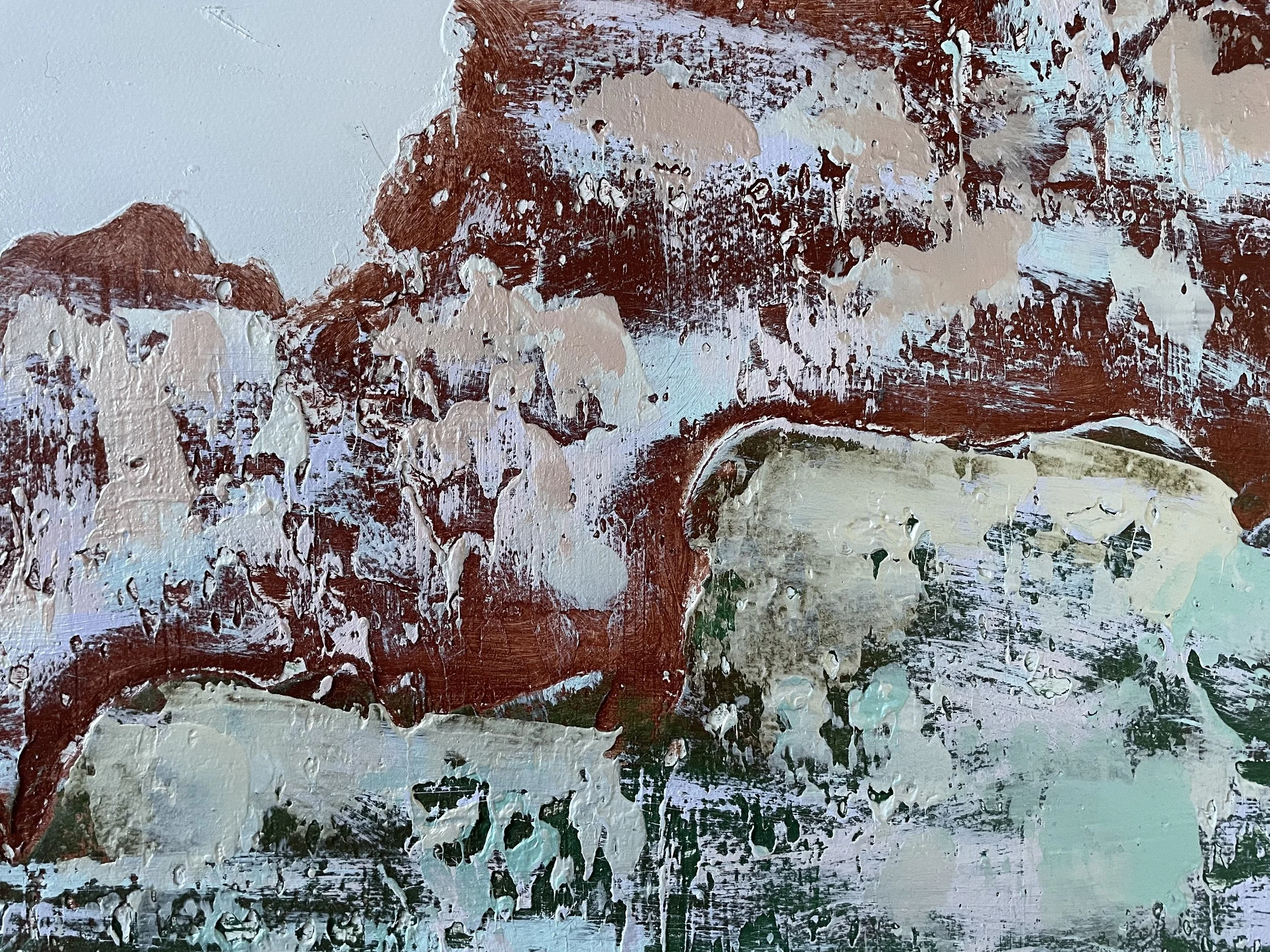
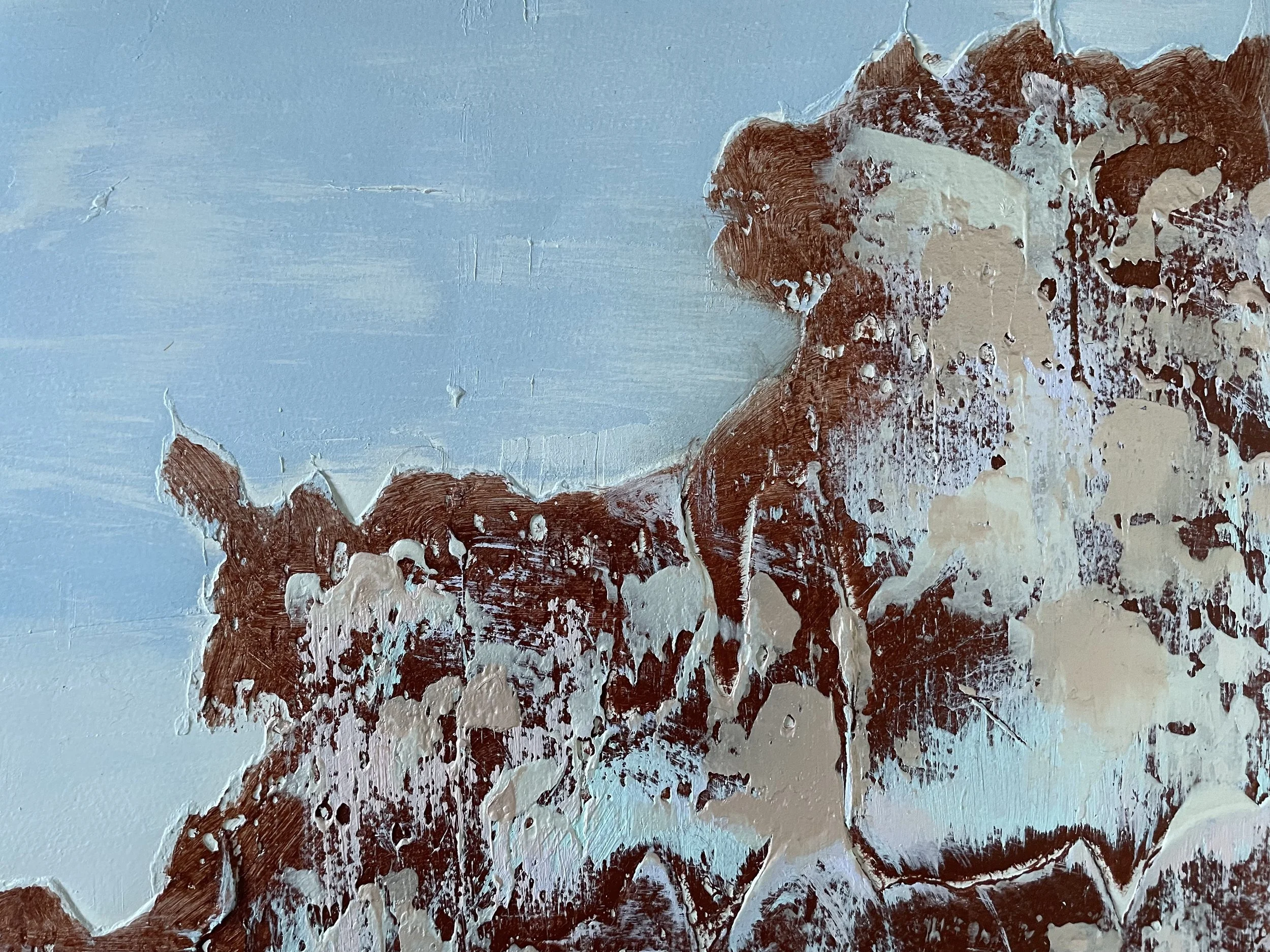
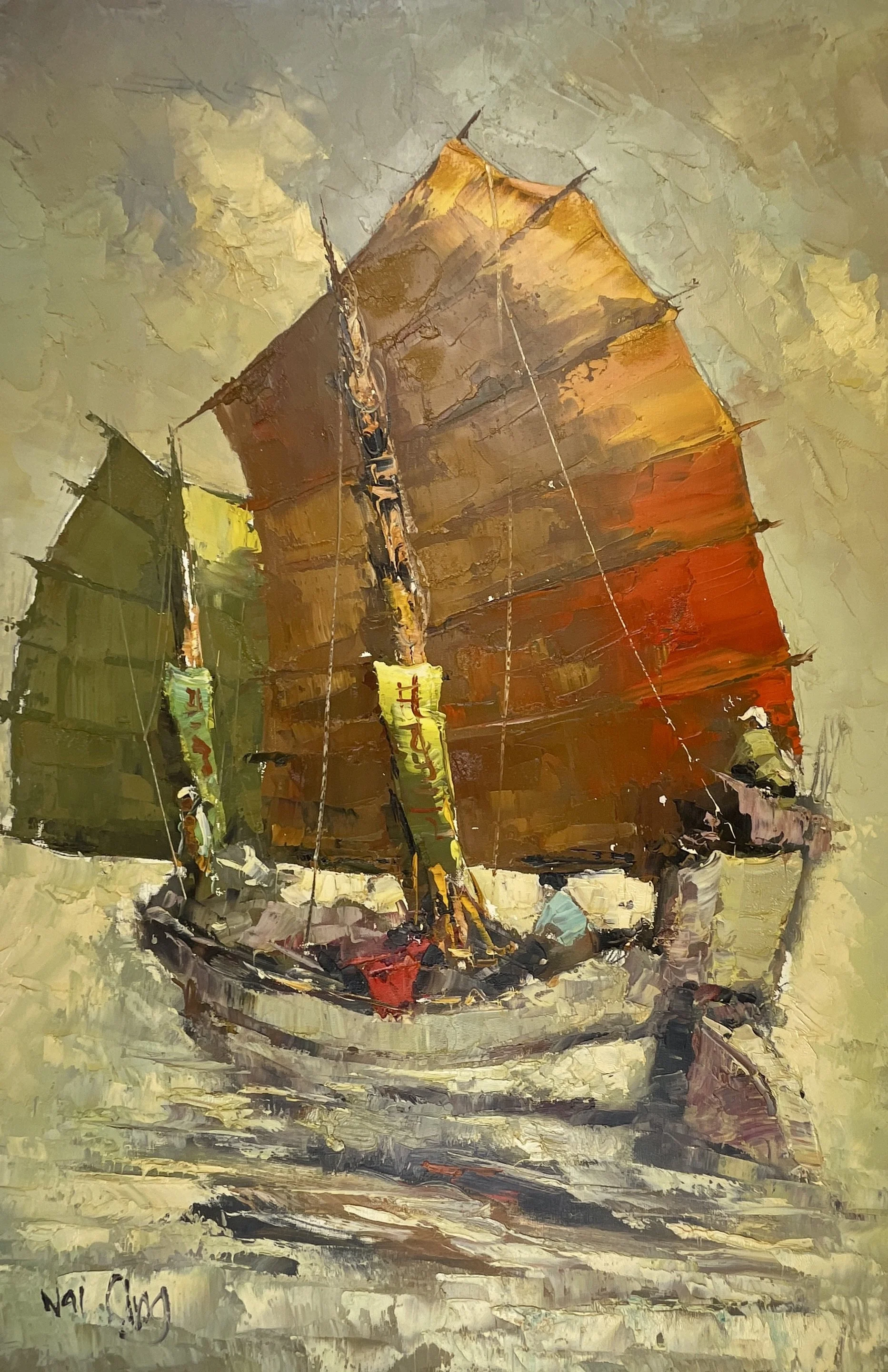
This striking oil impasto painting by Wai Ling depicts a traditional Chinese junk boat with vividly colored sails rising dramatically above a working harbor. Executed with energetic palette-knife strokes and thick textured paint, the composition captures the movement, structure, and cultural symbolism of East Asian maritime life. The artist’s bold use of red, ochre, and olive tones contrasts with soft atmospheric backgrounds, allowing the sculptural sails and rigging to dominate the scene. Born in Tokyo and trained at the Amsterdam College of Fine Arts, Wai Ling developed a distinctive style blending European painterly technique with traditional Asian maritime subjects. This large-format 24 × 36 inch painting exemplifies the artist’s internationally collected junk-boat series.
Artwork Description
This dynamic oil painting by Wai Ling presents a dramatic maritime scene centered around a traditional Chinese junk boat anchored in shallow harbor waters. The composition is dominated by two towering sails rendered in warm gradations of burnt sienna, amber, and crimson, their rigid bamboo battens clearly defined by confident palette-knife strokes. The sails catch ambient light, creating an architectural presence within the composition.
The vessel itself occupies the middle ground, where fishermen and workers appear as small yet expressive figures aboard the boat and along the dock. Their presence provides scale and narrative, transforming the painting from a simple marine study into a depiction of daily harbor life. The foreground water is painted with horizontal sweeps of textured pigment, suggesting tidal movement and muddy shoreline reflections.
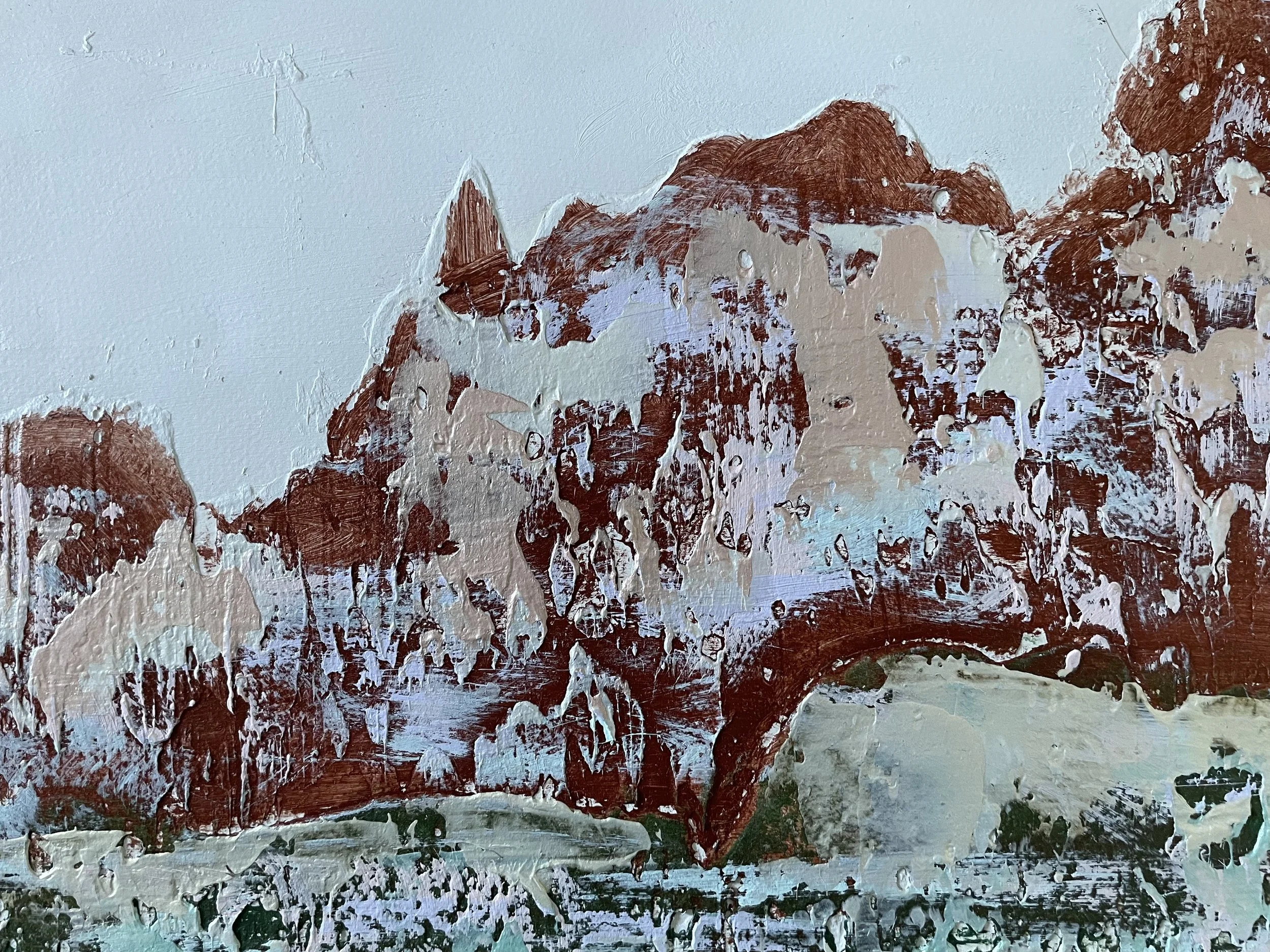
Wai Ling employs an impasto technique throughout the painting, building up thick layers of oil paint to produce a tactile surface. The background is constructed with broader, softer strokes that contrast with the more structured rigging and sail elements. The restrained palette of muted greens and sandy neutrals allows the warm red and golden sails to dominate visually.
The composition reflects the artist’s ability to synthesize European modernist painting methods with Asian maritime subject matter. The junk boat, an enduring symbol of coastal trade and fishing culture in China and Southeast Asia, becomes both a compositional anchor and cultural reference point. Through strong vertical sails and diagonally arranged rigging lines, the painting conveys both stability and movement.
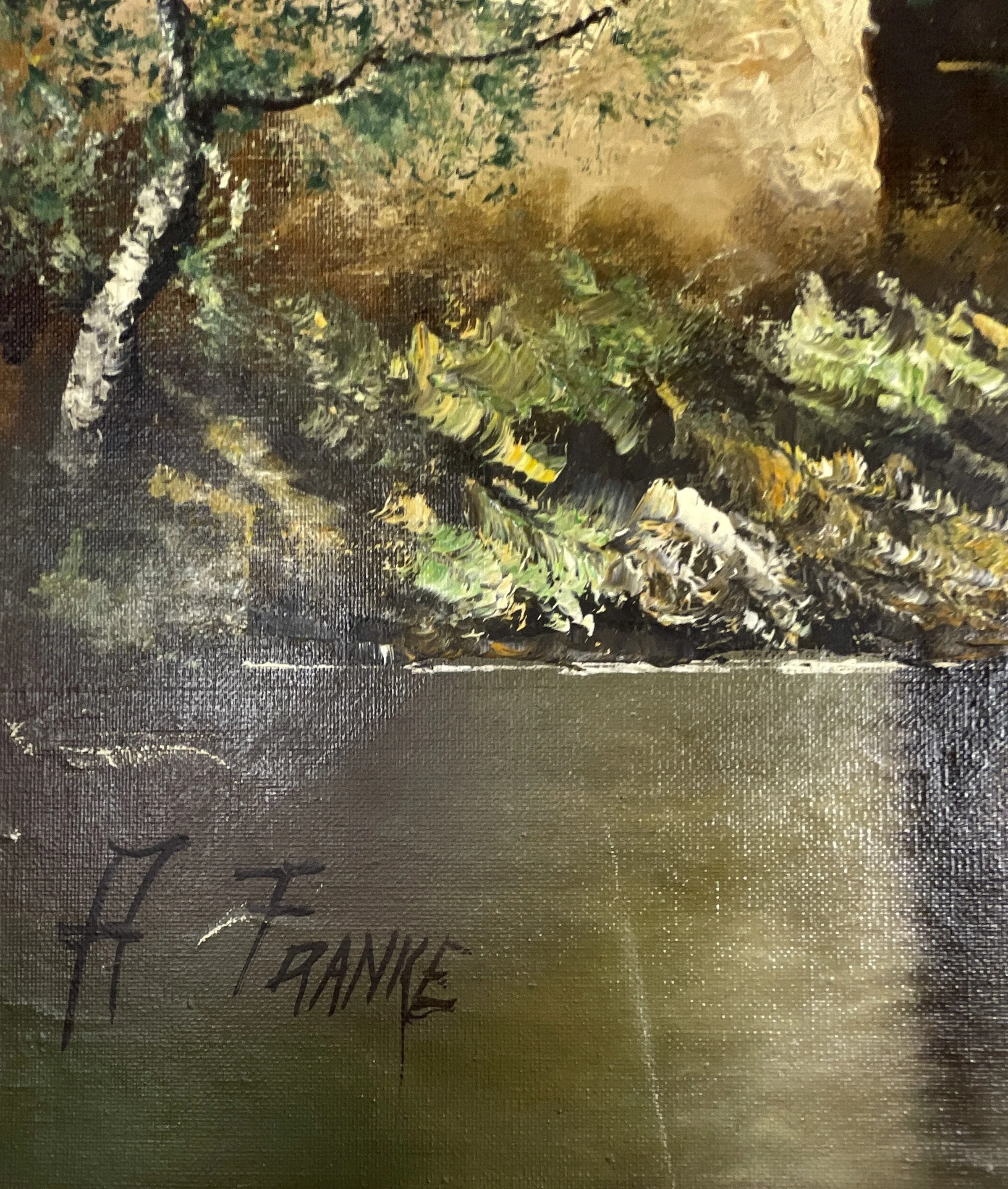
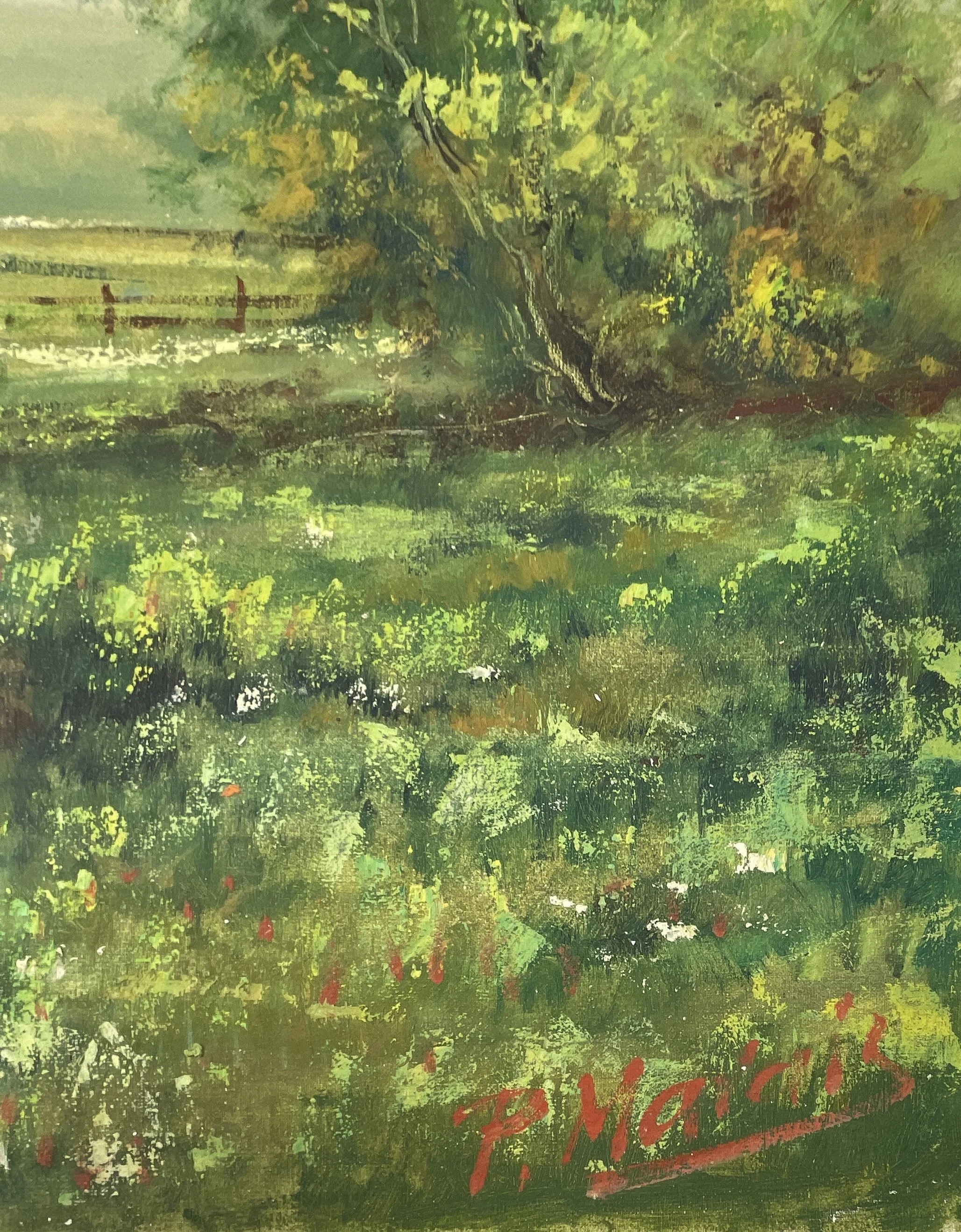
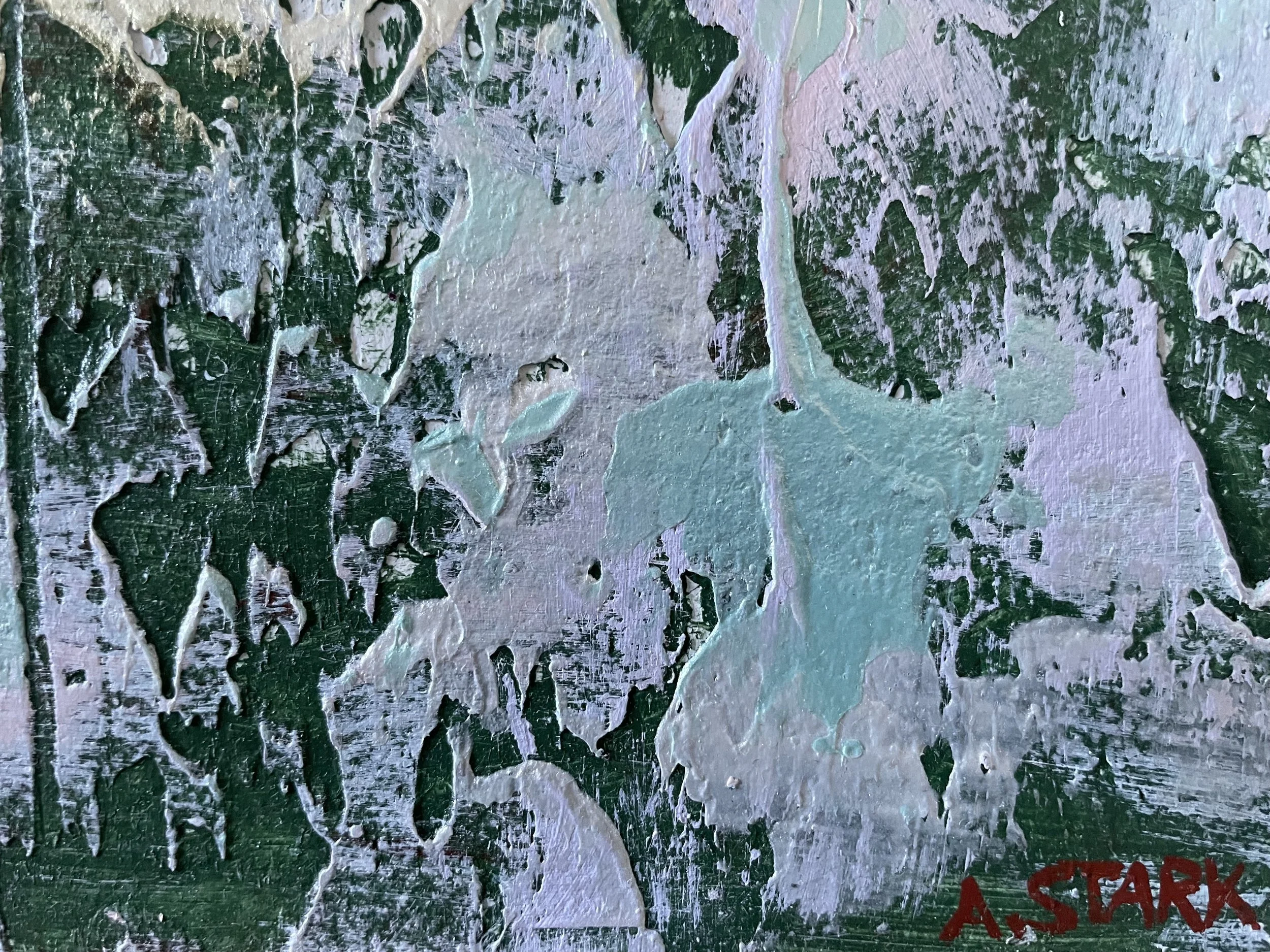
Signed lower left “Wai Ling,” the work belongs to the artist’s well-known series of junk-boat paintings, which became widely collected across Europe and the United States during the latter half of the twentieth century.
Artist Biography
Wai Ling (born May 23, 1935) is an internationally exhibited painter known for his vibrant depictions of traditional Asian junk boats and harbor scenes. Born in Tokyo, Japan, he spent his early childhood in a culturally diverse environment shaped by postwar international influences.
In 1955 his parents moved to the Netherlands, where they opened a restaurant in Amsterdam. Rather than entering the family business, Wai Ling pursued his artistic ambitions and enrolled at the Amsterdam College of Fine Arts. There he received a formal academic education rooted in European painting traditions and graduated in 1959.
After completing his studies, Wai Ling returned briefly to Japan before settling again in the Netherlands in 1962. This geographic movement between Asia and Europe played a significant role in shaping his artistic identity. His work merges Western painterly techniques—particularly palette-knife impasto and modernist color structure—with subjects drawn from Asian maritime culture.
Throughout the 1960s and 1970s, Wai Ling developed a recognizable body of work centered on Chinese junk boats, harbor markets, and coastal scenes. These paintings often feature dramatic sails rendered in bold geometric forms that dominate the canvas. The vessels are typically depicted with small human figures working aboard them, adding narrative dimension while emphasizing the monumental scale of the sails.
Wai Ling’s paintings were widely exhibited in European cities and gained international commercial success. His works were collected by galleries and private buyers across Europe, North America, and Asia. He received several awards and medals in European exhibitions, reflecting recognition from both academic and commercial art institutions.
His junk-boat paintings in particular became highly recognizable during the late twentieth century, appealing to collectors drawn to maritime themes and cross-cultural aesthetics. These works reflect a synthesis of influences: the compositional balance of traditional Asian painting, the textured materiality of European oil painting, and the expressive abstraction that characterized mid-century modern art.
By the late twentieth century, Wai Ling’s paintings were circulating internationally through gallery networks and art publishers, and his maritime imagery had become a signature motif. The enduring popularity of these works continues today among collectors interested in Asian maritime imagery rendered with modern painterly technique.
Wai Ling (b. 1935), Harbor Junk with Red Sail, oil impasto on canvas, 24 × 36 in, signed lower left. Dynamic Asian maritime scene with traditional junk boat and fishermen. Provenance: Mitch Morse Gallery network.
Certificate of Authentication
This certifies that the artwork titled Harbor Junk with Red Sail is an original oil painting executed by the artist Wai Ling (born 1935). The painting is created in oil on canvas using impasto technique and measures approximately 24 × 36 inches. The work bears the artist’s signature in the lower left corner.
Based on stylistic characteristics and accompanying documentation, the painting corresponds to the artist’s well-known junk boat series created during the mid- to late-twentieth century.
The artwork originates from the Mitch Morse Gallery distribution network and is currently held in the collection of Artfind Gallery, Washington, DC.
Condition
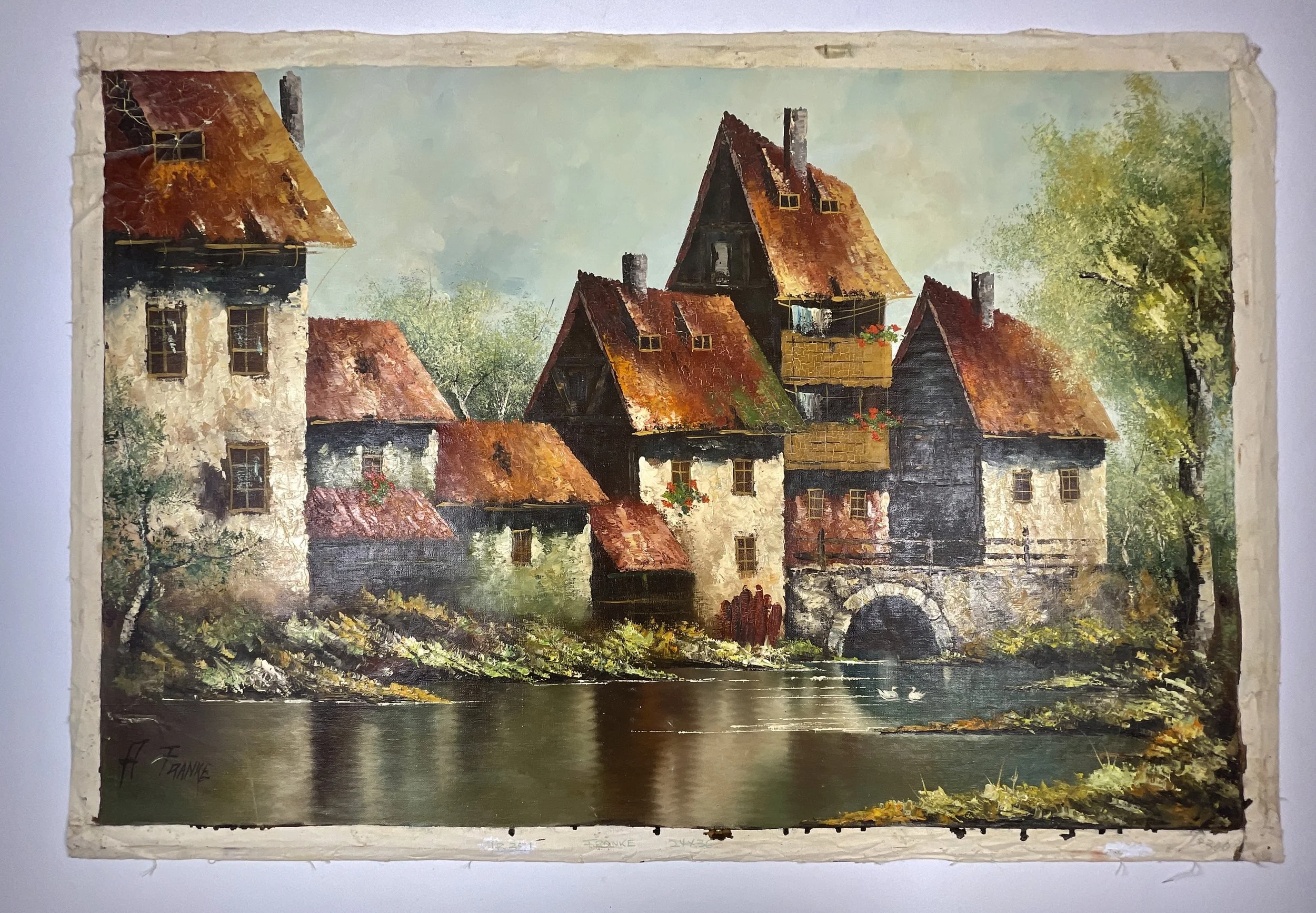
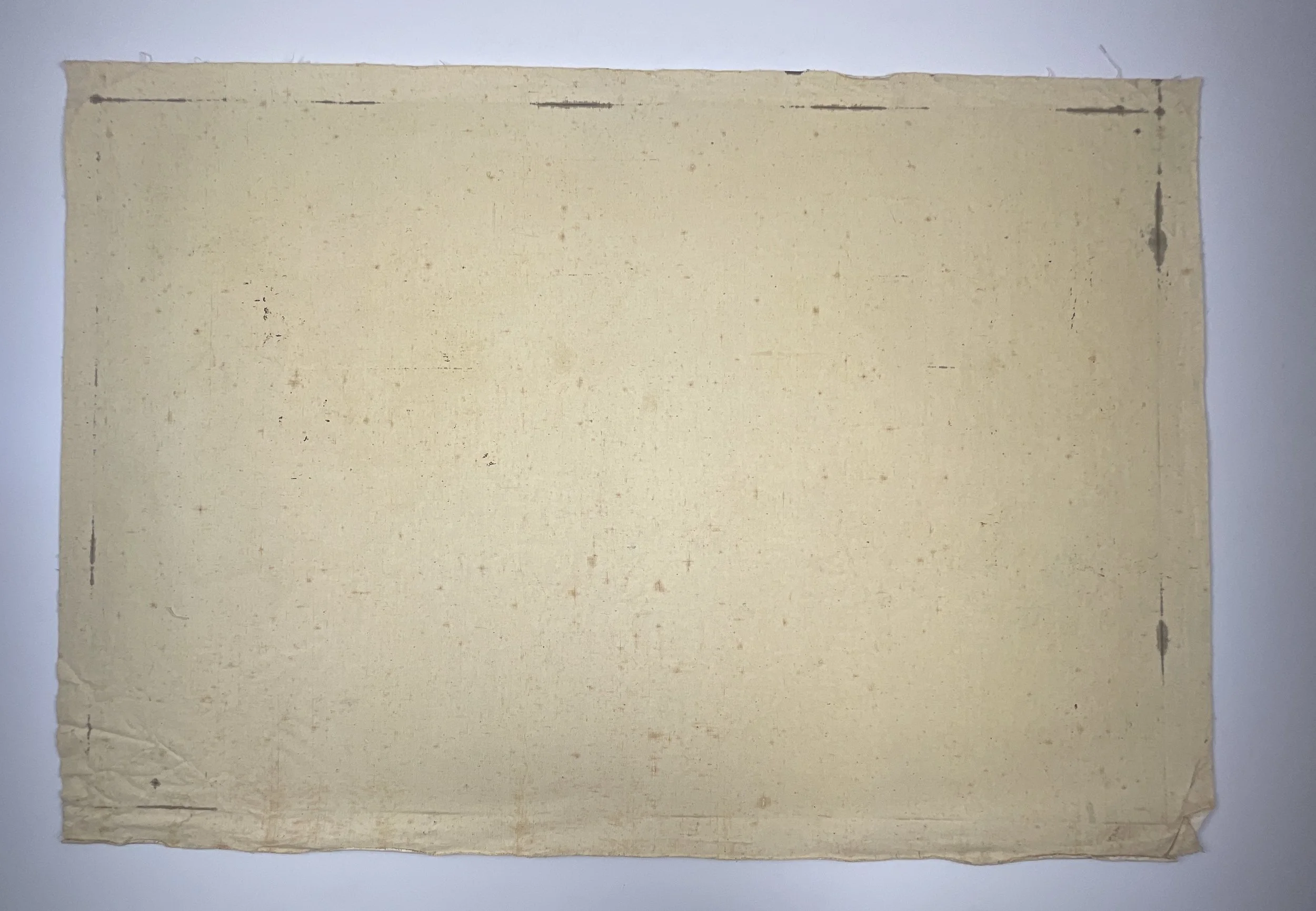
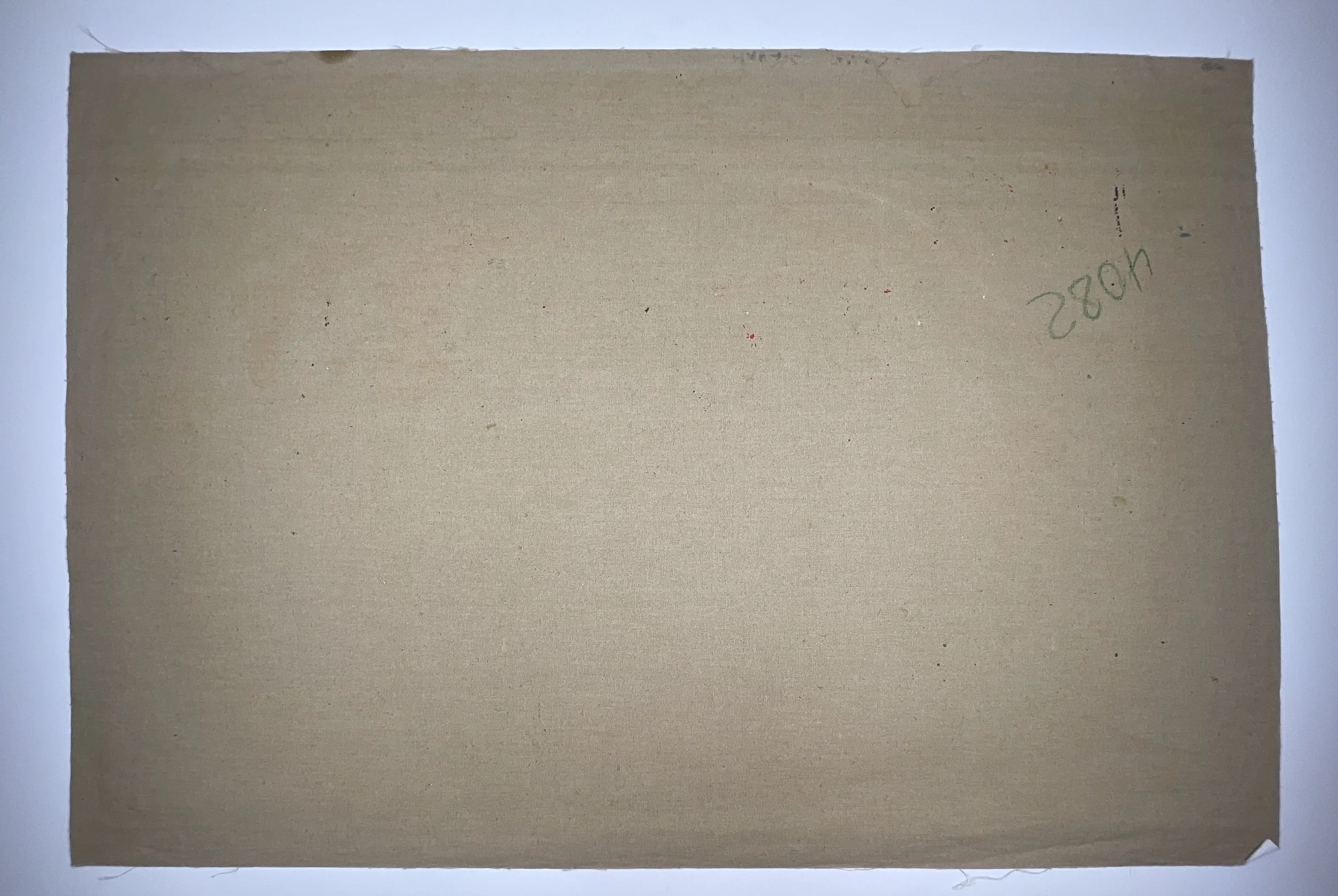
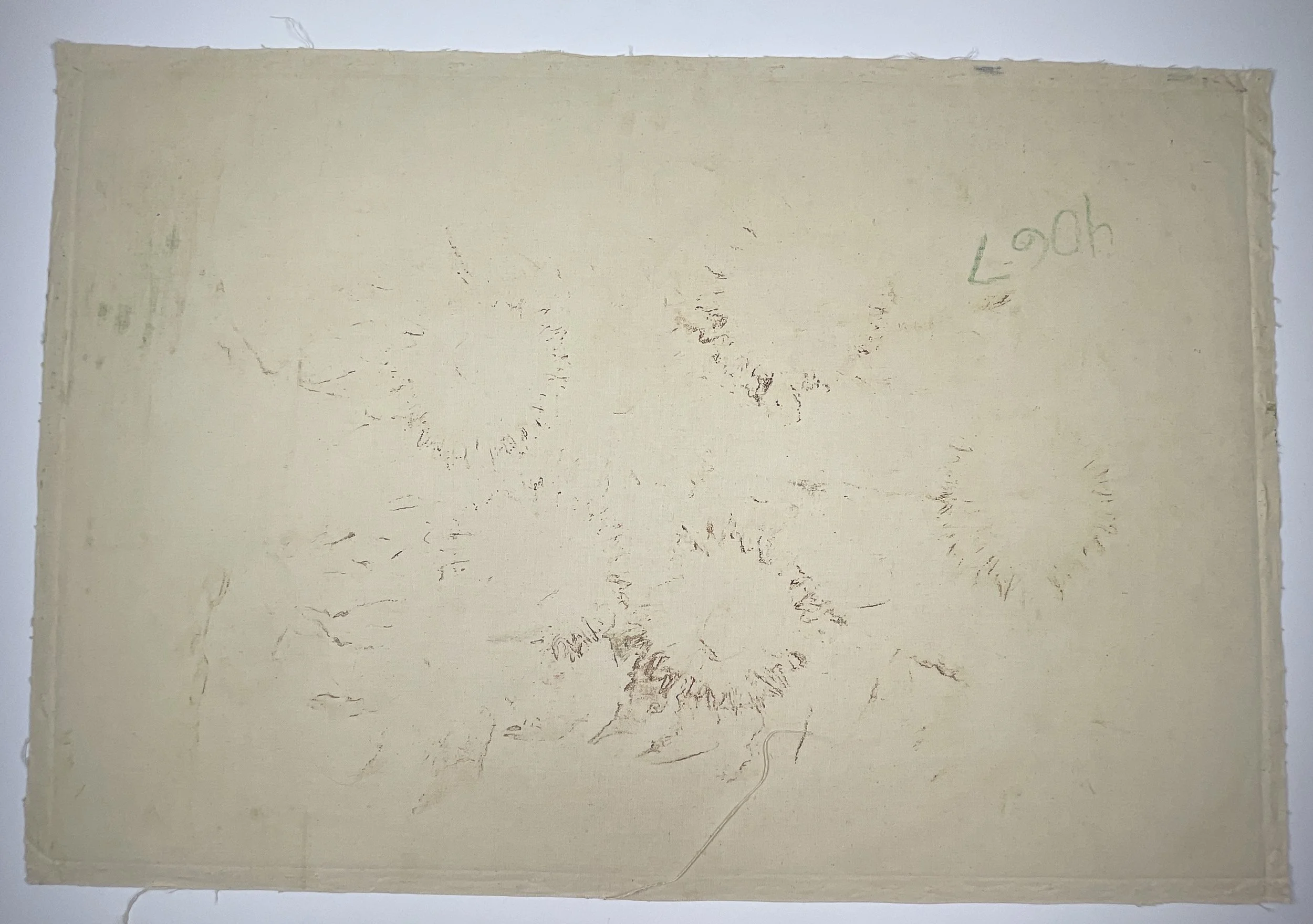
Good vintage condition consistent with age and handling. Minor edge wear and slight surface abrasions are visible along the margins of the canvas. Impasto paint layers remain stable and structurally sound. The painting would benefit from stretching or framing to conceal edge irregularities.
Provenance
Mitch Morse Gallery, Woodstock, New York
Acquired by Mitch Morse Gallery through art networks in New York, the United States, and Europe
Artfind Gallery, Washington, DC (current owner)
Provenance Note: Mitch Morse Gallery Collection
This artwork originates from the inventory of Mitch Morse Gallery, a respected New York–based gallery and publisher active during the mid-to-late 20th century. Mitch Morse was an established figure in the American art market, serving as an artist’s agent, publisher of original graphics, art dealer, distributor, and fine art restorer. He was also a Design Affiliate of A.S.I.D., listed in Who’s Who in the East, and a guest lecturer in graphics at New York University, with appearances on radio and television discussing art and design.
Through his gallery and associated publishing operations, Morse acquired paintings, prints, and original works from artists and studios across New York, Europe, and international art markets, assembling a broad inventory representing a wide range of artistic traditions and mediums. Works from this collection circulated through galleries and collectors throughout the United States.
The present painting was acquired through this network and is now held in the collection of Artfind Gallery, Washington DC, continuing the documented chain of gallery provenance from Mitch Morse’s original acquisitions.
This striking oil impasto painting by Wai Ling depicts a traditional Chinese junk boat with vividly colored sails rising dramatically above a working harbor. Executed with energetic palette-knife strokes and thick textured paint, the composition captures the movement, structure, and cultural symbolism of East Asian maritime life. The artist’s bold use of red, ochre, and olive tones contrasts with soft atmospheric backgrounds, allowing the sculptural sails and rigging to dominate the scene. Born in Tokyo and trained at the Amsterdam College of Fine Arts, Wai Ling developed a distinctive style blending European painterly technique with traditional Asian maritime subjects. This large-format 24 × 36 inch painting exemplifies the artist’s internationally collected junk-boat series.
Artwork Description
This dynamic oil painting by Wai Ling presents a dramatic maritime scene centered around a traditional Chinese junk boat anchored in shallow harbor waters. The composition is dominated by two towering sails rendered in warm gradations of burnt sienna, amber, and crimson, their rigid bamboo battens clearly defined by confident palette-knife strokes. The sails catch ambient light, creating an architectural presence within the composition.
The vessel itself occupies the middle ground, where fishermen and workers appear as small yet expressive figures aboard the boat and along the dock. Their presence provides scale and narrative, transforming the painting from a simple marine study into a depiction of daily harbor life. The foreground water is painted with horizontal sweeps of textured pigment, suggesting tidal movement and muddy shoreline reflections.
Wai Ling employs an impasto technique throughout the painting, building up thick layers of oil paint to produce a tactile surface. The background is constructed with broader, softer strokes that contrast with the more structured rigging and sail elements. The restrained palette of muted greens and sandy neutrals allows the warm red and golden sails to dominate visually.
The composition reflects the artist’s ability to synthesize European modernist painting methods with Asian maritime subject matter. The junk boat, an enduring symbol of coastal trade and fishing culture in China and Southeast Asia, becomes both a compositional anchor and cultural reference point. Through strong vertical sails and diagonally arranged rigging lines, the painting conveys both stability and movement.
Signed lower left “Wai Ling,” the work belongs to the artist’s well-known series of junk-boat paintings, which became widely collected across Europe and the United States during the latter half of the twentieth century.
Artist Biography
Wai Ling (born May 23, 1935) is an internationally exhibited painter known for his vibrant depictions of traditional Asian junk boats and harbor scenes. Born in Tokyo, Japan, he spent his early childhood in a culturally diverse environment shaped by postwar international influences.
In 1955 his parents moved to the Netherlands, where they opened a restaurant in Amsterdam. Rather than entering the family business, Wai Ling pursued his artistic ambitions and enrolled at the Amsterdam College of Fine Arts. There he received a formal academic education rooted in European painting traditions and graduated in 1959.
After completing his studies, Wai Ling returned briefly to Japan before settling again in the Netherlands in 1962. This geographic movement between Asia and Europe played a significant role in shaping his artistic identity. His work merges Western painterly techniques—particularly palette-knife impasto and modernist color structure—with subjects drawn from Asian maritime culture.
Throughout the 1960s and 1970s, Wai Ling developed a recognizable body of work centered on Chinese junk boats, harbor markets, and coastal scenes. These paintings often feature dramatic sails rendered in bold geometric forms that dominate the canvas. The vessels are typically depicted with small human figures working aboard them, adding narrative dimension while emphasizing the monumental scale of the sails.
Wai Ling’s paintings were widely exhibited in European cities and gained international commercial success. His works were collected by galleries and private buyers across Europe, North America, and Asia. He received several awards and medals in European exhibitions, reflecting recognition from both academic and commercial art institutions.
His junk-boat paintings in particular became highly recognizable during the late twentieth century, appealing to collectors drawn to maritime themes and cross-cultural aesthetics. These works reflect a synthesis of influences: the compositional balance of traditional Asian painting, the textured materiality of European oil painting, and the expressive abstraction that characterized mid-century modern art.
By the late twentieth century, Wai Ling’s paintings were circulating internationally through gallery networks and art publishers, and his maritime imagery had become a signature motif. The enduring popularity of these works continues today among collectors interested in Asian maritime imagery rendered with modern painterly technique.
Wai Ling (b. 1935), Harbor Junk with Red Sail, oil impasto on canvas, 24 × 36 in, signed lower left. Dynamic Asian maritime scene with traditional junk boat and fishermen. Provenance: Mitch Morse Gallery network.
Certificate of Authentication
This certifies that the artwork titled Harbor Junk with Red Sail is an original oil painting executed by the artist Wai Ling (born 1935). The painting is created in oil on canvas using impasto technique and measures approximately 24 × 36 inches. The work bears the artist’s signature in the lower left corner.
Based on stylistic characteristics and accompanying documentation, the painting corresponds to the artist’s well-known junk boat series created during the mid- to late-twentieth century.
The artwork originates from the Mitch Morse Gallery distribution network and is currently held in the collection of Artfind Gallery, Washington, DC.
Condition
Good vintage condition consistent with age and handling. Minor edge wear and slight surface abrasions are visible along the margins of the canvas. Impasto paint layers remain stable and structurally sound. The painting would benefit from stretching or framing to conceal edge irregularities.
Provenance
Mitch Morse Gallery, Woodstock, New York
Acquired by Mitch Morse Gallery through art networks in New York, the United States, and Europe
Artfind Gallery, Washington, DC (current owner)
Provenance Note: Mitch Morse Gallery Collection
This artwork originates from the inventory of Mitch Morse Gallery, a respected New York–based gallery and publisher active during the mid-to-late 20th century. Mitch Morse was an established figure in the American art market, serving as an artist’s agent, publisher of original graphics, art dealer, distributor, and fine art restorer. He was also a Design Affiliate of A.S.I.D., listed in Who’s Who in the East, and a guest lecturer in graphics at New York University, with appearances on radio and television discussing art and design.
Through his gallery and associated publishing operations, Morse acquired paintings, prints, and original works from artists and studios across New York, Europe, and international art markets, assembling a broad inventory representing a wide range of artistic traditions and mediums. Works from this collection circulated through galleries and collectors throughout the United States.
The present painting was acquired through this network and is now held in the collection of Artfind Gallery, Washington DC, continuing the documented chain of gallery provenance from Mitch Morse’s original acquisitions.