 Image 1 of 5
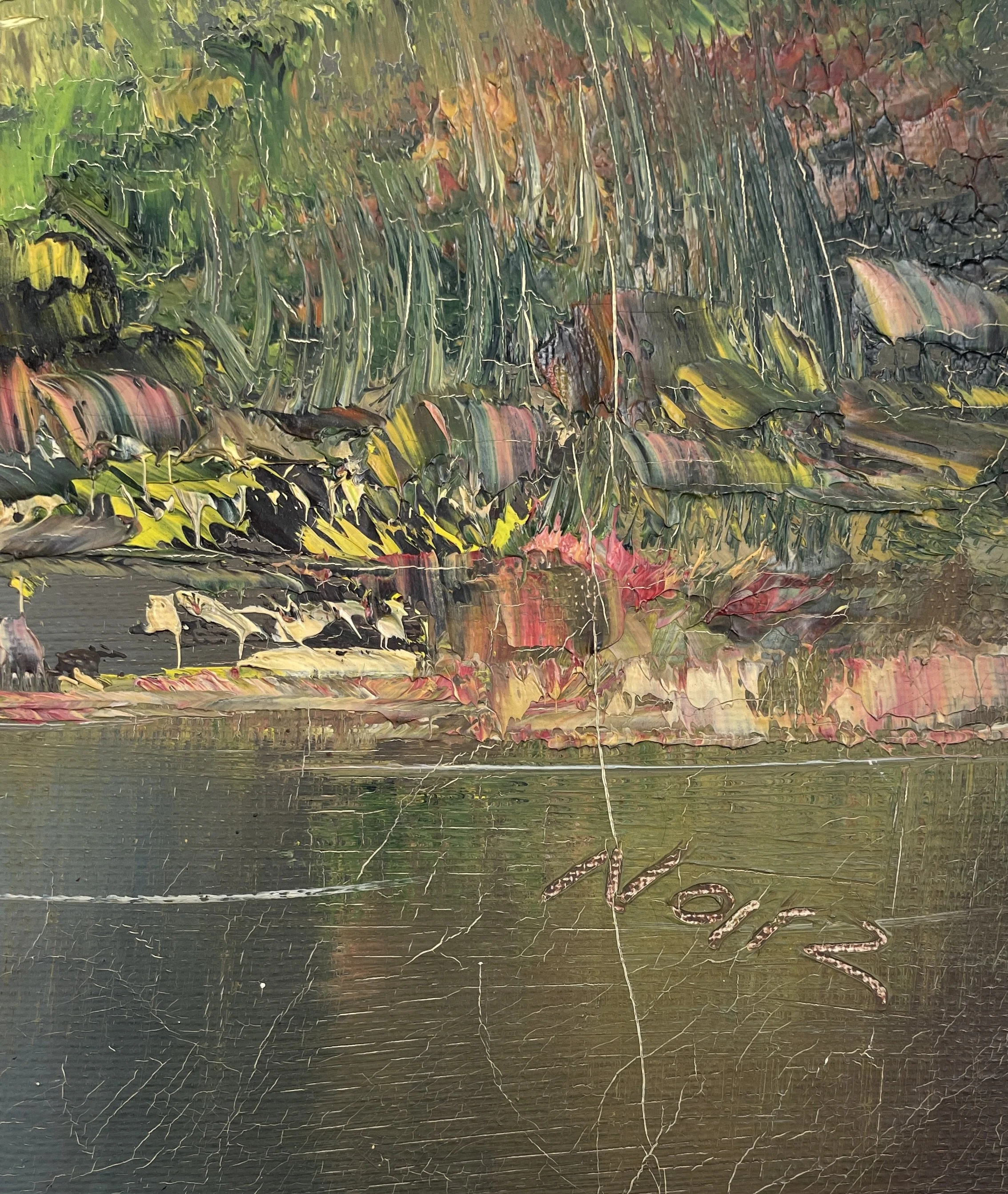 Image 2 of 5
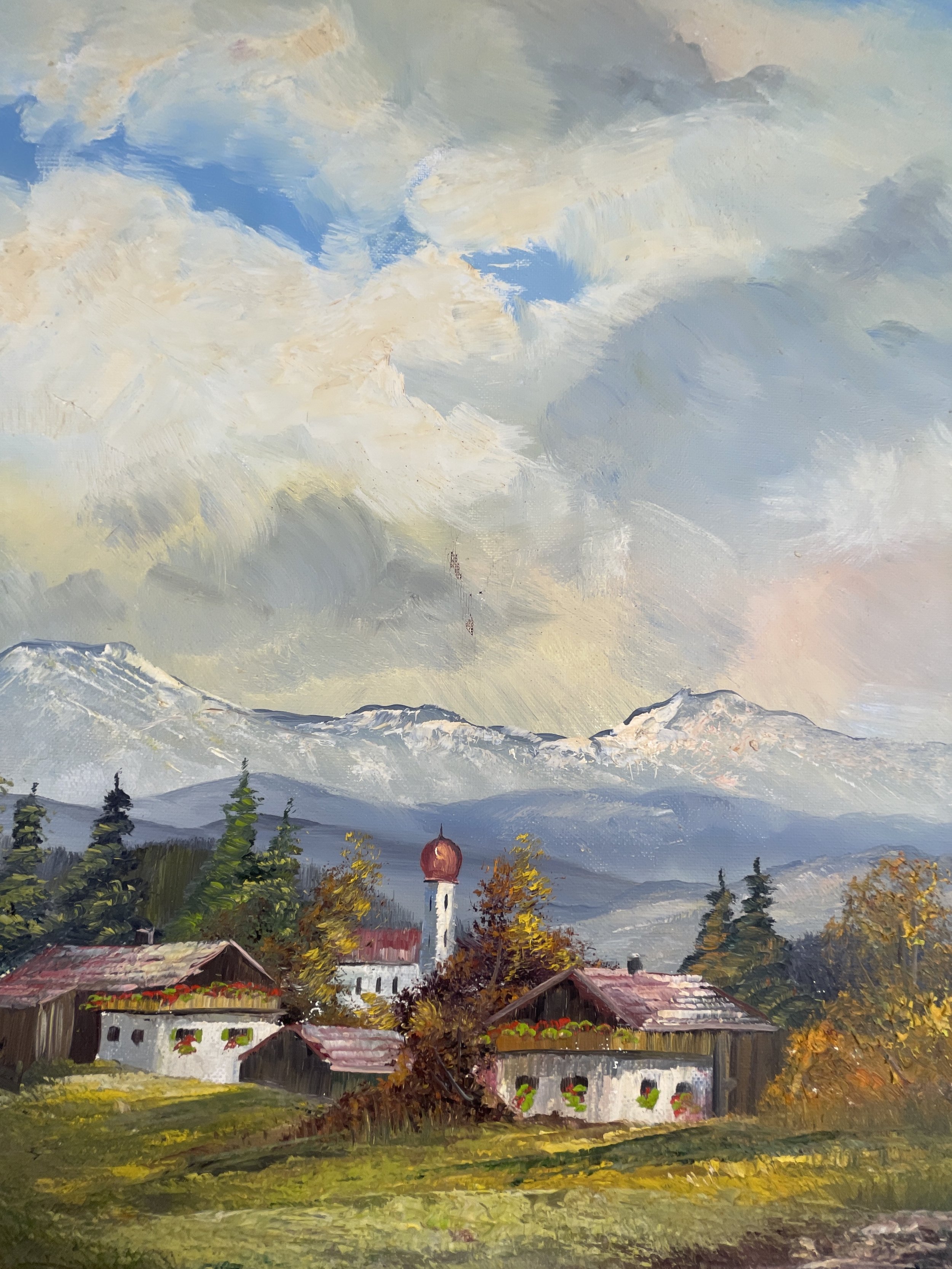 Image 3 of 5
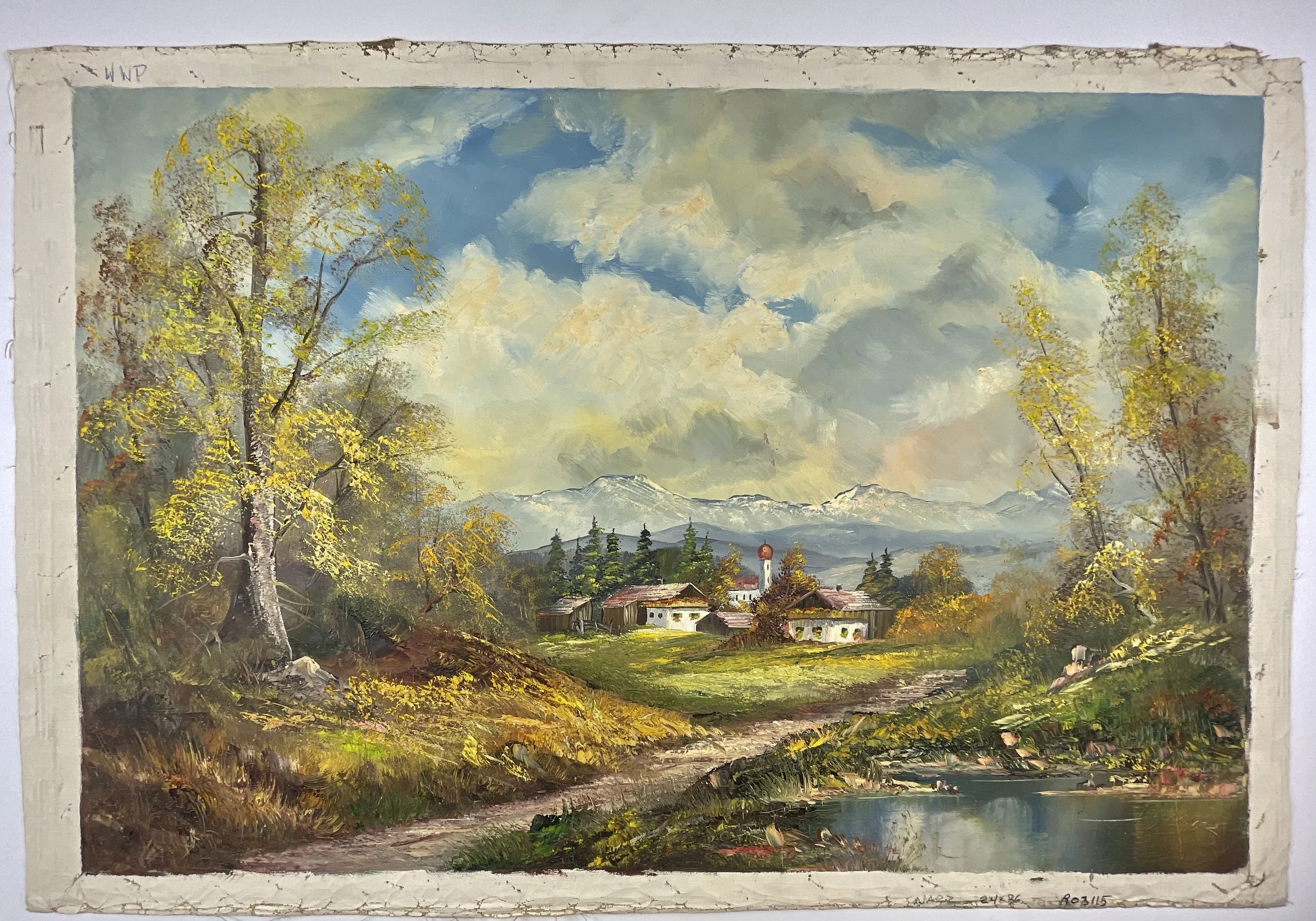 Image 4 of 5
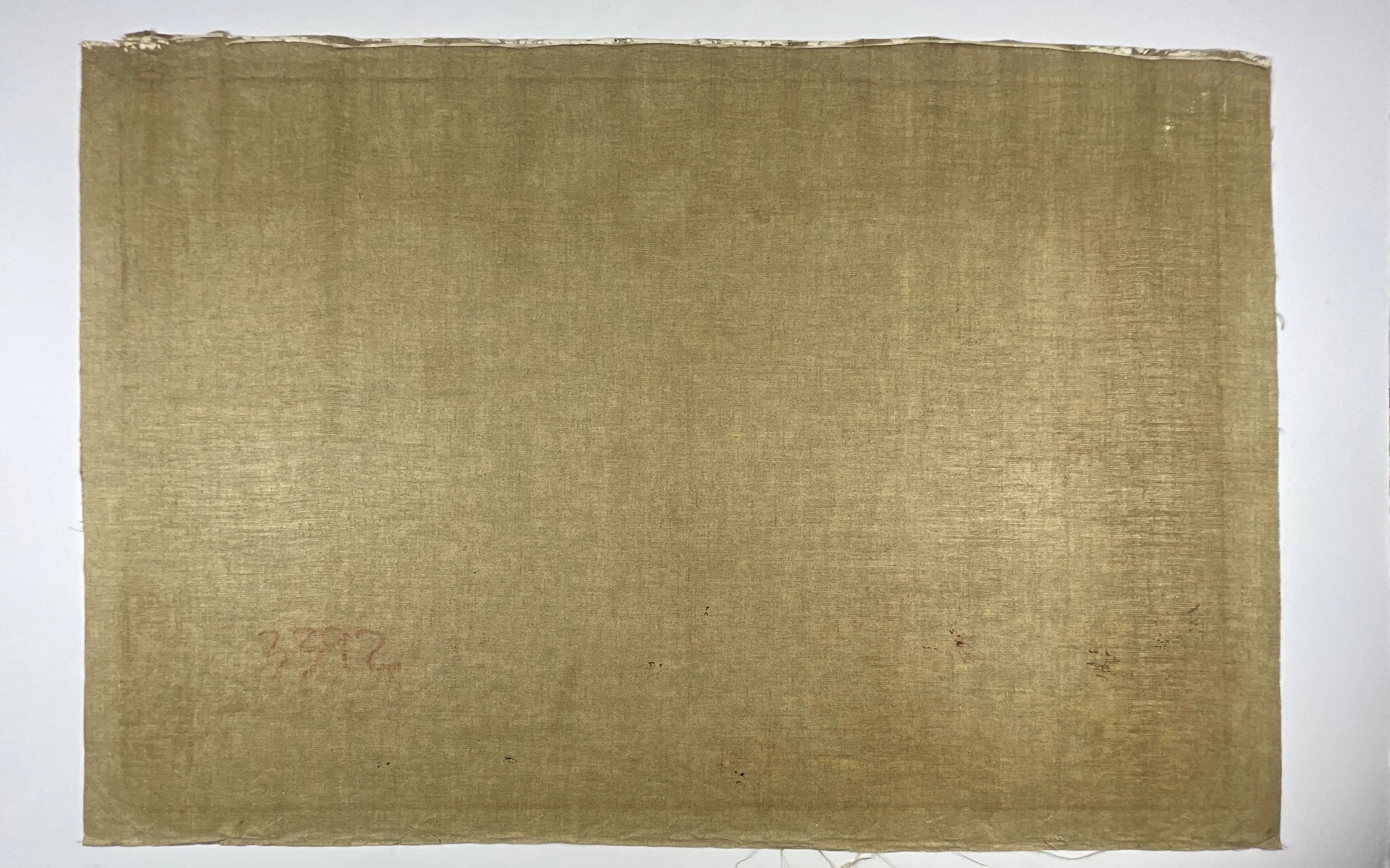 Image 5 of 5
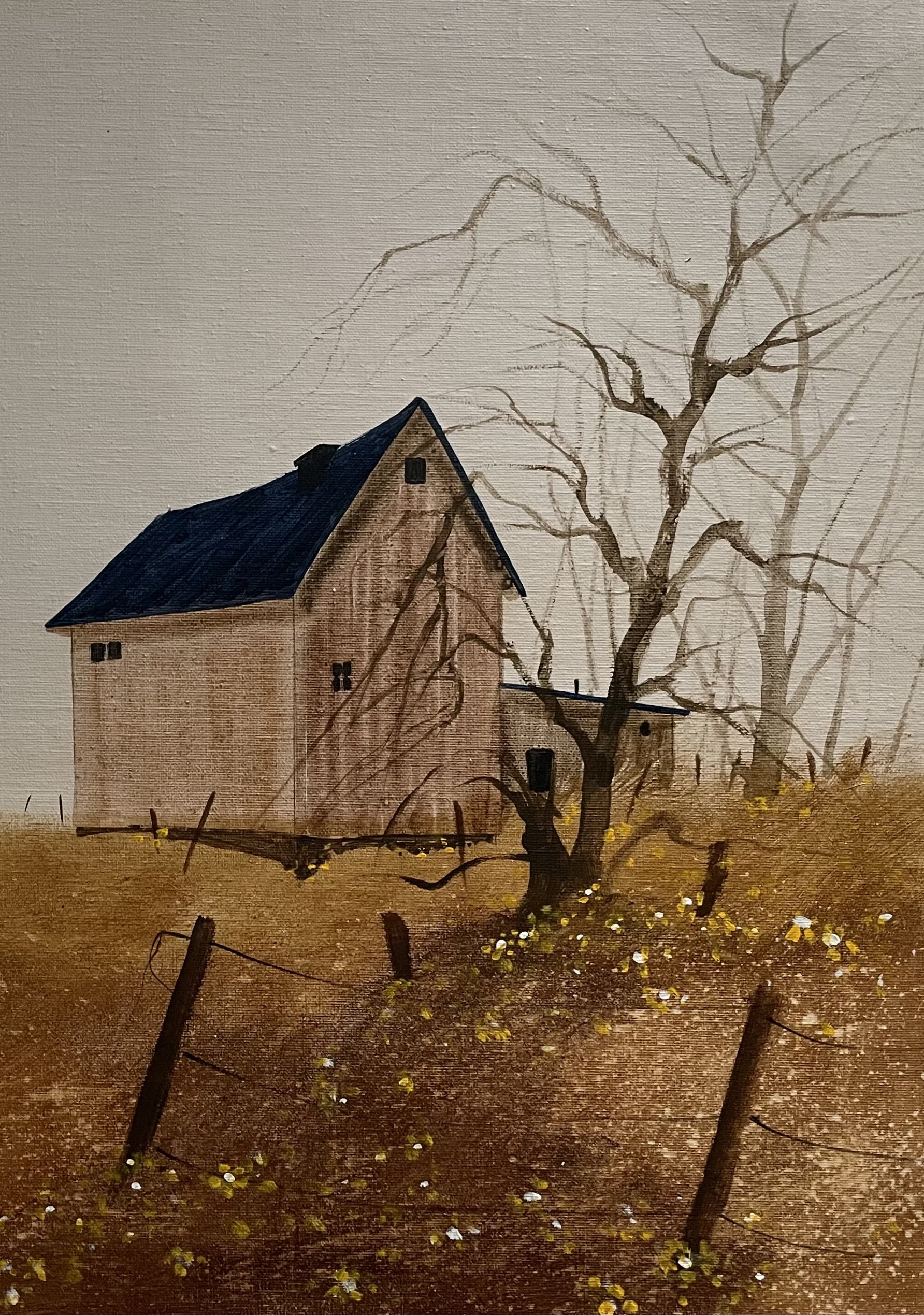
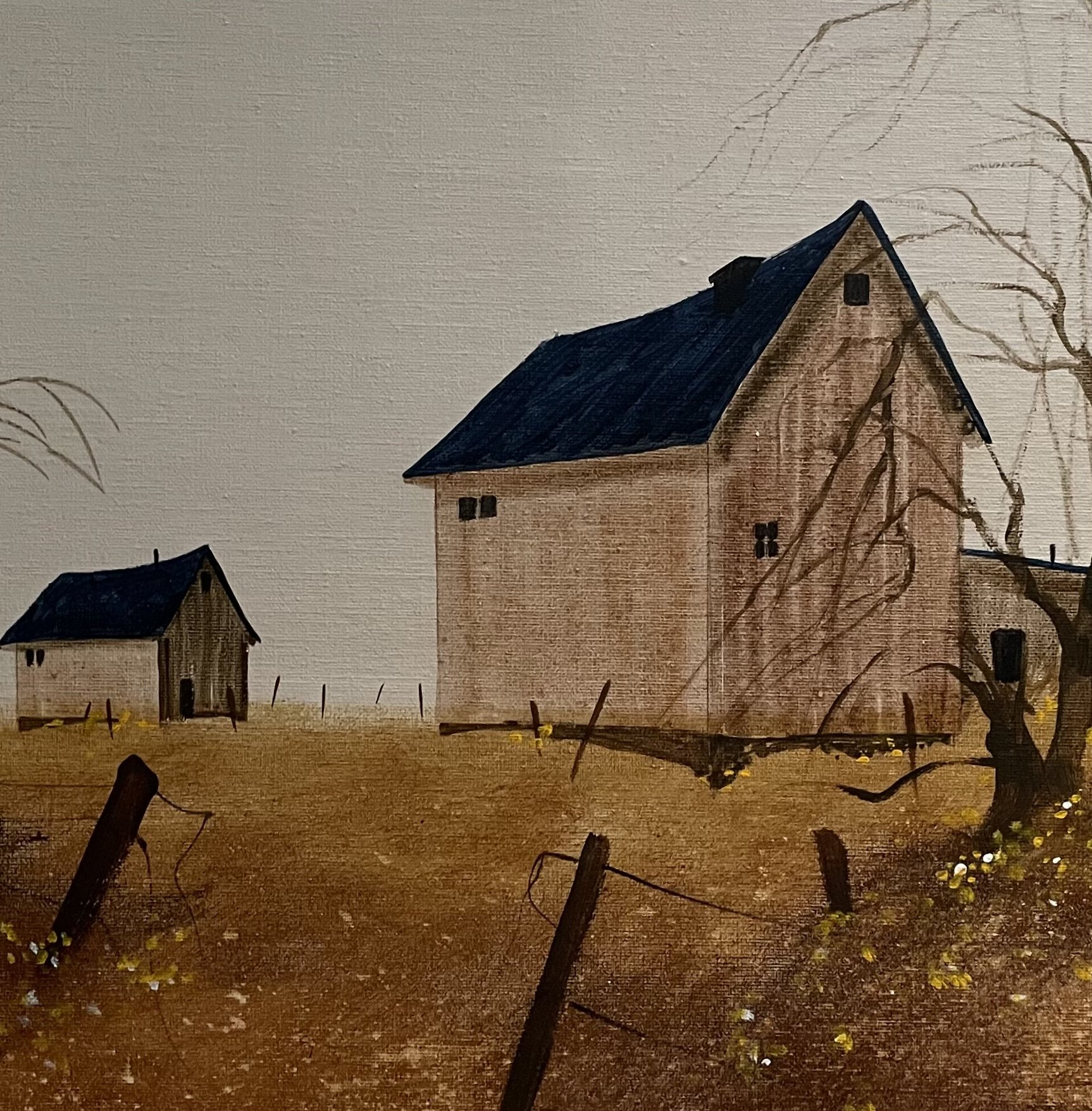
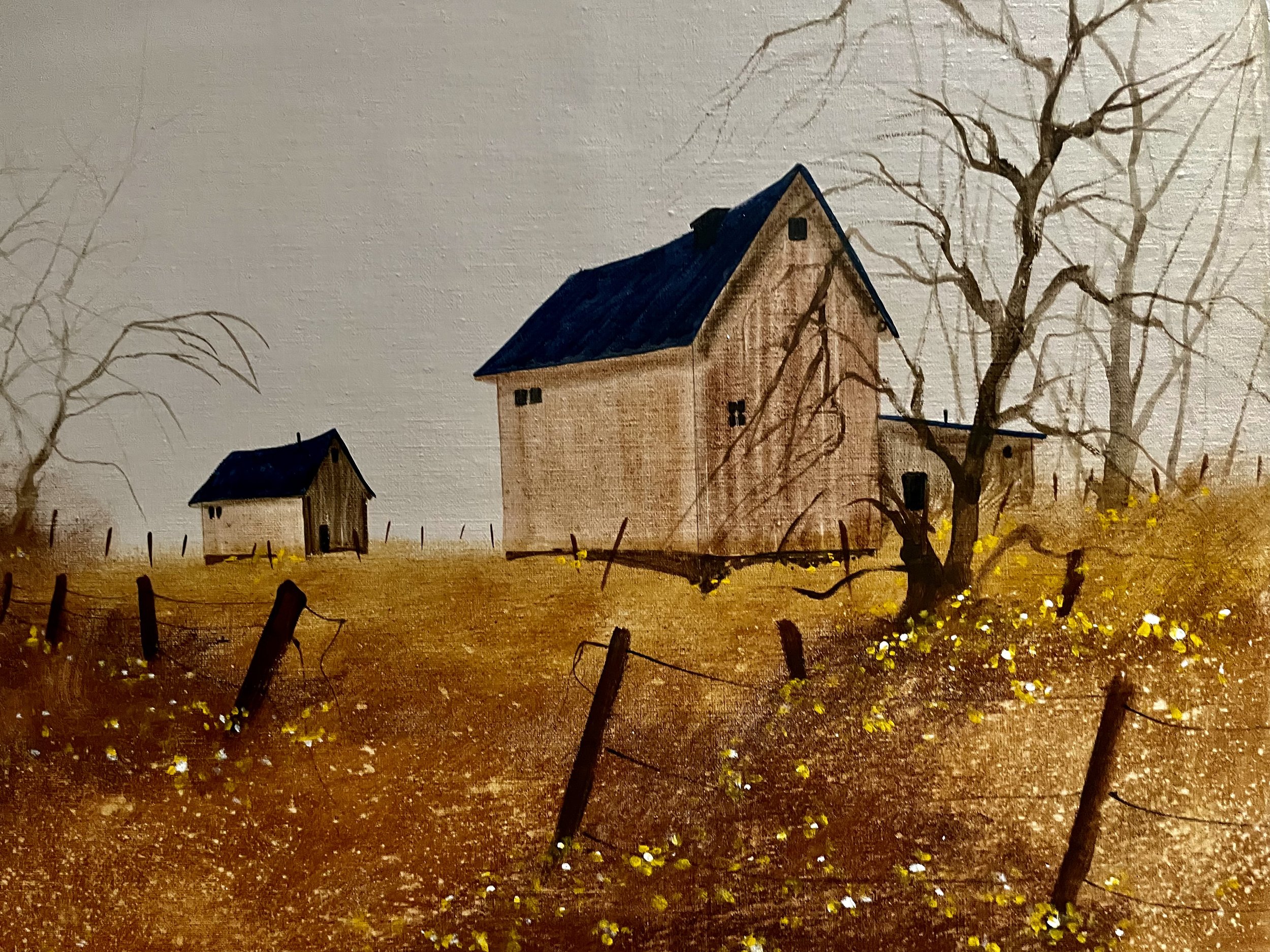
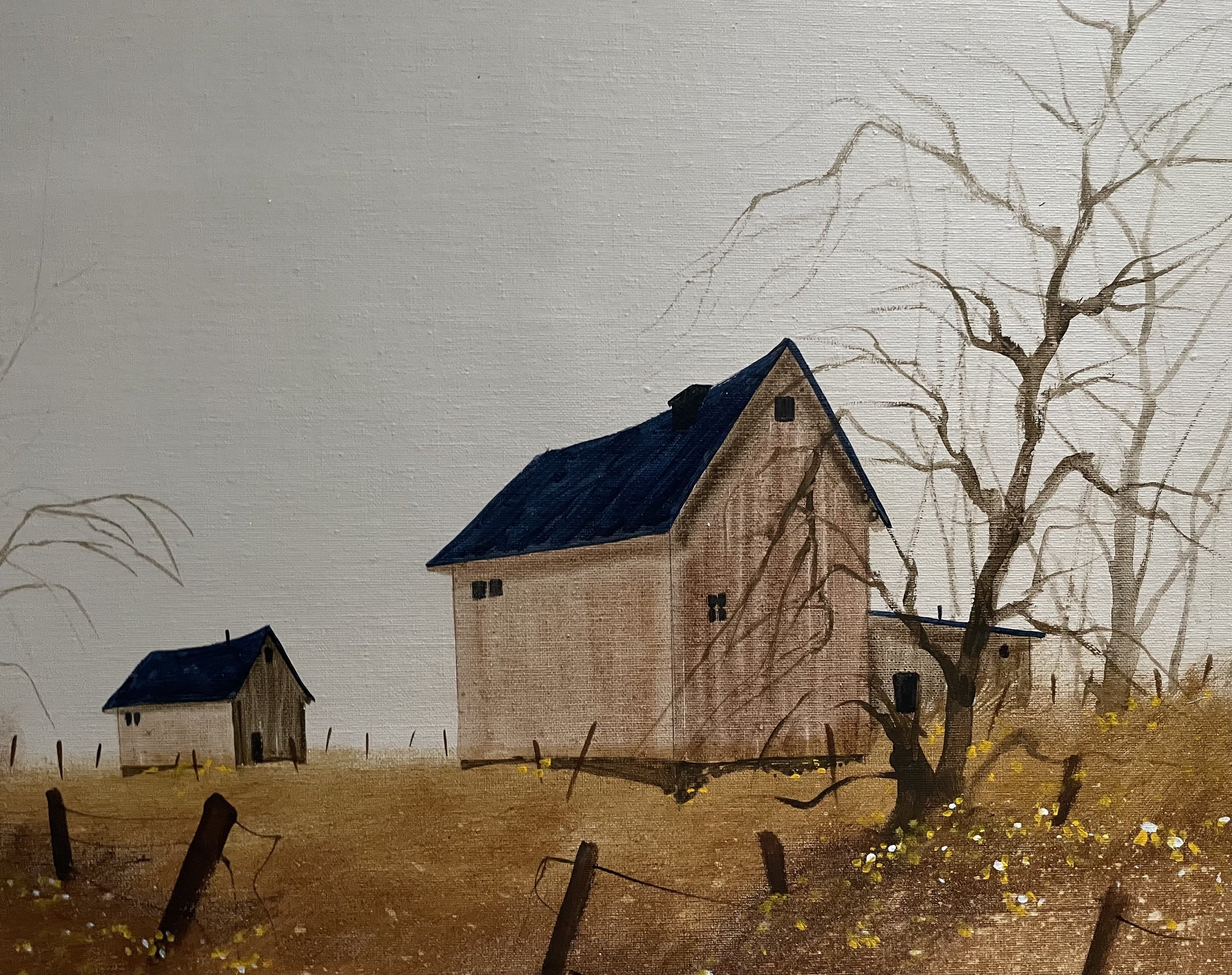
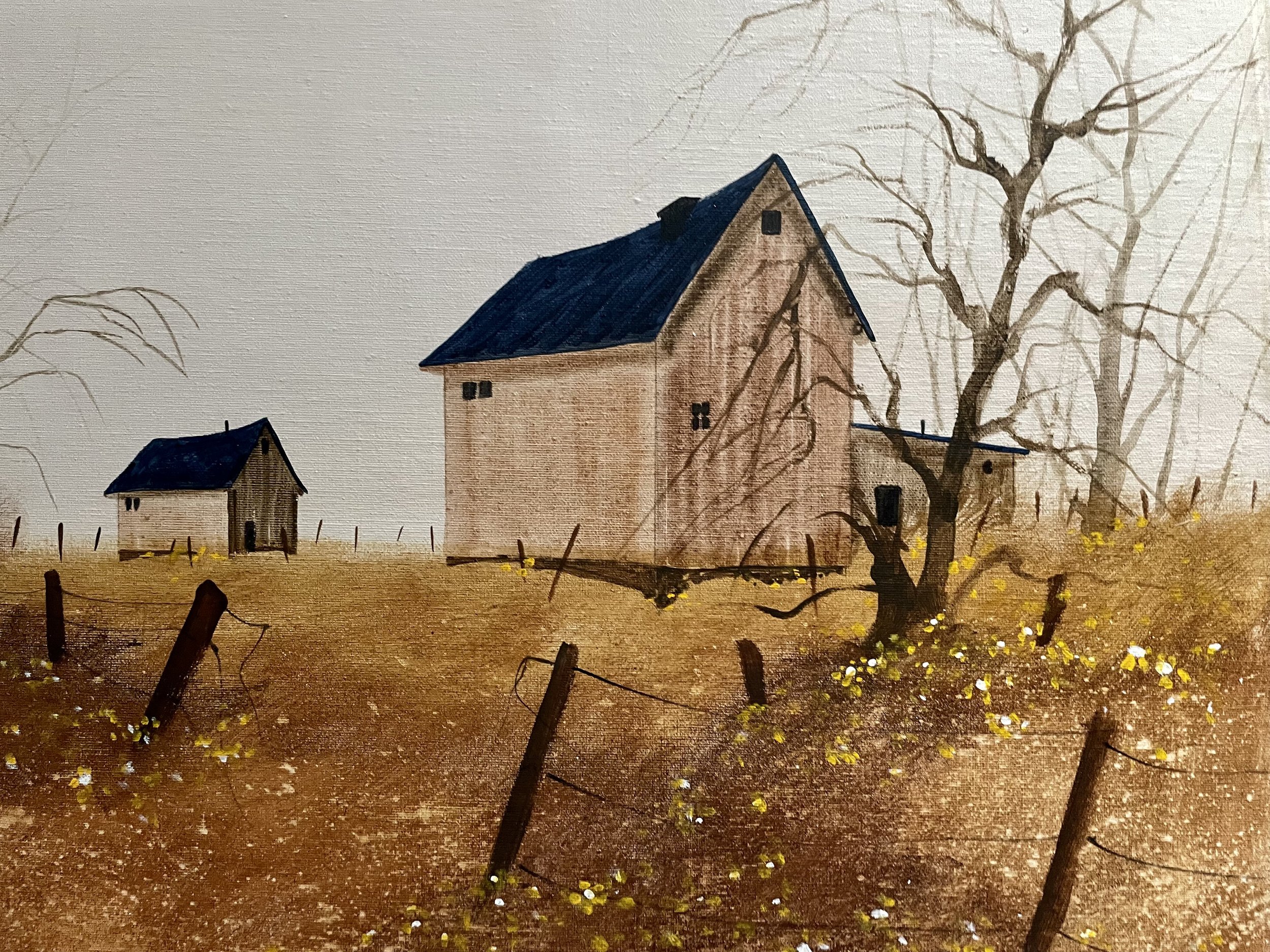
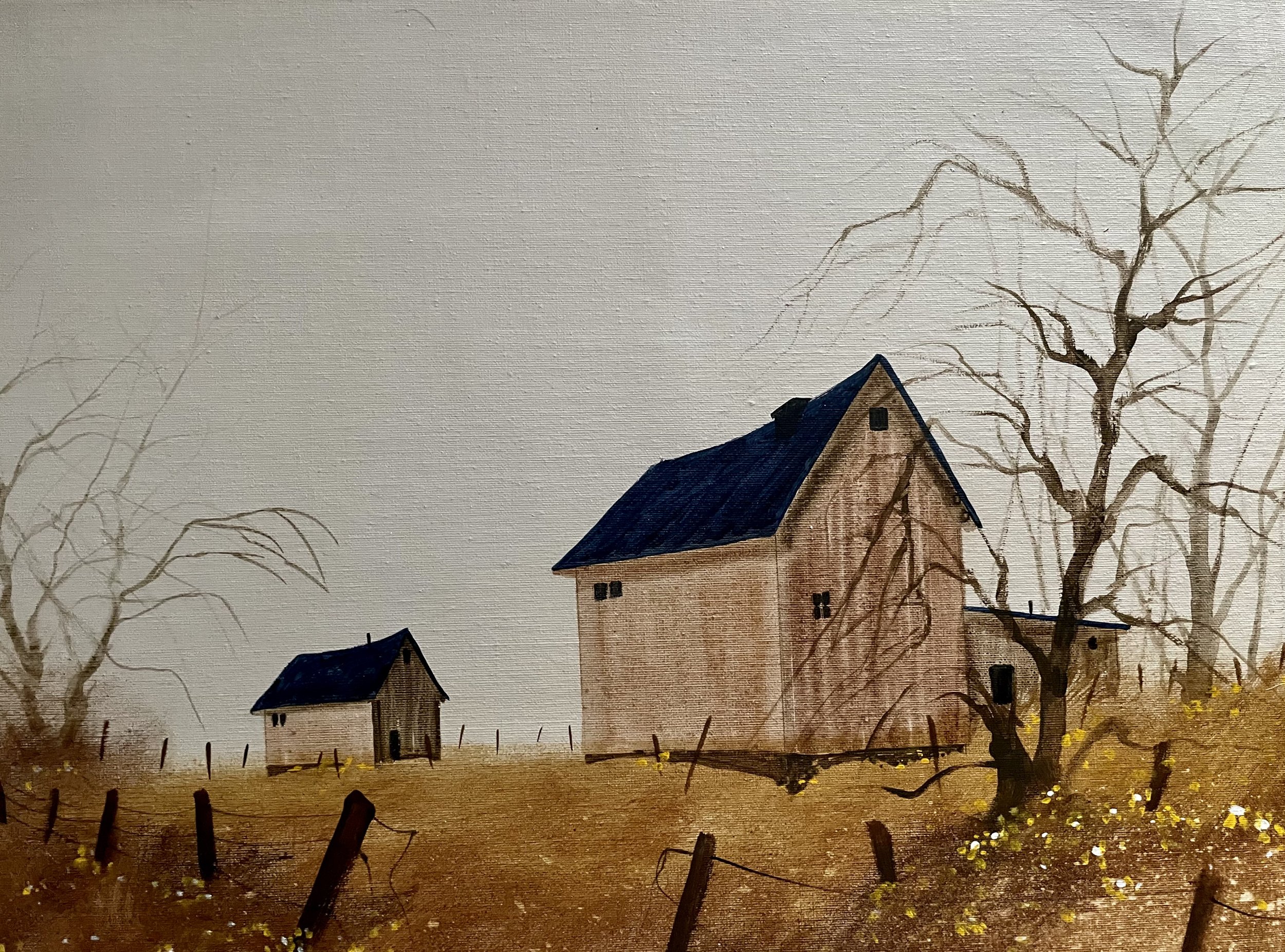
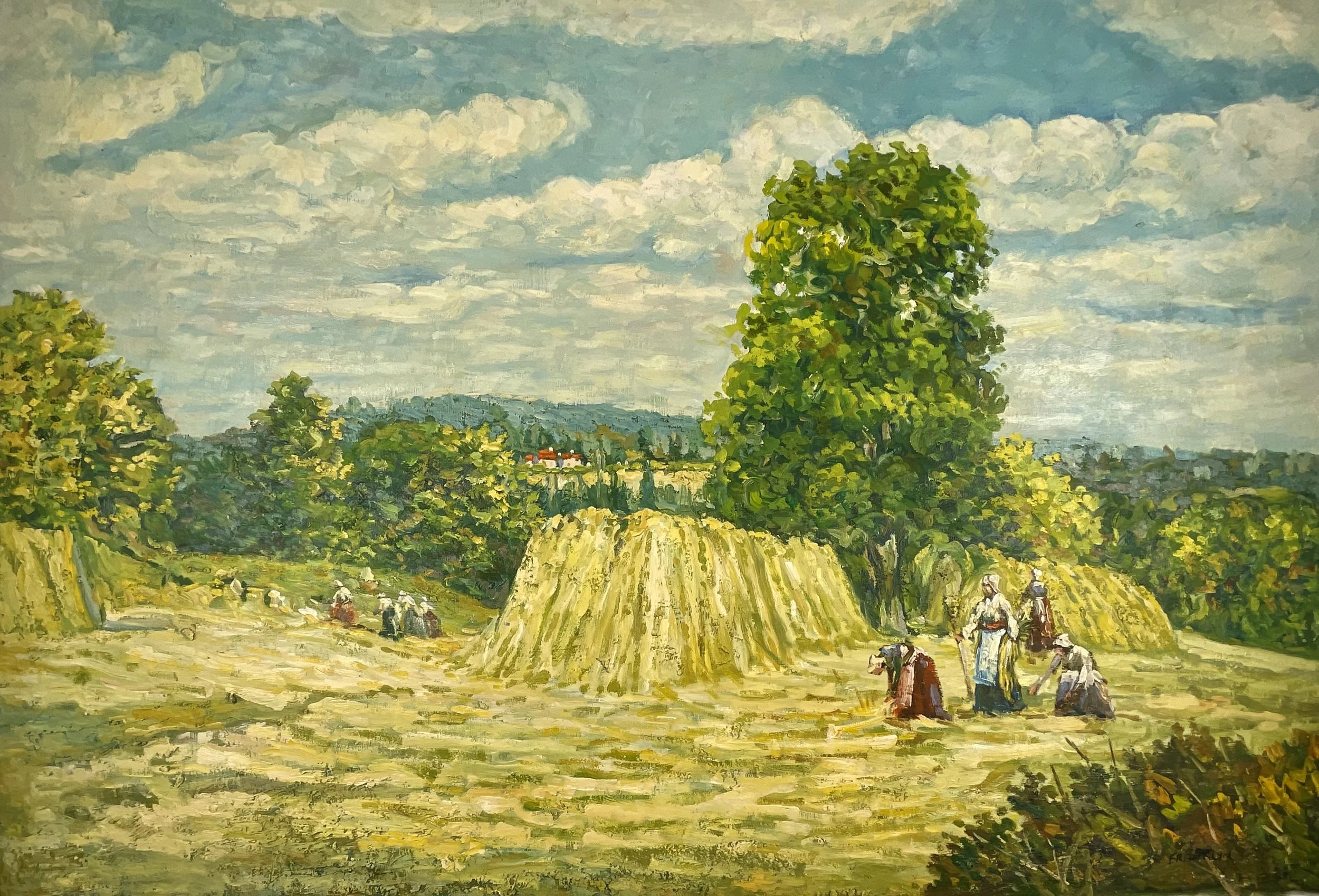
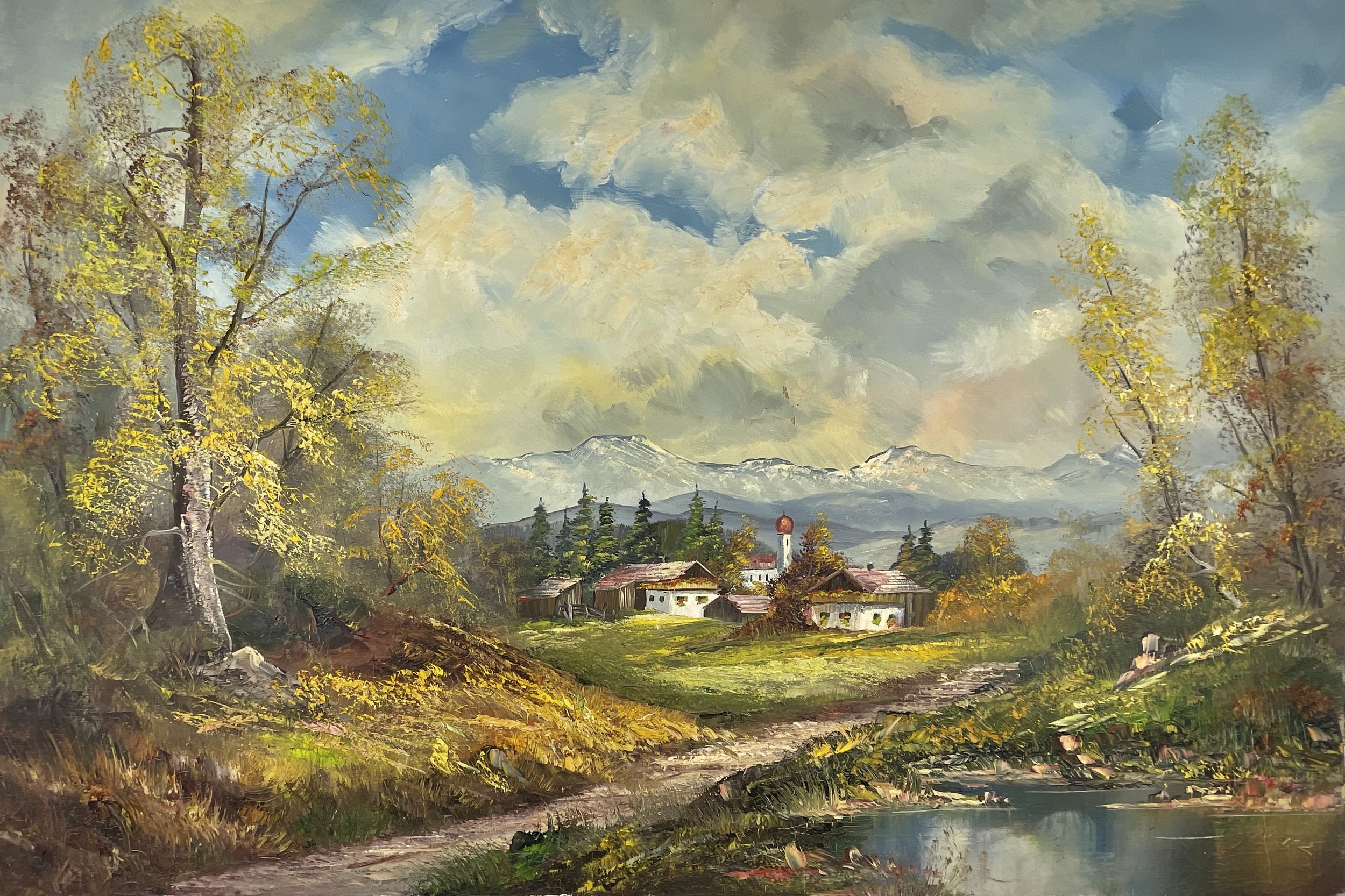
Alpine Village Landscape (attributed), L. A. Narz (Austrian/German school, 20th century), c.1950–1970, oil on canvas with impasto, 36 × 24 in., signed Narz.
A richly textured Alpine landscape painting by L. A. Narz depicting a pastoral village beneath snow-capped mountains, executed in expressive impasto oil paint. The composition captures the charm of Central European countryside scenery with luminous skies, autumnal trees, and a reflective pond, demonstrating the artist’s affinity for Tyrolean and Swiss mountain subjects.
Artwork Description
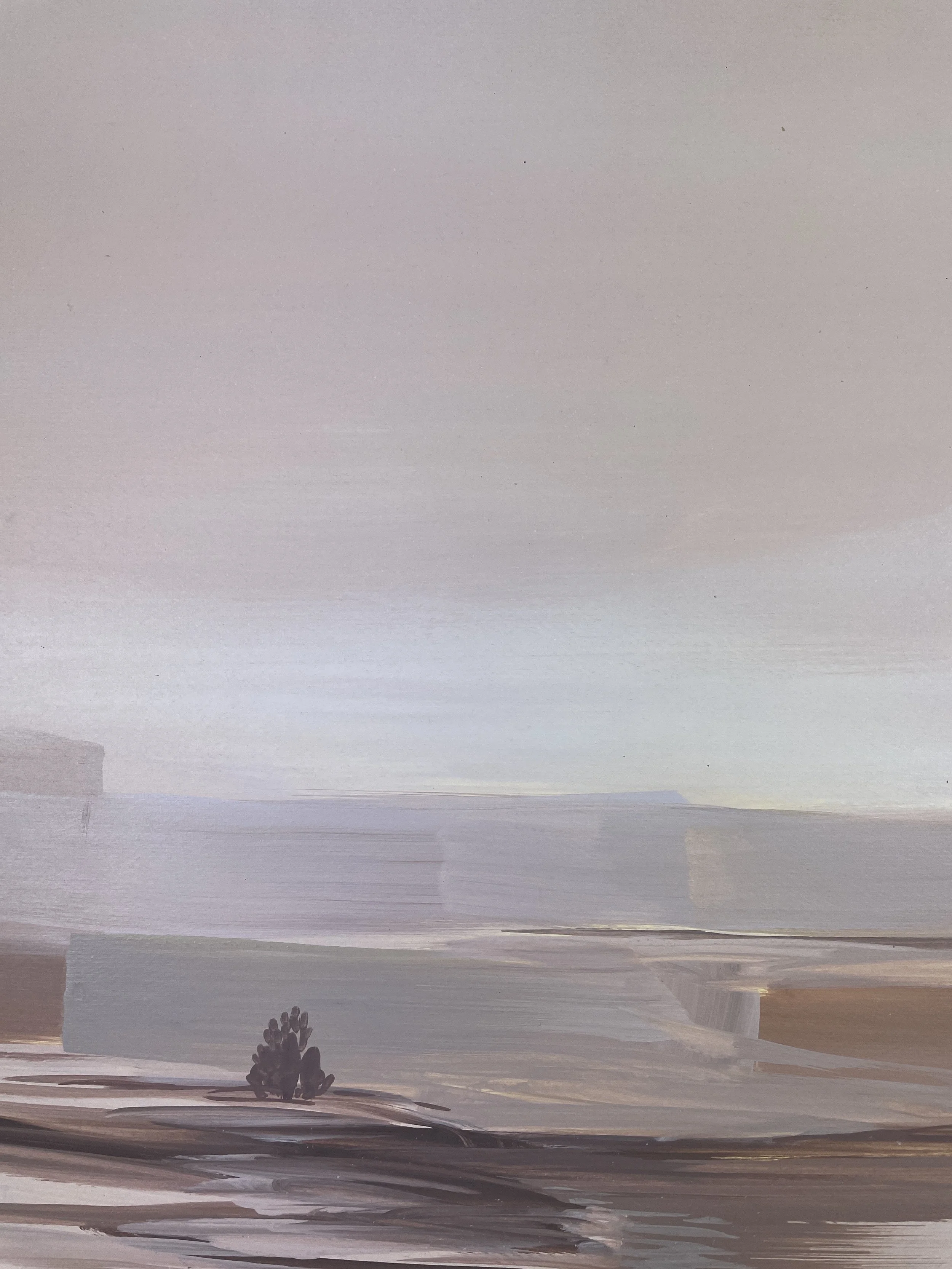
This atmospheric landscape by L. A. Narz presents an idyllic Central European countryside scene rendered in thick, expressive oil paint. The composition centers on a small Alpine village nestled among rolling meadows and pine forests, with snow-covered mountains rising dramatically in the distance.
A winding path leads the viewer’s eye through the foreground, passing a reflective pond before curving toward the cluster of village buildings. The structures feature whitewashed walls and warm red roofs, accented by colorful flower boxes and a small onion-domed church tower—an architectural element characteristic of Bavarian and Austrian rural churches.
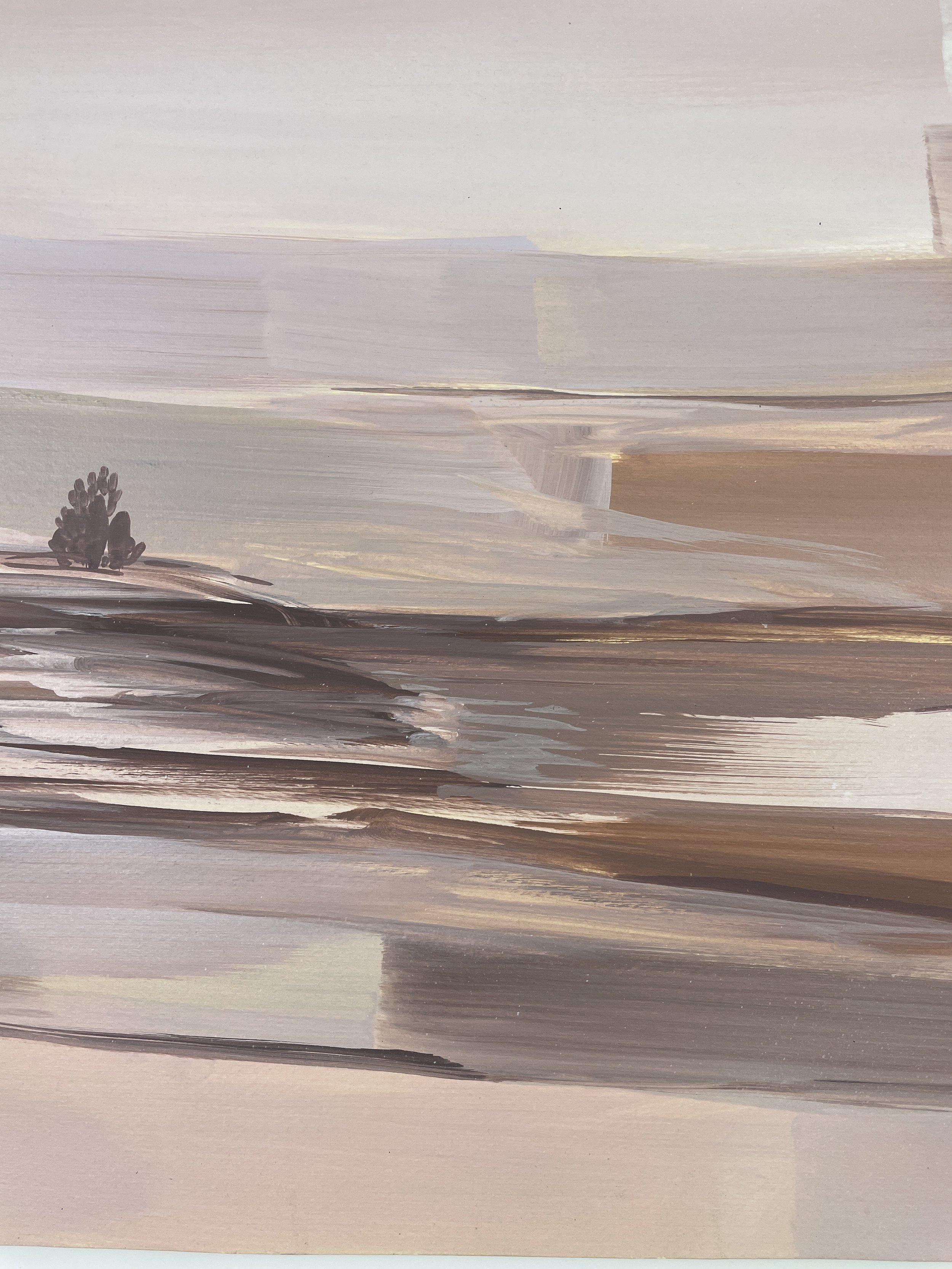
The surrounding landscape is painted with bold impasto brushwork. Thick layers of oil paint build the foliage of tall trees and grasses, giving the scene tactile depth and movement. Golden leaves and autumn tones suggest a late-season setting, while the luminous sky overhead is constructed with broad palette-knife strokes that form dramatic cloud structures across soft blue light.
The artist uses a strong contrast between warm earth tones and cool atmospheric blues to create spatial depth. The foreground meadow glows with warm greens, ochres, and siennas, while the distant mountains fade into cooler bluish hues, a technique rooted in traditional European landscape painting.
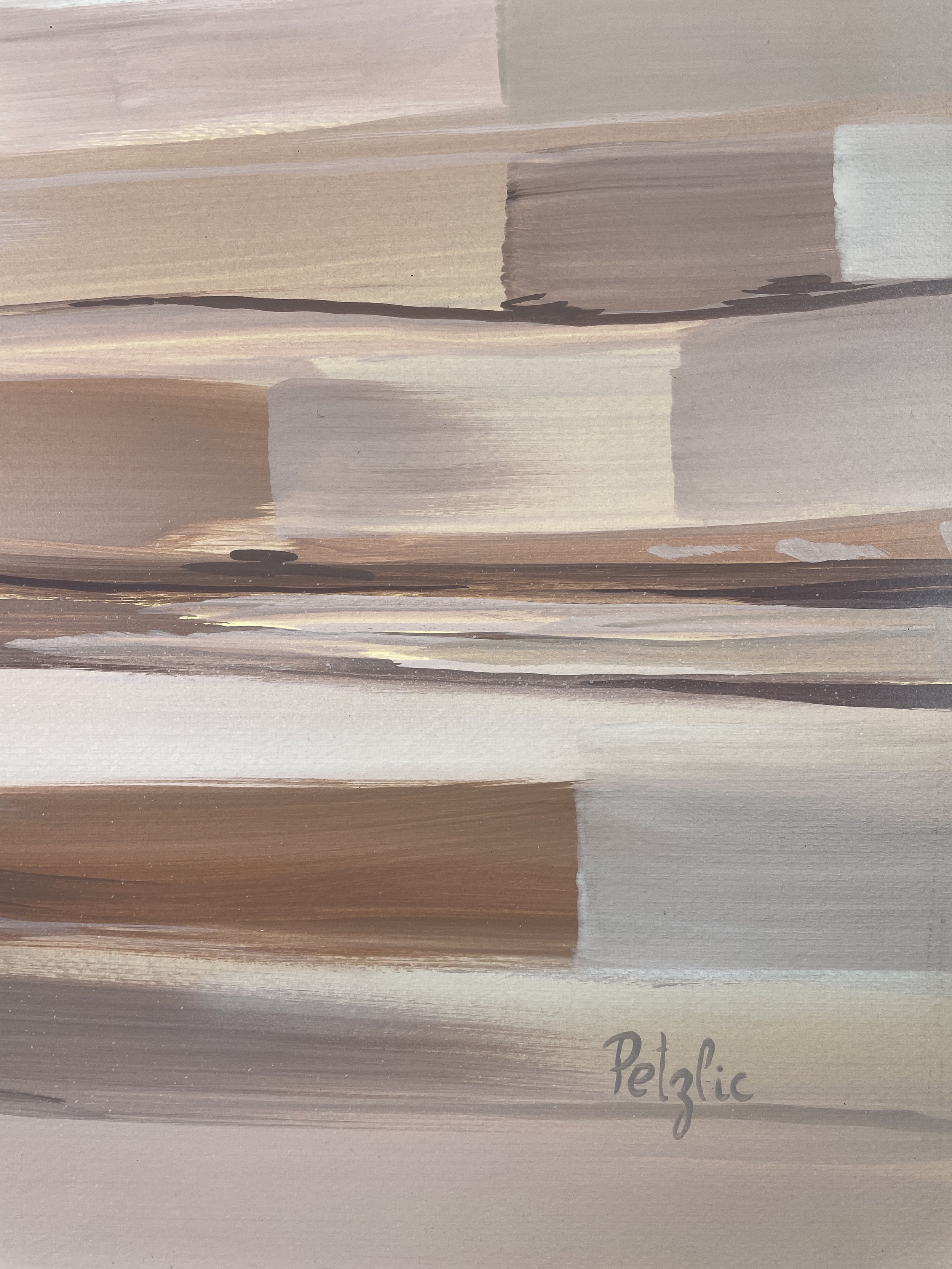
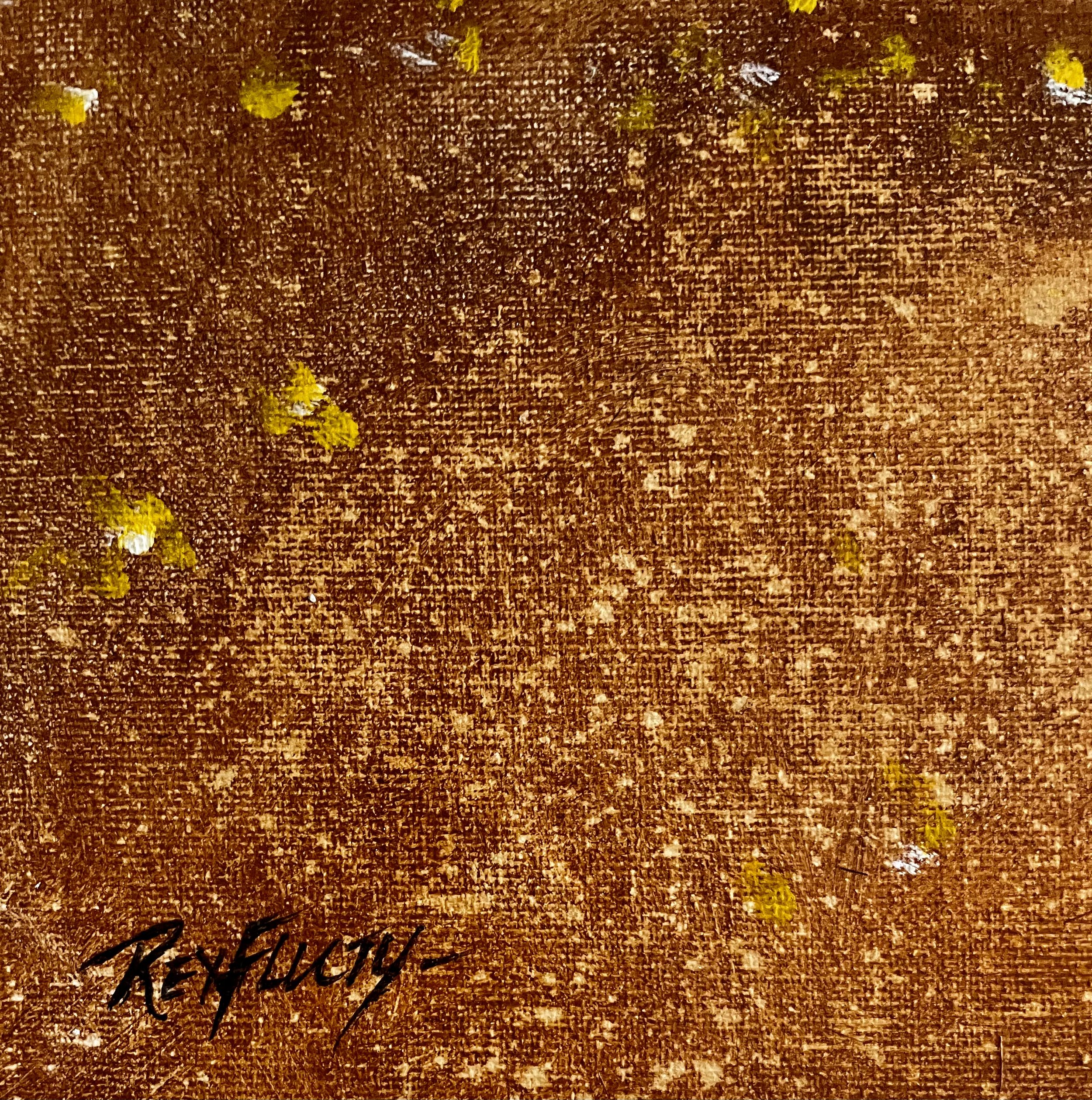
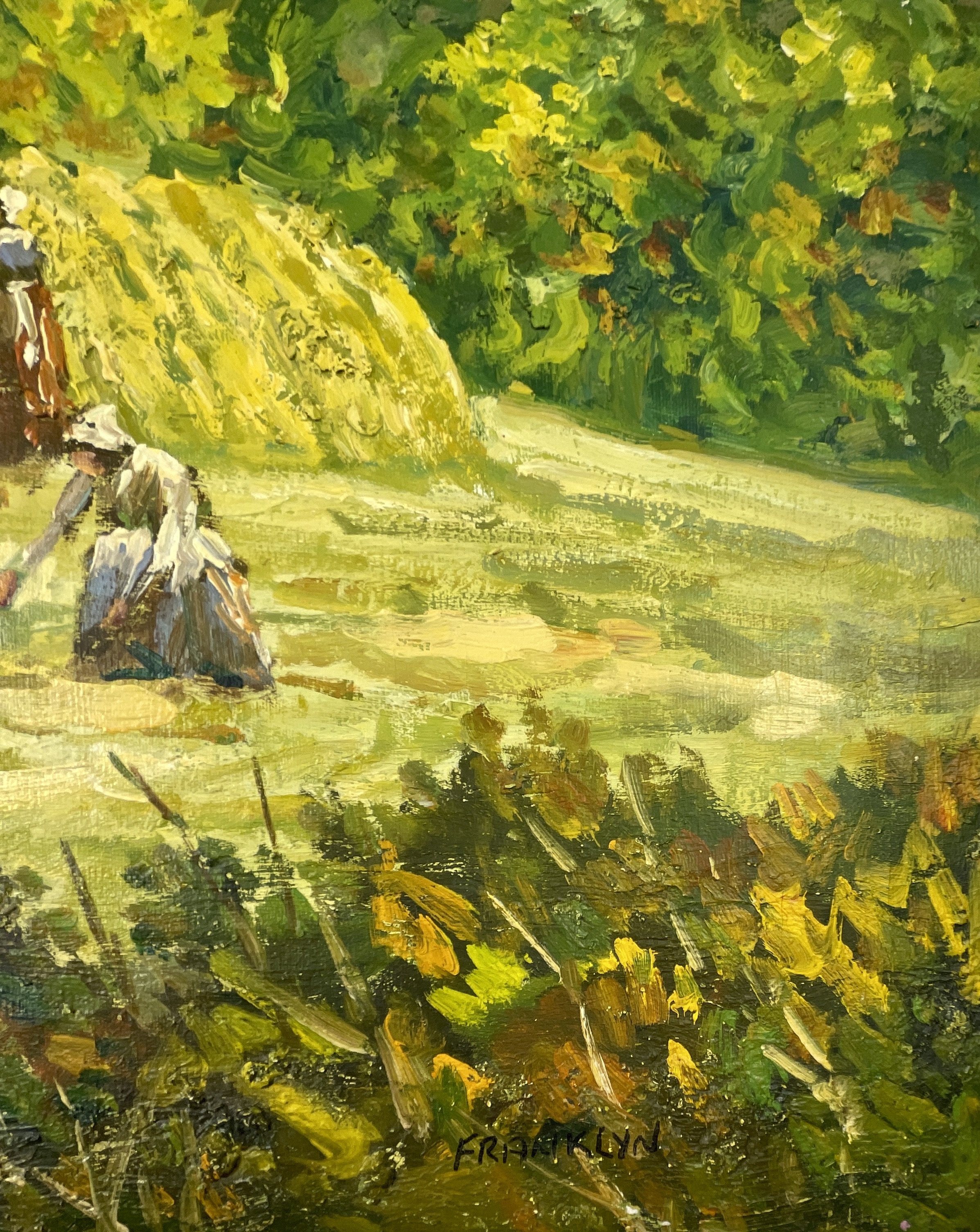
Close examination reveals the painter’s confident use of impasto technique. The foliage, tree bark, and meadow grasses are applied with raised paint ridges, allowing light to catch the surface and enhance the illusion of natural texture. These thick applications of pigment give the painting a lively, almost sculptural surface.
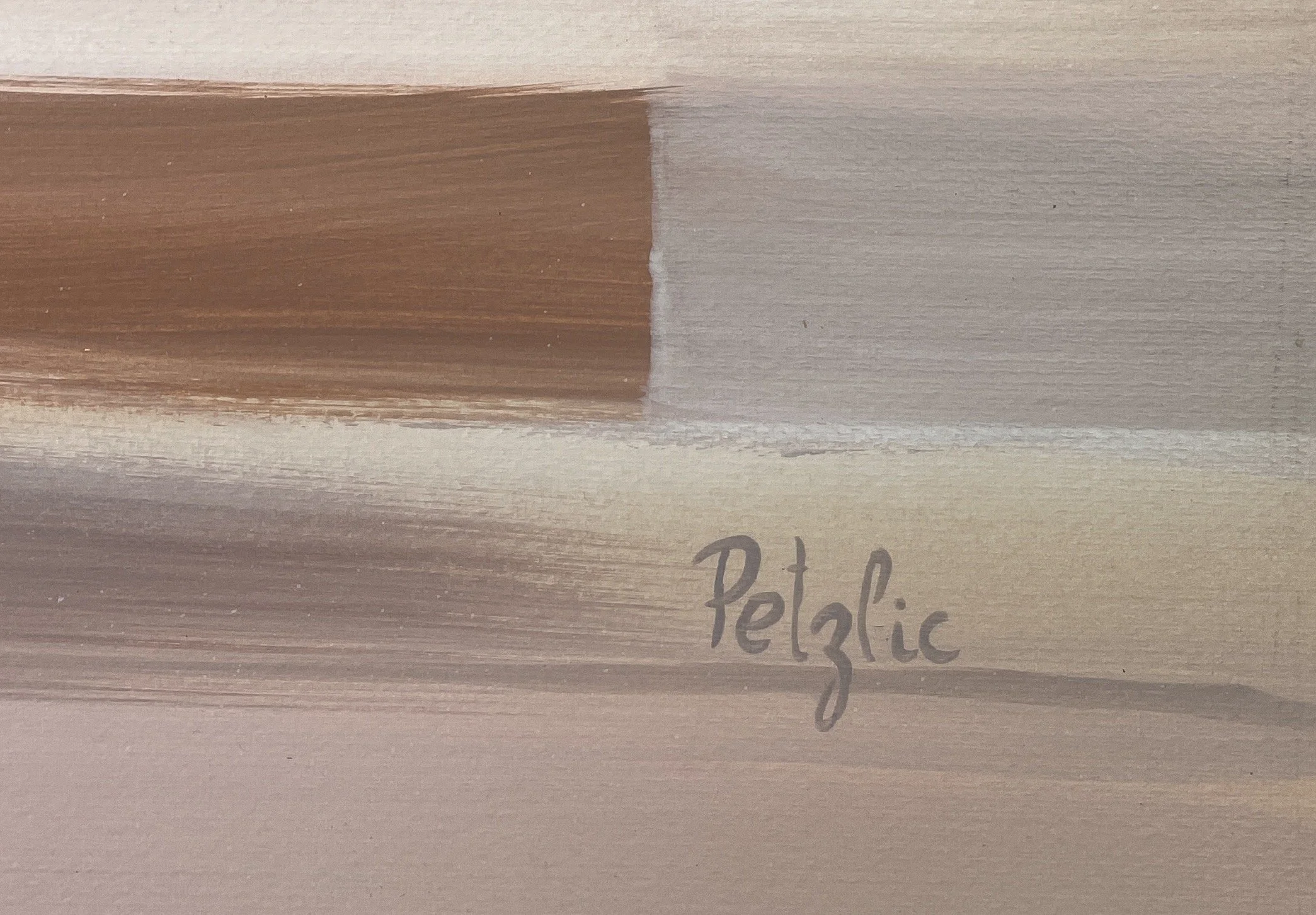
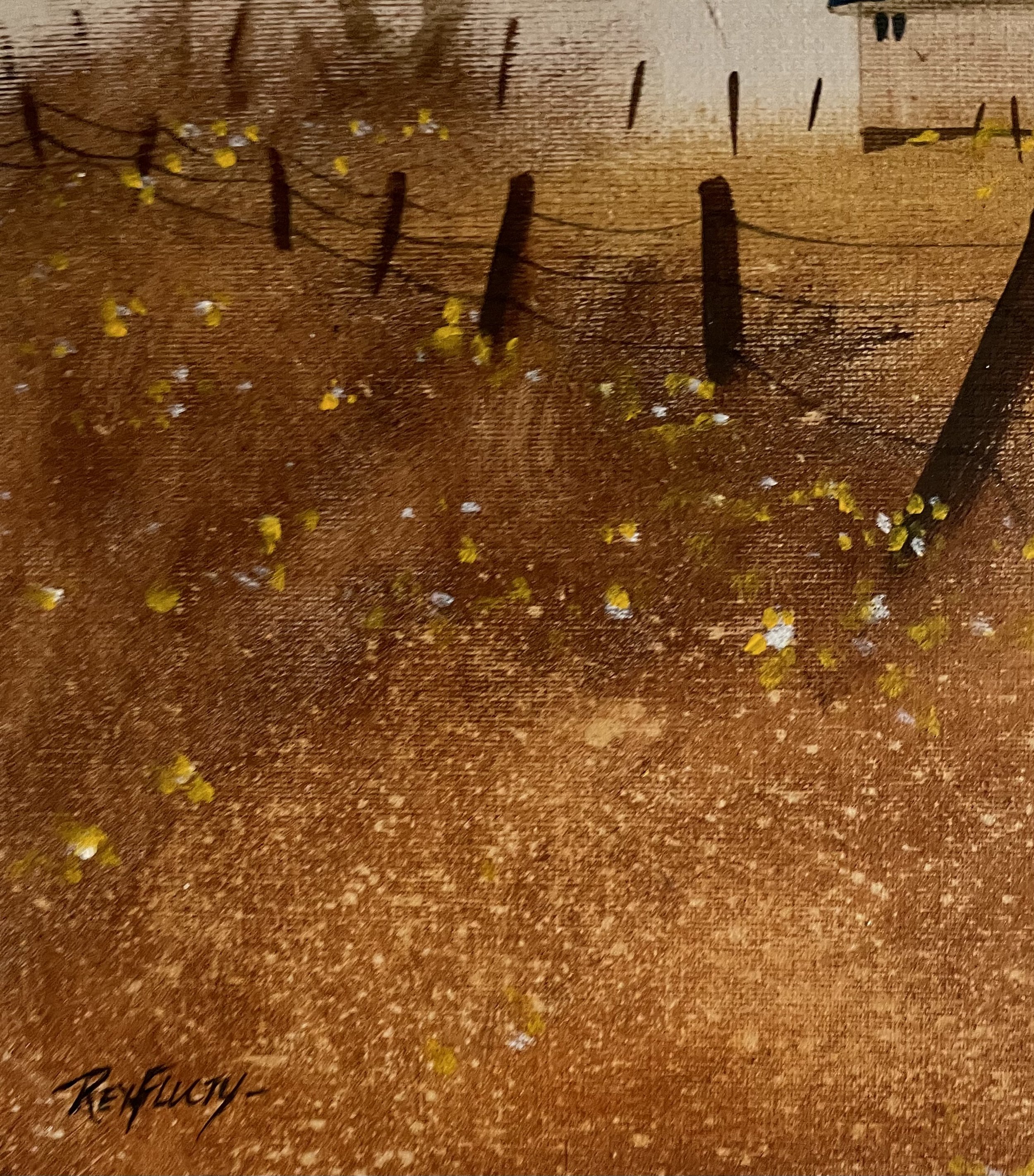
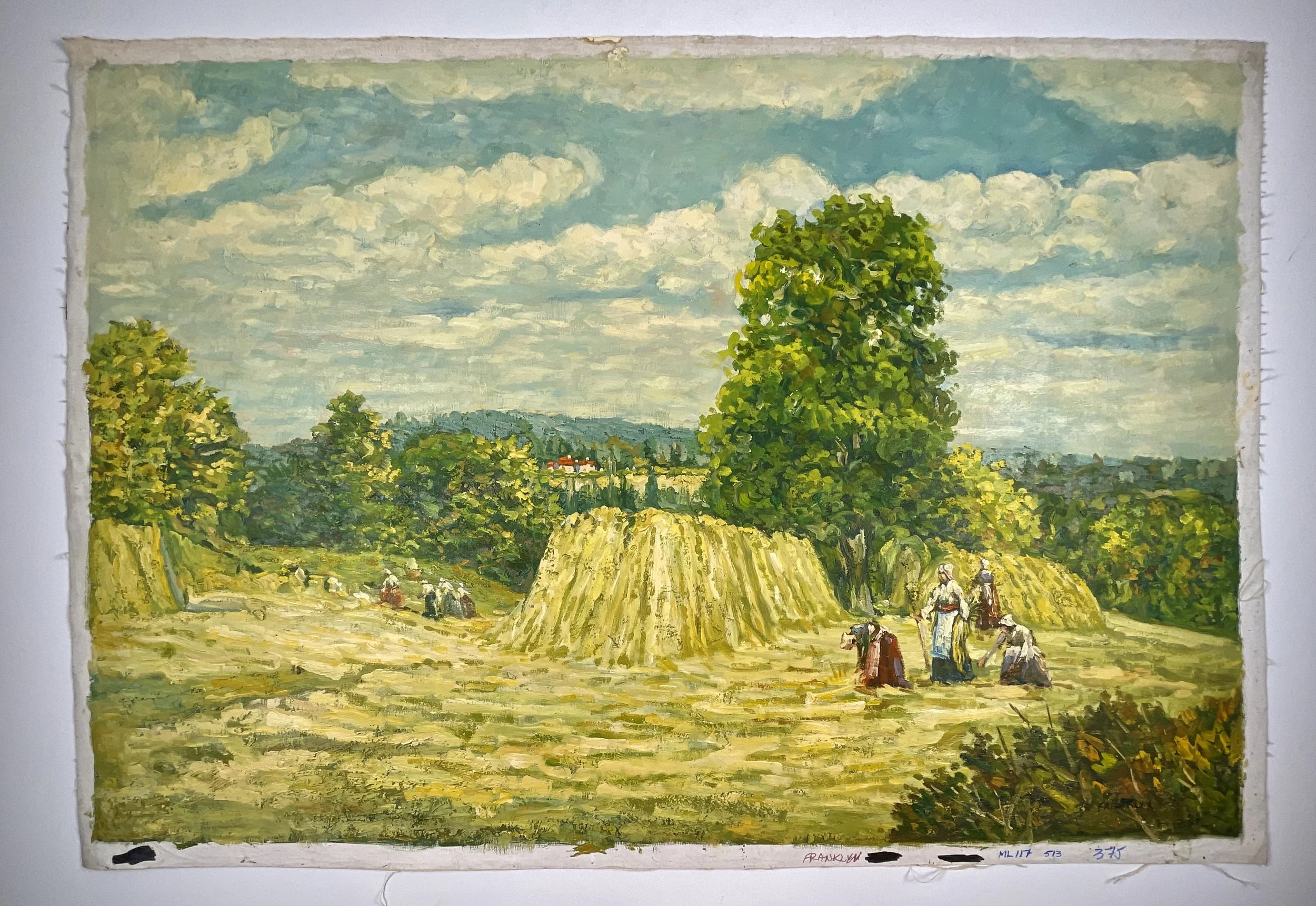
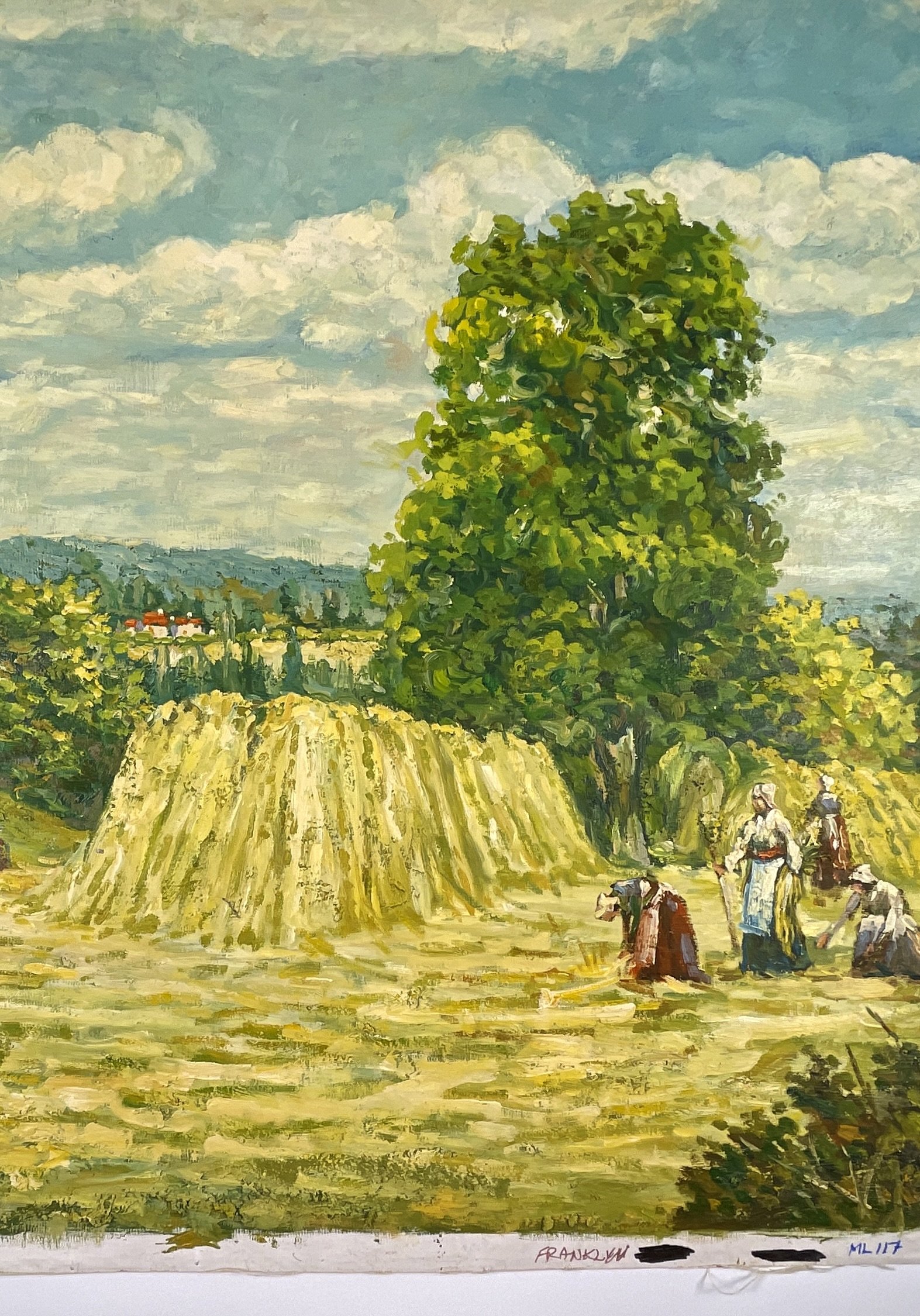
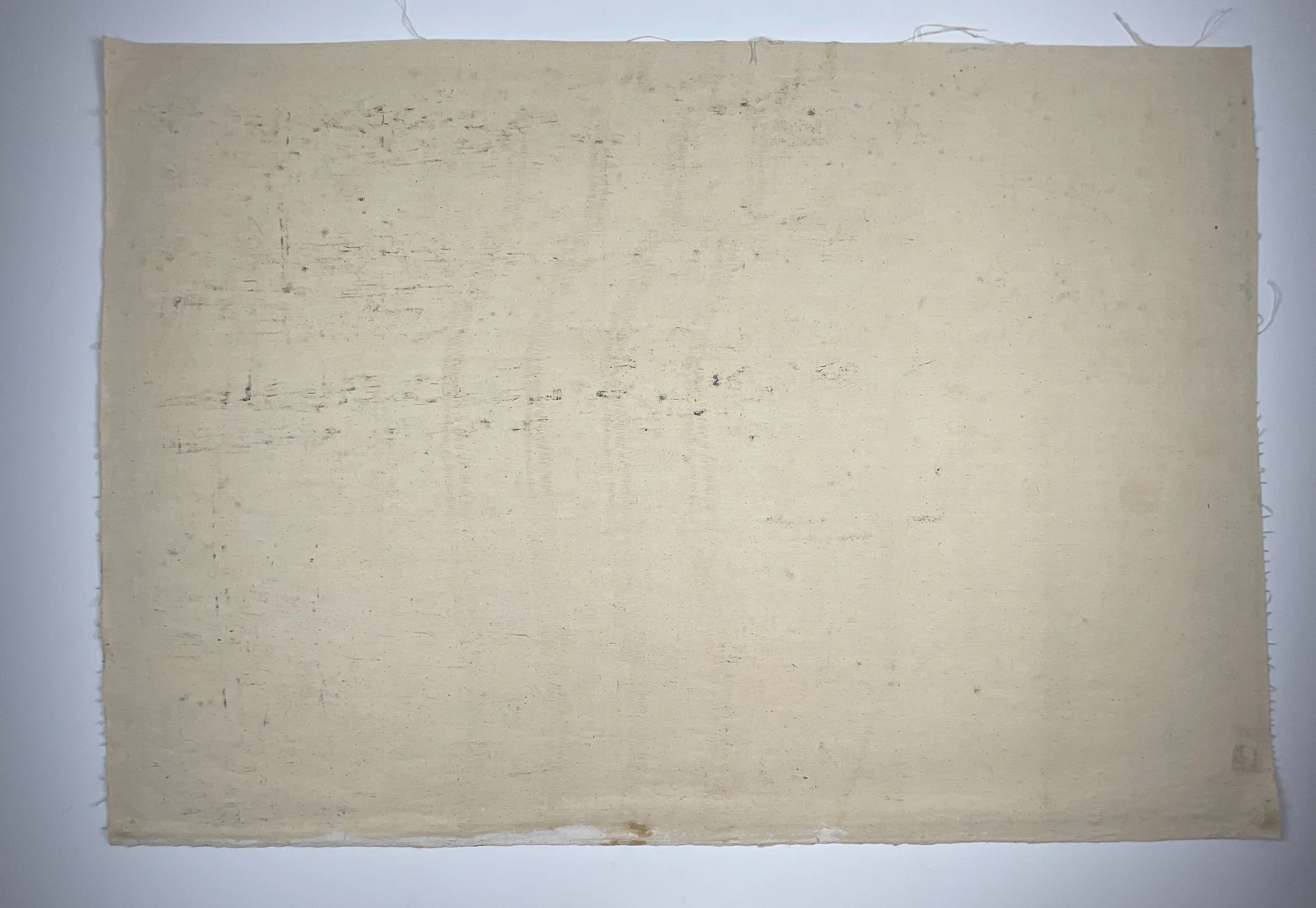
The work is signed “Narz” within the painted surface and retains studio margin notes along the untrimmed canvas edge, including dimensions and catalog markings. Such annotations were common in studio or gallery preparation prior to framing.
Scenes of Alpine villages and mountain landscapes were among Narz’s most favored subjects. The artist repeatedly traveled through the Tyrol and Swiss Alps, capturing the romantic atmosphere of traditional mountain communities and dramatic natural vistas.
The present painting reflects that tradition, presenting an idealized yet believable vision of the Central European countryside. The balance of pastoral serenity, architectural charm, and mountain grandeur places the work within the broader lineage of twentieth-century Alpine landscape painting.
Artist Biography
L. A. Narz was a twentieth-century European landscape painter whose work focused primarily on naturalistic depictions of Alpine scenery. His artistic talents were recognized early in life, leading him to pursue formal training influenced by the traditions of the Academy of Fine Arts.
Narz’s artistic development was shaped by extensive travel throughout Central Europe. He studied and worked in several of the continent’s major artistic centers, including Munich in Germany as well as regions of Austria and Italy. These journeys exposed him to both academic painting traditions and the rich natural landscapes that would become central to his artistic identity.
Beyond the established art centers, Narz frequently traveled through the Tyrolean Alps and Switzerland. The dramatic mountain scenery, alpine villages, and pastoral countryside of these regions became recurring subjects in his work. These environments offered the artist a combination of natural beauty and cultural heritage that he translated into vivid landscape compositions.
Narz specialized in naturalistic landscapes and mountain scenes, typically rendered with a painterly impasto technique that emphasized texture and atmospheric light. His works often feature traditional rural architecture, winding country paths, reflective water features, and towering alpine peaks set beneath expansive skies.
His paintings were exhibited regularly in Vienna, where critics responded favorably to his interpretations of mountain landscapes. These exhibitions helped establish his reputation as a painter dedicated to capturing the essence of Central European countryside scenery.
Narz’s artistic style reflects a continuation of nineteenth-century Romantic and naturalist landscape traditions adapted to twentieth-century painting techniques. His compositions emphasize harmony between architecture, landscape, and atmosphere, presenting scenes that celebrate both natural beauty and cultural heritage.
The artist’s body of work contributes to a broader tradition of European alpine painting that stretches from the Romantic era through modern times. Through his repeated journeys to the Tyrol and Swiss Alps, Narz developed a visual language rooted in firsthand observation of mountainous environments.
Today his paintings remain appreciated by collectors who value traditional European landscape painting, particularly works depicting Alpine villages and pastoral mountain scenery.
L. A. Narz Alpine village landscape oil painting, impasto technique, European countryside scene with mountains, signed, 36 × 24 in.
Certificate of Authentication
Artist: L. A. Narz
Title: Alpine Village Landscape (attributed)
Medium: Oil on canvas with impasto
Dimensions: 36 × 24 inches
Signature: Signed Narz
Date: circa 1950–1970
This artwork is an original oil painting attributed to L. A. Narz based on the signature, stylistic characteristics, and accompanying artist documentation.
Condition
Good vintage condition. Stable oil paint surface with visible impasto texture. Minor wear and handling marks along the canvas margins consistent with studio storage and age. No significant restoration visible.
Provenance
Artist studio or European gallery distribution
Mitch Morse Gallery, New York
Private collection
Artfind Gallery, Washington DC (current owner)
All works were acquired through Mitch Morse Gallery, which sourced artworks in New York, the United States, and Europe.
Provenance Note: Mitch Morse Gallery Collection
This artwork originates from the inventory of Mitch Morse Gallery, a respected New York–based gallery and publisher active during the mid-to-late 20th century. Mitch Morse was an established figure in the American art market, serving as an artist’s agent, publisher of original graphics, art dealer, distributor, and fine art restorer. He was also a Design Affiliate of A.S.I.D., listed in Who’s Who in the East, and a guest lecturer in graphics at New York University, with appearances on radio and television discussing art and design.
Through his gallery and associated publishing operations, Morse acquired paintings, prints, and original works from artists and studios across New York, Europe, and international art markets, assembling a broad inventory representing a wide range of artistic traditions and mediums. Works from this collection circulated through galleries and collectors throughout the United States.
The present painting was acquired through this network and is now held in the collection of Artfind Gallery, Washington DC, continuing the documented chain of gallery provenance from Mitch Morse’s original acquisitions.
Alpine Village Landscape (attributed), L. A. Narz (Austrian/German school, 20th century), c.1950–1970, oil on canvas with impasto, 36 × 24 in., signed Narz.
A richly textured Alpine landscape painting by L. A. Narz depicting a pastoral village beneath snow-capped mountains, executed in expressive impasto oil paint. The composition captures the charm of Central European countryside scenery with luminous skies, autumnal trees, and a reflective pond, demonstrating the artist’s affinity for Tyrolean and Swiss mountain subjects.
Artwork Description
This atmospheric landscape by L. A. Narz presents an idyllic Central European countryside scene rendered in thick, expressive oil paint. The composition centers on a small Alpine village nestled among rolling meadows and pine forests, with snow-covered mountains rising dramatically in the distance.
A winding path leads the viewer’s eye through the foreground, passing a reflective pond before curving toward the cluster of village buildings. The structures feature whitewashed walls and warm red roofs, accented by colorful flower boxes and a small onion-domed church tower—an architectural element characteristic of Bavarian and Austrian rural churches.
The surrounding landscape is painted with bold impasto brushwork. Thick layers of oil paint build the foliage of tall trees and grasses, giving the scene tactile depth and movement. Golden leaves and autumn tones suggest a late-season setting, while the luminous sky overhead is constructed with broad palette-knife strokes that form dramatic cloud structures across soft blue light.
The artist uses a strong contrast between warm earth tones and cool atmospheric blues to create spatial depth. The foreground meadow glows with warm greens, ochres, and siennas, while the distant mountains fade into cooler bluish hues, a technique rooted in traditional European landscape painting.
Close examination reveals the painter’s confident use of impasto technique. The foliage, tree bark, and meadow grasses are applied with raised paint ridges, allowing light to catch the surface and enhance the illusion of natural texture. These thick applications of pigment give the painting a lively, almost sculptural surface.
The work is signed “Narz” within the painted surface and retains studio margin notes along the untrimmed canvas edge, including dimensions and catalog markings. Such annotations were common in studio or gallery preparation prior to framing.
Scenes of Alpine villages and mountain landscapes were among Narz’s most favored subjects. The artist repeatedly traveled through the Tyrol and Swiss Alps, capturing the romantic atmosphere of traditional mountain communities and dramatic natural vistas.
The present painting reflects that tradition, presenting an idealized yet believable vision of the Central European countryside. The balance of pastoral serenity, architectural charm, and mountain grandeur places the work within the broader lineage of twentieth-century Alpine landscape painting.
Artist Biography
L. A. Narz was a twentieth-century European landscape painter whose work focused primarily on naturalistic depictions of Alpine scenery. His artistic talents were recognized early in life, leading him to pursue formal training influenced by the traditions of the Academy of Fine Arts.
Narz’s artistic development was shaped by extensive travel throughout Central Europe. He studied and worked in several of the continent’s major artistic centers, including Munich in Germany as well as regions of Austria and Italy. These journeys exposed him to both academic painting traditions and the rich natural landscapes that would become central to his artistic identity.
Beyond the established art centers, Narz frequently traveled through the Tyrolean Alps and Switzerland. The dramatic mountain scenery, alpine villages, and pastoral countryside of these regions became recurring subjects in his work. These environments offered the artist a combination of natural beauty and cultural heritage that he translated into vivid landscape compositions.
Narz specialized in naturalistic landscapes and mountain scenes, typically rendered with a painterly impasto technique that emphasized texture and atmospheric light. His works often feature traditional rural architecture, winding country paths, reflective water features, and towering alpine peaks set beneath expansive skies.
His paintings were exhibited regularly in Vienna, where critics responded favorably to his interpretations of mountain landscapes. These exhibitions helped establish his reputation as a painter dedicated to capturing the essence of Central European countryside scenery.
Narz’s artistic style reflects a continuation of nineteenth-century Romantic and naturalist landscape traditions adapted to twentieth-century painting techniques. His compositions emphasize harmony between architecture, landscape, and atmosphere, presenting scenes that celebrate both natural beauty and cultural heritage.
The artist’s body of work contributes to a broader tradition of European alpine painting that stretches from the Romantic era through modern times. Through his repeated journeys to the Tyrol and Swiss Alps, Narz developed a visual language rooted in firsthand observation of mountainous environments.
Today his paintings remain appreciated by collectors who value traditional European landscape painting, particularly works depicting Alpine villages and pastoral mountain scenery.
L. A. Narz Alpine village landscape oil painting, impasto technique, European countryside scene with mountains, signed, 36 × 24 in.
Certificate of Authentication
Artist: L. A. Narz
Title: Alpine Village Landscape (attributed)
Medium: Oil on canvas with impasto
Dimensions: 36 × 24 inches
Signature: Signed Narz
Date: circa 1950–1970
This artwork is an original oil painting attributed to L. A. Narz based on the signature, stylistic characteristics, and accompanying artist documentation.
Condition
Good vintage condition. Stable oil paint surface with visible impasto texture. Minor wear and handling marks along the canvas margins consistent with studio storage and age. No significant restoration visible.
Provenance
Artist studio or European gallery distribution
Mitch Morse Gallery, New York
Private collection
Artfind Gallery, Washington DC (current owner)
All works were acquired through Mitch Morse Gallery, which sourced artworks in New York, the United States, and Europe.
Provenance Note: Mitch Morse Gallery Collection
This artwork originates from the inventory of Mitch Morse Gallery, a respected New York–based gallery and publisher active during the mid-to-late 20th century. Mitch Morse was an established figure in the American art market, serving as an artist’s agent, publisher of original graphics, art dealer, distributor, and fine art restorer. He was also a Design Affiliate of A.S.I.D., listed in Who’s Who in the East, and a guest lecturer in graphics at New York University, with appearances on radio and television discussing art and design.
Through his gallery and associated publishing operations, Morse acquired paintings, prints, and original works from artists and studios across New York, Europe, and international art markets, assembling a broad inventory representing a wide range of artistic traditions and mediums. Works from this collection circulated through galleries and collectors throughout the United States.
The present painting was acquired through this network and is now held in the collection of Artfind Gallery, Washington DC, continuing the documented chain of gallery provenance from Mitch Morse’s original acquisitions.