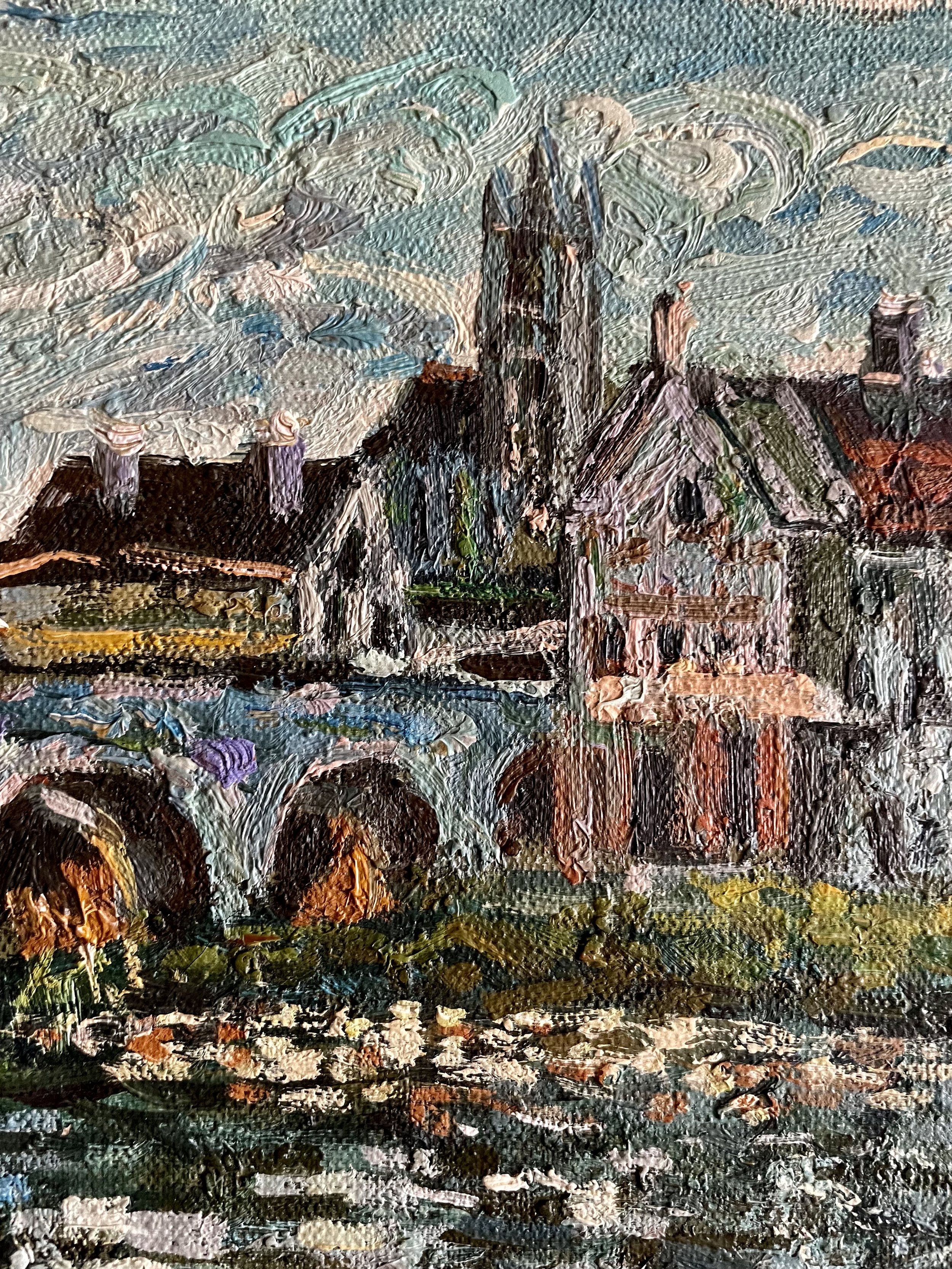
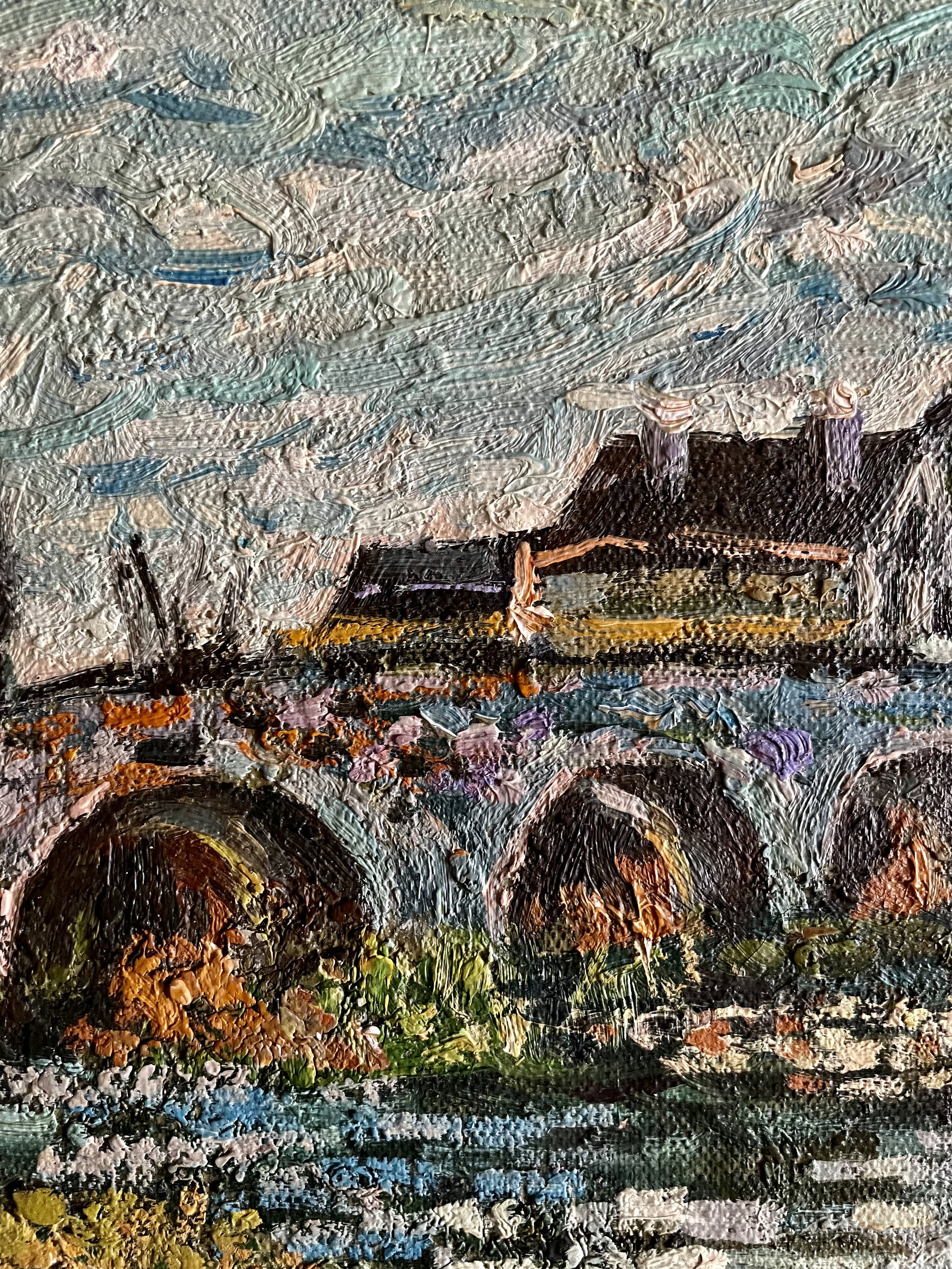
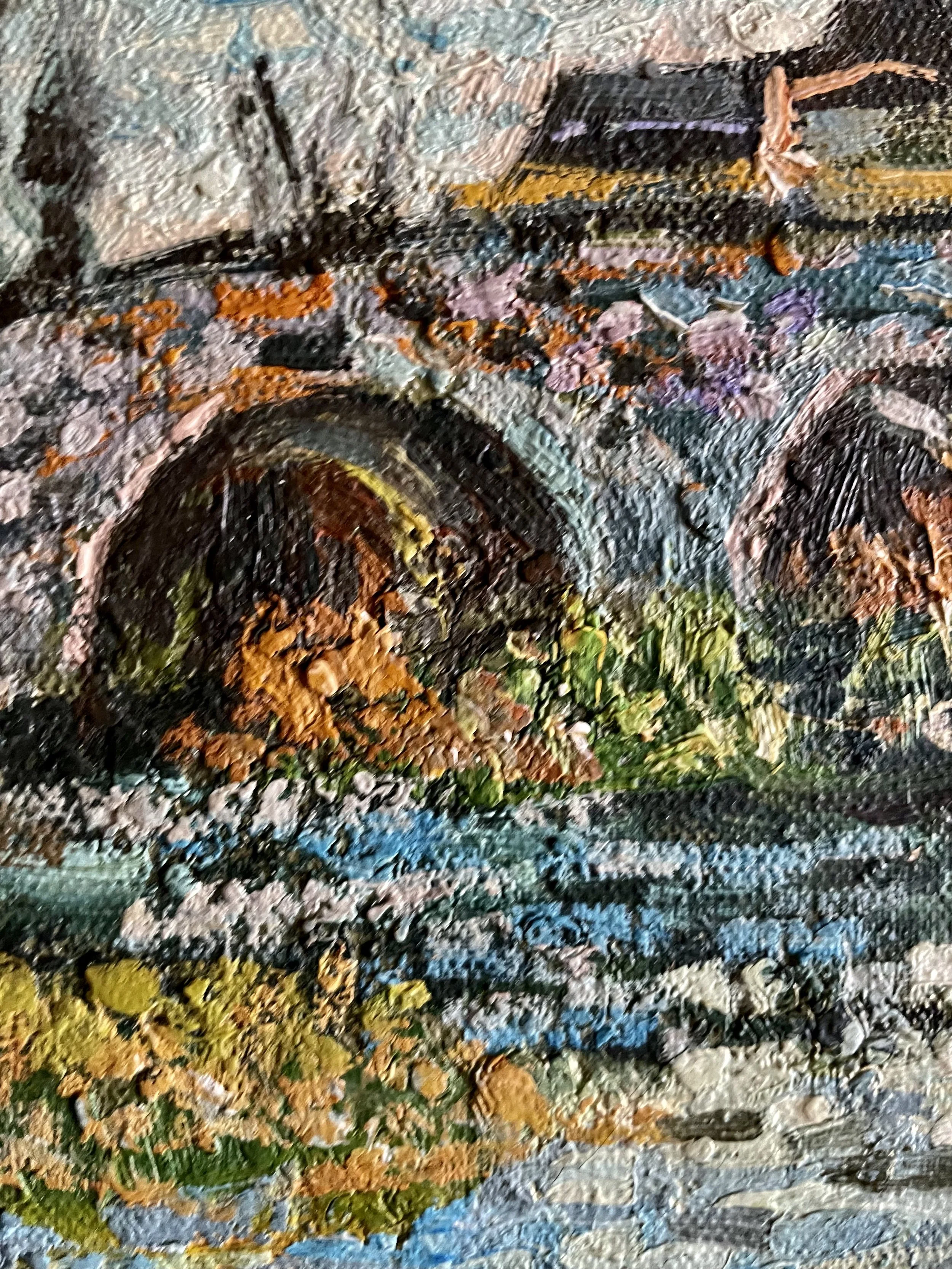
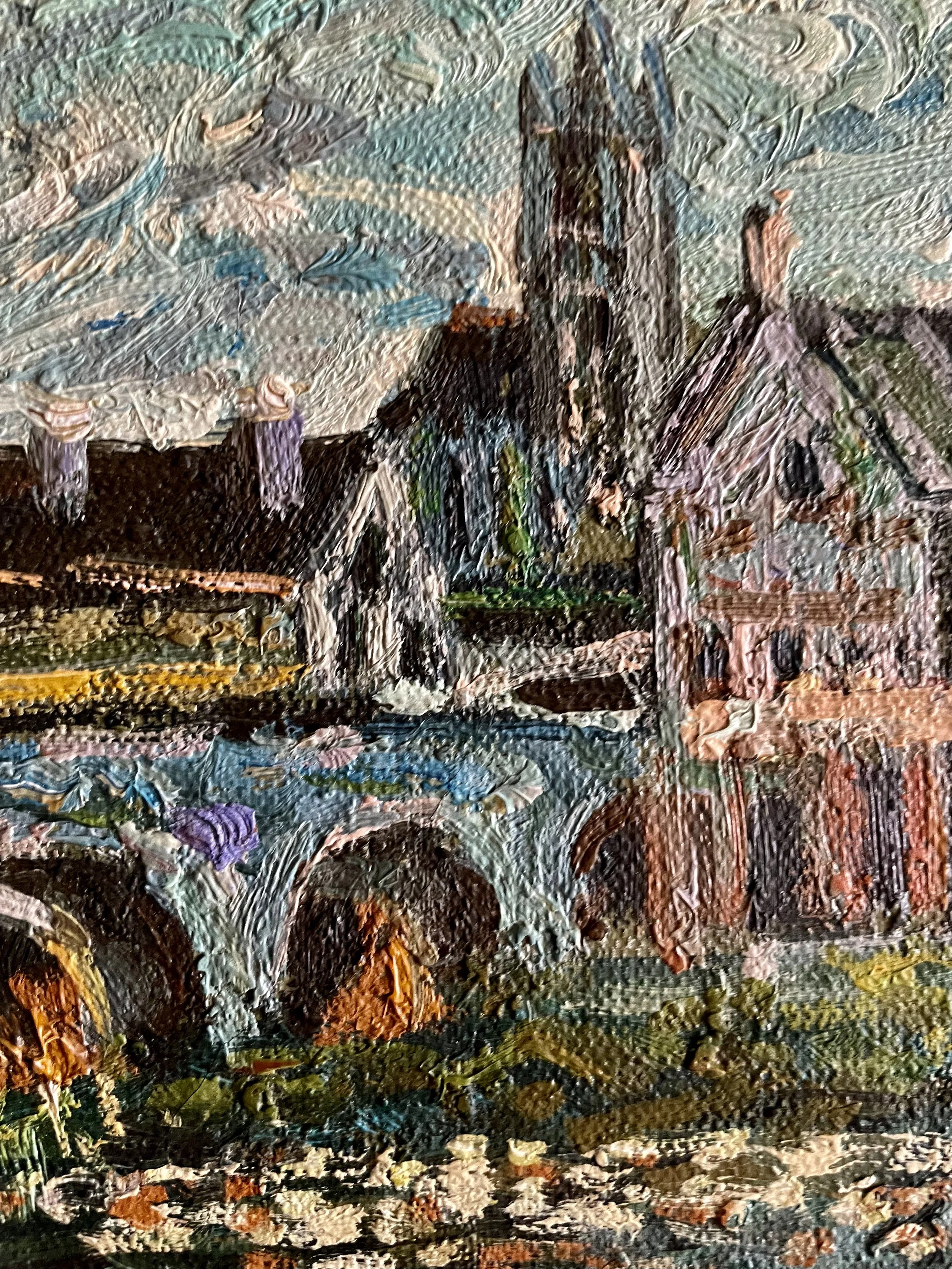
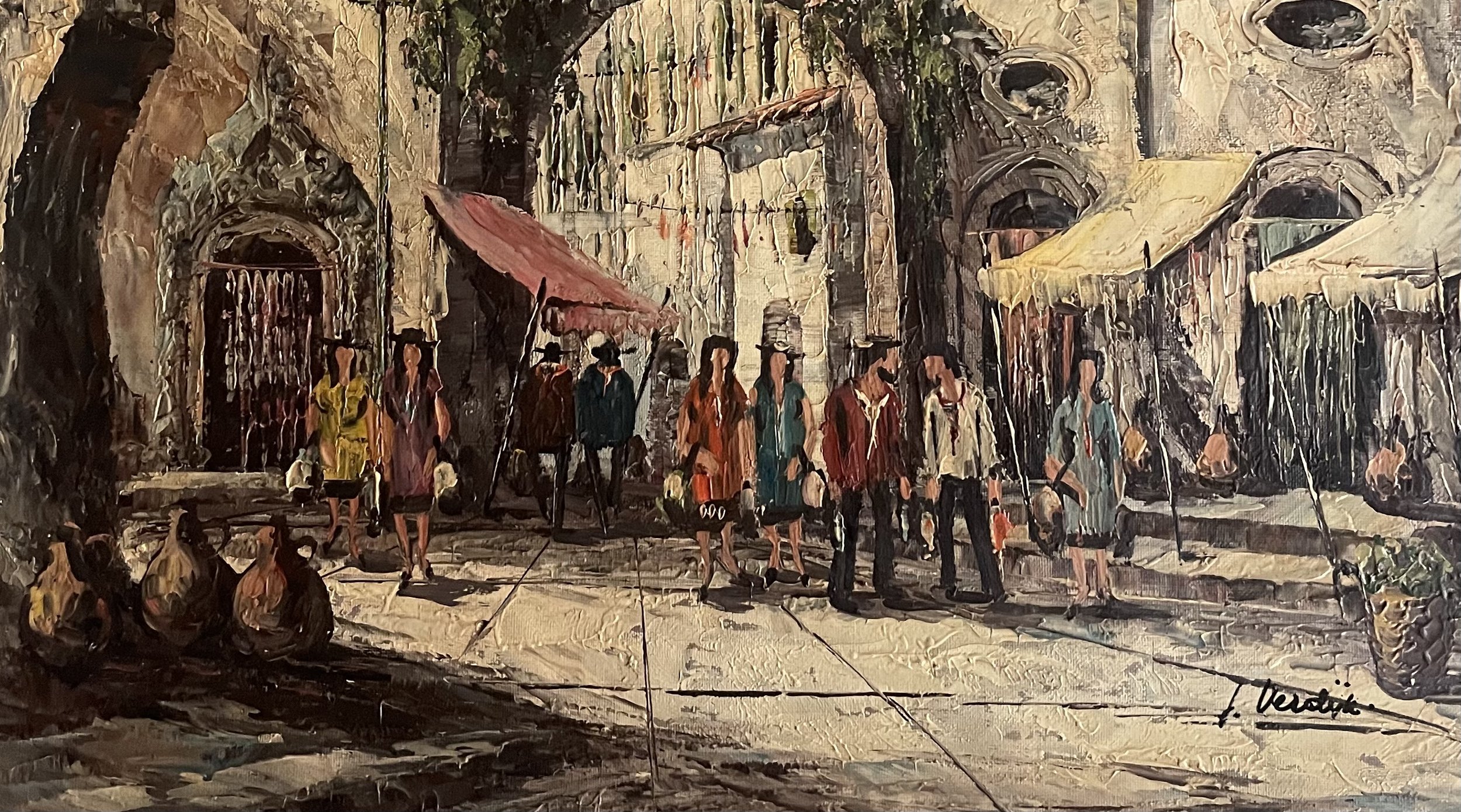
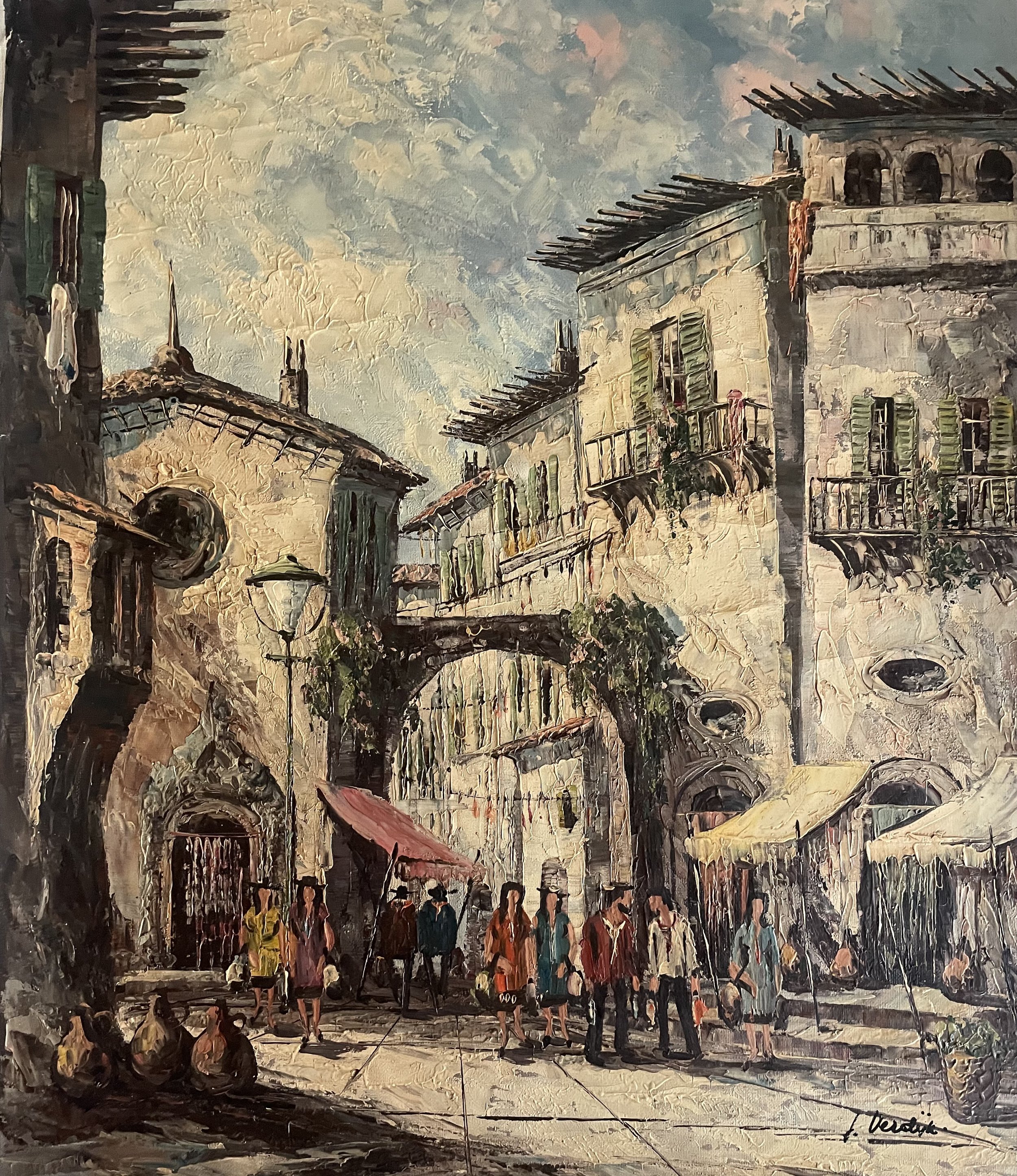
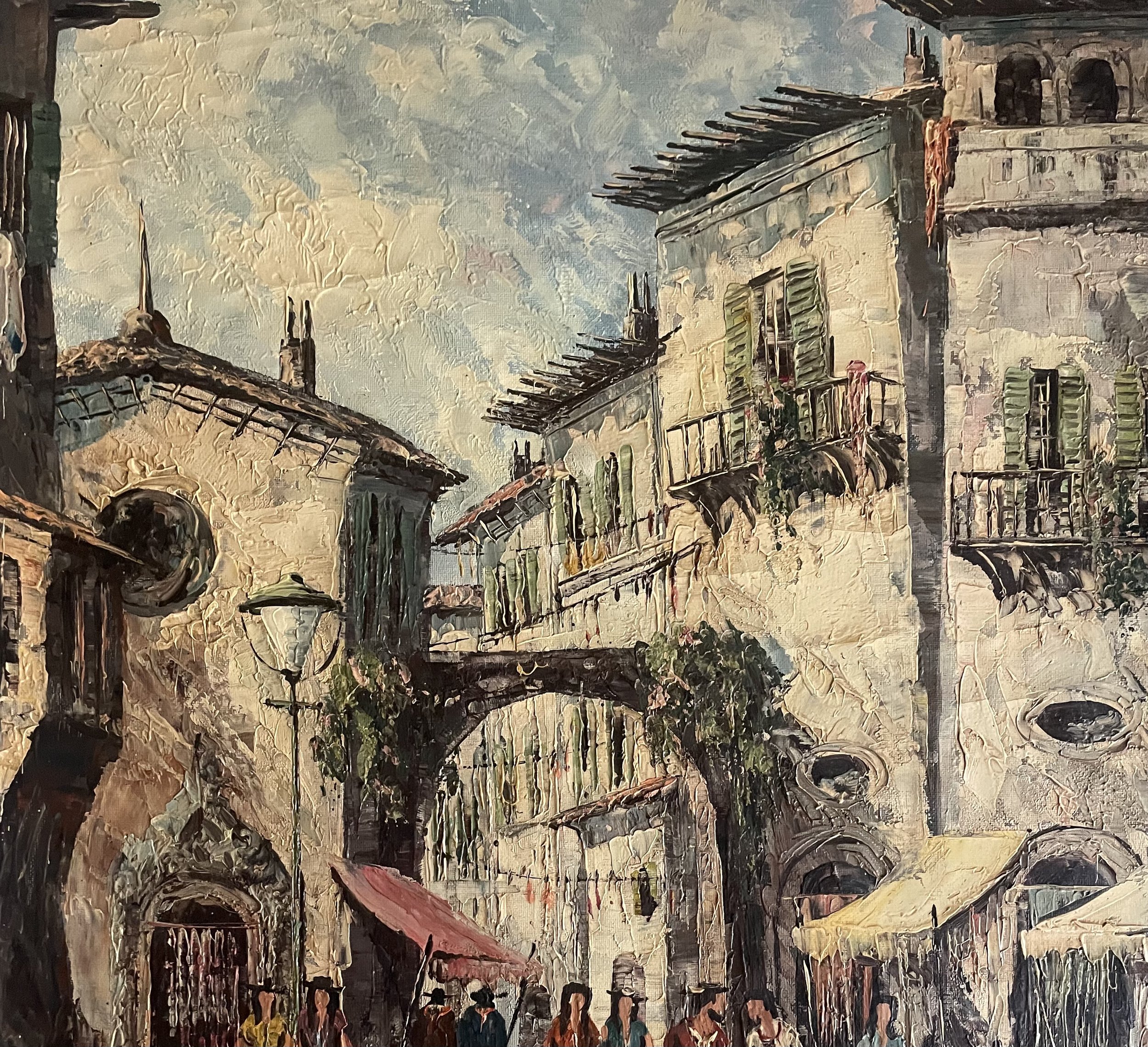
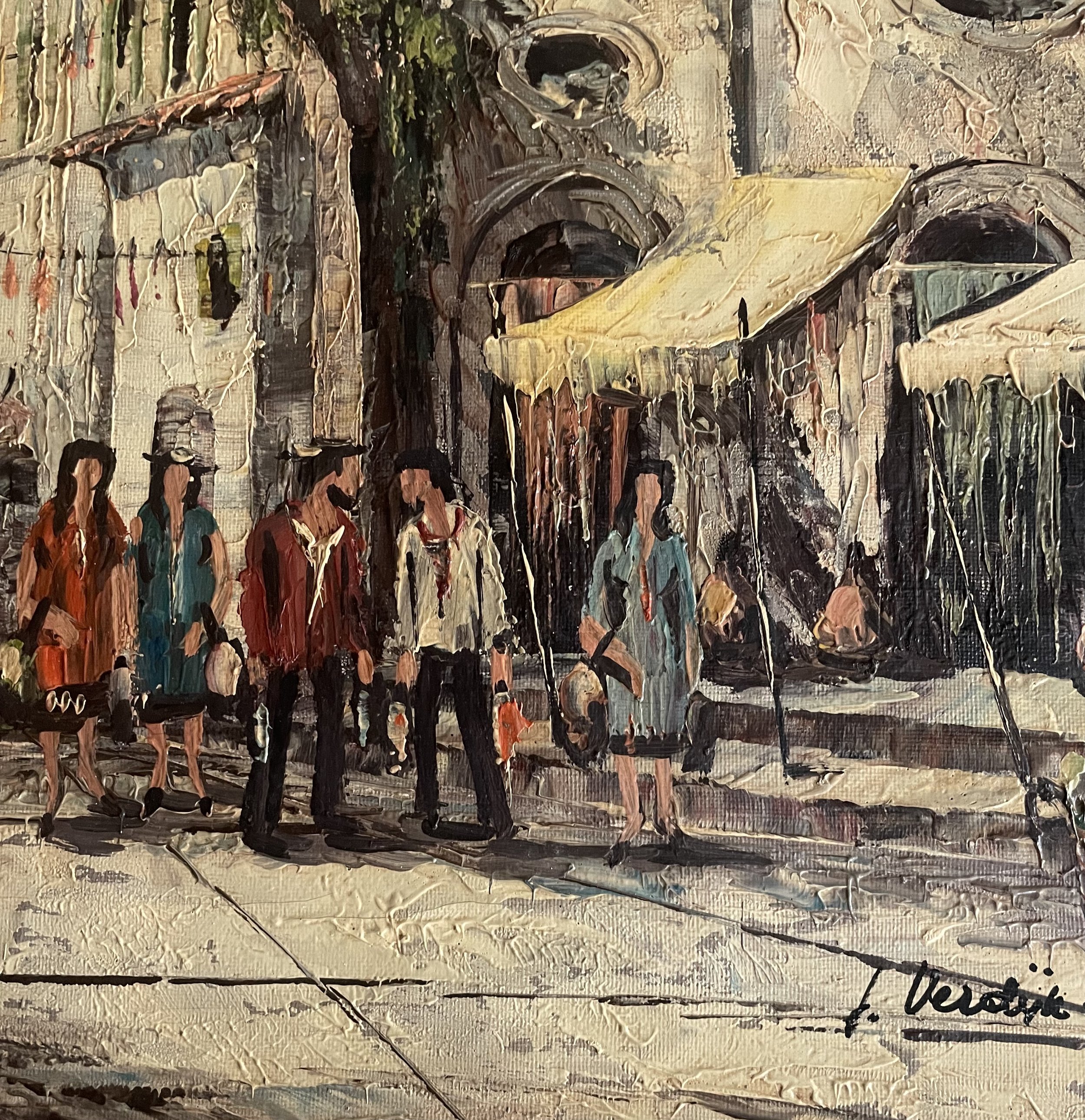
“Abstract Marbled Composition” – Heinrich Franger 8×10 Oil on Board (European Acquisition)
Abstract Marbled Composition is an original 8×10-inch oil on board by Heinrich Franger (1919–2006), a German-born abstract painter educated in Gothenburg and active throughout the Netherlands and Spain. Created during the 1960s, this dynamic work showcases Franger’s signature marbled technique: rivers of crimson, ivory and black pigment cascade across the surface, forming intricate cells and flame-like tendrils that pulse with movement.
Franger exhibited widely across Europe—from Gothenburg and Stockholm to Paris, Barcelona and Munich—and was praised by Professor Del Castillo in 1966 as “a poet among the abstracts,” his work standing alongside expressionists such as Klee and Ernst for the intensity of its personal expression. Today his paintings appear in museums, private collections, and international auctions.
Acquired in Europe and now offered by Artfind Gallery, Washington, DC, this compact yet powerful piece is ideal for collectors of mid-century European abstraction, lyrical abstract expressionism, and marbled or poured-paint techniques.
Detailed Artwork Description (8×10 in., oil on board)
This compact 8×10-inch oil-on-board painting by Heinrich Franger is a vivid exercise in post-war European abstraction. Swirls of crimson, ivory and charcoal black surge upward and outward across a cream ground, creating a marbled, almost volcanic flow of color. The paint appears to have been poured, tilted and manipulated rather than conventionally brushed, allowing rivers of pigment to lace together in intricate cellular patterns.
Elongated tendrils of black and red rise like spectral hands or flames, while lower, denser passages compress into turbulent eddies. Subtle veils of grey and occasional yellow highlights add depth and temperature shifts within the composition. The overall effect is one of controlled chaos: pure abstraction, yet charged with an emotional, almost figurative energy that invites viewers to discover their own forms and narratives.
The work is signed by Franger in the lower area, and stylistically belongs to his 1960s period, when he was exploring fluid, marbled surfaces and richly layered color fields within the broader currents of European abstract expressionism and lyrical abstraction.
Artist Biography – Heinrich Franger (1919–2006)
Full name: Heinrich Franger
Born: 18 May 1919, Wiesbaden, Germany
Died: 15 November 2006, Marbella, Spain
Education: Studied at the “Wadang Academy” in Gothenburg, Sweden (almost certainly referring to the Valand Academy of Art, Gothenburg’s major fine-arts school).
Based in: Lived and worked in Leiden, Netherlands, and later for many years in Spain, especially on the Costa del Sol.
Franger belonged to the generation of European artists shaped by the upheavals of the mid-20th century. After his studies in Gothenburg, he developed a practice that intertwined abstract painting, gestural mark-making and marbled, poured surfaces. He undertook extensive study trips across Europe and exhibited in a wide network of cities, including Gothenburg, Cologne, Dortmund, Hannover, Paris, Stockholm, Karlsruhe, Stuttgart, Bilbao, Barcelona, Munich, and Palma de Mallorca, helping to establish his reputation on both the Scandinavian and continental circuits.
According to a 1966 review by Professor Del Castillo, Franger’s work demonstrates an unusually strong personal voice within abstraction; the critic compared his expressive power favorably with German expressionists such as Paul Klee and Max Ernst, describing him as “a poet among the abstracts” and noting that his art could be seen simultaneously as concrete, abstract and naturalistic—a rare synthesis.
Franger’s works have appeared at auction platforms such as Artprice, Kunstveiling and Artnet, and continue to circulate in museum and private collections across Europe.
His mature style blends:
Marbled and poured oil techniques on board or canvas
Strong, limited palettes (often reds, blacks, whites and earth tones)
A balance of gestural spontaneity and compositional control
Surfaces where abstraction hints at landscape, figure or elemental forces
This 8×10 abstract belongs squarely in that lineage.
Heinrich Franger (German, 1919–2006)
Abstract Marbled Composition
Oil on board, 8 × 10 in., signed lower area.
Vigorous mid-century abstract with marbled swirls of red, black and cream, from the artist’s European period. Educated at Gothenburg’s art academy; exhibited widely across Europe.
Certificate of Authentication
Artist: Heinrich Franger (German, 1919–2006)
Title: Abstract Marbled Composition
Medium: Oil on Board
Dimensions: 8 × 10 inches
Signature: Signed by the artist (lower area)
Date / Period: c. 1960s (mid-century European abstract period)
Edition: Unique original
Artist Background:
Born in Wiesbaden, Germany in 1919, Franger studied at the Wadang Academy in Gothenburg, Sweden, later living and working in Leiden (Netherlands) and Spain. He exhibited widely across Europe, including Gothenburg, Cologne, Dortmund, Hannover, Paris, Stockholm, Karlsruhe, Stuttgart, Bilbao, Barcelona, Munich and Palma de Mallorca. In a 1966 review, Professor Del Castillo praised his highly personal approach to abstraction, calling him a “poet among the abstracts.”
Condition: Very good vintage condition consistent with age; stable paint surface, no significant losses or restorations visible on inspection.
Provenance:
Artist’s studio, Europe
Private collection, Europe (mid–late 20th century)
Artfind Gallery, Washington, DC (current owner)
Provenance Chain
Heinrich Franger Studio, Europe – original creation, c. 1960s
Private Collection, Europe – mid–late 20th century
Artfind Gallery, Washington, DC – acquired in Europe; current owner and representative
“Abstract Marbled Composition” – Heinrich Franger 8×10 Oil on Board (European Acquisition)
Abstract Marbled Composition is an original 8×10-inch oil on board by Heinrich Franger (1919–2006), a German-born abstract painter educated in Gothenburg and active throughout the Netherlands and Spain. Created during the 1960s, this dynamic work showcases Franger’s signature marbled technique: rivers of crimson, ivory and black pigment cascade across the surface, forming intricate cells and flame-like tendrils that pulse with movement.
Franger exhibited widely across Europe—from Gothenburg and Stockholm to Paris, Barcelona and Munich—and was praised by Professor Del Castillo in 1966 as “a poet among the abstracts,” his work standing alongside expressionists such as Klee and Ernst for the intensity of its personal expression. Today his paintings appear in museums, private collections, and international auctions.
Acquired in Europe and now offered by Artfind Gallery, Washington, DC, this compact yet powerful piece is ideal for collectors of mid-century European abstraction, lyrical abstract expressionism, and marbled or poured-paint techniques.
Detailed Artwork Description (8×10 in., oil on board)
This compact 8×10-inch oil-on-board painting by Heinrich Franger is a vivid exercise in post-war European abstraction. Swirls of crimson, ivory and charcoal black surge upward and outward across a cream ground, creating a marbled, almost volcanic flow of color. The paint appears to have been poured, tilted and manipulated rather than conventionally brushed, allowing rivers of pigment to lace together in intricate cellular patterns.
Elongated tendrils of black and red rise like spectral hands or flames, while lower, denser passages compress into turbulent eddies. Subtle veils of grey and occasional yellow highlights add depth and temperature shifts within the composition. The overall effect is one of controlled chaos: pure abstraction, yet charged with an emotional, almost figurative energy that invites viewers to discover their own forms and narratives.
The work is signed by Franger in the lower area, and stylistically belongs to his 1960s period, when he was exploring fluid, marbled surfaces and richly layered color fields within the broader currents of European abstract expressionism and lyrical abstraction.
Artist Biography – Heinrich Franger (1919–2006)
Full name: Heinrich Franger
Born: 18 May 1919, Wiesbaden, Germany
Died: 15 November 2006, Marbella, Spain
Education: Studied at the “Wadang Academy” in Gothenburg, Sweden (almost certainly referring to the Valand Academy of Art, Gothenburg’s major fine-arts school).
Based in: Lived and worked in Leiden, Netherlands, and later for many years in Spain, especially on the Costa del Sol.
Franger belonged to the generation of European artists shaped by the upheavals of the mid-20th century. After his studies in Gothenburg, he developed a practice that intertwined abstract painting, gestural mark-making and marbled, poured surfaces. He undertook extensive study trips across Europe and exhibited in a wide network of cities, including Gothenburg, Cologne, Dortmund, Hannover, Paris, Stockholm, Karlsruhe, Stuttgart, Bilbao, Barcelona, Munich, and Palma de Mallorca, helping to establish his reputation on both the Scandinavian and continental circuits.
According to a 1966 review by Professor Del Castillo, Franger’s work demonstrates an unusually strong personal voice within abstraction; the critic compared his expressive power favorably with German expressionists such as Paul Klee and Max Ernst, describing him as “a poet among the abstracts” and noting that his art could be seen simultaneously as concrete, abstract and naturalistic—a rare synthesis.
Franger’s works have appeared at auction platforms such as Artprice, Kunstveiling and Artnet, and continue to circulate in museum and private collections across Europe.
His mature style blends:
Marbled and poured oil techniques on board or canvas
Strong, limited palettes (often reds, blacks, whites and earth tones)
A balance of gestural spontaneity and compositional control
Surfaces where abstraction hints at landscape, figure or elemental forces
This 8×10 abstract belongs squarely in that lineage.
Heinrich Franger (German, 1919–2006)
Abstract Marbled Composition
Oil on board, 8 × 10 in., signed lower area.
Vigorous mid-century abstract with marbled swirls of red, black and cream, from the artist’s European period. Educated at Gothenburg’s art academy; exhibited widely across Europe.
Certificate of Authentication
Artist: Heinrich Franger (German, 1919–2006)
Title: Abstract Marbled Composition
Medium: Oil on Board
Dimensions: 8 × 10 inches
Signature: Signed by the artist (lower area)
Date / Period: c. 1960s (mid-century European abstract period)
Edition: Unique original
Artist Background:
Born in Wiesbaden, Germany in 1919, Franger studied at the Wadang Academy in Gothenburg, Sweden, later living and working in Leiden (Netherlands) and Spain. He exhibited widely across Europe, including Gothenburg, Cologne, Dortmund, Hannover, Paris, Stockholm, Karlsruhe, Stuttgart, Bilbao, Barcelona, Munich and Palma de Mallorca. In a 1966 review, Professor Del Castillo praised his highly personal approach to abstraction, calling him a “poet among the abstracts.”
Condition: Very good vintage condition consistent with age; stable paint surface, no significant losses or restorations visible on inspection.
Provenance:
Artist’s studio, Europe
Private collection, Europe (mid–late 20th century)
Artfind Gallery, Washington, DC (current owner)
Provenance Chain
Heinrich Franger Studio, Europe – original creation, c. 1960s
Private Collection, Europe – mid–late 20th century
Artfind Gallery, Washington, DC – acquired in Europe; current owner and representative
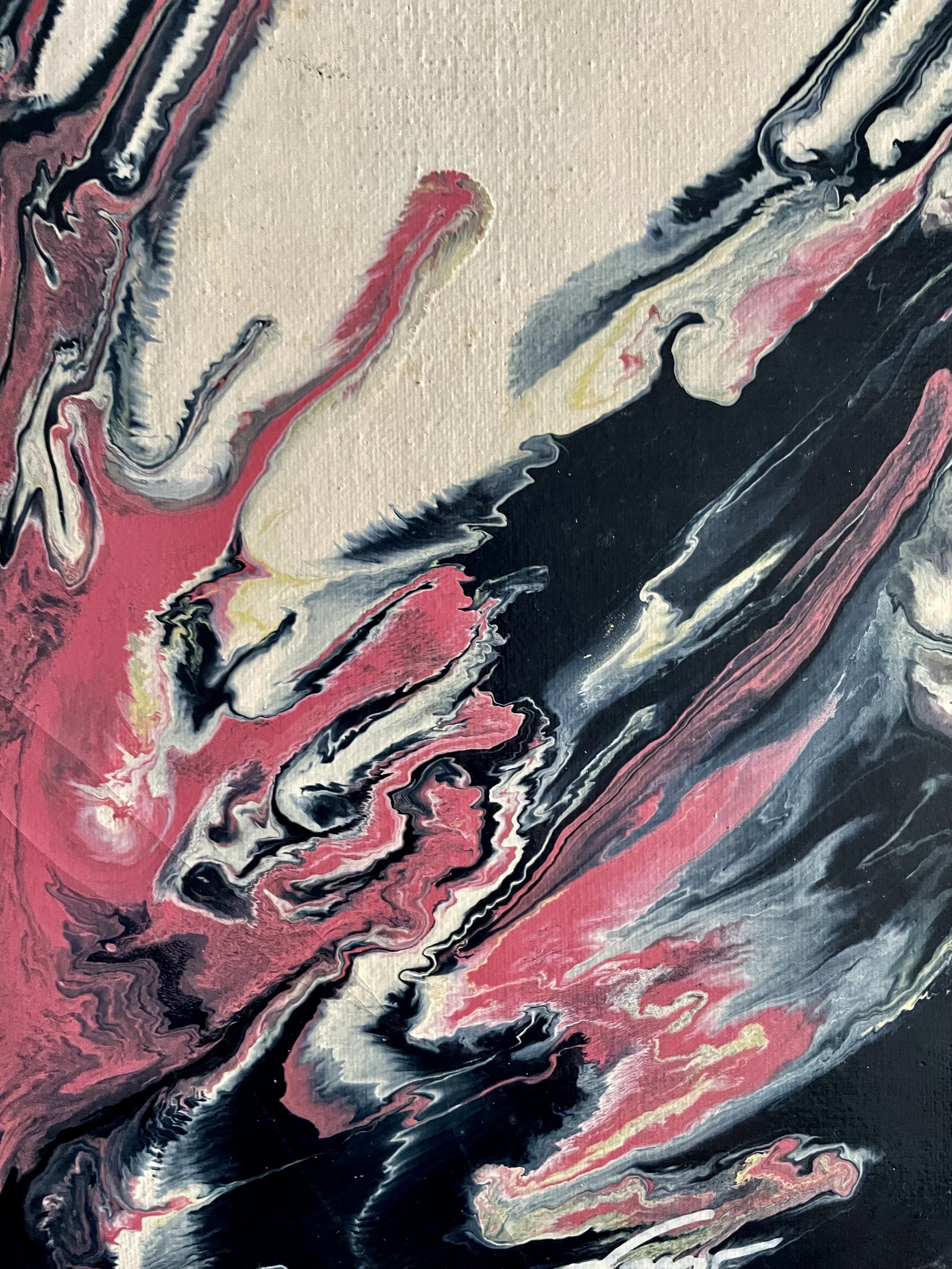 Image 1 of 7
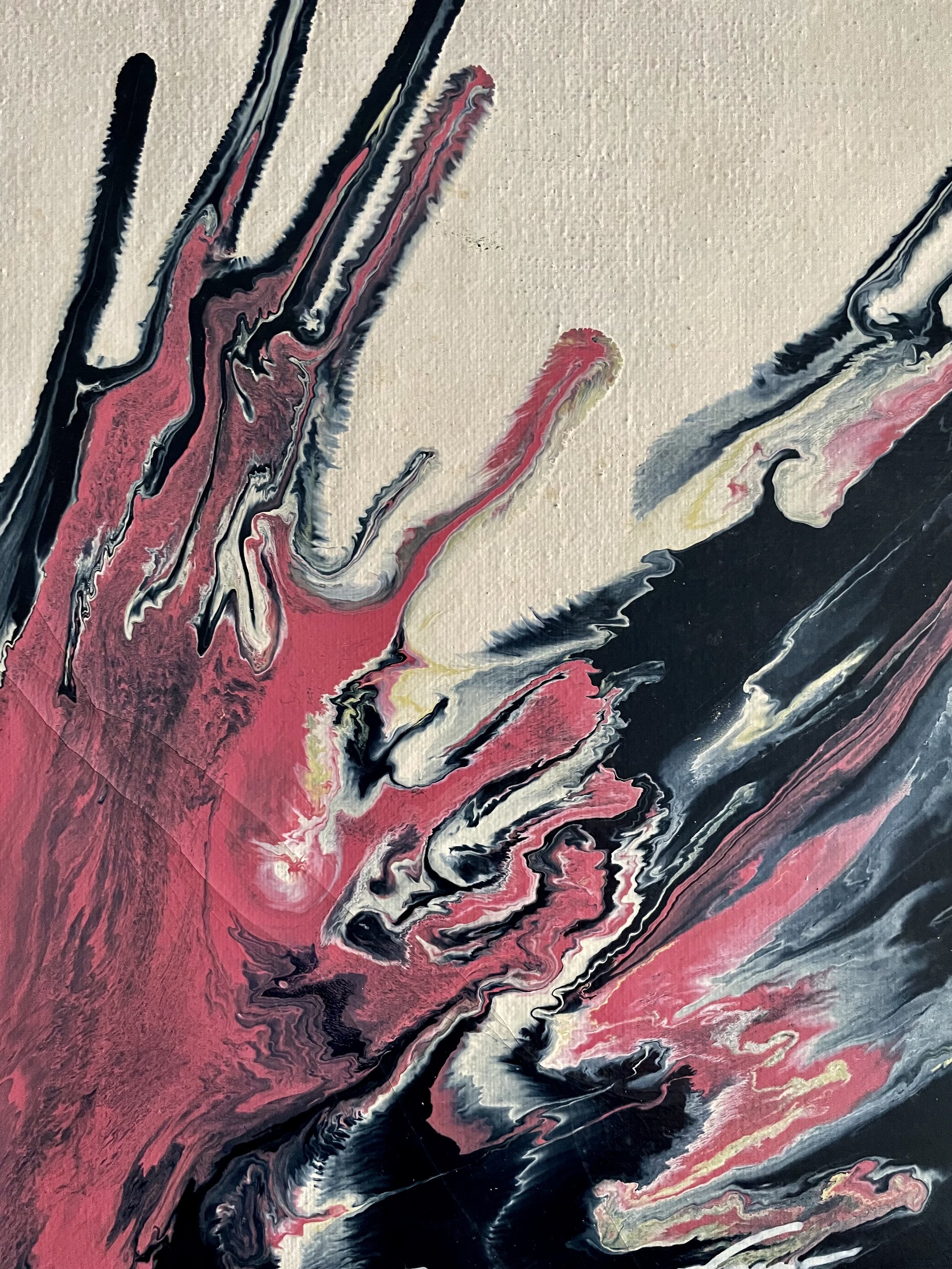 Image 2 of 7
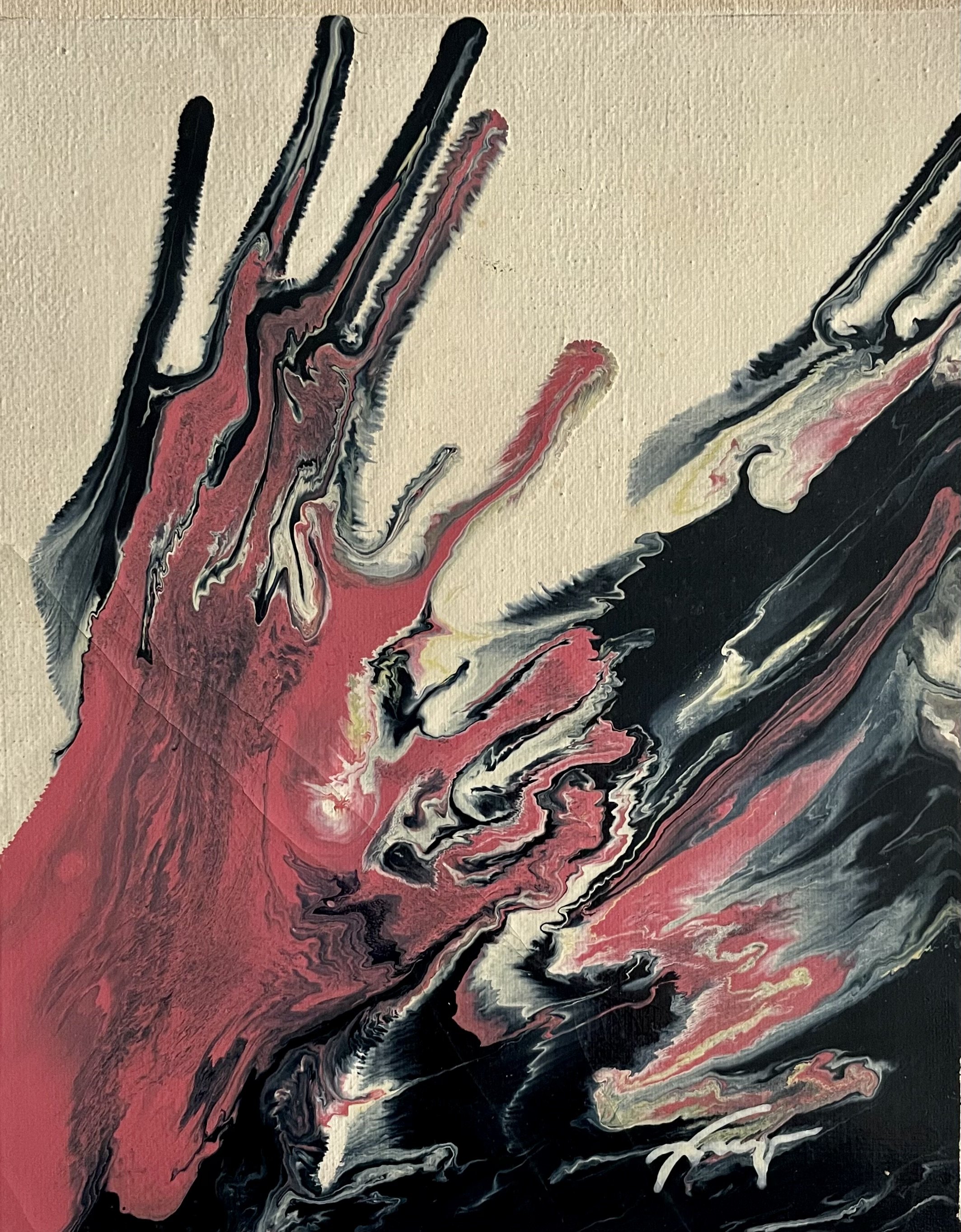 Image 3 of 7
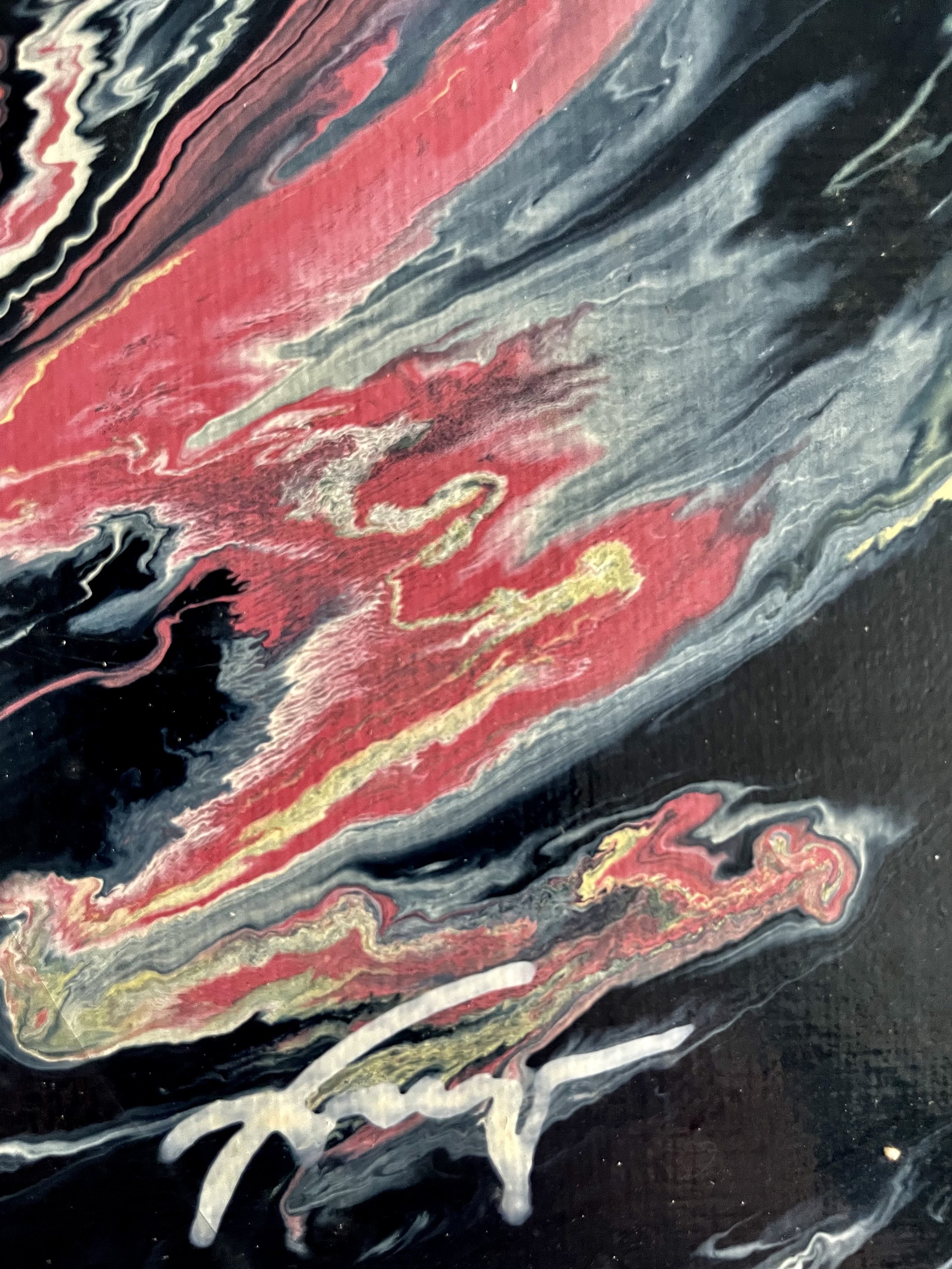 Image 4 of 7
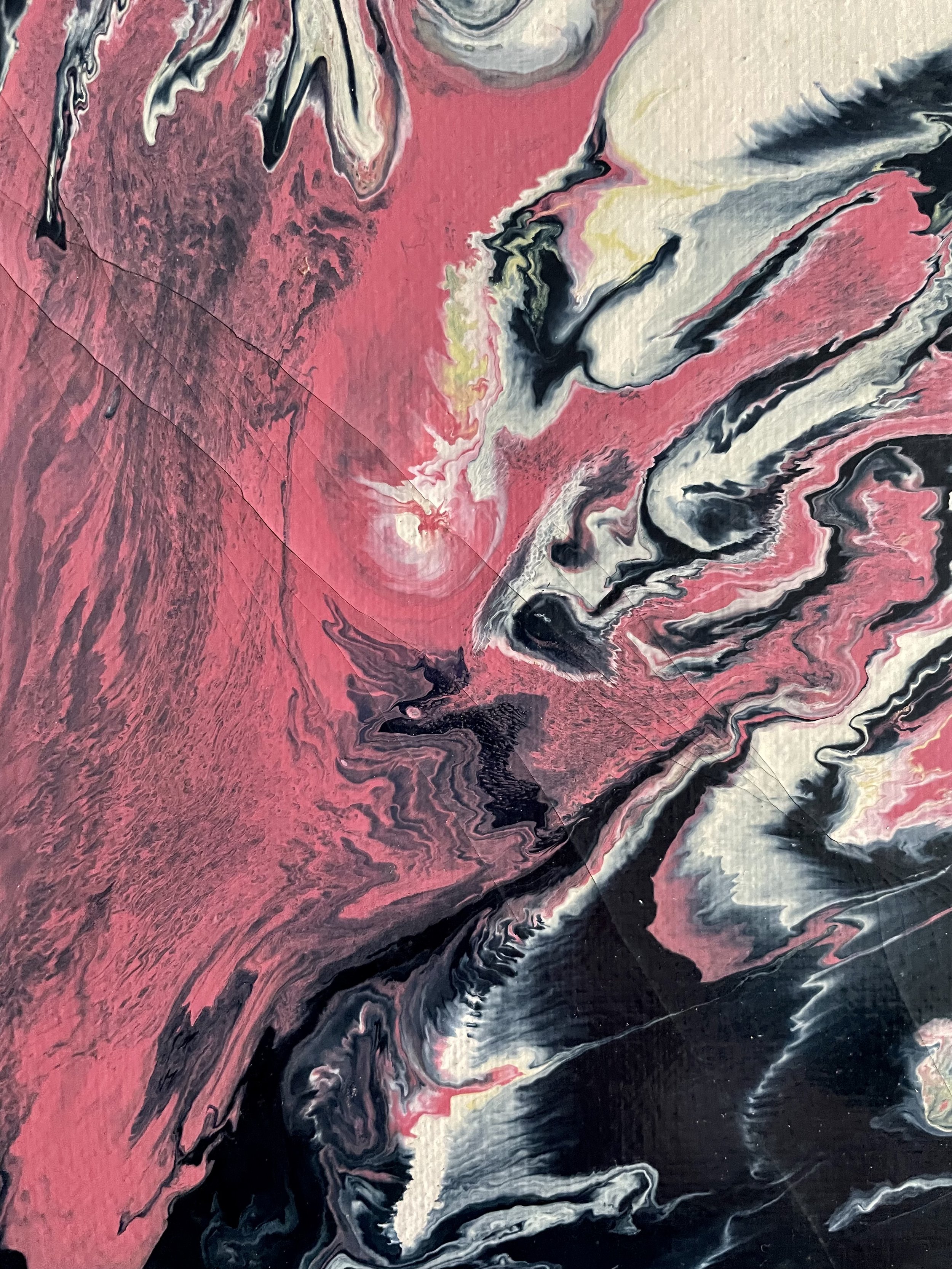 Image 5 of 7
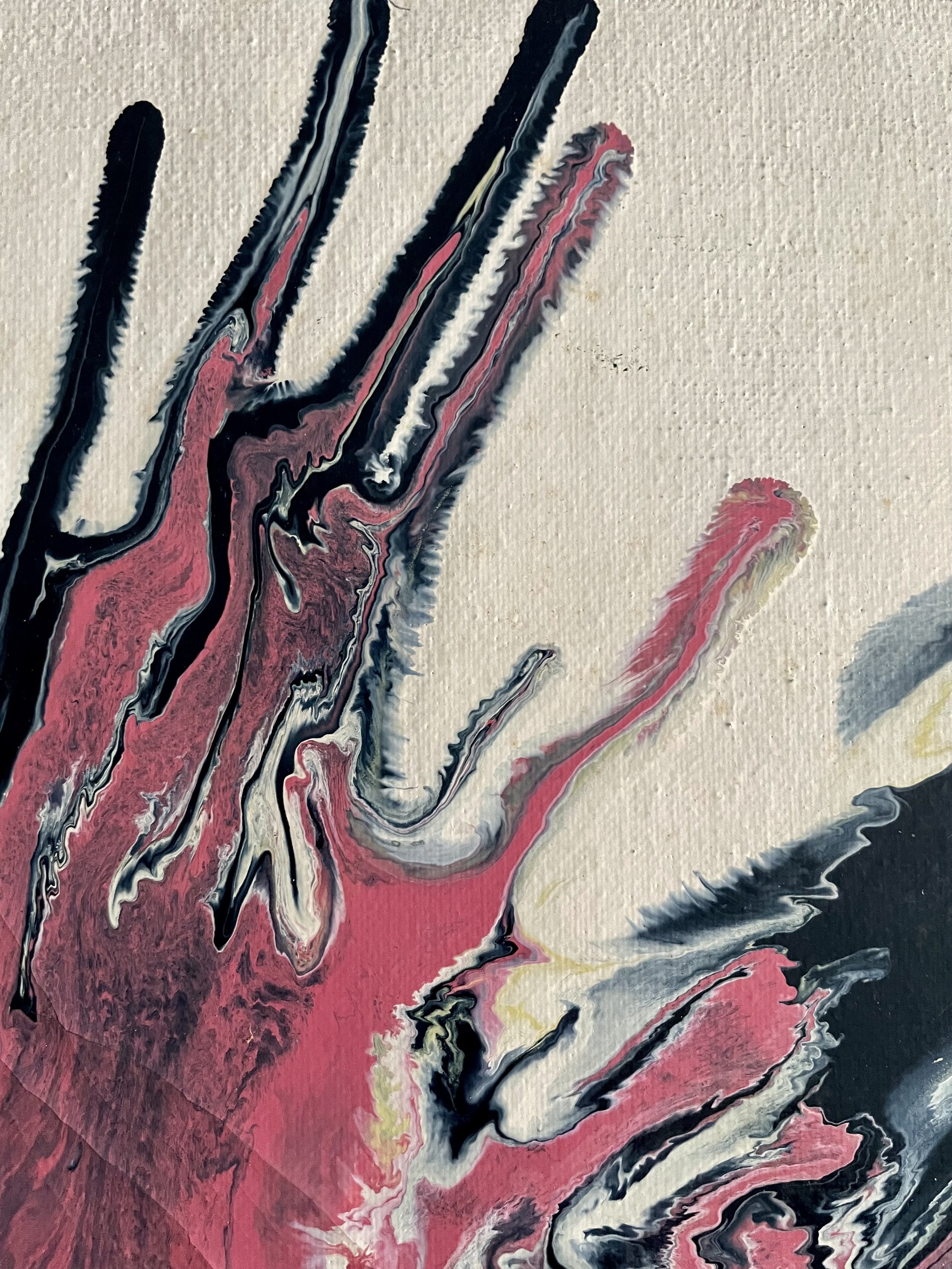 Image 6 of 7
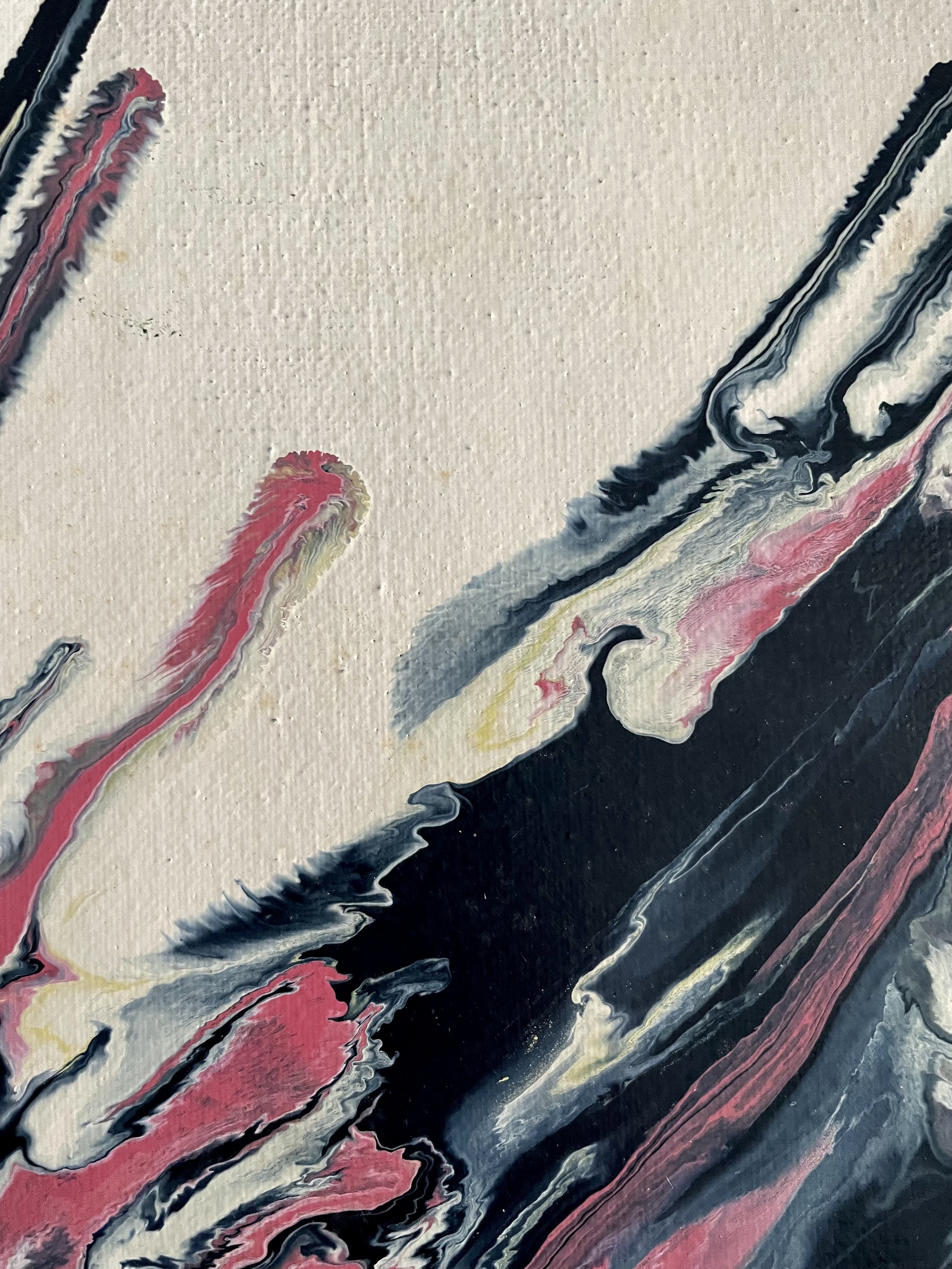 Image 7 of 7