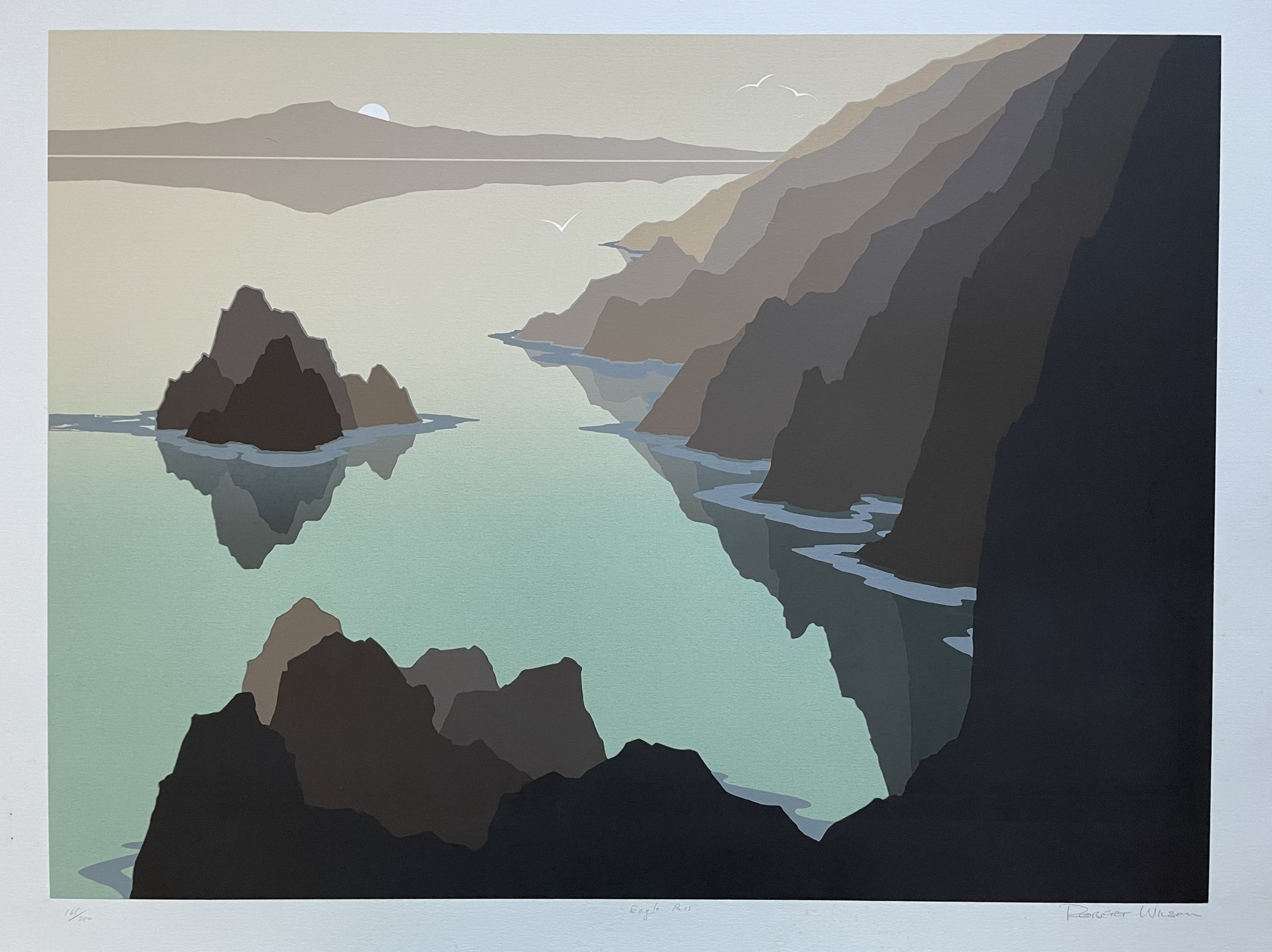
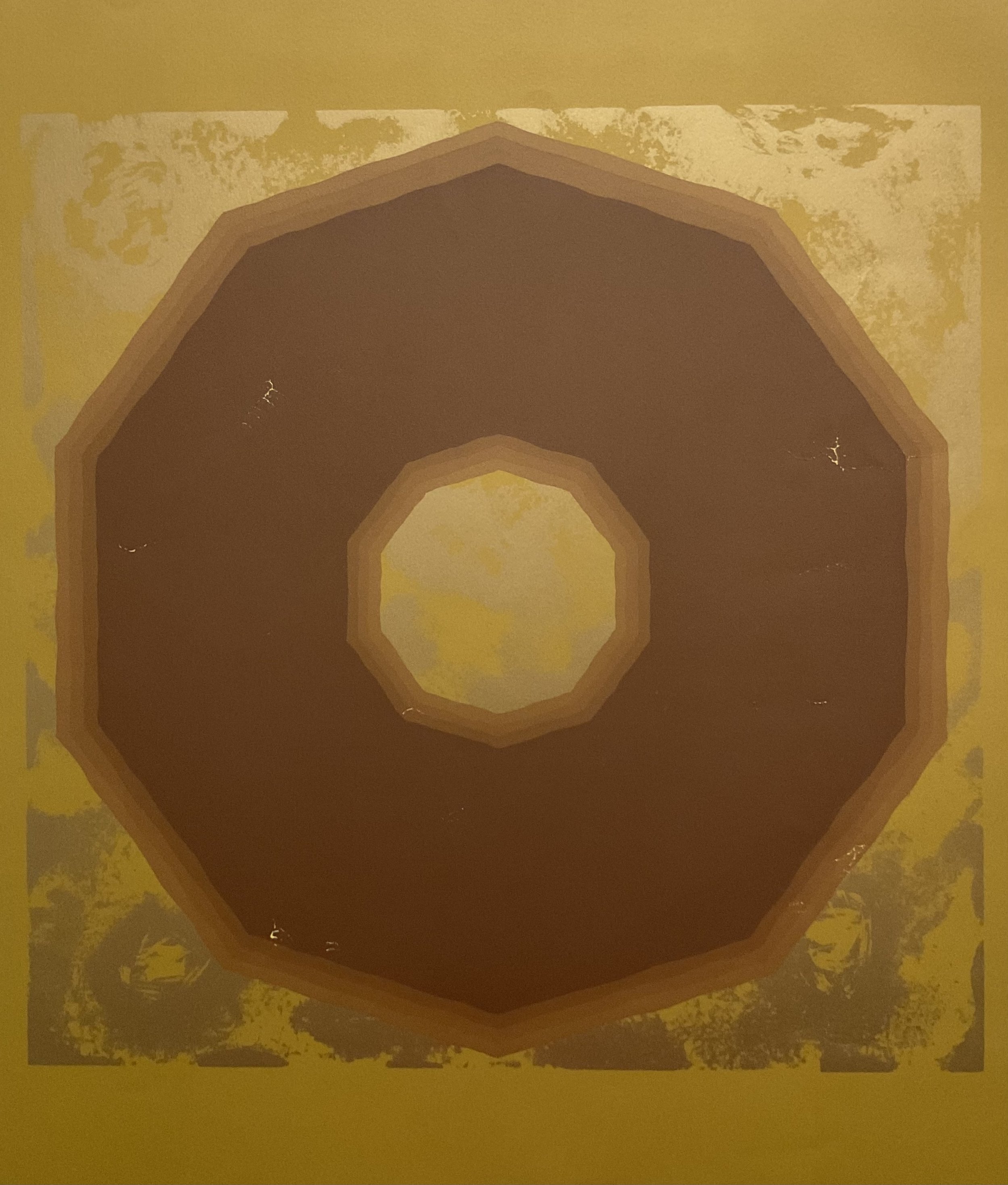
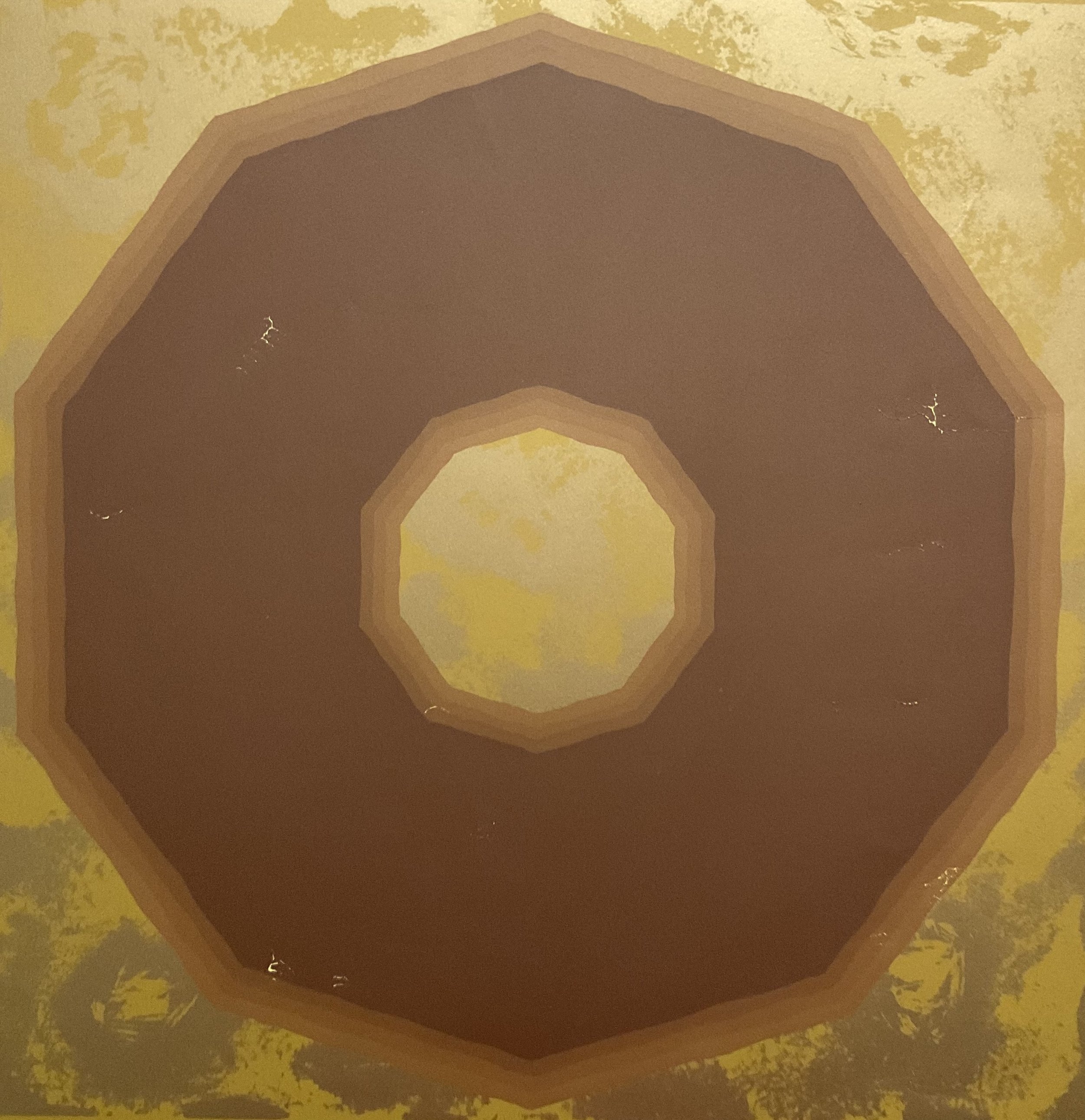
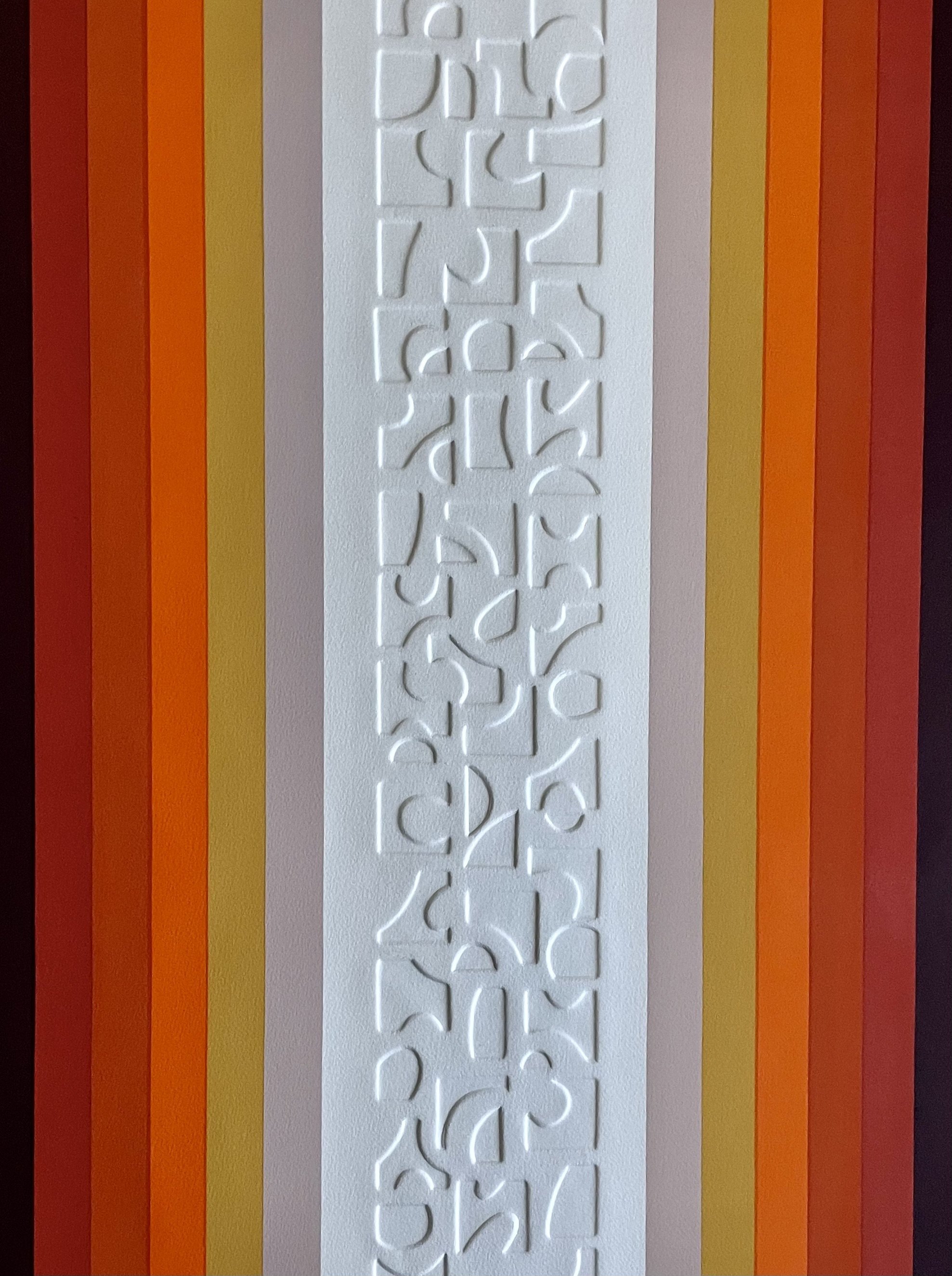
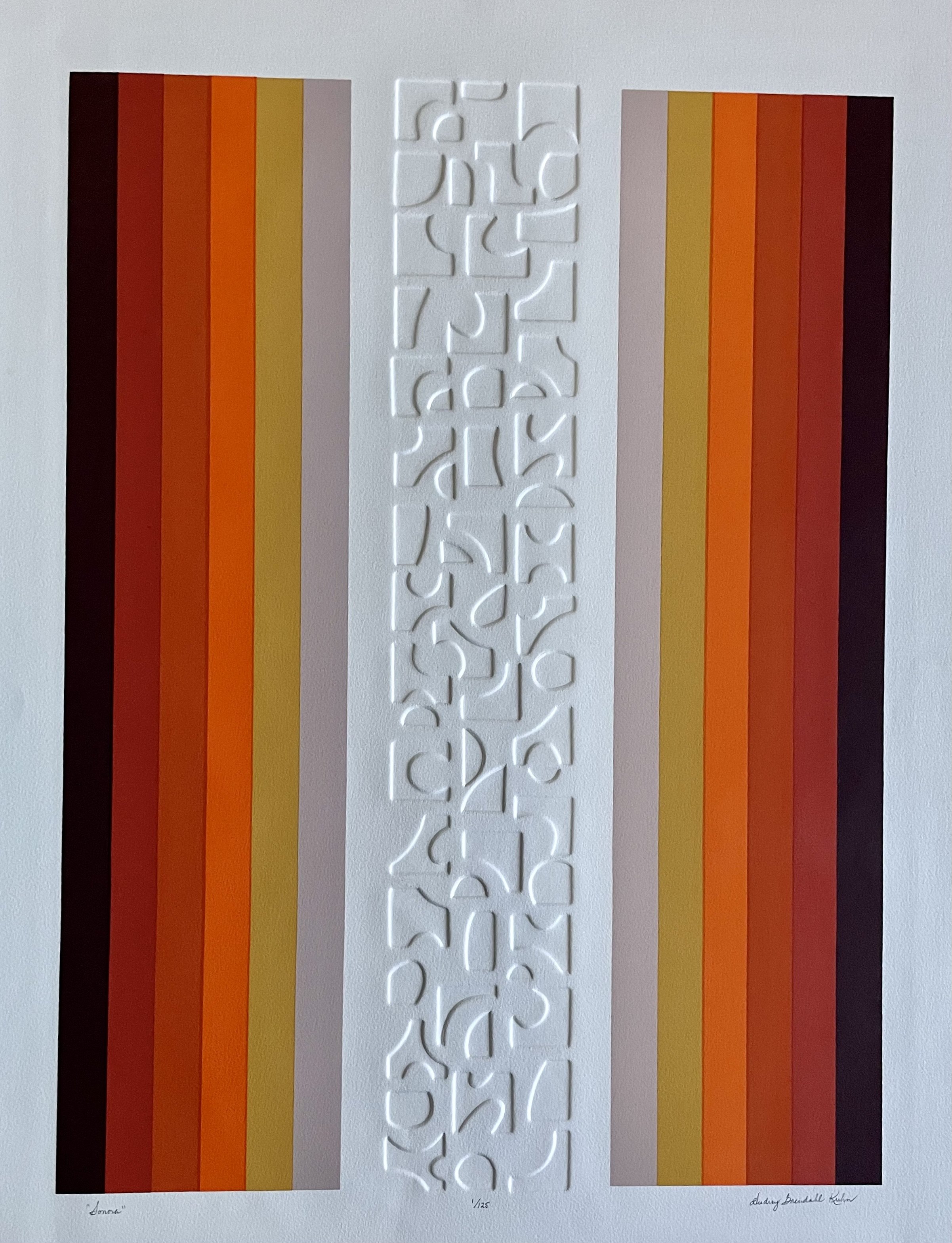
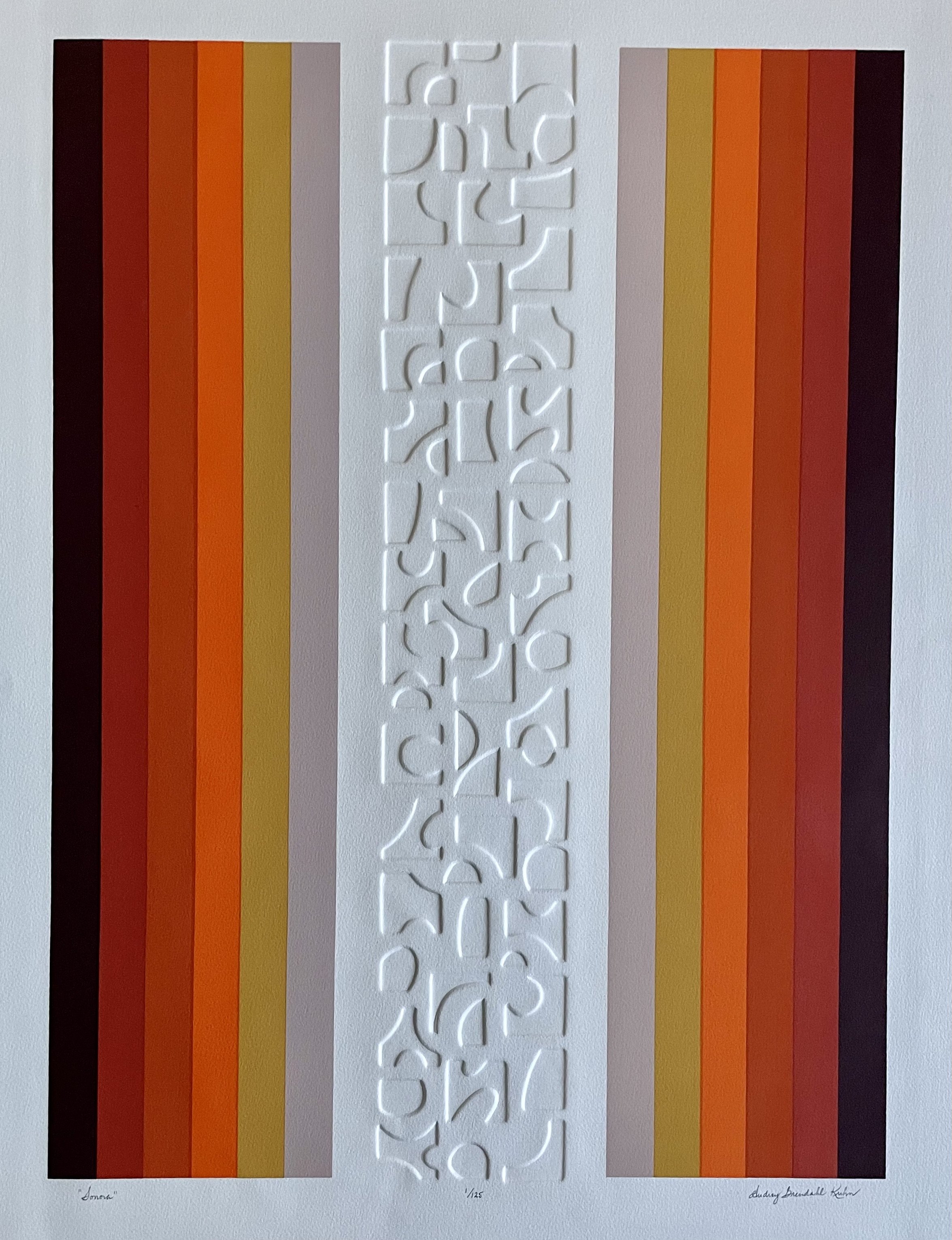
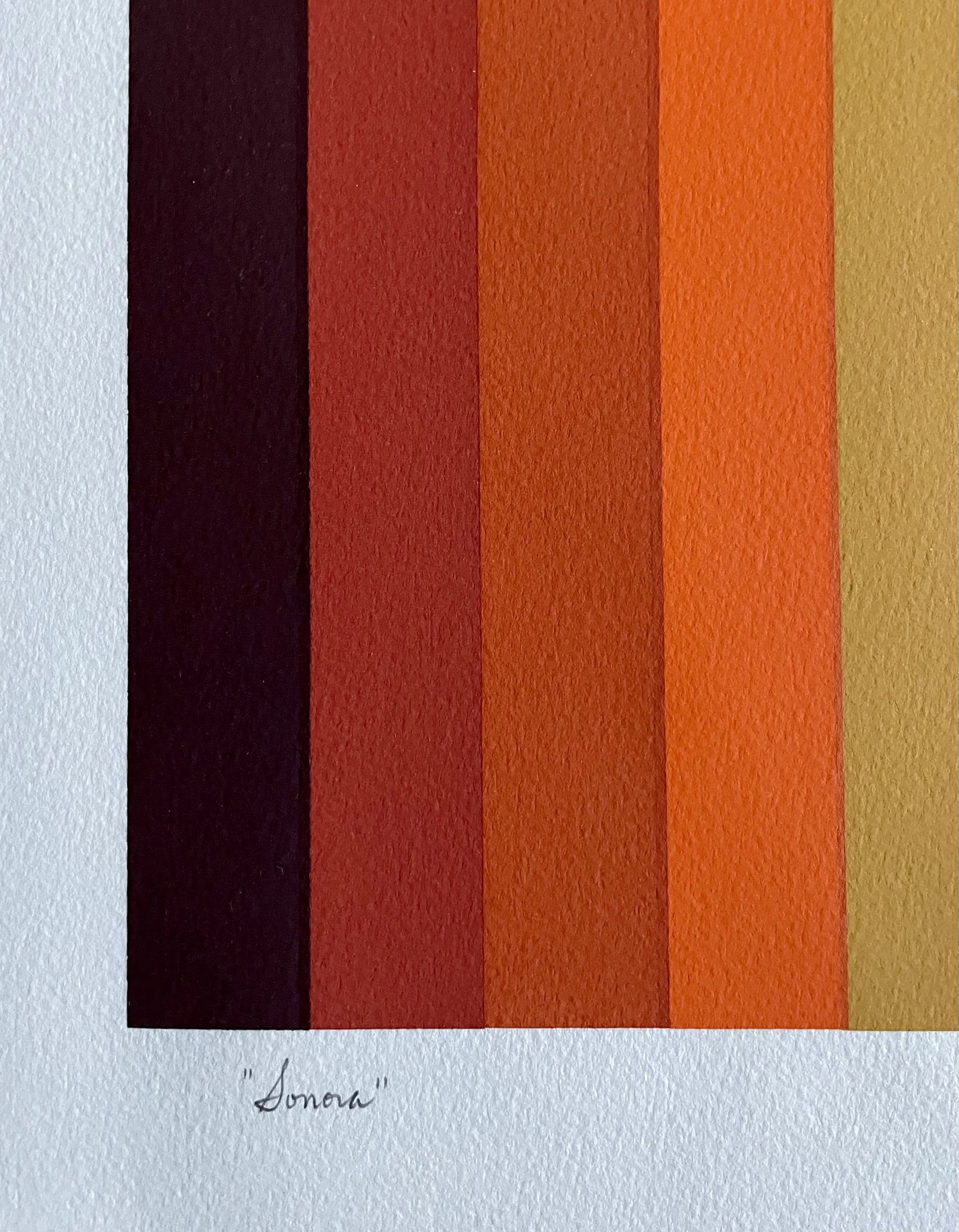
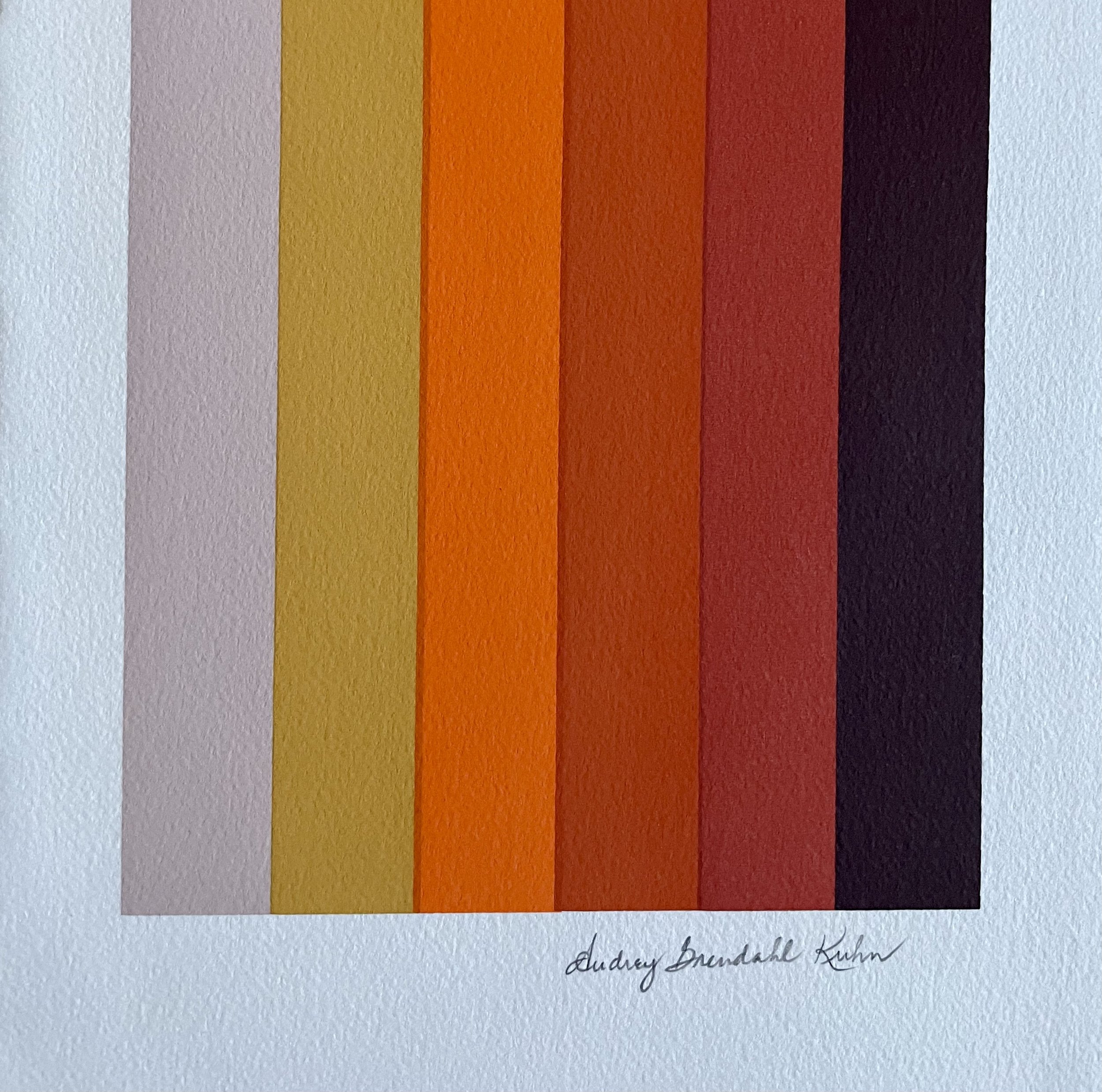
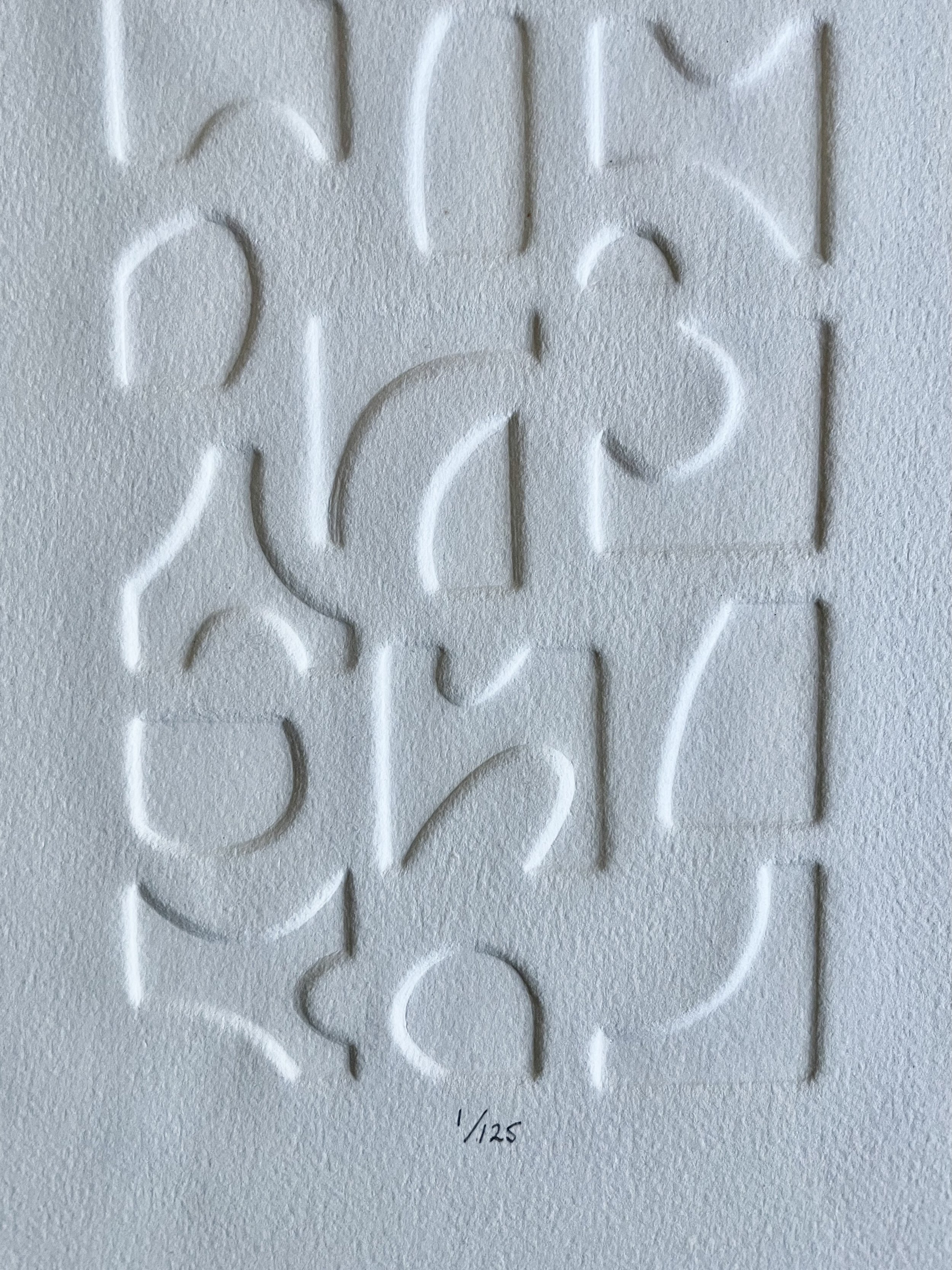
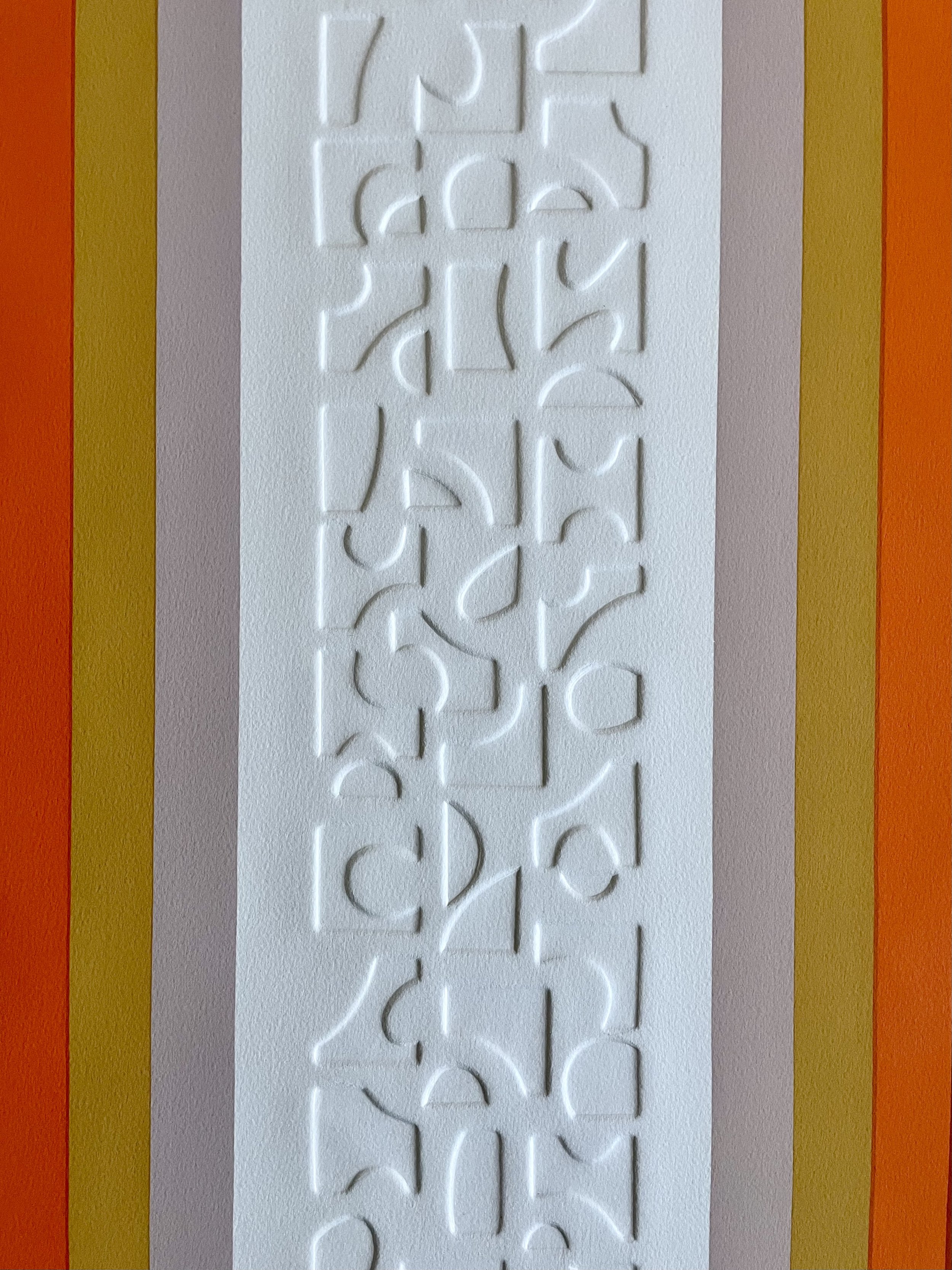
Untitled (Geometric Prismatic Form), Mimo (active 1970s), c.1970s, serigraph on prismatic vinyl, 24×24 in., signed “Mimo,” A.P.
This striking 1970s abstract serigraph by Mimo exemplifies Op Art–influenced geometric precision, printed on prismatic vinyl that activates light, depth, and optical movement through layered color and form.
Artwork Description
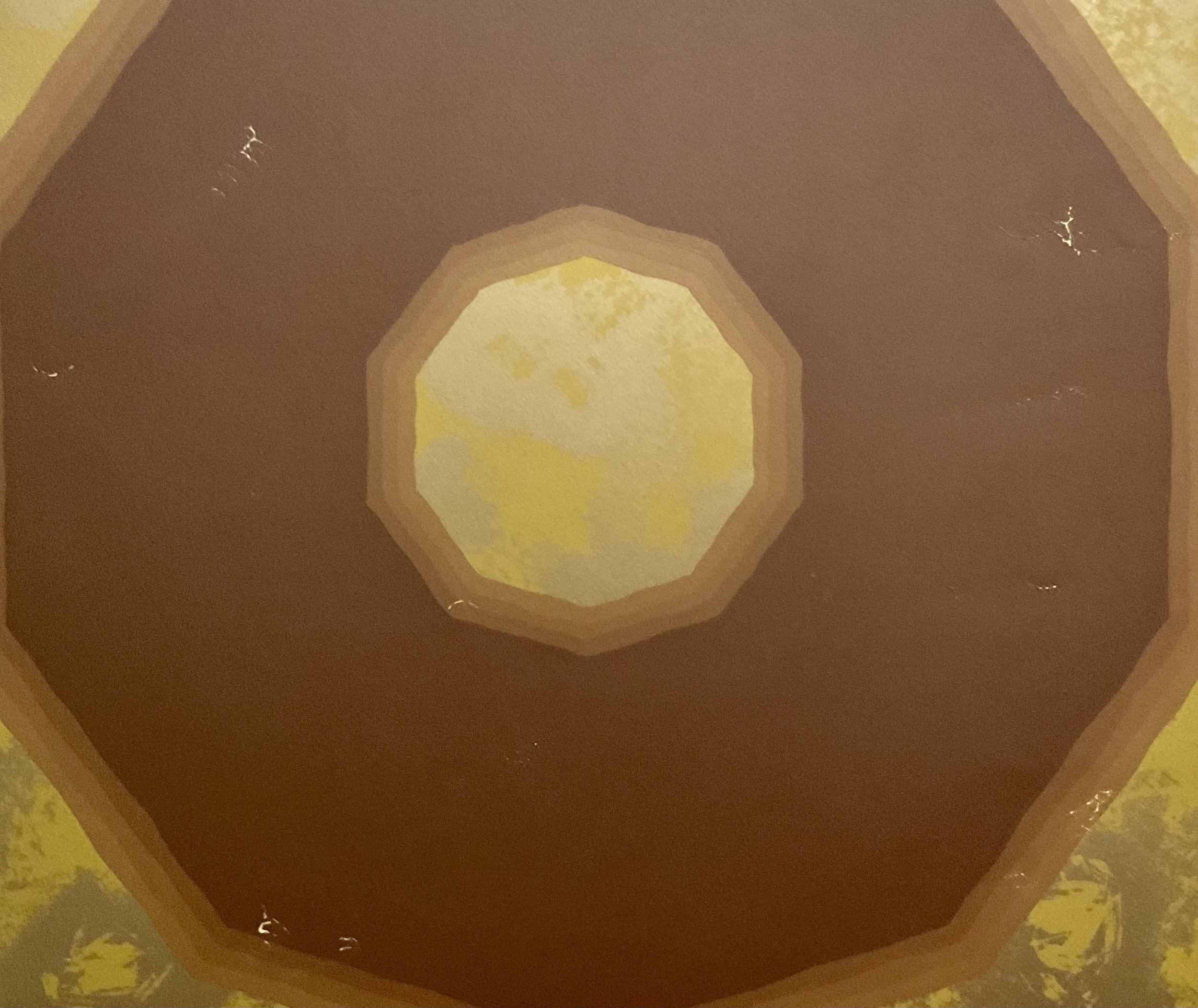
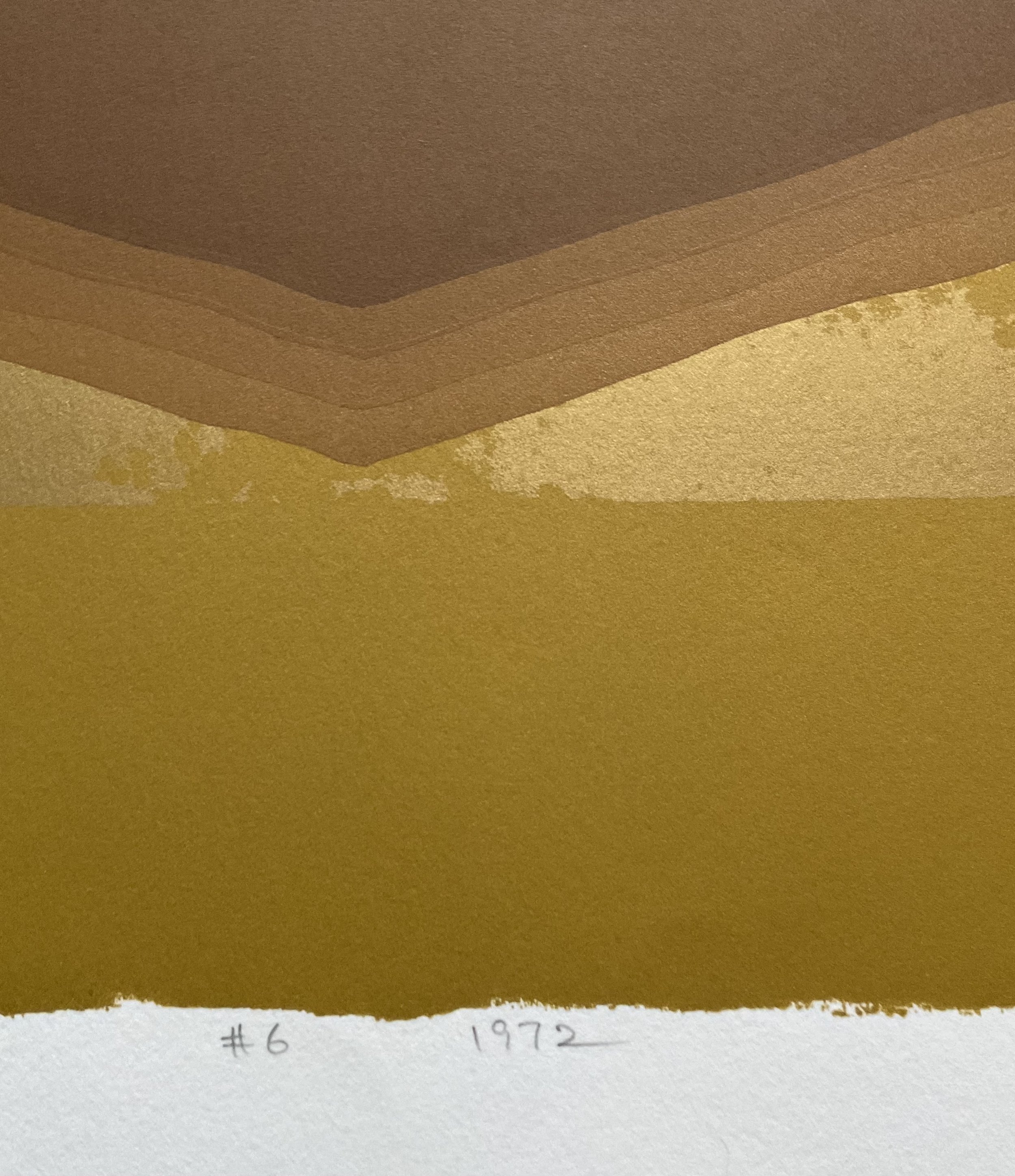
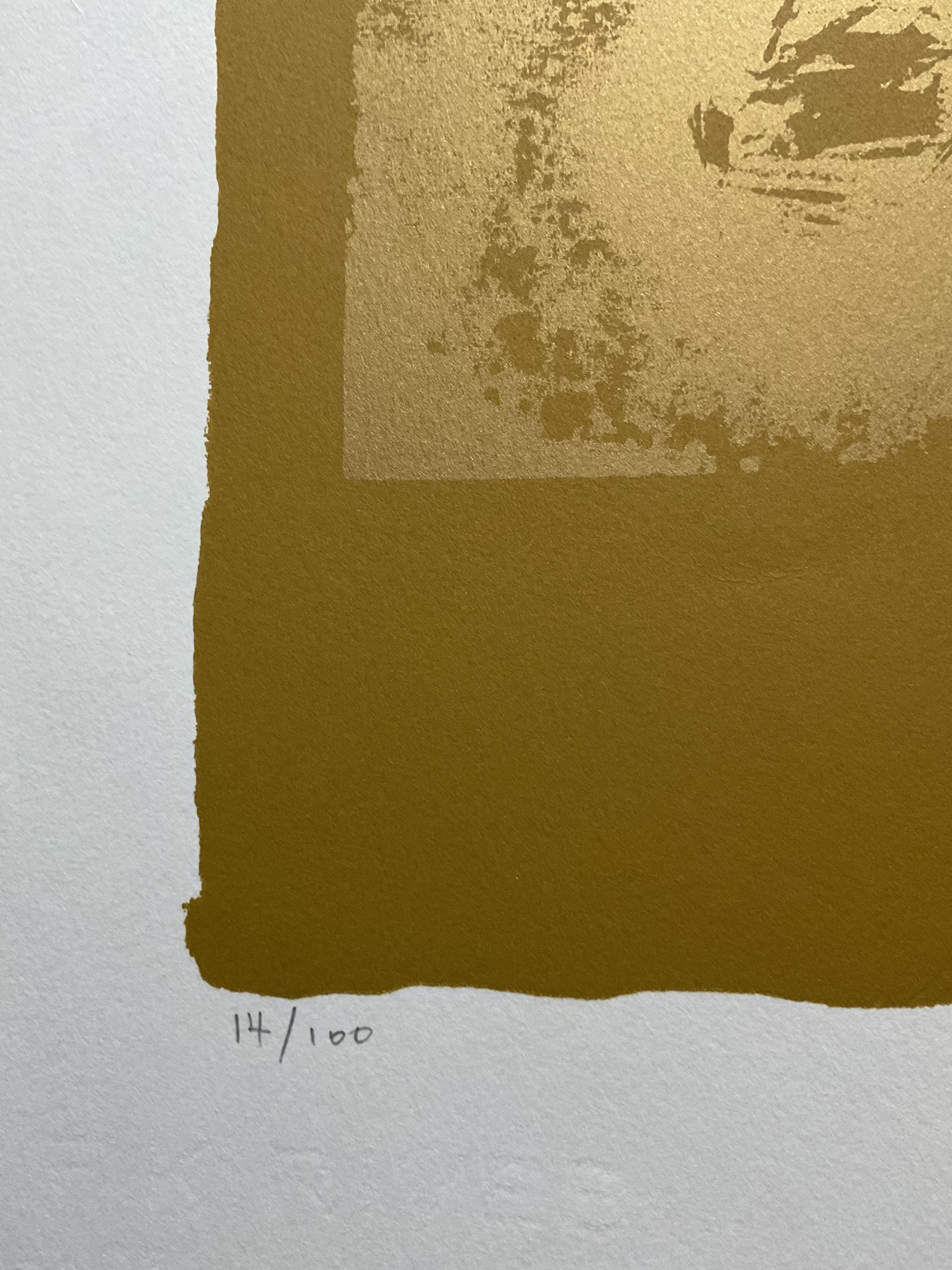
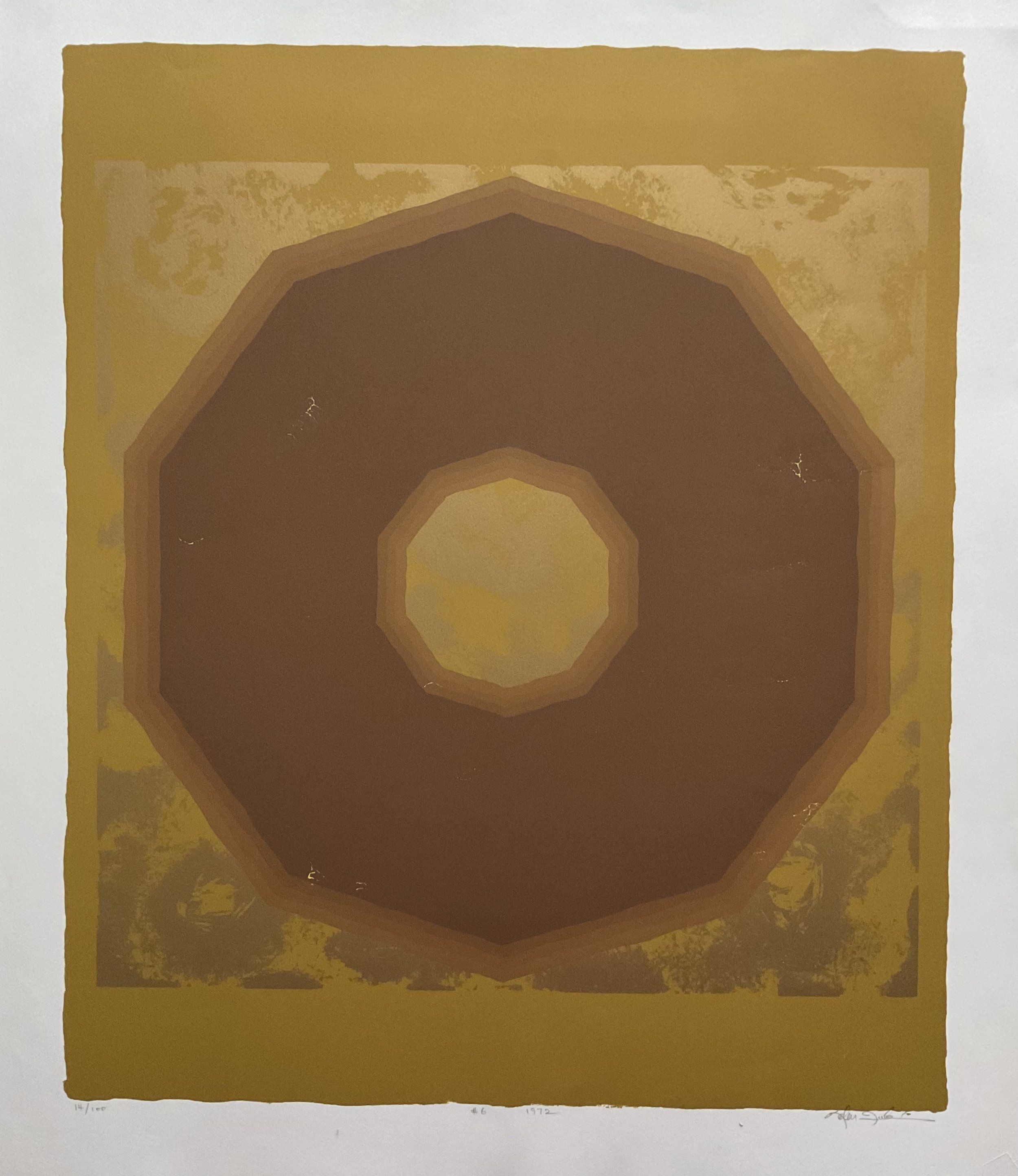
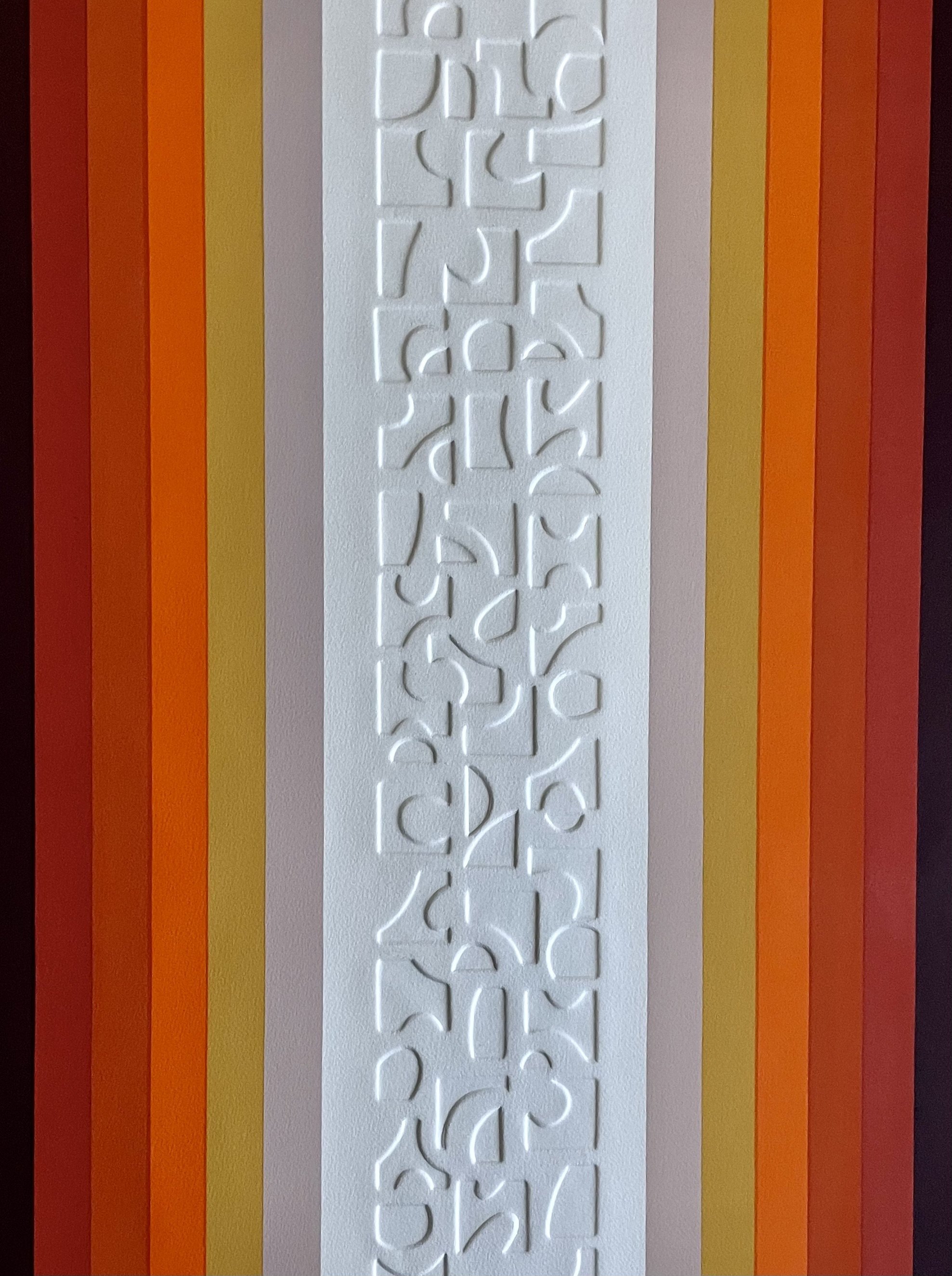
This untitled abstract composition by Mimo is a sophisticated example of 1970s geometric abstraction executed as a silkscreen/serigraph on textured prismatic vinyl. The work is built from a symmetrical, radiating structure anchored by a central square, surrounded by curved and angular forms that interlock with mathematical clarity. Bold outlines in black and orange frame fields of muted earth tones and saturated green, producing a dynamic optical vibration across the surface.
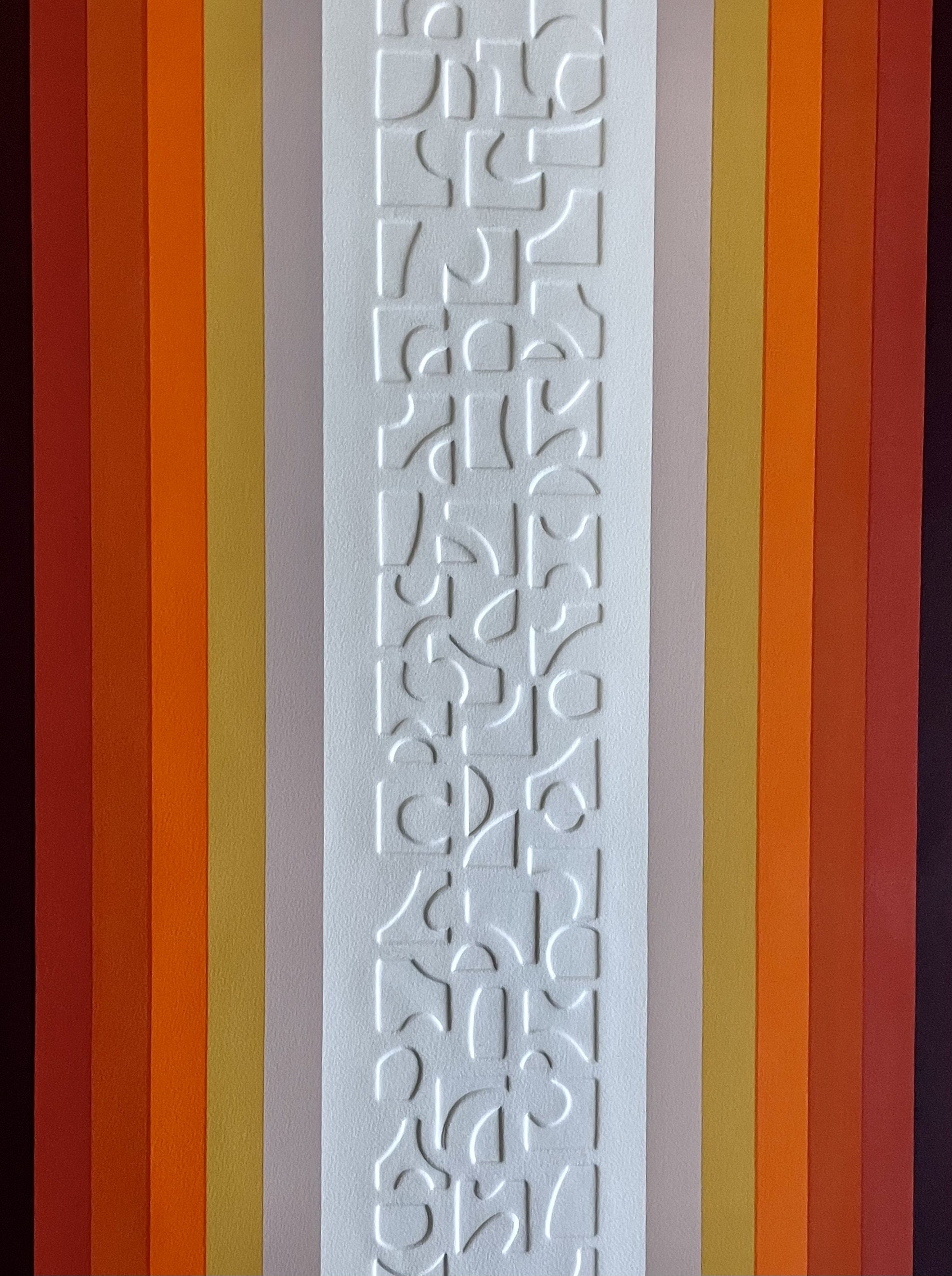
The use of prismatic vinyl is central to the work’s visual impact. Its embossed, reflective texture interacts with light, causing subtle shifts in tone and luminosity as the viewer moves. This effect heightens the Op Art sensibility of the piece, aligning it with contemporaneous explorations of perception, movement, and spatial illusion prevalent in the late 1960s and 1970s.
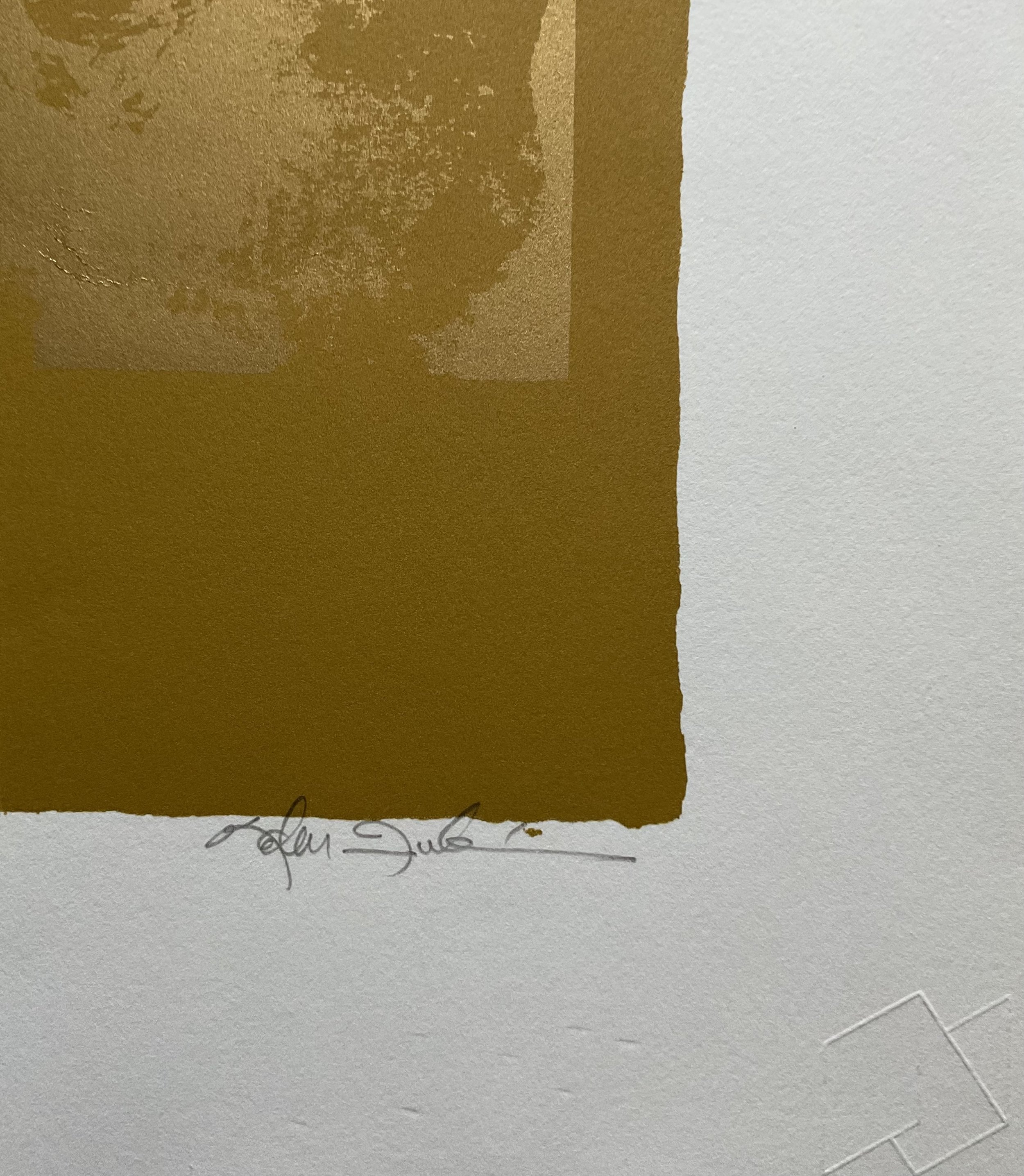
The print is signed “Mimo” in pencil and marked A.P. (Artist’s Proof), indicating it was retained by the artist outside the numbered edition. The crisp registration of color layers, confident linework, and intentional material choice suggest a highly controlled studio process consistent with professional fine-art printmaking of the period.
Artist Biography — Mimo
Mimo is an abstract geometric artist active primarily during the late 1960s and 1970s, associated with the international rise of Op Art, Hard-Edge abstraction, and kinetic-inspired printmaking. While biographical documentation on Mimo remains limited, the artist’s work is clearly situated within a postwar modernist context that bridged fine art, design, and experimental materials.
Mimo’s practice focused on precise geometry, symmetry, and optical interaction, often employing nontraditional substrates such as prismatic or textured vinyl rather than paper alone. This approach reflects broader 1960s–70s artistic interest in industrial materials and new technologies, paralleling trends seen in European and American Op Art, Concrete Art, and architectural abstraction.
The artist’s visual language demonstrates affinities with figures such as Victor Vasarely, Richard Anuszkiewicz, and Jesús Rafael Soto, though Mimo’s work maintains a distinctive emphasis on tactile surface and bold framing. The repeated use of strong outlines and modular forms suggests an interest in architectural rhythm and spatial containment rather than purely illusionistic depth.
Works by Mimo circulated through respected mid-century galleries, including Mitch Morse Gallery, which was known for championing innovative printmakers and international modernists. Mimo’s signed Artist’s Proofs, particularly those on prismatic vinyl, are now considered scarce and increasingly collectible due to their material fragility, limited production, and strong period identity.
Mimo (active 1970s)
Untitled (Geometric Prismatic Form), c.1970s
Serigraph on prismatic vinyl
24 × 24 inches
Signed “Mimo,” Artist’s Proof
Provenance: Mitch Morse Gallery → Artfind Gallery, Washington DC
Certificate of Value & Authentication
This artwork is an original 1970s serigraph on prismatic vinyl by Mimo, signed by the artist and designated Artist’s Proof. Based on stylistic analysis, signature verification, materials, and provenance through Mitch Morse Gallery, the work is certified as authentic and original.
Provenance
Private Studio Collection, Mimo (Artist)
→ Mitch Morse Gallery, New York, USA (acquired in the United States and Europe)
→ Artfind Gallery, Washington, DC (current owner)
Untitled (Geometric Prismatic Form), Mimo (active 1970s), c.1970s, serigraph on prismatic vinyl, 24×24 in., signed “Mimo,” A.P.
This striking 1970s abstract serigraph by Mimo exemplifies Op Art–influenced geometric precision, printed on prismatic vinyl that activates light, depth, and optical movement through layered color and form.
Artwork Description
This untitled abstract composition by Mimo is a sophisticated example of 1970s geometric abstraction executed as a silkscreen/serigraph on textured prismatic vinyl. The work is built from a symmetrical, radiating structure anchored by a central square, surrounded by curved and angular forms that interlock with mathematical clarity. Bold outlines in black and orange frame fields of muted earth tones and saturated green, producing a dynamic optical vibration across the surface.
The use of prismatic vinyl is central to the work’s visual impact. Its embossed, reflective texture interacts with light, causing subtle shifts in tone and luminosity as the viewer moves. This effect heightens the Op Art sensibility of the piece, aligning it with contemporaneous explorations of perception, movement, and spatial illusion prevalent in the late 1960s and 1970s.
The print is signed “Mimo” in pencil and marked A.P. (Artist’s Proof), indicating it was retained by the artist outside the numbered edition. The crisp registration of color layers, confident linework, and intentional material choice suggest a highly controlled studio process consistent with professional fine-art printmaking of the period.
Artist Biography — Mimo
Mimo is an abstract geometric artist active primarily during the late 1960s and 1970s, associated with the international rise of Op Art, Hard-Edge abstraction, and kinetic-inspired printmaking. While biographical documentation on Mimo remains limited, the artist’s work is clearly situated within a postwar modernist context that bridged fine art, design, and experimental materials.
Mimo’s practice focused on precise geometry, symmetry, and optical interaction, often employing nontraditional substrates such as prismatic or textured vinyl rather than paper alone. This approach reflects broader 1960s–70s artistic interest in industrial materials and new technologies, paralleling trends seen in European and American Op Art, Concrete Art, and architectural abstraction.
The artist’s visual language demonstrates affinities with figures such as Victor Vasarely, Richard Anuszkiewicz, and Jesús Rafael Soto, though Mimo’s work maintains a distinctive emphasis on tactile surface and bold framing. The repeated use of strong outlines and modular forms suggests an interest in architectural rhythm and spatial containment rather than purely illusionistic depth.
Works by Mimo circulated through respected mid-century galleries, including Mitch Morse Gallery, which was known for championing innovative printmakers and international modernists. Mimo’s signed Artist’s Proofs, particularly those on prismatic vinyl, are now considered scarce and increasingly collectible due to their material fragility, limited production, and strong period identity.
Mimo (active 1970s)
Untitled (Geometric Prismatic Form), c.1970s
Serigraph on prismatic vinyl
24 × 24 inches
Signed “Mimo,” Artist’s Proof
Provenance: Mitch Morse Gallery → Artfind Gallery, Washington DC
Certificate of Value & Authentication
This artwork is an original 1970s serigraph on prismatic vinyl by Mimo, signed by the artist and designated Artist’s Proof. Based on stylistic analysis, signature verification, materials, and provenance through Mitch Morse Gallery, the work is certified as authentic and original.
Provenance
Private Studio Collection, Mimo (Artist)
→ Mitch Morse Gallery, New York, USA (acquired in the United States and Europe)
→ Artfind Gallery, Washington, DC (current owner)
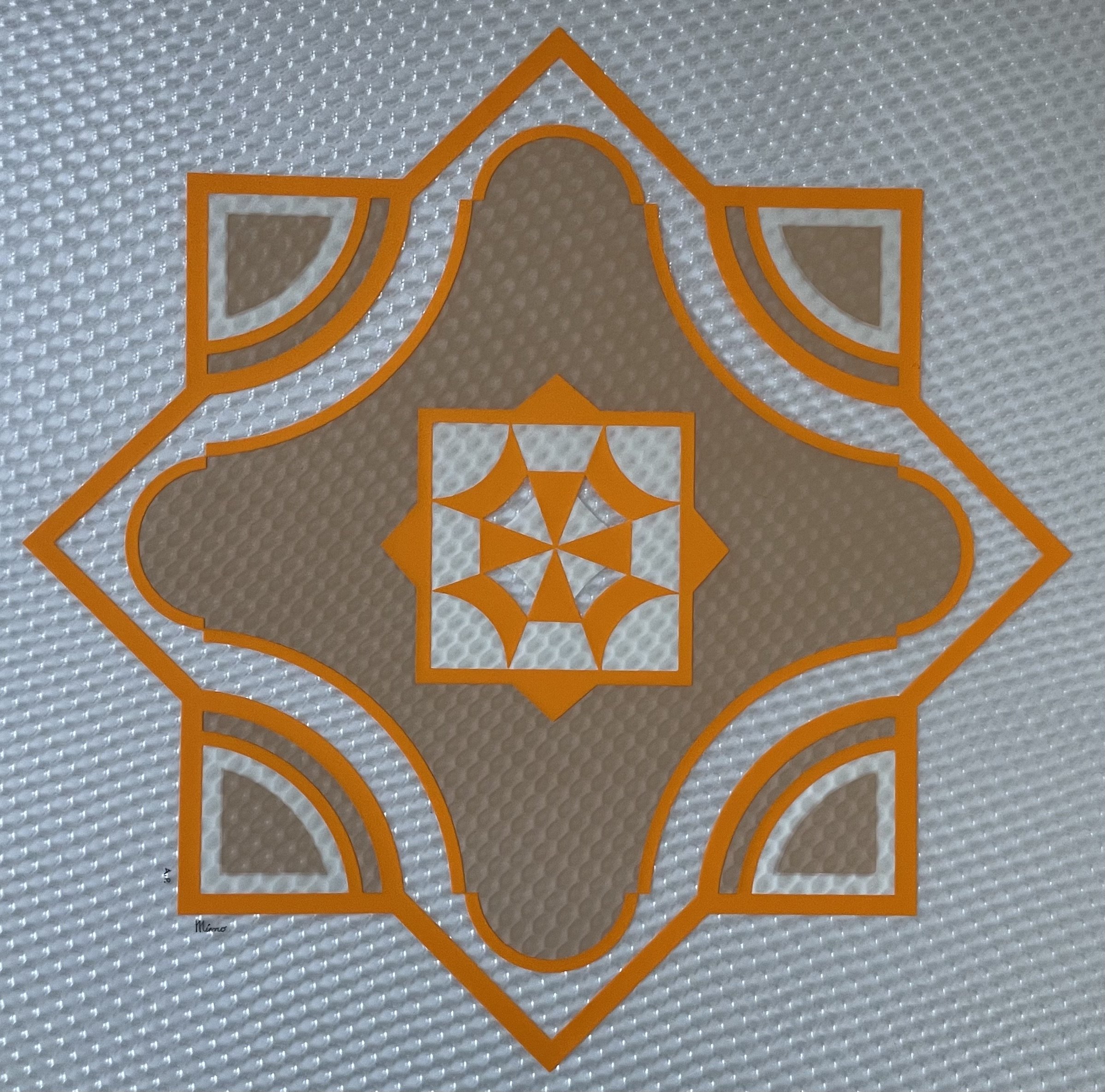 Image 1 of 10
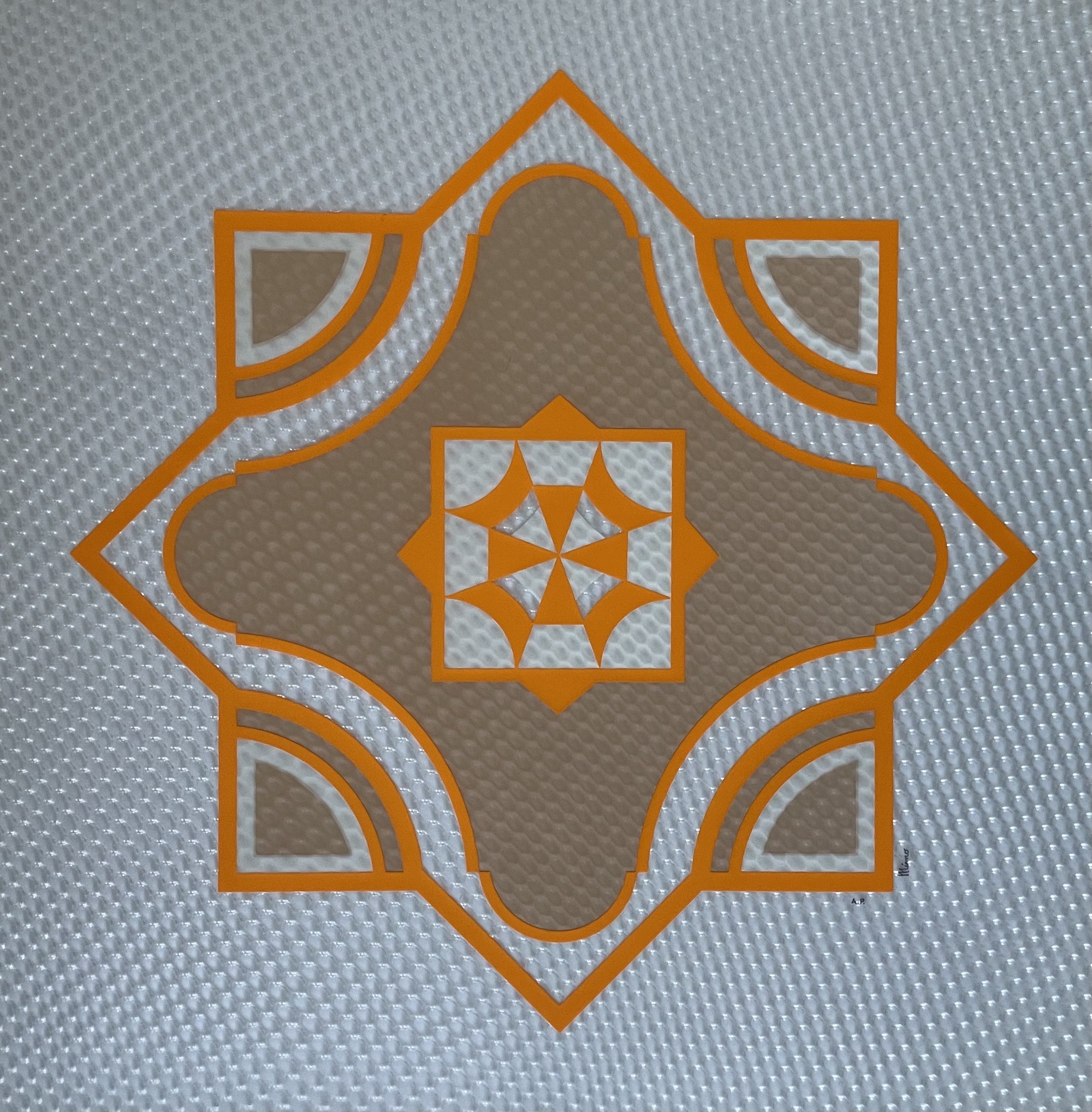 Image 2 of 10
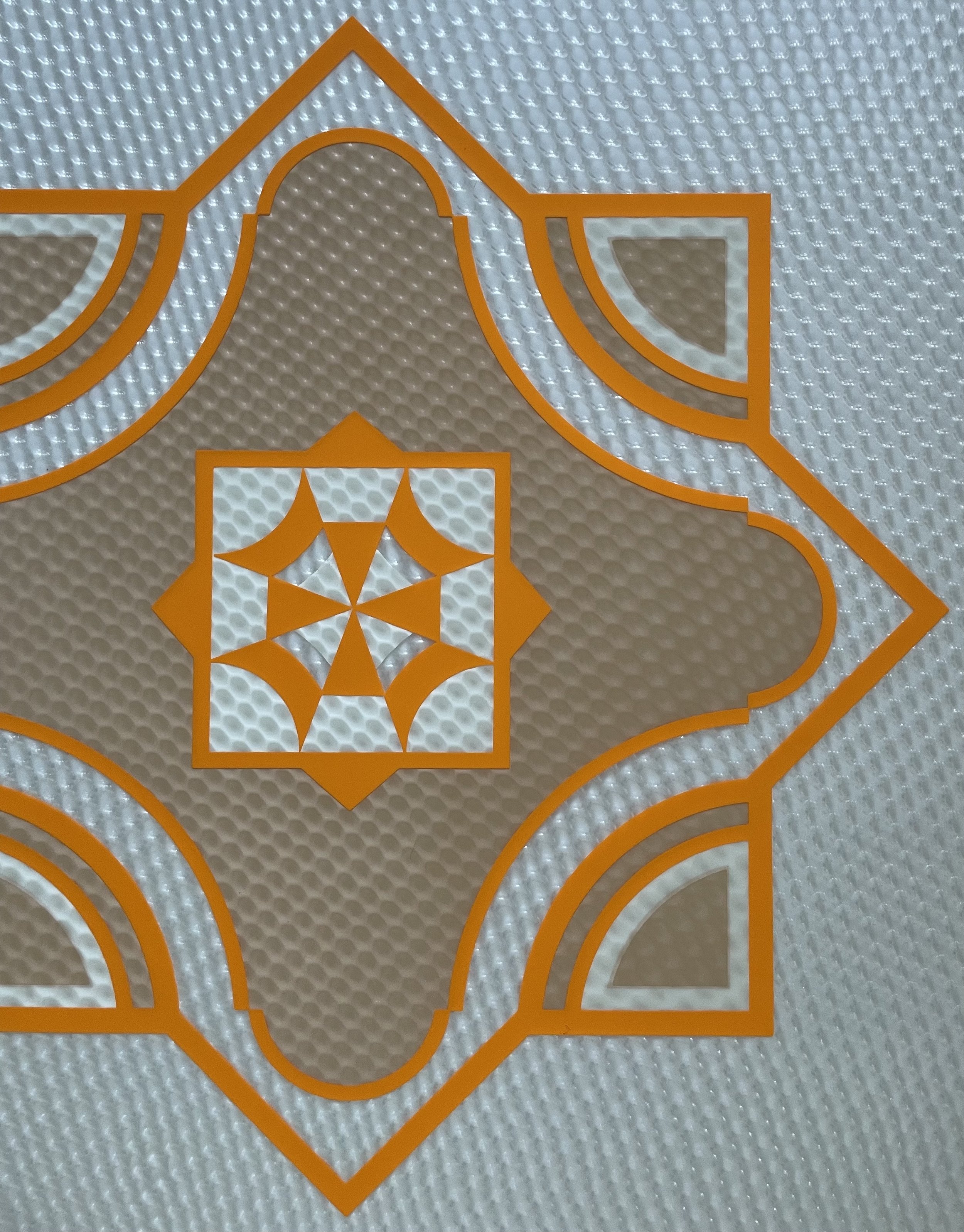 Image 3 of 10
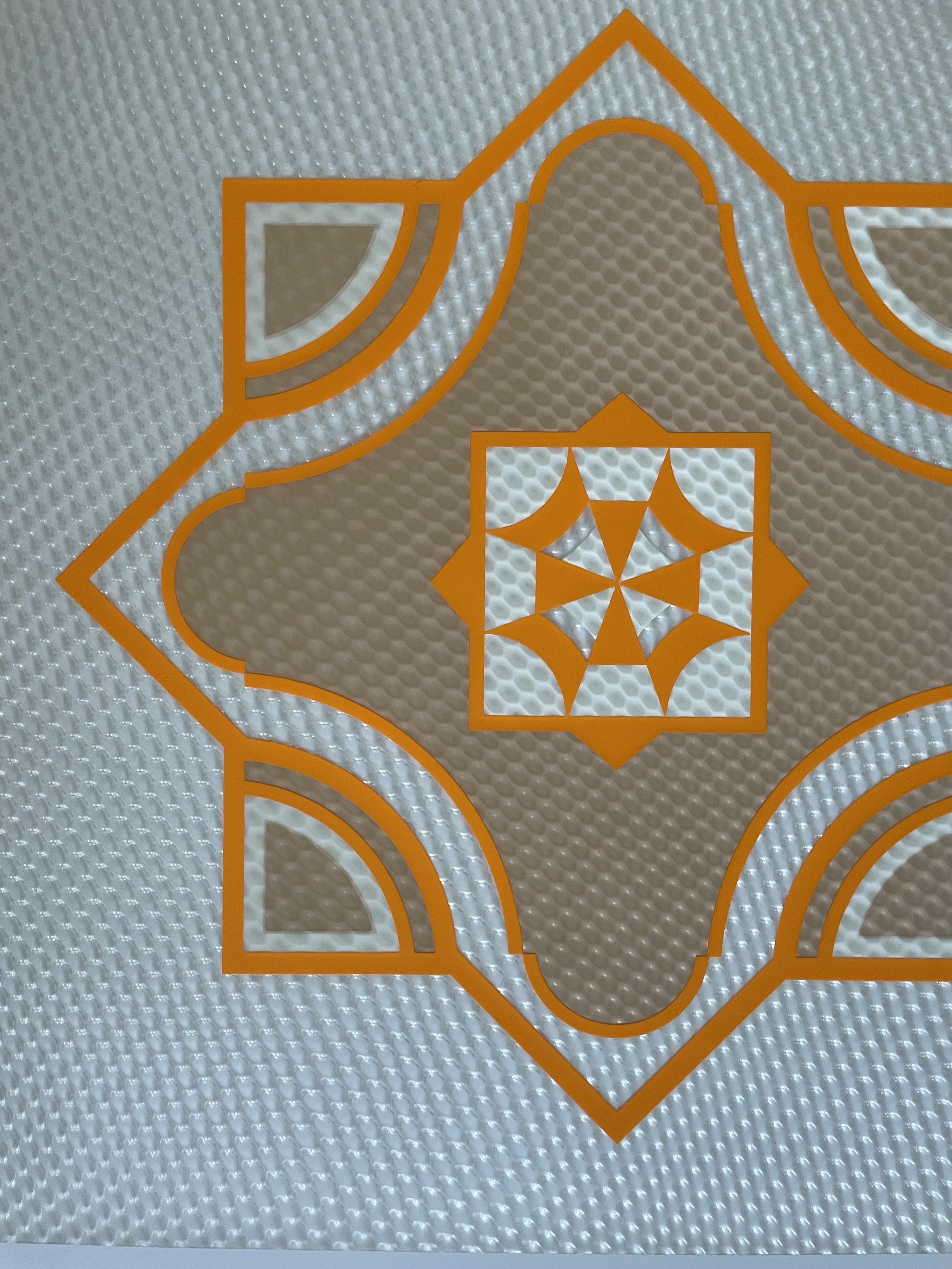 Image 4 of 10
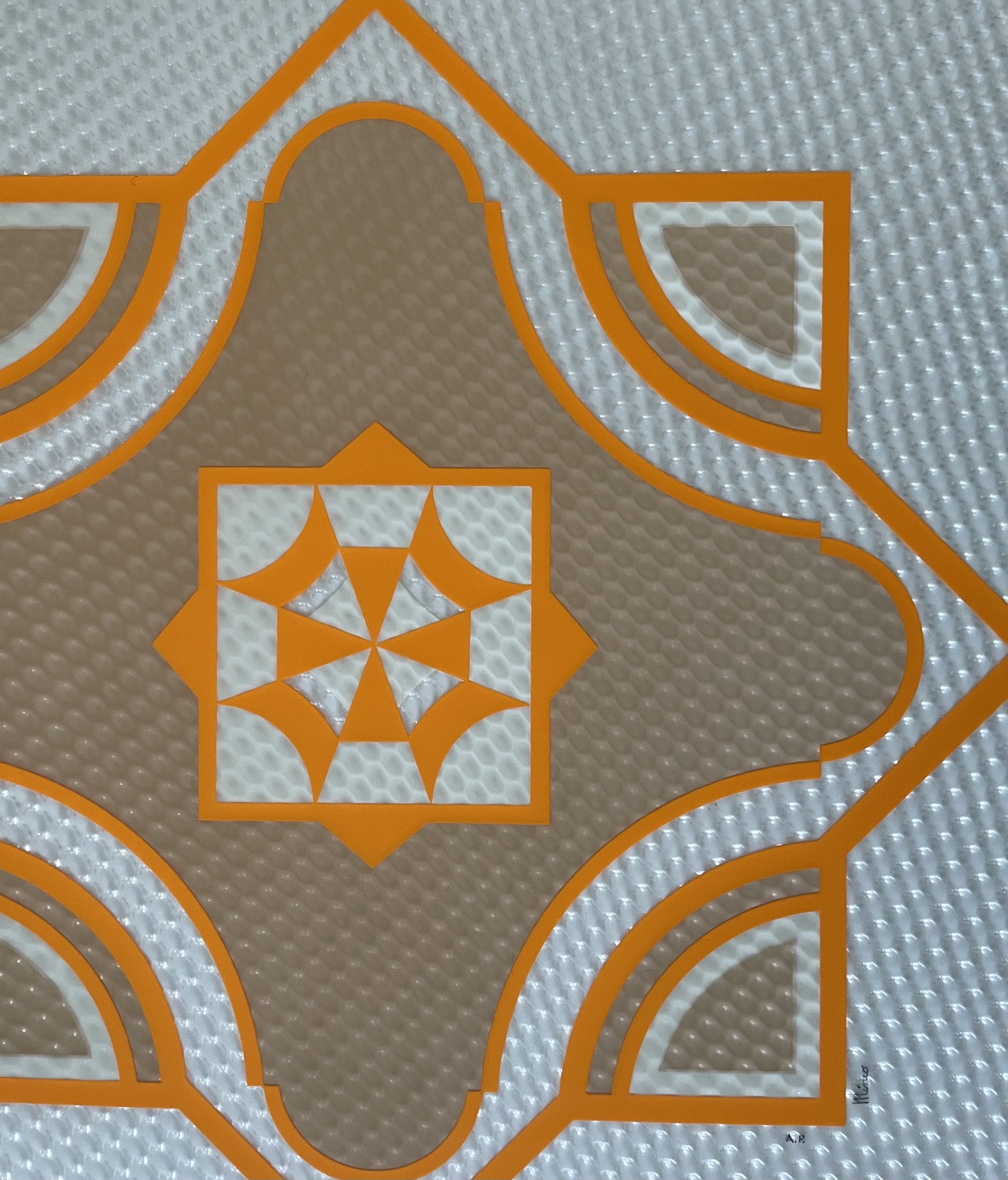 Image 5 of 10
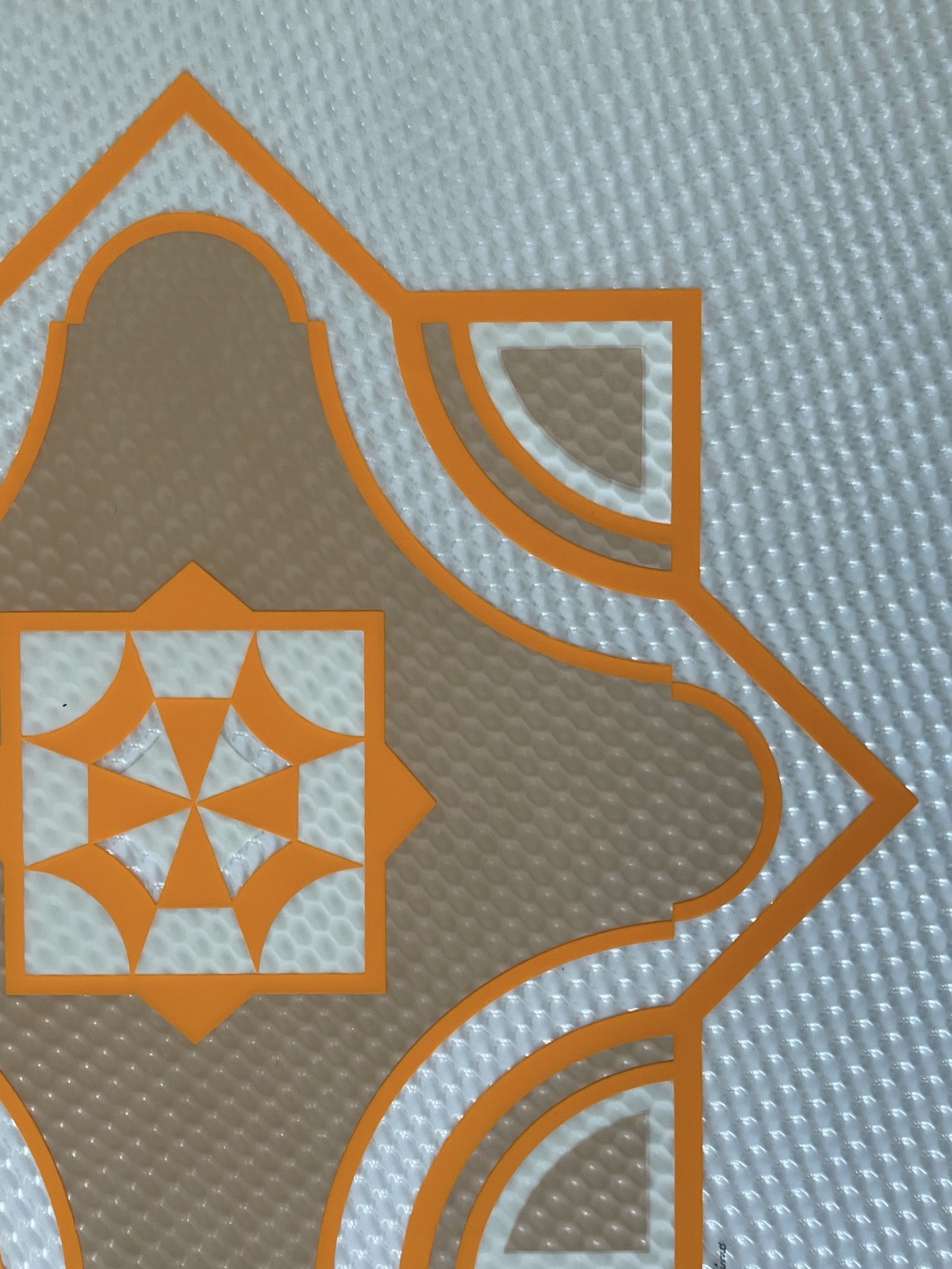 Image 6 of 10
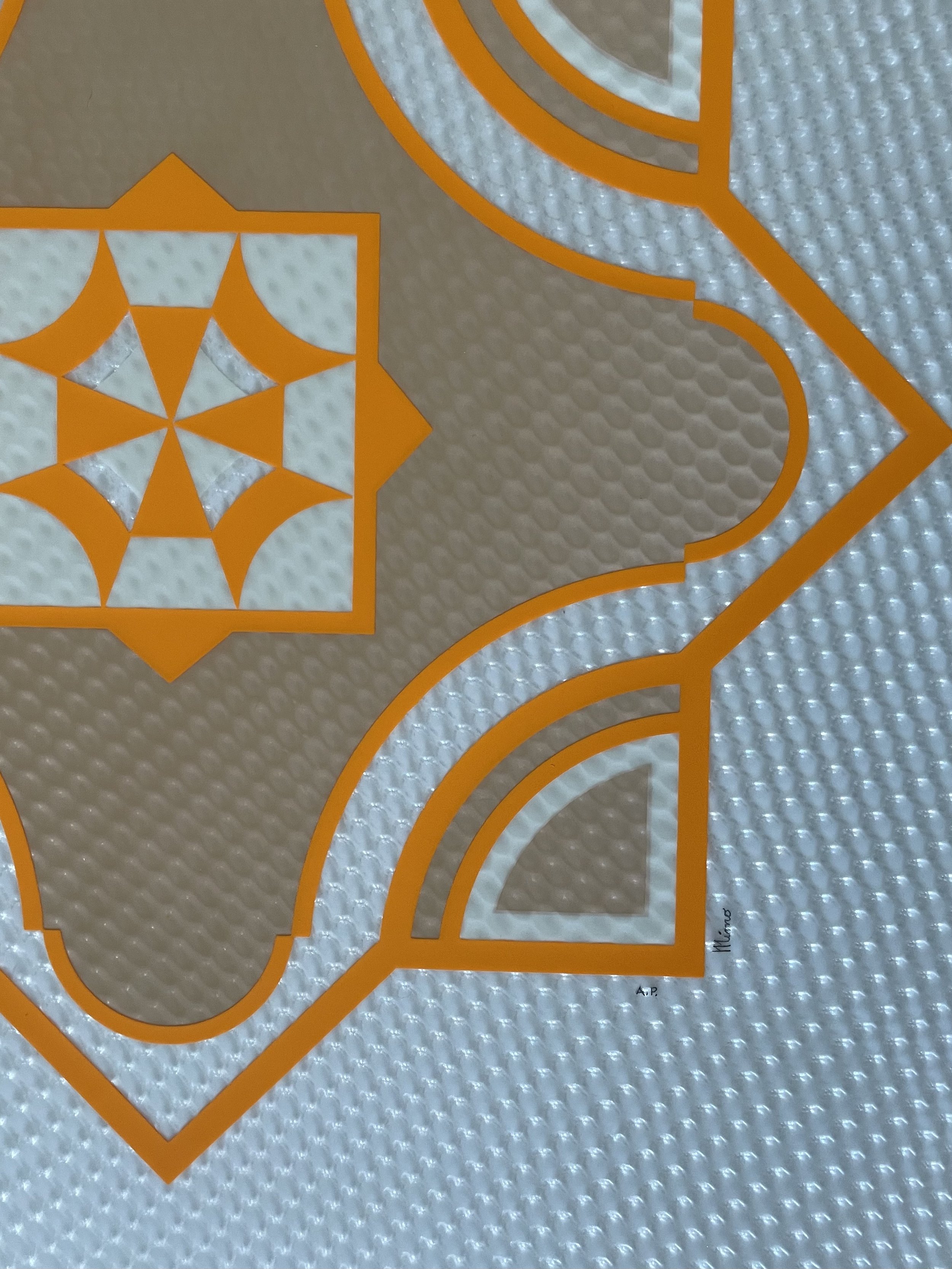 Image 7 of 10
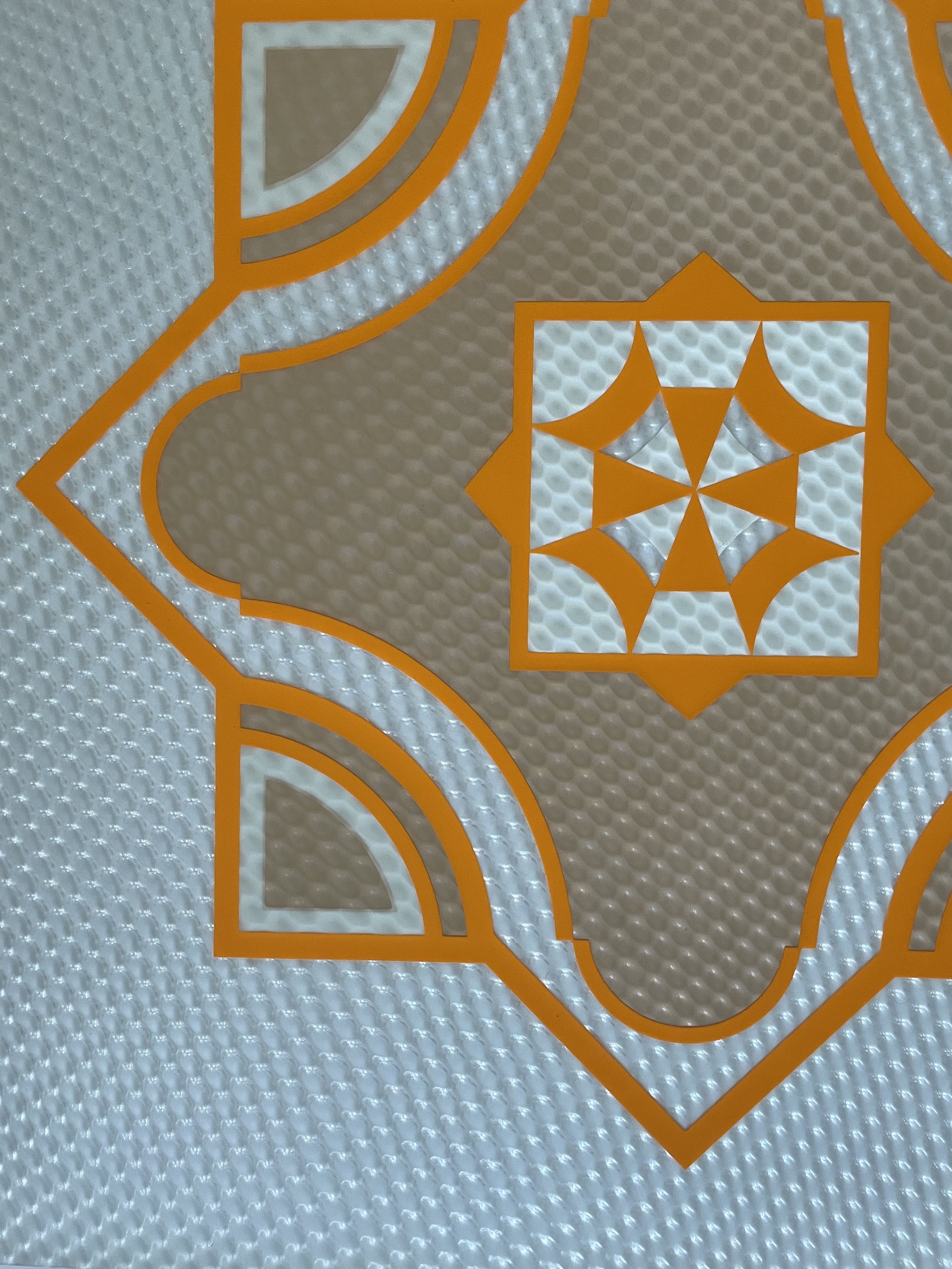 Image 8 of 10
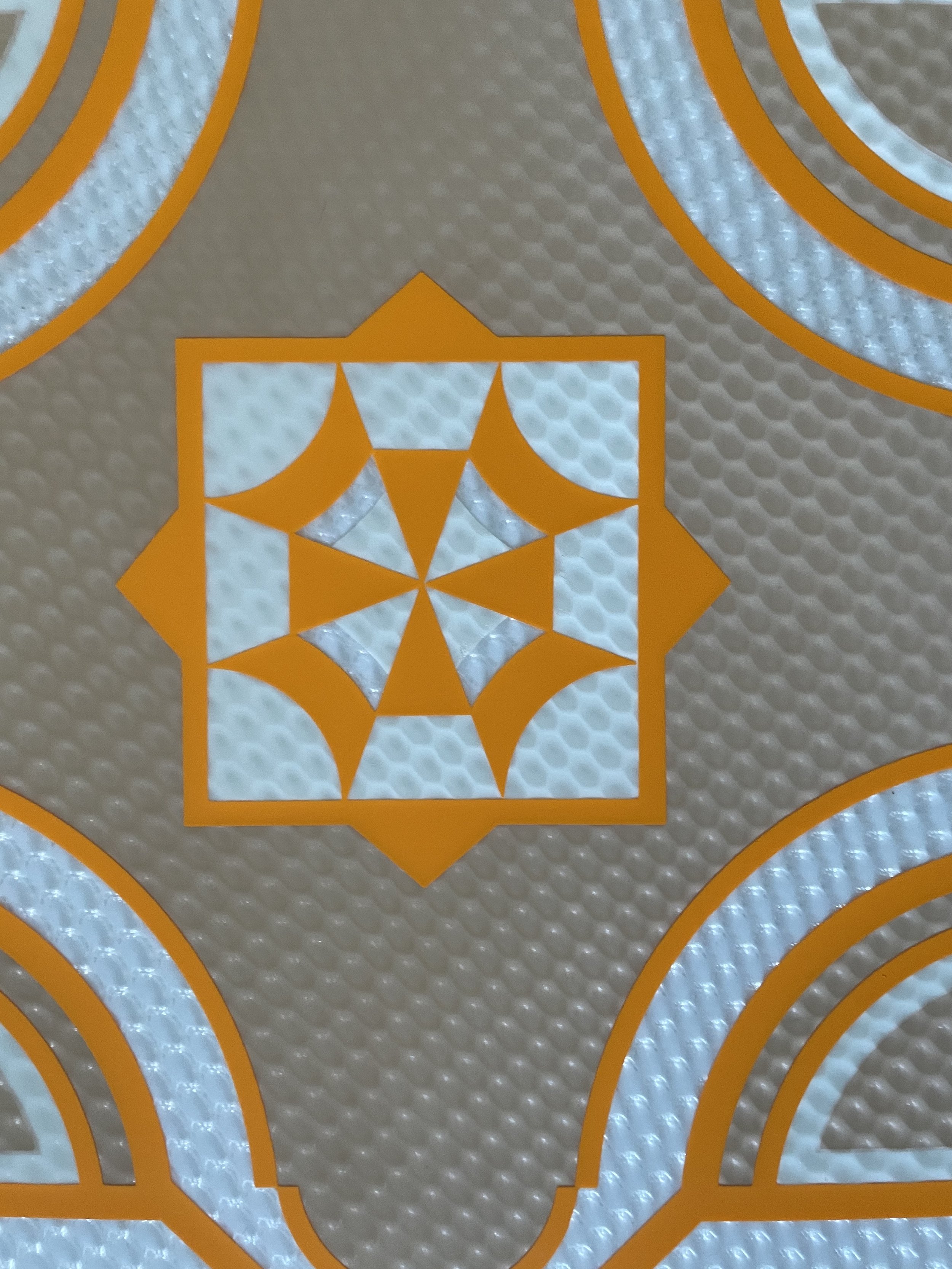 Image 9 of 10
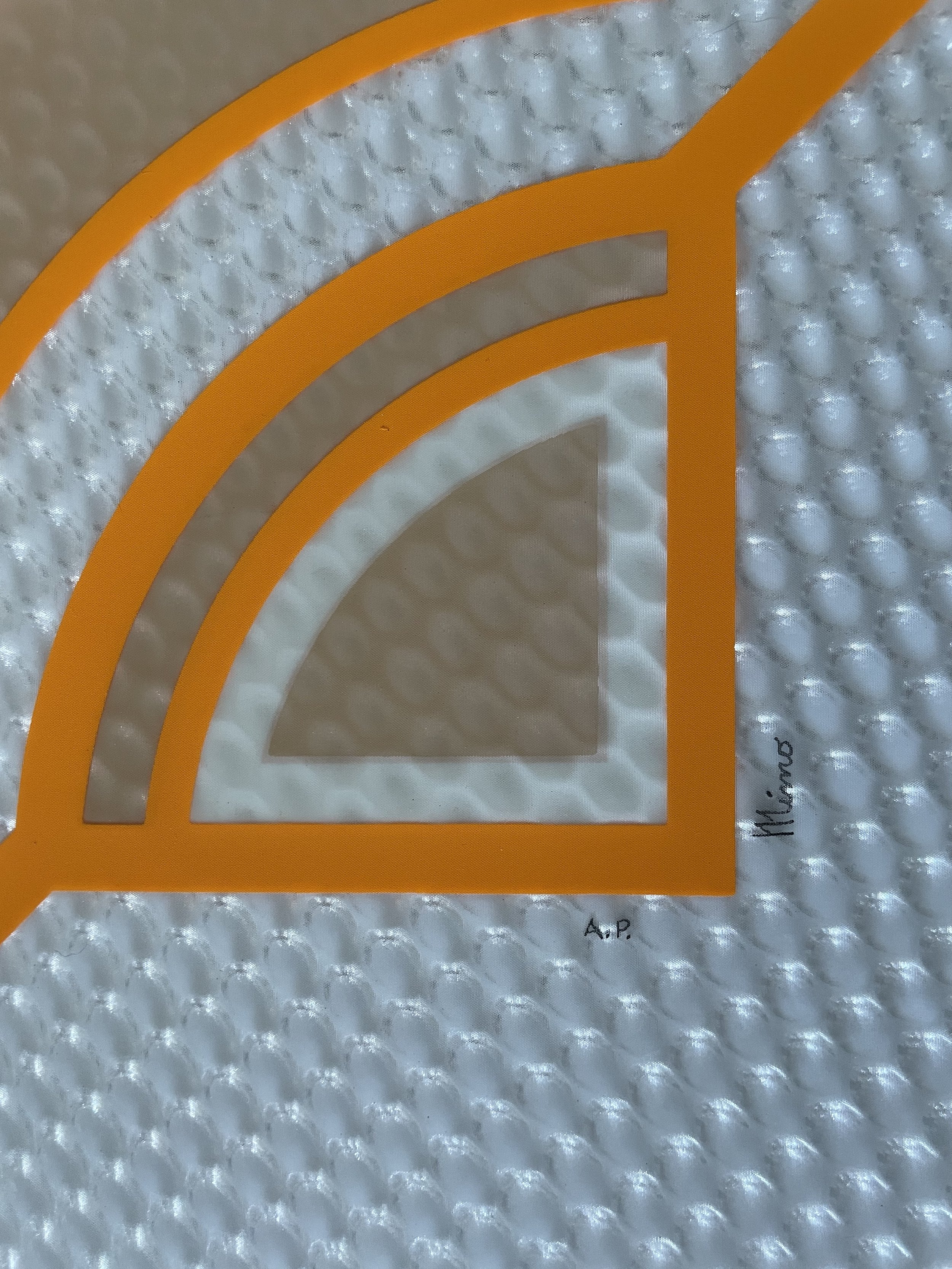 Image 10 of 10