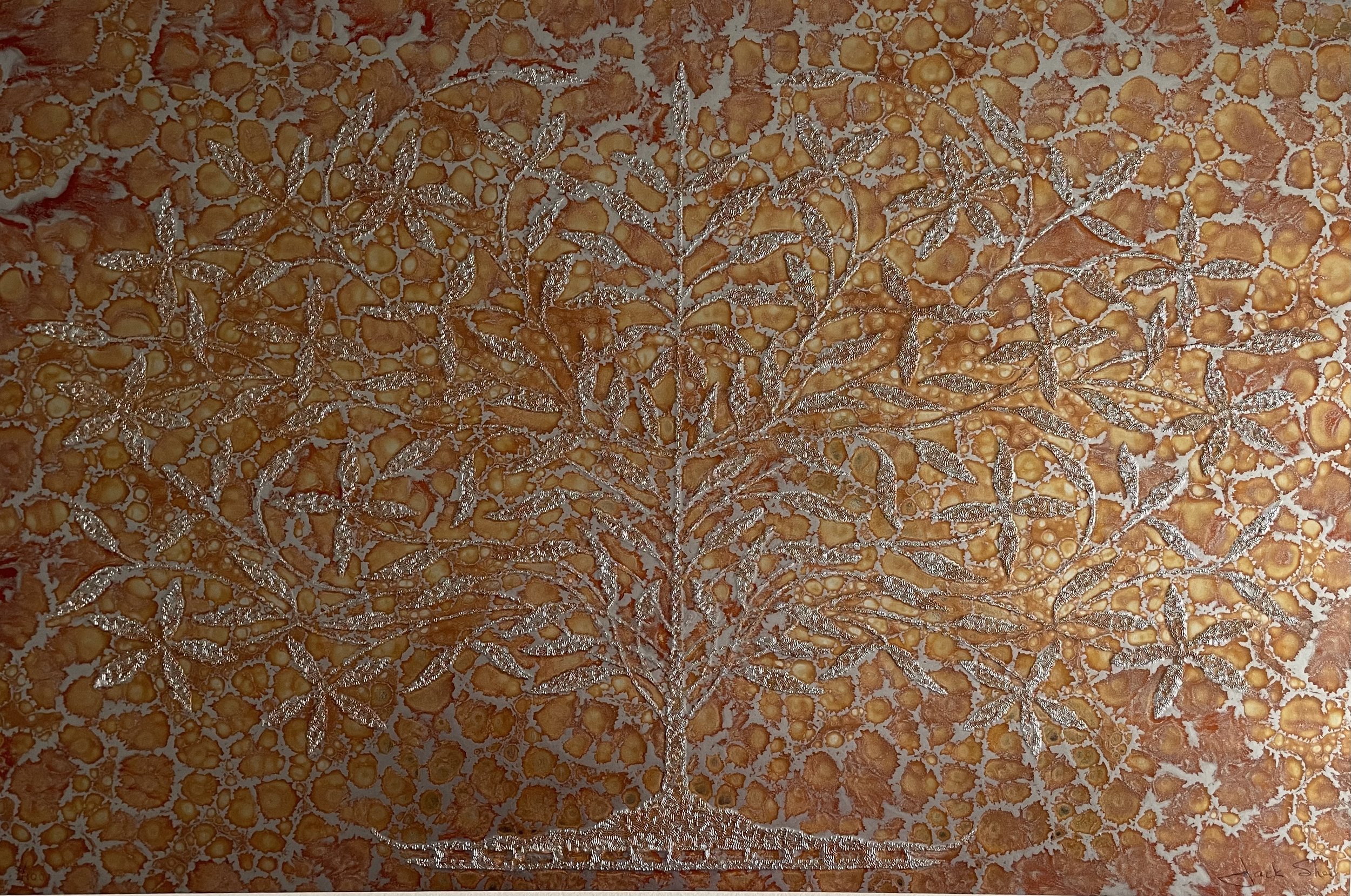
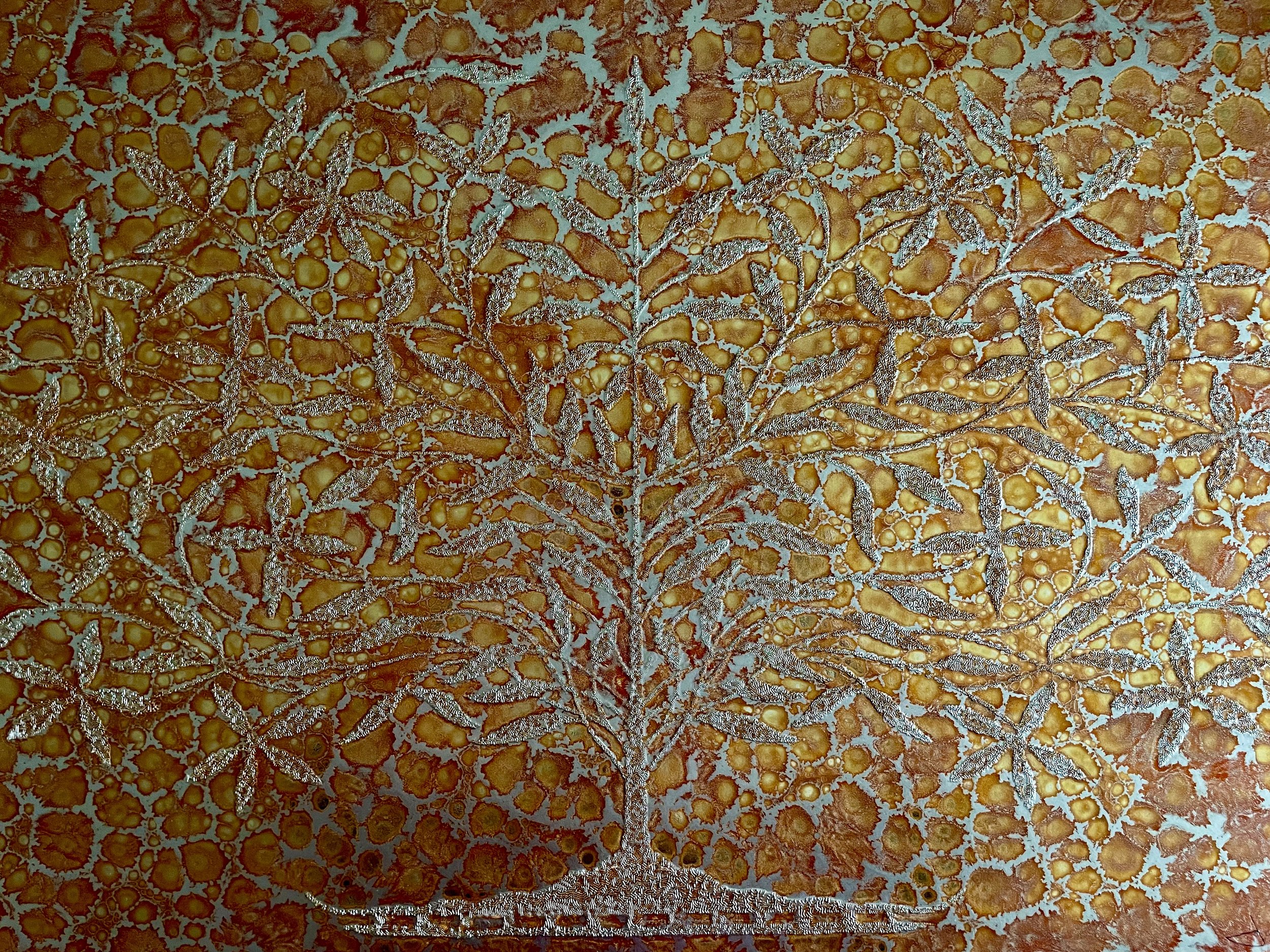
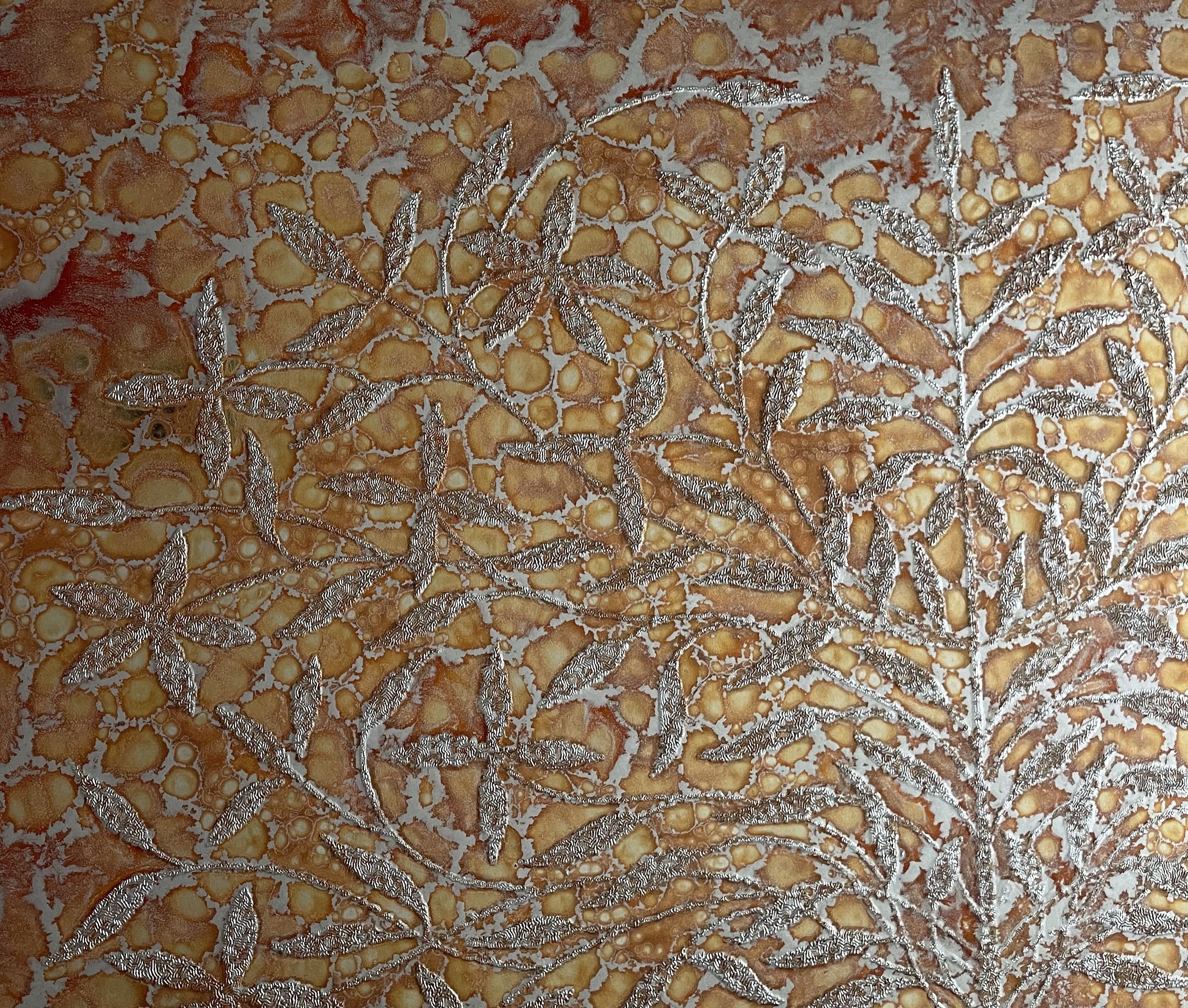
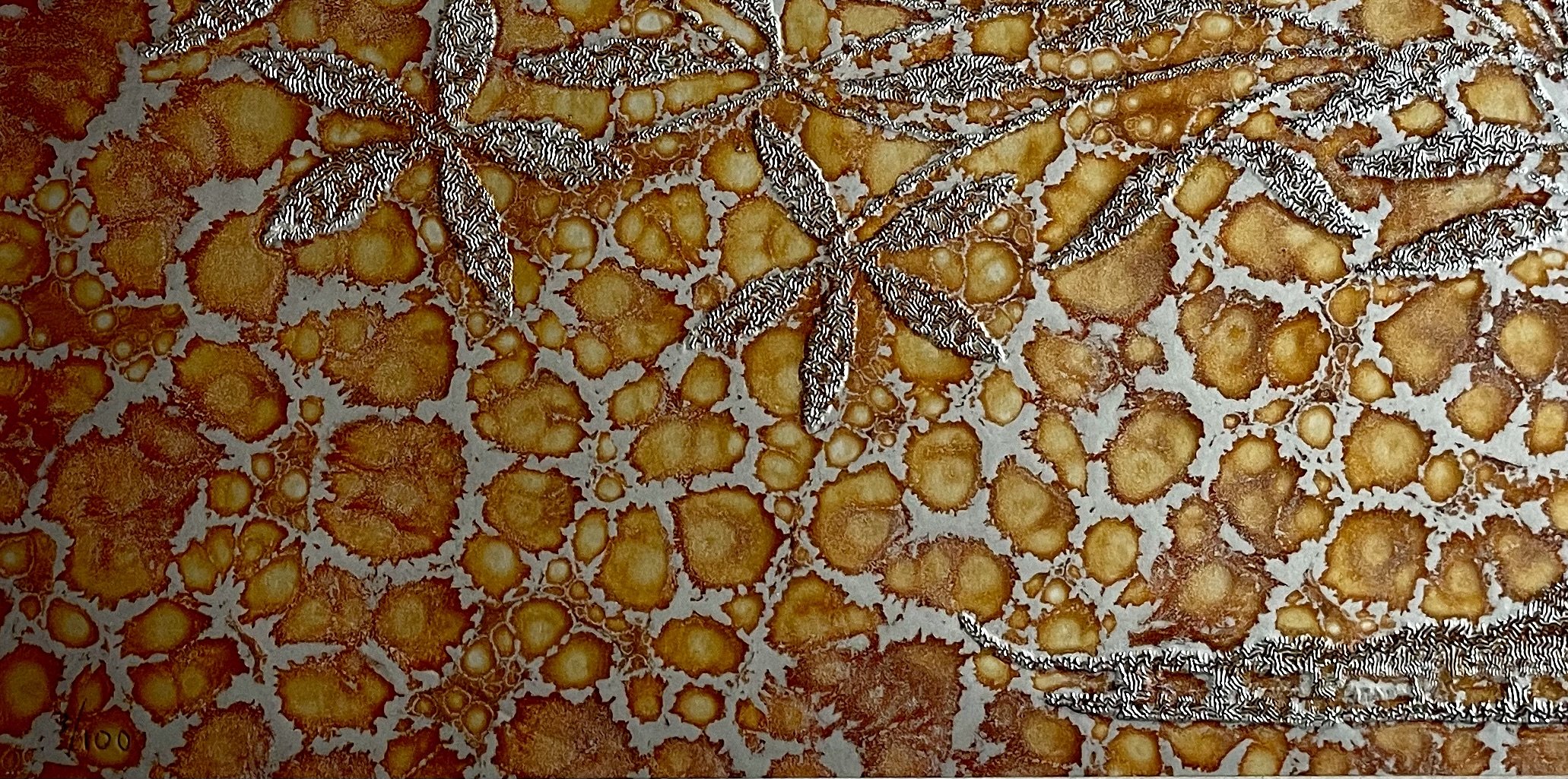
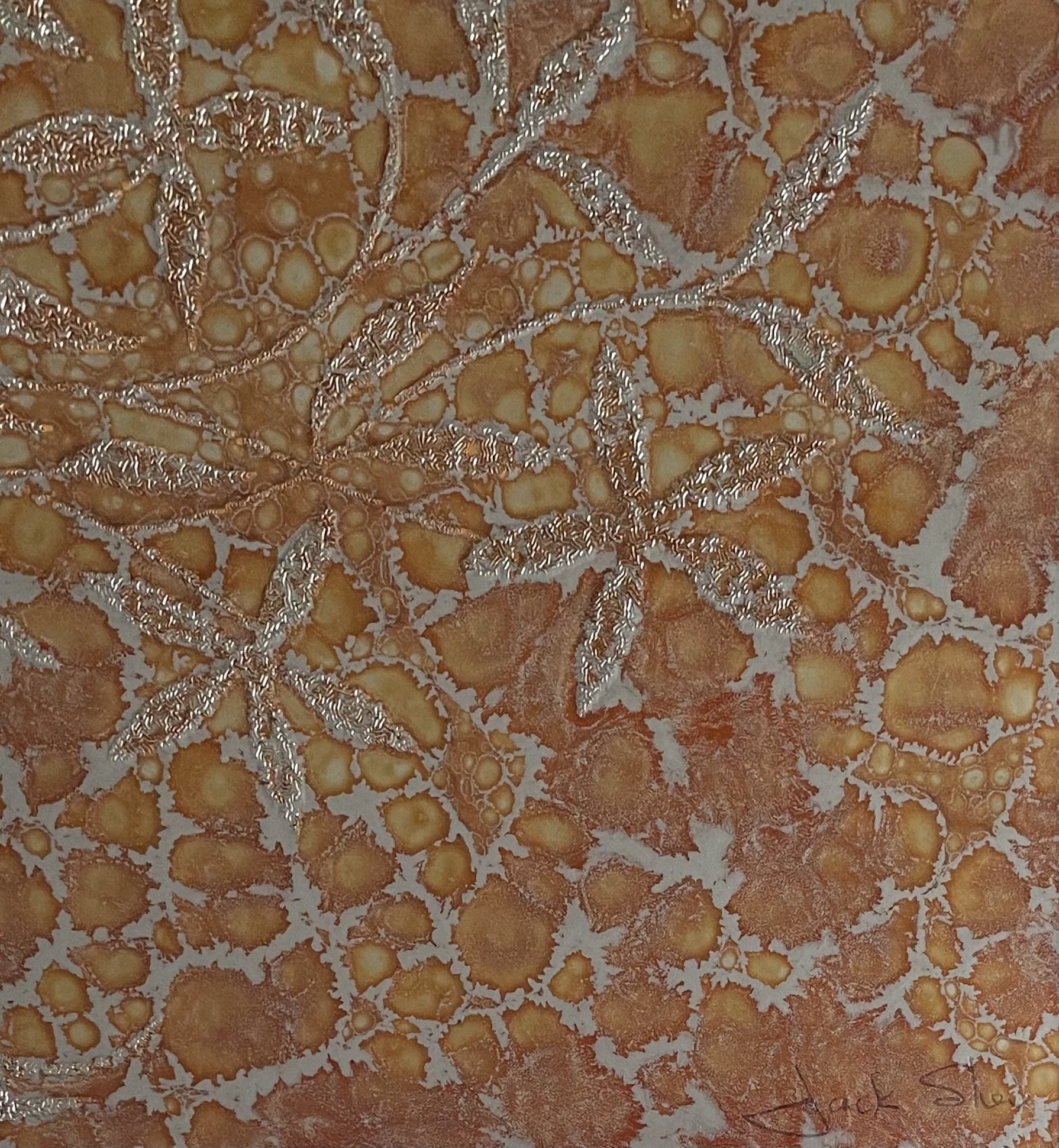
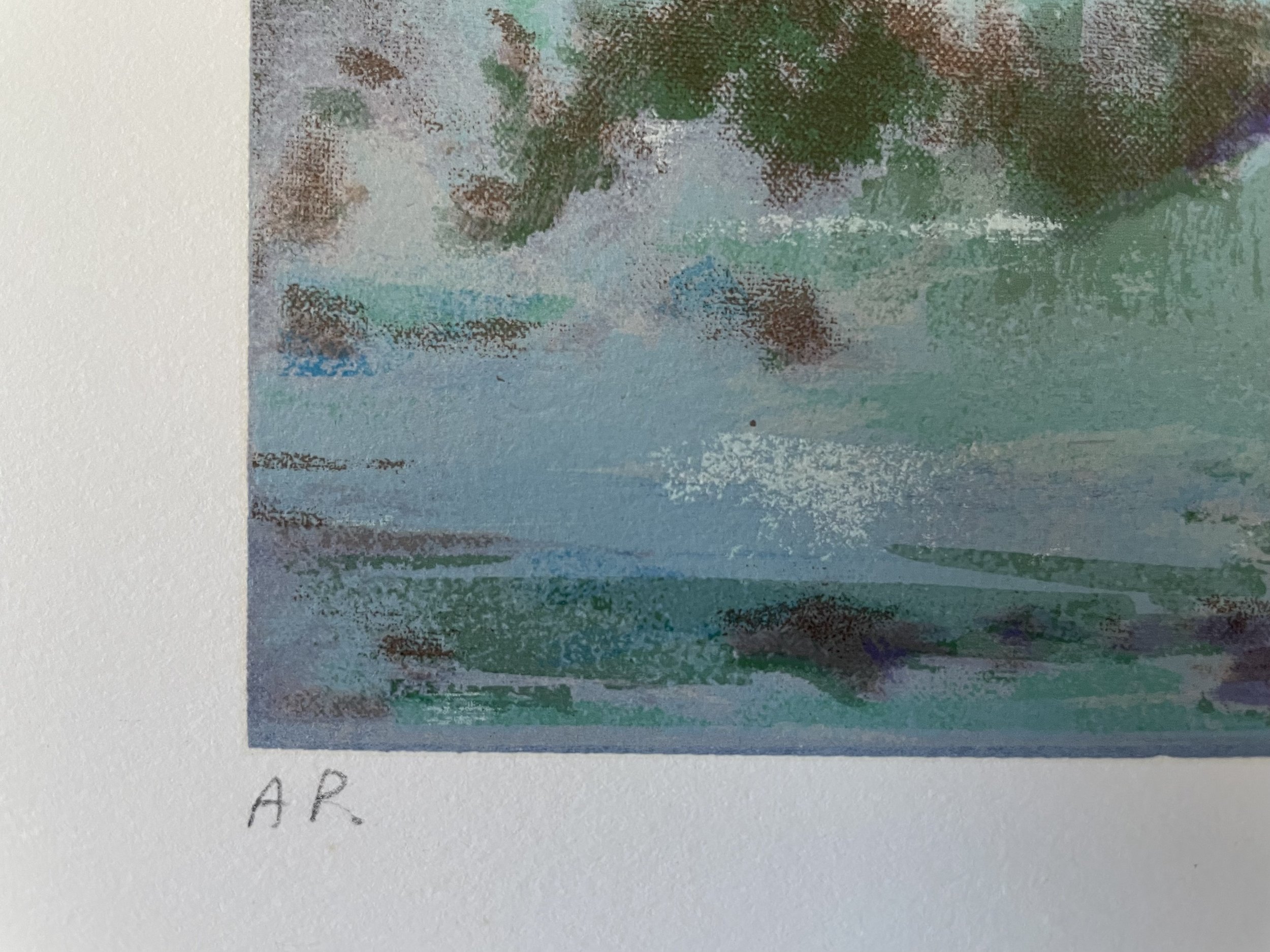
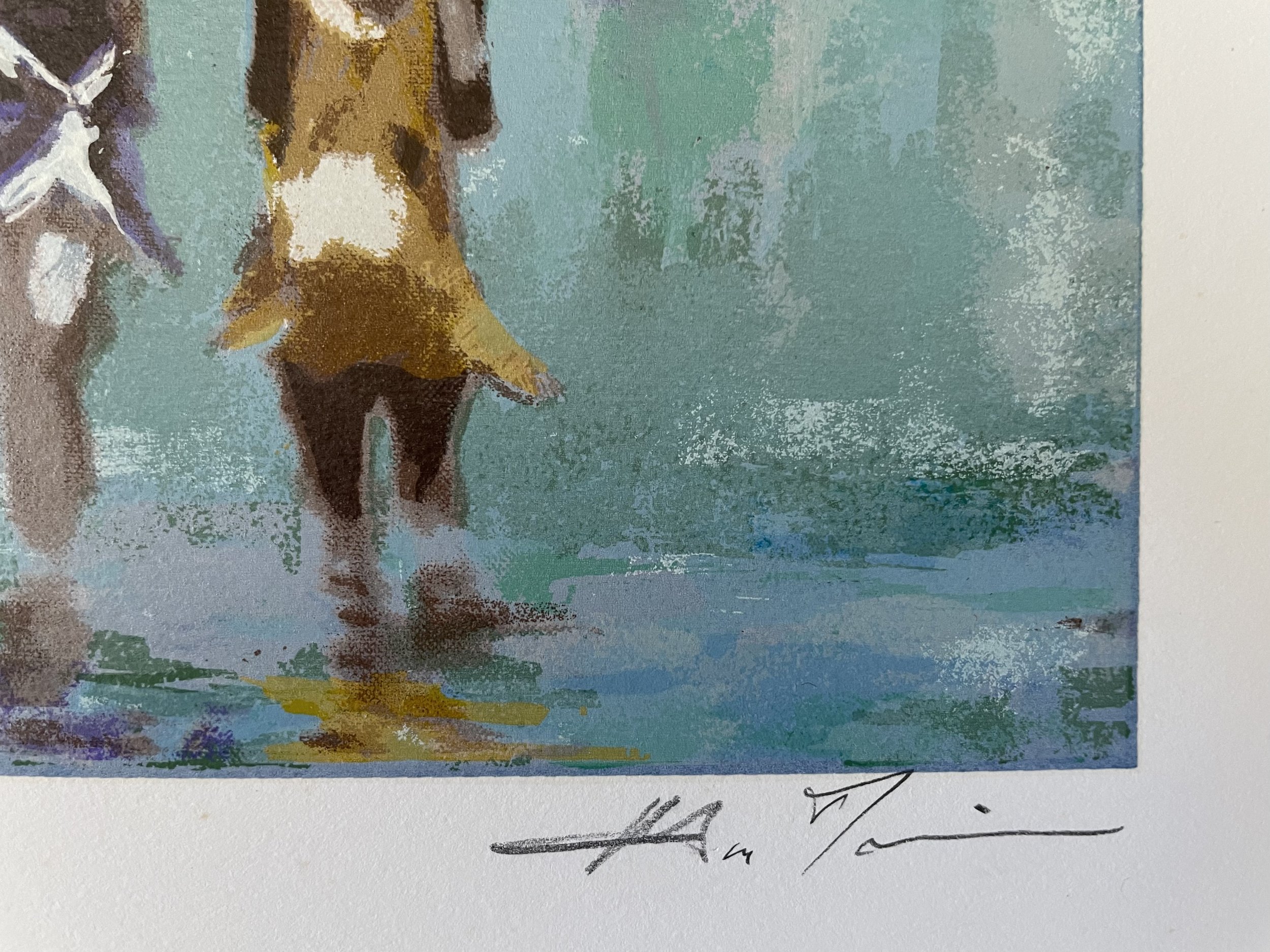
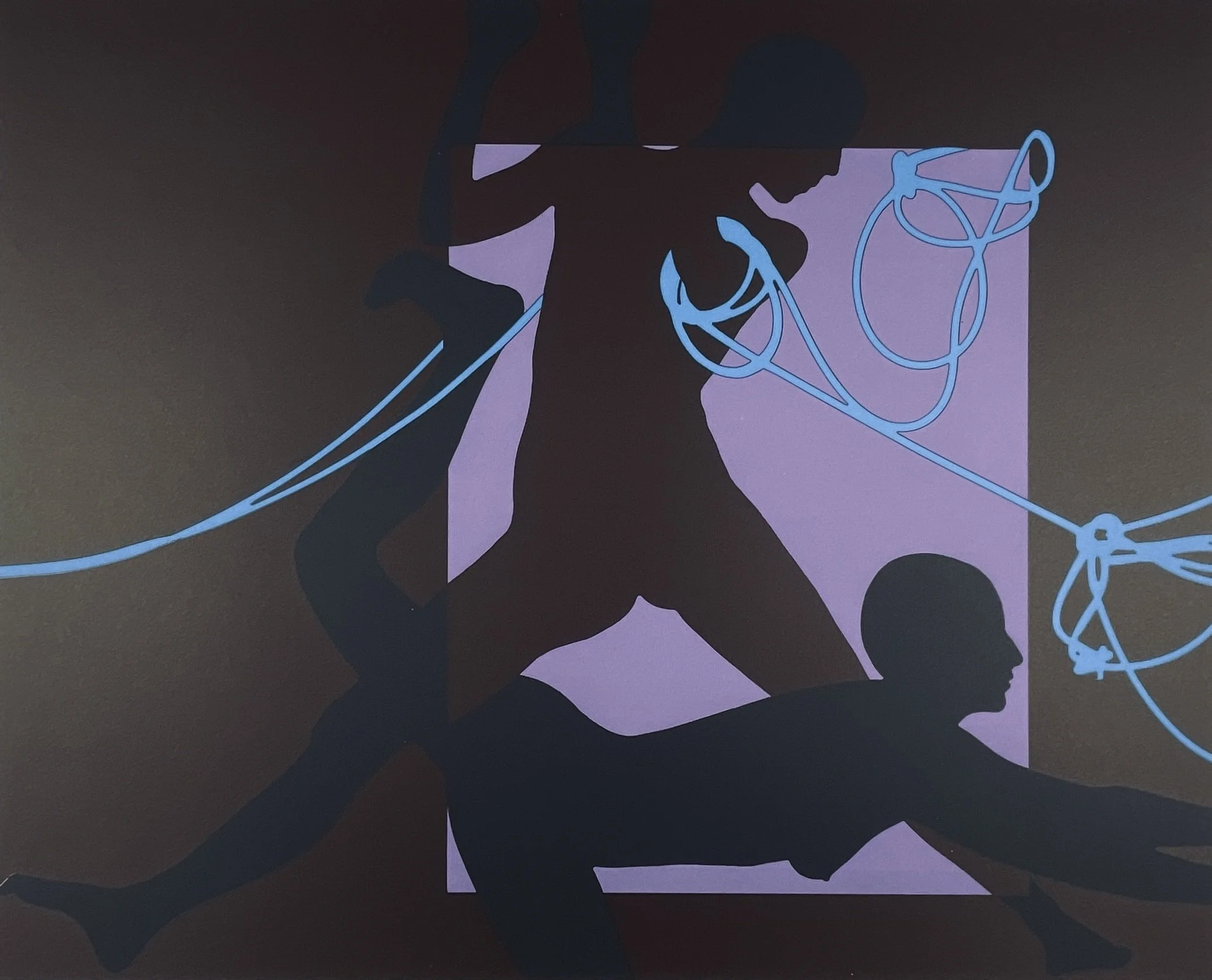
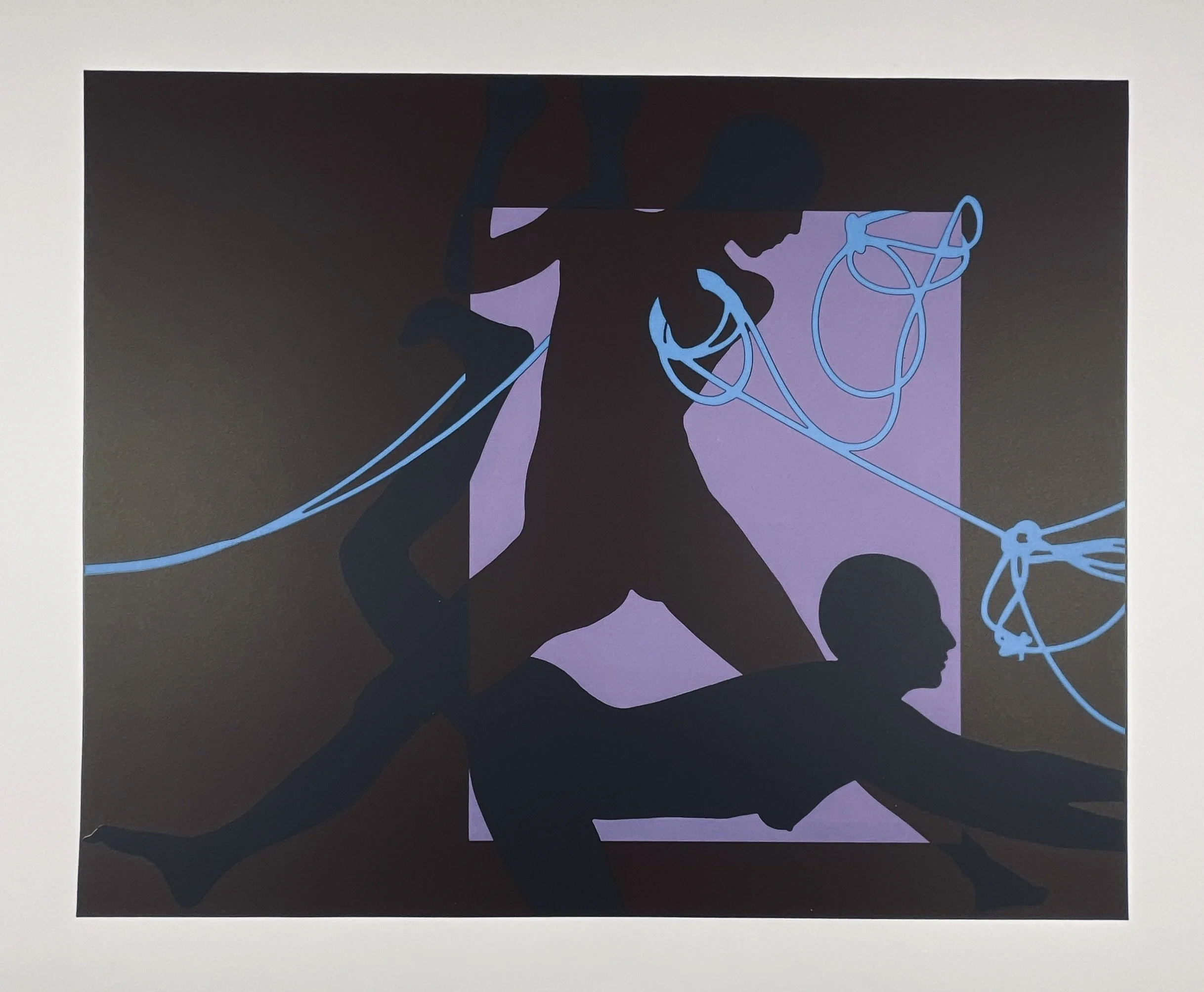
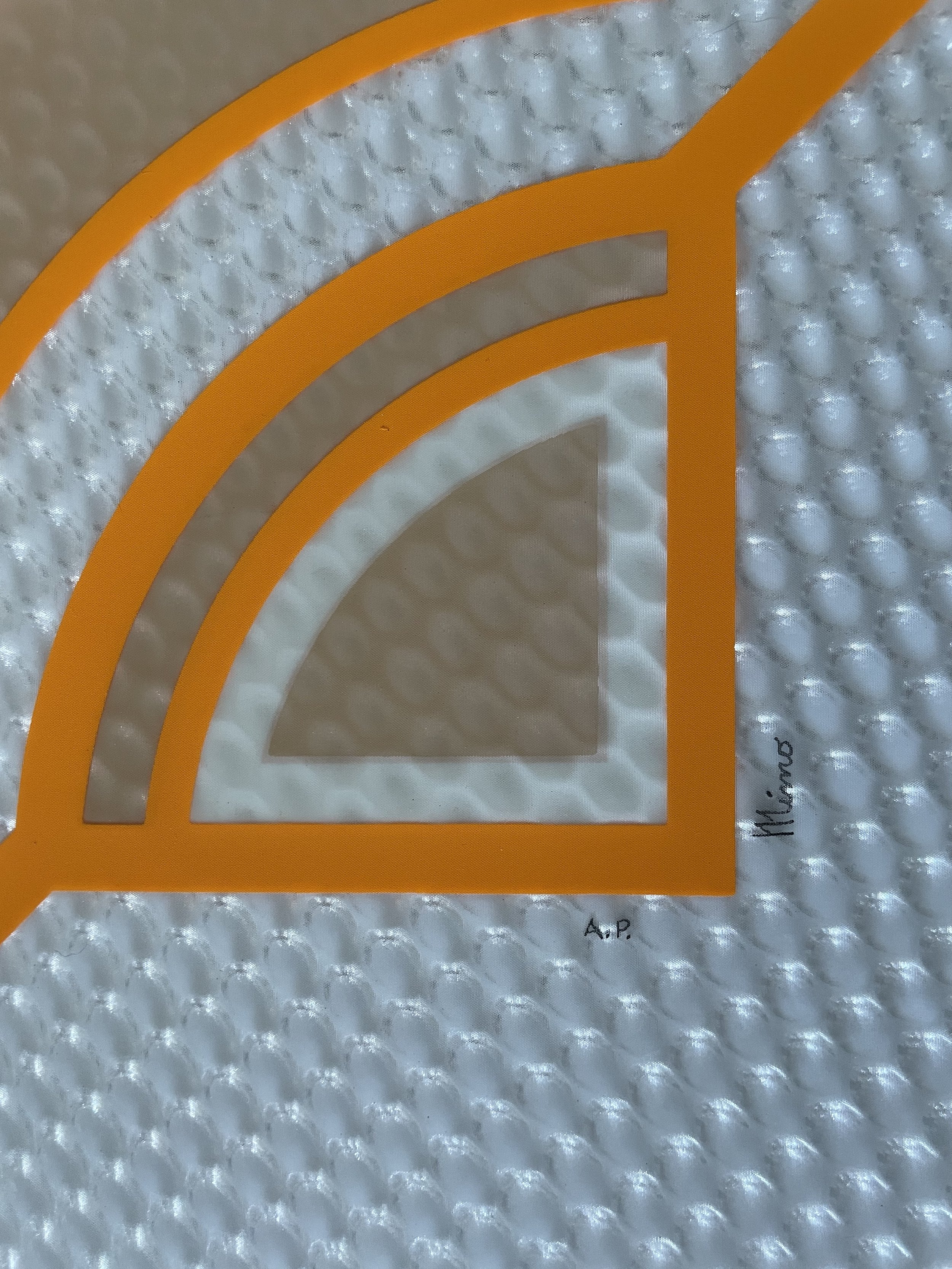
“Abstract Lens,” -attributed -E. T. Gipson (American, b. Texas; active mid–late 20th century), silkscreen serigraph monoprint, 26 × 23 inches, signed and dated ’87, numbered 1/1.
“Abstract Lens” is a rare one-of-a-kind silkscreen serigraph monoprint by E. T. Gipson, featuring softly modulated vertical color fields contained within a circular format. Executed using Gipson’s innovative serigraphic monotype process, the work explores perception, balance, and atmospheric depth through layered color transitions and precise tonal control. Signed, dated, and uniquely printed, this work exemplifies Gipson’s mature period and his mastery of experimental serigraphy.
Artwork Description
“Abstract Lens” exemplifies E. T. Gipson’s commitment to what he described as “innovative serigraphy”—a process-driven approach that pushed traditional silkscreen techniques into the realm of painterly, one-of-a-kind works. The composition is defined by a circular field (tondo format) that encloses softly blended vertical bands of color, moving from cool greens and blues into warmer neutral tones. The transitions are gradual and atmospheric, evoking light, depth, and spatial ambiguity rather than fixed imagery.
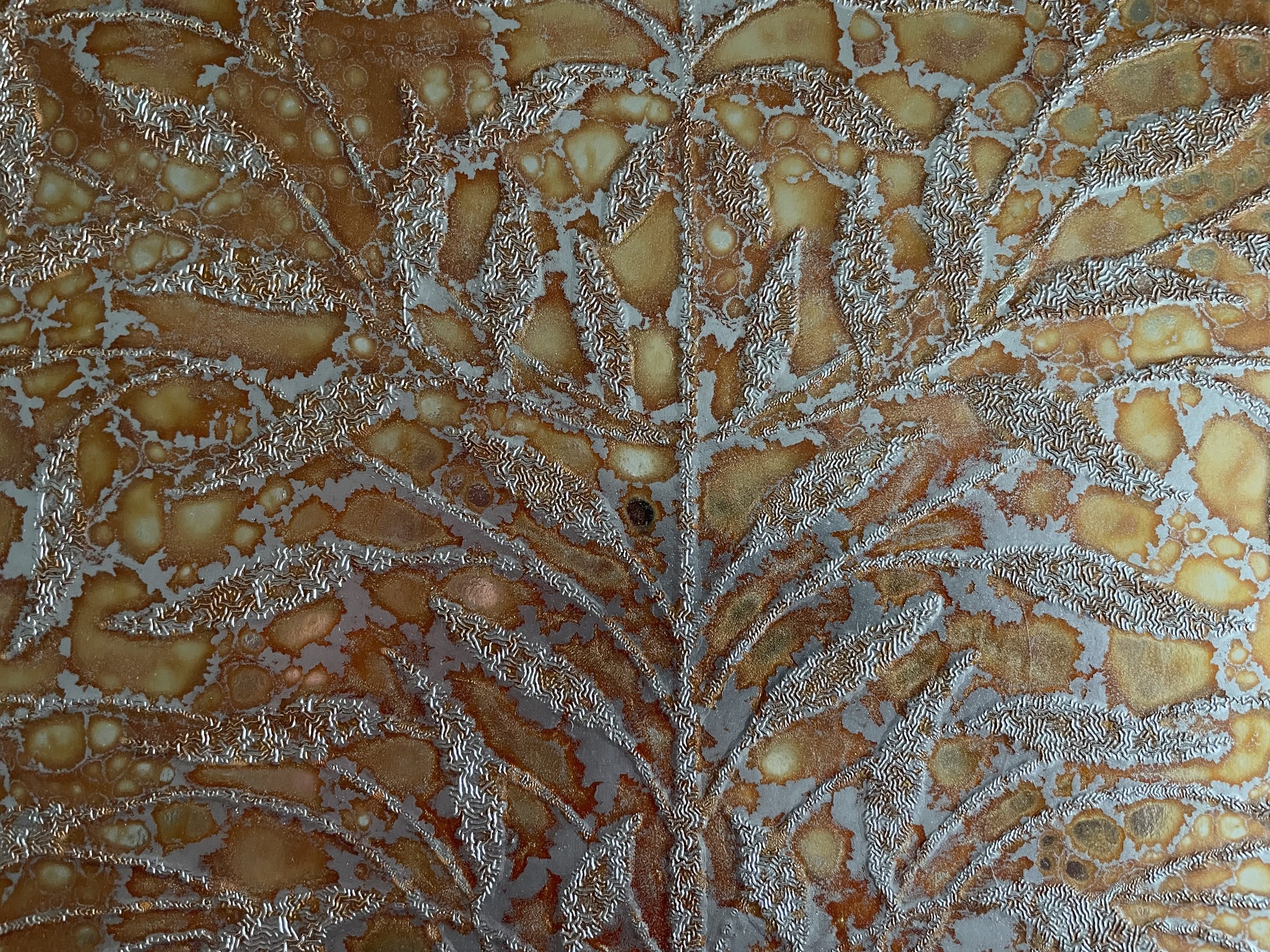
Unlike standard editioned serigraphs, this work is a true monoprint (1/1). Each layer was hand-pulled and individually executed by the artist, allowing subtle variations in pigment density, edge diffusion, and surface texture. The softness of the gradients suggests both technical control and intuitive responsiveness to the medium, a hallmark of Gipson’s practice.
The circular form functions as both a compositional frame and a conceptual lens—suggesting perception, focus, and internal reflection. The absence of hard edges or representational imagery places the work firmly within postwar American abstraction, while its restrained palette and meditative presence align it with works favored by architects, interior designers, and corporate collectors during the period.
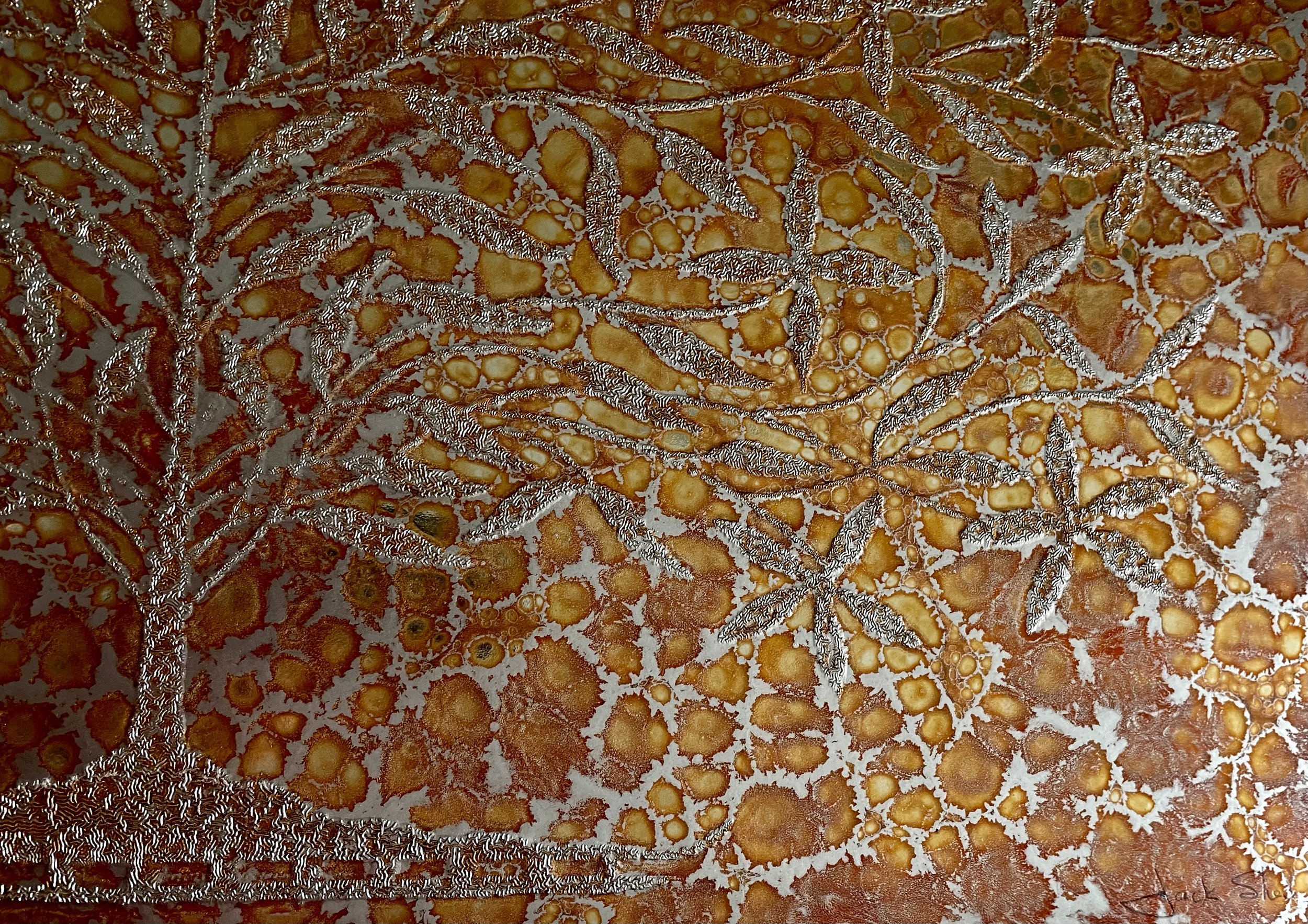
Signed and dated Gipson ’87, “Abstract Lens” belongs to a significant body of late-career works in which the artist refined his monotype serigraph process into a quiet, luminous visual language.
Artist Biography: E. T. Gipson
E. T. Gipson is an American abstract artist best known for his pioneering work in silkscreen serigraph monotypes, a medium he developed into a distinctive and highly personal form. Born in Texas, Gipson’s early life stood in marked contrast to the international recognition his work would later achieve. As he himself embodied, his career followed a nontraditional path, shaped as much by lived experience as by formal artistic ambition.
Entirely self-taught, Gipson pursued art alongside a wide range of professions, including baker, taxicab driver, food and drug chemist, and art gallery owner. This unconventional background informed his independent approach to creativity and his resistance to being confined by stylistic or social categories. He consistently rejected artistic “pigeonholing,” instead allowing process and experimentation to guide his work.
Gipson found serigraphy particularly compelling for its technical challenges and creative flexibility. He embraced silkscreen printing not as a method of replication, but as a means of producing singular, unrepeatable works. Referring to his practice as innovative serigraphy, he developed techniques that emphasized subtle color transitions, atmospheric layering, and painterly softness—qualities rarely associated with traditional screen printing.
His works achieved wide recognition and were acquired by major corporate and institutional clients, including First National Bank of Denver, Holiday Inns of America, Registry Hotel (Minneapolis), Diplomat Golf & Racquet Club (Hollywood, Florida), Beneficial Management Corporation, and Household Finance Corporation, as well as numerous leading interior designers and art galleries across the United States. His work’s architectural calm and chromatic sophistication made it especially desirable in modernist commercial and residential settings.
Gipson also exhibited internationally, with references to participation in prestigious European salon contexts, including Paris. Later in life, he resided in Novato, California, where he continued refining his monotype serigraph practice.
Today, Gipson’s works are increasingly recognized for their quiet rigor, technical originality, and relevance within the broader narrative of postwar American abstraction. His 1/1 serigraph monoprints, in particular, stand as enduring examples of a medium transformed by personal vision and disciplined experimentation.
E. T. Gipson
Abstract Lens, c. 1987
Silkscreen serigraph monoprint
Signed and dated ’87; numbered 1/1
26 × 23 inches
One-of-a-kind work exemplifying Gipson’s innovative serigraphy practice
Certificate of Value & Authentication
This certifies that the artwork titled “Abstract Lens” is an original silkscreen serigraph monoprint by E. T. Gipson, executed as a unique 1/1 work. The piece is hand-pulled, individually executed, signed, dated, and authenticated as an original work by the artist. Based on provenance, condition, and comparable market examples, the work is confirmed as authentic and collectible within the secondary art market.
Provenance
Private Collection
Acquired from Mitch Morse Gallery, New York City, United States and Europe
Current owner: Artfind Gallery, Washington, DC
“Abstract Lens,” -attributed -E. T. Gipson (American, b. Texas; active mid–late 20th century), silkscreen serigraph monoprint, 26 × 23 inches, signed and dated ’87, numbered 1/1.
“Abstract Lens” is a rare one-of-a-kind silkscreen serigraph monoprint by E. T. Gipson, featuring softly modulated vertical color fields contained within a circular format. Executed using Gipson’s innovative serigraphic monotype process, the work explores perception, balance, and atmospheric depth through layered color transitions and precise tonal control. Signed, dated, and uniquely printed, this work exemplifies Gipson’s mature period and his mastery of experimental serigraphy.
Artwork Description
“Abstract Lens” exemplifies E. T. Gipson’s commitment to what he described as “innovative serigraphy”—a process-driven approach that pushed traditional silkscreen techniques into the realm of painterly, one-of-a-kind works. The composition is defined by a circular field (tondo format) that encloses softly blended vertical bands of color, moving from cool greens and blues into warmer neutral tones. The transitions are gradual and atmospheric, evoking light, depth, and spatial ambiguity rather than fixed imagery.
Unlike standard editioned serigraphs, this work is a true monoprint (1/1). Each layer was hand-pulled and individually executed by the artist, allowing subtle variations in pigment density, edge diffusion, and surface texture. The softness of the gradients suggests both technical control and intuitive responsiveness to the medium, a hallmark of Gipson’s practice.
The circular form functions as both a compositional frame and a conceptual lens—suggesting perception, focus, and internal reflection. The absence of hard edges or representational imagery places the work firmly within postwar American abstraction, while its restrained palette and meditative presence align it with works favored by architects, interior designers, and corporate collectors during the period.
Signed and dated Gipson ’87, “Abstract Lens” belongs to a significant body of late-career works in which the artist refined his monotype serigraph process into a quiet, luminous visual language.
Artist Biography: E. T. Gipson
E. T. Gipson is an American abstract artist best known for his pioneering work in silkscreen serigraph monotypes, a medium he developed into a distinctive and highly personal form. Born in Texas, Gipson’s early life stood in marked contrast to the international recognition his work would later achieve. As he himself embodied, his career followed a nontraditional path, shaped as much by lived experience as by formal artistic ambition.
Entirely self-taught, Gipson pursued art alongside a wide range of professions, including baker, taxicab driver, food and drug chemist, and art gallery owner. This unconventional background informed his independent approach to creativity and his resistance to being confined by stylistic or social categories. He consistently rejected artistic “pigeonholing,” instead allowing process and experimentation to guide his work.
Gipson found serigraphy particularly compelling for its technical challenges and creative flexibility. He embraced silkscreen printing not as a method of replication, but as a means of producing singular, unrepeatable works. Referring to his practice as innovative serigraphy, he developed techniques that emphasized subtle color transitions, atmospheric layering, and painterly softness—qualities rarely associated with traditional screen printing.
His works achieved wide recognition and were acquired by major corporate and institutional clients, including First National Bank of Denver, Holiday Inns of America, Registry Hotel (Minneapolis), Diplomat Golf & Racquet Club (Hollywood, Florida), Beneficial Management Corporation, and Household Finance Corporation, as well as numerous leading interior designers and art galleries across the United States. His work’s architectural calm and chromatic sophistication made it especially desirable in modernist commercial and residential settings.
Gipson also exhibited internationally, with references to participation in prestigious European salon contexts, including Paris. Later in life, he resided in Novato, California, where he continued refining his monotype serigraph practice.
Today, Gipson’s works are increasingly recognized for their quiet rigor, technical originality, and relevance within the broader narrative of postwar American abstraction. His 1/1 serigraph monoprints, in particular, stand as enduring examples of a medium transformed by personal vision and disciplined experimentation.
E. T. Gipson
Abstract Lens, c. 1987
Silkscreen serigraph monoprint
Signed and dated ’87; numbered 1/1
26 × 23 inches
One-of-a-kind work exemplifying Gipson’s innovative serigraphy practice
Certificate of Value & Authentication
This certifies that the artwork titled “Abstract Lens” is an original silkscreen serigraph monoprint by E. T. Gipson, executed as a unique 1/1 work. The piece is hand-pulled, individually executed, signed, dated, and authenticated as an original work by the artist. Based on provenance, condition, and comparable market examples, the work is confirmed as authentic and collectible within the secondary art market.
Provenance
Private Collection
Acquired from Mitch Morse Gallery, New York City, United States and Europe
Current owner: Artfind Gallery, Washington, DC
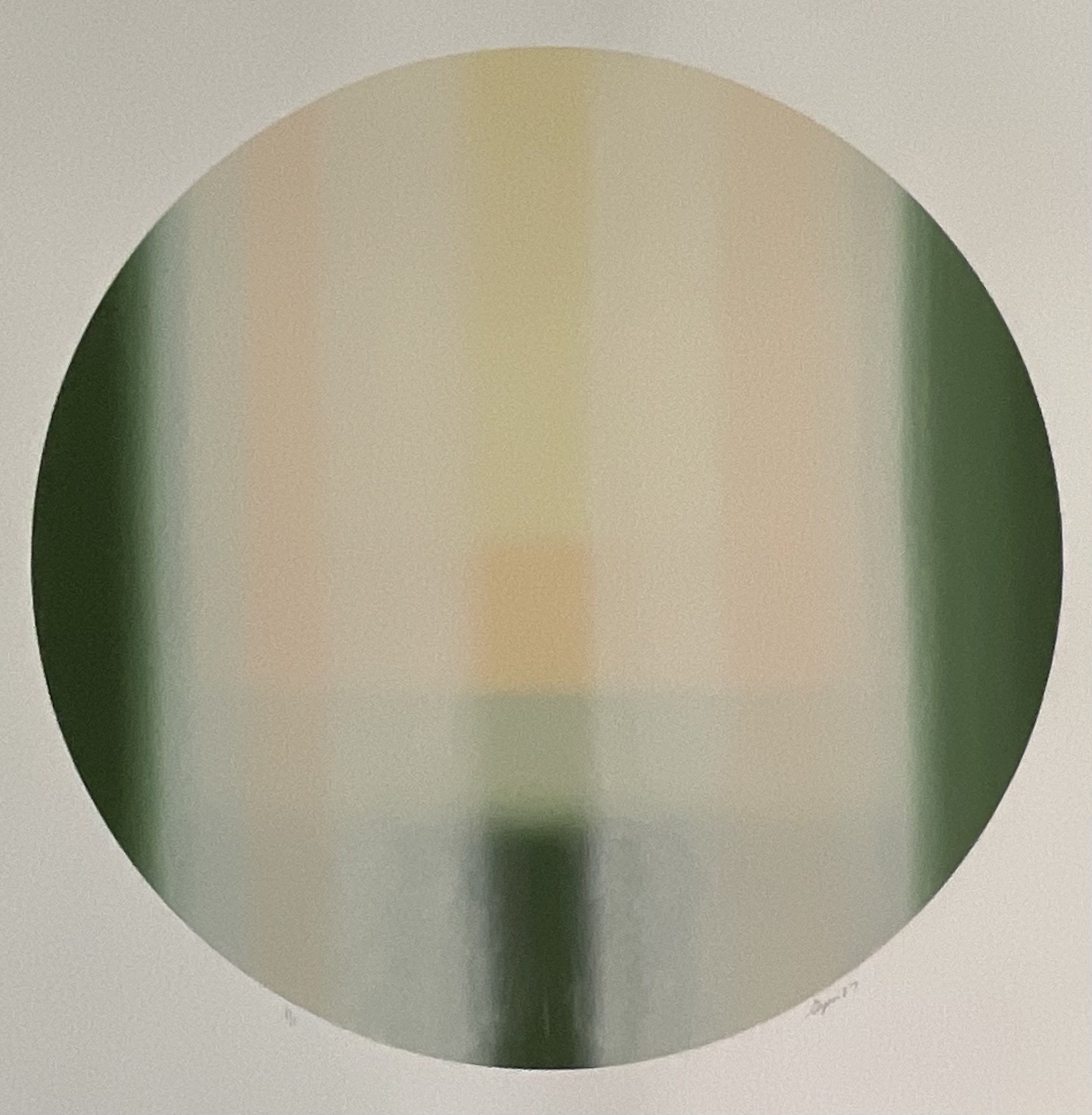 Image 1 of 6
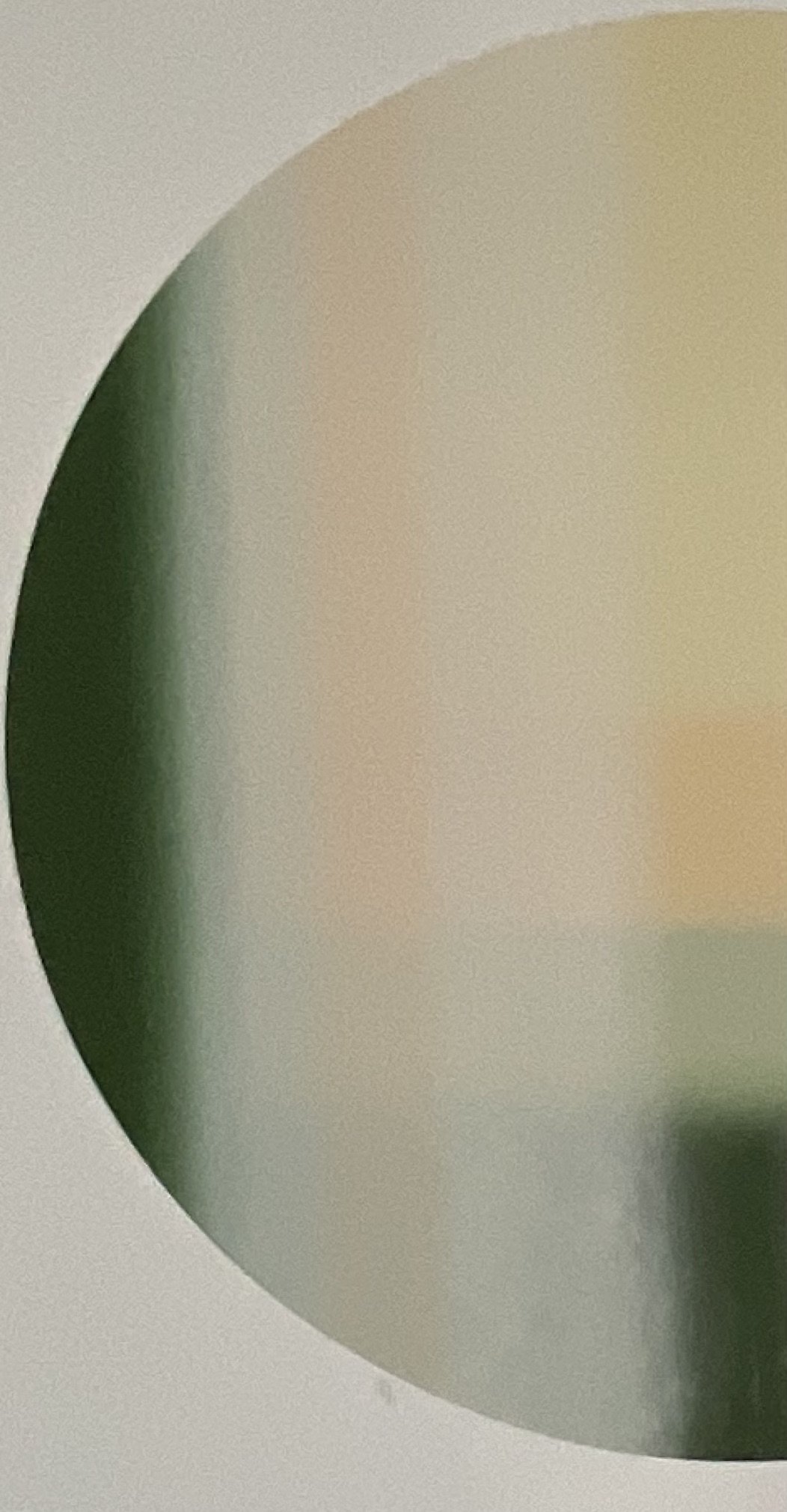 Image 2 of 6
 Image 3 of 6
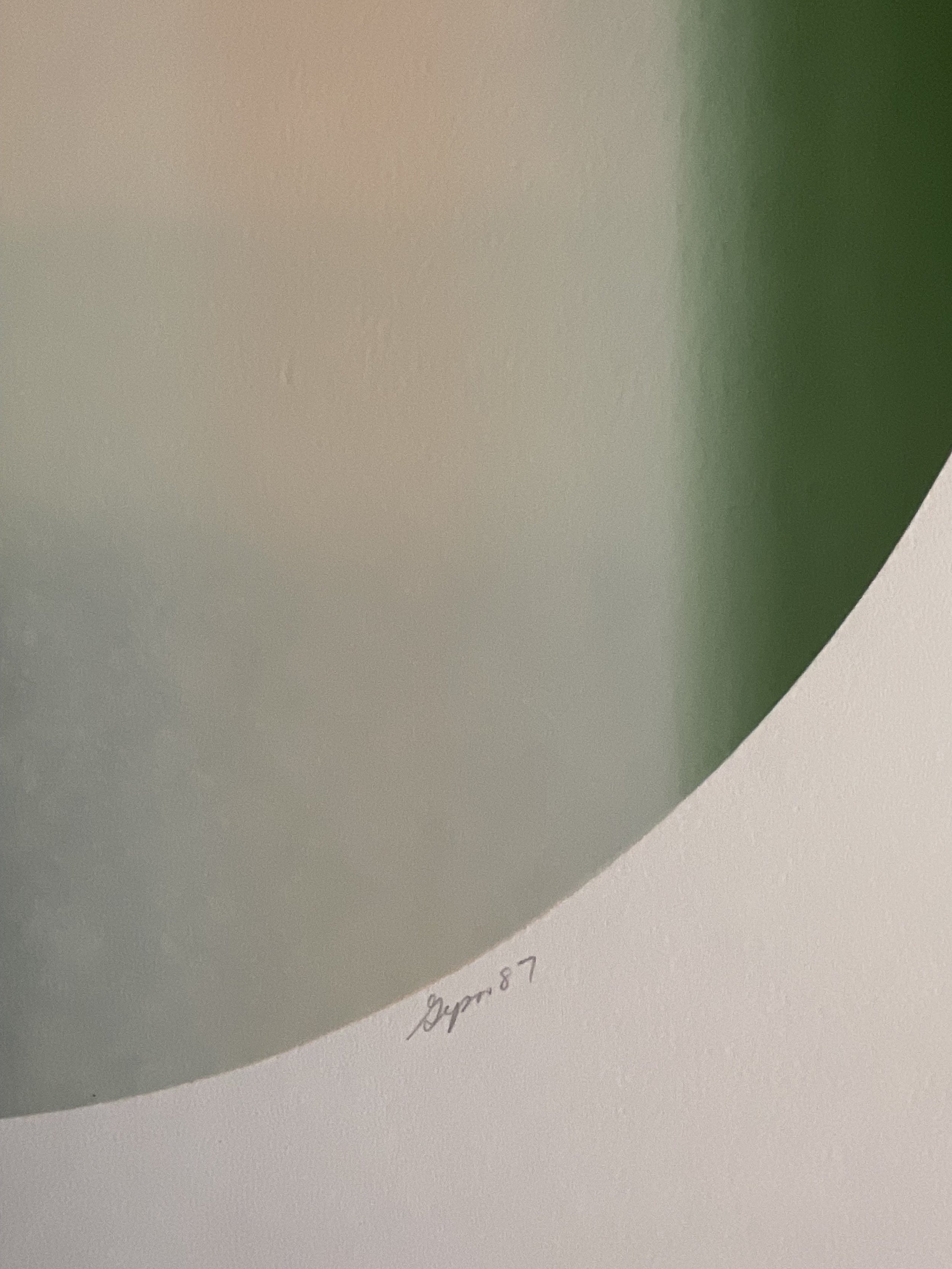 Image 4 of 6
 Image 5 of 6
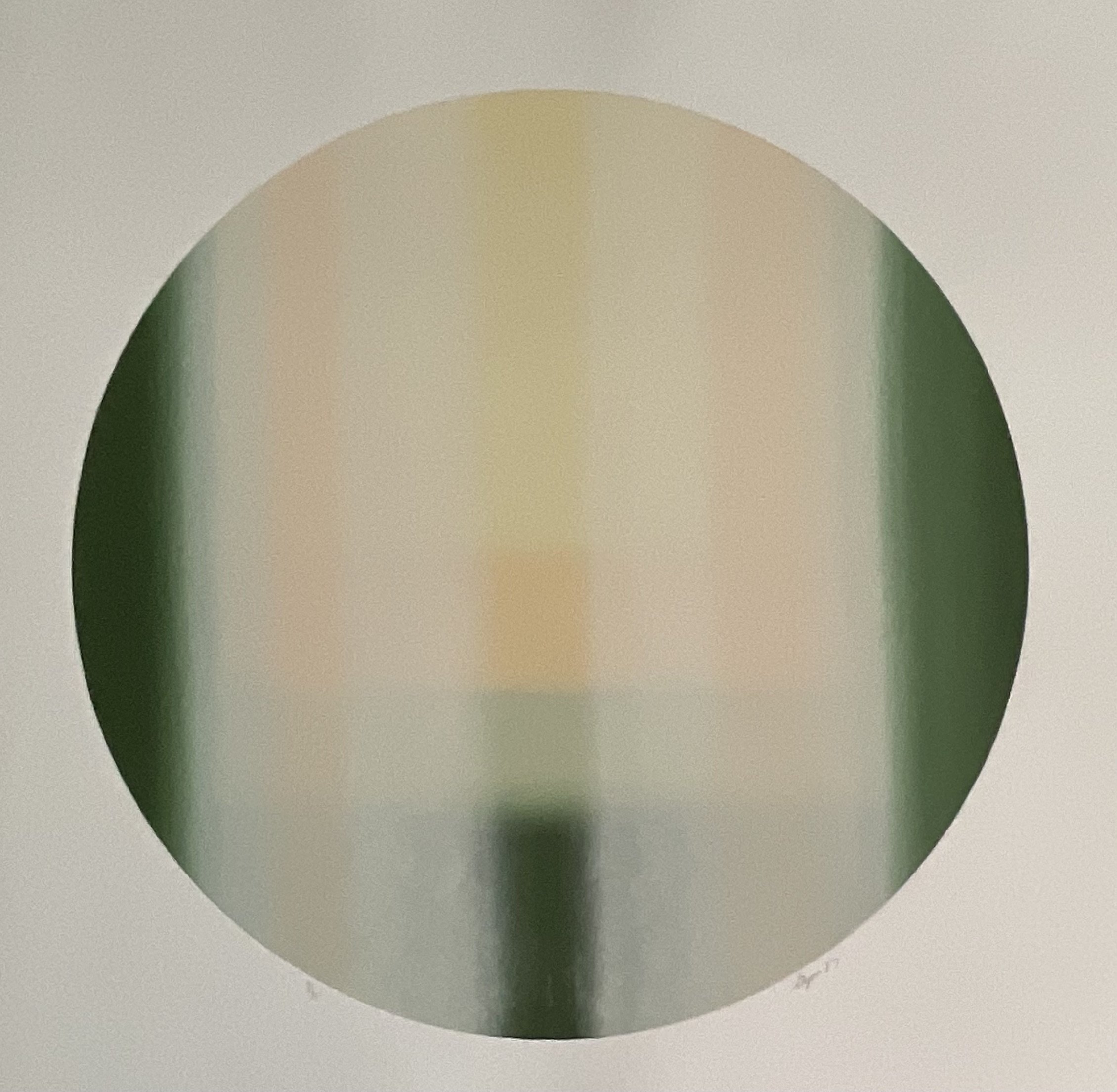 Image 6 of 6