 Image 1 of 4
 Image 2 of 4
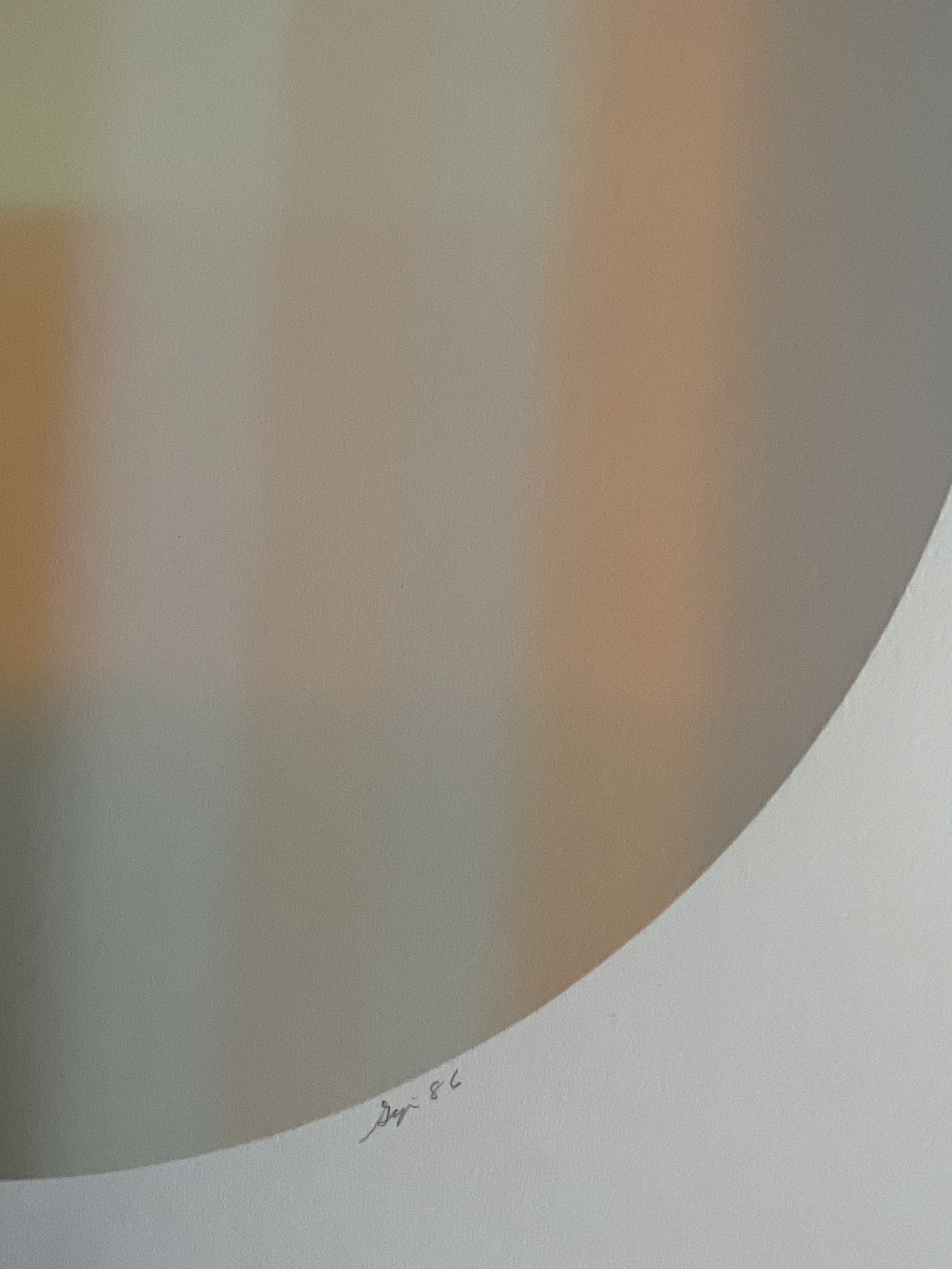 Image 3 of 4
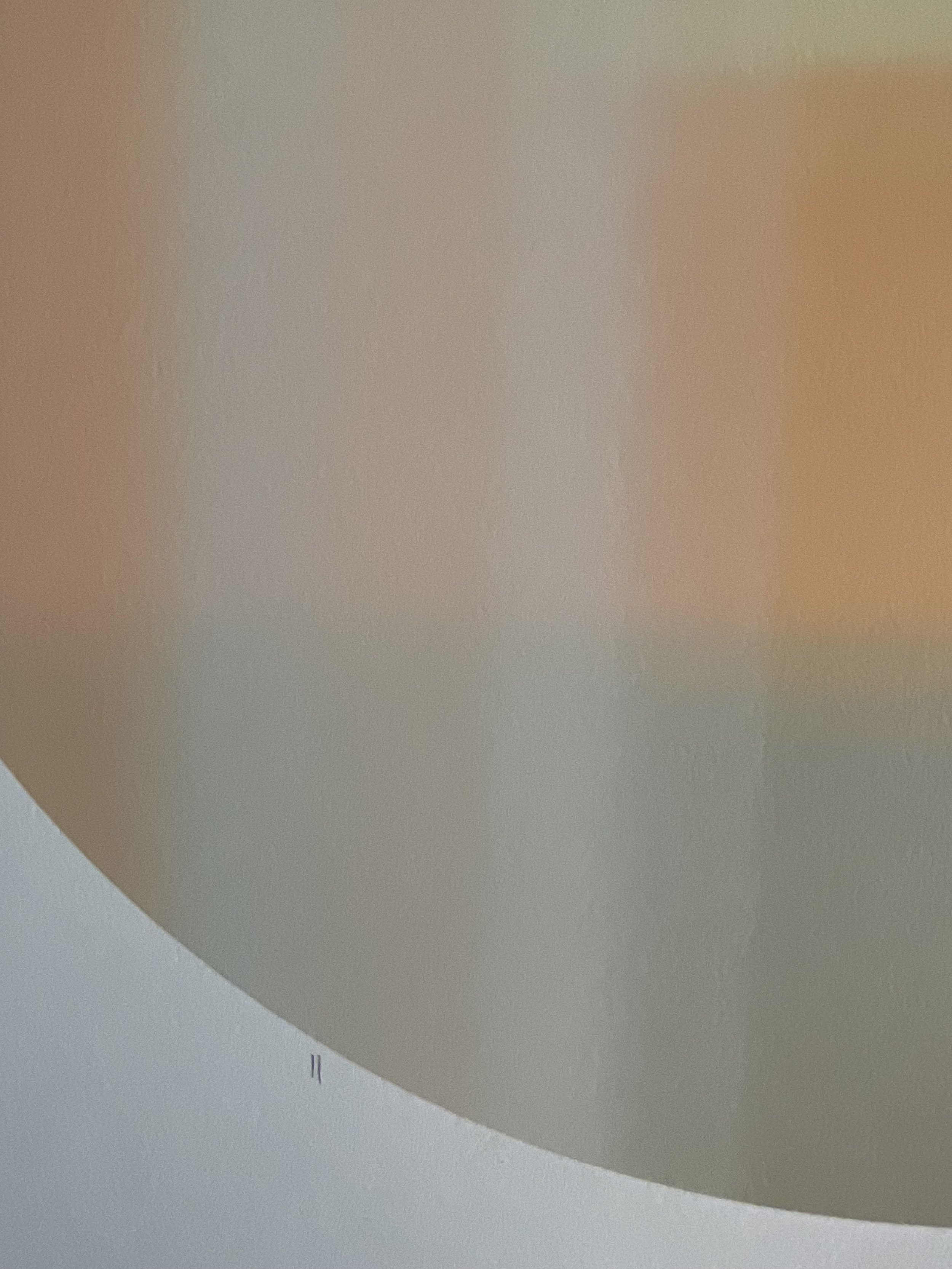 Image 4 of 4
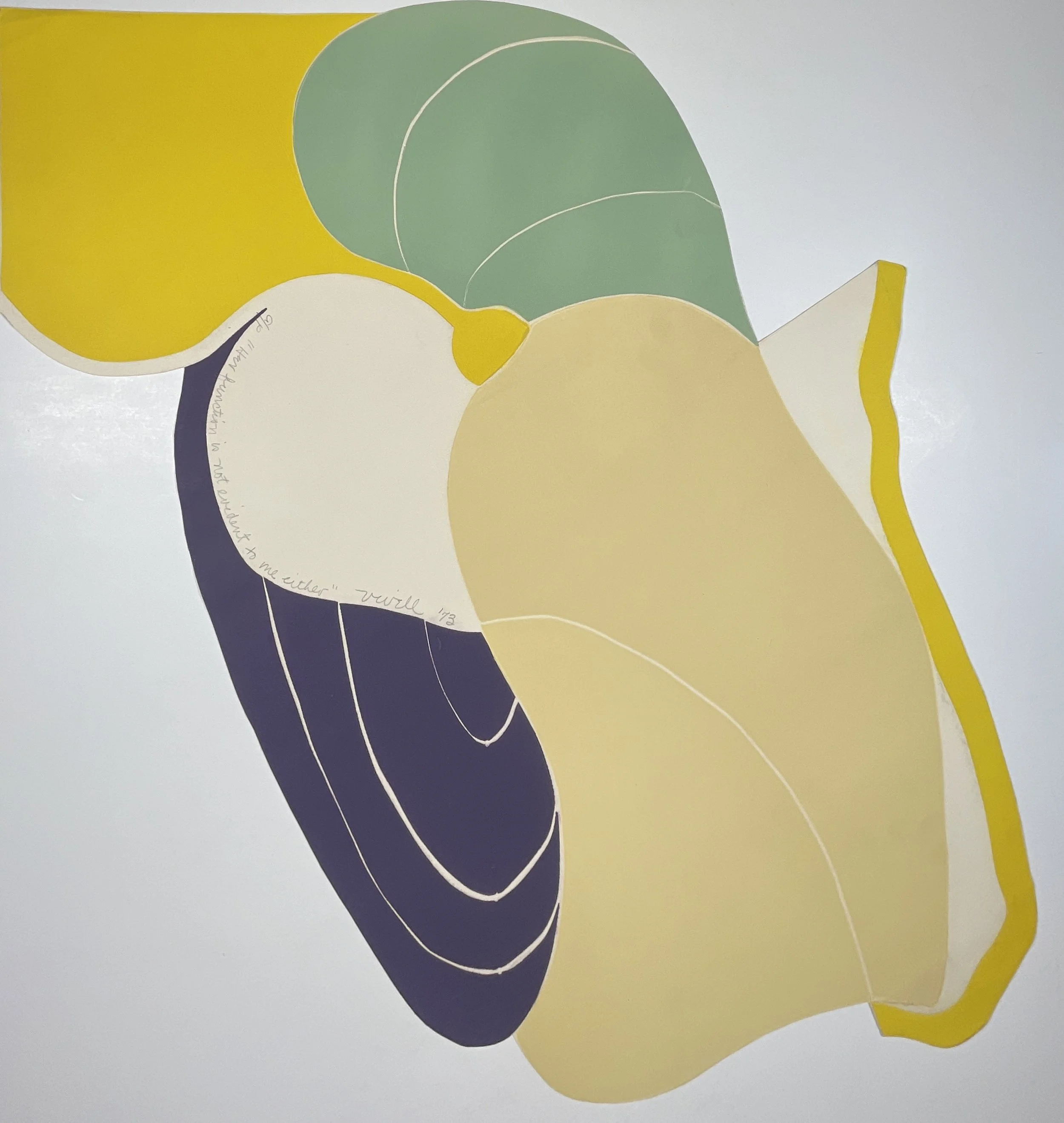
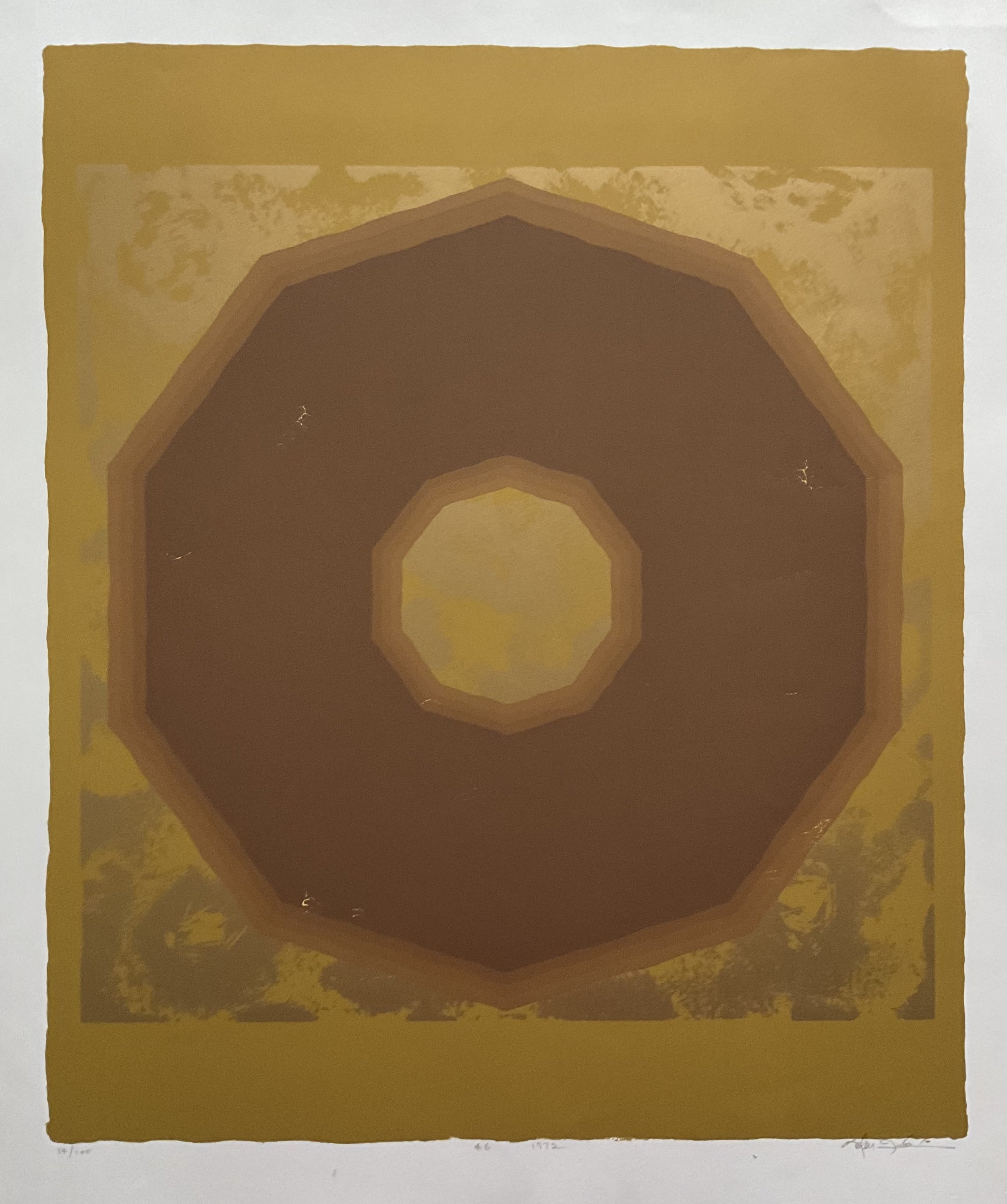
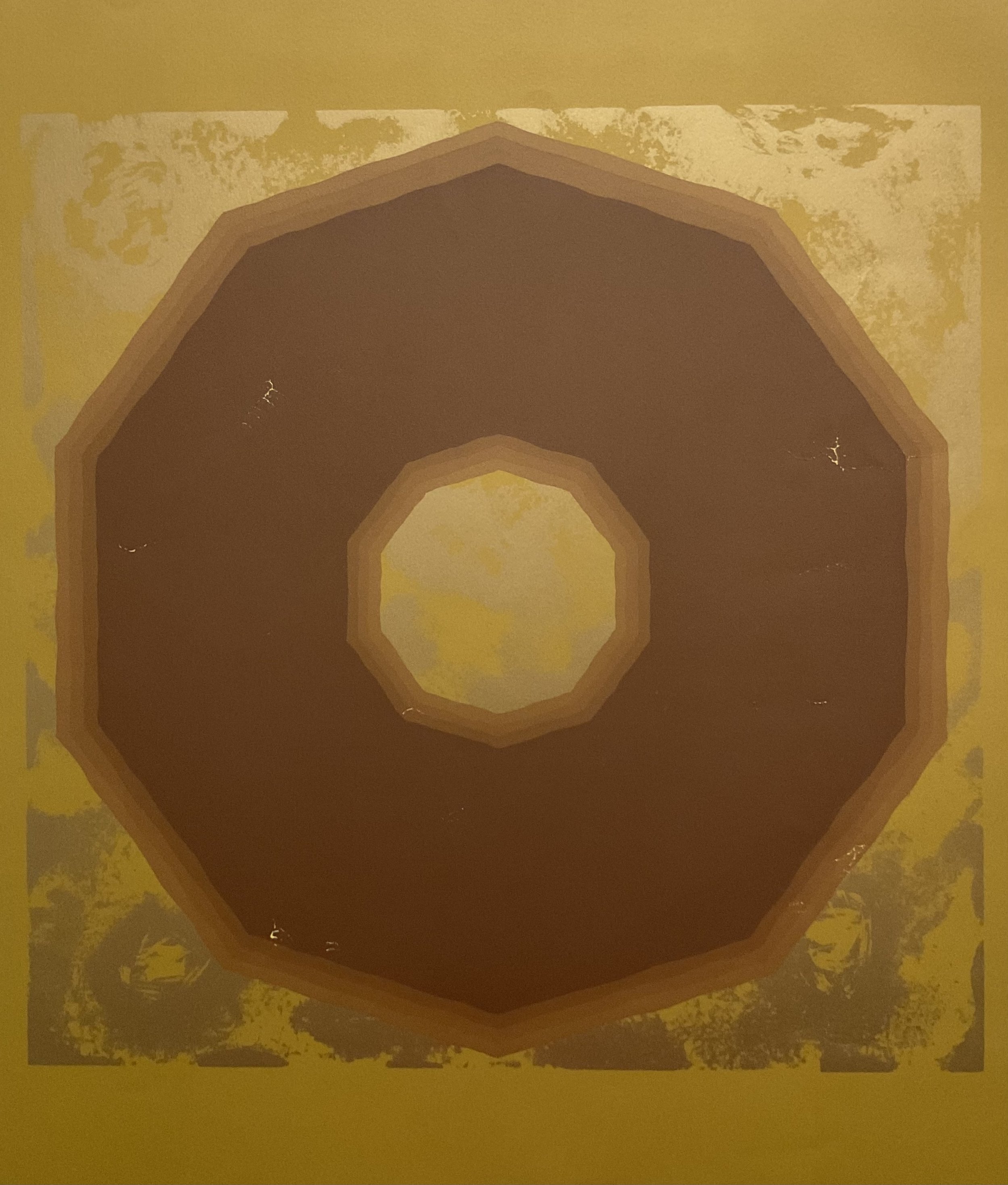
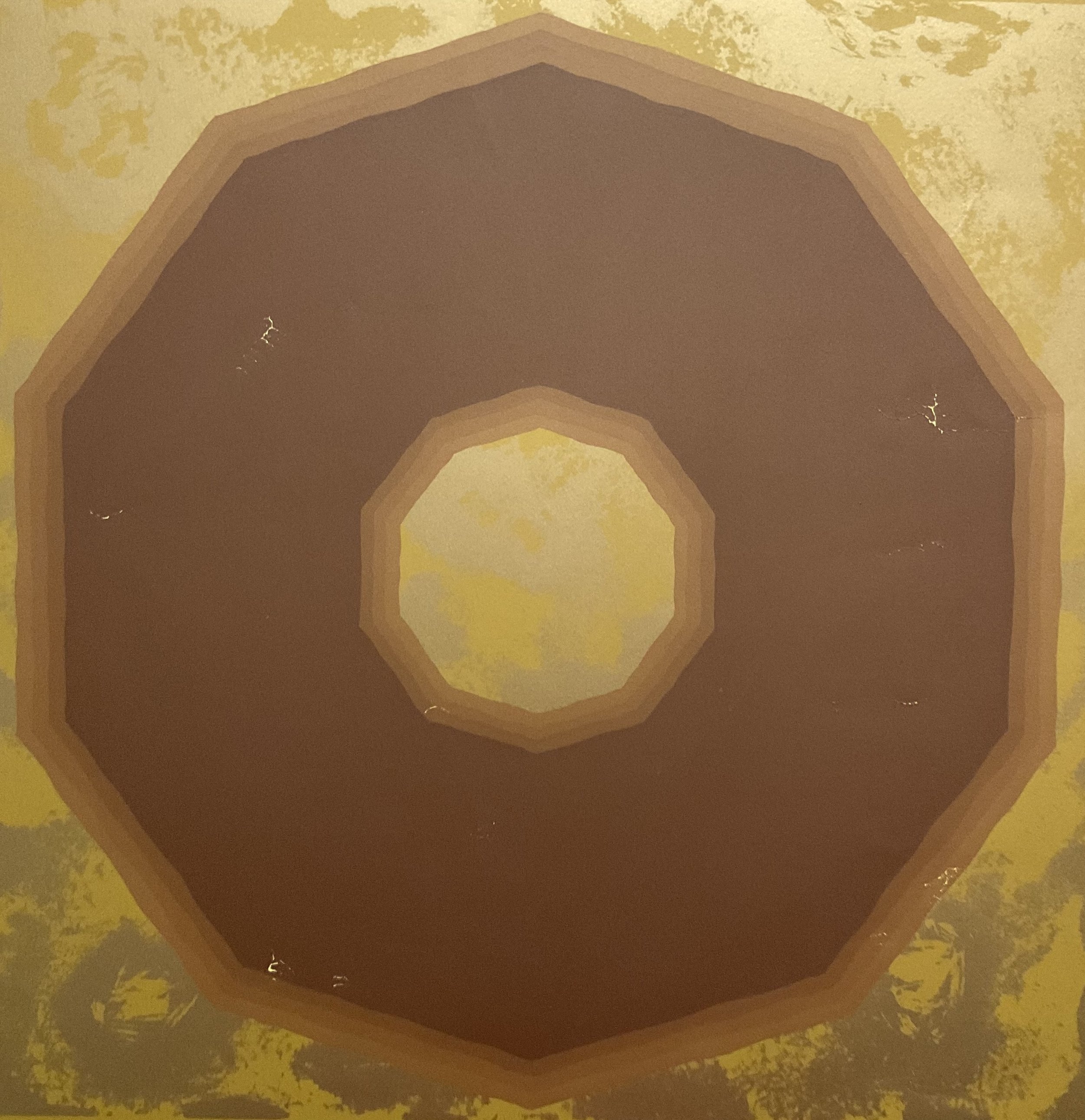
A rare one-of-a-kind silkscreen monoprint by American modernist E. T. Gipson, Abstract Lens exemplifies his innovative serigraphic approach—layered color fields, optical softness, and meditative geometry rendered through hand-pulled, individually executed screens.
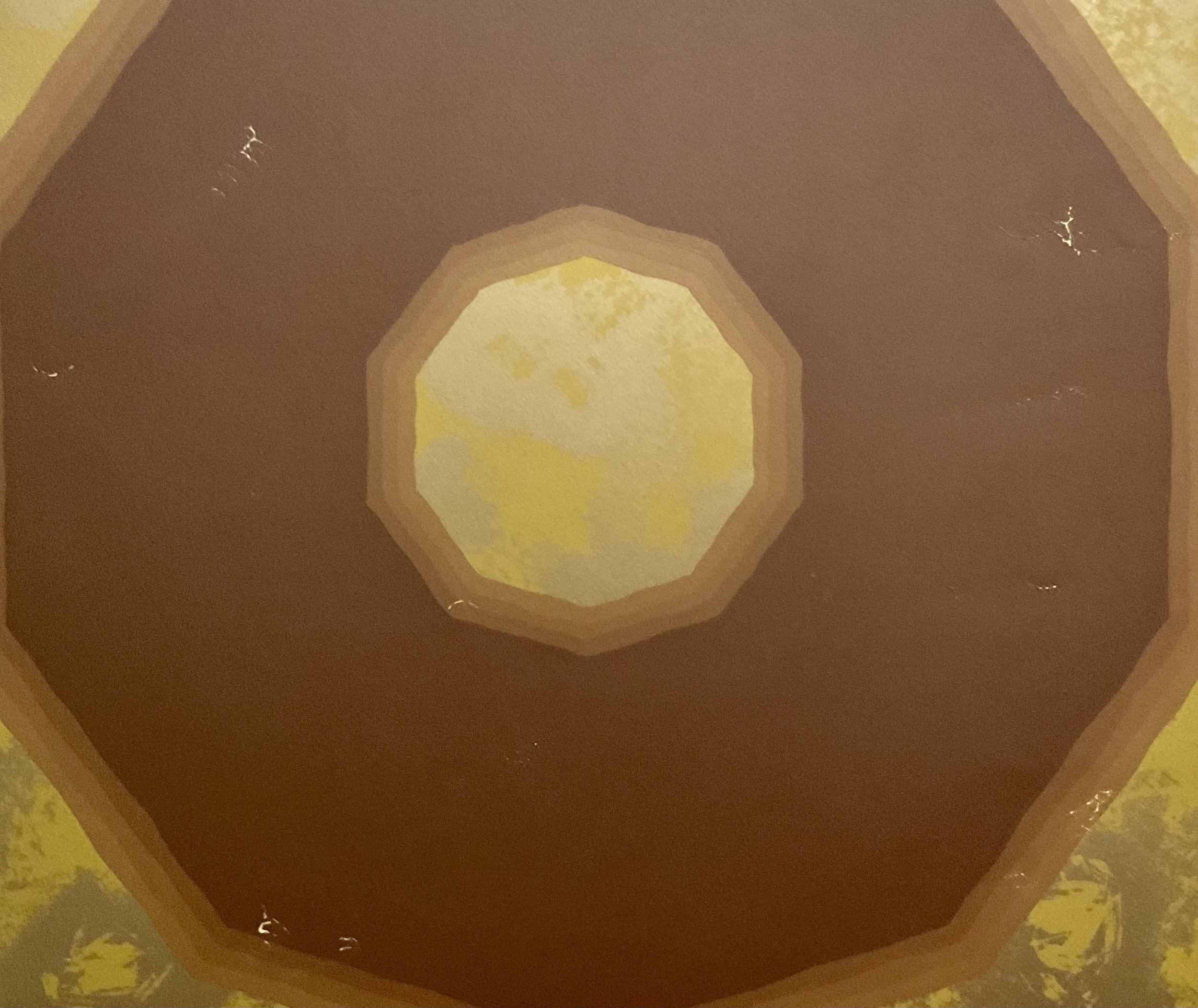
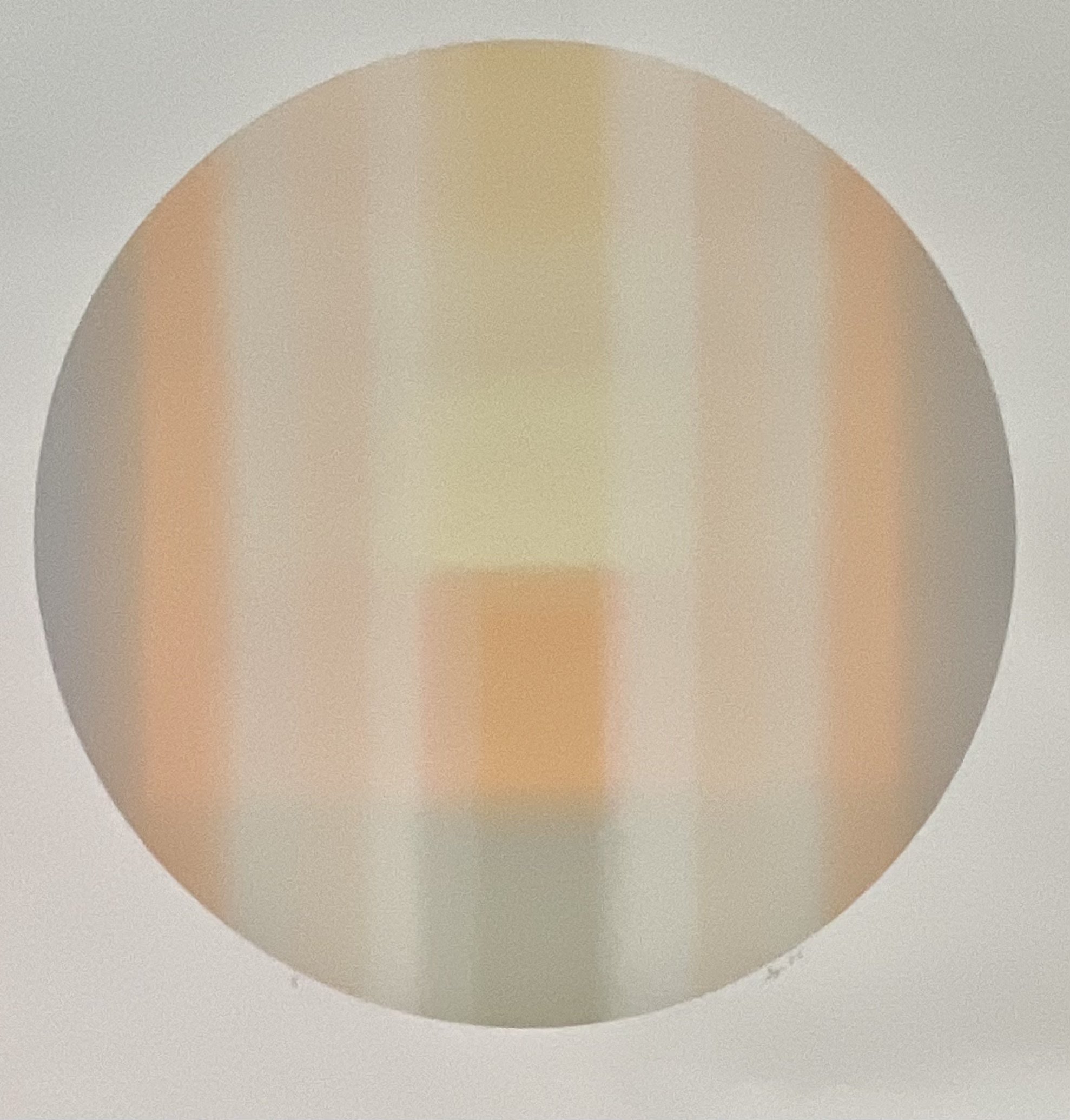
Abstract Lens is a circular-format silkscreen serigraph monoprint that explores perception, light, and spatial ambiguity through softly modulated vertical color bands contained within a perfect tondo. Muted tones of sage, pale gold, misted green, and atmospheric neutrals dissolve into one another, producing a lens-like visual effect that appears to breathe rather than sit statically on the surface.
Gipson’s technique relies on subtle tonal transitions achieved through repeated hand-pulled passes, allowing pigment density and transparency to vary organically. The absence of hard edges enhances the optical experience, encouraging sustained viewing and quiet contemplation. The circular format—used repeatedly by Gipson during this period—reinforces ideas of infinity, balance, and visual harmony.
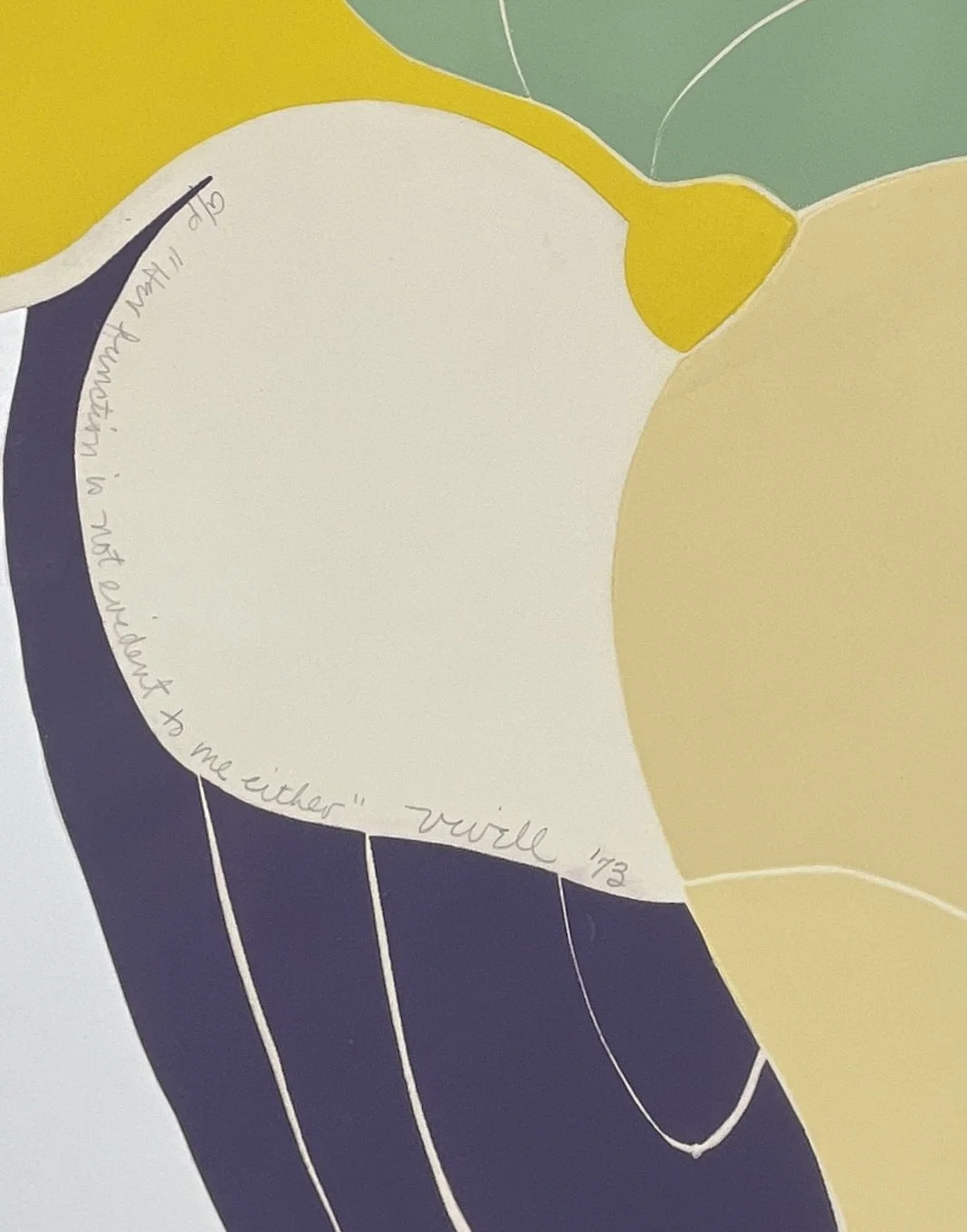
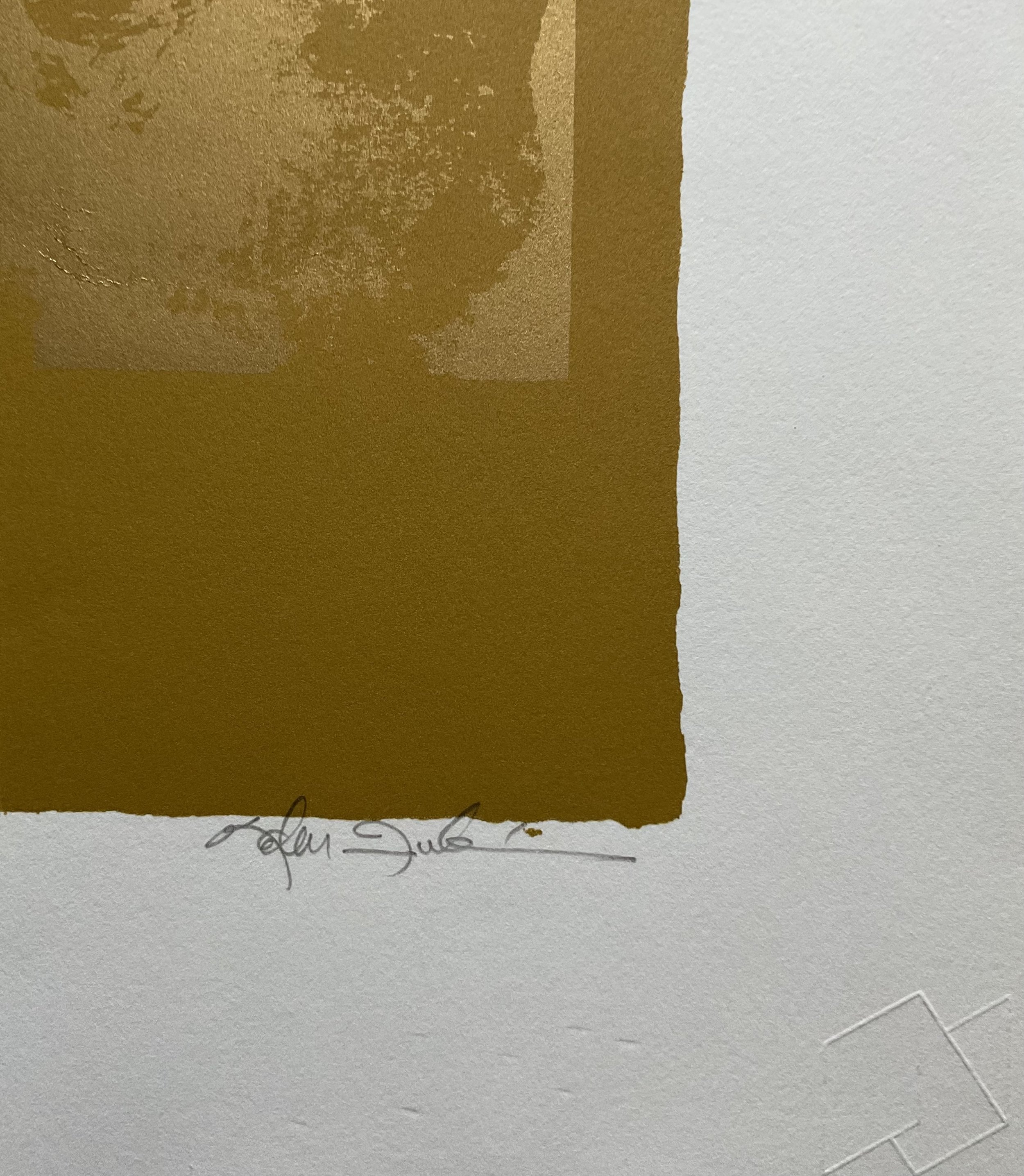
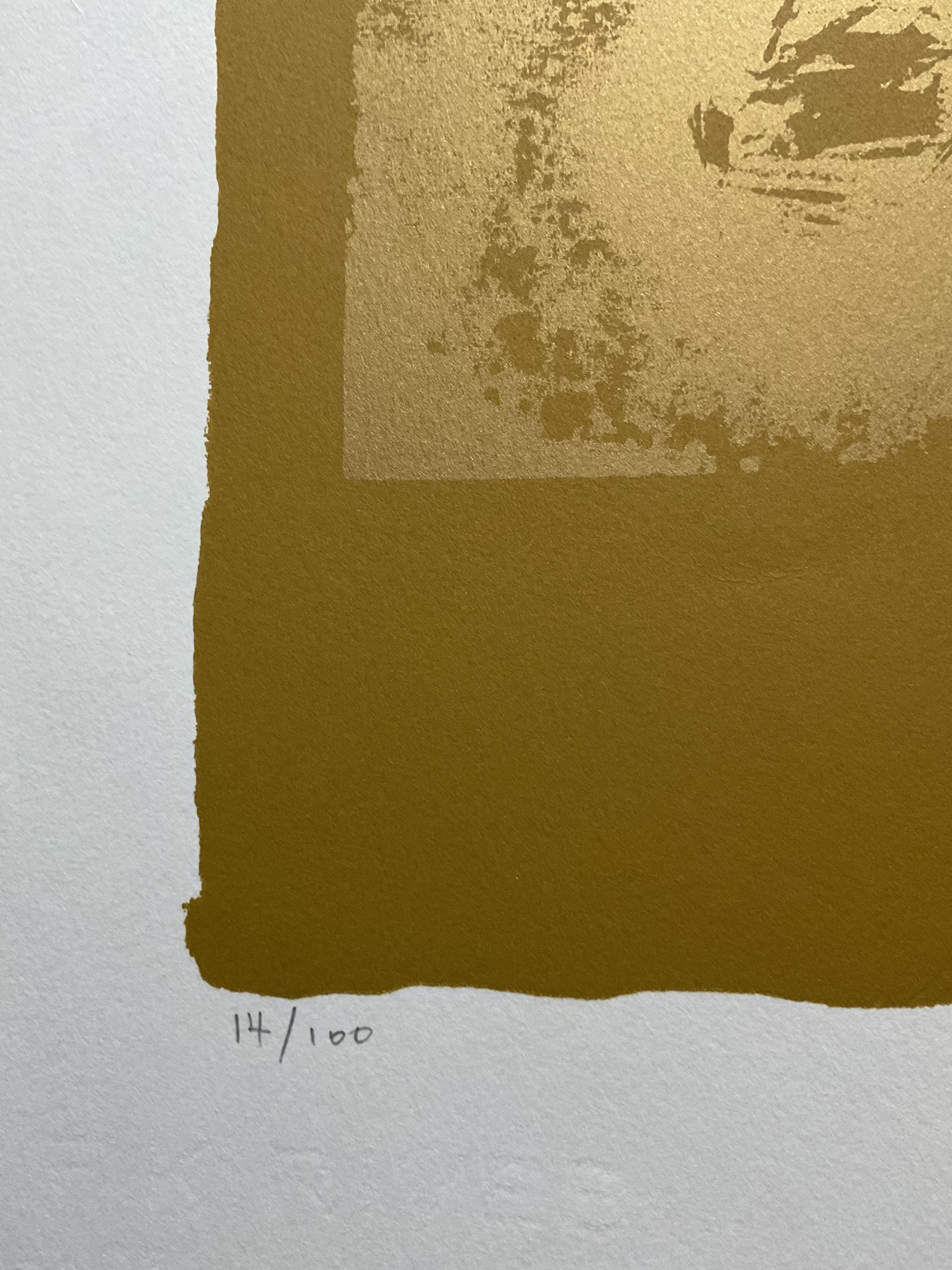
Signed and dated by the artist, and numbered 1/1, this work is a true monoprint: no other impression exists. Its restraint, precision, and painterly softness place it squarely within the lineage of American post-minimalism and West Coast color-field abstraction, while retaining a uniquely personal sensibility rooted in Gipson’s self-described “innovative serigraphy.”
E. T. Gipson is an American self-taught artist best known for his innovative approach to silkscreen serigraphy and one-of-a-kind monoprints. Born in Texas, Gipson’s early life bore little resemblance to the institutional art world; his career path was famously nonlinear. Over the years, he worked variously as a baker, taxi driver, Food & Drug chemist, and art gallery owner—experiences that informed his independent, experimental outlook and resistance to artistic categorization.
Rejecting formal academic training, Gipson taught himself the silkscreen process, ultimately pushing the medium beyond commercial or graphic conventions. He favored what he termed “innovative serigraphy,” using layered screens, controlled pigment diffusion, and hand-pulled variation to create works that blurred the boundaries between printmaking and painting. Many of his works are monoprints or extremely small editions, emphasizing process over replication.
By the mid- to late-20th century, Gipson’s work gained significant recognition among interior designers, corporate collectors, and galleries across the United States. His prints were acquired by major institutions and corporations including First National Bank of Denver, Holiday Inns of America, Registry Hotel Minneapolis, Diplomat Golf & Racquet Club (Hollywood, Florida), Beneficial Management Corporation, and Household Finance Corporation. He was also widely collected by leading interior designers seeking refined, contemplative modern works.
Gipson was represented by Mitch Morse Gallery and its publishing division Art Spectrum, which championed artists working at the intersection of fine art and design. During this period, Gipson produced many of his circular and horizon-based works—subtle meditations on light, balance, and perception.
Later in life, Gipson resided in Novato, California, where he continued to work quietly, maintaining a fiercely independent practice. Today, his works are increasingly appreciated for their rarity, craftsmanship, and their place within American modernist printmaking of the 1970s–1980s.
E. T. Gipson (American)
Abstract Lens, c. 1980s
Silkscreen serigraph monoprint
26 × 23 in.
Signed and numbered 1/1
Published by Art Spectrum, Mitch Morse Gallery
Provenance: Artfind Gallery, Washington, DC
This certifies that Abstract Lens is an authentic, original silkscreen serigraph monoprint by E. T. Gipson, hand-pulled, individually executed, signed and numbered 1/1 by the artist. The work was published and distributed by Art Spectrum, a division of Mitch Morse Gallery, and is verified as a unique impression with no other identical print in existence.
Artfind Gallery, Washington, DC
Acquired from Mitch Morse Gallery / Art Spectrum, New York
Originally published and distributed by Art Spectrum, a division of Mitch Morse Gallery
Private and corporate collections, United States
A rare one-of-a-kind silkscreen monoprint by American modernist E. T. Gipson, Abstract Lens exemplifies his innovative serigraphic approach—layered color fields, optical softness, and meditative geometry rendered through hand-pulled, individually executed screens.
Abstract Lens is a circular-format silkscreen serigraph monoprint that explores perception, light, and spatial ambiguity through softly modulated vertical color bands contained within a perfect tondo. Muted tones of sage, pale gold, misted green, and atmospheric neutrals dissolve into one another, producing a lens-like visual effect that appears to breathe rather than sit statically on the surface.
Gipson’s technique relies on subtle tonal transitions achieved through repeated hand-pulled passes, allowing pigment density and transparency to vary organically. The absence of hard edges enhances the optical experience, encouraging sustained viewing and quiet contemplation. The circular format—used repeatedly by Gipson during this period—reinforces ideas of infinity, balance, and visual harmony.
Signed and dated by the artist, and numbered 1/1, this work is a true monoprint: no other impression exists. Its restraint, precision, and painterly softness place it squarely within the lineage of American post-minimalism and West Coast color-field abstraction, while retaining a uniquely personal sensibility rooted in Gipson’s self-described “innovative serigraphy.”
E. T. Gipson is an American self-taught artist best known for his innovative approach to silkscreen serigraphy and one-of-a-kind monoprints. Born in Texas, Gipson’s early life bore little resemblance to the institutional art world; his career path was famously nonlinear. Over the years, he worked variously as a baker, taxi driver, Food & Drug chemist, and art gallery owner—experiences that informed his independent, experimental outlook and resistance to artistic categorization.
Rejecting formal academic training, Gipson taught himself the silkscreen process, ultimately pushing the medium beyond commercial or graphic conventions. He favored what he termed “innovative serigraphy,” using layered screens, controlled pigment diffusion, and hand-pulled variation to create works that blurred the boundaries between printmaking and painting. Many of his works are monoprints or extremely small editions, emphasizing process over replication.
By the mid- to late-20th century, Gipson’s work gained significant recognition among interior designers, corporate collectors, and galleries across the United States. His prints were acquired by major institutions and corporations including First National Bank of Denver, Holiday Inns of America, Registry Hotel Minneapolis, Diplomat Golf & Racquet Club (Hollywood, Florida), Beneficial Management Corporation, and Household Finance Corporation. He was also widely collected by leading interior designers seeking refined, contemplative modern works.
Gipson was represented by Mitch Morse Gallery and its publishing division Art Spectrum, which championed artists working at the intersection of fine art and design. During this period, Gipson produced many of his circular and horizon-based works—subtle meditations on light, balance, and perception.
Later in life, Gipson resided in Novato, California, where he continued to work quietly, maintaining a fiercely independent practice. Today, his works are increasingly appreciated for their rarity, craftsmanship, and their place within American modernist printmaking of the 1970s–1980s.
E. T. Gipson (American)
Abstract Lens, c. 1980s
Silkscreen serigraph monoprint
26 × 23 in.
Signed and numbered 1/1
Published by Art Spectrum, Mitch Morse Gallery
Provenance: Artfind Gallery, Washington, DC
This certifies that Abstract Lens is an authentic, original silkscreen serigraph monoprint by E. T. Gipson, hand-pulled, individually executed, signed and numbered 1/1 by the artist. The work was published and distributed by Art Spectrum, a division of Mitch Morse Gallery, and is verified as a unique impression with no other identical print in existence.
Artfind Gallery, Washington, DC
Acquired from Mitch Morse Gallery / Art Spectrum, New York
Originally published and distributed by Art Spectrum, a division of Mitch Morse Gallery
Private and corporate collections, United States