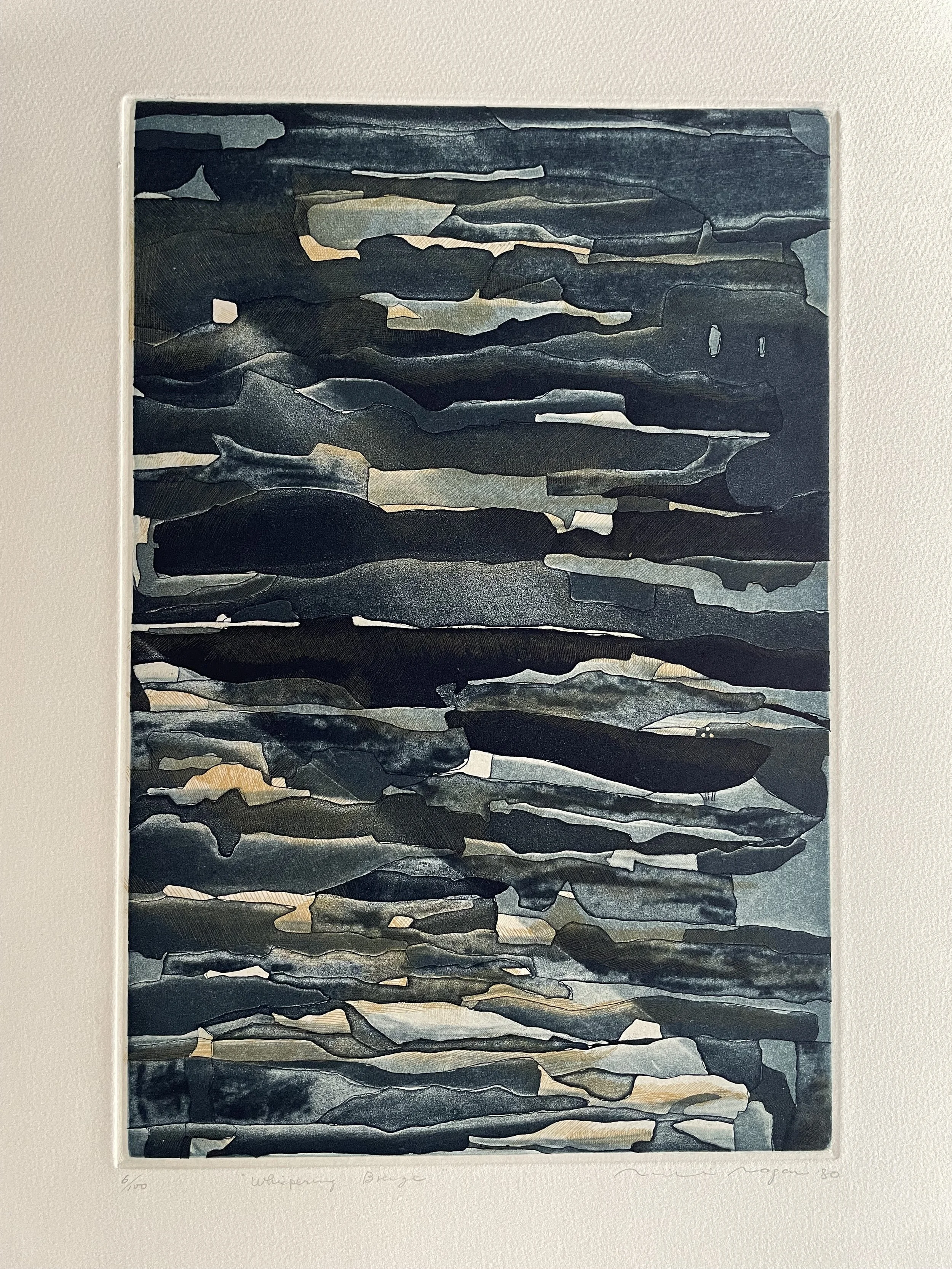
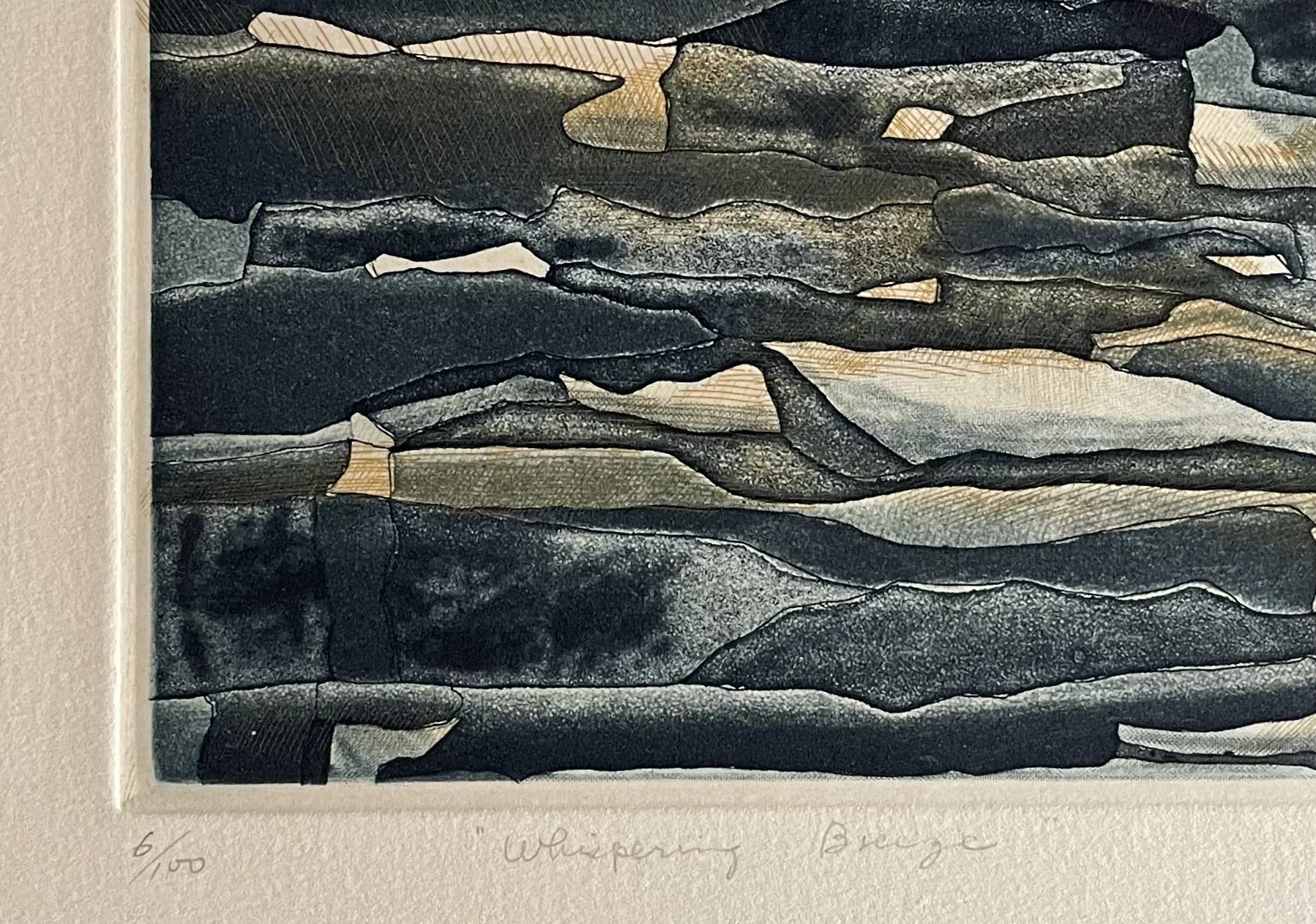
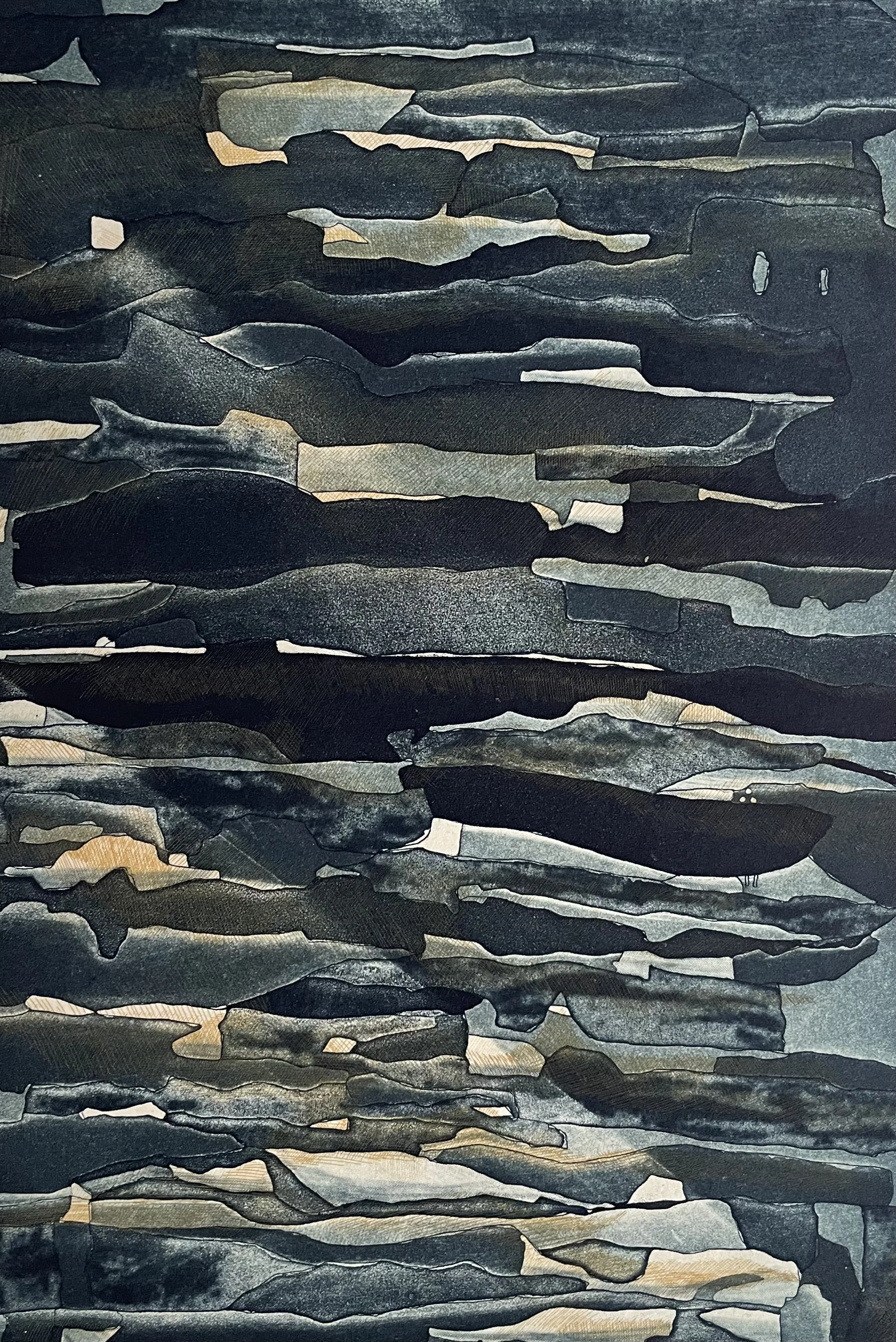
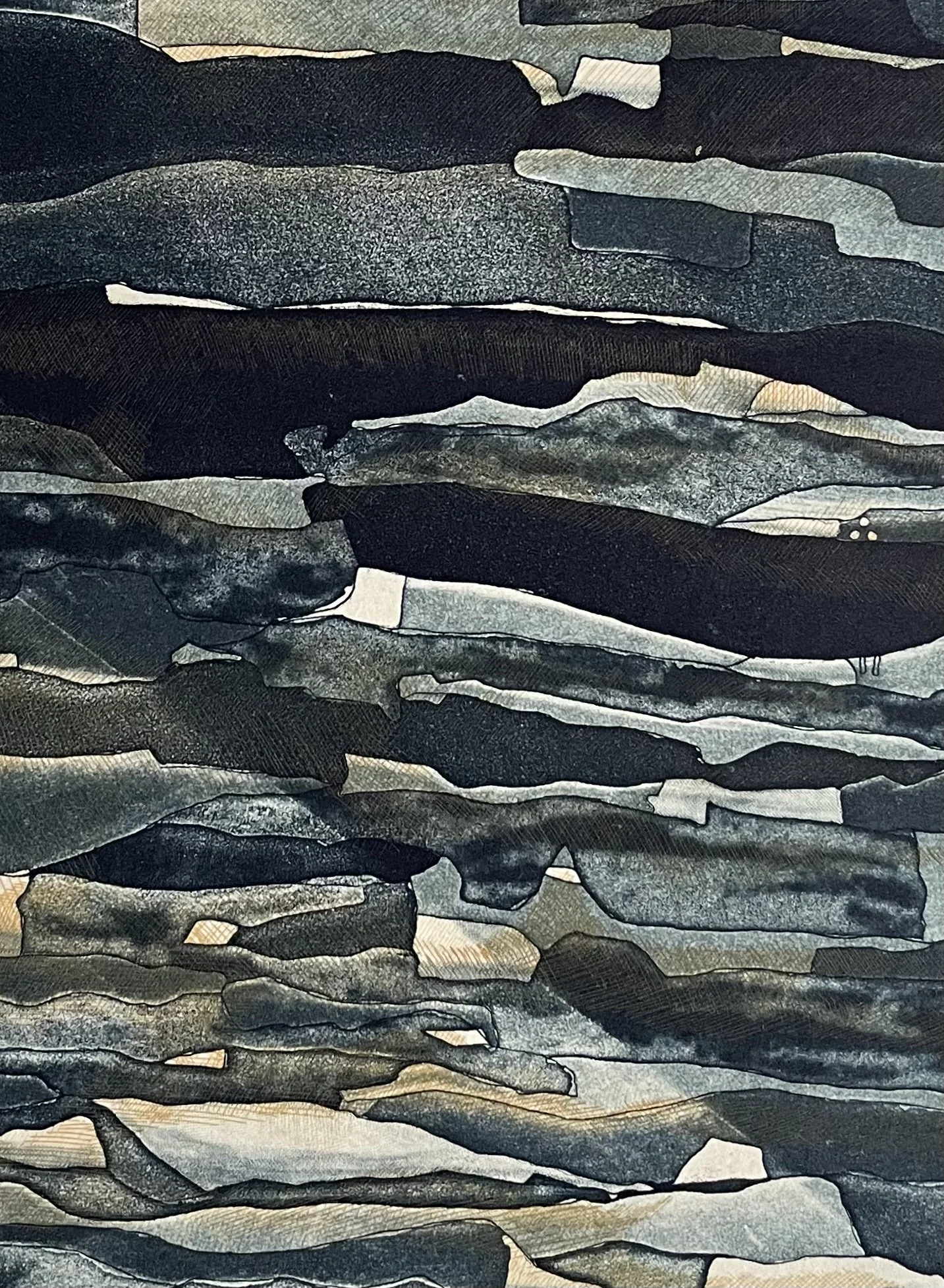
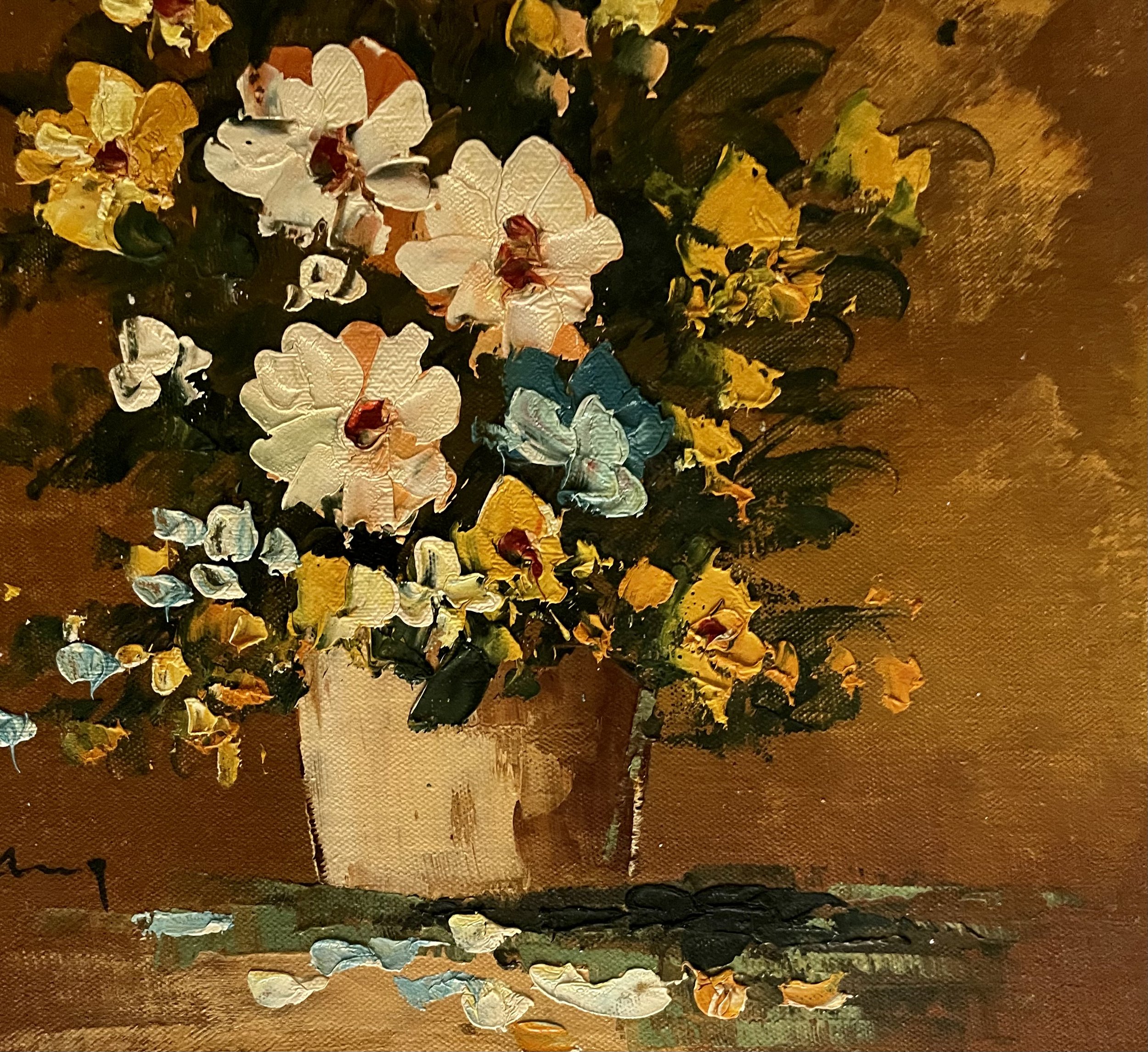
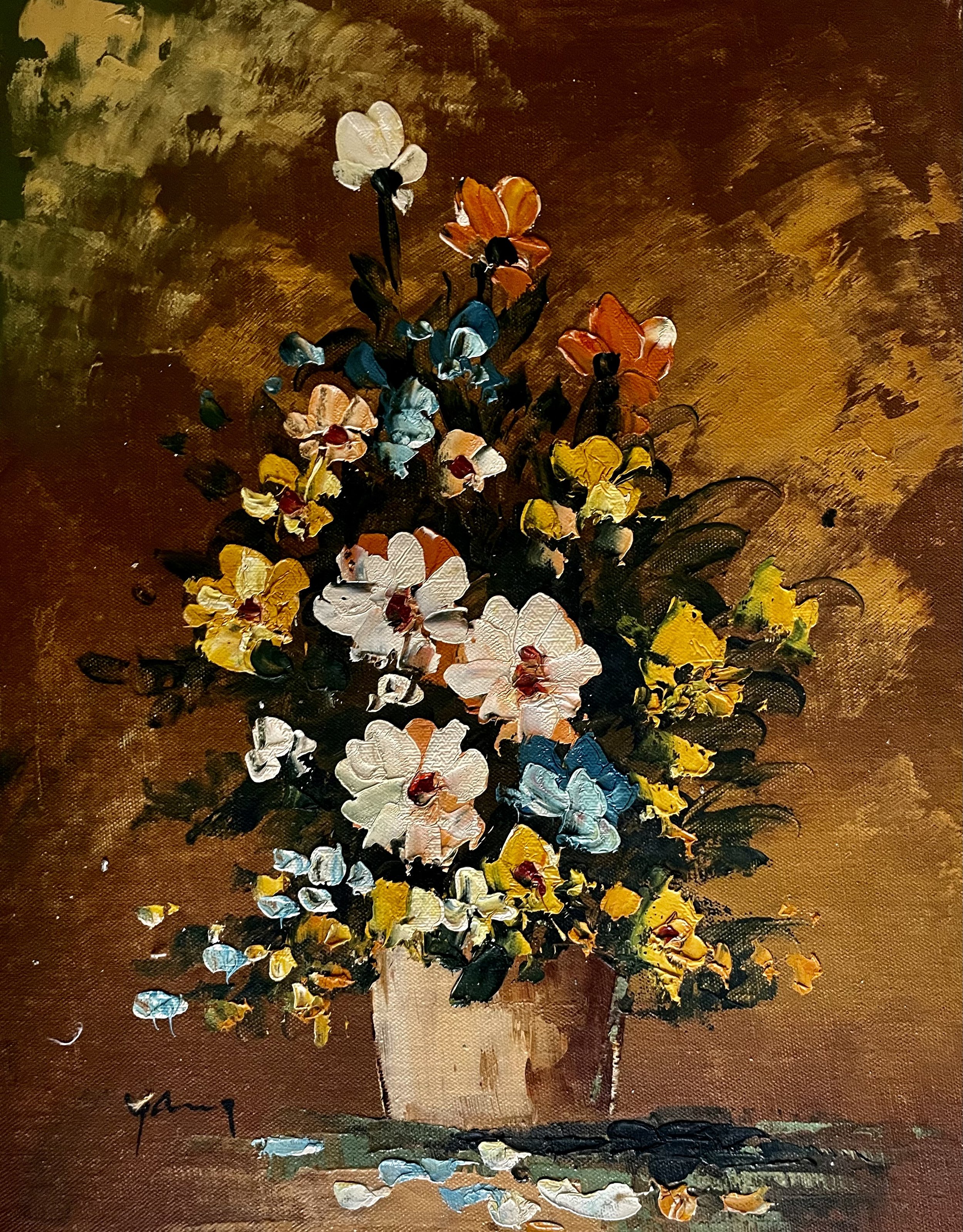
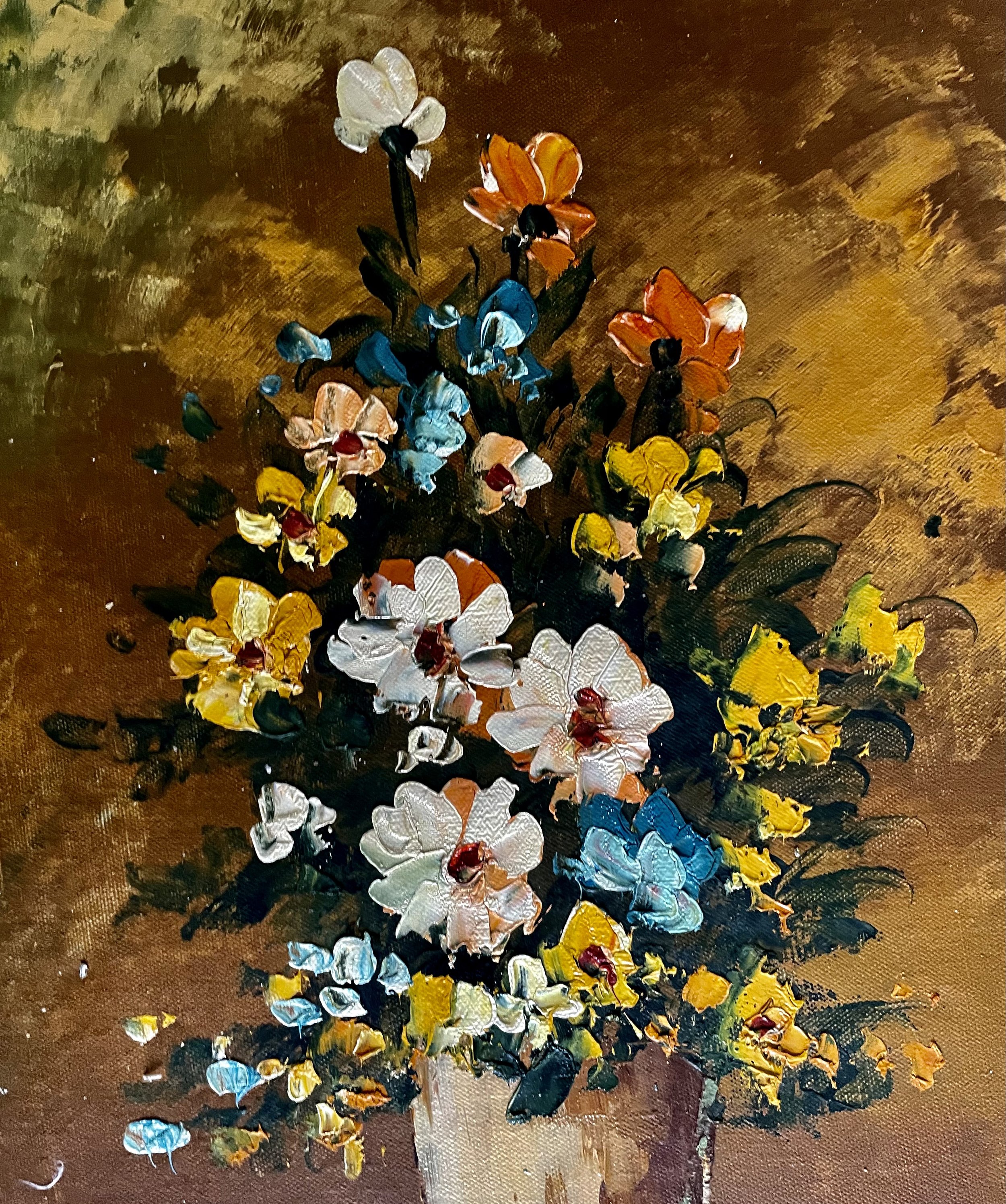
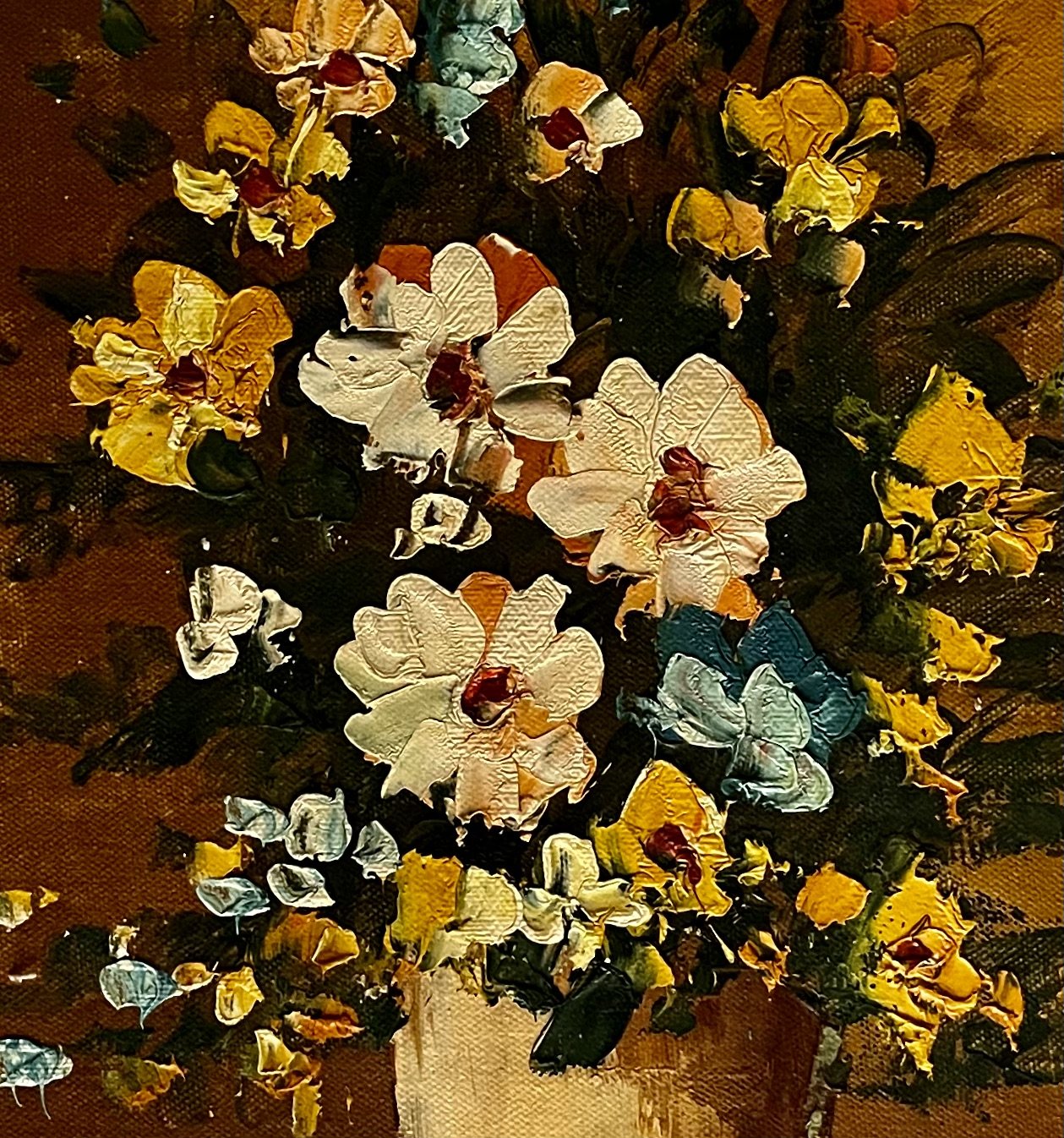
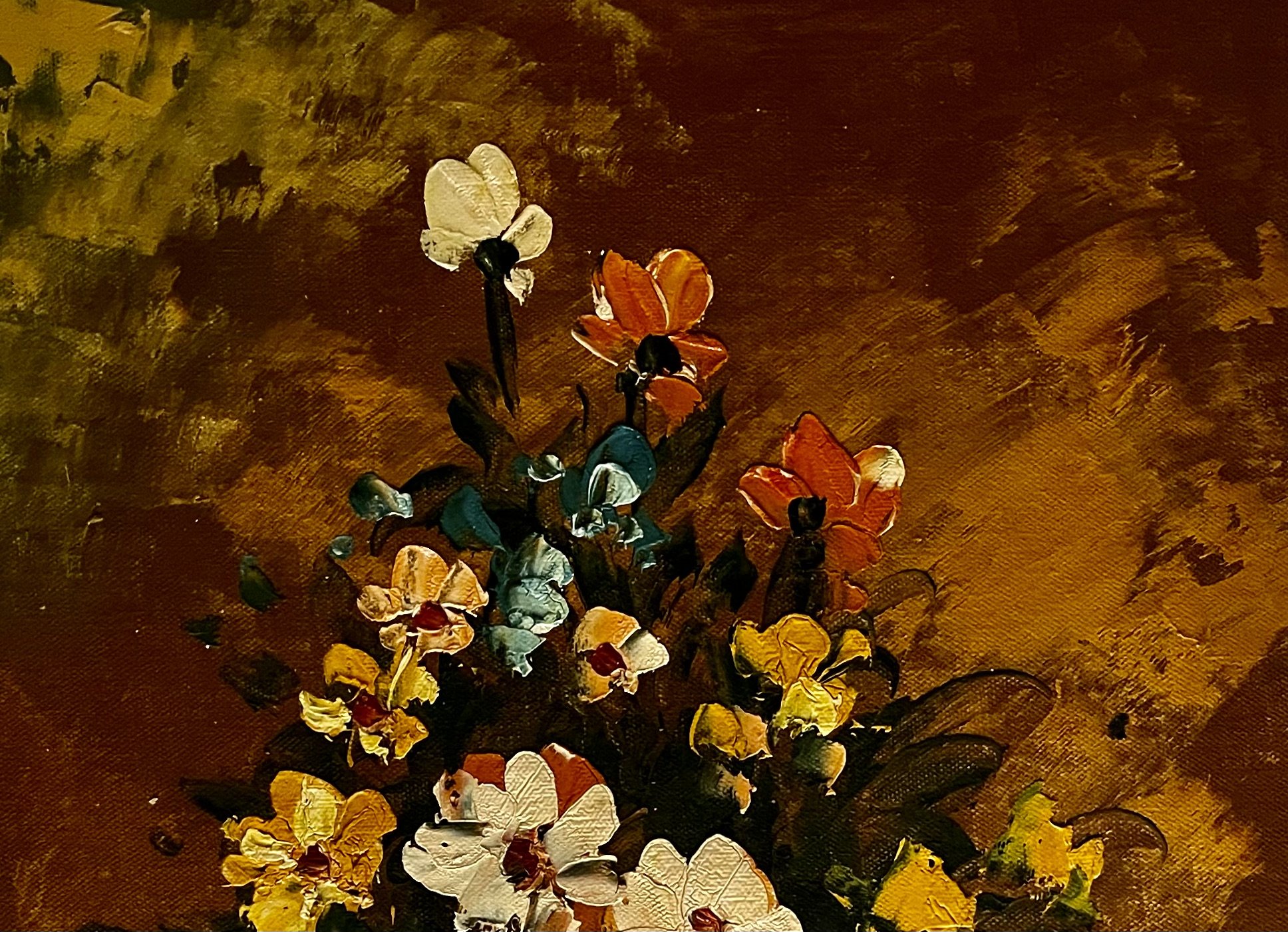
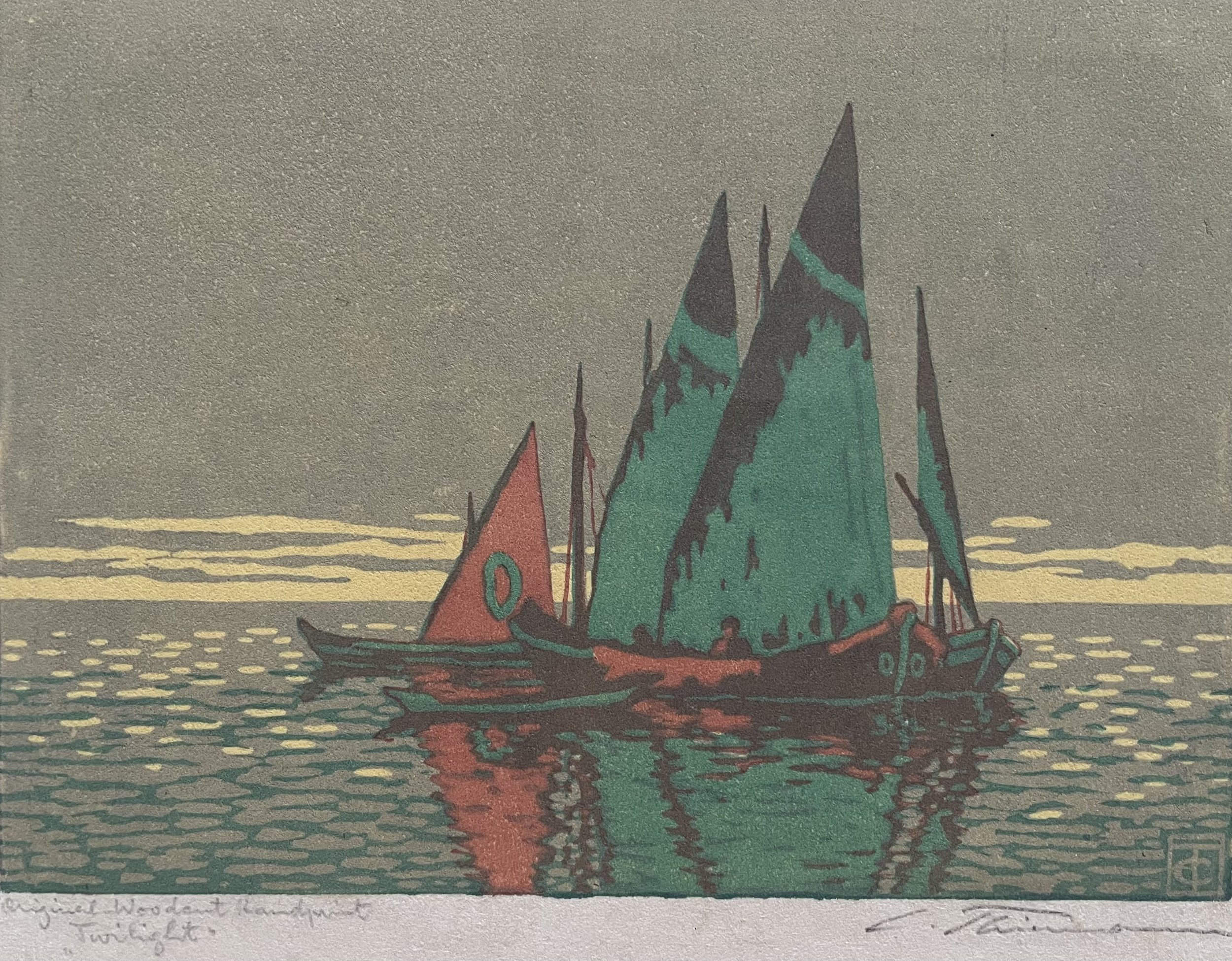
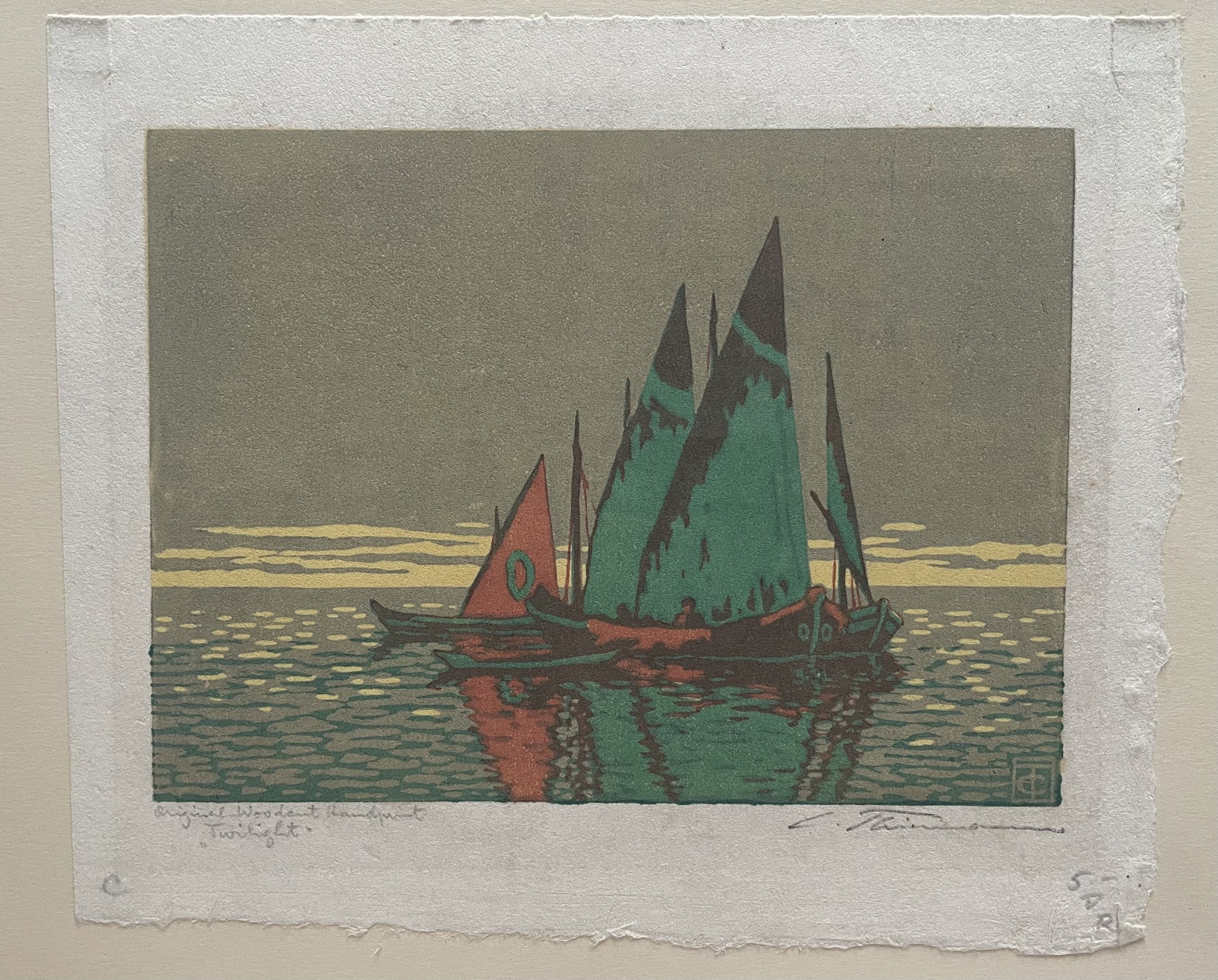
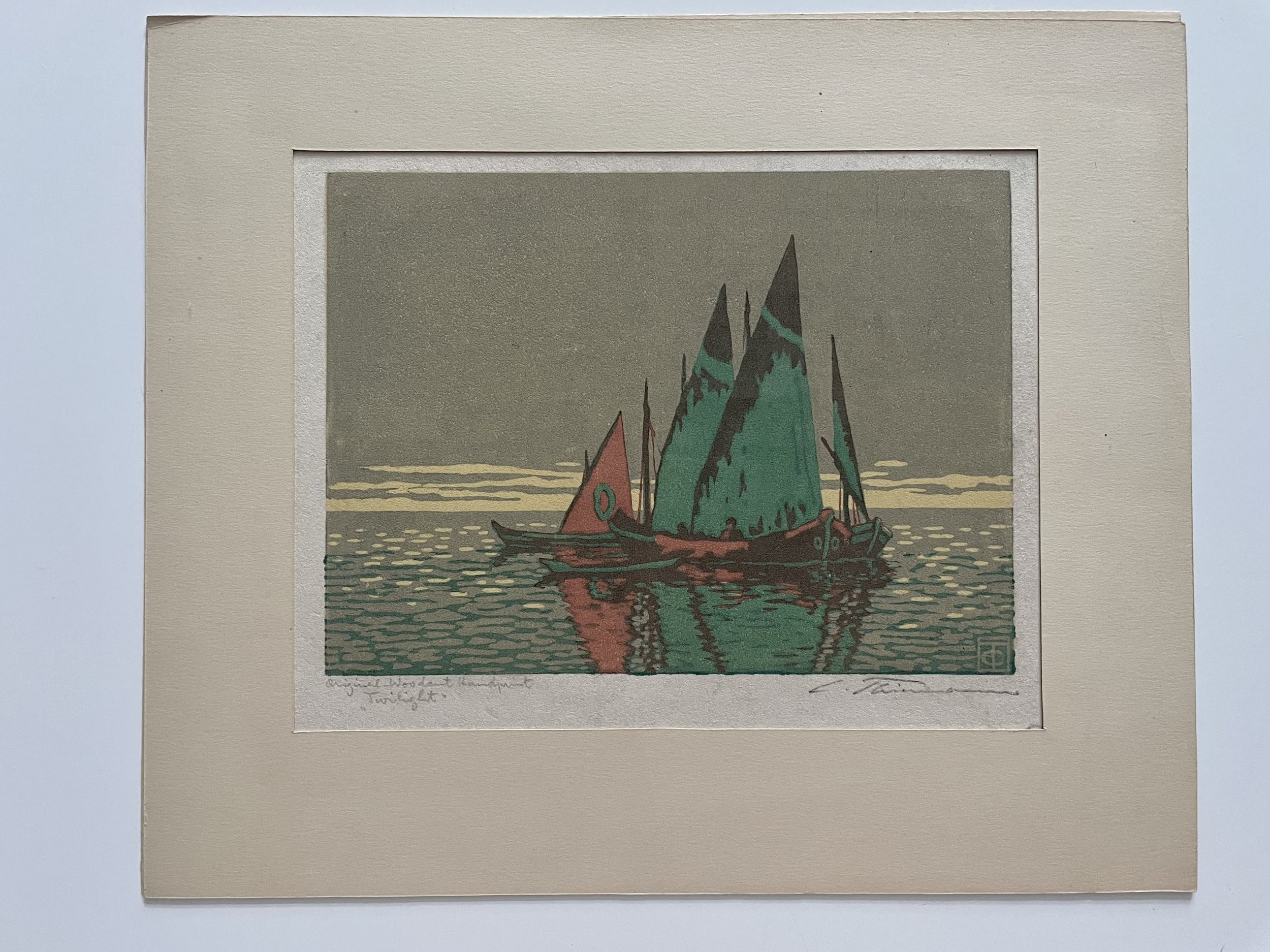
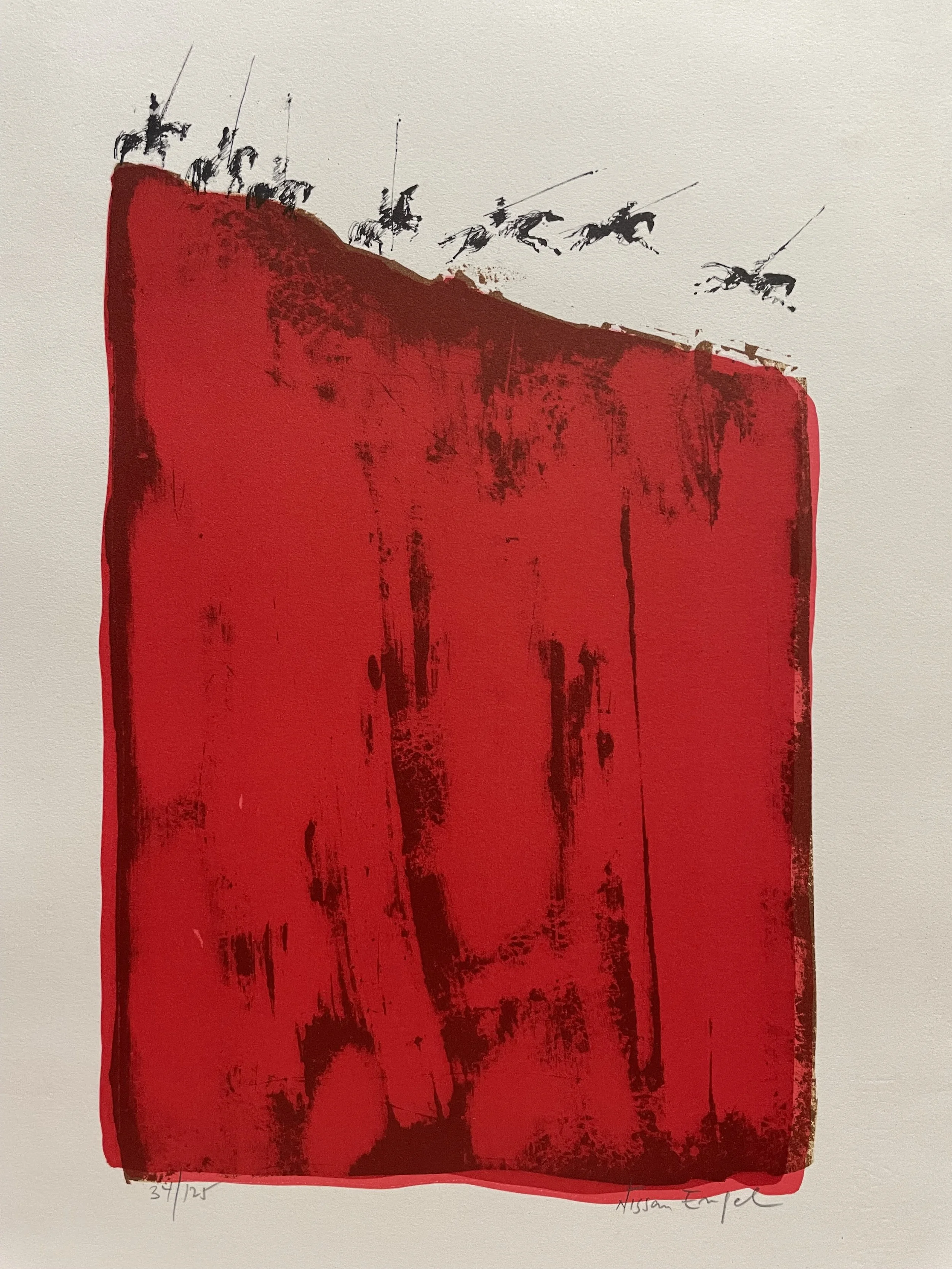
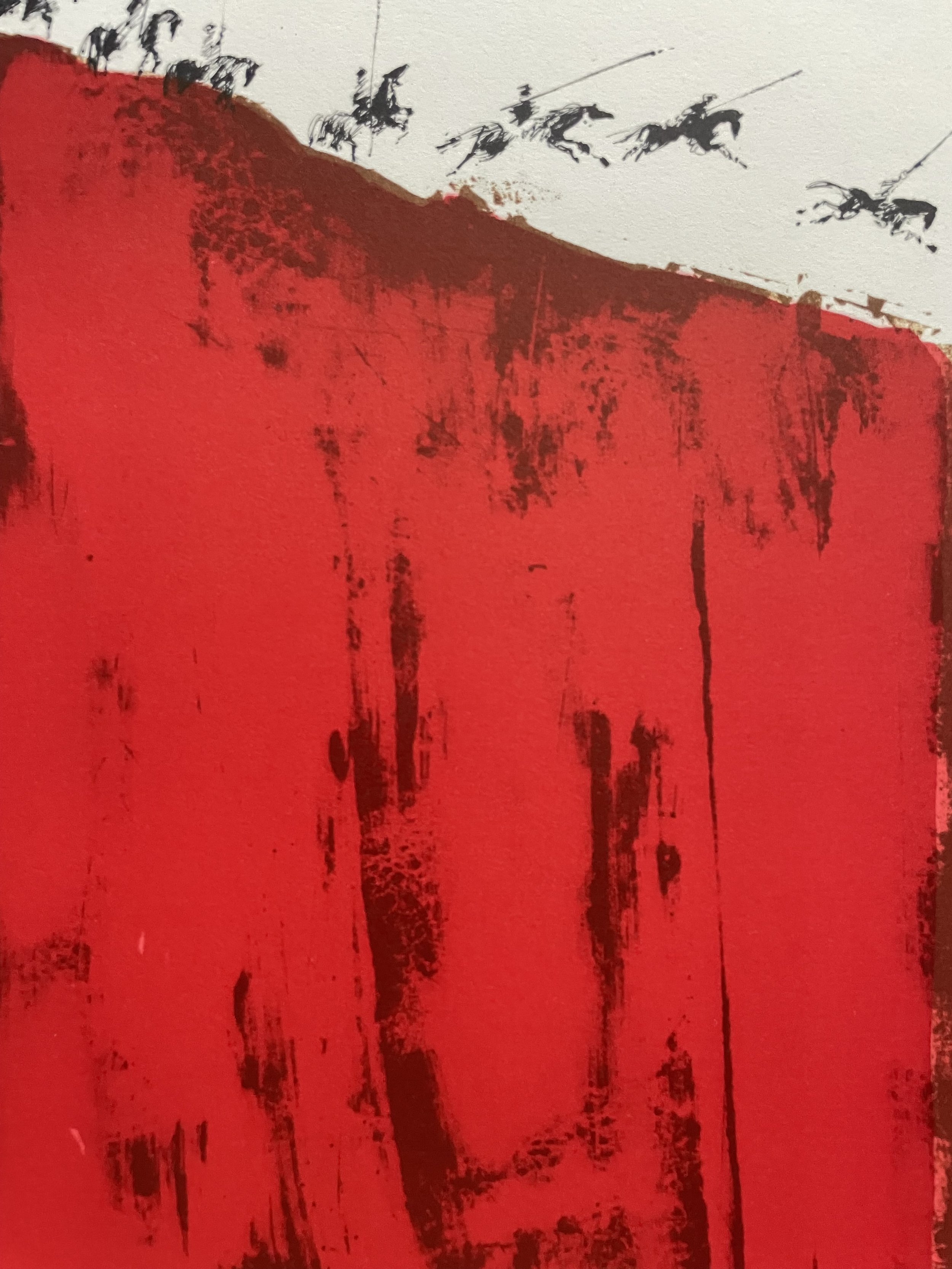
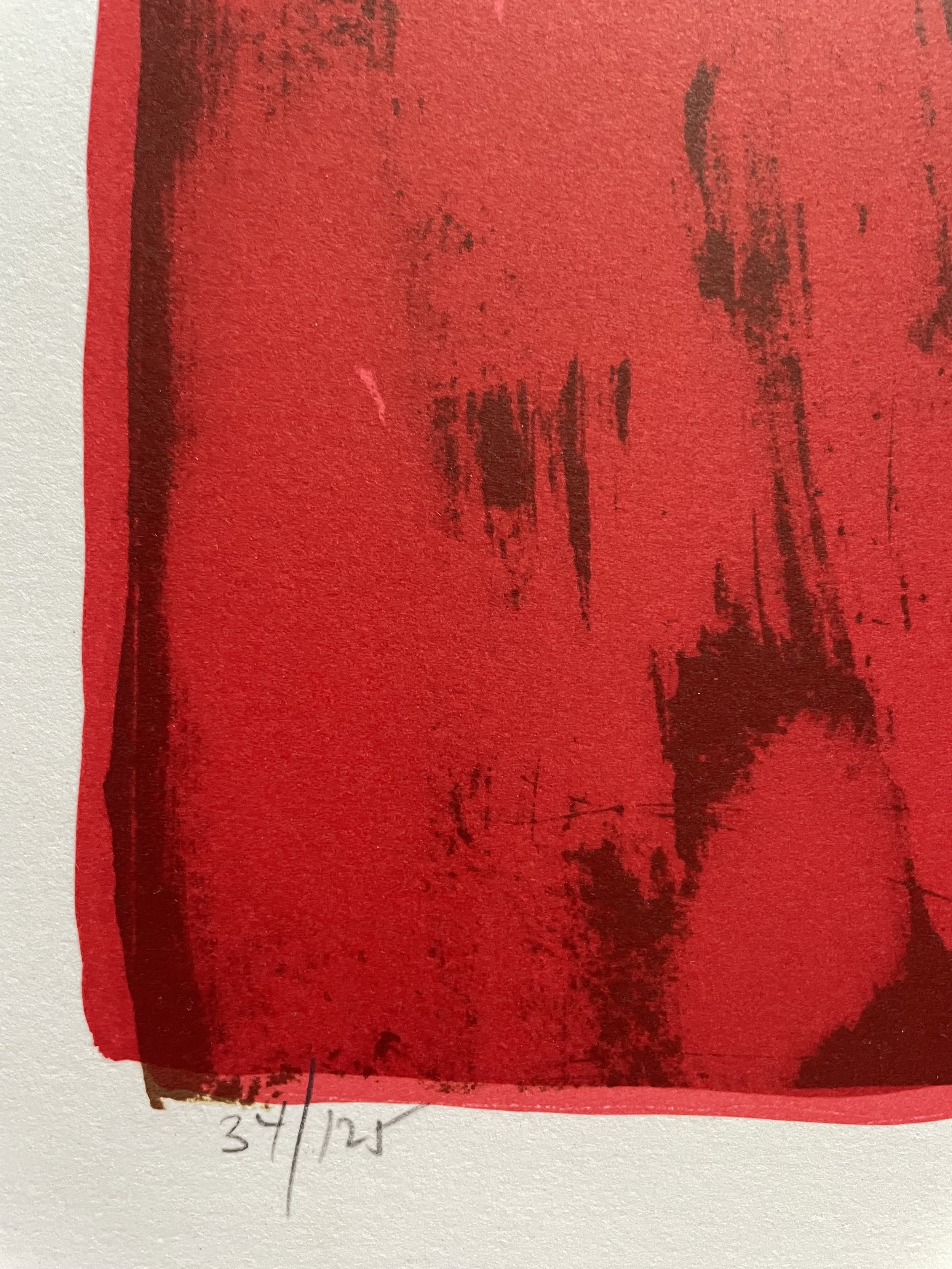
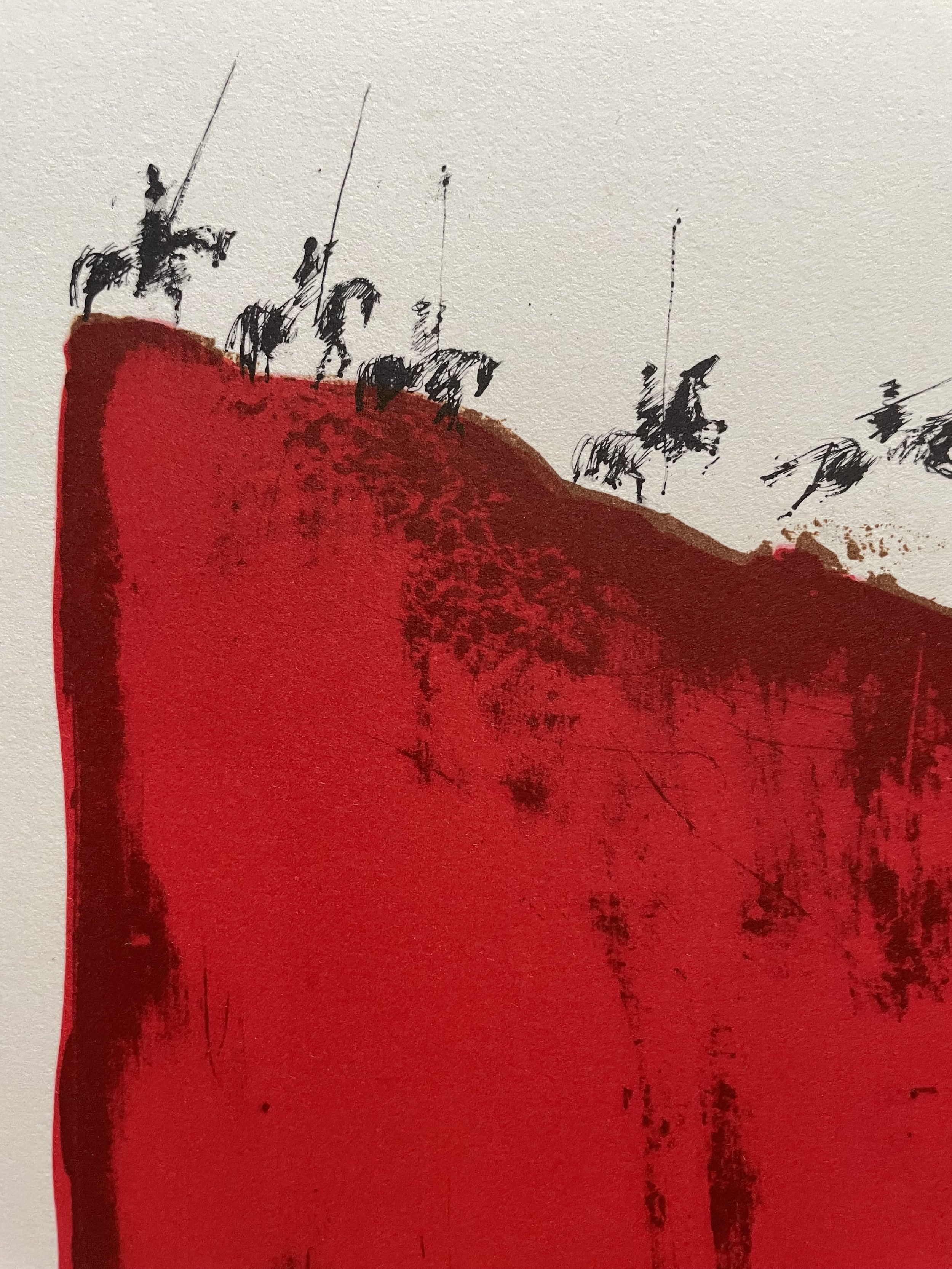
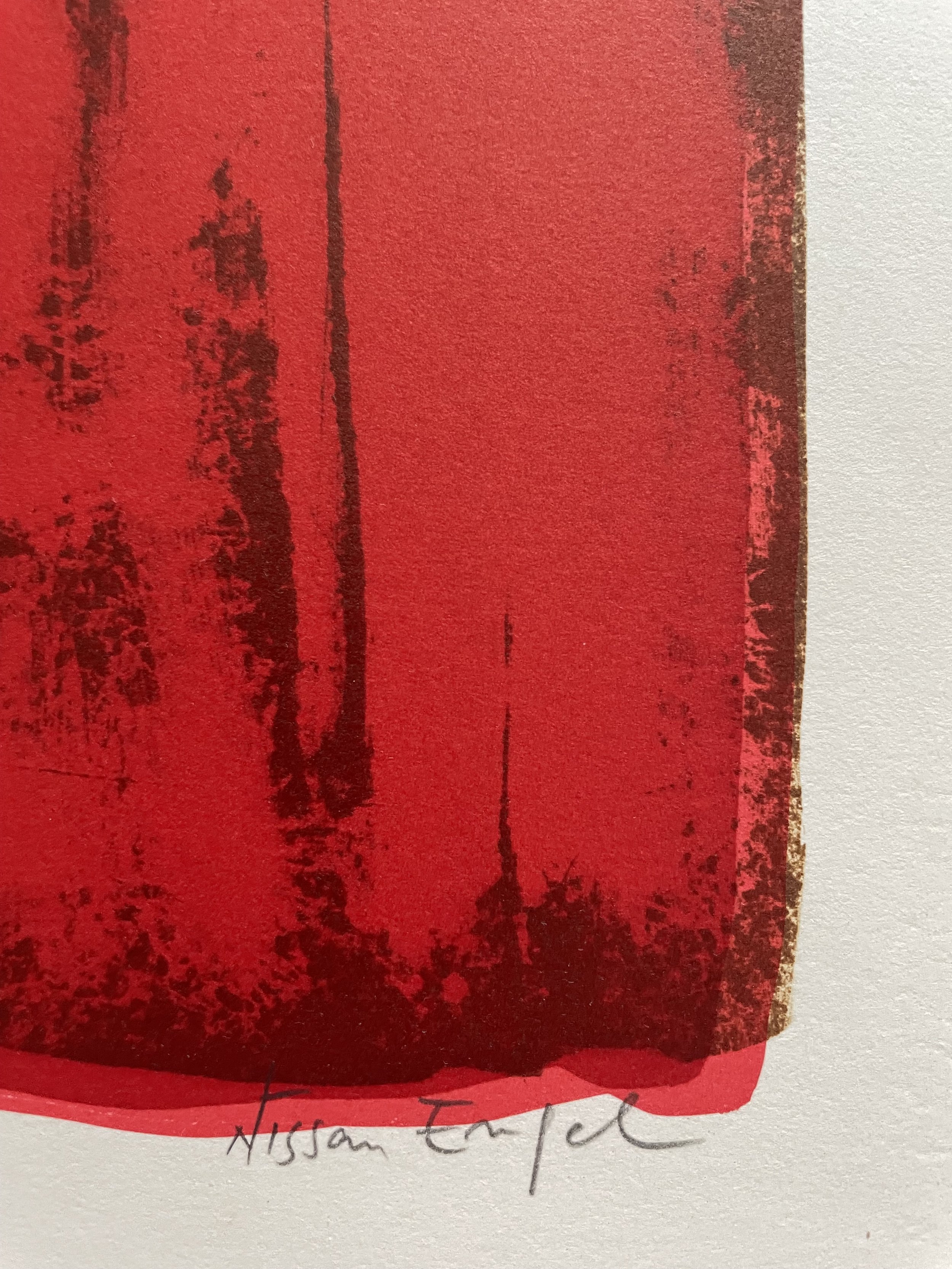
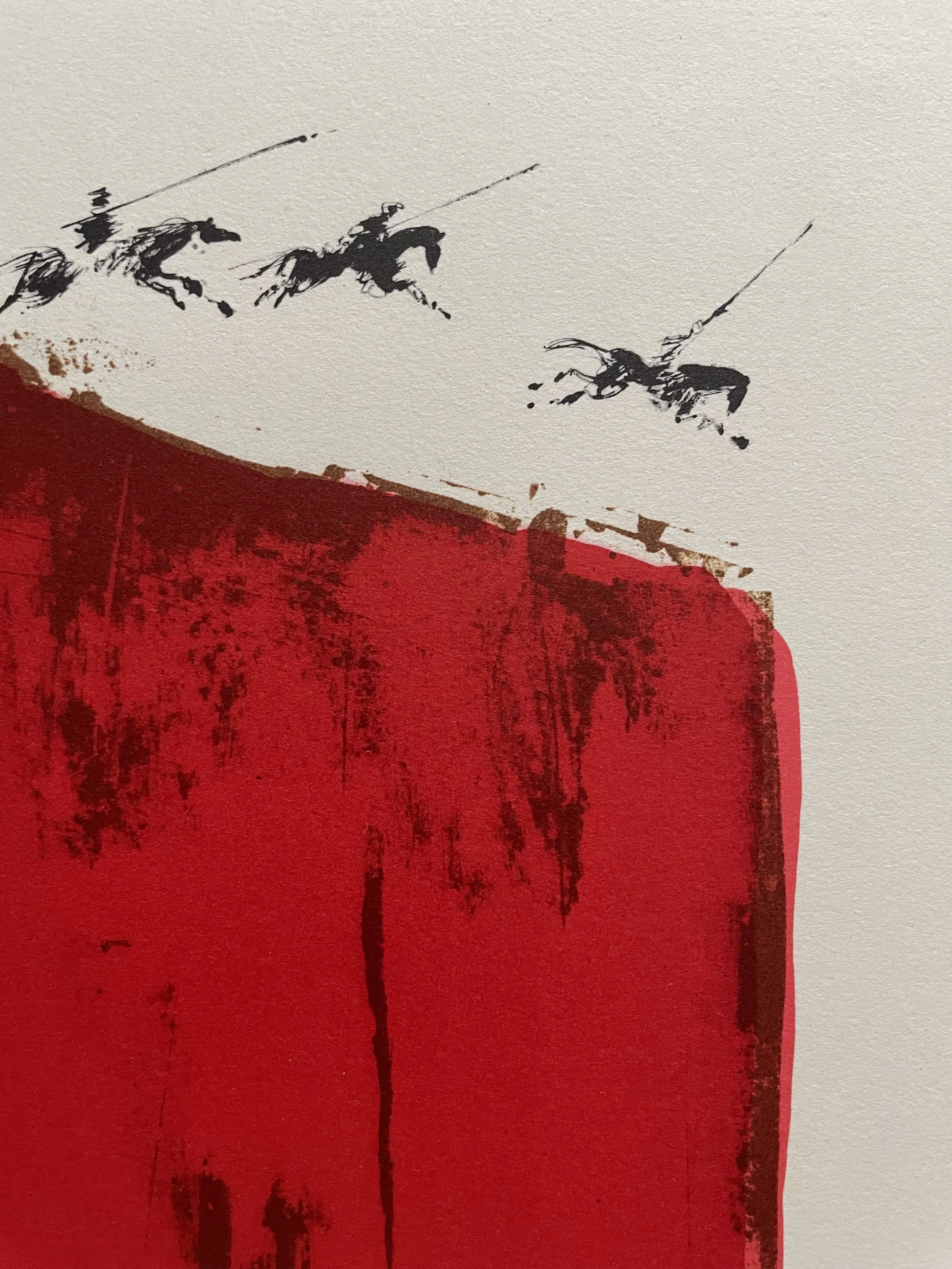
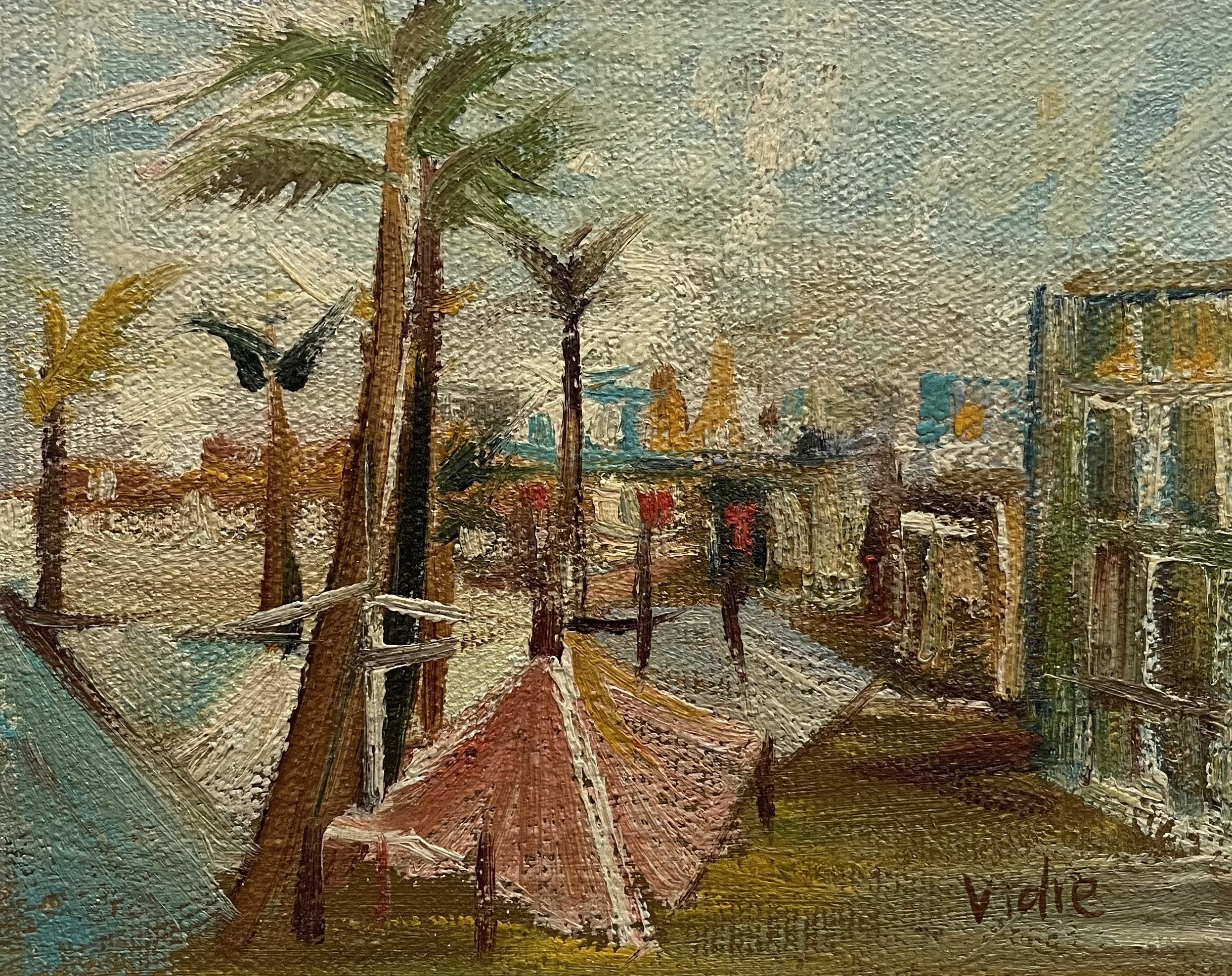
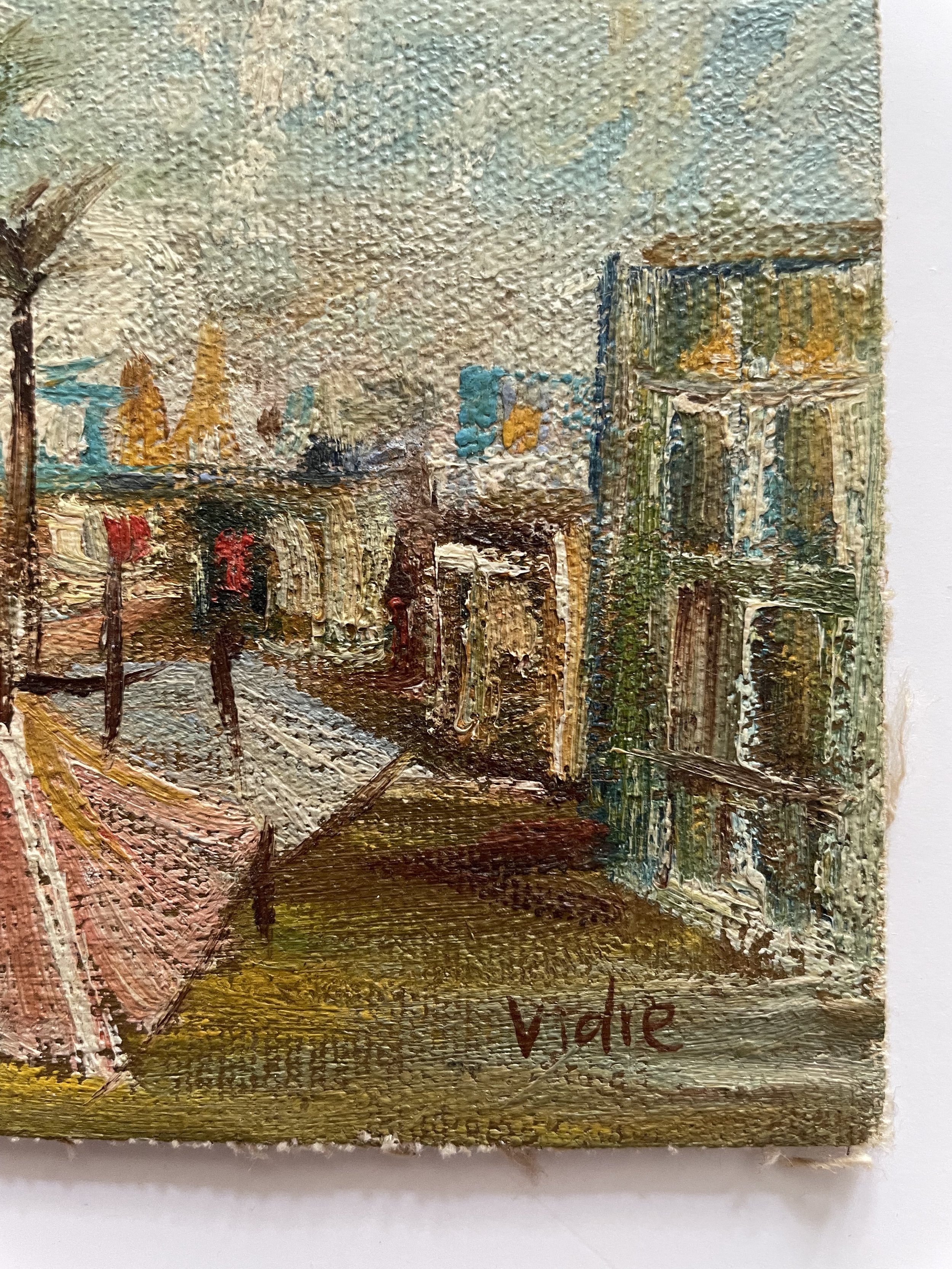
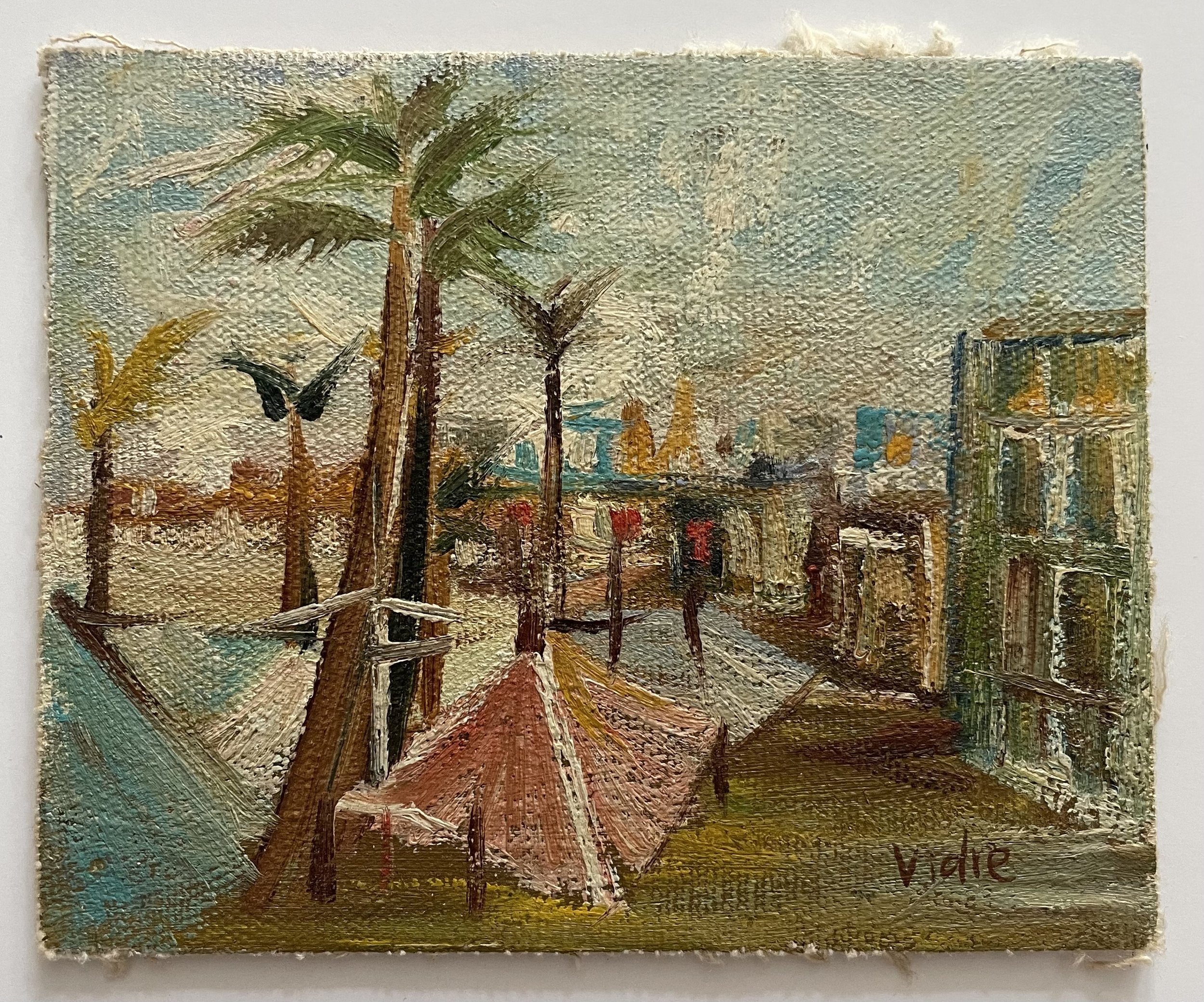
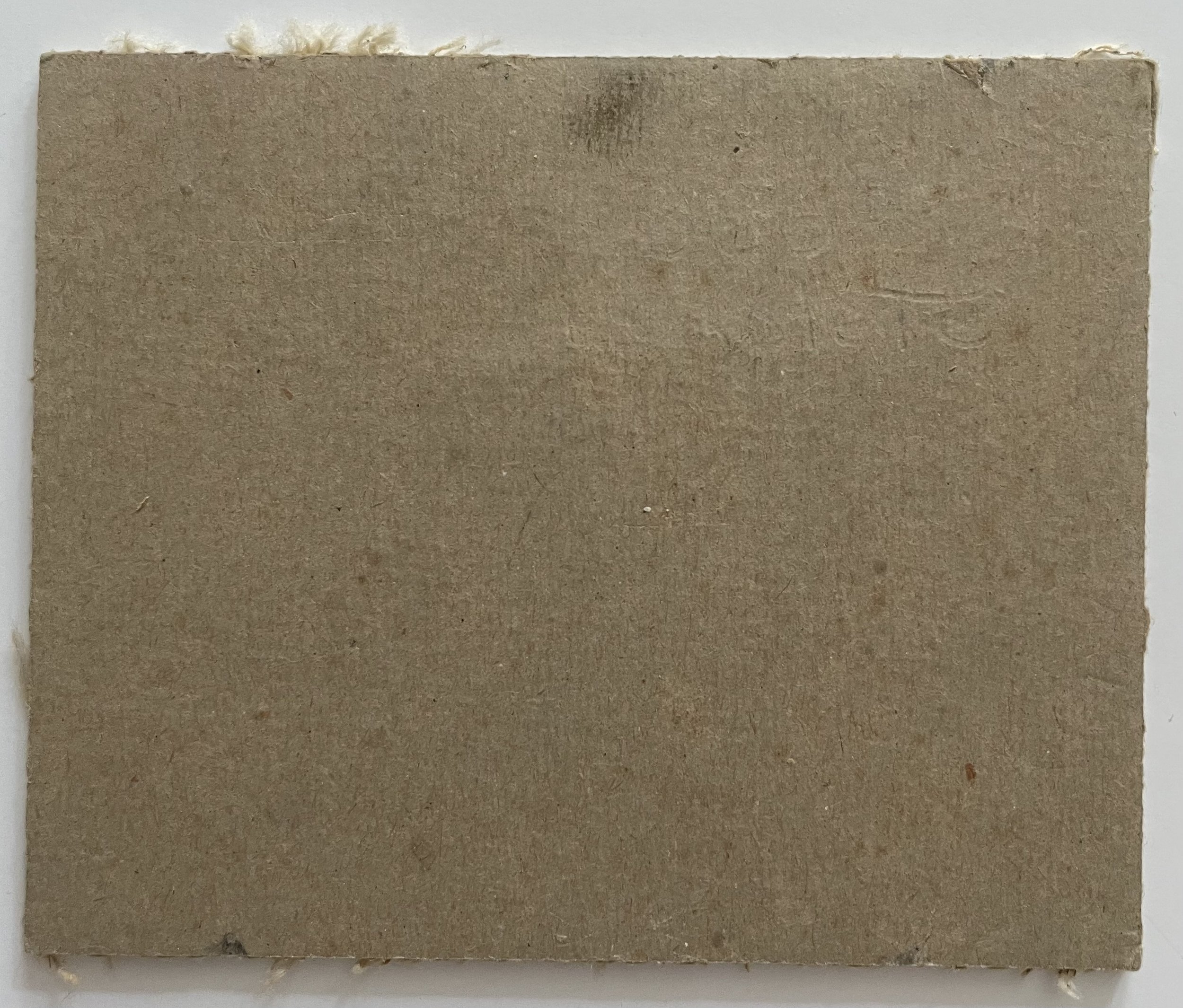
“Marbled Ascension” (attributed), Heinrich Franger (1919–2006), c. 1970s–1980s, acrylic marbled composition on canvas, 8×10 in., signed lower right.
A dynamic European abstract marbled painting by German artist Heinrich Franger (1919–2006), this signed 8×10 acrylic work showcases Franger’s distinctive fusion of color-flow abstraction, lyrical movement, and the expressive visual poetry that earned him recognition across major European exhibitions. Acquired in Europe, the piece is ideal for collectors of mid-century abstraction, fluid art, and historically rooted modernist experimentation.
Artwork Description
This striking 8×10 acrylic marbled composition presents a powerful interplay of crimson, gold, and mineral-blue currents, demonstrating Heinrich Franger’s mastery of pigment manipulation and the tension between spontaneity and structure. The fluid-pour technique creates veining, cellular separations, and naturalistic striations—qualities that echo geological formations, molten flow, or atmospheric turbulence.
The work aligns with Franger’s mature period, when he explored “formlessness” as a path to personal expression, consistent with the critical assessment by Professor Del Castillo (1966), who described Franger as “the poet among the abstracts... concrete, abstract, and naturalistic.” The deliberate layering seen here reflects Franger’s commitment to bridging abstraction and nature, while the high-energy movement across the surface reinforces his emphasis on the emotional resonance of color.
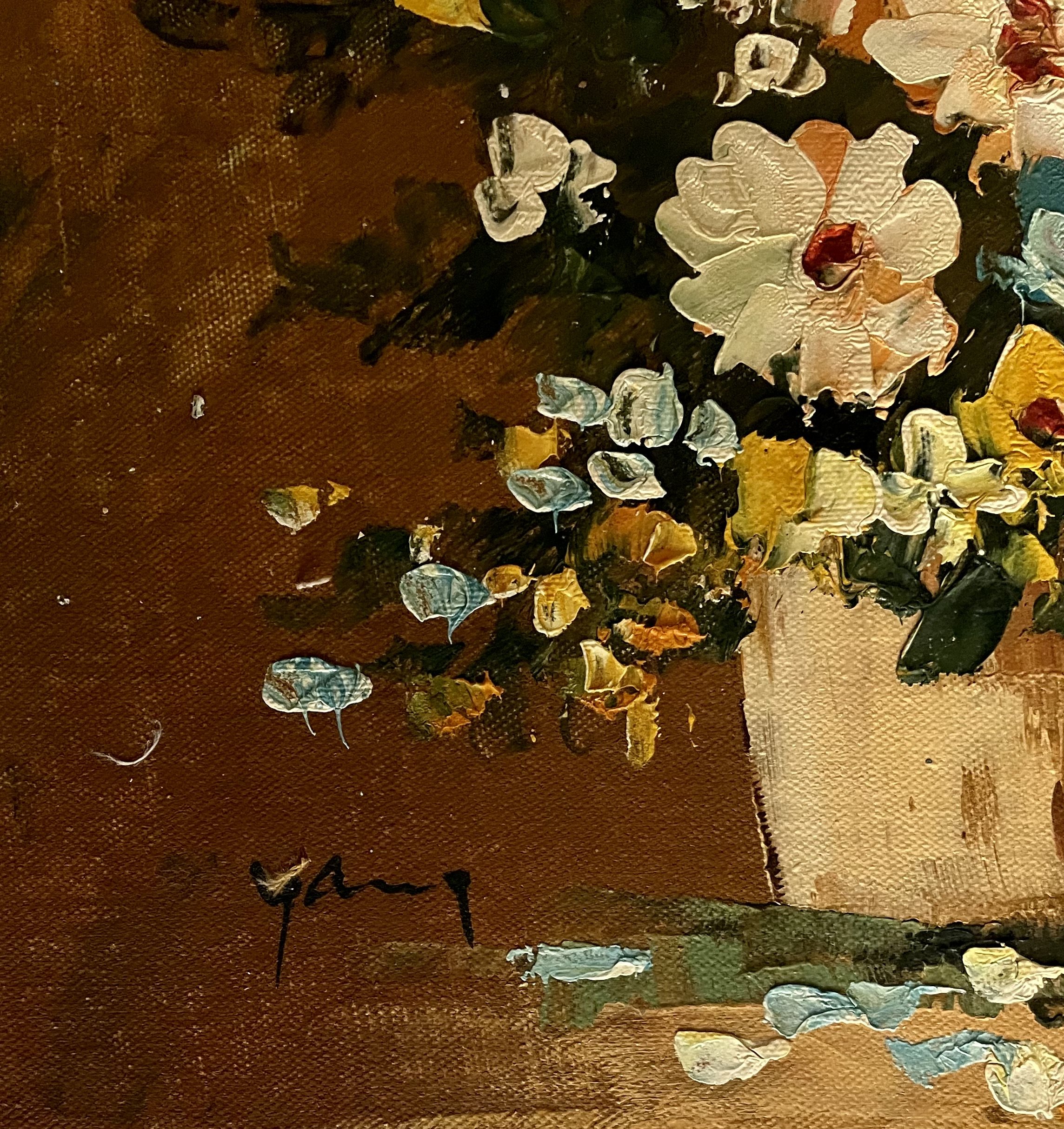
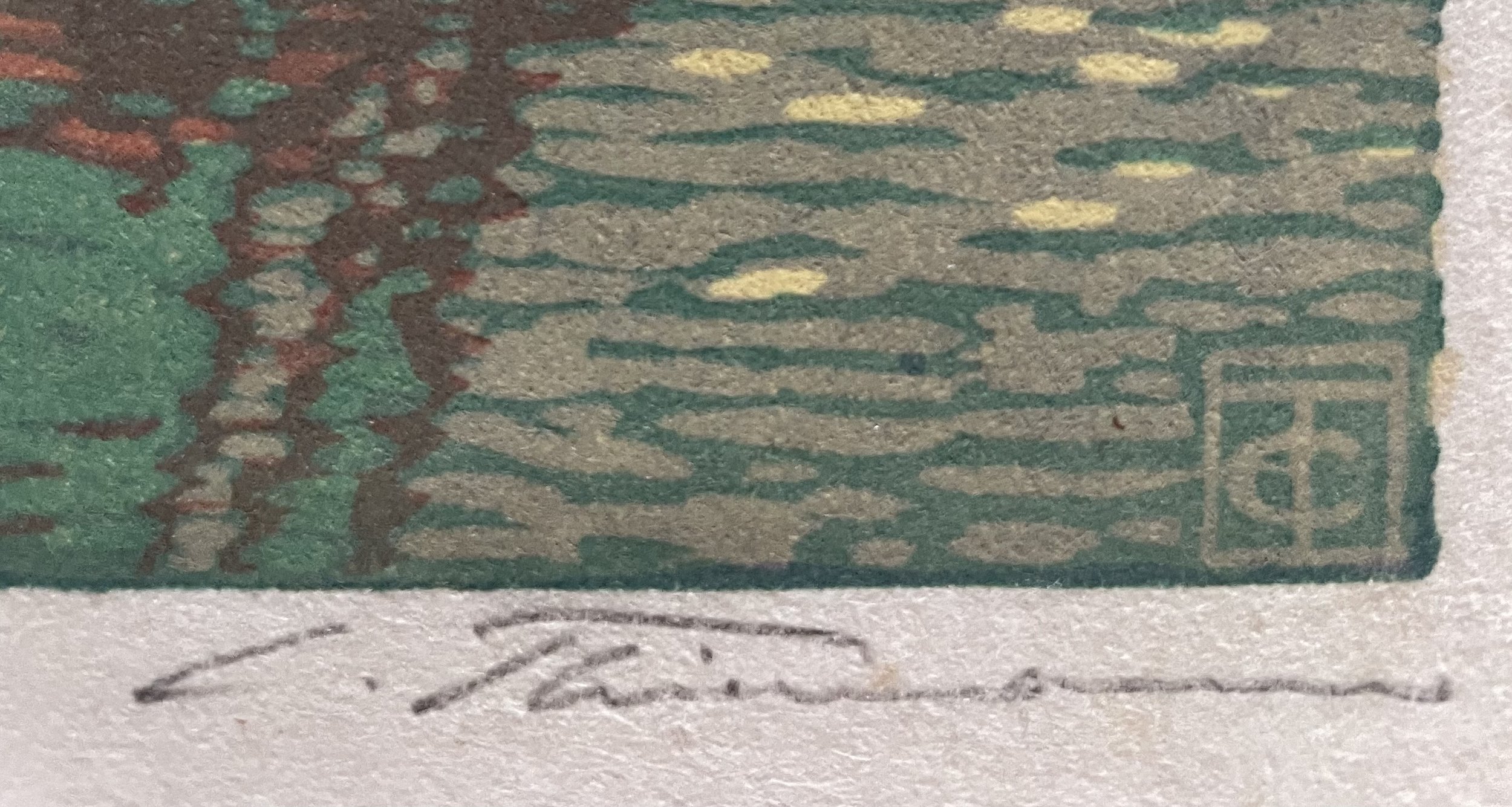
The signature painted in white at the lower right is consistent with several authenticated small-format works produced during Franger’s Spanish period, when he frequently experimented with marbling and fluid techniques.
Artist Biography — Heinrich Franger (1919–2006)
Heinrich Franger was born 18 May 1919 in Wiesbaden, Germany, and became an influential European abstract painter whose work blended lyrical abstraction, controlled fluidity, and naturalistic suggestion. He received formal training at The Valand Academy of Art in Gothenburg, Sweden (often referenced historically as the Wadang Academy), where he began developing an interest in color theory, abstraction, and unconventional approaches to form.
Franger lived and worked in Leiden (Netherlands) and later spent many years in Spain, including extended periods in Marbella. His extensive study trips throughout Europe exposed him to modernist movements across Germany, France, and Scandinavia, allowing him to synthesize a style that combined German expressionist sensitivity, Nordic chromatic clarity, and Mediterranean luminosity.
By the mid-1960s, he was already an established figure in European abstraction. In a 1966 review, Professor Del Castilloobserved:
“It is curious that the abstract—formless in its essence—contains in Franger such a high degree of personal expression, even in comparison with the well-known expressionists of his native country, such as Klee and Ernst. From this point of view Franger appears to us as the poet among the abstracts… concrete, abstract, and naturalistic.”
This review remains one of the defining characterizations of his work and accurately reflects the qualities seen in the present painting.
Franger’s artistic career included exhibitions in major European art centers, including:
Gothenburg, Cologne, Dortmund, Hannover, Paris, Stockholm, Karlsruhe, Stuttgart, Bilbao, Barcelona, Munich, and Palma de Mallorca.
His paintings are held in numerous museums and private collections across Europe.
His mature works, particularly those created in Spain, frequently explore fluid color movement, geological suggestion, and lyrical abstraction, often using methods resembling marbling, dispersion, or color-flow dynamics. Heinrich Franger passed away on 15 November 2006 in Marbella, Spain.
Heinrich Franger (German, 1919–2006), “Marbled Ascension” (attributed), c. 1970s–80s, acrylic marbled composition on canvas, 8×10 in., signed lower right. A dynamic small-format abstract painting representative of Franger’s fluid and poetic style.
CERTIFICATE OF VALUE & AUTHENTICATION
For Fine Art Appraisal / Insurance / Gallery Documentation
Artist: Heinrich Franger (1919–2006)
Title: Marbled Ascension (attributed)
Date: c. 1970s–1980s
Medium: Acrylic marbled pour on canvas
Dimensions: 8 × 10 inches
Signature: Signed lower right
Origin: Acquired in Europe
Authenticity Basis: Signature comparison, stylistic alignment with Franger’s late-career marbled abstractions, and historical technique consistency.
Condition: Excellent.
Current Owner: Artfind Gallery, Washington, DC
Estimated Fair Market Value: See ranges below.
Provenance Chain (Collector Format)
Artist: Heinrich Franger, Germany/Spain
Private Collection, Europe
Artfind Gallery, Washington, DC — Current Owner
“Marbled Ascension” (attributed), Heinrich Franger (1919–2006), c. 1970s–1980s, acrylic marbled composition on canvas, 8×10 in., signed lower right.
A dynamic European abstract marbled painting by German artist Heinrich Franger (1919–2006), this signed 8×10 acrylic work showcases Franger’s distinctive fusion of color-flow abstraction, lyrical movement, and the expressive visual poetry that earned him recognition across major European exhibitions. Acquired in Europe, the piece is ideal for collectors of mid-century abstraction, fluid art, and historically rooted modernist experimentation.
Artwork Description
This striking 8×10 acrylic marbled composition presents a powerful interplay of crimson, gold, and mineral-blue currents, demonstrating Heinrich Franger’s mastery of pigment manipulation and the tension between spontaneity and structure. The fluid-pour technique creates veining, cellular separations, and naturalistic striations—qualities that echo geological formations, molten flow, or atmospheric turbulence.
The work aligns with Franger’s mature period, when he explored “formlessness” as a path to personal expression, consistent with the critical assessment by Professor Del Castillo (1966), who described Franger as “the poet among the abstracts... concrete, abstract, and naturalistic.” The deliberate layering seen here reflects Franger’s commitment to bridging abstraction and nature, while the high-energy movement across the surface reinforces his emphasis on the emotional resonance of color.
The signature painted in white at the lower right is consistent with several authenticated small-format works produced during Franger’s Spanish period, when he frequently experimented with marbling and fluid techniques.
Artist Biography — Heinrich Franger (1919–2006)
Heinrich Franger was born 18 May 1919 in Wiesbaden, Germany, and became an influential European abstract painter whose work blended lyrical abstraction, controlled fluidity, and naturalistic suggestion. He received formal training at The Valand Academy of Art in Gothenburg, Sweden (often referenced historically as the Wadang Academy), where he began developing an interest in color theory, abstraction, and unconventional approaches to form.
Franger lived and worked in Leiden (Netherlands) and later spent many years in Spain, including extended periods in Marbella. His extensive study trips throughout Europe exposed him to modernist movements across Germany, France, and Scandinavia, allowing him to synthesize a style that combined German expressionist sensitivity, Nordic chromatic clarity, and Mediterranean luminosity.
By the mid-1960s, he was already an established figure in European abstraction. In a 1966 review, Professor Del Castilloobserved:
“It is curious that the abstract—formless in its essence—contains in Franger such a high degree of personal expression, even in comparison with the well-known expressionists of his native country, such as Klee and Ernst. From this point of view Franger appears to us as the poet among the abstracts… concrete, abstract, and naturalistic.”
This review remains one of the defining characterizations of his work and accurately reflects the qualities seen in the present painting.
Franger’s artistic career included exhibitions in major European art centers, including:
Gothenburg, Cologne, Dortmund, Hannover, Paris, Stockholm, Karlsruhe, Stuttgart, Bilbao, Barcelona, Munich, and Palma de Mallorca.
His paintings are held in numerous museums and private collections across Europe.
His mature works, particularly those created in Spain, frequently explore fluid color movement, geological suggestion, and lyrical abstraction, often using methods resembling marbling, dispersion, or color-flow dynamics. Heinrich Franger passed away on 15 November 2006 in Marbella, Spain.
Heinrich Franger (German, 1919–2006), “Marbled Ascension” (attributed), c. 1970s–80s, acrylic marbled composition on canvas, 8×10 in., signed lower right. A dynamic small-format abstract painting representative of Franger’s fluid and poetic style.
CERTIFICATE OF VALUE & AUTHENTICATION
For Fine Art Appraisal / Insurance / Gallery Documentation
Artist: Heinrich Franger (1919–2006)
Title: Marbled Ascension (attributed)
Date: c. 1970s–1980s
Medium: Acrylic marbled pour on canvas
Dimensions: 8 × 10 inches
Signature: Signed lower right
Origin: Acquired in Europe
Authenticity Basis: Signature comparison, stylistic alignment with Franger’s late-career marbled abstractions, and historical technique consistency.
Condition: Excellent.
Current Owner: Artfind Gallery, Washington, DC
Estimated Fair Market Value: See ranges below.
Provenance Chain (Collector Format)
Artist: Heinrich Franger, Germany/Spain
Private Collection, Europe
Artfind Gallery, Washington, DC — Current Owner
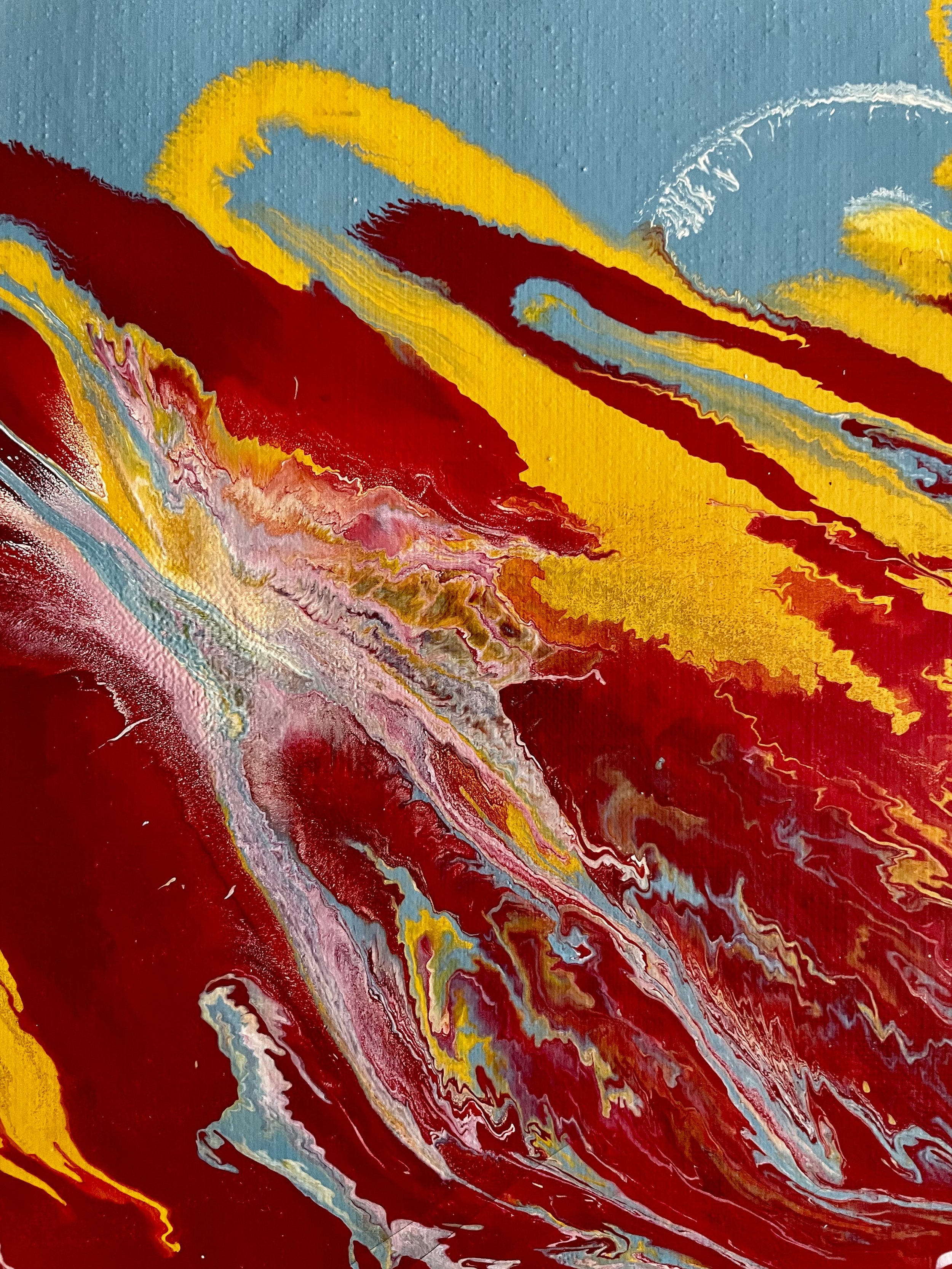 Image 1 of 9
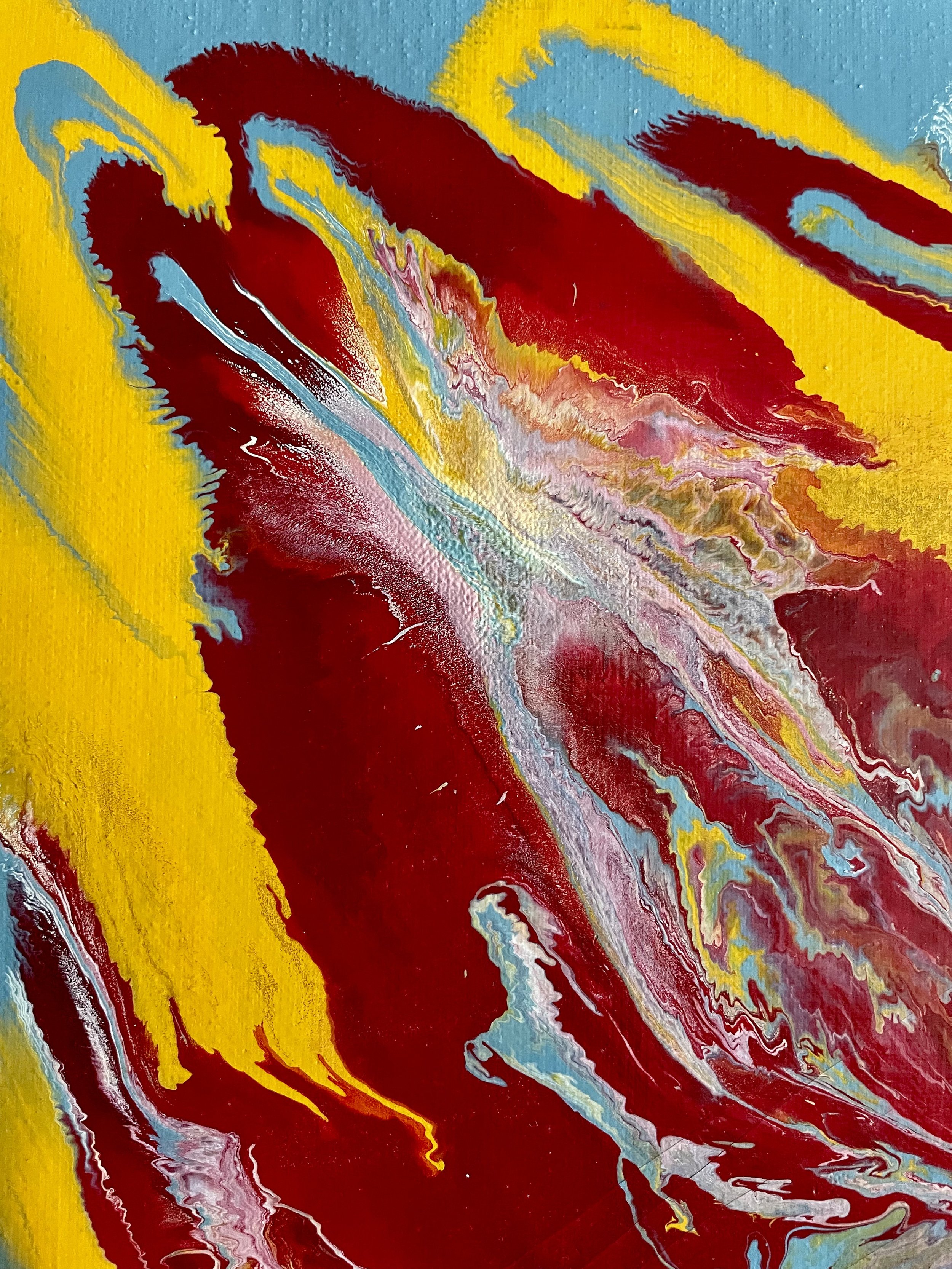 Image 2 of 9
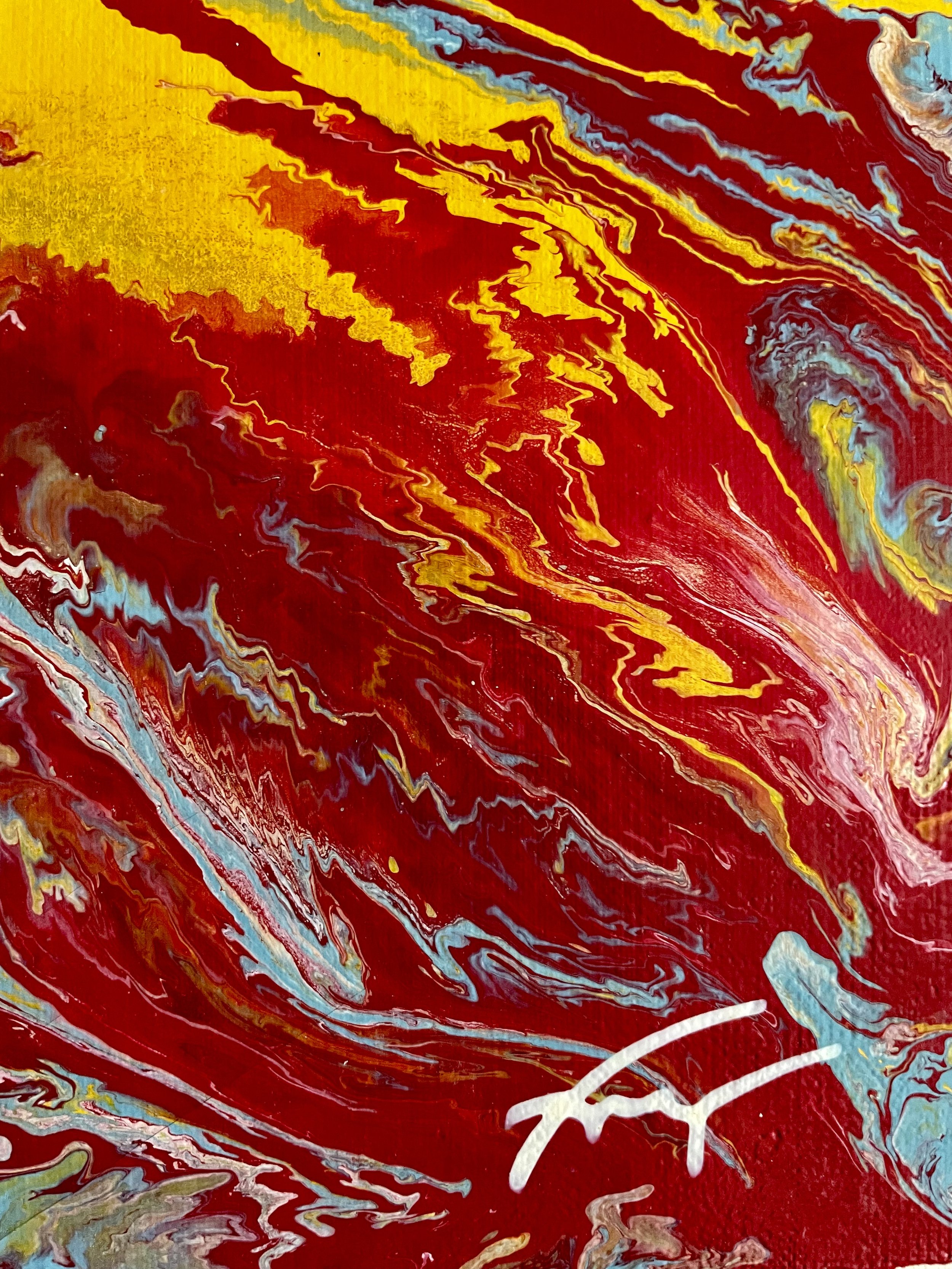 Image 3 of 9
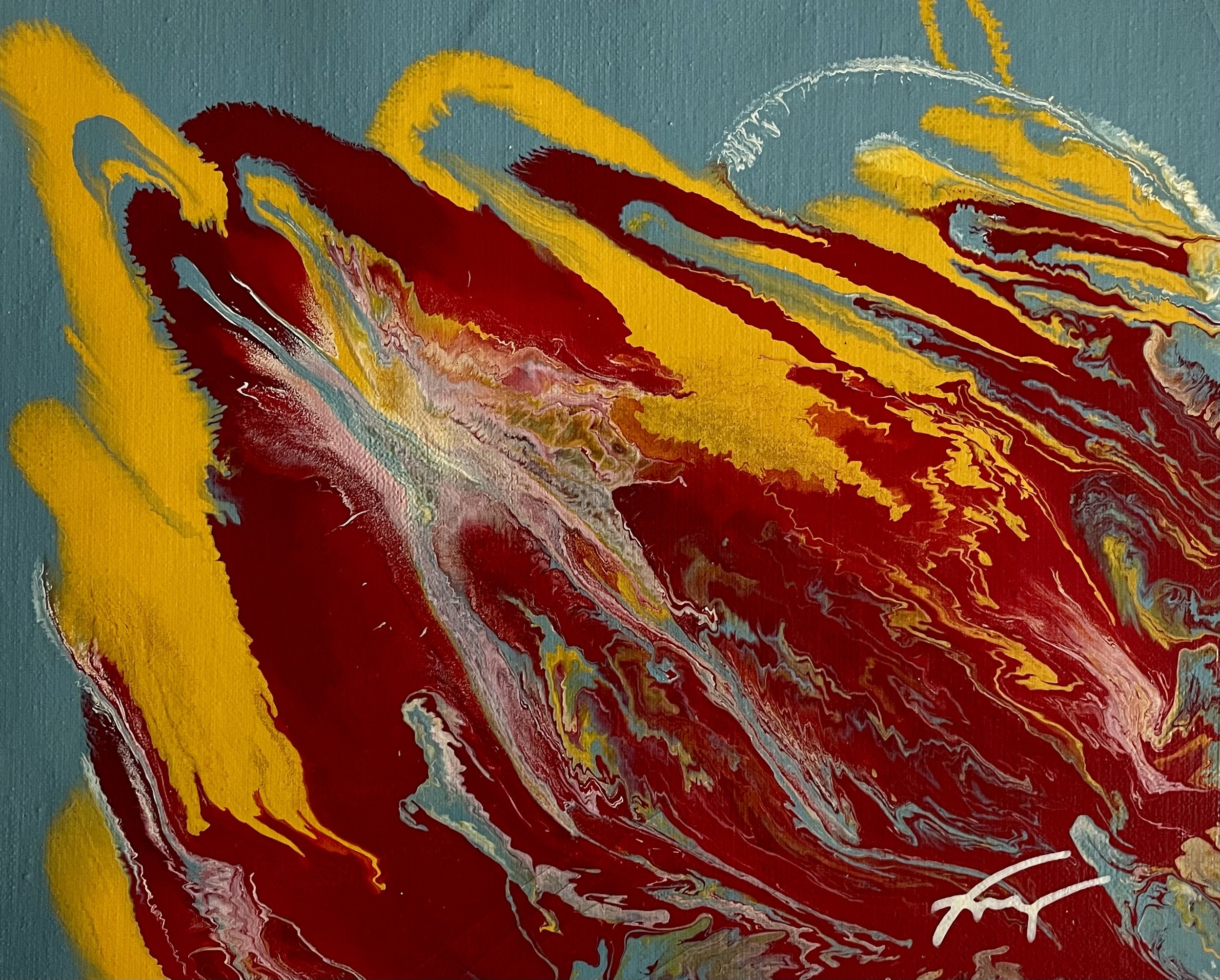 Image 4 of 9
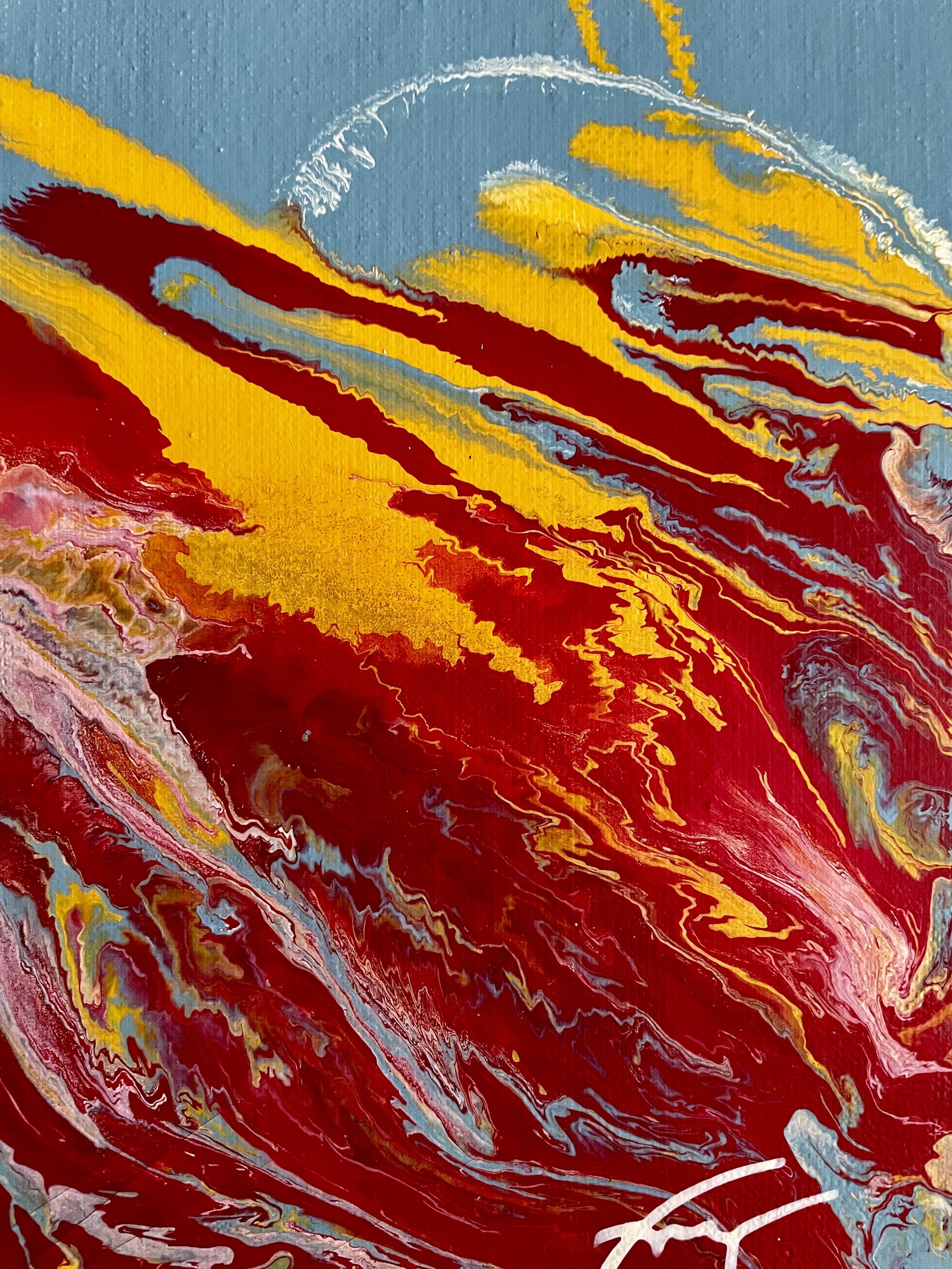 Image 5 of 9
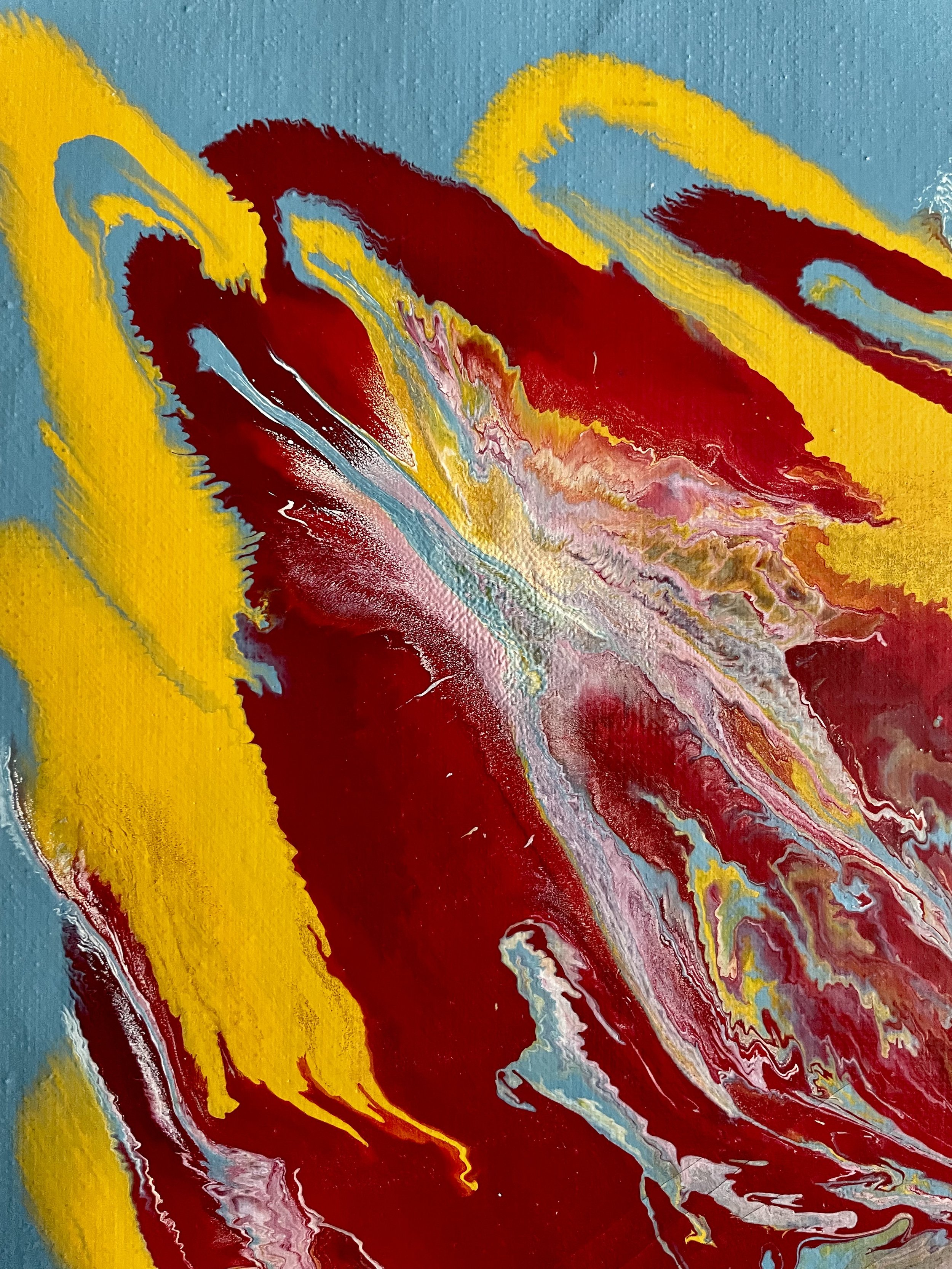 Image 6 of 9
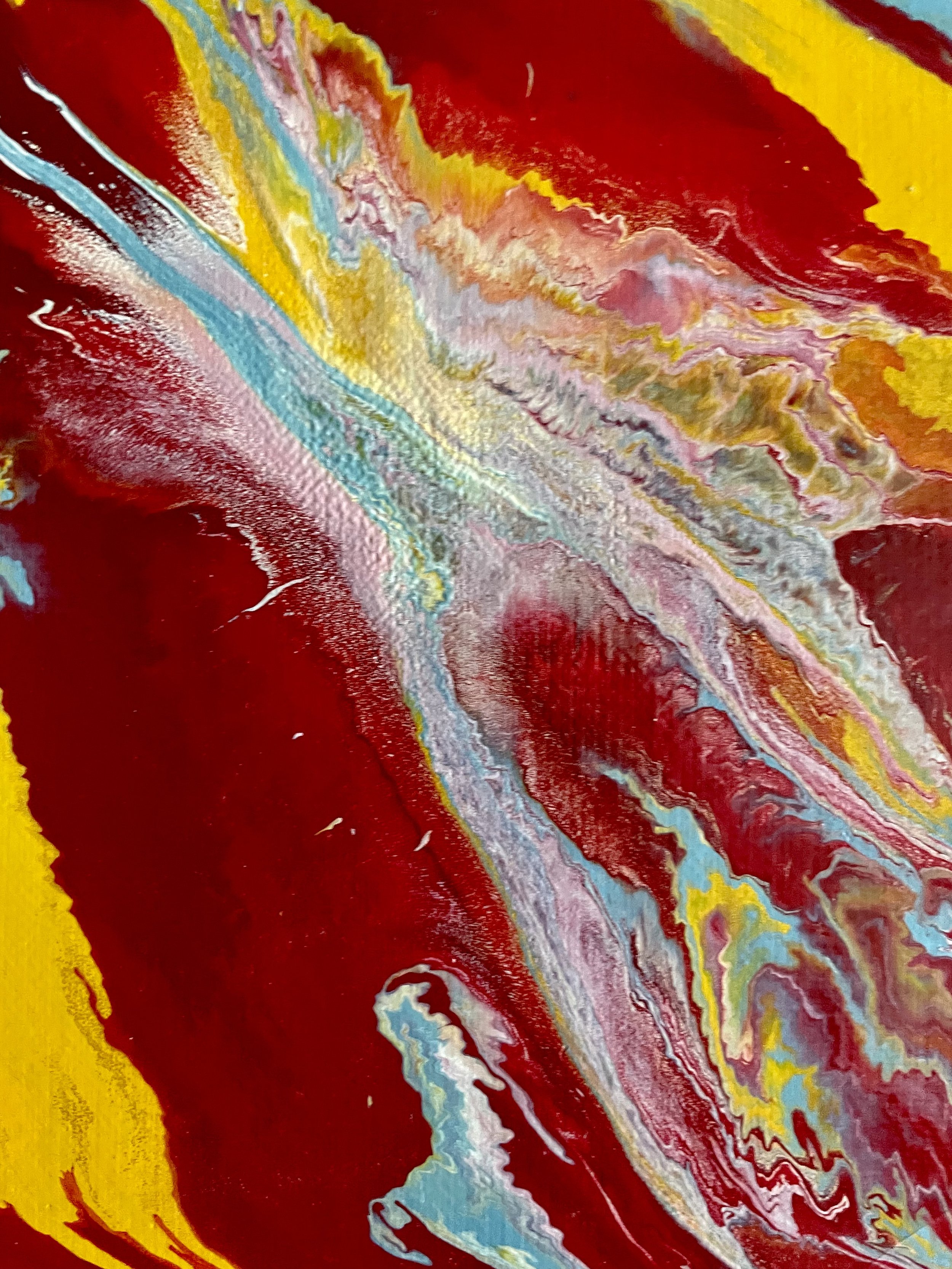 Image 7 of 9
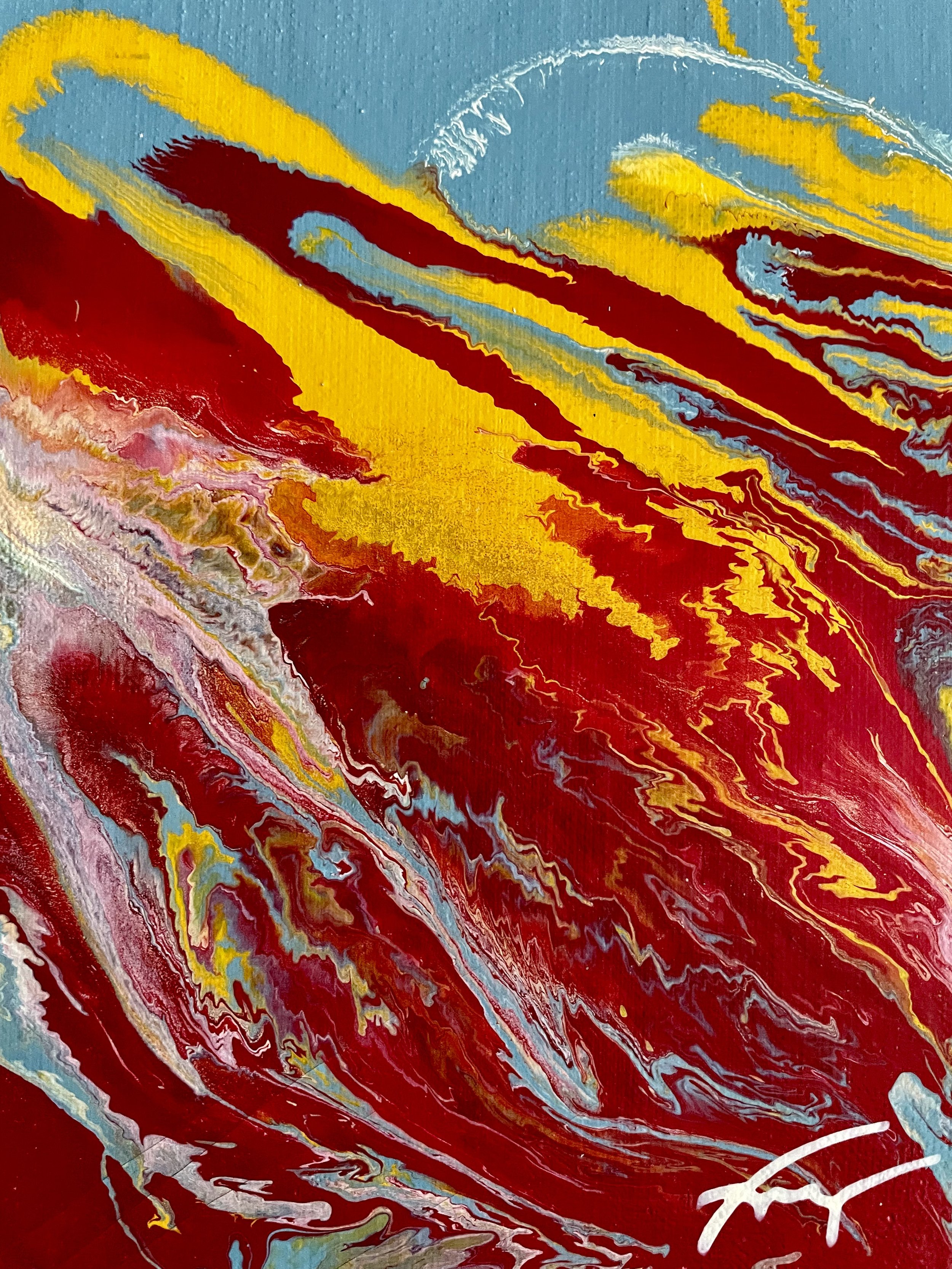 Image 8 of 9
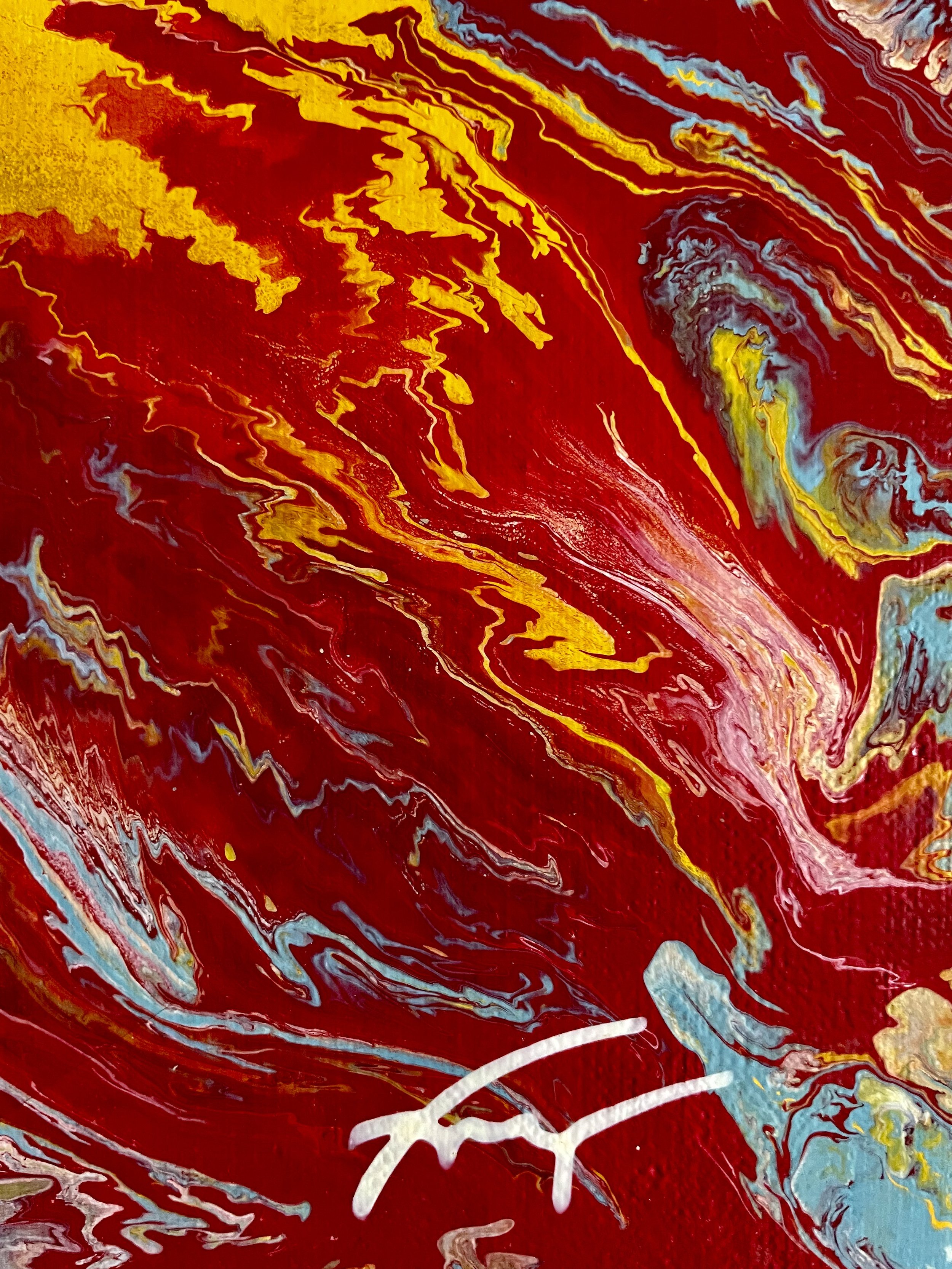 Image 9 of 9