 Image 1 of 4
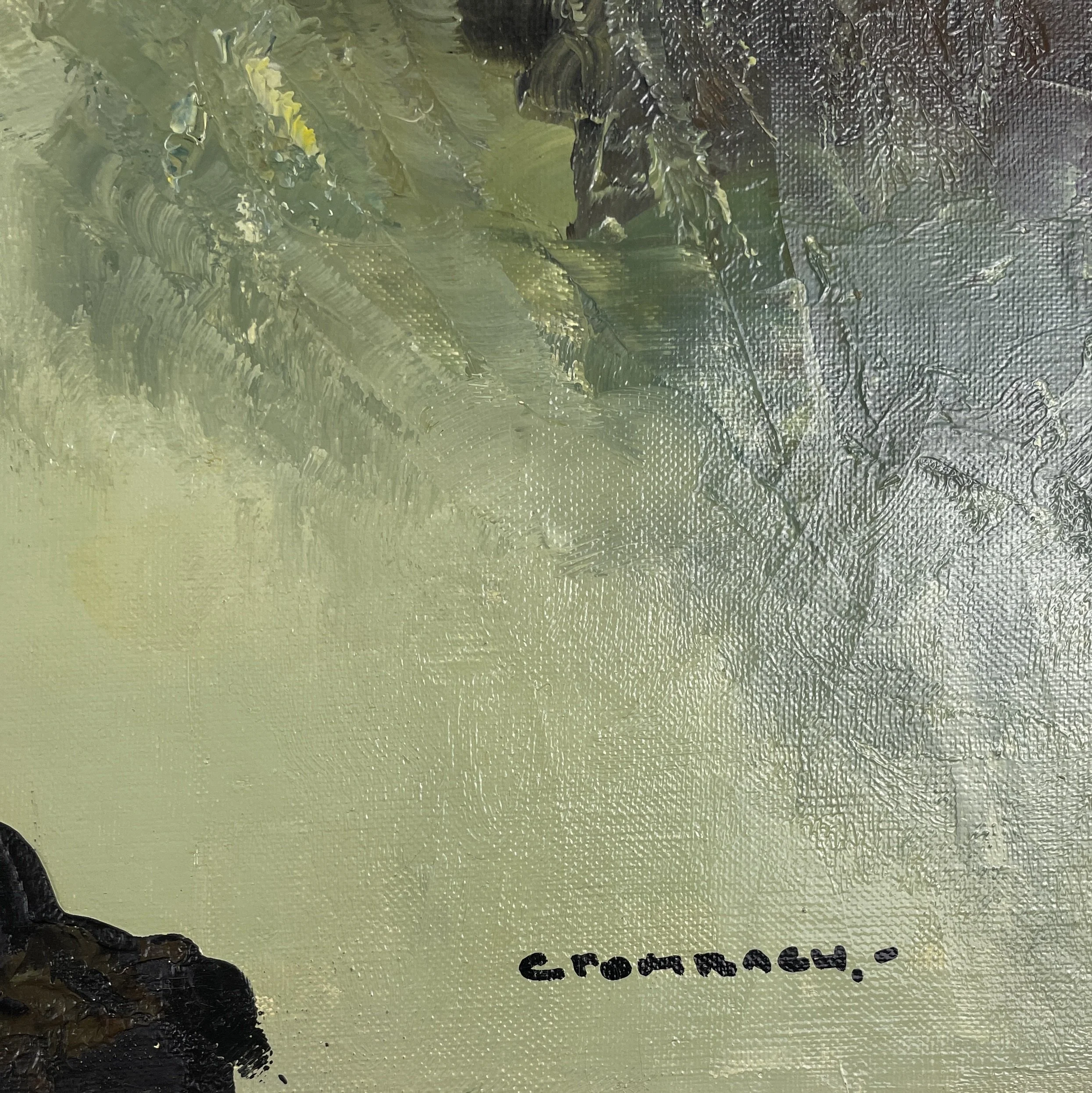 Image 2 of 4
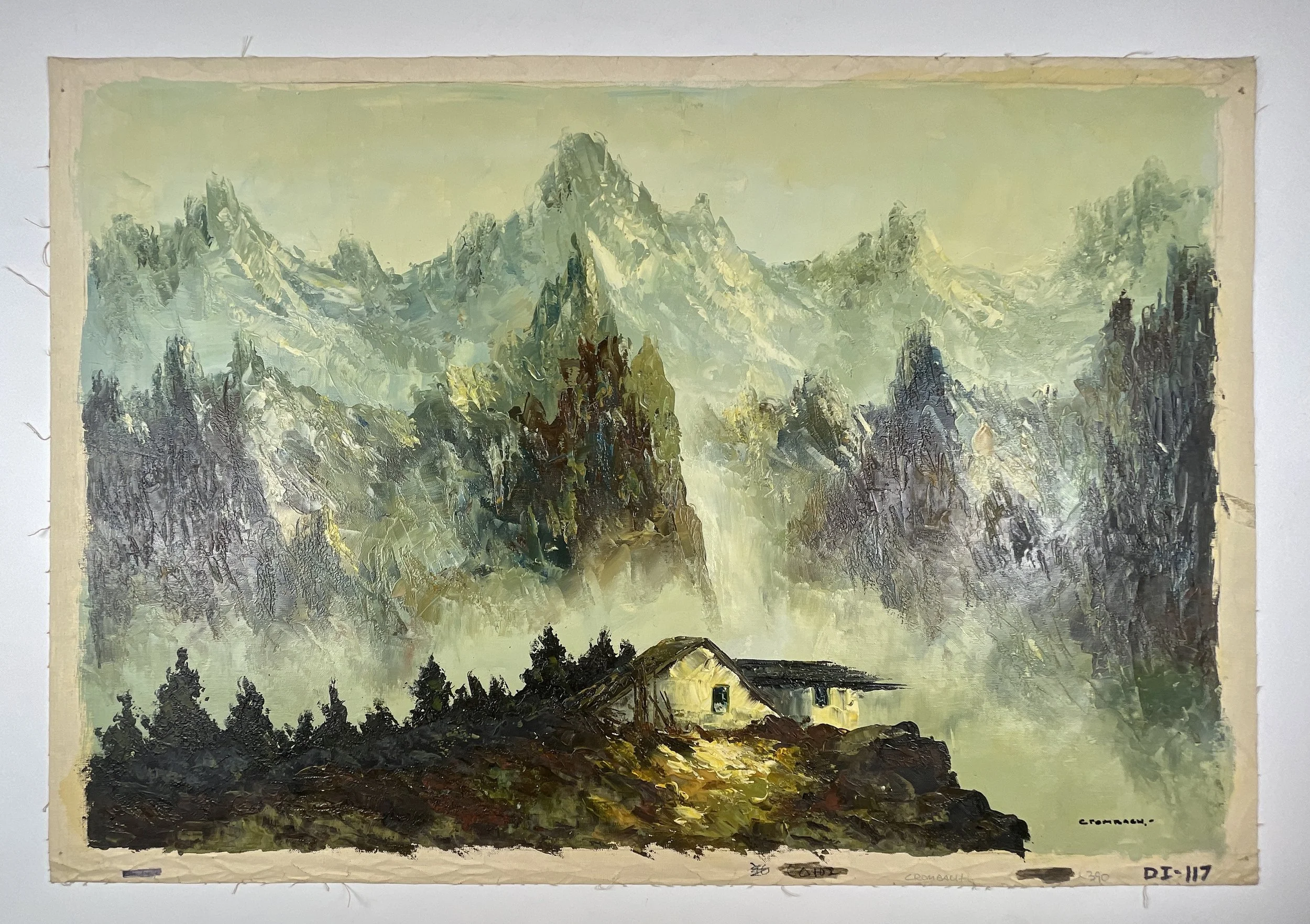 Image 3 of 4
 Image 4 of 4
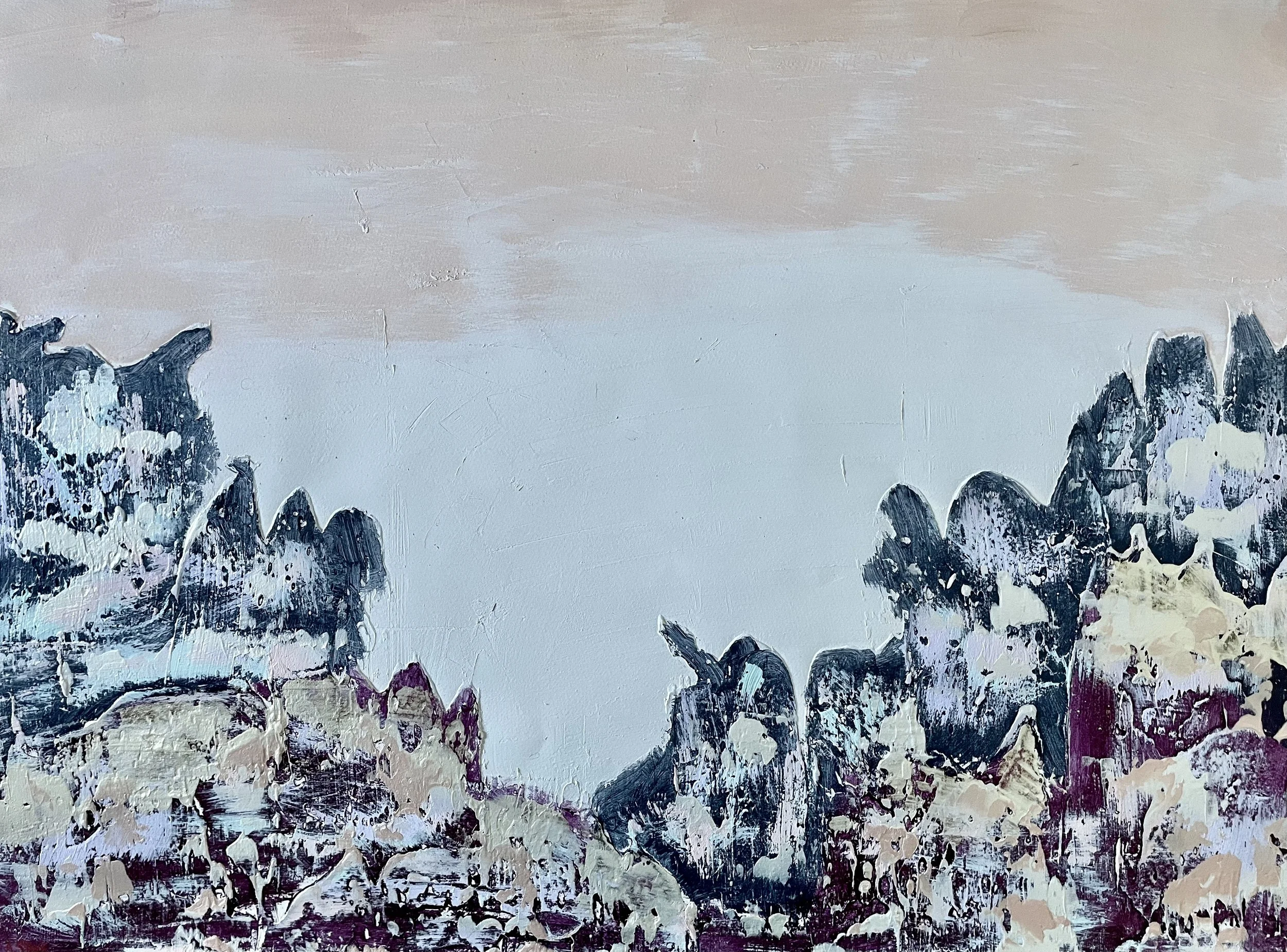
Alpine Mountain Retreat (attributed), C. Rombach (20th century), c.1980s, acrylic impasto with glaze on canvas, 36 × 24 in., signed lower right.
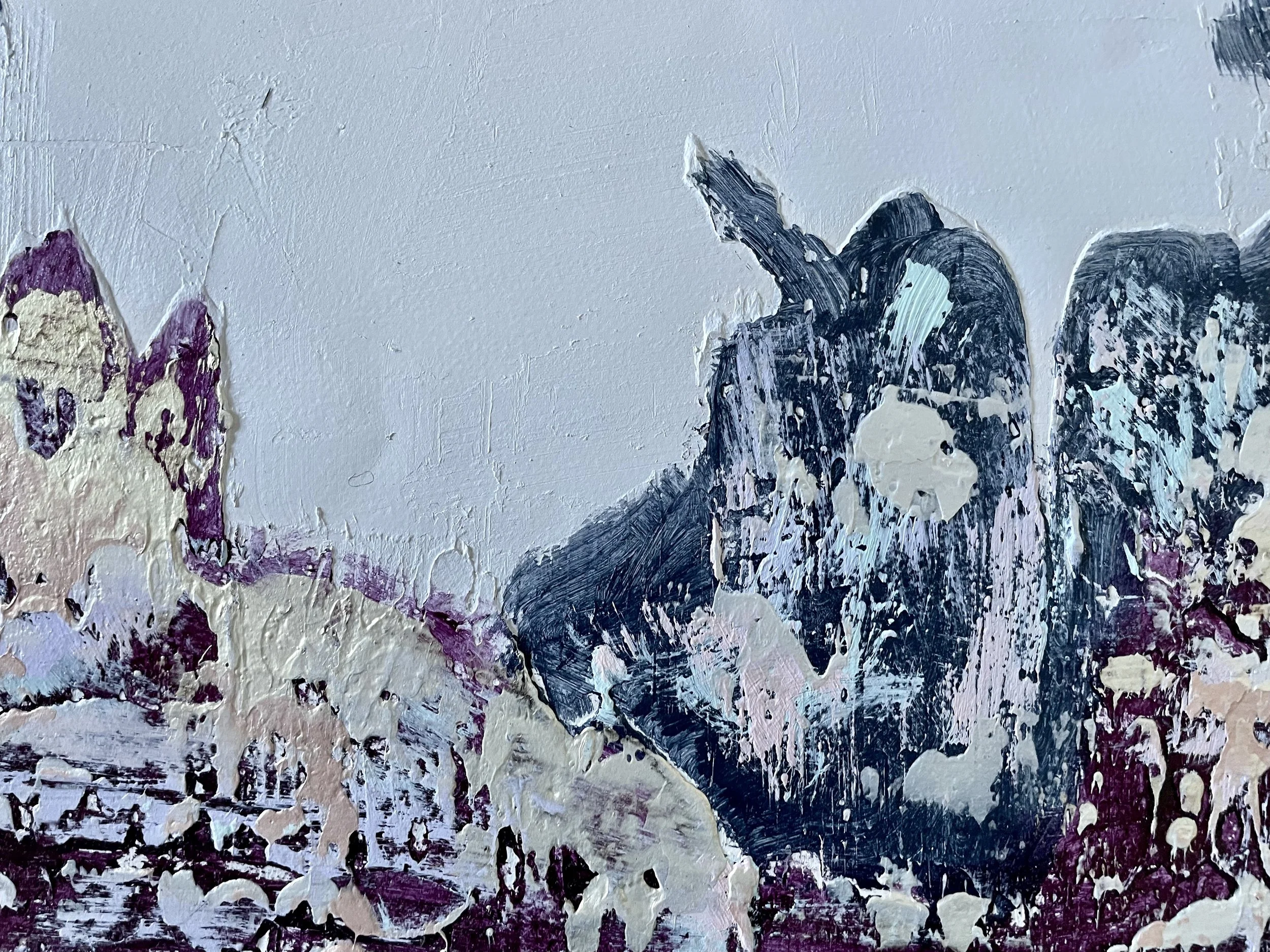
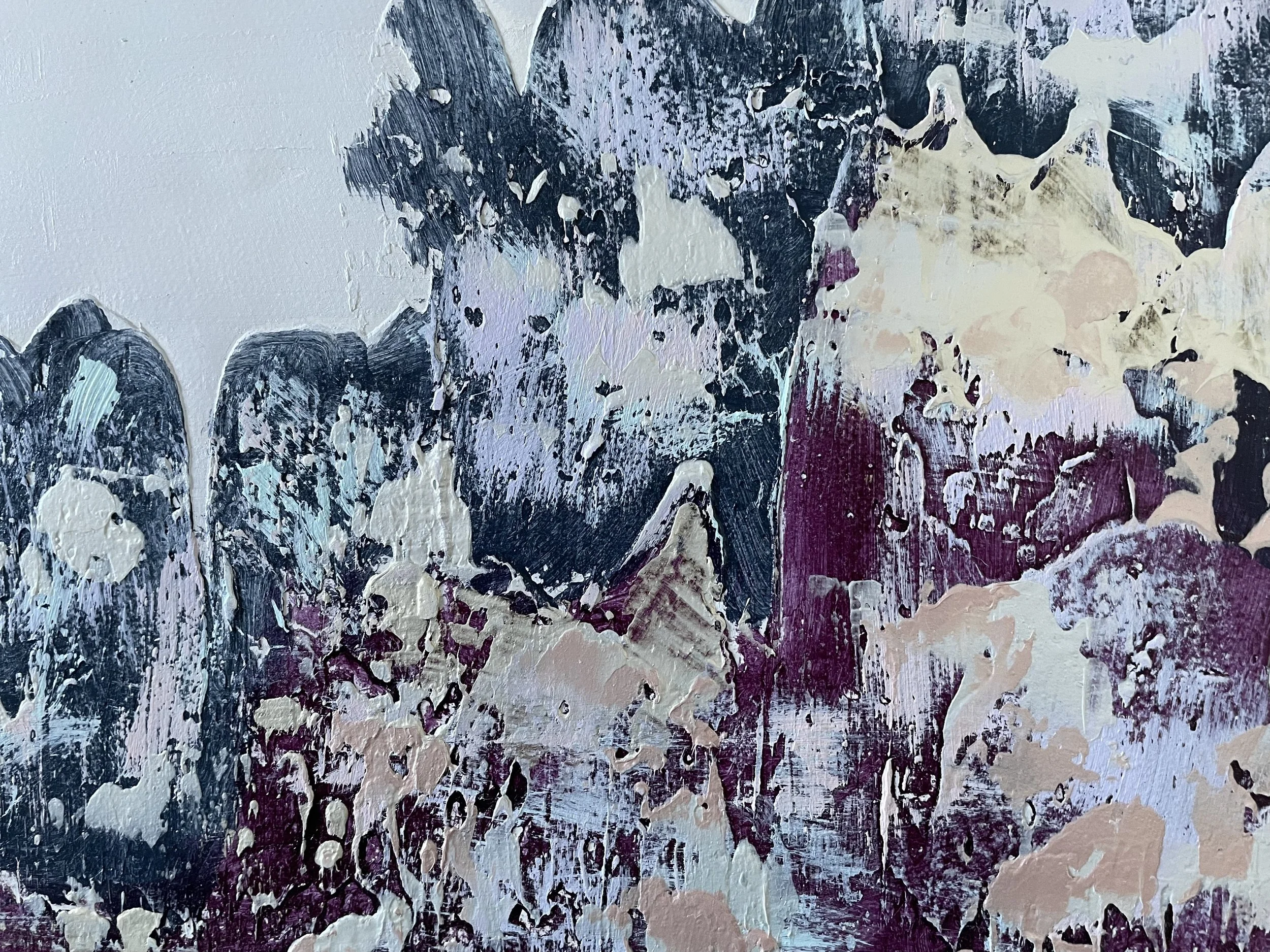
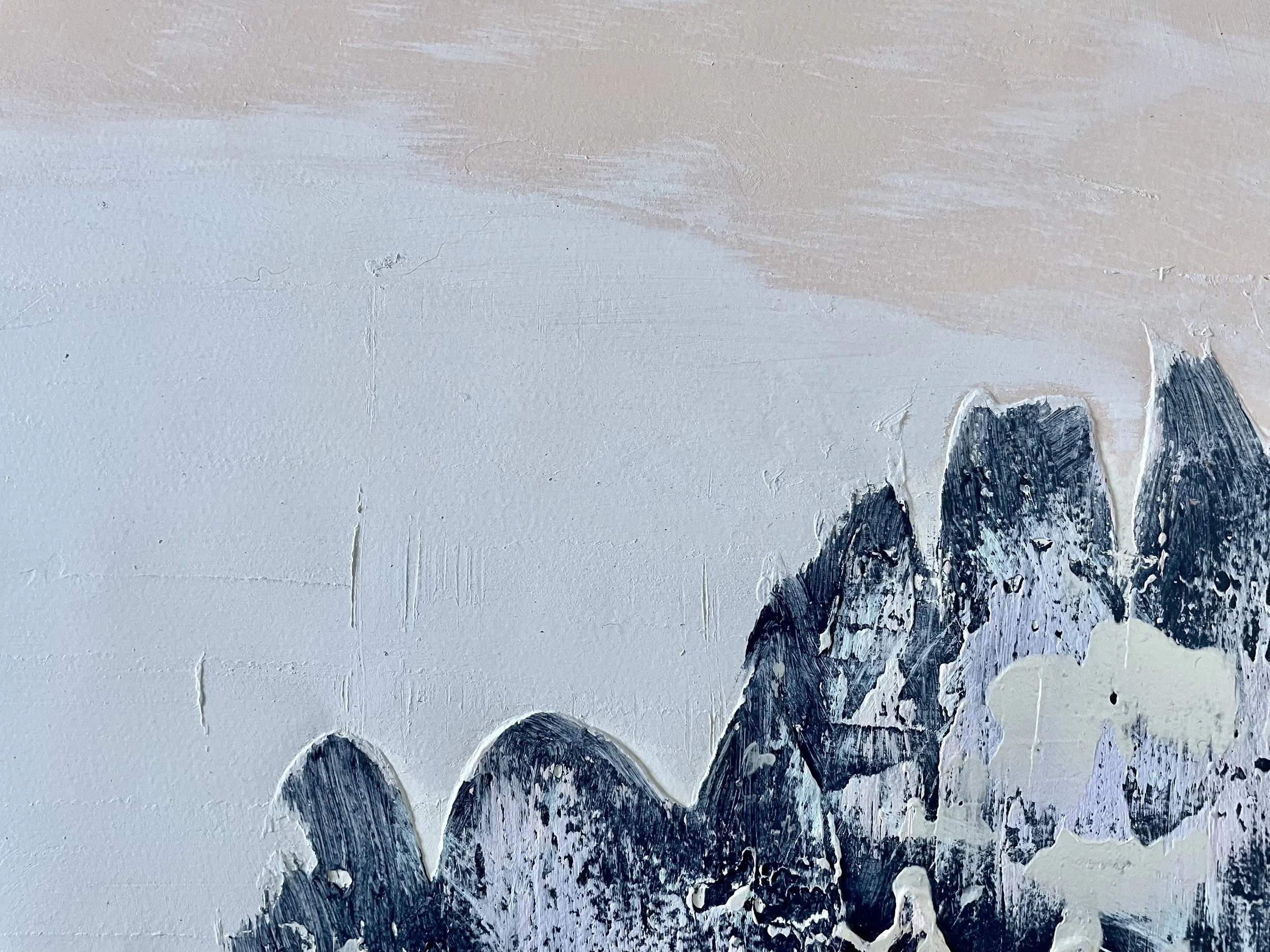
A dramatic impasto mountain landscape by C. Rombach depicting a remote alpine cottage beneath towering snow-covered peaks. Executed with palette-knife texture and luminous glazes, the work combines atmospheric depth with rugged sculptural brushwork typical of late 20th-century European alpine landscape painting.
Artwork Description
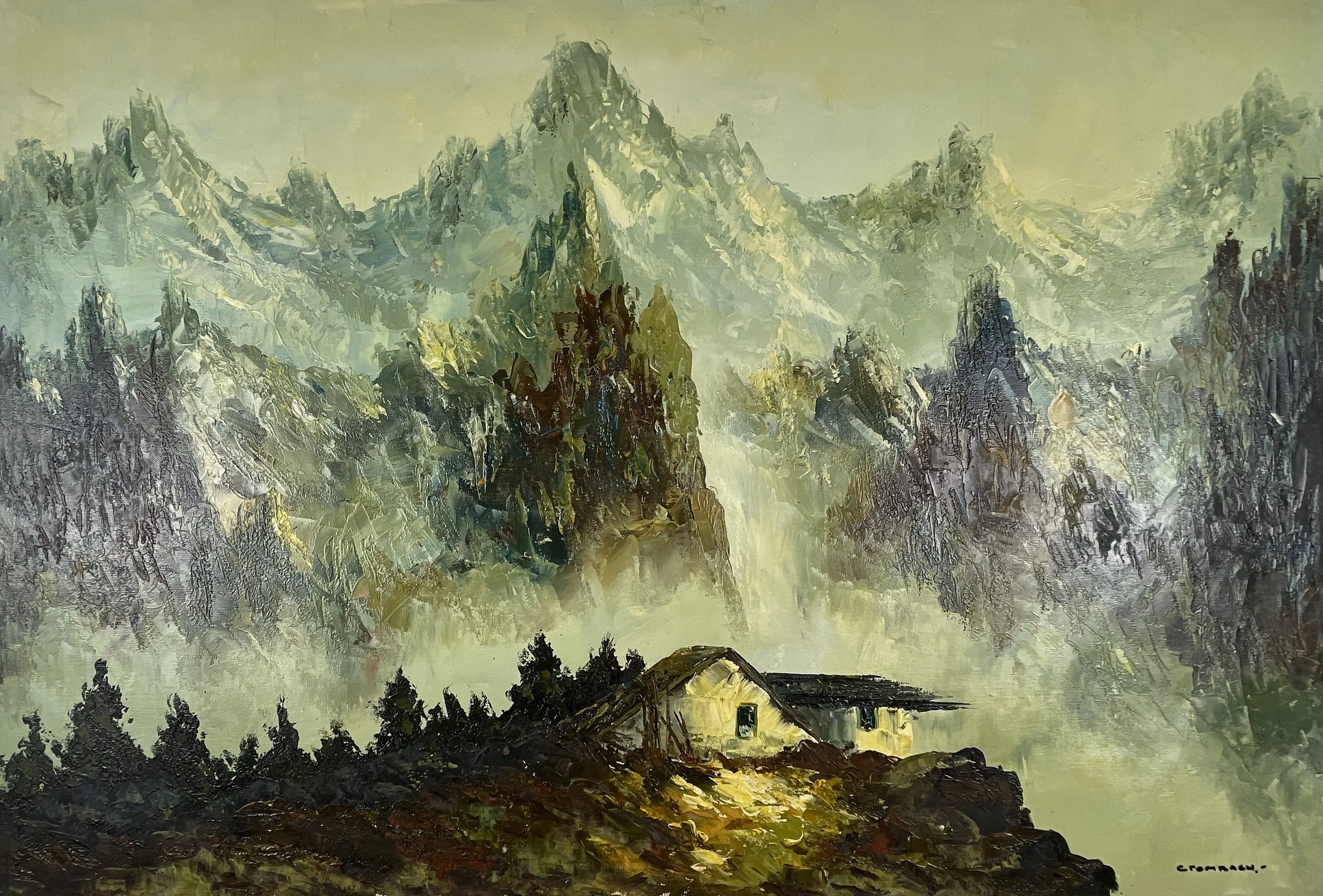
This sweeping alpine composition by C. Rombach presents a solitary mountain cottage nestled among dark conifers at the edge of a rocky slope, dwarfed by a monumental wall of jagged snow-covered peaks rising through a veil of mist. The artist constructs the composition in strong tiers: a dark foreground of forest and earth, a luminous middle ground containing the illuminated cabin, and an expansive backdrop of towering mountains dissolving into atmospheric haze.
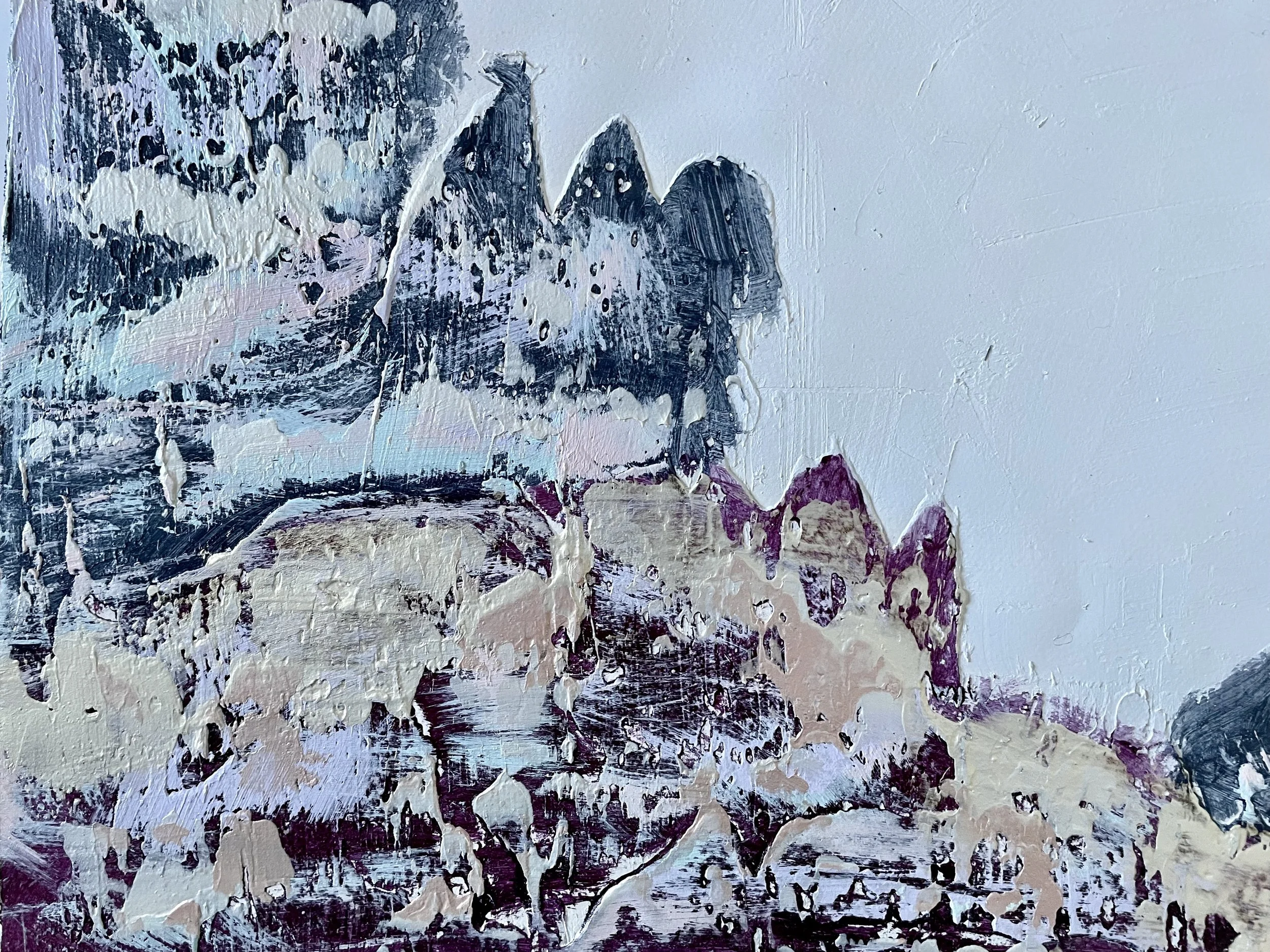
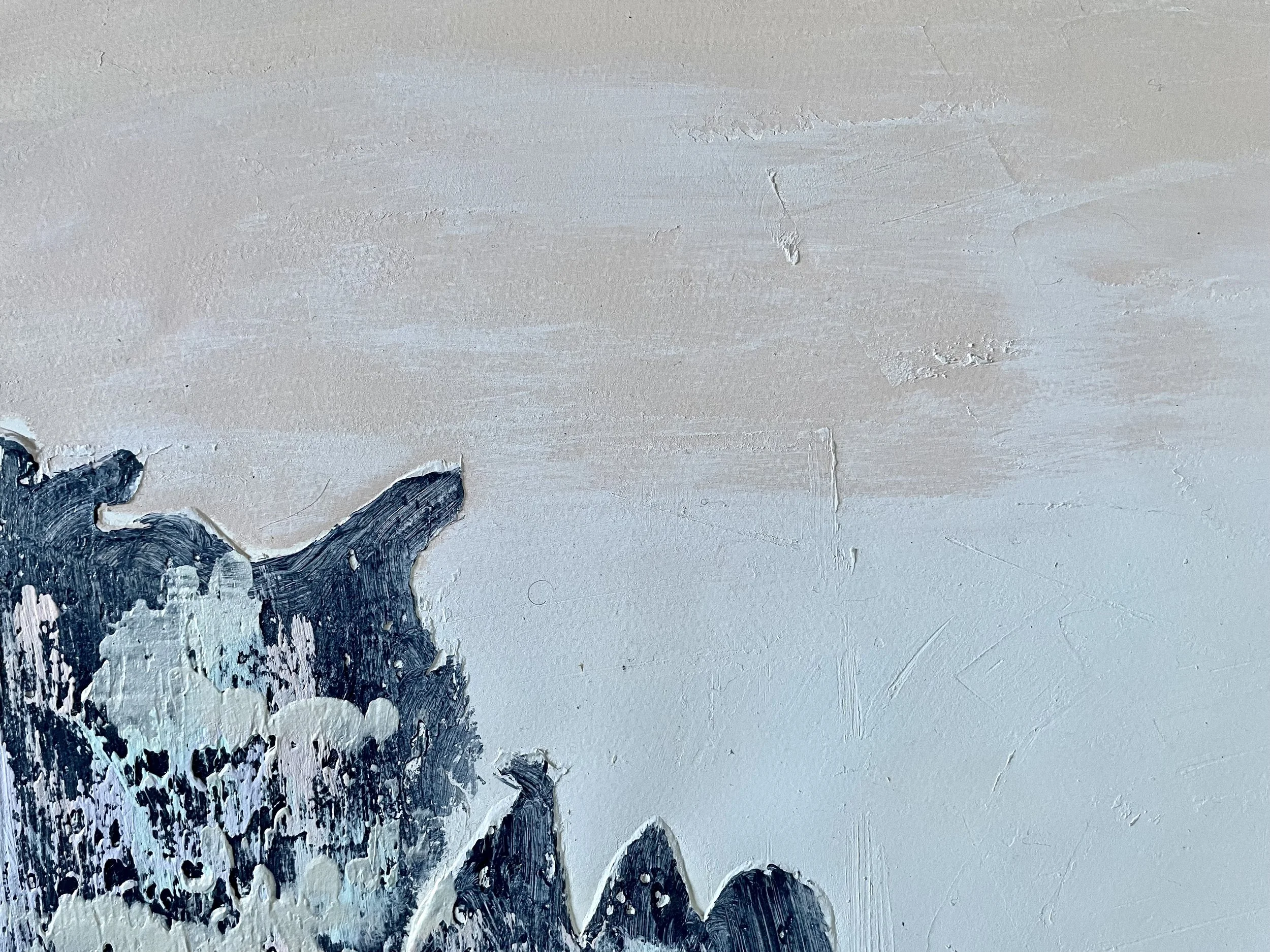
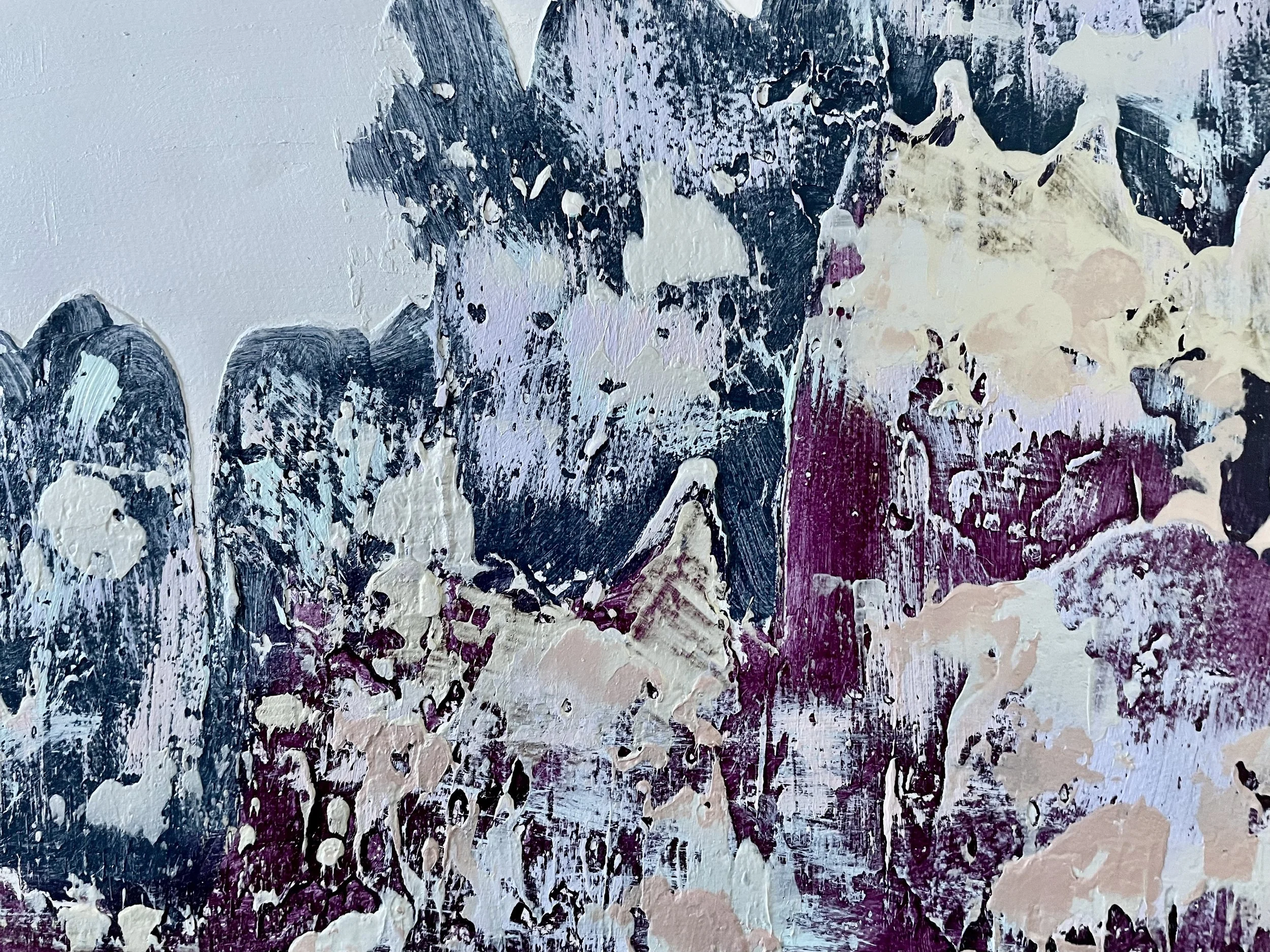
The painting is executed with pronounced impasto technique. Thick palette-knife strokes build the craggy mountain faces, producing raised ridges that catch light and create a tactile relief across the canvas. In contrast, softer glazed passages in the sky and mist produce a translucent atmosphere that recedes into depth. This contrast between sculptural texture and soft atmospheric blending creates the illusion of vast distance and alpine air.
Color plays an essential role in the work’s visual impact. Cool greens and pale celadon tones dominate the mountain ranges, while warm golden light around the cottage suggests late afternoon or early evening illumination. The small illuminated dwelling becomes the emotional center of the painting, emphasizing the romantic idea of human shelter within an immense and dramatic natural world.
The signature “C. Rombach” appears at the lower right. The stylistic approach—knife-built mountain forms, luminous atmospheric washes, and a solitary alpine cabin—aligns with decorative European landscape painting widely produced for galleries and collectors in the late twentieth century.
The scale of the work (36 × 24 inches) enhances its theatrical sense of space. From a distance the scene reads as a sweeping panoramic vista; up close the viewer discovers dense paint structure and expressive knife work that give the mountains a rugged physical presence.
Artist Biography
C. Rombach is believed to be a European landscape painter active during the late twentieth century, associated with the production of dramatic alpine landscapes for gallery distribution in Europe and the United States. Although detailed archival documentation on the artist remains limited, works signed “Rombach” appear primarily in the market from the 1970s through the 1990s and are typically characterized by richly textured mountain scenes executed with palette knife techniques.
The artist’s work reflects the long tradition of Romantic alpine landscape painting that flourished in central Europe beginning in the nineteenth century. Painters working in regions such as Germany, Austria, Switzerland, and northern Italy frequently depicted dramatic mountain vistas emphasizing the sublime scale of nature. By the mid-twentieth century this tradition continued through studio painters who specialized in alpine imagery destined for galleries, hotels, and international collectors.
Rombach’s compositions commonly feature towering mountain peaks, mist-filled valleys, evergreen forests, and solitary alpine cottages or chalets. These elements echo visual themes established by earlier European landscape traditions in which the presence of a small human structure emphasizes the grandeur and emotional power of the natural world.
Technically, the artist favored heavy palette-knife application. Thick impasto strokes create the angular geometry of cliffs and peaks, while thinner glazes soften distant mountains into atmospheric perspective. This combination of sculptural paint and luminous haze gives the paintings both tactile presence and spatial depth.
By the late twentieth century such works were widely circulated through gallery networks that specialized in European decorative painting. Dealers in New York, Germany, and Switzerland frequently imported these landscapes to meet strong demand among American collectors for romantic alpine imagery.
Today paintings signed “C. Rombach” appear periodically in secondary markets, often appreciated for their dramatic scale, decorative impact, and the expressive physicality of their palette-knife technique. While the artist has not yet been extensively documented in academic art historical literature, the works represent a recognizable segment of late twentieth-century European landscape painting that continued the Romantic alpine tradition into the modern decorative art market.
C. Rombach (20th century)
Alpine Mountain Retreat (attributed)
Acrylic impasto with glaze on canvas
36 × 24 inches
Signed lower right
Late 20th century alpine landscape with dramatic palette-knife mountain forms.
Certificate of Authentication
Artwork: Alpine Mountain Retreat (attributed)
Artist: C. Rombach
Medium: Acrylic impasto with glaze on canvas
Dimensions: 36 × 24 inches
Signature: Signed lower right “C. Rombach”
Date: Circa 1980s
This artwork has been examined and catalogued by Artfind Gallery, Washington DC. Based on stylistic analysis, materials, and signature, the work is attributed to the artist C. Rombach and represents a late twentieth-century European alpine landscape executed in palette-knife impasto technique.
Provenance confirms the work originated through the Mitch Morse Gallery network.
Artfind Gallery
Washington, DC
Condition
Overall good vintage condition. The impasto paint surface remains stable with strong texture and color saturation. Minor edge wear visible along the canvas margins from previous mounting. No major paint loss or structural damage observed.
Provenance
Private European art market
Acquired by Mitch Morse Gallery, New York
Acquired through international gallery channels in New York, United States and Europe
Artfind Gallery, Washington DC (current owner)
Provenance Note: Mitch Morse Gallery Collection
This artwork originates from the inventory of Mitch Morse Gallery, a respected New York–based gallery and publisher active during the mid-to-late 20th century. Mitch Morse was an established figure in the American art market, serving as an artist’s agent, publisher of original graphics, art dealer, distributor, and fine art restorer. He was also a Design Affiliate of A.S.I.D., listed in Who’s Who in the East, and a guest lecturer in graphics at New York University, with appearances on radio and television discussing art and design.
Through his gallery and associated publishing operations, Morse acquired paintings, prints, and original works from artists and studios across New York, Europe, and international art markets, assembling a broad inventory representing a wide range of artistic traditions and mediums. Works from this collection circulated through galleries and collectors throughout the United States.
The present painting was acquired through this network and is now held in the collection of Artfind Gallery, Washington DC, continuing the documented chain of gallery provenance from Mitch Morse’s original acquisitions.
Alpine Mountain Retreat (attributed), C. Rombach (20th century), c.1980s, acrylic impasto with glaze on canvas, 36 × 24 in., signed lower right.
A dramatic impasto mountain landscape by C. Rombach depicting a remote alpine cottage beneath towering snow-covered peaks. Executed with palette-knife texture and luminous glazes, the work combines atmospheric depth with rugged sculptural brushwork typical of late 20th-century European alpine landscape painting.
Artwork Description
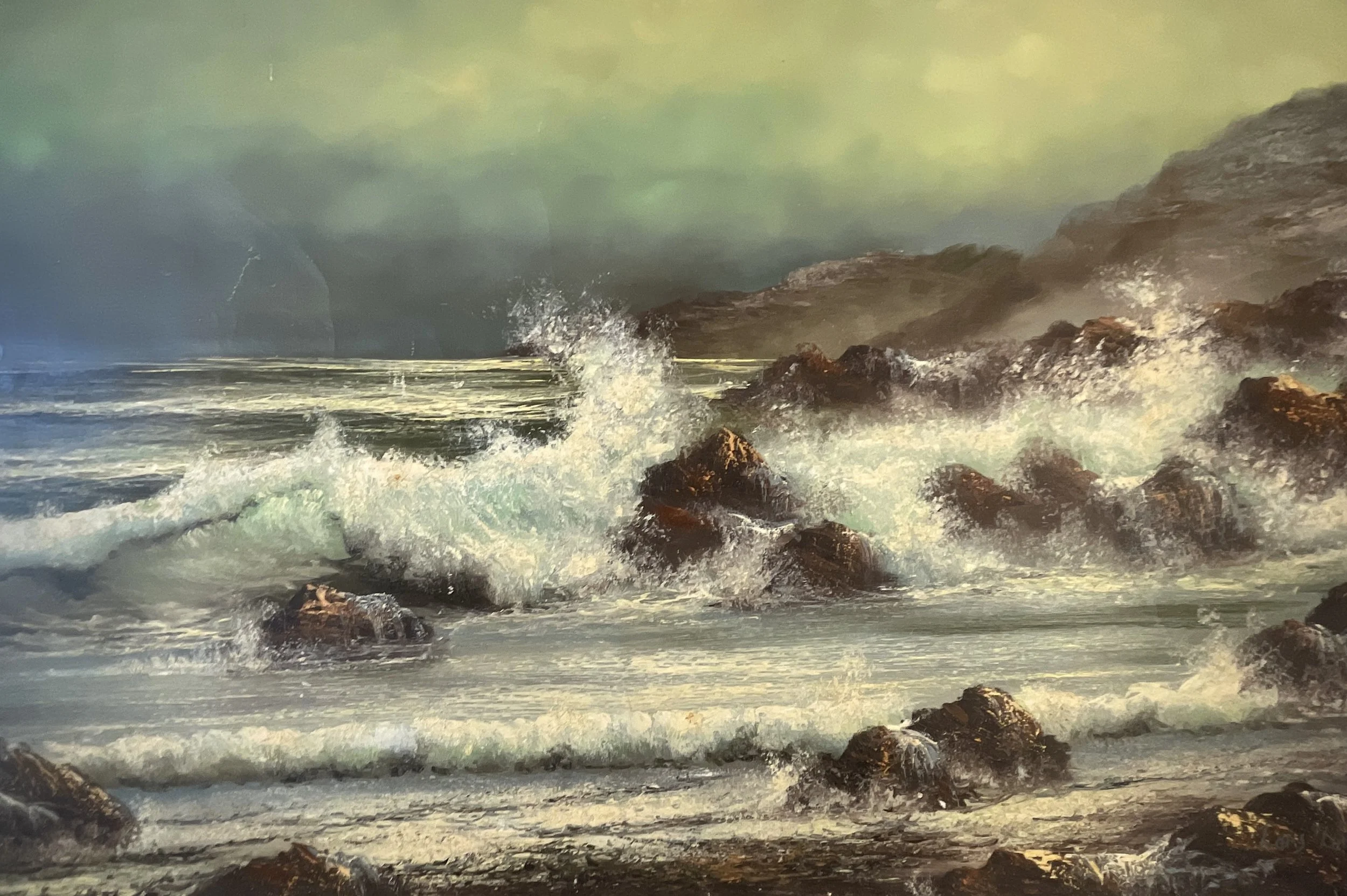
This sweeping alpine composition by C. Rombach presents a solitary mountain cottage nestled among dark conifers at the edge of a rocky slope, dwarfed by a monumental wall of jagged snow-covered peaks rising through a veil of mist. The artist constructs the composition in strong tiers: a dark foreground of forest and earth, a luminous middle ground containing the illuminated cabin, and an expansive backdrop of towering mountains dissolving into atmospheric haze.
The painting is executed with pronounced impasto technique. Thick palette-knife strokes build the craggy mountain faces, producing raised ridges that catch light and create a tactile relief across the canvas. In contrast, softer glazed passages in the sky and mist produce a translucent atmosphere that recedes into depth. This contrast between sculptural texture and soft atmospheric blending creates the illusion of vast distance and alpine air.
Color plays an essential role in the work’s visual impact. Cool greens and pale celadon tones dominate the mountain ranges, while warm golden light around the cottage suggests late afternoon or early evening illumination. The small illuminated dwelling becomes the emotional center of the painting, emphasizing the romantic idea of human shelter within an immense and dramatic natural world.
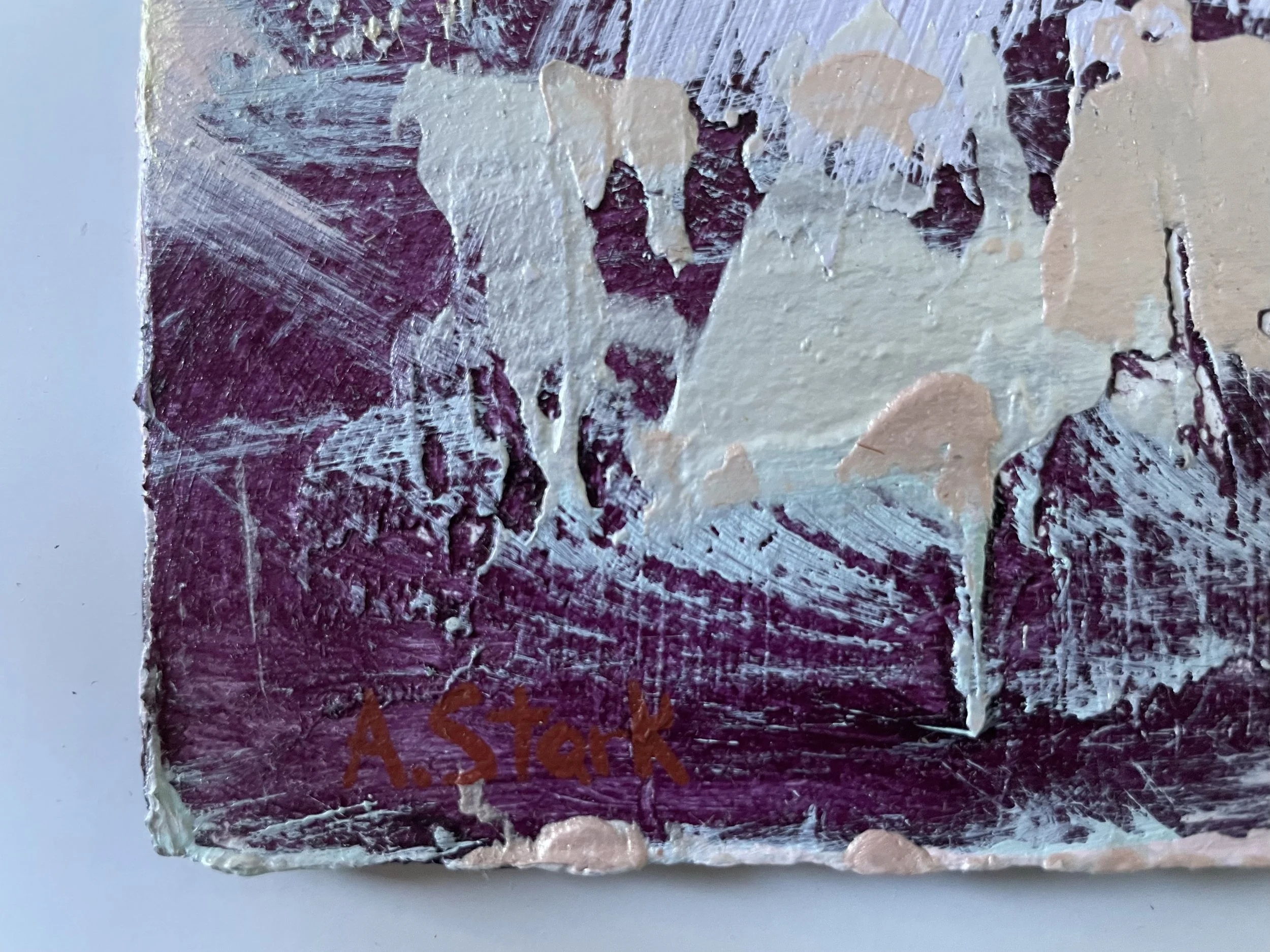
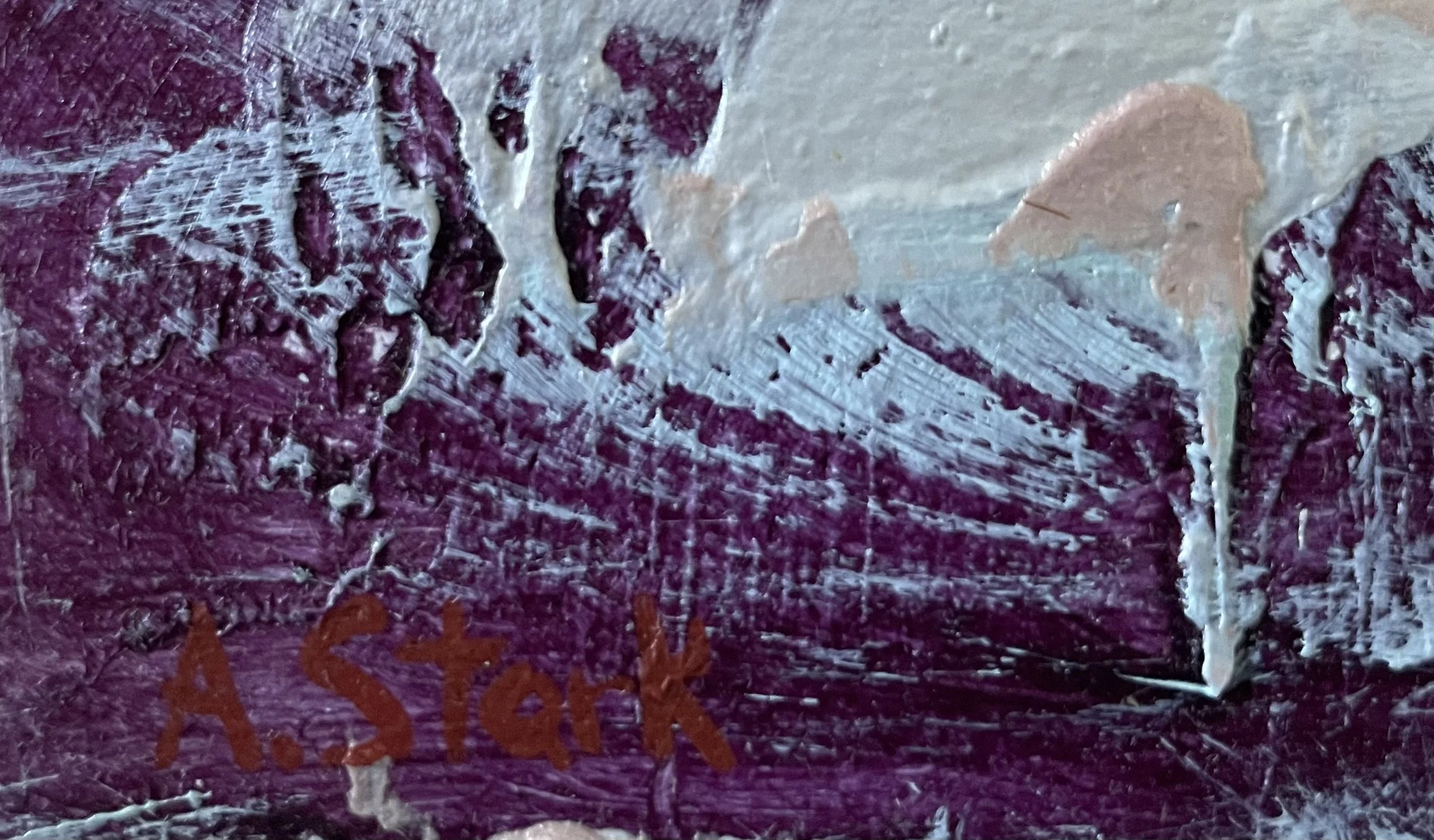
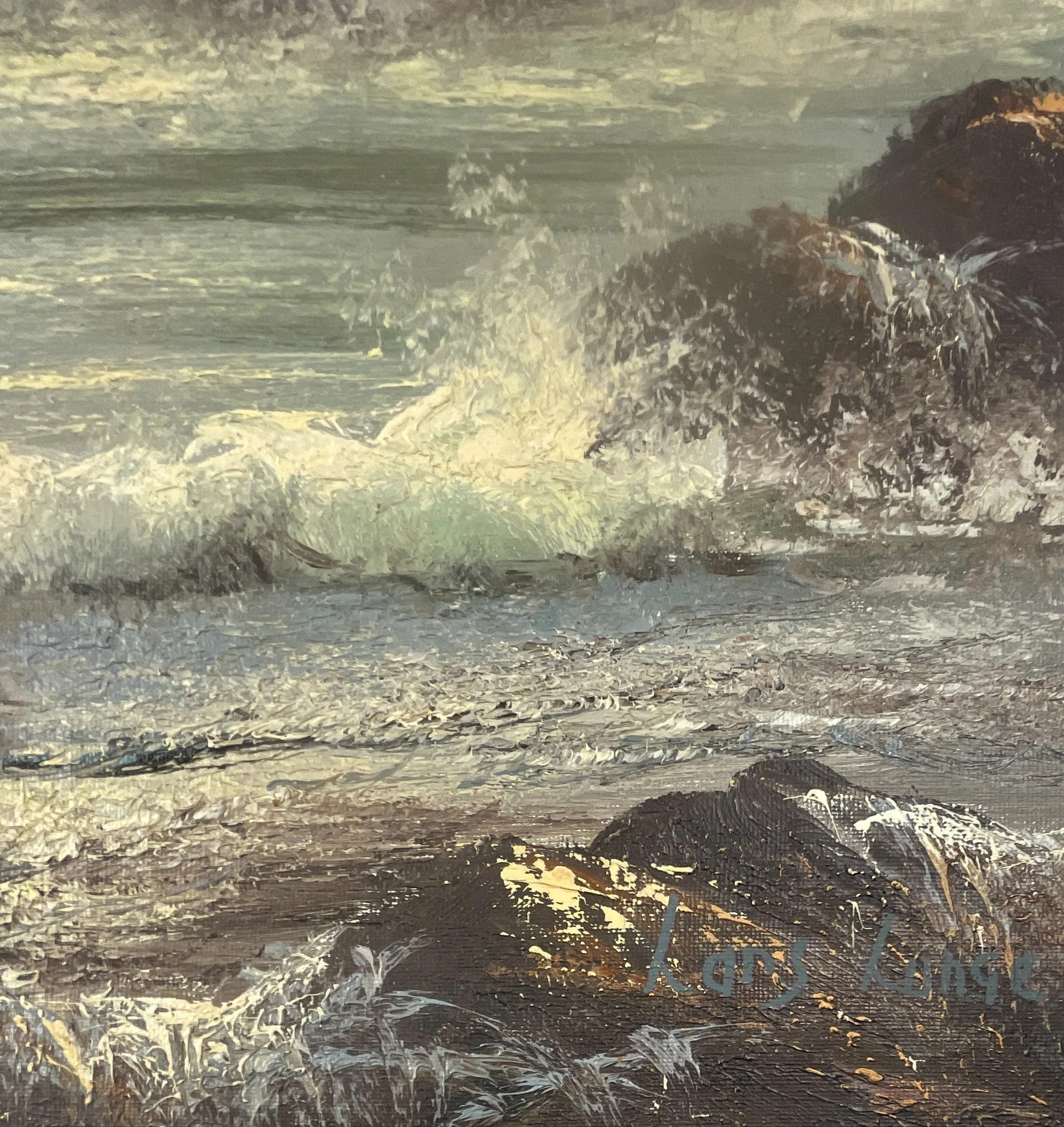
The signature “C. Rombach” appears at the lower right. The stylistic approach—knife-built mountain forms, luminous atmospheric washes, and a solitary alpine cabin—aligns with decorative European landscape painting widely produced for galleries and collectors in the late twentieth century.
The scale of the work (36 × 24 inches) enhances its theatrical sense of space. From a distance the scene reads as a sweeping panoramic vista; up close the viewer discovers dense paint structure and expressive knife work that give the mountains a rugged physical presence.
Artist Biography
C. Rombach is believed to be a European landscape painter active during the late twentieth century, associated with the production of dramatic alpine landscapes for gallery distribution in Europe and the United States. Although detailed archival documentation on the artist remains limited, works signed “Rombach” appear primarily in the market from the 1970s through the 1990s and are typically characterized by richly textured mountain scenes executed with palette knife techniques.
The artist’s work reflects the long tradition of Romantic alpine landscape painting that flourished in central Europe beginning in the nineteenth century. Painters working in regions such as Germany, Austria, Switzerland, and northern Italy frequently depicted dramatic mountain vistas emphasizing the sublime scale of nature. By the mid-twentieth century this tradition continued through studio painters who specialized in alpine imagery destined for galleries, hotels, and international collectors.
Rombach’s compositions commonly feature towering mountain peaks, mist-filled valleys, evergreen forests, and solitary alpine cottages or chalets. These elements echo visual themes established by earlier European landscape traditions in which the presence of a small human structure emphasizes the grandeur and emotional power of the natural world.
Technically, the artist favored heavy palette-knife application. Thick impasto strokes create the angular geometry of cliffs and peaks, while thinner glazes soften distant mountains into atmospheric perspective. This combination of sculptural paint and luminous haze gives the paintings both tactile presence and spatial depth.
By the late twentieth century such works were widely circulated through gallery networks that specialized in European decorative painting. Dealers in New York, Germany, and Switzerland frequently imported these landscapes to meet strong demand among American collectors for romantic alpine imagery.
Today paintings signed “C. Rombach” appear periodically in secondary markets, often appreciated for their dramatic scale, decorative impact, and the expressive physicality of their palette-knife technique. While the artist has not yet been extensively documented in academic art historical literature, the works represent a recognizable segment of late twentieth-century European landscape painting that continued the Romantic alpine tradition into the modern decorative art market.
C. Rombach (20th century)
Alpine Mountain Retreat (attributed)
Acrylic impasto with glaze on canvas
36 × 24 inches
Signed lower right
Late 20th century alpine landscape with dramatic palette-knife mountain forms.
Certificate of Authentication
Artwork: Alpine Mountain Retreat (attributed)
Artist: C. Rombach
Medium: Acrylic impasto with glaze on canvas
Dimensions: 36 × 24 inches
Signature: Signed lower right “C. Rombach”
Date: Circa 1980s
This artwork has been examined and catalogued by Artfind Gallery, Washington DC. Based on stylistic analysis, materials, and signature, the work is attributed to the artist C. Rombach and represents a late twentieth-century European alpine landscape executed in palette-knife impasto technique.
Provenance confirms the work originated through the Mitch Morse Gallery network.
Artfind Gallery
Washington, DC
Condition
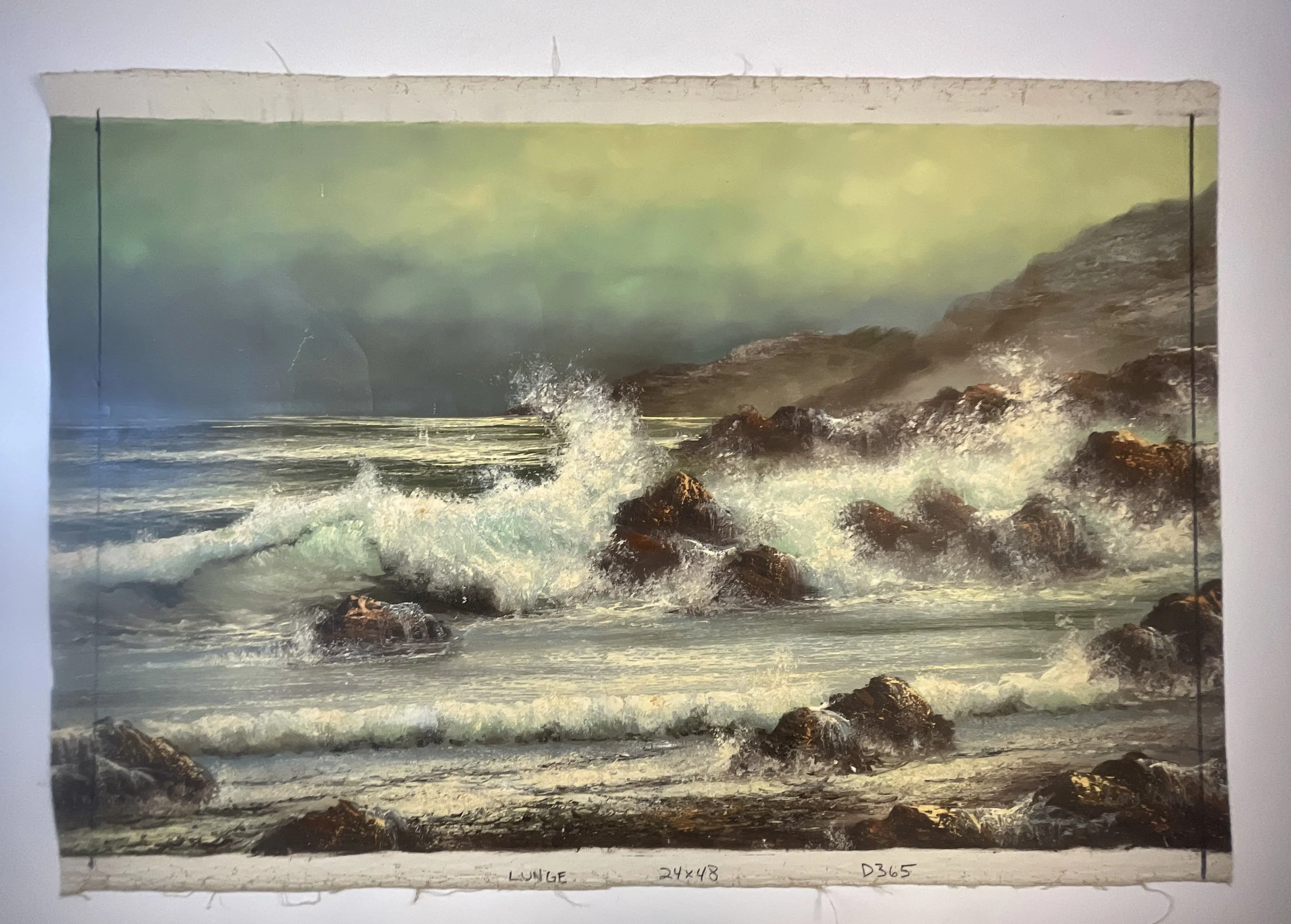
Overall good vintage condition. The impasto paint surface remains stable with strong texture and color saturation. Minor edge wear visible along the canvas margins from previous mounting. No major paint loss or structural damage observed.
Provenance
Private European art market
Acquired by Mitch Morse Gallery, New York
Acquired through international gallery channels in New York, United States and Europe
Artfind Gallery, Washington DC (current owner)
Provenance Note: Mitch Morse Gallery Collection
This artwork originates from the inventory of Mitch Morse Gallery, a respected New York–based gallery and publisher active during the mid-to-late 20th century. Mitch Morse was an established figure in the American art market, serving as an artist’s agent, publisher of original graphics, art dealer, distributor, and fine art restorer. He was also a Design Affiliate of A.S.I.D., listed in Who’s Who in the East, and a guest lecturer in graphics at New York University, with appearances on radio and television discussing art and design.
Through his gallery and associated publishing operations, Morse acquired paintings, prints, and original works from artists and studios across New York, Europe, and international art markets, assembling a broad inventory representing a wide range of artistic traditions and mediums. Works from this collection circulated through galleries and collectors throughout the United States.
The present painting was acquired through this network and is now held in the collection of Artfind Gallery, Washington DC, continuing the documented chain of gallery provenance from Mitch Morse’s original acquisitions.