 Image 1 of 5
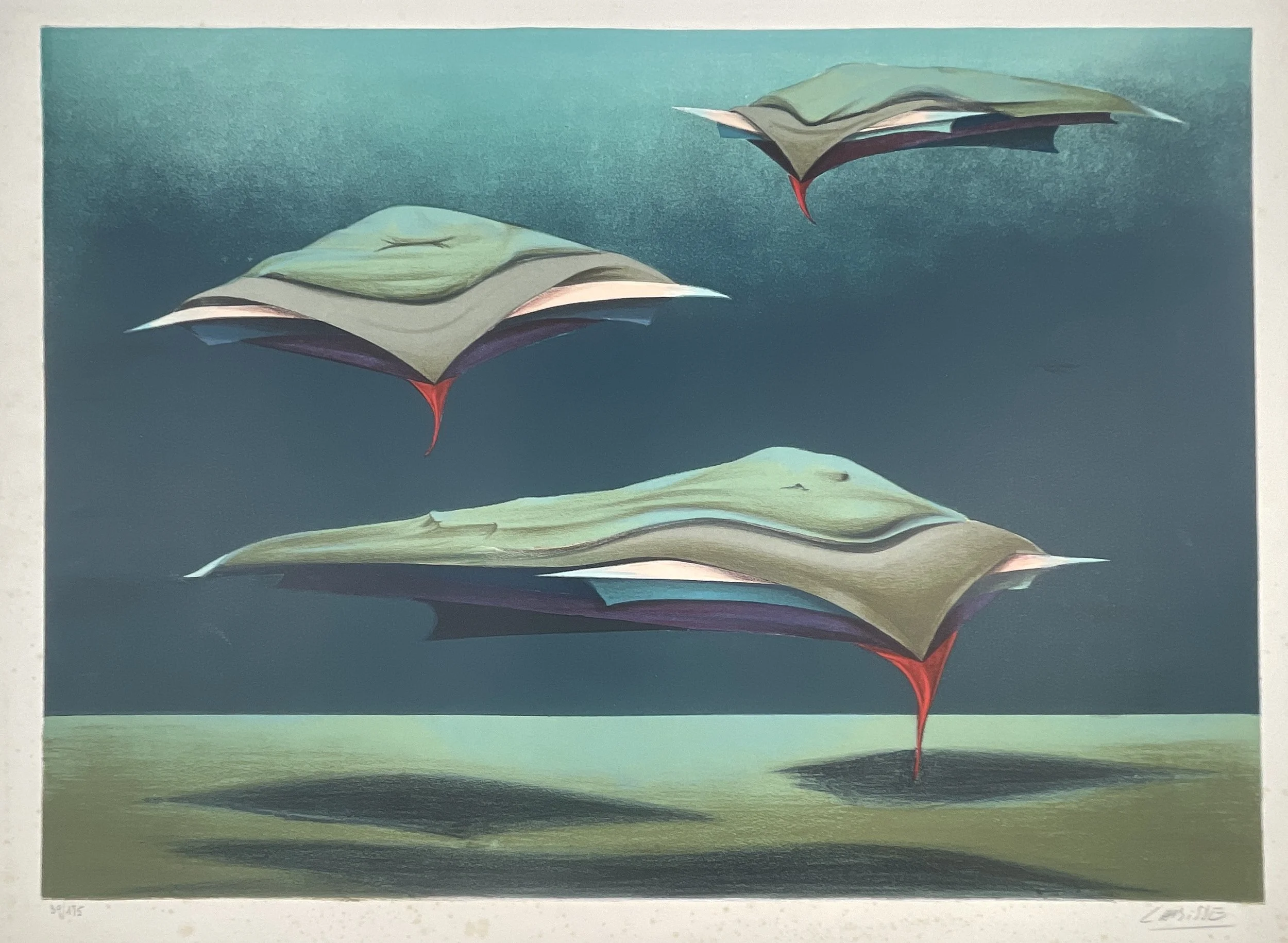 Image 2 of 5
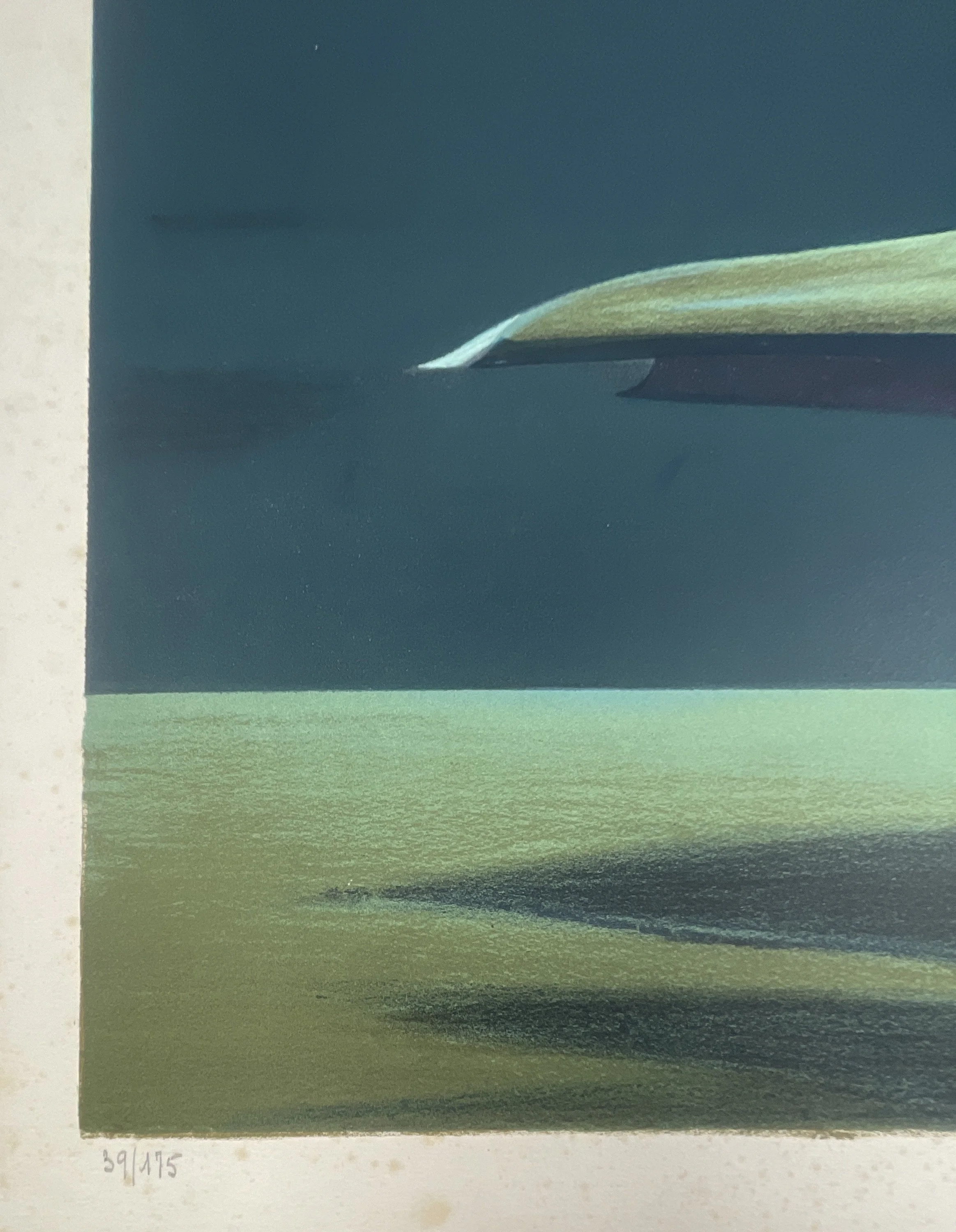 Image 3 of 5
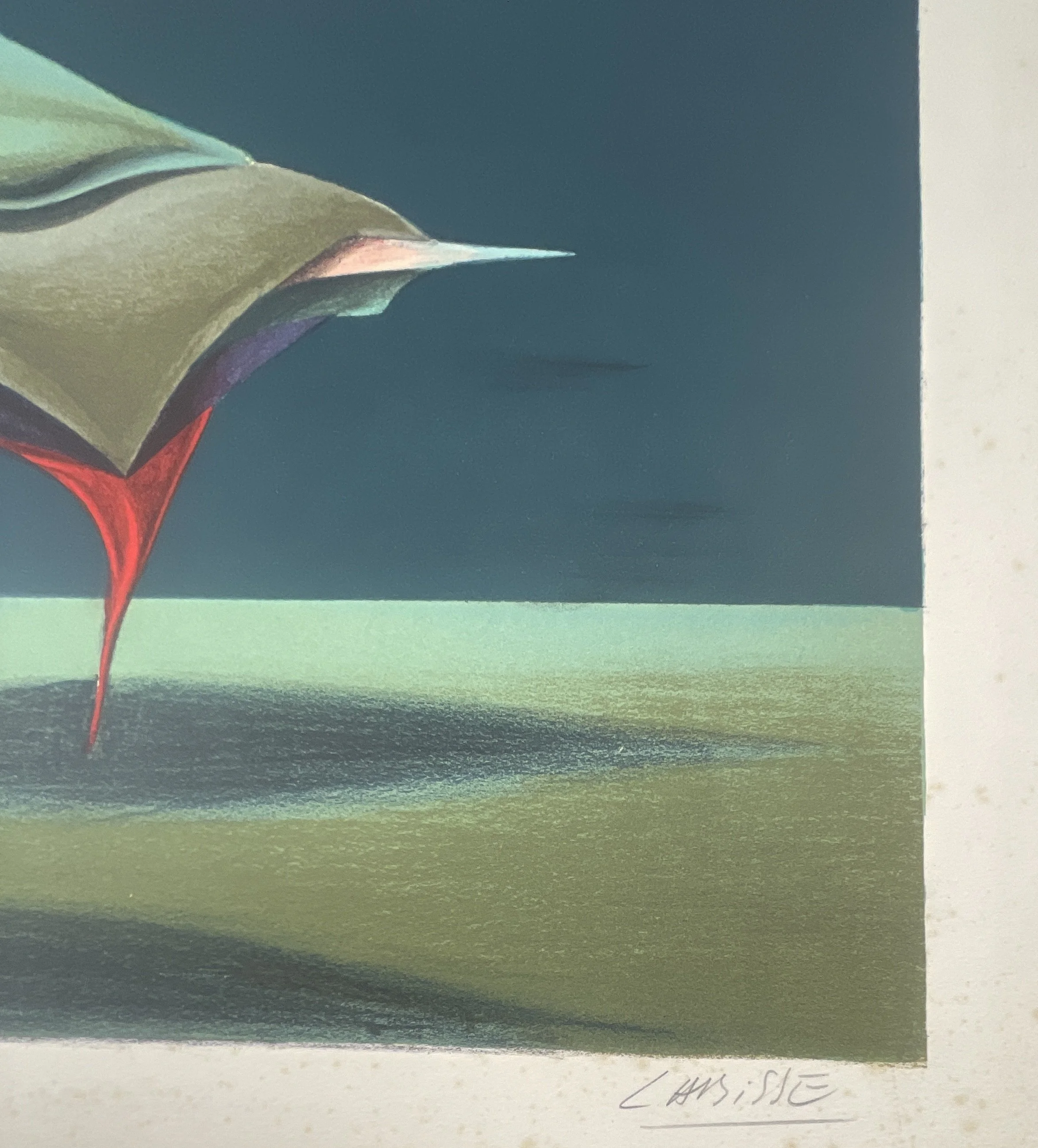 Image 4 of 5
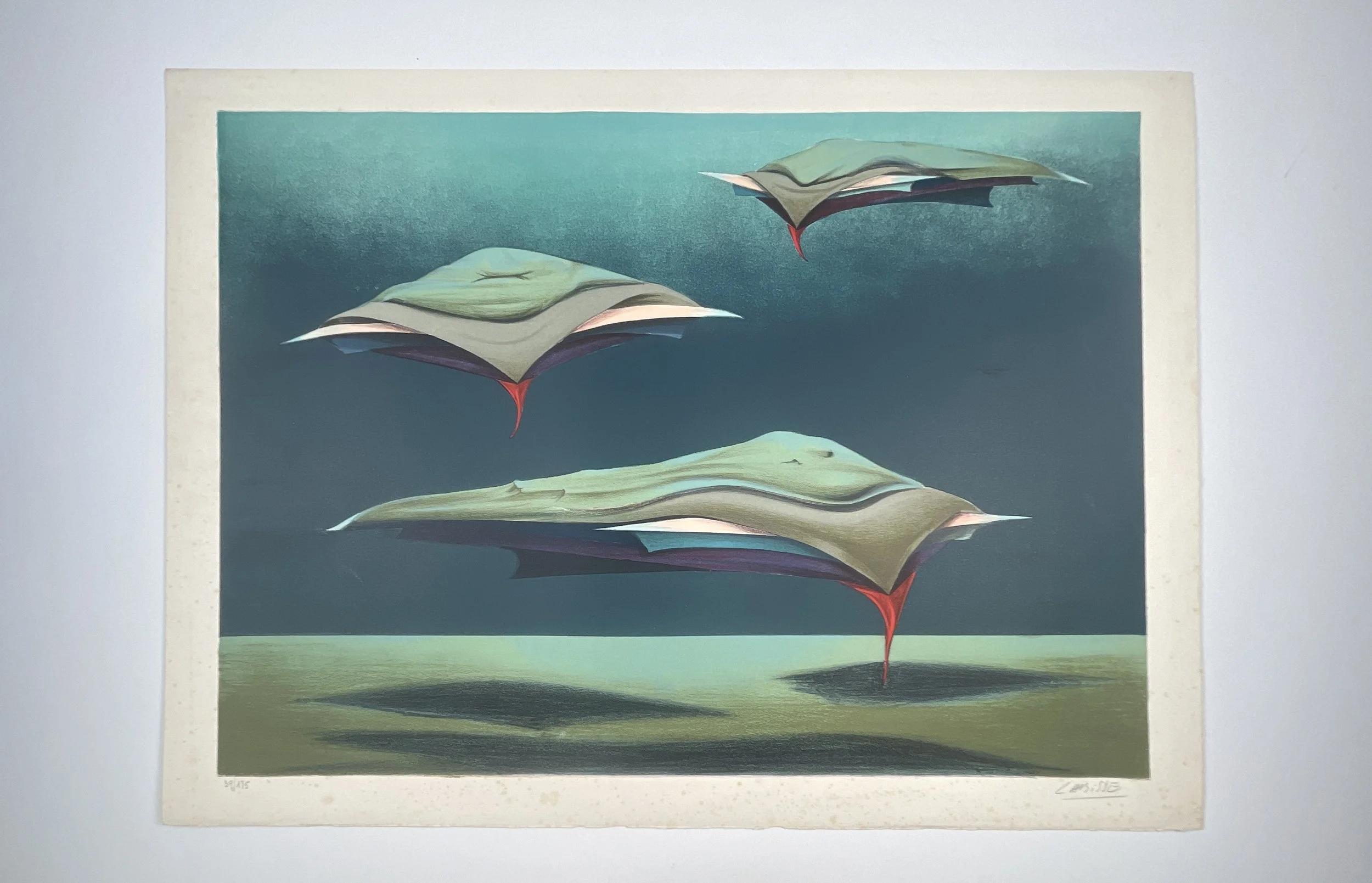 Image 5 of 5
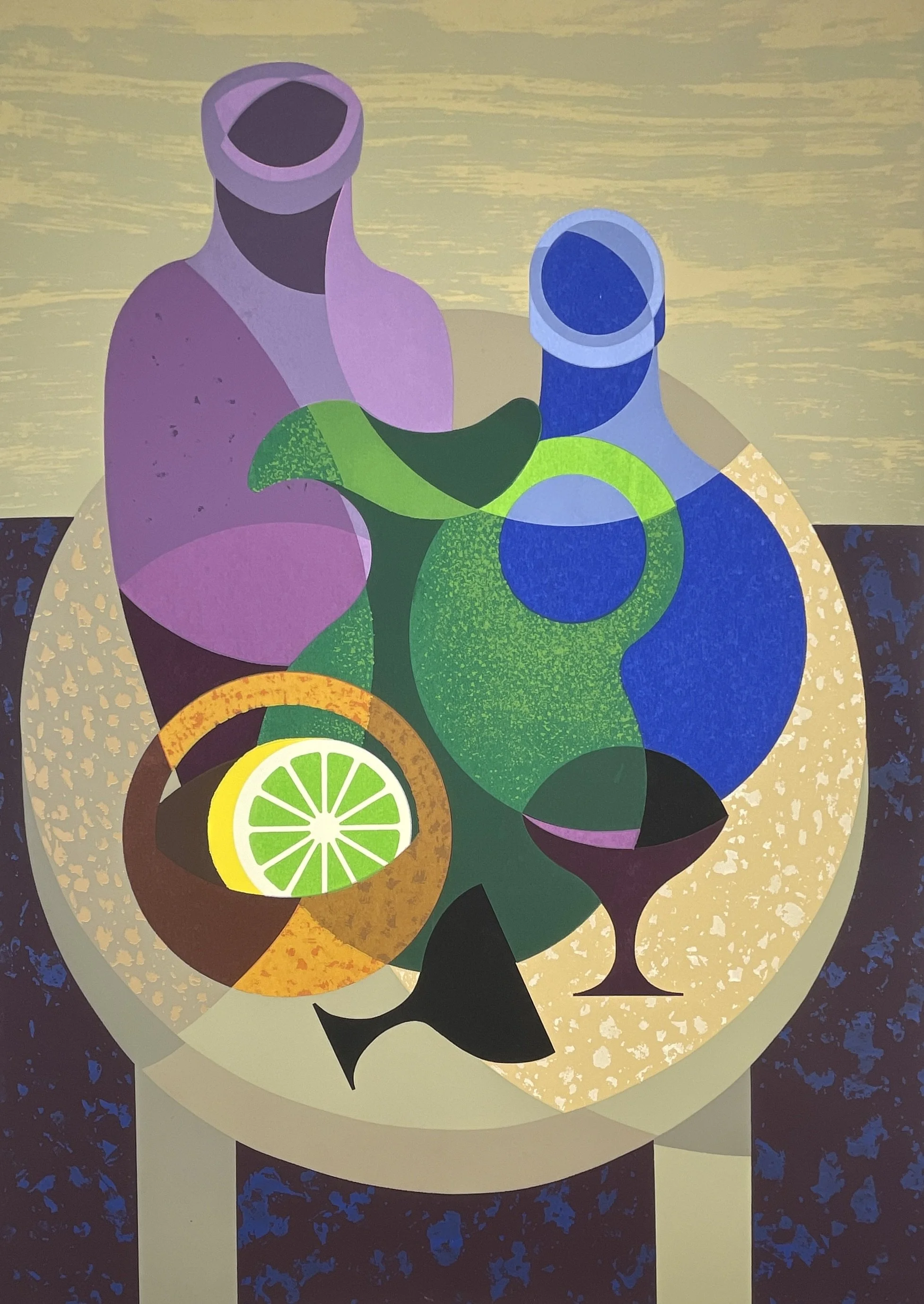
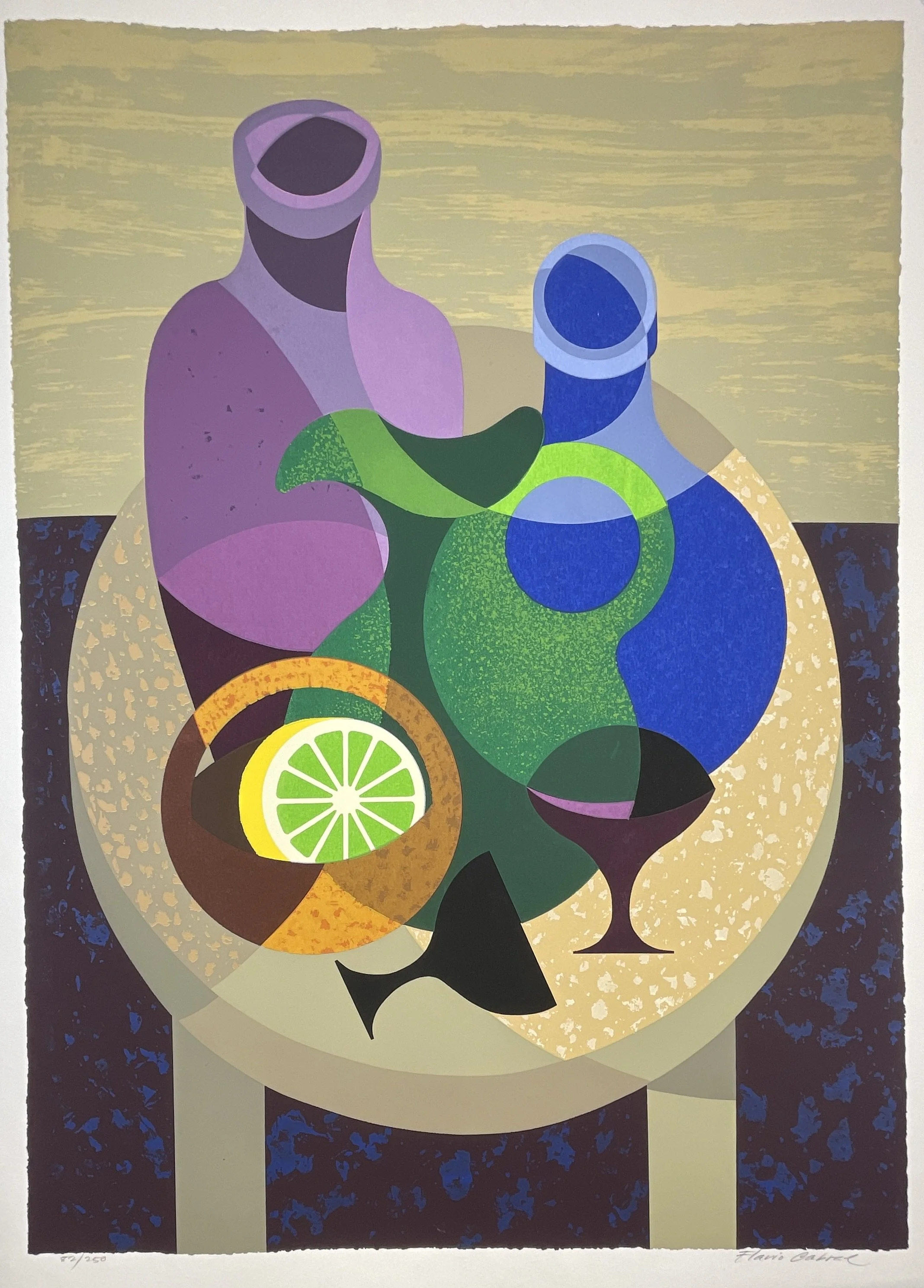
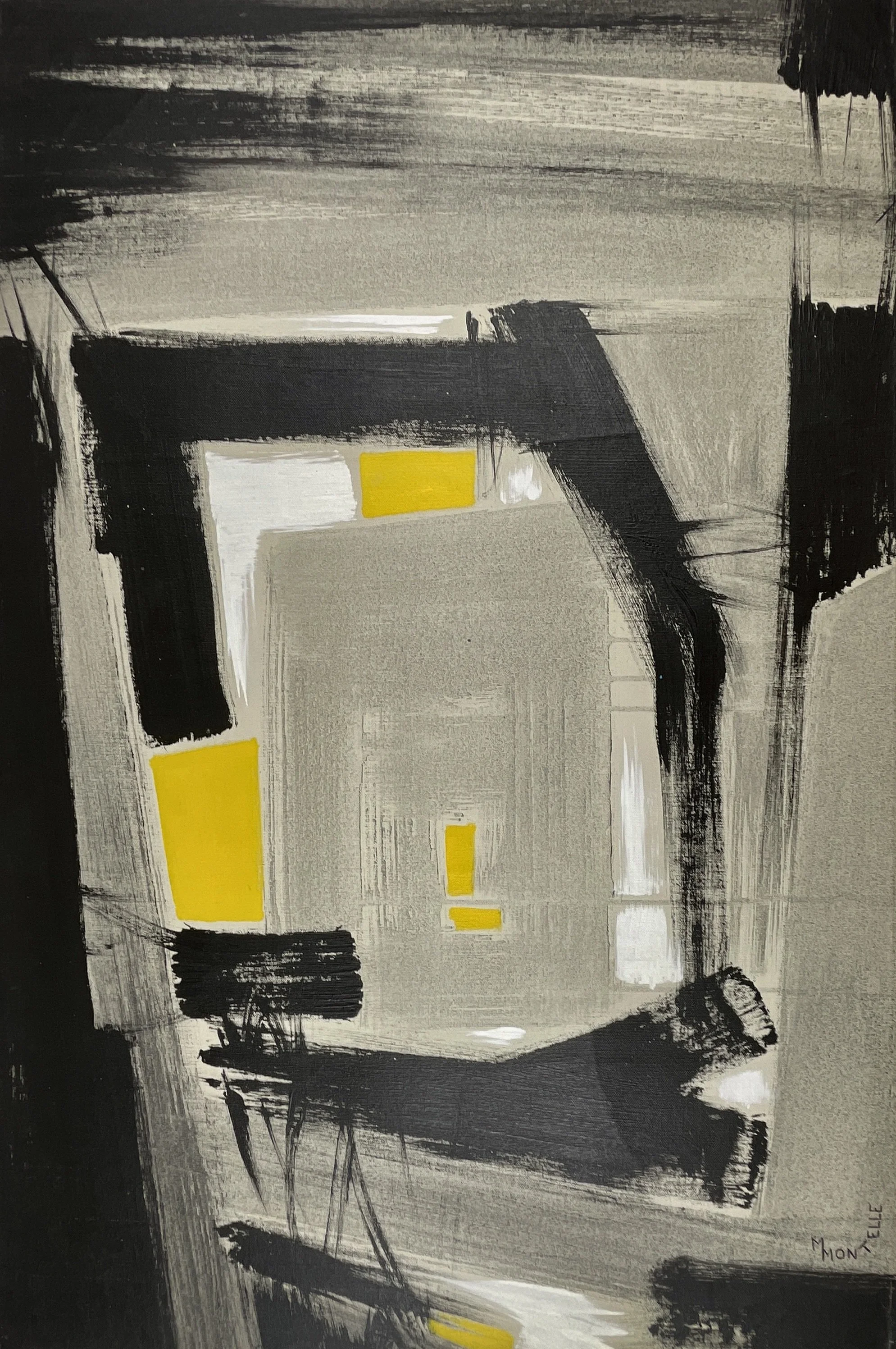
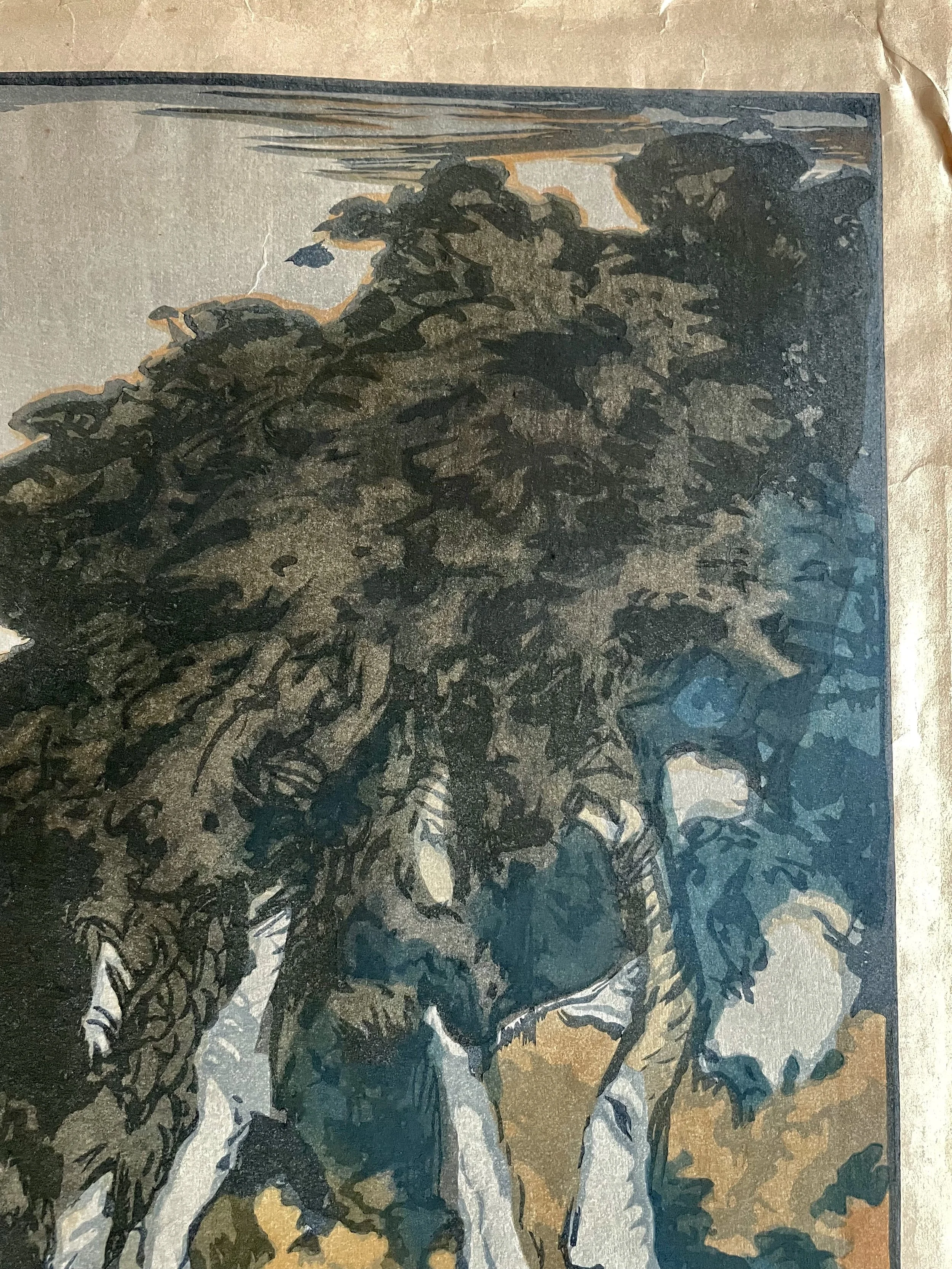
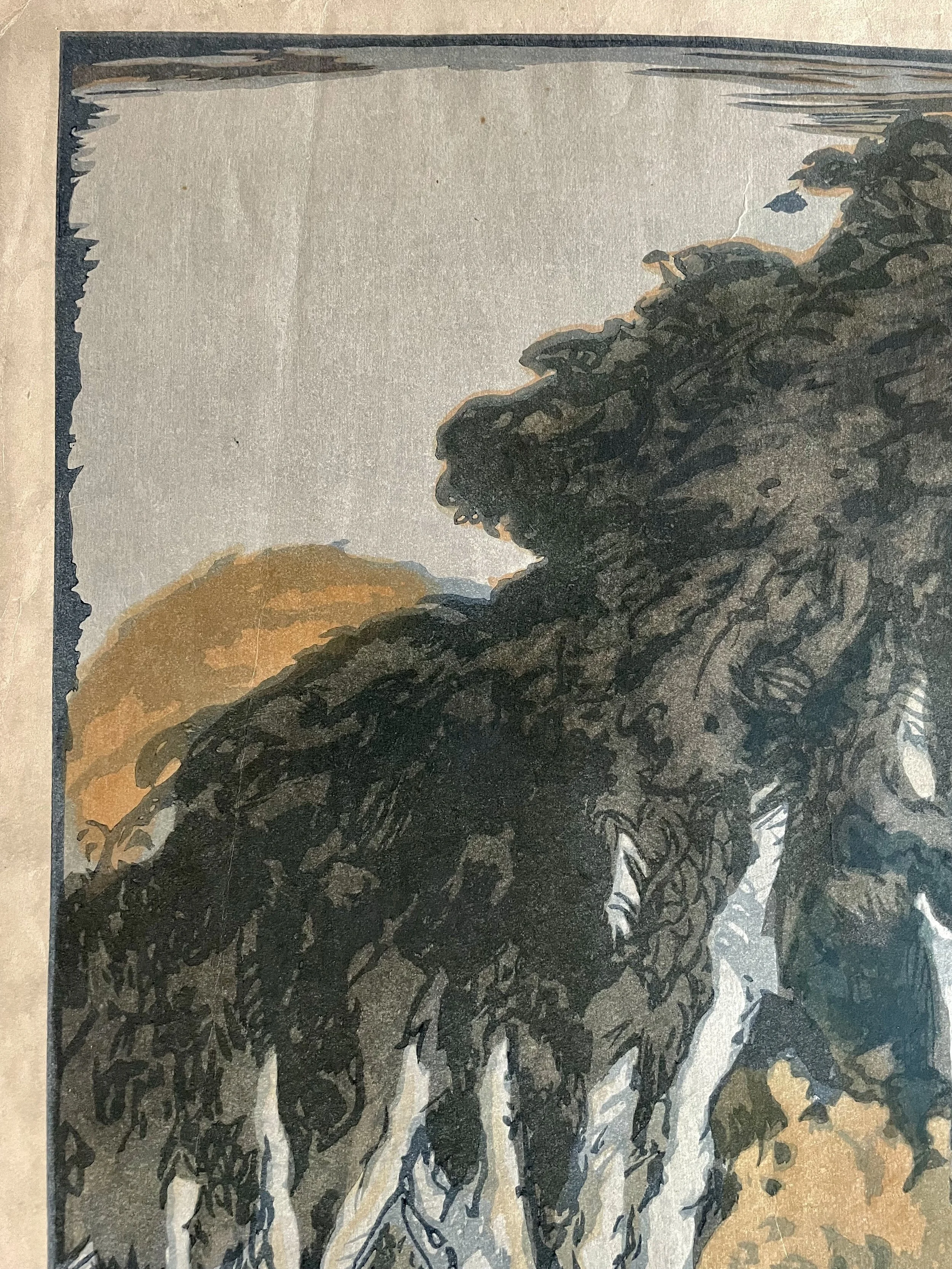
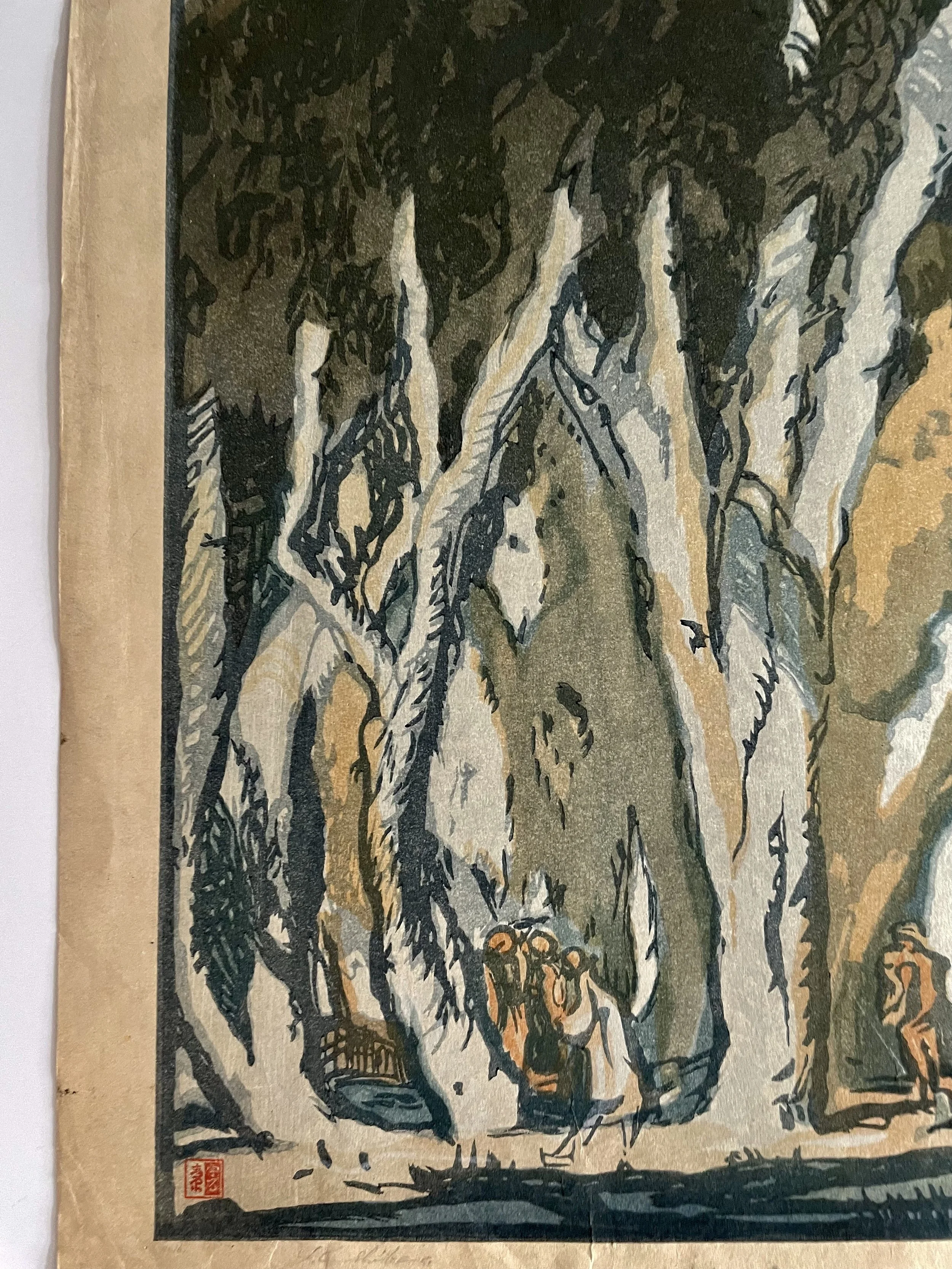
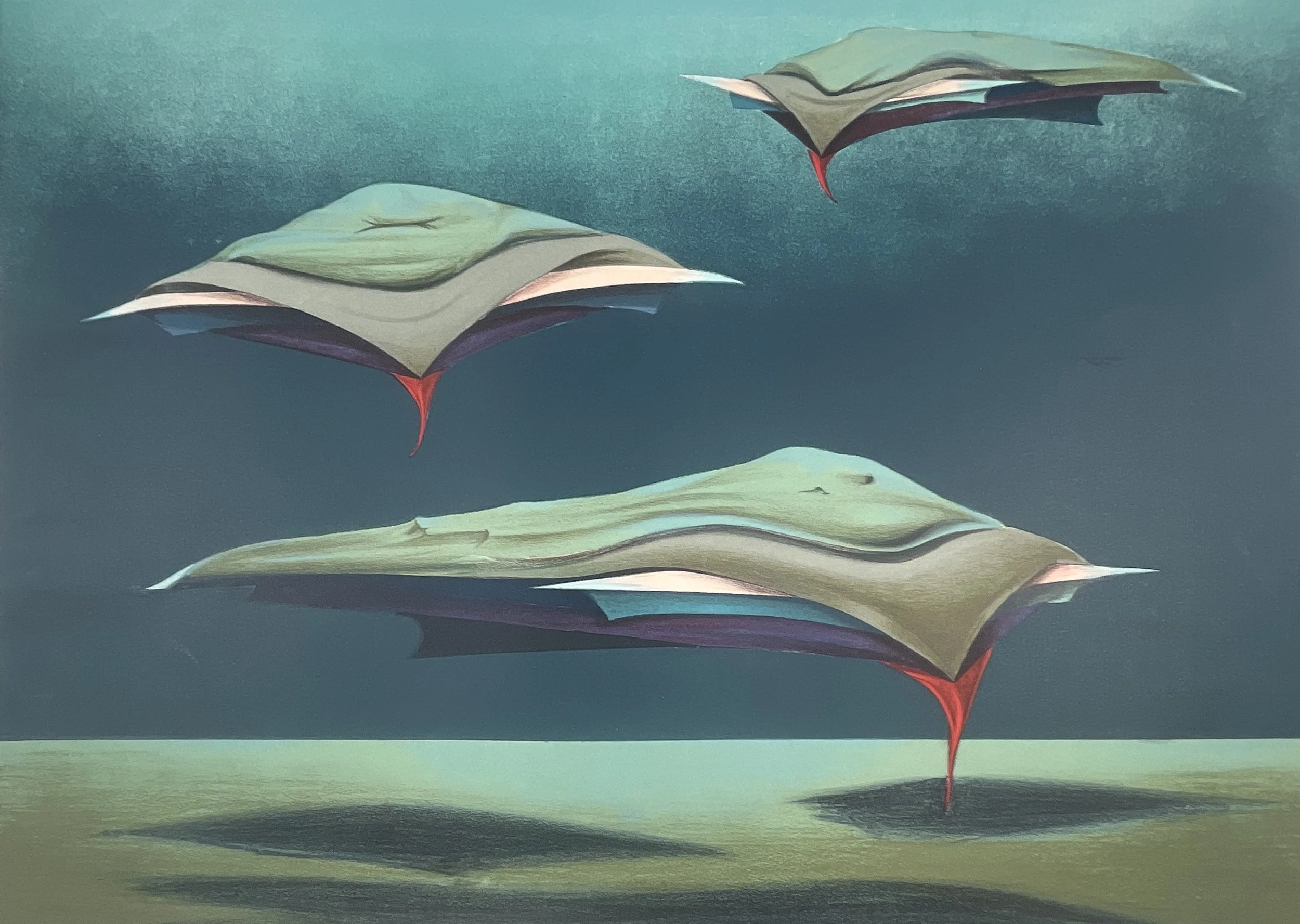
Art’Fiction, Félix Labisse (1905–1982), c.1970s, color lithograph, 30x22 in, signed & ed. 39/175.
A surreal and atmospheric color lithograph titled Art’Fiction by Félix Labisse (1905–1982), edition 39/175, signed in pencil. Measuring 30 x 22 inches, this dreamlike composition features hovering, biomorphic forms suspended over a luminous horizon—hallmarks of Labisse’s poetic surrealism. A refined example of postwar French Surrealist printmaking with strong museum-level provenance. Provenance: Mitch Morse Gallery; Artfind Gallery, Washington DC.
Artwork Description
Art’Fiction exemplifies Félix Labisse’s mature Surrealist vocabulary—mysterious, contemplative, and visually restrained yet psychologically charged. The composition presents three floating, hybridized forms suspended above a flattened horizon line. Their shape suggests an ambiguous fusion of landscape, book, wing, and organic body, with a striking red, tapering element beneath each form that creates a surreal tension between gravity and suspension.
The palette is restrained yet atmospheric: deep teal sky gradients dissolve into a luminous green foreground, while soft shadows anchor the hovering forms. The red accents punctuate the stillness with quiet intensity. Labisse’s technique reflects controlled lithographic layering, achieving smooth tonal transitions and velvety depth.
The spatial construction is deliberate—an expansive horizon creates metaphysical calm, reminiscent of De Chirico’s poetic emptiness, while the floating objects evoke ritualistic or magical symbolism. The work aligns with Labisse’s lifelong exploration of fantasy, myth, eroticism, and the blurred boundary between dream and waking consciousness.
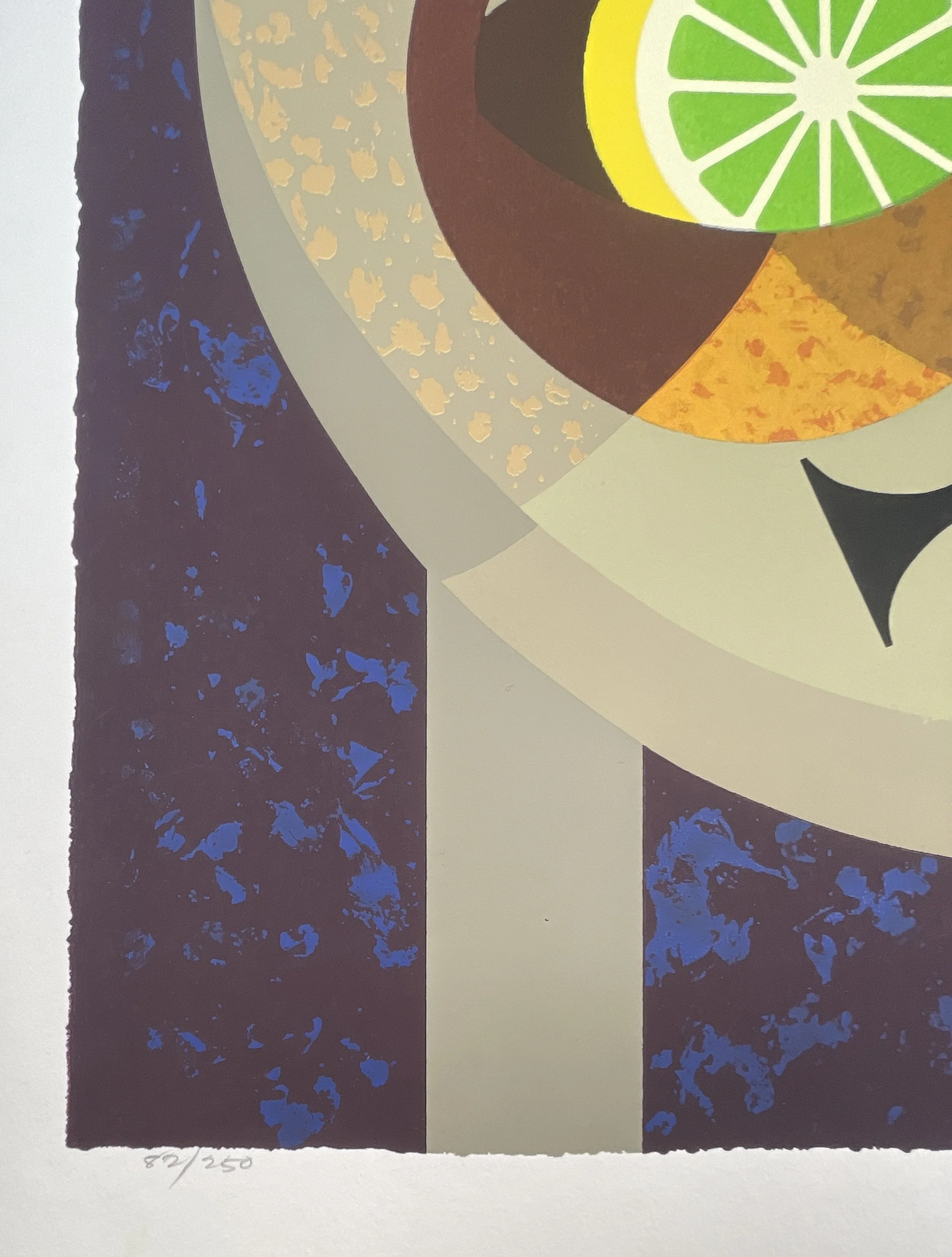
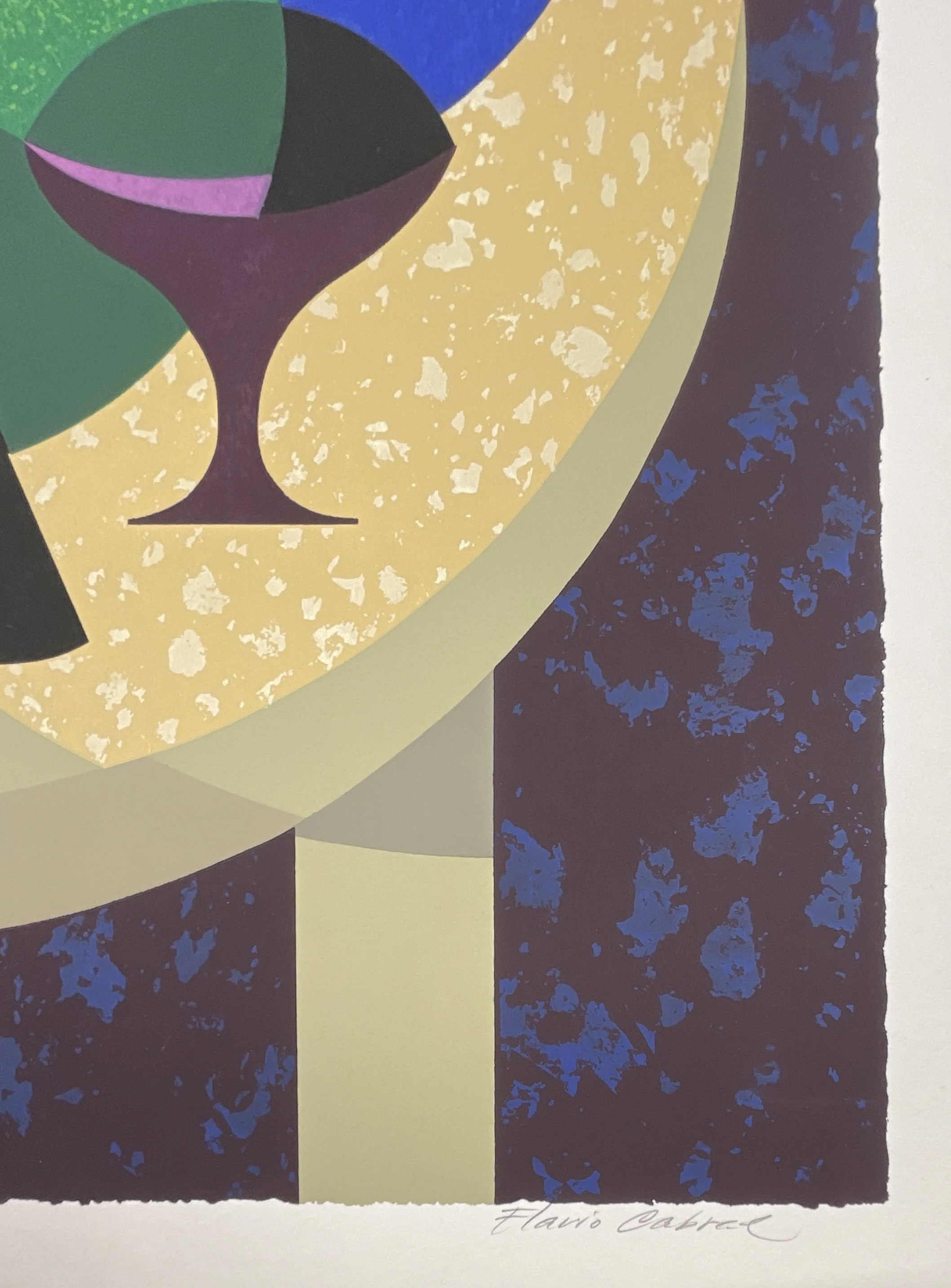
Signed in pencil lower right and numbered 39/175 lower left, this limited edition lithograph represents a refined late-career expression of Labisse’s surreal imagination. The 30 x 22 inch format enhances the panoramic quietude of the scene.
Artist Biography
Félix Labisse (1905–1982) was a French painter, illustrator, and theater designer whose career bridged Flemish Expressionism and Surrealist fantasy. Born in Douai, France, near the Belgian border, Labisse was largely self-taught. He studied at the Collège Saint Jean and later enrolled at the École de Pêche in Ostend, Belgium, where his artistic trajectory began to take shape.
In 1922, Labisse met the Expressionist painter James Ensor in Ostend, an encounter that profoundly influenced his early work. His initial paintings were rooted in Flemish Expressionism, marked by bold color and psychological intensity. Over time, however, Labisse developed an independent aesthetic focused on fantasy, ritual, magic, and erotic symbolism.
In 1927 he began dividing his time between Paris and Ostend. His first critically acclaimed exhibition was held in July 1928 at the Ostend Gallery of Modern Art. By 1933 he had settled in Paris, where he created set and costume designs for Autour d’une Mère at the Théâtre de l’Atelier. Immersed in the Parisian avant-garde, Labisse encountered André Masson, Max Ernst, Raymond Queneau, René Magritte, and Paul Delvaux.
Although closely linked to Surrealism, Labisse maintained an independent stance and never formally adhered to André Breton’s movement. Political differences initially distanced him from Breton, yet mutual respect endured. Breton later praised Labisse’s 1957 publication Le Sorcier des Familles: Almanach Fatidique, calling it a truly Surrealist book.
Labisse collaborated with filmmaker Henri Storck in founding the Club du Cinéma d’Ostende, promoting avant-garde films by Man Ray, Carl Dreyer, and Fritz Lang. In 1947, filmmaker Alain Resnais created Visite à Félix, a short film documenting the artist in his studio.
Labisse illustrated works including Le Bain avec Andromède (1944) and Histoire Naturelle (1948) by Robert Desnos. His iconography often included mythological creatures such as cyclops figures and the medieval Guivre, alongside enigmatic female forms.
By 1951, Labisse relocated to Neuilly-sur-Seine. He achieved major recognition with a 1960 retrospective at the Knokke Casino in Belgium, exhibiting 105 paintings. In 1966 he was elected to the Académie des Beaux-Arts in France, affirming his institutional stature. In 1974 he served as a jury member at the Cannes Film Festival.
Perhaps most widely recognized are his 1960s series of austere blue goddess-like women—figures that solidified his reputation for mystical femininity within modern European painting. His lifelong friendship with Ensor was immortalized in Bonjour M. Ensor (1964).
By the late twentieth century, Labisse had established himself as a major French painter whose work navigated between Surrealism and personal mythology. Today, as of 2026, his works are held in significant European collections and remain sought after by collectors of Surrealism and postwar French modernism. His legacy is defined by independence of thought, mythic symbolism, and painterly refinement.
Félix Labisse (1905–1982), Art’Fiction, color lithograph, 30 x 22 in, signed and numbered 39/175. Provenance: Mitch Morse Gallery; Artfind Gallery, Washington DC.
Certificate of Authentication
This certifies that the artwork titled Art’Fiction by Félix Labisse (1905–1982) is an authentic original color lithograph, hand-signed and numbered 39/175.
The work measures approximately 30 x 22 inches and was acquired from Mitch Morse Gallery, which sourced works in New York City and Europe. It is currently held by Artfind Gallery, Washington DC.
Condition
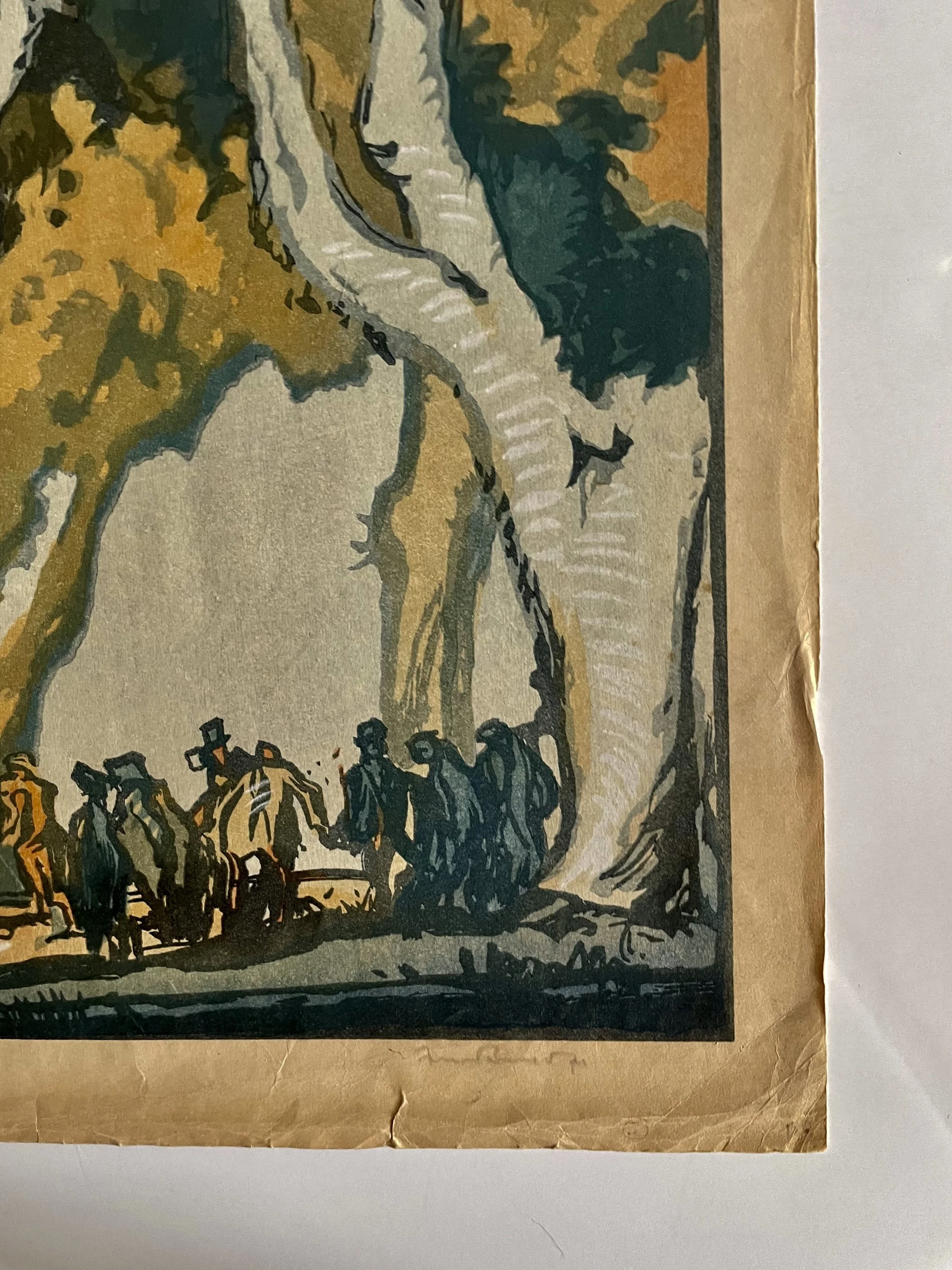
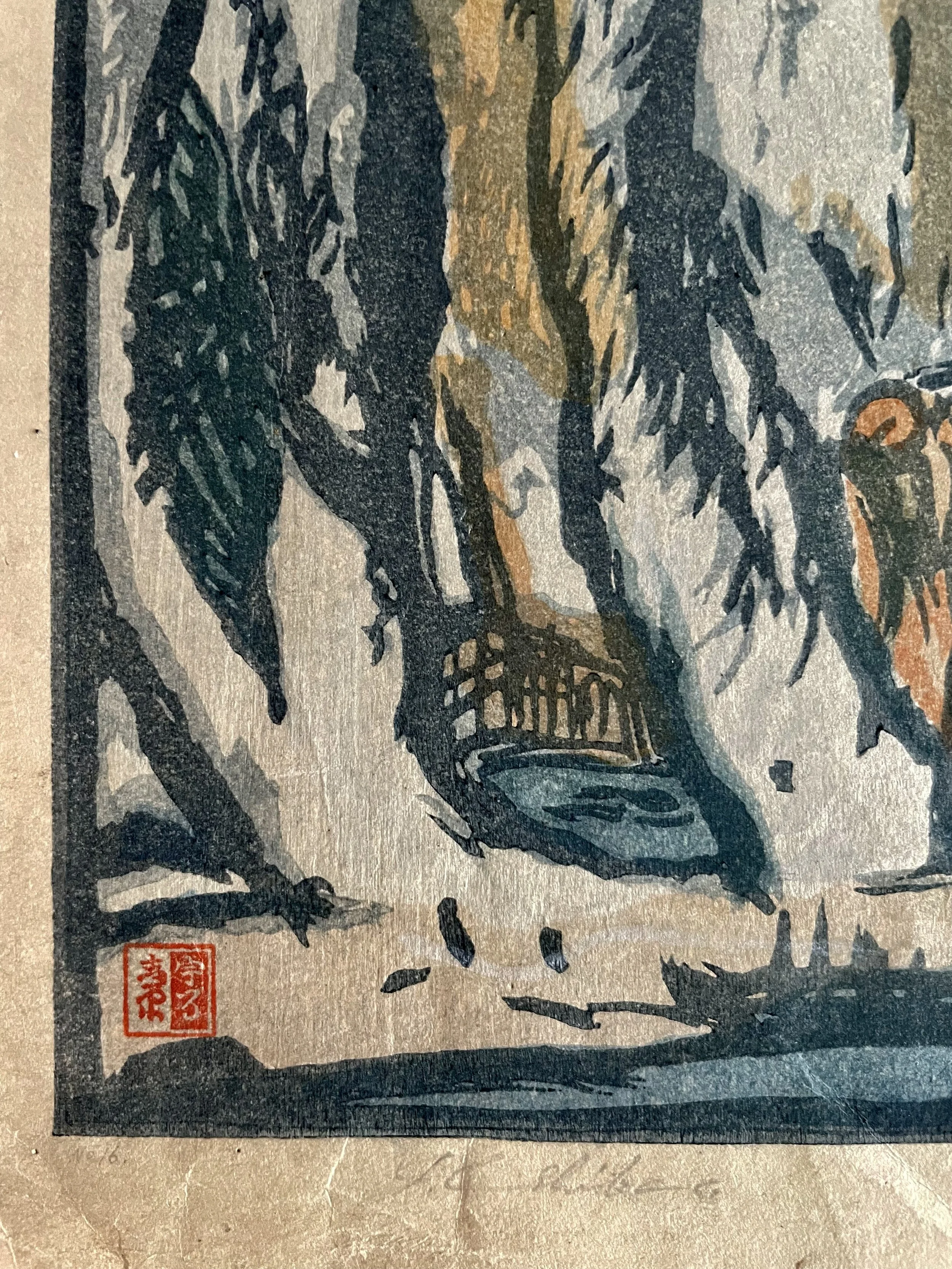
Good vintage condition. Light foxing and minor age-related spotting in lower margins consistent with age. Image area clean with strong color saturation. No visible tears or restoration.
Provenance
Mitch Morse Gallery, New York (acquired in NYC and Europe)
Artfind Gallery, Washington DC (current owner)
Citations:
Artist biographical materials provided
Académie des Beaux-Arts records
Exhibition history documentation
Film reference: Alain Resnais, Visite à Félix (1947)
Art’Fiction, Félix Labisse (1905–1982), c.1970s, color lithograph, 30x22 in, signed & ed. 39/175.
A surreal and atmospheric color lithograph titled Art’Fiction by Félix Labisse (1905–1982), edition 39/175, signed in pencil. Measuring 30 x 22 inches, this dreamlike composition features hovering, biomorphic forms suspended over a luminous horizon—hallmarks of Labisse’s poetic surrealism. A refined example of postwar French Surrealist printmaking with strong museum-level provenance. Provenance: Mitch Morse Gallery; Artfind Gallery, Washington DC.
Artwork Description
Art’Fiction exemplifies Félix Labisse’s mature Surrealist vocabulary—mysterious, contemplative, and visually restrained yet psychologically charged. The composition presents three floating, hybridized forms suspended above a flattened horizon line. Their shape suggests an ambiguous fusion of landscape, book, wing, and organic body, with a striking red, tapering element beneath each form that creates a surreal tension between gravity and suspension.
The palette is restrained yet atmospheric: deep teal sky gradients dissolve into a luminous green foreground, while soft shadows anchor the hovering forms. The red accents punctuate the stillness with quiet intensity. Labisse’s technique reflects controlled lithographic layering, achieving smooth tonal transitions and velvety depth.
The spatial construction is deliberate—an expansive horizon creates metaphysical calm, reminiscent of De Chirico’s poetic emptiness, while the floating objects evoke ritualistic or magical symbolism. The work aligns with Labisse’s lifelong exploration of fantasy, myth, eroticism, and the blurred boundary between dream and waking consciousness.
Signed in pencil lower right and numbered 39/175 lower left, this limited edition lithograph represents a refined late-career expression of Labisse’s surreal imagination. The 30 x 22 inch format enhances the panoramic quietude of the scene.
Artist Biography
Félix Labisse (1905–1982) was a French painter, illustrator, and theater designer whose career bridged Flemish Expressionism and Surrealist fantasy. Born in Douai, France, near the Belgian border, Labisse was largely self-taught. He studied at the Collège Saint Jean and later enrolled at the École de Pêche in Ostend, Belgium, where his artistic trajectory began to take shape.
In 1922, Labisse met the Expressionist painter James Ensor in Ostend, an encounter that profoundly influenced his early work. His initial paintings were rooted in Flemish Expressionism, marked by bold color and psychological intensity. Over time, however, Labisse developed an independent aesthetic focused on fantasy, ritual, magic, and erotic symbolism.
In 1927 he began dividing his time between Paris and Ostend. His first critically acclaimed exhibition was held in July 1928 at the Ostend Gallery of Modern Art. By 1933 he had settled in Paris, where he created set and costume designs for Autour d’une Mère at the Théâtre de l’Atelier. Immersed in the Parisian avant-garde, Labisse encountered André Masson, Max Ernst, Raymond Queneau, René Magritte, and Paul Delvaux.
Although closely linked to Surrealism, Labisse maintained an independent stance and never formally adhered to André Breton’s movement. Political differences initially distanced him from Breton, yet mutual respect endured. Breton later praised Labisse’s 1957 publication Le Sorcier des Familles: Almanach Fatidique, calling it a truly Surrealist book.
Labisse collaborated with filmmaker Henri Storck in founding the Club du Cinéma d’Ostende, promoting avant-garde films by Man Ray, Carl Dreyer, and Fritz Lang. In 1947, filmmaker Alain Resnais created Visite à Félix, a short film documenting the artist in his studio.
Labisse illustrated works including Le Bain avec Andromède (1944) and Histoire Naturelle (1948) by Robert Desnos. His iconography often included mythological creatures such as cyclops figures and the medieval Guivre, alongside enigmatic female forms.
By 1951, Labisse relocated to Neuilly-sur-Seine. He achieved major recognition with a 1960 retrospective at the Knokke Casino in Belgium, exhibiting 105 paintings. In 1966 he was elected to the Académie des Beaux-Arts in France, affirming his institutional stature. In 1974 he served as a jury member at the Cannes Film Festival.
Perhaps most widely recognized are his 1960s series of austere blue goddess-like women—figures that solidified his reputation for mystical femininity within modern European painting. His lifelong friendship with Ensor was immortalized in Bonjour M. Ensor (1964).
By the late twentieth century, Labisse had established himself as a major French painter whose work navigated between Surrealism and personal mythology. Today, as of 2026, his works are held in significant European collections and remain sought after by collectors of Surrealism and postwar French modernism. His legacy is defined by independence of thought, mythic symbolism, and painterly refinement.
Félix Labisse (1905–1982), Art’Fiction, color lithograph, 30 x 22 in, signed and numbered 39/175. Provenance: Mitch Morse Gallery; Artfind Gallery, Washington DC.
Certificate of Authentication
This certifies that the artwork titled Art’Fiction by Félix Labisse (1905–1982) is an authentic original color lithograph, hand-signed and numbered 39/175.
The work measures approximately 30 x 22 inches and was acquired from Mitch Morse Gallery, which sourced works in New York City and Europe. It is currently held by Artfind Gallery, Washington DC.
Condition
Good vintage condition. Light foxing and minor age-related spotting in lower margins consistent with age. Image area clean with strong color saturation. No visible tears or restoration.
Provenance
Mitch Morse Gallery, New York (acquired in NYC and Europe)
Artfind Gallery, Washington DC (current owner)
Citations:
Artist biographical materials provided
Académie des Beaux-Arts records
Exhibition history documentation
Film reference: Alain Resnais, Visite à Félix (1947)