 Image 1 of 5
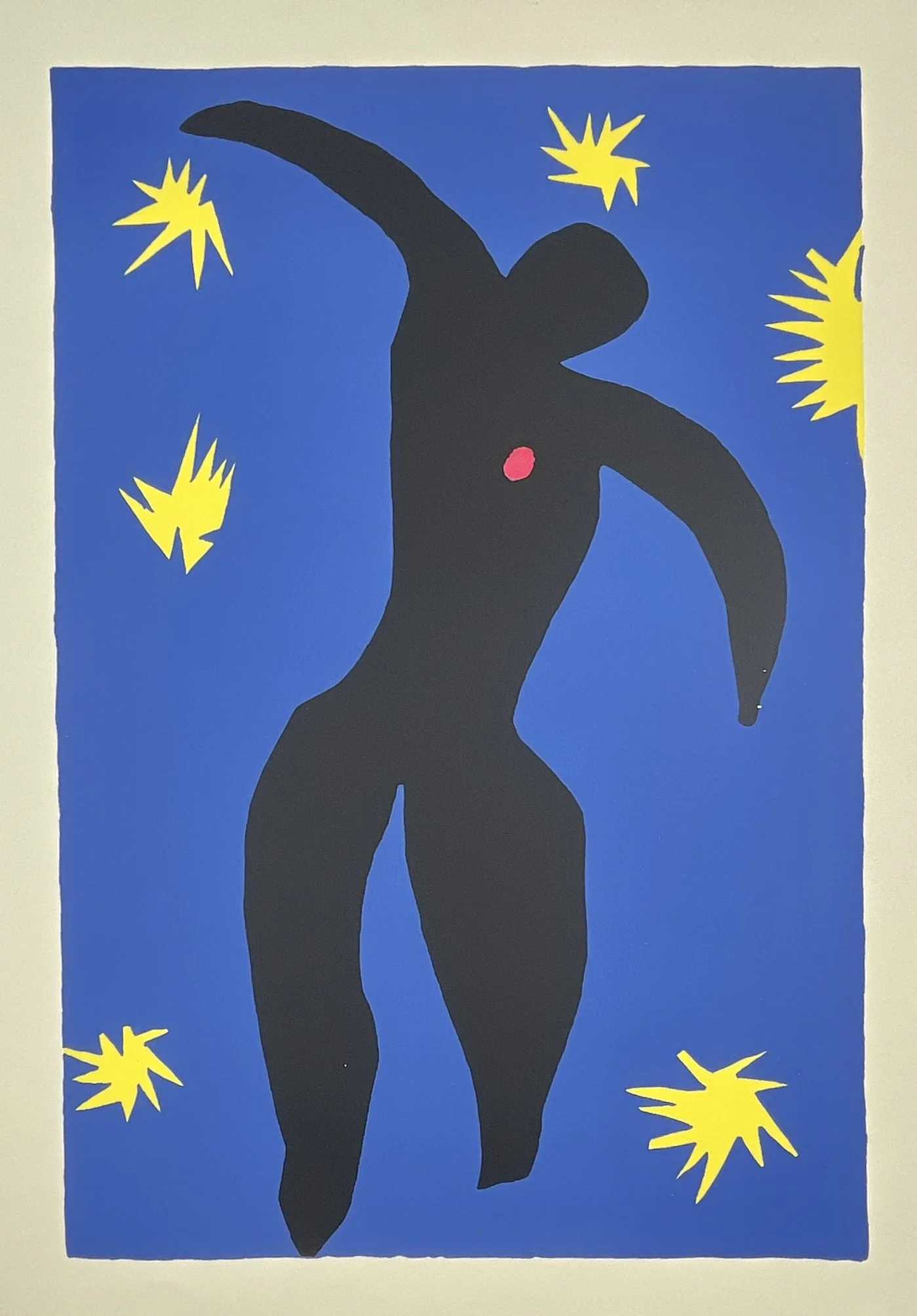 Image 2 of 5
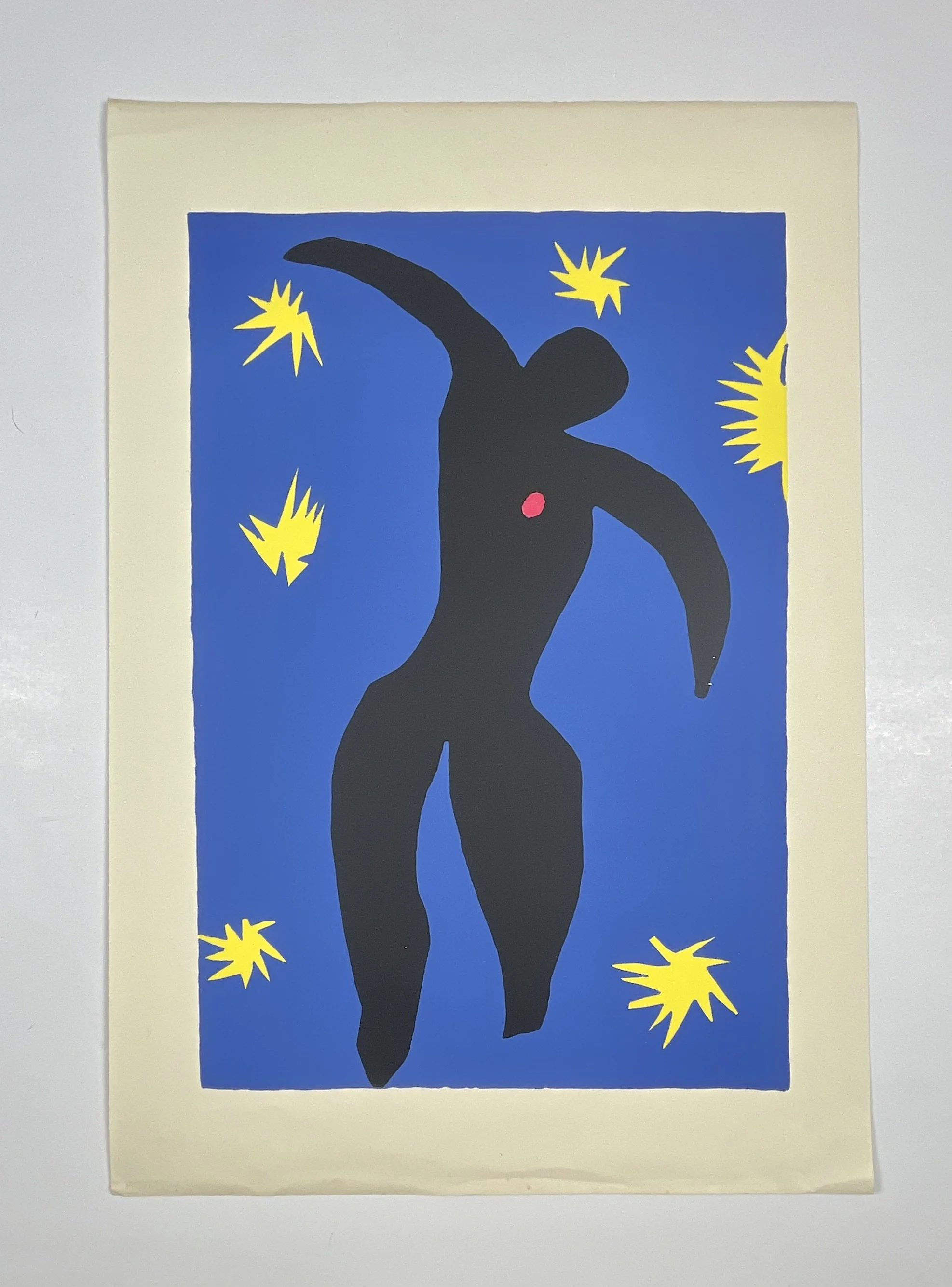 Image 3 of 5
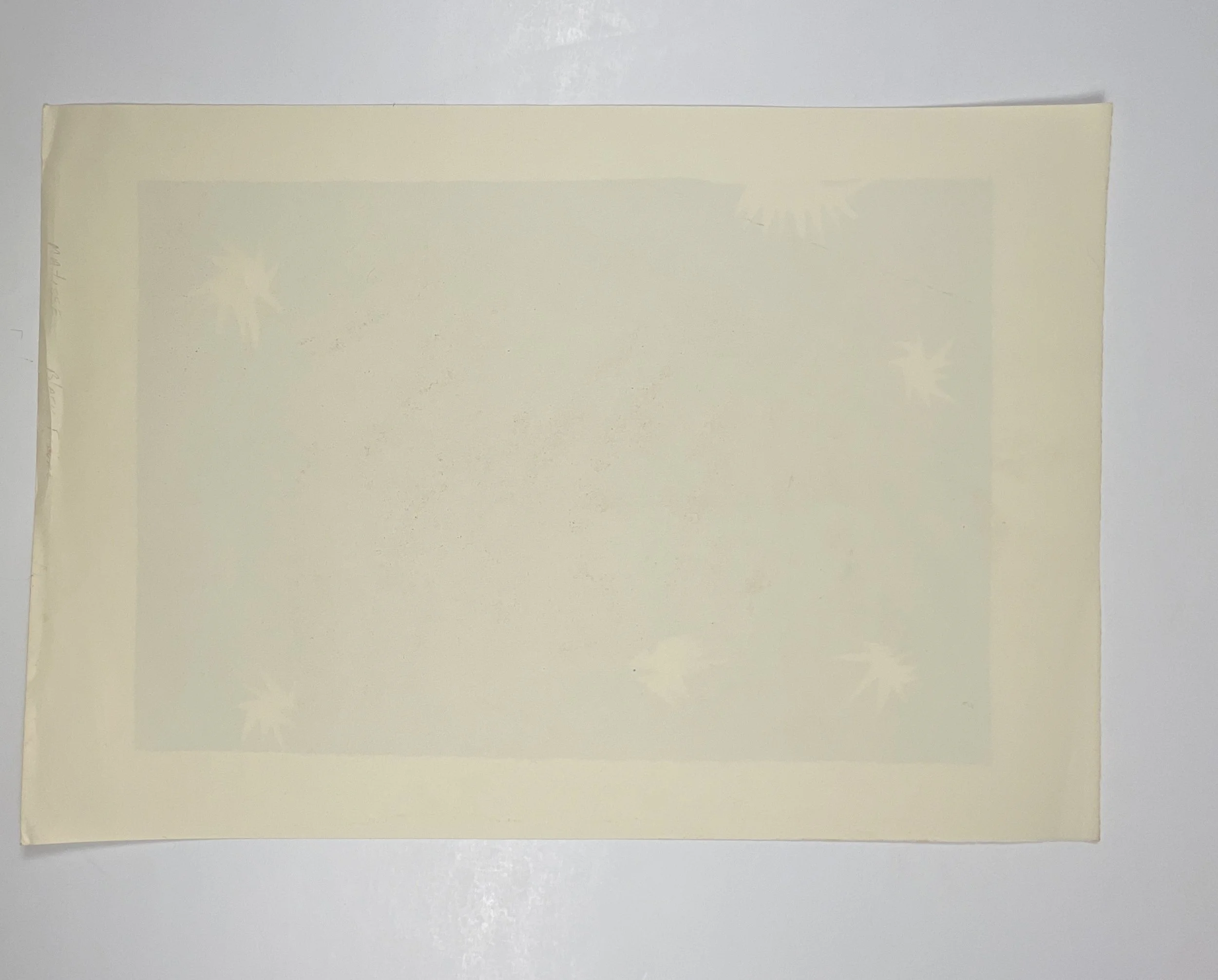 Image 4 of 5
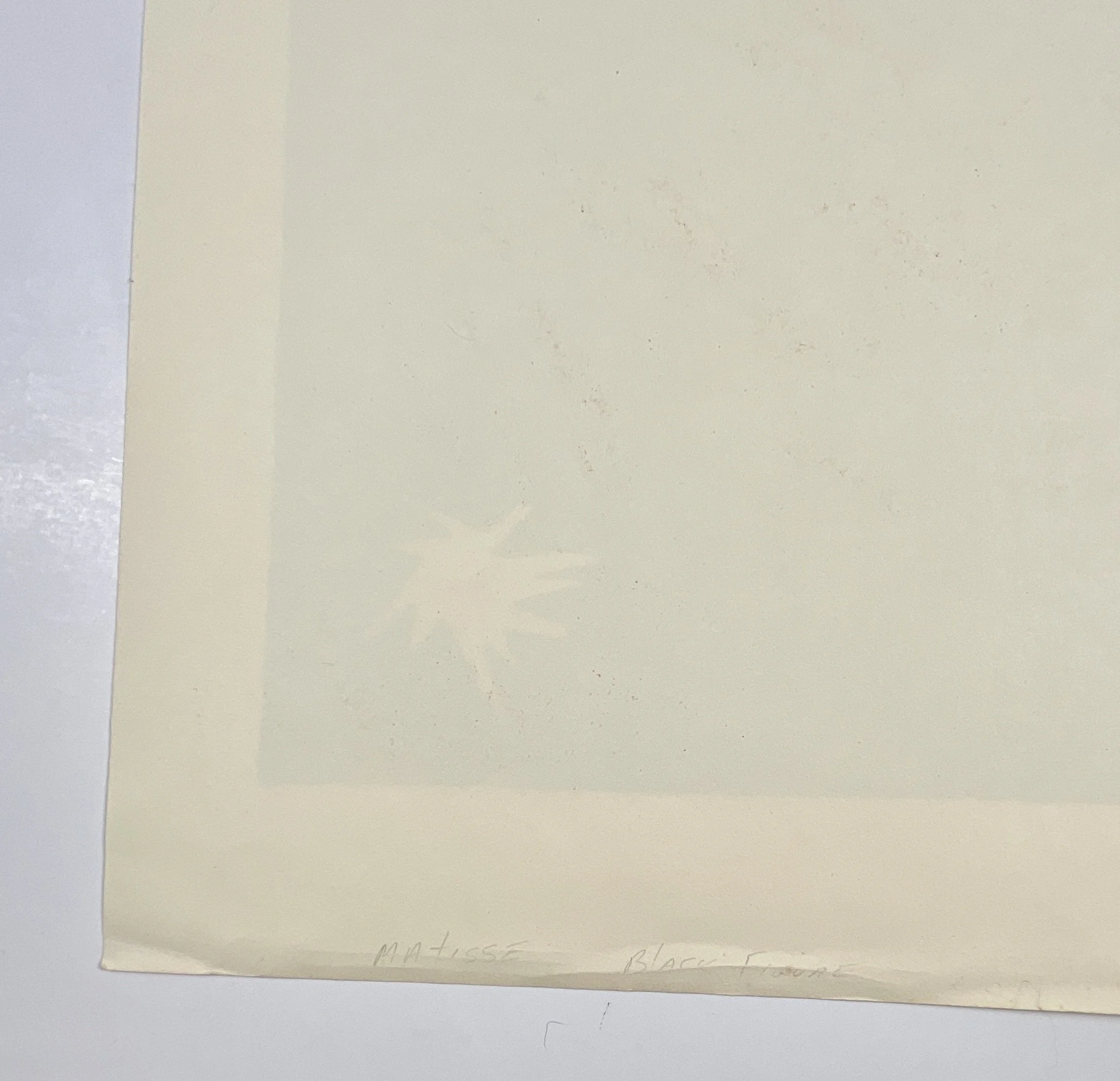 Image 5 of 5
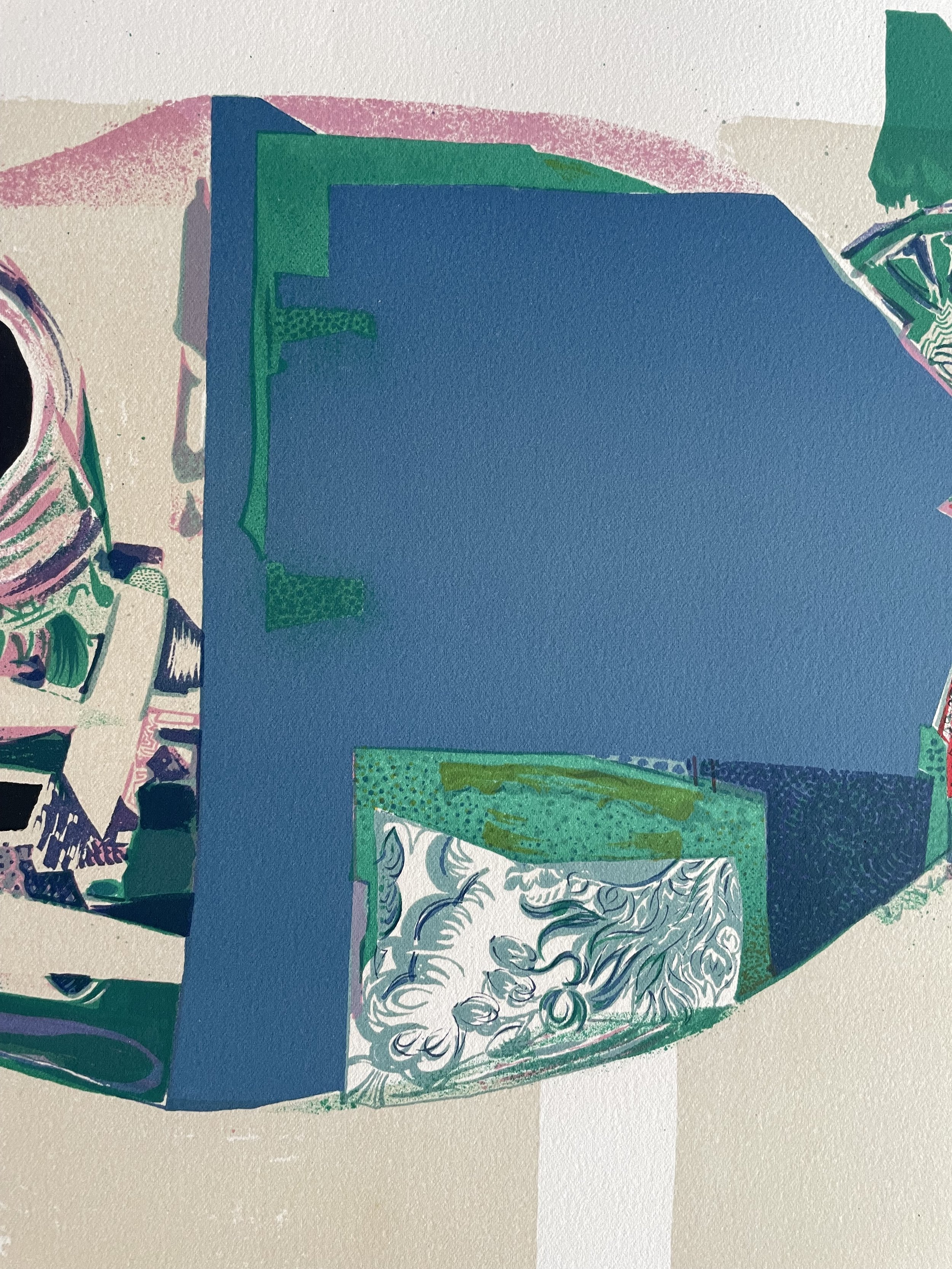
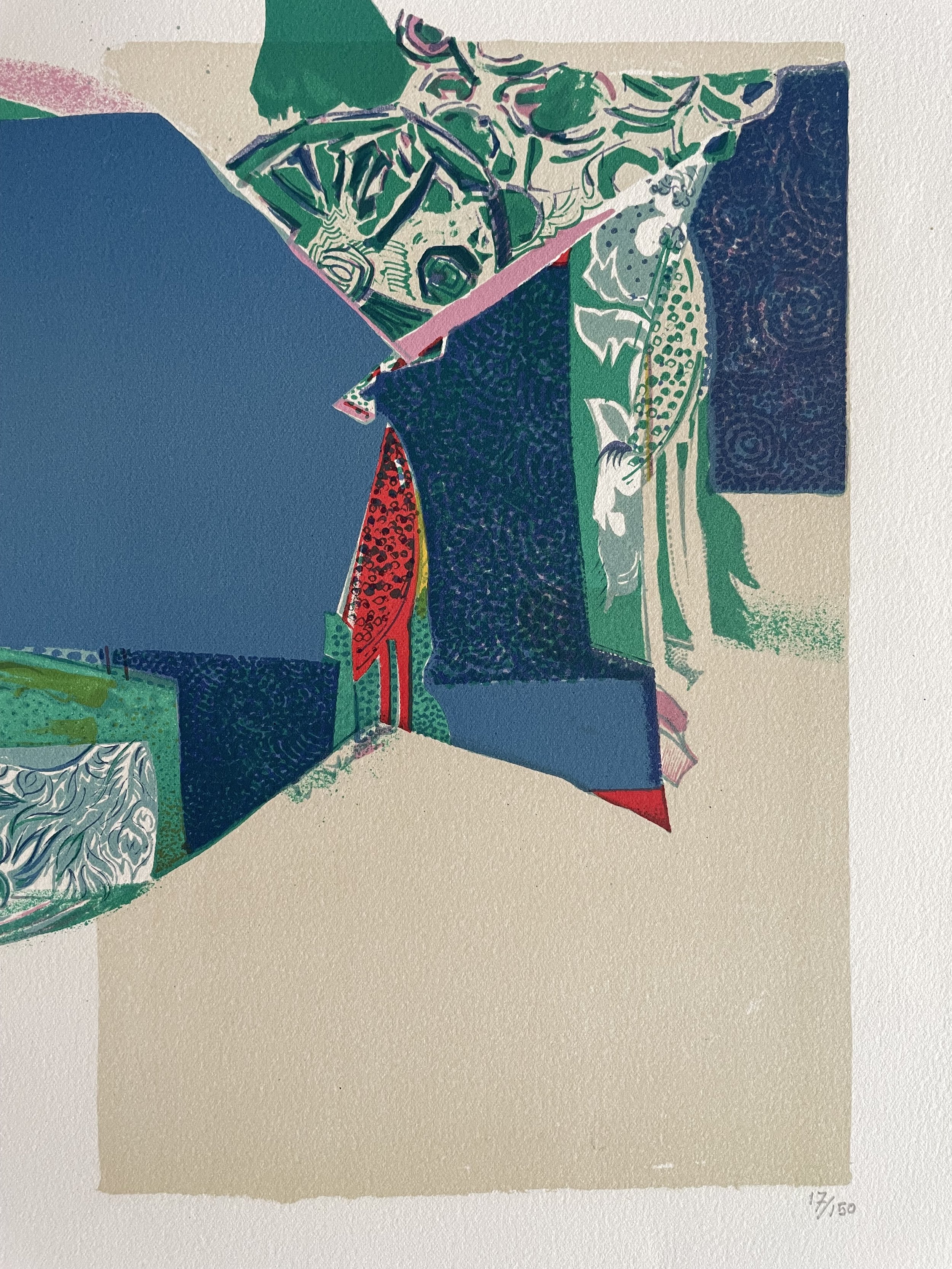
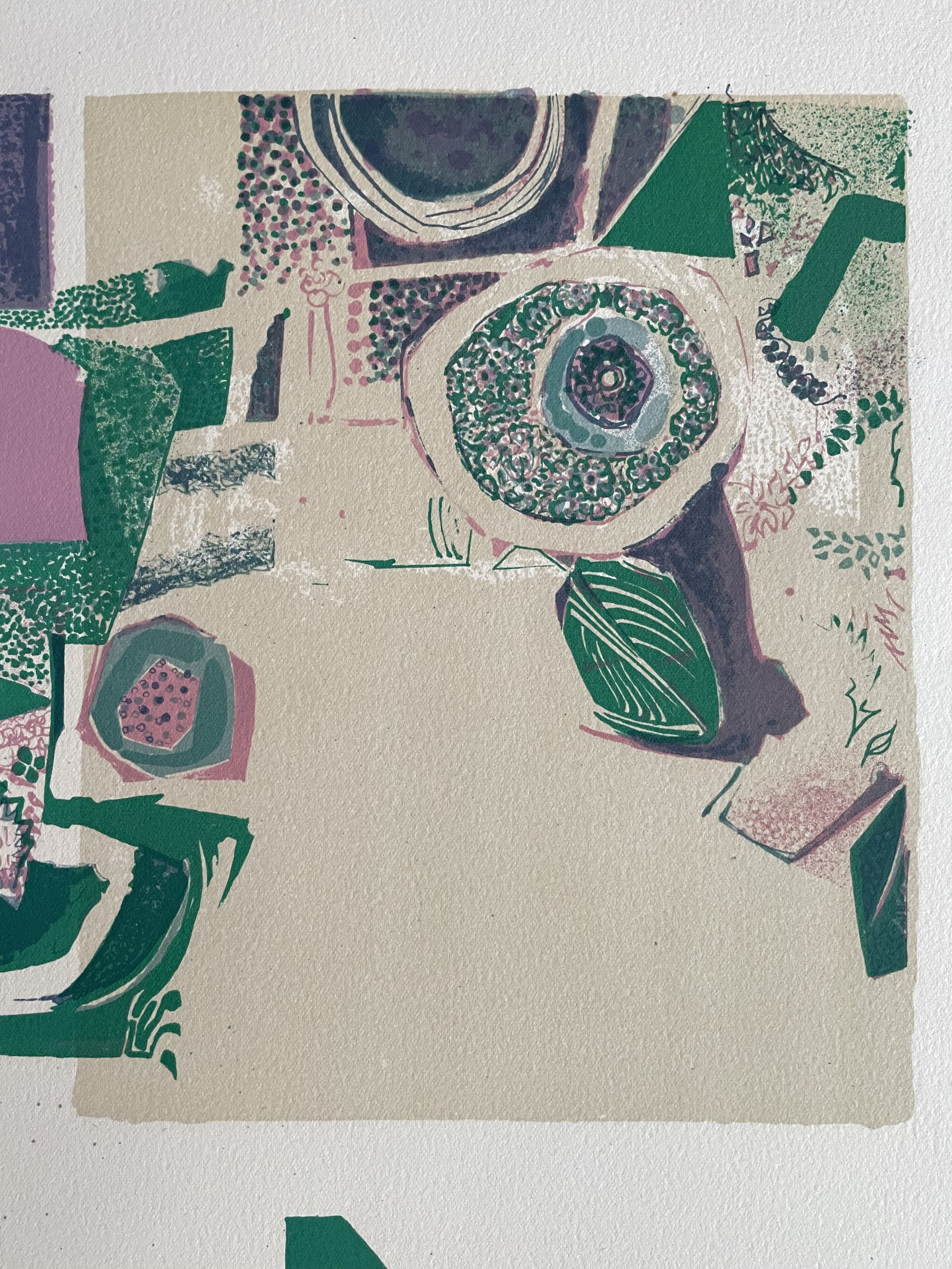
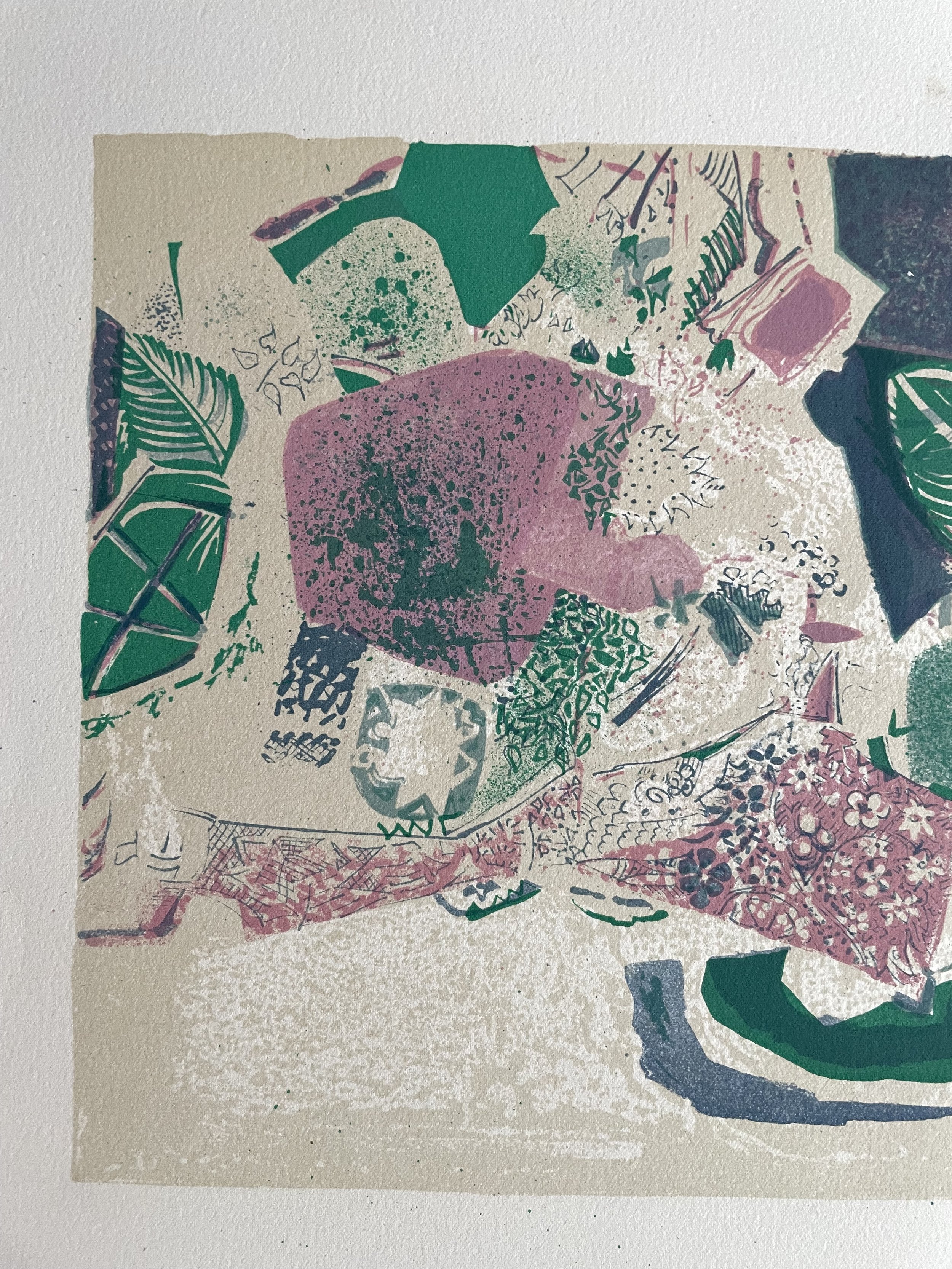
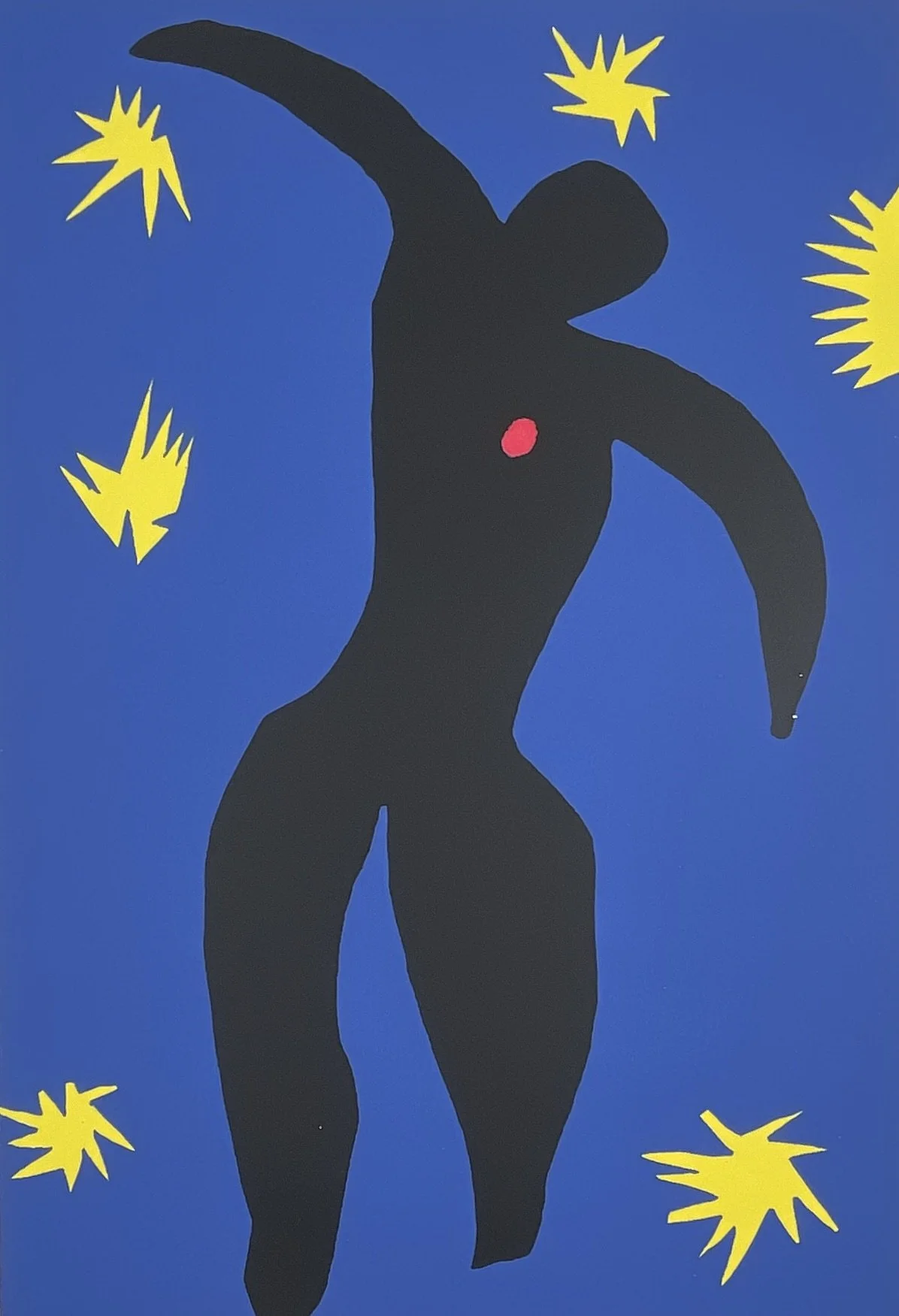
Black Figure (Blue Ground), Henri Matisse, after c.1940s cut-out composition, color lithograph/serigraph, 14 x 20 in., unsigned reproduction print.
A vibrant modernist print after Henri Matisse depicting a monumental black silhouette figure set against a luminous cobalt-blue field surrounded by radiant yellow star forms. The composition reflects the artist’s celebrated late cut-out aesthetic in which bold color planes and simplified organic shapes create rhythm, balance, and movement. The work echoes the visual language of Matisse’s iconic gouache découpées, translating the expressive power of his paper cut-outs into graphic print form.
Artwork Description
Black Figure (Blue Ground) presents a striking composition derived from the visual language of Henri Matisse’s late paper cut-outs. At the center stands a powerful silhouetted figure rendered in deep black, its sweeping limbs extending outward in a gesture that suggests dance, movement, or celestial motion. Surrounding the figure are radiant yellow star-like shapes that punctuate the rich cobalt-blue background, creating a sense of cosmic rhythm and spatial energy.
The composition reflects the radical stylistic shift that defined Matisse’s late career. In the early 1940s, after illness limited his ability to paint in the traditional manner, Matisse developed the technique he described as “painting with scissors.” Using sheets of paper painted with gouache, he cut organic shapes and arranged them into dynamic compositions. These works, known as gouaches découpées, represent one of the most influential developments in twentieth-century modernism.
The silhouetted human figure in this image recalls the dancing and acrobatic forms seen in Matisse’s celebrated cut-out series such as Jazz and the late mural-scale works created for exhibitions and commissions. The body is reduced to pure contour, emphasizing gesture rather than anatomical detail. The simplified form creates an immediate visual impact while allowing color relationships to carry emotional meaning.
The vibrant blue field creates an expansive atmosphere reminiscent of sky or cosmic space, while the yellow star forms introduce rhythm and visual punctuation across the composition. A small red accent at the figure’s center provides a focal point, demonstrating Matisse’s mastery of color balance and his ability to orchestrate large areas of flat color with minimal elements.
Prints inspired by Matisse’s cut-outs were widely produced in the decades following his death, allowing collectors to experience the powerful graphic clarity of these compositions. Even in reproduction, the dramatic contrast between the black figure, the saturated blue ground, and the radiant yellow shapes captures the vitality that defines Matisse’s late work.
The image stands as an evocative example of modernist design in which color, shape, and movement are distilled into their most expressive forms.
Medium: color lithograph or serigraph after Matisse cut-out composition
Dimensions: 14 x 20 inches
Signature: not visible; reproduction print
Date of original design: mid-20th century (c.1940s–1950s)
Artist Biography
Henri Matisse was one of the most influential artists of the twentieth century and a central figure in the development of modern art. Born in Le Cateau-Cambrésis, France, in 1869, Matisse initially studied law before discovering painting during a period of convalescence. His artistic training began at the Académie Julian in Paris and continued at the École des Beaux-Arts under the academic painter Gustave Moreau, who encouraged experimentation and personal expression.
Matisse first gained international attention in the early years of the twentieth century as a leader of Fauvism, a movement characterized by bold, non-naturalistic color and expressive brushwork. Alongside artists such as André Derain and Maurice de Vlaminck, Matisse challenged traditional ideas of representation by using color as an emotional and structural element rather than a descriptive one. Critics initially reacted with shock to the intense chromatic energy of Fauvist paintings, but the movement quickly became a turning point in the evolution of modern painting.
Throughout his career Matisse explored a wide range of media including painting, drawing, sculpture, printmaking, book illustration, and stage design. His work often focused on themes of harmony, balance, and serenity, seeking to create an art that offered viewers a sense of visual pleasure and emotional calm.
During the 1920s and 1930s Matisse produced celebrated paintings of interiors, dancers, and odalisques that combined decorative pattern with luminous color. However, one of the most remarkable chapters of his career occurred late in life. After undergoing surgery in 1941 that left him physically weakened, Matisse began experimenting with paper cut-outs. Assistants painted sheets of paper with gouache, and Matisse cut shapes from them using scissors, arranging the forms into compositions pinned to the walls of his studio.
These gouaches découpées became one of the defining innovations of twentieth-century art. Works such as The Snail, Blue Nude, and the plates for the book Jazz demonstrate how Matisse transformed color and shape into monumental visual rhythms. The cut-outs blurred the boundaries between painting, drawing, and sculpture while emphasizing the expressive potential of pure form.
Matisse’s influence on modern art is profound and far-reaching. His work shaped the development of abstraction, color field painting, and modern graphic design. Today his paintings, sculptures, prints, and cut-outs are held in the world’s most important museum collections, including the Museum of Modern Art in New York, the Centre Pompidou in Paris, the Tate, and the Hermitage.
Even decades after his death in 1954, Matisse’s innovations continue to inspire artists, designers, and architects. His late cut-out works remain among the most iconic images of modernism, celebrated for their clarity, joy, and timeless visual power.
Henri Matisse (1869–1954)
Black Figure (Blue Ground)
Color lithograph / serigraph after cut-out composition
14 x 20 inches
Unsigned reproduction print
Certificate of Authentication
Artist: Henri Matisse (1869–1954)
Title: Black Figure (Blue Ground)
Medium: lithograph / serigraph after original cut-out design
Dimensions: 14 x 20 inches
This document certifies that the artwork described above is a print reproduction after a design by Henri Matisse.
Condition
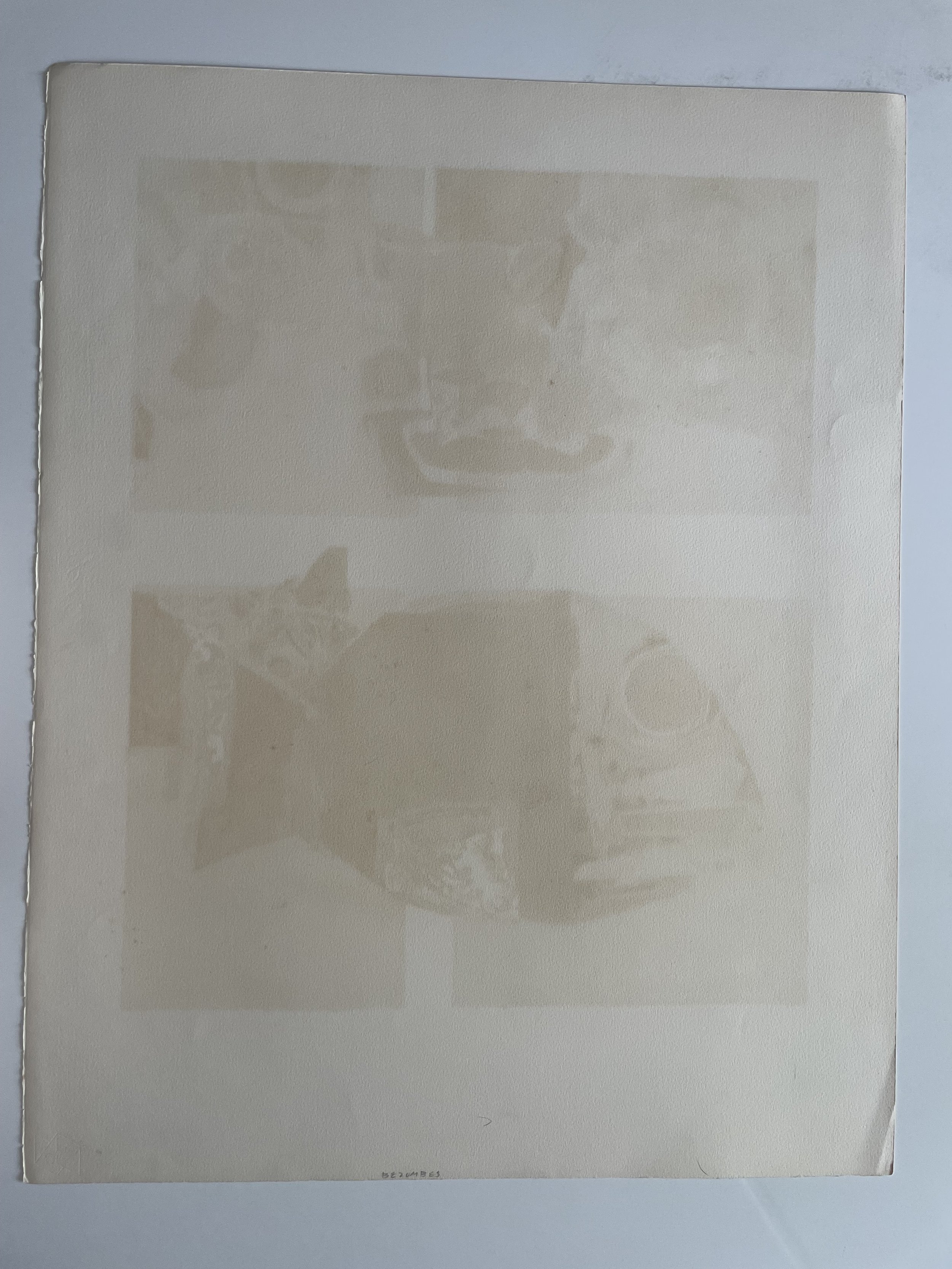
Overall good vintage condition. Colors remain vibrant with strong contrast. Minor paper toning and light handling wear consistent with age. No major tears or structural damage observed.
Provenance
Mitch Morse Gallery, New York
Acquired by Mitch Morse through sources in New York, the United States, and Europe
Private collection
Artfind Gallery, Washington DC (current owner)
Citations
The Museum of Modern Art Matisse archive
Centre Pompidou artist research files
Tate Modern Matisse biography
Oxford Art Online / Grove Dictionary of Art entry on Henri Matisse
Black Figure (Blue Ground), Henri Matisse, after c.1940s cut-out composition, color lithograph/serigraph, 14 x 20 in., unsigned reproduction print.
A vibrant modernist print after Henri Matisse depicting a monumental black silhouette figure set against a luminous cobalt-blue field surrounded by radiant yellow star forms. The composition reflects the artist’s celebrated late cut-out aesthetic in which bold color planes and simplified organic shapes create rhythm, balance, and movement. The work echoes the visual language of Matisse’s iconic gouache découpées, translating the expressive power of his paper cut-outs into graphic print form.
Artwork Description
Black Figure (Blue Ground) presents a striking composition derived from the visual language of Henri Matisse’s late paper cut-outs. At the center stands a powerful silhouetted figure rendered in deep black, its sweeping limbs extending outward in a gesture that suggests dance, movement, or celestial motion. Surrounding the figure are radiant yellow star-like shapes that punctuate the rich cobalt-blue background, creating a sense of cosmic rhythm and spatial energy.
The composition reflects the radical stylistic shift that defined Matisse’s late career. In the early 1940s, after illness limited his ability to paint in the traditional manner, Matisse developed the technique he described as “painting with scissors.” Using sheets of paper painted with gouache, he cut organic shapes and arranged them into dynamic compositions. These works, known as gouaches découpées, represent one of the most influential developments in twentieth-century modernism.
The silhouetted human figure in this image recalls the dancing and acrobatic forms seen in Matisse’s celebrated cut-out series such as Jazz and the late mural-scale works created for exhibitions and commissions. The body is reduced to pure contour, emphasizing gesture rather than anatomical detail. The simplified form creates an immediate visual impact while allowing color relationships to carry emotional meaning.
The vibrant blue field creates an expansive atmosphere reminiscent of sky or cosmic space, while the yellow star forms introduce rhythm and visual punctuation across the composition. A small red accent at the figure’s center provides a focal point, demonstrating Matisse’s mastery of color balance and his ability to orchestrate large areas of flat color with minimal elements.
Prints inspired by Matisse’s cut-outs were widely produced in the decades following his death, allowing collectors to experience the powerful graphic clarity of these compositions. Even in reproduction, the dramatic contrast between the black figure, the saturated blue ground, and the radiant yellow shapes captures the vitality that defines Matisse’s late work.
The image stands as an evocative example of modernist design in which color, shape, and movement are distilled into their most expressive forms.
Medium: color lithograph or serigraph after Matisse cut-out composition
Dimensions: 14 x 20 inches
Signature: not visible; reproduction print
Date of original design: mid-20th century (c.1940s–1950s)
Artist Biography
Henri Matisse was one of the most influential artists of the twentieth century and a central figure in the development of modern art. Born in Le Cateau-Cambrésis, France, in 1869, Matisse initially studied law before discovering painting during a period of convalescence. His artistic training began at the Académie Julian in Paris and continued at the École des Beaux-Arts under the academic painter Gustave Moreau, who encouraged experimentation and personal expression.
Matisse first gained international attention in the early years of the twentieth century as a leader of Fauvism, a movement characterized by bold, non-naturalistic color and expressive brushwork. Alongside artists such as André Derain and Maurice de Vlaminck, Matisse challenged traditional ideas of representation by using color as an emotional and structural element rather than a descriptive one. Critics initially reacted with shock to the intense chromatic energy of Fauvist paintings, but the movement quickly became a turning point in the evolution of modern painting.
Throughout his career Matisse explored a wide range of media including painting, drawing, sculpture, printmaking, book illustration, and stage design. His work often focused on themes of harmony, balance, and serenity, seeking to create an art that offered viewers a sense of visual pleasure and emotional calm.
During the 1920s and 1930s Matisse produced celebrated paintings of interiors, dancers, and odalisques that combined decorative pattern with luminous color. However, one of the most remarkable chapters of his career occurred late in life. After undergoing surgery in 1941 that left him physically weakened, Matisse began experimenting with paper cut-outs. Assistants painted sheets of paper with gouache, and Matisse cut shapes from them using scissors, arranging the forms into compositions pinned to the walls of his studio.
These gouaches découpées became one of the defining innovations of twentieth-century art. Works such as The Snail, Blue Nude, and the plates for the book Jazz demonstrate how Matisse transformed color and shape into monumental visual rhythms. The cut-outs blurred the boundaries between painting, drawing, and sculpture while emphasizing the expressive potential of pure form.
Matisse’s influence on modern art is profound and far-reaching. His work shaped the development of abstraction, color field painting, and modern graphic design. Today his paintings, sculptures, prints, and cut-outs are held in the world’s most important museum collections, including the Museum of Modern Art in New York, the Centre Pompidou in Paris, the Tate, and the Hermitage.
Even decades after his death in 1954, Matisse’s innovations continue to inspire artists, designers, and architects. His late cut-out works remain among the most iconic images of modernism, celebrated for their clarity, joy, and timeless visual power.
Henri Matisse (1869–1954)
Black Figure (Blue Ground)
Color lithograph / serigraph after cut-out composition
14 x 20 inches
Unsigned reproduction print
Certificate of Authentication
Artist: Henri Matisse (1869–1954)
Title: Black Figure (Blue Ground)
Medium: lithograph / serigraph after original cut-out design
Dimensions: 14 x 20 inches
This document certifies that the artwork described above is a print reproduction after a design by Henri Matisse.
Condition
Overall good vintage condition. Colors remain vibrant with strong contrast. Minor paper toning and light handling wear consistent with age. No major tears or structural damage observed.
Provenance
Mitch Morse Gallery, New York
Acquired by Mitch Morse through sources in New York, the United States, and Europe
Private collection
Artfind Gallery, Washington DC (current owner)
Citations
The Museum of Modern Art Matisse archive
Centre Pompidou artist research files
Tate Modern Matisse biography
Oxford Art Online / Grove Dictionary of Art entry on Henri Matisse