 Image 1 of 5
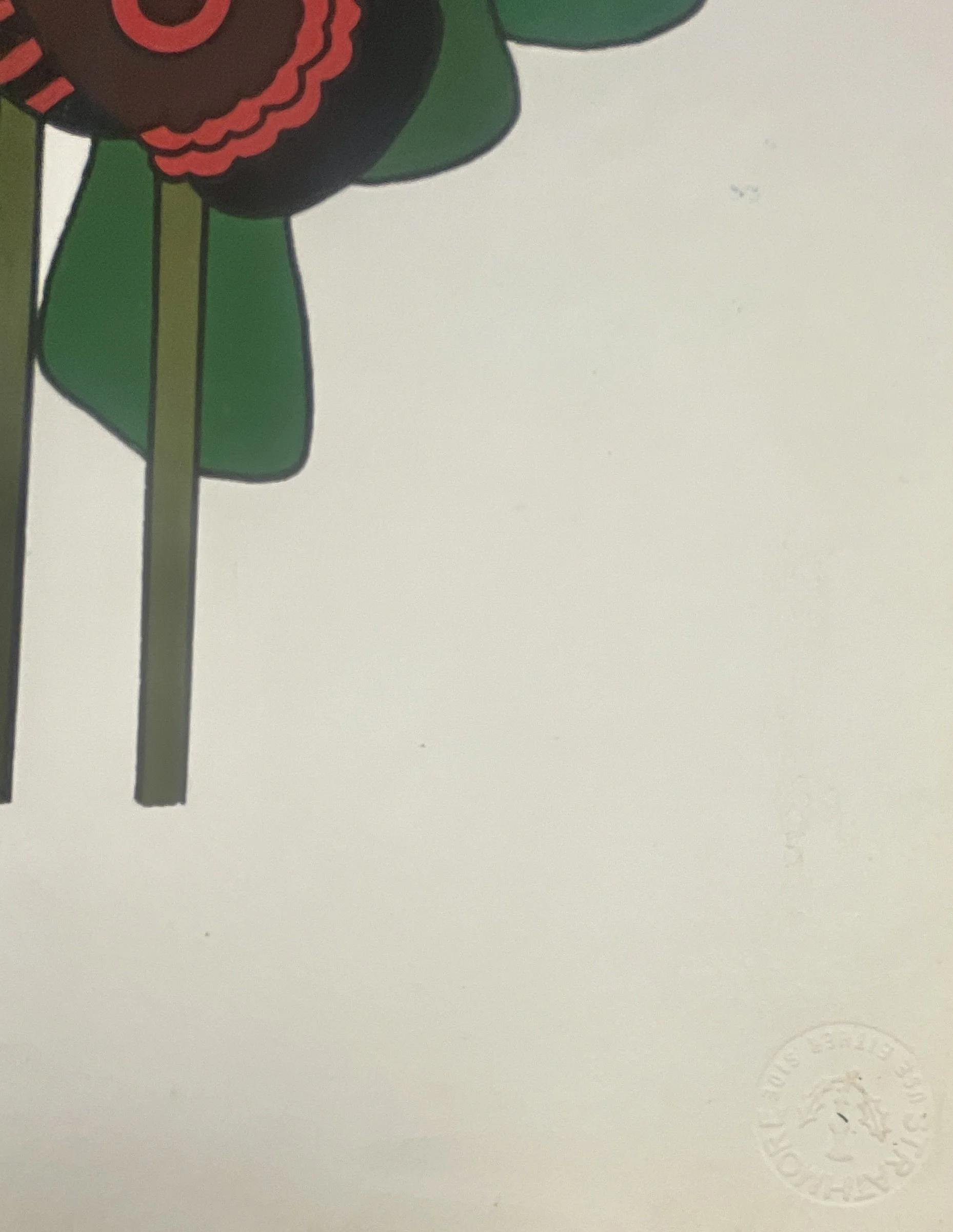 Image 2 of 5
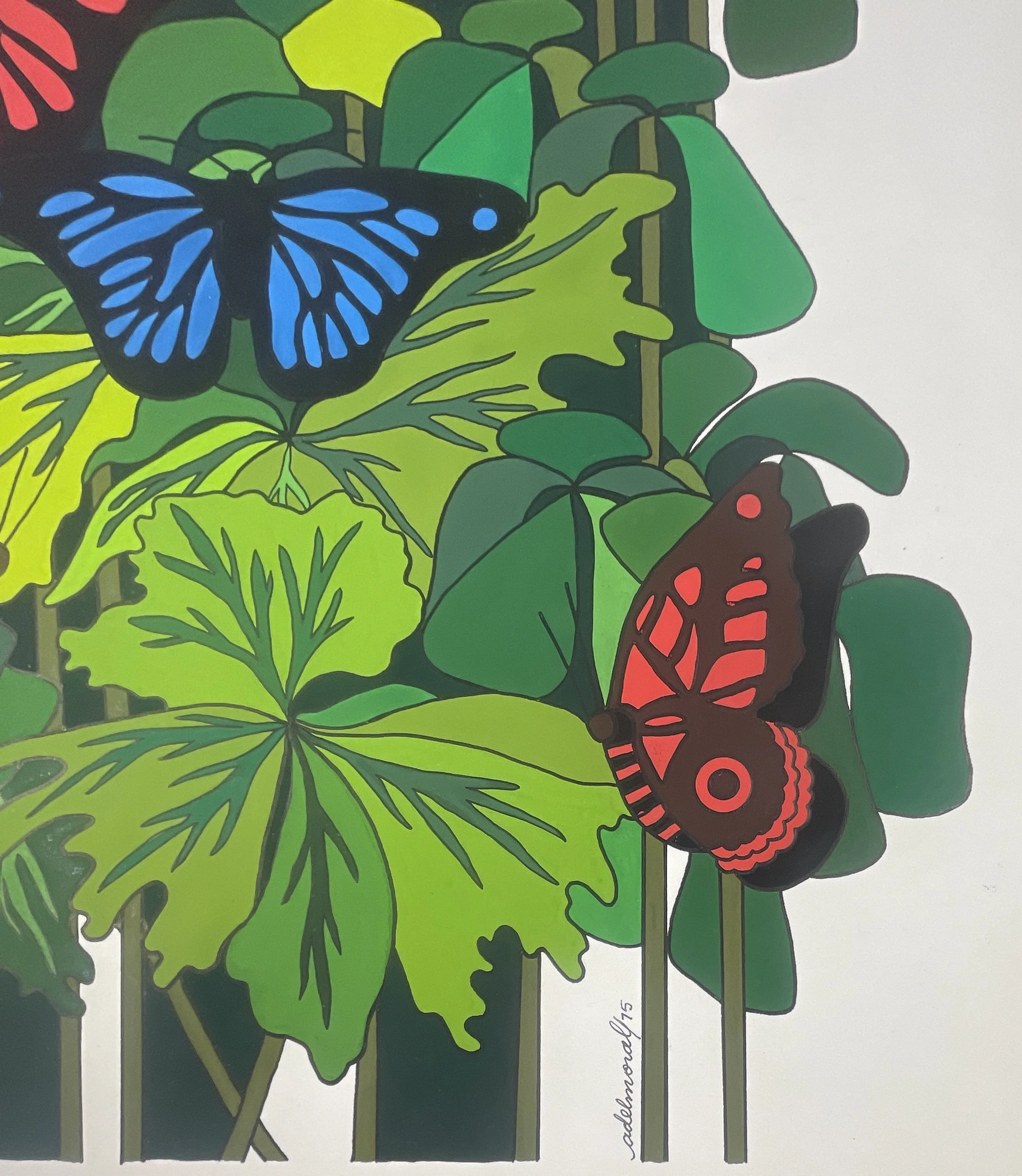 Image 3 of 5
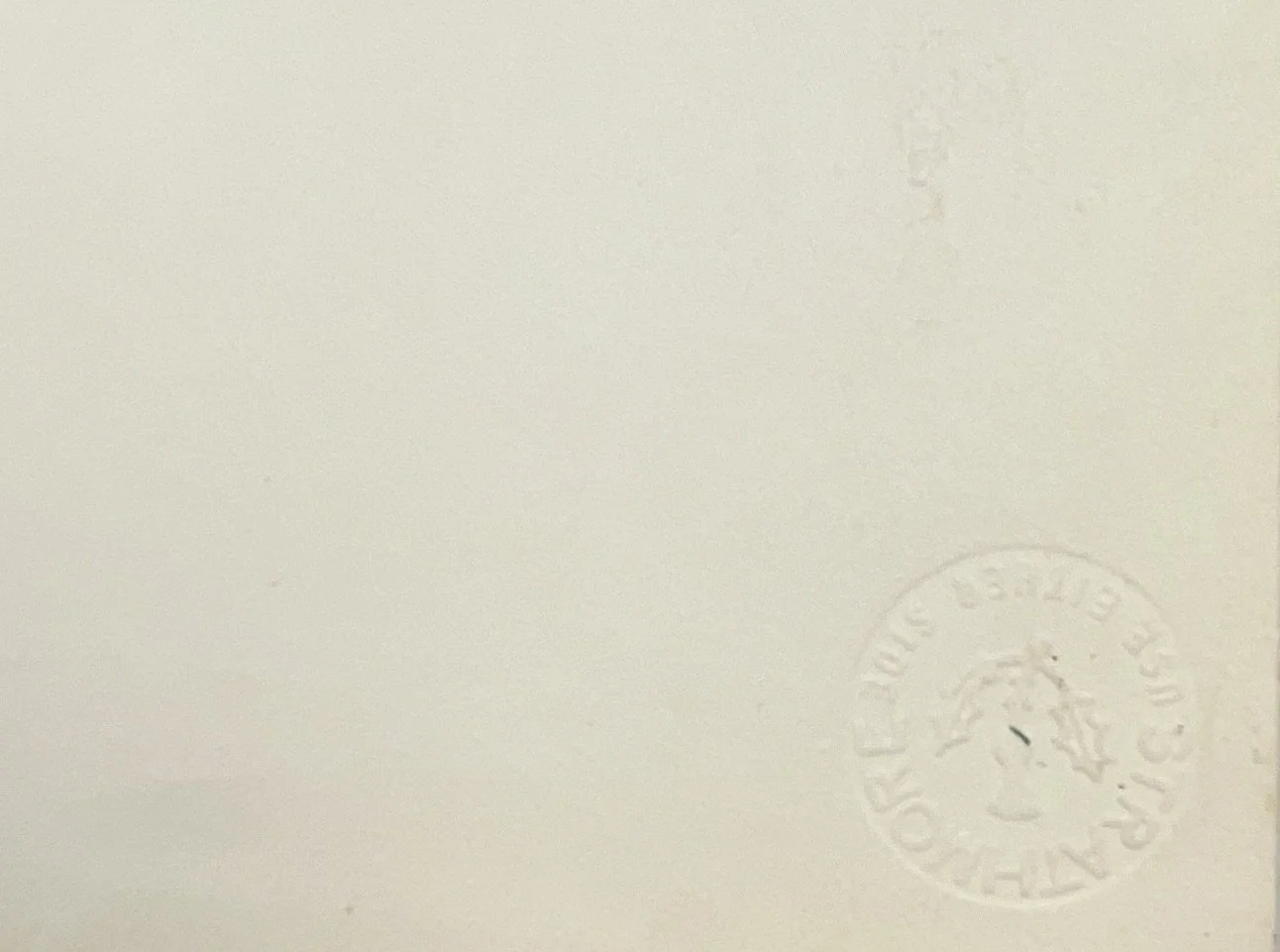 Image 4 of 5
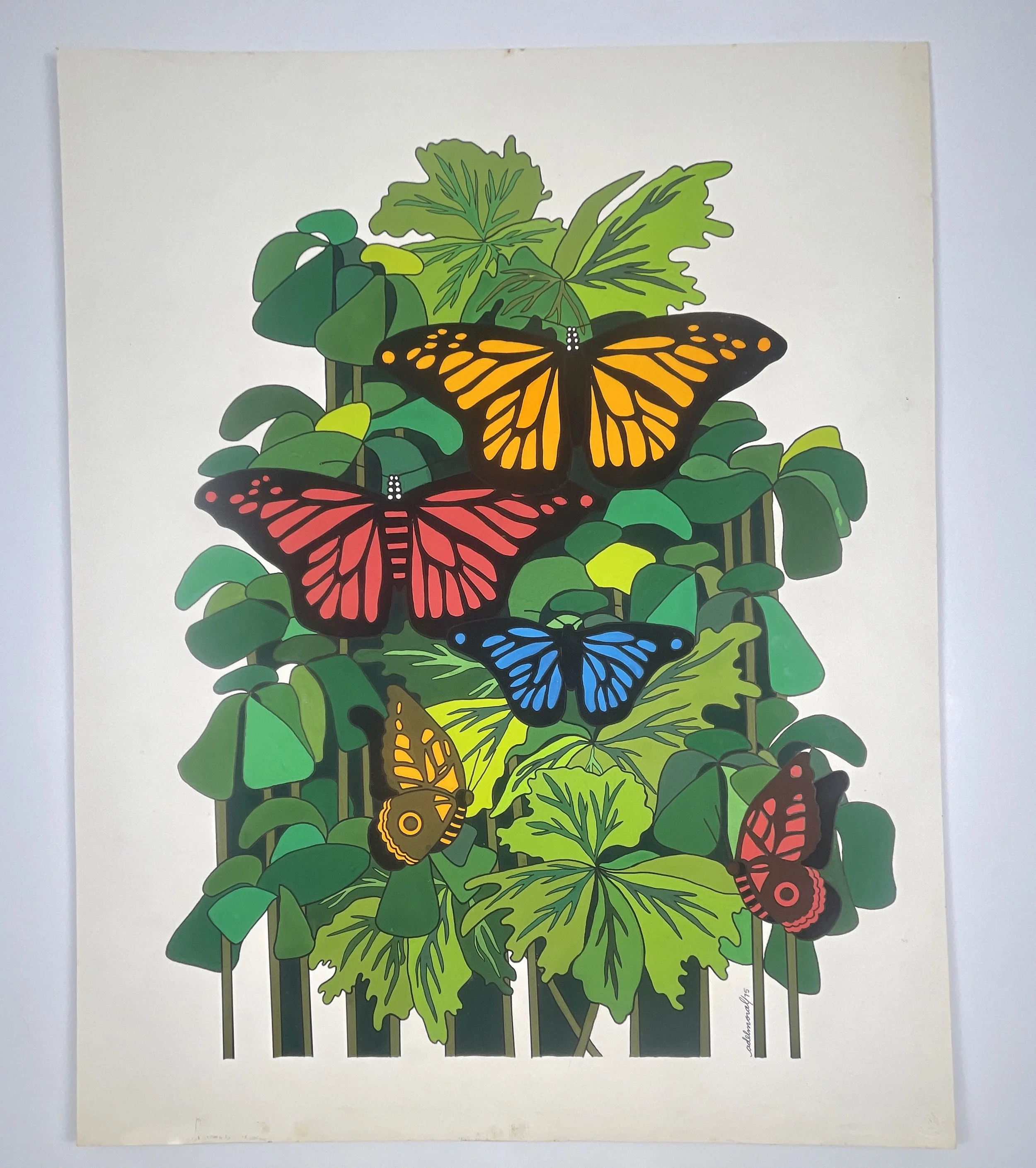 Image 5 of 5
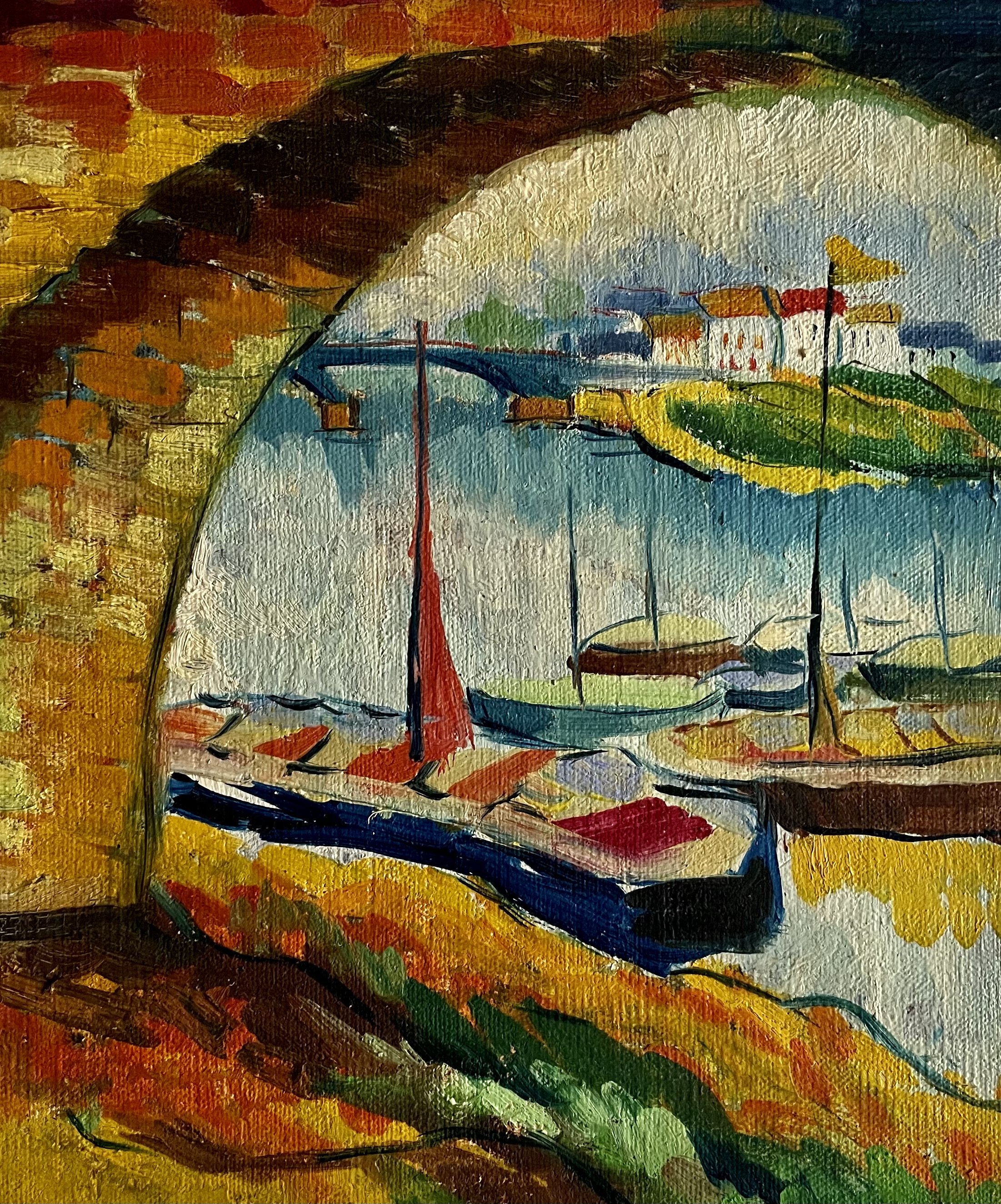
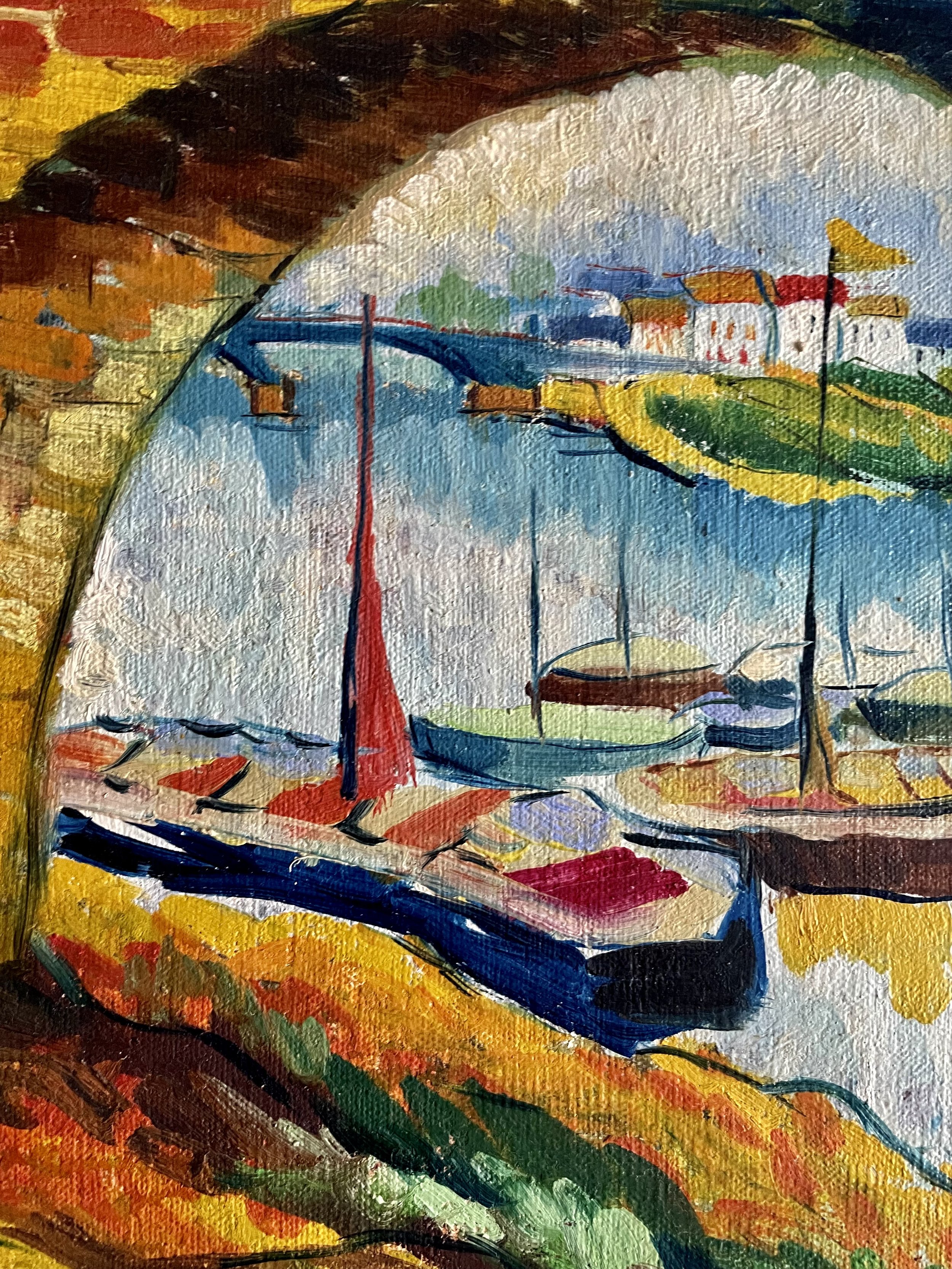
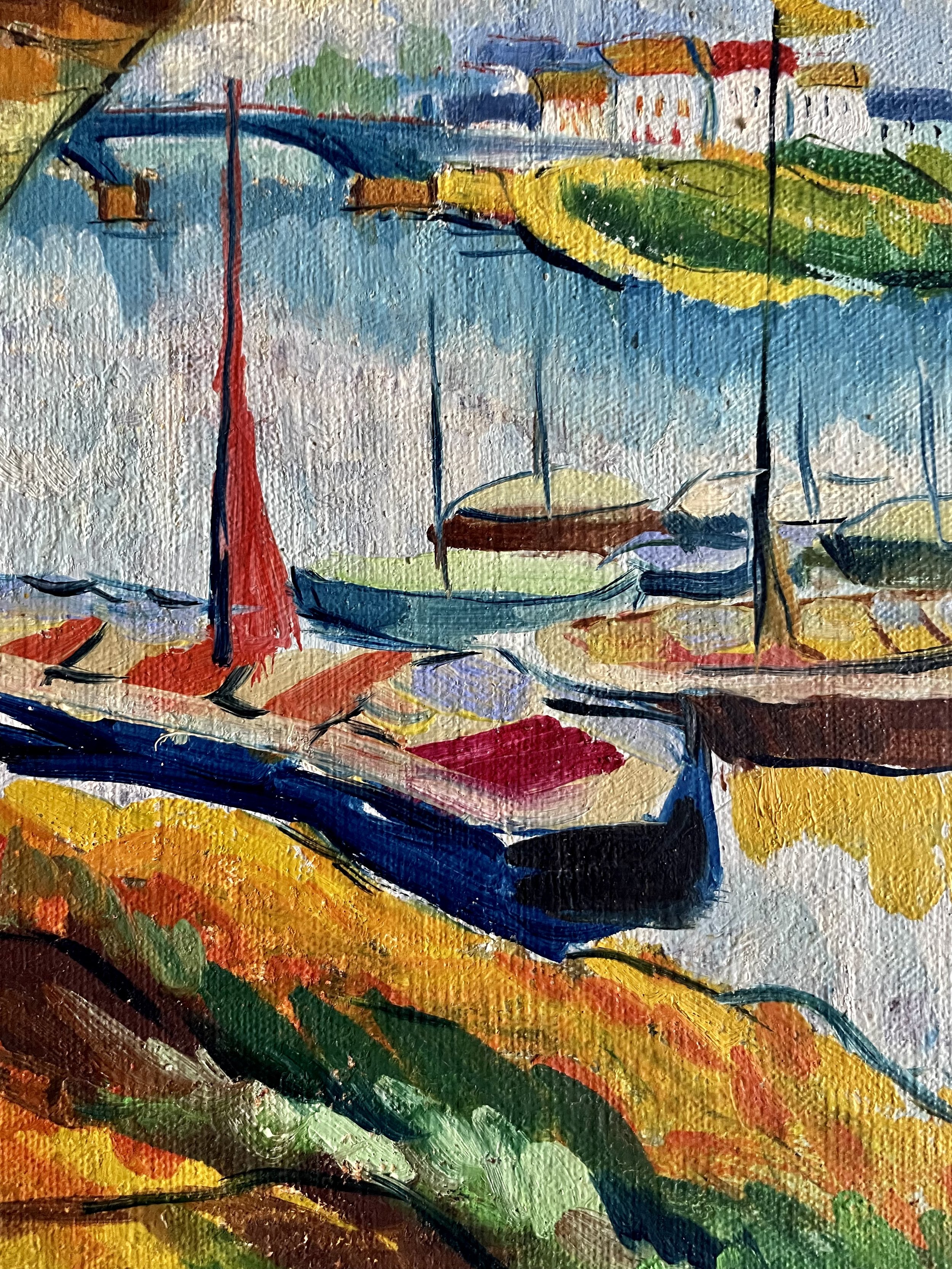
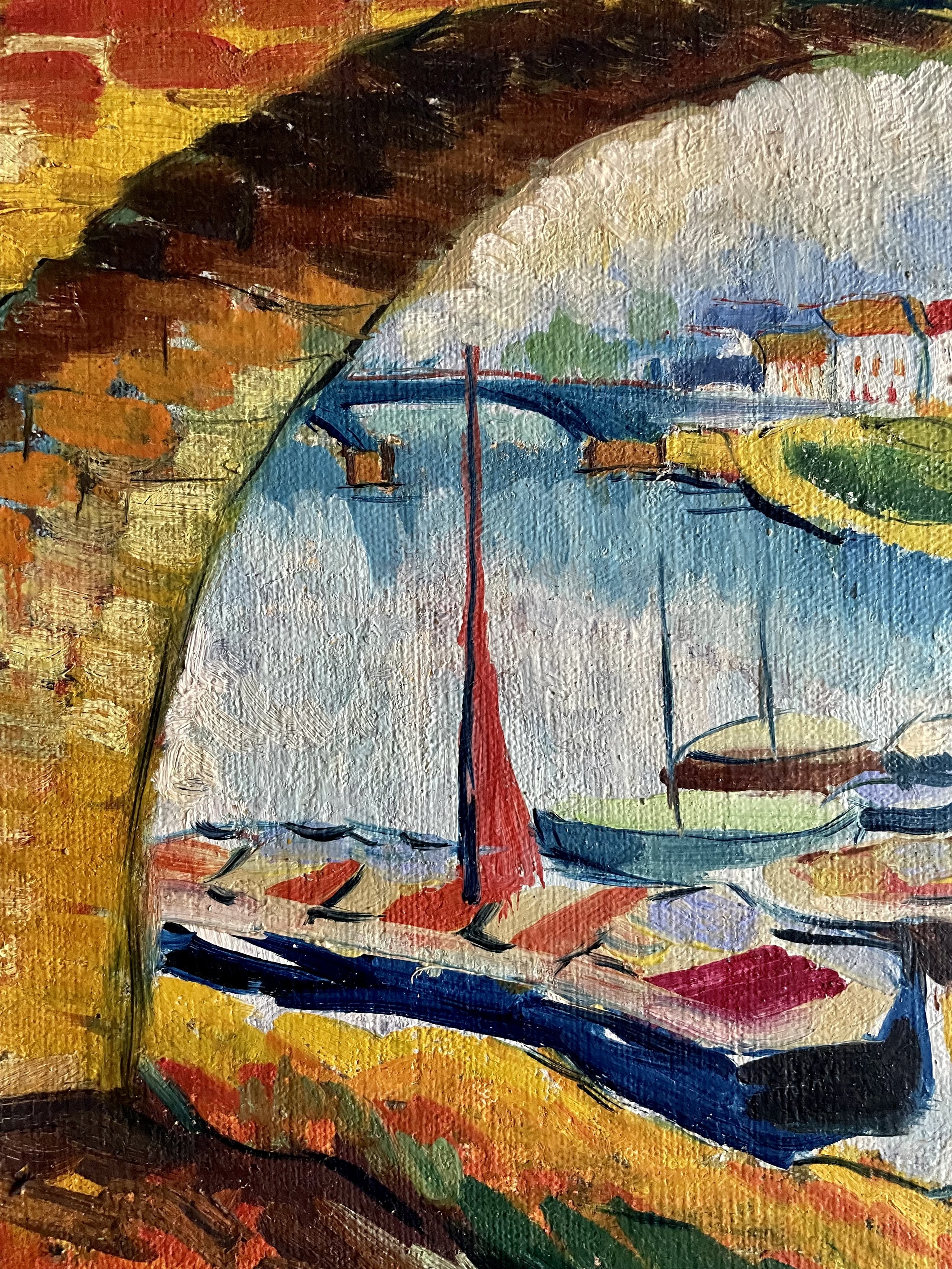
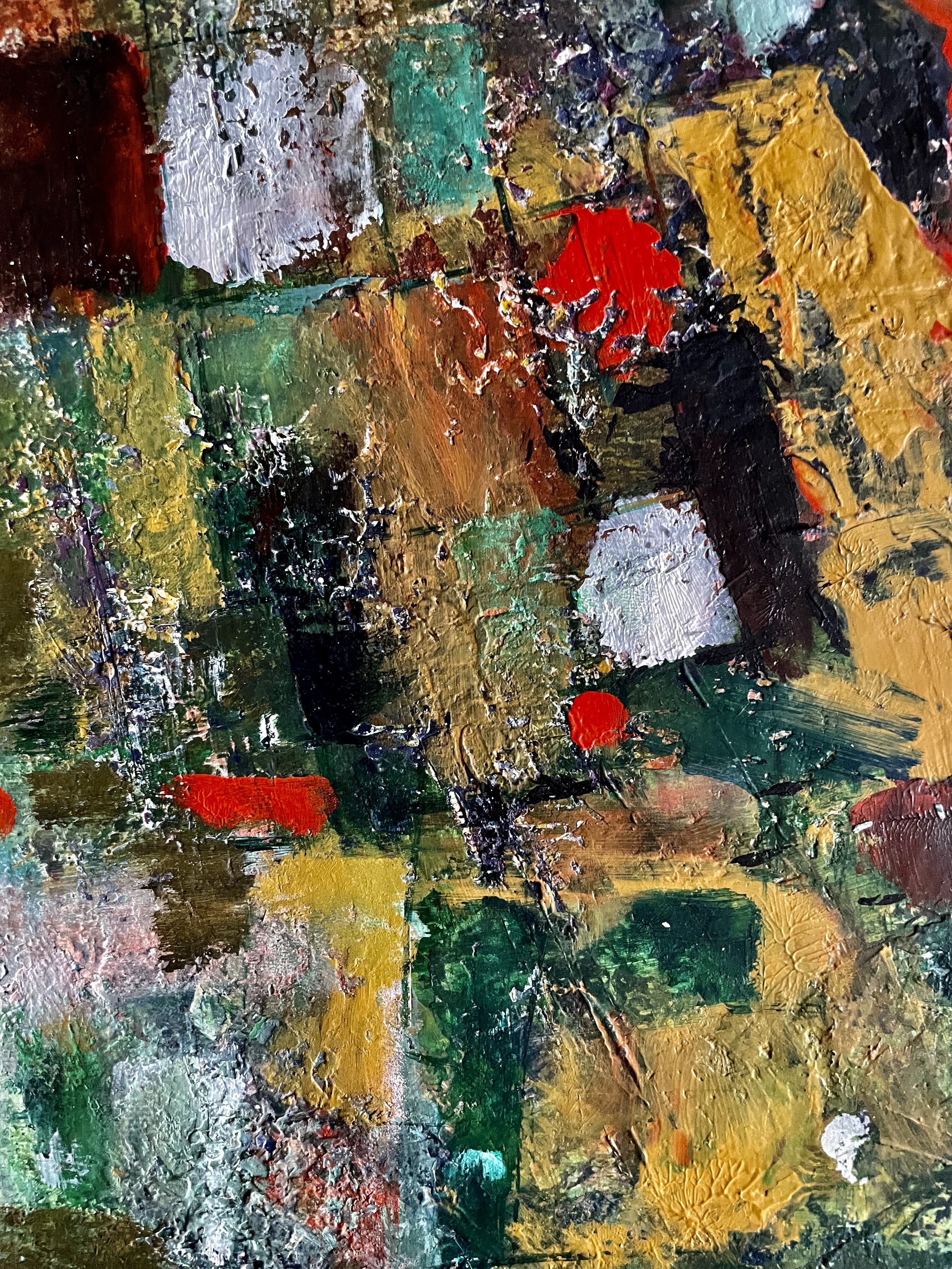
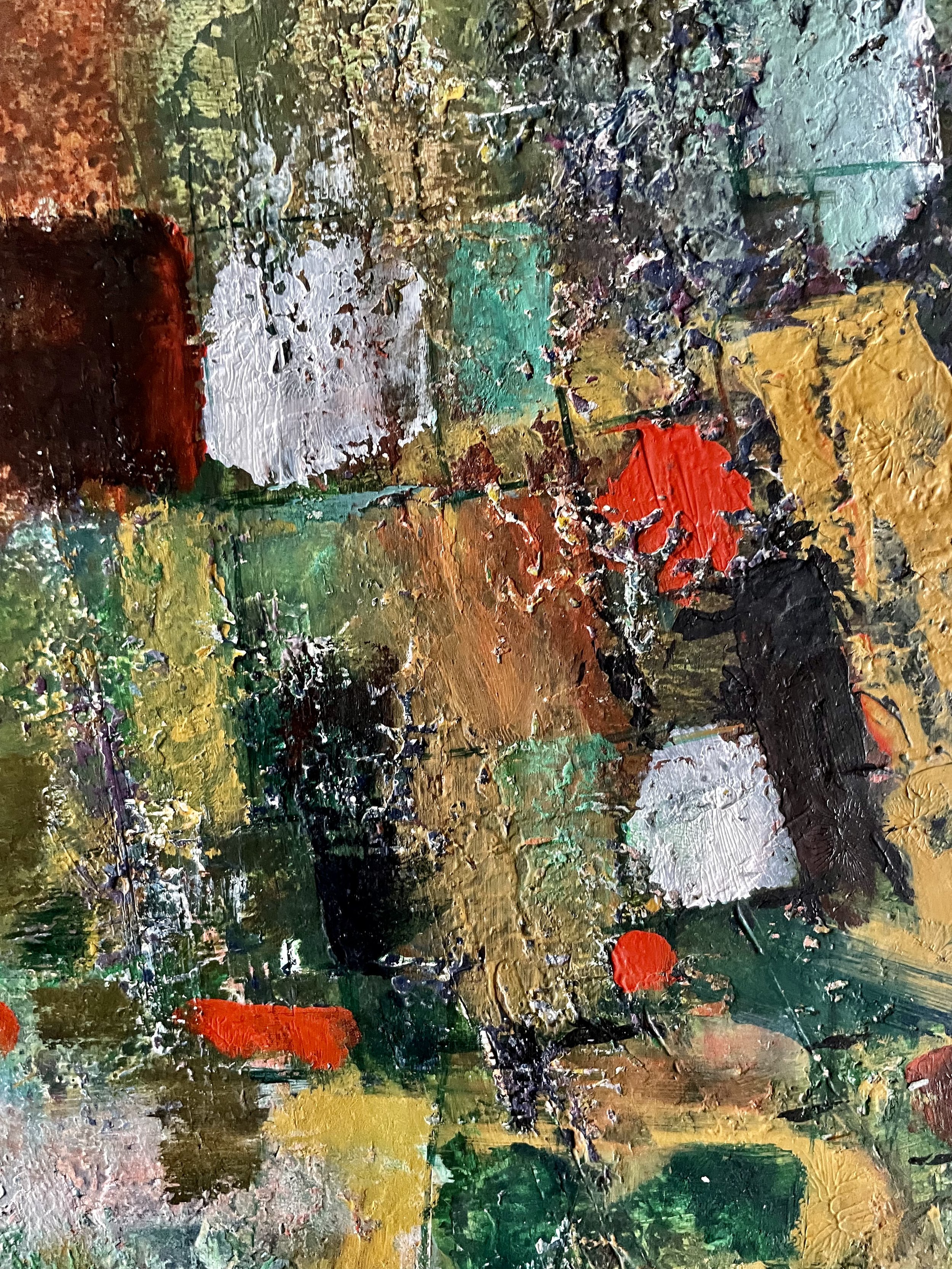
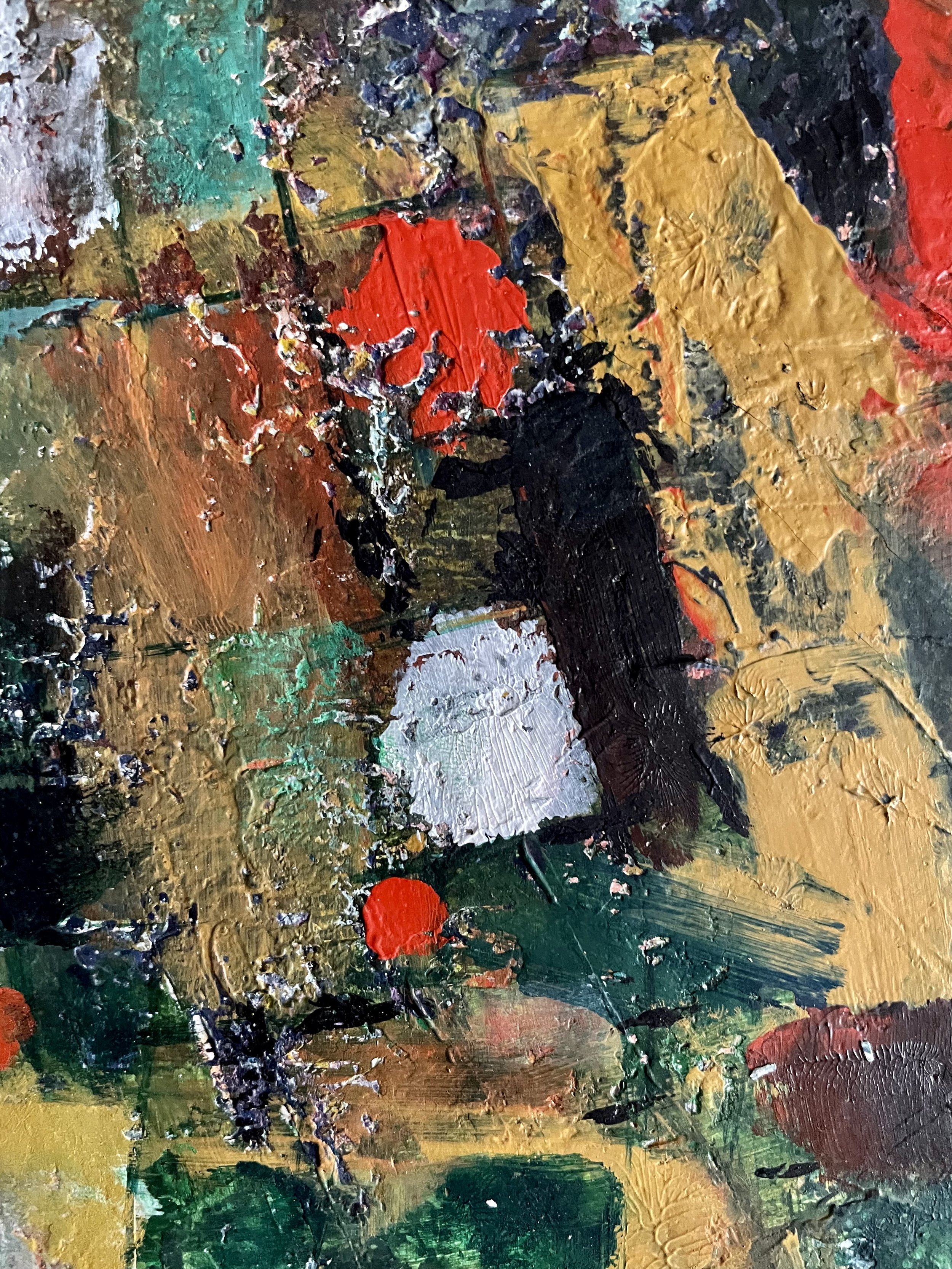
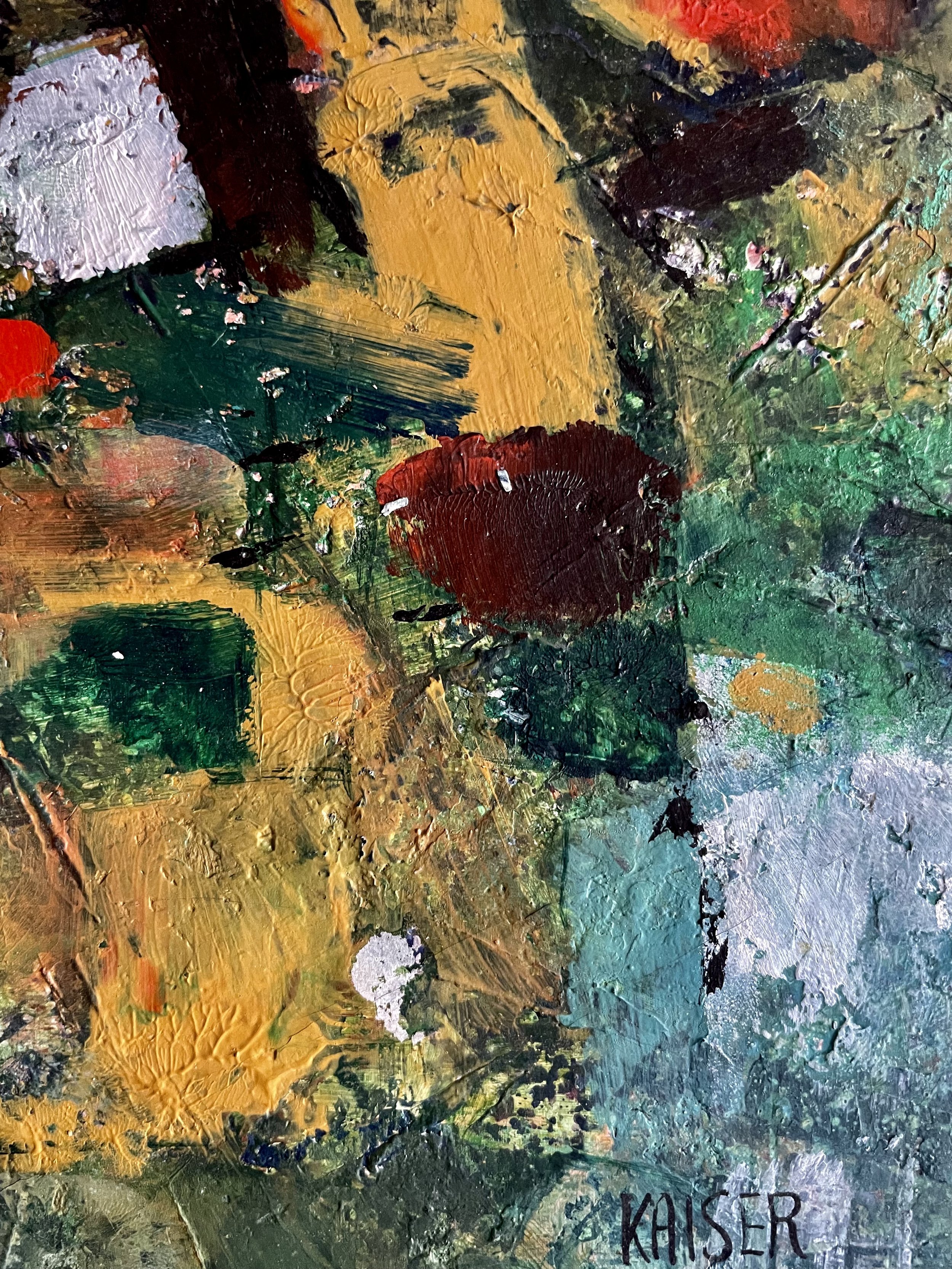
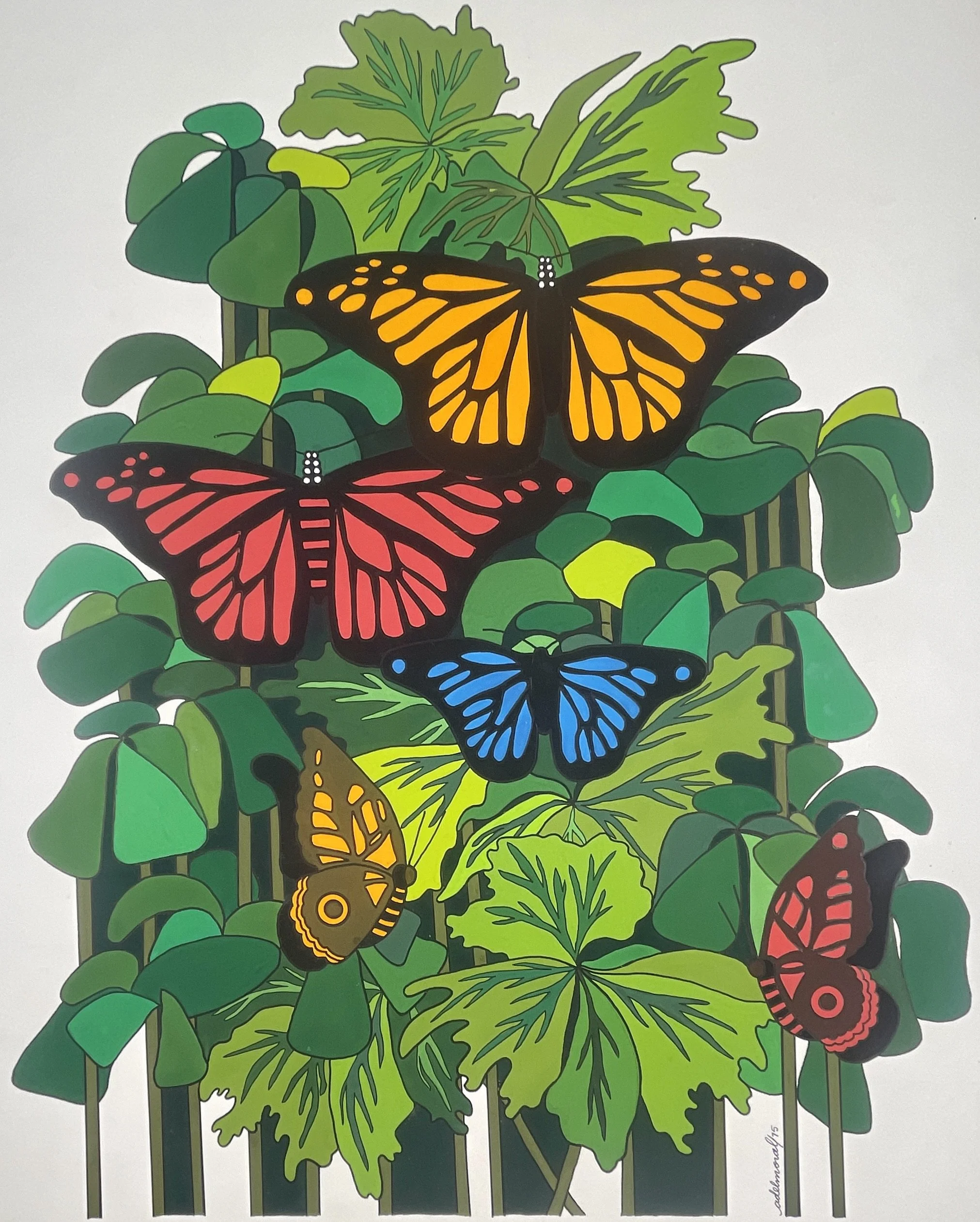
Butterflies in Jungle Foliage Antonio del Moral (b.1941), 1975 watercolor, 23x29 in, signed, bold linear modernist botanical study
Original 1975 watercolor by Antonio del Moral (b. 1941), signed lower right, measuring 23 x 29 inches. This vibrant modernist botanical composition features brilliantly colored butterflies—monarch orange, crimson, cobalt, and ochre—set against stylized tropical foliage rendered in bold linear patterns and calculated fields of green. A striking example of del Moral’s representational yet flattened aesthetic from his mature Washington–Miami period. Provenance: Mitch Morse Gallery; Artfind Gallery, Washington DC.
Artwork Description
Butterflies in Jungle Foliage exemplifies Antonio del Moral’s distinctive visual language—representational imagery distilled into strong linear structure and controlled color relationships. The composition presents five butterflies hovering among layered tropical leaves and vertical bamboo-like stems. Each butterfly is rendered in high-contrast color: a luminous monarch orange, a saturated red, a deep cobalt blue, a warm golden ochre, and a russet tone.
The foliage is constructed through flat planes of varied greens—lime, emerald, forest, and olive—outlined in deliberate dark contours. The vertical stems create rhythm and architectural structure, while the overlapping leaves form a patterned tapestry behind the butterflies. The result is both decorative and disciplined.
Though naturalistic in subject, the work is intentionally flattened. There is minimal modeling; instead, depth is implied through overlapping shapes and tonal variation. This calculated approach to color—where foreground subjects contrast playfully against background foliage—aligns precisely with del Moral’s stated aesthetic philosophy.
Signed “adelmoral75” at lower right, the painting reflects his 1975 period when he was actively exhibiting in Washington, D.C., Miami, and New York. The crisp edges and saturated pigments suggest careful studio execution and a graphic sensibility influenced by both classical training and modernist simplification.
The subject of butterflies—symbols of transformation and migration—resonates subtly with del Moral’s own journey from Havana to Washington, D.C., and his evolving artistic identity in exile. The work balances serenity with visual intensity, revealing an artist confident in his structured, individual style.
Artist Biography
Antonio del Moral (born August 30, 1941, Havana, Cuba) is a Cuban-born American painter whose career bridges classical academic training and modern decorative linearism.
He began his formal art education at the San Alejandro Academy of Art in Havana under the tutelage of Fe de Rosas. His early grounding in drawing and disciplined composition shaped his lifelong emphasis on structure.
In 1962, del Moral emigrated to Washington, D.C., establishing permanent residency and continuing his artistic studies at the Corcoran School of Art. There he studied drawing and painting with Schieffo Still and Professor Archer, the oldest professor at the school at the time and a devoted admirer of Rubens. This exposure to European Baroque principles—particularly Rubens’ compositional clarity—left a subtle imprint on del Moral’s structural sensibility.
He later enrolled at American University (1967–1973), where he pursued advanced-level coursework in sculpture, drawing, and painting. Under Robert D’Arista and Ben L. Summerford, he refined his command of form and color relationships, developing the flattened yet deliberate style that became his signature.
Del Moral won numerous prizes in Washington, D.C. exhibitions and maintained an active exhibition schedule throughout the 1960s and 1970s. His exhibitions included:
Channel Art Gallery (1965)
Open Art Exhibit on the Ellipse, Washington, D.C. (1966–1967)
American University (1967–74, 1972)
Dupont Theater Lobby, Washington, D.C. (1970)
American Art League, Washington, D.C. (1970)
British Petroleum Inc., Washington, D.C. (1971)
International Art Exhibit, Martin Luther King Central Library, Washington, D.C. (1973)
Brickell Gallery, Miami, Florida (1975)
Nena’s Choice Gallery, Bergdorf & Goodman, New York, N.Y. (1975)
Banco Interamericano de Desarrollo, Washington, D.C. (1975)
Art & Curiosity Shop, Miami, Florida (1975)
Metropolitan Museum & Art Center Group Showing, Miami, Florida (1975)
Museum of Science, Miami, Florida (1976)
By the mid-1970s, his work had evolved into what critics described as highly individual—representational, flat, with strong linear patterns and a calculated use of color producing playful contrast between subject and background.
Deep Dive to 2026:
Del Moral occupies an important position among Cuban émigré artists who shaped Washington’s cultural landscape during the Cold War era. While not aligned with overt political expressionism, his work reflects a quiet negotiation between heritage and assimilation. The tropical motifs in his paintings—lush foliage, butterflies, florals—echo Cuban visual memory while rendered with the restraint and structure of American academic training.
His 1970s works, particularly those exhibited in Miami and New York, reveal increasing confidence in bold contour and chromatic discipline. Unlike contemporaries who pursued abstraction, del Moral remained committed to stylized representation, positioning him within a lineage of modern decorative realism.
As of 2026, his works remain present in private collections across Washington, Miami, and New York. His association with institutions such as American University and the Corcoran connects him to an important chapter in mid-20th-century Washington art history. His paintings from 1973–1976 are especially desirable for their mature stylistic cohesion and documented exhibition record.
His artistic identity reflects migration, academic rigor, and a consistent devotion to clarity of line and chromatic structure—an aesthetic both timeless and regionally significant.
Antonio del Moral (b. 1941), Butterflies in Jungle Foliage, 1975, watercolor on paper, signed and dated, 23 x 29 inches. Exhibited Washington–Miami period work.
Certificate of Authentication
This certifies that the artwork Butterflies in Jungle Foliage is an original 1975 watercolor by Antonio del Moral (b. 1941).
Medium: Watercolor on paper
Dimensions: 23 x 29 inches
Signature: Signed and dated lower right
Provenance: Mitch Morse Gallery; Artfind Gallery, Washington DC
The work is guaranteed authentic to the best of our professional knowledge and expertise.
Condition
Very good vintage condition. Minor age toning to margins and slight handling marks consistent with age. Strong color retention. No visible restoration.
Provenance
Mitch Morse Gallery, New York (acquired in NYC, United States and Europe)
Artfind Gallery, Washington DC (current owner)
Citations:
San Alejandro Academy historical records
Corcoran School of Art archives
American University art department records
Exhibition history documents provided in artist materials
Washington, D.C. exhibition listings 1965–1976
Butterflies in Jungle Foliage Antonio del Moral (b.1941), 1975 watercolor, 23x29 in, signed, bold linear modernist botanical study
Original 1975 watercolor by Antonio del Moral (b. 1941), signed lower right, measuring 23 x 29 inches. This vibrant modernist botanical composition features brilliantly colored butterflies—monarch orange, crimson, cobalt, and ochre—set against stylized tropical foliage rendered in bold linear patterns and calculated fields of green. A striking example of del Moral’s representational yet flattened aesthetic from his mature Washington–Miami period. Provenance: Mitch Morse Gallery; Artfind Gallery, Washington DC.
Artwork Description
Butterflies in Jungle Foliage exemplifies Antonio del Moral’s distinctive visual language—representational imagery distilled into strong linear structure and controlled color relationships. The composition presents five butterflies hovering among layered tropical leaves and vertical bamboo-like stems. Each butterfly is rendered in high-contrast color: a luminous monarch orange, a saturated red, a deep cobalt blue, a warm golden ochre, and a russet tone.
The foliage is constructed through flat planes of varied greens—lime, emerald, forest, and olive—outlined in deliberate dark contours. The vertical stems create rhythm and architectural structure, while the overlapping leaves form a patterned tapestry behind the butterflies. The result is both decorative and disciplined.
Though naturalistic in subject, the work is intentionally flattened. There is minimal modeling; instead, depth is implied through overlapping shapes and tonal variation. This calculated approach to color—where foreground subjects contrast playfully against background foliage—aligns precisely with del Moral’s stated aesthetic philosophy.
Signed “adelmoral75” at lower right, the painting reflects his 1975 period when he was actively exhibiting in Washington, D.C., Miami, and New York. The crisp edges and saturated pigments suggest careful studio execution and a graphic sensibility influenced by both classical training and modernist simplification.
The subject of butterflies—symbols of transformation and migration—resonates subtly with del Moral’s own journey from Havana to Washington, D.C., and his evolving artistic identity in exile. The work balances serenity with visual intensity, revealing an artist confident in his structured, individual style.
Artist Biography
Antonio del Moral (born August 30, 1941, Havana, Cuba) is a Cuban-born American painter whose career bridges classical academic training and modern decorative linearism.
He began his formal art education at the San Alejandro Academy of Art in Havana under the tutelage of Fe de Rosas. His early grounding in drawing and disciplined composition shaped his lifelong emphasis on structure.
In 1962, del Moral emigrated to Washington, D.C., establishing permanent residency and continuing his artistic studies at the Corcoran School of Art. There he studied drawing and painting with Schieffo Still and Professor Archer, the oldest professor at the school at the time and a devoted admirer of Rubens. This exposure to European Baroque principles—particularly Rubens’ compositional clarity—left a subtle imprint on del Moral’s structural sensibility.
He later enrolled at American University (1967–1973), where he pursued advanced-level coursework in sculpture, drawing, and painting. Under Robert D’Arista and Ben L. Summerford, he refined his command of form and color relationships, developing the flattened yet deliberate style that became his signature.
Del Moral won numerous prizes in Washington, D.C. exhibitions and maintained an active exhibition schedule throughout the 1960s and 1970s. His exhibitions included:
Channel Art Gallery (1965)
Open Art Exhibit on the Ellipse, Washington, D.C. (1966–1967)
American University (1967–74, 1972)
Dupont Theater Lobby, Washington, D.C. (1970)
American Art League, Washington, D.C. (1970)
British Petroleum Inc., Washington, D.C. (1971)
International Art Exhibit, Martin Luther King Central Library, Washington, D.C. (1973)
Brickell Gallery, Miami, Florida (1975)
Nena’s Choice Gallery, Bergdorf & Goodman, New York, N.Y. (1975)
Banco Interamericano de Desarrollo, Washington, D.C. (1975)
Art & Curiosity Shop, Miami, Florida (1975)
Metropolitan Museum & Art Center Group Showing, Miami, Florida (1975)
Museum of Science, Miami, Florida (1976)
By the mid-1970s, his work had evolved into what critics described as highly individual—representational, flat, with strong linear patterns and a calculated use of color producing playful contrast between subject and background.
Deep Dive to 2026:
Del Moral occupies an important position among Cuban émigré artists who shaped Washington’s cultural landscape during the Cold War era. While not aligned with overt political expressionism, his work reflects a quiet negotiation between heritage and assimilation. The tropical motifs in his paintings—lush foliage, butterflies, florals—echo Cuban visual memory while rendered with the restraint and structure of American academic training.
His 1970s works, particularly those exhibited in Miami and New York, reveal increasing confidence in bold contour and chromatic discipline. Unlike contemporaries who pursued abstraction, del Moral remained committed to stylized representation, positioning him within a lineage of modern decorative realism.
As of 2026, his works remain present in private collections across Washington, Miami, and New York. His association with institutions such as American University and the Corcoran connects him to an important chapter in mid-20th-century Washington art history. His paintings from 1973–1976 are especially desirable for their mature stylistic cohesion and documented exhibition record.
His artistic identity reflects migration, academic rigor, and a consistent devotion to clarity of line and chromatic structure—an aesthetic both timeless and regionally significant.
Antonio del Moral (b. 1941), Butterflies in Jungle Foliage, 1975, watercolor on paper, signed and dated, 23 x 29 inches. Exhibited Washington–Miami period work.
Certificate of Authentication
This certifies that the artwork Butterflies in Jungle Foliage is an original 1975 watercolor by Antonio del Moral (b. 1941).
Medium: Watercolor on paper
Dimensions: 23 x 29 inches
Signature: Signed and dated lower right
Provenance: Mitch Morse Gallery; Artfind Gallery, Washington DC
The work is guaranteed authentic to the best of our professional knowledge and expertise.
Condition
Very good vintage condition. Minor age toning to margins and slight handling marks consistent with age. Strong color retention. No visible restoration.
Provenance
Mitch Morse Gallery, New York (acquired in NYC, United States and Europe)
Artfind Gallery, Washington DC (current owner)
Citations:
San Alejandro Academy historical records
Corcoran School of Art archives
American University art department records
Exhibition history documents provided in artist materials
Washington, D.C. exhibition listings 1965–1976