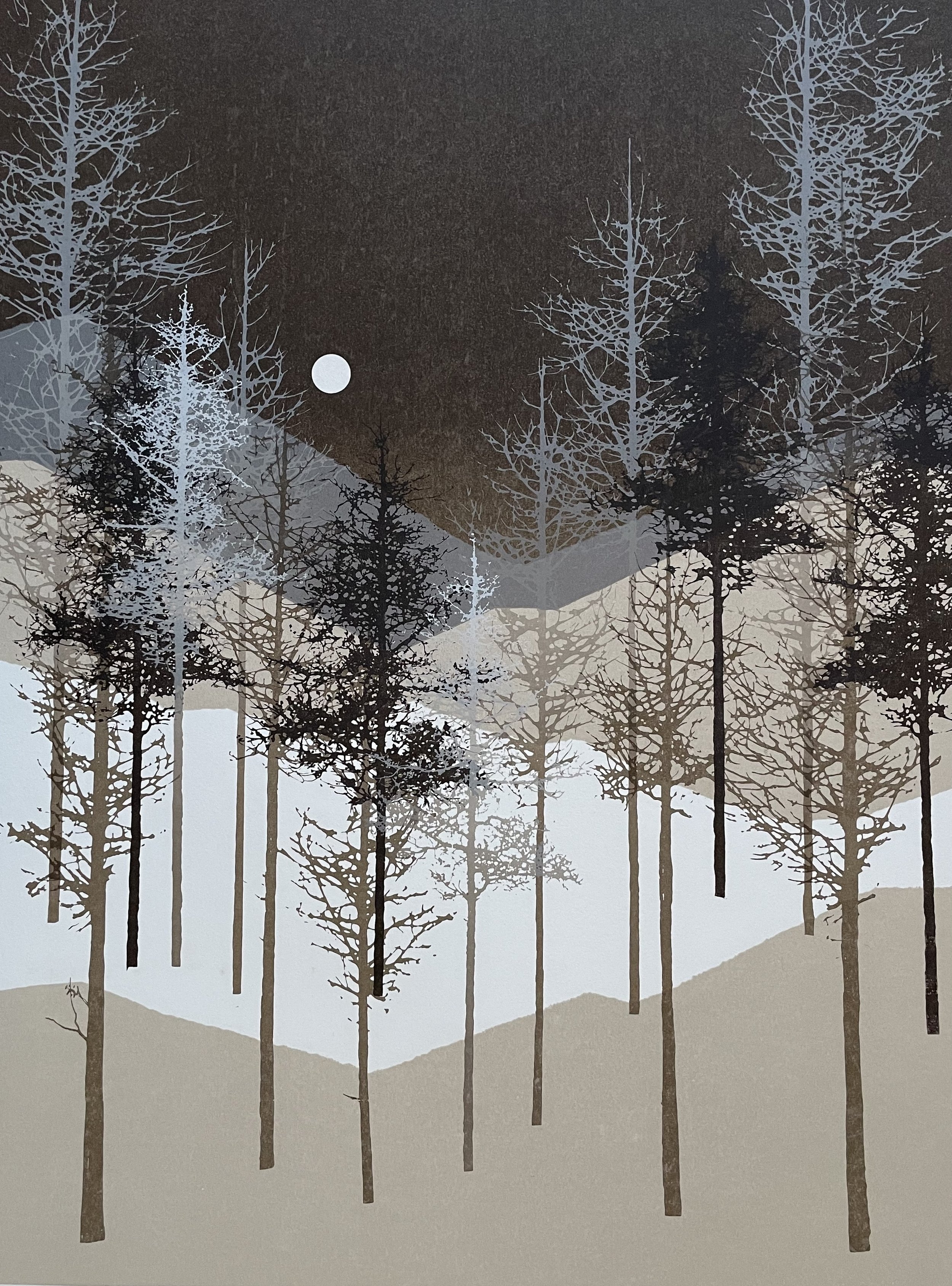
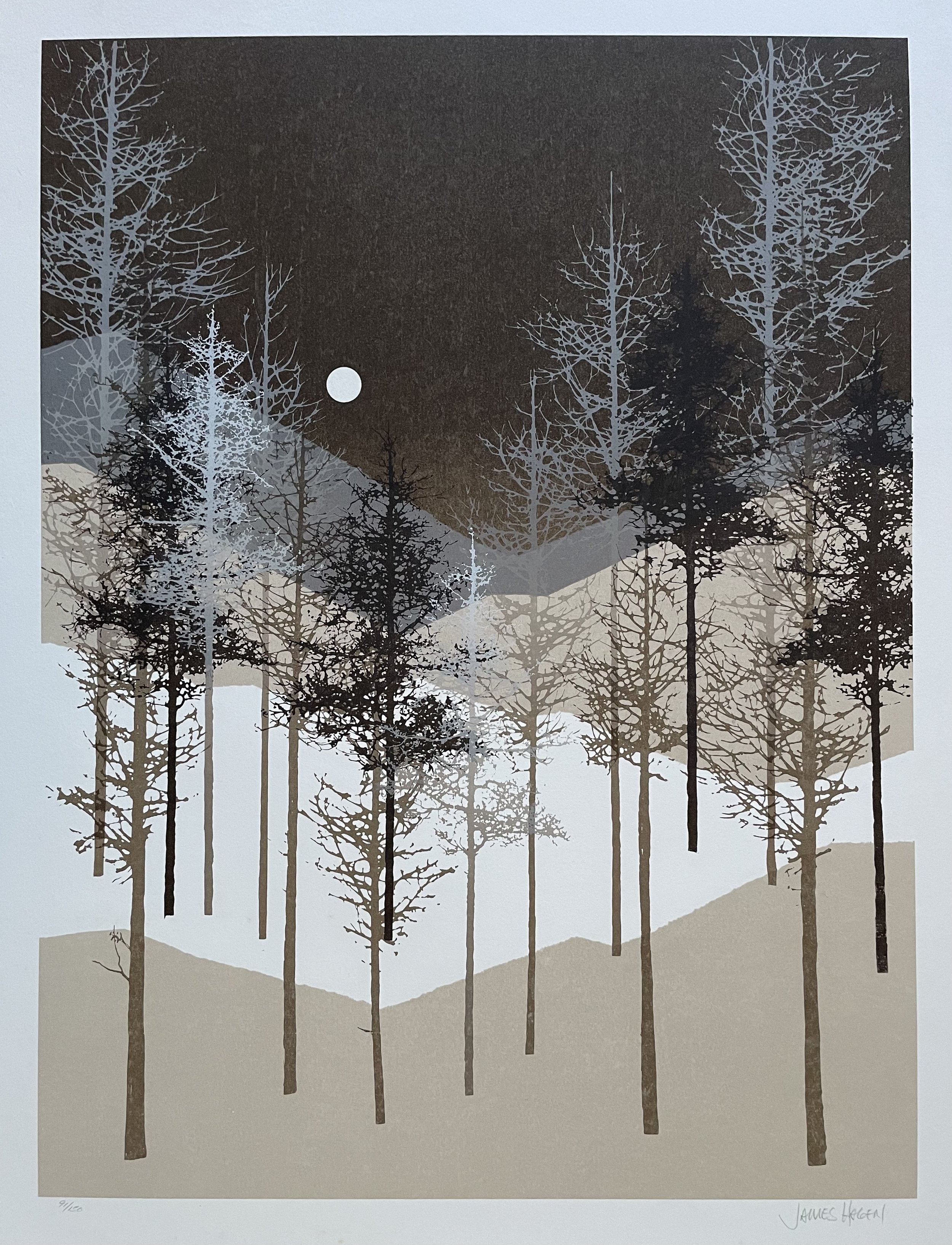
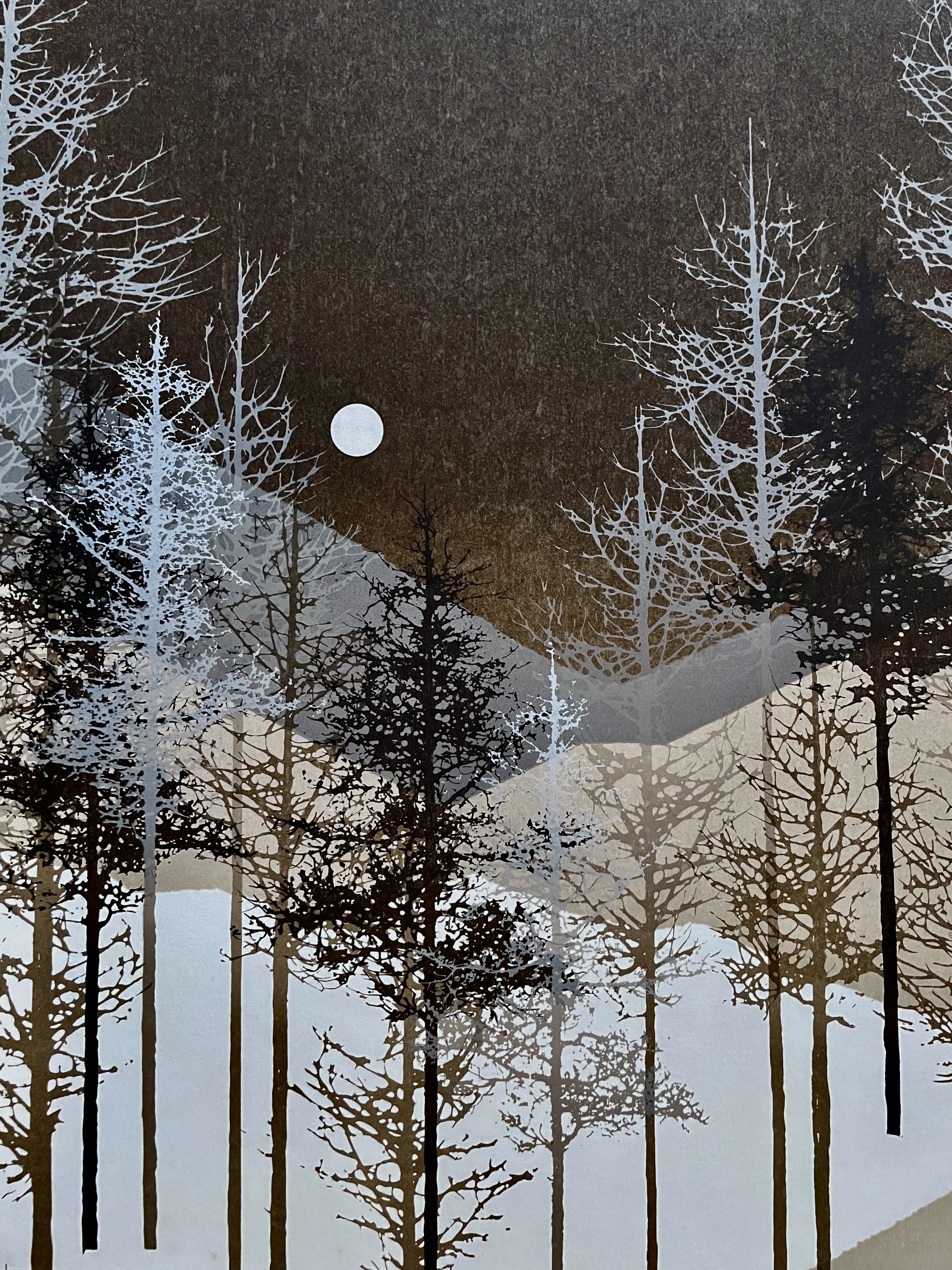
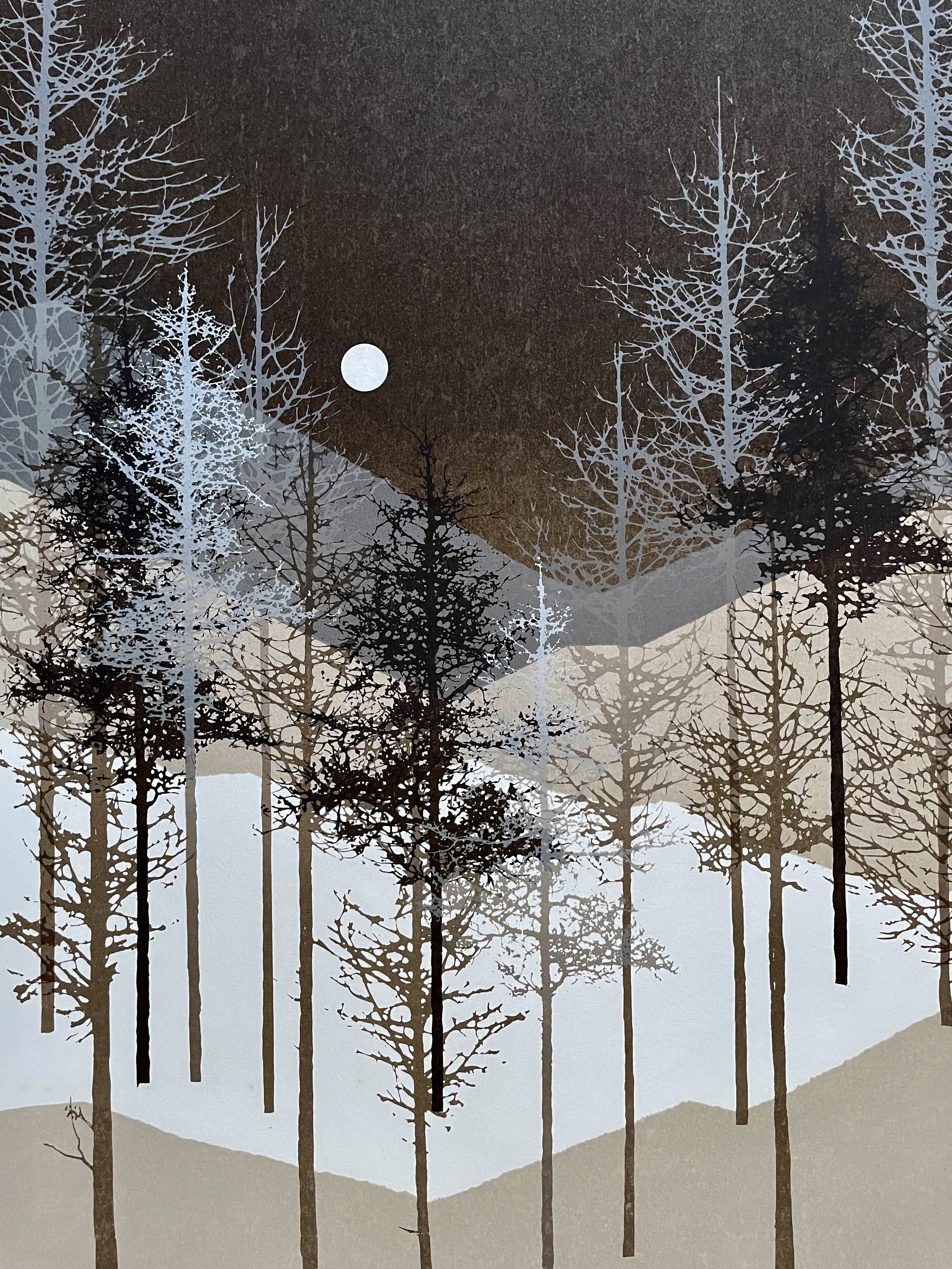
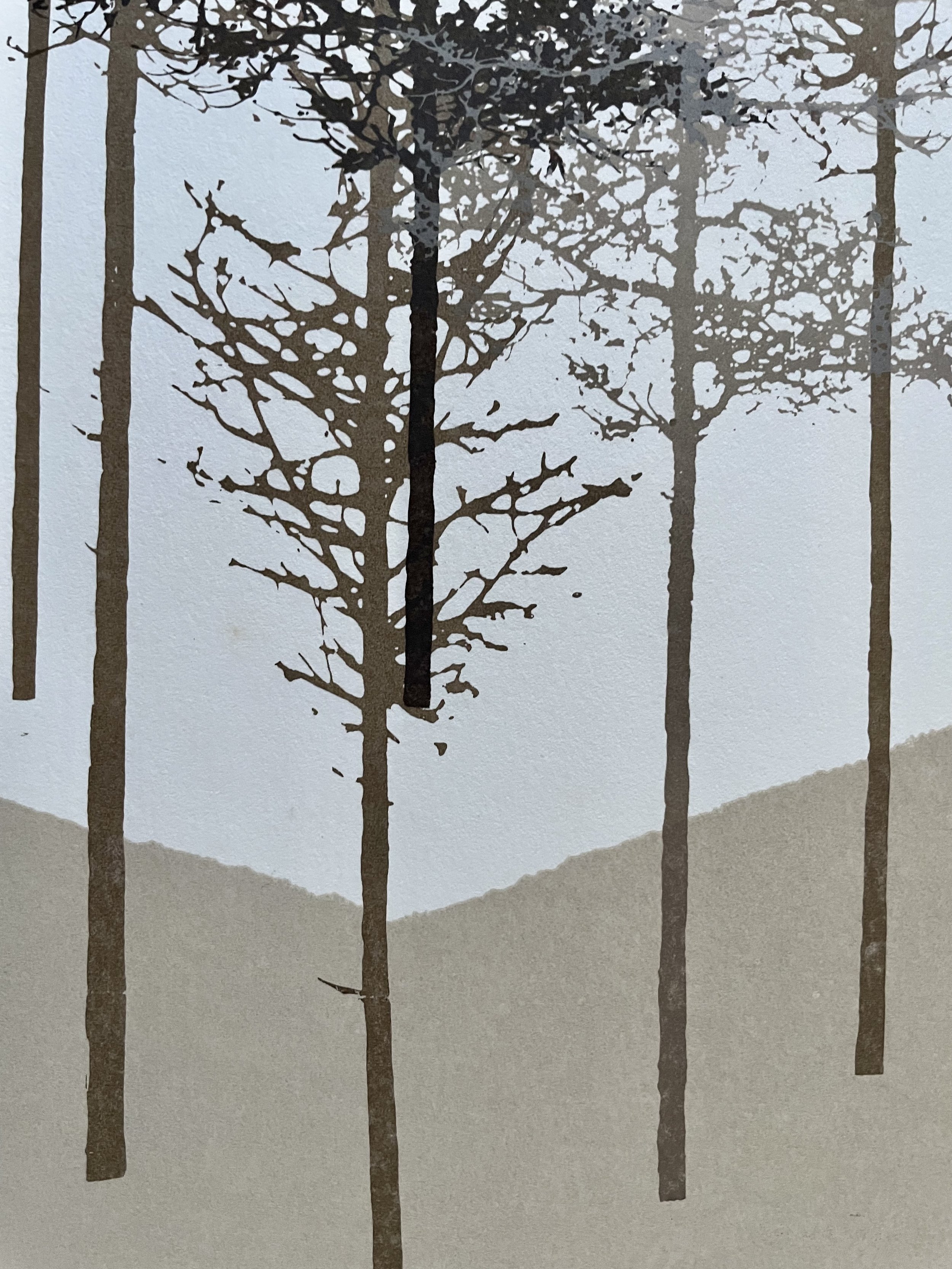
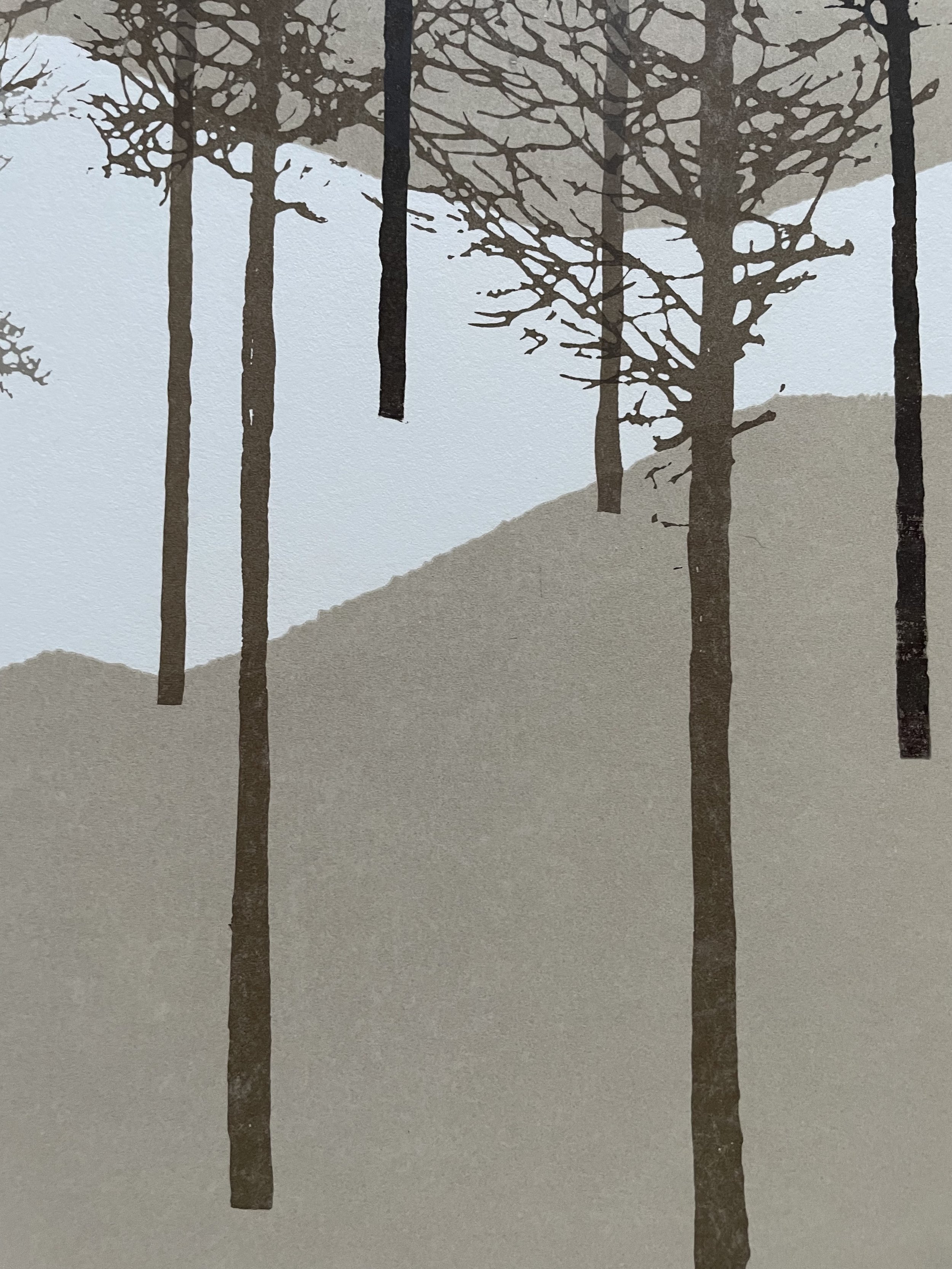
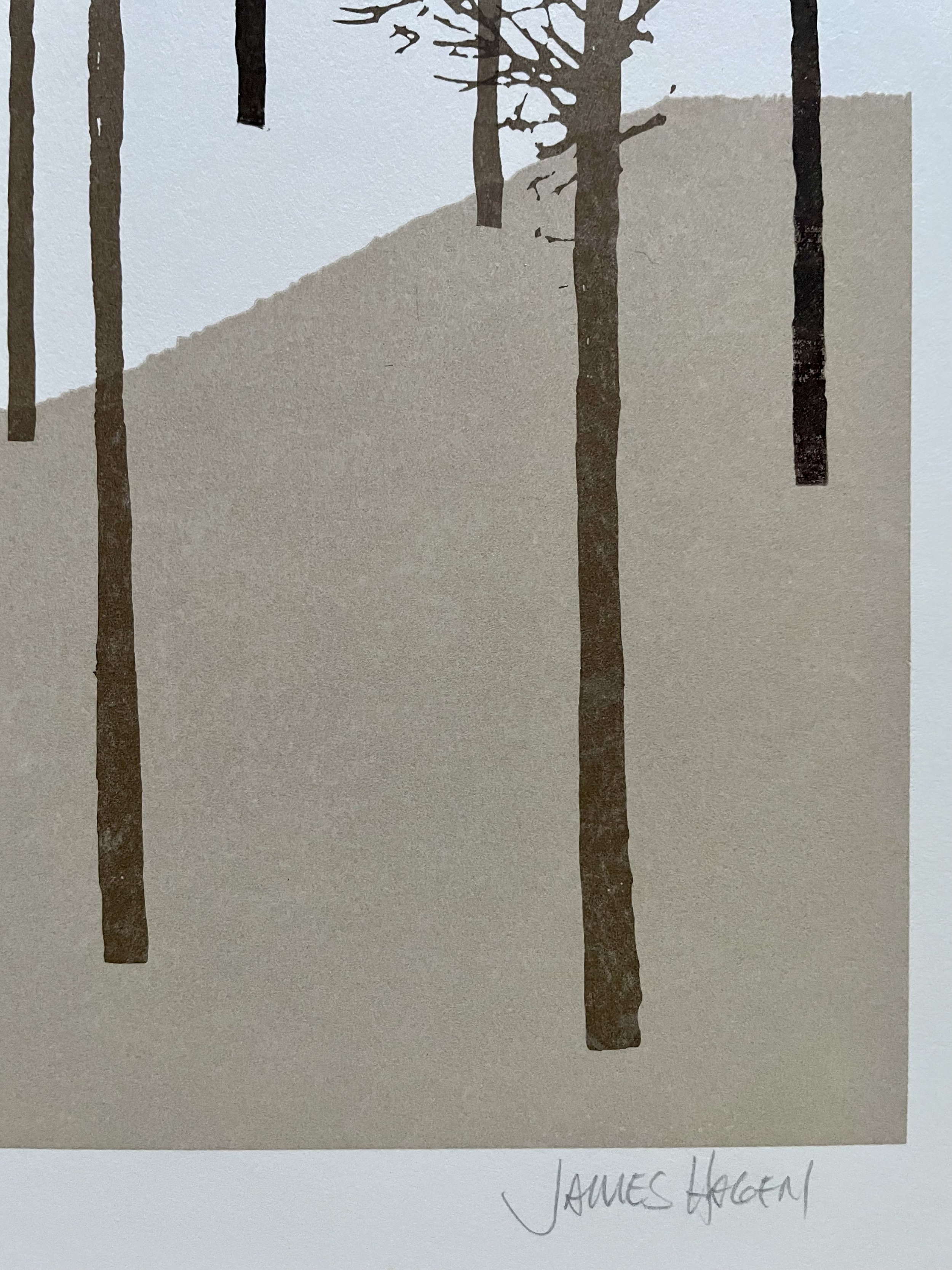
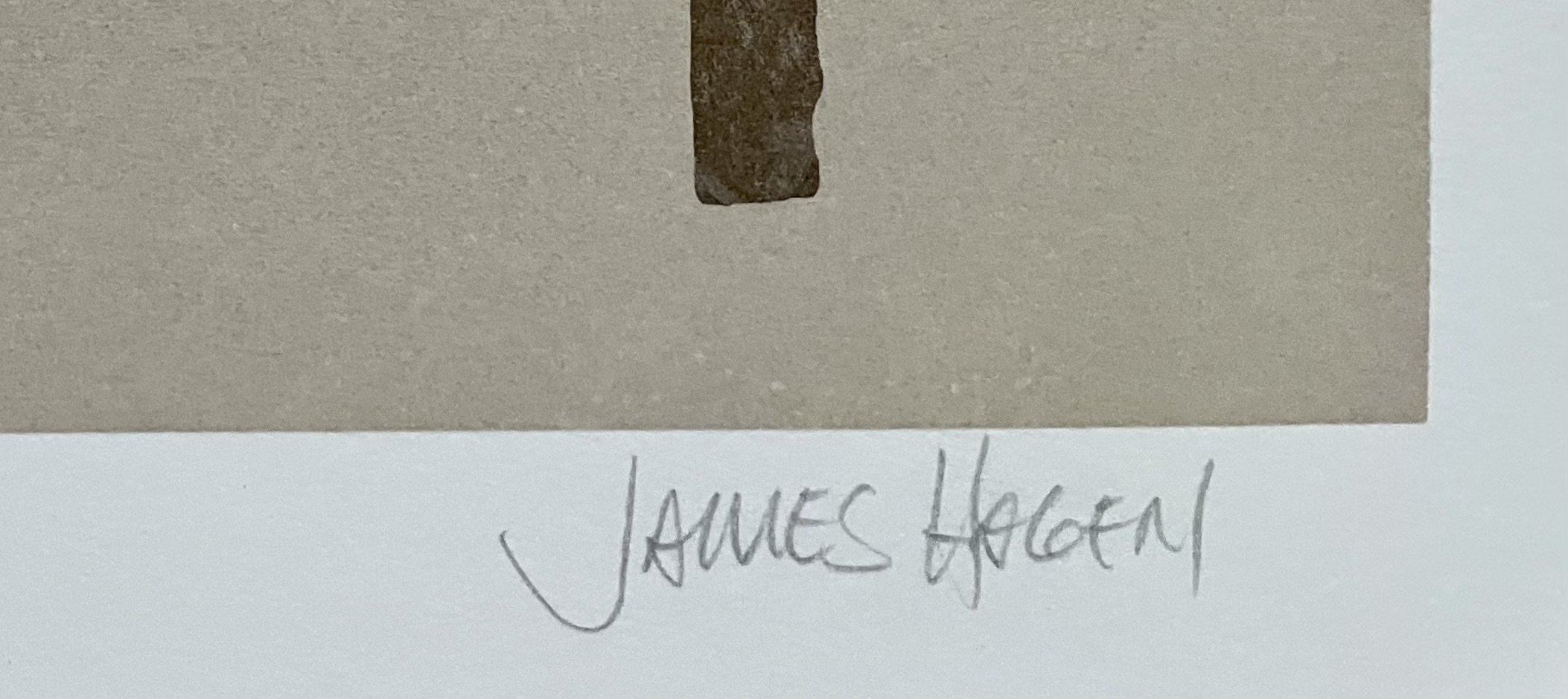
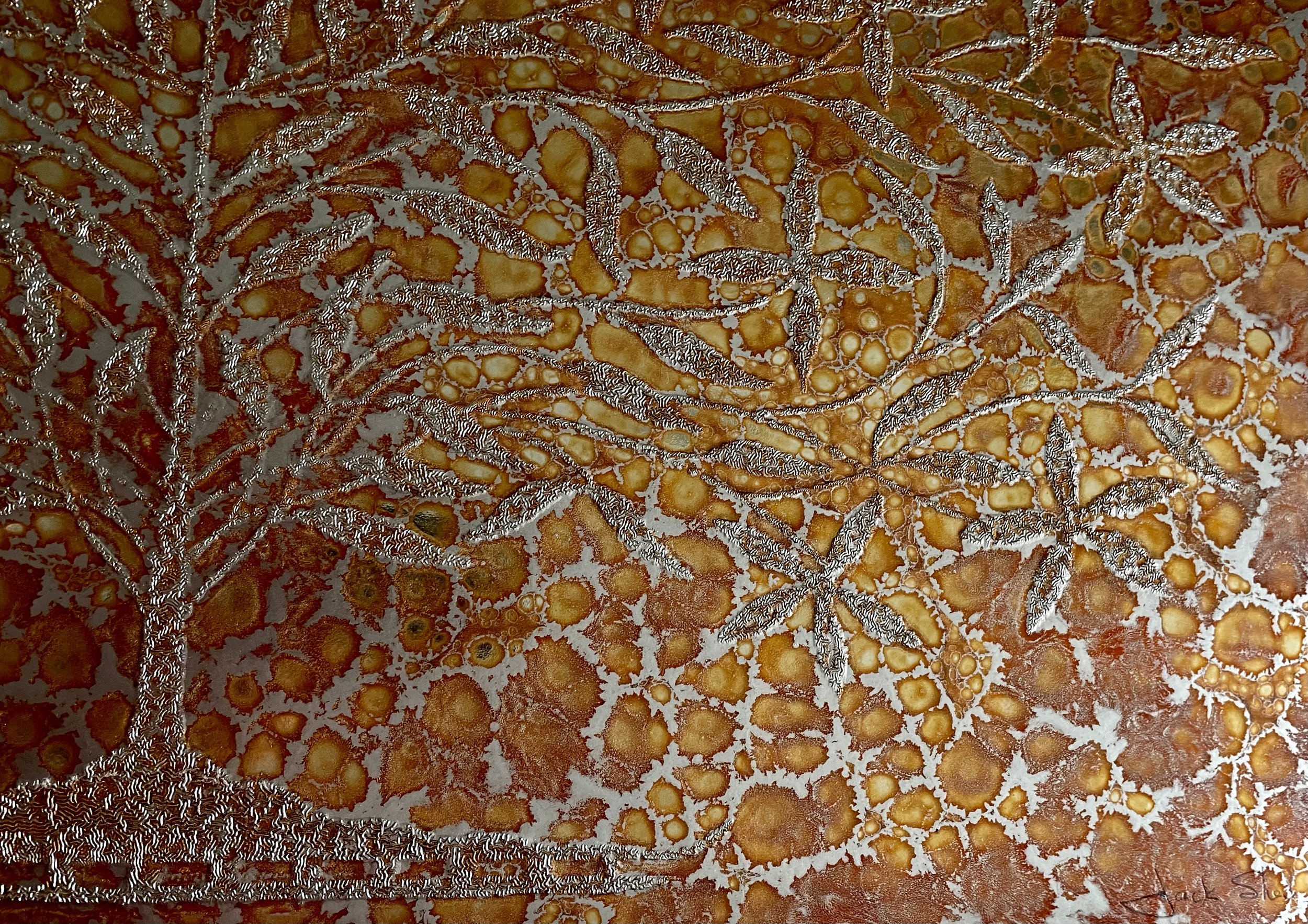
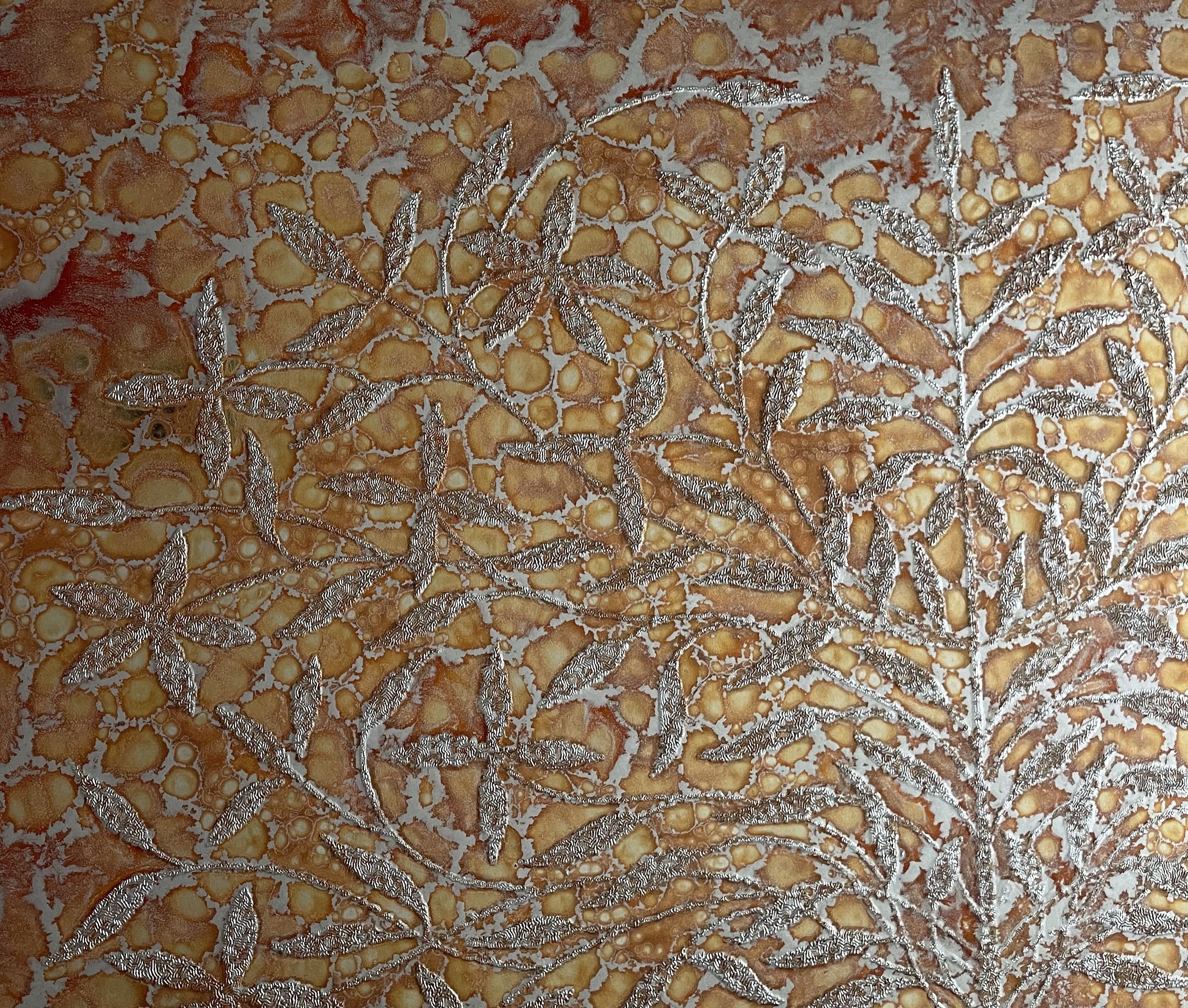
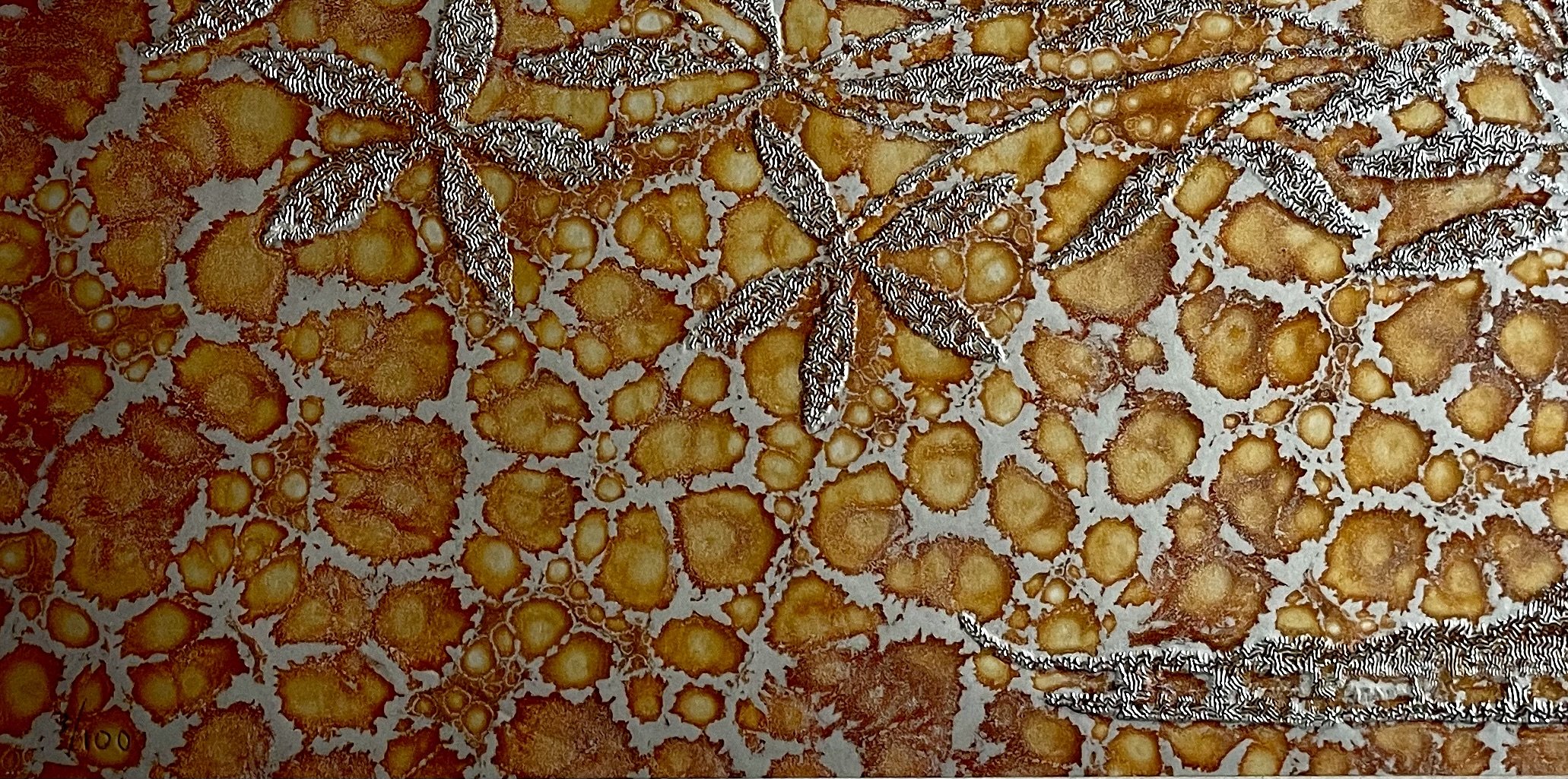
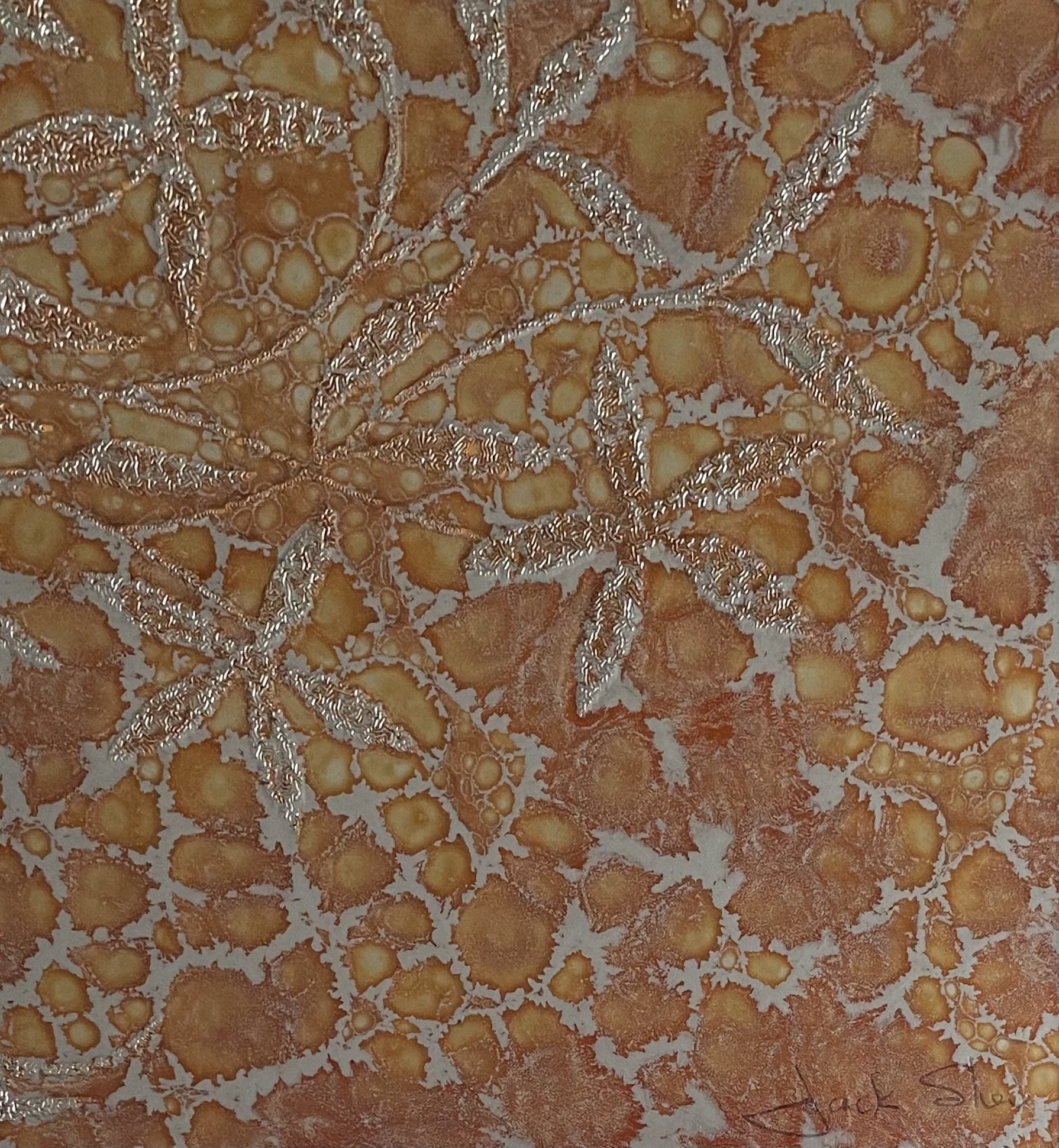
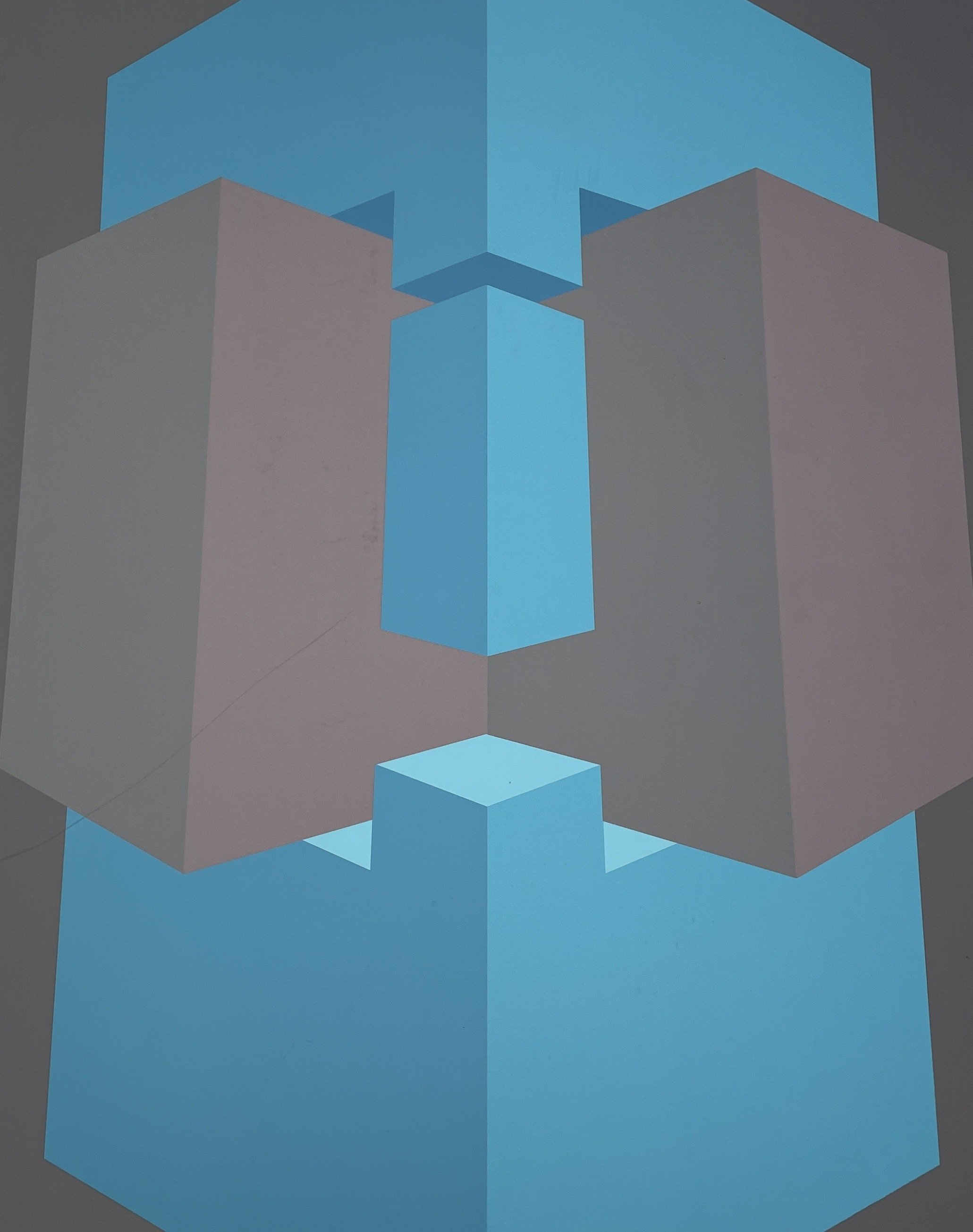
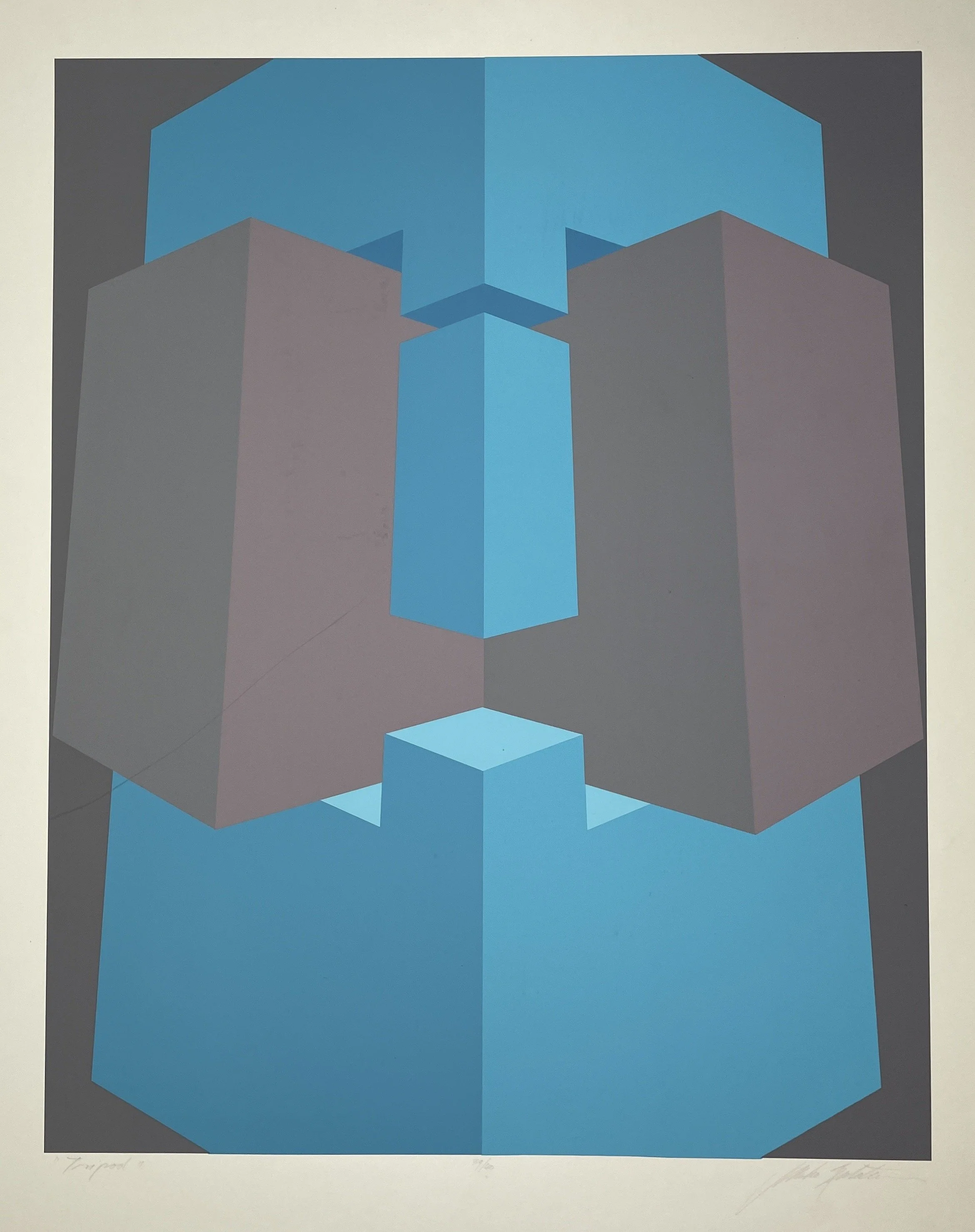
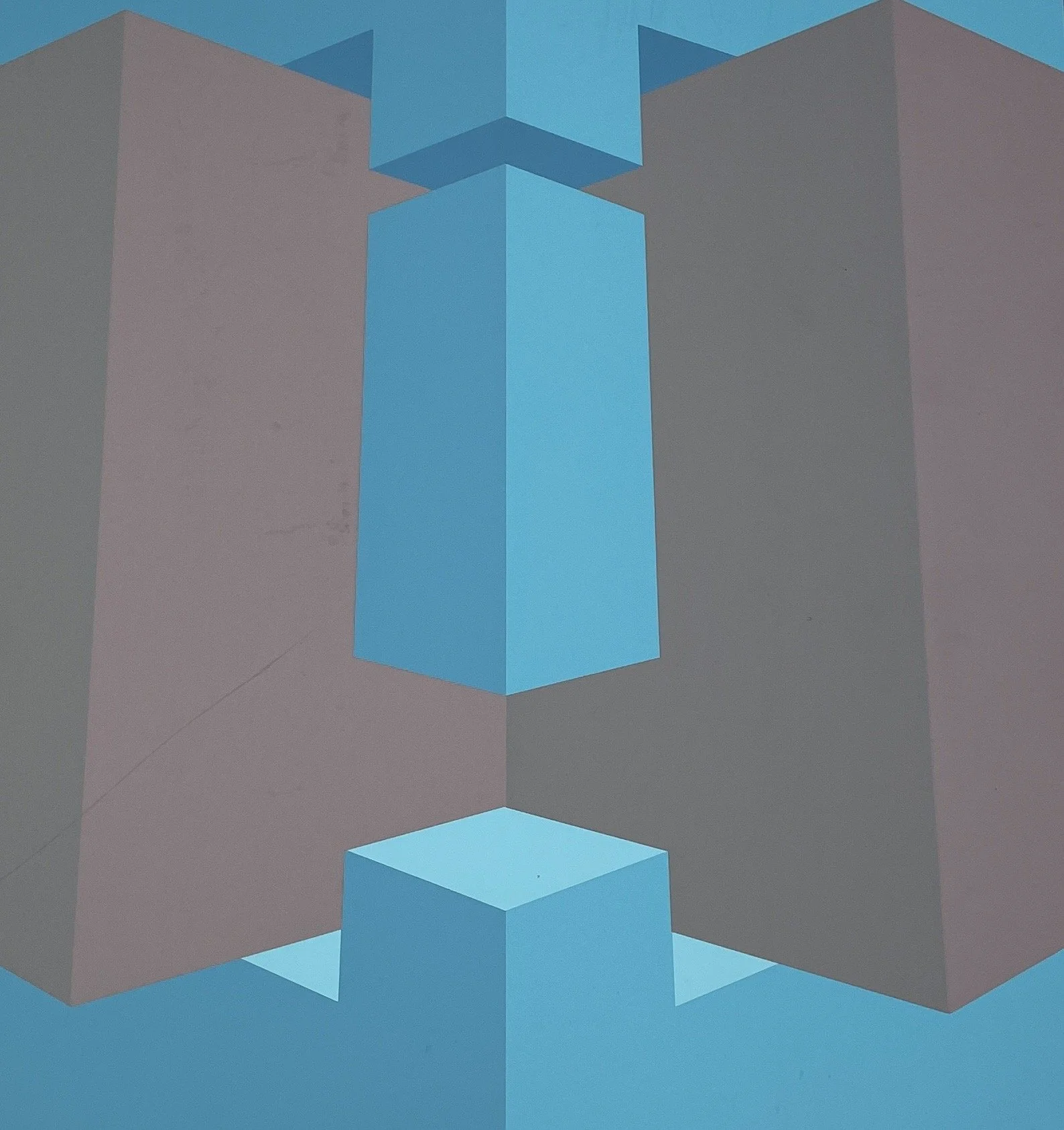
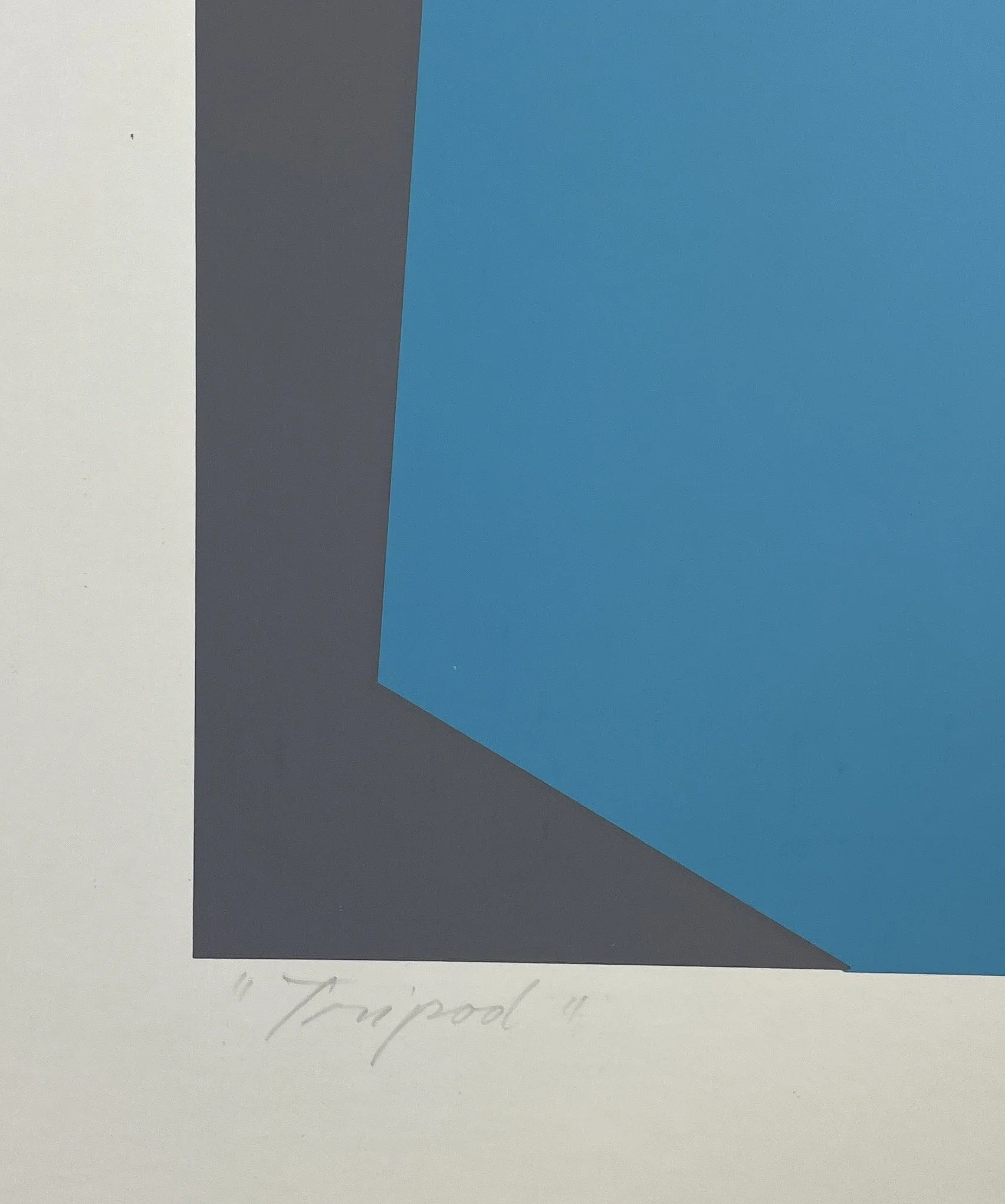
“Fortress Garden” (attributed), Mimo (active c.1970s), c.1970s serigraph, 23 × 29 in., pencil signed “Mimo,” numbered 34/50 of 100.
A striking 1970s hard-edge serigraph attributed to Mimo, featuring bold architectural geometry, saturated color fields, and crisp modernist design, signed and numbered.
Artwork Description
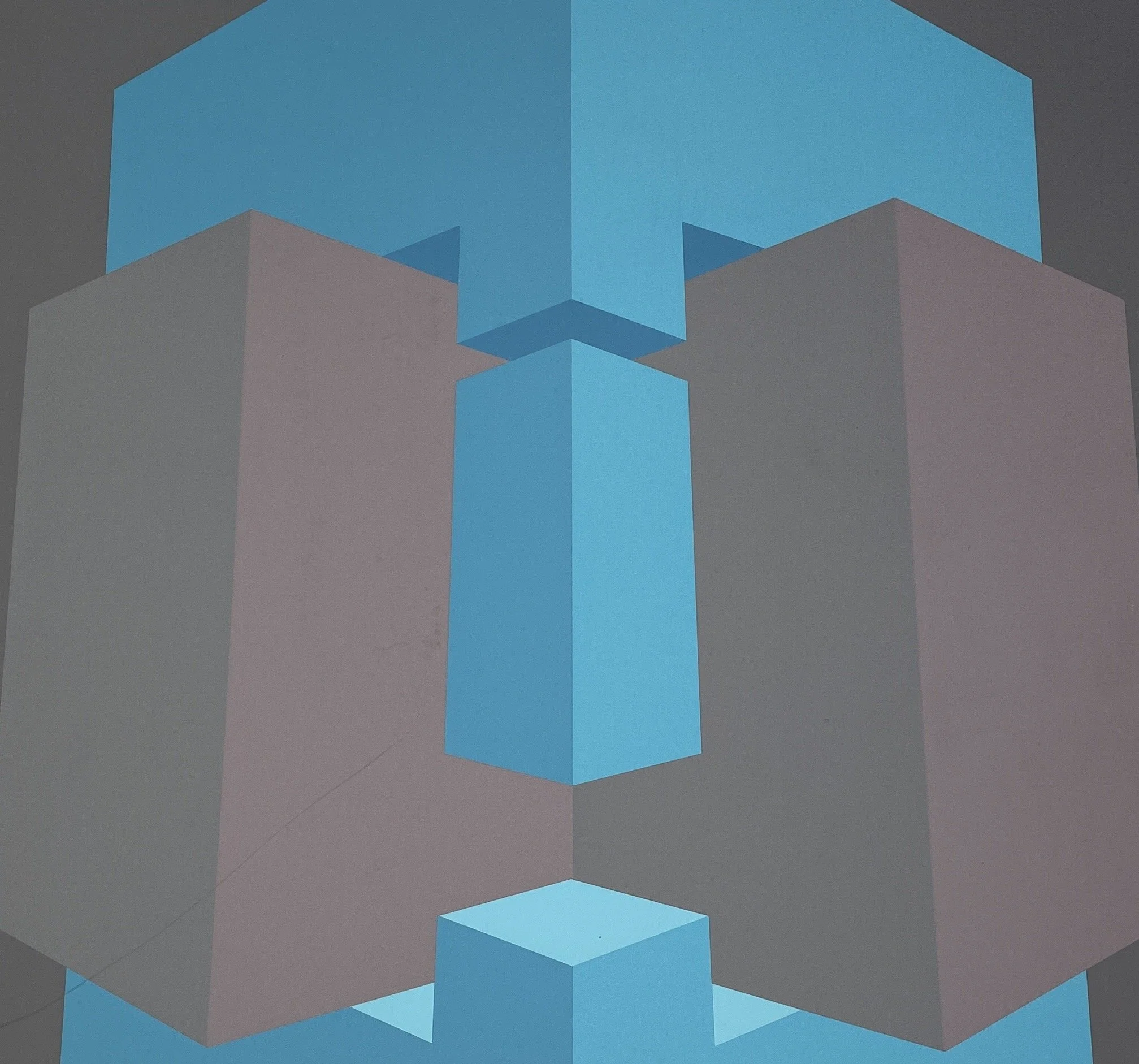
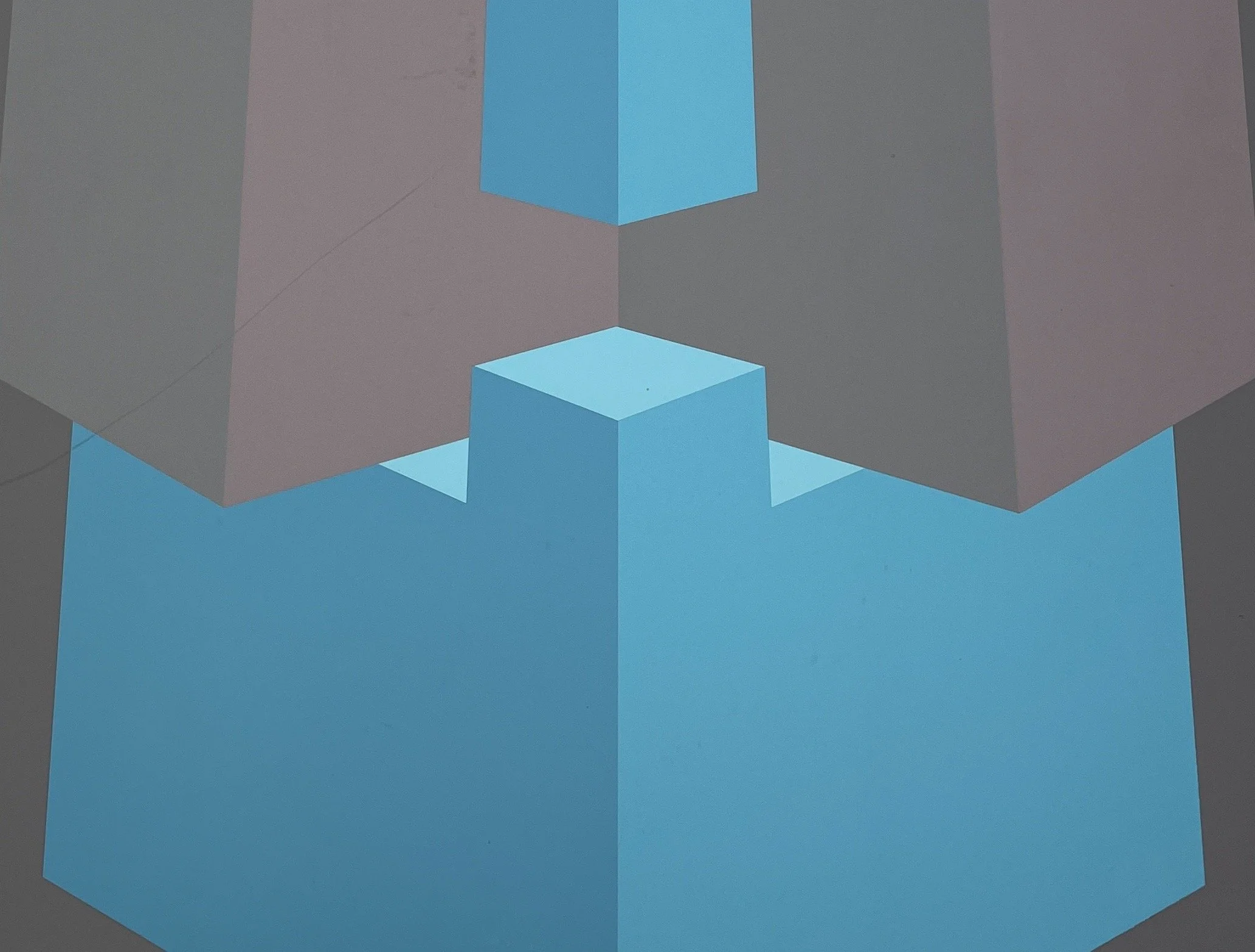
This work presents a highly graphic architectural landscape rendered in flat, saturated planes of cobalt blue, green, yellow, and black. The composition is constructed through precise geometry and strong linear perspective, drawing the viewer inward toward a stylized tower and fortified structure. Shadows and forms are reduced to clean shapes, emphasizing balance, symmetry, and visual clarity rather than realism.
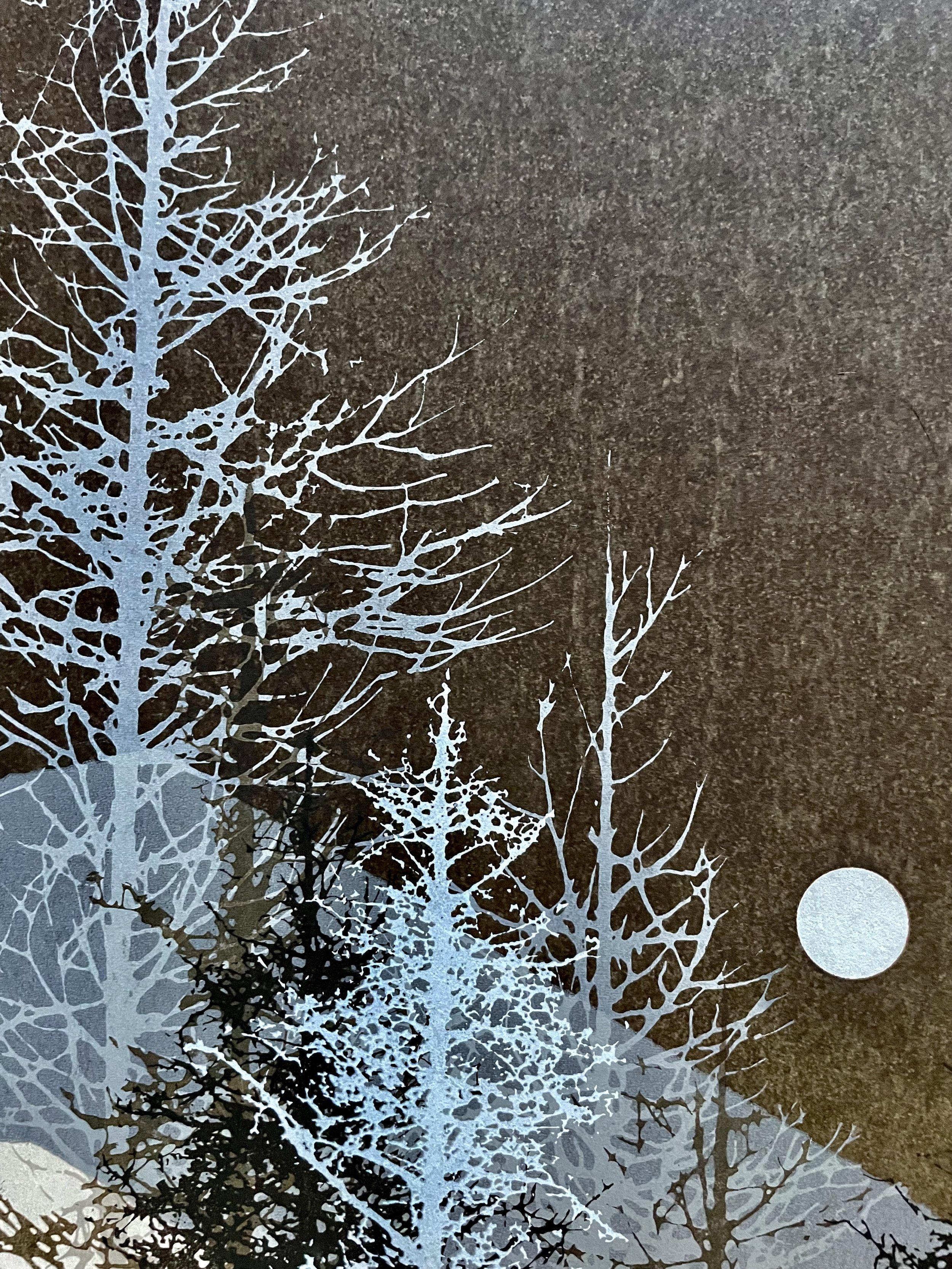
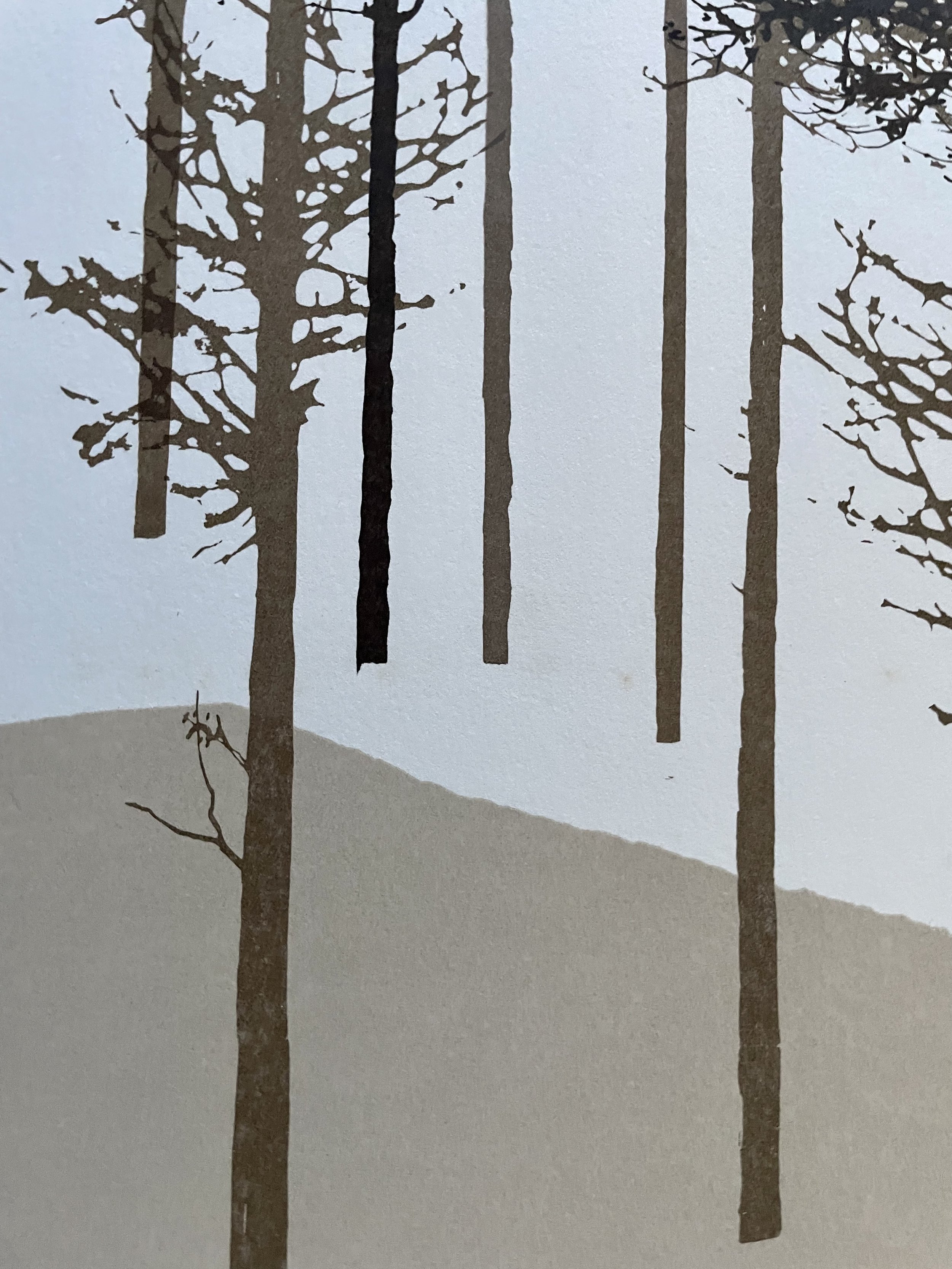
The aesthetic aligns with hard-edge modernism and graphic abstraction popular in the 1970s, when artists embraced screenprinting for its ability to produce perfectly opaque color fields and sharp edges. The bold framing border and layered color application indicate a multi-screen serigraph process. The overall effect is architectural, contemplative, and highly decorative, making the work well suited to modern, Mid-Century, and contemporary interiors.
Artist Biography
Mimo is an artist known through signed and editioned serigraphs circulating primarily in the United States during the 1970s and early 1980s. Works bearing the single-name signature “Mimo” are characterized by strong geometric structure, architectural or landscape-inspired compositions, and a disciplined use of flat, saturated color. These works align closely with the hard-edge and graphic modernist movements that gained wide popularity during the period.
Serigraphy was the artist’s preferred medium, allowing for precise color control and clean visual separation between forms. Mimo’s prints were produced in limited editions and distributed through gallery networks and publishers specializing in modern decorative prints. While comprehensive biographical records under the single name “Mimo” remain limited, the consistency of style, technique, and signature across known works supports attribution to a single professional artist active during the 1970s print market.
Mimo’s work reflects the broader cultural embrace of modern design in that era, bridging fine art and architectural aesthetics with a strong emphasis on clarity, balance, and visual impact.
Mimo (active c.1970s), Fortress Garden (attributed), c.1970s, serigraph on paper, 23 × 29 in., pencil signed and numbered 34/50 of 100.
Certificate of Value & Authentication
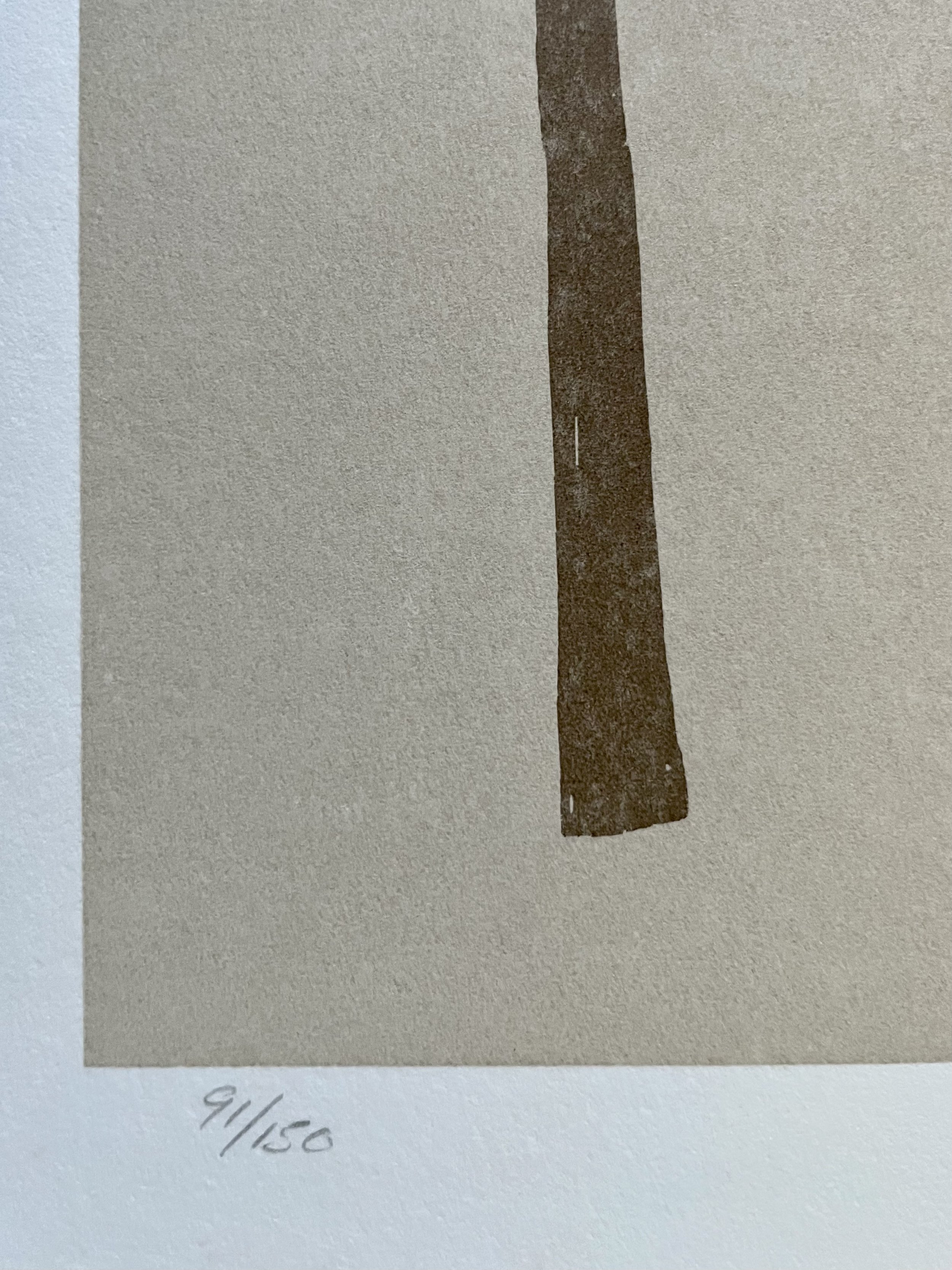
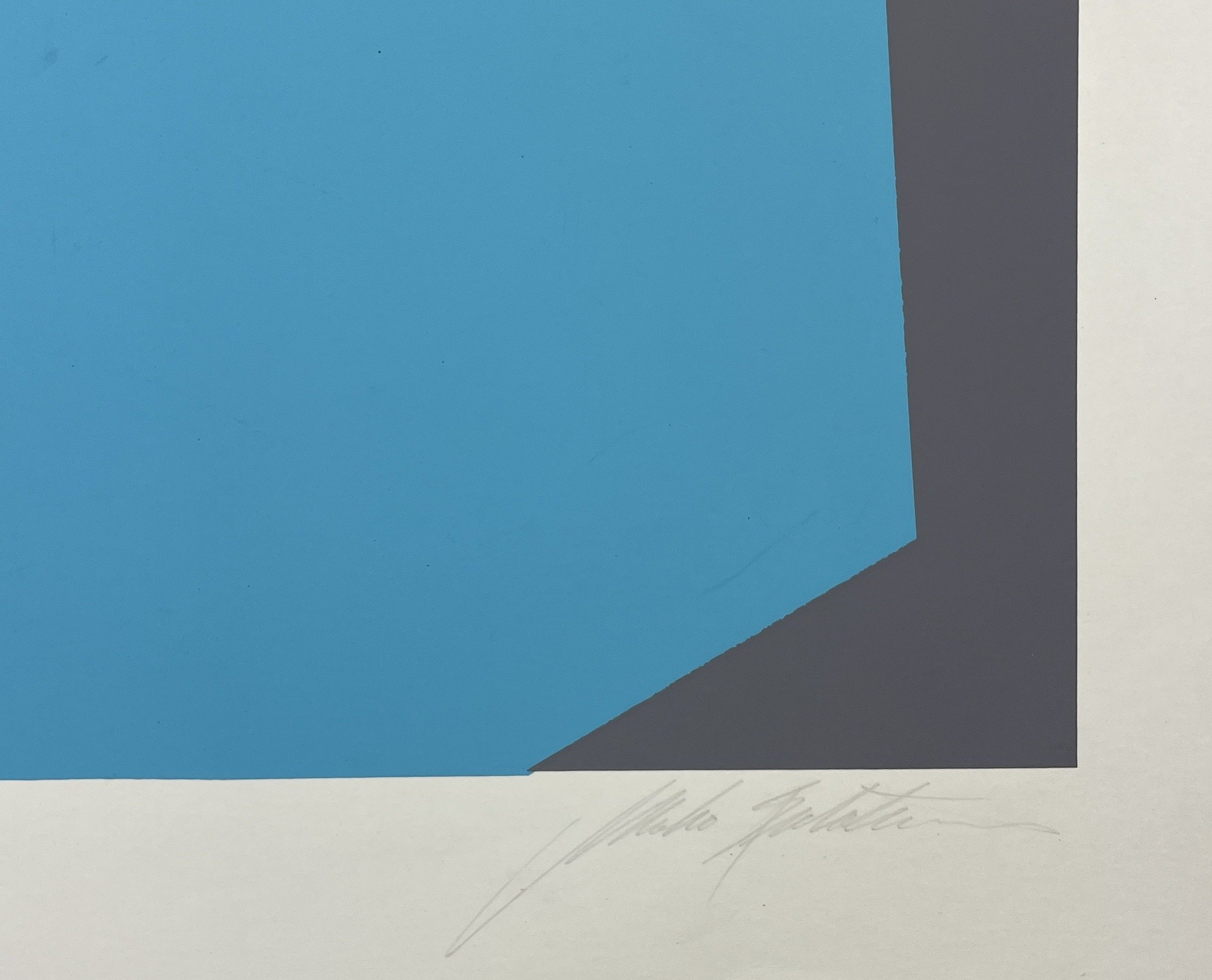
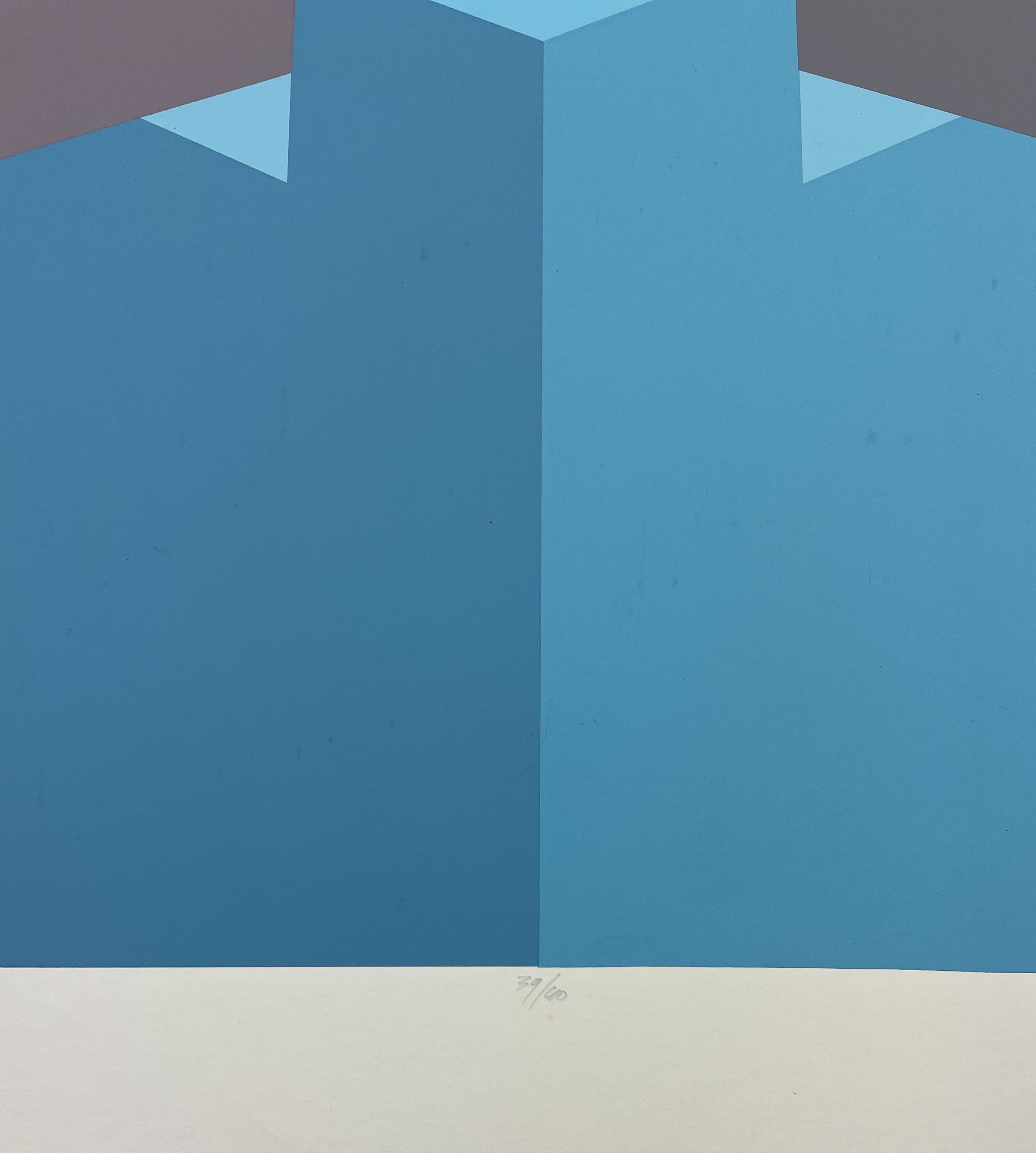
This artwork, titled Fortress Garden (attributed), is a limited-edition serigraph by Mimo, created circa the 1970s. The work measures 23 × 29 inches and is pencil signed “Mimo” at lower right, with edition number 34/50 of a total edition of 100 noted at lower left. The print exhibits characteristics consistent with hand-pulled serigraphy of the period, including flat opaque inks and crisp color boundaries. Based on stylistic consistency, signature examination, and known circulation through Mitch Morse Gallery, the work is deemed authentic.
“Fortress Garden” (attributed), Mimo (active c.1970s), c.1970s serigraph, 23 × 29 in., pencil signed “Mimo,” numbered 34/50 of 100.
A striking 1970s hard-edge serigraph attributed to Mimo, featuring bold architectural geometry, saturated color fields, and crisp modernist design, signed and numbered.
Artwork Description
This work presents a highly graphic architectural landscape rendered in flat, saturated planes of cobalt blue, green, yellow, and black. The composition is constructed through precise geometry and strong linear perspective, drawing the viewer inward toward a stylized tower and fortified structure. Shadows and forms are reduced to clean shapes, emphasizing balance, symmetry, and visual clarity rather than realism.
The aesthetic aligns with hard-edge modernism and graphic abstraction popular in the 1970s, when artists embraced screenprinting for its ability to produce perfectly opaque color fields and sharp edges. The bold framing border and layered color application indicate a multi-screen serigraph process. The overall effect is architectural, contemplative, and highly decorative, making the work well suited to modern, Mid-Century, and contemporary interiors.
Artist Biography
Mimo is an artist known through signed and editioned serigraphs circulating primarily in the United States during the 1970s and early 1980s. Works bearing the single-name signature “Mimo” are characterized by strong geometric structure, architectural or landscape-inspired compositions, and a disciplined use of flat, saturated color. These works align closely with the hard-edge and graphic modernist movements that gained wide popularity during the period.
Serigraphy was the artist’s preferred medium, allowing for precise color control and clean visual separation between forms. Mimo’s prints were produced in limited editions and distributed through gallery networks and publishers specializing in modern decorative prints. While comprehensive biographical records under the single name “Mimo” remain limited, the consistency of style, technique, and signature across known works supports attribution to a single professional artist active during the 1970s print market.
Mimo’s work reflects the broader cultural embrace of modern design in that era, bridging fine art and architectural aesthetics with a strong emphasis on clarity, balance, and visual impact.
Mimo (active c.1970s), Fortress Garden (attributed), c.1970s, serigraph on paper, 23 × 29 in., pencil signed and numbered 34/50 of 100.
Certificate of Value & Authentication
This artwork, titled Fortress Garden (attributed), is a limited-edition serigraph by Mimo, created circa the 1970s. The work measures 23 × 29 inches and is pencil signed “Mimo” at lower right, with edition number 34/50 of a total edition of 100 noted at lower left. The print exhibits characteristics consistent with hand-pulled serigraphy of the period, including flat opaque inks and crisp color boundaries. Based on stylistic consistency, signature examination, and known circulation through Mitch Morse Gallery, the work is deemed authentic.
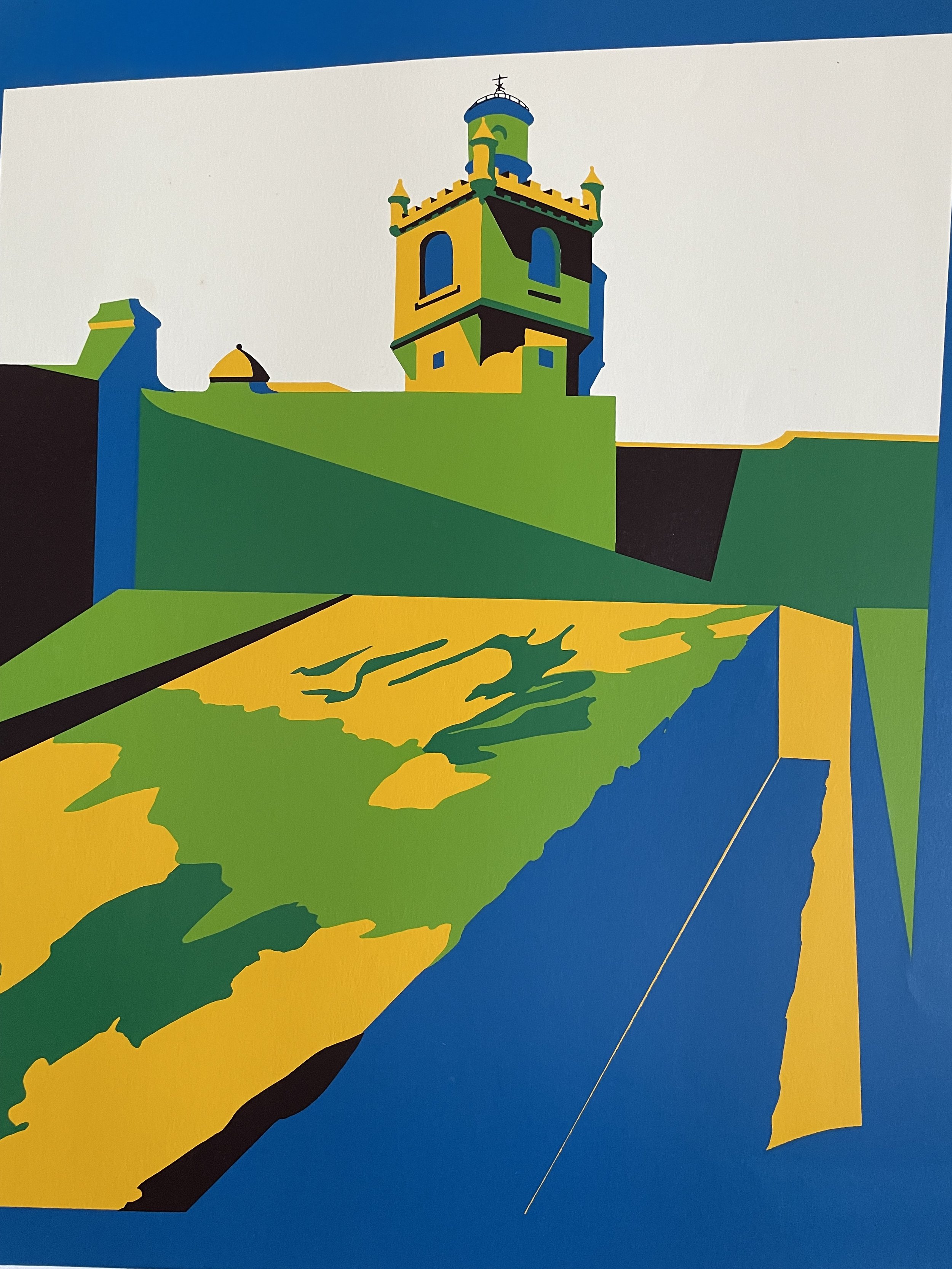 Image 1 of 11
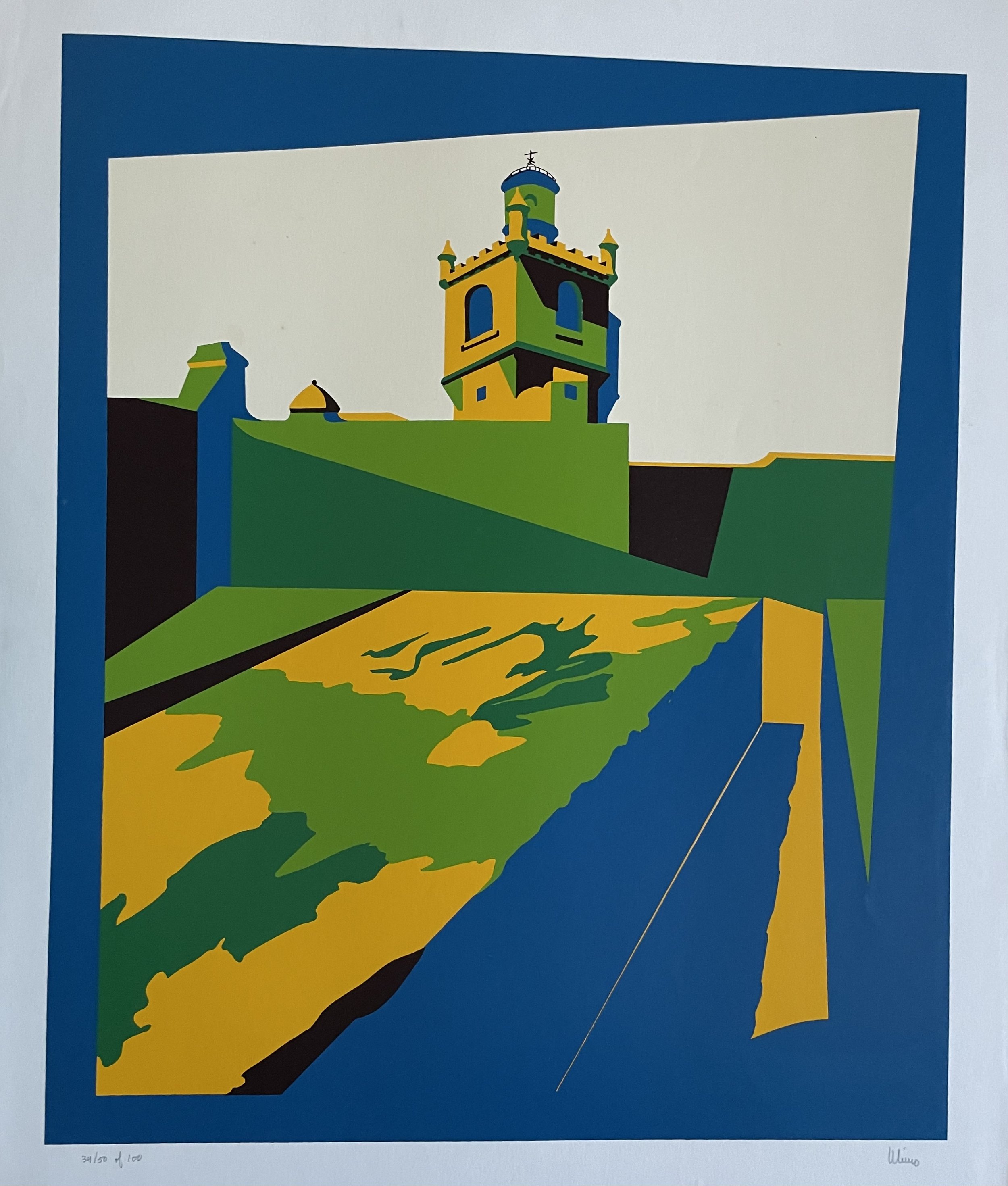 Image 2 of 11
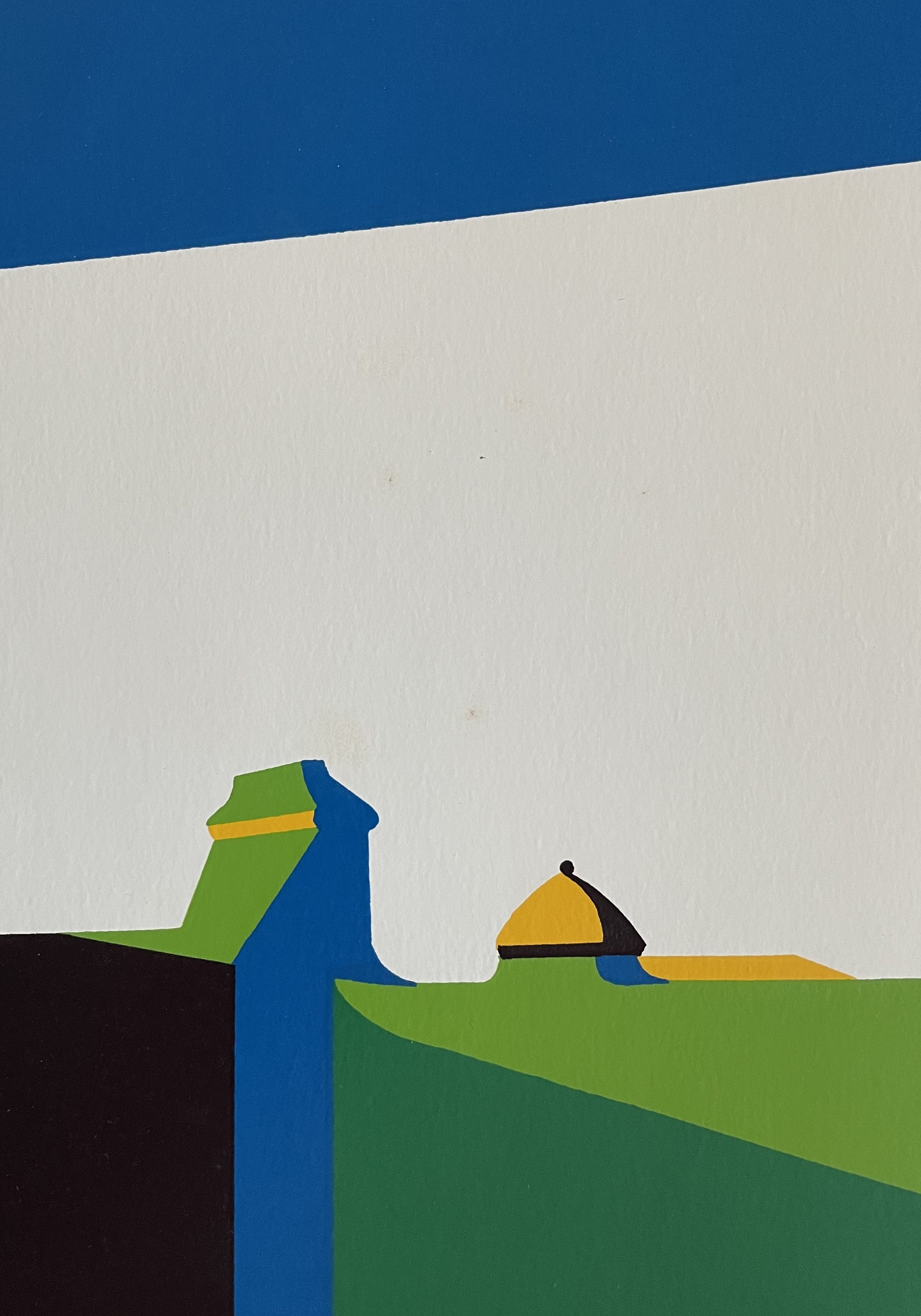 Image 3 of 11
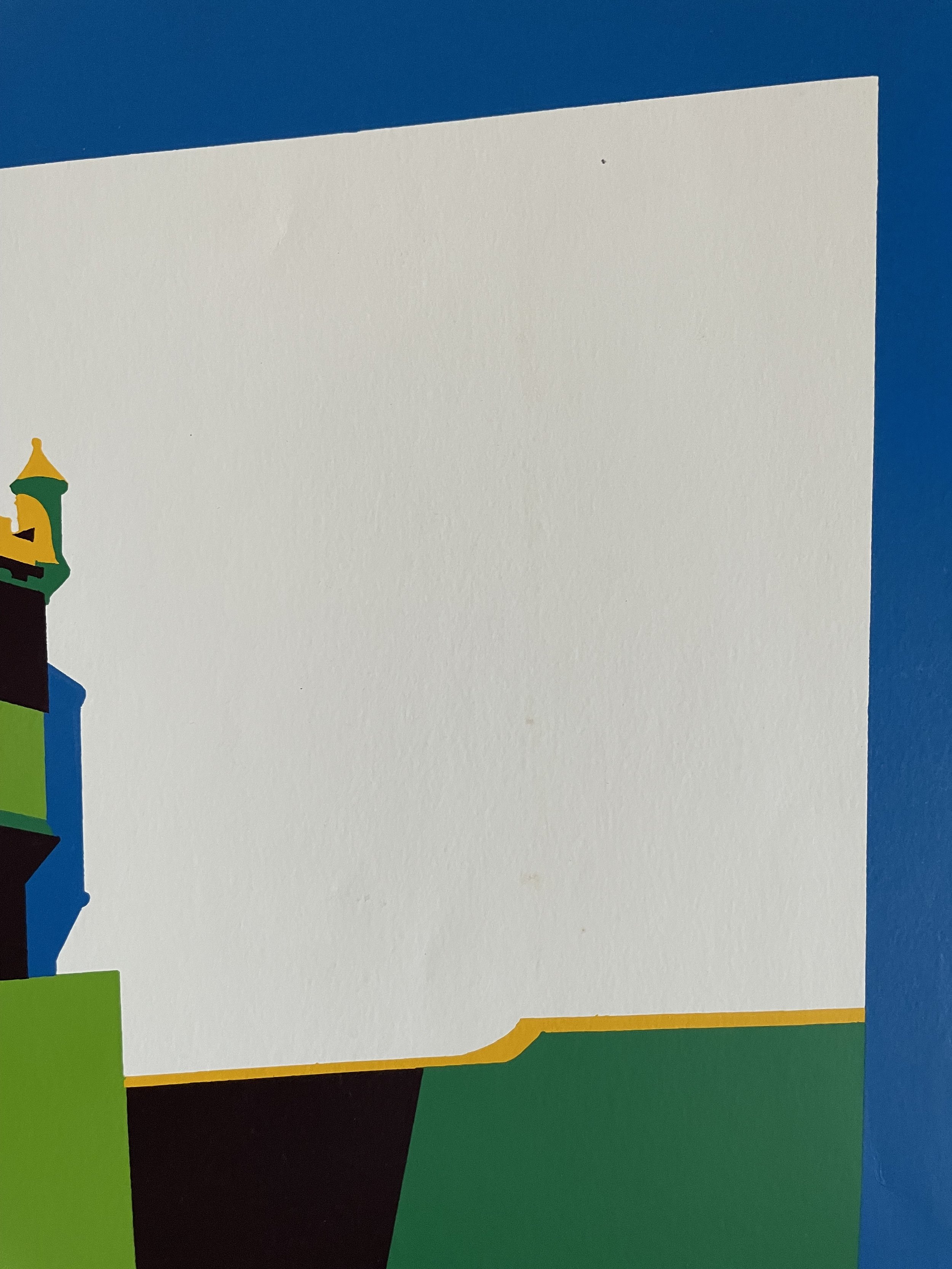 Image 4 of 11
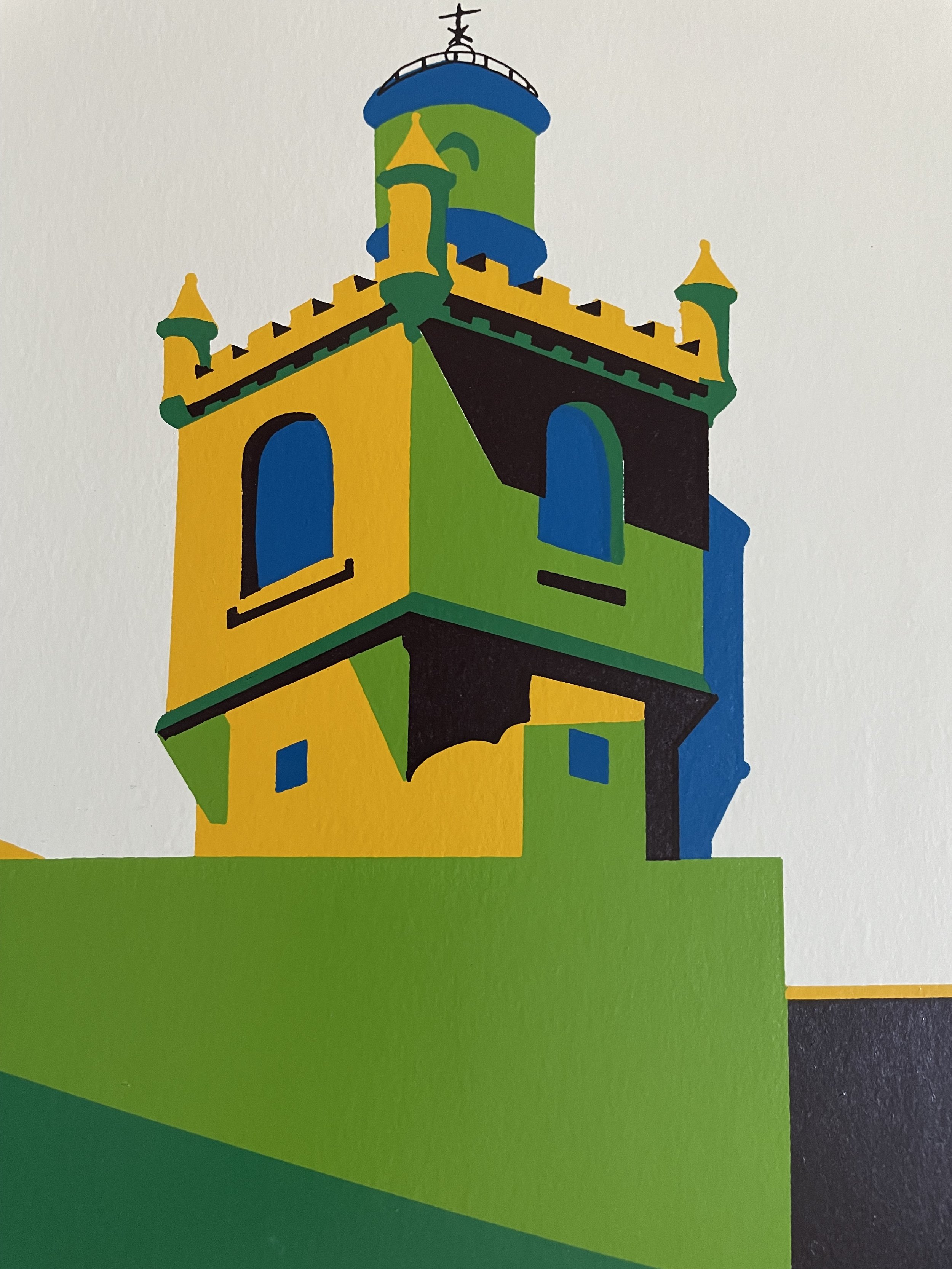 Image 5 of 11
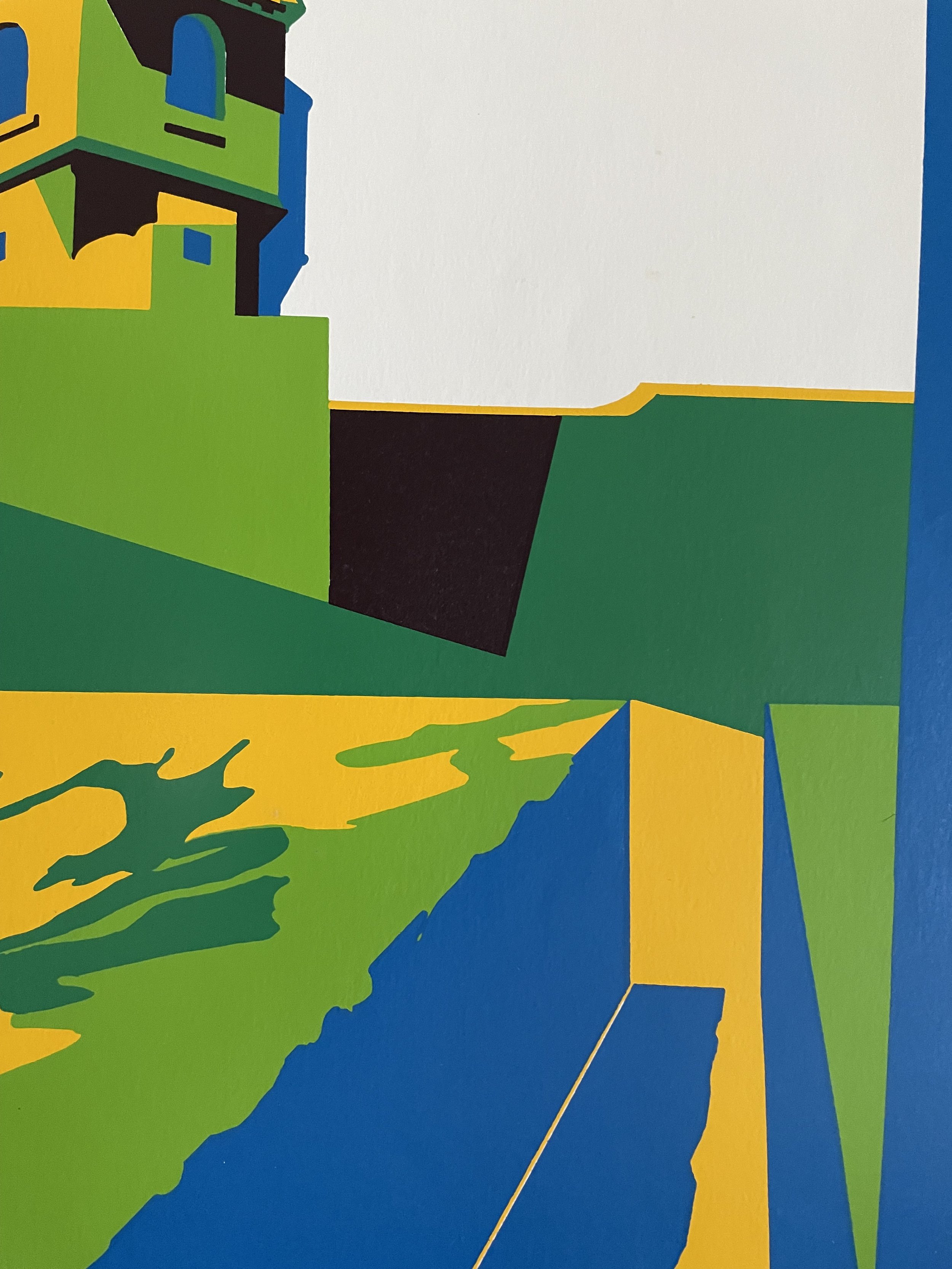 Image 6 of 11
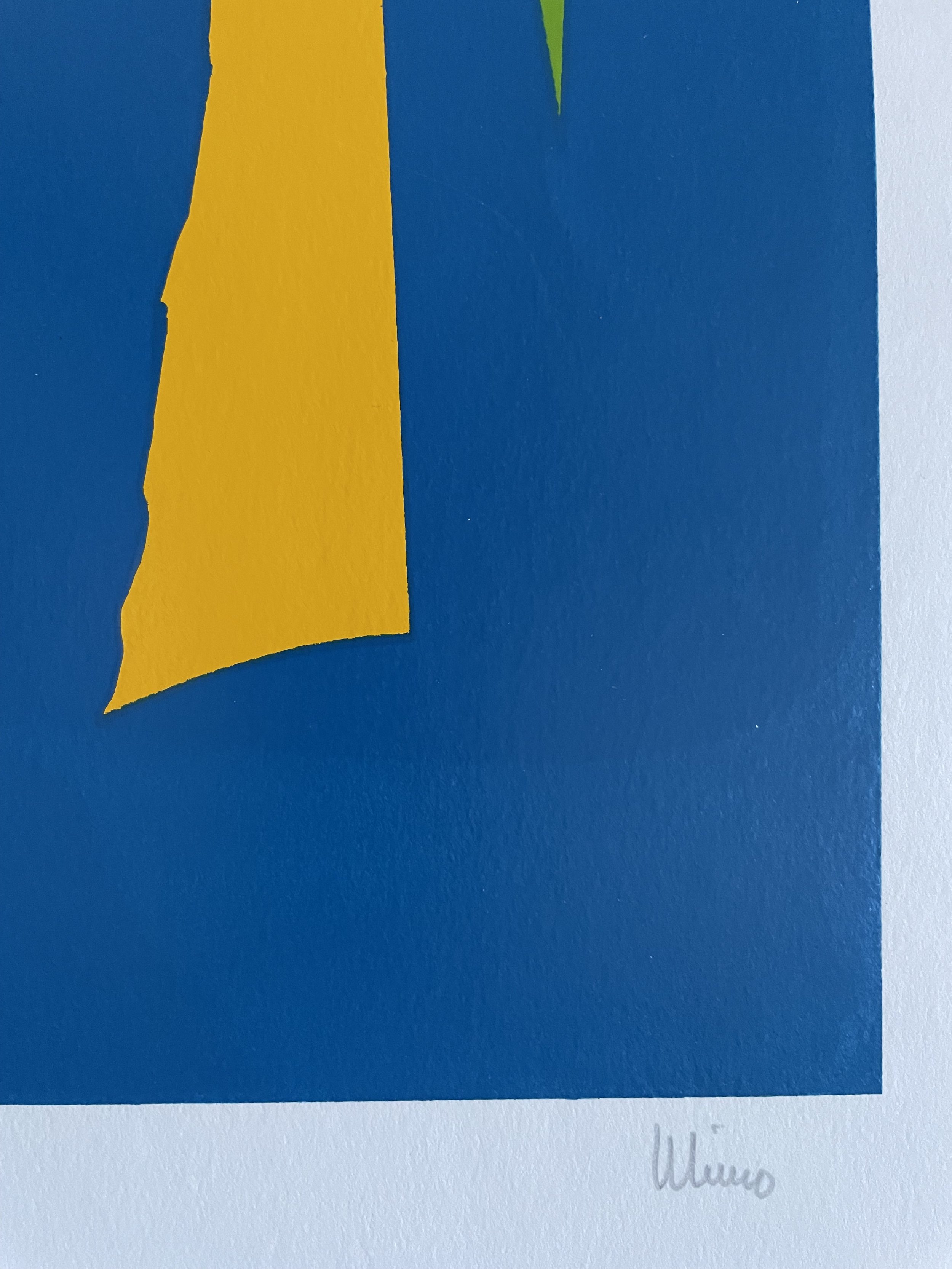 Image 7 of 11
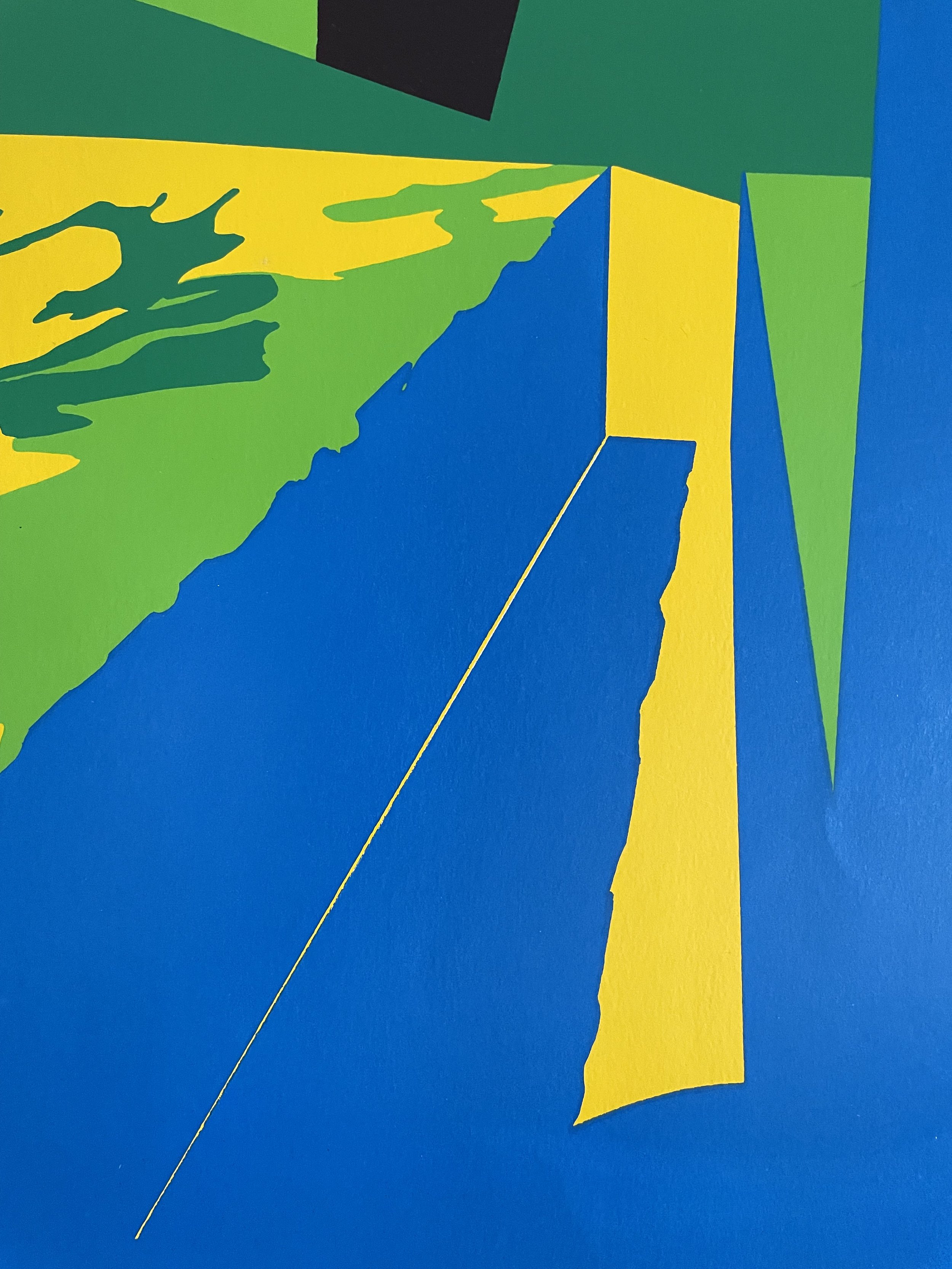 Image 8 of 11
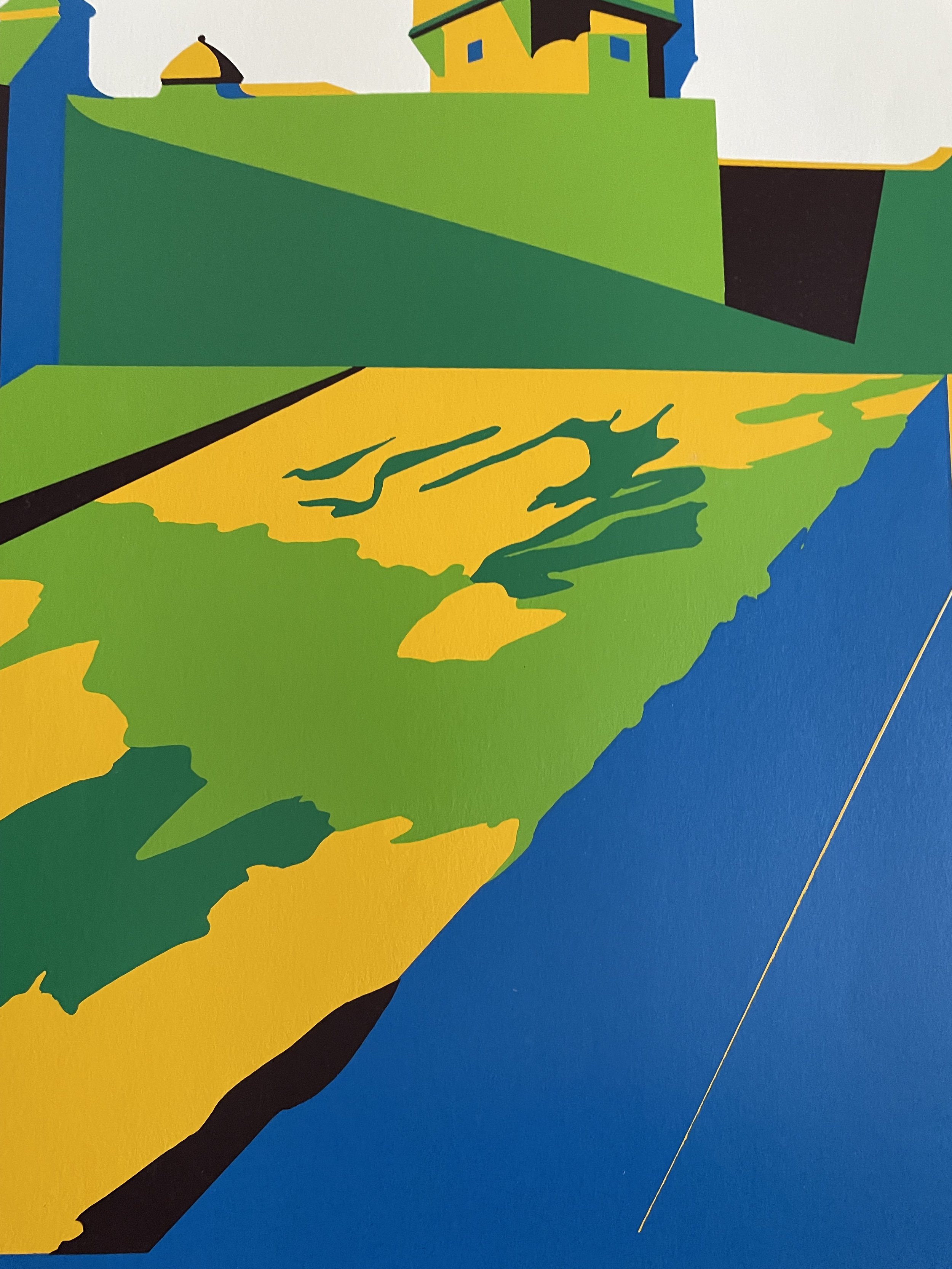 Image 9 of 11
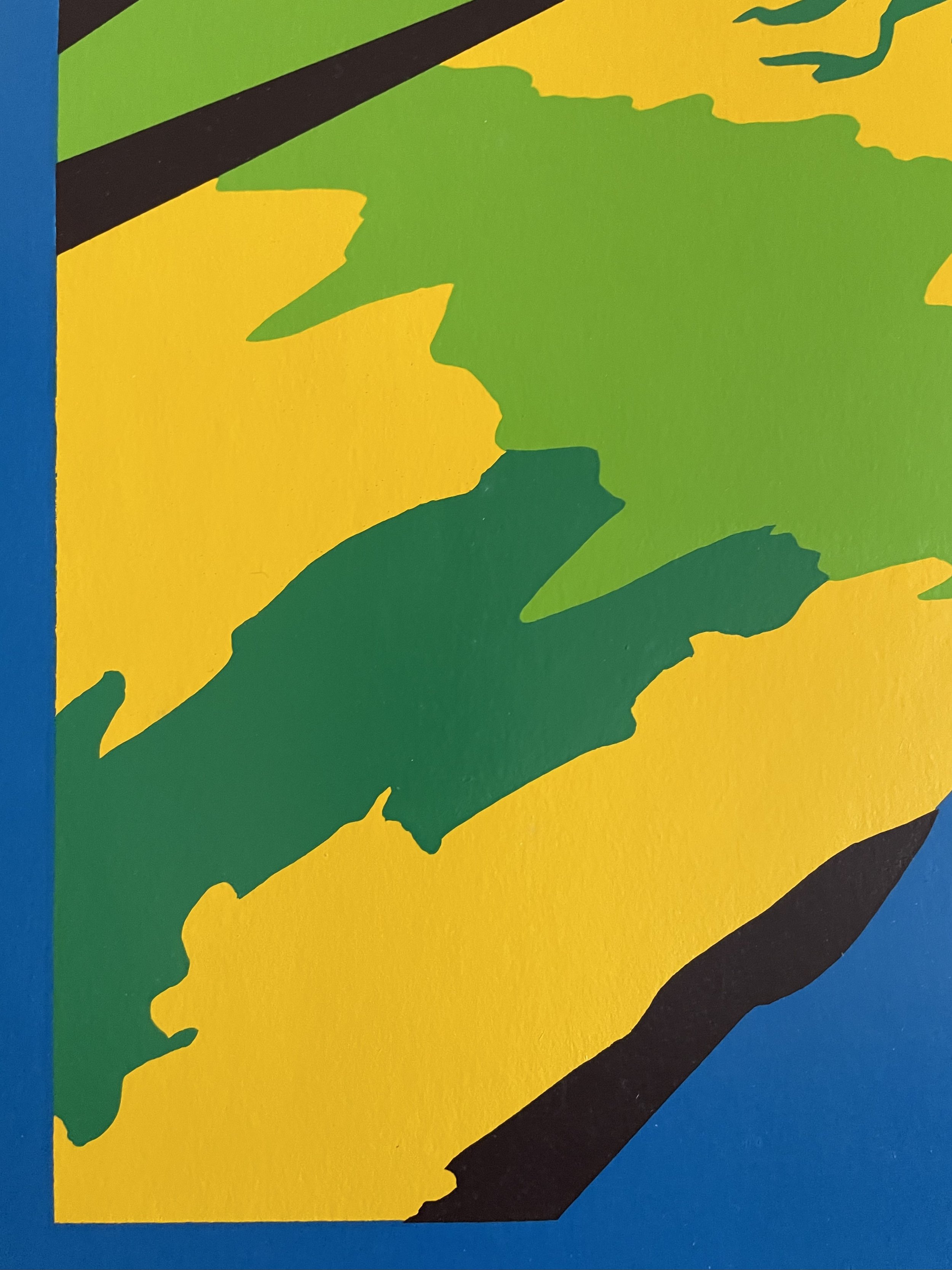 Image 10 of 11
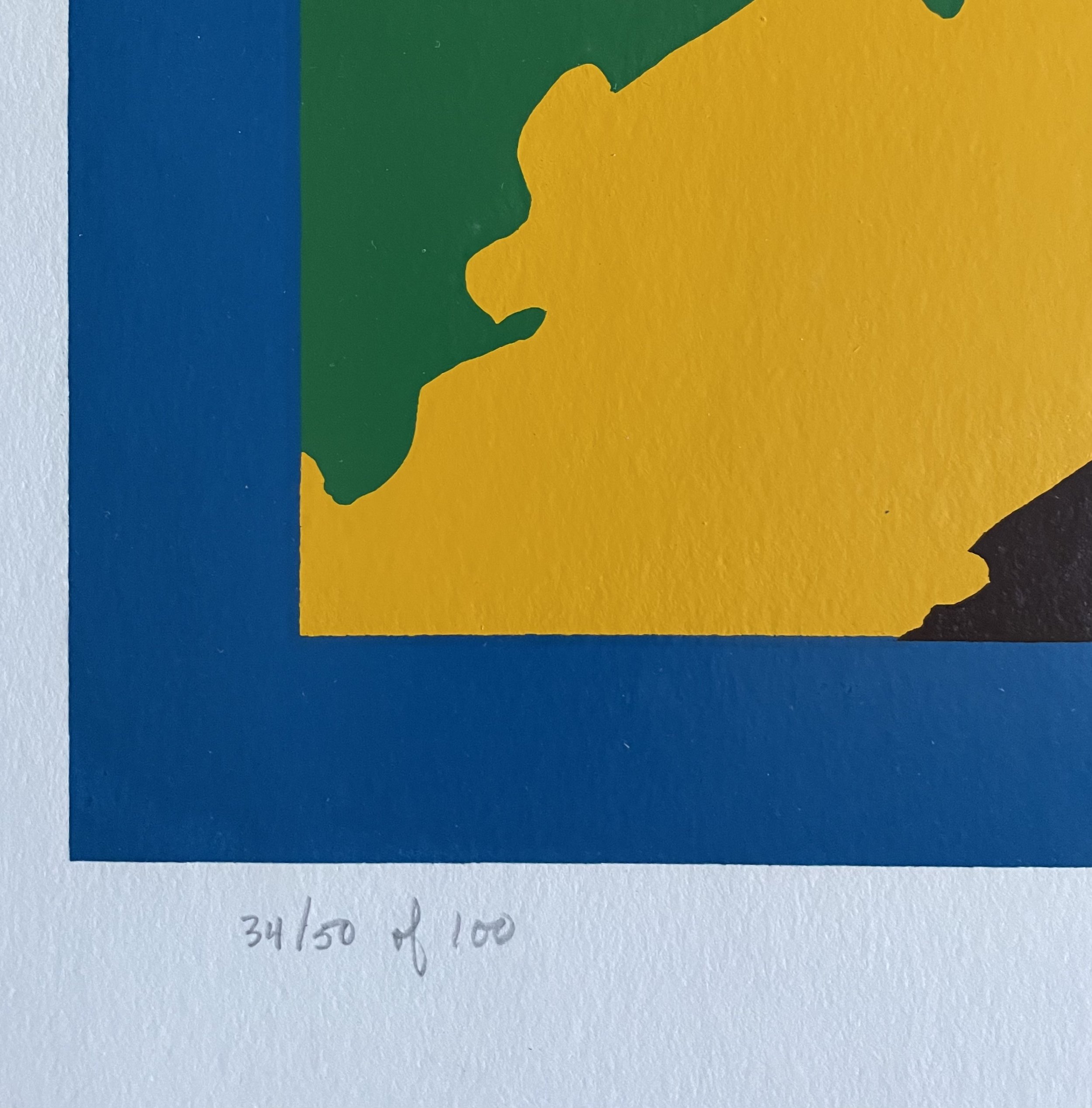 Image 11 of 11