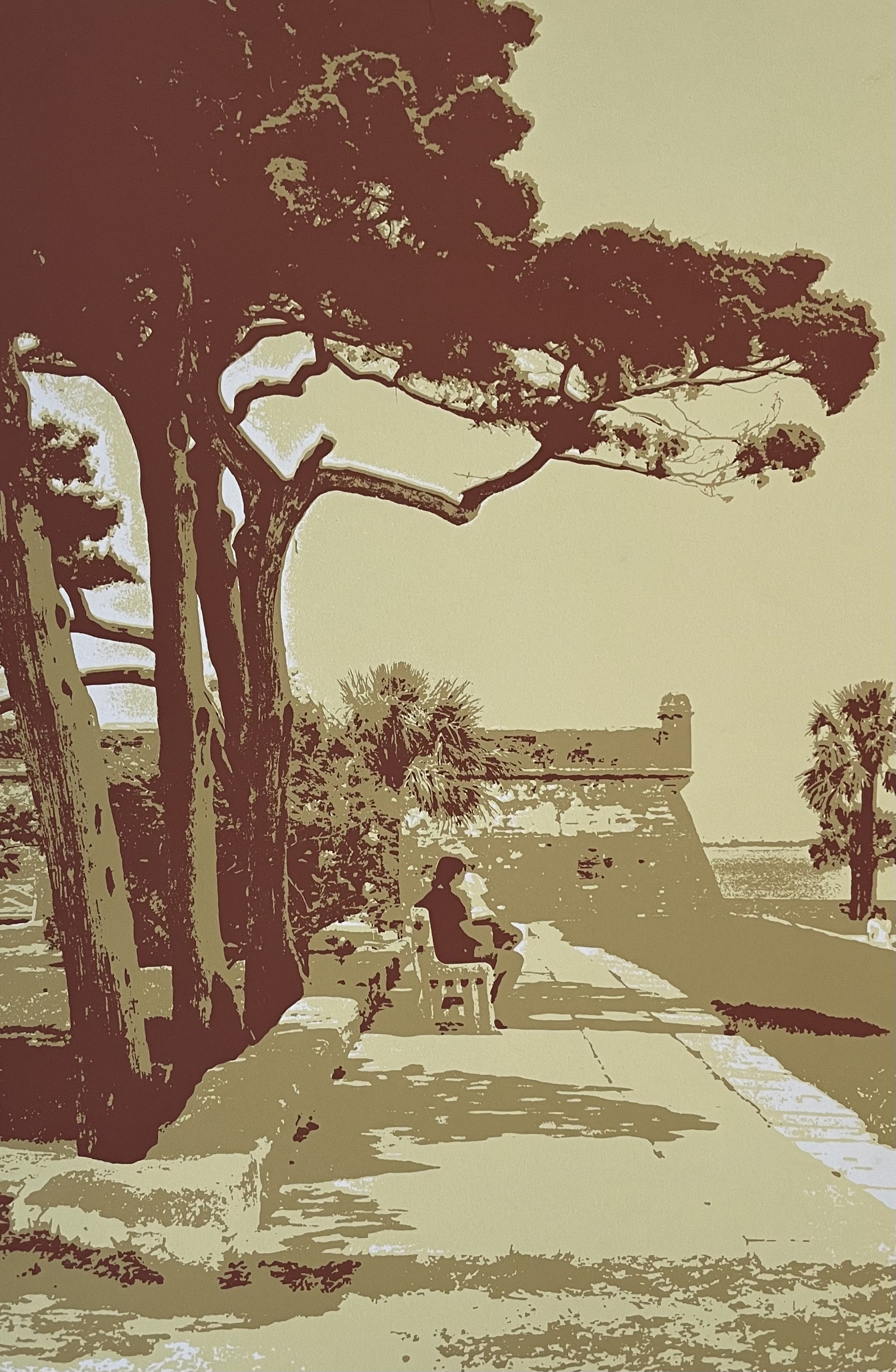
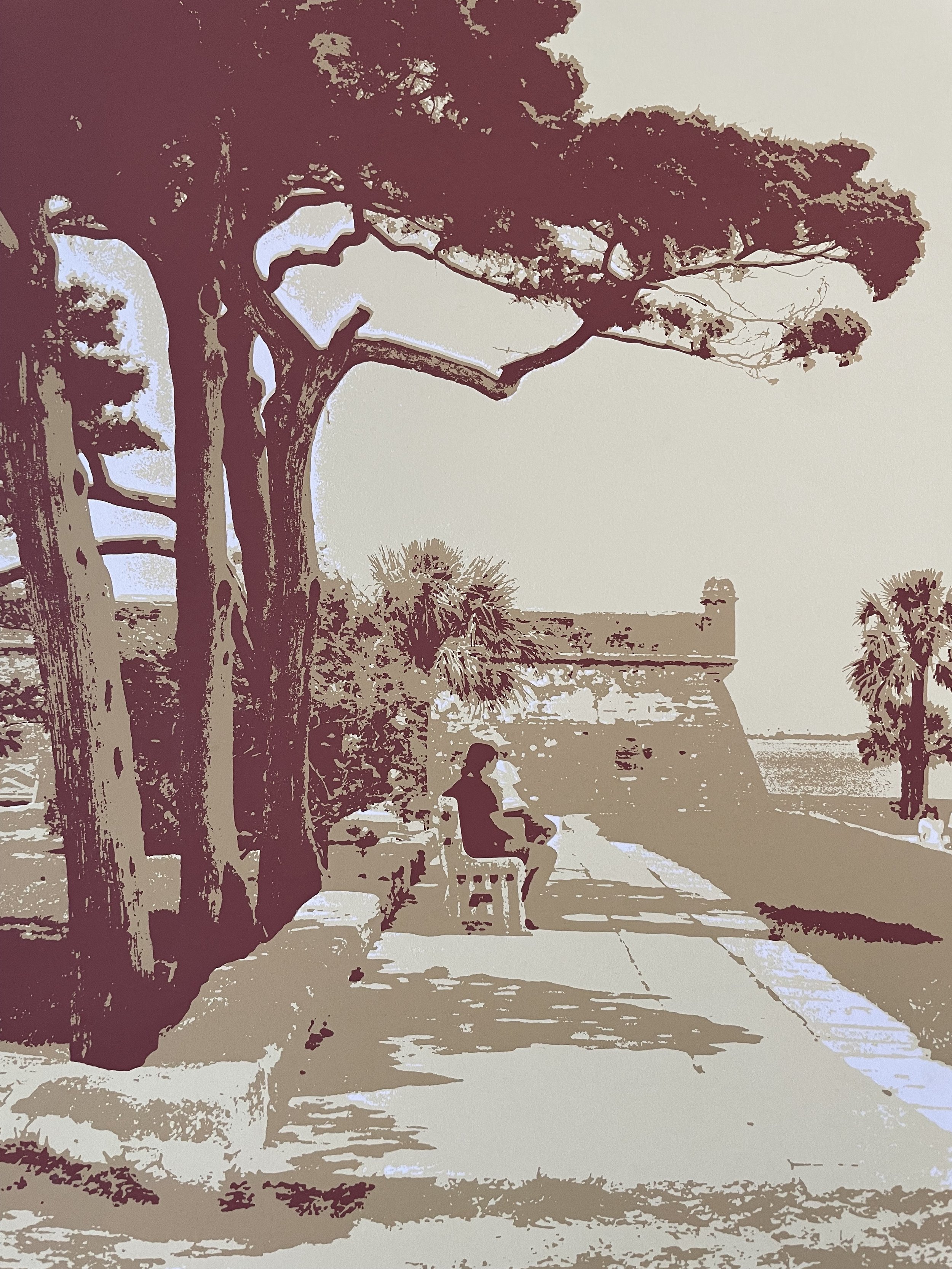
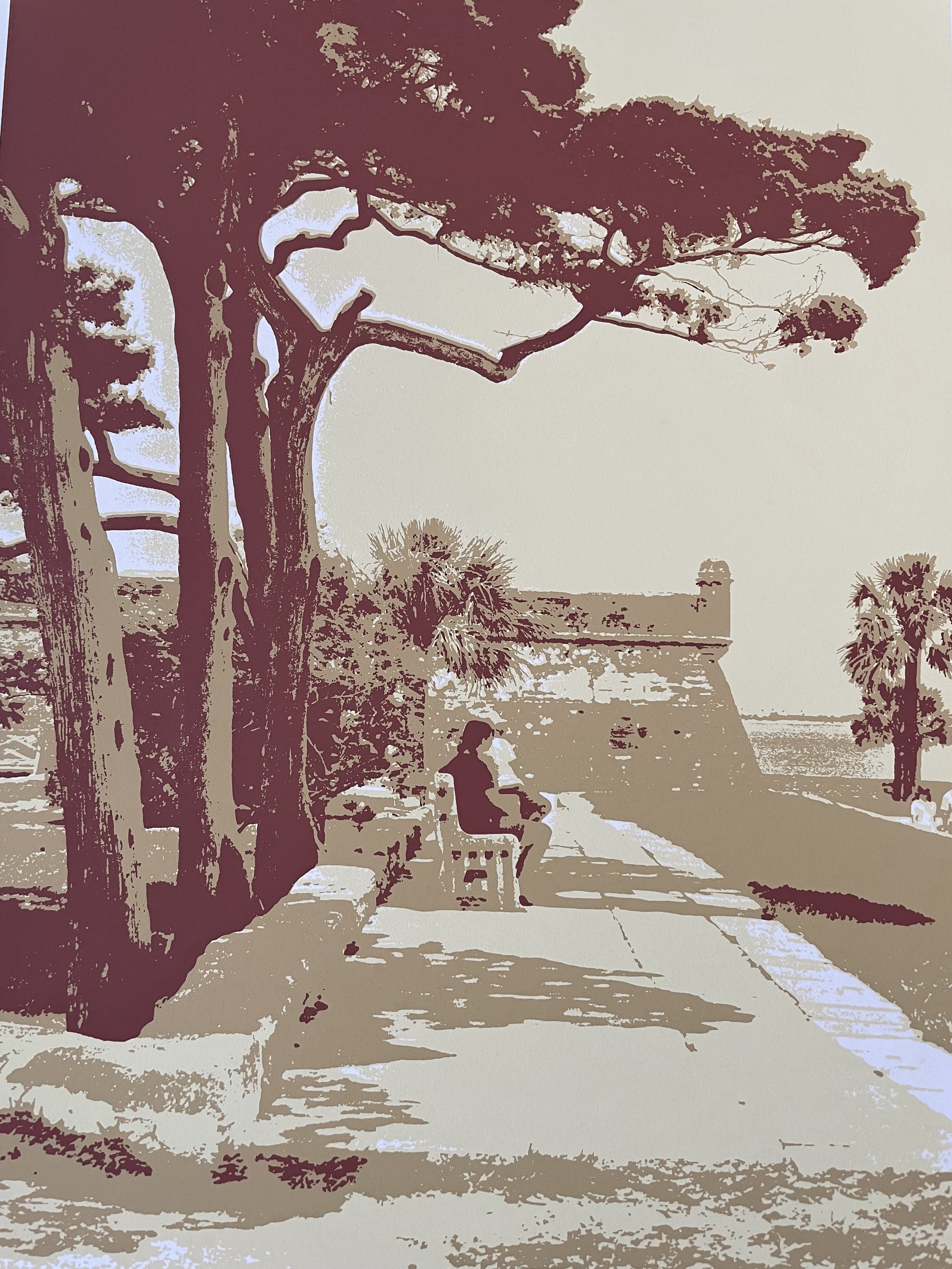
The Lesson, Flavio Emanuel Cabral (1918–1990), c.1980s, serigraph, 22x30 in, signed & numbered 88/250, figurative modernism
A limited-edition serigraph titled The Lesson by Flavio Emanuel Cabral, numbered 88/250 and signed in pencil. This 22 x 30 inch print exemplifies Cabral’s elegant figurative modernism, blending Renaissance-inspired stillness with mid-century geometric stylization. Published by Art Spectrum, a division of Mitch Morse Gallery, the work reflects Cabral’s museum-exhibited legacy and poetic approach to narrative interior scenes.
Artwork Description
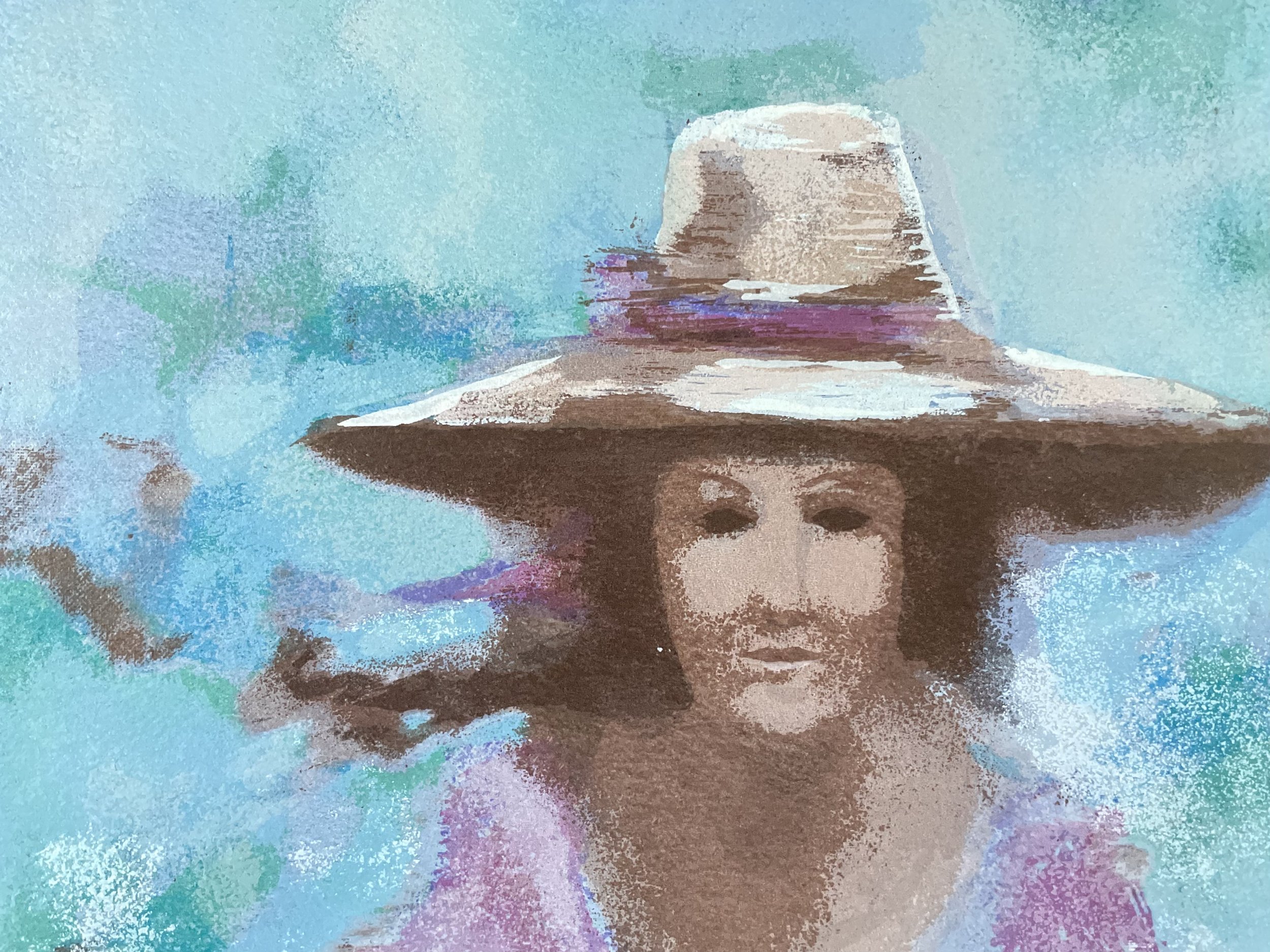
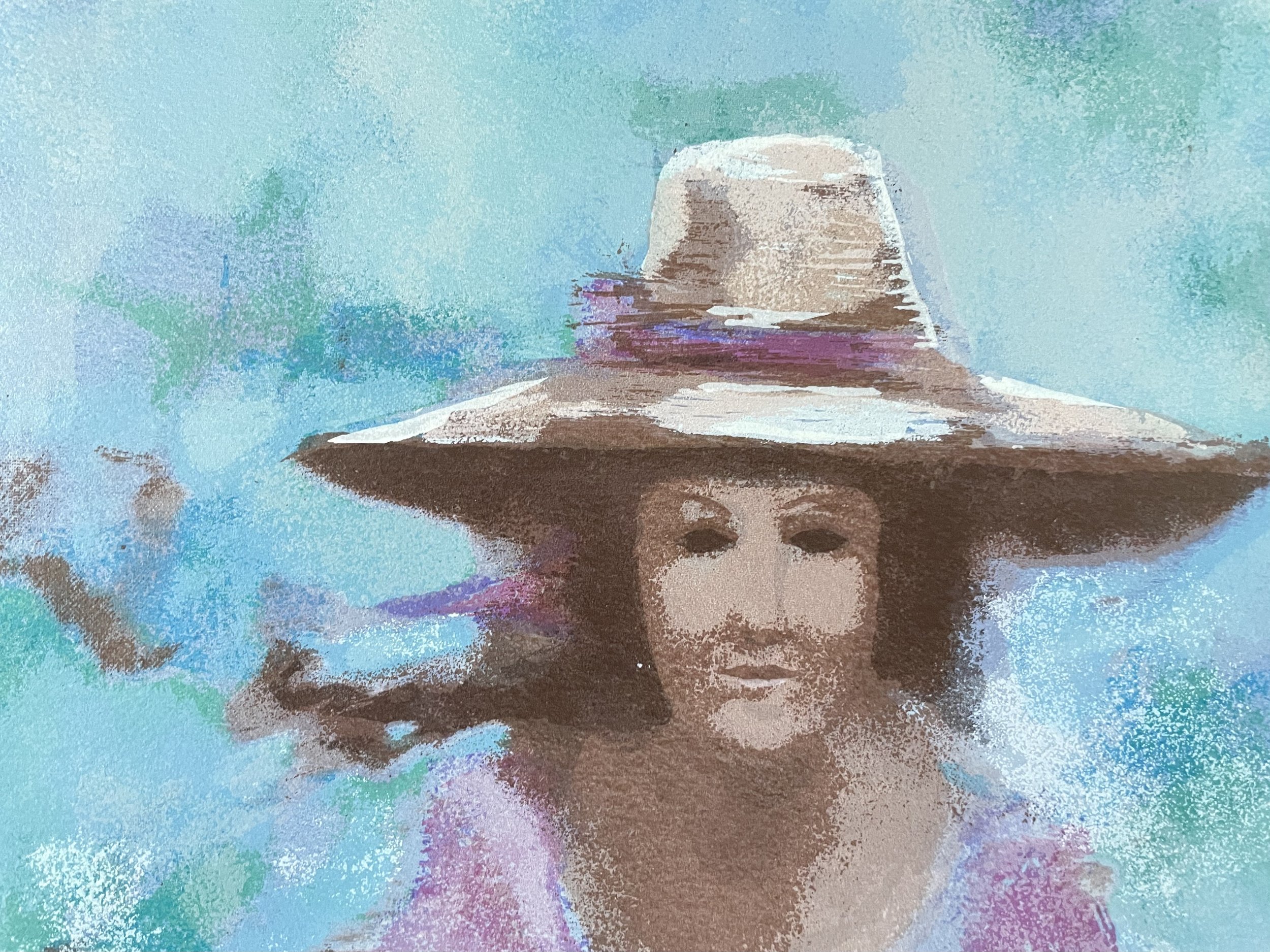
The Lesson presents a lyrical interior scene centered on music and quiet instruction. A seated blue-toned musician plays a lute-like instrument while a standing female figure with elongated neck and gently closed eyes presides behind him. To the right, a stylized still life of pitcher, plate, and geometric forms rests upon a modernist table, reinforcing compositional balance.
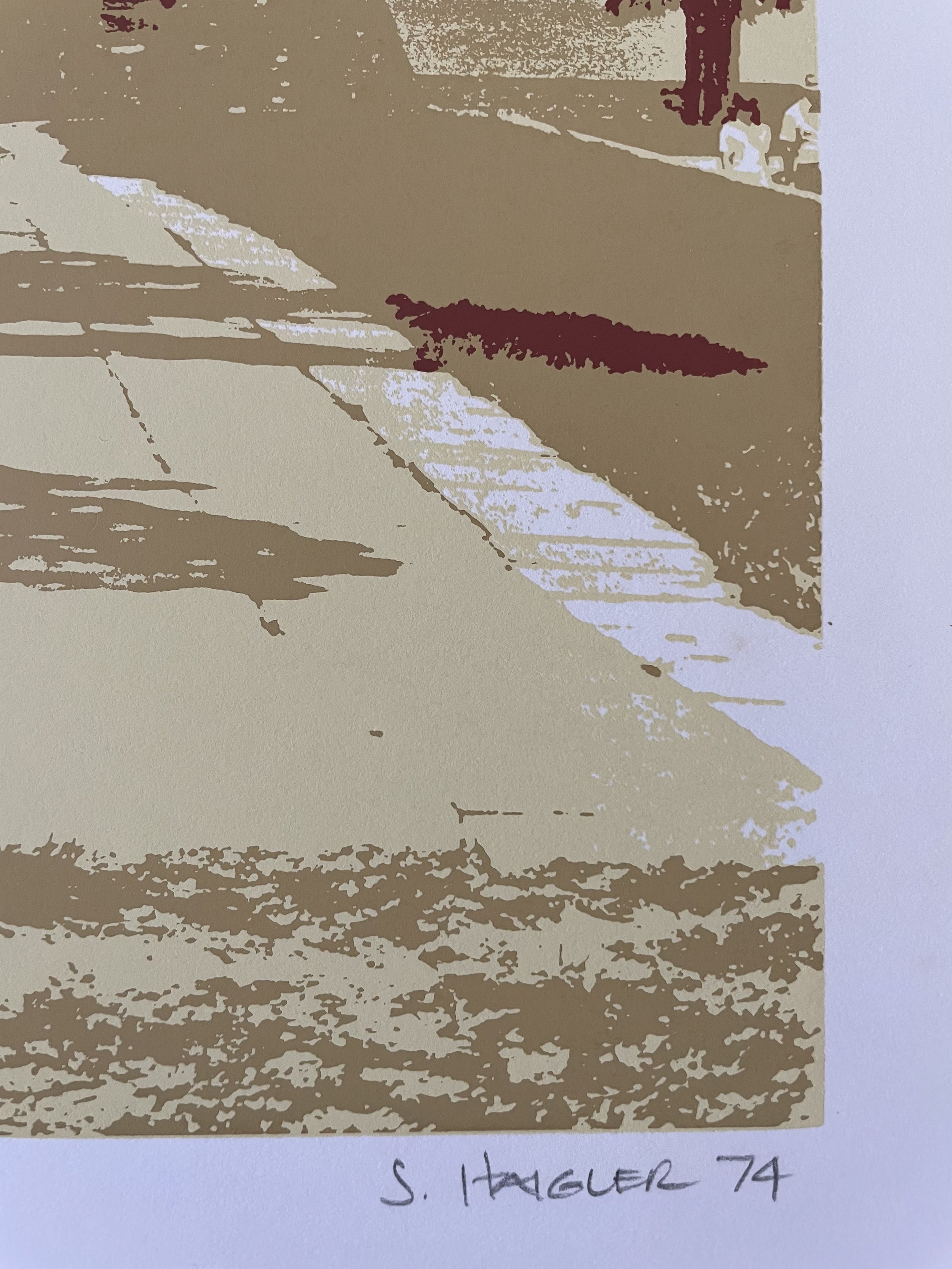
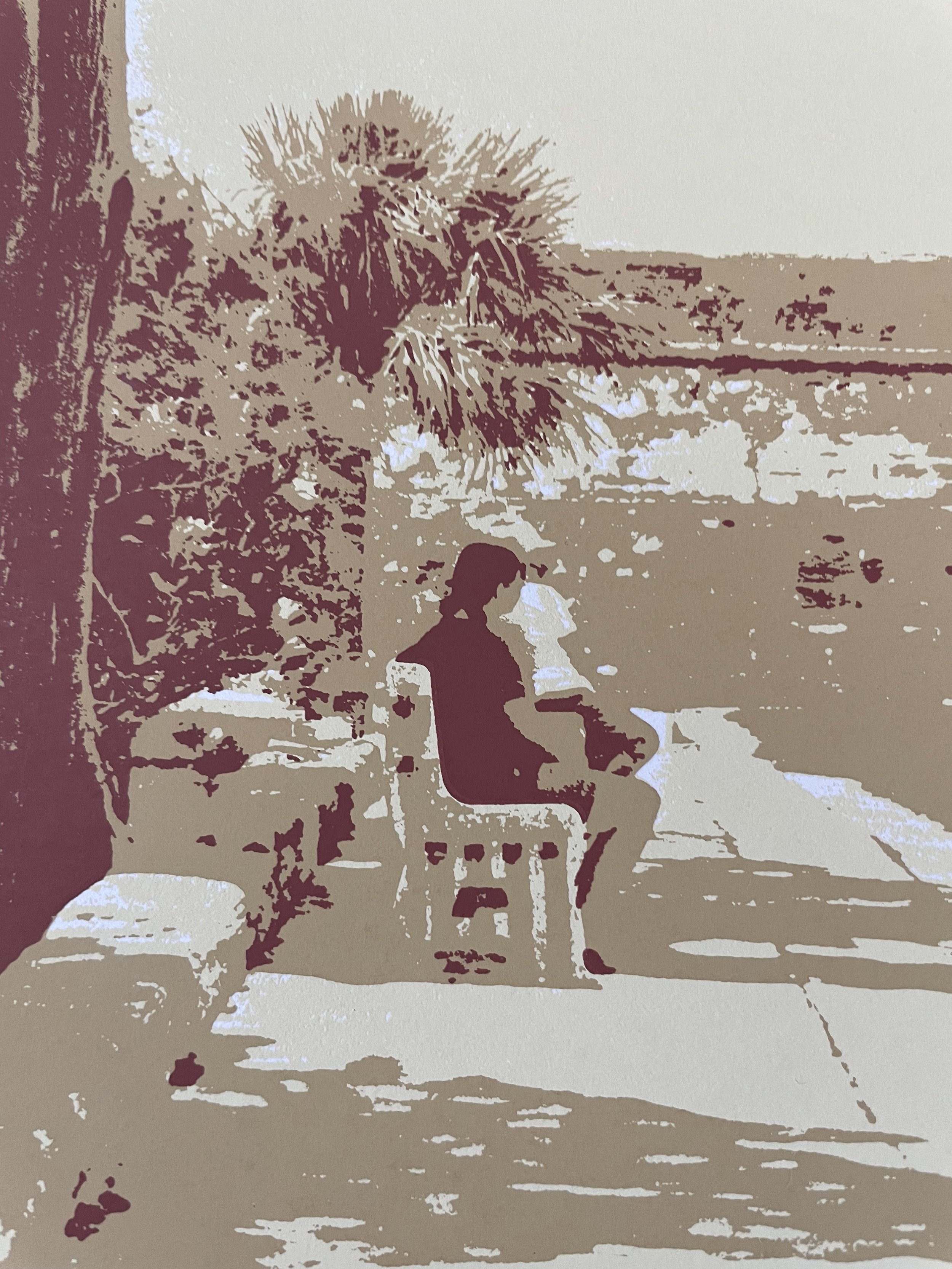
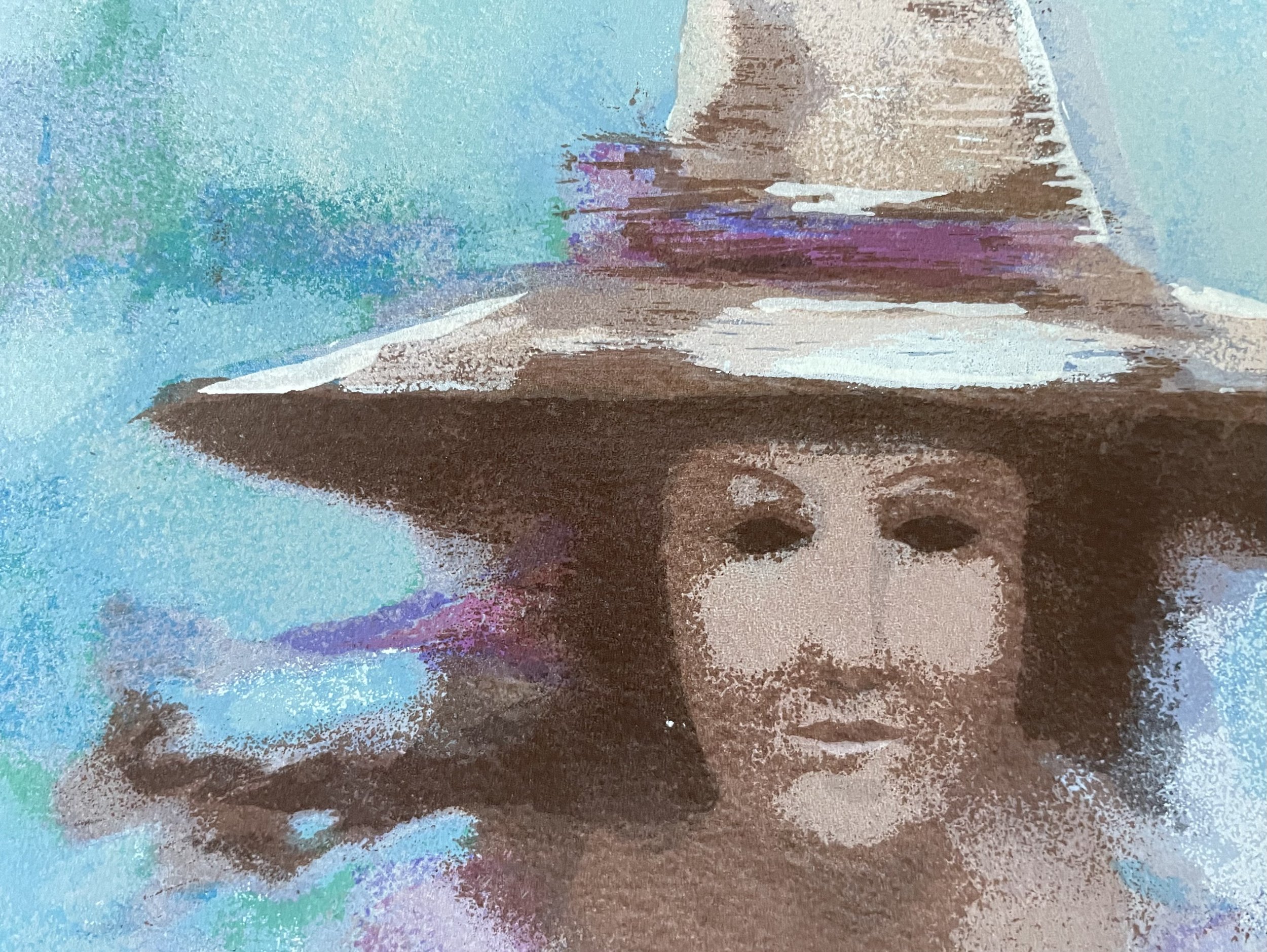
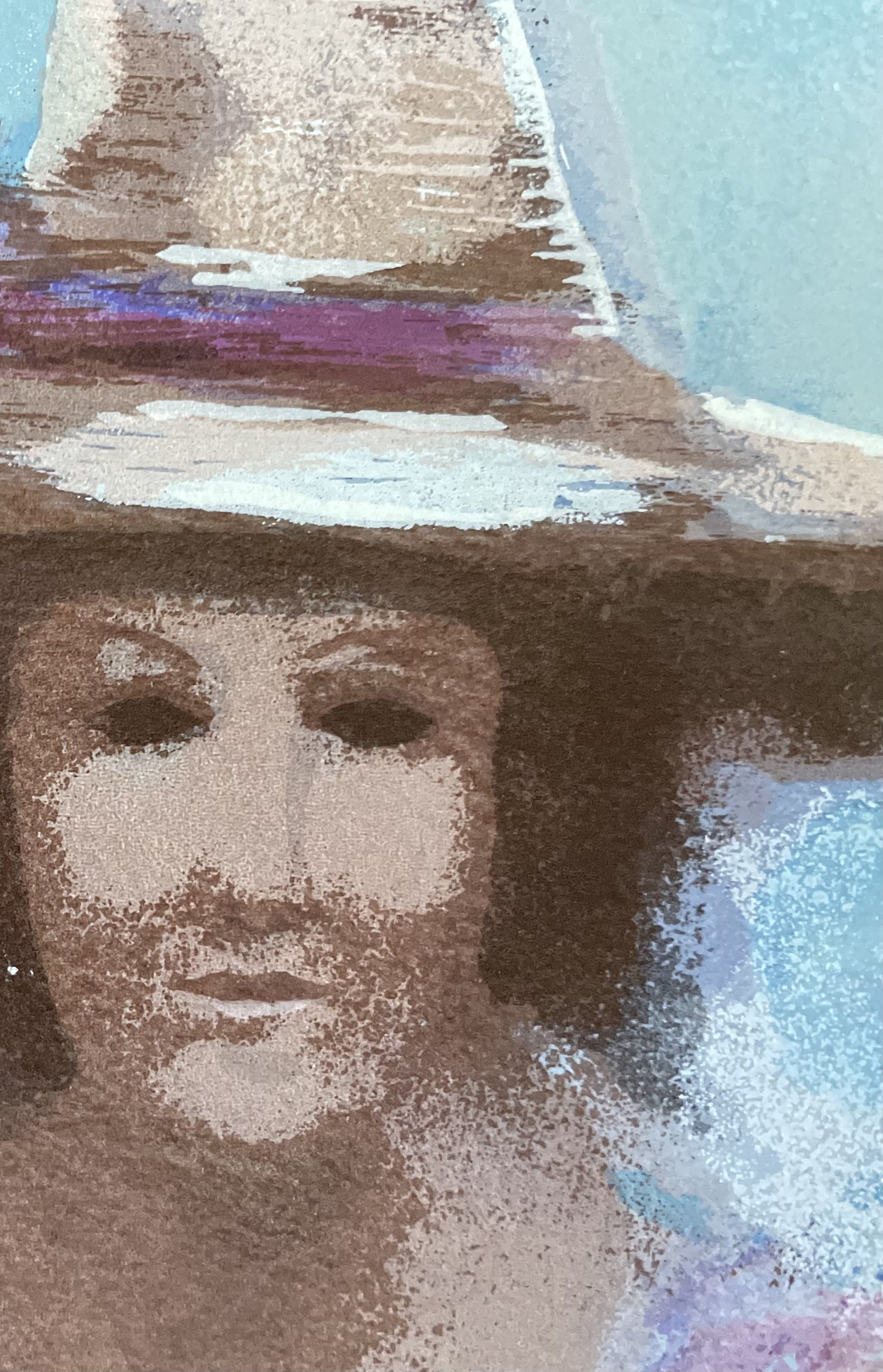
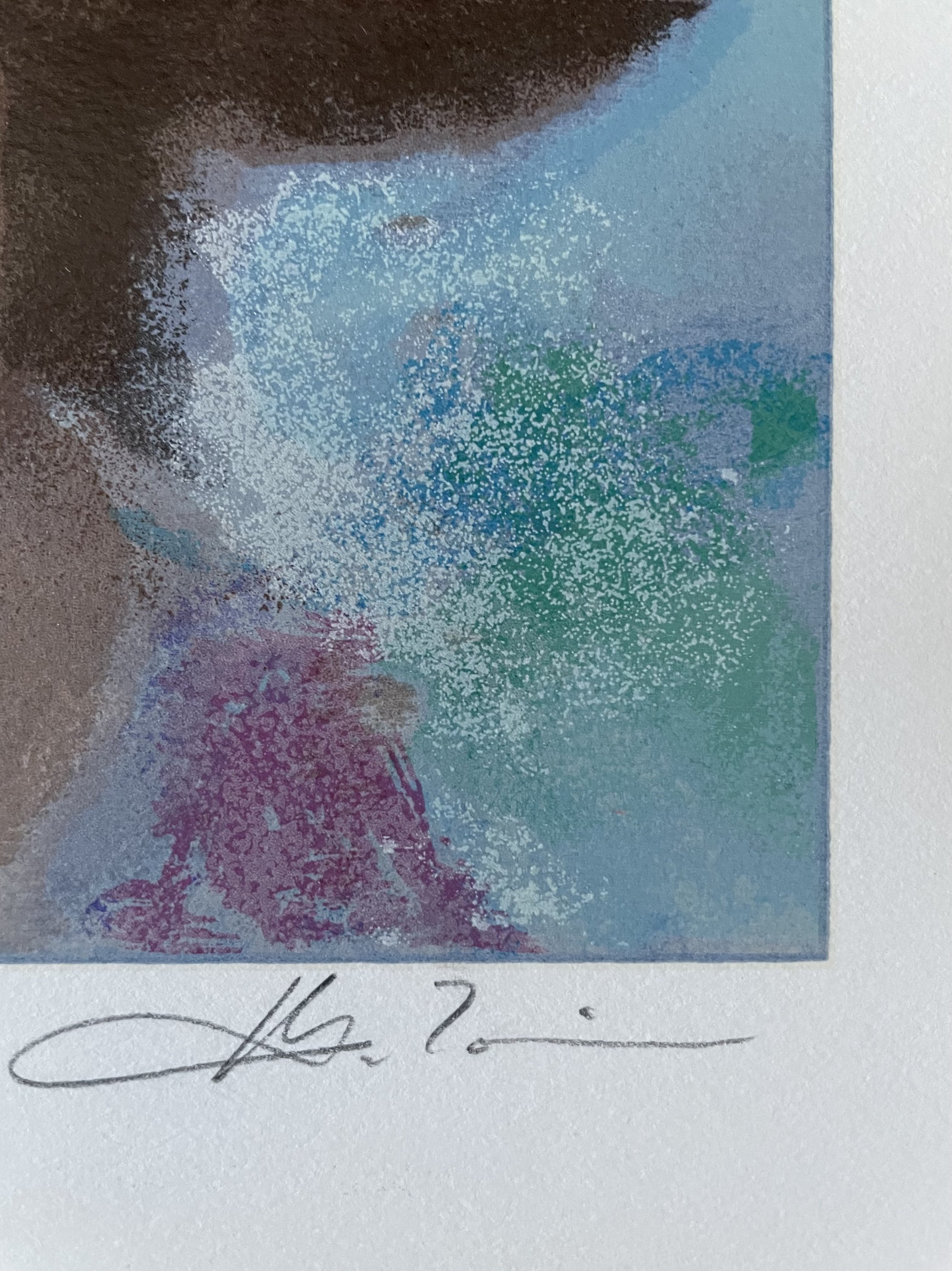
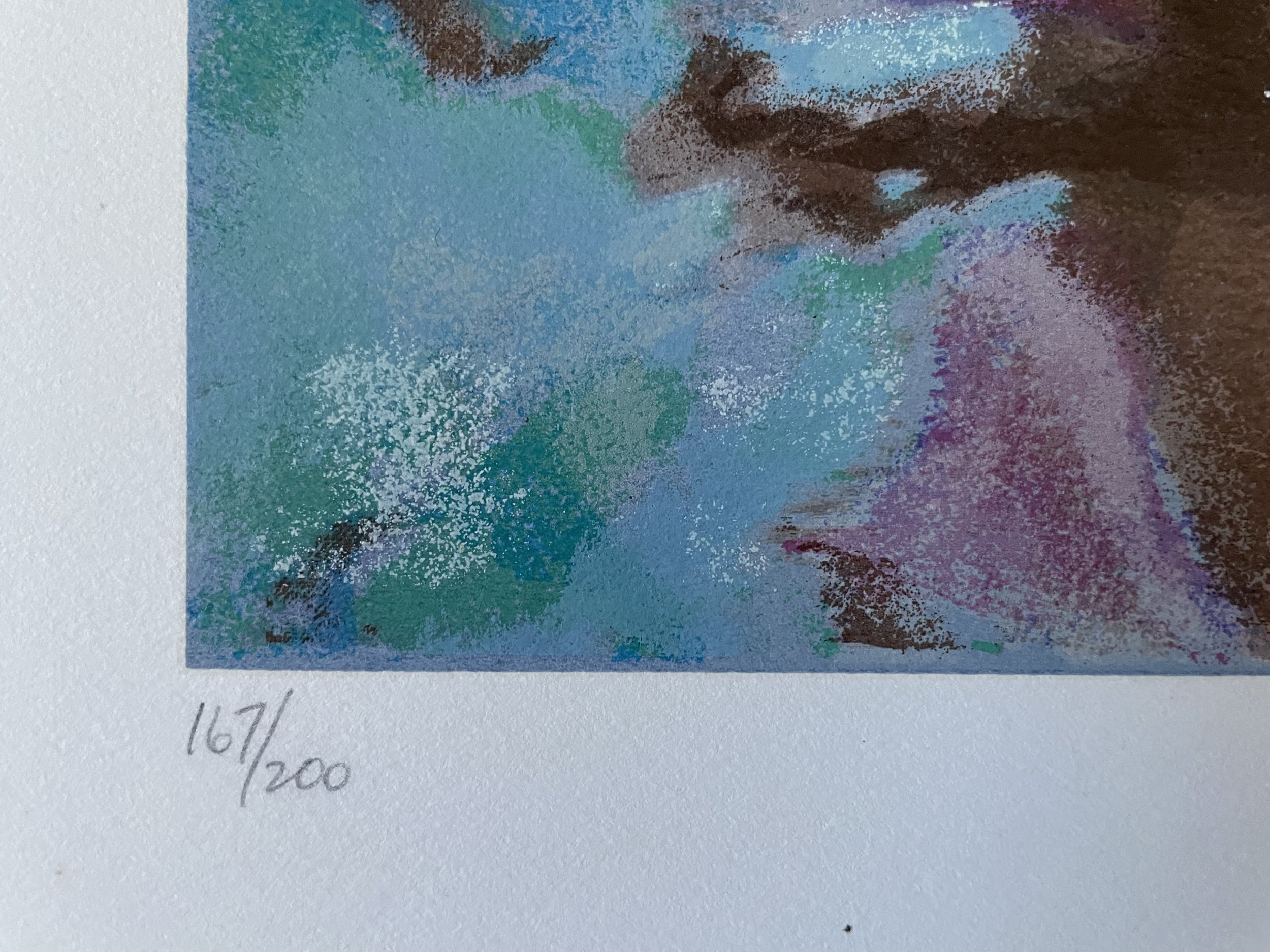
This original serigraph is from an edition of 250 and is numbered 88/250, signed Flavio Cabral in pencil lower right. The sheet measures 22 x 30 inches with deckled edges. The serigraph process allows for rich, opaque color fields—ochre wall, golden plank floor, deep blue table, saturated red garments—applied in carefully layered screens. The speckled texture within the background references fresco-like surfaces, echoing Cabral’s reverence for Renaissance atmosphere while remaining distinctly modern in execution.
Cabral’s figures are constructed through simplified geometry—triangular legs, rounded heads, flattened planes—yet the emotional tone remains tender and introspective. The theme of musical instruction becomes a metaphor for harmony, tradition, and continuity. The quiet dialogue between the figures evokes what critics described as beauty touched with sadness, a hallmark of Cabral’s aesthetic.
Published by Art Spectrum, a division of Mitch Morse Gallery Inc., and originally represented by Gallery D’Enchante, this work belongs to Cabral’s mature period, when his figurative vocabulary had fully evolved into refined poetic modernism.
Artist Biography
Flavio Emanuel Cabral (1918–1990) was born in New York City to Portuguese parents born on the island of Trinidad in the West Indies. He lived in New York State until 1936 before relocating to Los Angeles, California, where he settled permanently.
As a young artist, Cabral received significant early training through affiliation with the Federal Arts Project under President Franklin D. Roosevelt’s administration. This formative period grounded him in disciplined technique and reinforced his commitment to figurative clarity and compositional structure.
In 1955, Cabral earned a Bachelor of Arts degree in Art Education. The following year he completed a Master of Arts degree in Painting from the State University at Los Angeles. He went on to serve as professor of painting and art history for thirty years at Los Angeles Valley College, shaping generations of artists with his emphasis on draftsmanship, mood, and historical continuity.
His one-man museum exhibitions include Laguna Beach Art Museum; Los Angeles County Art Museum; The De Young Museum, San Francisco; Palacio de Bellas Artes, Mexico City; Santa Barbara Museum; and Pasadena Museum. Additional exhibitions were held at Stendahl Gallery, Heritage Gallery (Los Angeles), Challis Gallery (Laguna Beach), Gallery D’Enchante (New York), Collectors Gallery (Chicago), and Dalzell Hatfield Gallery (Los Angeles).
Cabral’s work has been reproduced in American Painting & Sculpture (University of Illinois), The Realm of Contemporary Still Life Painting, Oil Painting Techniques and Materials, Drawing: A Search for Form, and Who’s Who in the West. He received critical praise in Art News, Los Angeles Times, L.A. Examiner, Chicago Tribune, Herald Express, and Art Digest. Arthur Millier of the Los Angeles Times described him as an artist of great promise and considerable achievement who favors moods of beauty touched with sadness.
World-renowned muralist David Alfaro Siqueiros recognized Cabral’s creative talents, noting the subtle perception of subjective poetic elements within his work. In 1963, Cabral completed a 60-foot mural for Robert Fulton Jr. High School, further contributing to California’s public art legacy.
Cabral’s legacy occupies an important position within mid-century American figurative modernism, particularly in the Southern California art context. While many contemporaries pursued abstraction, Cabral sustained a Renaissance-informed figurative discipline infused with modern geometry and psychological nuance. Today, collectors increasingly recognize his unique bridge between academic realism and stylized modern narrative. His serigraph editions remain accessible entry points into a museum-exhibited artist’s body of work, and his reputation continues to be reassessed within broader studies of California modernism and poetic realism.
Flavio Emanuel Cabral (1918–1990), The Lesson, serigraph, 22 x 30 in, signed lower right, numbered 88/250. Published by Art Spectrum (Mitch Morse Gallery). Figurative modernist interior.
Certificate of Authentication
This certifies that The Lesson is an original limited-edition serigraph by Flavio Emanuel Cabral (1918–1990).
Medium: Serigraph on paper
Edition: 88/250
Dimensions: 22 x 30 inches
Signature: Hand-signed in pencil lower right
Publisher: Art Spectrum, a division of Mitch Morse Gallery Inc.
Provenance: Mitch Morse Gallery; Artfind Gallery, Washington, DC
The work is guaranteed authentic.
Condition
Foxing visible primarily along the top margin and scattered lightly elsewhere. Minor age-related toning consistent with period. Image area remains strong and vibrant. No major tears observed. Condition reflected in pricing.
Provenance
Mitch Morse Gallery (acquired in NYC, United States and Europe)
Art Spectrum, a division of Mitch Morse Gallery Inc. (Publisher)
Private Collection
Artfind Gallery, Washington, DC (Current Owner)
The Lesson, Flavio Emanuel Cabral (1918–1990), c.1980s, serigraph, 22x30 in, signed & numbered 88/250, figurative modernism
A limited-edition serigraph titled The Lesson by Flavio Emanuel Cabral, numbered 88/250 and signed in pencil. This 22 x 30 inch print exemplifies Cabral’s elegant figurative modernism, blending Renaissance-inspired stillness with mid-century geometric stylization. Published by Art Spectrum, a division of Mitch Morse Gallery, the work reflects Cabral’s museum-exhibited legacy and poetic approach to narrative interior scenes.
Artwork Description
The Lesson presents a lyrical interior scene centered on music and quiet instruction. A seated blue-toned musician plays a lute-like instrument while a standing female figure with elongated neck and gently closed eyes presides behind him. To the right, a stylized still life of pitcher, plate, and geometric forms rests upon a modernist table, reinforcing compositional balance.
This original serigraph is from an edition of 250 and is numbered 88/250, signed Flavio Cabral in pencil lower right. The sheet measures 22 x 30 inches with deckled edges. The serigraph process allows for rich, opaque color fields—ochre wall, golden plank floor, deep blue table, saturated red garments—applied in carefully layered screens. The speckled texture within the background references fresco-like surfaces, echoing Cabral’s reverence for Renaissance atmosphere while remaining distinctly modern in execution.
Cabral’s figures are constructed through simplified geometry—triangular legs, rounded heads, flattened planes—yet the emotional tone remains tender and introspective. The theme of musical instruction becomes a metaphor for harmony, tradition, and continuity. The quiet dialogue between the figures evokes what critics described as beauty touched with sadness, a hallmark of Cabral’s aesthetic.
Published by Art Spectrum, a division of Mitch Morse Gallery Inc., and originally represented by Gallery D’Enchante, this work belongs to Cabral’s mature period, when his figurative vocabulary had fully evolved into refined poetic modernism.
Artist Biography
Flavio Emanuel Cabral (1918–1990) was born in New York City to Portuguese parents born on the island of Trinidad in the West Indies. He lived in New York State until 1936 before relocating to Los Angeles, California, where he settled permanently.
As a young artist, Cabral received significant early training through affiliation with the Federal Arts Project under President Franklin D. Roosevelt’s administration. This formative period grounded him in disciplined technique and reinforced his commitment to figurative clarity and compositional structure.
In 1955, Cabral earned a Bachelor of Arts degree in Art Education. The following year he completed a Master of Arts degree in Painting from the State University at Los Angeles. He went on to serve as professor of painting and art history for thirty years at Los Angeles Valley College, shaping generations of artists with his emphasis on draftsmanship, mood, and historical continuity.
His one-man museum exhibitions include Laguna Beach Art Museum; Los Angeles County Art Museum; The De Young Museum, San Francisco; Palacio de Bellas Artes, Mexico City; Santa Barbara Museum; and Pasadena Museum. Additional exhibitions were held at Stendahl Gallery, Heritage Gallery (Los Angeles), Challis Gallery (Laguna Beach), Gallery D’Enchante (New York), Collectors Gallery (Chicago), and Dalzell Hatfield Gallery (Los Angeles).
Cabral’s work has been reproduced in American Painting & Sculpture (University of Illinois), The Realm of Contemporary Still Life Painting, Oil Painting Techniques and Materials, Drawing: A Search for Form, and Who’s Who in the West. He received critical praise in Art News, Los Angeles Times, L.A. Examiner, Chicago Tribune, Herald Express, and Art Digest. Arthur Millier of the Los Angeles Times described him as an artist of great promise and considerable achievement who favors moods of beauty touched with sadness.
World-renowned muralist David Alfaro Siqueiros recognized Cabral’s creative talents, noting the subtle perception of subjective poetic elements within his work. In 1963, Cabral completed a 60-foot mural for Robert Fulton Jr. High School, further contributing to California’s public art legacy.
Cabral’s legacy occupies an important position within mid-century American figurative modernism, particularly in the Southern California art context. While many contemporaries pursued abstraction, Cabral sustained a Renaissance-informed figurative discipline infused with modern geometry and psychological nuance. Today, collectors increasingly recognize his unique bridge between academic realism and stylized modern narrative. His serigraph editions remain accessible entry points into a museum-exhibited artist’s body of work, and his reputation continues to be reassessed within broader studies of California modernism and poetic realism.
Flavio Emanuel Cabral (1918–1990), The Lesson, serigraph, 22 x 30 in, signed lower right, numbered 88/250. Published by Art Spectrum (Mitch Morse Gallery). Figurative modernist interior.
Certificate of Authentication
This certifies that The Lesson is an original limited-edition serigraph by Flavio Emanuel Cabral (1918–1990).
Medium: Serigraph on paper
Edition: 88/250
Dimensions: 22 x 30 inches
Signature: Hand-signed in pencil lower right
Publisher: Art Spectrum, a division of Mitch Morse Gallery Inc.
Provenance: Mitch Morse Gallery; Artfind Gallery, Washington, DC
The work is guaranteed authentic.
Condition
Foxing visible primarily along the top margin and scattered lightly elsewhere. Minor age-related toning consistent with period. Image area remains strong and vibrant. No major tears observed. Condition reflected in pricing.
Provenance
Mitch Morse Gallery (acquired in NYC, United States and Europe)
Art Spectrum, a division of Mitch Morse Gallery Inc. (Publisher)
Private Collection
Artfind Gallery, Washington, DC (Current Owner)
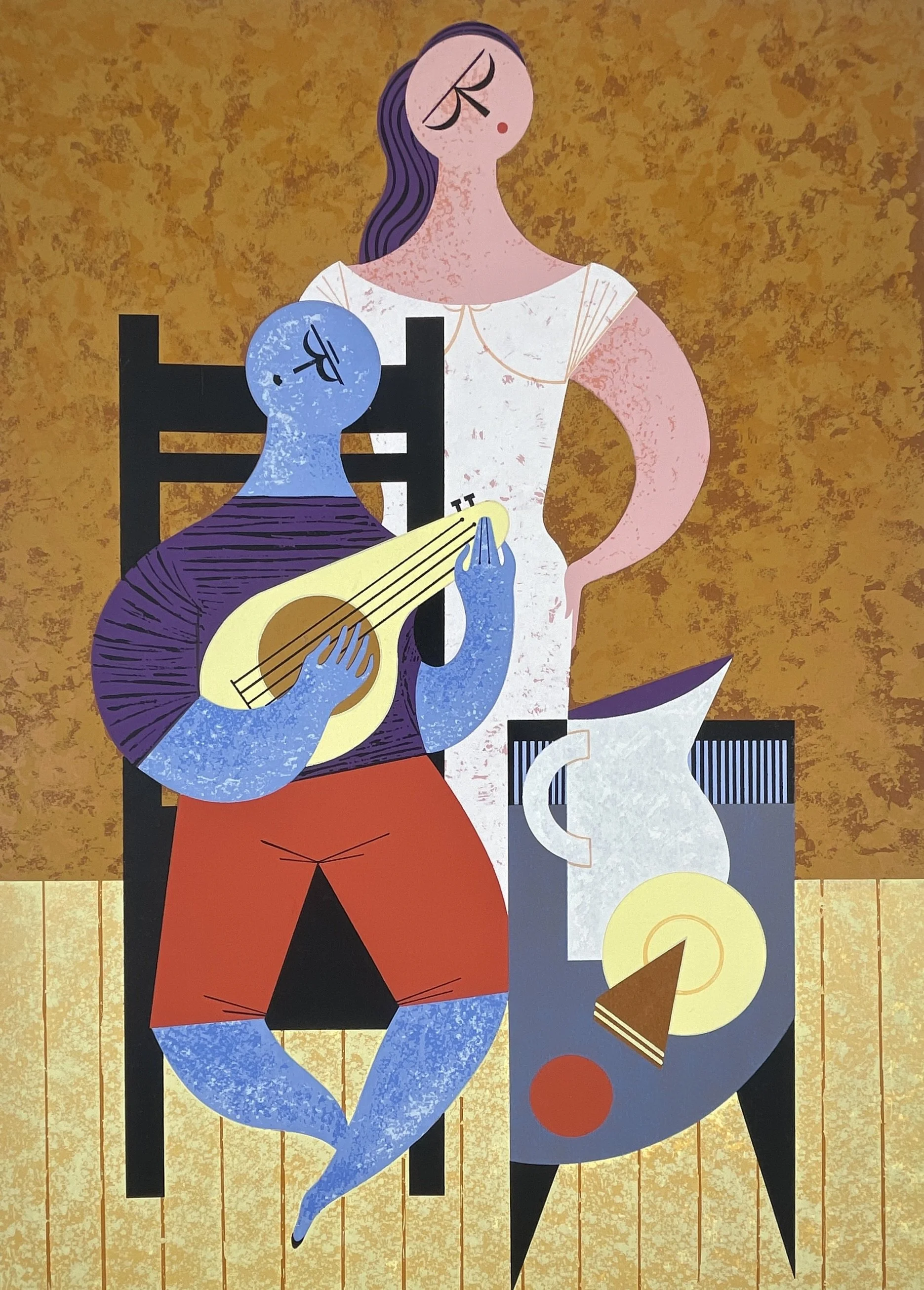 Image 1 of 6
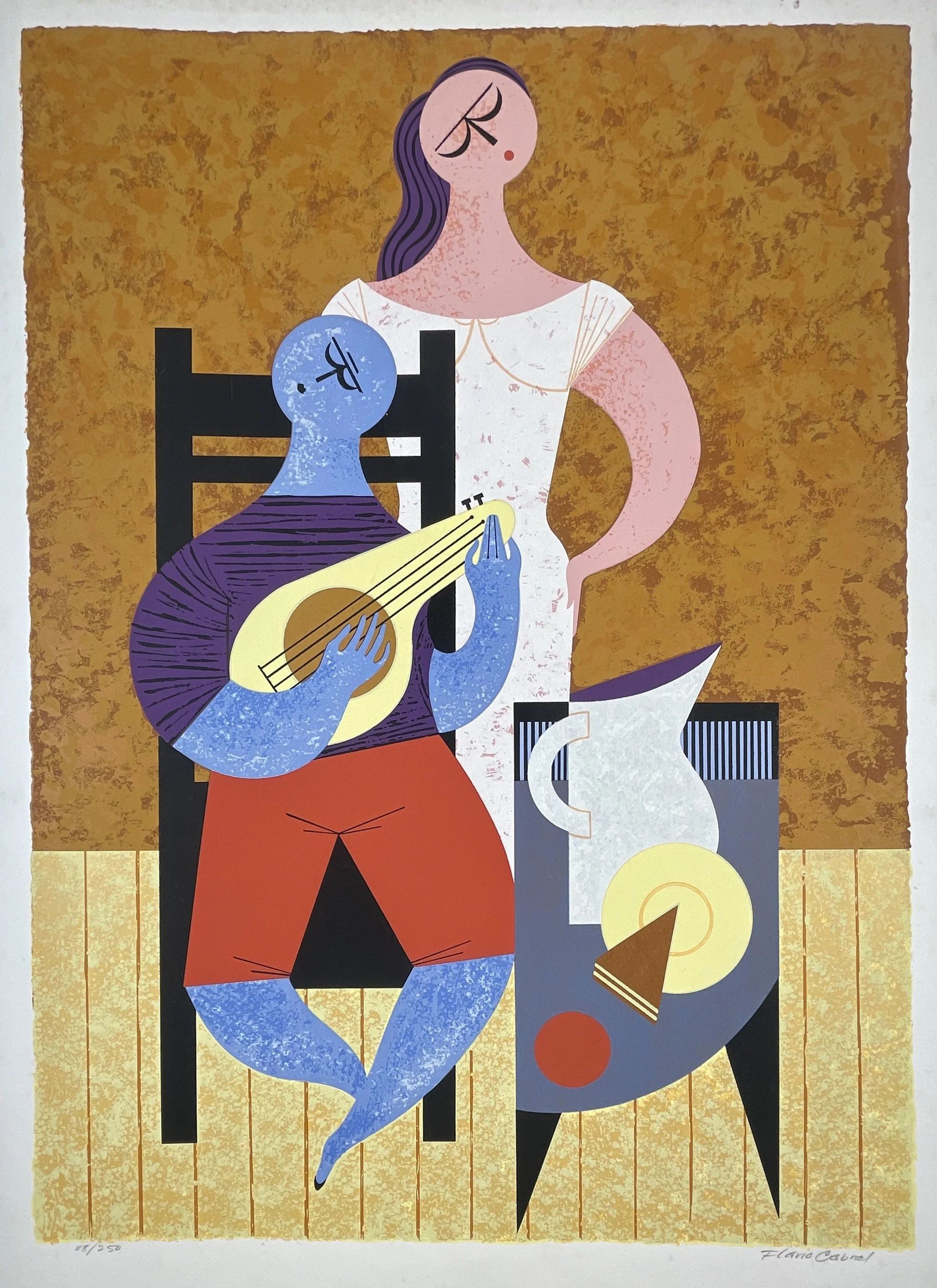 Image 2 of 6
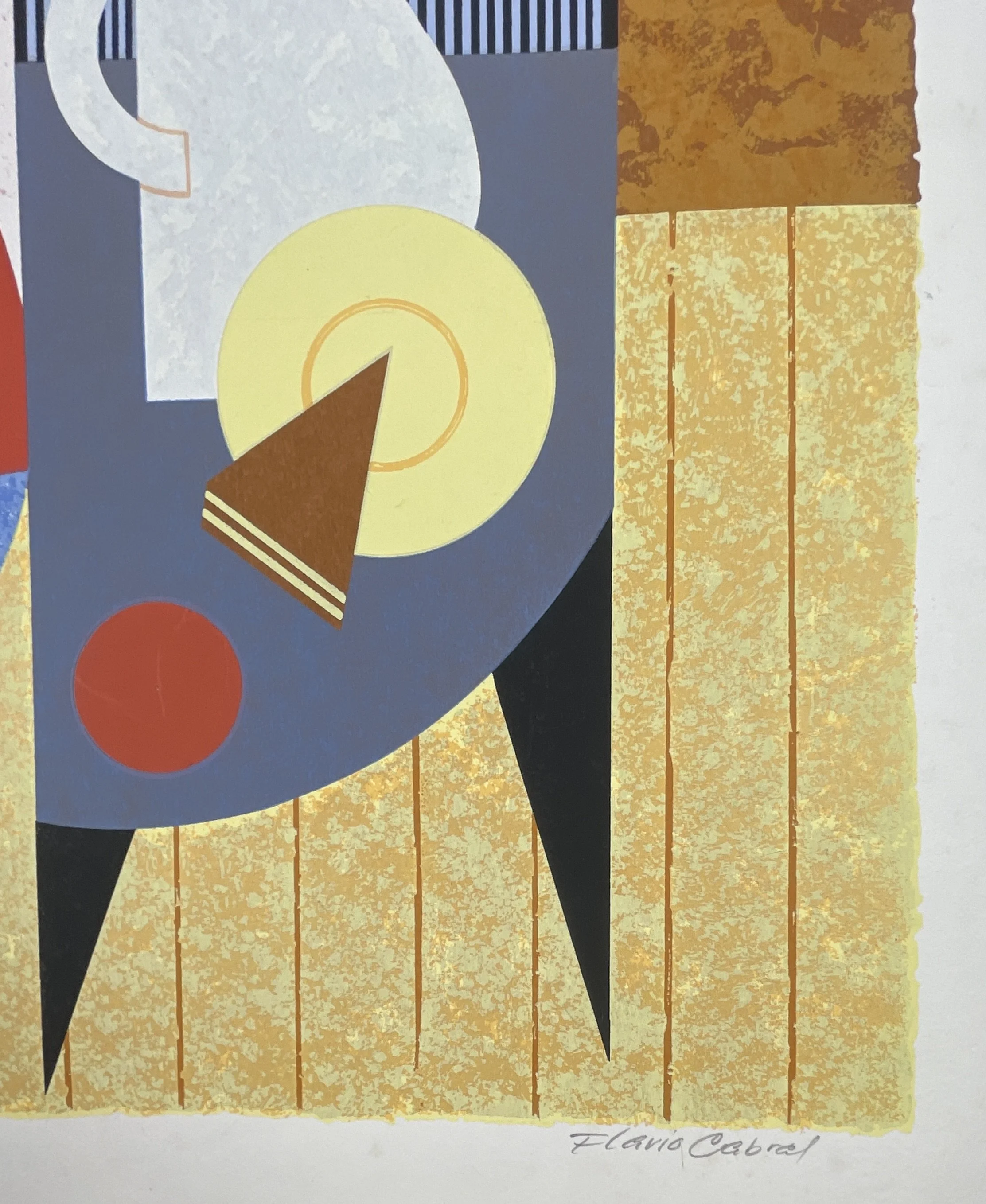 Image 3 of 6
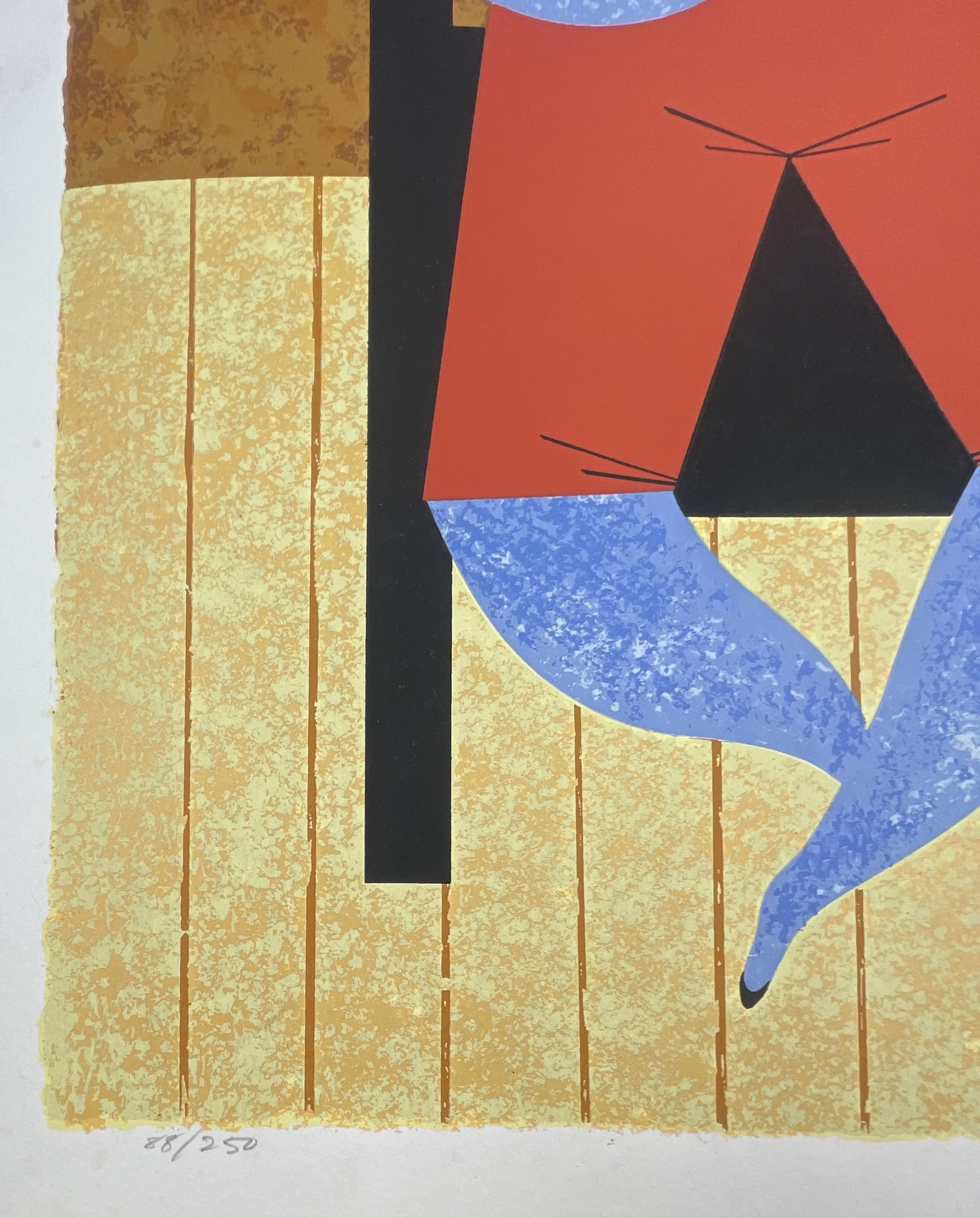 Image 4 of 6
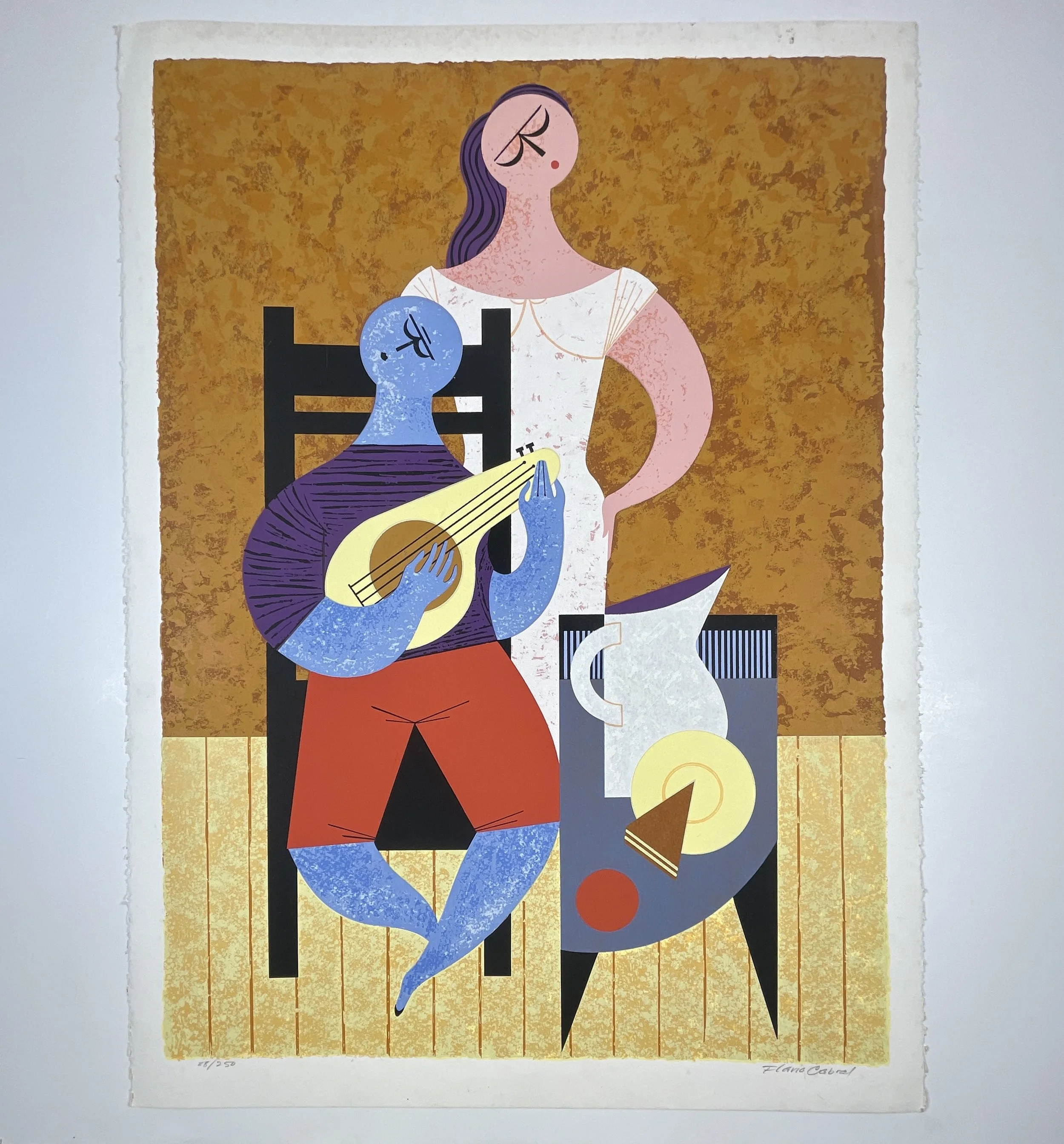 Image 5 of 6
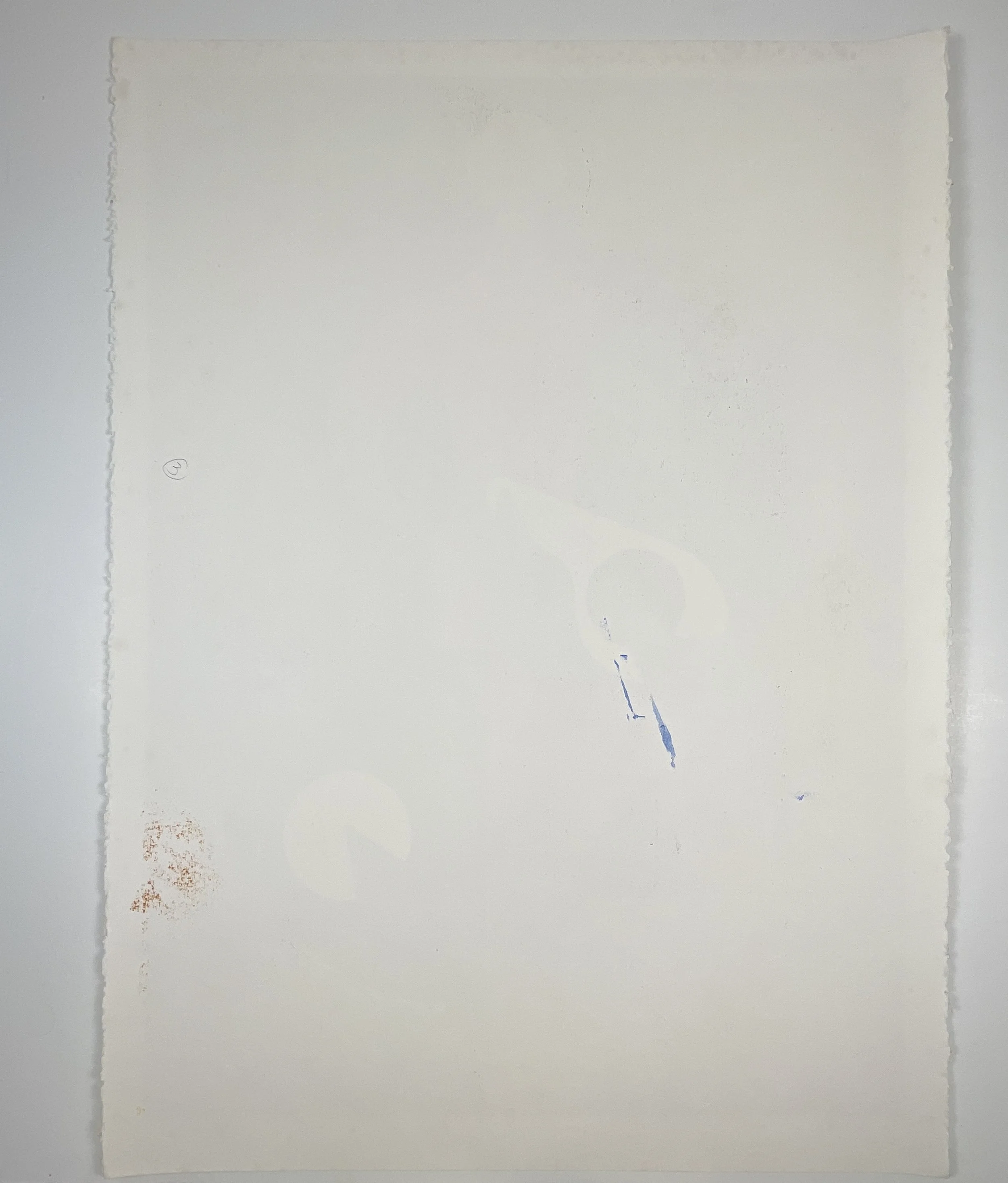 Image 6 of 6