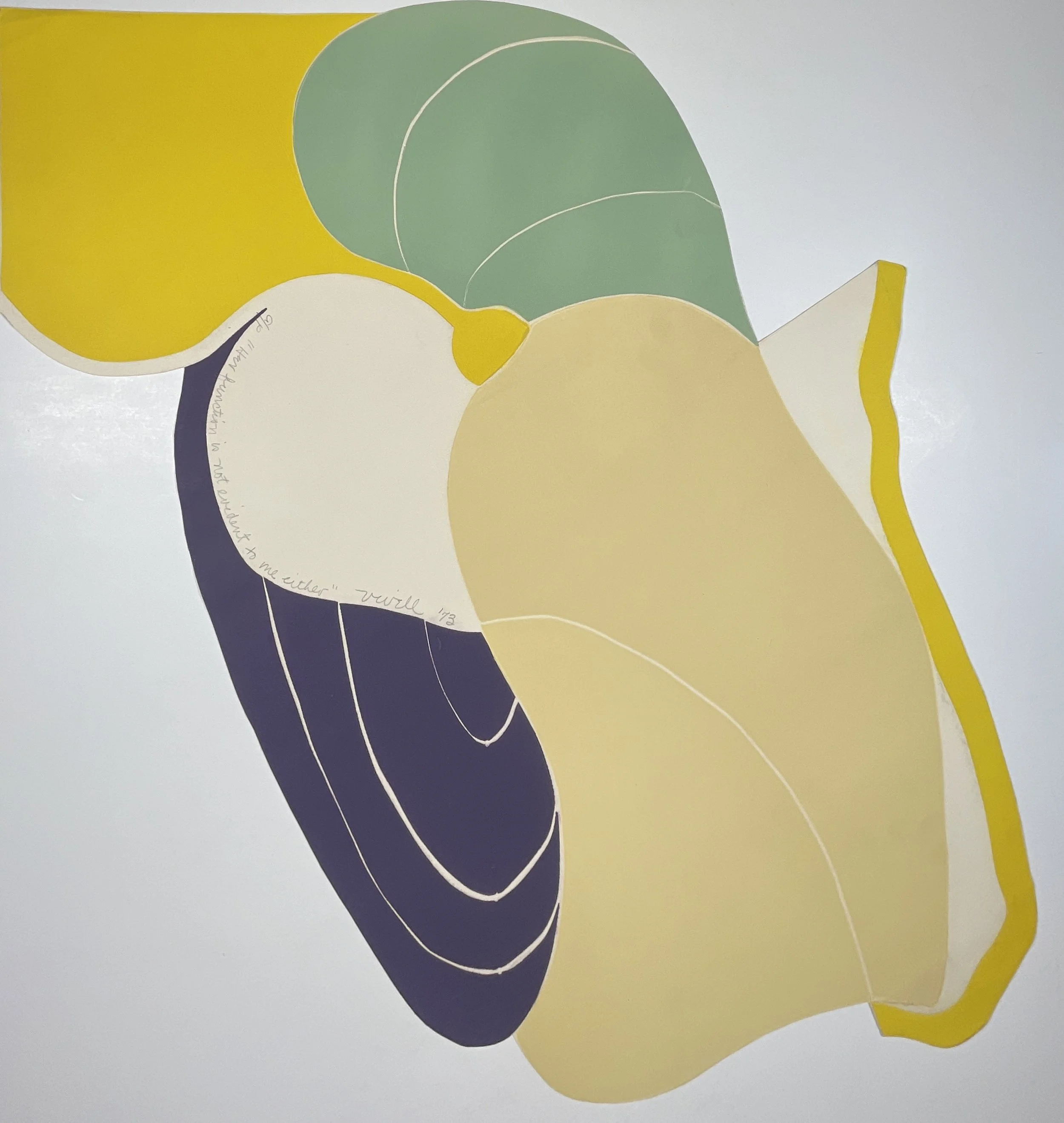
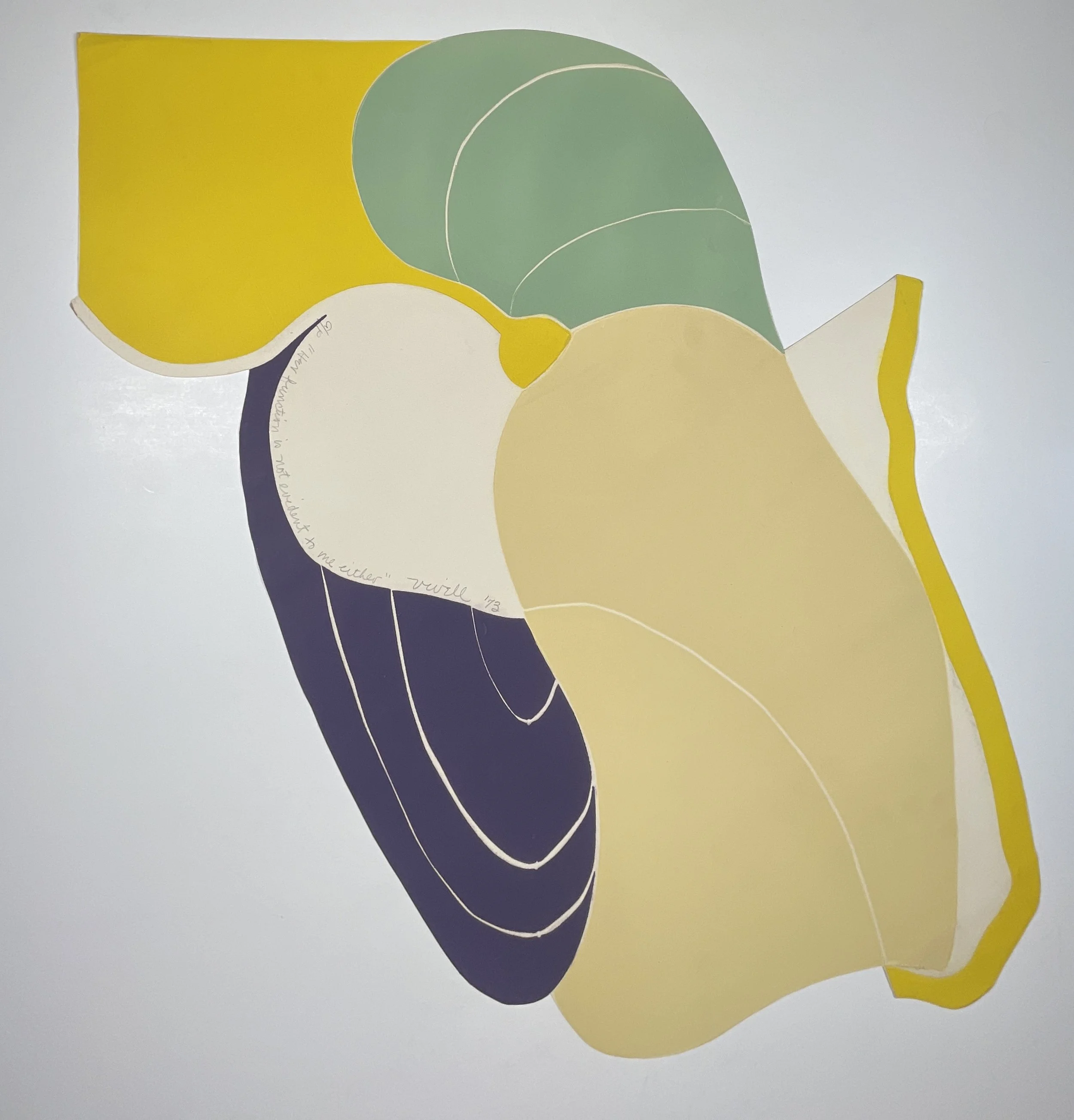
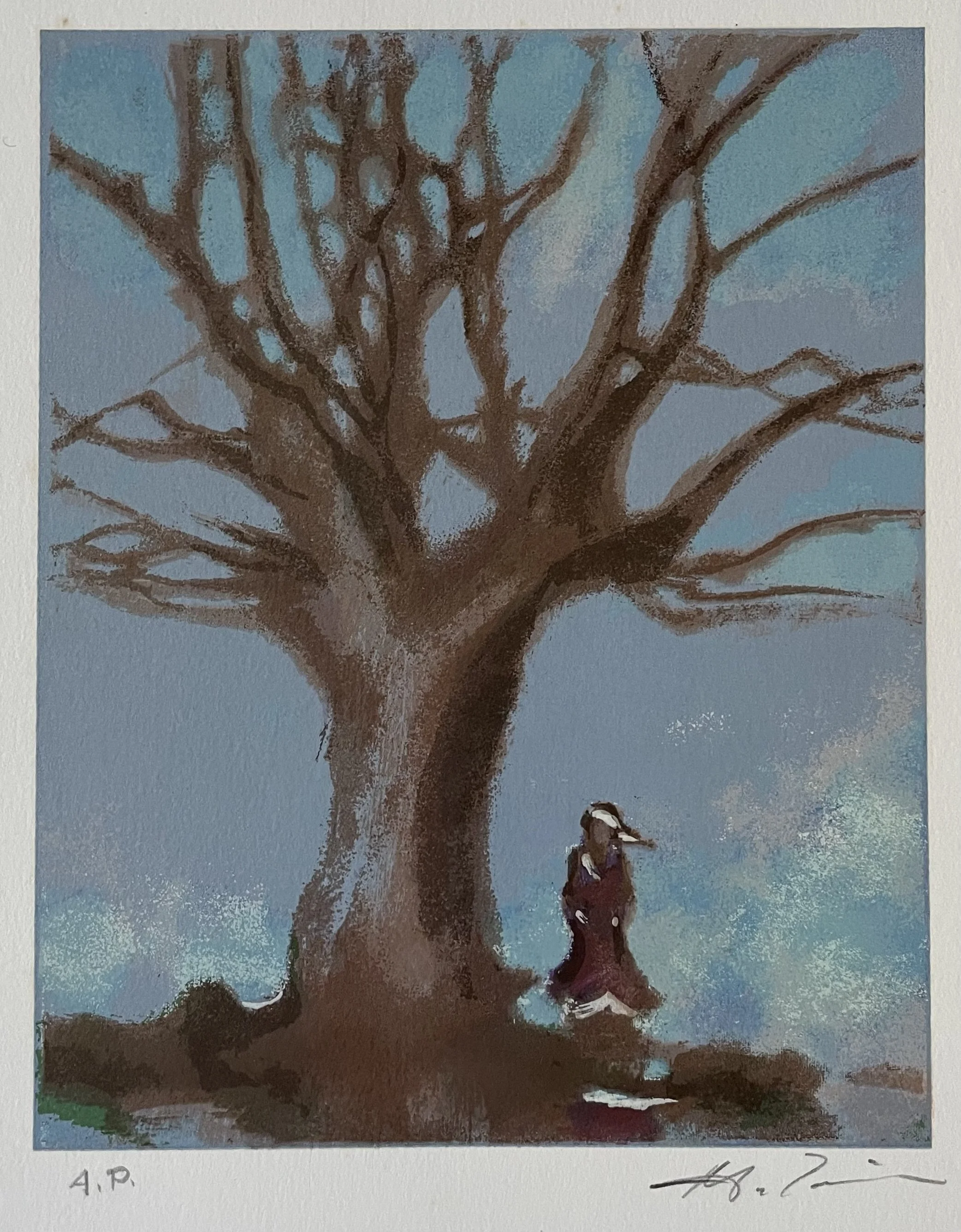
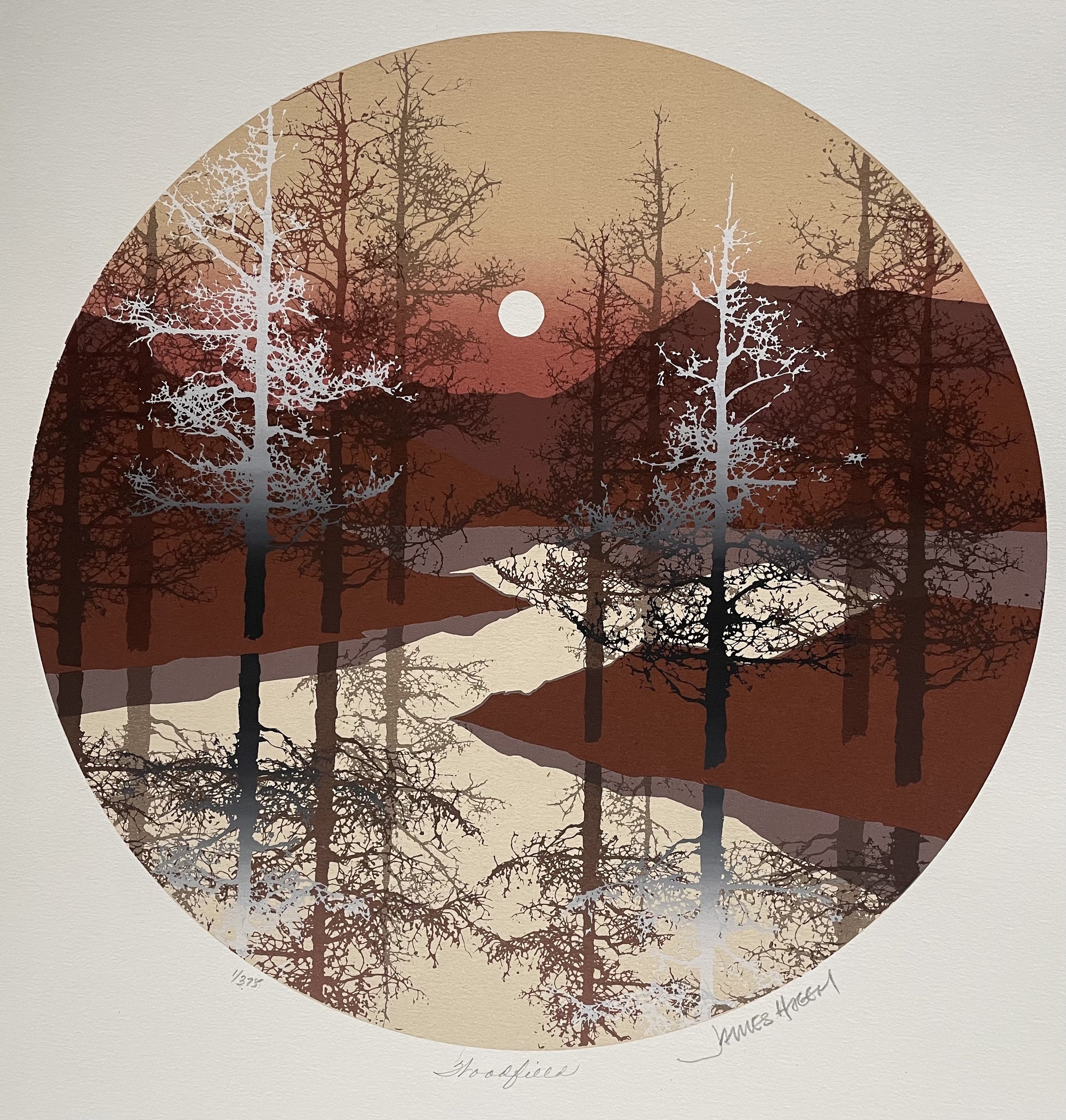
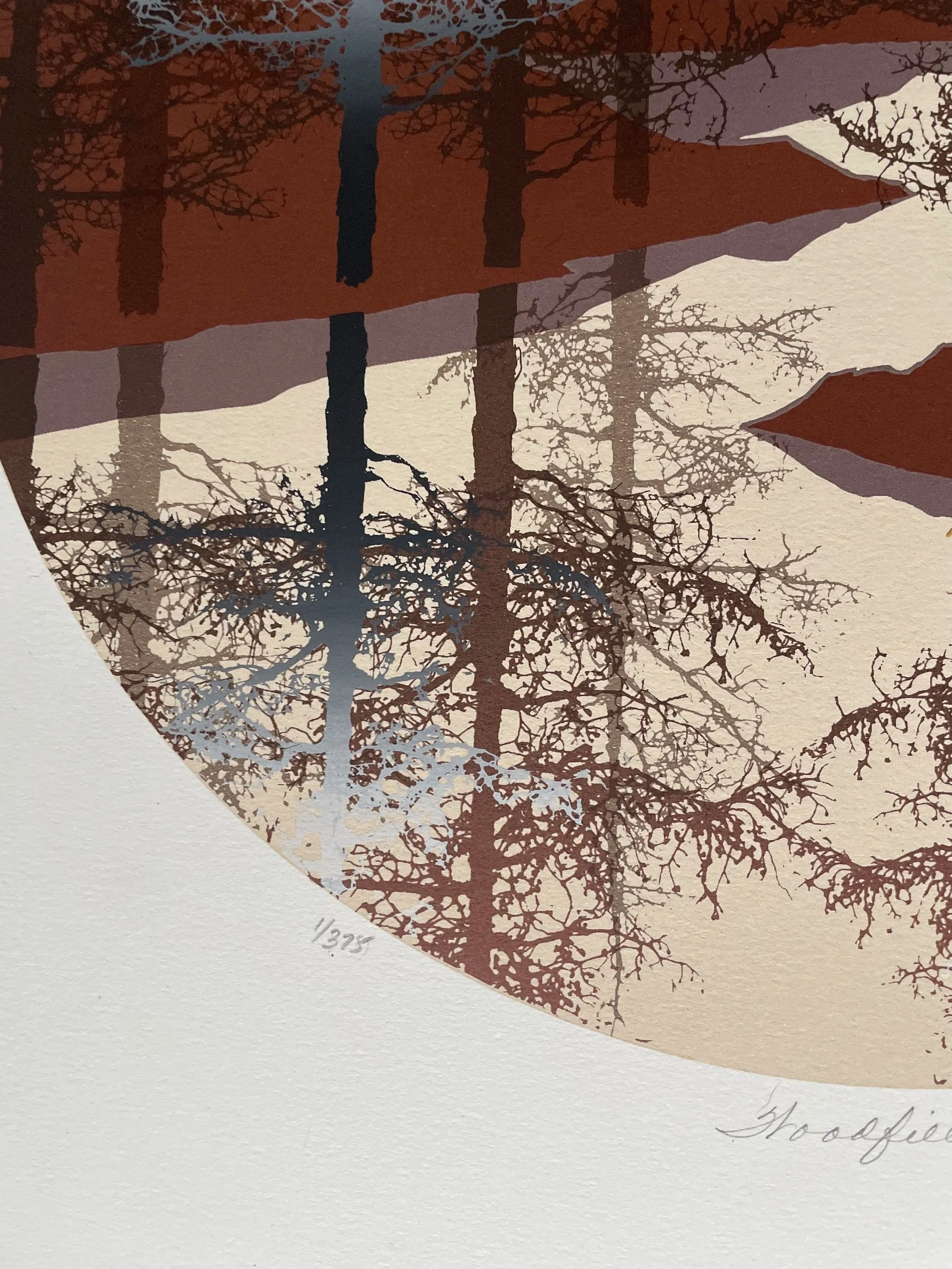
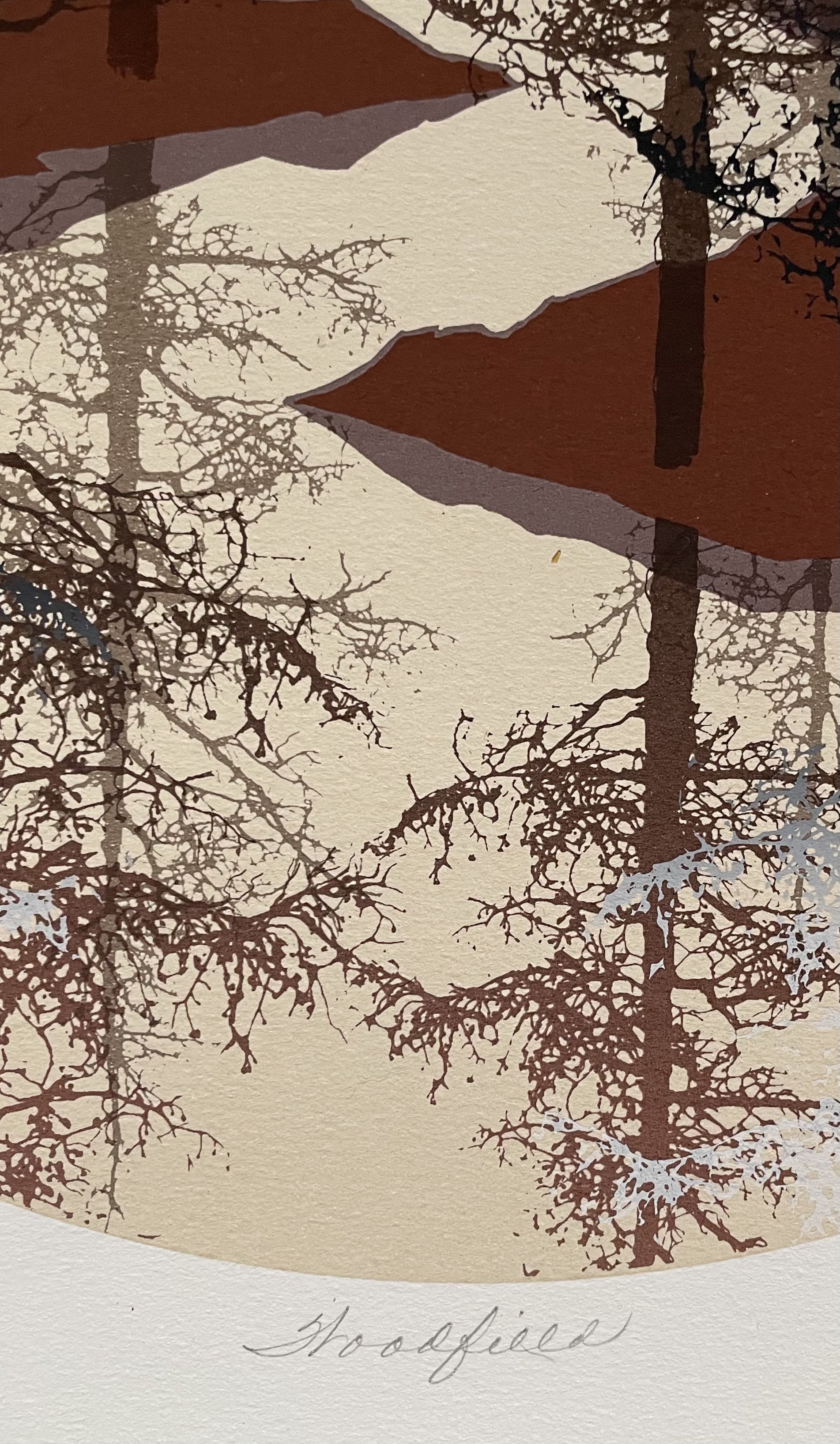
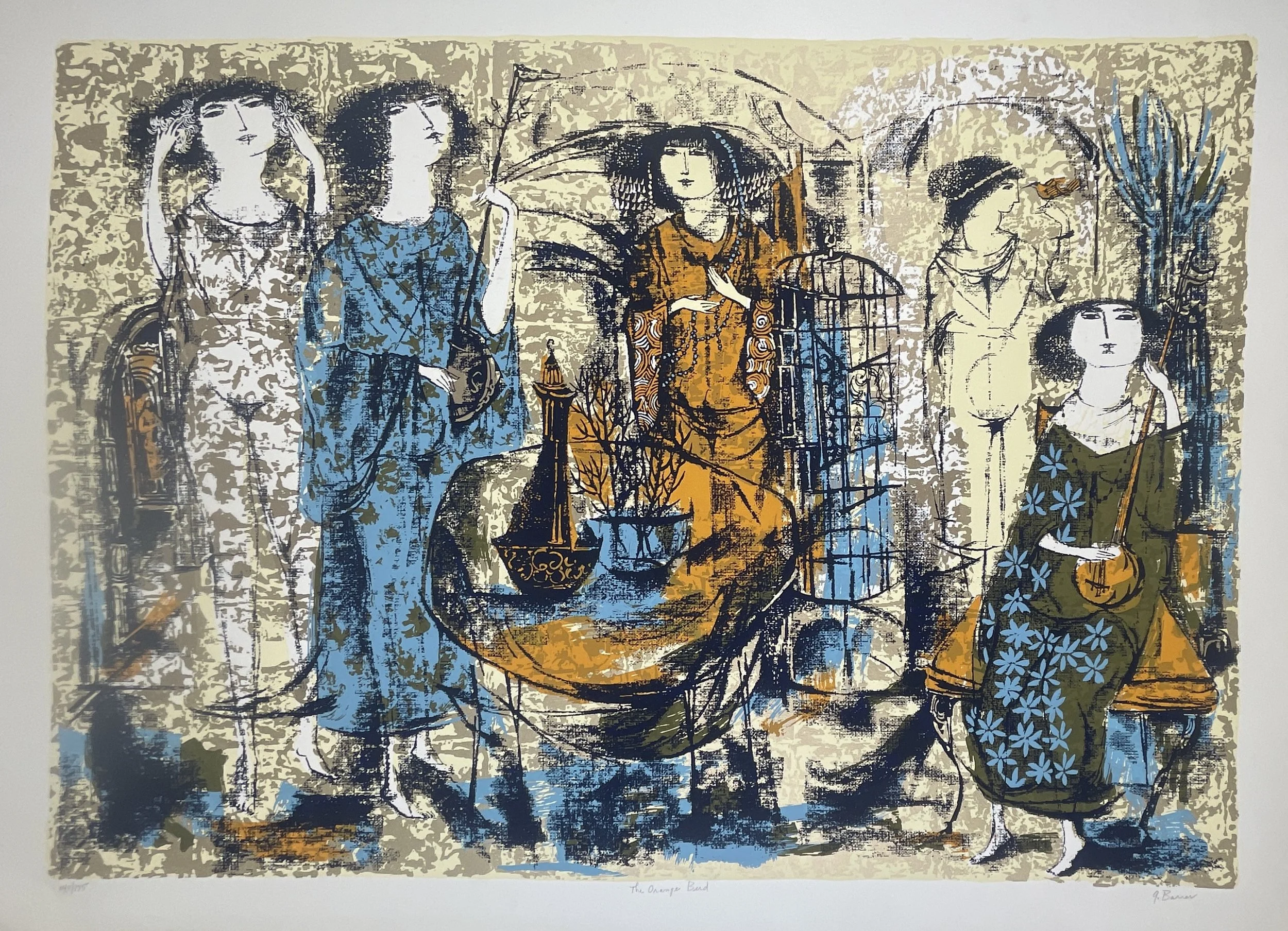
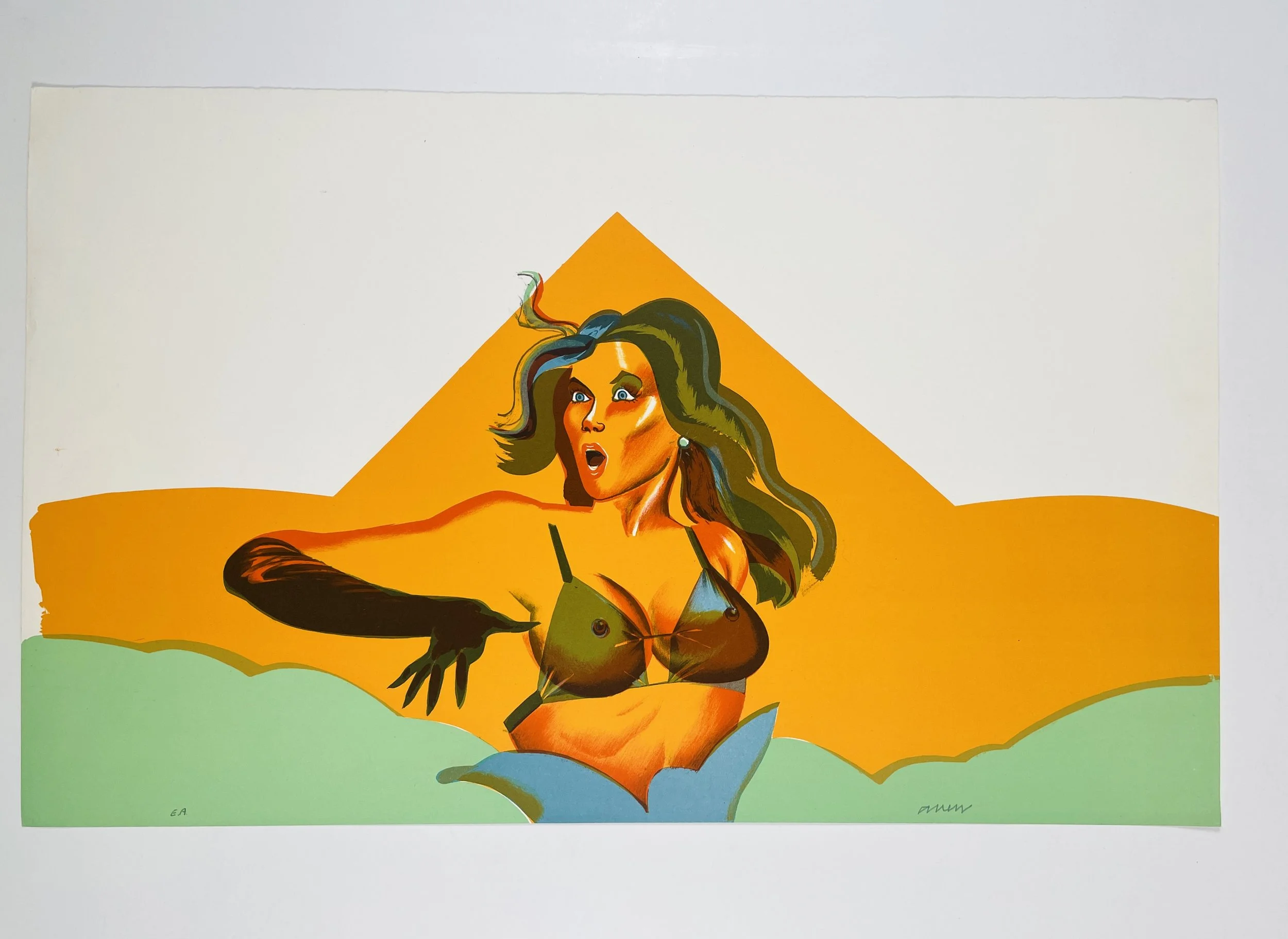
“Diamond Taupe,”-attributed - E.T. Gipson (American, 20th c.), c.1981, silkscreen serigraph monoprint 23×23 in., signed & numbered 1/1.
A rare 1/1 silkscreen serigraph monoprint by E.T. Gipson, Diamond Taupe features layered abstractions of warm taupe, golden light, and deep shadow, executed using the artist’s innovative serigraphy technique and hand-pulled monoprint process. Signed “Gipson 81,” unique impression ideal for collectors of American modernist printmaking.
Artwork Description
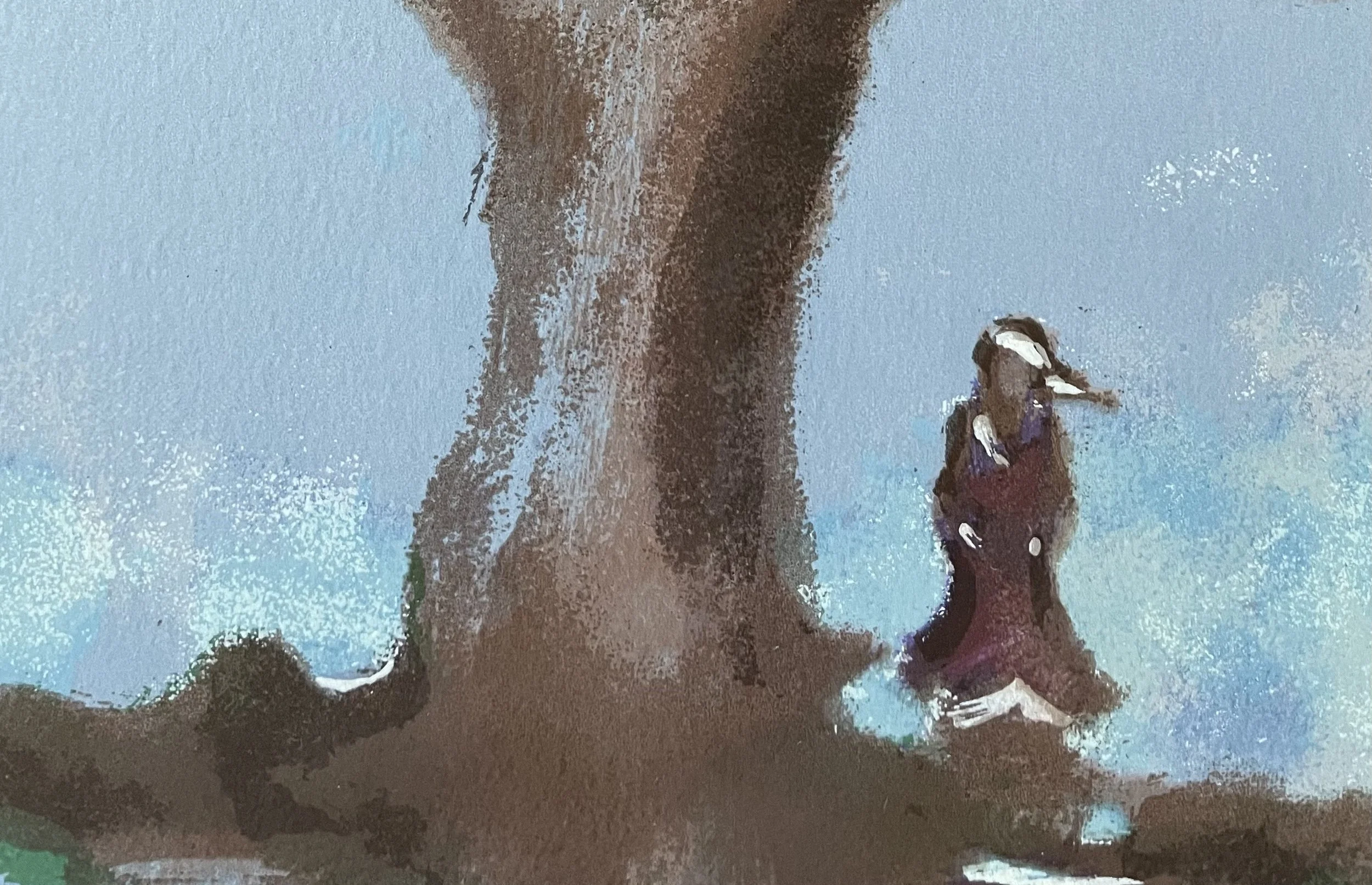
Diamond Taupe presents a bold yet atmospheric abstraction within a square format. The composition juxtaposes broad planes of muted, earthy taupe and creamy neutrals with deeper, almost architectural shadows that suggest depth and light subtly interacting across the surface. Rather than literal representation, the work explores relationships between form and color, with broad brush-like areas diffusing into one another through carefully controlled silkscreen layering.
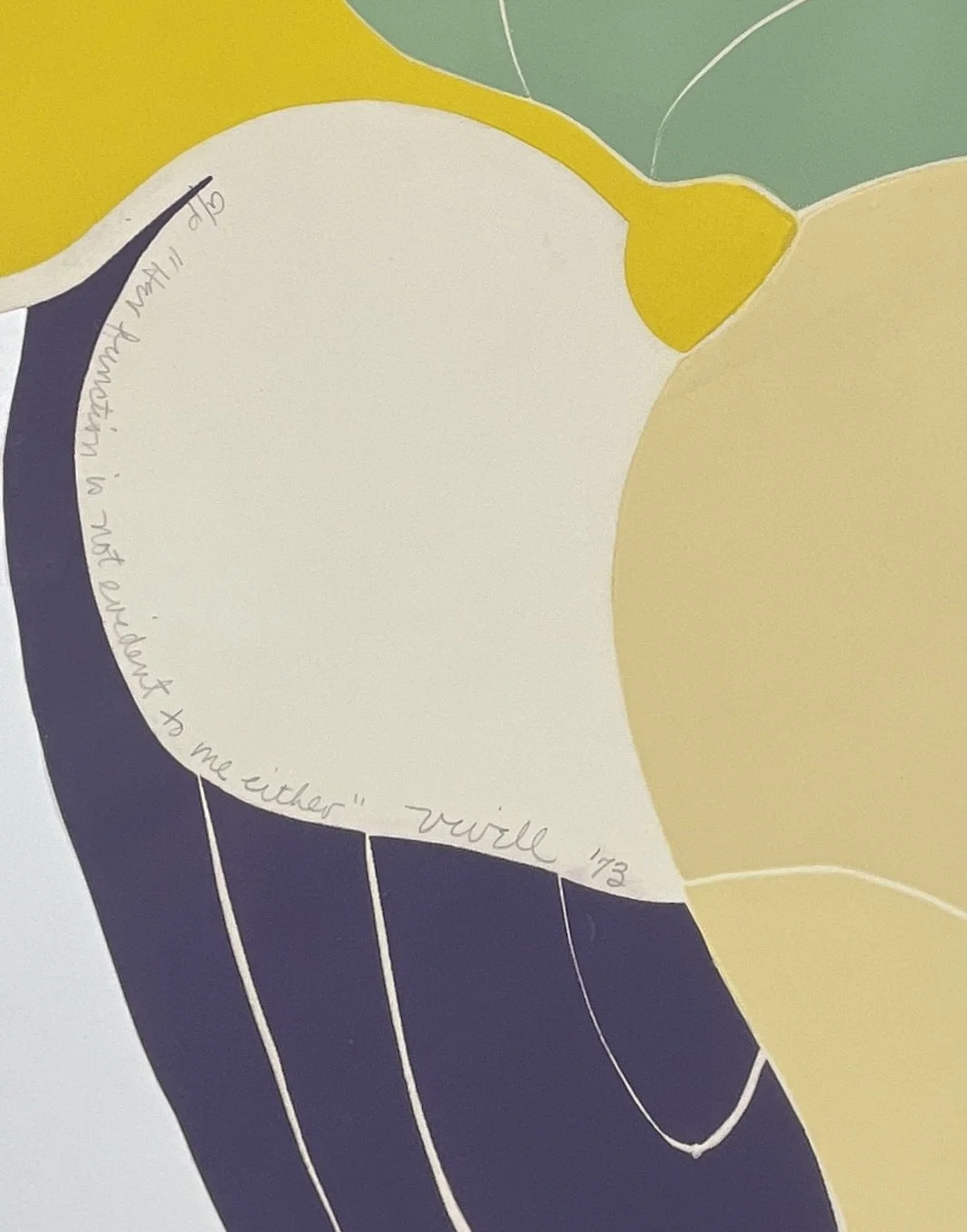
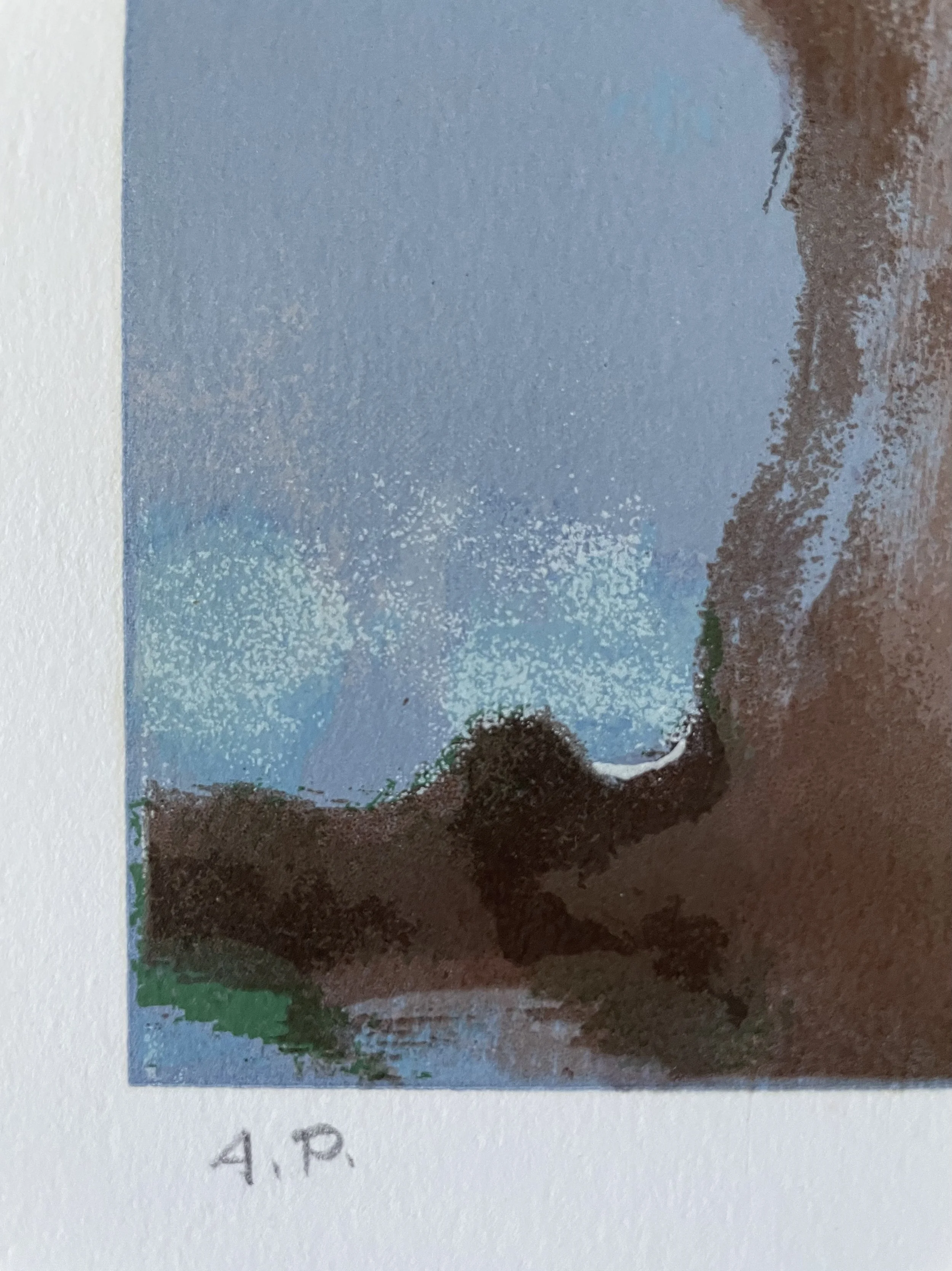
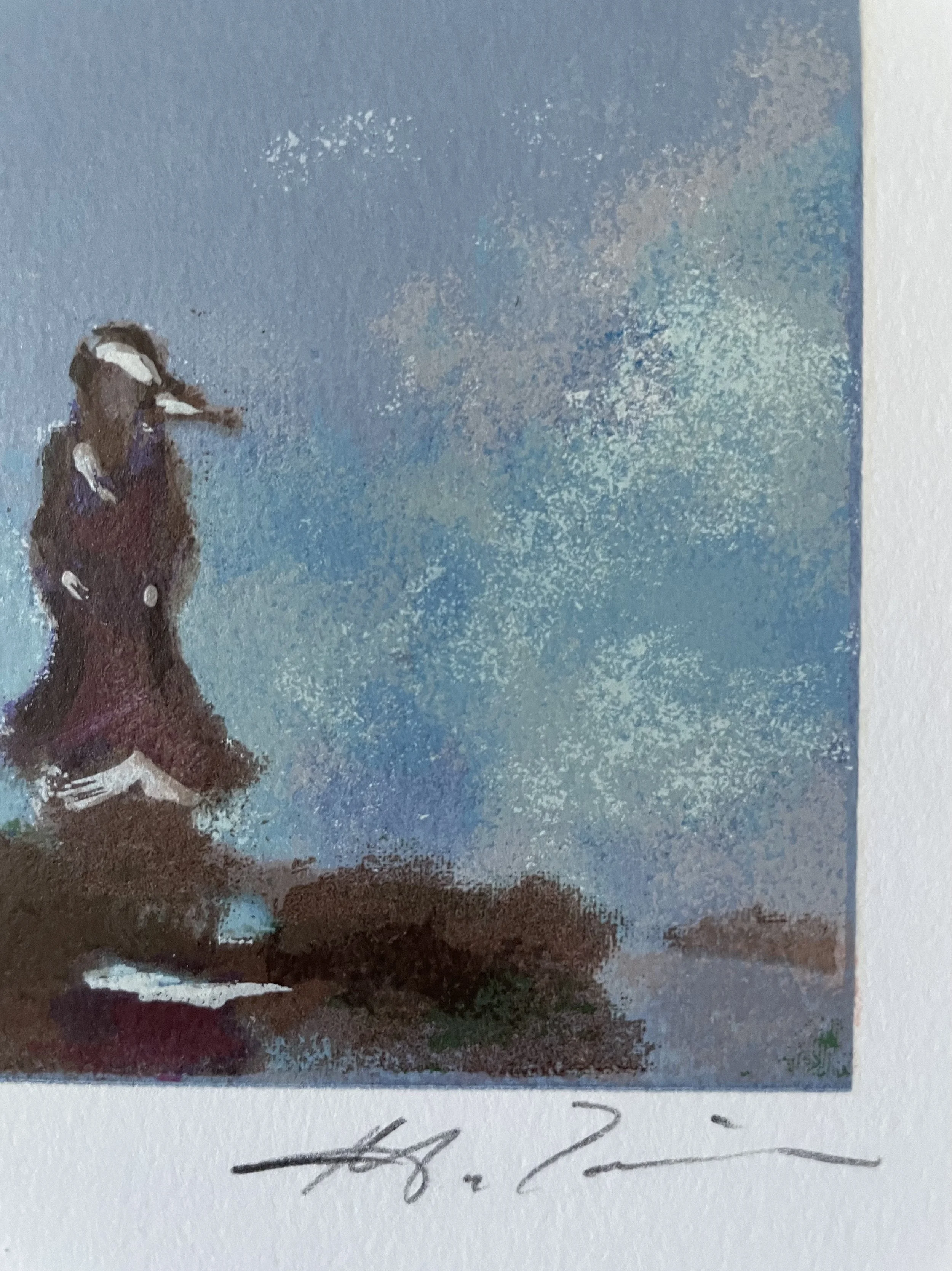
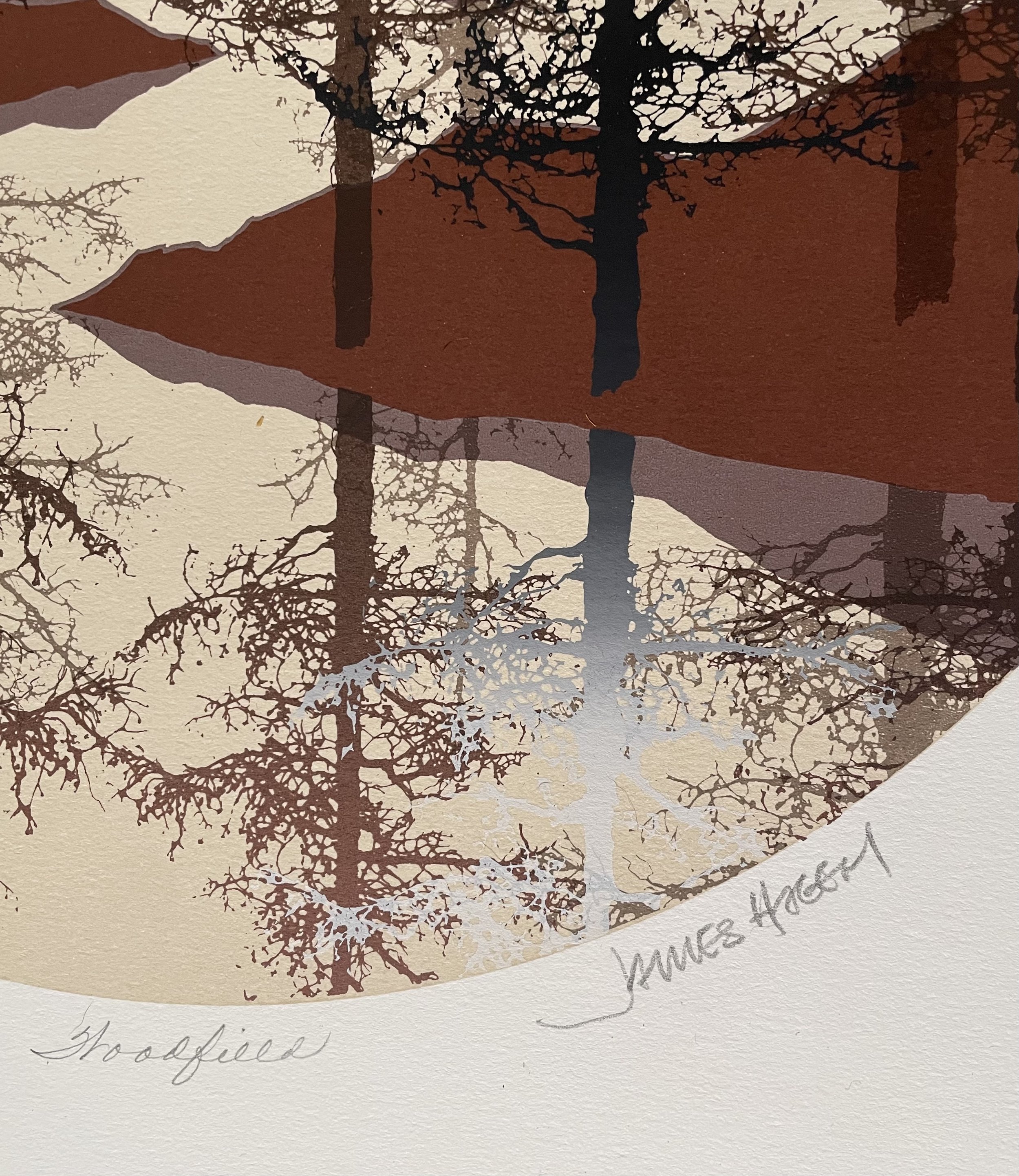
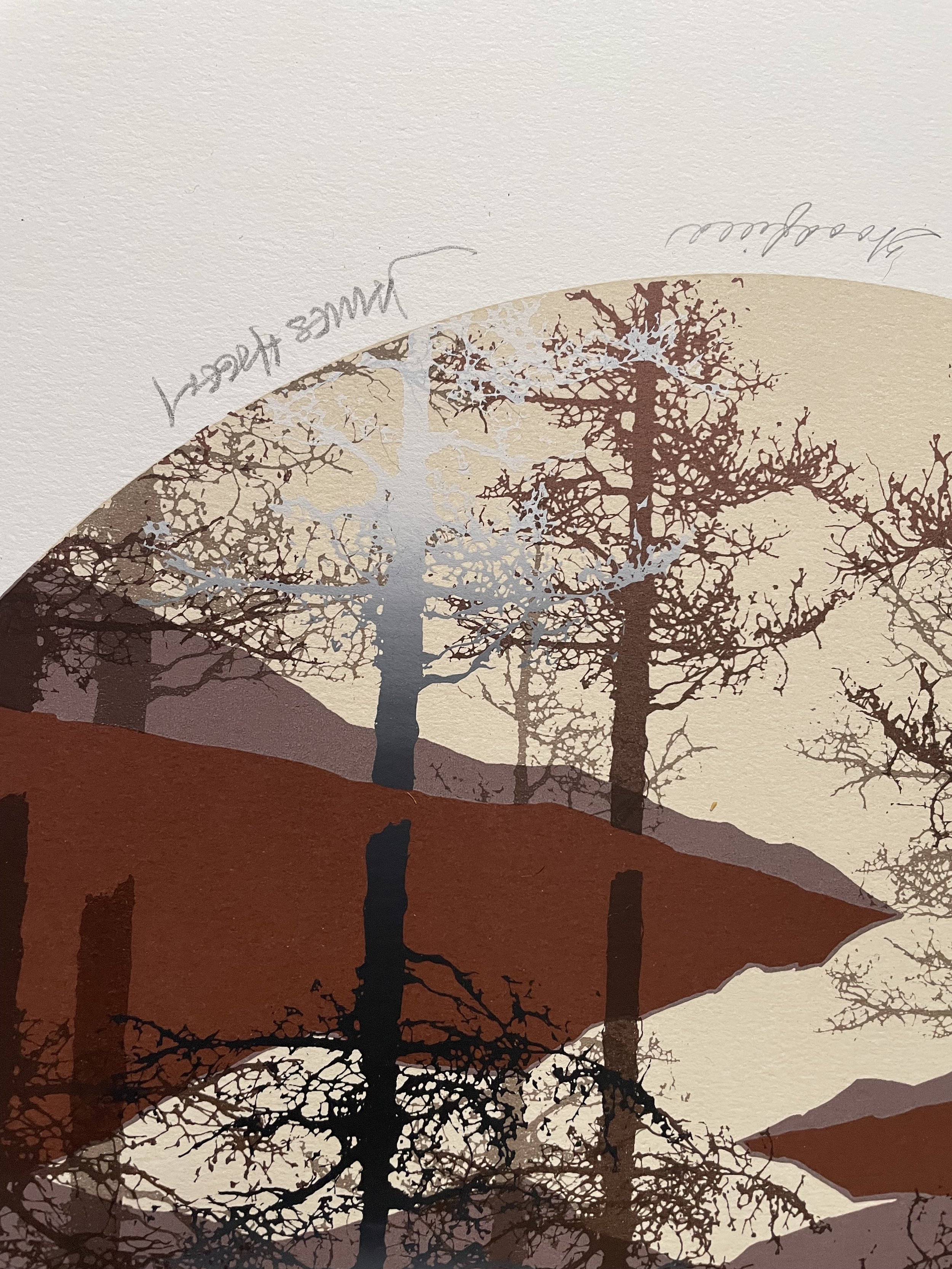
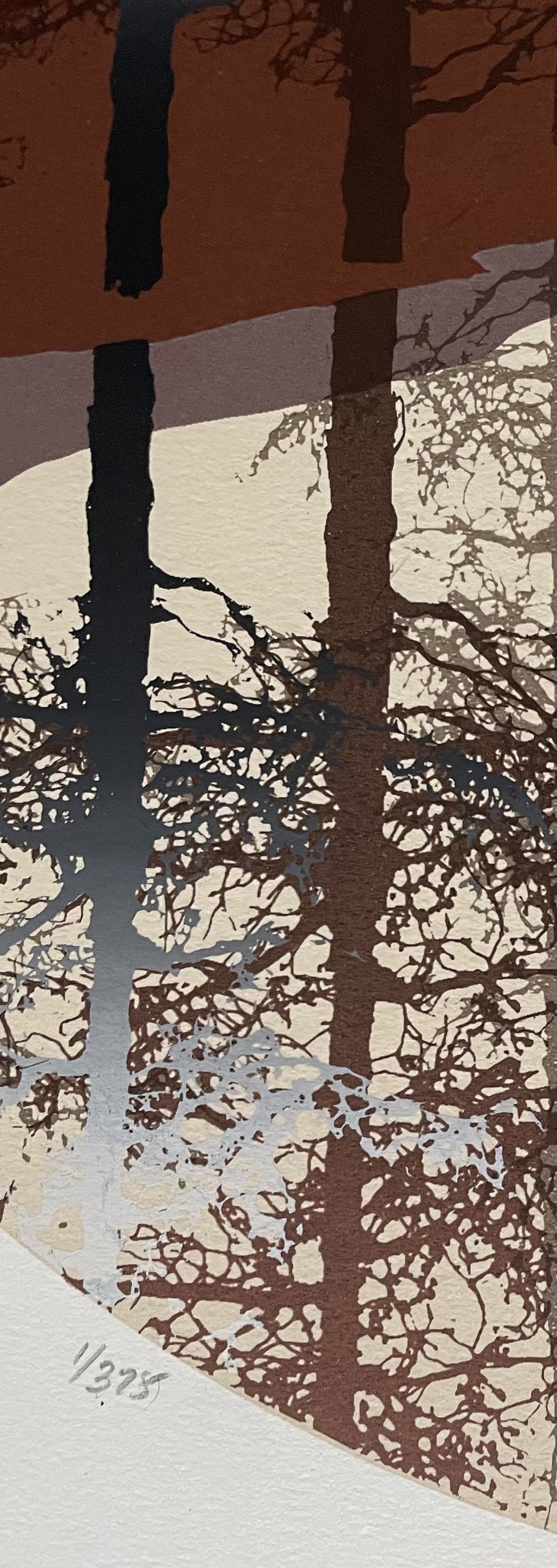
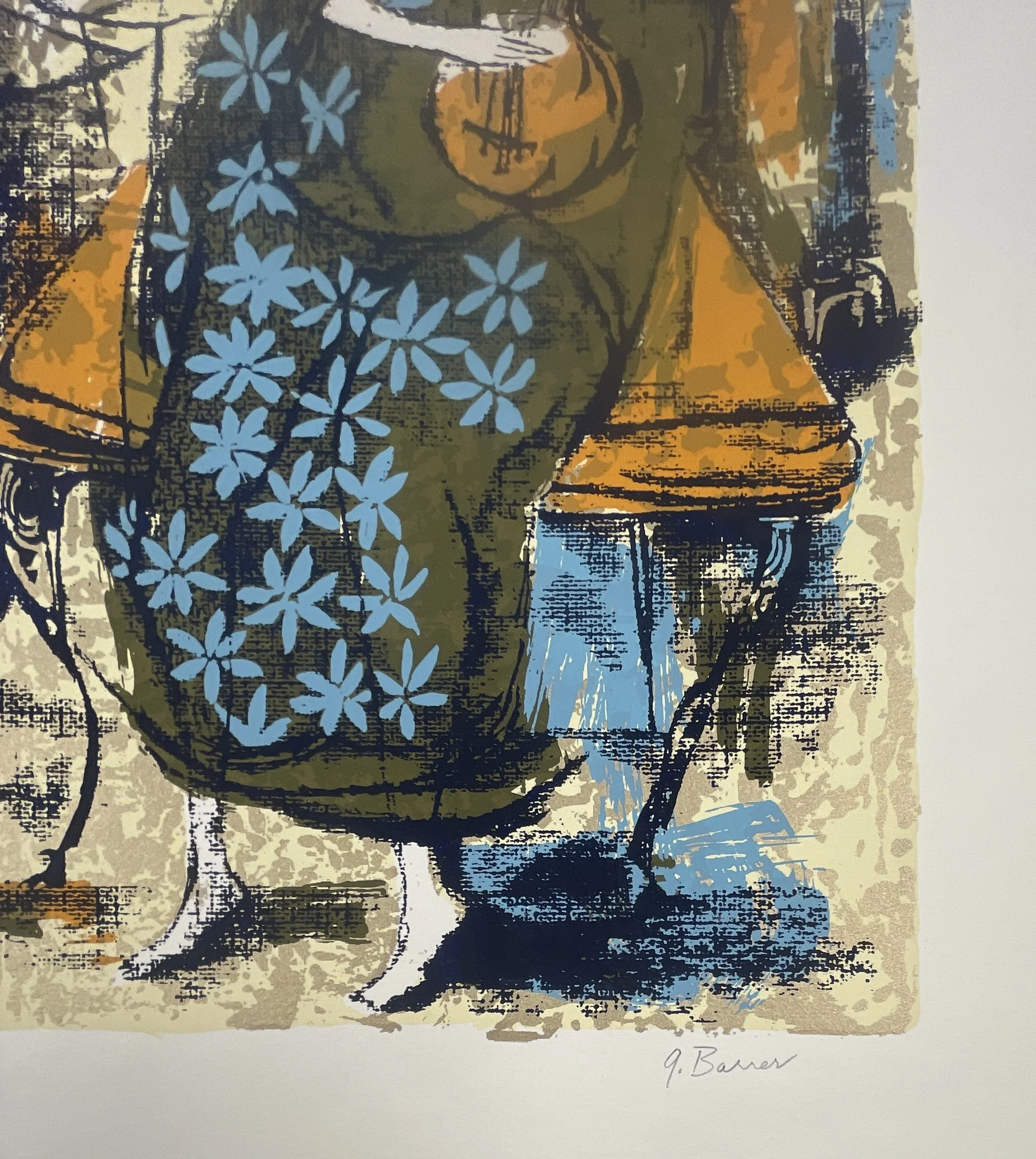
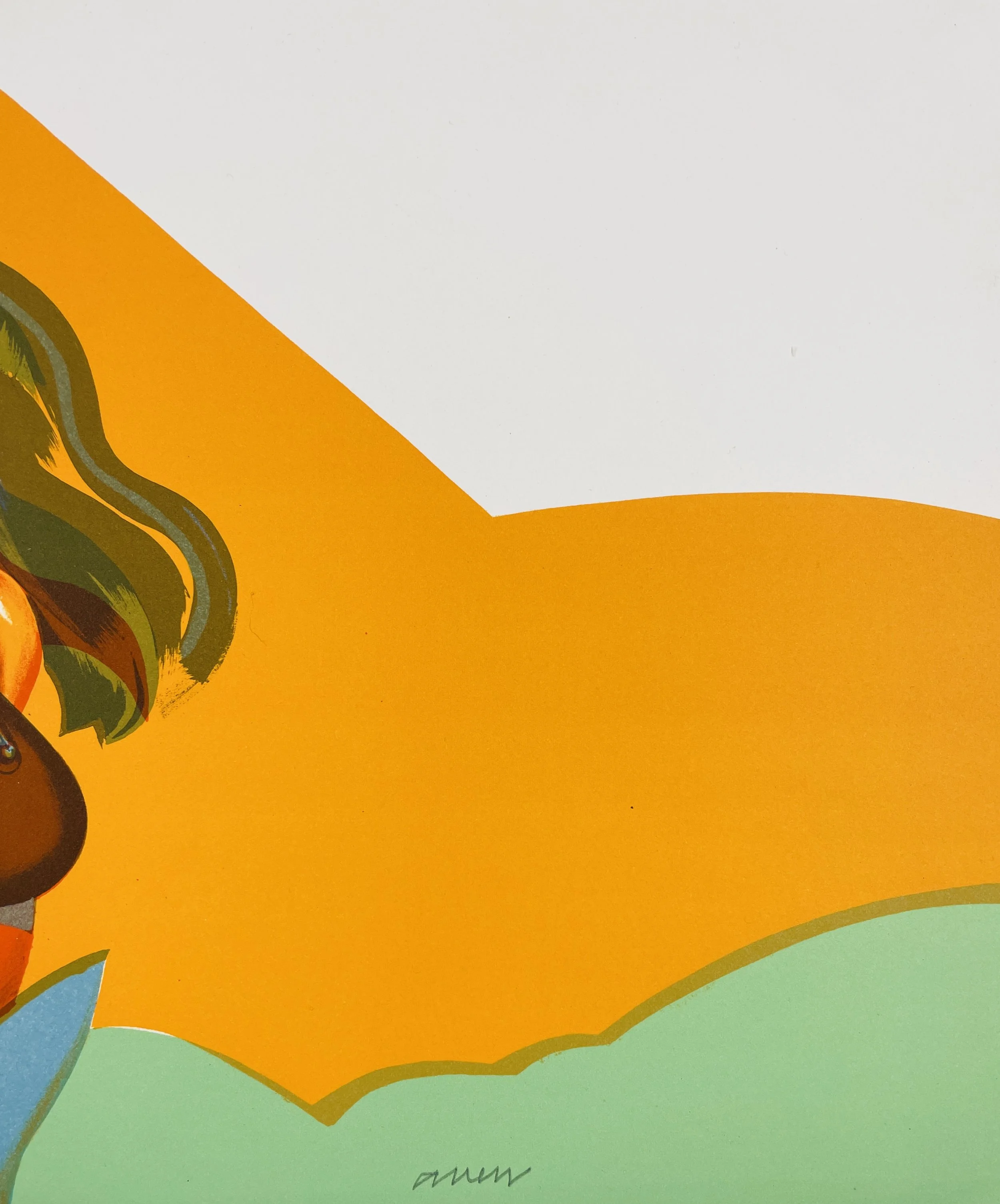
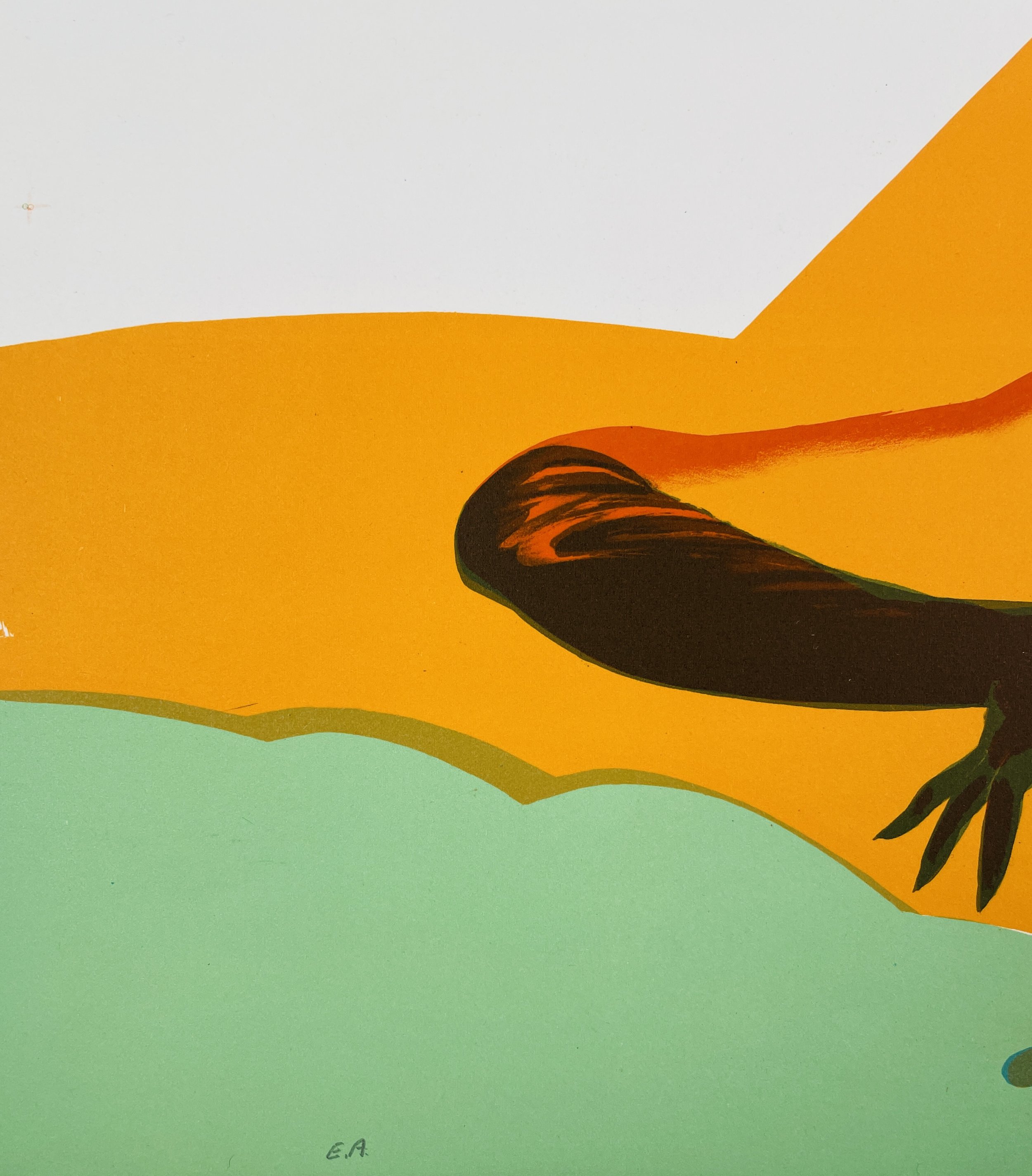
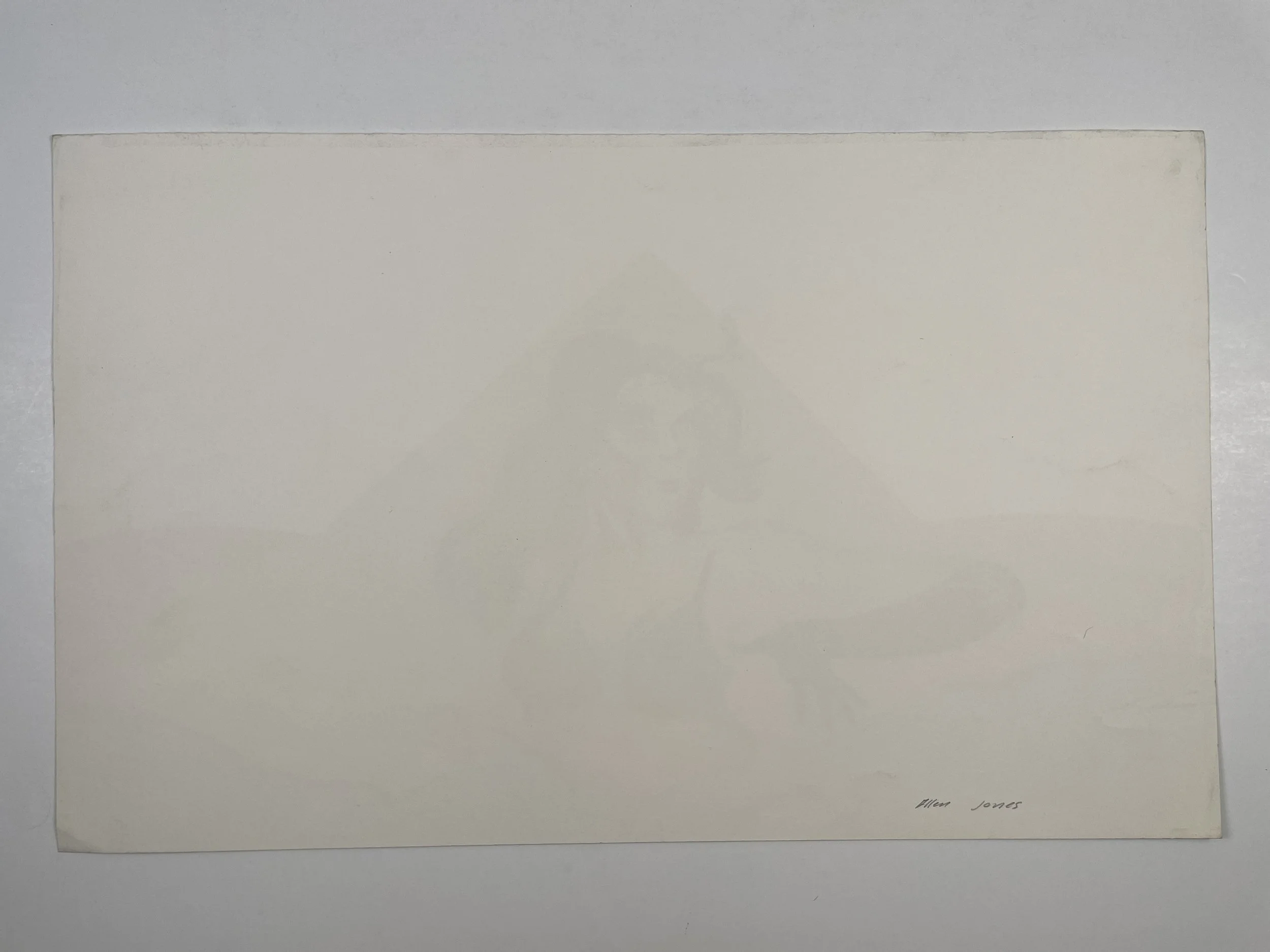
Executed as a silk-screen serigraph monoprint and numbered 1/1, this work is entirely unique—there is no other impression exactly like it. Gipson’s hand-pulled process produces subtle variances in ink application and tone, giving the piece a dynamic field of color that is at once soft and richly textured. The artist’s signature and date (“Gipson 81”) appear in pencil on the lower margin, reaffirming the work’s authenticity and period.
The overall effect is a calm but compelling interplay between light and shadow, structure and atmosphere. The muted palette and harmonic transitions align Diamond Taupe with post-minimalist explorations of space and color, while maintaining a personal and expressive quality characteristic of Gipson’s monoprint practice.
Artist Biography — E. T. Gipson
E. T. Gipson is an American artist recognized for his innovative contributions to modern printmaking, particularly through silk-screen serigraphy and monoprint processes developed in the mid- to late-20th century. Born in Texas, Gipson’s early career was unconventional—marked by work as a baker, taxi driver, food and drug chemist, and art gallery owner—before he focused on serigraphic art.
Entirely self-taught, Gipson pushed silk-screen beyond commercial and graphic uses into the realm of fine art. Rejecting rigid stylistic categories, he used serigraphy as a medium of creative exploration, often referring to his practice as “innovative serigraphy.” Rather than producing standard editions, many of his works are unique monoprints (1/1) or very small impressions, emphasizing the singularity of each piece through hand-pulled layering and controlled ink modulation.
Gipson’s imagery often centers on elemental forms and atmospheric effects—horizons, ovoids, circular fields, and layered planes of color—rendered with subtle tonal shifts that evoke natural light and space. His restrained color palettes and serene abstractions made his works appealing to both private collectors and corporate patrons.
During his active career, Gipson’s serigraphs were acquired by major institutional and corporate collections, including First National Bank of Denver, Holiday Inns of America, Registry Hotel (Minneapolis), Diplomat Golf & Racquet Club (Hollywood, Florida), Beneficial Management Corporation, and Household Finance Corporation, among others. His work was also well represented in interiors by leading designers and galleries across the United States.
Gipson was regularly exhibited and represented by Mitch Morse Gallery (Art Spectrum), a key platform for his work and for advancing recognition of serigraphic innovation within the broader field of American abstraction. Later in life, he lived and worked in Novato, California, continuing to refine his approach to color, form, and print as object.
Today, E. T. Gipson’s works are valued for their rarity, refined technique, and contribution to American modernist printmaking—especially in the realm of monoprint serigraphy, where his unique voice remains distinct.
E.T. Gipson (American) — Diamond Taupe, c.1981. Silk-screen serigraph monoprint, 23 × 23 in., signed and dated “Gipson 81,” numbered 1/1. Unique monoprint demonstrating Gipson’s experimental serigraphy.
Certificate of Value & Authentication
This certificate confirms that Diamond Taupe is an original, one-of-a-kind silkscreen serigraph monoprint by American artist E.T. Gipson, hand-signed “Gipson 81” and numbered 1/1. The work is consistent with Gipson’s documented technique and stylistic period and is authenticated by signature, style, and publisher provenance.
Provenance
Private collection
Acquired from Mitch Morse Gallery / Art Spectrum (New York; United States and Europe acquisition)
Current owner: Artfind Gallery, Washington, DC
“Diamond Taupe,”-attributed - E.T. Gipson (American, 20th c.), c.1981, silkscreen serigraph monoprint 23×23 in., signed & numbered 1/1.
A rare 1/1 silkscreen serigraph monoprint by E.T. Gipson, Diamond Taupe features layered abstractions of warm taupe, golden light, and deep shadow, executed using the artist’s innovative serigraphy technique and hand-pulled monoprint process. Signed “Gipson 81,” unique impression ideal for collectors of American modernist printmaking.
Artwork Description
Diamond Taupe presents a bold yet atmospheric abstraction within a square format. The composition juxtaposes broad planes of muted, earthy taupe and creamy neutrals with deeper, almost architectural shadows that suggest depth and light subtly interacting across the surface. Rather than literal representation, the work explores relationships between form and color, with broad brush-like areas diffusing into one another through carefully controlled silkscreen layering.
Executed as a silk-screen serigraph monoprint and numbered 1/1, this work is entirely unique—there is no other impression exactly like it. Gipson’s hand-pulled process produces subtle variances in ink application and tone, giving the piece a dynamic field of color that is at once soft and richly textured. The artist’s signature and date (“Gipson 81”) appear in pencil on the lower margin, reaffirming the work’s authenticity and period.
The overall effect is a calm but compelling interplay between light and shadow, structure and atmosphere. The muted palette and harmonic transitions align Diamond Taupe with post-minimalist explorations of space and color, while maintaining a personal and expressive quality characteristic of Gipson’s monoprint practice.
Artist Biography — E. T. Gipson
E. T. Gipson is an American artist recognized for his innovative contributions to modern printmaking, particularly through silk-screen serigraphy and monoprint processes developed in the mid- to late-20th century. Born in Texas, Gipson’s early career was unconventional—marked by work as a baker, taxi driver, food and drug chemist, and art gallery owner—before he focused on serigraphic art.
Entirely self-taught, Gipson pushed silk-screen beyond commercial and graphic uses into the realm of fine art. Rejecting rigid stylistic categories, he used serigraphy as a medium of creative exploration, often referring to his practice as “innovative serigraphy.” Rather than producing standard editions, many of his works are unique monoprints (1/1) or very small impressions, emphasizing the singularity of each piece through hand-pulled layering and controlled ink modulation.
Gipson’s imagery often centers on elemental forms and atmospheric effects—horizons, ovoids, circular fields, and layered planes of color—rendered with subtle tonal shifts that evoke natural light and space. His restrained color palettes and serene abstractions made his works appealing to both private collectors and corporate patrons.
During his active career, Gipson’s serigraphs were acquired by major institutional and corporate collections, including First National Bank of Denver, Holiday Inns of America, Registry Hotel (Minneapolis), Diplomat Golf & Racquet Club (Hollywood, Florida), Beneficial Management Corporation, and Household Finance Corporation, among others. His work was also well represented in interiors by leading designers and galleries across the United States.
Gipson was regularly exhibited and represented by Mitch Morse Gallery (Art Spectrum), a key platform for his work and for advancing recognition of serigraphic innovation within the broader field of American abstraction. Later in life, he lived and worked in Novato, California, continuing to refine his approach to color, form, and print as object.
Today, E. T. Gipson’s works are valued for their rarity, refined technique, and contribution to American modernist printmaking—especially in the realm of monoprint serigraphy, where his unique voice remains distinct.
E.T. Gipson (American) — Diamond Taupe, c.1981. Silk-screen serigraph monoprint, 23 × 23 in., signed and dated “Gipson 81,” numbered 1/1. Unique monoprint demonstrating Gipson’s experimental serigraphy.
Certificate of Value & Authentication
This certificate confirms that Diamond Taupe is an original, one-of-a-kind silkscreen serigraph monoprint by American artist E.T. Gipson, hand-signed “Gipson 81” and numbered 1/1. The work is consistent with Gipson’s documented technique and stylistic period and is authenticated by signature, style, and publisher provenance.
Provenance
Private collection
Acquired from Mitch Morse Gallery / Art Spectrum (New York; United States and Europe acquisition)
Current owner: Artfind Gallery, Washington, DC
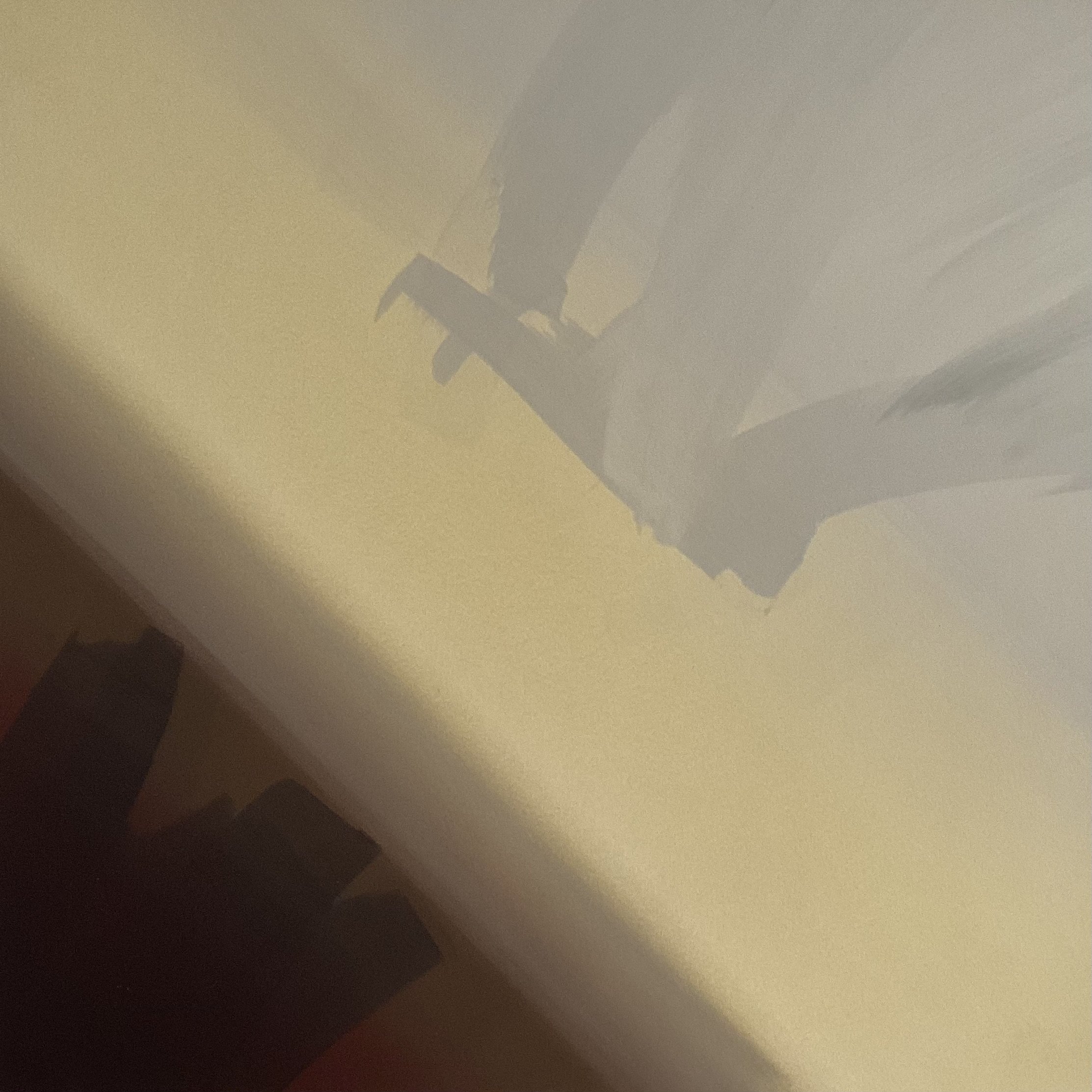 Image 1 of 7
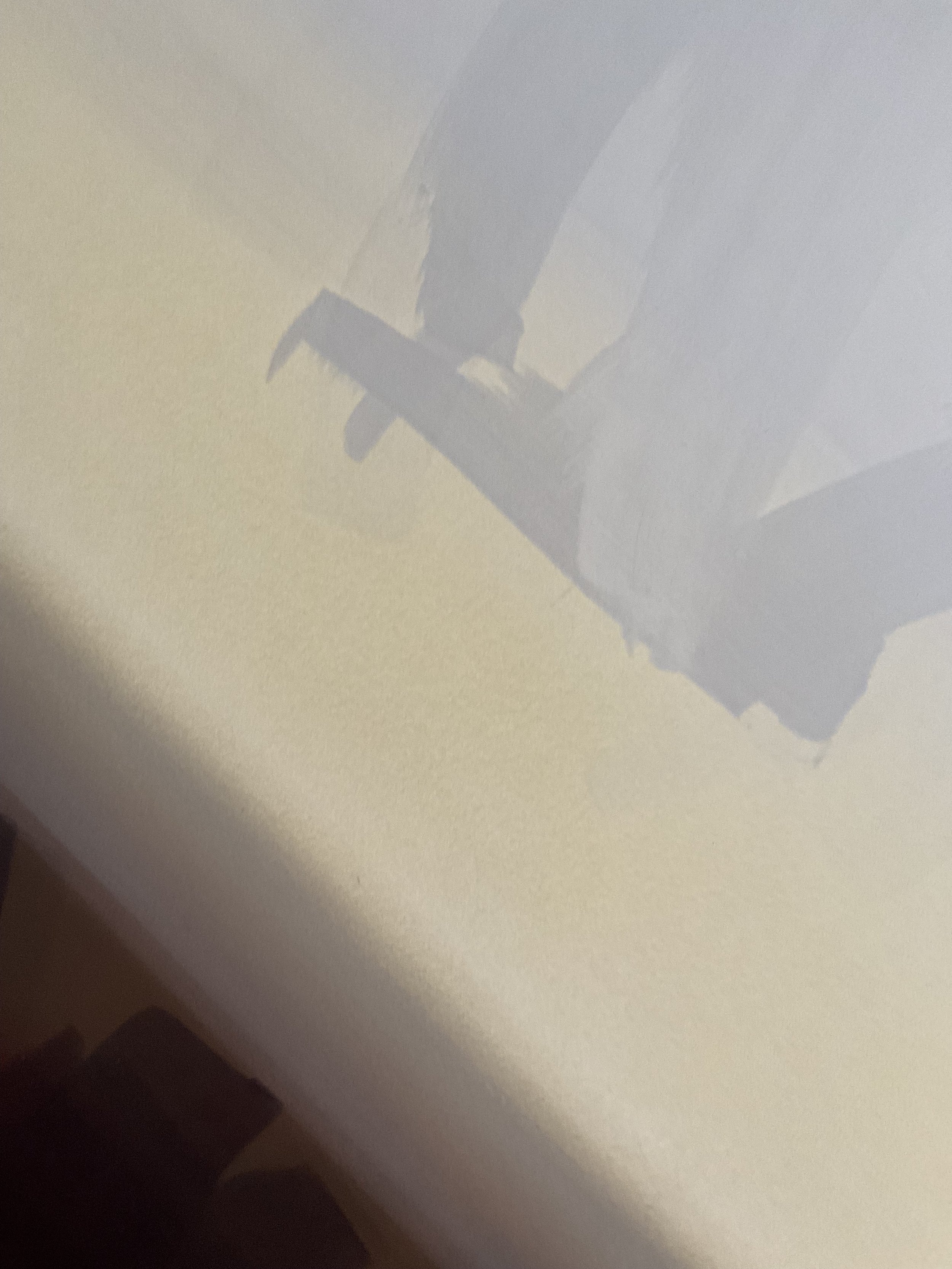 Image 2 of 7
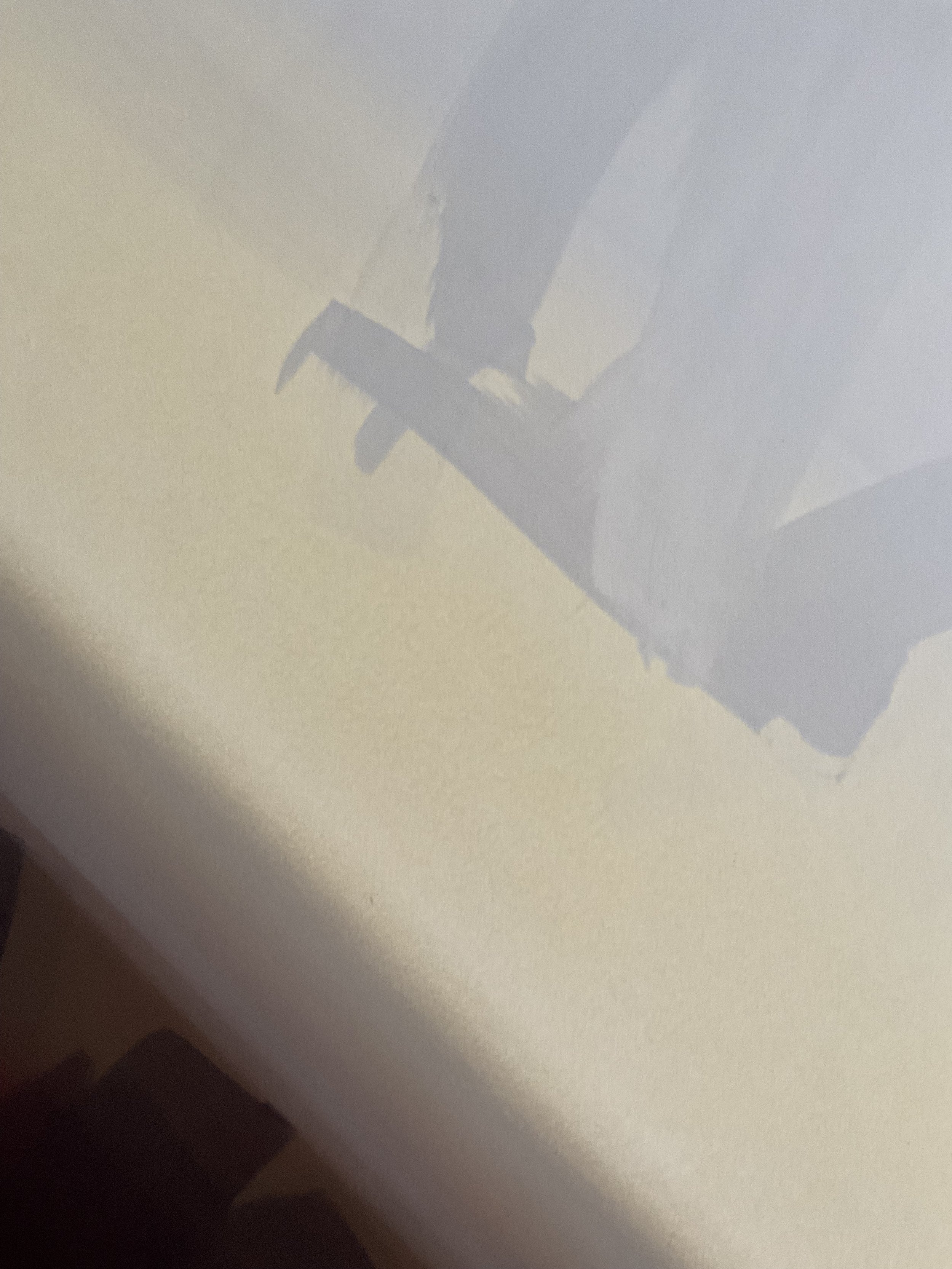 Image 3 of 7
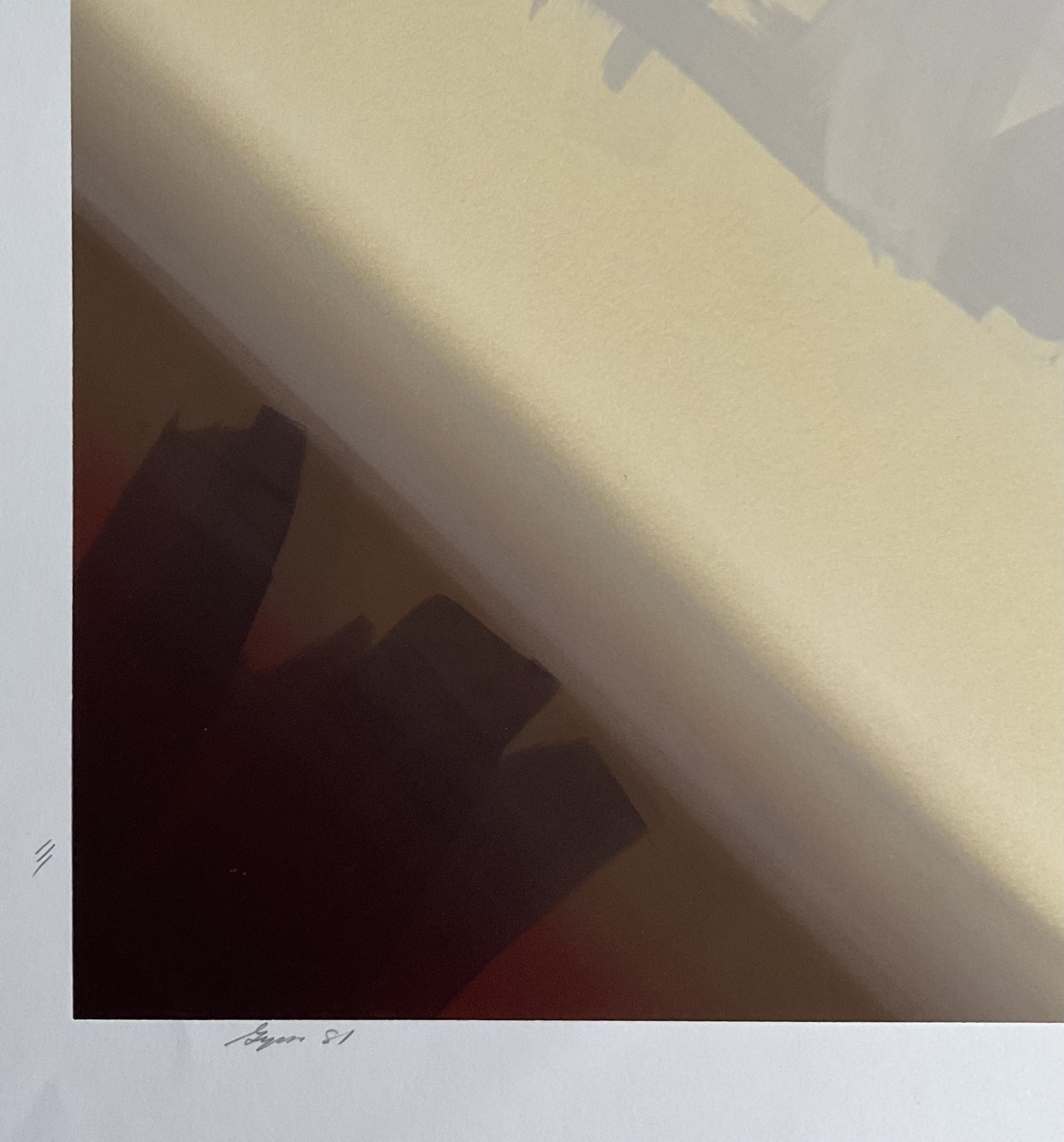 Image 4 of 7
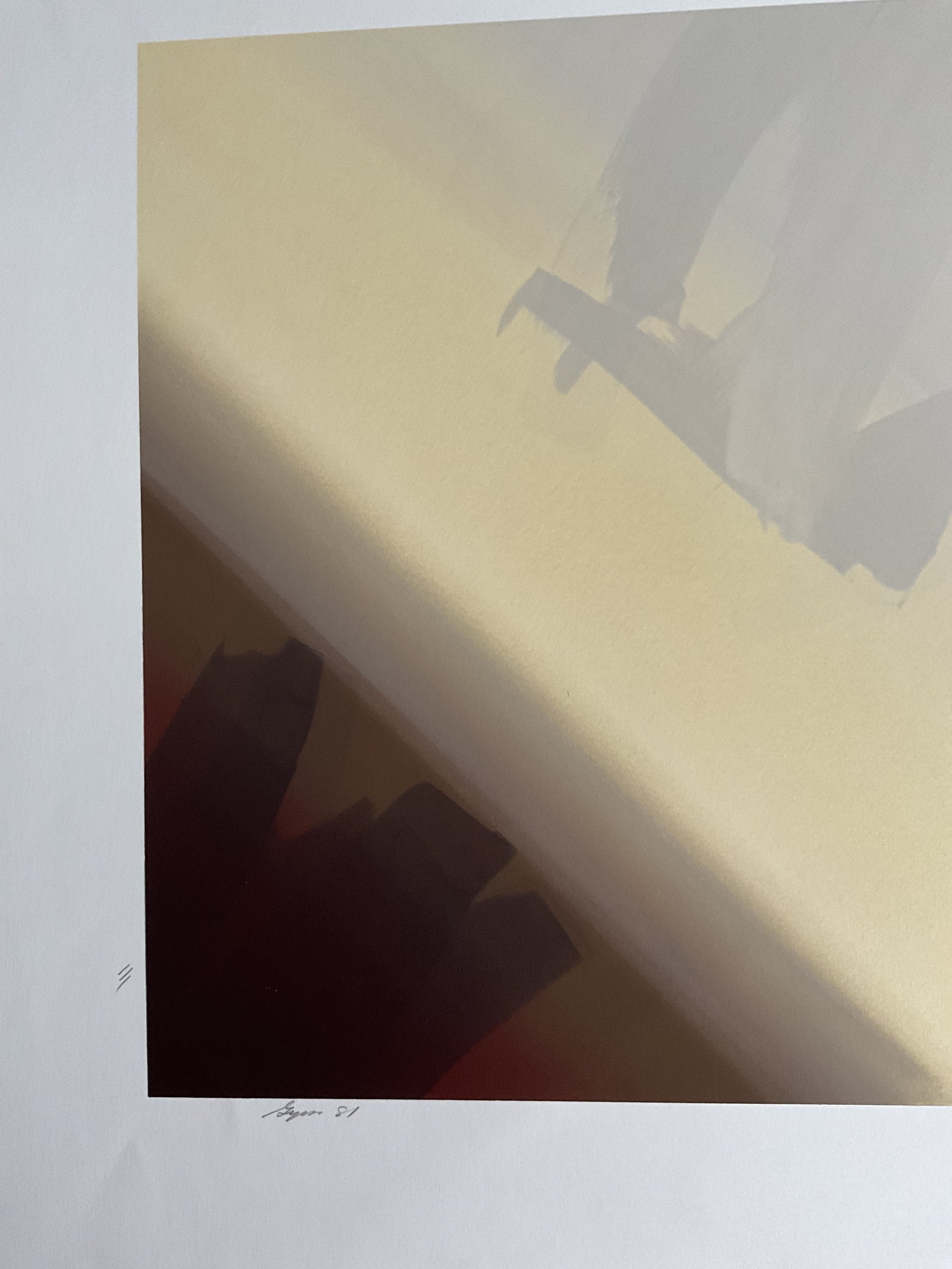 Image 5 of 7
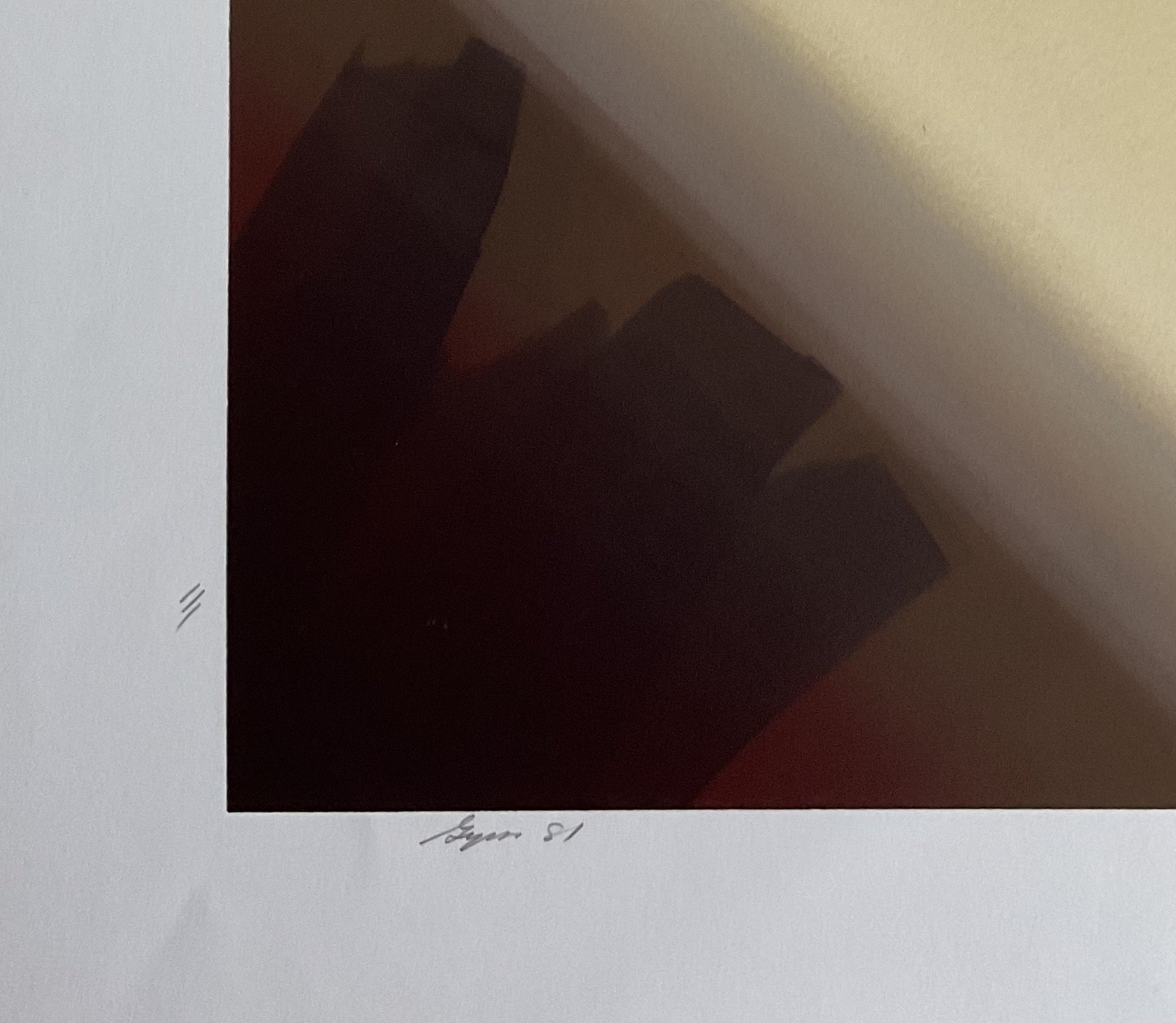 Image 6 of 7
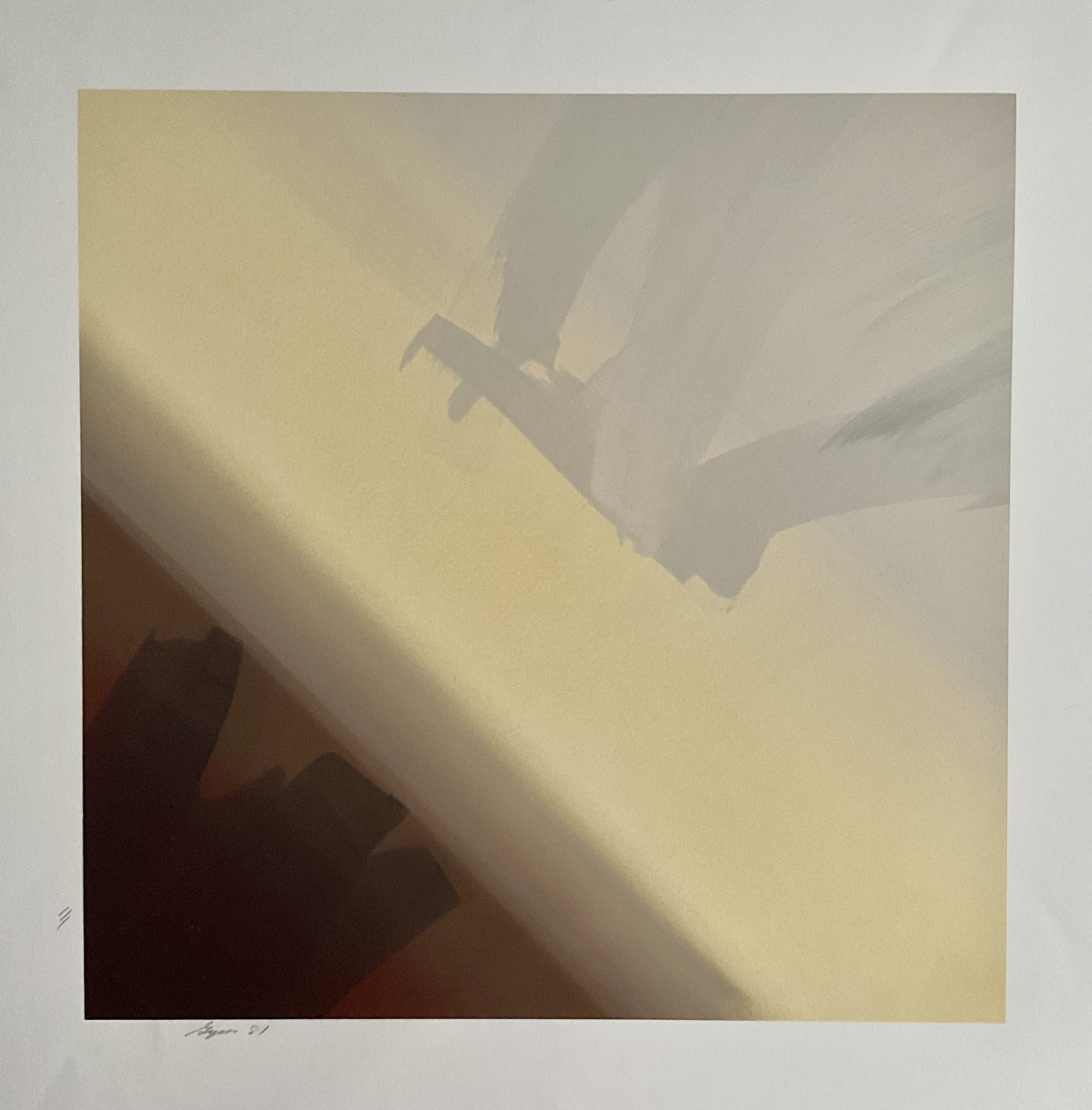 Image 7 of 7