 Image 1 of 5
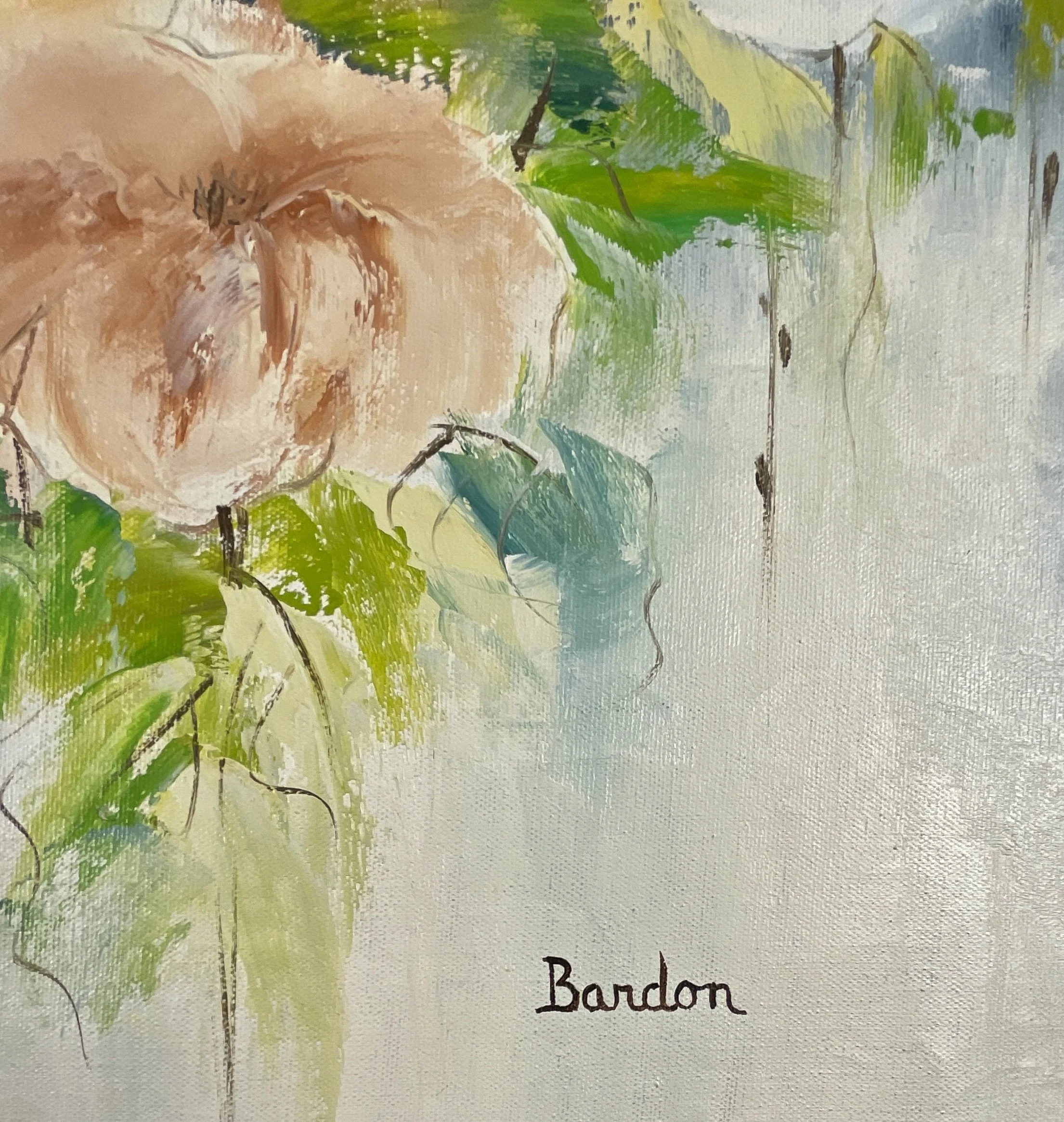 Image 2 of 5
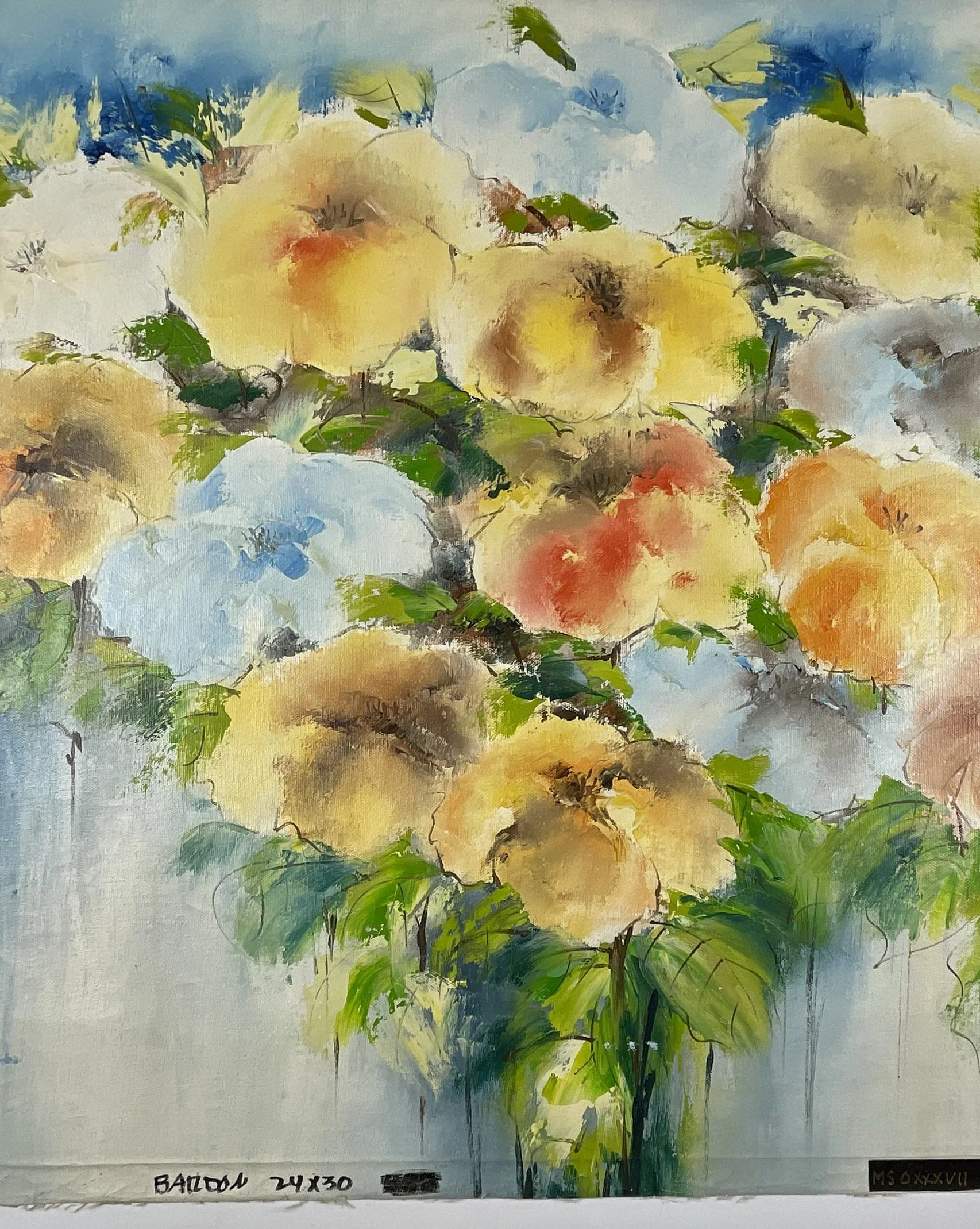 Image 3 of 5
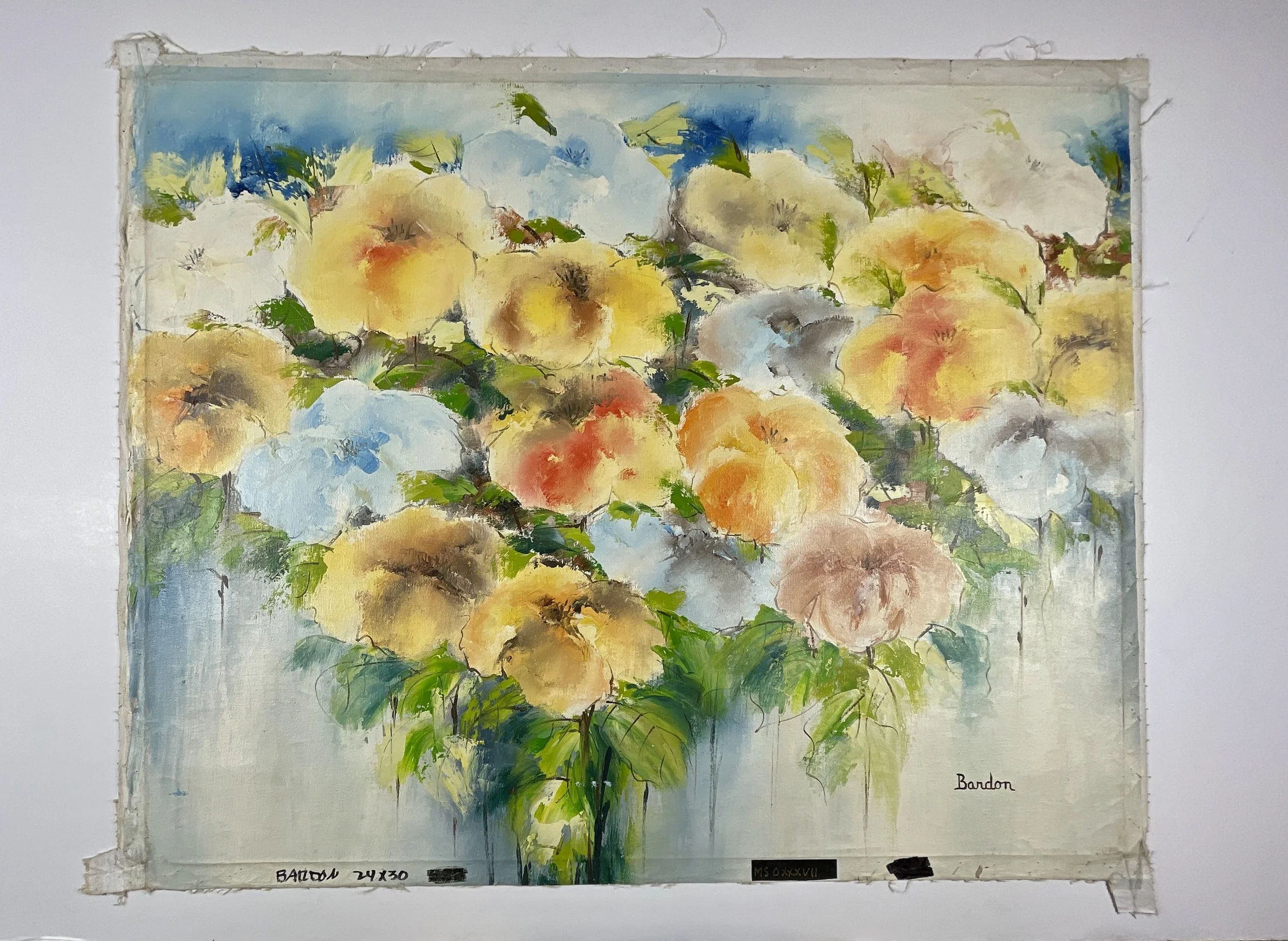 Image 4 of 5
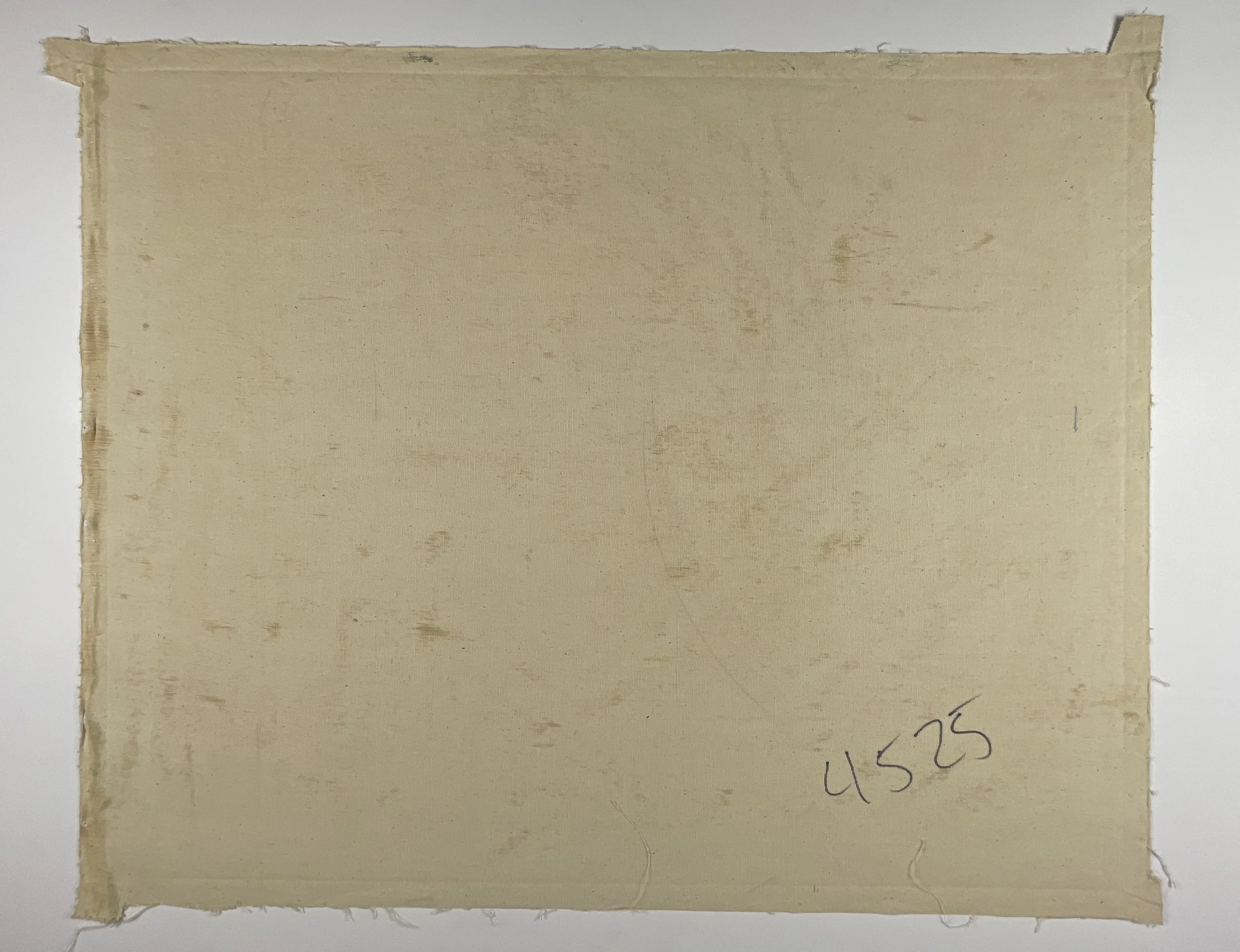 Image 5 of 5
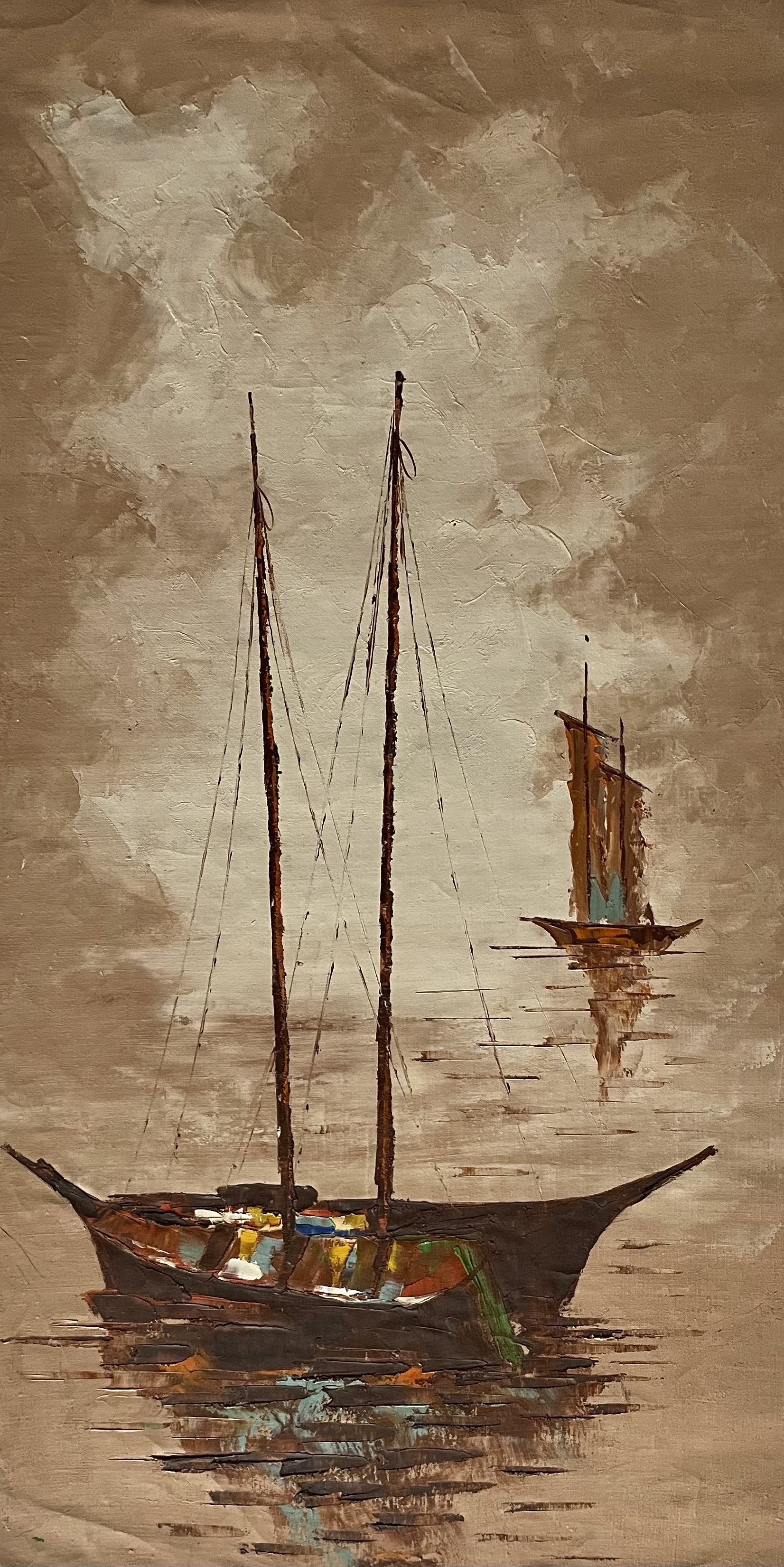
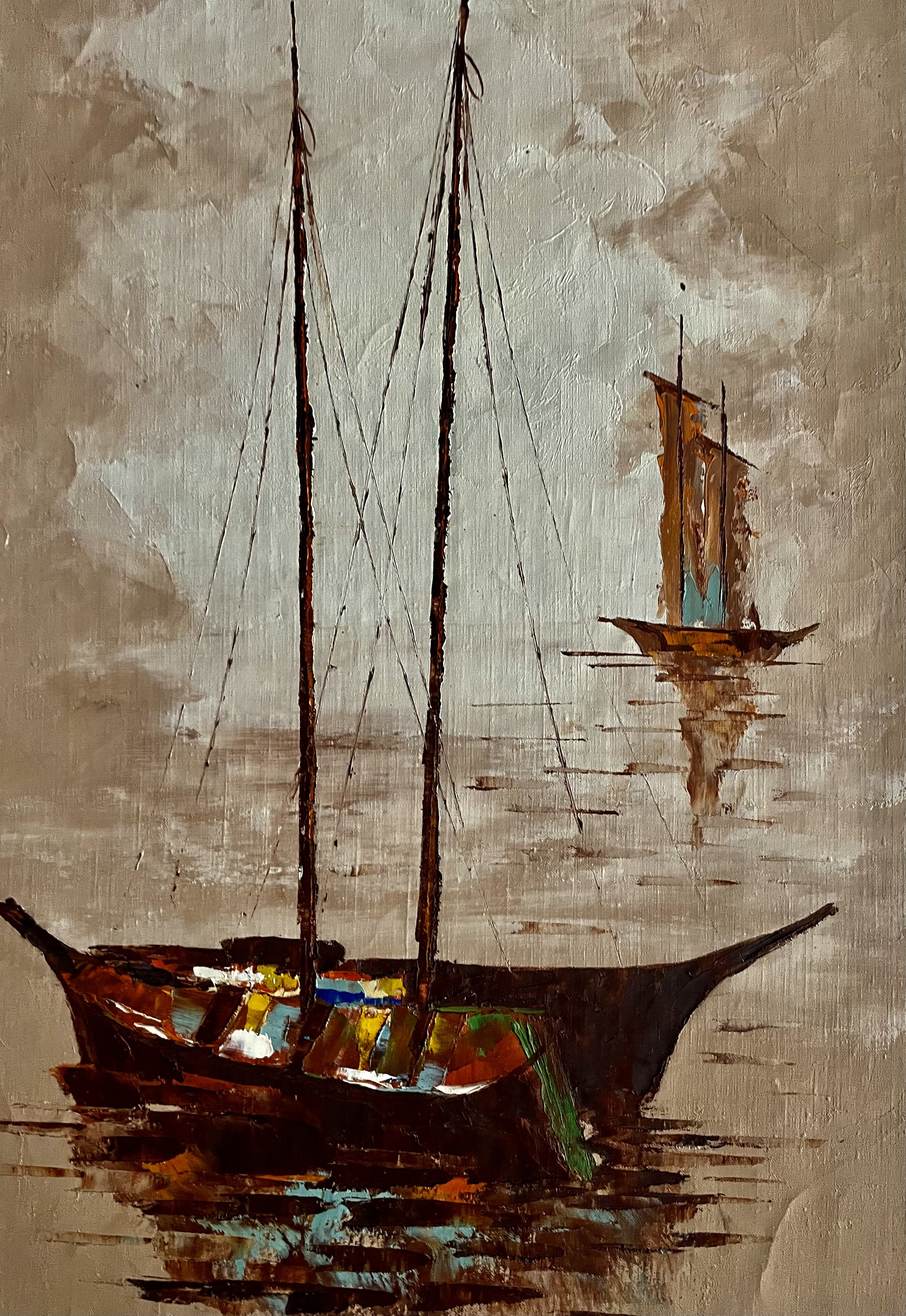
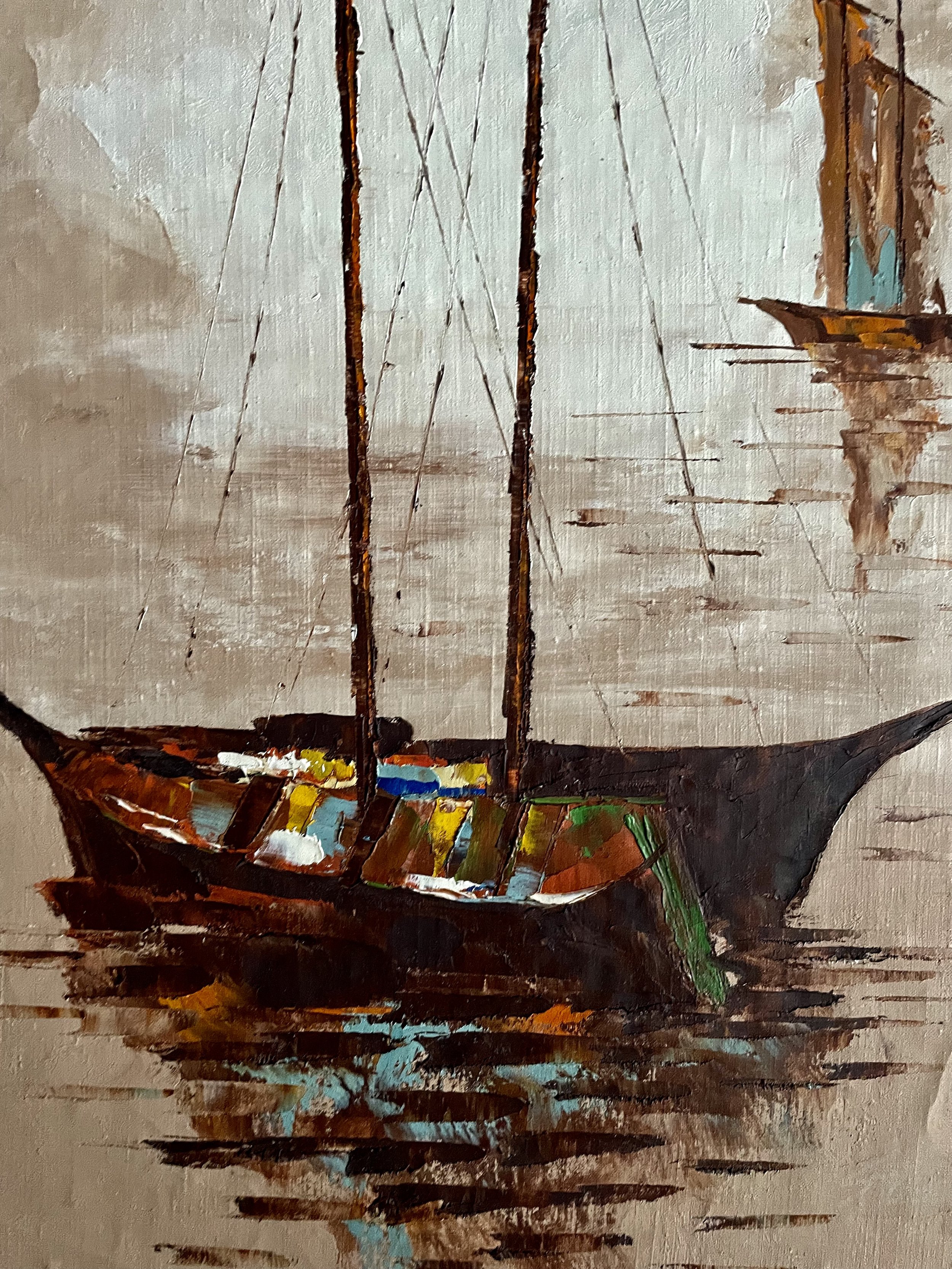
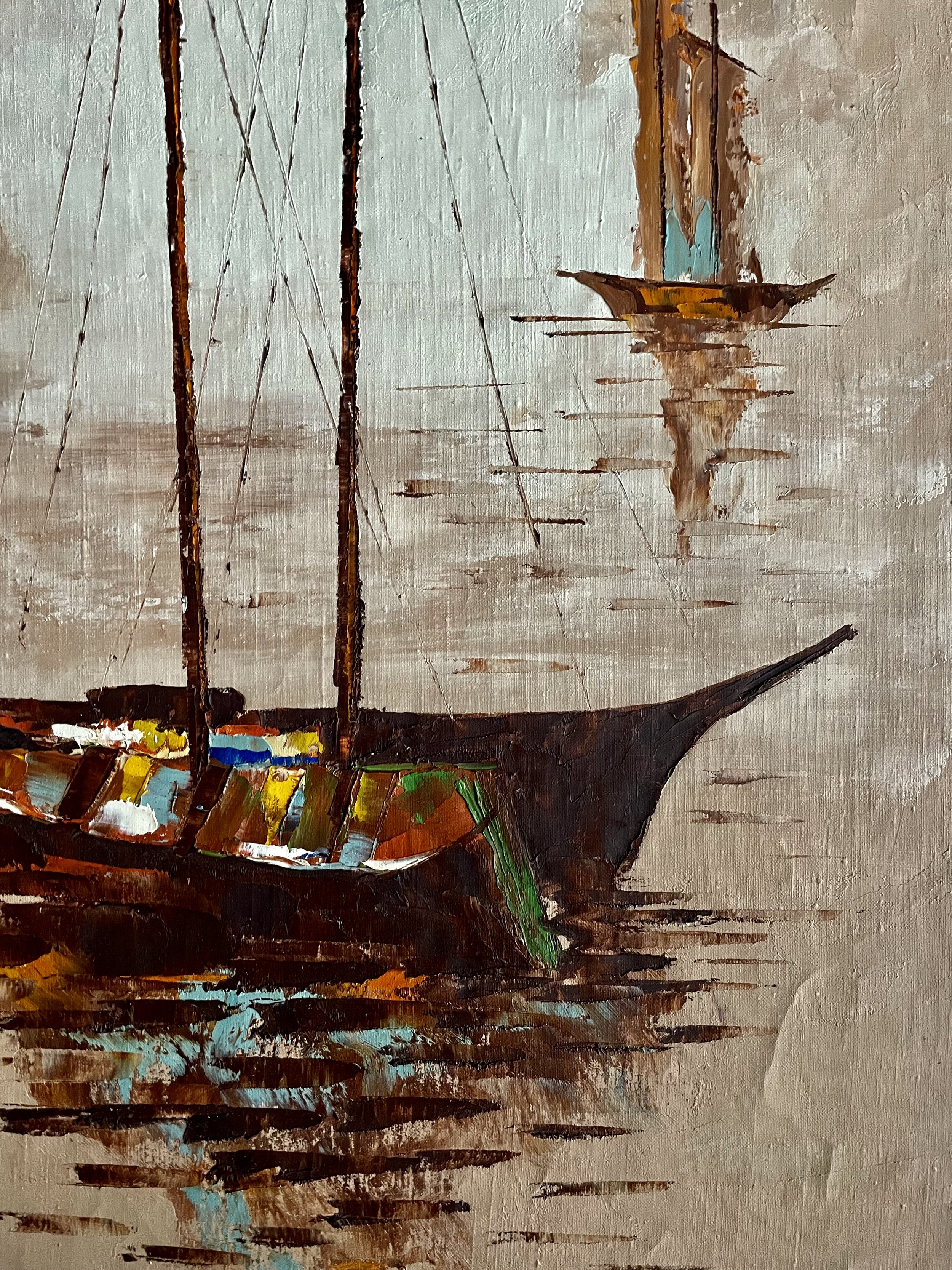
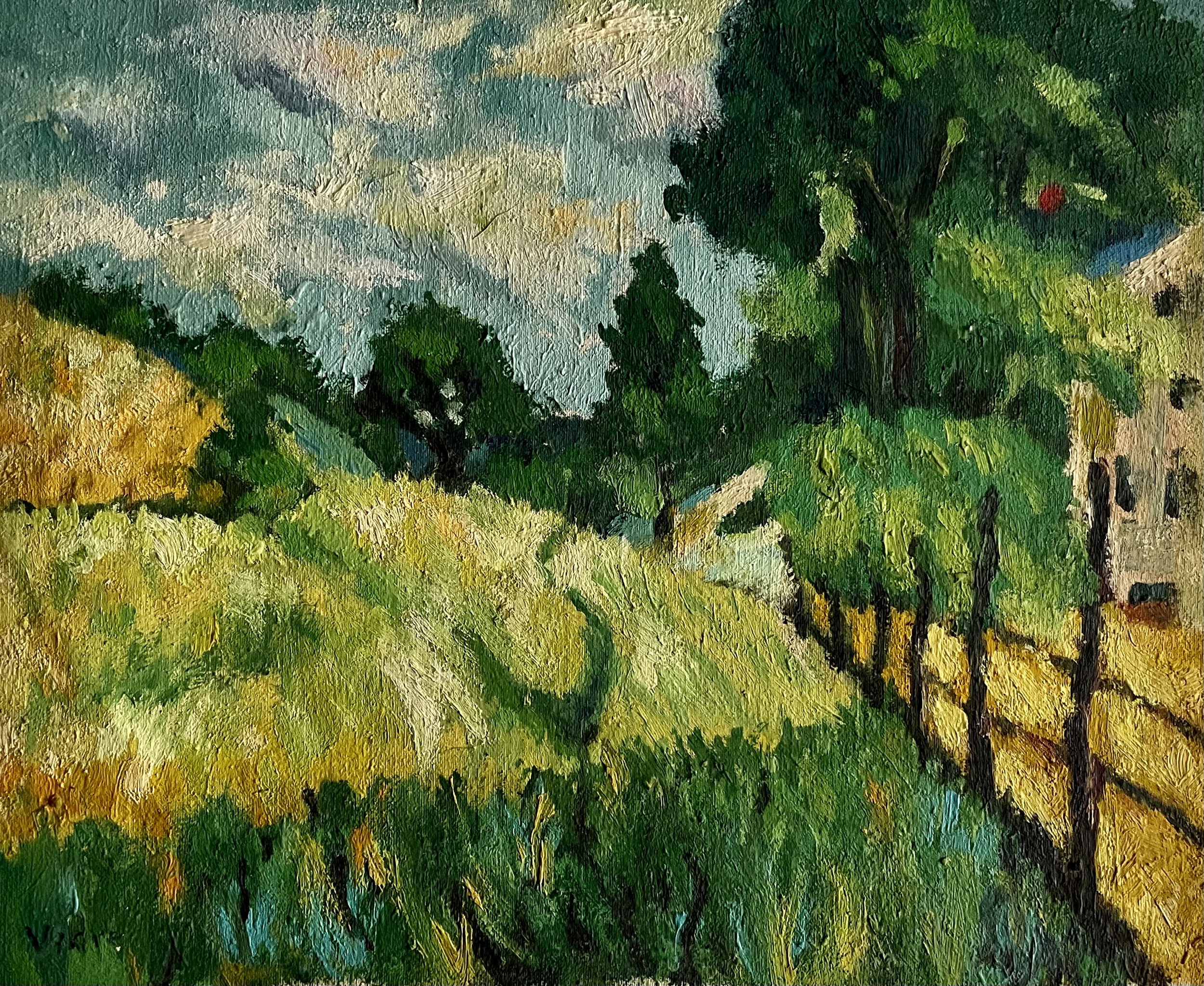
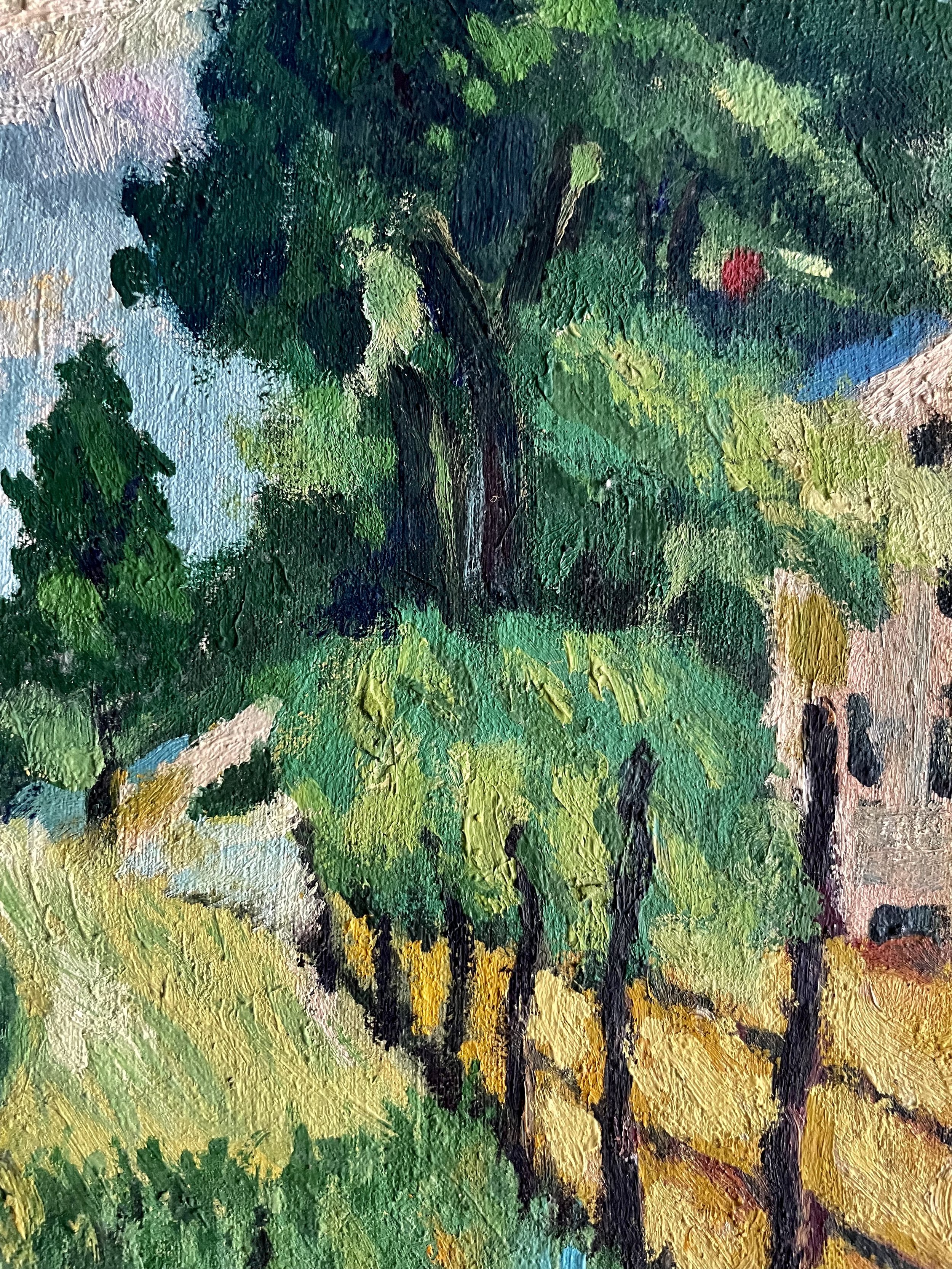
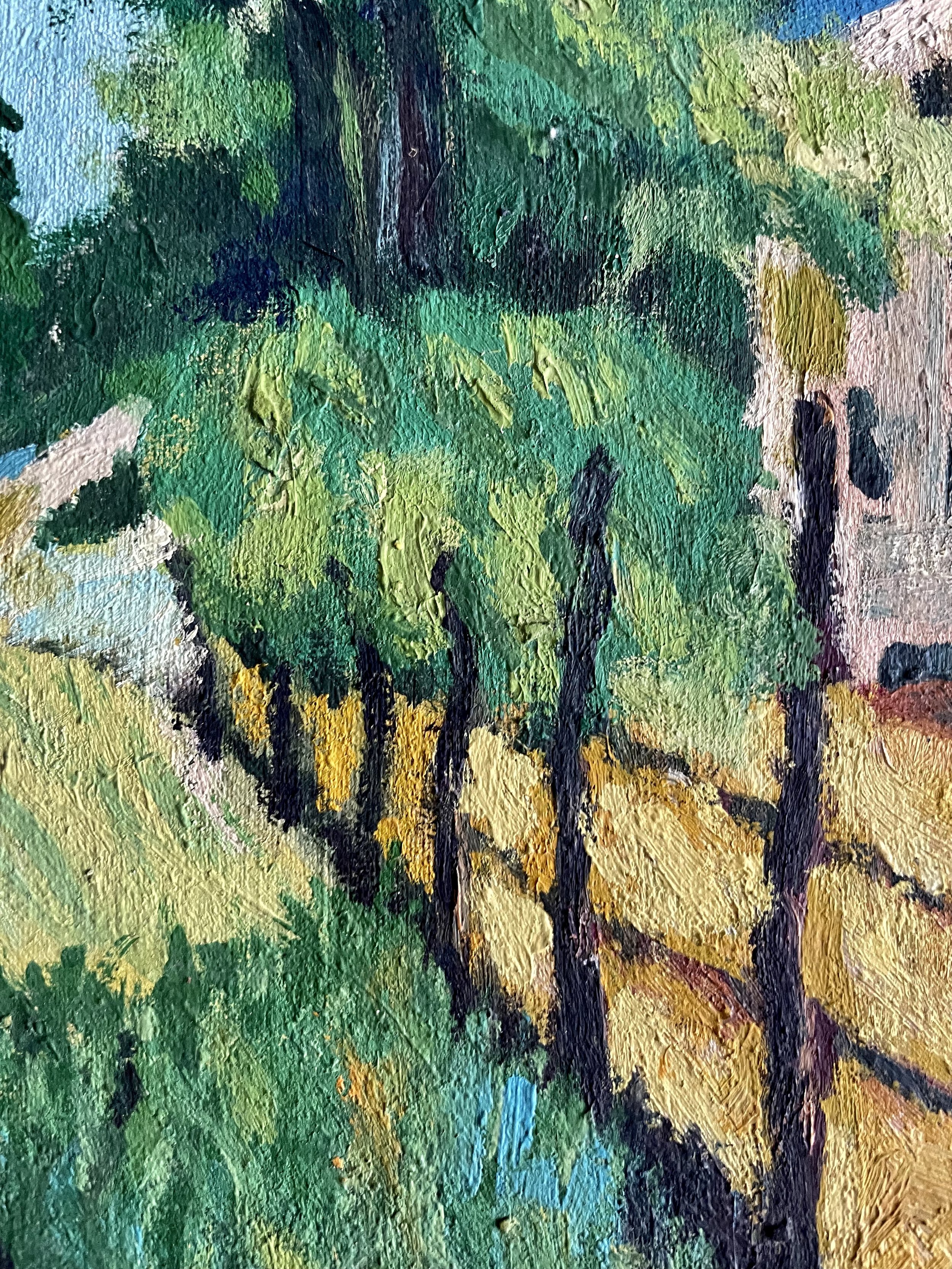
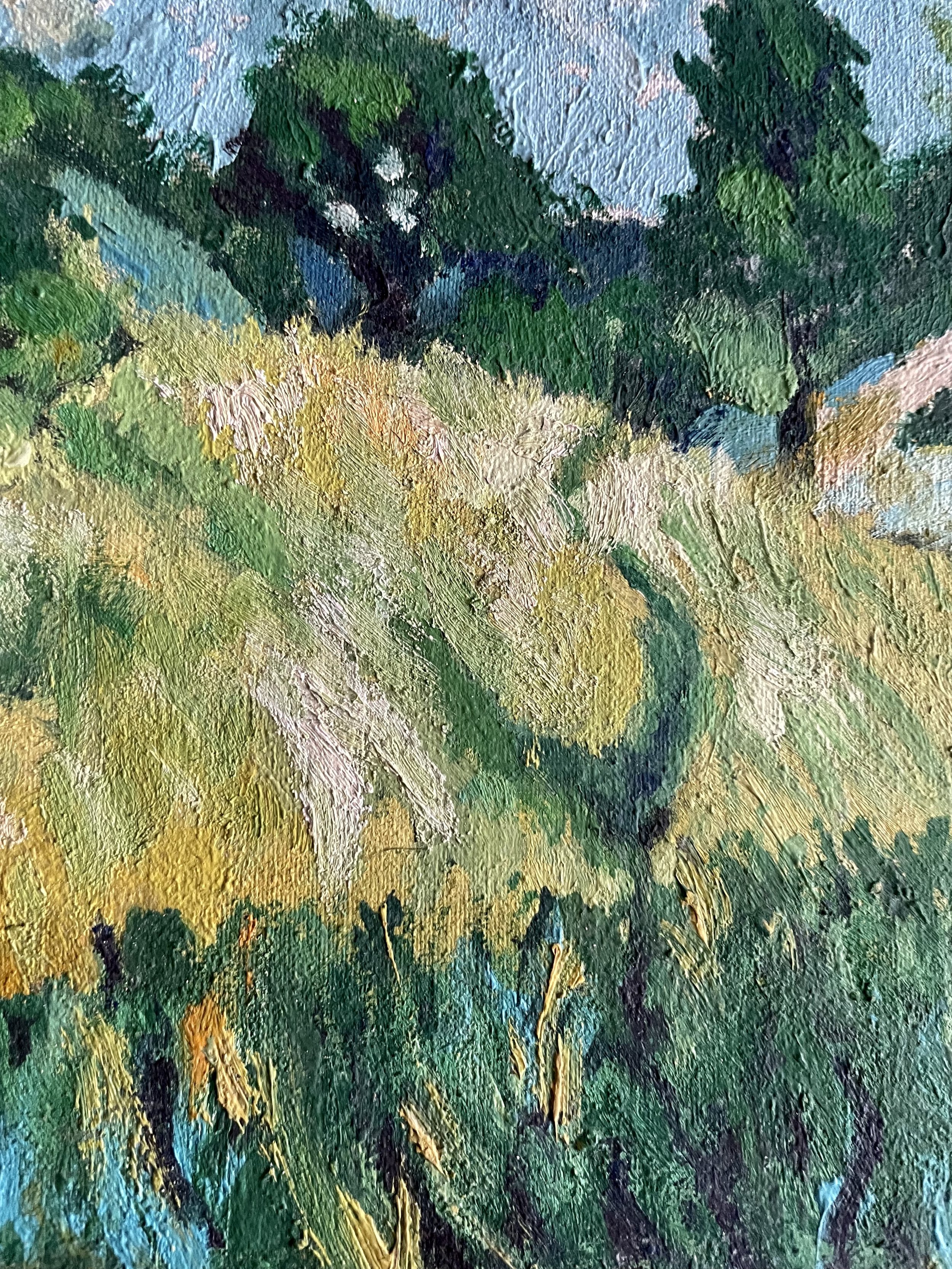
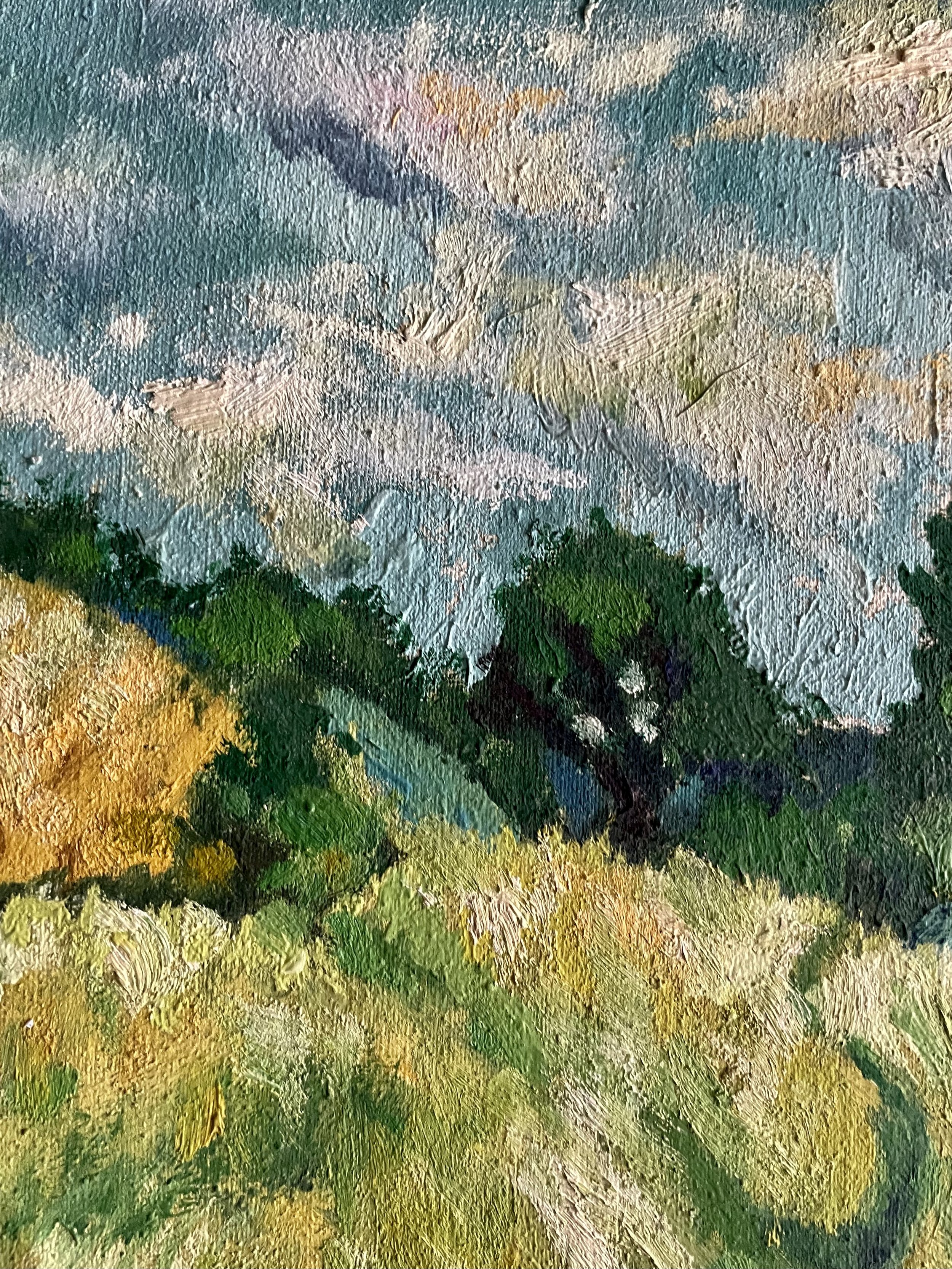
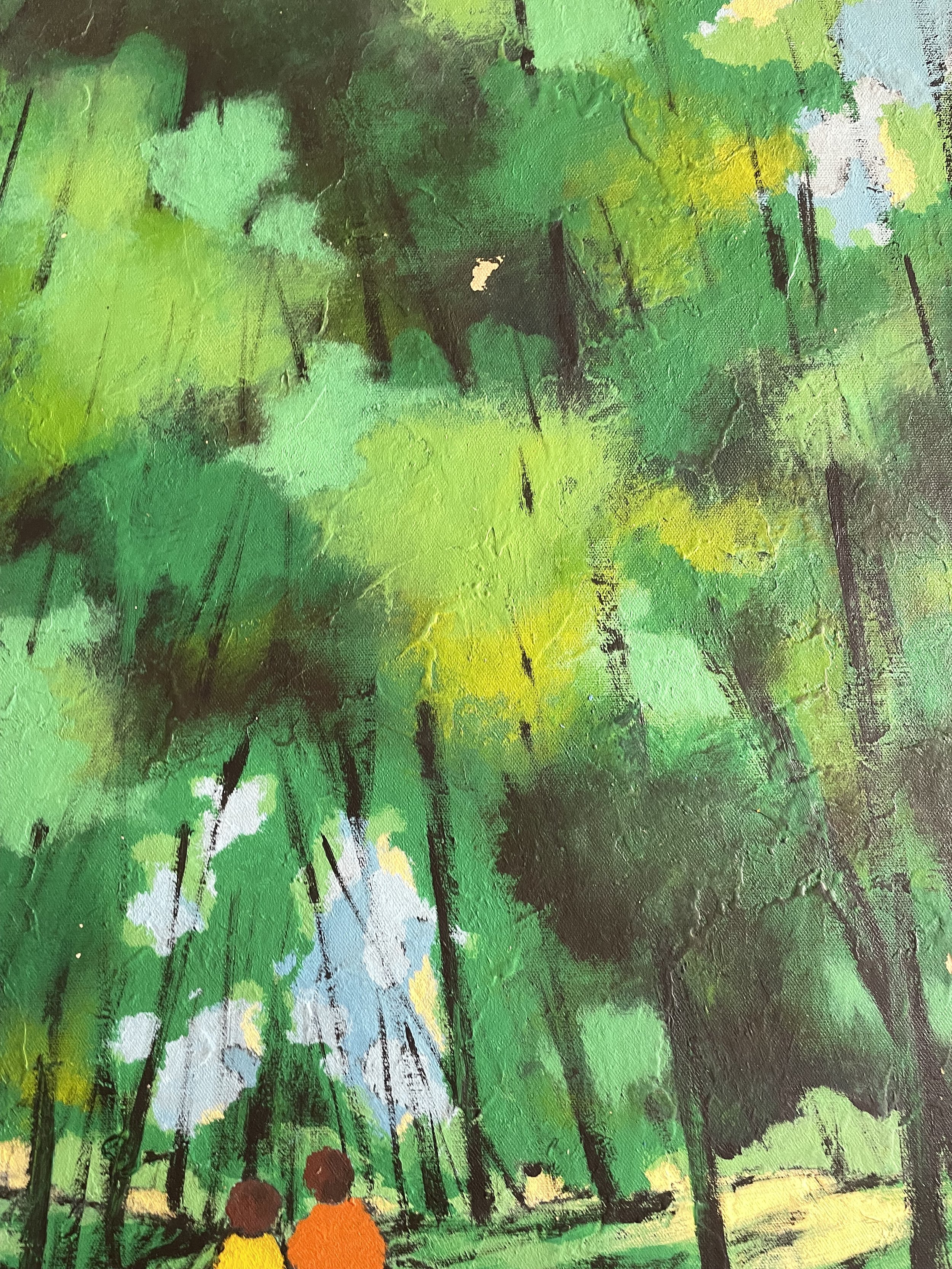
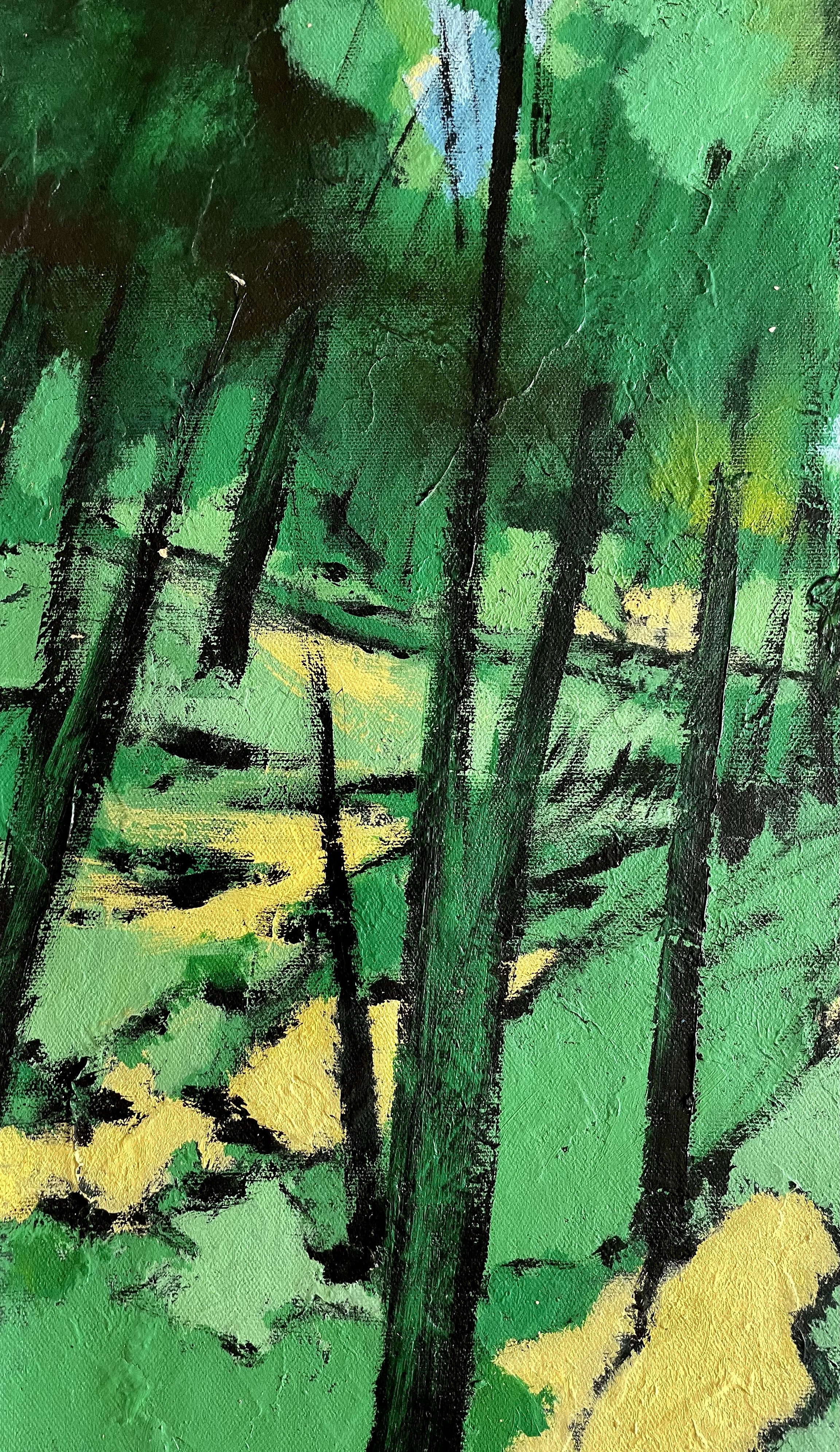
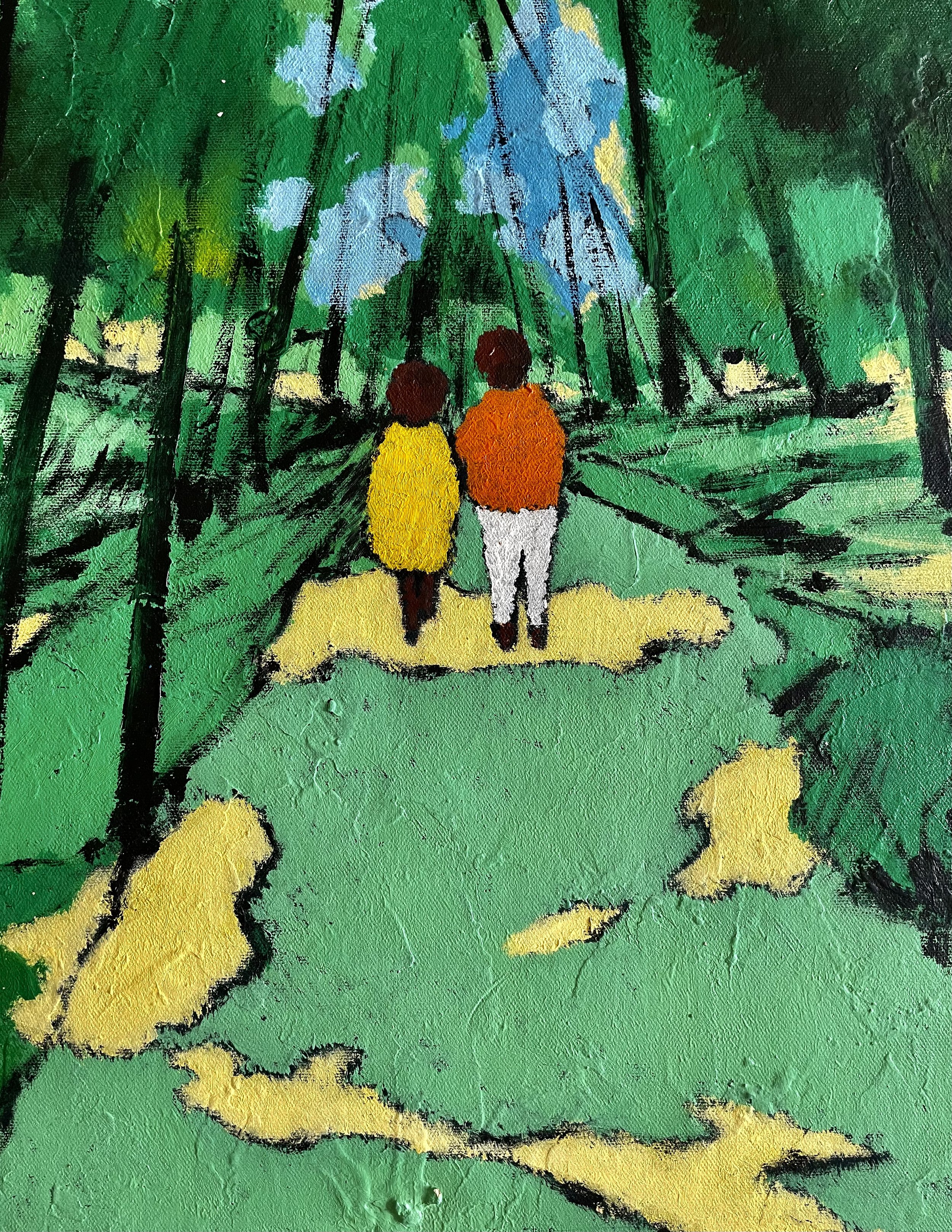
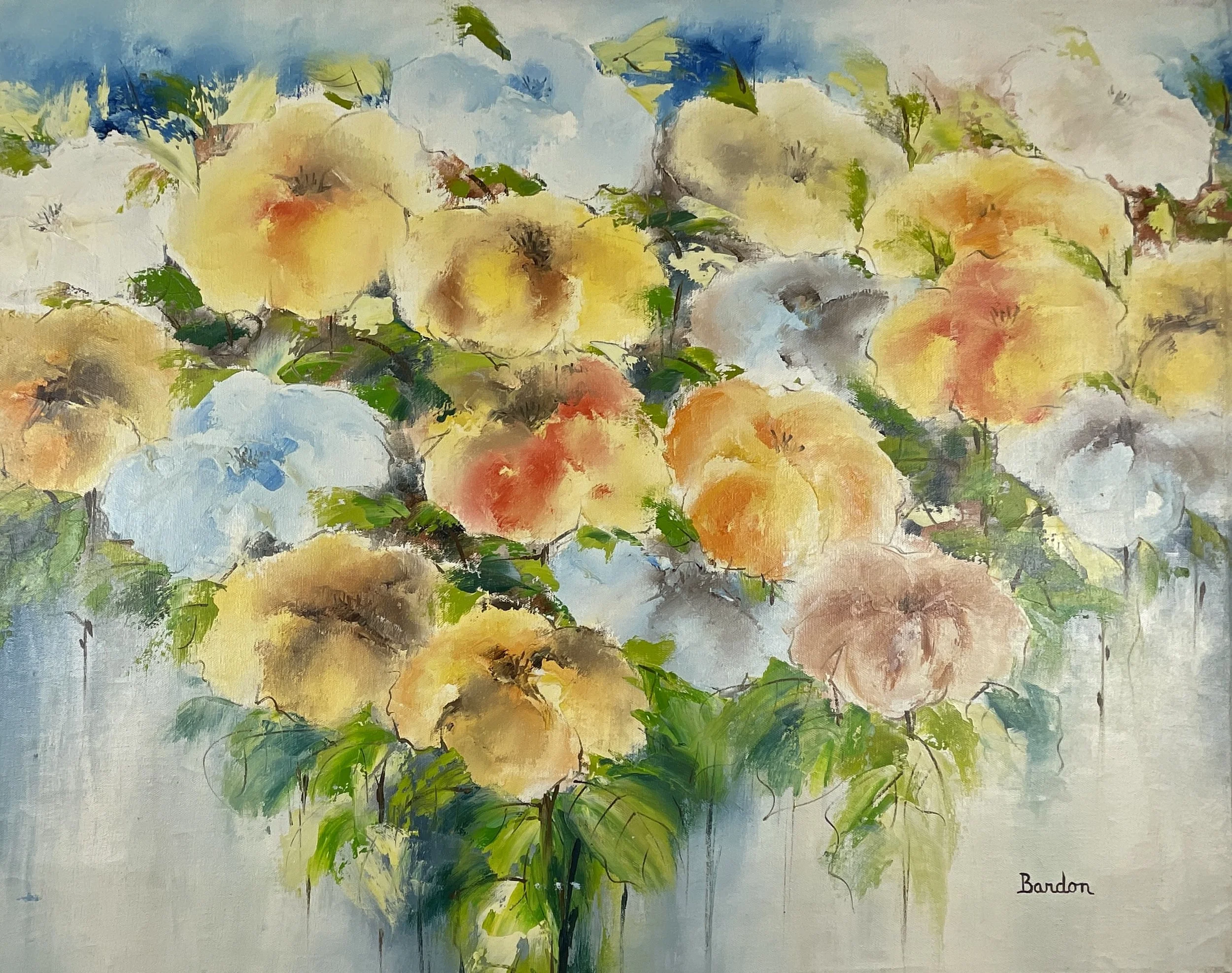
Pastel Garden Bouquet (attributed), Bardon (20th century), c.1965–1975, oil on canvas, 30 × 24 in., signed lower right.
Expressive modern floral painting by Bardon depicting a luminous bouquet of pastel blossoms in loose gestural oil brushwork. Mid-century decorative floral composition with vibrant color transitions, fluid linework, and atmospheric background.
Artwork Description
This vibrant floral composition attributed to Bardon presents a lush arrangement of loosely rendered blossoms painted in warm yellows, soft oranges, pale blues, creams, and gentle earth tones. The bouquet fills most of the picture plane, creating an immersive garden-like field of flowers that appears to float against a softly blended background of sky blue and light green.
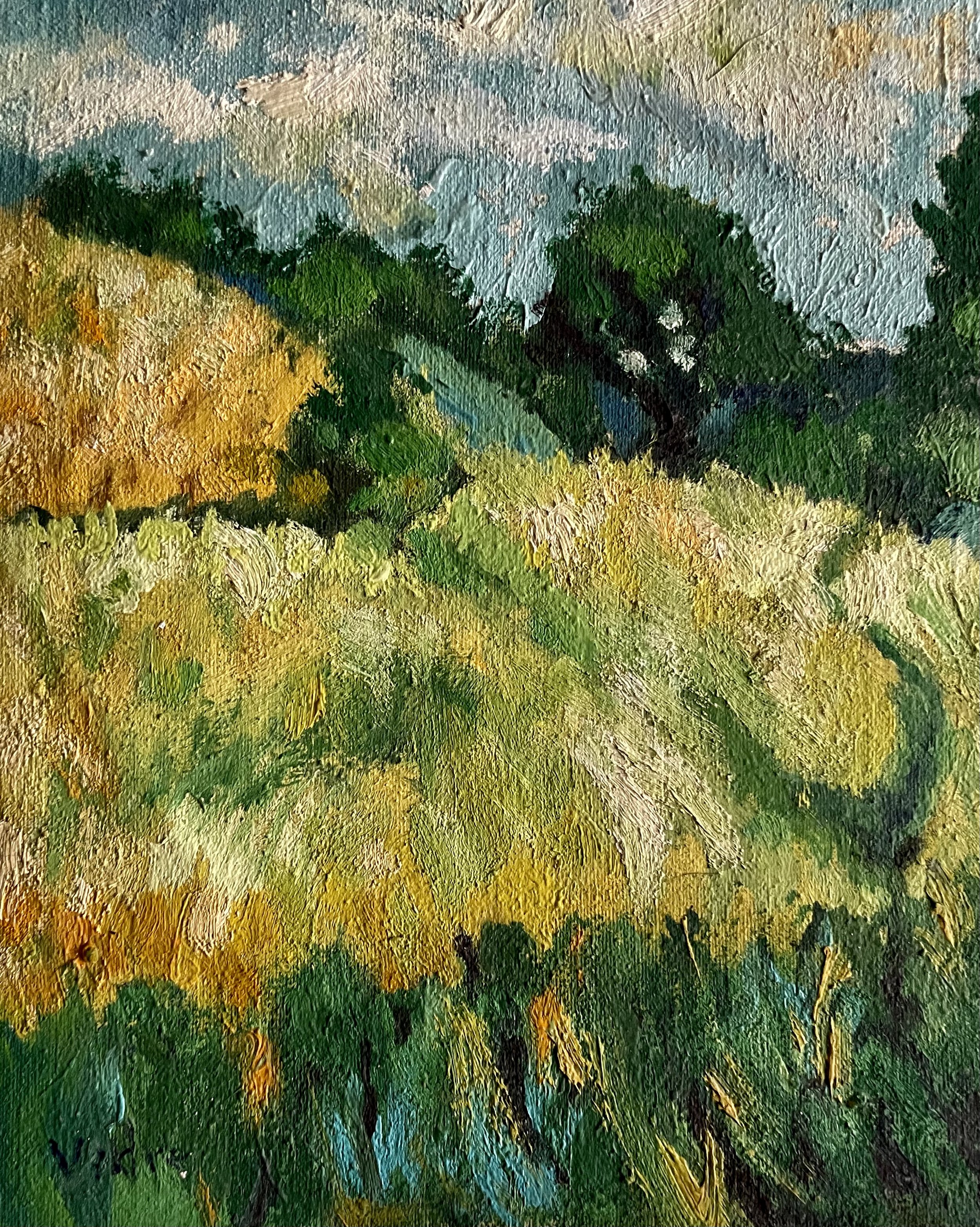
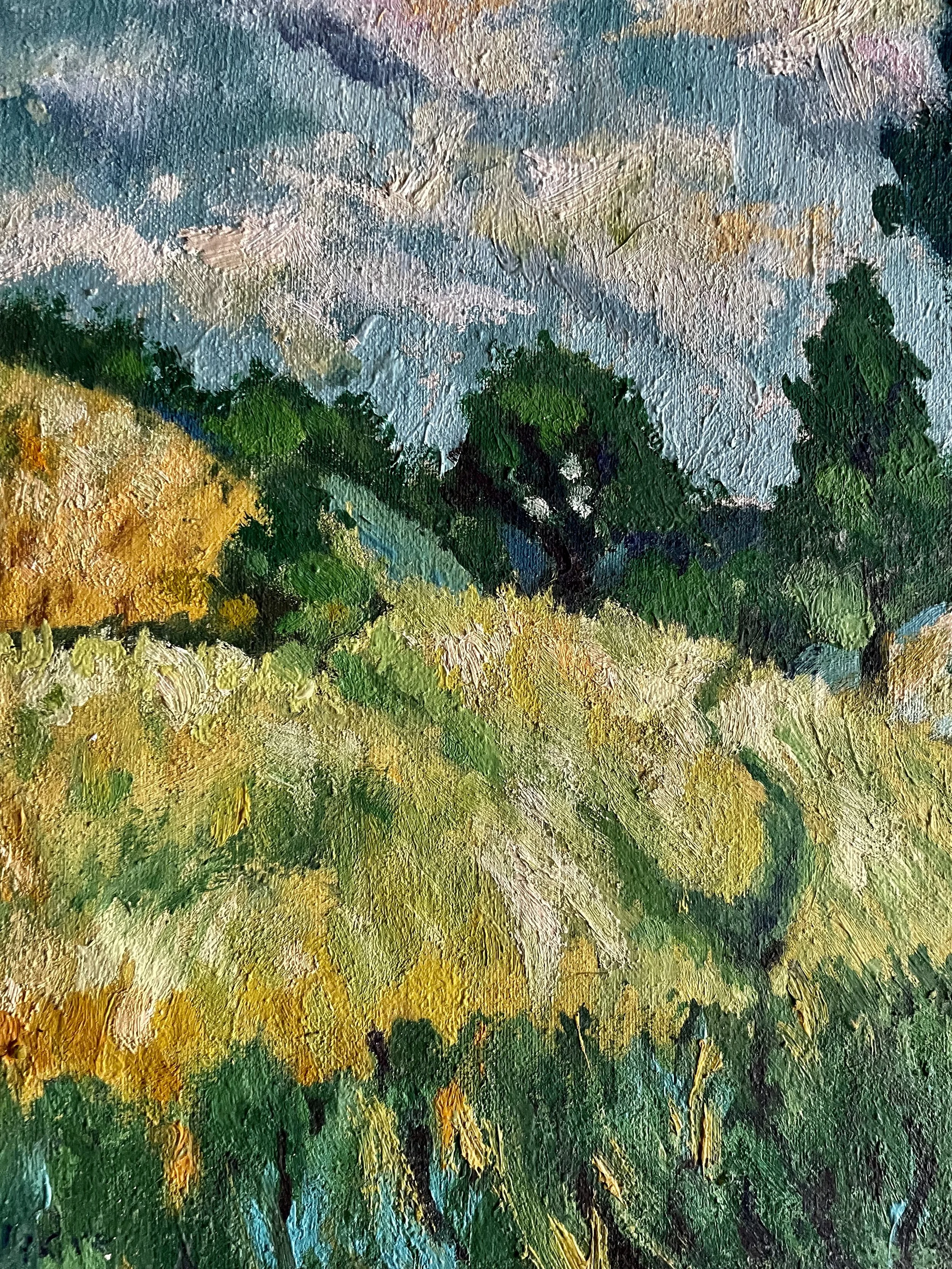
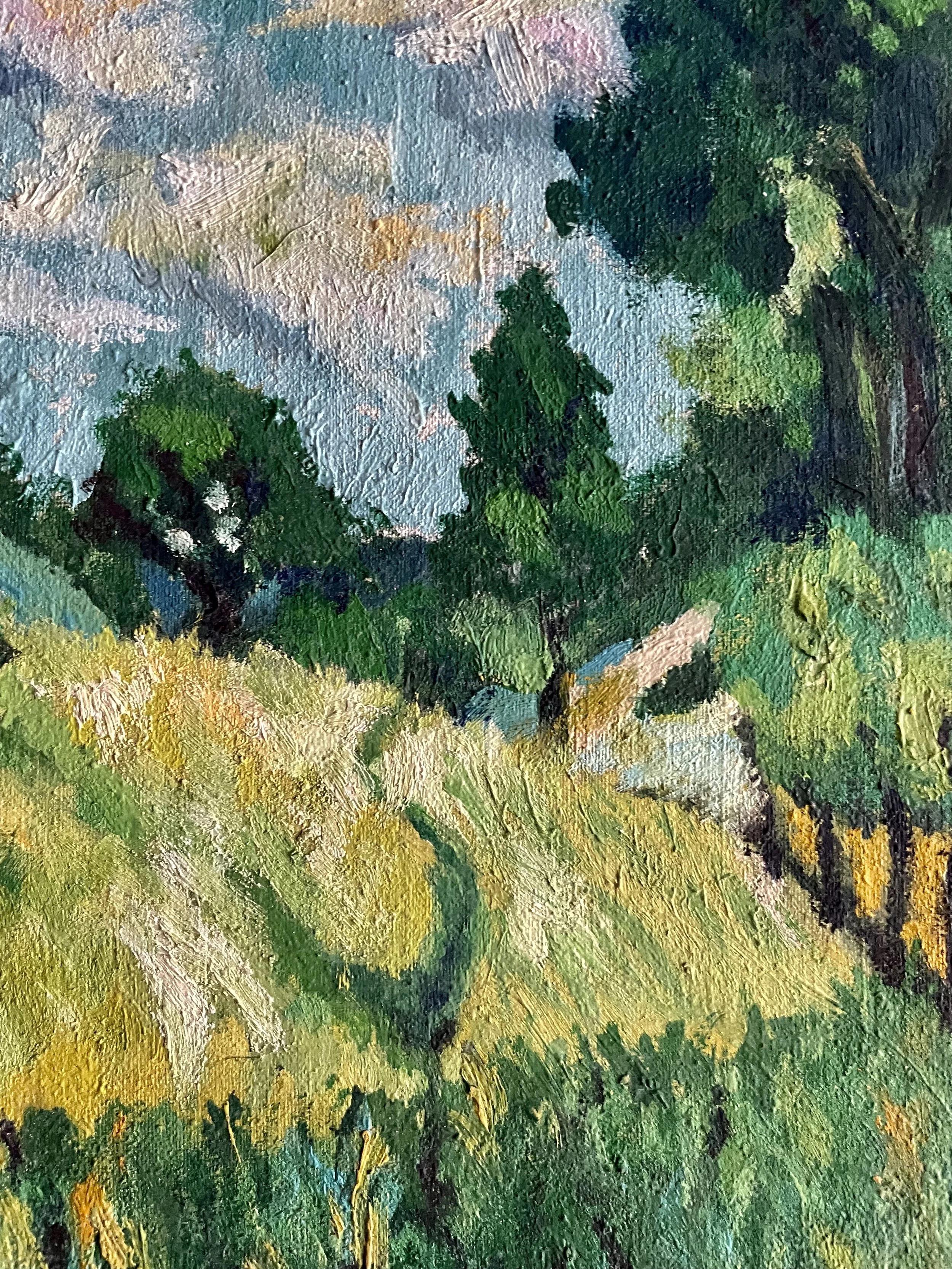
The flowers are painted with expressive, confident brushwork rather than strict botanical precision. Petals are suggested through broad strokes of oil paint that merge color and light, producing blossoms that appear soft and luminous. The artist uses subtle tonal transitions within each flower—golden yellow fading into orange or pale cream dissolving into blue—to create depth and movement across the composition.
Leaves and stems are rendered with energetic green brushstrokes that rise upward from the lower portion of the painting. Some stems are defined with quick, gestural linework, giving the bouquet a spontaneous, almost calligraphic quality. Thin drips of pigment fall vertically through the composition, adding a sense of fluid motion and emphasizing the painterly immediacy of the work.
The overall composition balances structure and freedom. The bouquet forms a triangular arrangement centered in the painting, but the individual blossoms overlap and interweave in a lively pattern that keeps the eye moving across the surface. The light blue atmospheric background allows the warm colors of the flowers to stand out while giving the impression that the bouquet is suspended in open space.
The medium appears to be oil on canvas, applied with a combination of fluid brushwork and layered color. The paint surface is relatively thin compared to heavy impasto techniques, suggesting a painter who favored expressive gesture and tonal blending over thick surface construction.
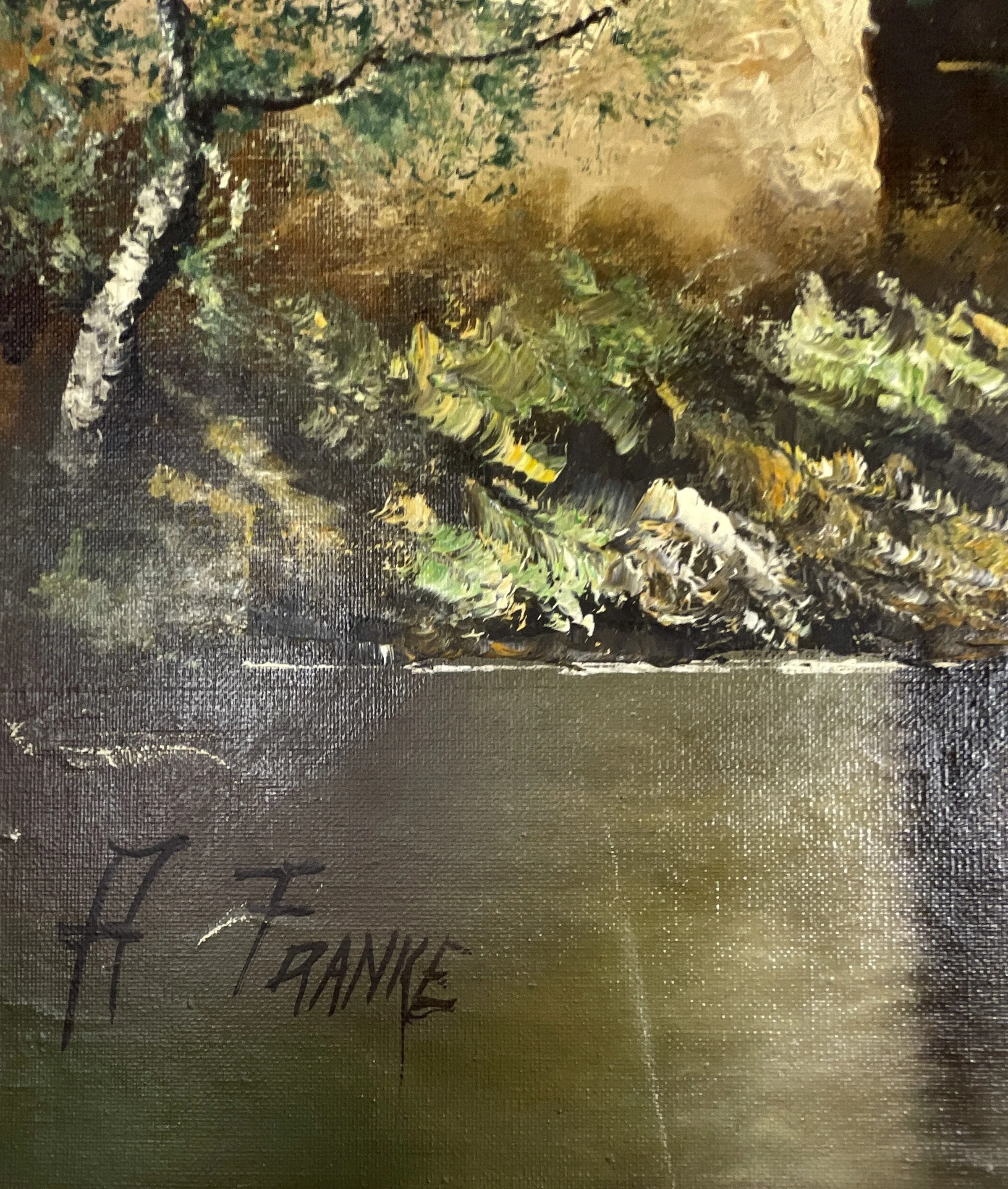
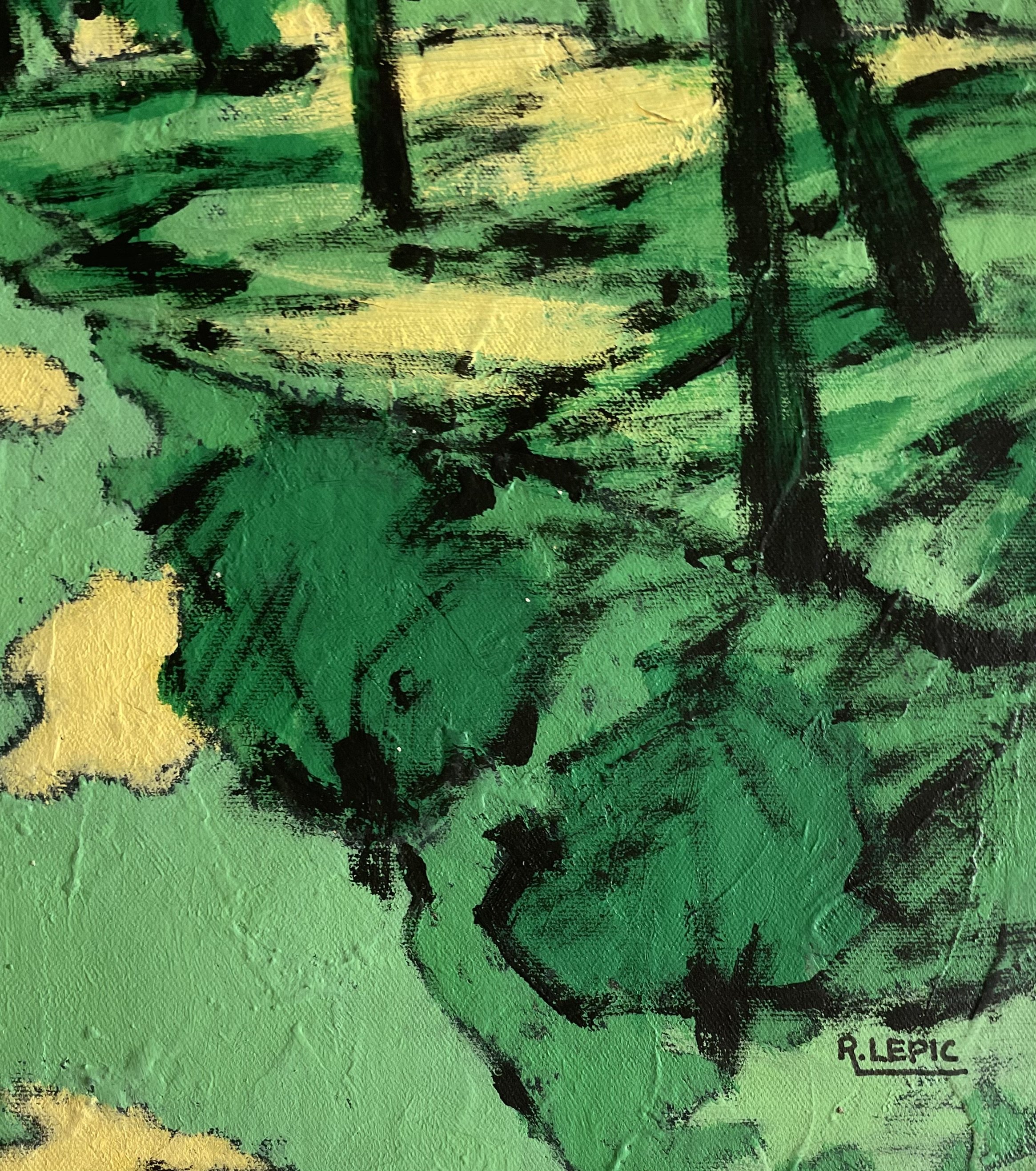
Signed “Bardon” in the lower right corner, the work reflects the decorative modernist floral painting popular in the mid-twentieth century. Such works were widely appreciated for their ability to merge contemporary painterly expression with the timeless subject of flowers, making them both artistically engaging and visually accessible.
Artist Biography
The artist Bardon appears to have been active during the mid-twentieth century, working within the expressive decorative tradition of modern floral painting. While biographical documentation on the artist remains limited, works bearing the Bardon signature suggest a painter who embraced a gestural approach to still life subjects, emphasizing color harmony, movement, and painterly freedom.
During the decades following World War II, many artists explored floral subjects as a means of combining modern painting techniques with accessible imagery. Flowers offered an ideal vehicle for experimentation with color relationships, brushwork, and compositional rhythm. Artists working in this vein often blended elements of impressionism, abstract expressionism, and decorative modernism.
The painting attributed to Bardon demonstrates several of these influences. The loose handling of petals and foliage reflects an impressionistic sensitivity to light and atmosphere, while the expressive drips and gestural linework reveal a modernist willingness to allow the act of painting itself to remain visible. This balance between representation and abstraction was a defining characteristic of mid-century decorative painting.
The use of luminous pastel colors—pale blues, warm yellows, soft oranges, and gentle greens—creates an atmosphere that is both fresh and luminous. Such palettes were frequently associated with artists working in decorative floral genres during the 1950s through the 1970s, when interior design trends favored bright, airy compositions that complemented modern living spaces.
Works like this were often distributed through gallery networks that connected artists with collectors seeking contemporary decorative art. Mitch Morse Gallery, which handled numerous original works and graphics during this period, was known for introducing collectors to artists working in both modern abstraction and expressive representational styles. The presence of Bardon’s work within that distribution context suggests an artist active within the broader mid-century gallery system.
Although the full details of Bardon’s career remain partially undocumented, the surviving paintings demonstrate a confident painter with a strong sense of color harmony and compositional flow. The artist’s work belongs to a tradition that bridged fine art and interior design, producing paintings that retain both aesthetic vitality and enduring decorative appeal.
Today, paintings attributed to Bardon are appreciated for their luminous color, expressive brushwork, and their embodiment of mid-century modern floral aesthetics.
Bardon modern floral painting, oil on canvas, signed, expressive pastel bouquet composition, mid-century decorative modernist floral, 30 × 24 in.
Certificate of Authentication
Artist: Bardon
Title: Pastel Garden Bouquet (attributed)
Medium: Oil on canvas
Dimensions: 30 × 24 inches
Signature: Signed lower right
Date: circa 1965–1975
This artwork is an original oil painting attributed to Bardon based on the visible signature and stylistic characteristics consistent with mid-century decorative floral painting.
Condition
Good vintage condition. Canvas remains structurally stable with light edge wear from previous mounting. Minor surface handling marks consistent with age. Paint layer remains stable with no significant loss observed.
Provenance
Artist studio or early gallery distribution
Mitch Morse Gallery, New York — artist’s agent, publisher of original graphics, art dealer and distributor
Private collection acquired through Mitch Morse Gallery
Artfind Gallery, Washington DC (current owner)
All works acquired through Mitch Morse Gallery, which sourced artworks in New York, throughout the United States, and Europe.
Provenance Note: Mitch Morse Gallery Collection
This artwork originates from the inventory of Mitch Morse Gallery, a respected New York–based gallery and publisher active during the mid-to-late 20th century. Mitch Morse was an established figure in the American art market, serving as an artist’s agent, publisher of original graphics, art dealer, distributor, and fine art restorer. He was also a Design Affiliate of A.S.I.D., listed in Who’s Who in the East, and a guest lecturer in graphics at New York University, with appearances on radio and television discussing art and design.
Through his gallery and associated publishing operations, Morse acquired paintings, prints, and original works from artists and studios across New York, Europe, and international art markets, assembling a broad inventory representing a wide range of artistic traditions and mediums. Works from this collection circulated through galleries and collectors throughout the United States.
The present painting was acquired through this network and is now held in the collection of Artfind Gallery, Washington DC, continuing the documented chain of gallery provenance from Mitch Morse’s original acquisitions.
Pastel Garden Bouquet (attributed), Bardon (20th century), c.1965–1975, oil on canvas, 30 × 24 in., signed lower right.
Expressive modern floral painting by Bardon depicting a luminous bouquet of pastel blossoms in loose gestural oil brushwork. Mid-century decorative floral composition with vibrant color transitions, fluid linework, and atmospheric background.
Artwork Description
This vibrant floral composition attributed to Bardon presents a lush arrangement of loosely rendered blossoms painted in warm yellows, soft oranges, pale blues, creams, and gentle earth tones. The bouquet fills most of the picture plane, creating an immersive garden-like field of flowers that appears to float against a softly blended background of sky blue and light green.
The flowers are painted with expressive, confident brushwork rather than strict botanical precision. Petals are suggested through broad strokes of oil paint that merge color and light, producing blossoms that appear soft and luminous. The artist uses subtle tonal transitions within each flower—golden yellow fading into orange or pale cream dissolving into blue—to create depth and movement across the composition.
Leaves and stems are rendered with energetic green brushstrokes that rise upward from the lower portion of the painting. Some stems are defined with quick, gestural linework, giving the bouquet a spontaneous, almost calligraphic quality. Thin drips of pigment fall vertically through the composition, adding a sense of fluid motion and emphasizing the painterly immediacy of the work.
The overall composition balances structure and freedom. The bouquet forms a triangular arrangement centered in the painting, but the individual blossoms overlap and interweave in a lively pattern that keeps the eye moving across the surface. The light blue atmospheric background allows the warm colors of the flowers to stand out while giving the impression that the bouquet is suspended in open space.
The medium appears to be oil on canvas, applied with a combination of fluid brushwork and layered color. The paint surface is relatively thin compared to heavy impasto techniques, suggesting a painter who favored expressive gesture and tonal blending over thick surface construction.
Signed “Bardon” in the lower right corner, the work reflects the decorative modernist floral painting popular in the mid-twentieth century. Such works were widely appreciated for their ability to merge contemporary painterly expression with the timeless subject of flowers, making them both artistically engaging and visually accessible.
Artist Biography
The artist Bardon appears to have been active during the mid-twentieth century, working within the expressive decorative tradition of modern floral painting. While biographical documentation on the artist remains limited, works bearing the Bardon signature suggest a painter who embraced a gestural approach to still life subjects, emphasizing color harmony, movement, and painterly freedom.
During the decades following World War II, many artists explored floral subjects as a means of combining modern painting techniques with accessible imagery. Flowers offered an ideal vehicle for experimentation with color relationships, brushwork, and compositional rhythm. Artists working in this vein often blended elements of impressionism, abstract expressionism, and decorative modernism.
The painting attributed to Bardon demonstrates several of these influences. The loose handling of petals and foliage reflects an impressionistic sensitivity to light and atmosphere, while the expressive drips and gestural linework reveal a modernist willingness to allow the act of painting itself to remain visible. This balance between representation and abstraction was a defining characteristic of mid-century decorative painting.
The use of luminous pastel colors—pale blues, warm yellows, soft oranges, and gentle greens—creates an atmosphere that is both fresh and luminous. Such palettes were frequently associated with artists working in decorative floral genres during the 1950s through the 1970s, when interior design trends favored bright, airy compositions that complemented modern living spaces.
Works like this were often distributed through gallery networks that connected artists with collectors seeking contemporary decorative art. Mitch Morse Gallery, which handled numerous original works and graphics during this period, was known for introducing collectors to artists working in both modern abstraction and expressive representational styles. The presence of Bardon’s work within that distribution context suggests an artist active within the broader mid-century gallery system.
Although the full details of Bardon’s career remain partially undocumented, the surviving paintings demonstrate a confident painter with a strong sense of color harmony and compositional flow. The artist’s work belongs to a tradition that bridged fine art and interior design, producing paintings that retain both aesthetic vitality and enduring decorative appeal.
Today, paintings attributed to Bardon are appreciated for their luminous color, expressive brushwork, and their embodiment of mid-century modern floral aesthetics.
Bardon modern floral painting, oil on canvas, signed, expressive pastel bouquet composition, mid-century decorative modernist floral, 30 × 24 in.
Certificate of Authentication
Artist: Bardon
Title: Pastel Garden Bouquet (attributed)
Medium: Oil on canvas
Dimensions: 30 × 24 inches
Signature: Signed lower right
Date: circa 1965–1975
This artwork is an original oil painting attributed to Bardon based on the visible signature and stylistic characteristics consistent with mid-century decorative floral painting.
Condition
Good vintage condition. Canvas remains structurally stable with light edge wear from previous mounting. Minor surface handling marks consistent with age. Paint layer remains stable with no significant loss observed.
Provenance
Artist studio or early gallery distribution
Mitch Morse Gallery, New York — artist’s agent, publisher of original graphics, art dealer and distributor
Private collection acquired through Mitch Morse Gallery
Artfind Gallery, Washington DC (current owner)
All works acquired through Mitch Morse Gallery, which sourced artworks in New York, throughout the United States, and Europe.
Provenance Note: Mitch Morse Gallery Collection
This artwork originates from the inventory of Mitch Morse Gallery, a respected New York–based gallery and publisher active during the mid-to-late 20th century. Mitch Morse was an established figure in the American art market, serving as an artist’s agent, publisher of original graphics, art dealer, distributor, and fine art restorer. He was also a Design Affiliate of A.S.I.D., listed in Who’s Who in the East, and a guest lecturer in graphics at New York University, with appearances on radio and television discussing art and design.
Through his gallery and associated publishing operations, Morse acquired paintings, prints, and original works from artists and studios across New York, Europe, and international art markets, assembling a broad inventory representing a wide range of artistic traditions and mediums. Works from this collection circulated through galleries and collectors throughout the United States.
The present painting was acquired through this network and is now held in the collection of Artfind Gallery, Washington DC, continuing the documented chain of gallery provenance from Mitch Morse’s original acquisitions.