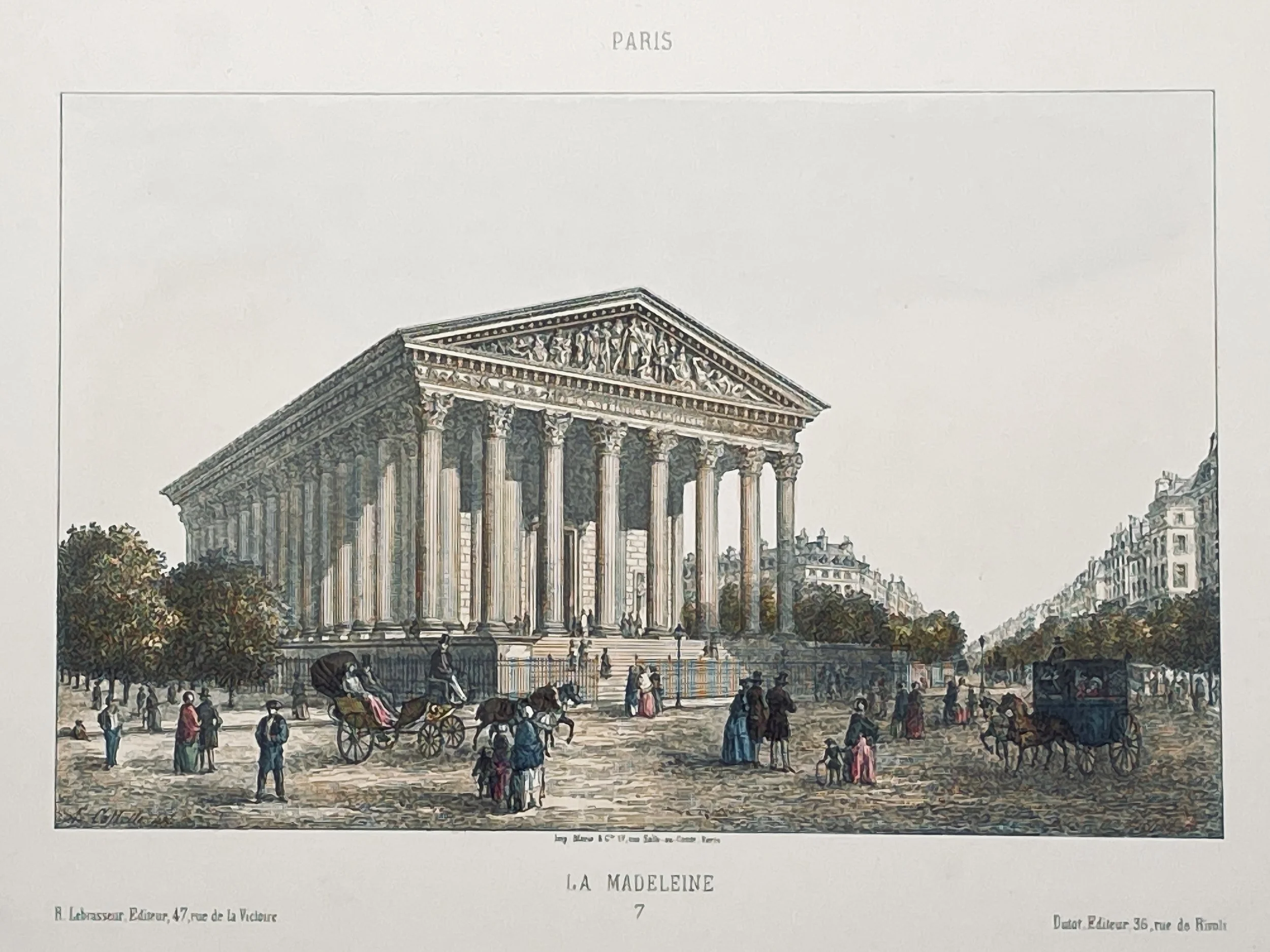
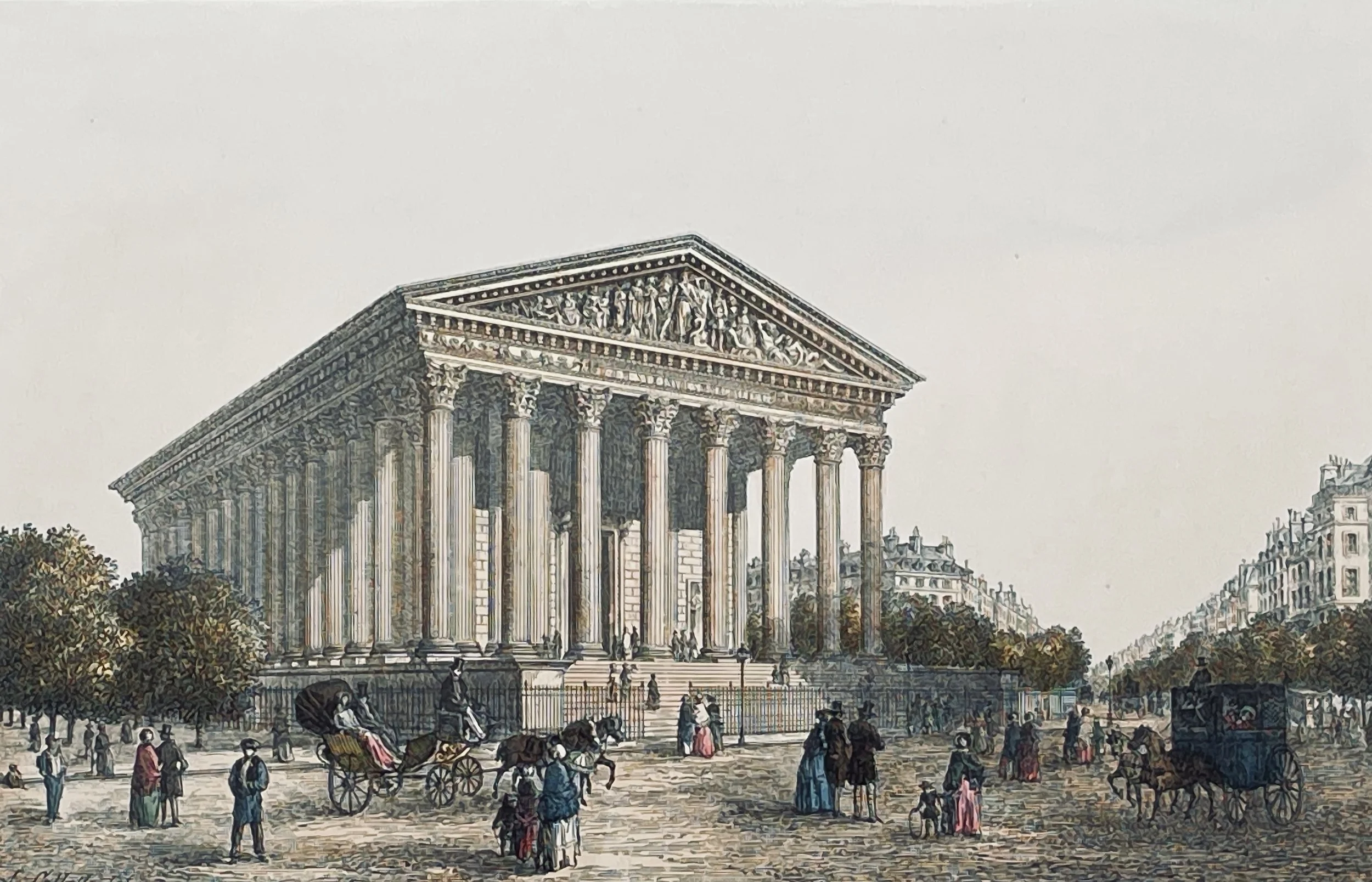
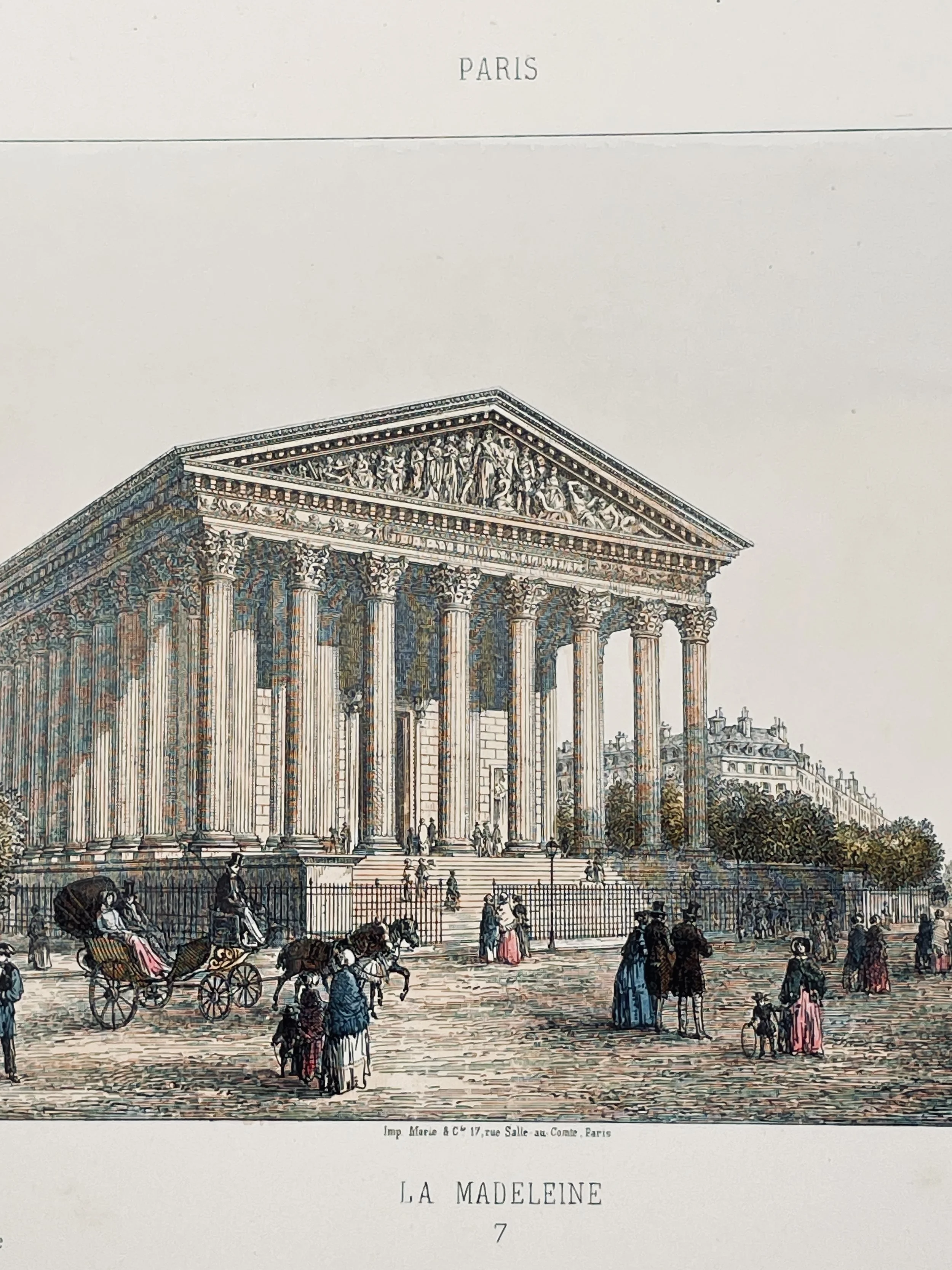
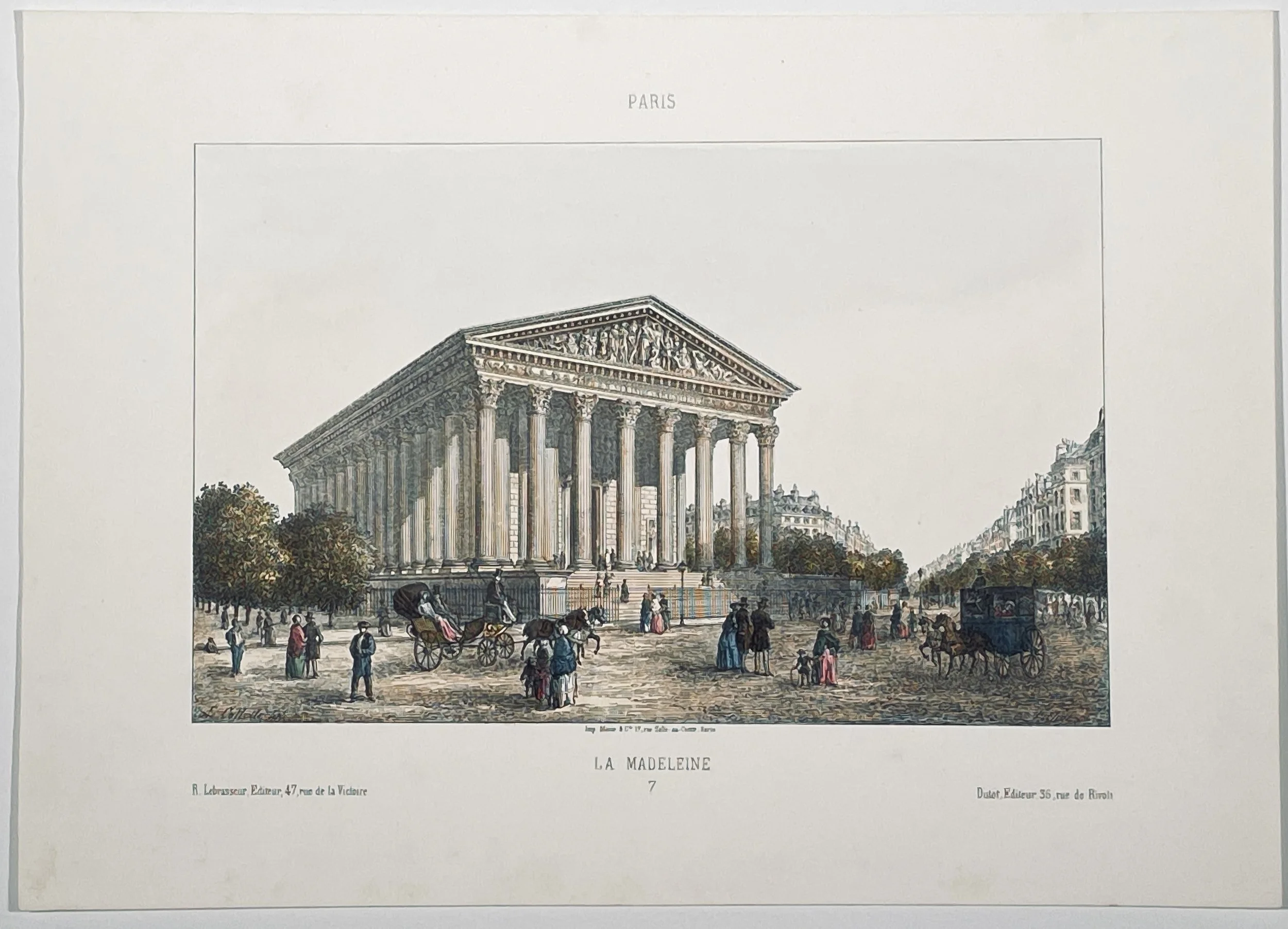
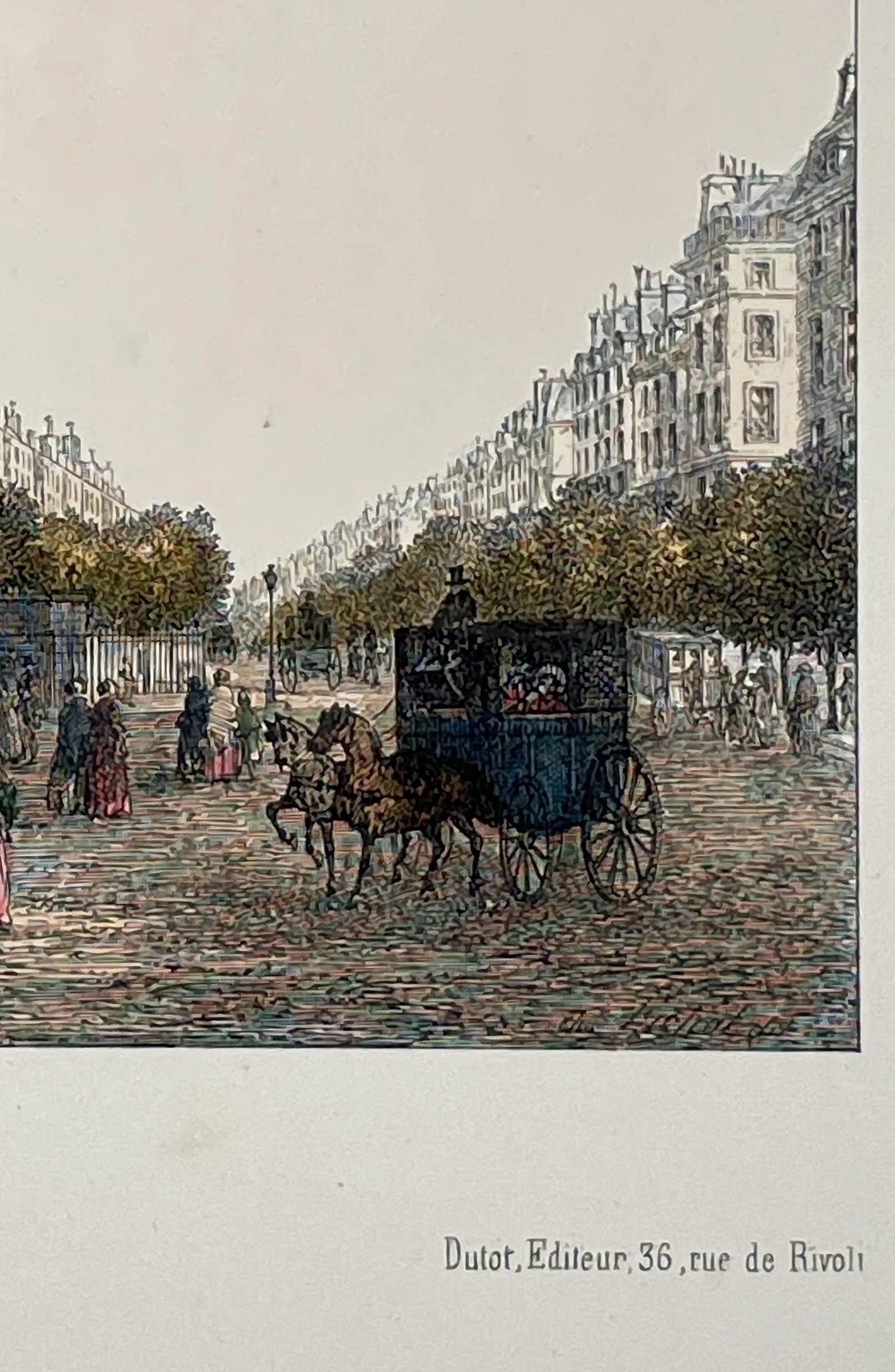
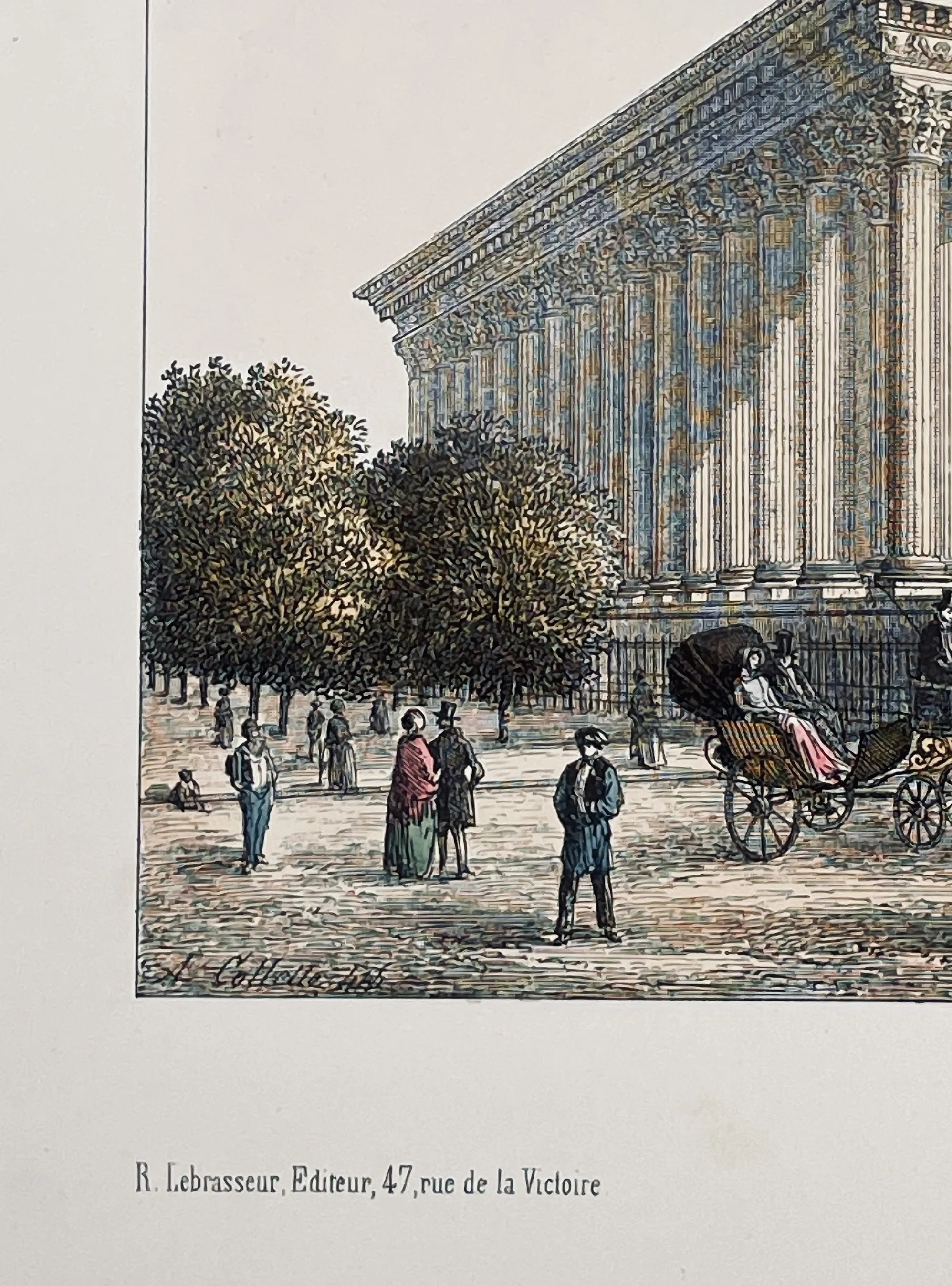
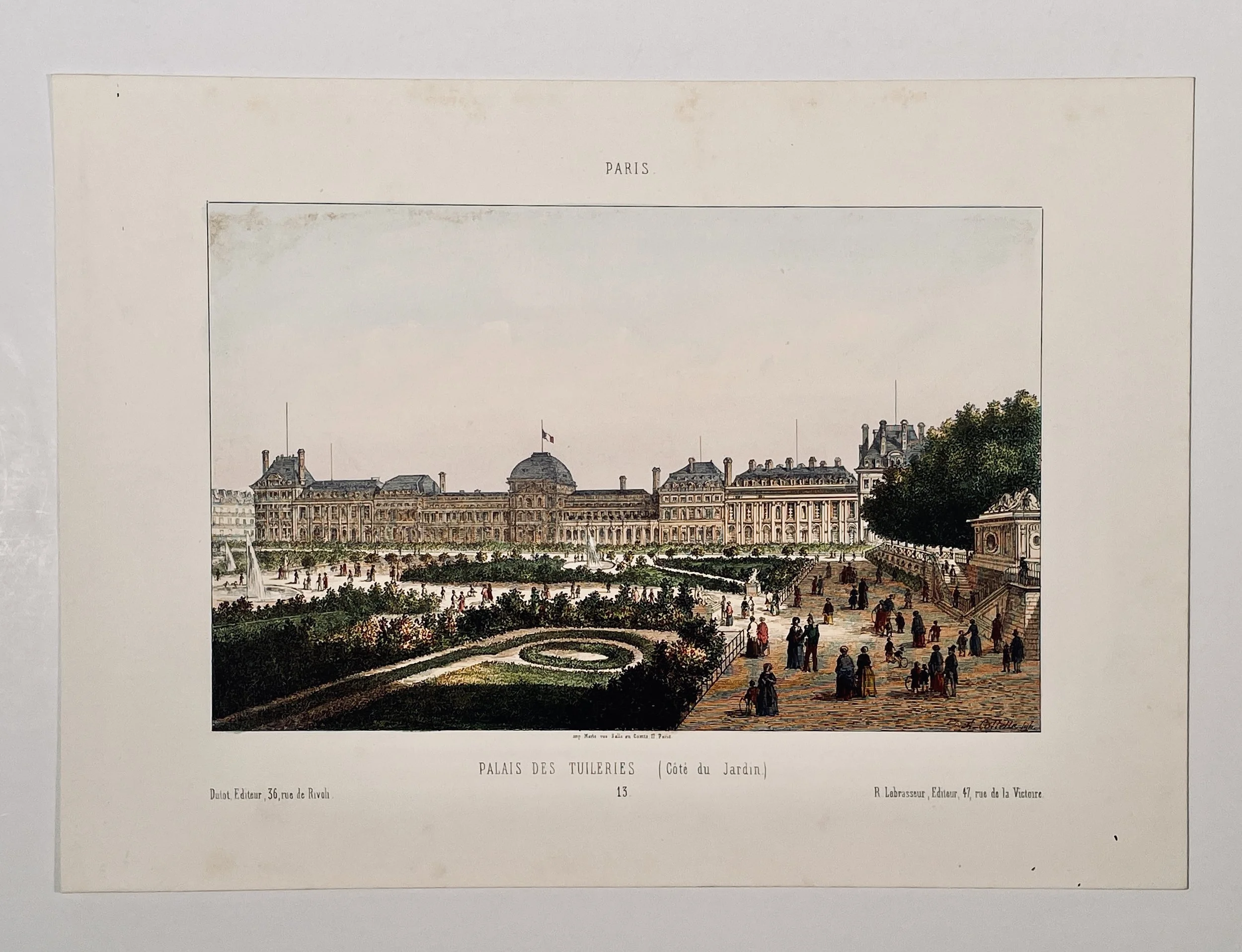
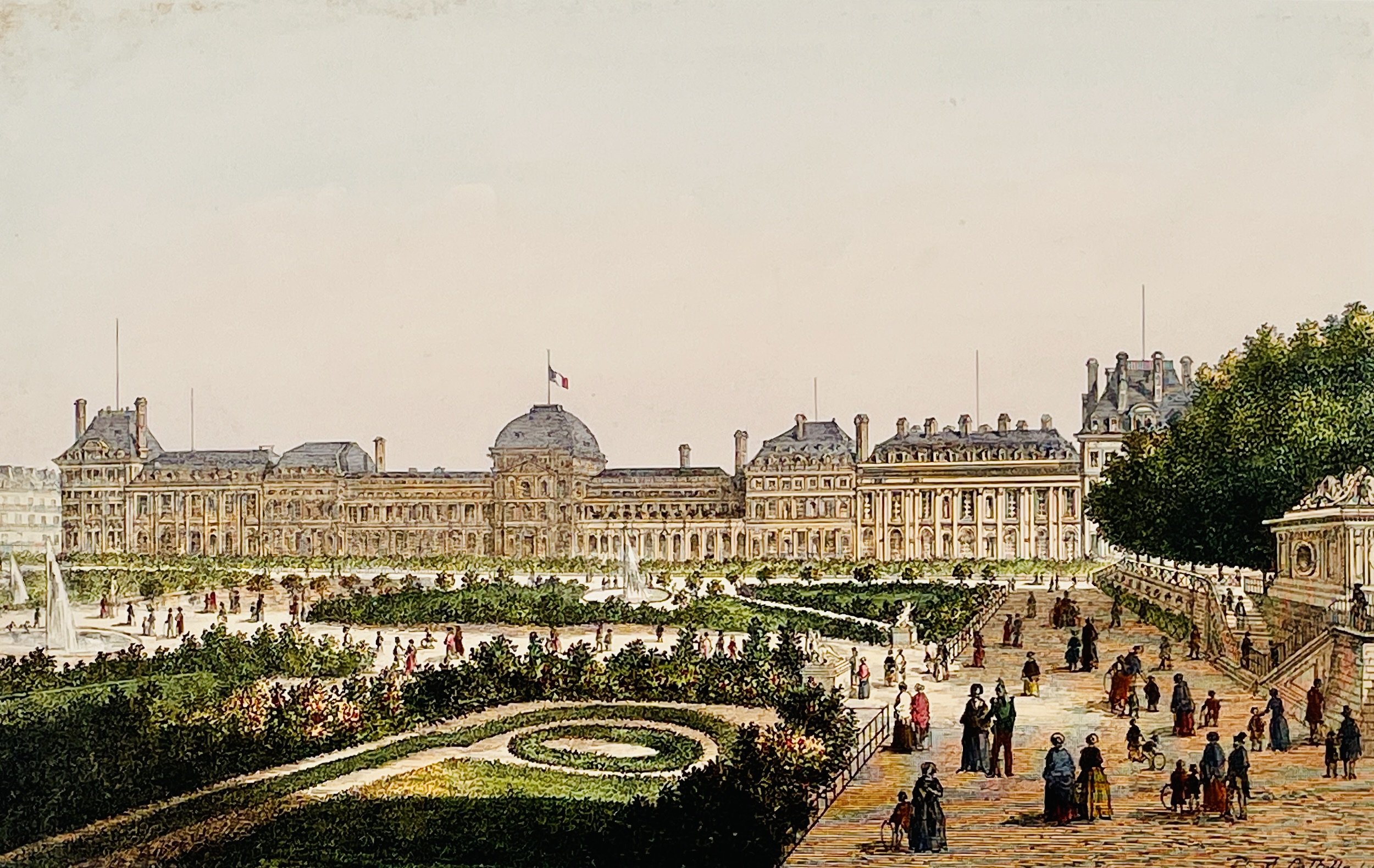
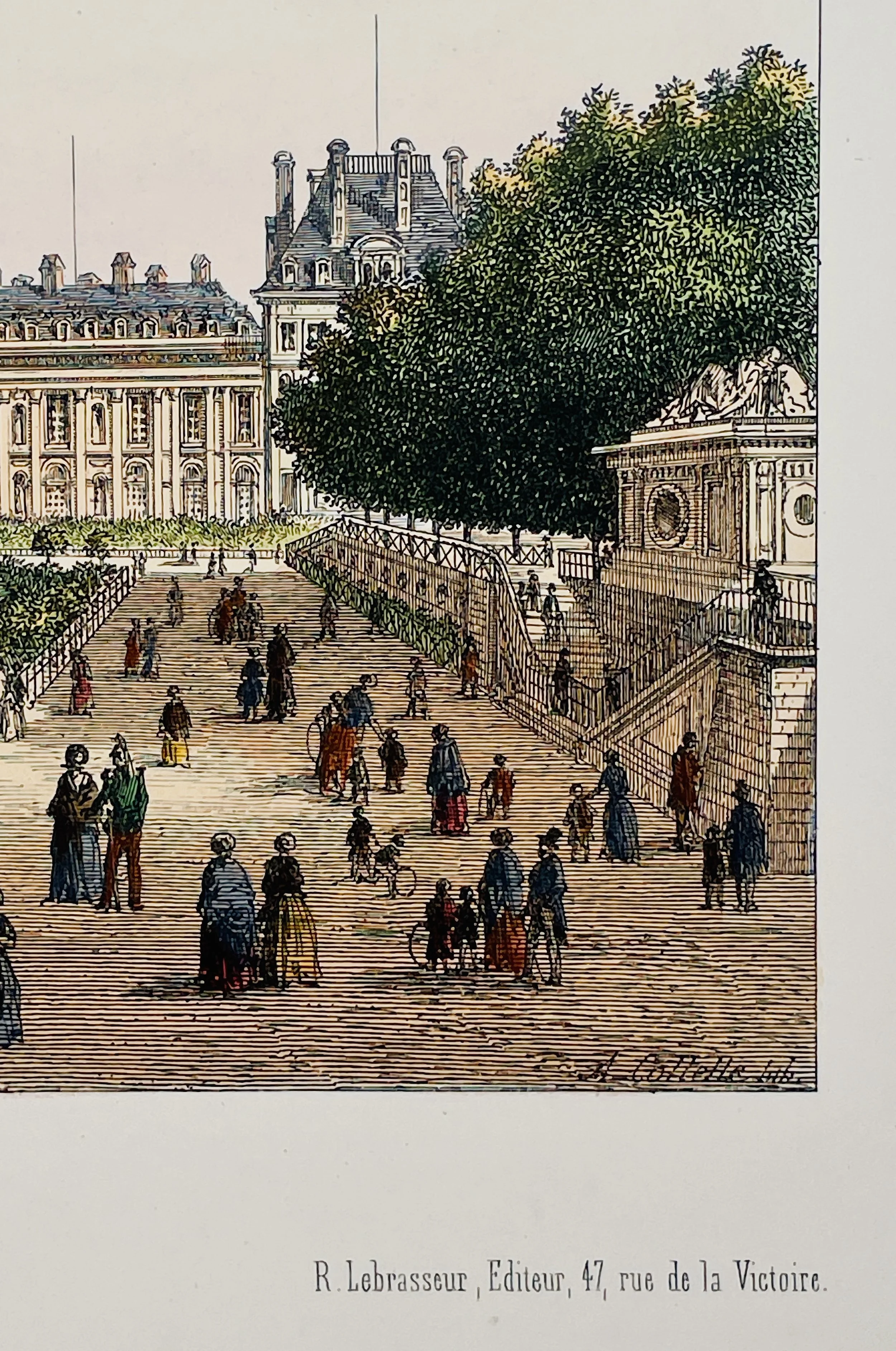
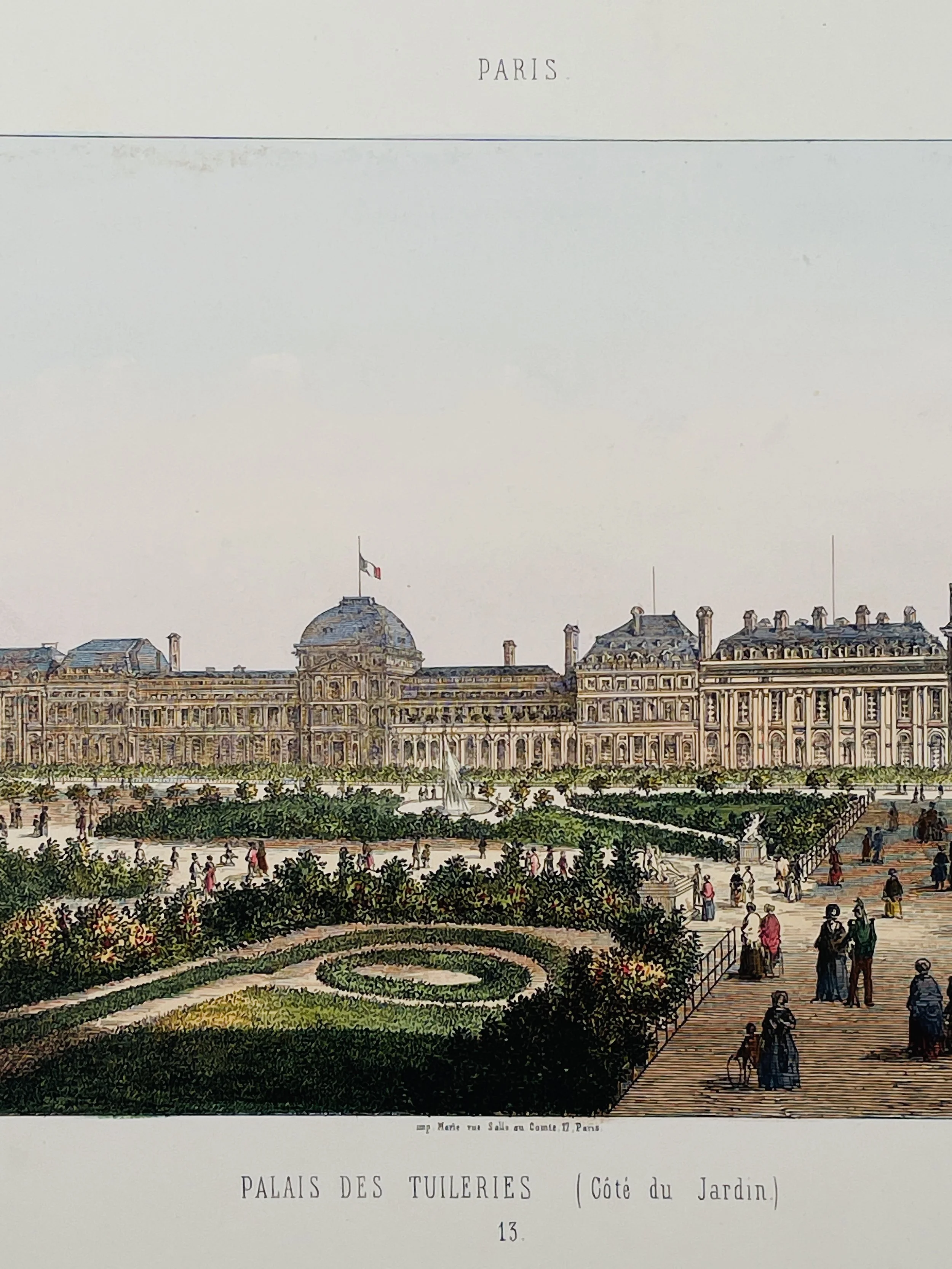
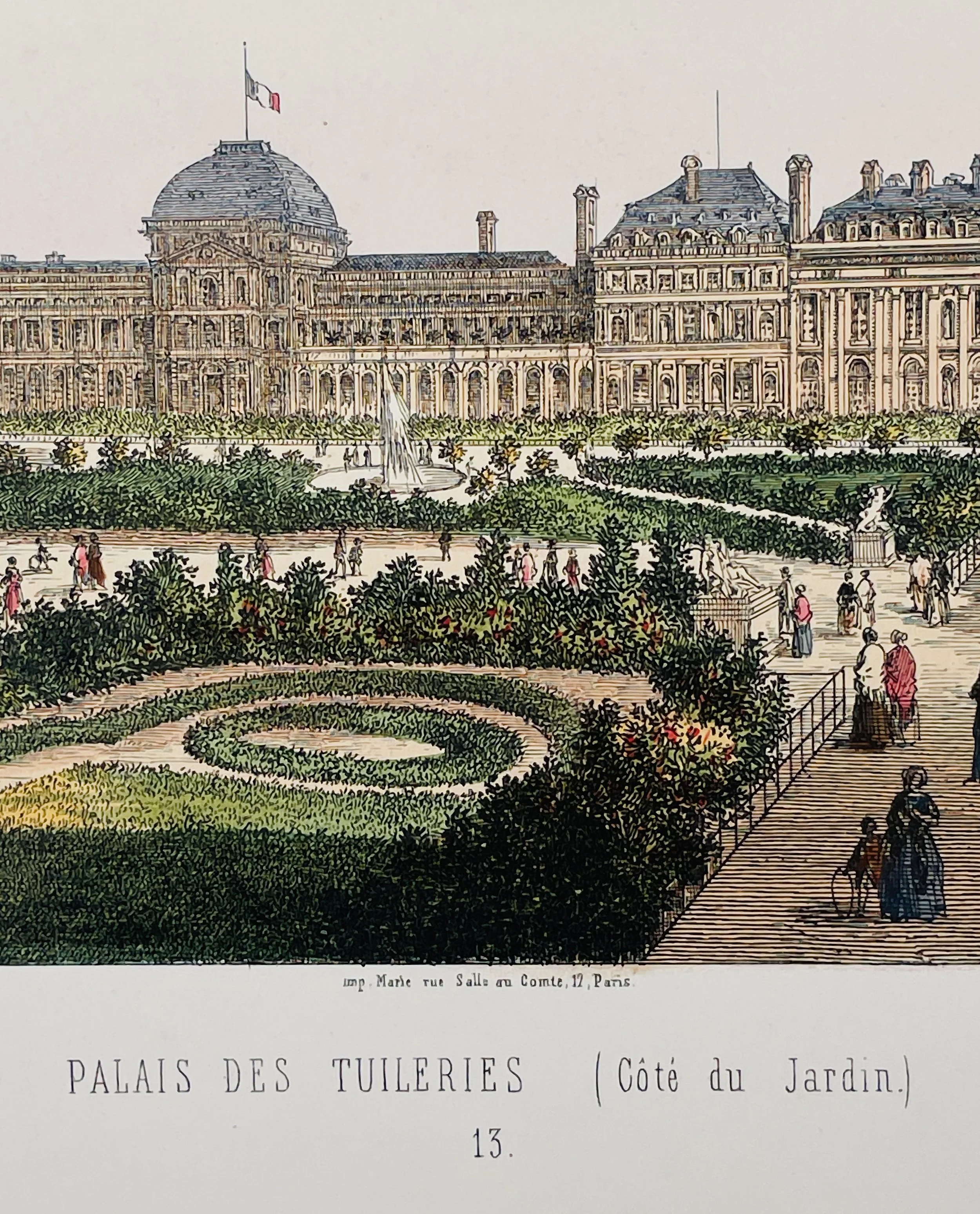
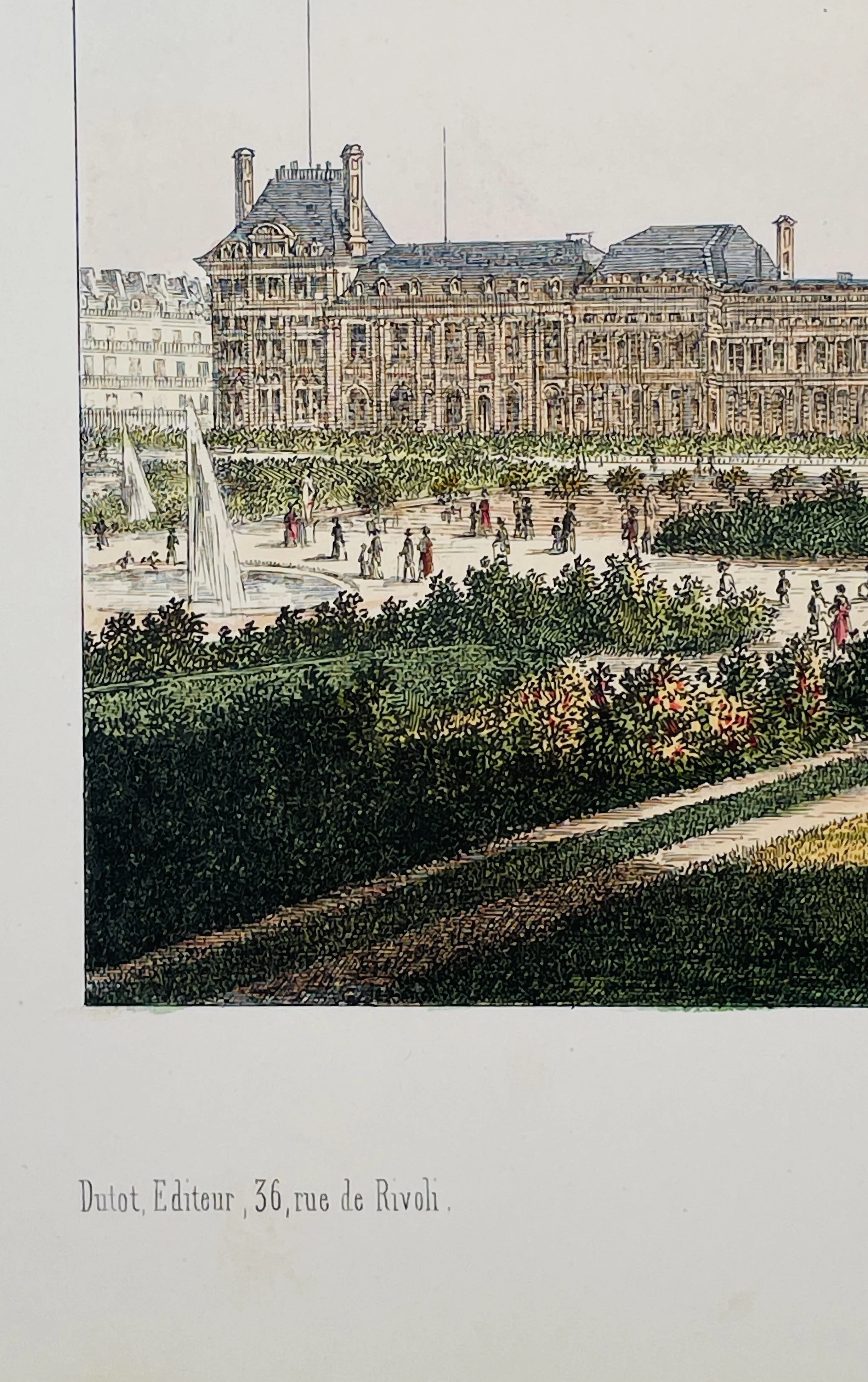
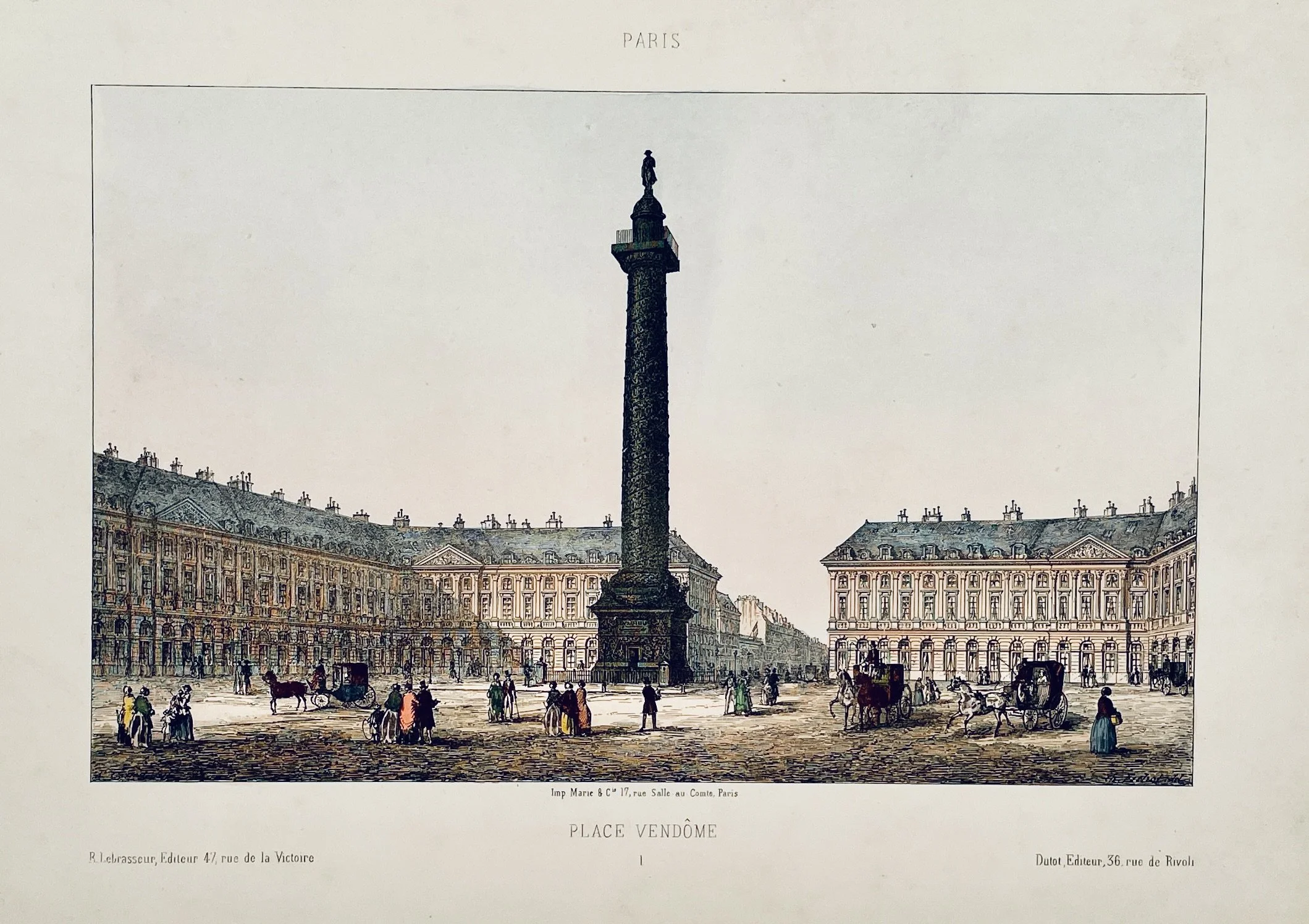
Paris, Vue générale du Jardin des Plantes — Isidore Laurent Deroy (1797–1886), c.1850, hand-colored lithograph, France en Miniature, signed in plate.
Original 19th-century French hand-colored lithograph by Isidore Laurent Deroy depicting the Jardin des Plantes in Paris. From the France en Miniature series, this topographical view was drawn and lithographed from nature by Deroy, published by E. Morier, and printed by the renowned Lemercier & Cie.
Artwork Description
This refined panoramic view presents the Jardin des Plantes, Paris’s historic botanical garden, seen from an elevated vantage point that reveals its formal geometry, tree-lined promenades, glasshouses, and surrounding academic buildings. Isidore Laurent Deroy structures the composition along strong axial lines, drawing the eye through carefully ordered parterres toward the dense urban skyline beyond, where domes and towers punctuate the horizon.
In the foreground, small figures, carriages, and pedestrians animate the scene, underscoring the garden’s dual role as both a scientific institution and a social space. Deroy’s inclusion of daily life reflects the 19th-century Parisian tradition of public strolling, observation, and leisure within cultivated landscapes.
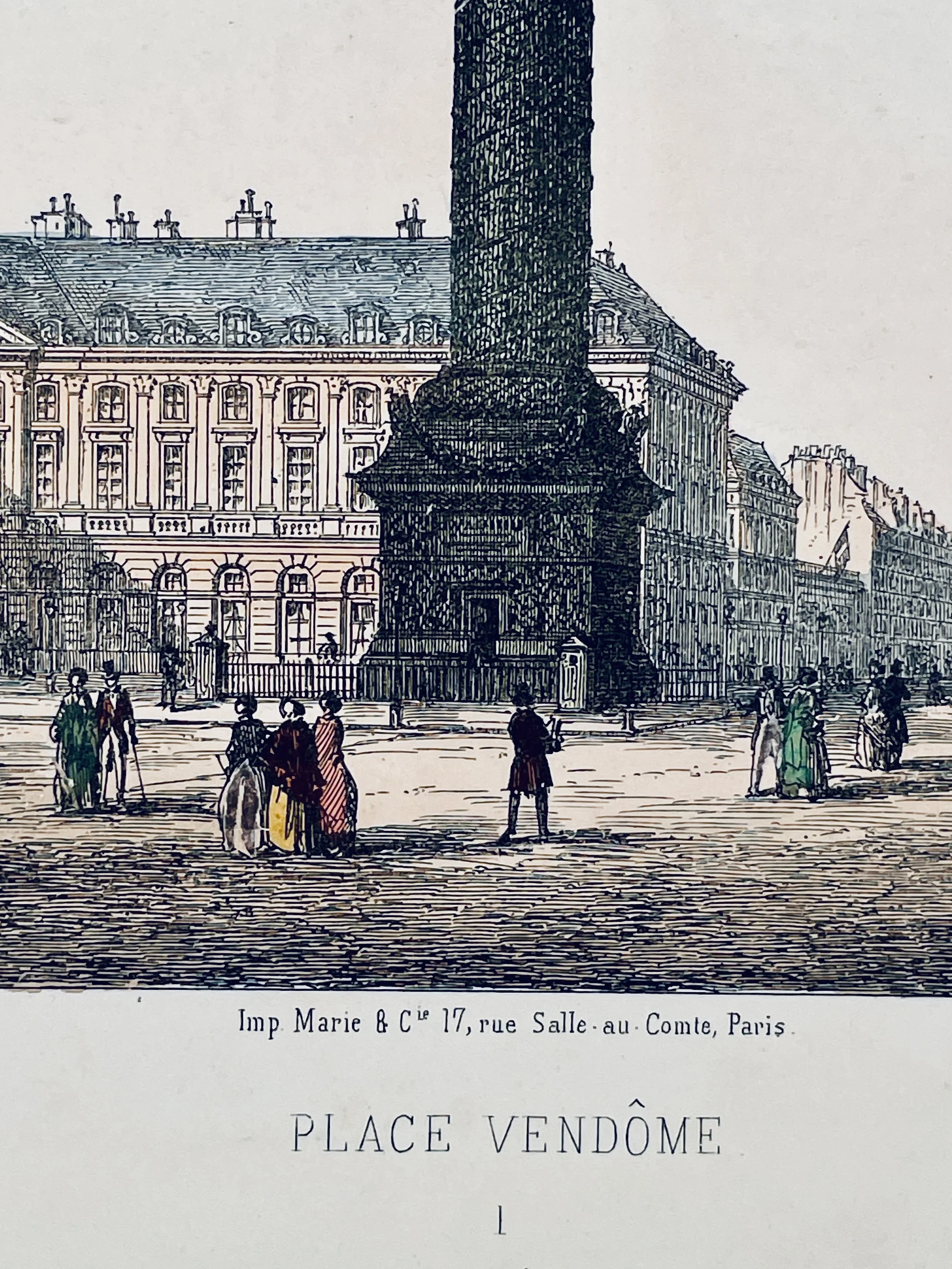
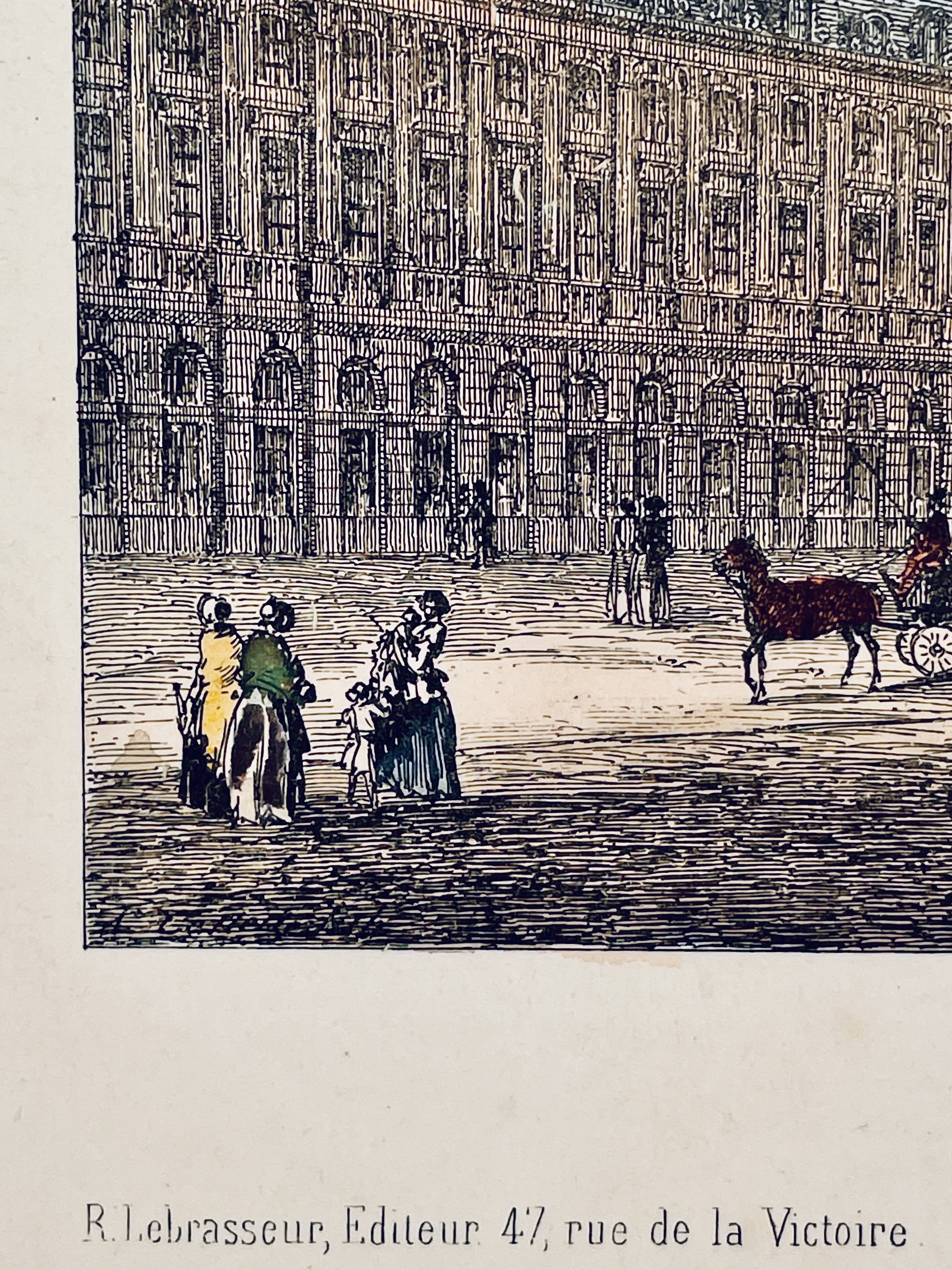
The work bears the imprint “Dess. et lith. d’après nature par Deroy,” confirming that the artist both drew and lithographed the plate directly from nature. The lithographic linework is precise and controlled, providing architectural clarity and spatial coherence, while the hand-applied color introduces soft greens, warm ochres, and muted grays that bring vitality to the foliage, pathways, and surrounding cityscape.
Published by E. Morier and printed by Lemercier & Cie, the plate exemplifies the highest standards of mid-19th-century French topographical printmaking. It serves as both an elegant work of art and a documentary record of Paris during a period of scientific expansion and urban transformation.
Artist Biography
Isidore Laurent Deroy was a French painter, draftsman, and prolific lithographer renowned for his architectural and topographical views. Born in Paris in 1797, Deroy studied under Louis-François Cassas, whose emphasis on archaeological precision and classical structure profoundly influenced his work.
Deroy exhibited regularly at the Paris Salon from 1822 to 1866, gaining recognition for his exacting architectural fidelity, atmospheric perspective, and ability to animate civic spaces with figures engaged in everyday life. Working primarily in Paris, he collaborated with leading publishers and printers to document France’s monuments, gardens, and urban landscapes during a period of intense political, scientific, and cultural change.
His works are represented in major institutional collections, including the Metropolitan Museum of Art and the Smithsonian Institution. His sons, Émile Deroy and Auguste-Victor Deroy, continued the family’s artistic tradition.
LEMERCIER & CIE (Printer, Paris)
Lemercier & Cie, founded by Rose-Joseph Lemercier, became one of Europe’s most important lithographic establishments during the 19th century. The firm pioneered innovations in chromolithography, architectural plate printing, and high-precision transfer techniques, setting industry standards for clarity and durability.
Lemercier & Cie worked with leading artists, publishers, and government institutions, producing some of the finest illustrated books and engraved views of the era. Their imprint signifies technical excellence and confirms this work as a first-period, museum-quality lithograph.
E. MORIER (Publisher, Paris)
E. Morier, operating from 5 rue du Pont de Lodi, Paris, specialized in illustrated travel plates, architectural views, and cultural imagery for the expanding 19th-century market of educated collectors and interior decoration.
Morier’s collaboration with Deroy and Lemercier & Cie resulted in finely crafted plates from the France en Miniatureseries, now prized for their artistic refinement, documentary value, and historical significance.
Isidore Laurent Deroy (1797–1886), Paris, Vue générale du Jardin des Plantes, c.1850. Hand-colored lithograph from France en Miniature. Drawn and lithographed from nature by the artist. Published by E. Morier; printed by Lemercier & Cie, Paris.
Certificate of Value & Authentication
This certifies that Paris, Vue générale du Jardin des Plantes is an authentic 19th-century hand-colored lithograph by Isidore Laurent Deroy (1797–1886). The work bears the inscriptions “Dess. et lith. d’après nature par Deroy,” “Paris E. Morier, 5 rue du Pont de Lodi,” and “Imp. Lemercier, Paris,” confirming period authorship, publication, and printing. Authenticity is fully guaranteed.
Provenance Chain
(Collector Format)
Mitch Morse Gallery, New York (acquired in NYC and Europe)
Private Collection
Current Owner: Artfind Gallery, Washington, DC
Paris, Vue générale du Jardin des Plantes — Isidore Laurent Deroy (1797–1886), c.1850, hand-colored lithograph, France en Miniature, signed in plate.
Original 19th-century French hand-colored lithograph by Isidore Laurent Deroy depicting the Jardin des Plantes in Paris. From the France en Miniature series, this topographical view was drawn and lithographed from nature by Deroy, published by E. Morier, and printed by the renowned Lemercier & Cie.
Artwork Description
This refined panoramic view presents the Jardin des Plantes, Paris’s historic botanical garden, seen from an elevated vantage point that reveals its formal geometry, tree-lined promenades, glasshouses, and surrounding academic buildings. Isidore Laurent Deroy structures the composition along strong axial lines, drawing the eye through carefully ordered parterres toward the dense urban skyline beyond, where domes and towers punctuate the horizon.
In the foreground, small figures, carriages, and pedestrians animate the scene, underscoring the garden’s dual role as both a scientific institution and a social space. Deroy’s inclusion of daily life reflects the 19th-century Parisian tradition of public strolling, observation, and leisure within cultivated landscapes.
The work bears the imprint “Dess. et lith. d’après nature par Deroy,” confirming that the artist both drew and lithographed the plate directly from nature. The lithographic linework is precise and controlled, providing architectural clarity and spatial coherence, while the hand-applied color introduces soft greens, warm ochres, and muted grays that bring vitality to the foliage, pathways, and surrounding cityscape.
Published by E. Morier and printed by Lemercier & Cie, the plate exemplifies the highest standards of mid-19th-century French topographical printmaking. It serves as both an elegant work of art and a documentary record of Paris during a period of scientific expansion and urban transformation.
Artist Biography
Isidore Laurent Deroy was a French painter, draftsman, and prolific lithographer renowned for his architectural and topographical views. Born in Paris in 1797, Deroy studied under Louis-François Cassas, whose emphasis on archaeological precision and classical structure profoundly influenced his work.
Deroy exhibited regularly at the Paris Salon from 1822 to 1866, gaining recognition for his exacting architectural fidelity, atmospheric perspective, and ability to animate civic spaces with figures engaged in everyday life. Working primarily in Paris, he collaborated with leading publishers and printers to document France’s monuments, gardens, and urban landscapes during a period of intense political, scientific, and cultural change.
His works are represented in major institutional collections, including the Metropolitan Museum of Art and the Smithsonian Institution. His sons, Émile Deroy and Auguste-Victor Deroy, continued the family’s artistic tradition.
LEMERCIER & CIE (Printer, Paris)
Lemercier & Cie, founded by Rose-Joseph Lemercier, became one of Europe’s most important lithographic establishments during the 19th century. The firm pioneered innovations in chromolithography, architectural plate printing, and high-precision transfer techniques, setting industry standards for clarity and durability.
Lemercier & Cie worked with leading artists, publishers, and government institutions, producing some of the finest illustrated books and engraved views of the era. Their imprint signifies technical excellence and confirms this work as a first-period, museum-quality lithograph.
E. MORIER (Publisher, Paris)
E. Morier, operating from 5 rue du Pont de Lodi, Paris, specialized in illustrated travel plates, architectural views, and cultural imagery for the expanding 19th-century market of educated collectors and interior decoration.
Morier’s collaboration with Deroy and Lemercier & Cie resulted in finely crafted plates from the France en Miniatureseries, now prized for their artistic refinement, documentary value, and historical significance.
Isidore Laurent Deroy (1797–1886), Paris, Vue générale du Jardin des Plantes, c.1850. Hand-colored lithograph from France en Miniature. Drawn and lithographed from nature by the artist. Published by E. Morier; printed by Lemercier & Cie, Paris.
Certificate of Value & Authentication
This certifies that Paris, Vue générale du Jardin des Plantes is an authentic 19th-century hand-colored lithograph by Isidore Laurent Deroy (1797–1886). The work bears the inscriptions “Dess. et lith. d’après nature par Deroy,” “Paris E. Morier, 5 rue du Pont de Lodi,” and “Imp. Lemercier, Paris,” confirming period authorship, publication, and printing. Authenticity is fully guaranteed.
Provenance Chain
(Collector Format)
Mitch Morse Gallery, New York (acquired in NYC and Europe)
Private Collection
Current Owner: Artfind Gallery, Washington, DC
 Image 1 of 8
 Image 2 of 8
 Image 3 of 8
 Image 4 of 8
 Image 5 of 8
 Image 6 of 8
 Image 7 of 8
 Image 8 of 8