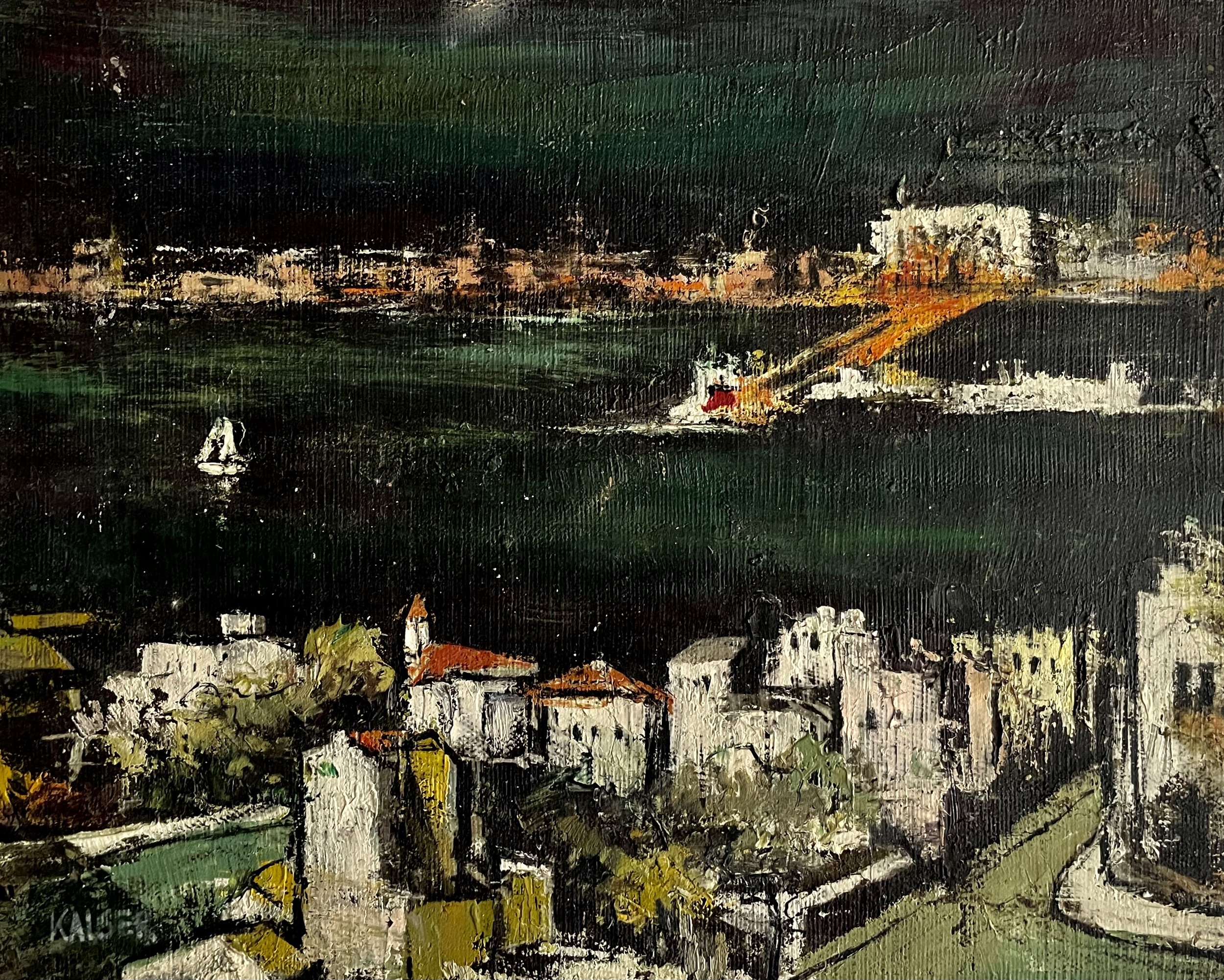
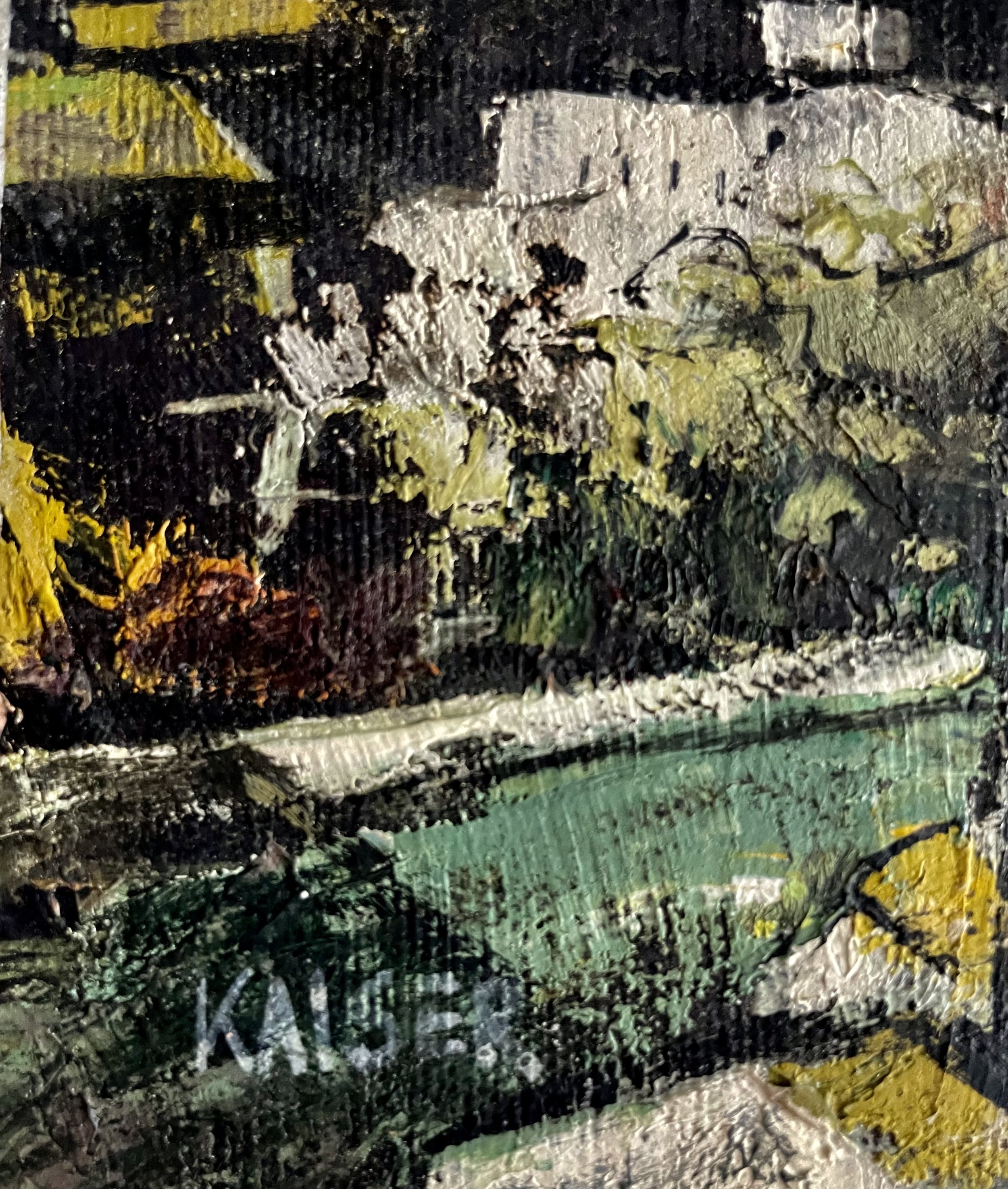
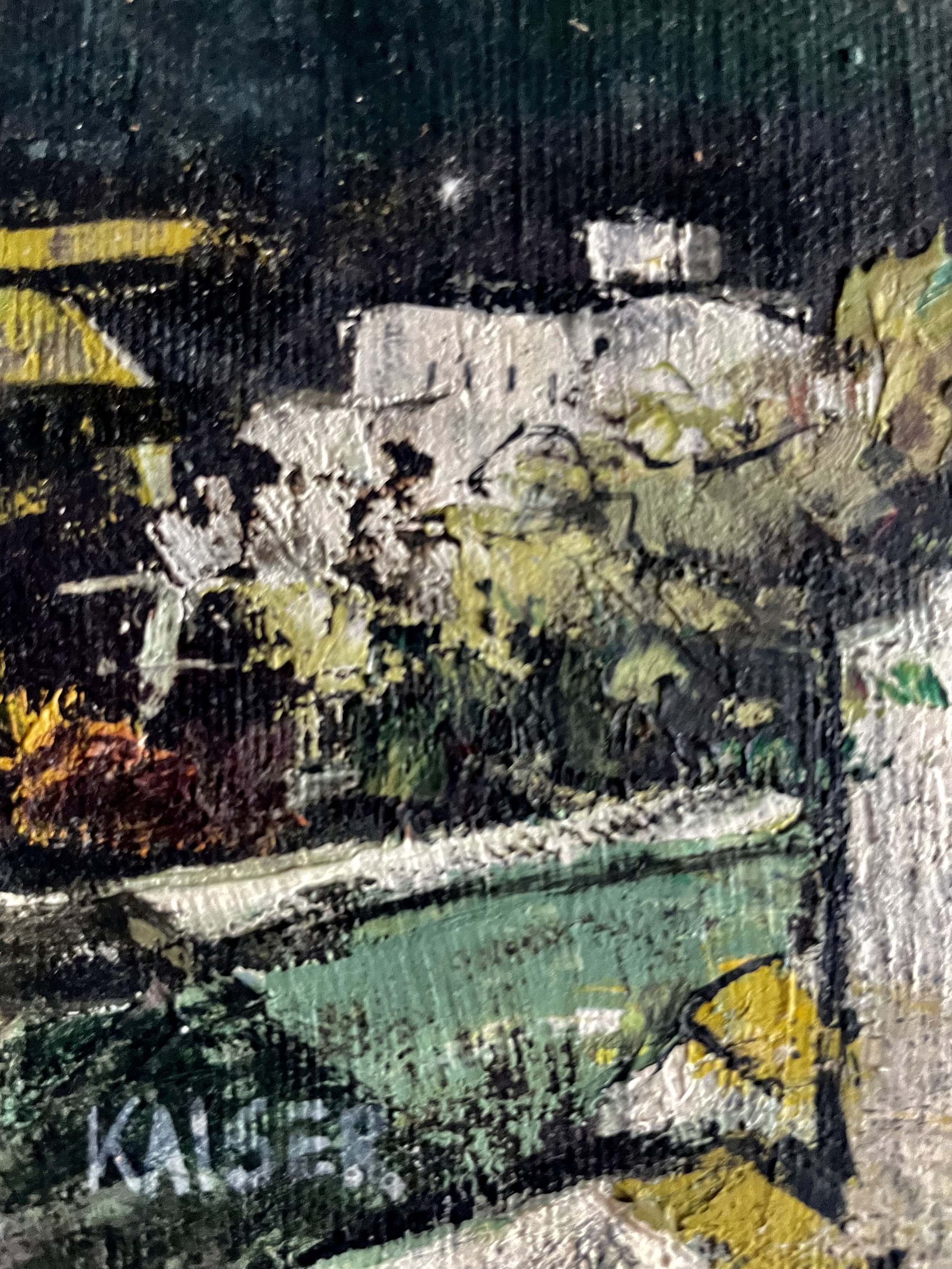
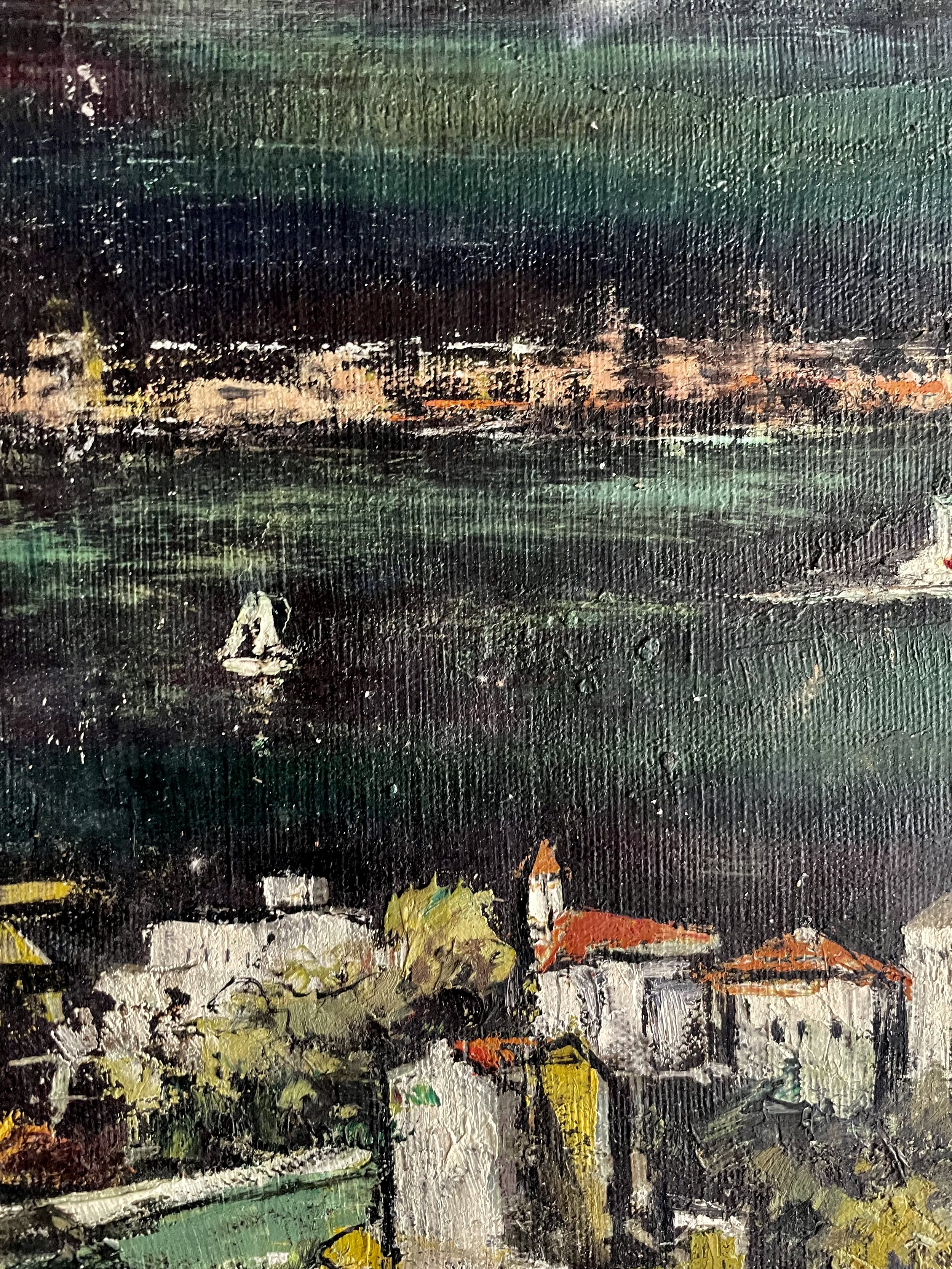
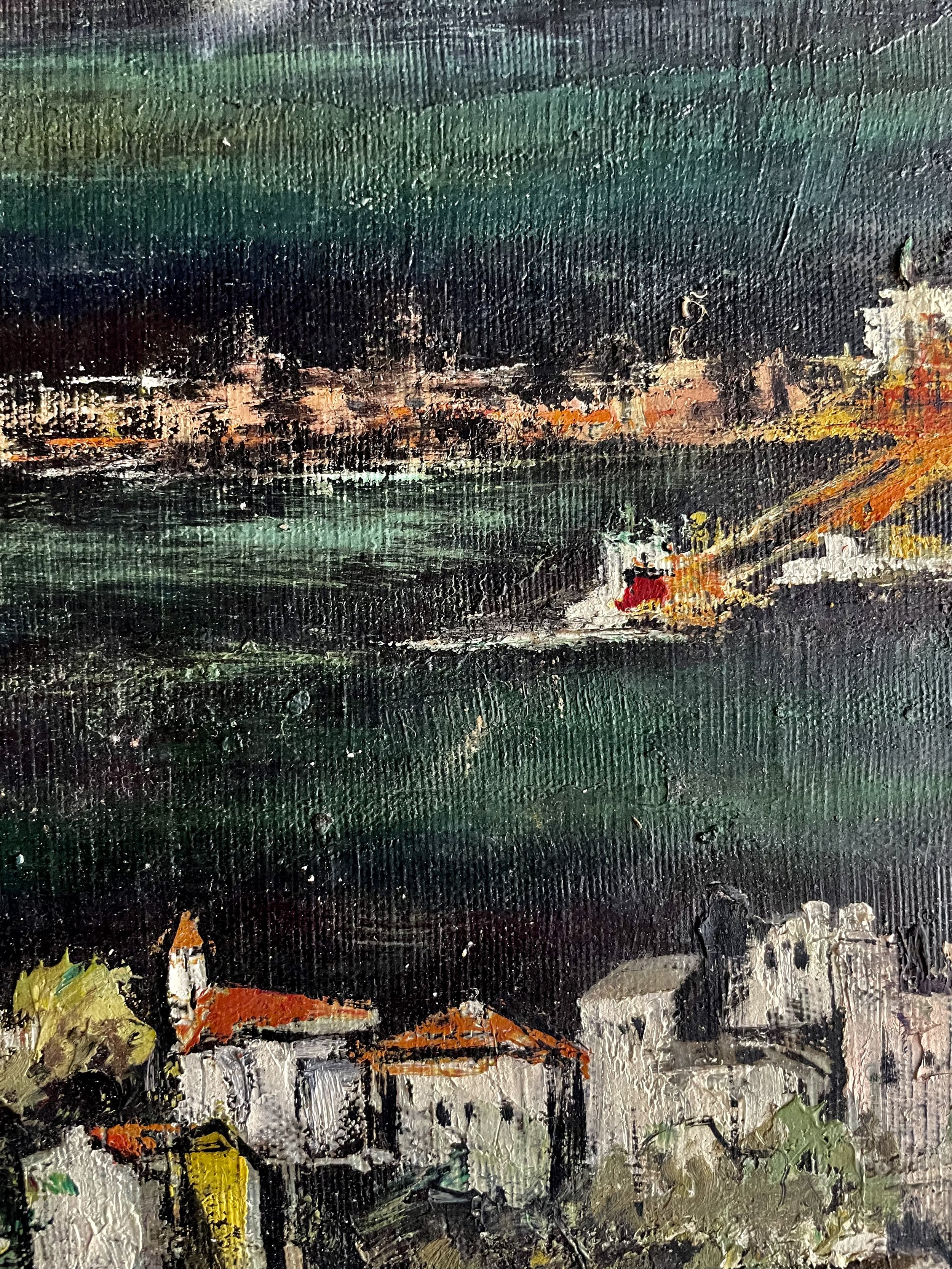
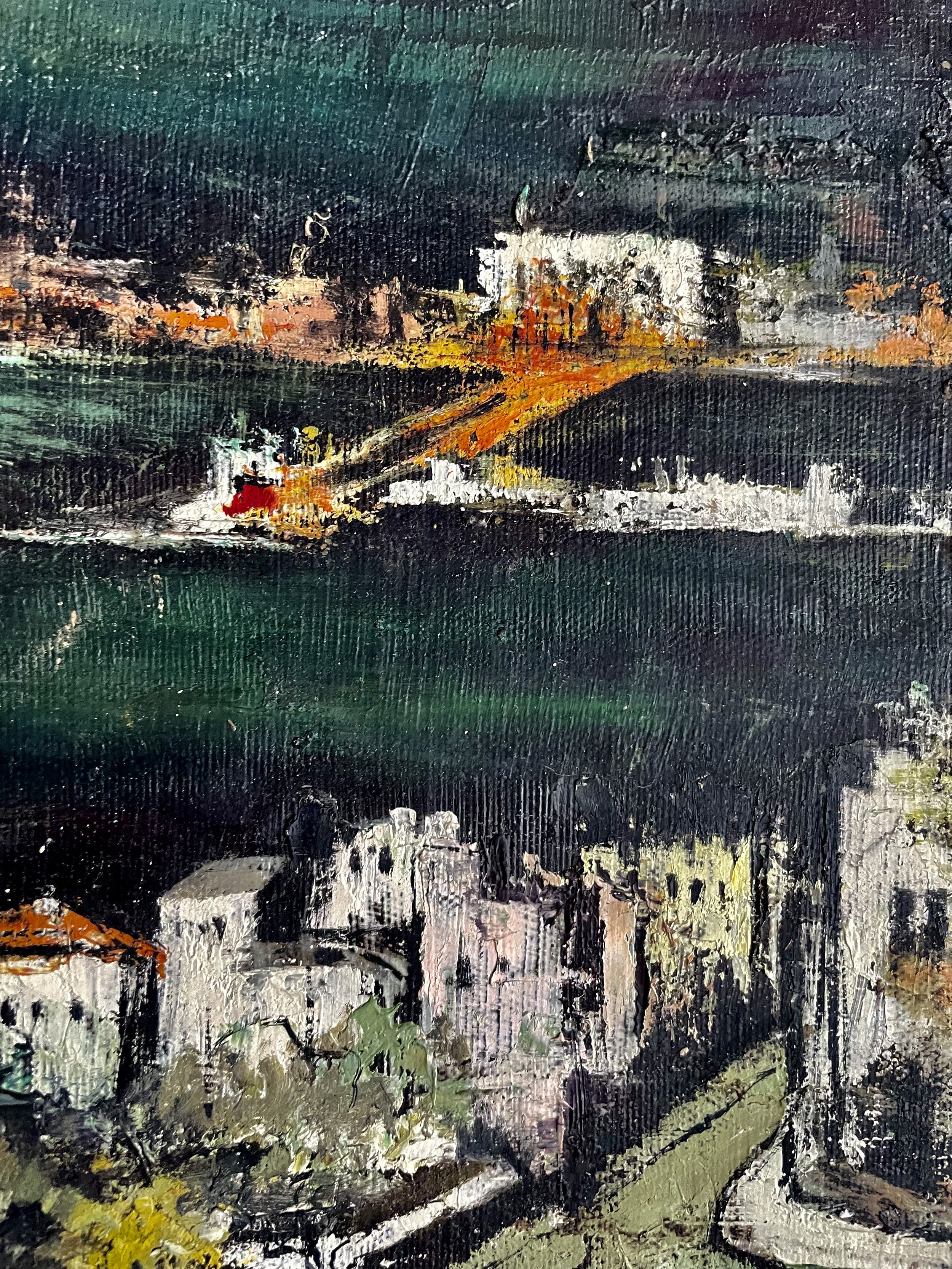
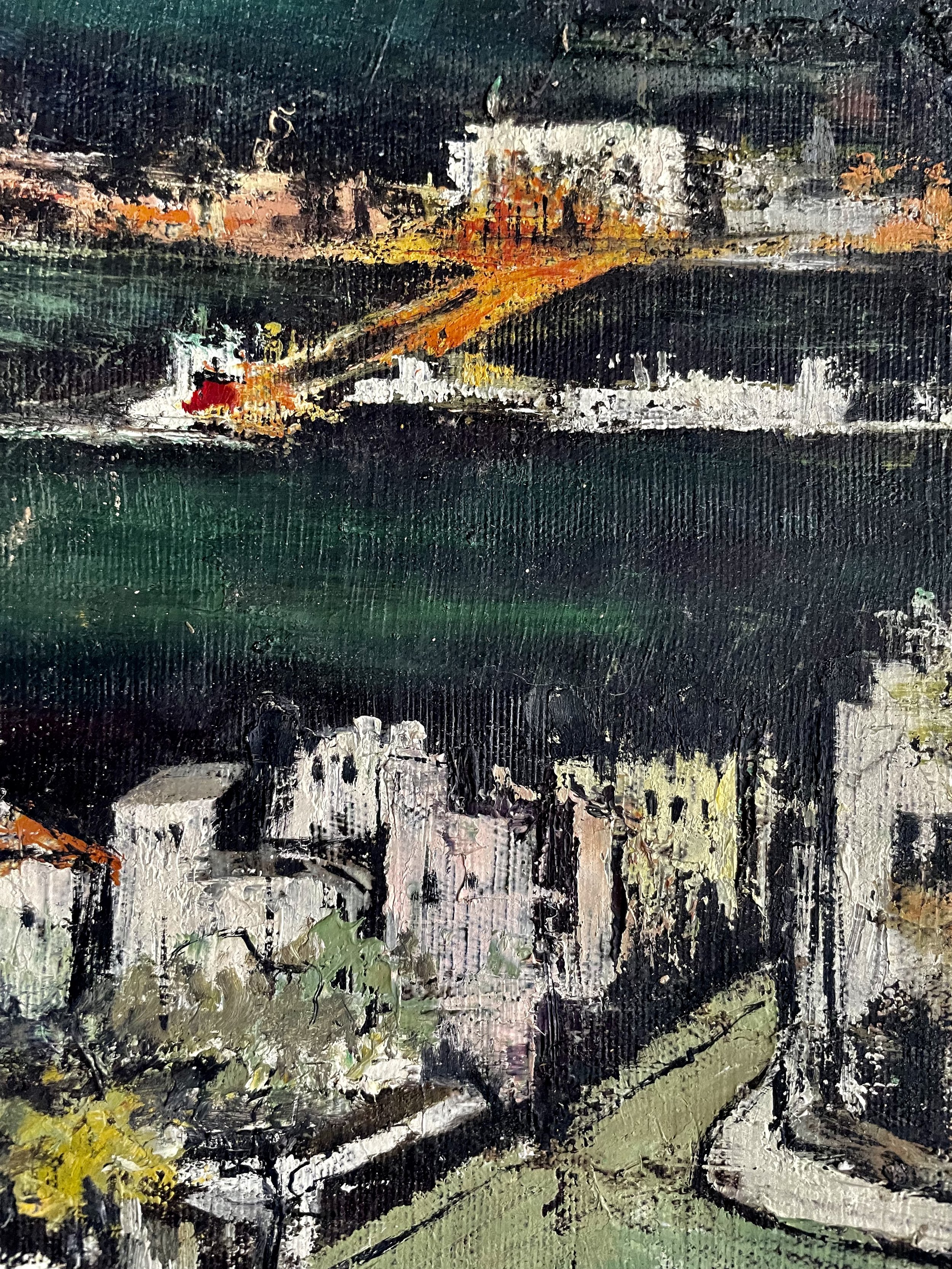
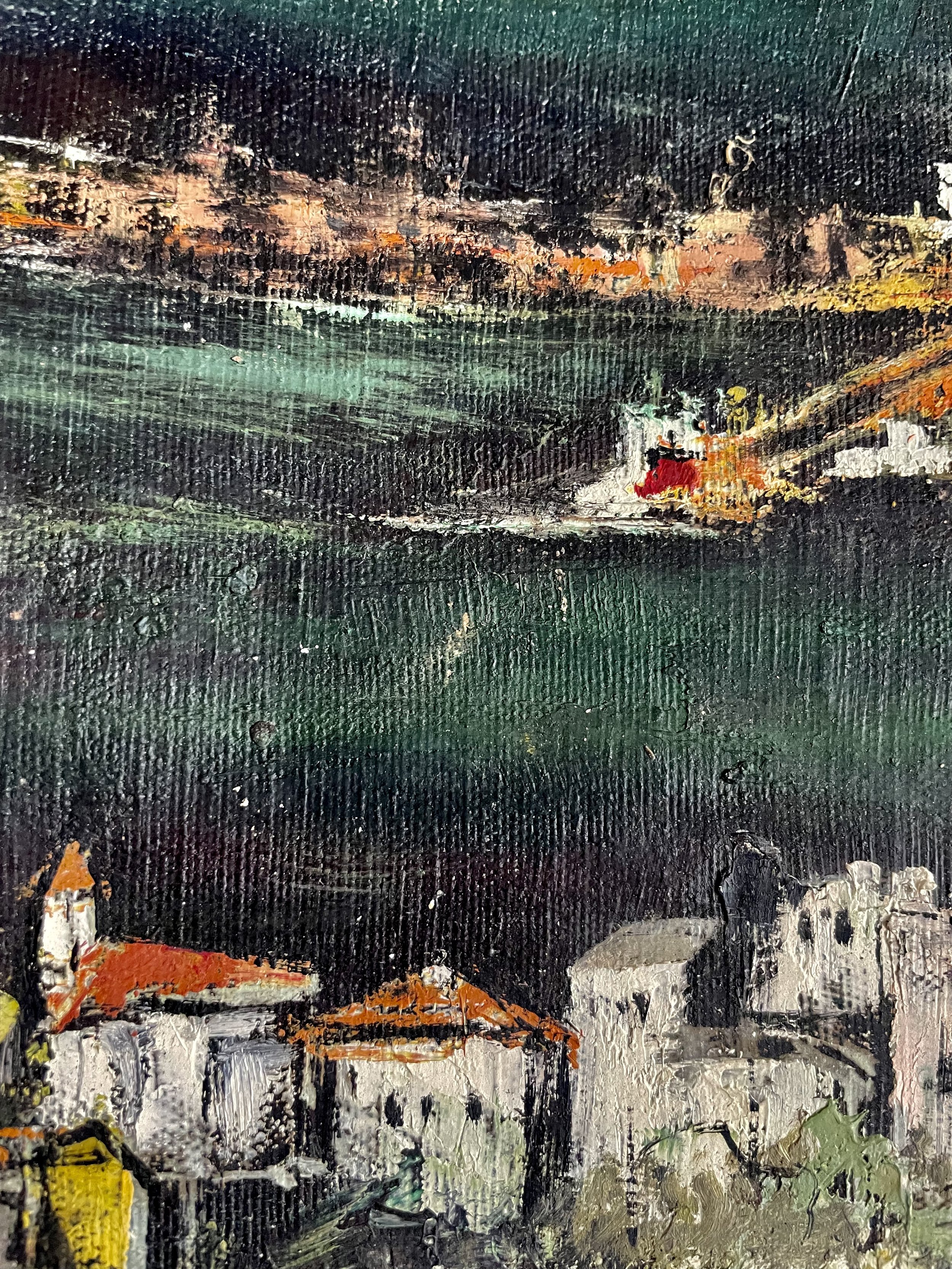
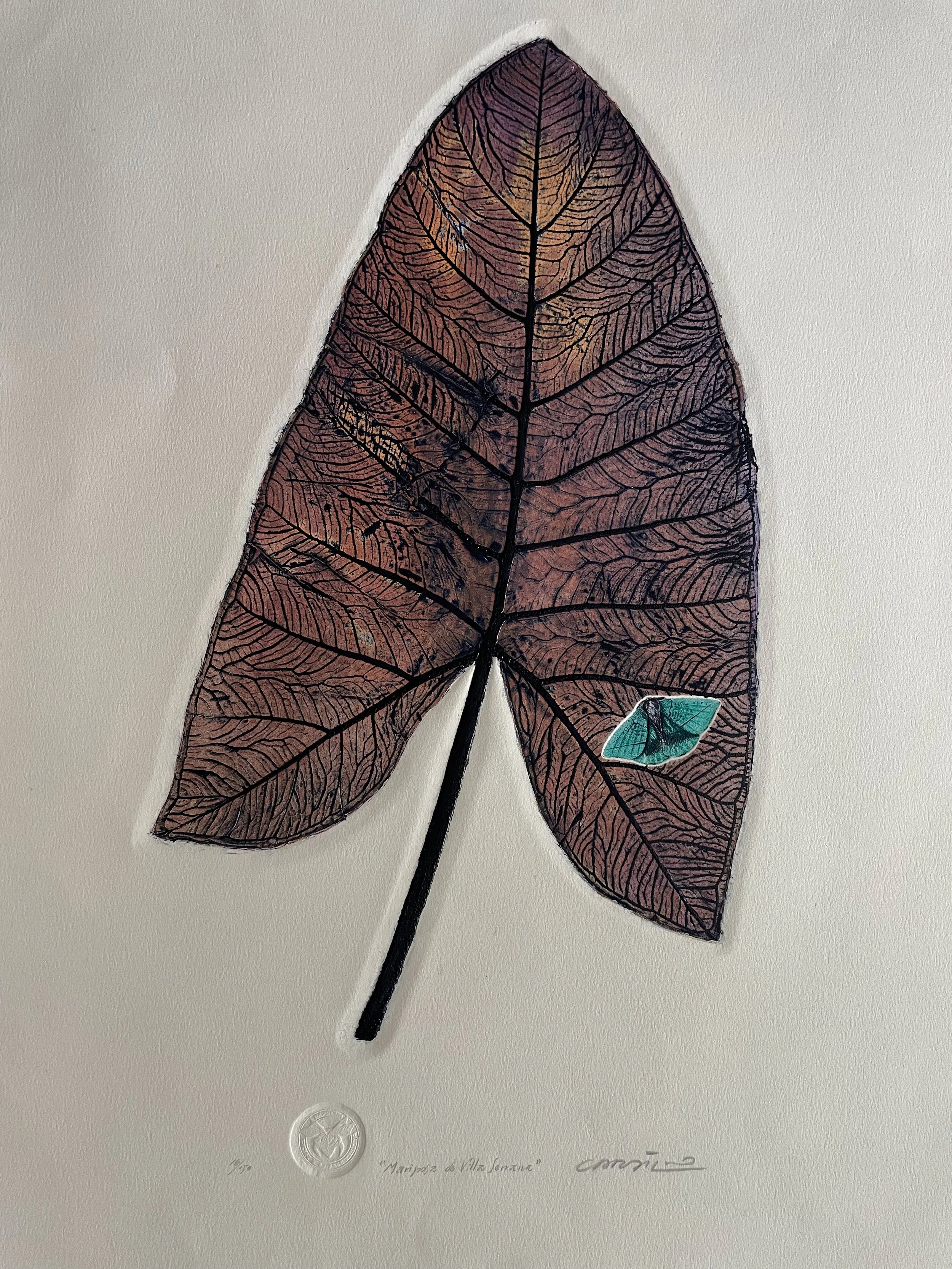
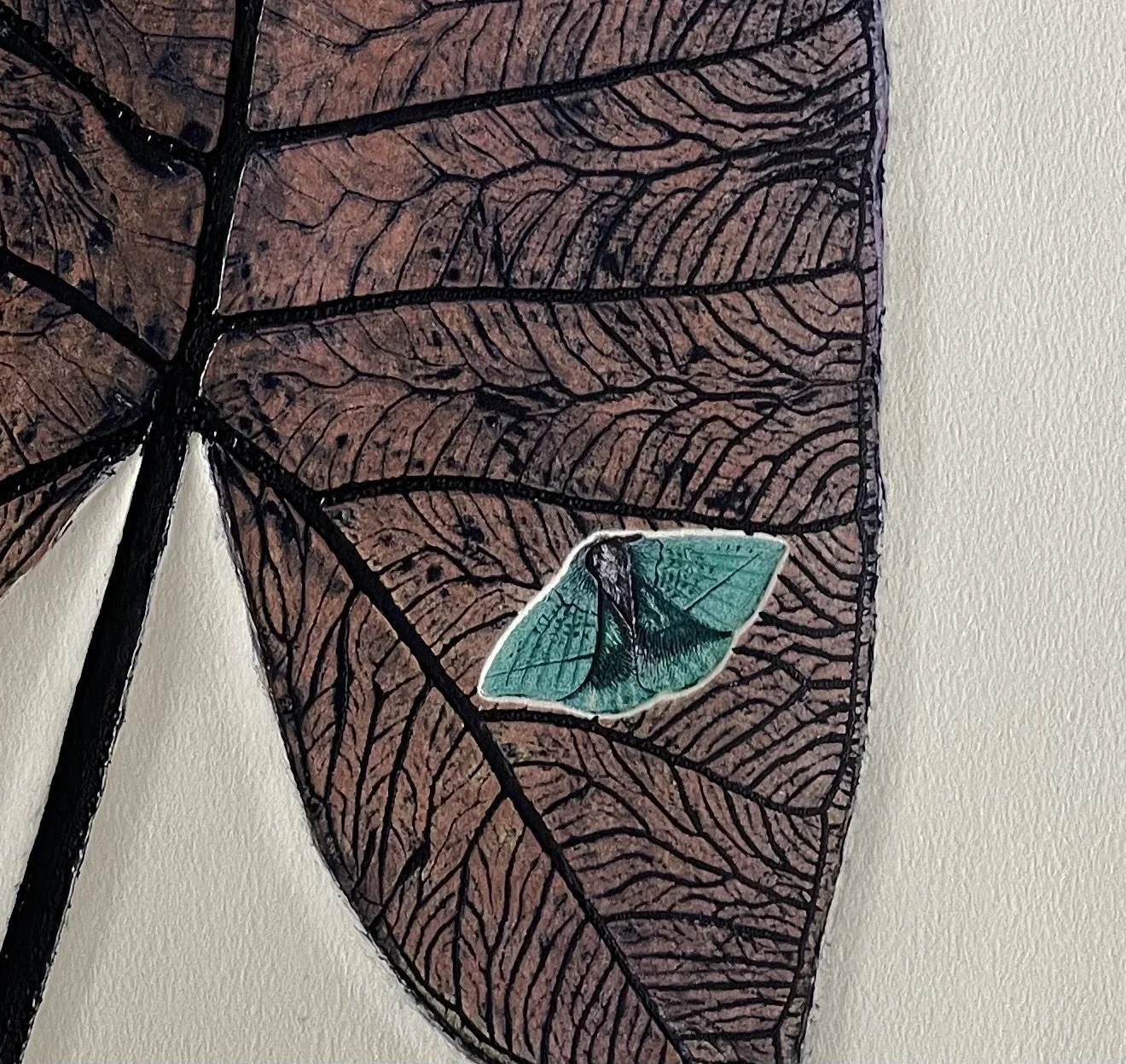
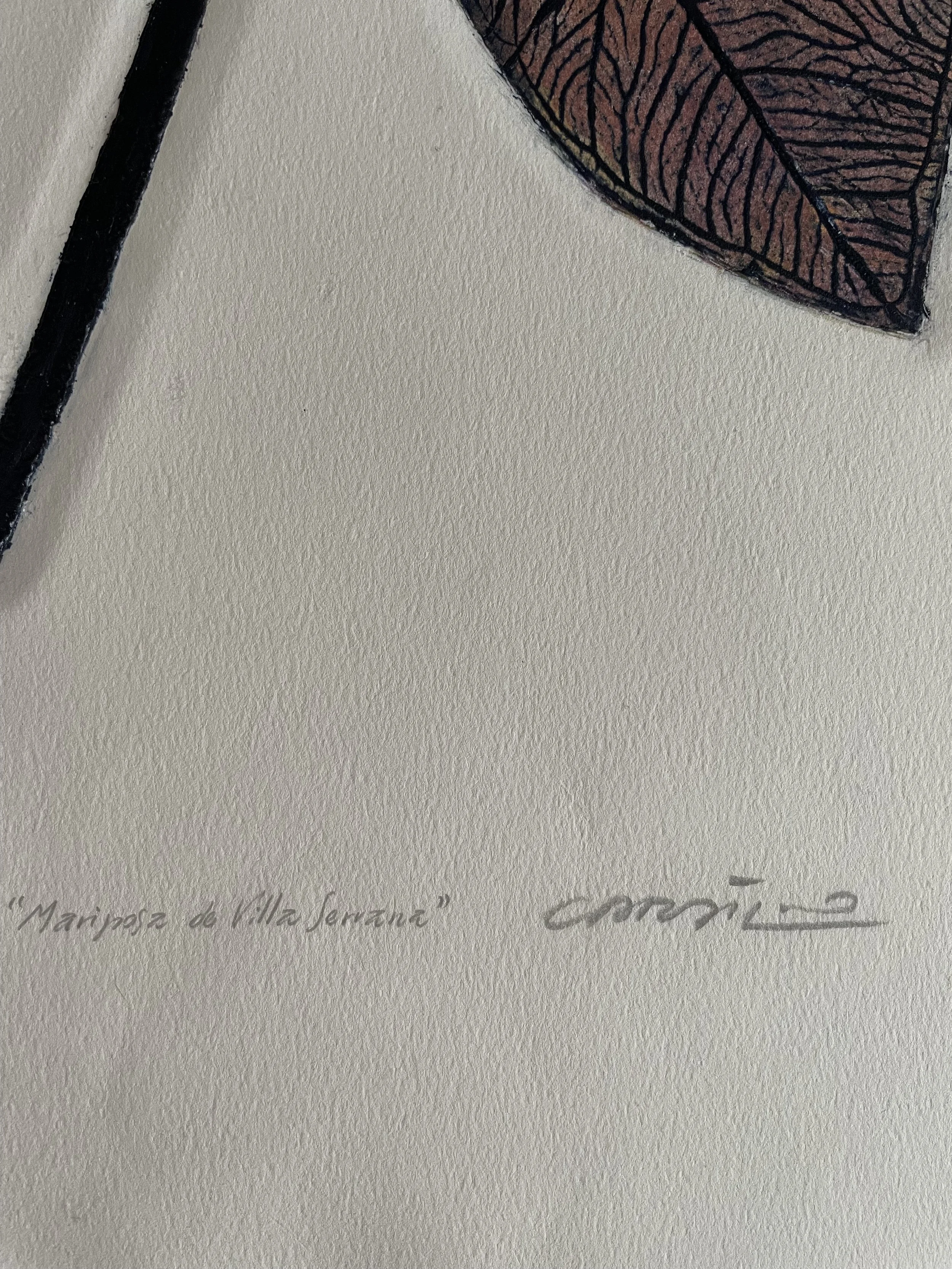
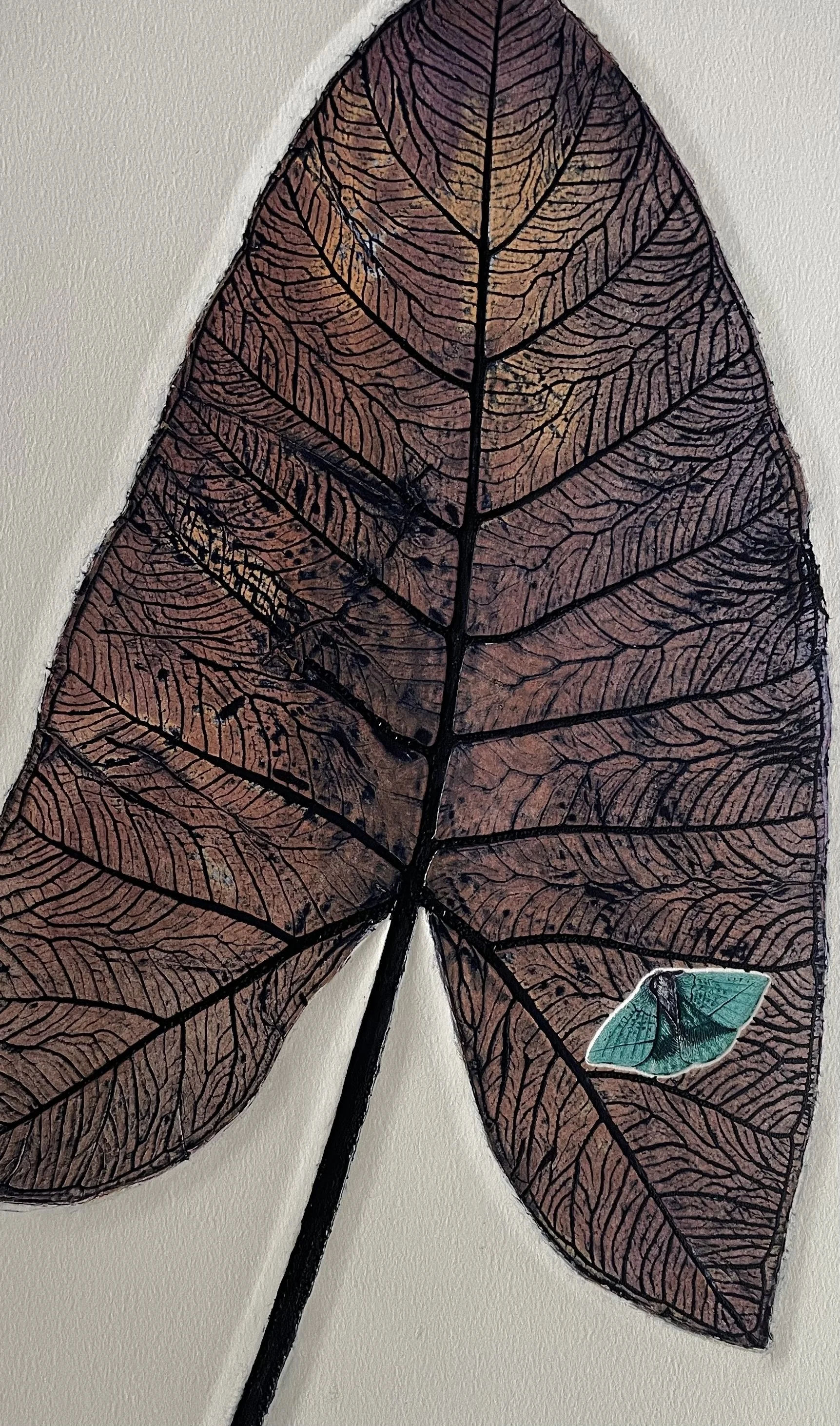
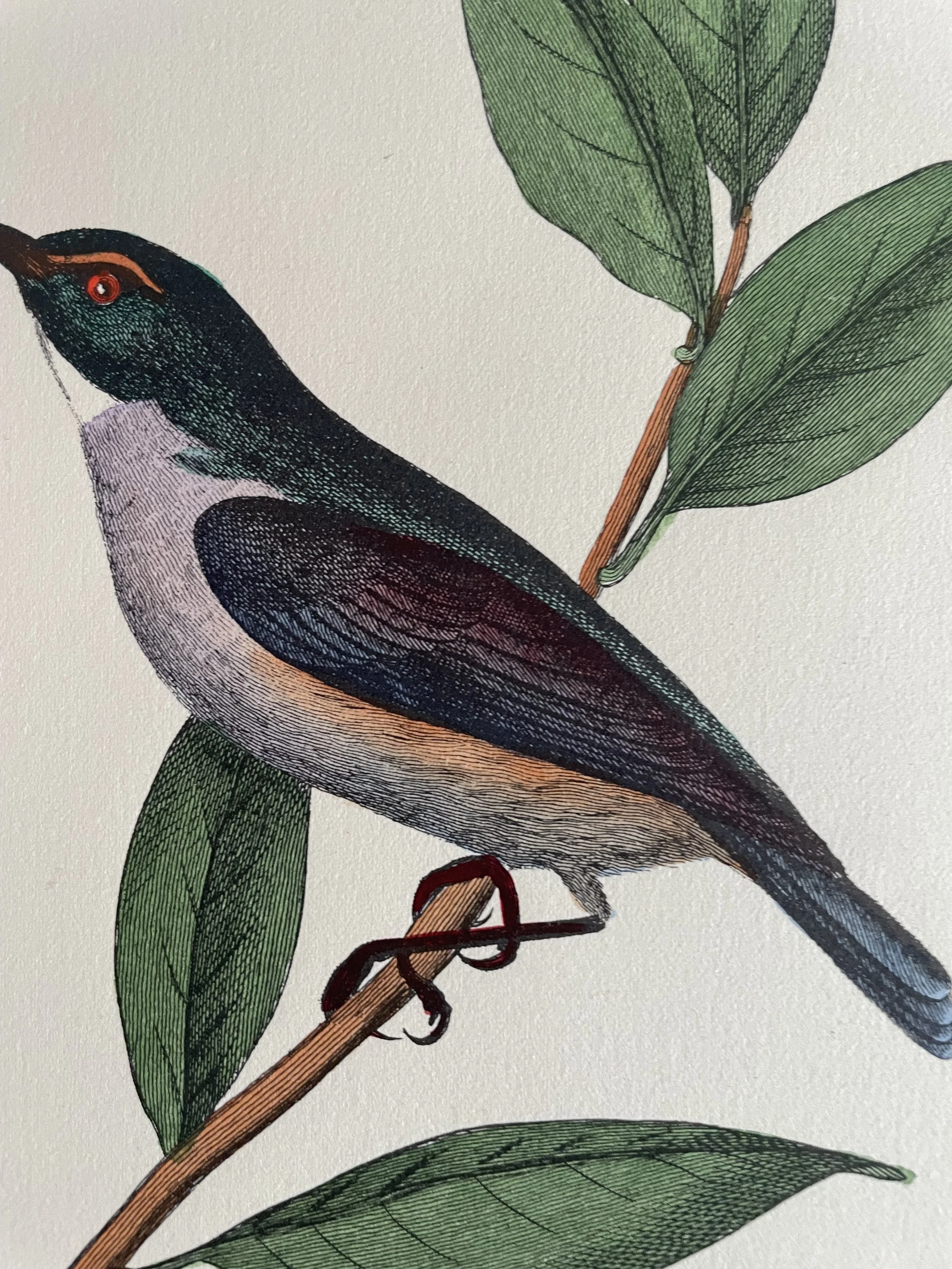
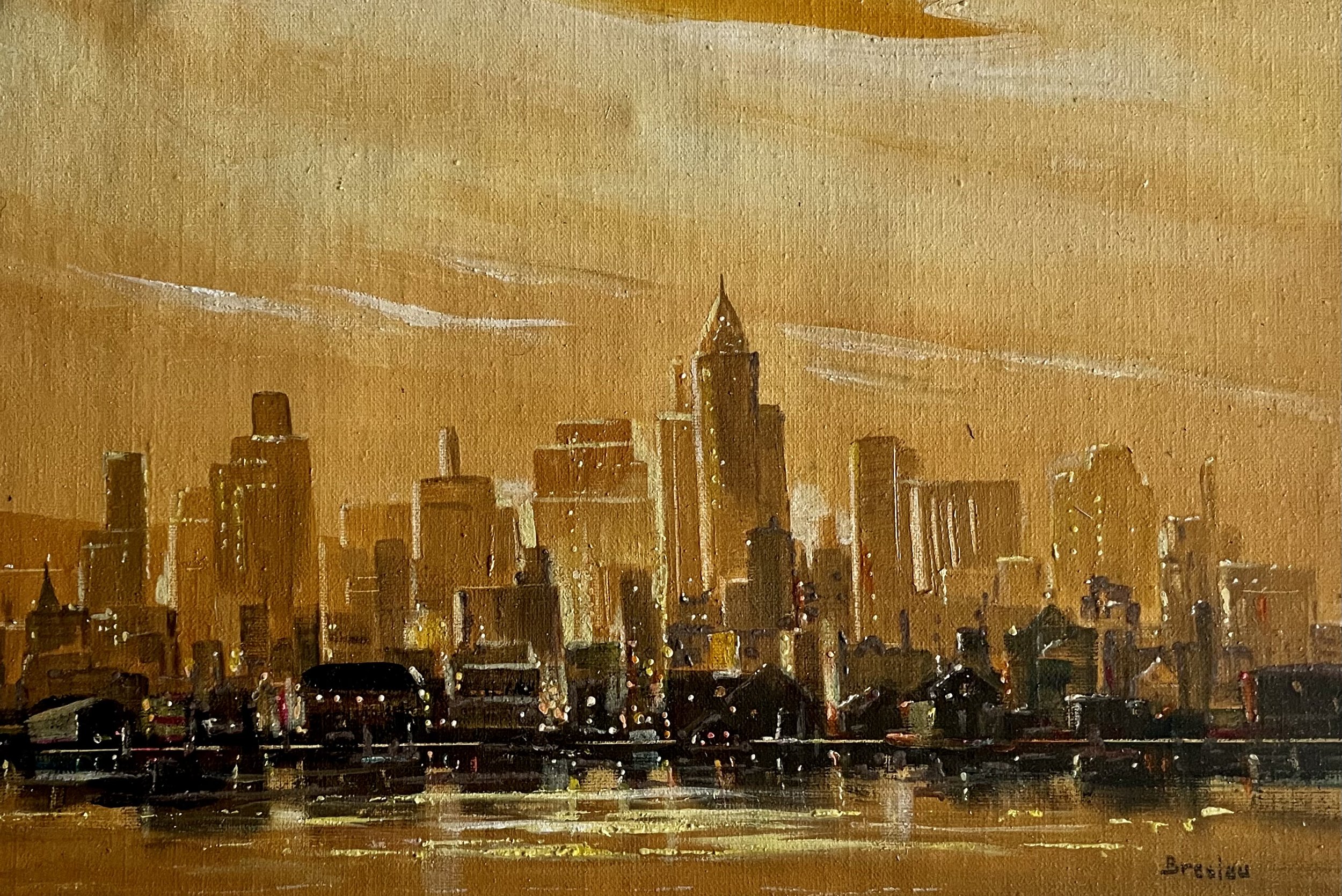
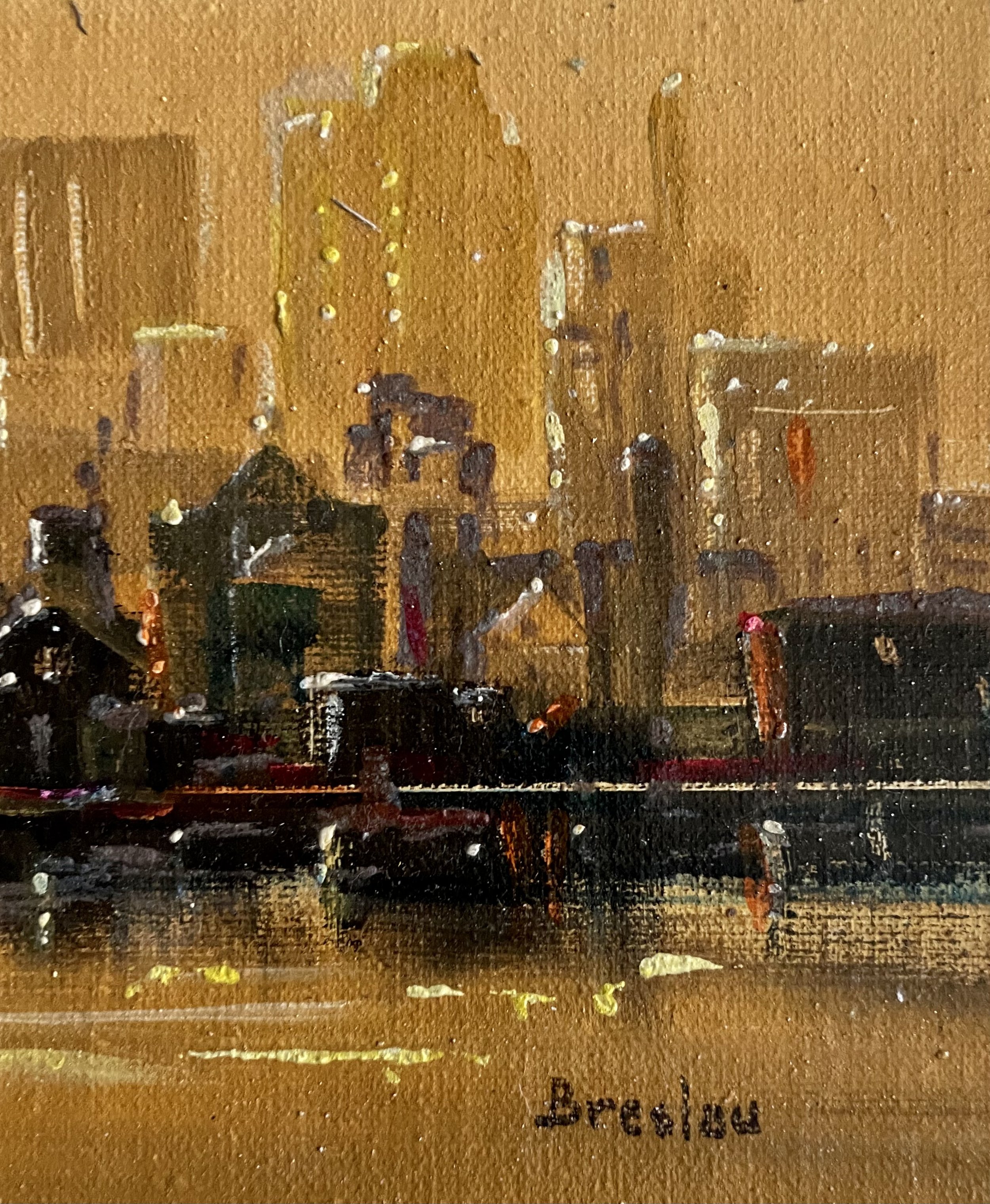
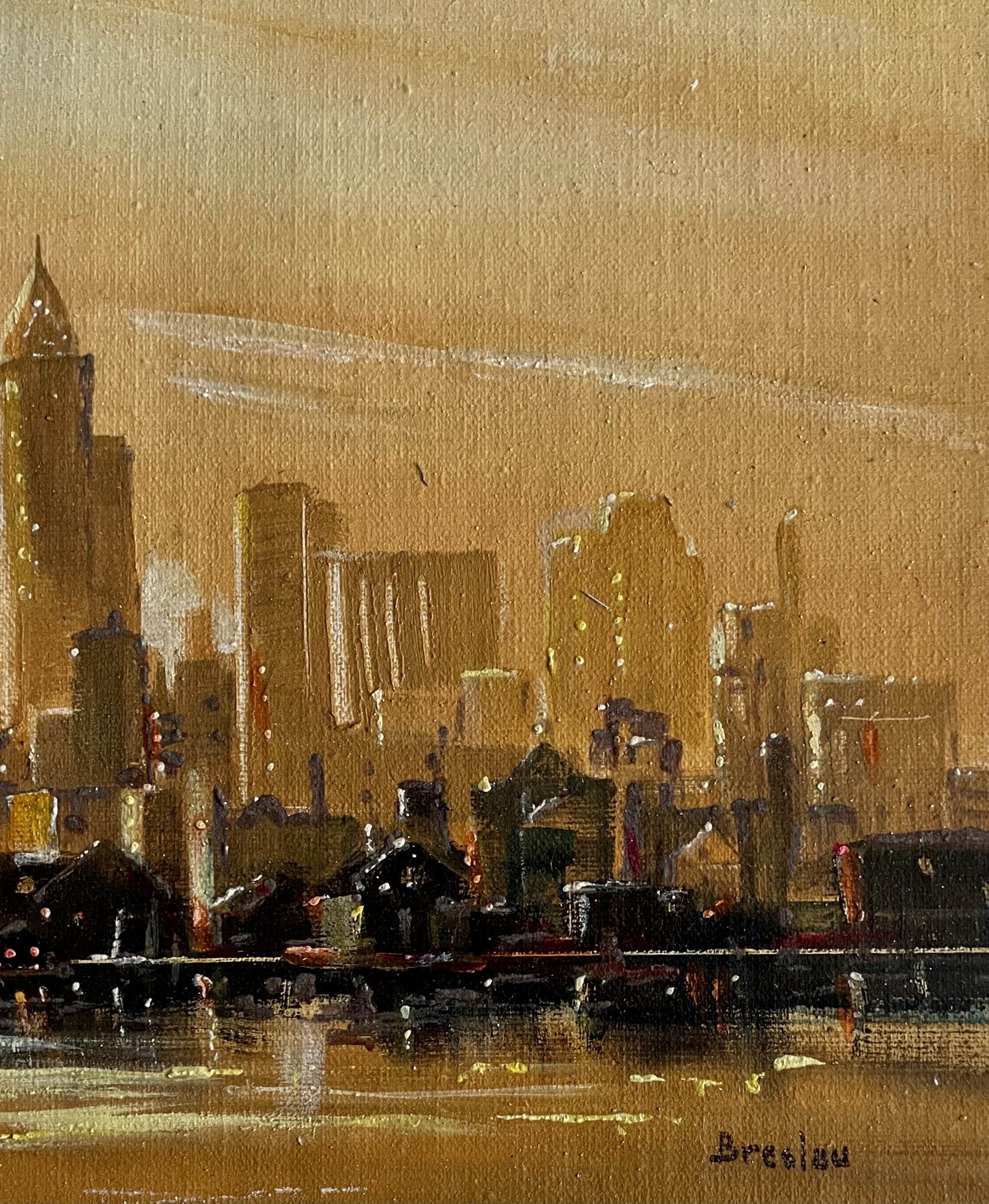
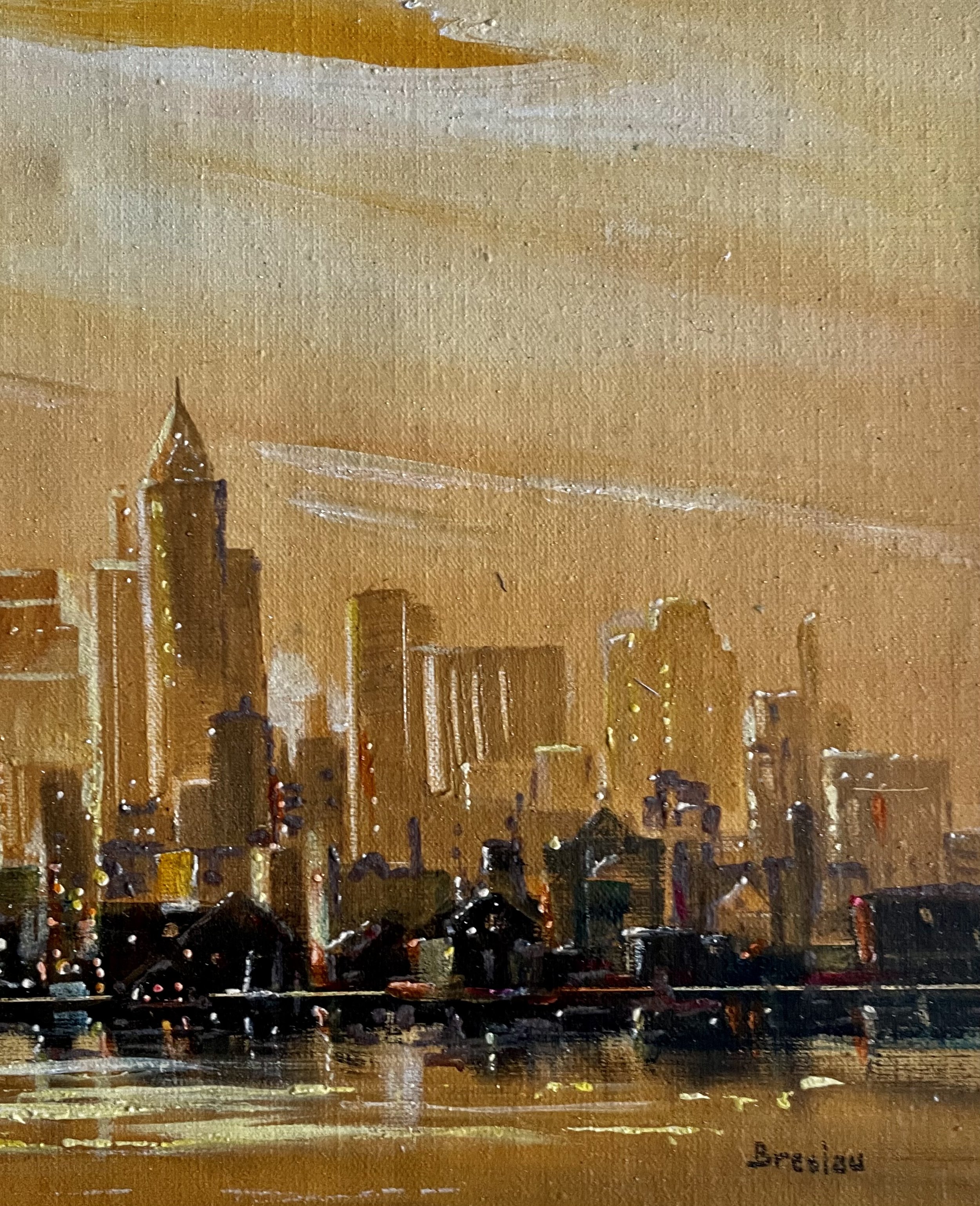
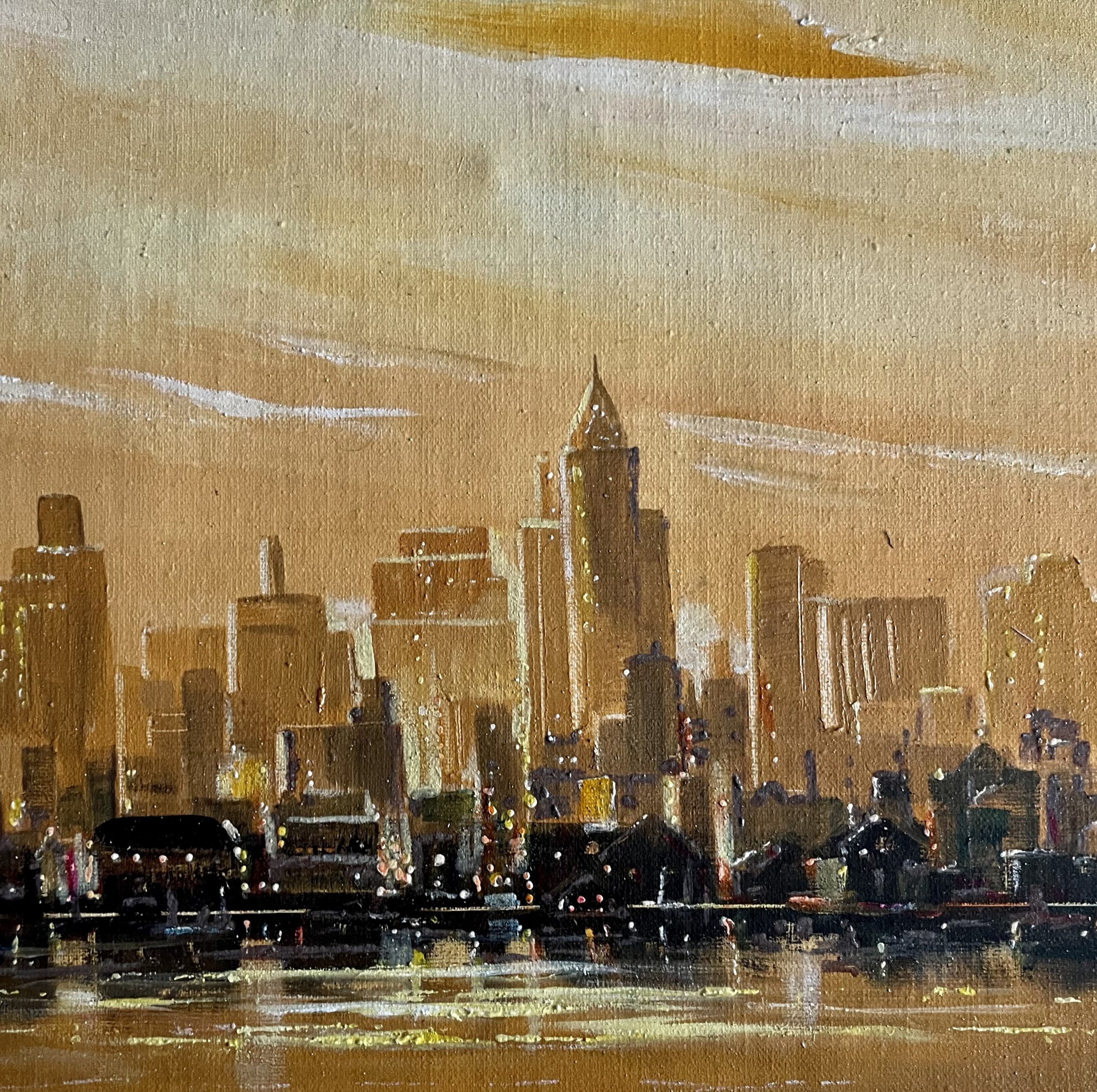
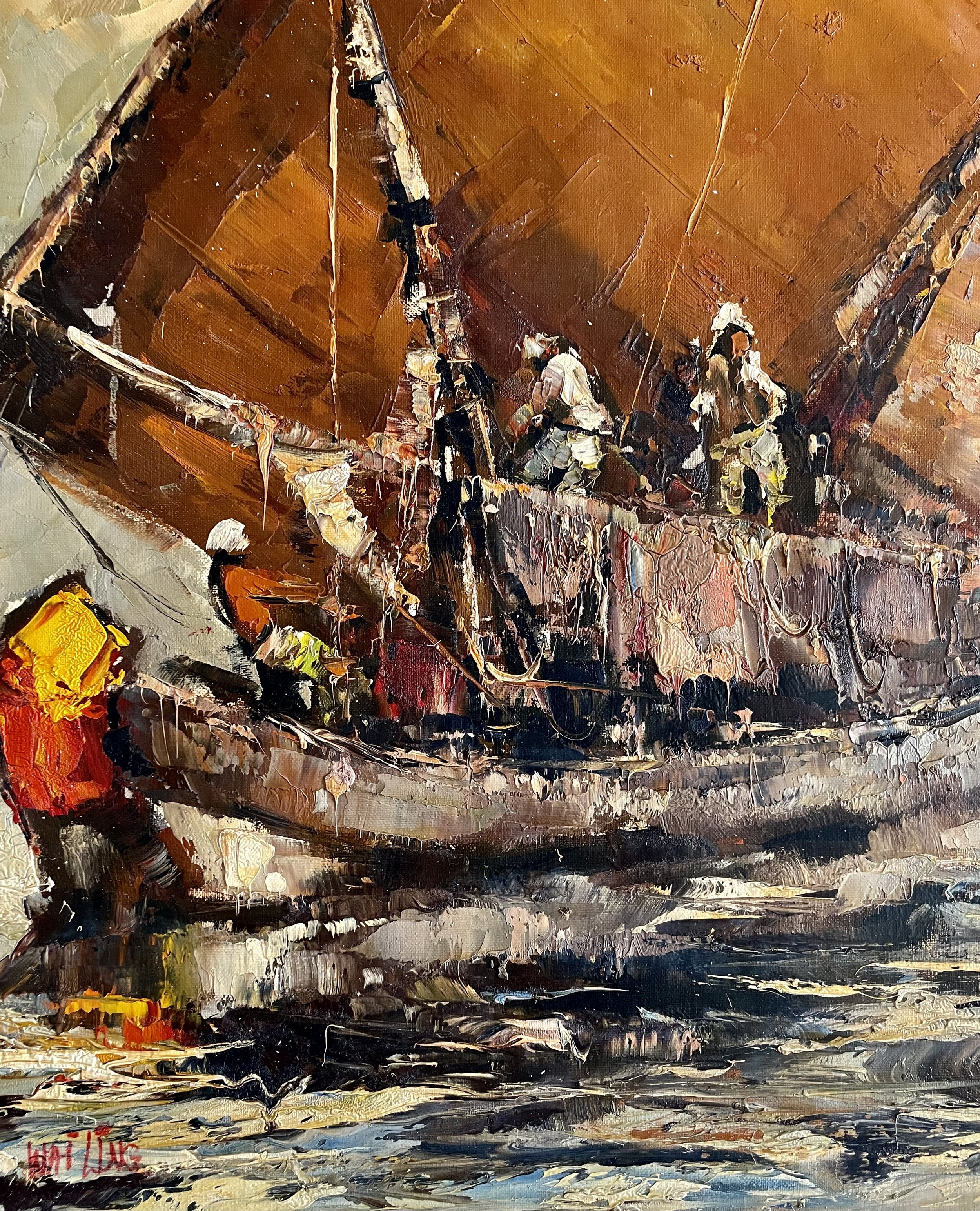
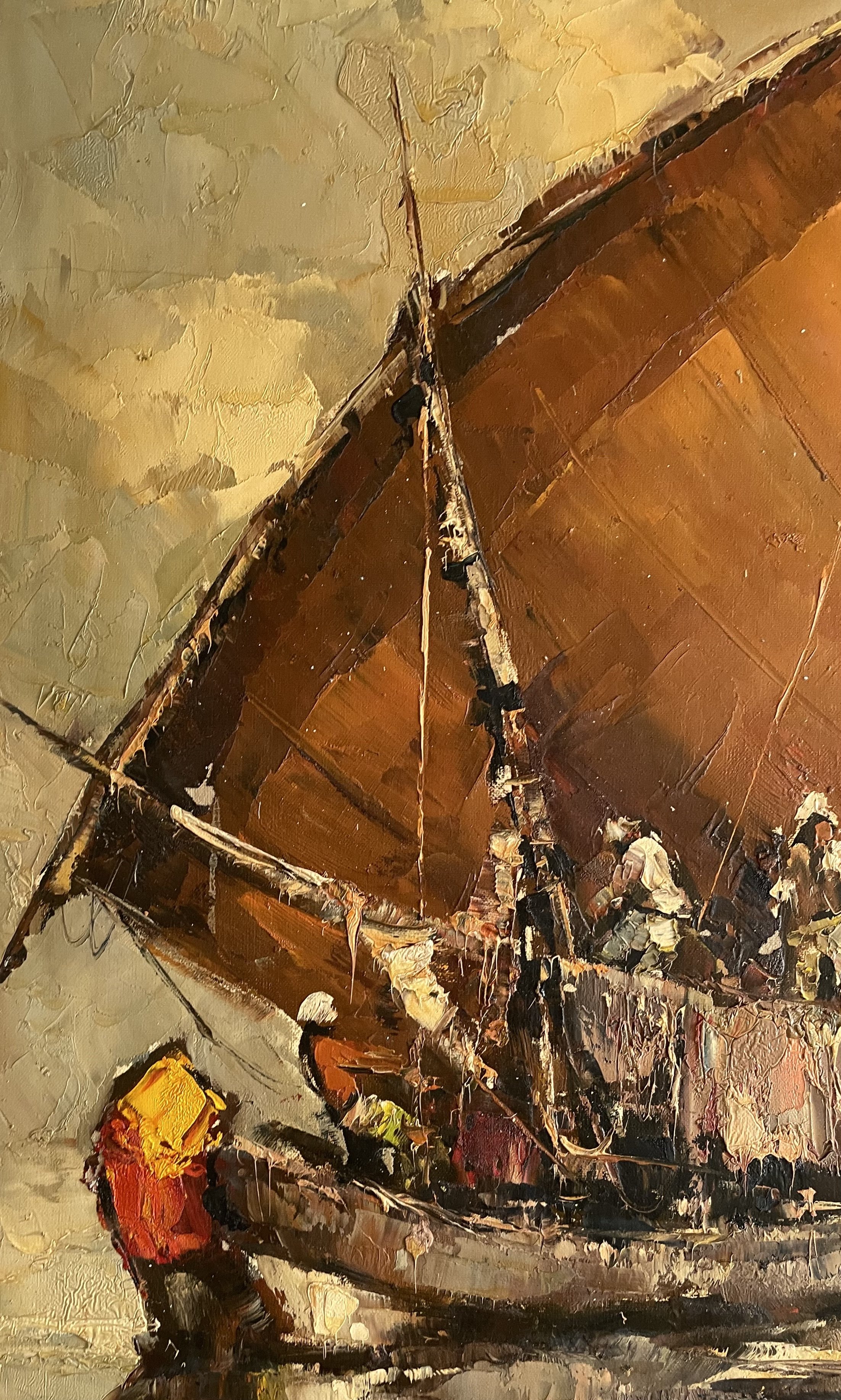
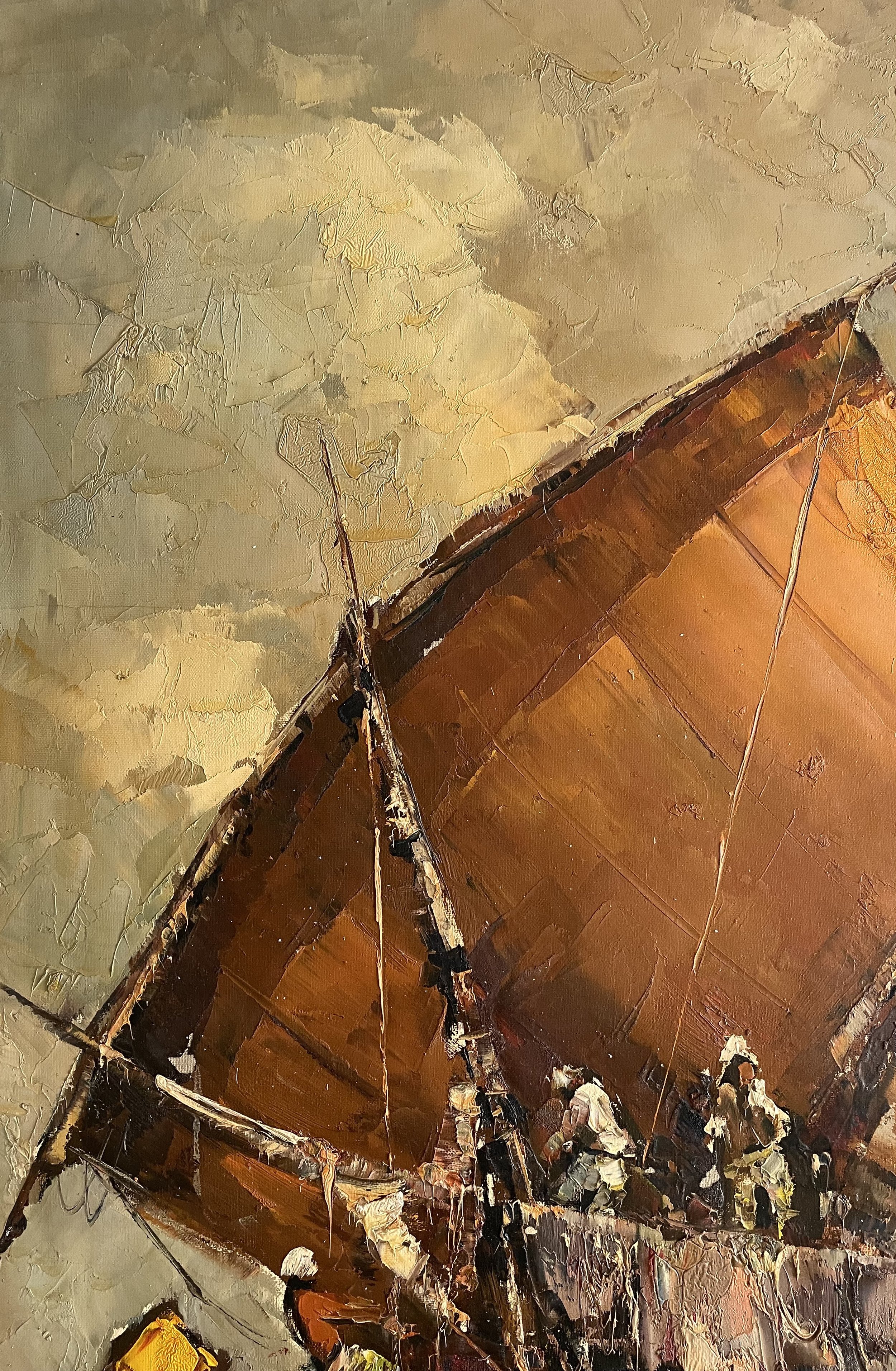
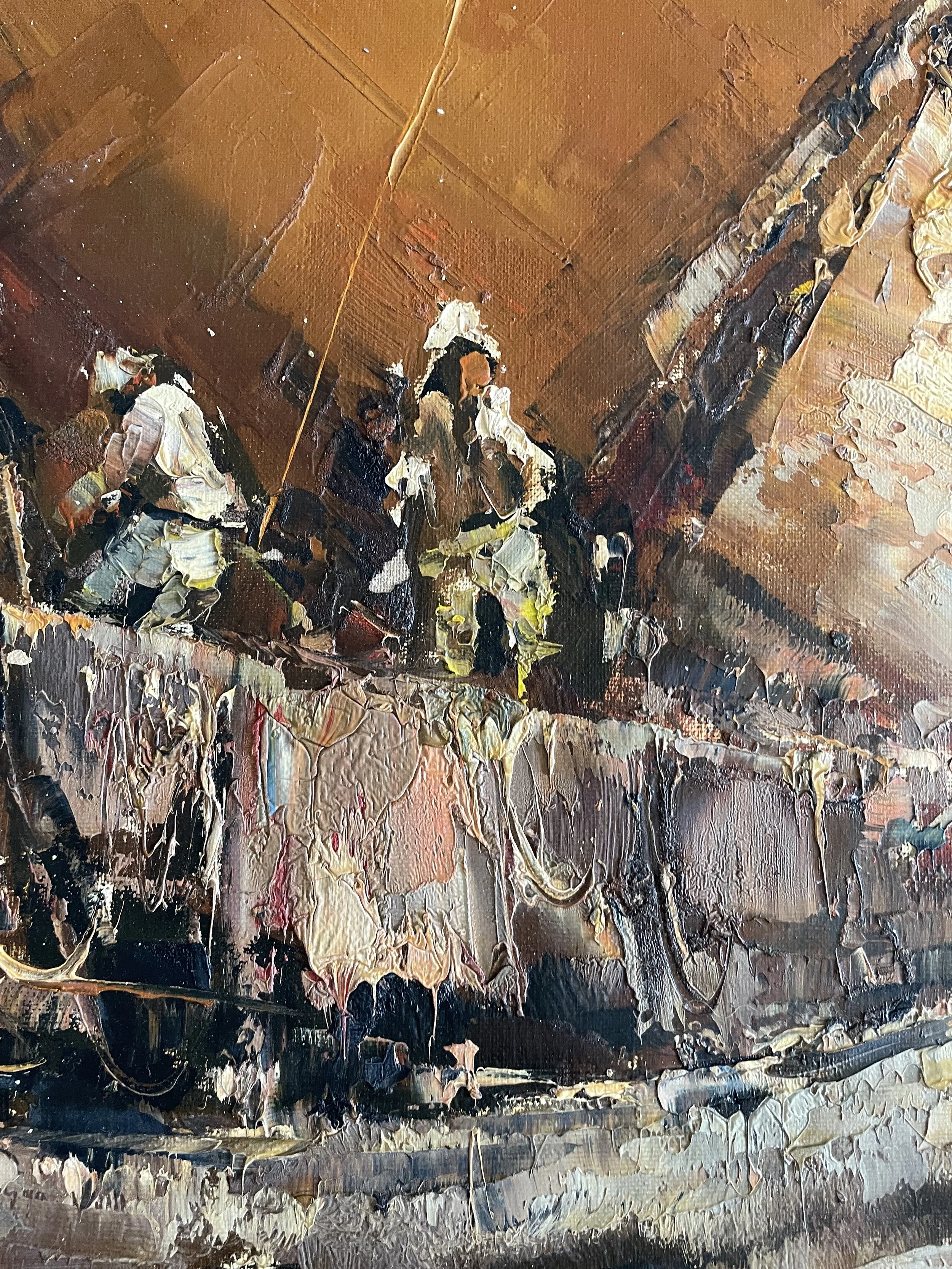
“Fleur au Lac,” Rimer Cardillo (Uruguayan, b.1944), c.1970s signed HC intaglio etching, 22×30 in, hand-pulled, numbered and pencil-signed.
“Fleur au Lac” is an exquisite 1970s intaglio etching by internationally acclaimed Uruguayan master printmaker Rimer Cardillo, celebrated for his poetic fusion of natural forms, ecological symbolism, and sophisticated printmaking techniques. Printed on a full 22×30 inch sheet and signed in pencil as H.C. (Hors de Commerce), this rare proof exhibits Cardillo’s hallmark sculptural embossing, layered aquatint surfaces, and organic textures that recall both botanical structures and archaeological fragments. Like many of Cardillo’s early works—now housed in MoMA, the Art Institute of Chicago, and the Bibliothèque nationale de France—this piece reflects his deep reverence for the natural world and the cross-cultural visual language he developed between Uruguay and Europe.
Description of the Artwork
“Fleur au Lac” is a quintessential example of Cardillo’s 1970s intaglio practice, a period during which he explored nature-as-memory, botanical symbolism, and the tactile possibilities of embossed print surfaces. The composition features a highly stylized water-lily flower emerging from an abstracted aquatic landscape. The surrounding leaf-like structures overlap and interlock in rhythmic patterns, producing a dynamic interplay of sharp edges, scalloped contours, and smooth organic planes.
Rendered in a muted palette of pinks, mauves, bronze browns, and iridescent purples, the surface gleams subtly as light strikes the plate tone—an effect created through Cardillo’s unique combination of engraving, aquatint, blind-embossing, and resin-based relief plates (a technique noted in studies of his engravings from the era).
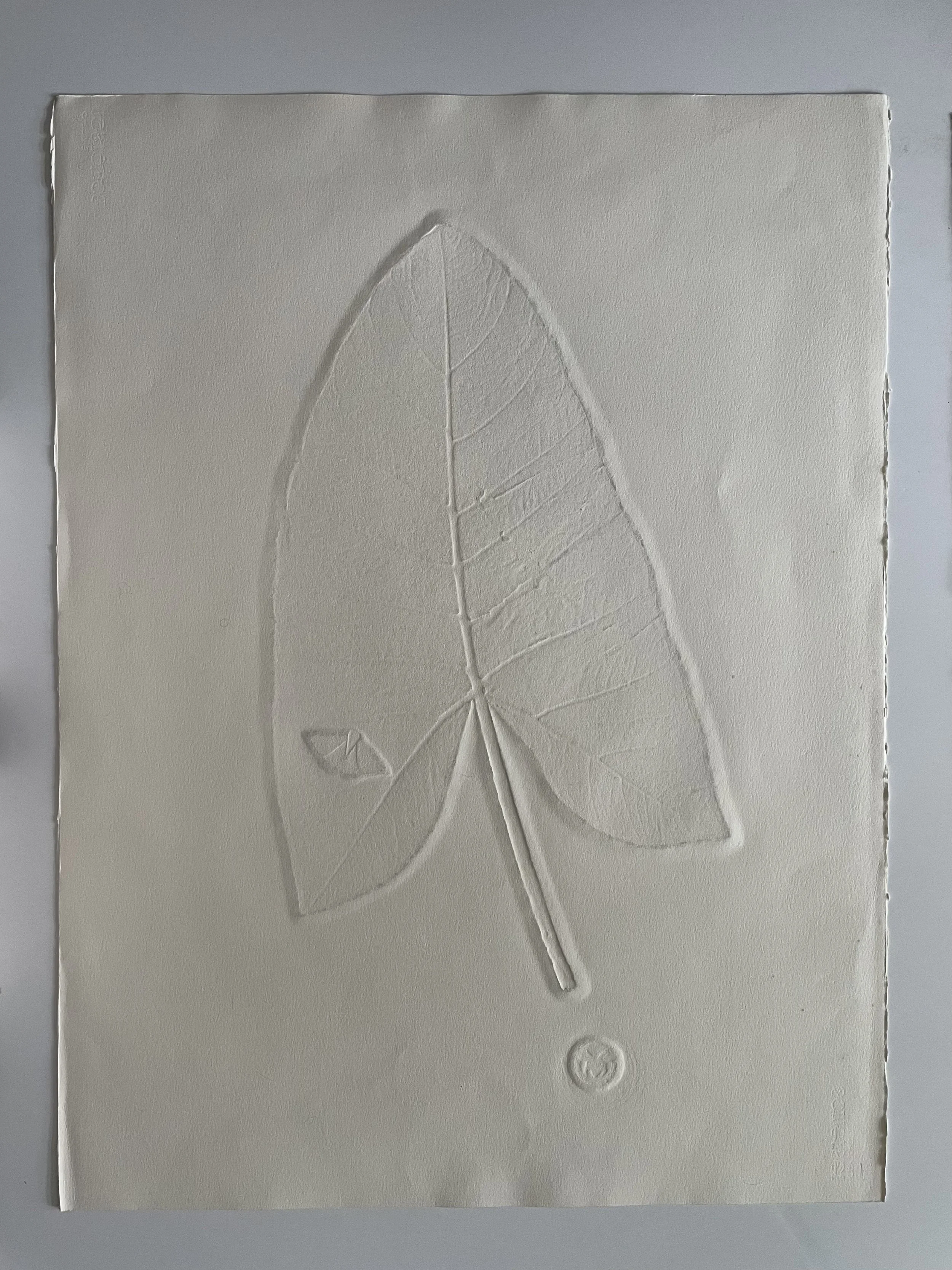
The work’s sculptural quality is unmistakable: layers of plate work create raised textures that catch shadows, giving the impression of a relief carving rather than a two-dimensional print. This fusion of botany, geology, and fossil-like imprinting is central to Cardillo’s artistic philosophy—each object becoming a trace, a memory, a preserved fragment of natural history.
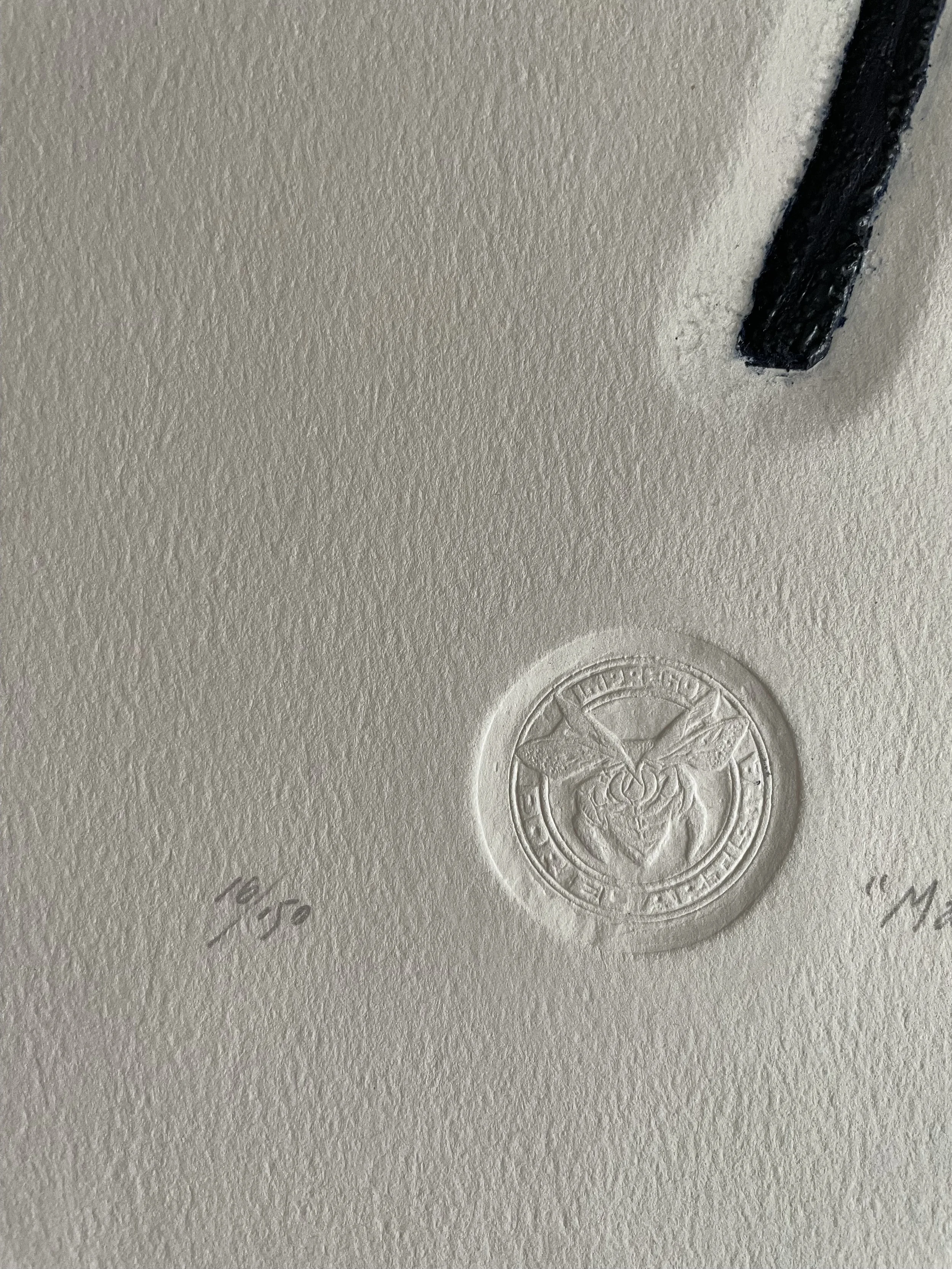
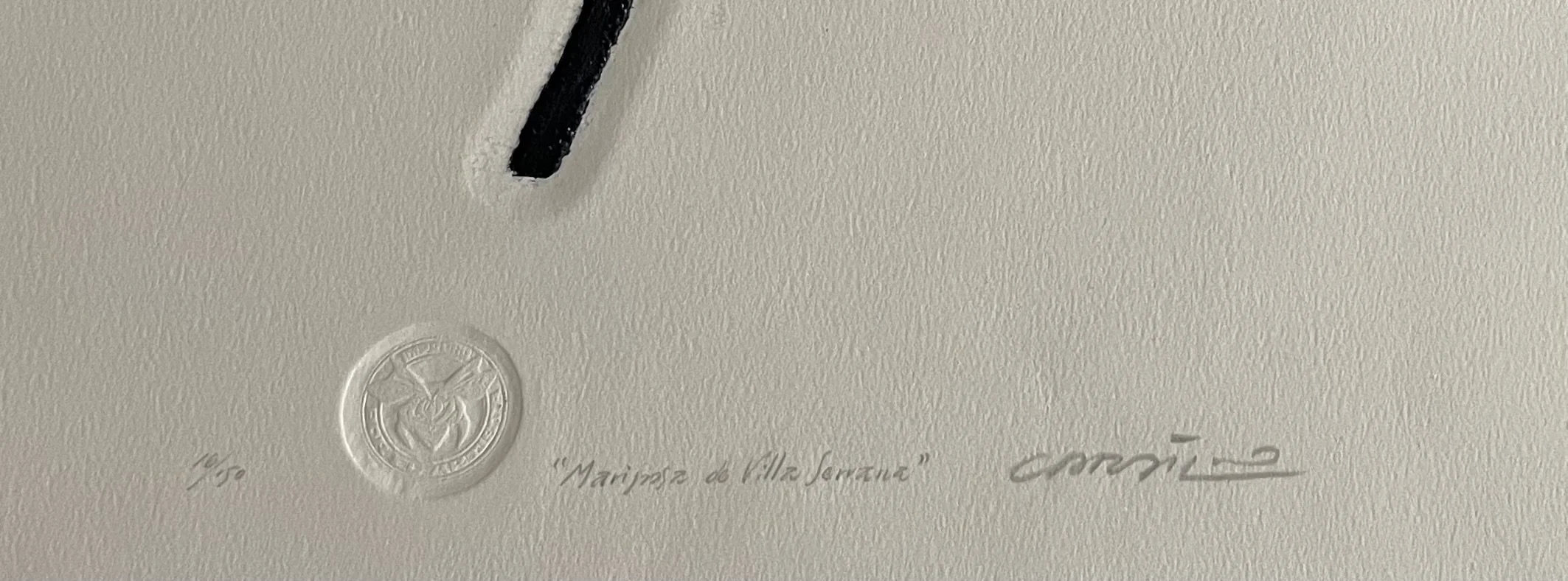
The print is hand-signed “Cardillo” at the lower right, titled “Fleur au Lac”, and marked H.C., indicating an artist’s proof outside the numbered commercial edition. This makes the piece inherently scarcer and particularly desirable among collectors.
Biography of Rimer Cardillo
Rimer Cardillo (born August 17, 1944, Montevideo, Uruguay) is one of the most influential Latin American printmakers of the past half-century, recognized internationally for his contributions to ecological art, contemporary printmaking, and cultural memory.
Early Education & European Training
Cardillo studied at Uruguay’s National School of Fine Arts, graduating in 1968. He then continued advanced printmaking and artistic research in East Germany from 1969–1971 at two of the most rigorous institutions of the period:
Weißensee School of Art & Architecture, Berlin
Leipzig School of Graphic Art, a world-renowned center for etching, engraving, and typographic arts
This formative period sharpened his technical mastery of intaglio, aquatint, embossing, relief engraving, mixed matrix printing, and conceptual frameworks rooted in archaeology, natural science, and European graphic traditions.
Return to Uruguay & Early Career
In the 1970s, Cardillo returned home and joined the Montevideo Engraving Club, becoming a central figure in advancing printmaking as an accessible and socially relevant medium. He taught workshops across Uruguay, influencing an entire generation of artists including Gladys Afamado, Margaret Whyte, and Marco Maggi.
Move to the United States
In 1979, Cardillo resettled in the U.S. and later became Professor of Printmaking at SUNY New Paltz, shaping one of the strongest printmaking programs in the country. His commitment to teaching continues to shape contemporary print practices internationally.
Themes & Artistic Practice
Cardillo’s work consistently bridges nature, archaeology, and cultural memory. His prints and sculptures evoke:
Pre-Hispanic burial sites
Natural “fossils” of leaves, seeds, and insects
Botanical and zoological traces as relics of ecological change
Layers of history embedded in landscapes
His art often functions as a metaphorical excavation, drawing connections between ecological fragility and the remnants of ancestral cultures. His signature visual language is marked by large embossed forms, intricately worked surfaces, and hybrid materials that challenge the boundaries of printmaking.
Major Exhibitions & Achievements
Represented Uruguay at the Venice Biennale (2001)
Awarded the Guggenheim Fellowship (1997)
Awarded Uruguay’s prestigious Figari Award (2002)
Retrospectives at:
Exhibited internationally—including Tate Modern (invited lecture), the Kiscell Museum (Budapest), Art Museum of the Americas (Washington, D.C.), and many more.
Collections
Cardillo’s works are held by major institutions worldwide:
Museum of Modern Art (MoMA), New York
Art Institute of Chicago
Bibliothèque nationale de France
Cincinnati Art Museum
Museo de Bellas Artes de Caracas
National Museum of Visual Arts, Montevideo
Allen Memorial Art Museum (Oberlin College)
Art Museum of the Americas
Taubman Museum of Art (recent acquisitions)
He is universally regarded as a master printmaker whose technical innovations and ecological consciousness profoundly shaped 20th- and 21st-century Latin American art.
Rimer Cardillo (Uruguayan, b.1944)
Fleur au Lac, c.1970s
Intaglio etching with embossing on paper
Sheet size: 22 × 30 inches
Signed “Cardillo,” titled, and marked H.C. (Hors Commerce)
Condition: Excellent, never framed
Provenance: Mitch Morse Gallery, NYC → Artfind Gallery, Washington, DC
Certificate of Value & Authentication
Artist: Rimer Cardillo
Title: Fleur au Lac
Date: Circa 1970s
Medium: Intaglio etching with embossing
Paper Size: 22 × 30 in
Edition: H.C. artist’s proof
Signature: Pencil-signed at lower right; titled and editioned by hand
Authenticity: Confirmed via signature, technique, plate characteristics, and proven documented cataloguing of Cardillo’s embossed nature-based etchings from the 1970s.
Provenance:
Artist
Mitch Morse Gallery, New York
Artfind Gallery, Washington, DC (current owner)
Provenance Chain
Rimer Cardillo, Montevideo / New York — artist
Mitch Morse Gallery, NYC — acquired directly from the artist
Artfind Gallery, Washington, DC — current owner
“Fleur au Lac,” Rimer Cardillo (Uruguayan, b.1944), c.1970s signed HC intaglio etching, 22×30 in, hand-pulled, numbered and pencil-signed.
“Fleur au Lac” is an exquisite 1970s intaglio etching by internationally acclaimed Uruguayan master printmaker Rimer Cardillo, celebrated for his poetic fusion of natural forms, ecological symbolism, and sophisticated printmaking techniques. Printed on a full 22×30 inch sheet and signed in pencil as H.C. (Hors de Commerce), this rare proof exhibits Cardillo’s hallmark sculptural embossing, layered aquatint surfaces, and organic textures that recall both botanical structures and archaeological fragments. Like many of Cardillo’s early works—now housed in MoMA, the Art Institute of Chicago, and the Bibliothèque nationale de France—this piece reflects his deep reverence for the natural world and the cross-cultural visual language he developed between Uruguay and Europe.
Description of the Artwork
“Fleur au Lac” is a quintessential example of Cardillo’s 1970s intaglio practice, a period during which he explored nature-as-memory, botanical symbolism, and the tactile possibilities of embossed print surfaces. The composition features a highly stylized water-lily flower emerging from an abstracted aquatic landscape. The surrounding leaf-like structures overlap and interlock in rhythmic patterns, producing a dynamic interplay of sharp edges, scalloped contours, and smooth organic planes.
Rendered in a muted palette of pinks, mauves, bronze browns, and iridescent purples, the surface gleams subtly as light strikes the plate tone—an effect created through Cardillo’s unique combination of engraving, aquatint, blind-embossing, and resin-based relief plates (a technique noted in studies of his engravings from the era).
The work’s sculptural quality is unmistakable: layers of plate work create raised textures that catch shadows, giving the impression of a relief carving rather than a two-dimensional print. This fusion of botany, geology, and fossil-like imprinting is central to Cardillo’s artistic philosophy—each object becoming a trace, a memory, a preserved fragment of natural history.
The print is hand-signed “Cardillo” at the lower right, titled “Fleur au Lac”, and marked H.C., indicating an artist’s proof outside the numbered commercial edition. This makes the piece inherently scarcer and particularly desirable among collectors.
Biography of Rimer Cardillo
Rimer Cardillo (born August 17, 1944, Montevideo, Uruguay) is one of the most influential Latin American printmakers of the past half-century, recognized internationally for his contributions to ecological art, contemporary printmaking, and cultural memory.
Early Education & European Training
Cardillo studied at Uruguay’s National School of Fine Arts, graduating in 1968. He then continued advanced printmaking and artistic research in East Germany from 1969–1971 at two of the most rigorous institutions of the period:
Weißensee School of Art & Architecture, Berlin
Leipzig School of Graphic Art, a world-renowned center for etching, engraving, and typographic arts
This formative period sharpened his technical mastery of intaglio, aquatint, embossing, relief engraving, mixed matrix printing, and conceptual frameworks rooted in archaeology, natural science, and European graphic traditions.
Return to Uruguay & Early Career
In the 1970s, Cardillo returned home and joined the Montevideo Engraving Club, becoming a central figure in advancing printmaking as an accessible and socially relevant medium. He taught workshops across Uruguay, influencing an entire generation of artists including Gladys Afamado, Margaret Whyte, and Marco Maggi.
Move to the United States
In 1979, Cardillo resettled in the U.S. and later became Professor of Printmaking at SUNY New Paltz, shaping one of the strongest printmaking programs in the country. His commitment to teaching continues to shape contemporary print practices internationally.
Themes & Artistic Practice
Cardillo’s work consistently bridges nature, archaeology, and cultural memory. His prints and sculptures evoke:
Pre-Hispanic burial sites
Natural “fossils” of leaves, seeds, and insects
Botanical and zoological traces as relics of ecological change
Layers of history embedded in landscapes
His art often functions as a metaphorical excavation, drawing connections between ecological fragility and the remnants of ancestral cultures. His signature visual language is marked by large embossed forms, intricately worked surfaces, and hybrid materials that challenge the boundaries of printmaking.
Major Exhibitions & Achievements
Represented Uruguay at the Venice Biennale (2001)
Awarded the Guggenheim Fellowship (1997)
Awarded Uruguay’s prestigious Figari Award (2002)
Retrospectives at:
Exhibited internationally—including Tate Modern (invited lecture), the Kiscell Museum (Budapest), Art Museum of the Americas (Washington, D.C.), and many more.
Collections
Cardillo’s works are held by major institutions worldwide:
Museum of Modern Art (MoMA), New York
Art Institute of Chicago
Bibliothèque nationale de France
Cincinnati Art Museum
Museo de Bellas Artes de Caracas
National Museum of Visual Arts, Montevideo
Allen Memorial Art Museum (Oberlin College)
Art Museum of the Americas
Taubman Museum of Art (recent acquisitions)
He is universally regarded as a master printmaker whose technical innovations and ecological consciousness profoundly shaped 20th- and 21st-century Latin American art.
Rimer Cardillo (Uruguayan, b.1944)
Fleur au Lac, c.1970s
Intaglio etching with embossing on paper
Sheet size: 22 × 30 inches
Signed “Cardillo,” titled, and marked H.C. (Hors Commerce)
Condition: Excellent, never framed
Provenance: Mitch Morse Gallery, NYC → Artfind Gallery, Washington, DC
Certificate of Value & Authentication
Artist: Rimer Cardillo
Title: Fleur au Lac
Date: Circa 1970s
Medium: Intaglio etching with embossing
Paper Size: 22 × 30 in
Edition: H.C. artist’s proof
Signature: Pencil-signed at lower right; titled and editioned by hand
Authenticity: Confirmed via signature, technique, plate characteristics, and proven documented cataloguing of Cardillo’s embossed nature-based etchings from the 1970s.
Provenance:
Artist
Mitch Morse Gallery, New York
Artfind Gallery, Washington, DC (current owner)
Provenance Chain
Rimer Cardillo, Montevideo / New York — artist
Mitch Morse Gallery, NYC — acquired directly from the artist
Artfind Gallery, Washington, DC — current owner
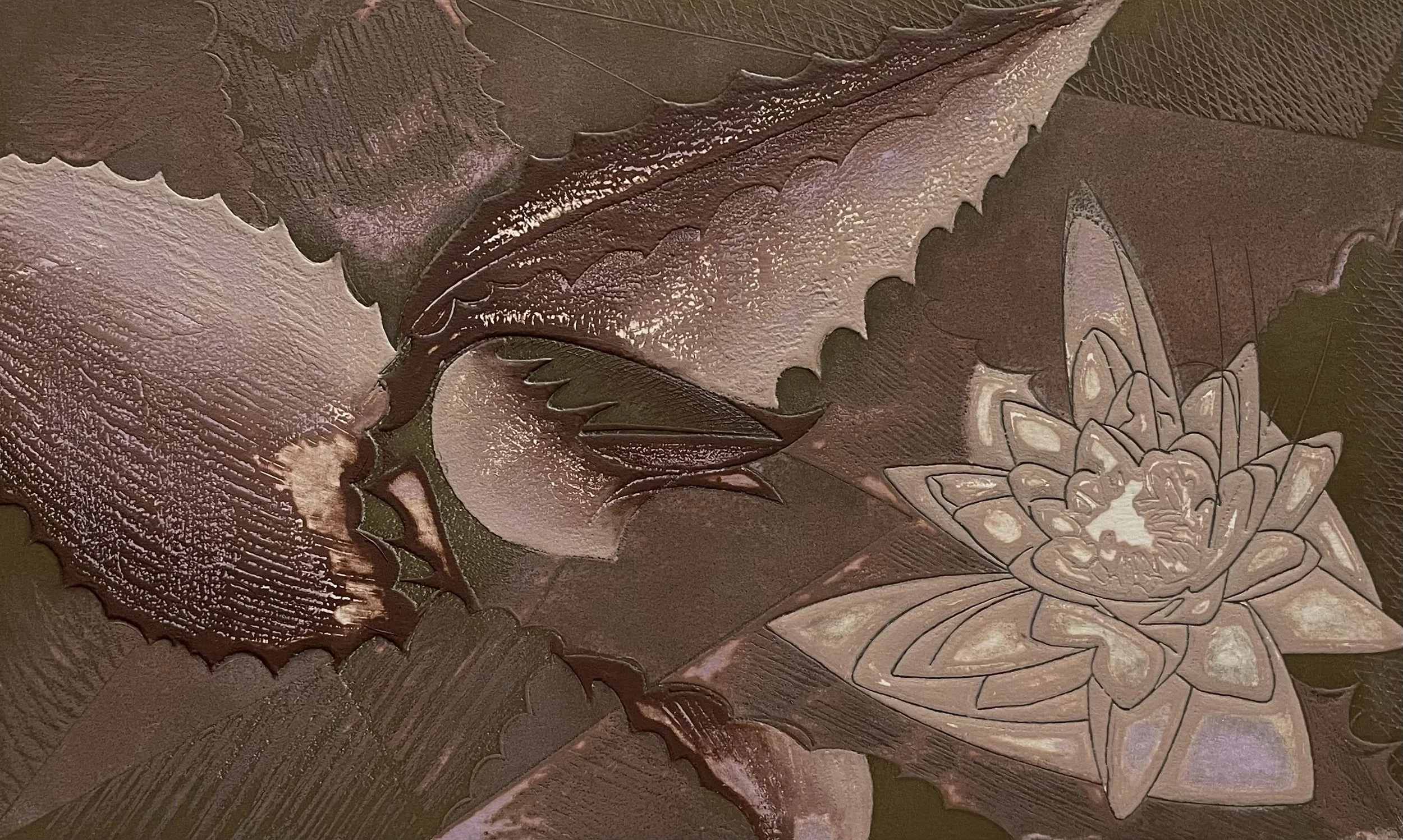 Image 1 of 6
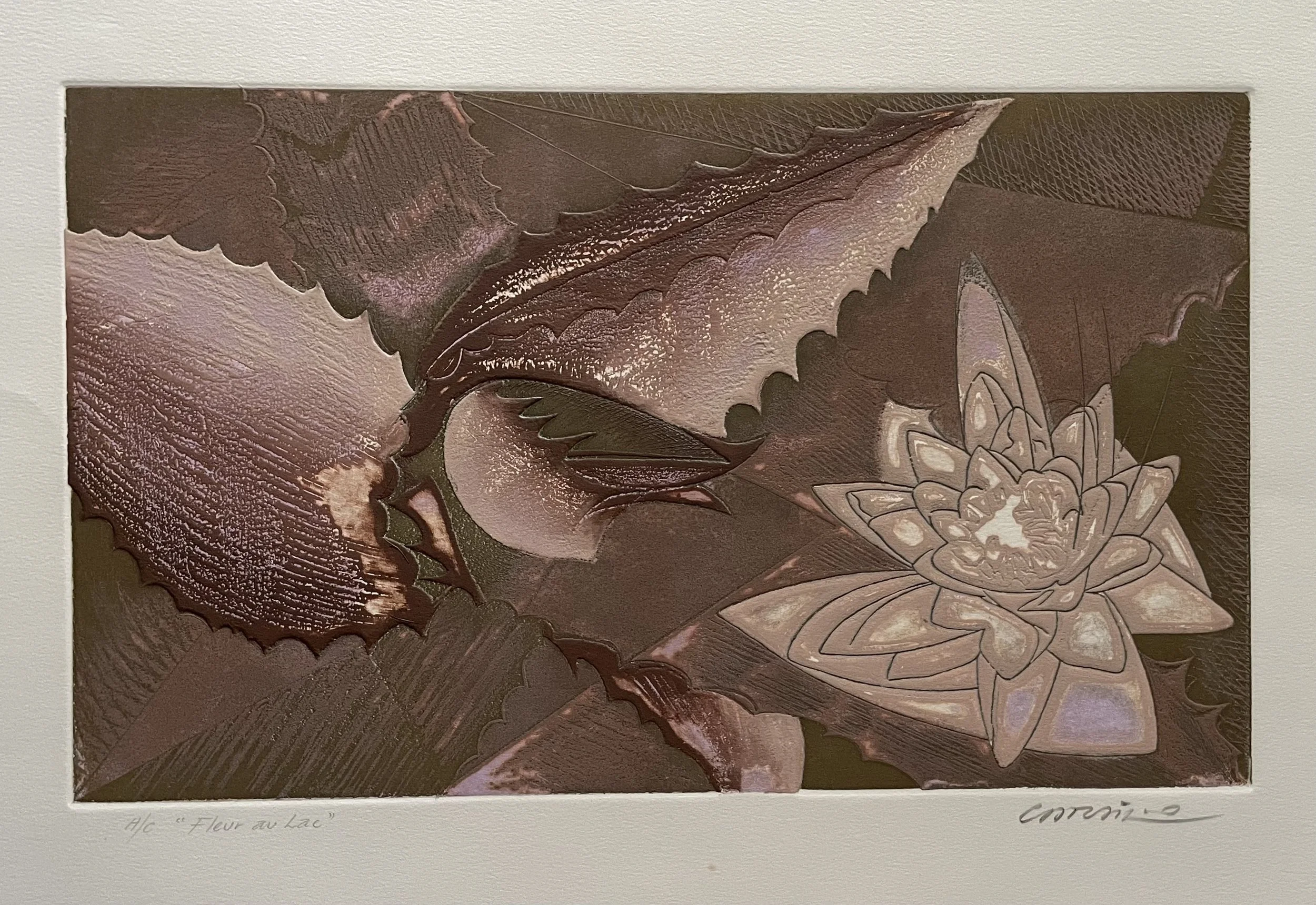 Image 2 of 6
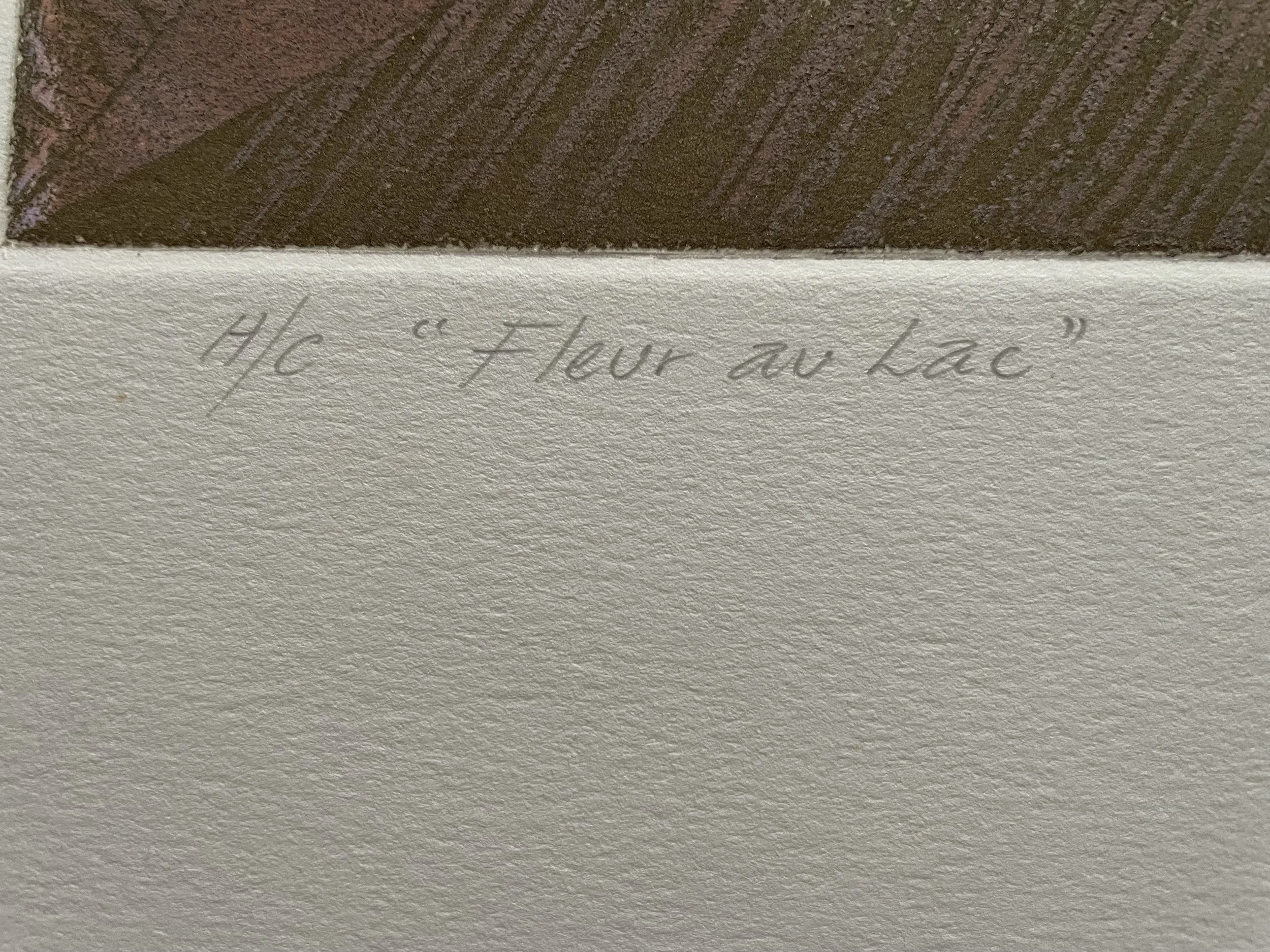 Image 3 of 6
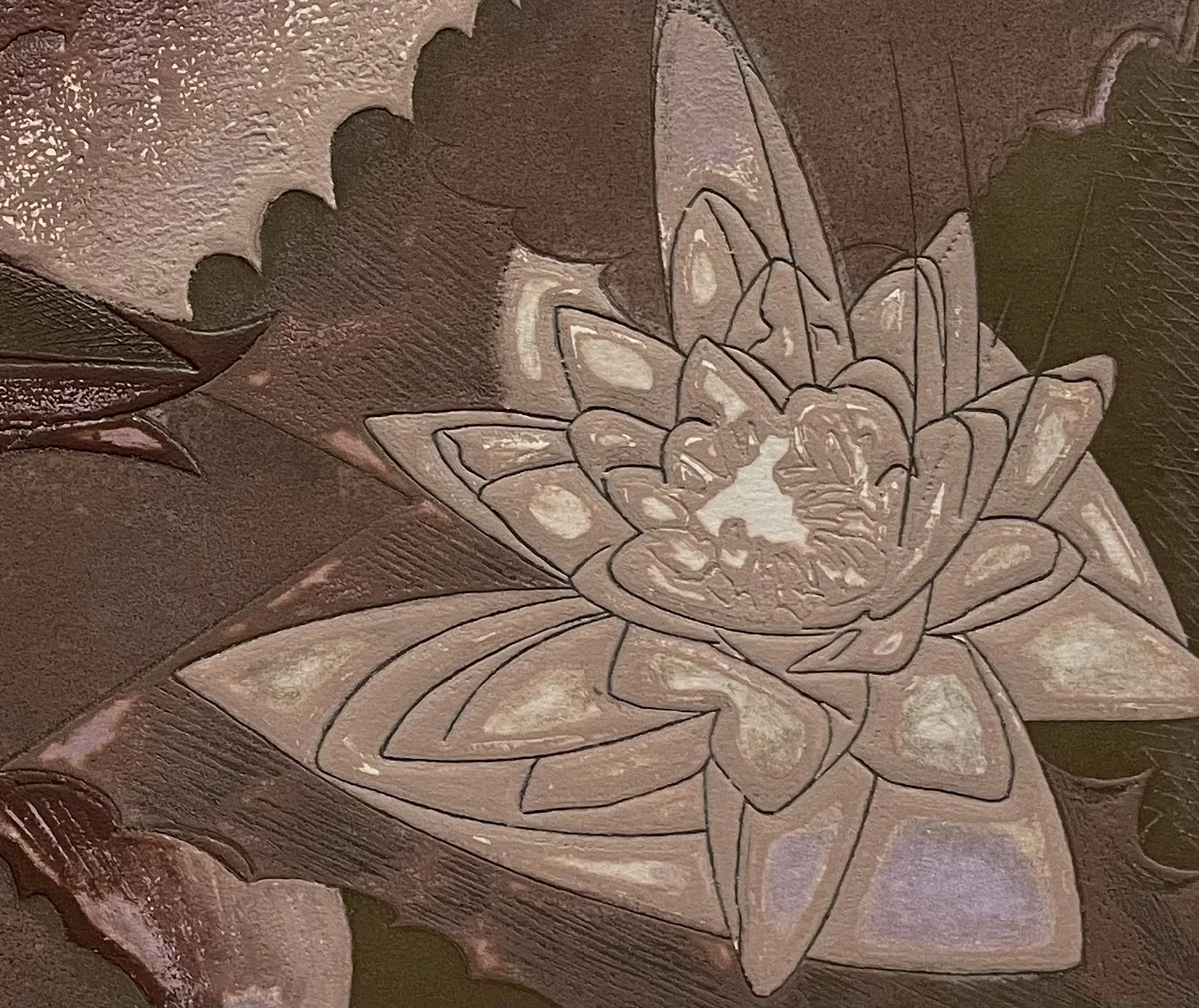 Image 4 of 6
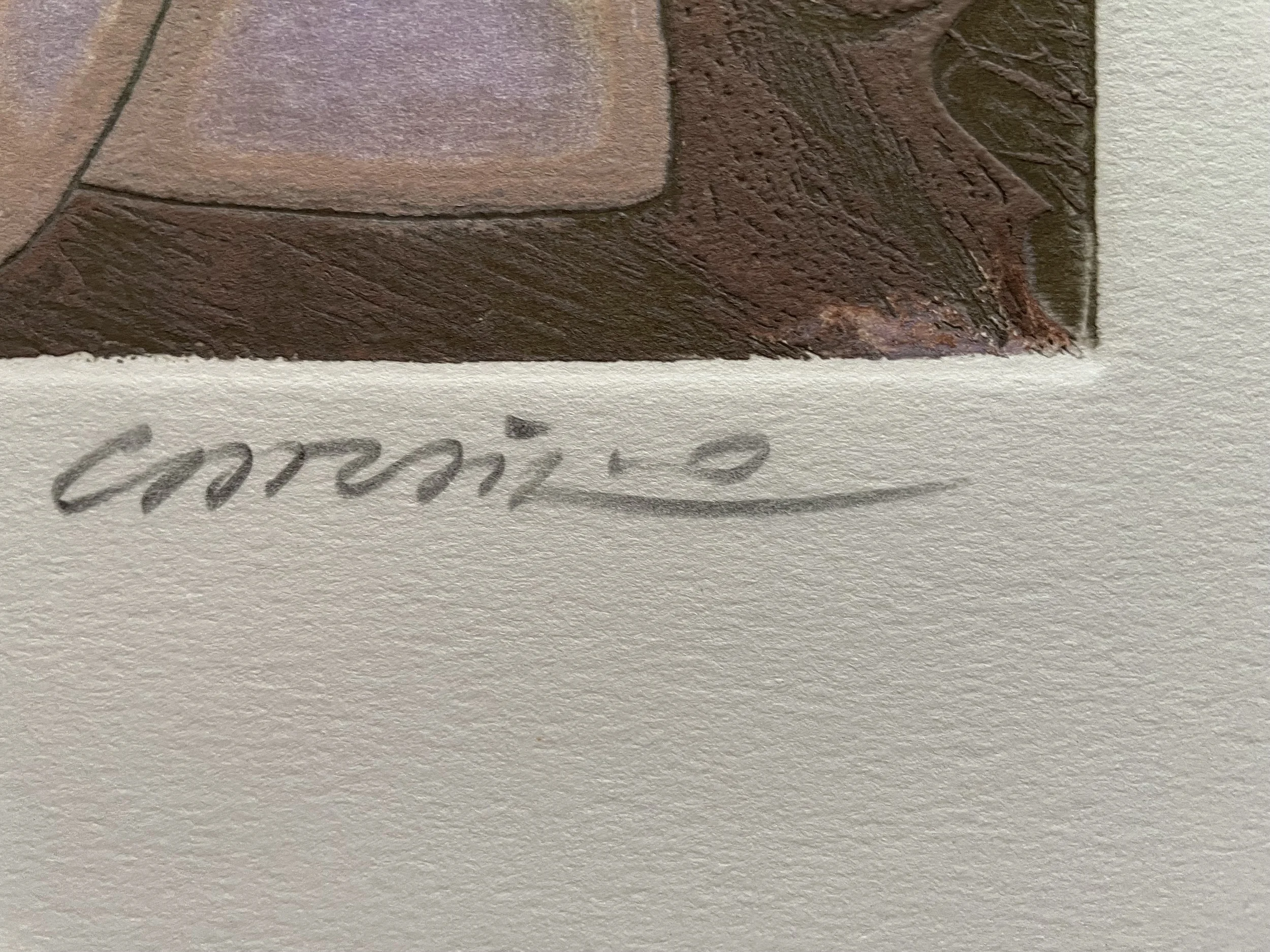 Image 5 of 6
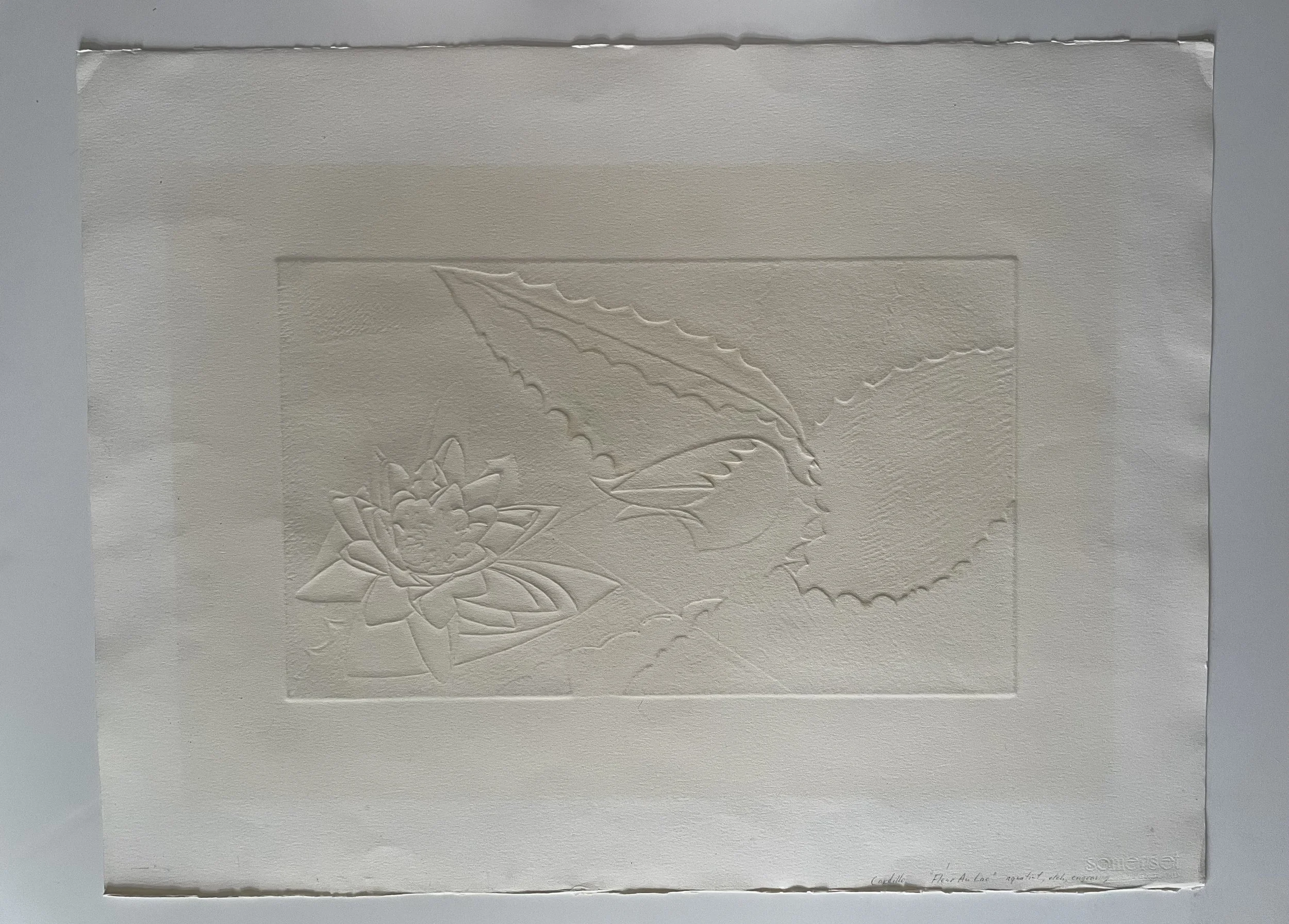 Image 6 of 6