 Image 1 of 5
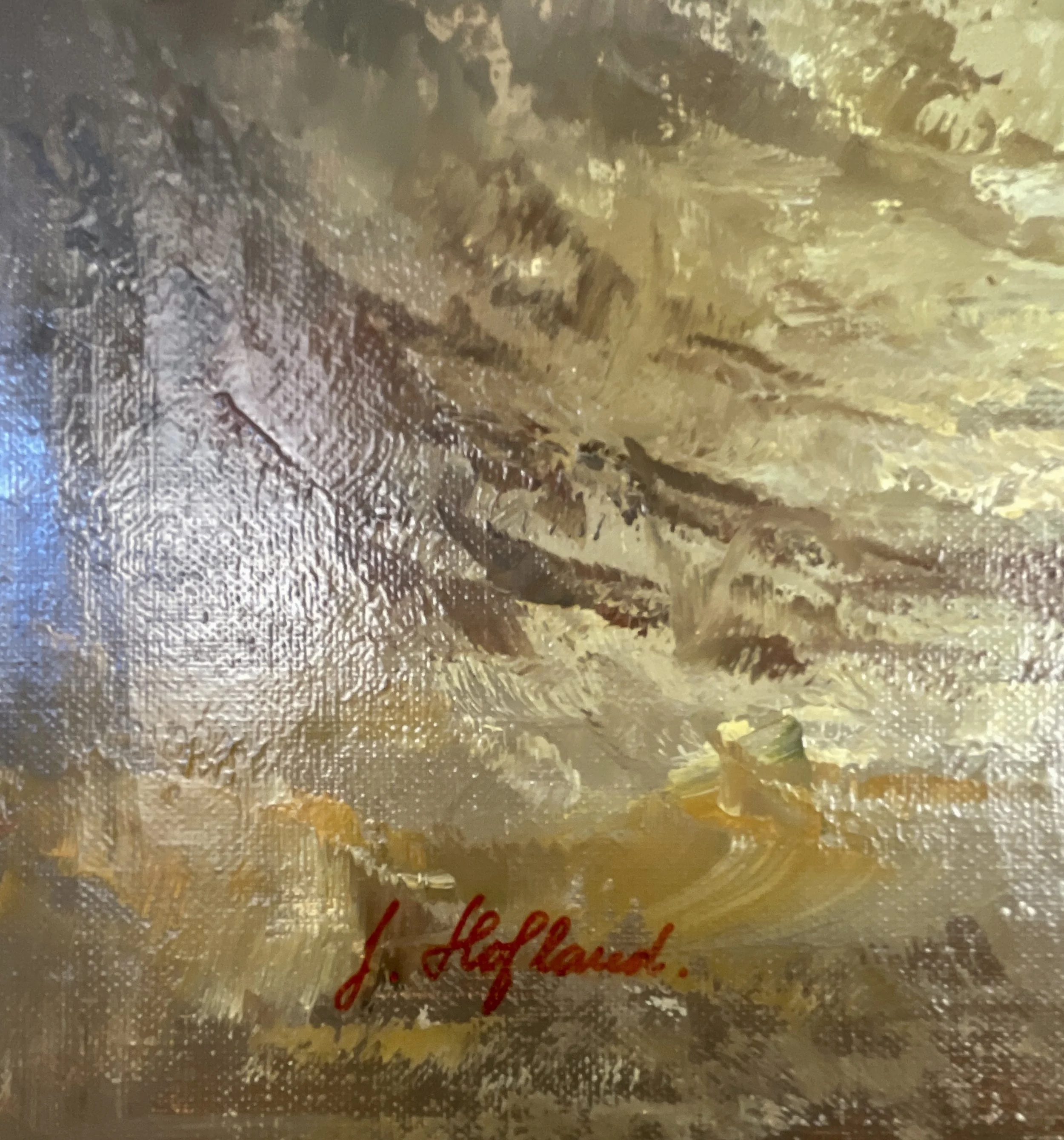 Image 2 of 5
 Image 3 of 5
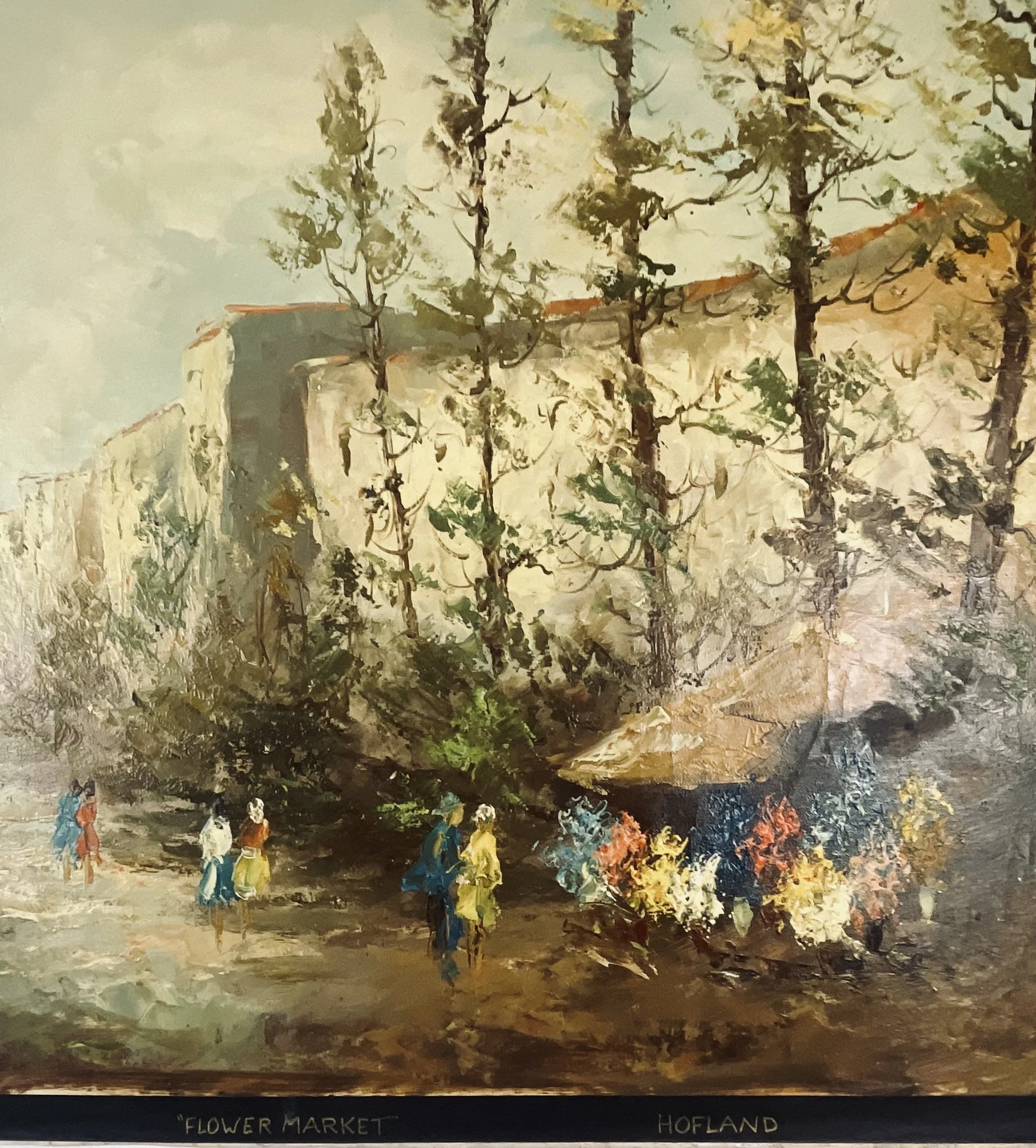 Image 4 of 5
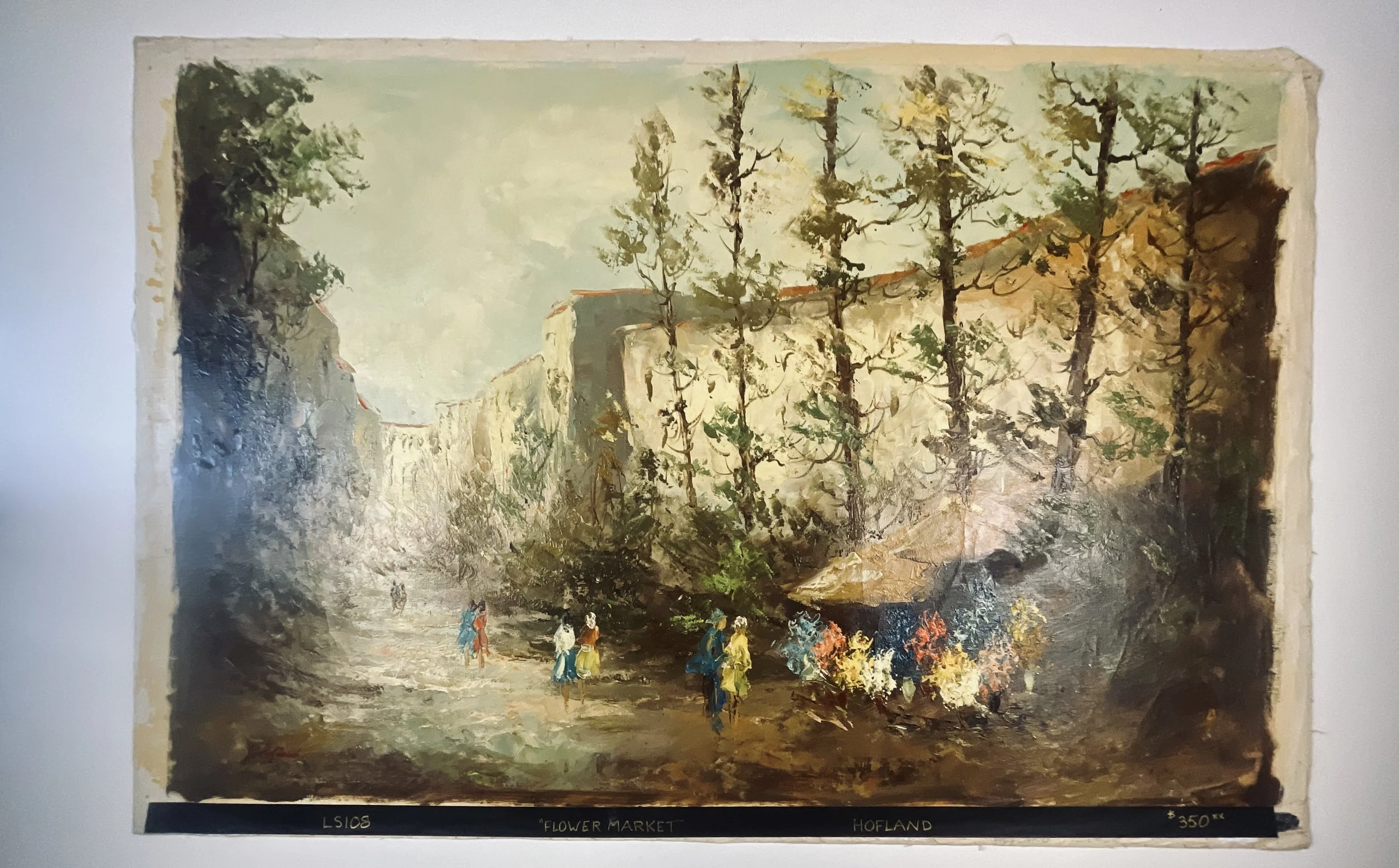 Image 5 of 5
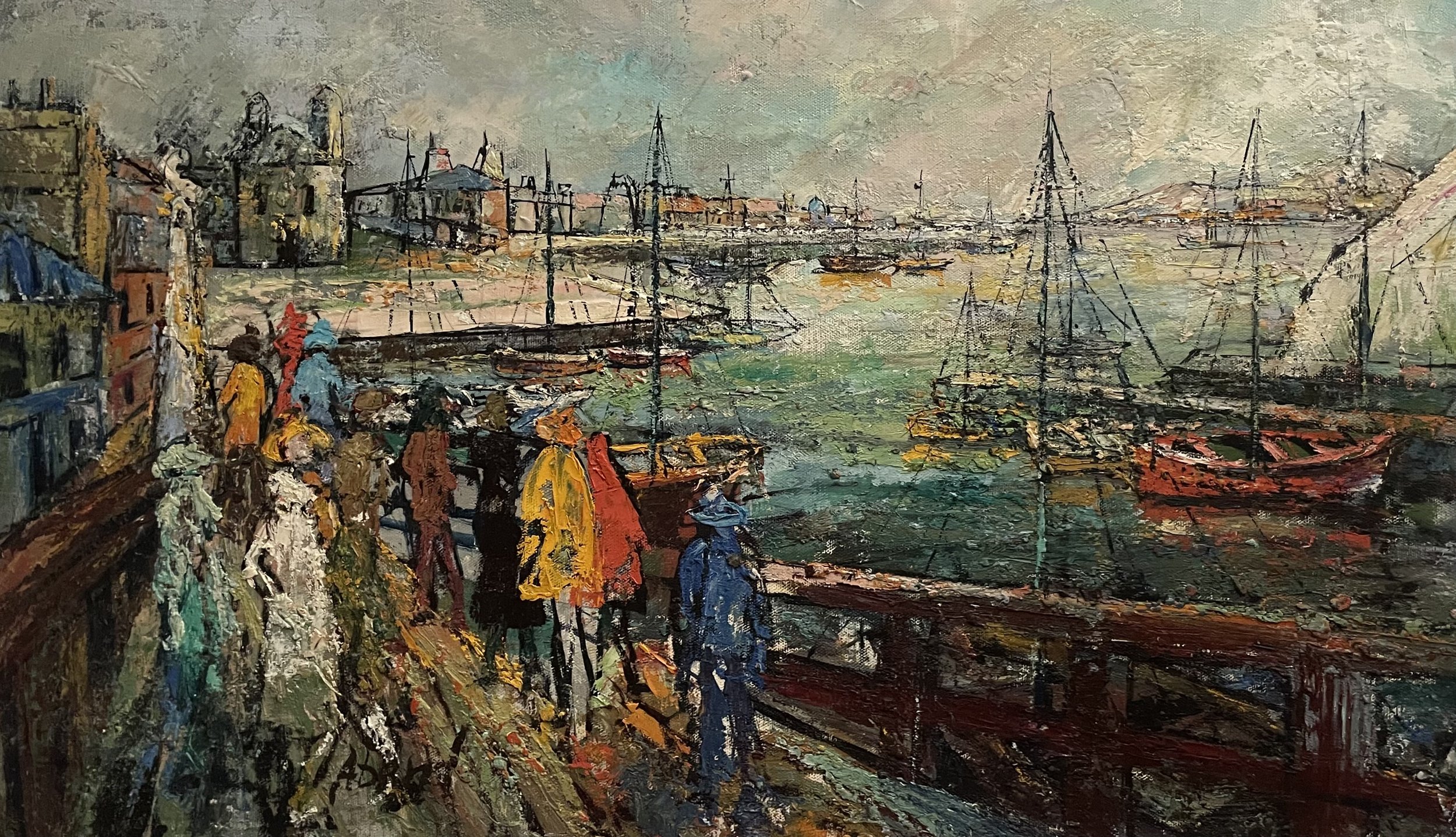
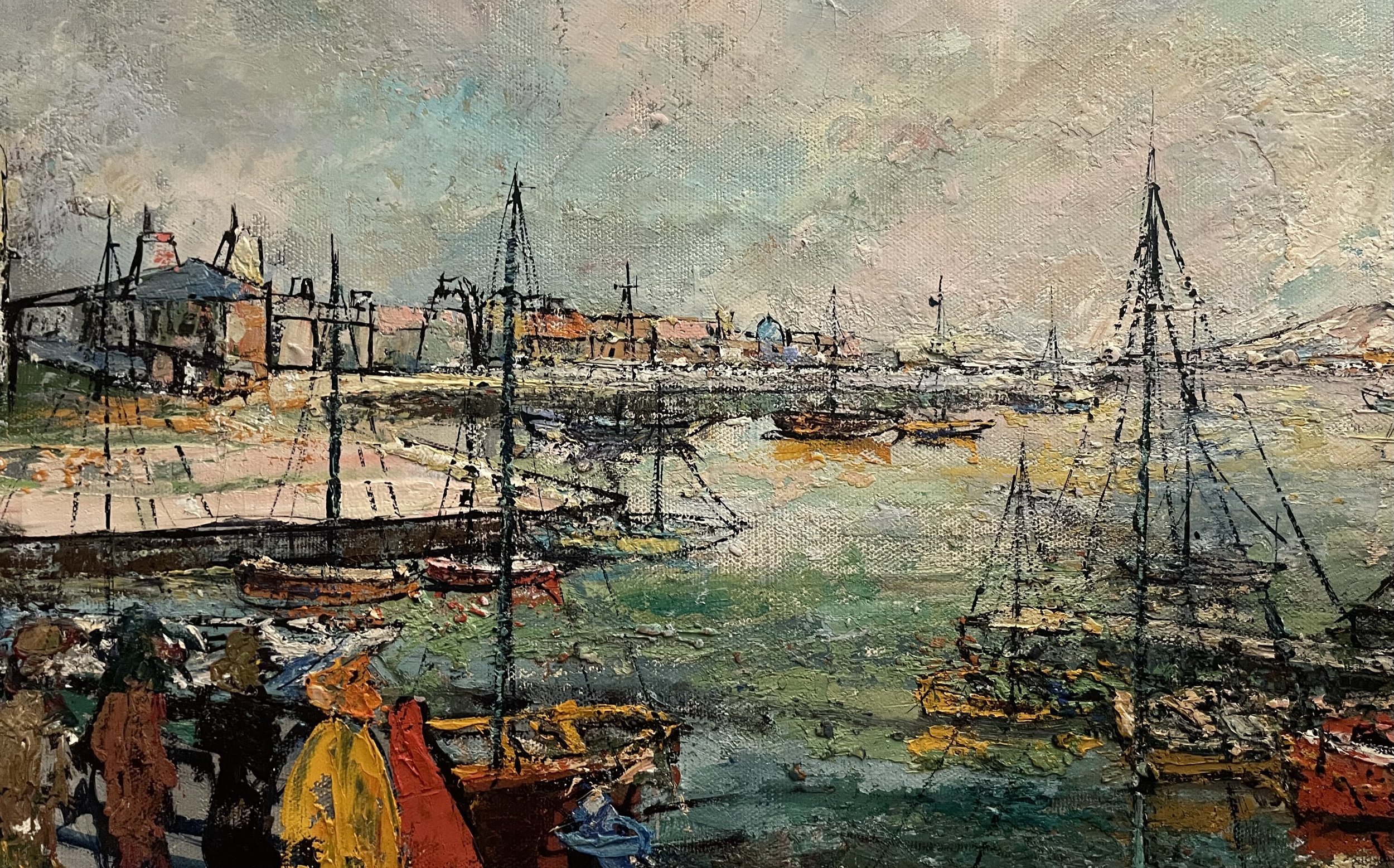
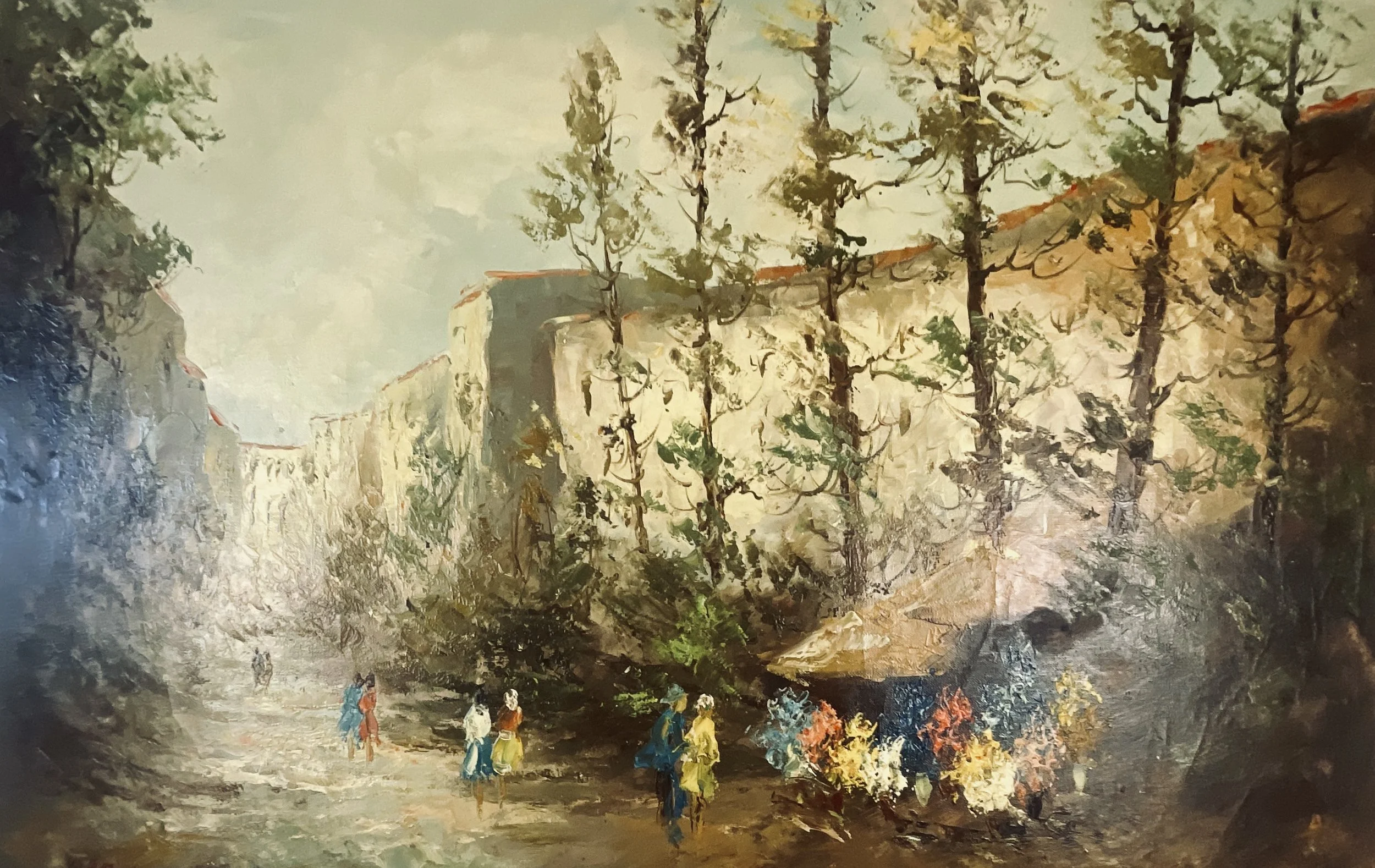
Flower Market, Hofland, mid-20th century, oil on canvas, 36 × 24 in., signed lower center, impressionist European market scene with figures and flowers.
A vibrant mid-century European impressionist street scene titled Flower Market by Hofland. Painted in oil on canvas, the composition captures a lively outdoor flower market with strolling figures, towering trees, and sunlit architecture rendered in expressive palette-knife textures. Rich earth tones and bursts of floral color create a dynamic sense of atmosphere and movement. Acquired through Mitch Morse Gallery’s international acquisitions, this work reflects the enduring appeal of European market scenes in post-war decorative and gallery painting.
Artwork Description
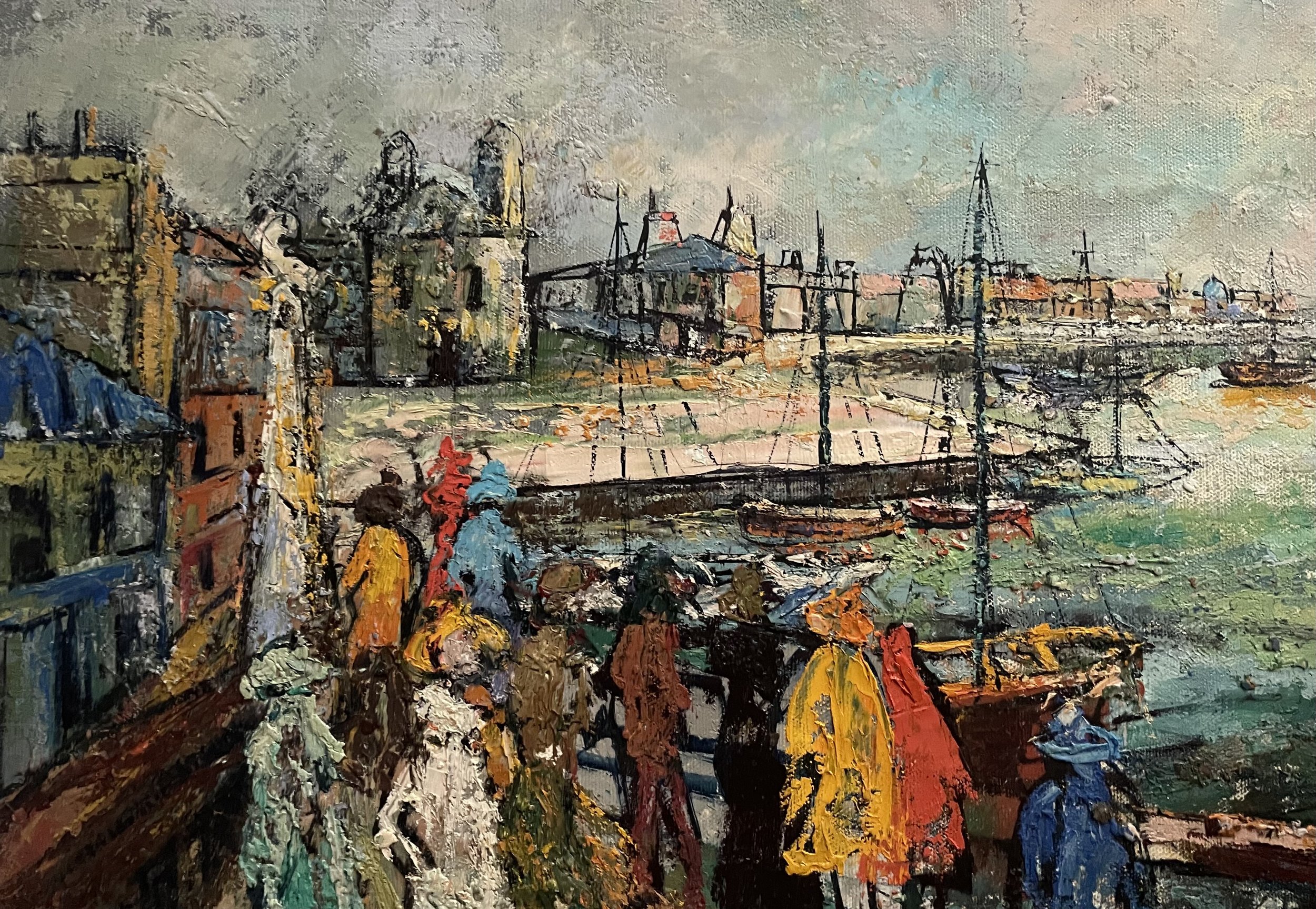
This painting titled Flower Market presents a romanticized European street market rendered in richly textured oil paint. The composition draws the viewer down a softly lit street lined with tall slender trees and sun-washed architectural walls. In the foreground, a cluster of colorful flowers bursts into view beside a small market stall, while elegantly dressed figures stroll through the scene, adding scale and narrative movement.
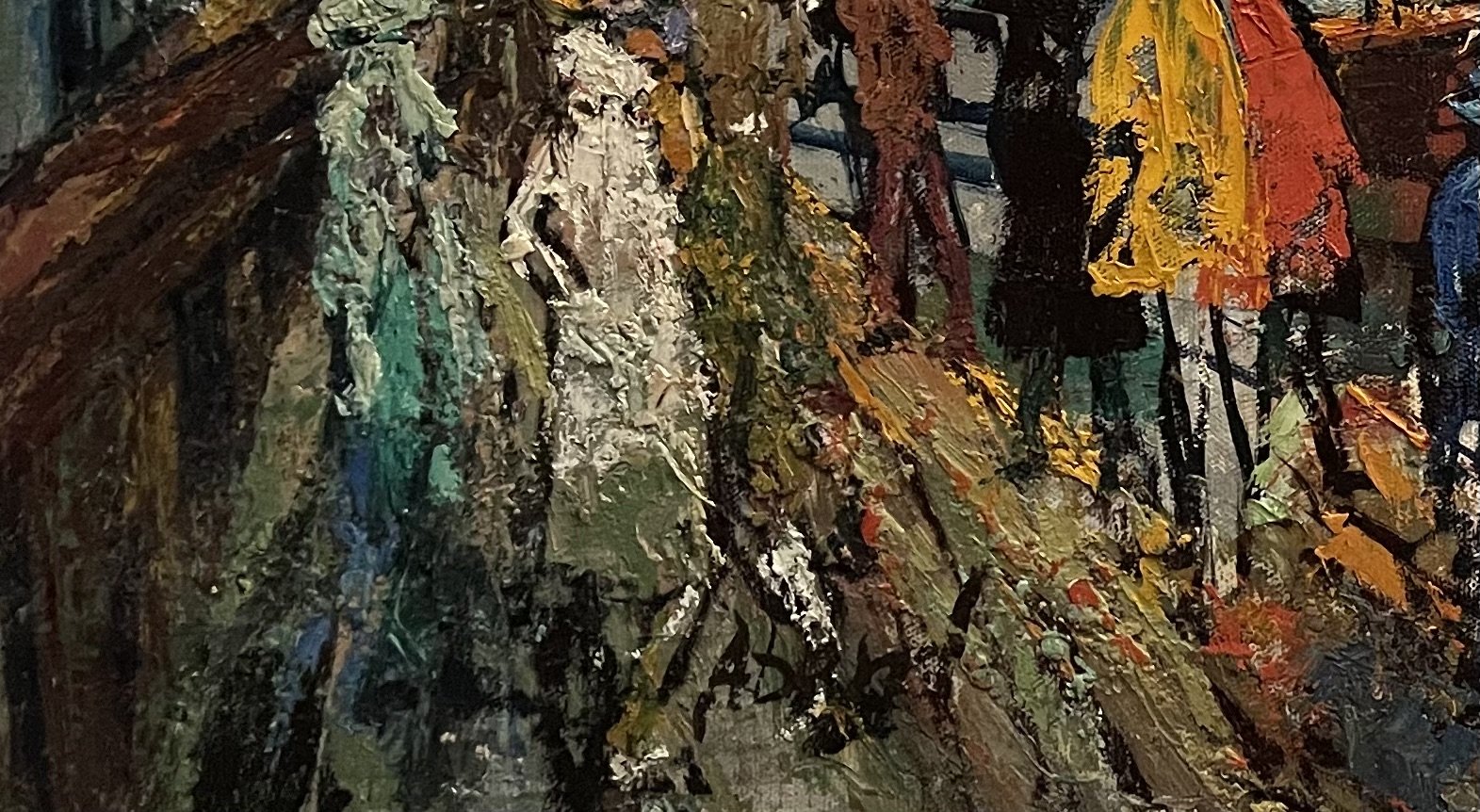
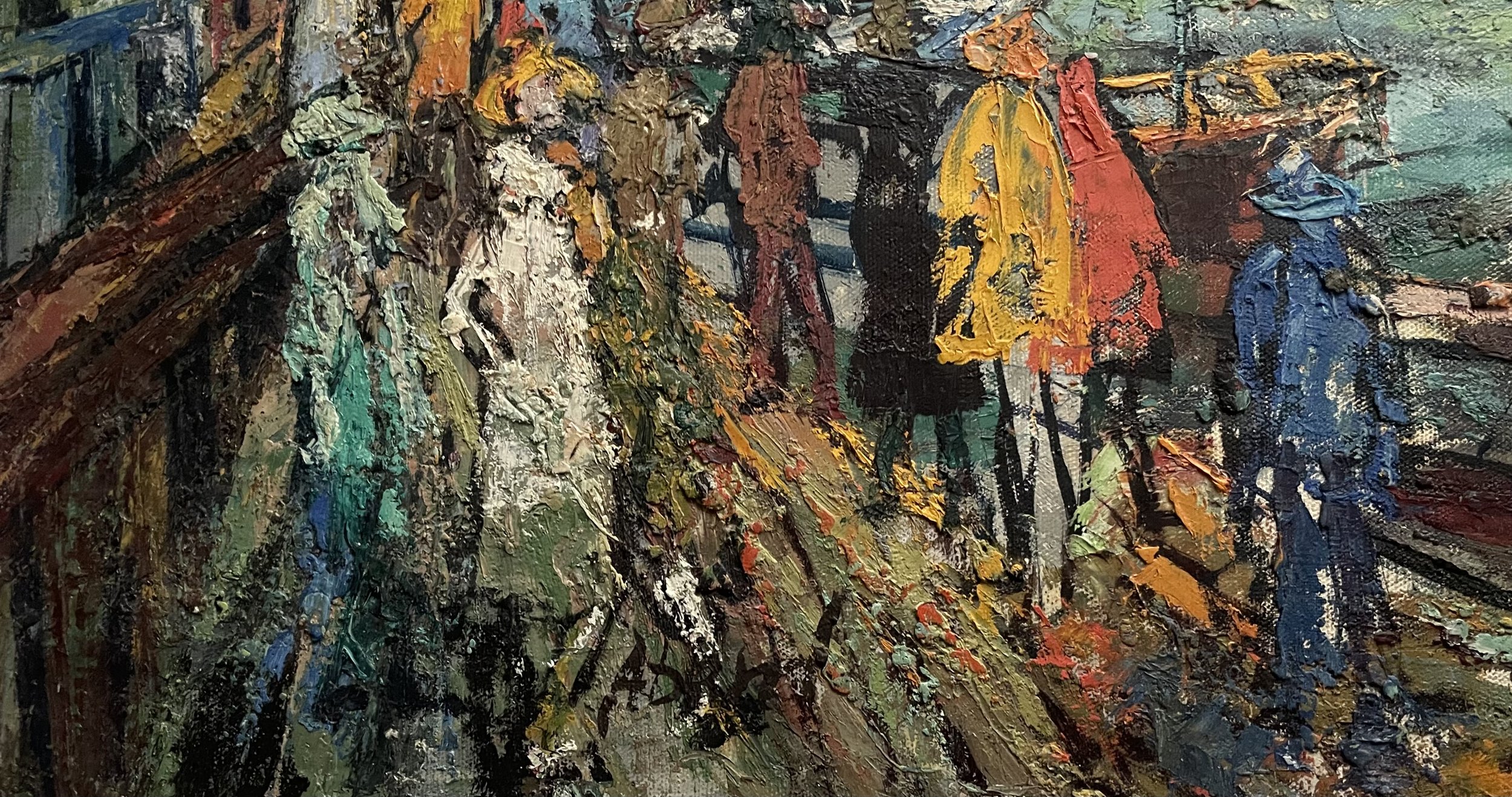
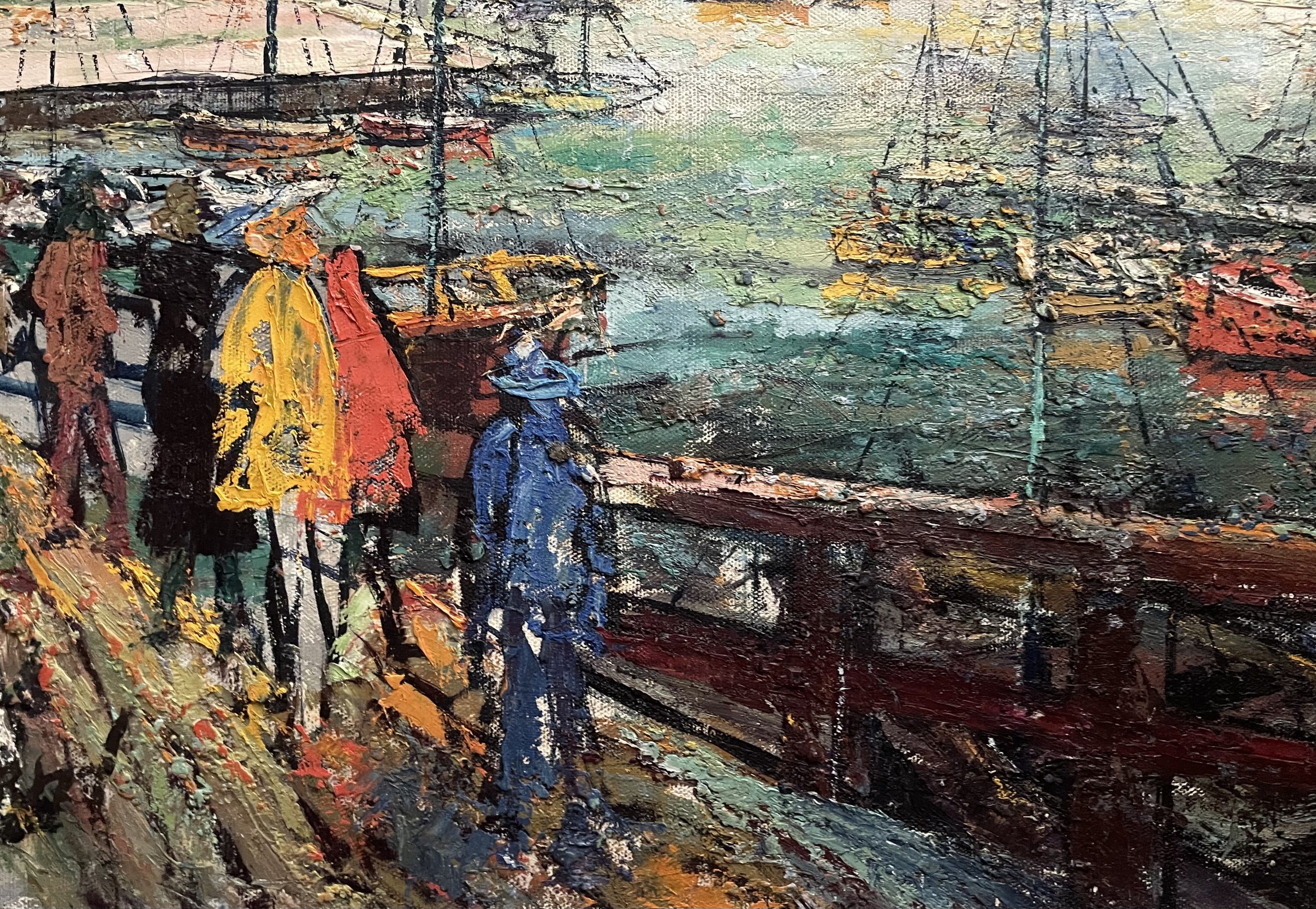
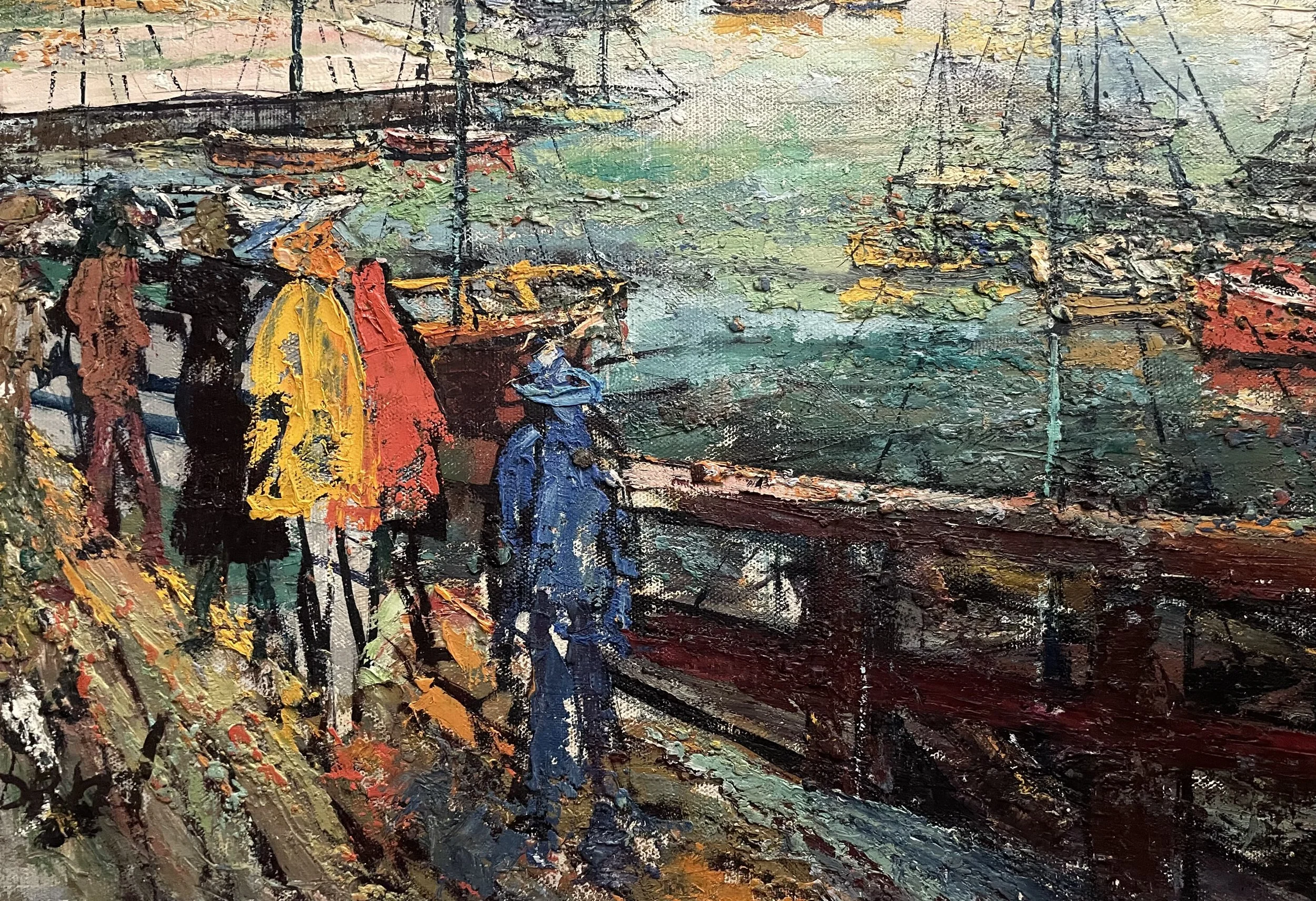
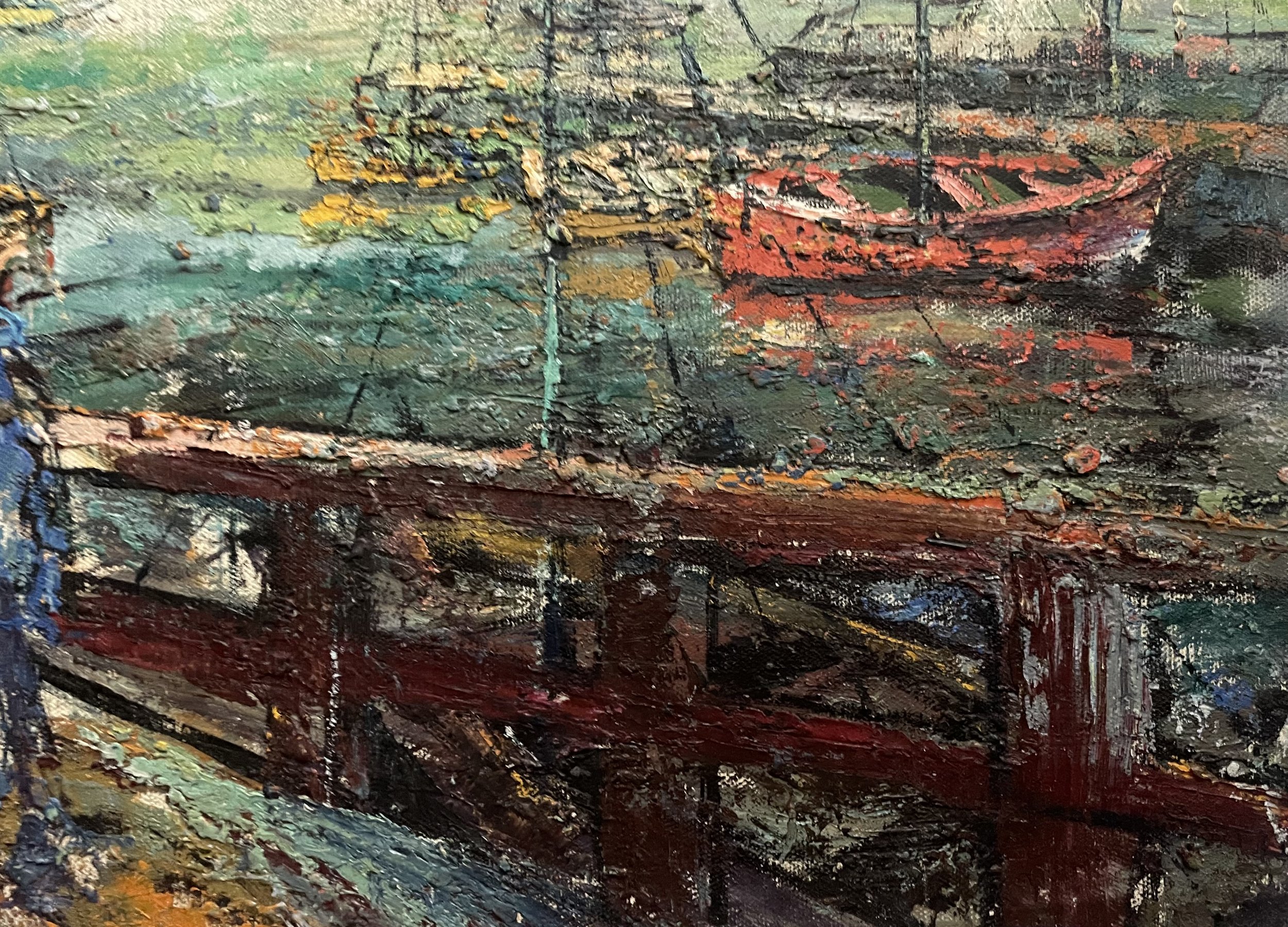
The artist builds the composition through confident palette-knife and brush techniques. Thick layers of oil create a textured surface, particularly visible in the foliage, walls, and street where the paint forms ridges and impasto patterns. The atmospheric perspective fades into the distance along the street, a hallmark of impressionist landscape traditions that emphasize light and depth rather than strict architectural detail.
Warm ochres, olive greens, and pale sky blues dominate the palette, suggesting a Mediterranean or southern European setting. The sunlit walls glow with creamy tones, contrasting with the darker shadowed foreground. The small figures, painted with quick strokes of blue, yellow, red, and white, animate the market scene and guide the eye toward the flower stall where vibrant bouquets in red, yellow, and white form the chromatic focal point of the painting.
The work is signed in red pigment near the lower center as “J. Hofland,” reinforcing its identity as a studio painting by an artist working in the European decorative impressionist tradition. The title Flower Market appears along the lower margin band, a format sometimes used by galleries or studios presenting market-scene paintings for collectors.
Market scenes have long been a favorite subject among European painters because they combine architecture, landscape, and human activity within a single composition. In the mid-twentieth century, artists working in Paris, Amsterdam, and Mediterranean regions frequently produced such scenes for galleries and international collectors seeking atmospheric depictions of European life.
This painting exemplifies that tradition. The expressive brushwork, warm color palette, and lively street narrative evoke the charm of European markets while emphasizing painterly texture and light. The result is a visually rich scene that balances realism with impressionistic spontaneity.
Artist Biography
Hofland (active mid-20th century)
The painter known as Hofland worked within the long tradition of European impressionist and post-impressionist landscape painting that flourished throughout the twentieth century. Although detailed biographical records for the artist remain limited, the style and technique of the present work place Hofland among the many European painters who specialized in atmospheric street scenes, market subjects, and village landscapes for gallery distribution.
Artists working in this tradition were often influenced by the legacy of nineteenth-century impressionism, particularly the work of French painters such as Claude Monet and Camille Pissarro who explored the effects of light on urban and rural environments. By the mid-twentieth century, these impressionist techniques had evolved into a decorative yet expressive style favored by galleries across Europe and the United States.
Hofland’s work reflects this lineage through its emphasis on light, color harmony, and textured brushwork. Paint is applied in lively strokes and palette-knife gestures that create an energetic surface while preserving the overall harmony of the scene. This method allowed artists to capture the sensation of place rather than precise architectural detail.
The popularity of European street scenes in the mid-1900s coincided with growing international interest in continental culture and travel. Collectors in the United States were particularly drawn to paintings depicting cafés, markets, and historic streets that evoked the romance of European cities. Galleries frequently exhibited such works as accessible yet visually rich examples of contemporary European painting.
Hofland’s compositions often center on human activity within picturesque environments. Figures appear as small, colorful accents within broader landscapes, suggesting movement and everyday life without overwhelming the composition. The artist’s approach emphasizes atmosphere and narrative mood rather than portraiture.
Technically, Hofland’s paintings reveal the confident handling of oil paint associated with artists trained in traditional studio methods. The textured surfaces, layered pigments, and subtle tonal transitions indicate a painter comfortable with the material qualities of oil and the expressive potential of palette-knife techniques.
Although the artist remains less documented in major museum collections, works by Hofland appear within private collections and gallery inventories specializing in mid-century European decorative painting. These paintings continue to attract collectors who appreciate impressionist-inspired landscapes and the enduring appeal of European market scenes.
The present work, Flower Market, exemplifies the qualities that make this tradition enduring: warm light, lively figures, and richly textured paint capturing the vitality of everyday street life.
Hofland, Flower Market, mid-20th century oil on canvas depicting a European street market with figures and floral stall. Signed lower center. 36 × 24 inches.
Certificate of Authentication
Title: Flower Market
Artist: Hofland
Medium: Oil on canvas
Dimensions: 36 × 24 inches
Signature: Signed lower center in red paint
This certificate confirms that the above artwork is an original oil painting attributed to the artist Hofland. The work depicts a European street flower market scene and is executed in textured oil paint consistent with mid-20th-century European impressionist studio painting.
Provenance: Mitch Morse Gallery acquisitions, New York and Europe.
Current owner: Artfind Gallery, Washington DC.
Condition
Very good vintage condition. Stable canvas with visible palette-knife texture and strong coloration. Minor edge wear and light handling consistent with age.
Provenance
Artist studio, Europe
Acquired through Mitch Morse Gallery, New York and Europe
Artfind Gallery, Washington DC (current owner)
Citations
Bénézit Dictionary of Artists
Christie’s and Sotheby’s auction archives for mid-century European impressionist market scenes
Oxford Companion to Western Art – Impressionism and post-impressionist landscape traditions
Flower Market, Hofland, mid-20th century, oil on canvas, 36 × 24 in., signed lower center, impressionist European market scene with figures and flowers.
A vibrant mid-century European impressionist street scene titled Flower Market by Hofland. Painted in oil on canvas, the composition captures a lively outdoor flower market with strolling figures, towering trees, and sunlit architecture rendered in expressive palette-knife textures. Rich earth tones and bursts of floral color create a dynamic sense of atmosphere and movement. Acquired through Mitch Morse Gallery’s international acquisitions, this work reflects the enduring appeal of European market scenes in post-war decorative and gallery painting.
Artwork Description
This painting titled Flower Market presents a romanticized European street market rendered in richly textured oil paint. The composition draws the viewer down a softly lit street lined with tall slender trees and sun-washed architectural walls. In the foreground, a cluster of colorful flowers bursts into view beside a small market stall, while elegantly dressed figures stroll through the scene, adding scale and narrative movement.
The artist builds the composition through confident palette-knife and brush techniques. Thick layers of oil create a textured surface, particularly visible in the foliage, walls, and street where the paint forms ridges and impasto patterns. The atmospheric perspective fades into the distance along the street, a hallmark of impressionist landscape traditions that emphasize light and depth rather than strict architectural detail.
Warm ochres, olive greens, and pale sky blues dominate the palette, suggesting a Mediterranean or southern European setting. The sunlit walls glow with creamy tones, contrasting with the darker shadowed foreground. The small figures, painted with quick strokes of blue, yellow, red, and white, animate the market scene and guide the eye toward the flower stall where vibrant bouquets in red, yellow, and white form the chromatic focal point of the painting.
The work is signed in red pigment near the lower center as “J. Hofland,” reinforcing its identity as a studio painting by an artist working in the European decorative impressionist tradition. The title Flower Market appears along the lower margin band, a format sometimes used by galleries or studios presenting market-scene paintings for collectors.
Market scenes have long been a favorite subject among European painters because they combine architecture, landscape, and human activity within a single composition. In the mid-twentieth century, artists working in Paris, Amsterdam, and Mediterranean regions frequently produced such scenes for galleries and international collectors seeking atmospheric depictions of European life.
This painting exemplifies that tradition. The expressive brushwork, warm color palette, and lively street narrative evoke the charm of European markets while emphasizing painterly texture and light. The result is a visually rich scene that balances realism with impressionistic spontaneity.
Artist Biography
Hofland (active mid-20th century)
The painter known as Hofland worked within the long tradition of European impressionist and post-impressionist landscape painting that flourished throughout the twentieth century. Although detailed biographical records for the artist remain limited, the style and technique of the present work place Hofland among the many European painters who specialized in atmospheric street scenes, market subjects, and village landscapes for gallery distribution.
Artists working in this tradition were often influenced by the legacy of nineteenth-century impressionism, particularly the work of French painters such as Claude Monet and Camille Pissarro who explored the effects of light on urban and rural environments. By the mid-twentieth century, these impressionist techniques had evolved into a decorative yet expressive style favored by galleries across Europe and the United States.
Hofland’s work reflects this lineage through its emphasis on light, color harmony, and textured brushwork. Paint is applied in lively strokes and palette-knife gestures that create an energetic surface while preserving the overall harmony of the scene. This method allowed artists to capture the sensation of place rather than precise architectural detail.
The popularity of European street scenes in the mid-1900s coincided with growing international interest in continental culture and travel. Collectors in the United States were particularly drawn to paintings depicting cafés, markets, and historic streets that evoked the romance of European cities. Galleries frequently exhibited such works as accessible yet visually rich examples of contemporary European painting.
Hofland’s compositions often center on human activity within picturesque environments. Figures appear as small, colorful accents within broader landscapes, suggesting movement and everyday life without overwhelming the composition. The artist’s approach emphasizes atmosphere and narrative mood rather than portraiture.
Technically, Hofland’s paintings reveal the confident handling of oil paint associated with artists trained in traditional studio methods. The textured surfaces, layered pigments, and subtle tonal transitions indicate a painter comfortable with the material qualities of oil and the expressive potential of palette-knife techniques.
Although the artist remains less documented in major museum collections, works by Hofland appear within private collections and gallery inventories specializing in mid-century European decorative painting. These paintings continue to attract collectors who appreciate impressionist-inspired landscapes and the enduring appeal of European market scenes.
The present work, Flower Market, exemplifies the qualities that make this tradition enduring: warm light, lively figures, and richly textured paint capturing the vitality of everyday street life.
Hofland, Flower Market, mid-20th century oil on canvas depicting a European street market with figures and floral stall. Signed lower center. 36 × 24 inches.
Certificate of Authentication
Title: Flower Market
Artist: Hofland
Medium: Oil on canvas
Dimensions: 36 × 24 inches
Signature: Signed lower center in red paint
This certificate confirms that the above artwork is an original oil painting attributed to the artist Hofland. The work depicts a European street flower market scene and is executed in textured oil paint consistent with mid-20th-century European impressionist studio painting.
Provenance: Mitch Morse Gallery acquisitions, New York and Europe.
Current owner: Artfind Gallery, Washington DC.
Condition
Very good vintage condition. Stable canvas with visible palette-knife texture and strong coloration. Minor edge wear and light handling consistent with age.
Provenance
Artist studio, Europe
Acquired through Mitch Morse Gallery, New York and Europe
Artfind Gallery, Washington DC (current owner)
Citations
Bénézit Dictionary of Artists
Christie’s and Sotheby’s auction archives for mid-century European impressionist market scenes
Oxford Companion to Western Art – Impressionism and post-impressionist landscape traditions