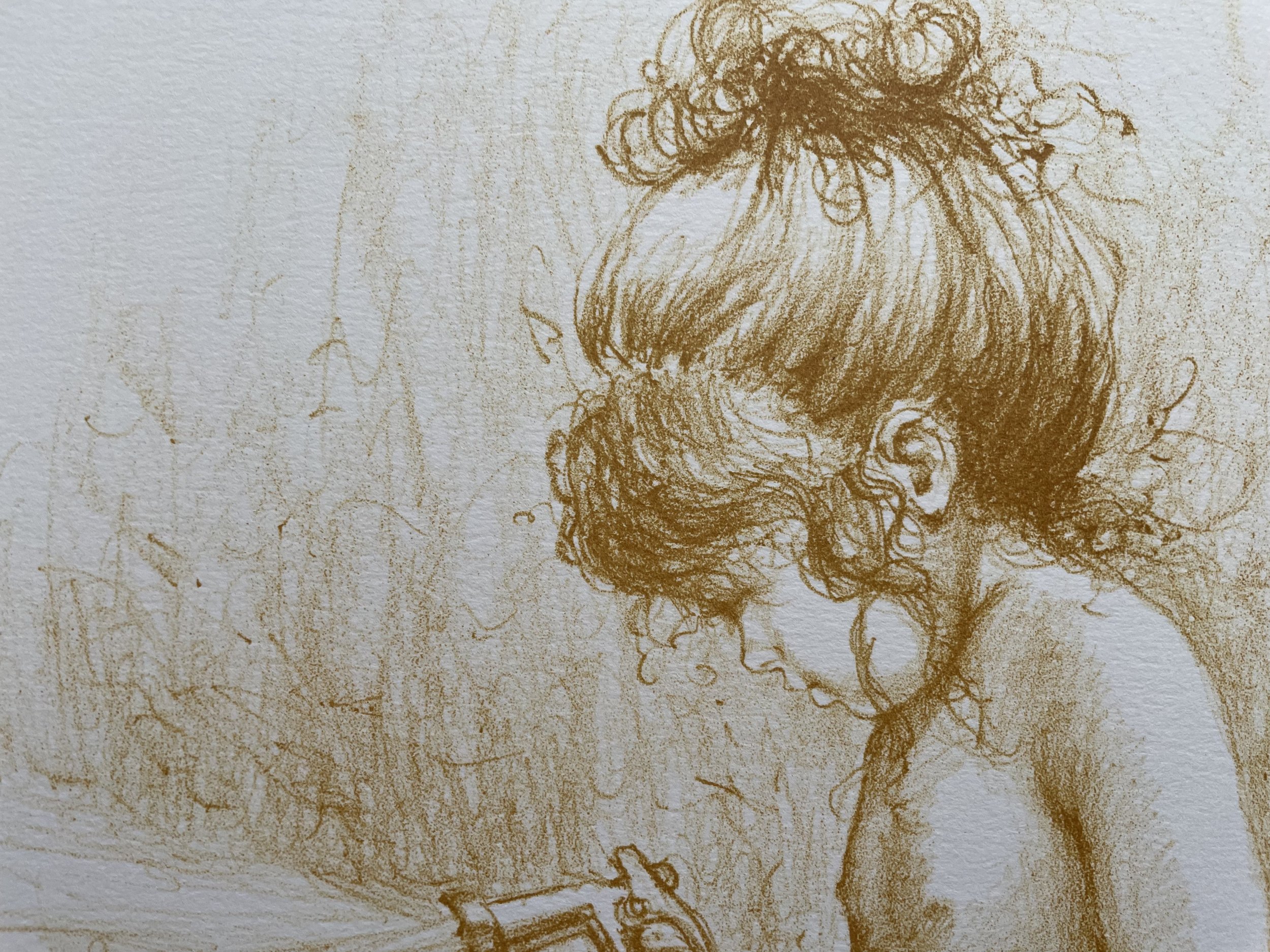
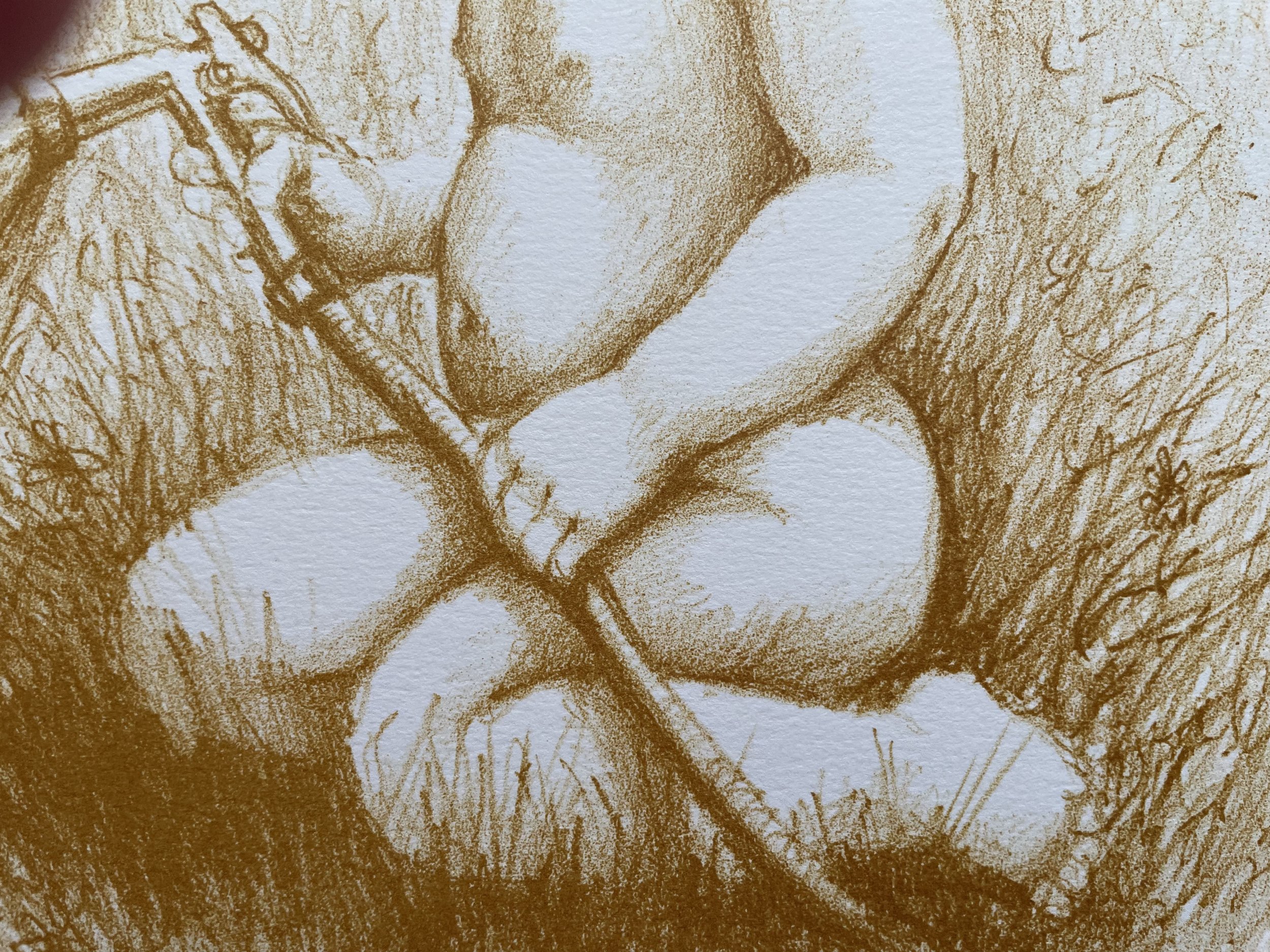
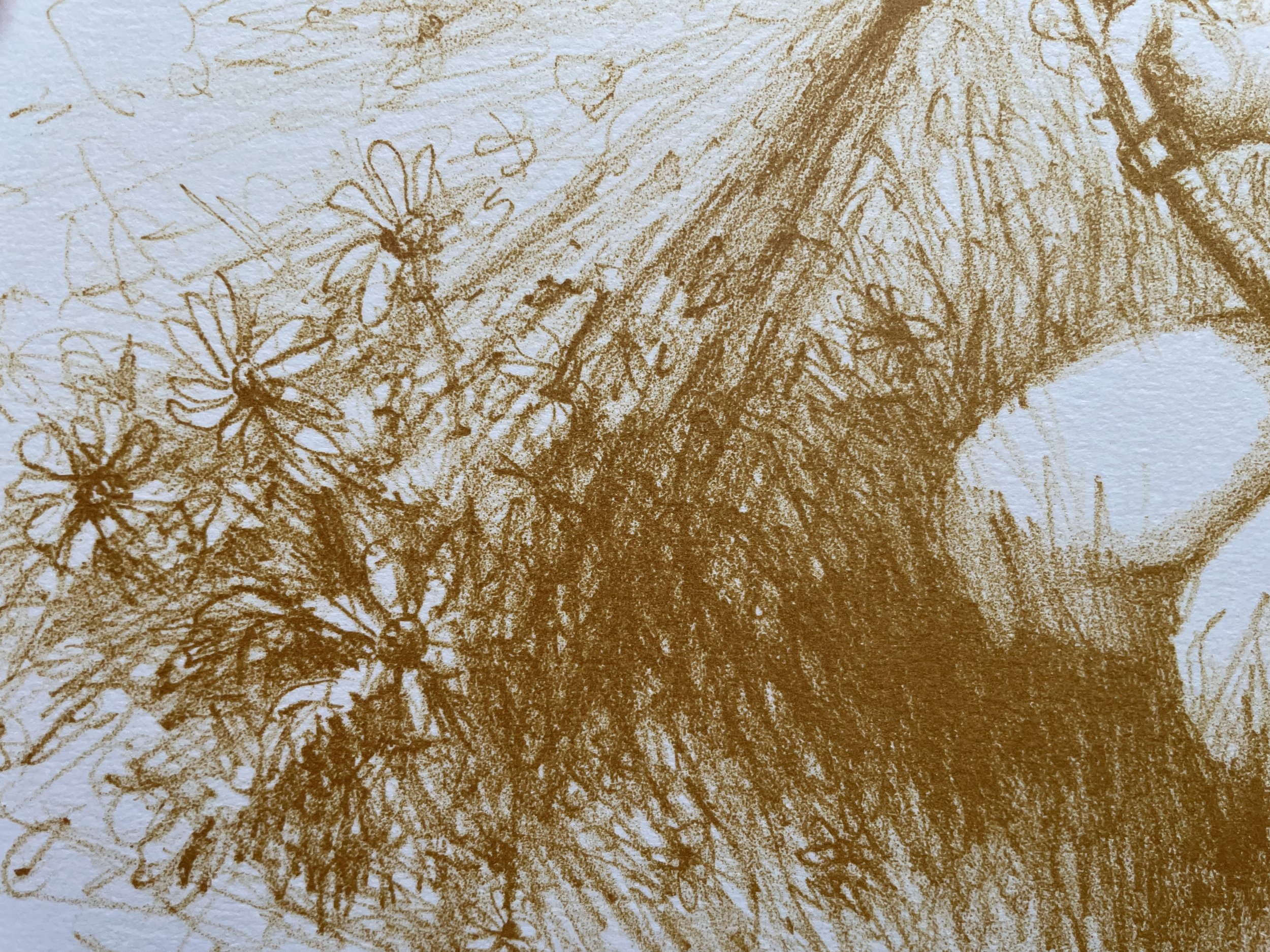
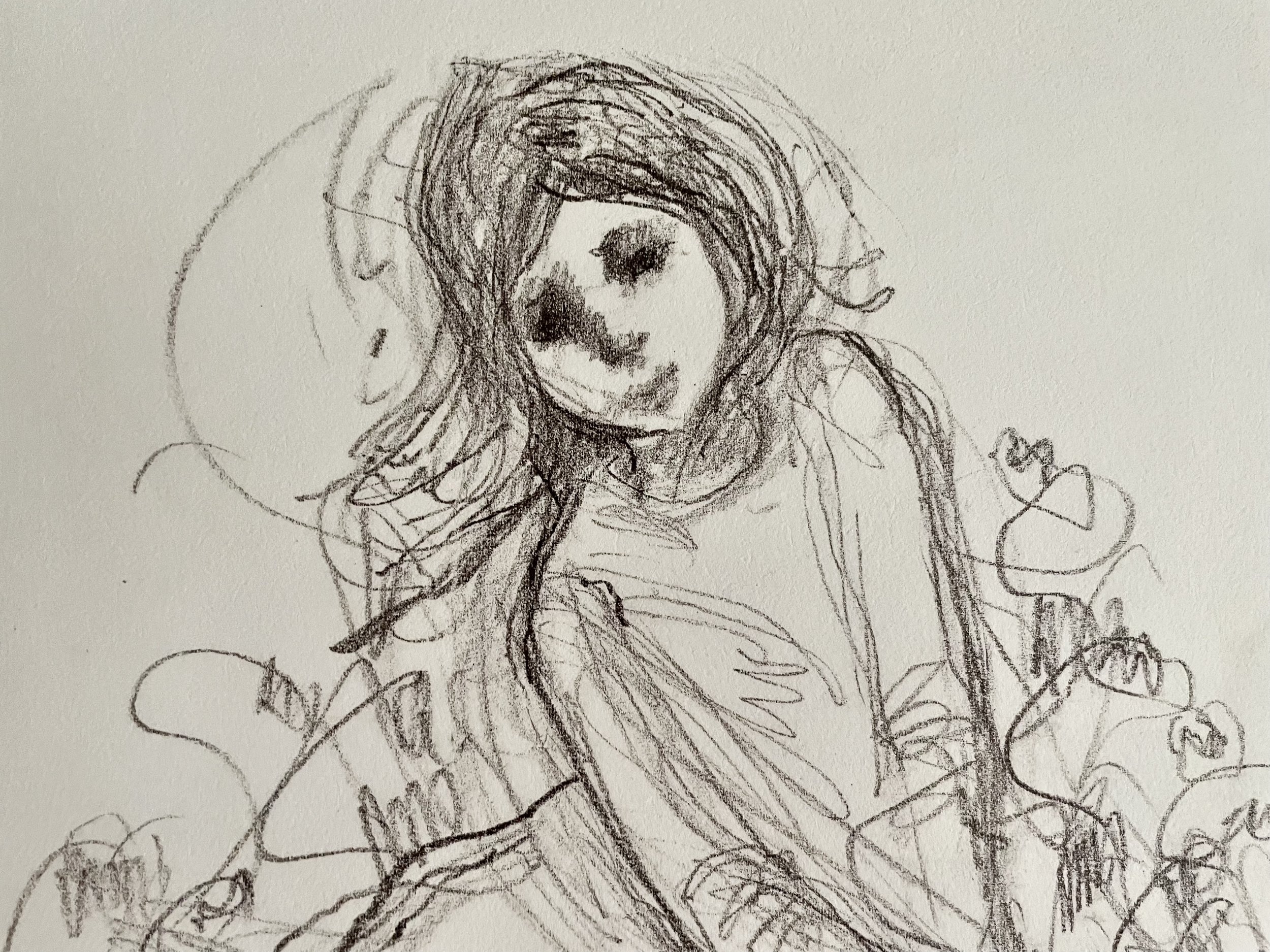
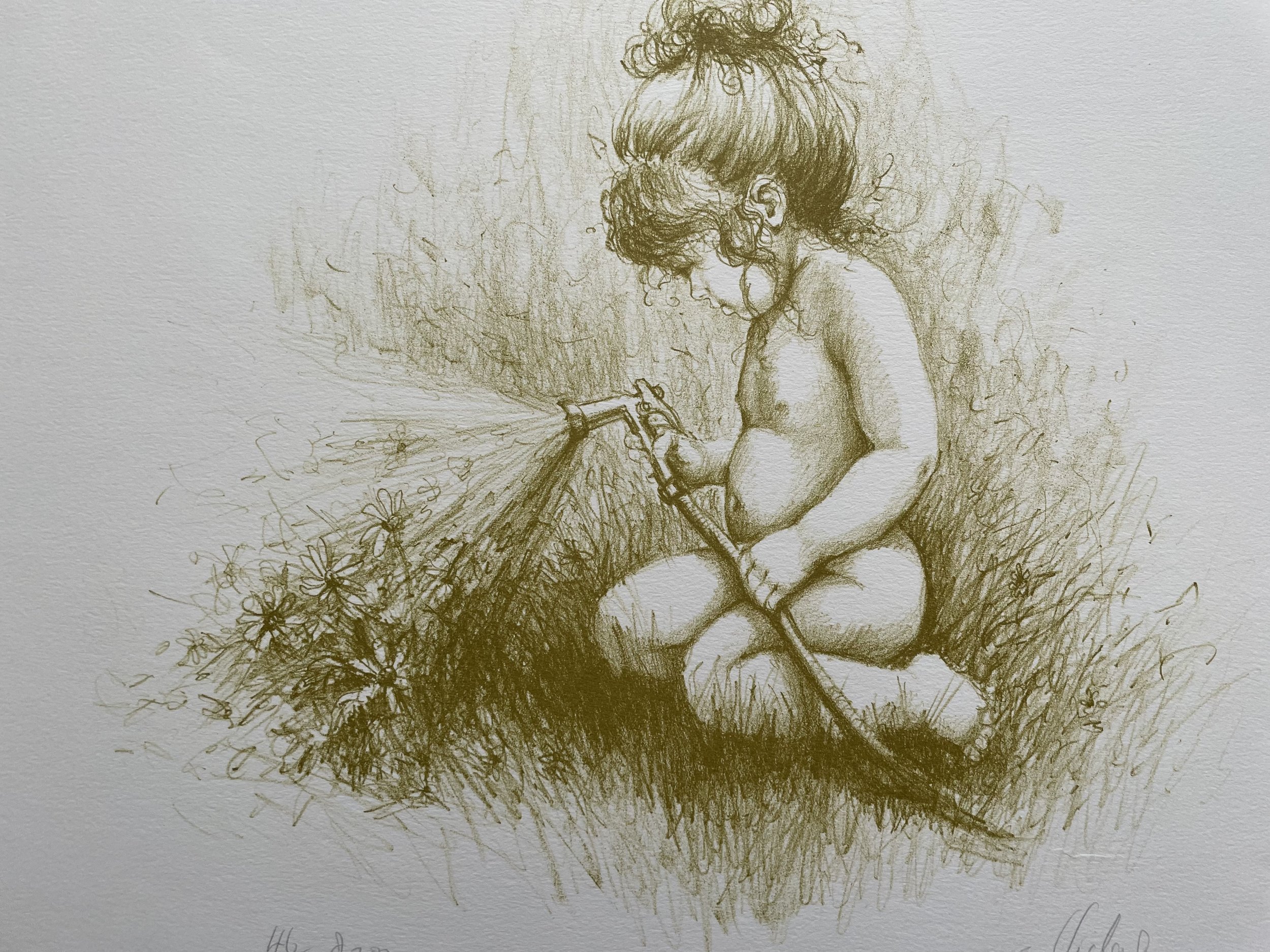
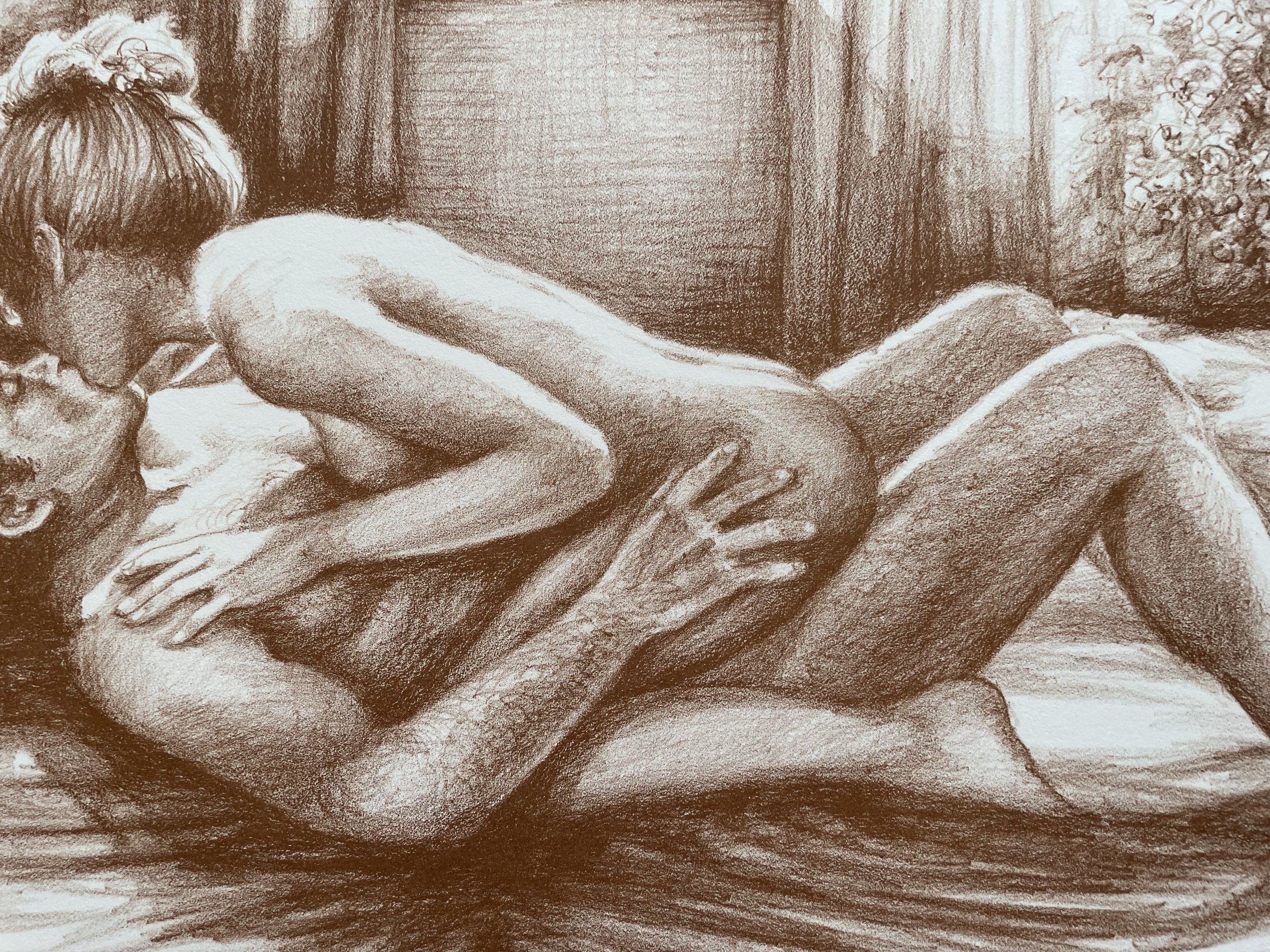
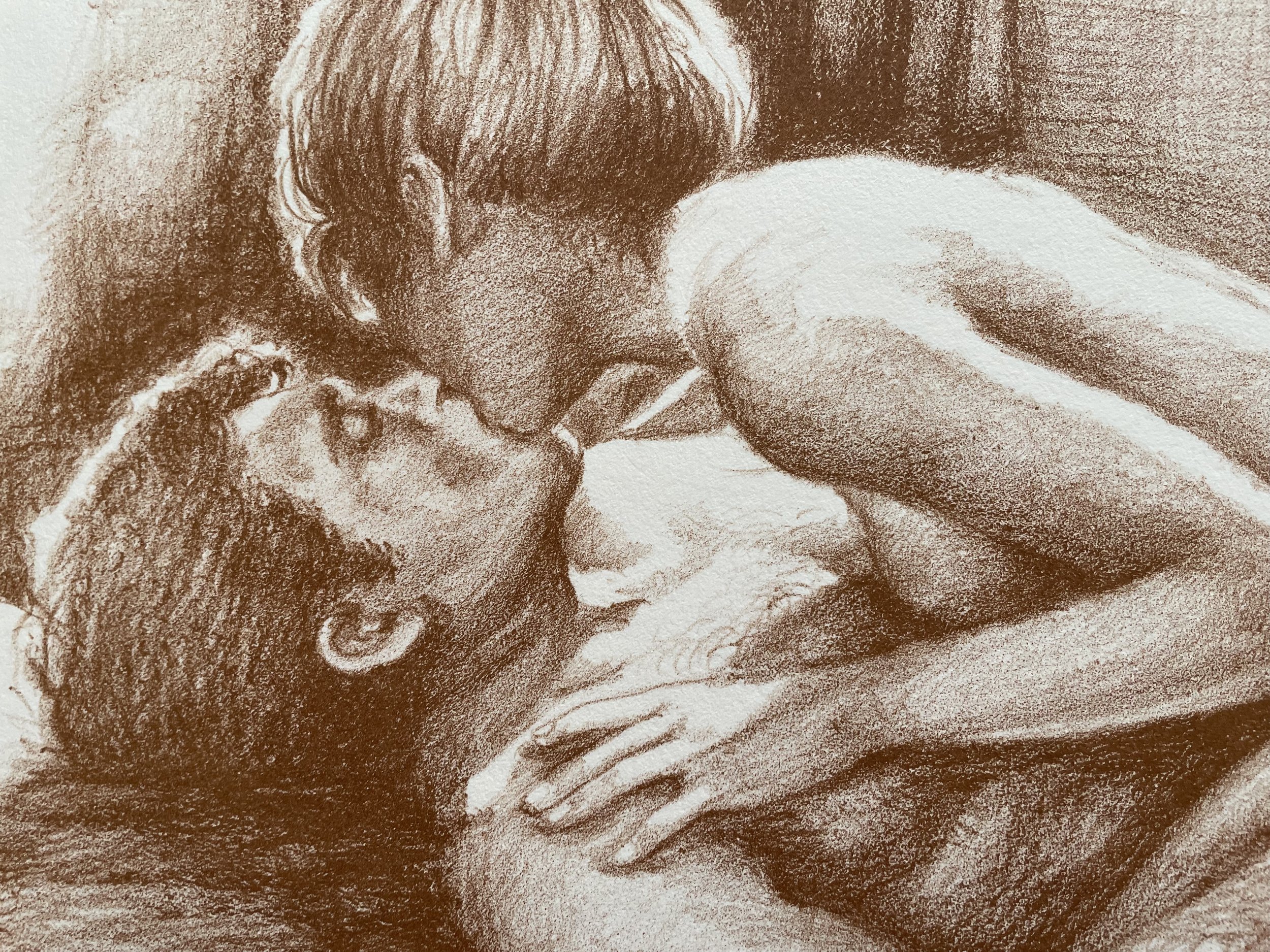
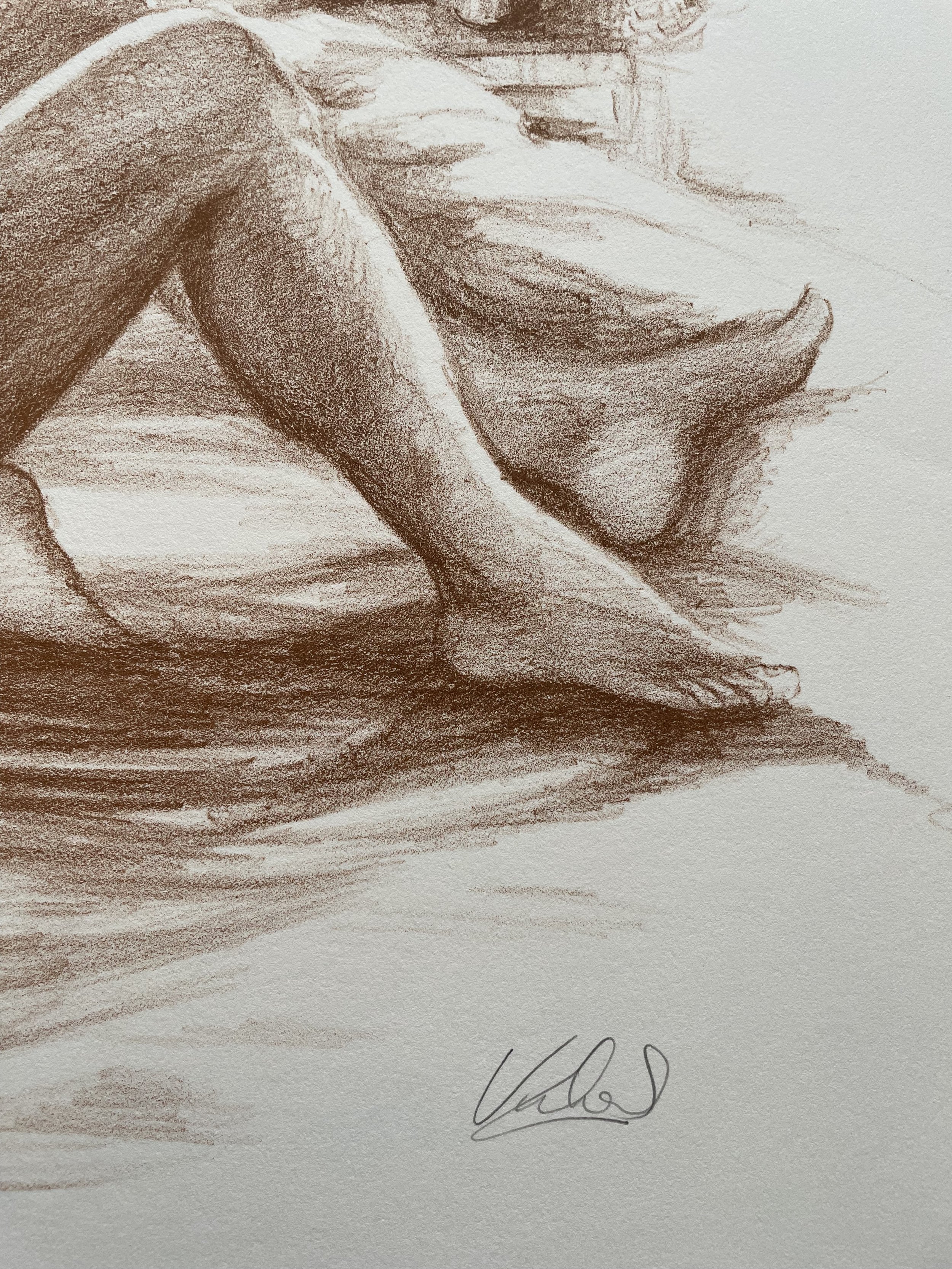
“Forest,” Carl Landreth (b.1946), c.1970s, 12-color plate lithograph 18×24 in, hand-signed lower right, numbered 31/200 nature landscape print.
“Forest” by American artist Carl Landreth is a richly detailed 12-color plate lithograph that celebrates the quiet drama of the woods in autumn. Printed at 18×24 inches, hand-signed by the artist and numbered 31/200, this limited-edition fine art print captures Landreth’s hallmark blend of realism, atmosphere, and romantic color. Collectors drawn to nature prints, contemporary realism, and American landscape art will find this work a striking focal point in any room.
Landreth’s refined color sense and careful drawing—shaped by his studies at Washington and Lee University and his years painting across Europe—create an image that feels both intimate and monumental. “Forest” is ideal for collectors of modern lithographs, seasonal art, and elegant woodland imagery.
Artwork Description
“Forest” presents a close, almost cinematic view into a woodland scene at the height of autumn. A massive tree trunk, its bark rendered in finely modulated greys, anchors the left side of the composition, while a fallen pale log arcs diagonally through the foreground like a bleached skeleton of the forest. Against this neutral structure, Landreth stages a sumptuous display of color: crimson berries and deep red heart-shaped leaves climb across the fallen wood, echoed by fiery orange and russet foliage glowing in the mid-ground.
Beyond this intimate foreground, a veil of slender white trunks dissolves into an amber haze, suggesting birch or aspen trees catching soft, filtered light. The contrast between the almost monochrome bark and the saturated reds and oranges heightens the sense of seasonal transition—new growth and berries emerging from decaying wood. The carefully layered 12-plate lithographic process allows Landreth to achieve both crisp linear detail and subtle tonal gradations, giving the leaves a velvety presence and the bark a tactile, weathered surface.
Stylistically, the print sits between representational realism and romantic impressionism. Landreth’s drawing is precise and observant, but the atmosphere—soft edges, glowing mid-tones, and a controlled, warm palette—conveys an emotional response to nature rather than a strictly documentary view. The artist’s known interest in antique Oriental art can be felt in the compositional simplicity: large shapes of bark, foliage, and background are arranged in a flowing pattern that guides the eye upward through the scene.
“Forest” reads as a quiet meditation on renewal. New leaves and berries erupt from a fallen log, suggesting life emerging from decay and the continuous cycles of the forest. It is a contemplative, peaceful work that communicates stillness and resilience rather than drama.
Biography
Carl Landreth (American, b. 1946, Roanoke, Virginia) is a painter and printmaker whose work is rooted in a deep appreciation for nature, classical draftsmanship, and the traditions of European and Asian art. Growing up in Virginia, he was surrounded by wooded landscapes, seasonal change, and the quieter rhythms of small-city life—experiences that would later inform his serene woodland scenes and lyrical landscapes.
Landreth studied at Washington and Lee University in Lexington, Virginia, where he received formal training in drawing, painting, and art history. After completing his studies he spent approximately two years living and working in Europe, traveling to historic artistic centers and studying original works in museums. That period allowed him to experience the great schools of European painting first-hand, from the Renaissance masters to Impressionism and early modernism. These encounters shaped both his technical ambitions and his sense of color.
In painting, Landreth is known for his lively, impressionist palette and frequent use of impasto—thick, textured applications of paint that give his surfaces a tactile energy. Dealers have often described his canvases as “refreshing” and “joyous,” whether he is depicting florals, fantasy landscapes, or ethereal female figures. His faces frequently echo the calm, idealized beauty of Renaissance portraiture, while his landscapes reflect his study of antique Oriental art, particularly in their simplified lines, balanced compositions, and subtle gradations of color.
Landreth has participated in a number of group exhibitions, including the “American Drawing Invitational” at the Albrecht Art Museum in St. Louis, Missouri, at SUNY Cortland in New York, and at the Yale University Art Gallery in the early 1970s. His work was also shown at the Hartford Atheneum Invitational in Connecticut, the McNay Art Institute Invitational in San Antonio, Texas, and the “Art on Paper Invitational” at the Weatherspoon Annual at the University of North Carolina.
He has received recognition in juried competitions, such as an award at the “Salon of the Fifty States” at the Lizoa Duncan Gallery in New York (1977) and First Place in Realism at the Roanoke Art Show in 1969. Landreth’s paintings and prints have entered a range of private and corporate collections, including Washington and Lee University, St. Regis Paper Company, Citibank, and collectors in London, Rome, and across the United States.
Throughout his career, Landreth has stated that his goal is “to paint the beauty that exists in nature.” Works like “Forest” embody this philosophy: peaceful, carefully structured compositions in which quiet details of bark, leaves, and light become vehicles for calm and contemplation. His art continues to appeal to viewers seeking a blend of classical craftsmanship, romantic atmosphere, and an intimate connection to the natural world.
Carl Landreth (American, b. 1946)
Forest, c.1970s
12-color plate lithograph in colors on paper, 18×24 in (image/sheet approx.)
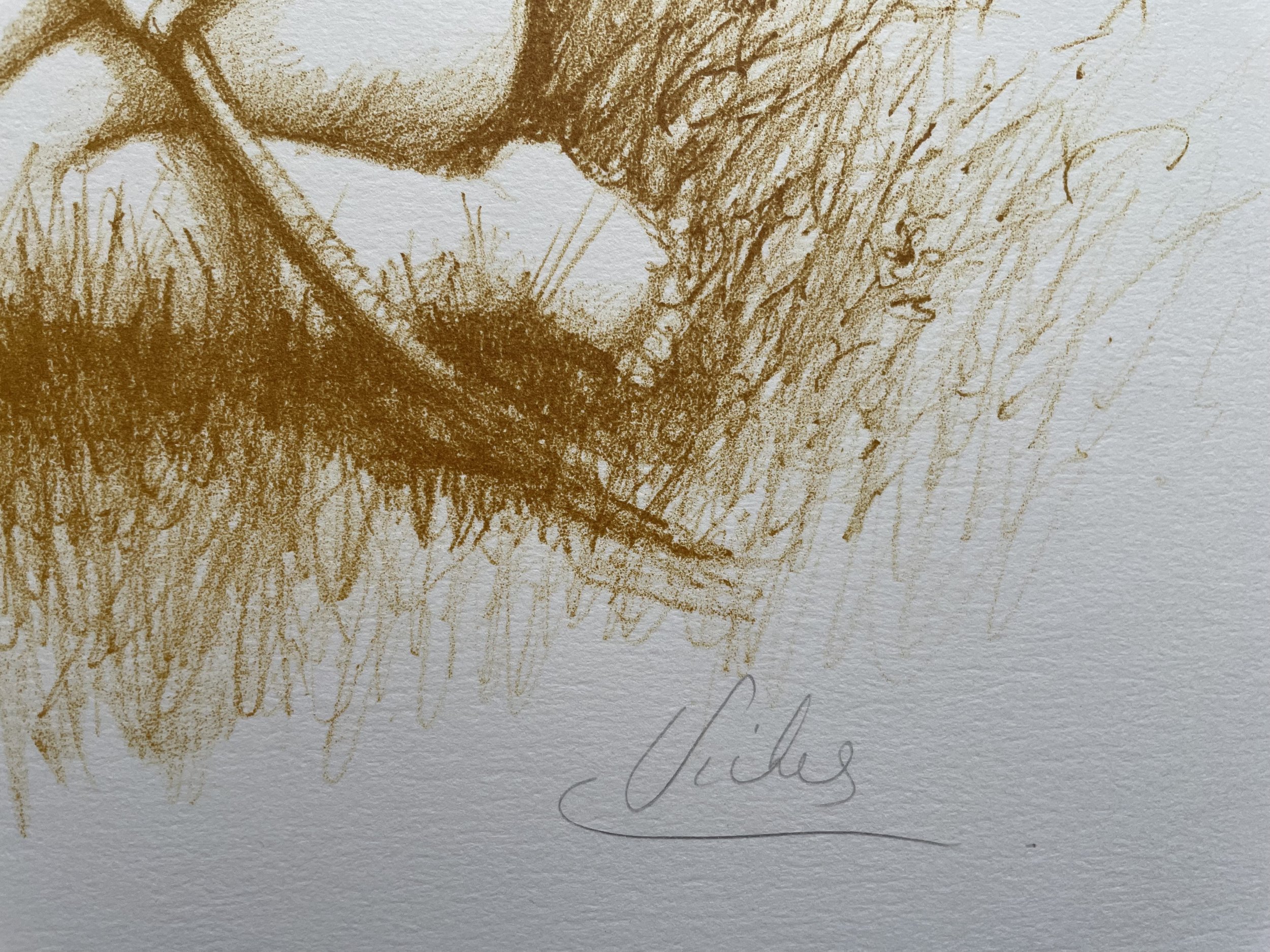
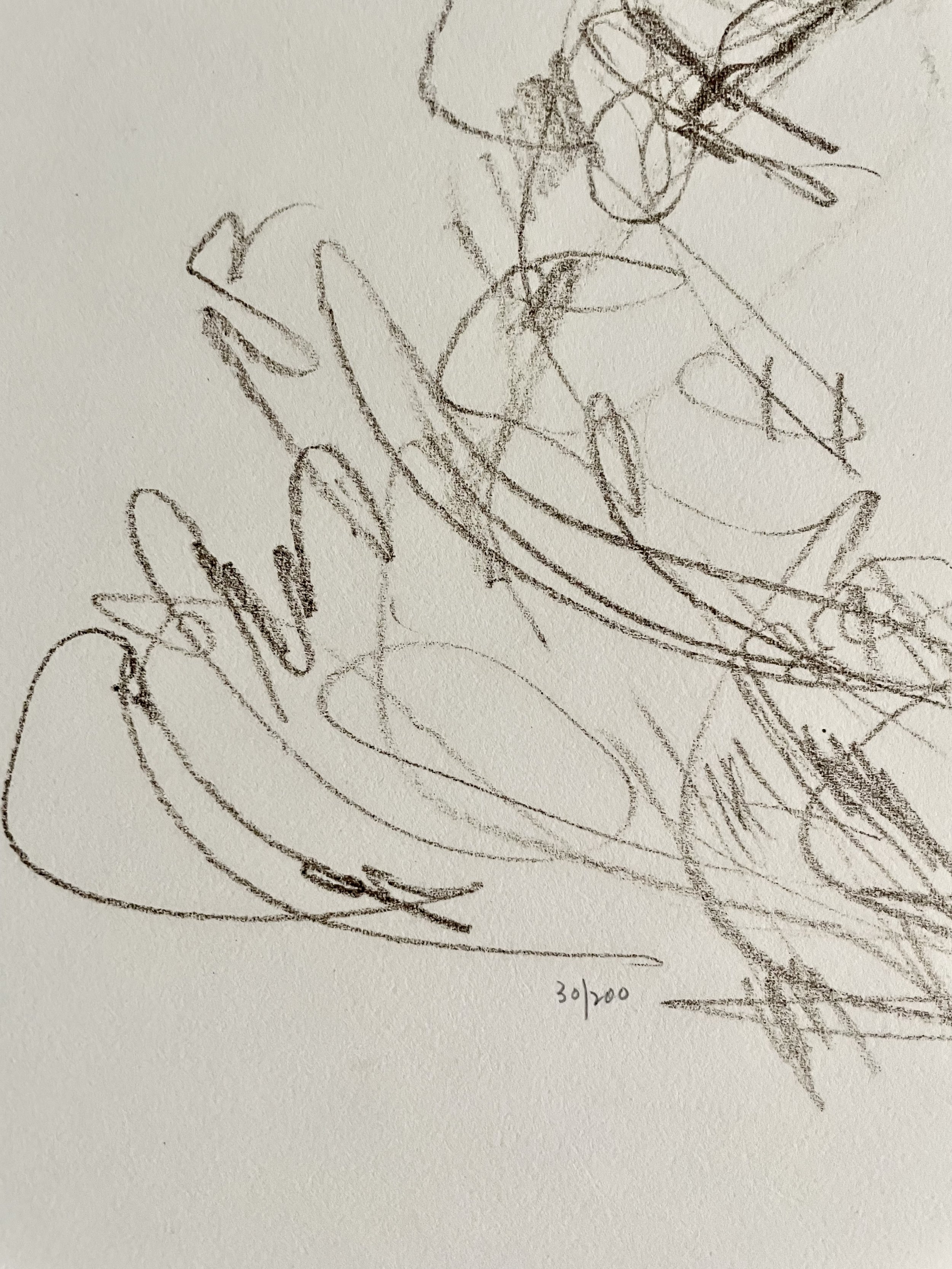
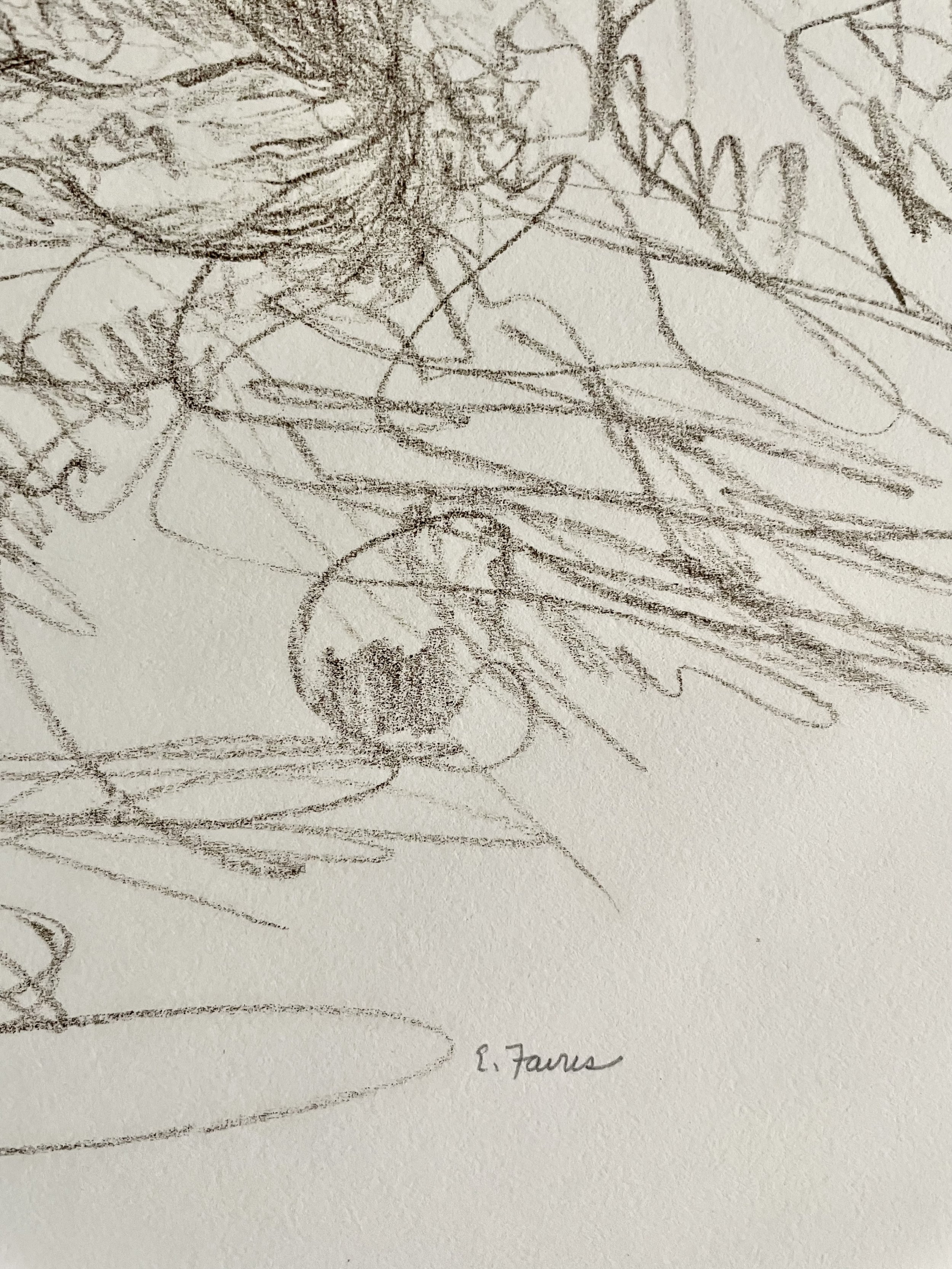
Signed “Landreth” lower right, titled “Forest” lower center, numbered 31/200 lower left.
Condition: very good overall; minor handling consistent with age.
Certificate of Value & Authentication
Artwork: Forest
Artist: Carl Landreth (American, b. 1946)
Date: c.1970s
Medium: 12-plate/color lithograph on paper
Dimensions: 18 × 24 inches (approximate image/sheet)
Edition: 31/200
Signature: Hand-signed “Landreth” lower right; titled “Forest” lower center; numbered lower left.
This certificate affirms that the above-described work is an original limited-edition lithograph by Carl Landreth, created from the artist’s design using a 12-plate color lithographic process and hand-signed in pencil.
Provenance chain (collector-formatted)
Artist: Carl Landreth, Roanoke, Virginia (studio release)
Mitch Morse Gallery, New York City and Europe – acquired directly from the artist or publisher as part of an edition distribution.
Private collection / Mitch Morse inventory, United States.
Artfind Gallery, Washington, DC – current owner and representative.
“Forest,” Carl Landreth (b.1946), c.1970s, 12-color plate lithograph 18×24 in, hand-signed lower right, numbered 31/200 nature landscape print.
“Forest” by American artist Carl Landreth is a richly detailed 12-color plate lithograph that celebrates the quiet drama of the woods in autumn. Printed at 18×24 inches, hand-signed by the artist and numbered 31/200, this limited-edition fine art print captures Landreth’s hallmark blend of realism, atmosphere, and romantic color. Collectors drawn to nature prints, contemporary realism, and American landscape art will find this work a striking focal point in any room.
Landreth’s refined color sense and careful drawing—shaped by his studies at Washington and Lee University and his years painting across Europe—create an image that feels both intimate and monumental. “Forest” is ideal for collectors of modern lithographs, seasonal art, and elegant woodland imagery.
Artwork Description
“Forest” presents a close, almost cinematic view into a woodland scene at the height of autumn. A massive tree trunk, its bark rendered in finely modulated greys, anchors the left side of the composition, while a fallen pale log arcs diagonally through the foreground like a bleached skeleton of the forest. Against this neutral structure, Landreth stages a sumptuous display of color: crimson berries and deep red heart-shaped leaves climb across the fallen wood, echoed by fiery orange and russet foliage glowing in the mid-ground.
Beyond this intimate foreground, a veil of slender white trunks dissolves into an amber haze, suggesting birch or aspen trees catching soft, filtered light. The contrast between the almost monochrome bark and the saturated reds and oranges heightens the sense of seasonal transition—new growth and berries emerging from decaying wood. The carefully layered 12-plate lithographic process allows Landreth to achieve both crisp linear detail and subtle tonal gradations, giving the leaves a velvety presence and the bark a tactile, weathered surface.
Stylistically, the print sits between representational realism and romantic impressionism. Landreth’s drawing is precise and observant, but the atmosphere—soft edges, glowing mid-tones, and a controlled, warm palette—conveys an emotional response to nature rather than a strictly documentary view. The artist’s known interest in antique Oriental art can be felt in the compositional simplicity: large shapes of bark, foliage, and background are arranged in a flowing pattern that guides the eye upward through the scene.
“Forest” reads as a quiet meditation on renewal. New leaves and berries erupt from a fallen log, suggesting life emerging from decay and the continuous cycles of the forest. It is a contemplative, peaceful work that communicates stillness and resilience rather than drama.
Biography
Carl Landreth (American, b. 1946, Roanoke, Virginia) is a painter and printmaker whose work is rooted in a deep appreciation for nature, classical draftsmanship, and the traditions of European and Asian art. Growing up in Virginia, he was surrounded by wooded landscapes, seasonal change, and the quieter rhythms of small-city life—experiences that would later inform his serene woodland scenes and lyrical landscapes.
Landreth studied at Washington and Lee University in Lexington, Virginia, where he received formal training in drawing, painting, and art history. After completing his studies he spent approximately two years living and working in Europe, traveling to historic artistic centers and studying original works in museums. That period allowed him to experience the great schools of European painting first-hand, from the Renaissance masters to Impressionism and early modernism. These encounters shaped both his technical ambitions and his sense of color.
In painting, Landreth is known for his lively, impressionist palette and frequent use of impasto—thick, textured applications of paint that give his surfaces a tactile energy. Dealers have often described his canvases as “refreshing” and “joyous,” whether he is depicting florals, fantasy landscapes, or ethereal female figures. His faces frequently echo the calm, idealized beauty of Renaissance portraiture, while his landscapes reflect his study of antique Oriental art, particularly in their simplified lines, balanced compositions, and subtle gradations of color.
Landreth has participated in a number of group exhibitions, including the “American Drawing Invitational” at the Albrecht Art Museum in St. Louis, Missouri, at SUNY Cortland in New York, and at the Yale University Art Gallery in the early 1970s. His work was also shown at the Hartford Atheneum Invitational in Connecticut, the McNay Art Institute Invitational in San Antonio, Texas, and the “Art on Paper Invitational” at the Weatherspoon Annual at the University of North Carolina.
He has received recognition in juried competitions, such as an award at the “Salon of the Fifty States” at the Lizoa Duncan Gallery in New York (1977) and First Place in Realism at the Roanoke Art Show in 1969. Landreth’s paintings and prints have entered a range of private and corporate collections, including Washington and Lee University, St. Regis Paper Company, Citibank, and collectors in London, Rome, and across the United States.
Throughout his career, Landreth has stated that his goal is “to paint the beauty that exists in nature.” Works like “Forest” embody this philosophy: peaceful, carefully structured compositions in which quiet details of bark, leaves, and light become vehicles for calm and contemplation. His art continues to appeal to viewers seeking a blend of classical craftsmanship, romantic atmosphere, and an intimate connection to the natural world.
Carl Landreth (American, b. 1946)
Forest, c.1970s
12-color plate lithograph in colors on paper, 18×24 in (image/sheet approx.)
Signed “Landreth” lower right, titled “Forest” lower center, numbered 31/200 lower left.
Condition: very good overall; minor handling consistent with age.
Certificate of Value & Authentication
Artwork: Forest
Artist: Carl Landreth (American, b. 1946)
Date: c.1970s
Medium: 12-plate/color lithograph on paper
Dimensions: 18 × 24 inches (approximate image/sheet)
Edition: 31/200
Signature: Hand-signed “Landreth” lower right; titled “Forest” lower center; numbered lower left.
This certificate affirms that the above-described work is an original limited-edition lithograph by Carl Landreth, created from the artist’s design using a 12-plate color lithographic process and hand-signed in pencil.
Provenance chain (collector-formatted)
Artist: Carl Landreth, Roanoke, Virginia (studio release)
Mitch Morse Gallery, New York City and Europe – acquired directly from the artist or publisher as part of an edition distribution.
Private collection / Mitch Morse inventory, United States.
Artfind Gallery, Washington, DC – current owner and representative.
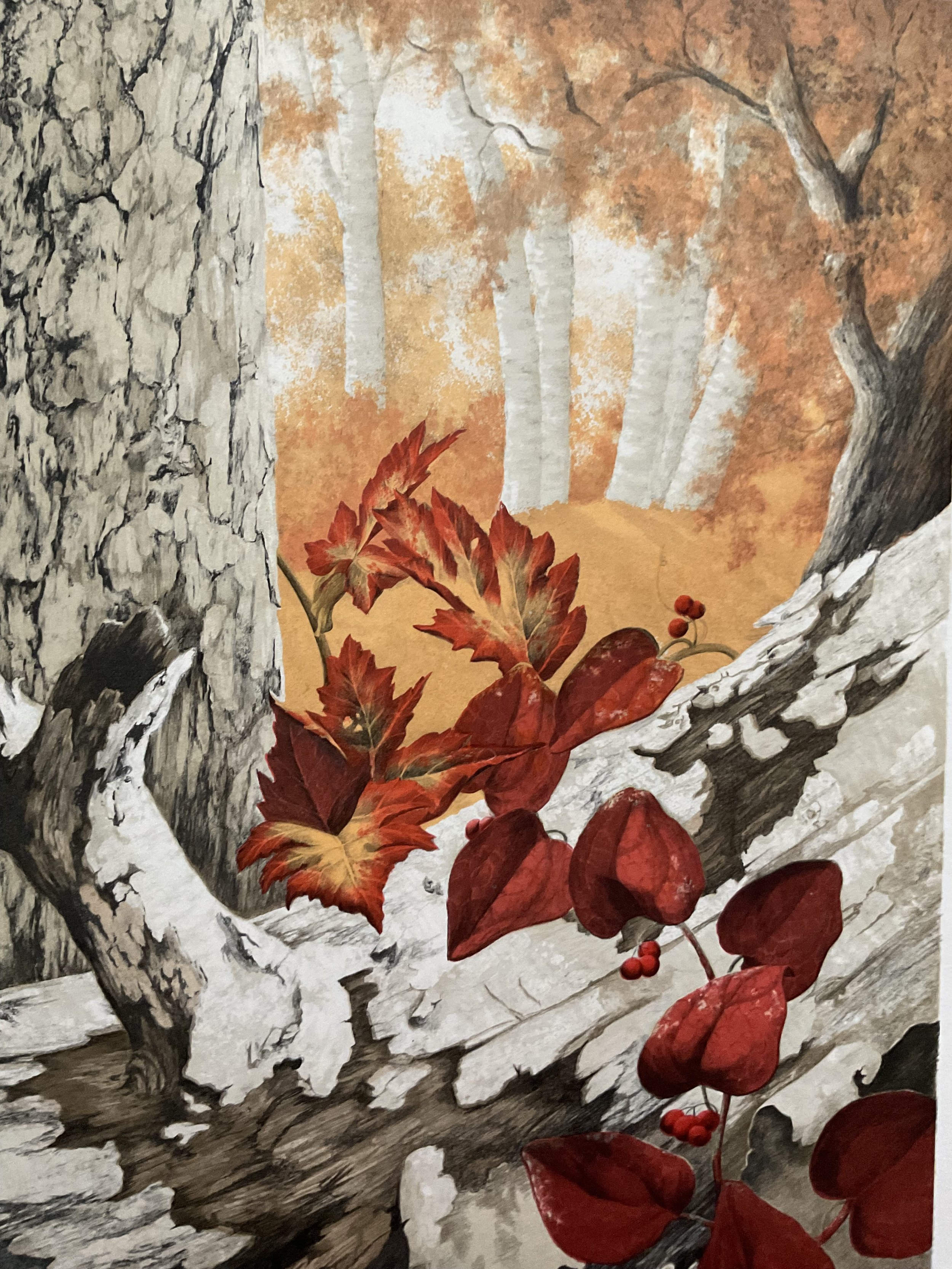 Image 1 of 10
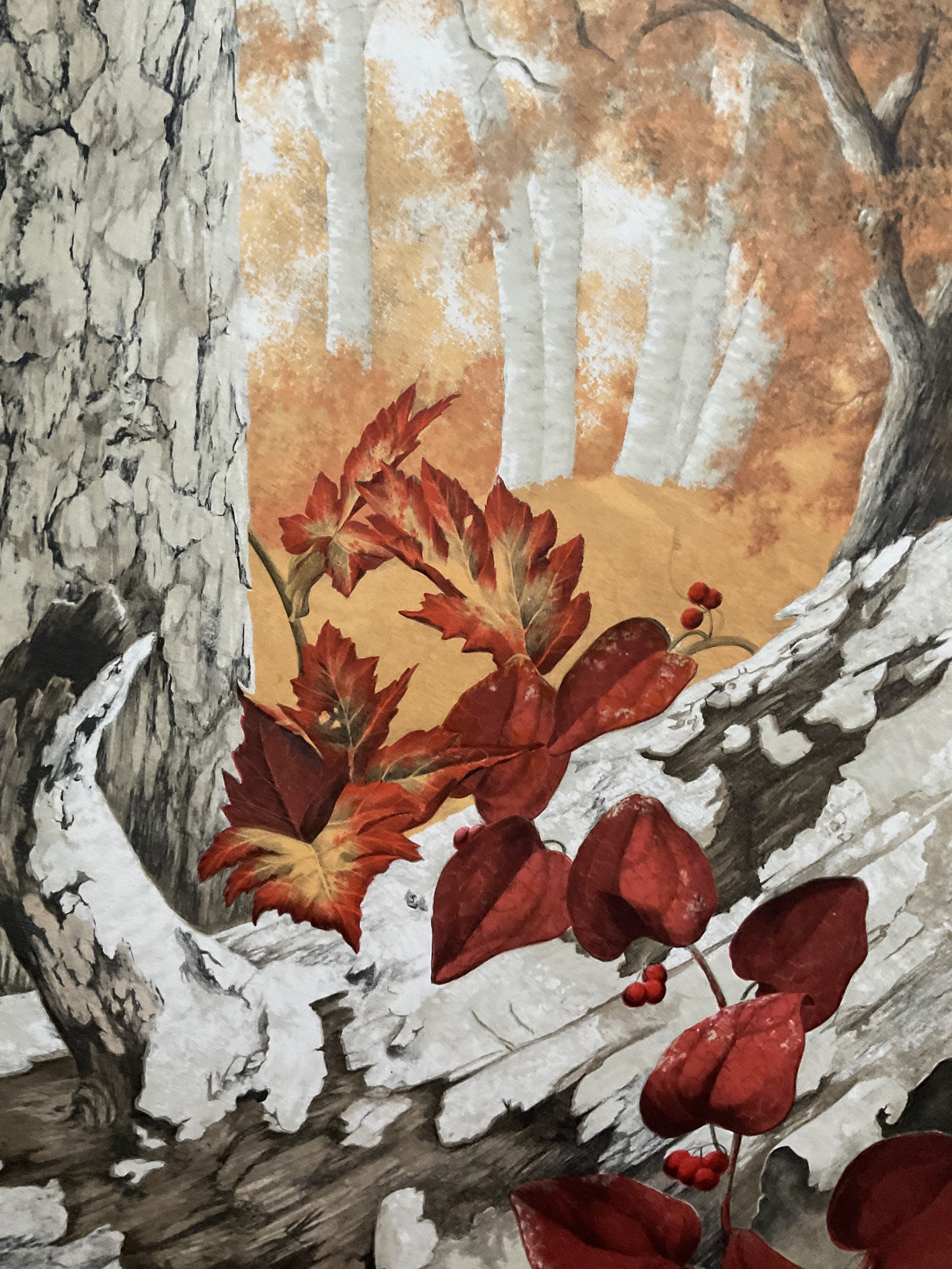 Image 2 of 10
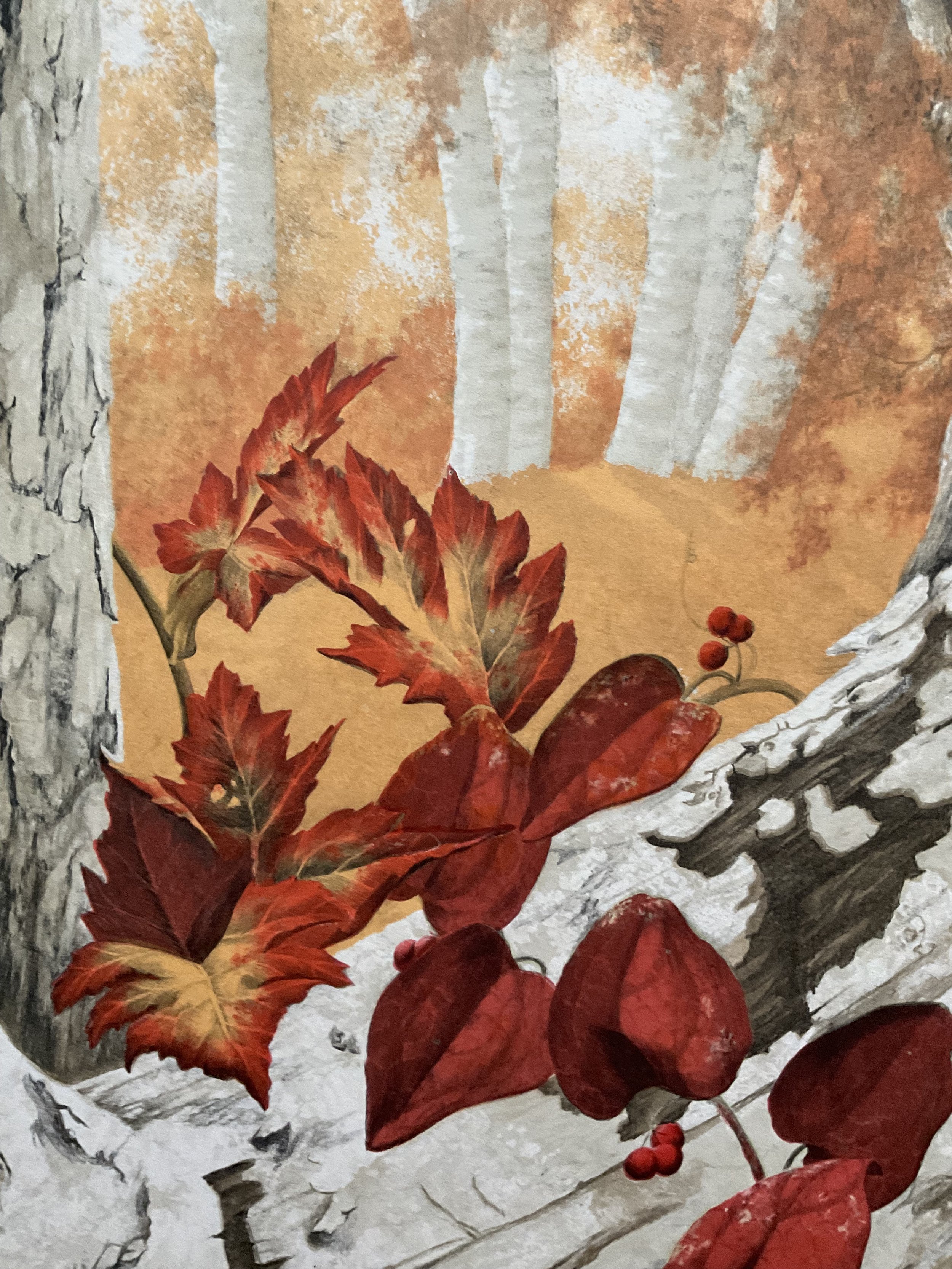 Image 3 of 10
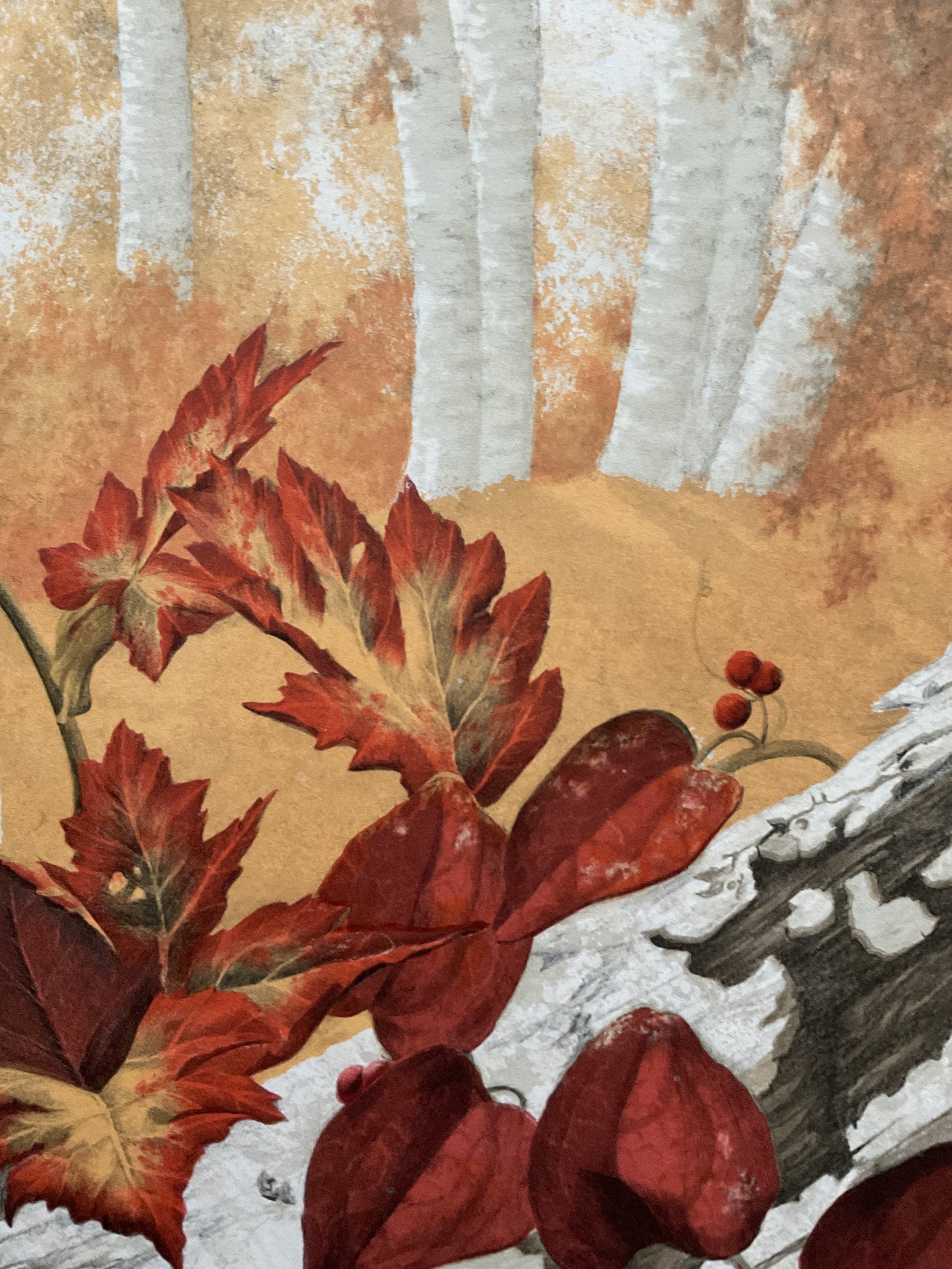 Image 4 of 10
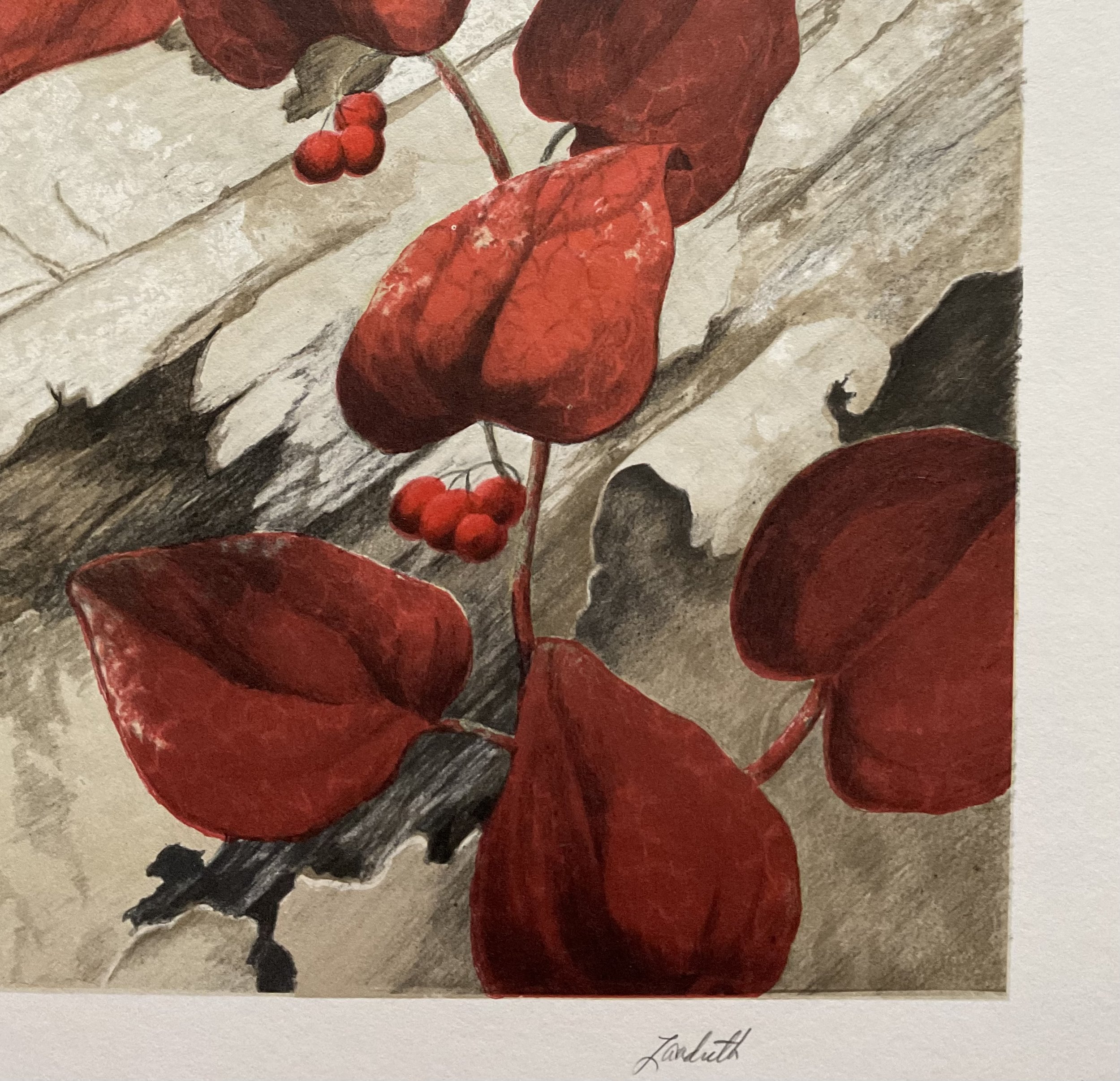 Image 5 of 10
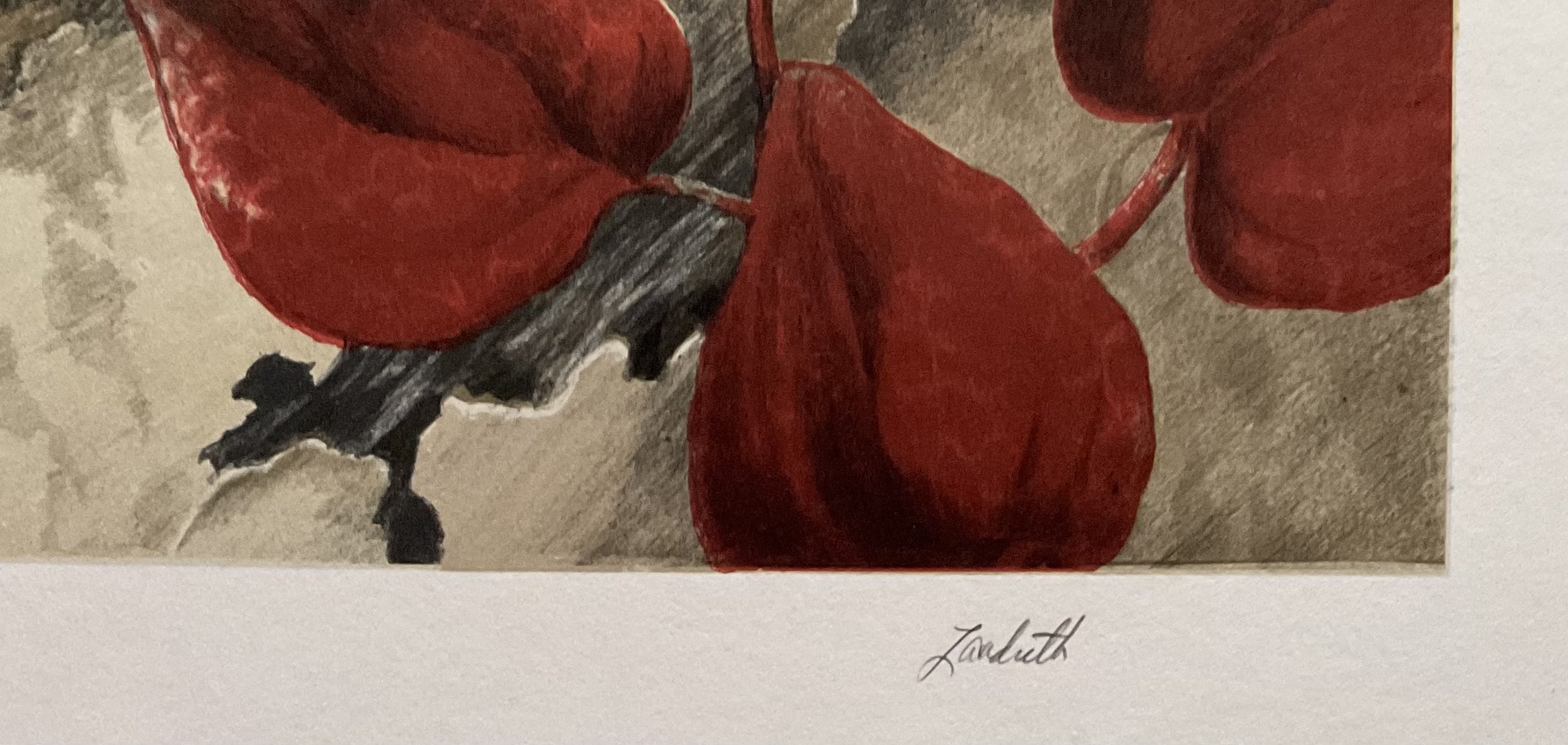 Image 6 of 10
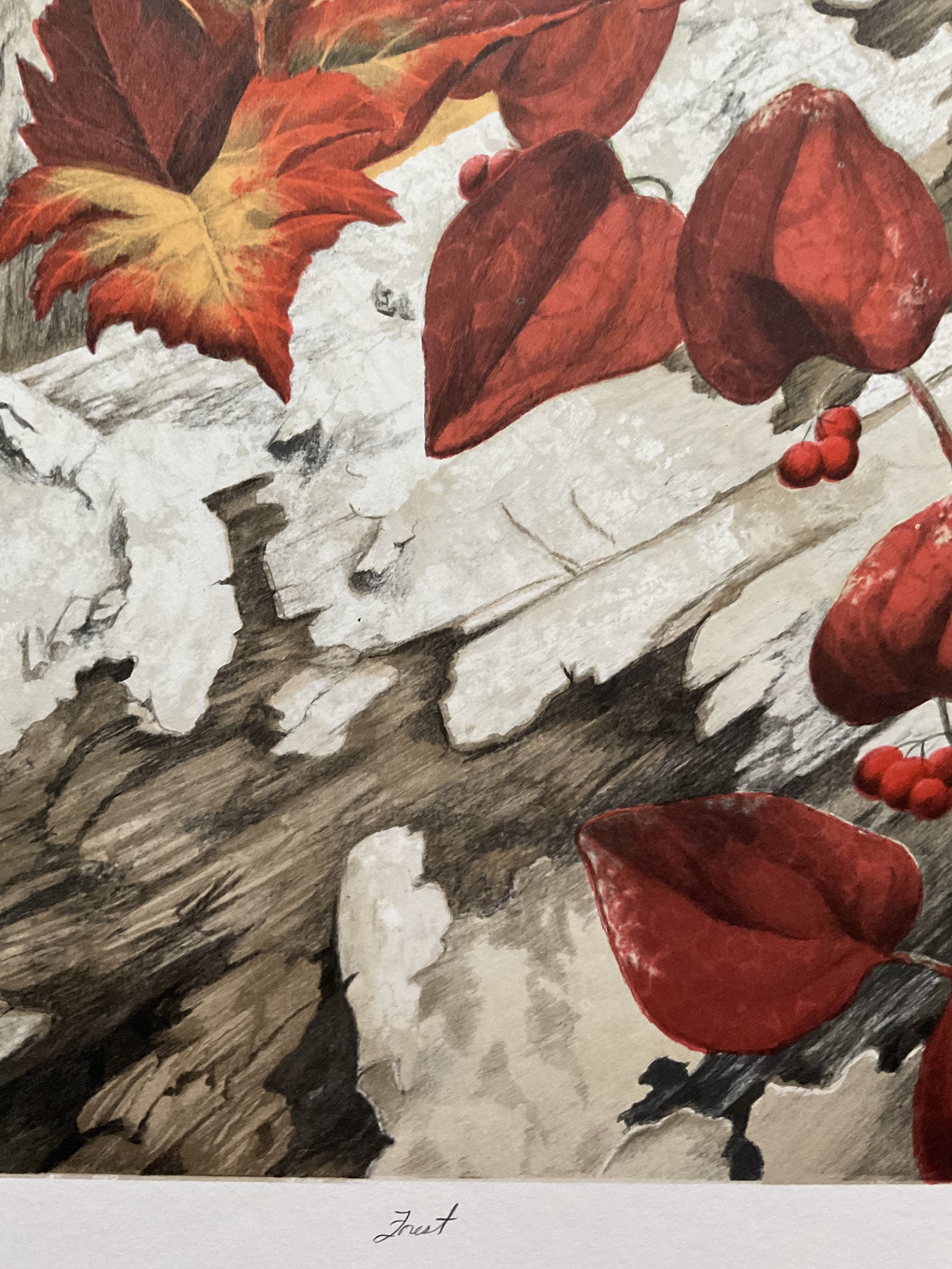 Image 7 of 10
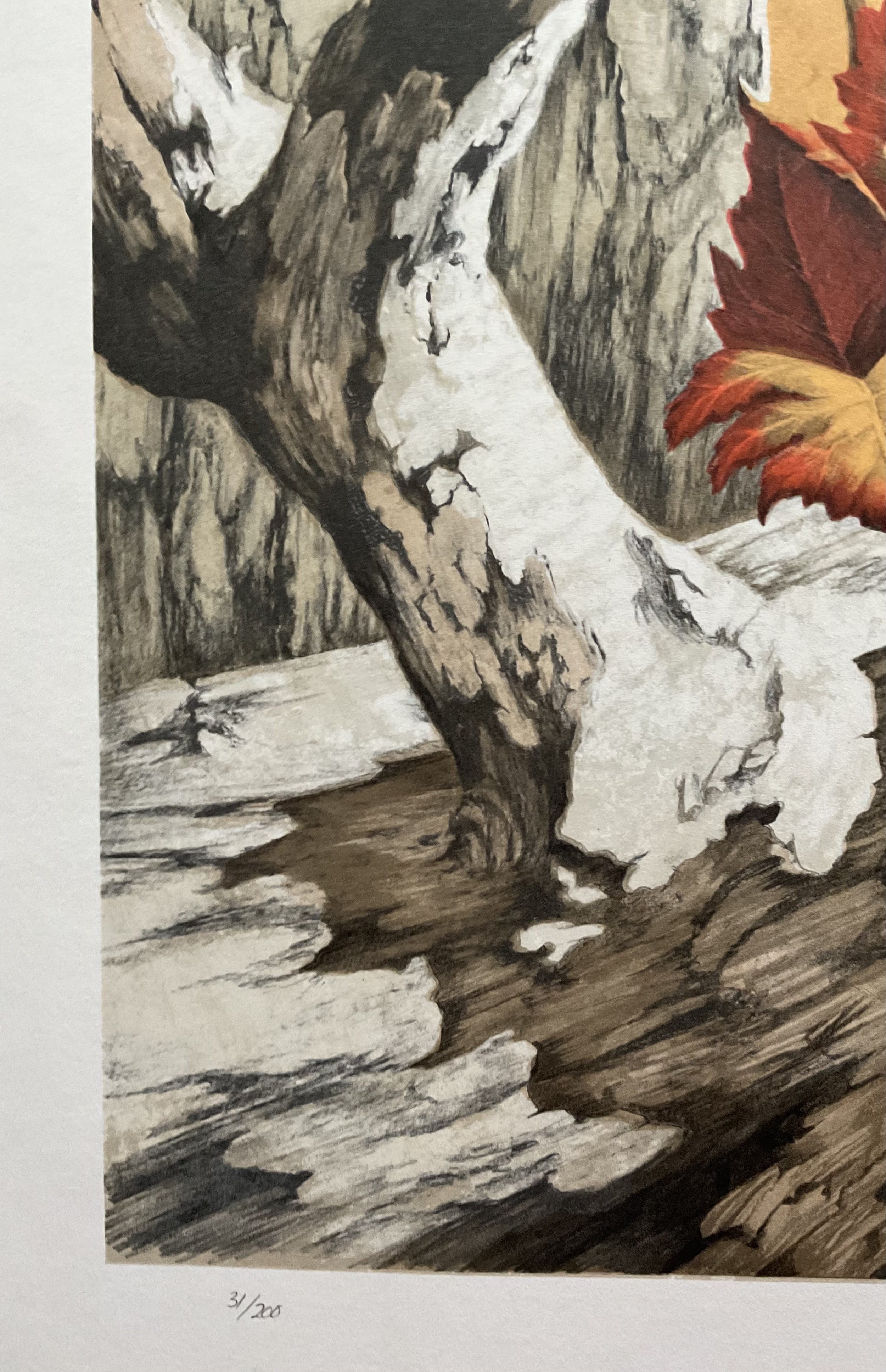 Image 8 of 10
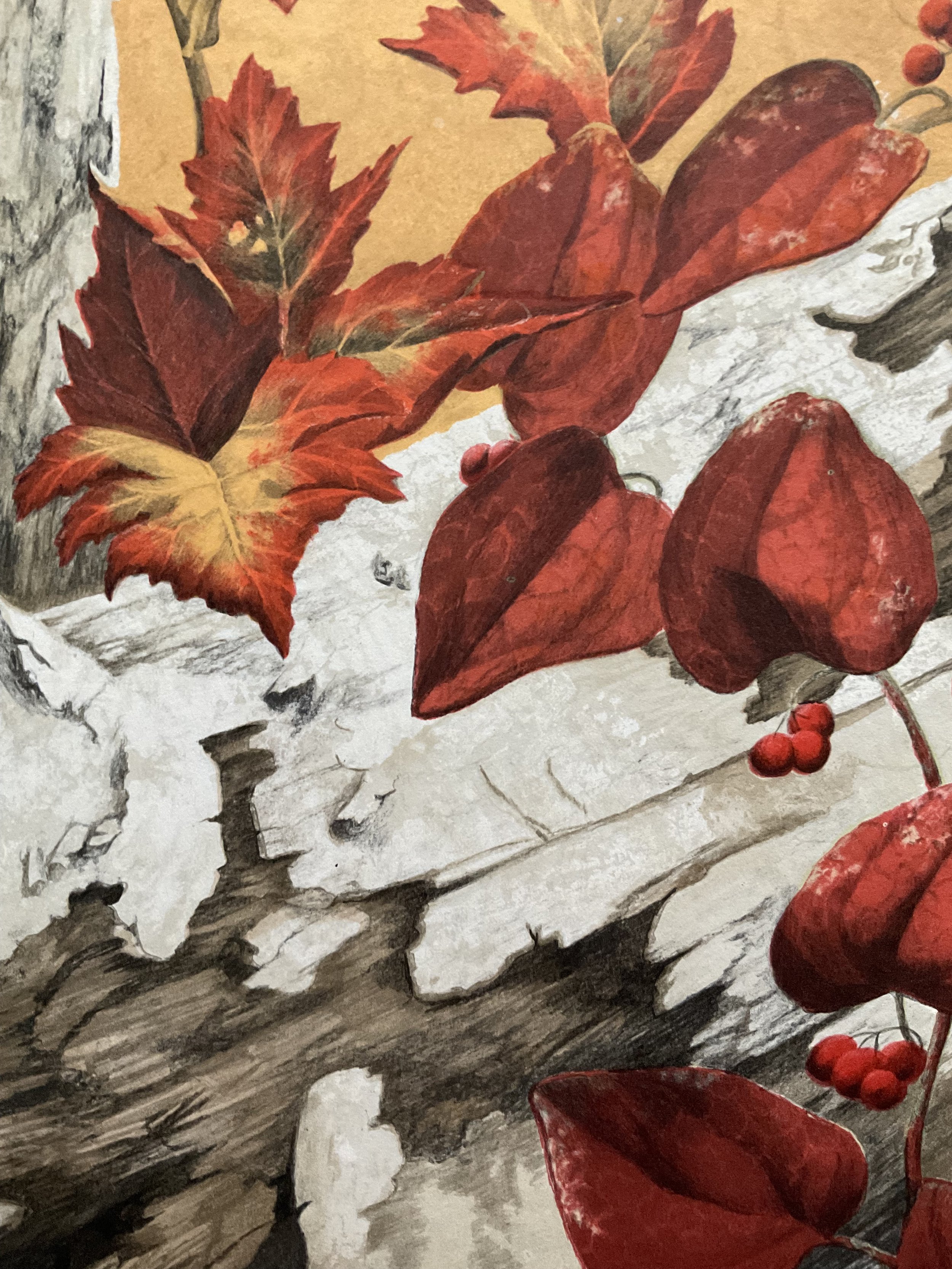 Image 9 of 10
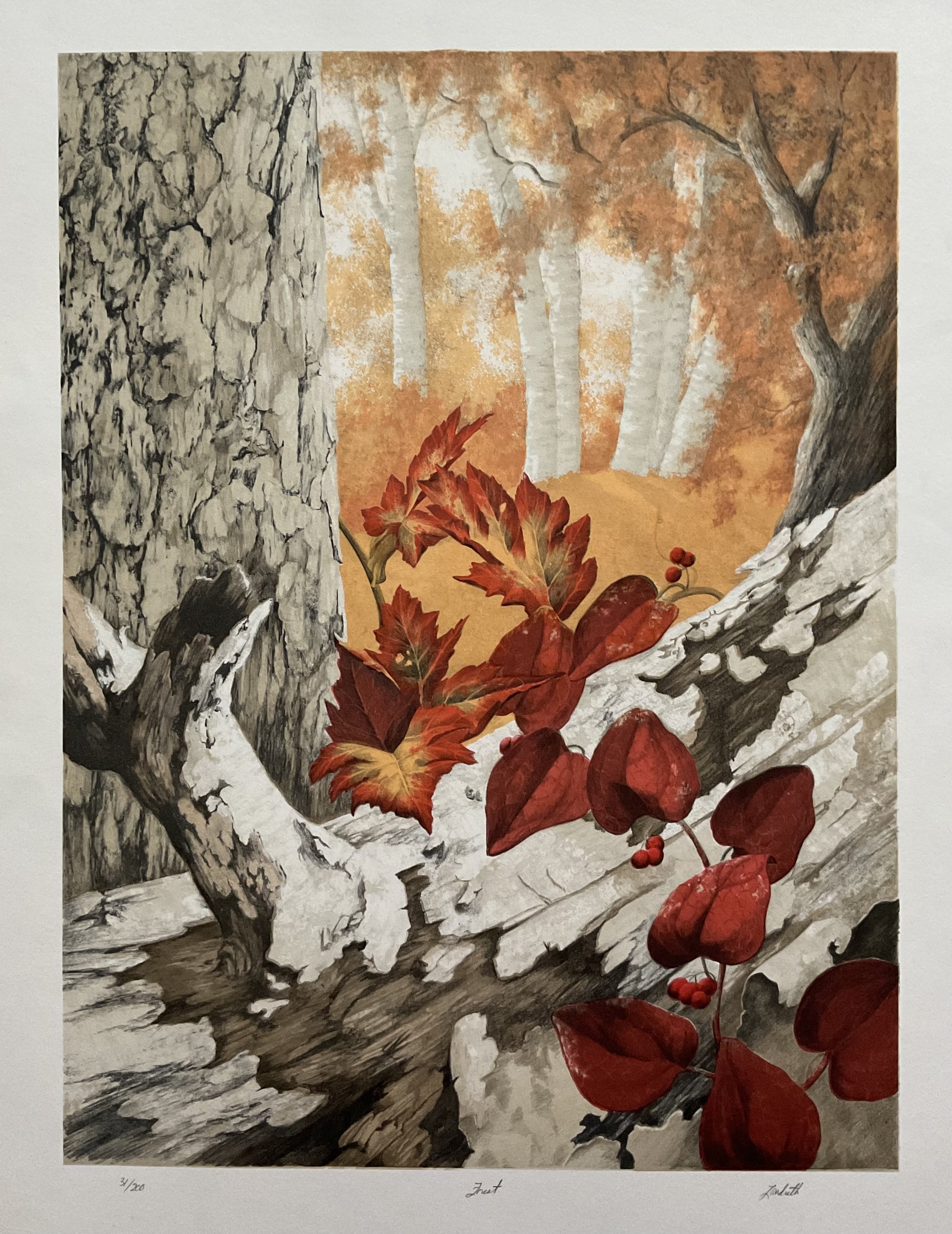 Image 10 of 10