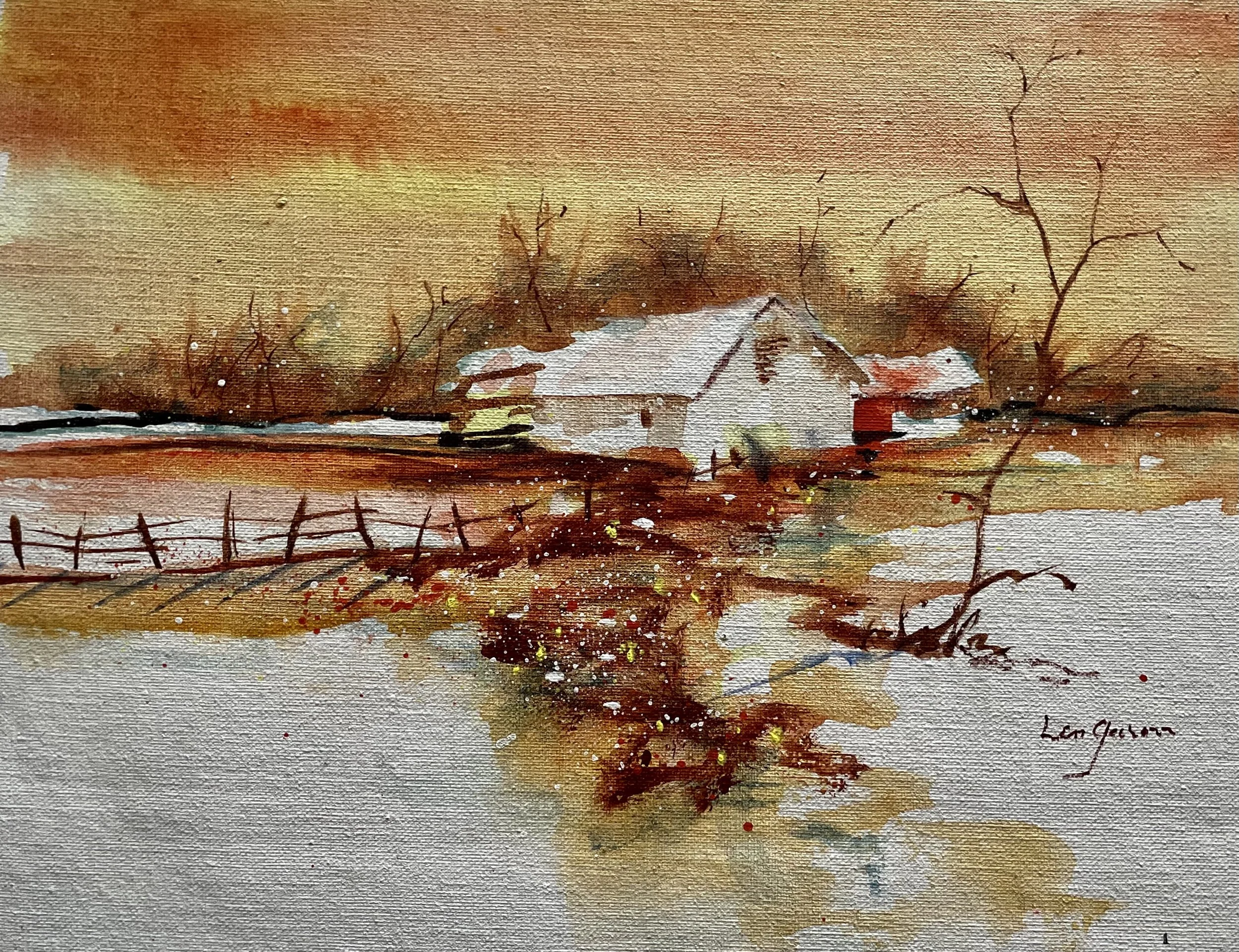
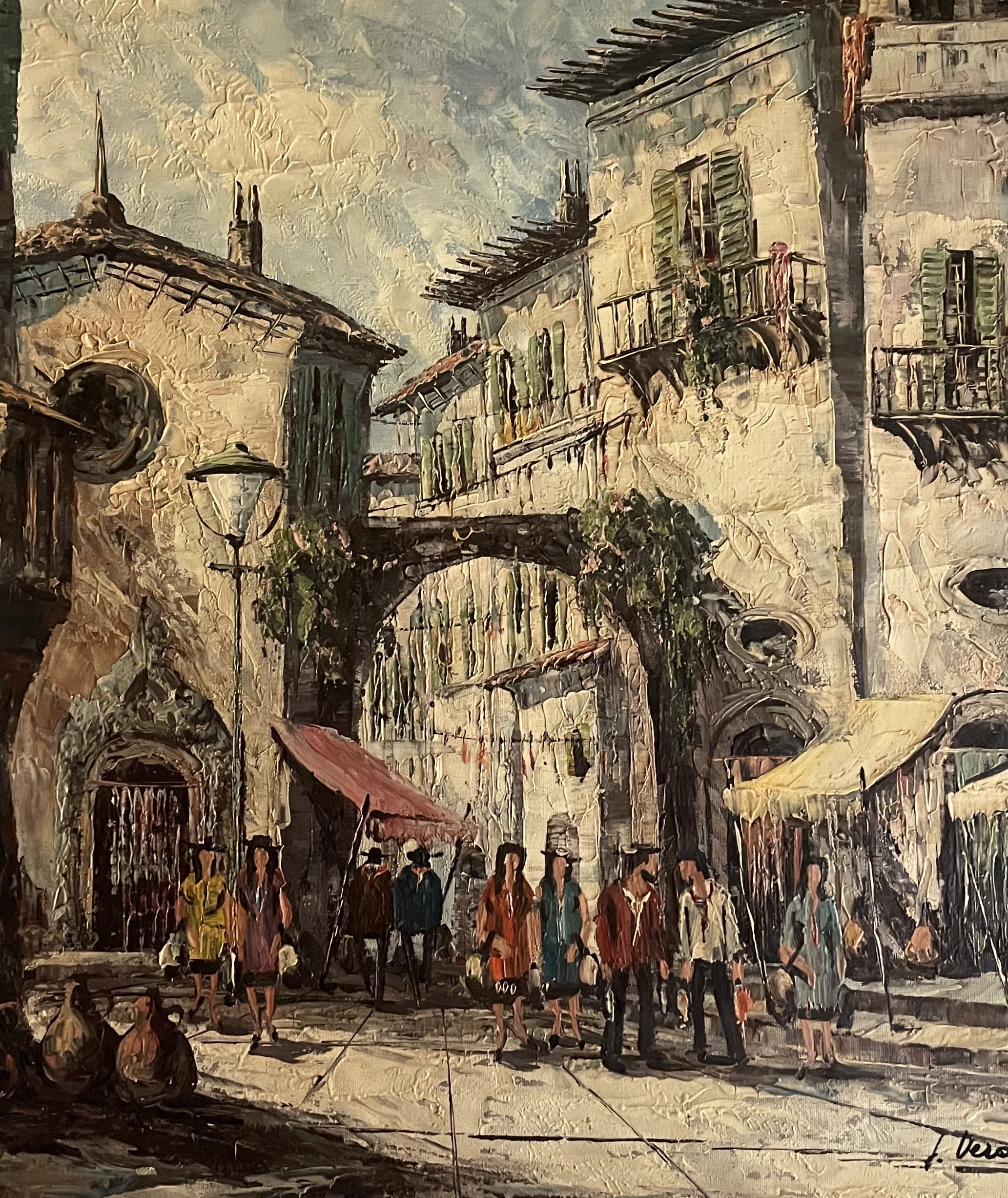
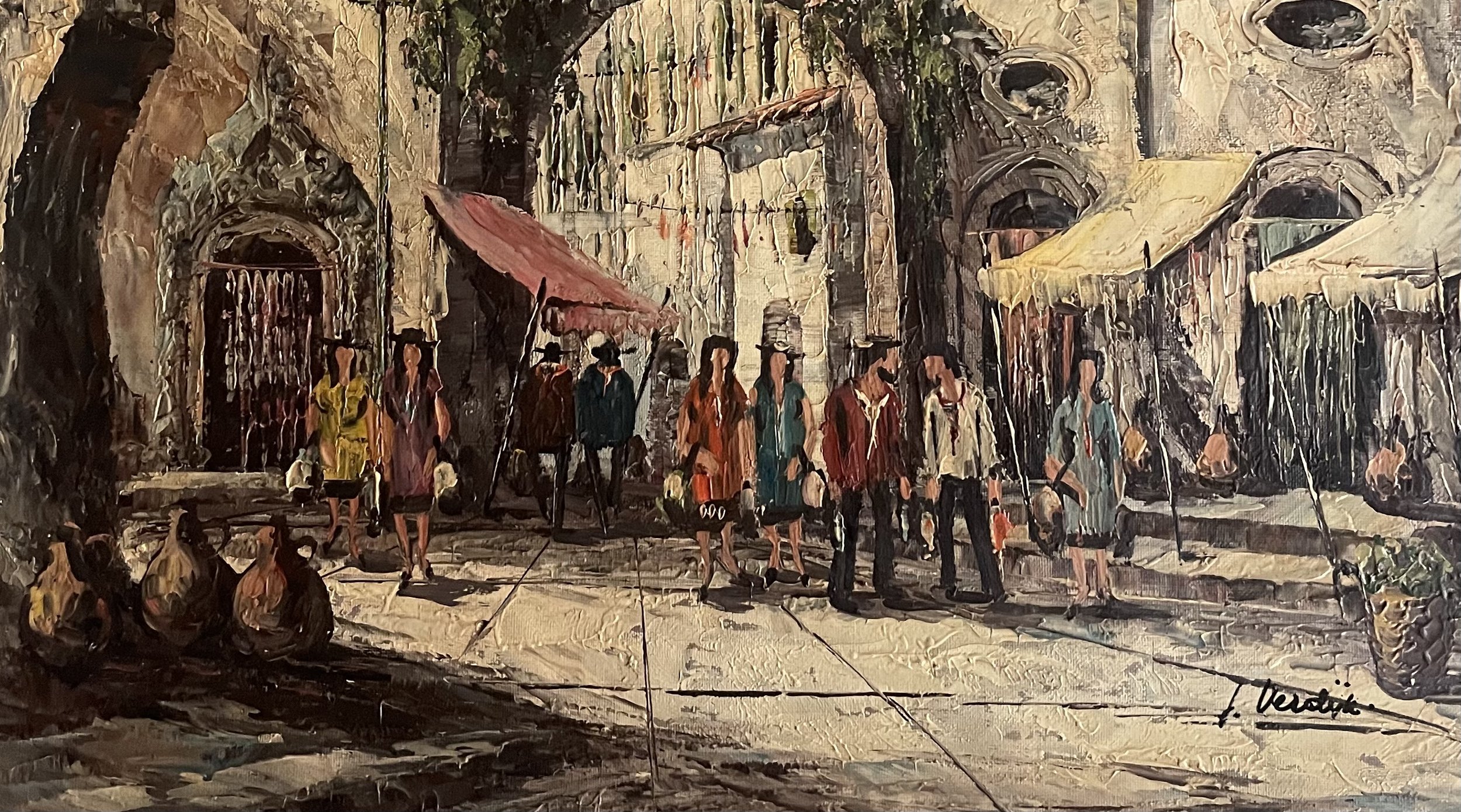
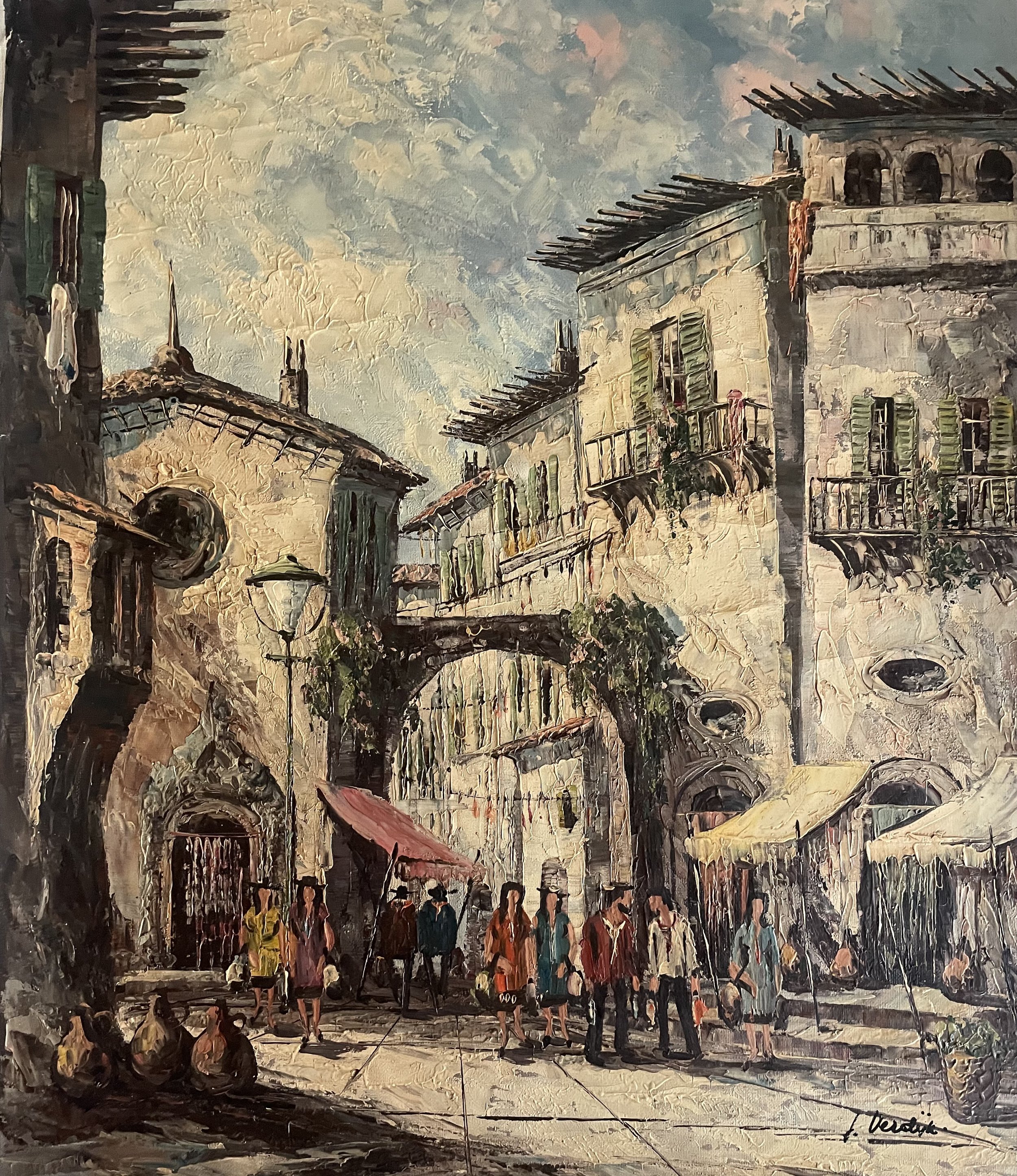
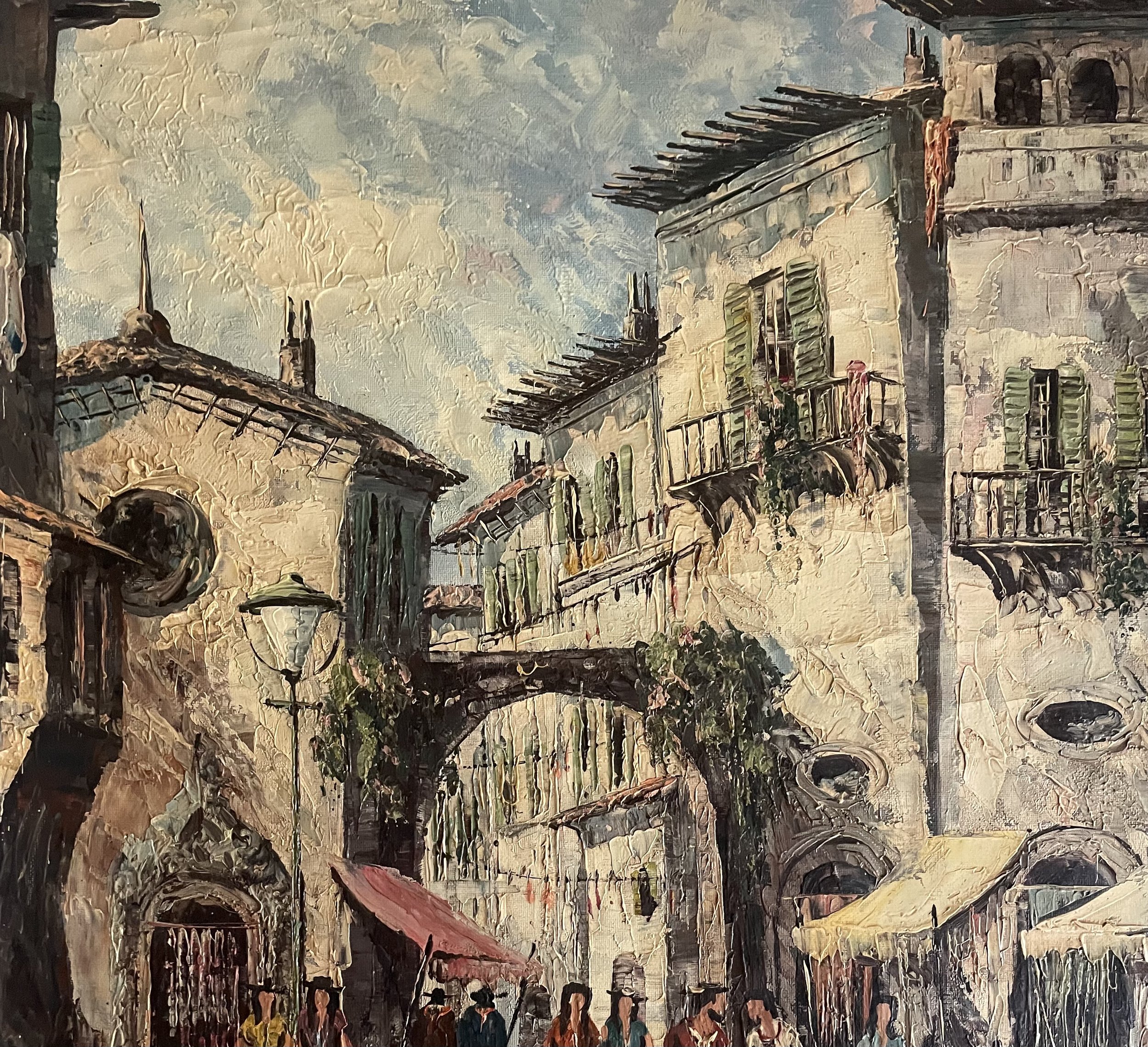
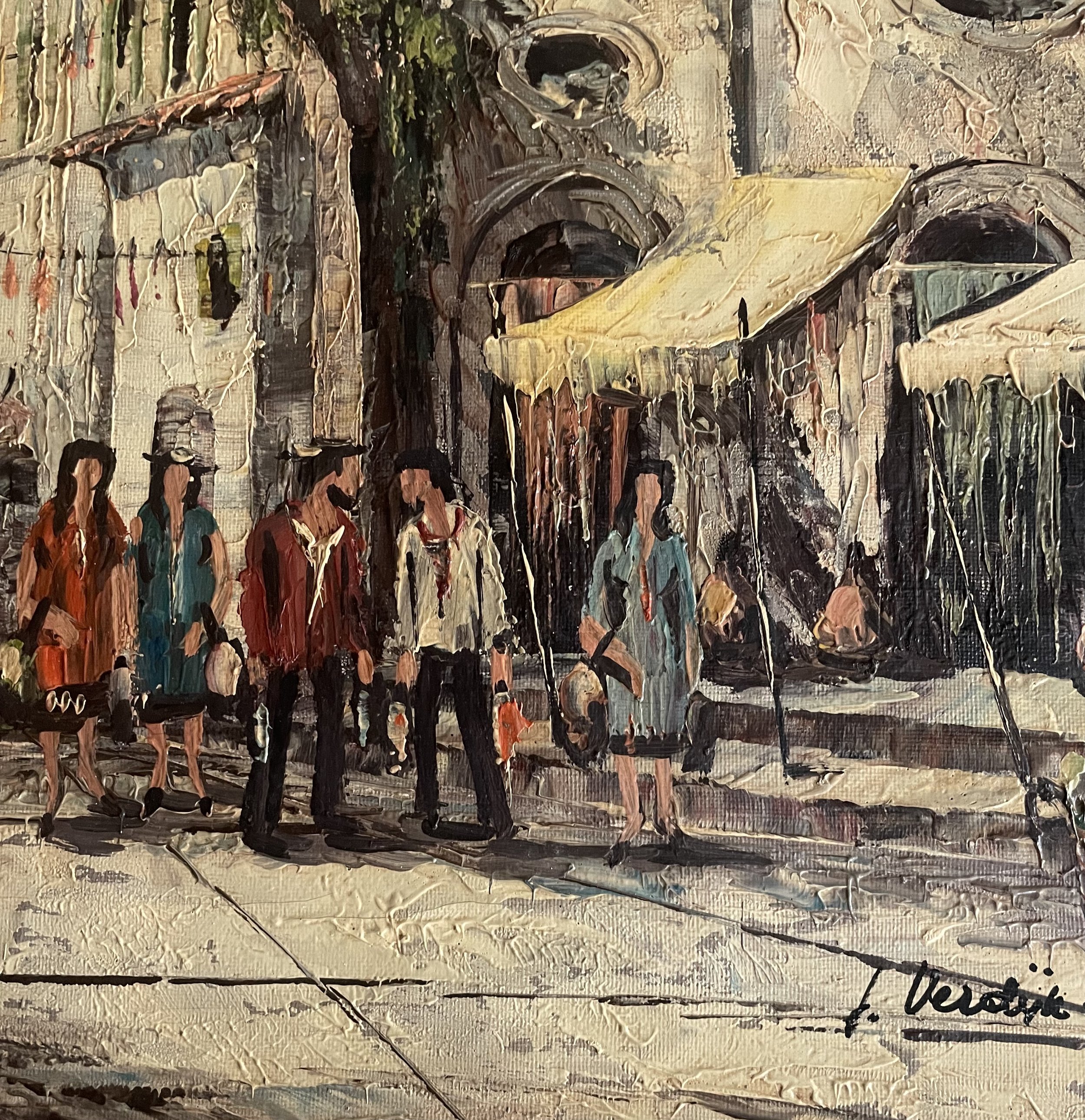
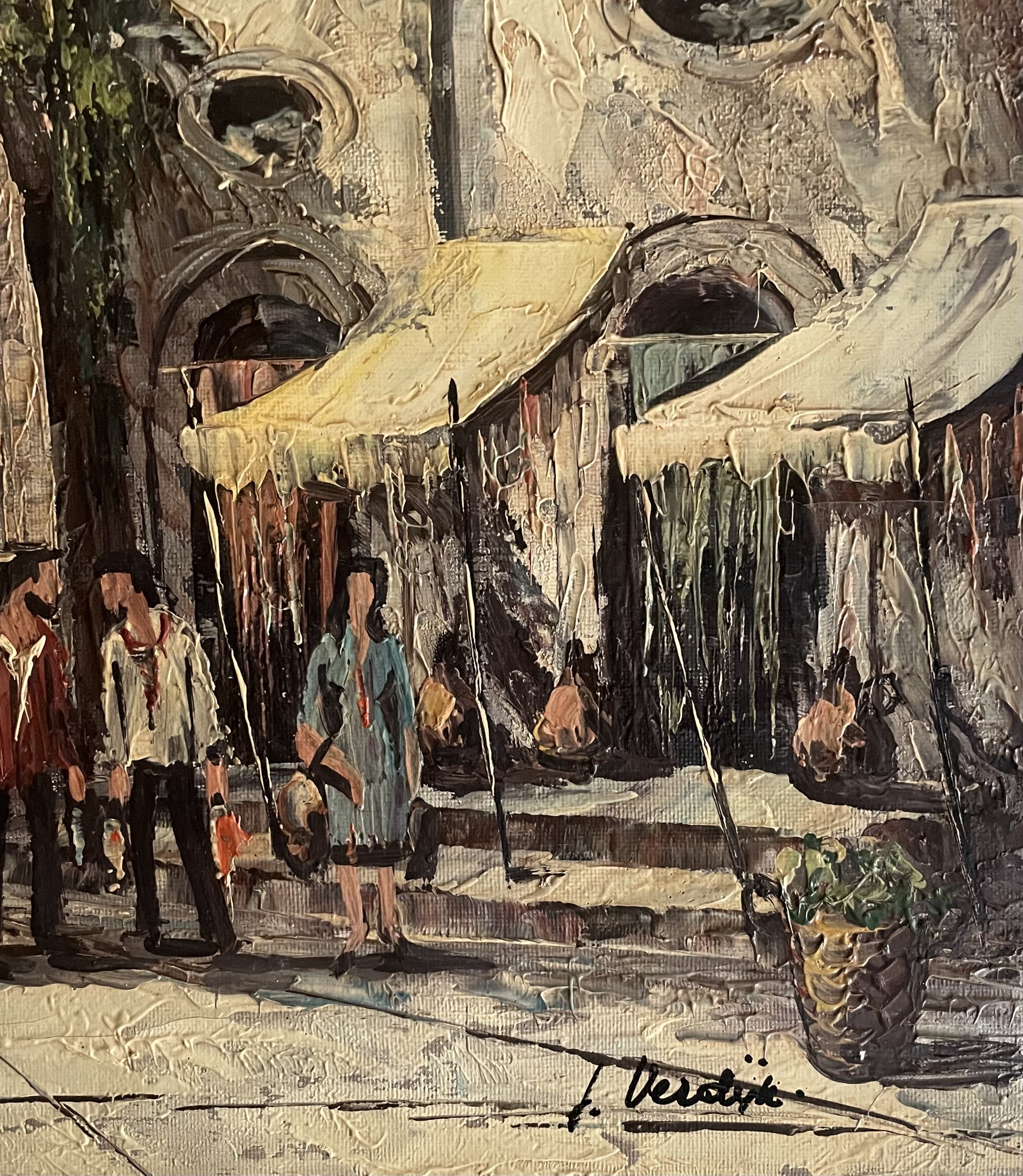
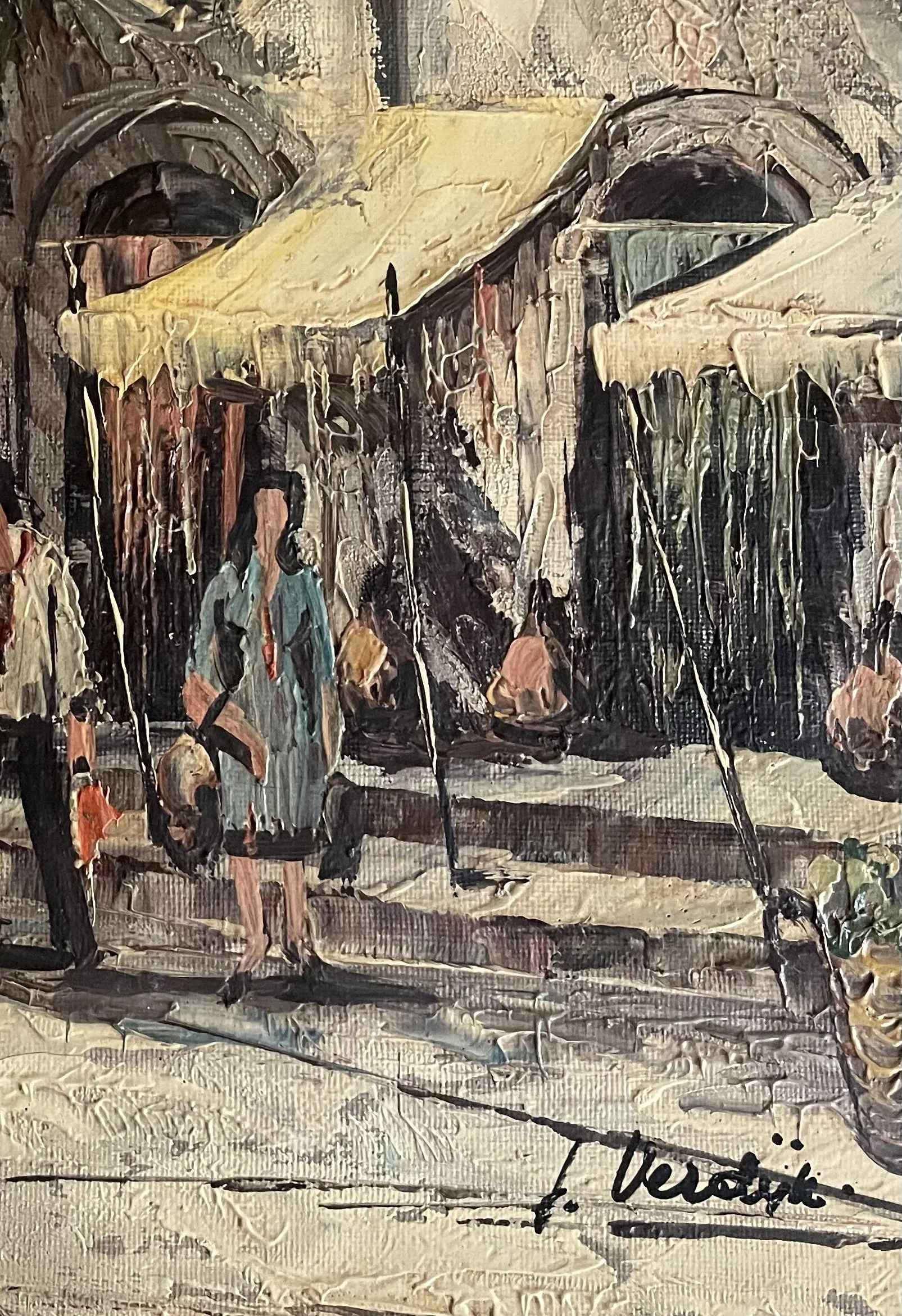
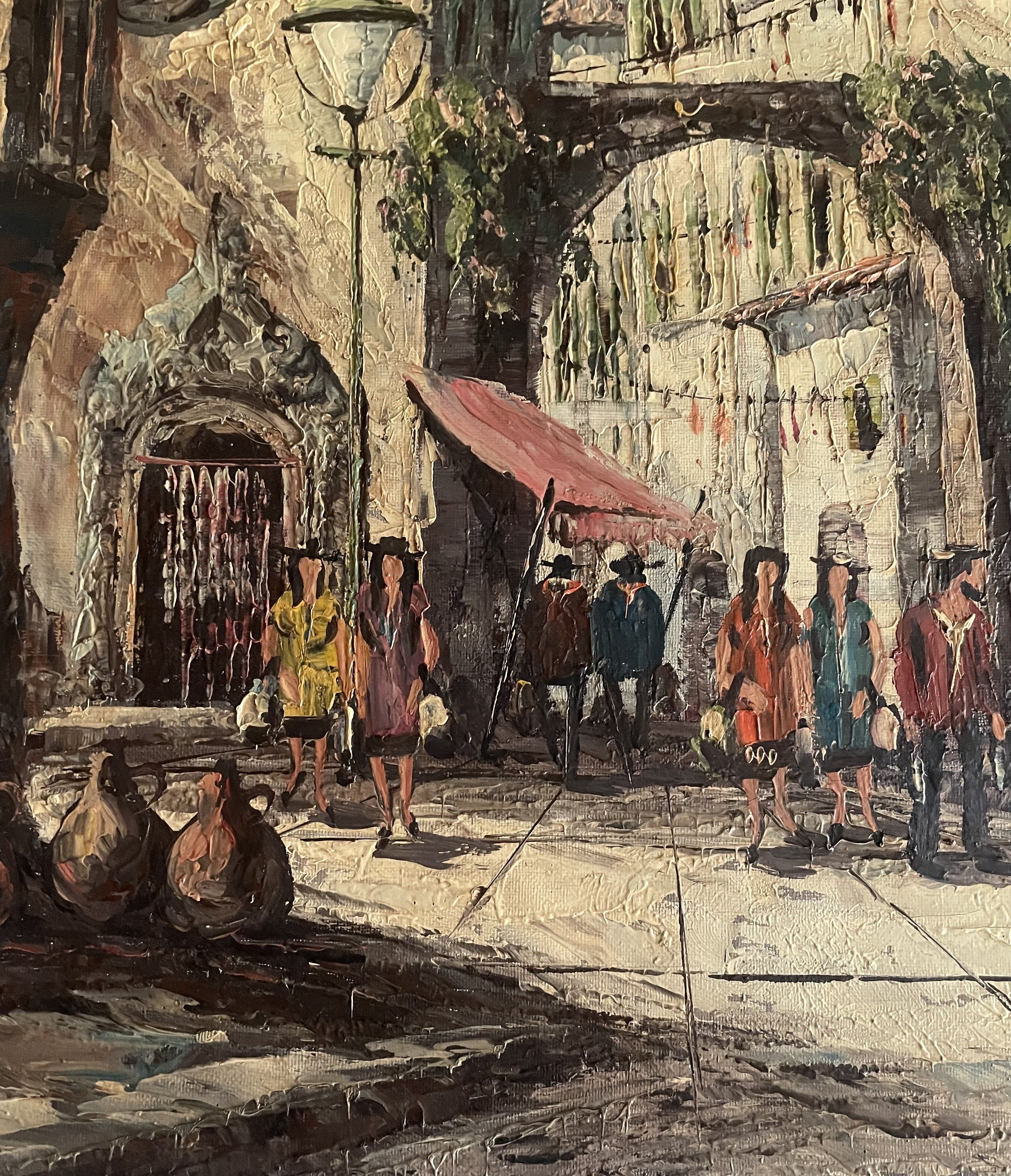
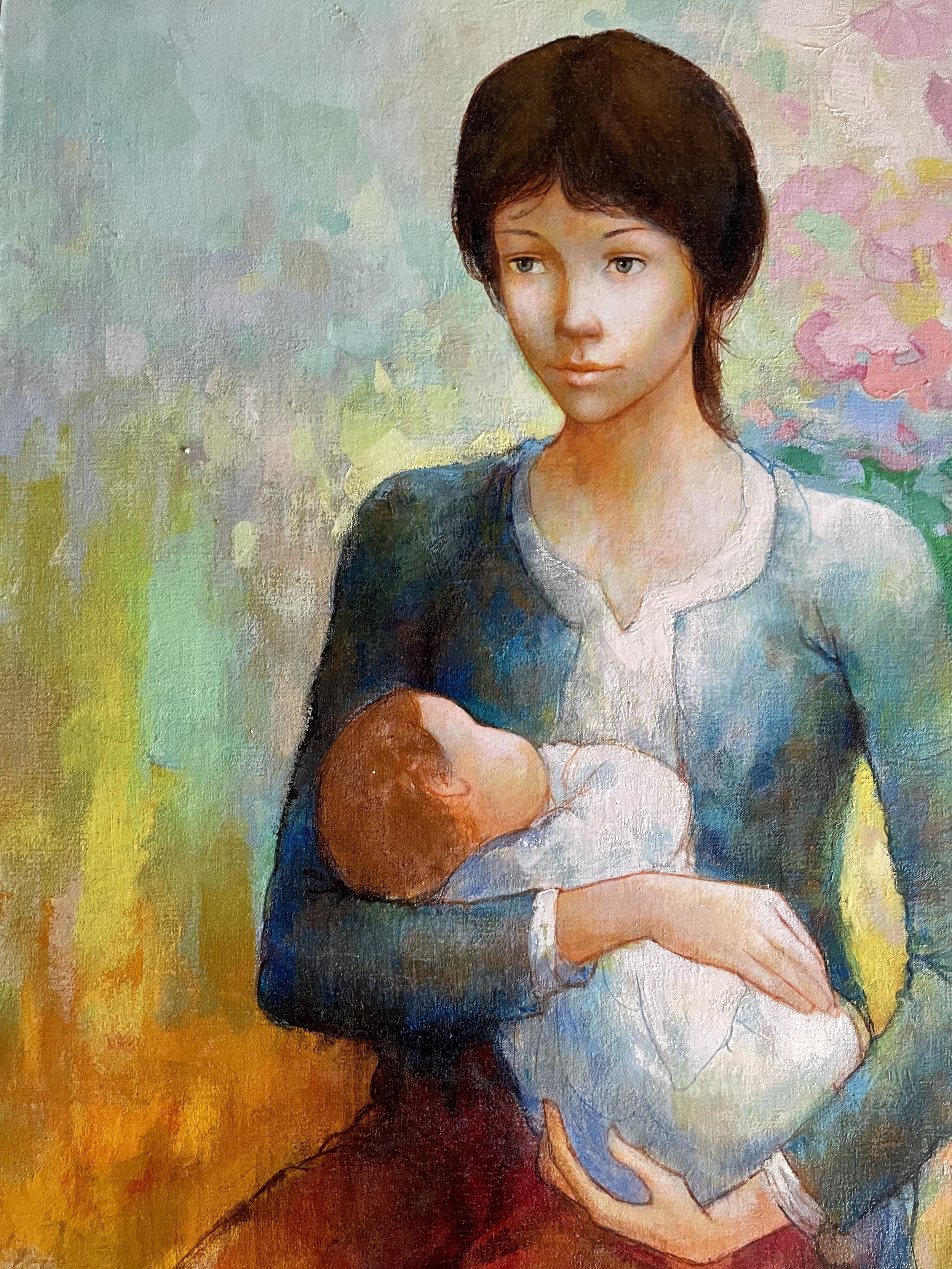
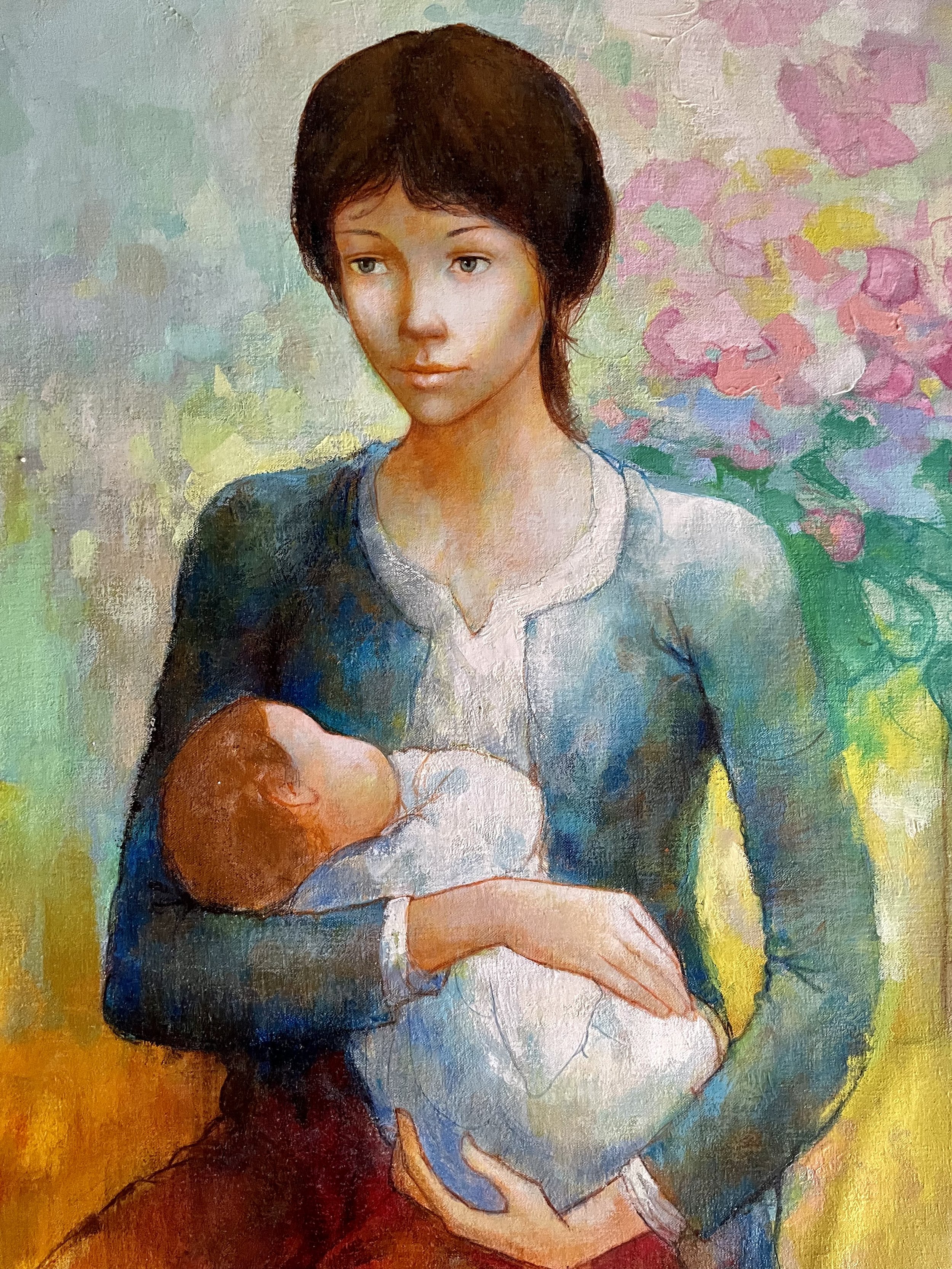
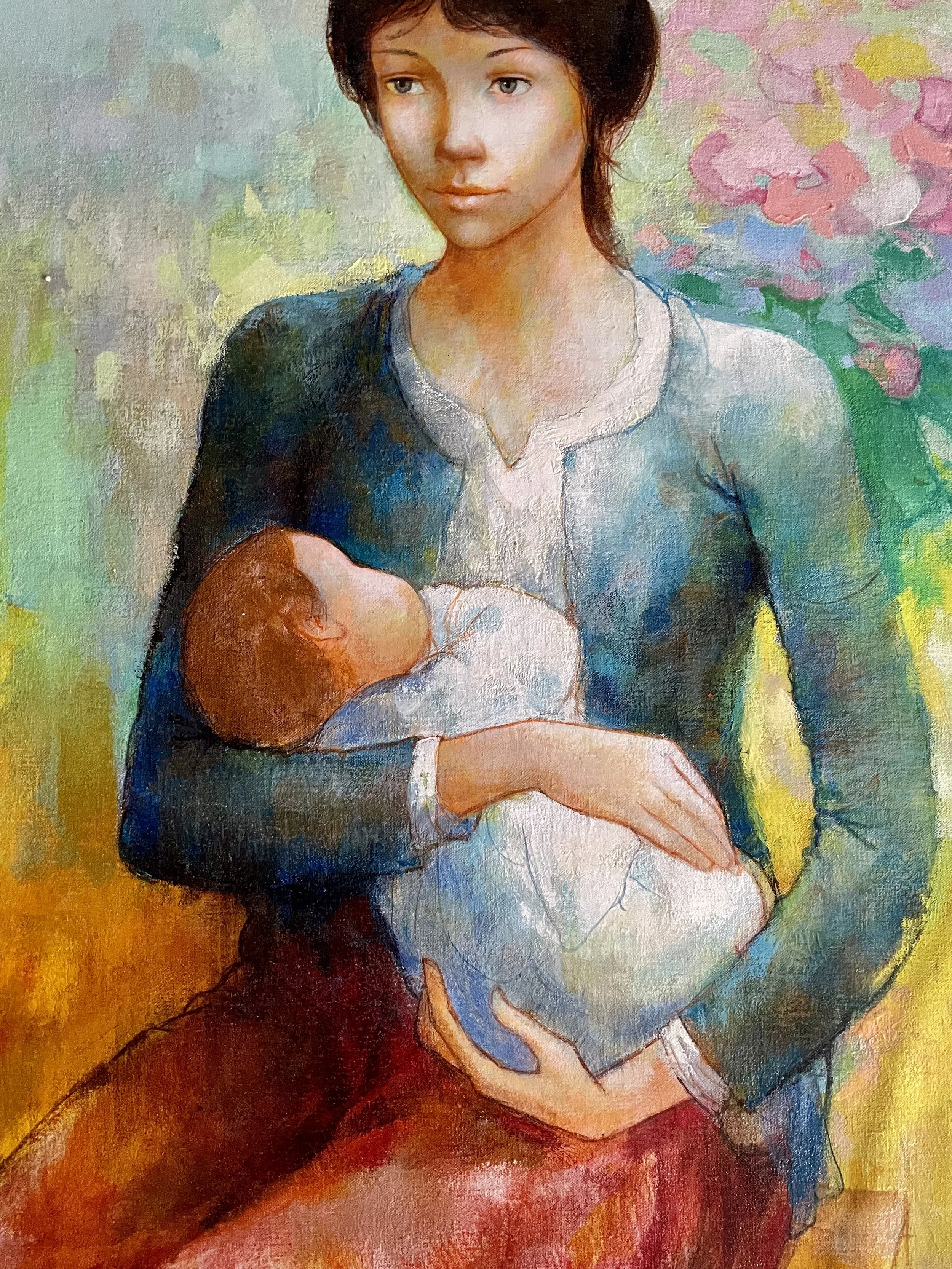
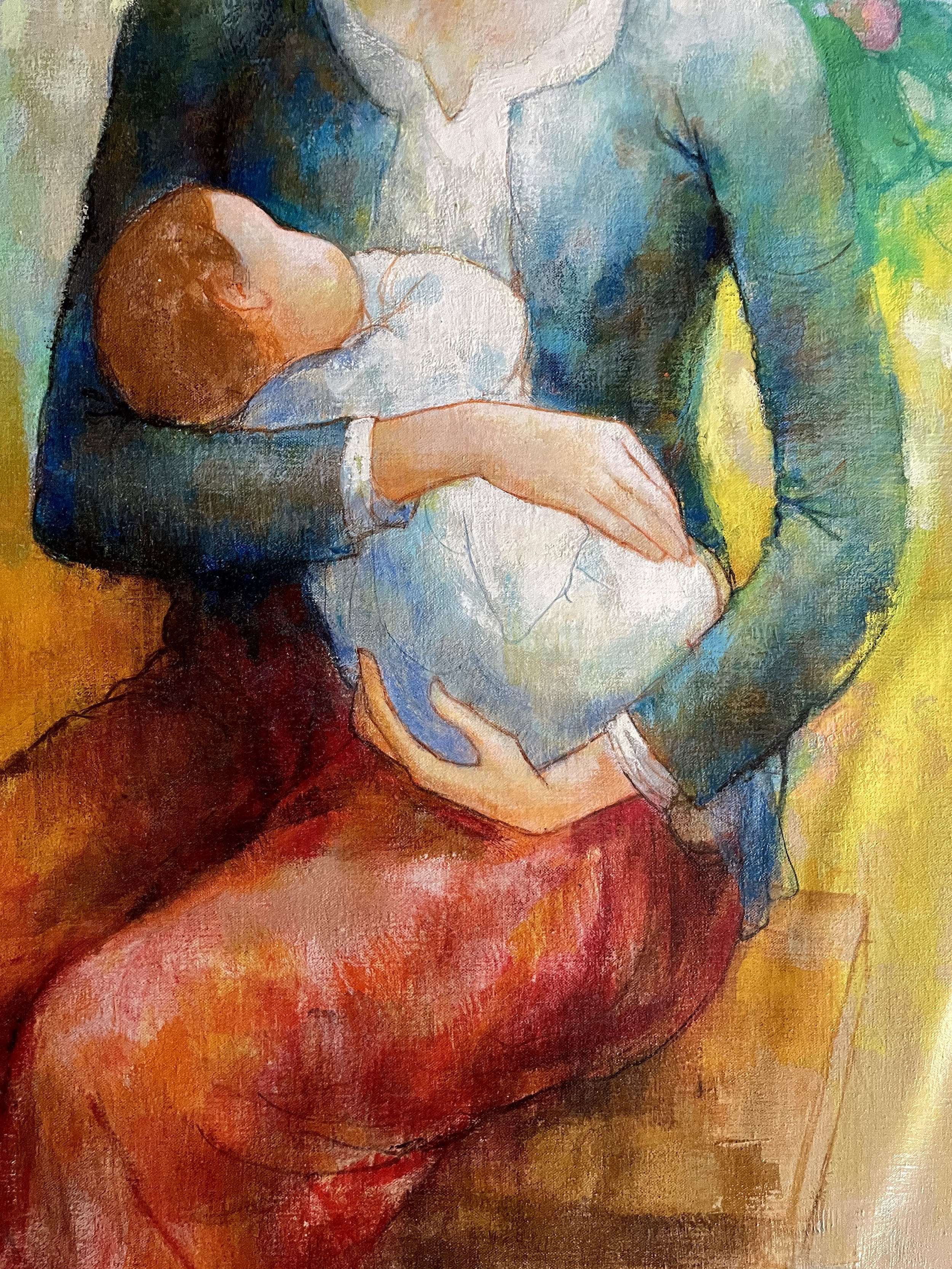
Geese at the Gate, Knud P. L. Eel (1914–1968), c.1960, oil on canvas, 24x36 in, signed LL.
A mid-century figurative genre painting by Knud Peter Larsen Eel depicting four white geese gathered at a weathered doorway marked with Yiddish/Hebrew-letter signage—an atmospheric study of light, texture, and everyday street life in oil on canvas.
Artwork Description
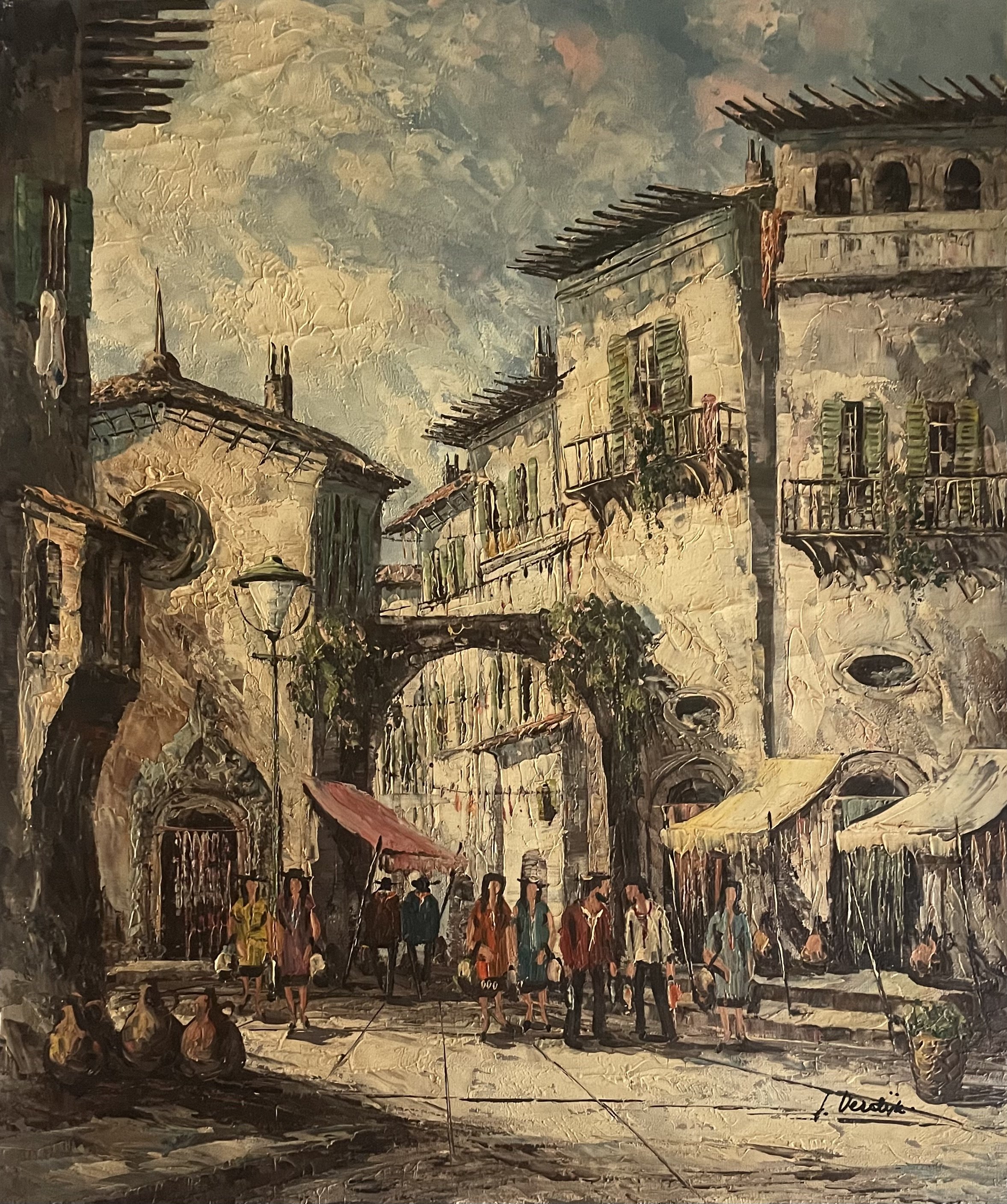
This evocative street scene centers on four white geese moving in a loose cluster across a stone-paved threshold, their bright bodies catching the cool, silvery light against a deep, mossy ground. The setting—a worn door or gate with painted Hebrew-letter (Yiddish-style) lettering above—creates a strong sense of place, suggesting an older urban quarter where layered histories remain visible in the built surface itself. The artist stages the geese like protagonists: necks angled, steps staggered, each bird slightly differentiated in posture so the group reads as a small procession.
The palette is restrained and cinematic: olive greens, umbers, smoky grays, and muted golds form a weathered architectural backdrop, while the geese are built with thick, confident lights—creamy whites, cool blue-grays, and warm reflected tones along the bellies and wings. Brushwork is purposeful and varied: broader, blocky strokes shape the wall planes; tighter, feathery strokes describe plumage; and scumbled passages suggest damp stone and age-darkened masonry. The contrast between the animated birds and the timeworn doorway gives the work its tension—movement set against permanence.
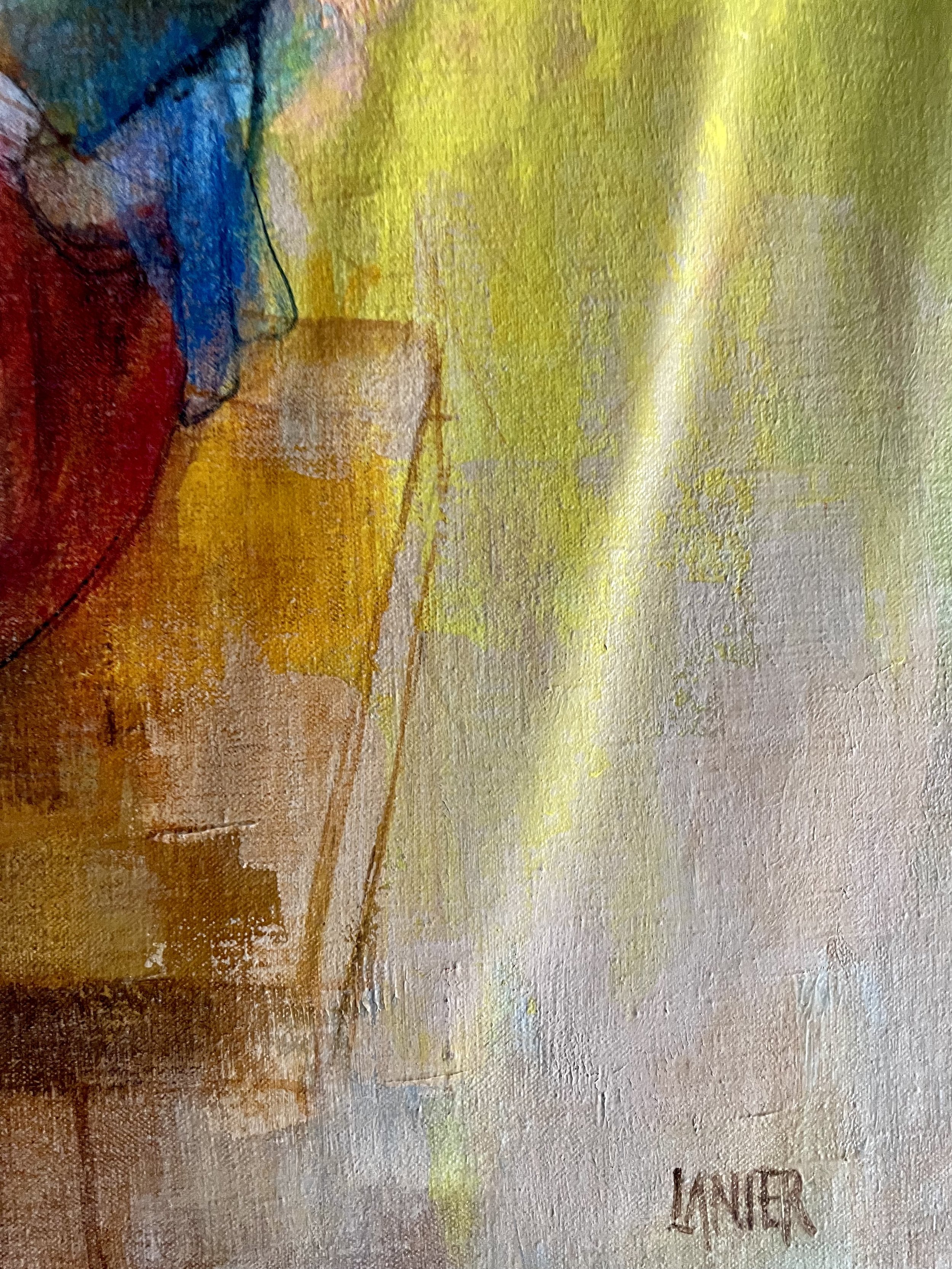
Medium and support characteristics read as oil on canvas: layered paint handling, soft blending in the wall passages, and thicker impasto-like highlights along the birds’ backs and wing edges. The work is signed “Eel” at the lower left in paint.
Artist Biography
Knud Peter Larsen Eel (1914–1968) was a Danish painter and printmaker associated with 20th-century Danish landscape and marine traditions, with documented training beginning at the Royal Danish Academy of Fine Arts in Copenhagen (1931).
While Eel is frequently recorded for landscapes and coastal subjects—work that aligns with Denmark’s strong modern tradition of place-based painting—he also produced graphic work (etching and aquatint) and exhibited broadly during his career. A published account connected to his print “Stranded” (1938) describes him as concentrating “mainly upon landscapes and marines,” notes museum exhibition activity in multiple Scandinavian cities, and references a major retrospective exhibition in Copenhagen in 1962.
Auction records and listings consistently identify him as “Knud Peter Eel,” giving biographical anchors of birth in Hellested (1914) and death in Lemvig (1968), and they show that he signed works simply “EEL/Eel,” matching the signature format visible on the painting.
Knud Peter Larsen Eel (Danish, 1914–1968). Geese at the Gate (title attributed), c.1960. Oil on canvas, 24 x 36 in. A moody, painterly genre scene of four white geese at a weathered doorway with Hebrew-letter/Yiddish-style signage; signed “Eel” lower left.
Certificate of Authentication
Artist: Knud Peter Larsen Eel (Danish, 1914–1968)
Title: Geese at the Gate (attributed)
Medium: Oil on canvas
Dimensions: 24 x 36 inches
Signature: Signed “Eel” lower left (in paint)
Date: Circa mid-20th century (c. 1950–1965)
This certifies that, in our professional opinion, the artwork described above is an authentic work attributed to Knud Peter Larsen Eel, based on signature presence/format and consistency with documented artist identifiers in published and market references.
Condition
Overall presentation appears strong with no obvious major paint loss visible in the provided images. Minor surface grime and handling wear are consistent with age (notably along edges and in darker passages). A light professional surface cleaning is likely to improve clarity and contrast. (Condition should be confirmed in-hand under raking light for varnish yellowing, fine craquelure, and any prior restoration.)
Provenance chain
Knud Peter Larsen Eel (artist)
Acquired by: Mitch Morse Gallery (publisher/primary source for this collection; acquired in NYC, United States and Europe)
Subsequently: Private Collection
Current owner: Artfind Gallery, Washington DC
Door text translation (Hebrew/Yiddish script)
The lettering on the door is painted in Hebrew characters, but it appears to be written in a Yiddish-style phonetic spelling rather than clear modern Hebrew. The words do not form a recognizable biblical verse or common Hebrew phrase (such as a blessing, shop sign, or directional instruction). Instead, they read more like proper names or possibly stylized shop-family names rendered in Ashkenazi/Yiddish orthography.
Given the painterly treatment and slight irregularities in the letter forms, it is also possible that the artist was evoking the visual atmosphere of an old Jewish quarter—using Hebrew script as a cultural marker—rather than carefully reproducing a specific, translatable sentence. The effect contributes to the sense of place and historical texture in the composition rather than serving as a literal message.
Geese at the Gate, Knud P. L. Eel (1914–1968), c.1960, oil on canvas, 24x36 in, signed LL.
A mid-century figurative genre painting by Knud Peter Larsen Eel depicting four white geese gathered at a weathered doorway marked with Yiddish/Hebrew-letter signage—an atmospheric study of light, texture, and everyday street life in oil on canvas.
Artwork Description
This evocative street scene centers on four white geese moving in a loose cluster across a stone-paved threshold, their bright bodies catching the cool, silvery light against a deep, mossy ground. The setting—a worn door or gate with painted Hebrew-letter (Yiddish-style) lettering above—creates a strong sense of place, suggesting an older urban quarter where layered histories remain visible in the built surface itself. The artist stages the geese like protagonists: necks angled, steps staggered, each bird slightly differentiated in posture so the group reads as a small procession.
The palette is restrained and cinematic: olive greens, umbers, smoky grays, and muted golds form a weathered architectural backdrop, while the geese are built with thick, confident lights—creamy whites, cool blue-grays, and warm reflected tones along the bellies and wings. Brushwork is purposeful and varied: broader, blocky strokes shape the wall planes; tighter, feathery strokes describe plumage; and scumbled passages suggest damp stone and age-darkened masonry. The contrast between the animated birds and the timeworn doorway gives the work its tension—movement set against permanence.
Medium and support characteristics read as oil on canvas: layered paint handling, soft blending in the wall passages, and thicker impasto-like highlights along the birds’ backs and wing edges. The work is signed “Eel” at the lower left in paint.
Artist Biography
Knud Peter Larsen Eel (1914–1968) was a Danish painter and printmaker associated with 20th-century Danish landscape and marine traditions, with documented training beginning at the Royal Danish Academy of Fine Arts in Copenhagen (1931).
While Eel is frequently recorded for landscapes and coastal subjects—work that aligns with Denmark’s strong modern tradition of place-based painting—he also produced graphic work (etching and aquatint) and exhibited broadly during his career. A published account connected to his print “Stranded” (1938) describes him as concentrating “mainly upon landscapes and marines,” notes museum exhibition activity in multiple Scandinavian cities, and references a major retrospective exhibition in Copenhagen in 1962.
Auction records and listings consistently identify him as “Knud Peter Eel,” giving biographical anchors of birth in Hellested (1914) and death in Lemvig (1968), and they show that he signed works simply “EEL/Eel,” matching the signature format visible on the painting.
Knud Peter Larsen Eel (Danish, 1914–1968). Geese at the Gate (title attributed), c.1960. Oil on canvas, 24 x 36 in. A moody, painterly genre scene of four white geese at a weathered doorway with Hebrew-letter/Yiddish-style signage; signed “Eel” lower left.
Certificate of Authentication
Artist: Knud Peter Larsen Eel (Danish, 1914–1968)
Title: Geese at the Gate (attributed)
Medium: Oil on canvas
Dimensions: 24 x 36 inches
Signature: Signed “Eel” lower left (in paint)
Date: Circa mid-20th century (c. 1950–1965)
This certifies that, in our professional opinion, the artwork described above is an authentic work attributed to Knud Peter Larsen Eel, based on signature presence/format and consistency with documented artist identifiers in published and market references.
Condition
Overall presentation appears strong with no obvious major paint loss visible in the provided images. Minor surface grime and handling wear are consistent with age (notably along edges and in darker passages). A light professional surface cleaning is likely to improve clarity and contrast. (Condition should be confirmed in-hand under raking light for varnish yellowing, fine craquelure, and any prior restoration.)
Provenance chain
Knud Peter Larsen Eel (artist)
Acquired by: Mitch Morse Gallery (publisher/primary source for this collection; acquired in NYC, United States and Europe)
Subsequently: Private Collection
Current owner: Artfind Gallery, Washington DC
Door text translation (Hebrew/Yiddish script)
The lettering on the door is painted in Hebrew characters, but it appears to be written in a Yiddish-style phonetic spelling rather than clear modern Hebrew. The words do not form a recognizable biblical verse or common Hebrew phrase (such as a blessing, shop sign, or directional instruction). Instead, they read more like proper names or possibly stylized shop-family names rendered in Ashkenazi/Yiddish orthography.
Given the painterly treatment and slight irregularities in the letter forms, it is also possible that the artist was evoking the visual atmosphere of an old Jewish quarter—using Hebrew script as a cultural marker—rather than carefully reproducing a specific, translatable sentence. The effect contributes to the sense of place and historical texture in the composition rather than serving as a literal message.
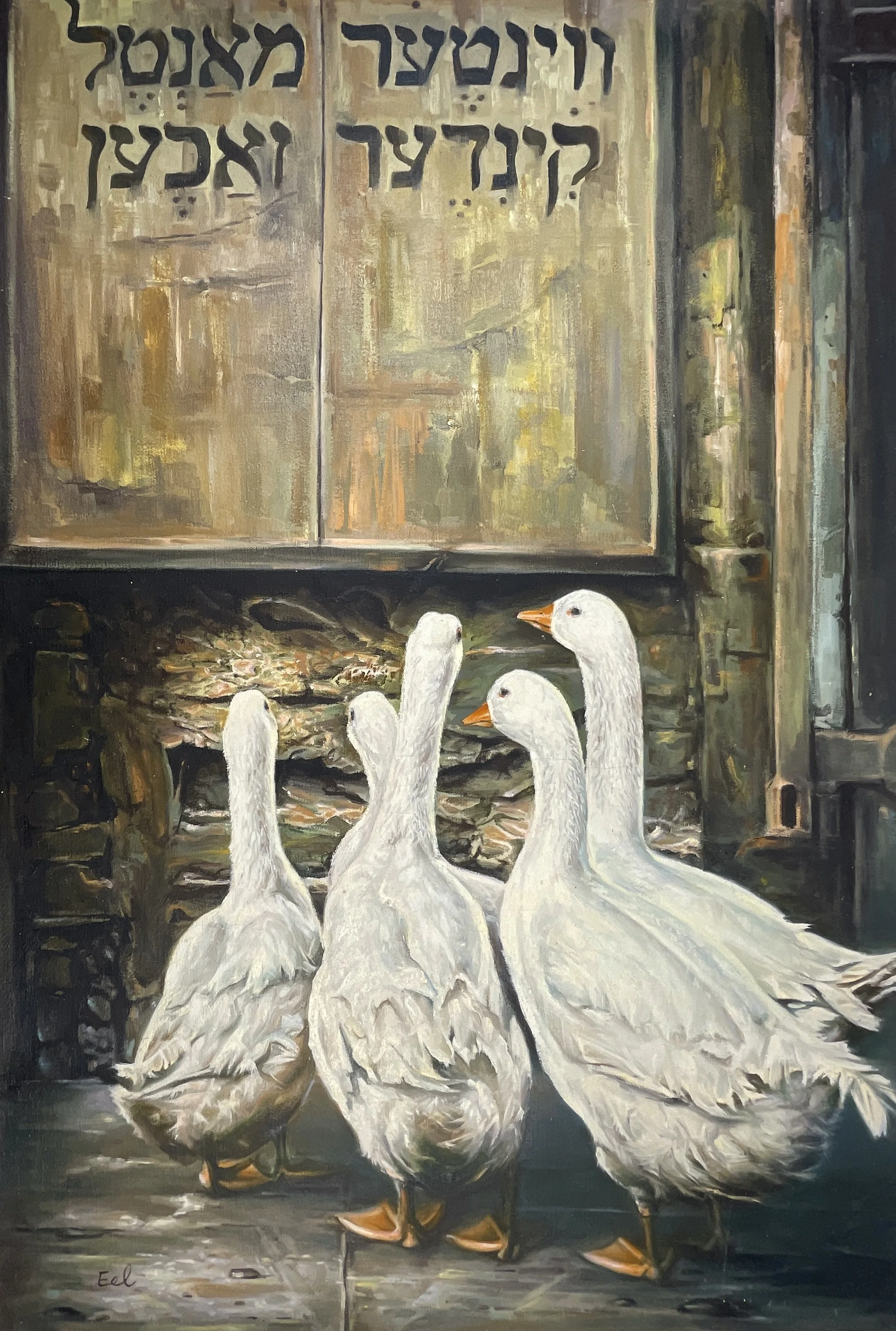 Image 1 of 6
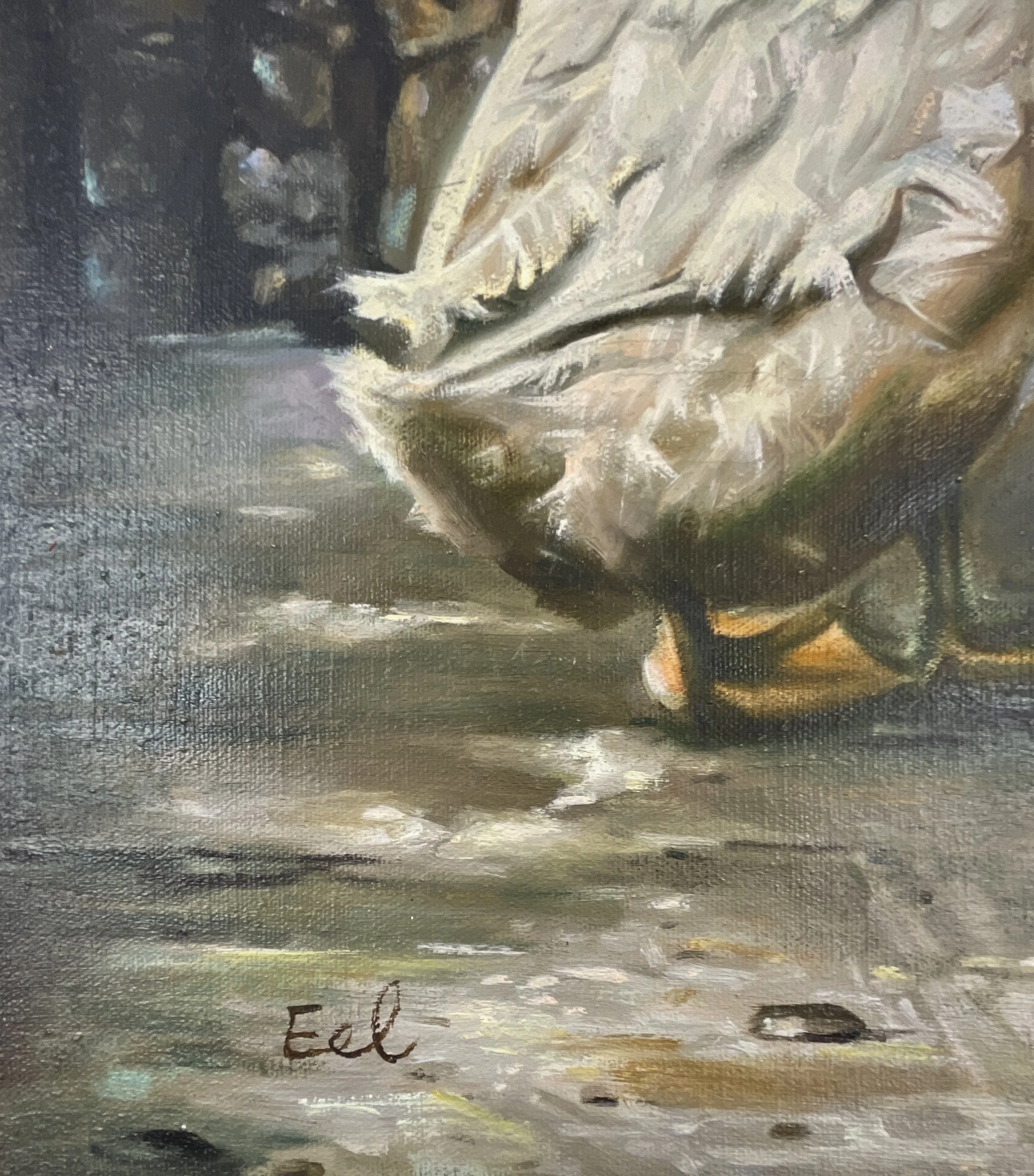 Image 2 of 6
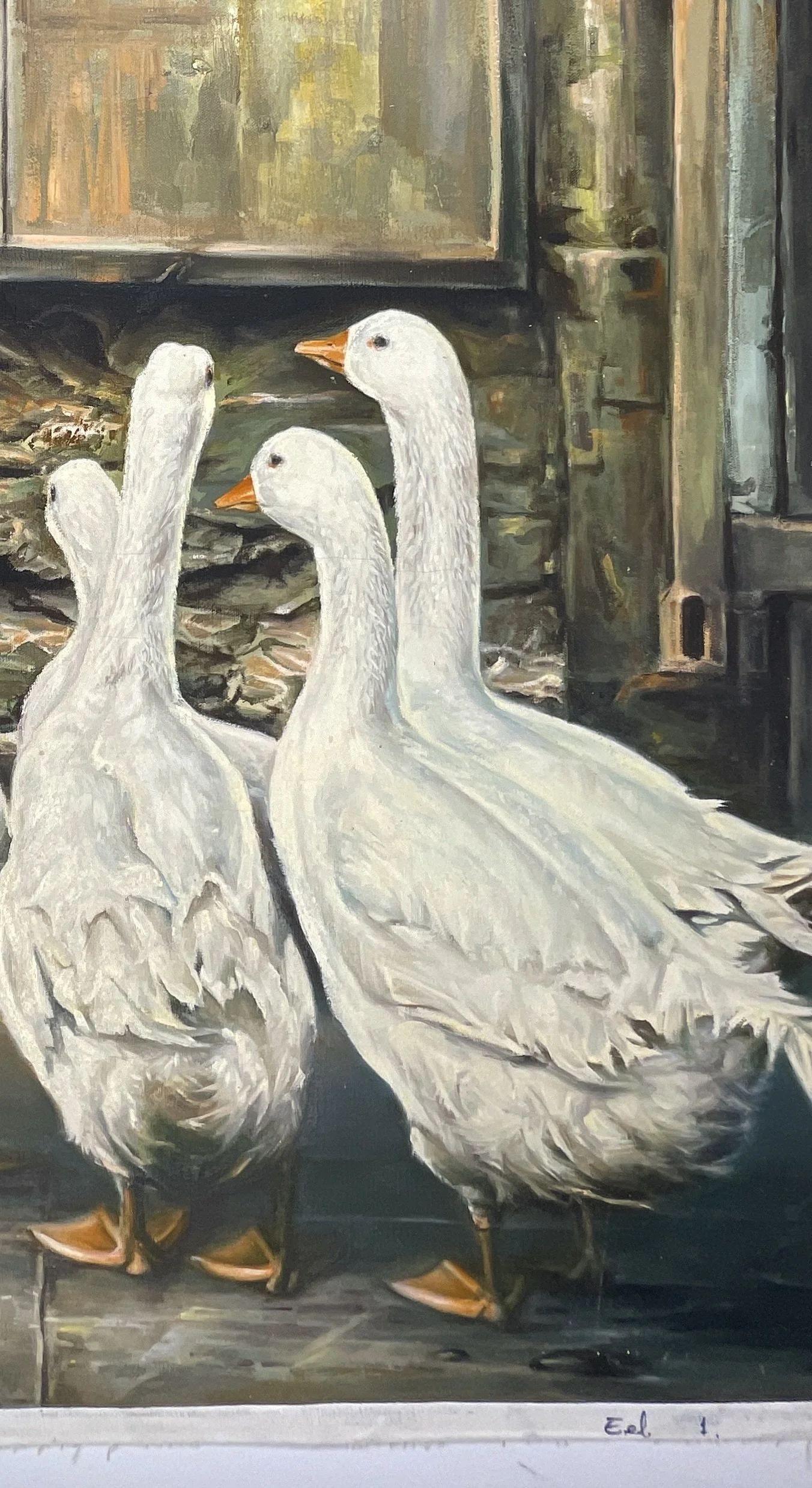 Image 3 of 6
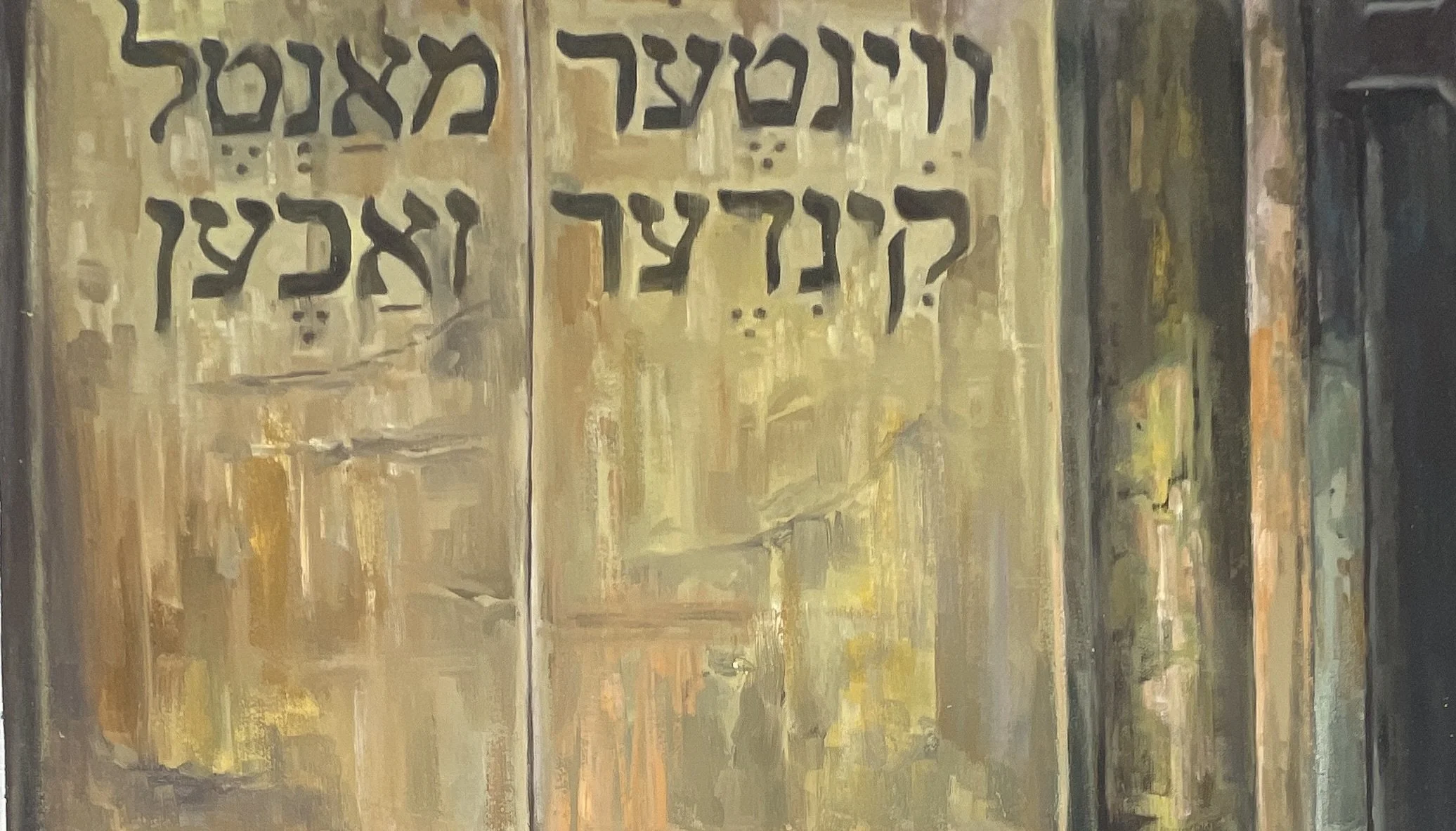 Image 4 of 6
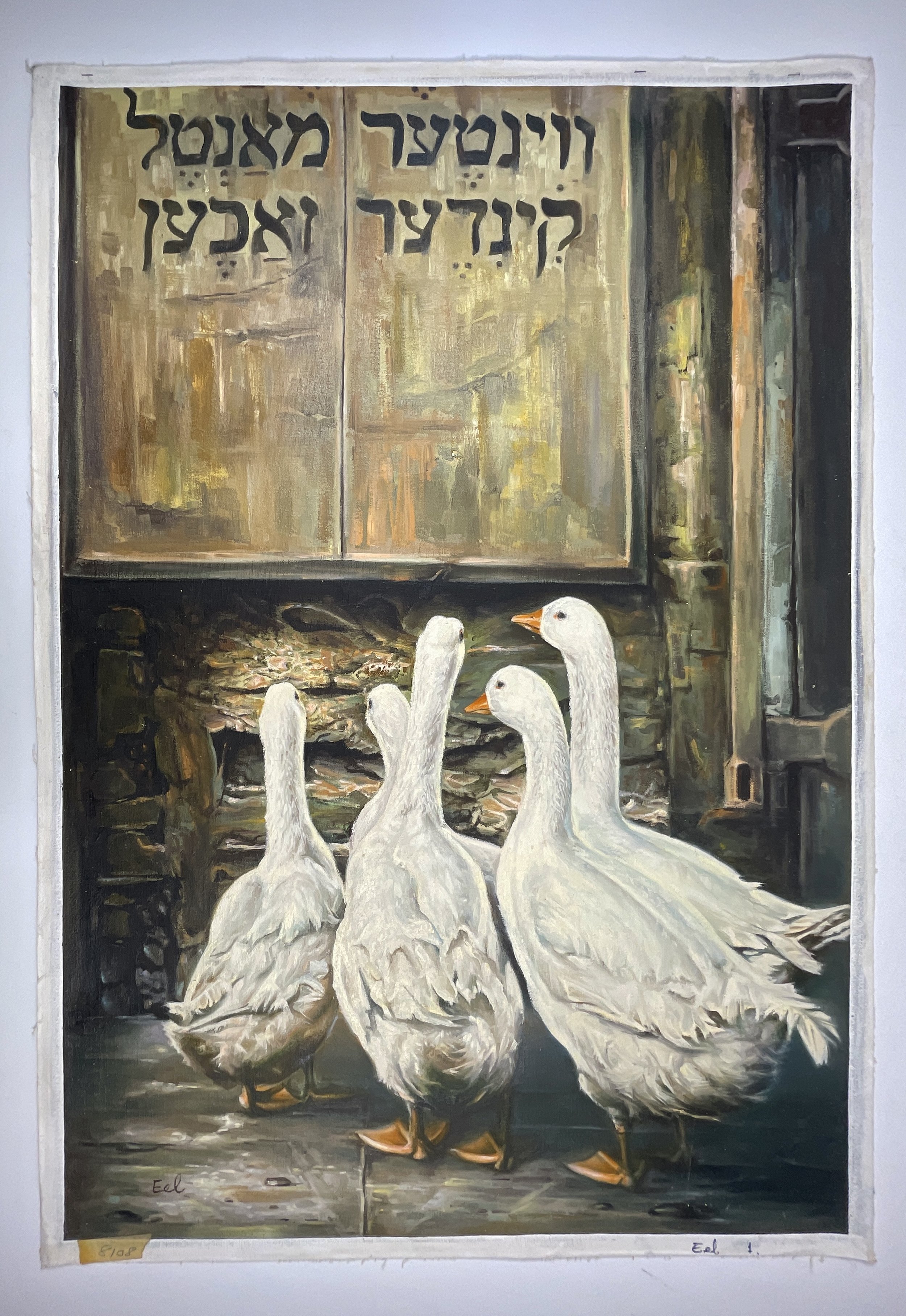 Image 5 of 6
 Image 6 of 6