Artwork Description
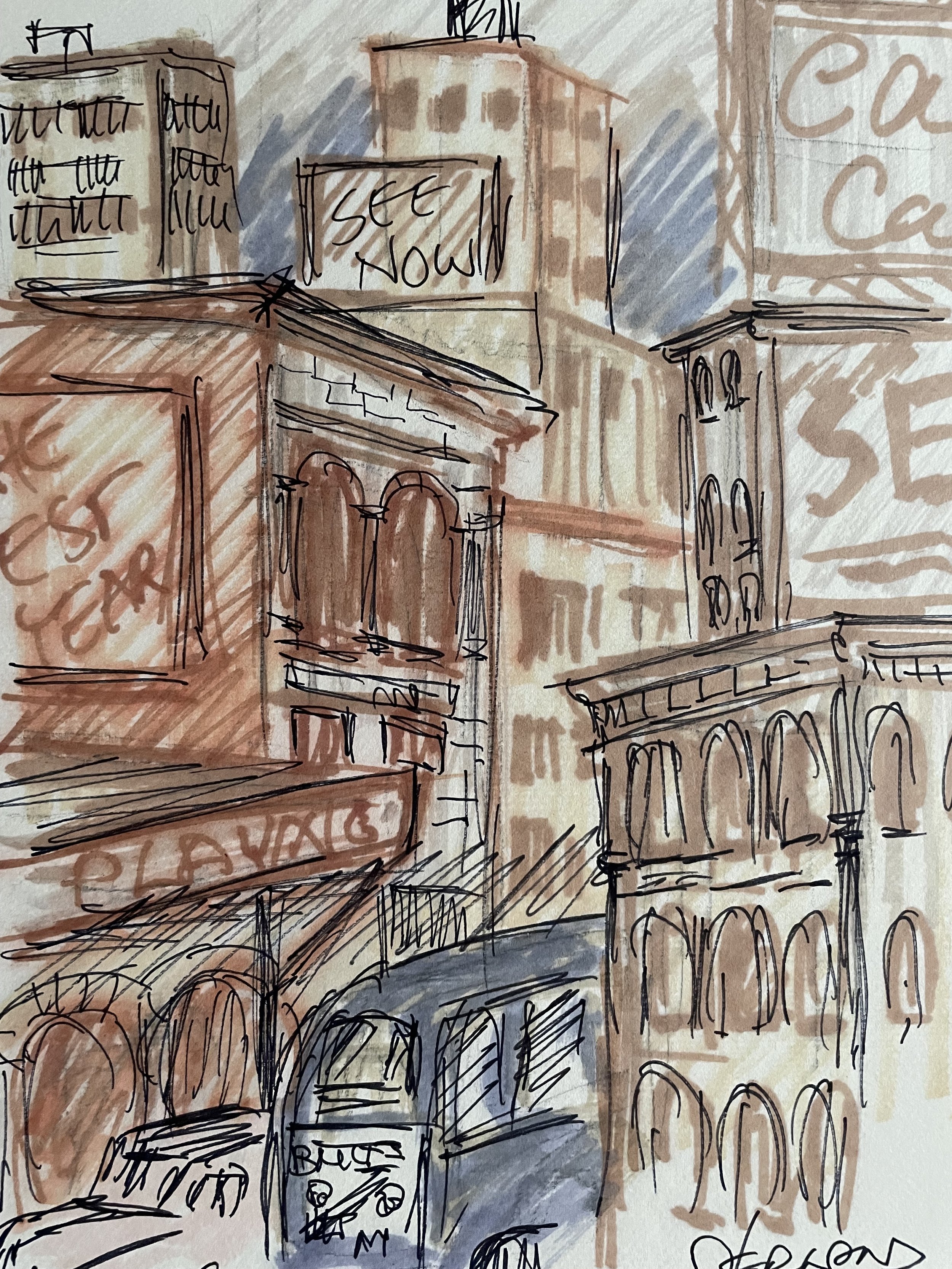
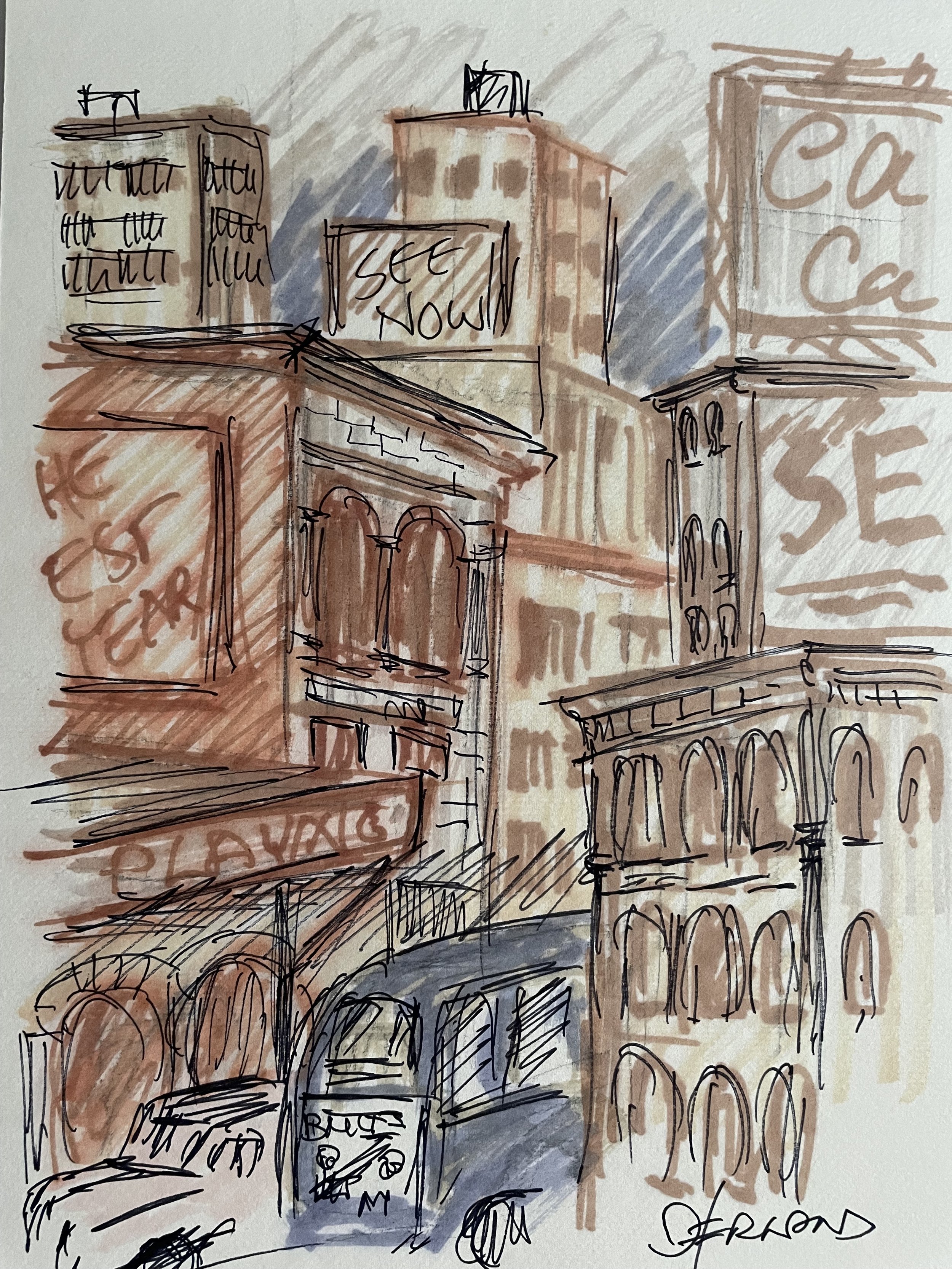
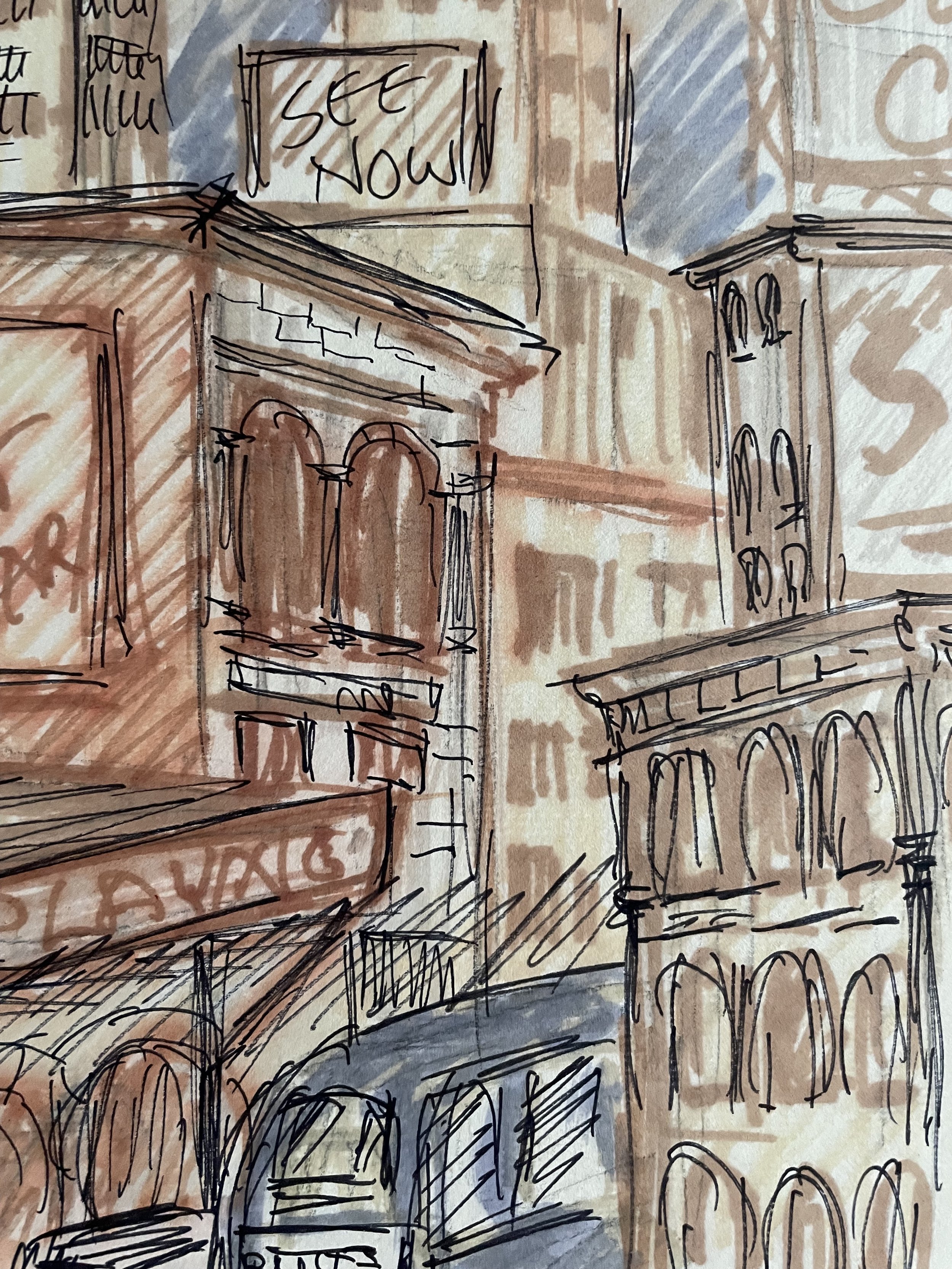
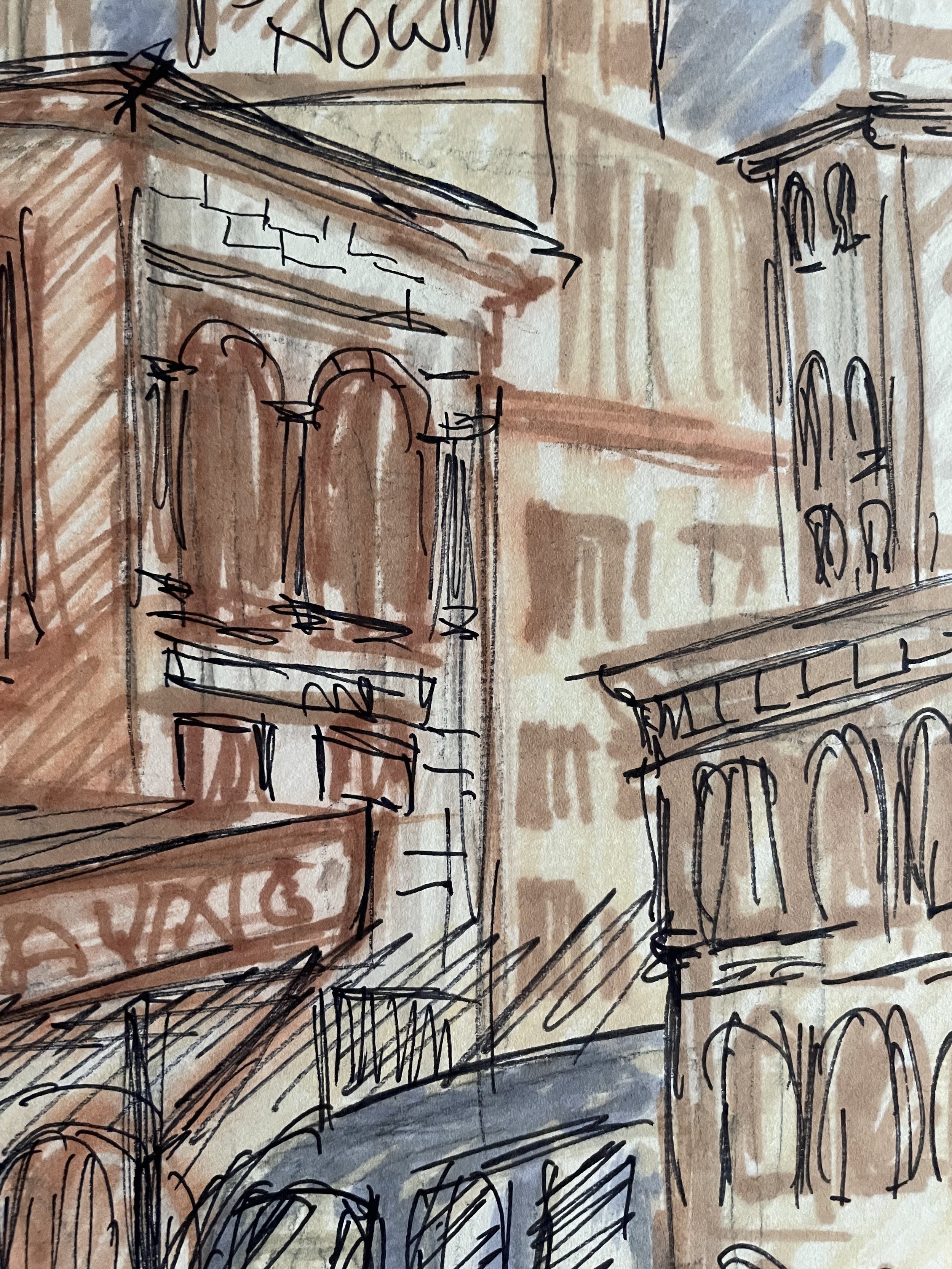
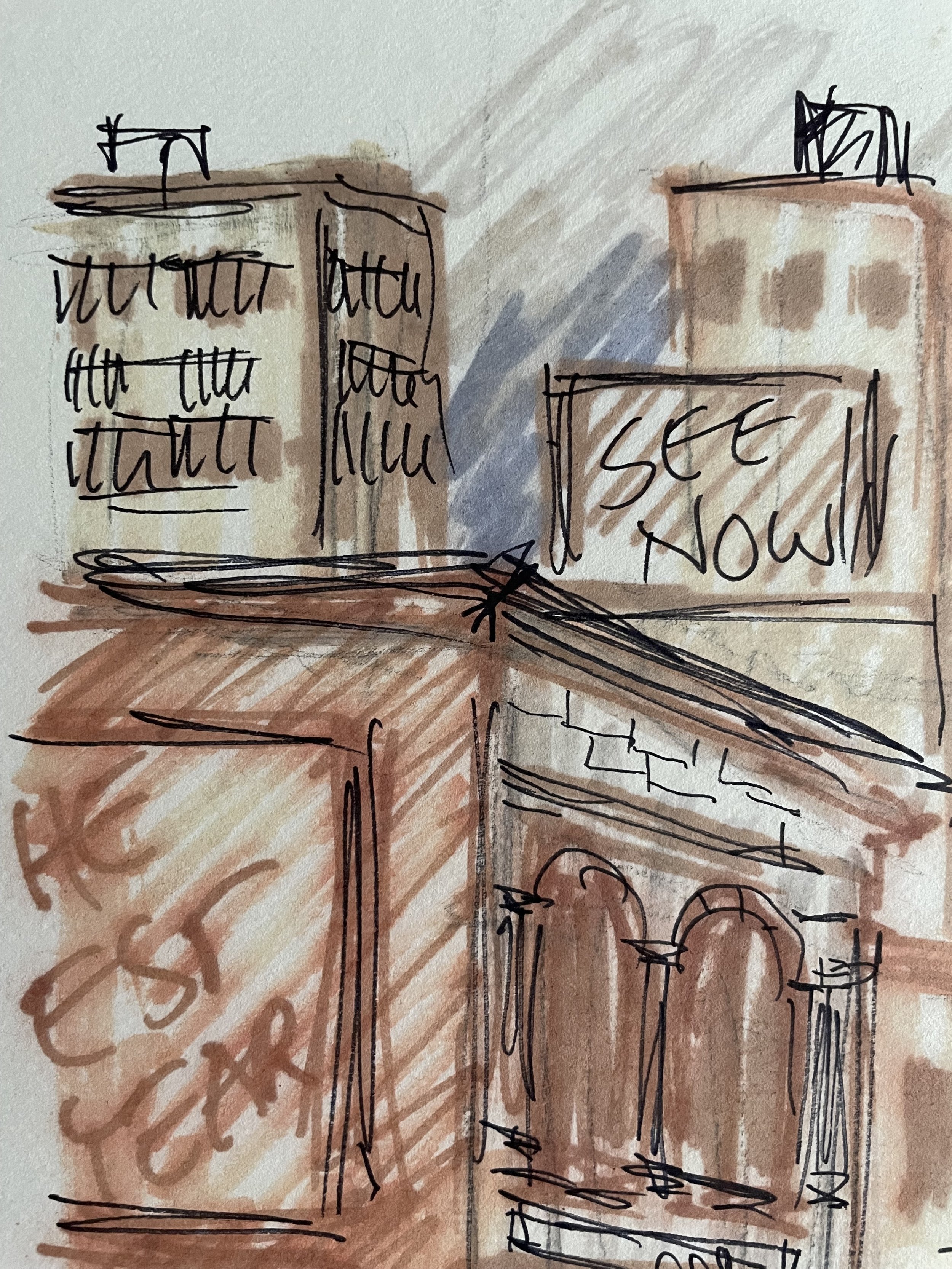
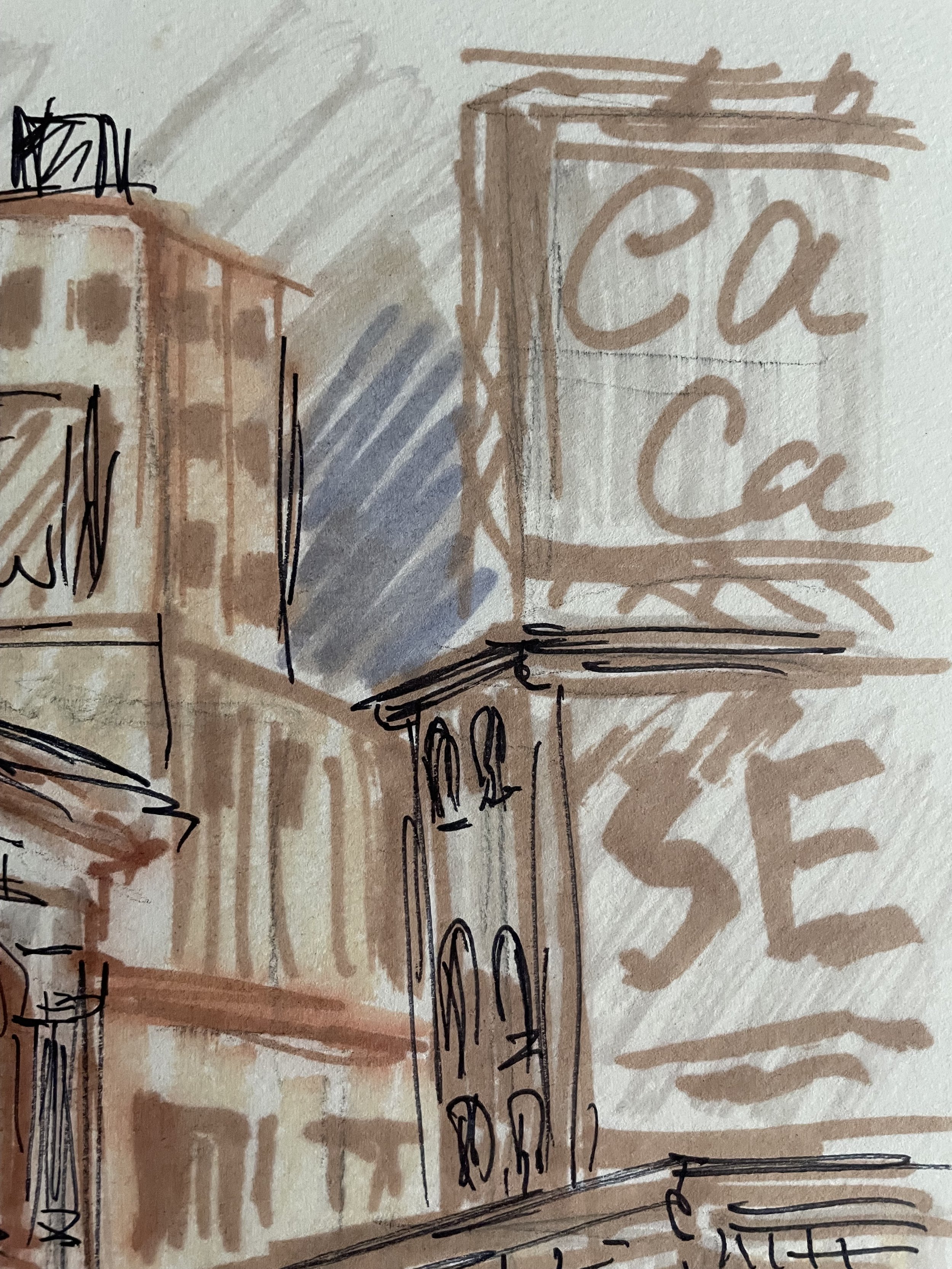
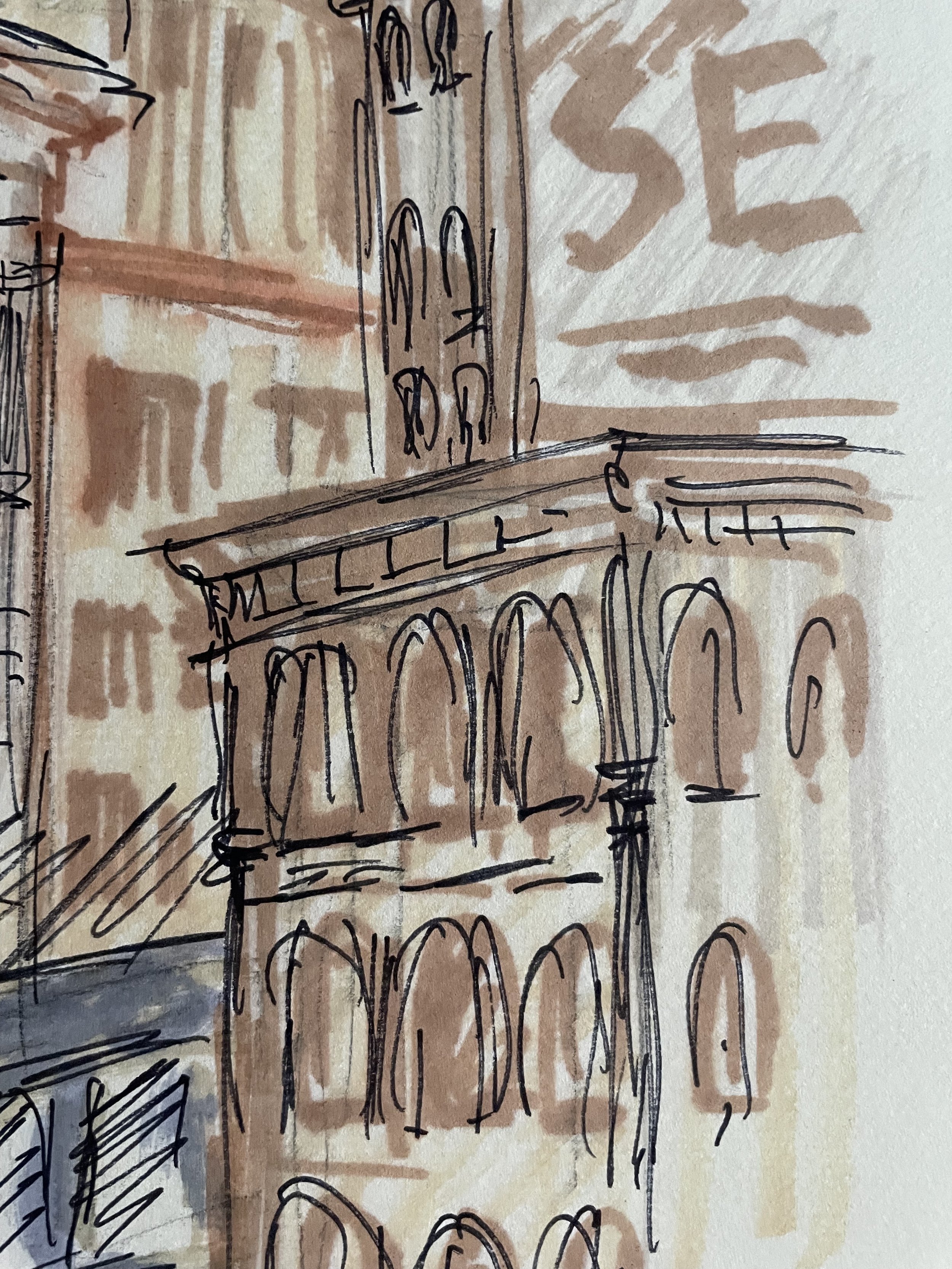
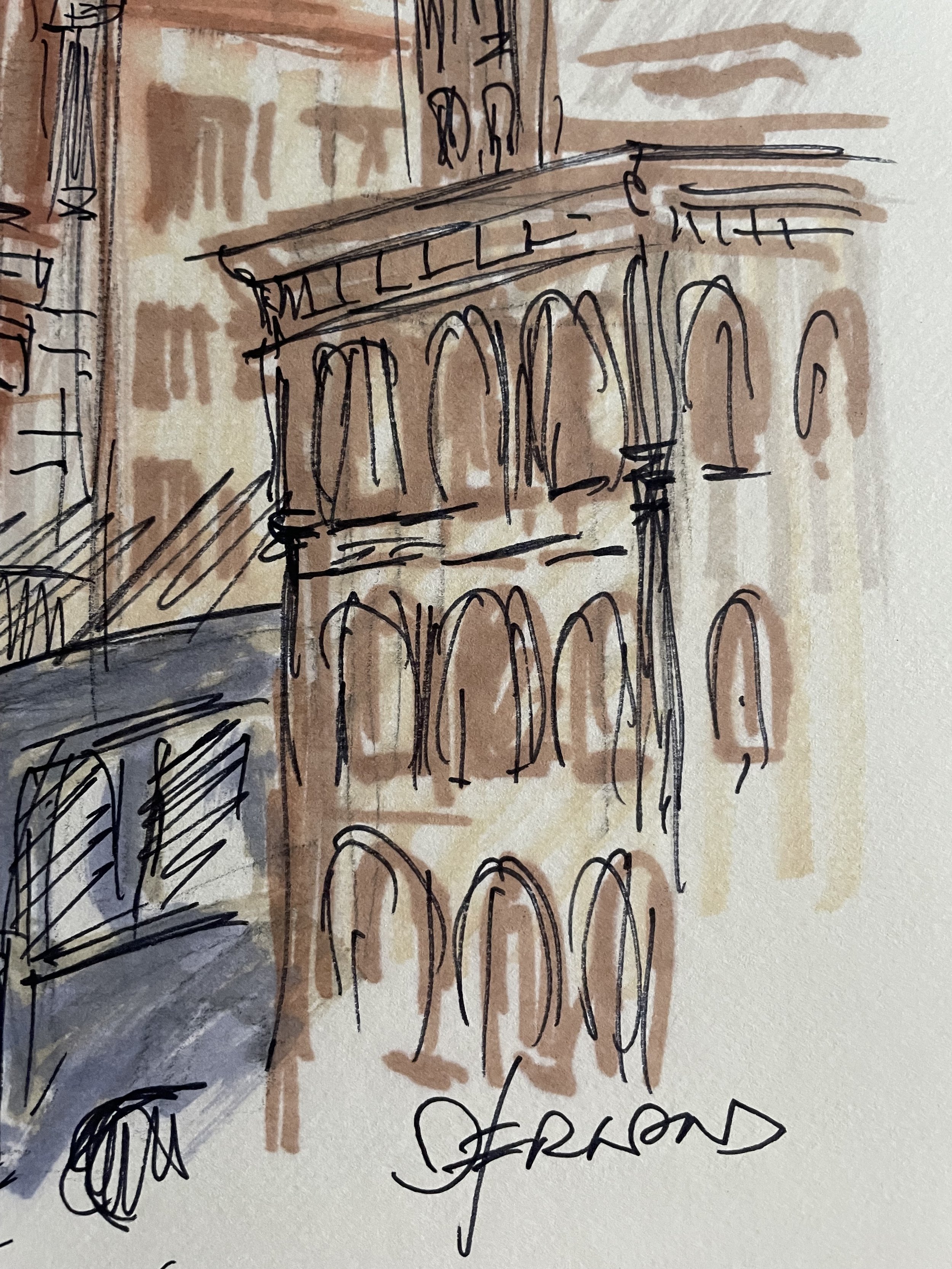
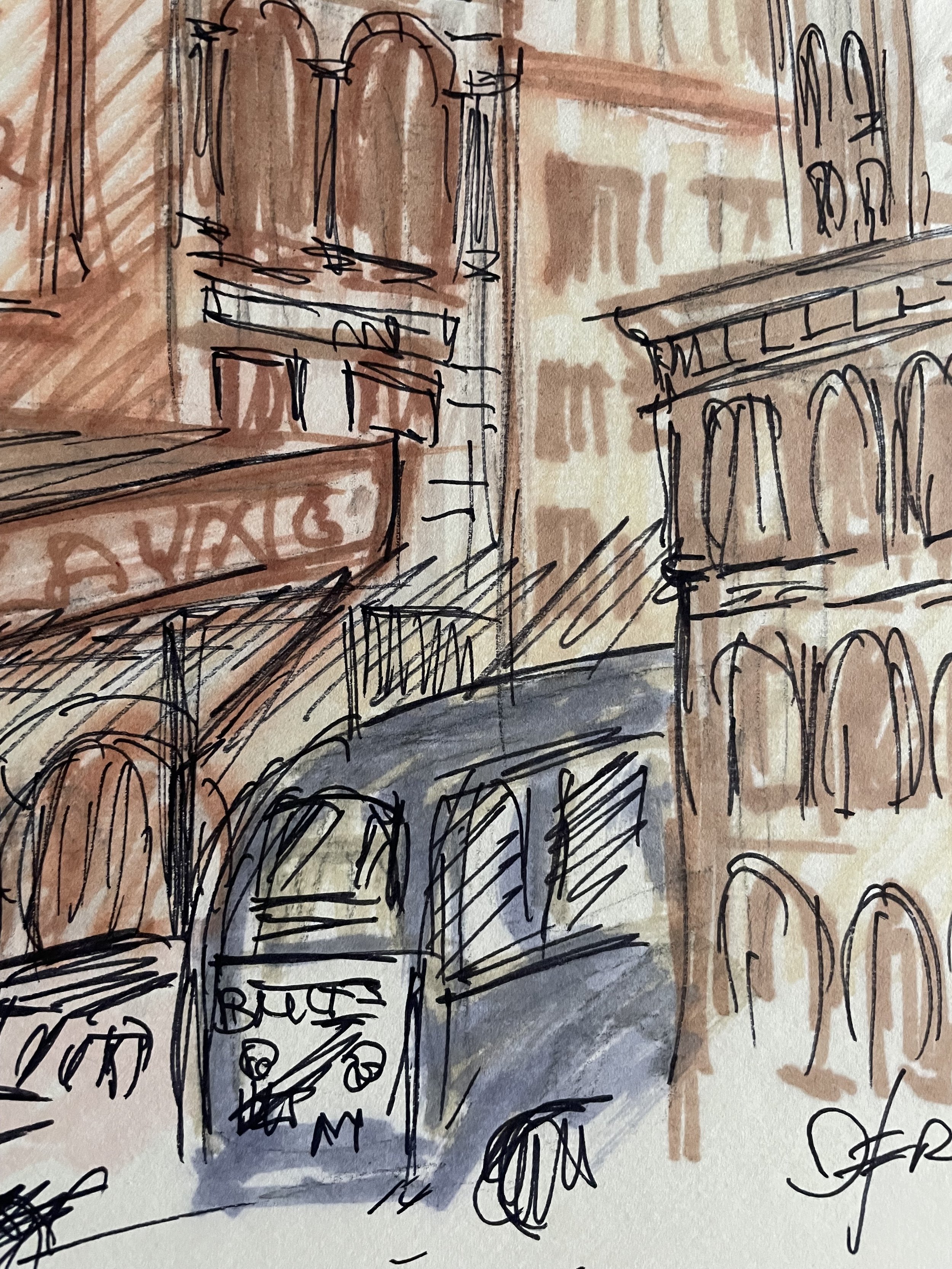
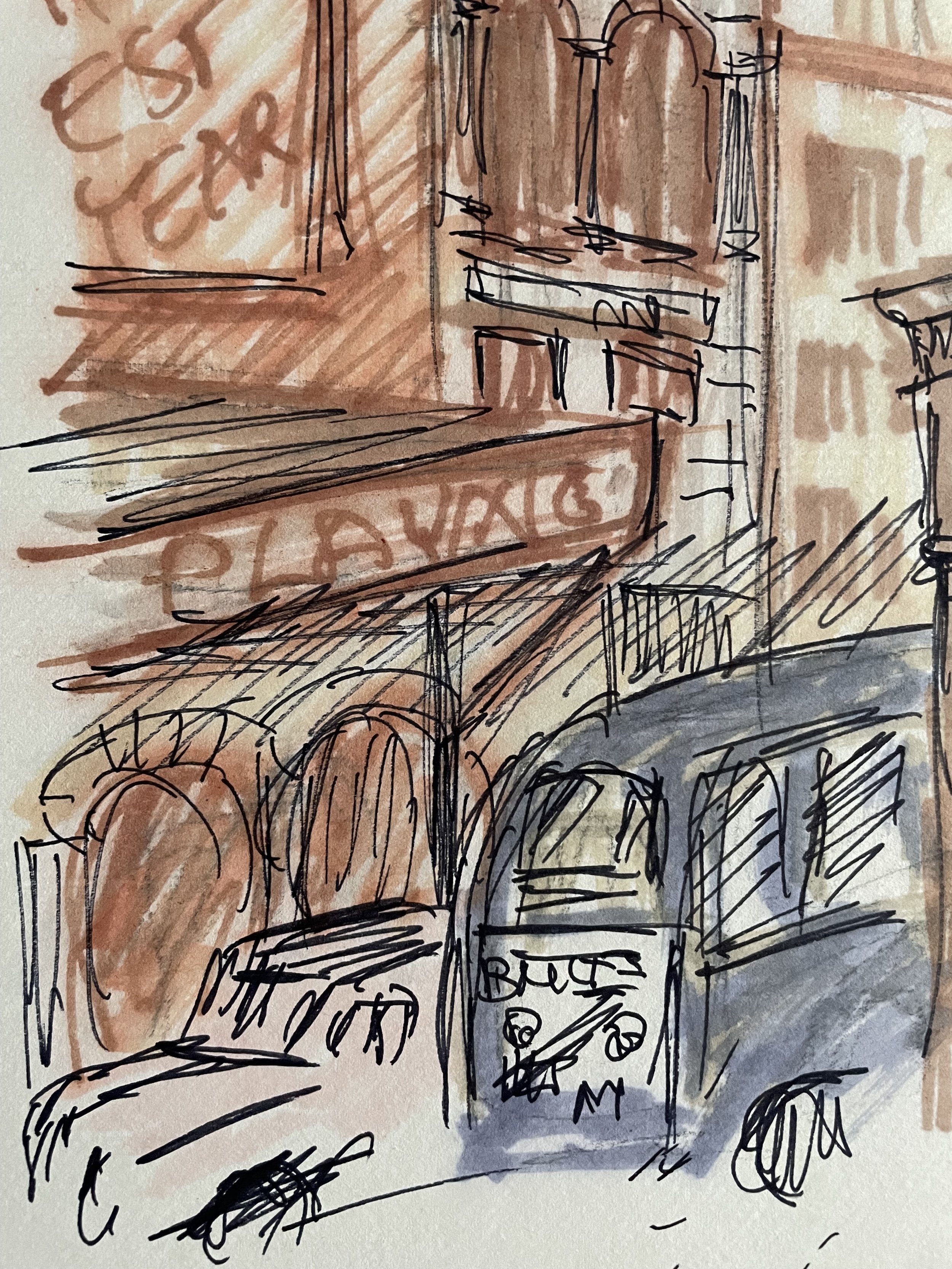
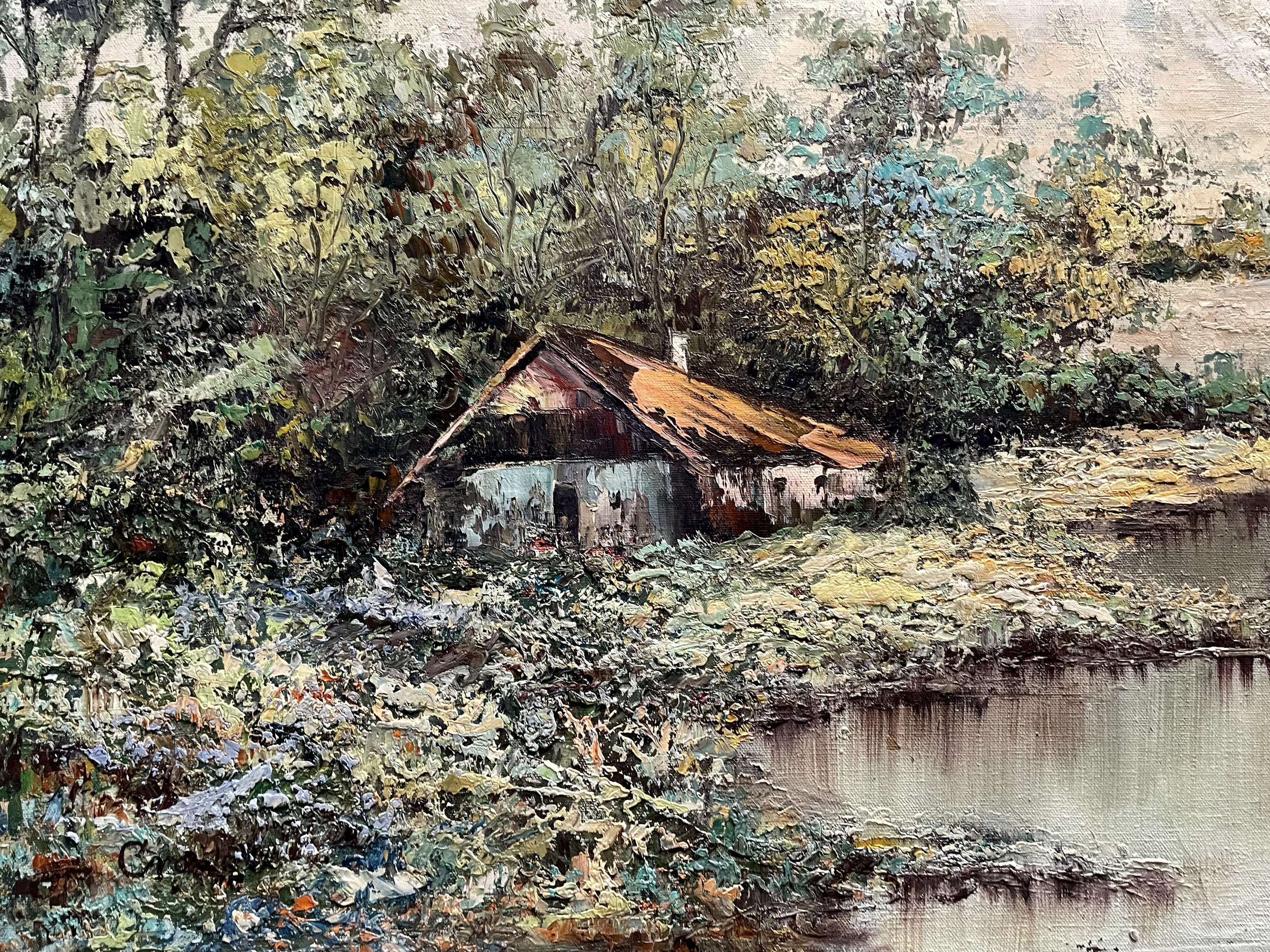
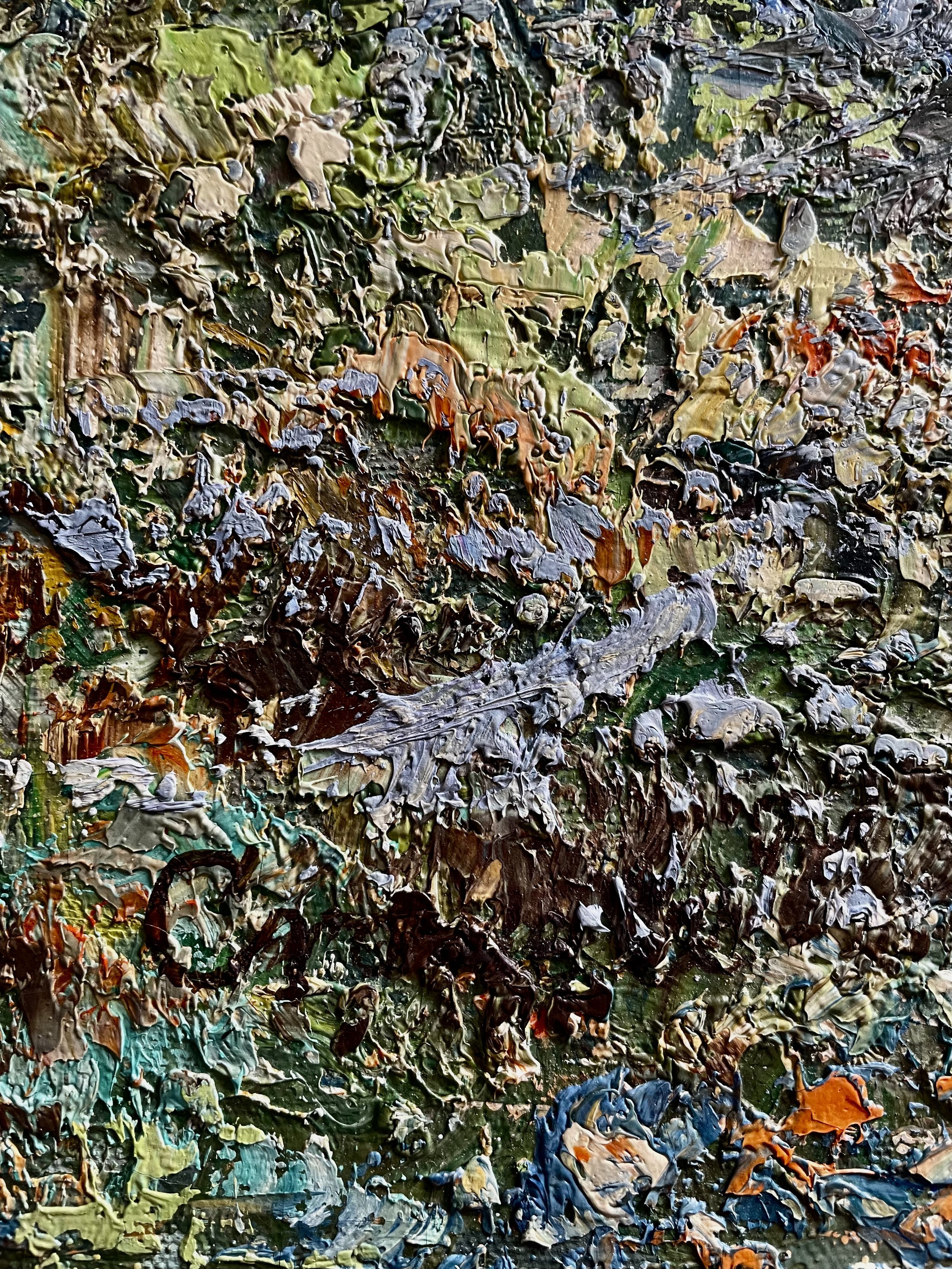
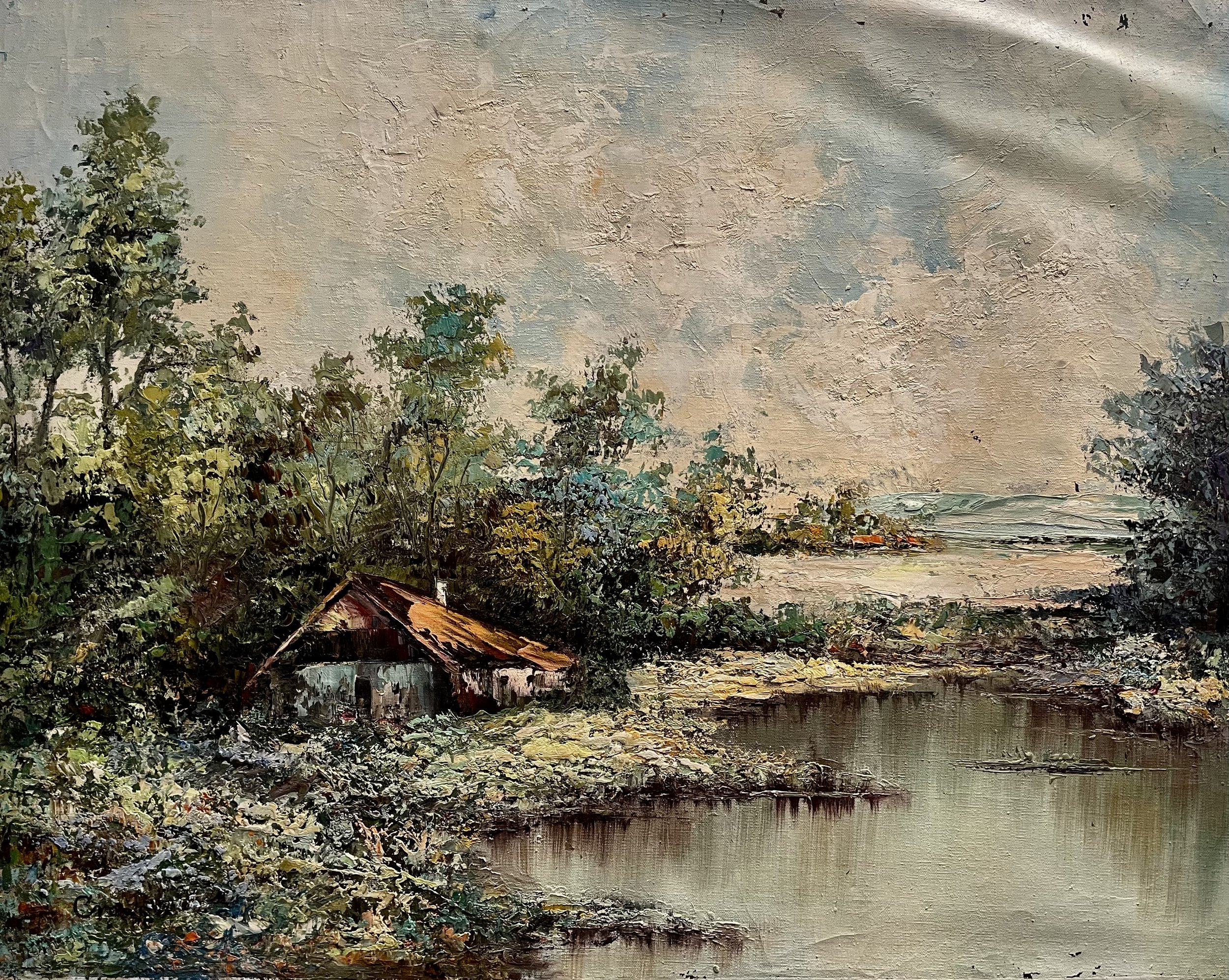
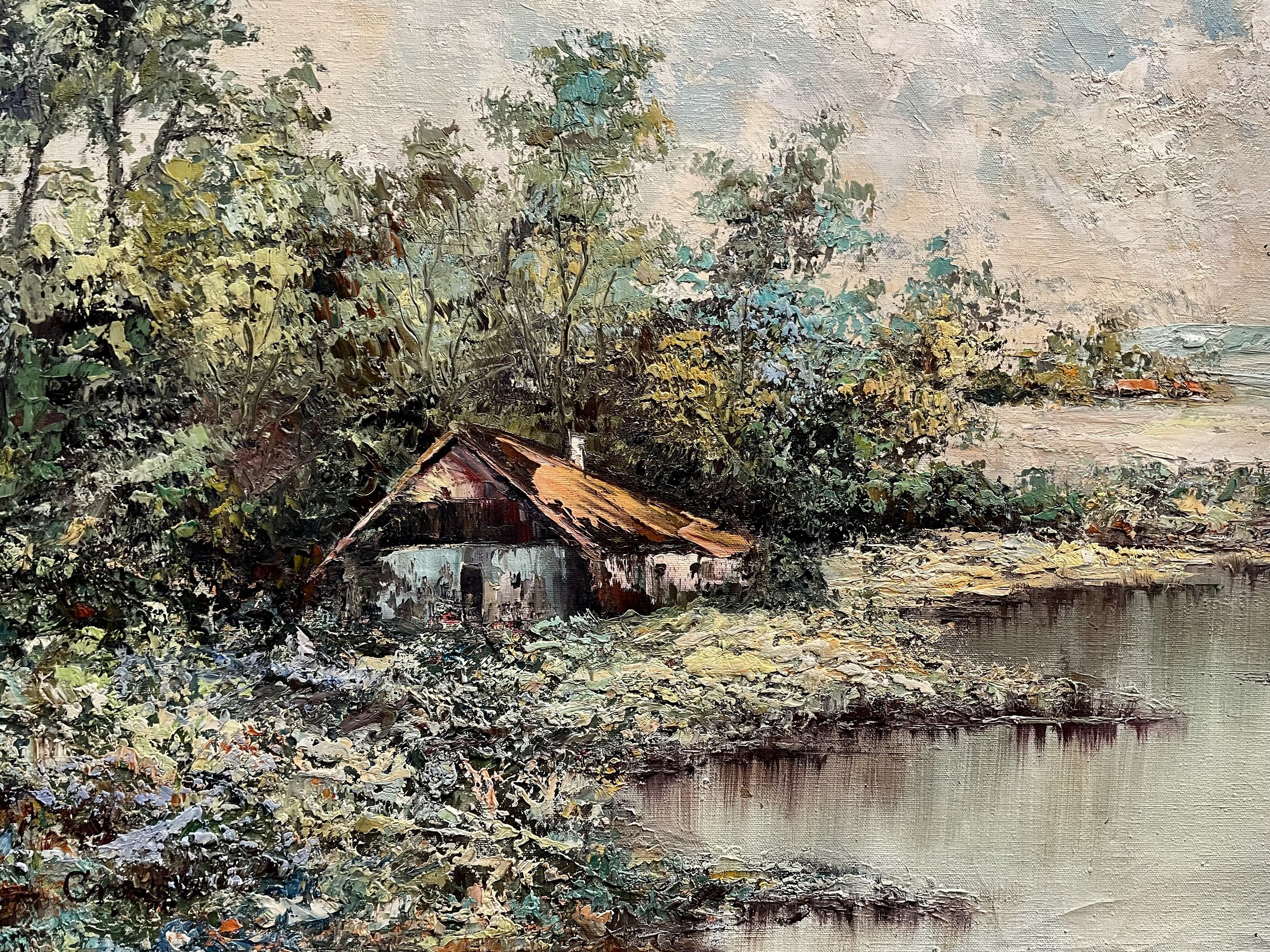
A charming and historically evocative painting depicting the Gare de l'Est — the Gare de Strasbourg — one of Paris's great 19th-century railway termini, rendered in a warm terracotta and ochre palette that gives the scene an almost archaeological quality, as if viewing the station through the amber light of memory rather than direct observation.
The composition centers on the station's neoclassical façade — its colonnaded portico, pediment, and central lantern tower rendered with careful architectural attention and quiet affection. The building is depicted in its 19th-century context: horse-drawn carriages move through the foreground, elegantly dressed figures in top hats and full skirts populate the open square, and a loaded dray cart drawn by a donkey passes before the entrance. The setting is clearly the mid-to-late 19th century — the Belle Époque or Second Empire era — depicted from the vantage point of a 20th-century artist looking back.
What distinguishes this work from purely documentary architectural painting is its naïve sensibility. The figures are observed with a folklorist's eye — simplified, animated, drawn with confident outlines rather than painterly suggestion. A couple rides in an open carriage at left. Groups of figures cluster at right. A top-hatted gentleman and bonneted woman converse in the middle ground. The figures feel affectionate rather than academic — characterful types from a lost world, presented with gentle humor and genuine warmth.
The warm monochromatic palette — terracotta ground, ochre and burnt sienna throughout, punctuated by white highlights on the architecture and pale clouds rendered in a decorative swirl — gives the entire composition a unified, tapestry-like quality. The sky is not observed but invented — stylized cloud forms drawn in white against the warm ground, more decorative than meteorological.
The painting sits comfortably within the European naïve or folk realist tradition — an artist with a strong visual instinct and genuine compositional confidence, but working outside academic conventions in a manner that gives the work its particular charm and directness.
Artist Biography
Koedijk (active c. 1960s–1980s). Dutch school, based on the subject matter, title language, and characteristic approach. The Dutch title "Gezicht op station Gare de l'Est in Parijs" suggests an artist working within a Dutch-speaking cultural context with a particular affinity for Parisian historical subjects — a combination not uncommon among mid-20th century European naïve painters who found in the imagery of 19th-century Paris a romantic and commercially appealing subject.
The style is consistent with the European naïve tradition that flourished in the postwar decades — self-taught or semi-trained artists working with genuine visual intelligence outside the mainstream gallery system, whose work found a ready market through hotel and gallery distribution networks of the kind operated by Mitch Morse Gallery.
Acquired through Mitch Morse Gallery, New York. Further biographical research in progress — inquiries from researchers with knowledge of this artist are welcomed.
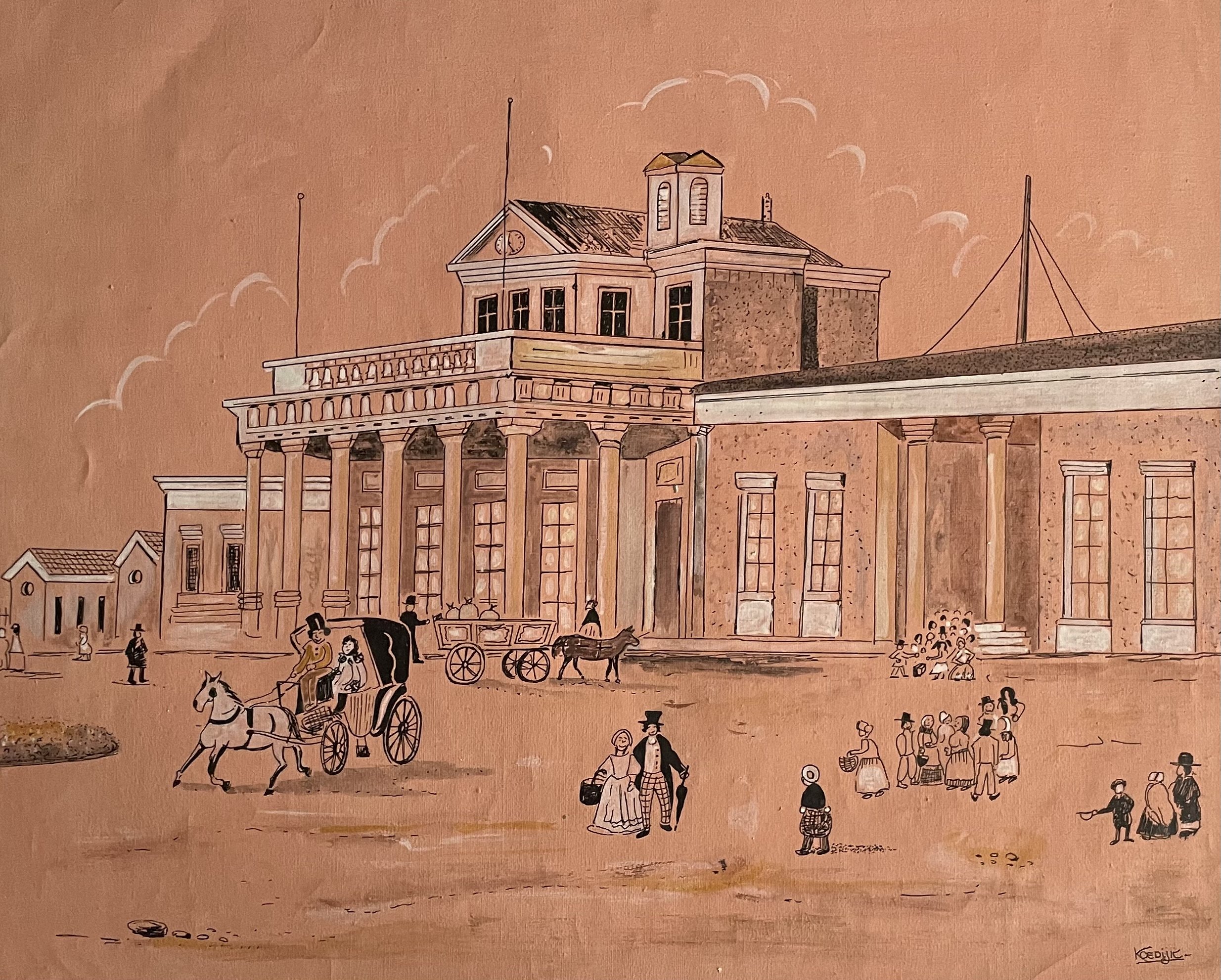 Image 1 of 7
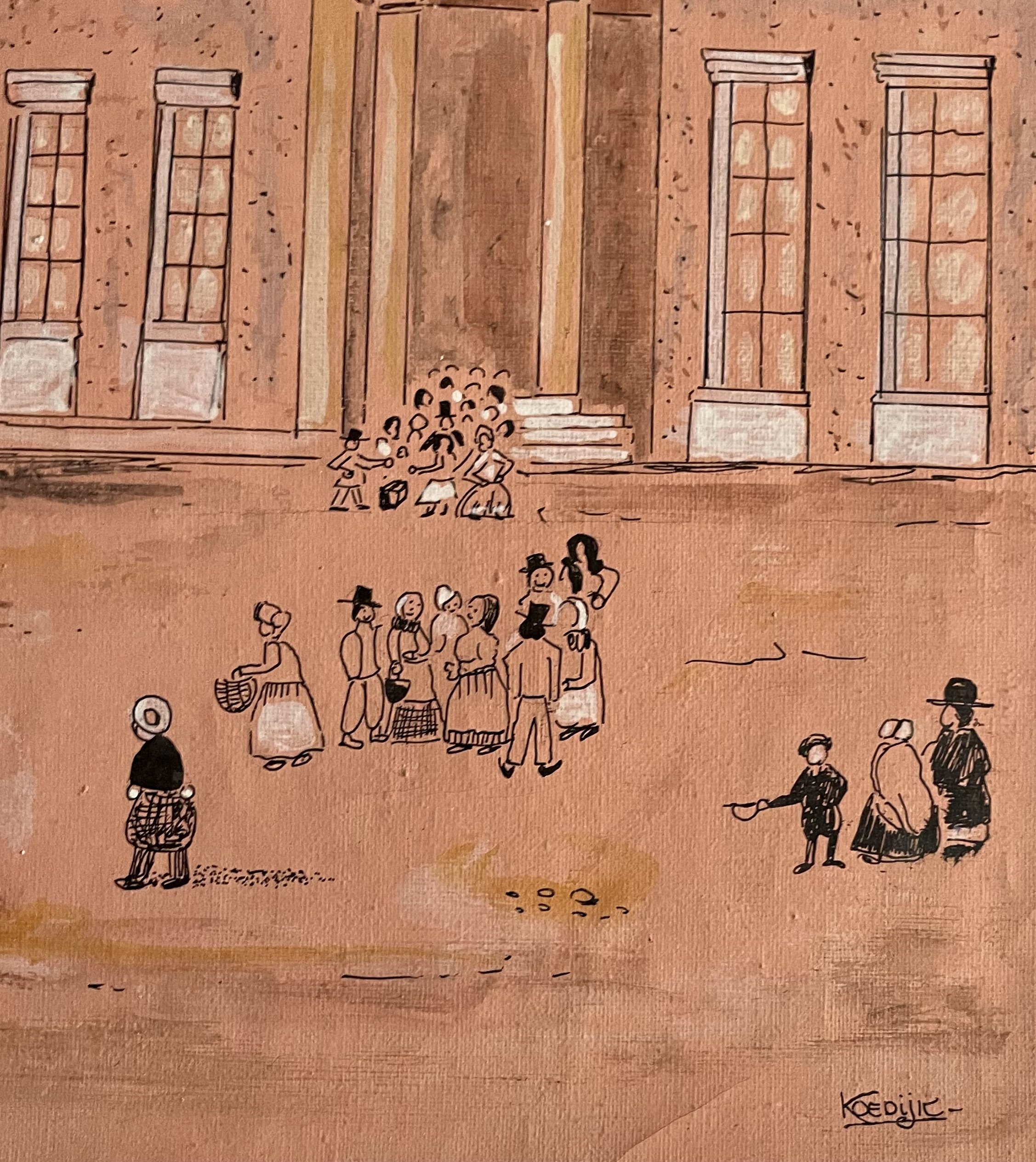 Image 2 of 7
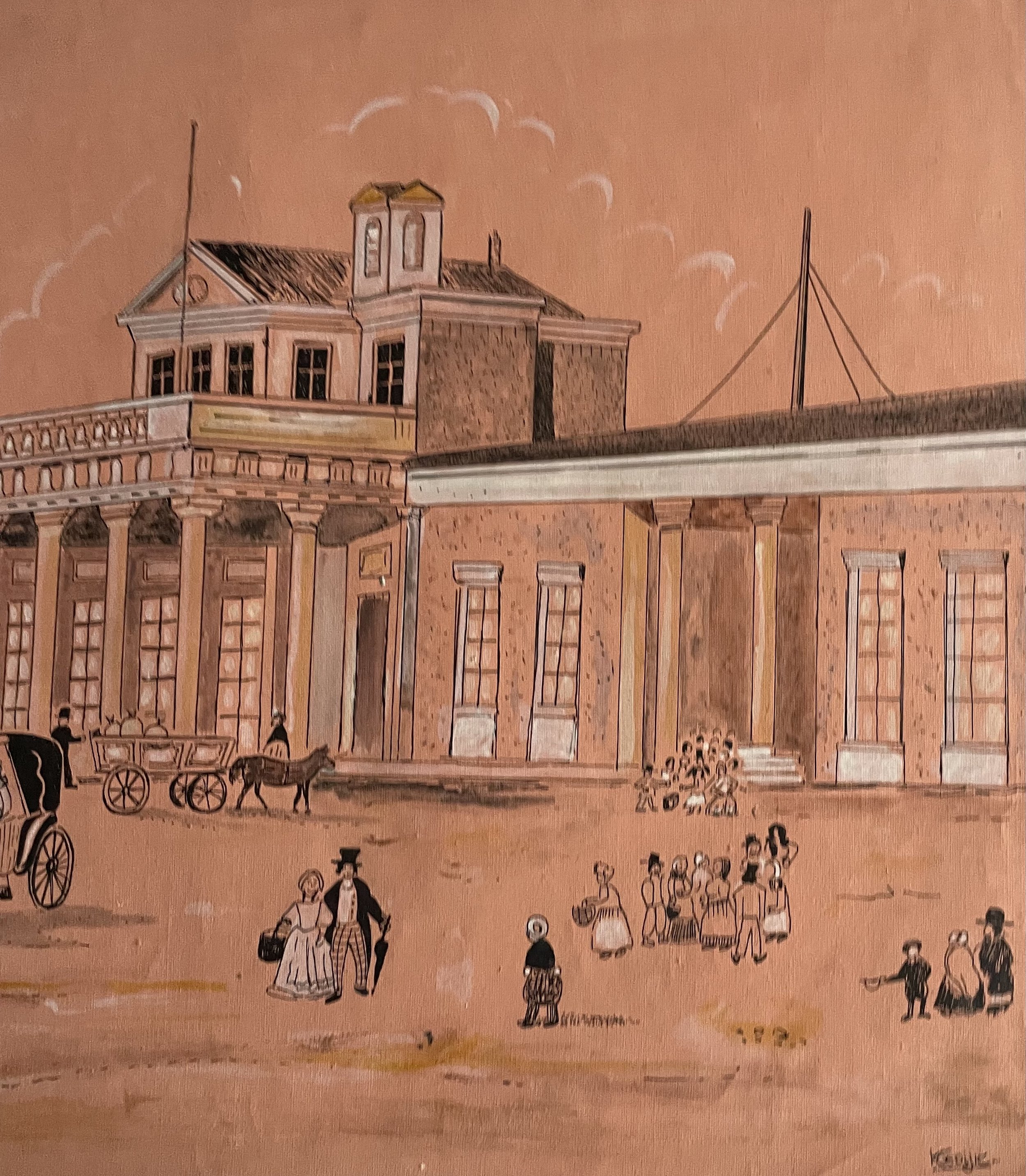 Image 3 of 7
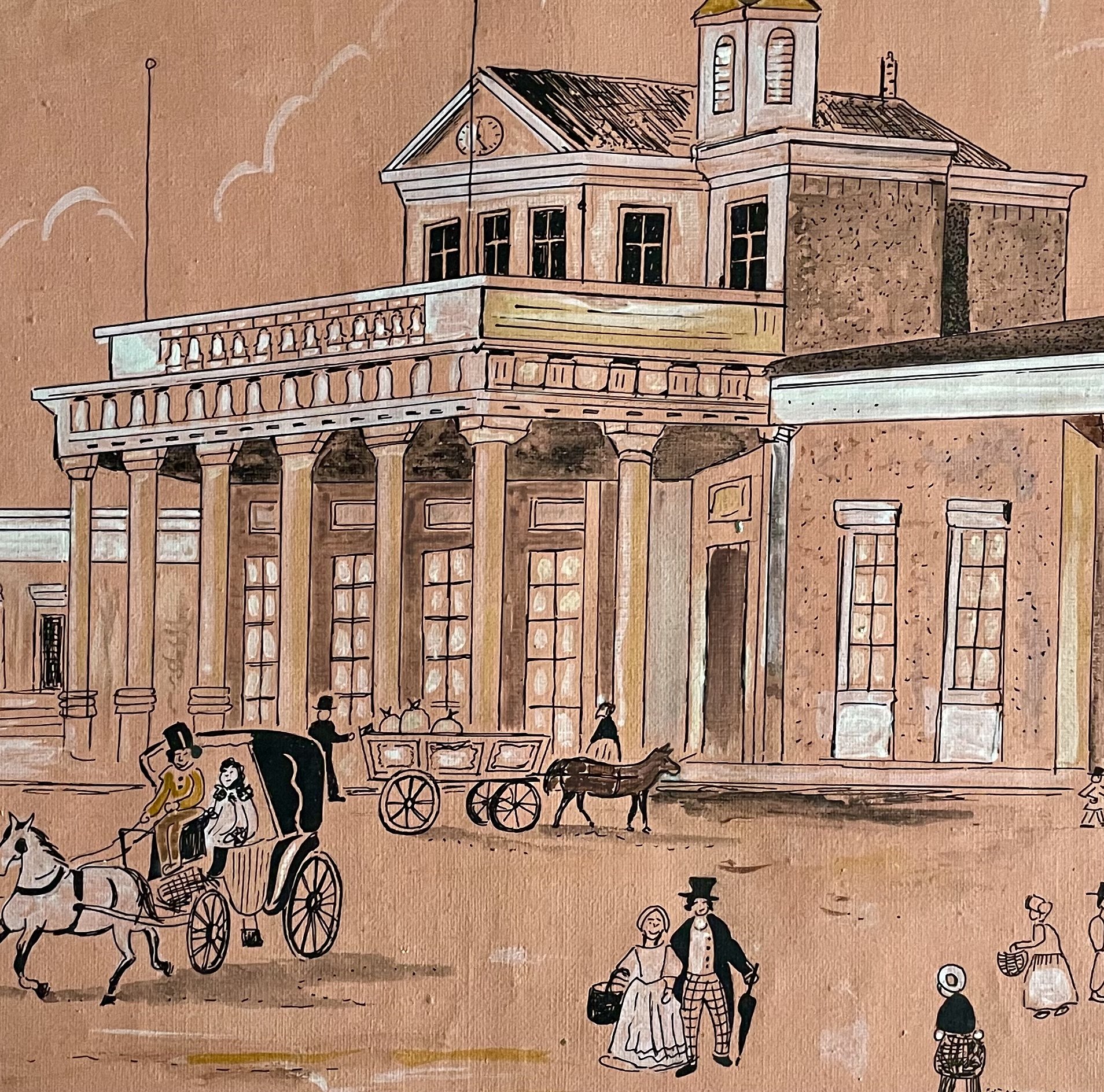 Image 4 of 7
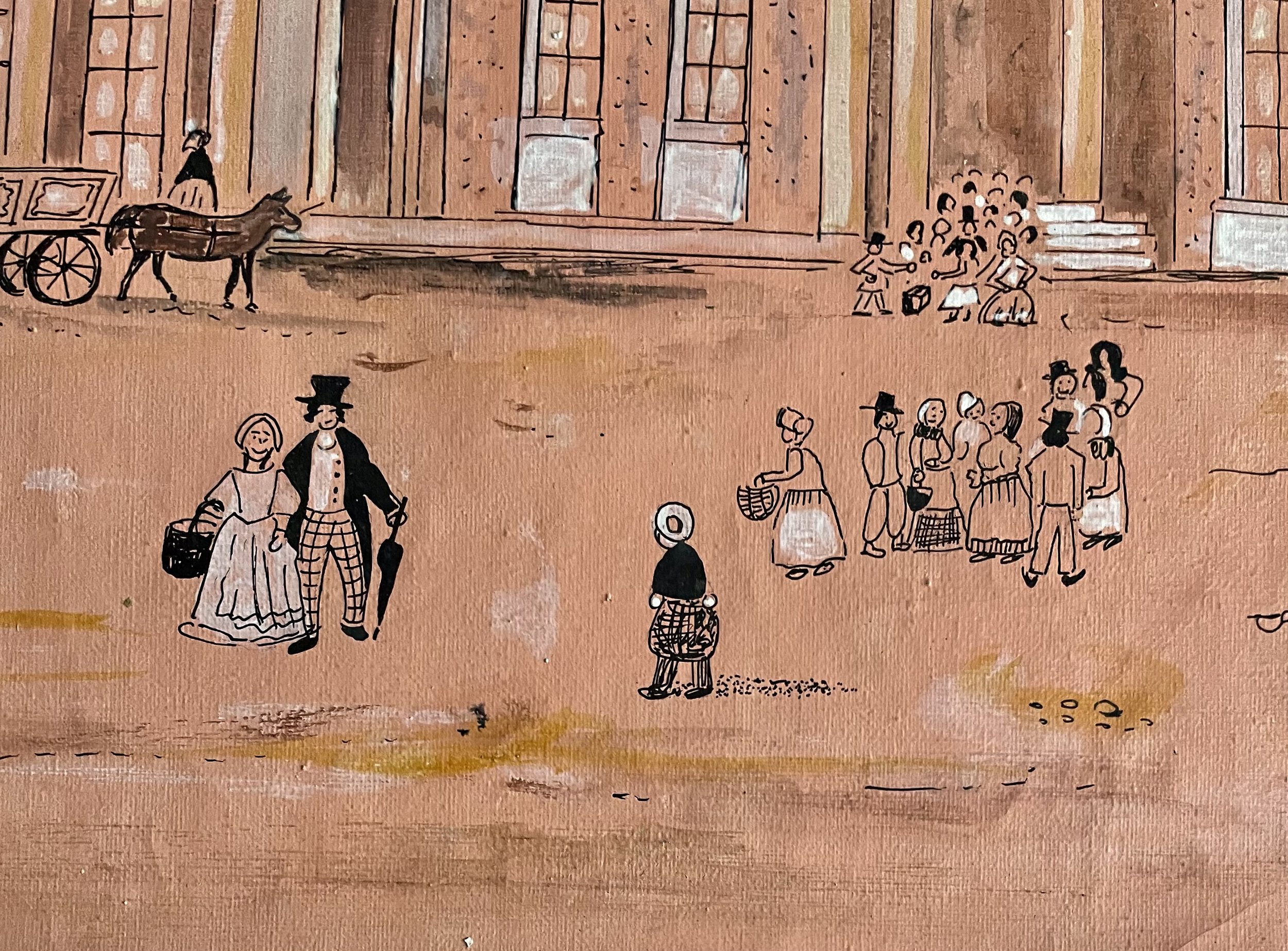 Image 5 of 7
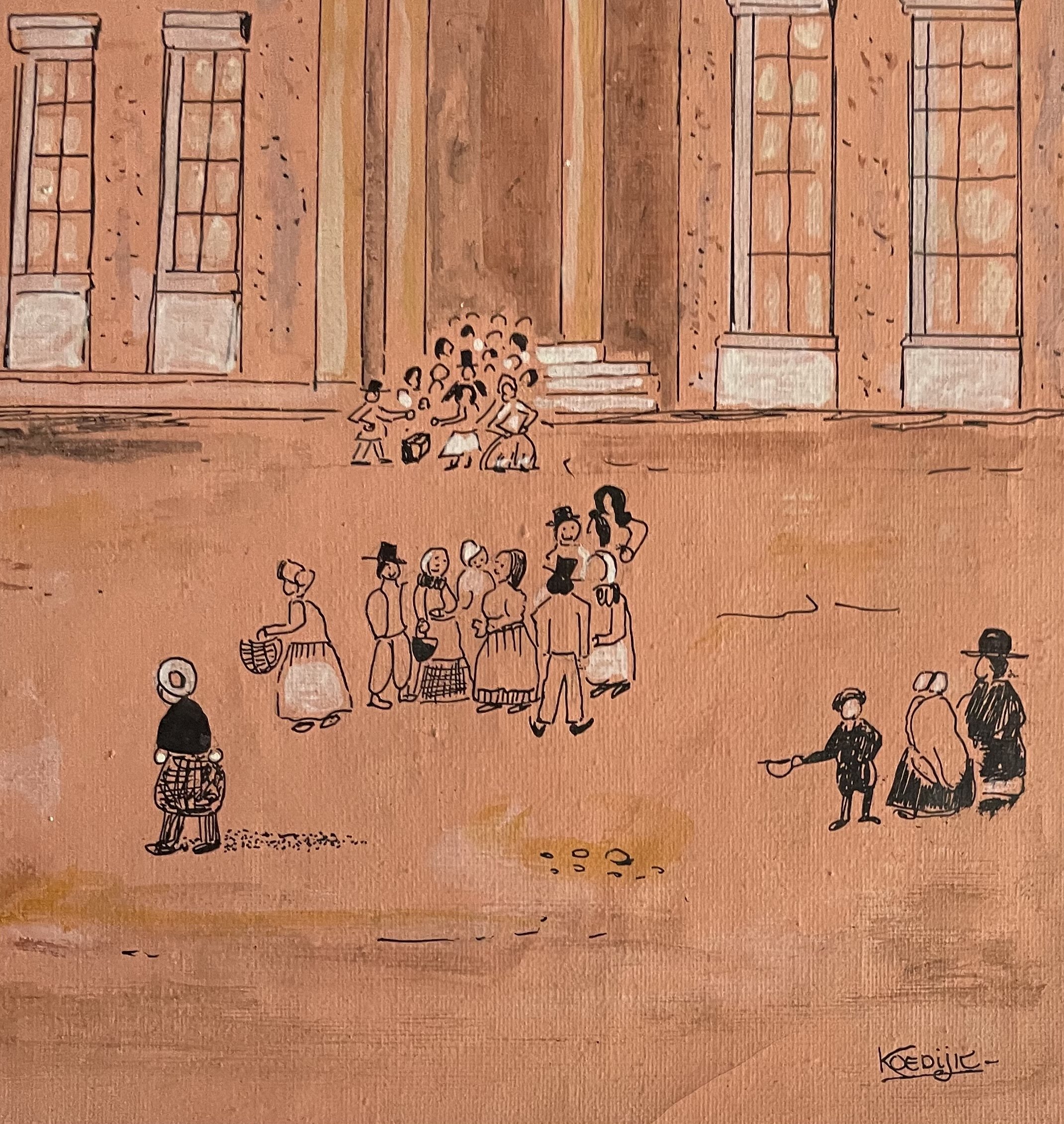 Image 6 of 7
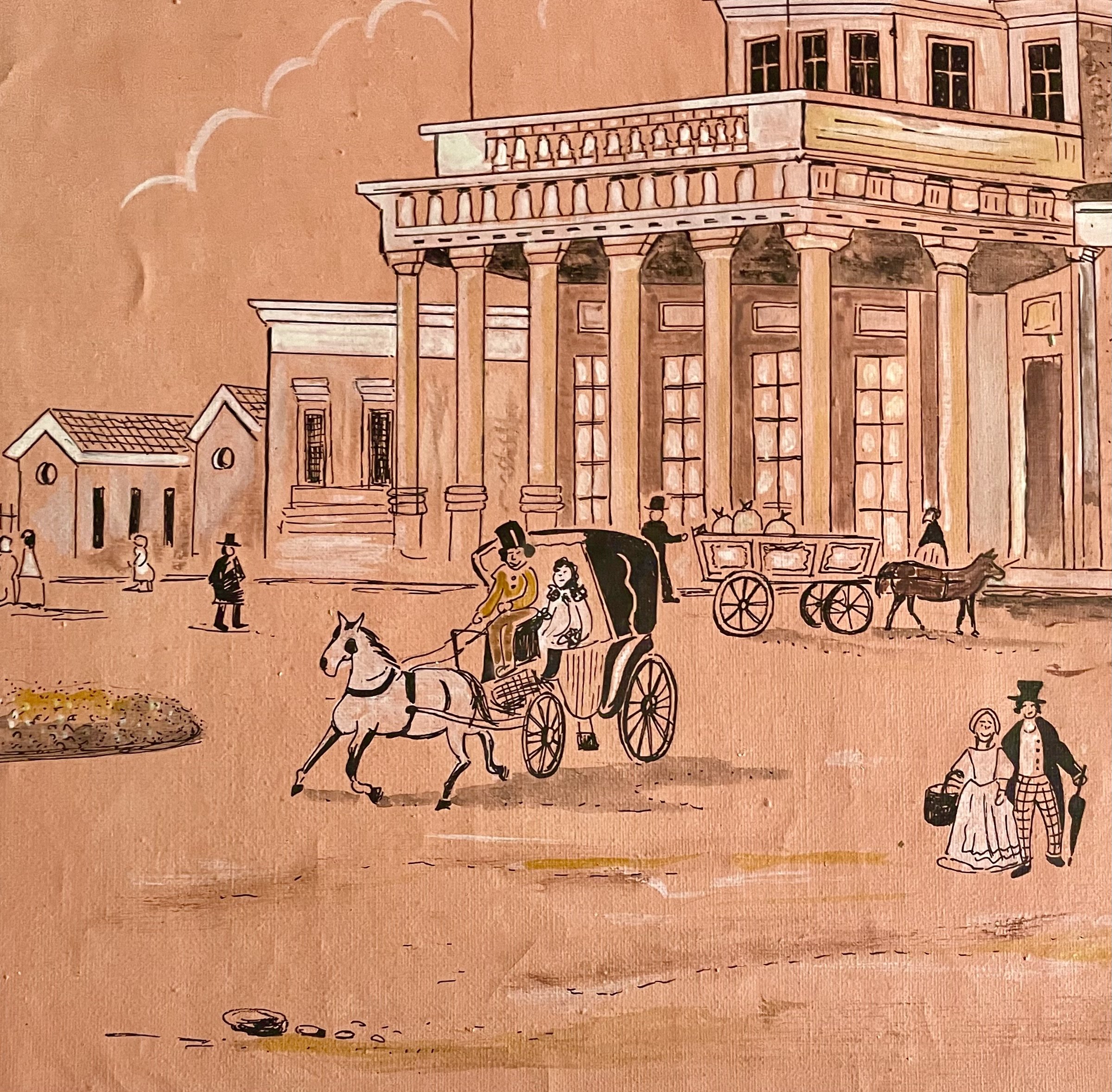 Image 7 of 7