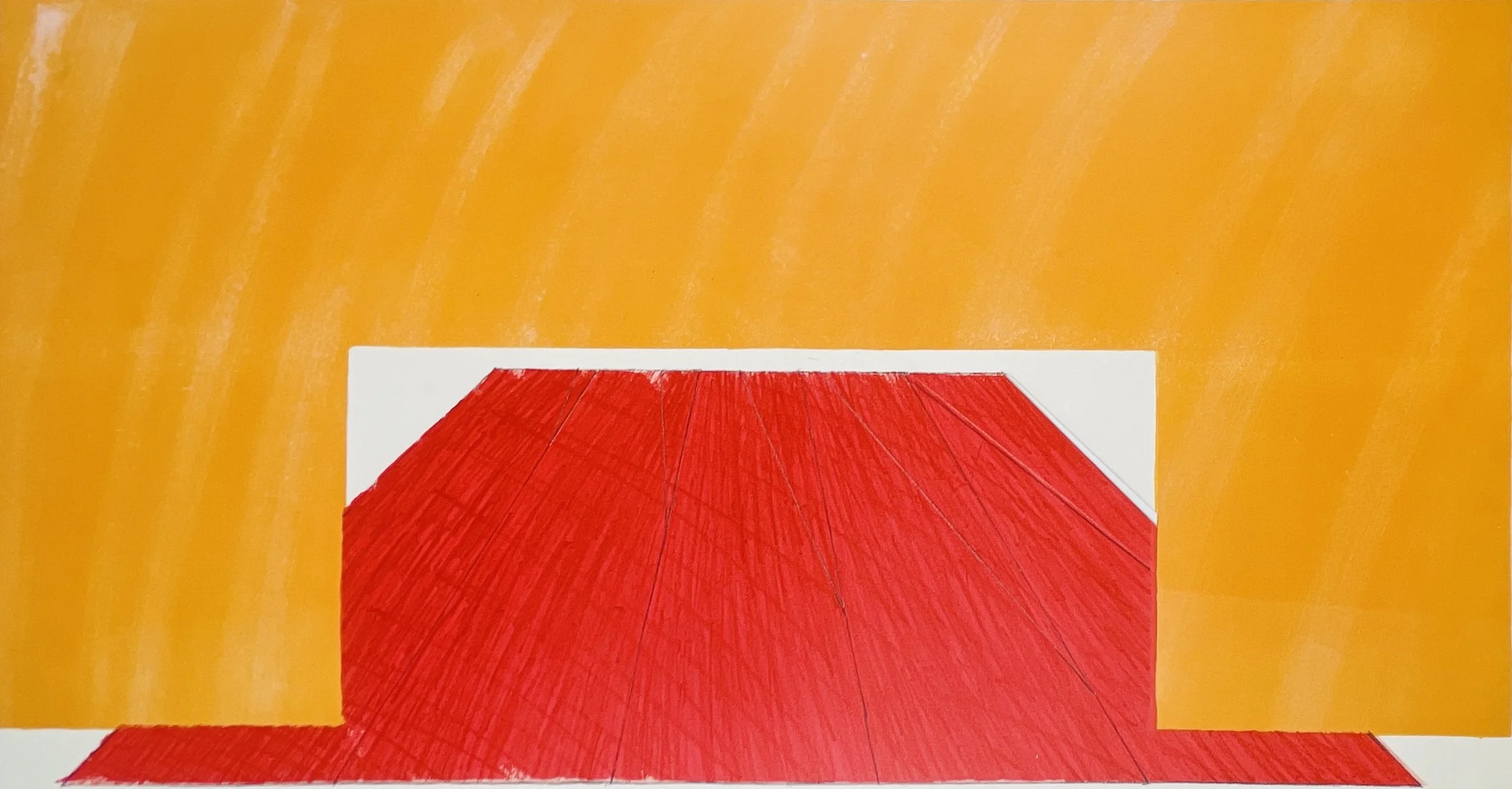
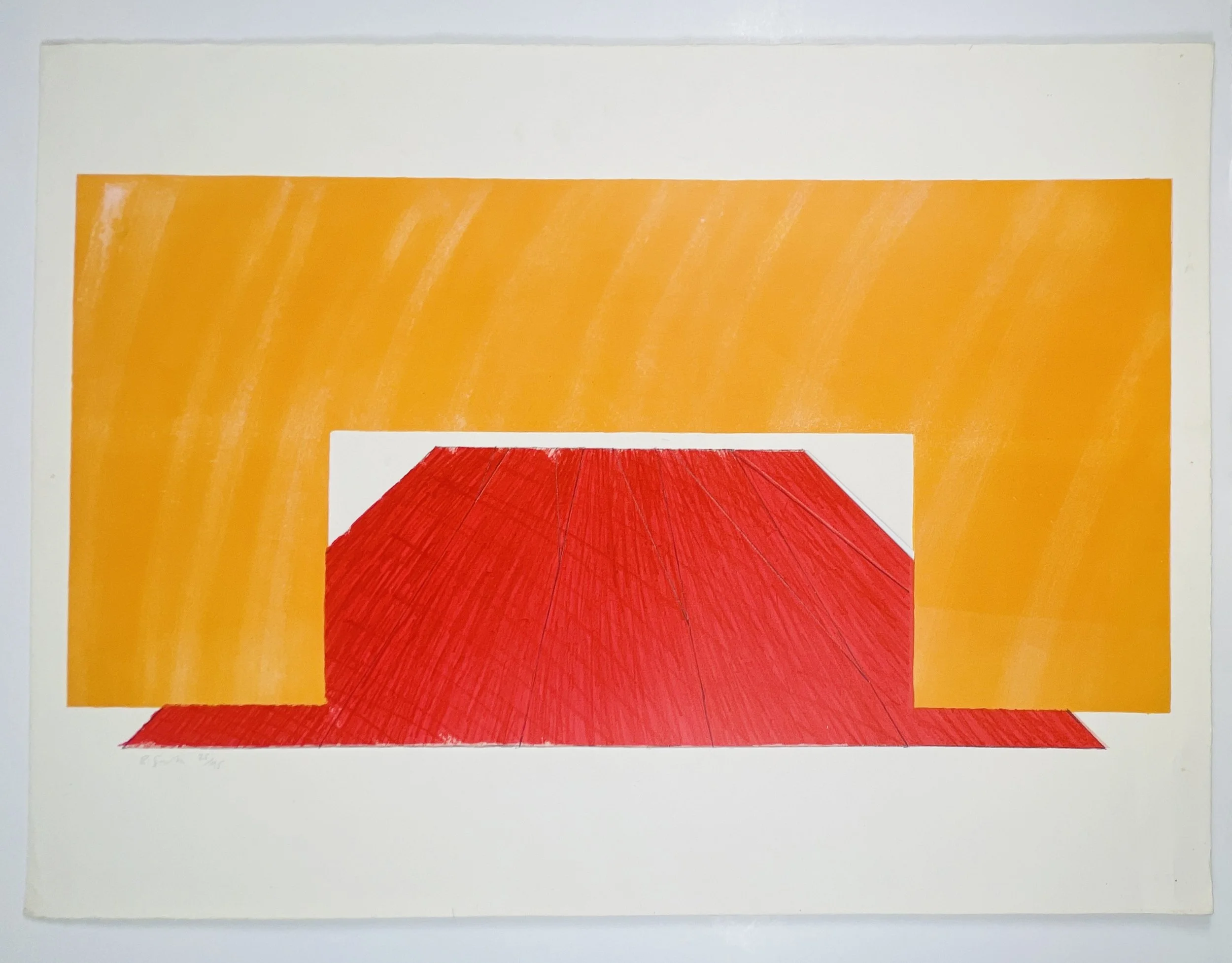
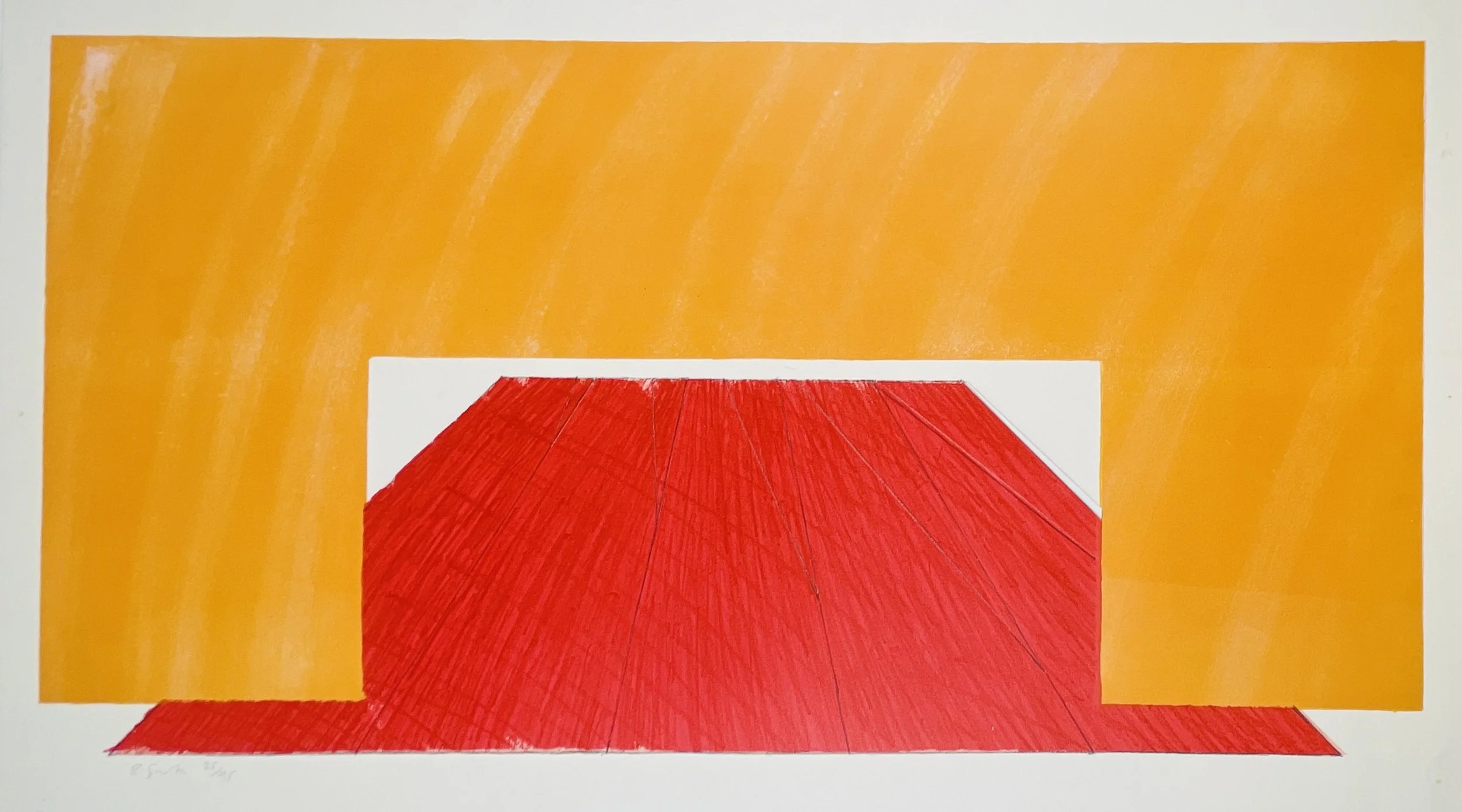
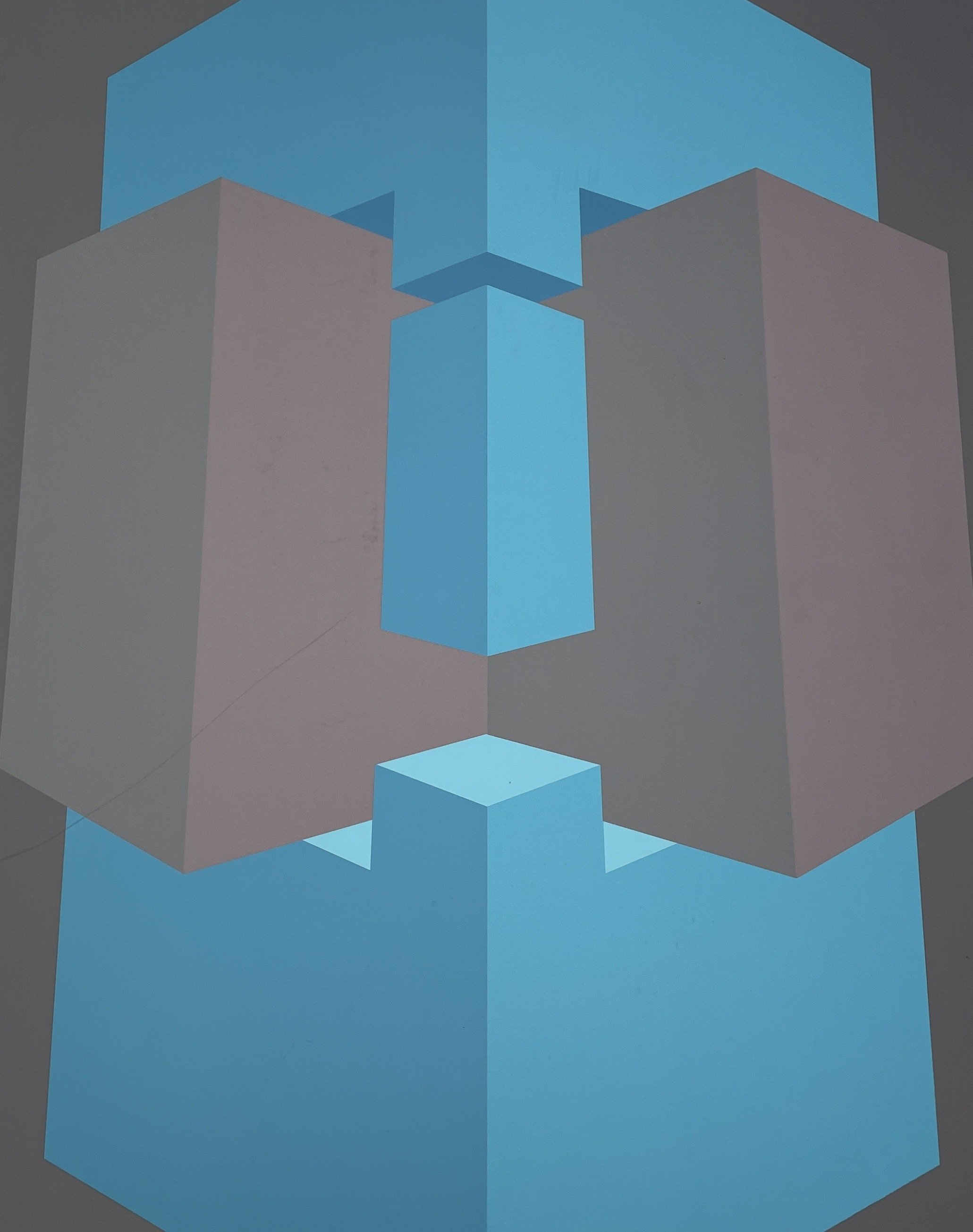
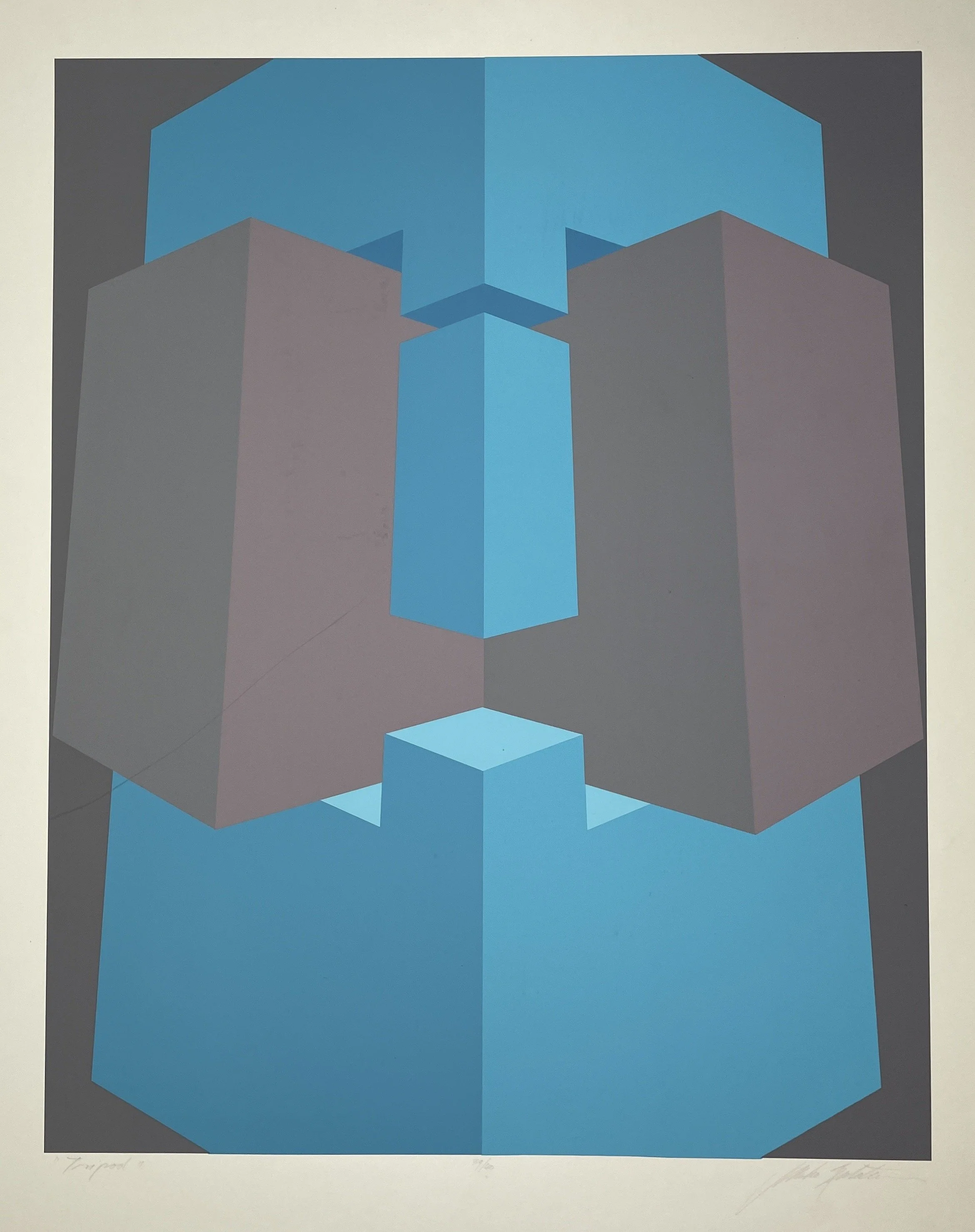
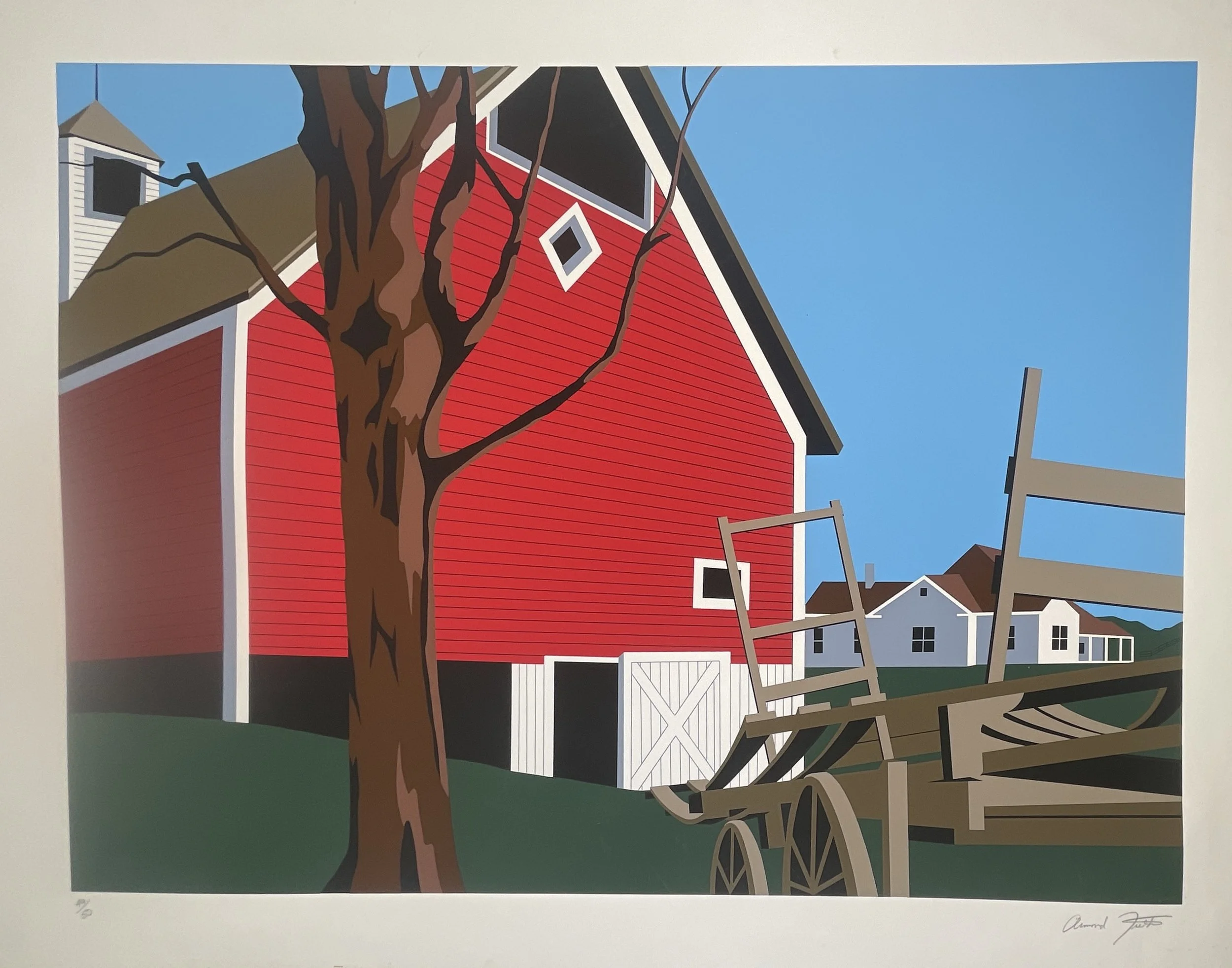
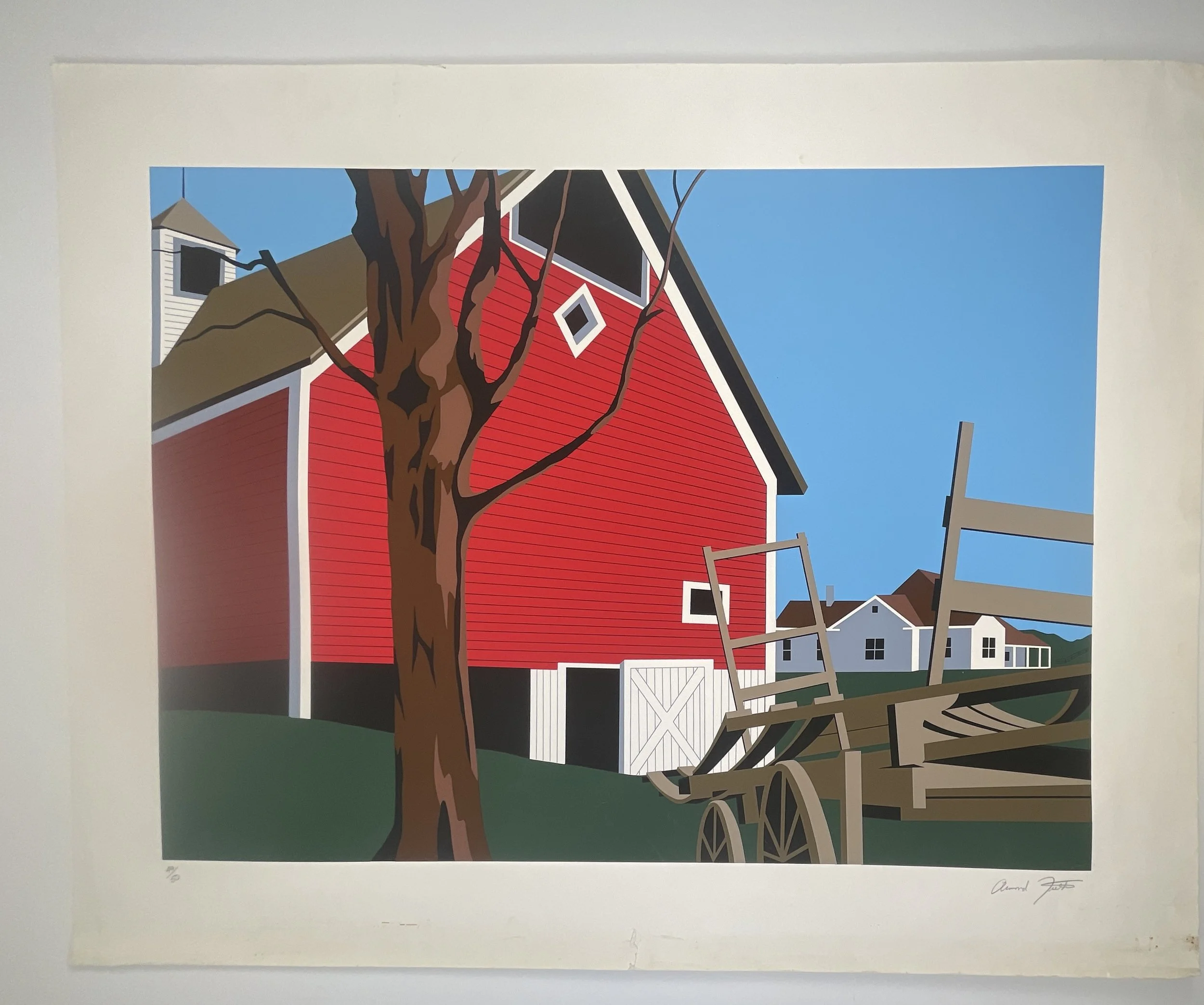
Gravity Room (attributed), J. Seeley, c.1970s–80s, serigraph, 30x22 in, signed, ed. 10/50.
A museum-quality J. Seeley signed serigraph depicting a gravity-defying checkerboard interior with floating domestic furnishings and theatrical female figure. A rare 10/50 edition from the Art Spectrum / Mitch Morse Gallery circle, this striking black-and-white Op Art surrealist composition embodies late 20th-century American graphic illusionism.
Artwork Description
This visually arresting composition exemplifies J. Seeley’s mastery of perceptual instability and architectural illusion. The work presents a meticulously rendered checkerboard interior that fractures spatial logic: the room appears split along a horizontal axis, with furniture drifting across planes as if gravity has dissolved.
Beds, a clawfoot bathtub, vanity, radiator, toilet, and picture frame detach from physical orientation, hovering within the patterned grid. The checkerboard motif — historically associated with perspectival depth studies from Renaissance flooring to 1960s Op Art — becomes an optical engine here. Its relentless repetition destabilizes visual equilibrium, creating a tension between flatness and depth.
At right, a stylized female figure stands poised atop the bathtub. Her striped stockings echo the grid structure of the environment, visually binding figure and architecture. She reads as both performer and participant — a surreal protagonist navigating a world in suspension. The theatrical staging suggests influence from late Surrealism, Pop figuration, and the graphic discipline of Op Art.
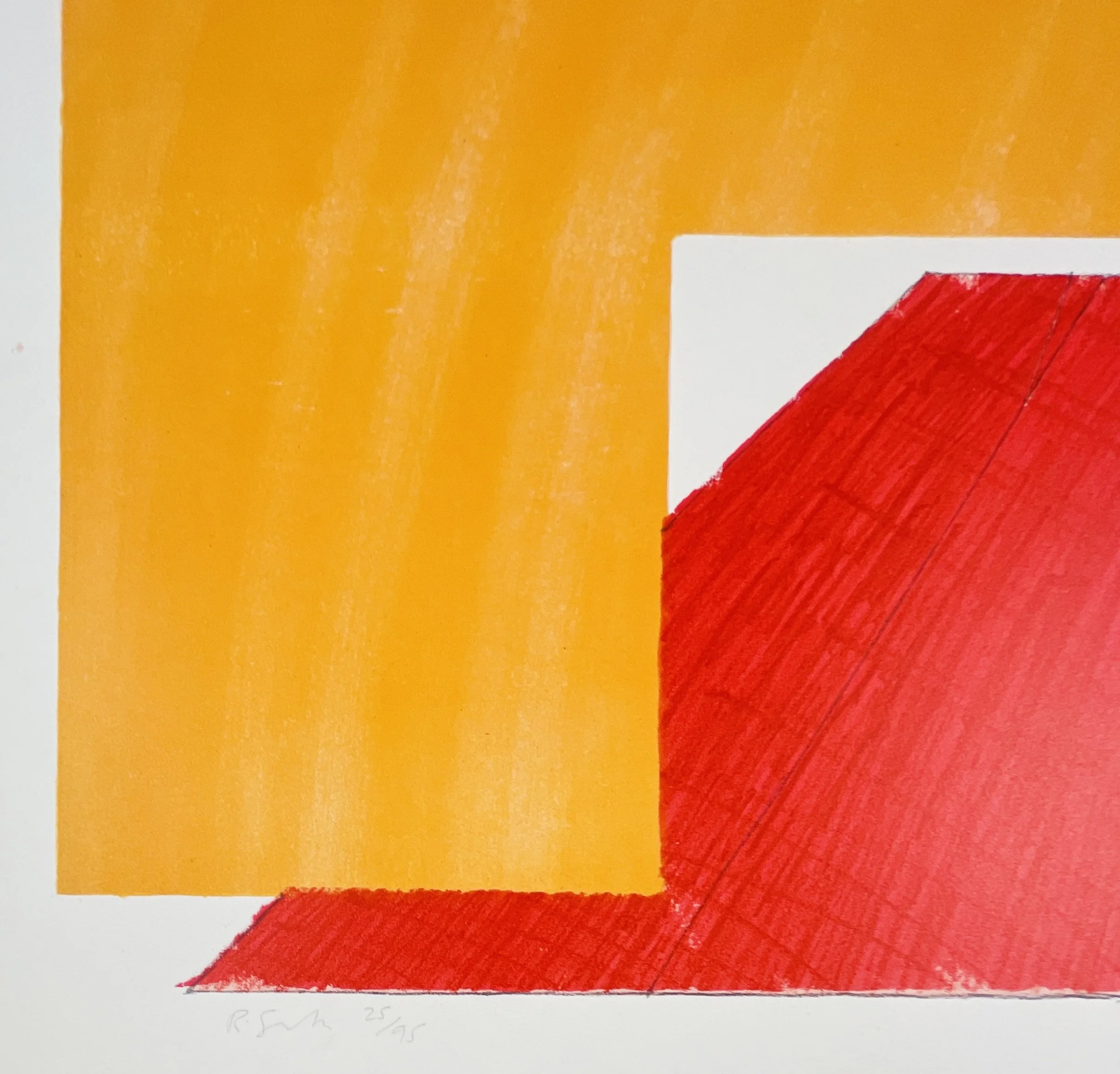
Technically, the dense matte black field and sharply articulated white geometry confirm this as a serigraph (screenprint). The ink saturation and even tonal build-up are consistent with hand-pulled studio printing practices of the 1970s–early 1980s American print market. The edition is numbered 10/50 at lower left and signed “J. Seeley” at lower right in graphite.
The work sits confidently within the lineage of optical illusion art associated with artists such as Bridget Riley, Victor Vasarely, and the broader post-Op graphic revival, while maintaining a distinctly narrative American character.
Medium: Serigraph (screenprint)
Sheet size: 30 x 22 inches
Edition: 10/50
Signature: J. Seeley (lower right)
Circa: 1970s–early 1980s
Artist Biography
J. Seeley is recognized as a late 20th-century American graphic print artist associated with Art Spectrum, the publishing division of Mitch Morse Gallery, Inc., New York. Operating within the thriving 1970s and early 1980s print market, Seeley’s work reflects a sophisticated engagement with optical geometry, illusionistic architecture, and stylized figuration.
Art Spectrum functioned as a professional publishing entity that produced limited-edition serigraphs and graphic works for collectors seeking contemporary design-forward art. Mitch Morse — A.S.I.D., Design Affiliate; listed in Who’s Who in the East; guest lecturer in graphics at N.Y.U.; artist, dealer, publisher, and fine art restorer — was instrumental in distributing works by artists whose aesthetics bridged fine art, interior design, and modern graphic sensibility.
Within this context, Seeley’s compositions demonstrate technical precision and conceptual clarity. His recurring themes include:
Architectural interiors destabilized by optical pattern
Monochromatic high-contrast fields
Figures integrated into geometric environments
Playful surreal disruptions of gravity and space
While extensive institutional museum documentation for Seeley remains limited, the consistency of editioning, signature placement, and publishing framework situates him firmly within the documented Art Spectrum production circle. His works today appeal to collectors of Op Art, graphic surrealism, and rediscovered 1970s design-era printmaking.
As interest grows in historically overlooked print publishers and gallery-distributed editions, Seeley’s compositions are increasingly appreciated for their disciplined execution and strong visual presence.
J. Seeley
Gravity Room (attributed)
Serigraph on paper
30 x 22 in
Signed lower right
Numbered 10/50
Art Spectrum / Mitch Morse Gallery context
Circa 1970s–80s
Certificate of Authenticity
Artist: J. Seeley
Title: Gravity Room (attributed)
Medium: Serigraph (screenprint) on paper
Dimensions: 30 x 22 inches
Edition: 10/50
Signature: Signed lower right
This work is an original limited-edition serigraph consistent with Art Spectrum publishing practices of the period and bears the artist’s signature and edition notation as shown.
Condition
Strong ink density with clean geometric edges. Minor surface handling consistent with age may be present in black fields. No visible tears or major abrasions observed from provided images. Reverse shows typical prior mounting residue consistent with gallery handling.
Provenance
Art Spectrum, Division of Mitch Morse Gallery, Inc., New York
Mitch Morse Gallery acquisitions (NYC / Europe)
Private Collection
Artfind Gallery, Washington, DC (current owner)
Gravity Room (attributed), J. Seeley, c.1970s–80s, serigraph, 30x22 in, signed, ed. 10/50.
A museum-quality J. Seeley signed serigraph depicting a gravity-defying checkerboard interior with floating domestic furnishings and theatrical female figure. A rare 10/50 edition from the Art Spectrum / Mitch Morse Gallery circle, this striking black-and-white Op Art surrealist composition embodies late 20th-century American graphic illusionism.
Artwork Description
This visually arresting composition exemplifies J. Seeley’s mastery of perceptual instability and architectural illusion. The work presents a meticulously rendered checkerboard interior that fractures spatial logic: the room appears split along a horizontal axis, with furniture drifting across planes as if gravity has dissolved.
Beds, a clawfoot bathtub, vanity, radiator, toilet, and picture frame detach from physical orientation, hovering within the patterned grid. The checkerboard motif — historically associated with perspectival depth studies from Renaissance flooring to 1960s Op Art — becomes an optical engine here. Its relentless repetition destabilizes visual equilibrium, creating a tension between flatness and depth.
At right, a stylized female figure stands poised atop the bathtub. Her striped stockings echo the grid structure of the environment, visually binding figure and architecture. She reads as both performer and participant — a surreal protagonist navigating a world in suspension. The theatrical staging suggests influence from late Surrealism, Pop figuration, and the graphic discipline of Op Art.
Technically, the dense matte black field and sharply articulated white geometry confirm this as a serigraph (screenprint). The ink saturation and even tonal build-up are consistent with hand-pulled studio printing practices of the 1970s–early 1980s American print market. The edition is numbered 10/50 at lower left and signed “J. Seeley” at lower right in graphite.
The work sits confidently within the lineage of optical illusion art associated with artists such as Bridget Riley, Victor Vasarely, and the broader post-Op graphic revival, while maintaining a distinctly narrative American character.
Medium: Serigraph (screenprint)
Sheet size: 30 x 22 inches
Edition: 10/50
Signature: J. Seeley (lower right)
Circa: 1970s–early 1980s
Artist Biography
J. Seeley is recognized as a late 20th-century American graphic print artist associated with Art Spectrum, the publishing division of Mitch Morse Gallery, Inc., New York. Operating within the thriving 1970s and early 1980s print market, Seeley’s work reflects a sophisticated engagement with optical geometry, illusionistic architecture, and stylized figuration.
Art Spectrum functioned as a professional publishing entity that produced limited-edition serigraphs and graphic works for collectors seeking contemporary design-forward art. Mitch Morse — A.S.I.D., Design Affiliate; listed in Who’s Who in the East; guest lecturer in graphics at N.Y.U.; artist, dealer, publisher, and fine art restorer — was instrumental in distributing works by artists whose aesthetics bridged fine art, interior design, and modern graphic sensibility.
Within this context, Seeley’s compositions demonstrate technical precision and conceptual clarity. His recurring themes include:
Architectural interiors destabilized by optical pattern
Monochromatic high-contrast fields
Figures integrated into geometric environments
Playful surreal disruptions of gravity and space
While extensive institutional museum documentation for Seeley remains limited, the consistency of editioning, signature placement, and publishing framework situates him firmly within the documented Art Spectrum production circle. His works today appeal to collectors of Op Art, graphic surrealism, and rediscovered 1970s design-era printmaking.
As interest grows in historically overlooked print publishers and gallery-distributed editions, Seeley’s compositions are increasingly appreciated for their disciplined execution and strong visual presence.
J. Seeley
Gravity Room (attributed)
Serigraph on paper
30 x 22 in
Signed lower right
Numbered 10/50
Art Spectrum / Mitch Morse Gallery context
Circa 1970s–80s
Certificate of Authenticity
Artist: J. Seeley
Title: Gravity Room (attributed)
Medium: Serigraph (screenprint) on paper
Dimensions: 30 x 22 inches
Edition: 10/50
Signature: Signed lower right
This work is an original limited-edition serigraph consistent with Art Spectrum publishing practices of the period and bears the artist’s signature and edition notation as shown.
Condition
Strong ink density with clean geometric edges. Minor surface handling consistent with age may be present in black fields. No visible tears or major abrasions observed from provided images. Reverse shows typical prior mounting residue consistent with gallery handling.
Provenance
Art Spectrum, Division of Mitch Morse Gallery, Inc., New York
Mitch Morse Gallery acquisitions (NYC / Europe)
Private Collection
Artfind Gallery, Washington, DC (current owner)
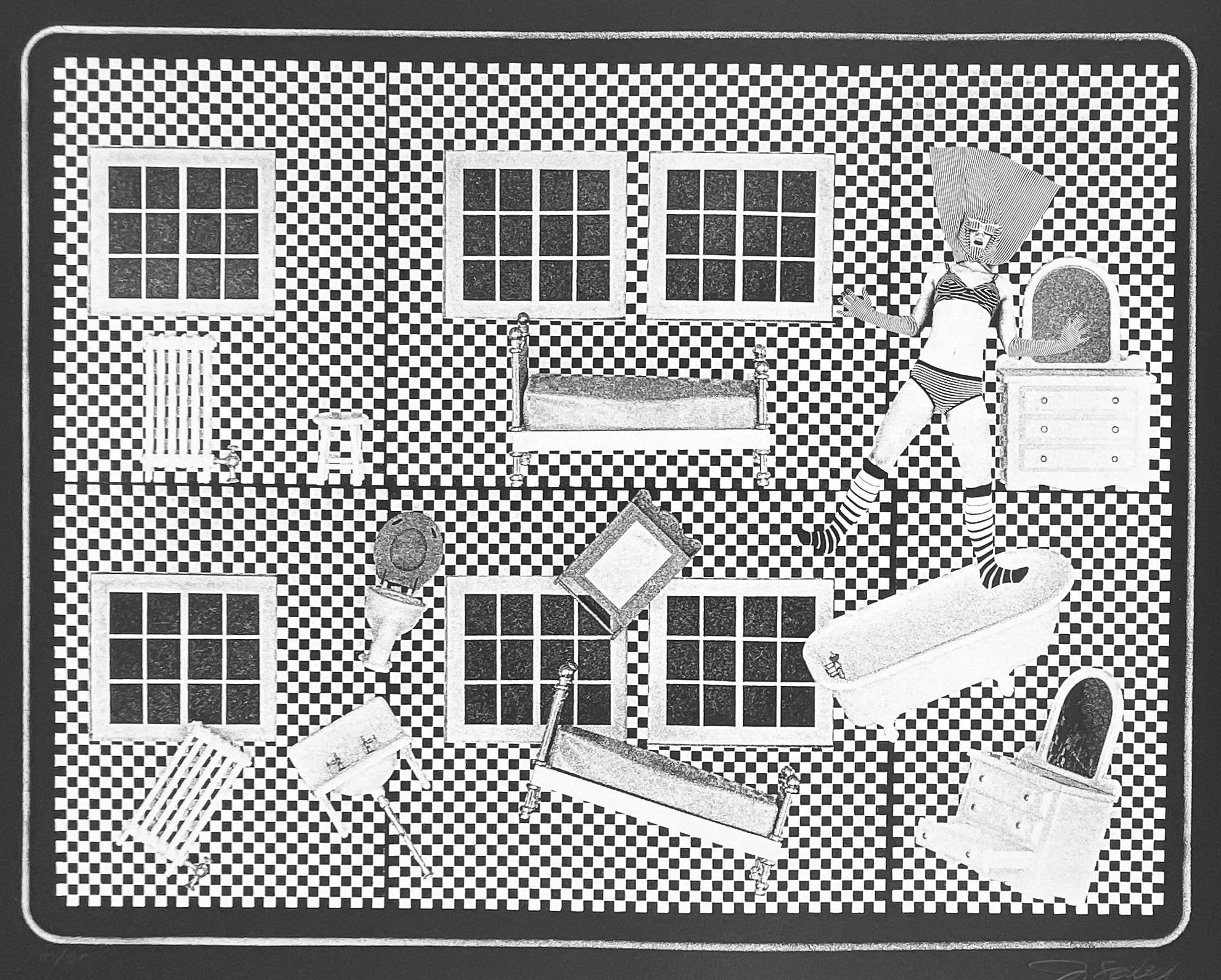 Image 1 of 6
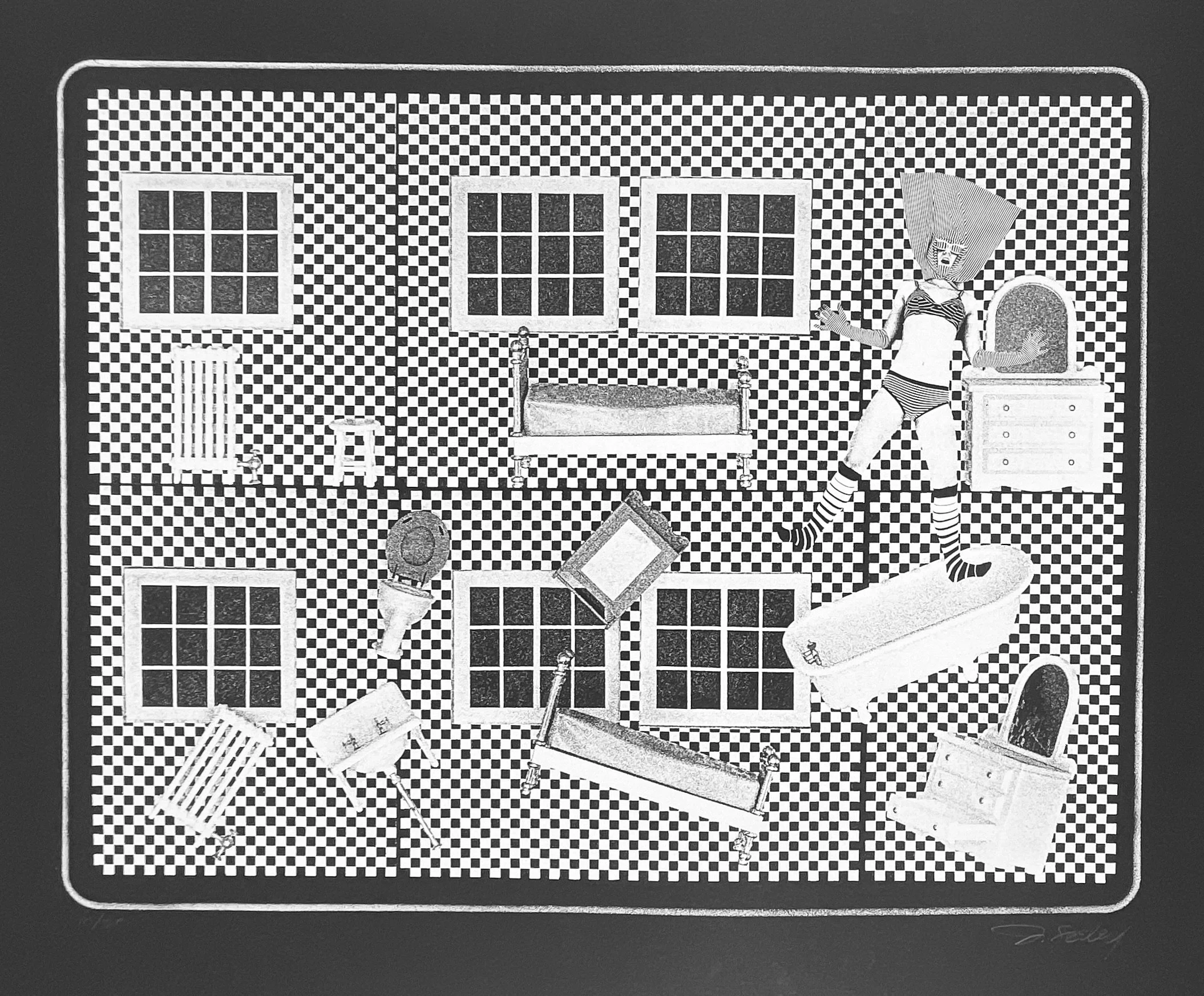 Image 2 of 6
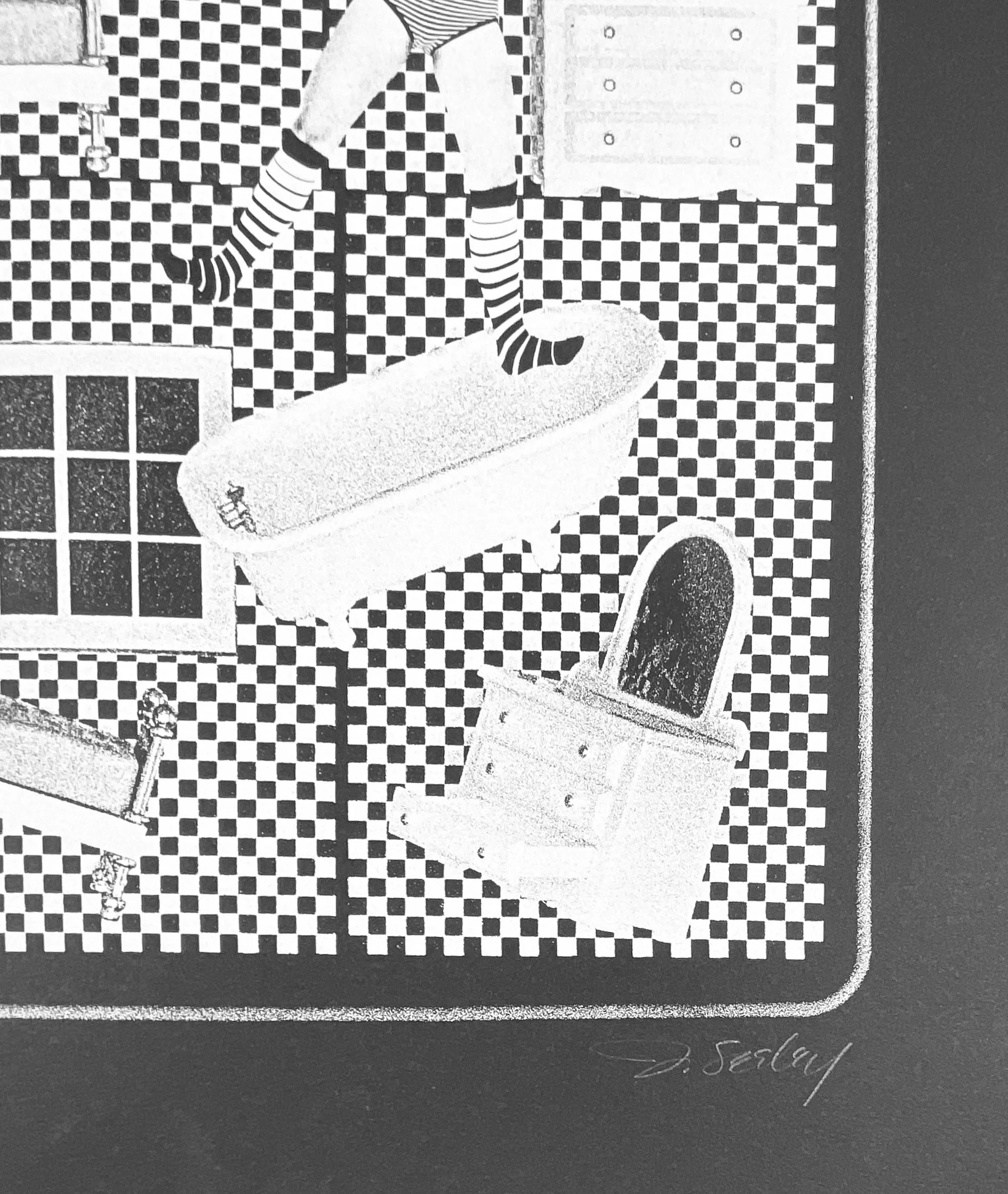 Image 3 of 6
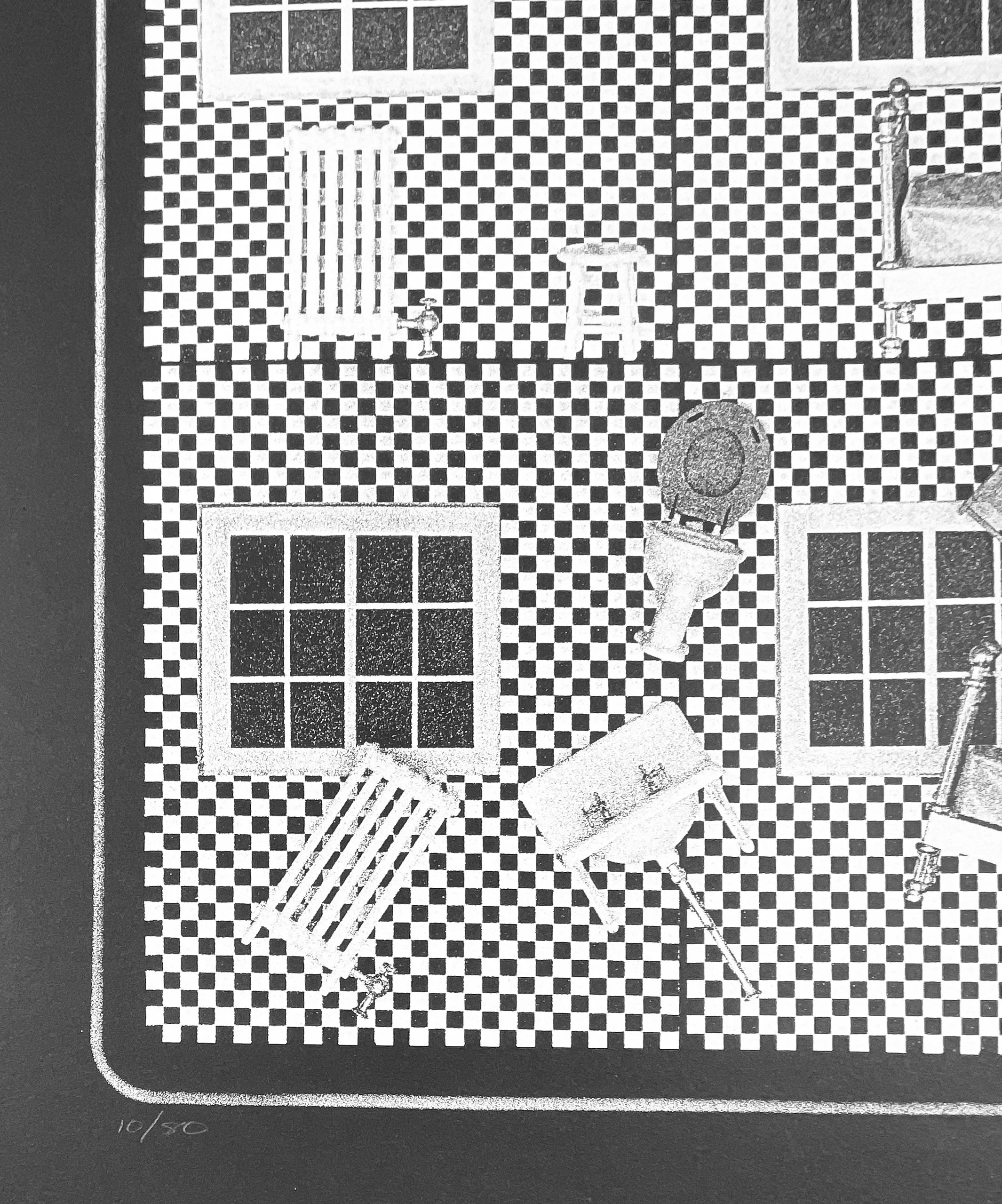 Image 4 of 6
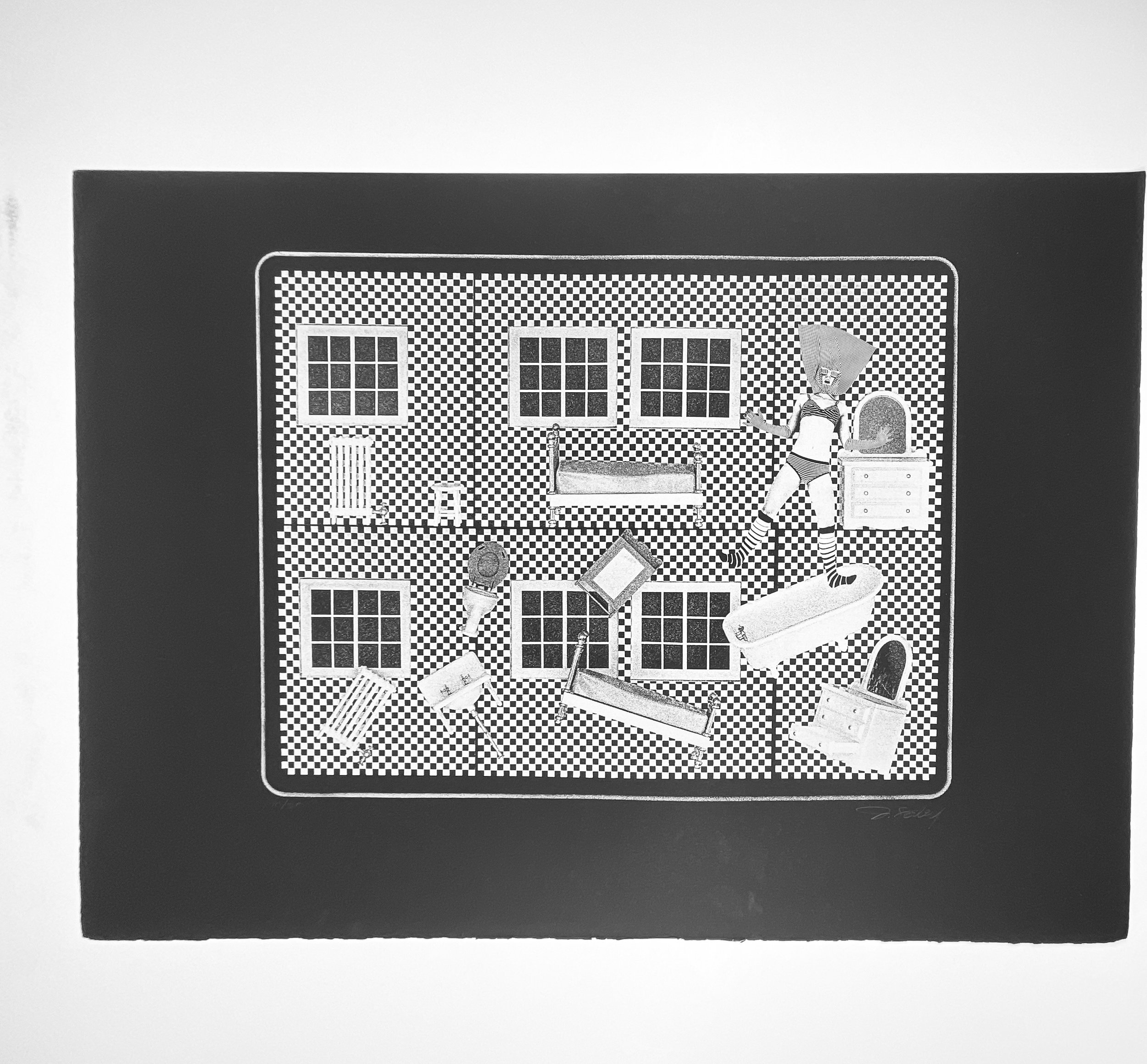 Image 5 of 6
 Image 6 of 6