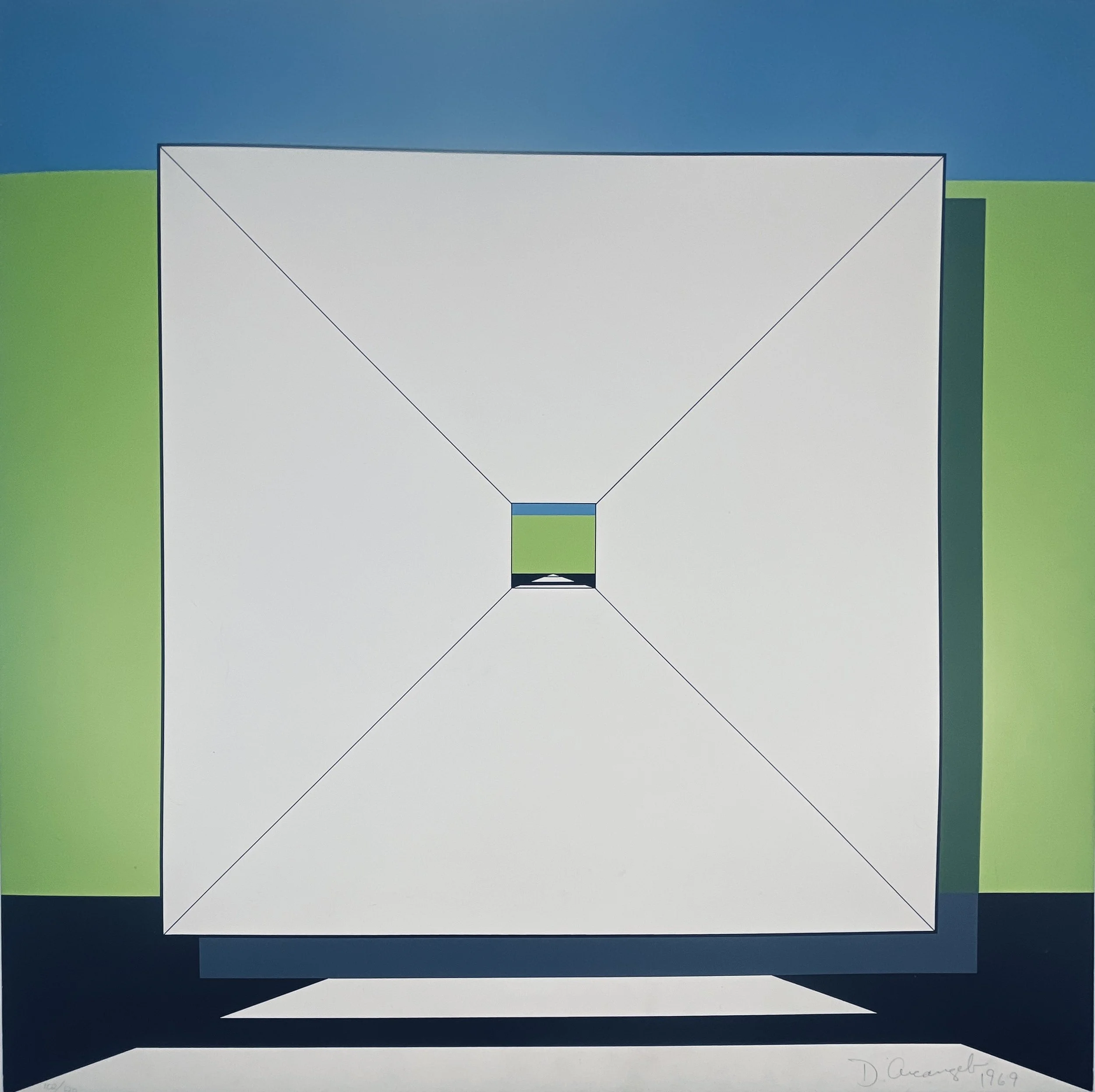
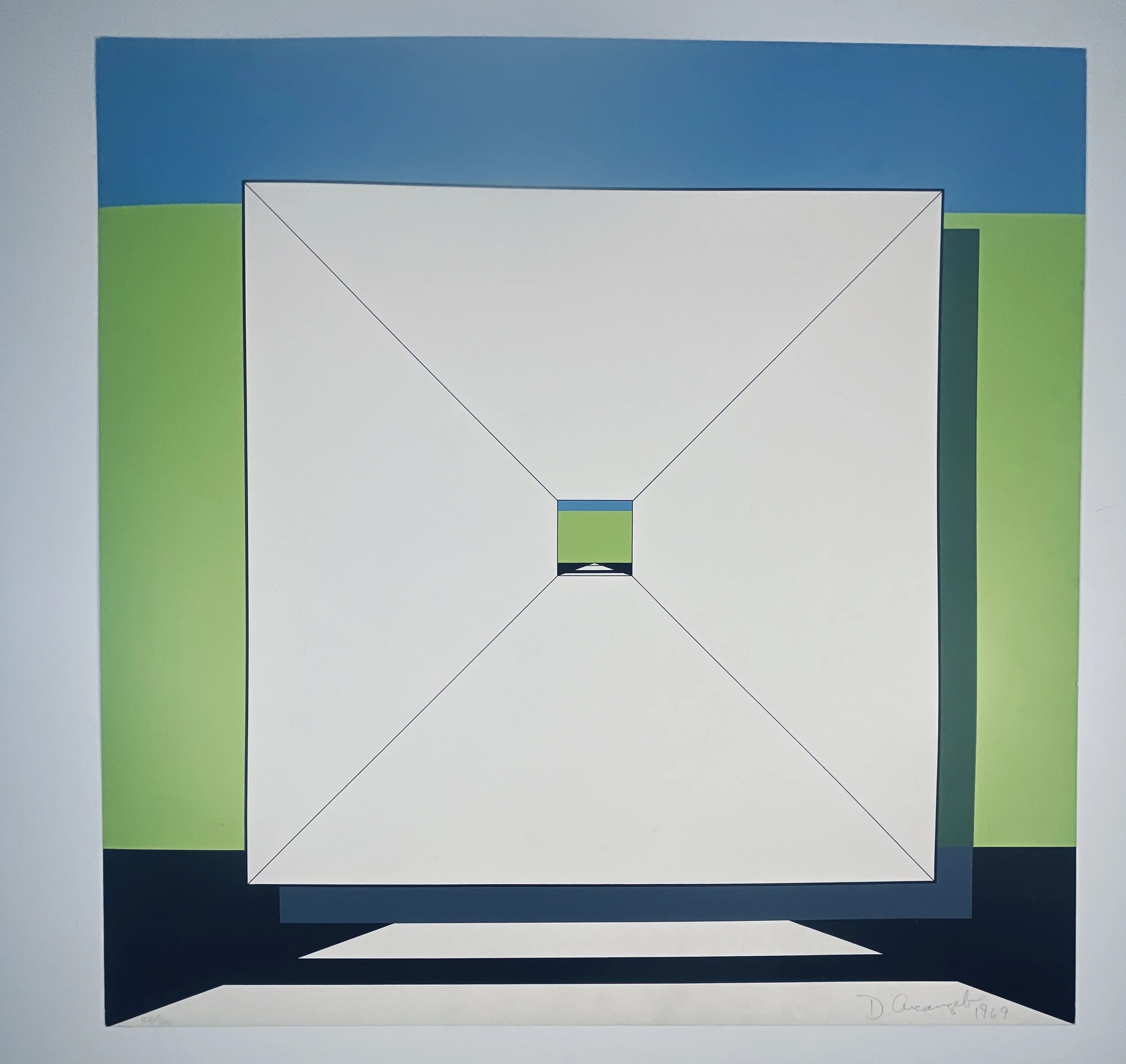
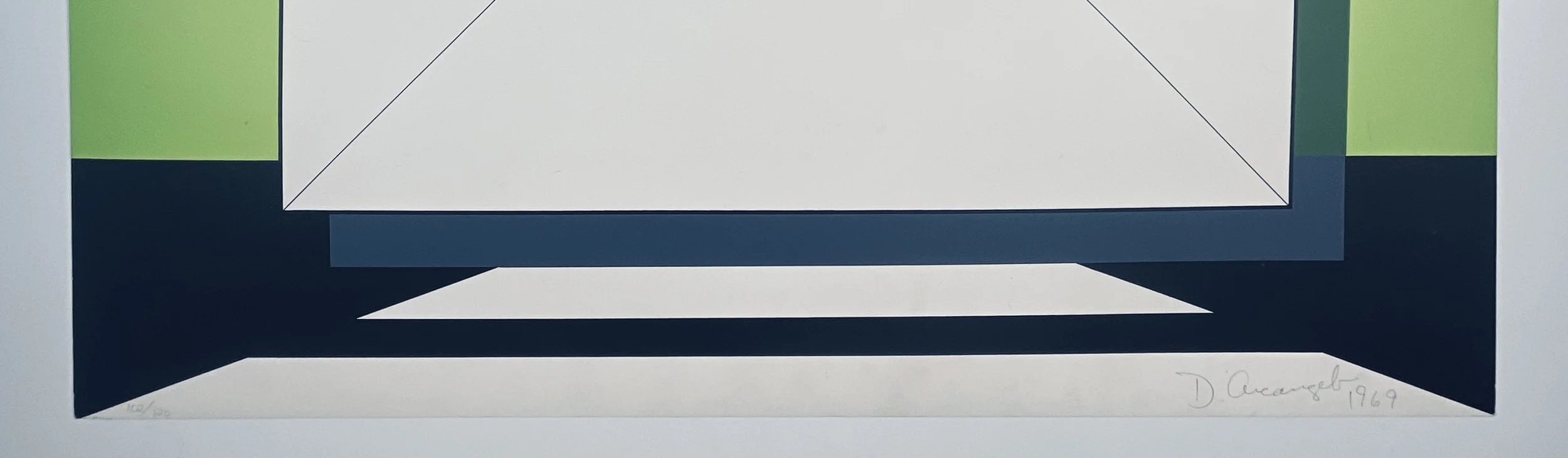
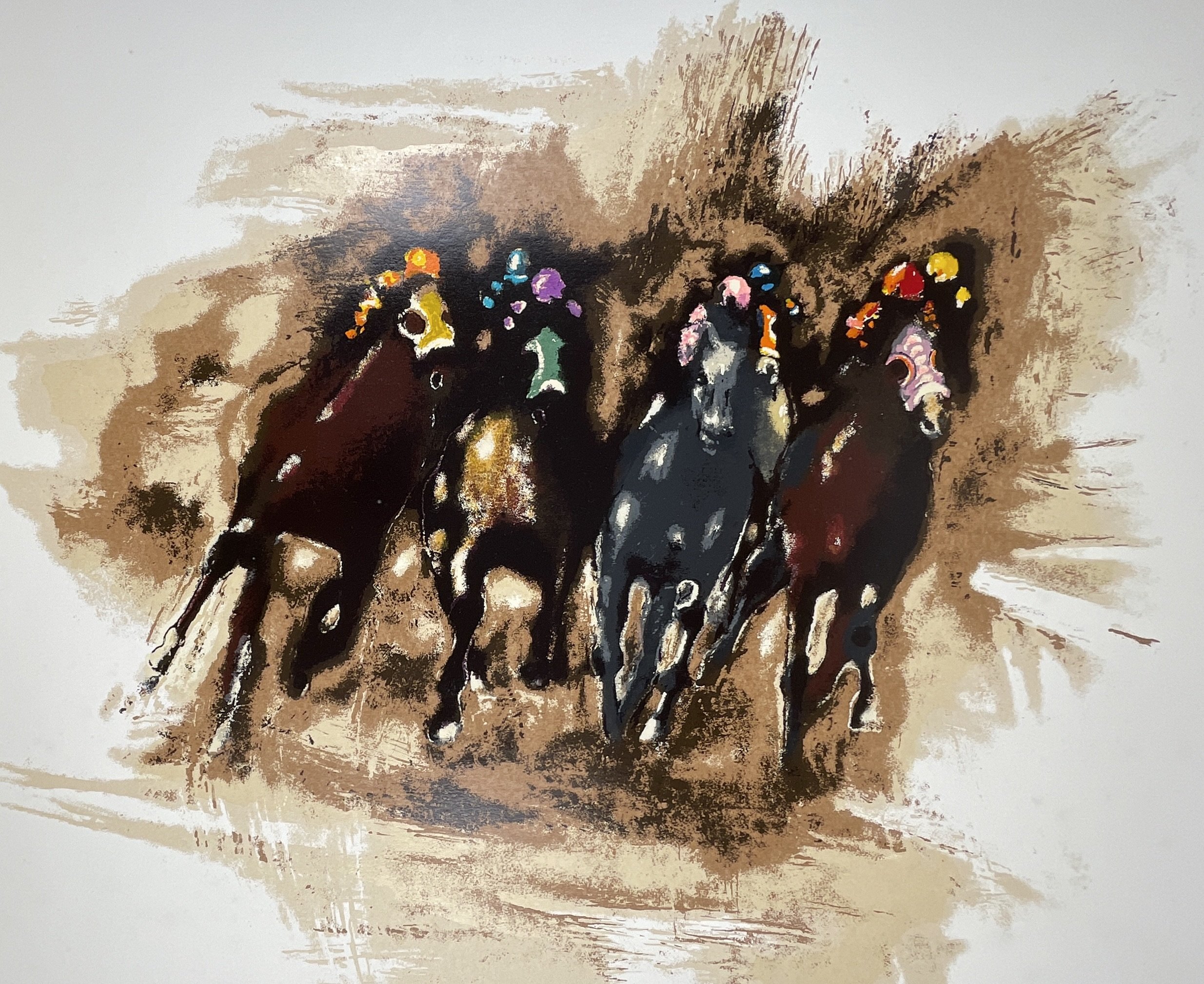
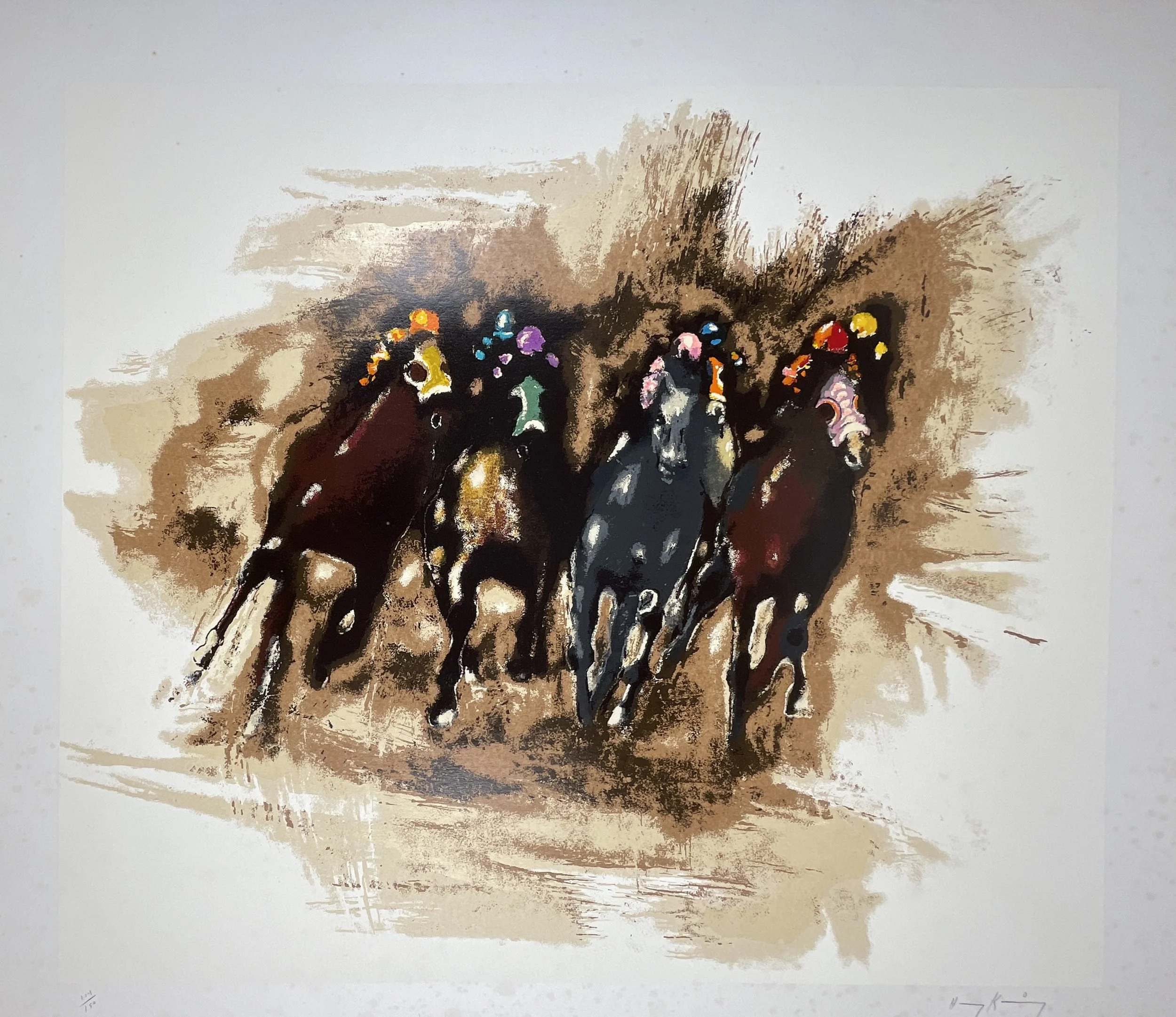
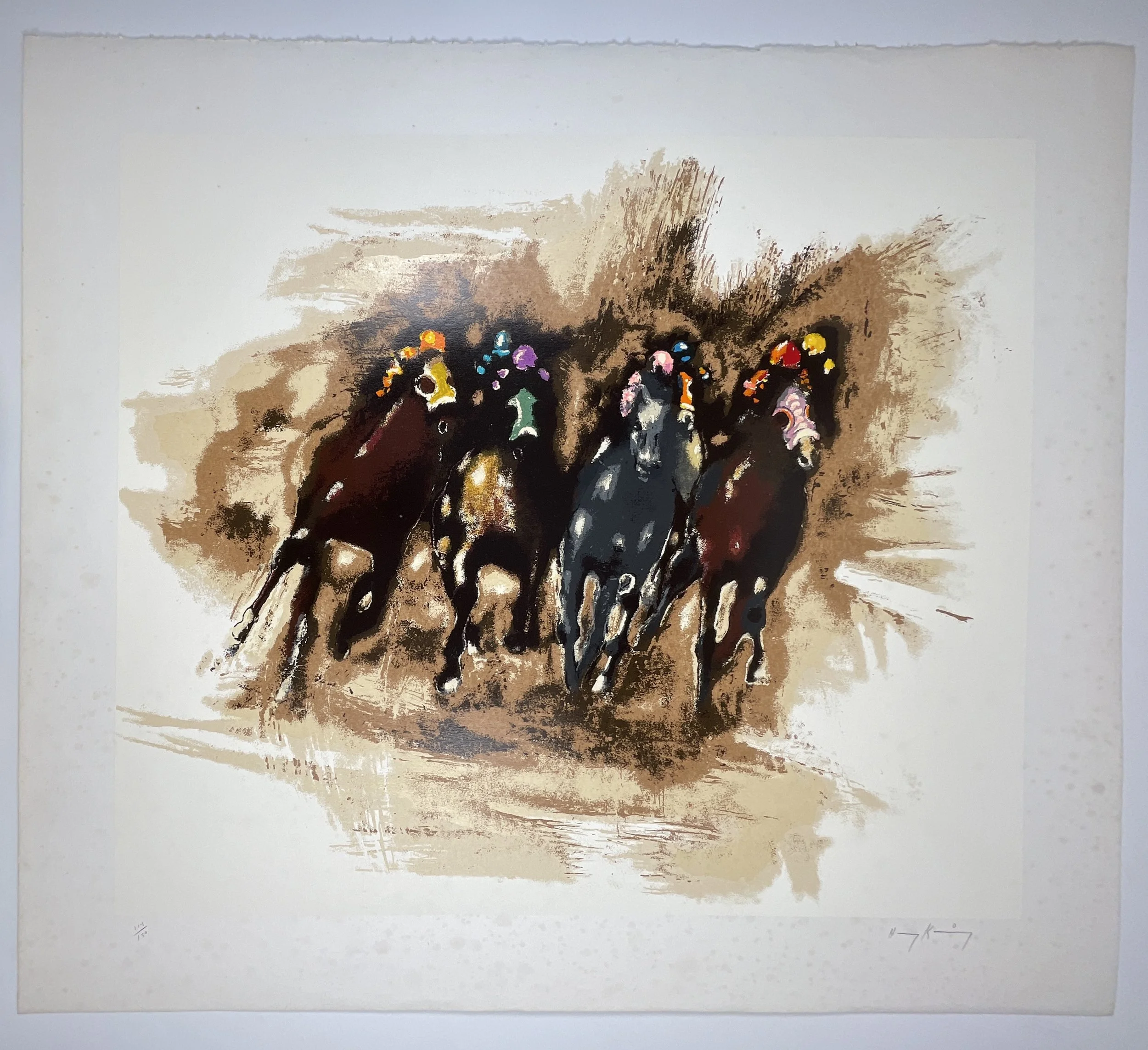
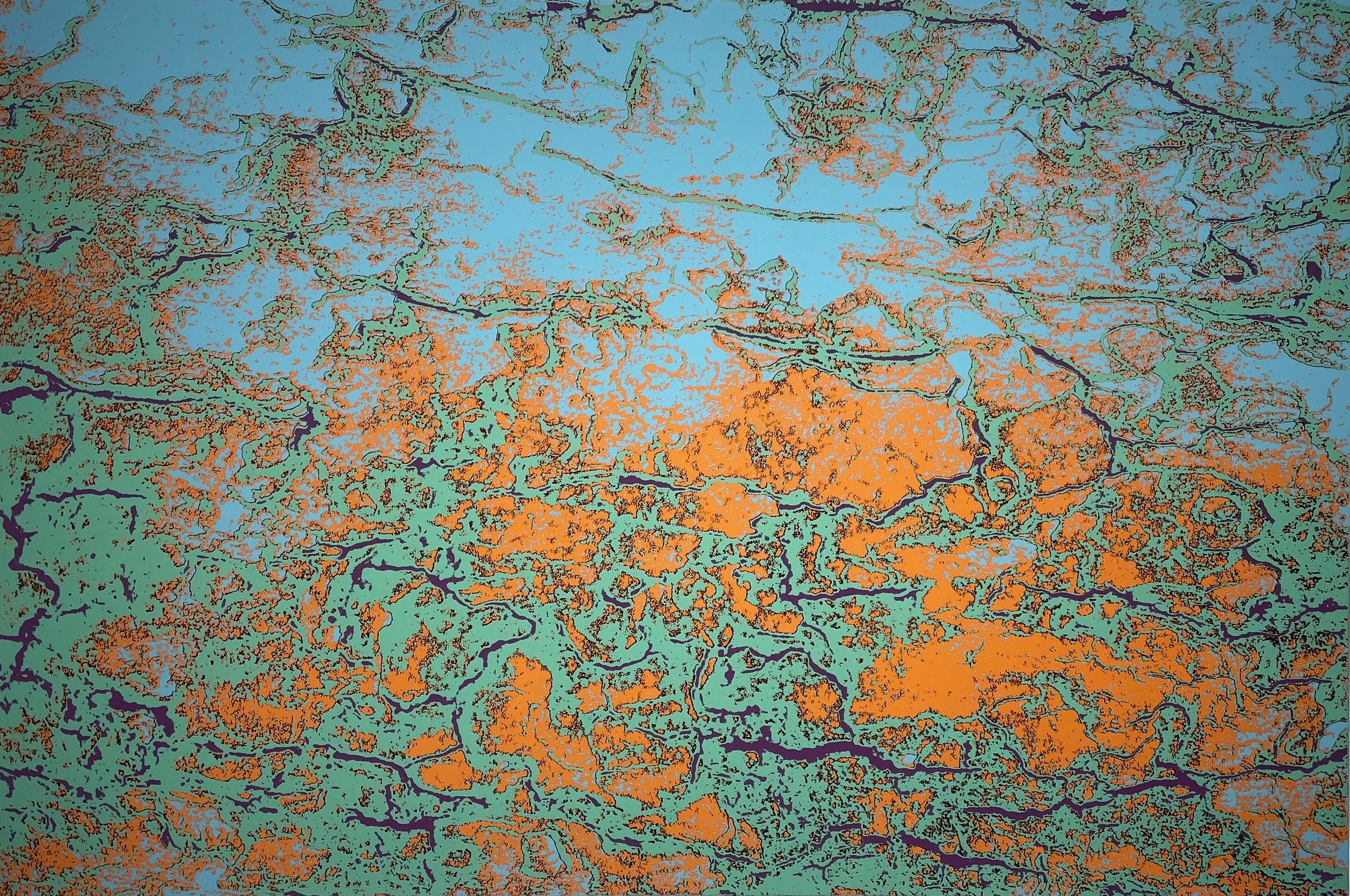
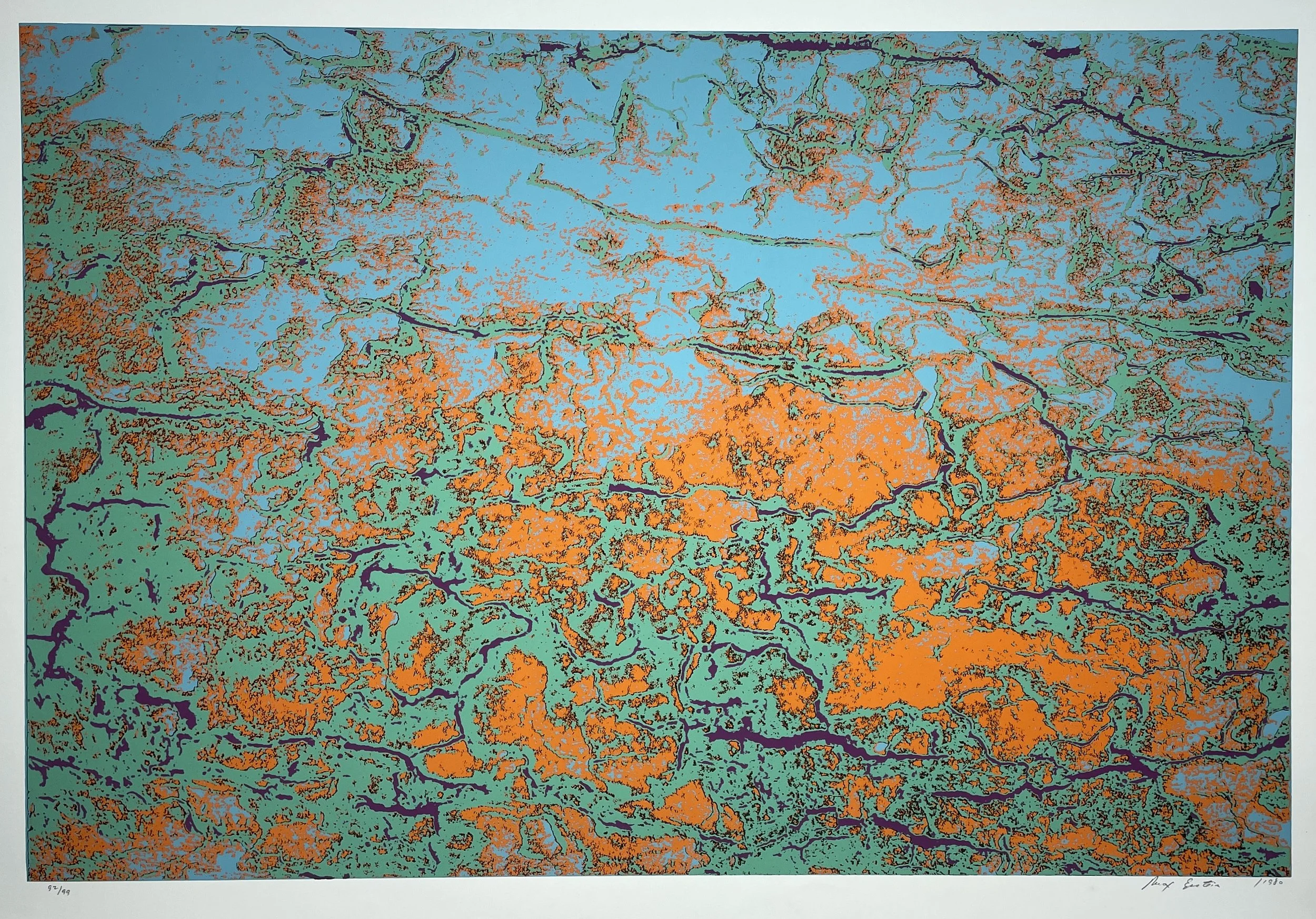
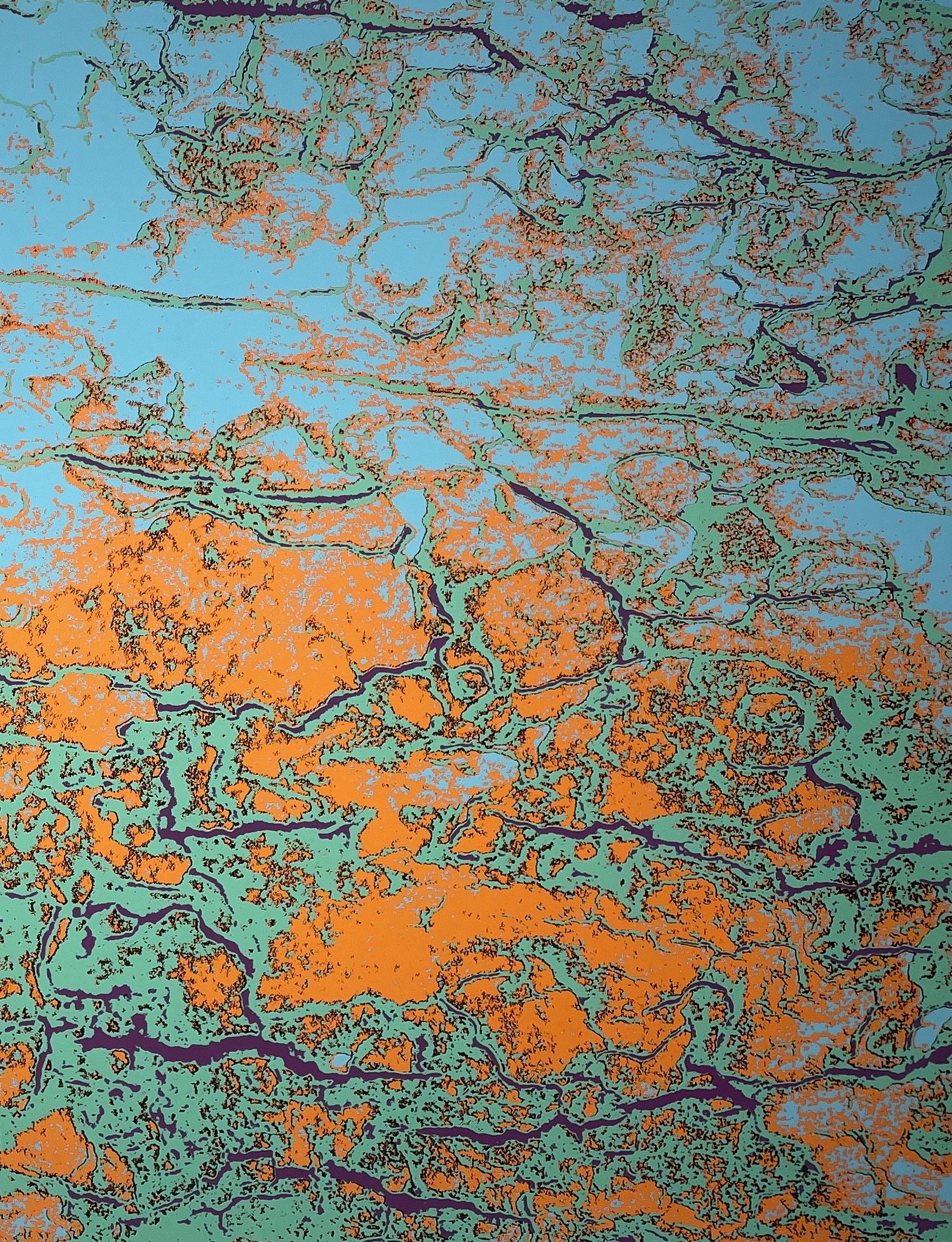
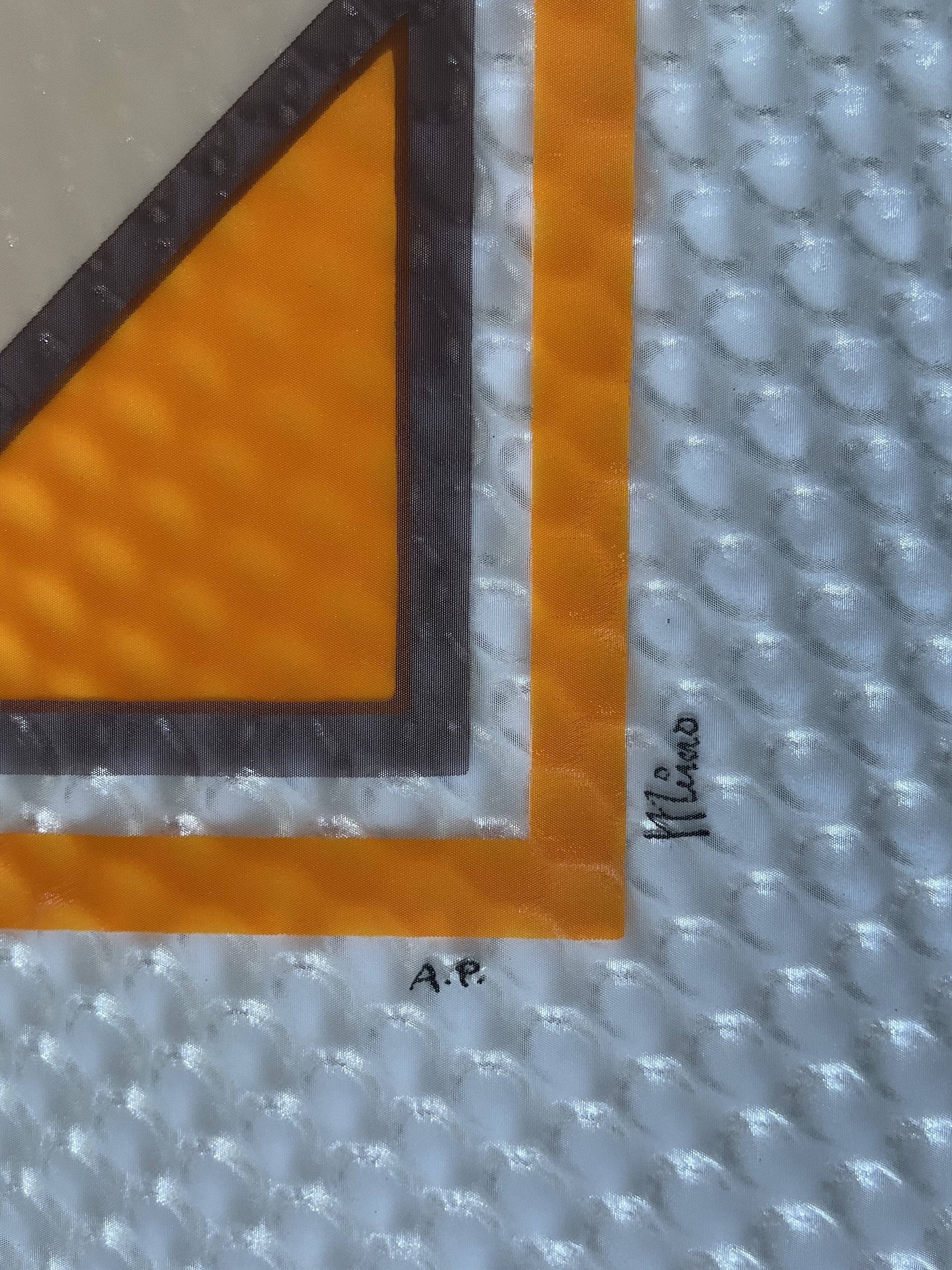
“Horizon Indigo” -attributed -E.T. Gipson (American, 20th c.), c.1983 silkscreen serigraph monoprint 31×23 in, signed “Gipson ’83,” unique 1/1.
A rare one-of-a-kind silkscreen serigraph monoprint by E.T. Gipson, Horizon Indigo (c.1983) presents a serene horizon with graded bands of neutral light diffusing into deep indigo below, anchored by a luminous central orb. Signed “Gipson ’83,” unique 1/1 monoprint—ideal for modern and minimalist collectors seeking atmospheric abstraction.
Artwork Description
Horizon Indigo is an evocative minimalist composition built from softly graduated silkscreen layers that suggest a horizon at dawn or dusk. The broad, horizontal bands transition from pale sand and cream near the upper field into deeper ochres and finally rich indigo near the base. A large, pale circular form—interpretable as a sun or moon—rises subtly above the midline, creating a quiet focal point that draws the eye.
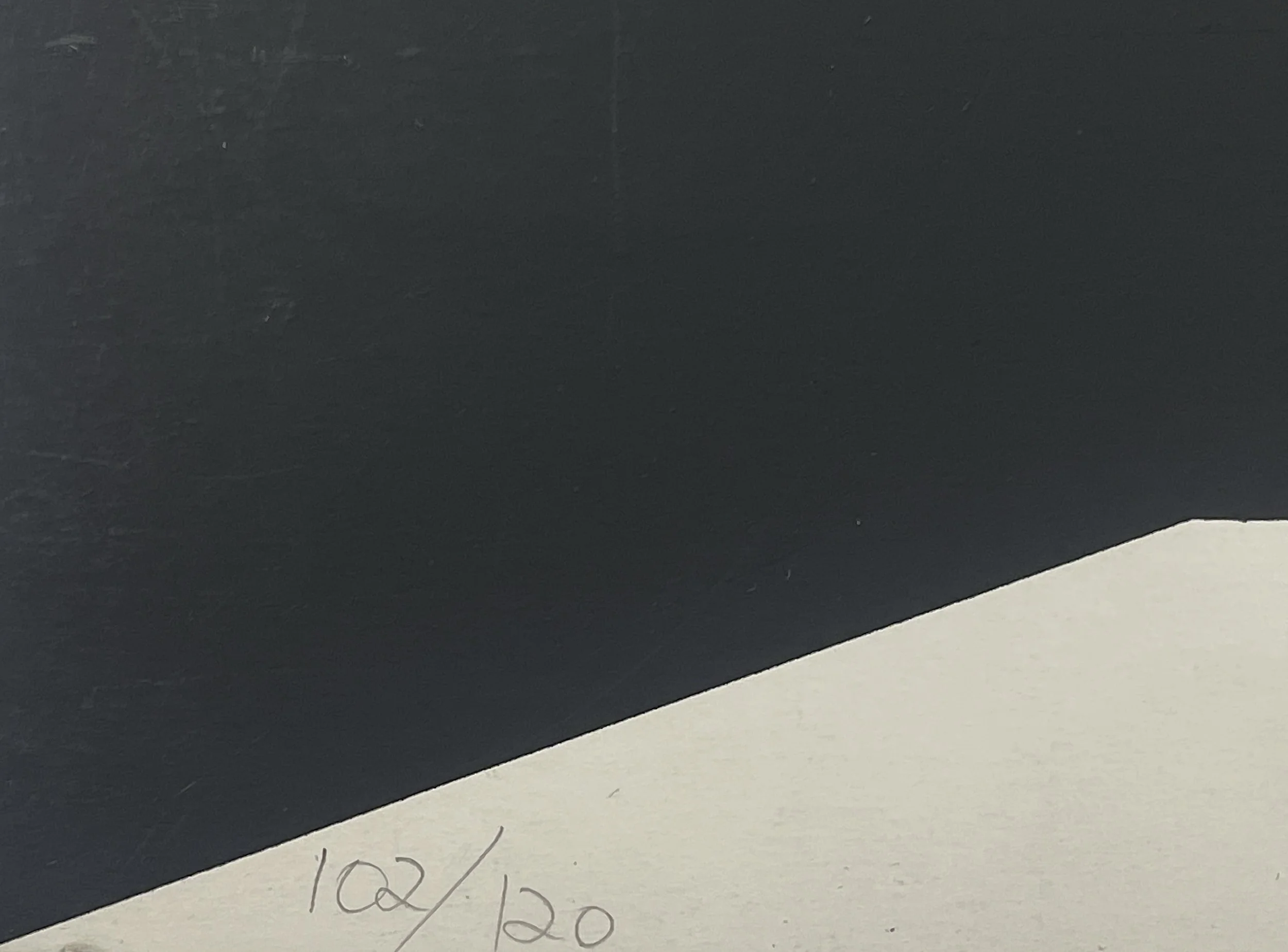
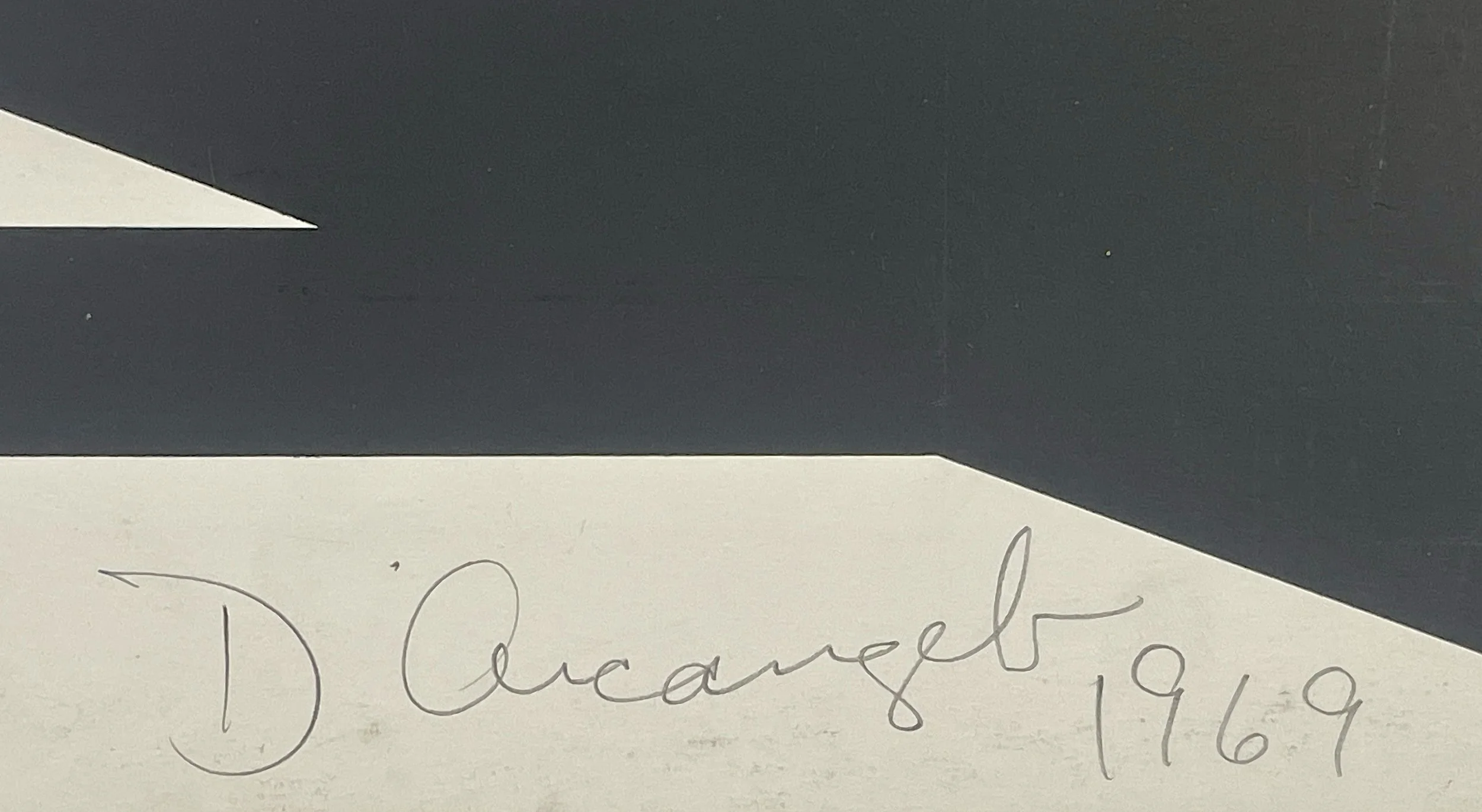
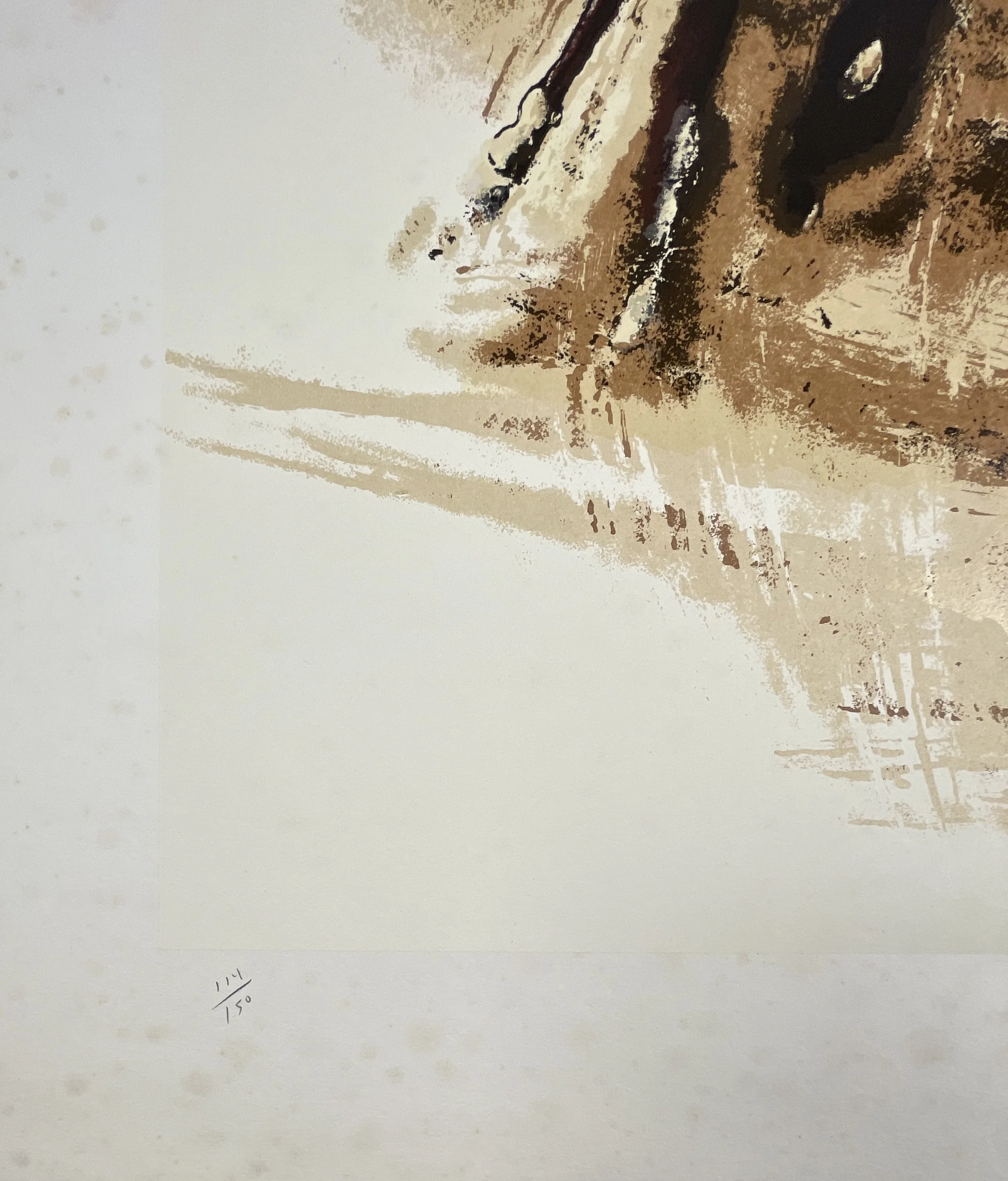
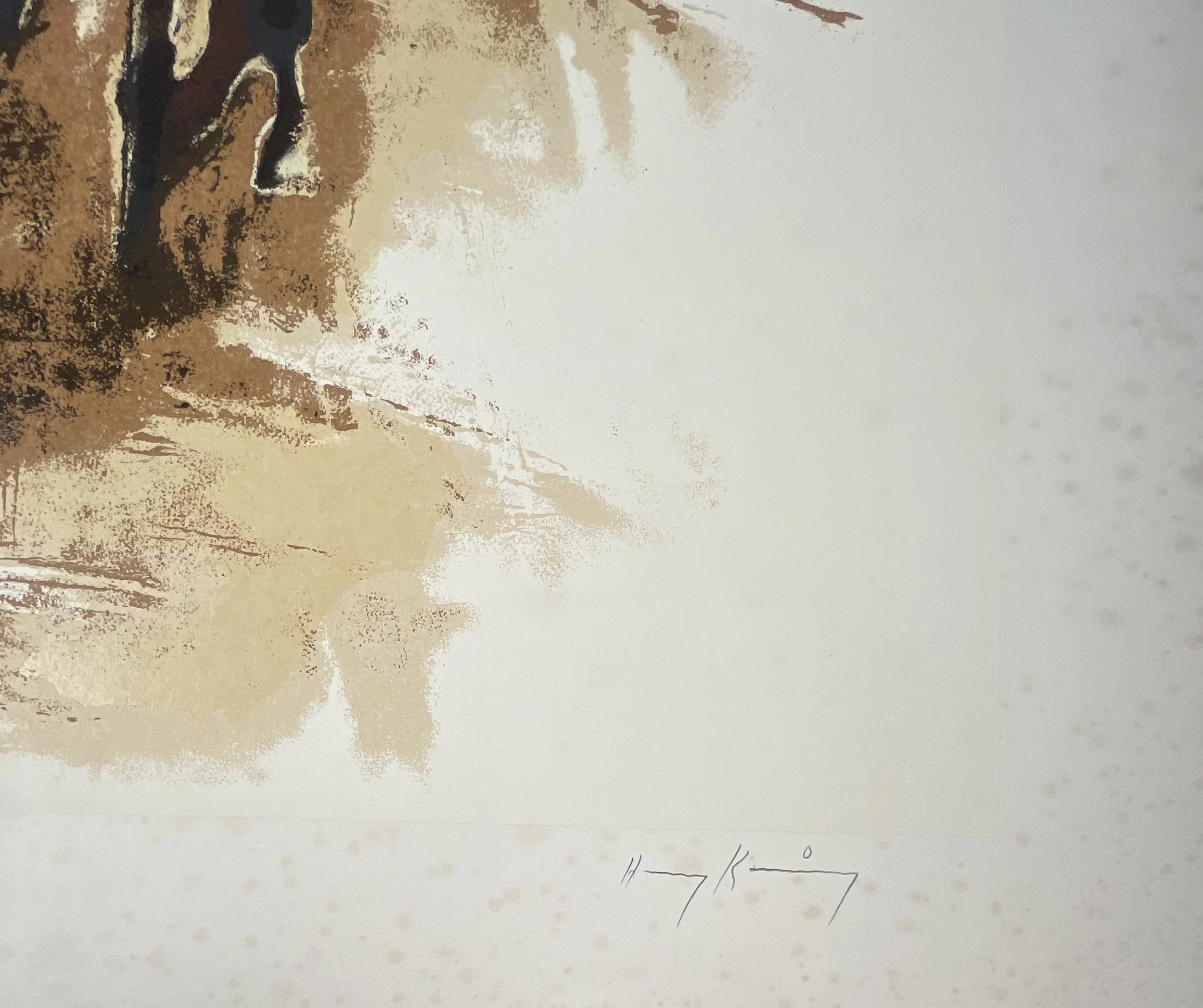
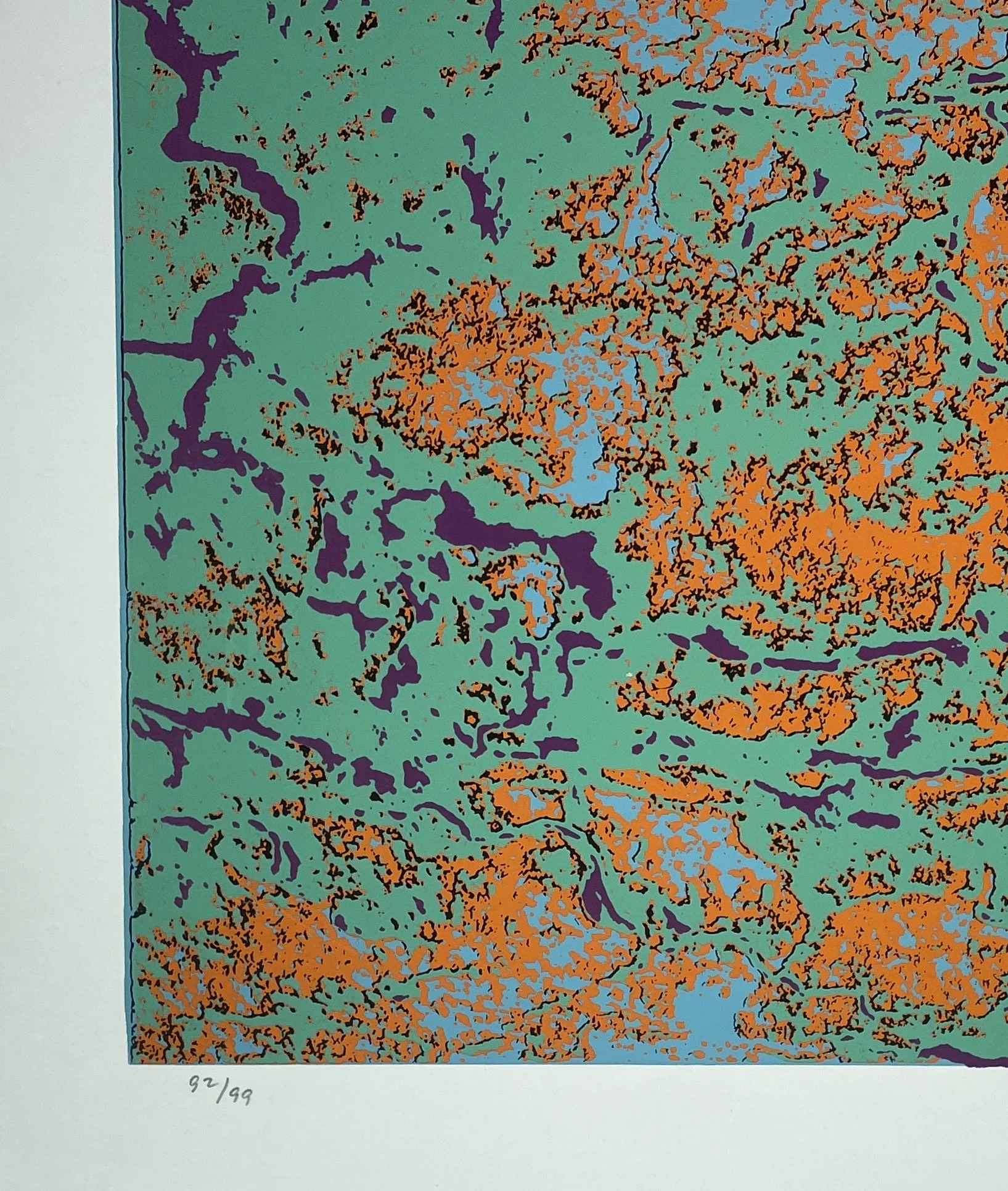
The term “monoprint” here indicates that while the work originated through silkscreen processes, it was produced as a unique impression (1/1), meaning there is no other exactly like it. This uniqueness is emphasized in the visible pencil notation (e.g., “1/1”) and the hand signature dated 1983. Unlike standard editions, monoprints allow for slight variations in impression, registration, and ink application that make each piece unique, and Gipson seems to have embraced the expressive possibilities of this hybrid print-paint approach.
The edges of the color fields are crisp yet gentle, revealing careful layering and control of ink density. The overall effect is one of contemplative space, an interplay between calm horizon and the emotional resonance of color gradation.
Artist Biography (E.T. Gipson)
Confirmed & collector-provided profile
E.T. Gipson is an American artist whose body of work consists primarily of silkscreen serigraph monoprints exploring atmospheric color gradients and minimalist horizon imagery. While documentation in public museum databases and standard art historical references is limited, gallery materials (including an Art Spectrum / Mitch Morse Gallery biographical sheet) provide insight into Gipson’s career, methodology, and reception.
According to gallery-authenticated documentation, Gipson’s practice reflects a self-directed evolution of silkscreen techniques. He preferred the term “innovative serigraphy” to describe his work, recognizing the creative possibilities of silk screen beyond commercial printing. Gipson was self-taught in silkscreen printmaking, learning through experimentation rather than formal institutional training. This independence from strict academic categories allowed him to blend precision printing with expressive atmospherics and subtle modulation of tone.
The provided biography notes Gipson’s varied early life experiences (referencing work in Texas, including baking and taxi driving) and his refusal to be “pigeonholed” into conventional artistic categories. This sense of eclectic life experience may have informed his open approach to technique and aesthetic.
Gipson’s works were reportedly purchased by corporate clients and institutions including:
First National Bank of Denver
Holiday Inns of America
Registry Hotel, Minneapolis
Diplomat Golf & Racket Club, Hollywood, Florida
Beneficial Management Corp.
Household Finance Corporation
…as well as many interior designers and galleries across the United States.
At the time of that biographical note, Gipson resided in Novato, California—a region with a strong mid-century modern design heritage, which aligns well with his abstract, horizon-based aesthetic. The biography also explains the monoprint designation (1/1) as indicating that each work is unique due to the hand-pulled process rather than a deliberate attempt to vary editions.
Artistic influences & style
Gipson’s work reflects sensibilities aligned with Minimalism, Color Field abstraction, and atmospheric landscape abstraction—movements where color relationships, spatial depth, and luminous gradation convey emotional presence without explicit representation. His use of silkscreen monoprints positions him alongside 20th-century print innovators who expanded serigraphy from commercial roots into fine art practice.
Creative Process
Gipson’s monoprints are often single impressions made with layered silkscreen passes, hand-adjusted ink application, and careful control of tonal transitions. This hybrid of technical printing and painterly modulation yields abstract spaces that feel meditative, horizon-like, and subtly evocative of light and atmosphere.
Legacy & market presence
While Gipson is not widely documented in academic art history texts, his works appear on collector markets and were represented by Mitch Morse Gallery in New York. His singular approaches to serigraphy give his monoprints appeal within mid-century modern and contemporary abstract collections.
E.T. Gipson (American, 20th c.), Horizon Indigo, c.1983. Silkscreen serigraph monoprint, 31 × 23 in. Unique hand-signed work dated “Gipson ’83,” featuring soft horizontally graded bands and luminous central orb. Unique impression 1/1. Provenance: Mitch Morse Gallery → Artfind Gallery, Washington DC.
Certificate of Value & Authentication
Artist: E.T. Gipson (American, 20th century)
Title:Horizon Indigo
Date: c.1983
Medium: Silkscreen serigraph monoprint on heavy paper
Dimensions: 31 × 23 inches (sheet)
Edition: 1/1 (unique monoprint)
Signature: Hand-signed “Gipson ’83” lower right; hand-numbered “1/1” lower left
Condition: Appears sound in provided images; recommend in-person evaluation for paper tonality, edge condition, and ink surface quality.
Provenance: Mitch Morse Gallery (NYC, United States and Europe acquisition) → Artfind Gallery, Washington DC
Authentication: Signature, date, numbering, and stylistic continuity consistent with documented Gipson monoprints.
Current Owner: Artfind Gallery, Washington DC
Provenance Chain (Collector Format)
E.T. Gipson (artist) → Mitch Morse Gallery (publisher/agent; acquired in NYC, United States and Europe) → Artfind Gallery, Washington DC (current owner).
“Horizon Indigo” -attributed -E.T. Gipson (American, 20th c.), c.1983 silkscreen serigraph monoprint 31×23 in, signed “Gipson ’83,” unique 1/1.
A rare one-of-a-kind silkscreen serigraph monoprint by E.T. Gipson, Horizon Indigo (c.1983) presents a serene horizon with graded bands of neutral light diffusing into deep indigo below, anchored by a luminous central orb. Signed “Gipson ’83,” unique 1/1 monoprint—ideal for modern and minimalist collectors seeking atmospheric abstraction.
Artwork Description
Horizon Indigo is an evocative minimalist composition built from softly graduated silkscreen layers that suggest a horizon at dawn or dusk. The broad, horizontal bands transition from pale sand and cream near the upper field into deeper ochres and finally rich indigo near the base. A large, pale circular form—interpretable as a sun or moon—rises subtly above the midline, creating a quiet focal point that draws the eye.
The term “monoprint” here indicates that while the work originated through silkscreen processes, it was produced as a unique impression (1/1), meaning there is no other exactly like it. This uniqueness is emphasized in the visible pencil notation (e.g., “1/1”) and the hand signature dated 1983. Unlike standard editions, monoprints allow for slight variations in impression, registration, and ink application that make each piece unique, and Gipson seems to have embraced the expressive possibilities of this hybrid print-paint approach.
The edges of the color fields are crisp yet gentle, revealing careful layering and control of ink density. The overall effect is one of contemplative space, an interplay between calm horizon and the emotional resonance of color gradation.
Artist Biography (E.T. Gipson)
Confirmed & collector-provided profile
E.T. Gipson is an American artist whose body of work consists primarily of silkscreen serigraph monoprints exploring atmospheric color gradients and minimalist horizon imagery. While documentation in public museum databases and standard art historical references is limited, gallery materials (including an Art Spectrum / Mitch Morse Gallery biographical sheet) provide insight into Gipson’s career, methodology, and reception.
According to gallery-authenticated documentation, Gipson’s practice reflects a self-directed evolution of silkscreen techniques. He preferred the term “innovative serigraphy” to describe his work, recognizing the creative possibilities of silk screen beyond commercial printing. Gipson was self-taught in silkscreen printmaking, learning through experimentation rather than formal institutional training. This independence from strict academic categories allowed him to blend precision printing with expressive atmospherics and subtle modulation of tone.
The provided biography notes Gipson’s varied early life experiences (referencing work in Texas, including baking and taxi driving) and his refusal to be “pigeonholed” into conventional artistic categories. This sense of eclectic life experience may have informed his open approach to technique and aesthetic.
Gipson’s works were reportedly purchased by corporate clients and institutions including:
First National Bank of Denver
Holiday Inns of America
Registry Hotel, Minneapolis
Diplomat Golf & Racket Club, Hollywood, Florida
Beneficial Management Corp.
Household Finance Corporation
…as well as many interior designers and galleries across the United States.
At the time of that biographical note, Gipson resided in Novato, California—a region with a strong mid-century modern design heritage, which aligns well with his abstract, horizon-based aesthetic. The biography also explains the monoprint designation (1/1) as indicating that each work is unique due to the hand-pulled process rather than a deliberate attempt to vary editions.
Artistic influences & style
Gipson’s work reflects sensibilities aligned with Minimalism, Color Field abstraction, and atmospheric landscape abstraction—movements where color relationships, spatial depth, and luminous gradation convey emotional presence without explicit representation. His use of silkscreen monoprints positions him alongside 20th-century print innovators who expanded serigraphy from commercial roots into fine art practice.
Creative Process
Gipson’s monoprints are often single impressions made with layered silkscreen passes, hand-adjusted ink application, and careful control of tonal transitions. This hybrid of technical printing and painterly modulation yields abstract spaces that feel meditative, horizon-like, and subtly evocative of light and atmosphere.
Legacy & market presence
While Gipson is not widely documented in academic art history texts, his works appear on collector markets and were represented by Mitch Morse Gallery in New York. His singular approaches to serigraphy give his monoprints appeal within mid-century modern and contemporary abstract collections.
E.T. Gipson (American, 20th c.), Horizon Indigo, c.1983. Silkscreen serigraph monoprint, 31 × 23 in. Unique hand-signed work dated “Gipson ’83,” featuring soft horizontally graded bands and luminous central orb. Unique impression 1/1. Provenance: Mitch Morse Gallery → Artfind Gallery, Washington DC.
Certificate of Value & Authentication
Artist: E.T. Gipson (American, 20th century)
Title:Horizon Indigo
Date: c.1983
Medium: Silkscreen serigraph monoprint on heavy paper
Dimensions: 31 × 23 inches (sheet)
Edition: 1/1 (unique monoprint)
Signature: Hand-signed “Gipson ’83” lower right; hand-numbered “1/1” lower left
Condition: Appears sound in provided images; recommend in-person evaluation for paper tonality, edge condition, and ink surface quality.
Provenance: Mitch Morse Gallery (NYC, United States and Europe acquisition) → Artfind Gallery, Washington DC
Authentication: Signature, date, numbering, and stylistic continuity consistent with documented Gipson monoprints.
Current Owner: Artfind Gallery, Washington DC
Provenance Chain (Collector Format)
E.T. Gipson (artist) → Mitch Morse Gallery (publisher/agent; acquired in NYC, United States and Europe) → Artfind Gallery, Washington DC (current owner).
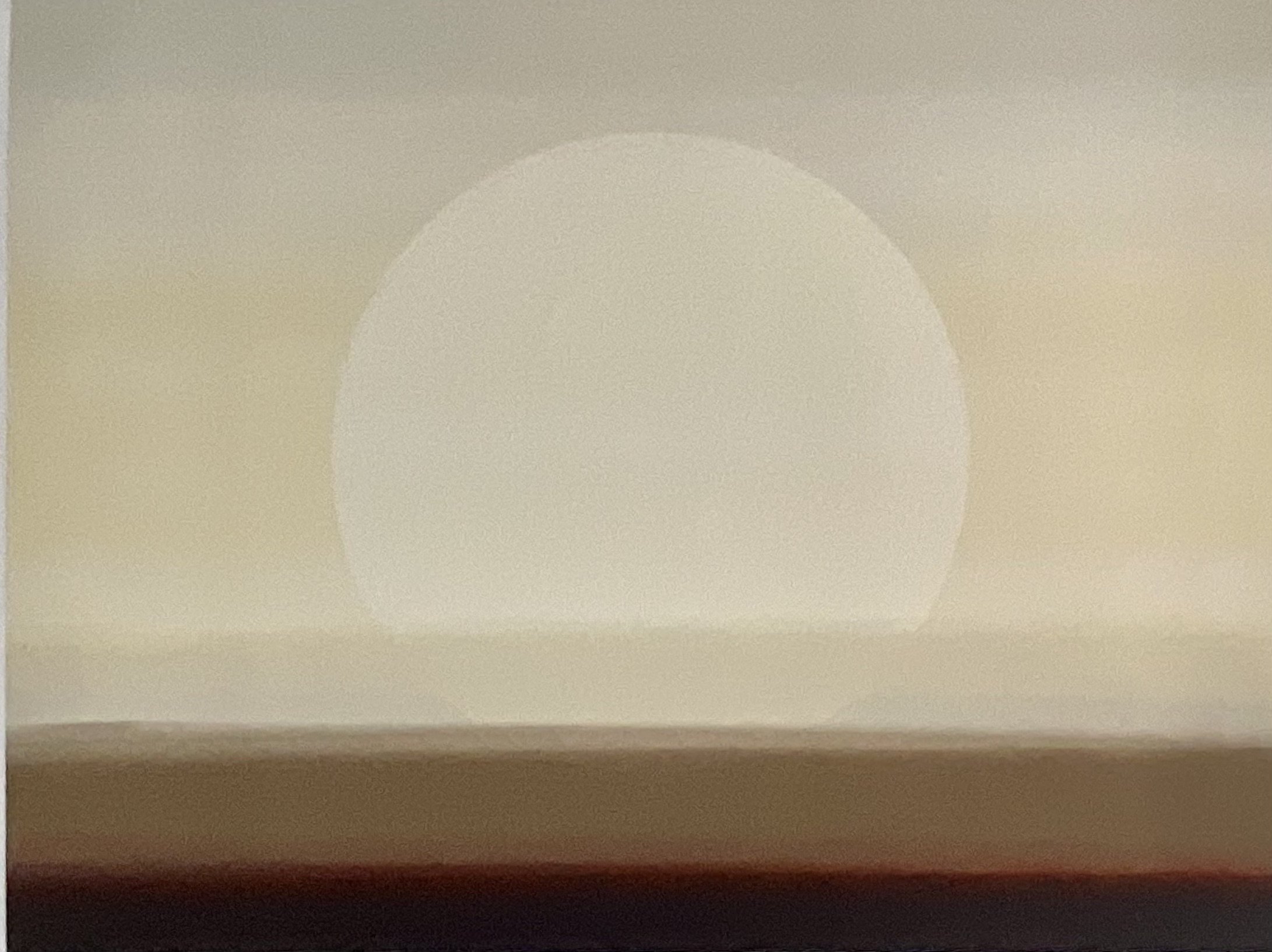 Image 1 of 9
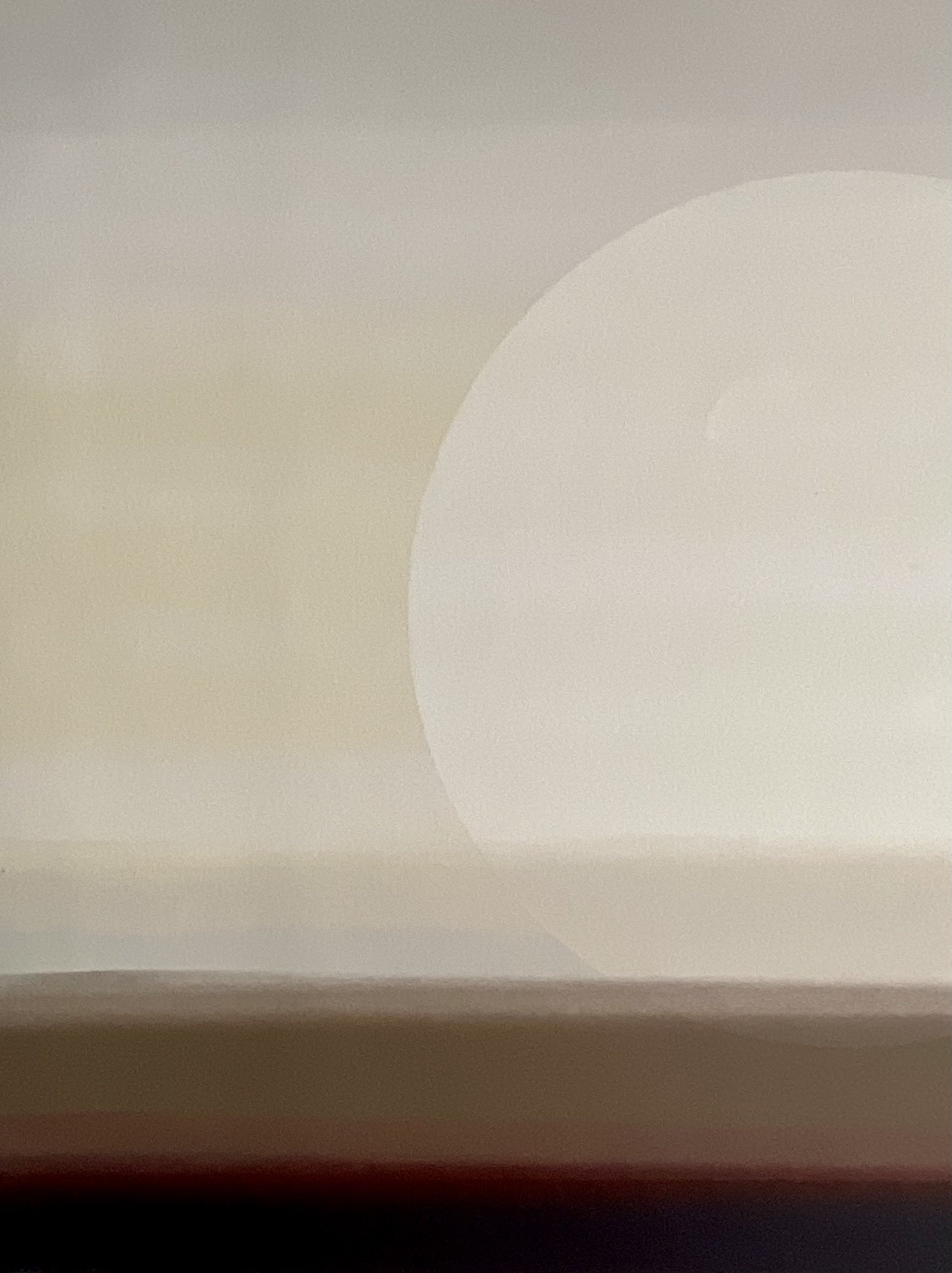 Image 2 of 9
 Image 3 of 9
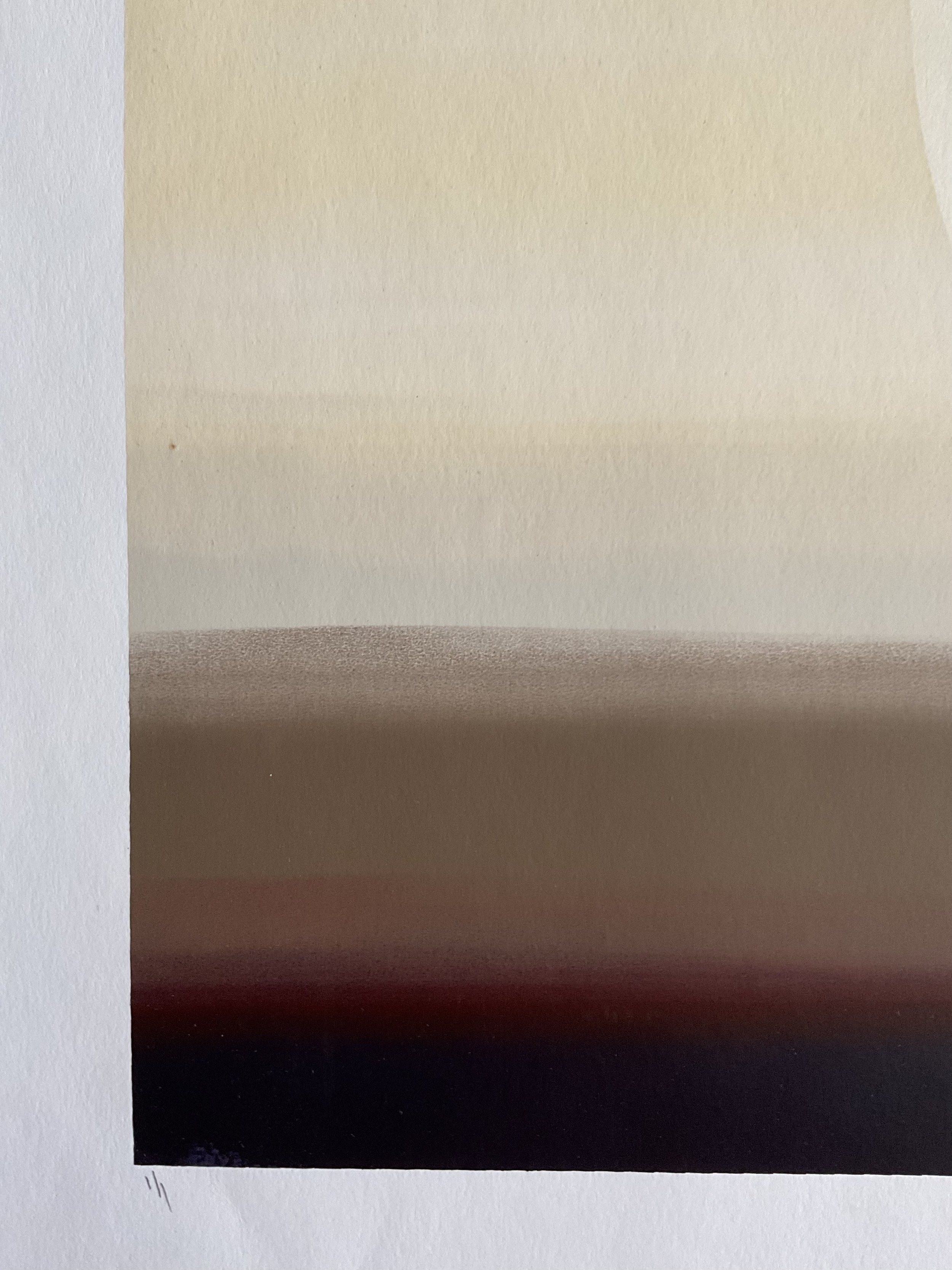 Image 4 of 9
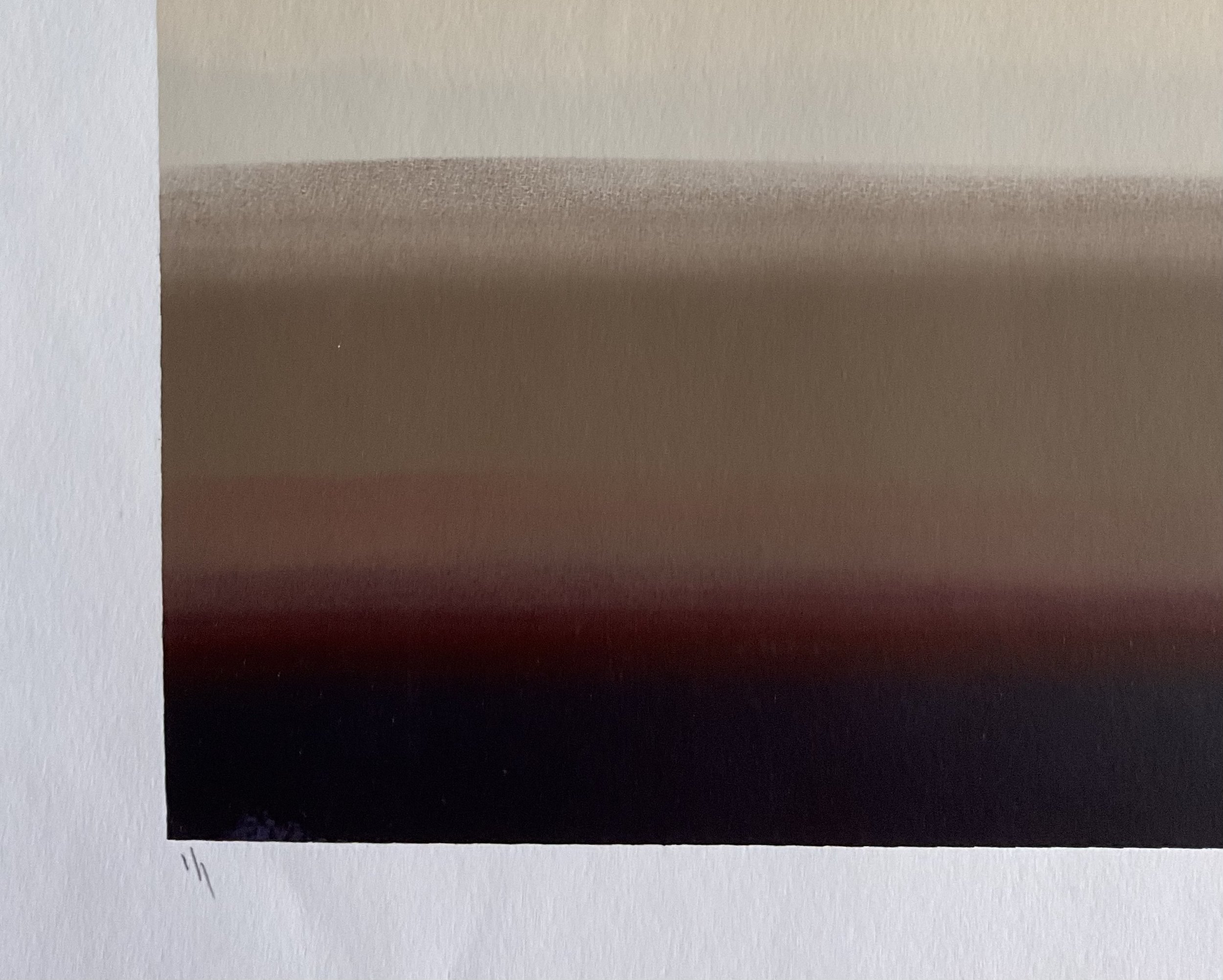 Image 5 of 9
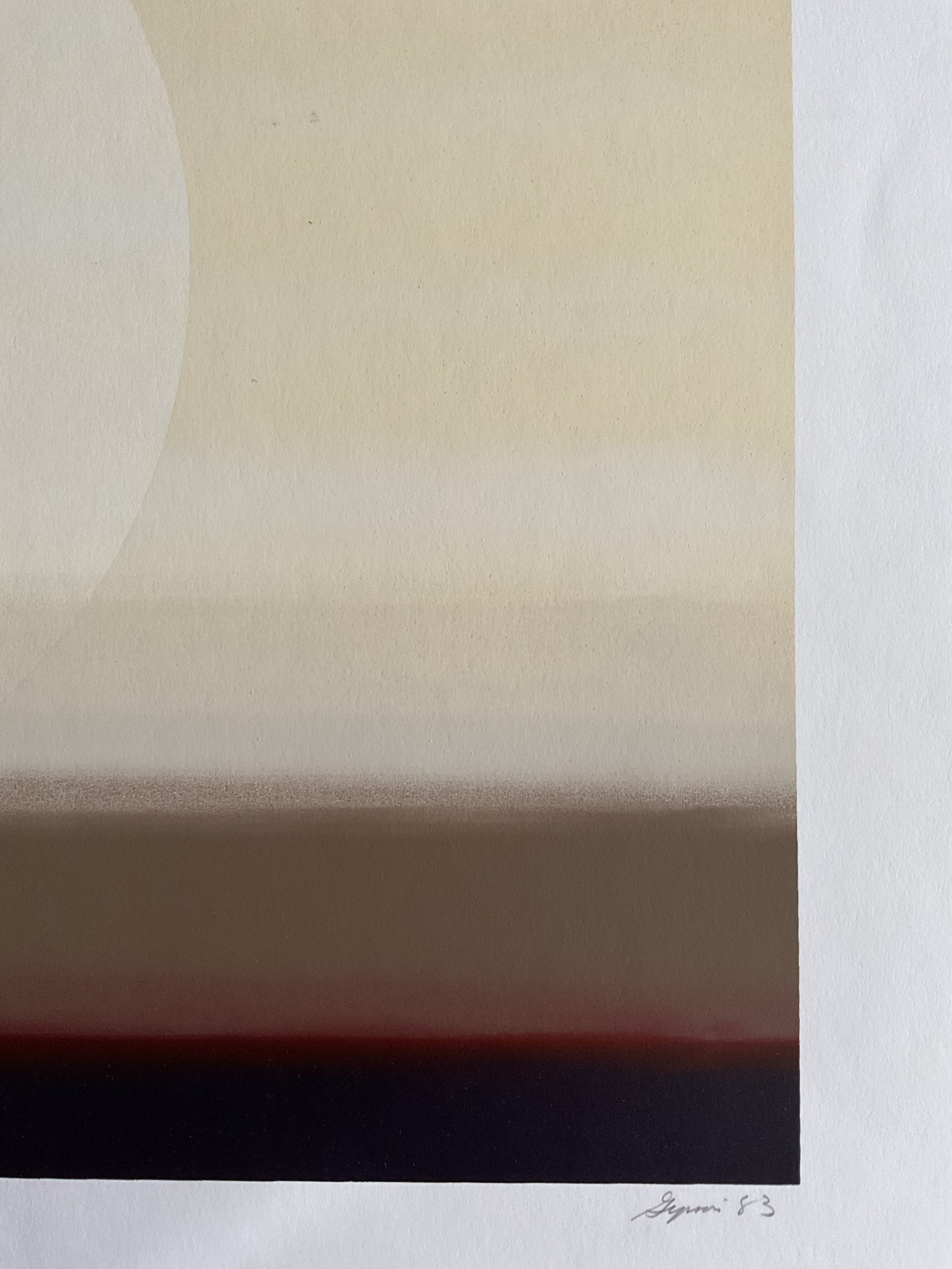 Image 6 of 9
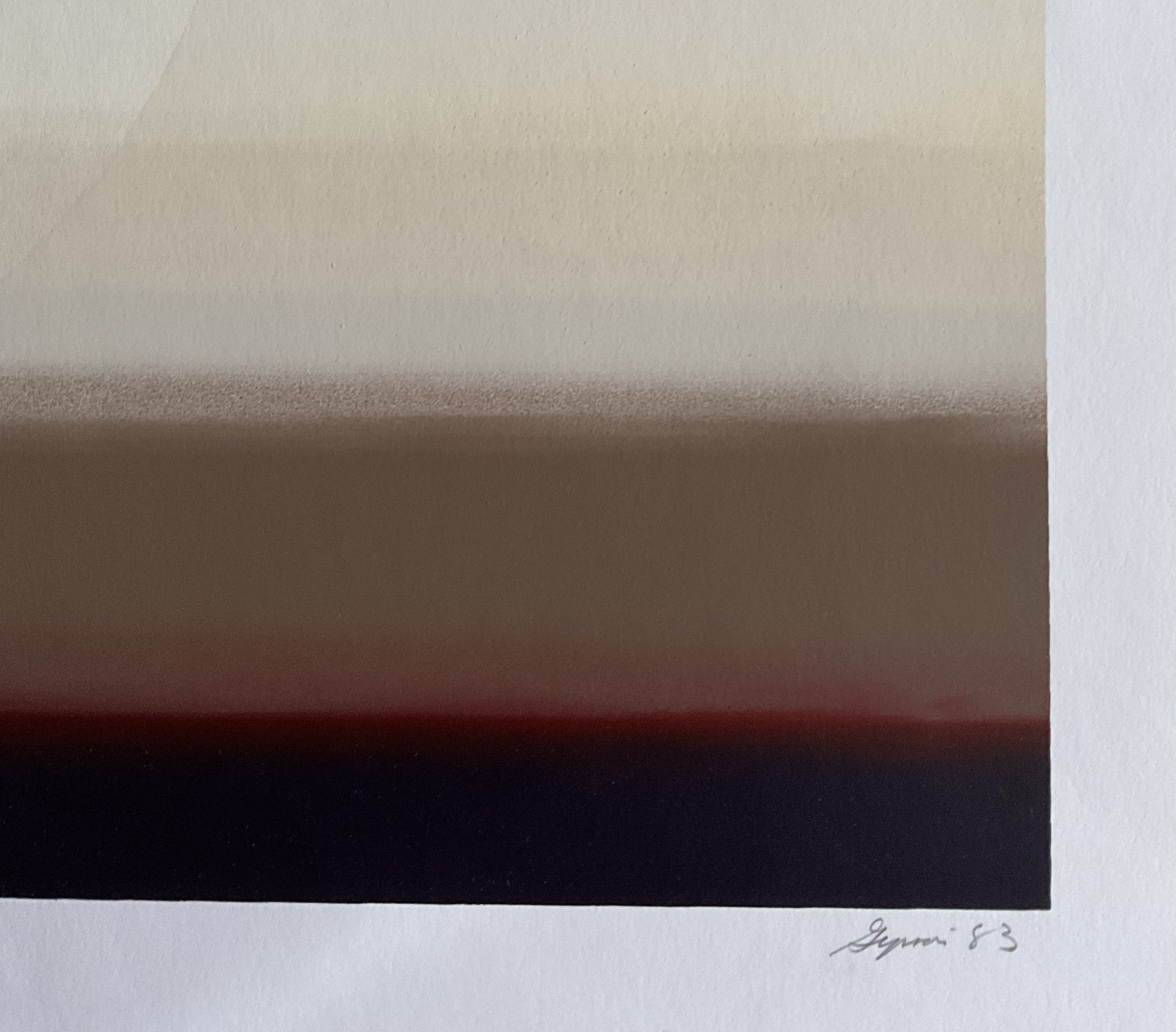 Image 7 of 9
 Image 8 of 9
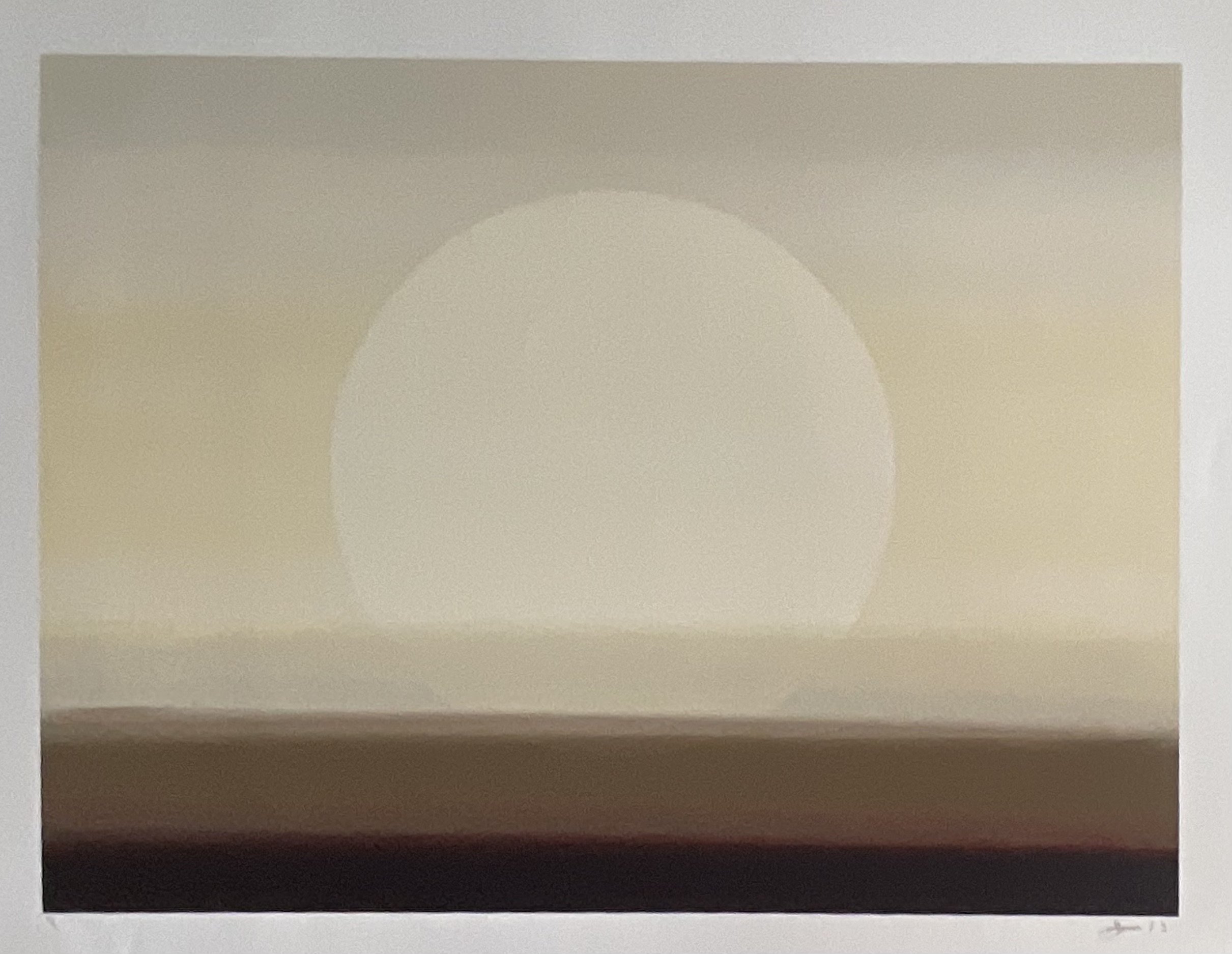 Image 9 of 9