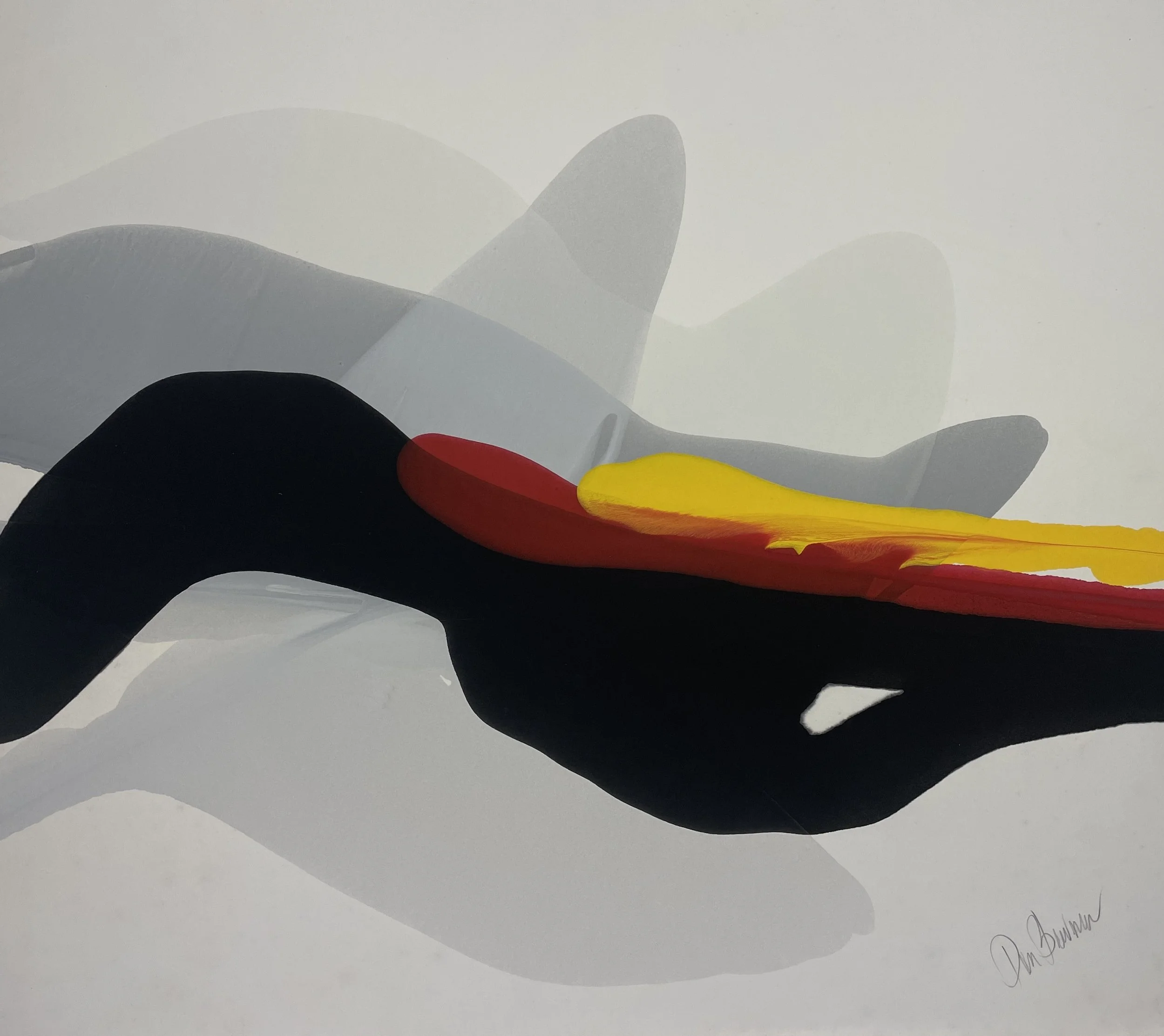
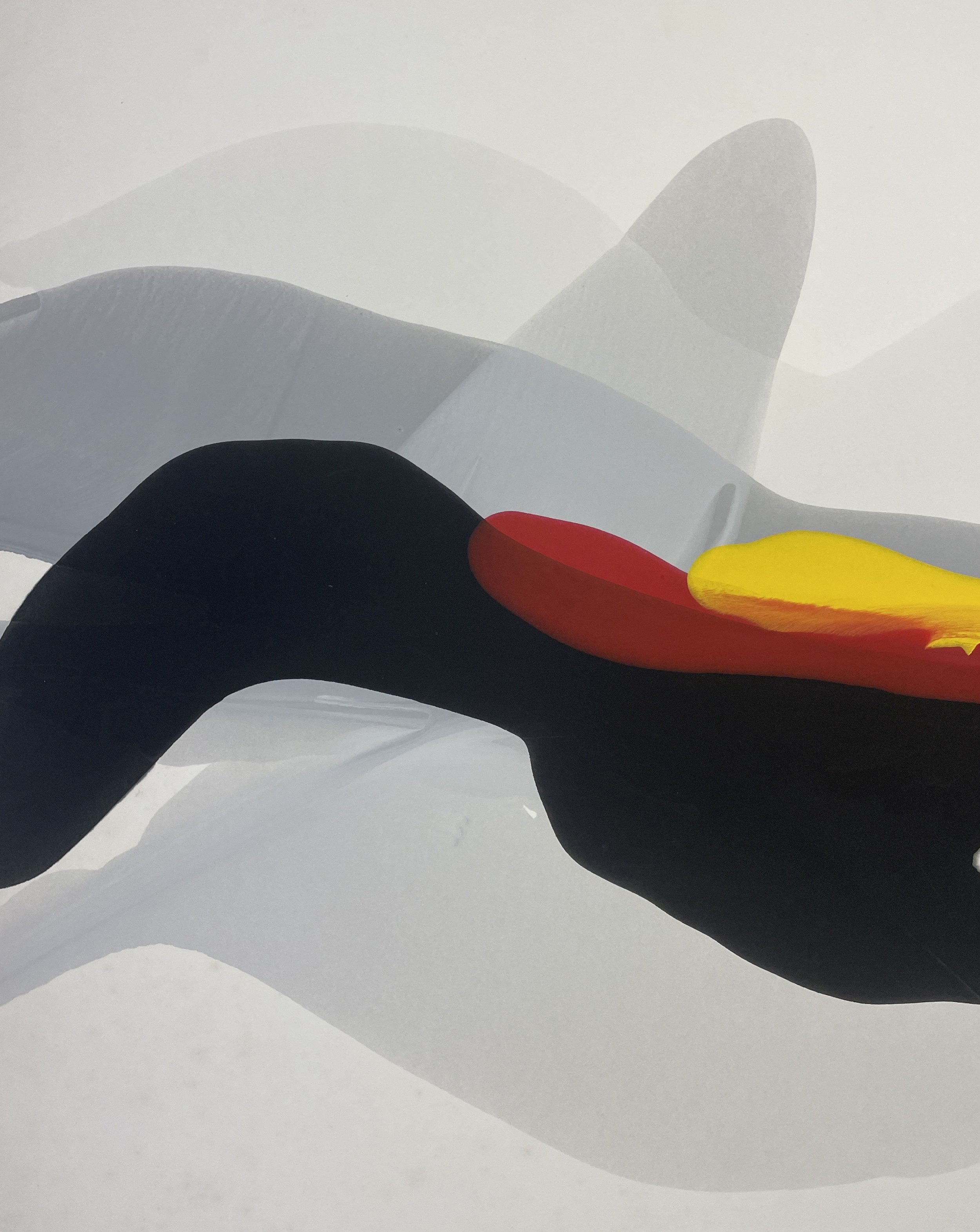
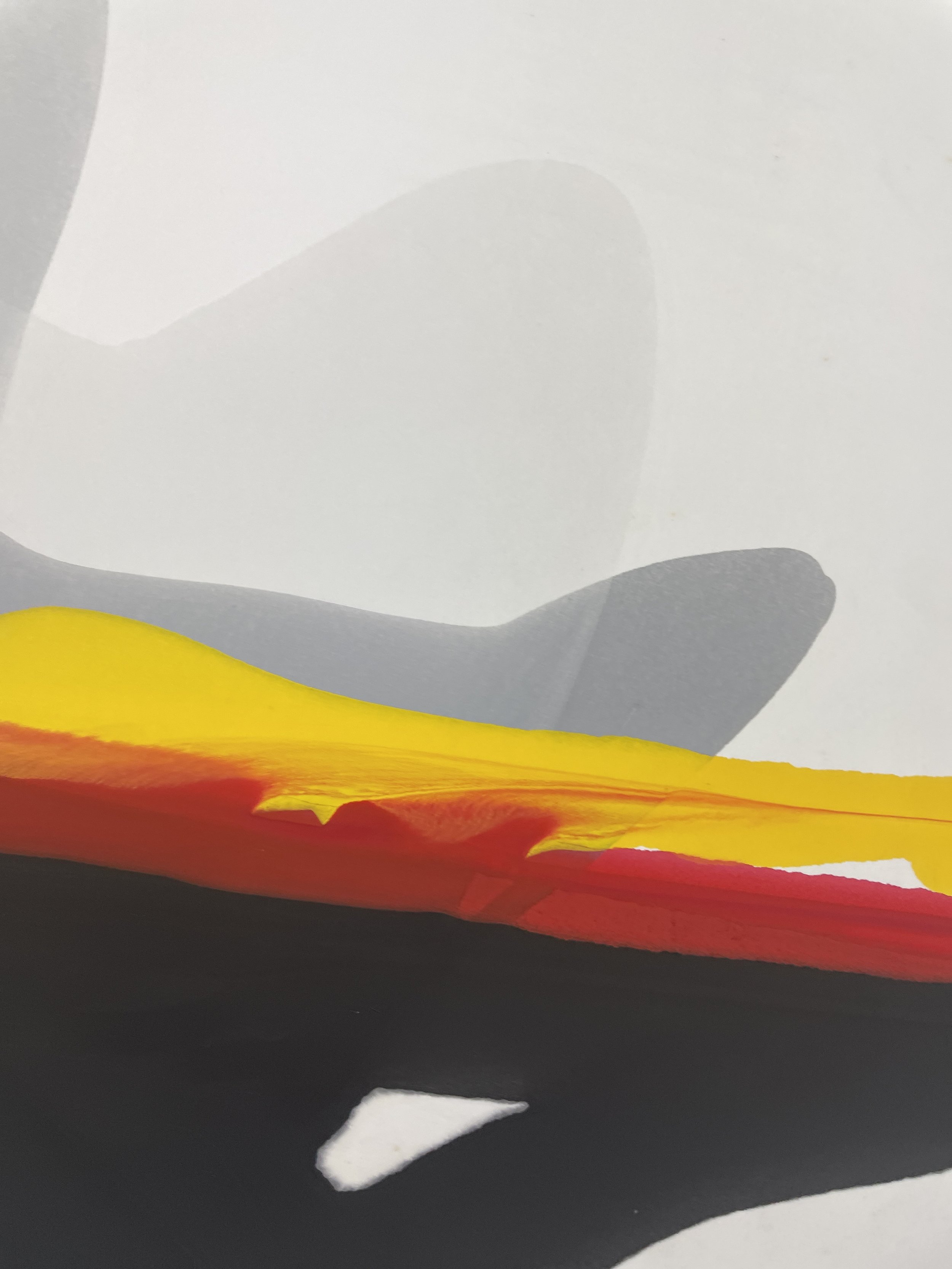
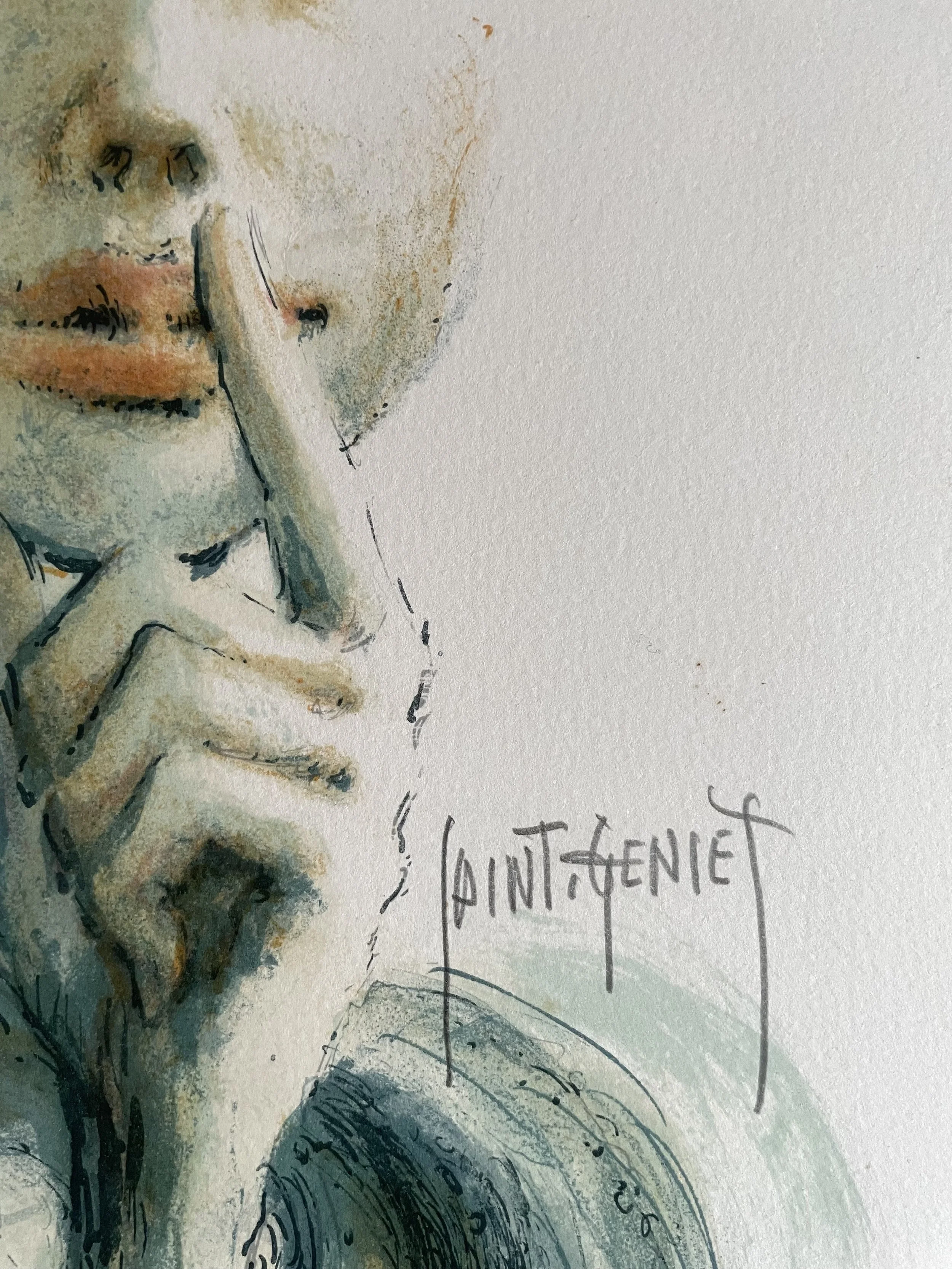
Horse Race-attributed, Tony Gilligan, oil on canvas, 24 × 36 in., signed lower right.
Artwork Description
A spectacular and viscerally exciting abstract expressionist depiction of a horse race in full gallop — ten or more horses and jockeys surging directly toward the viewer in a composition of almost overwhelming kinetic energy. This is not a painting about horse racing observed from the grandstand. It is a painting about what it feels like to be inside the race.
The composition is built around a radical device — the entire field of horses moves frontally, directly at the viewer, their hooves churning the green foreground turf into loose gestural strokes while the background erupts in a volcanic wall of abstracted color. Sweeping vertical and diagonal strokes of burnt orange, golden yellow, pink, crimson, and grey-blue fill the upper two-thirds of the canvas in a manner that suggests speed, heat, noise, and the blurred peripheral vision of motion — a racetrack crowd and sunlit sky dissolved by velocity into pure chromatic energy.
Against this abstract inferno the horses and jockeys are rendered with remarkable specificity and confidence. The animals — deep reddish-brown chestnuts throughout — are convincingly anatomical, their muscular necks extended, legs gathered and driving. The jockeys are identified entirely by the color of their silks — green, red, white, grey, yellow, blue — each a vivid chromatic accent that reads instantly and memorably against the warm ground. The jockeys' postures are those of genuine riders in a driving finish — crouched, forward, whips raised, heads down.
What is technically remarkable here is the simultaneous freedom and control. The background is pure expressionist paintwork — gestural, immediate, unplanned in its specific marks — while the foreground horses and riders demonstrate close observational knowledge of equestrian anatomy and racing posture. The two registers — the controlled figurative and the liberated abstract — coexist without tension, each amplifying the other. The horses read as real because the background is pure sensation; the background reads as pure sensation because the horses anchor it in physical reality.
The palette is extraordinary — the warm yellows, oranges, and reds of the background create a furnace-like atmosphere, suggesting late afternoon light, the roar of the crowd, the heat of exertion. The green of the turf at the bottom is the painting's only cool note, grounding the composition before it takes complete flight into abstraction.
At 24 × 36 inches this is a substantial canvas handled with genuine ambition and technical fluency. It is among the more accomplished works in this genre encountered in the mid-century commercial art market.
Artist Biography
Tony Gilligan (born 1946, United States) is a painter whose life and artistic formation were shaped by remarkable geographic breadth and cultural exposure. Born in the United States in 1946, Gilligan spent his early childhood in England, where his father served in the Royal Air Force. The demands of military life took the family across the world — England, Australia, India, and the Caribbean — and Gilligan pursued artistic study in each country, absorbing the visual cultures of four continents before establishing himself as an exhibiting painter.
This itinerant formation is visible in his work. The synthesis of figurative confidence and expressionist freedom in his horse racing paintings reflects an artist shaped by multiple painterly traditions simultaneously — the British academic tradition, the bold colorism of Australian and Caribbean light, the gestural energy of postwar American and European expressionism, and the figurative culture of India with its own deep tradition of depicting horses and movement.
Gilligan's exhibition career was international from the outset. He exhibited in Barcelona, Melbourne, London, Bombay, Boston, and New York — a circuit that placed him firmly within the world of mid-century painters who worked across the Atlantic and brought their work to the American market through gallery networks including Mitch Morse Gallery, New York, which represented his work during this period.
The horse racing paintings represent the intersection of his international life and his pictorial ambitions — subjects rooted in the British and Australian sporting traditions he knew from childhood, rendered with an expressionist freedom that reflects his broader artistic formation across cultures.
Biographical information drawn from Mitch Morse Gallery artist files, the primary source archive of the Morse Collection.
Horse Race-attributed, Tony Gilligan, oil on canvas, 24 × 36 in., signed lower right.
Artwork Description
A spectacular and viscerally exciting abstract expressionist depiction of a horse race in full gallop — ten or more horses and jockeys surging directly toward the viewer in a composition of almost overwhelming kinetic energy. This is not a painting about horse racing observed from the grandstand. It is a painting about what it feels like to be inside the race.
The composition is built around a radical device — the entire field of horses moves frontally, directly at the viewer, their hooves churning the green foreground turf into loose gestural strokes while the background erupts in a volcanic wall of abstracted color. Sweeping vertical and diagonal strokes of burnt orange, golden yellow, pink, crimson, and grey-blue fill the upper two-thirds of the canvas in a manner that suggests speed, heat, noise, and the blurred peripheral vision of motion — a racetrack crowd and sunlit sky dissolved by velocity into pure chromatic energy.
Against this abstract inferno the horses and jockeys are rendered with remarkable specificity and confidence. The animals — deep reddish-brown chestnuts throughout — are convincingly anatomical, their muscular necks extended, legs gathered and driving. The jockeys are identified entirely by the color of their silks — green, red, white, grey, yellow, blue — each a vivid chromatic accent that reads instantly and memorably against the warm ground. The jockeys' postures are those of genuine riders in a driving finish — crouched, forward, whips raised, heads down.
What is technically remarkable here is the simultaneous freedom and control. The background is pure expressionist paintwork — gestural, immediate, unplanned in its specific marks — while the foreground horses and riders demonstrate close observational knowledge of equestrian anatomy and racing posture. The two registers — the controlled figurative and the liberated abstract — coexist without tension, each amplifying the other. The horses read as real because the background is pure sensation; the background reads as pure sensation because the horses anchor it in physical reality.
The palette is extraordinary — the warm yellows, oranges, and reds of the background create a furnace-like atmosphere, suggesting late afternoon light, the roar of the crowd, the heat of exertion. The green of the turf at the bottom is the painting's only cool note, grounding the composition before it takes complete flight into abstraction.
At 24 × 36 inches this is a substantial canvas handled with genuine ambition and technical fluency. It is among the more accomplished works in this genre encountered in the mid-century commercial art market.
Artist Biography
Tony Gilligan (born 1946, United States) is a painter whose life and artistic formation were shaped by remarkable geographic breadth and cultural exposure. Born in the United States in 1946, Gilligan spent his early childhood in England, where his father served in the Royal Air Force. The demands of military life took the family across the world — England, Australia, India, and the Caribbean — and Gilligan pursued artistic study in each country, absorbing the visual cultures of four continents before establishing himself as an exhibiting painter.
This itinerant formation is visible in his work. The synthesis of figurative confidence and expressionist freedom in his horse racing paintings reflects an artist shaped by multiple painterly traditions simultaneously — the British academic tradition, the bold colorism of Australian and Caribbean light, the gestural energy of postwar American and European expressionism, and the figurative culture of India with its own deep tradition of depicting horses and movement.
Gilligan's exhibition career was international from the outset. He exhibited in Barcelona, Melbourne, London, Bombay, Boston, and New York — a circuit that placed him firmly within the world of mid-century painters who worked across the Atlantic and brought their work to the American market through gallery networks including Mitch Morse Gallery, New York, which represented his work during this period.
The horse racing paintings represent the intersection of his international life and his pictorial ambitions — subjects rooted in the British and Australian sporting traditions he knew from childhood, rendered with an expressionist freedom that reflects his broader artistic formation across cultures.
Biographical information drawn from Mitch Morse Gallery artist files, the primary source archive of the Morse Collection.
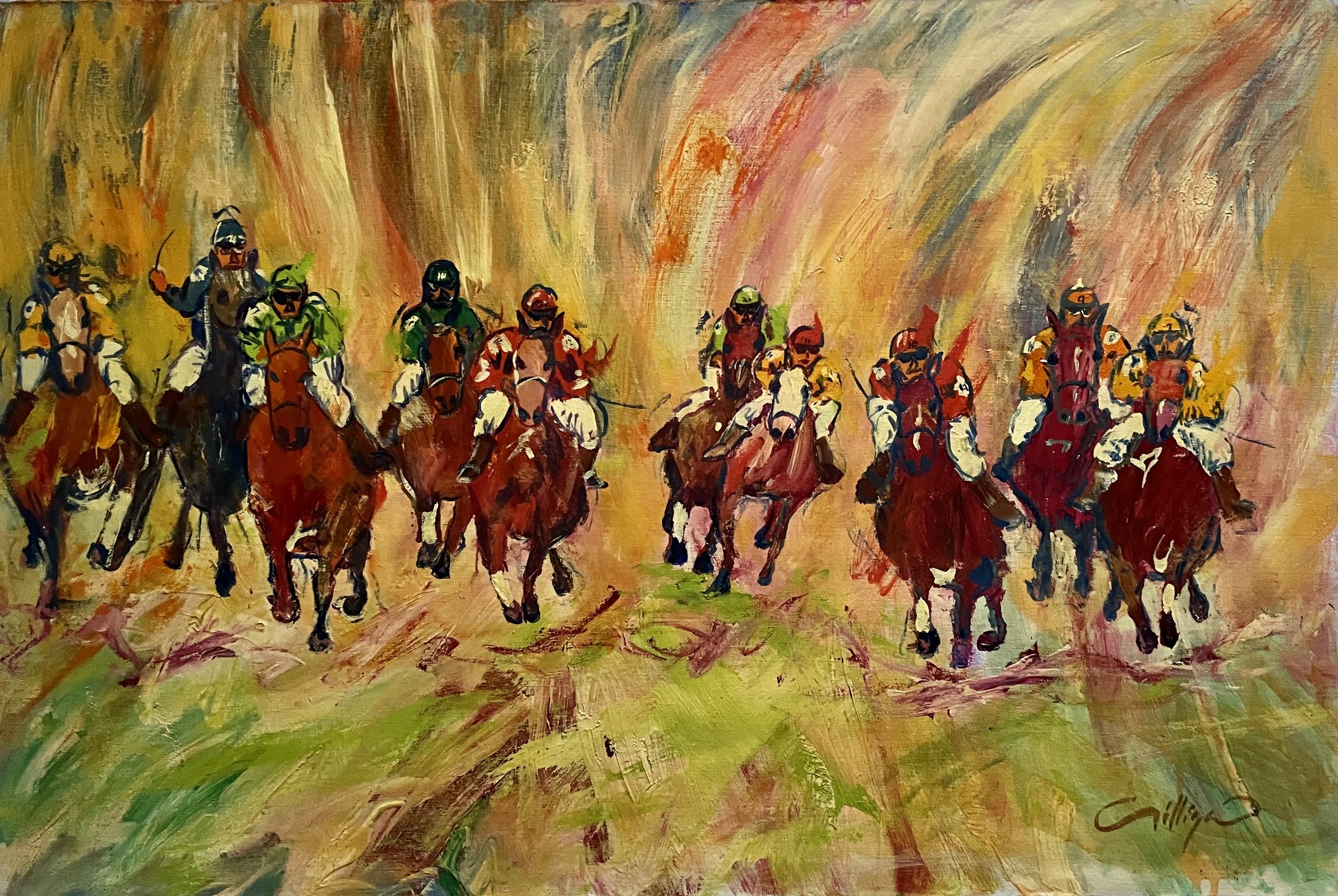 Image 1 of 11
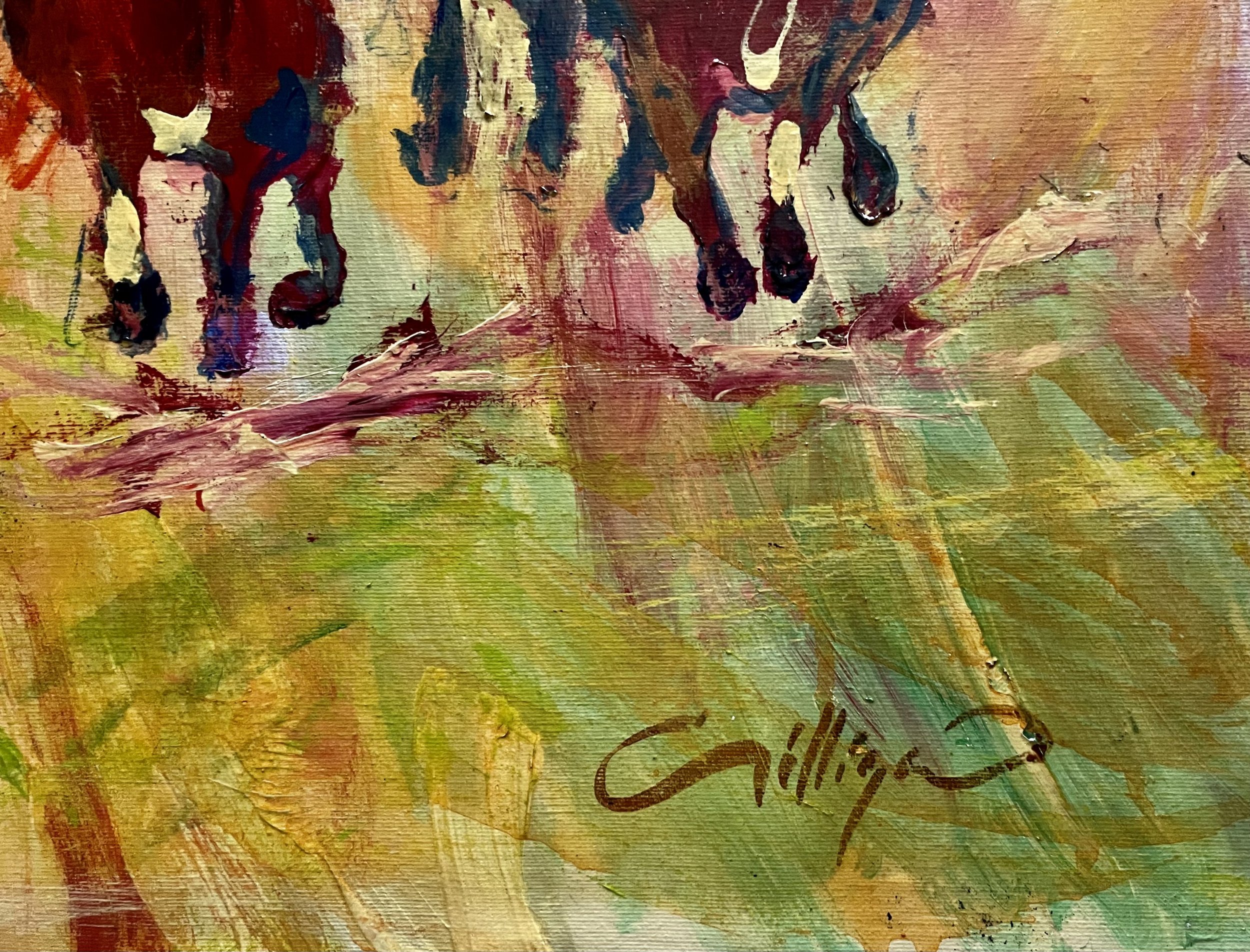 Image 2 of 11
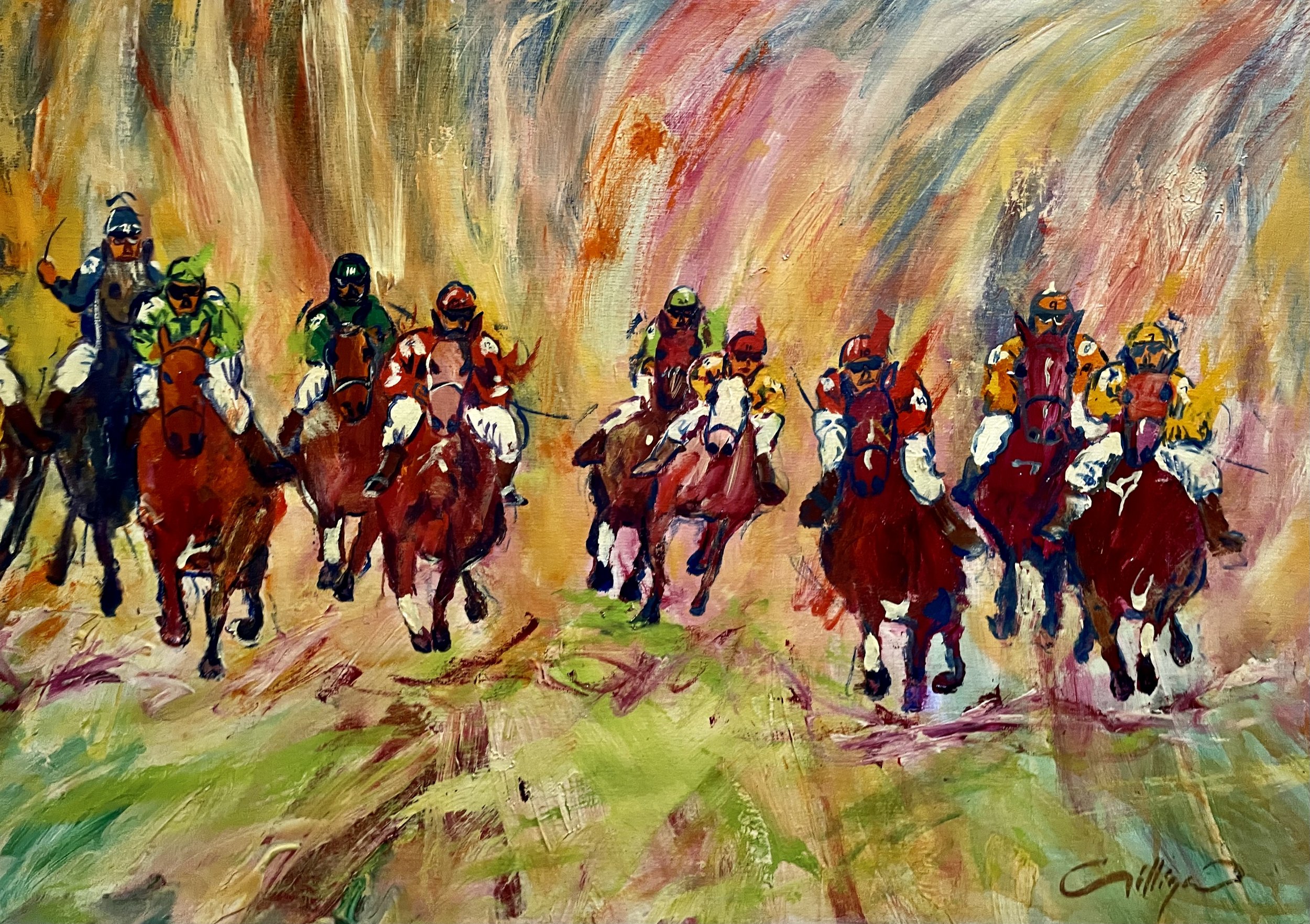 Image 3 of 11
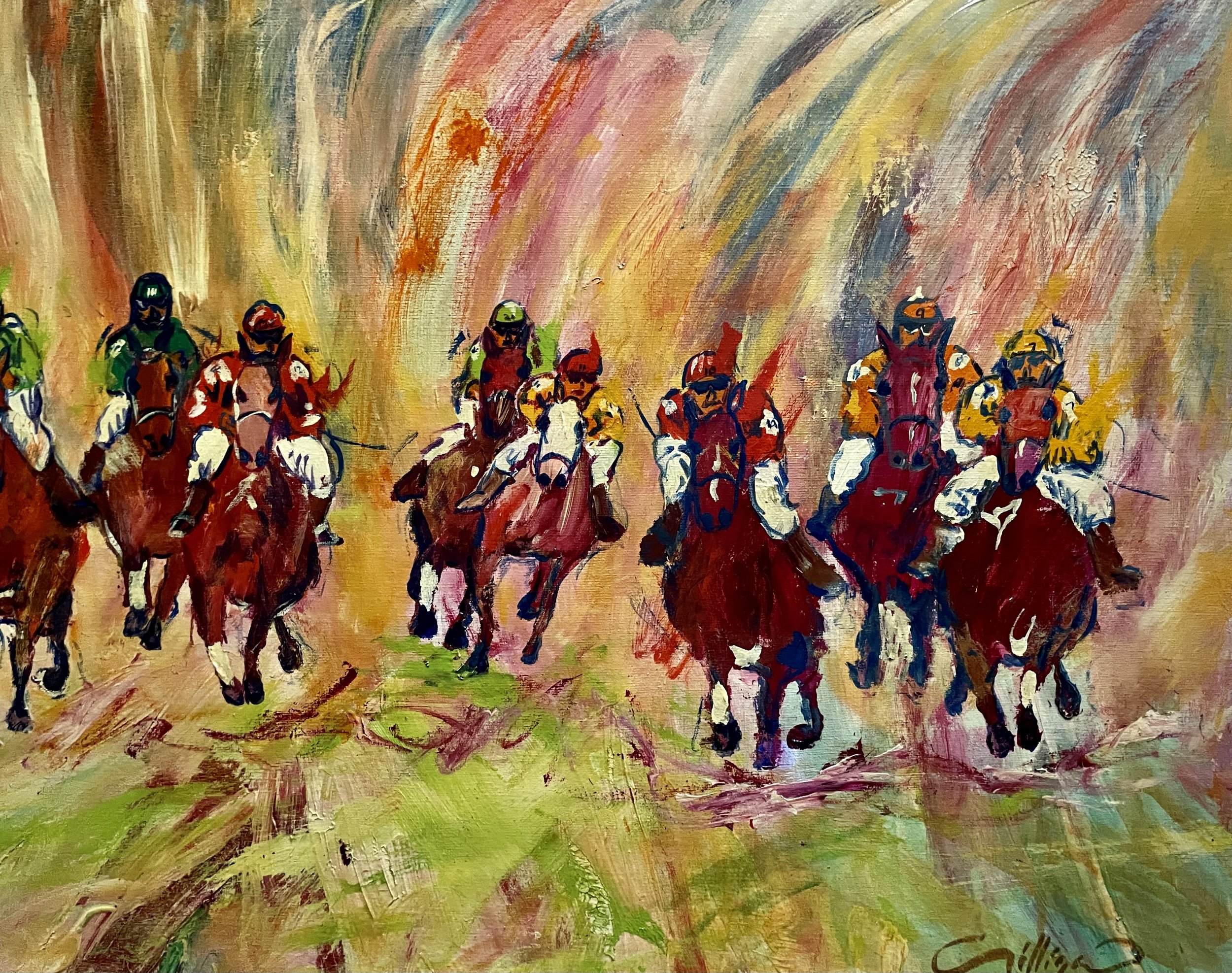 Image 4 of 11
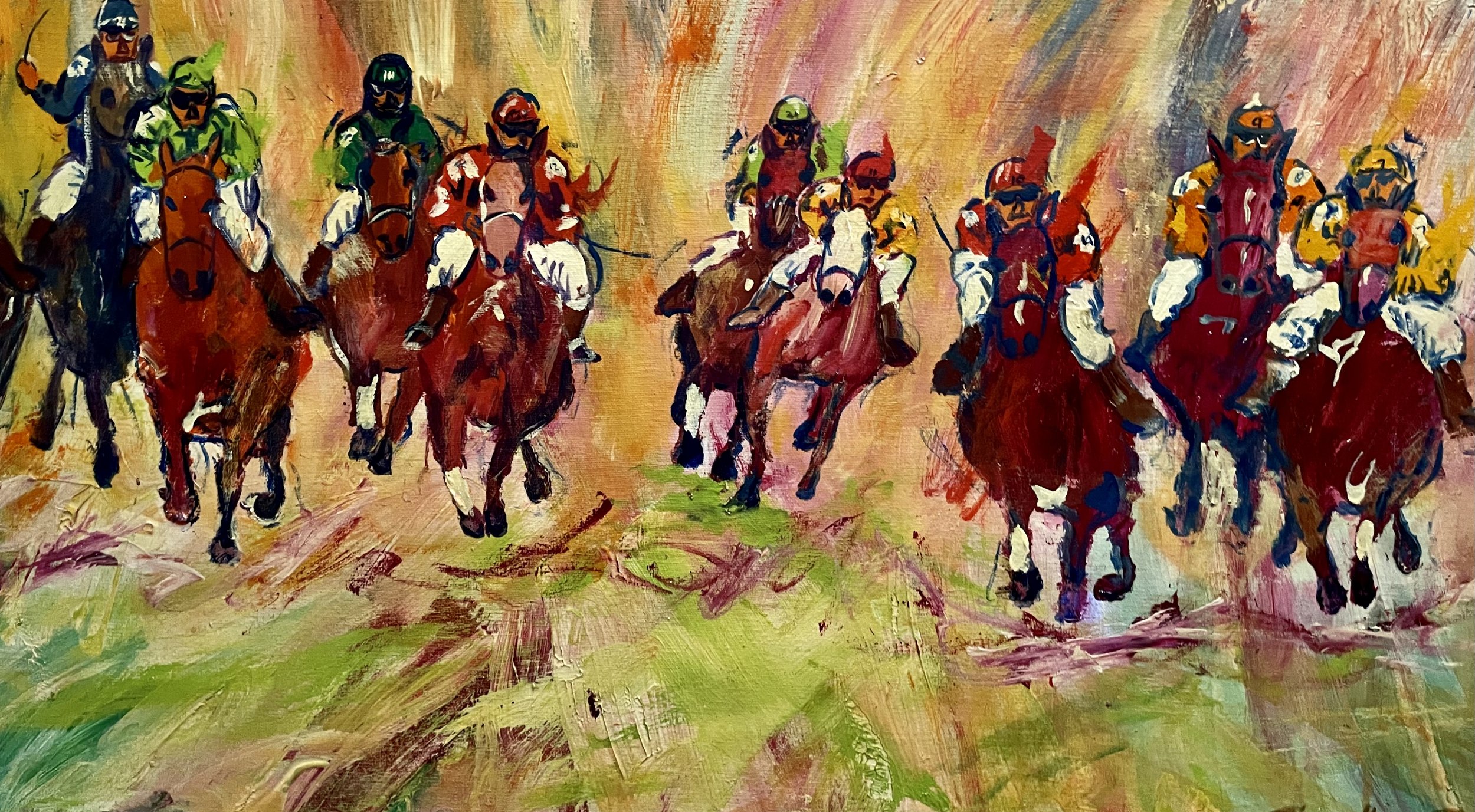 Image 5 of 11
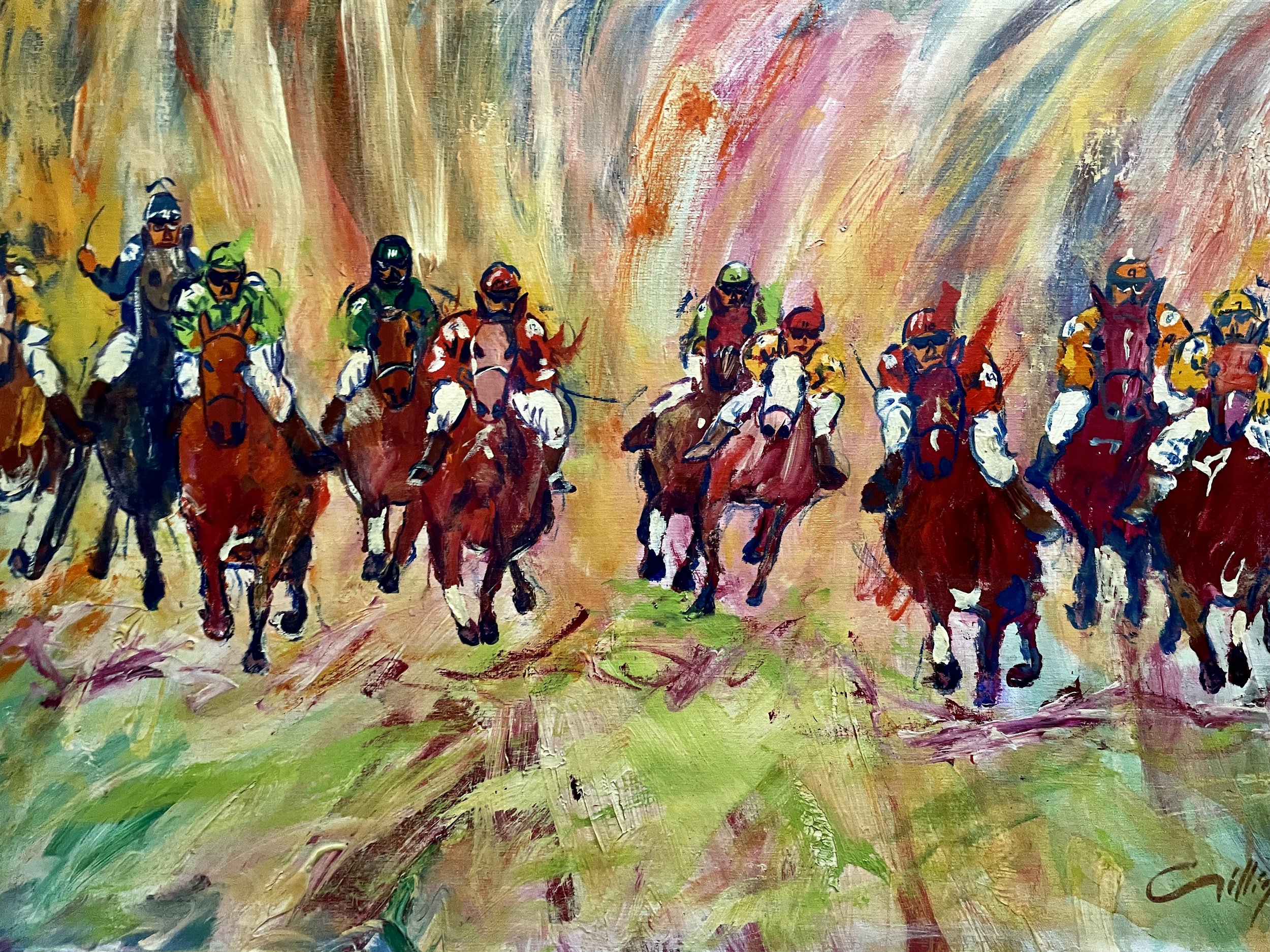 Image 6 of 11
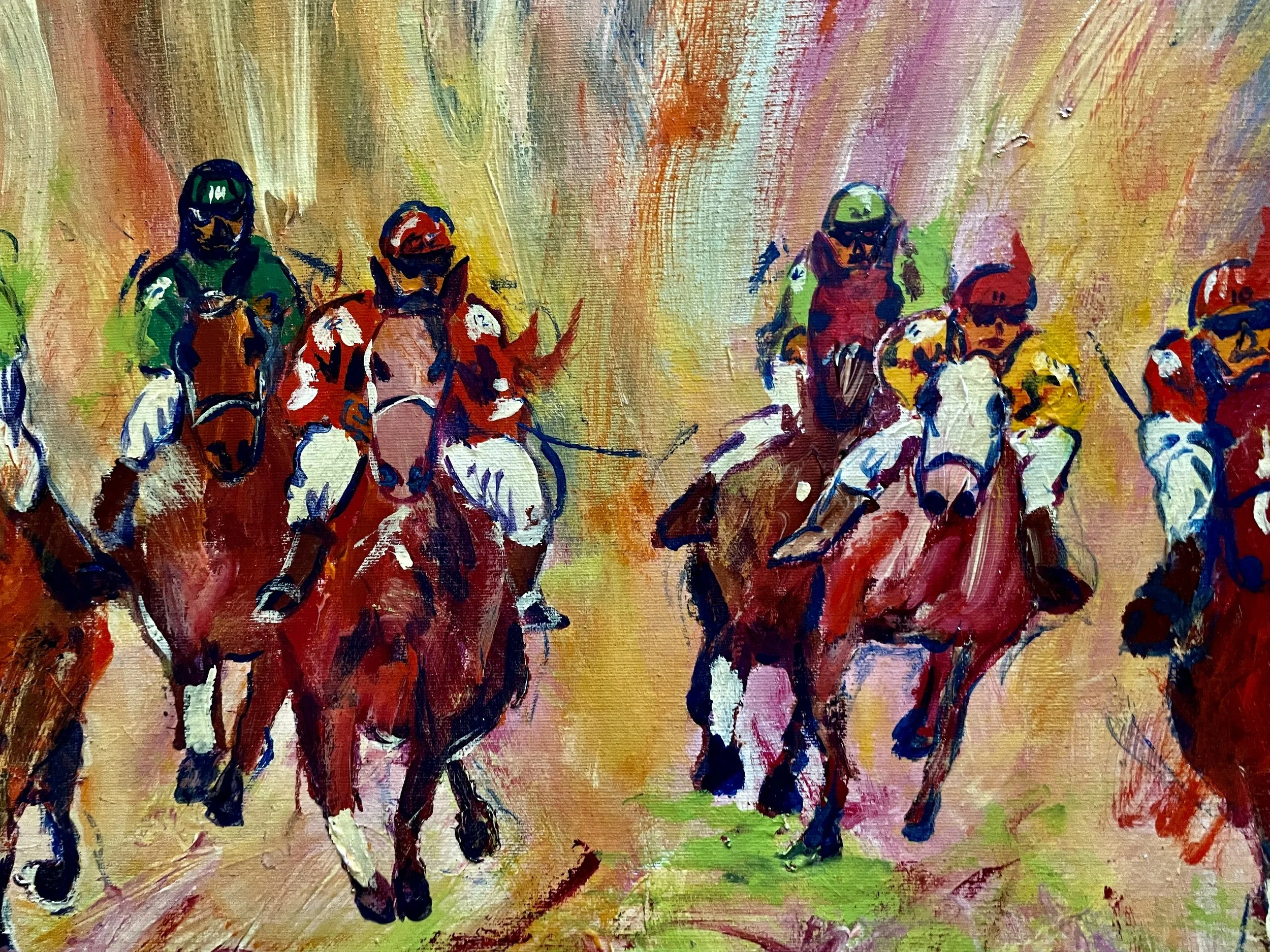 Image 7 of 11
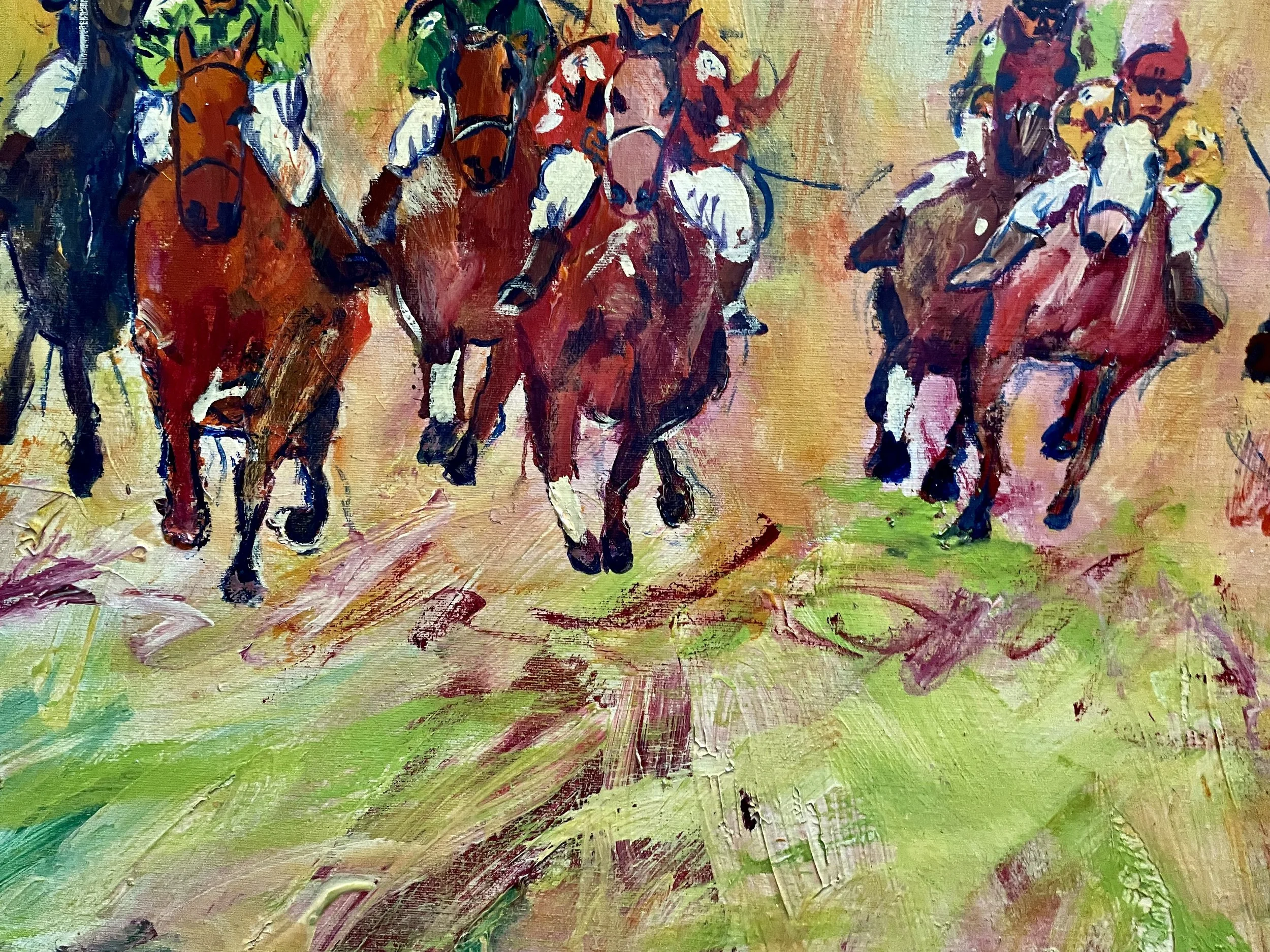 Image 8 of 11
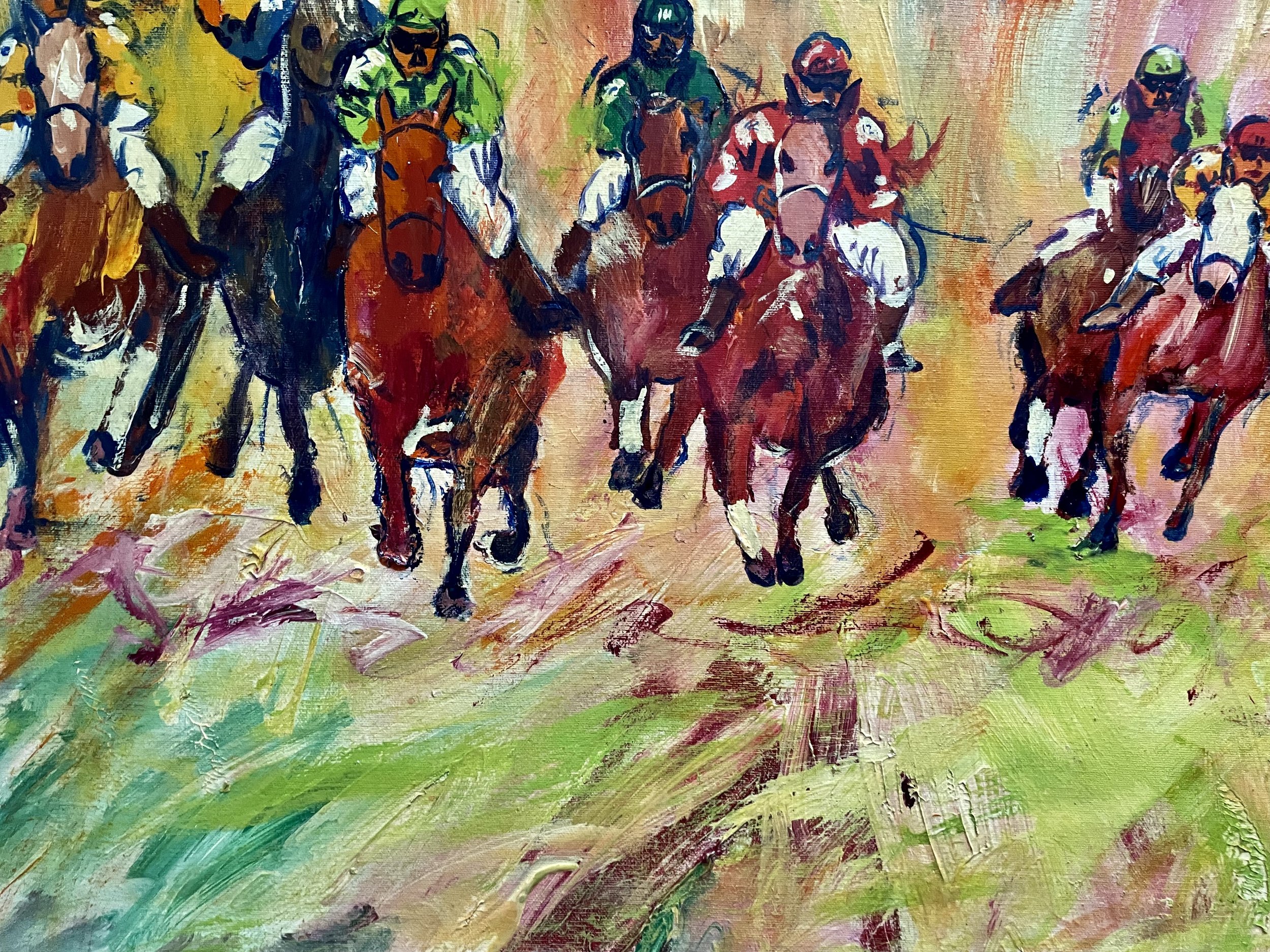 Image 9 of 11
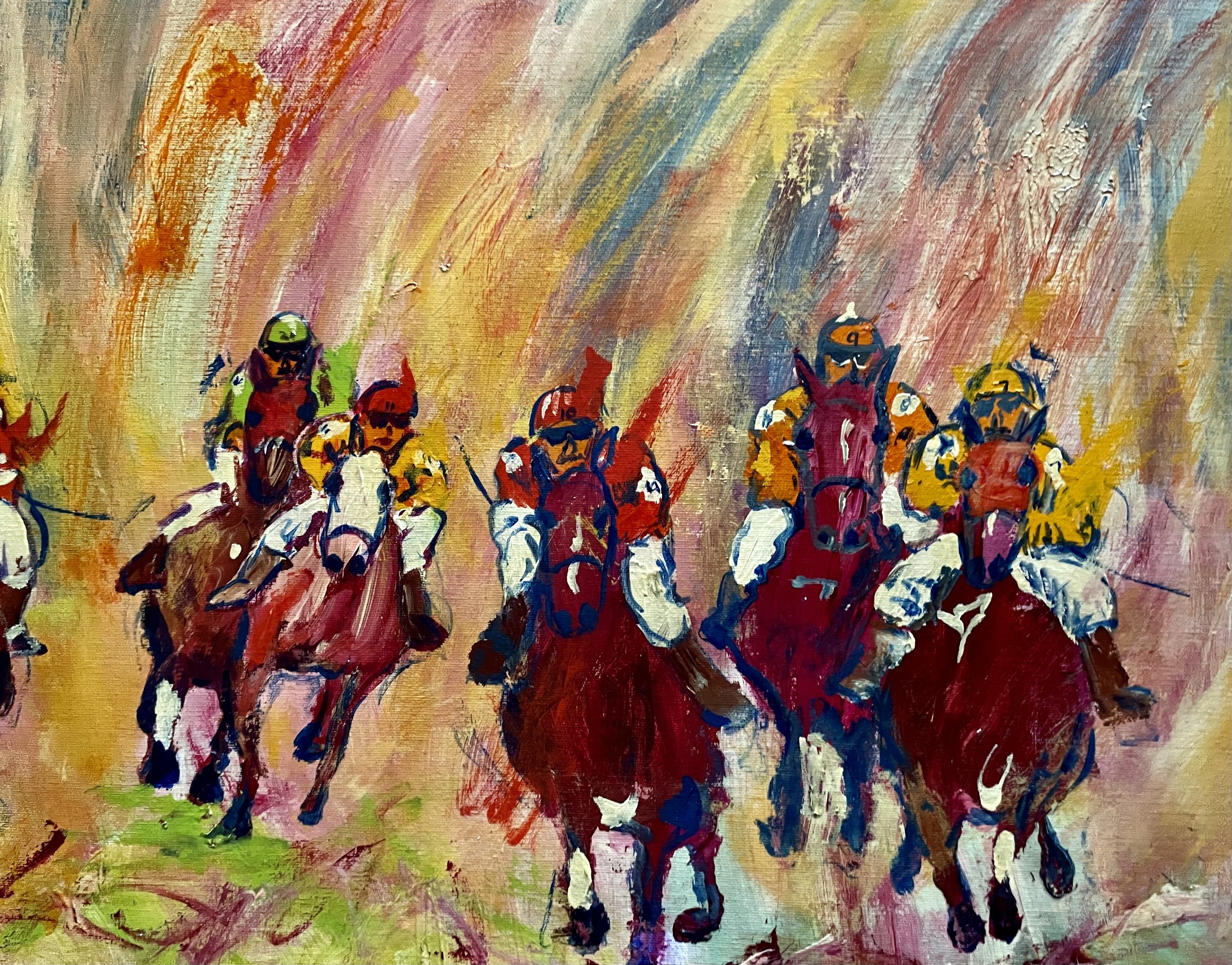 Image 10 of 11
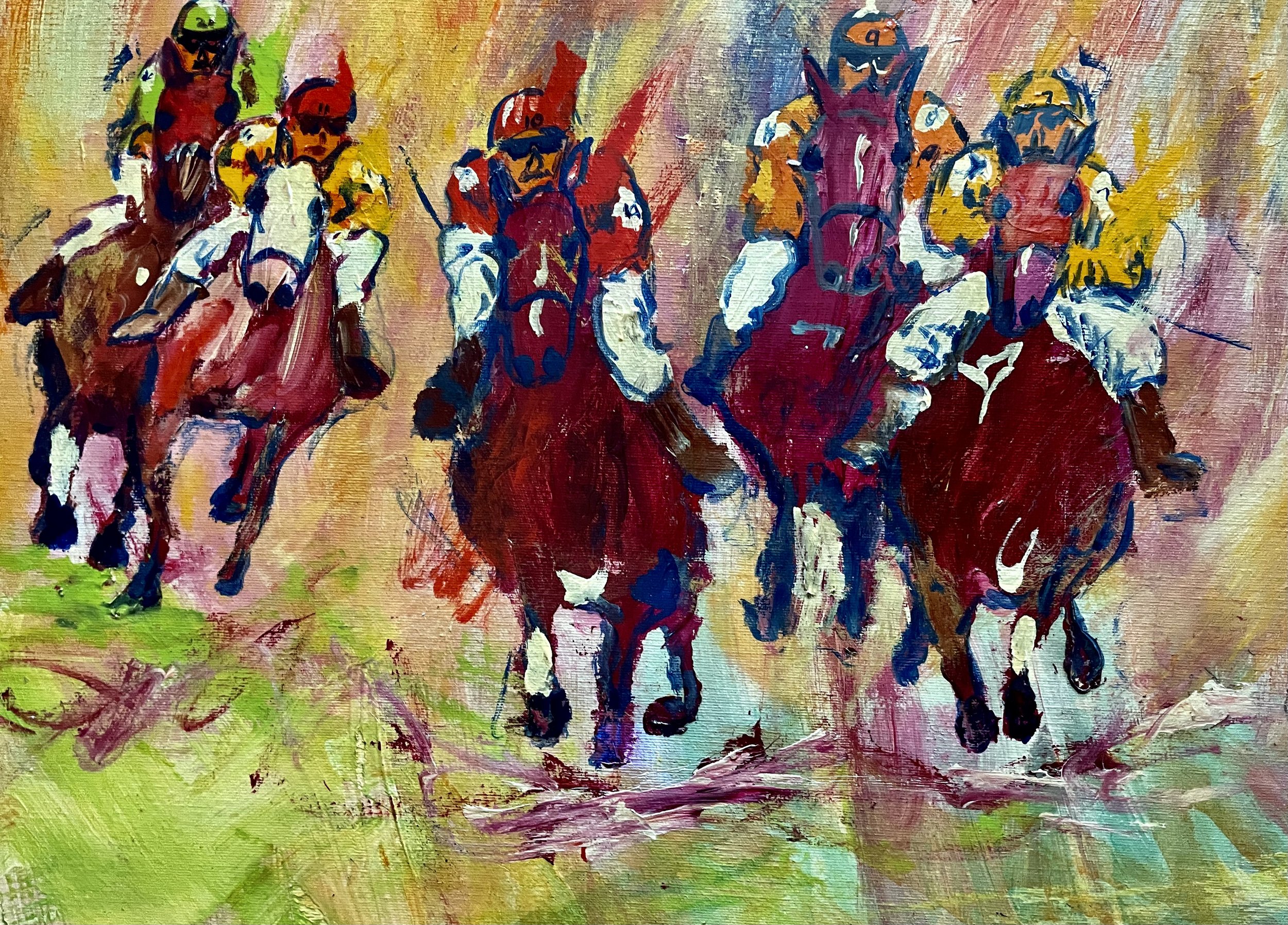 Image 11 of 11