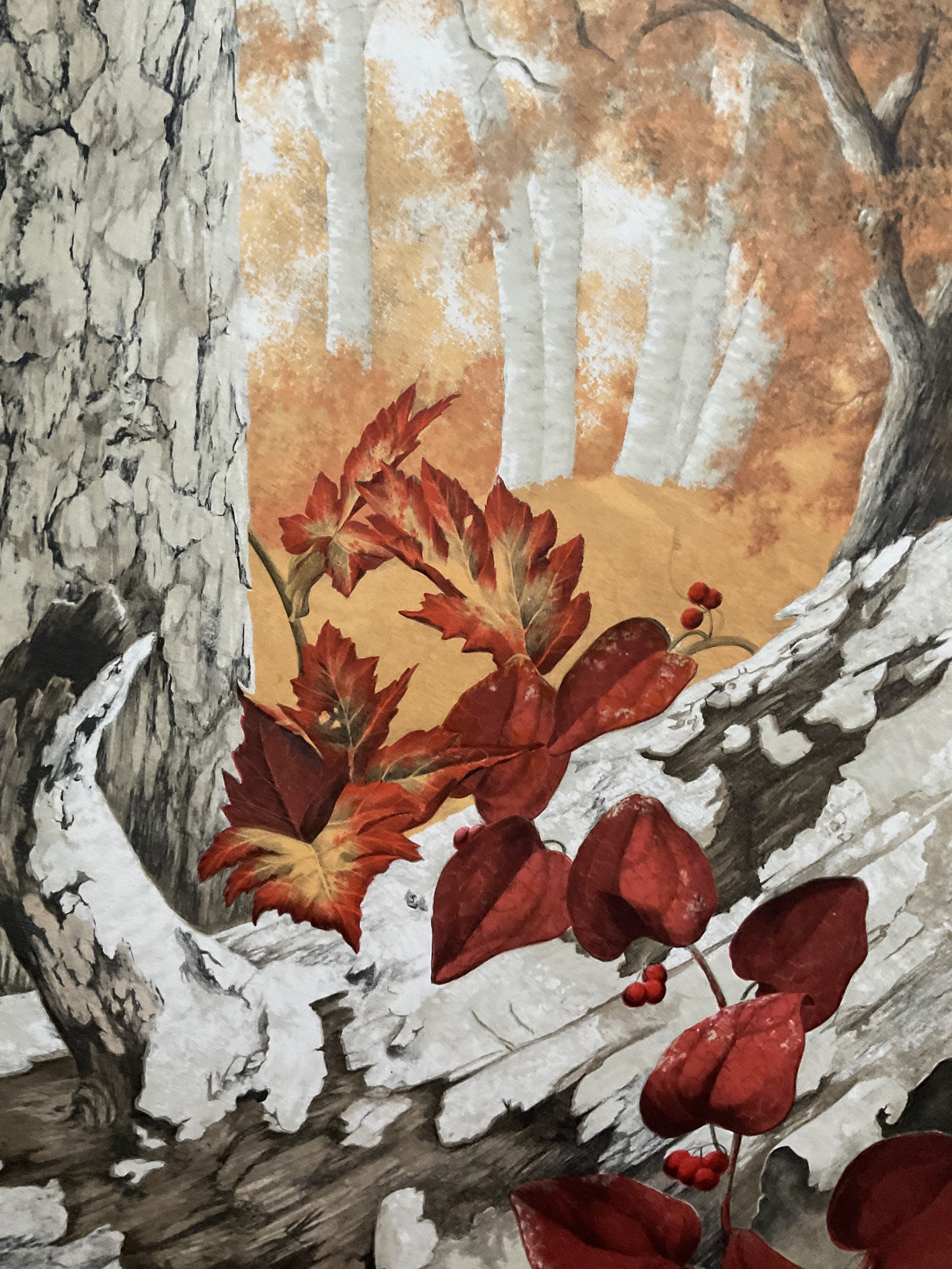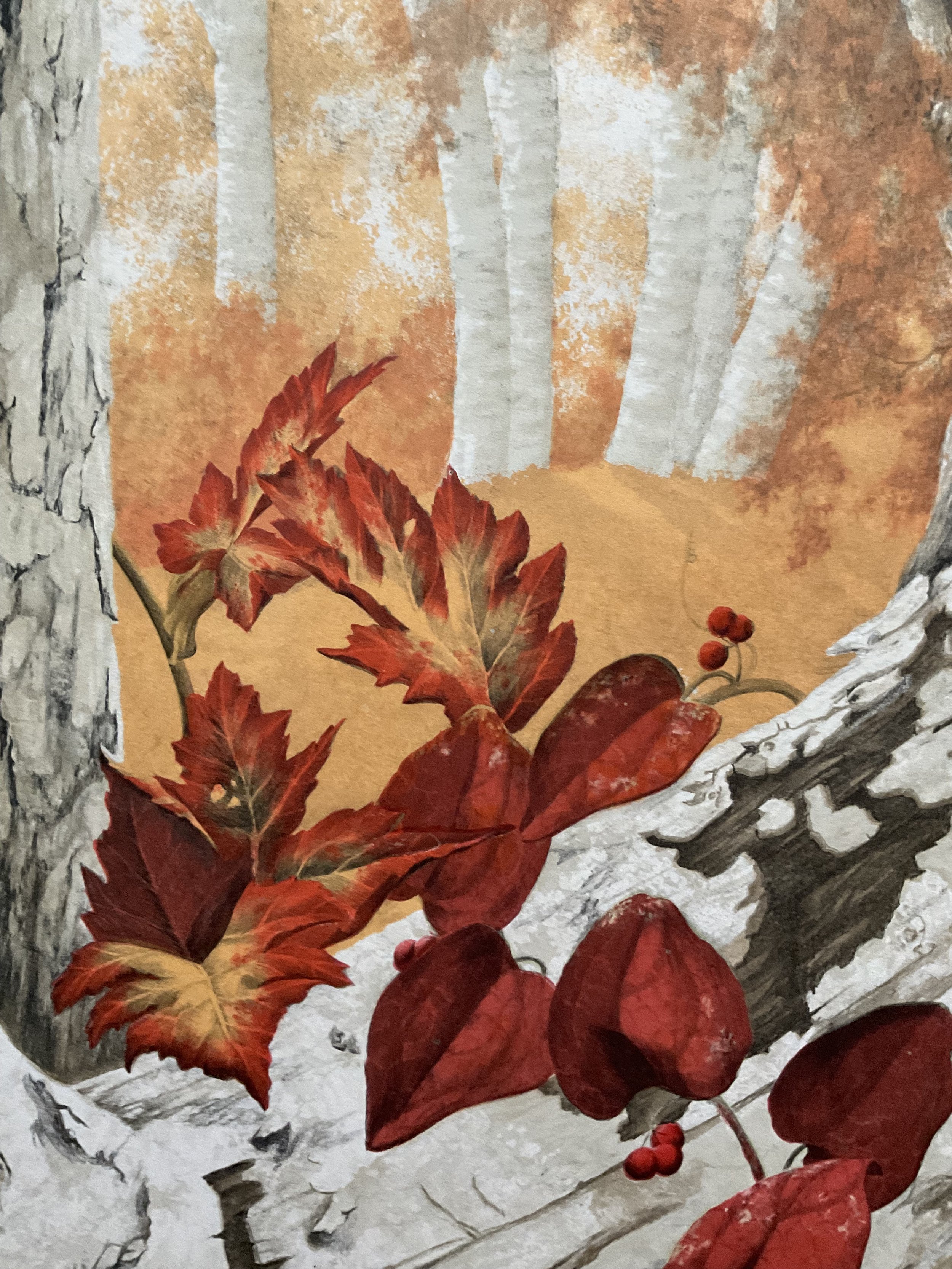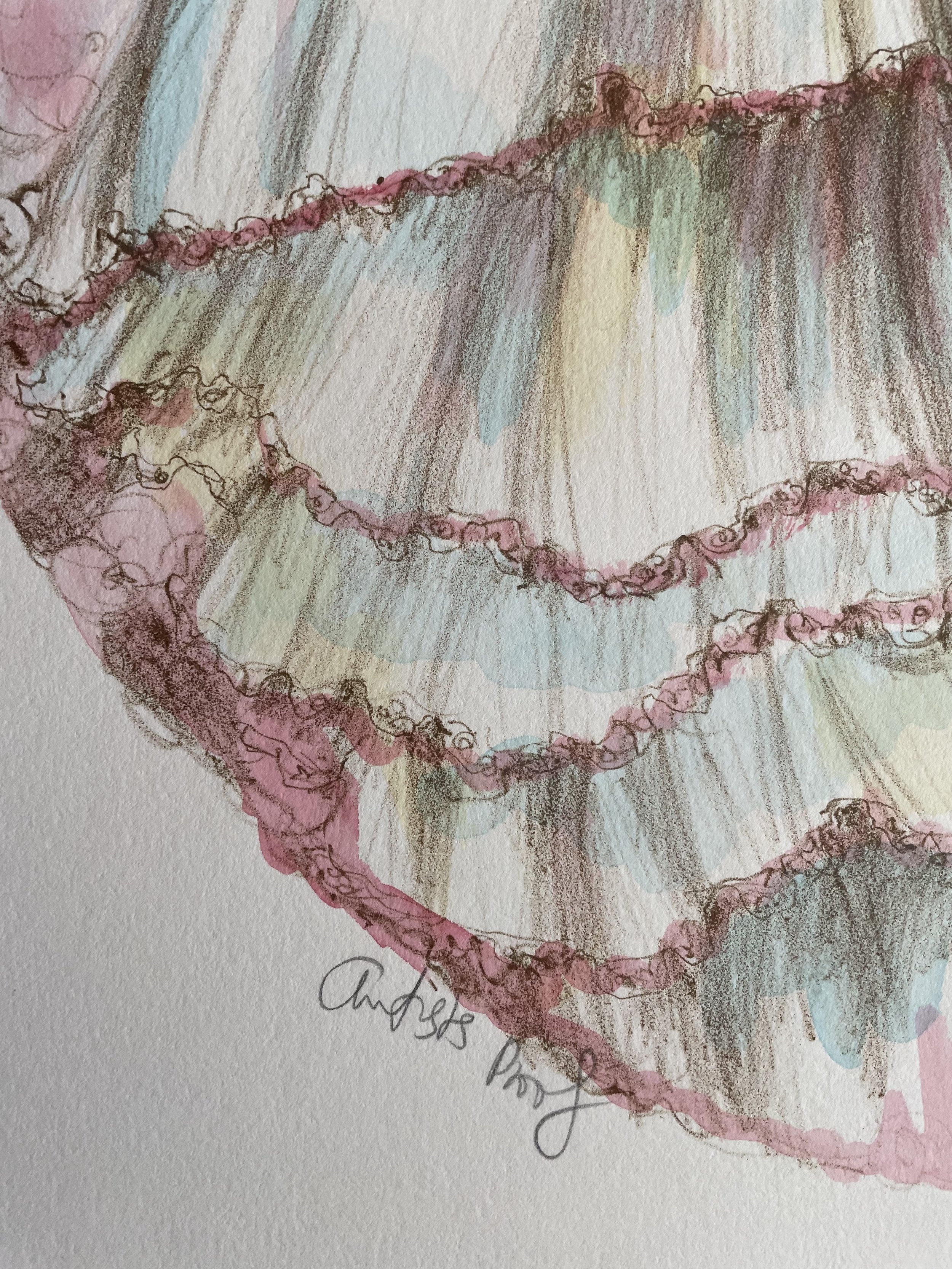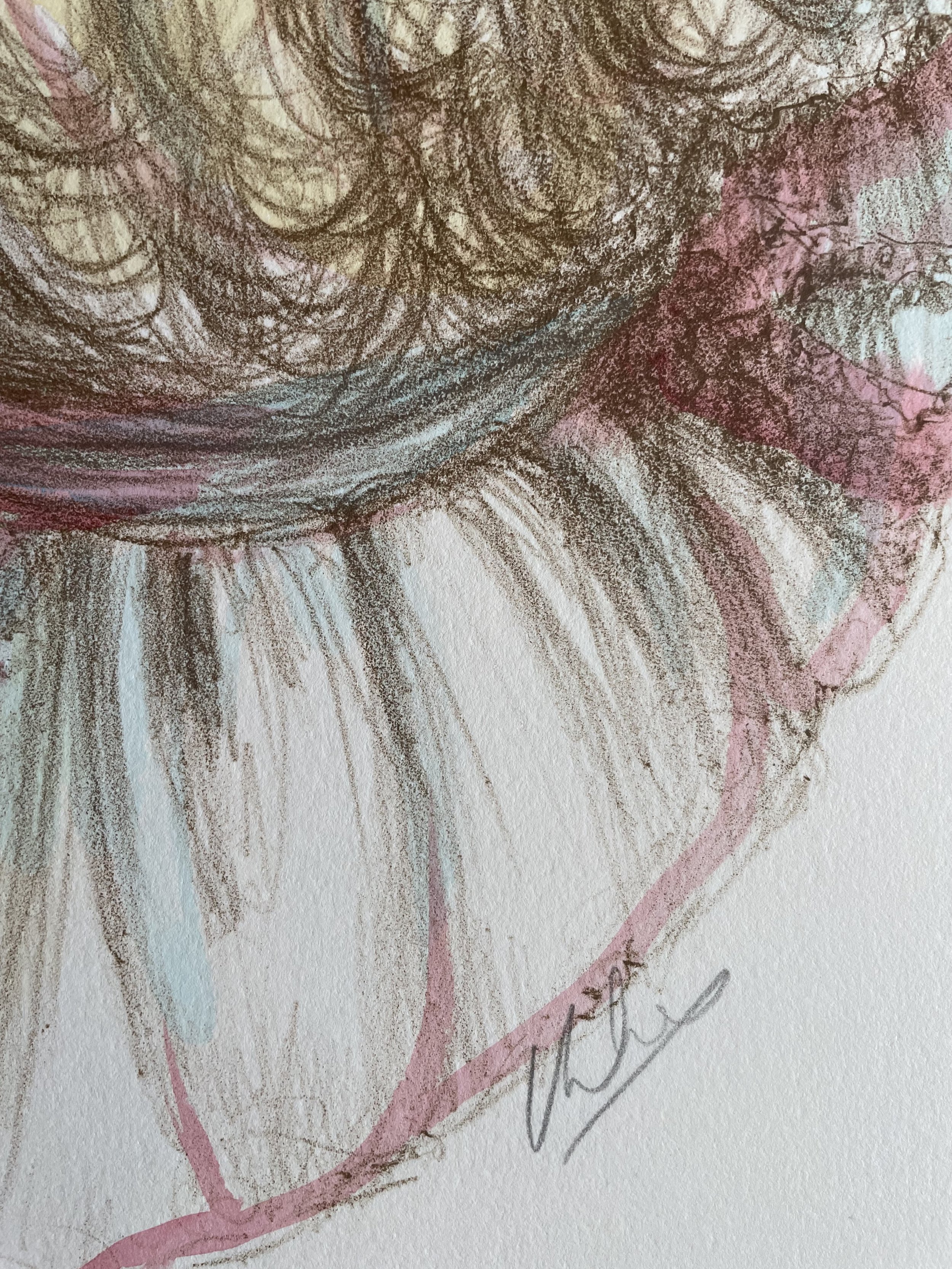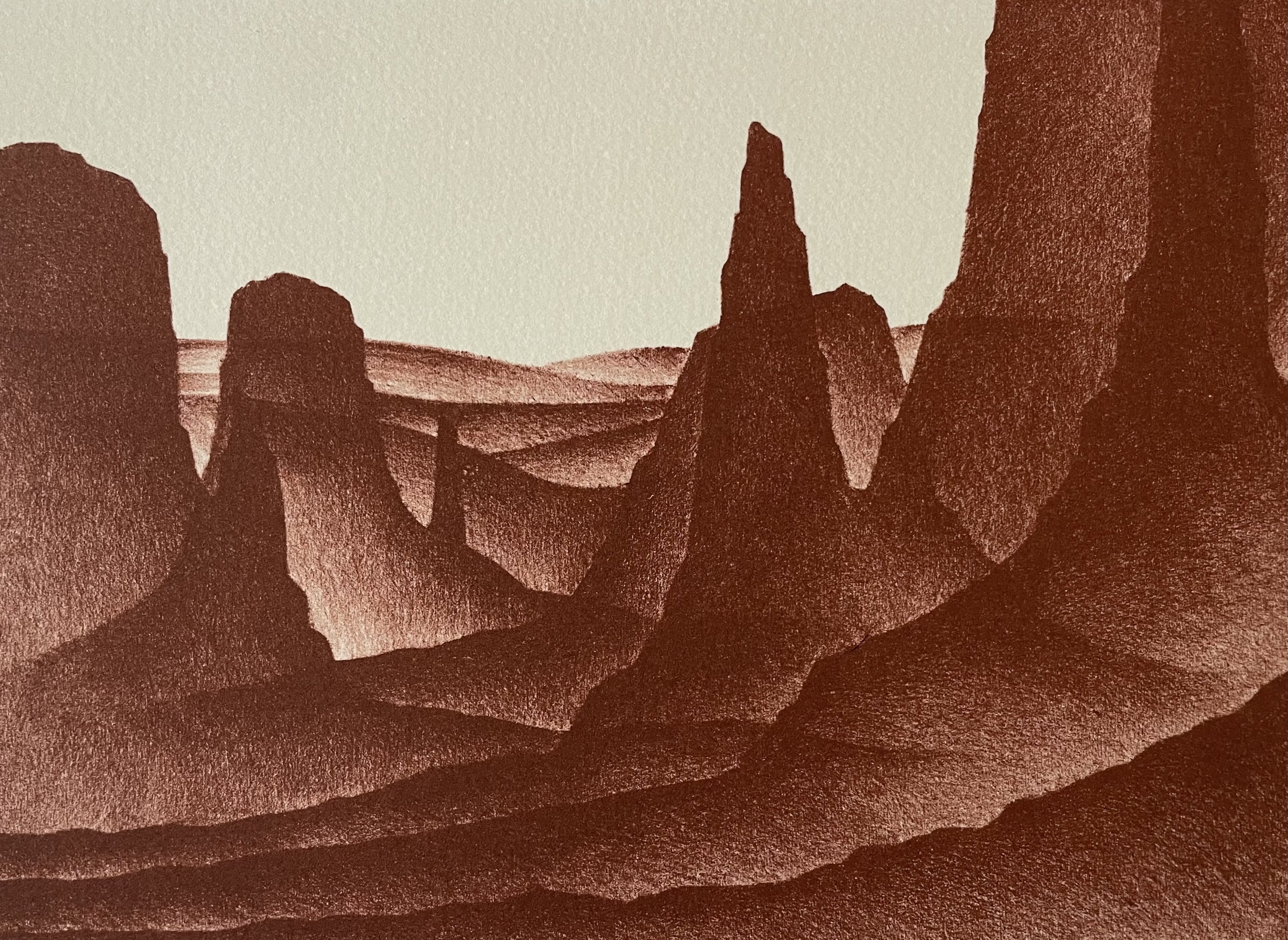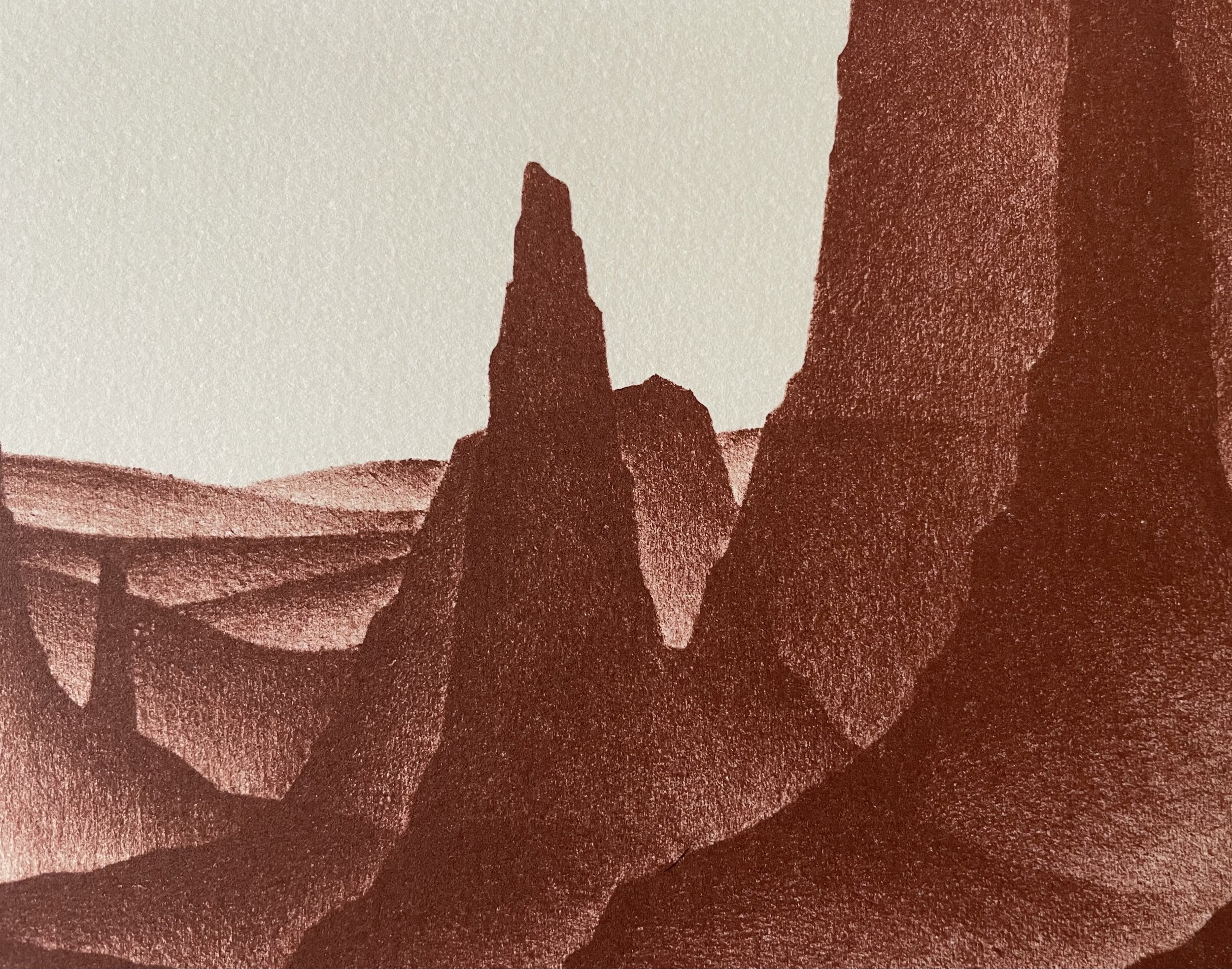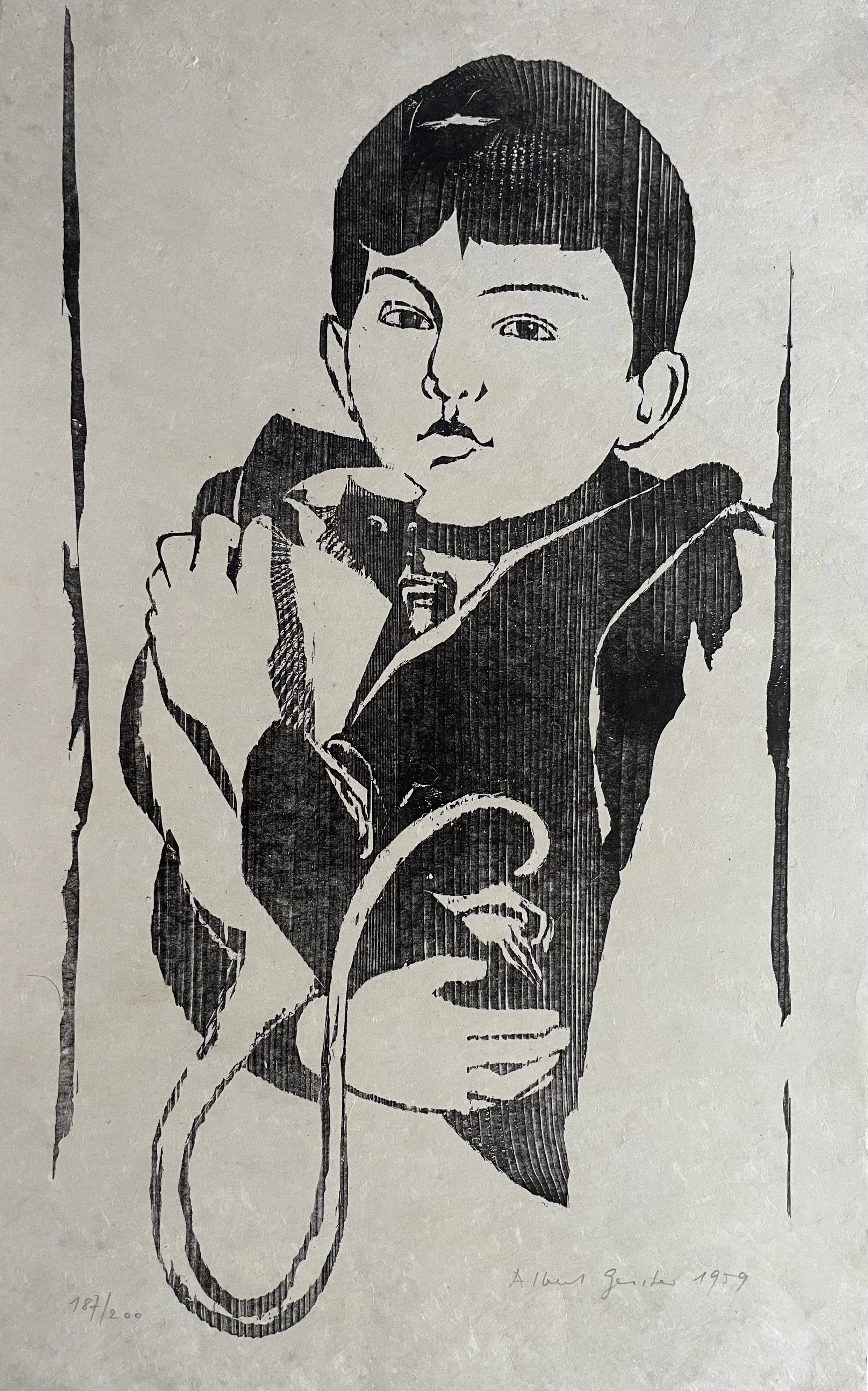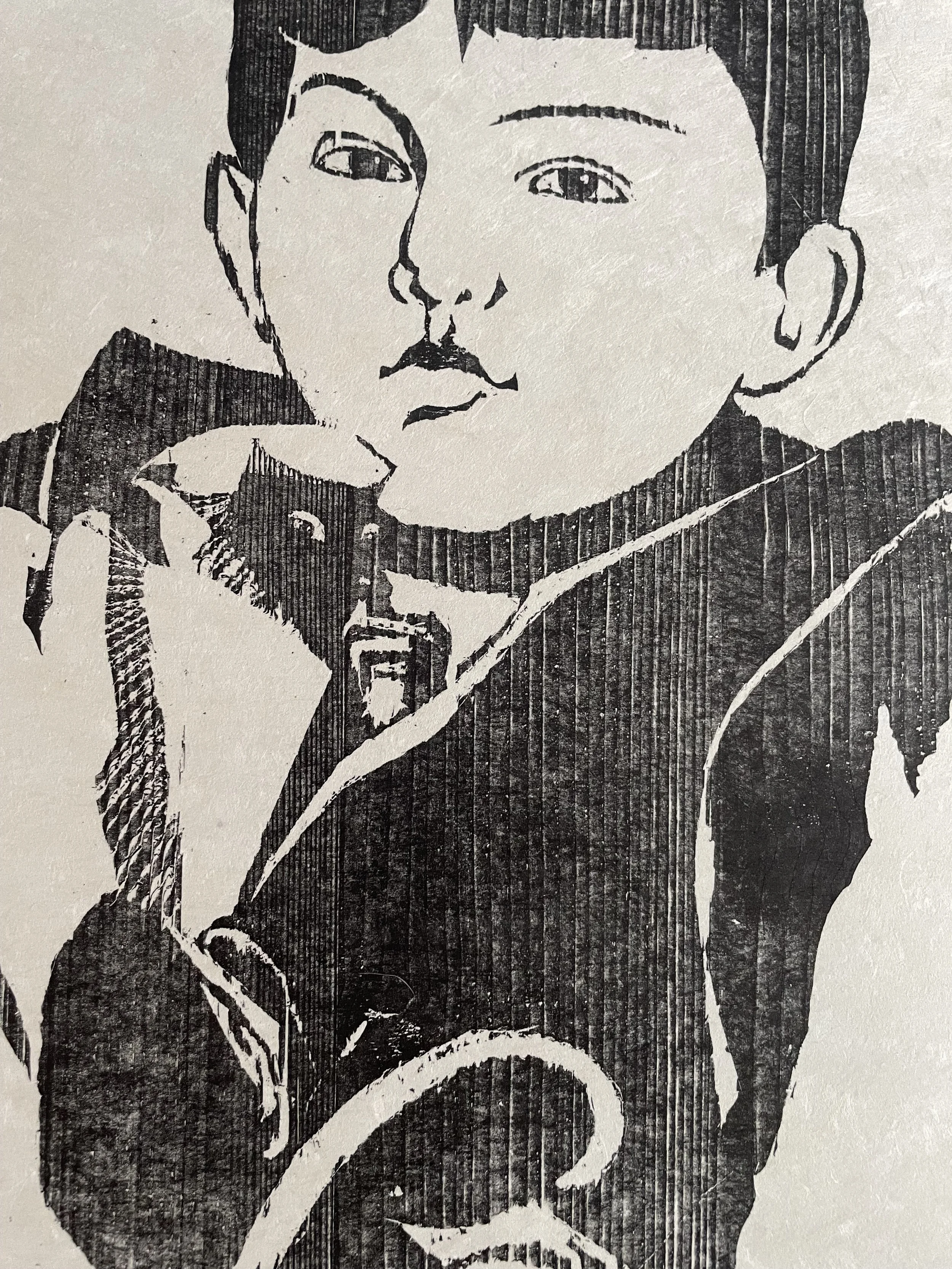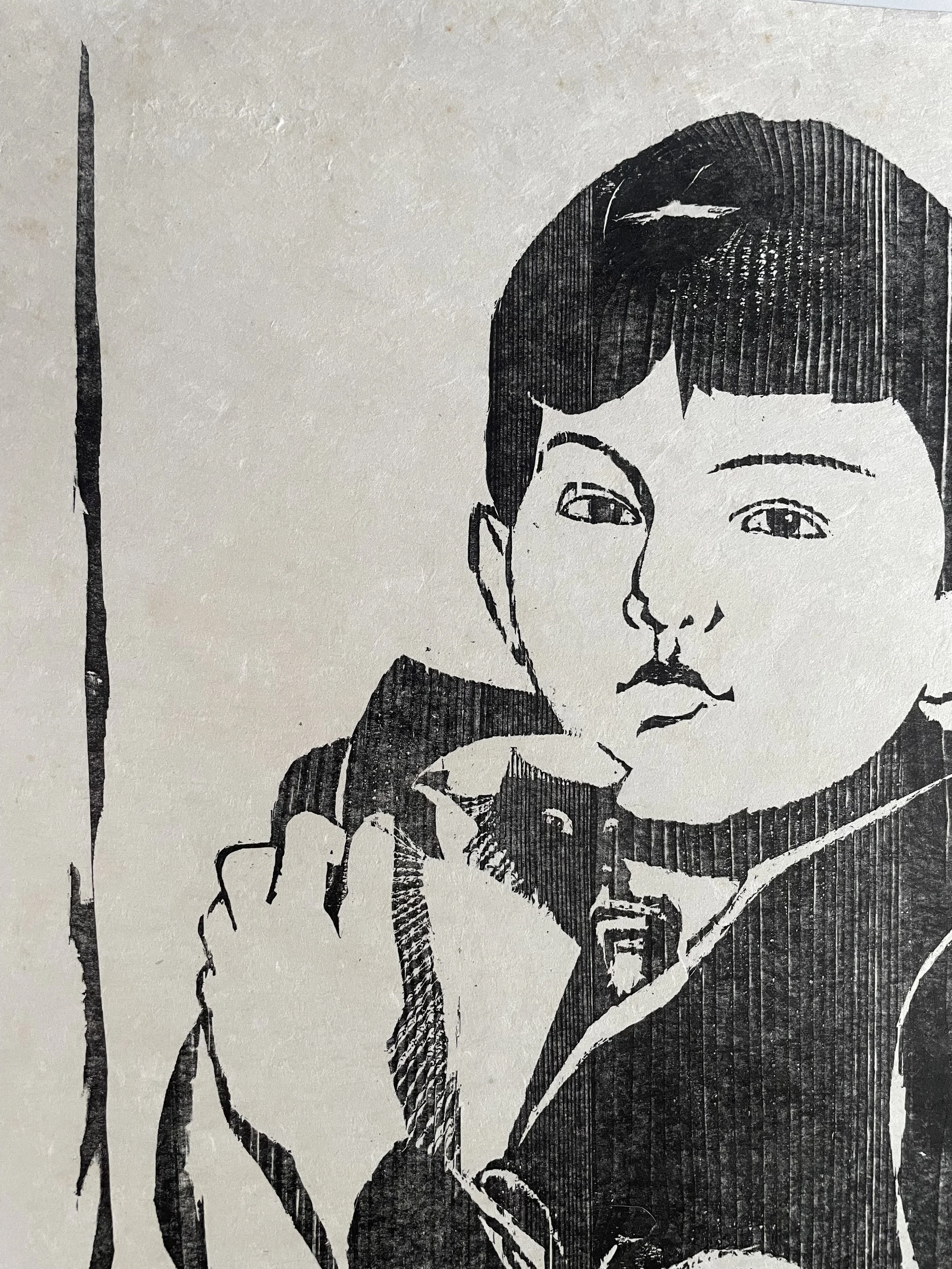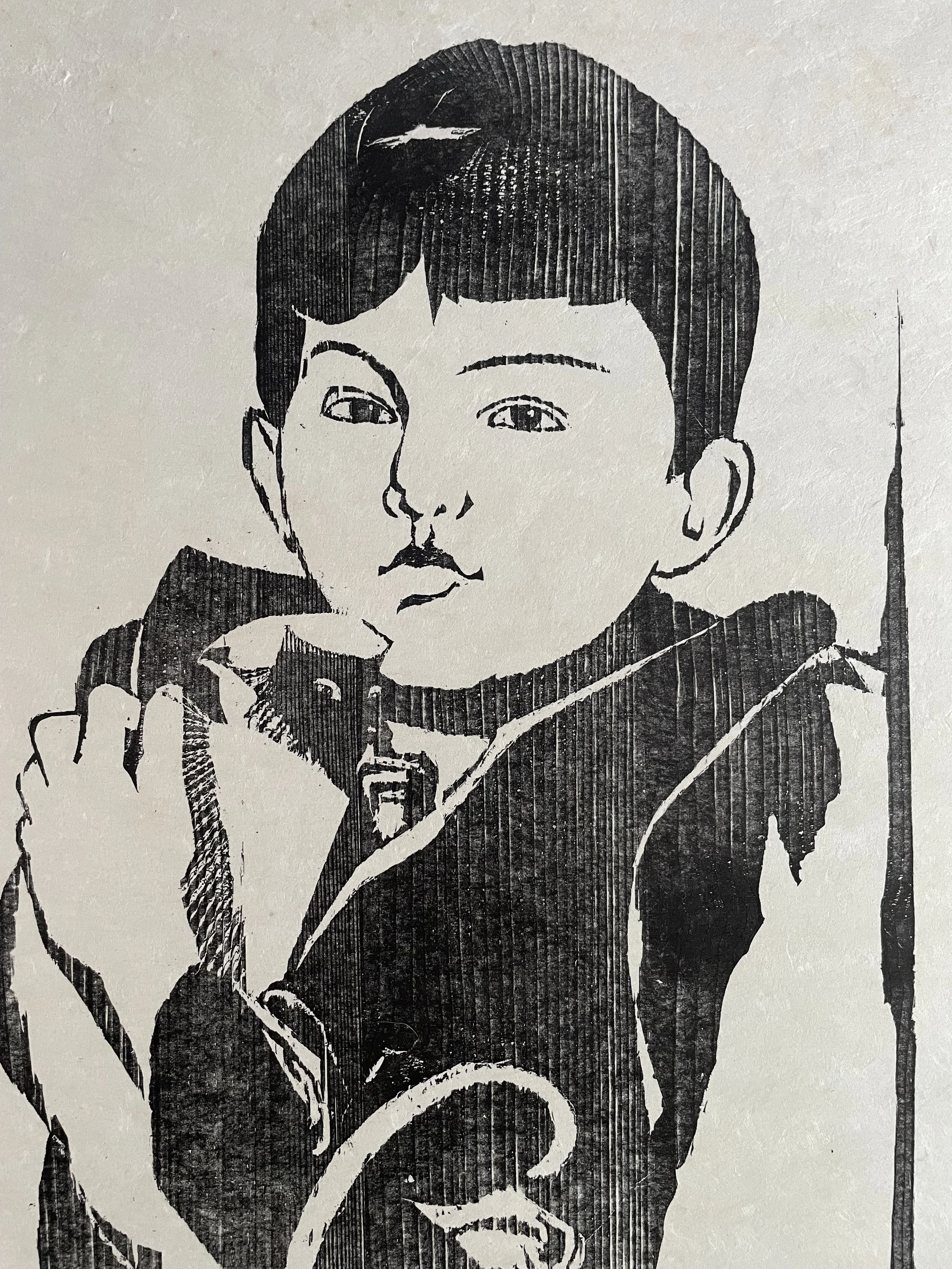
“Horsemen Warriors Abstract,” Nissan Engel (1931–2016), c.1970s color lithograph 11×16 in, signed & numbered 74/150.

$750.00

“Horsemen Warriors Abstract,” Nissan Engel (1931–2016), c.1970s color lithograph 11×16 in, signed & numbered 74/150.

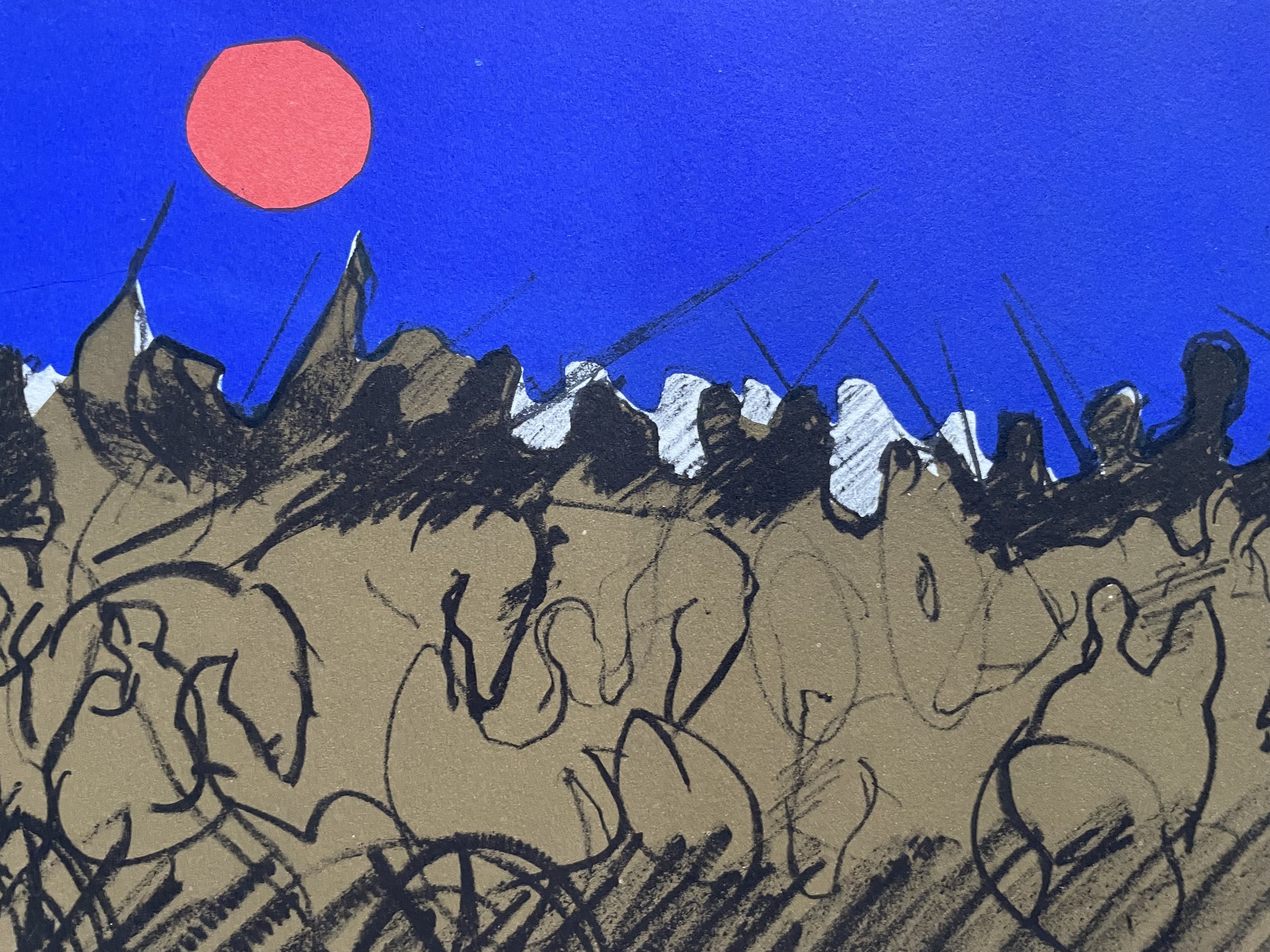
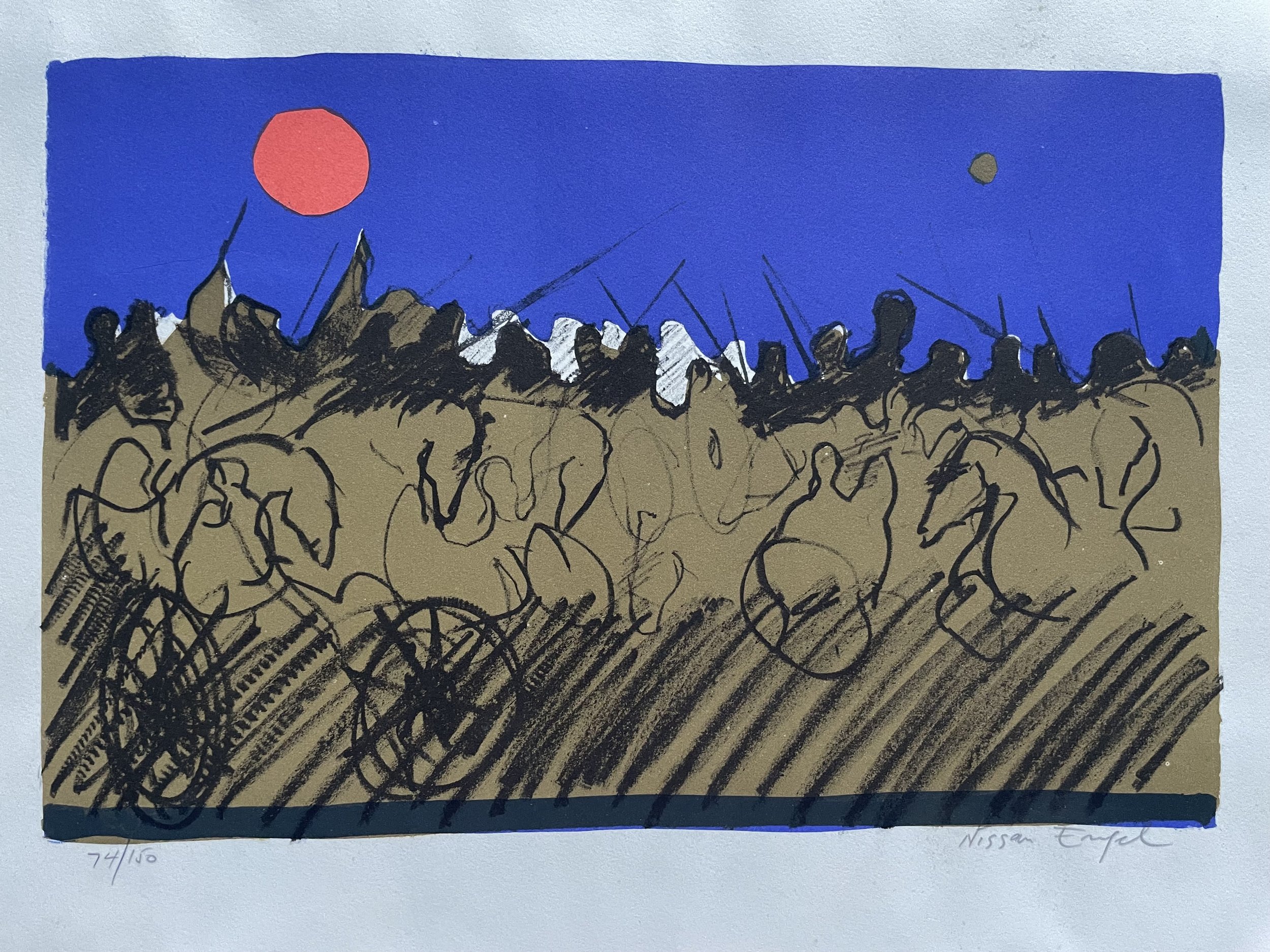
HORSEMEN WARRIORS ABSTRACT” is a dramatic color lithograph by Israeli-French artist Nissan Engel, best known for his “abstract lyricism” and musical, collage-inspired imagery. Created c.1970s and pulled in a limited edition of 150, this impression is numbered 74/150 and measures about 11 × 16 inches image size on a larger sheet. Against a blazing cobalt sky and red sun, a mass of sketchy riders and chariots charge across an ochre field, capturing the rhythm, movement, and theatrical lighting that define Engel’s unique vision.

Artwork description

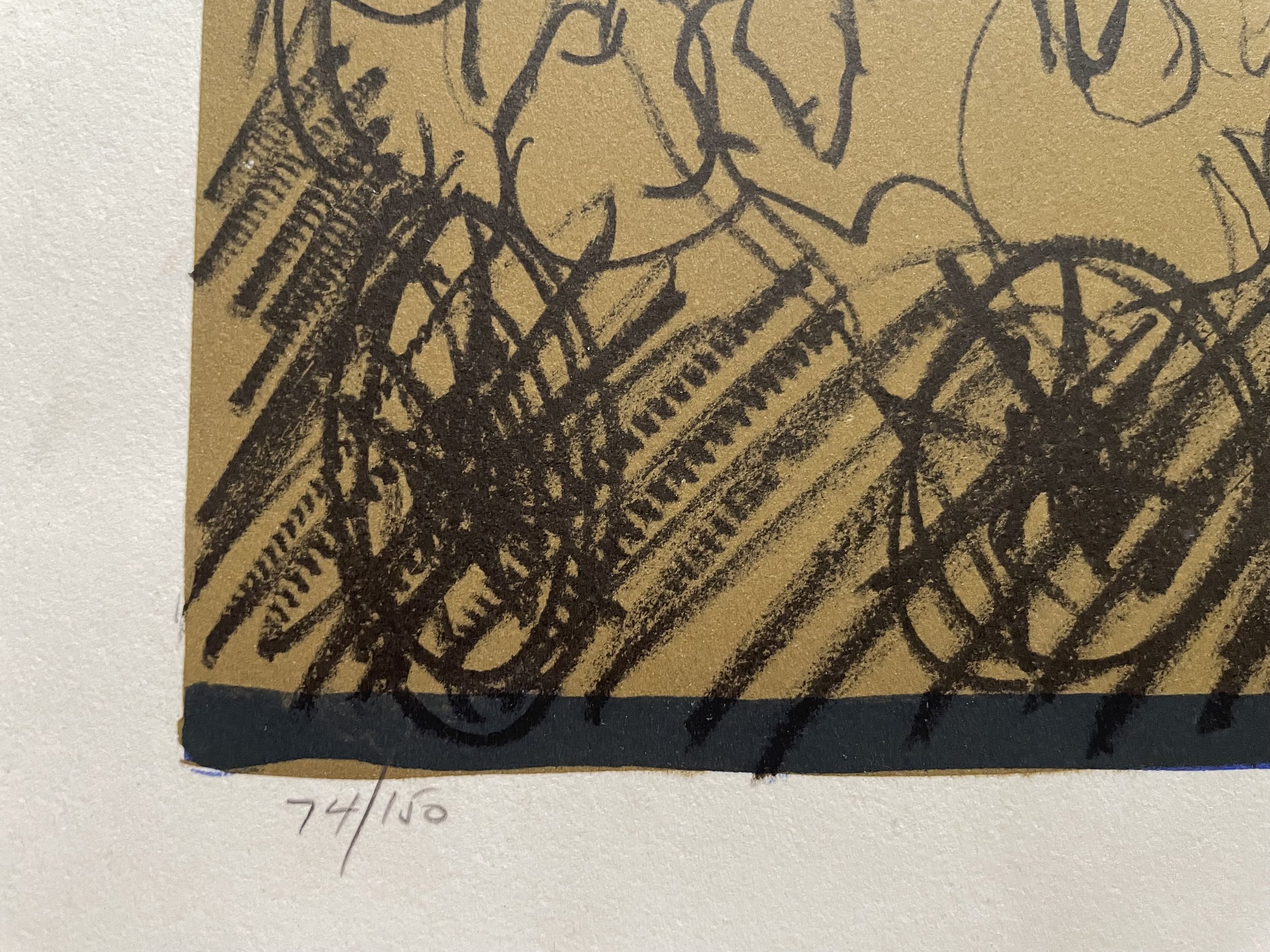
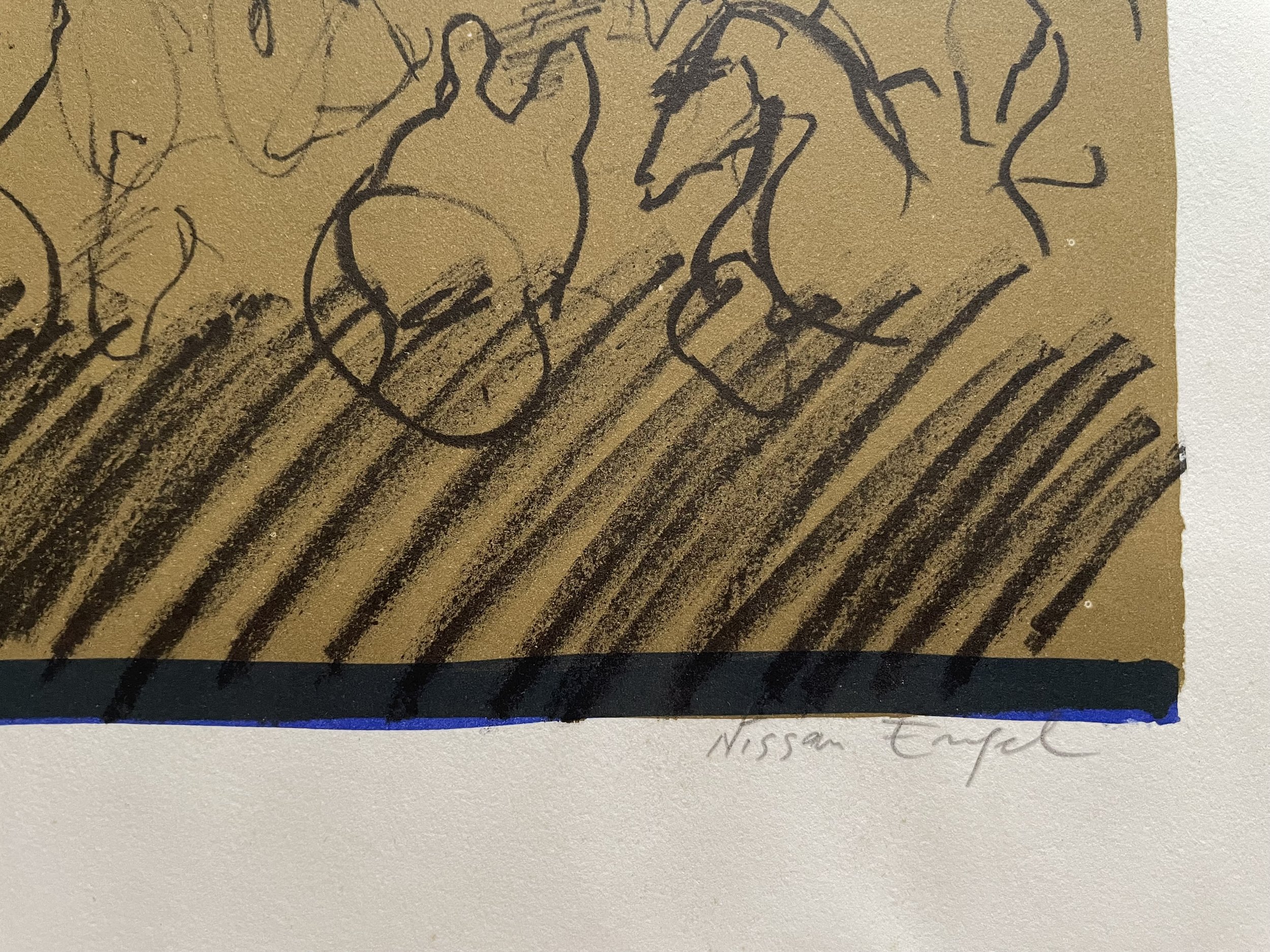
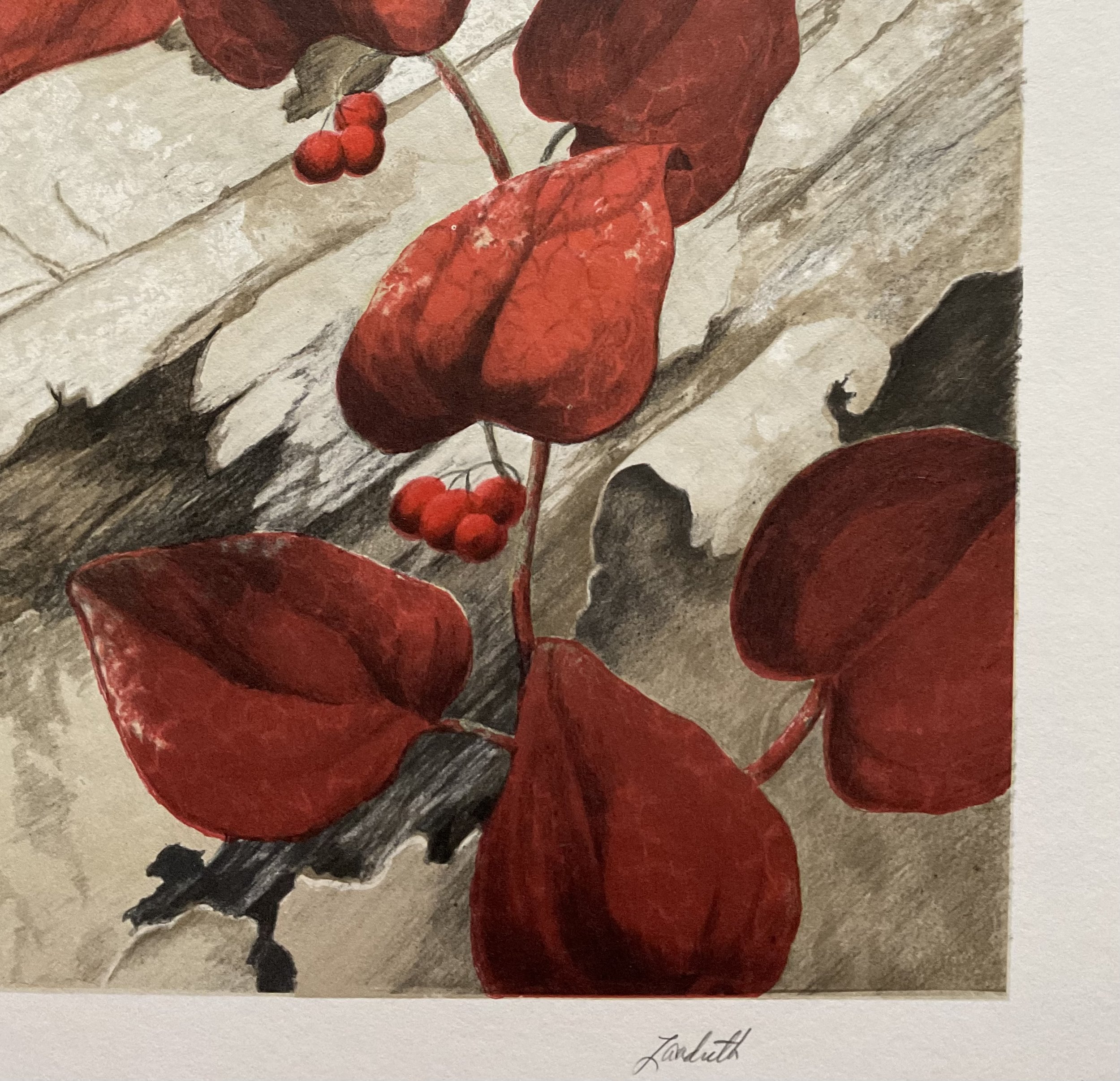
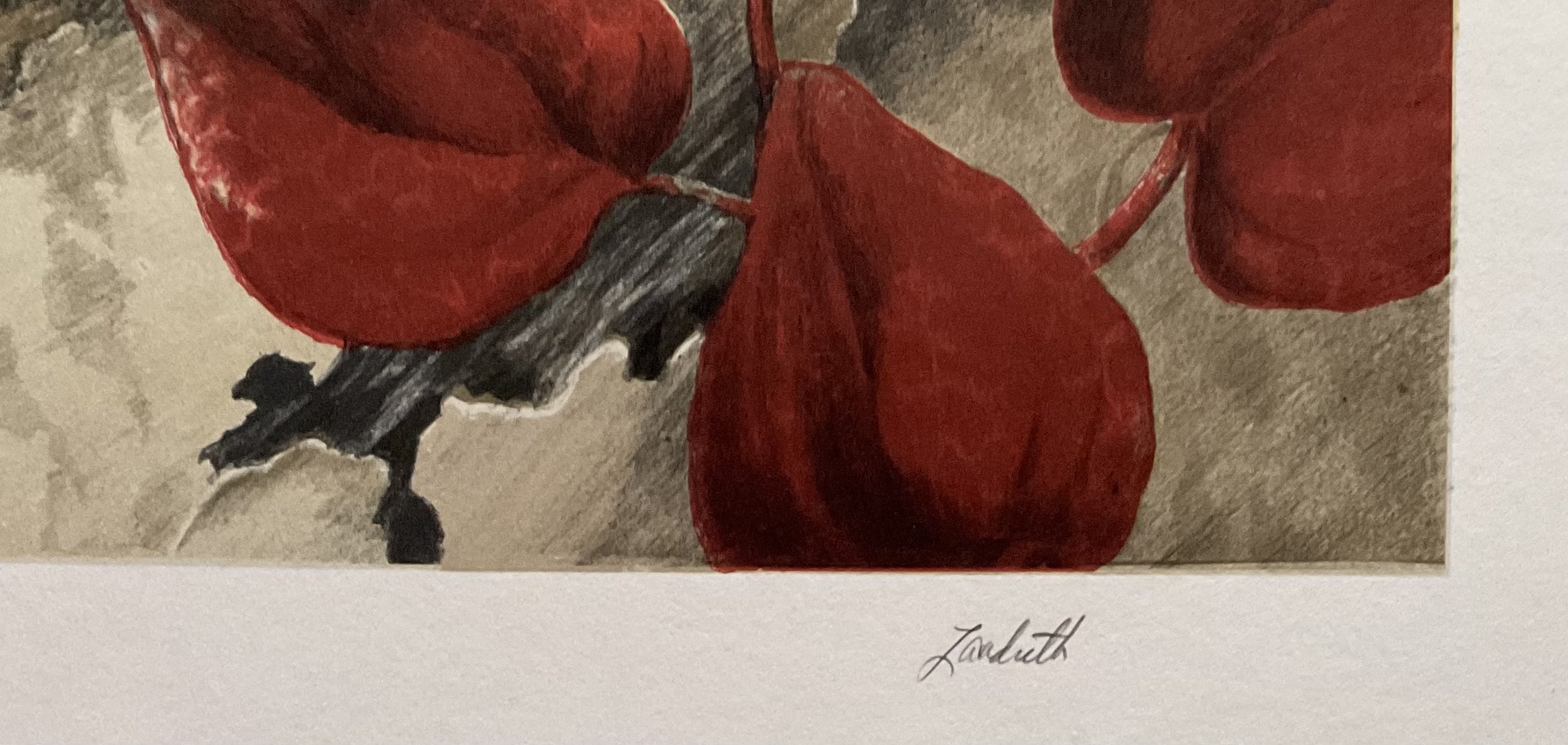
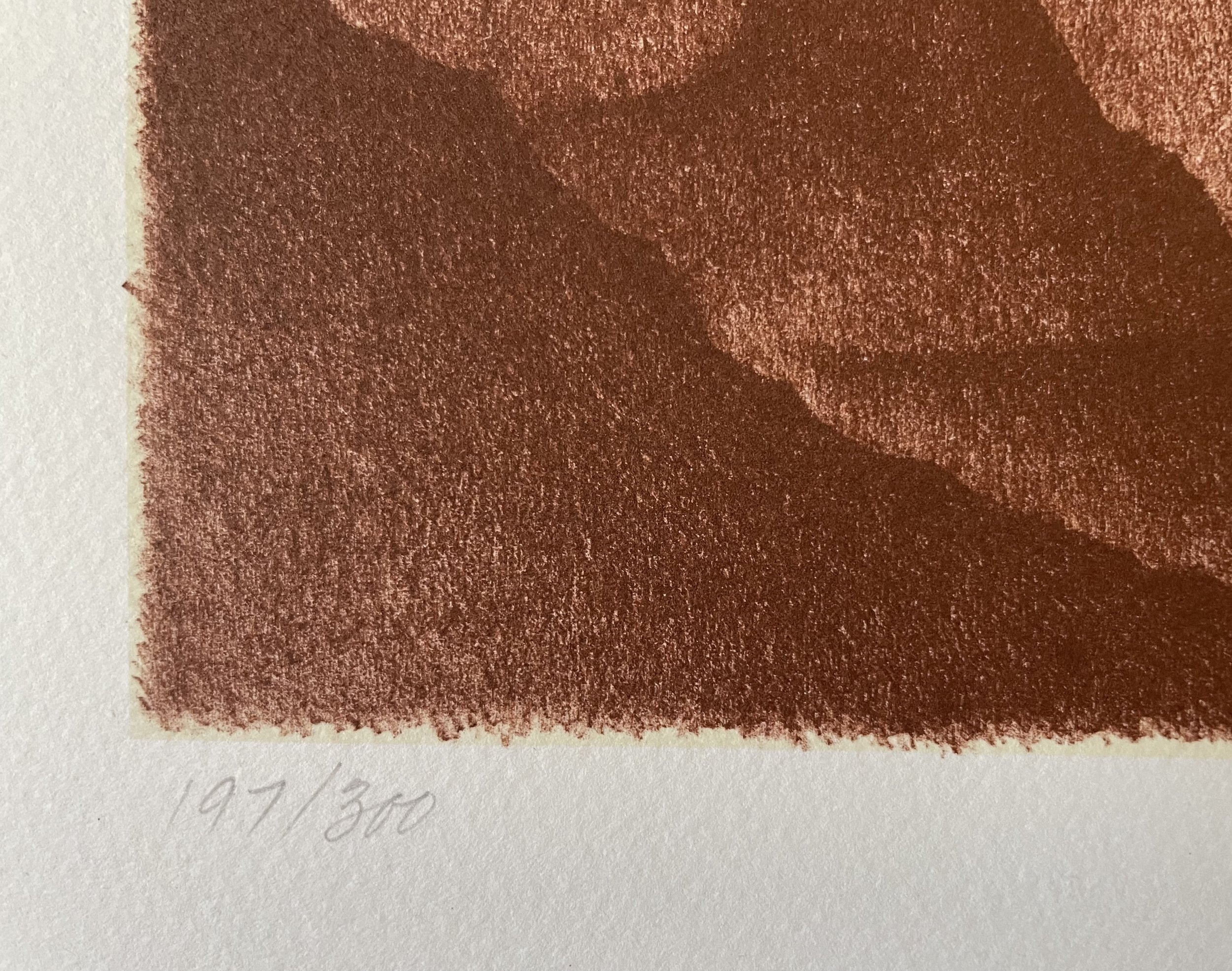
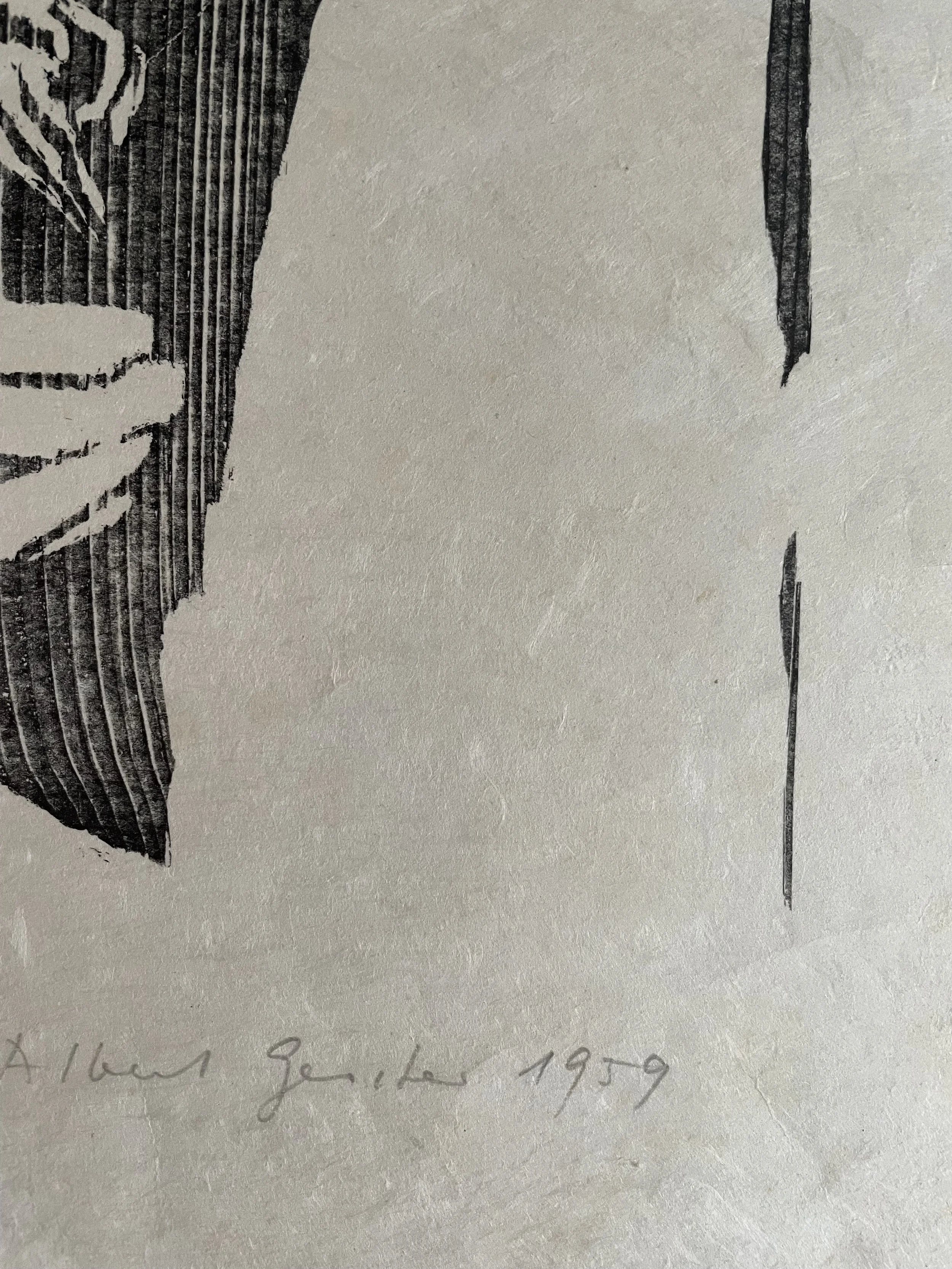
This work, widely known as “Horsemen Warriors Abstract,” is a hand-pulled color lithograph printed on heavy wove paper. The image area is approx. 11 × 16 in. with broad margins; your impression is pencil-numbered 74/150 at lower left and signed “Nissan Engel” at lower right

The composition is divided horizontally: a band of intense ultramarine sky occupies the upper third, punctuated by a flat red disc of a sun and a smaller golden orb, while the lower field is a mass of earthy brown and black marks. Engel sketches cavalry riders, horses, wagons, and lances as looping, open contours; their bodies dissolve into gesture, suggesting a crowd more than individuals. A jagged black ridge line with flashes of white in the middle distance hints at distant tents, city walls, or mountain peaks.

Formally, this print shows Engel’s affinity with expressionist drawing and stage design—bold silhouettes, strong color blocking, and a sense of choreographed motion. The overlapping contours and diagonal hatching create a rhythmic, almost musical beat across the surface, echoing the “painted music” quality that critics often ascribe to his work. 

Conceptually, the work belongs to Engel’s recurring theme of warriors on horseback—a motif that appears in related prints and paintings such as Warriors Riding and cavalry scenes sold at auction.  Here the battle is ambiguous: rather than depicting a specific historical event, Engel conjures the timeless energy of conflict under an otherworldly sky. The flat color fields and simplified forms also recall the stained-glass windows he designed in the 1960s–70s, where blocks of color and silhouettes carried symbolic weight. 

Printed between the 1960s and 1980s, this lithograph fits within the mature phase of Engel’s career, when he was working between New York and Paris and exploring both collage-like engravings and bold color prints. 

Artist biography

Nissan Engel (1931–2016) was an Israeli-born, French-based painter, printmaker, and stained-glass designer celebrated for his distinctive fusion of music, collage, and abstract lyricism.

Early life and education

Engel was born in Haifa, Israel, in 1931.  After military service, he enrolled at the Bezalel Academy of Arts and Design in Jerusalem, graduating in 1956 with training in painting, printmaking, and design.  In 1957 he moved to France to study stage and costume design at the Centre Dramatique de l’Est in Strasbourg, deepening his understanding of movement, light, and theatrical space—elements that would later infuse his compositions.

Paris, New York, and the emergence of “abstract lyricism”

Engel began exhibiting in Europe in the late 1950s, including Paris salons such as Salon de la Jeune Peinture and Salon des Beaux-Arts.  In 1965 he relocated to New York City, remaining there for roughly a decade. During this period he painted, produced prints, and designed large stained-glass commissions—for example 28 windows for Temple Israel in Lawrence, New York (1966–67) and 16 windows for Baltimore Hebrew Congregation (1968–69).

In 1975 Engel returned to France and settled in Paris, where he continued to work and exhibit internationally. Critics described his work as “abstract lyricism”—a phrase Engel embraced—referring to the way he blended gestural abstraction, musical notation, Hebrew letters, lace, and found paper into layered, poetic compositions. 

A pivotal moment came when he discovered antique sheet music at a Paris flea market. Seeing musical notes as visual forms, he began collaging scores, staves, and symbols directly into his paintings and prints, treating them as both text and texture. Over time he extended this collage vocabulary to include chess diagrams, handwritten letters, and fragments of printed ephemera.

Style, themes, and technique

Engel’s art is characterized by:

  • Bold color blocking and strong horizontals, often dividing compositions into a darker “earth” band below and a lighter “sky” or “spirit” zone above—an idea he linked to the separation of earth and heaven in Genesis.

  • A rich mixture of collage, lithography, etching, and mixed media, frequently reworking images into engravings and limited-edition prints that echo his collages. 

  • A recurring focus on music and rhythm, with scores, instruments, and the idea of visualizing sound at the heart of his practice.

  • Figurative and symbolic motifs—kings, warriors, horses, musicians, and architectural fragments—rendered in an energetic, calligraphic line.

His stained-glass work reinforced his sensitivity to transparency and light, which later informed the luminous, layered surfaces of his painted and printed collages.

Exhibitions and collections

Engel exhibited widely in Europe, Israel, and the United States, including shows at Los Robles Gallery (California), Lim Gallery (Tel Aviv), Nahan Galleries (New York), Galerie l’Estampe (Strasbourg), John Davies Gallery (London), and major Paris salons. 

His works entered important public collections such as the Albright-Knox Art Gallery (Buffalo)Detroit Institute of ArtsNeuberger Museum of ArtJewish Museum (New York)Bridgestone Museum (Tokyo) and others. 

At auction, Engel’s color lithographs from series like “Warriors Riding” and horseman compositions have been estimated and sold in the $200–$400 range, with some lots of multiple prints and larger works achieving higher prices. 

Engel died on November 3, 2016, leaving behind a body of work that continues to resonate for its musicality, nuanced color, and inventive use of collage.

Nissan Engel (Israeli/French, 1931–2016), “HorsemEN Warriors Abstract,” c.1970s, color lithograph on wove paper, image approx. 11 × 16 in., pencil-signed lower right and numbered 74/150 lower left. Provenance: Mitch Morse Gallery; Artfind Gallery, Washington, DC.

ARTFIND GALLERY – CERTIFICATE OF VALUE & AUTHENTICATION

  • Artist: Nissan Engel (1931–2016)

  • Title:HorsemEN Warriors Abstract (descriptive title)

  • Date: c. 1960s–1970s

  • Medium: Original color lithograph on wove paper

  • Image Size: approx. 11 × 16 in. 

  • Sheet Size: Slightly larger with full margins (exact dimensions on file at Artfind Gallery)

  • Edition: 74/150

  • Signature: Pencil-signed “Nissan Engel” at lower right; numbered 74/150 at lower left

  • Technique: Multi-color lithography with flat color fields and black drawing, consistent with Engel’s warrior/horsemen series. 

  • Provenance:

    1. Artist/Publisher

    2. Mitch Morse Gallery, New York (acquired in NYC/Europe mid-20th c.)

    3. Artfind Gallery, Washington, DC (current owner)

After close comparison with documented horseman lithographs by Engel and verification of signature, editioning, and paper, this work is certified as an authentic original lithograph.

Certified by Artfind Gallery, Washington, DC.

Provenance chain

  1. c.1960s–70s – Nissan Engel / publisher – print edition produced and signed by the artist.

  2. c.1970s–80s – Mitch Morse Gallery, New York – acquired directly from Engel’s New York contacts or European publishers; held in gallery inventory.

  3. Late 20th century – Private/dealer holdings via Mitch Morse Gallery.

  4. Current owner – Artfind Gallery, Washington, DC.

“Horsemen Warriors Abstract,” Nissan Engel (1931–2016), c.1970s color lithograph 11×16 in, signed & numbered 74/150.

HORSEMEN WARRIORS ABSTRACT” is a dramatic color lithograph by Israeli-French artist Nissan Engel, best known for his “abstract lyricism” and musical, collage-inspired imagery. Created c.1970s and pulled in a limited edition of 150, this impression is numbered 74/150 and measures about 11 × 16 inches image size on a larger sheet. Against a blazing cobalt sky and red sun, a mass of sketchy riders and chariots charge across an ochre field, capturing the rhythm, movement, and theatrical lighting that define Engel’s unique vision.

Artwork description

This work, widely known as “Horsemen Warriors Abstract,” is a hand-pulled color lithograph printed on heavy wove paper. The image area is approx. 11 × 16 in. with broad margins; your impression is pencil-numbered 74/150 at lower left and signed “Nissan Engel” at lower right

The composition is divided horizontally: a band of intense ultramarine sky occupies the upper third, punctuated by a flat red disc of a sun and a smaller golden orb, while the lower field is a mass of earthy brown and black marks. Engel sketches cavalry riders, horses, wagons, and lances as looping, open contours; their bodies dissolve into gesture, suggesting a crowd more than individuals. A jagged black ridge line with flashes of white in the middle distance hints at distant tents, city walls, or mountain peaks.

Formally, this print shows Engel’s affinity with expressionist drawing and stage design—bold silhouettes, strong color blocking, and a sense of choreographed motion. The overlapping contours and diagonal hatching create a rhythmic, almost musical beat across the surface, echoing the “painted music” quality that critics often ascribe to his work. 

Conceptually, the work belongs to Engel’s recurring theme of warriors on horseback—a motif that appears in related prints and paintings such as Warriors Riding and cavalry scenes sold at auction.  Here the battle is ambiguous: rather than depicting a specific historical event, Engel conjures the timeless energy of conflict under an otherworldly sky. The flat color fields and simplified forms also recall the stained-glass windows he designed in the 1960s–70s, where blocks of color and silhouettes carried symbolic weight. 

Printed between the 1960s and 1980s, this lithograph fits within the mature phase of Engel’s career, when he was working between New York and Paris and exploring both collage-like engravings and bold color prints. 

Artist biography

Nissan Engel (1931–2016) was an Israeli-born, French-based painter, printmaker, and stained-glass designer celebrated for his distinctive fusion of music, collage, and abstract lyricism.

Early life and education

Engel was born in Haifa, Israel, in 1931.  After military service, he enrolled at the Bezalel Academy of Arts and Design in Jerusalem, graduating in 1956 with training in painting, printmaking, and design.  In 1957 he moved to France to study stage and costume design at the Centre Dramatique de l’Est in Strasbourg, deepening his understanding of movement, light, and theatrical space—elements that would later infuse his compositions.

Paris, New York, and the emergence of “abstract lyricism”

Engel began exhibiting in Europe in the late 1950s, including Paris salons such as Salon de la Jeune Peinture and Salon des Beaux-Arts.  In 1965 he relocated to New York City, remaining there for roughly a decade. During this period he painted, produced prints, and designed large stained-glass commissions—for example 28 windows for Temple Israel in Lawrence, New York (1966–67) and 16 windows for Baltimore Hebrew Congregation (1968–69).

In 1975 Engel returned to France and settled in Paris, where he continued to work and exhibit internationally. Critics described his work as “abstract lyricism”—a phrase Engel embraced—referring to the way he blended gestural abstraction, musical notation, Hebrew letters, lace, and found paper into layered, poetic compositions. 

A pivotal moment came when he discovered antique sheet music at a Paris flea market. Seeing musical notes as visual forms, he began collaging scores, staves, and symbols directly into his paintings and prints, treating them as both text and texture. Over time he extended this collage vocabulary to include chess diagrams, handwritten letters, and fragments of printed ephemera.

Style, themes, and technique

Engel’s art is characterized by:

  • Bold color blocking and strong horizontals, often dividing compositions into a darker “earth” band below and a lighter “sky” or “spirit” zone above—an idea he linked to the separation of earth and heaven in Genesis.

  • A rich mixture of collage, lithography, etching, and mixed media, frequently reworking images into engravings and limited-edition prints that echo his collages. 

  • A recurring focus on music and rhythm, with scores, instruments, and the idea of visualizing sound at the heart of his practice.

  • Figurative and symbolic motifs—kings, warriors, horses, musicians, and architectural fragments—rendered in an energetic, calligraphic line.

His stained-glass work reinforced his sensitivity to transparency and light, which later informed the luminous, layered surfaces of his painted and printed collages.

Exhibitions and collections

Engel exhibited widely in Europe, Israel, and the United States, including shows at Los Robles Gallery (California), Lim Gallery (Tel Aviv), Nahan Galleries (New York), Galerie l’Estampe (Strasbourg), John Davies Gallery (London), and major Paris salons. 

His works entered important public collections such as the Albright-Knox Art Gallery (Buffalo)Detroit Institute of ArtsNeuberger Museum of ArtJewish Museum (New York)Bridgestone Museum (Tokyo) and others. 

At auction, Engel’s color lithographs from series like “Warriors Riding” and horseman compositions have been estimated and sold in the $200–$400 range, with some lots of multiple prints and larger works achieving higher prices. 

Engel died on November 3, 2016, leaving behind a body of work that continues to resonate for its musicality, nuanced color, and inventive use of collage.

Nissan Engel (Israeli/French, 1931–2016), “HorsemEN Warriors Abstract,” c.1970s, color lithograph on wove paper, image approx. 11 × 16 in., pencil-signed lower right and numbered 74/150 lower left. Provenance: Mitch Morse Gallery; Artfind Gallery, Washington, DC.

ARTFIND GALLERY – CERTIFICATE OF VALUE & AUTHENTICATION

  • Artist: Nissan Engel (1931–2016)

  • Title:HorsemEN Warriors Abstract (descriptive title)

  • Date: c. 1960s–1970s

  • Medium: Original color lithograph on wove paper

  • Image Size: approx. 11 × 16 in. 

  • Sheet Size: Slightly larger with full margins (exact dimensions on file at Artfind Gallery)

  • Edition: 74/150

  • Signature: Pencil-signed “Nissan Engel” at lower right; numbered 74/150 at lower left

  • Technique: Multi-color lithography with flat color fields and black drawing, consistent with Engel’s warrior/horsemen series. 

  • Provenance:

    1. Artist/Publisher

    2. Mitch Morse Gallery, New York (acquired in NYC/Europe mid-20th c.)

    3. Artfind Gallery, Washington, DC (current owner)

After close comparison with documented horseman lithographs by Engel and verification of signature, editioning, and paper, this work is certified as an authentic original lithograph.

Certified by Artfind Gallery, Washington, DC.

Provenance chain

  1. c.1960s–70s – Nissan Engel / publisher – print edition produced and signed by the artist.

  2. c.1970s–80s – Mitch Morse Gallery, New York – acquired directly from Engel’s New York contacts or European publishers; held in gallery inventory.

  3. Late 20th century – Private/dealer holdings via Mitch Morse Gallery.

  4. Current owner – Artfind Gallery, Washington, DC.

•Nissan Engel was born in Haifa, Israel, in 1931. 

•He graduated from the Beaux-Arts Bezalel in Jerusalem in 1956, where he studied painting, printmaking, and design, and in 1957 he studied stage and costume design at Centre Dramatique de l’Est, in Strasbourg, France. 

•He began exhibiting in 1958, at Landwelin Gallery and Andre Weil Gallery, and in 1965 he moved to New York City. He remained in the U.S. for nearly a decade, before returning to France, where he settled in Paris in 1975. 

•Engel died on November 3, 2016.

Nissan Engel's art has been called a symphony, a harmonious blending of vivid colors, graceful movements and unusual surface textures. Whether his collages are viewed in the form of his paintings or limited edition engravings, Engel's art is a lyrical portrayal of his mastery of technique as well as a tribute to his intense love for music. 

This is art that invites contemplation. Engel creates within his paintings a special style of language by using collage forms from other contexts.

"Poet collages," one reviewer called his work.

"Abstract lyricism," is how Engel defines his art.

At first glance, there is the overall impression of translucent, watery colors. Whether he is portraying the seasons or filling the canvas with a musical memory, his paintings are characterized by symbols that ask the viewer to ponder their metaphorical interpretations.

His paintings gently dry the viewer into the space and because the work has such a delicate quality, it is easy for the eye to peruse these works at leisure. The themes are light-hearted without being frivolous; the colors are bold without being garish or barring; the symbols are familiar, yet in Engel's context, they seem exciting and new. 

One critic commented that "Engel creates spaces where the elements are in constant flux and the forms are invested with the power of visual suggestion. His works speak to us because we can read them, because they are written about feelings and sensations from our own experience."

Ken Nahan, owner of the Nahan Galleries in New York, Engel's exclusive world agents, says, "People are immediately attracted to his art. The emotional content of his work touches people. It's very unusual for an artist to be able to paint the sound of music."

For more than three decades, Engel has been creating collages that reflect his special ability to blend his rich cultural heritage with a variety of experiences in the arts.

The influences that shaped Engel's career began during his childhood in Israel. He played the flute as a child and developed an affinity then for classical music and opera. Today, he says, "I travel all over the world to hear beautiful opera."

At the age of twenty, after fulfilling his military duties in Israel, he made a decision to attend the Bezalel School of Art in Jerusalem.

His works has a very graphic orientation during that period. He relied heavily on the use of Biblical and Hebrew symbols and a straightforward approach to line and color. 

Most of his teachers at Bezalel were from the Bauhaus school in Germany and Engel says, "I learned much about abstract expressionism and also the academic way of the Bauhaus during this time. They taught us the techniques of making woodcuts, of drawing and doing collages."

Although the experiences were academic, they were also a melting pot of all kinds of culture. "It wasn't local art," he says, 'It was a very good exposure to international art."

When Engel moved to Paris in the 1960's, his art became impressionistic, figurative and, as he say, "very happy in color." While studying art and continuing to paint, he also worked in the theatre and ballet, designing costumes and stage sets. 

"Working in these different aspects of the theatre gave me feelings about movement, light, texture, shadows and the moods one has to create in designing set interiors," he says. "Those elements just naturally found their way into my paintings and influenced my work for more than ten years."

Engel reveals, however, that it was really a "find" at the Paris flea market that encourage the technique for which he is now known internationally--the use of music notes, scores, symbols and instruments I his paintings.

"I had been dealing with Hebrew letters and calligraphy in my work," Engel relates. "But when I found some old sheet music at the flea market I saw the music notes as paintings by themselves. All I had to do was include them in my work. It was like a symphony. It all came together.”

“I would glue these notes to the painting and by glueing them I knew I was still doing collage. The collages really started with the music. If you painted them by hand, they never had the same impact. They needed the collage to give the real image I wanted to present,” he says.

Art critic Lindsey Tate says Engel always has tried “to represent the visual and aural aspects of music on his canvases…. He depicts musical scores and instruments, juxtaposed in a seemingly confused manner. This apparent disorder, however, is soon dissipated by an overwhelming sense of order and harmony attained through a gentleness of tone and subtlety of color.”

For Engel, the musical elements provide an emotion in his paintings that nothin else can, although he also uses chess symbols, handwritten letters from the turn of the century and lace in much the same way he does music symbols. 

From 1965 to 1975, he lived in the United States, designing several major stained glass commissions for synagogues on the East Coast. Those experiences strengthened his interest and techniques in color blocking.

“He always has been a brilliant colorist; where the play of color combined with the effect of light on his textured surfaces was at the base of his art,” one reviewer noted. But his dramatic sense of light, color and emotion transferred easily to the art of stained glass, lending a flowing and airy quality to these mystical works.

The stained glass experiences also were instrumental in leading Engel away from the figural works into the more abstract collages featuring blocks of silvers of color.

“I found a power in the colored forms,” Engel says, and that power, “coupled with the play of transparency in the windows gave me a new technique for my work… the stained glass commissions satisfied this need for me to study the transparencies and the light that comes inside from those works. Now I often wish my paintings could be lit from the back so the viewer could feel this wonderful transparency as well.”

Many of his collages had an obvious division of the canvas between darker forms at the bottom and a lighter mood at the top. In an interview with Katharine Win, an arts critic for the Palo Also Weekly, he explained the technique by noting, “Remember that the first thing God did was to separate the lower each from the upper heavens.”

The lower part is dark and oftentimes brown, like the earth. This is the earthly region; the region of physical desire and desire for food, sleep, shelter, he say. The upper part represents the idea that everyone has a soul that floats above one’s body; the body that resides on earth.

“The upper region is not an illustration of the sky,” Engel says. “It’s the abstract region of existence where everything is permitted: imagination, wishes, dreams, aspirations —everything we could create through our spiritual intellect, as opposed to our physical senses.” 

Vertical elements, like tress, contrast the upper and lower regions, Engel notes. “There is as much of a tree hidden beneath the earth as there is growing above the earth. We don’t see it. Yet the lowest part of the tree is in full harmony with the upper.”

Engel Says, “I feel there is more unity between the upper and lower world and my recent work expresses that. I am always striving for harmony in my work and in one way or another, that has something to do with my own personality. I am getting more mature and I think I have, more and more, something to say about the whole joy of life, the whole message of aesthetics and optimism. For me, this unity is a step ahead in my work.”

As one reviewer said, “He paints images that are at once a sign and an object. Where the elements develop their own direction and rhythm and form their own fluid harmony. The forms abandon their original contexts and values, sound becoming glyphic, lace becoming surface texture, magazine clippings becoming simple elements of color… the is a syntax here, as his images seem to speak their own language. The rhythm created is harmonious. All of his elements are held together by their likeness to the tonal and harmonic qualities of music as he melds all of these disparate elements into one lyrical whole.”

Pierre Restany an art critic for Paris’ L’Oeil called Engel’s art “a sensual world where images take on profound significance. Canvases are structured by lines and colors. The harmony of the times and the graphic quality of the notes transcend initial impressions and lead to the invisible.

“Through the tactical use of language, Engel manages to create images within images. Engel has a great pictorial temperament with the intelligence of a tactician, both of language and the language of imagery. It is the mirror image, and what lies beyond the image, that he enables us to see and to dream of.” Restany observed.

In spite of what critics see as an unusual ability to “paint music,” Engel insists he does it instinctively. “My work comes out of a very simple spontaneous feeling rather than one that is calculated or composed. I don’t know at the beginning of a piece of work where I’m going. But I has to have some life or light or mystery to keep me interested.”

“Some paintings come easily in one wonderful morning of work. Others I take two or three years to finish.” He says. “Sometimes, if I don’t like a collage I will just go over and over it and eventually it will have a new life. But if I’m tire of it, then I know the viewer will be, too.”

Whether he is working on collages or engravings that provide his multiple images, Engle is constantly experimenting with new techniques.

In the early 1980’s, he began to do engravings and once again demonstrated a master for the art form His engravings stem from his collages, often following the same composition forms. One critic said, “The lyrical interims between color and texture seem more like poetry than music.”

Engel says he never stays too long with one technique or his work becomes static. “One thing lead me to another, I think all of these techniques have evolved naturally and by our coincidence.” he notes.

He looks to his mentors - Klee, Kandinsky, Picasso (“a genius, a lesson for all artist:)—-and he often discusses his ideas and his work with a coterie of other artists whose opinions and critiques he values. But he listens to the music of his own heat when he is before the easel or supervising the printing of an engraving.

Engel believes that because his work is so complex and yet so personal, people have an emotional response when they view his art. “People tell me that the longer they live with one of my paintings, the more they see in it, the more they are drawn to it.” he says.

For Nissan Engle, there will always be more sonatas to portray on canvases and in engravings….sonatas that have the visual power to express his belief that music and art are elements of life that move human emotions. They are more than mere instruments for self-expression. For Engle, they are creation, life itself.

Partial List of Private & Public Collections - His works are held in numerous collections worldwide.
Albright-Knox Museum, Buffalo, New York
Bridgeston Museum, Tokyo, Japan
The Detroit Institute of Arts, Detroit, Michigan
Elf Atochem, Paris, France
Fresno Art Museum, Fresno, California
The Jewish Museum, New York City, New York
Muscarelle Museum of Art, Williamsburg, Virginia
Museum of Art, State University of New York at Purchase, New York
Schlumberger Foundation, Paris, France
Weizman Institute, Rehovot, Israel
Niagra Falls Museum, Buffalo, New York

Neuberger Museum, New York

Bridegestone Museum, Tokyo

Mr. & Mrs. Vallieres

Mr. & Mme. Rothchild, France
Mr. Joseph Hirshhorn
Mr. W. Estler, among others…

He designed 28 stained glass windows for Temple Israel, Lawrence, L.I., New York, 1966-67. Designed 16 stained glass widows for the Baltimore Hebrew Congregation, 1968-69.


Engel exhibited and participated in salons widely, throughout the United States and abroad, including: Los Robles Gallery, California, USA (1966); Riebenfield Gallery, Israel (1970); Lim Gallery, Tel Aviv, Israel (1972); International Art Fair, Basel, Switzerland (1975); Vinciana Gallery, Italy (1977); Art Expo New York (1981); Lincoln Center, New York (1985); Meissner Gallery, Hamburg (1989), Nahan Galleries, New York (1990); Glerie l’Estampe, Strasbourg, France (1995); John Davies Gallery, London (1996), Les Grands et les Jeunes d’Aufourd’hui Salon National des Beaux-Arts, Salon de la Jeune peinture at the Museum of Modern Art in Paris, 1958-59, 1962-64, 1971. among many other. His works are held in numerous collections worldwide.