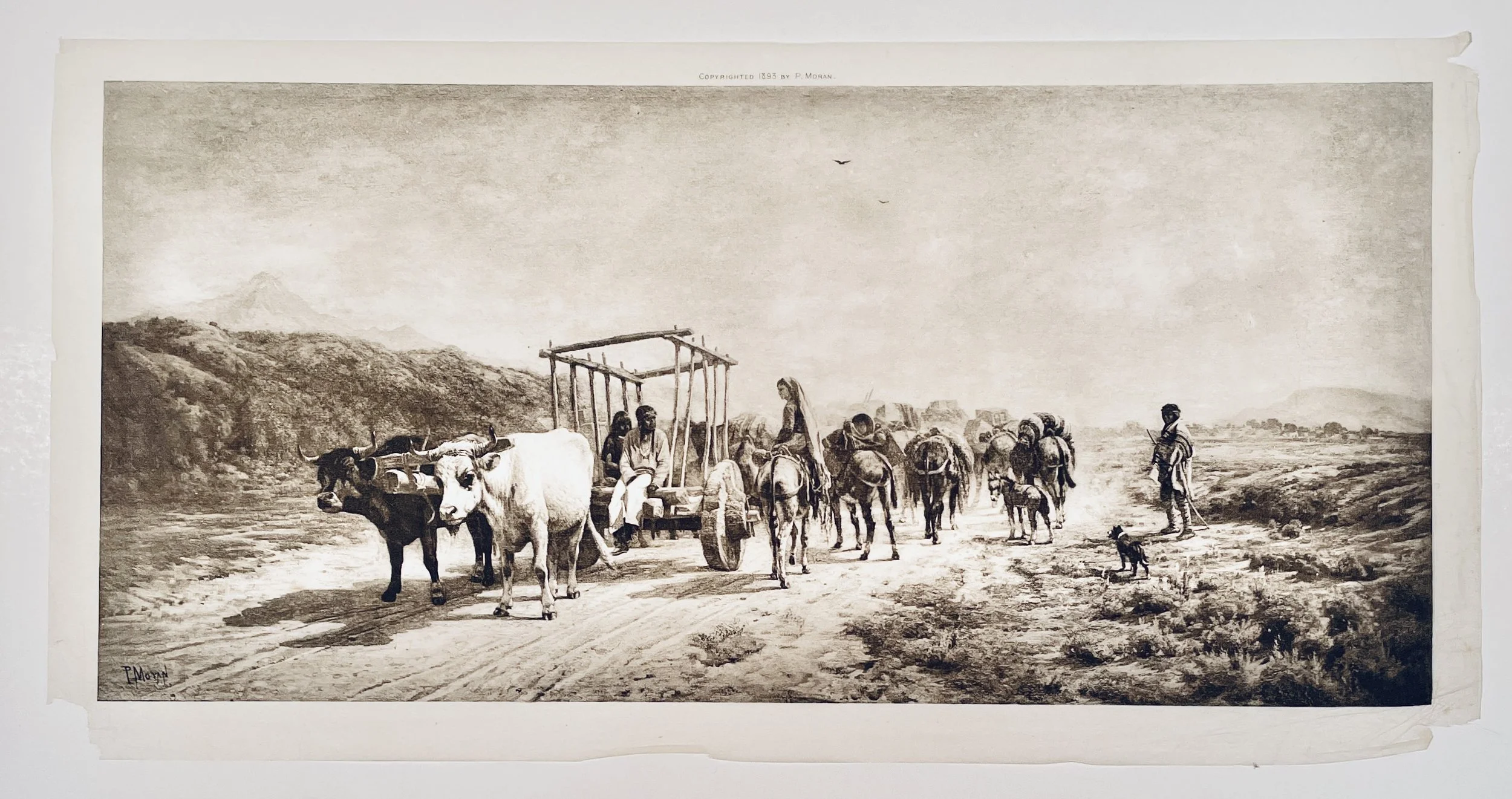
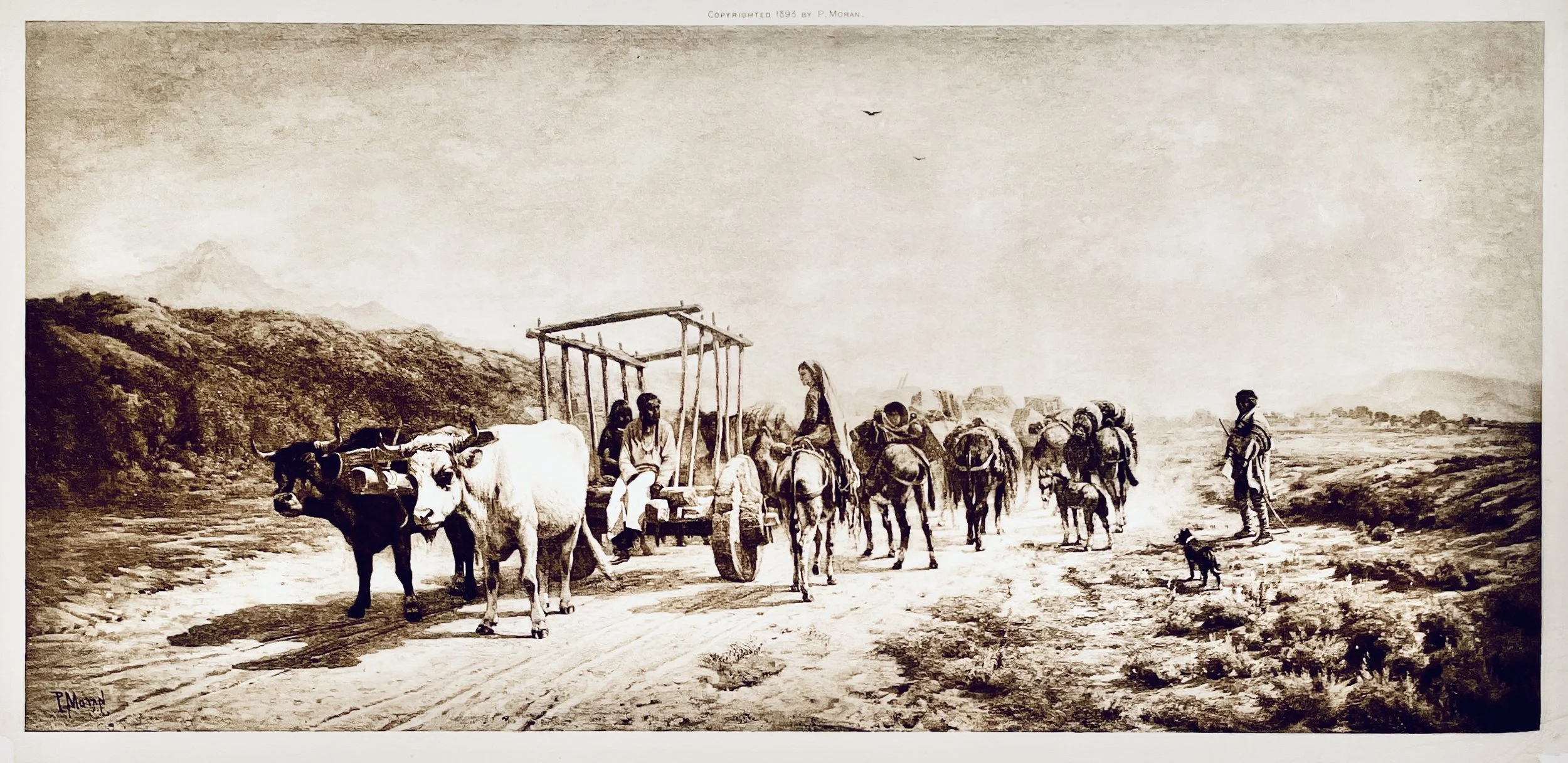
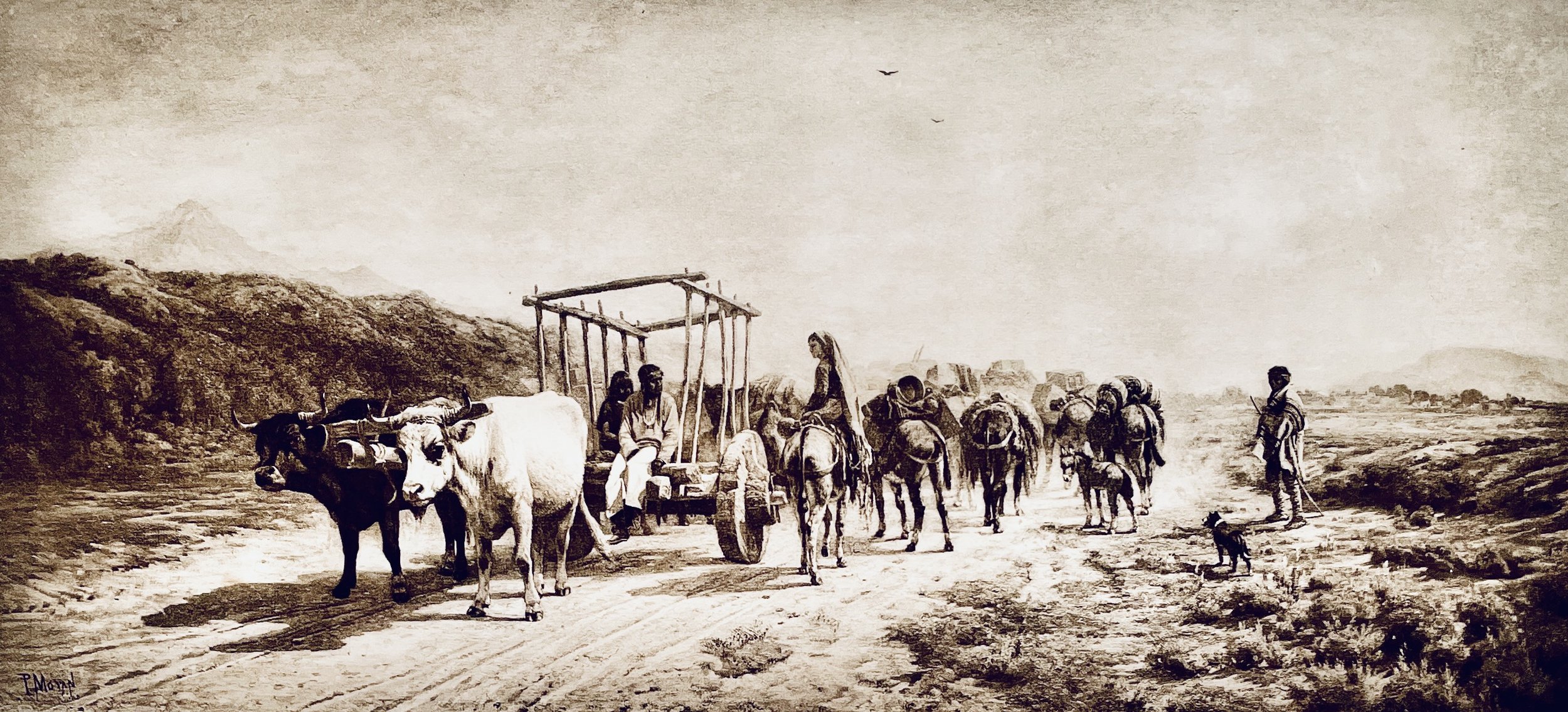
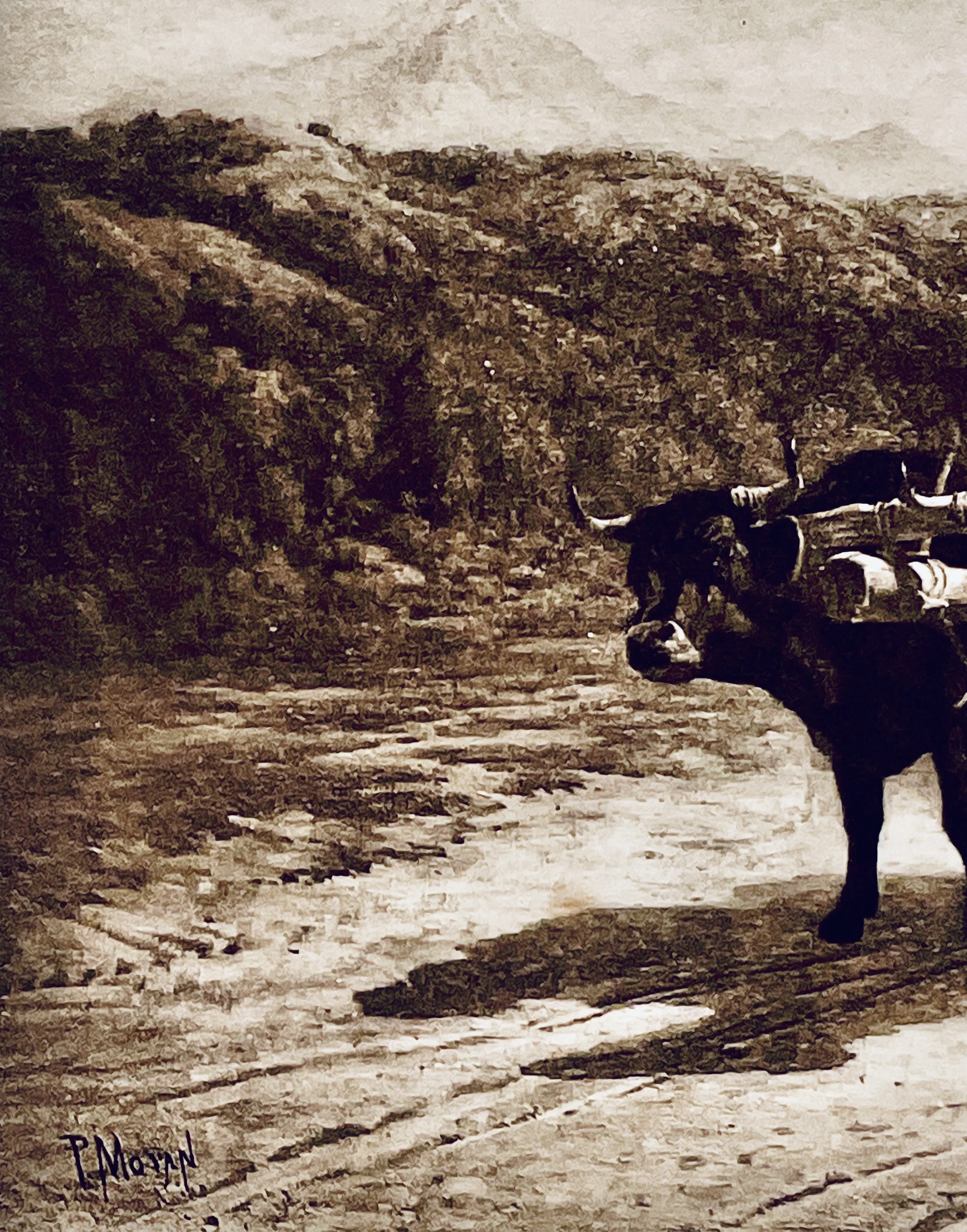
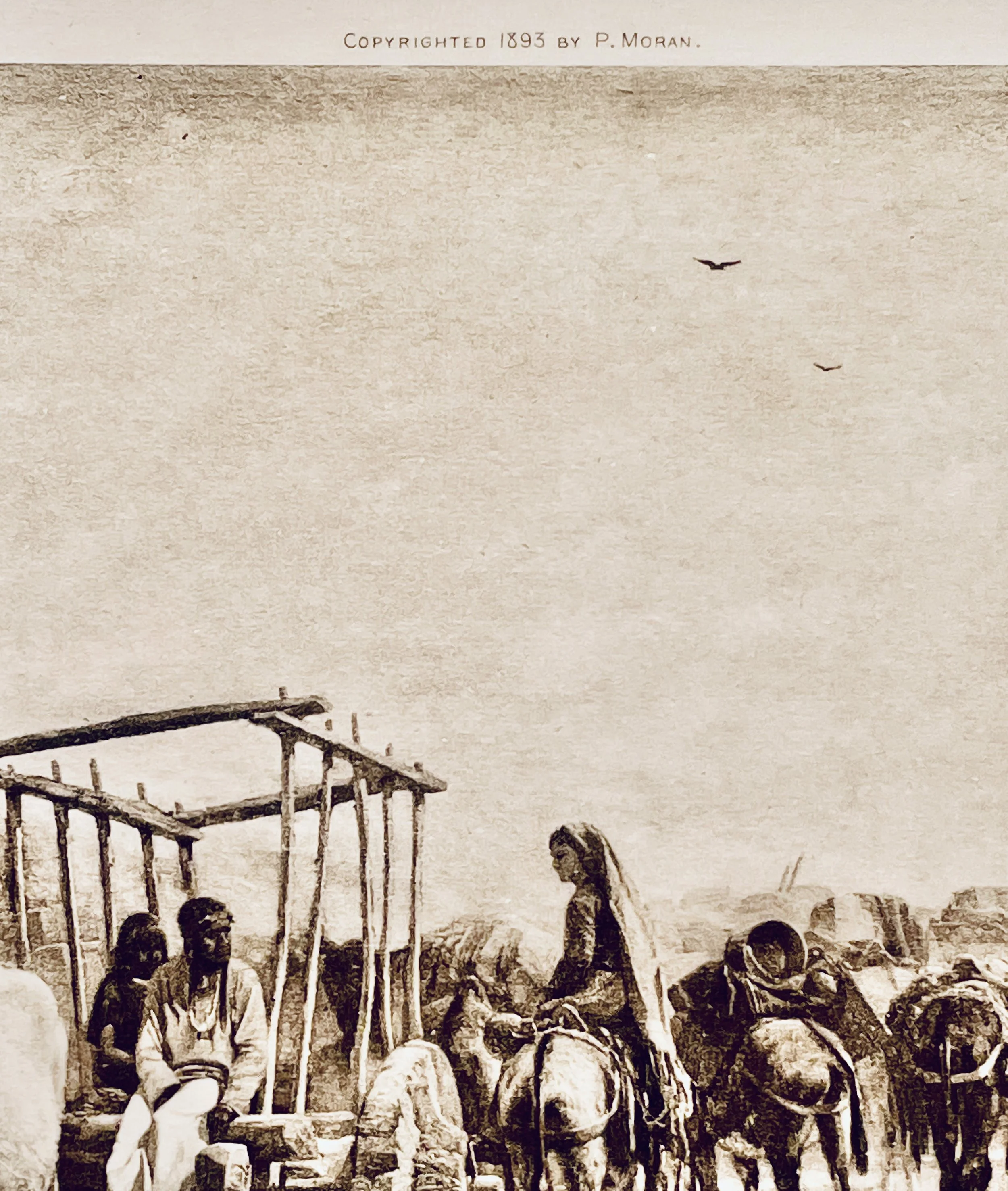
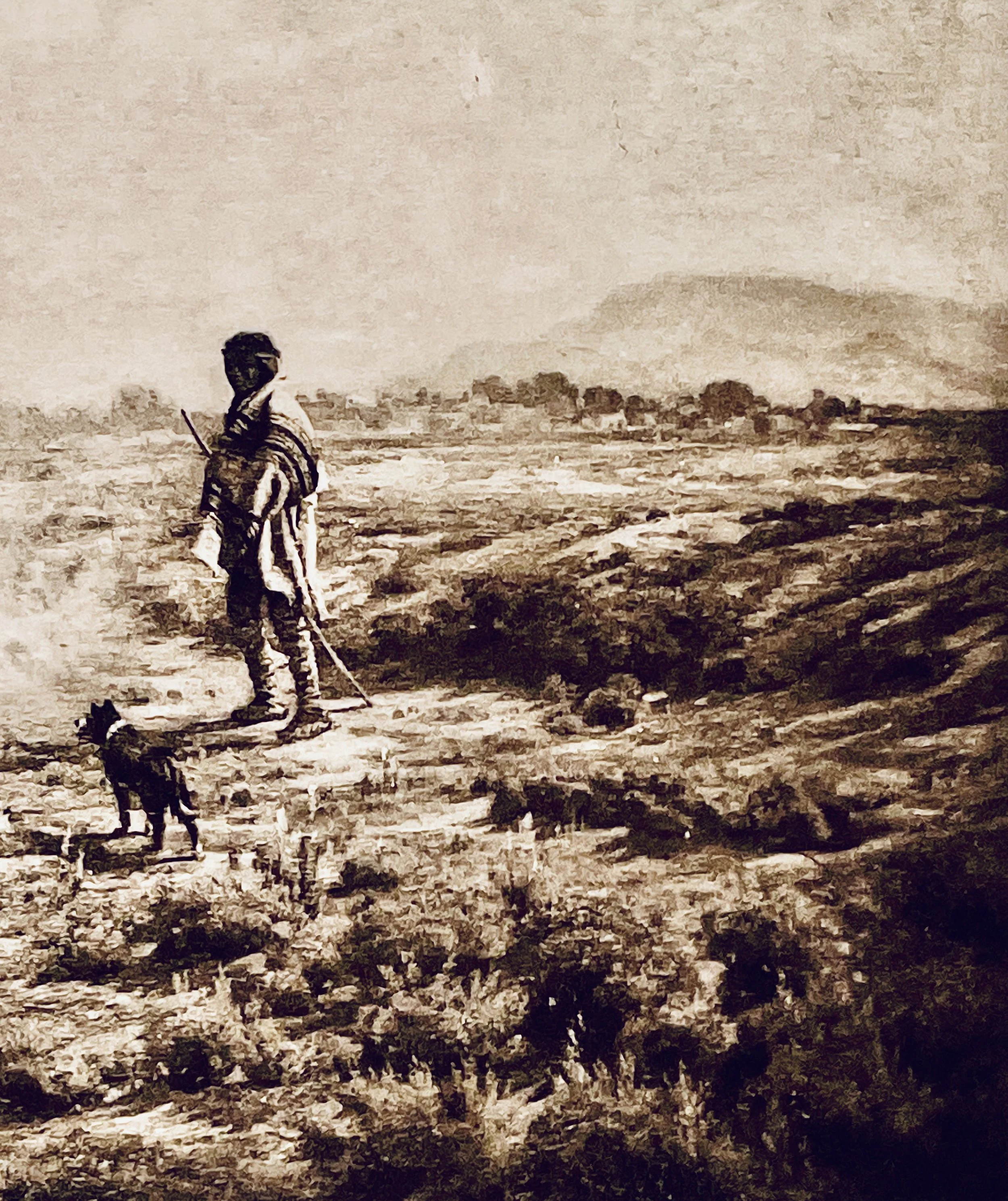
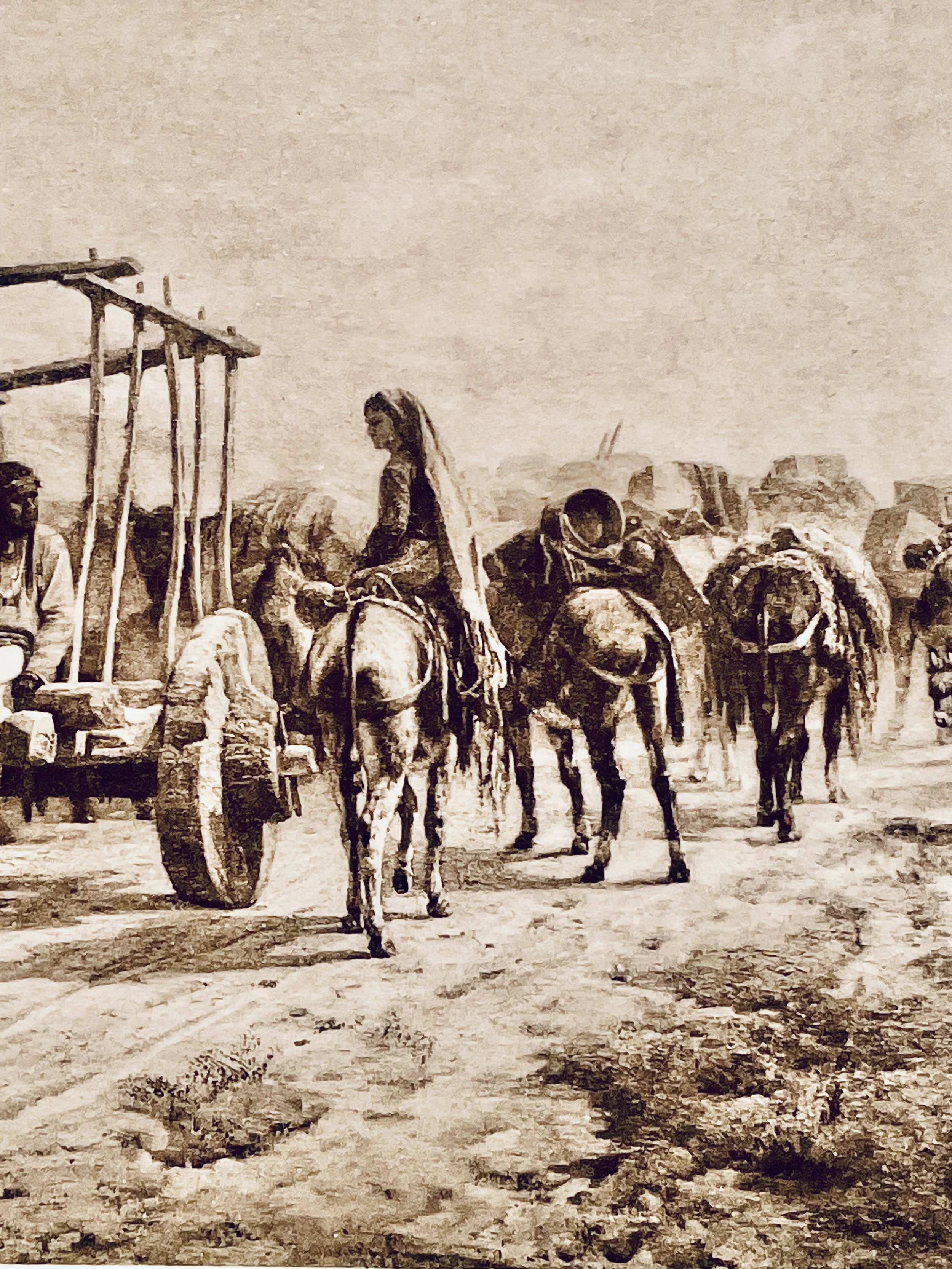
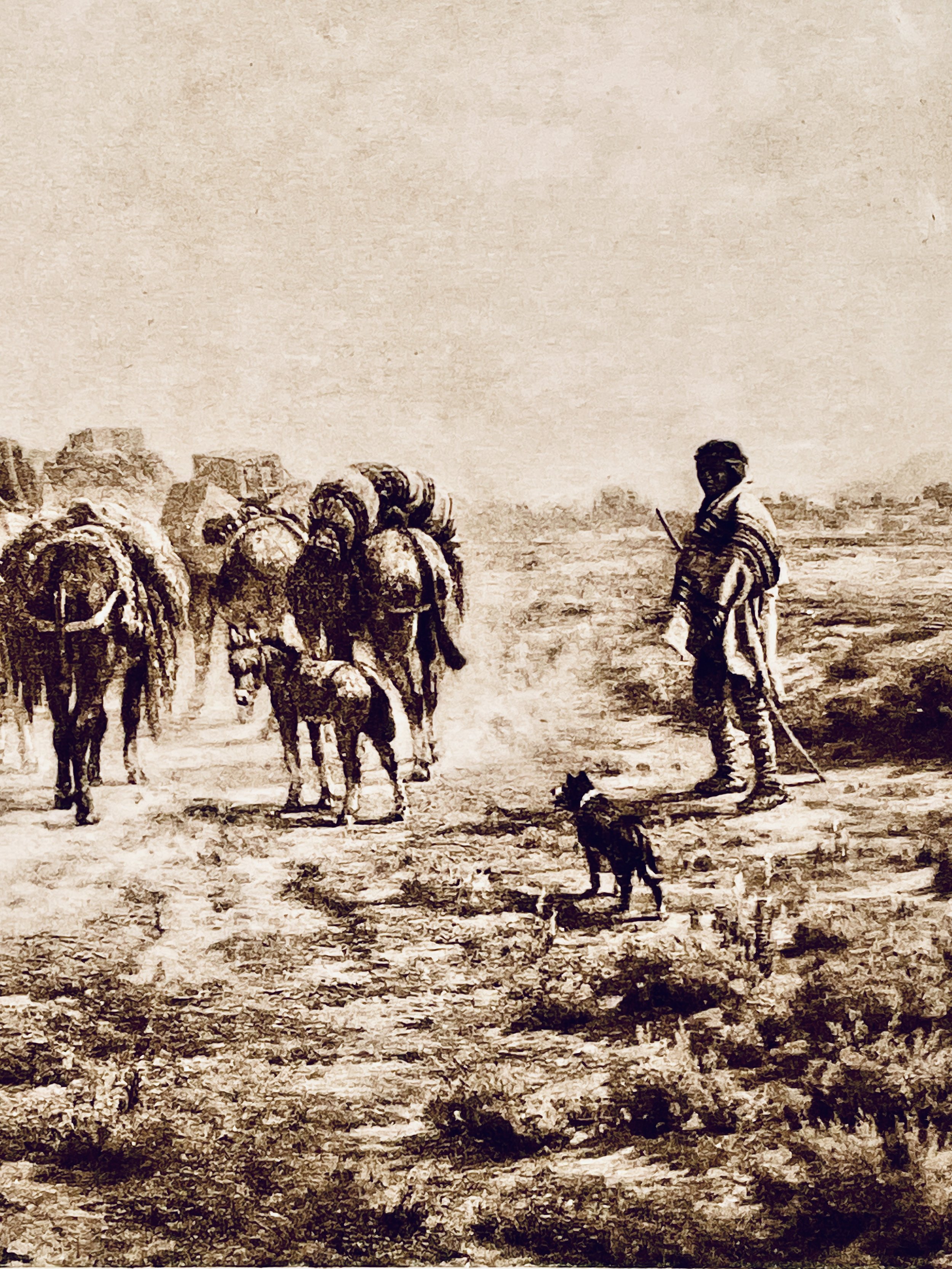
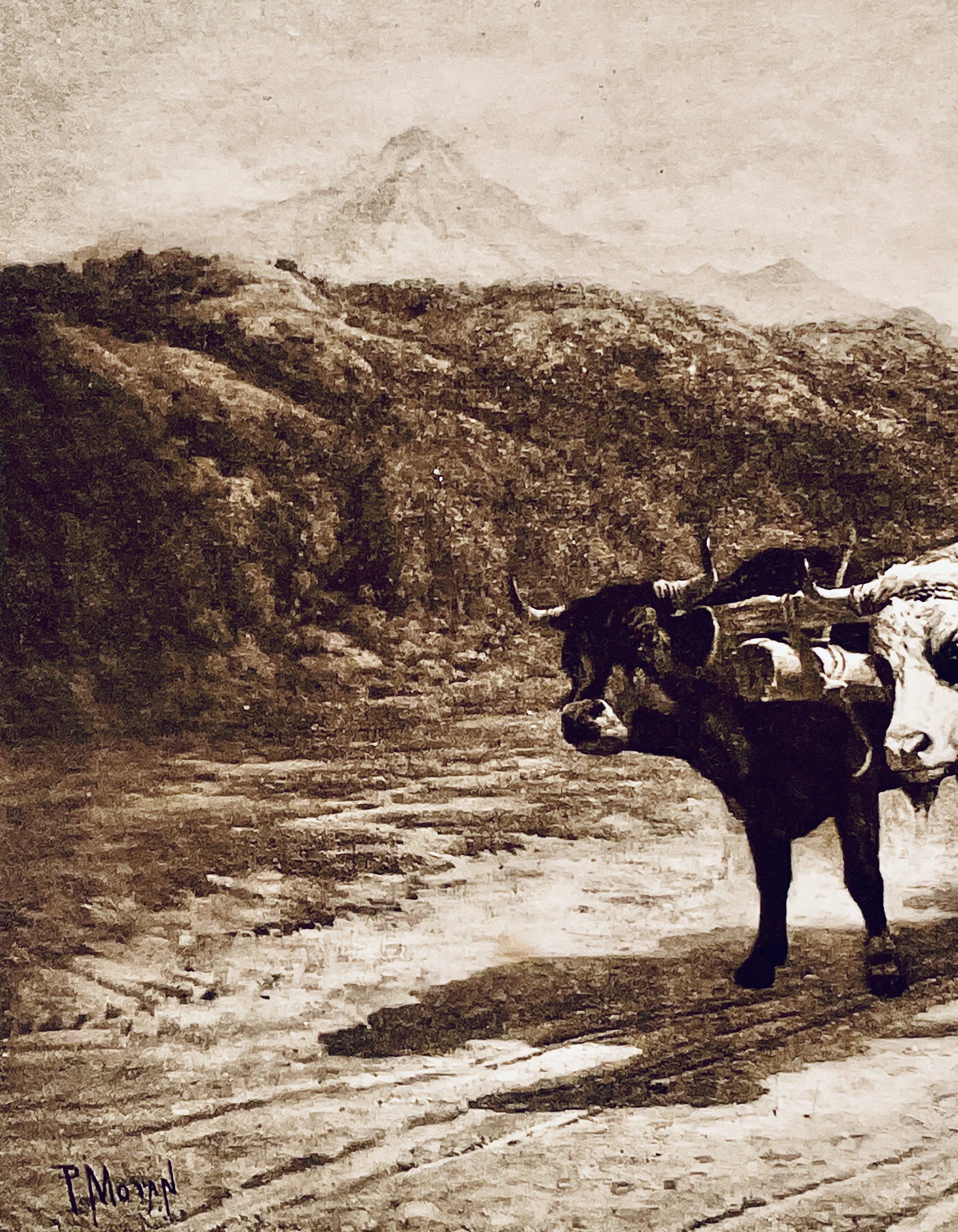
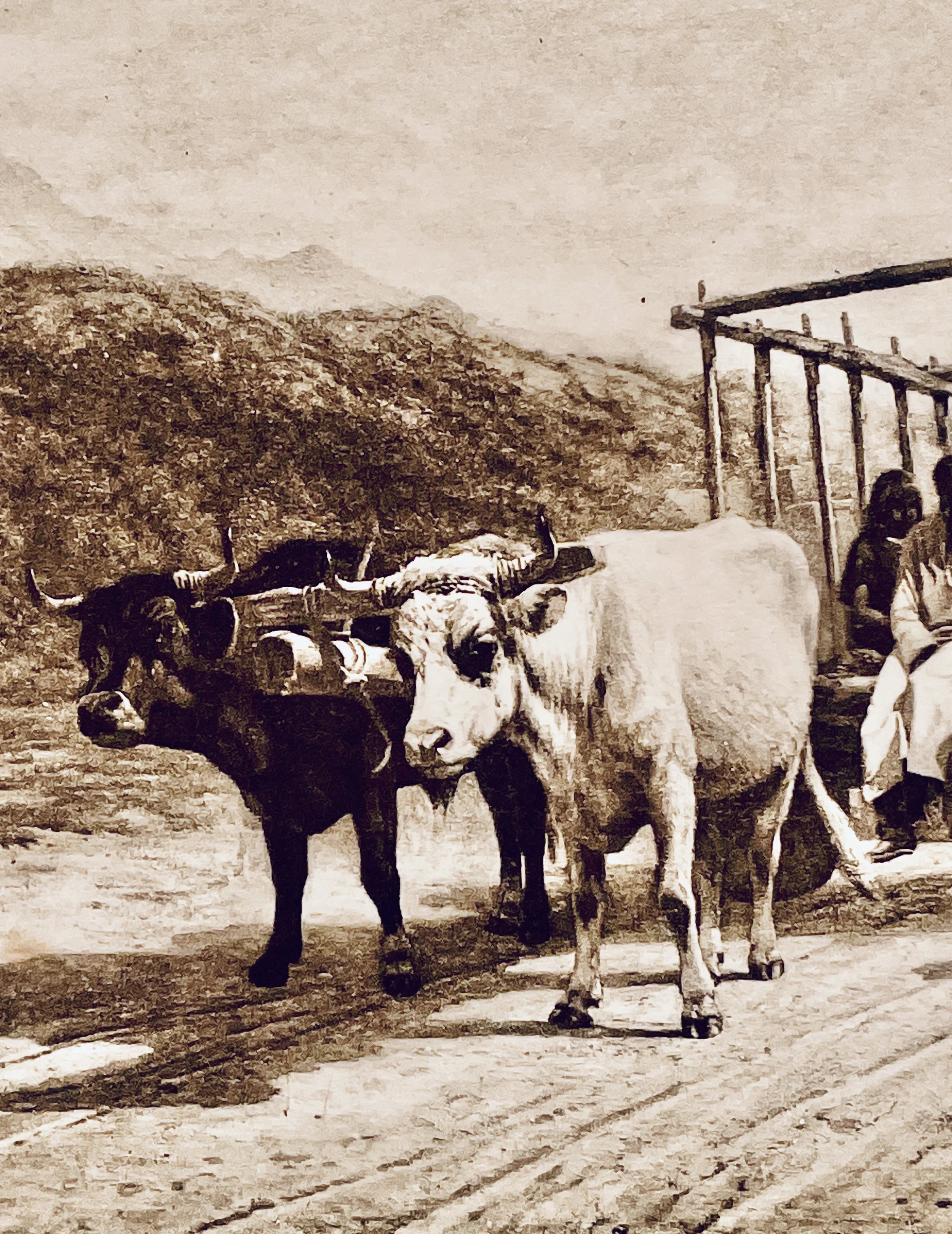
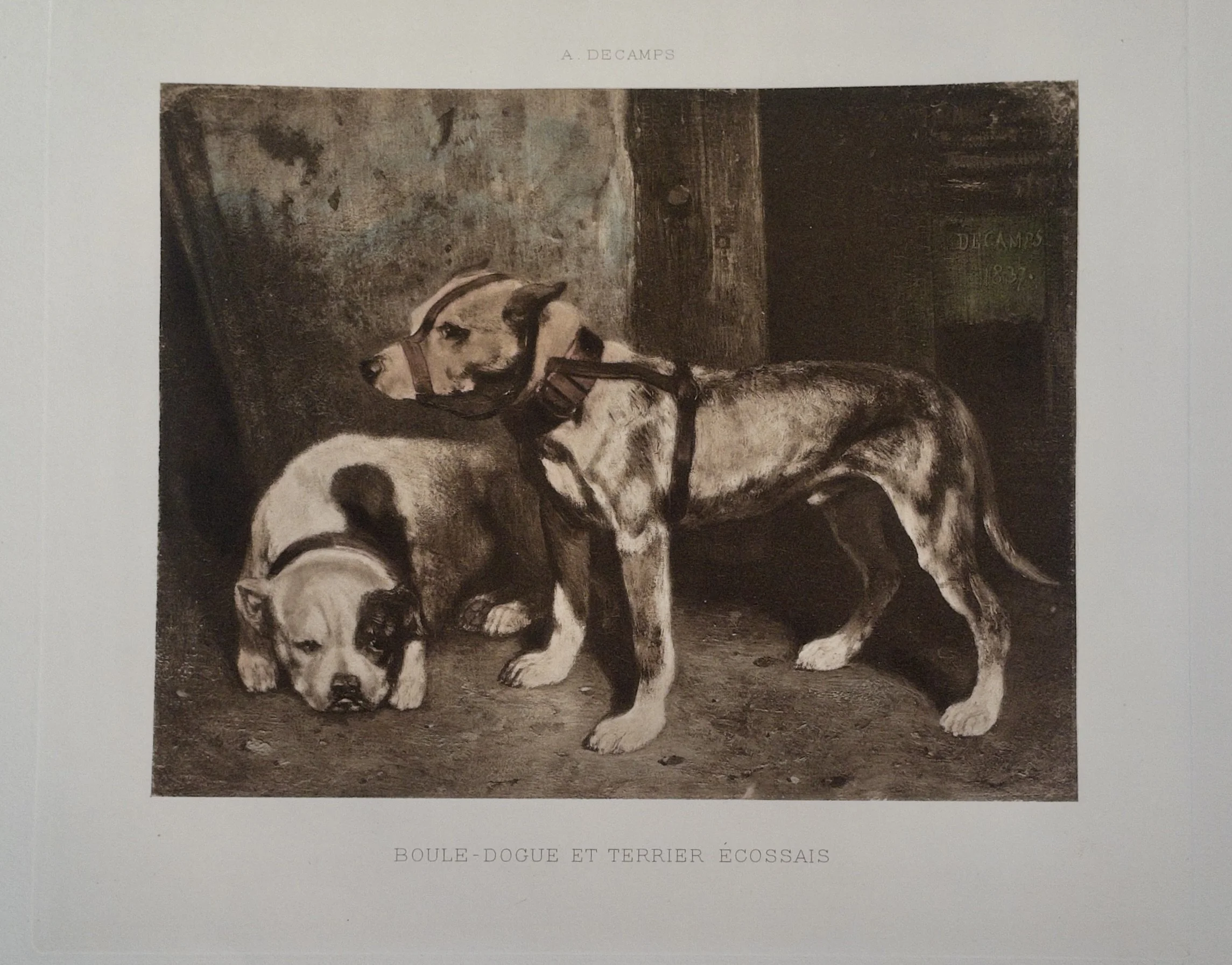
How Will It End? by Arturo Moradei (Italian, 1840–1901), c.1888 photo-etching, 11.5×17 in (image 9×10), titled in plate, Art Treasures of Italy.
A rare 1888 Italian photo-etching after Arturo Moradei’s genre painting How Will It End?, depicting intimate domestic tension with Belle Époque realism, published in Art Treasures of Italy by the Fine Art Publishing Company, Boston.
Artwork Description
How Will It End? is a compelling late-19th-century photo-etching after a painting by Italian artist Arturo Moradei, presenting a psychologically charged domestic genre scene. A young woman sits in the foreground holding a cat, her posture guarded and expression ambiguous, while a male figure leans in from behind with an unsettling familiarity. The title itself introduces narrative tension, inviting the viewer to speculate on the emotional and moral outcome of the interaction.
The image exemplifies Italian academic realism infused with Belle Époque sensibilities—rich costume detail, expressive physiognomy, and a subtle theatricality drawn from contemporary social life. The photo-etching process allows for deep tonal range and painterly texture, preserving Moradei’s nuanced handling of light, fabric, and flesh. The title How Will It End? appears printed beneath the image, with the artist credited on the accompanying plate text.
Published in 1888 as part of Art Treasures of Italy, the work reflects the era’s fascination with modern social narratives, gender roles, and psychological storytelling, positioning Moradei among painters whose works bridged academic tradition and emerging modern themes.
Artist Biography – Arturo Moradei
Arturo Moradei was born in Florence, Italy, in 1840 and died in 1901. He studied at the Accademia di Belle Arti in Florence, where he received rigorous academic training grounded in draftsmanship, composition, and narrative painting. Moradei was influenced by Italian Realism and the broader European academic tradition, with particular sensitivity to genre scenes and emotionally charged human interactions.
Working primarily in Italy, Moradei became known for paintings that explored everyday life, intimate moments, and subtle psychological drama. His work often depicted women, domestic interiors, and interpersonal tension, rendered with careful attention to gesture and expression. While not an avant-garde painter, Moradei’s work resonated with collectors and institutions interested in narrative realism.
Moradei exhibited in regional Italian exhibitions and achieved international visibility through reproduction in scholarly publications such as Art Treasures of Italy. Inclusion in this publication signified critical recognition, as the series aimed to present representative works by notable Italian artists to an American and international audience. How Will It End?stands as one of Moradei’s most narratively intriguing compositions, encapsulating his interest in ambiguity, morality, and human emotion.
Arturo Moradei (Italian, 1840–1901), How Will It End?, c.1888 photo-etching after the original painting, from Art Treasures of Italy, sheet 11.5 × 17 in, image 9 × 10 in.
Certificate of Value & Authentication
Artist: Arturo Moradei (Italian, 1840–1901)
Title:How Will It End?
Medium: Photo-etching on paper
Date: c.1888
Publication:Art Treasures of Italy, Fine Art Publishing Company, Boston
Dimensions: Sheet 11.5 × 17 in | Image 9 × 10 in
Authentication: Verified period photo-etching from original 19th-century publication
Condition: Antique original plate
Certified by: Artfind Gallery, Washington, DC
Provenance (Collector Format)
Private European Collection
→ Acquired in Europe and New York City
→ Mitch Morse Gallery, New York, NY
→ Artfind Gallery, Washington, DC (Current Owner)
Citations
Art Treasures of Italy, Carl von Lützow, Fine Art Publishing Company, Boston, 1888
Bénézit Dictionary of Artists, Éditions Gründ
Grove Art Online, Oxford University Press
Clara Erskine Clement, Handbook of Legendary and Mythological Art (editorial archives on Italian academic painters)
How Will It End? by Arturo Moradei (Italian, 1840–1901), c.1888 photo-etching, 11.5×17 in (image 9×10), titled in plate, Art Treasures of Italy.
A rare 1888 Italian photo-etching after Arturo Moradei’s genre painting How Will It End?, depicting intimate domestic tension with Belle Époque realism, published in Art Treasures of Italy by the Fine Art Publishing Company, Boston.
Artwork Description
How Will It End? is a compelling late-19th-century photo-etching after a painting by Italian artist Arturo Moradei, presenting a psychologically charged domestic genre scene. A young woman sits in the foreground holding a cat, her posture guarded and expression ambiguous, while a male figure leans in from behind with an unsettling familiarity. The title itself introduces narrative tension, inviting the viewer to speculate on the emotional and moral outcome of the interaction.
The image exemplifies Italian academic realism infused with Belle Époque sensibilities—rich costume detail, expressive physiognomy, and a subtle theatricality drawn from contemporary social life. The photo-etching process allows for deep tonal range and painterly texture, preserving Moradei’s nuanced handling of light, fabric, and flesh. The title How Will It End? appears printed beneath the image, with the artist credited on the accompanying plate text.
Published in 1888 as part of Art Treasures of Italy, the work reflects the era’s fascination with modern social narratives, gender roles, and psychological storytelling, positioning Moradei among painters whose works bridged academic tradition and emerging modern themes.
Artist Biography – Arturo Moradei
Arturo Moradei was born in Florence, Italy, in 1840 and died in 1901. He studied at the Accademia di Belle Arti in Florence, where he received rigorous academic training grounded in draftsmanship, composition, and narrative painting. Moradei was influenced by Italian Realism and the broader European academic tradition, with particular sensitivity to genre scenes and emotionally charged human interactions.
Working primarily in Italy, Moradei became known for paintings that explored everyday life, intimate moments, and subtle psychological drama. His work often depicted women, domestic interiors, and interpersonal tension, rendered with careful attention to gesture and expression. While not an avant-garde painter, Moradei’s work resonated with collectors and institutions interested in narrative realism.
Moradei exhibited in regional Italian exhibitions and achieved international visibility through reproduction in scholarly publications such as Art Treasures of Italy. Inclusion in this publication signified critical recognition, as the series aimed to present representative works by notable Italian artists to an American and international audience. How Will It End?stands as one of Moradei’s most narratively intriguing compositions, encapsulating his interest in ambiguity, morality, and human emotion.
Arturo Moradei (Italian, 1840–1901), How Will It End?, c.1888 photo-etching after the original painting, from Art Treasures of Italy, sheet 11.5 × 17 in, image 9 × 10 in.
Certificate of Value & Authentication
Artist: Arturo Moradei (Italian, 1840–1901)
Title:How Will It End?
Medium: Photo-etching on paper
Date: c.1888
Publication:Art Treasures of Italy, Fine Art Publishing Company, Boston
Dimensions: Sheet 11.5 × 17 in | Image 9 × 10 in
Authentication: Verified period photo-etching from original 19th-century publication
Condition: Antique original plate
Certified by: Artfind Gallery, Washington, DC
Provenance (Collector Format)
Private European Collection
→ Acquired in Europe and New York City
→ Mitch Morse Gallery, New York, NY
→ Artfind Gallery, Washington, DC (Current Owner)
Citations
Art Treasures of Italy, Carl von Lützow, Fine Art Publishing Company, Boston, 1888
Bénézit Dictionary of Artists, Éditions Gründ
Grove Art Online, Oxford University Press
Clara Erskine Clement, Handbook of Legendary and Mythological Art (editorial archives on Italian academic painters)
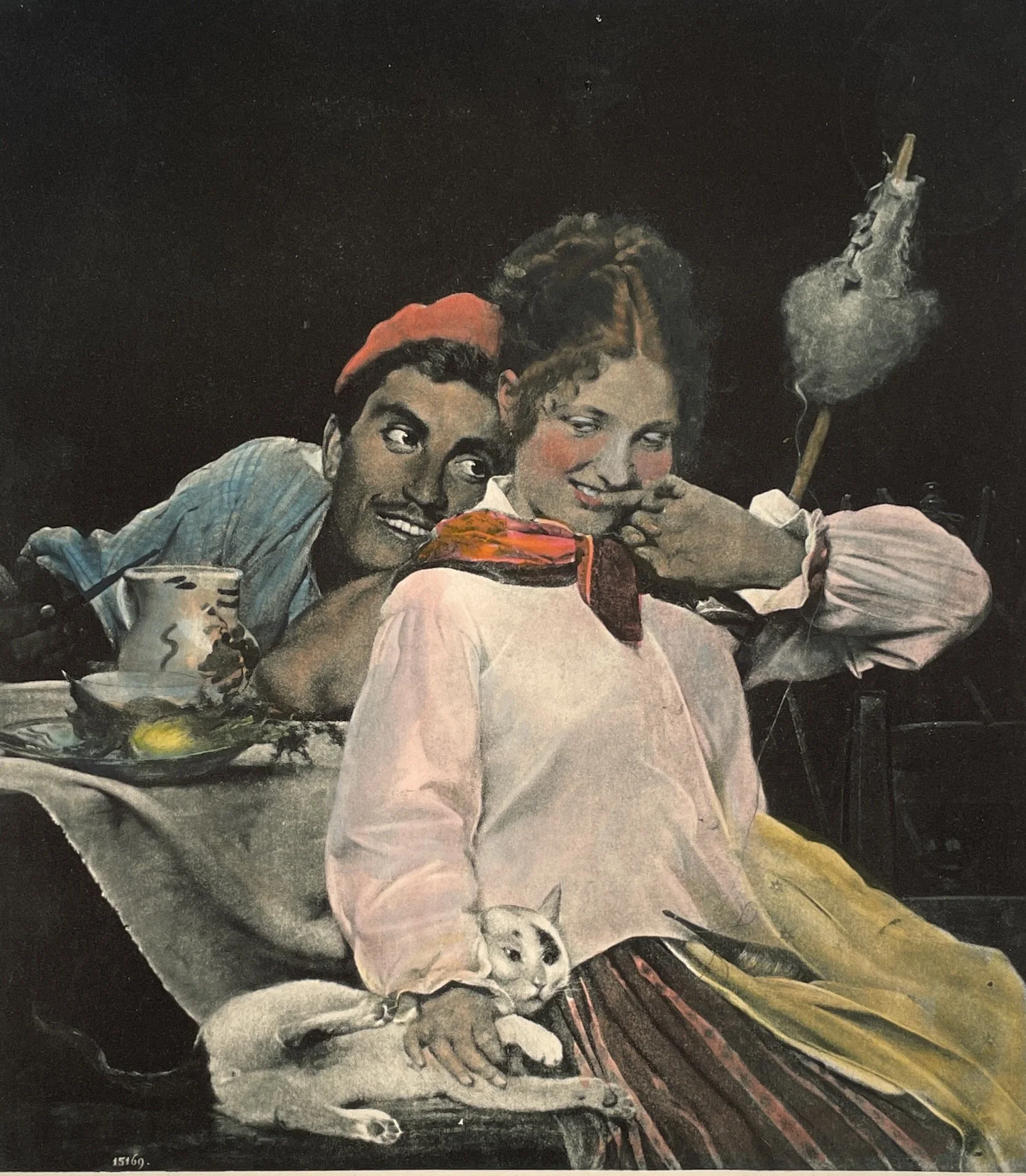 Image 1 of 9
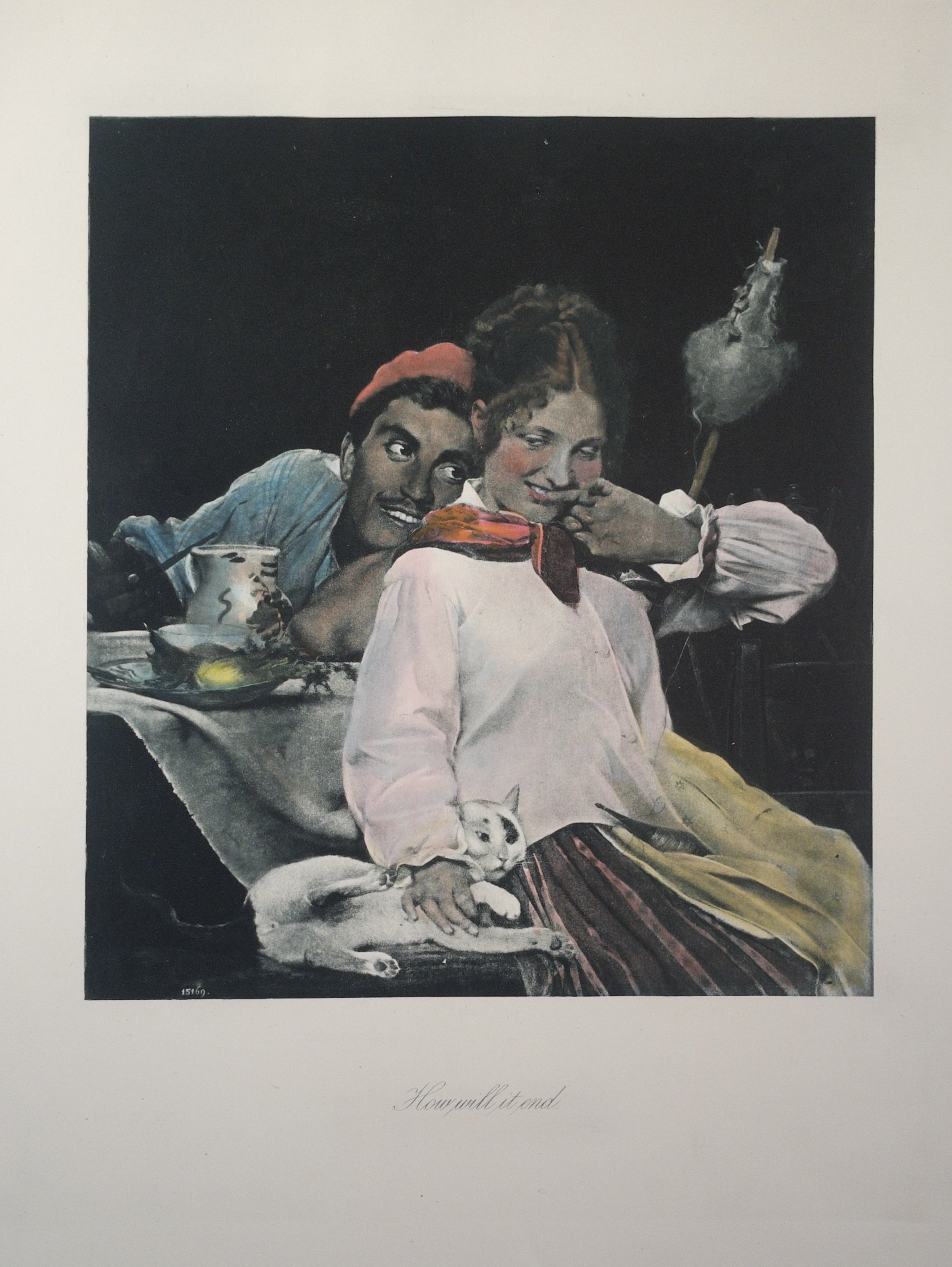 Image 2 of 9
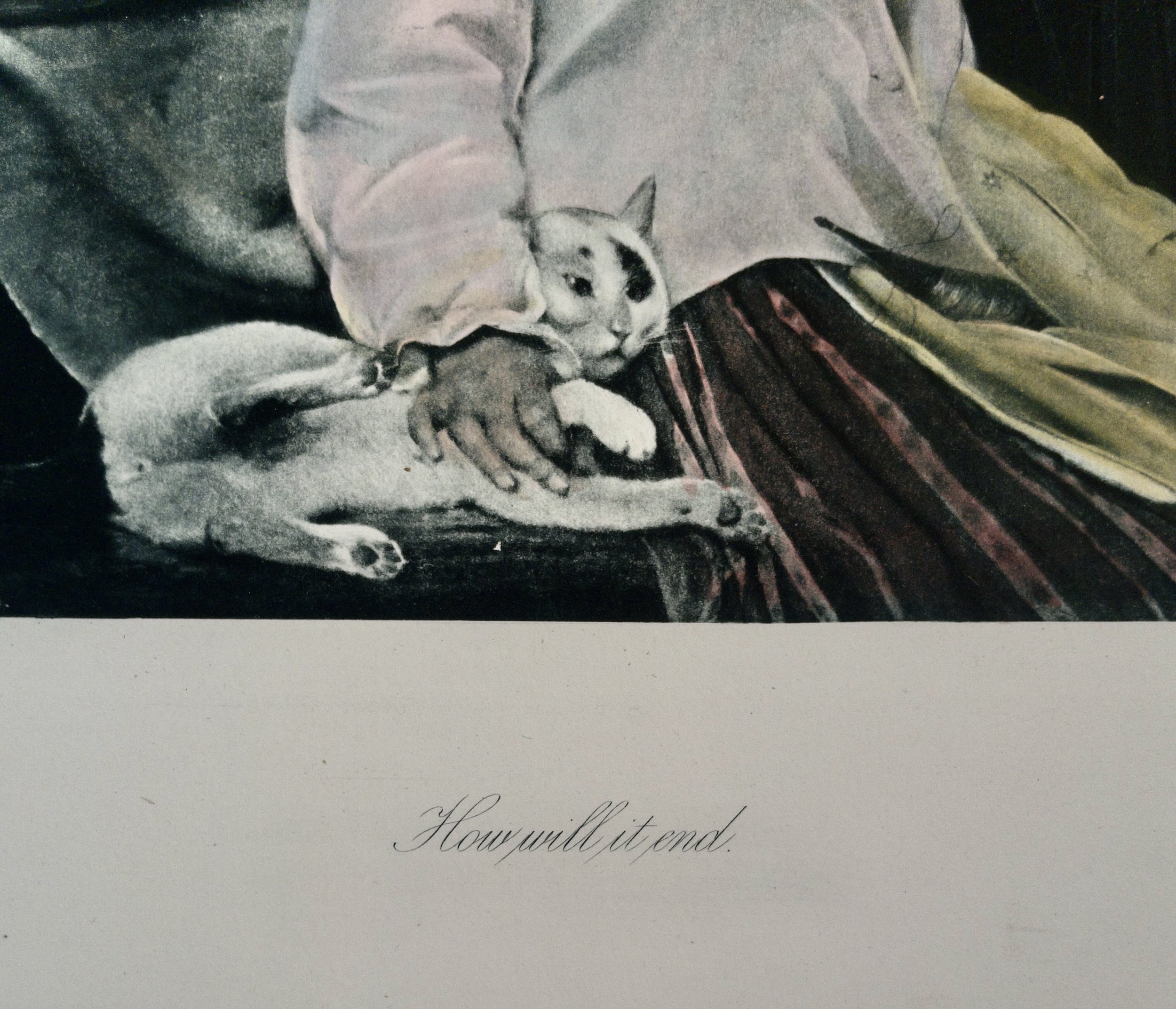 Image 3 of 9
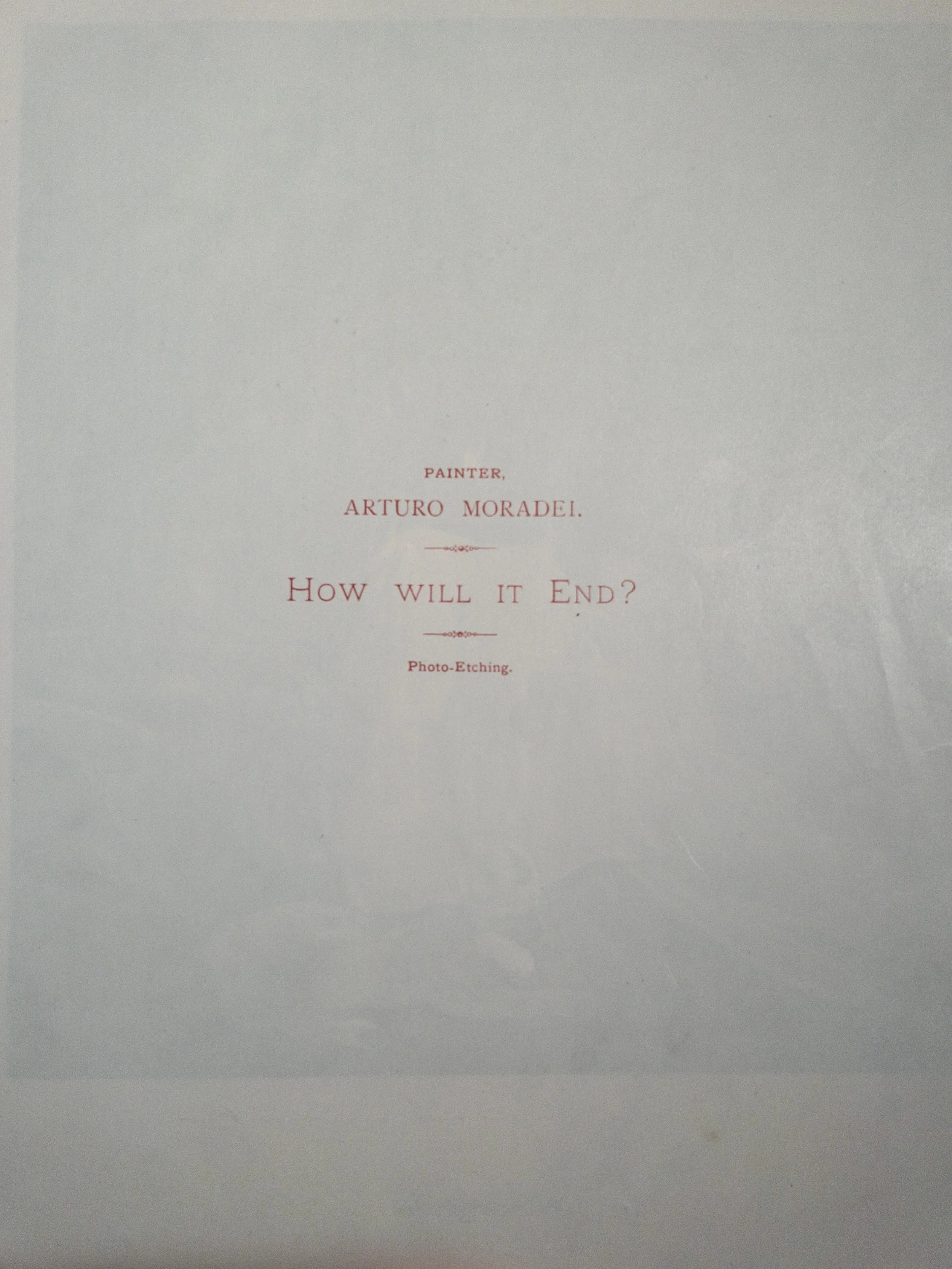 Image 4 of 9
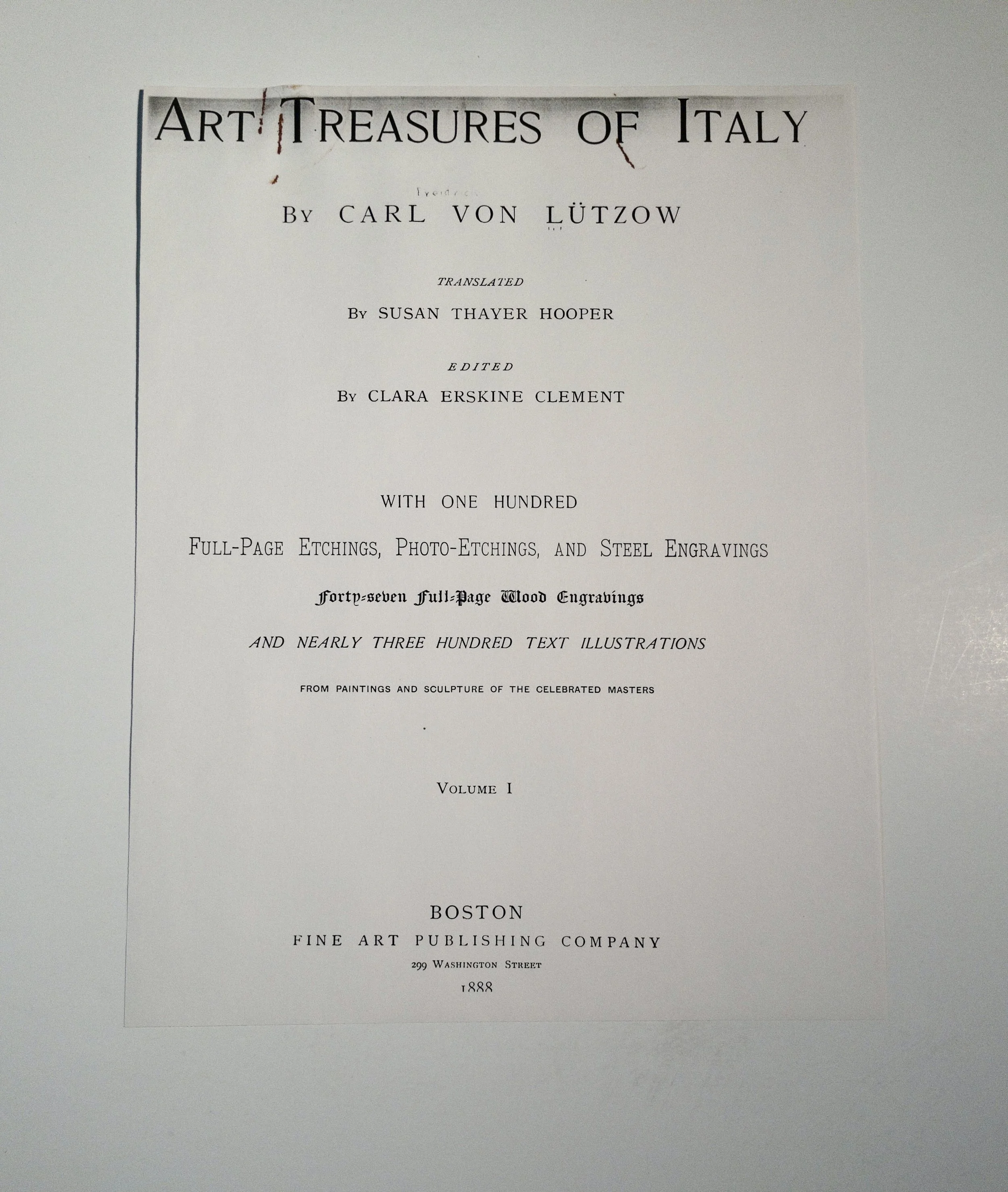 Image 5 of 9
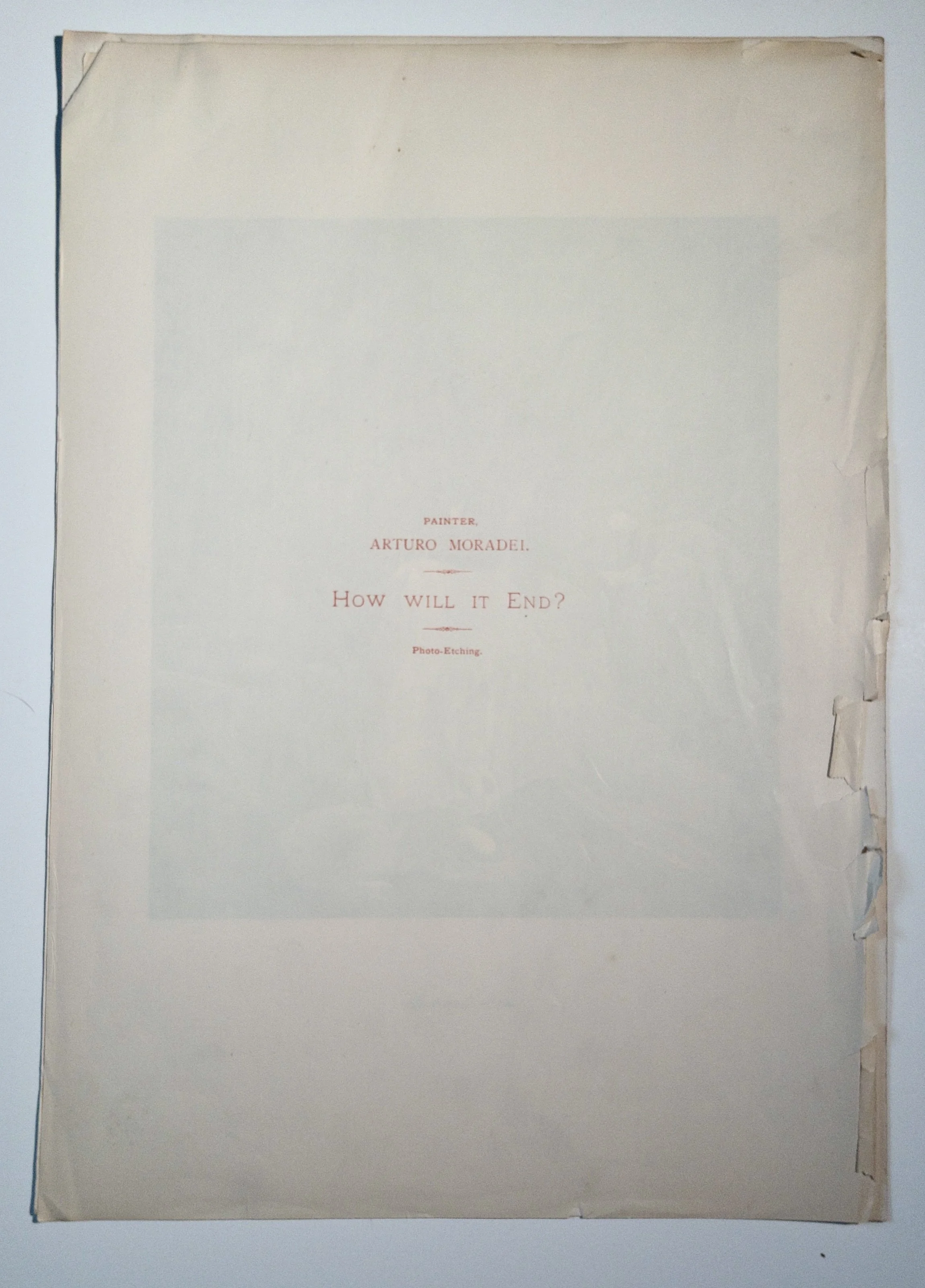 Image 6 of 9
 Image 7 of 9
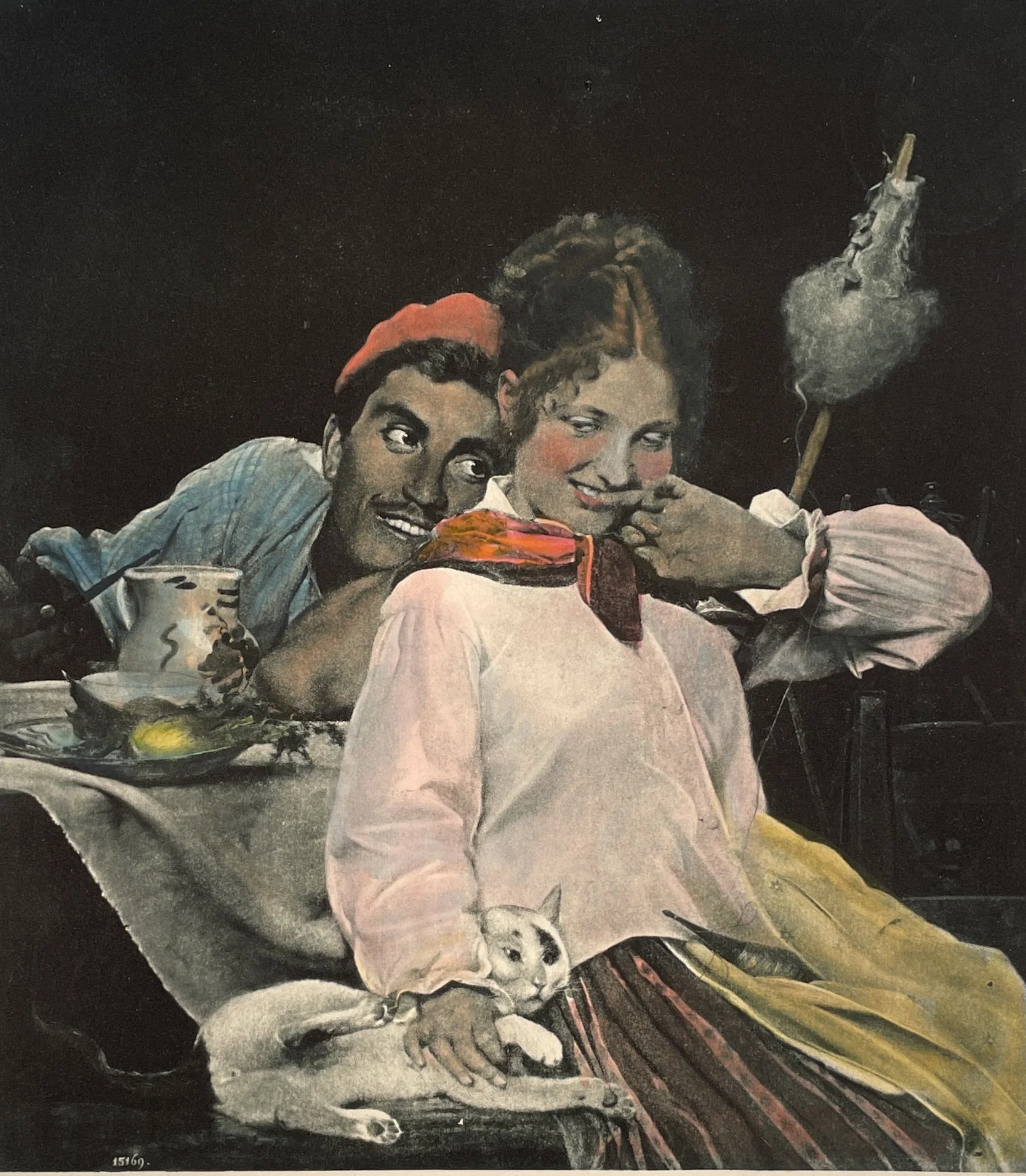 Image 8 of 9
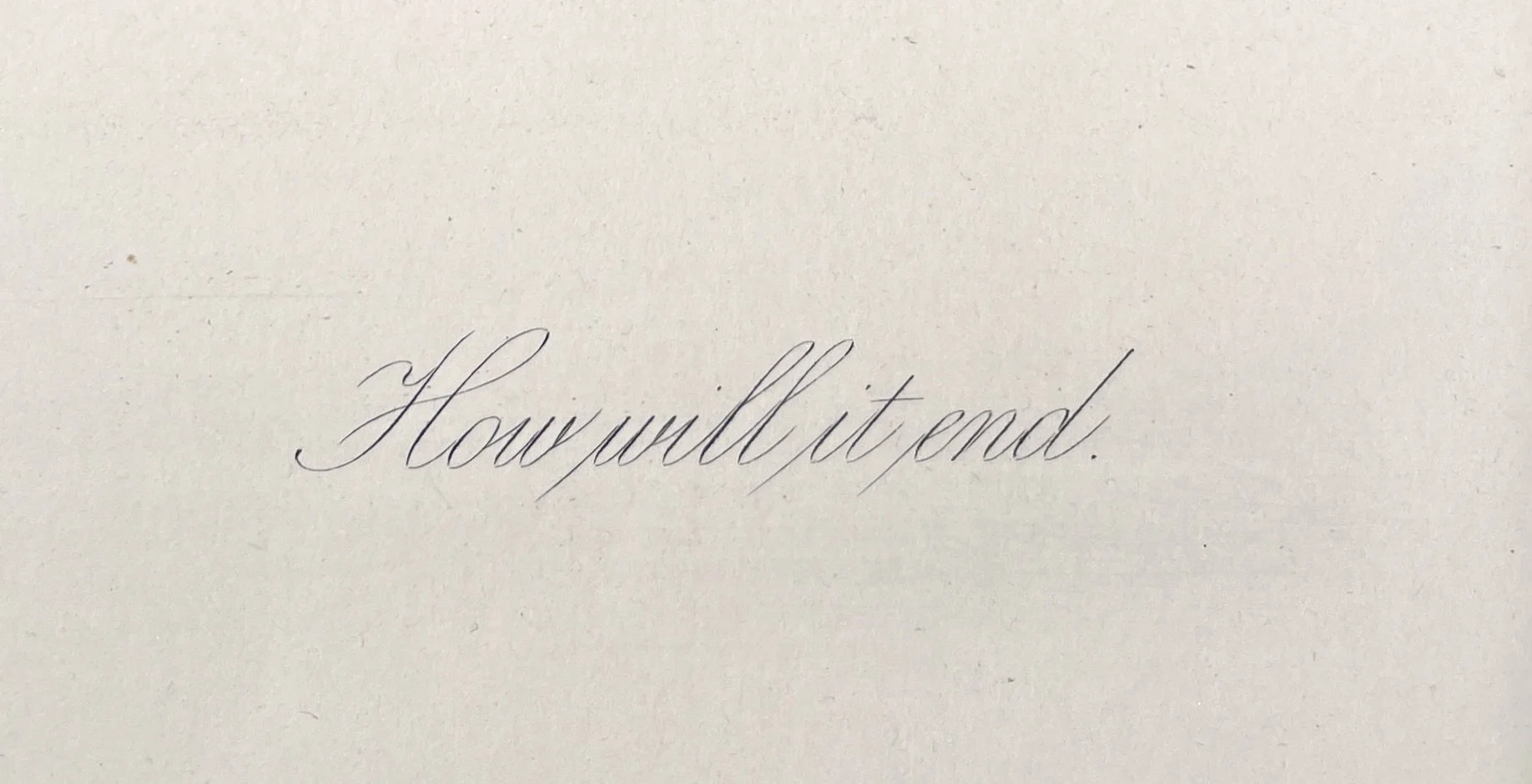 Image 9 of 9