 Image 1 of 1
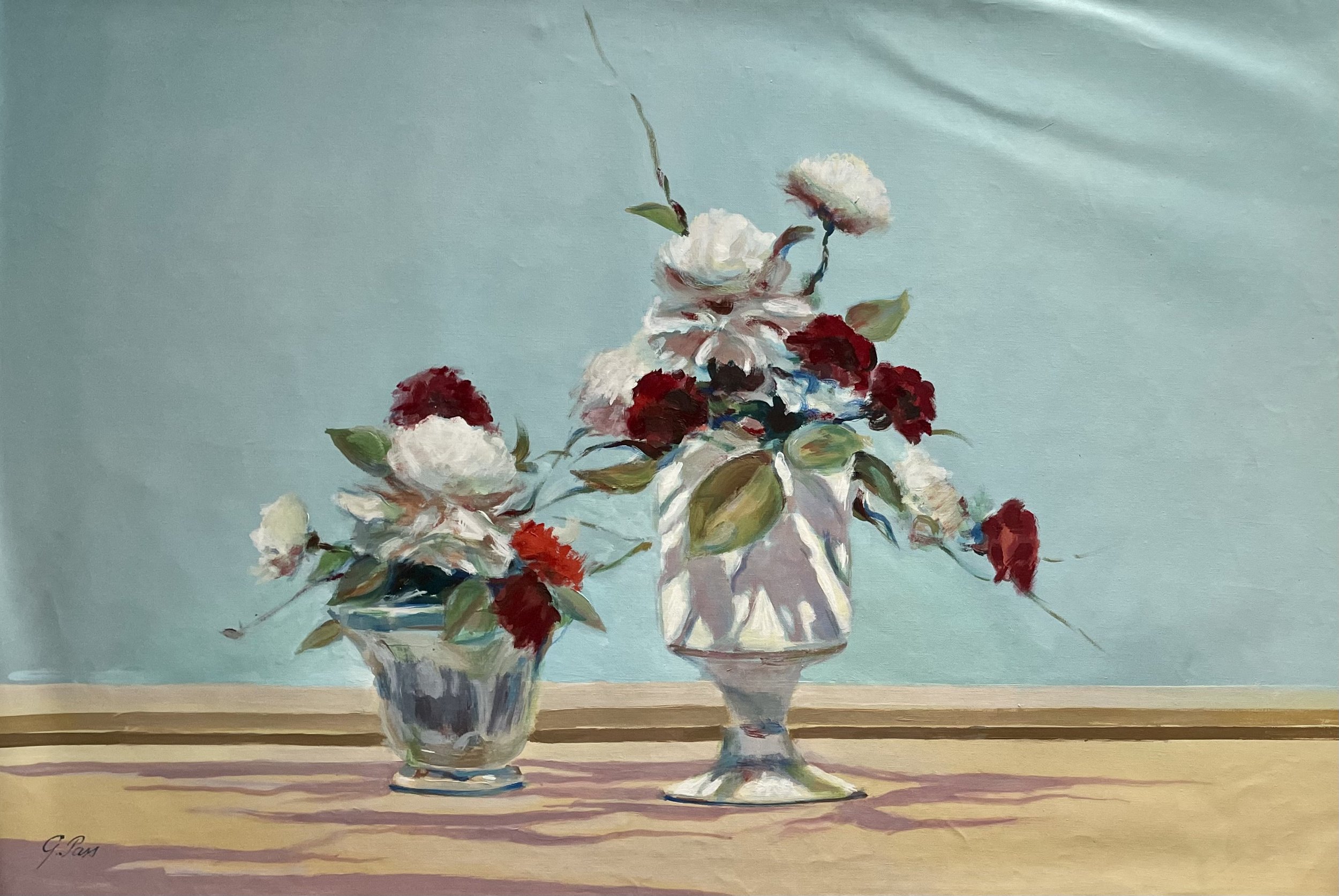
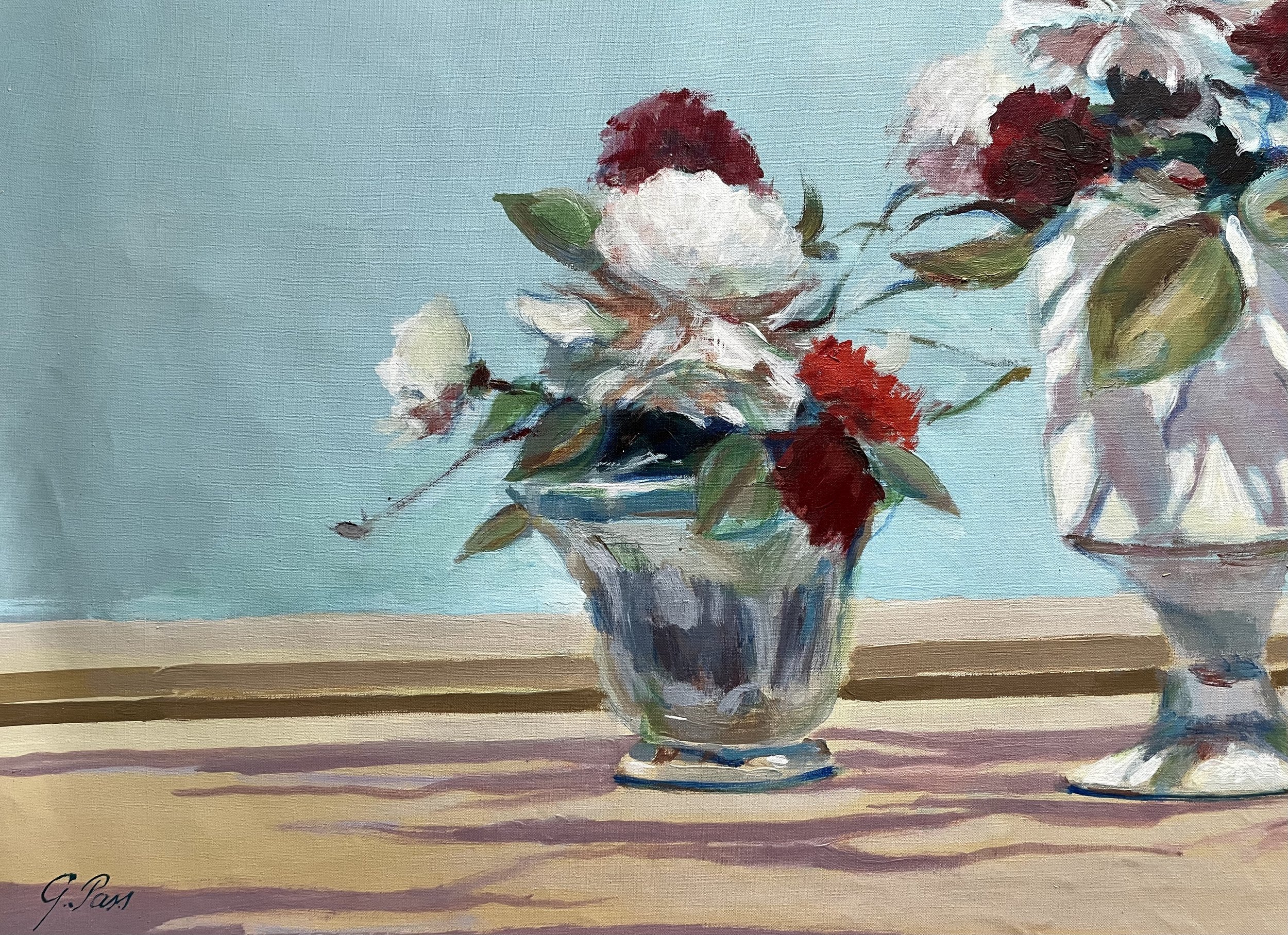
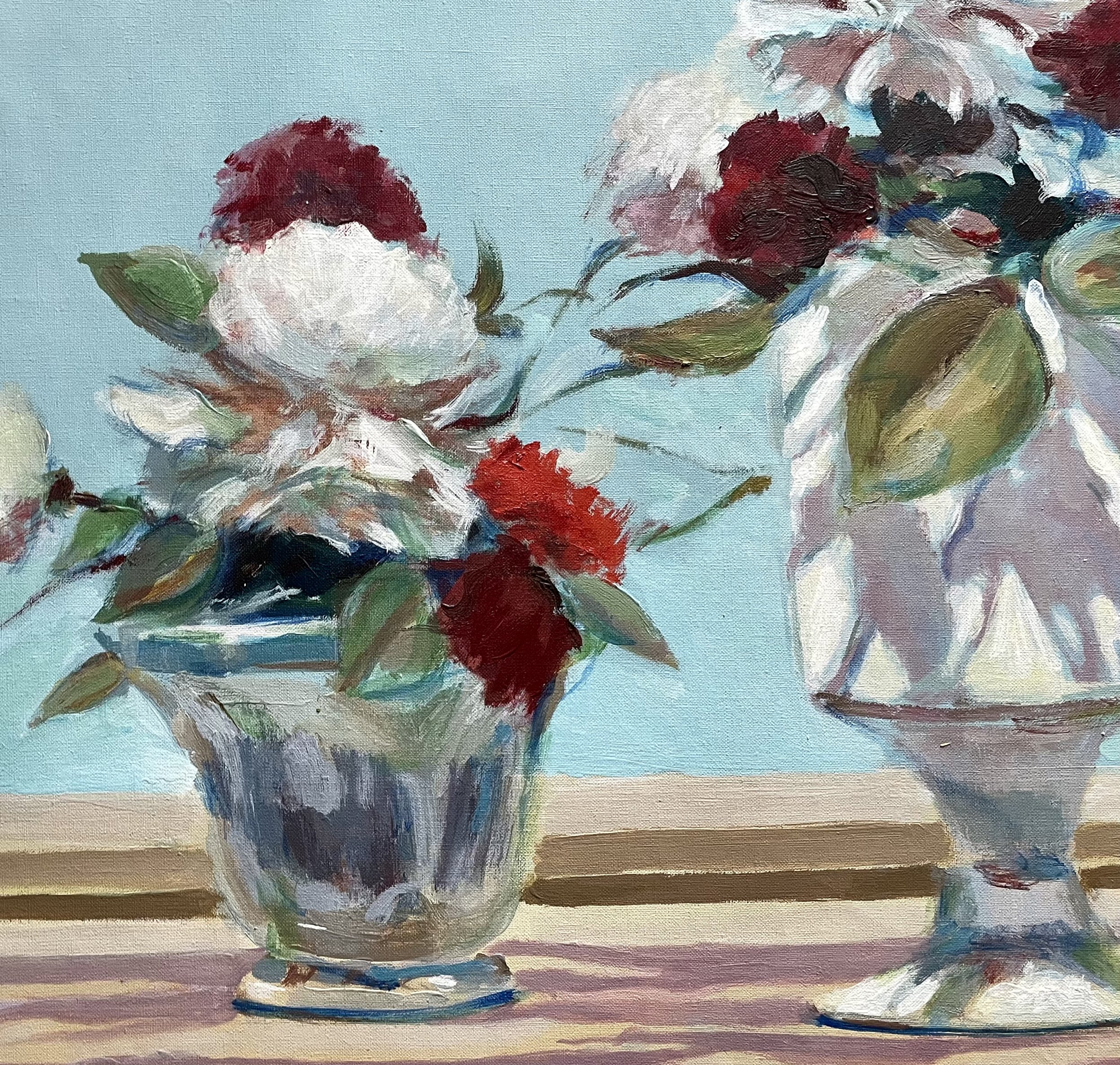
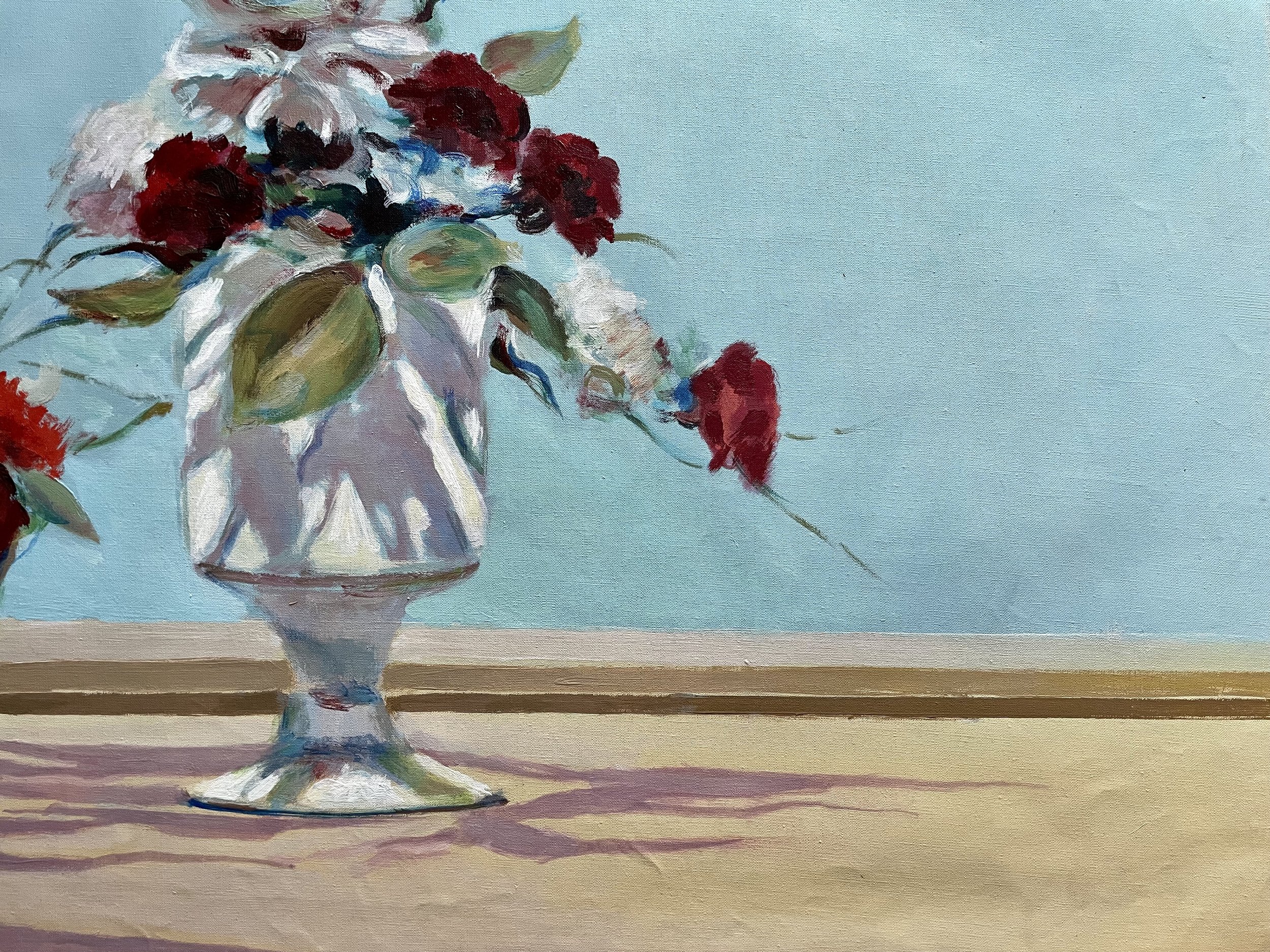
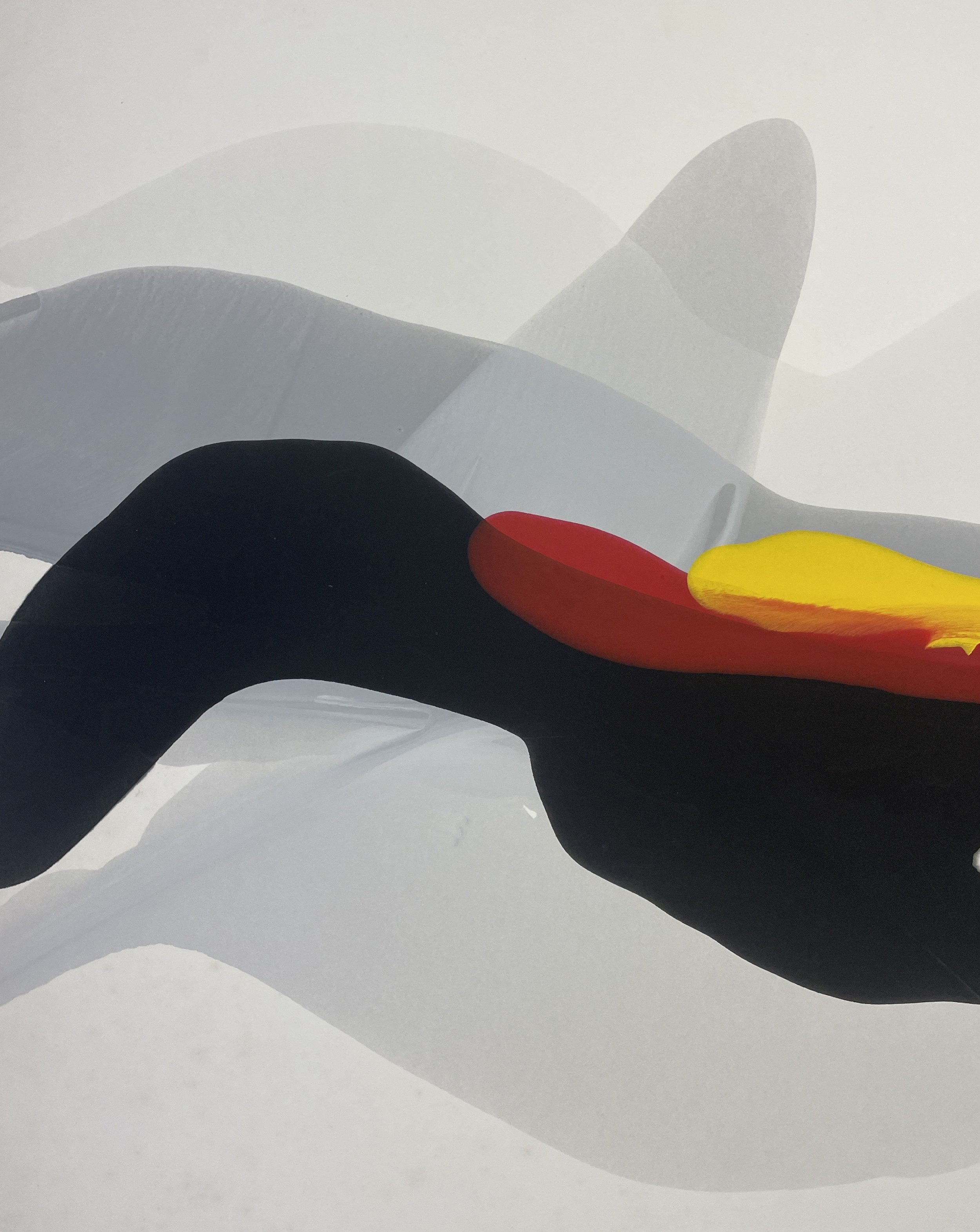
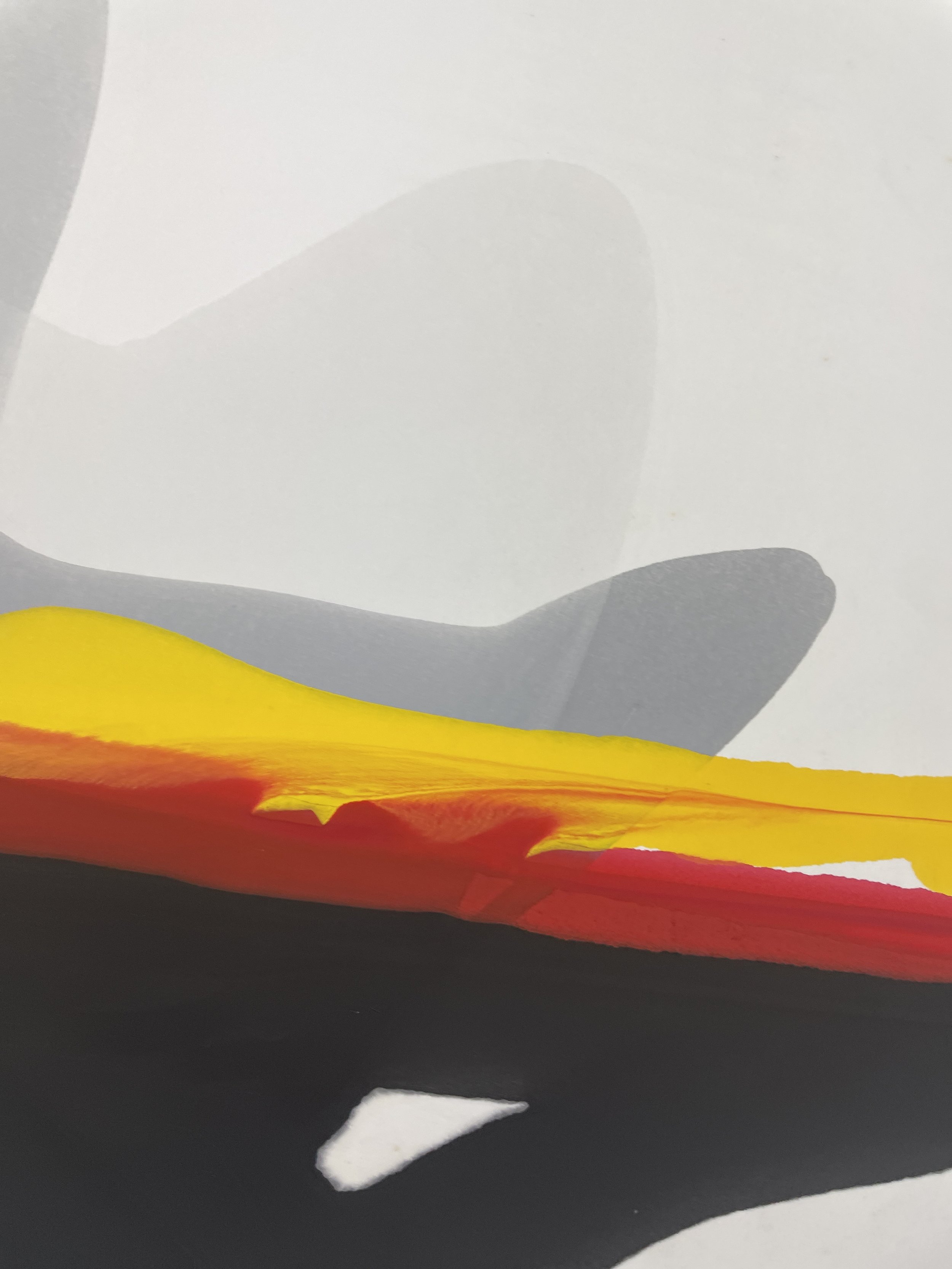
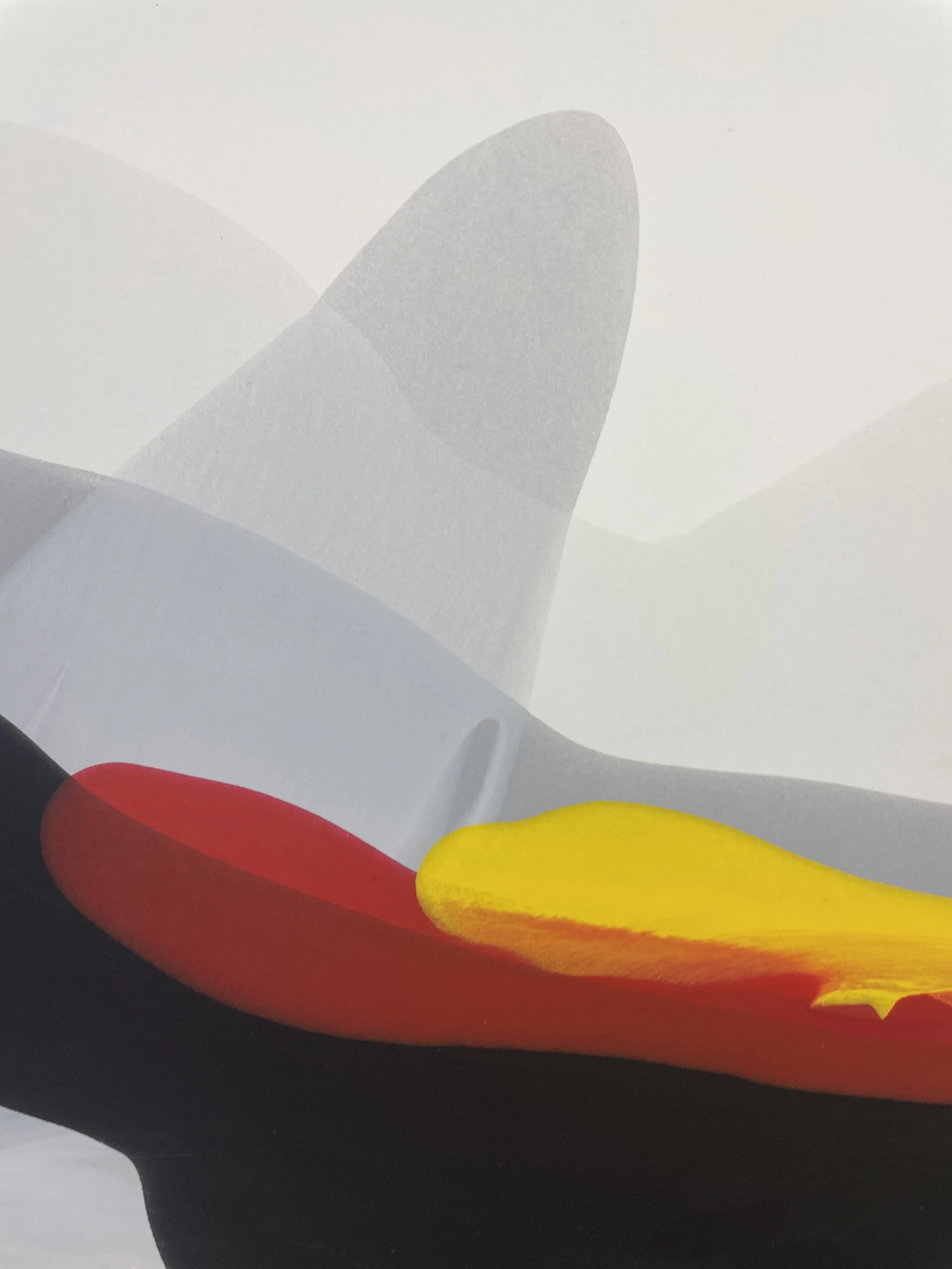
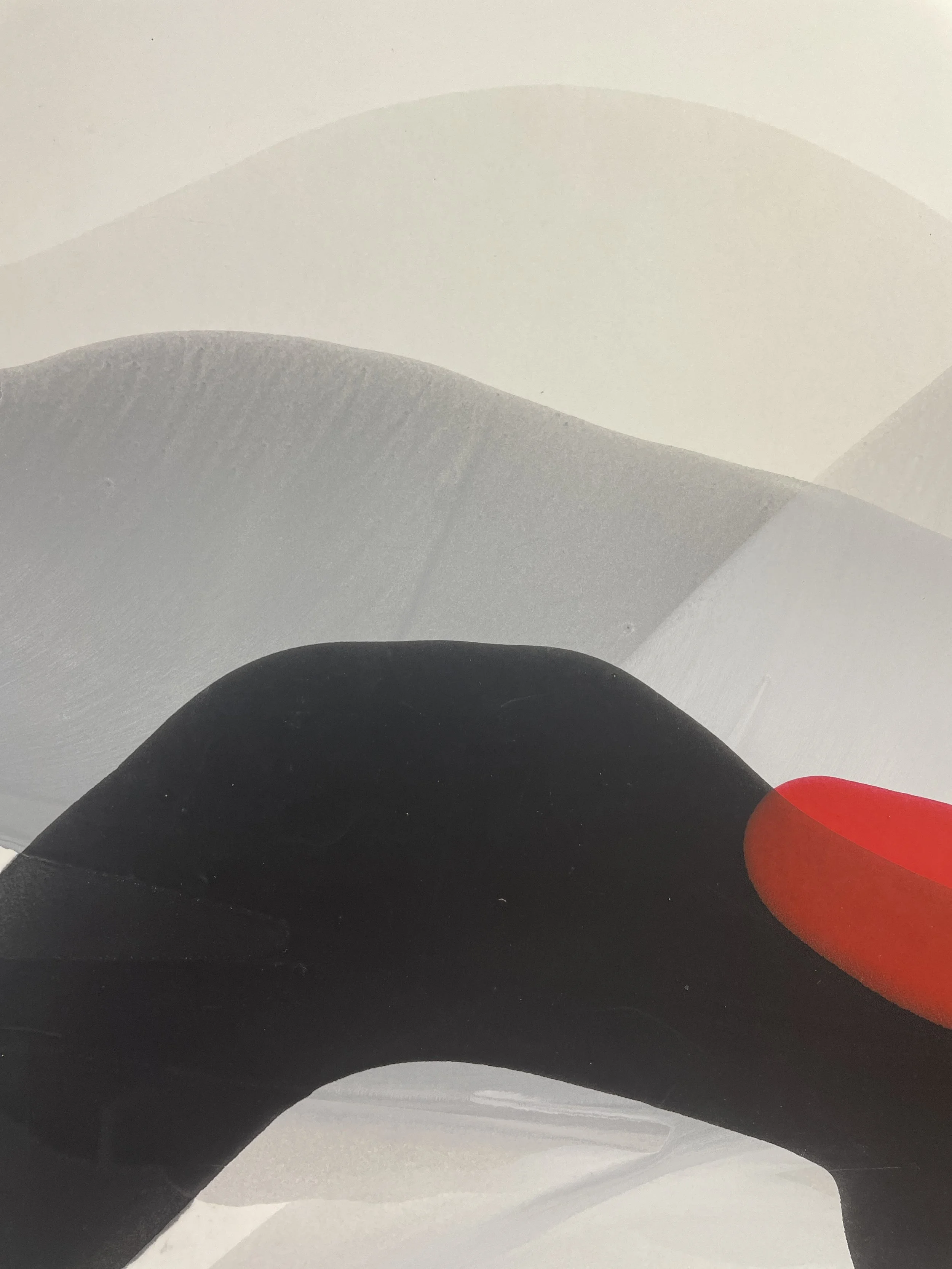
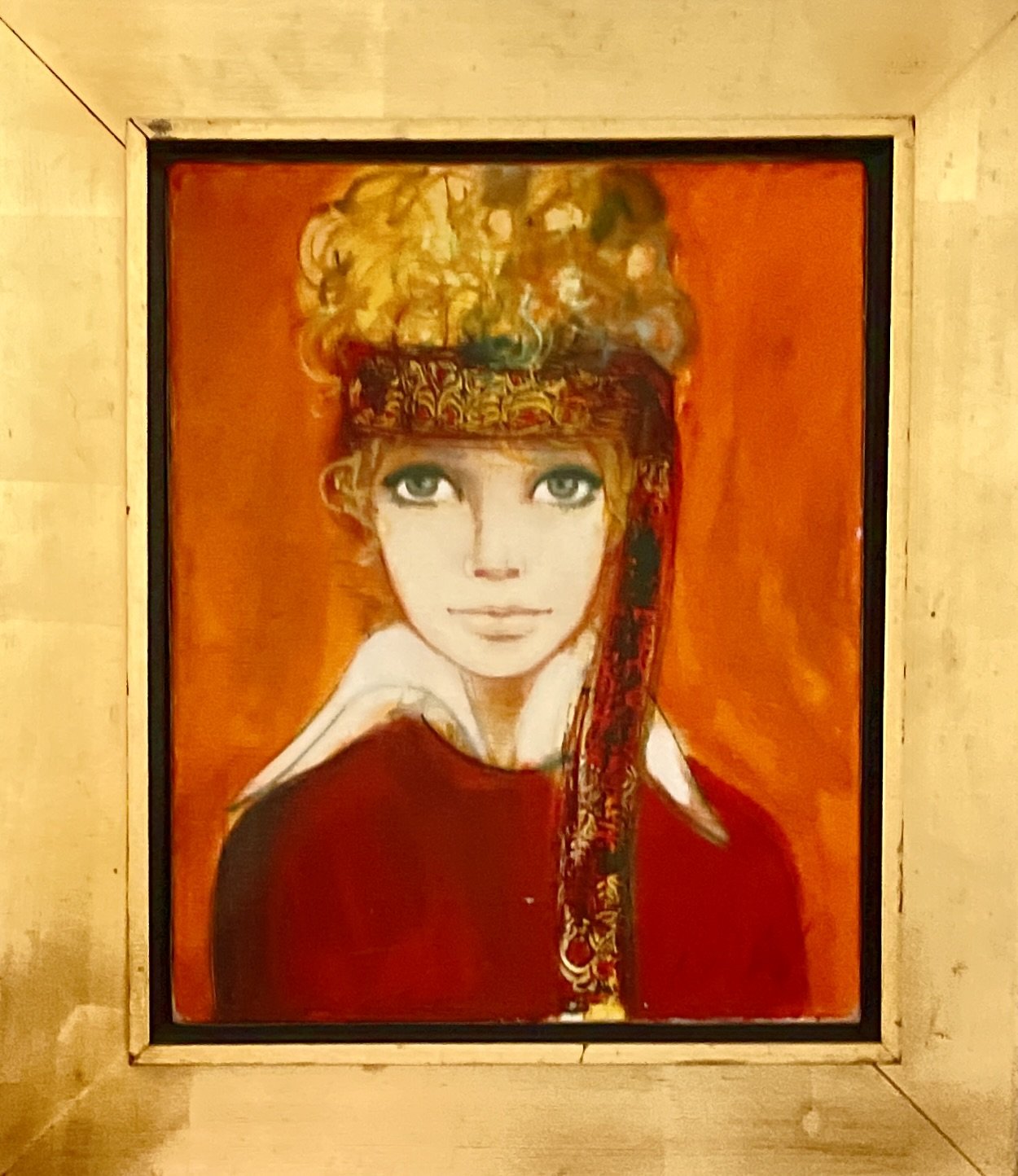
Jeune Fille au Foulard is an evocative original painting by Jean-Baptiste Valadié, presenting a contemplative young woman rendered in warm reds and golds. Executed in the artist’s mature School of Paris style, the work reflects Valadié’s lifelong engagement with figuration, memory, and quiet psychological presence. Its intimate scale and lyrical surface make it an exceptional example of his mid-career portraiture.
Detailed Description
Jeune Fille au Foulard depicts a young female figure framed frontally, her gaze calm and inward, wrapped in a richly colored scarf that functions as both garment and symbolic threshold. The composition is spare yet emotionally charged, with Valadié employing thin oil washes layered over a luminous ground. The palette of amber, rust, and ochre is characteristic of his 1960s work, a period in which he balanced drawing-led structure with atmospheric color.
Stylistically aligned with the postwar School of Paris, the painting demonstrates Valadié’s preference for poetic realism rather than strict abstraction. The facial modeling is delicate, achieved through subtle modulation rather than heavy impasto, while the surrounding field dissolves into soft tonal transitions. The scarf, a recurring motif in Valadié’s portraits, suggests identity, protection, and interior life. Signed by the artist, the painting exemplifies his ability to convey intimacy and timelessness within a modest format.
Artist Biography
Jean-Baptiste Valadié was born on 29 December 1933 in Brive, in the Corrèze region of France. He studied in Paris and received his diploma in applied arts in 1956 from the École Nationale des Arts Appliqués. Early in his career, his work was acquired by the Musée Pédagogique de Paris, signaling institutional recognition at a young age.
Valadié emerged within the postwar School of Paris milieu, developing a figurative language that combined lyrical line, saturated color, and psychological nuance. His influences include European modern figurative painting and Mediterranean light, shaped by extensive travel in France, North Africa, and later internationally.
From the late 1950s through the 1970s, Valadié exhibited widely in France and abroad, with one-man and group exhibitions in Paris, Brive, Souillac, Geneva, Zurich, Lyon, London, Johannesburg, Sydney, Cannes, New Orleans, and New York. He received multiple awards, including the Prix Cézanne (1958), prizes at the Salon des Indépendants in Algiers (1959), and the Prix John Hemming Fry in Paris (1961), as well as a Silver Medal at the Salon 61 in Paris.
A significant public commission was the decoration and fresco work for the Chapel of Salins-de-Giraud in Camargue, completed in the early 1960s. In the United States, Valadié was represented by Mitch Morse Gallery, New York, which organized exhibitions and placed his work with American collectors. His practice remained rooted in figuration, often focusing on women, children, and maternal themes, rendered with a quiet, poetic sensibility that defines his legacy.
Certificate of Value & Authentication
This certifies that Jeune Fille au Foulard is an original oil painting by Jean-Baptiste Valadié. Based on stylistic analysis, documented exhibition history, and provenance through Mitch Morse Gallery, the work is authenticated as an original mid-20th-century painting by the artist. Issued by Artfind Gallery, Washington, DC.
Condition
The painting is in very good vintage condition, with stable paint layers and no visible restoration. Minor age-appropriate surface wear consistent with mid-20th-century oil paintings.
Provenance
Mitch Morse Gallery, New York (acquired in NYC, United States and Europe)
Artfind Gallery, Washington, DC (current owner)
Citations
Archival exhibition lists and biographies compiled from Mitch Morse Gallery records; French and English typed chronologies and press clippings (1956–1970); Artlook magazine (August 1968); Pictures and Prints (Winter 1965); Galerie La Licorne and School of Paris exhibition documentation.
Jeune Fille au Foulard is an evocative original painting by Jean-Baptiste Valadié, presenting a contemplative young woman rendered in warm reds and golds. Executed in the artist’s mature School of Paris style, the work reflects Valadié’s lifelong engagement with figuration, memory, and quiet psychological presence. Its intimate scale and lyrical surface make it an exceptional example of his mid-career portraiture.
Detailed Description
Jeune Fille au Foulard depicts a young female figure framed frontally, her gaze calm and inward, wrapped in a richly colored scarf that functions as both garment and symbolic threshold. The composition is spare yet emotionally charged, with Valadié employing thin oil washes layered over a luminous ground. The palette of amber, rust, and ochre is characteristic of his 1960s work, a period in which he balanced drawing-led structure with atmospheric color.
Stylistically aligned with the postwar School of Paris, the painting demonstrates Valadié’s preference for poetic realism rather than strict abstraction. The facial modeling is delicate, achieved through subtle modulation rather than heavy impasto, while the surrounding field dissolves into soft tonal transitions. The scarf, a recurring motif in Valadié’s portraits, suggests identity, protection, and interior life. Signed by the artist, the painting exemplifies his ability to convey intimacy and timelessness within a modest format.
Artist Biography
Jean-Baptiste Valadié was born on 29 December 1933 in Brive, in the Corrèze region of France. He studied in Paris and received his diploma in applied arts in 1956 from the École Nationale des Arts Appliqués. Early in his career, his work was acquired by the Musée Pédagogique de Paris, signaling institutional recognition at a young age.
Valadié emerged within the postwar School of Paris milieu, developing a figurative language that combined lyrical line, saturated color, and psychological nuance. His influences include European modern figurative painting and Mediterranean light, shaped by extensive travel in France, North Africa, and later internationally.
From the late 1950s through the 1970s, Valadié exhibited widely in France and abroad, with one-man and group exhibitions in Paris, Brive, Souillac, Geneva, Zurich, Lyon, London, Johannesburg, Sydney, Cannes, New Orleans, and New York. He received multiple awards, including the Prix Cézanne (1958), prizes at the Salon des Indépendants in Algiers (1959), and the Prix John Hemming Fry in Paris (1961), as well as a Silver Medal at the Salon 61 in Paris.
A significant public commission was the decoration and fresco work for the Chapel of Salins-de-Giraud in Camargue, completed in the early 1960s. In the United States, Valadié was represented by Mitch Morse Gallery, New York, which organized exhibitions and placed his work with American collectors. His practice remained rooted in figuration, often focusing on women, children, and maternal themes, rendered with a quiet, poetic sensibility that defines his legacy.
Certificate of Value & Authentication
This certifies that Jeune Fille au Foulard is an original oil painting by Jean-Baptiste Valadié. Based on stylistic analysis, documented exhibition history, and provenance through Mitch Morse Gallery, the work is authenticated as an original mid-20th-century painting by the artist. Issued by Artfind Gallery, Washington, DC.
Condition
The painting is in very good vintage condition, with stable paint layers and no visible restoration. Minor age-appropriate surface wear consistent with mid-20th-century oil paintings.
Provenance
Mitch Morse Gallery, New York (acquired in NYC, United States and Europe)
Artfind Gallery, Washington, DC (current owner)
Citations
Archival exhibition lists and biographies compiled from Mitch Morse Gallery records; French and English typed chronologies and press clippings (1956–1970); Artlook magazine (August 1968); Pictures and Prints (Winter 1965); Galerie La Licorne and School of Paris exhibition documentation.