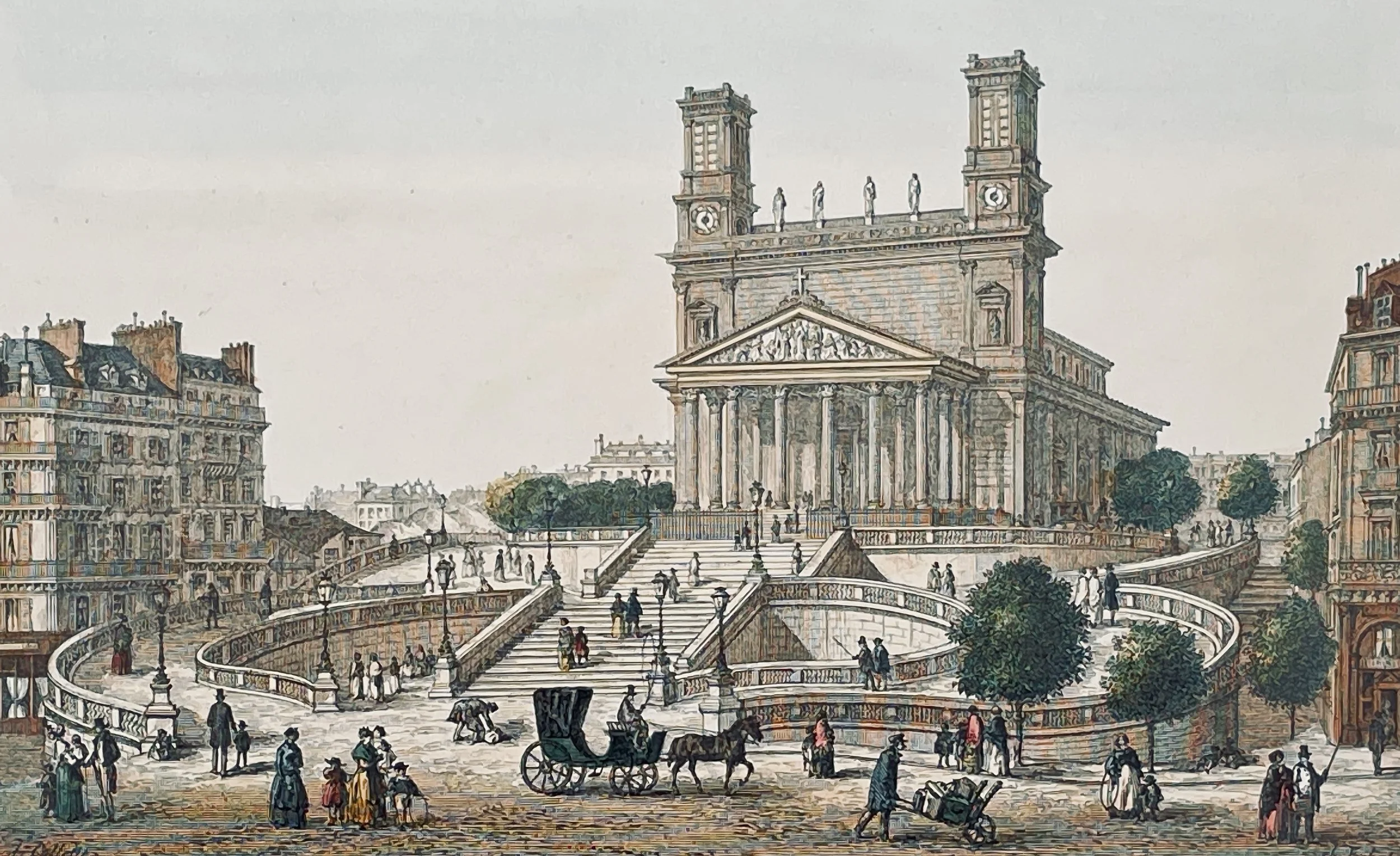
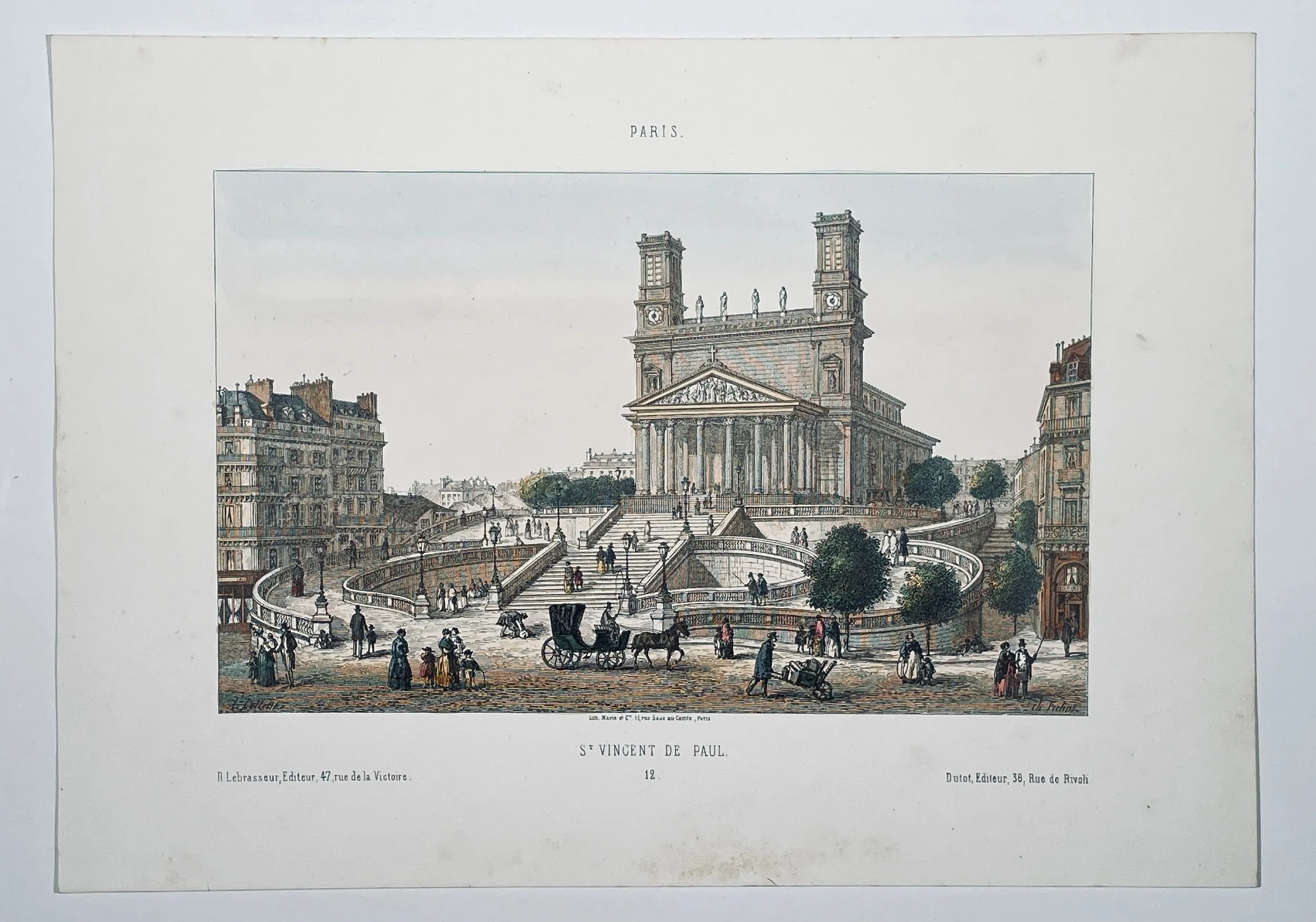
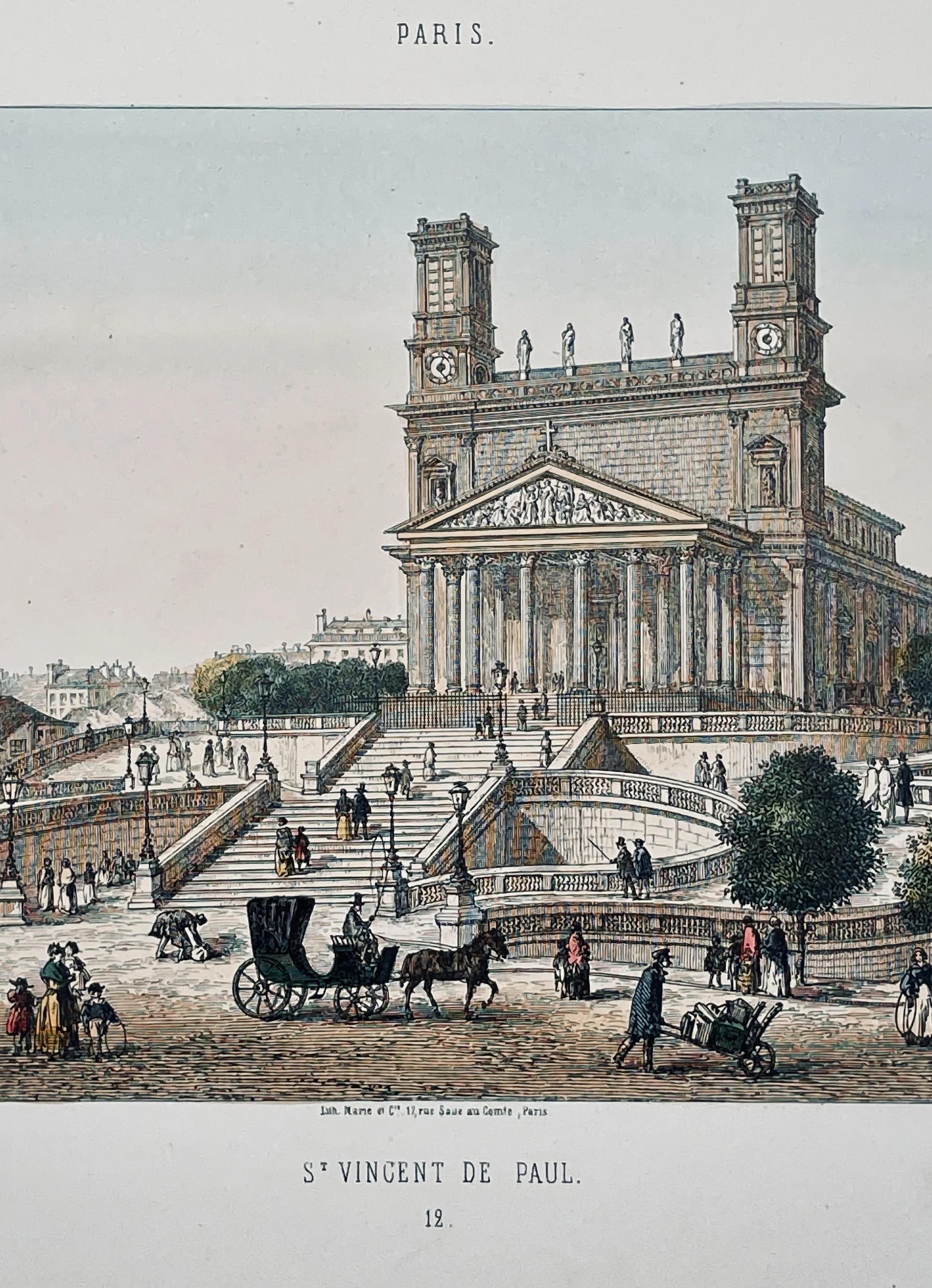
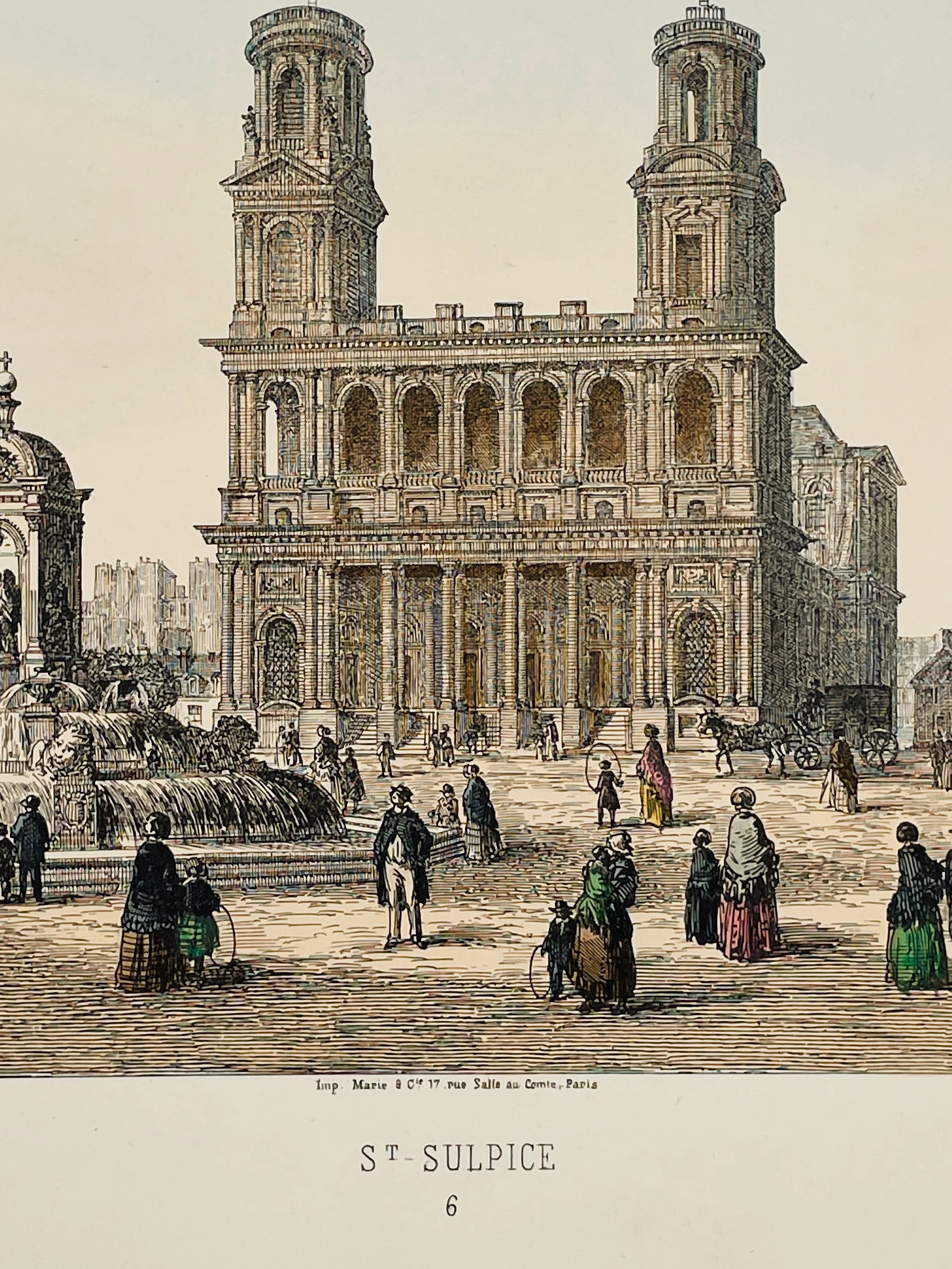
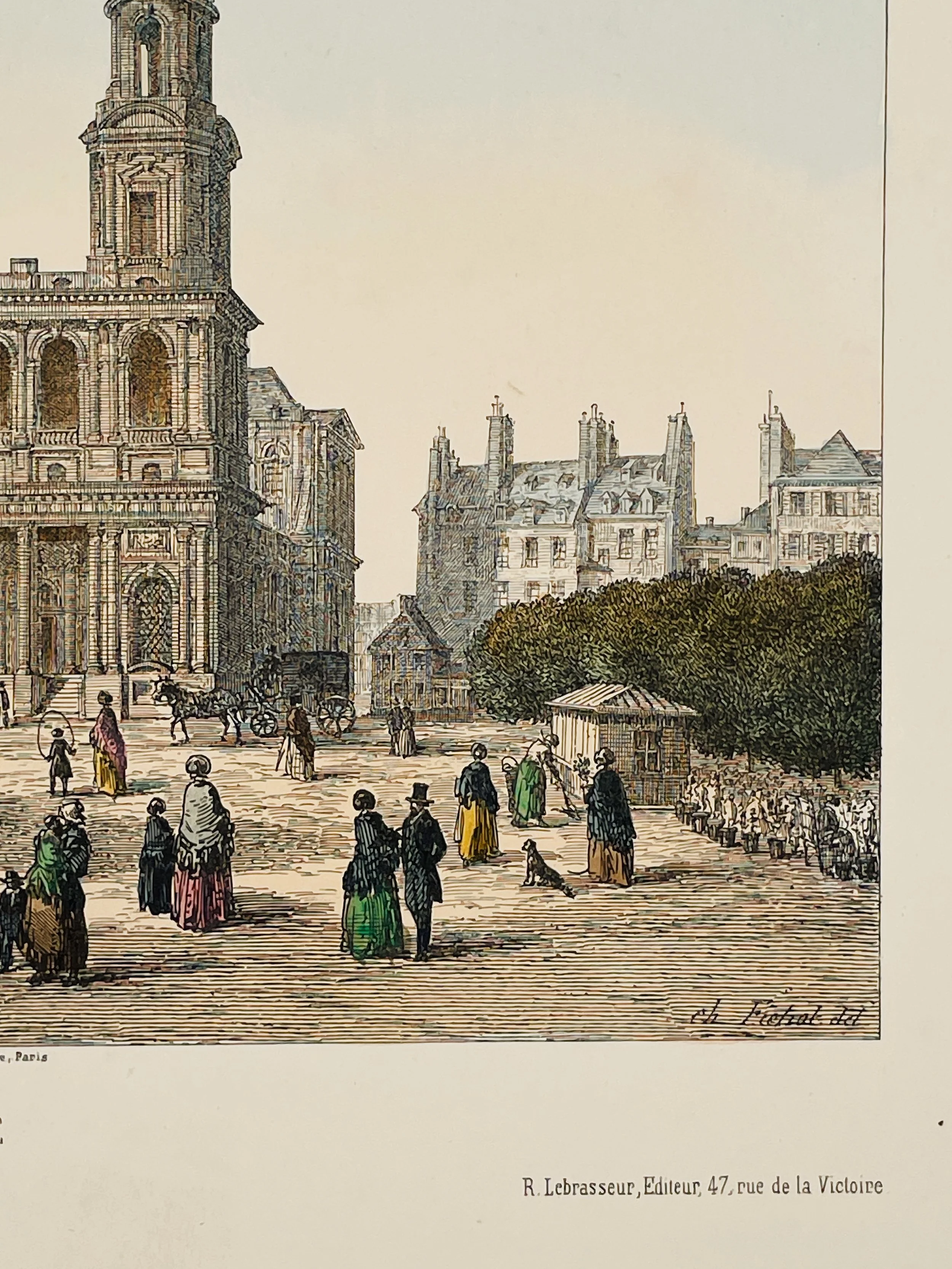
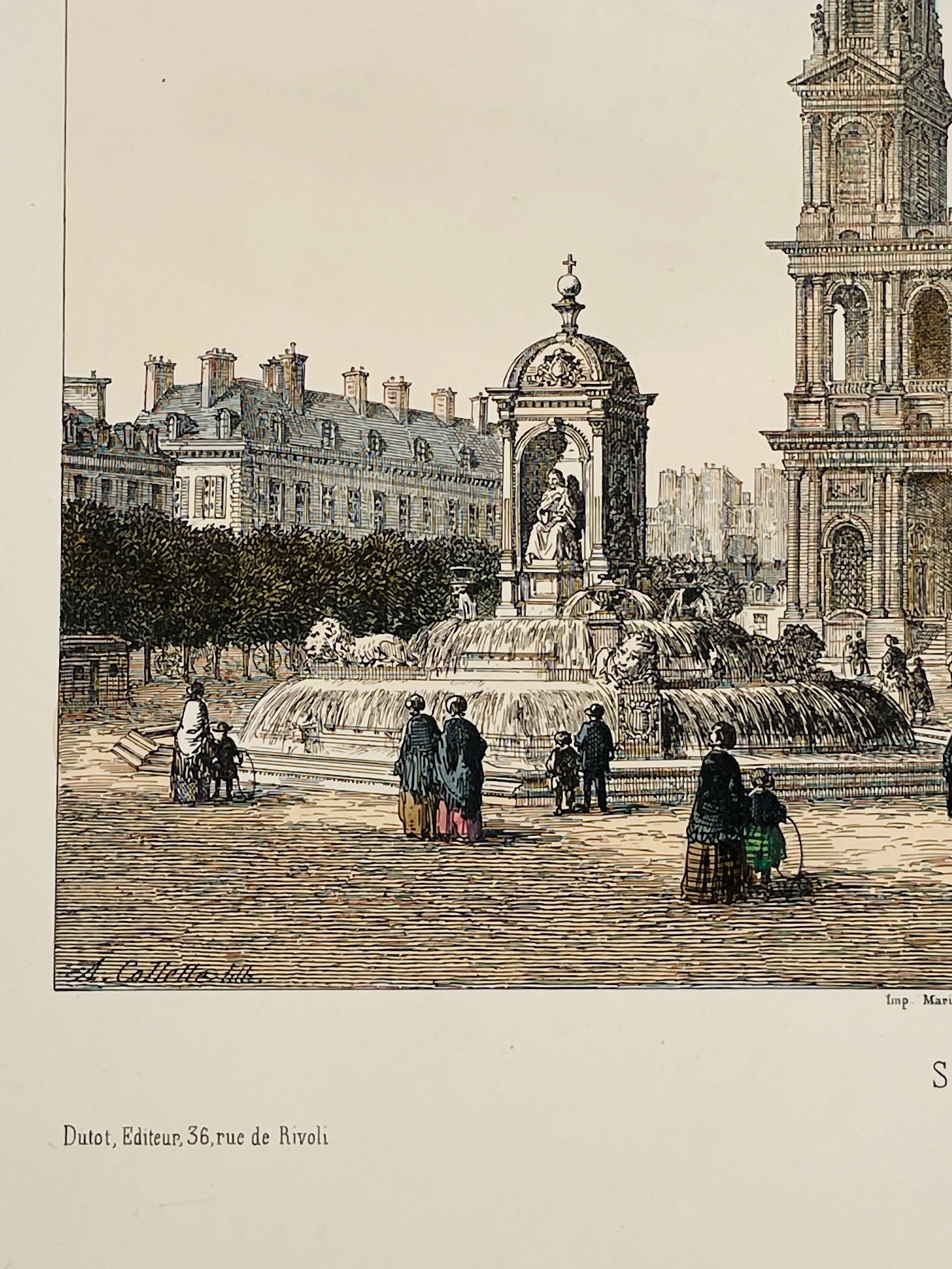
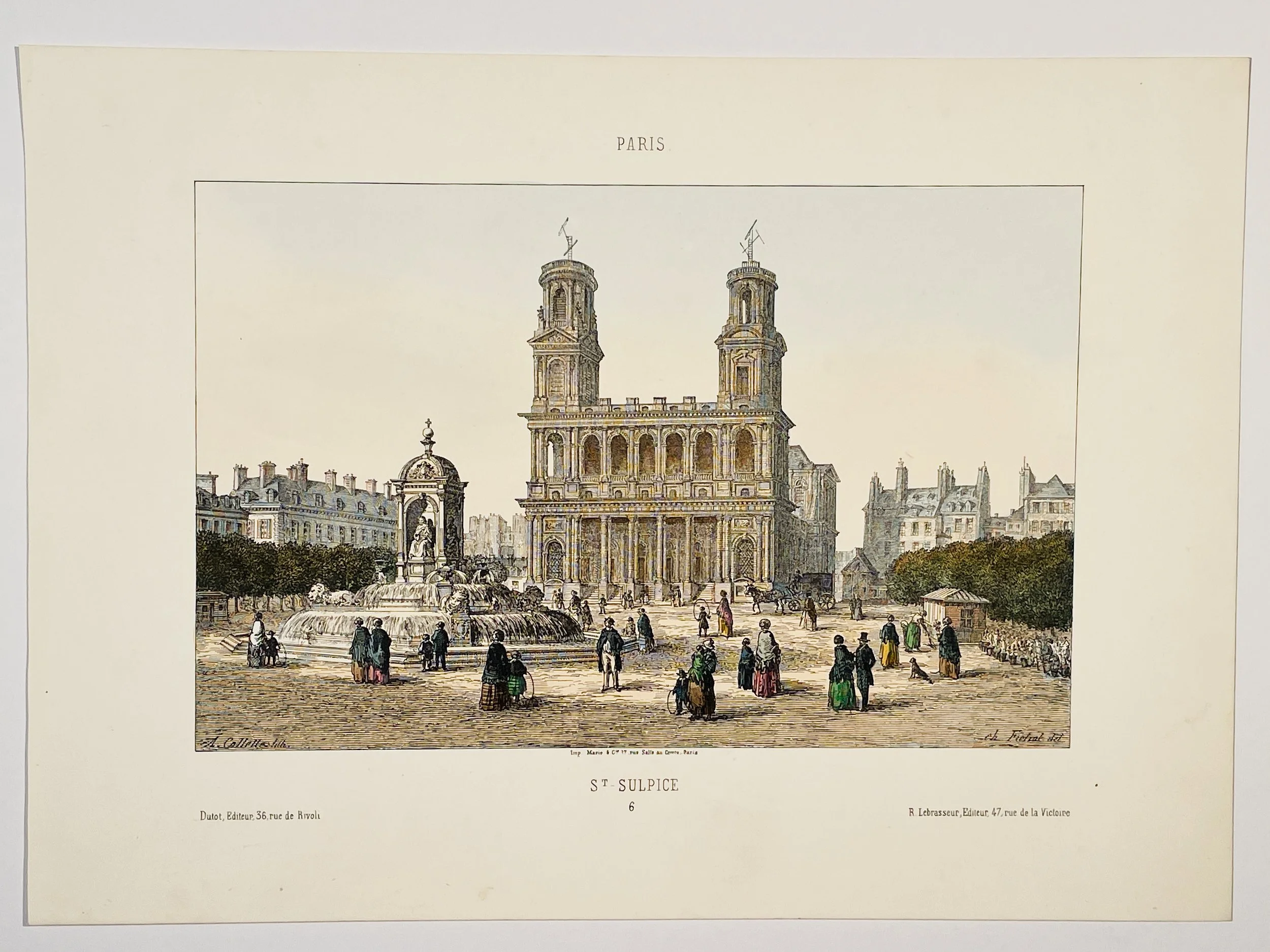
La Bourse, Paris, Isidore Laurent Deroy, c.1835–1855, hand-colored lithograph on paper, 10 × 6.5 in., published Paris.
This rare 19th-century Paris cityscape is a hand-colored lithograph by Isidore Laurent Deroy depicting La Bourse (Palais Brongniart), the historic Paris stock exchange. Drawn from life and lithographed by the artist during the early Second Empire period, the work documents Parisian civic architecture before Haussmann’s transformation. Published by leading Paris éditeurs R. Lebrasseur and Dutot, and printed by Imp. Marie & Cie, this original antique lithograph exemplifies the finest traditions of French architectural printmaking and is ideal for collectors of historic Paris views, 19th-century lithographs, and European works on paper.
Artwork Description:
This finely executed 19th-century lithograph presents a panoramic view of La Bourse, the Palais Brongniart, one of Paris’s most important civic and financial monuments. The neoclassical colonnaded structure dominates the composition, animated by figures, horse-drawn carriages, and daily street life that bring the square vividly to life.
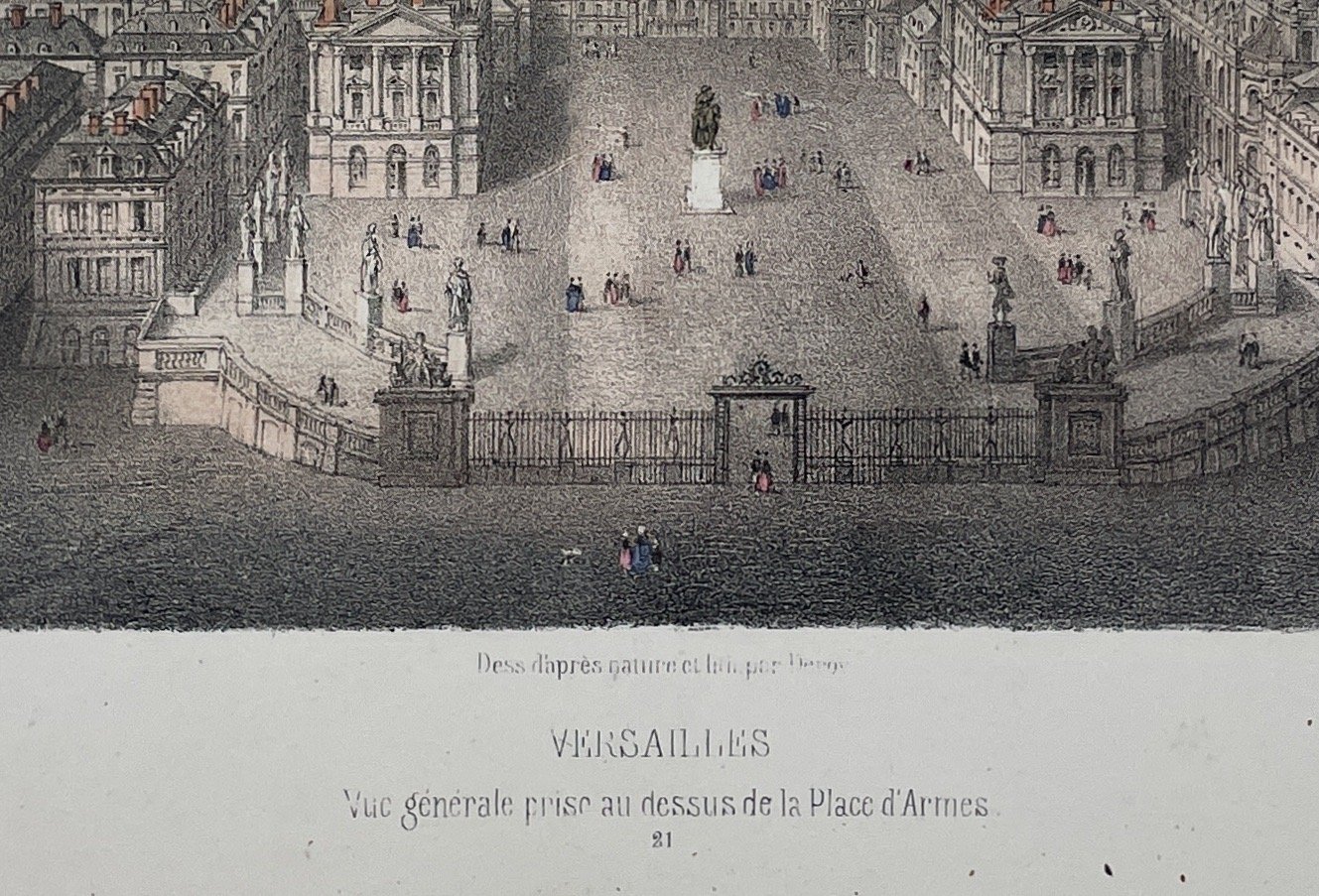
The work is a hand-colored stone lithograph drawn directly from nature and executed by Isidore Laurent Deroy, as confirmed by the in-plate inscription “Dessiné d’après nature et lithog. par Deroy.” The careful linear draftsmanship reflects Deroy’s training in architectural precision, while the restrained hand coloring enhances depth, texture, and atmospheric clarity without obscuring the underlying lithographic line.
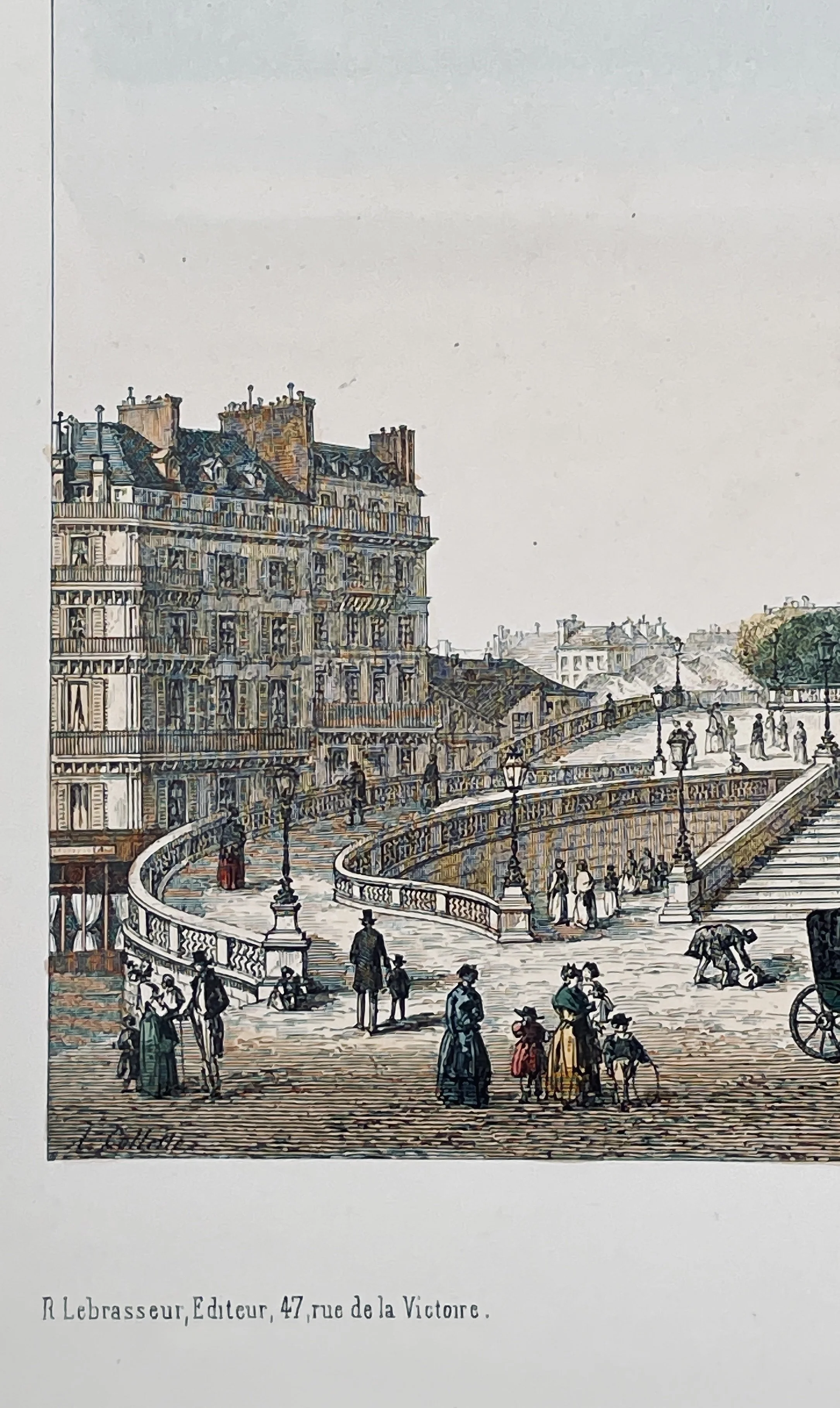
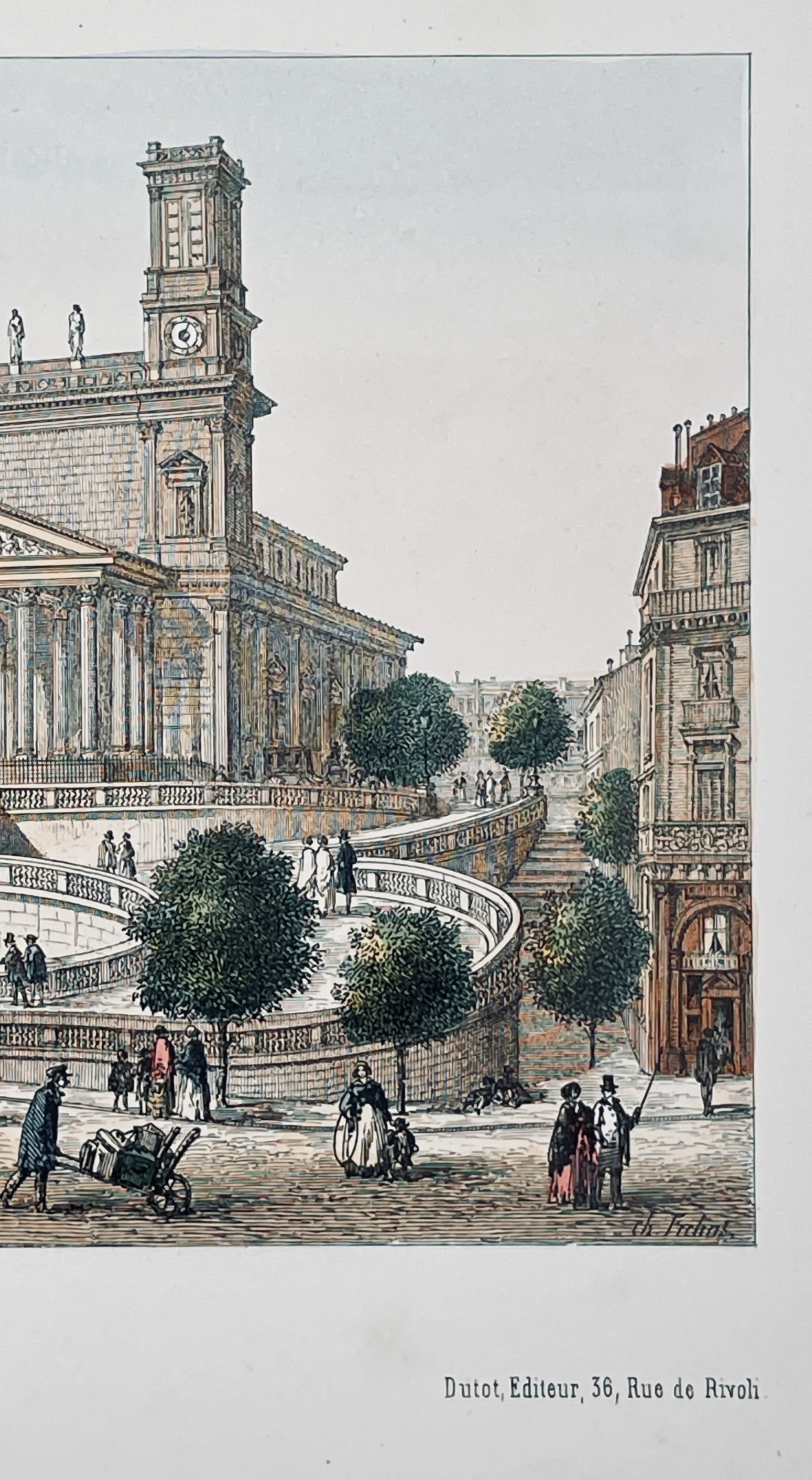
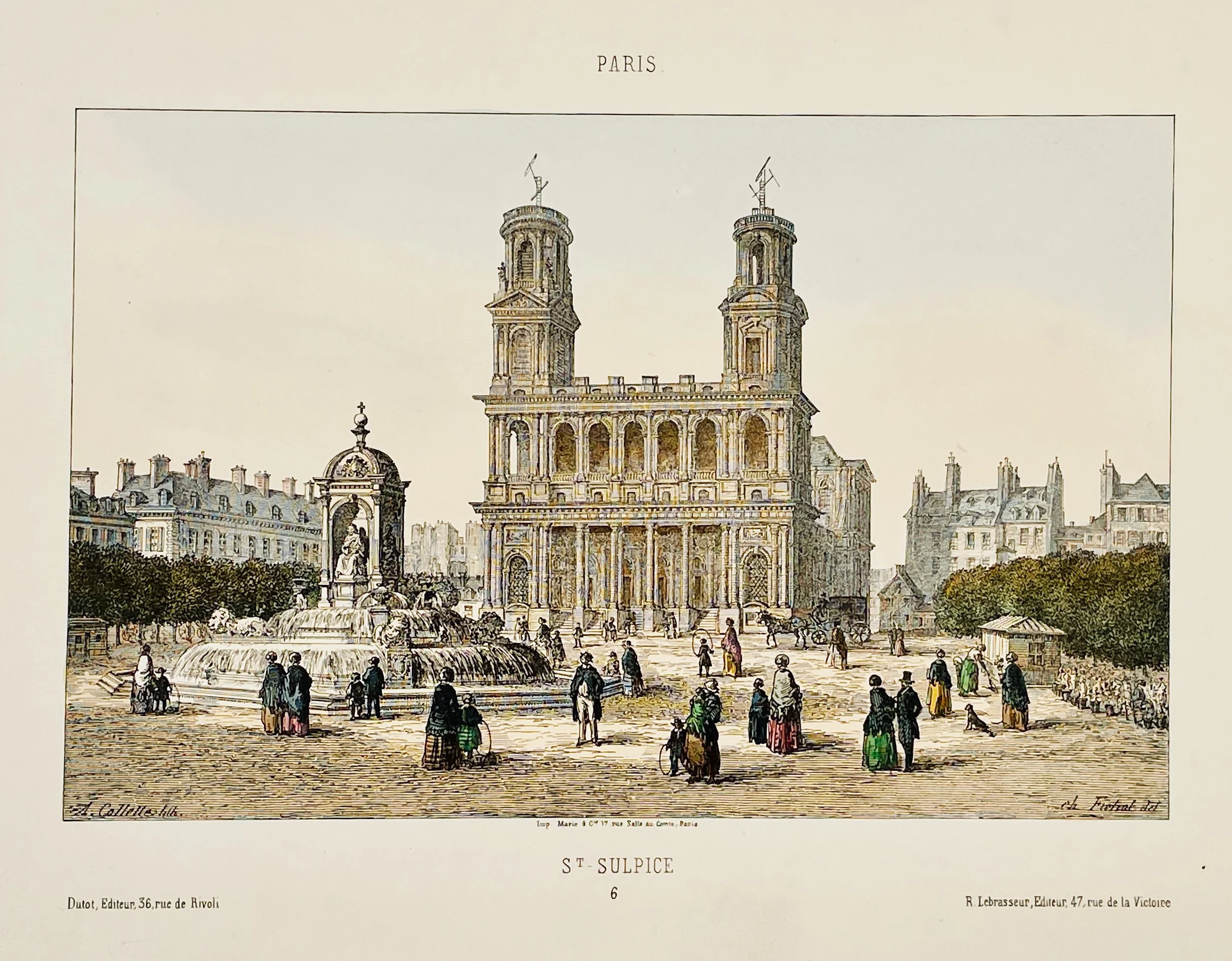
Publisher and printer imprints identify the work as part of a professional Parisian publishing network active during the 1830s–1850s. The lithograph was issued by R. Lebrasseur (47, rue de la Victoire) and Dutot (36, rue de Rivoli), and printed by Imp. Marie & Cie (17, rue Salle-au-Comte, Paris), a respected lithographic printing house. The image reflects the late July Monarchy to early Second Empire period and preserves the appearance of Paris before the large-scale urban renovations of the mid-19th century.
Artist Biography:
Isidore Laurent Deroy was a French painter, draughtsman, and prolific lithographer of architectural views and historic sites. Born in Paris in 1797, he studied under Louis-François Cassas, whose influence shaped Deroy’s disciplined approach to architectural accuracy and topographical representation.
Deroy exhibited regularly at the Paris Salon from 1822 to 1866 and became widely known for his lithographs documenting Parisian monuments, civic spaces, and historic sites drawn directly from life. His works form an important visual record of Paris before Haussmann’s modernization and are held in major institutional collections including the Metropolitan Museum of Art, the Smithsonian Institution, and numerous French museums. His artistic legacy continued through his sons, Émile Deroy and Auguste-Victor Deroy, both accomplished artists.
Isidore Laurent Deroy (French, 1797–1886), La Bourse, Paris, c.1835–1855. Hand-colored lithograph on paper. Drawn and lithographed by the artist. Published by Lebrasseur & Dutot. Printed by Imp. Marie & Cie. 10 × 6.5 in.
Certificate of Value & Authentication:
This artwork is an authentic 19th-century French lithograph by Isidore Laurent Deroy, confirmed by the in-plate inscription stating the work was drawn from nature and lithographed by the artist. Publisher and printer imprints from Lebrasseur, Dutot, and Imp. Marie & Cie confirm period Paris production consistent with Deroy’s documented oeuvre.
Provenance:
Mitch Morse Gallery, New York City (acquired through NYC and European sources)
Private collection
Current owner: Artfind Gallery, Washington, DC
La Bourse, Paris, Isidore Laurent Deroy, c.1835–1855, hand-colored lithograph on paper, 10 × 6.5 in., published Paris.
This rare 19th-century Paris cityscape is a hand-colored lithograph by Isidore Laurent Deroy depicting La Bourse (Palais Brongniart), the historic Paris stock exchange. Drawn from life and lithographed by the artist during the early Second Empire period, the work documents Parisian civic architecture before Haussmann’s transformation. Published by leading Paris éditeurs R. Lebrasseur and Dutot, and printed by Imp. Marie & Cie, this original antique lithograph exemplifies the finest traditions of French architectural printmaking and is ideal for collectors of historic Paris views, 19th-century lithographs, and European works on paper.
Artwork Description:
This finely executed 19th-century lithograph presents a panoramic view of La Bourse, the Palais Brongniart, one of Paris’s most important civic and financial monuments. The neoclassical colonnaded structure dominates the composition, animated by figures, horse-drawn carriages, and daily street life that bring the square vividly to life.
The work is a hand-colored stone lithograph drawn directly from nature and executed by Isidore Laurent Deroy, as confirmed by the in-plate inscription “Dessiné d’après nature et lithog. par Deroy.” The careful linear draftsmanship reflects Deroy’s training in architectural precision, while the restrained hand coloring enhances depth, texture, and atmospheric clarity without obscuring the underlying lithographic line.
Publisher and printer imprints identify the work as part of a professional Parisian publishing network active during the 1830s–1850s. The lithograph was issued by R. Lebrasseur (47, rue de la Victoire) and Dutot (36, rue de Rivoli), and printed by Imp. Marie & Cie (17, rue Salle-au-Comte, Paris), a respected lithographic printing house. The image reflects the late July Monarchy to early Second Empire period and preserves the appearance of Paris before the large-scale urban renovations of the mid-19th century.
Artist Biography:
Isidore Laurent Deroy was a French painter, draughtsman, and prolific lithographer of architectural views and historic sites. Born in Paris in 1797, he studied under Louis-François Cassas, whose influence shaped Deroy’s disciplined approach to architectural accuracy and topographical representation.
Deroy exhibited regularly at the Paris Salon from 1822 to 1866 and became widely known for his lithographs documenting Parisian monuments, civic spaces, and historic sites drawn directly from life. His works form an important visual record of Paris before Haussmann’s modernization and are held in major institutional collections including the Metropolitan Museum of Art, the Smithsonian Institution, and numerous French museums. His artistic legacy continued through his sons, Émile Deroy and Auguste-Victor Deroy, both accomplished artists.
Isidore Laurent Deroy (French, 1797–1886), La Bourse, Paris, c.1835–1855. Hand-colored lithograph on paper. Drawn and lithographed by the artist. Published by Lebrasseur & Dutot. Printed by Imp. Marie & Cie. 10 × 6.5 in.
Certificate of Value & Authentication:
This artwork is an authentic 19th-century French lithograph by Isidore Laurent Deroy, confirmed by the in-plate inscription stating the work was drawn from nature and lithographed by the artist. Publisher and printer imprints from Lebrasseur, Dutot, and Imp. Marie & Cie confirm period Paris production consistent with Deroy’s documented oeuvre.
Provenance:
Mitch Morse Gallery, New York City (acquired through NYC and European sources)
Private collection
Current owner: Artfind Gallery, Washington, DC
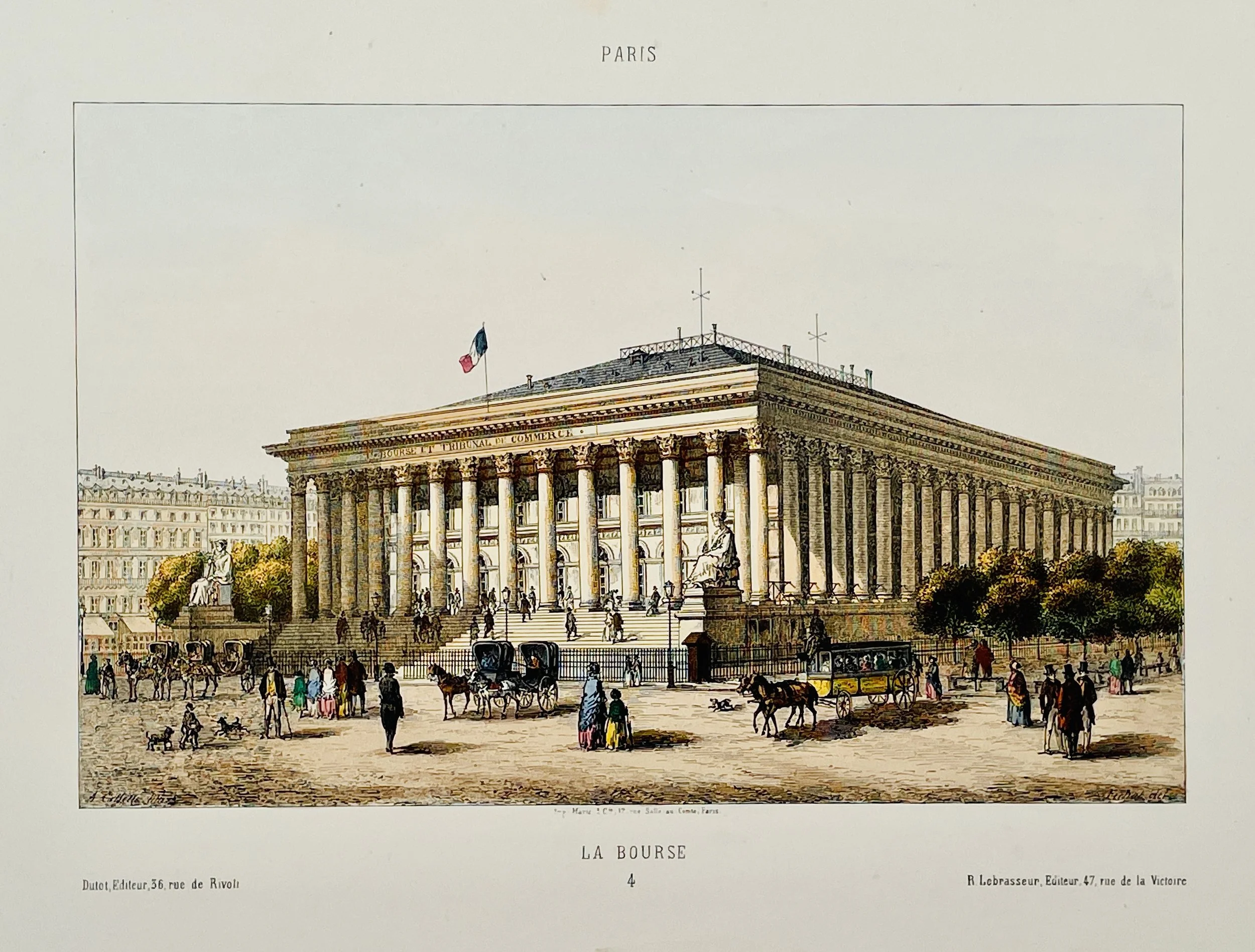 Image 1 of 9
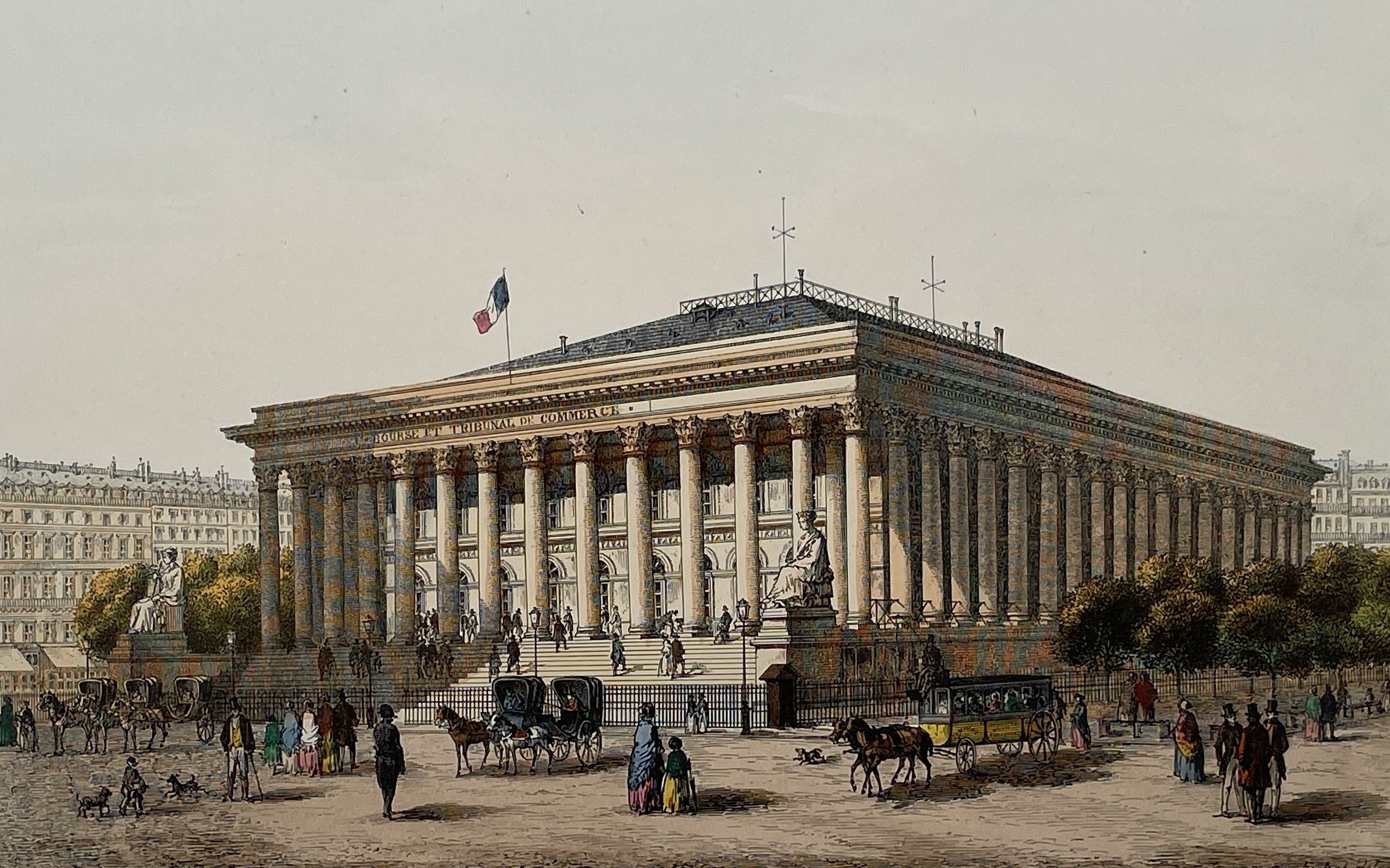 Image 2 of 9
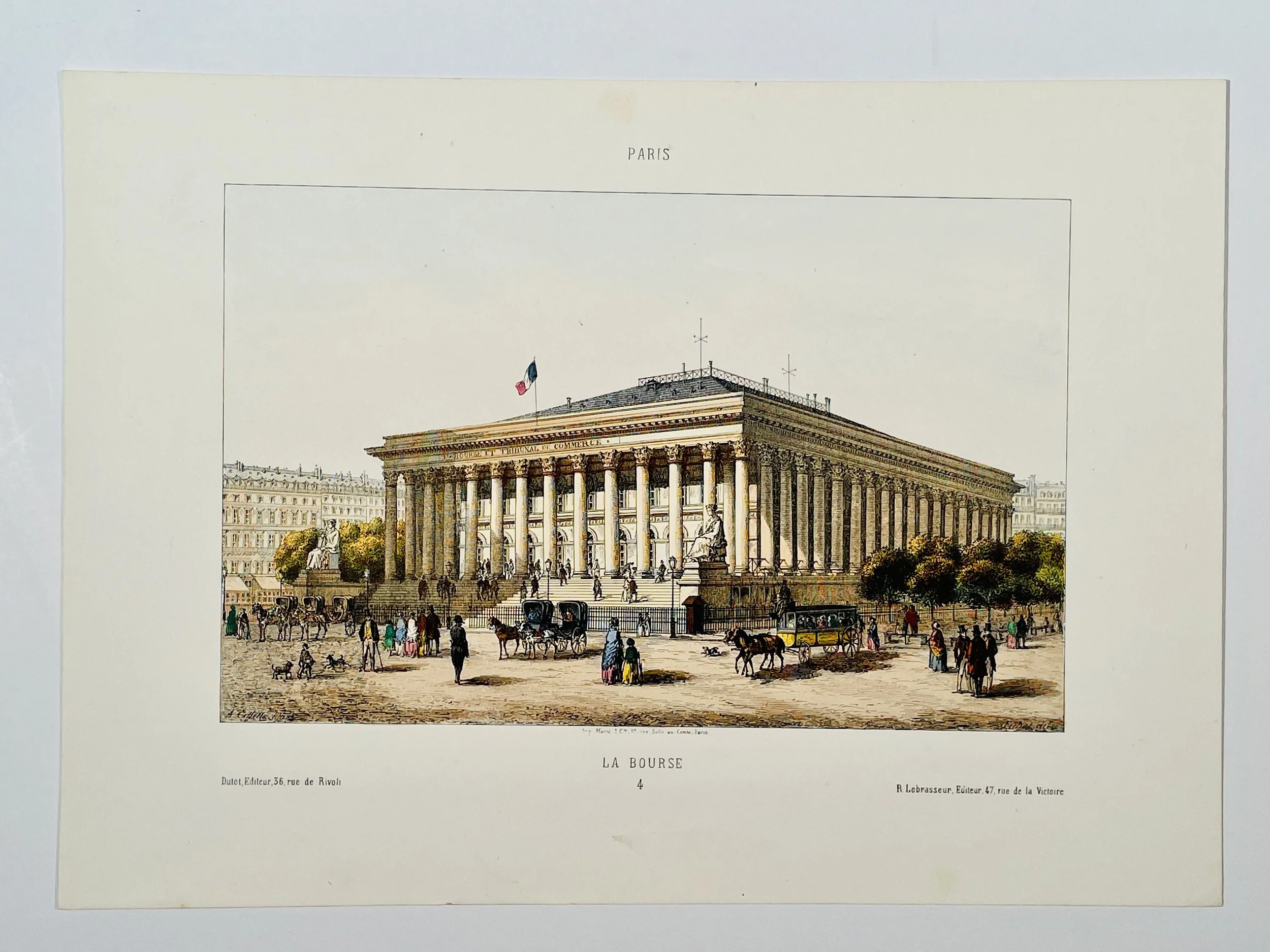 Image 3 of 9
 Image 4 of 9
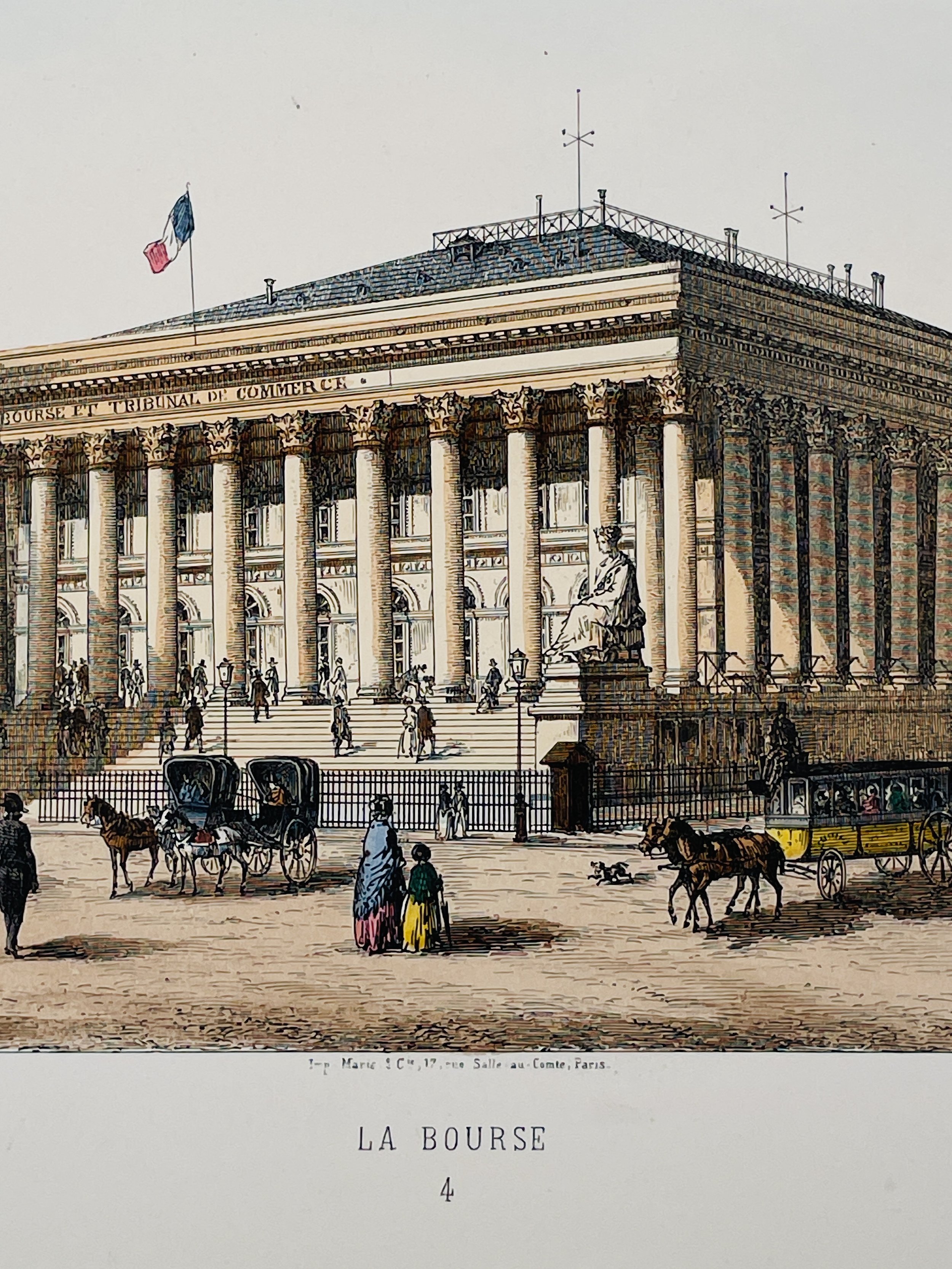 Image 5 of 9
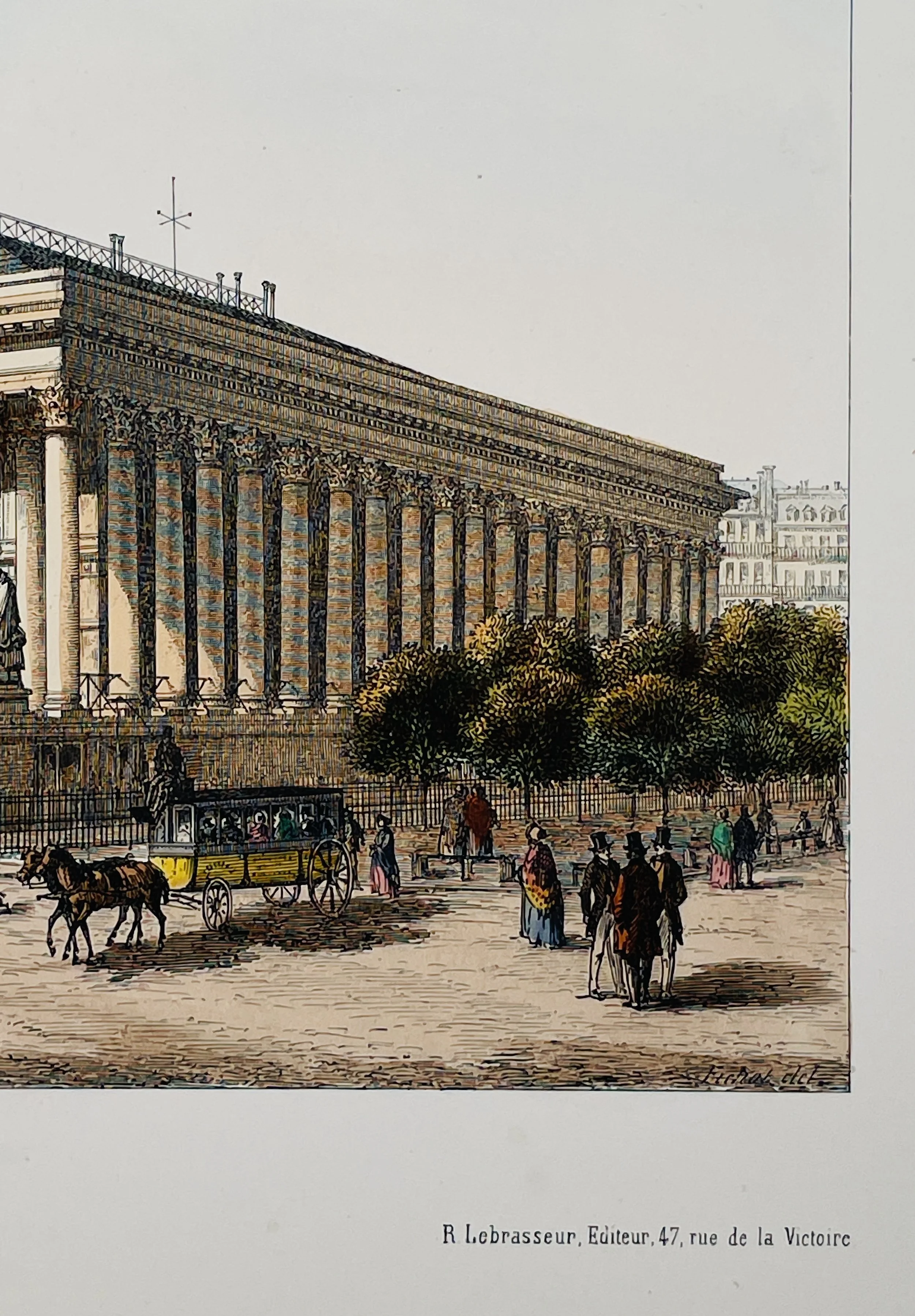 Image 6 of 9
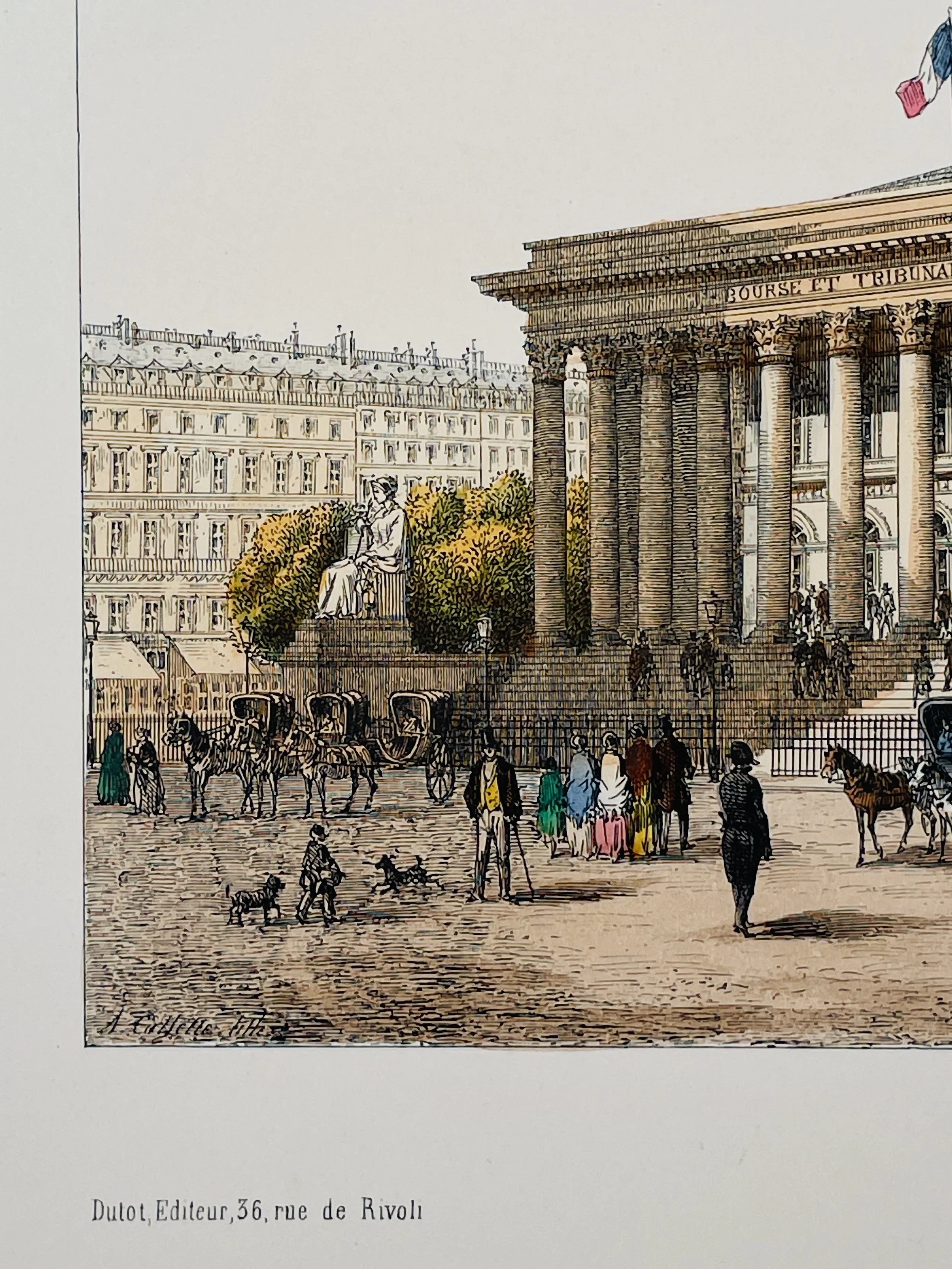 Image 7 of 9
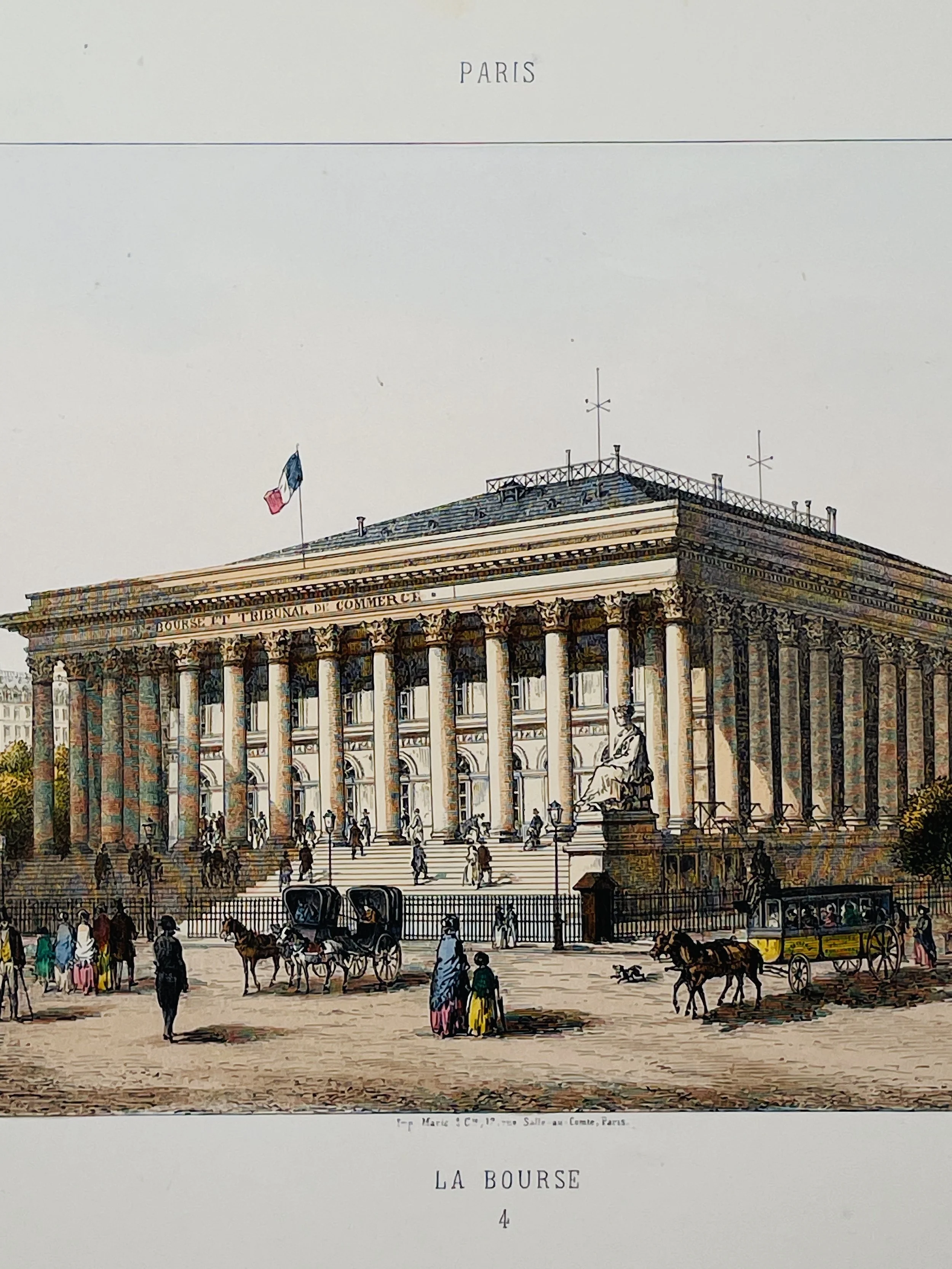 Image 8 of 9
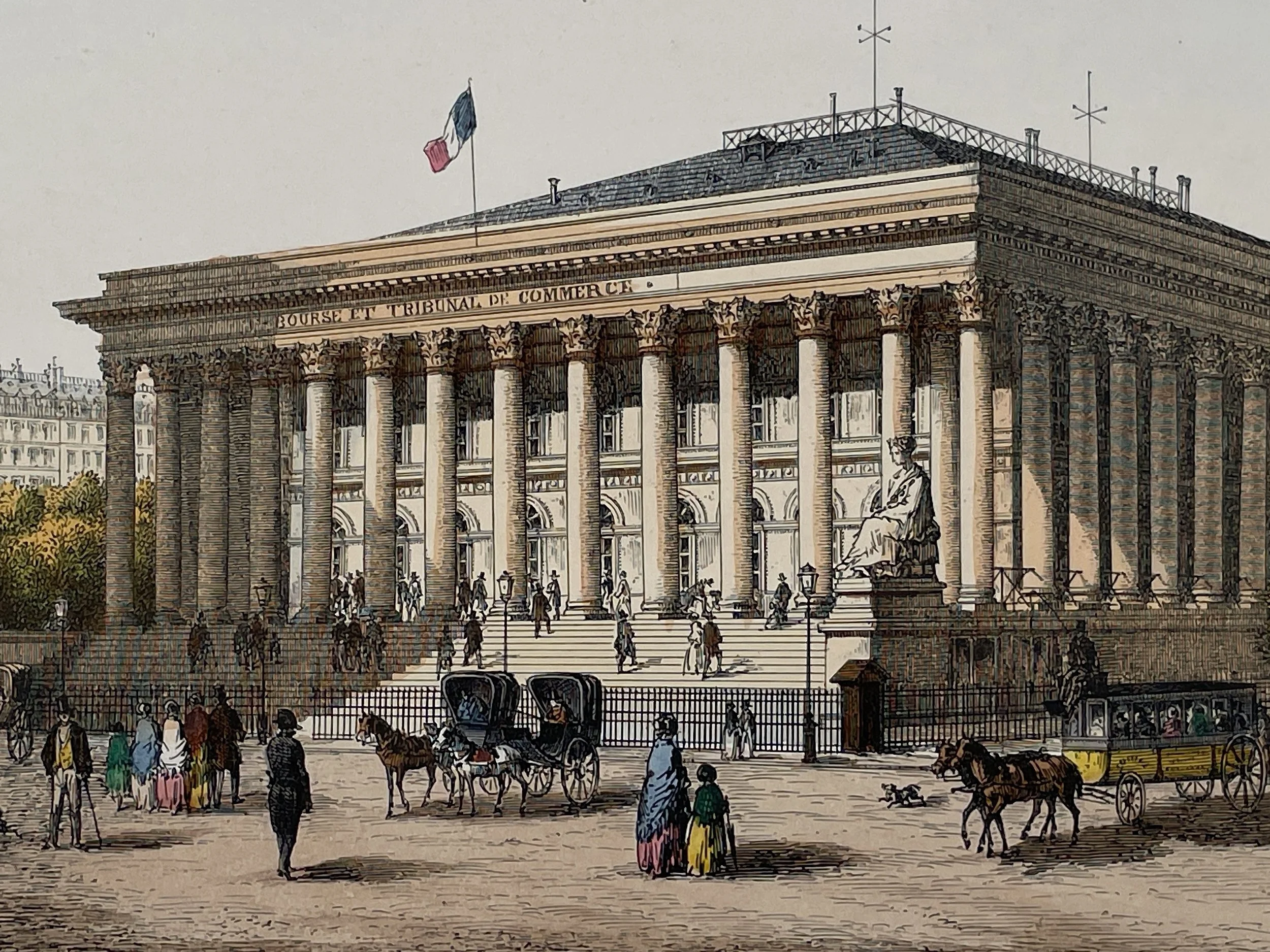 Image 9 of 9