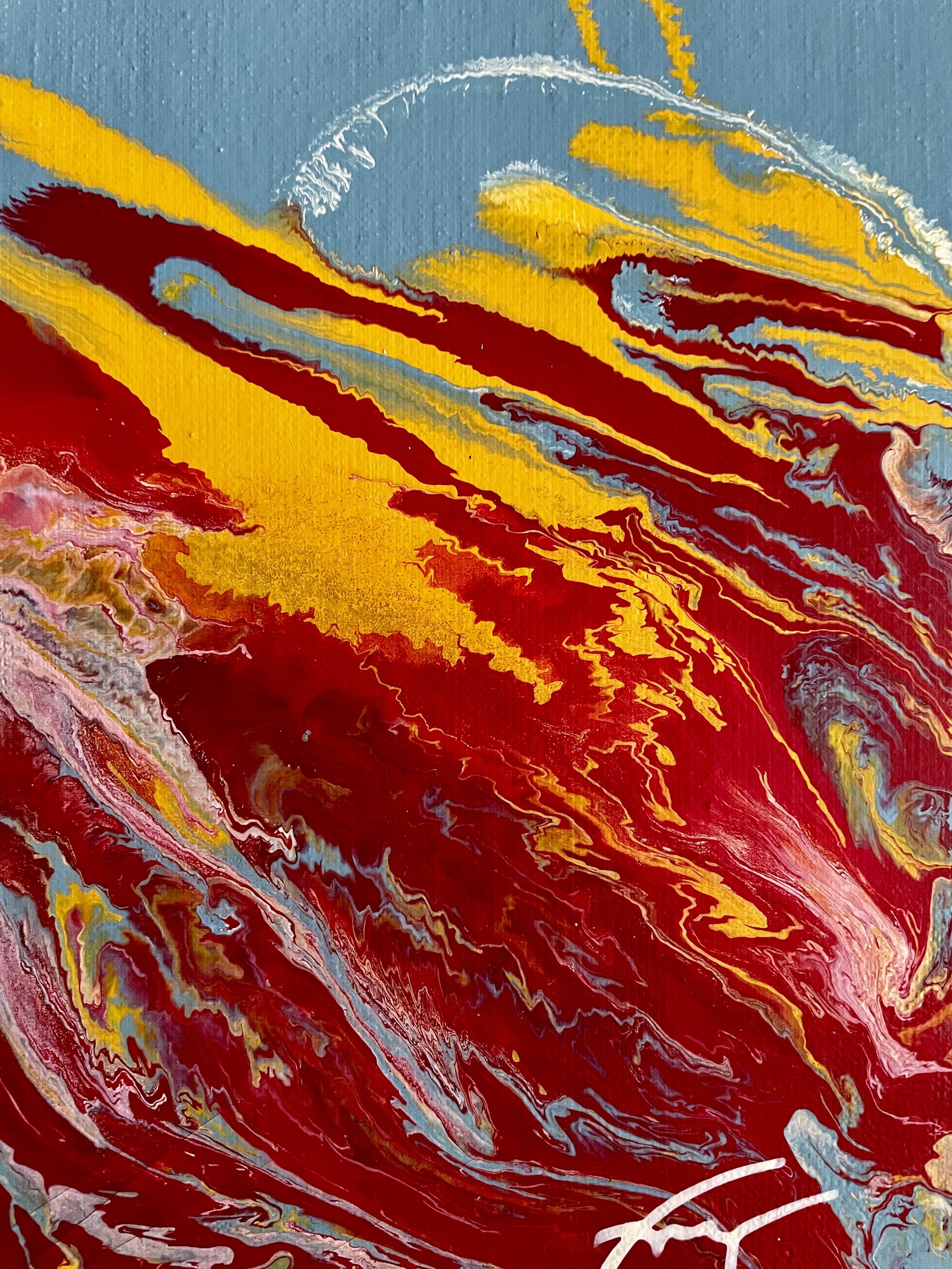
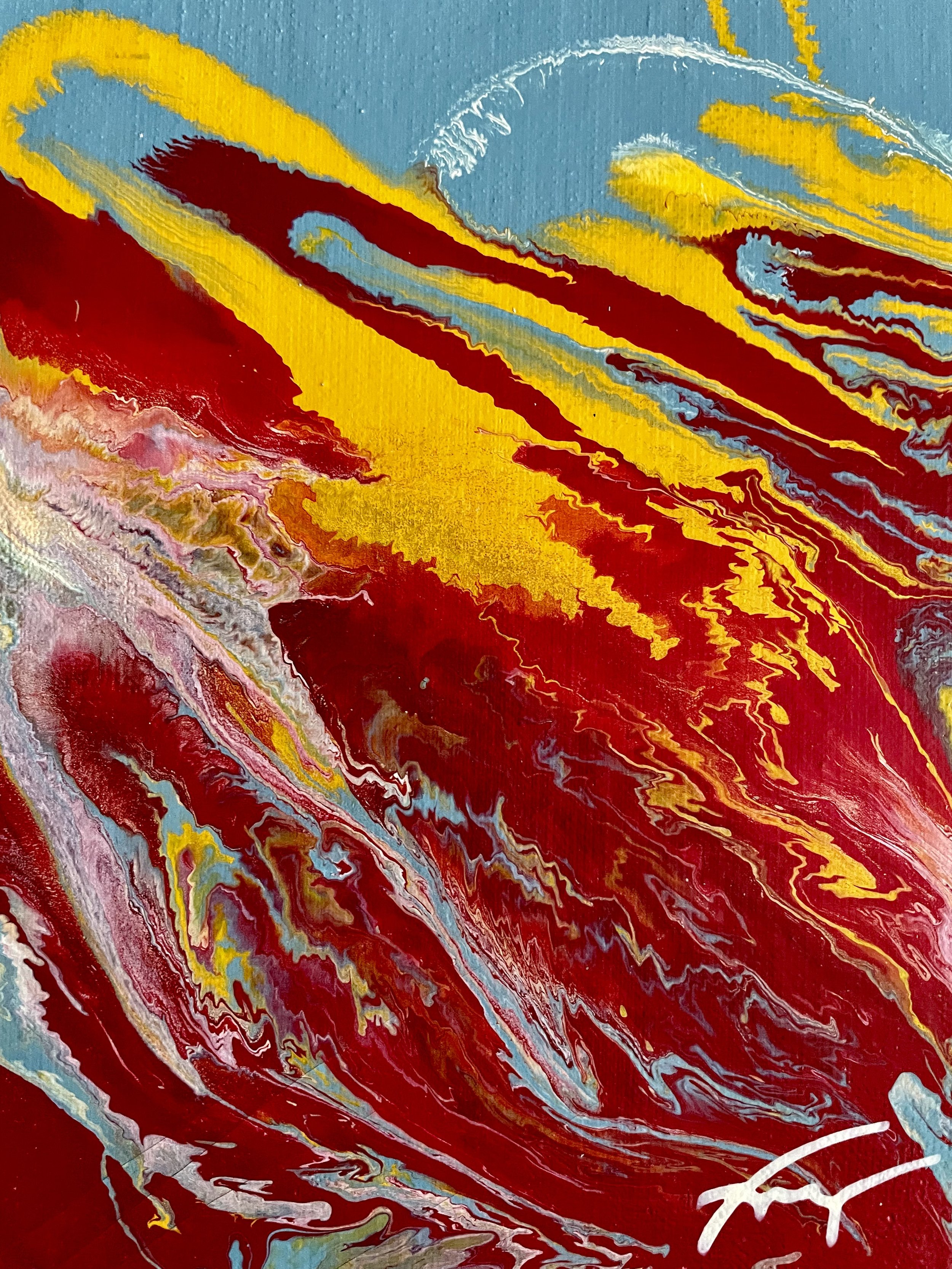
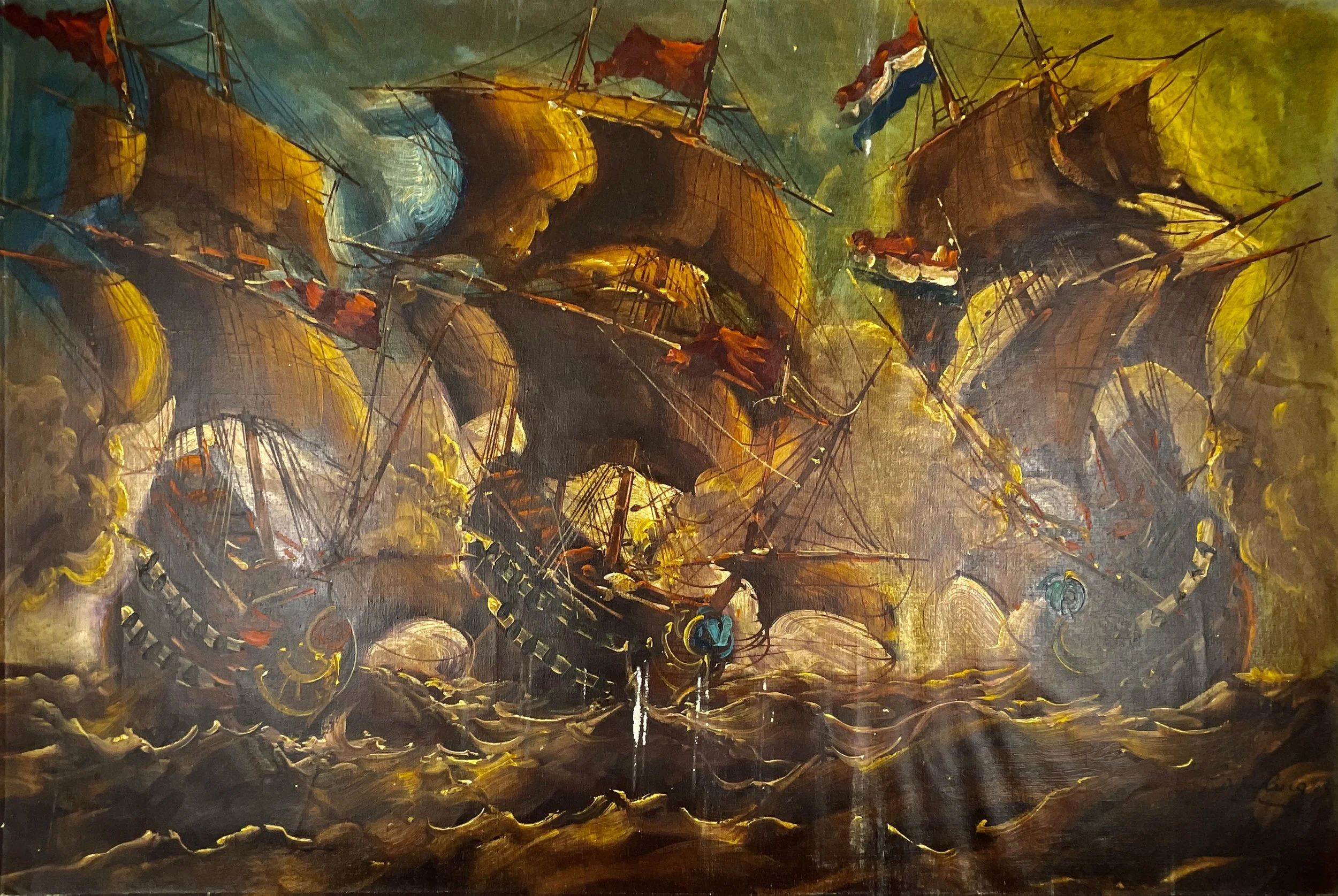
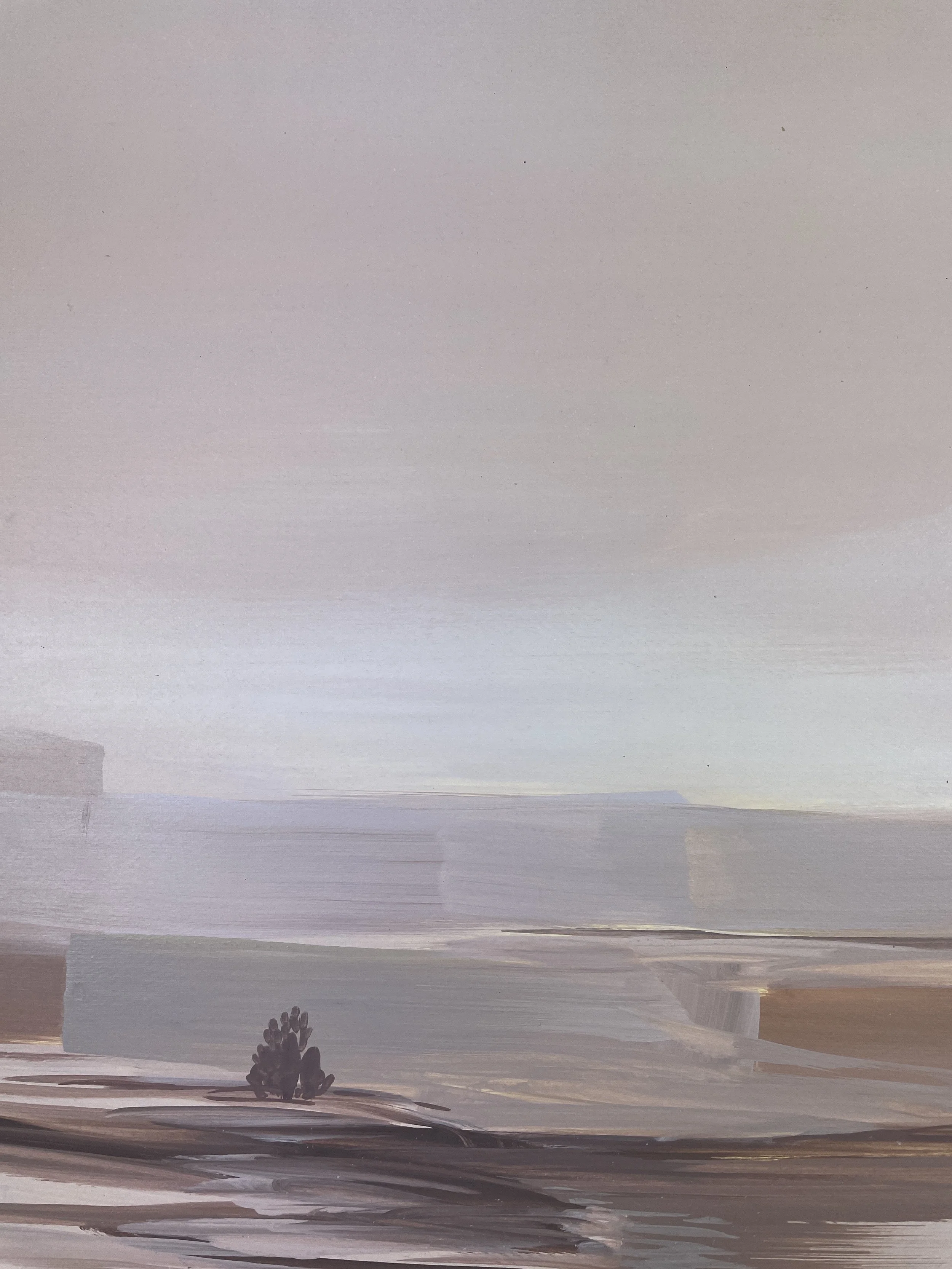
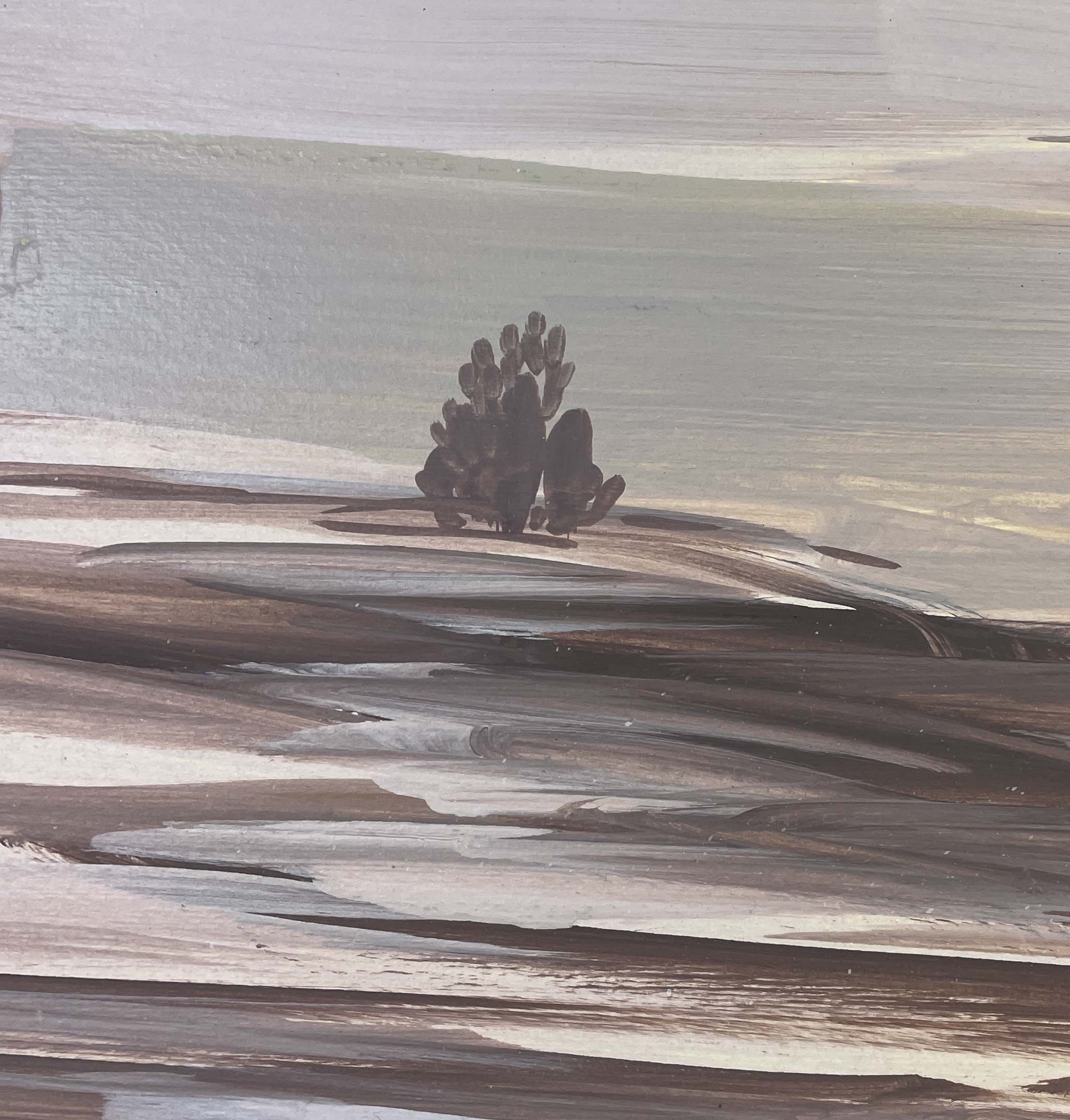
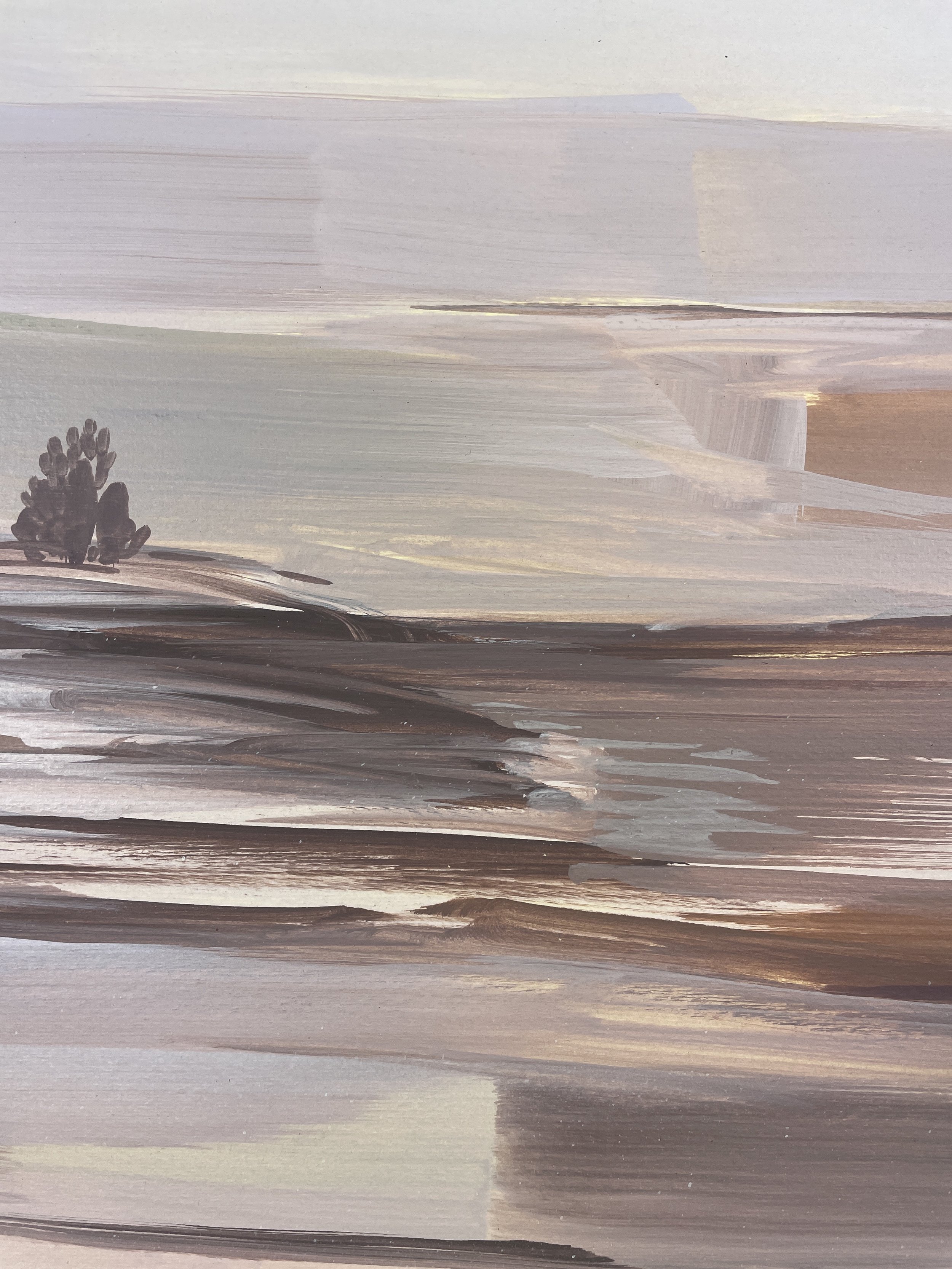
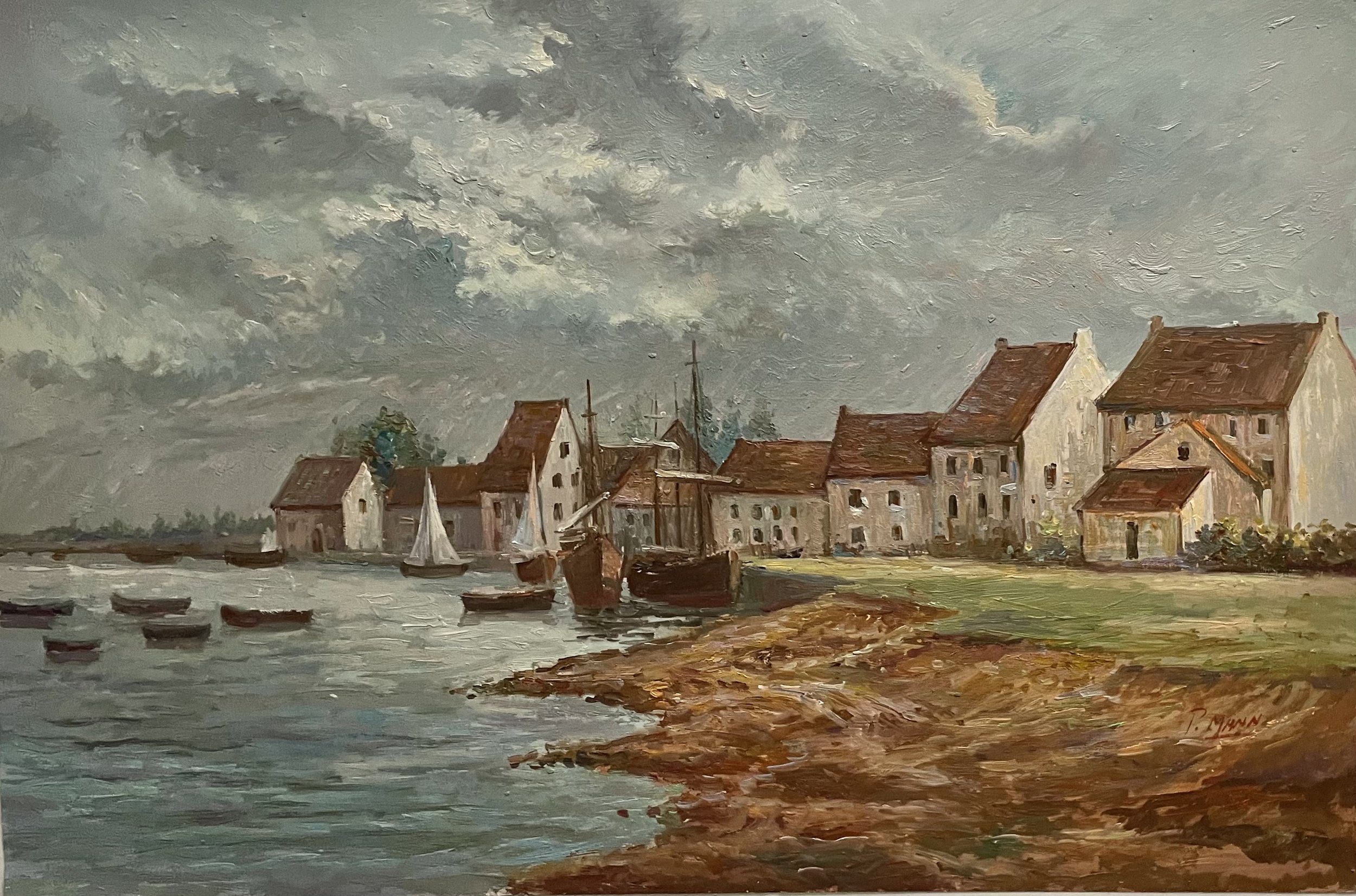
“Evening Pathway — European Tonalist Landscape (Attributed to G. Barro), c.1880–1920”
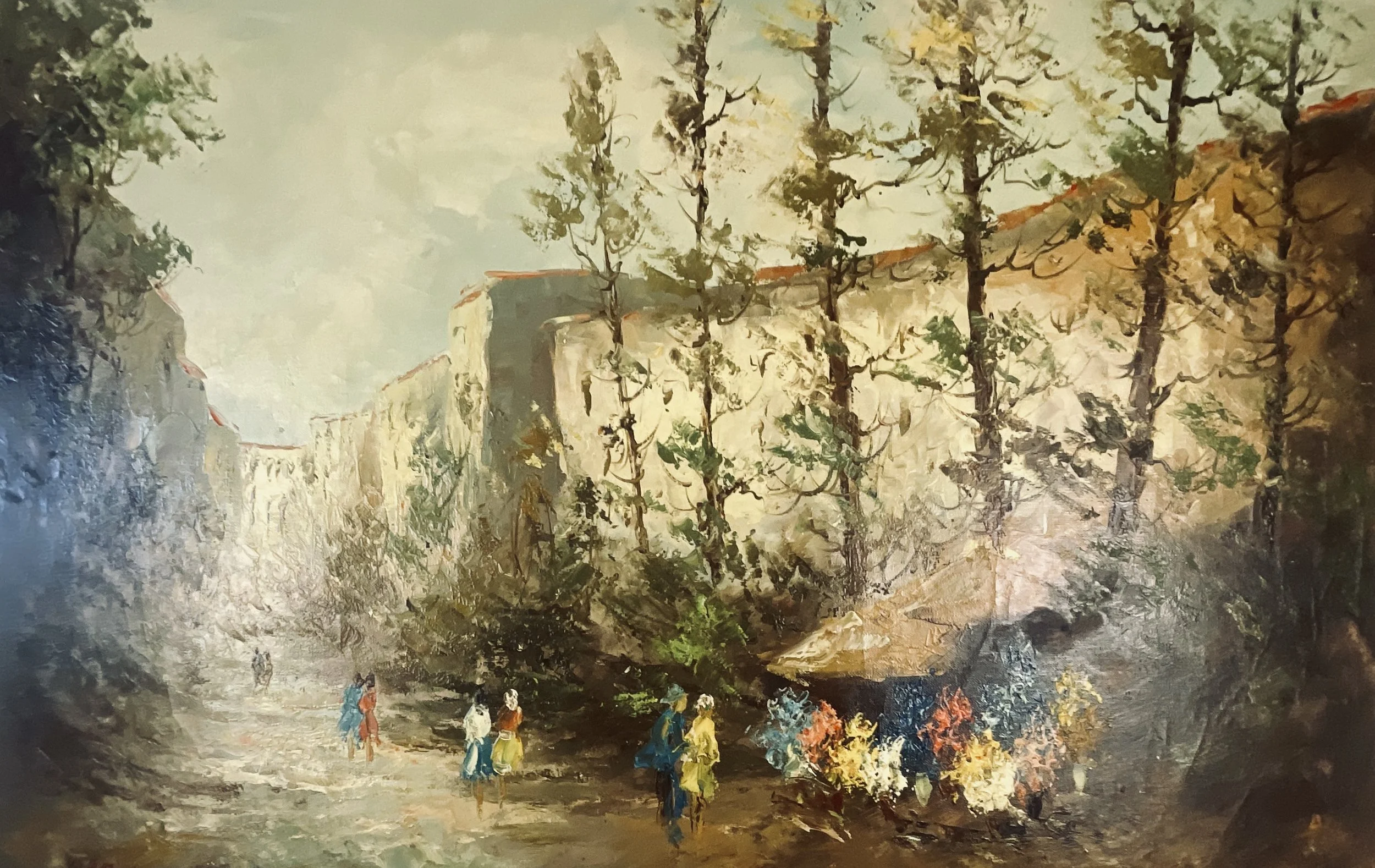
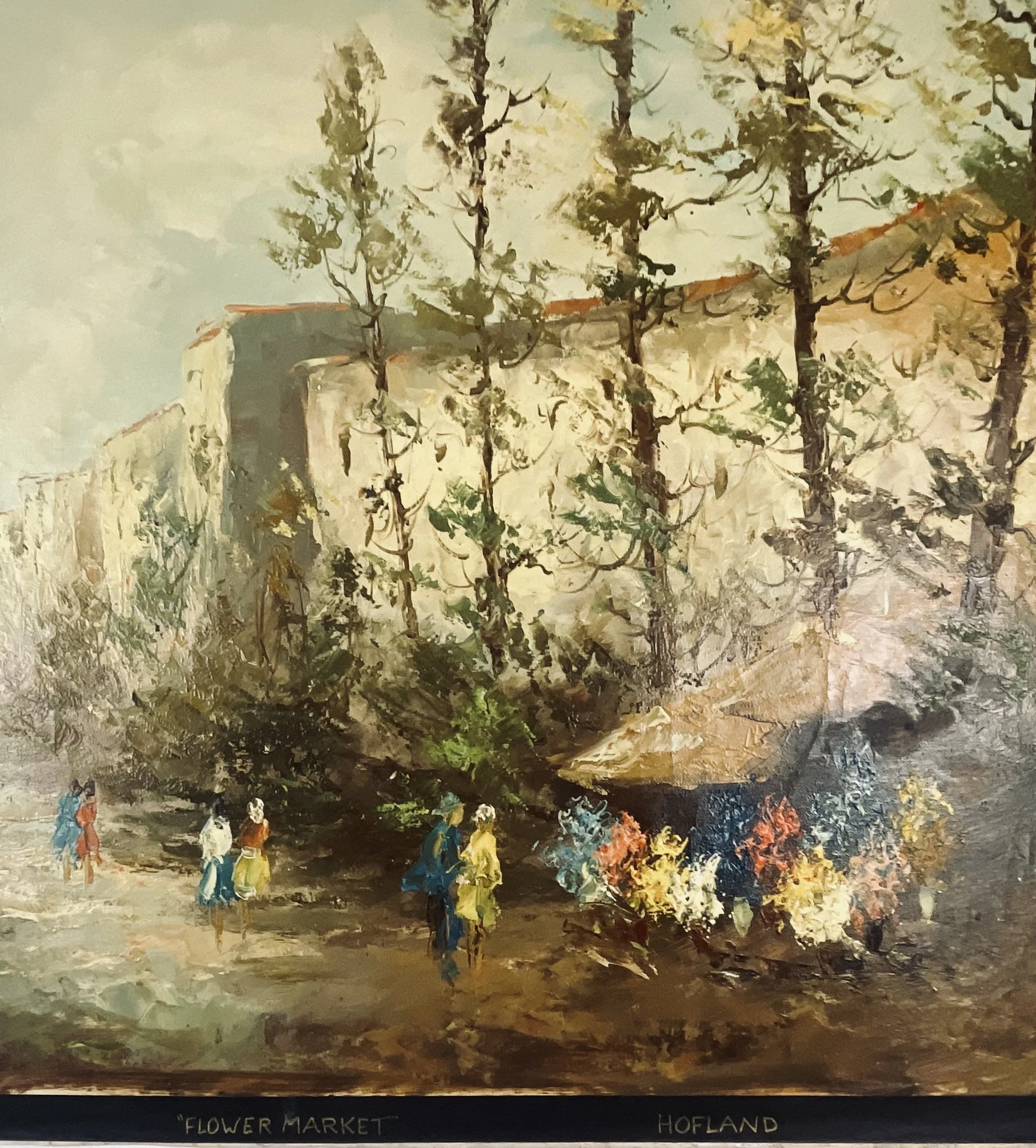
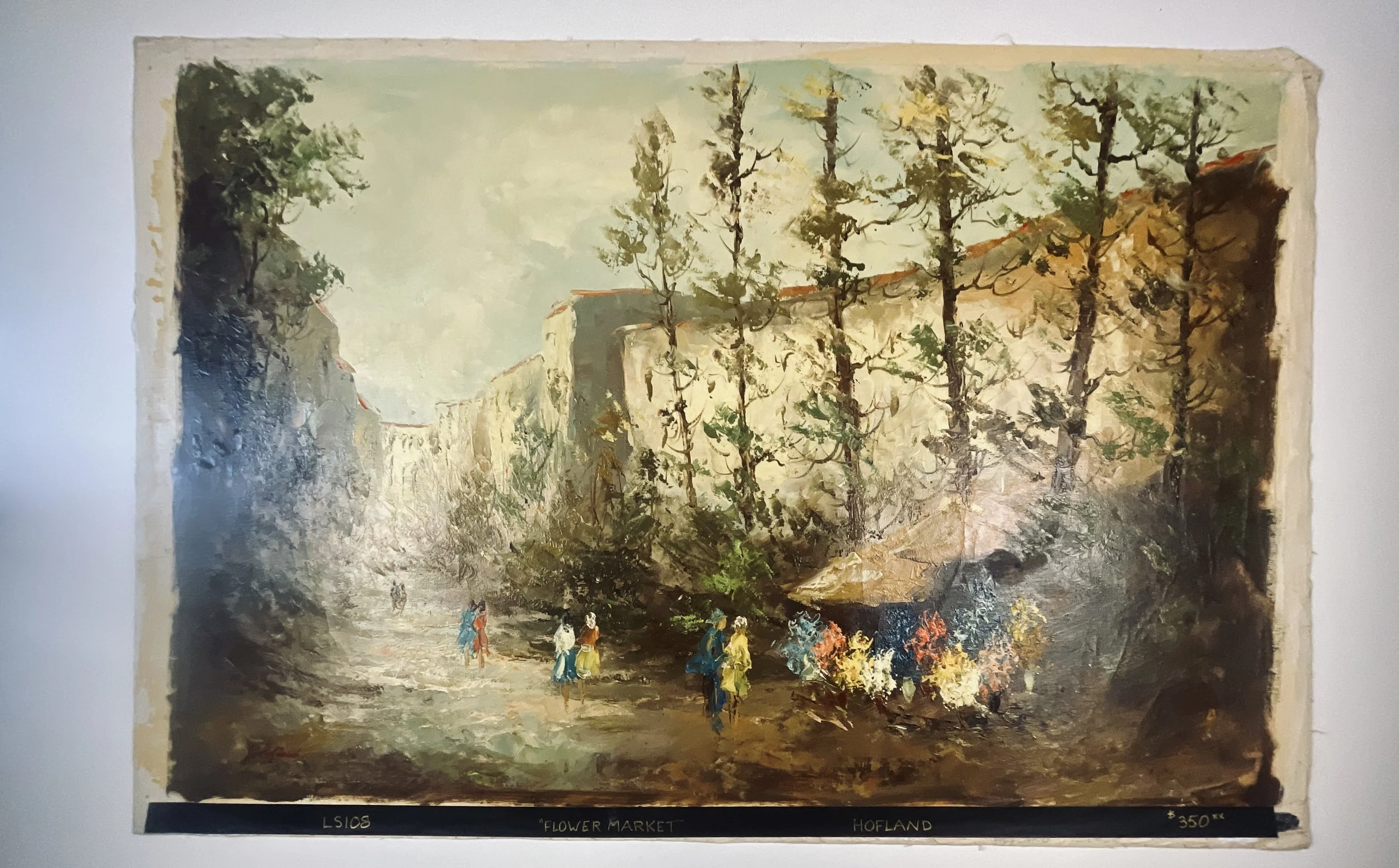
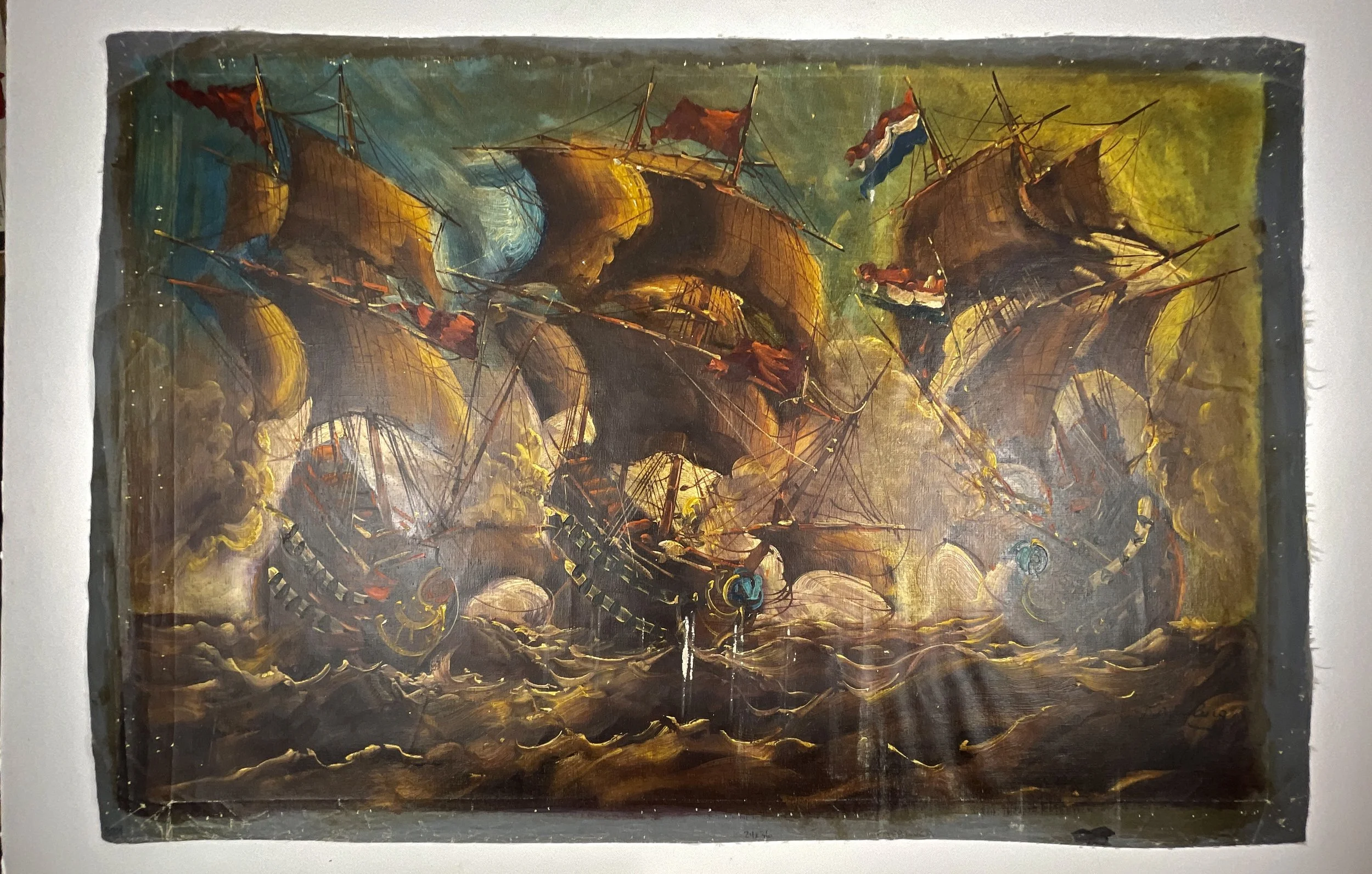
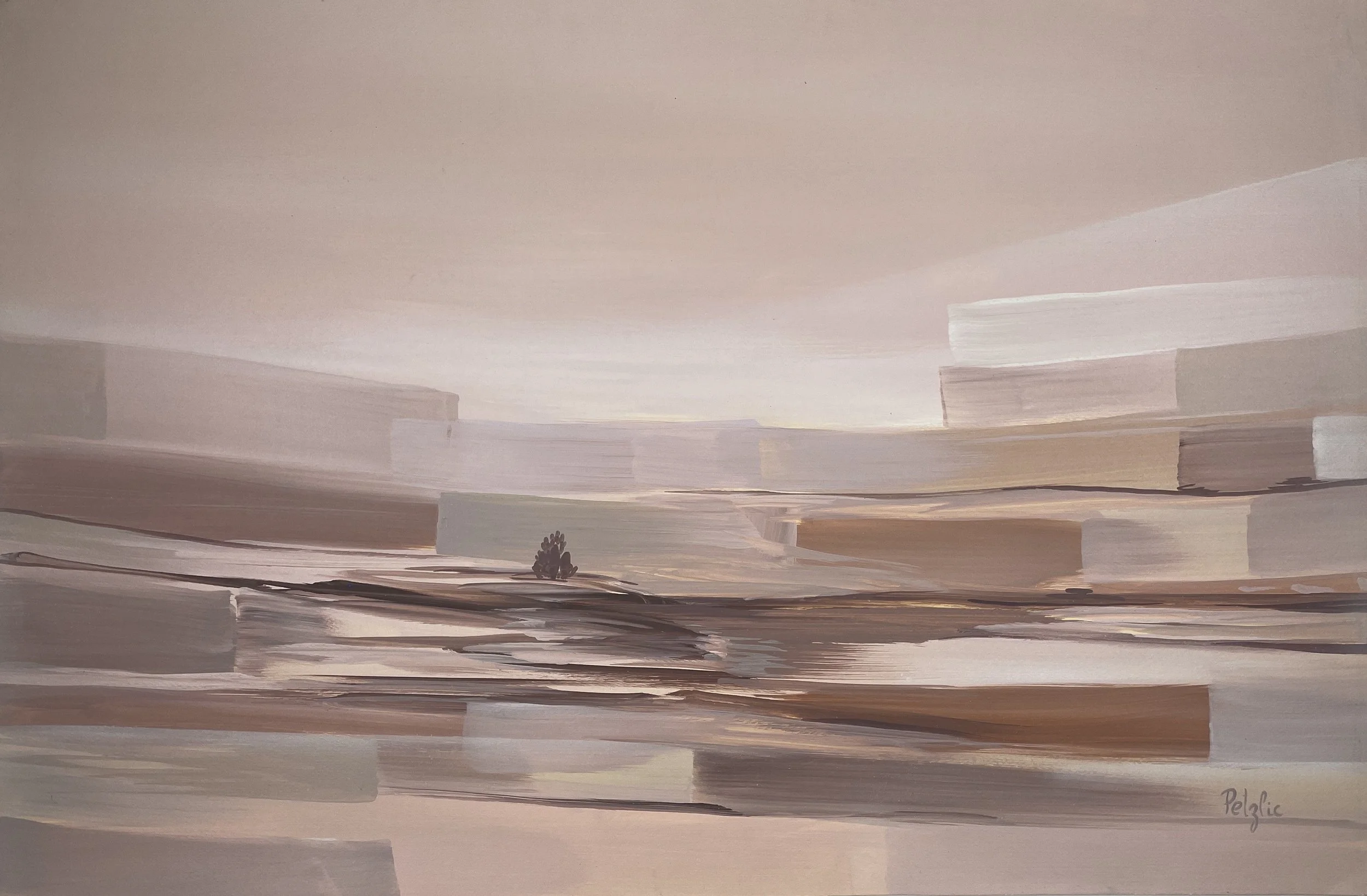
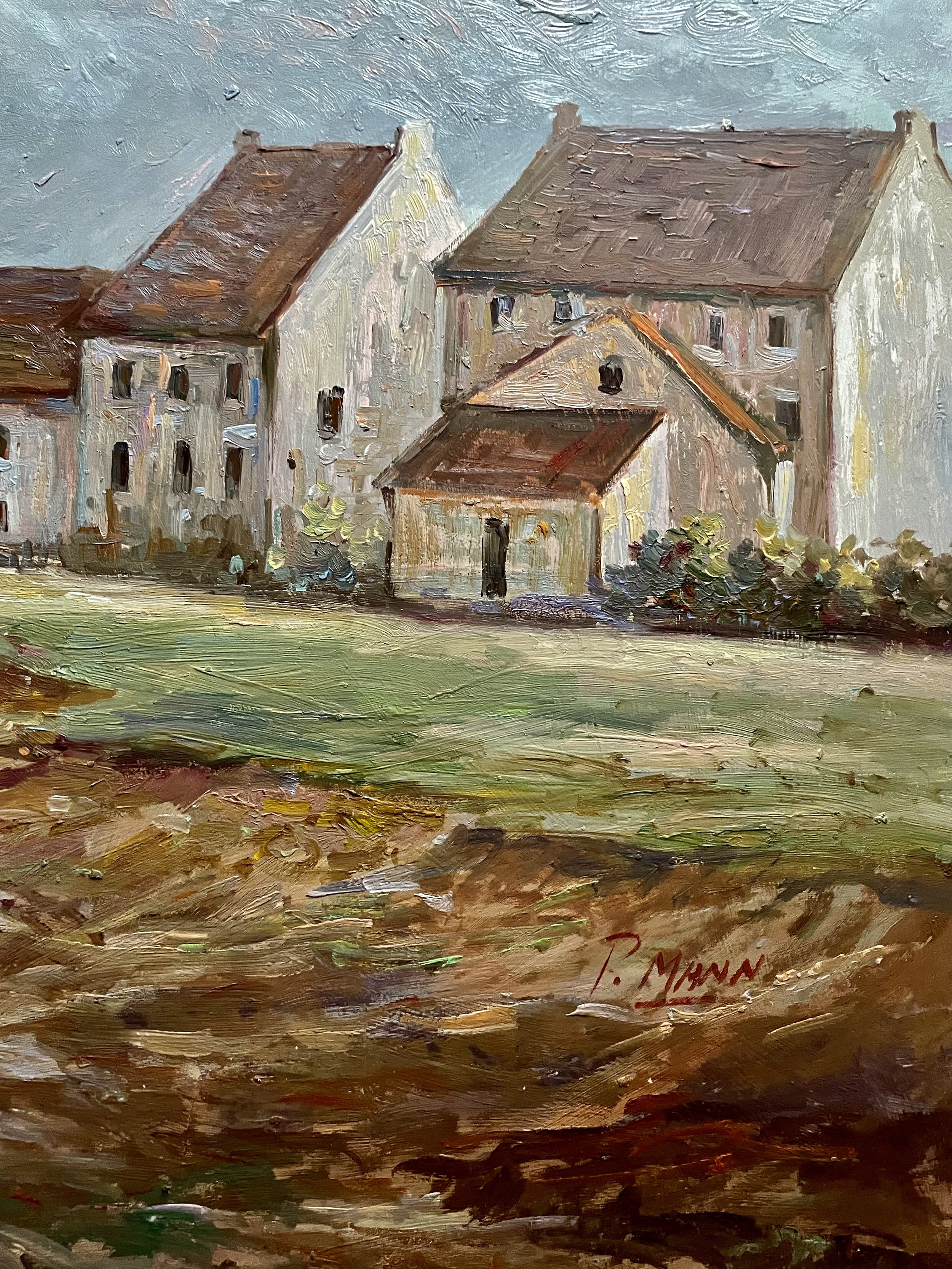
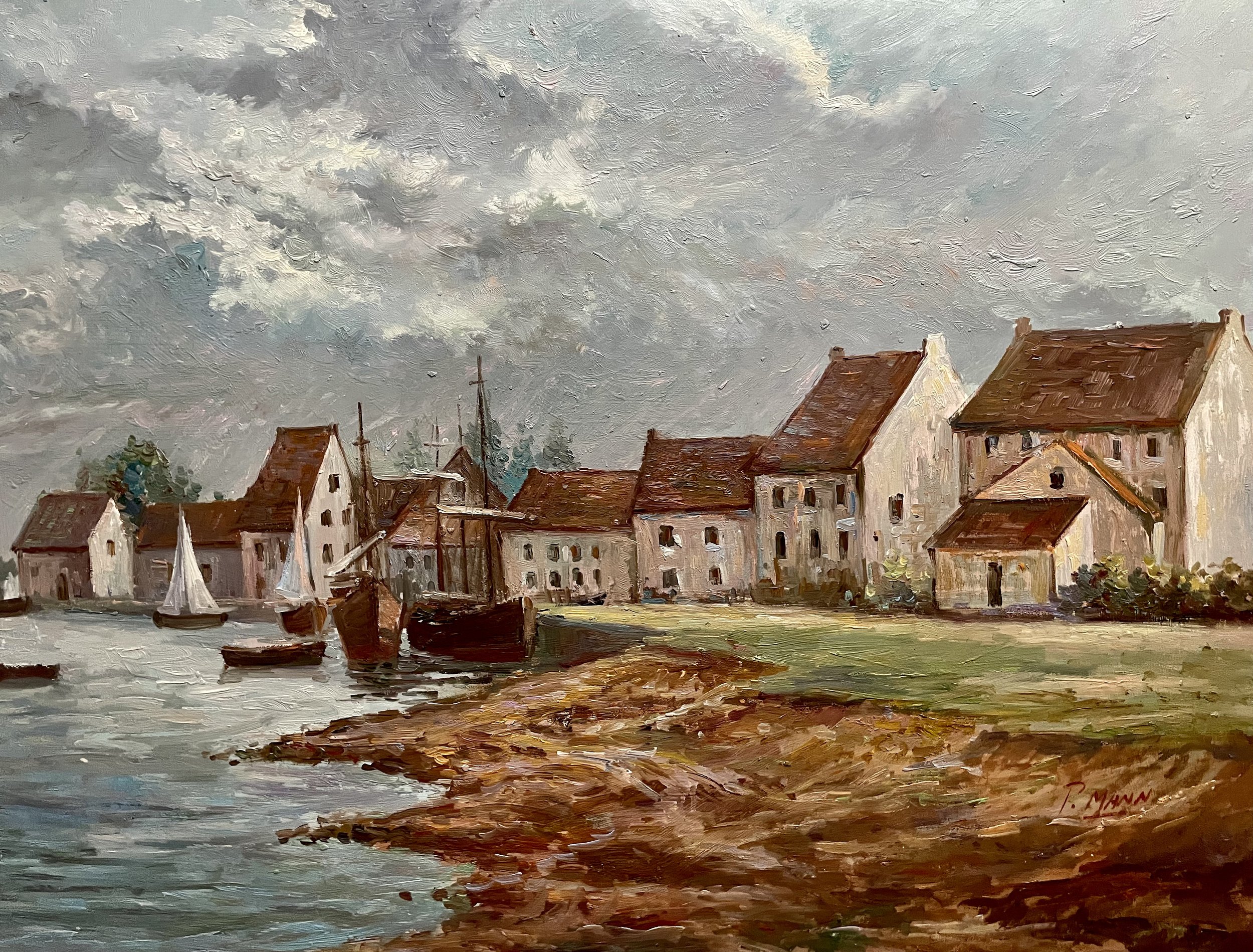
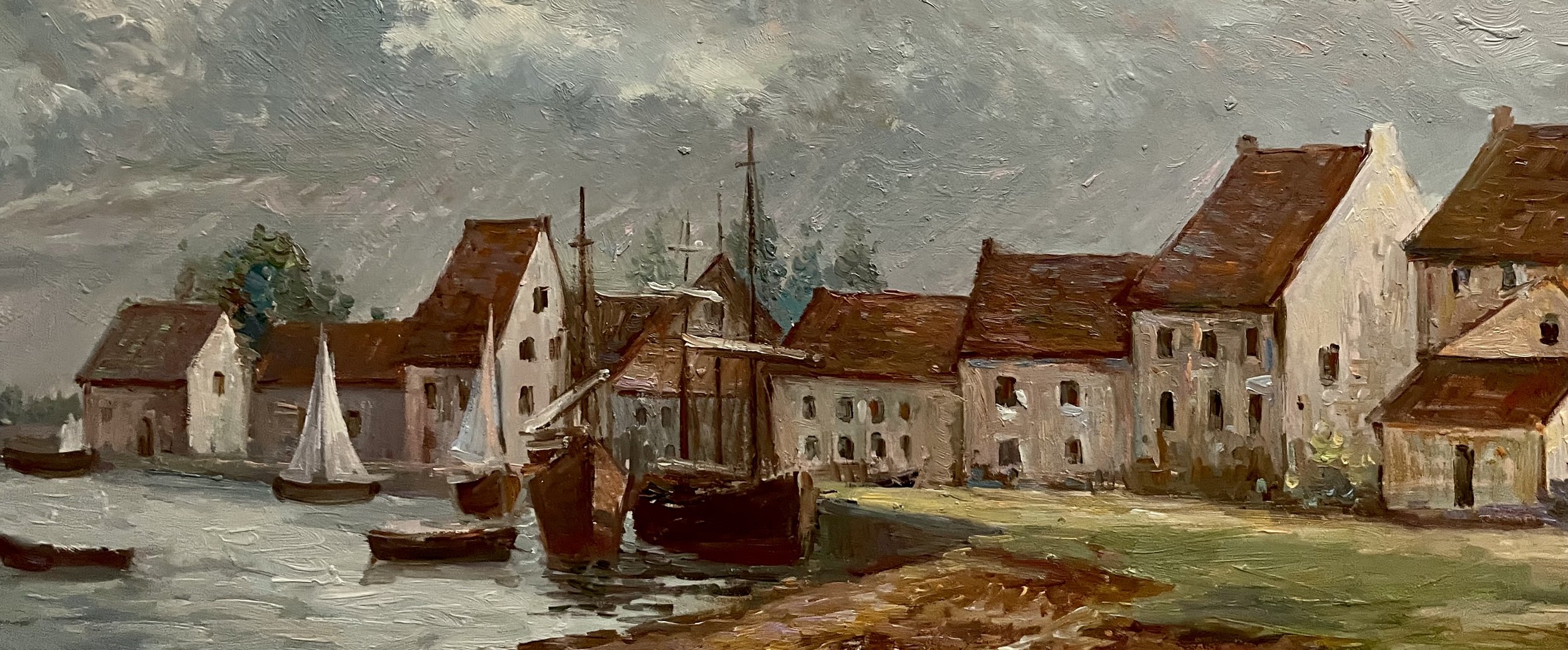
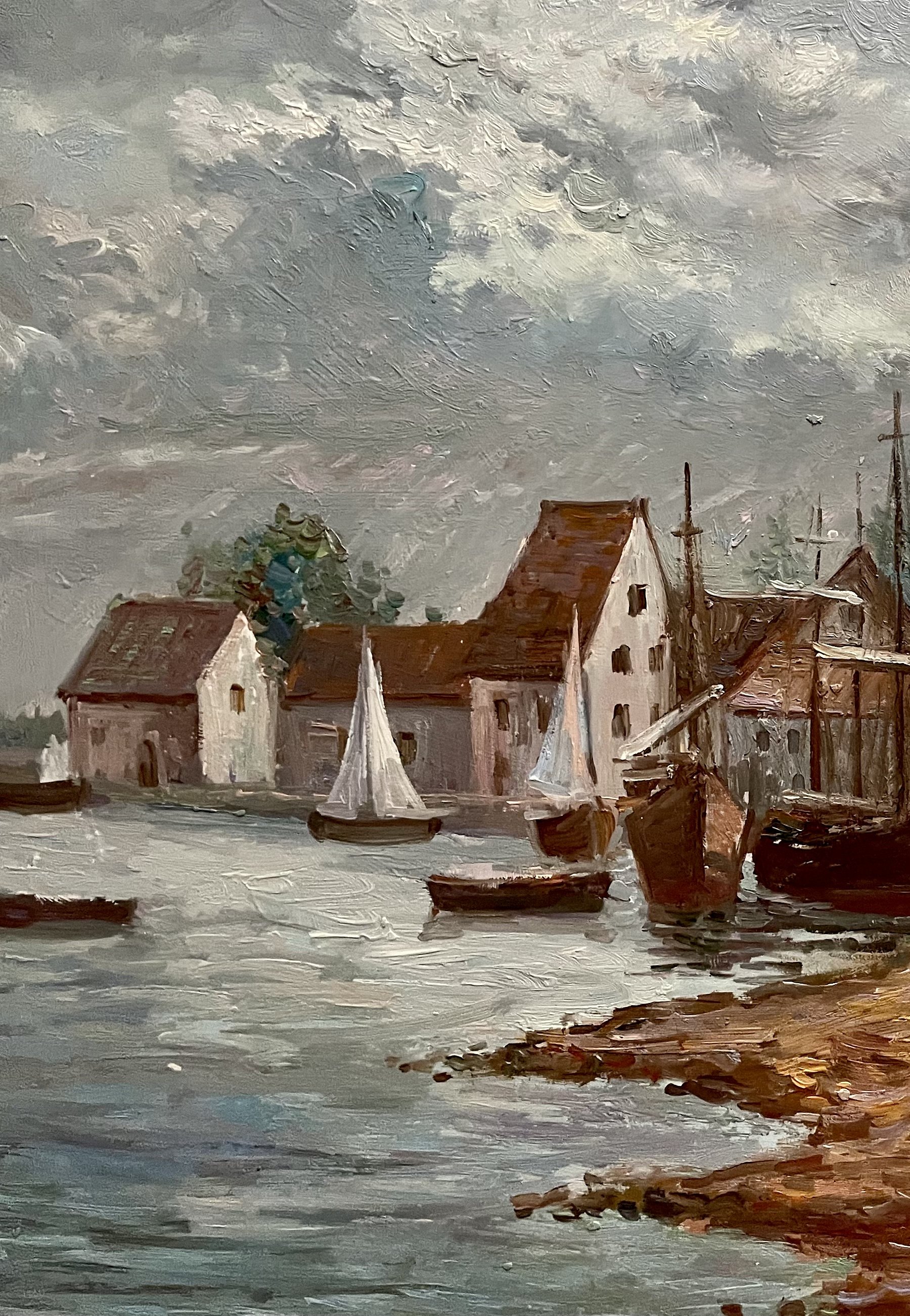
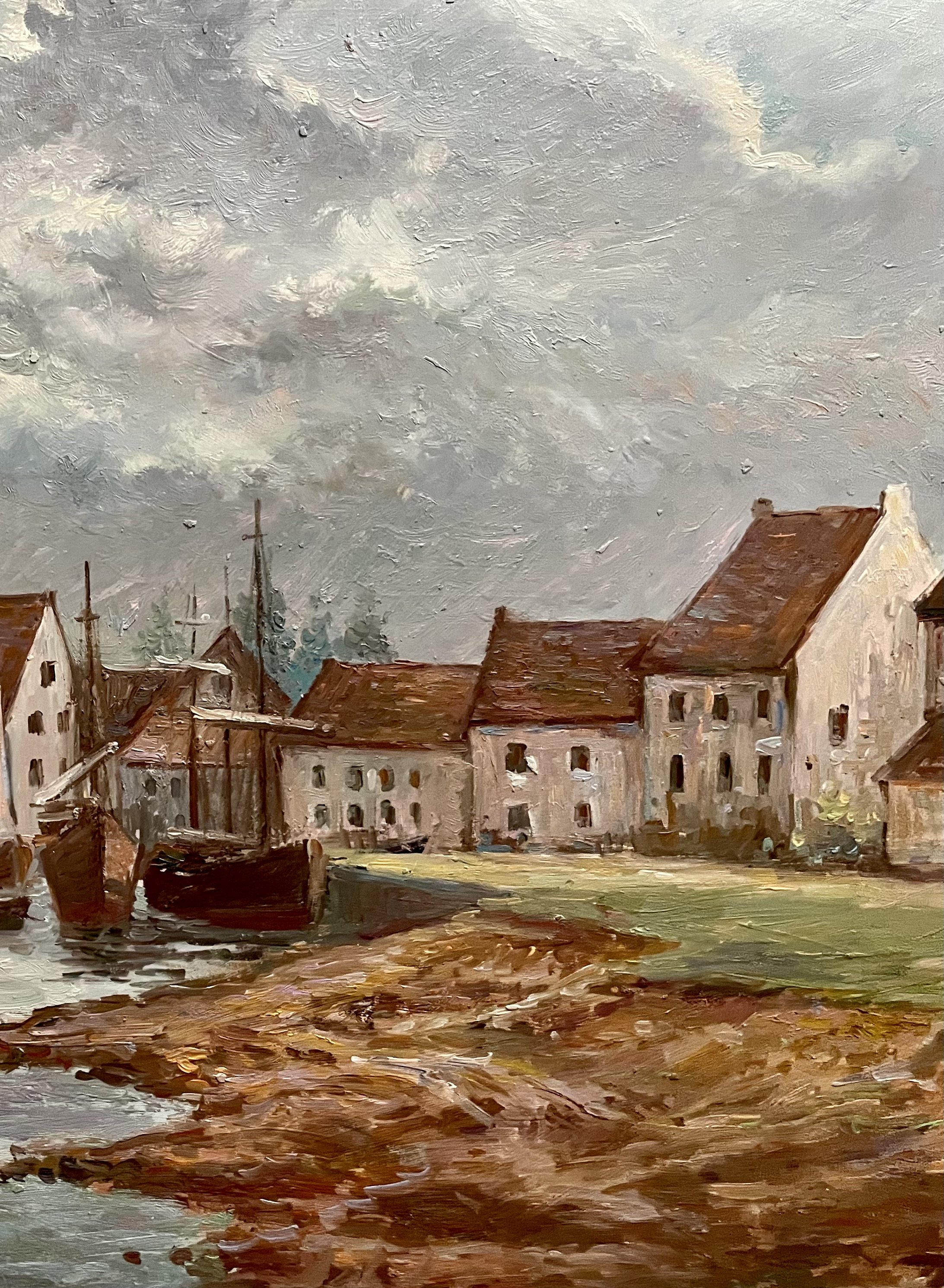
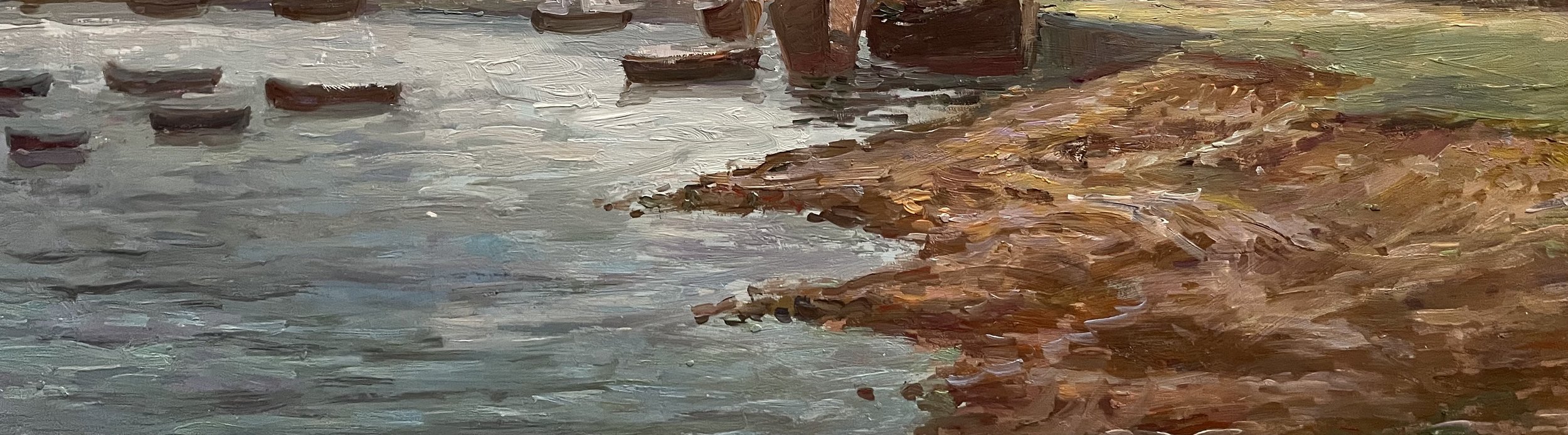
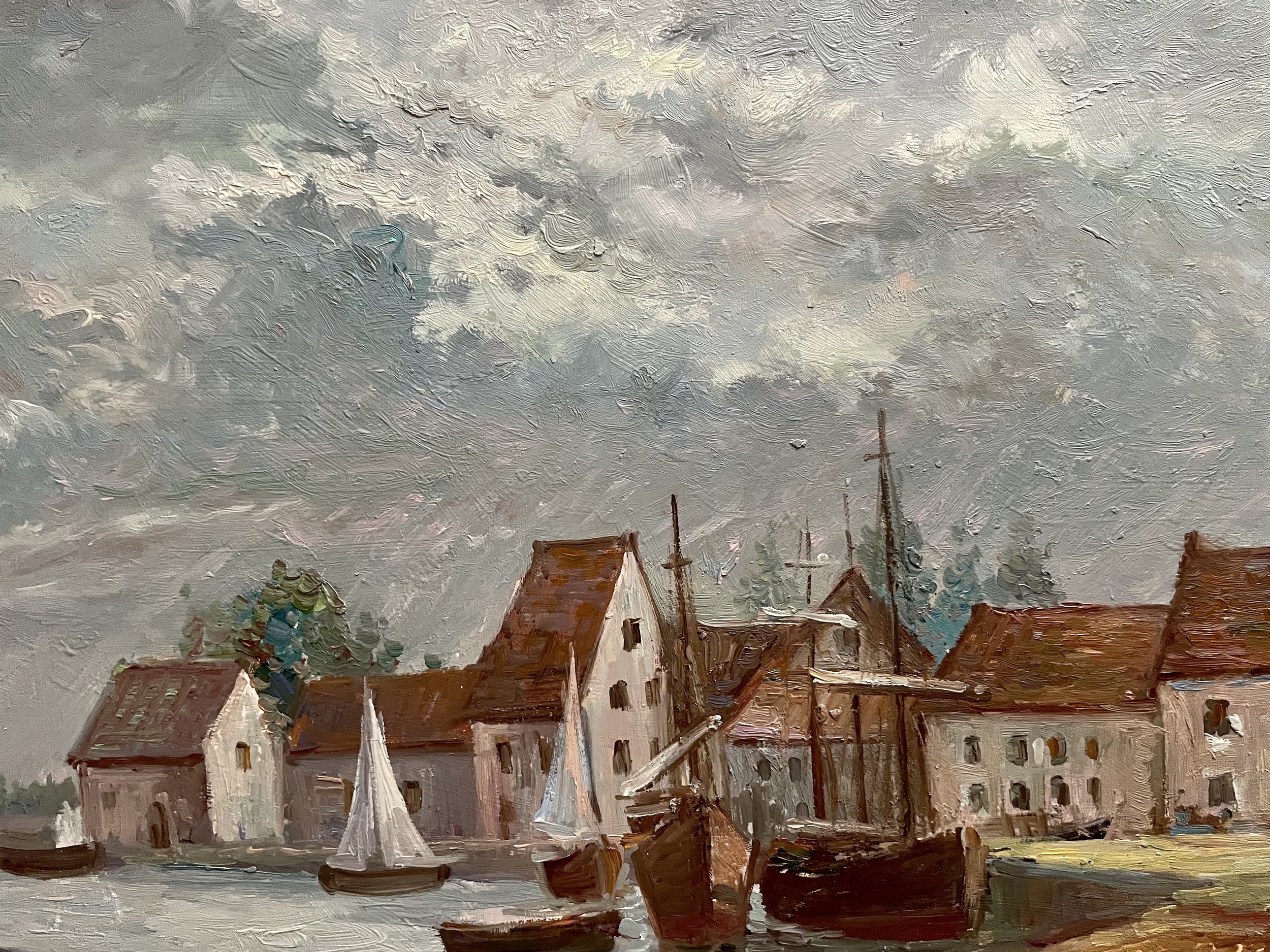
This evocative 16×20 European oil painting—signed G. Barro.—captures a timeless rural scene rendered in rich earth tones and atmospheric light. Created in the late 19th to early 20th century, the artwork reflects the influence of the Barbizon School, Romantic Tonalism, and European Realist landscape traditions. A lone traveler moves along a country road beneath a burnished, crackled sky, inviting the viewer into a moment of quiet introspection. The finely layered glazes, subtle chiaroscuro, and naturalistic foliage demonstrate the hand of a trained continental artist working within classical plein-air methodologies. Acquired in Europe and preserved with its original patina, this historic work is ideal for collectors of antique European landscapes, Barbizon-influenced painting, and pastoral realism.
DETAILED ARTWORK DESCRIPTION (16×20, Oil on Canvas)
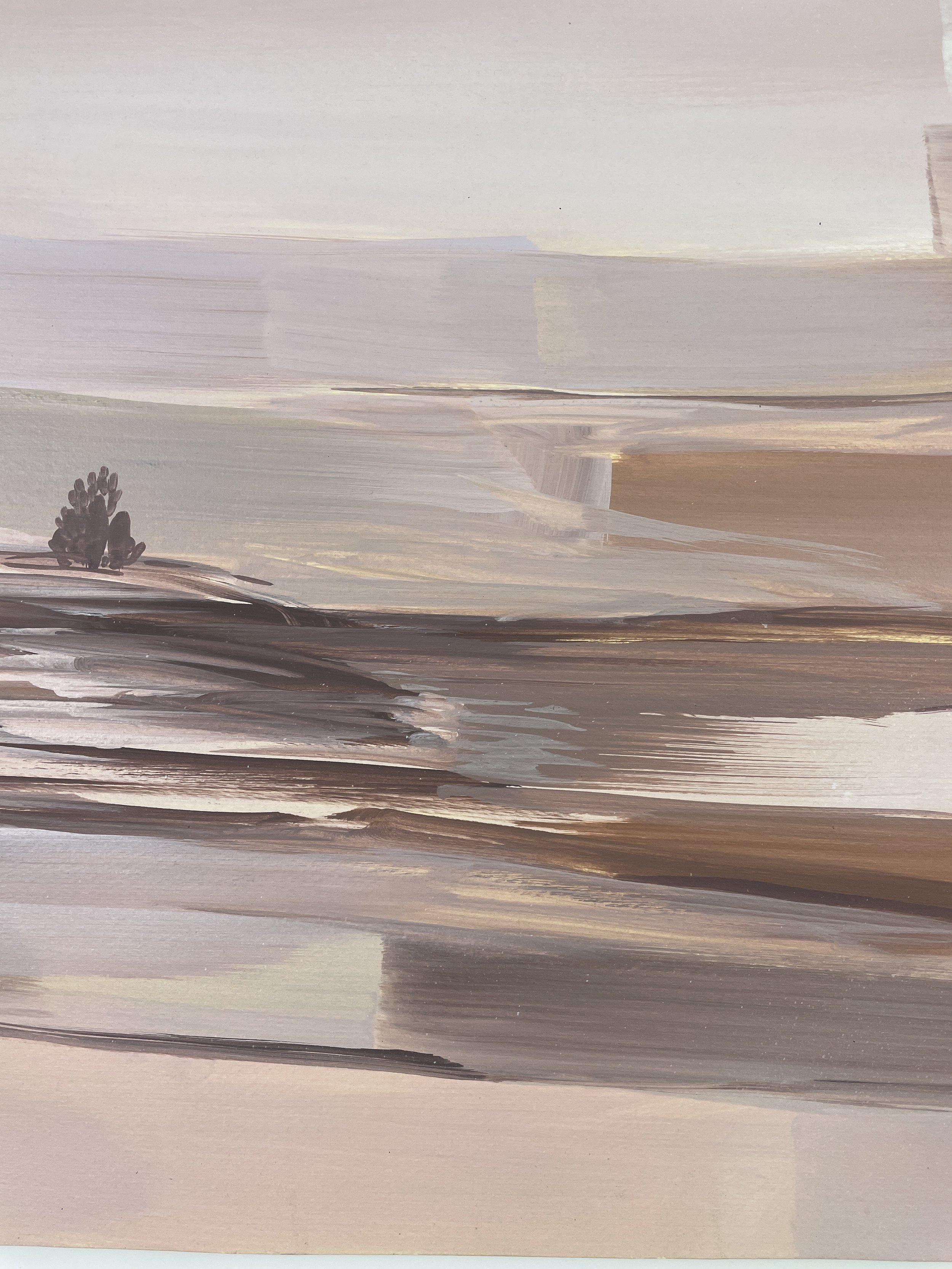
This atmospheric European landscape features a solitary traveler walking along a sun-warmed rural path, framed on both sides by dense greenery and rendered beneath a dramatic, sienna-toned sky. The crackled varnish and earth-rich palette point strongly to late 19th–early 20th-century Continental landscape traditions, particularly those associated with French Barbizon-influenced painters or regional ateliers in Germany, Belgium, and Northern France.
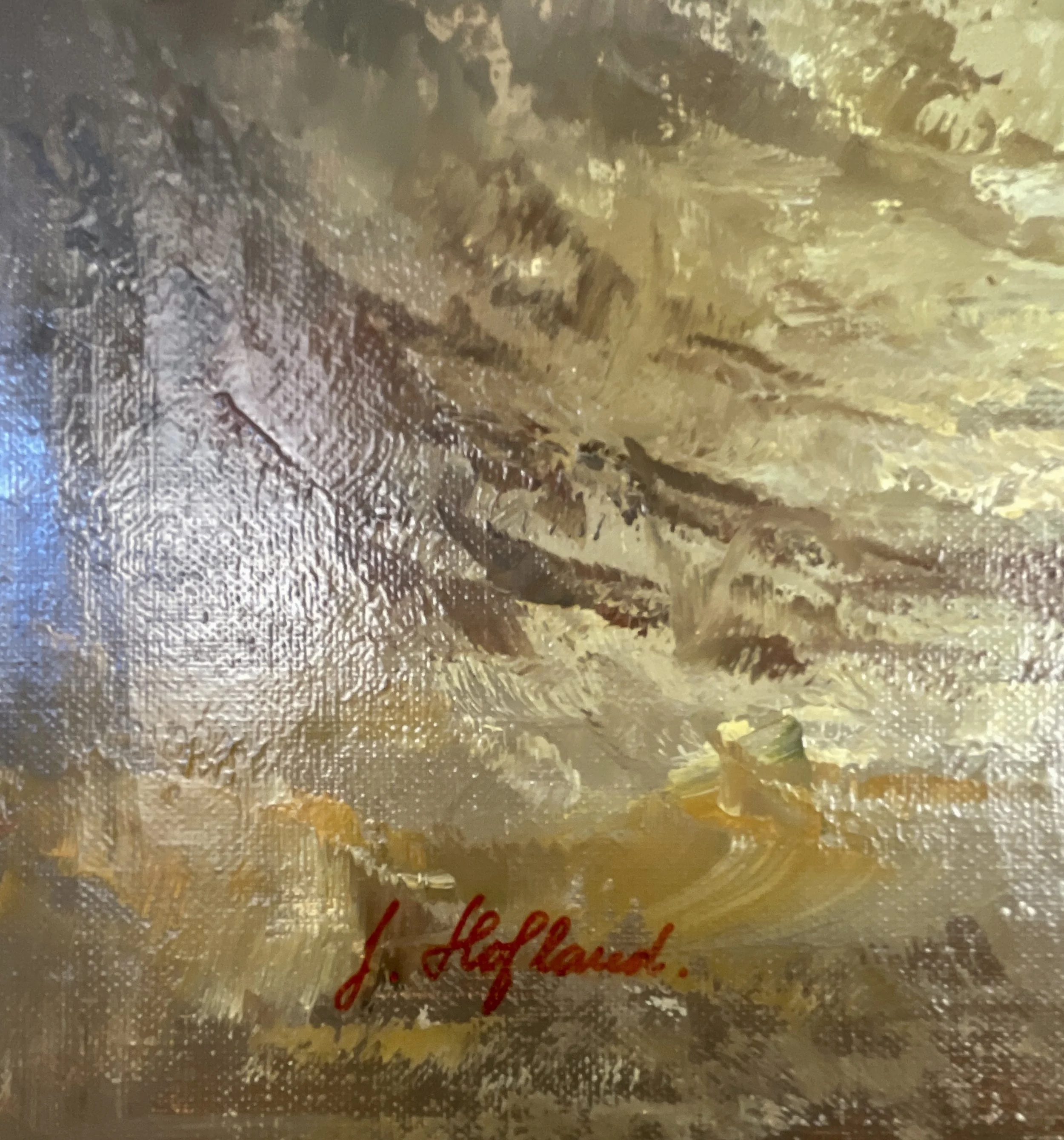
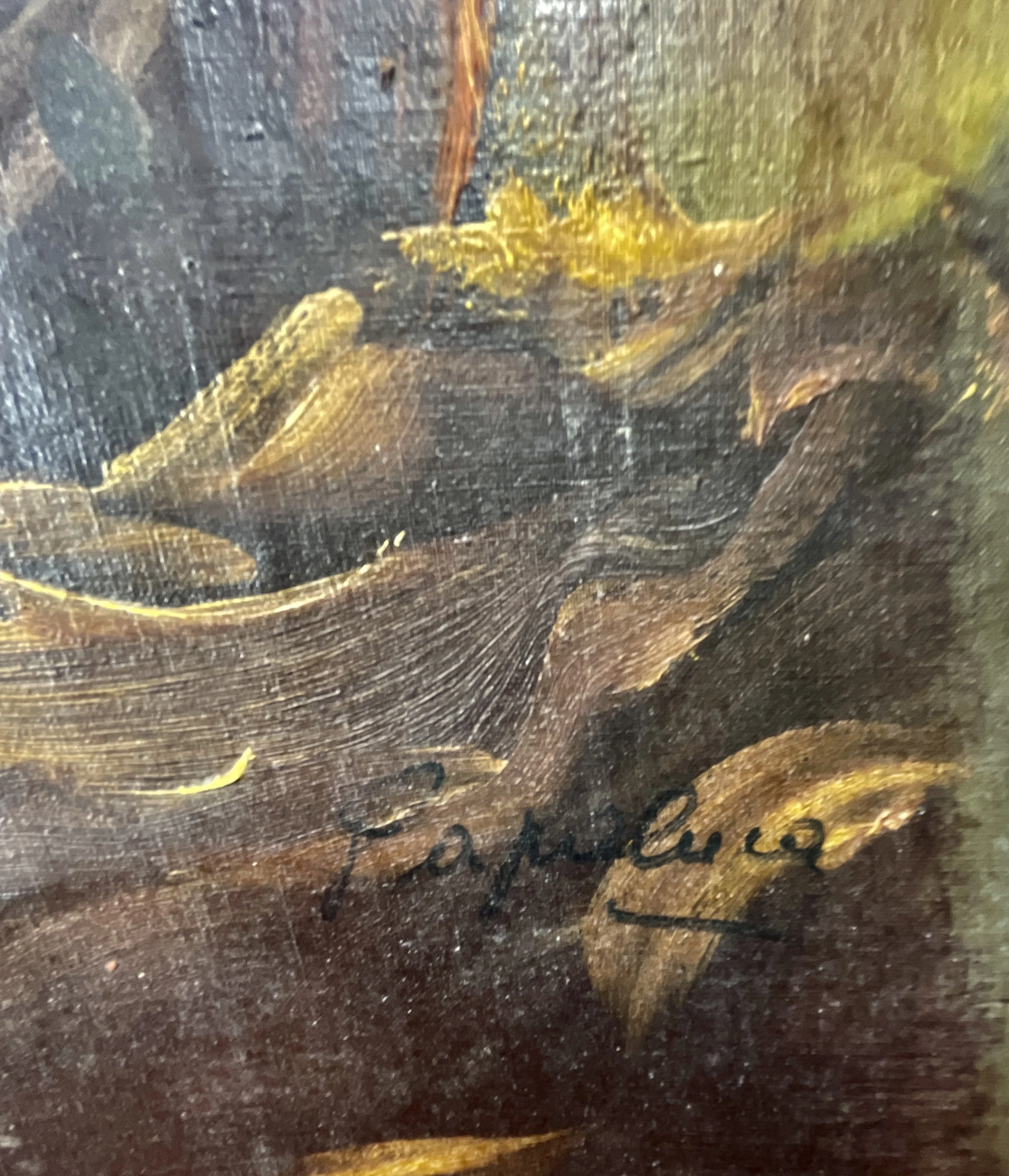
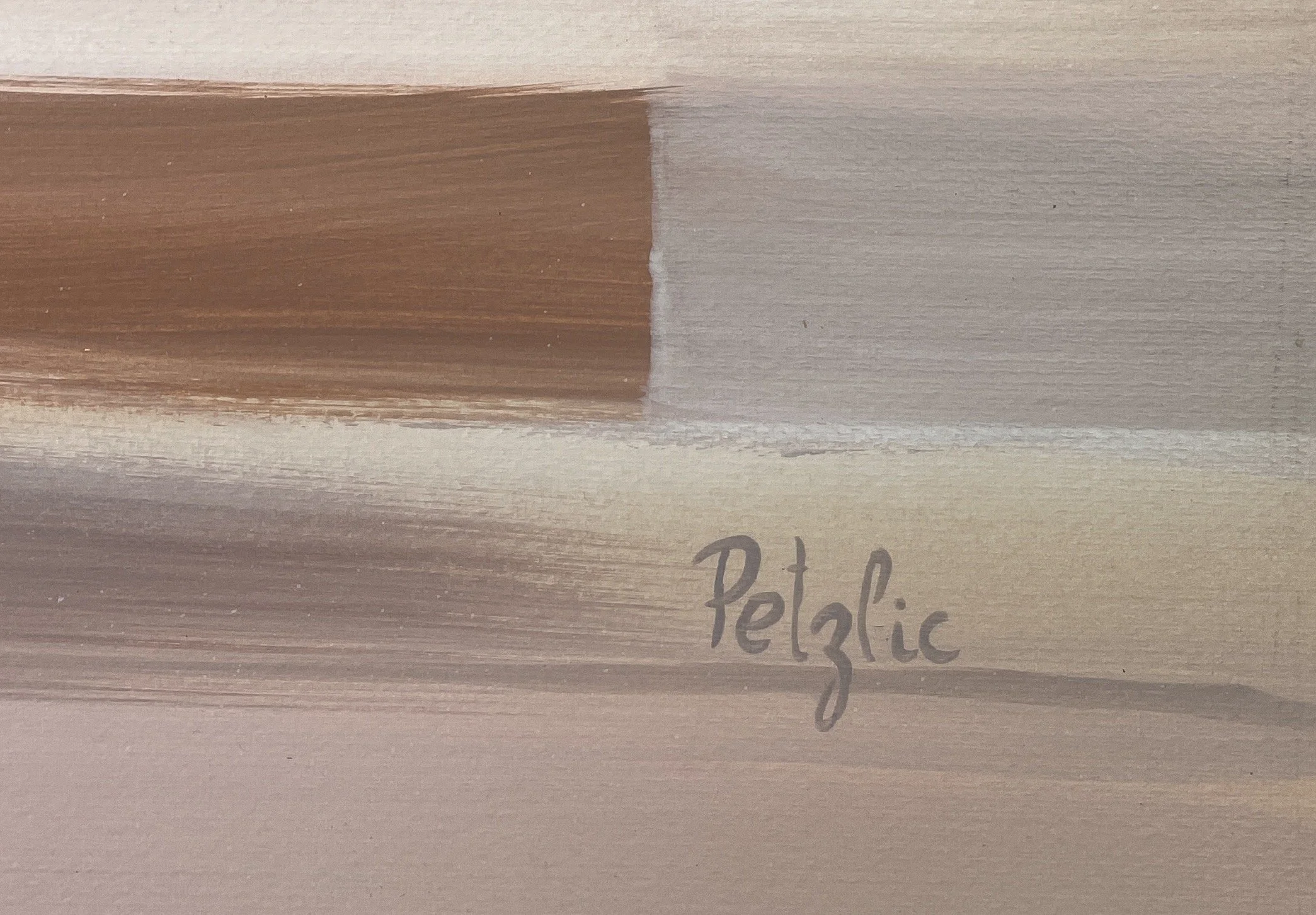
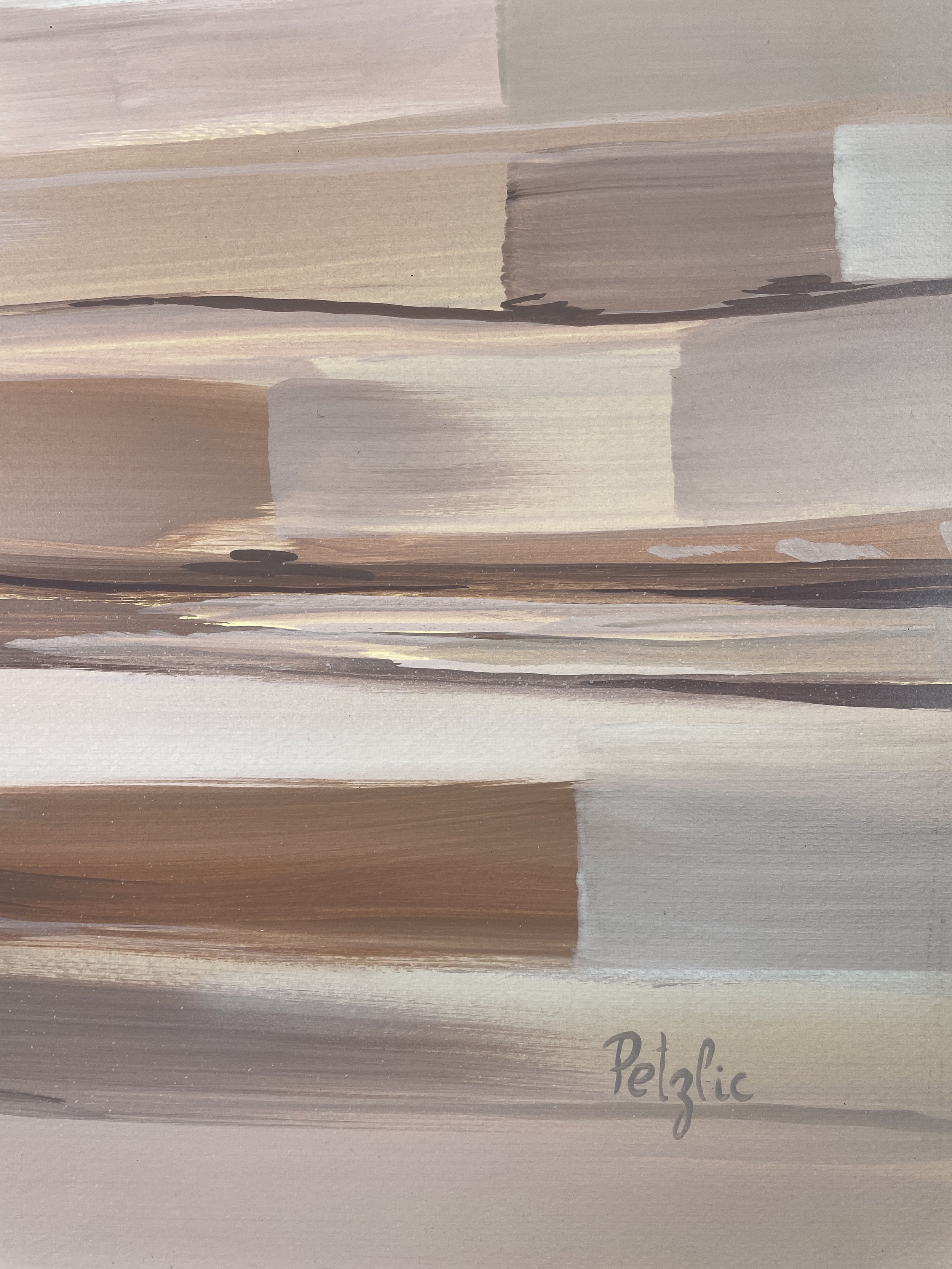
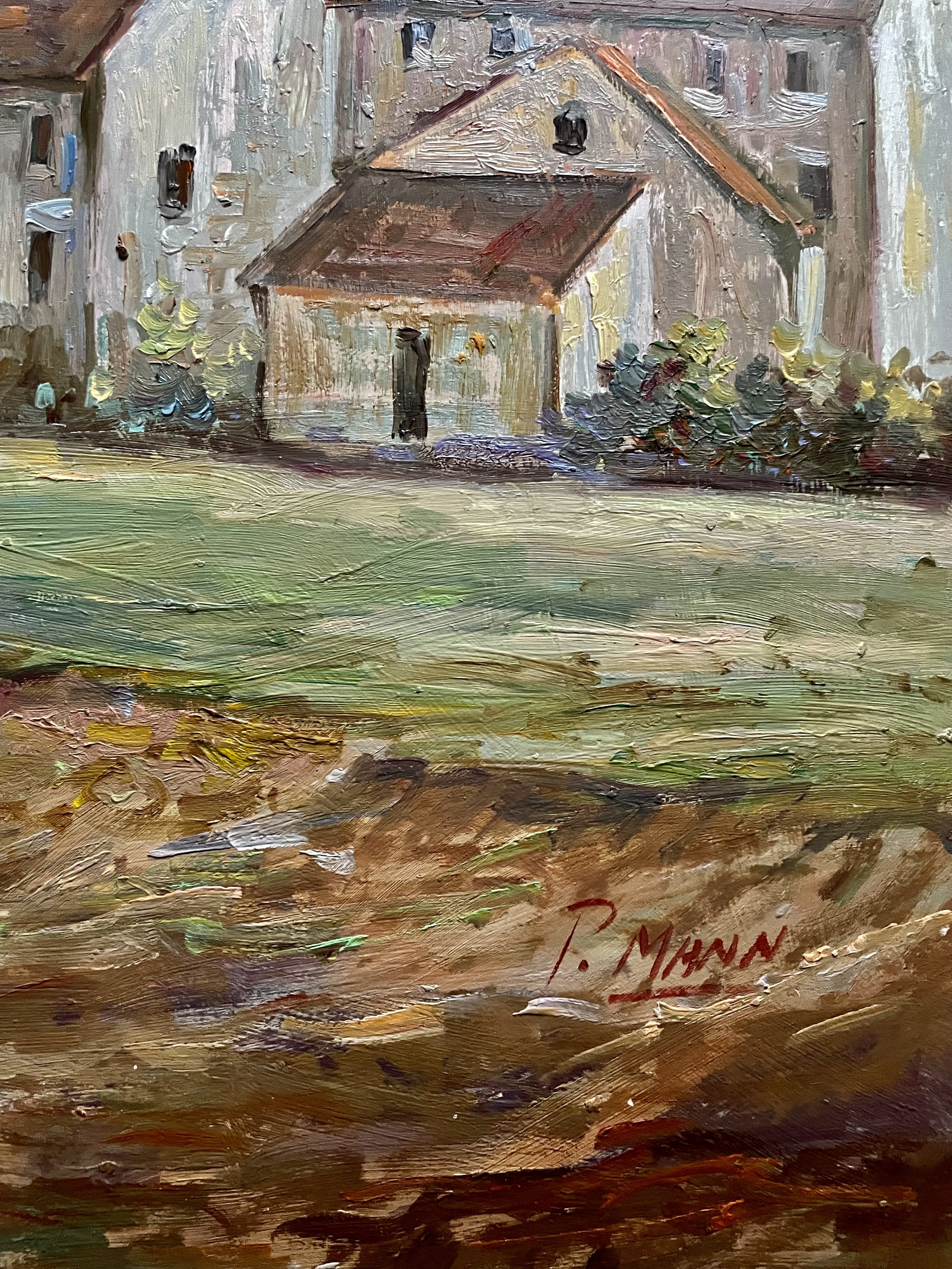
The composition is intimate and narrative—the viewer follows the lone figure as they disappear toward the horizon—suggesting a subtle Romantic sensibility merged with Realist observation. Tree masses are painted with layered glazes, while the sky displays a warm, burnished patina achieved through thin scumbles and slow-drying oils typical of the period. The signature “G. Barro.”, located at the lower right, appears in a confident, period-appropriate hand.
STYLE & PERIOD ANALYSIS
Style:
Barbizon-influenced Naturalism
Early Continental Realism
Romantic Tonalist Landscape
Atmospheric plein-air technique
Period:
Circa 1880–1920, based on:
Aging pattern and craquelure
Pigment tonality and glazing technique
Dress of the walking figure (late 19th-c silhouette)
Composition typical of post-Barbizon European schools
ATTRIBUTED ARTIST PROFILE — G. Barro(European School, late 19th–early 20th c.)
“G. Barro” is not presently associated with any documented painter in the established auction archives or authoritative artist dictionaries (e.g., Benezit, Vollmer). However, stylistic and technical examination suggests the work likely originates from a regional European landscape painter active between 1880–1920 who worked in the orbit of the Barbizon-influenced Realist schools.
Artists of this circle typically:
Trained at regional academies or private ateliers in France, Belgium, or Germany
Studied directly or indirectly from the Barbizon painters (Corot, Diaz, Daubigny)
Practiced plein-air landscape painting with a focus on rural laborers and quiet country roads
Employed layered glazes, thin atmospheric washes, and earth pigments
Exhibited in provincial salons, traveling exhibitions, or local artist associations
This work shows technical maturity consistent with such painters—confident brushwork, atmospheric modulation, and the storytelling instinct of the European Realist tradition.
INTERPRETATION & CREATIVE PROCESS
The artist appears to have:
Sketched on-site, then developed the canvas in studio
Built the composition from warm ground to successive glaze layers
Used fine sable or soft brushes for foliage detailing
Applied a final amber varnish now naturally crackled
Focused on a narrative moment: a solitary figure traveling home at dusk
The personal story embedded in the artwork reflects a cultural fascination with rural simplicity at the turn of the century—a time when industrialization heightened the value of pastoral scenes.
European Landscape with Traveler, c.1880–1920
Signed: G. Barro. (lower right)
Medium: Oil on canvas
Size: 16 × 20 in.
Style: Barbizon / Early European Realism / Tonalist
Origin: Acquired in Europe
A warm, atmospheric landscape featuring a lone figure on a rural path. Strong tonal composition and period craquelure. An attractive example of late 19th–early 20th-century Continental landscape painting.
CERTIFICATE OF VALUE & AUTHENTICATION
Artist: Attributed to G. Barro (European School, late 19th–early 20th century)
Title: Evening Pathway (Landscape with Traveler)
Medium: Oil on Canvas
Dimensions: 16 × 20 inches
Signature: “G. Barro.” lower right
Period: c.1880–1920
Style: European Realism / Barbizon-Influenced / Tonalist
Origin: Acquired in Europe
Assessment:
Based on stylistic characteristics, material aging, and signature form, this painting is consistent with European Realist and Tonalist works produced between 1880 and the early 20th century. The varnish craquelure and layered glazing are appropriate for a work of this age. No evidence of modern reproduction techniques is present.
PROVENANCE CHAIN
Private Collection, Europe — acquired mid-20th century (exact date undocumented)
European Estate / Secondary Market — released through continental auction
Artfind Gallery, Washington, DC — acquired 2025, current owner of record
“Evening Pathway — European Tonalist Landscape (Attributed to G. Barro), c.1880–1920”
This evocative 16×20 European oil painting—signed G. Barro.—captures a timeless rural scene rendered in rich earth tones and atmospheric light. Created in the late 19th to early 20th century, the artwork reflects the influence of the Barbizon School, Romantic Tonalism, and European Realist landscape traditions. A lone traveler moves along a country road beneath a burnished, crackled sky, inviting the viewer into a moment of quiet introspection. The finely layered glazes, subtle chiaroscuro, and naturalistic foliage demonstrate the hand of a trained continental artist working within classical plein-air methodologies. Acquired in Europe and preserved with its original patina, this historic work is ideal for collectors of antique European landscapes, Barbizon-influenced painting, and pastoral realism.
DETAILED ARTWORK DESCRIPTION (16×20, Oil on Canvas)
This atmospheric European landscape features a solitary traveler walking along a sun-warmed rural path, framed on both sides by dense greenery and rendered beneath a dramatic, sienna-toned sky. The crackled varnish and earth-rich palette point strongly to late 19th–early 20th-century Continental landscape traditions, particularly those associated with French Barbizon-influenced painters or regional ateliers in Germany, Belgium, and Northern France.
The composition is intimate and narrative—the viewer follows the lone figure as they disappear toward the horizon—suggesting a subtle Romantic sensibility merged with Realist observation. Tree masses are painted with layered glazes, while the sky displays a warm, burnished patina achieved through thin scumbles and slow-drying oils typical of the period. The signature “G. Barro.”, located at the lower right, appears in a confident, period-appropriate hand.
STYLE & PERIOD ANALYSIS
Style:
Barbizon-influenced Naturalism
Early Continental Realism
Romantic Tonalist Landscape
Atmospheric plein-air technique
Period:
Circa 1880–1920, based on:
Aging pattern and craquelure
Pigment tonality and glazing technique
Dress of the walking figure (late 19th-c silhouette)
Composition typical of post-Barbizon European schools
ATTRIBUTED ARTIST PROFILE — G. Barro(European School, late 19th–early 20th c.)
“G. Barro” is not presently associated with any documented painter in the established auction archives or authoritative artist dictionaries (e.g., Benezit, Vollmer). However, stylistic and technical examination suggests the work likely originates from a regional European landscape painter active between 1880–1920 who worked in the orbit of the Barbizon-influenced Realist schools.
Artists of this circle typically:
Trained at regional academies or private ateliers in France, Belgium, or Germany
Studied directly or indirectly from the Barbizon painters (Corot, Diaz, Daubigny)
Practiced plein-air landscape painting with a focus on rural laborers and quiet country roads
Employed layered glazes, thin atmospheric washes, and earth pigments
Exhibited in provincial salons, traveling exhibitions, or local artist associations
This work shows technical maturity consistent with such painters—confident brushwork, atmospheric modulation, and the storytelling instinct of the European Realist tradition.
INTERPRETATION & CREATIVE PROCESS
The artist appears to have:
Sketched on-site, then developed the canvas in studio
Built the composition from warm ground to successive glaze layers
Used fine sable or soft brushes for foliage detailing
Applied a final amber varnish now naturally crackled
Focused on a narrative moment: a solitary figure traveling home at dusk
The personal story embedded in the artwork reflects a cultural fascination with rural simplicity at the turn of the century—a time when industrialization heightened the value of pastoral scenes.
European Landscape with Traveler, c.1880–1920
Signed: G. Barro. (lower right)
Medium: Oil on canvas
Size: 16 × 20 in.
Style: Barbizon / Early European Realism / Tonalist
Origin: Acquired in Europe
A warm, atmospheric landscape featuring a lone figure on a rural path. Strong tonal composition and period craquelure. An attractive example of late 19th–early 20th-century Continental landscape painting.
CERTIFICATE OF VALUE & AUTHENTICATION
Artist: Attributed to G. Barro (European School, late 19th–early 20th century)
Title: Evening Pathway (Landscape with Traveler)
Medium: Oil on Canvas
Dimensions: 16 × 20 inches
Signature: “G. Barro.” lower right
Period: c.1880–1920
Style: European Realism / Barbizon-Influenced / Tonalist
Origin: Acquired in Europe
Assessment:
Based on stylistic characteristics, material aging, and signature form, this painting is consistent with European Realist and Tonalist works produced between 1880 and the early 20th century. The varnish craquelure and layered glazing are appropriate for a work of this age. No evidence of modern reproduction techniques is present.
PROVENANCE CHAIN
Private Collection, Europe — acquired mid-20th century (exact date undocumented)
European Estate / Secondary Market — released through continental auction
Artfind Gallery, Washington, DC — acquired 2025, current owner of record
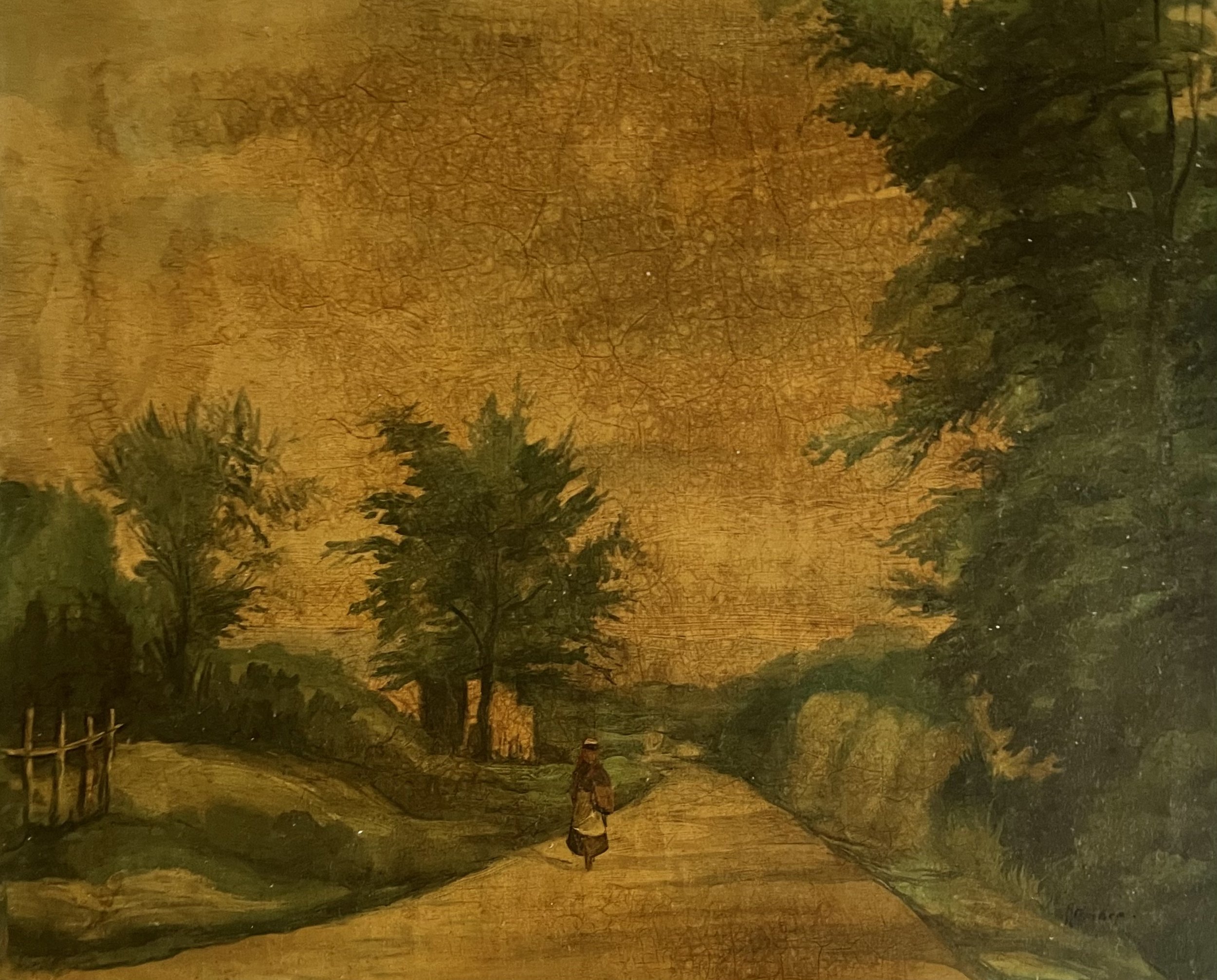 Image 1 of 7
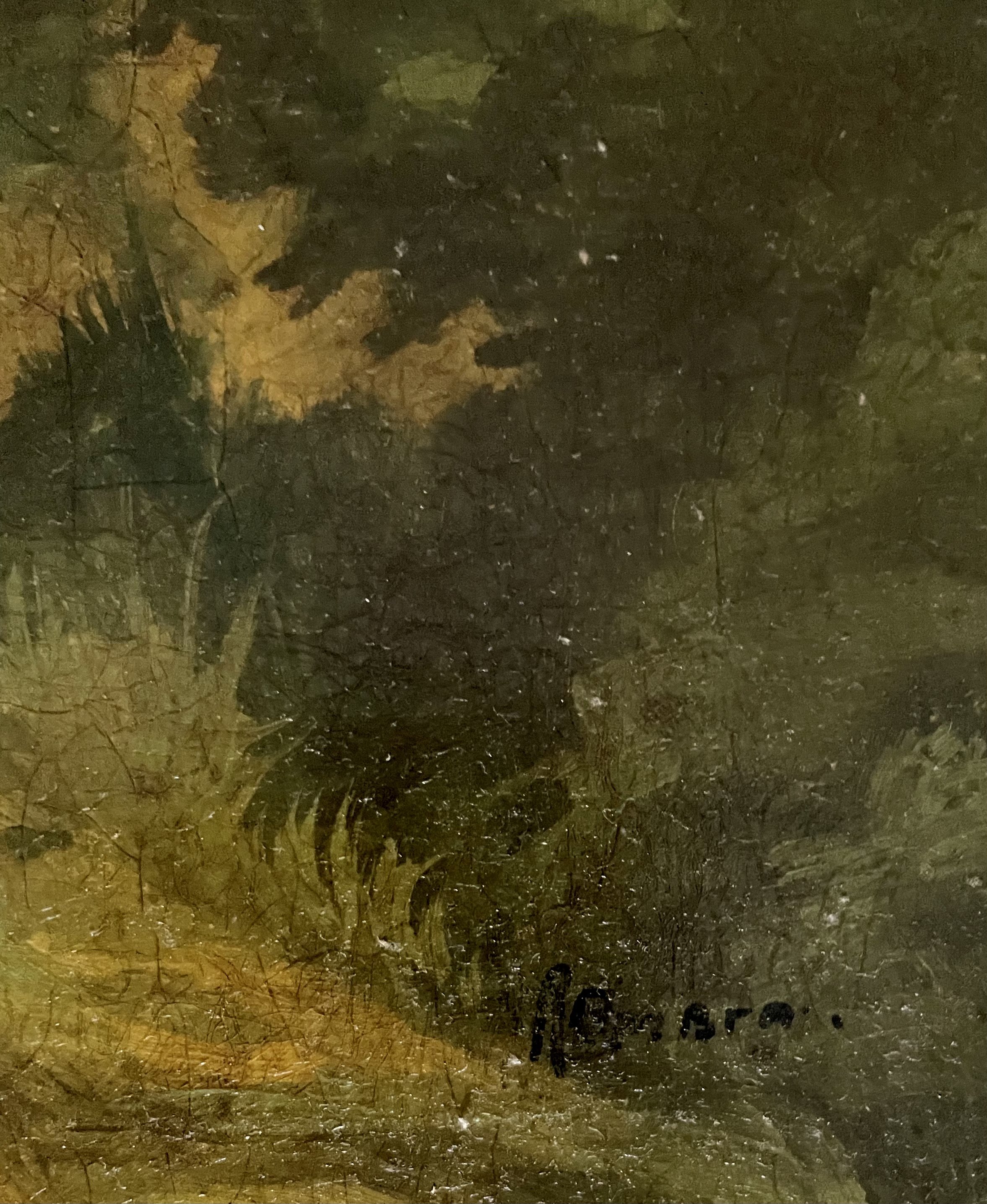 Image 2 of 7
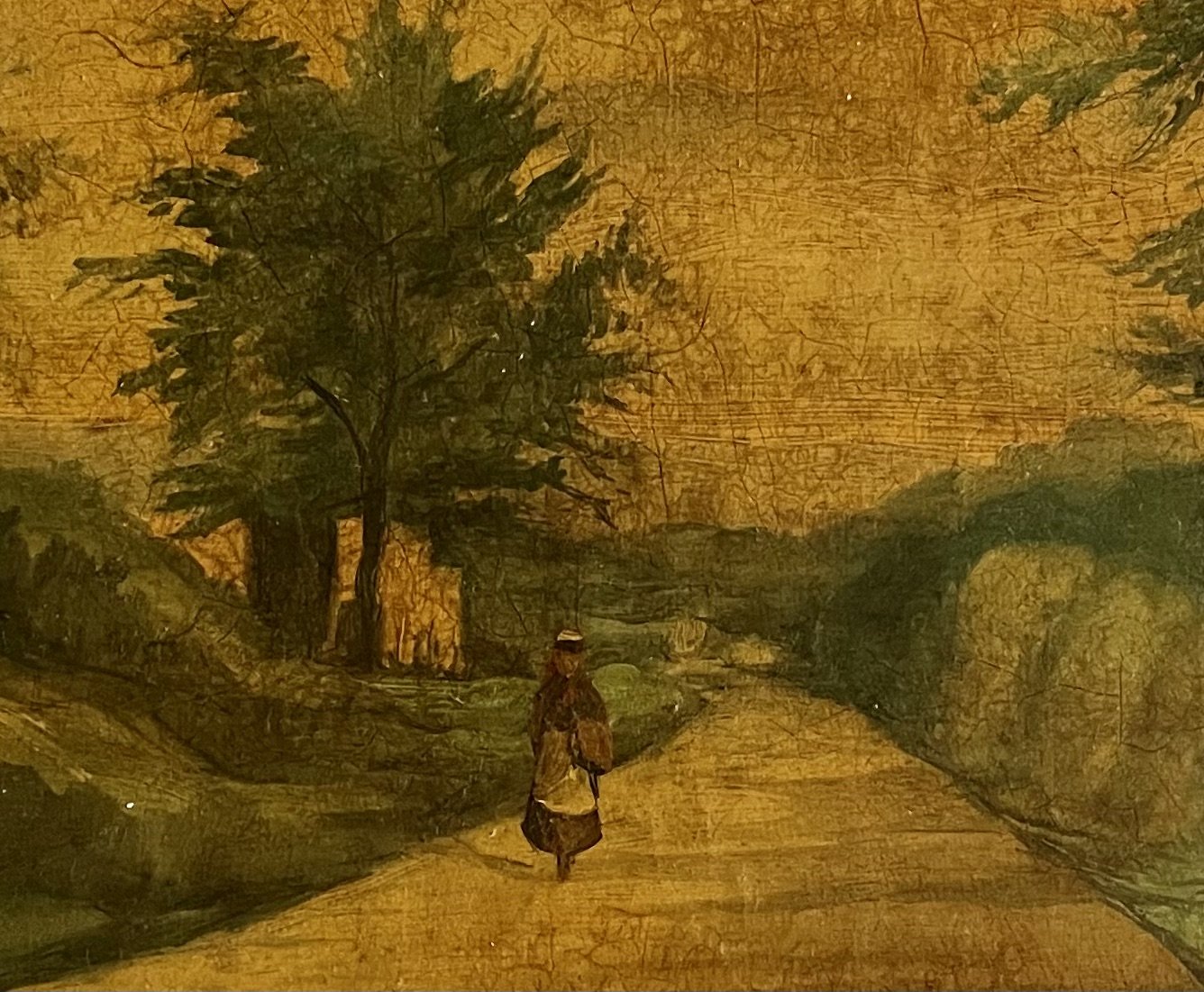 Image 3 of 7
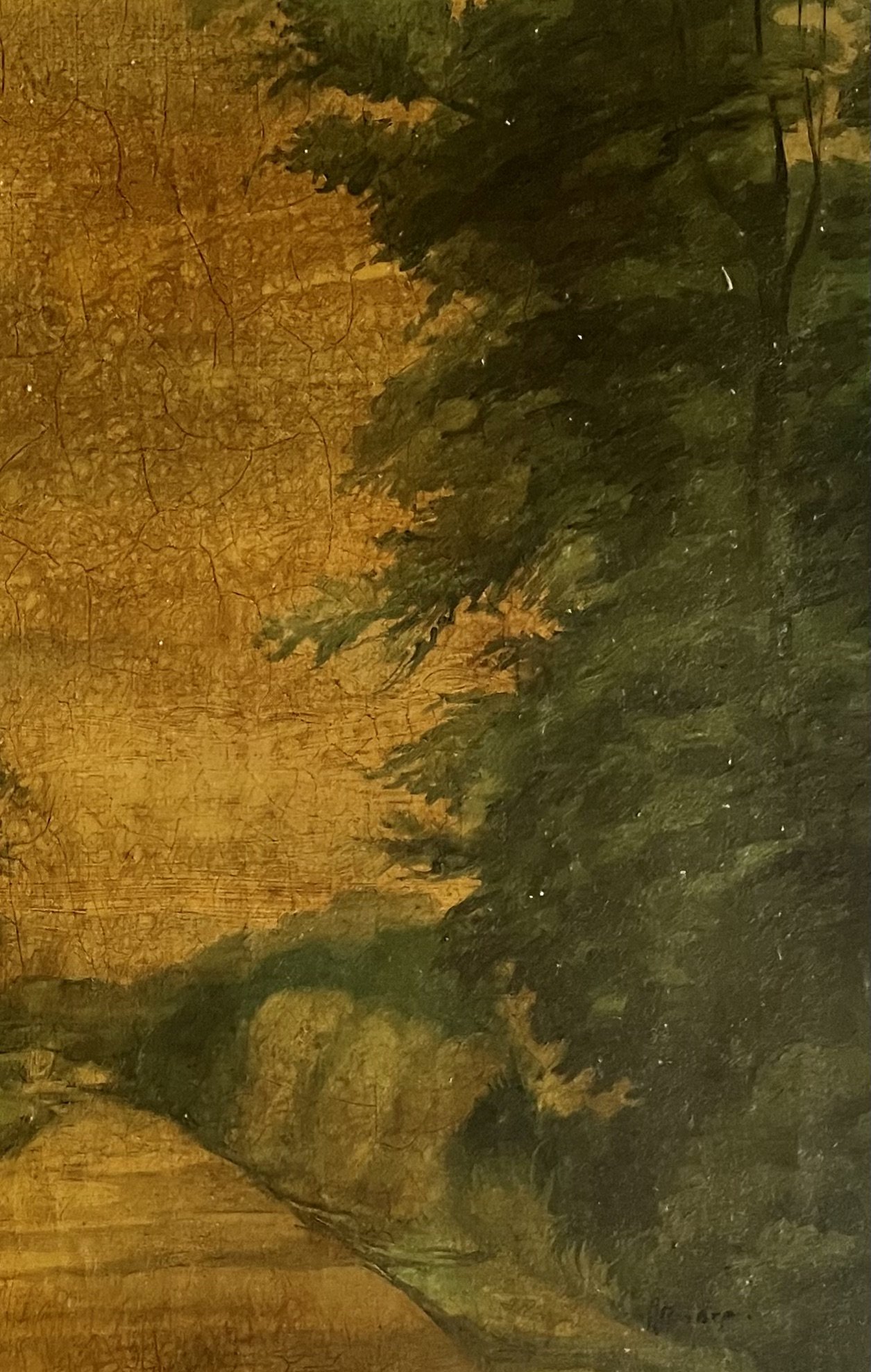 Image 4 of 7
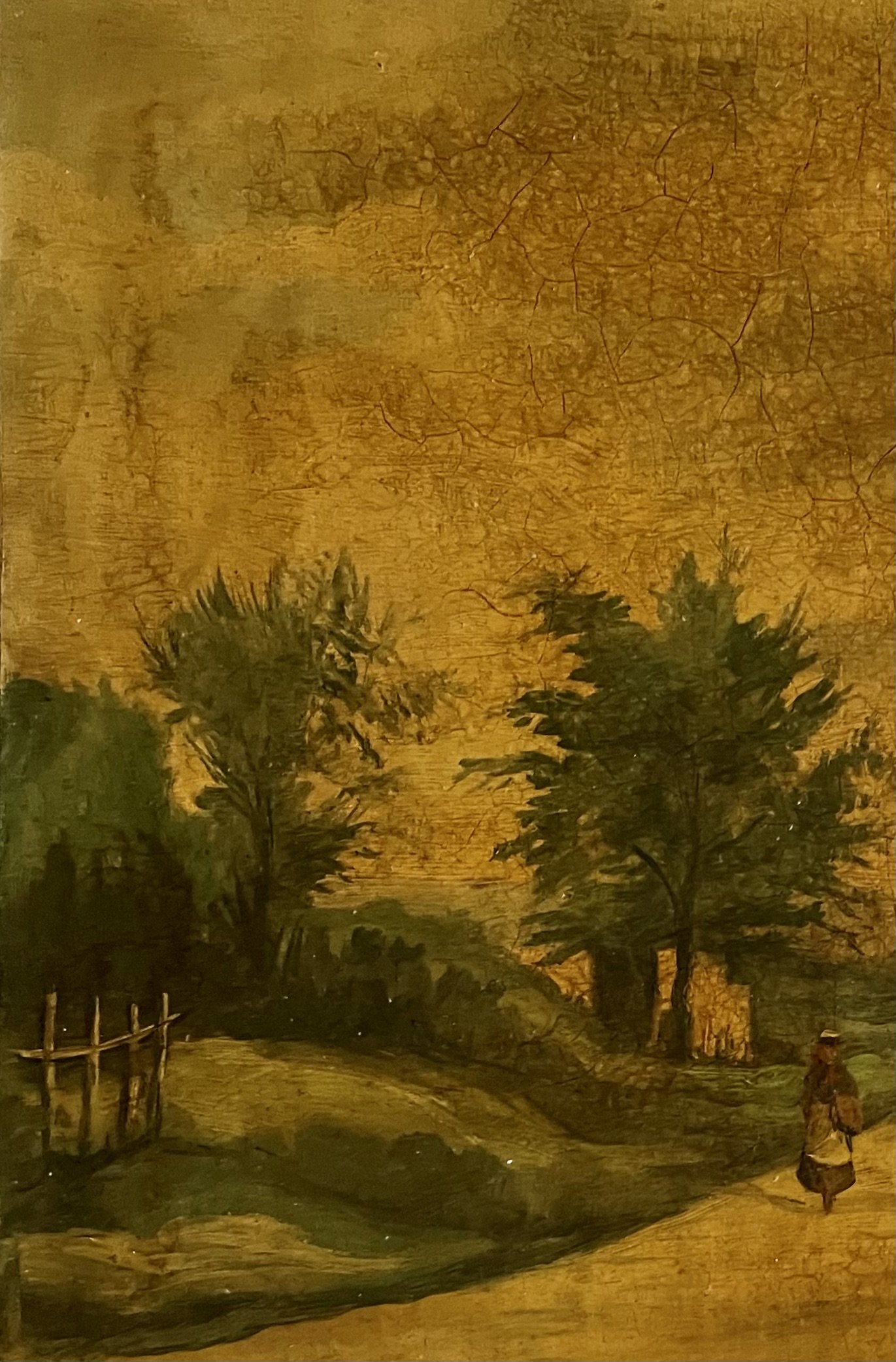 Image 5 of 7
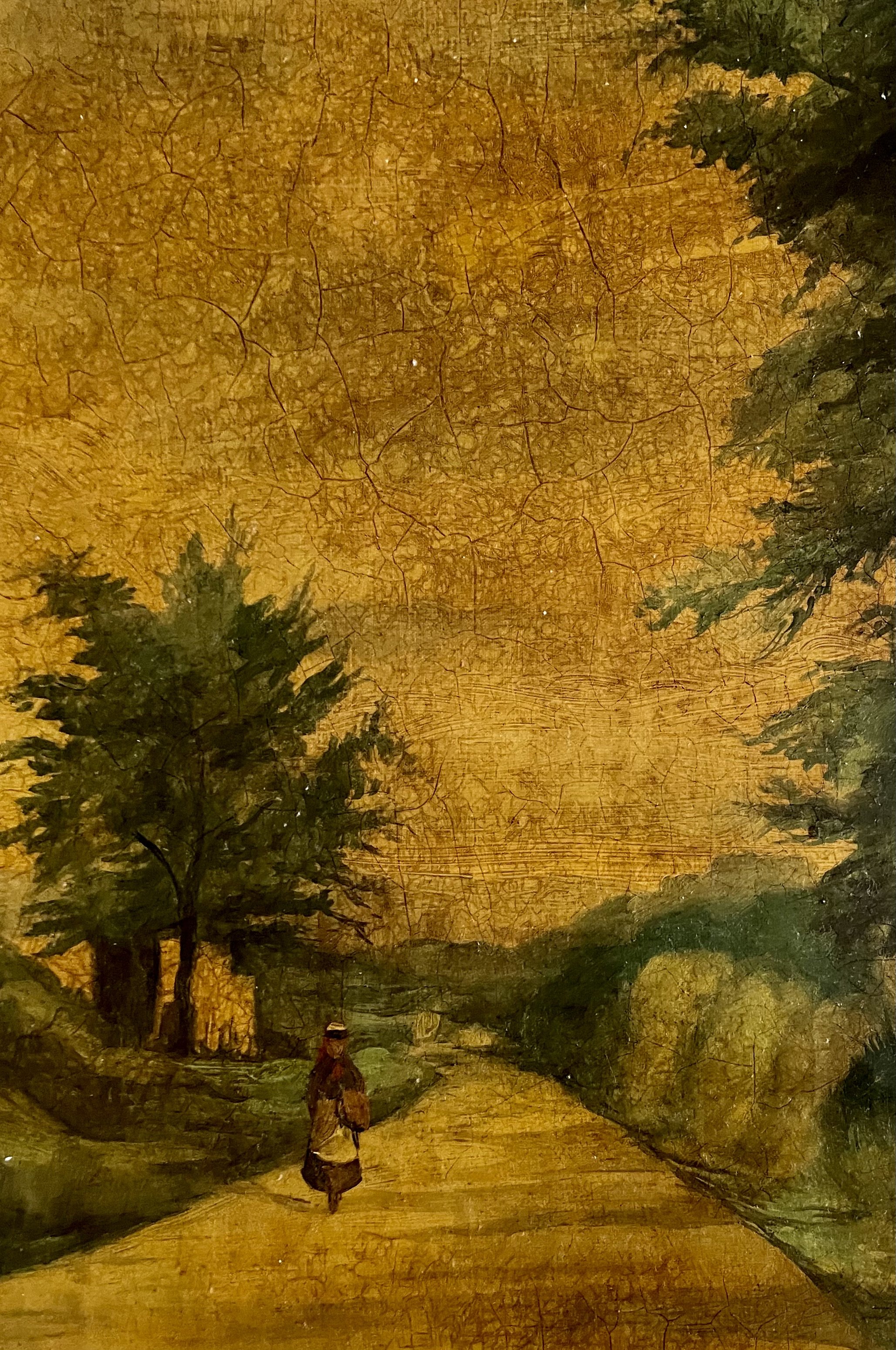 Image 6 of 7
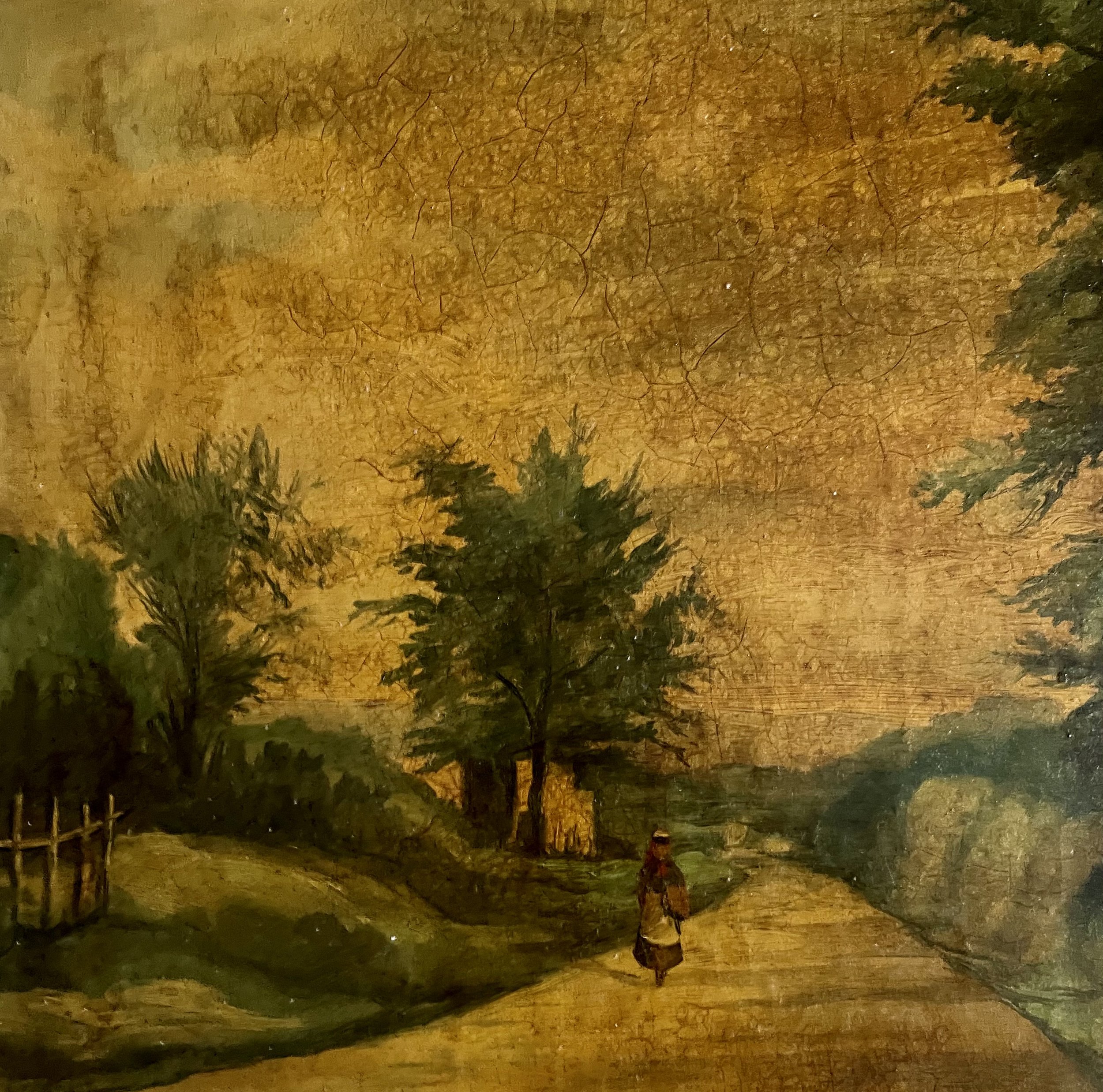 Image 7 of 7