 Image 1 of 5
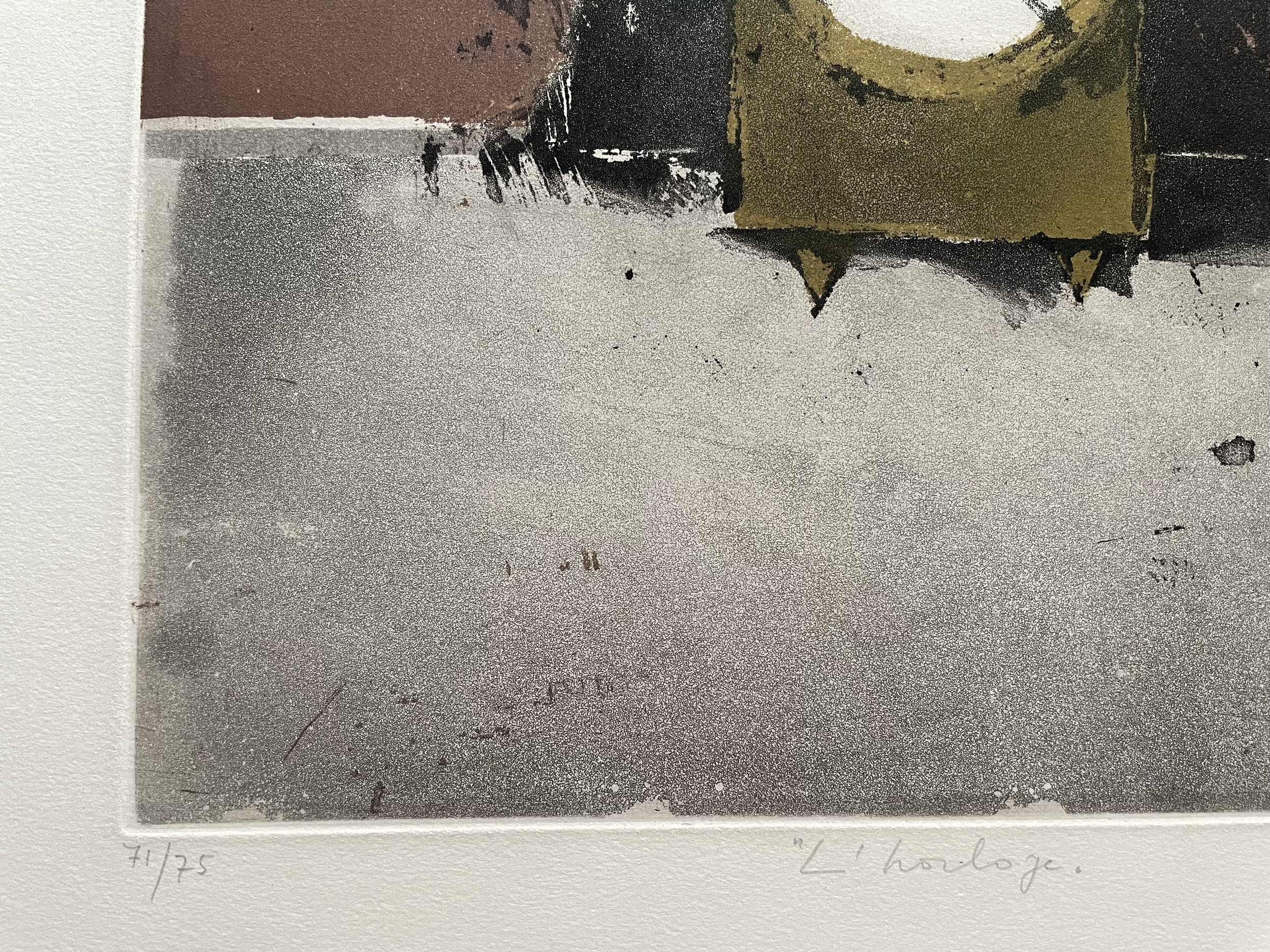 Image 2 of 5
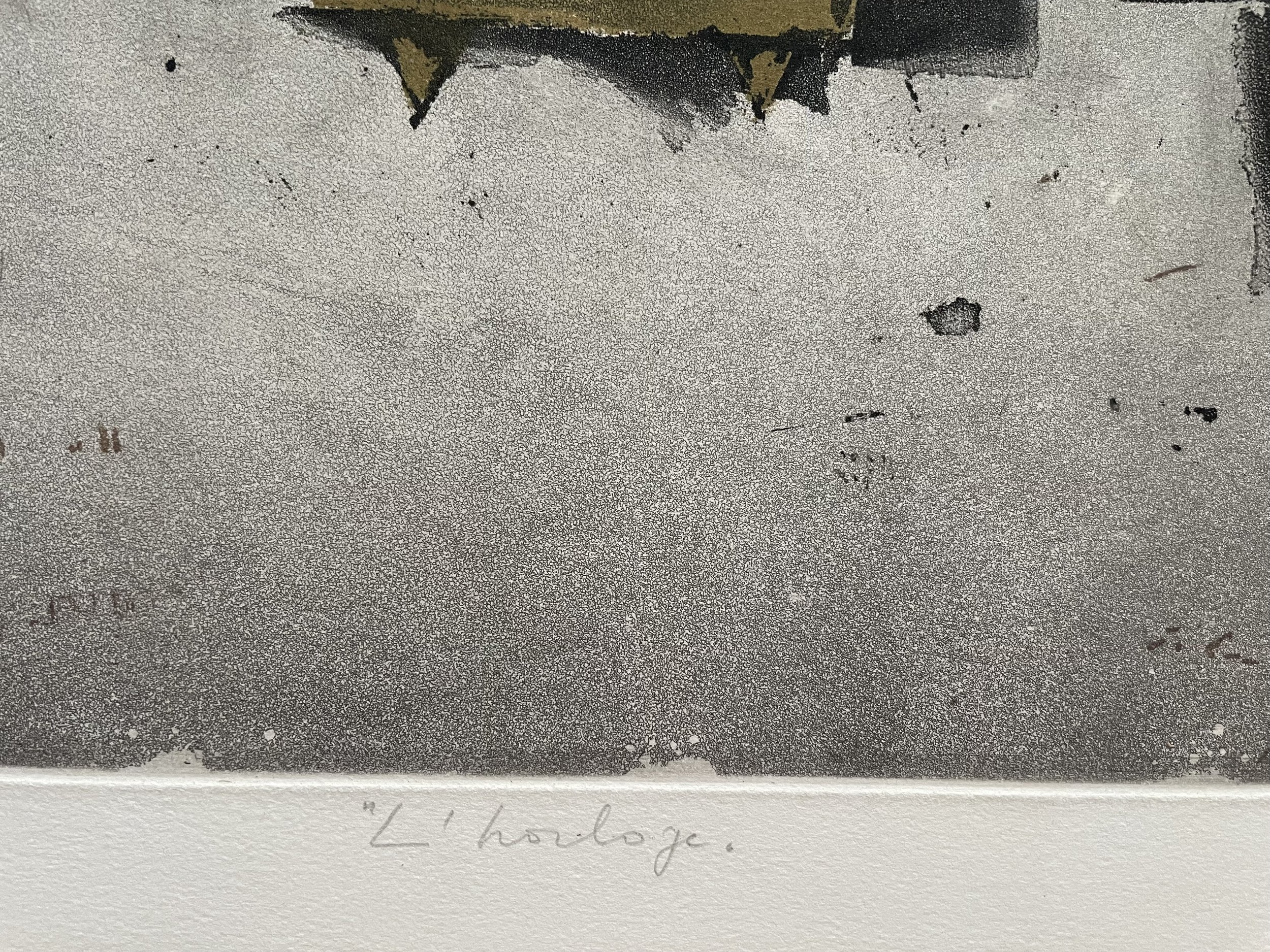 Image 3 of 5
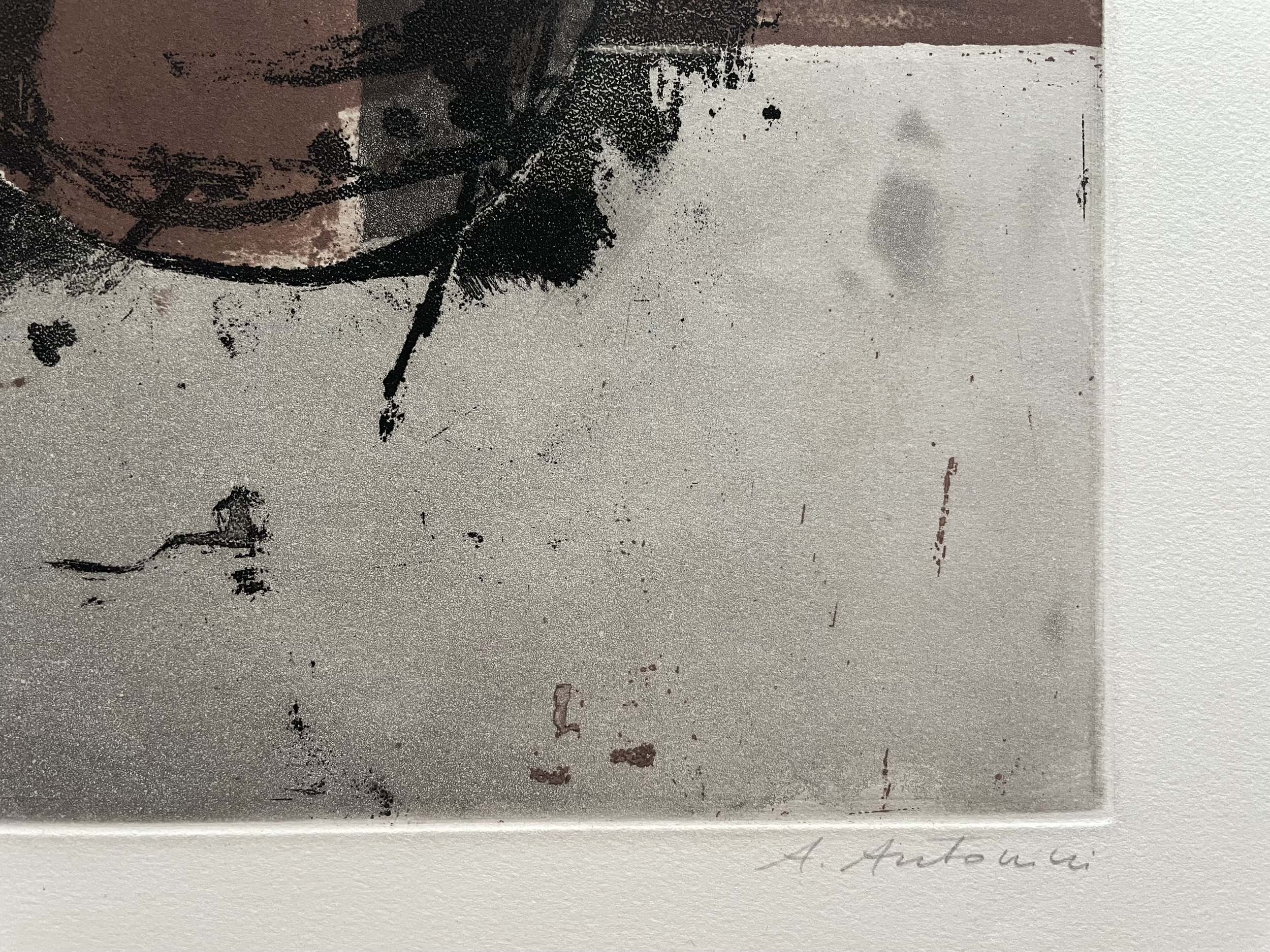 Image 4 of 5
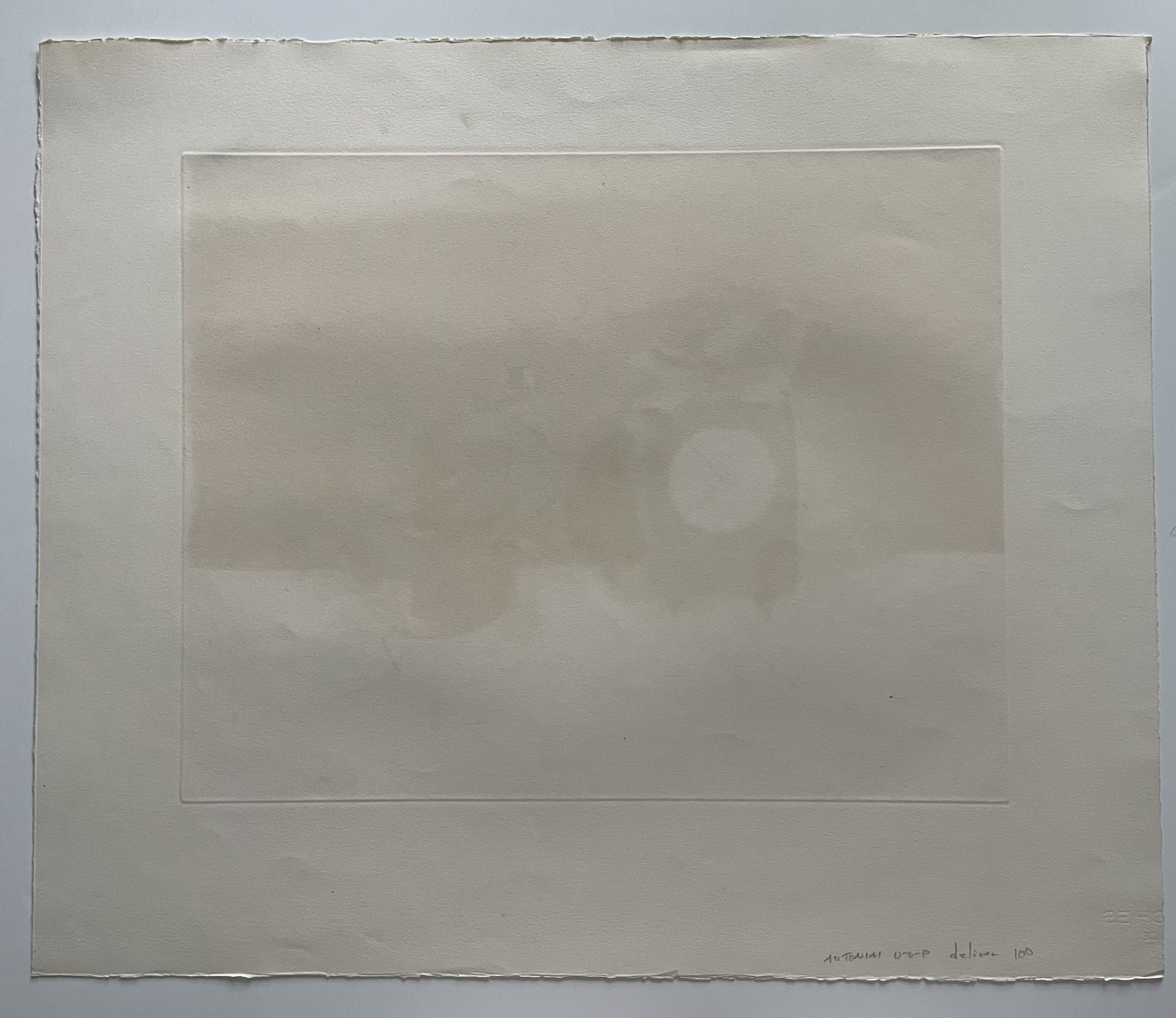 Image 5 of 5
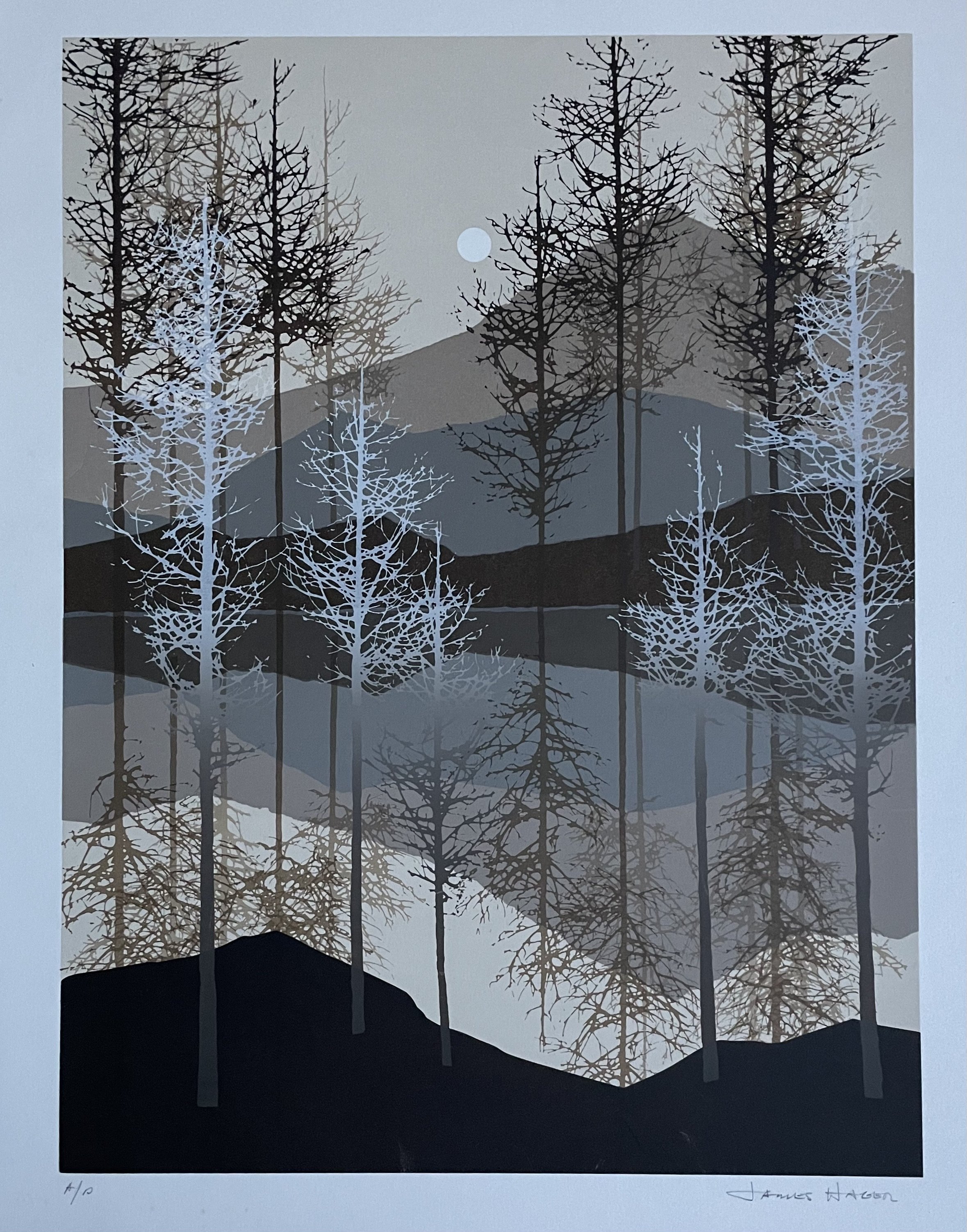
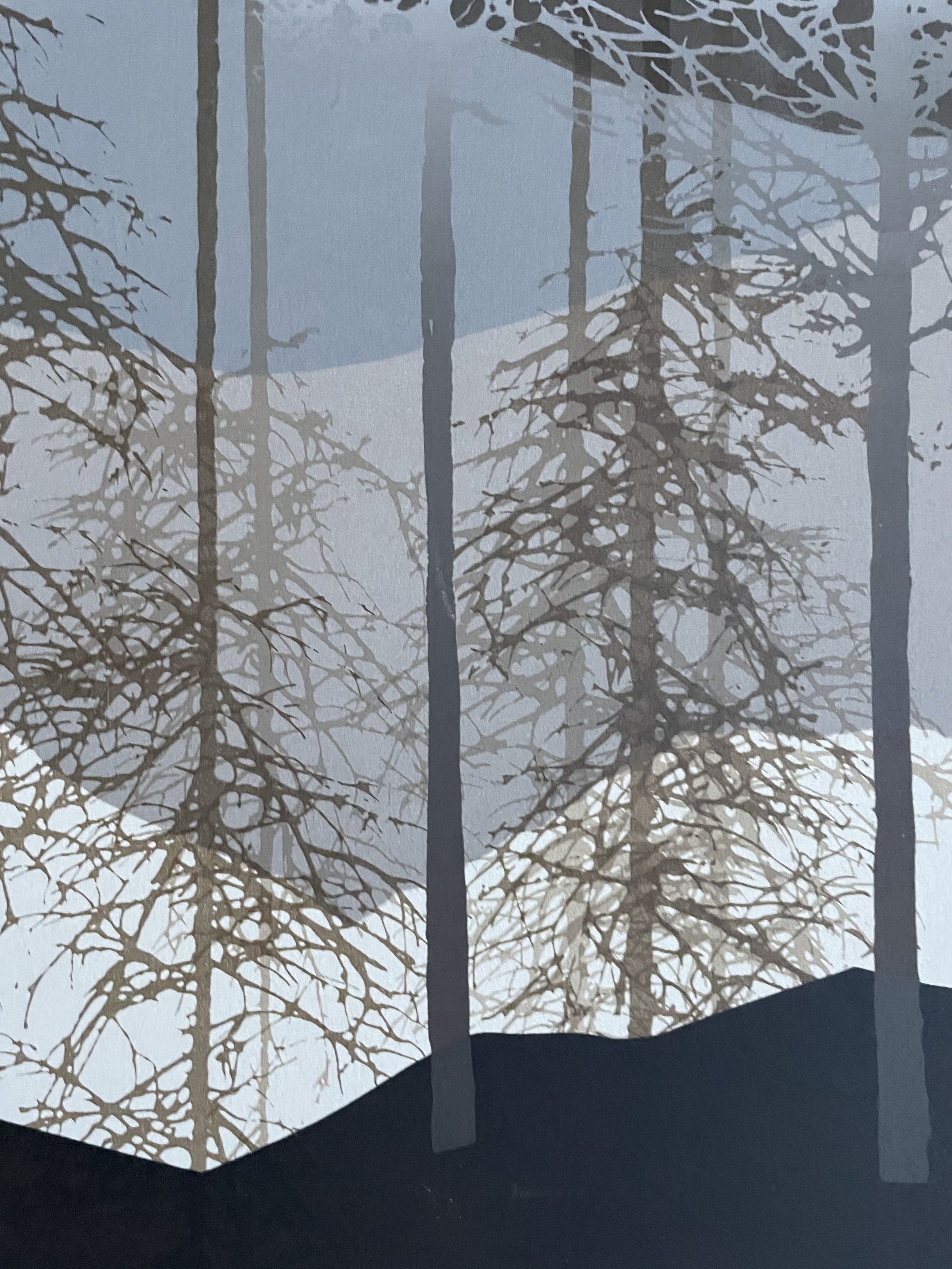
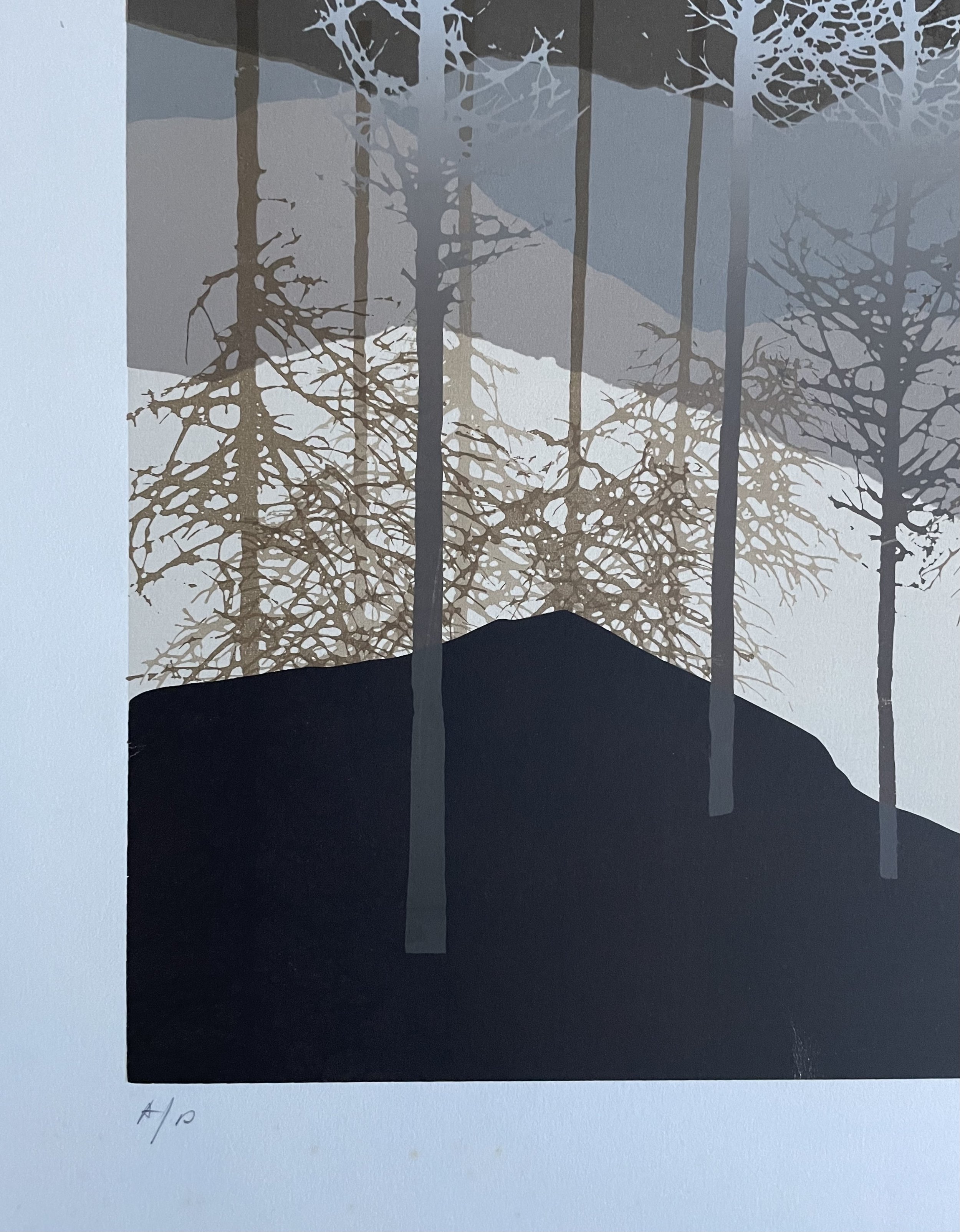
“L’Horloge” is a rare, limited-edition serigraph by Anthony Michael Autorino (1937–2015), pencil-signed and numbered 71/75 (EA notation), measuring 22×26 inches—an evocative modern still life featuring a clock motif, prized by collectors of New Hope School–adjacent American Impressionist artists and fine-art prints.
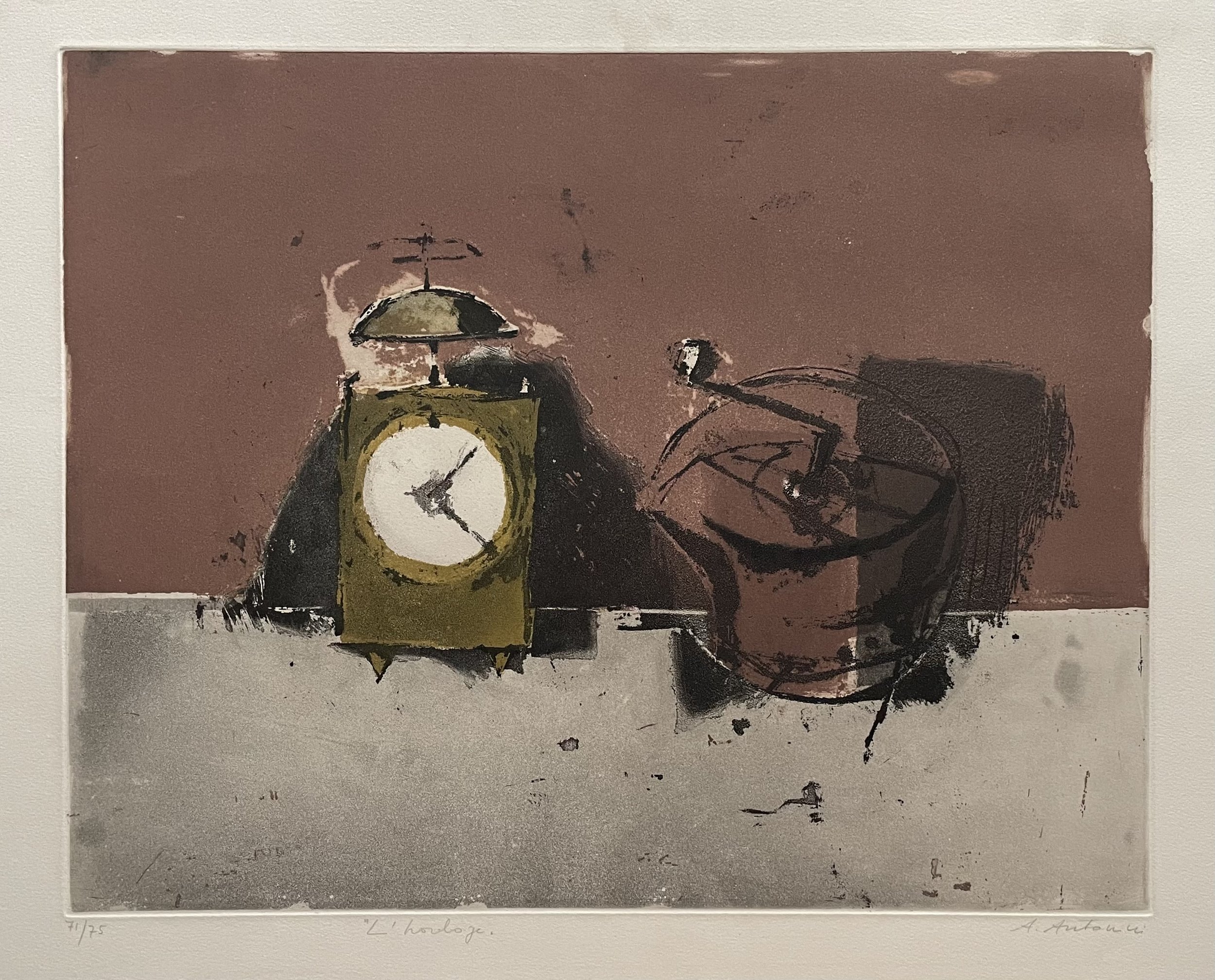
“L’Horloge” (French for “The Clock”) is a moody, design-forward still life that uses simplified forms, bold negative space, and a restrained palette to turn everyday objects into symbols. The composition centers on a stylized clock—an immediate visual anchor—set against a field of warm, muted color and grounded by a cool, silvery-gray plane. To the right, a rounded vessel or bowl-like form is suggested through gestural contour lines, as if the object is both present and dissolving into memory.
The work reads as a meditation on time: the clock face is clear and iconic, while the surrounding marks—scuffs, drags, and painterly interruptions—create a sense of passing moments and lived atmosphere. The balance of crisp shapes with gritty, expressive textures gives the print a mid-century-to-late-20th-century graphic sensibility, bridging fine art and sophisticated poster design.
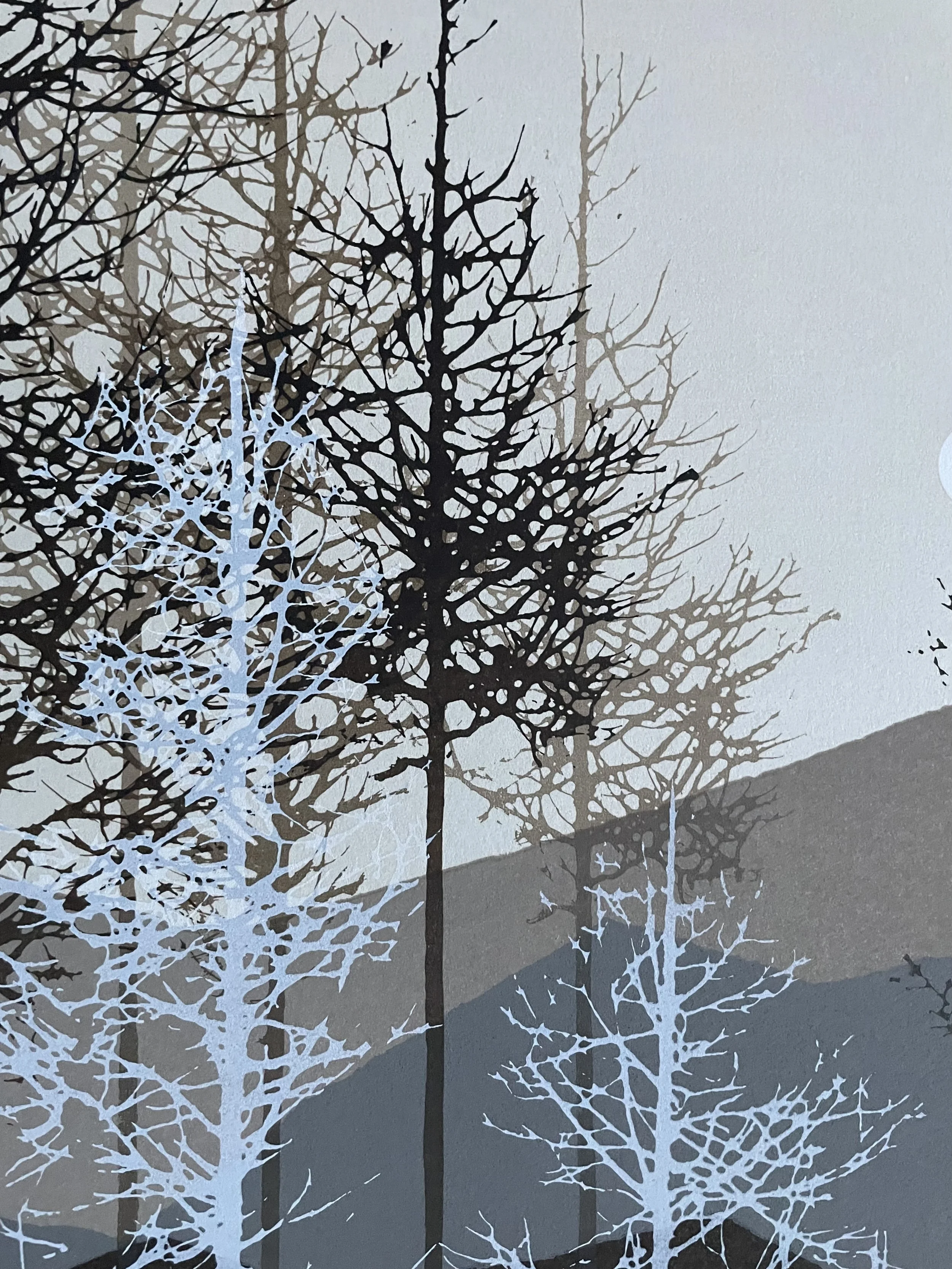
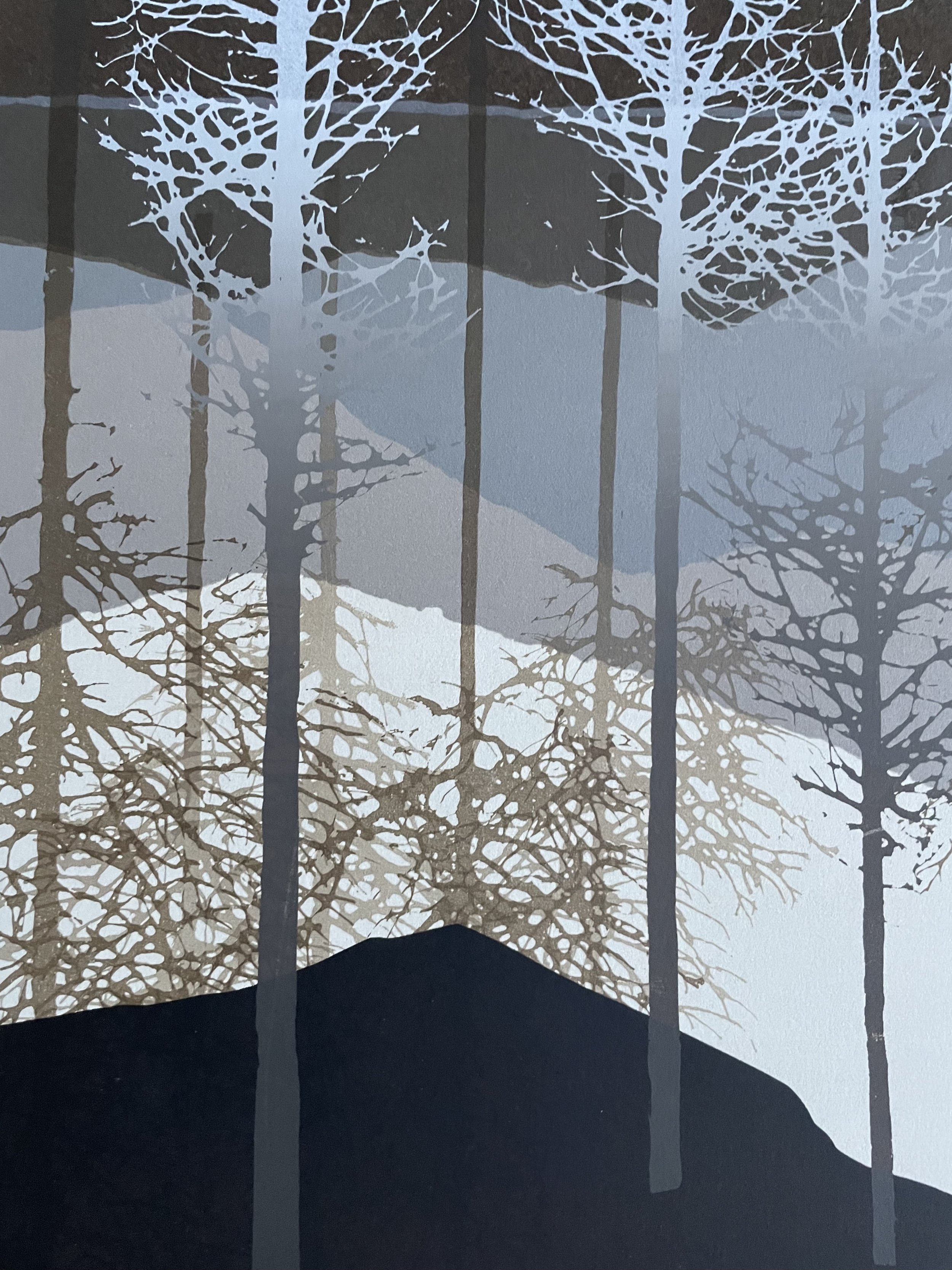
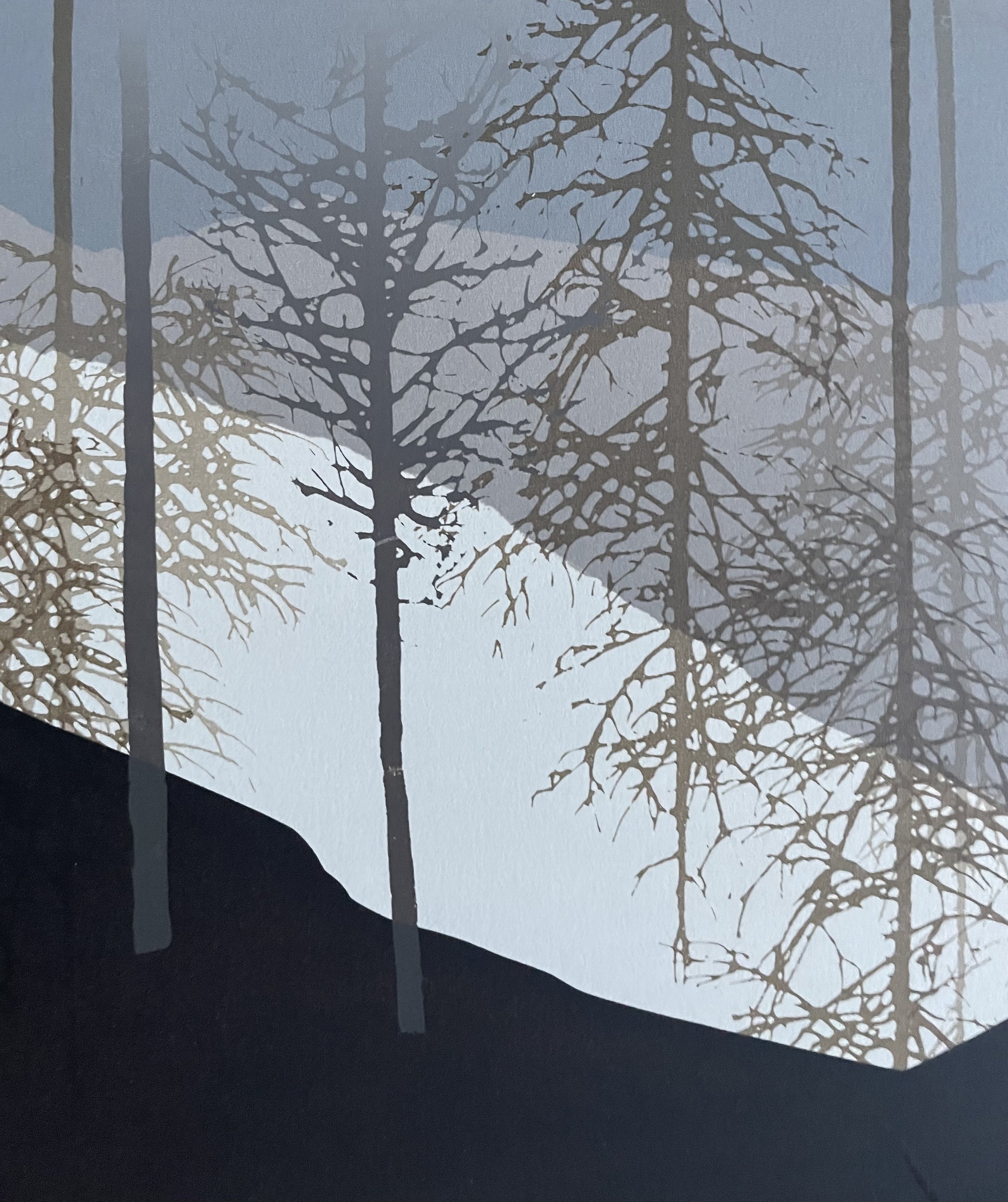
Medium-wise, this is a serigraph (screenprint)—a process that builds color through layered stencils. Here, the layered inks create both flat, velvety areas (the background field) and richer, tactile passages where the ink reads more materially. The surface effects—intentional abrasion, speckling, and soft-edged overlays—suggest a studio-driven approach rather than a purely mechanical print look.
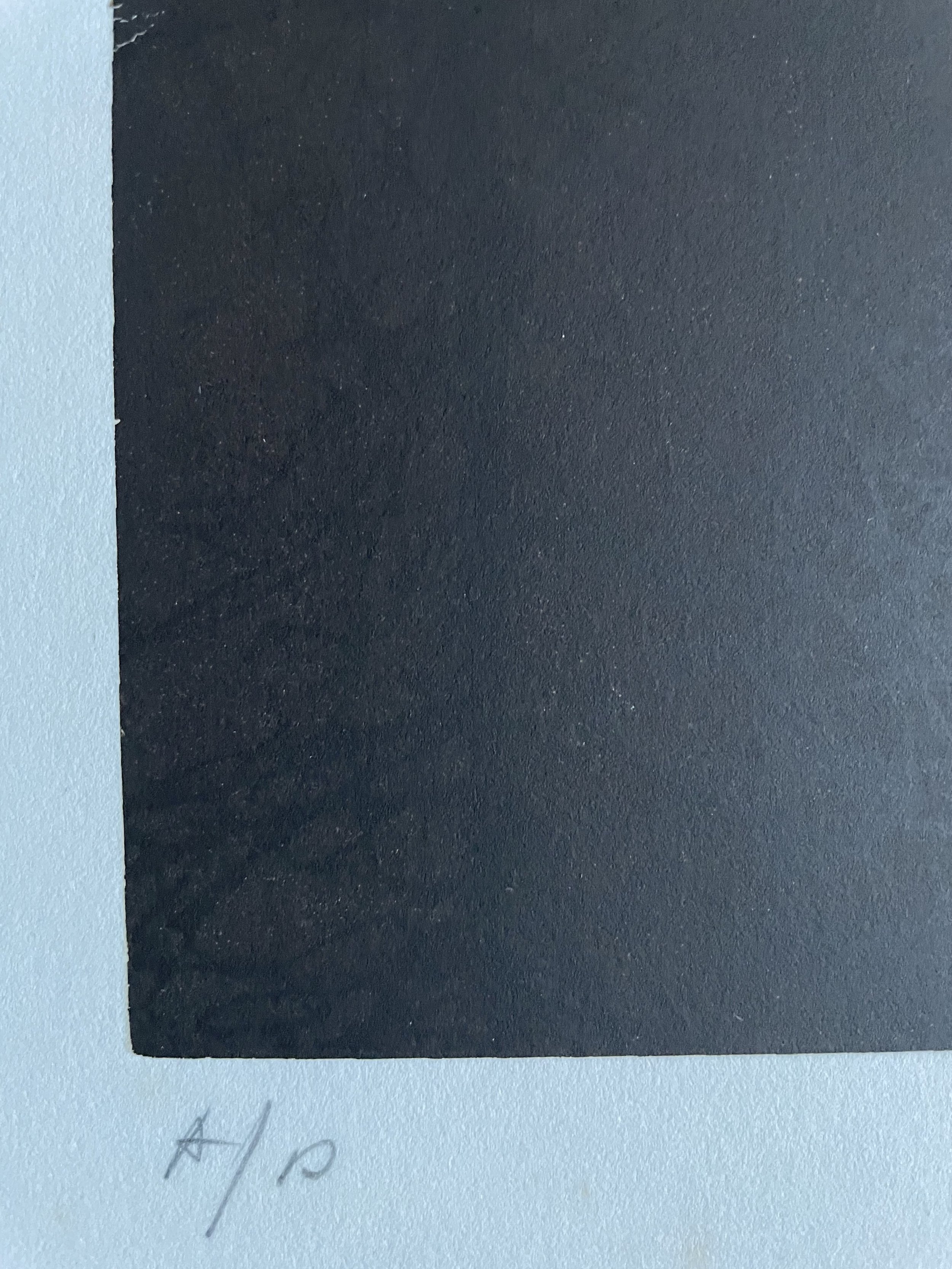
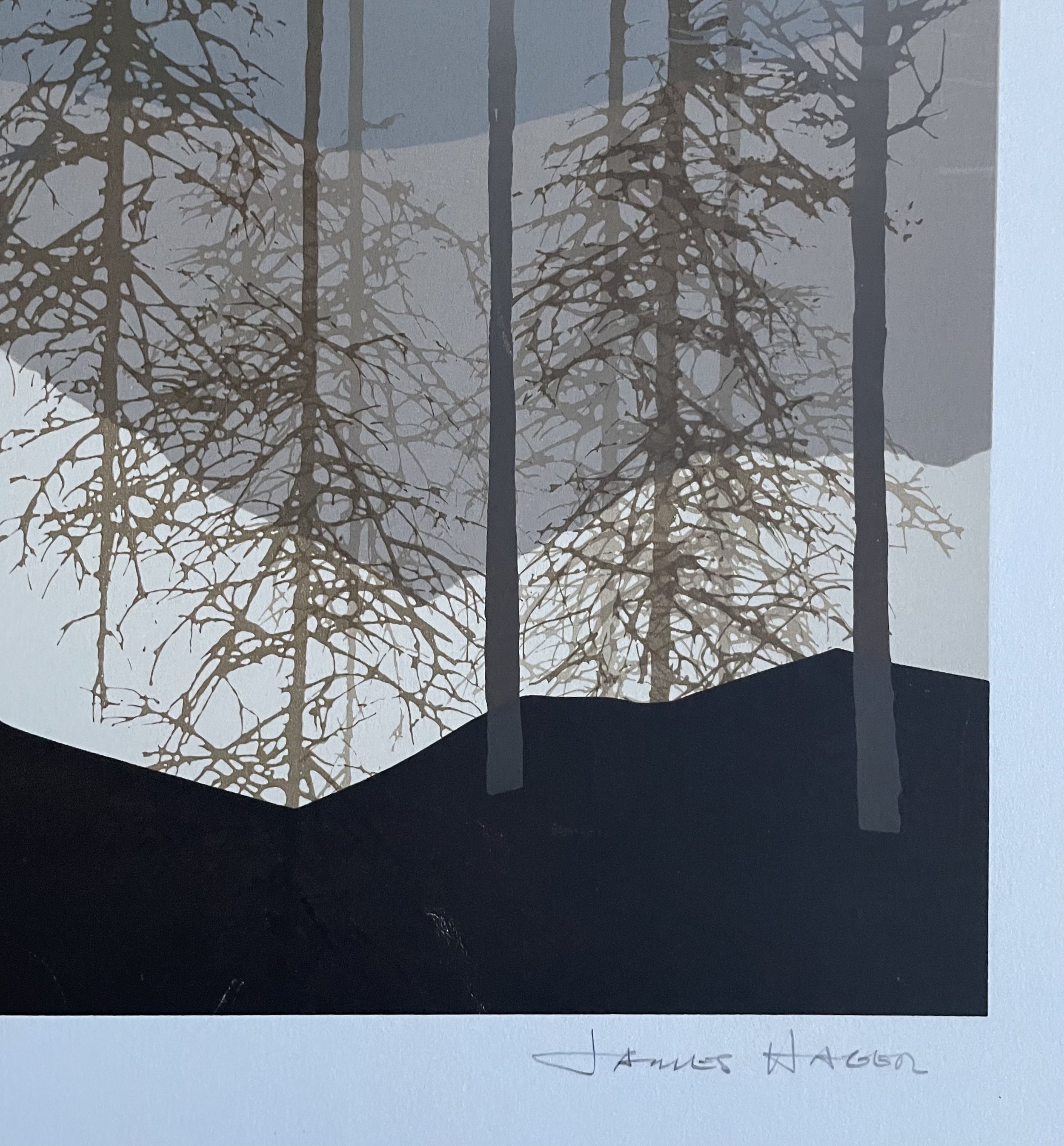
Signature and edition details matter strongly for value and collectability: this example is pencil-signed and numbered 71/75, with EA noted (commonly used to indicate épreuve d’artiste / artist’s proof context). The tight edition size supports scarcity within Autorino’s printed work.
Anthony Michael Autorino (1937–2015) was an American painter and printmaker associated with the Delaware Valley / New Hope–Lambertville art corridor, widely recognized for luminous landscapes, figures, and still lifes that carried an early-20th-century impressionist feeling into contemporary subject matter.
Early life and background
Autorino was born September 29, 1937, in Montclair, New Jersey, the son of Italian immigrants. He was largely self-taught, developing his skills through persistent studio practice and immersion in working artist communities rather than a single academic pipeline.
Military service and Paris influence
As a teenager, he enlisted in the U.S. Air Force, serving for eight years as a cryptographer. That specialty placed him in Paris in the mid-1950s, working at the U.S. Embassy—a formative period in which he became deeply engaged with the art world and committed himself to painting as his life’s work. Paris mattered not simply as “inspiration,” but as proof-of-life for a young artist: museums, galleries, and the presence of living modernism provided a model of seriousness and possibility.
New York to the Delaware Valley: choosing the painter’s life
Returning to the United States in 1961, Autorino painted across upstate New York and New England, and by the mid-1960s gravitated toward New York City, then the center of the art world’s commercial and critical energy. But his temperament favored observation, atmosphere, and the outdoors over urban grind. By 1968, he made the decisive move to the Delaware Valley, joining a region long associated with American Impressionism.
He established a studio/gallery called “The Gallery” on Mechanic Street in New Hope, later relocating it in 1982 to Lambertville, New Jersey, where it operated for more than two decades. During the 1980s, he lived and worked in Buckingham, Pennsylvania, at the former home of New Hope Impressionist George Sotter—a meaningful physical link to the area’s foundational painters.
Style, influences, and what collectors respond to
Autorino is often discussed as a modern continuation of the New Hope School / Pennsylvania Impressionist tradition. He drew direct inspiration from regional predecessors such as Edward Redfield, Daniel Garber, William Lathrop, George Sotter, and Robert Spencer, as well as the broader American lineage of the Hudson River School (notably George Inness). Collectors respond to the way his work marries a soft palette and atmospheric mood—snowfall, nocturnes, river light—with contemporary lived places.
While best known for oils, his printed works extend the same values: strong composition, an eye for tonal harmony, and a preference for subjects that carry metaphor (weather, water, interiors, objects—like clocks).
Exhibitions, recognition, and institutional footprint
Autorino exhibited with major American art organizations including the National Academy of Design (NYC), the Salmagundi Club, the Allied Artists, the American Watercolor Society, and the Philadelphia Sketch Club. His work has been shown in venues connected to the region’s cultural identity, including the James A. Michener Art Museum. He received “many awards and honors,” and his paintings entered private, institutional, and corporate collections.
Market visibility and attribution note
Autorino’s market presence is sustained by regional collectors and by auction exposure. A notable point for authentication is that he sometimes used a distinctive signature device (a stylized monogram construction) that has led to occasional misattribution—an issue discussed publicly by appraisers who have handled his work. In the case of your serigraph, the clear pencil signature and edition markings are important anchors for confident cataloging.
He died December 13, 2015, at age 78.
Anthony Michael Autorino (American, 1937–2015), L’Horloge, c.1970s–1980s, serigraph/screenprint, 22 × 26 in., pencil-signed, EA notation, numbered 71/75; modern still life with clock motif, limited edition.
This certifies that the artwork titled “L’Horloge” is an original serigraph (screenprint) by Anthony Michael Autorino (1937–2015), created circa 1970s–1980s, in an edition numbered 71/75, with EA notation, and measuring 22 × 26 inches. The work bears an apparent pencil signature consistent with limited-edition fine art print conventions and is cataloged as an artist-issued editioned serigraph. Valuation is based on comparable sales behavior for Autorino works (with prints typically trading below original oils), edition size, and collector demand for New Hope School–associated artists.
Anthony Michael Autorino (artist-issued serigraph) → private collection(s), United States → Mitch Morse Gallery (acquired via NYC / U.S. & European secondary market channels) → Artfind Gallery, Washington DC (current owner)
L'horloge parlante is a fascinating concept that brilliantly captures the intersection of time and communication. In a quirky twist of history, this feminine noun represents not just a clock, but a lively entity that speaks the time aloud, cutting through the silence of a world too often consumed by the tick-tock of tradition. This "speaking clock" transcends mere functionality; it's a charming artifact that tells tales and cradles whispers from the past. What stories could it share with the world, glancing back at the moments it has eternally chronicled?
“L’Horloge” is a rare, limited-edition serigraph by Anthony Michael Autorino (1937–2015), pencil-signed and numbered 71/75 (EA notation), measuring 22×26 inches—an evocative modern still life featuring a clock motif, prized by collectors of New Hope School–adjacent American Impressionist artists and fine-art prints.
“L’Horloge” (French for “The Clock”) is a moody, design-forward still life that uses simplified forms, bold negative space, and a restrained palette to turn everyday objects into symbols. The composition centers on a stylized clock—an immediate visual anchor—set against a field of warm, muted color and grounded by a cool, silvery-gray plane. To the right, a rounded vessel or bowl-like form is suggested through gestural contour lines, as if the object is both present and dissolving into memory.
The work reads as a meditation on time: the clock face is clear and iconic, while the surrounding marks—scuffs, drags, and painterly interruptions—create a sense of passing moments and lived atmosphere. The balance of crisp shapes with gritty, expressive textures gives the print a mid-century-to-late-20th-century graphic sensibility, bridging fine art and sophisticated poster design.
Medium-wise, this is a serigraph (screenprint)—a process that builds color through layered stencils. Here, the layered inks create both flat, velvety areas (the background field) and richer, tactile passages where the ink reads more materially. The surface effects—intentional abrasion, speckling, and soft-edged overlays—suggest a studio-driven approach rather than a purely mechanical print look.
Signature and edition details matter strongly for value and collectability: this example is pencil-signed and numbered 71/75, with EA noted (commonly used to indicate épreuve d’artiste / artist’s proof context). The tight edition size supports scarcity within Autorino’s printed work.
Anthony Michael Autorino (1937–2015) was an American painter and printmaker associated with the Delaware Valley / New Hope–Lambertville art corridor, widely recognized for luminous landscapes, figures, and still lifes that carried an early-20th-century impressionist feeling into contemporary subject matter.
Early life and background
Autorino was born September 29, 1937, in Montclair, New Jersey, the son of Italian immigrants. He was largely self-taught, developing his skills through persistent studio practice and immersion in working artist communities rather than a single academic pipeline.
Military service and Paris influence
As a teenager, he enlisted in the U.S. Air Force, serving for eight years as a cryptographer. That specialty placed him in Paris in the mid-1950s, working at the U.S. Embassy—a formative period in which he became deeply engaged with the art world and committed himself to painting as his life’s work. Paris mattered not simply as “inspiration,” but as proof-of-life for a young artist: museums, galleries, and the presence of living modernism provided a model of seriousness and possibility.
New York to the Delaware Valley: choosing the painter’s life
Returning to the United States in 1961, Autorino painted across upstate New York and New England, and by the mid-1960s gravitated toward New York City, then the center of the art world’s commercial and critical energy. But his temperament favored observation, atmosphere, and the outdoors over urban grind. By 1968, he made the decisive move to the Delaware Valley, joining a region long associated with American Impressionism.
He established a studio/gallery called “The Gallery” on Mechanic Street in New Hope, later relocating it in 1982 to Lambertville, New Jersey, where it operated for more than two decades. During the 1980s, he lived and worked in Buckingham, Pennsylvania, at the former home of New Hope Impressionist George Sotter—a meaningful physical link to the area’s foundational painters.
Style, influences, and what collectors respond to
Autorino is often discussed as a modern continuation of the New Hope School / Pennsylvania Impressionist tradition. He drew direct inspiration from regional predecessors such as Edward Redfield, Daniel Garber, William Lathrop, George Sotter, and Robert Spencer, as well as the broader American lineage of the Hudson River School (notably George Inness). Collectors respond to the way his work marries a soft palette and atmospheric mood—snowfall, nocturnes, river light—with contemporary lived places.
While best known for oils, his printed works extend the same values: strong composition, an eye for tonal harmony, and a preference for subjects that carry metaphor (weather, water, interiors, objects—like clocks).
Exhibitions, recognition, and institutional footprint
Autorino exhibited with major American art organizations including the National Academy of Design (NYC), the Salmagundi Club, the Allied Artists, the American Watercolor Society, and the Philadelphia Sketch Club. His work has been shown in venues connected to the region’s cultural identity, including the James A. Michener Art Museum. He received “many awards and honors,” and his paintings entered private, institutional, and corporate collections.
Market visibility and attribution note
Autorino’s market presence is sustained by regional collectors and by auction exposure. A notable point for authentication is that he sometimes used a distinctive signature device (a stylized monogram construction) that has led to occasional misattribution—an issue discussed publicly by appraisers who have handled his work. In the case of your serigraph, the clear pencil signature and edition markings are important anchors for confident cataloging.
He died December 13, 2015, at age 78.
Anthony Michael Autorino (American, 1937–2015), L’Horloge, c.1970s–1980s, serigraph/screenprint, 22 × 26 in., pencil-signed, EA notation, numbered 71/75; modern still life with clock motif, limited edition.
This certifies that the artwork titled “L’Horloge” is an original serigraph (screenprint) by Anthony Michael Autorino (1937–2015), created circa 1970s–1980s, in an edition numbered 71/75, with EA notation, and measuring 22 × 26 inches. The work bears an apparent pencil signature consistent with limited-edition fine art print conventions and is cataloged as an artist-issued editioned serigraph. Valuation is based on comparable sales behavior for Autorino works (with prints typically trading below original oils), edition size, and collector demand for New Hope School–associated artists.
Anthony Michael Autorino (artist-issued serigraph) → private collection(s), United States → Mitch Morse Gallery (acquired via NYC / U.S. & European secondary market channels) → Artfind Gallery, Washington DC (current owner)
L'horloge parlante is a fascinating concept that brilliantly captures the intersection of time and communication. In a quirky twist of history, this feminine noun represents not just a clock, but a lively entity that speaks the time aloud, cutting through the silence of a world too often consumed by the tick-tock of tradition. This "speaking clock" transcends mere functionality; it's a charming artifact that tells tales and cradles whispers from the past. What stories could it share with the world, glancing back at the moments it has eternally chronicled?