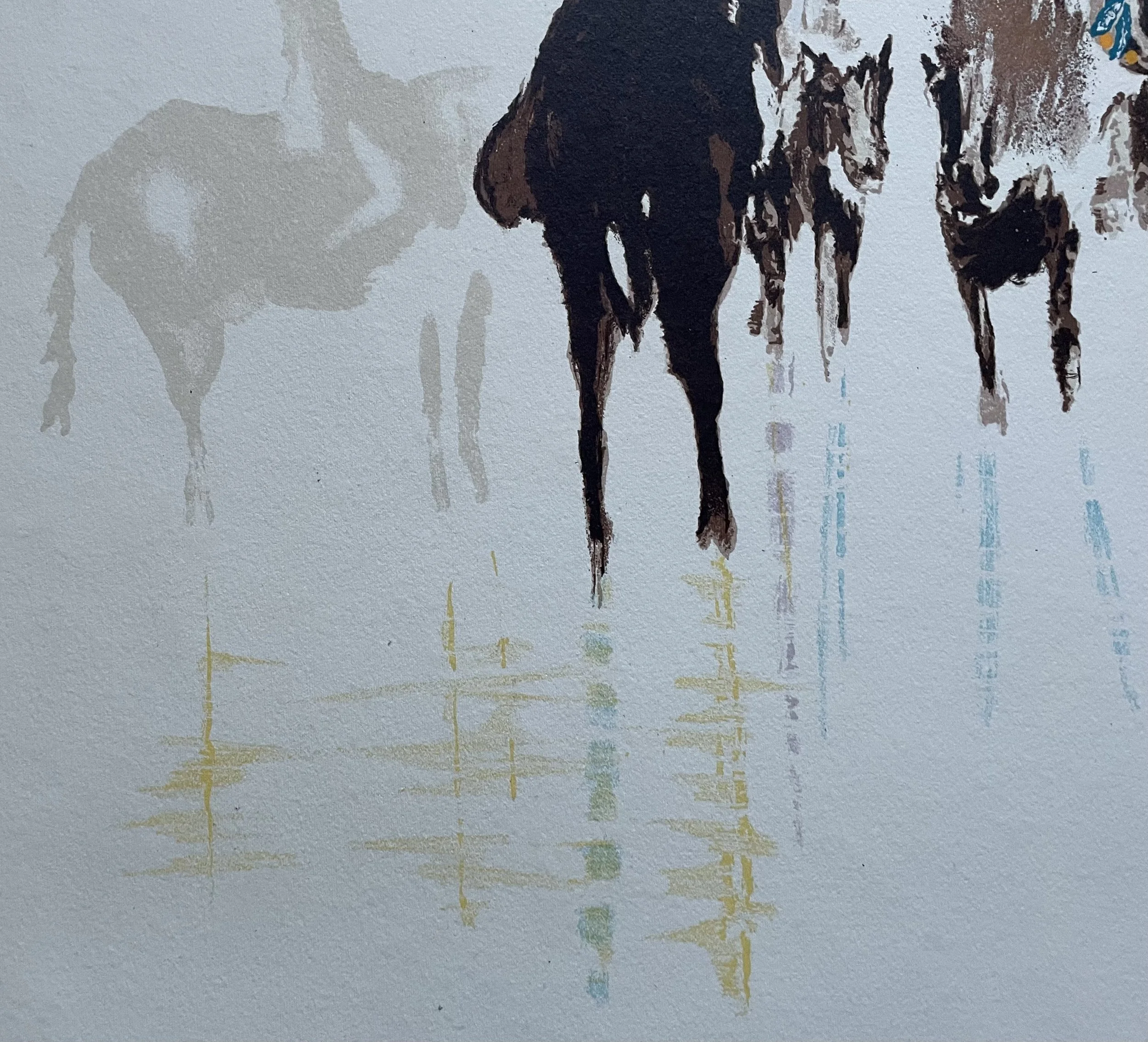
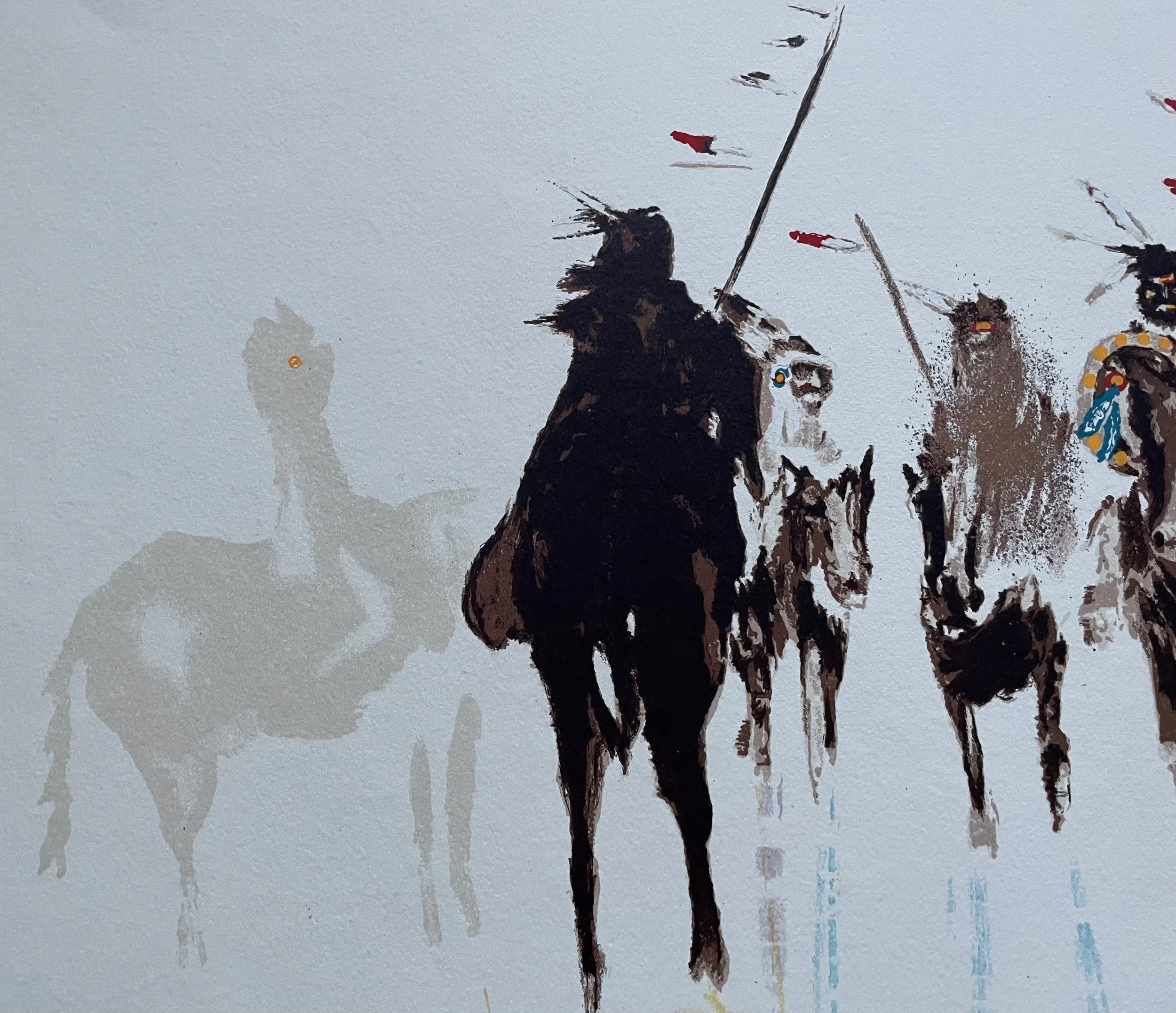
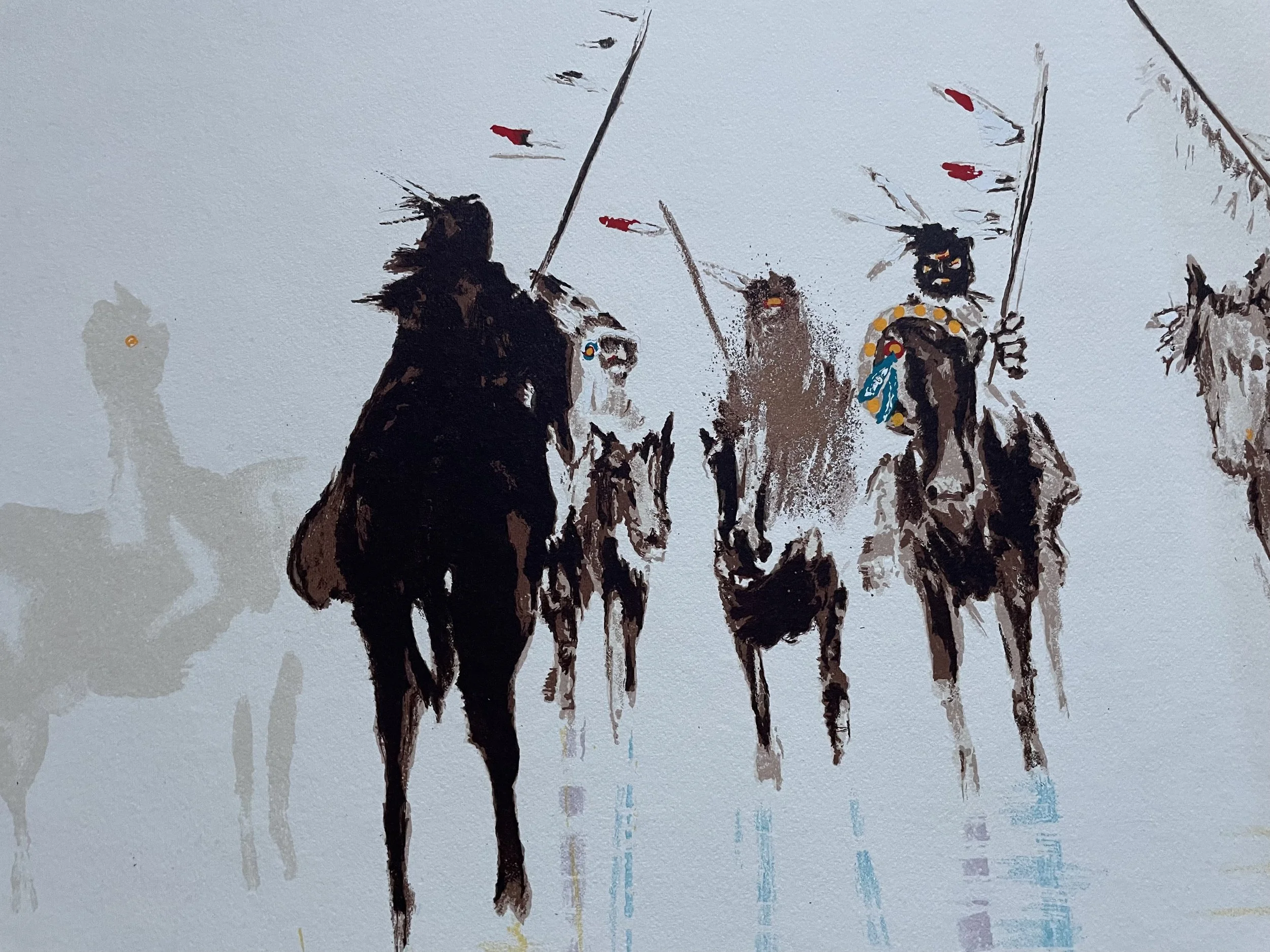
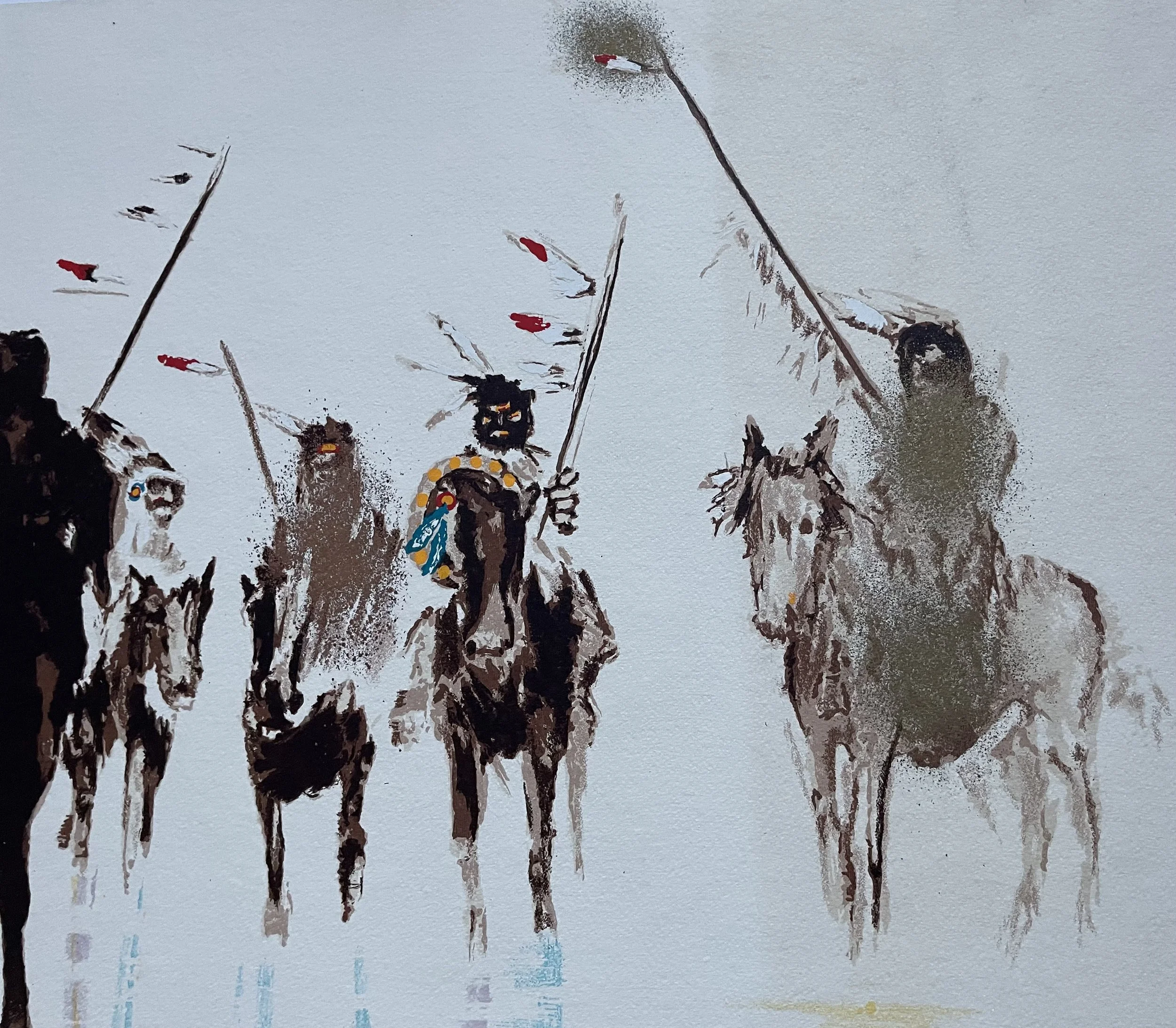
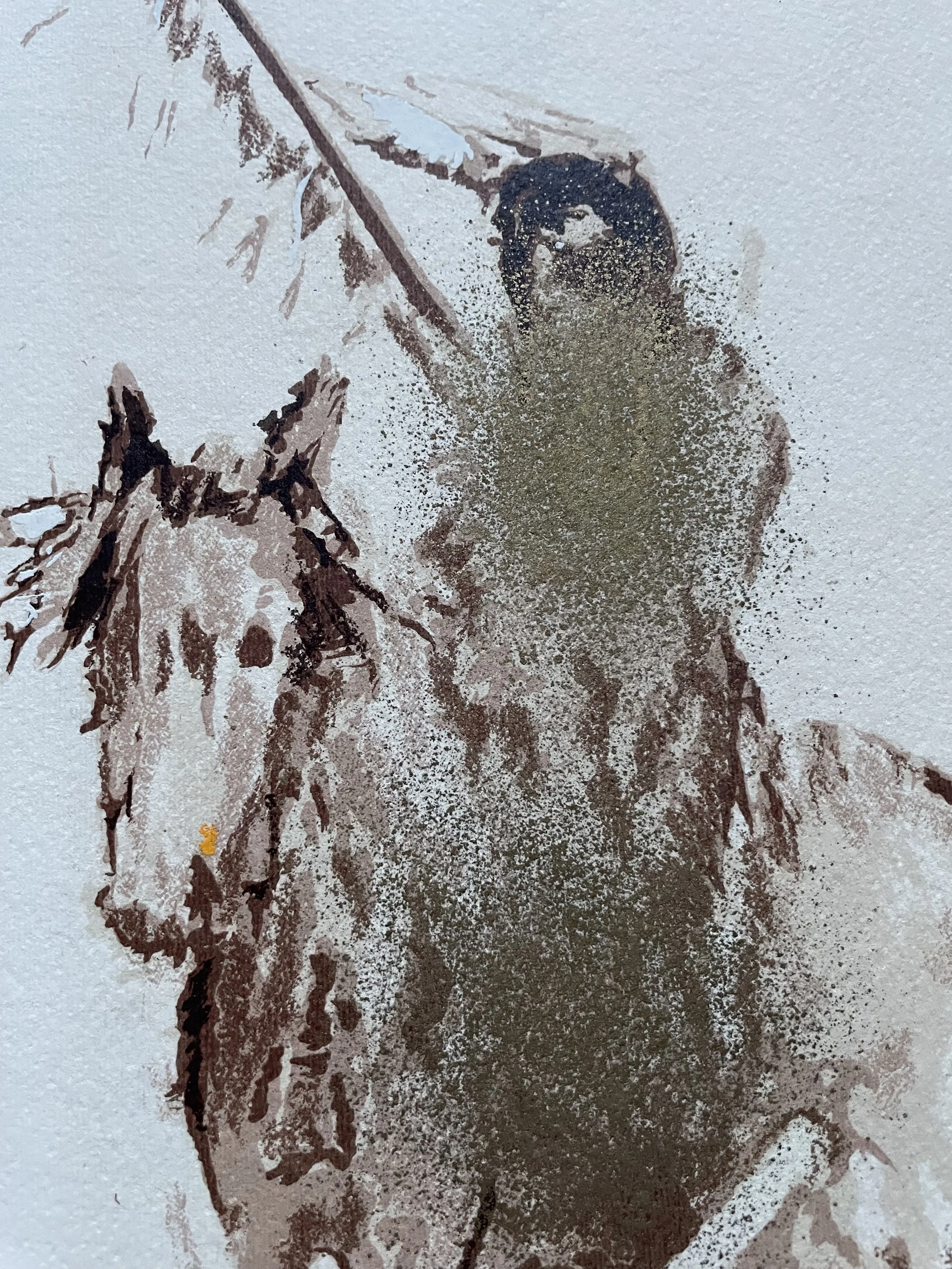
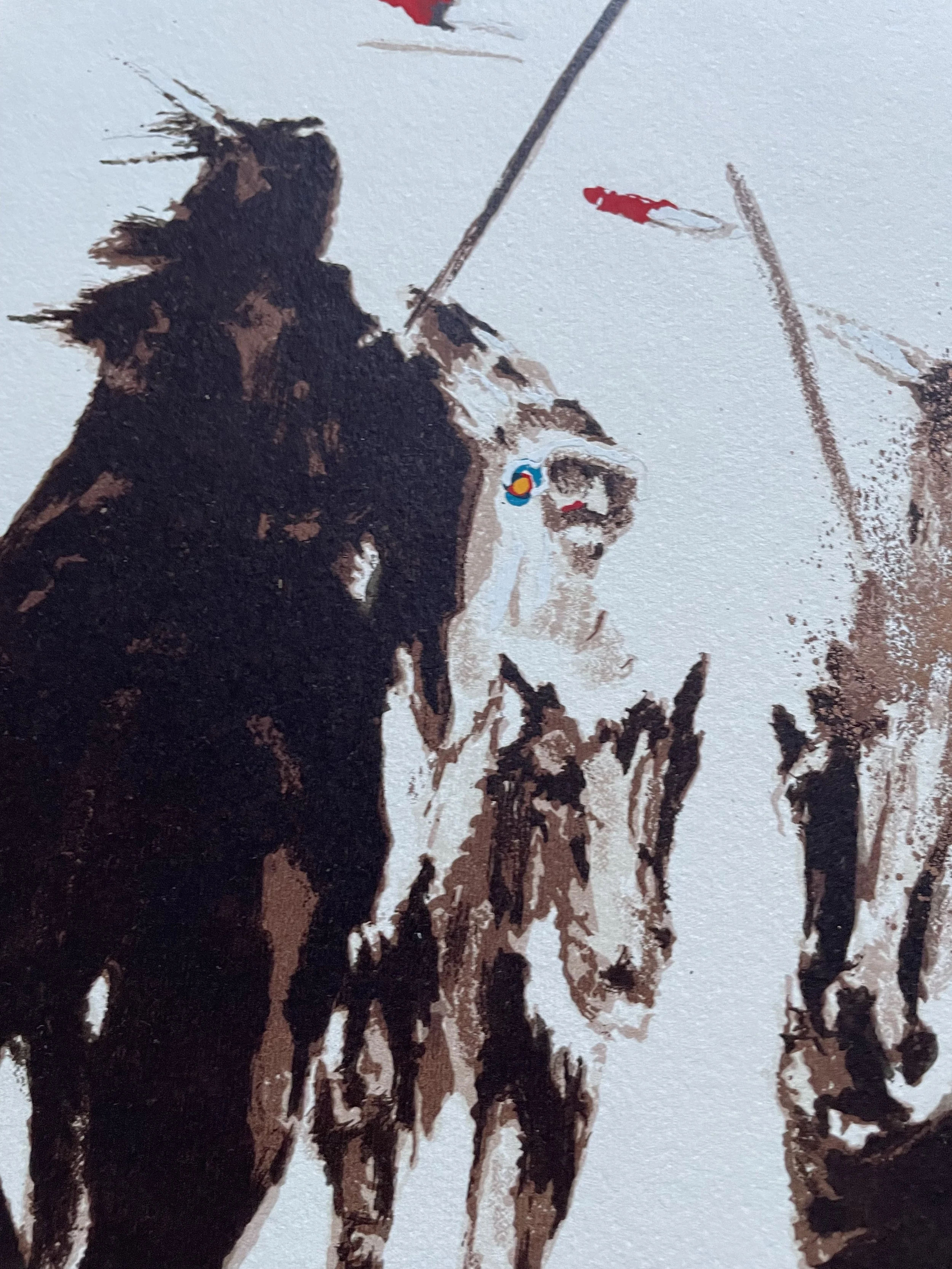
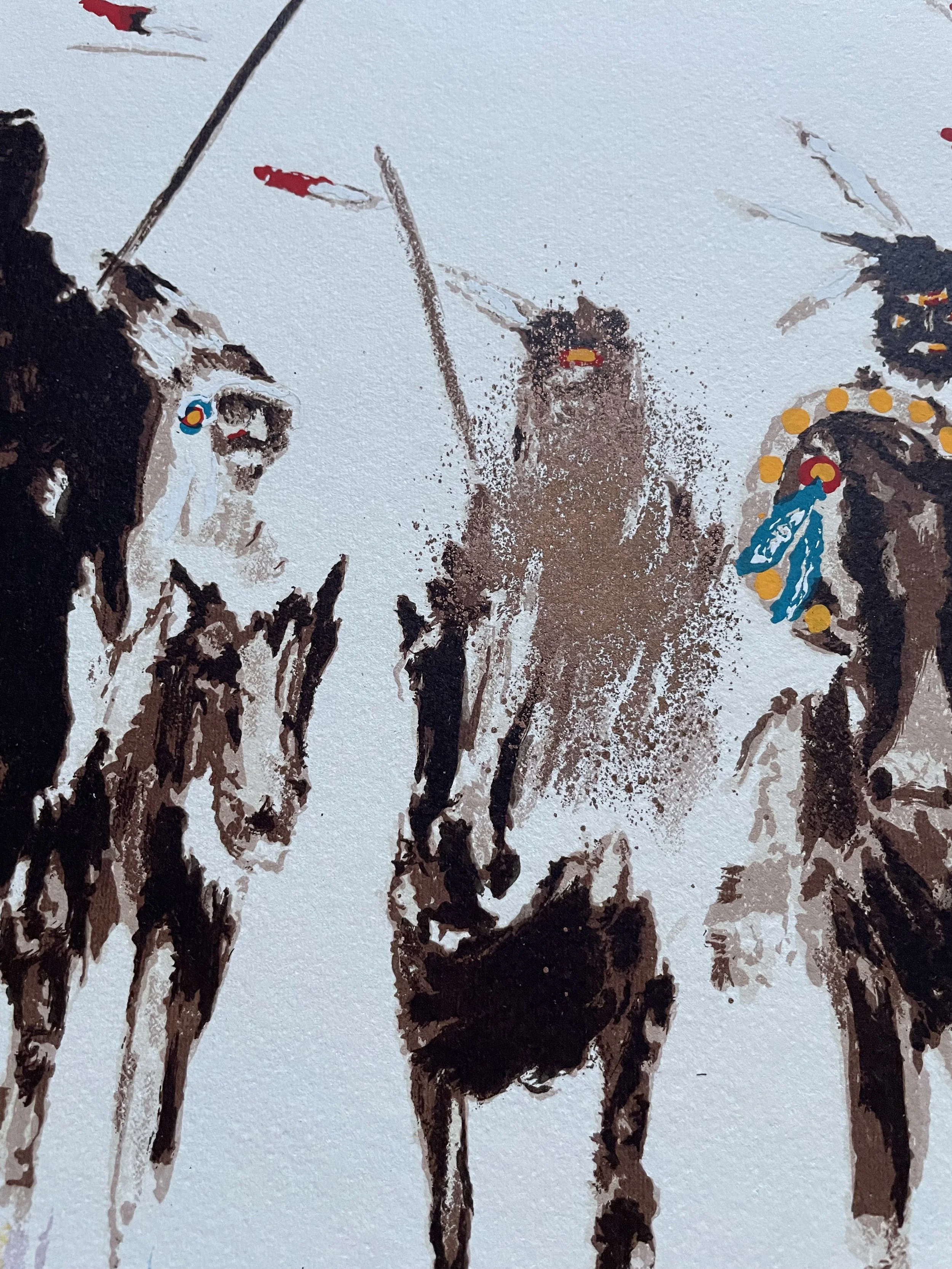
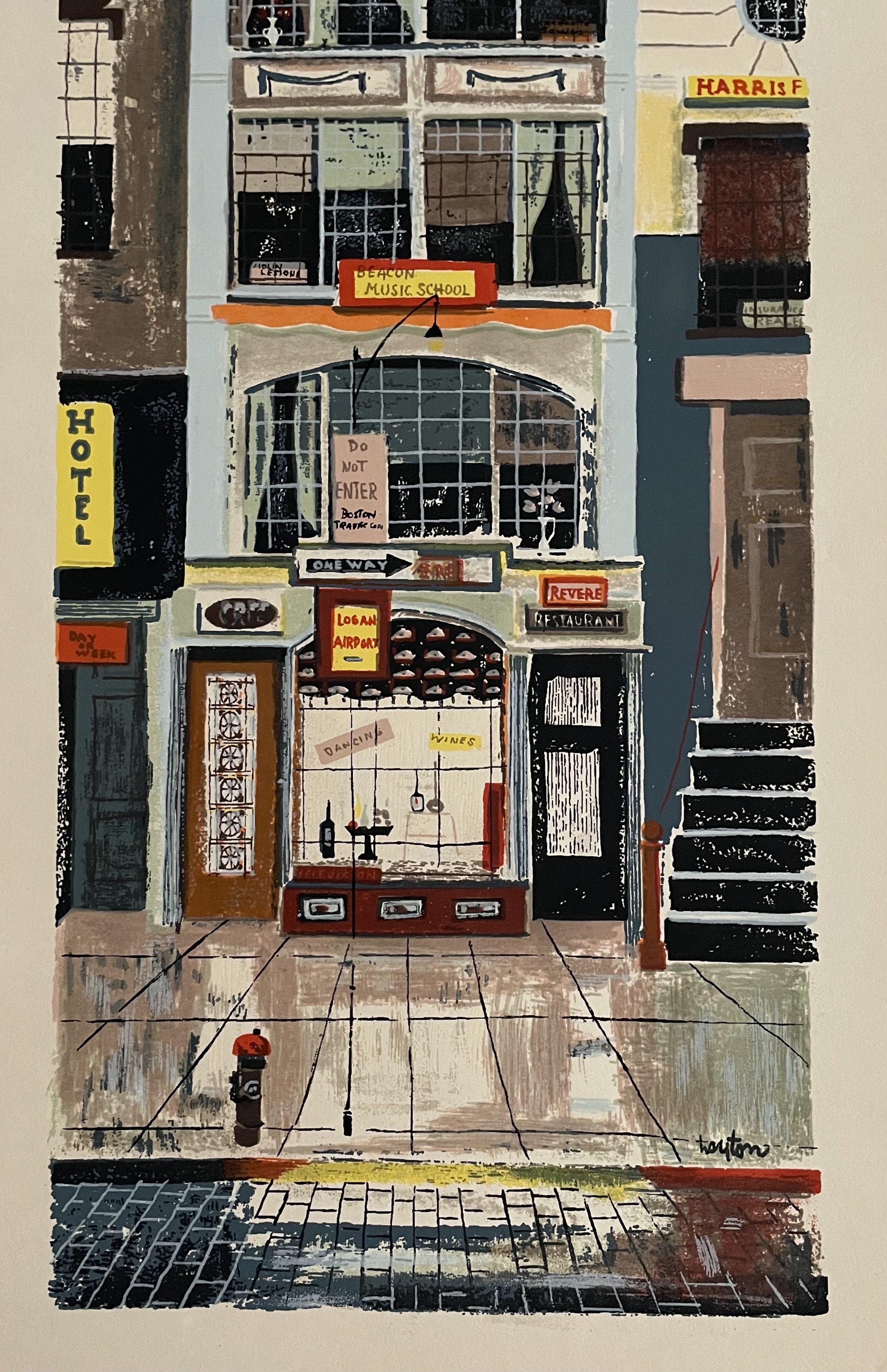
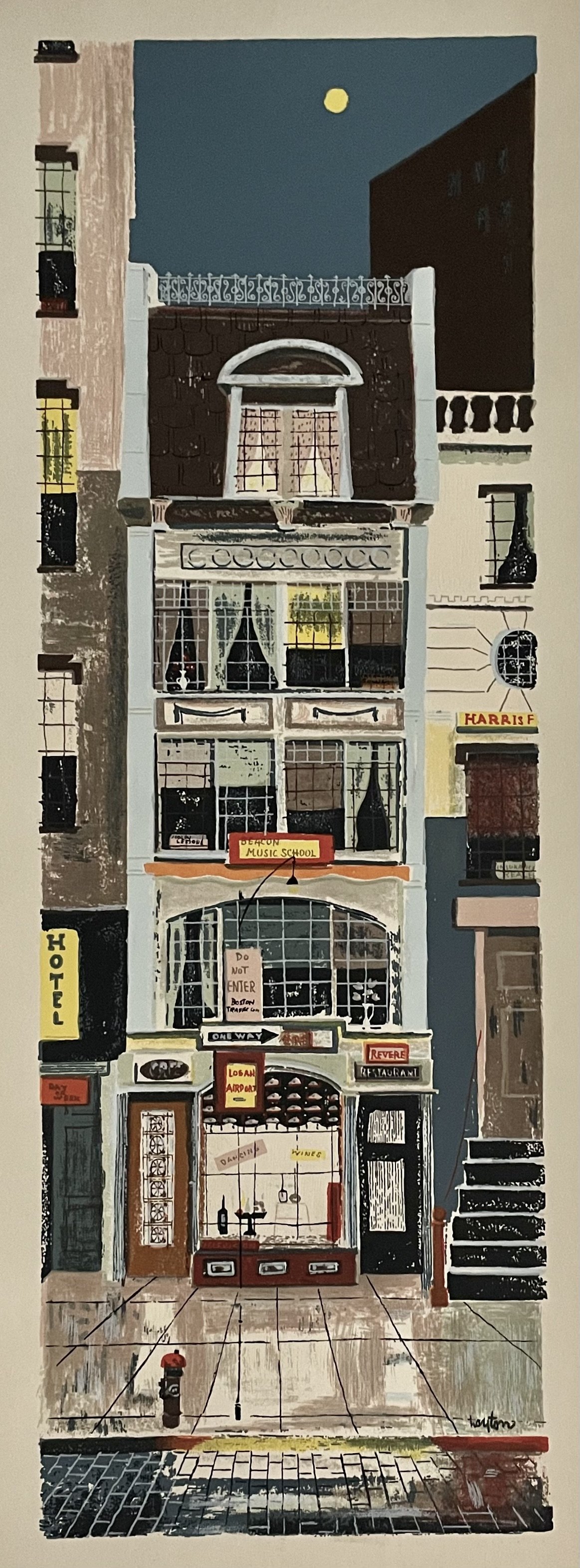
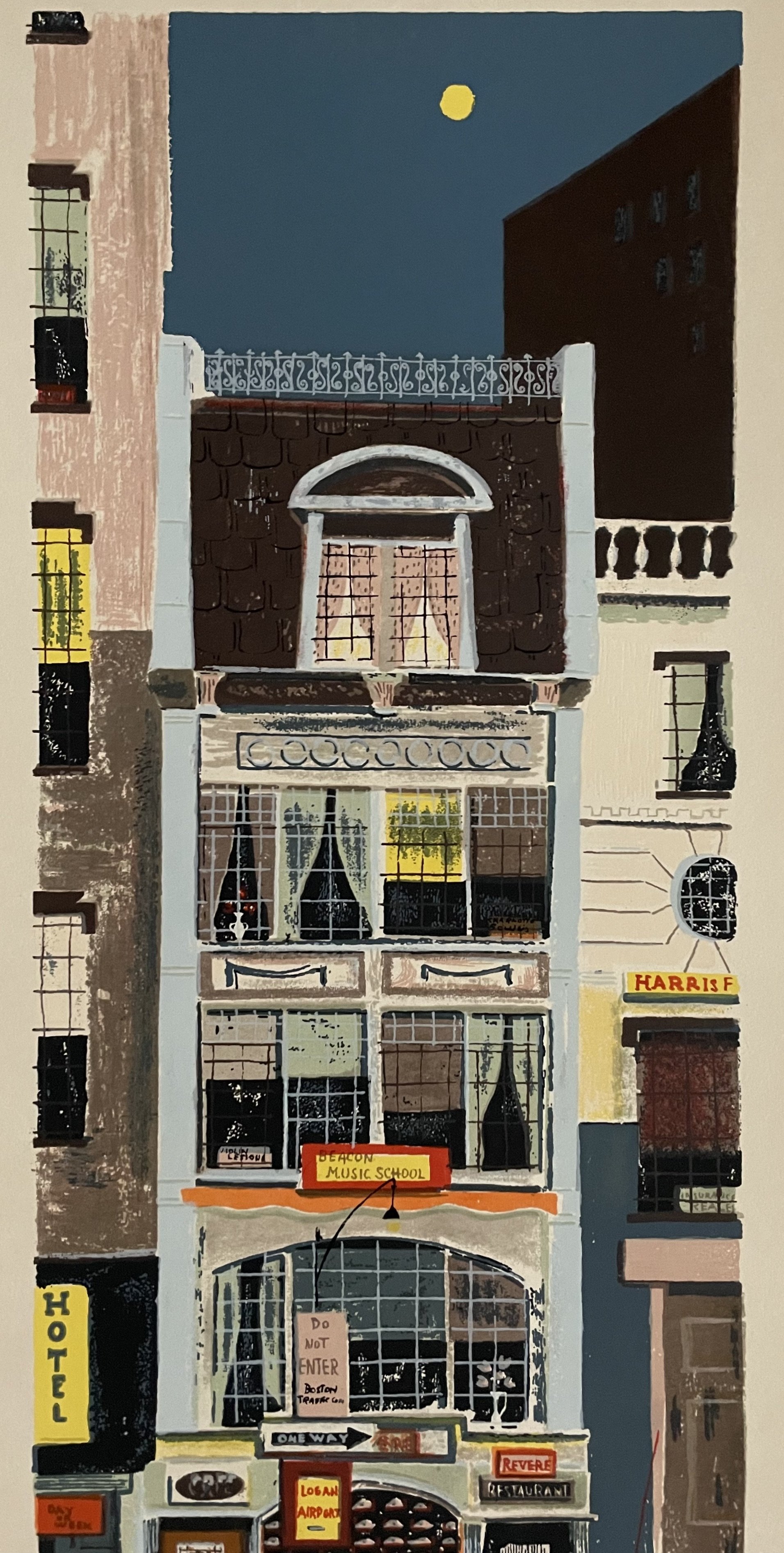
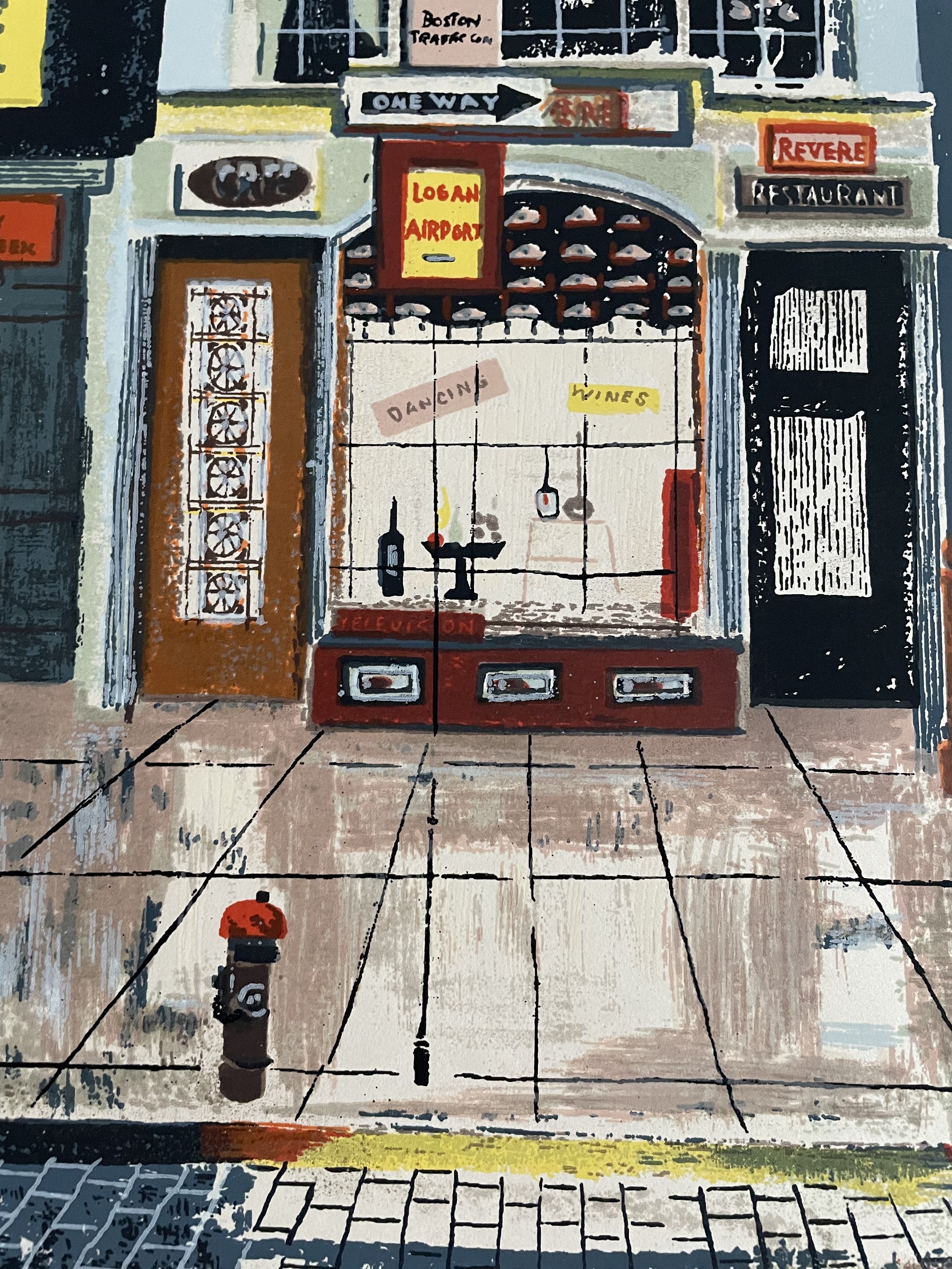
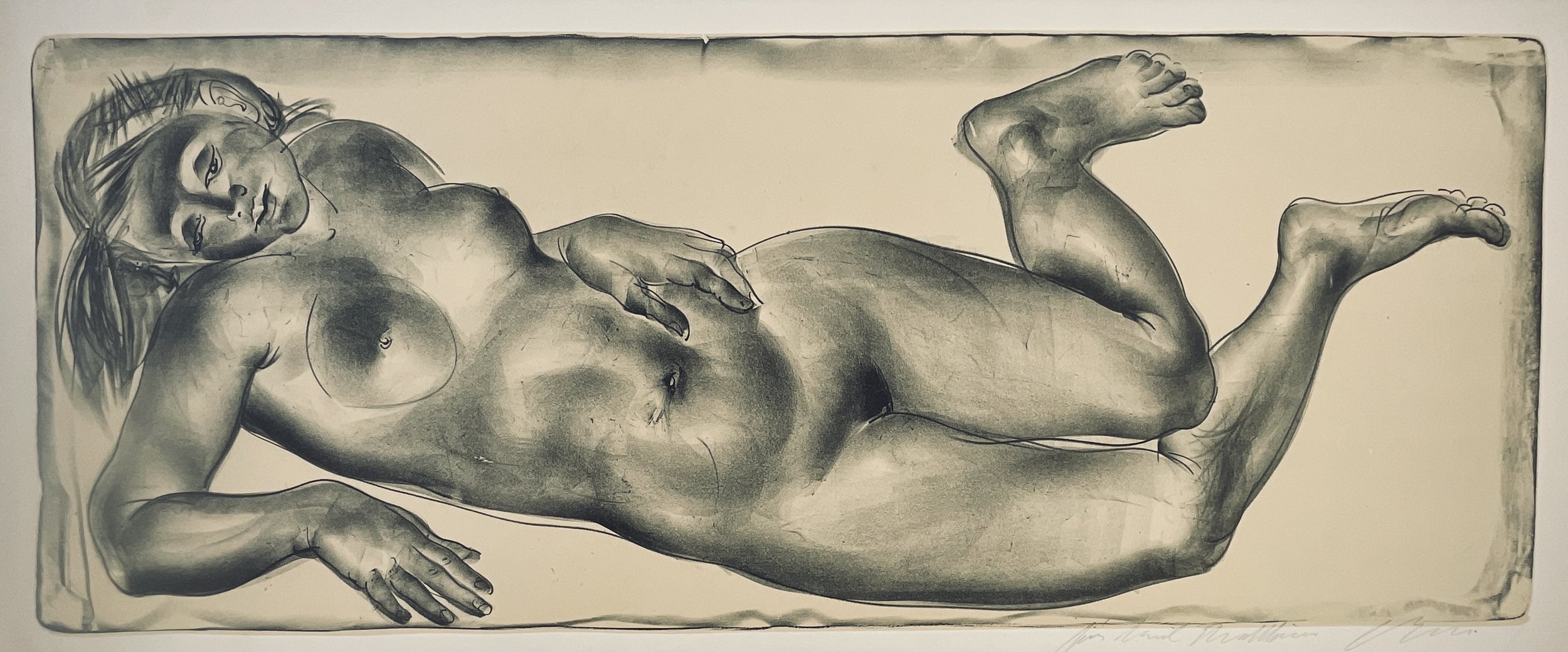
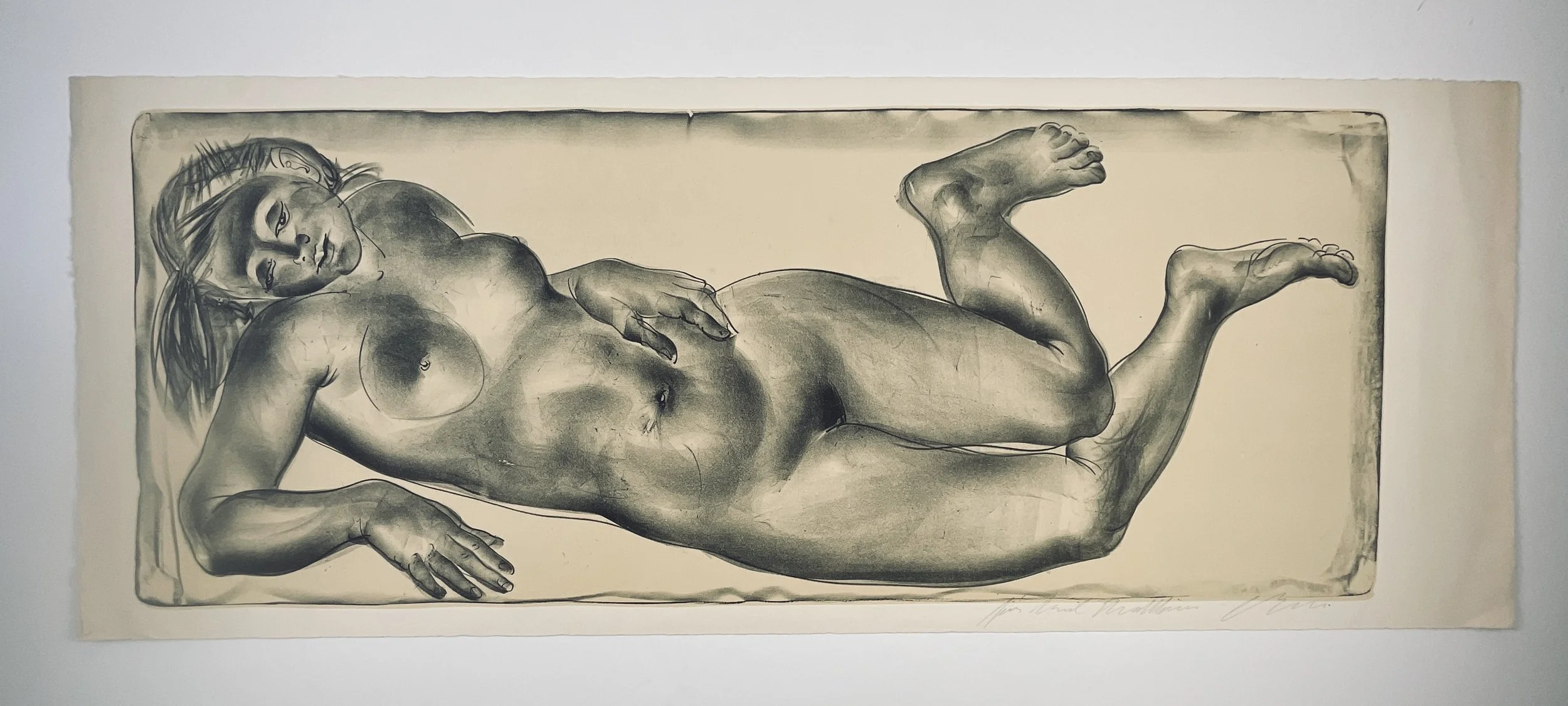
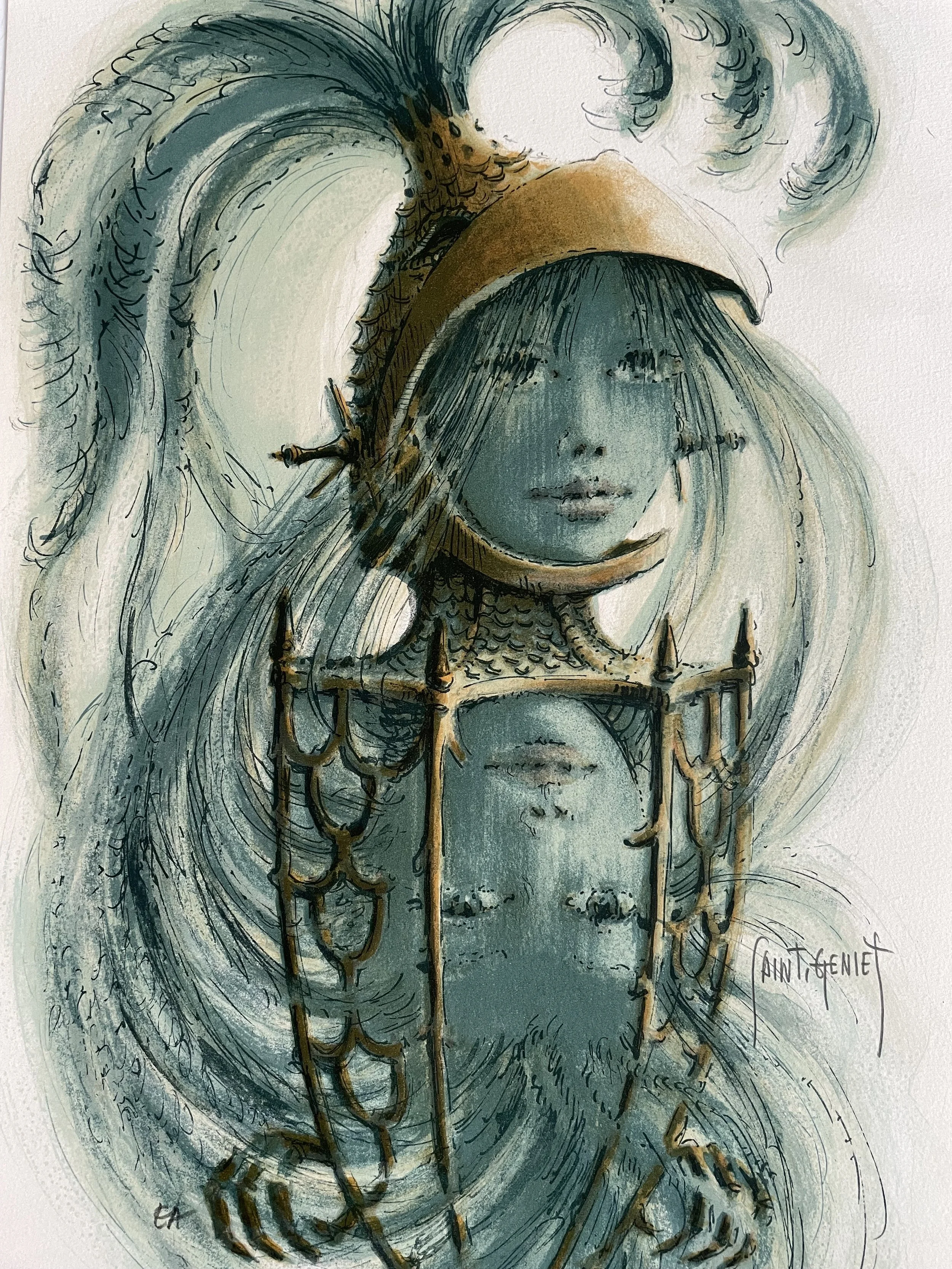
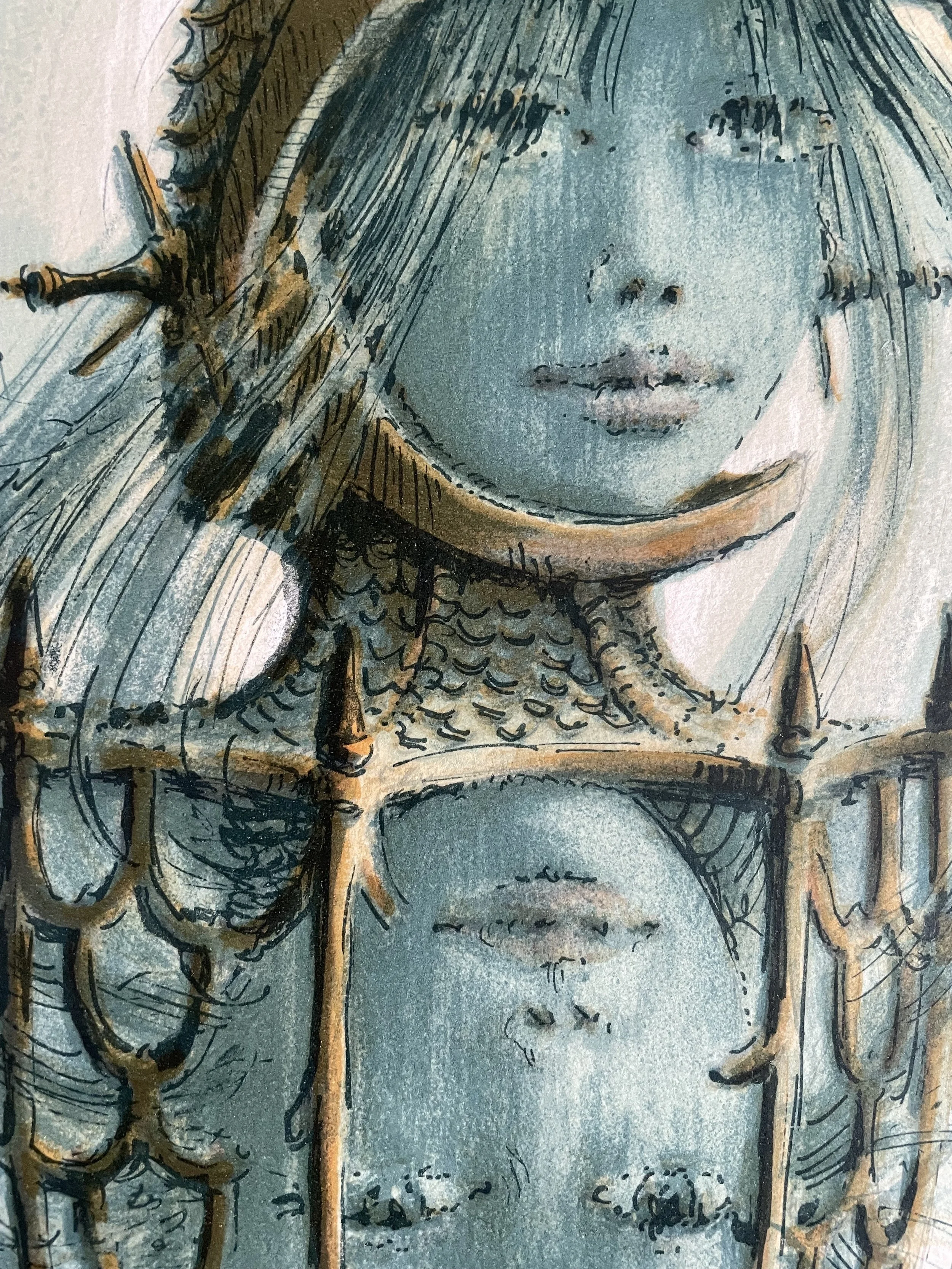
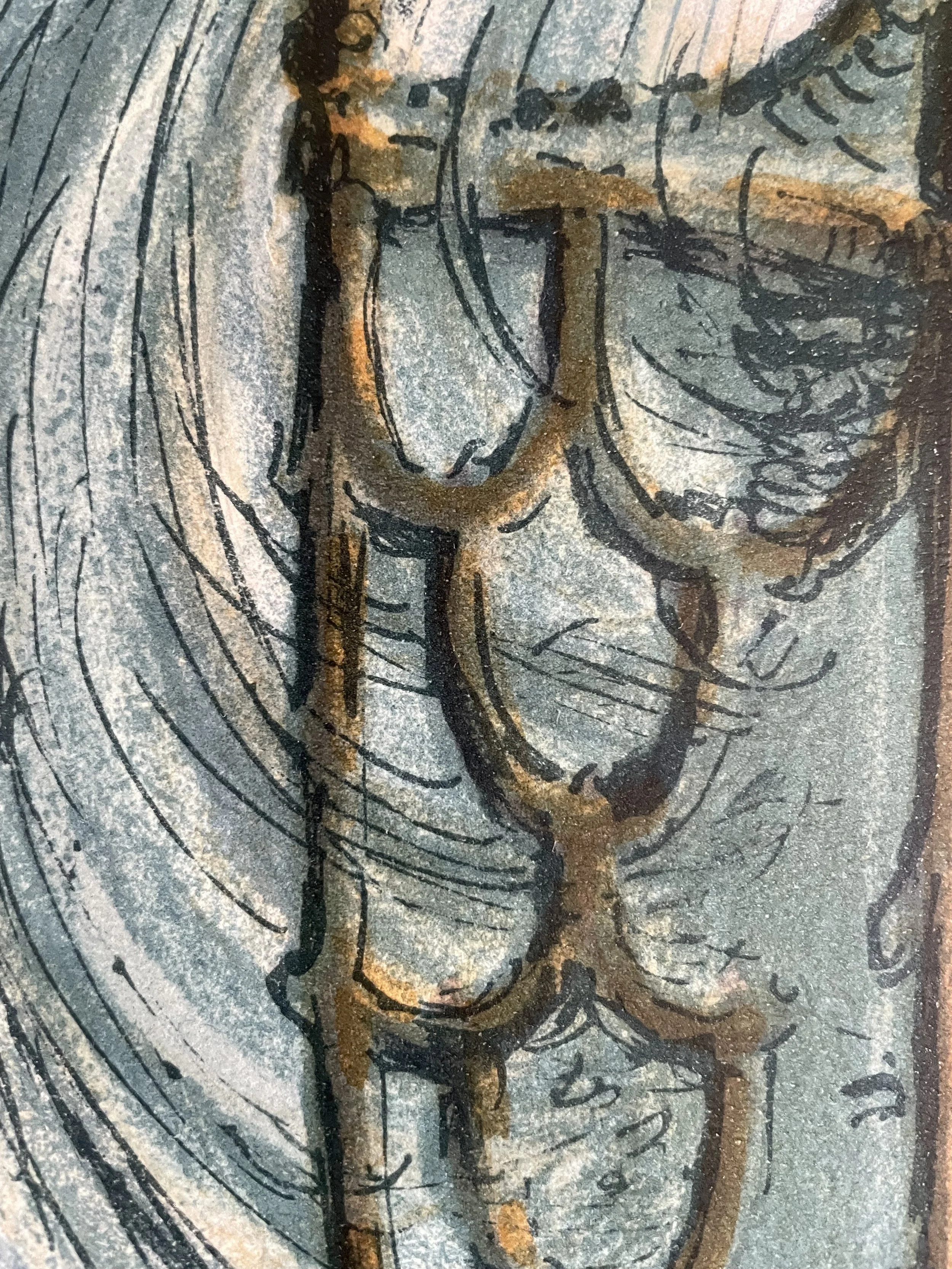
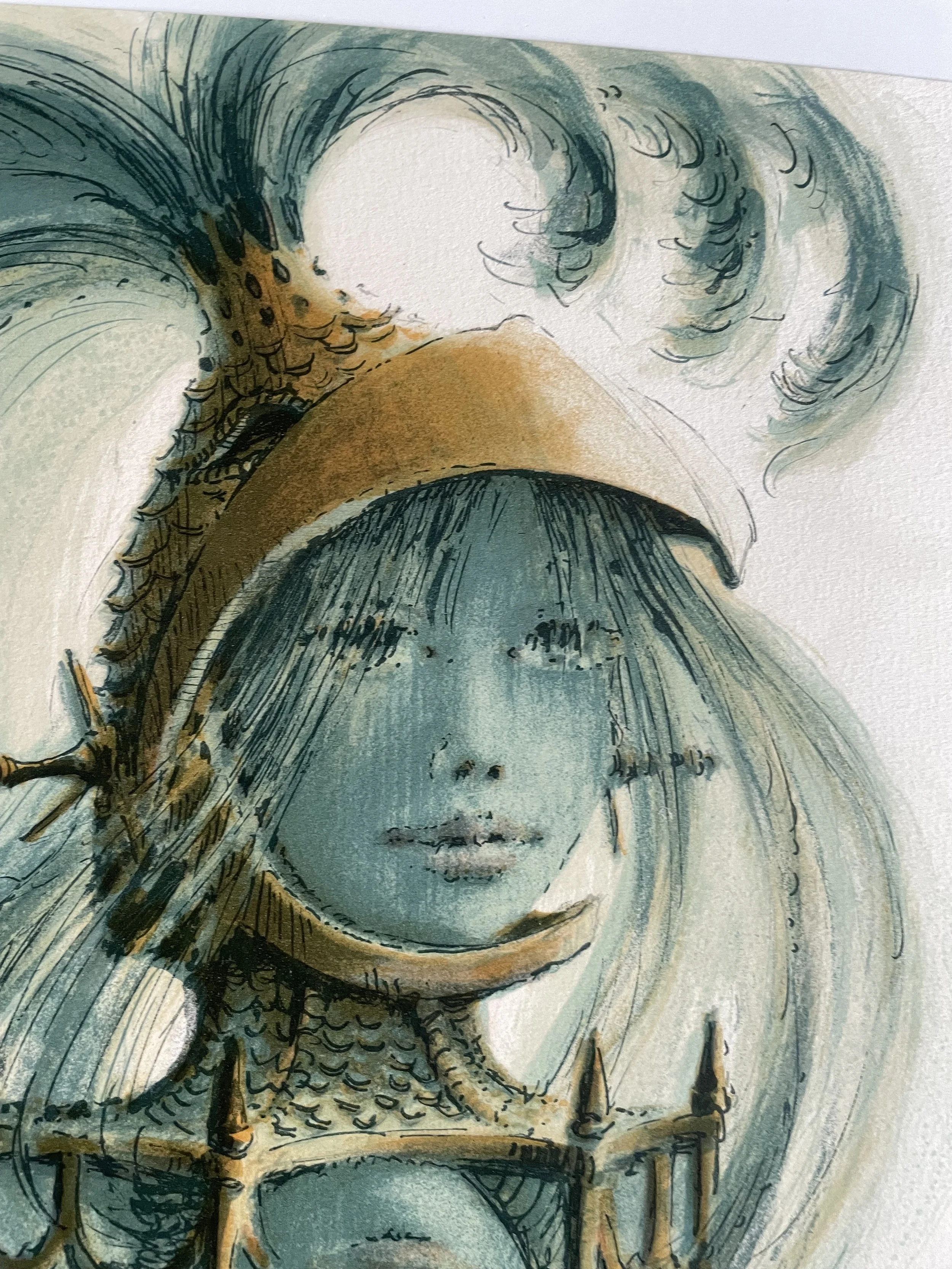
“Luna Passage – Canyon,” Jack Hagman (1937–2015), c.1970s, 26×20 in. signed lithograph, ed. 229/275, abstract canyon landscape illuminated by a crescent moon.
Jack Hagman’s “Luna Passage – Canyon” is an elegant, luminous lithograph blending modernist abstraction with the atmospheric drama of Western canyon terrain. Signed and numbered 229/275, this large-format 26×20 in. print showcases Hagman’s signature tonal layering, sculptural rock forms, and subtle celestial light—a refined work from the American artist whose lithographs appear in the Smithsonian American Art Museum.
Artwork Description
“Luna Passage – Canyon” presents a monumental canyon rendered in stacked, interlocking forms of ochre, taupe, stone gray, olive, and deep brown. Jagged cliffs rise sharply along both sides, narrowing toward a distant horizon where pale, ethereal light glows behind layered geological formations. A small crescent moon hangs above, its faint white curve adding quiet mystery to the composition. At the base, a dark, inky blue suggests water or shadowed chasm depths, grounding the entire composition in dramatic contrast.
Hagman’s lithographic technique is defined by careful tonal transitions—each rock face shaped through subtle shading that mimics erosion and geological striation. Instead of depicting a literal canyon, Hagman abstracts the landscape into rhythmic, sculptural surfaces, emphasizing form, depth, and the meditative experience of passing through ancient stone corridors. The limited palette and soft gradations give the work a dreamlike austerity, while the lunar element contributes to a sense of time, stillness, and cosmic observation.
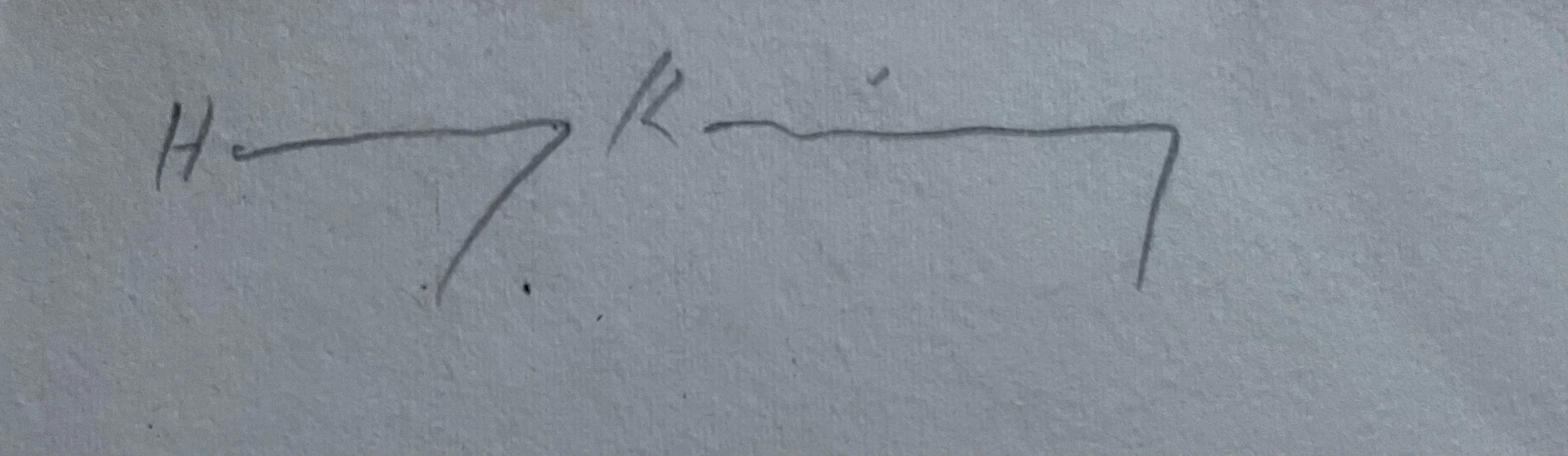
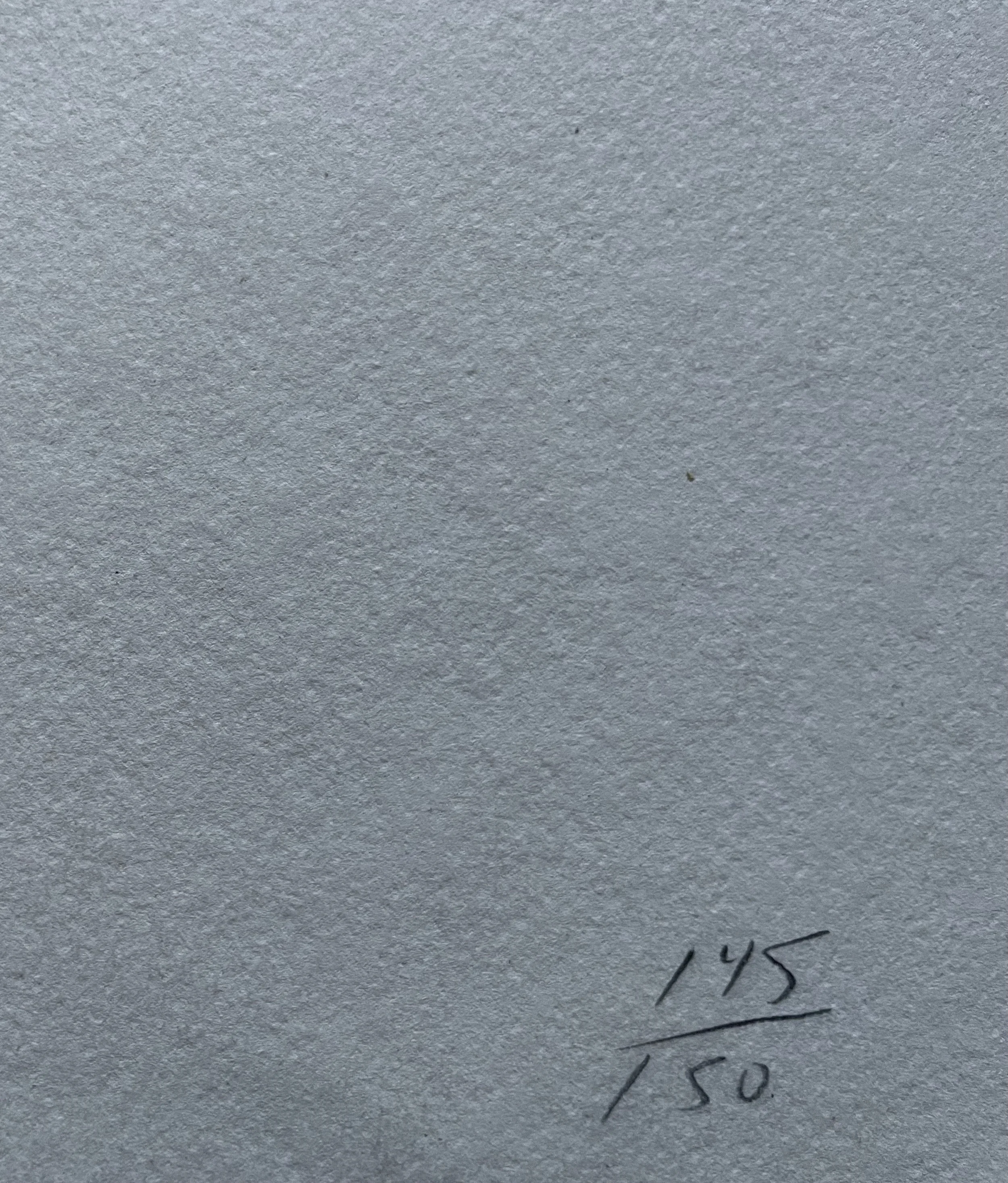
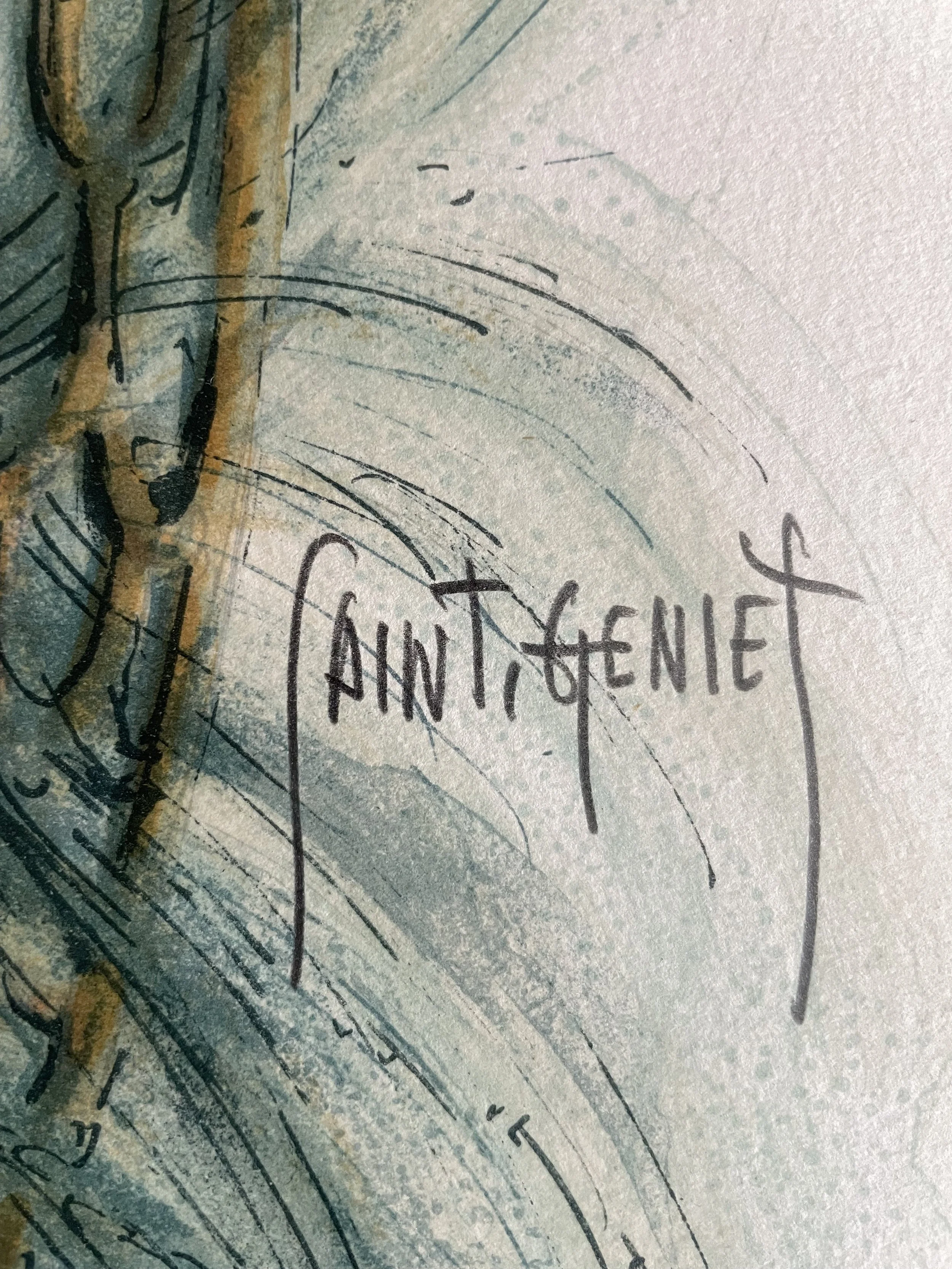
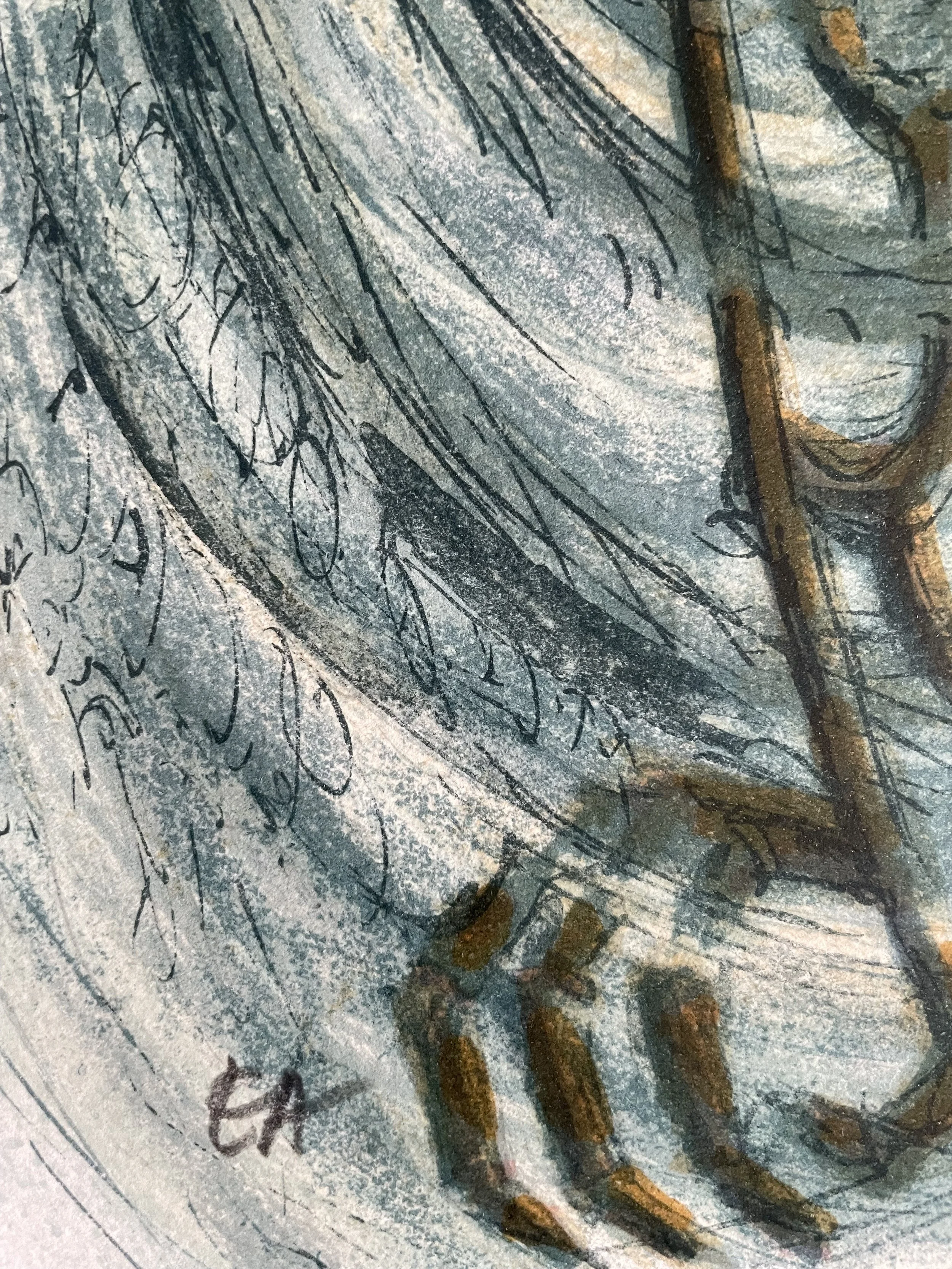
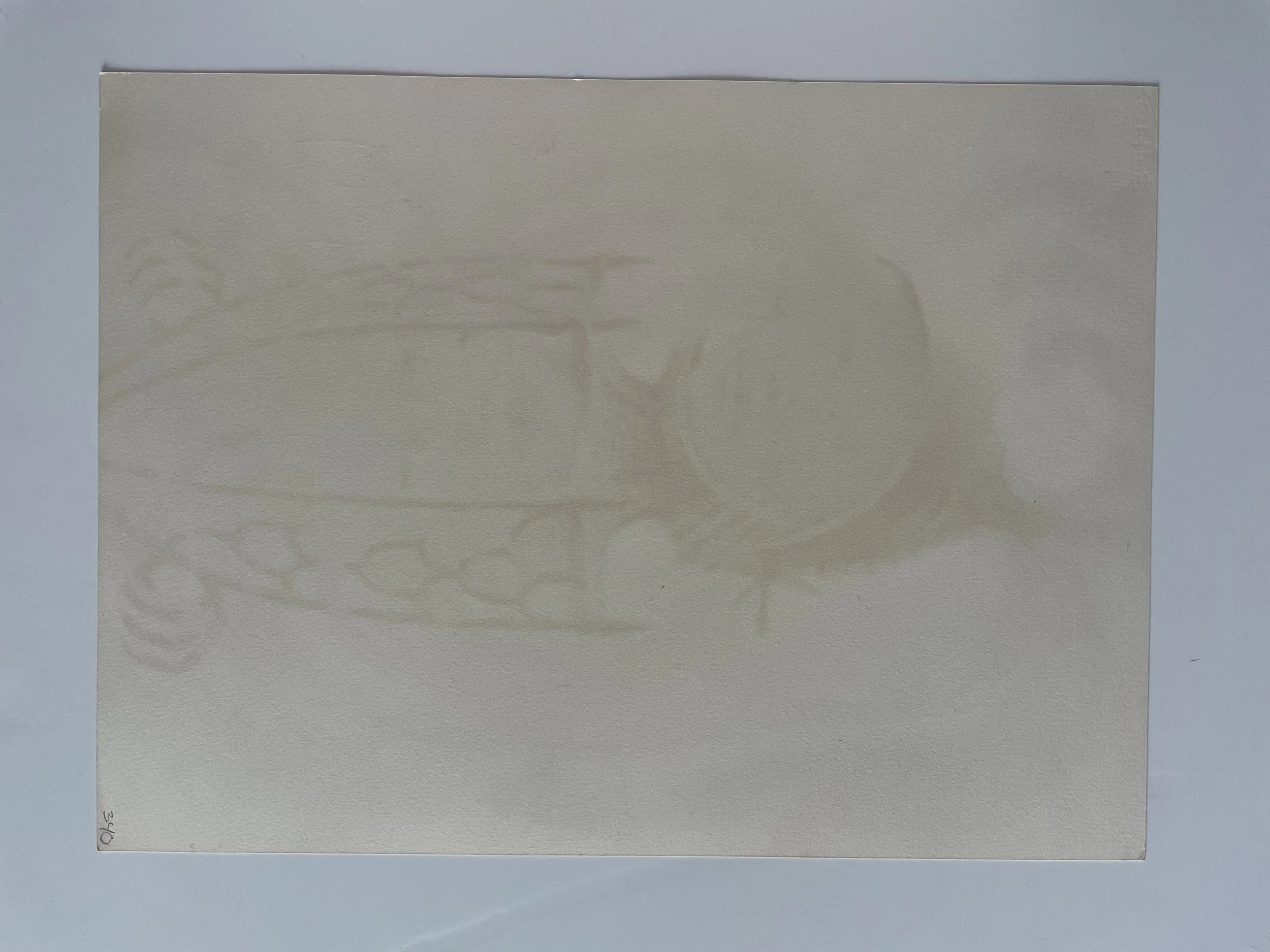
The print is hand-signed “Hagman” at the lower right, titled “Luna Passage – Canyon” at the center, and numbered 229/275 at the lower left. Its size (26×20 in.) gives the imagery a commanding presence, making it one of Hagman’s more visually immersive landscape lithographs.
This piece exemplifies his mature period in the 1970s, when he evolved from representational landscapes into more conceptual and pared-down abstractions—works that treat nature as architecture, mood, and pure form.
Artist Biography (Jack Hagman)
Jack (John) Hagman (American, 1937–2015) was a multidisciplinary artist—painter, printmaker, actor, and set designer—whose work bridges modernist aesthetics with expressive, atmospheric landscapes. Born in Chicago on December 22, 1937, Hagman was educated in the Chicago art community, where he developed strong foundations in drawing, composition, lithography, and contemporary painting. The city’s long-standing printmaking traditions influenced his early graphic sensibilities.
Hagman gained national visibility during the 1970s through Merrill Chase Galleries, which widely distributed his lithographs. These works ranged from geometric abstractions to luminous forests, canyons, valleys, and floral forms. His prints distinguished themselves through subtle tonal gradation, architectural simplification of natural forms, and a meditative, contemplative quality.
He is represented in several important public institutions—most notably, three works in the Smithsonian American Art Museum, confirming his significance within 20th-century American printmaking. Additional works reside in the Allen Memorial Art Museum at Oberlin College, and several were part of the Harvard Art Museums’ Fogg Museum print rental program.
Hagman’s landscapes—such as “Butte I,” “Forest I,” “Forest II,” “Iris,” and “Luna Passage – Canyon”—share a common approach: nature distilled into essential shape, shadow, and rhythm. His canyon compositions, in particular, approach pure abstraction while still retaining the emotional weight and grandeur of Western terrain.
Beyond his visual arts career, Hagman was a dedicated theater artist. He acted, directed, and designed sets for the Chicago Street Theatre in Valparaiso, Indiana, where he lived for many years. His stage experience enriched his understanding of lighting, structure, and atmospheric space, all of which fed into his visual work.
Throughout his lifetime, Hagman participated in group exhibitions, regional art events, and collaborative projects. His legacy endures in his understated yet emotionally charged landscapes, which offer viewers a quiet, introspective experience grounded in modernist clarity and natural beauty. He passed away on April 3, 2015.
Jack Hagman (1937–2015), Luna Passage – Canyon, c.1970s, 26×20 in. lithograph, signed, titled, and numbered 229/275. Abstract canyon landscape with moonlit sky; strong impression.
Certificate of Value & Authentication
This certificate verifies that “Luna Passage – Canyon” is an original lithograph by Jack Hagman (American, 1937–2015).
Medium: Hand-pulled lithograph
Dimensions: 26 × 20 inches
Date: c. 1970s
Edition: 229/275
Signature: Signed “Hagman”; titled and editioned in graphite
Notable: Artist has three works in the Smithsonian American Art Museum
Authentication is based on signature examination, print technique, paper characteristics, edition numbering, and provenance through Mitch Morse Gallery. Certified for appraisal, insurance, and resale.
Provenance Chain (Collector Format)
Artist: Jack Hagman (American, 1937–2015)
Distributed via gallery/publisher, U.S., c.1970s
Acquired by Mitch Morse Gallery, New York (additional sourcing through U.S. and Europe)
Sold to private collectors through Mitch Morse Gallery
Current Owner: Artfind Gallery, Washington DC
“Luna Passage – Canyon,” Jack Hagman (1937–2015), c.1970s, 26×20 in. signed lithograph, ed. 229/275, abstract canyon landscape illuminated by a crescent moon.
Jack Hagman’s “Luna Passage – Canyon” is an elegant, luminous lithograph blending modernist abstraction with the atmospheric drama of Western canyon terrain. Signed and numbered 229/275, this large-format 26×20 in. print showcases Hagman’s signature tonal layering, sculptural rock forms, and subtle celestial light—a refined work from the American artist whose lithographs appear in the Smithsonian American Art Museum.
Artwork Description
“Luna Passage – Canyon” presents a monumental canyon rendered in stacked, interlocking forms of ochre, taupe, stone gray, olive, and deep brown. Jagged cliffs rise sharply along both sides, narrowing toward a distant horizon where pale, ethereal light glows behind layered geological formations. A small crescent moon hangs above, its faint white curve adding quiet mystery to the composition. At the base, a dark, inky blue suggests water or shadowed chasm depths, grounding the entire composition in dramatic contrast.
Hagman’s lithographic technique is defined by careful tonal transitions—each rock face shaped through subtle shading that mimics erosion and geological striation. Instead of depicting a literal canyon, Hagman abstracts the landscape into rhythmic, sculptural surfaces, emphasizing form, depth, and the meditative experience of passing through ancient stone corridors. The limited palette and soft gradations give the work a dreamlike austerity, while the lunar element contributes to a sense of time, stillness, and cosmic observation.
The print is hand-signed “Hagman” at the lower right, titled “Luna Passage – Canyon” at the center, and numbered 229/275 at the lower left. Its size (26×20 in.) gives the imagery a commanding presence, making it one of Hagman’s more visually immersive landscape lithographs.
This piece exemplifies his mature period in the 1970s, when he evolved from representational landscapes into more conceptual and pared-down abstractions—works that treat nature as architecture, mood, and pure form.
Artist Biography (Jack Hagman)
Jack (John) Hagman (American, 1937–2015) was a multidisciplinary artist—painter, printmaker, actor, and set designer—whose work bridges modernist aesthetics with expressive, atmospheric landscapes. Born in Chicago on December 22, 1937, Hagman was educated in the Chicago art community, where he developed strong foundations in drawing, composition, lithography, and contemporary painting. The city’s long-standing printmaking traditions influenced his early graphic sensibilities.
Hagman gained national visibility during the 1970s through Merrill Chase Galleries, which widely distributed his lithographs. These works ranged from geometric abstractions to luminous forests, canyons, valleys, and floral forms. His prints distinguished themselves through subtle tonal gradation, architectural simplification of natural forms, and a meditative, contemplative quality.
He is represented in several important public institutions—most notably, three works in the Smithsonian American Art Museum, confirming his significance within 20th-century American printmaking. Additional works reside in the Allen Memorial Art Museum at Oberlin College, and several were part of the Harvard Art Museums’ Fogg Museum print rental program.
Hagman’s landscapes—such as “Butte I,” “Forest I,” “Forest II,” “Iris,” and “Luna Passage – Canyon”—share a common approach: nature distilled into essential shape, shadow, and rhythm. His canyon compositions, in particular, approach pure abstraction while still retaining the emotional weight and grandeur of Western terrain.
Beyond his visual arts career, Hagman was a dedicated theater artist. He acted, directed, and designed sets for the Chicago Street Theatre in Valparaiso, Indiana, where he lived for many years. His stage experience enriched his understanding of lighting, structure, and atmospheric space, all of which fed into his visual work.
Throughout his lifetime, Hagman participated in group exhibitions, regional art events, and collaborative projects. His legacy endures in his understated yet emotionally charged landscapes, which offer viewers a quiet, introspective experience grounded in modernist clarity and natural beauty. He passed away on April 3, 2015.
Jack Hagman (1937–2015), Luna Passage – Canyon, c.1970s, 26×20 in. lithograph, signed, titled, and numbered 229/275. Abstract canyon landscape with moonlit sky; strong impression.
Certificate of Value & Authentication
This certificate verifies that “Luna Passage – Canyon” is an original lithograph by Jack Hagman (American, 1937–2015).
Medium: Hand-pulled lithograph
Dimensions: 26 × 20 inches
Date: c. 1970s
Edition: 229/275
Signature: Signed “Hagman”; titled and editioned in graphite
Notable: Artist has three works in the Smithsonian American Art Museum
Authentication is based on signature examination, print technique, paper characteristics, edition numbering, and provenance through Mitch Morse Gallery. Certified for appraisal, insurance, and resale.
Provenance Chain (Collector Format)
Artist: Jack Hagman (American, 1937–2015)
Distributed via gallery/publisher, U.S., c.1970s
Acquired by Mitch Morse Gallery, New York (additional sourcing through U.S. and Europe)
Sold to private collectors through Mitch Morse Gallery
Current Owner: Artfind Gallery, Washington DC
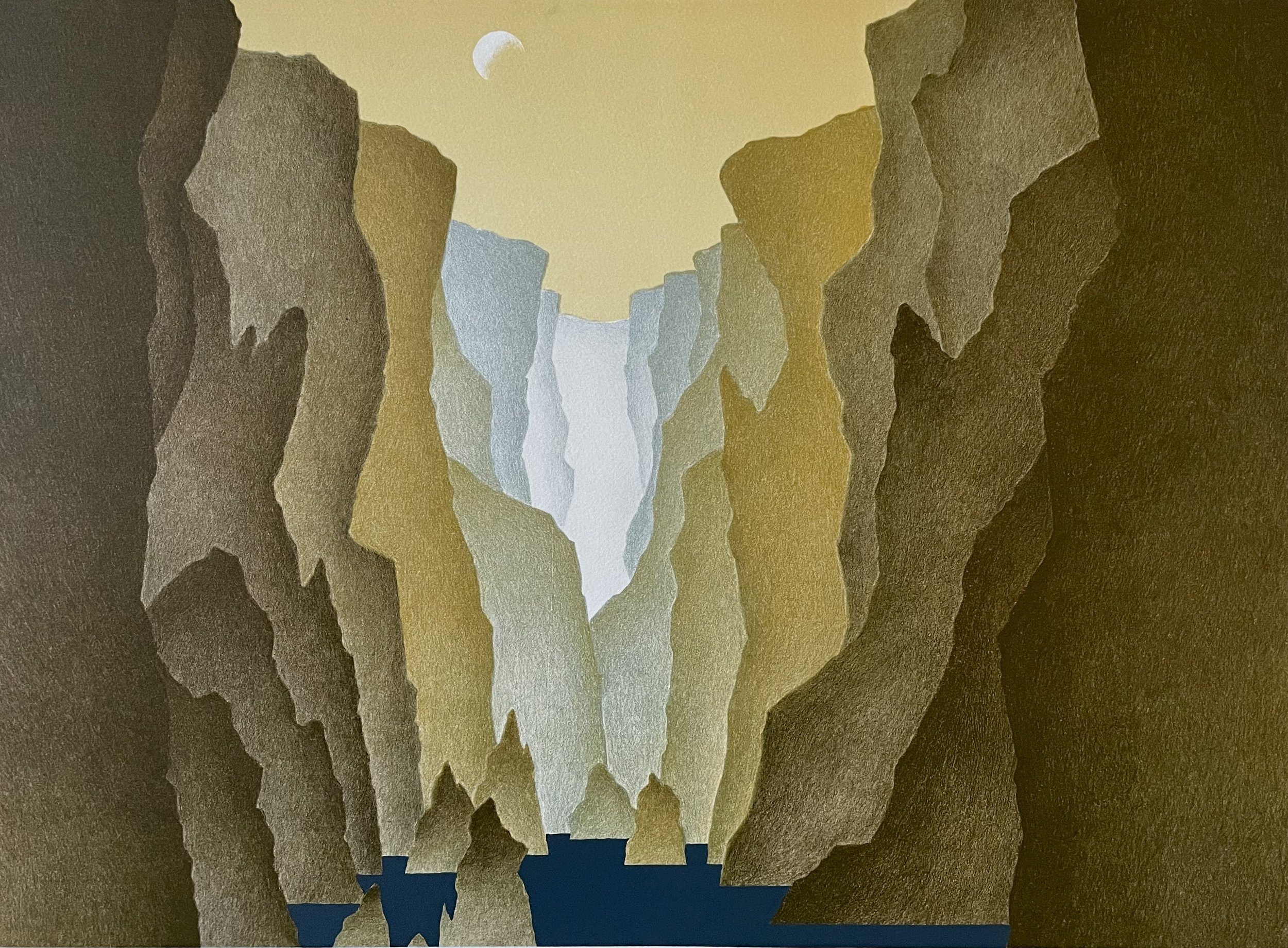 Image 1 of 13
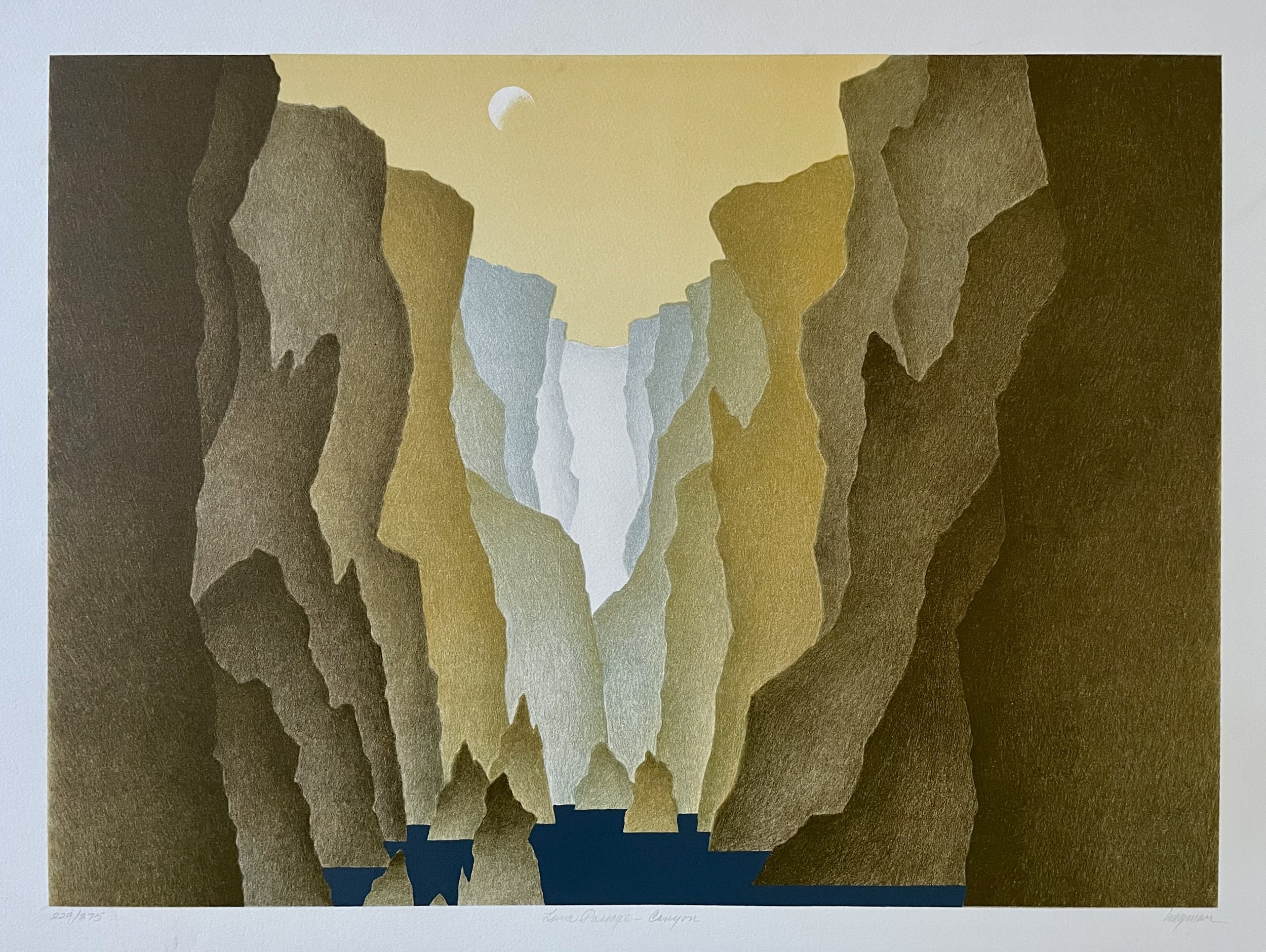 Image 2 of 13
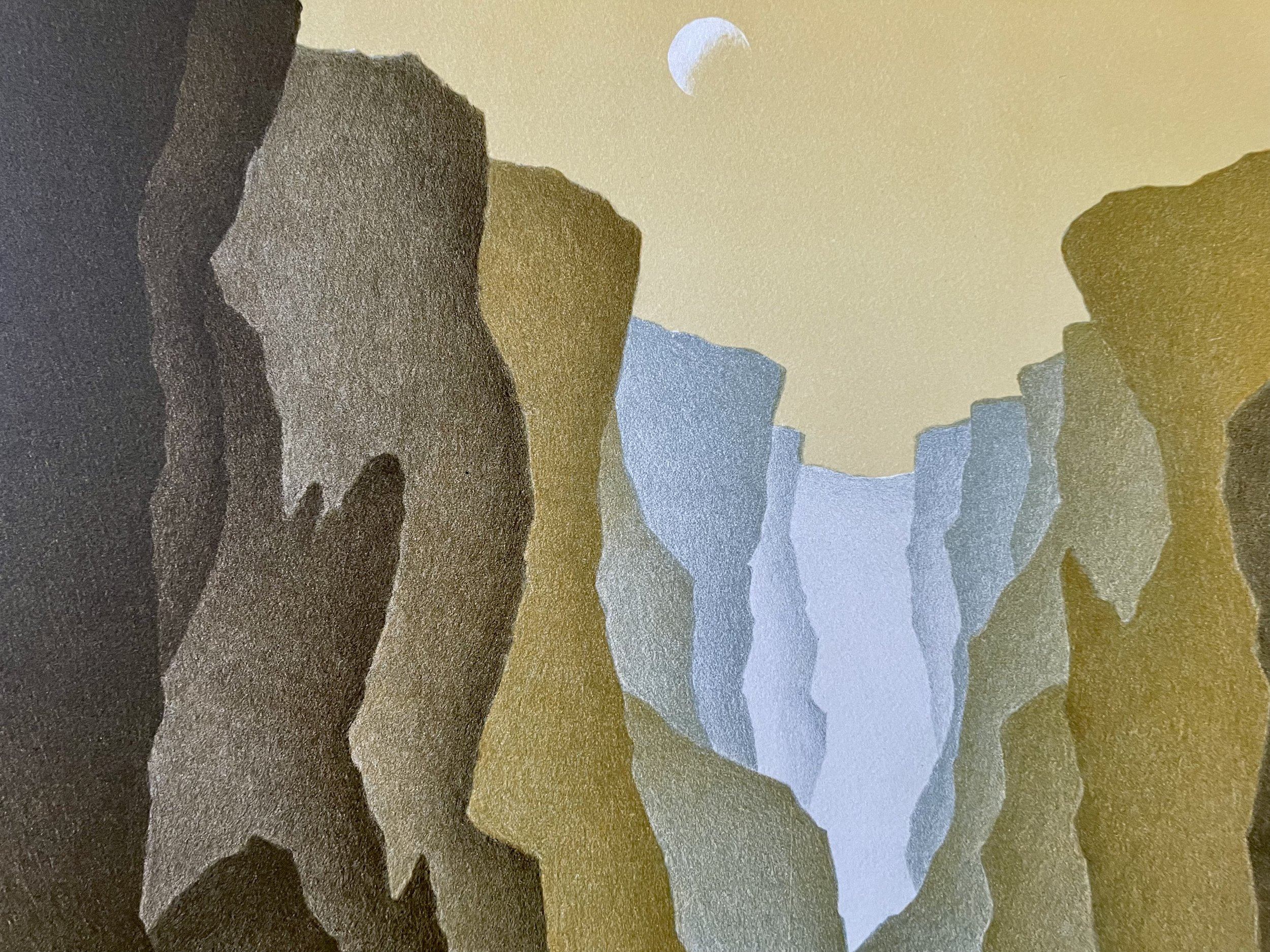 Image 3 of 13
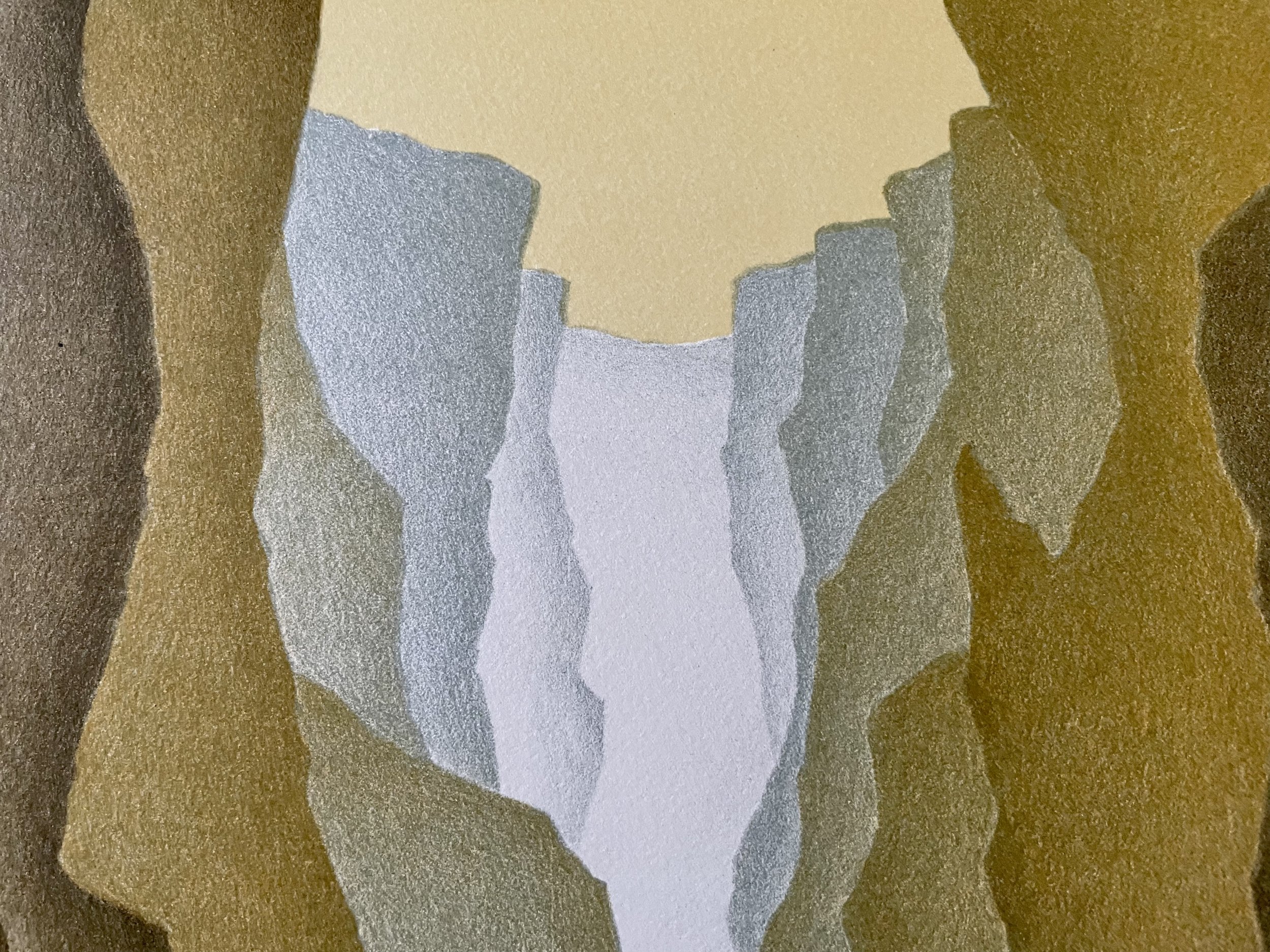 Image 4 of 13
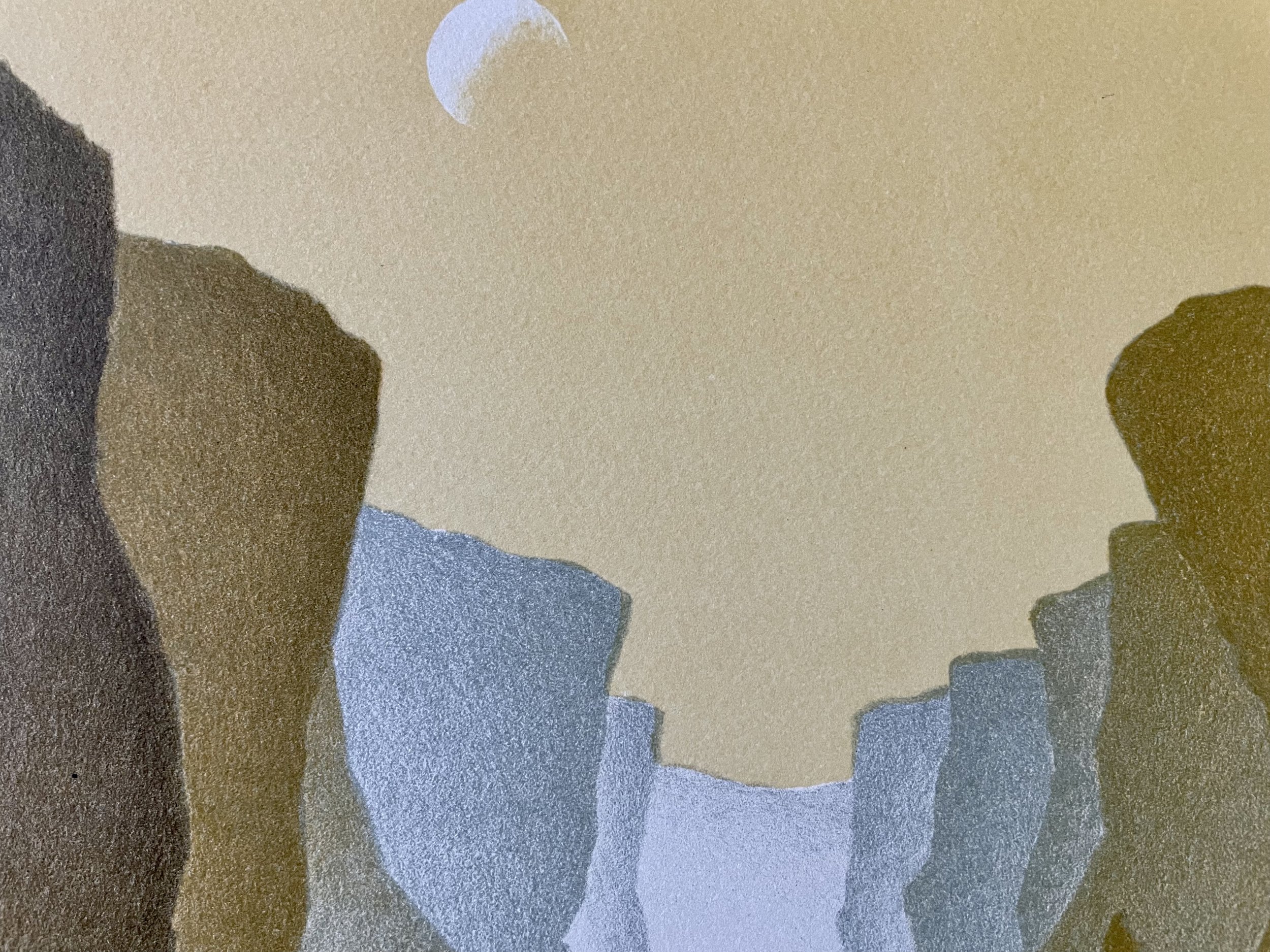 Image 5 of 13
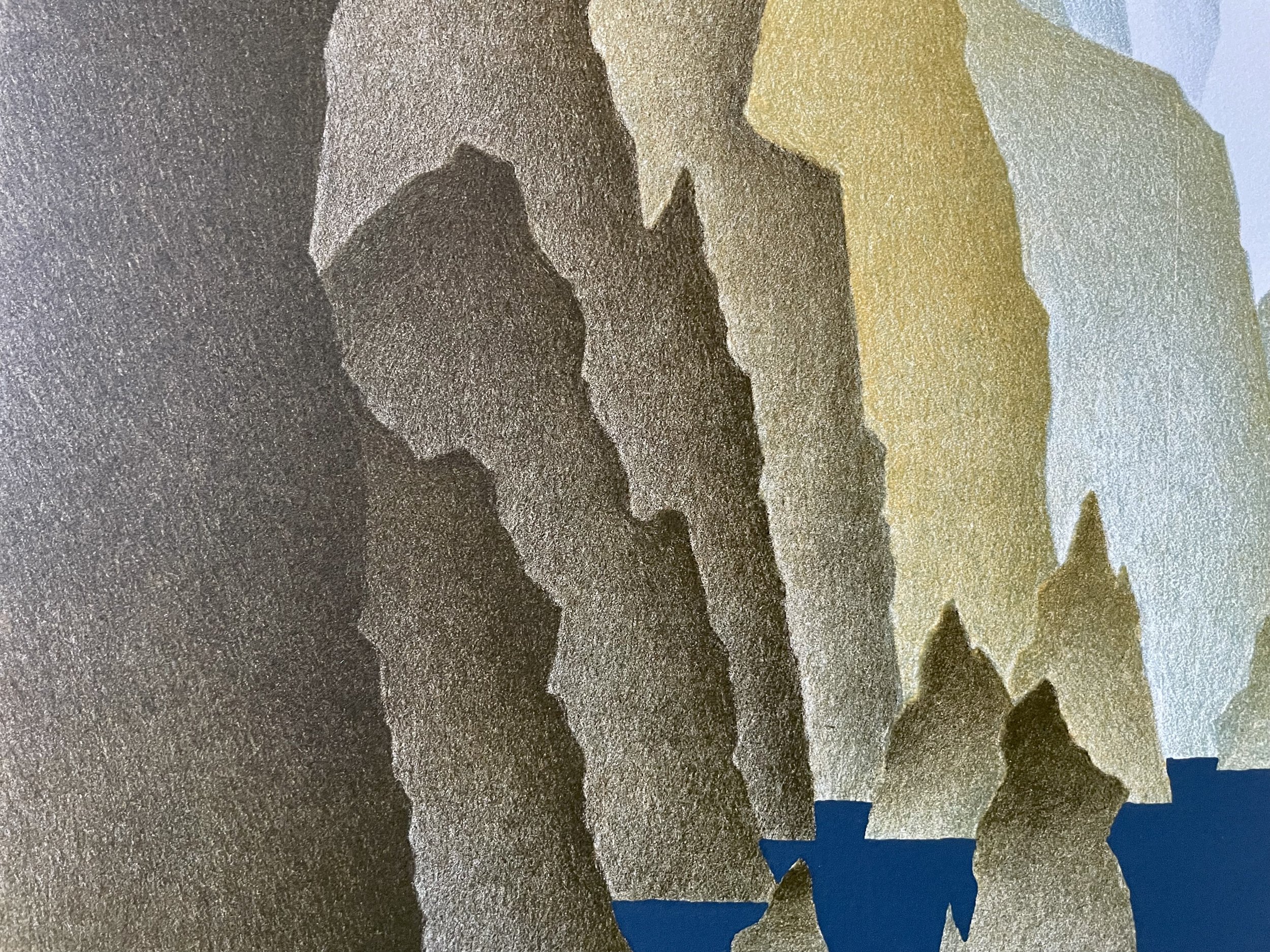 Image 6 of 13
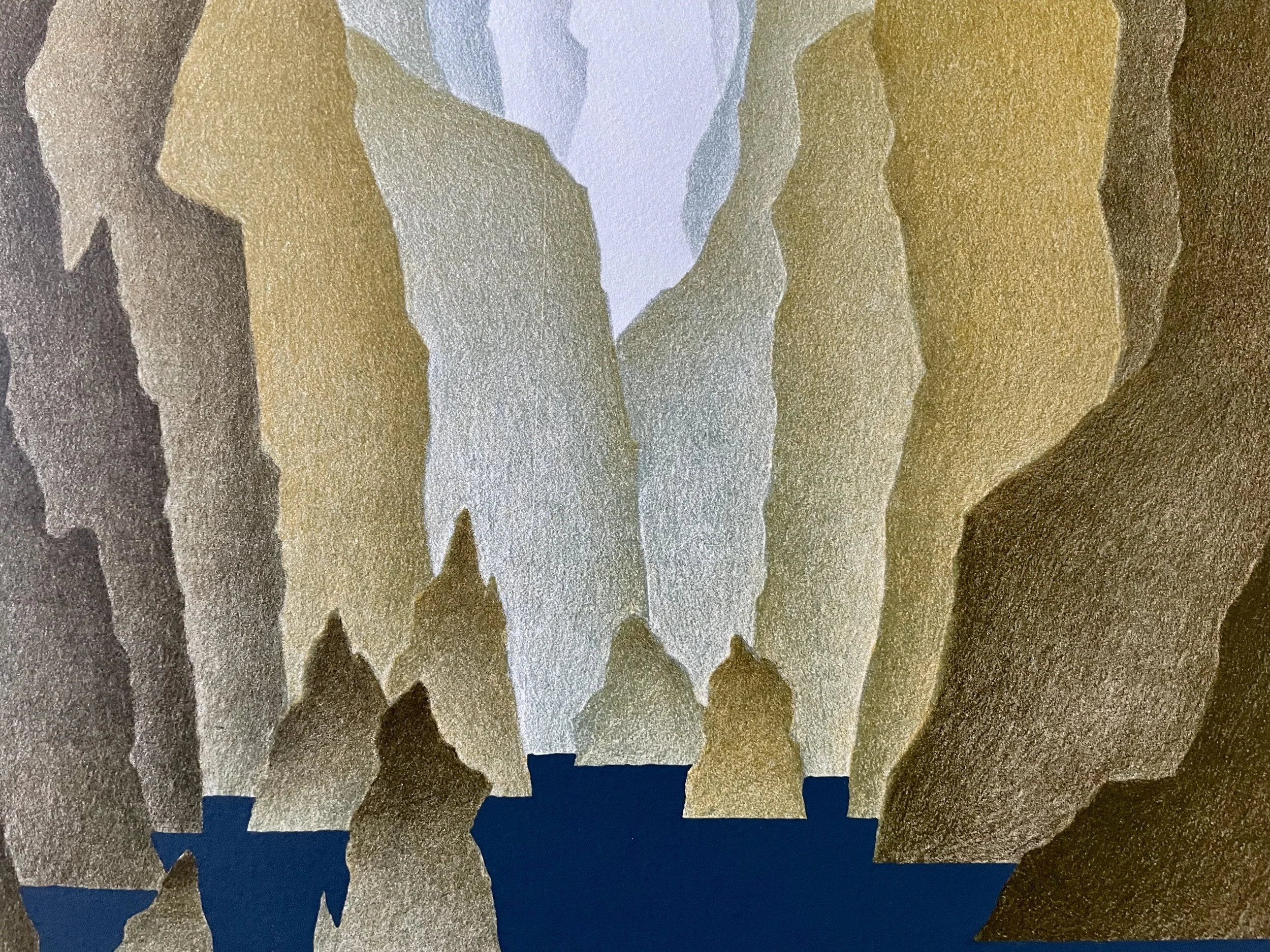 Image 7 of 13
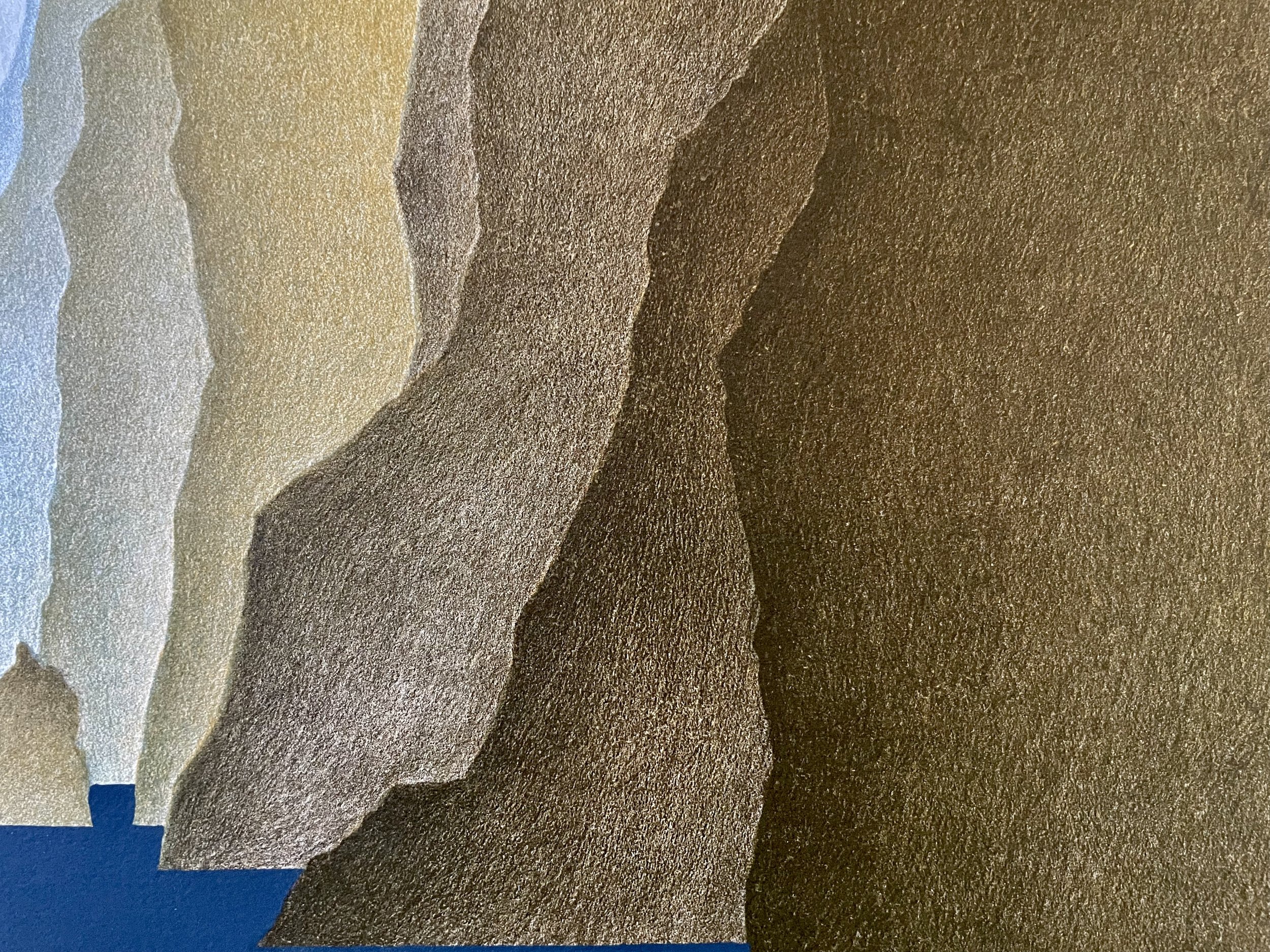 Image 8 of 13
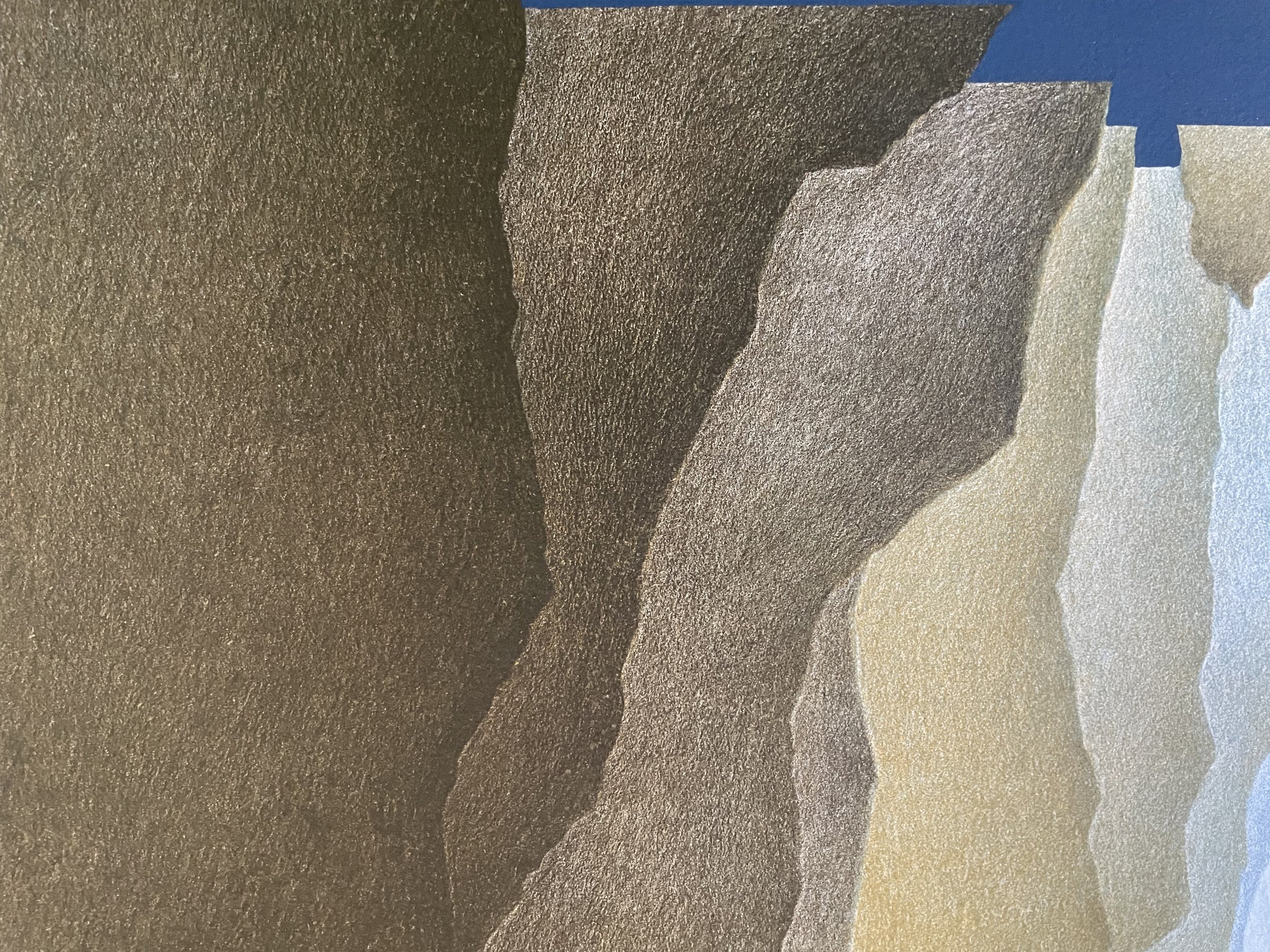 Image 9 of 13
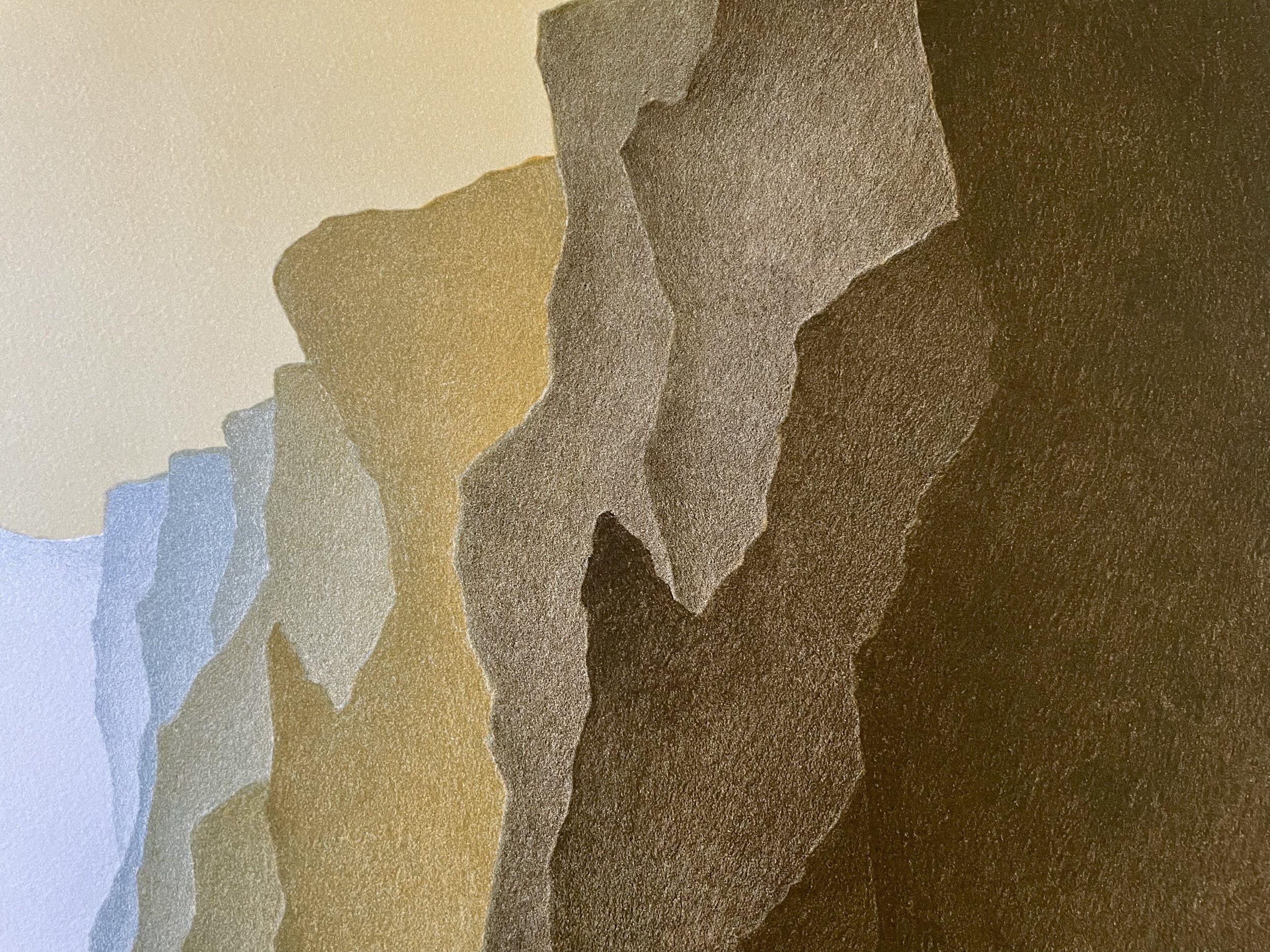 Image 10 of 13
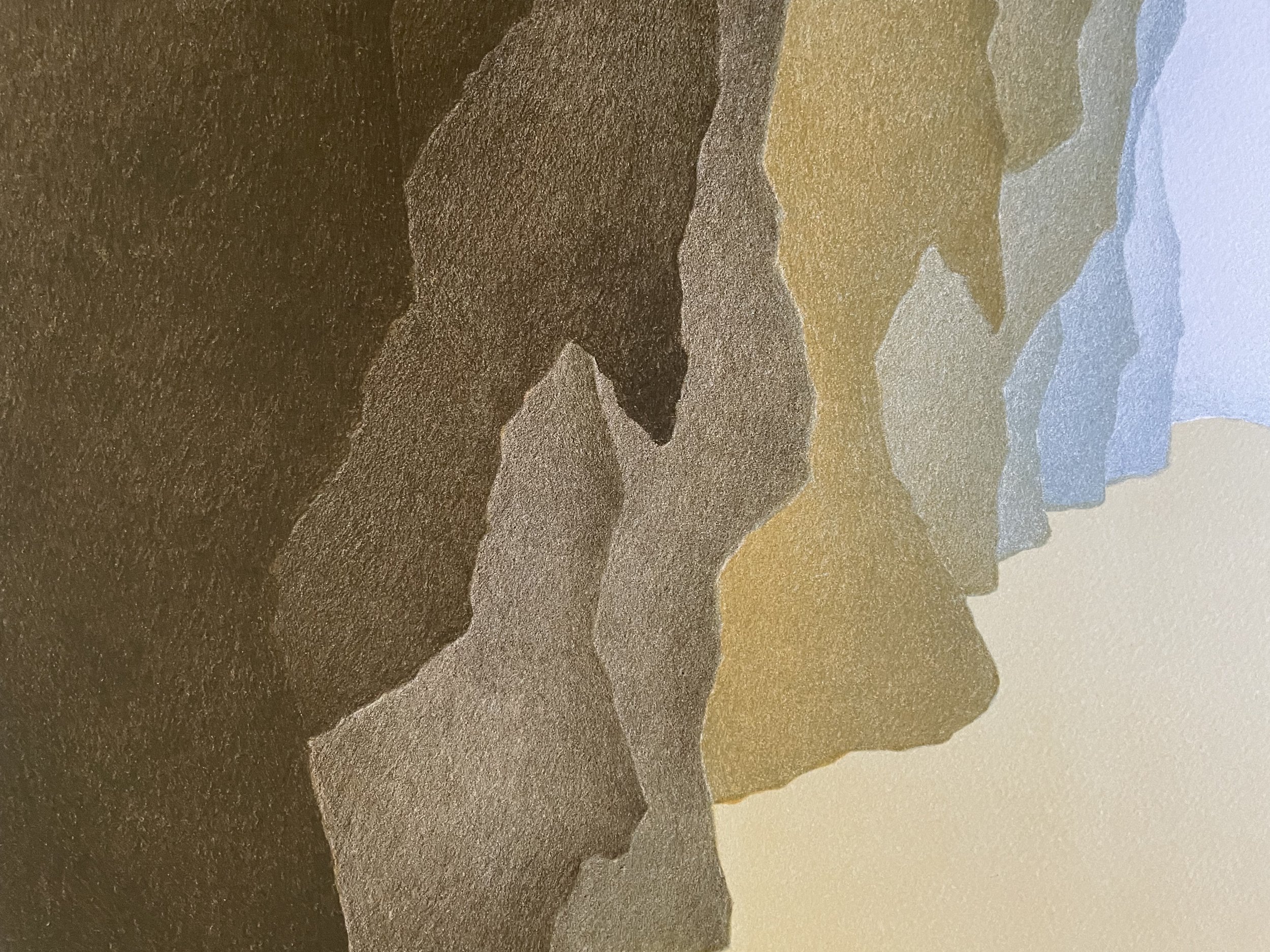 Image 11 of 13
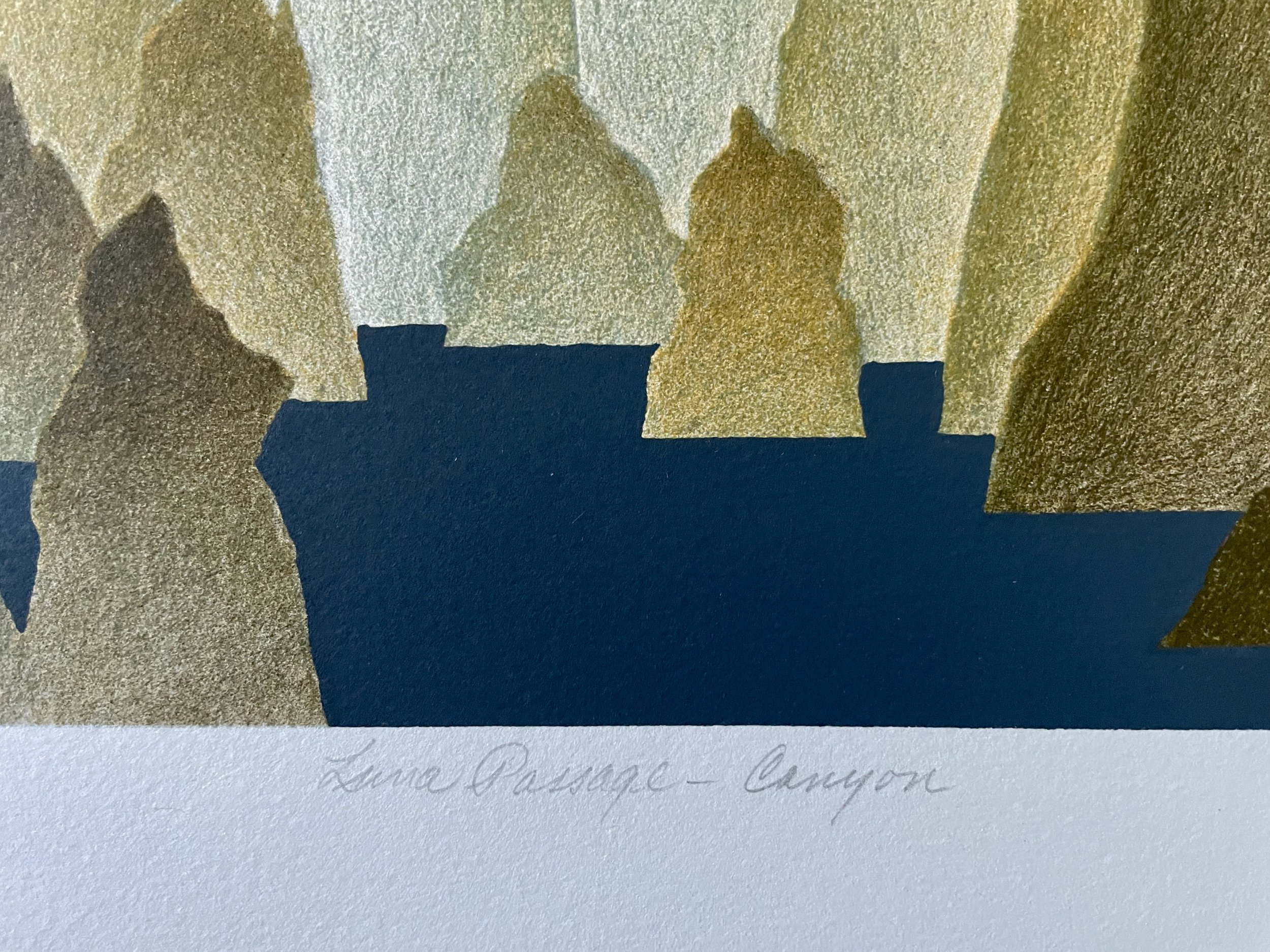 Image 12 of 13
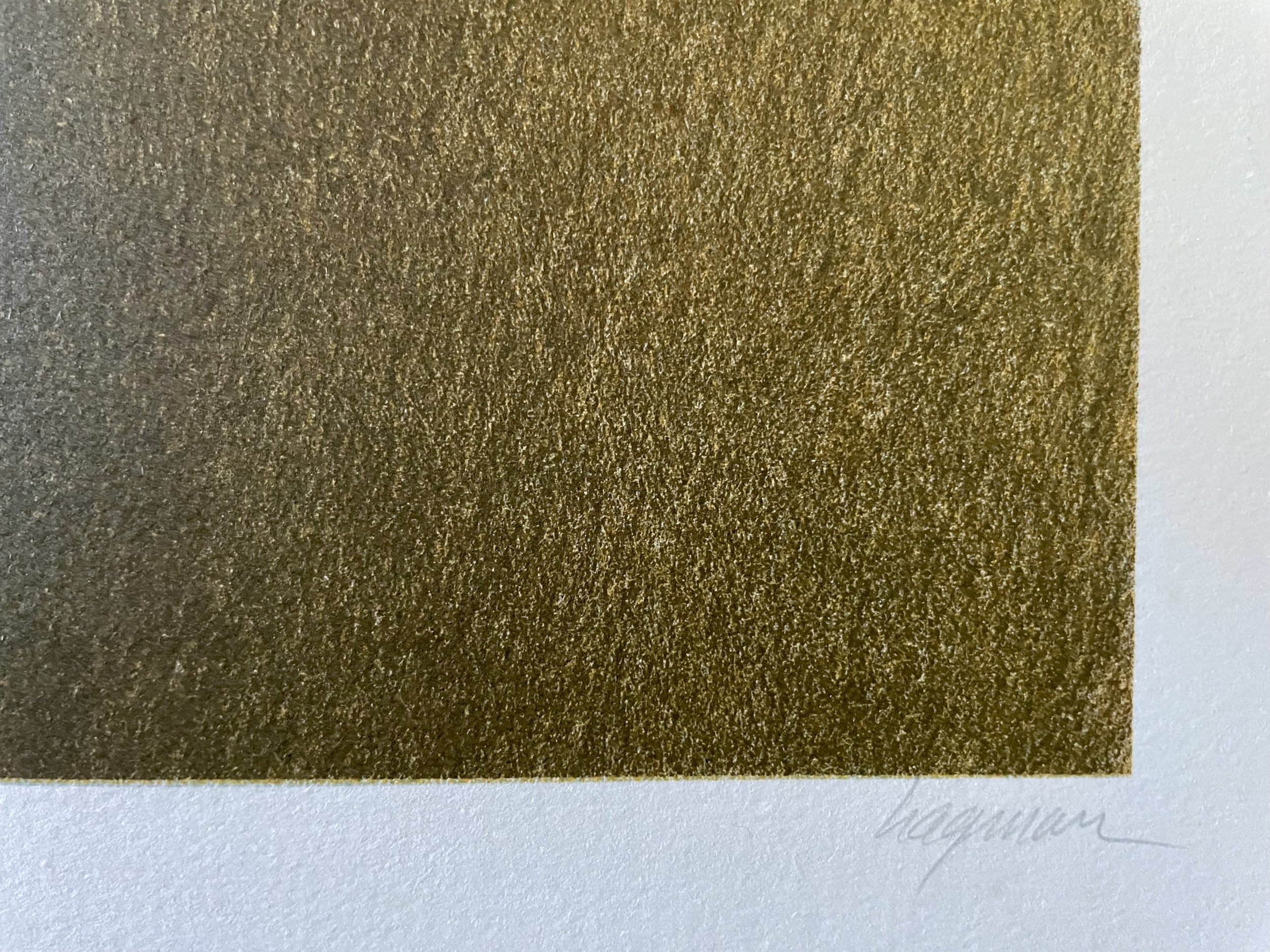 Image 13 of 13