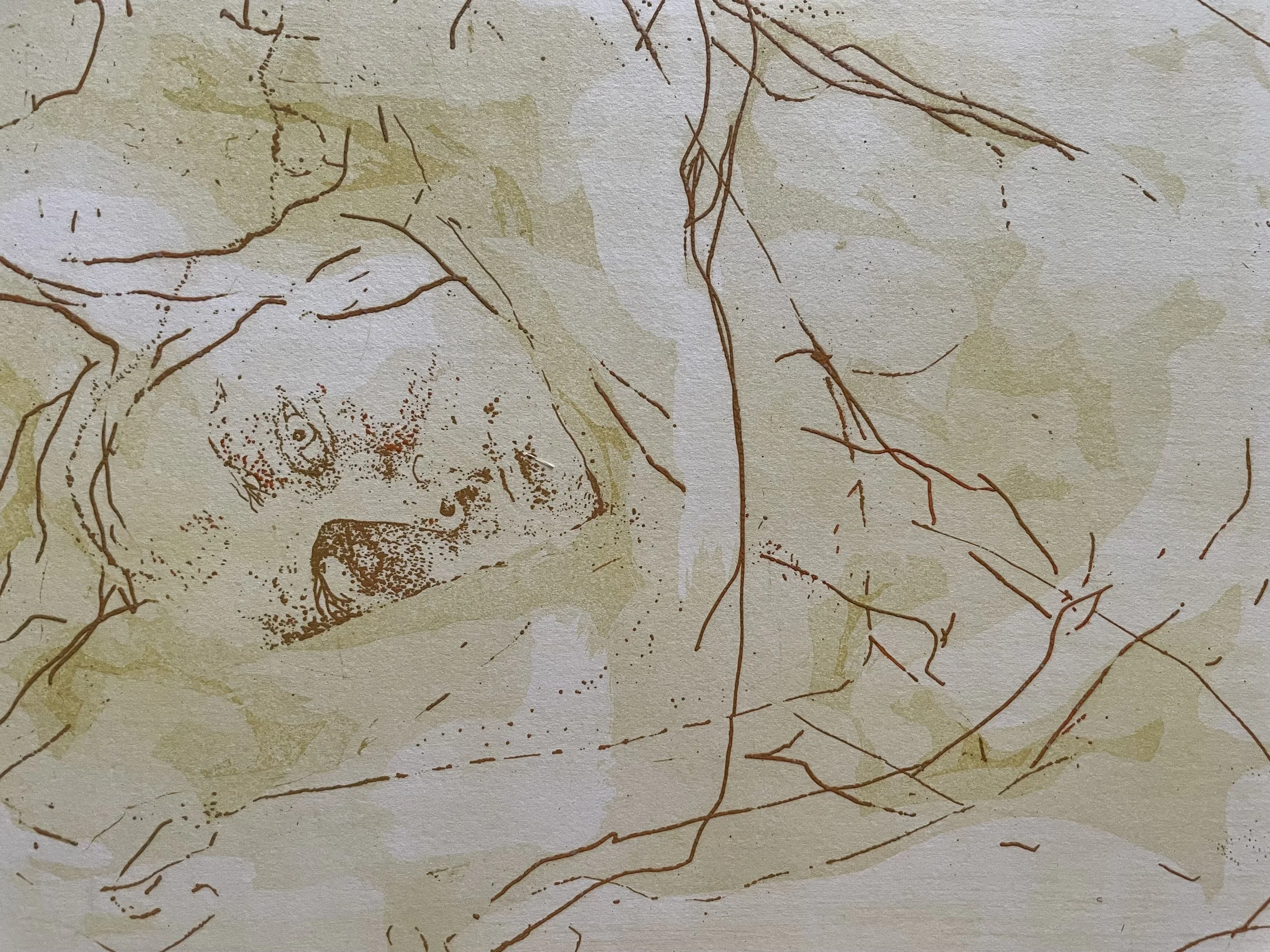
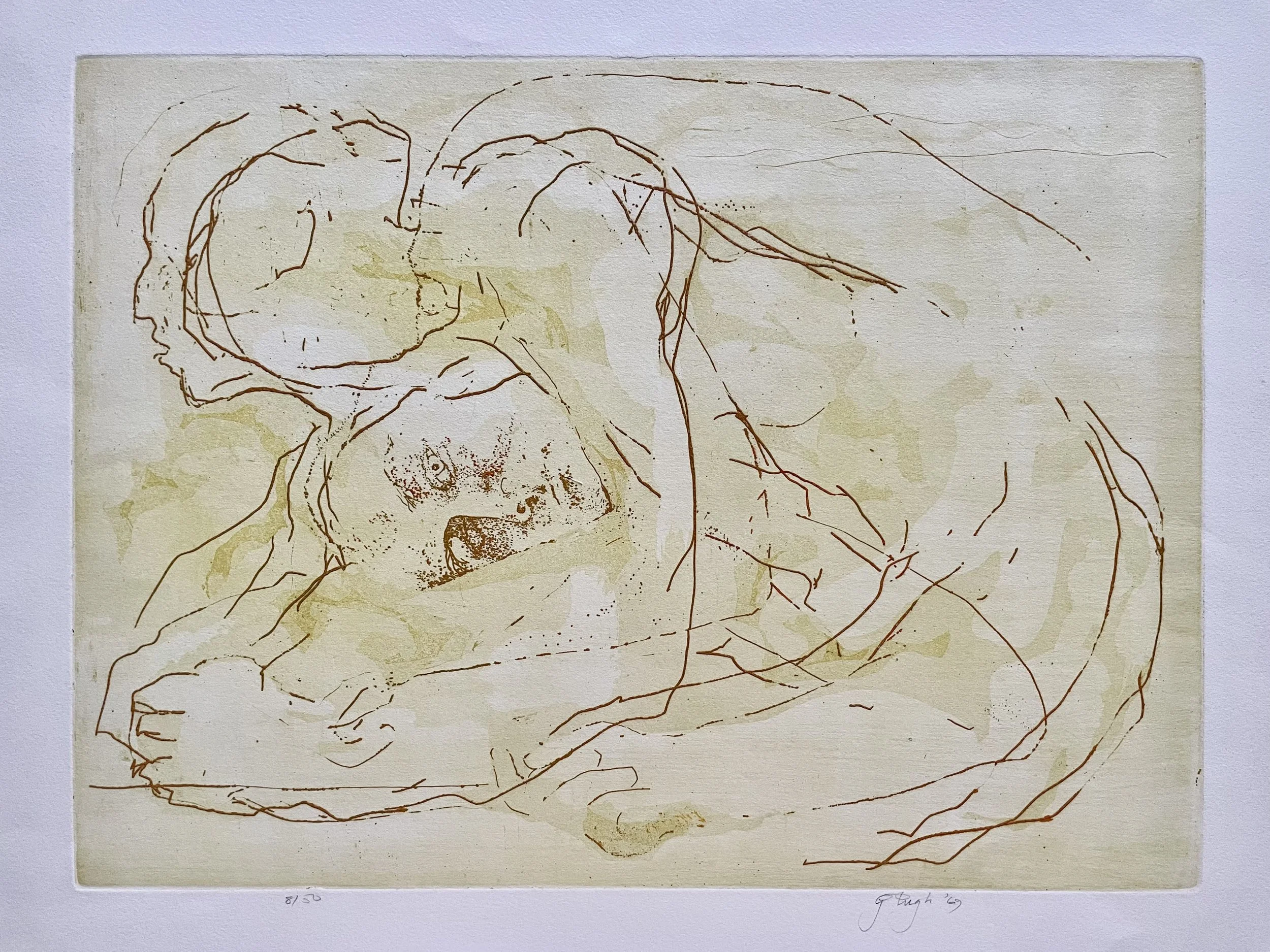
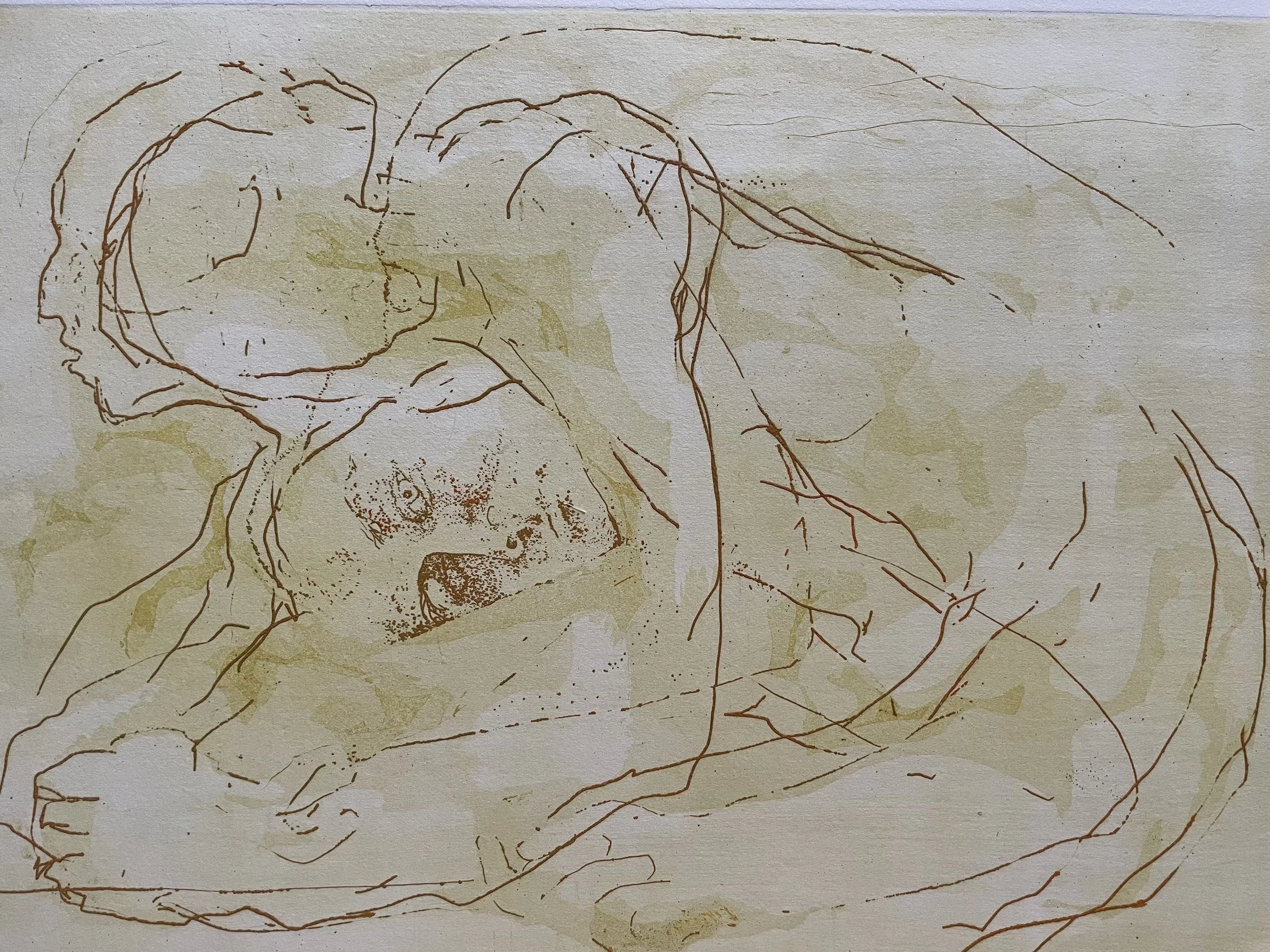
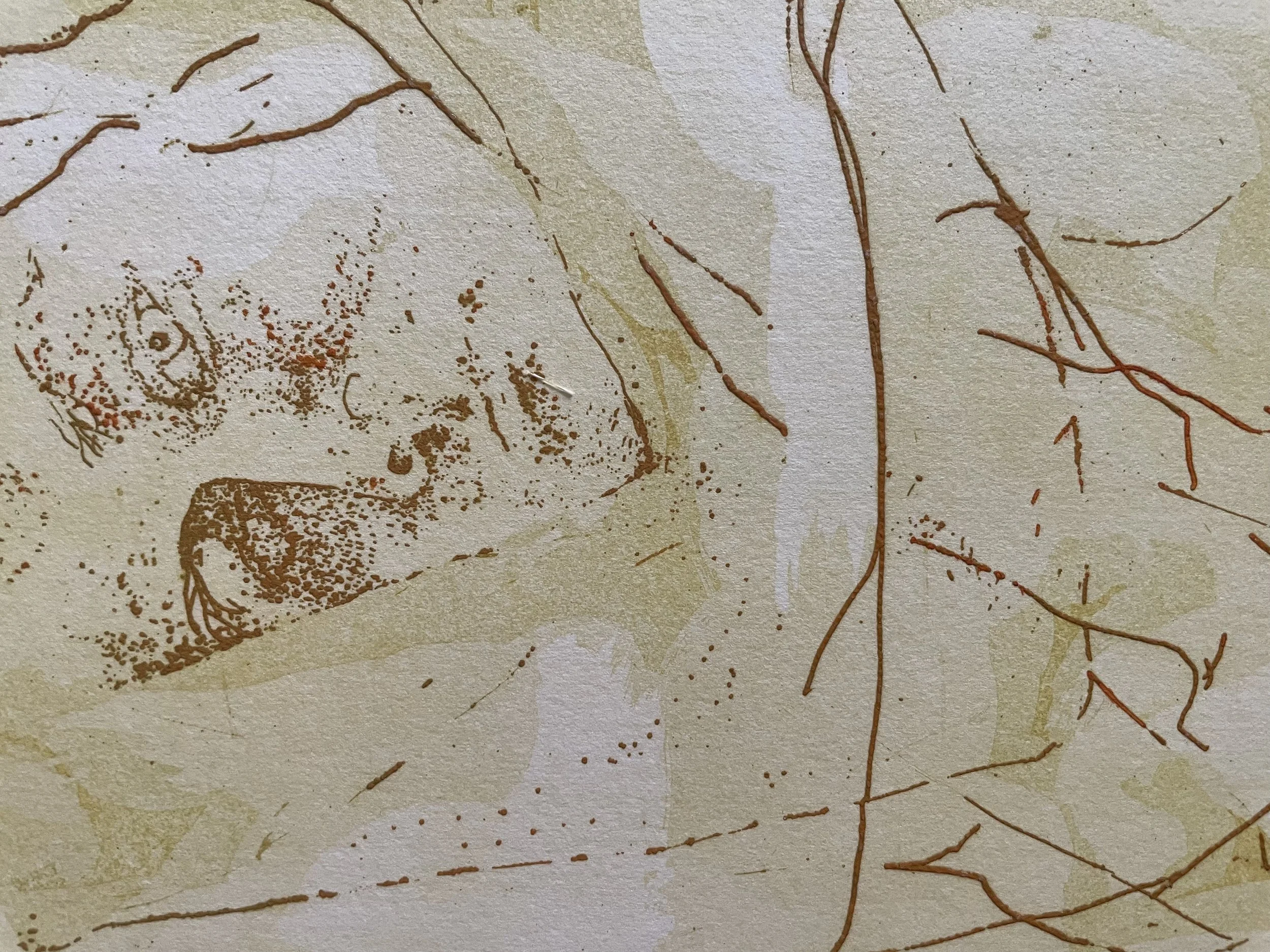
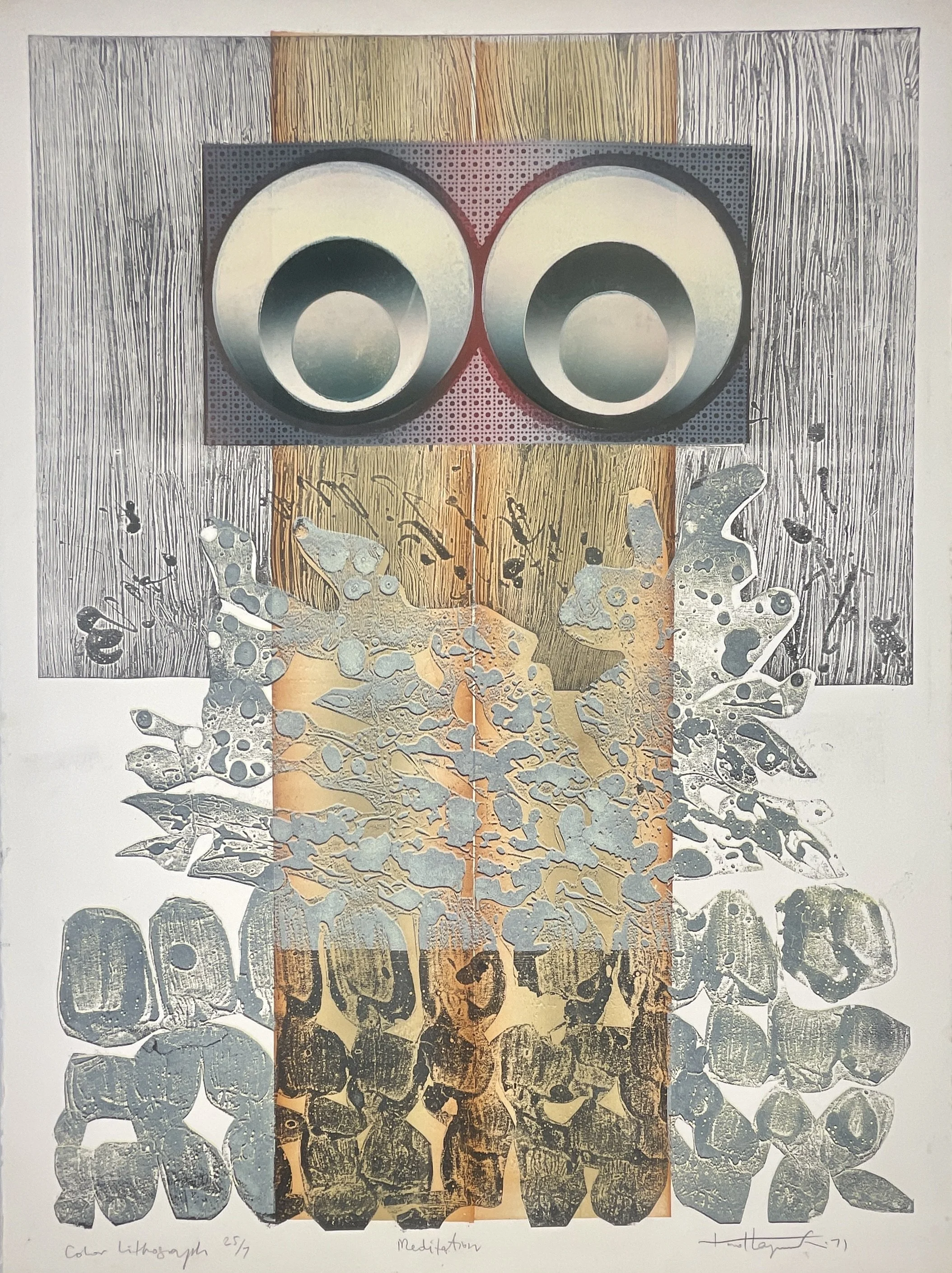
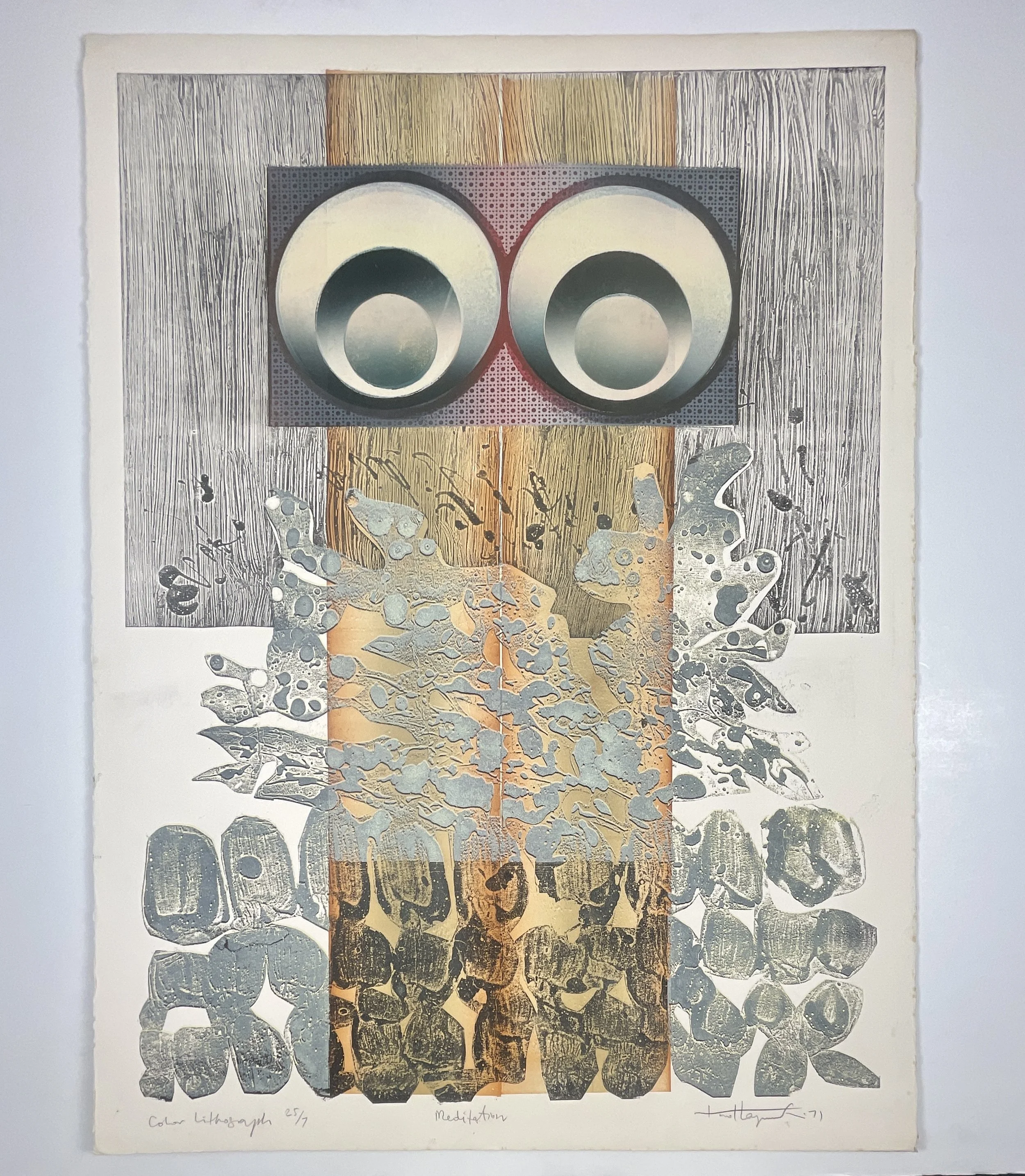
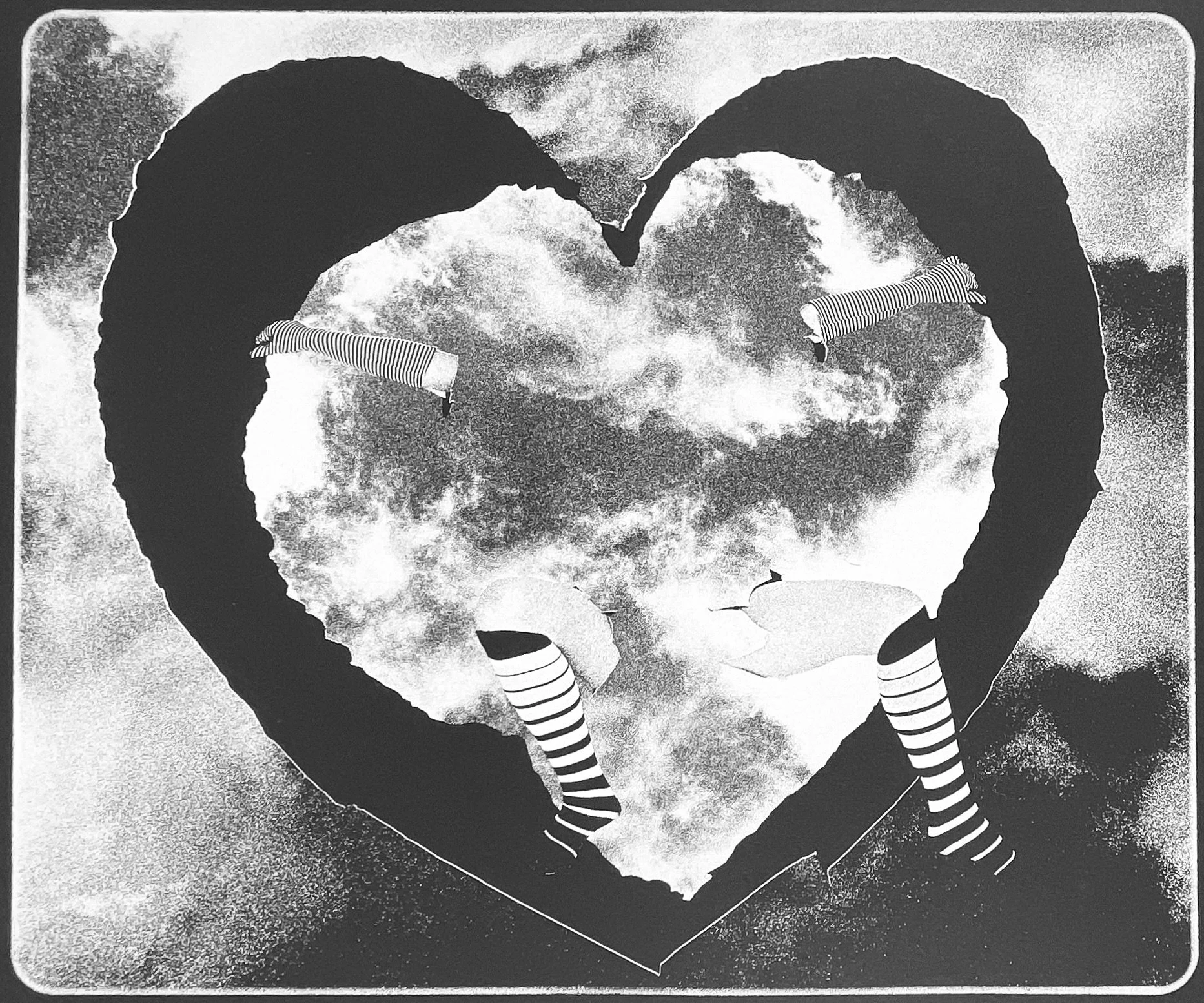
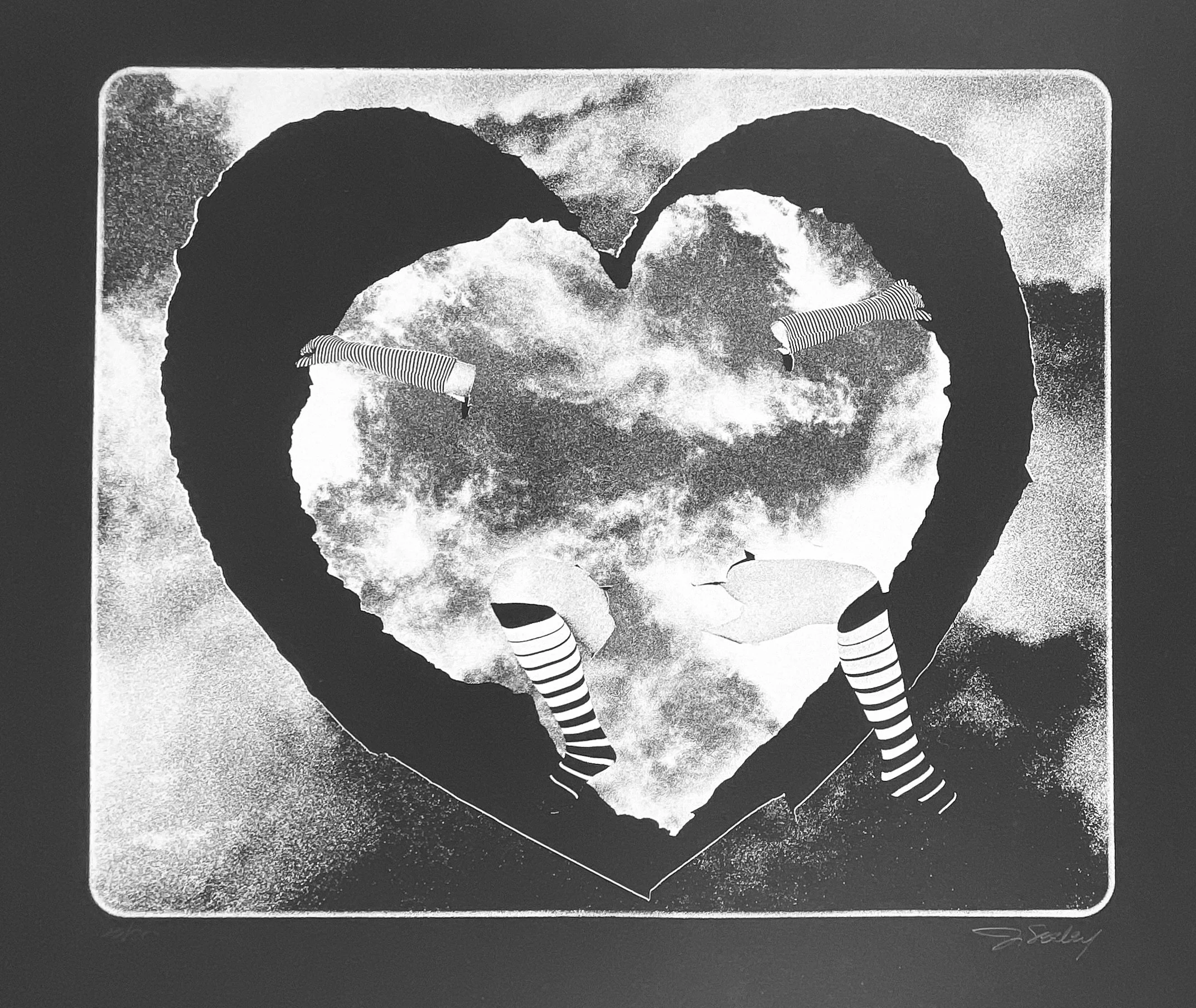
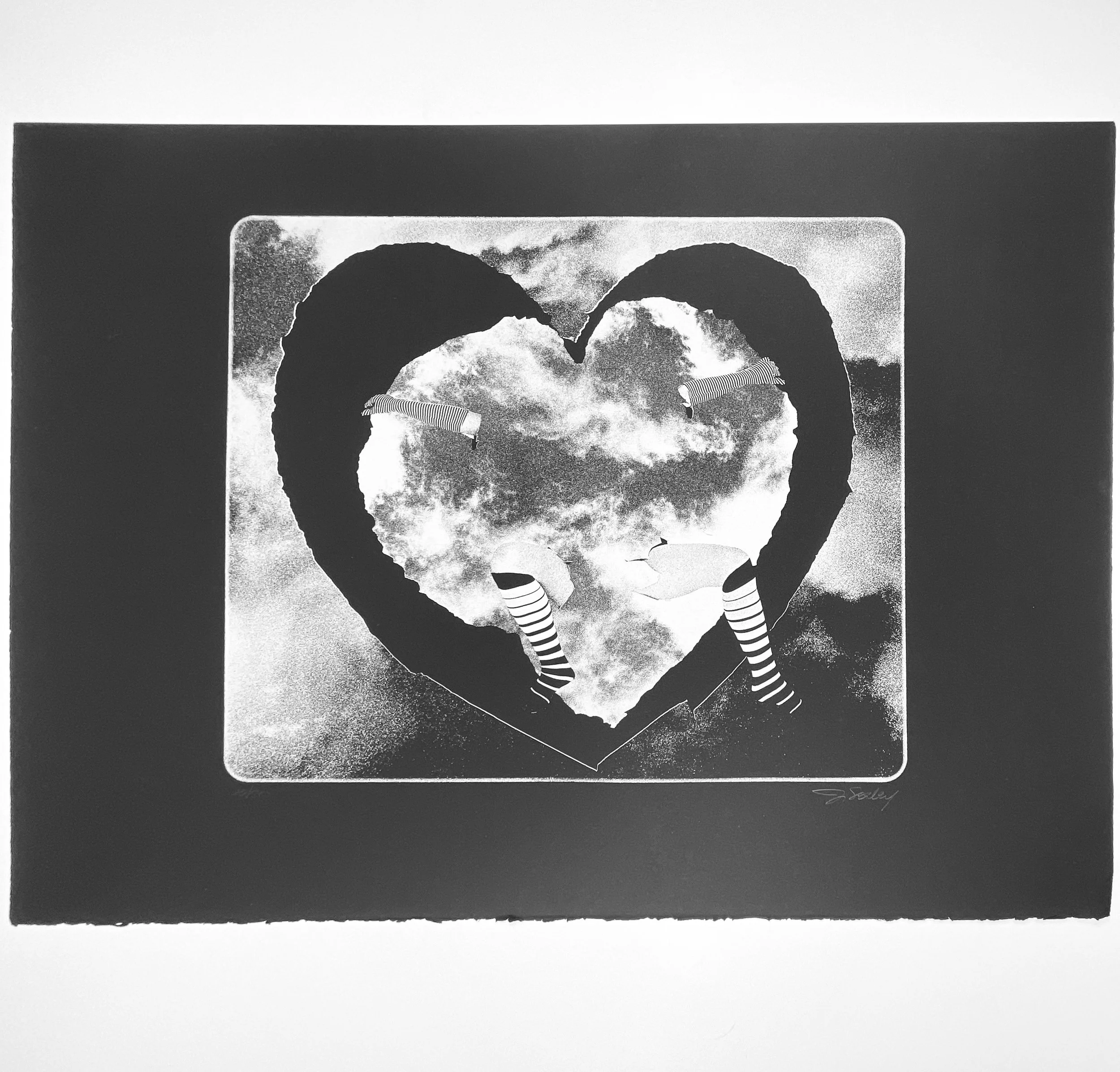
Grand Jury, Gustavo Novoa (b. 1941), c. late 1970s–1980s color lithograph, 28 × 24 in., signed and numbered 87/275 in pencil.
This signed and numbered color lithograph by Chilean artist Gustavo Novoa depicts a symbolic gathering of animals—lion, zebra, elephant, tiger, antelope and birds—assembled across a stylized savanna landscape. Titled Grand Jury, the composition exemplifies Novoa’s celebrated wildlife imagery in which predator and prey coexist peacefully within luminous natural environments. Produced during the height of his international exhibition career, the work reflects Novoa’s distinctive blend of surreal narrative, environmental symbolism, and elegant decorative design.
Artwork Description
Grand Jury presents a carefully staged assembly of animals arranged across a quiet savanna landscape beneath a dramatic banded sky. At the center rests a lion, rendered with calm authority, around whom the other animals gather in balanced formation: a zebra stands watchfully behind him while an elephant rises in the background as a monumental presence. A tiger sits alert beside the lion, while antelope, birds, and smaller creatures complete the circle.
The title suggests deliberation or judgment, implying that this gathering of animals represents a symbolic council of nature. Novoa frequently arranged animals in harmonious proximity—predator beside prey—to illustrate the possibility of balance and coexistence within the natural world. His compositions transform wildlife into allegorical characters inhabiting a peaceful realm beyond the conflict typically associated with the wild.
The environment is rendered with Novoa’s distinctive stylization. The grasses are drawn with rhythmic linear clusters, creating texture across the foreground. A stark acacia-like tree spreads its branches across the sky while small owls perch in the limbs, adding quiet watchfulness to the scene. The sky itself is built from layered horizontal bands of muted ochre, grey, and pale gold, evoking the atmosphere of an African sunset.
Lithography allows Novoa’s delicate drawing to translate beautifully into print form. The zebra’s stripes, the tiger’s markings, and the lion’s mane demonstrate crisp definition, while subtle tonal gradations give depth to the landscape. The color palette remains restrained and earthy—warm browns, tans, greys, and soft gold—reinforcing the contemplative mood of the composition.
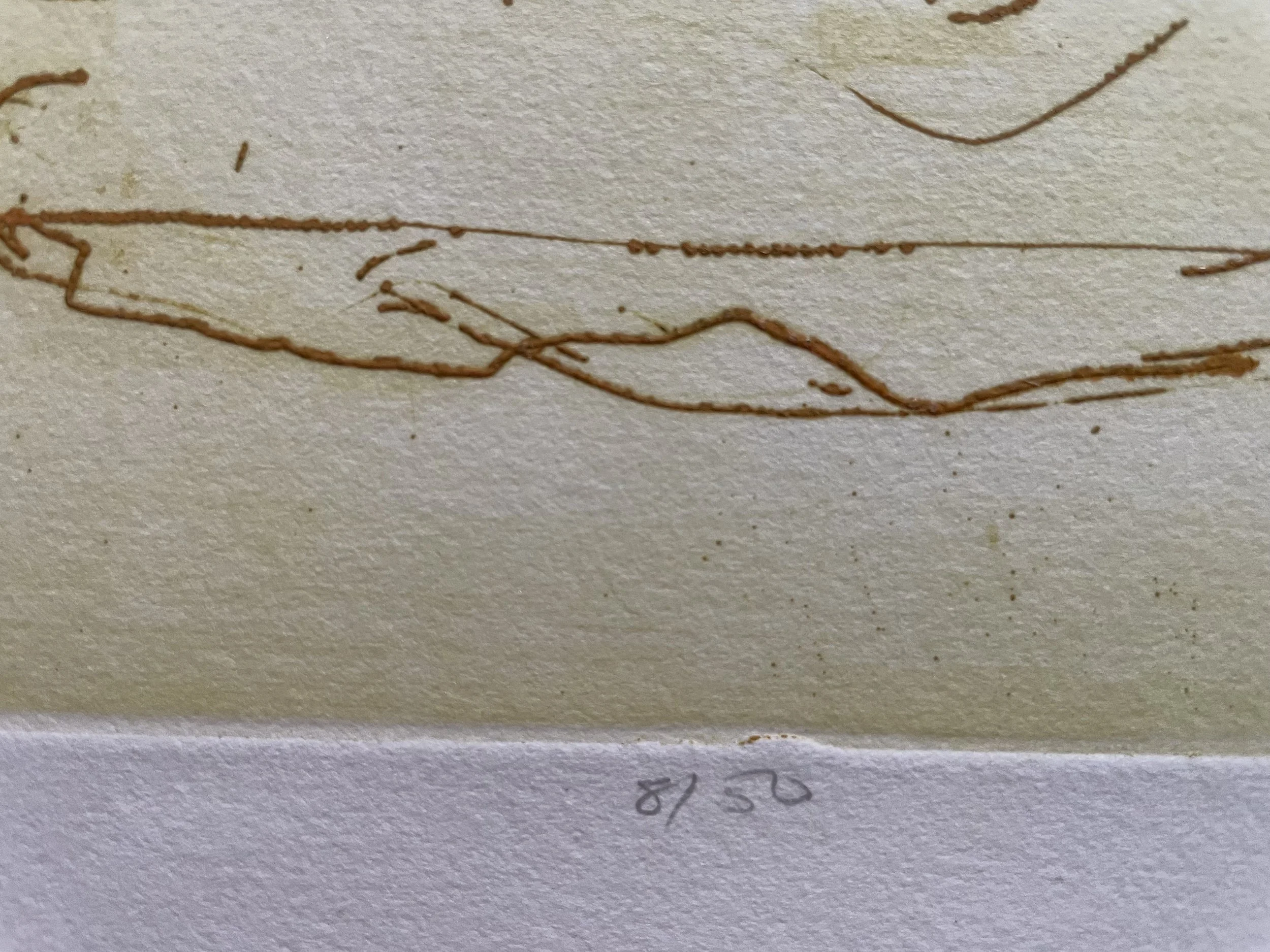
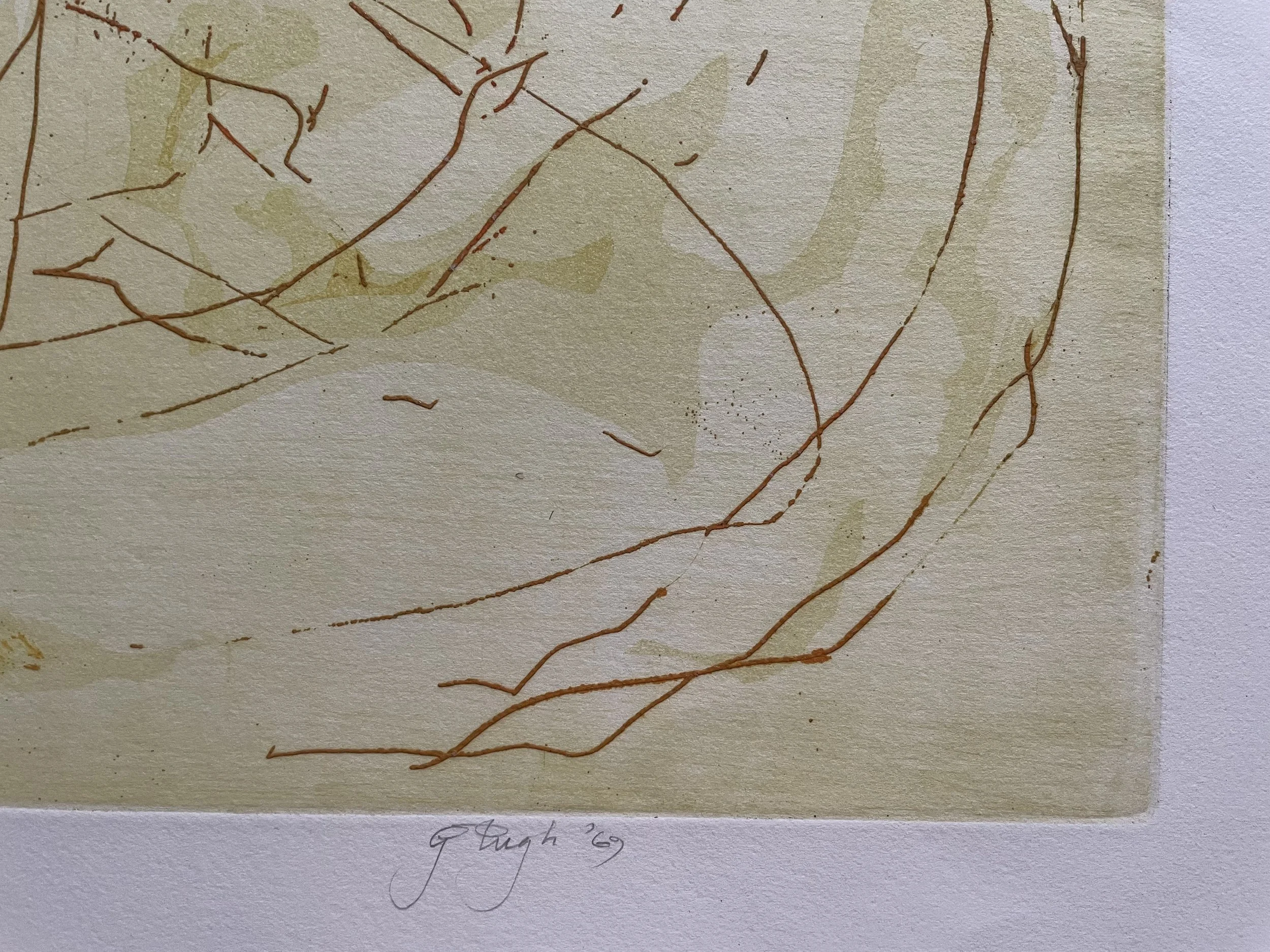
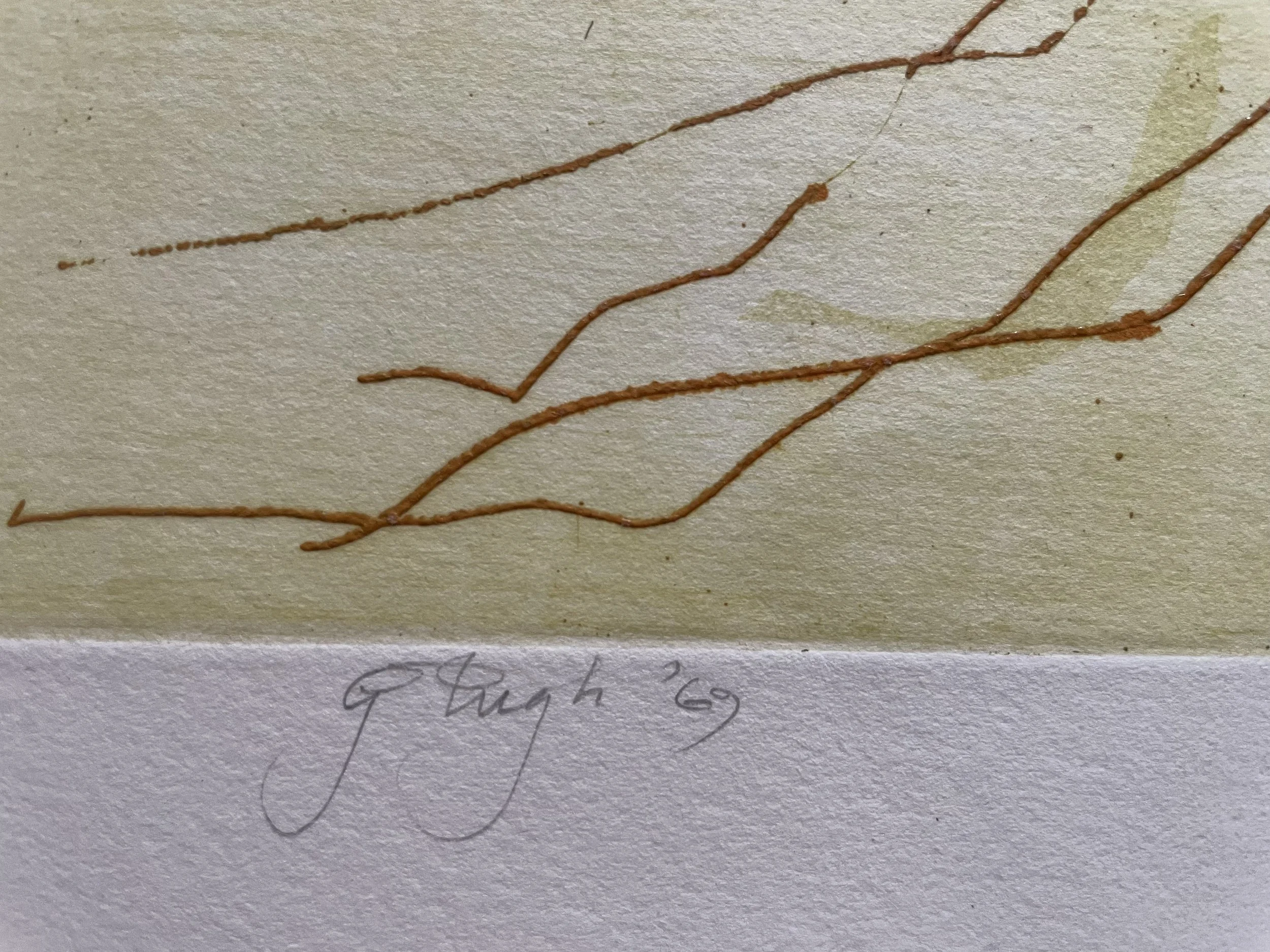
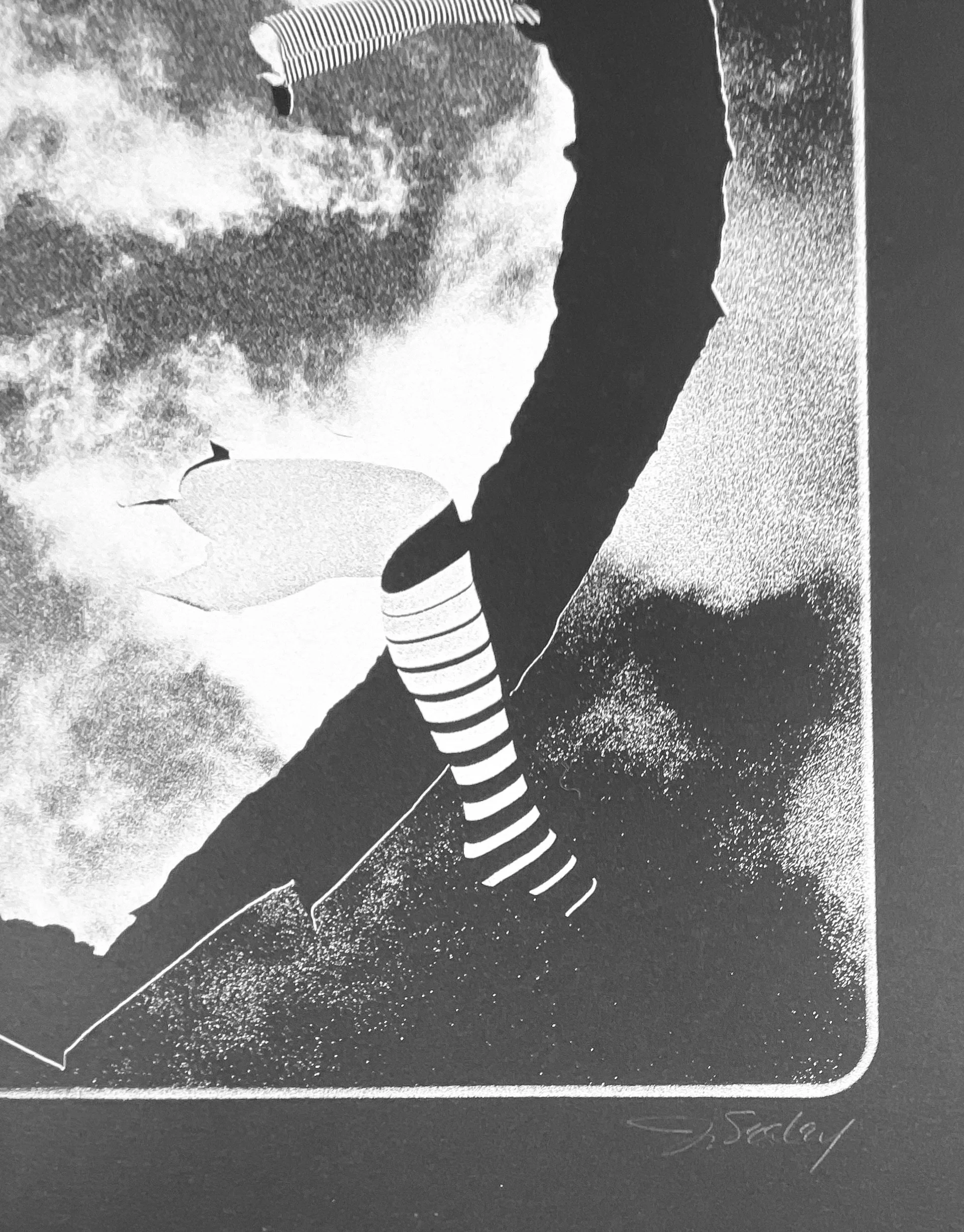
The sheet is hand-signed in pencil by the artist in the lower right margin, titled Grand Jury at center, and numbered 87/275 in the lower left. A blind embossed stamp is present in the margin, consistent with professional printmaking ateliers used for many of Novoa’s limited edition lithographs.
Within Novoa’s body of work, scenes such as this represent the core of his artistic identity: dreamlike animal gatherings that blend surreal narrative with environmental reverence. Rather than depicting dramatic wildlife action, Novoa presents the animals as dignified participants in a peaceful ecosystem, encouraging viewers to reflect on harmony between species and the fragility of the natural world.
Artist Biography
Gustavo Novoa was born in Santiago, Chile in 1941 into a family of lawyers. Although expected to follow the legal profession, Novoa’s artistic inclination led him to enroll at the Academy of Fine Arts. After briefly attending law school, he concluded that a traditional desk career would not satisfy his ambitions and committed fully to painting.
In the early 1960s Novoa moved to Paris where he sold watercolor drawings and crayon sketches on the streets of Montmartre. His first solo exhibition was held in 1961 at the Maison de l’Amerique Latine, sponsored by the Chilean ambassador. A second exhibition followed in Lausanne, Switzerland in 1962 under the patronage of Queen Victoria Eugenia of Spain. During this formative period he exhibited in galleries along the Faubourg Saint-Honoré and in the Salon de la Jeune Peinture.
After establishing his artistic foundation in Paris, Novoa relocated to New York. Like many artists of his generation, he was drawn by the promise of the American cultural landscape and by the imagery of American cinema and popular culture. In 1965 a partnership with Guy Burgos and Lady Sarah Churchill led to the opening of Burgos Gallery on Manhattan’s East Side.
By the late 1960s Novoa’s style had evolved toward textured oil paintings and imaginative landscapes. New York Times critic Stuart Preston observed that Novoa sought to discover the special identity within his landscapes and still lifes—an individuality that set them apart. Around this time the animals that would become his signature subject began appearing in his compositions.
These animals—lions, zebras, panthers, birds, and other exotic creatures—inhabited radiant jungle or savanna environments where predator and prey existed peacefully together. Novoa used this imagery to explore philosophical themes of unity and harmony within nature. The concept would remain central to his work for decades.
During the early 1970s Novoa became represented exclusively by Wally Findlay Galleries, one of the most influential gallery networks in the international art market. One-man exhibitions in New York, Paris, Palm Beach, and Beverly Hills introduced his work to collectors worldwide and established him as a distinctive voice in contemporary wildlife painting.
In 1977 Novoa published Jungle Fables, a book for which he both wrote the text and created the illustrations. The stories transformed animals into allegorical characters exploring moral themes of virtue and vice. That same year Ringling Brothers, Barnum & Bailey commissioned him to design their circus poster and program.
In the 1980s Novoa expanded his imagery with a series of paintings inspired by travel in the American Southwest. He referred to this body of work as his “Adobe Period,” depicting desert landscapes and pueblo architecture with heavy palette-knife impasto. Later he explored Art Deco architecture, creating paintings such as Dreamline-Streamline, which became the theme image for Miami’s Art Deco Weekend.
His reputation continued to grow internationally. In 1988 Prince Charles auctioned one of Novoa’s paintings at a charity event in Palm Beach, setting a record price for the artist at that time. In 1991 Novoa was received at the White House by First Lady Barbara Bush after his painting of Miami’s Carlyle Hotel was presented to her and placed in the Presidential Library.
Returning to South America three decades after leaving Chile, Novoa was honored in the Latin American Biennale in El Salvador and received recognition from the Instituto Cultural de Santiago. In 1997 Palette Publications of Miami released Paradise Found, a retrospective book covering thirty years of his work. The following year the Museum of Contemporary Art in Santiago mounted the exhibition Art from Art, marking another milestone in his career.
In 2010 Wally Findlay Galleries celebrated more than thirty-five years of Novoa’s work with a major retrospective in New York supporting Panthera, the international wildlife conservation organization dedicated to protecting wild cats and their habitats.
Throughout his career Novoa has maintained a unique artistic language that blends surrealism, decorative modernism, and environmental symbolism. His animals are neither strictly naturalistic nor entirely imaginary; instead they function as poetic emblems of balance and coexistence within nature. His work remains widely collected internationally and continues to resonate with audiences drawn to its message of harmony between species and environment.
Gustavo Novoa (b. 1941)
Grand Jury
Color lithograph on paper
Signed and numbered 87/275
28 × 24 inches
Savanna wildlife composition with lion, zebra, elephant, tiger and birds.
Certificate of Authentication
This document certifies that the artwork titled Grand Jury by Gustavo Novoa is an original limited-edition lithograph. The work is hand-signed by the artist in pencil and numbered 87 from the edition of 275. The signature, edition notation, and embossed stamp are consistent with authentic Novoa lithographic editions produced during the artist’s exhibition period.
Issued by:
Artfind Gallery
Washington, DC
Condition
Very good vintage condition.
Clean margins with visible deckled edges.
Strong color saturation and stable pigments.
Signature and edition notation clear and legible.
Minor handling consistent with age; no visible damage to image area.
Provenance
Mitch Morse Gallery, New York / Europe
Acquired through Mitch Morse Gallery distribution network
Artfind Gallery, Washington DC (current owner)
Sources
Wally Findlay Galleries artist archives
Exhibition catalogues and press material
Latin American Biennale records
Museum of Contemporary Art Santiago exhibition materials
Palette Publications, Paradise Found retrospective.
Grand Jury, Gustavo Novoa (b. 1941), c. late 1970s–1980s color lithograph, 28 × 24 in., signed and numbered 87/275 in pencil.
This signed and numbered color lithograph by Chilean artist Gustavo Novoa depicts a symbolic gathering of animals—lion, zebra, elephant, tiger, antelope and birds—assembled across a stylized savanna landscape. Titled Grand Jury, the composition exemplifies Novoa’s celebrated wildlife imagery in which predator and prey coexist peacefully within luminous natural environments. Produced during the height of his international exhibition career, the work reflects Novoa’s distinctive blend of surreal narrative, environmental symbolism, and elegant decorative design.
Artwork Description
Grand Jury presents a carefully staged assembly of animals arranged across a quiet savanna landscape beneath a dramatic banded sky. At the center rests a lion, rendered with calm authority, around whom the other animals gather in balanced formation: a zebra stands watchfully behind him while an elephant rises in the background as a monumental presence. A tiger sits alert beside the lion, while antelope, birds, and smaller creatures complete the circle.
The title suggests deliberation or judgment, implying that this gathering of animals represents a symbolic council of nature. Novoa frequently arranged animals in harmonious proximity—predator beside prey—to illustrate the possibility of balance and coexistence within the natural world. His compositions transform wildlife into allegorical characters inhabiting a peaceful realm beyond the conflict typically associated with the wild.
The environment is rendered with Novoa’s distinctive stylization. The grasses are drawn with rhythmic linear clusters, creating texture across the foreground. A stark acacia-like tree spreads its branches across the sky while small owls perch in the limbs, adding quiet watchfulness to the scene. The sky itself is built from layered horizontal bands of muted ochre, grey, and pale gold, evoking the atmosphere of an African sunset.
Lithography allows Novoa’s delicate drawing to translate beautifully into print form. The zebra’s stripes, the tiger’s markings, and the lion’s mane demonstrate crisp definition, while subtle tonal gradations give depth to the landscape. The color palette remains restrained and earthy—warm browns, tans, greys, and soft gold—reinforcing the contemplative mood of the composition.
The sheet is hand-signed in pencil by the artist in the lower right margin, titled Grand Jury at center, and numbered 87/275 in the lower left. A blind embossed stamp is present in the margin, consistent with professional printmaking ateliers used for many of Novoa’s limited edition lithographs.
Within Novoa’s body of work, scenes such as this represent the core of his artistic identity: dreamlike animal gatherings that blend surreal narrative with environmental reverence. Rather than depicting dramatic wildlife action, Novoa presents the animals as dignified participants in a peaceful ecosystem, encouraging viewers to reflect on harmony between species and the fragility of the natural world.
Artist Biography
Gustavo Novoa was born in Santiago, Chile in 1941 into a family of lawyers. Although expected to follow the legal profession, Novoa’s artistic inclination led him to enroll at the Academy of Fine Arts. After briefly attending law school, he concluded that a traditional desk career would not satisfy his ambitions and committed fully to painting.
In the early 1960s Novoa moved to Paris where he sold watercolor drawings and crayon sketches on the streets of Montmartre. His first solo exhibition was held in 1961 at the Maison de l’Amerique Latine, sponsored by the Chilean ambassador. A second exhibition followed in Lausanne, Switzerland in 1962 under the patronage of Queen Victoria Eugenia of Spain. During this formative period he exhibited in galleries along the Faubourg Saint-Honoré and in the Salon de la Jeune Peinture.
After establishing his artistic foundation in Paris, Novoa relocated to New York. Like many artists of his generation, he was drawn by the promise of the American cultural landscape and by the imagery of American cinema and popular culture. In 1965 a partnership with Guy Burgos and Lady Sarah Churchill led to the opening of Burgos Gallery on Manhattan’s East Side.
By the late 1960s Novoa’s style had evolved toward textured oil paintings and imaginative landscapes. New York Times critic Stuart Preston observed that Novoa sought to discover the special identity within his landscapes and still lifes—an individuality that set them apart. Around this time the animals that would become his signature subject began appearing in his compositions.
These animals—lions, zebras, panthers, birds, and other exotic creatures—inhabited radiant jungle or savanna environments where predator and prey existed peacefully together. Novoa used this imagery to explore philosophical themes of unity and harmony within nature. The concept would remain central to his work for decades.
During the early 1970s Novoa became represented exclusively by Wally Findlay Galleries, one of the most influential gallery networks in the international art market. One-man exhibitions in New York, Paris, Palm Beach, and Beverly Hills introduced his work to collectors worldwide and established him as a distinctive voice in contemporary wildlife painting.
In 1977 Novoa published Jungle Fables, a book for which he both wrote the text and created the illustrations. The stories transformed animals into allegorical characters exploring moral themes of virtue and vice. That same year Ringling Brothers, Barnum & Bailey commissioned him to design their circus poster and program.
In the 1980s Novoa expanded his imagery with a series of paintings inspired by travel in the American Southwest. He referred to this body of work as his “Adobe Period,” depicting desert landscapes and pueblo architecture with heavy palette-knife impasto. Later he explored Art Deco architecture, creating paintings such as Dreamline-Streamline, which became the theme image for Miami’s Art Deco Weekend.
His reputation continued to grow internationally. In 1988 Prince Charles auctioned one of Novoa’s paintings at a charity event in Palm Beach, setting a record price for the artist at that time. In 1991 Novoa was received at the White House by First Lady Barbara Bush after his painting of Miami’s Carlyle Hotel was presented to her and placed in the Presidential Library.
Returning to South America three decades after leaving Chile, Novoa was honored in the Latin American Biennale in El Salvador and received recognition from the Instituto Cultural de Santiago. In 1997 Palette Publications of Miami released Paradise Found, a retrospective book covering thirty years of his work. The following year the Museum of Contemporary Art in Santiago mounted the exhibition Art from Art, marking another milestone in his career.
In 2010 Wally Findlay Galleries celebrated more than thirty-five years of Novoa’s work with a major retrospective in New York supporting Panthera, the international wildlife conservation organization dedicated to protecting wild cats and their habitats.
Throughout his career Novoa has maintained a unique artistic language that blends surrealism, decorative modernism, and environmental symbolism. His animals are neither strictly naturalistic nor entirely imaginary; instead they function as poetic emblems of balance and coexistence within nature. His work remains widely collected internationally and continues to resonate with audiences drawn to its message of harmony between species and environment.
Gustavo Novoa (b. 1941)
Grand Jury
Color lithograph on paper
Signed and numbered 87/275
28 × 24 inches
Savanna wildlife composition with lion, zebra, elephant, tiger and birds.
Certificate of Authentication
This document certifies that the artwork titled Grand Jury by Gustavo Novoa is an original limited-edition lithograph. The work is hand-signed by the artist in pencil and numbered 87 from the edition of 275. The signature, edition notation, and embossed stamp are consistent with authentic Novoa lithographic editions produced during the artist’s exhibition period.
Issued by:
Artfind Gallery
Washington, DC
Condition
Very good vintage condition.
Clean margins with visible deckled edges.
Strong color saturation and stable pigments.
Signature and edition notation clear and legible.
Minor handling consistent with age; no visible damage to image area.
Provenance
Mitch Morse Gallery, New York / Europe
Acquired through Mitch Morse Gallery distribution network
Artfind Gallery, Washington DC (current owner)
Sources
Wally Findlay Galleries artist archives
Exhibition catalogues and press material
Latin American Biennale records
Museum of Contemporary Art Santiago exhibition materials
Palette Publications, Paradise Found retrospective.
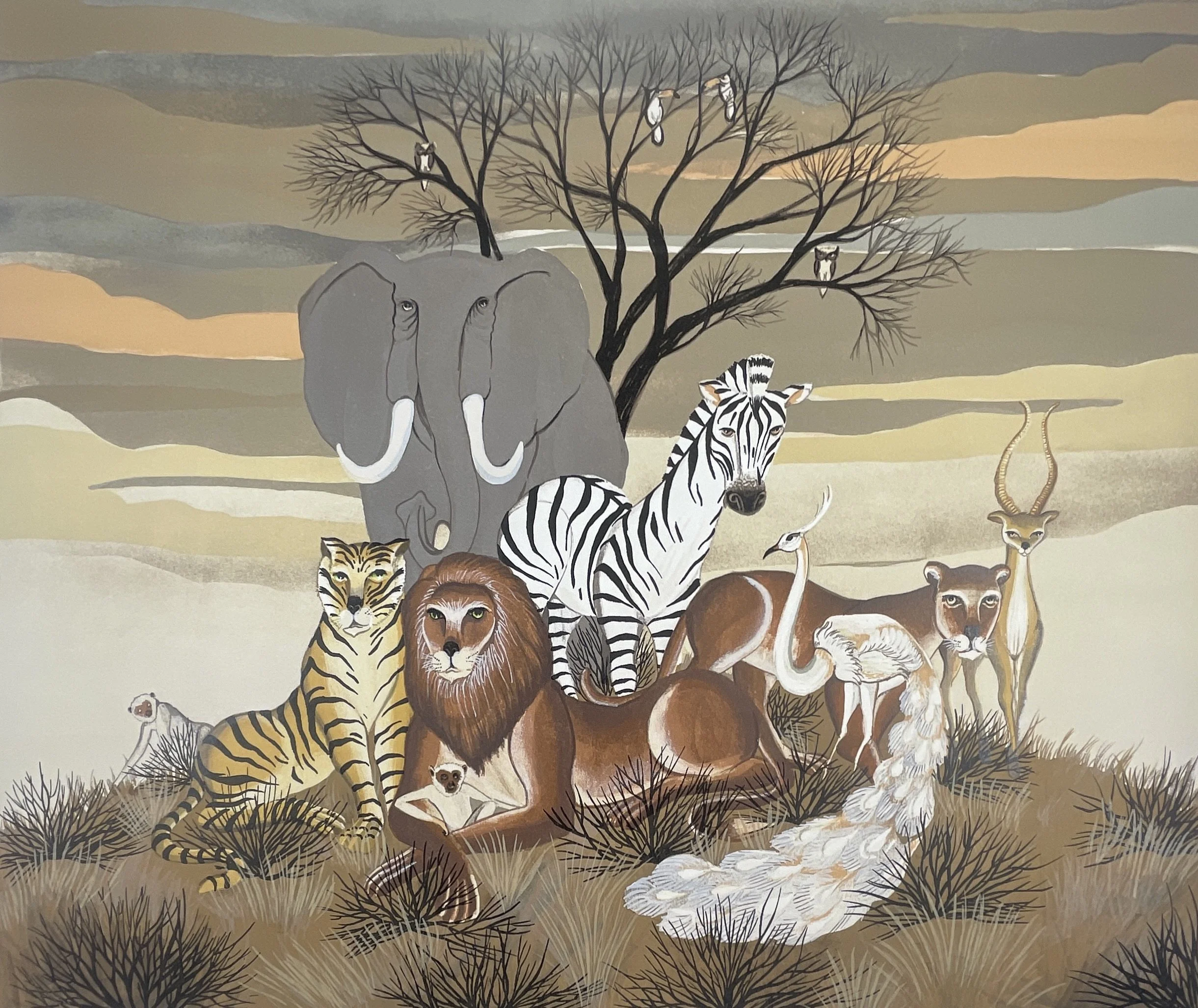 Image 1 of 7
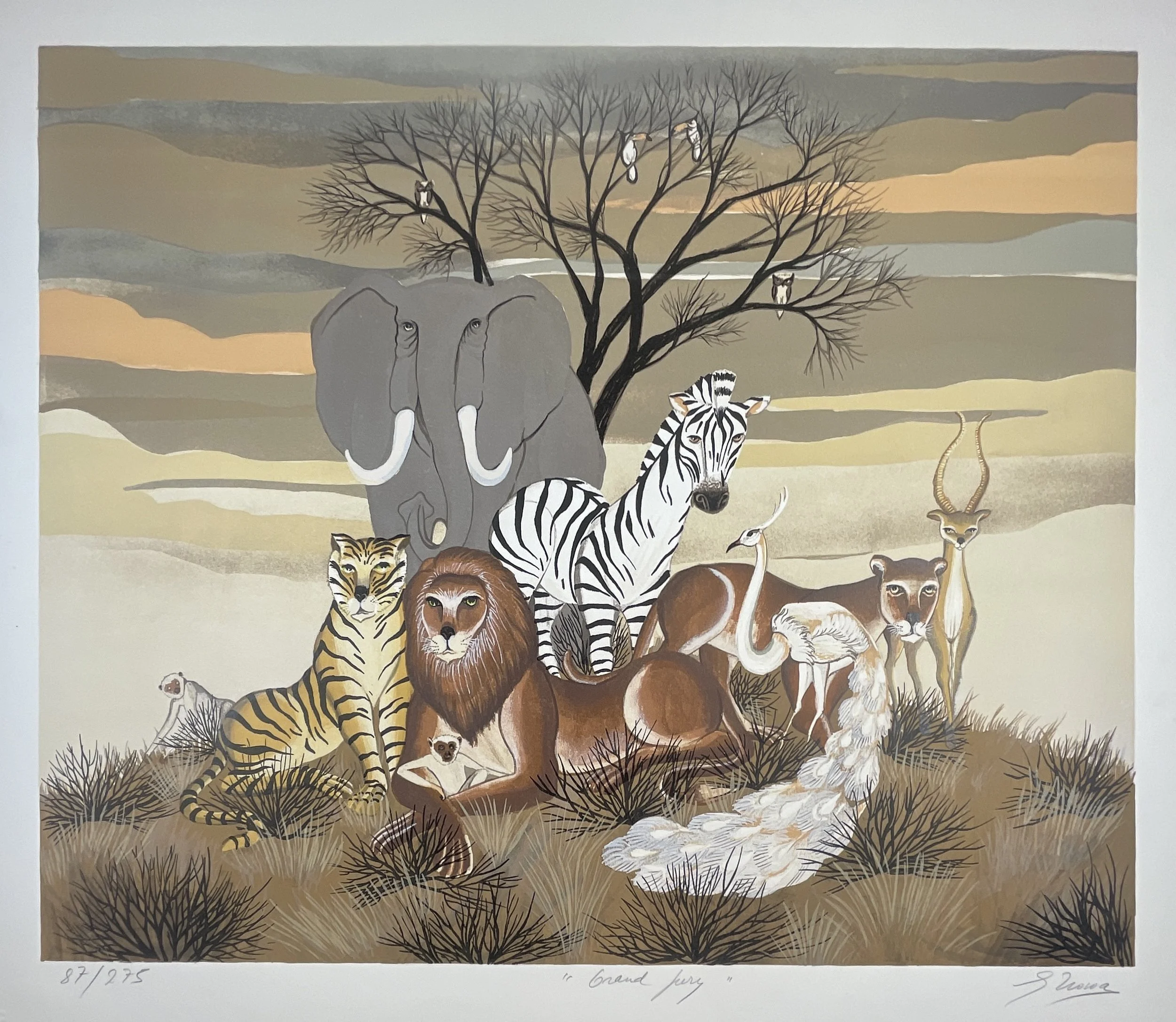 Image 2 of 7
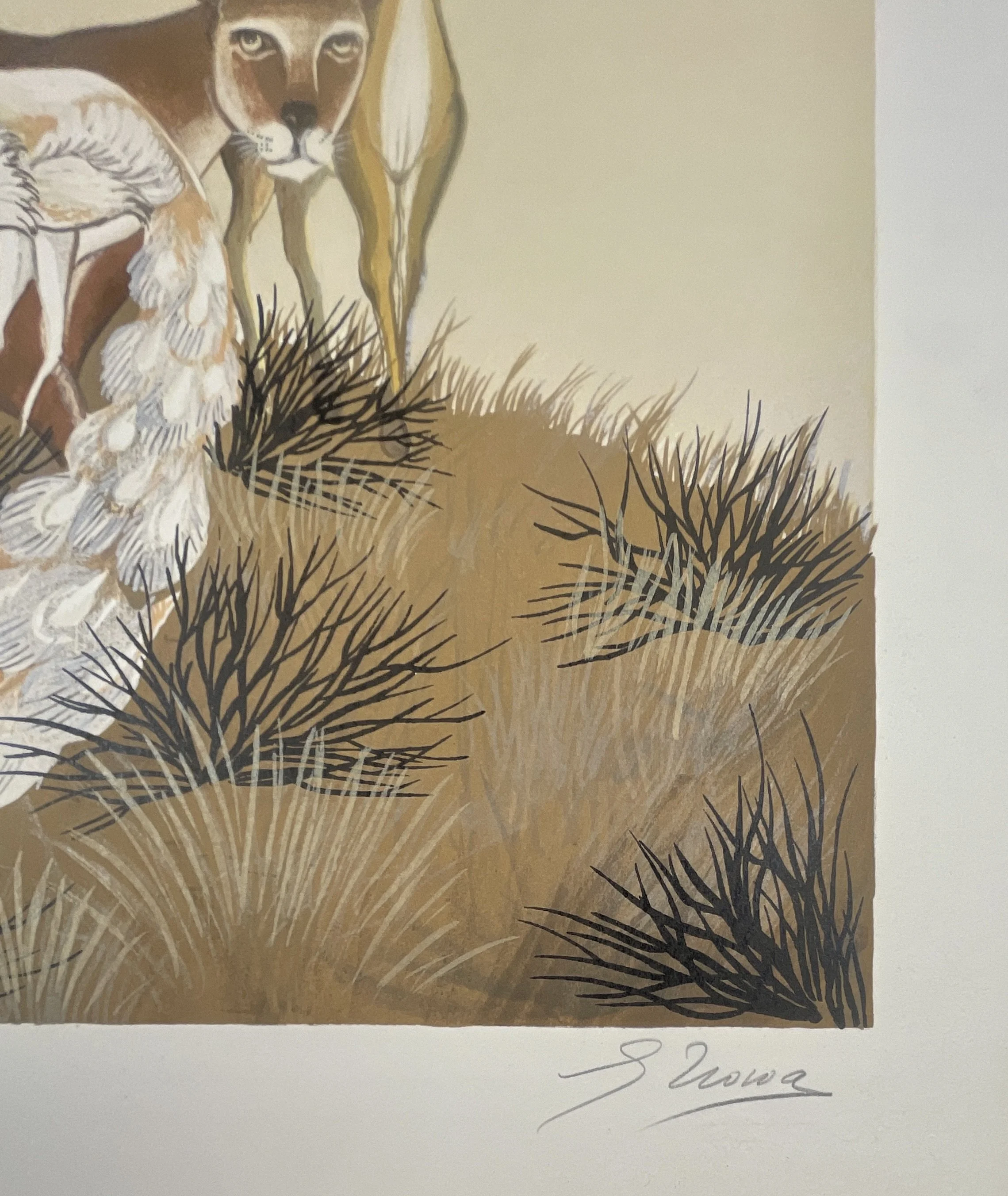 Image 3 of 7
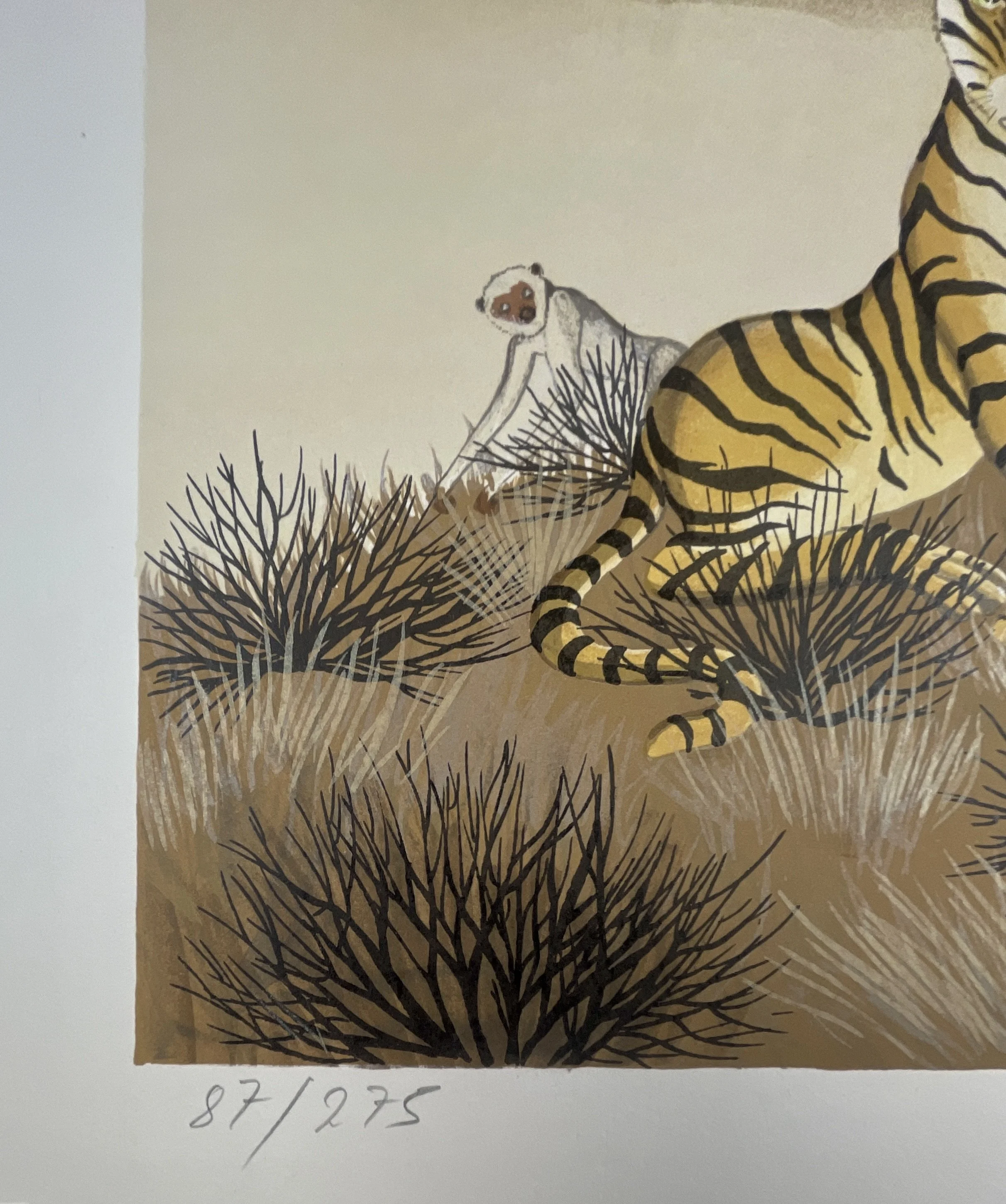 Image 4 of 7
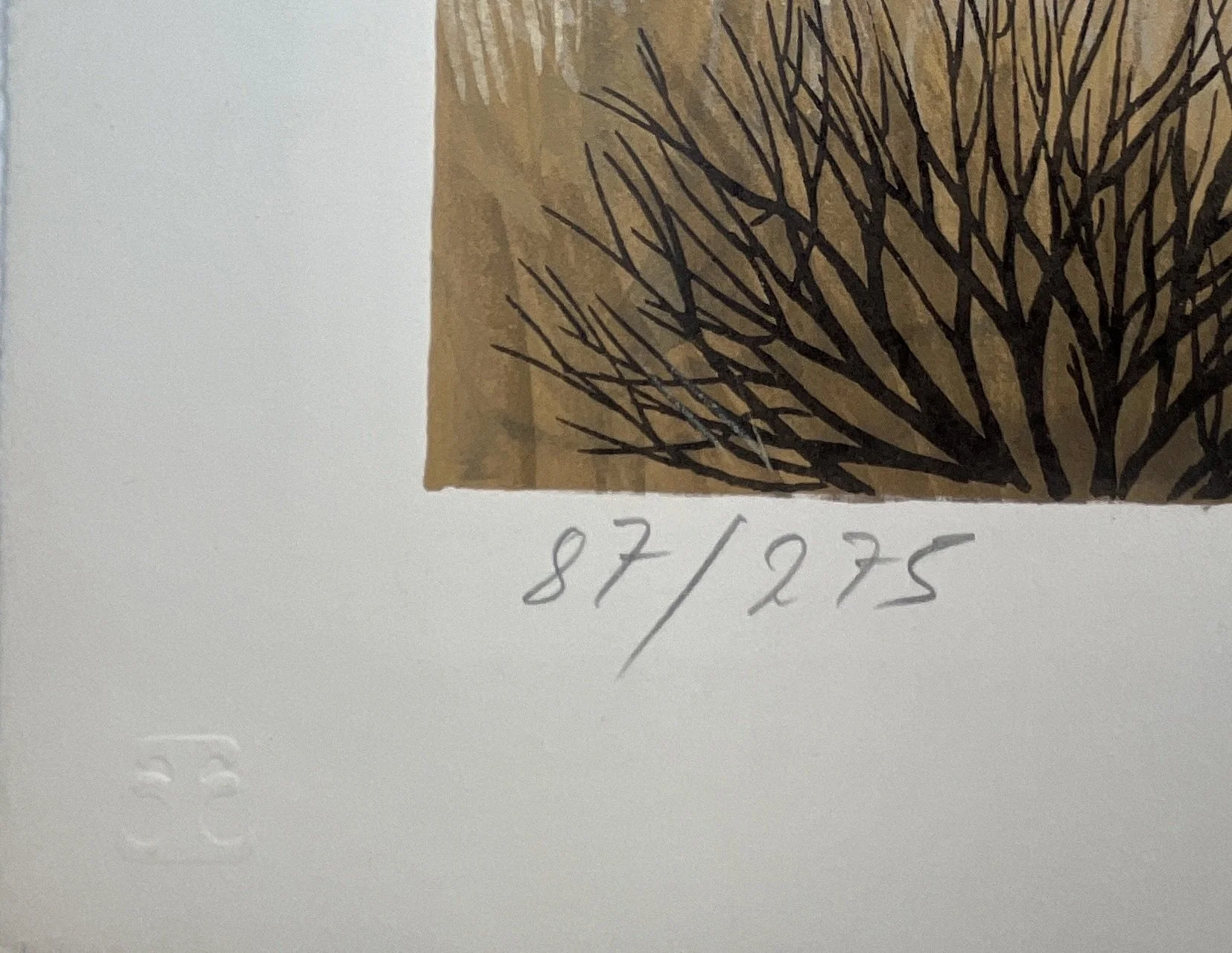 Image 5 of 7
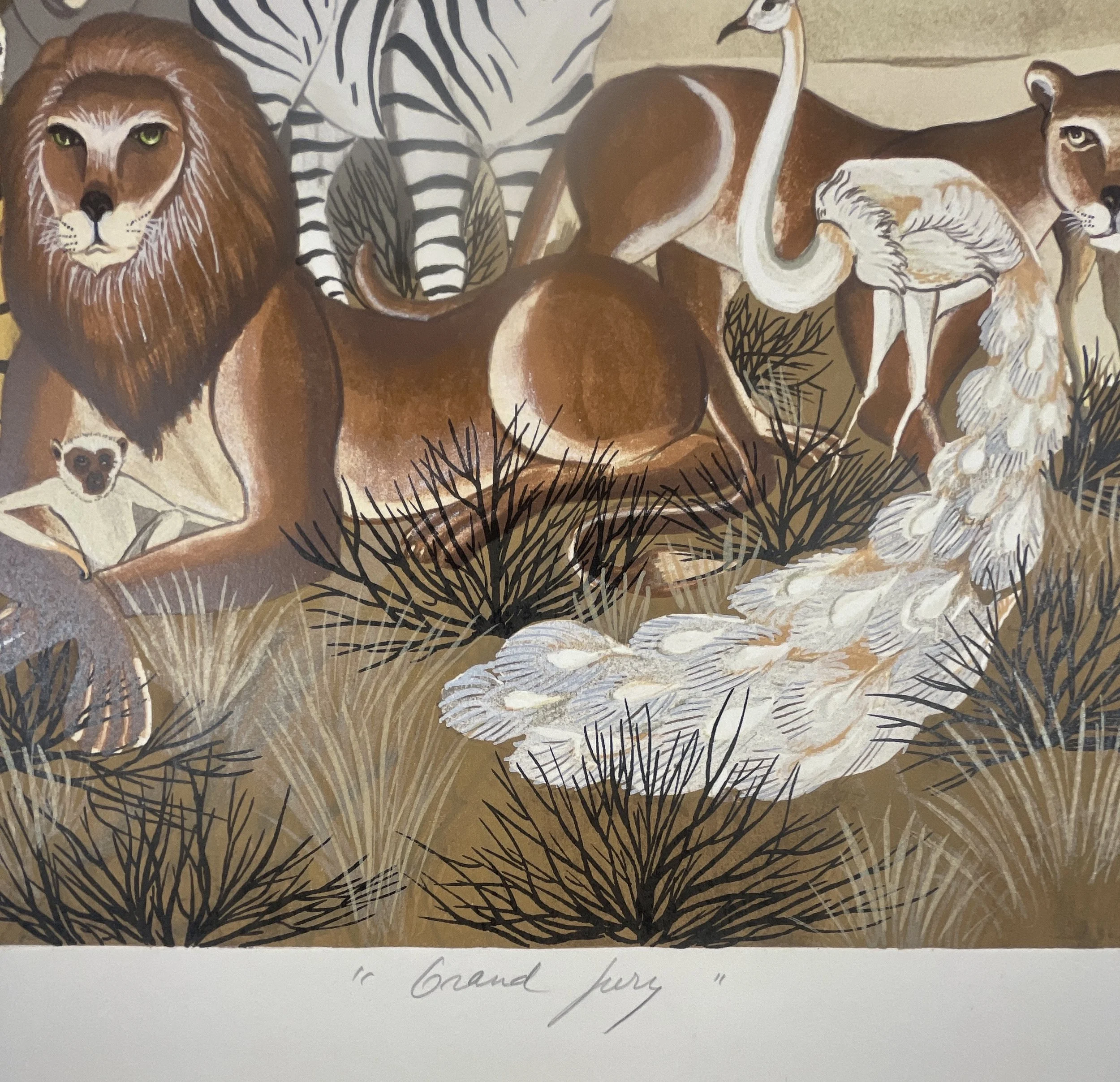 Image 6 of 7
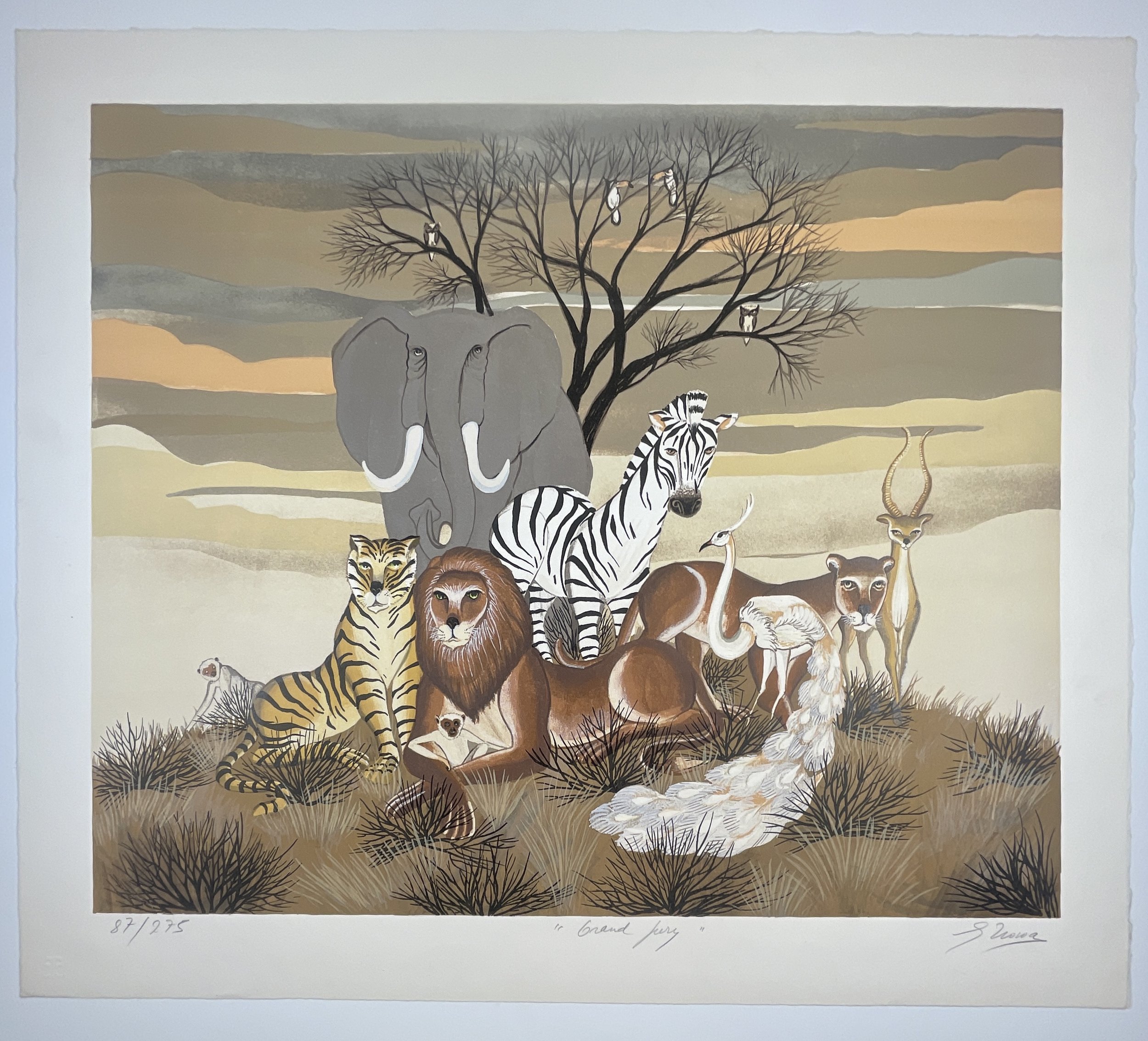 Image 7 of 7