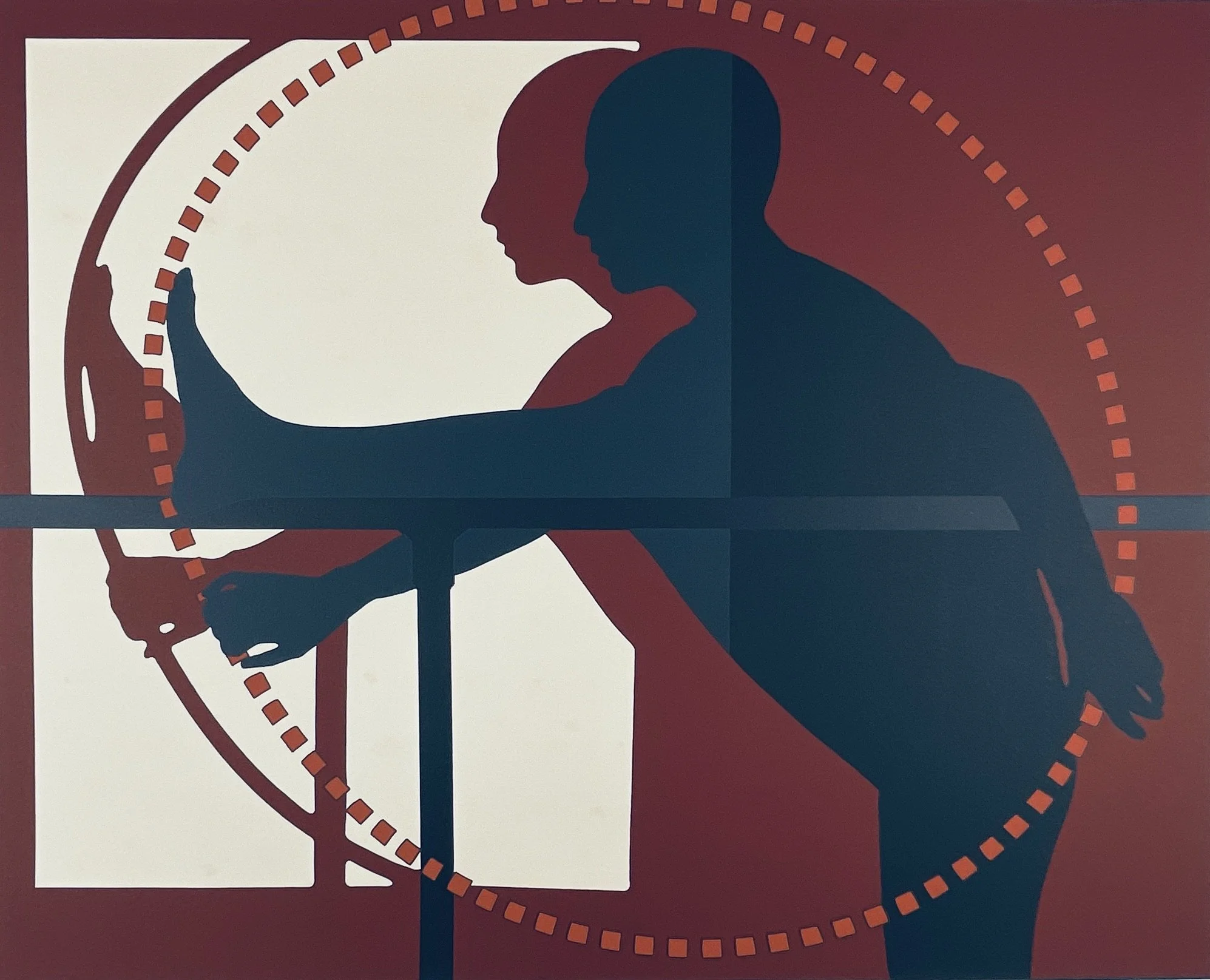
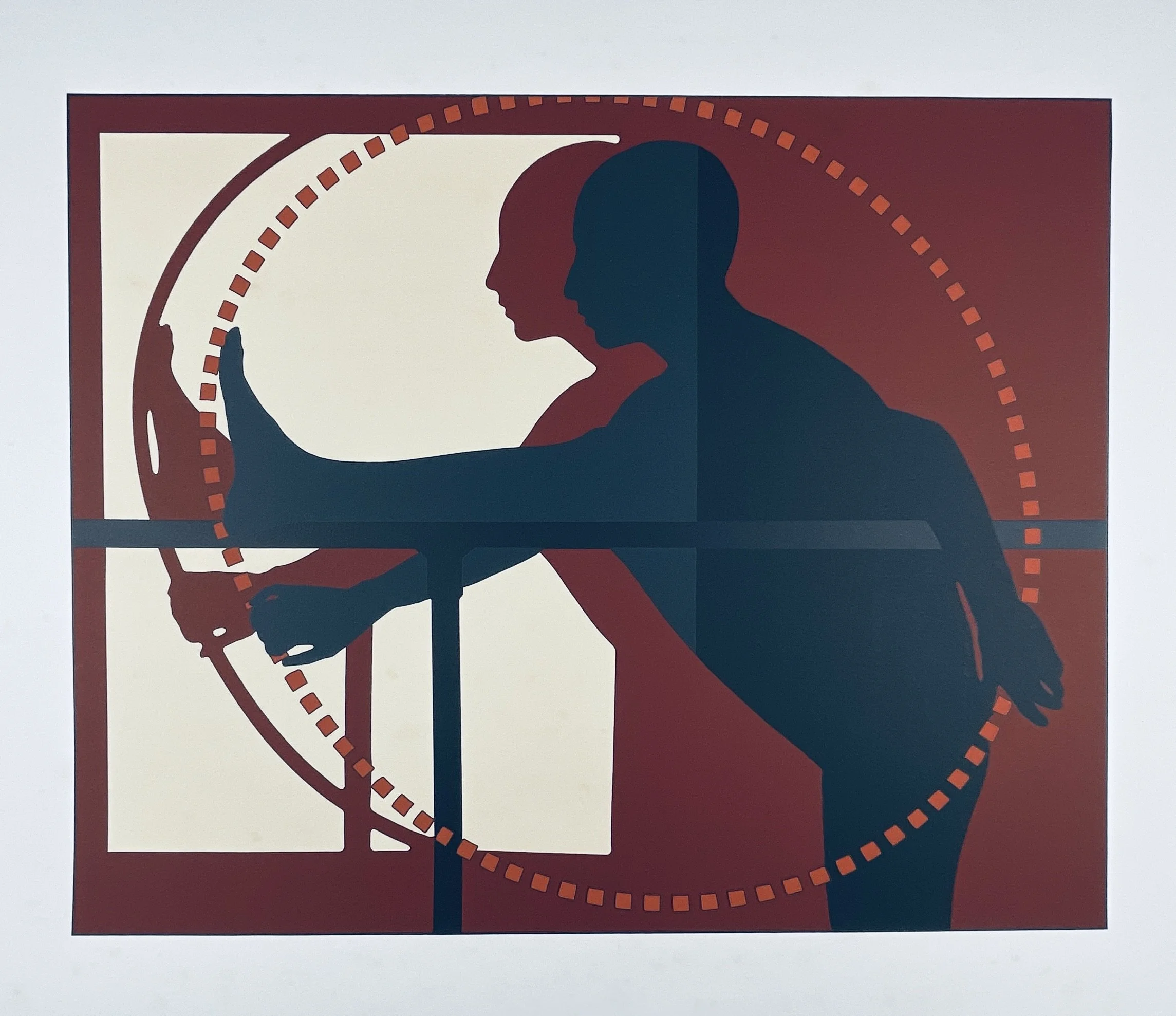
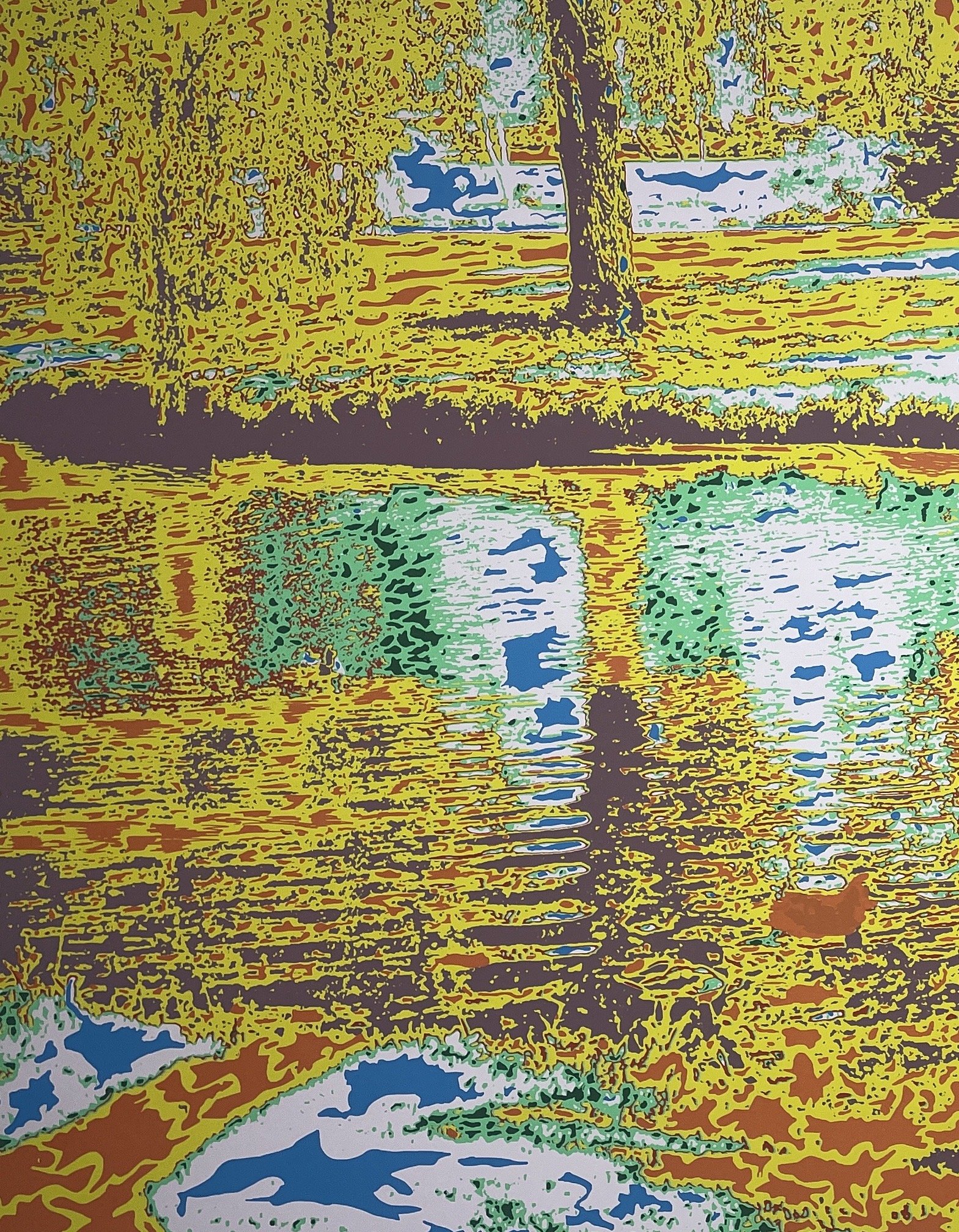
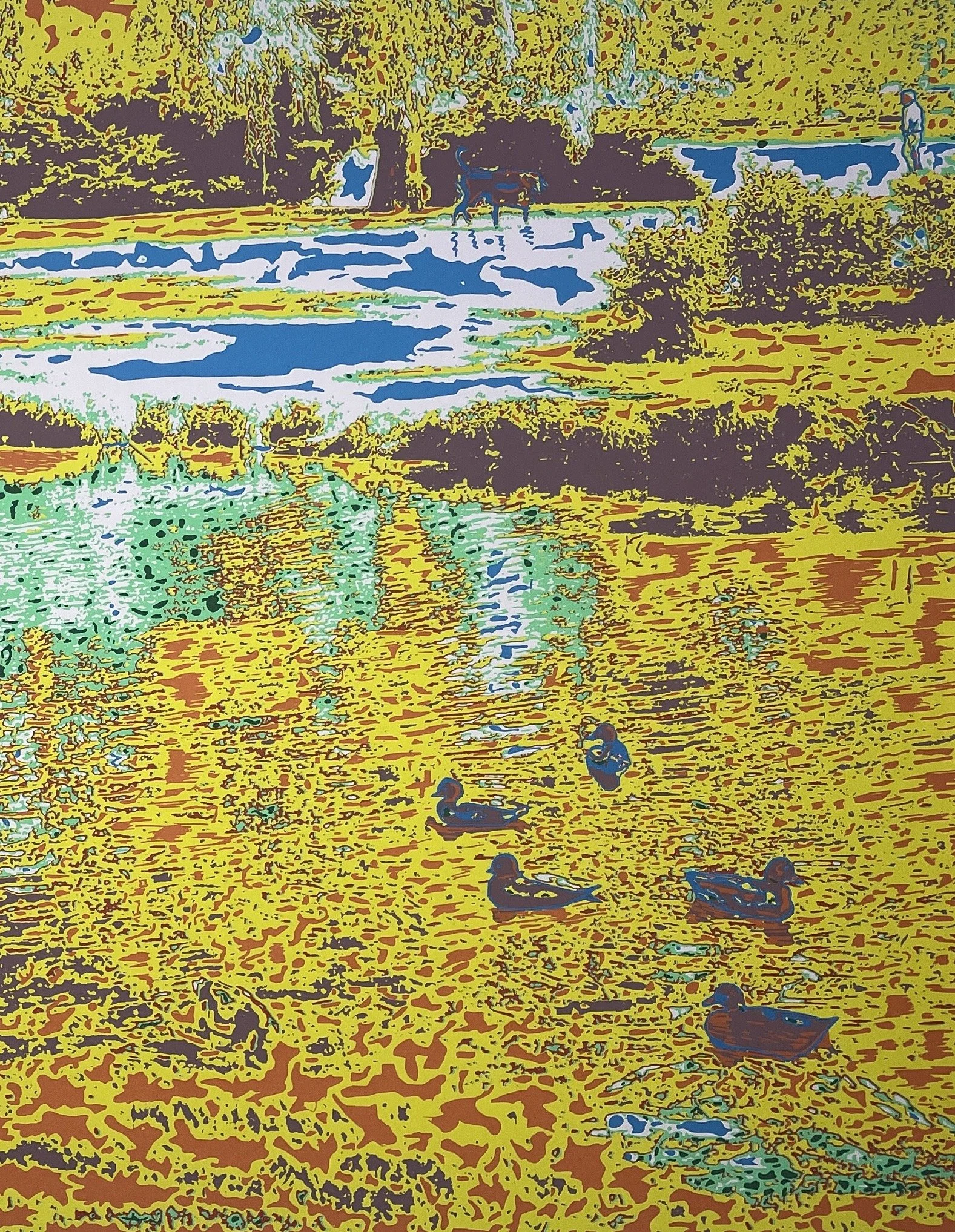
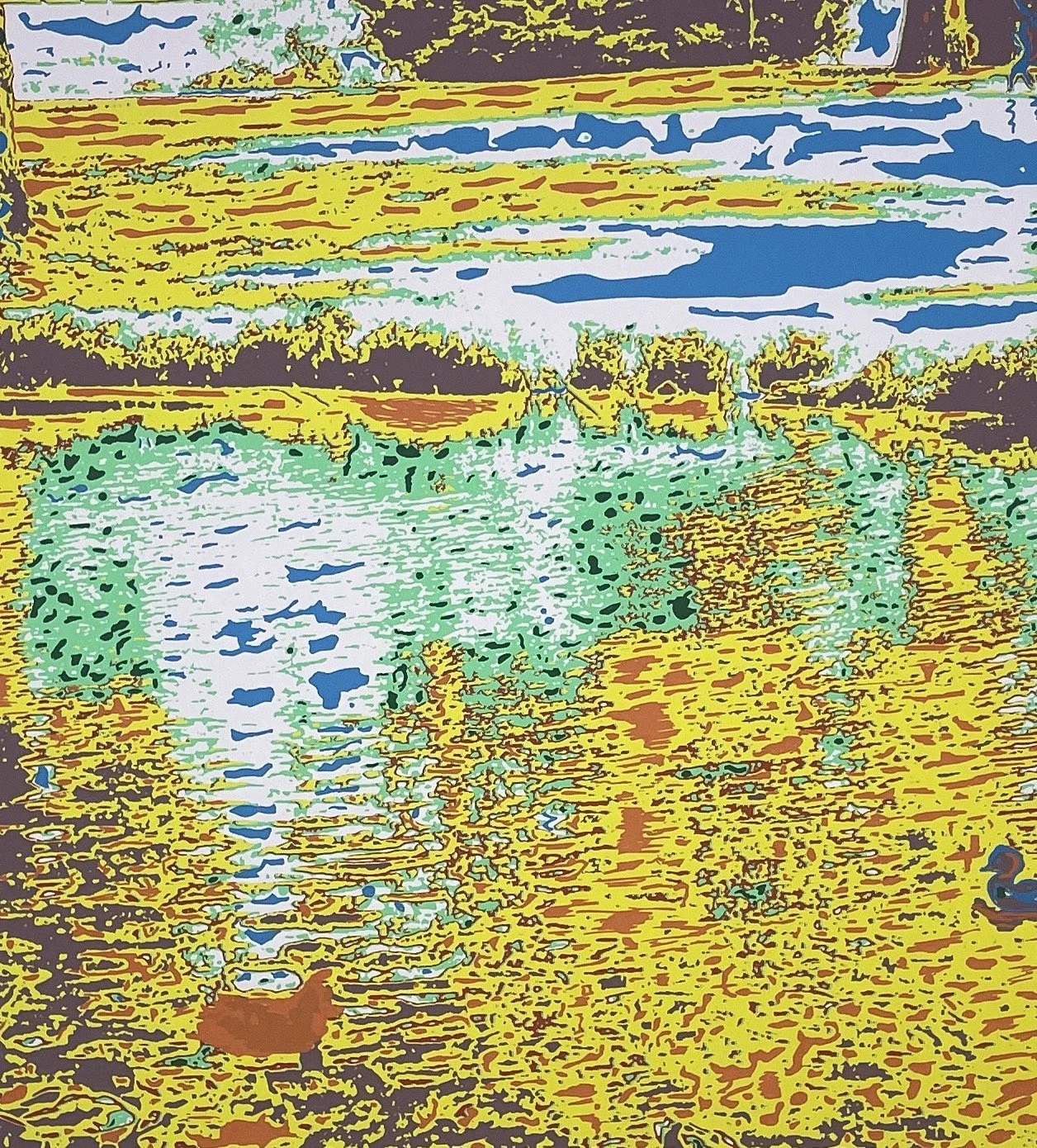
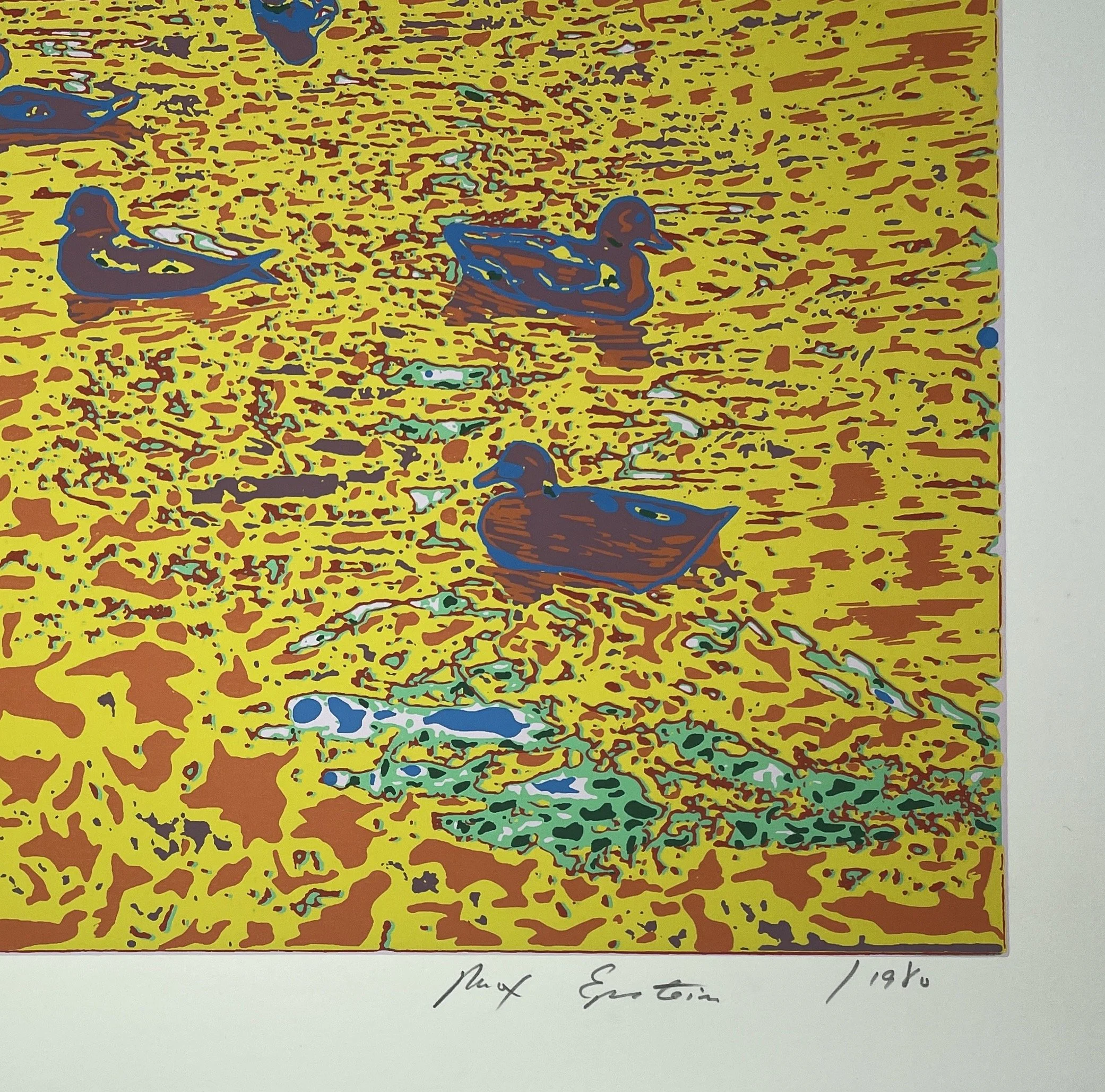
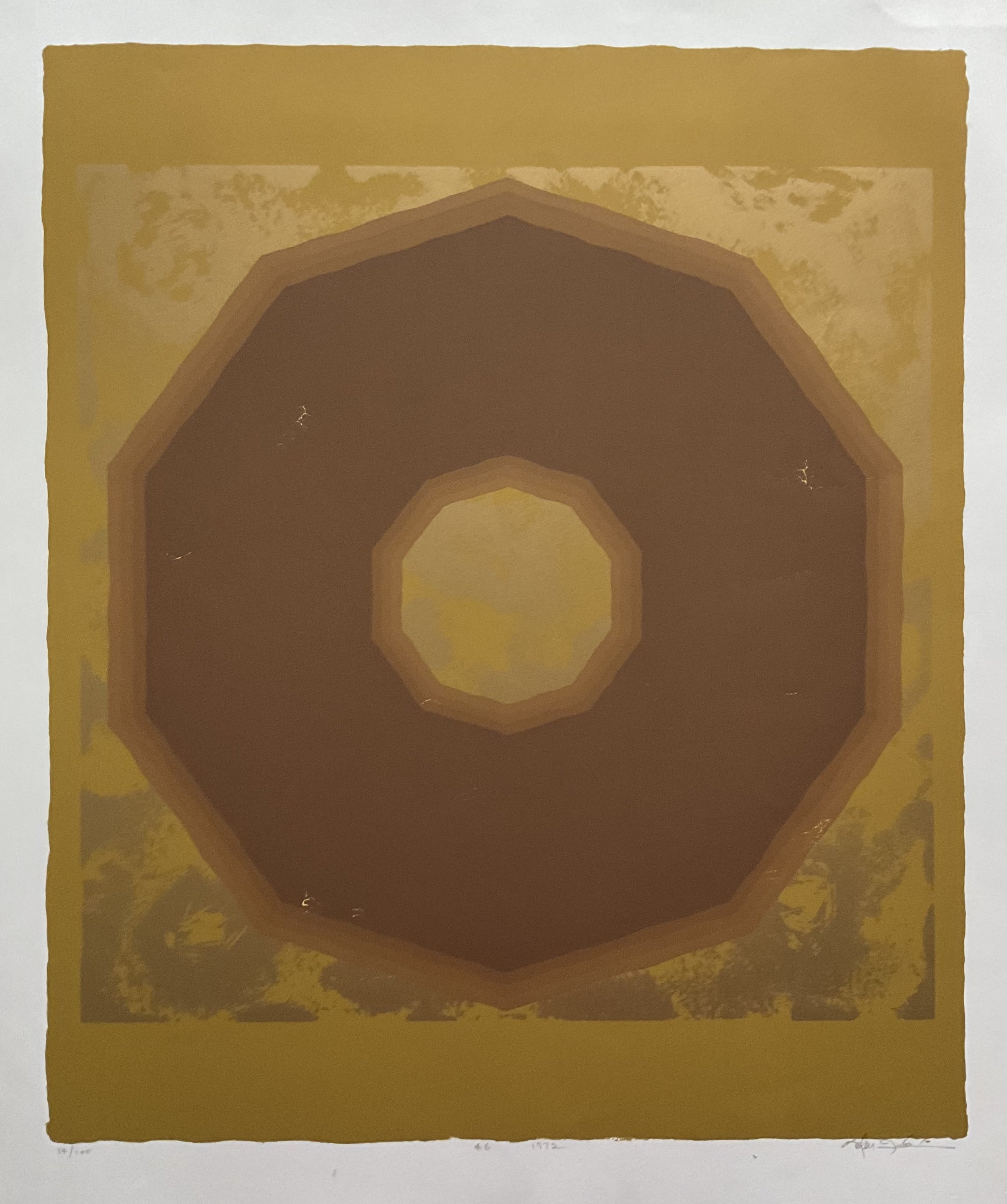
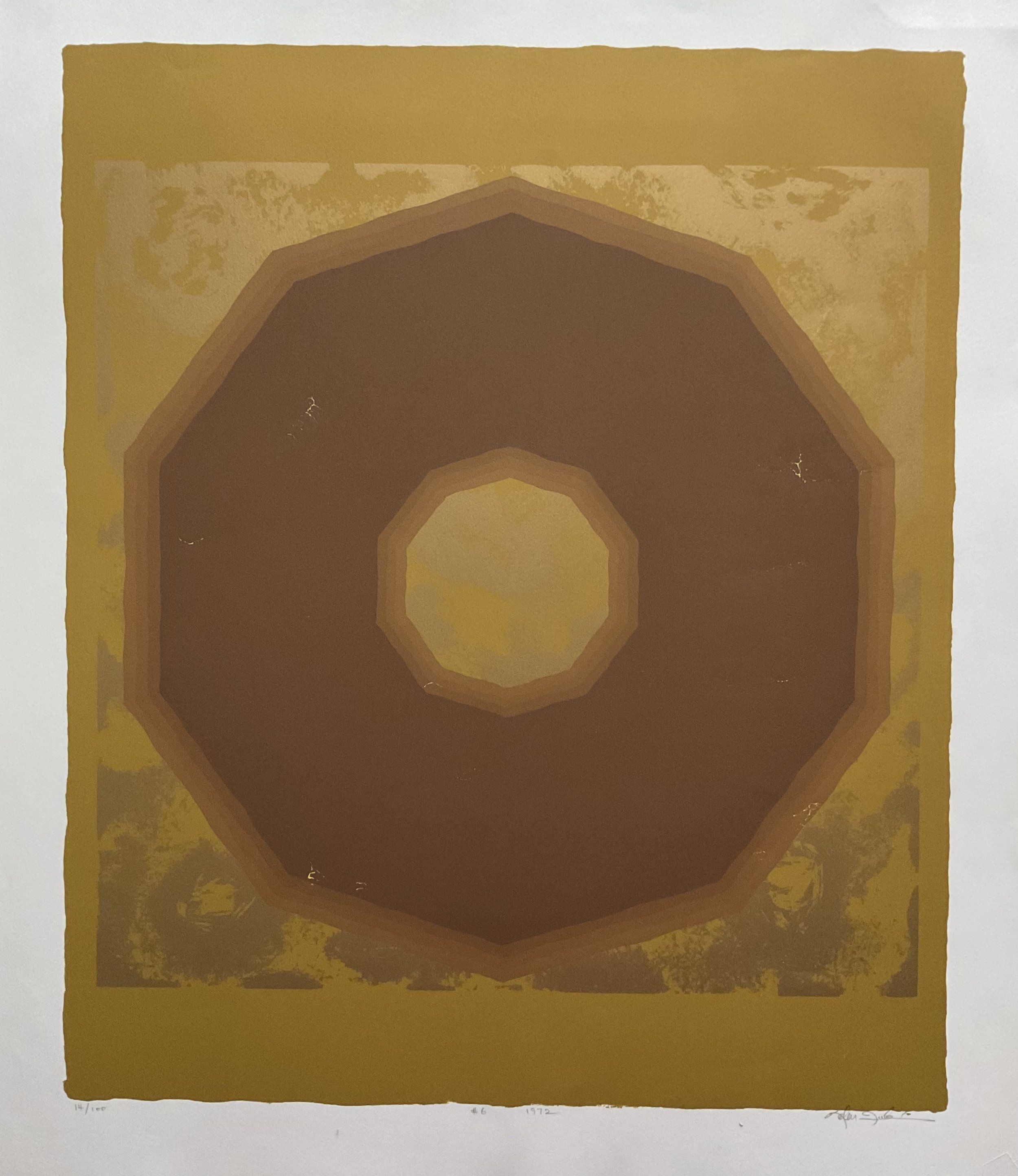
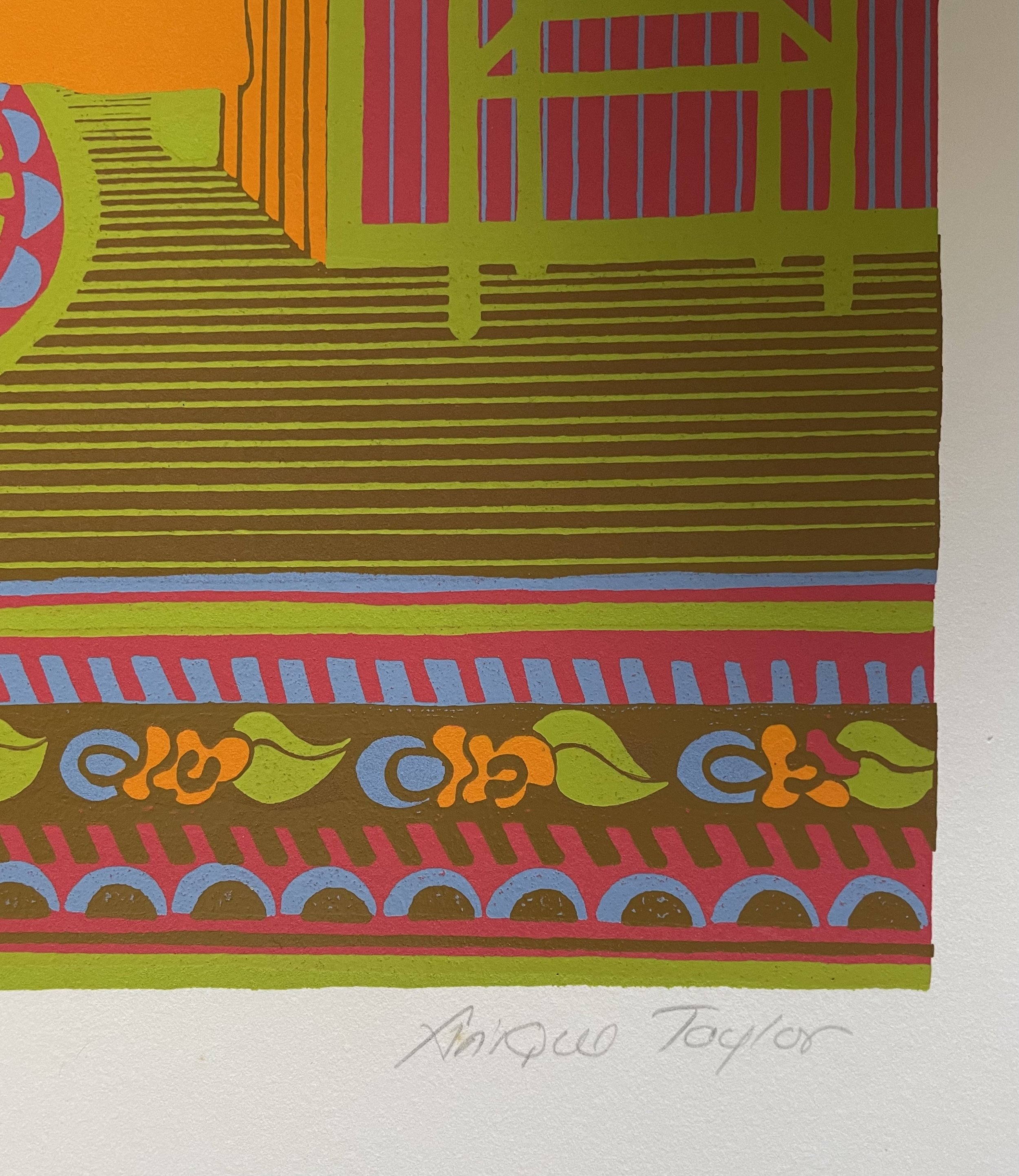
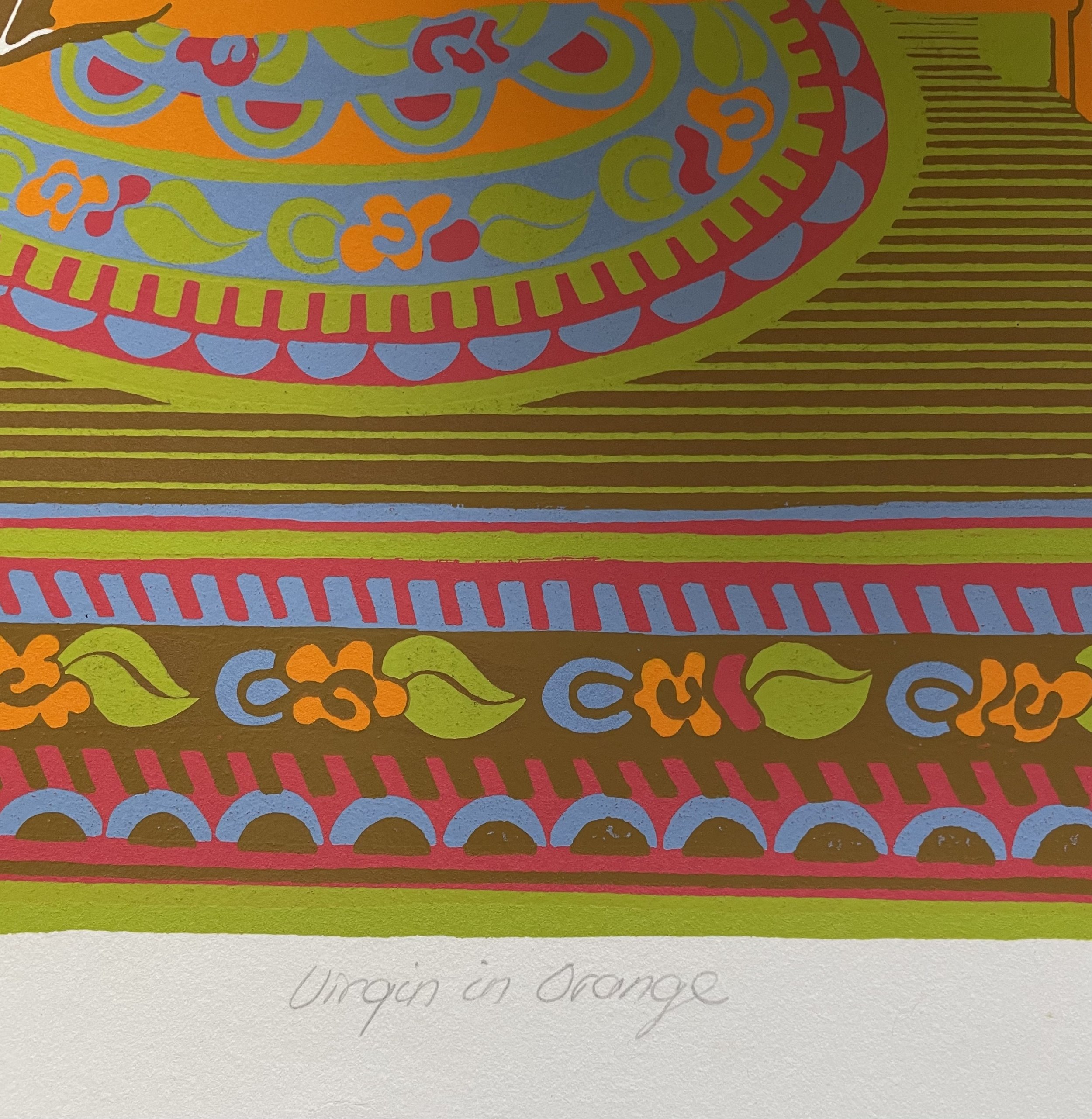
“Module XIX” Marko Spalatin (b.1945), 1973 serigraph/screenprint 30×25, pencil-signed, titled & numbered 18/50.

$3,200.00

“Module XIX” Marko Spalatin (b.1945), 1973 serigraph/screenprint 30×25, pencil-signed, titled & numbered 18/50.

A landmark 1973 geometric abstraction by Marko Spalatin, Module XIX exemplifies his iconic modular cube language. Precision screenprinting and calibrated color relationships create powerful optical rotation and depth. Pencil-signed, titled, and numbered 18/50, this is a highly desirable mature work from Spalatin’s most sought-after series.

Artwork Description

What you’re looking at
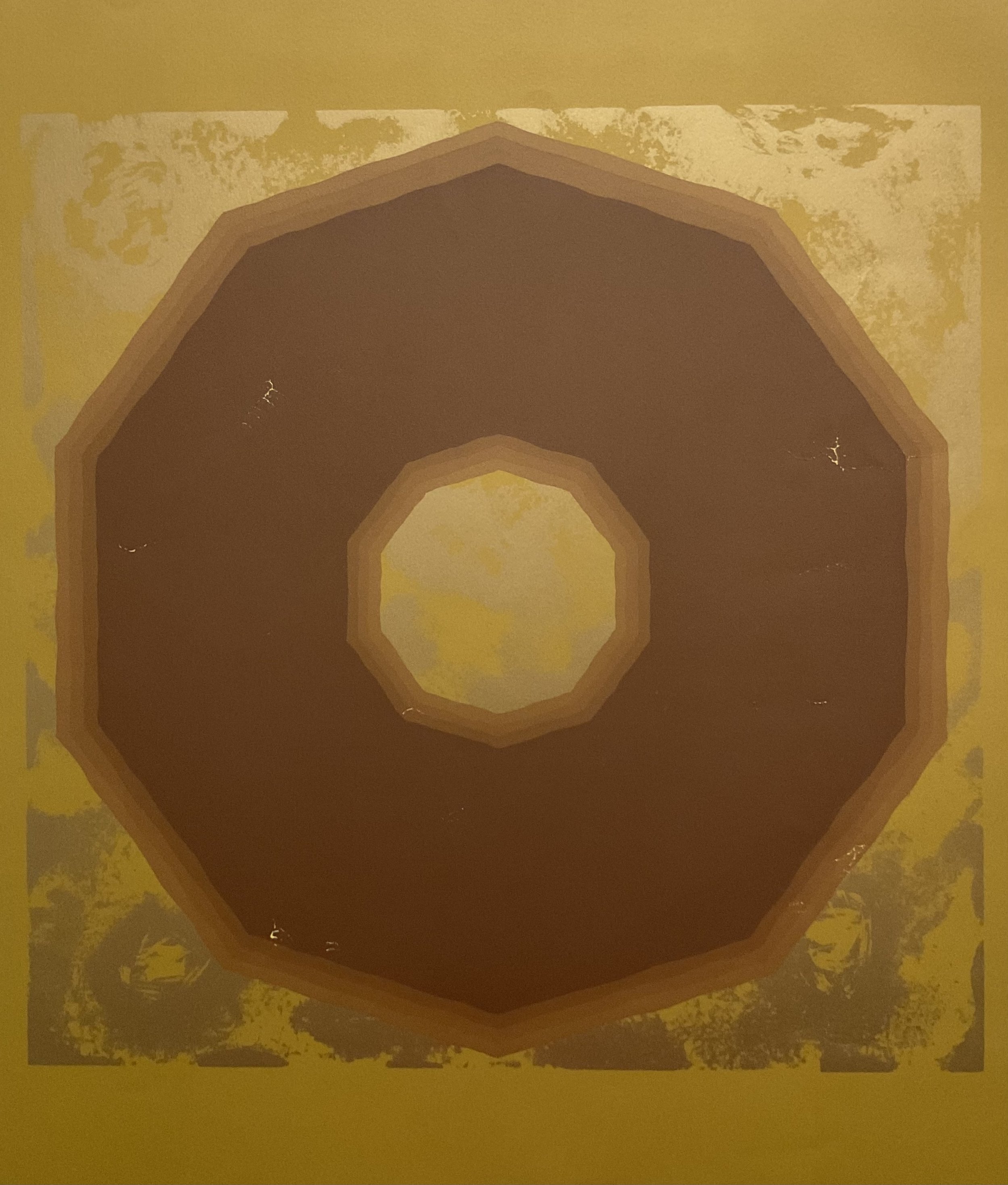
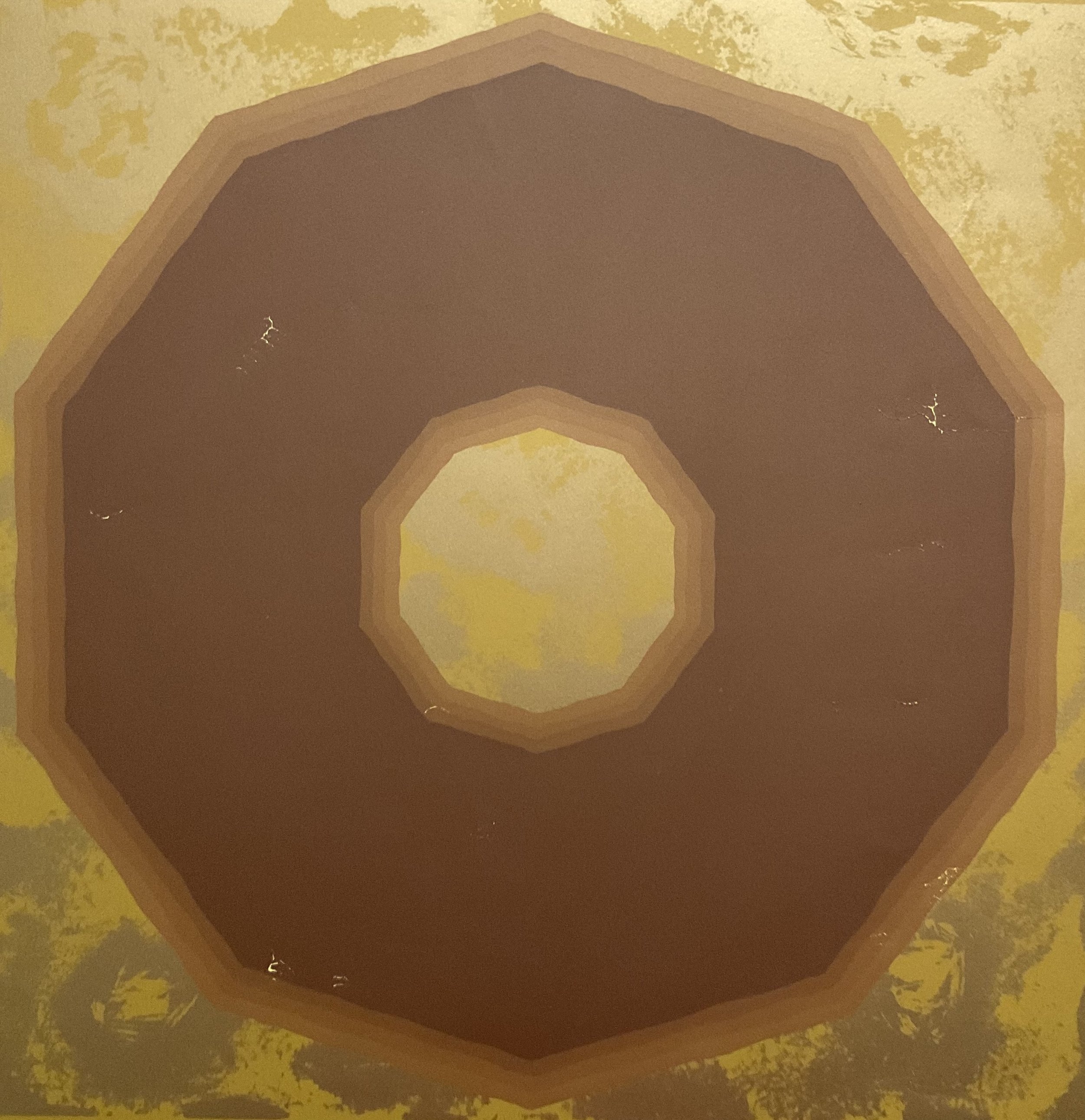
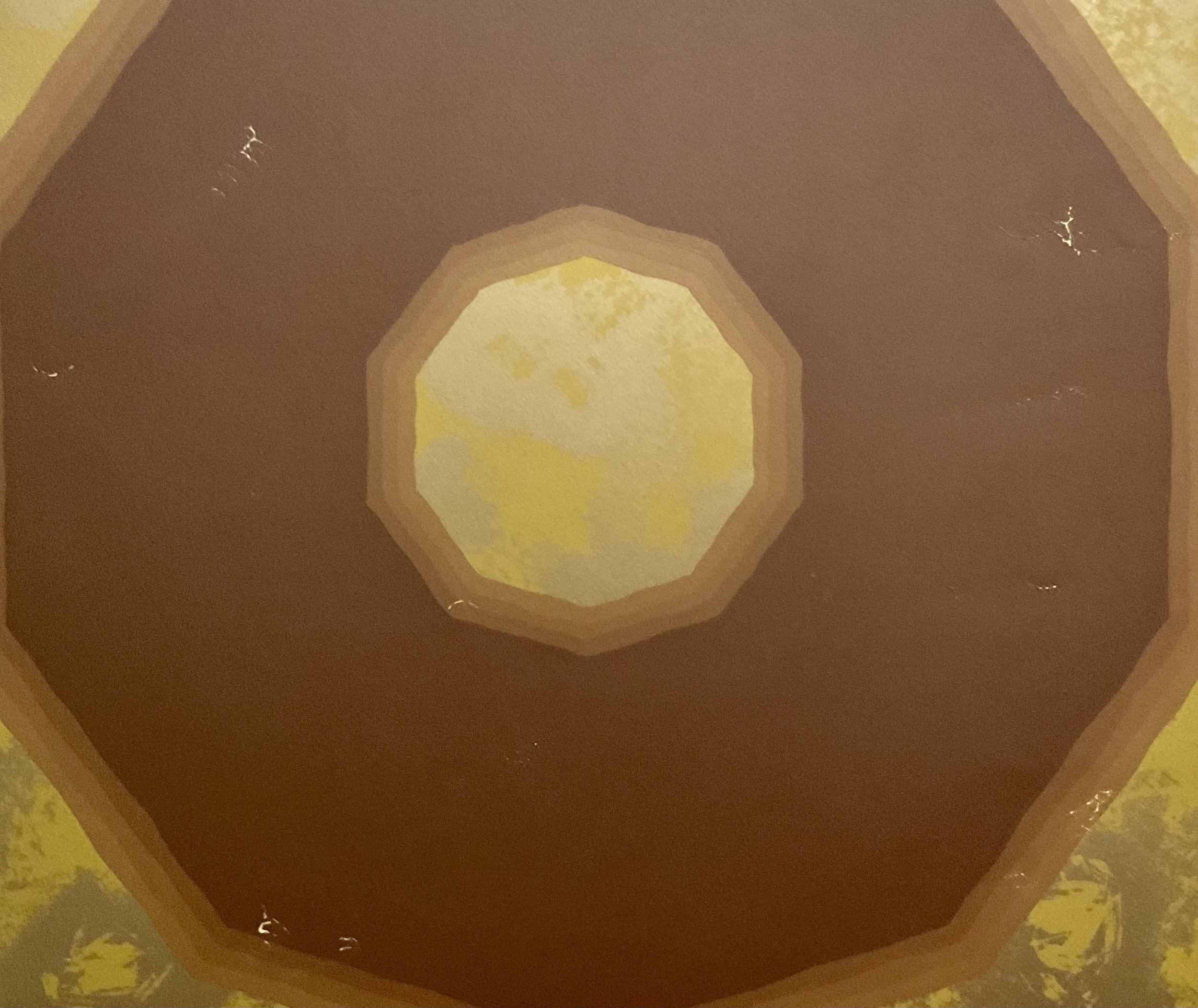
Module XIX presents a circular, symmetrical configuration of repeated geometric modules that appear to rotate around a central void. The cubes advance and recede through carefully orchestrated color shifts, producing a sensation of motion without physical movement. The composition reads as architectural, kinetic, and perfectly balanced.

Style & period
Created in 1973, this work belongs to Spalatin’s peak mature period, when his Module series reached full conceptual and visual clarity. It aligns with hard-edge geometric abstraction and Op Art–adjacent practices, emphasizing perception, repetition, and spatial ambiguity over expressive gesture.

Medium & technique (serigraph/screenprint)
Printed as a serigraph using multiple meticulously registered screens, the image relies on flat, opaque planes of color—olive greens, warm ochres, and saturated orange-reds. Spalatin’s mastery lies in using uniform pigment and sharp edges to generate depth entirely through simultaneous contrast, causing flat shapes to behave volumetrically.

Signature & editioning
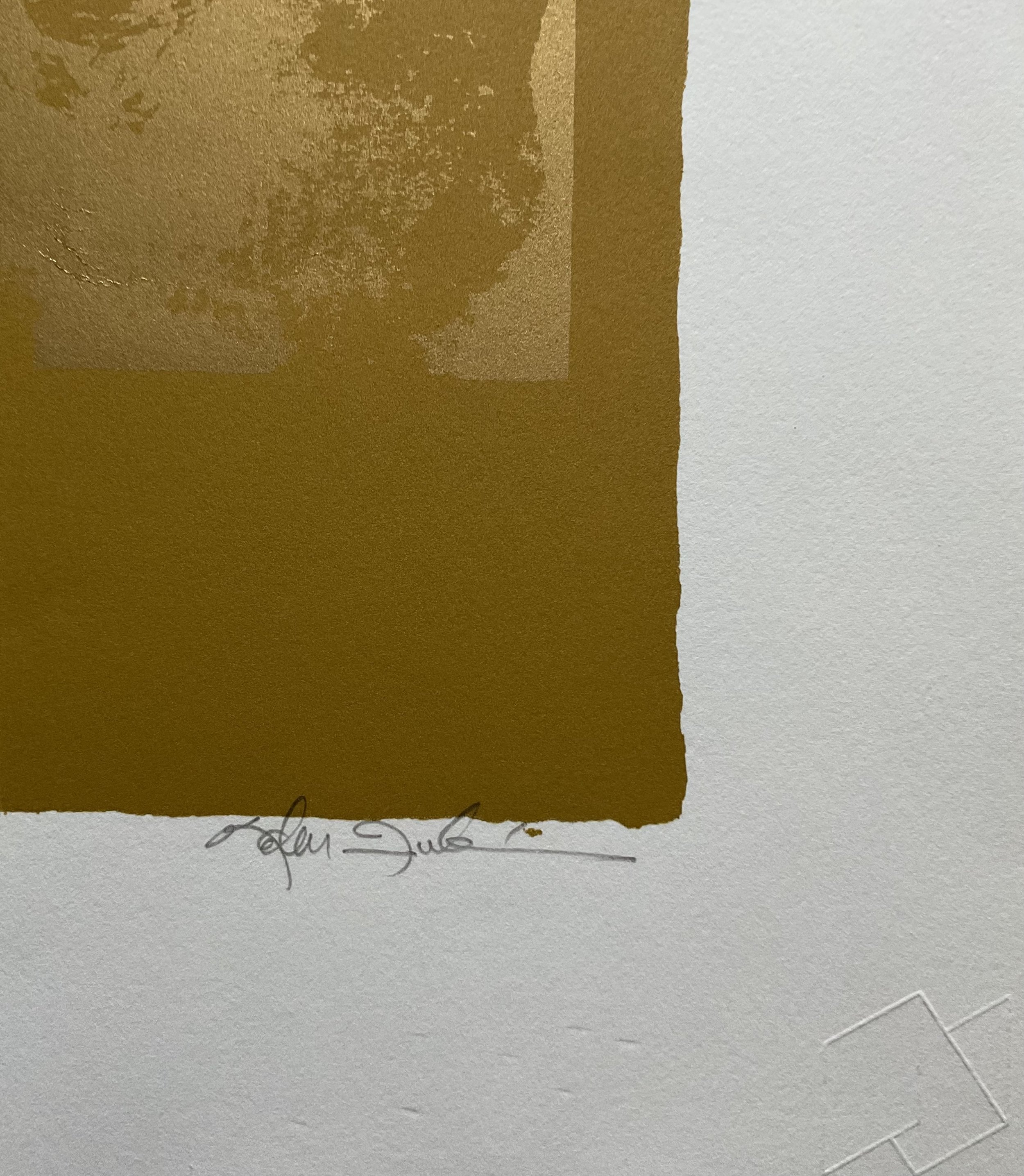
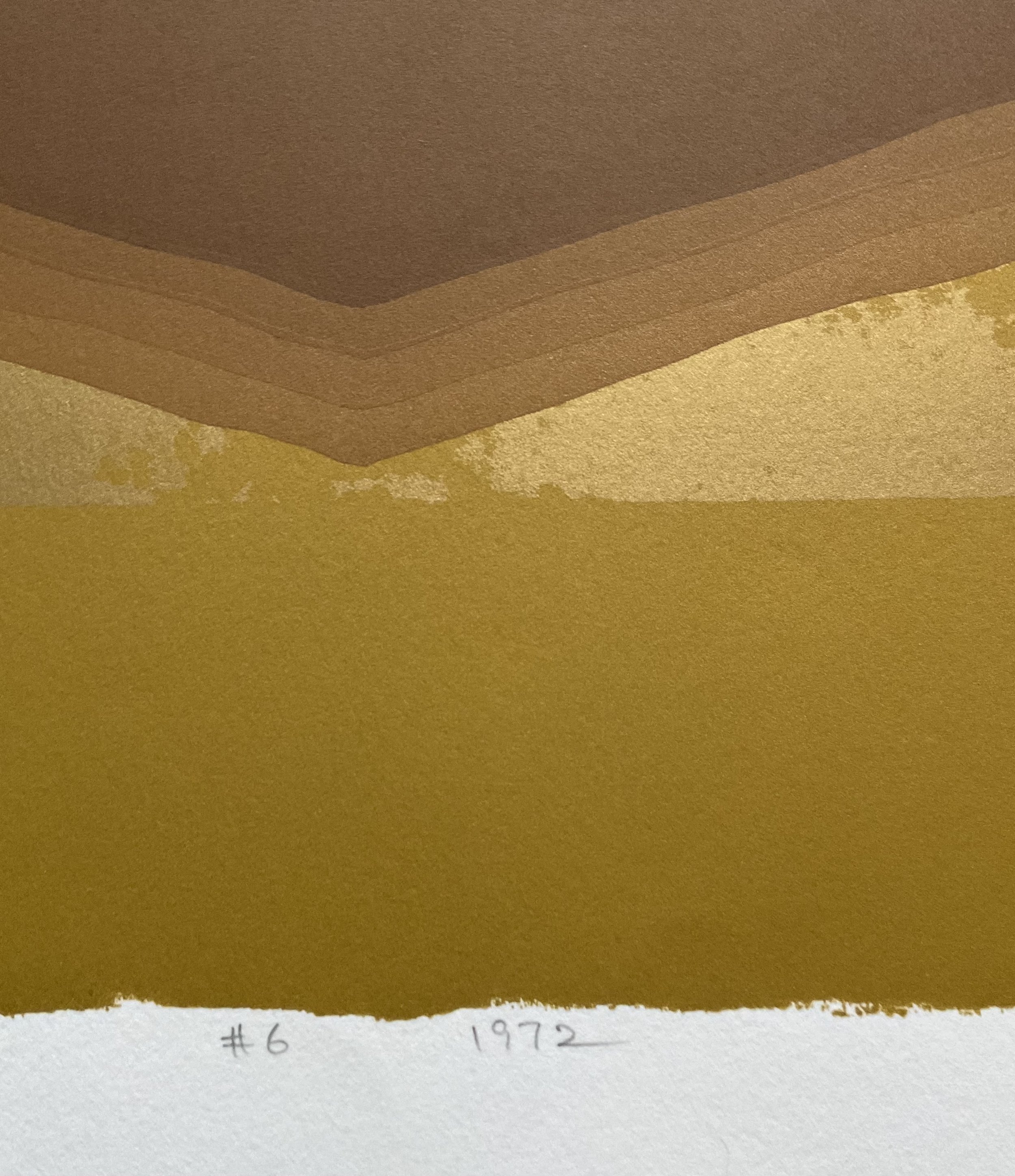
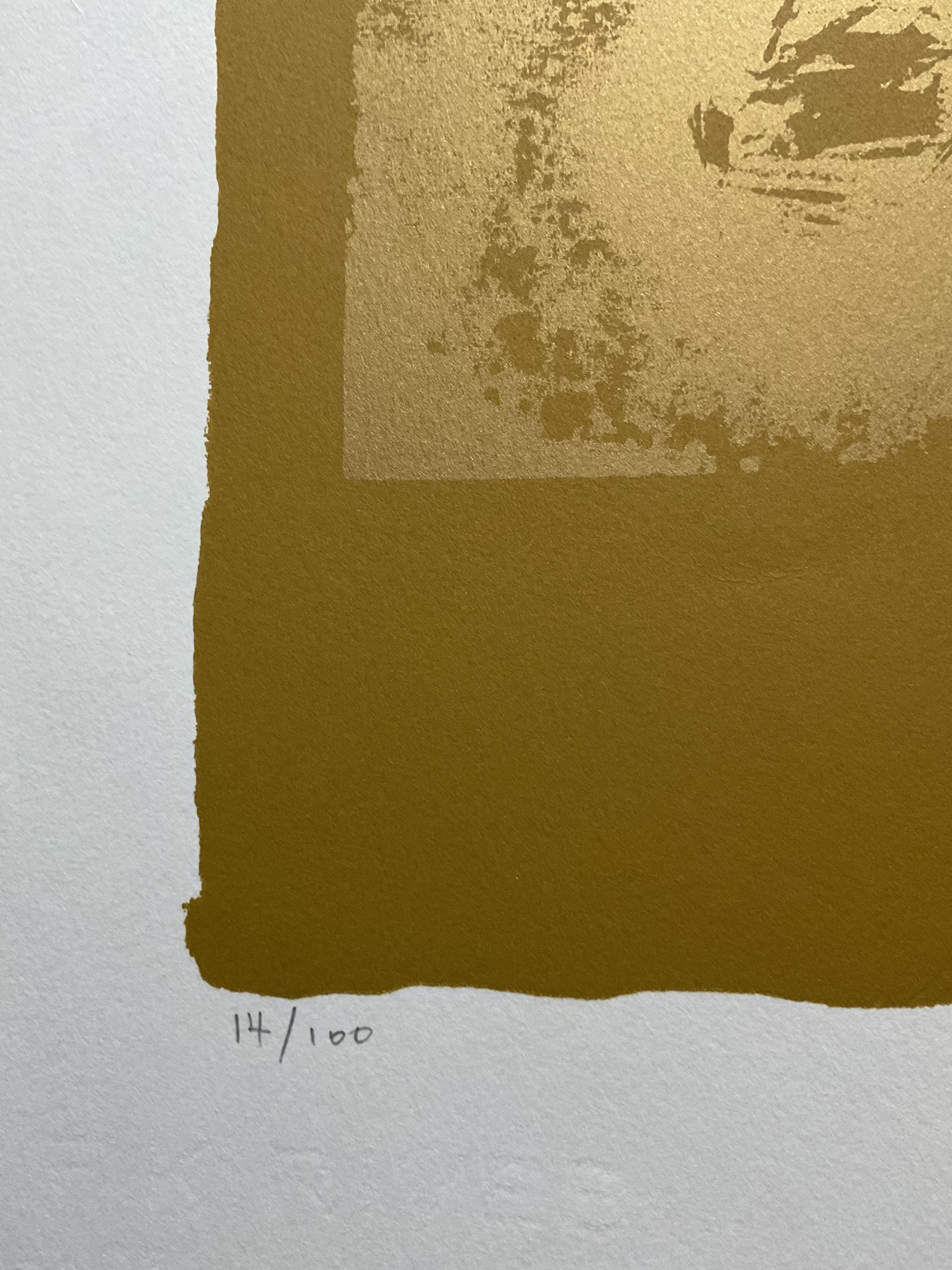
The print is pencil-signed by the artist (lower right), titled (lower left), and numbered 18/50 (lower center). The relatively small edition size reinforces its status as a prime collector work within the Module series.

Conceptual framework / inspiration
Spalatin described his work as a continuous investigation into the relationship between form, color, and light. In the Module series, repetition becomes “polyphonic”—each unit acts independently while contributing to a unified perceptual field. Symmetry provides structural control, while subtle chromatic shifts set the composition into optical motion.

Marko Spalatin (b. 1945)

Background & training
Marko Spalatin was born in Zagreb, Croatia, in 1945 and immigrated to the United States in 1963. He earned a B.S. in Art in 1968 and an M.F.A. in 1971 from the University of Wisconsin–Madison, where his interests in geometric abstraction, color theory, and printmaking fully converged.

Where he practiced
Spalatin is closely associated with Wisconsin, a key center of American printmaking in the late 1960s and 1970s. From this base, he achieved international exposure through extensive exhibitions in the United States, Europe, and beyond.

Artistic influences & style
Rooted in constructivism, hard-edge abstraction, and perceptual color theory, Spalatin’s work examines how precisely applied color can destabilize fixed spatial readings. His compositions are often symmetrical and formal, yet animated by unexpected color mutations that cause positive and negative space to interchange.

Printmaking significance
Spalatin is particularly respected for his serigraphs, a medium that allowed absolute control over color density and edge clarity—essential to his investigation of optical depth. Works from the Module series are widely regarded as the definitive expression of his artistic philosophy.

Institutional & collector relevance
Spalatin’s work is held in numerous major museum and public collections worldwide, and his early-1970s prints are frequently cited in discussions of postwar geometric abstraction. Among collectors, the Module series—especially later Roman-numeral examples—is considered his most important and enduring contribution.

Marko Spalatin (Croatian-American, b. 1945), Module XIX, 1973. Serigraph/screenprint in colors on paper, 30 × 25 inches. Pencil signed, titled, and numbered 18/50. Iconic modular abstraction with strong optical depth. Provenance: Mitch Morse Gallery to Artfind Gallery, Washington DC.

Certificate of Value & Authentication

Artist: Marko Spalatin (b. 1945)
Title: Module XIX
Year: 1973
Medium: Serigraph / screenprint in colors on paper
Dimensions: 30 × 25 inches
Edition: 18/50
Signatures/Marks: Pencil signed, titled, and numbered by the artist
Condition (visual): No visible condition issues noted from available images; in-person inspection recommended
Provenance: Mitch Morse Gallery (acquired in NYC, United States and Europe) → Artfind Gallery, Washington DC
Authentication: Fully consistent with Spalatin’s documented 1970s Module serigraph practice.

Provenance Chain (Collector Format)

Marko Spalatin (artist) → Mitch Morse Gallery (publisher/agent; acquired in NYC, United States and Europe) → Artfind Gallery, Washington DC (current owner).

“Module XIX” Marko Spalatin (b.1945), 1973 serigraph/screenprint 30×25, pencil-signed, titled & numbered 18/50.

A landmark 1973 geometric abstraction by Marko Spalatin, Module XIX exemplifies his iconic modular cube language. Precision screenprinting and calibrated color relationships create powerful optical rotation and depth. Pencil-signed, titled, and numbered 18/50, this is a highly desirable mature work from Spalatin’s most sought-after series.

Artwork Description

What you’re looking at
Module XIX presents a circular, symmetrical configuration of repeated geometric modules that appear to rotate around a central void. The cubes advance and recede through carefully orchestrated color shifts, producing a sensation of motion without physical movement. The composition reads as architectural, kinetic, and perfectly balanced.

Style & period
Created in 1973, this work belongs to Spalatin’s peak mature period, when his Module series reached full conceptual and visual clarity. It aligns with hard-edge geometric abstraction and Op Art–adjacent practices, emphasizing perception, repetition, and spatial ambiguity over expressive gesture.

Medium & technique (serigraph/screenprint)
Printed as a serigraph using multiple meticulously registered screens, the image relies on flat, opaque planes of color—olive greens, warm ochres, and saturated orange-reds. Spalatin’s mastery lies in using uniform pigment and sharp edges to generate depth entirely through simultaneous contrast, causing flat shapes to behave volumetrically.

Signature & editioning
The print is pencil-signed by the artist (lower right), titled (lower left), and numbered 18/50 (lower center). The relatively small edition size reinforces its status as a prime collector work within the Module series.

Conceptual framework / inspiration
Spalatin described his work as a continuous investigation into the relationship between form, color, and light. In the Module series, repetition becomes “polyphonic”—each unit acts independently while contributing to a unified perceptual field. Symmetry provides structural control, while subtle chromatic shifts set the composition into optical motion.

Marko Spalatin (b. 1945)

Background & training
Marko Spalatin was born in Zagreb, Croatia, in 1945 and immigrated to the United States in 1963. He earned a B.S. in Art in 1968 and an M.F.A. in 1971 from the University of Wisconsin–Madison, where his interests in geometric abstraction, color theory, and printmaking fully converged.

Where he practiced
Spalatin is closely associated with Wisconsin, a key center of American printmaking in the late 1960s and 1970s. From this base, he achieved international exposure through extensive exhibitions in the United States, Europe, and beyond.

Artistic influences & style
Rooted in constructivism, hard-edge abstraction, and perceptual color theory, Spalatin’s work examines how precisely applied color can destabilize fixed spatial readings. His compositions are often symmetrical and formal, yet animated by unexpected color mutations that cause positive and negative space to interchange.

Printmaking significance
Spalatin is particularly respected for his serigraphs, a medium that allowed absolute control over color density and edge clarity—essential to his investigation of optical depth. Works from the Module series are widely regarded as the definitive expression of his artistic philosophy.

Institutional & collector relevance
Spalatin’s work is held in numerous major museum and public collections worldwide, and his early-1970s prints are frequently cited in discussions of postwar geometric abstraction. Among collectors, the Module series—especially later Roman-numeral examples—is considered his most important and enduring contribution.

Marko Spalatin (Croatian-American, b. 1945), Module XIX, 1973. Serigraph/screenprint in colors on paper, 30 × 25 inches. Pencil signed, titled, and numbered 18/50. Iconic modular abstraction with strong optical depth. Provenance: Mitch Morse Gallery to Artfind Gallery, Washington DC.

Certificate of Value & Authentication

Artist: Marko Spalatin (b. 1945)
Title: Module XIX
Year: 1973
Medium: Serigraph / screenprint in colors on paper
Dimensions: 30 × 25 inches
Edition: 18/50
Signatures/Marks: Pencil signed, titled, and numbered by the artist
Condition (visual): No visible condition issues noted from available images; in-person inspection recommended
Provenance: Mitch Morse Gallery (acquired in NYC, United States and Europe) → Artfind Gallery, Washington DC
Authentication: Fully consistent with Spalatin’s documented 1970s Module serigraph practice.

Provenance Chain (Collector Format)

Marko Spalatin (artist) → Mitch Morse Gallery (publisher/agent; acquired in NYC, United States and Europe) → Artfind Gallery, Washington DC (current owner).

“MODULE XIX”-

MARKO SPALATIN - Serigraph - Signed & Numbered - 18/50

Image 25-1/2 x 20 inches (including signature and narrow white margin), paper 30-1/2 x 25-1/2 inches.  LIMITED EDITION HAND PULLED & DRAWN ORIGINAL SERIGRAPH, NUMBERED & HAND SIGNED BY ARTIST. From the retired Mitch Moore Gallery Inc, NYC. Unmatted, never framed or displayed. Image area is in very good frameable vintage condition. 

ARTISTS BIO:   Marko Spalatin:  Born in 1945 in Zagreb, Croatia, Marko Spalatin immigrated to the United States in 1963.   He studied at the University of Wisconsin at Madison, and earned a B.S. in Art in 1968 and a M.F.A. in 1971.   He is well known for his colorful geometric designs in the form of limited edition prints and also original paintings. The movement of light through the world and across variegated surfaces and the relationship between them, is one of the focal points of Spalatin's work. Although the paintings are inspired by nature, the specific source is finally not what is important. Spalatin's painting may inspire the viewer to recall the shifting brilliance of sunlight on summer's leaves, the swaying movements of a school of brightly colored tropical fish, the glittering reflections of moonlight on the ocean, or some other dazzling occurrence in nature. However, the viewer's task is not to figure out where a painting comes from, the to experience what it is.   His work is displayed in major museums around the world.  Read more about the artist and see a sampling of his other works on his website.  Search on Marko Spalatin. 

  • ARTIST'S STATEMENT: "My work represents a continuous involvement with abstract geometric forms defined by careful manipulation of color and light. The relationship between form and color within the pictorial field demands a visually symbiotic presence. The challenge revolves around the selection of a form as a vehicle for color, as well as choosing appropriate color and light for that form. This interplay creates a primary spatial illusion, along with secondary effects. I find that precisely defined areas of color, when placed against each other, compete for dominance. This activity, when further accentuated by tonal structure, produces multiple levels of perception. A given area of uniformly applied pigment loses its flat character through simultaneous contract with the surrounding colors. In many cases, the positive and negative spaces within the field become interchangeable. In more complex paintings, when the substructure is a series of repetitive modules, the color-light interplay reveals its polyphonic character. In general, my compositions remain formal and symmetrical in order to be set in motion by unexpected mutations of color and light. In some cases, the careful placement of small areas of saturated color against a backdrop of transitional grays creates an illusion of suspended particles. There is no doubt that in these images in particular, my sense of color and light is subconsciously influenced and sustained by many years of scuba diving in the waters of the Adriatic Sea and the Caribbean. I am intrigued by the relativity of color and by the mystery of light, and I am constantly challenged to explore their potentials. Every painting becomes a self-imposed visual problem, subjectively resolved in search of an objective truth."

  • His prints and paintings have been featured in over 70 solo exhibitions across the US, as well as in France, Croatia, Canada, Lebanon, Italy, and Slovenia, and in numerous group exhibitions in 12 countries. Spalatin’s work is represented in many private, corporate, and public collections, including:

COMMISSIONS AND PERMANENT COLLECTIONS

Museum of Modern Art, New York, NY

Musee d'Art Modern, Paris

Tate Gallery, London

Victoria and Albert Museum, London

Philadelphia Museum of Art, Philadelphia, PA

New York Public Library, New York City

Library of Congress, Washington, D.C.

Brooklyn Museum, Brooklyn, N.Y.

Akron Art Institute, Akron, Ohio

Oklahoma Art Center, Oklahoma City, Oklahoma

U.S. Steel Collection, Pittsburgh, PA

Pittsburgh National Bank, Pittsburgh, PA

Wisconsin Art Foundation

International Graphic Art Society, New York

American National Insurance Company, Galveston, Texas

Chase Manhattan Bank

Lessing J. Rosenwald Collection, Philadelphia, PA

Bibliotheque National, Paris, France

Museum of Contemporary Art-Chicago, Illinois

Metropolitan Museum-Manila, Philippines

Philadelphia Museum of Art-Philadelphia, Pennsylvania

The Butler Institute of American Art-Youngstown, Ohio

Museum of Modern Art-Belgrade, Yugoslavia

Milwaukee Art Museum-Milwaukee, Wisconsin

Lessing J. Rosenwald Collection-Philadelphia, Pennsylvania

Cleveland Museum of Art-Cleveland, Ohio

Elvehjem Museum of Art-Madison, Wisconsin

Museum of Modern Art-Novi Sad, Yugoslavia

Madison Art Center-Madison, Wisconsin

Masur Museum of Art-Monroe, Louisiana

National Arts Club-New York, New York

Albrecht Museum-St. Joseph, Missouri

Billings Art Center-Billings, Montana

National & University Library-Zagreb, Croatia

Rochester Museum of Art-Rochester, New York

Museum of Modern Art-Ljubljana, Slovenia

ONE MAN SHOWS

1971-Galerie Lahumiere, Paris

1971-University of Iowa, Iowa City, Iowa

1971-Madison Art Center, Madison, Wisconsin

1970-Fairwather Hardin Gallery, Chicago, Illinois

1070-Akron Art Institute, Akron, Ohio

GROUP SHOWS

1970-Venice Biennale, Venice, Italy

1970-Workd's Fair, Osaka Japan

1970-Phoenix Gallery, Berkeley, California

1970-New York State Council on the Arts travelling exhibition, in collaboration with the Brooklyn Museum

1970-Munson-Williams-Proctor Institute, Utica, New York

1969-Lincoln Memorial Art Center, Milwaukee, Wisconsin

1969-Madison Art Center, Madison, Wisconsin

1969-The Brooklyn Museum, Brooklyn, New York

1968-American Graphic Workshops Exhibition, Cincinnati, Ohio

AWARDS AND PRIZES

1971-Library of Congress, Washington, D.C.