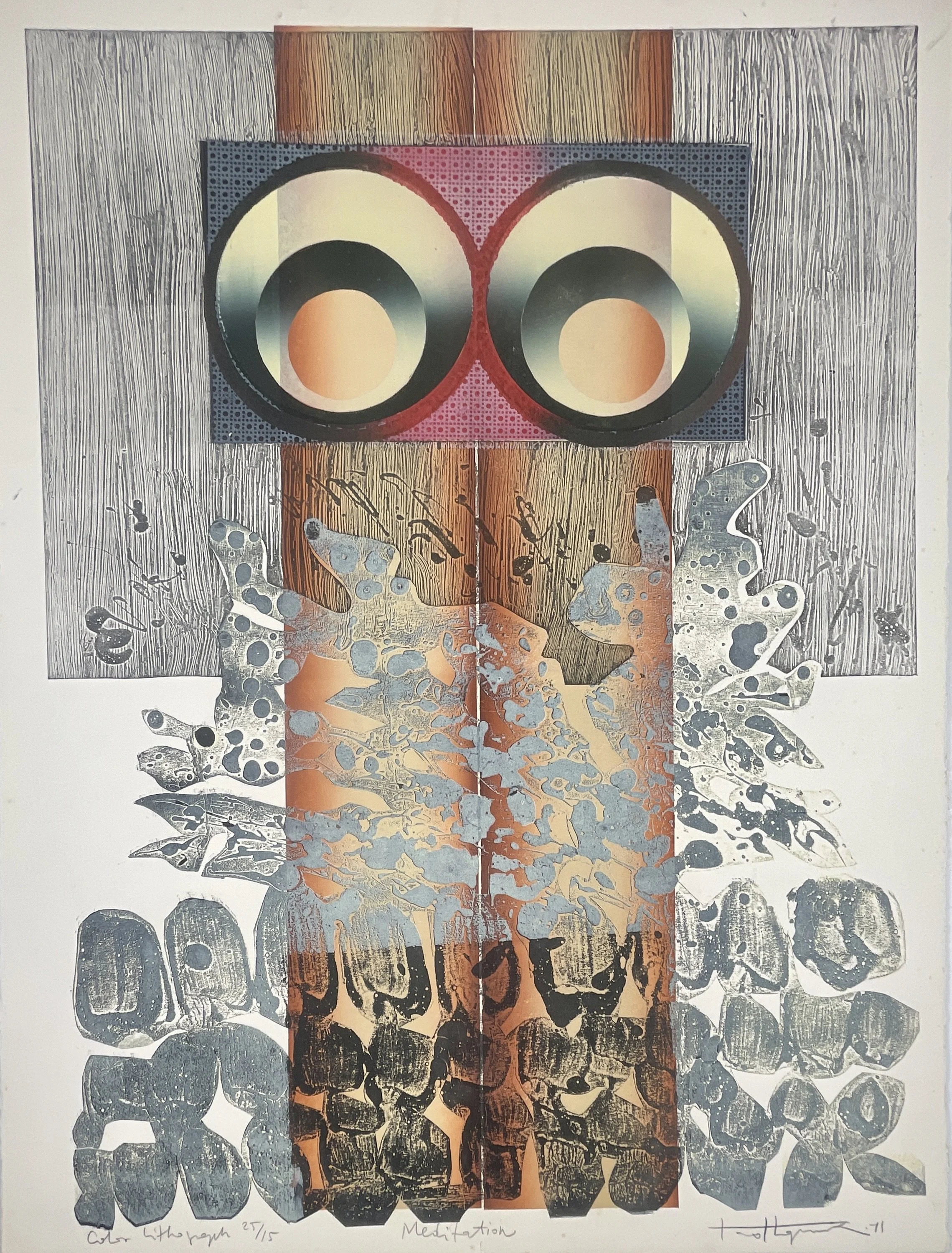
“New England Landscape (Windmill and Farmstead),” Louis Kinney Harlow (1850–1913), 1889 chromolithograph after watercolor, 5×16 in, signed in the print, open edition.
“New England Landscape (Windmill and Farmstead)” is an 1889 antique chromolithograph after a watercolor by American artist Louis Kinney Harlow, published by the famed Boston firm L. Prang & Co. and printed on board. Measuring approximately 5×16 inches, this panoramic New England river scene with windmill, farmhouses, and wide sky showcases Harlow’s beloved atmospheric style, celebrated for poetic depictions of New England’s coasts, farms, and fishing villages.
Artwork Description
This long, narrow composition unfolds like a quiet memory of the New England marshes. A shallow river occupies the center, reflecting muted tones of brown, olive, and pale blue. On the left, low banks and tufts of grass lead the eye toward a cluster of structures: a wooden windmill, small outbuilding, and low farmhouses tucked among autumnal trees. Their brick-red chimneys and deeper roof tones provide the subtlest accents of color in an otherwise hushed palette.
The right half of the image opens into an expanse of marshland and distant horizon, emphasizing the horizontal sweep of the landscape. A few tiny silhouettes—perhaps distant buildings or sails—punctuate the far distance, reinforcing the sense of space and stillness. The sky is rendered as a soft, nearly monochrome wash, suggestive of an overcast day or early morning mist.
Technically, this is an 1889 chromolithograph—a multi-stone color printing process perfected by L. Prang & Co. of Boston, the pioneering firm that helped popularize fine-color art reproductions in late-19th-century America. The plate is inscribed along the lower edge with “Copyright 1889 by L. Prang & Co. Boston”, and bears Harlow’s printed signature “Louis K. Harlow” at the lower right. The print is mounted on its original backing board, typical of Prang’s ready-to-display chromoliths.
Stylistically, the work reflects Harlow’s reputation as a New England landscape painter known for atmospheric watercolors of marshes, farms, boats, and fishermen. The restrained sepia-and-olive palette and delicate modeling evoke the subdued light of coastal Massachusetts or Rhode Island. The windmill and low farm buildings speak to Harlow’s interest in simple rural structures and working landscapes rather than grand, romantic vistas.
The overall mood is meditative and nostalgic: a quiet, working marsh at rest, its still water and distant horizon suggesting both the constancy of nature and the passage of time. As a collaboration between Harlow and Prang, the image also carries the historical story of chromolithography as a democratizing force—bringing collectible art into middle-class parlors across the United States.
Biography of Louis Kinney Harlow (1850–1913)
Louis Kinney Harlow was an American painter, watercolorist, etcher, and illustrator best known for his New England landscapes and coastal scenes. He was born on March 28, 1850, in Wareham, Massachusetts, to Ivory Hovey Harlow and Mary Kinney.
Harlow received his early education in New England academies, including Pierce Academy in Middleboro and, according to several accounts, additional study at Phillips Academy in Andover. Before becoming a full-time artist he worked in business and married Julia Coombs; together they had three children.
Around 1880 Harlow embarked on a professional art career, quickly gaining recognition for luminous watercolors of harbors, fishing boats, farms, and marshes. He exhibited at the Boston Art Club in 1883, 1885, 1887, and 1894, placing him within the circle of prominent late-19th-century New England painters. His travels took him to European art centers, and he painted in Venice and other locations abroad, but he remained most closely associated with the New England coast.
Harlow is perhaps best known today for his work with L. Prang & Co., the Boston lithography firm that became famous for high-quality chromolithographs, including art prints, greeting cards, and illustrated books. As a Prang artist and illustrator, Harlow created watercolors that were translated into richly colored chromolithographs—like “New England Landscape”—and distributed widely, helping to popularize his imagery far beyond the original collectors of his watercolors and etchings.
Throughout his career, Harlow’s art focused on quiet moments: fishermen tending boats, cottages along the shore, marshes and farmsteads under gentle light. His work appears in several public collections, including regional museums and print departments that document American chromolithography and New England painting. He died in 1913, leaving behind a body of work that captures both the physical character and the reflective mood of the 19th-century New England landscape.
Louis Kinney Harlow (American, 1850–1913), “New England Landscape (Windmill and Farmstead)”, 1889, chromolithograph after watercolor, 5×16 in, printed “Copyright 1889 by L. Prang & Co., Boston” lower left, signed in the print “Louis K. Harlow” lower right, mounted on original board. Atmospheric New England marsh and farm scene with windmill by noted Prang artist and New England landscape painter.
Certificate of Value & Authentication
Artist: Louis Kinney Harlow (American, 1850–1913)
Title: New England Landscape (Windmill and Farmstead)
Date: 1889
Medium: Chromolithograph after watercolor, mounted on board
Dimensions: Image/board approx. 5 × 16 inches
Publisher: L. Prang & Co., Boston
Edition: Open edition (no individual numbering, as typical for Prang chromolithographs)
Signature: Printed signature “Louis K. Harlow” lower right; printed caption “Copyright 1889 by L. Prang & Co. Boston” lower left
Technique: Multi-stone color lithography (chromolithograph) translating Harlow’s original watercolor into a richly toned, mass-distributed art print.
Condition: Good antique condition with age-appropriate toning, minor edge wear and surface marks consistent with a late-19th-century chromolithograph mounted on board; no major losses evident in main image area.
Authenticity:
– Publisher credit and date match known Prang chromolithographs of Harlow’s work.
– Signature style and imagery consistent with documented Harlow New England landscapes and windmill scenes.
This certificate affirms that New England Landscape (Windmill and Farmstead) is an authentic 1889 chromolithograph published by L. Prang & Co. after a watercolor by Louis Kinney Harlow.
Provenance Chain (Collector-Formatted)
• Louis Kinney Harlow (1850–1913) – artist (original watercolor)
• L. Prang & Co., Boston – publisher and printer of the 1889 chromolithograph
• Late-19th / early-20th-century retail distribution in the United States (likely via print dealers and department stores)
• Mitch Morse Gallery, New York, NY – acquired as part of a curated selection of antique prints and American works on paper
• Artfind Gallery, Washington, DC – current owner
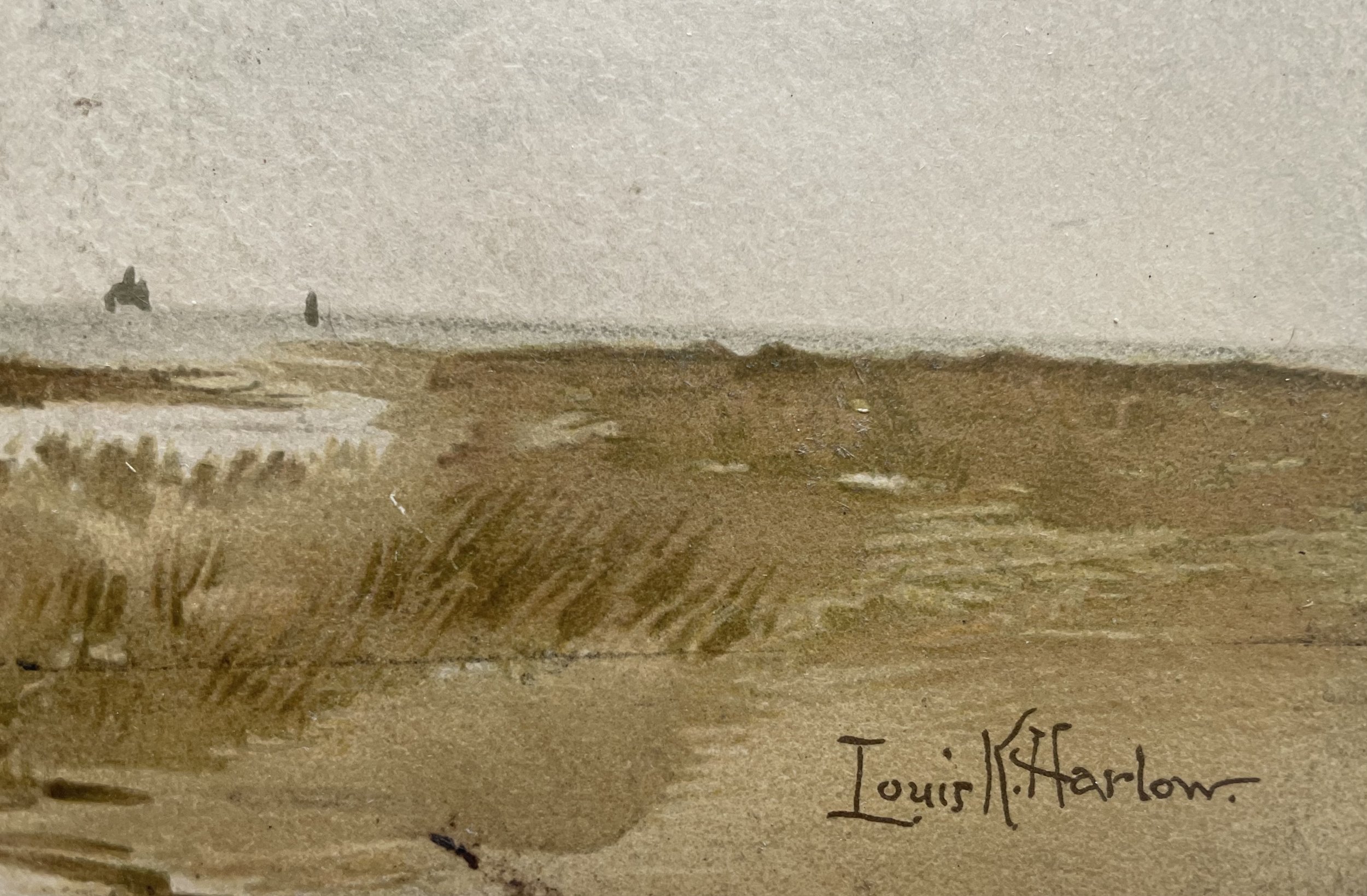 Image 1 of 7
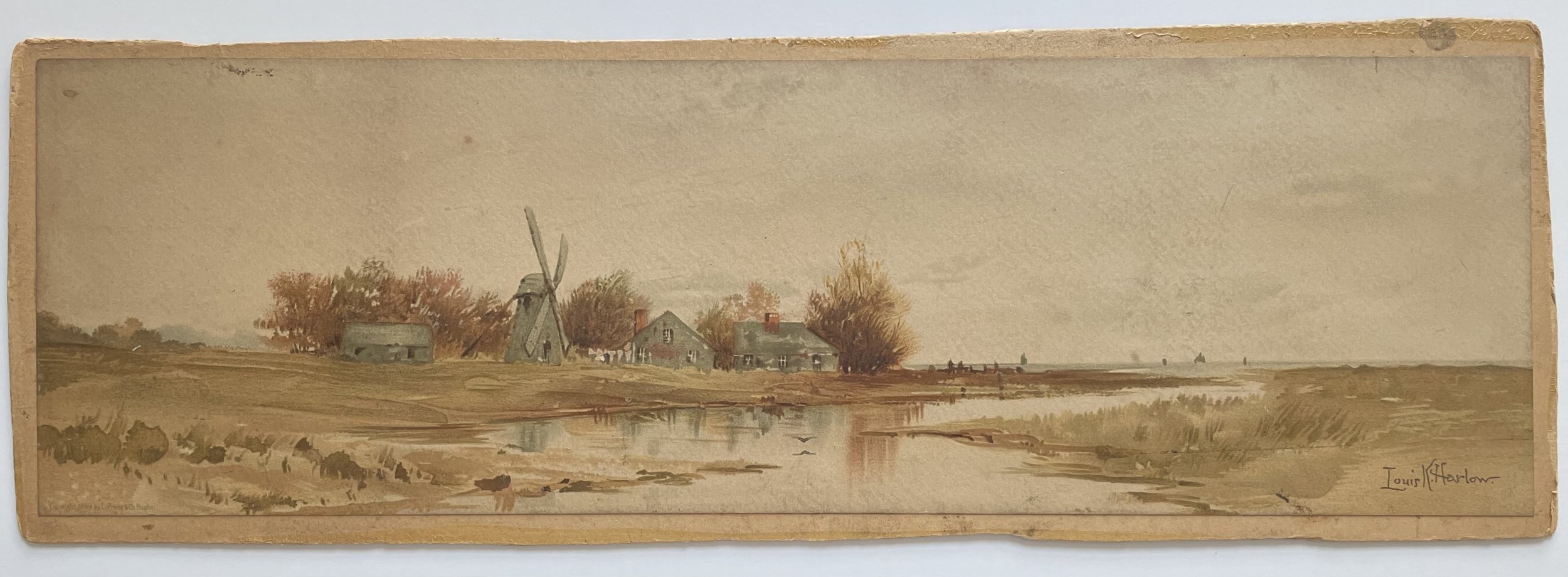 Image 2 of 7
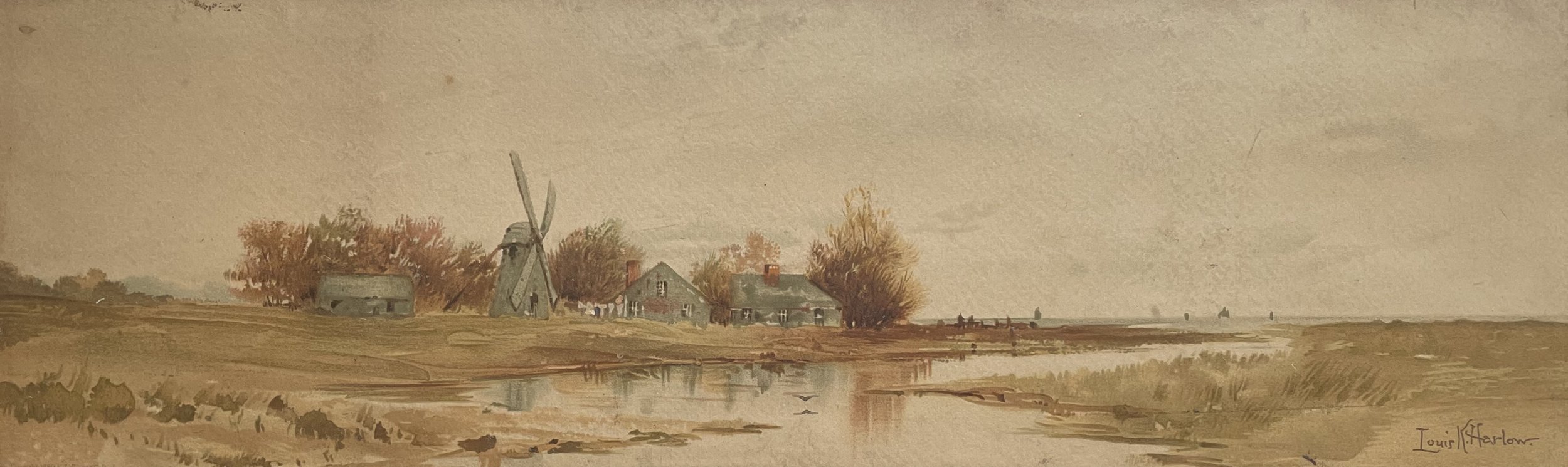 Image 3 of 7
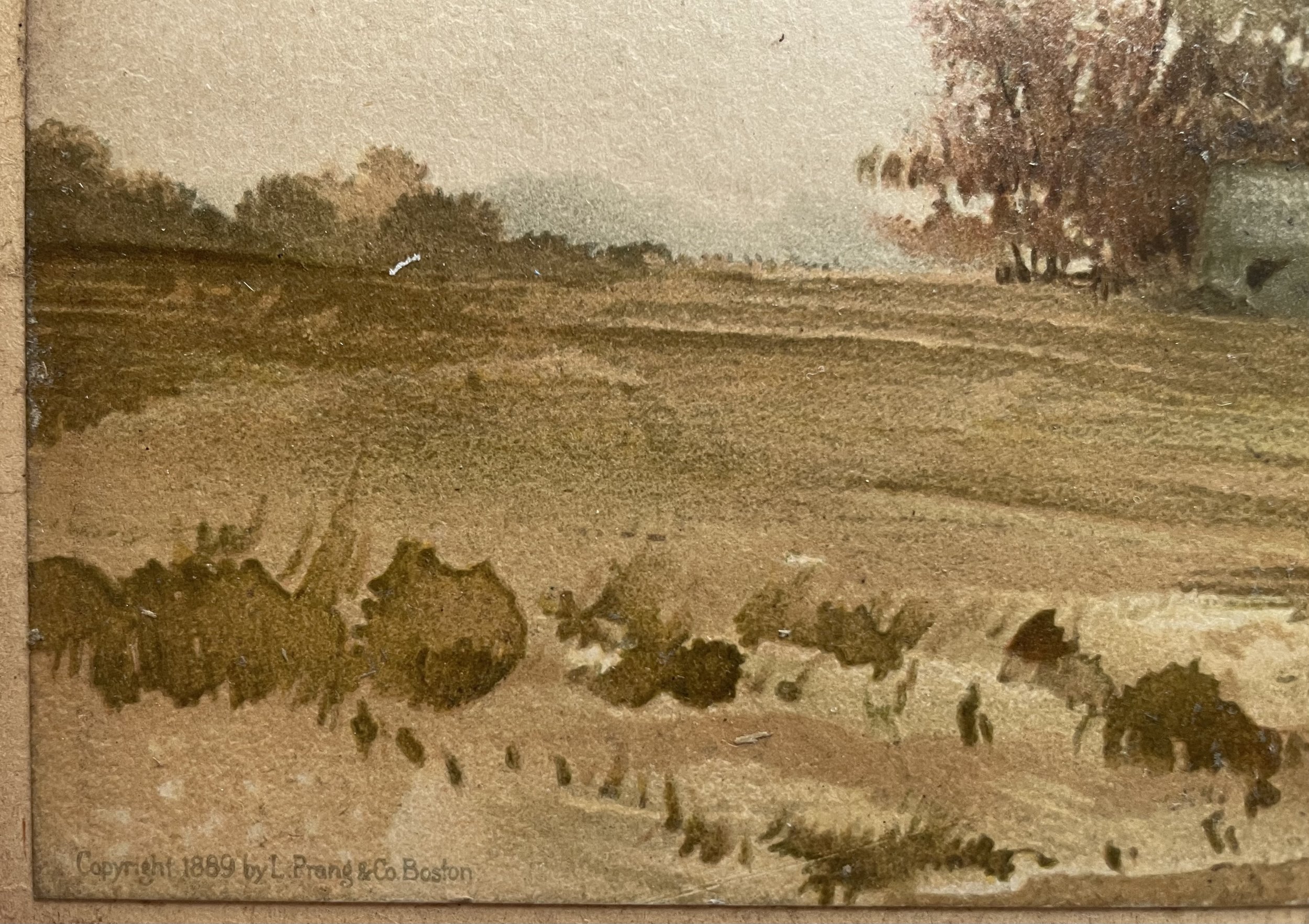 Image 4 of 7
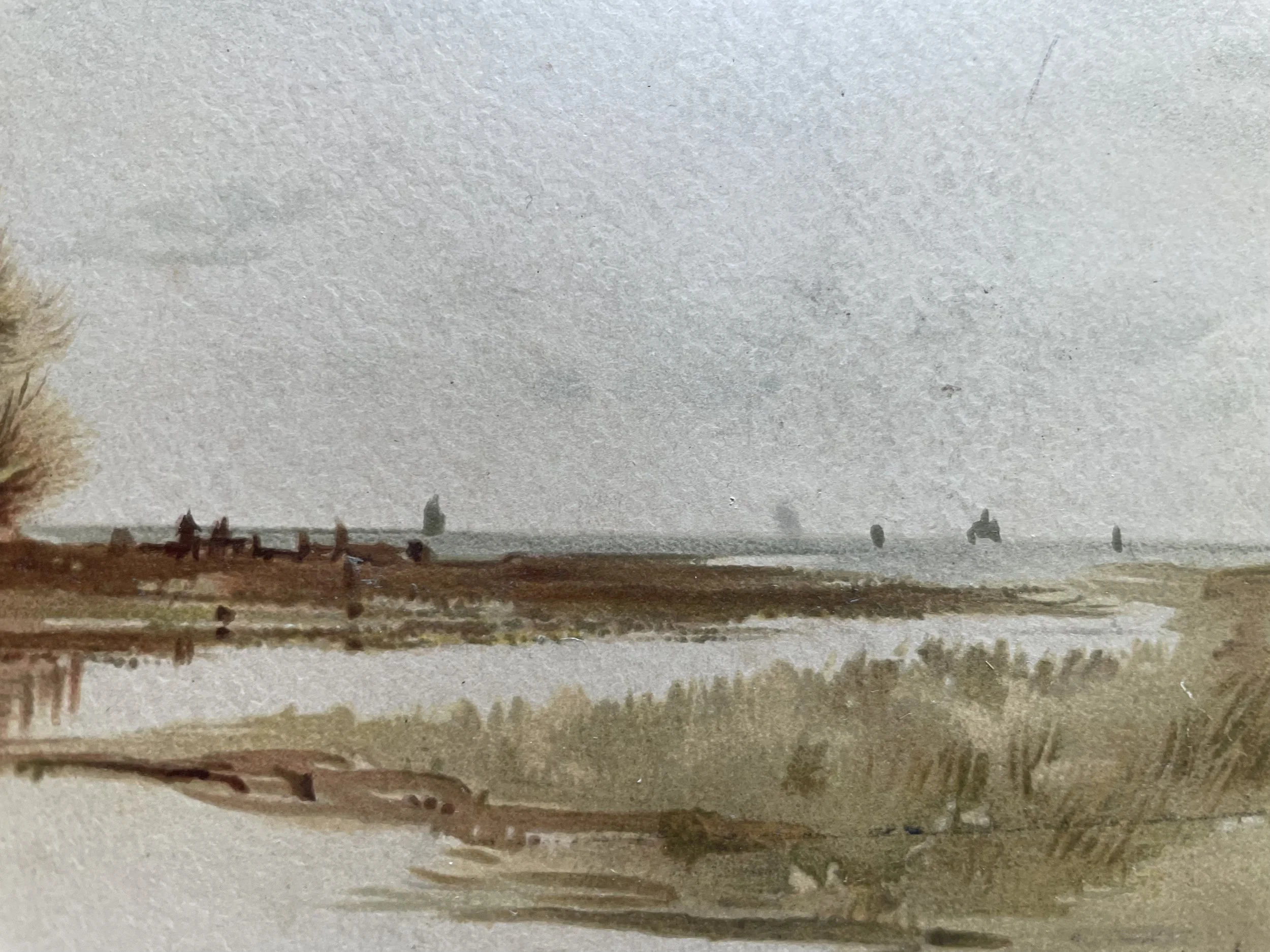 Image 5 of 7
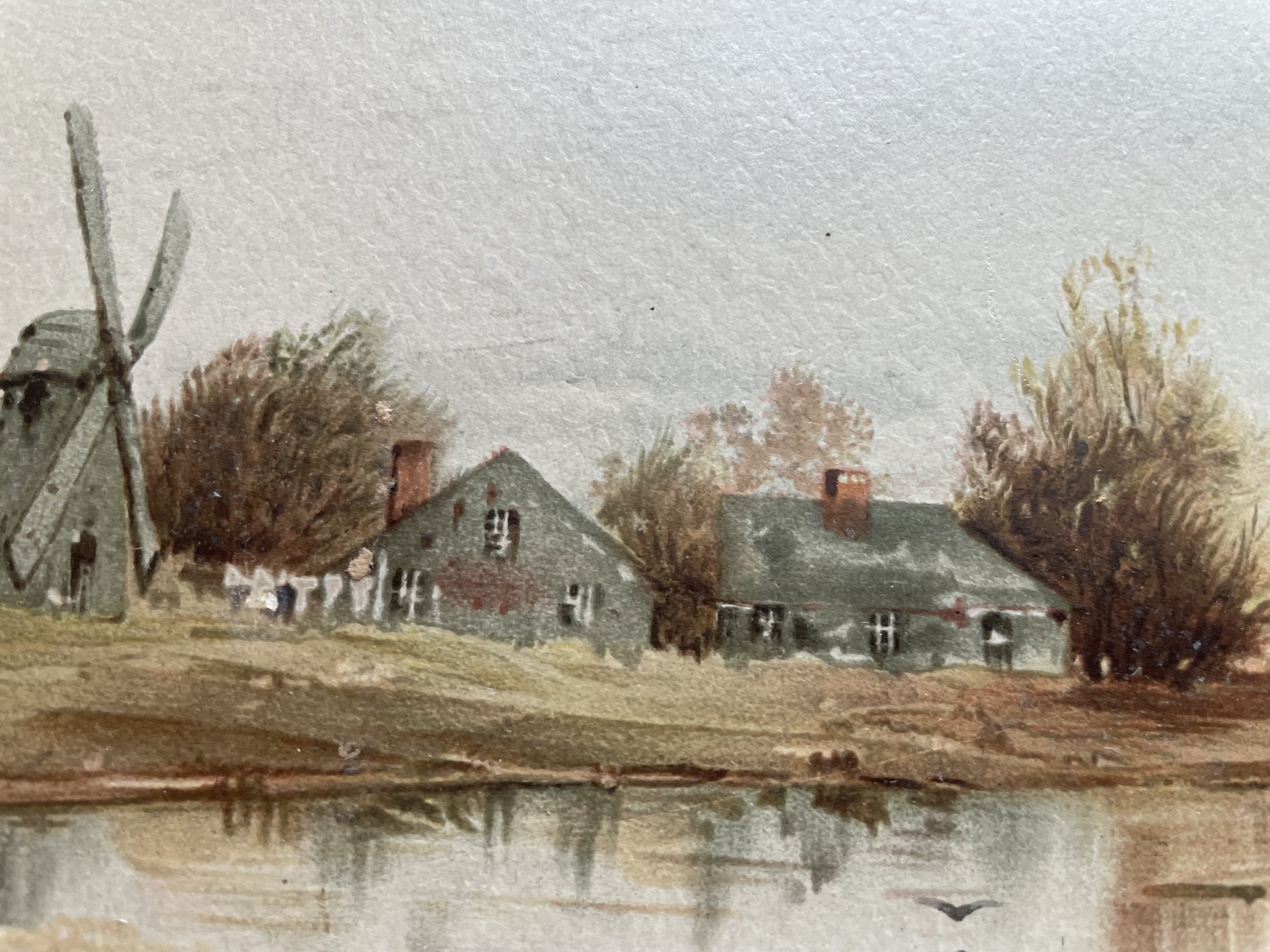 Image 6 of 7
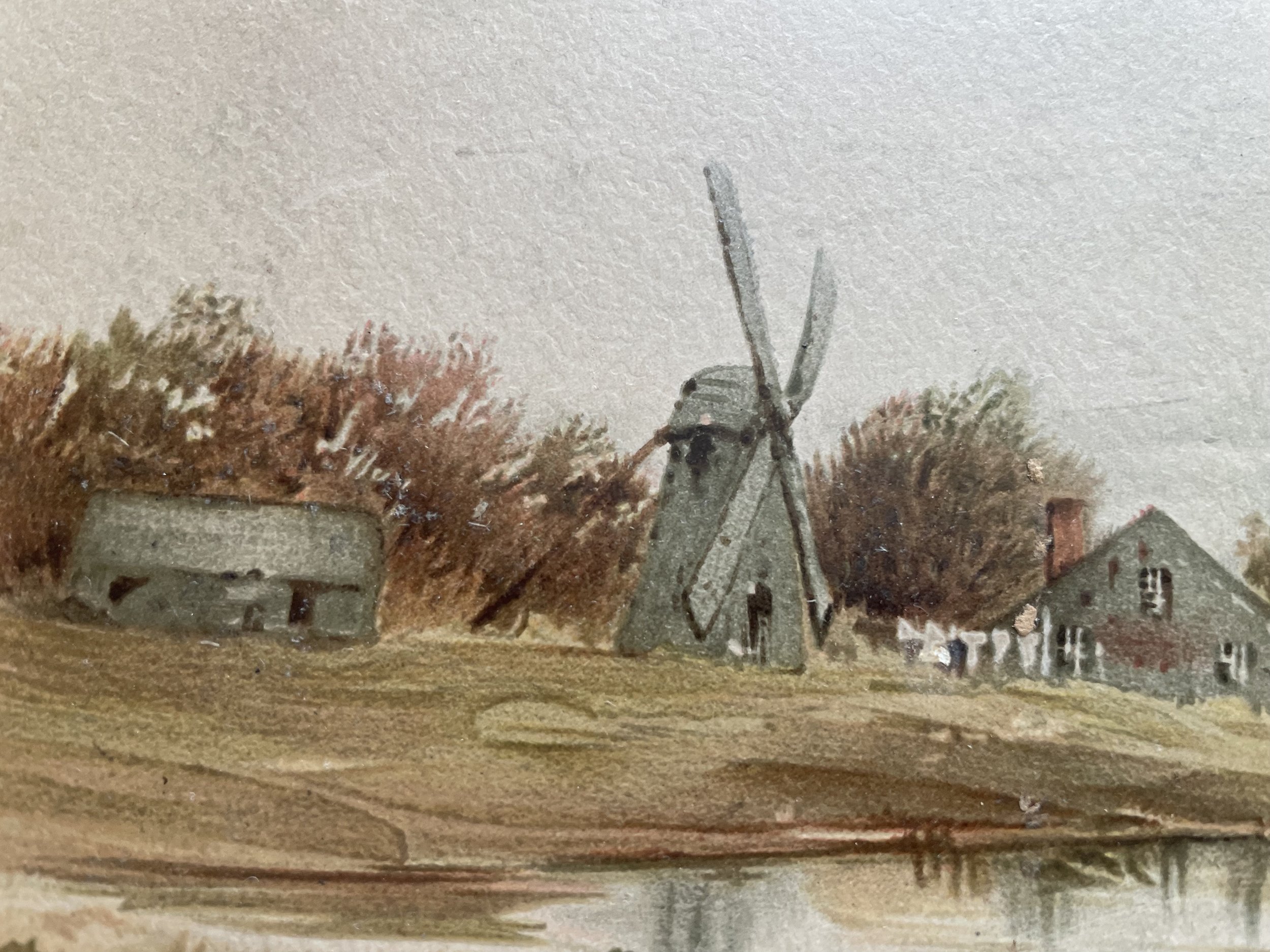 Image 7 of 7