 Image 1 of 5
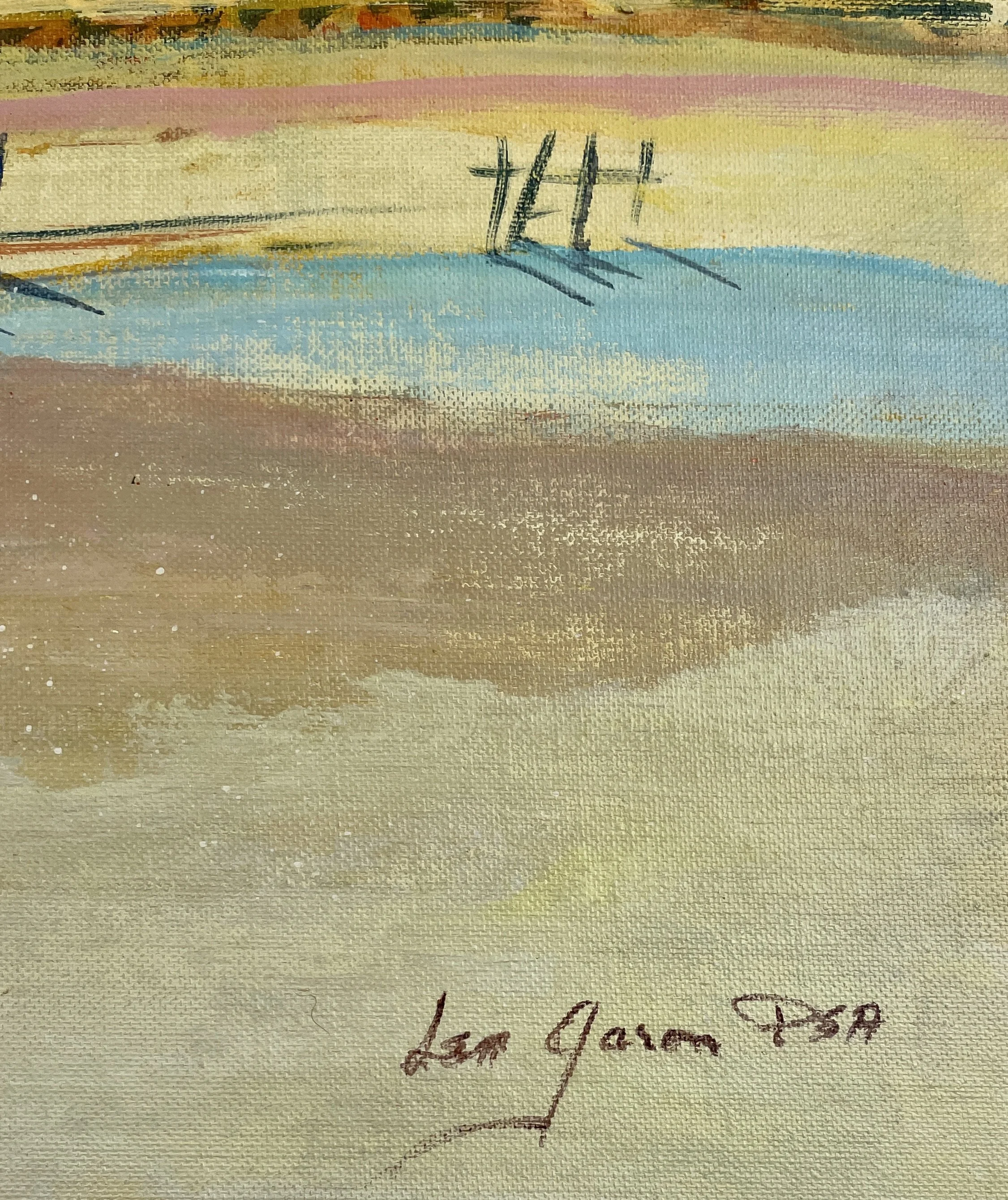 Image 2 of 5
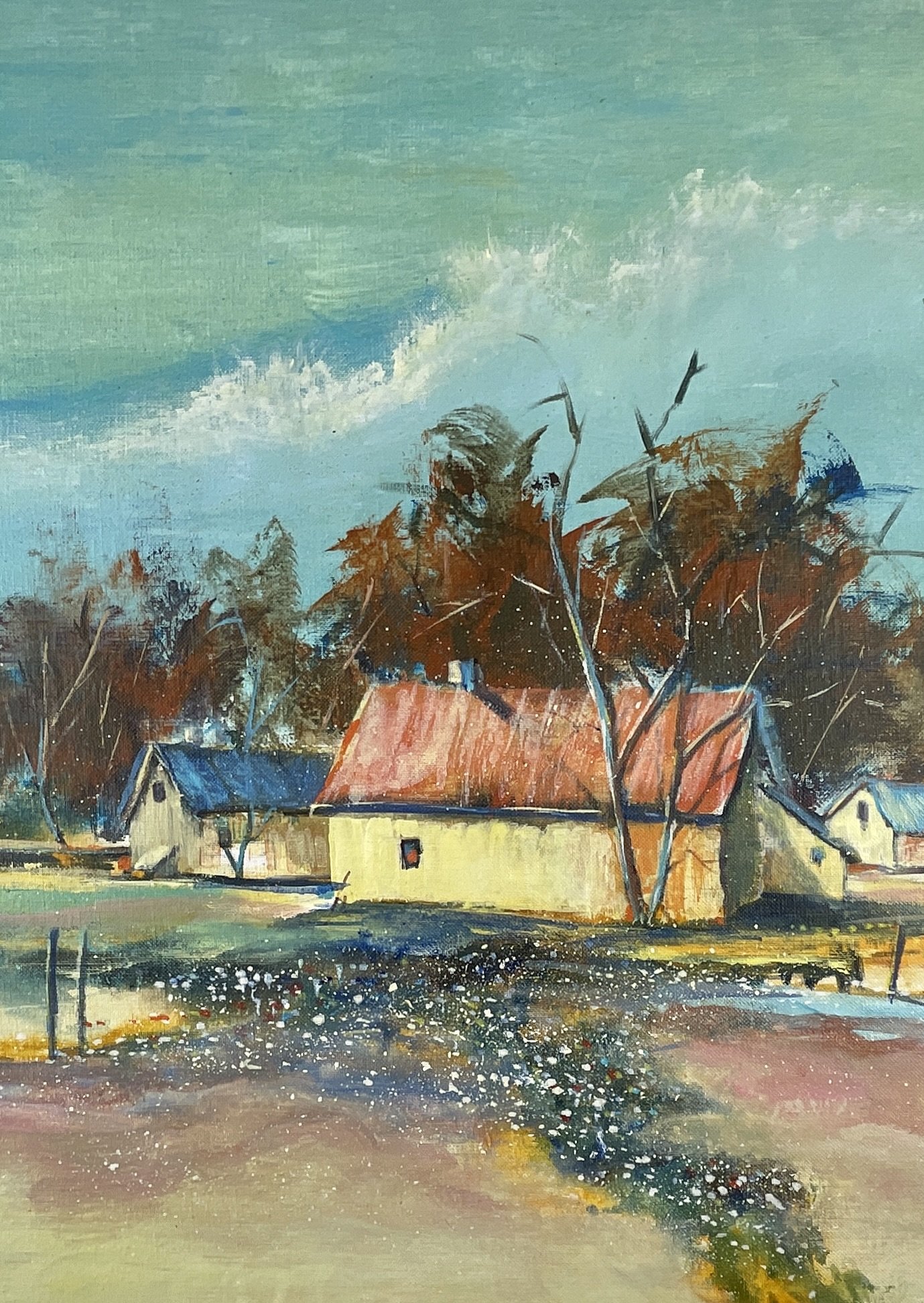 Image 3 of 5
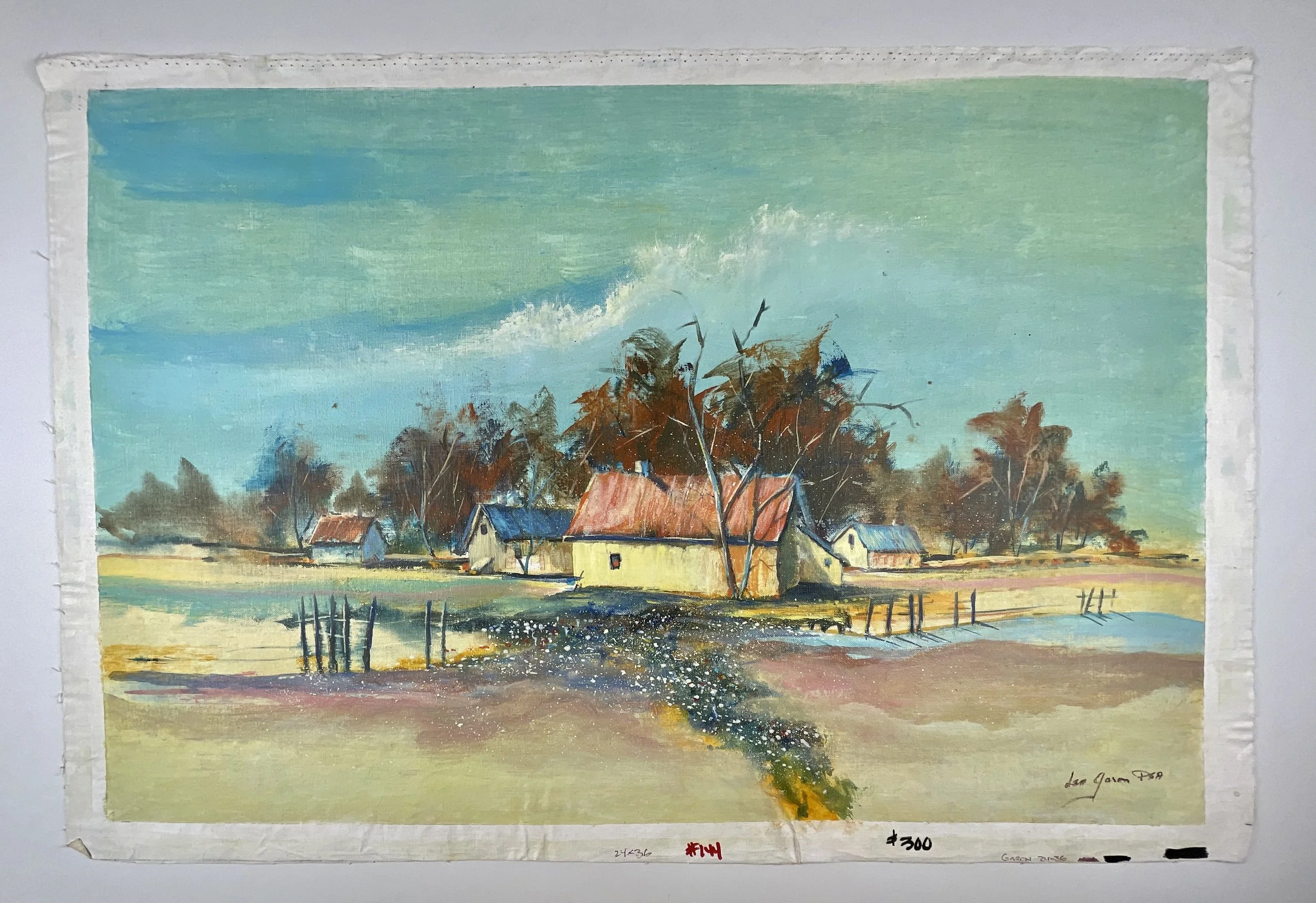 Image 4 of 5
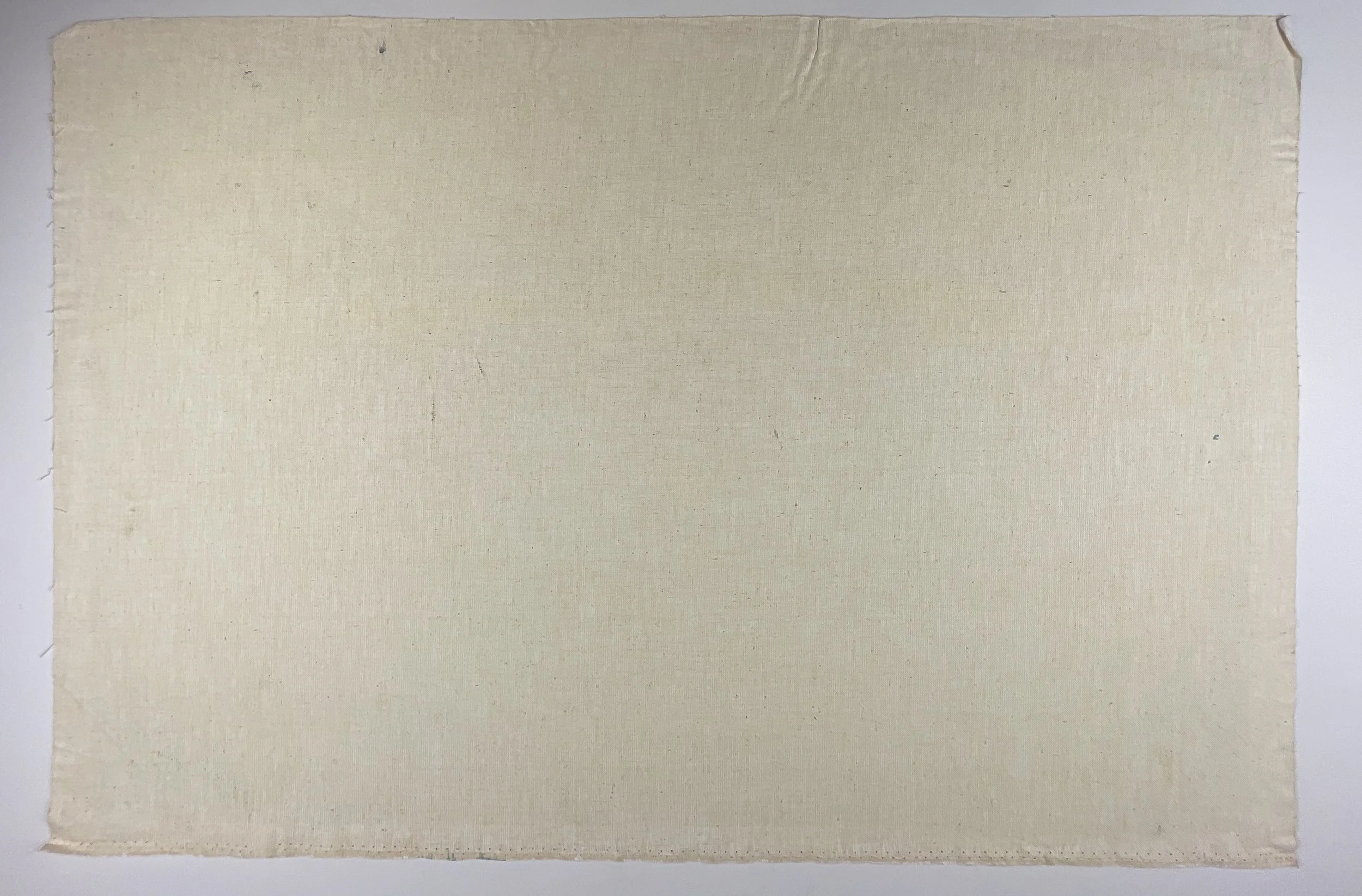 Image 5 of 5
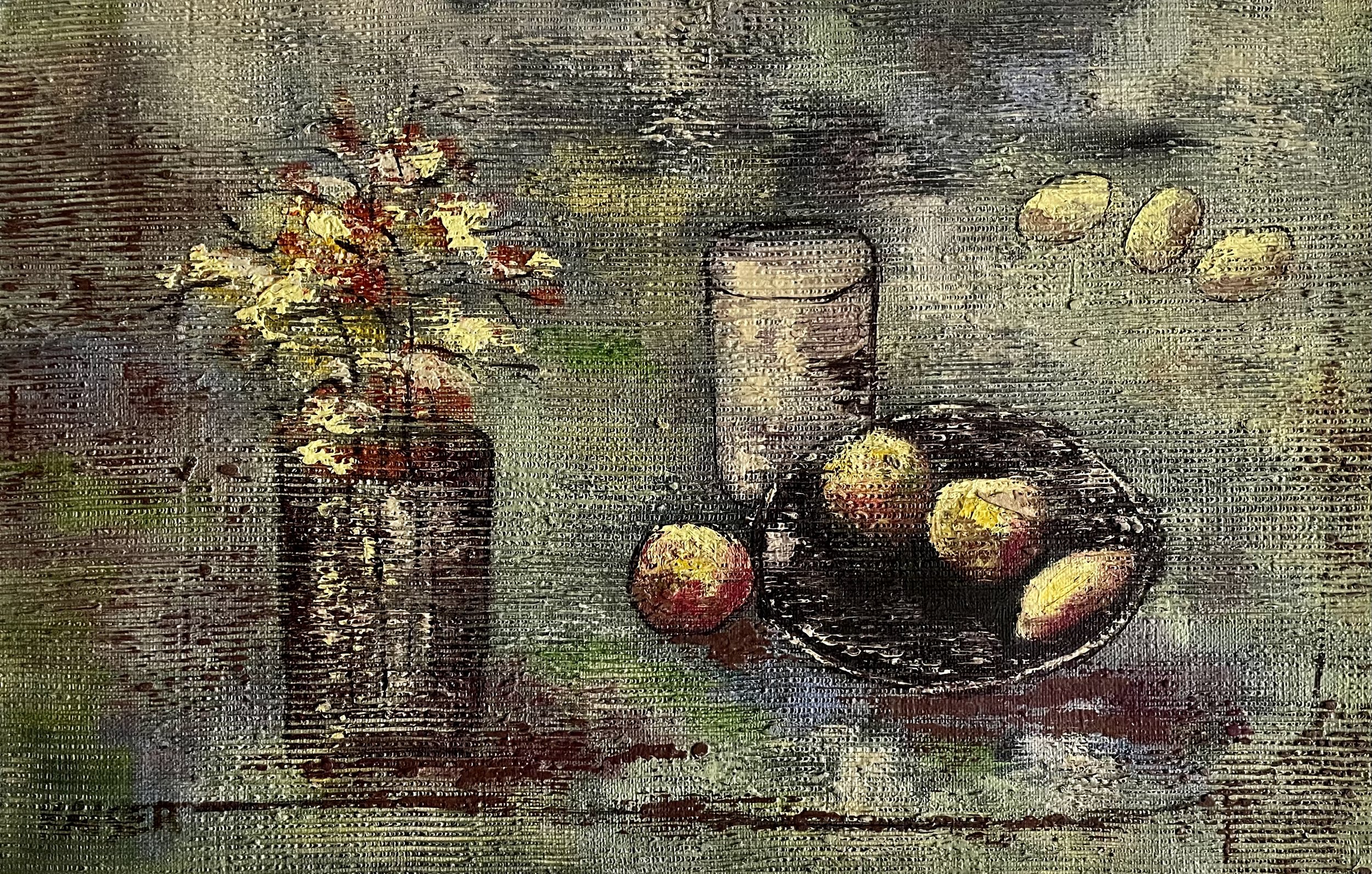
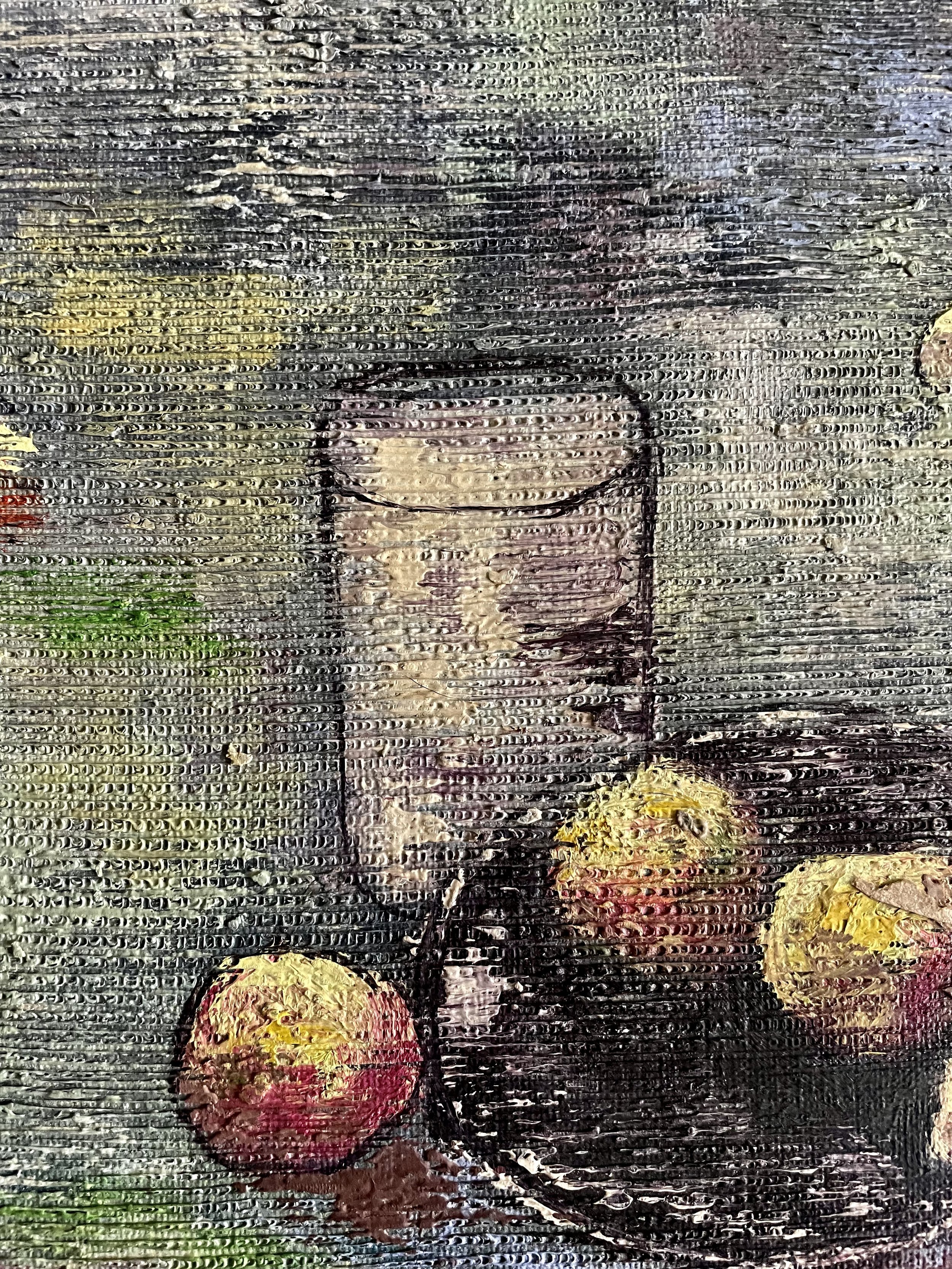
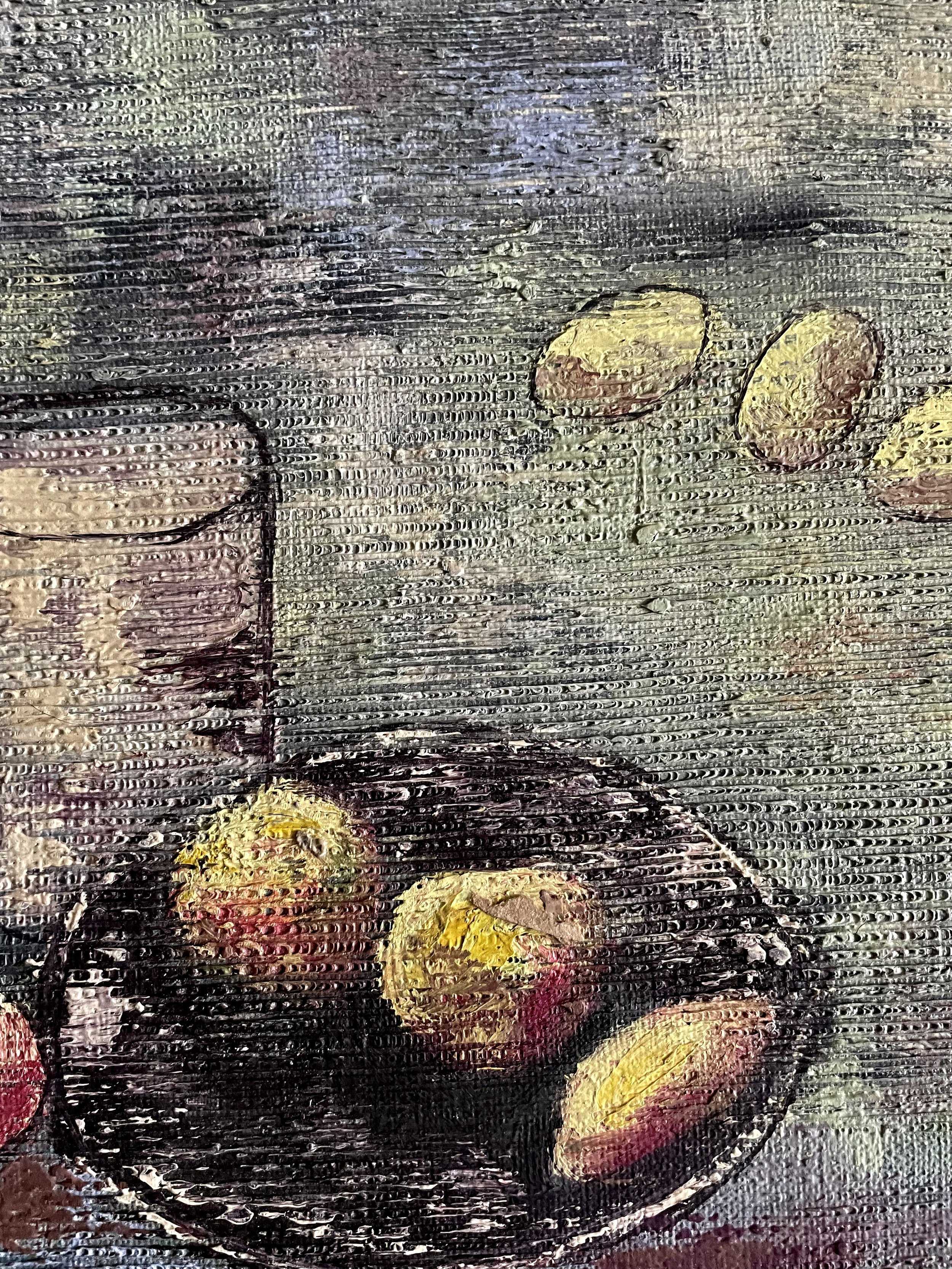
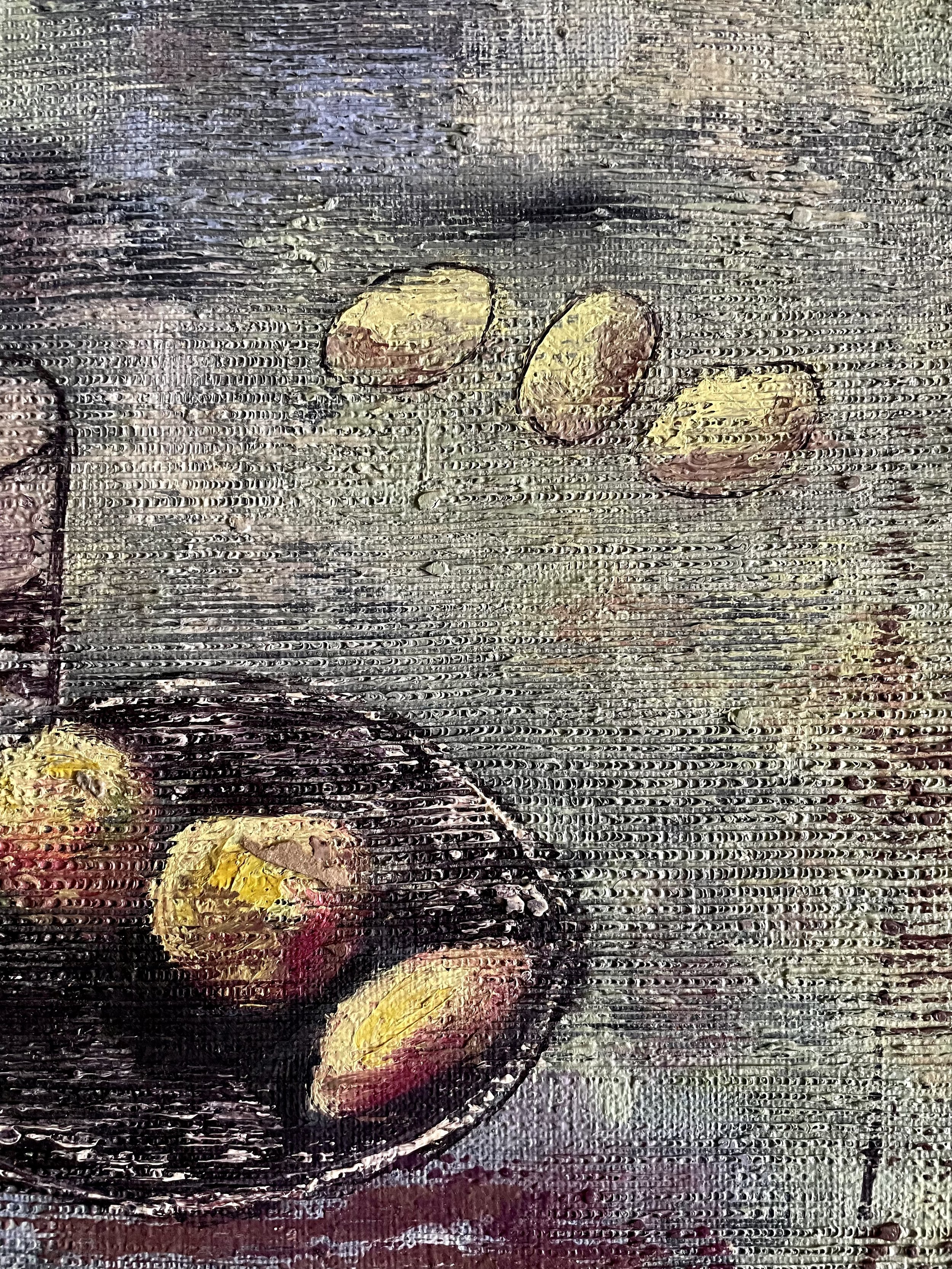
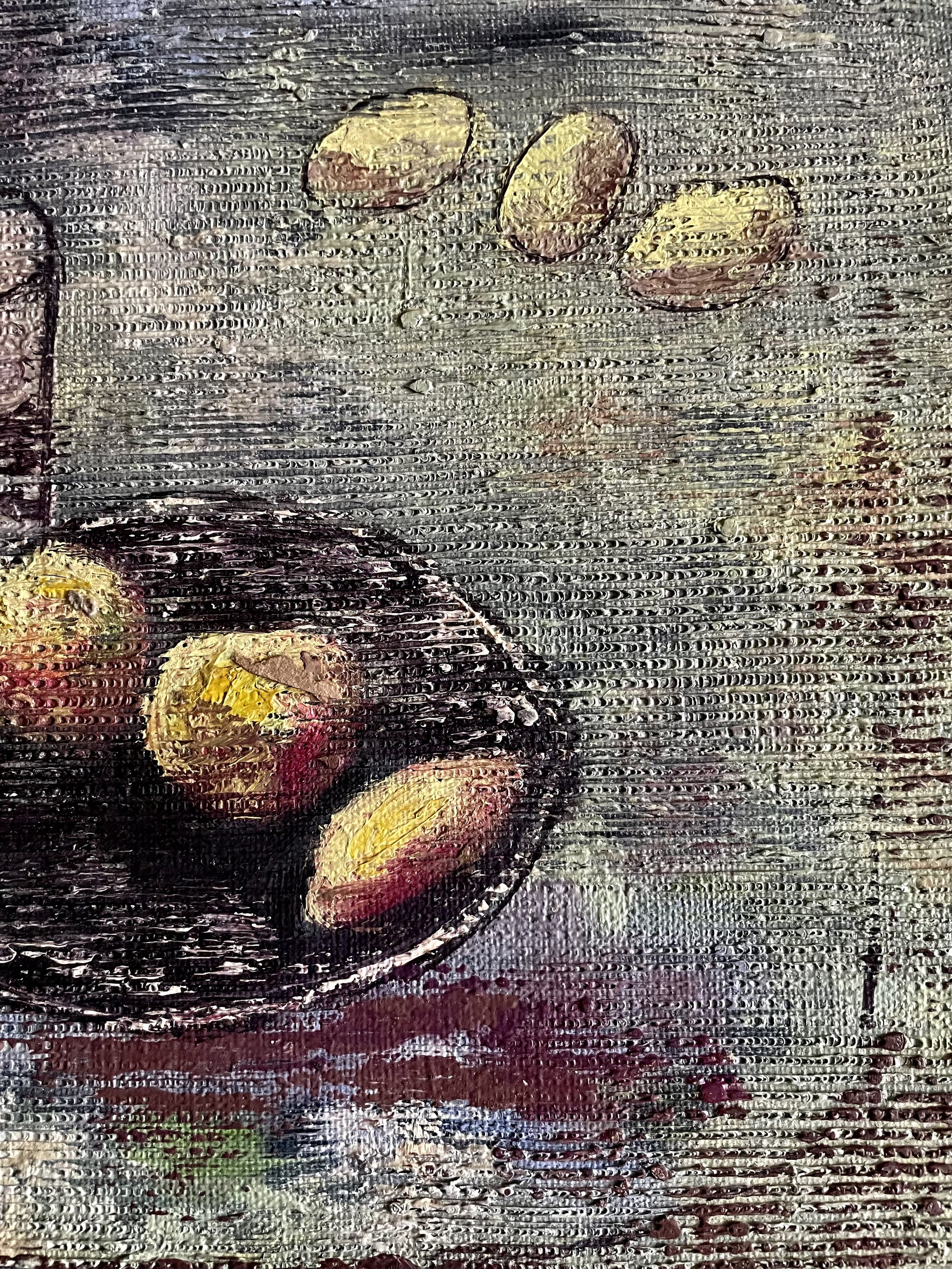
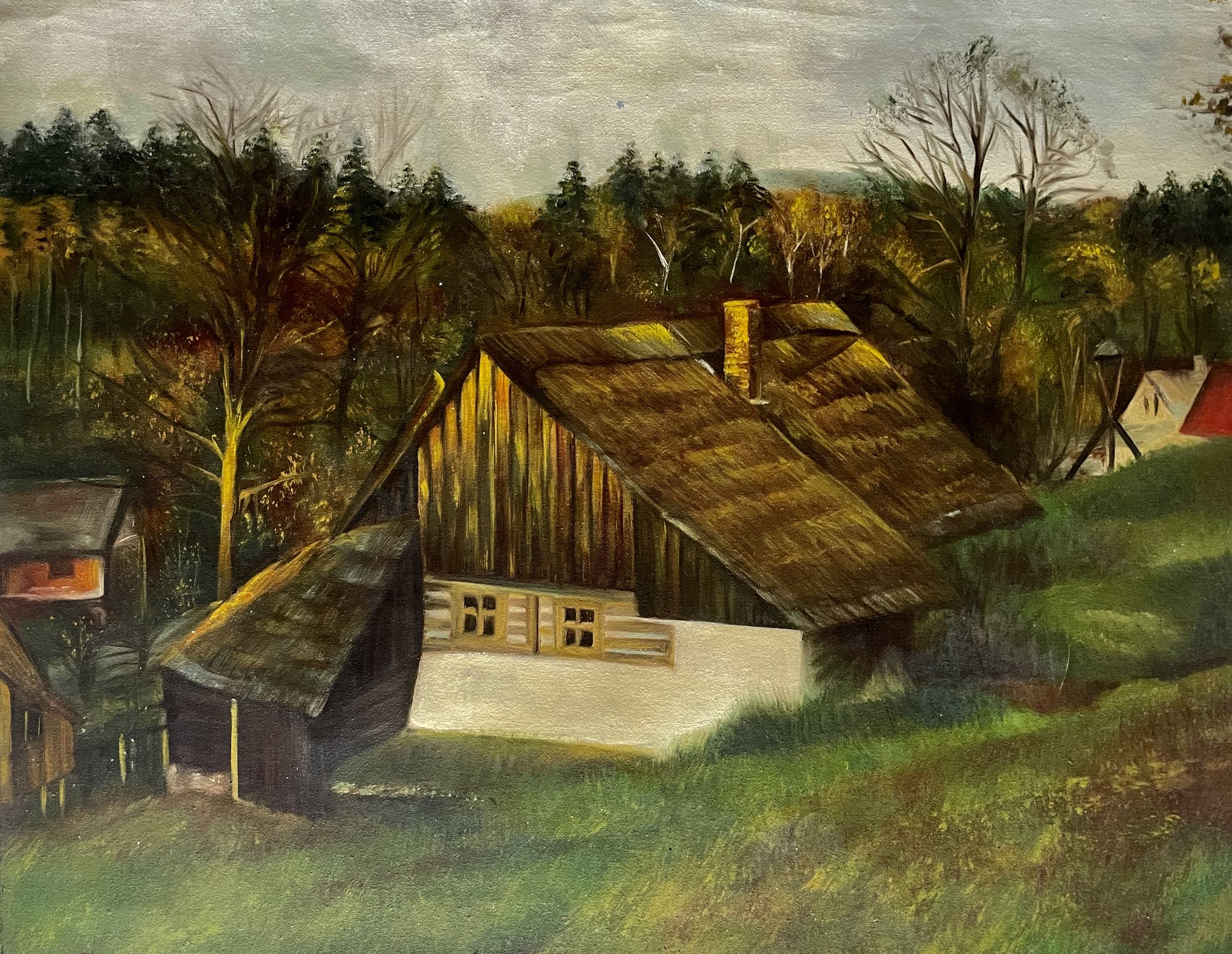
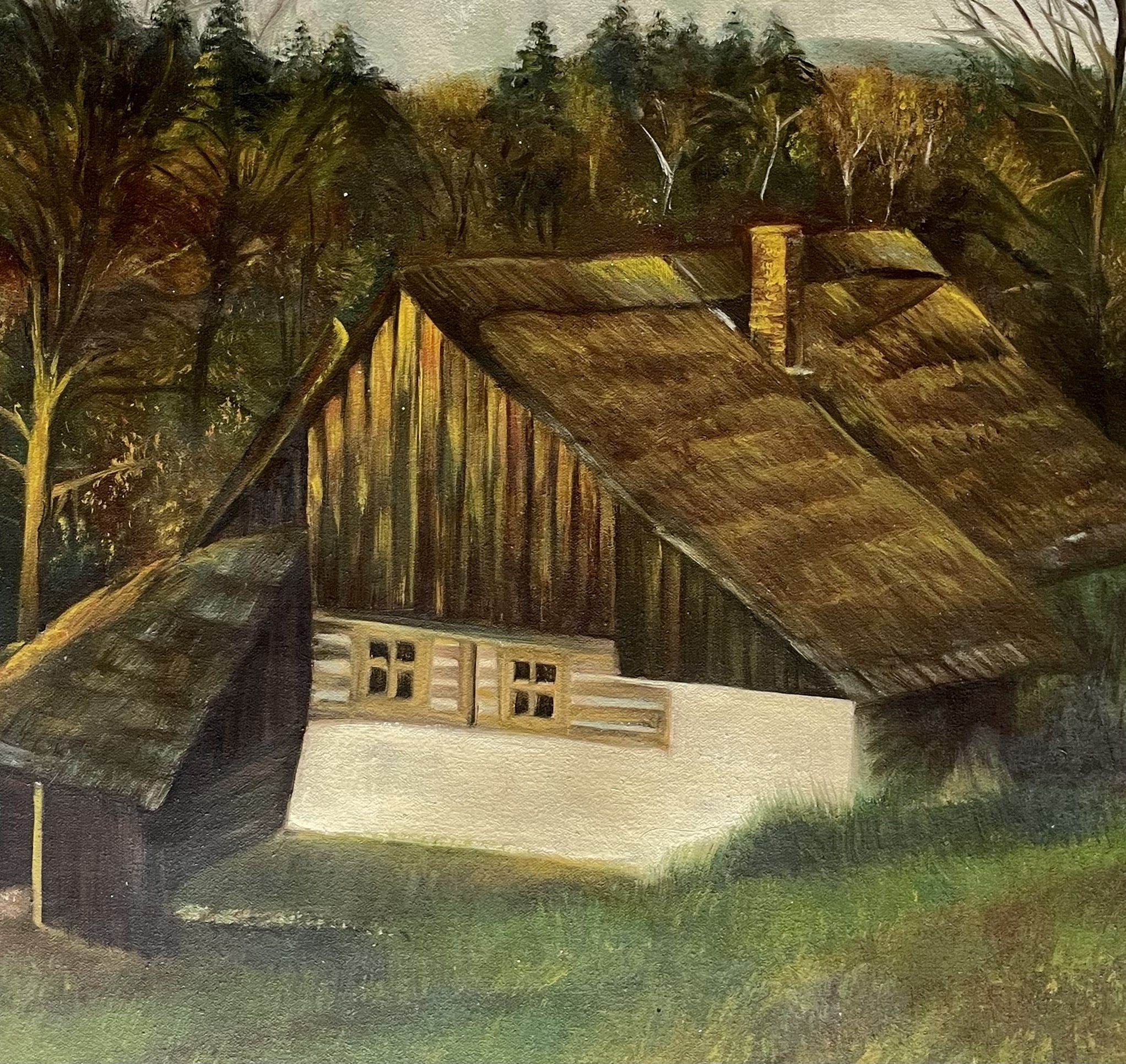
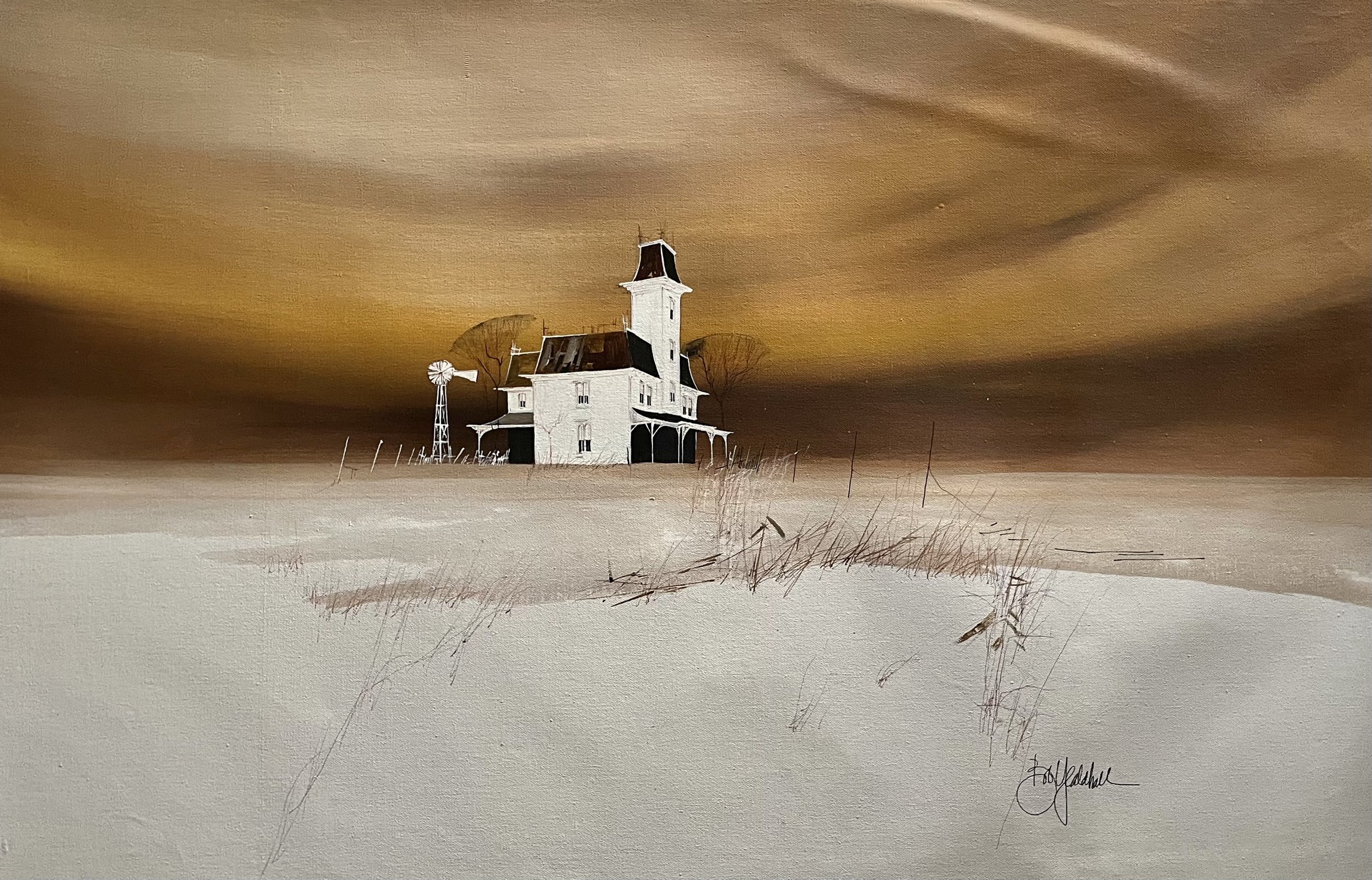
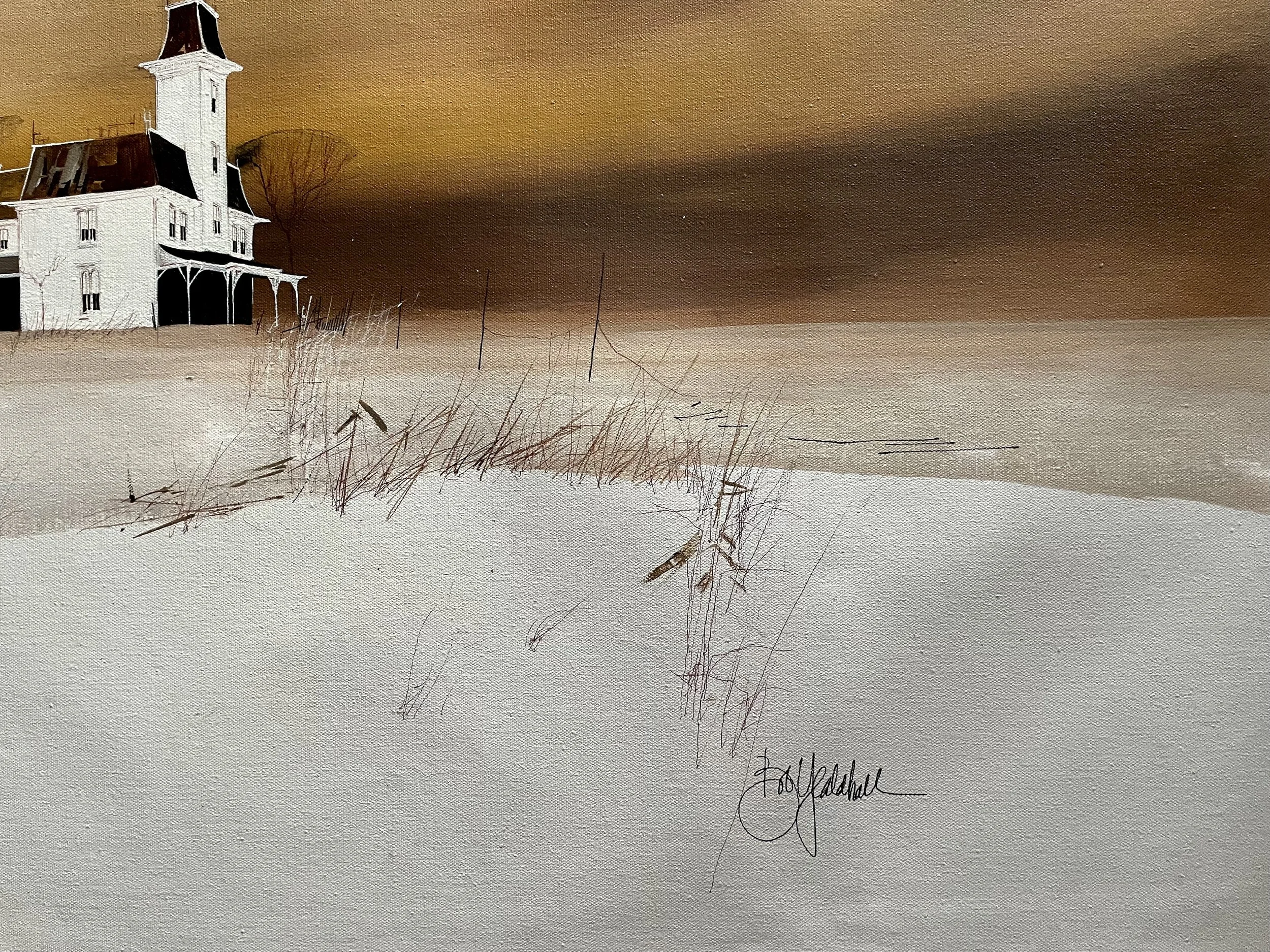
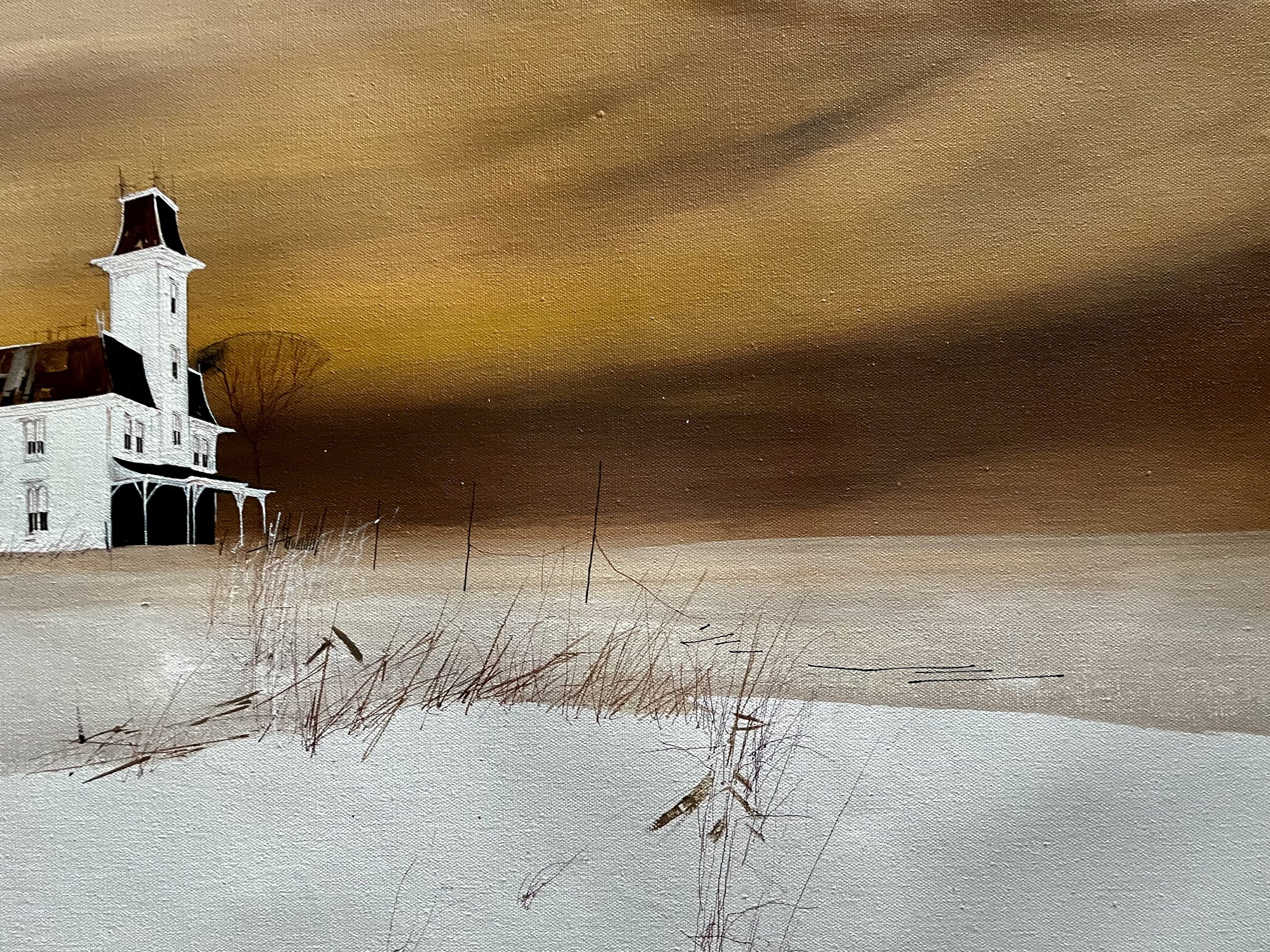
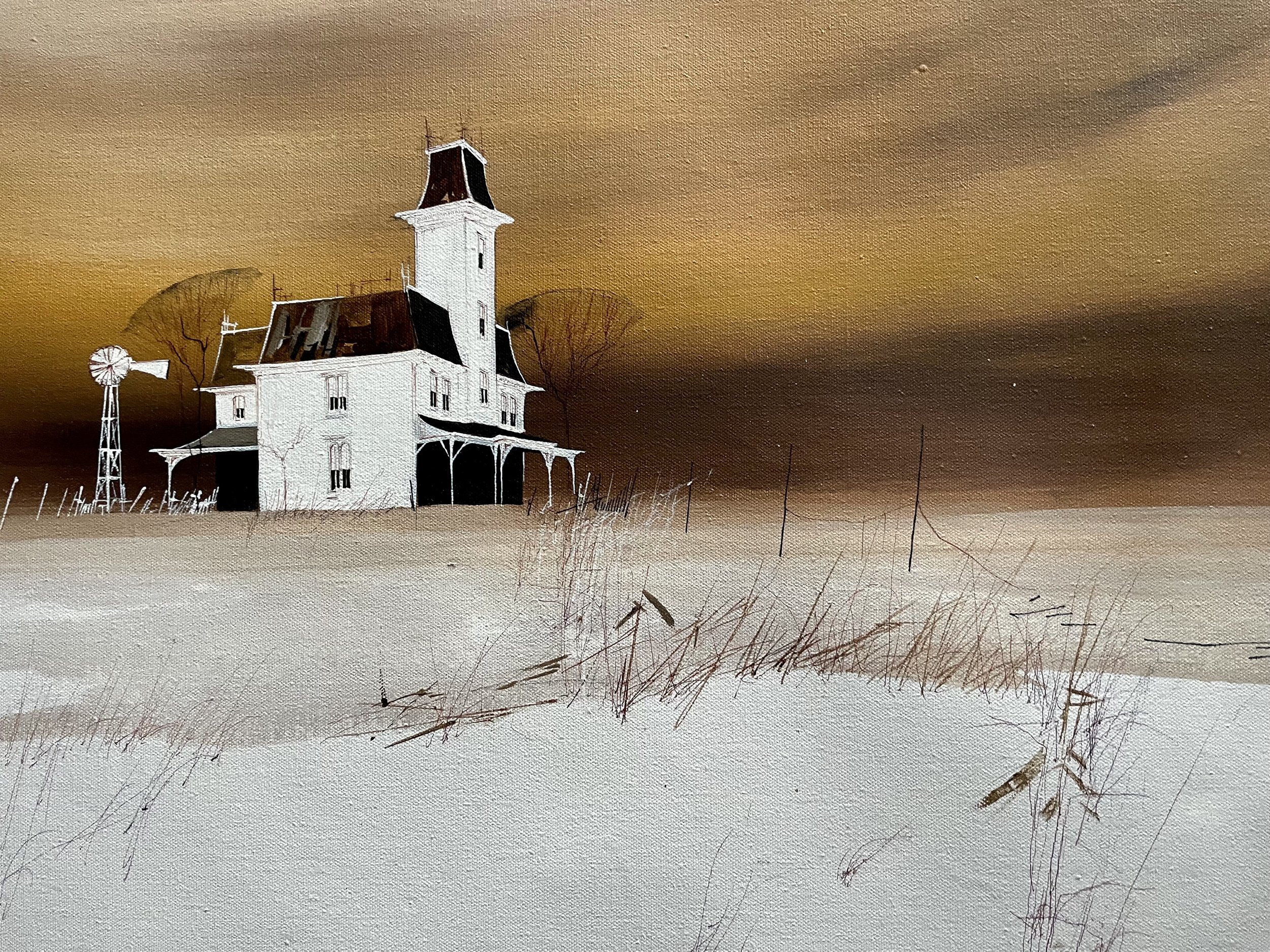
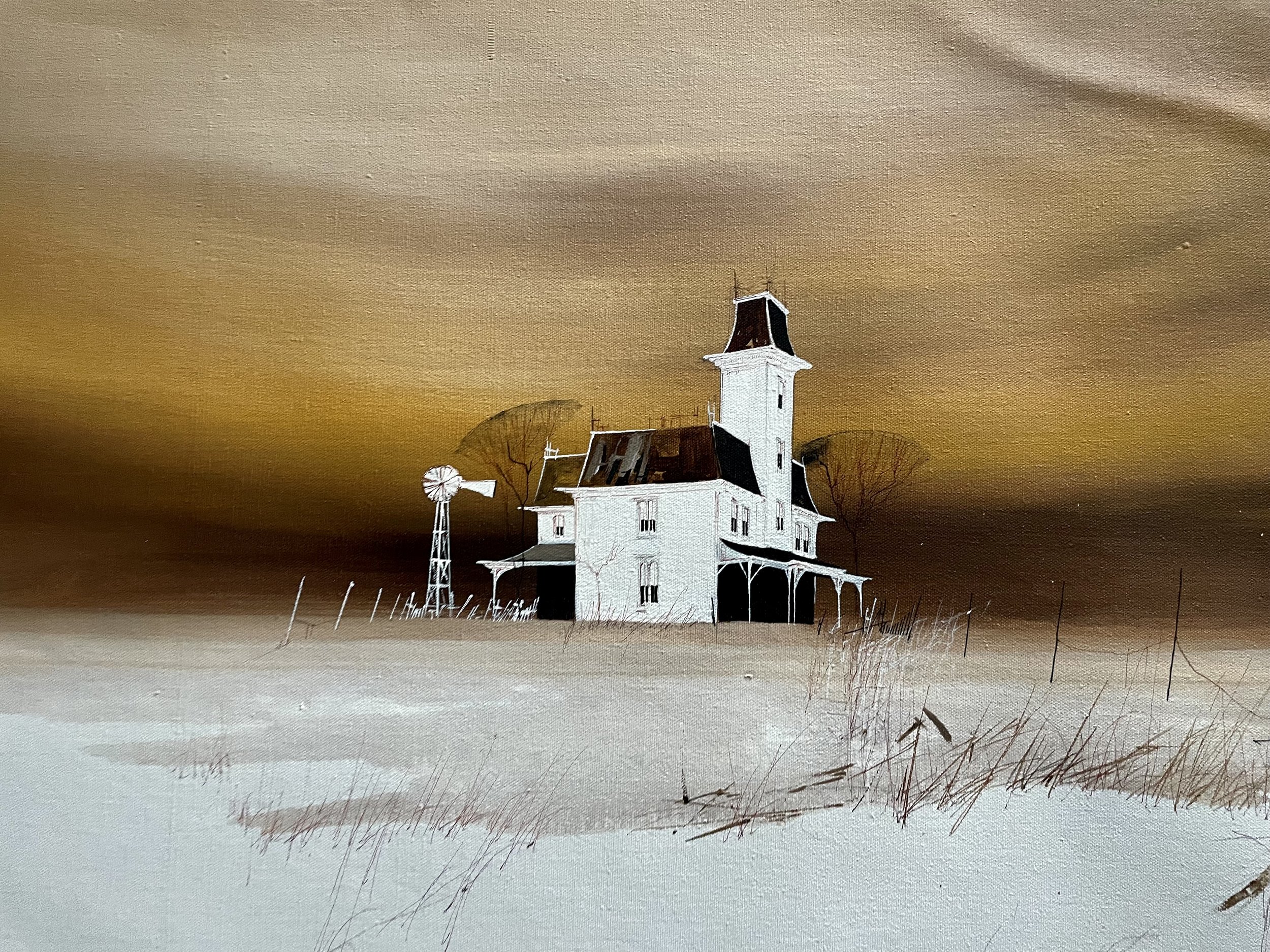
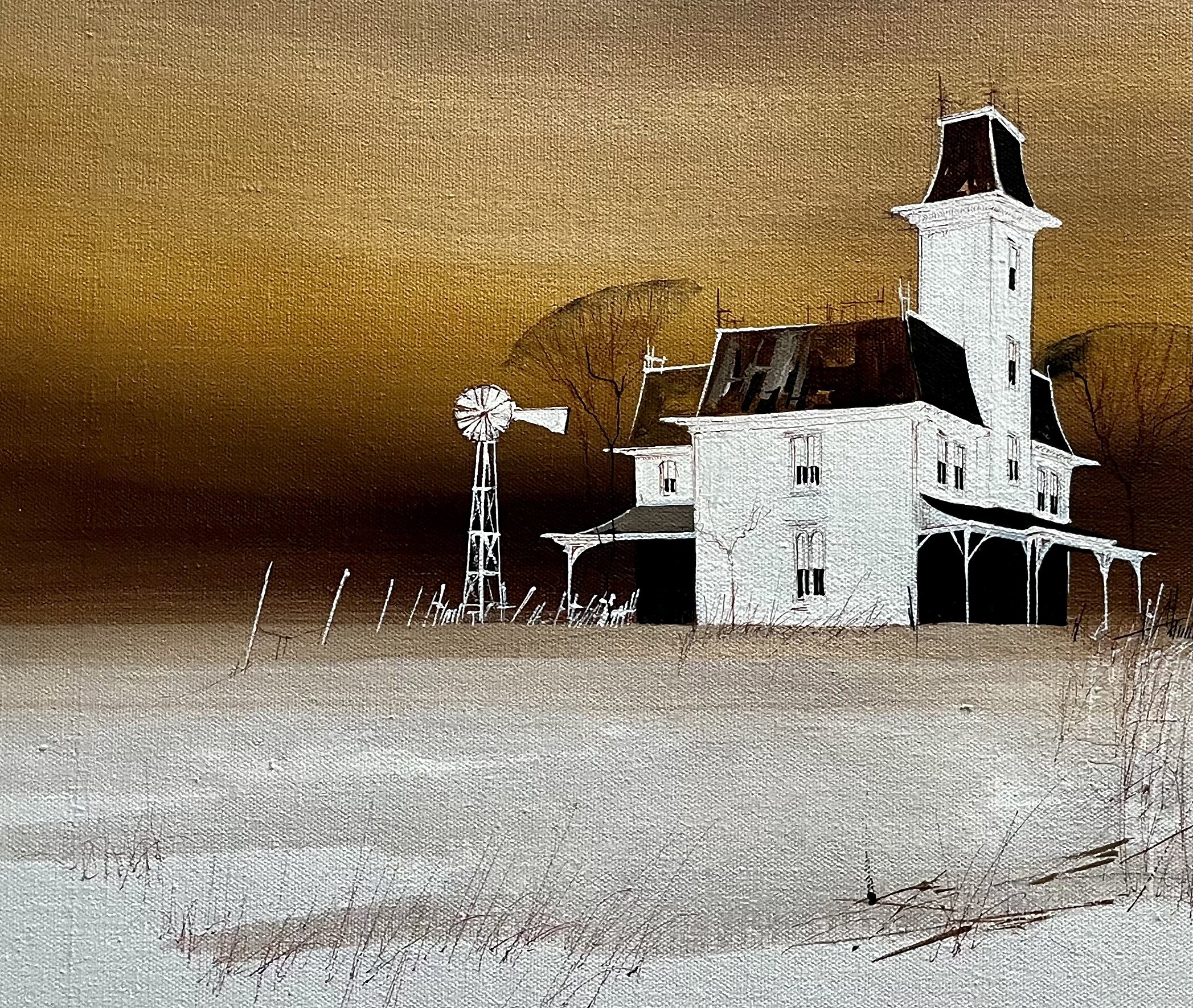
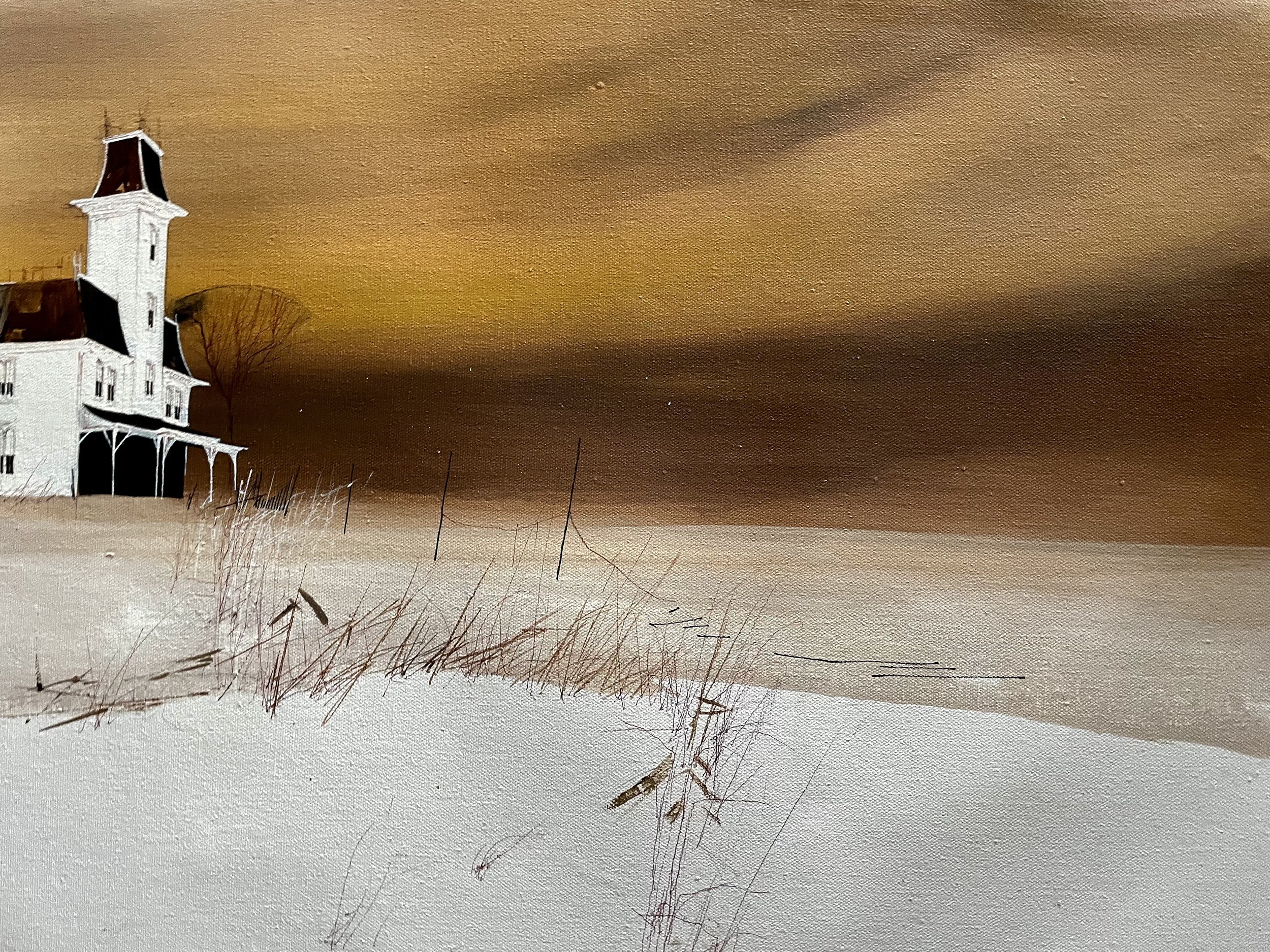
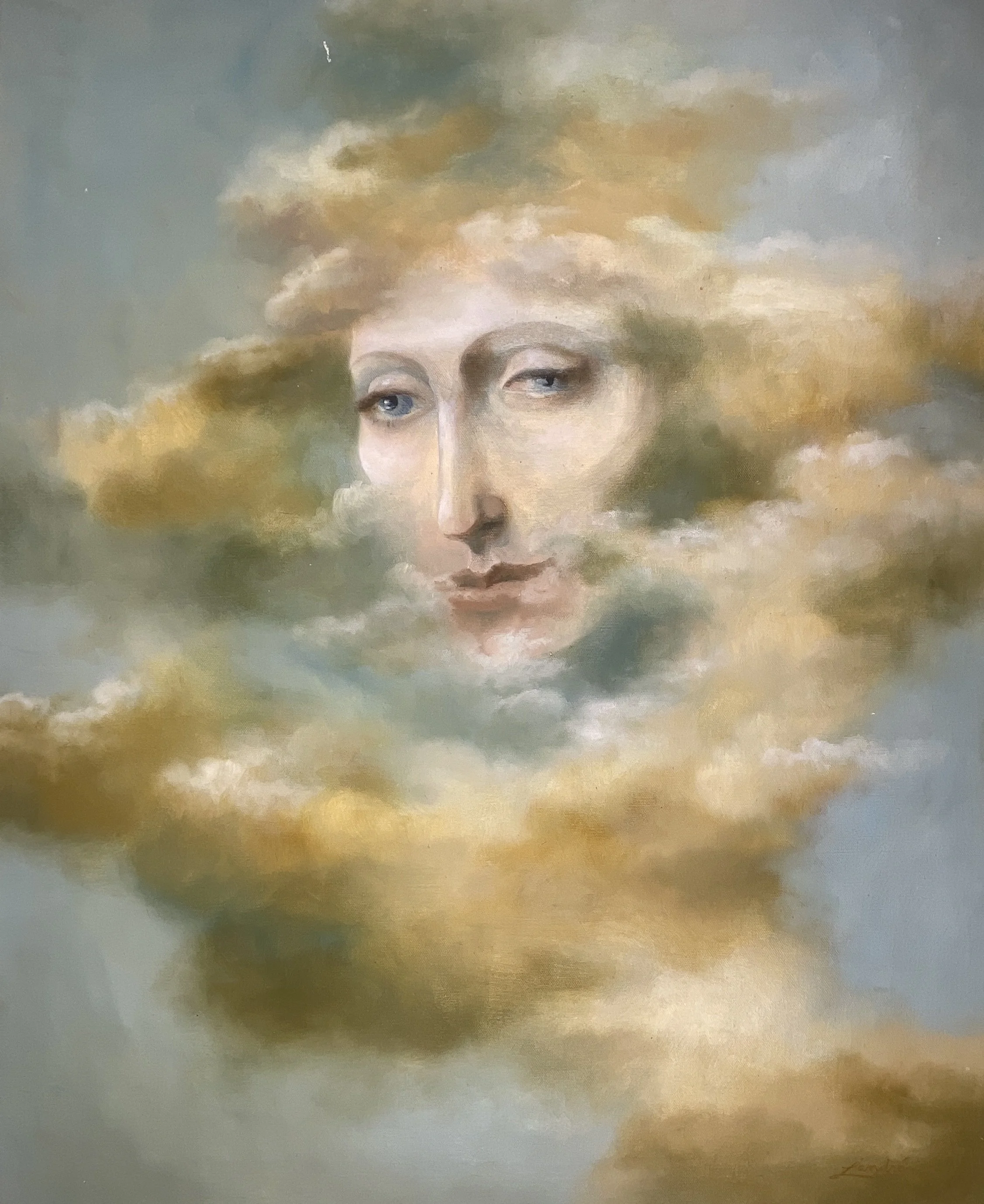
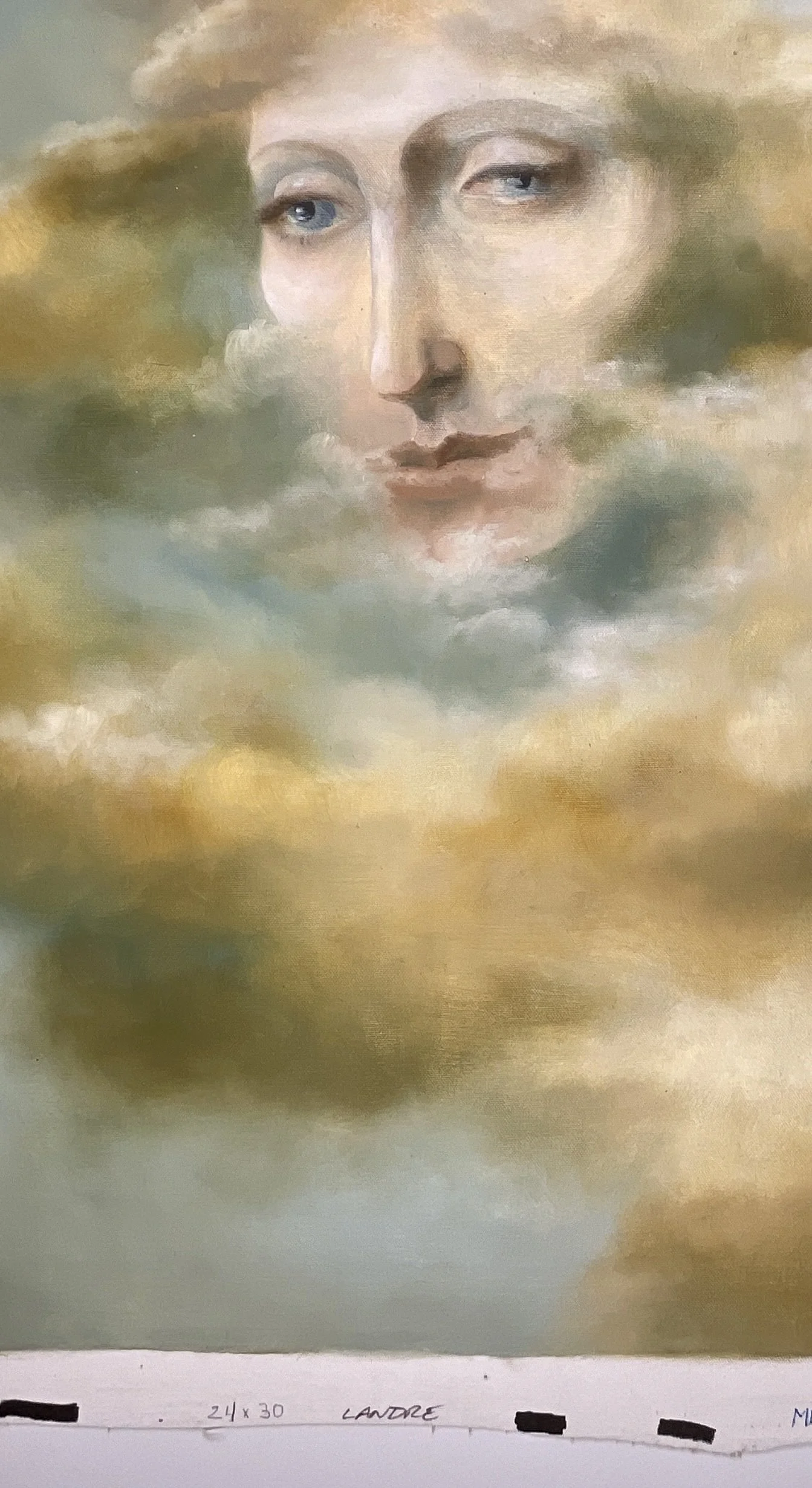
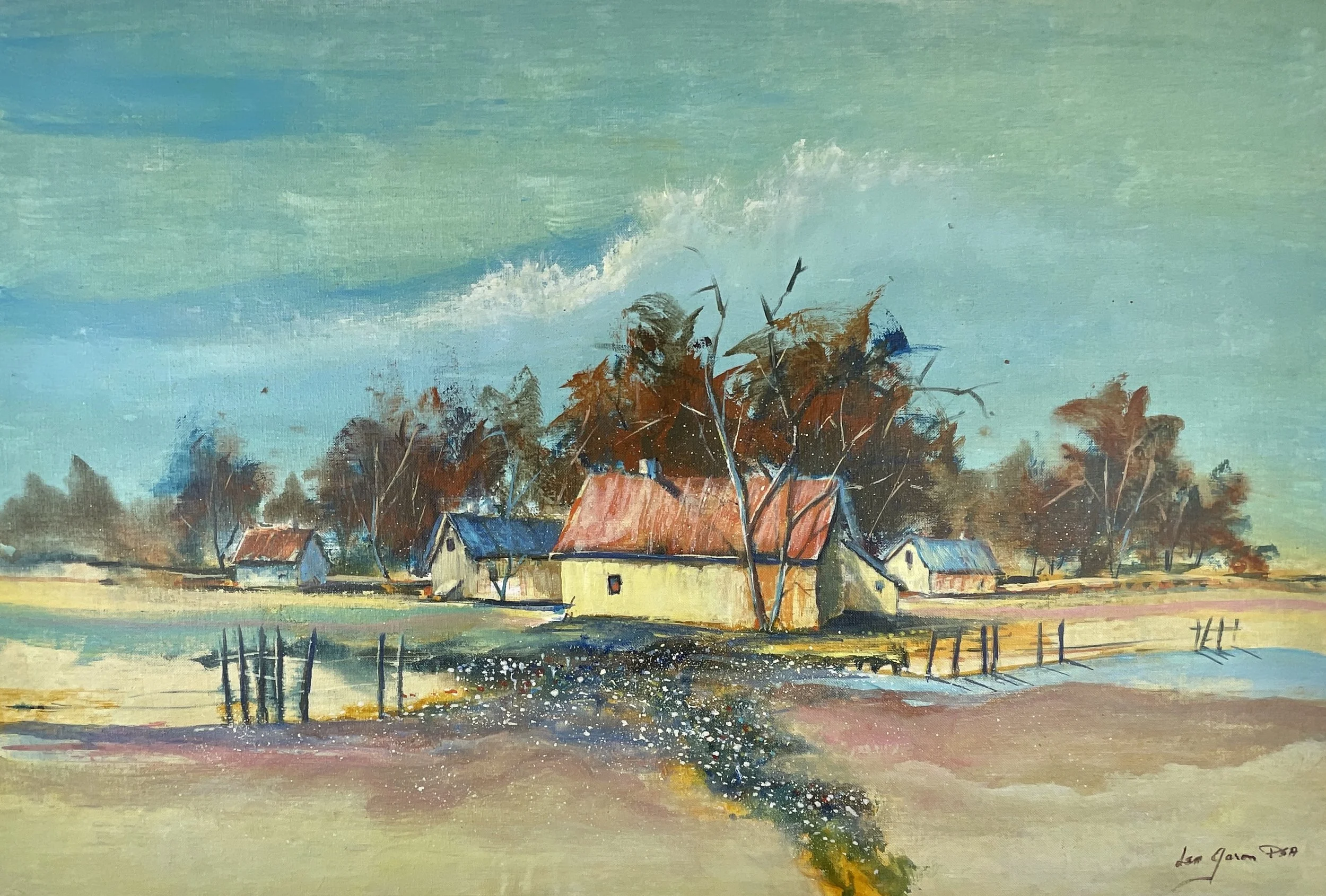
This luminous rural landscape by American painter Len Garon depicts a quiet farmstead surrounded by fields and autumn trees beneath an expansive sky. Executed in oil on canvas with a delicate balance of impressionistic color and structured composition, the painting reflects Garon’s signature approach to romantic impressionism—where realistic rural imagery is infused with subtle abstraction, light effects, and atmospheric depth. Soft pastel-like tones, warm red roofs, and scattered fence posts create a tranquil pastoral setting typical of the Pennsylvania countryside that inspired much of the artist’s work after relocating from the American West. Signed “Len Garon PSA,” the painting demonstrates the artist’s mastery of color harmony, texture, and light.
Artwork Description
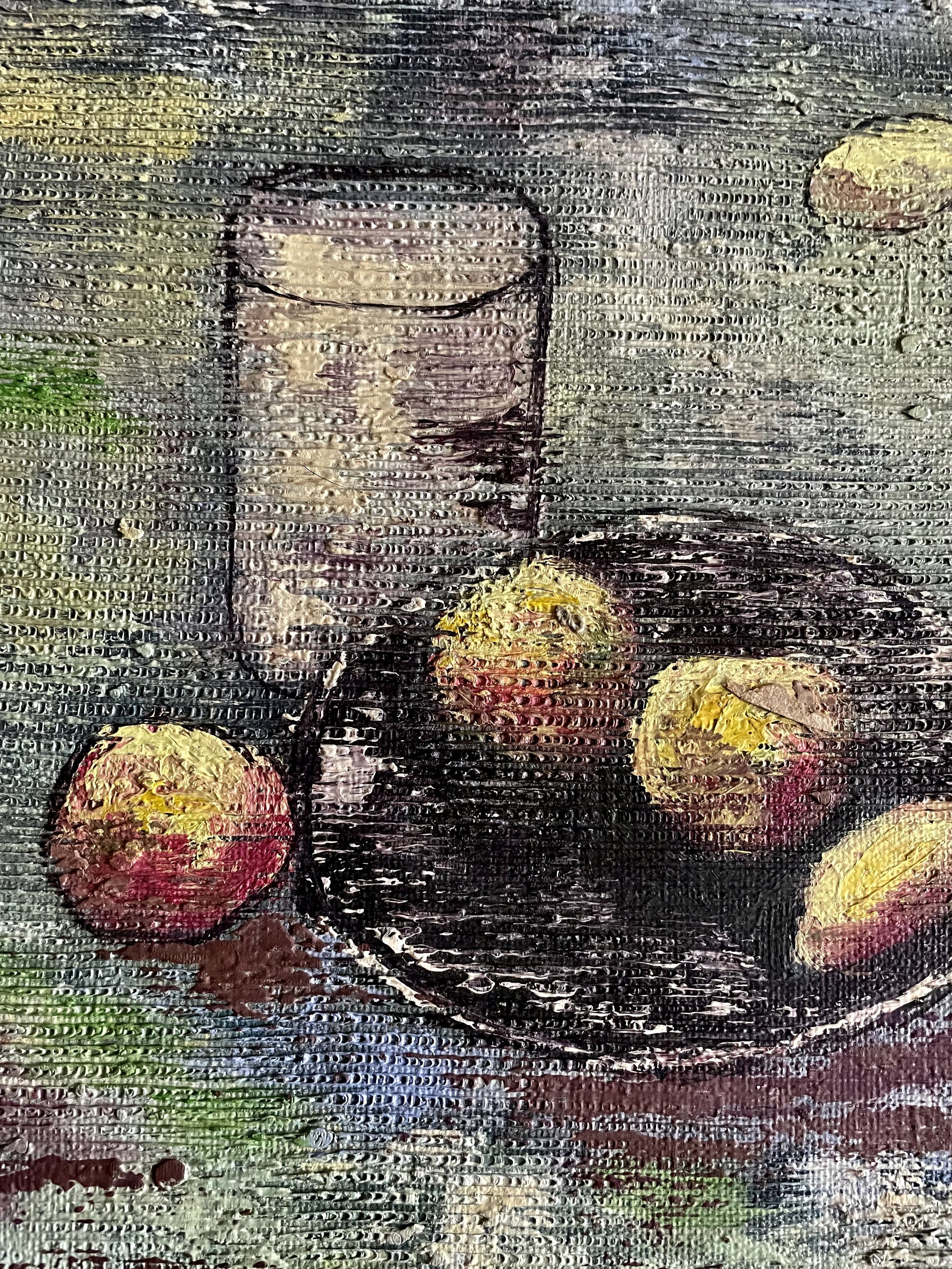
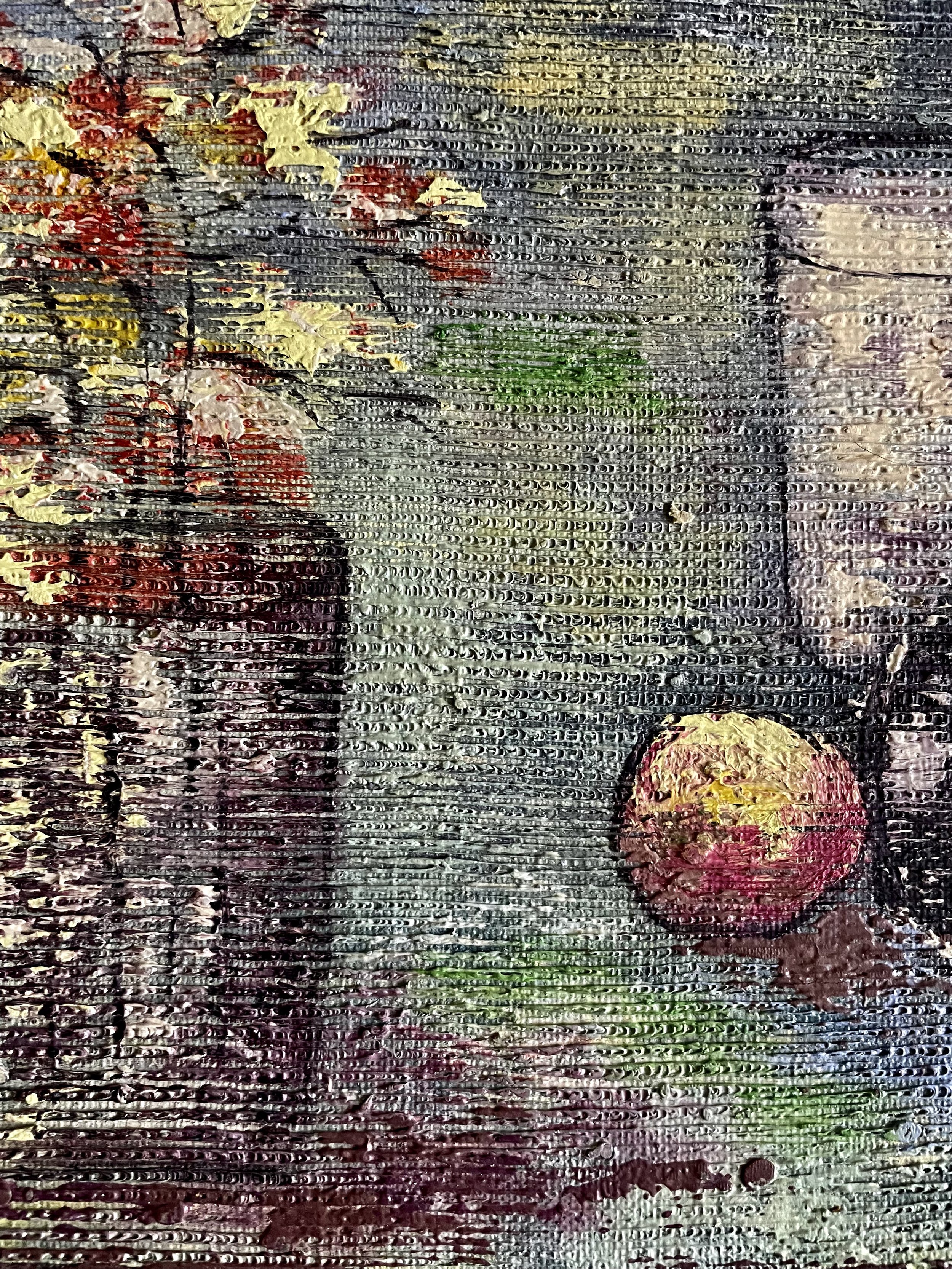
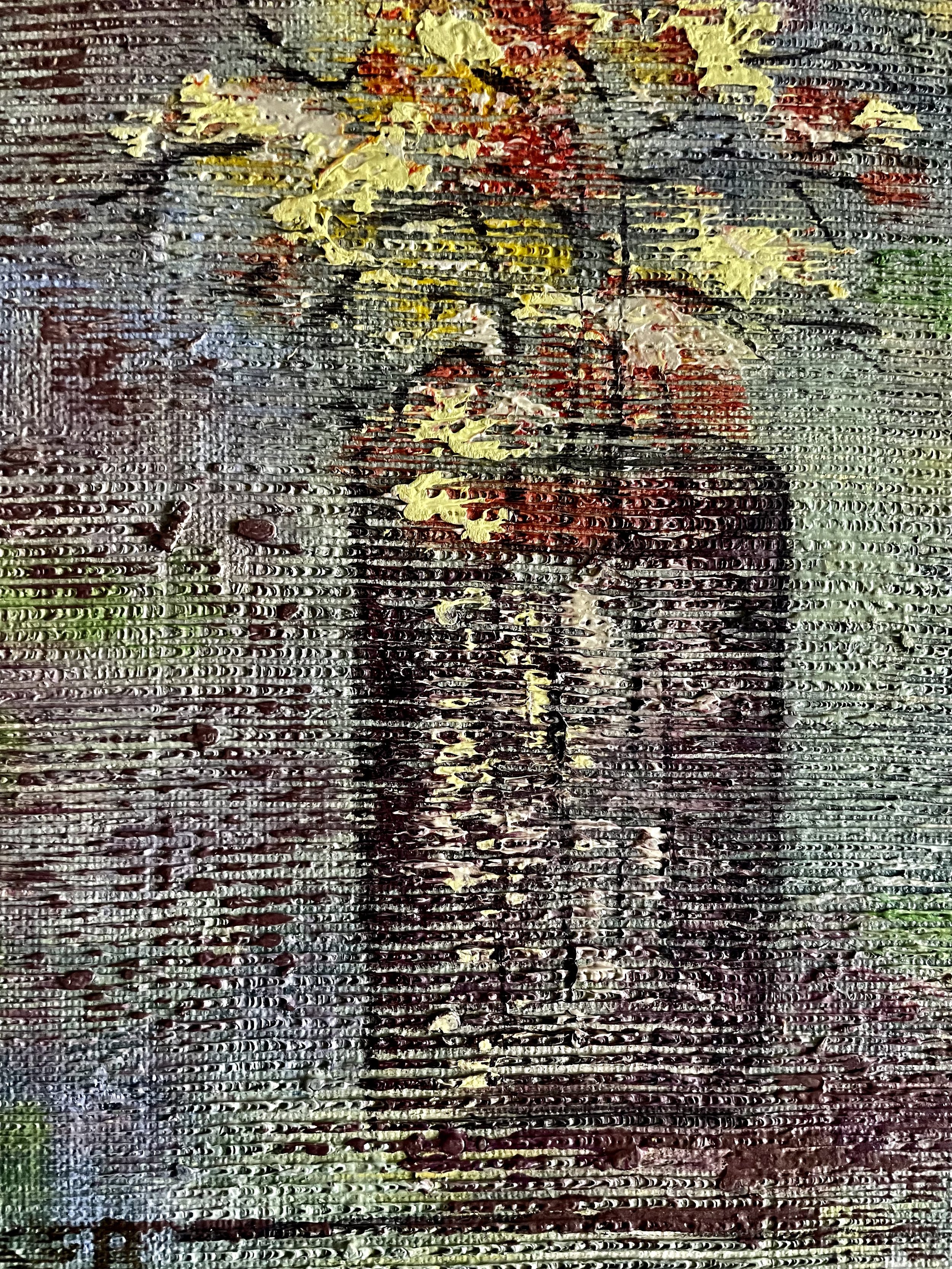
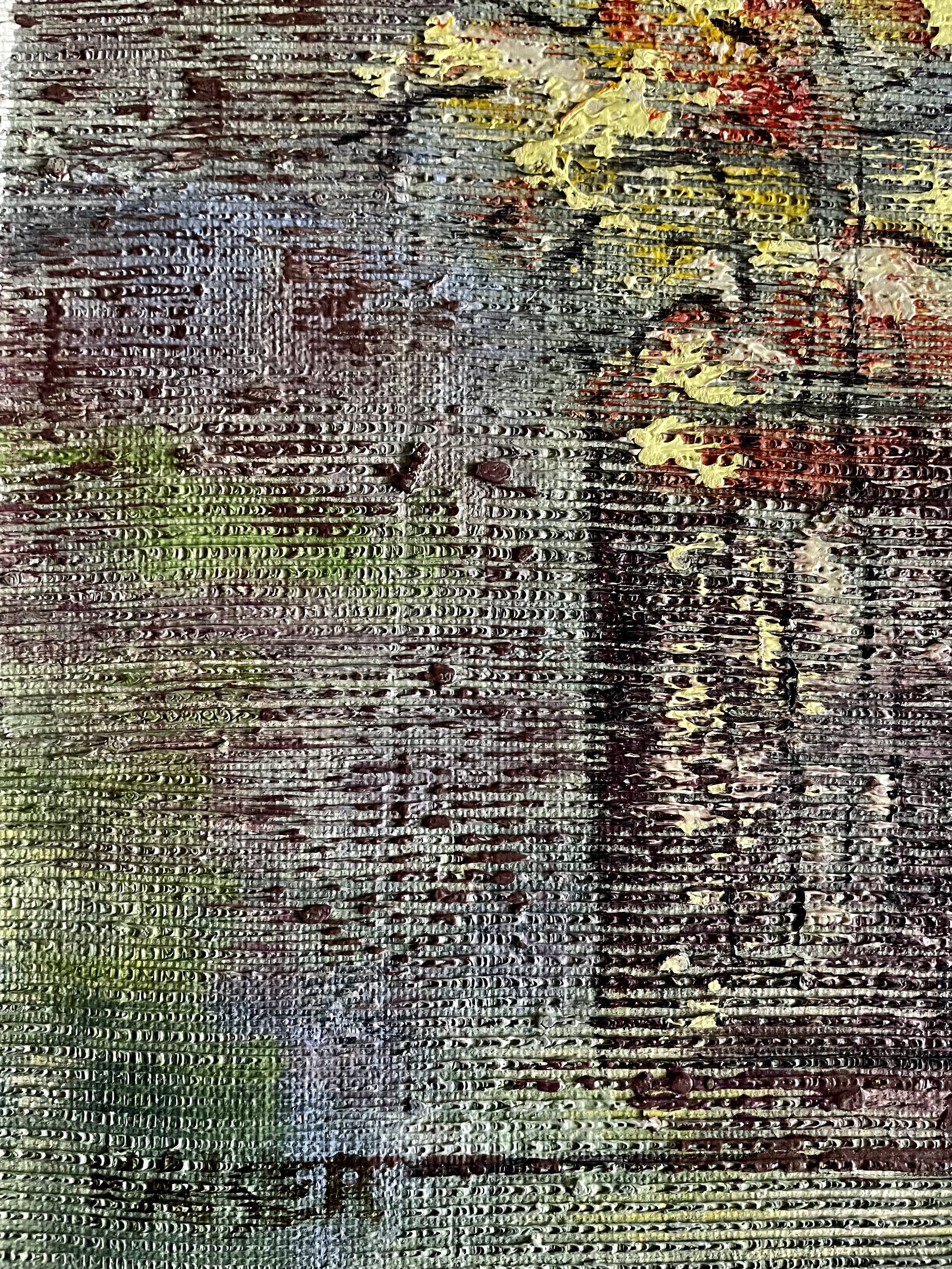
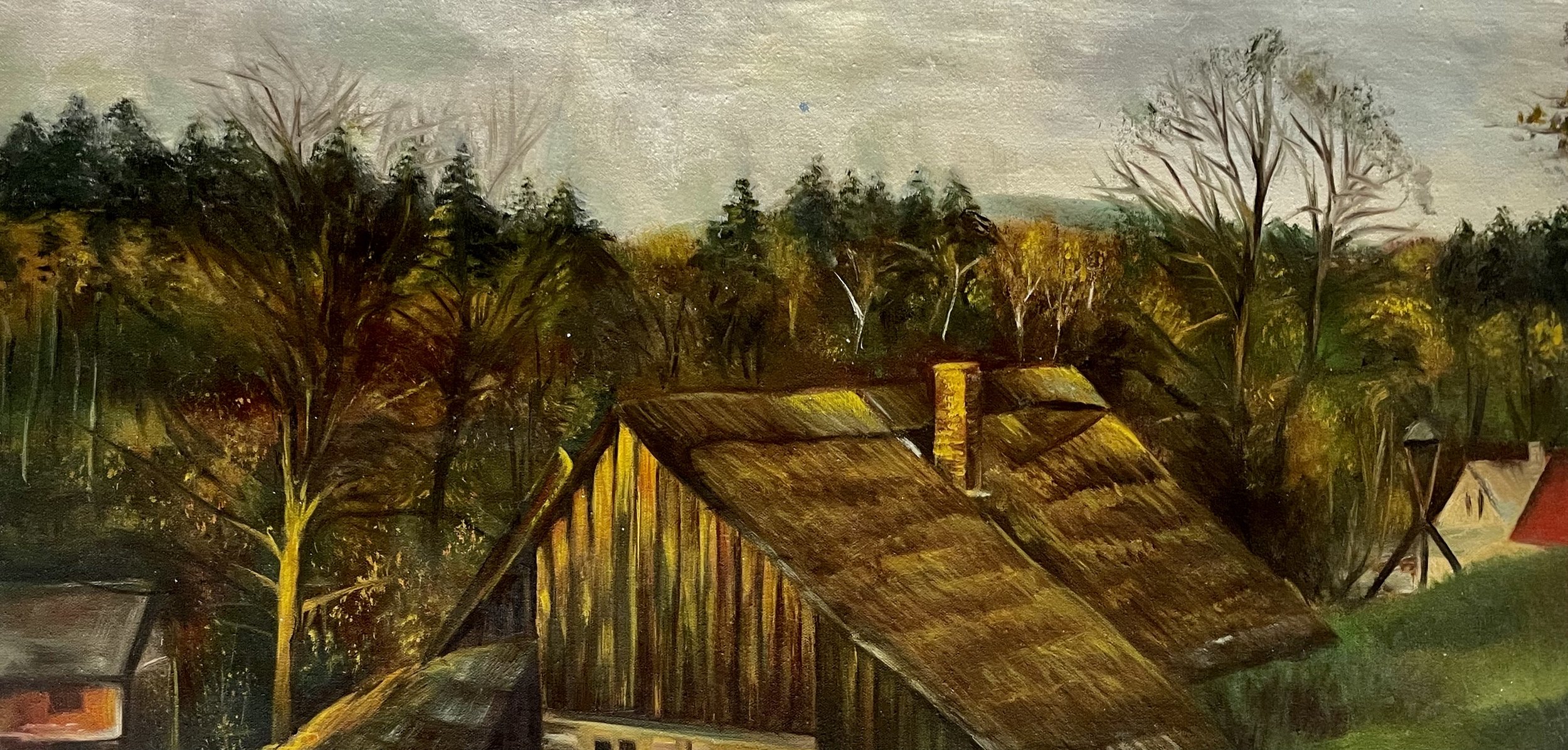
This evocative pastoral landscape by Len Garon captures the quiet beauty of rural life through a harmonious blend of realism and impressionistic color. The composition centers on a modest cluster of farm buildings with rust-red roofs and pale yellow walls, set amid open fields and scattered fencing. Behind the structures rises a dense grouping of autumn trees painted in warm sienna and earthy tones, their loose brushwork suggesting the shifting foliage of late season.
A gently winding foreground path or stream cuts diagonally across the canvas, leading the viewer’s eye toward the farmstead. This compositional device creates both movement and depth, drawing attention toward the central buildings while balancing the expansive sky above. The sky itself is rendered in luminous gradients of turquoise and pale blue, punctuated by soft clouds that add atmosphere and openness to the landscape.
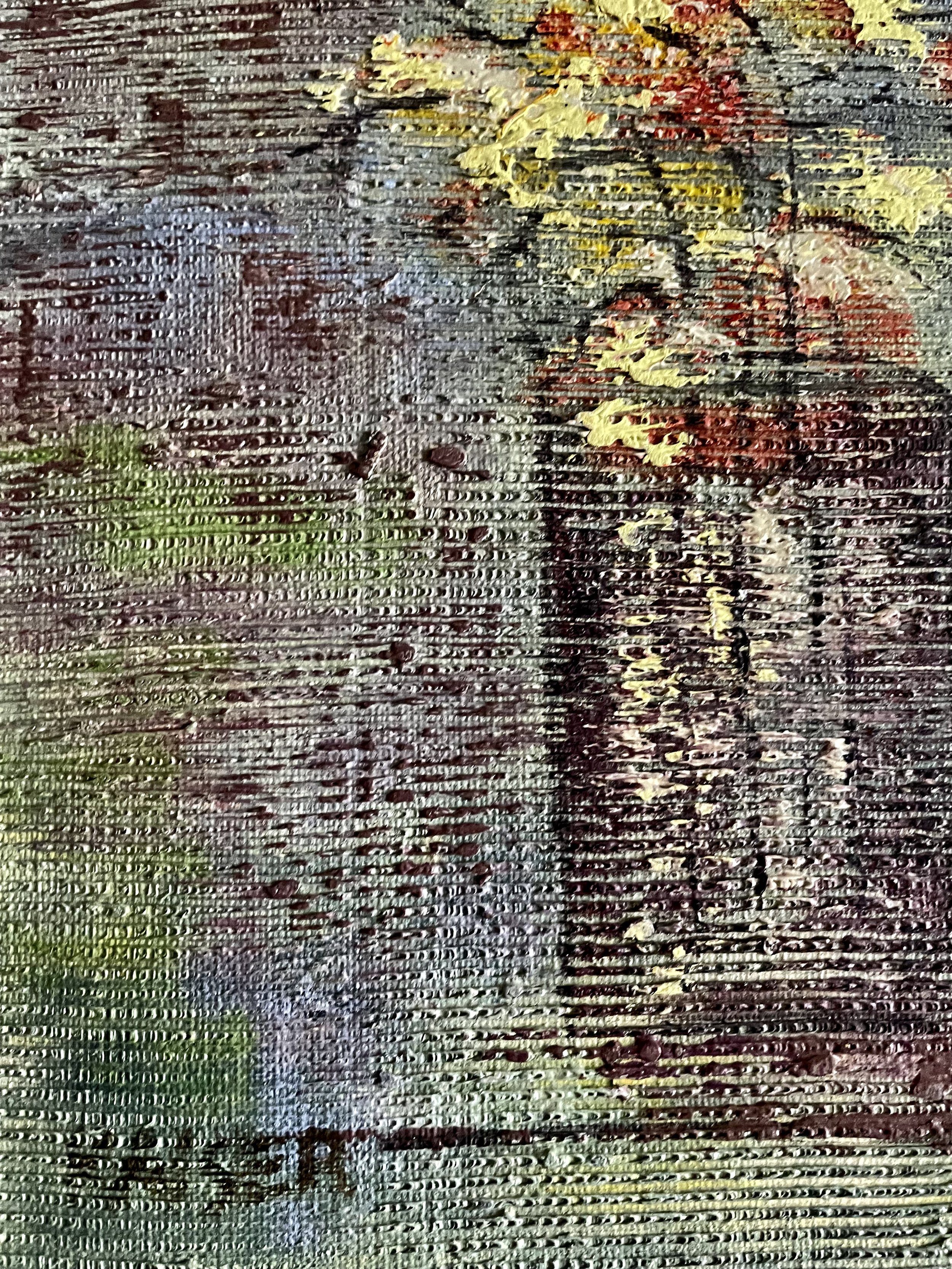
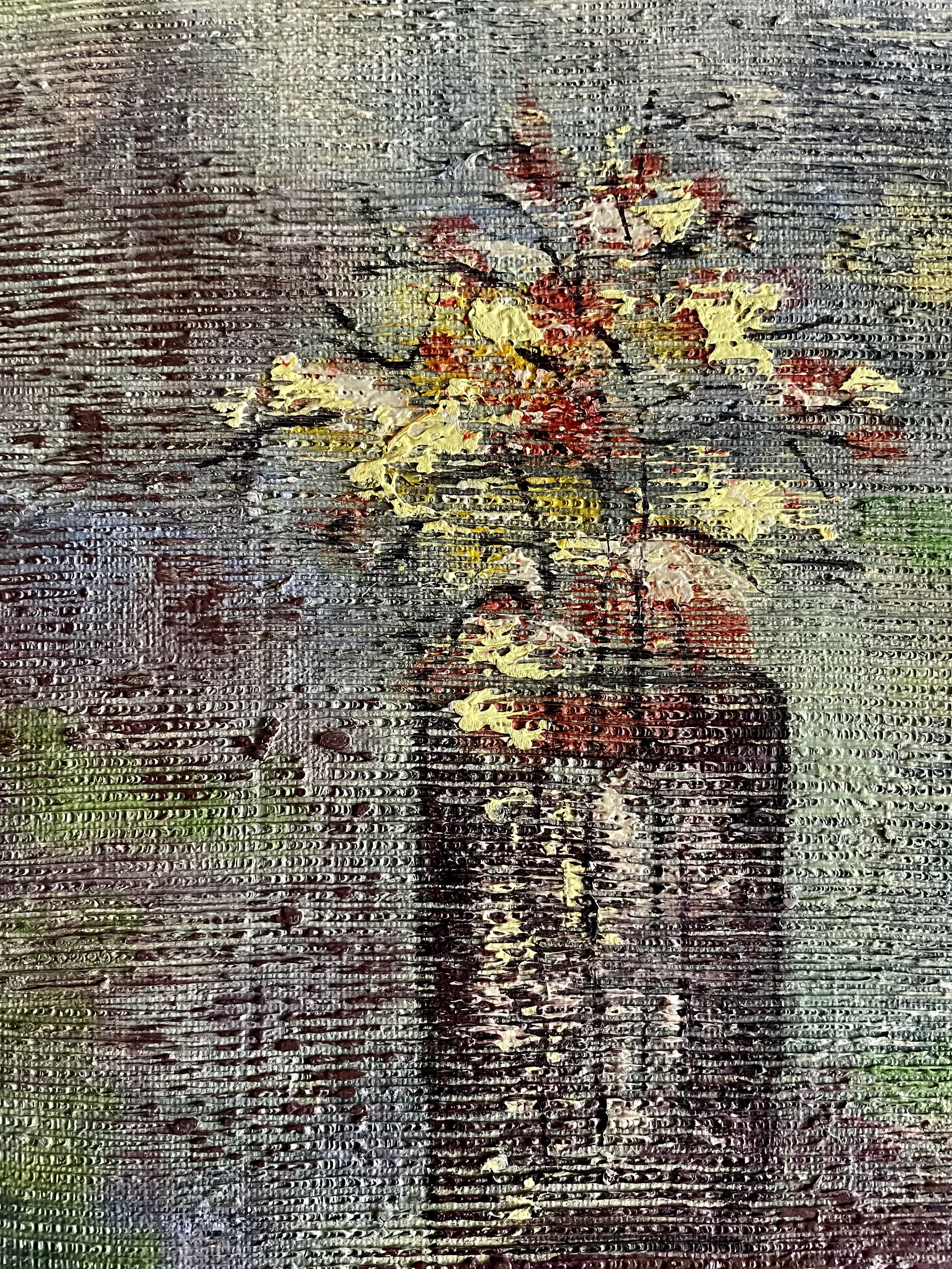
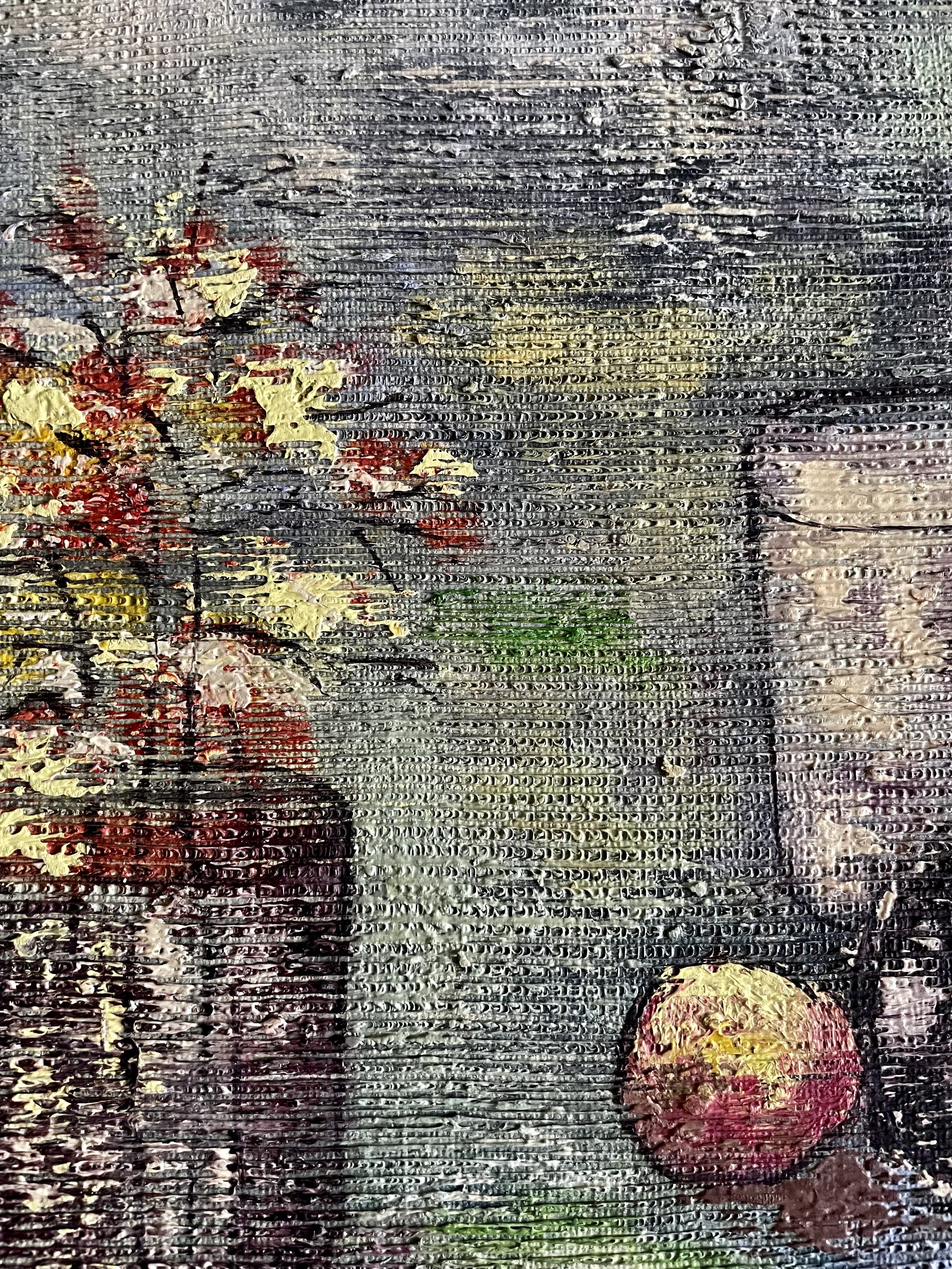
Garon’s technique reveals the artist’s background in both pastel and oil painting. The surface displays a light, painterly touch with layered color transitions and subtle textural effects. Speckled highlights along the foreground create an impression of wildflowers or reflective light across damp ground, contributing to the sense of natural vitality. The brushwork is energetic yet controlled, revealing hints of abstraction within the structure of the buildings and trees.
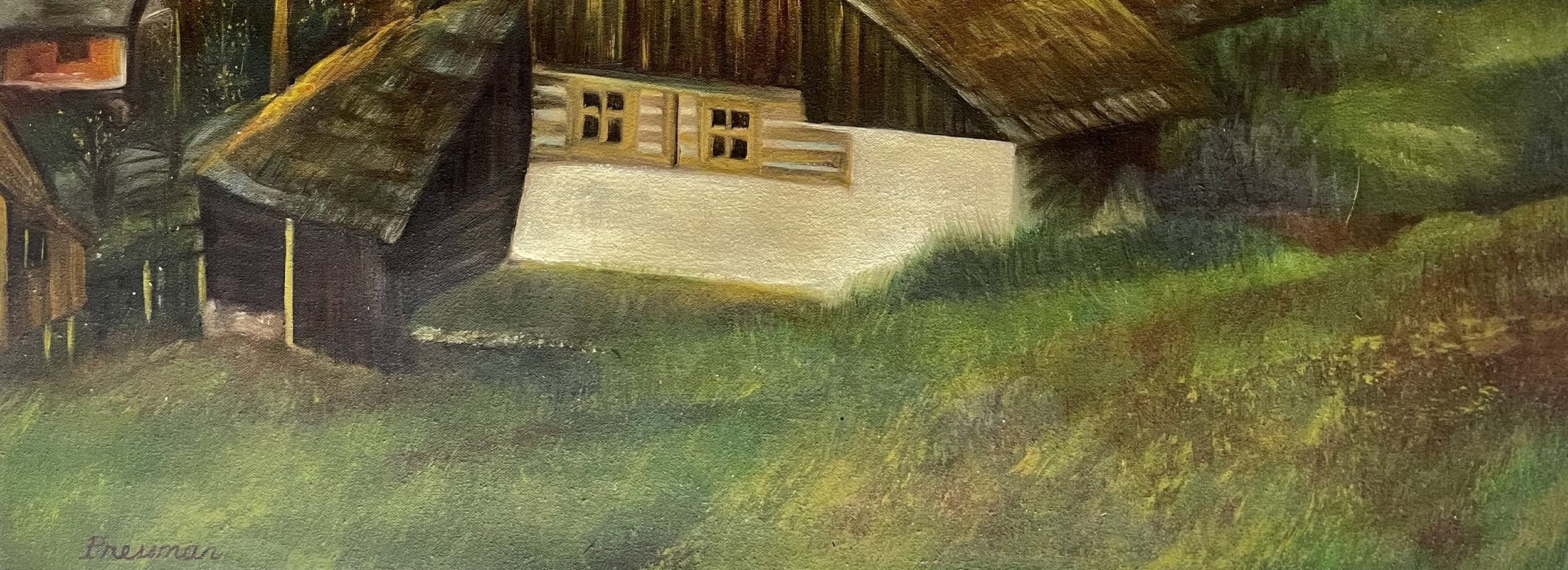
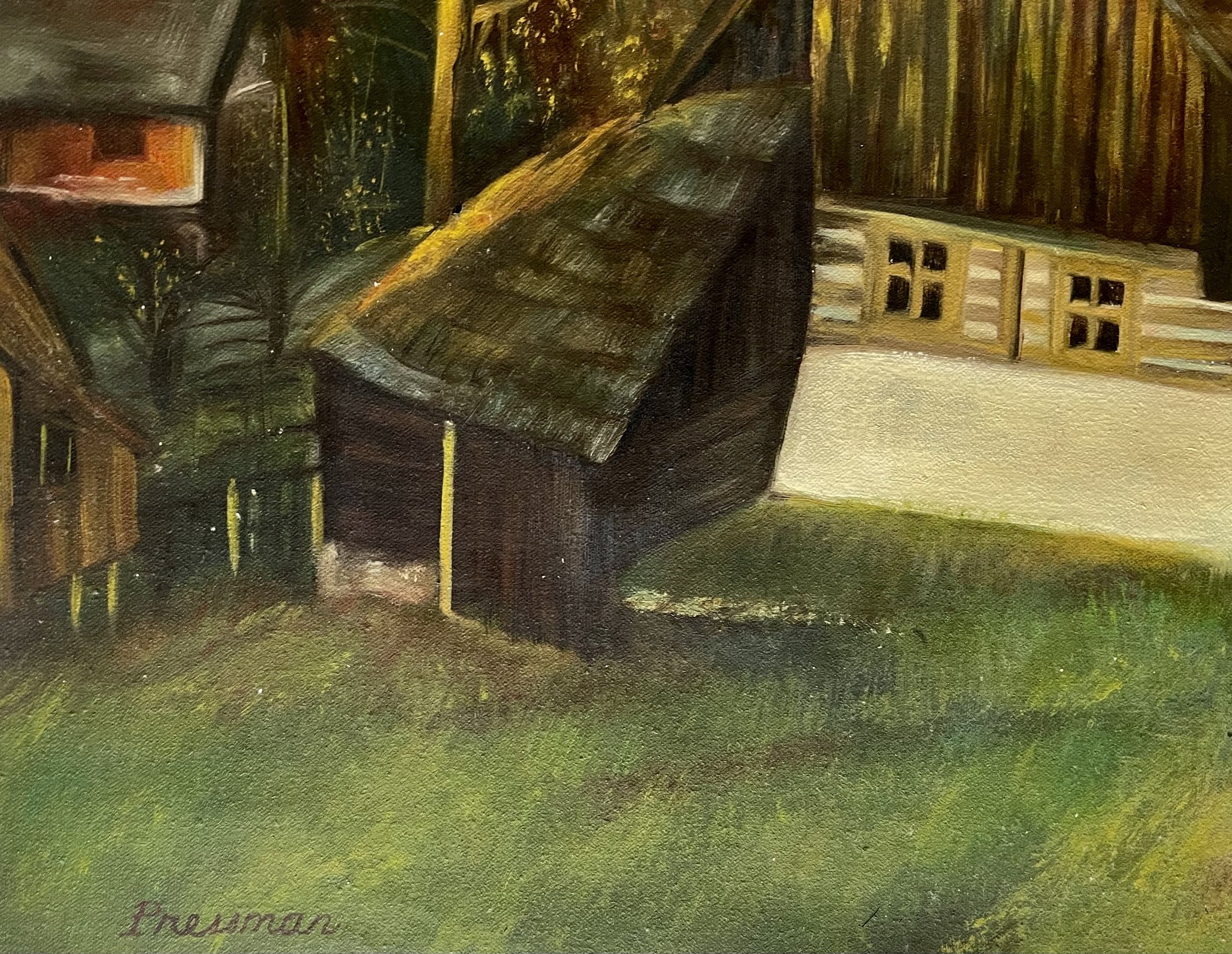
Signed “Len Garon PSA” in the lower right corner, the painting demonstrates the artist’s ability to merge the sensibilities of Western landscape painting with the softer pastoral traditions of the Pennsylvania countryside. The work embodies the romantic impressionist style for which Garon became known—paintings that reveal hidden abstractions and layered color relationships beneath seemingly straightforward scenes of rural life.
Artist Biography
Len Garon (born 1945, Colorado) is an American painter known for his romantic impressionist landscapes and his ability to translate both Western and Eastern American environments into atmospheric compositions. His work spans multiple media including oils, pastels, and experimental mixed media techniques, reflecting a career defined by technical versatility and stylistic exploration.
Born in Colorado, Garon spent the first twenty-six years of his life immersed in the landscapes of the American West and Southwest. These formative environments—characterized by open terrain, dramatic skies, and strong natural light—would leave a lasting influence on his artistic vision. Early recognition came through pastel painting, where he won first place in both the Denver City & County Show and the Spring Arts Festival in Denver in 1969.
In 1972 Garon relocated to Pennsylvania, a move that expanded his subject matter to include the rolling farmland, small towns, and historic architecture of the Mid-Atlantic region. The change of landscape encouraged a softer palette and more atmospheric compositions. Rural farmhouses, barns, and countryside scenes became recurring themes within his work.
Garon resisted being categorized within a single artistic style. As he stated in biographical materials, he refused to limit himself to one medium, one subject, or one stylistic approach. Instead, his paintings reveal a combination of realism and abstraction that invites viewers to look beyond the surface image. He described his approach as romantic impressionism—a style in which realistic imagery is layered with subtle abstract structures, textured surfaces, and carefully balanced color relationships.
During the 1970s Garon’s reputation grew steadily through exhibitions and awards. His work appeared in numerous juried and invitational shows including exhibitions at the National Society of Painters in Casein and Acrylic at the National Academy Galleries in New York, the Southern Alleghenies Museum of Art in Pittsburgh, and the USS Olympia Invitational Art Show in Philadelphia.
He also presented several one-man exhibitions, including shows in Bristol, Pennsylvania; Cherry Hill, New Jersey; and King of Prussia, Pennsylvania at John Wanamaker’s. In addition to gallery exhibitions, Garon gained public visibility through television appearances on WPVI-TV Channel 6 in Philadelphia, where he conducted a four-month art series in 1978.
Garon’s professional affiliations included membership in the Pastel Society of America, the Philadelphia Watercolor Club, and the Philadelphia Sketch Club—institutions that have historically supported some of the region’s most respected painters.
His work entered numerous corporate and institutional collections, including Bell Telephone of Pennsylvania, RCA Corporation in Cherry Hill, Automatic Data Processing in Baltimore, Arrow Electronics in Moorestown, Carlton Industries in Philadelphia, Freshie Foods, and the LaSalle College Museum of Art in Philadelphia.
Through decades of practice, Len Garon built a body of work that bridges academic training, impressionist sensibility, and American regional landscape tradition. His paintings remain appreciated for their lyrical atmosphere, vibrant color relationships, and the subtle abstraction embedded within otherwise familiar rural imagery.
Len Garon (b. 1945), Rural Farmstead with Red Roofs, oil on canvas, 36 × 24 in, signed “Len Garon PSA.” Romantic impressionist Pennsylvania landscape.
Certificate of Authentication
This document certifies that the artwork titled Rural Farmstead with Red Roofs is an original oil painting created by American artist Len Garon (born 1945).
The painting is executed in oil on canvas and measures approximately 36 × 24 inches. The work bears the artist’s signature “Len Garon PSA” in the lower right corner.
Based on stylistic characteristics, signature, and accompanying artist documentation, the painting corresponds to the artist’s romantic impressionist landscape works produced during the 1970s.
The artwork originates from the Mitch Morse Gallery network and is currently held in the collection of Artfind Gallery, Washington, DC.
Condition
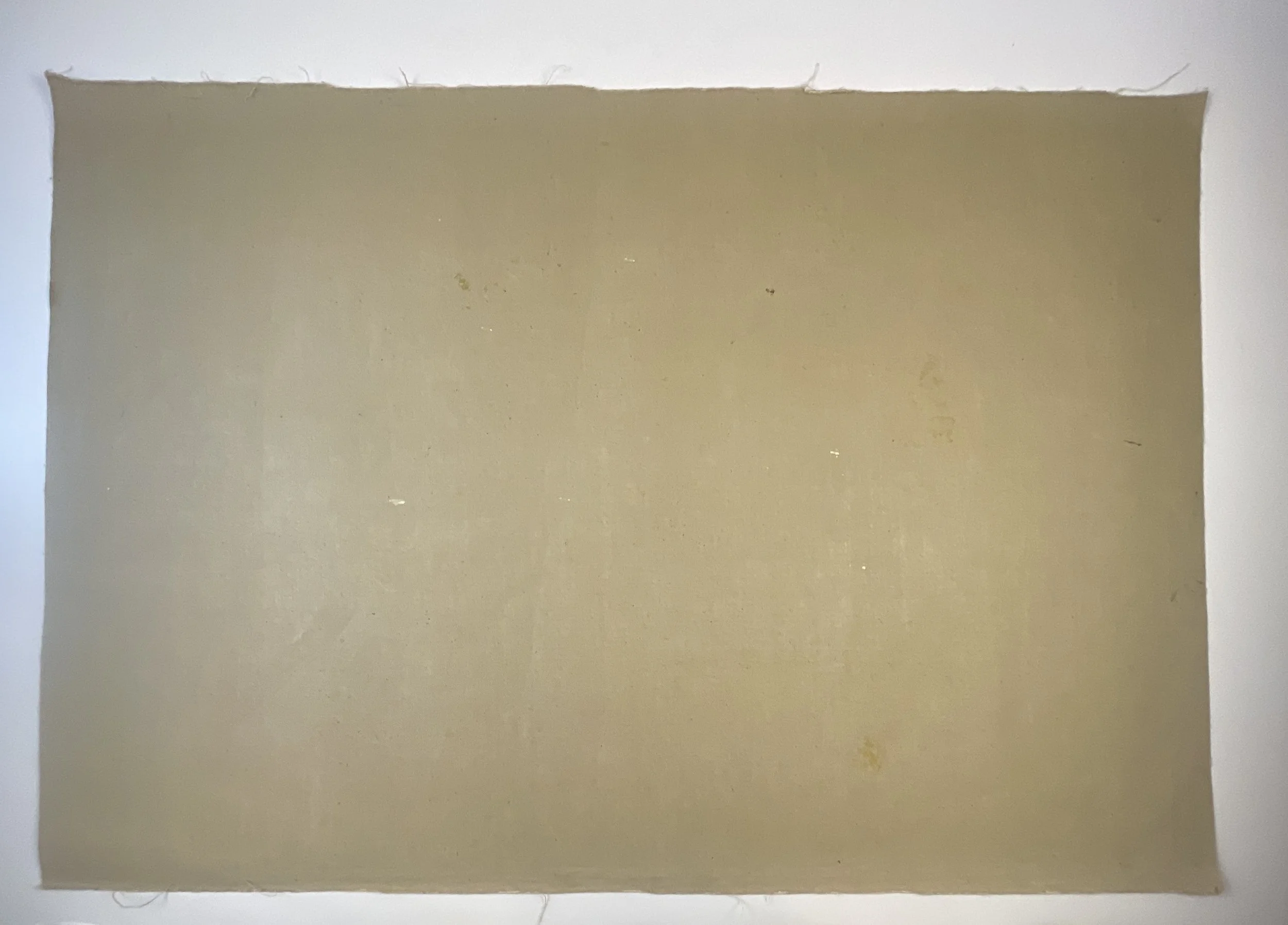
Good vintage condition consistent with age and studio handling. Canvas edges show light wear from previous stretching or storage. Paint surface remains stable with no major losses. Minor surface marks are visible in the margins but do not affect the composition.
Provenance
Mitch Morse Gallery, Woodstock, New York
Acquired by Mitch Morse Gallery through art networks in New York, the United States, and Europe
Artfind Gallery, Washington, DC (current owner)
Provenance Note: Mitch Morse Gallery Collection
This artwork originates from the inventory of Mitch Morse Gallery, a respected New York–based gallery and publisher active during the mid-to-late 20th century. Mitch Morse was an established figure in the American art market, serving as an artist’s agent, publisher of original graphics, art dealer, distributor, and fine art restorer. He was also a Design Affiliate of A.S.I.D., listed in Who’s Who in the East, and a guest lecturer in graphics at New York University, with appearances on radio and television discussing art and design.
Through his gallery and associated publishing operations, Morse acquired paintings, prints, and original works from artists and studios across New York, Europe, and international art markets, assembling a broad inventory representing a wide range of artistic traditions and mediums. Works from this collection circulated through galleries and collectors throughout the United States.
The present painting was acquired through this network and is now held in the collection of Artfind Gallery, Washington DC, continuing the documented chain of gallery provenance from Mitch Morse’s original acquisitions.
This luminous rural landscape by American painter Len Garon depicts a quiet farmstead surrounded by fields and autumn trees beneath an expansive sky. Executed in oil on canvas with a delicate balance of impressionistic color and structured composition, the painting reflects Garon’s signature approach to romantic impressionism—where realistic rural imagery is infused with subtle abstraction, light effects, and atmospheric depth. Soft pastel-like tones, warm red roofs, and scattered fence posts create a tranquil pastoral setting typical of the Pennsylvania countryside that inspired much of the artist’s work after relocating from the American West. Signed “Len Garon PSA,” the painting demonstrates the artist’s mastery of color harmony, texture, and light.
Artwork Description
This evocative pastoral landscape by Len Garon captures the quiet beauty of rural life through a harmonious blend of realism and impressionistic color. The composition centers on a modest cluster of farm buildings with rust-red roofs and pale yellow walls, set amid open fields and scattered fencing. Behind the structures rises a dense grouping of autumn trees painted in warm sienna and earthy tones, their loose brushwork suggesting the shifting foliage of late season.
A gently winding foreground path or stream cuts diagonally across the canvas, leading the viewer’s eye toward the farmstead. This compositional device creates both movement and depth, drawing attention toward the central buildings while balancing the expansive sky above. The sky itself is rendered in luminous gradients of turquoise and pale blue, punctuated by soft clouds that add atmosphere and openness to the landscape.
Garon’s technique reveals the artist’s background in both pastel and oil painting. The surface displays a light, painterly touch with layered color transitions and subtle textural effects. Speckled highlights along the foreground create an impression of wildflowers or reflective light across damp ground, contributing to the sense of natural vitality. The brushwork is energetic yet controlled, revealing hints of abstraction within the structure of the buildings and trees.
Signed “Len Garon PSA” in the lower right corner, the painting demonstrates the artist’s ability to merge the sensibilities of Western landscape painting with the softer pastoral traditions of the Pennsylvania countryside. The work embodies the romantic impressionist style for which Garon became known—paintings that reveal hidden abstractions and layered color relationships beneath seemingly straightforward scenes of rural life.
Artist Biography
Len Garon (born 1945, Colorado) is an American painter known for his romantic impressionist landscapes and his ability to translate both Western and Eastern American environments into atmospheric compositions. His work spans multiple media including oils, pastels, and experimental mixed media techniques, reflecting a career defined by technical versatility and stylistic exploration.
Born in Colorado, Garon spent the first twenty-six years of his life immersed in the landscapes of the American West and Southwest. These formative environments—characterized by open terrain, dramatic skies, and strong natural light—would leave a lasting influence on his artistic vision. Early recognition came through pastel painting, where he won first place in both the Denver City & County Show and the Spring Arts Festival in Denver in 1969.
In 1972 Garon relocated to Pennsylvania, a move that expanded his subject matter to include the rolling farmland, small towns, and historic architecture of the Mid-Atlantic region. The change of landscape encouraged a softer palette and more atmospheric compositions. Rural farmhouses, barns, and countryside scenes became recurring themes within his work.
Garon resisted being categorized within a single artistic style. As he stated in biographical materials, he refused to limit himself to one medium, one subject, or one stylistic approach. Instead, his paintings reveal a combination of realism and abstraction that invites viewers to look beyond the surface image. He described his approach as romantic impressionism—a style in which realistic imagery is layered with subtle abstract structures, textured surfaces, and carefully balanced color relationships.
During the 1970s Garon’s reputation grew steadily through exhibitions and awards. His work appeared in numerous juried and invitational shows including exhibitions at the National Society of Painters in Casein and Acrylic at the National Academy Galleries in New York, the Southern Alleghenies Museum of Art in Pittsburgh, and the USS Olympia Invitational Art Show in Philadelphia.
He also presented several one-man exhibitions, including shows in Bristol, Pennsylvania; Cherry Hill, New Jersey; and King of Prussia, Pennsylvania at John Wanamaker’s. In addition to gallery exhibitions, Garon gained public visibility through television appearances on WPVI-TV Channel 6 in Philadelphia, where he conducted a four-month art series in 1978.
Garon’s professional affiliations included membership in the Pastel Society of America, the Philadelphia Watercolor Club, and the Philadelphia Sketch Club—institutions that have historically supported some of the region’s most respected painters.
His work entered numerous corporate and institutional collections, including Bell Telephone of Pennsylvania, RCA Corporation in Cherry Hill, Automatic Data Processing in Baltimore, Arrow Electronics in Moorestown, Carlton Industries in Philadelphia, Freshie Foods, and the LaSalle College Museum of Art in Philadelphia.
Through decades of practice, Len Garon built a body of work that bridges academic training, impressionist sensibility, and American regional landscape tradition. His paintings remain appreciated for their lyrical atmosphere, vibrant color relationships, and the subtle abstraction embedded within otherwise familiar rural imagery.
Len Garon (b. 1945), Rural Farmstead with Red Roofs, oil on canvas, 36 × 24 in, signed “Len Garon PSA.” Romantic impressionist Pennsylvania landscape.
Certificate of Authentication
This document certifies that the artwork titled Rural Farmstead with Red Roofs is an original oil painting created by American artist Len Garon (born 1945).
The painting is executed in oil on canvas and measures approximately 36 × 24 inches. The work bears the artist’s signature “Len Garon PSA” in the lower right corner.
Based on stylistic characteristics, signature, and accompanying artist documentation, the painting corresponds to the artist’s romantic impressionist landscape works produced during the 1970s.
The artwork originates from the Mitch Morse Gallery network and is currently held in the collection of Artfind Gallery, Washington, DC.
Condition
Good vintage condition consistent with age and studio handling. Canvas edges show light wear from previous stretching or storage. Paint surface remains stable with no major losses. Minor surface marks are visible in the margins but do not affect the composition.
Provenance
Mitch Morse Gallery, Woodstock, New York
Acquired by Mitch Morse Gallery through art networks in New York, the United States, and Europe
Artfind Gallery, Washington, DC (current owner)
Provenance Note: Mitch Morse Gallery Collection
This artwork originates from the inventory of Mitch Morse Gallery, a respected New York–based gallery and publisher active during the mid-to-late 20th century. Mitch Morse was an established figure in the American art market, serving as an artist’s agent, publisher of original graphics, art dealer, distributor, and fine art restorer. He was also a Design Affiliate of A.S.I.D., listed in Who’s Who in the East, and a guest lecturer in graphics at New York University, with appearances on radio and television discussing art and design.
Through his gallery and associated publishing operations, Morse acquired paintings, prints, and original works from artists and studios across New York, Europe, and international art markets, assembling a broad inventory representing a wide range of artistic traditions and mediums. Works from this collection circulated through galleries and collectors throughout the United States.
The present painting was acquired through this network and is now held in the collection of Artfind Gallery, Washington DC, continuing the documented chain of gallery provenance from Mitch Morse’s original acquisitions.