 Image 1 of 4
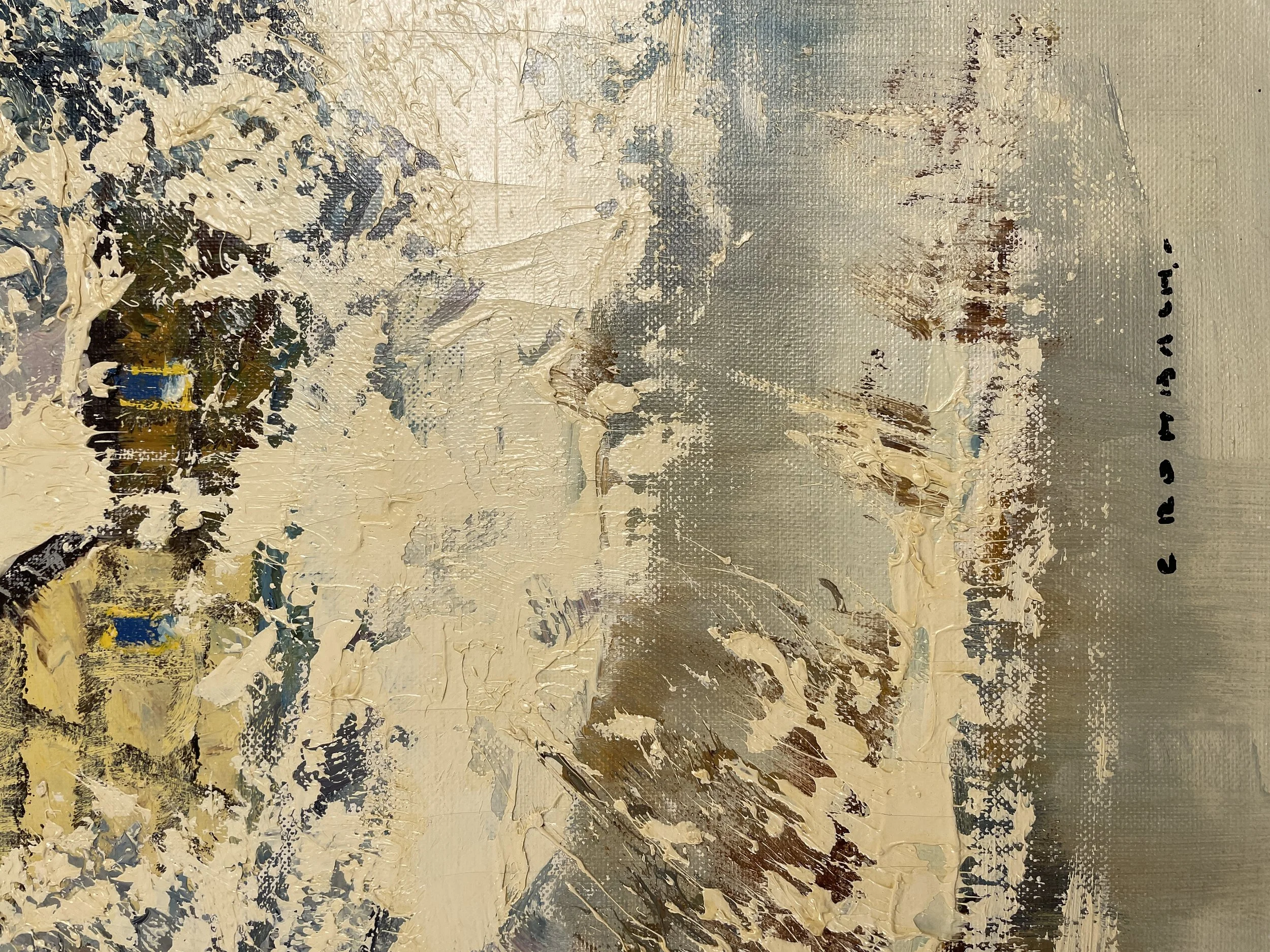 Image 2 of 4
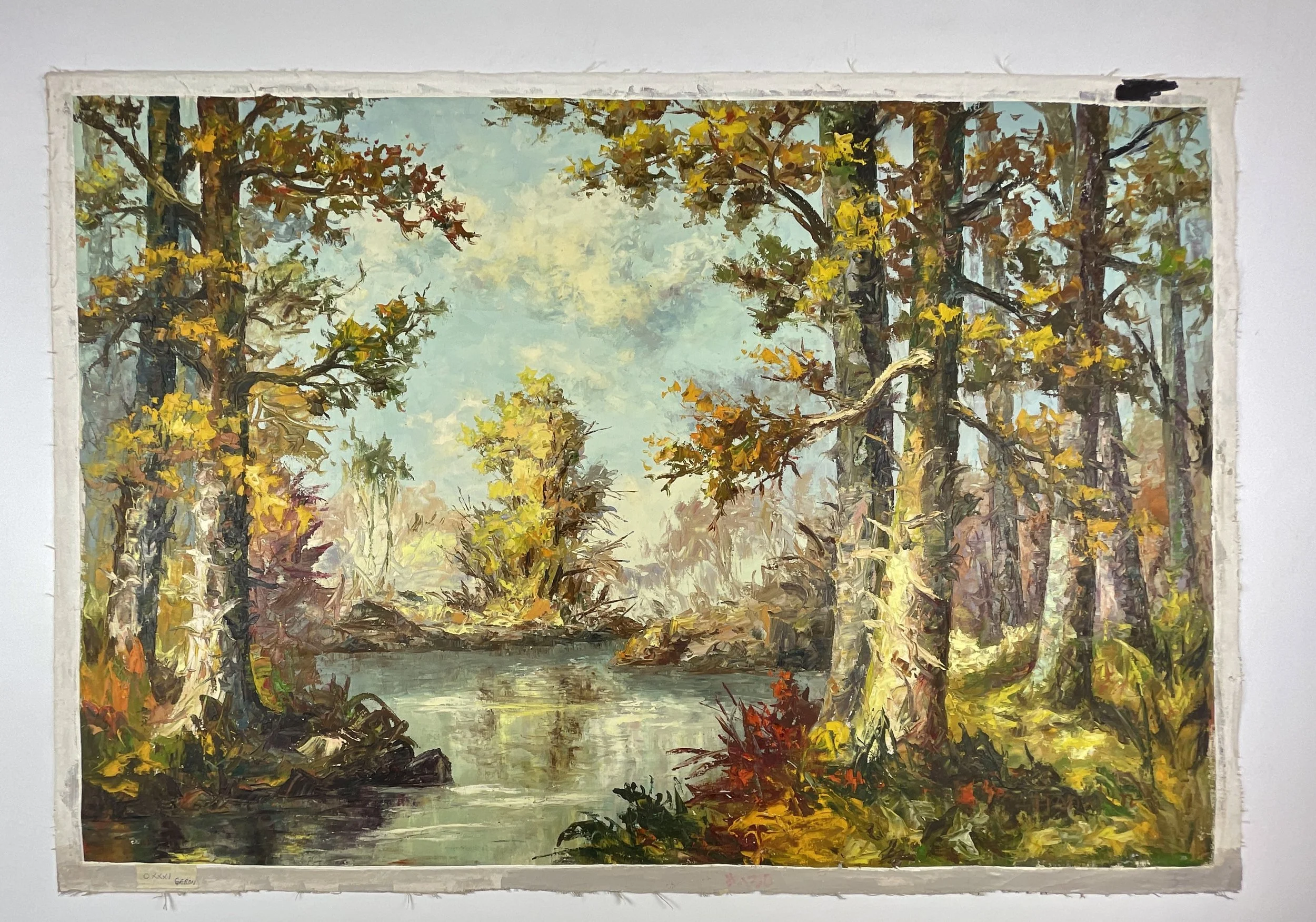 Image 3 of 4
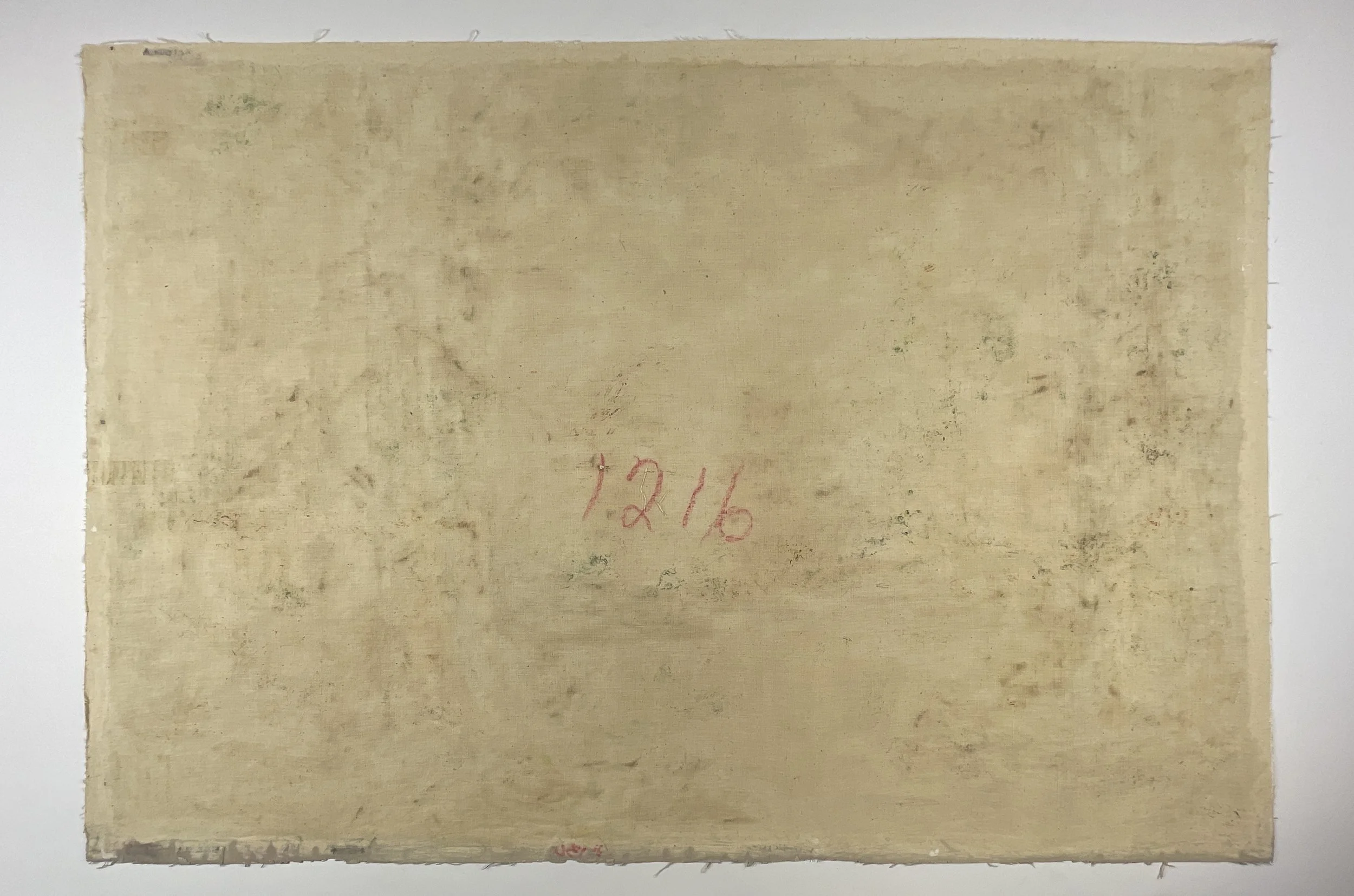 Image 4 of 4
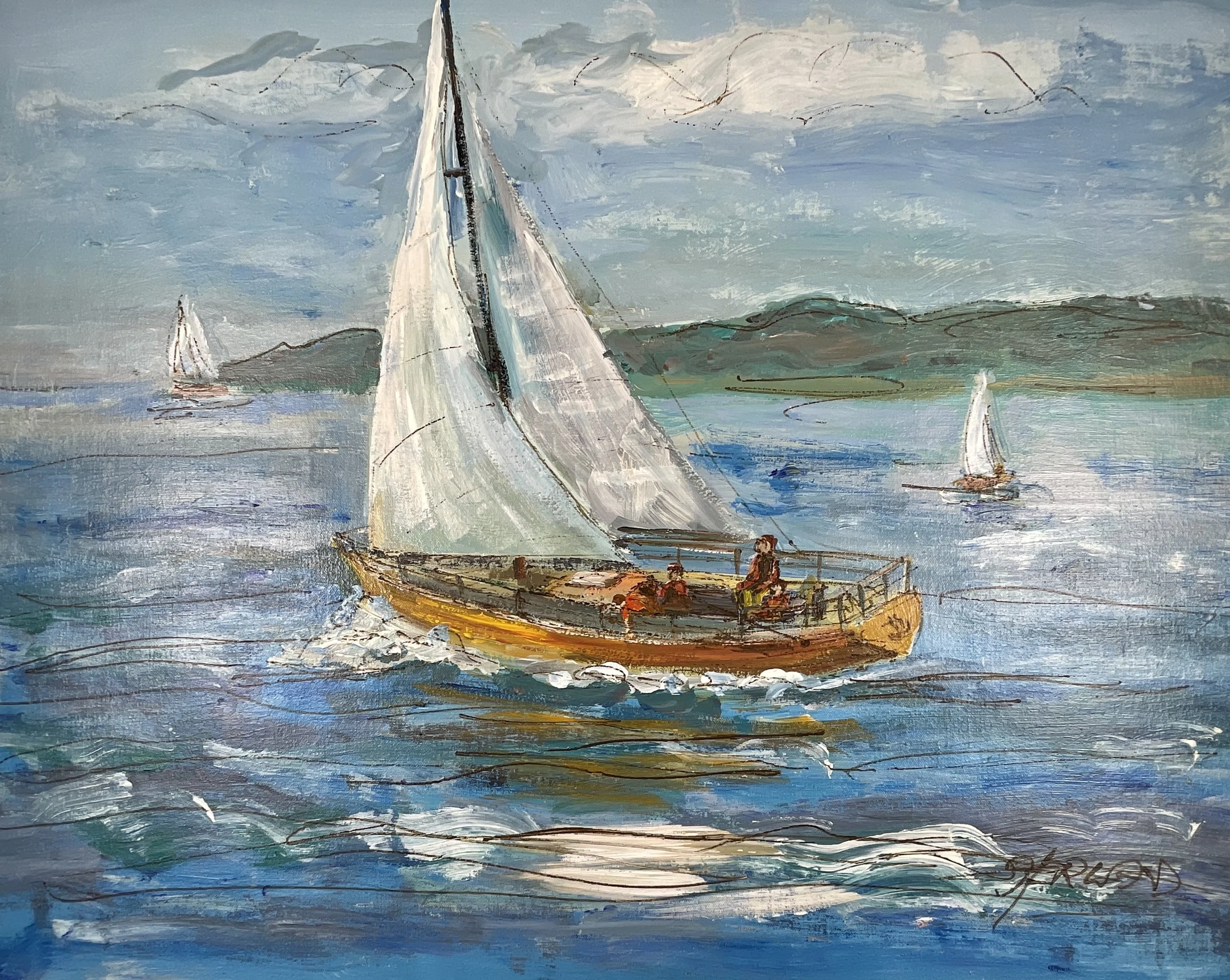
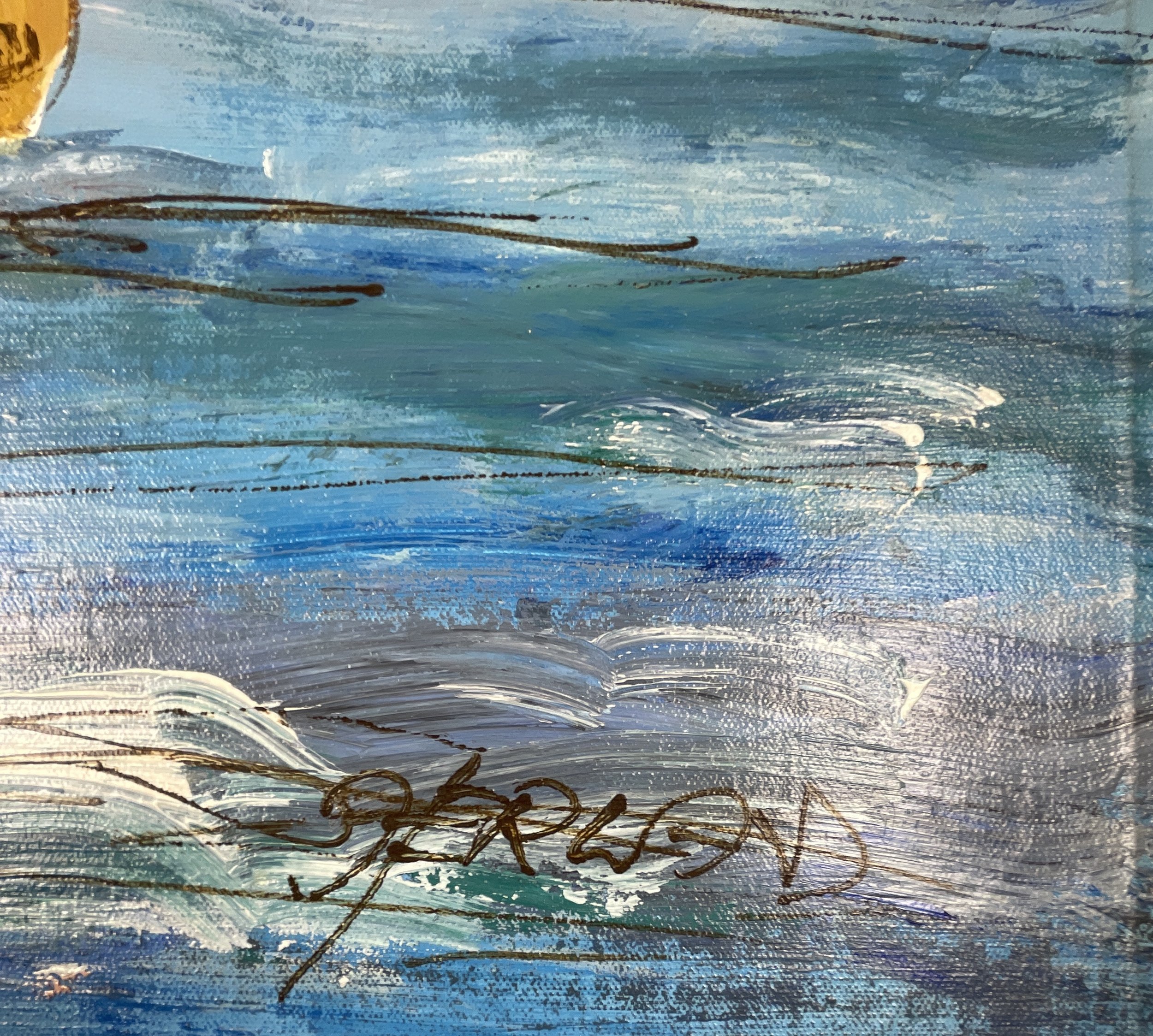
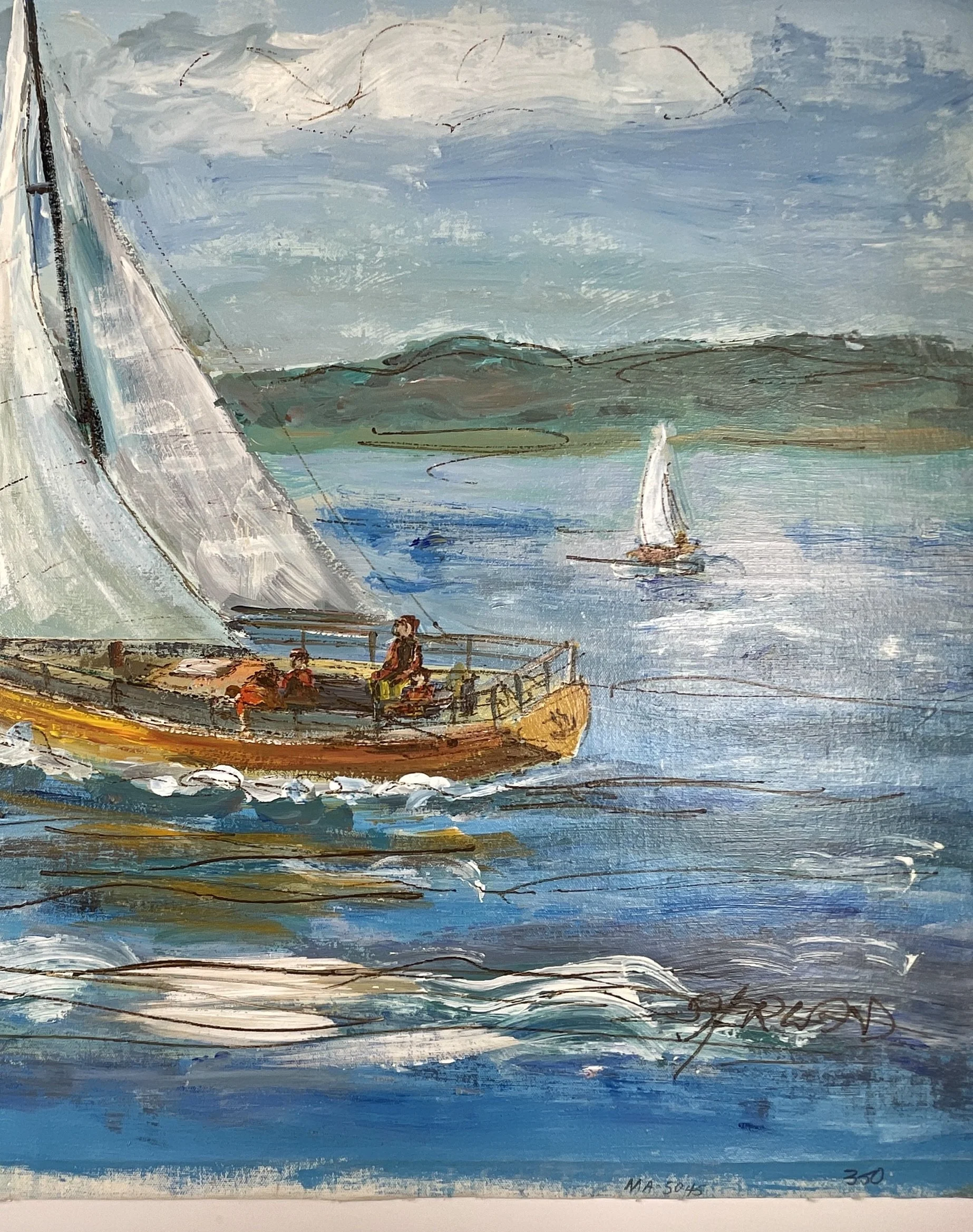
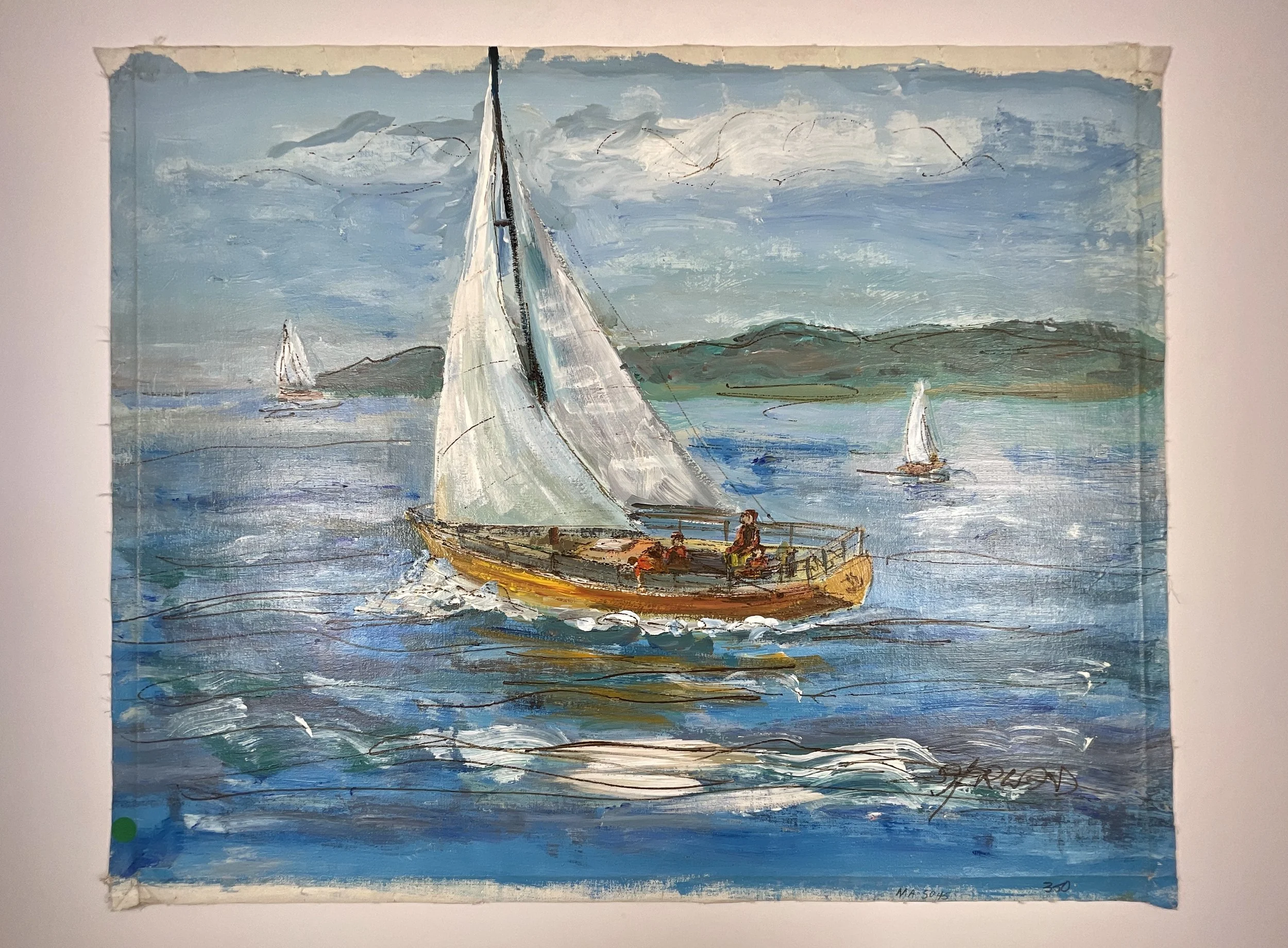
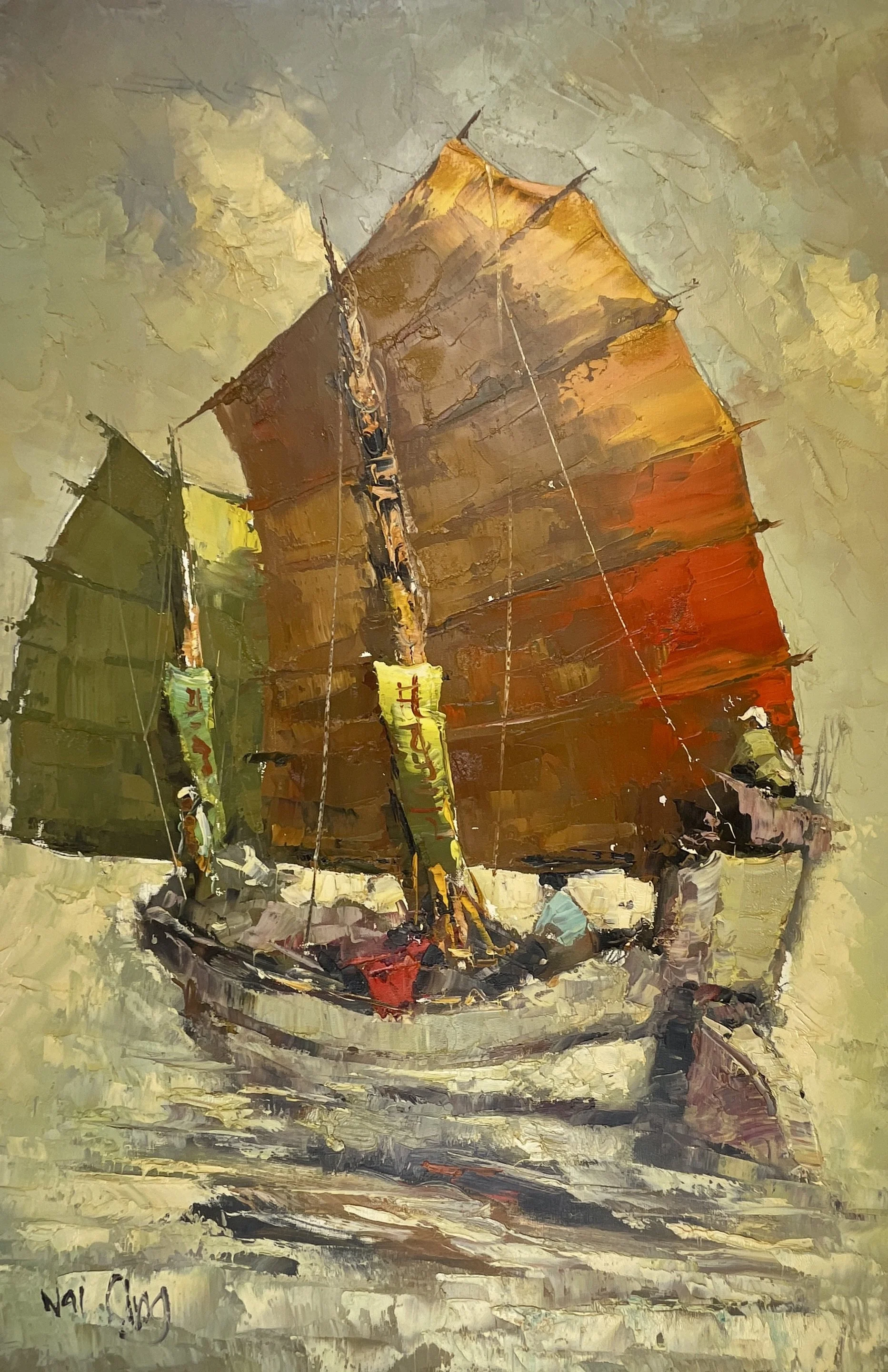
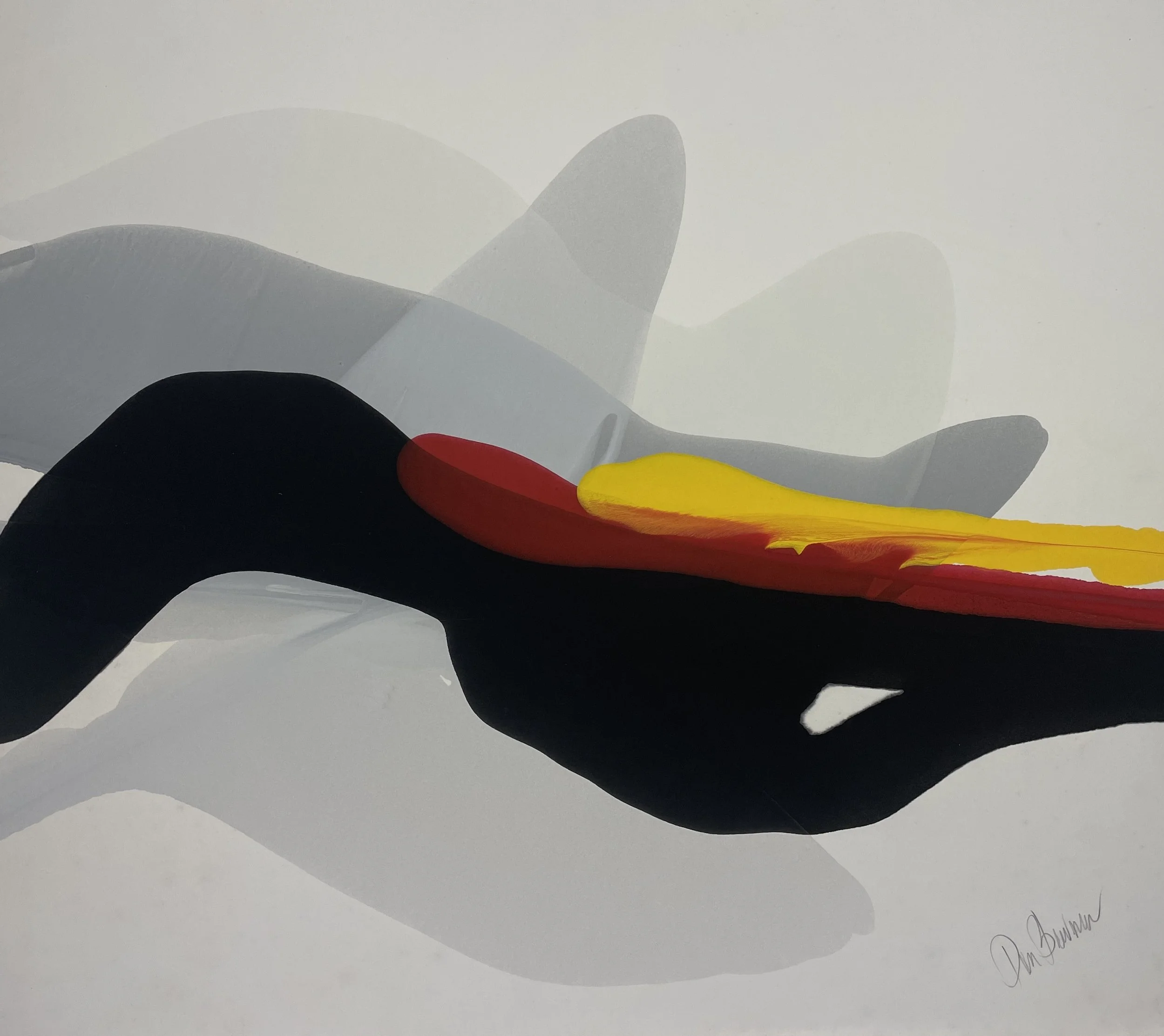
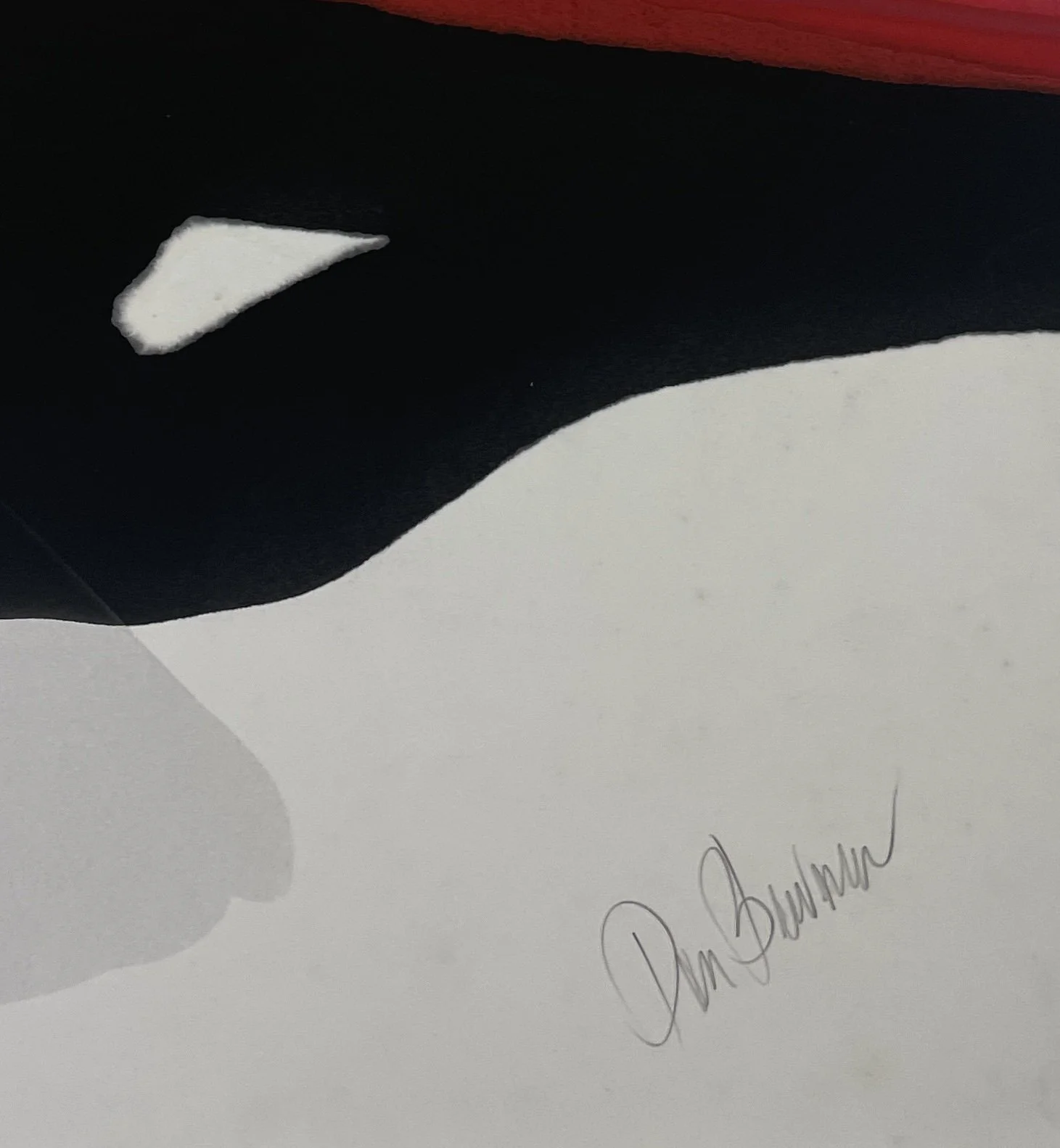
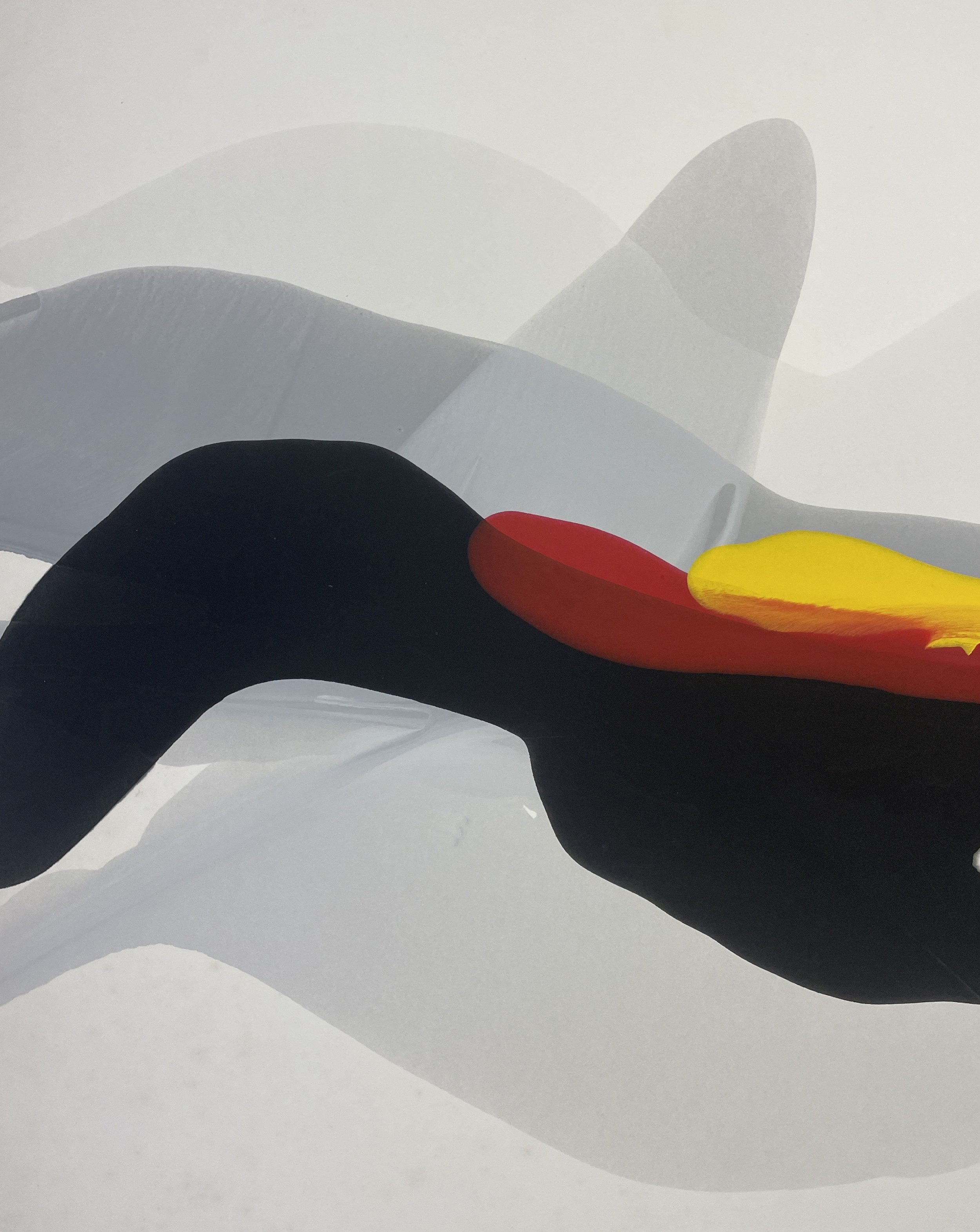
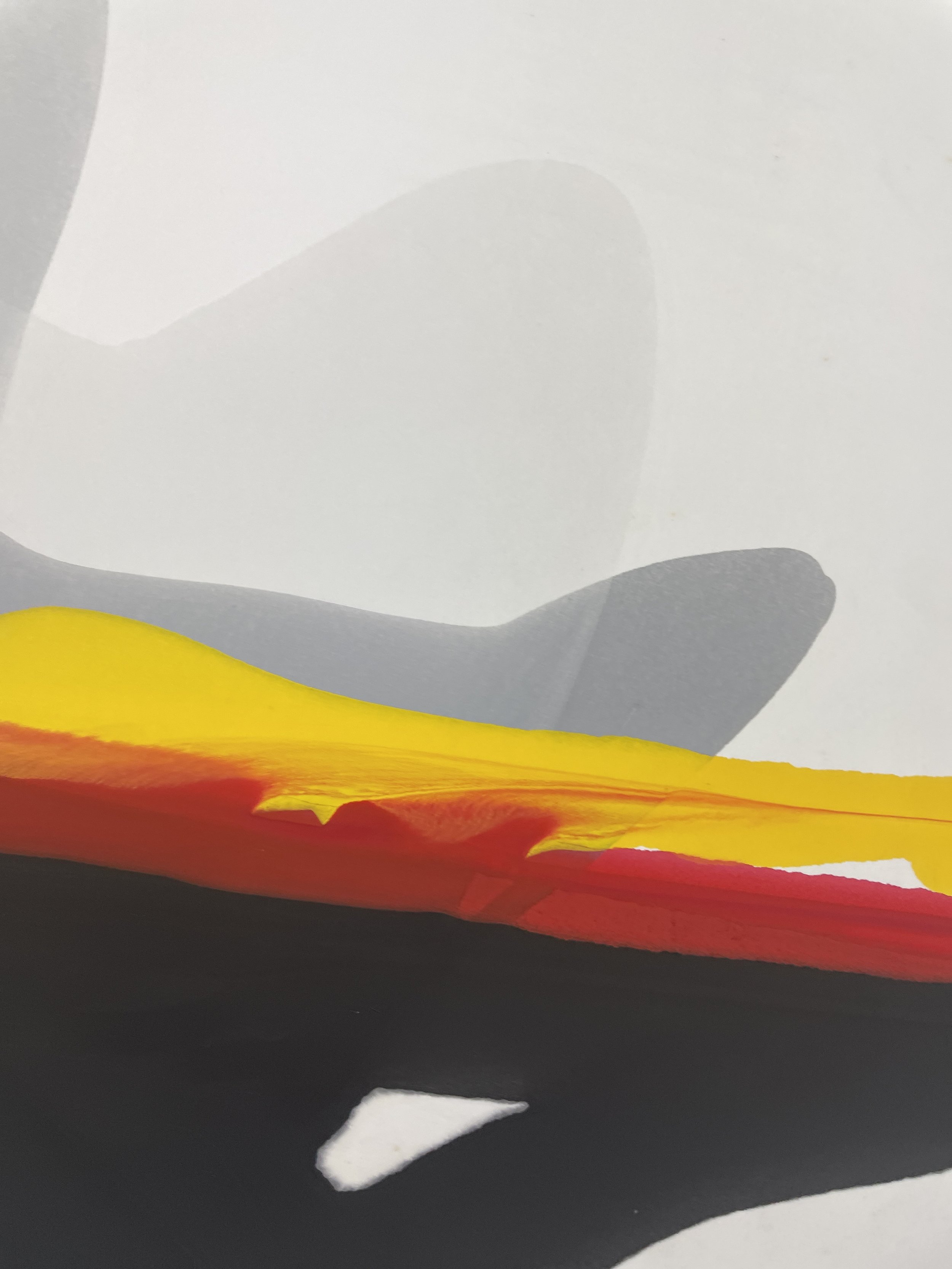
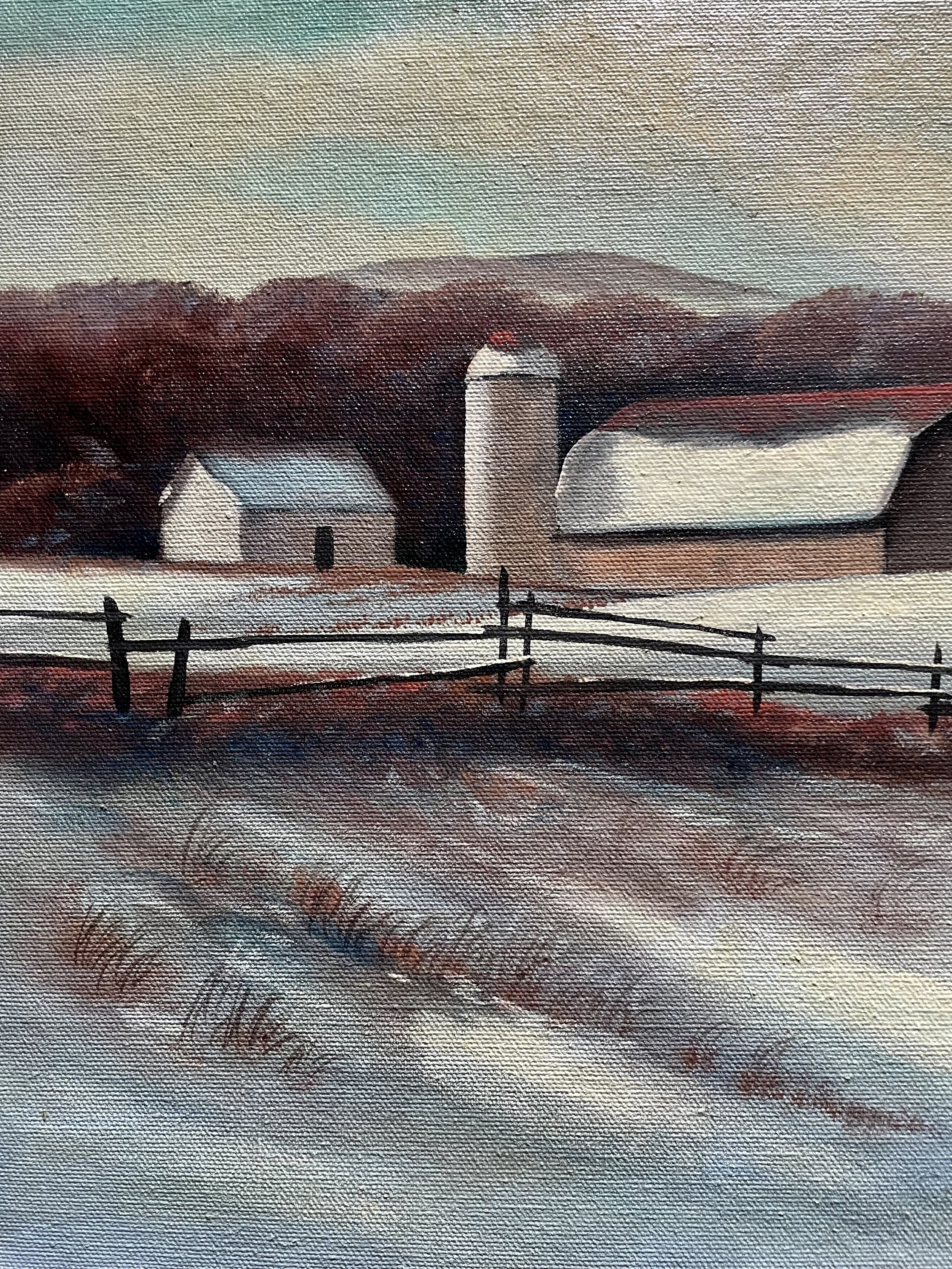
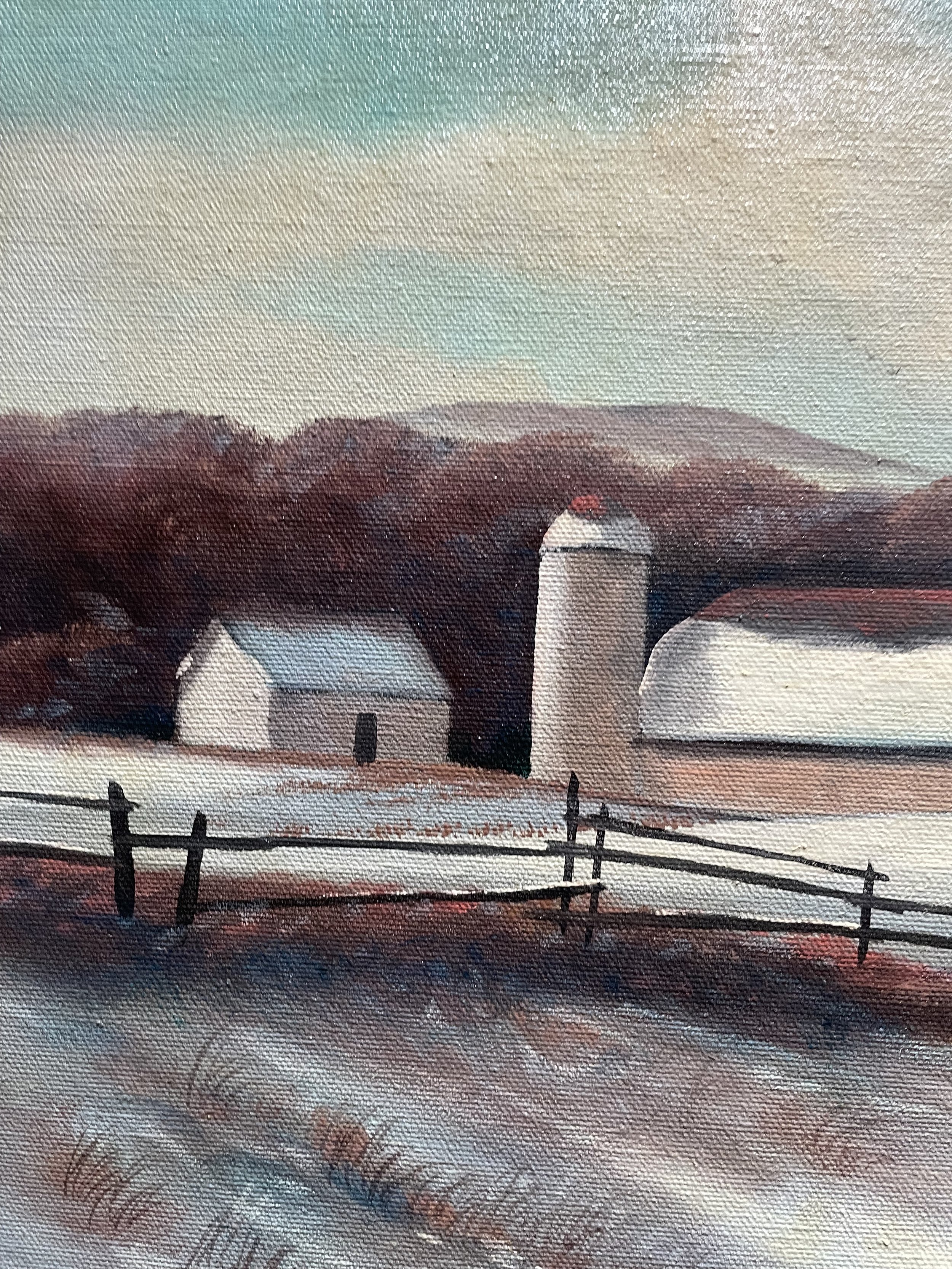
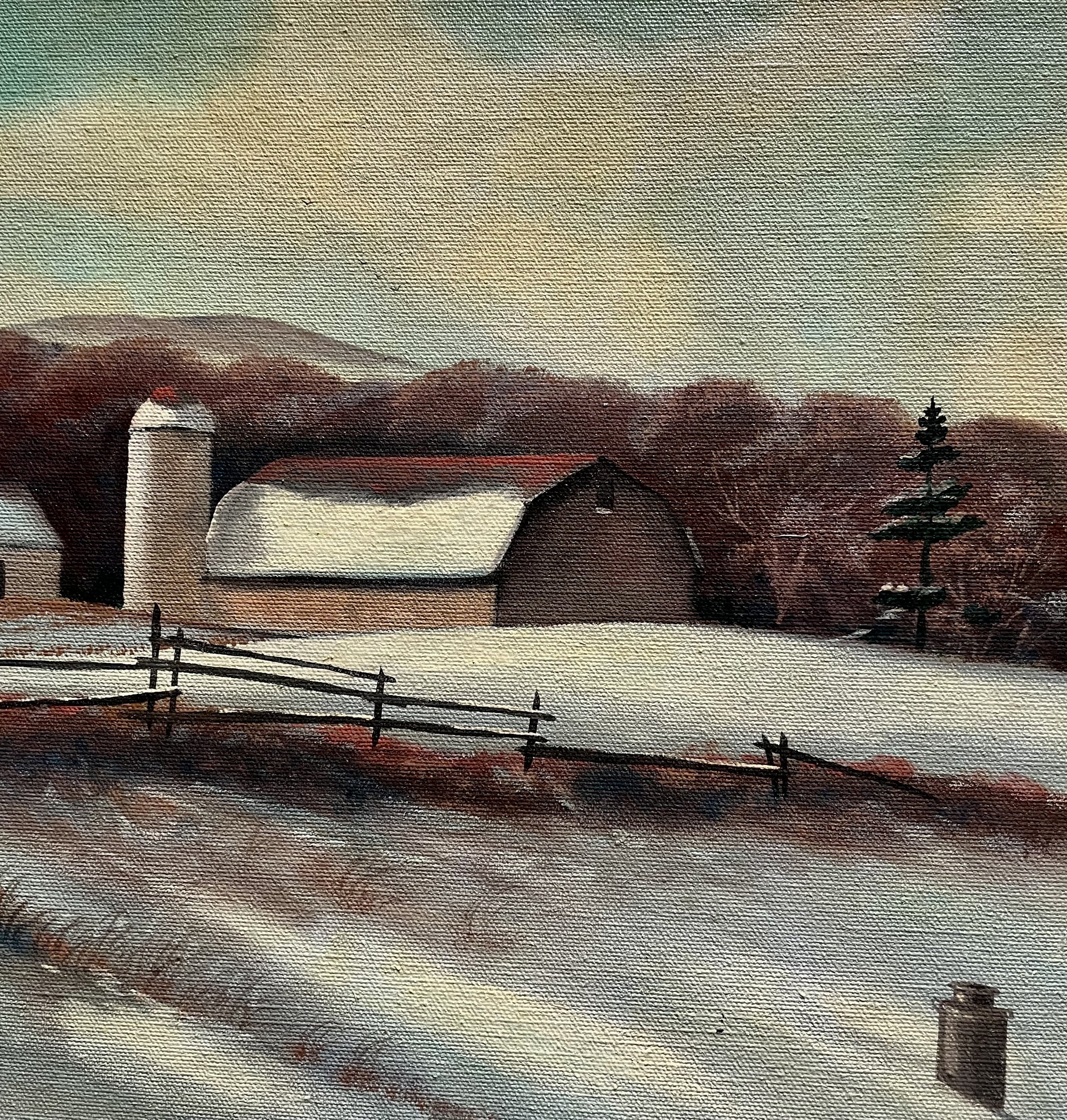
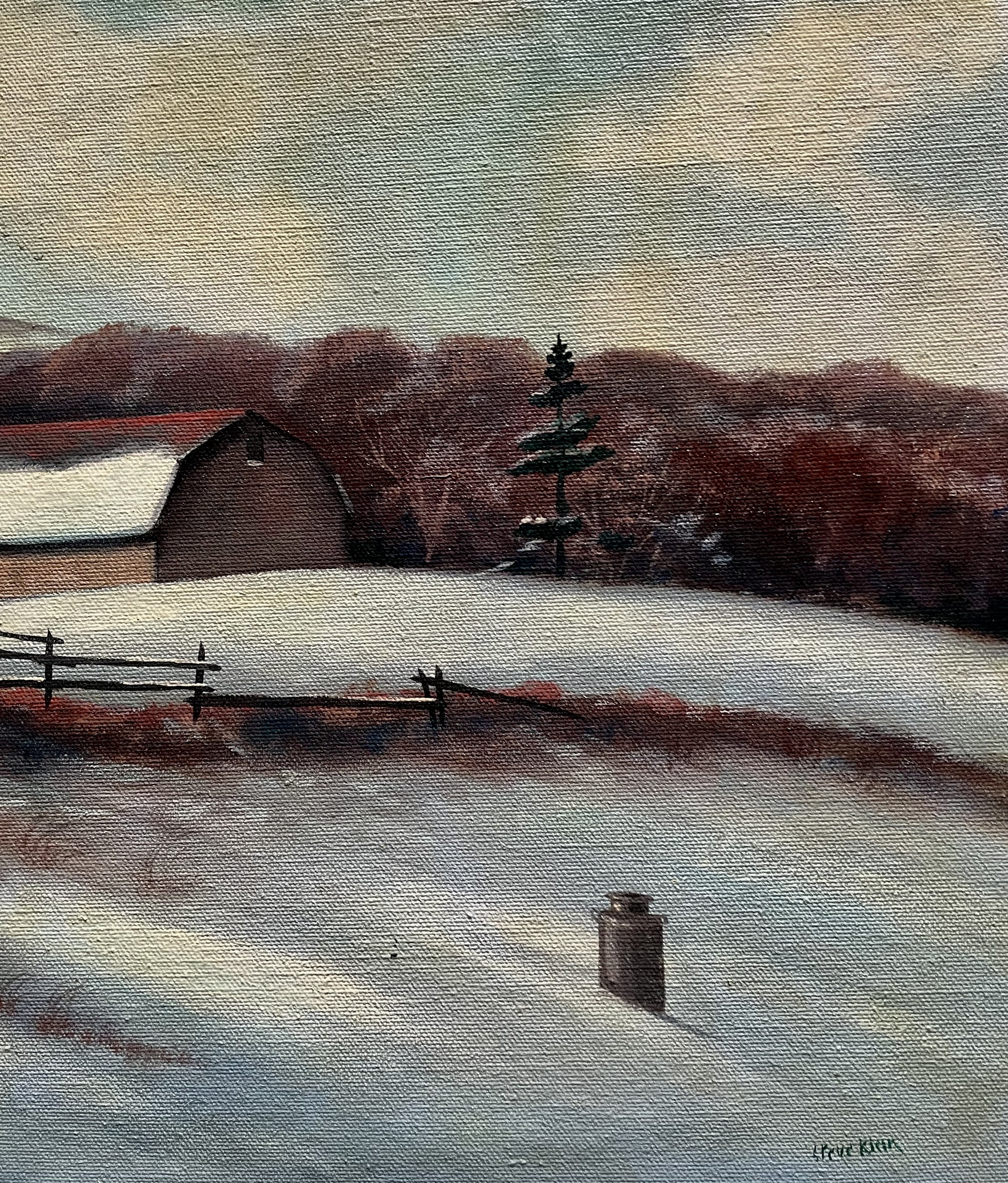
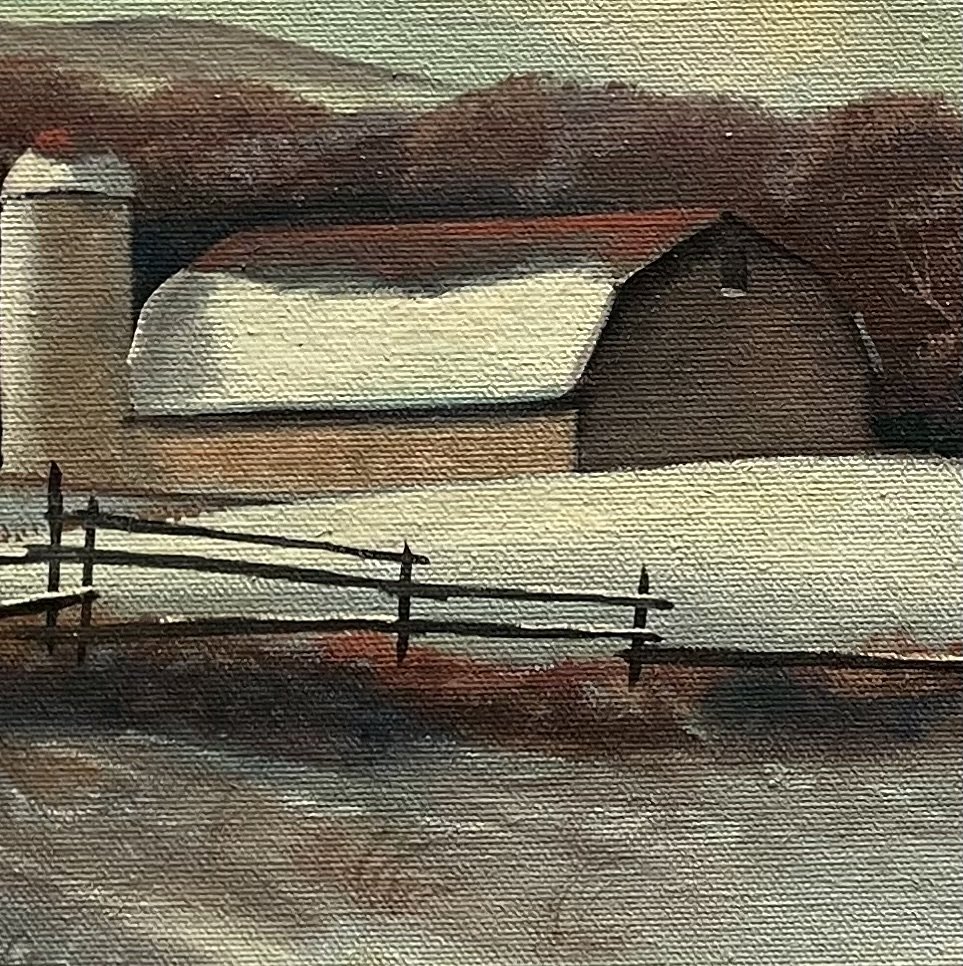
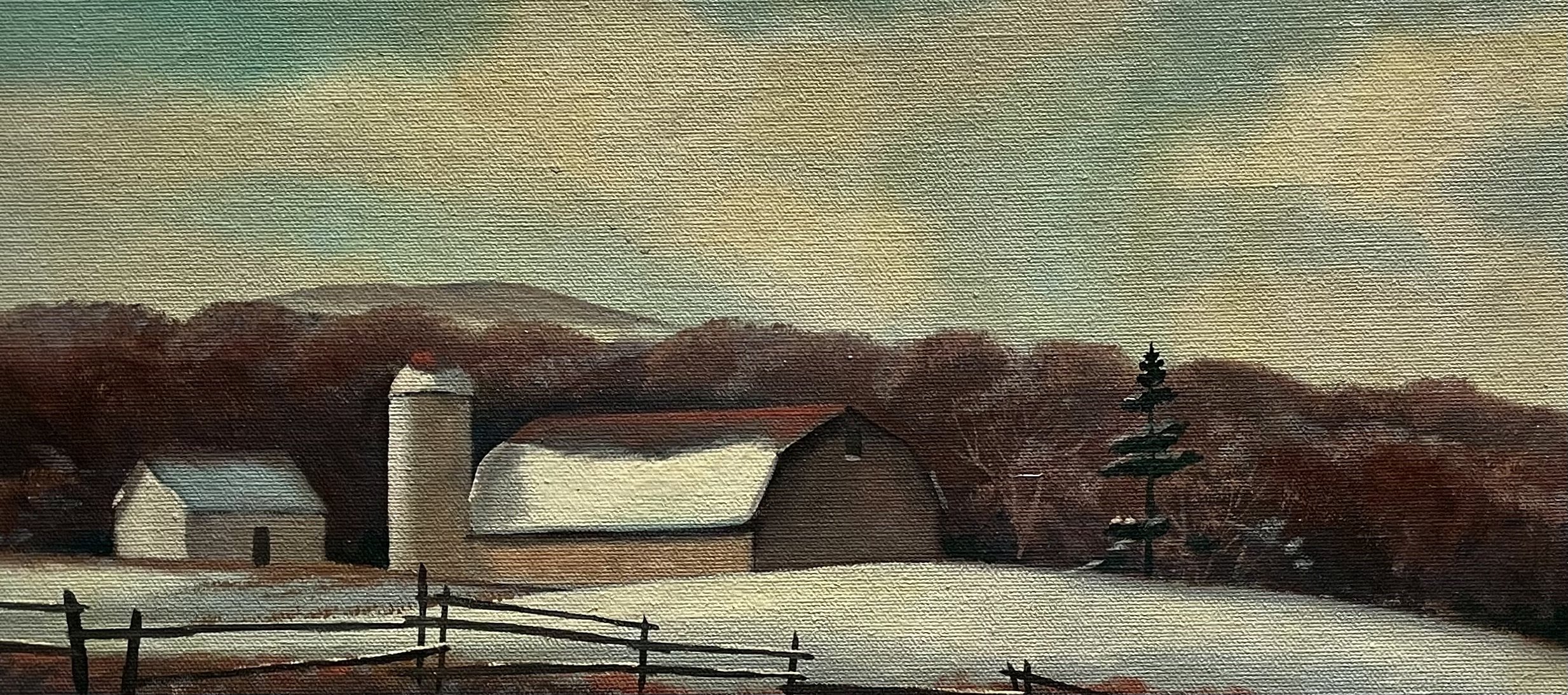
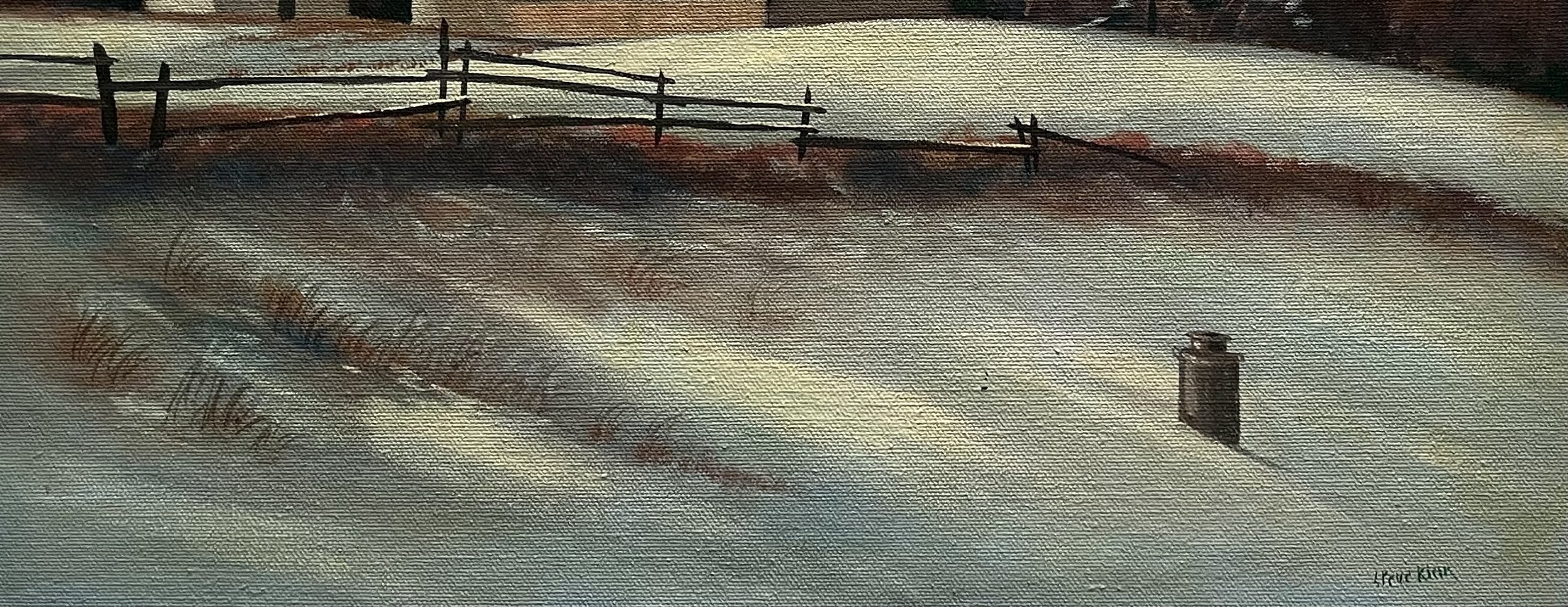
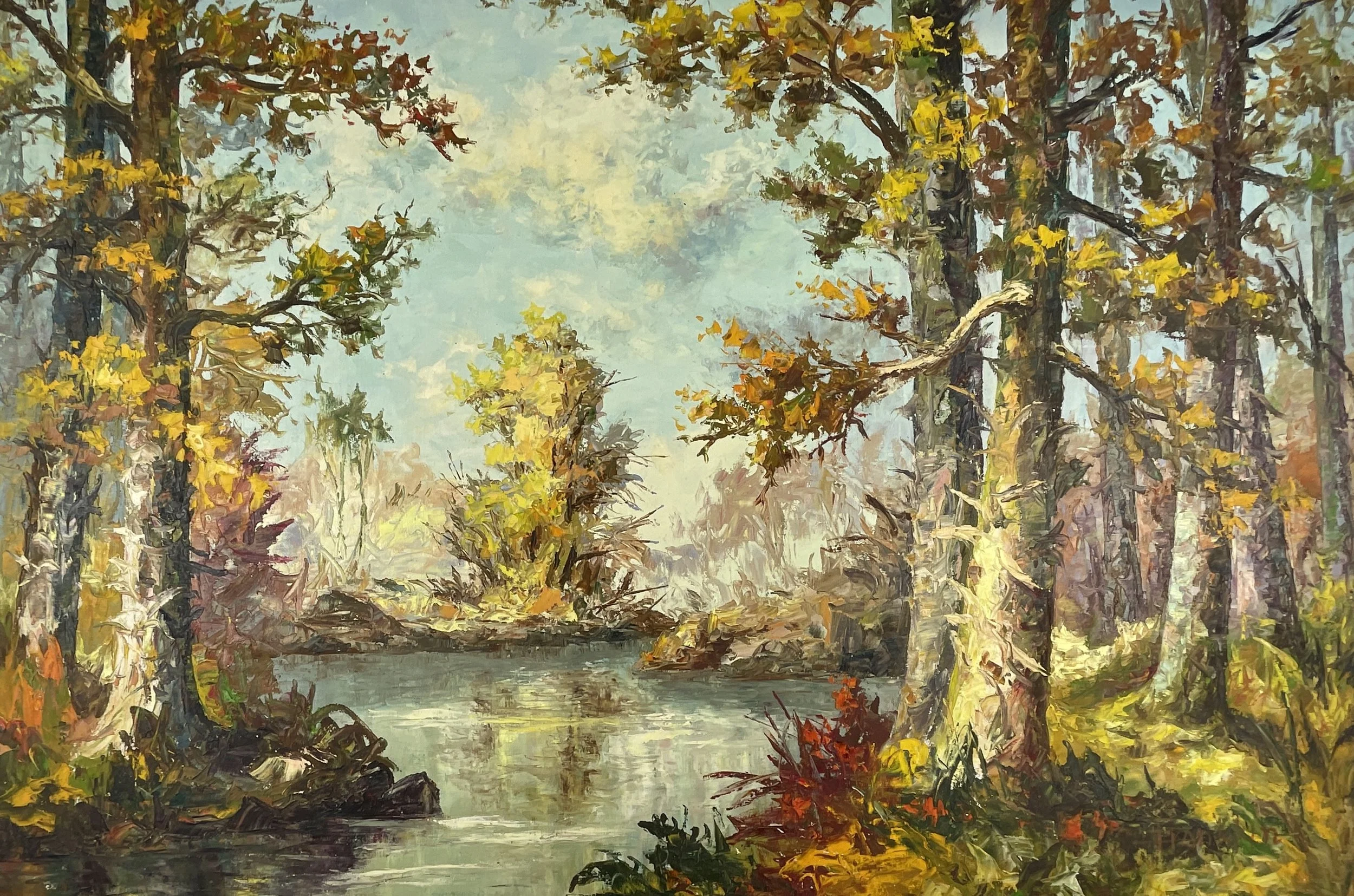
Autumn River Landscape (attributed), Robert Franklyn (b. 1938), c.1965–1975, oil on canvas, 36 × 24 in., signed lower corner.
Expressive autumn woodland river landscape by British painter Robert Franklyn depicting a tranquil stream surrounded by tall trees and golden foliage. Painted in rich impasto oil with energetic brushwork, the composition captures the glow of fall light reflecting across still water. A vivid mid-century landscape combining impressionist color with strong palette-knife texture.
Artwork Description
This striking woodland landscape by Robert Franklyn presents a peaceful river bend surrounded by towering trees and dense autumn foliage. The scene unfolds in a quiet clearing where the water widens into a reflective pool before disappearing deeper into the forest. The artist structures the composition so that the river becomes a visual pathway leading the viewer into the luminous distance.
Tall trees frame the composition on both sides of the canvas. Their twisting trunks and branching limbs arch inward, forming a natural canopy over the water. Leaves painted in warm tones of gold, amber, rust, and olive suggest the height of autumn. These passages are built with confident palette-knife strokes and layered brushwork that give the foliage a vibrant tactile surface.
The foreground is filled with rich vegetation—deep greens, burnt orange, and yellow grasses—painted with expressive strokes that suggest wild undergrowth along the riverbank. Franklyn uses broken color and textured layers of paint to convey depth within the vegetation, allowing glimpses of darker earth tones beneath the surface.
At the center of the composition the water reflects the surrounding landscape in soft, silvery tones. Subtle horizontal strokes suggest ripples across the river’s surface, while reflections of the trees and sky shimmer in muted greens and blues. This calm reflective area provides a quiet visual contrast to the energetic brushwork of the surrounding foliage.
The distant background dissolves into soft atmospheric color. Trees and brush become more abstract as they recede into pale blues, lavender browns, and soft greens, creating a sense of depth and atmospheric perspective. This treatment reflects the influence of impressionist landscape painting, where color relationships and light effects carry more importance than precise detail.
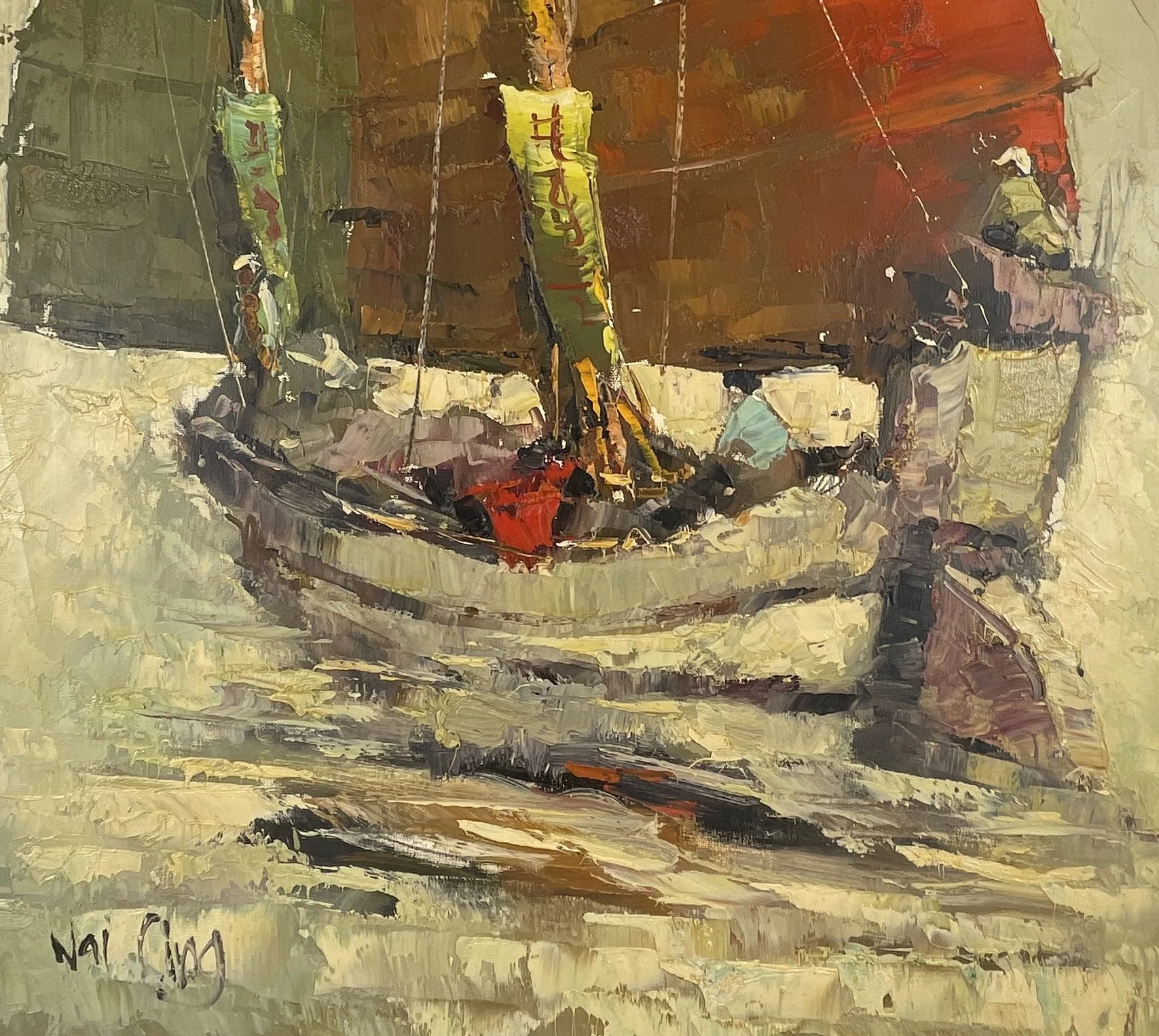
Franklyn’s technique blends palette-knife painting with loose brushwork. Thick passages of paint are especially visible on tree trunks and highlights within the foliage. The paint surface has a sculptural quality that catches light across the canvas, reinforcing the sense of movement within the leaves and branches.
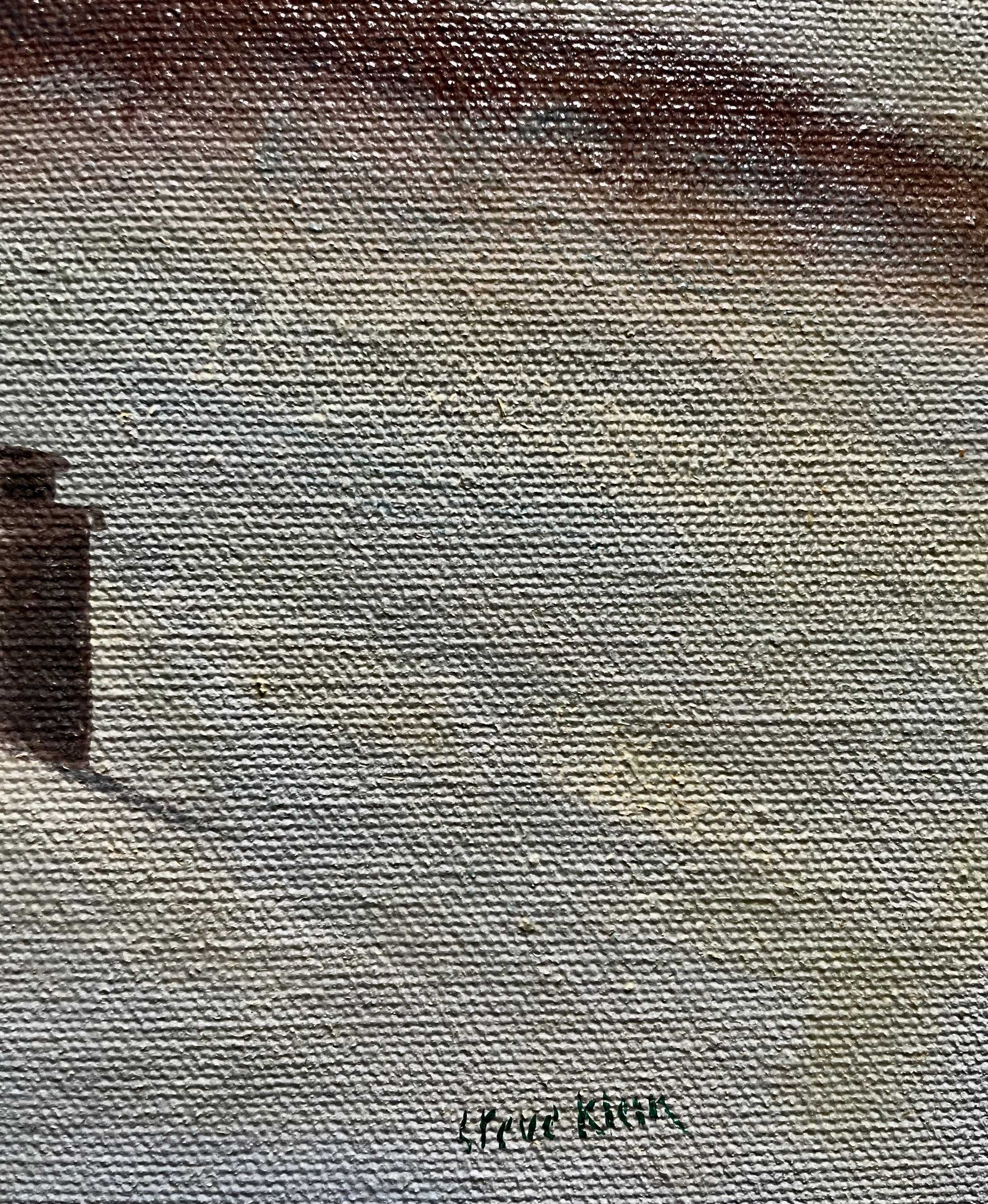
The painting is executed in oil on canvas and measures approximately 36 by 24 inches. The work is signed and displays strong characteristics of mid-twentieth-century expressive landscape painting—bold color, textured paint handling, and a romantic interpretation of natural scenery.
The overall effect is both dramatic and tranquil. Franklyn captures the quiet beauty of a forest river in autumn while using energetic paint application to convey the vitality of nature.
Artist Biography
Robert Franklyn (born 1938) is a British painter whose work reflects a lifelong engagement with landscape and the expressive possibilities of oil painting. Born in a small village in Kent, England, Franklyn grew up surrounded by the rural scenery that would later become the central inspiration for much of his artistic output.
During the Second World War his family relocated to Scotland, where they lived on a farm. This period proved formative for the young artist. Surrounded by fields, forests, and waterways, Franklyn spent much of his childhood drawing and sketching the natural environment around him. Even at an early age he was rarely without a pencil and pad, constantly recording the landscapes that fascinated him.
Despite this clear artistic inclination, Franklyn’s family believed that painting was not a practical profession. Following their wishes, he was sent to college in London to study economics. While completing his studies, however, he continued to pursue art independently. He spent evenings and spare hours visiting museums, sketching in parks, and studying the works of painters exhibited in London’s major galleries.
After completing his formal education, Franklyn increasingly devoted himself to painting. His work began to appear in London galleries where collectors responded to his expressive landscapes and confident use of color. These early exhibitions helped establish his reputation as a painter capable of capturing the atmosphere of natural environments through energetic brushwork.
Franklyn’s career expanded beyond Britain as his work began to appear in galleries in continental Europe. He exhibited in both France and Belgium, where his landscapes attracted attention for their combination of impressionistic light and bold palette-knife texture. These exhibitions helped introduce his work to a broader international audience.
The artist’s painting style reflects several influences from the European landscape tradition. Elements of impressionism appear in his interest in light and atmosphere, while the textured application of paint recalls the expressive methods of post-impressionist painters who emphasized the physical presence of paint on the canvas. Franklyn’s landscapes often balance structural composition with spontaneous brushwork, allowing natural scenery to emerge through layers of color.
Many of his paintings focus on woodland scenes, rivers, and rural countryside settings—subjects that echo the landscapes of southern England and Scotland where he spent his formative years. Trees often serve as framing devices within his compositions, guiding the viewer’s eye toward distant water or open clearings illuminated by changing light.
Franklyn’s work has been collected internationally and is represented in a variety of private and public collections. His paintings appeal to collectors who appreciate expressive landscape painting that combines traditional subject matter with modern painterly technique.
As of 2026, Robert Franklyn’s work remains appreciated for its atmospheric landscapes and strong painterly character. His paintings continue to embody the enduring tradition of European landscape art while maintaining the personal energy and observational sensitivity that defined his early fascination with the natural world.
Robert Franklyn autumn river landscape oil painting, expressive woodland scene with reflective water and fall foliage, signed, 36 × 24 in.
Certificate of Authentication
Artist: Robert Franklyn (b. 1938)
Title: Autumn River Landscape (attributed)
Medium: Oil on canvas
Dimensions: 36 × 24 inches
Signature: Signed
Date: circa 1965–1975
This artwork is an original oil painting by Robert Franklyn based on the visible signature and stylistic characteristics consistent with the artist’s landscape paintings.
Condition
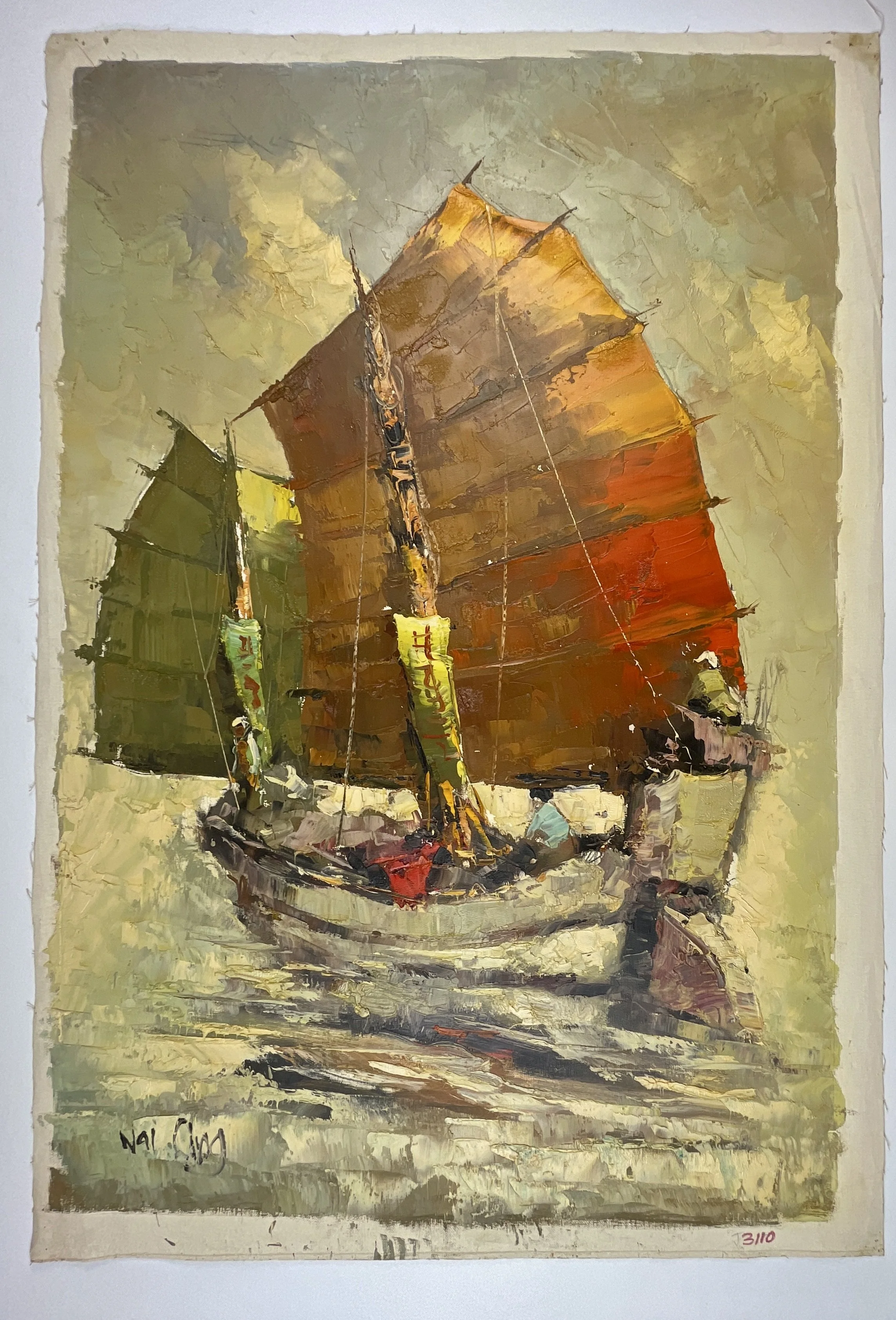
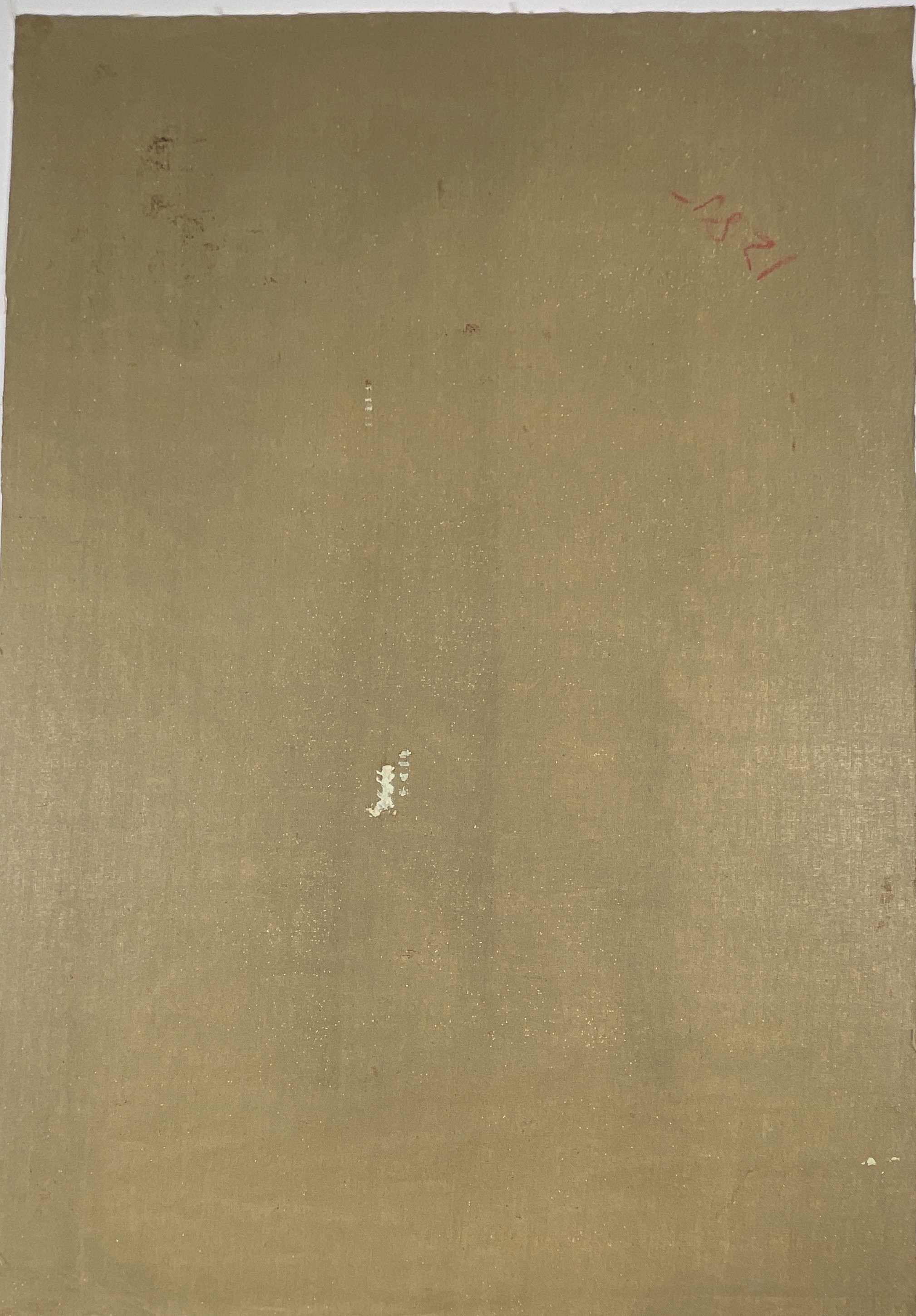
Good vintage condition overall. Minor edge wear and handling marks from previous stretching and storage. Paint surface stable with visible impasto texture. Light cosmetic wear consistent with age.
Provenance
Artist studio or early gallery distribution
Mitch Morse Gallery, New York — artist’s agent, publisher of original graphics, art dealer and distributor
Private collection acquired through Mitch Morse Gallery
Artfind Gallery, Washington DC (current owner)
All works have been acquired from Mitch Morse Gallery, which sourced artwork in New York, the United States, and Europe.
Provenance Note: Mitch Morse Gallery Collection
This artwork originates from the inventory of Mitch Morse Gallery, a respected New York–based gallery and publisher active during the mid-to-late 20th century. Mitch Morse was an established figure in the American art market, serving as an artist’s agent, publisher of original graphics, art dealer, distributor, and fine art restorer. He was also a Design Affiliate of A.S.I.D., listed in Who’s Who in the East, and a guest lecturer in graphics at New York University, with appearances on radio and television discussing art and design.
Through his gallery and associated publishing operations, Morse acquired paintings, prints, and original works from artists and studios across New York, Europe, and international art markets, assembling a broad inventory representing a wide range of artistic traditions and mediums. Works from this collection circulated through galleries and collectors throughout the United States.
The present painting was acquired through this network and is now held in the collection of Artfind Gallery, Washington DC, continuing the documented chain of gallery provenance from Mitch Morse’s original acquisitions.
Autumn River Landscape (attributed), Robert Franklyn (b. 1938), c.1965–1975, oil on canvas, 36 × 24 in., signed lower corner.
Expressive autumn woodland river landscape by British painter Robert Franklyn depicting a tranquil stream surrounded by tall trees and golden foliage. Painted in rich impasto oil with energetic brushwork, the composition captures the glow of fall light reflecting across still water. A vivid mid-century landscape combining impressionist color with strong palette-knife texture.
Artwork Description
This striking woodland landscape by Robert Franklyn presents a peaceful river bend surrounded by towering trees and dense autumn foliage. The scene unfolds in a quiet clearing where the water widens into a reflective pool before disappearing deeper into the forest. The artist structures the composition so that the river becomes a visual pathway leading the viewer into the luminous distance.
Tall trees frame the composition on both sides of the canvas. Their twisting trunks and branching limbs arch inward, forming a natural canopy over the water. Leaves painted in warm tones of gold, amber, rust, and olive suggest the height of autumn. These passages are built with confident palette-knife strokes and layered brushwork that give the foliage a vibrant tactile surface.
The foreground is filled with rich vegetation—deep greens, burnt orange, and yellow grasses—painted with expressive strokes that suggest wild undergrowth along the riverbank. Franklyn uses broken color and textured layers of paint to convey depth within the vegetation, allowing glimpses of darker earth tones beneath the surface.
At the center of the composition the water reflects the surrounding landscape in soft, silvery tones. Subtle horizontal strokes suggest ripples across the river’s surface, while reflections of the trees and sky shimmer in muted greens and blues. This calm reflective area provides a quiet visual contrast to the energetic brushwork of the surrounding foliage.
The distant background dissolves into soft atmospheric color. Trees and brush become more abstract as they recede into pale blues, lavender browns, and soft greens, creating a sense of depth and atmospheric perspective. This treatment reflects the influence of impressionist landscape painting, where color relationships and light effects carry more importance than precise detail.
Franklyn’s technique blends palette-knife painting with loose brushwork. Thick passages of paint are especially visible on tree trunks and highlights within the foliage. The paint surface has a sculptural quality that catches light across the canvas, reinforcing the sense of movement within the leaves and branches.
The painting is executed in oil on canvas and measures approximately 36 by 24 inches. The work is signed and displays strong characteristics of mid-twentieth-century expressive landscape painting—bold color, textured paint handling, and a romantic interpretation of natural scenery.
The overall effect is both dramatic and tranquil. Franklyn captures the quiet beauty of a forest river in autumn while using energetic paint application to convey the vitality of nature.
Artist Biography
Robert Franklyn (born 1938) is a British painter whose work reflects a lifelong engagement with landscape and the expressive possibilities of oil painting. Born in a small village in Kent, England, Franklyn grew up surrounded by the rural scenery that would later become the central inspiration for much of his artistic output.
During the Second World War his family relocated to Scotland, where they lived on a farm. This period proved formative for the young artist. Surrounded by fields, forests, and waterways, Franklyn spent much of his childhood drawing and sketching the natural environment around him. Even at an early age he was rarely without a pencil and pad, constantly recording the landscapes that fascinated him.
Despite this clear artistic inclination, Franklyn’s family believed that painting was not a practical profession. Following their wishes, he was sent to college in London to study economics. While completing his studies, however, he continued to pursue art independently. He spent evenings and spare hours visiting museums, sketching in parks, and studying the works of painters exhibited in London’s major galleries.
After completing his formal education, Franklyn increasingly devoted himself to painting. His work began to appear in London galleries where collectors responded to his expressive landscapes and confident use of color. These early exhibitions helped establish his reputation as a painter capable of capturing the atmosphere of natural environments through energetic brushwork.
Franklyn’s career expanded beyond Britain as his work began to appear in galleries in continental Europe. He exhibited in both France and Belgium, where his landscapes attracted attention for their combination of impressionistic light and bold palette-knife texture. These exhibitions helped introduce his work to a broader international audience.
The artist’s painting style reflects several influences from the European landscape tradition. Elements of impressionism appear in his interest in light and atmosphere, while the textured application of paint recalls the expressive methods of post-impressionist painters who emphasized the physical presence of paint on the canvas. Franklyn’s landscapes often balance structural composition with spontaneous brushwork, allowing natural scenery to emerge through layers of color.
Many of his paintings focus on woodland scenes, rivers, and rural countryside settings—subjects that echo the landscapes of southern England and Scotland where he spent his formative years. Trees often serve as framing devices within his compositions, guiding the viewer’s eye toward distant water or open clearings illuminated by changing light.
Franklyn’s work has been collected internationally and is represented in a variety of private and public collections. His paintings appeal to collectors who appreciate expressive landscape painting that combines traditional subject matter with modern painterly technique.
As of 2026, Robert Franklyn’s work remains appreciated for its atmospheric landscapes and strong painterly character. His paintings continue to embody the enduring tradition of European landscape art while maintaining the personal energy and observational sensitivity that defined his early fascination with the natural world.
Robert Franklyn autumn river landscape oil painting, expressive woodland scene with reflective water and fall foliage, signed, 36 × 24 in.
Certificate of Authentication
Artist: Robert Franklyn (b. 1938)
Title: Autumn River Landscape (attributed)
Medium: Oil on canvas
Dimensions: 36 × 24 inches
Signature: Signed
Date: circa 1965–1975
This artwork is an original oil painting by Robert Franklyn based on the visible signature and stylistic characteristics consistent with the artist’s landscape paintings.
Condition
Good vintage condition overall. Minor edge wear and handling marks from previous stretching and storage. Paint surface stable with visible impasto texture. Light cosmetic wear consistent with age.
Provenance
Artist studio or early gallery distribution
Mitch Morse Gallery, New York — artist’s agent, publisher of original graphics, art dealer and distributor
Private collection acquired through Mitch Morse Gallery
Artfind Gallery, Washington DC (current owner)
All works have been acquired from Mitch Morse Gallery, which sourced artwork in New York, the United States, and Europe.
Provenance Note: Mitch Morse Gallery Collection
This artwork originates from the inventory of Mitch Morse Gallery, a respected New York–based gallery and publisher active during the mid-to-late 20th century. Mitch Morse was an established figure in the American art market, serving as an artist’s agent, publisher of original graphics, art dealer, distributor, and fine art restorer. He was also a Design Affiliate of A.S.I.D., listed in Who’s Who in the East, and a guest lecturer in graphics at New York University, with appearances on radio and television discussing art and design.
Through his gallery and associated publishing operations, Morse acquired paintings, prints, and original works from artists and studios across New York, Europe, and international art markets, assembling a broad inventory representing a wide range of artistic traditions and mediums. Works from this collection circulated through galleries and collectors throughout the United States.
The present painting was acquired through this network and is now held in the collection of Artfind Gallery, Washington DC, continuing the documented chain of gallery provenance from Mitch Morse’s original acquisitions.