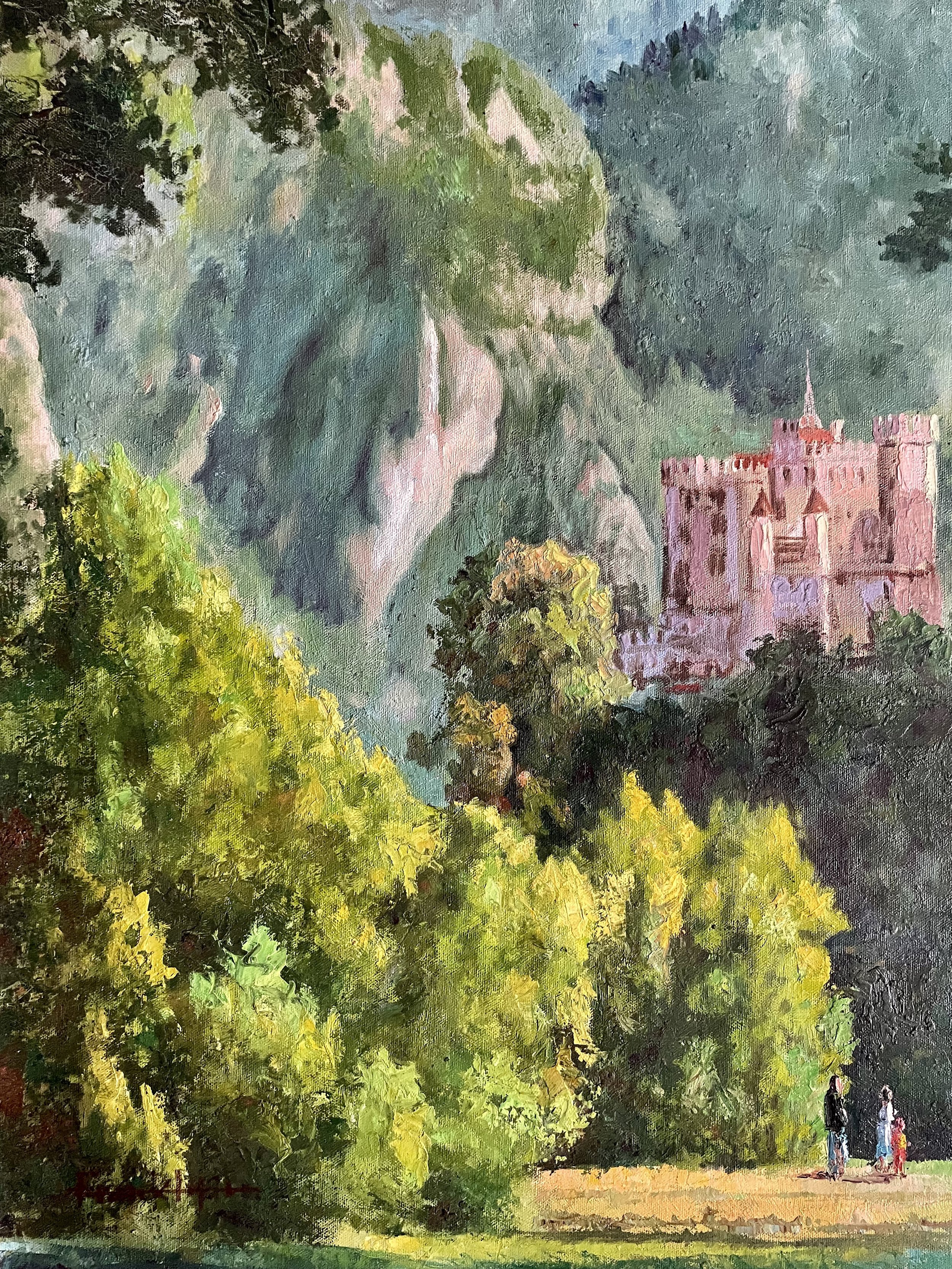
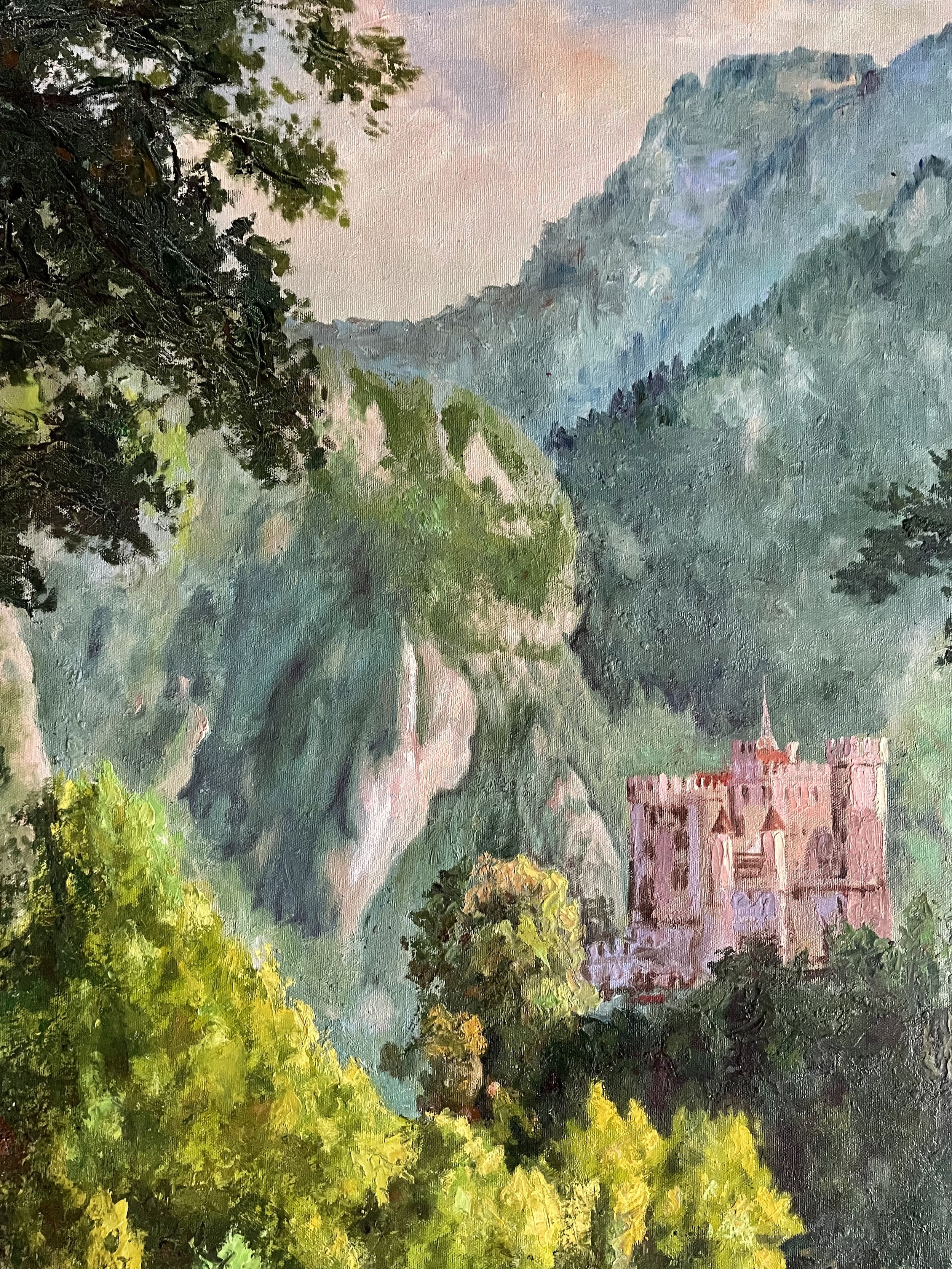
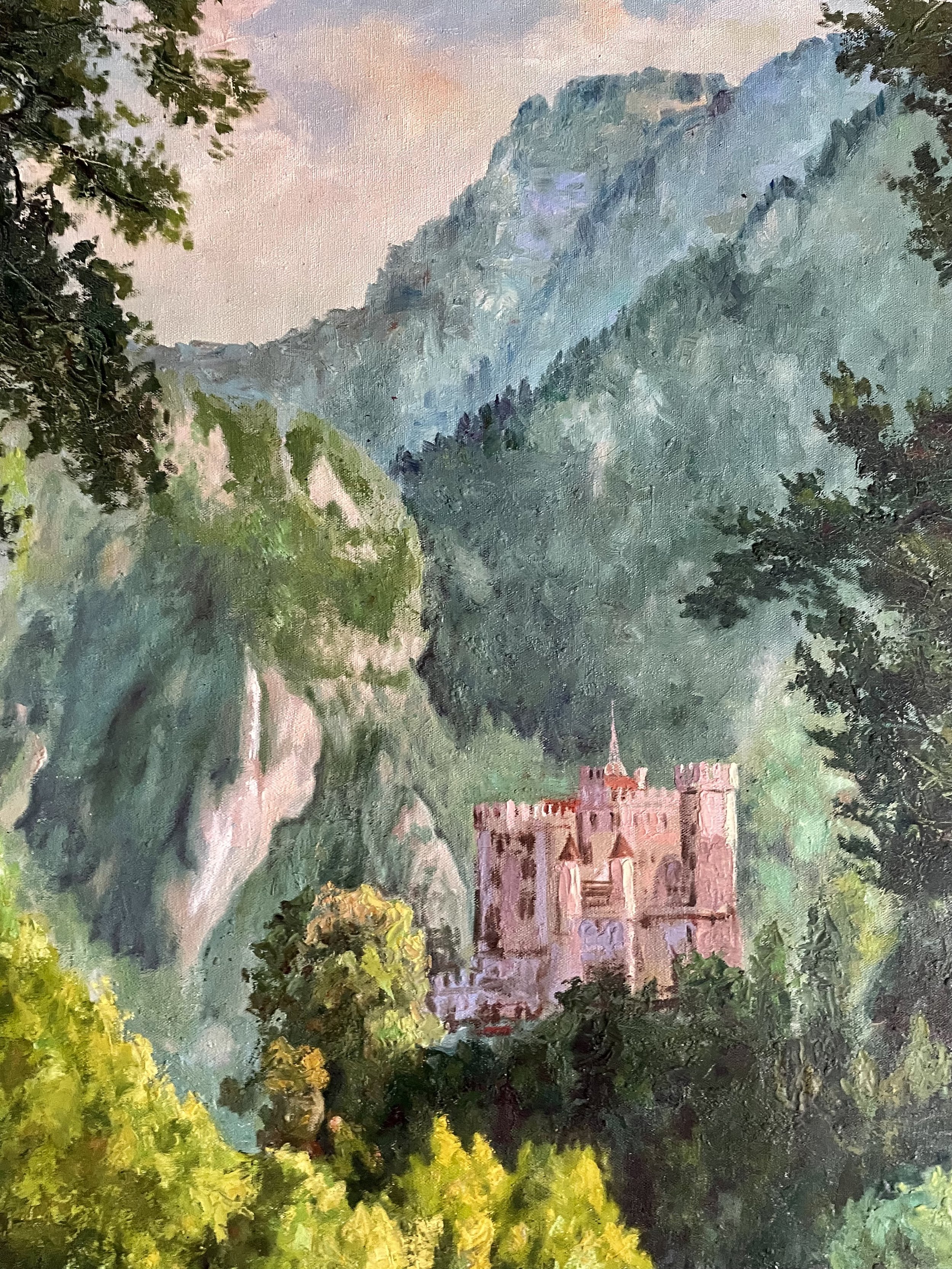
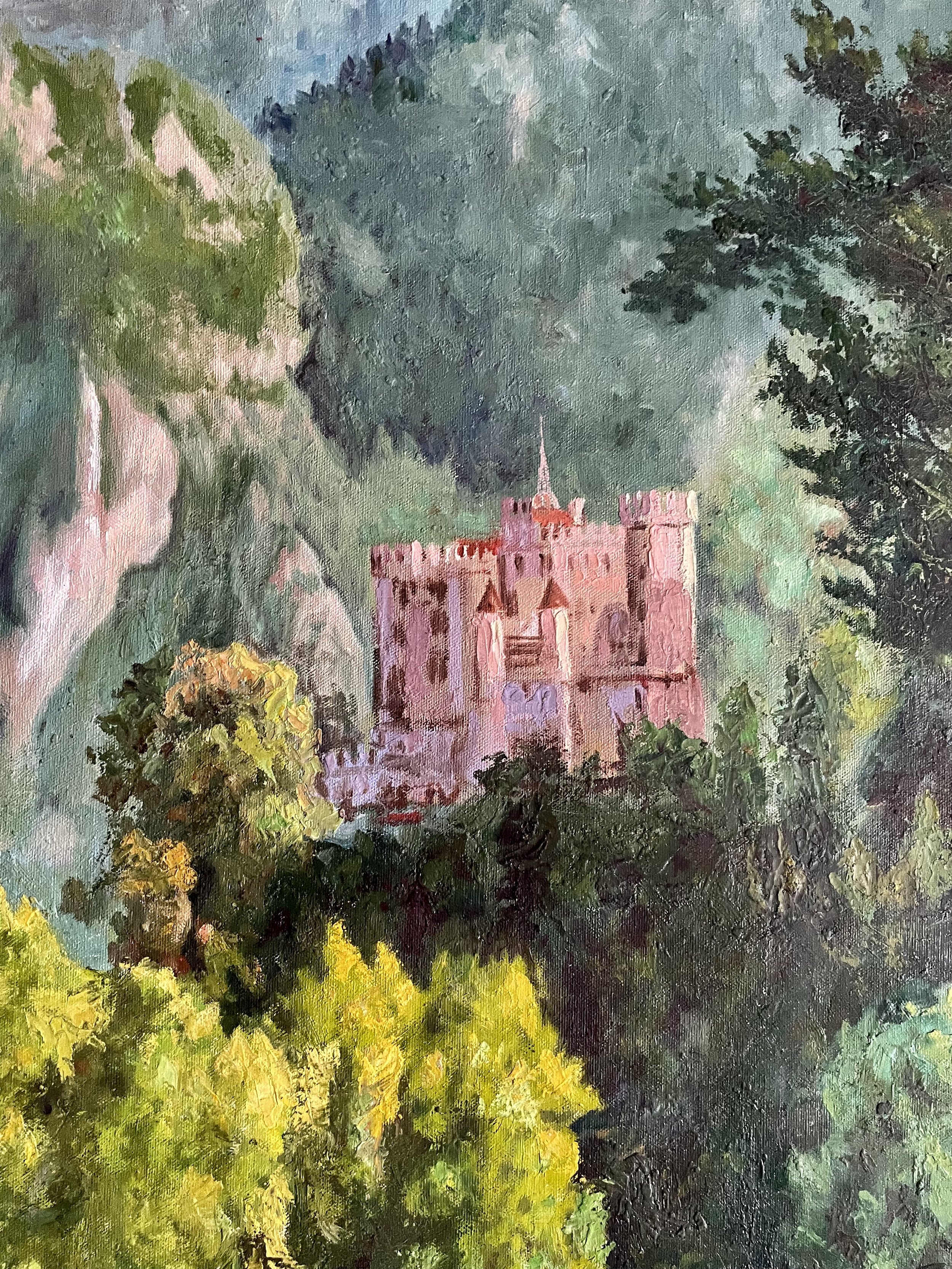
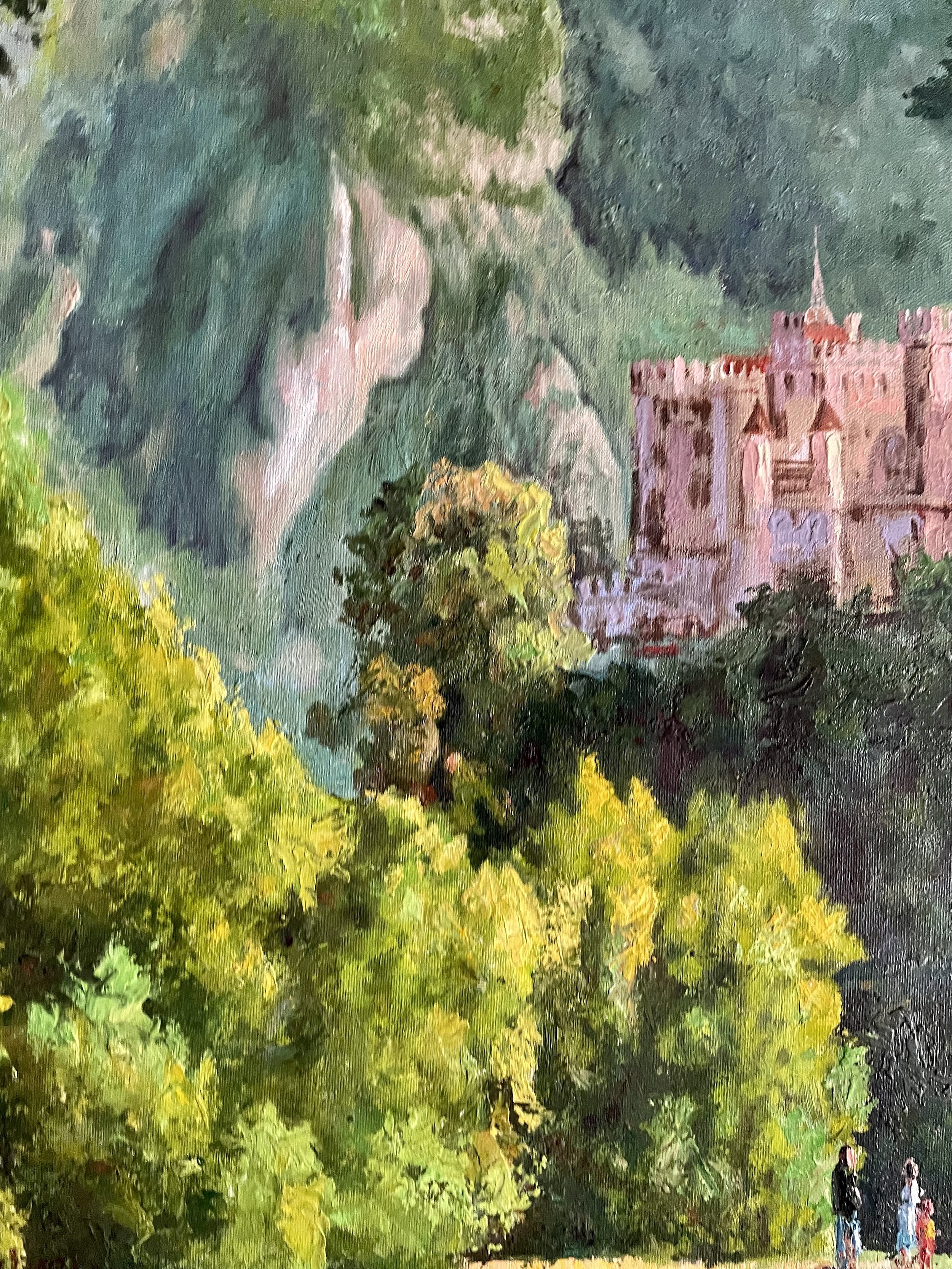
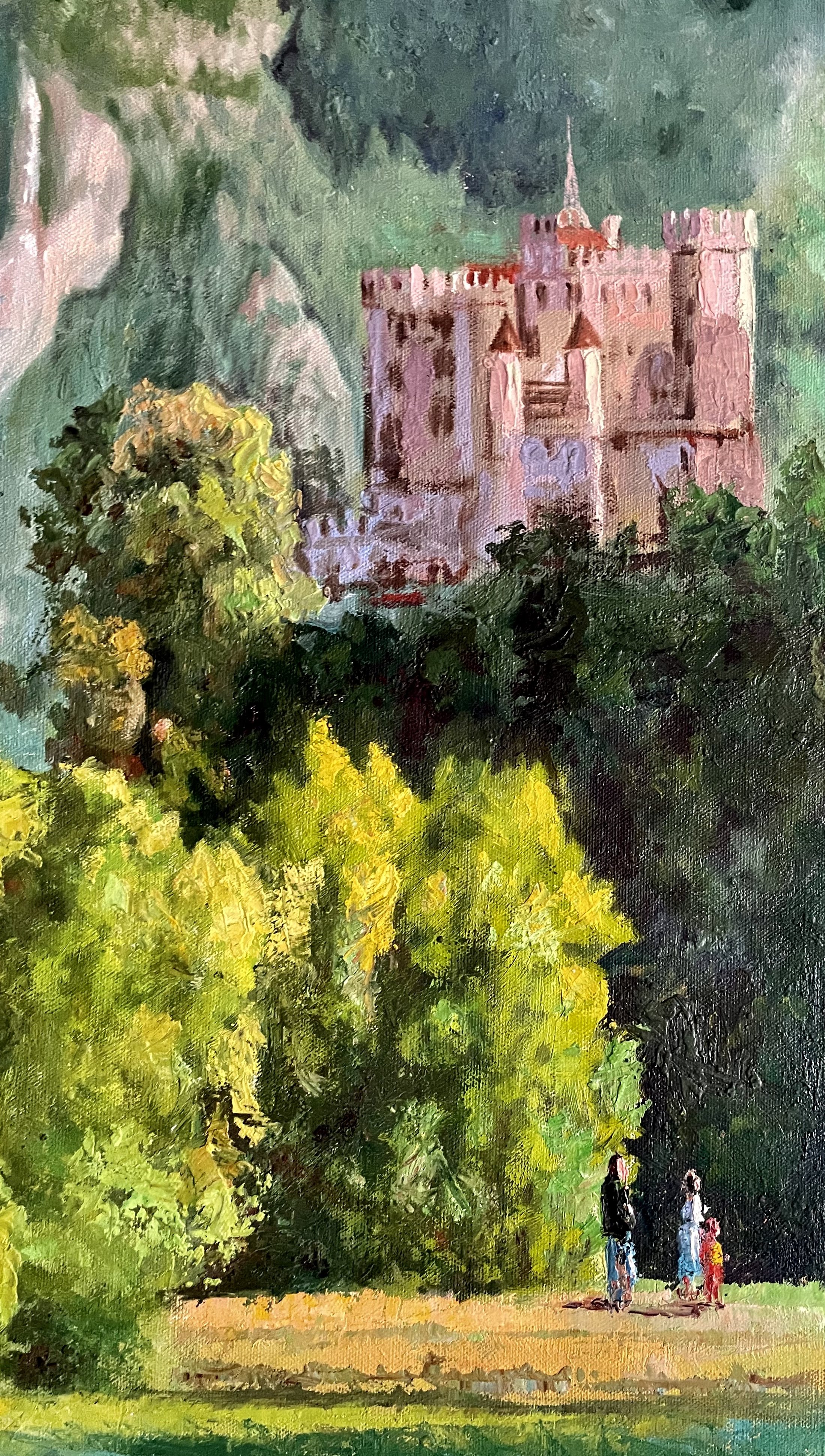
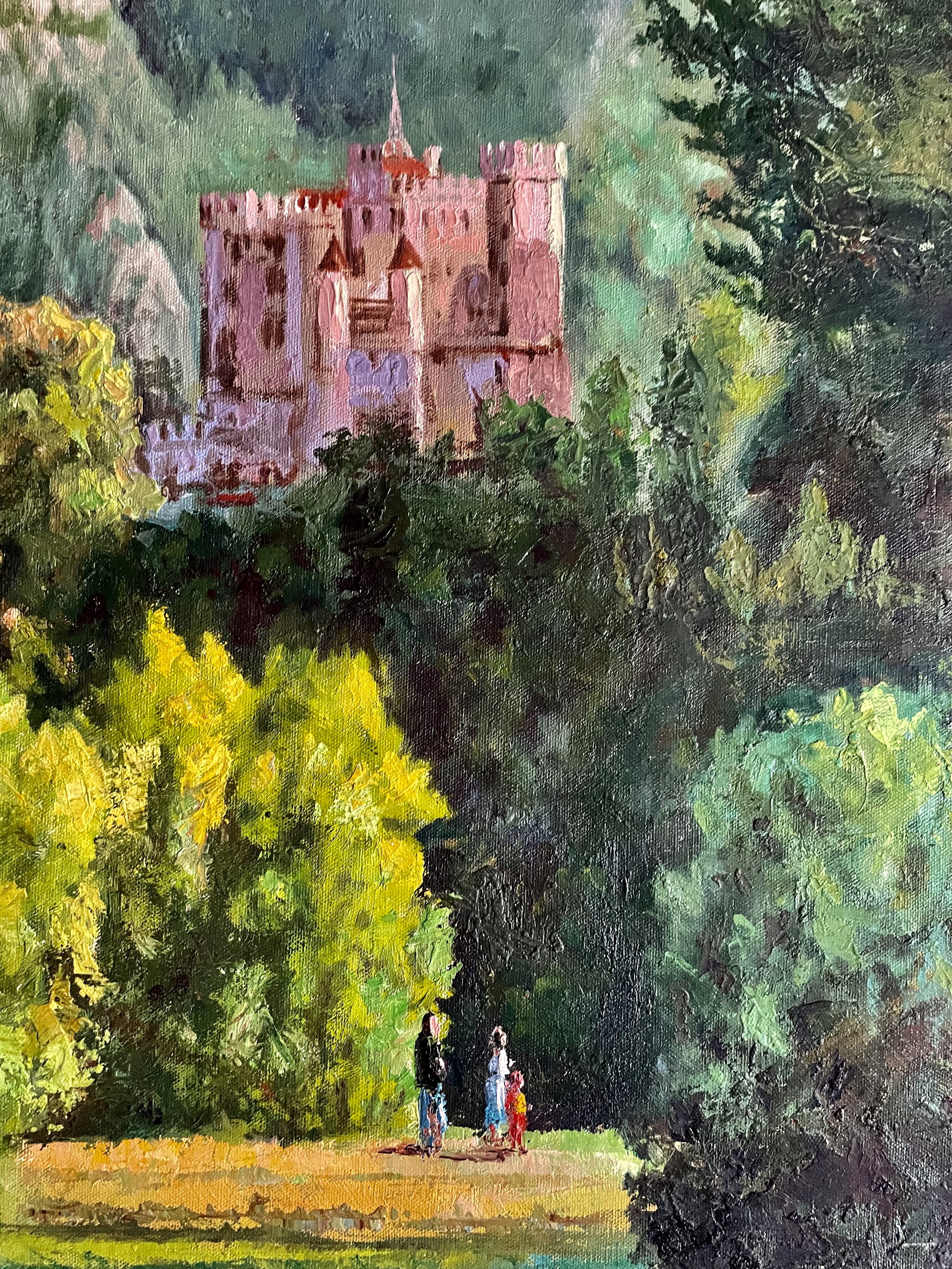
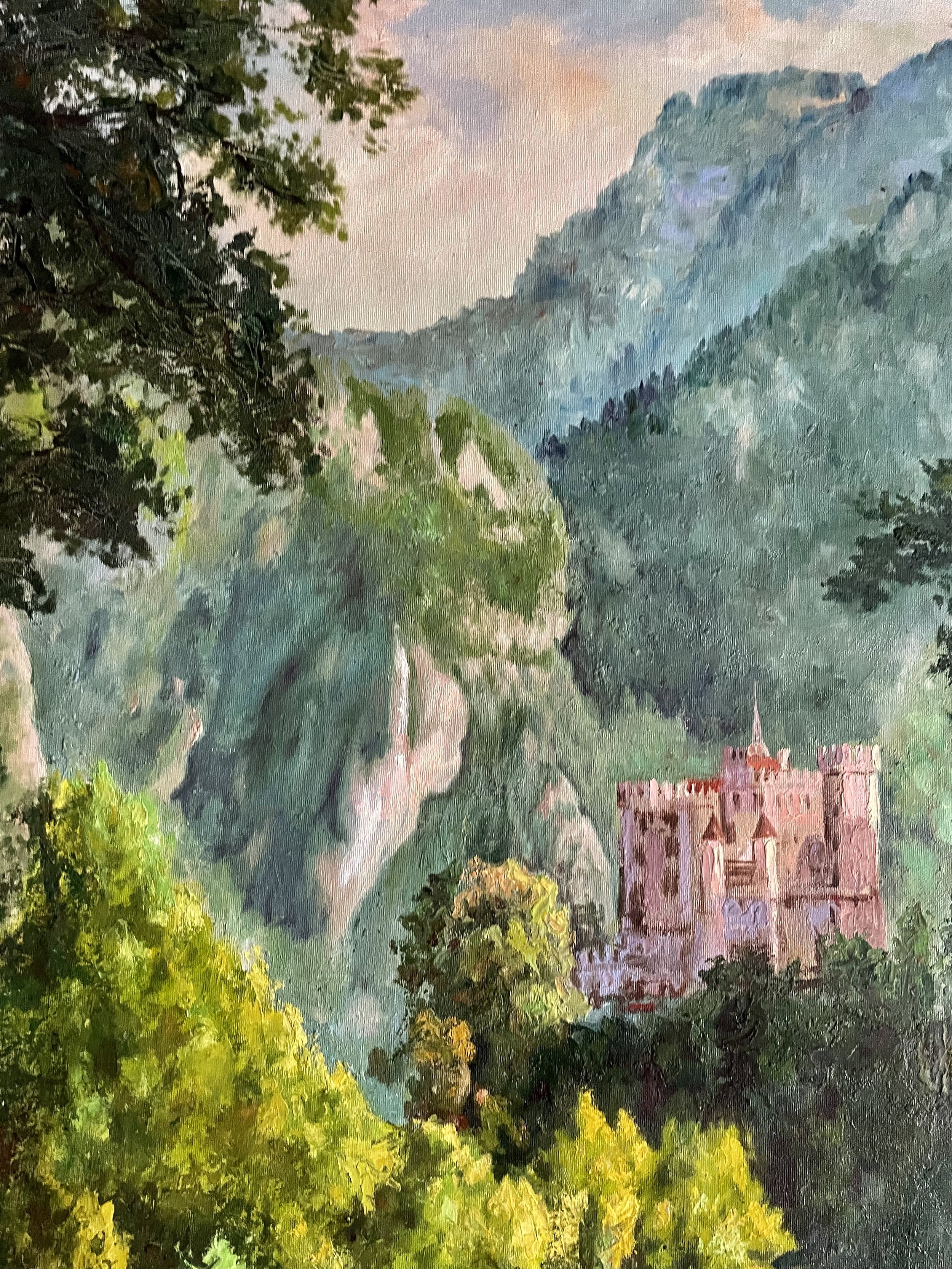
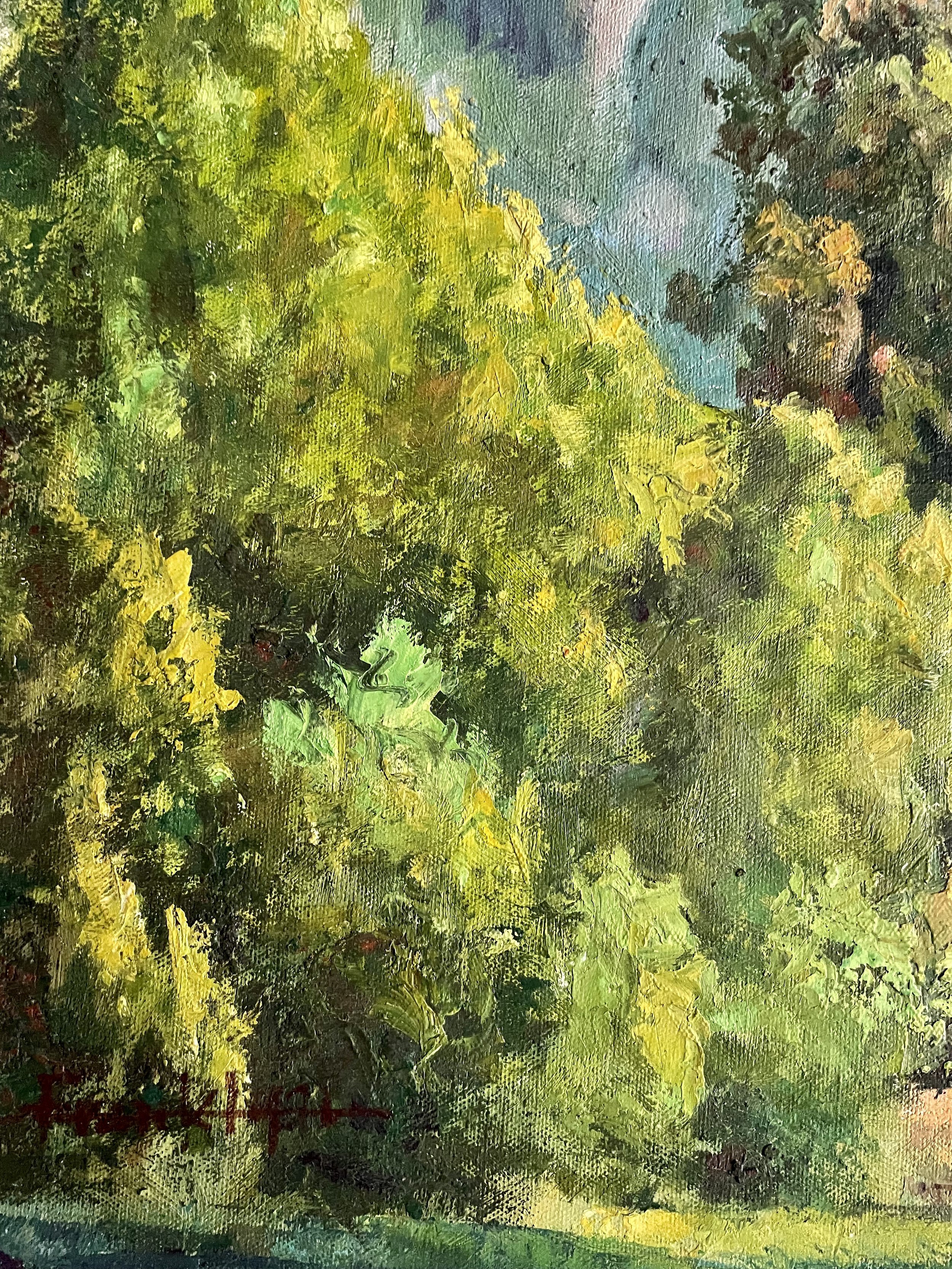
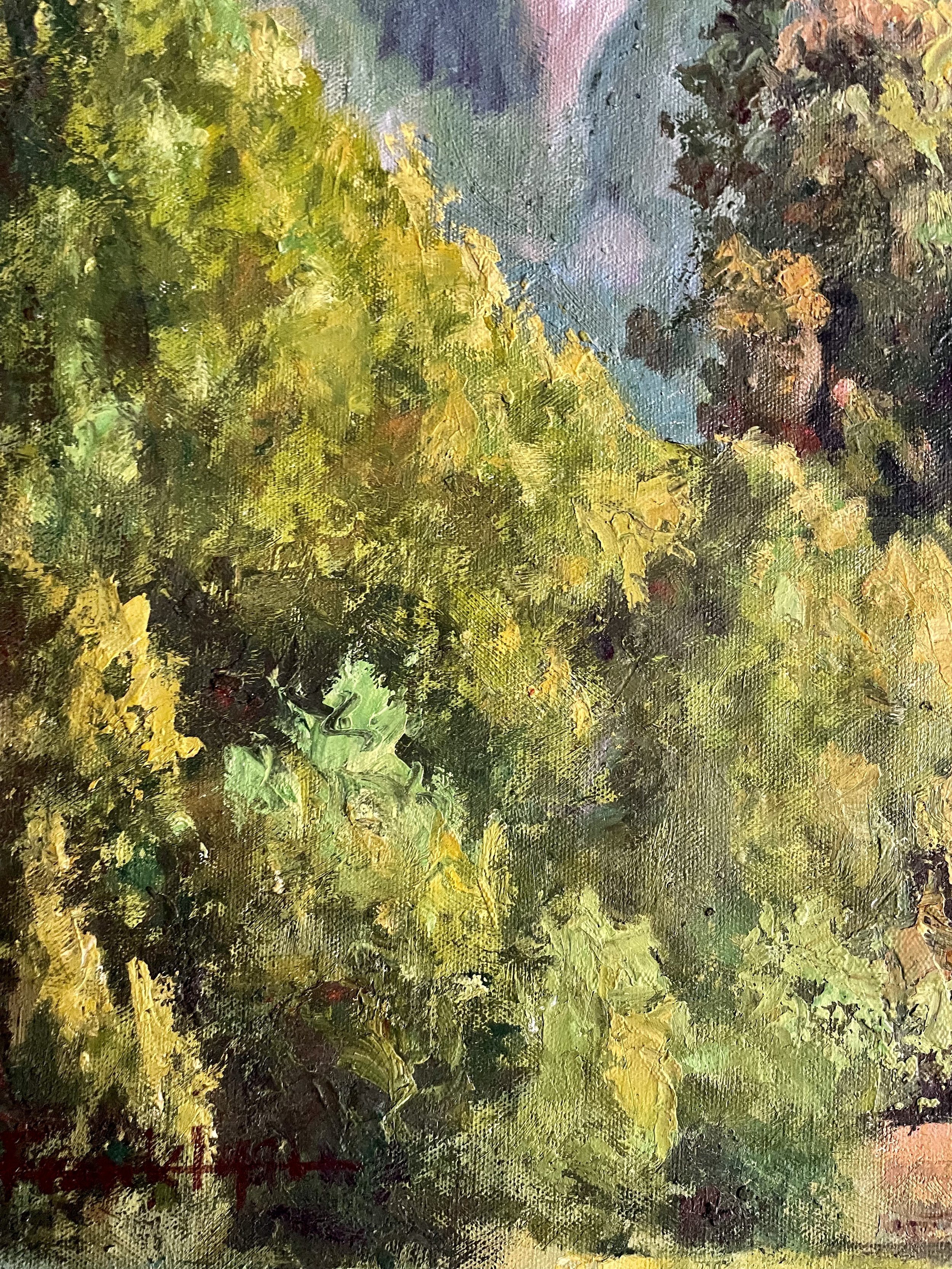
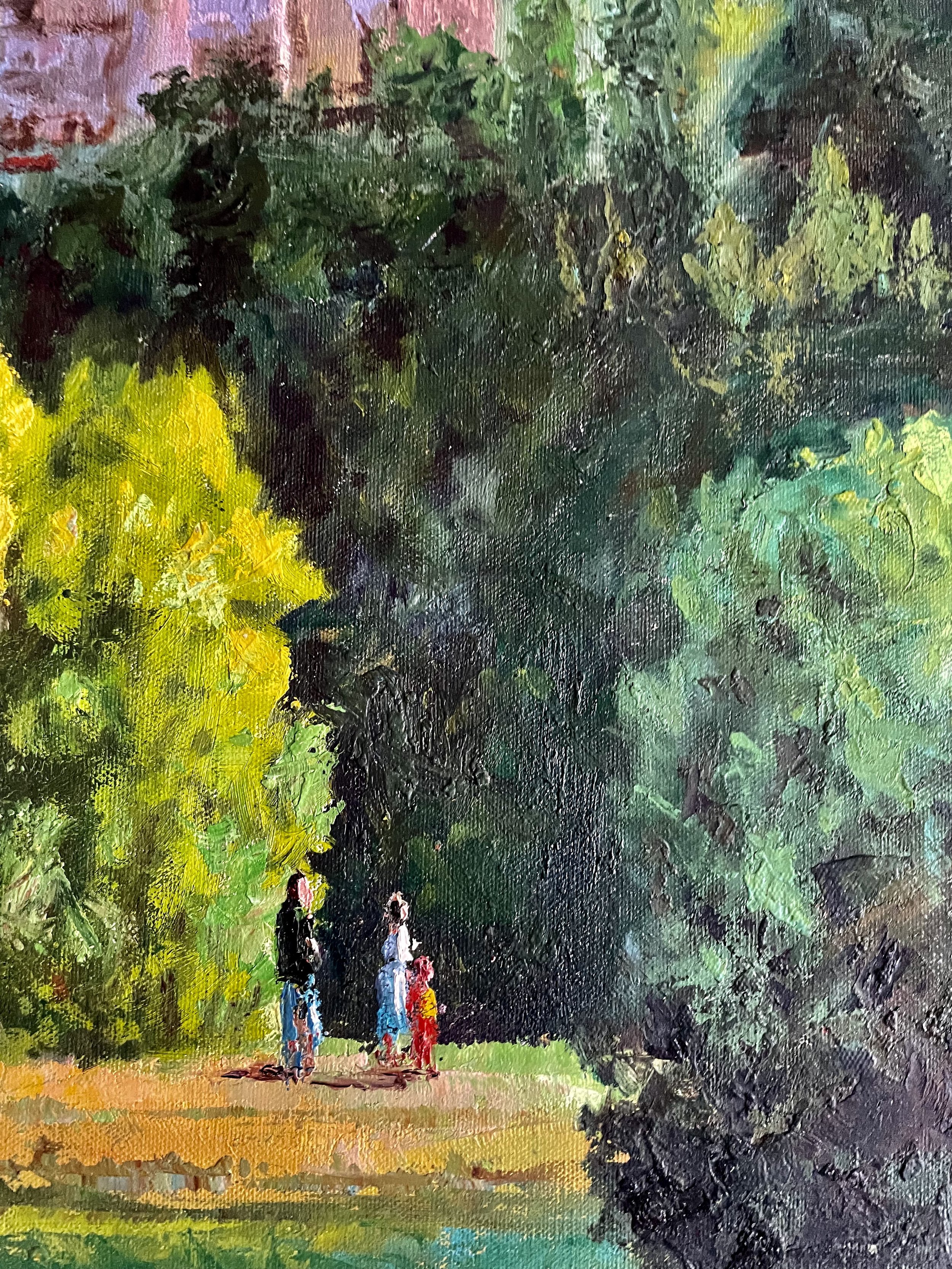
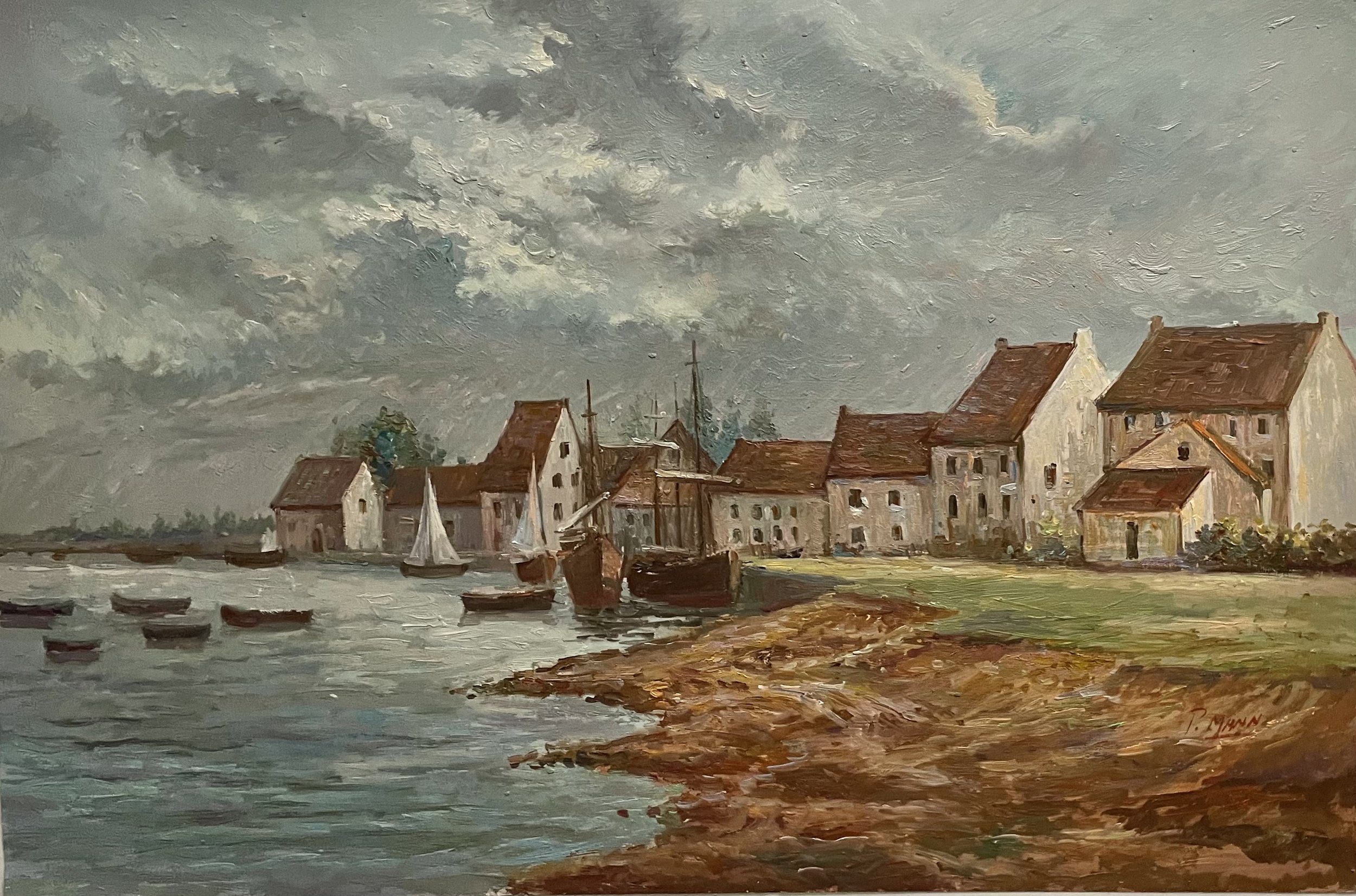
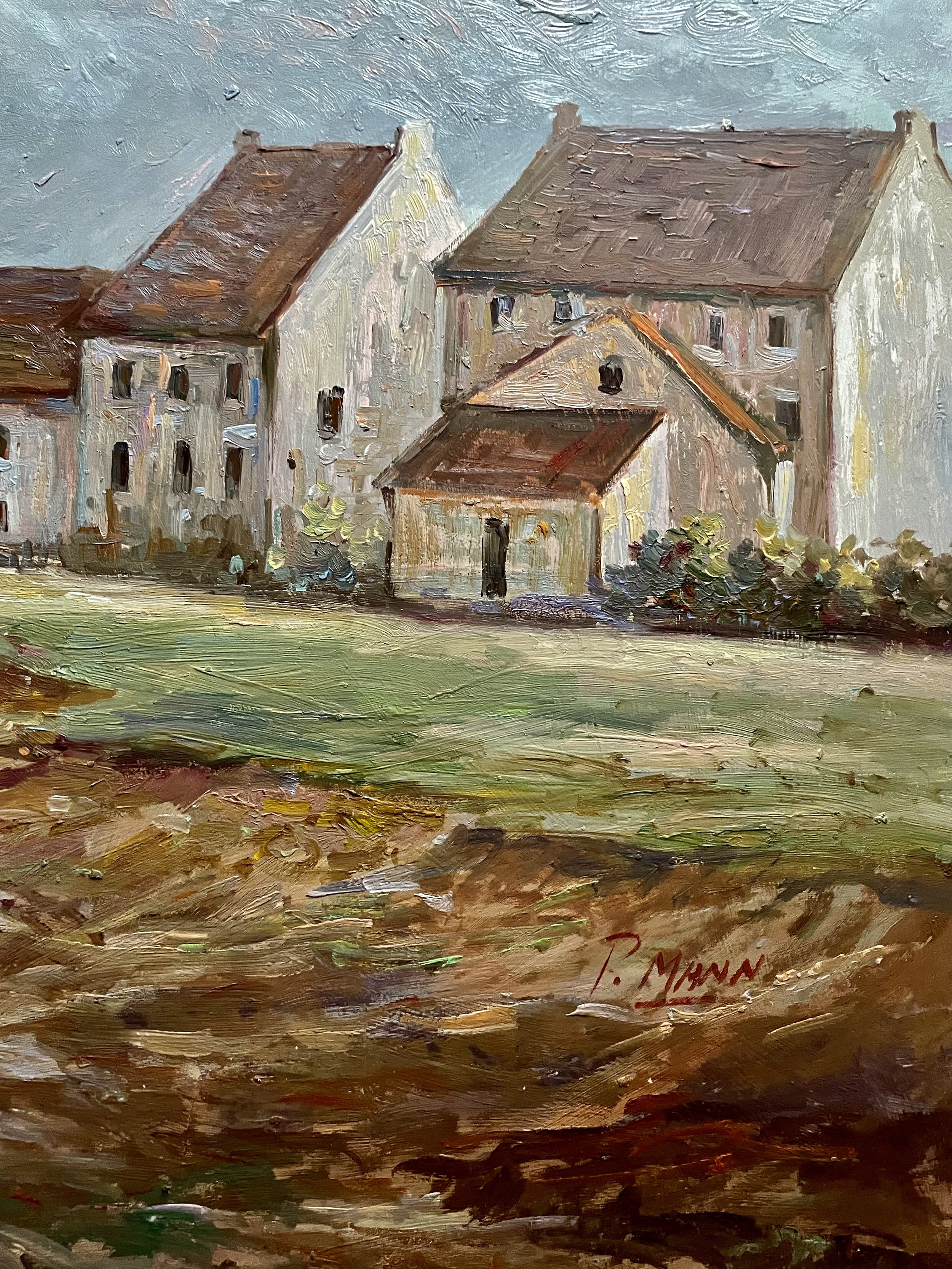
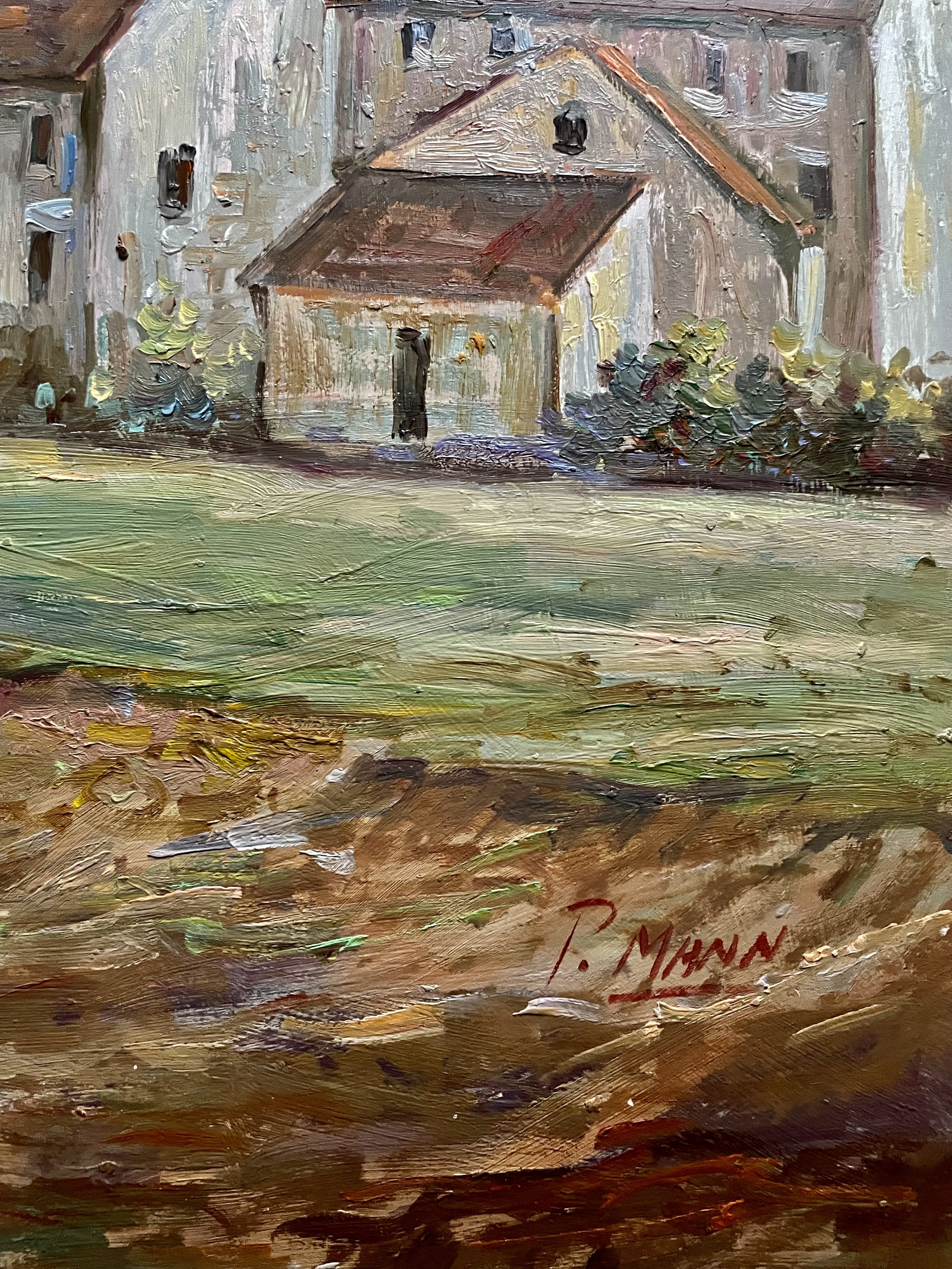
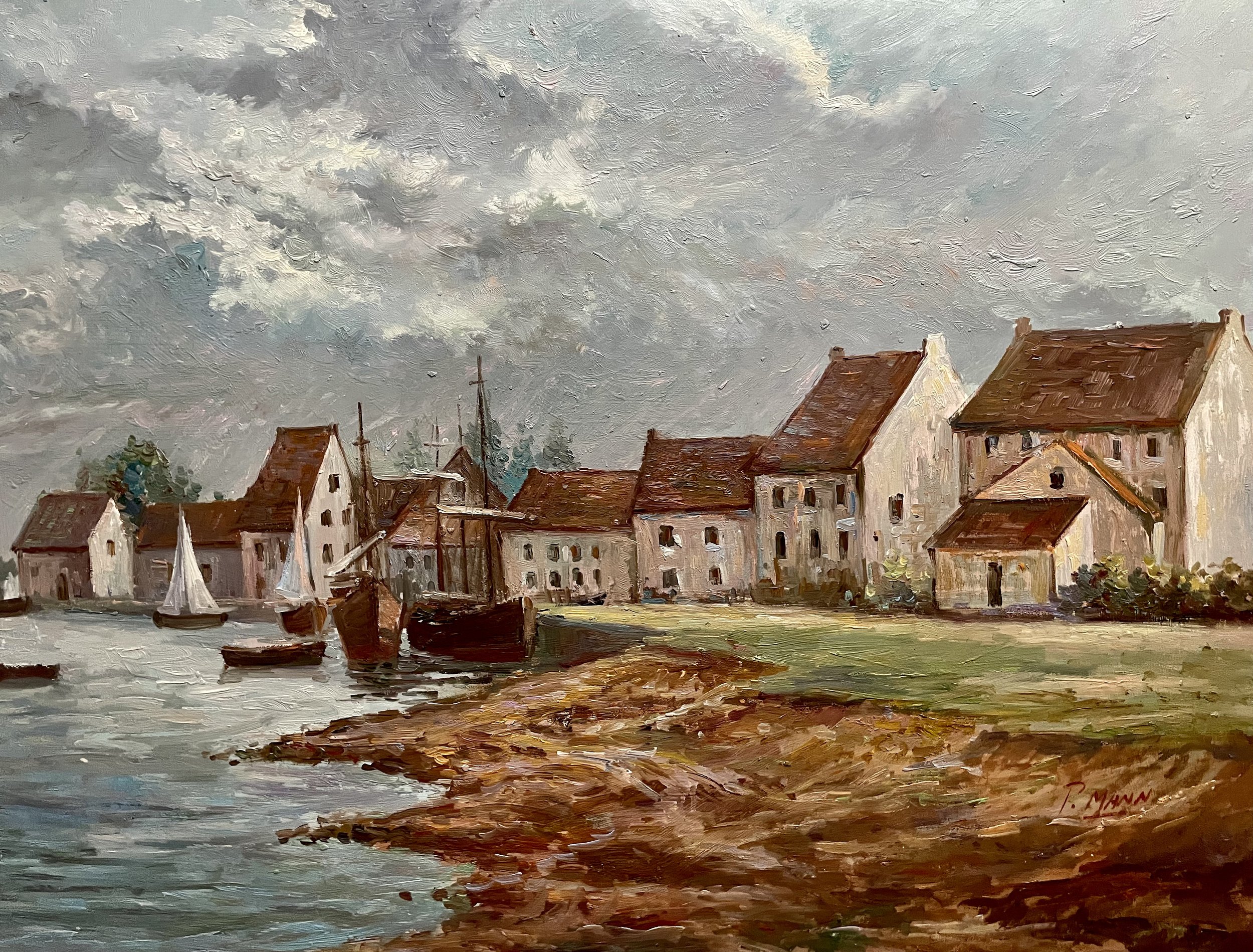
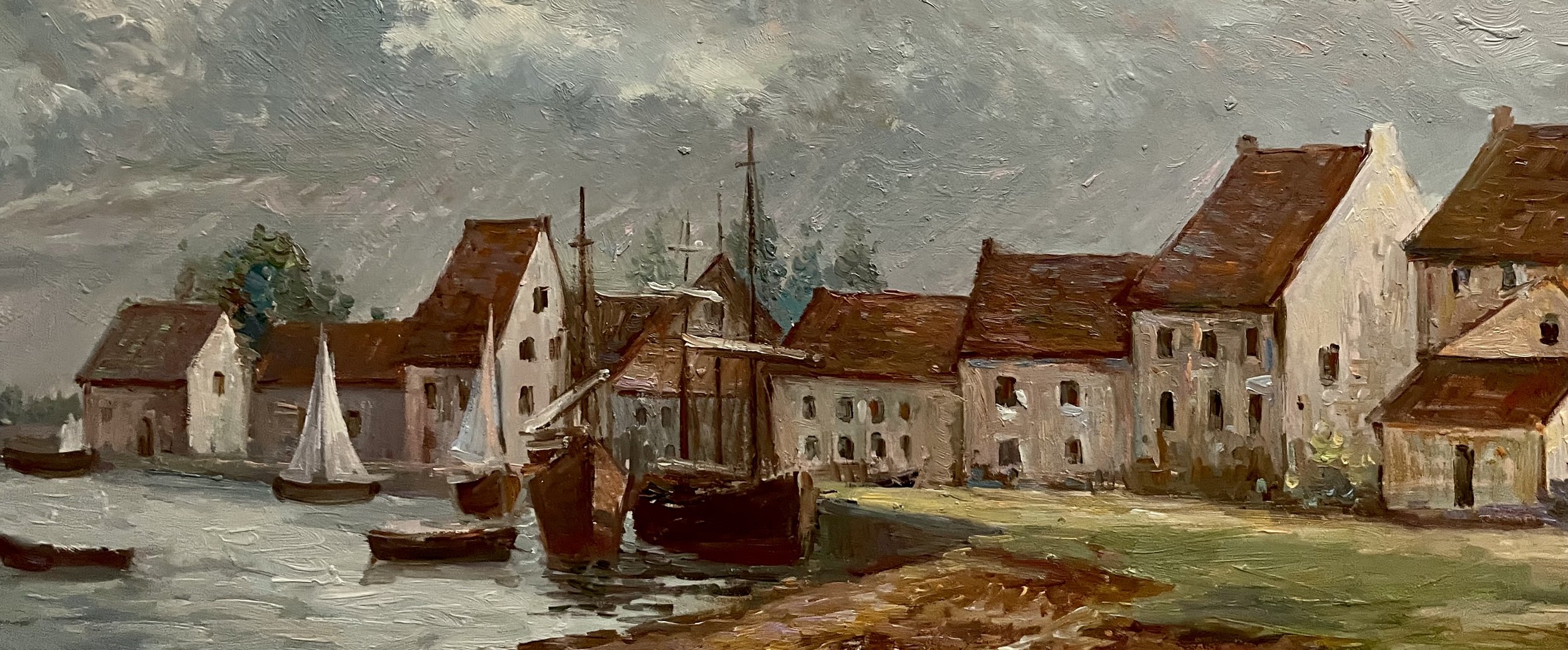
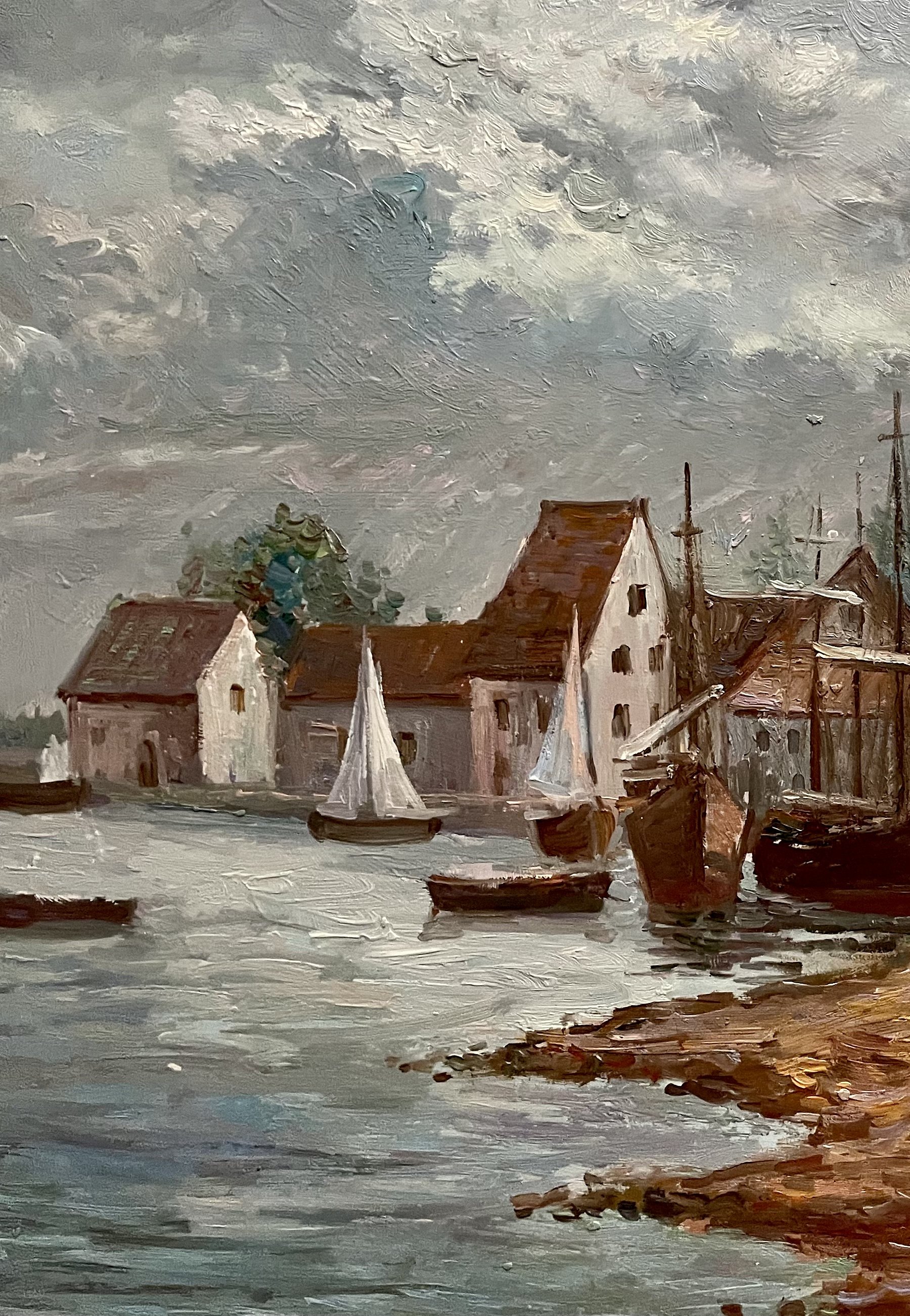
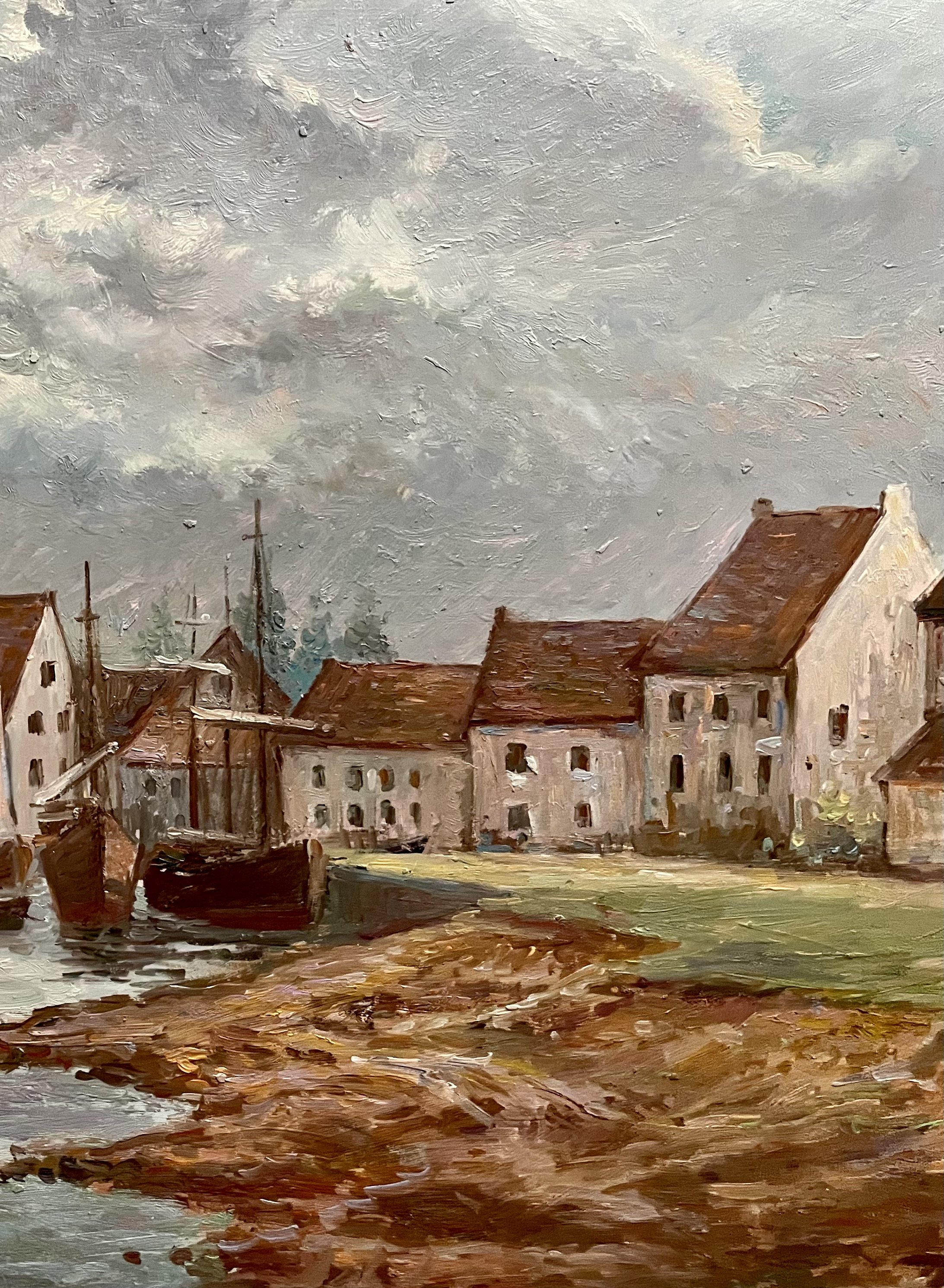
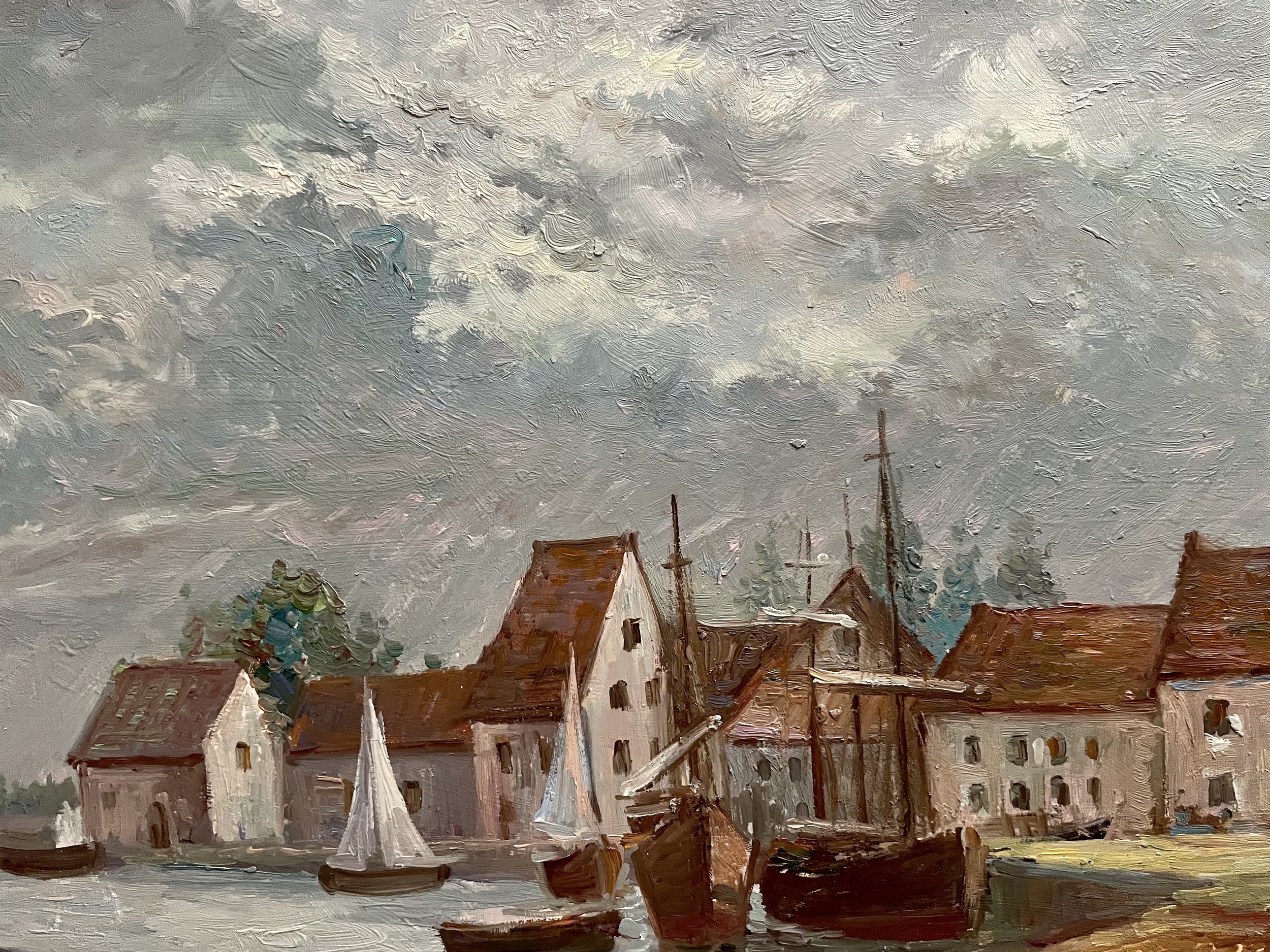
Sunlit Village Landscape (attributed), D. Smira (20th century), c.1960s–1970s, oil on canvas, 23 × 35 in., signed lower left.
Expressive European village landscape by D. Smira featuring rustic houses with red tile roofs set within a luminous countryside of yellow fields and trees. Painted with bold palette knife and brushwork, the composition captures the warmth of rural Mediterranean or southern European architecture. A vibrant mid-century decorative landscape with strong color, textured paint handling, and atmospheric sky.
Artwork Description
This energetic rural landscape attributed to D. Smira presents a cluster of rustic village buildings surrounded by glowing countryside fields beneath a luminous sky. The composition centers on a small chapel-like structure with a circular window and red tiled roof, positioned slightly elevated on a hillside and approached by a narrow path. Smaller cottages cascade down the slope, creating a layered architectural rhythm that leads the viewer through the village scene.
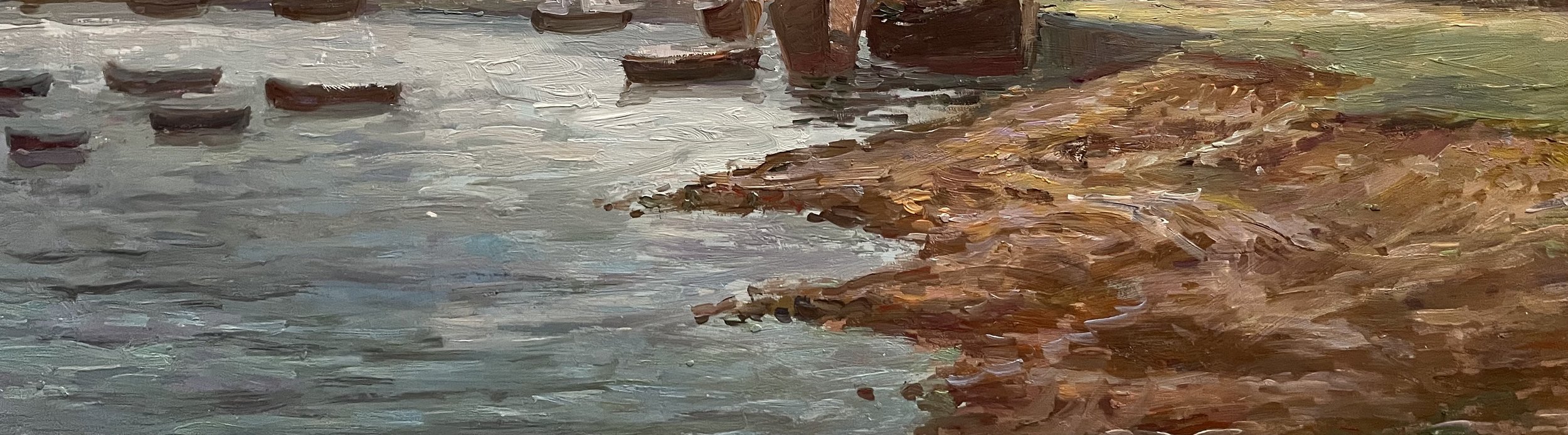
The foreground is dominated by vibrant fields rendered in sweeping strokes of yellow, ochre, green, and deep earth tones. The paint is applied with visible brush movement and areas of palette-knife texture, producing a lively surface that captures the impression of sunlit grasses and wild vegetation. Dark accents and broken brush marks add depth and structure, suggesting the uneven terrain of rural farmland.
Two tall trees stand prominently to the right of the composition, their slender trunks rising through a canopy of bright spring greens. Their vertical presence balances the architecture and anchors the right side of the scene while also framing the open sky. The foliage is painted with energetic dabs and layered strokes that create an impressionistic texture rather than detailed botanical form.
The sky is one of the most distinctive aspects of the work. Broad sweeps of pale blue, turquoise, cream, and warm ochre create a luminous atmosphere above the village. The painter uses broken color and textured passages that appear almost abstract, giving the sky a dynamic presence and suggesting shifting light across clouds.
Architectural details are simplified but carefully placed: red roofs, shaded doorways, balcony railings, and small windows create visual rhythm across the hillside settlement. These elements are rendered with confident strokes rather than precise lines, reinforcing the expressive painterly style.
The work appears to be executed in oil on canvas and measures approximately 23 by 35 inches. The signature “D. Smira” appears in the lower left corner. The canvas margins show evidence of prior stretching and handling consistent with gallery distribution practices of the mid-to-late twentieth century.
Overall the painting embodies the tradition of decorative European landscape painting that flourished during the 1950s through the 1970s. Artists working in this genre often focused on romantic village scenes, emphasizing warm color, sunlight, and painterly texture rather than strict realism. The result is a lively and inviting countryside image that combines architectural charm with expressive landscape painting.
Artist Biography
D. Smira appears to have been active during the mid-twentieth century within the tradition of decorative European landscape painting that gained popularity among collectors in the United States and Europe during the post-war decades. Although detailed archival records for the artist remain limited, surviving works attributed to Smira demonstrate a painter working confidently within the expressive village-landscape tradition associated with southern and central European imagery.
The subject matter seen in Smira’s paintings—clusters of small cottages, tiled roofs, sunlit fields, and rural pathways—echoes the visual vocabulary of Mediterranean and southern European countryside painting. These themes were widely embraced by artists working in Italy, Spain, southern France, and parts of Central Europe throughout the twentieth century. Such imagery offered a romantic vision of village life that resonated strongly with international collectors.
Stylistically, Smira’s work reflects the influence of post-Impressionist landscape painting. The artist employs broken color, bold brushwork, and areas of palette-knife texture rather than tightly controlled academic detail. This approach emphasizes atmosphere and light, allowing color relationships to define the structure of the landscape.
The sky passages in particular reveal an expressive painterly technique. Rather than a smooth gradient, Smira builds the sky from layered strokes of blue, turquoise, and pale ochre. These passages recall the painterly freedom introduced by artists such as Vincent van Gogh and later European expressionist landscapists, who treated the sky as an active compositional element rather than a passive background.
During the mid-twentieth century, American collectors developed a strong interest in European-inspired landscape painting. Galleries in New York played a significant role in introducing these works to the U.S. market. Mitch Morse Gallery in New York, known for representing international artists and publishing original graphics, distributed many works of this type through its network of collectors and dealers.
Through such gallery channels, paintings like those attributed to D. Smira entered private collections across the United States. These works were often valued for their decorative strength, vibrant color, and evocative imagery of historic European countryside settings.
Although the full biographical details of D. Smira remain partially undocumented, the artist’s surviving works demonstrate a confident painter with a clear interest in capturing rural architecture, landscape atmosphere, and the warmth of sunlit village environments. Today paintings attributed to Smira continue to appeal to collectors who appreciate expressive landscape painting rooted in the romantic European village tradition.
D. Smira village landscape oil painting, sunlit countryside with cottages and trees, expressive brushwork, signed, 23 × 35 in.
Certificate of Authentication
Artist: D. Smira
Title: Sunlit Village Landscape (attributed)
Medium: Oil on canvas
Dimensions: 23 × 35 inches
Signature: Signed lower left
Date: circa 1960s–1970s
This artwork is an original oil painting attributed to D. Smira based on the visible signature and stylistic characteristics consistent with mid-twentieth-century European village landscape painting.
Condition
Visible edge wear and handling consistent with previous stretching and storage. Minor paint abrasions and surface wear present, particularly within the foreground passages. Canvas structurally stable overall. Condition considered fair to good vintage condition with visible cosmetic damage.
Provenance
Artist studio or early gallery distribution
Mitch Morse Gallery, New York — artist’s agent, publisher of original graphics, art dealer and distributor
Private collection acquired through Mitch Morse Gallery
Artfind Gallery, Washington DC (current owner)
All works were acquired from Mitch Morse Gallery, which sourced artwork in New York, the United States, and Europe.
Provenance Note: Mitch Morse Gallery Collection
This artwork originates from the inventory of Mitch Morse Gallery, a respected New York–based gallery and publisher active during the mid-to-late 20th century. Mitch Morse was an established figure in the American art market, serving as an artist’s agent, publisher of original graphics, art dealer, distributor, and fine art restorer. He was also a Design Affiliate of A.S.I.D., listed in Who’s Who in the East, and a guest lecturer in graphics at New York University, with appearances on radio and television discussing art and design.
Through his gallery and associated publishing operations, Morse acquired paintings, prints, and original works from artists and studios across New York, Europe, and international art markets, assembling a broad inventory representing a wide range of artistic traditions and mediums. Works from this collection circulated through galleries and collectors throughout the United States.
The present painting was acquired through this network and is now held in the collection of Artfind Gallery, Washington DC, continuing the documented chain of gallery provenance from Mitch Morse’s original acquisitions.
Sunlit Village Landscape (attributed), D. Smira (20th century), c.1960s–1970s, oil on canvas, 23 × 35 in., signed lower left.
Expressive European village landscape by D. Smira featuring rustic houses with red tile roofs set within a luminous countryside of yellow fields and trees. Painted with bold palette knife and brushwork, the composition captures the warmth of rural Mediterranean or southern European architecture. A vibrant mid-century decorative landscape with strong color, textured paint handling, and atmospheric sky.
Artwork Description
This energetic rural landscape attributed to D. Smira presents a cluster of rustic village buildings surrounded by glowing countryside fields beneath a luminous sky. The composition centers on a small chapel-like structure with a circular window and red tiled roof, positioned slightly elevated on a hillside and approached by a narrow path. Smaller cottages cascade down the slope, creating a layered architectural rhythm that leads the viewer through the village scene.
The foreground is dominated by vibrant fields rendered in sweeping strokes of yellow, ochre, green, and deep earth tones. The paint is applied with visible brush movement and areas of palette-knife texture, producing a lively surface that captures the impression of sunlit grasses and wild vegetation. Dark accents and broken brush marks add depth and structure, suggesting the uneven terrain of rural farmland.
Two tall trees stand prominently to the right of the composition, their slender trunks rising through a canopy of bright spring greens. Their vertical presence balances the architecture and anchors the right side of the scene while also framing the open sky. The foliage is painted with energetic dabs and layered strokes that create an impressionistic texture rather than detailed botanical form.
The sky is one of the most distinctive aspects of the work. Broad sweeps of pale blue, turquoise, cream, and warm ochre create a luminous atmosphere above the village. The painter uses broken color and textured passages that appear almost abstract, giving the sky a dynamic presence and suggesting shifting light across clouds.
Architectural details are simplified but carefully placed: red roofs, shaded doorways, balcony railings, and small windows create visual rhythm across the hillside settlement. These elements are rendered with confident strokes rather than precise lines, reinforcing the expressive painterly style.
The work appears to be executed in oil on canvas and measures approximately 23 by 35 inches. The signature “D. Smira” appears in the lower left corner. The canvas margins show evidence of prior stretching and handling consistent with gallery distribution practices of the mid-to-late twentieth century.
Overall the painting embodies the tradition of decorative European landscape painting that flourished during the 1950s through the 1970s. Artists working in this genre often focused on romantic village scenes, emphasizing warm color, sunlight, and painterly texture rather than strict realism. The result is a lively and inviting countryside image that combines architectural charm with expressive landscape painting.
Artist Biography
D. Smira appears to have been active during the mid-twentieth century within the tradition of decorative European landscape painting that gained popularity among collectors in the United States and Europe during the post-war decades. Although detailed archival records for the artist remain limited, surviving works attributed to Smira demonstrate a painter working confidently within the expressive village-landscape tradition associated with southern and central European imagery.
The subject matter seen in Smira’s paintings—clusters of small cottages, tiled roofs, sunlit fields, and rural pathways—echoes the visual vocabulary of Mediterranean and southern European countryside painting. These themes were widely embraced by artists working in Italy, Spain, southern France, and parts of Central Europe throughout the twentieth century. Such imagery offered a romantic vision of village life that resonated strongly with international collectors.
Stylistically, Smira’s work reflects the influence of post-Impressionist landscape painting. The artist employs broken color, bold brushwork, and areas of palette-knife texture rather than tightly controlled academic detail. This approach emphasizes atmosphere and light, allowing color relationships to define the structure of the landscape.
The sky passages in particular reveal an expressive painterly technique. Rather than a smooth gradient, Smira builds the sky from layered strokes of blue, turquoise, and pale ochre. These passages recall the painterly freedom introduced by artists such as Vincent van Gogh and later European expressionist landscapists, who treated the sky as an active compositional element rather than a passive background.
During the mid-twentieth century, American collectors developed a strong interest in European-inspired landscape painting. Galleries in New York played a significant role in introducing these works to the U.S. market. Mitch Morse Gallery in New York, known for representing international artists and publishing original graphics, distributed many works of this type through its network of collectors and dealers.
Through such gallery channels, paintings like those attributed to D. Smira entered private collections across the United States. These works were often valued for their decorative strength, vibrant color, and evocative imagery of historic European countryside settings.
Although the full biographical details of D. Smira remain partially undocumented, the artist’s surviving works demonstrate a confident painter with a clear interest in capturing rural architecture, landscape atmosphere, and the warmth of sunlit village environments. Today paintings attributed to Smira continue to appeal to collectors who appreciate expressive landscape painting rooted in the romantic European village tradition.
D. Smira village landscape oil painting, sunlit countryside with cottages and trees, expressive brushwork, signed, 23 × 35 in.
Certificate of Authentication
Artist: D. Smira
Title: Sunlit Village Landscape (attributed)
Medium: Oil on canvas
Dimensions: 23 × 35 inches
Signature: Signed lower left
Date: circa 1960s–1970s
This artwork is an original oil painting attributed to D. Smira based on the visible signature and stylistic characteristics consistent with mid-twentieth-century European village landscape painting.
Condition
Visible edge wear and handling consistent with previous stretching and storage. Minor paint abrasions and surface wear present, particularly within the foreground passages. Canvas structurally stable overall. Condition considered fair to good vintage condition with visible cosmetic damage.
Provenance
Artist studio or early gallery distribution
Mitch Morse Gallery, New York — artist’s agent, publisher of original graphics, art dealer and distributor
Private collection acquired through Mitch Morse Gallery
Artfind Gallery, Washington DC (current owner)
All works were acquired from Mitch Morse Gallery, which sourced artwork in New York, the United States, and Europe.
Provenance Note: Mitch Morse Gallery Collection
This artwork originates from the inventory of Mitch Morse Gallery, a respected New York–based gallery and publisher active during the mid-to-late 20th century. Mitch Morse was an established figure in the American art market, serving as an artist’s agent, publisher of original graphics, art dealer, distributor, and fine art restorer. He was also a Design Affiliate of A.S.I.D., listed in Who’s Who in the East, and a guest lecturer in graphics at New York University, with appearances on radio and television discussing art and design.
Through his gallery and associated publishing operations, Morse acquired paintings, prints, and original works from artists and studios across New York, Europe, and international art markets, assembling a broad inventory representing a wide range of artistic traditions and mediums. Works from this collection circulated through galleries and collectors throughout the United States.
The present painting was acquired through this network and is now held in the collection of Artfind Gallery, Washington DC, continuing the documented chain of gallery provenance from Mitch Morse’s original acquisitions.
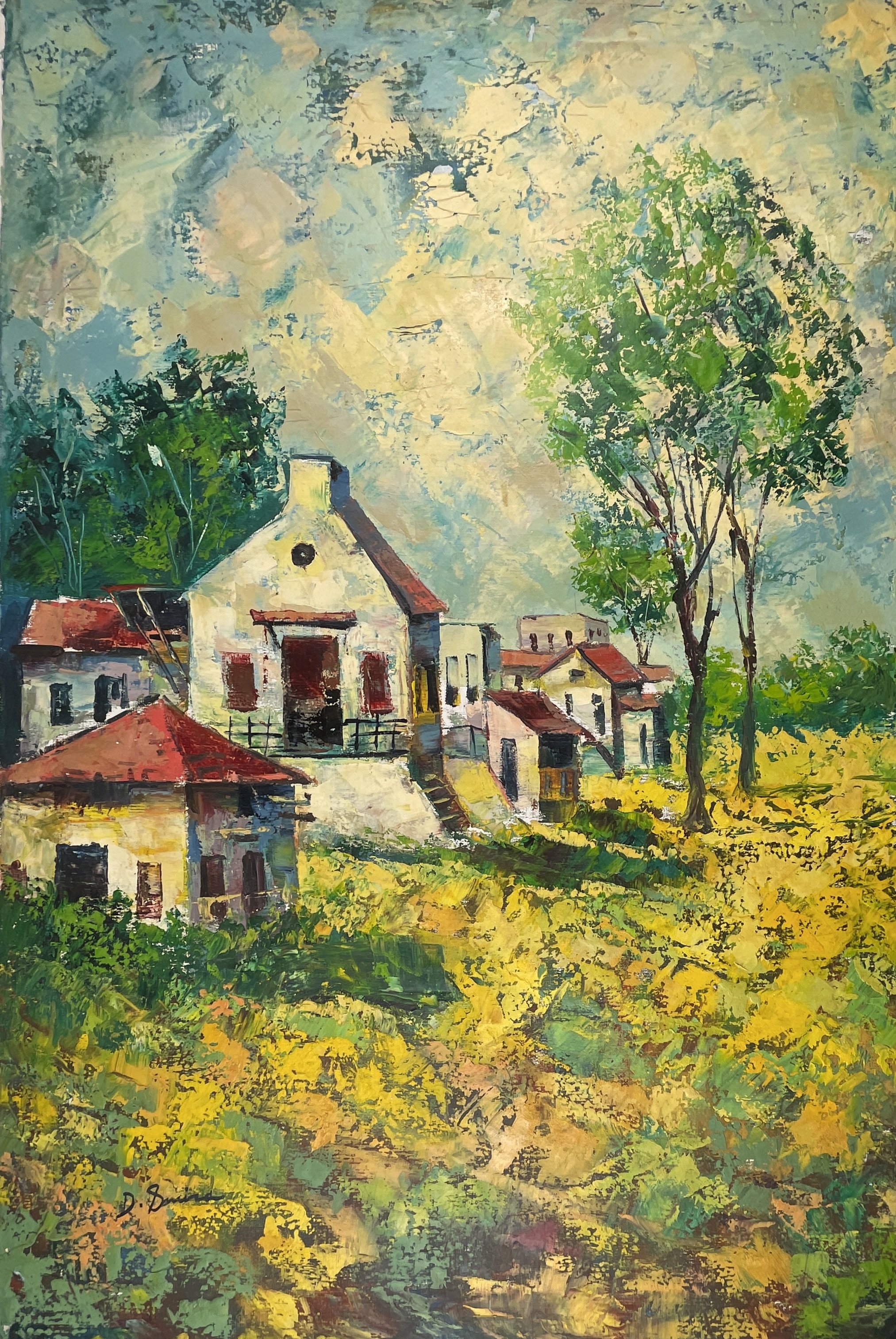 Image 1 of 7
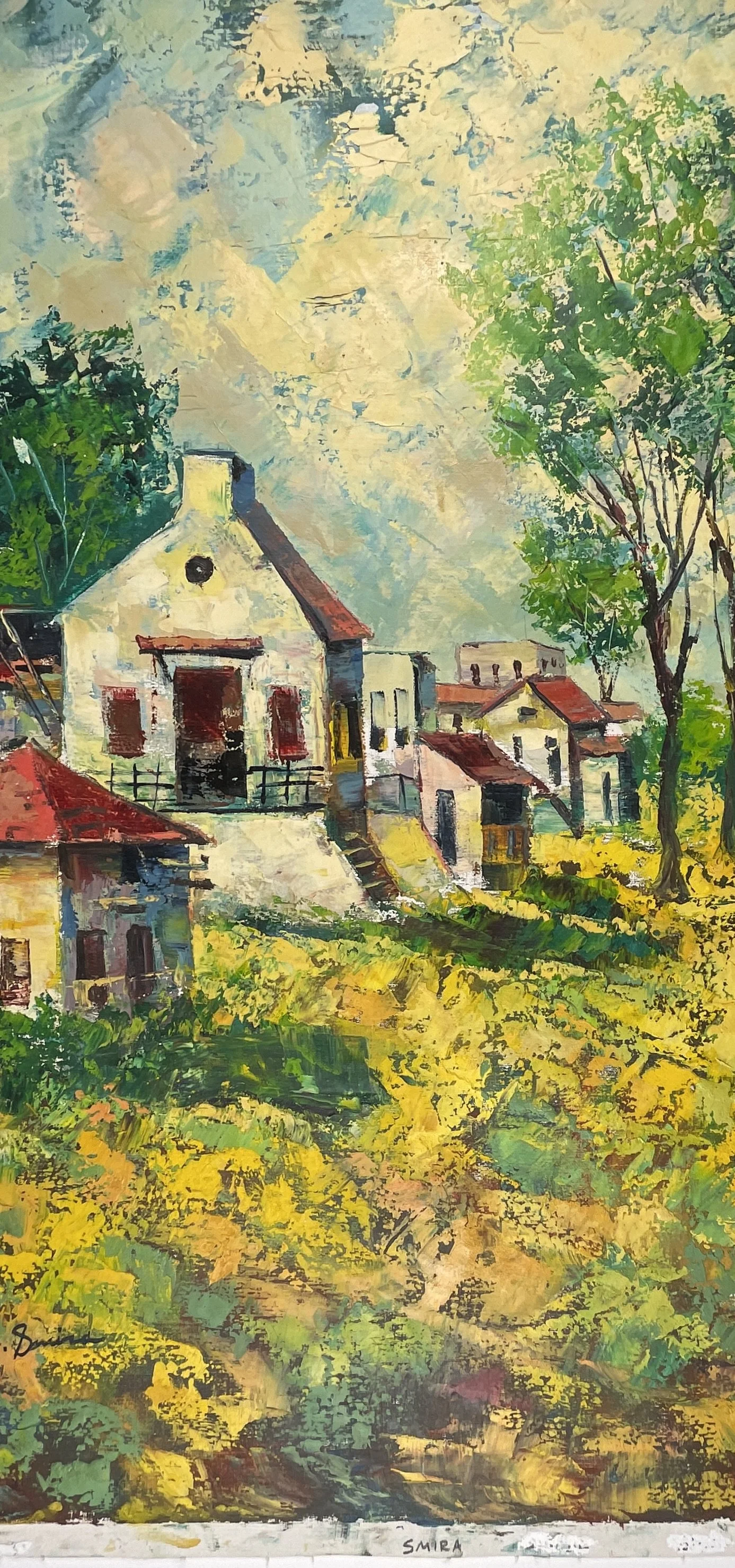 Image 2 of 7
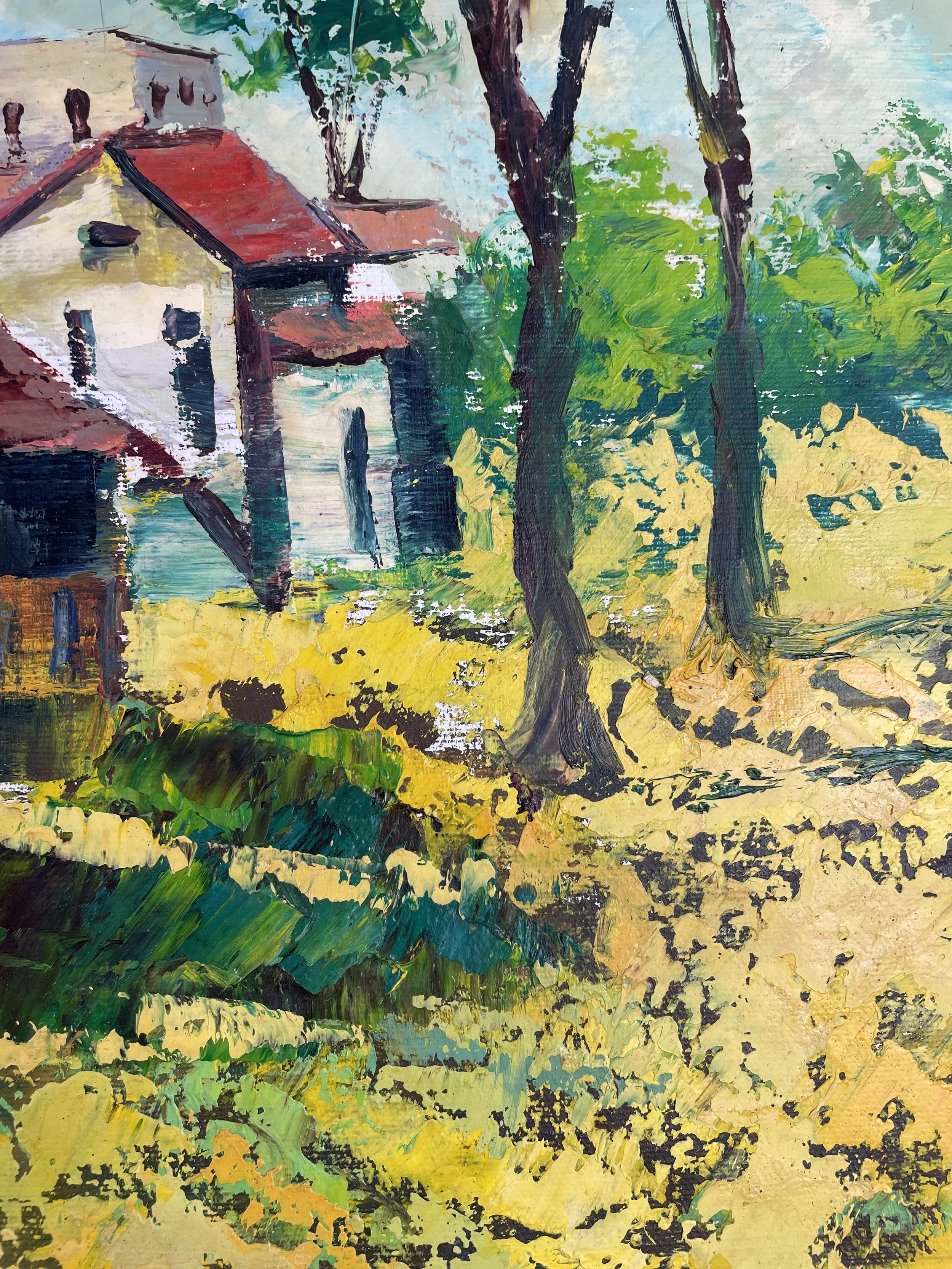 Image 3 of 7
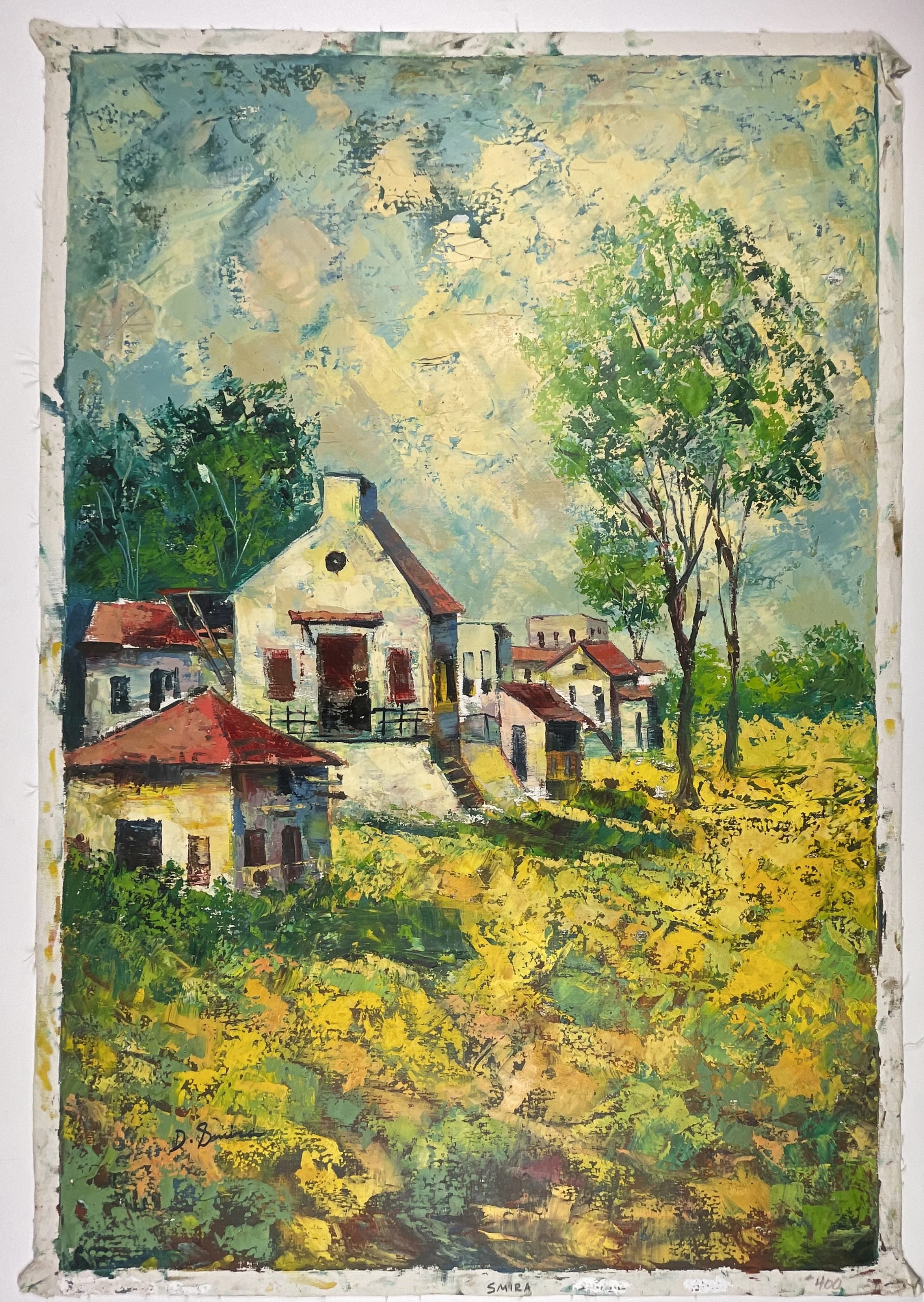 Image 4 of 7
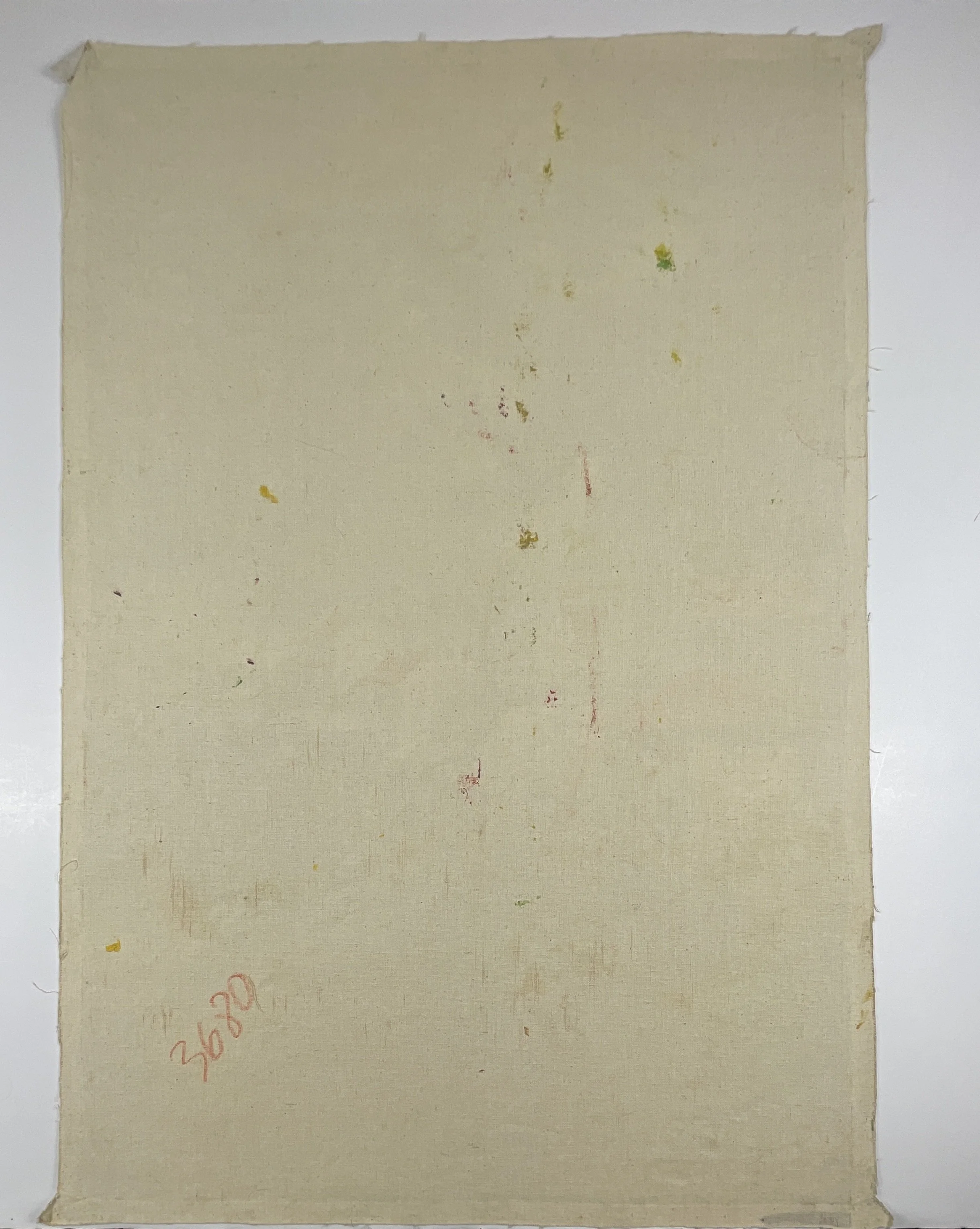 Image 5 of 7
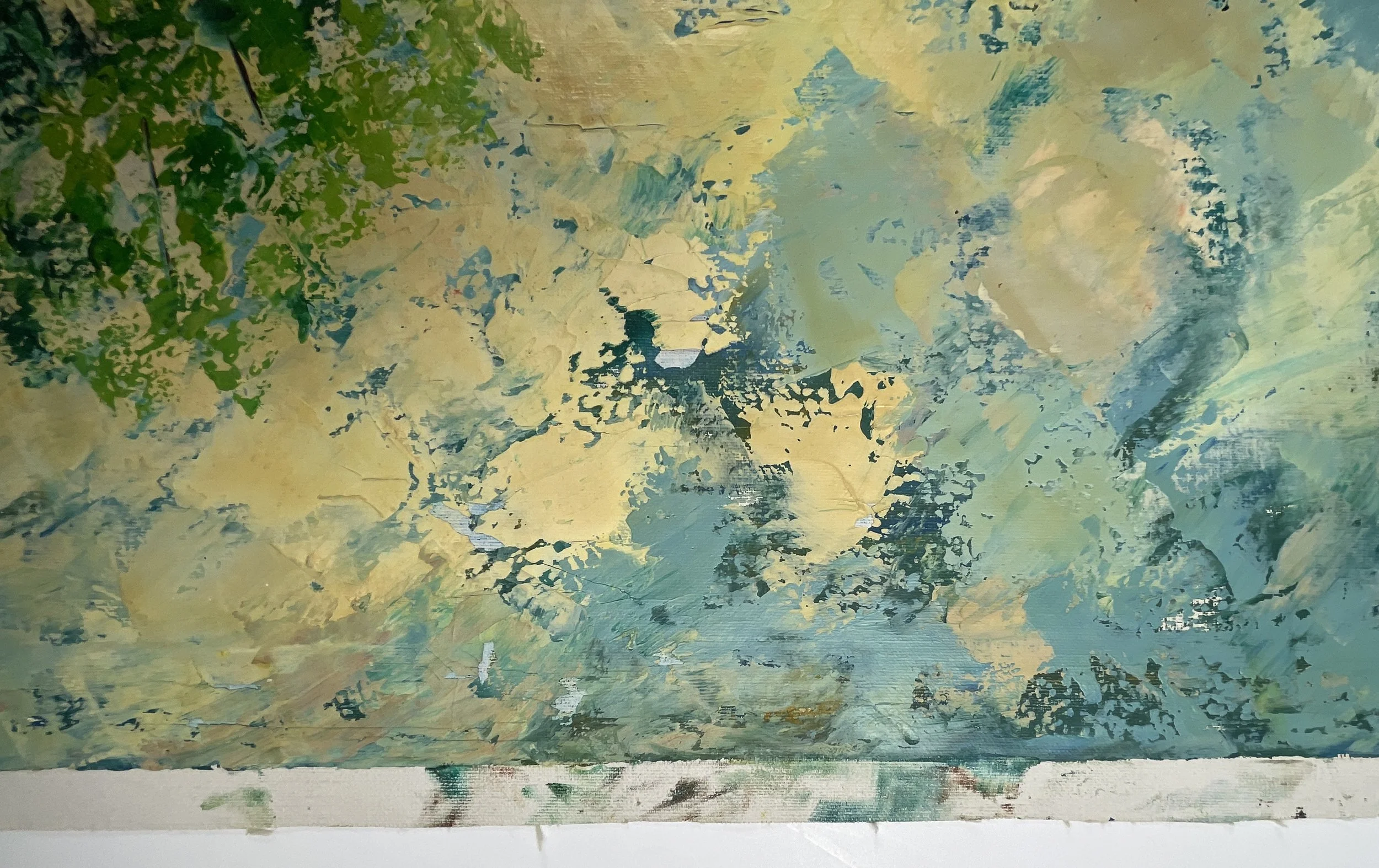 Image 6 of 7
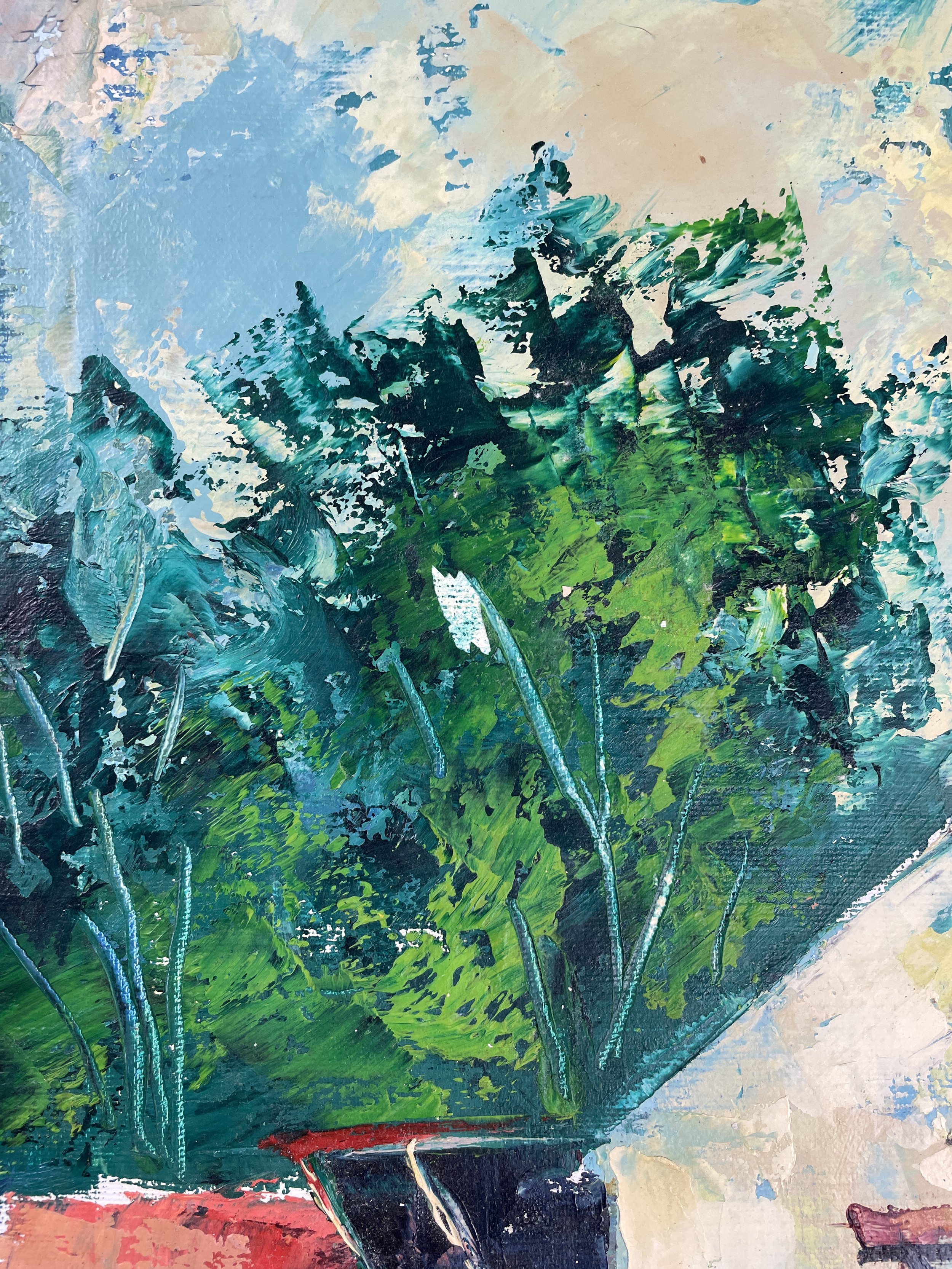 Image 7 of 7