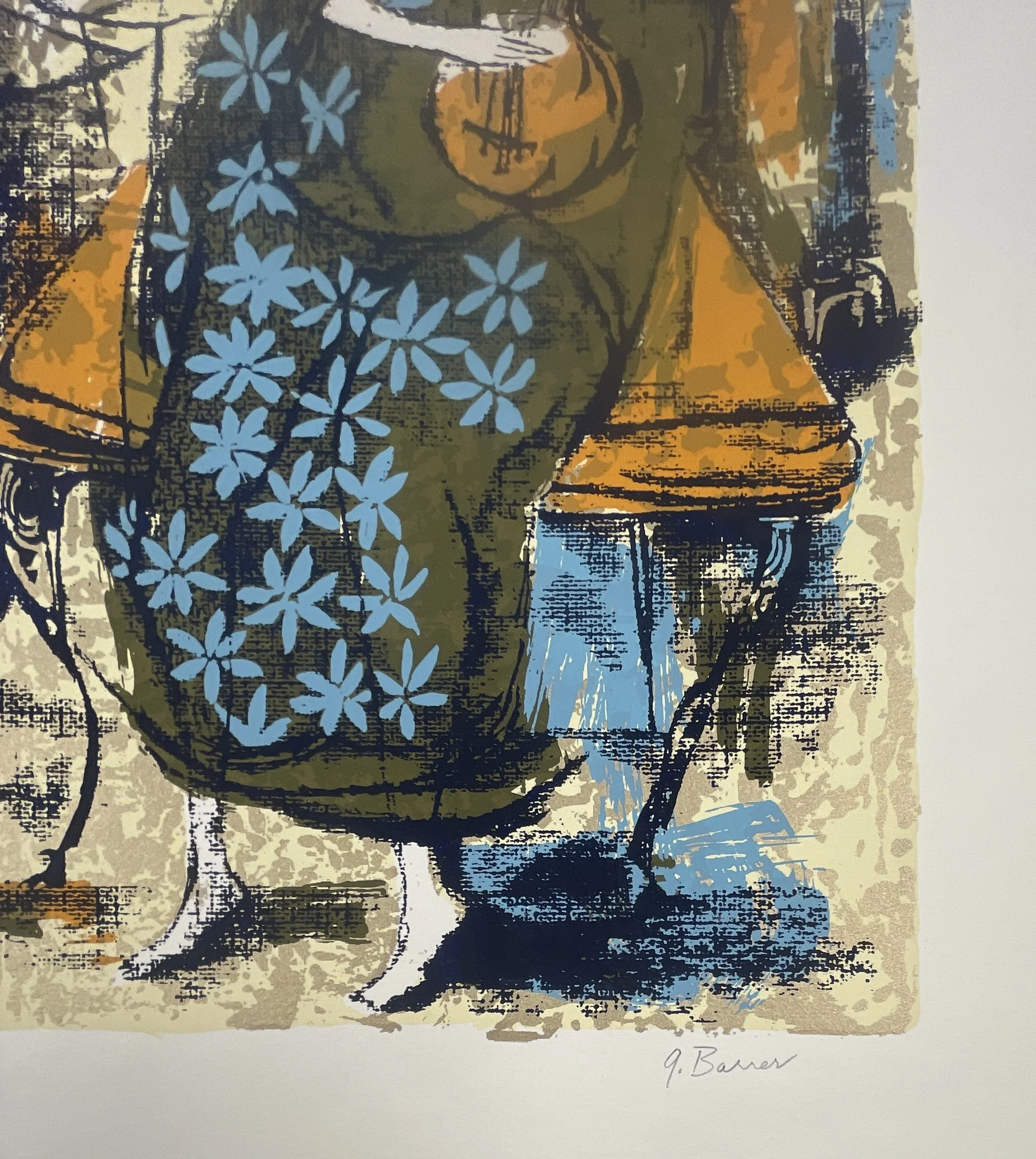
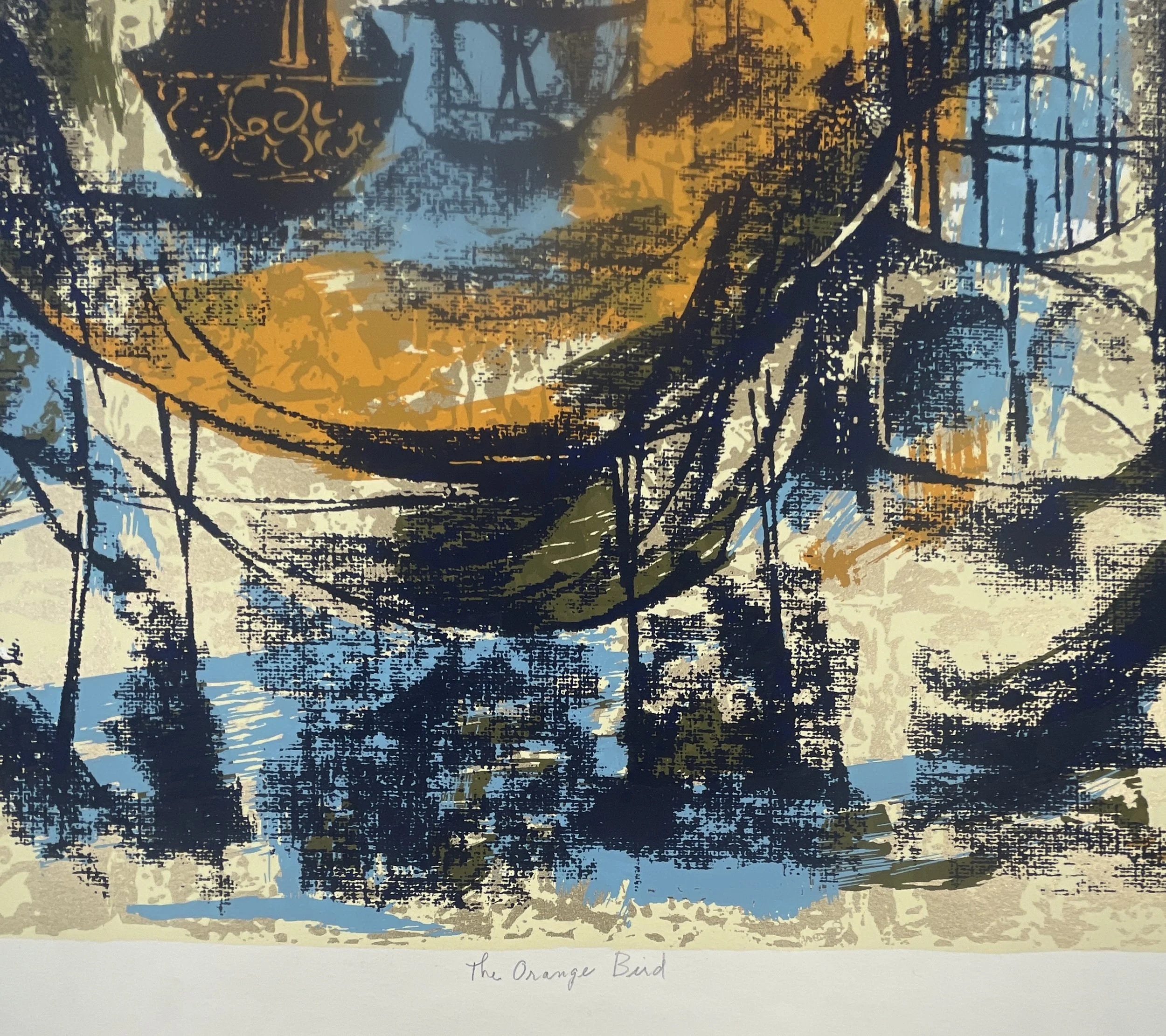
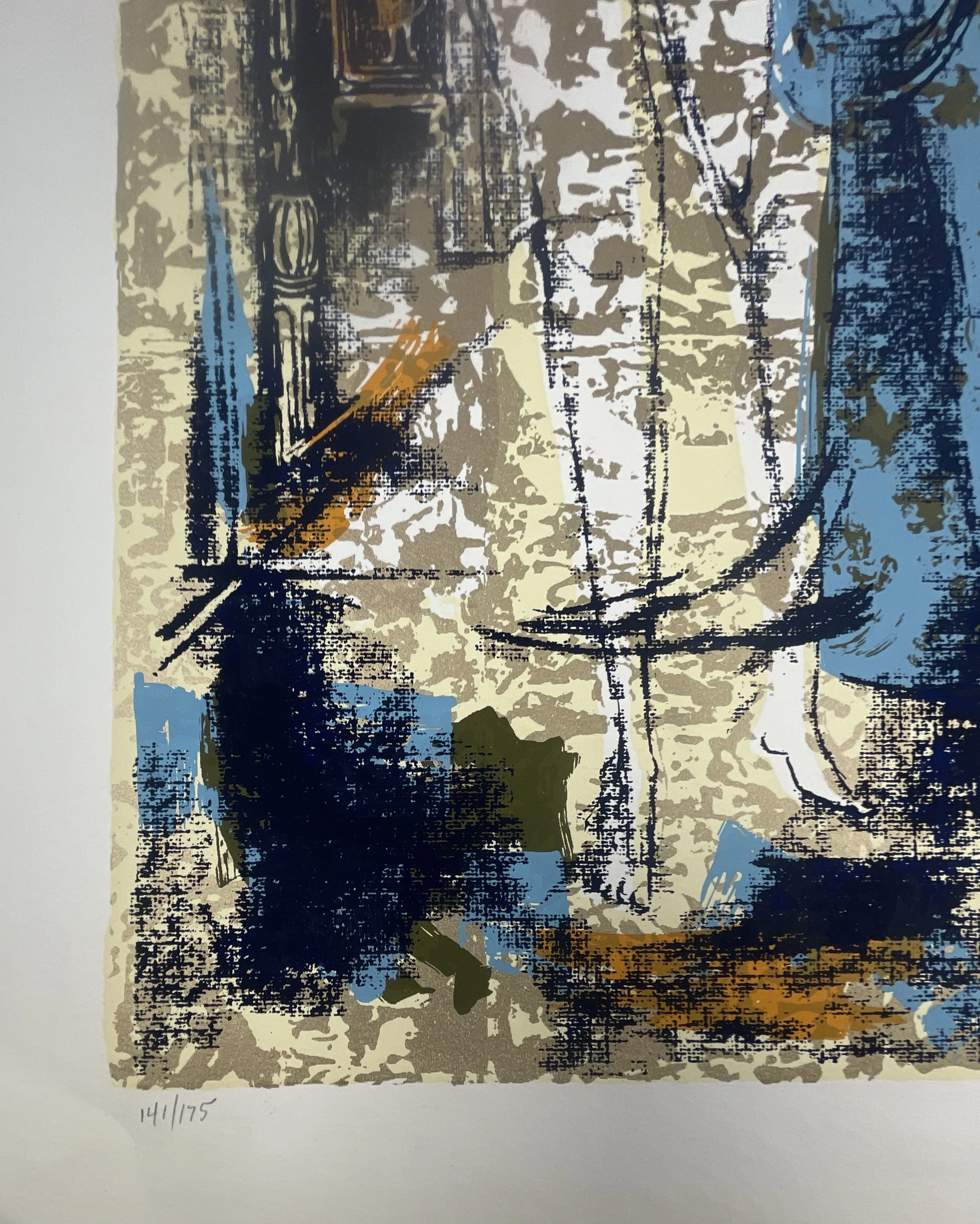
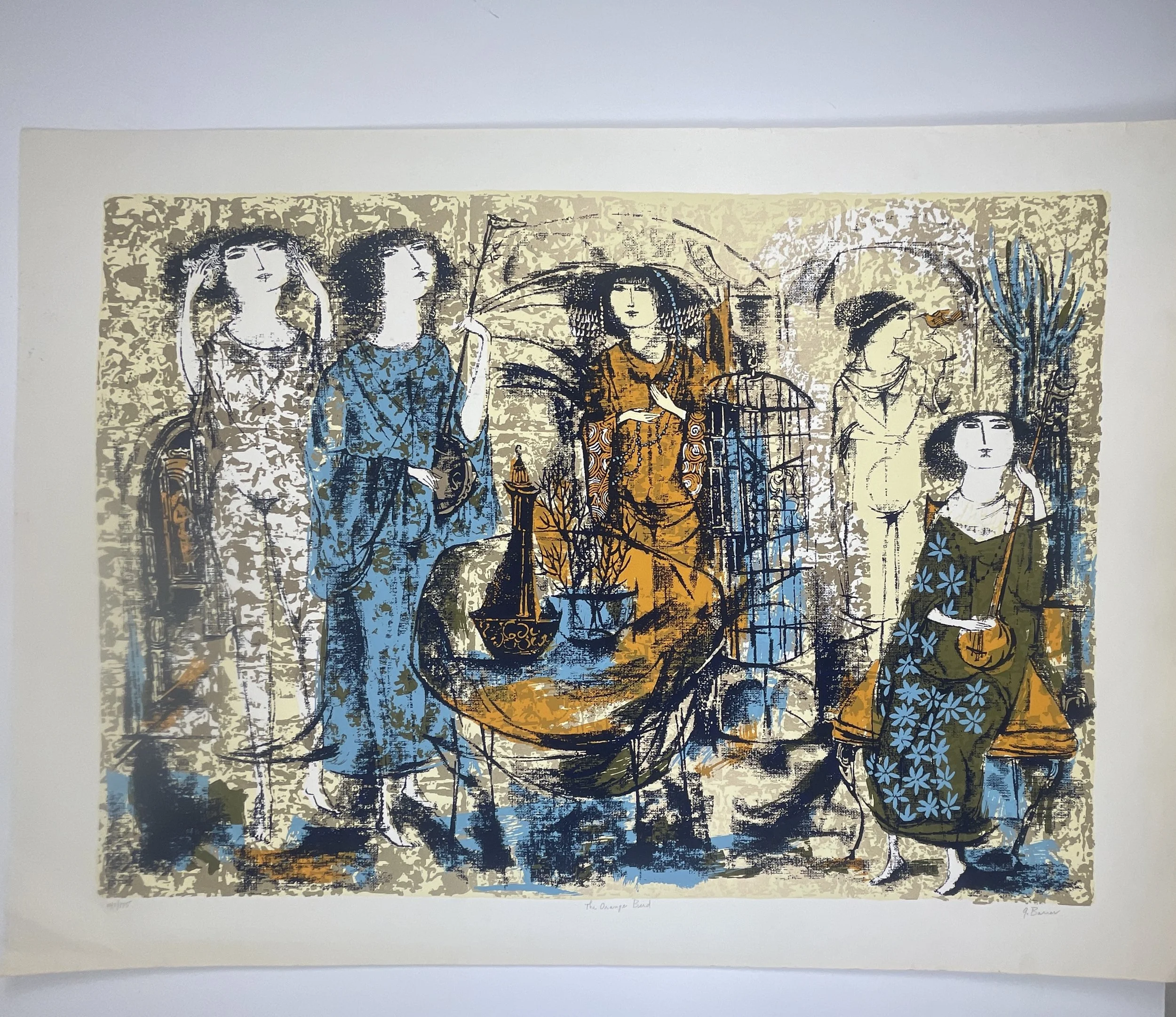
My Garden, Mary Vickers (b.1940), c.1970s original etching, 18×20 in sheet, signed lower right, Artist’s Proof impression.
A delicate and evocative original etching by British-born artist Mary Vickers, My Garden captures a young woman tending flowers in a softly romantic landscape. Printed in warm sepia tones with intricate linework and rich plate texture, this Artist’s Proof impression demonstrates the artist’s mastery of intaglio printmaking. Signed in pencil by the artist and accompanied by original Art Spectrum / Mitch Morse Gallery documentation, the work reflects the lyrical figurative style that made Vickers a recognized Romantic painter and printmaker in New York and Europe during the late twentieth century. The composition blends narrative intimacy with decorative elegance, making it equally appealing to collectors of figurative prints and interior designers seeking refined works on paper.
Artwork Description
My Garden presents a contemplative moment of quiet observation: a young woman in a polka-dotted dress bends toward a field of flowers, her hand gently hovering over the blossoms as though tending them. The composition is structured around a graceful downward arc created by the figure’s posture and the sweeping brim of her hat, directing the viewer’s eye into the dense floral textures below.
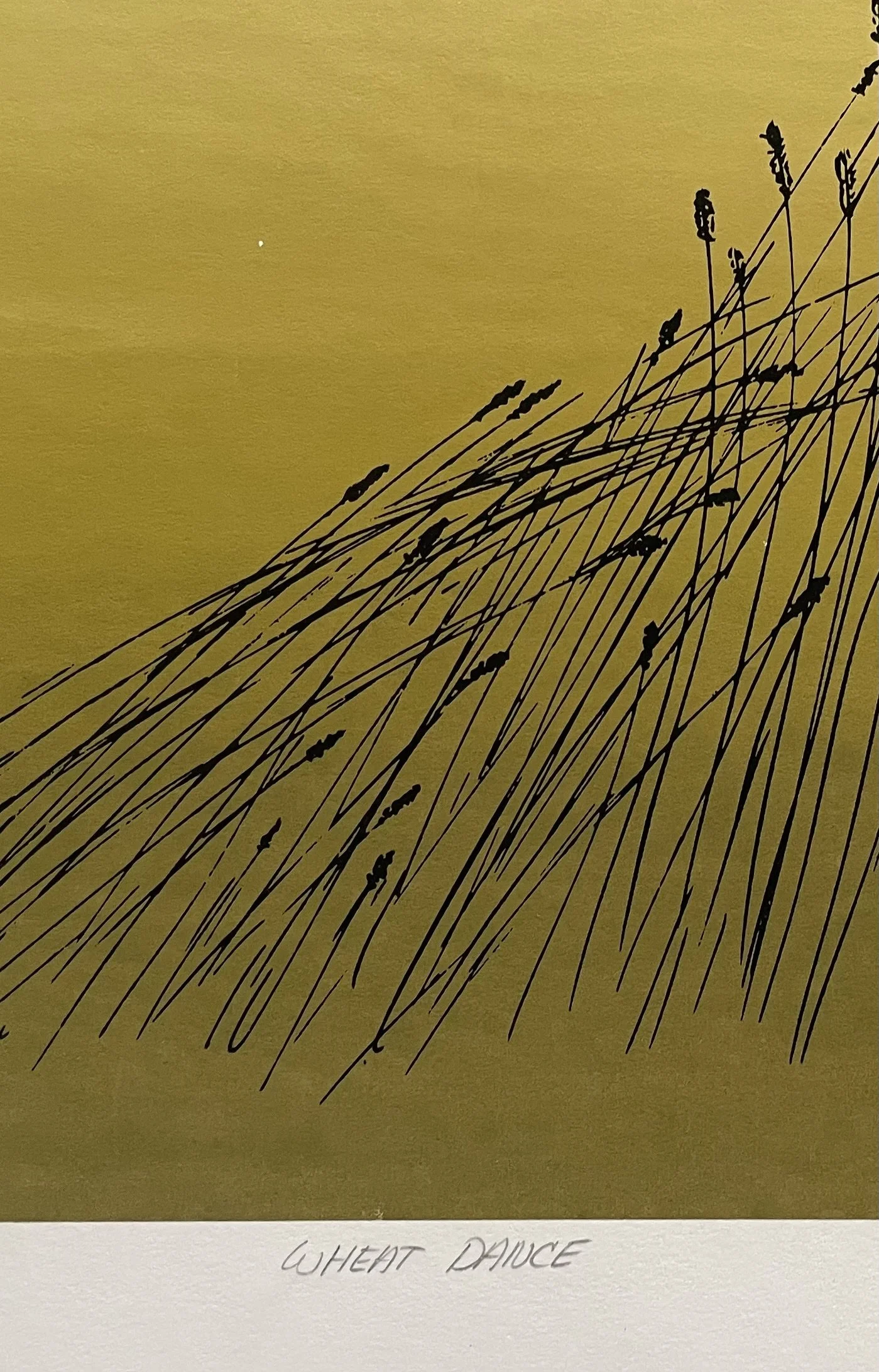
The etching is executed in warm sepia ink, a tone frequently favored in late twentieth-century intaglio prints for its ability to evoke the look of antique impressions while preserving subtle tonal variation. Vickers employs an intricate web of etched lines to render grasses, stems, and foliage, producing a tactile visual surface characteristic of traditional copper-plate techniques. The grasses in the foreground are composed of hundreds of finely incised strokes, layered and overlapping to create depth and movement.
Behind the figure, a softly rendered fence and trees dissolve into atmospheric textures produced through plate tone and selective wiping during printing. This combination of precise linework and painterly tonal areas demonstrates the expressive flexibility of etching as a medium.
The print bears a clearly visible plate mark surrounding the image area, confirming its origin as an intaglio impression printed from an etched metal plate under pressure. The sheet retains natural deckled edges typical of fine printmaking paper.
This example is designated “Artist’s Proof” in pencil at the lower left margin, indicating that it was printed outside the numbered edition and reserved for the artist’s own archive or presentation. Artist’s proofs are traditionally produced in smaller quantities and often display particularly strong impressions due to careful plate inking during proofing sessions.
The title My Garden appears handwritten in the center lower margin, with the artist’s signature “Vickers” to the lower right in graphite pencil. The handwriting of the title, proof notation, and signature appear consistent, suggesting they were inscribed by the artist during the same signing session.
Stylistically, the work reflects the romantic figurative tradition associated with Vickers’ broader artistic output. Her subjects frequently depict women in reflective moments, emphasizing tenderness, quiet beauty, and emotional warmth. The imagery echoes nineteenth-century pastoral themes while remaining firmly rooted in modern printmaking practice.
The result is a composition that feels both nostalgic and contemporary: a private moment in nature rendered through disciplined craftsmanship and lyrical sensitivity.
Artist Biography
Mary Vickers (born 1940, England) is a British-born figurative artist whose work bridges Romantic narrative painting and traditional printmaking. Her imagery is characterized by intimate portrayals of human relationships, quiet moments of reflection, and lyrical depictions of everyday life.
Vickers was born in wartime England, and her earliest childhood memories were shaped by the upheaval of the Second World War. She recalled the sound of aircraft and bombings, nights spent in damp bomb shelters, and evacuation from London with her mother to relatives outside the city. These early experiences fostered a deep appreciation for peace, domestic warmth, and the emotional bonds between people—themes that later became central to her artistic philosophy.
Another formative element of her youth was her unusual height. Being significantly taller than her classmates left her feeling different during childhood. She described this period as emotionally difficult, though it also pushed her to develop an outgoing personality and a heightened awareness of human emotion.
At the age of nine, a serious accident confined Vickers to a wheelchair for approximately two months after breaking her ankle. During this period of physical limitation she began drawing and painting intensively, discovering the artistic talent that would ultimately define her career.
By age twelve she had already won first prize in a children’s illustration contest sponsored by a popular English magazine, and teachers recognized her exceptional ability. She pursued formal training at the S.E.E. Essex School of Art from 1956 to 1959 and later at St. Martin’s School of Art in London beginning in 1959.
While studying under Raymond Ward, she developed a distinctive figurative style oriented toward romantic subject matter. Ward encouraged her to communicate emotional narratives through visual imagery, reinforcing her natural inclination toward storytelling in art.
In her early twenties Vickers shifted temporarily into commercial illustration due to the limited market for fine art in England at the time. At just nineteen she became art director of a national monthly magazine titled Modern Woman. She also produced book jacket illustrations and editorial artwork for numerous publications, gaining recognition across the British publishing industry.
Seeking further artistic development, Vickers moved to the United States. She studied at the Art Students League of New York during 1960 and 1961 and later continued her training at Pratt Institute’s Graphics Center between 1974 and 1975, expanding her expertise in printmaking techniques including etching and lithography.
Vickers ultimately settled in New York, where she dedicated herself to full-time fine art production. During this period she began working closely with art dealer and publisher Mitch Morse. Morse served as her exclusive agent, publisher, and business manager, distributing her work through galleries and collectors internationally.
This collaboration marked a turning point in her career. With Morse’s encouragement and with the support of her husband Ron, Vickers transitioned from painting primarily on canvas to producing original prints. She began creating etchings and lithographs directly on stone and copper plates, discovering in the etching process a medium that profoundly influenced her artistic expression.
Vickers described the discovery of etching as transformative, noting that the medium became both a challenge and a catalyst for expressing her creative vitality. The etched line allowed her to achieve a delicate balance between structure and emotion, aligning perfectly with her romantic narrative style.
Her growing reputation led to international recognition, including the production of collector’s plates by the renowned Wedgwood porcelain company through contracts arranged by Morse. These limited edition plates introduced her imagery to a wide audience and significantly expanded her collector base.
Art critic Michael Arputi later described Vickers as one of the leading Romantic painters of her time, ranking her among the most prominent names in porcelain collector’s plate art as well as in figurative illustration.
Throughout her career Vickers maintained a clear artistic mission: to communicate warmth, love, and emotional connection through imagery. She believed art should evoke feelings of happiness and human connection rather than dwell on despair or negativity.
Her works often depict women, families, and intimate domestic scenes rendered with softness and empathy. Through these subjects she sought to capture what she described as “the simple, human qualities of life.”
The romantic tone and narrative clarity of her work have made her prints particularly appealing to collectors of figurative art and to interior designers seeking elegant narrative imagery.
Today Vickers’ prints remain part of private collections across North America and Europe. Works produced during her collaboration with Mitch Morse Gallery continue to circulate on the secondary market and are appreciated for their craftsmanship, decorative appeal, and nostalgic storytelling.
Mary Vickers (b.1940)
My Garden
Original etching, Artist’s Proof
Sheet: approx. 18 × 20 inches
Signed in pencil lower right, titled center, “Artist’s Proof” lower left
A finely detailed figurative etching depicting a young woman tending flowers in a pastoral setting. Warm sepia ink and intricate etched linework create a richly textured surface. Accompanied by original Art Spectrum / Mitch Morse Gallery documentation.
Certificate of Authentication
Artist: Mary Vickers (b.1940)
Title: My Garden
Medium: Original Etching on paper
Edition: Artist’s Proof
Signature: Hand-signed in graphite pencil, lower right
Sheet Size: Approximately 18 × 20 inches
Date: Circa 1970s
This artwork has been examined and is guaranteed to be an authentic original print created by the above-named artist. The work was acquired through Mitch Morse Gallery distribution and is currently held in the collection of Artfind Gallery, Washington DC.
Artfind Gallery
Washington, DC
Condition
Excellent vintage condition. Sheet retains full margins and deckled edges. Plate mark clearly visible. Minor age toning consistent with works on paper of this period; no significant foxing, tears, or restoration observed.
Provenance
Mary Vickers studio / publisher distribution
Mitch Morse Gallery, New York, NY
Acquired through Mitch Morse Gallery network in the United States and Europe
Artfind Gallery, Washington DC (current owner)
Citations
Art Spectrum (division of Mitch Morse Gallery Inc.) artist biography material
Mitch Morse Gallery distribution records and published artist statements
Art Students League of New York historical enrollment archives
Pratt Institute Graphics Center program history
Secondary market sales data for Mary Vickers prints (auction and gallery records)
My Garden, Mary Vickers (b.1940), c.1970s original etching, 18×20 in sheet, signed lower right, Artist’s Proof impression.
A delicate and evocative original etching by British-born artist Mary Vickers, My Garden captures a young woman tending flowers in a softly romantic landscape. Printed in warm sepia tones with intricate linework and rich plate texture, this Artist’s Proof impression demonstrates the artist’s mastery of intaglio printmaking. Signed in pencil by the artist and accompanied by original Art Spectrum / Mitch Morse Gallery documentation, the work reflects the lyrical figurative style that made Vickers a recognized Romantic painter and printmaker in New York and Europe during the late twentieth century. The composition blends narrative intimacy with decorative elegance, making it equally appealing to collectors of figurative prints and interior designers seeking refined works on paper.
Artwork Description
My Garden presents a contemplative moment of quiet observation: a young woman in a polka-dotted dress bends toward a field of flowers, her hand gently hovering over the blossoms as though tending them. The composition is structured around a graceful downward arc created by the figure’s posture and the sweeping brim of her hat, directing the viewer’s eye into the dense floral textures below.
The etching is executed in warm sepia ink, a tone frequently favored in late twentieth-century intaglio prints for its ability to evoke the look of antique impressions while preserving subtle tonal variation. Vickers employs an intricate web of etched lines to render grasses, stems, and foliage, producing a tactile visual surface characteristic of traditional copper-plate techniques. The grasses in the foreground are composed of hundreds of finely incised strokes, layered and overlapping to create depth and movement.
Behind the figure, a softly rendered fence and trees dissolve into atmospheric textures produced through plate tone and selective wiping during printing. This combination of precise linework and painterly tonal areas demonstrates the expressive flexibility of etching as a medium.
The print bears a clearly visible plate mark surrounding the image area, confirming its origin as an intaglio impression printed from an etched metal plate under pressure. The sheet retains natural deckled edges typical of fine printmaking paper.
This example is designated “Artist’s Proof” in pencil at the lower left margin, indicating that it was printed outside the numbered edition and reserved for the artist’s own archive or presentation. Artist’s proofs are traditionally produced in smaller quantities and often display particularly strong impressions due to careful plate inking during proofing sessions.
The title My Garden appears handwritten in the center lower margin, with the artist’s signature “Vickers” to the lower right in graphite pencil. The handwriting of the title, proof notation, and signature appear consistent, suggesting they were inscribed by the artist during the same signing session.
Stylistically, the work reflects the romantic figurative tradition associated with Vickers’ broader artistic output. Her subjects frequently depict women in reflective moments, emphasizing tenderness, quiet beauty, and emotional warmth. The imagery echoes nineteenth-century pastoral themes while remaining firmly rooted in modern printmaking practice.
The result is a composition that feels both nostalgic and contemporary: a private moment in nature rendered through disciplined craftsmanship and lyrical sensitivity.
Artist Biography
Mary Vickers (born 1940, England) is a British-born figurative artist whose work bridges Romantic narrative painting and traditional printmaking. Her imagery is characterized by intimate portrayals of human relationships, quiet moments of reflection, and lyrical depictions of everyday life.
Vickers was born in wartime England, and her earliest childhood memories were shaped by the upheaval of the Second World War. She recalled the sound of aircraft and bombings, nights spent in damp bomb shelters, and evacuation from London with her mother to relatives outside the city. These early experiences fostered a deep appreciation for peace, domestic warmth, and the emotional bonds between people—themes that later became central to her artistic philosophy.
Another formative element of her youth was her unusual height. Being significantly taller than her classmates left her feeling different during childhood. She described this period as emotionally difficult, though it also pushed her to develop an outgoing personality and a heightened awareness of human emotion.
At the age of nine, a serious accident confined Vickers to a wheelchair for approximately two months after breaking her ankle. During this period of physical limitation she began drawing and painting intensively, discovering the artistic talent that would ultimately define her career.
By age twelve she had already won first prize in a children’s illustration contest sponsored by a popular English magazine, and teachers recognized her exceptional ability. She pursued formal training at the S.E.E. Essex School of Art from 1956 to 1959 and later at St. Martin’s School of Art in London beginning in 1959.
While studying under Raymond Ward, she developed a distinctive figurative style oriented toward romantic subject matter. Ward encouraged her to communicate emotional narratives through visual imagery, reinforcing her natural inclination toward storytelling in art.
In her early twenties Vickers shifted temporarily into commercial illustration due to the limited market for fine art in England at the time. At just nineteen she became art director of a national monthly magazine titled Modern Woman. She also produced book jacket illustrations and editorial artwork for numerous publications, gaining recognition across the British publishing industry.
Seeking further artistic development, Vickers moved to the United States. She studied at the Art Students League of New York during 1960 and 1961 and later continued her training at Pratt Institute’s Graphics Center between 1974 and 1975, expanding her expertise in printmaking techniques including etching and lithography.
Vickers ultimately settled in New York, where she dedicated herself to full-time fine art production. During this period she began working closely with art dealer and publisher Mitch Morse. Morse served as her exclusive agent, publisher, and business manager, distributing her work through galleries and collectors internationally.
This collaboration marked a turning point in her career. With Morse’s encouragement and with the support of her husband Ron, Vickers transitioned from painting primarily on canvas to producing original prints. She began creating etchings and lithographs directly on stone and copper plates, discovering in the etching process a medium that profoundly influenced her artistic expression.
Vickers described the discovery of etching as transformative, noting that the medium became both a challenge and a catalyst for expressing her creative vitality. The etched line allowed her to achieve a delicate balance between structure and emotion, aligning perfectly with her romantic narrative style.
Her growing reputation led to international recognition, including the production of collector’s plates by the renowned Wedgwood porcelain company through contracts arranged by Morse. These limited edition plates introduced her imagery to a wide audience and significantly expanded her collector base.
Art critic Michael Arputi later described Vickers as one of the leading Romantic painters of her time, ranking her among the most prominent names in porcelain collector’s plate art as well as in figurative illustration.
Throughout her career Vickers maintained a clear artistic mission: to communicate warmth, love, and emotional connection through imagery. She believed art should evoke feelings of happiness and human connection rather than dwell on despair or negativity.
Her works often depict women, families, and intimate domestic scenes rendered with softness and empathy. Through these subjects she sought to capture what she described as “the simple, human qualities of life.”
The romantic tone and narrative clarity of her work have made her prints particularly appealing to collectors of figurative art and to interior designers seeking elegant narrative imagery.
Today Vickers’ prints remain part of private collections across North America and Europe. Works produced during her collaboration with Mitch Morse Gallery continue to circulate on the secondary market and are appreciated for their craftsmanship, decorative appeal, and nostalgic storytelling.
Mary Vickers (b.1940)
My Garden
Original etching, Artist’s Proof
Sheet: approx. 18 × 20 inches
Signed in pencil lower right, titled center, “Artist’s Proof” lower left
A finely detailed figurative etching depicting a young woman tending flowers in a pastoral setting. Warm sepia ink and intricate etched linework create a richly textured surface. Accompanied by original Art Spectrum / Mitch Morse Gallery documentation.
Certificate of Authentication
Artist: Mary Vickers (b.1940)
Title: My Garden
Medium: Original Etching on paper
Edition: Artist’s Proof
Signature: Hand-signed in graphite pencil, lower right
Sheet Size: Approximately 18 × 20 inches
Date: Circa 1970s
This artwork has been examined and is guaranteed to be an authentic original print created by the above-named artist. The work was acquired through Mitch Morse Gallery distribution and is currently held in the collection of Artfind Gallery, Washington DC.
Artfind Gallery
Washington, DC
Condition
Excellent vintage condition. Sheet retains full margins and deckled edges. Plate mark clearly visible. Minor age toning consistent with works on paper of this period; no significant foxing, tears, or restoration observed.
Provenance
Mary Vickers studio / publisher distribution
Mitch Morse Gallery, New York, NY
Acquired through Mitch Morse Gallery network in the United States and Europe
Artfind Gallery, Washington DC (current owner)
Citations
Art Spectrum (division of Mitch Morse Gallery Inc.) artist biography material
Mitch Morse Gallery distribution records and published artist statements
Art Students League of New York historical enrollment archives
Pratt Institute Graphics Center program history
Secondary market sales data for Mary Vickers prints (auction and gallery records)
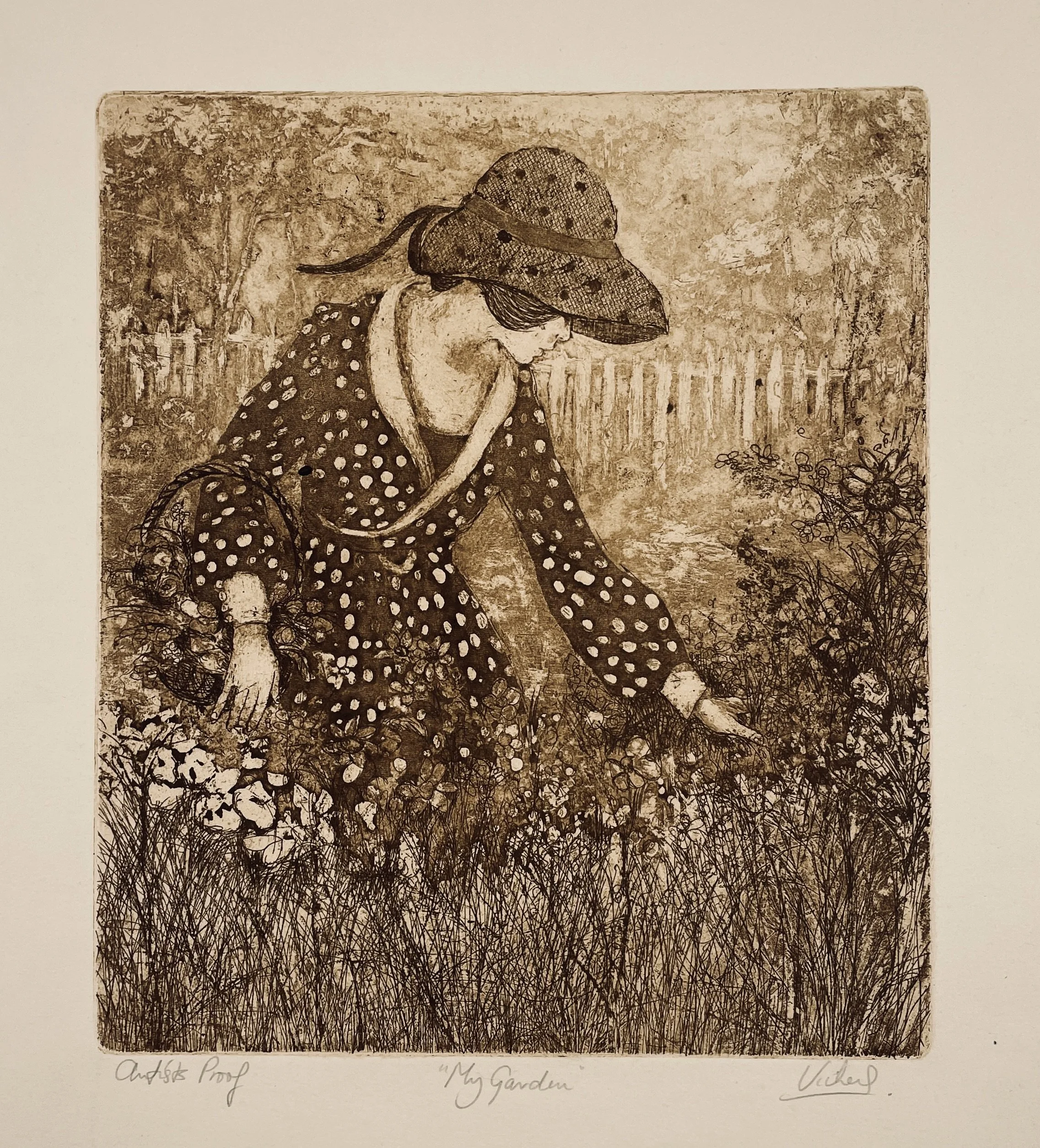 Image 1 of 7
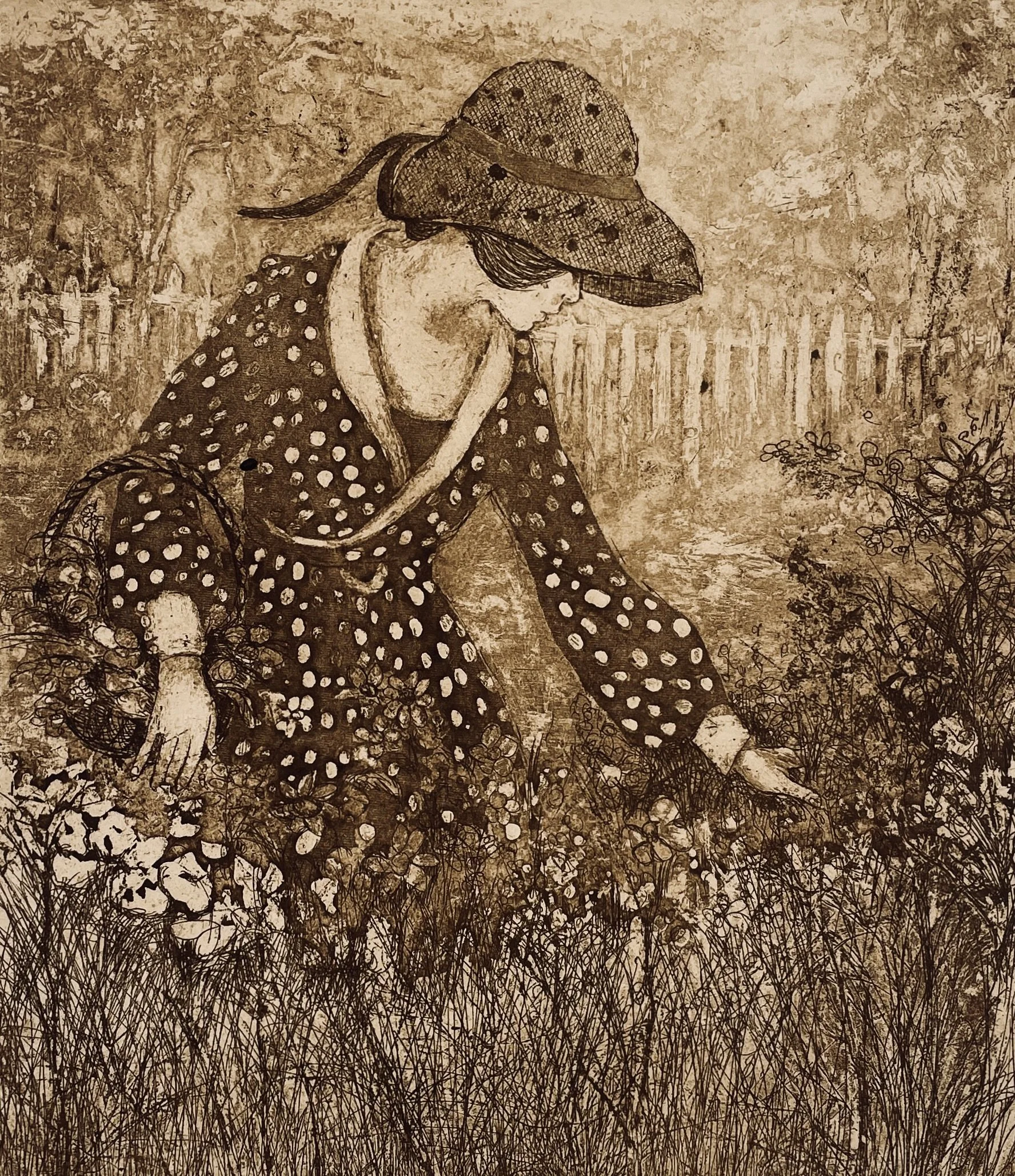 Image 2 of 7
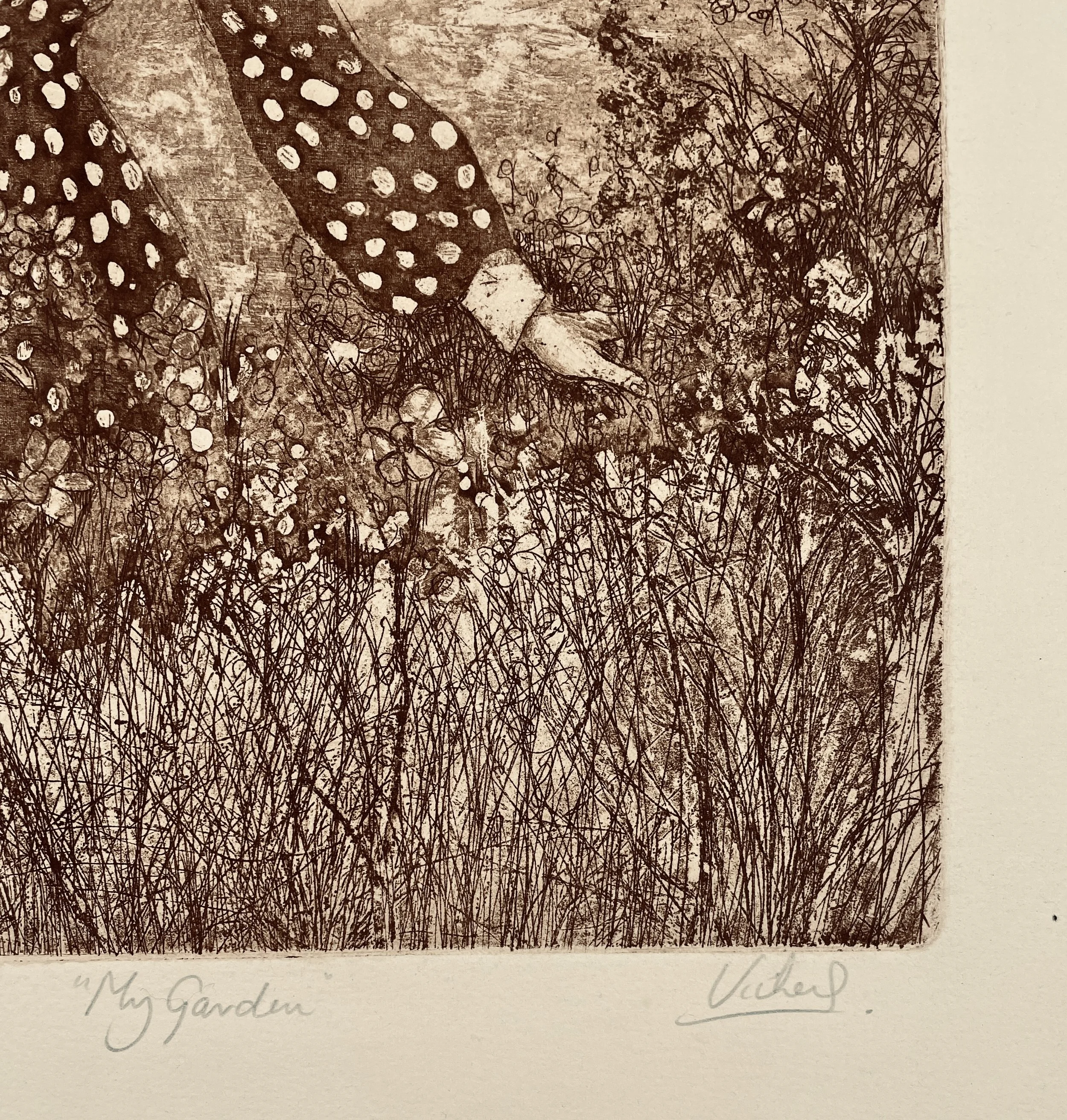 Image 3 of 7
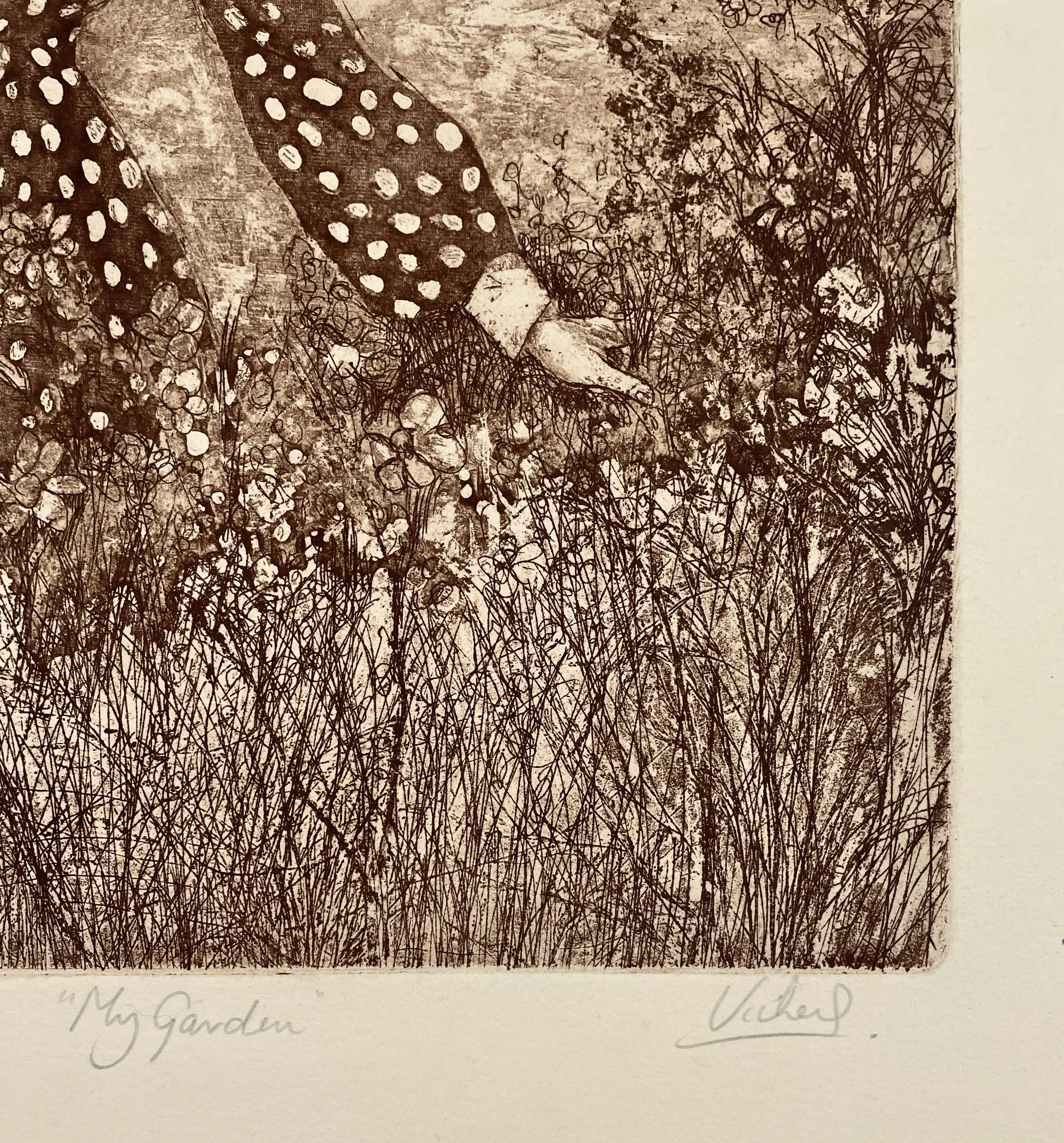 Image 4 of 7
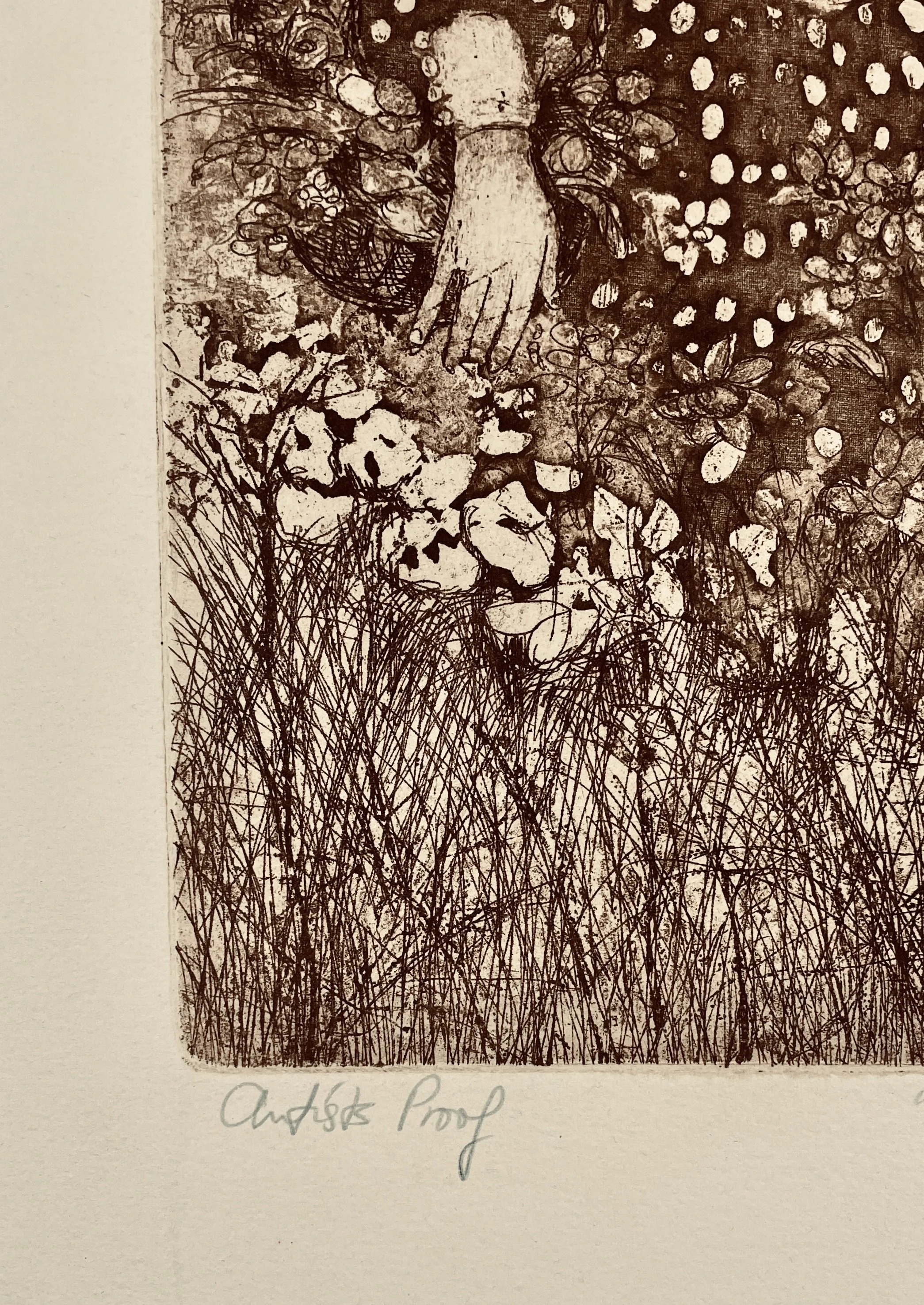 Image 5 of 7
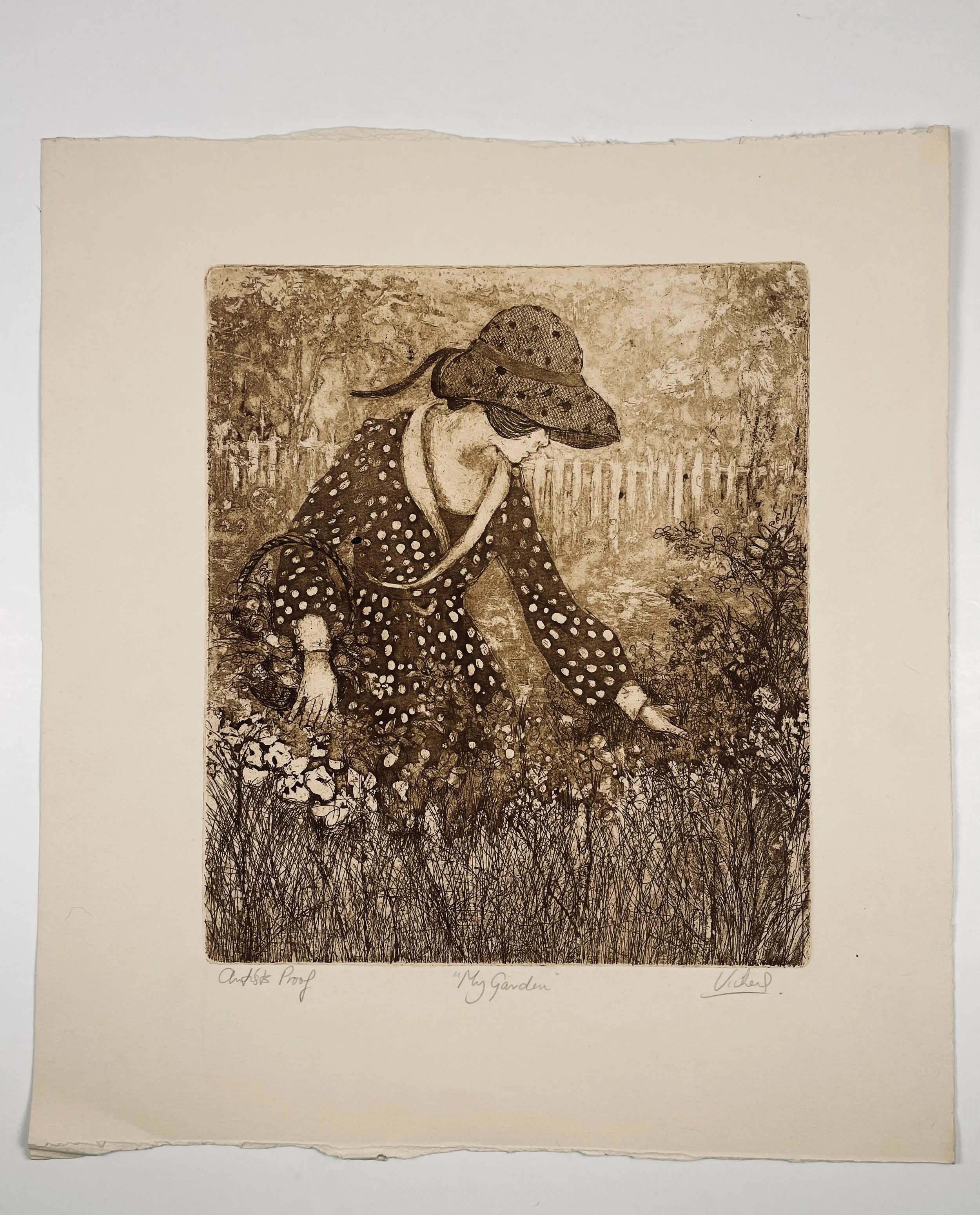 Image 6 of 7
 Image 7 of 7