 Image 1 of 5
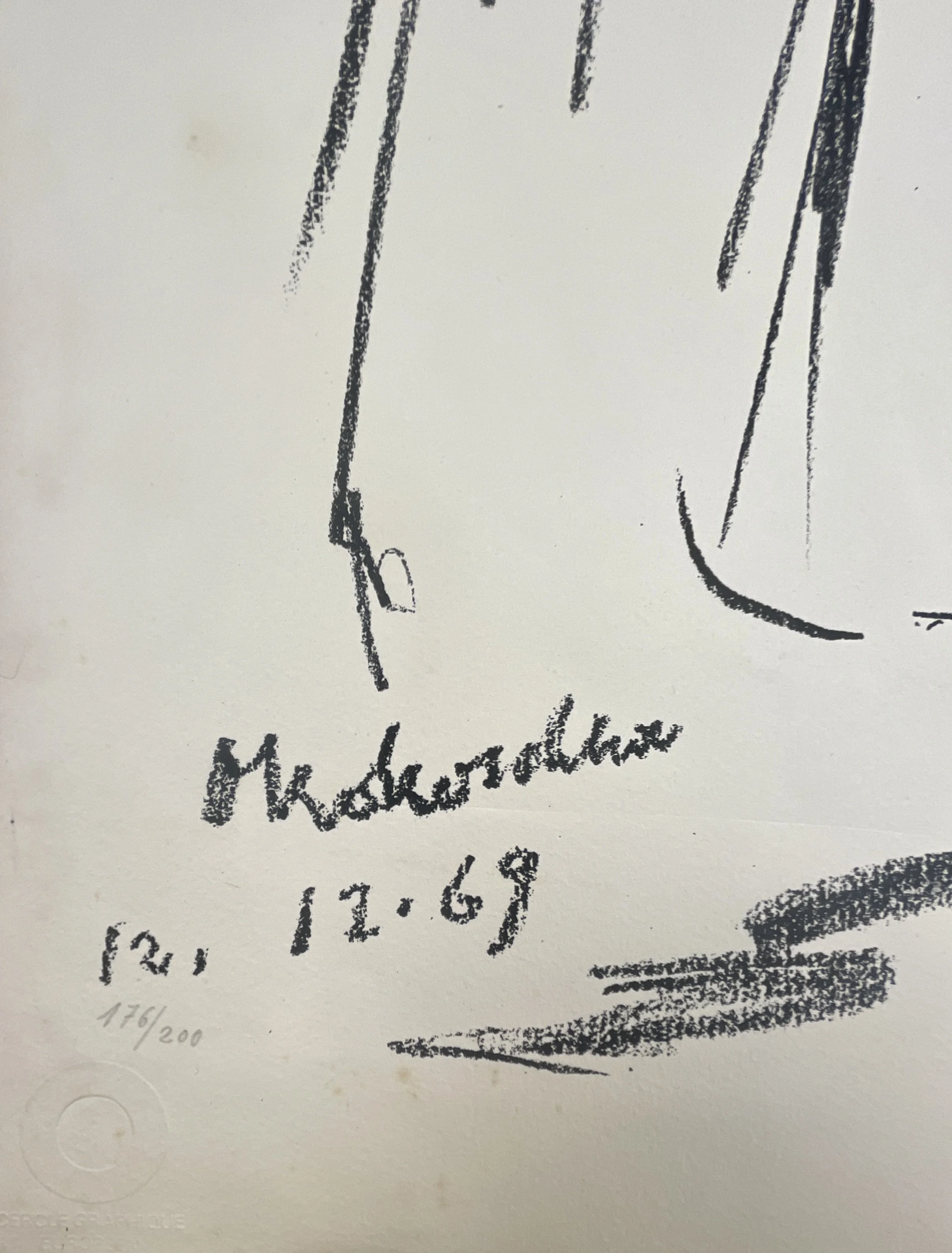 Image 2 of 5
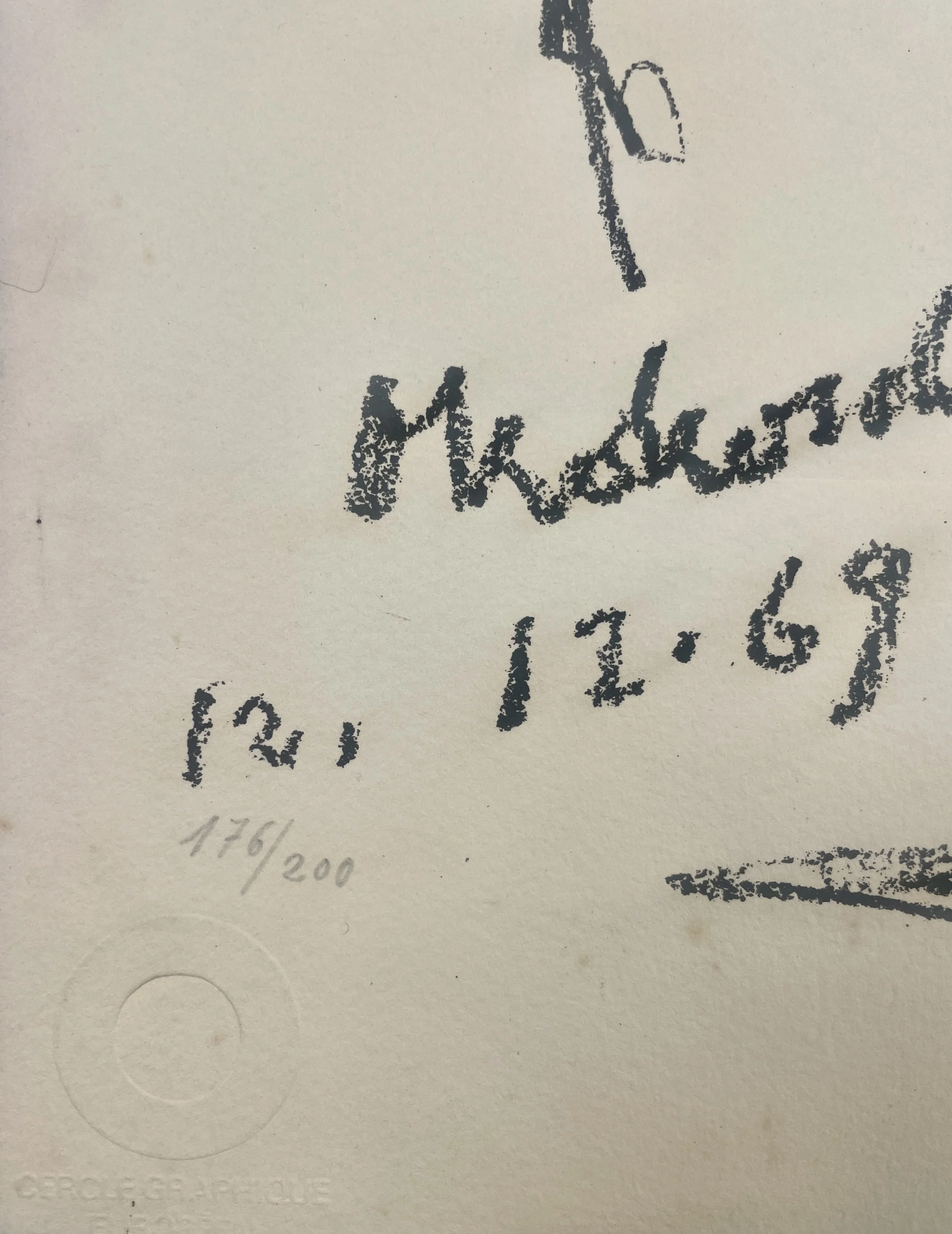 Image 3 of 5
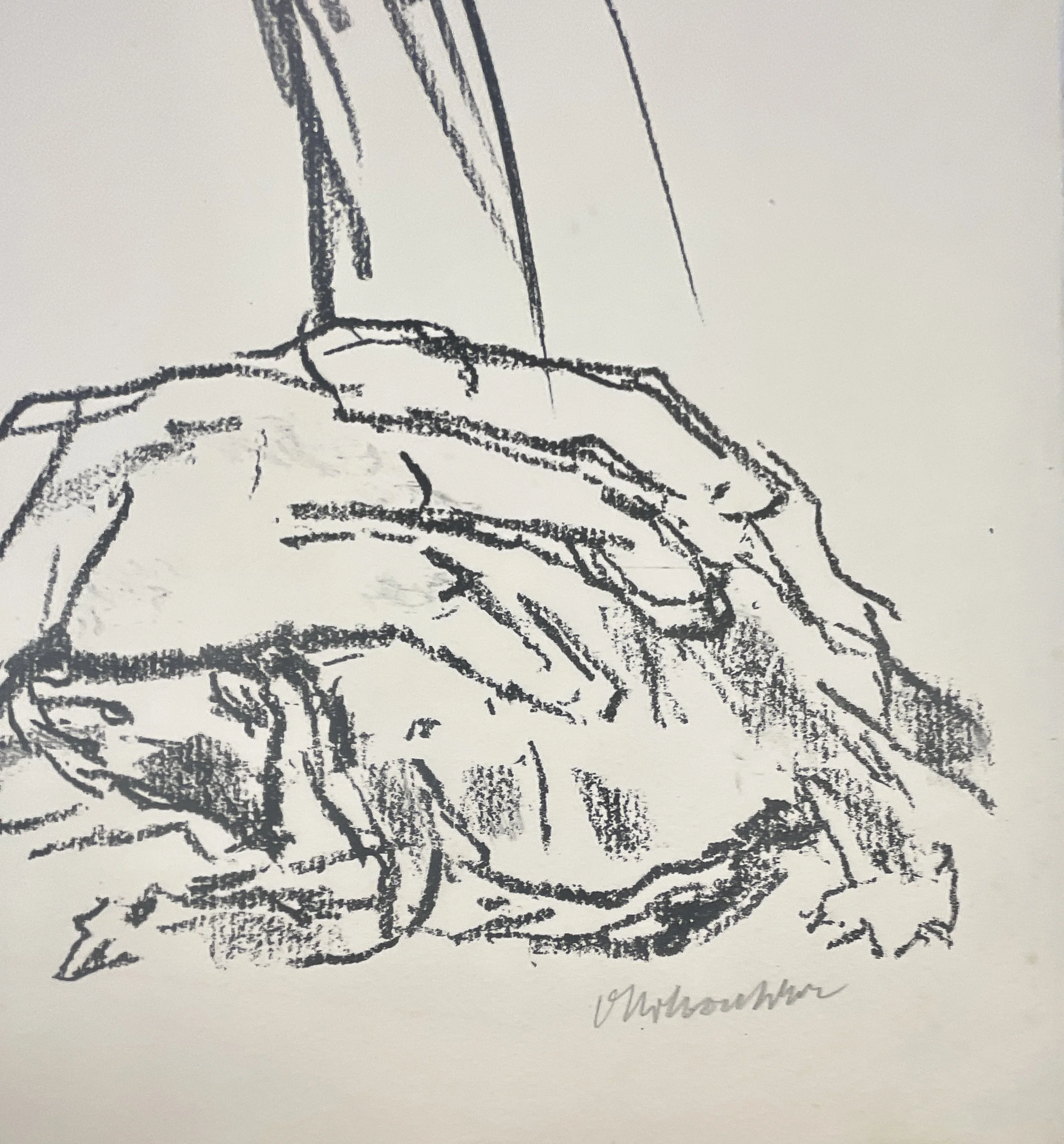 Image 4 of 5
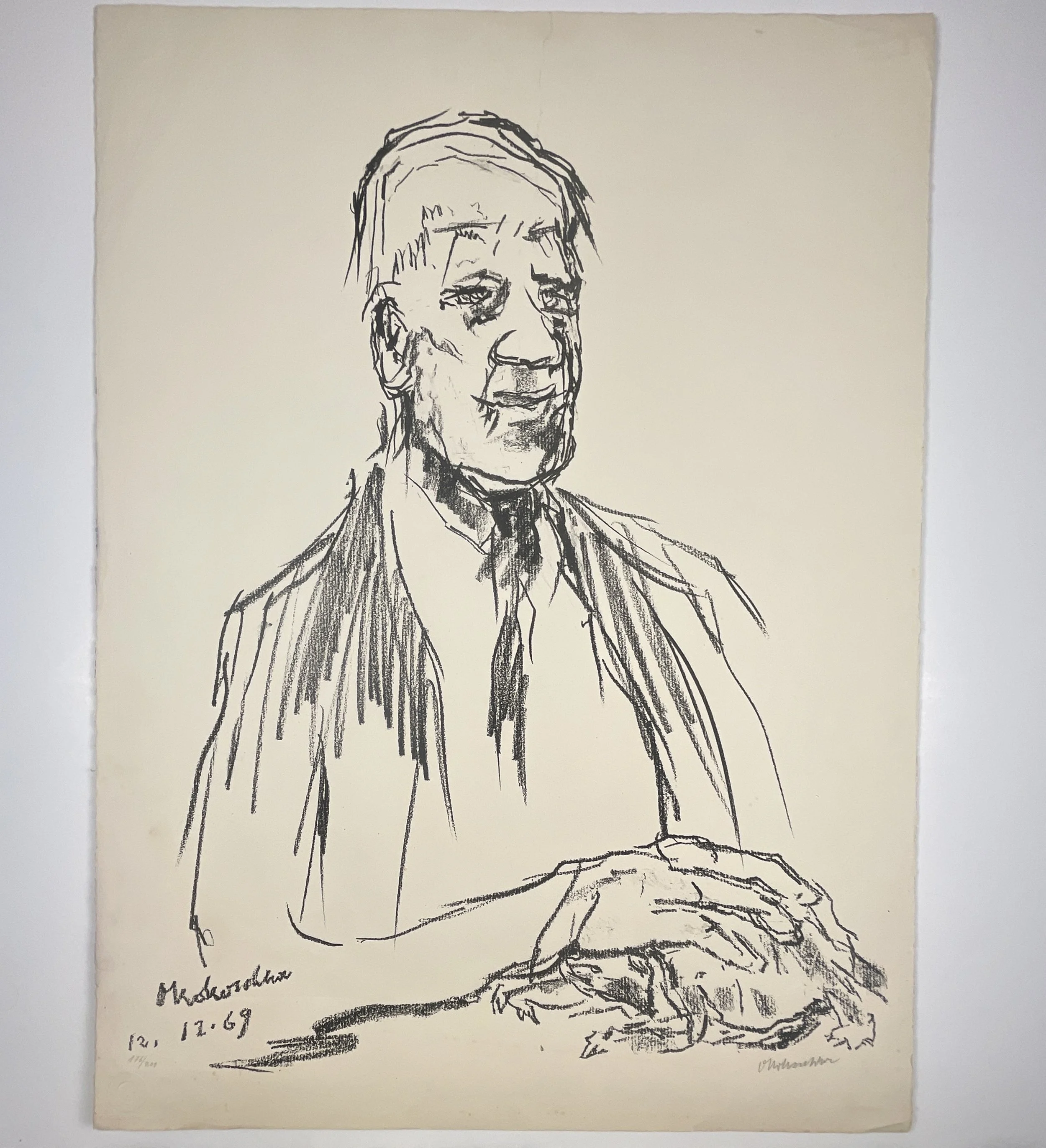 Image 5 of 5
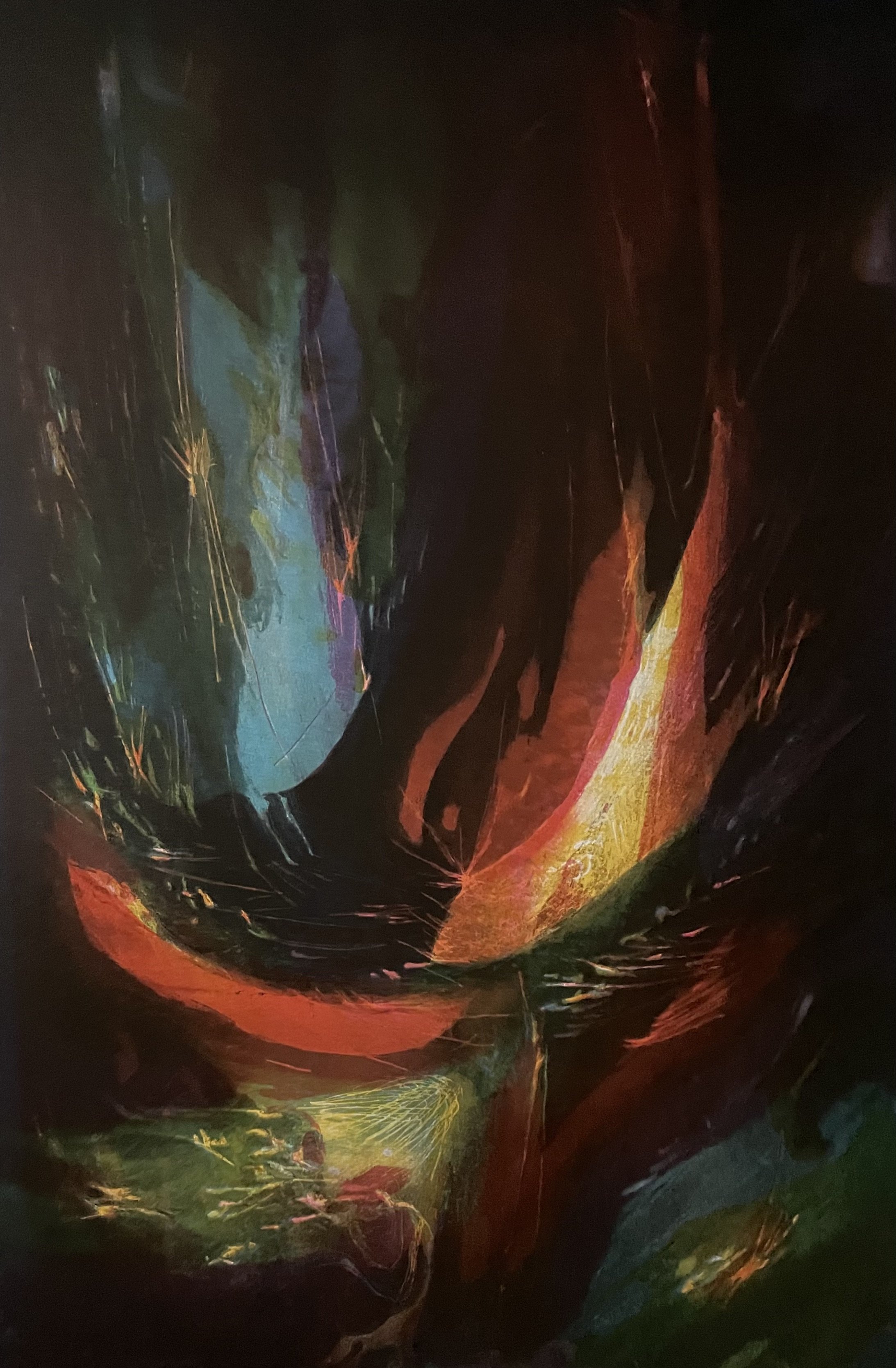
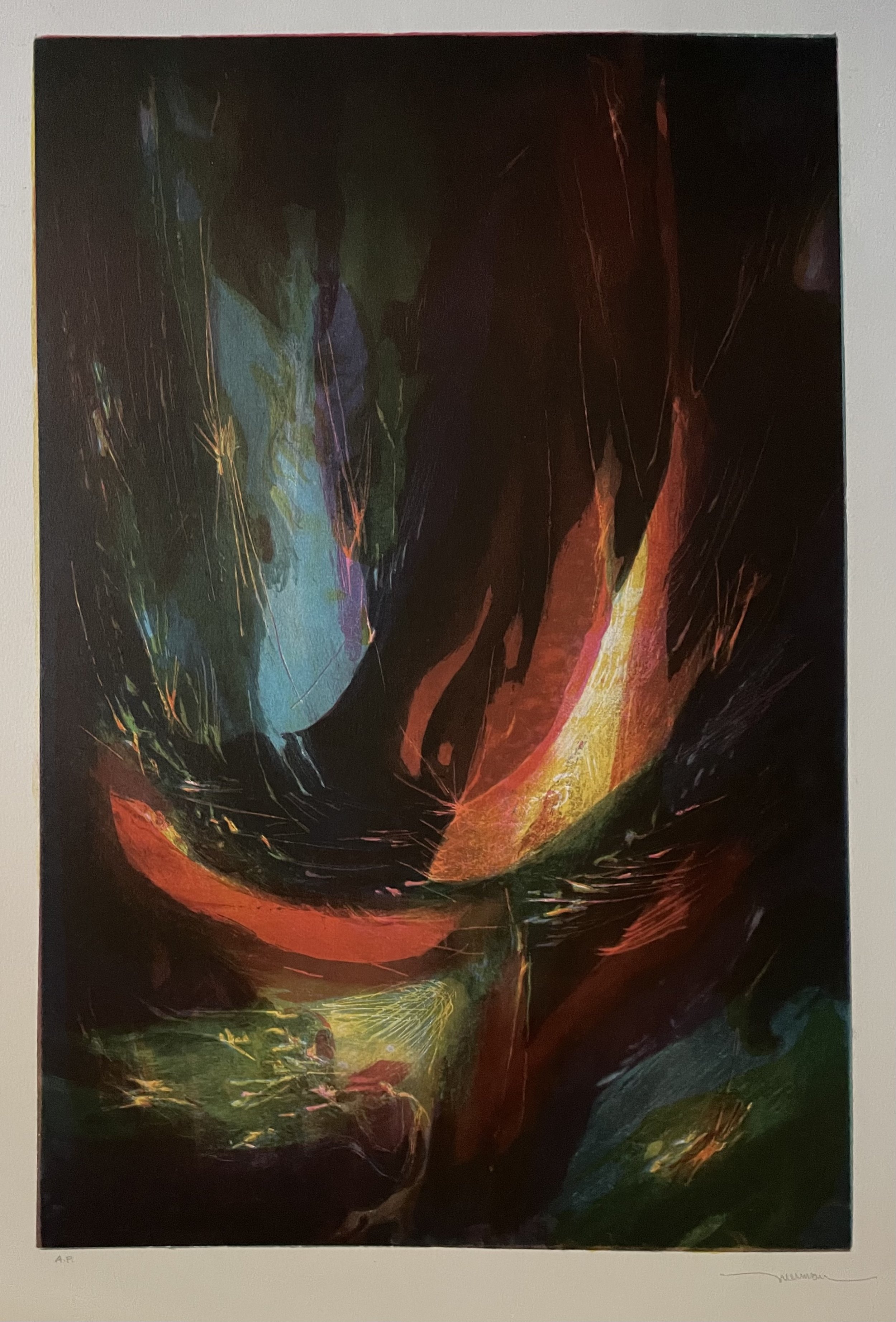
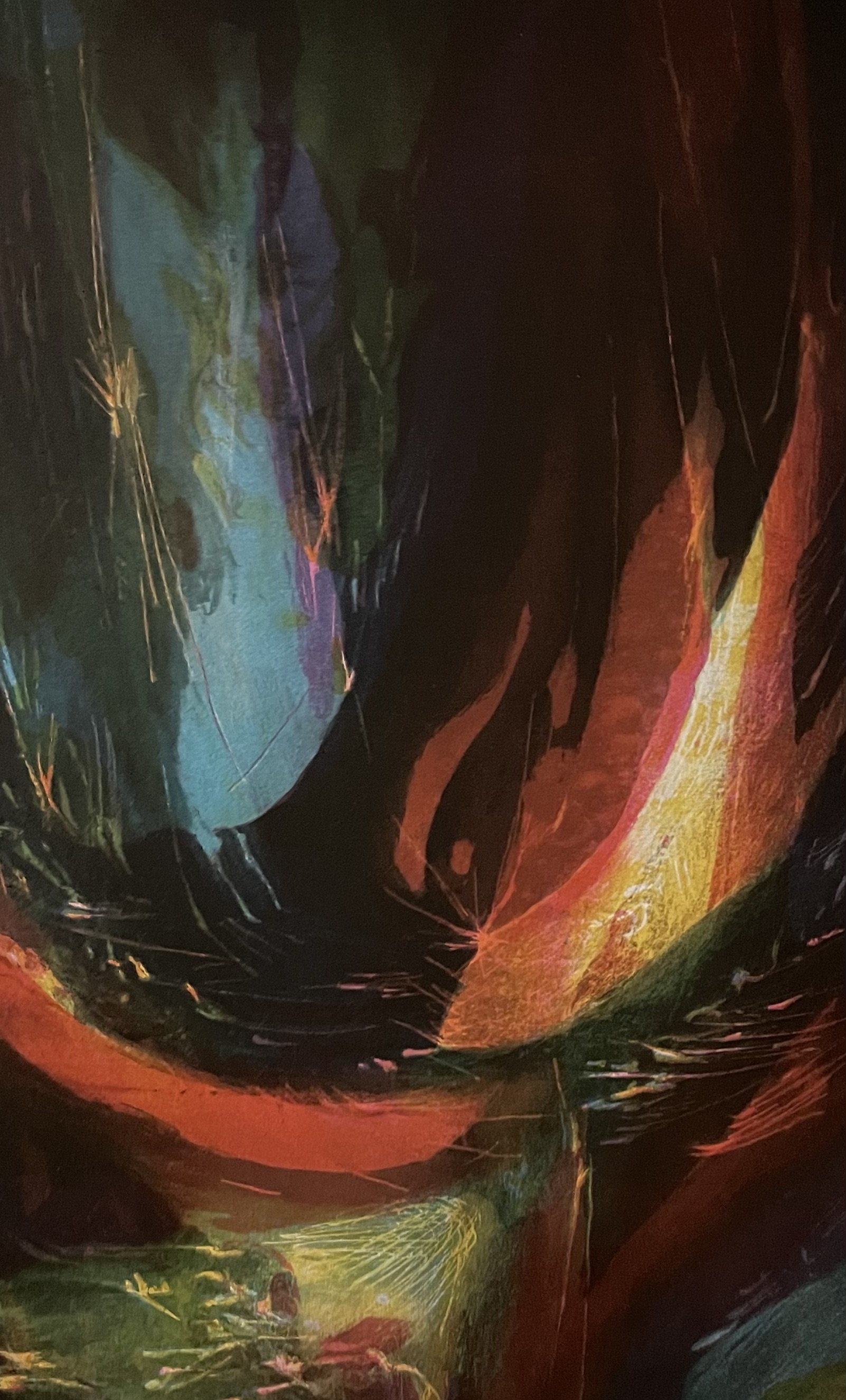
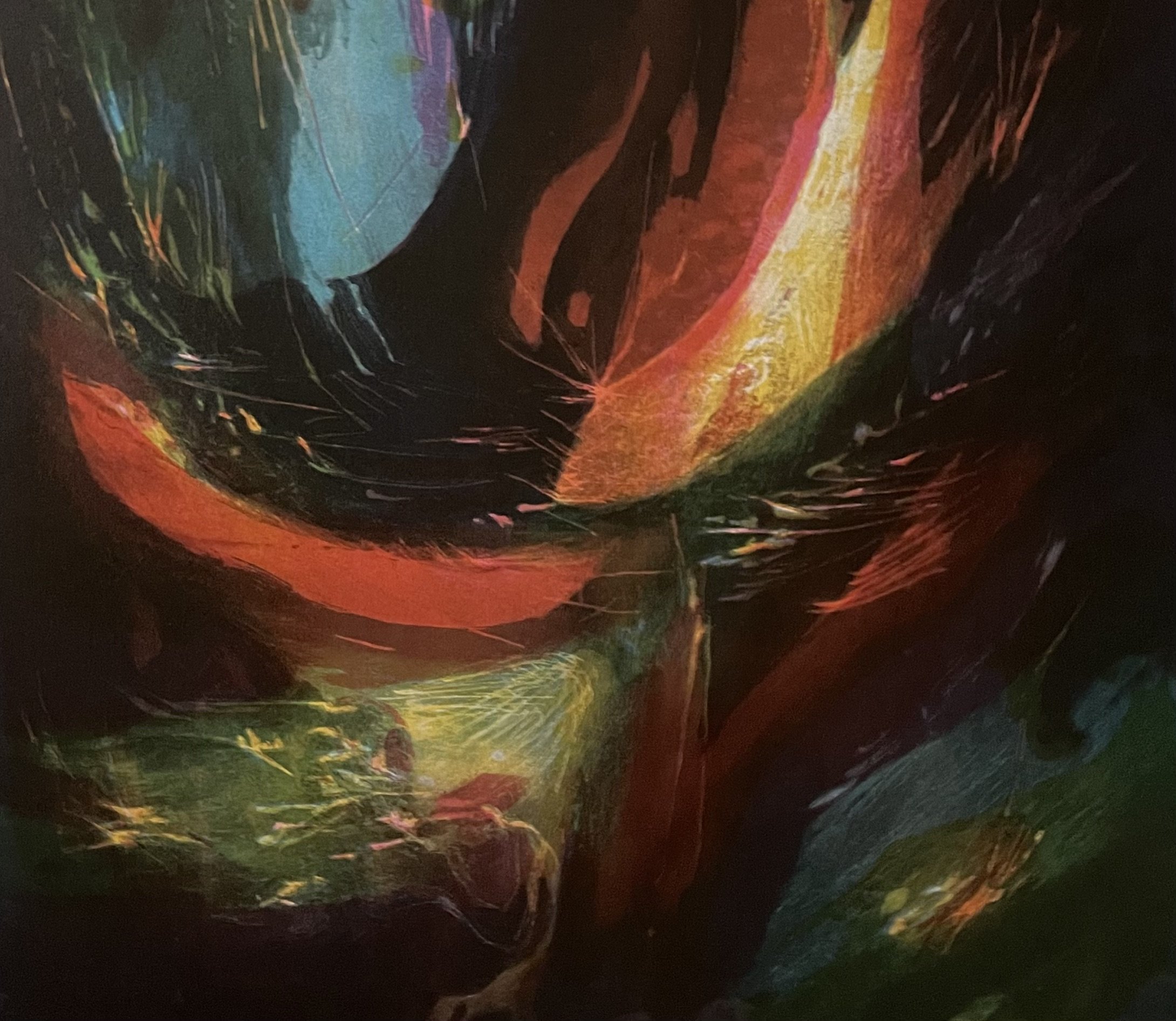
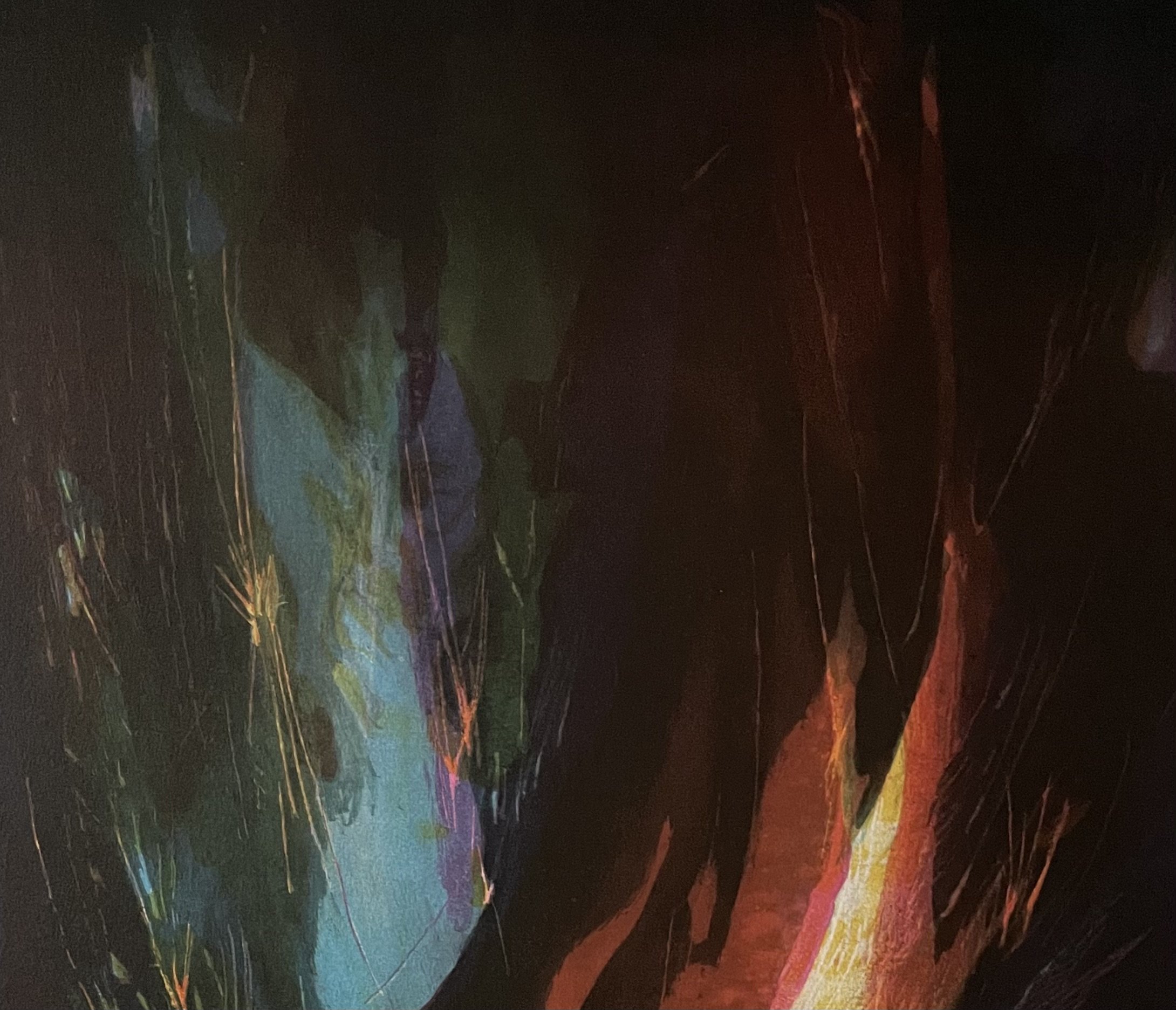
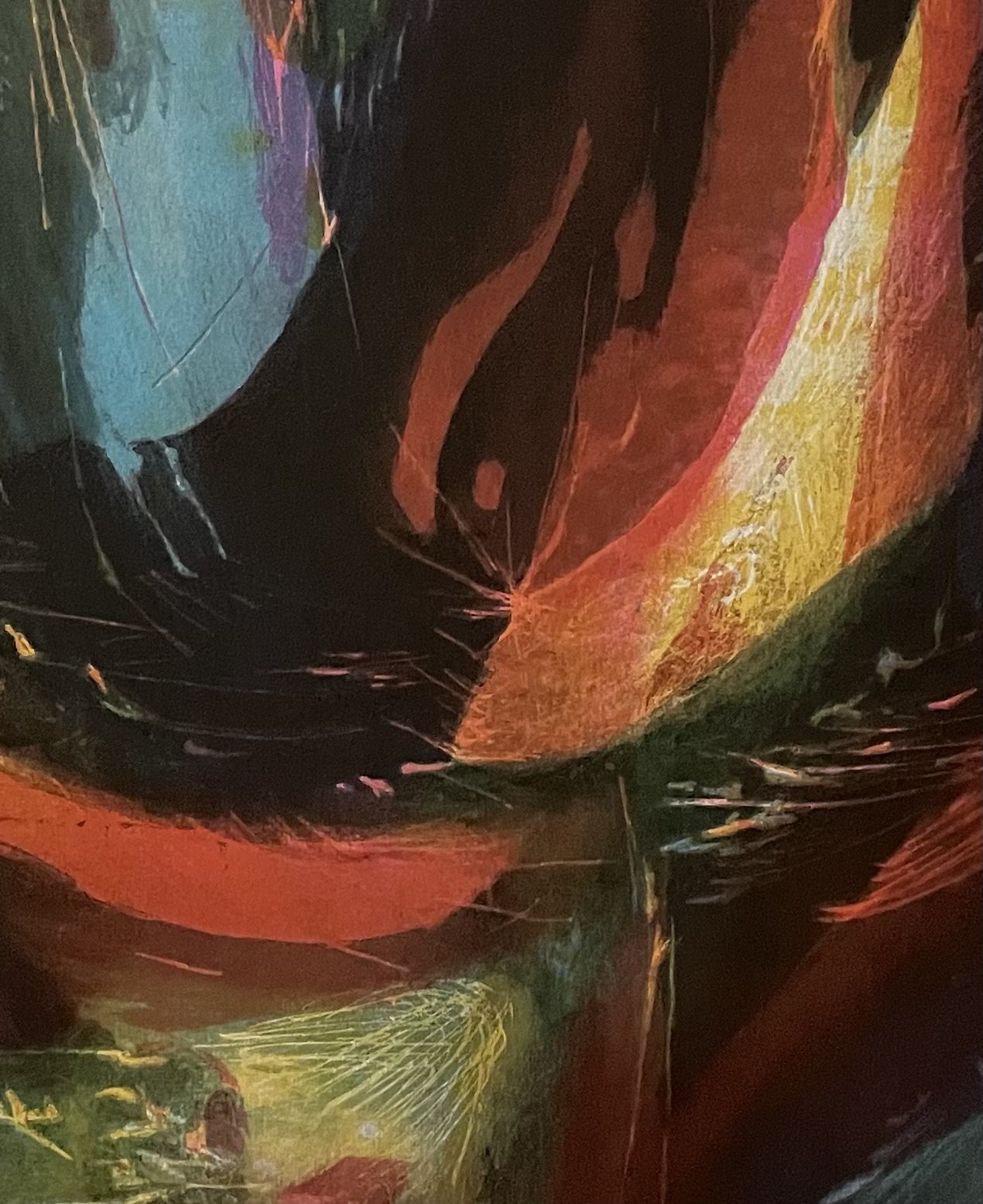
Portrait with Crab Oskar Kokoschka (1886–1980), 1969 lithograph, 22x30 in, signed & dated 12.69, ed. 176/200, Expressionist masterwork
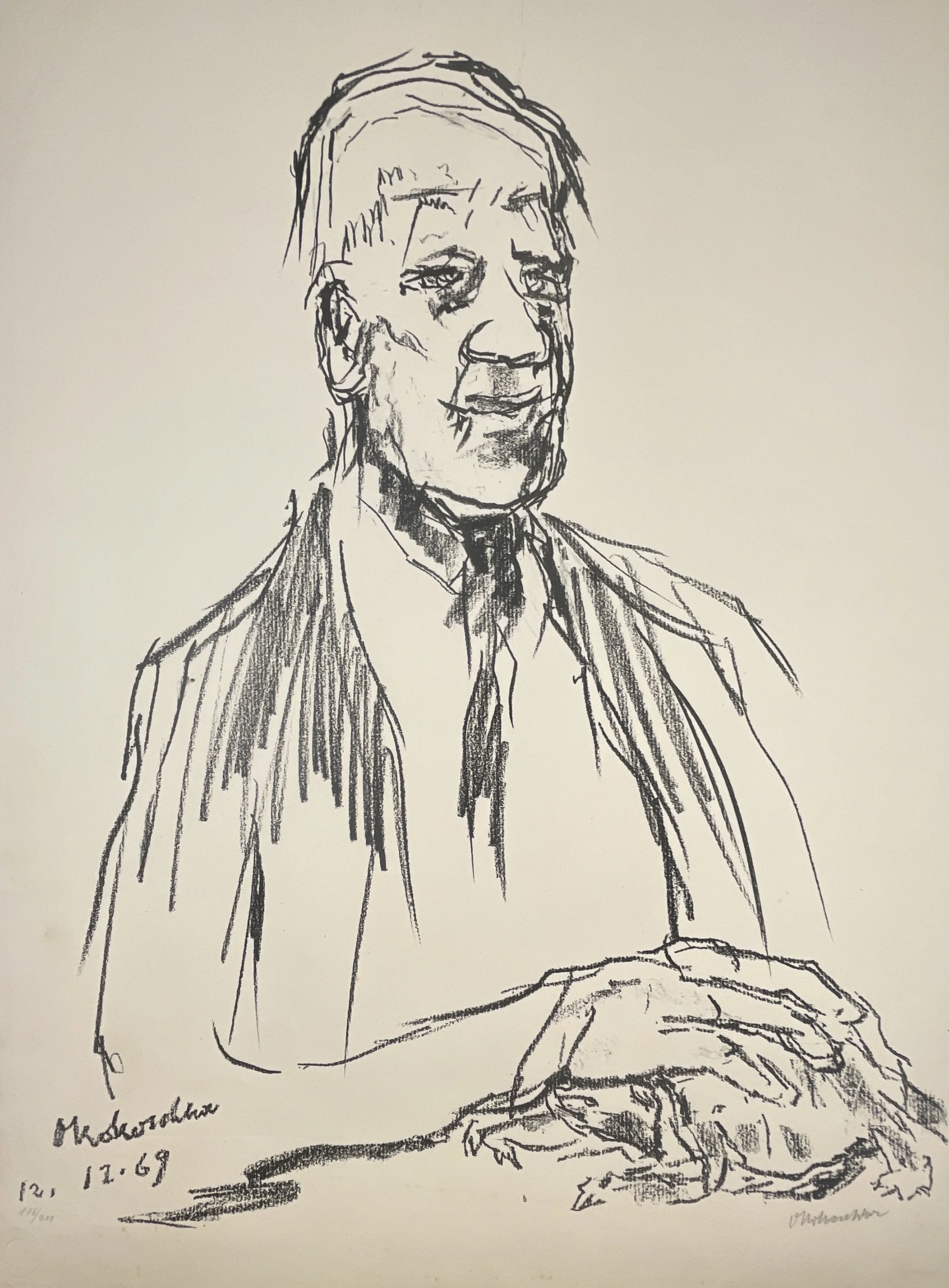
Original 1969 lithograph by Oskar Kokoschka (1886–1980), signed and dated in plate and pencil, edition 176/200, measuring 22 x 30 inches. This striking Expressionist portrait depicts a seated male figure with elongated hands resting upon a crab—an arresting symbolic detail rendered in bold, gestural line. A powerful example of late-career Kokoschka, reflecting his psychological intensity and political awareness. Acquired through Mitch Morse Gallery; current owner Artfind Gallery, Washington DC.
Artwork Description
This 1969 lithograph by Oskar Kokoschka presents a commanding half-length portrait rendered in vigorous black line against a warm, cream field. The sitter faces slightly to the viewer’s left, shoulders squared yet relaxed, his elongated fingers resting atop a crab placed prominently in the foreground. The crab, delicately but assertively drawn, introduces tension and layered symbolism—often associated with vulnerability, defense, transformation, and emotional complexity.
Kokoschka’s line is urgent and alive. The face is constructed through angular strokes and shadowed planes, emphasizing psychological depth rather than anatomical precision. The eyes, dark and introspective, anchor the composition. His characteristic nervous contour lines and expressive modeling reveal the artist’s lifelong commitment to portraiture as a vehicle for emotional truth rather than surface likeness.
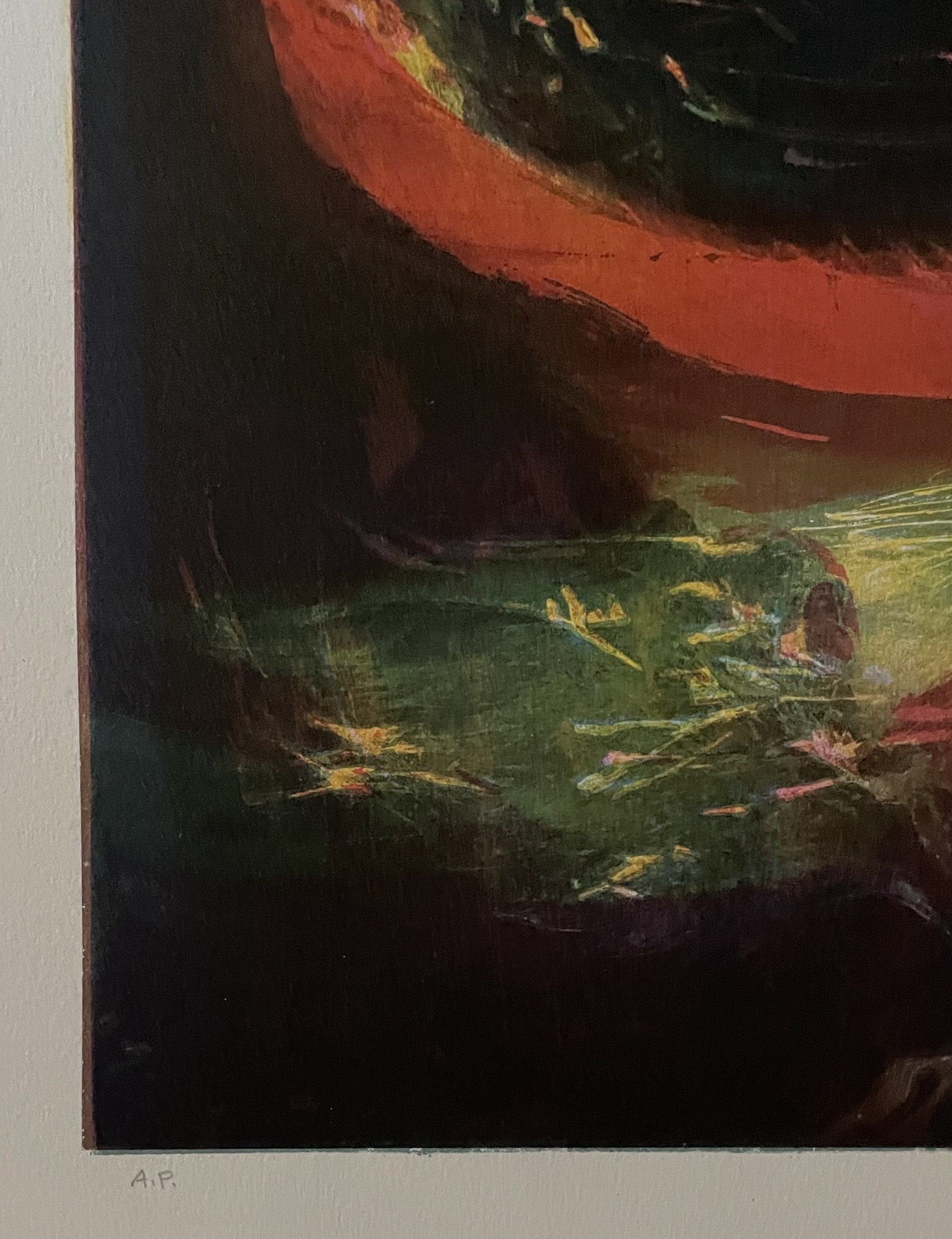
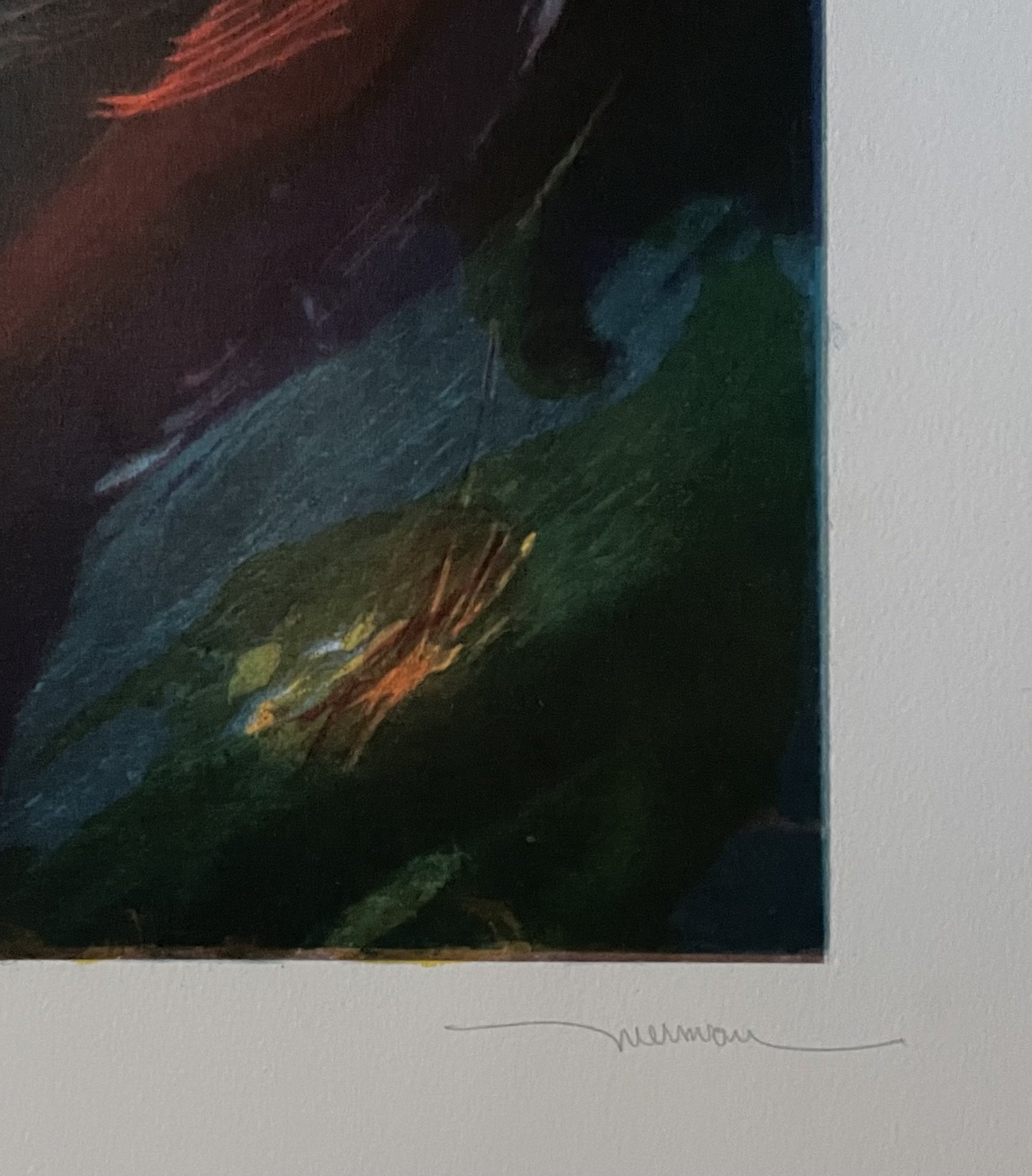
The work is signed “Kokoschka” and dated 12.69 within the image. The lower margin bears the edition number 176/200 in pencil. A blindstamp for Cercle Graphique confirms its authorized production. Measuring 22 x 30 inches, the scale allows the gestural quality to fully breathe while retaining intimacy.
Created late in Kokoschka’s life, this print belongs to his mature period in Switzerland, when his work often merged psychological portraiture with subtle political undertones. Even in his eighties, Kokoschka maintained the expressive intensity that had defined him as one of the foremost figures of Viennese Expressionism.
Artist Biography
Oskar Kokoschka (1886–1980) stands as one of the defining figures of 20th-century Expressionism. Born in Pöchlarn, Austria, along the Danube, he was raised in Vienna after his family relocated in 1891. Though initially interested in studying chemistry, his drawing ability earned him a scholarship to the Vienna School of Arts and Crafts in 1905. By 1907 he was associated with the Wiener Werkstätte and had begun expanding his practice into literature and theater.
Kokoschka quickly distinguished himself among the avant-garde circle that included Gustav Klimt and Egon Schiele. His early works provoked controversy for their raw psychological intensity and anti-academic violence. He wrote and illustrated Die träumenden Knaben and authored plays such as Mörder, Hoffnung der Frauen, now recognized as foundational to Expressionist theater.
In 1910 he moved to Berlin, where Herwarth Walden of Der Sturm championed his work. By 1911 he returned to Vienna, began teaching, and embarked on his famously passionate relationship with Alma Mahler. His emotional turmoil from that relationship profoundly shaped his art. During World War I, Kokoschka was severely wounded, and his recovery marked a turning point in both his personal life and artistic direction.
Appointed professor at the Dresden Academy in 1919, he continued to build international recognition, exhibiting at the Venice Biennale in 1922 and traveling widely across Europe and North Africa. However, his independence and outspoken political positions brought conflict. In 1937, more than 400 of his works were removed from German museums and labeled “degenerate” by the Nazi regime.
Following the Munich Agreement in 1938, he fled to London, later becoming a British citizen. After the war, he regained international stature, with major retrospectives and renewed critical acclaim. In 1953 he founded the School of Seeing at the International Summer Academy in Salzburg. He eventually settled in Villeneuve on Lake Geneva, where he continued working into his later years.
By the 1960s and 1970s, Kokoschka was regarded as one of the last living links to early Expressionism. His late works, including this 1969 lithograph, reveal undiminished vigor. Though Abstract Expressionism and postwar modernism had shifted the art world’s center, Kokoschka remained committed to figuration, psychological portraiture, and moral engagement. He died in 1980 in Switzerland, respected globally as a master of expressive line and uncompromising vision.
Oskar Kokoschka (1886–1980), Portrait with Crab, 1969, lithograph, signed and dated in plate, edition 176/200, 22 x 30 inches. Late Expressionist portrait with symbolic imagery. Blindstamp Cercle Graphique.
Certificate of Authentication
This certifies that the accompanying artwork, Portrait with Crab, is an original lithograph created in 1969 by Oskar Kokoschka (1886–1980).
Medium: Lithograph on paper
Dimensions: 22 x 30 inches
Edition: 176/200
Signature: Signed and dated 12.69 in plate; edition number in pencil
Publisher/Printer: Cercle Graphique (blindstamp)
Provenance: Mitch Morse Gallery; Artfind Gallery, Washington DC
This work is guaranteed authentic to the best of our professional knowledge and expertise.
Condition
Very good vintage condition. Light age toning consistent with period. Minor handling marks to margins. Strong impression, clear signature and edition number. No visible repairs or restoration.
Provenance
Mitch Morse Gallery, New York (acquired in NYC, United States and Europe)
Artfind Gallery, Washington DC (current owner)
Citations
Neue Galerie New York exhibition materials (2002)
Edward Lucie-Smith, Lives of the Great 20th-Century Artists
Kokoschka retrospective histories, Venice Biennale records
Dresden Academy archives
Degenerate Art Exhibition records, Munich 1937
Portrait with Crab Oskar Kokoschka (1886–1980), 1969 lithograph, 22x30 in, signed & dated 12.69, ed. 176/200, Expressionist masterwork
Original 1969 lithograph by Oskar Kokoschka (1886–1980), signed and dated in plate and pencil, edition 176/200, measuring 22 x 30 inches. This striking Expressionist portrait depicts a seated male figure with elongated hands resting upon a crab—an arresting symbolic detail rendered in bold, gestural line. A powerful example of late-career Kokoschka, reflecting his psychological intensity and political awareness. Acquired through Mitch Morse Gallery; current owner Artfind Gallery, Washington DC.
Artwork Description
This 1969 lithograph by Oskar Kokoschka presents a commanding half-length portrait rendered in vigorous black line against a warm, cream field. The sitter faces slightly to the viewer’s left, shoulders squared yet relaxed, his elongated fingers resting atop a crab placed prominently in the foreground. The crab, delicately but assertively drawn, introduces tension and layered symbolism—often associated with vulnerability, defense, transformation, and emotional complexity.
Kokoschka’s line is urgent and alive. The face is constructed through angular strokes and shadowed planes, emphasizing psychological depth rather than anatomical precision. The eyes, dark and introspective, anchor the composition. His characteristic nervous contour lines and expressive modeling reveal the artist’s lifelong commitment to portraiture as a vehicle for emotional truth rather than surface likeness.
The work is signed “Kokoschka” and dated 12.69 within the image. The lower margin bears the edition number 176/200 in pencil. A blindstamp for Cercle Graphique confirms its authorized production. Measuring 22 x 30 inches, the scale allows the gestural quality to fully breathe while retaining intimacy.
Created late in Kokoschka’s life, this print belongs to his mature period in Switzerland, when his work often merged psychological portraiture with subtle political undertones. Even in his eighties, Kokoschka maintained the expressive intensity that had defined him as one of the foremost figures of Viennese Expressionism.
Artist Biography
Oskar Kokoschka (1886–1980) stands as one of the defining figures of 20th-century Expressionism. Born in Pöchlarn, Austria, along the Danube, he was raised in Vienna after his family relocated in 1891. Though initially interested in studying chemistry, his drawing ability earned him a scholarship to the Vienna School of Arts and Crafts in 1905. By 1907 he was associated with the Wiener Werkstätte and had begun expanding his practice into literature and theater.
Kokoschka quickly distinguished himself among the avant-garde circle that included Gustav Klimt and Egon Schiele. His early works provoked controversy for their raw psychological intensity and anti-academic violence. He wrote and illustrated Die träumenden Knaben and authored plays such as Mörder, Hoffnung der Frauen, now recognized as foundational to Expressionist theater.
In 1910 he moved to Berlin, where Herwarth Walden of Der Sturm championed his work. By 1911 he returned to Vienna, began teaching, and embarked on his famously passionate relationship with Alma Mahler. His emotional turmoil from that relationship profoundly shaped his art. During World War I, Kokoschka was severely wounded, and his recovery marked a turning point in both his personal life and artistic direction.
Appointed professor at the Dresden Academy in 1919, he continued to build international recognition, exhibiting at the Venice Biennale in 1922 and traveling widely across Europe and North Africa. However, his independence and outspoken political positions brought conflict. In 1937, more than 400 of his works were removed from German museums and labeled “degenerate” by the Nazi regime.
Following the Munich Agreement in 1938, he fled to London, later becoming a British citizen. After the war, he regained international stature, with major retrospectives and renewed critical acclaim. In 1953 he founded the School of Seeing at the International Summer Academy in Salzburg. He eventually settled in Villeneuve on Lake Geneva, where he continued working into his later years.
By the 1960s and 1970s, Kokoschka was regarded as one of the last living links to early Expressionism. His late works, including this 1969 lithograph, reveal undiminished vigor. Though Abstract Expressionism and postwar modernism had shifted the art world’s center, Kokoschka remained committed to figuration, psychological portraiture, and moral engagement. He died in 1980 in Switzerland, respected globally as a master of expressive line and uncompromising vision.
Oskar Kokoschka (1886–1980), Portrait with Crab, 1969, lithograph, signed and dated in plate, edition 176/200, 22 x 30 inches. Late Expressionist portrait with symbolic imagery. Blindstamp Cercle Graphique.
Certificate of Authentication
This certifies that the accompanying artwork, Portrait with Crab, is an original lithograph created in 1969 by Oskar Kokoschka (1886–1980).
Medium: Lithograph on paper
Dimensions: 22 x 30 inches
Edition: 176/200
Signature: Signed and dated 12.69 in plate; edition number in pencil
Publisher/Printer: Cercle Graphique (blindstamp)
Provenance: Mitch Morse Gallery; Artfind Gallery, Washington DC
This work is guaranteed authentic to the best of our professional knowledge and expertise.
Condition
Very good vintage condition. Light age toning consistent with period. Minor handling marks to margins. Strong impression, clear signature and edition number. No visible repairs or restoration.
Provenance
Mitch Morse Gallery, New York (acquired in NYC, United States and Europe)
Artfind Gallery, Washington DC (current owner)
Citations
Neue Galerie New York exhibition materials (2002)
Edward Lucie-Smith, Lives of the Great 20th-Century Artists
Kokoschka retrospective histories, Venice Biennale records
Dresden Academy archives
Degenerate Art Exhibition records, Munich 1937