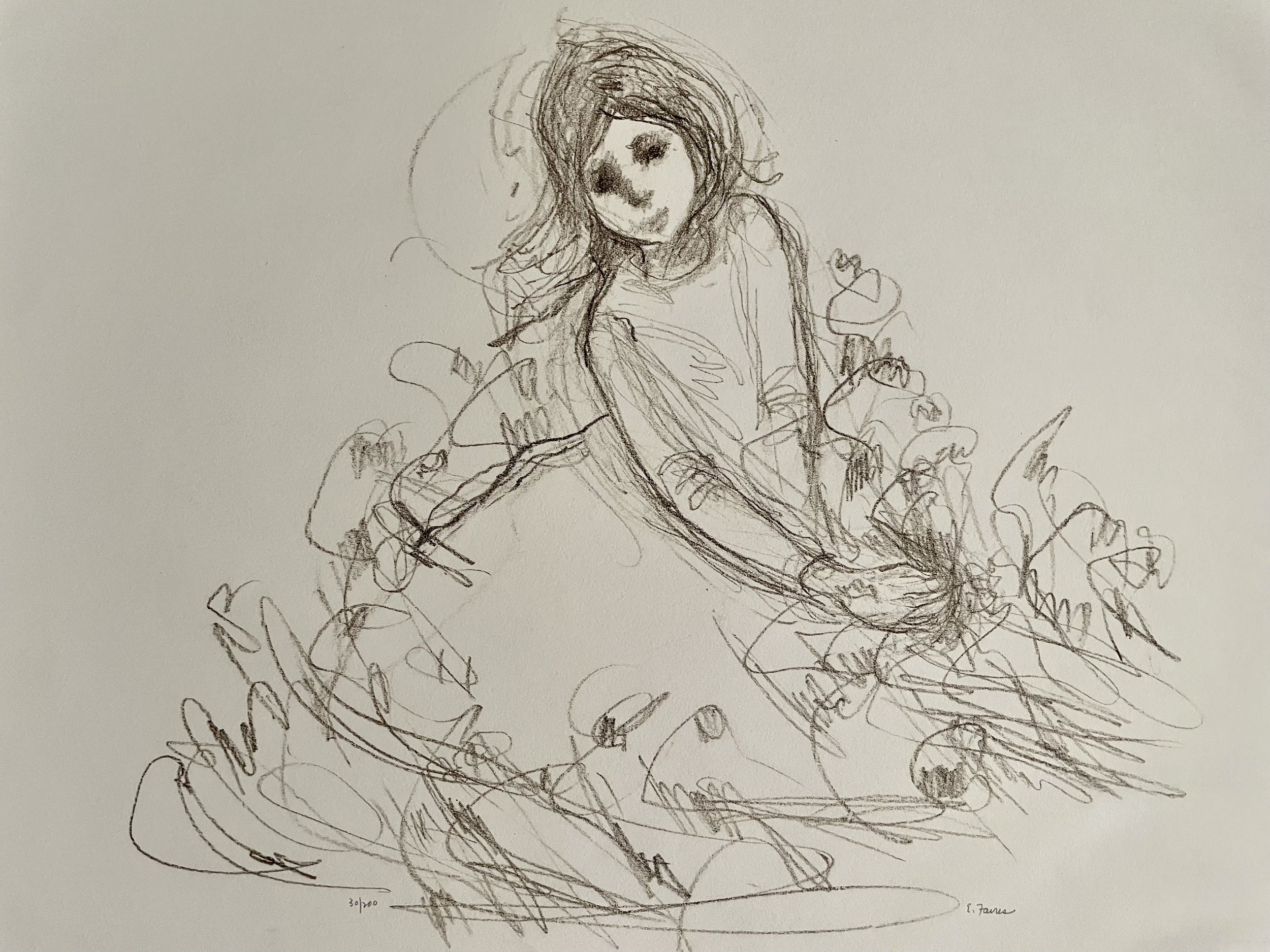
Proposition, Allan D’Arcangelo (1930–1998), 1967 composition printed 1969, color serigraph, 26 × 26 in., signed lower right, edition 102/120.
A striking minimalist Pop Art serigraph by Allan D’Arcangelo, Proposition presents the artist’s iconic geometric highway-perspective motif reduced to pure structure and color. Signed and numbered from a limited edition of 120, the print exemplifies D’Arcangelo’s late-1960s exploration of American landscape symbolism, where roads, horizons, and architectural forms become meditative abstractions. With crisp masking, luminous blues and greens, and precise spatial geometry, this work captures the intellectual and visual rigor that positioned D’Arcangelo among the most distinctive voices of American Pop and Minimalist-influenced painting.
Artwork Description
Proposition belongs to the group of works Allan D’Arcangelo developed during the late 1960s in which the American highway landscape becomes a distilled geometric proposition. The composition is constructed around a forced central perspective: four linear vectors converge toward a small rectangular opening at the center, suggesting a vanishing point or portal in space. The surrounding planes of white and layered bands of blue and green evoke horizon lines, sky fields, and the engineered geometry of road systems.
The visual language derives from D’Arcangelo’s fascination with the American highway system, signage, and the psychological experience of driving through space. Unlike the more literal road paintings of his early Pop period, this image eliminates descriptive detail and reduces the landscape to a near-architectural diagram. The central void functions almost as an optical threshold, drawing the viewer inward while maintaining the cool detachment characteristic of late-1960s Minimalist painting.
Technically, the print demonstrates the hallmarks of high-quality late-1960s American screenprinting. The planes of color are flat, saturated, and sharply bounded, indicating careful stencil preparation and precise ink layering. The edges of the shapes appear to have been created with taped or masked boundaries, leaving clean geometric transitions between fields of color. Such controlled surfaces echo the aesthetic of contemporary artists exploring industrial finishes and machine-like clarity.
The print is signed in pencil lower right “D. Arcangelo 1969” and numbered lower left “102/120,” indicating an edition of 120 impressions. Although the composition dates to 1967, the printing was executed in 1969, a common practice when artists translated earlier paintings into graphic editions. The work’s balanced geometry and meditative spatial logic reflect D’Arcangelo’s continuing dialogue with Pop Art imagery while moving toward the stripped structural language shared by Minimalist and Color-Field painters of the same era.
Today, works from this period are recognized as some of D’Arcangelo’s most intellectually rigorous images—quiet yet powerful meditations on landscape, perception, and the constructed environment of modern America.
Artist Biography
Allan D’Arcangelo (June 16, 1930 – December 23, 1998) was an American painter and printmaker whose work occupies a distinctive position between Pop Art, Minimalism, and conceptual landscape painting. Born in Buffalo, New York, he received a B.A. in History from the University of Buffalo in 1953 before turning fully to art. Between 1957 and 1959 he pursued graduate studies in Mexico, an experience that exposed him to large-scale mural traditions and bold compositional structure.
D’Arcangelo first emerged in the early 1960s in New York during the formative years of Pop Art. His early paintings explored American cultural symbols—particularly highways, signage, and the visual language of transportation infrastructure. Rather than treating these subjects with irony or commercial imagery, as many Pop artists did, D’Arcangelo approached them as formal and philosophical structures embedded within the American landscape.
His first major exhibitions occurred during the mid-1960s and rapidly brought him international attention. Solo exhibitions were held at Fischbach Gallery in New York, Dwan Gallery in Los Angeles, Galerie Ricke in Kassel, Galerie Muller in Stuttgart, and Ileana Sonnabend Gallery in Paris. By 1967 his work had already been shown internationally, including exhibitions in Stuttgart, Kassel, Tokyo, and New York.
During this period D’Arcangelo participated in major museum and international exhibitions that positioned him within the evolving narrative of contemporary art. His work appeared in the São Paulo Biennial, the American Pavilion at Expo ’67 in Montreal, the Detroit Institute of Arts exhibition Form, Color, Image, and numerous shows devoted to contemporary American painting. He also exhibited with the Society of American Graphic Artists and participated in exhibitions at institutions including the Pratt Center for Contemporary Printmaking and the Stedelijk Museum in Amsterdam.
Thematically, D’Arcangelo’s work repeatedly returned to the American highway—often depicted as a vanishing road receding into infinite space. These images reflect both the optimism and alienation of the postwar American landscape. Over time his compositions became increasingly simplified, emphasizing geometry, perspective, and monumental emptiness rather than descriptive realism.
Critics frequently noted that his paintings combined the directness of Pop Art with the formal clarity of Minimalism. The edges of his forms were often sharply masked, producing crisp transitions between planes of color. This technique created what critics described as a “machined elegance,” aligning his work with the broader movement toward industrial precision in late-1960s painting.
In the 1970s D’Arcangelo returned to more representational depictions of highways and landscapes, often rendered in subdued color palettes that reflected the mood of industrial America. Though less prolific in later decades, he continued to produce paintings and prints exploring space, structure, and perception.
Today D’Arcangelo’s work is recognized as a significant contribution to the evolution of American landscape imagery within modern art. His paintings and prints are held in major museum collections including the Museum of Modern Art in New York, the Whitney Museum of American Art, and numerous international institutions. His work remains an important bridge between the symbolic language of Pop Art and the contemplative spatial logic of Minimalist painting.
Allan D’Arcangelo (1930–1998)
Proposition, 1967 / printed 1969
Color serigraph on paper
Signed and dated lower right; numbered 102/120 lower left
Sheet approx. 26 × 26 inches
American Pop/Minimalist geometric composition exploring highway perspective.
Certificate of Authentication
This certifies that the artwork titled Proposition by Allan D’Arcangelo (1930–1998) is an original color serigraph created after a 1967 composition and printed in 1969.
The work is signed in pencil by the artist and numbered 102 from the edition of 120 impressions.
Medium: Color serigraph on paper
Dimensions: approximately 26 × 26 inches
This work originates from the inventory of Mitch Morse Gallery and is currently held by Artfind Gallery, Washington, DC.
Condition
Very good vintage condition. Colors remain strong and well preserved. Minor age-related toning to the sheet and light handling marks visible primarily on the verso and margins, consistent with prints from the late 1960s. No significant structural damage to the image area.
Provenance
Mitch Morse Gallery, New York, NY
Acquired by Artfind Gallery, Washington, DC
Current Owner: Artfind Gallery, Washington, DC
Sources
Archives of American Art, Smithsonian Institution
Museum of Modern Art artist records
Fischbach Gallery exhibition history
Published exhibition materials and contemporary criticism on Allan D’Arcangelo.
Proposition, Allan D’Arcangelo (1930–1998), 1967 composition printed 1969, color serigraph, 26 × 26 in., signed lower right, edition 102/120.
A striking minimalist Pop Art serigraph by Allan D’Arcangelo, Proposition presents the artist’s iconic geometric highway-perspective motif reduced to pure structure and color. Signed and numbered from a limited edition of 120, the print exemplifies D’Arcangelo’s late-1960s exploration of American landscape symbolism, where roads, horizons, and architectural forms become meditative abstractions. With crisp masking, luminous blues and greens, and precise spatial geometry, this work captures the intellectual and visual rigor that positioned D’Arcangelo among the most distinctive voices of American Pop and Minimalist-influenced painting.
Artwork Description
Proposition belongs to the group of works Allan D’Arcangelo developed during the late 1960s in which the American highway landscape becomes a distilled geometric proposition. The composition is constructed around a forced central perspective: four linear vectors converge toward a small rectangular opening at the center, suggesting a vanishing point or portal in space. The surrounding planes of white and layered bands of blue and green evoke horizon lines, sky fields, and the engineered geometry of road systems.
The visual language derives from D’Arcangelo’s fascination with the American highway system, signage, and the psychological experience of driving through space. Unlike the more literal road paintings of his early Pop period, this image eliminates descriptive detail and reduces the landscape to a near-architectural diagram. The central void functions almost as an optical threshold, drawing the viewer inward while maintaining the cool detachment characteristic of late-1960s Minimalist painting.
Technically, the print demonstrates the hallmarks of high-quality late-1960s American screenprinting. The planes of color are flat, saturated, and sharply bounded, indicating careful stencil preparation and precise ink layering. The edges of the shapes appear to have been created with taped or masked boundaries, leaving clean geometric transitions between fields of color. Such controlled surfaces echo the aesthetic of contemporary artists exploring industrial finishes and machine-like clarity.
The print is signed in pencil lower right “D. Arcangelo 1969” and numbered lower left “102/120,” indicating an edition of 120 impressions. Although the composition dates to 1967, the printing was executed in 1969, a common practice when artists translated earlier paintings into graphic editions. The work’s balanced geometry and meditative spatial logic reflect D’Arcangelo’s continuing dialogue with Pop Art imagery while moving toward the stripped structural language shared by Minimalist and Color-Field painters of the same era.
Today, works from this period are recognized as some of D’Arcangelo’s most intellectually rigorous images—quiet yet powerful meditations on landscape, perception, and the constructed environment of modern America.
Artist Biography
Allan D’Arcangelo (June 16, 1930 – December 23, 1998) was an American painter and printmaker whose work occupies a distinctive position between Pop Art, Minimalism, and conceptual landscape painting. Born in Buffalo, New York, he received a B.A. in History from the University of Buffalo in 1953 before turning fully to art. Between 1957 and 1959 he pursued graduate studies in Mexico, an experience that exposed him to large-scale mural traditions and bold compositional structure.
D’Arcangelo first emerged in the early 1960s in New York during the formative years of Pop Art. His early paintings explored American cultural symbols—particularly highways, signage, and the visual language of transportation infrastructure. Rather than treating these subjects with irony or commercial imagery, as many Pop artists did, D’Arcangelo approached them as formal and philosophical structures embedded within the American landscape.
His first major exhibitions occurred during the mid-1960s and rapidly brought him international attention. Solo exhibitions were held at Fischbach Gallery in New York, Dwan Gallery in Los Angeles, Galerie Ricke in Kassel, Galerie Muller in Stuttgart, and Ileana Sonnabend Gallery in Paris. By 1967 his work had already been shown internationally, including exhibitions in Stuttgart, Kassel, Tokyo, and New York.
During this period D’Arcangelo participated in major museum and international exhibitions that positioned him within the evolving narrative of contemporary art. His work appeared in the São Paulo Biennial, the American Pavilion at Expo ’67 in Montreal, the Detroit Institute of Arts exhibition Form, Color, Image, and numerous shows devoted to contemporary American painting. He also exhibited with the Society of American Graphic Artists and participated in exhibitions at institutions including the Pratt Center for Contemporary Printmaking and the Stedelijk Museum in Amsterdam.
Thematically, D’Arcangelo’s work repeatedly returned to the American highway—often depicted as a vanishing road receding into infinite space. These images reflect both the optimism and alienation of the postwar American landscape. Over time his compositions became increasingly simplified, emphasizing geometry, perspective, and monumental emptiness rather than descriptive realism.
Critics frequently noted that his paintings combined the directness of Pop Art with the formal clarity of Minimalism. The edges of his forms were often sharply masked, producing crisp transitions between planes of color. This technique created what critics described as a “machined elegance,” aligning his work with the broader movement toward industrial precision in late-1960s painting.
In the 1970s D’Arcangelo returned to more representational depictions of highways and landscapes, often rendered in subdued color palettes that reflected the mood of industrial America. Though less prolific in later decades, he continued to produce paintings and prints exploring space, structure, and perception.
Today D’Arcangelo’s work is recognized as a significant contribution to the evolution of American landscape imagery within modern art. His paintings and prints are held in major museum collections including the Museum of Modern Art in New York, the Whitney Museum of American Art, and numerous international institutions. His work remains an important bridge between the symbolic language of Pop Art and the contemplative spatial logic of Minimalist painting.
Allan D’Arcangelo (1930–1998)
Proposition, 1967 / printed 1969
Color serigraph on paper
Signed and dated lower right; numbered 102/120 lower left
Sheet approx. 26 × 26 inches
American Pop/Minimalist geometric composition exploring highway perspective.
Certificate of Authentication
This certifies that the artwork titled Proposition by Allan D’Arcangelo (1930–1998) is an original color serigraph created after a 1967 composition and printed in 1969.
The work is signed in pencil by the artist and numbered 102 from the edition of 120 impressions.
Medium: Color serigraph on paper
Dimensions: approximately 26 × 26 inches
This work originates from the inventory of Mitch Morse Gallery and is currently held by Artfind Gallery, Washington, DC.
Condition
Very good vintage condition. Colors remain strong and well preserved. Minor age-related toning to the sheet and light handling marks visible primarily on the verso and margins, consistent with prints from the late 1960s. No significant structural damage to the image area.
Provenance
Mitch Morse Gallery, New York, NY
Acquired by Artfind Gallery, Washington, DC
Current Owner: Artfind Gallery, Washington, DC
Sources
Archives of American Art, Smithsonian Institution
Museum of Modern Art artist records
Fischbach Gallery exhibition history
Published exhibition materials and contemporary criticism on Allan D’Arcangelo.
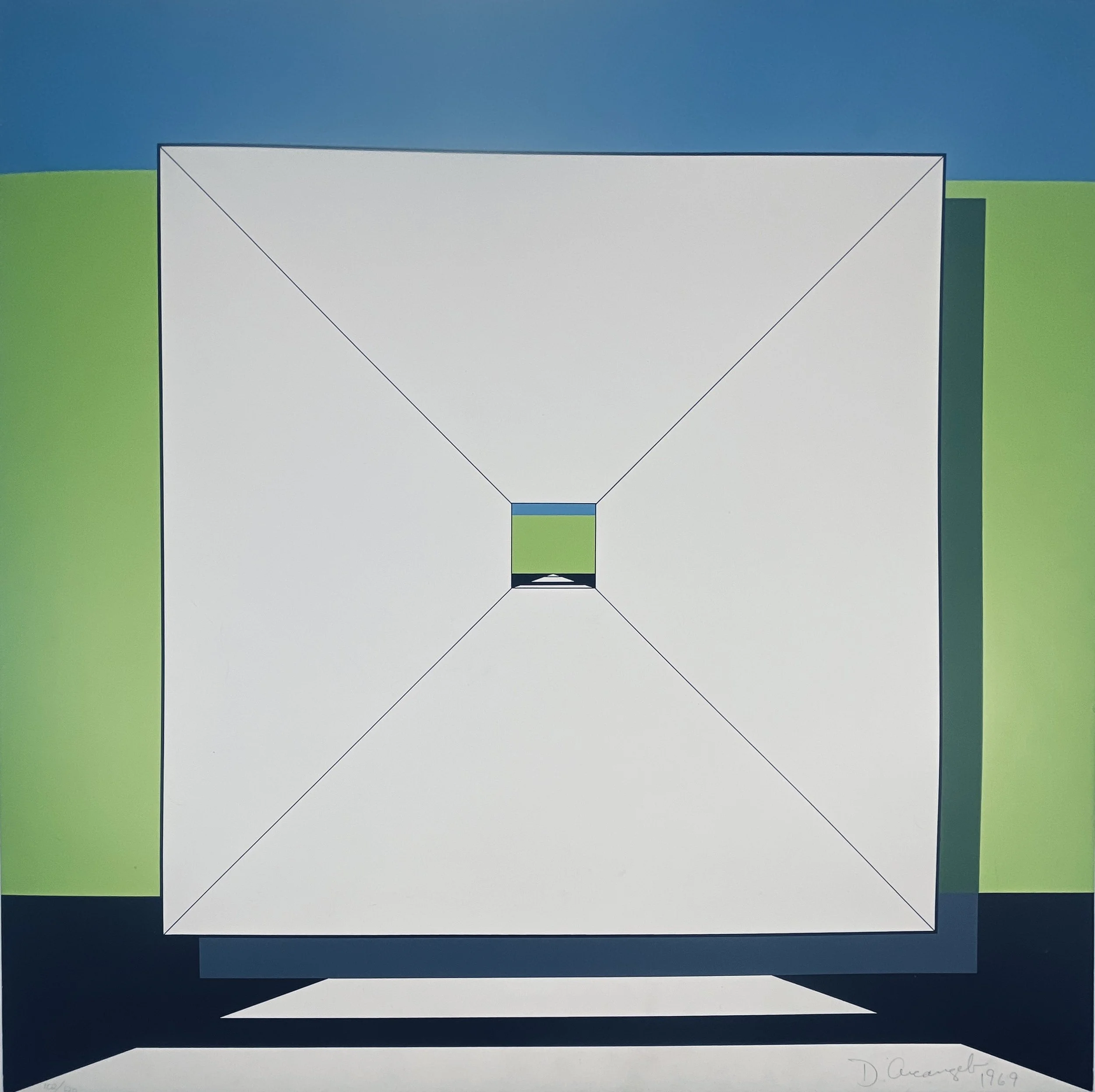 Image 1 of 6
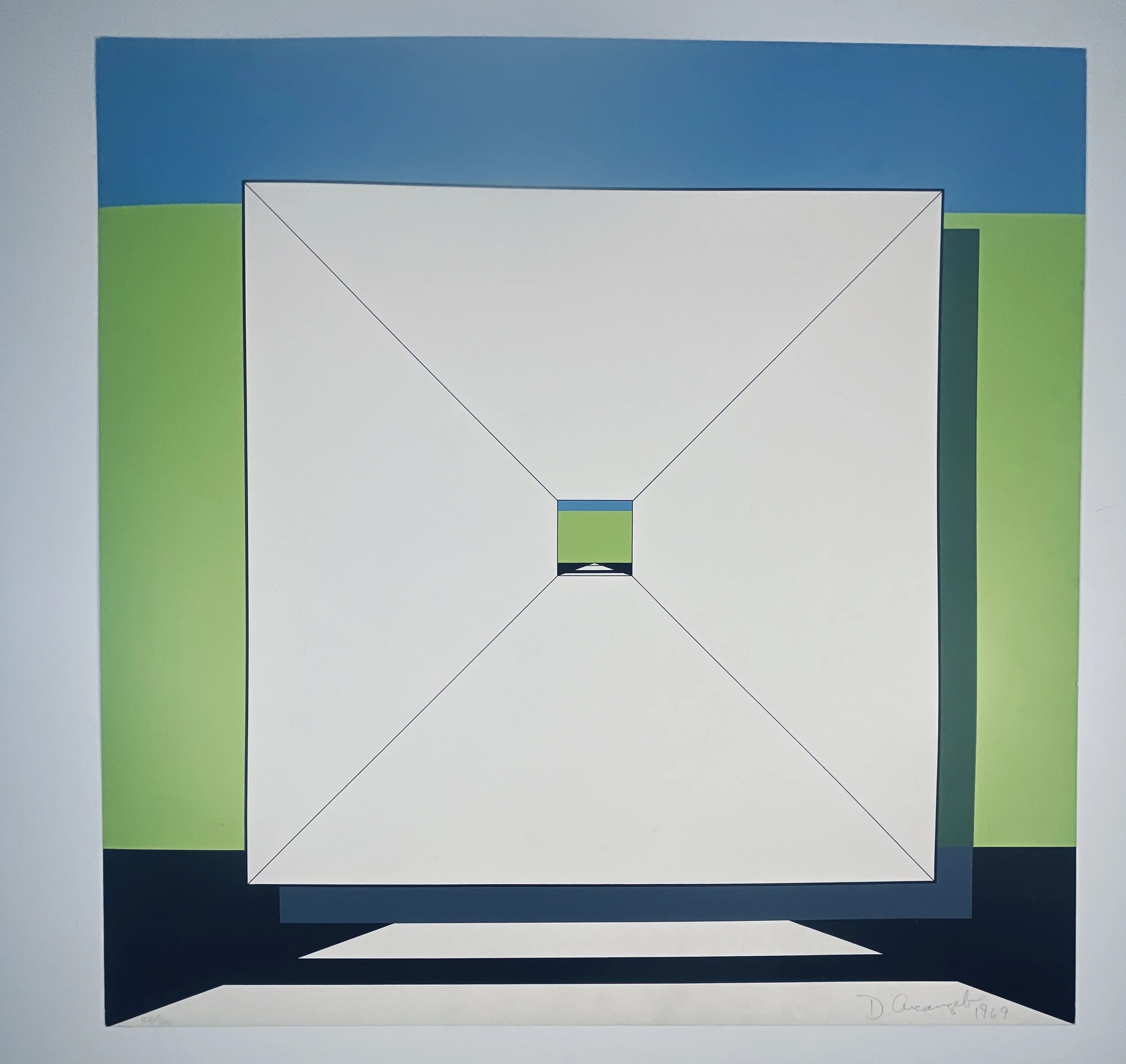 Image 2 of 6
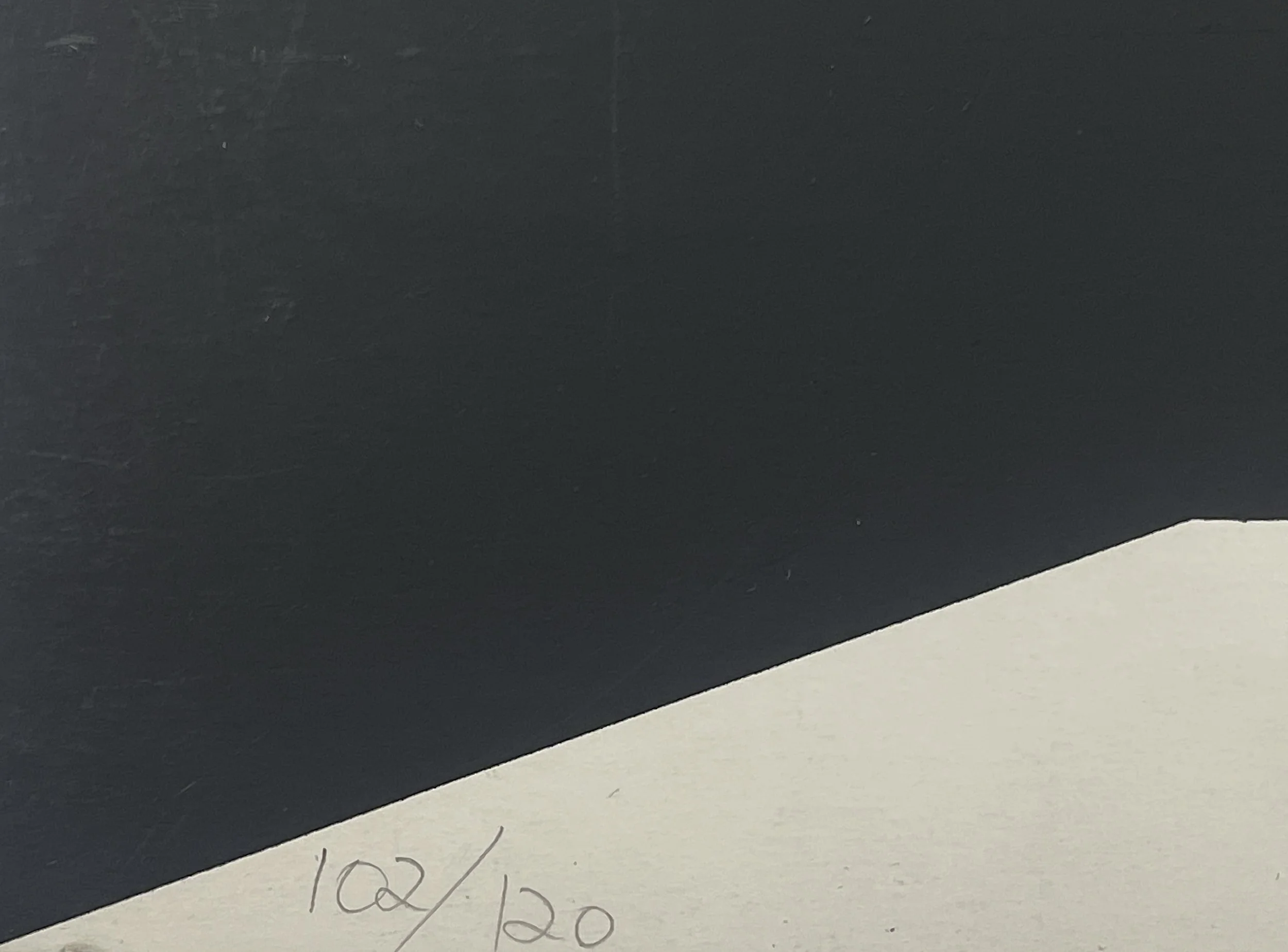 Image 3 of 6
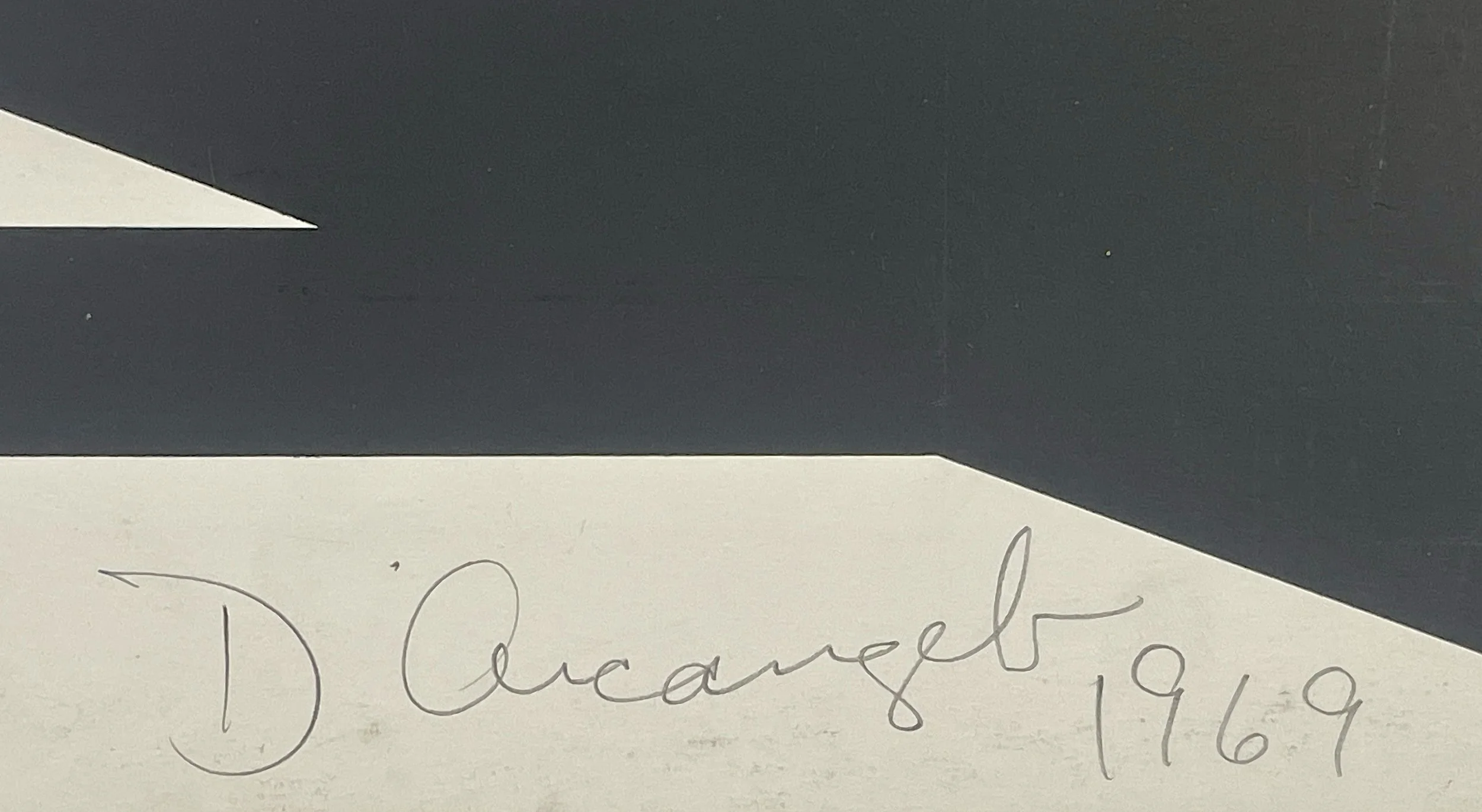 Image 4 of 6
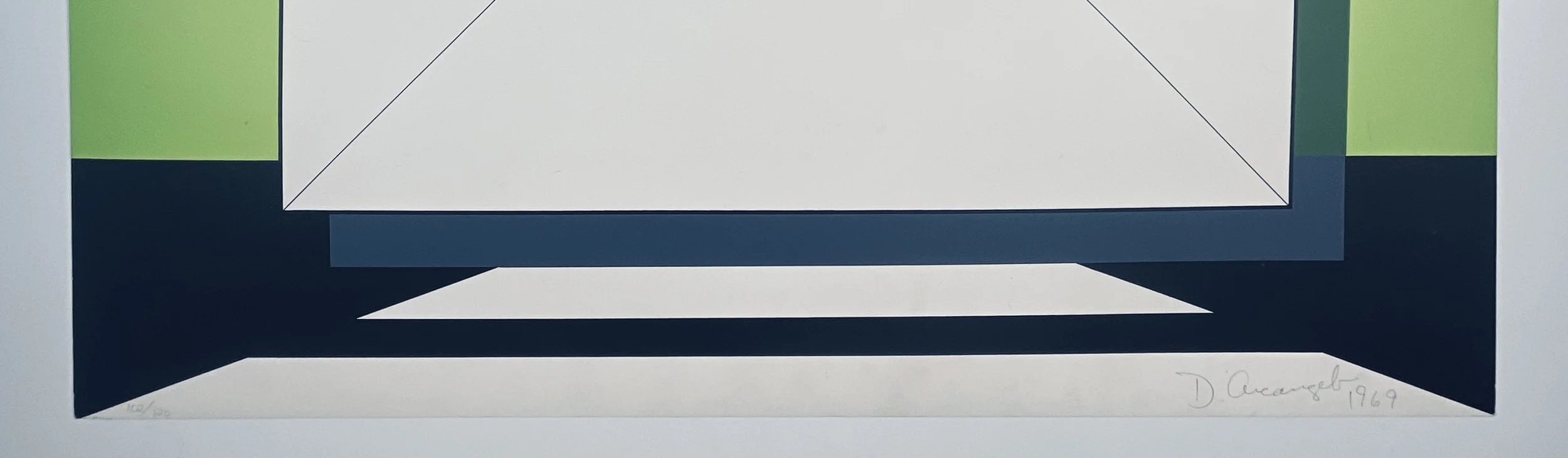 Image 5 of 6
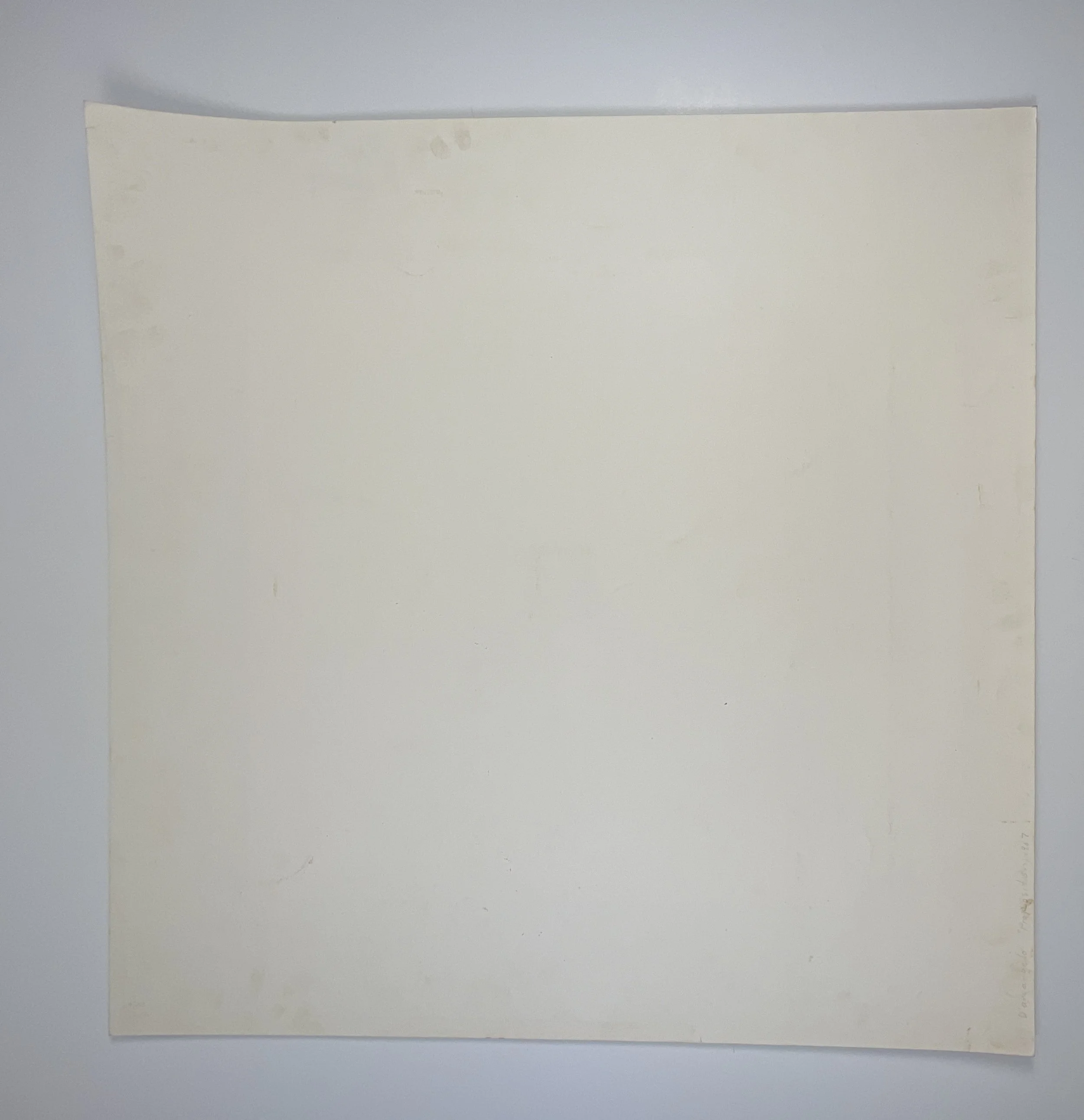 Image 6 of 6