 Image 1 of 5
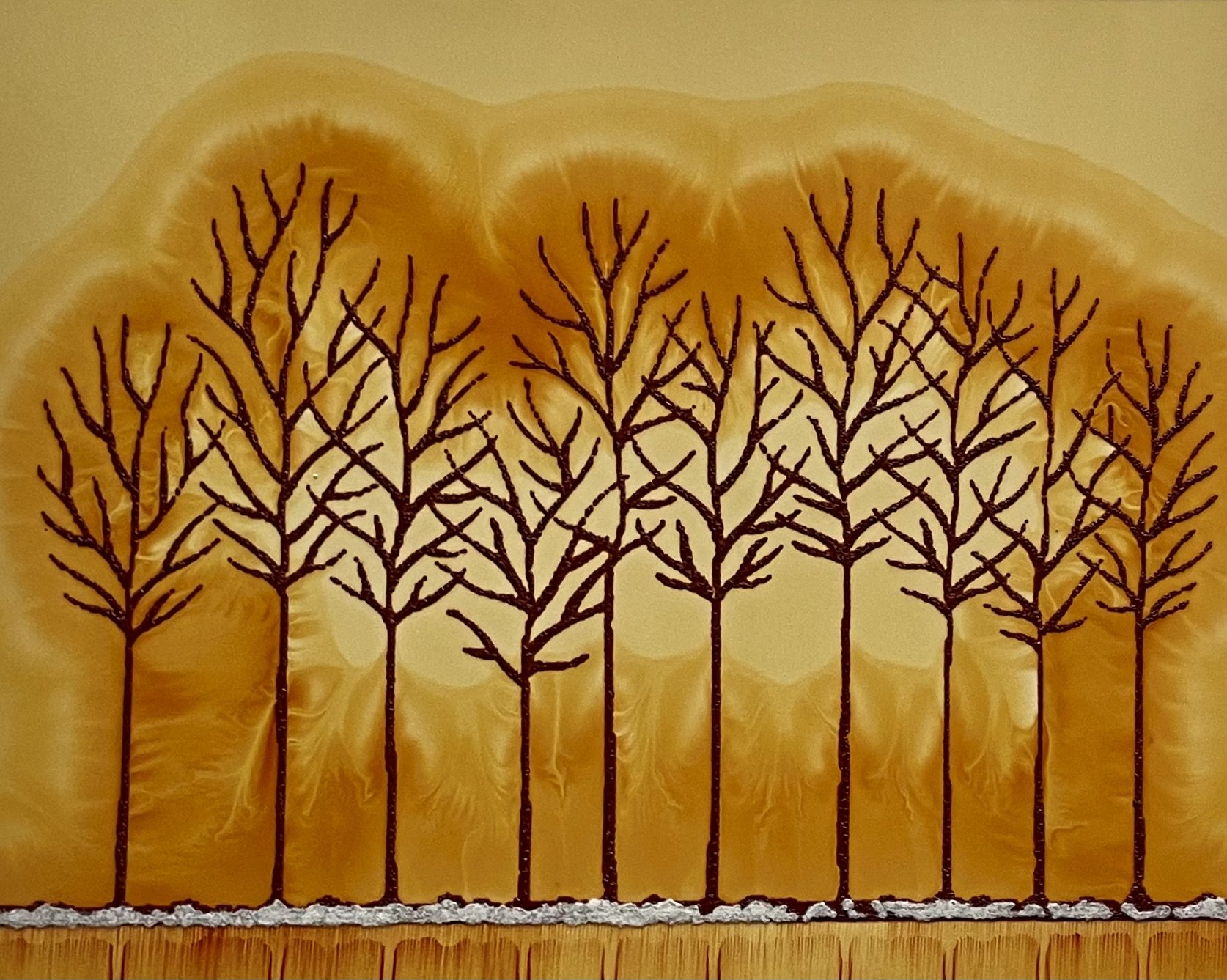 Image 2 of 5
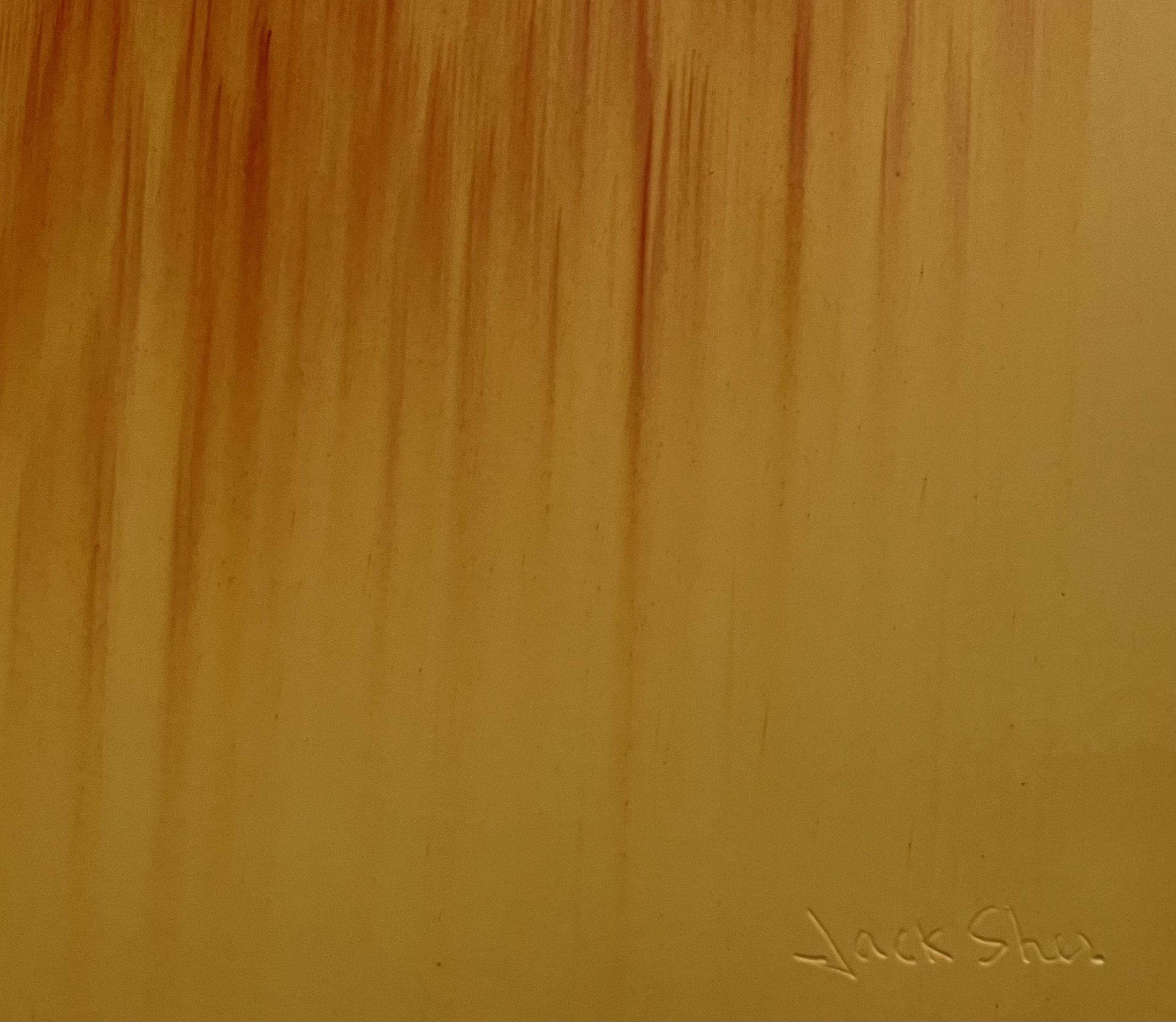 Image 3 of 5
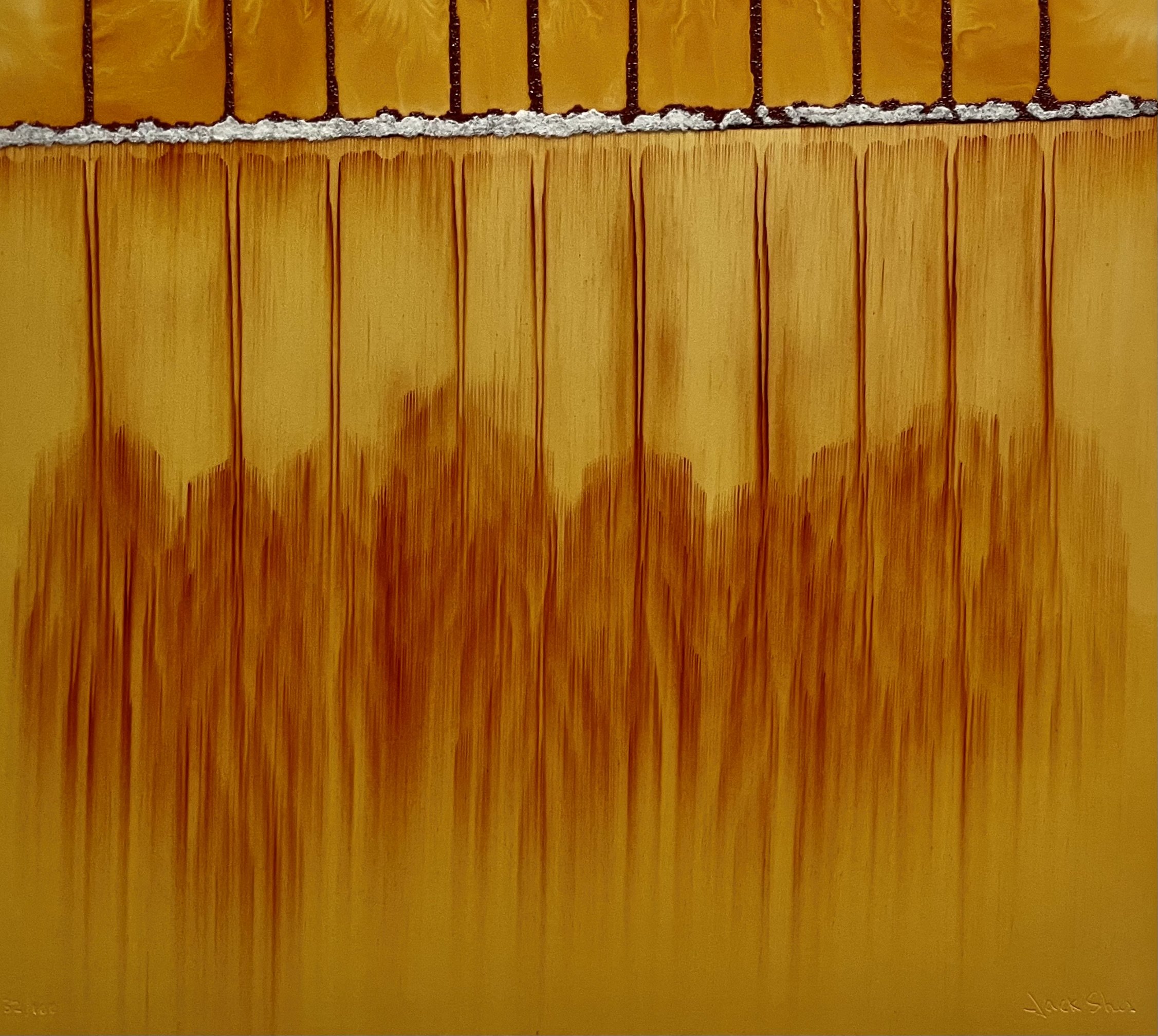 Image 4 of 5
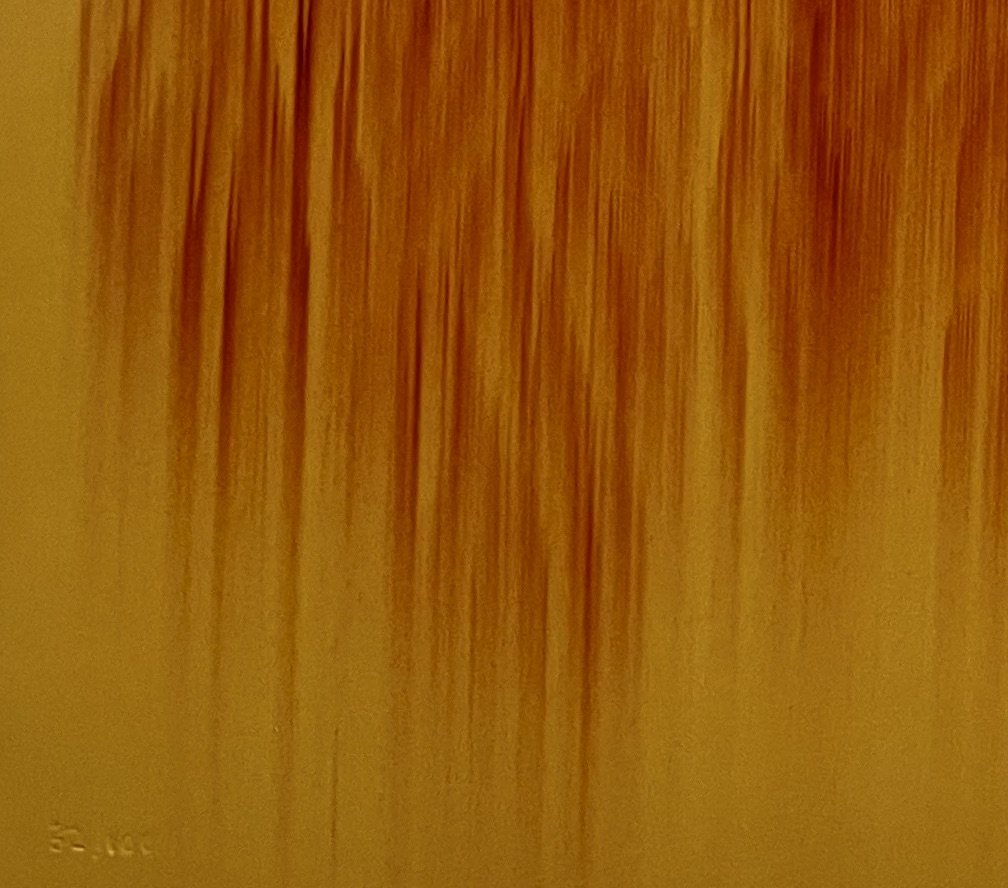 Image 5 of 5
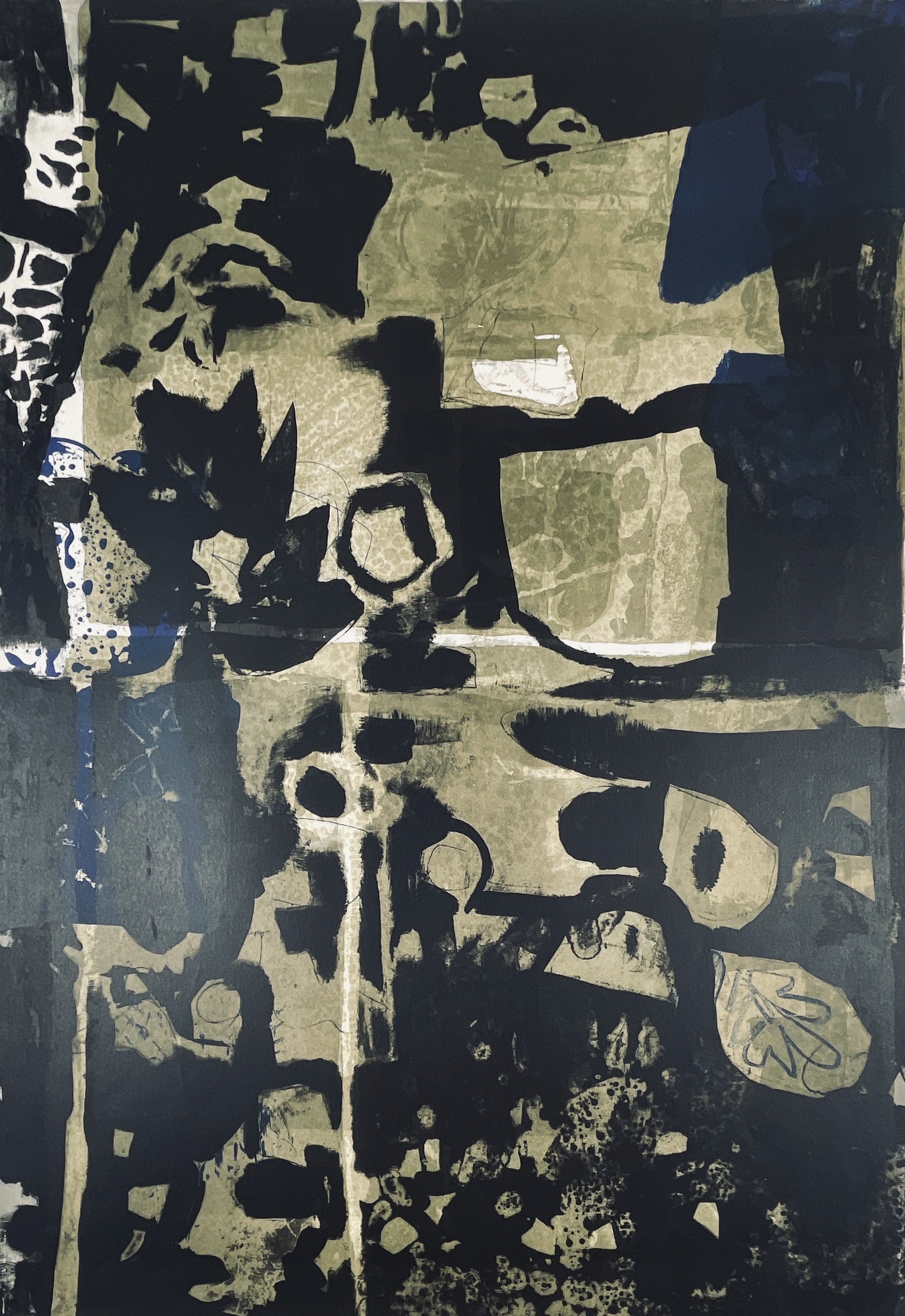
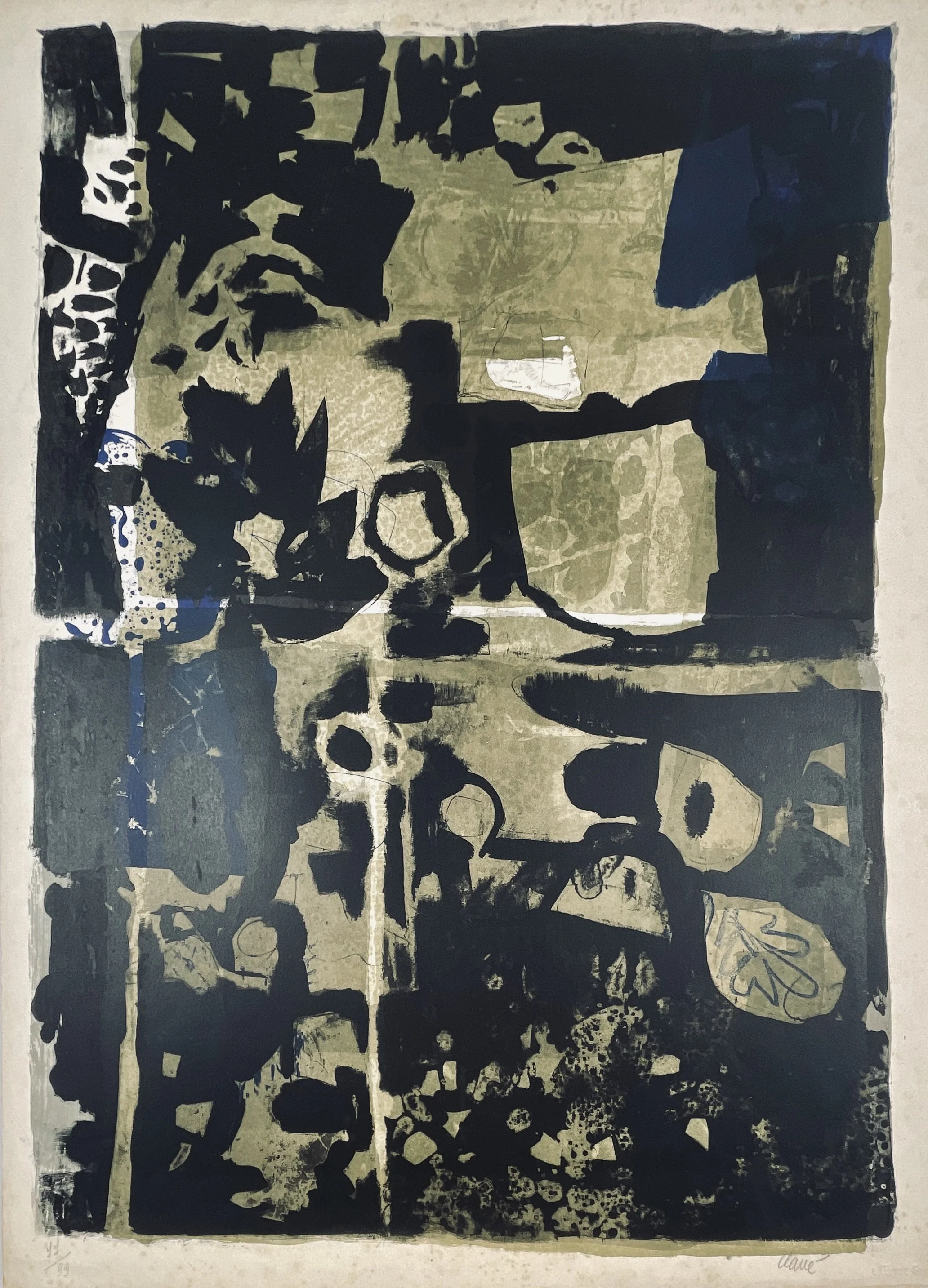
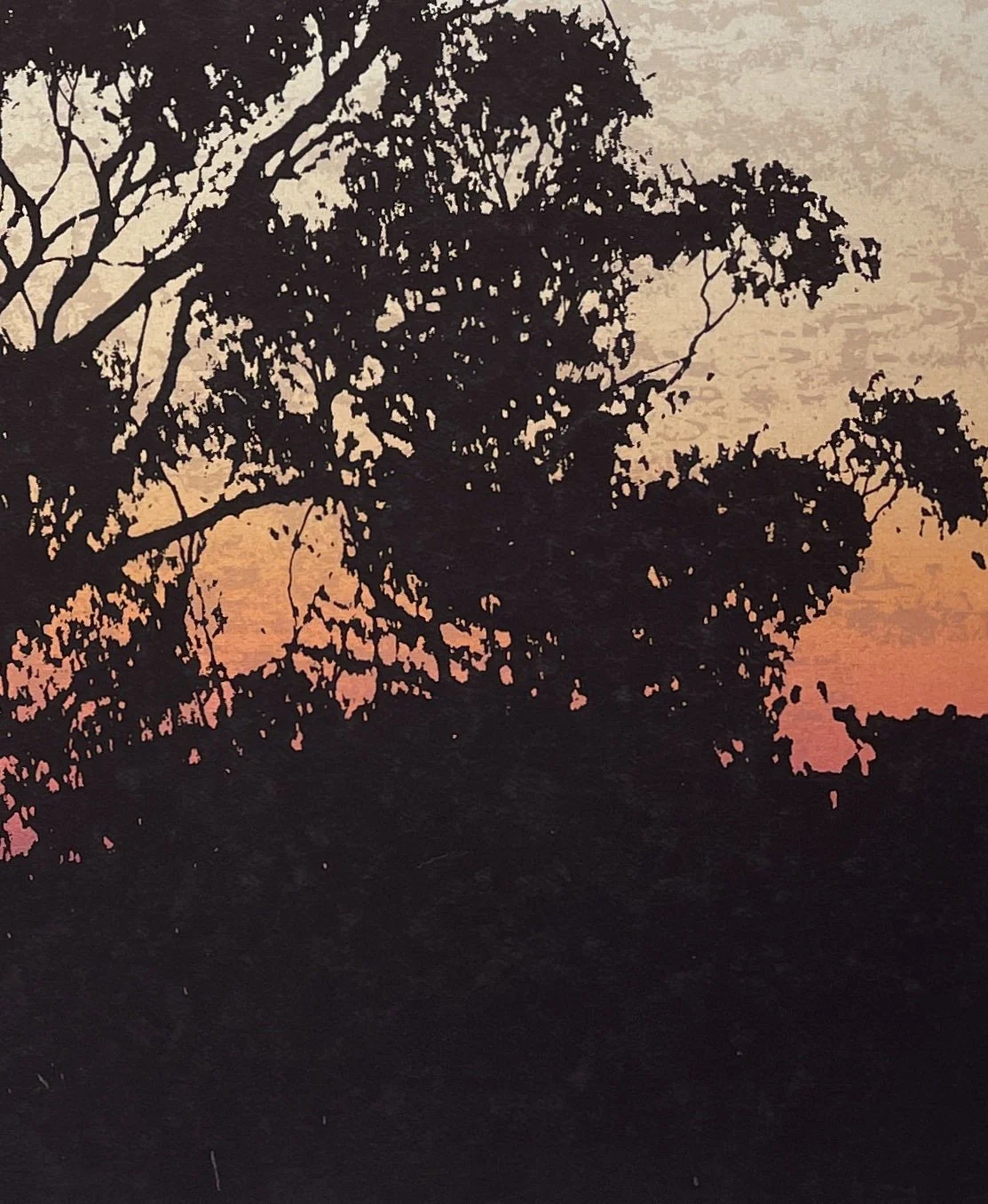
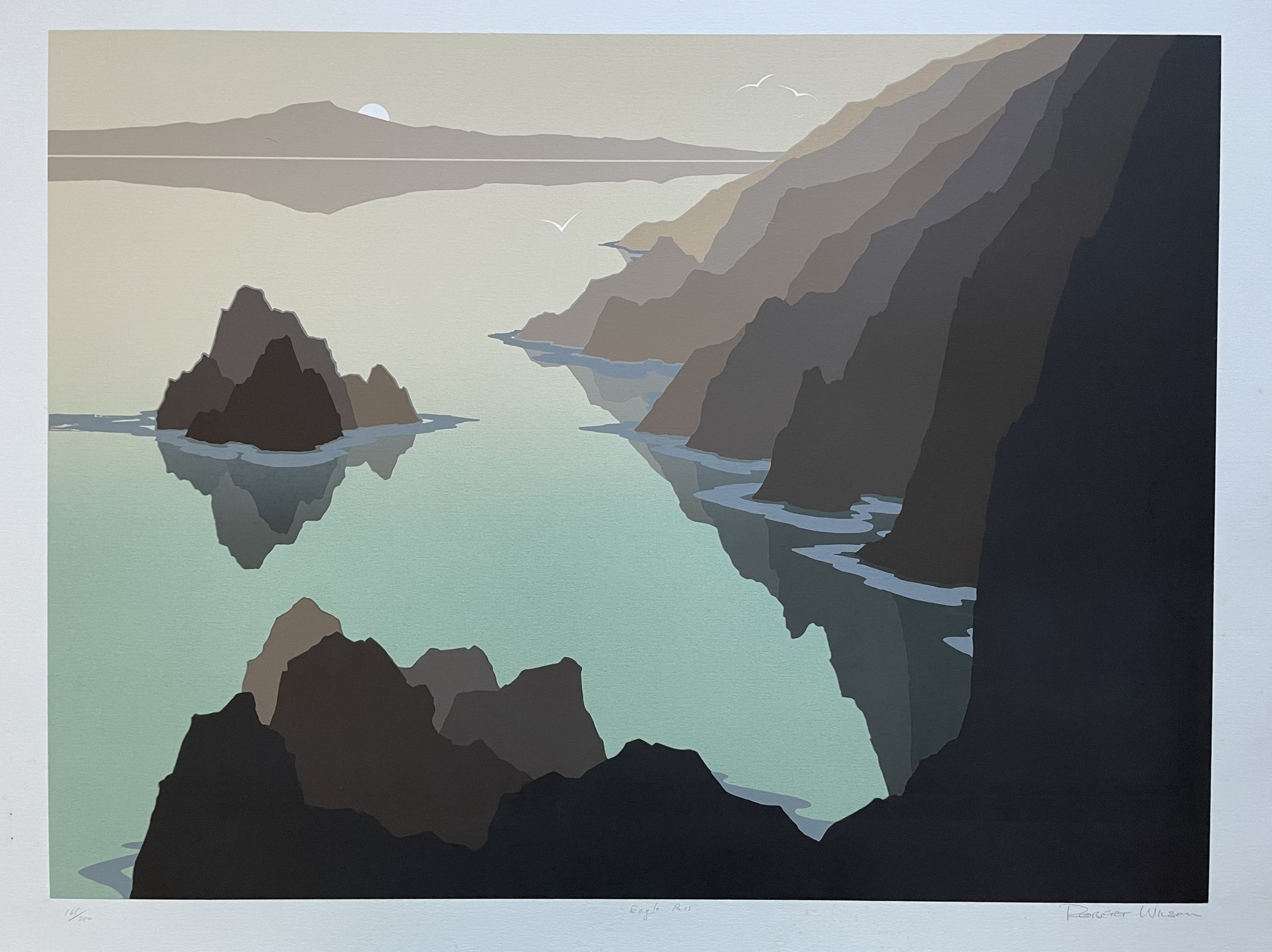
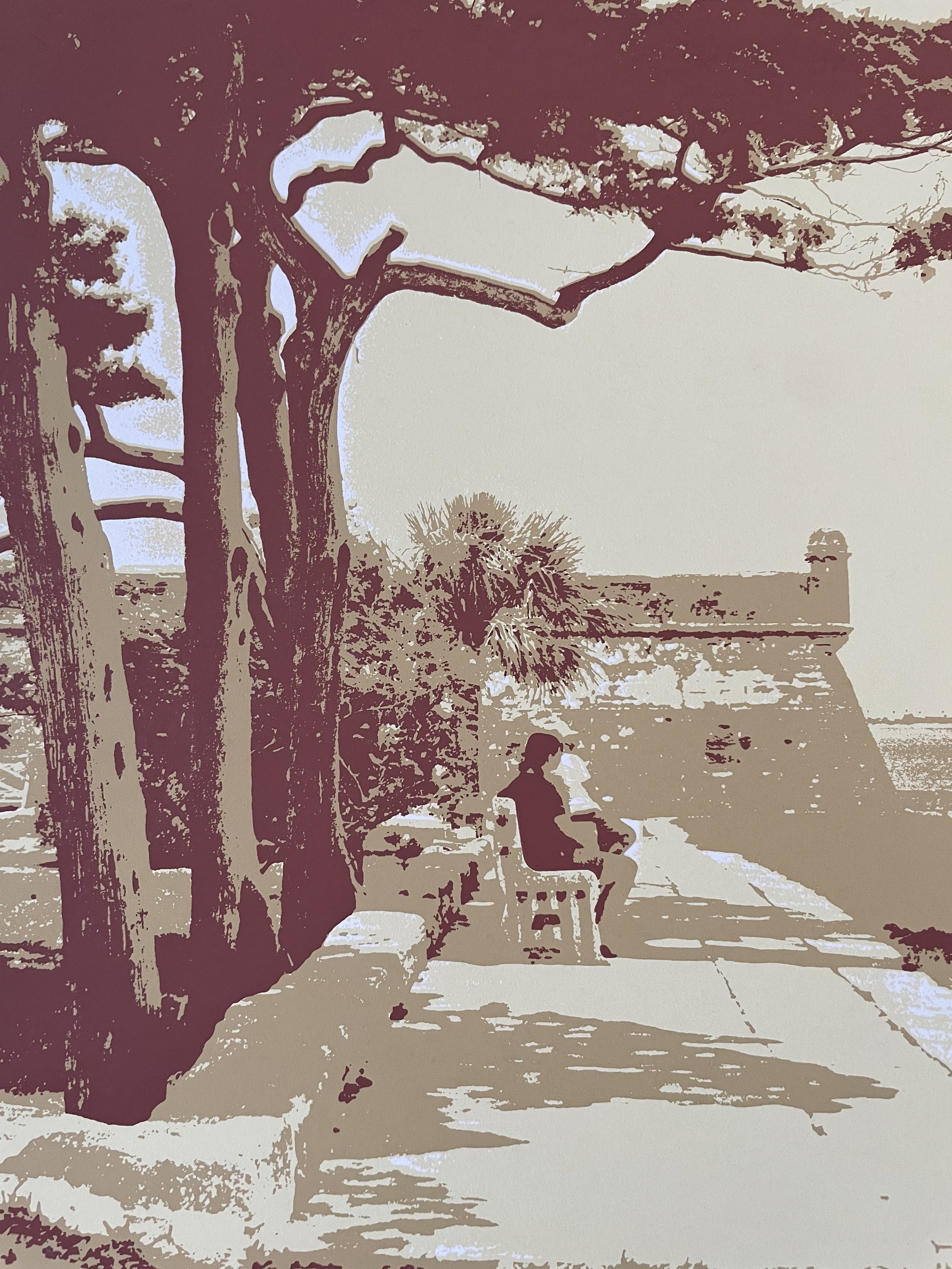
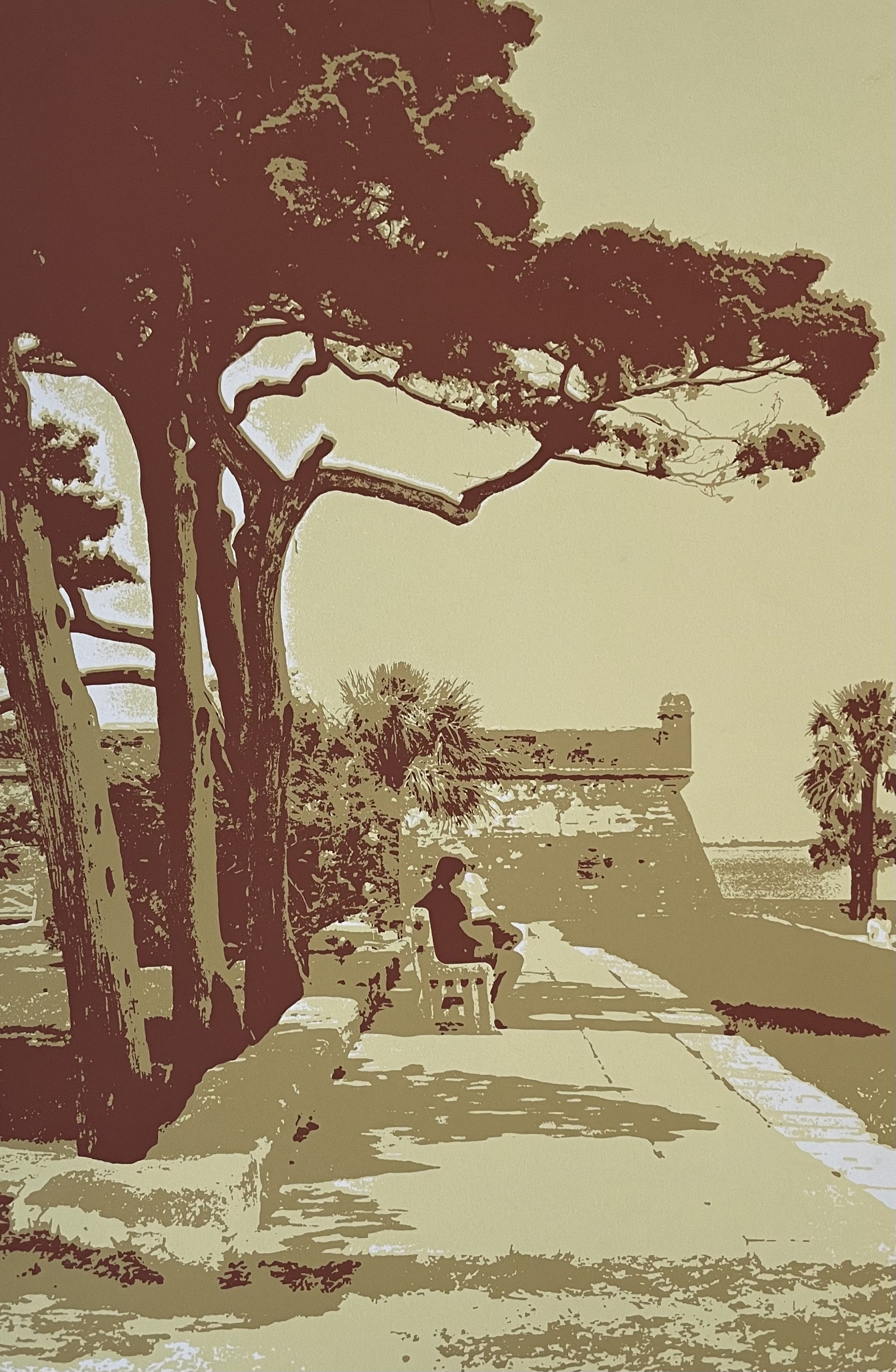
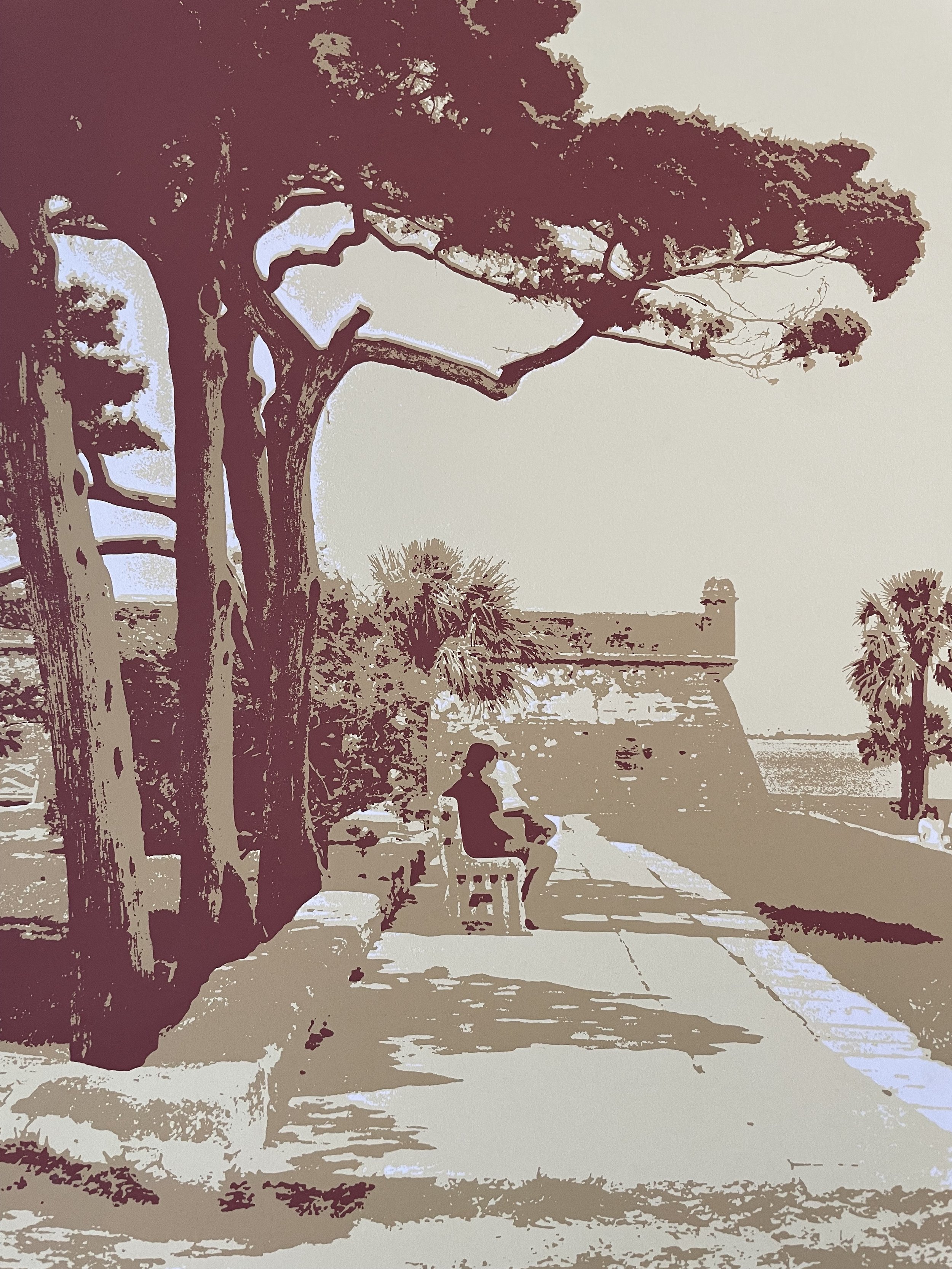
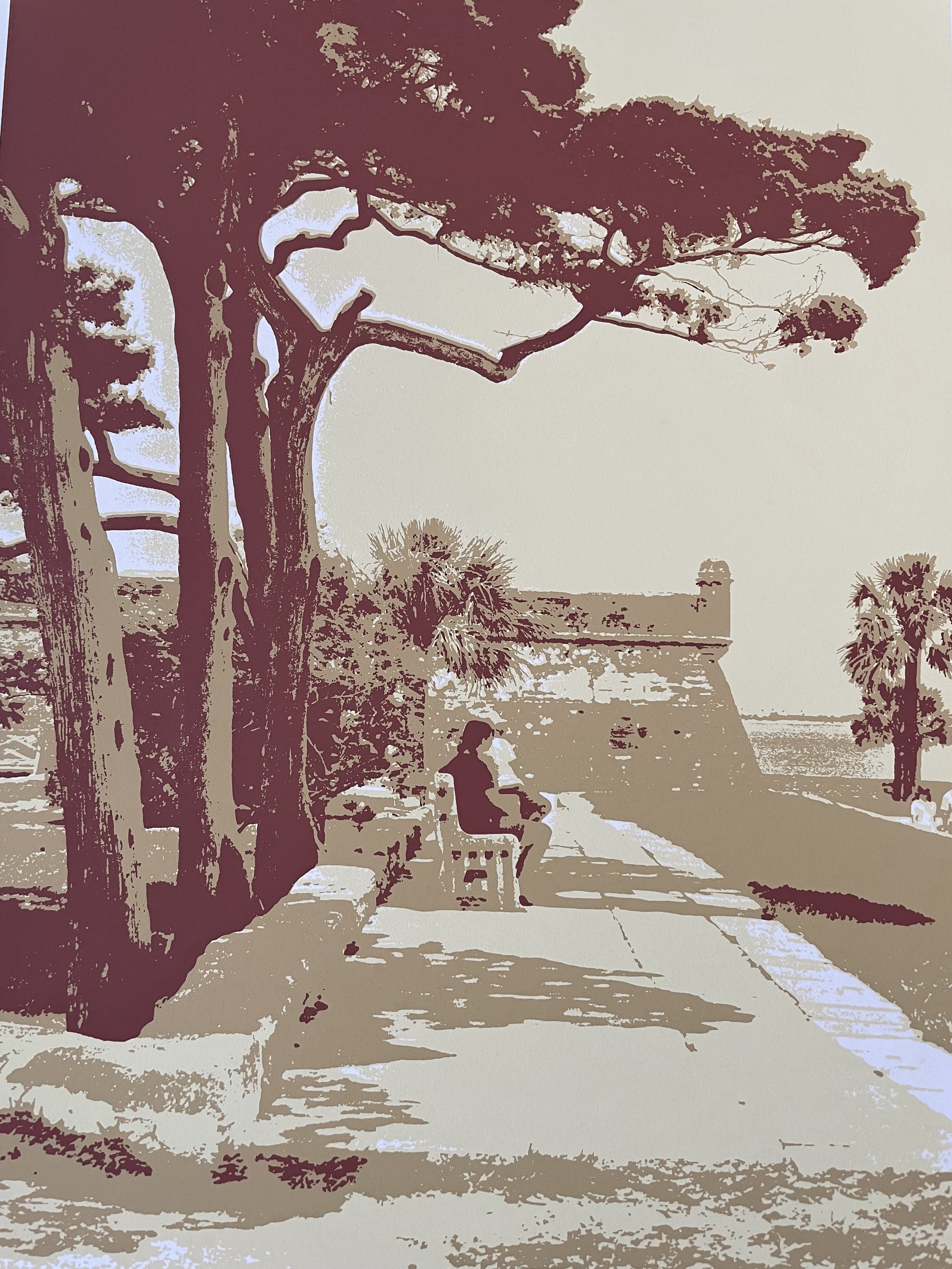
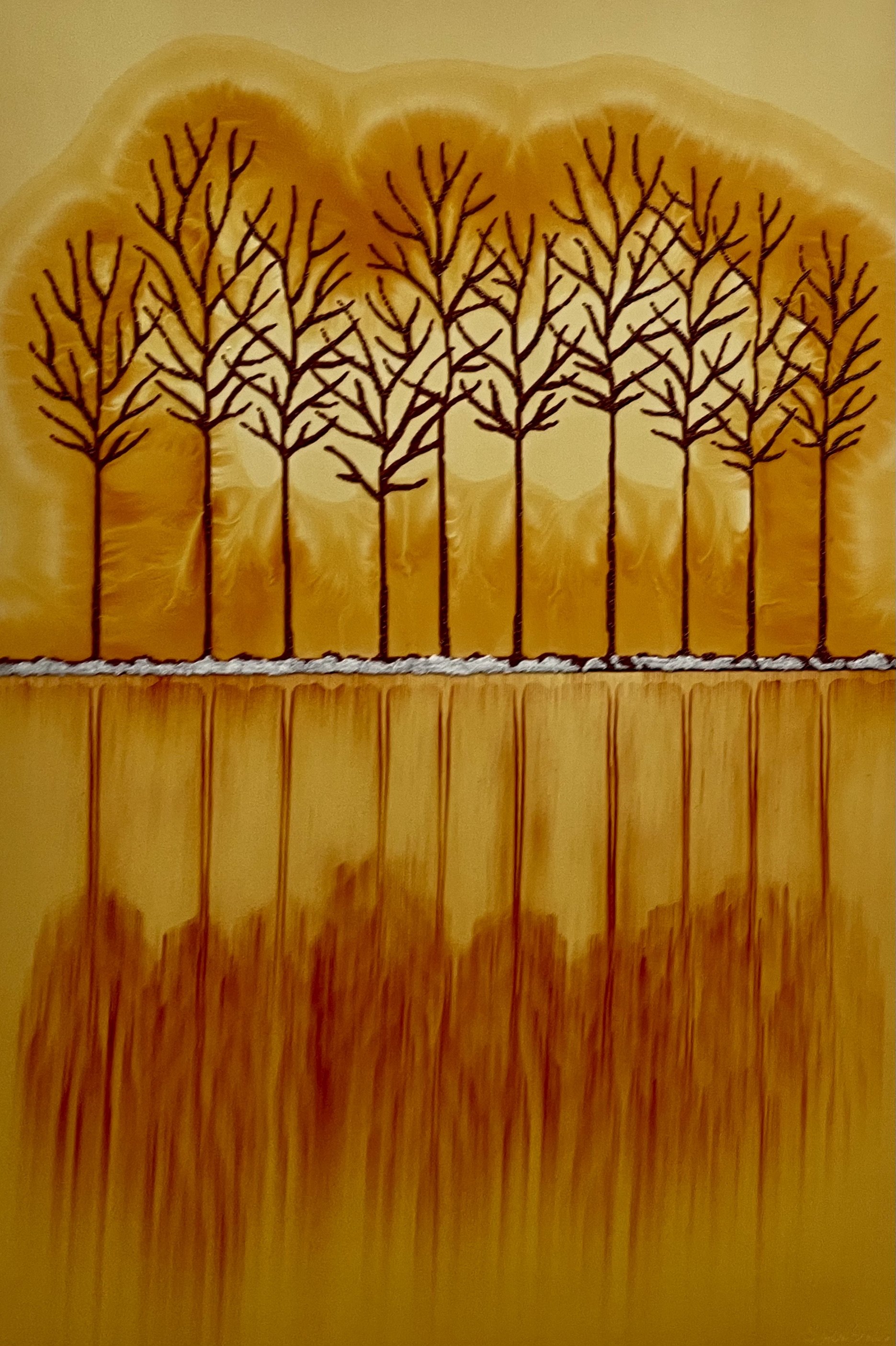
A luminous dimensional-relief serigraph by Jack Sher, Reflections features a row of stylized trees mirrored across a glowing horizon. Created using Sher’s experimental Monostructure process with epoxy acrylics, the surface blends painterly flow with sculptural texture. Signed and numbered 32/100; 22×30 inches.
What you’re looking at
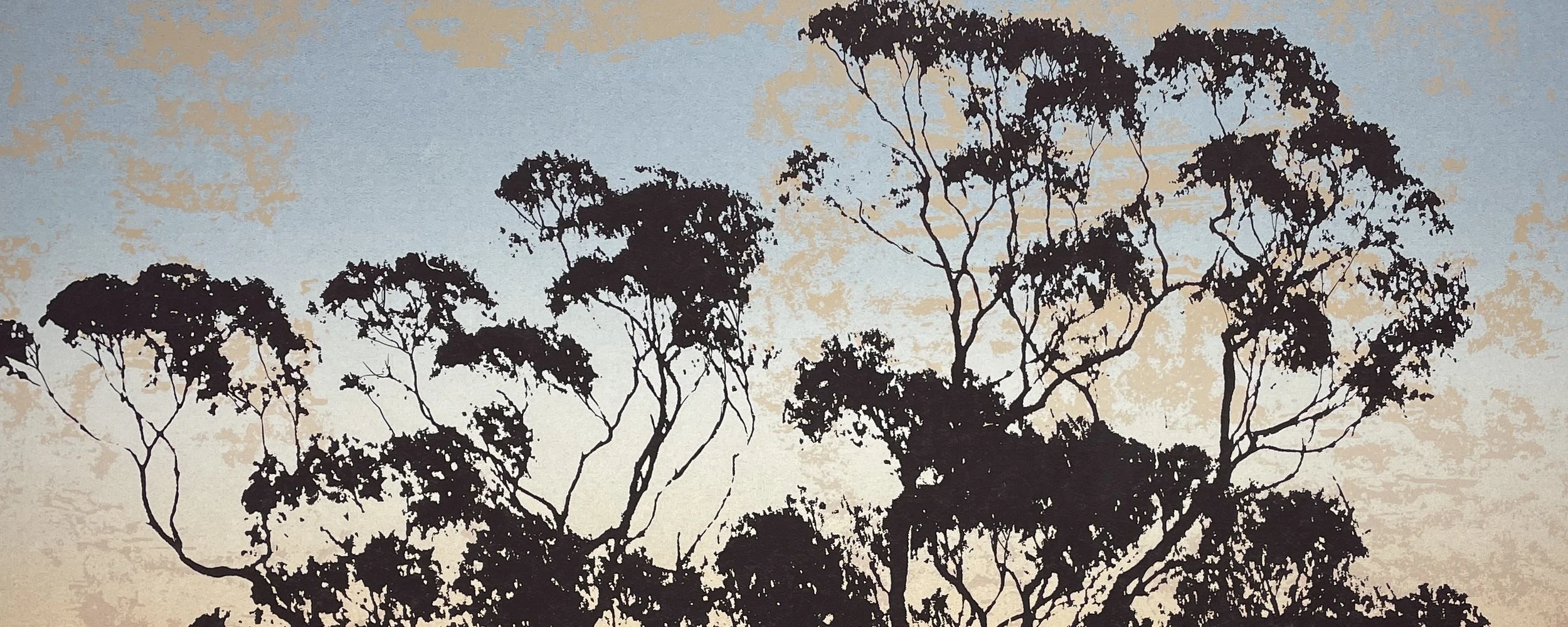
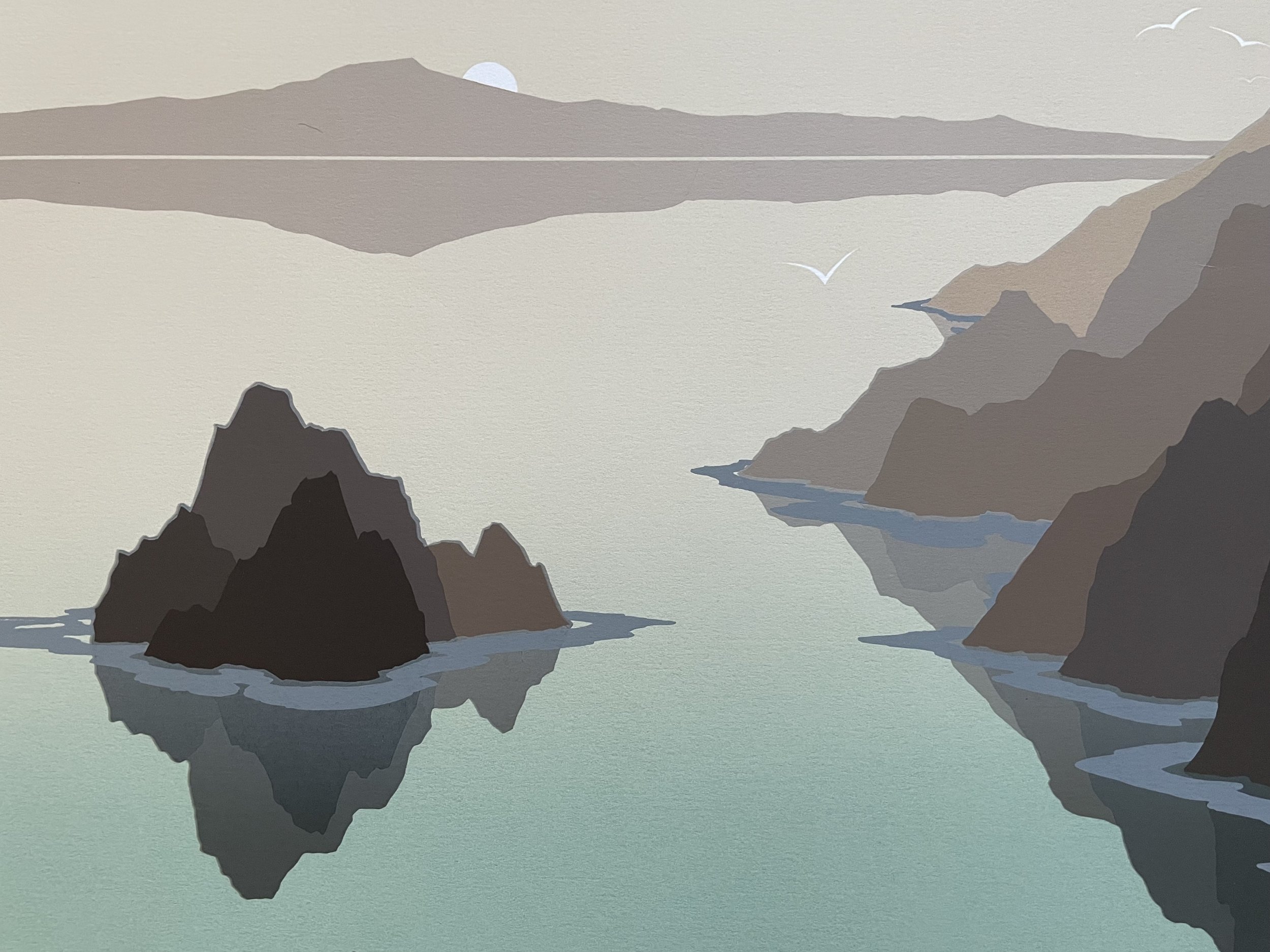
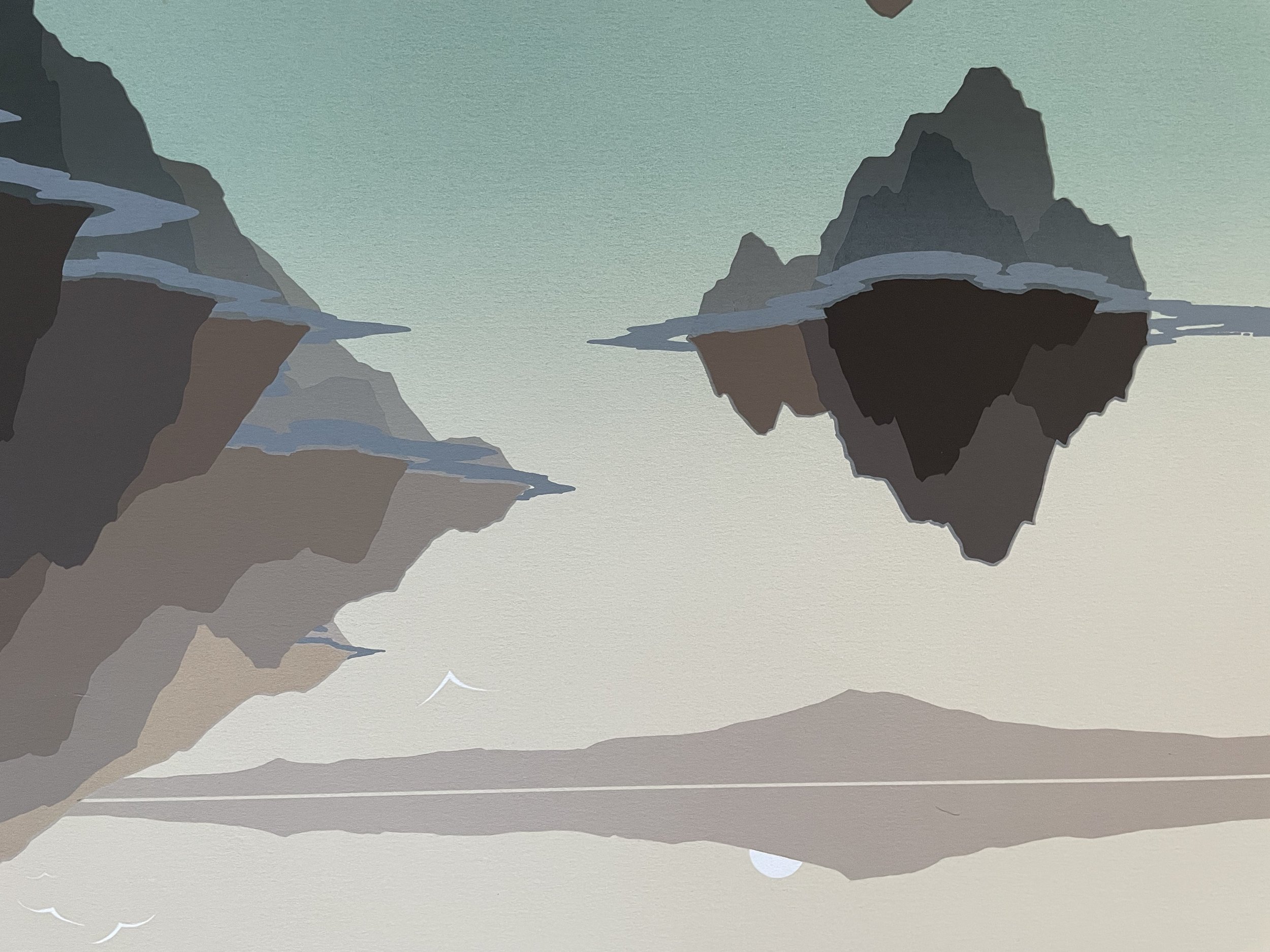
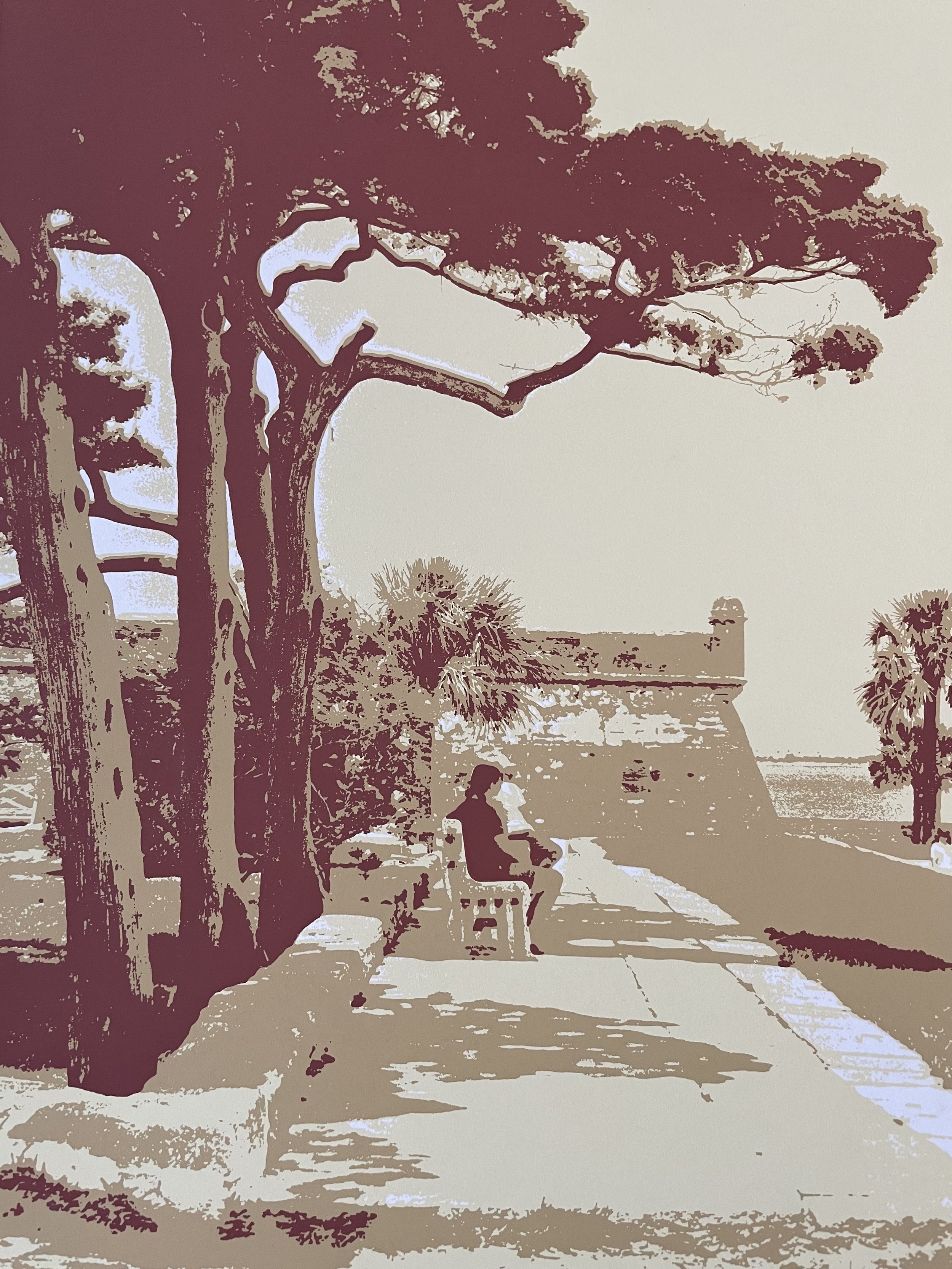
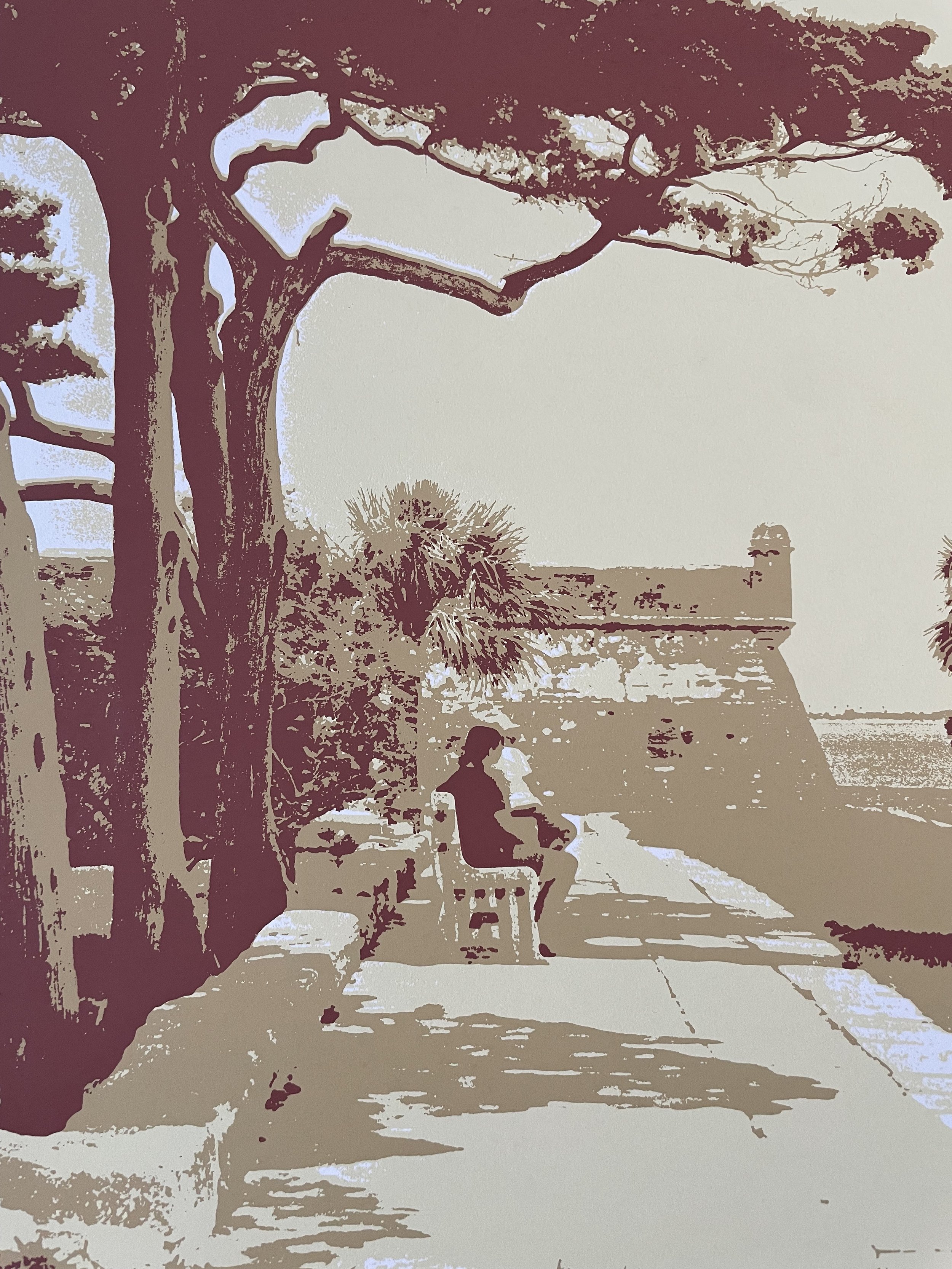
Reflections depicts a rhythmic line of bare, wintery trees standing along a narrow horizon, their elongated forms dissolving into a mirrored reflection below. The composition is serene and meditative, evoking still water, memory, and the passage of time. The lower half softens and blurs, as if the image is slowly melting into itself.
Style & period
This work belongs to Sher’s late-20th-century process-driven abstraction with figurative suggestion. While the imagery is recognizable, the emphasis is on surface, material behavior, and transformation rather than literal landscape depiction. It aligns with studio practices that blur the line between painting, printmaking, and sculptural relief.
Medium & technique (Mixed-Media Epoxy Acrylic Dimensional-Relief Serigraph / Monostructure)
Reflections was created using Sher’s proprietary Monostructure technique. The process begins with freehand drawing on mylar, followed by the creation of raised partitioned areas. Sher then applies a carefully controlled mixture of epoxy acrylics and chemical agents that interact over time, producing organic flows, marbling, and tonal depth. The surface is hand-finished, resulting in tactile relief and subtle variations from print to print. Though editioned, each example possesses its own unique material character.
Signature & editioning
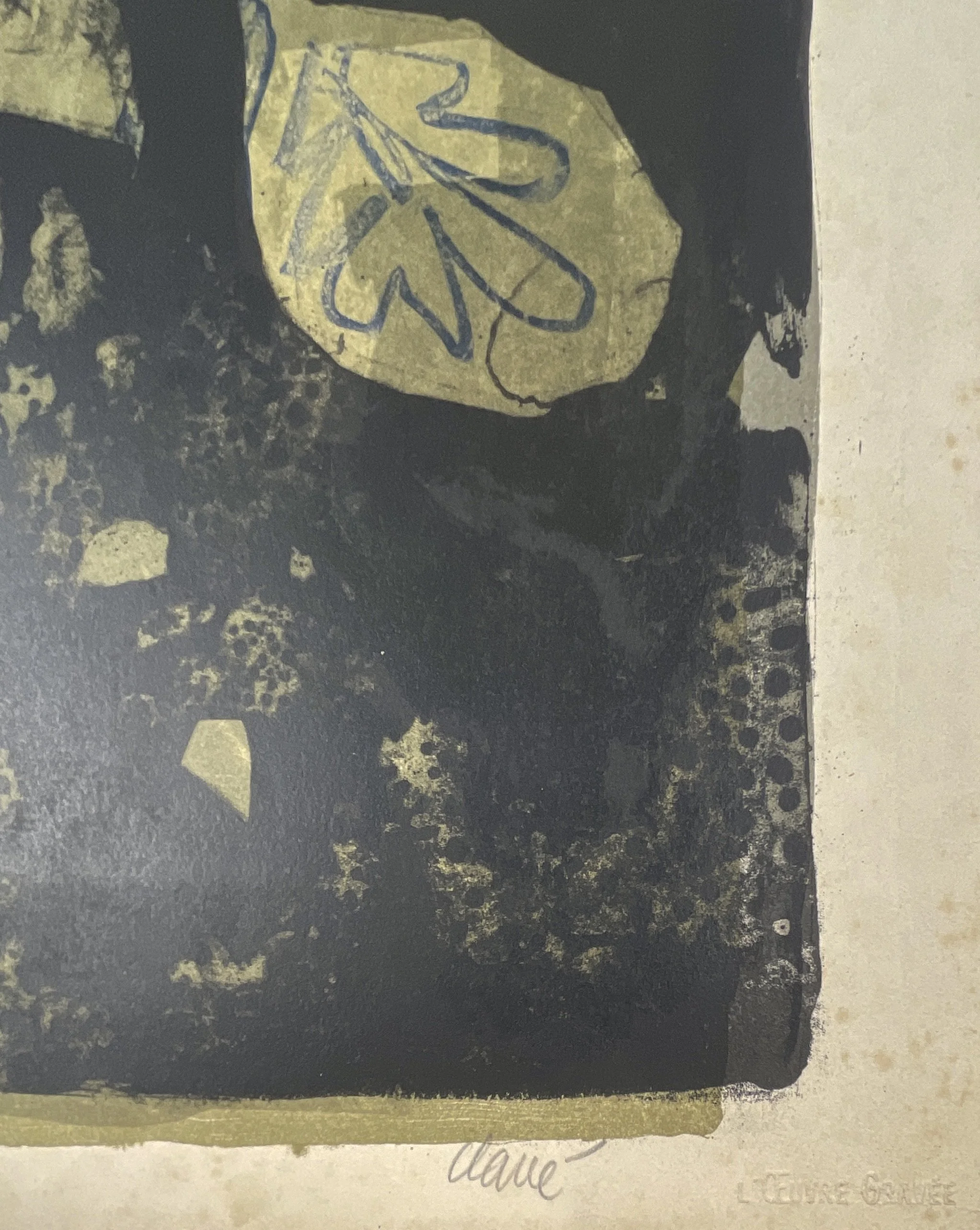
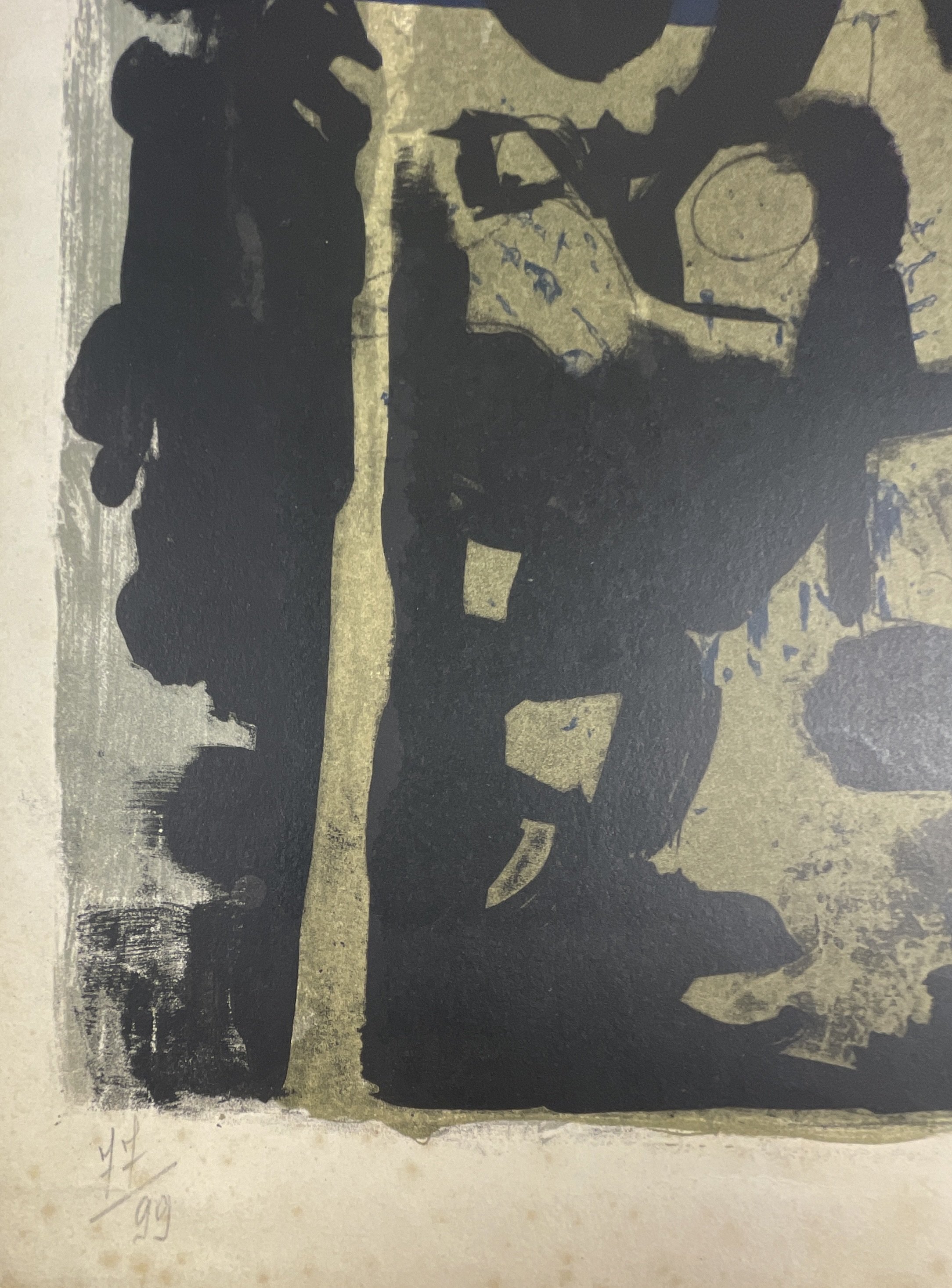
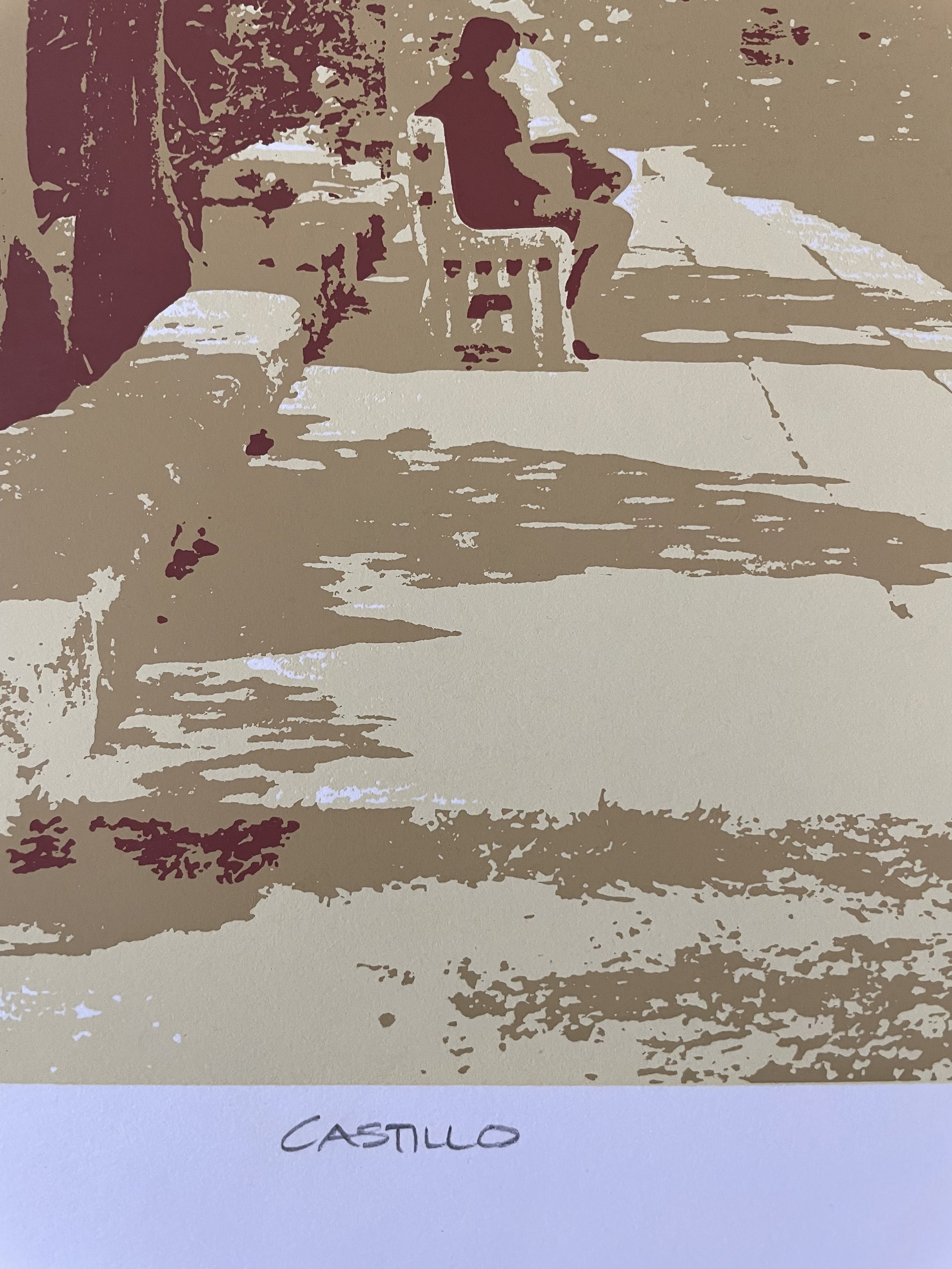
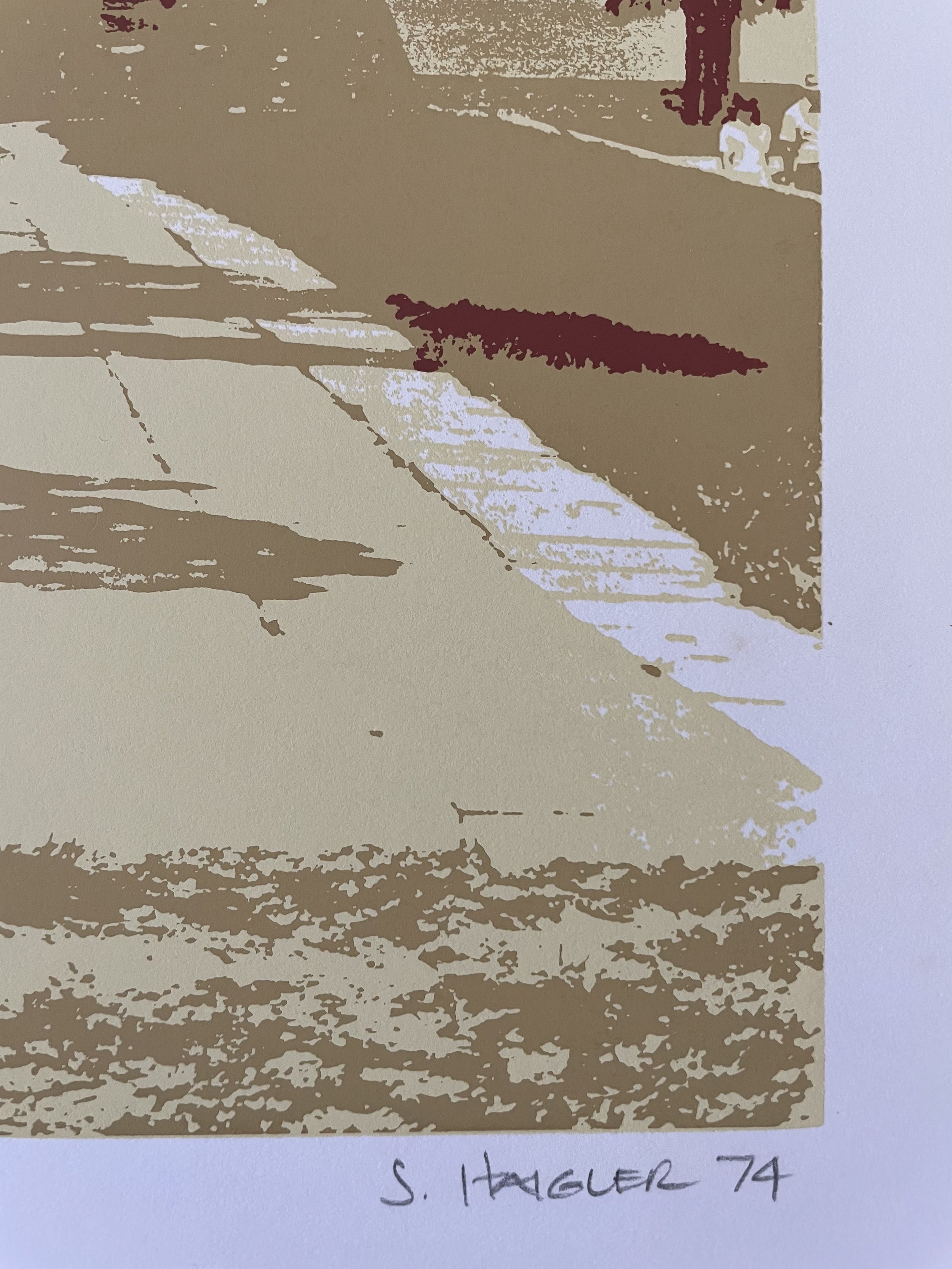
The work is signed “Jack Sher” directly into the surface (visible in your close-ups) and numbered 32/100. The signature is integrated into the material itself rather than simply written on top, reinforcing the object-like nature of the piece.
Inspiration / story behind the work
The repeated tree motif and mirrored reflection suggest themes of duality, impermanence, and quiet continuity. Sher often drew inspiration from natural processes—erosion, growth, flow, and mutation—and sought to echo these forces through material reaction rather than traditional depiction. The title Reflections operates both visually and philosophically, inviting contemplation rather than narrative.
Background & training
Jack Sher was an American artist active in the mid-to-late 20th century. He was a graduate of the Cooper Union School of Art in New York, an institution known for rigorous training in both fine art and design. Early in his career, Sher demonstrated exceptional technical skill and was awarded the Wanamaker Medal, recognizing excellence in artistic achievement.
Multidisciplinary career
Sher’s professional life bridged fine art, design, and industrial innovation. He worked as a portrait painter, designer, letterer, and muralist, and later established himself in the decorative and architectural arts. At one point, he operated his own business producing exclusive dimensional surface effects for the wall-covering and interior-design industry.
Research, invention, and industry influence
Sher became closely involved with a major wall-covering manufacturer in a research and development capacity, where he invented and refined intricate mechanical processes and specialized chemical formulations. His goal was to reproduce the depth, irregularity, and hand-crafted appeal of Old World artisan surfaces using modern materials and methods. Trade publications of the period praised his results as “incredible,” “unusual,” and “strikingly beautiful.”
Monostructure process (core contribution)
Sher’s most distinctive contribution is the Monostructure process—an avant-garde method combining drawing, chemical reaction, and hand finishing. Using up to 26 custom-formulated chemicals, Sher allowed controlled interactions to unfold over weeks, producing surfaces that feel grown rather than manufactured. This approach places him in dialogue with postwar artists concerned with chance, material behavior, and process as content.
Artistic philosophy & themes
Across his fine-art works, Sher explored the symbiotic relationship between color, texture, and depth. Natural forms—trees, roots, flowing lines, reflective horizons—serve as metaphors for organic mutation. His works appeal simultaneously to sight and touch, encouraging slow looking and physical presence.
Exhibitions, collections, and market presence
Many of Sher’s dimensional works were sold to private collectors, particularly those drawn to textured, craft-forward modern art. While he does not have a widely consolidated museum CV available in public databases, his works circulate consistently through galleries and secondary markets, often accompanied by detailed descriptions of the Monostructure technique. His reputation rests on material innovation and visual uniqueness rather than institutional scale.
Jack Sher (American, 20th c.), Reflections, c.1970s. Mixed-media epoxy acrylic dimensional-relief serigraph on paper, 22 × 30 in. Signed and numbered 32/100. Tree motif with mirrored reflection; created using the artist’s Monostructure process. Provenance: Mitch Morse Gallery to Artfind Gallery, Washington DC.
Artist: Jack Sher (American, 20th century)
Title:Reflections
Date: c. 1970s
Medium: Mixed-media epoxy acrylic dimensional-relief serigraph (Monostructure process)
Dimensions: 22 × 30 inches
Edition: 32/100
Signature/Marks: Signed in surface; numbered
Condition (visual): Rich color and intact relief visible; in-person inspection recommended for surface abrasions and paper condition
Provenance: Mitch Morse Gallery (acquired in NYC, United States and Europe) → Artfind Gallery, Washington DC
Authentication Statement: Based on signature, editioning, technique, and consistency with documented Jack Sher Monostructure works, this piece is authenticated as an original work by the artist.
Jack Sher (artist) → Mitch Morse Gallery (publisher/agent; acquired in NYC, United States and Europe) → Artfind Gallery, Washington DC (current owner).
MONOSTRUCTURE is a groundbreaking creative process pioneered by artist Jack Sher that transforms the ordinary into the extraordinary. The journey begins with freehand sketches on Mylar, a material chosen for its durability against the chemical reactions that unfold during the process. Sher meticulously outlines each design with 1/8th inch high lines, creating a grid of partitioned areas ready to come alive. He then fills these segments with a specially formulated blend of 26 chemicals, the result of extensive experimentation, which catalyzes a controlled evolution of the artwork over approximately three weeks. Once the chemical magic has worked its wonders, Sher hand-applies vibrant colors and intricate details, ensuring that even though each piece is signed and numbered in sequence, no two pieces in any series are alike, making each MONOSTRUCTURE a singular masterpiece.
A luminous dimensional-relief serigraph by Jack Sher, Reflections features a row of stylized trees mirrored across a glowing horizon. Created using Sher’s experimental Monostructure process with epoxy acrylics, the surface blends painterly flow with sculptural texture. Signed and numbered 32/100; 22×30 inches.
What you’re looking at
Reflections depicts a rhythmic line of bare, wintery trees standing along a narrow horizon, their elongated forms dissolving into a mirrored reflection below. The composition is serene and meditative, evoking still water, memory, and the passage of time. The lower half softens and blurs, as if the image is slowly melting into itself.
Style & period
This work belongs to Sher’s late-20th-century process-driven abstraction with figurative suggestion. While the imagery is recognizable, the emphasis is on surface, material behavior, and transformation rather than literal landscape depiction. It aligns with studio practices that blur the line between painting, printmaking, and sculptural relief.
Medium & technique (Mixed-Media Epoxy Acrylic Dimensional-Relief Serigraph / Monostructure)
Reflections was created using Sher’s proprietary Monostructure technique. The process begins with freehand drawing on mylar, followed by the creation of raised partitioned areas. Sher then applies a carefully controlled mixture of epoxy acrylics and chemical agents that interact over time, producing organic flows, marbling, and tonal depth. The surface is hand-finished, resulting in tactile relief and subtle variations from print to print. Though editioned, each example possesses its own unique material character.
Signature & editioning
The work is signed “Jack Sher” directly into the surface (visible in your close-ups) and numbered 32/100. The signature is integrated into the material itself rather than simply written on top, reinforcing the object-like nature of the piece.
Inspiration / story behind the work
The repeated tree motif and mirrored reflection suggest themes of duality, impermanence, and quiet continuity. Sher often drew inspiration from natural processes—erosion, growth, flow, and mutation—and sought to echo these forces through material reaction rather than traditional depiction. The title Reflections operates both visually and philosophically, inviting contemplation rather than narrative.
Background & training
Jack Sher was an American artist active in the mid-to-late 20th century. He was a graduate of the Cooper Union School of Art in New York, an institution known for rigorous training in both fine art and design. Early in his career, Sher demonstrated exceptional technical skill and was awarded the Wanamaker Medal, recognizing excellence in artistic achievement.
Multidisciplinary career
Sher’s professional life bridged fine art, design, and industrial innovation. He worked as a portrait painter, designer, letterer, and muralist, and later established himself in the decorative and architectural arts. At one point, he operated his own business producing exclusive dimensional surface effects for the wall-covering and interior-design industry.
Research, invention, and industry influence
Sher became closely involved with a major wall-covering manufacturer in a research and development capacity, where he invented and refined intricate mechanical processes and specialized chemical formulations. His goal was to reproduce the depth, irregularity, and hand-crafted appeal of Old World artisan surfaces using modern materials and methods. Trade publications of the period praised his results as “incredible,” “unusual,” and “strikingly beautiful.”
Monostructure process (core contribution)
Sher’s most distinctive contribution is the Monostructure process—an avant-garde method combining drawing, chemical reaction, and hand finishing. Using up to 26 custom-formulated chemicals, Sher allowed controlled interactions to unfold over weeks, producing surfaces that feel grown rather than manufactured. This approach places him in dialogue with postwar artists concerned with chance, material behavior, and process as content.
Artistic philosophy & themes
Across his fine-art works, Sher explored the symbiotic relationship between color, texture, and depth. Natural forms—trees, roots, flowing lines, reflective horizons—serve as metaphors for organic mutation. His works appeal simultaneously to sight and touch, encouraging slow looking and physical presence.
Exhibitions, collections, and market presence
Many of Sher’s dimensional works were sold to private collectors, particularly those drawn to textured, craft-forward modern art. While he does not have a widely consolidated museum CV available in public databases, his works circulate consistently through galleries and secondary markets, often accompanied by detailed descriptions of the Monostructure technique. His reputation rests on material innovation and visual uniqueness rather than institutional scale.
Jack Sher (American, 20th c.), Reflections, c.1970s. Mixed-media epoxy acrylic dimensional-relief serigraph on paper, 22 × 30 in. Signed and numbered 32/100. Tree motif with mirrored reflection; created using the artist’s Monostructure process. Provenance: Mitch Morse Gallery to Artfind Gallery, Washington DC.
Artist: Jack Sher (American, 20th century)
Title:Reflections
Date: c. 1970s
Medium: Mixed-media epoxy acrylic dimensional-relief serigraph (Monostructure process)
Dimensions: 22 × 30 inches
Edition: 32/100
Signature/Marks: Signed in surface; numbered
Condition (visual): Rich color and intact relief visible; in-person inspection recommended for surface abrasions and paper condition
Provenance: Mitch Morse Gallery (acquired in NYC, United States and Europe) → Artfind Gallery, Washington DC
Authentication Statement: Based on signature, editioning, technique, and consistency with documented Jack Sher Monostructure works, this piece is authenticated as an original work by the artist.
Jack Sher (artist) → Mitch Morse Gallery (publisher/agent; acquired in NYC, United States and Europe) → Artfind Gallery, Washington DC (current owner).
MONOSTRUCTURE is a groundbreaking creative process pioneered by artist Jack Sher that transforms the ordinary into the extraordinary. The journey begins with freehand sketches on Mylar, a material chosen for its durability against the chemical reactions that unfold during the process. Sher meticulously outlines each design with 1/8th inch high lines, creating a grid of partitioned areas ready to come alive. He then fills these segments with a specially formulated blend of 26 chemicals, the result of extensive experimentation, which catalyzes a controlled evolution of the artwork over approximately three weeks. Once the chemical magic has worked its wonders, Sher hand-applies vibrant colors and intricate details, ensuring that even though each piece is signed and numbered in sequence, no two pieces in any series are alike, making each MONOSTRUCTURE a singular masterpiece.