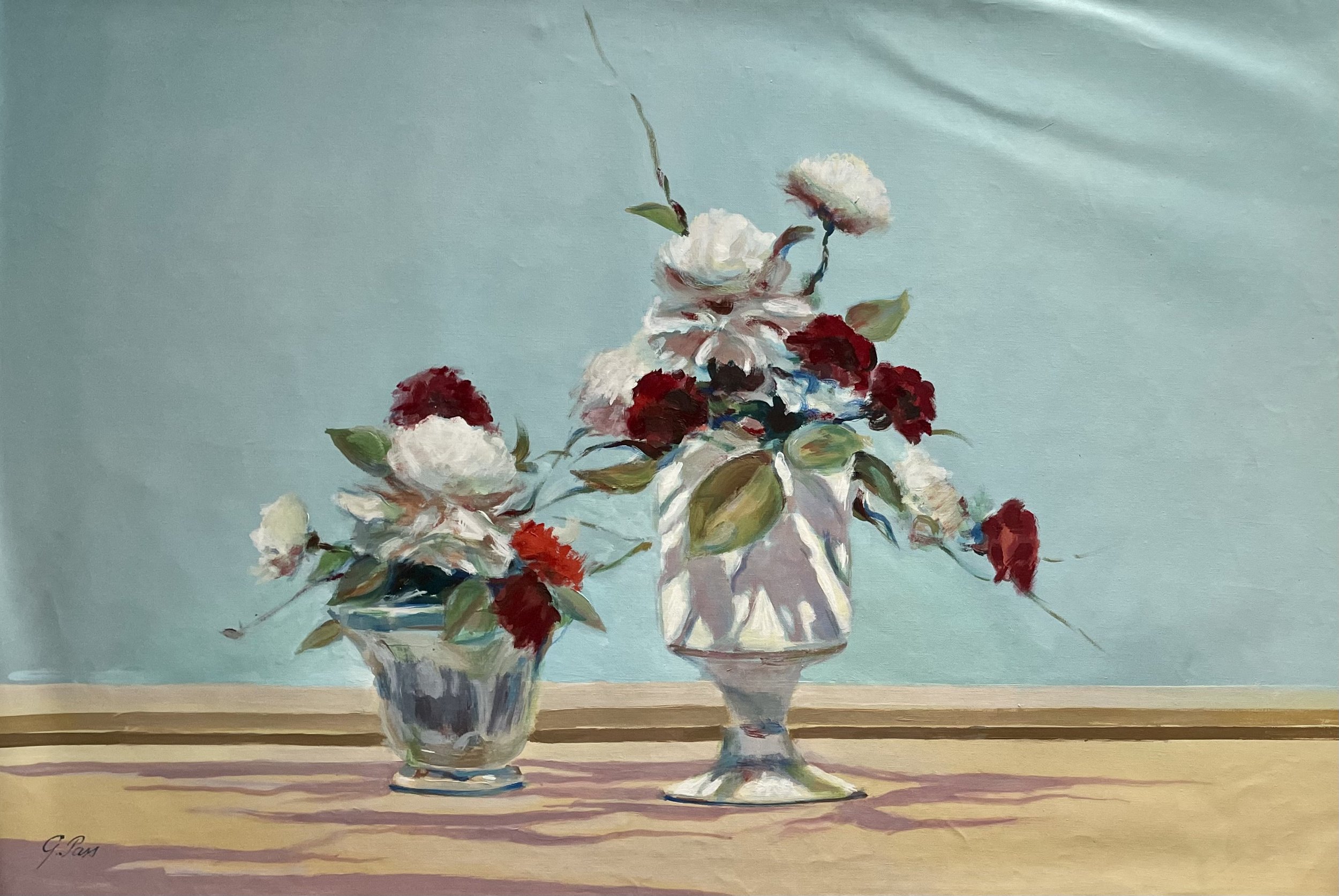
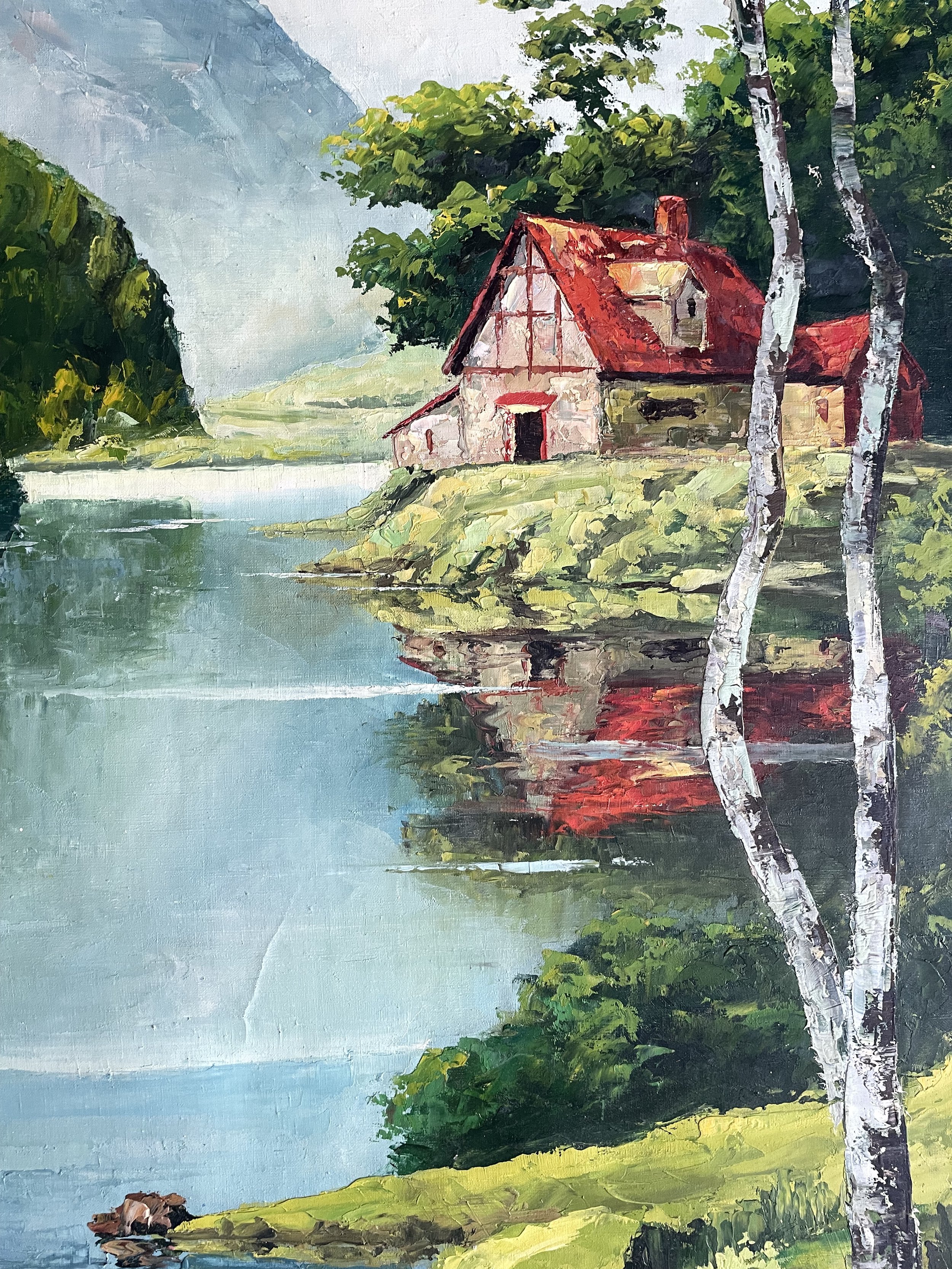
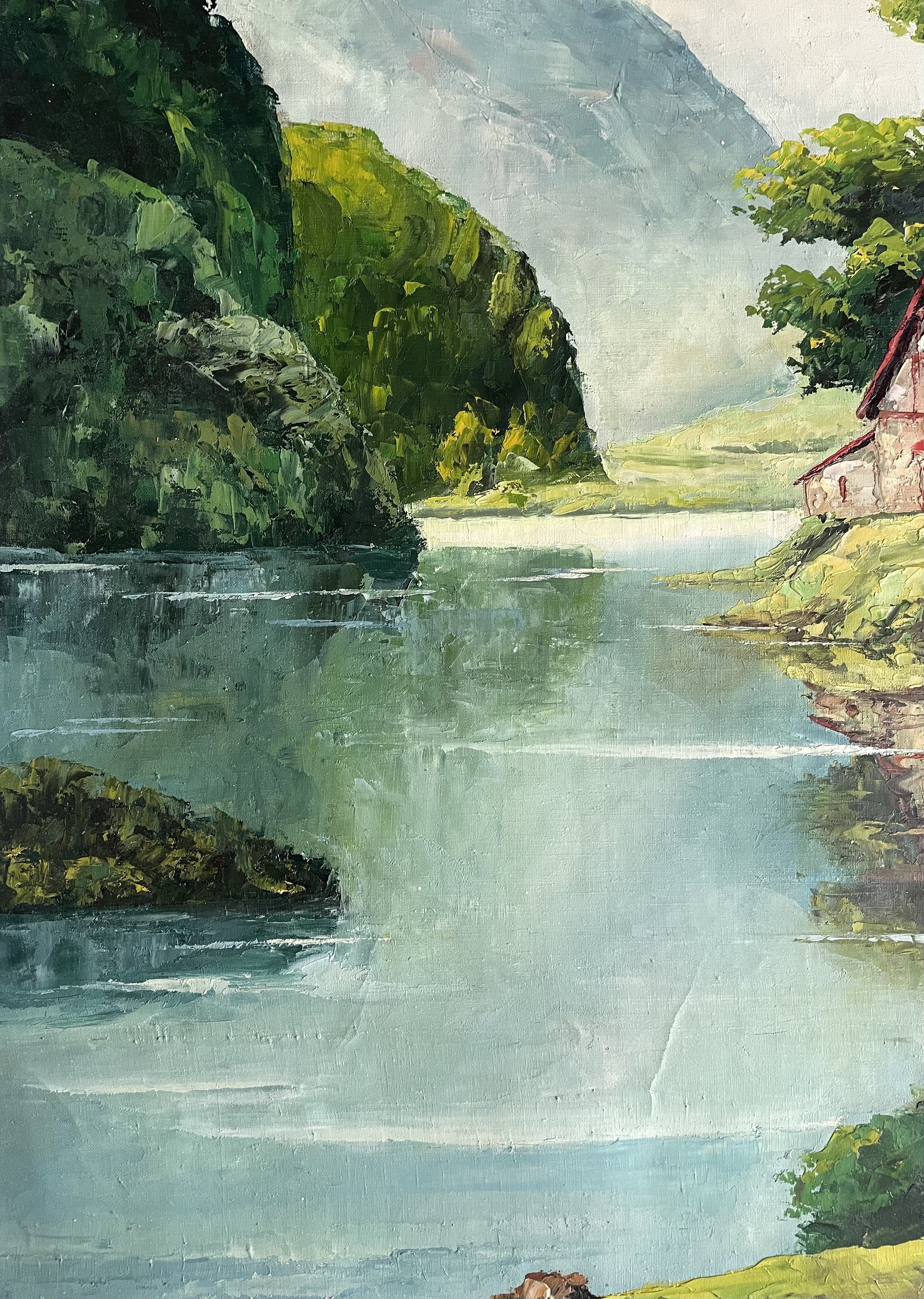
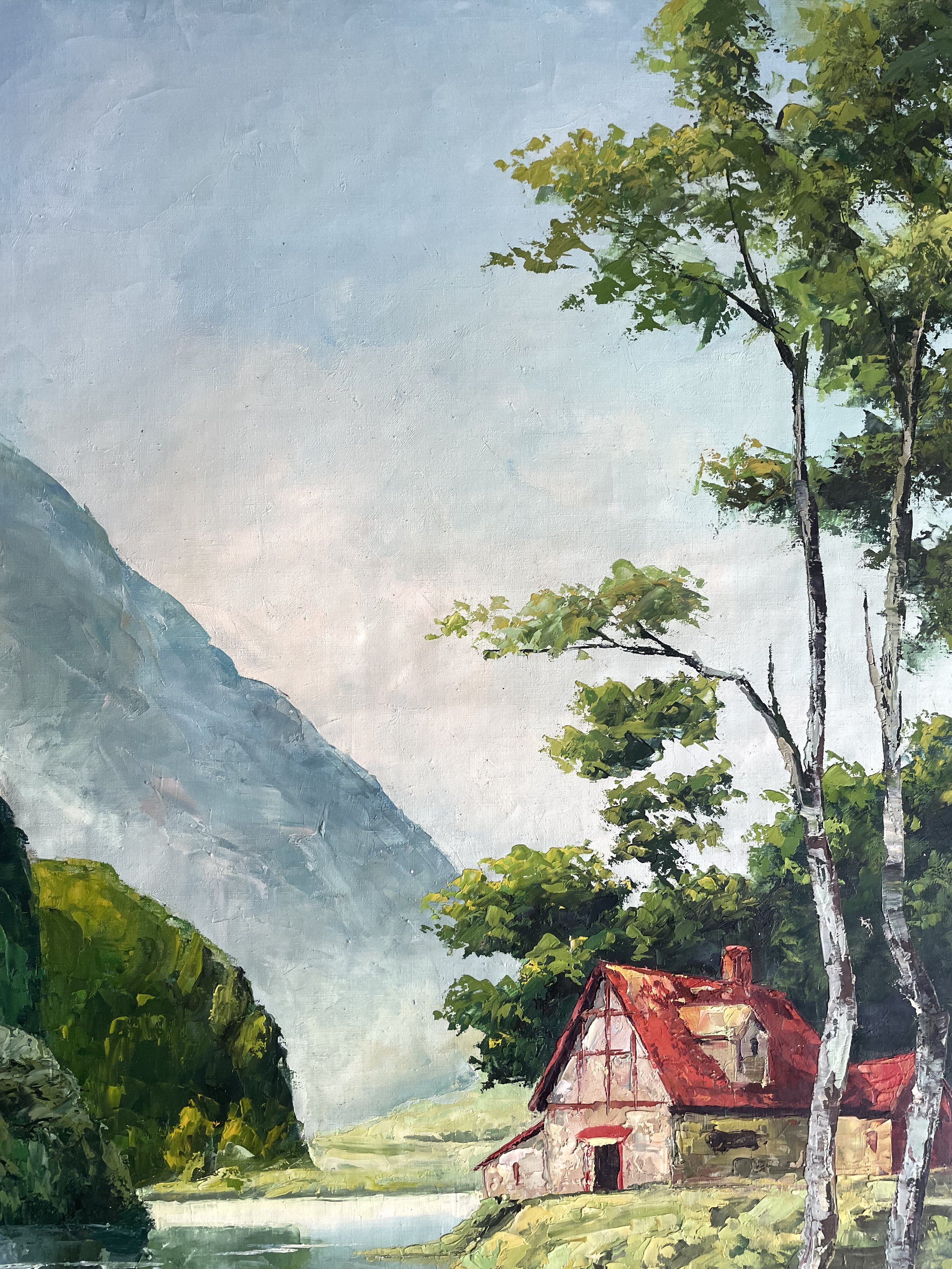
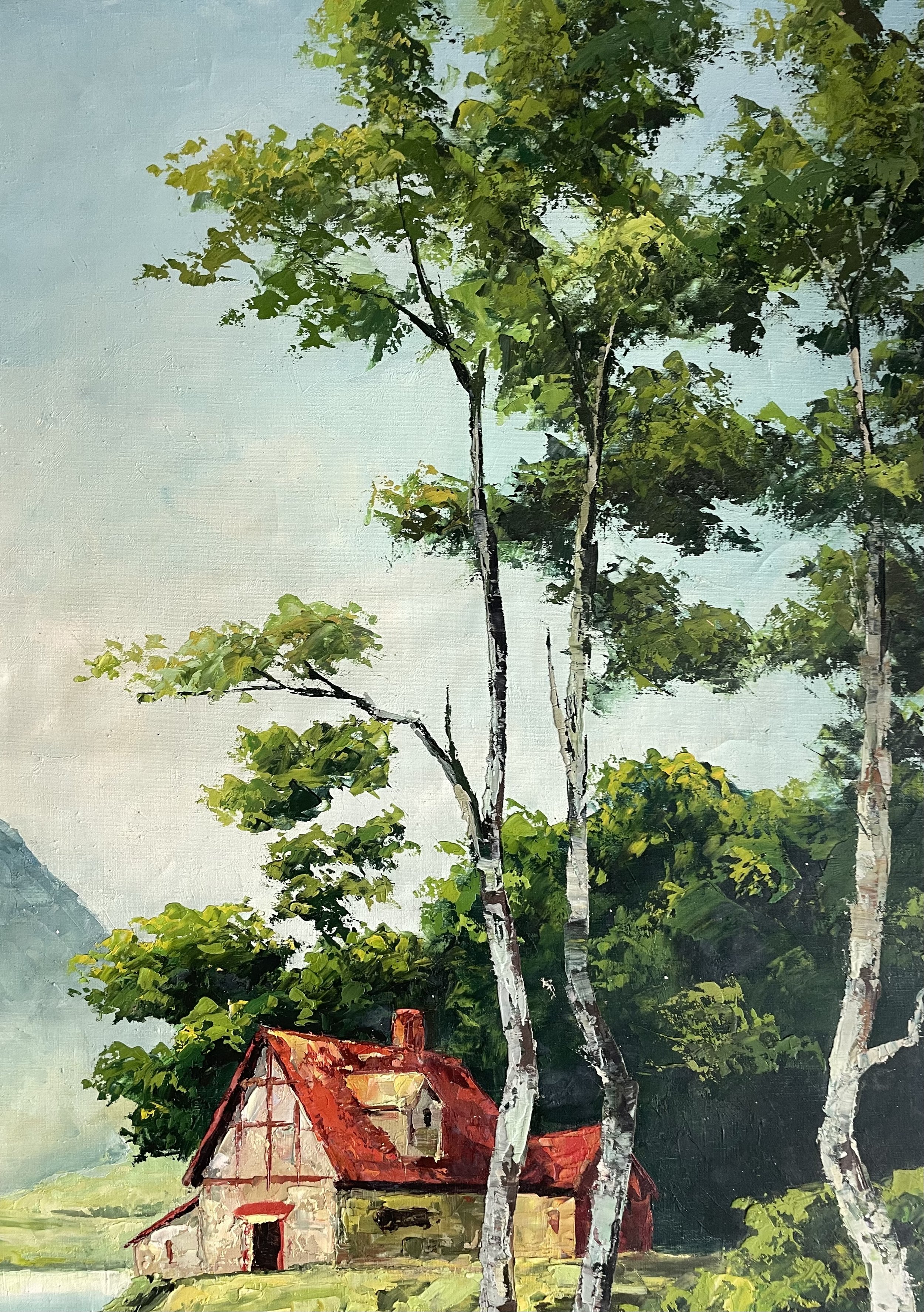
Rive Gauche, Paris, H. Edwerd, c. mid-20th century, oil on canvas, 20 × 24 in., signed lower right.
Artwork Description
A richly atmospheric Impressionist street scene depicting the Rive Gauche — the Left Bank — of Paris in the Belle Époque era, animated by horse-drawn carriages, elegantly dressed pedestrians, and the warm glow of shop fronts dissolving into a misty, luminous sky. In the middle distance the twin towers of Notre-Dame Cathedral emerge as ghostly silhouettes through the atmospheric haze, anchoring the composition geographically and emotionally.
The painting is organized with confident spatial intelligence. The viewer's eye is drawn down a broad Haussmann-era boulevard receding diagonally toward the center, flanked on the left by the steeply mansard-roofed stone facades of classic Parisian apartment buildings, their yellow-lit windows suggesting warmth and habitation within. On the right, market stalls and pedestrians line the pavement while horse-drawn carriages and figures in full skirts and dark overcoats move through the foreground with the unhurried confidence of another age.
The palette is characteristic of this genre at its finest — warm ochres and reds animating the storefronts and figures against a cool, silvery ground of wet pavement and overcast sky. The handling of light on the damp boulevard — reflective, diffuse, suggesting recent rain — is accomplished with genuine skill. Figures are suggested rather than described, rendered with loose, gestural brushwork that conveys movement and presence without overworking the paint surface.
The atmospheric treatment of the Notre-Dame towers in the distance — barely distinguishable from the sky, present more as a felt weight than a defined form — is particularly effective and places this painting firmly within the tradition of Impressionist Paris scenes that captured the city's particular quality of suspended, luminous grey light.
The paint surface throughout shows confident, direct handling with visible impasto in the foreground and sky, consistent with plein air influence and mid-20th century academic practice in the Impressionist tradition.
Artist Biography
H. Edwerd (active mid-20th century). This work sits within a well-established tradition of Parisian street scene painting that flourished from the late 19th century through the mid-20th century, exemplified by artists such as Édouard Cortès (1882–1969) and Eugène Galien-Laloue (1854–1941), whose atmospheric depictions of gas-lit Parisian boulevards found a wide international market through gallery and hotel distribution networks — precisely the circuit through which this work entered the Mitch Morse Gallery collection.
The technical accomplishment of this painting — the handling of atmospheric perspective, the confident figure work, the sophisticated palette — suggests an artist with serious academic training working comfortably within this commercially successful tradition. The signature "H Edwerd" may represent a variant spelling, a pseudonym, or a lesser-documented artist whose work merits further research.
Acquired through Mitch Morse Gallery, New York. Further biographical research in progress — inquiries from researchers with knowledge of this artist are welcomed.
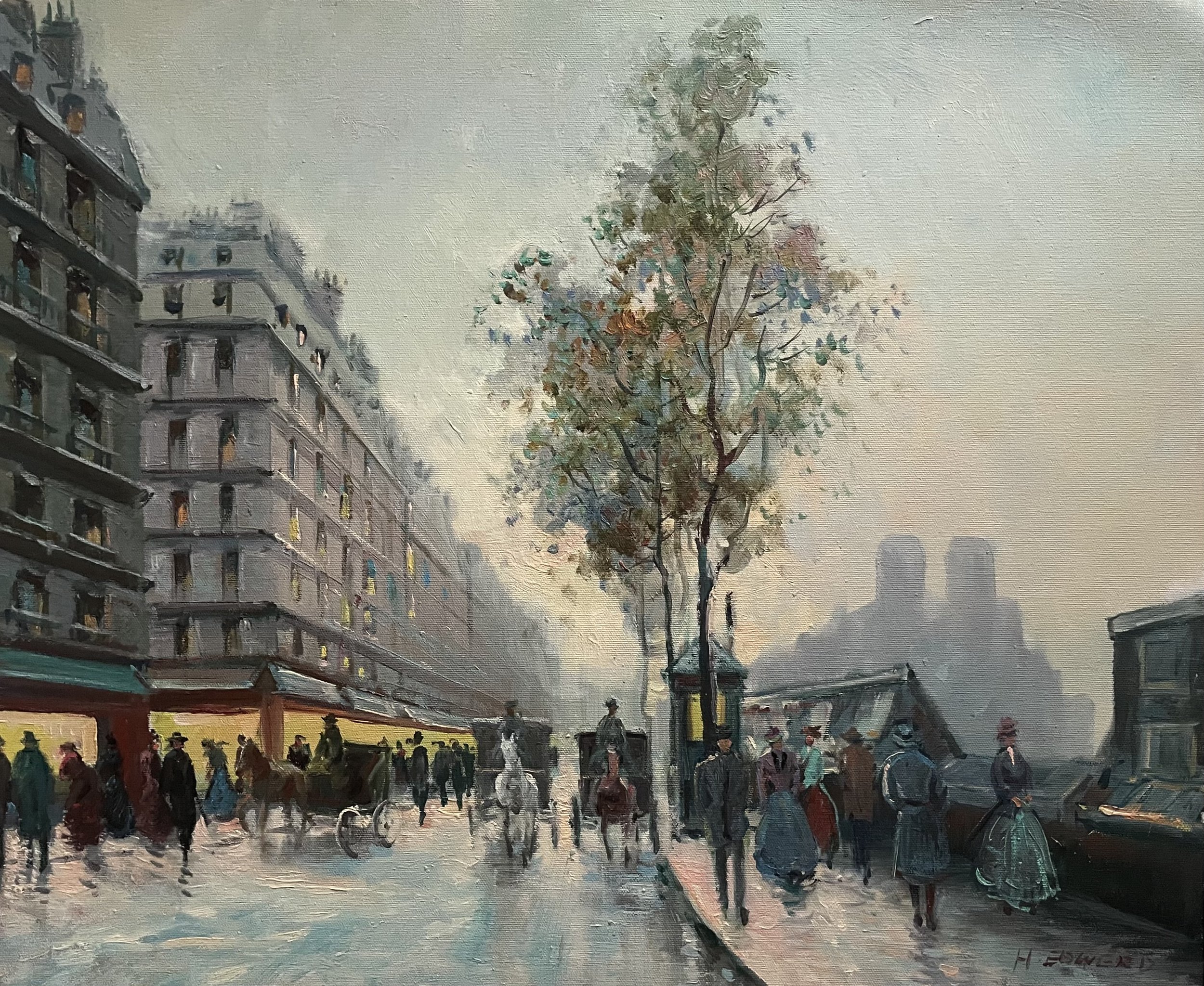 Image 1 of 6
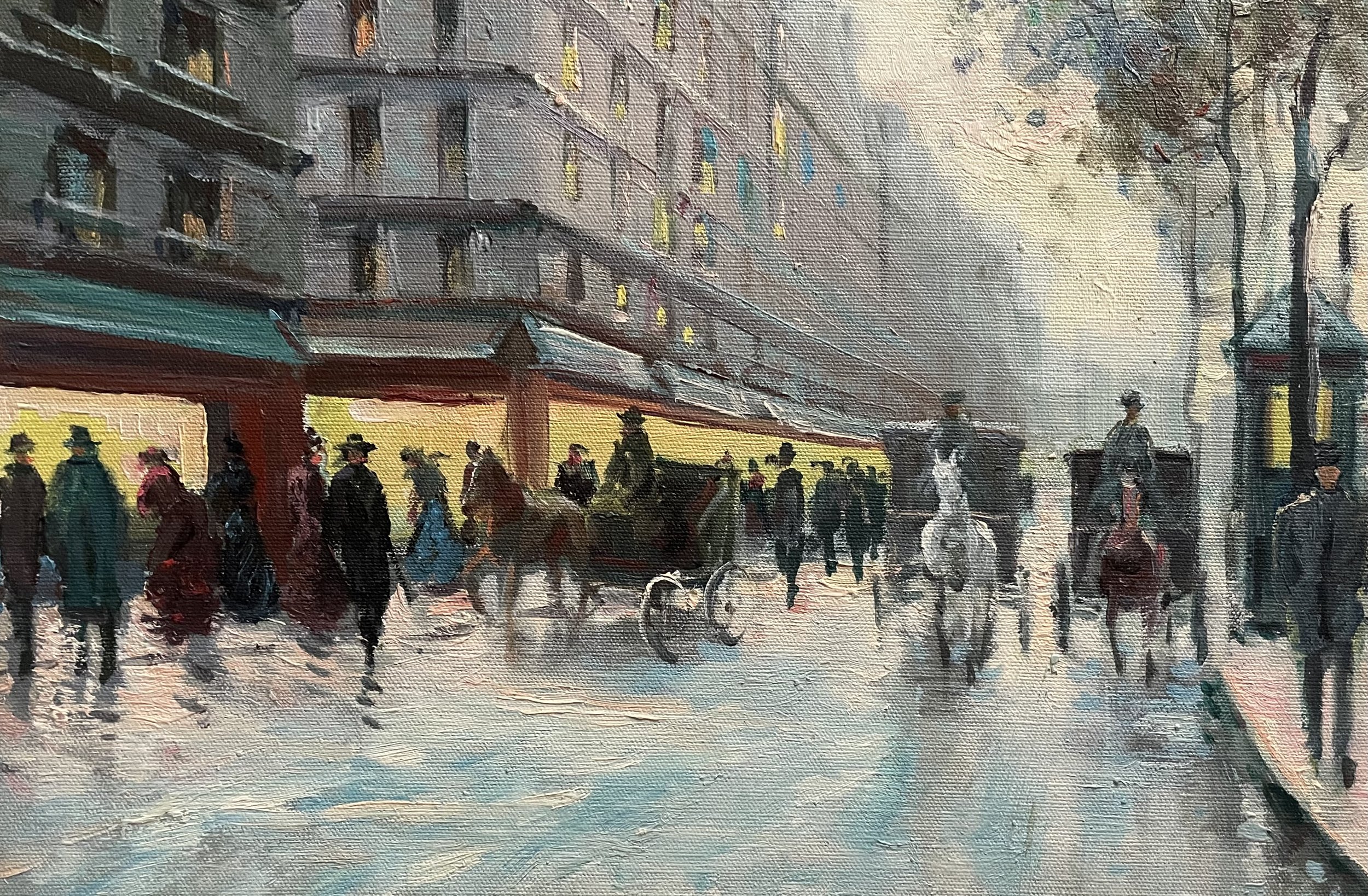 Image 2 of 6
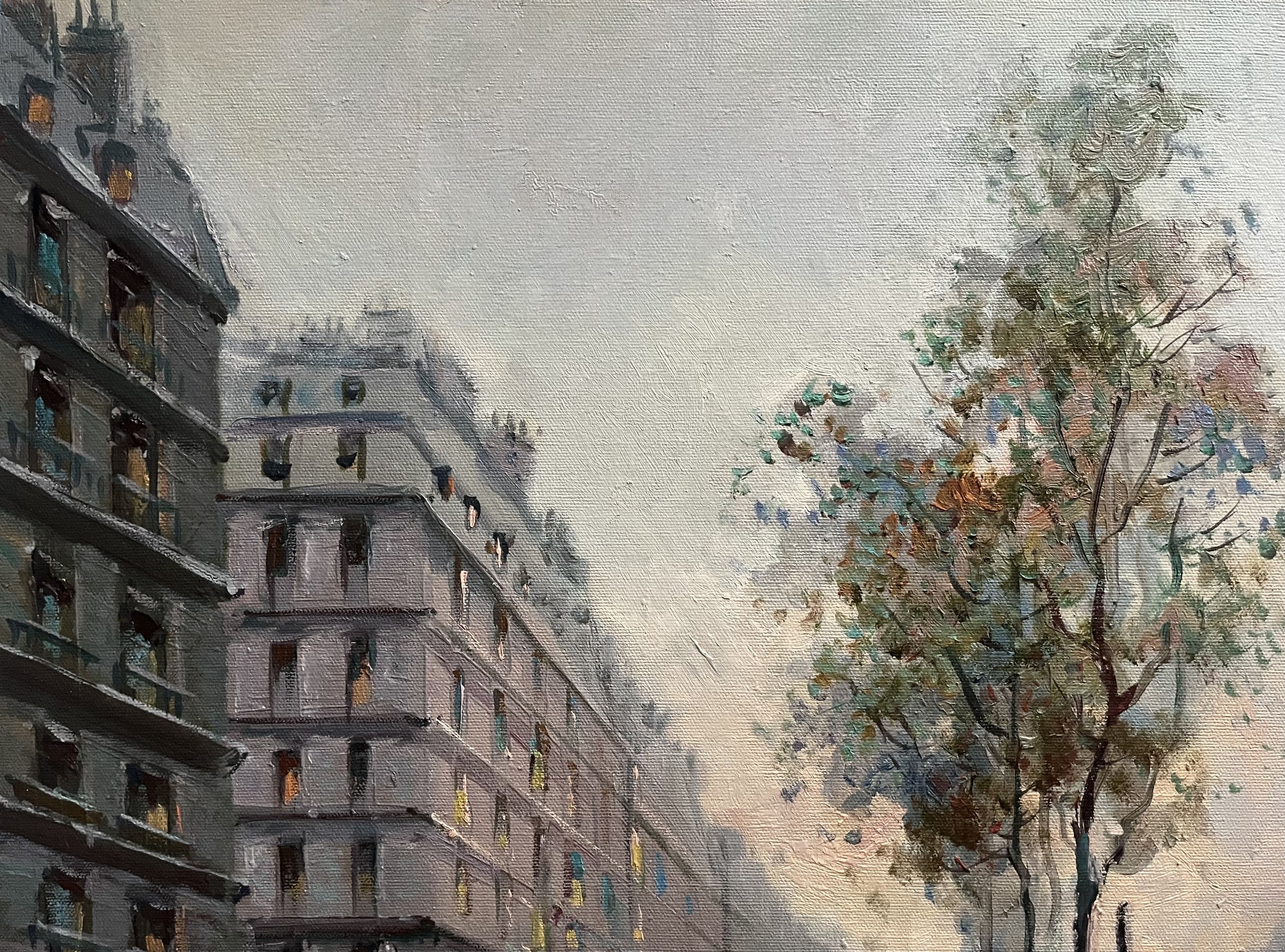 Image 3 of 6
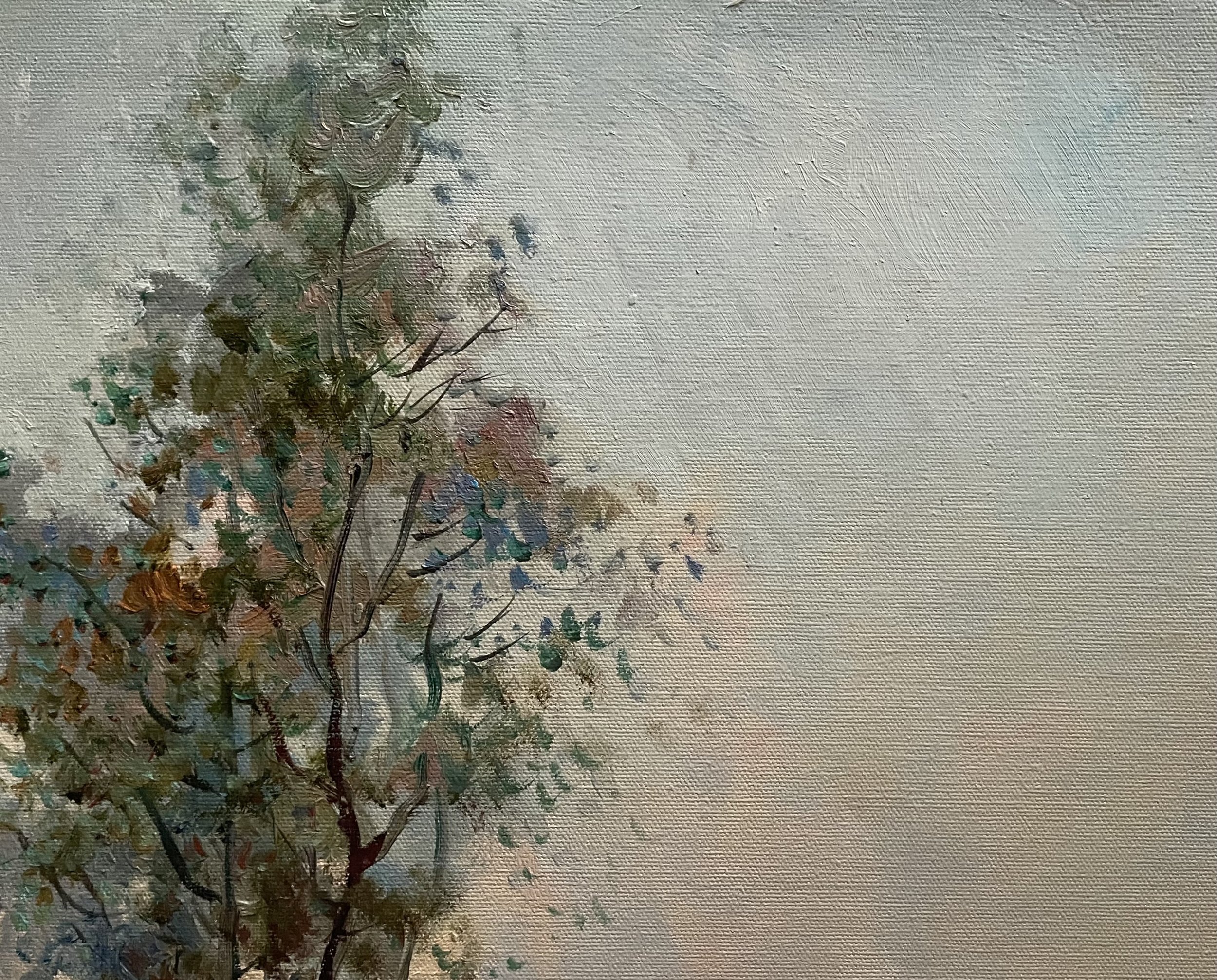 Image 4 of 6
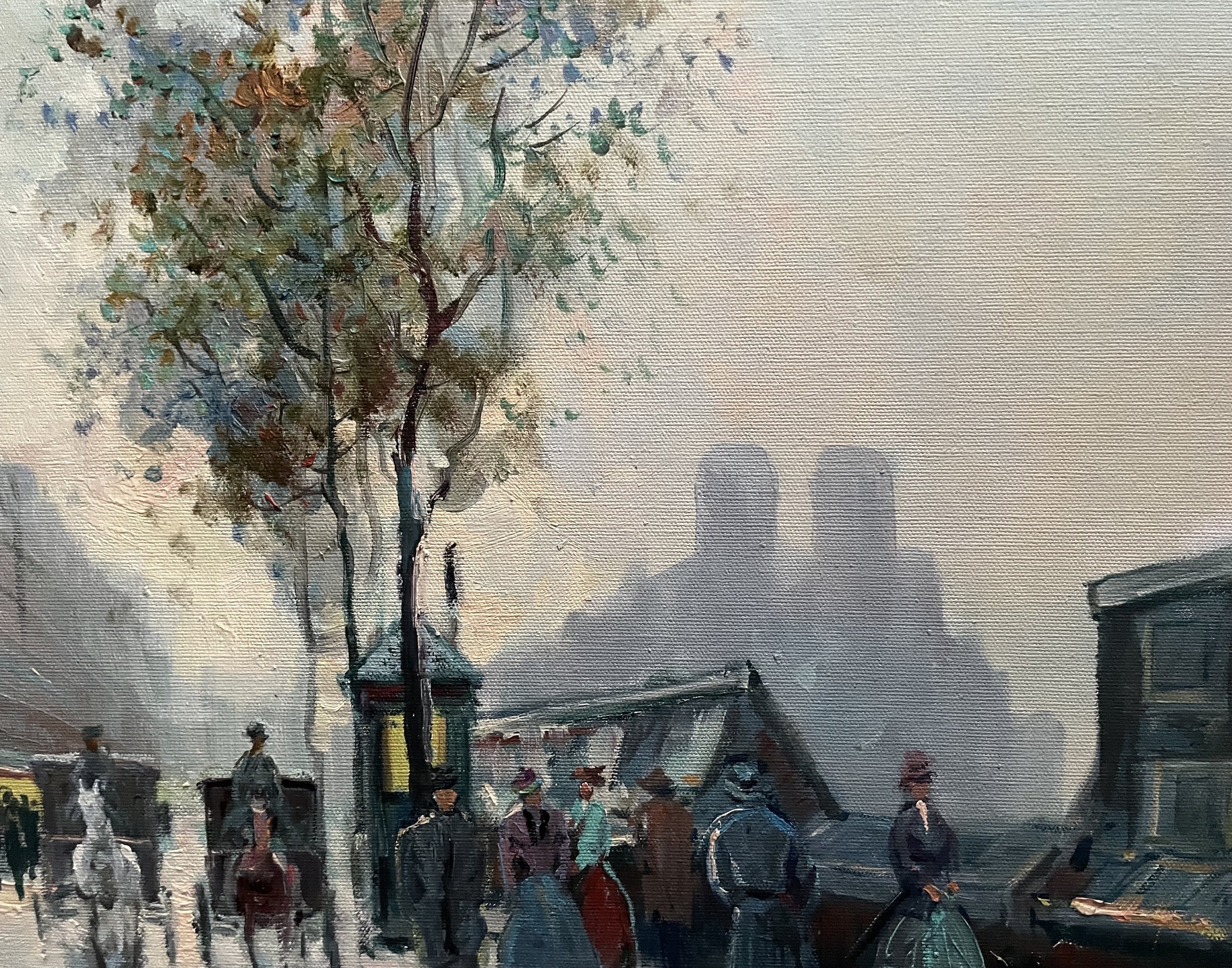 Image 5 of 6
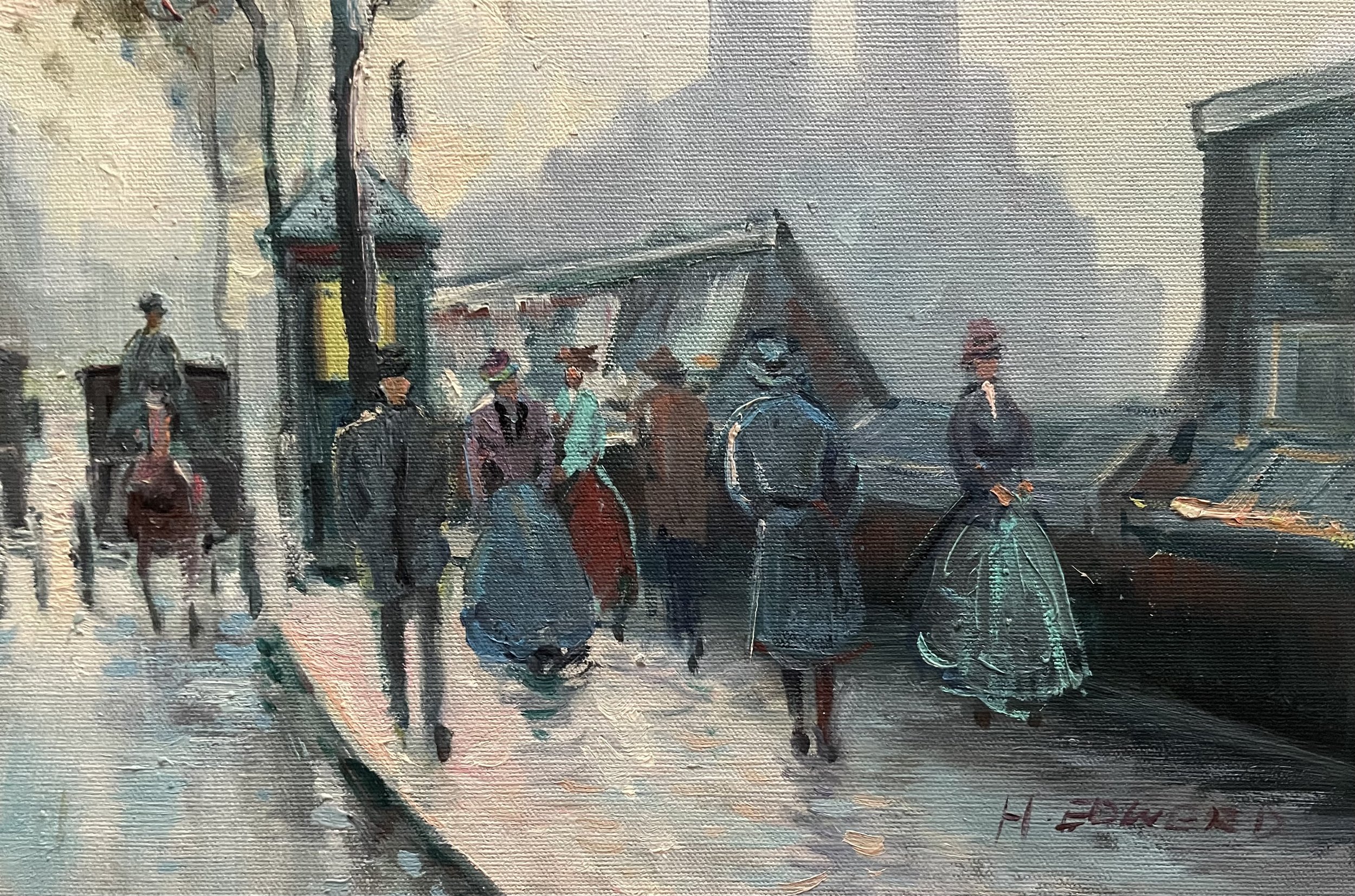 Image 6 of 6