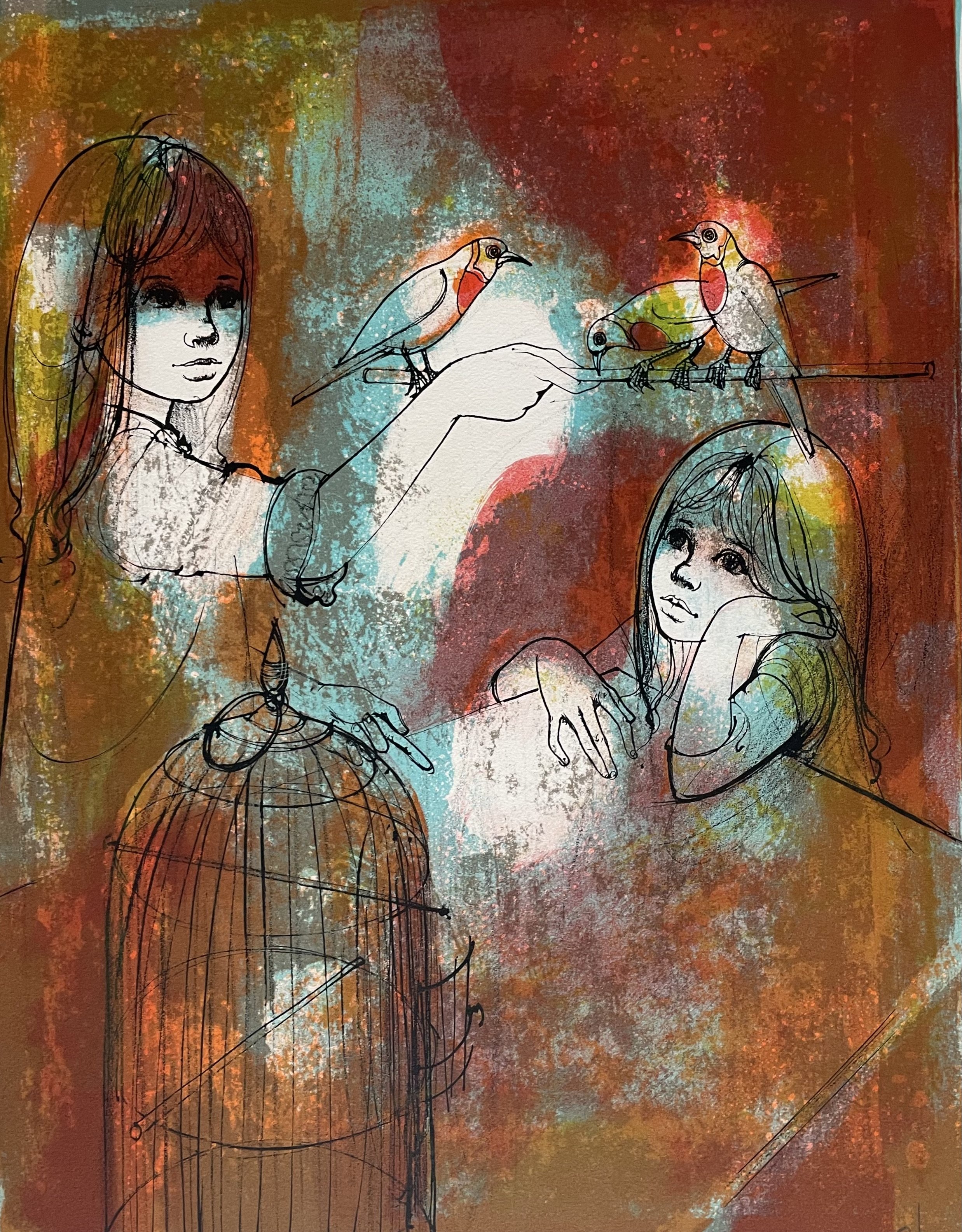
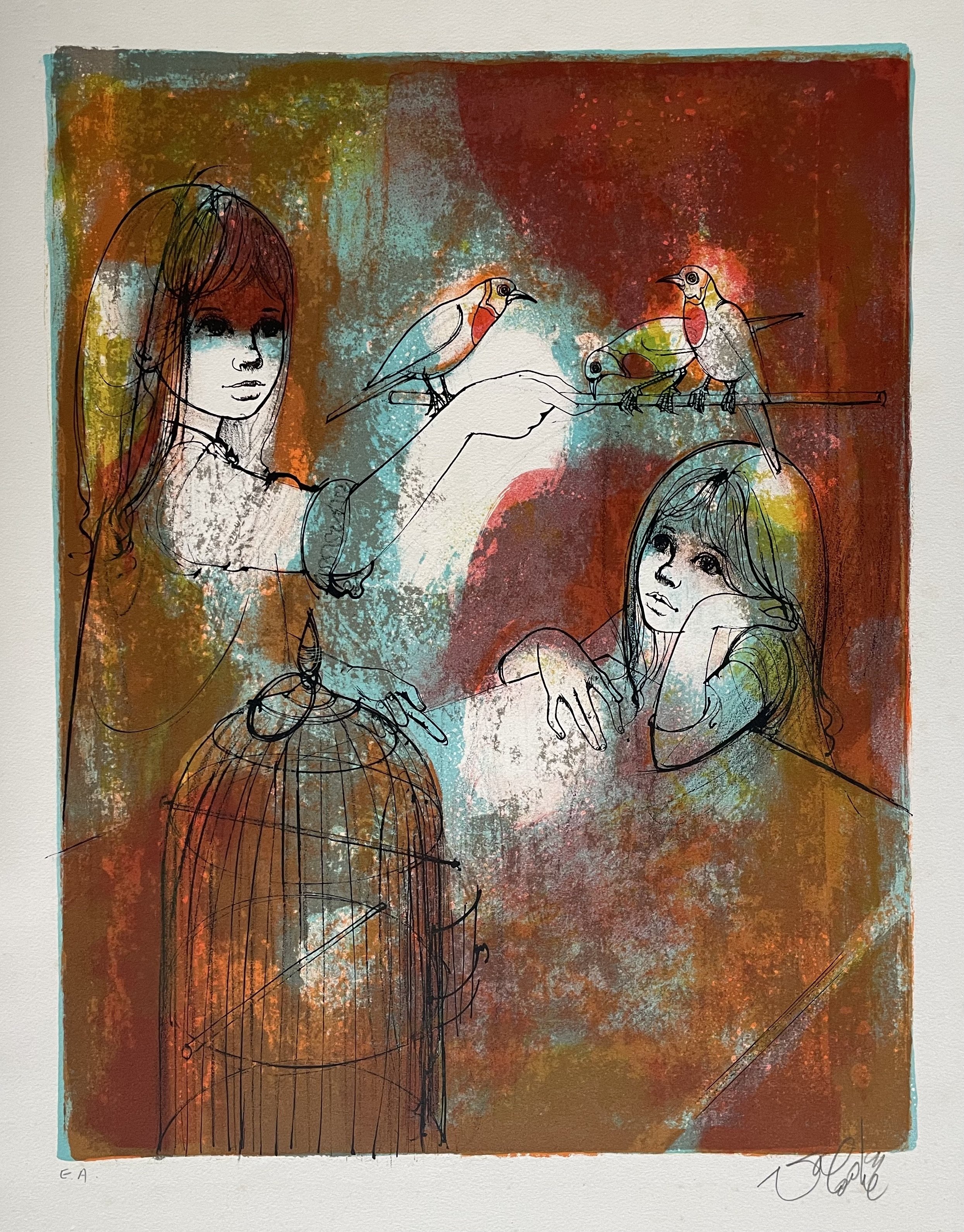
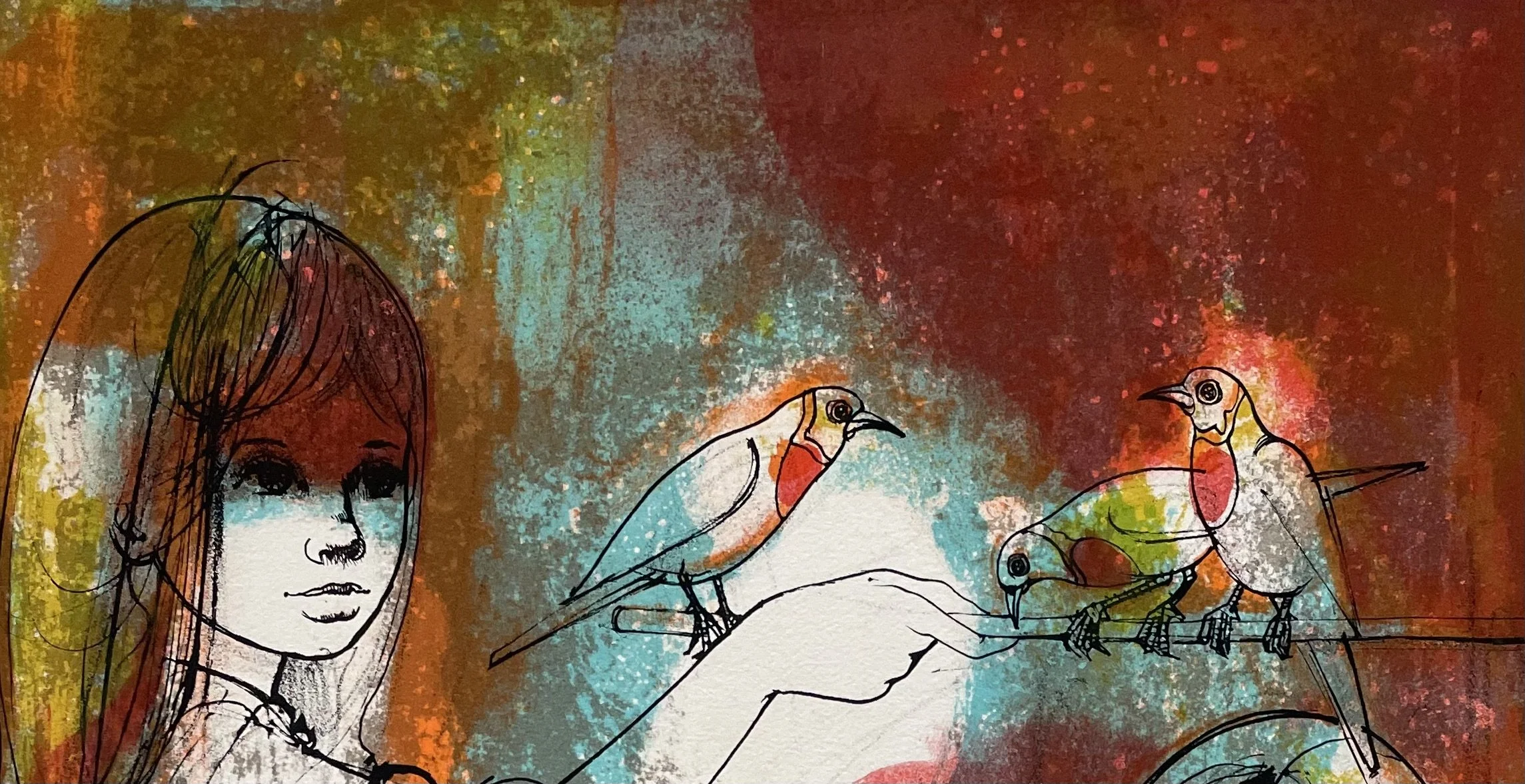
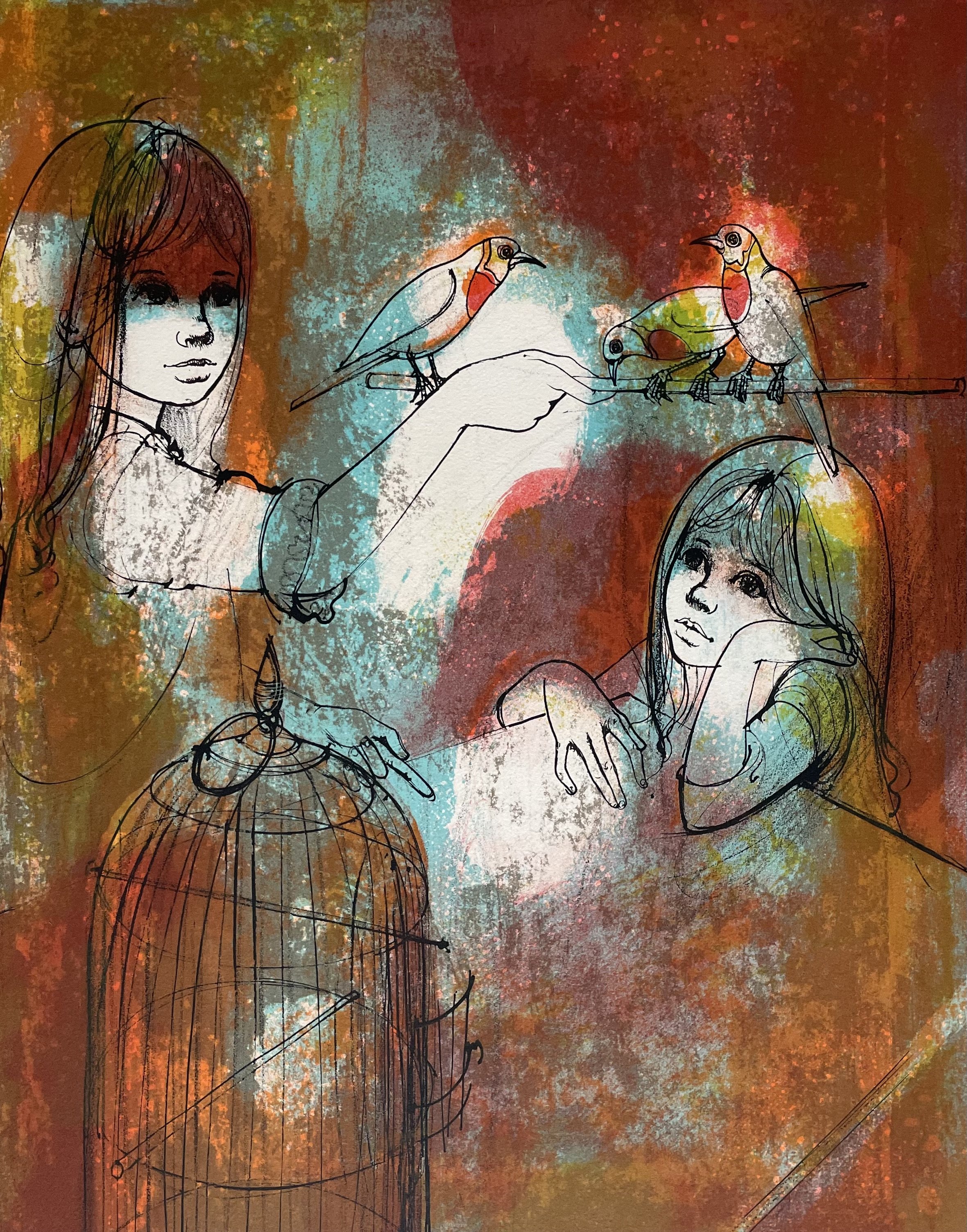
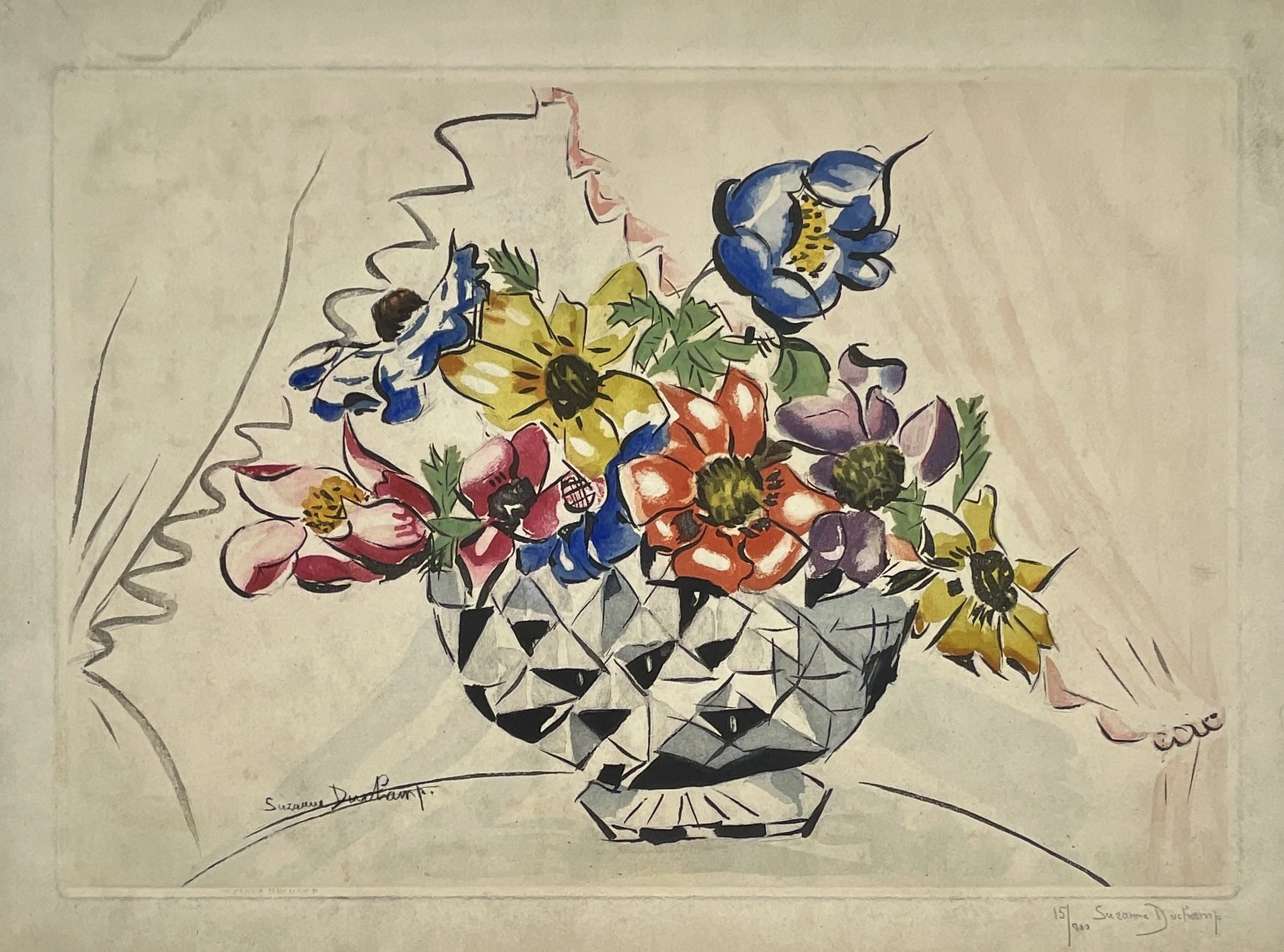
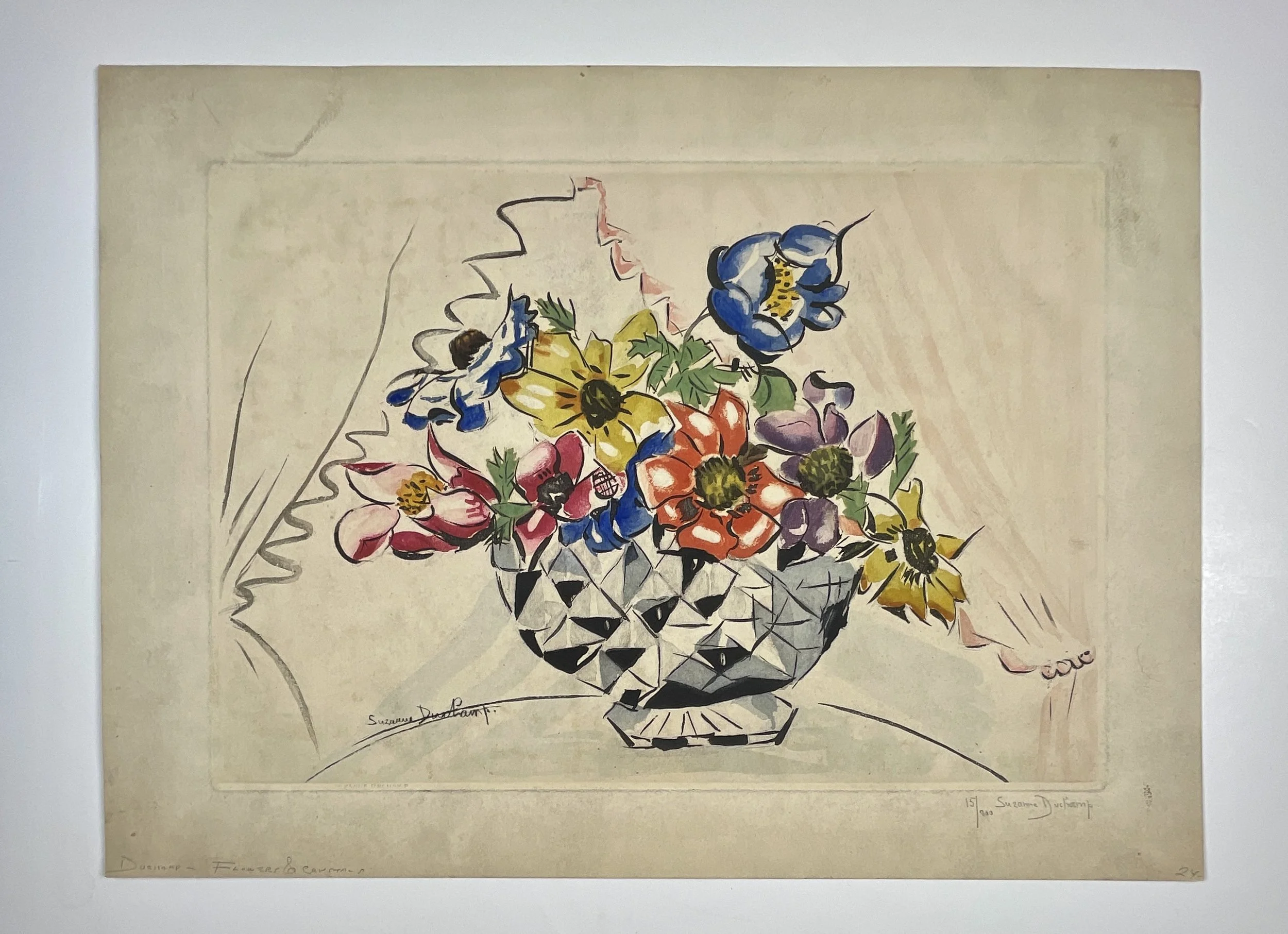
Medieval Warriors (attributed), Nissan Engel (1931–2016), c.1970s–1980s, original stone lithograph on paper, signed and numbered 2/25, approx. 12 × 18 in.
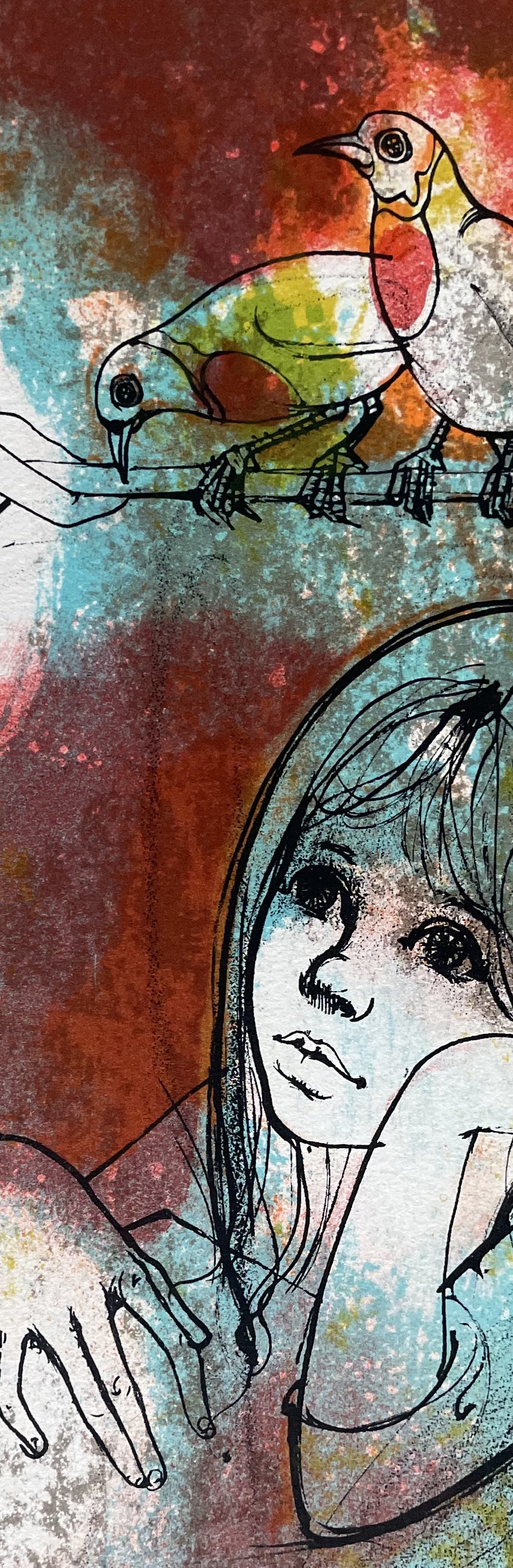
Nissan Engel’s Medieval Warriors is an expressive original stone lithograph that captures the kinetic energy of mounted figures in motion through bold gestural drawing and dramatic tonal contrast. Printed in a small edition of only 25 impressions, the work demonstrates Engel’s mastery of lithographic line and atmospheric texture. The composition combines rapid calligraphic strokes with abstract tonal fields, suggesting cavalry figures, armor, and movement without rigid description. Pencil signed and numbered 2/25, the print represents an early and scarce example of Engel’s narrative graphic works exploring themes of history, movement, and mythic procession.
Artwork Description
In Medieval Warriors, Nissan Engel condenses the drama of mounted battle into a dense field of gestural marks and tonal lithographic textures. The composition is dominated by a warm ochre ground across which Engel draws a flurry of black lines suggesting armored riders, horses, weapons, and fragments of landscape. Rather than describing a literal battlefield, Engel constructs an impression of motion and tension through overlapping marks and rhythmic linear energy.
The figures appear to emerge from the surface almost spontaneously. Horses are defined by swift contours, curved necks, and looping strokes, while riders and equipment dissolve into expressive clusters of line. Wheels, lances, and shields seem to intersect within the composition, giving the scene the feeling of a chaotic surge of cavalry movement.
Technically the work is executed as a traditional stone lithograph. In this process the artist draws directly onto a limestone printing surface using lithographic crayon or greasy ink. The stone is then chemically processed so that ink adheres only to the drawn areas during printing. The tonal fields and granular textures visible within the composition reflect the lithographic grain produced by this process.
The warm ground color and the black drawing were likely printed using separate stones, a common practice in color lithography. The irregular edges of the color field and the expressive character of the drawing reinforce the hand-drawn quality of the image. Lithography allowed Engel to preserve the spontaneity of his sketch-like marks while still producing a limited edition.
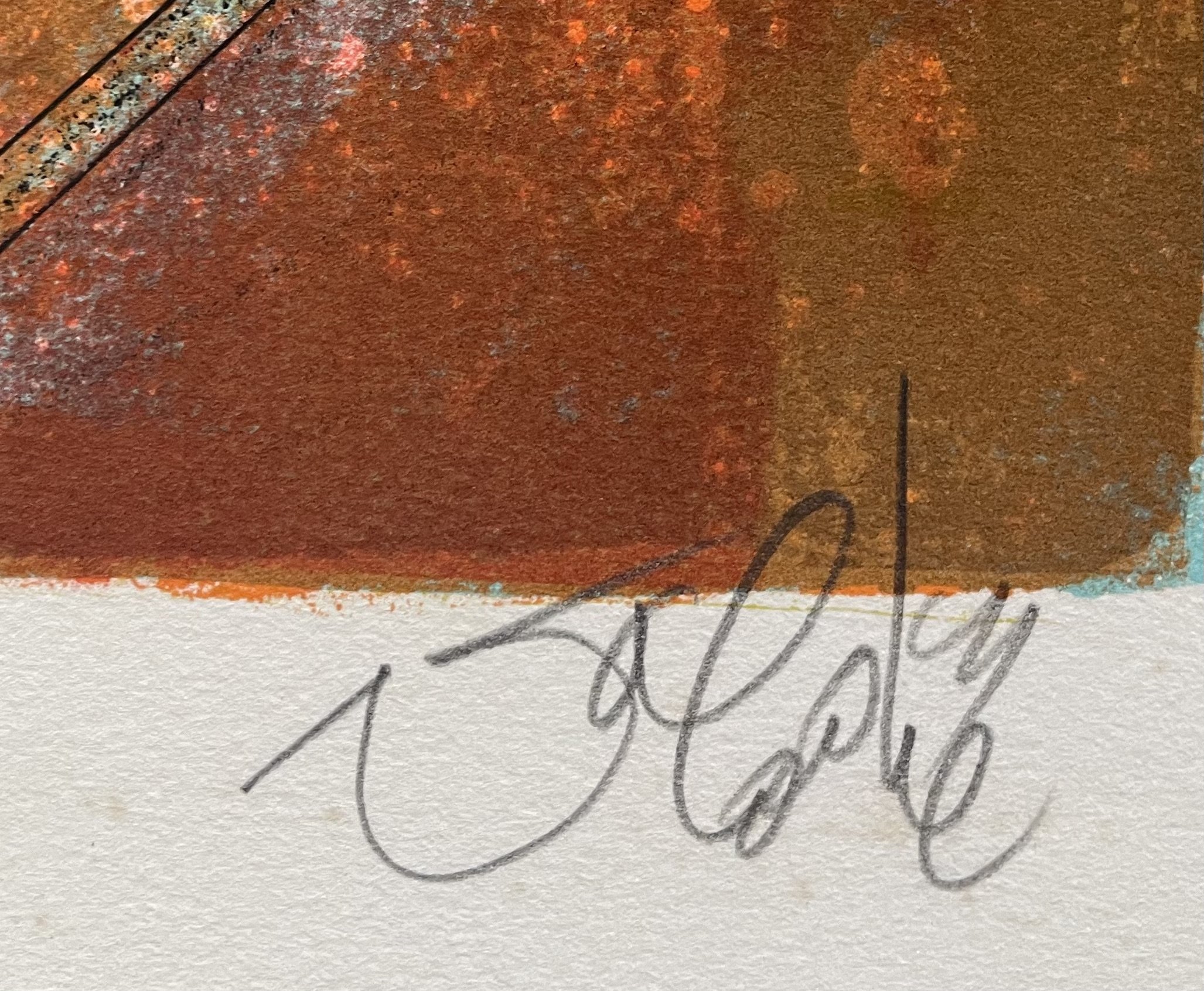
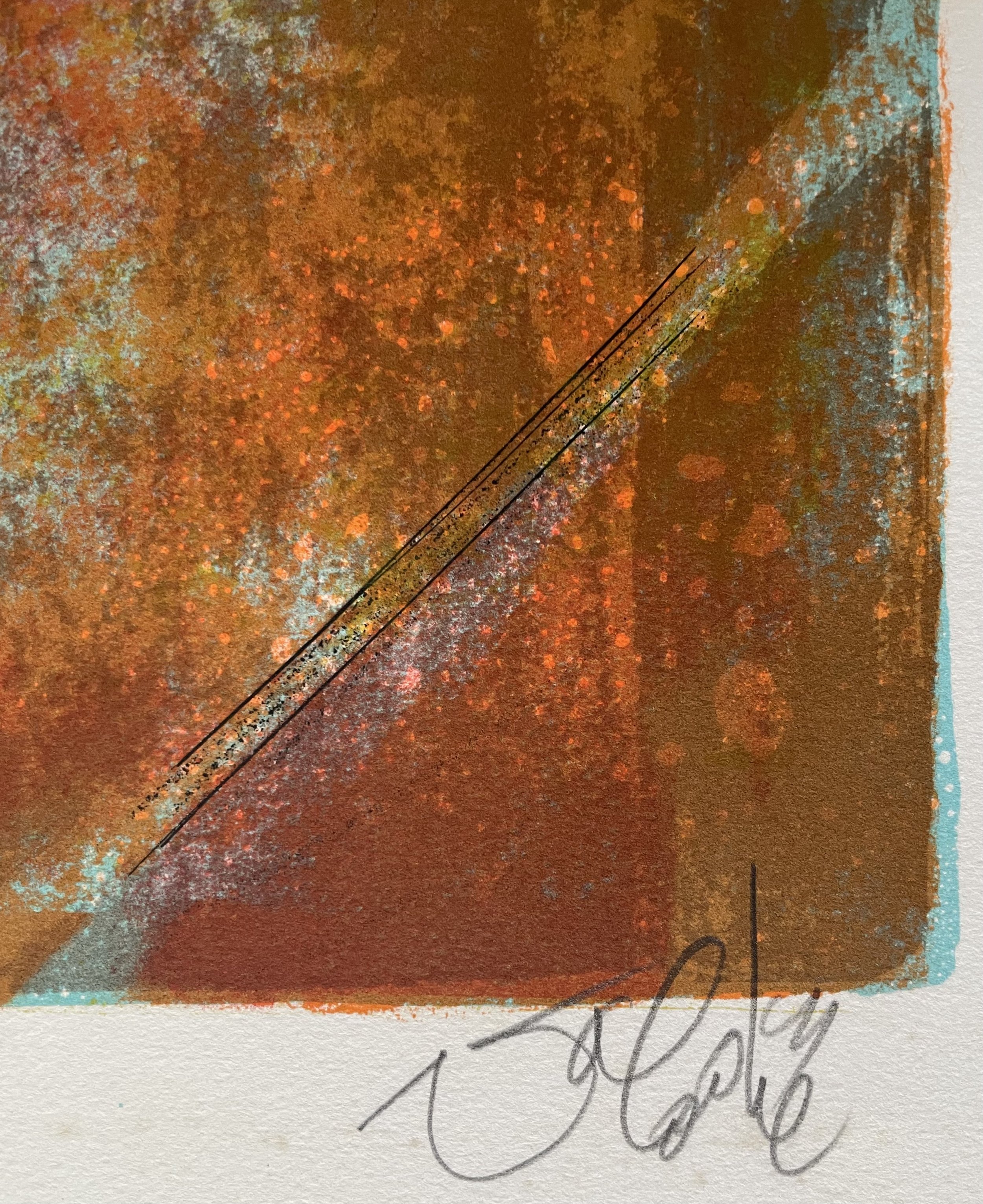
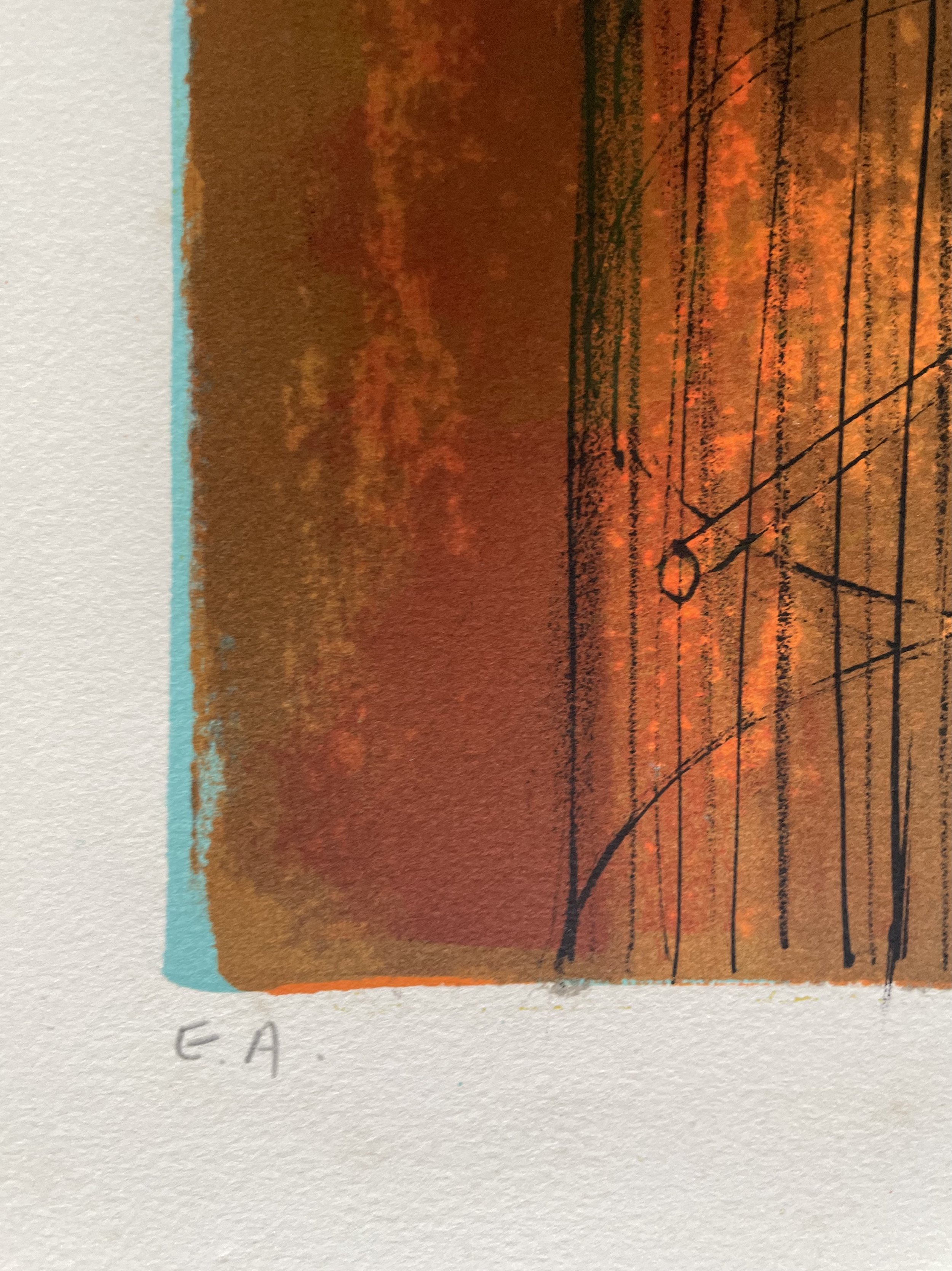
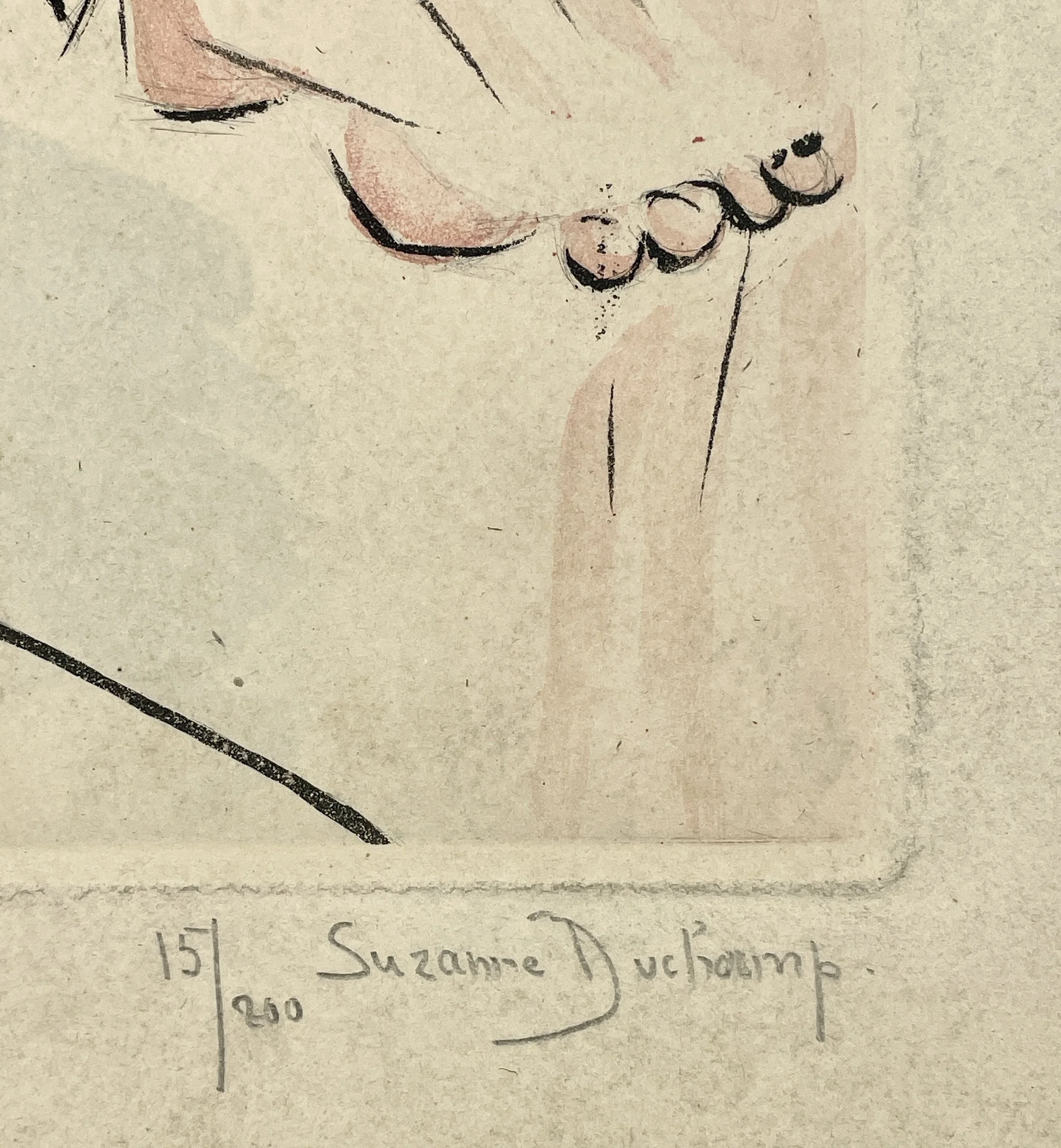
The print is pencil signed by the artist and numbered 2/25 in the lower margin. The small edition size suggests a more exclusive printing, possibly from an atelier edition produced during Engel’s mature period when he was actively working with graphic techniques in Europe and Israel.
The imagery reflects Engel’s recurring interest in processions, riders, and symbolic journeys. Rather than illustrating a specific historical event, the composition evokes the archetypal image of cavalry in motion, merging medieval imagery with modernist abstraction.
Artist Biography
Nissan Engel (1931–2016) was an Israeli-born painter, printmaker, and designer whose work bridges the traditions of European modernism with the expressive visual culture of the Mediterranean world. Born in Haifa, Israel, Engel demonstrated artistic promise early and pursued formal training at the Bezalel Academy of Arts and Design in Jerusalem, one of the most influential institutions shaping twentieth-century Israeli art.
At Bezalel he studied drawing, painting, and graphic design within a rigorous program that emphasized craftsmanship, visual communication, and the synthesis of fine art with applied design. This interdisciplinary foundation would strongly influence Engel’s later work, which often combines painterly intuition with graphic structure.
Following his academic training, Engel spent significant time in Europe where he encountered the artistic movements that were redefining modern art in the postwar period. Exposure to the Parisian art scene and the broader European avant-garde introduced him to lyrical abstraction, expressive drawing, and contemporary printmaking techniques. These influences helped shape Engel’s distinctive artistic language.
Engel’s work is characterized by strong compositional structure paired with spontaneous, gestural drawing. His paintings and prints frequently incorporate bold fields of color overlaid with energetic lines that evoke movement, rhythm, and emotional intensity. Critics have often compared the structure of his compositions to musical arrangements, where visual motifs repeat and evolve across the surface.
Throughout his career Engel worked across multiple mediums including painting, collage, printmaking, and graphic design. His prints reveal the immediacy of his drawing particularly clearly. Lithography, in particular, allowed him to maintain the fluidity of line while exploring tonal contrasts and layered color.
Recurring themes in Engel’s work include riders, journeys, processions, and symbolic landscapes. These motifs allowed him to merge narrative suggestion with abstraction, producing images that feel historical yet timeless. The figures in his compositions are often simplified into rhythmic forms that move across the pictorial field like visual notes in a musical score.
Engel exhibited internationally throughout the latter half of the twentieth century, and his work circulated widely through galleries in Europe, Israel, and the United States. His prints became especially appreciated among collectors because they capture the directness of his drawing while remaining accessible in scale.
By the early twenty-first century Engel’s work had established a lasting presence in private collections and gallery inventories. As of 2026 his prints continue to appear regularly in auction markets and gallery offerings, particularly limited-edition lithographs that combine strong color with expressive figurative elements.
Engel’s legacy lies in his ability to transform simple gestures and archetypal imagery into powerful visual narratives. His work stands as an example of the continuing dialogue between abstraction and representation that defined much of late twentieth-century modern art.
Nissan Engel (1931–2016)
Medieval Warriors (attributed)
Original stone lithograph on paper
Signed lower right
Numbered 2/25 lower left
Approx. 12 × 18 inches
Expressive modernist composition depicting mounted figures in motion.
Certificate of Authentication
Artist: Nissan Engel (1931–2016)
Title: Medieval Warriors (attributed)
Medium: Original stone lithograph on paper
Edition: 2/25
Signature: Pencil signed by the artist
Dimensions: approx. 12 × 18 inches
Provenance: Mitch Morse Gallery acquisitions in New York, the United States and Europe
Current Owner:
Artfind Gallery
Washington, DC
Condition
Very good condition overall. Sheet retains strong color and clear lithographic impressions. Minor age-related toning or light handling marks may be present consistent with works on paper of this period. Margins intact with visible pencil signature and edition number.
Provenance
Nissan Engel, artist
Mitch Morse Gallery, New York
(acquired through New York, United States and Europe)
Artfind Gallery, Washington DC
(current owner)
Sources
Bezalel Academy of Arts and Design historical references; AskArt artist records; international auction and gallery documentation for Nissan Engel prints.
Medieval Warriors (attributed), Nissan Engel (1931–2016), c.1970s–1980s, original stone lithograph on paper, signed and numbered 2/25, approx. 12 × 18 in.
Nissan Engel’s Medieval Warriors is an expressive original stone lithograph that captures the kinetic energy of mounted figures in motion through bold gestural drawing and dramatic tonal contrast. Printed in a small edition of only 25 impressions, the work demonstrates Engel’s mastery of lithographic line and atmospheric texture. The composition combines rapid calligraphic strokes with abstract tonal fields, suggesting cavalry figures, armor, and movement without rigid description. Pencil signed and numbered 2/25, the print represents an early and scarce example of Engel’s narrative graphic works exploring themes of history, movement, and mythic procession.
Artwork Description
In Medieval Warriors, Nissan Engel condenses the drama of mounted battle into a dense field of gestural marks and tonal lithographic textures. The composition is dominated by a warm ochre ground across which Engel draws a flurry of black lines suggesting armored riders, horses, weapons, and fragments of landscape. Rather than describing a literal battlefield, Engel constructs an impression of motion and tension through overlapping marks and rhythmic linear energy.
The figures appear to emerge from the surface almost spontaneously. Horses are defined by swift contours, curved necks, and looping strokes, while riders and equipment dissolve into expressive clusters of line. Wheels, lances, and shields seem to intersect within the composition, giving the scene the feeling of a chaotic surge of cavalry movement.
Technically the work is executed as a traditional stone lithograph. In this process the artist draws directly onto a limestone printing surface using lithographic crayon or greasy ink. The stone is then chemically processed so that ink adheres only to the drawn areas during printing. The tonal fields and granular textures visible within the composition reflect the lithographic grain produced by this process.
The warm ground color and the black drawing were likely printed using separate stones, a common practice in color lithography. The irregular edges of the color field and the expressive character of the drawing reinforce the hand-drawn quality of the image. Lithography allowed Engel to preserve the spontaneity of his sketch-like marks while still producing a limited edition.
The print is pencil signed by the artist and numbered 2/25 in the lower margin. The small edition size suggests a more exclusive printing, possibly from an atelier edition produced during Engel’s mature period when he was actively working with graphic techniques in Europe and Israel.
The imagery reflects Engel’s recurring interest in processions, riders, and symbolic journeys. Rather than illustrating a specific historical event, the composition evokes the archetypal image of cavalry in motion, merging medieval imagery with modernist abstraction.
Artist Biography
Nissan Engel (1931–2016) was an Israeli-born painter, printmaker, and designer whose work bridges the traditions of European modernism with the expressive visual culture of the Mediterranean world. Born in Haifa, Israel, Engel demonstrated artistic promise early and pursued formal training at the Bezalel Academy of Arts and Design in Jerusalem, one of the most influential institutions shaping twentieth-century Israeli art.
At Bezalel he studied drawing, painting, and graphic design within a rigorous program that emphasized craftsmanship, visual communication, and the synthesis of fine art with applied design. This interdisciplinary foundation would strongly influence Engel’s later work, which often combines painterly intuition with graphic structure.
Following his academic training, Engel spent significant time in Europe where he encountered the artistic movements that were redefining modern art in the postwar period. Exposure to the Parisian art scene and the broader European avant-garde introduced him to lyrical abstraction, expressive drawing, and contemporary printmaking techniques. These influences helped shape Engel’s distinctive artistic language.
Engel’s work is characterized by strong compositional structure paired with spontaneous, gestural drawing. His paintings and prints frequently incorporate bold fields of color overlaid with energetic lines that evoke movement, rhythm, and emotional intensity. Critics have often compared the structure of his compositions to musical arrangements, where visual motifs repeat and evolve across the surface.
Throughout his career Engel worked across multiple mediums including painting, collage, printmaking, and graphic design. His prints reveal the immediacy of his drawing particularly clearly. Lithography, in particular, allowed him to maintain the fluidity of line while exploring tonal contrasts and layered color.
Recurring themes in Engel’s work include riders, journeys, processions, and symbolic landscapes. These motifs allowed him to merge narrative suggestion with abstraction, producing images that feel historical yet timeless. The figures in his compositions are often simplified into rhythmic forms that move across the pictorial field like visual notes in a musical score.
Engel exhibited internationally throughout the latter half of the twentieth century, and his work circulated widely through galleries in Europe, Israel, and the United States. His prints became especially appreciated among collectors because they capture the directness of his drawing while remaining accessible in scale.
By the early twenty-first century Engel’s work had established a lasting presence in private collections and gallery inventories. As of 2026 his prints continue to appear regularly in auction markets and gallery offerings, particularly limited-edition lithographs that combine strong color with expressive figurative elements.
Engel’s legacy lies in his ability to transform simple gestures and archetypal imagery into powerful visual narratives. His work stands as an example of the continuing dialogue between abstraction and representation that defined much of late twentieth-century modern art.
Nissan Engel (1931–2016)
Medieval Warriors (attributed)
Original stone lithograph on paper
Signed lower right
Numbered 2/25 lower left
Approx. 12 × 18 inches
Expressive modernist composition depicting mounted figures in motion.
Certificate of Authentication
Artist: Nissan Engel (1931–2016)
Title: Medieval Warriors (attributed)
Medium: Original stone lithograph on paper
Edition: 2/25
Signature: Pencil signed by the artist
Dimensions: approx. 12 × 18 inches
Provenance: Mitch Morse Gallery acquisitions in New York, the United States and Europe
Current Owner:
Artfind Gallery
Washington, DC
Condition
Very good condition overall. Sheet retains strong color and clear lithographic impressions. Minor age-related toning or light handling marks may be present consistent with works on paper of this period. Margins intact with visible pencil signature and edition number.
Provenance
Nissan Engel, artist
Mitch Morse Gallery, New York
(acquired through New York, United States and Europe)
Artfind Gallery, Washington DC
(current owner)
Sources
Bezalel Academy of Arts and Design historical references; AskArt artist records; international auction and gallery documentation for Nissan Engel prints.
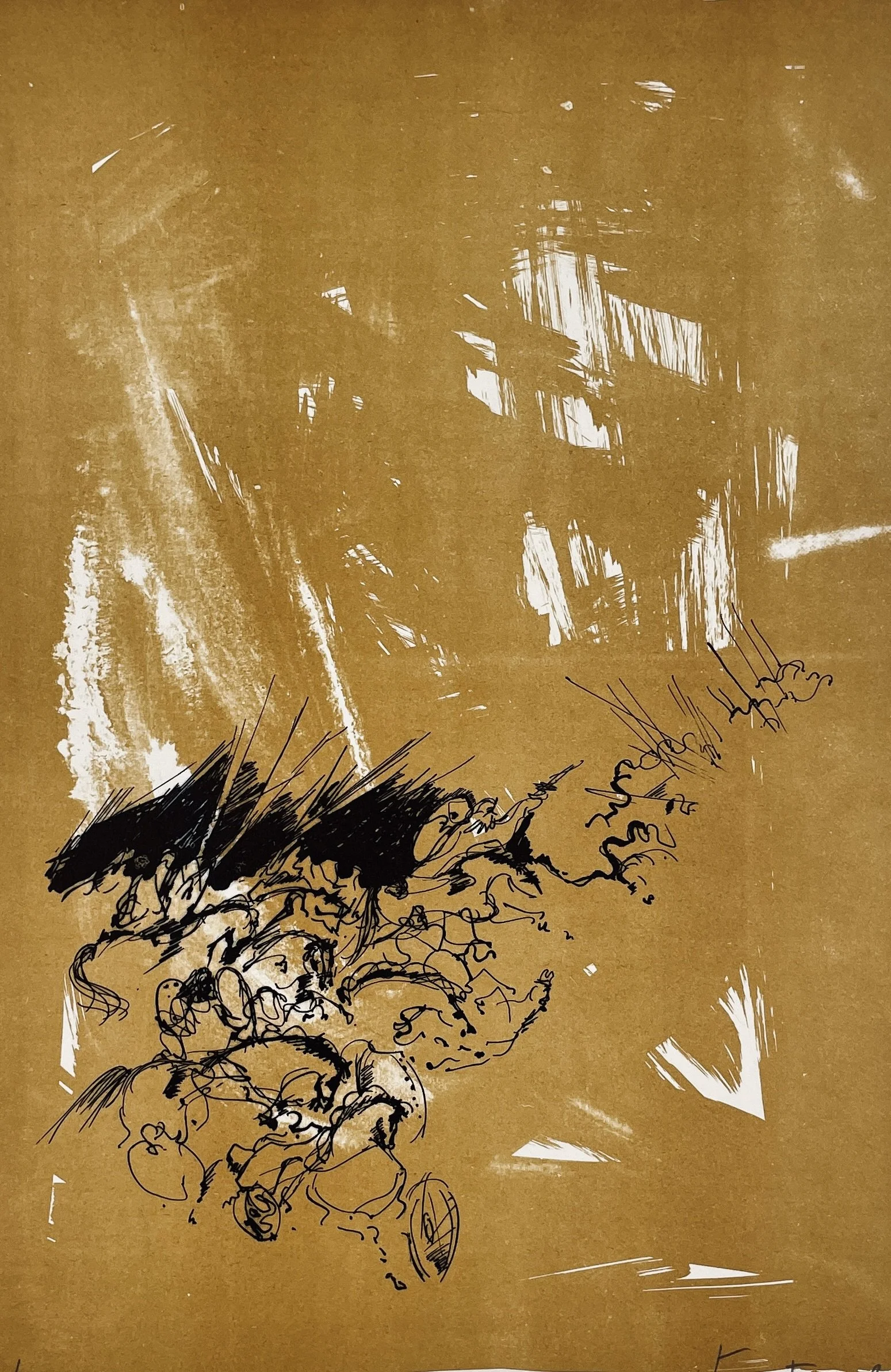 Image 1 of 8
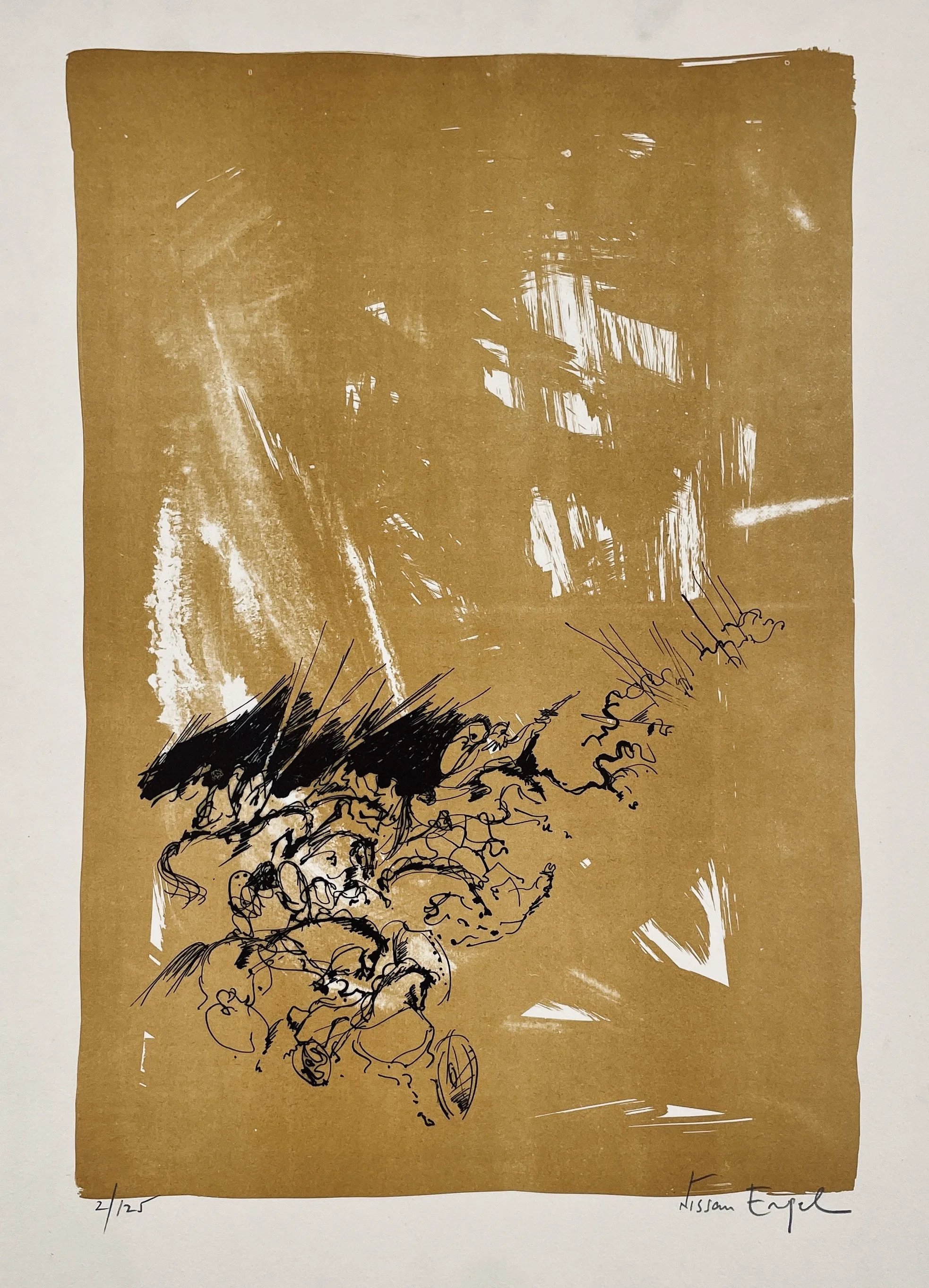 Image 2 of 8
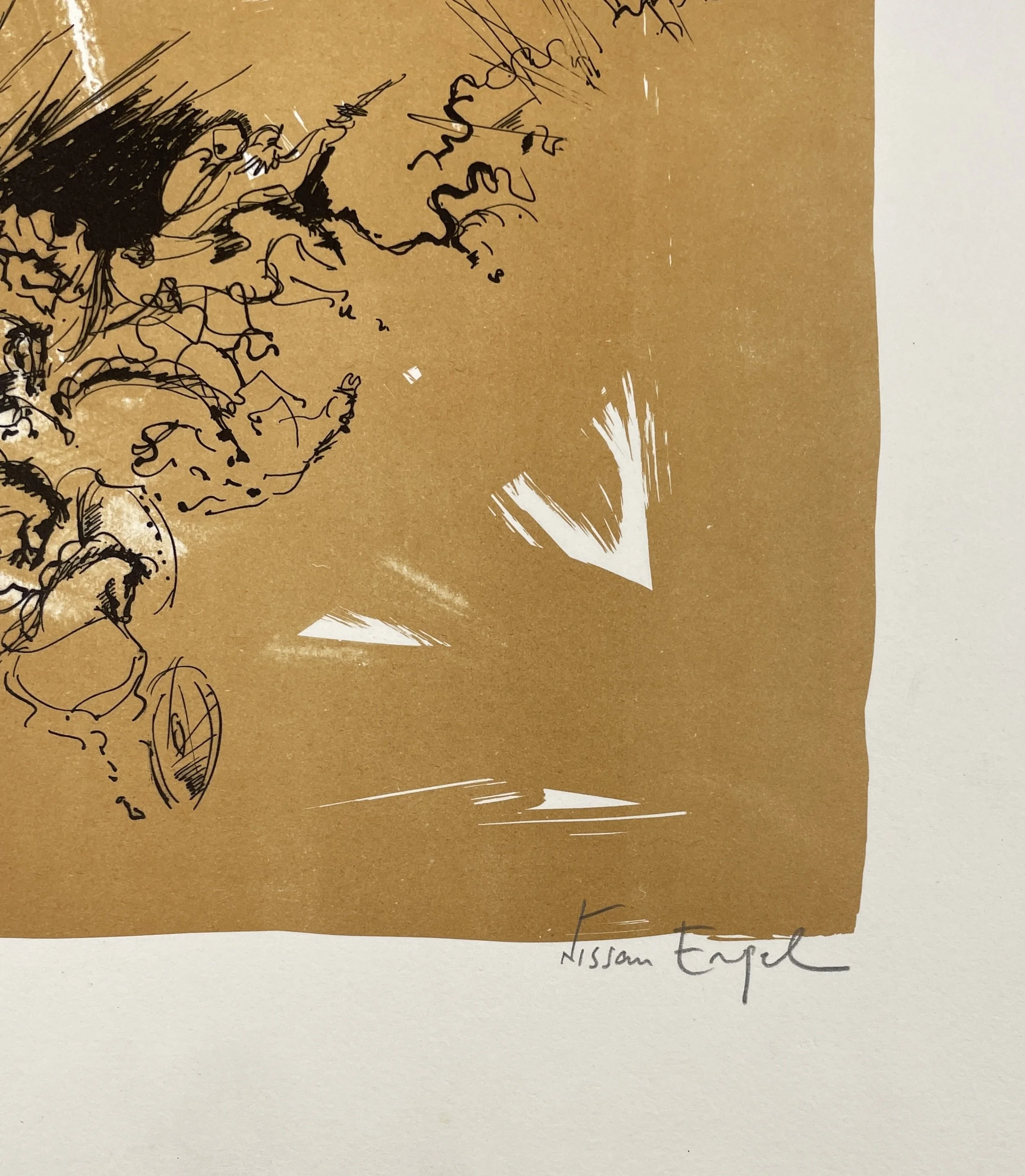 Image 3 of 8
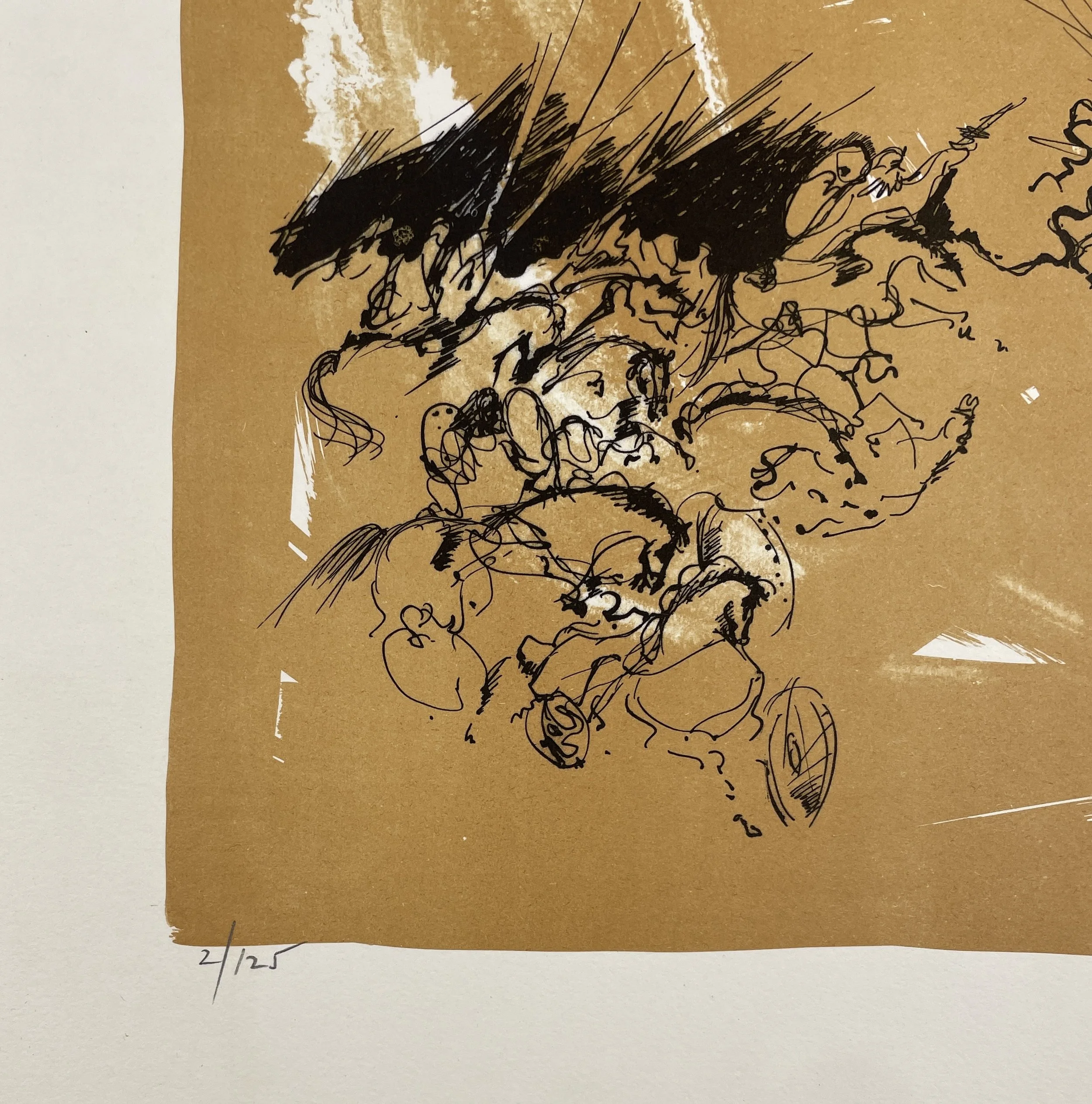 Image 4 of 8
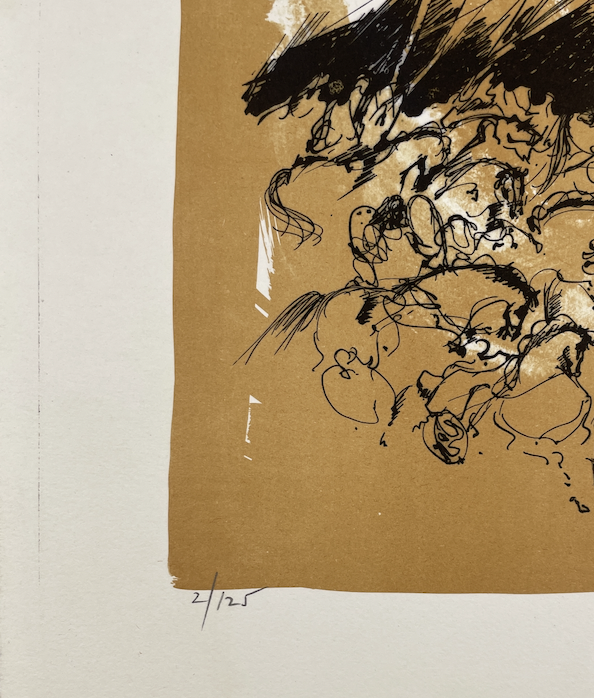 Image 5 of 8
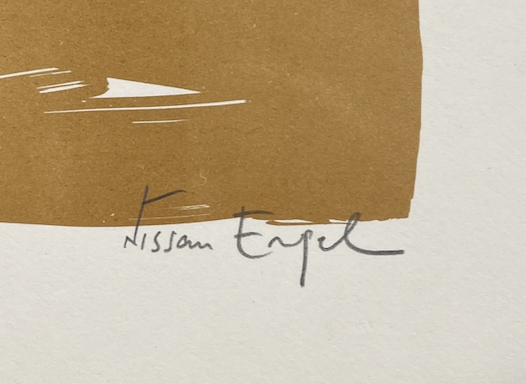 Image 6 of 8
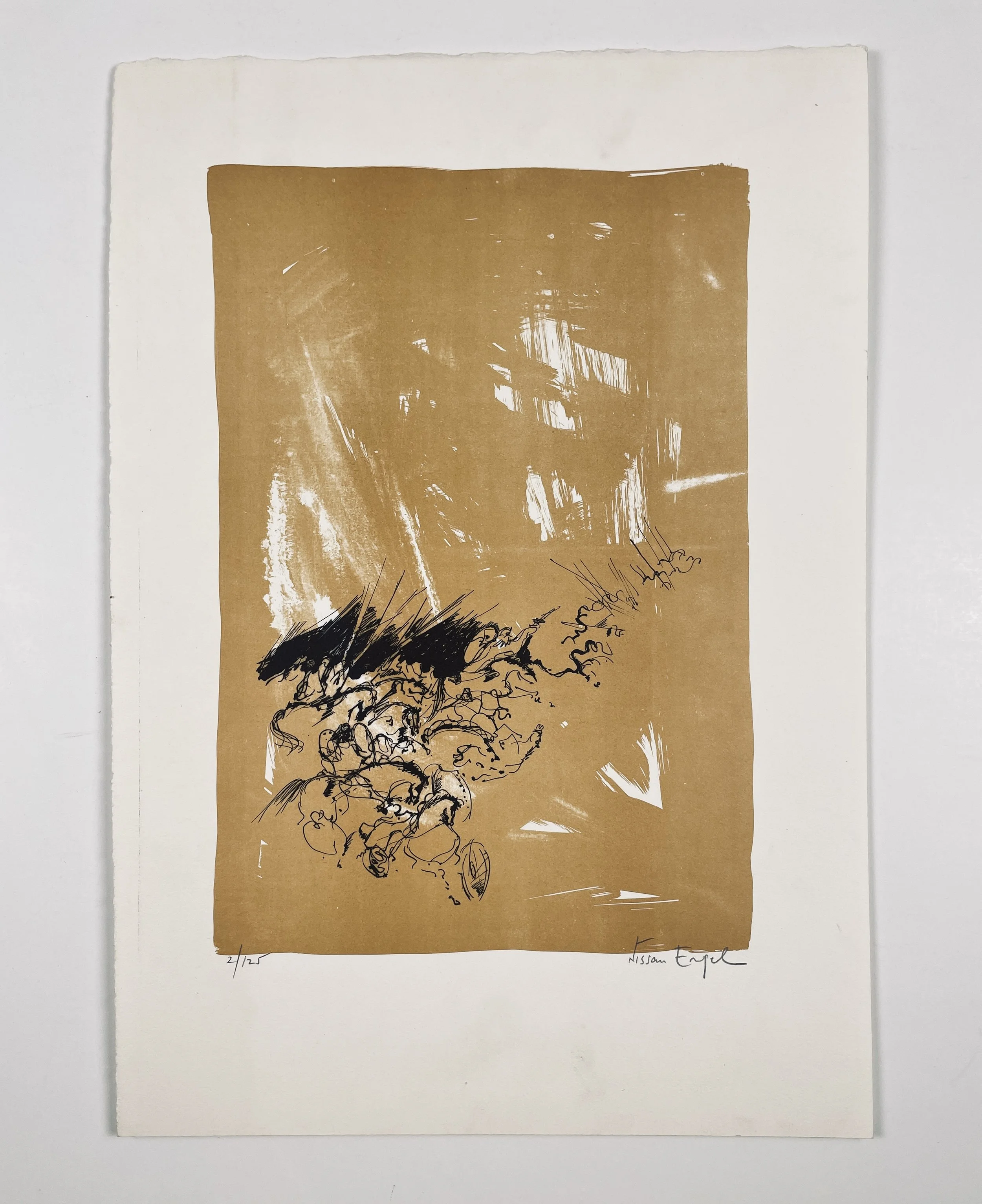 Image 7 of 8
 Image 8 of 8