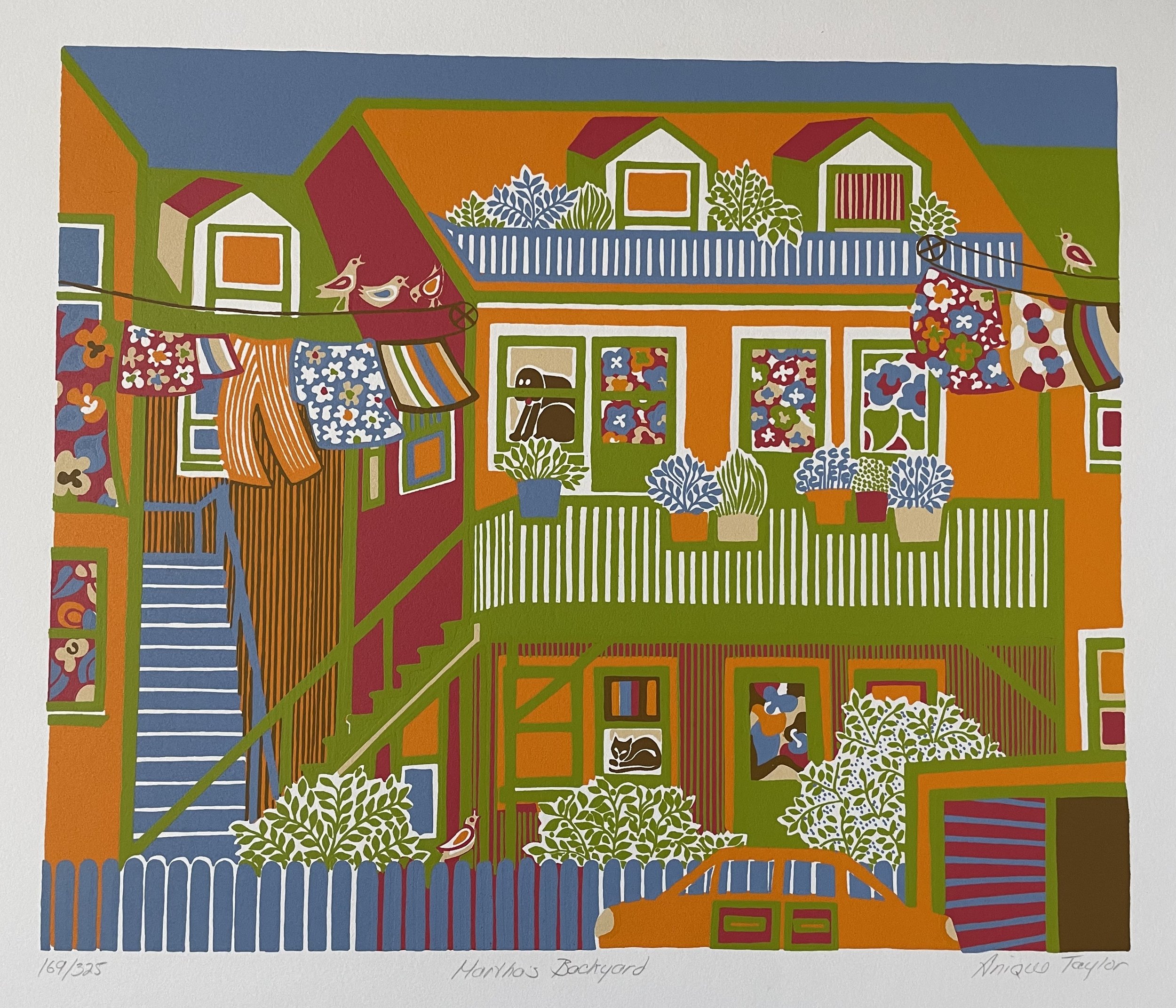
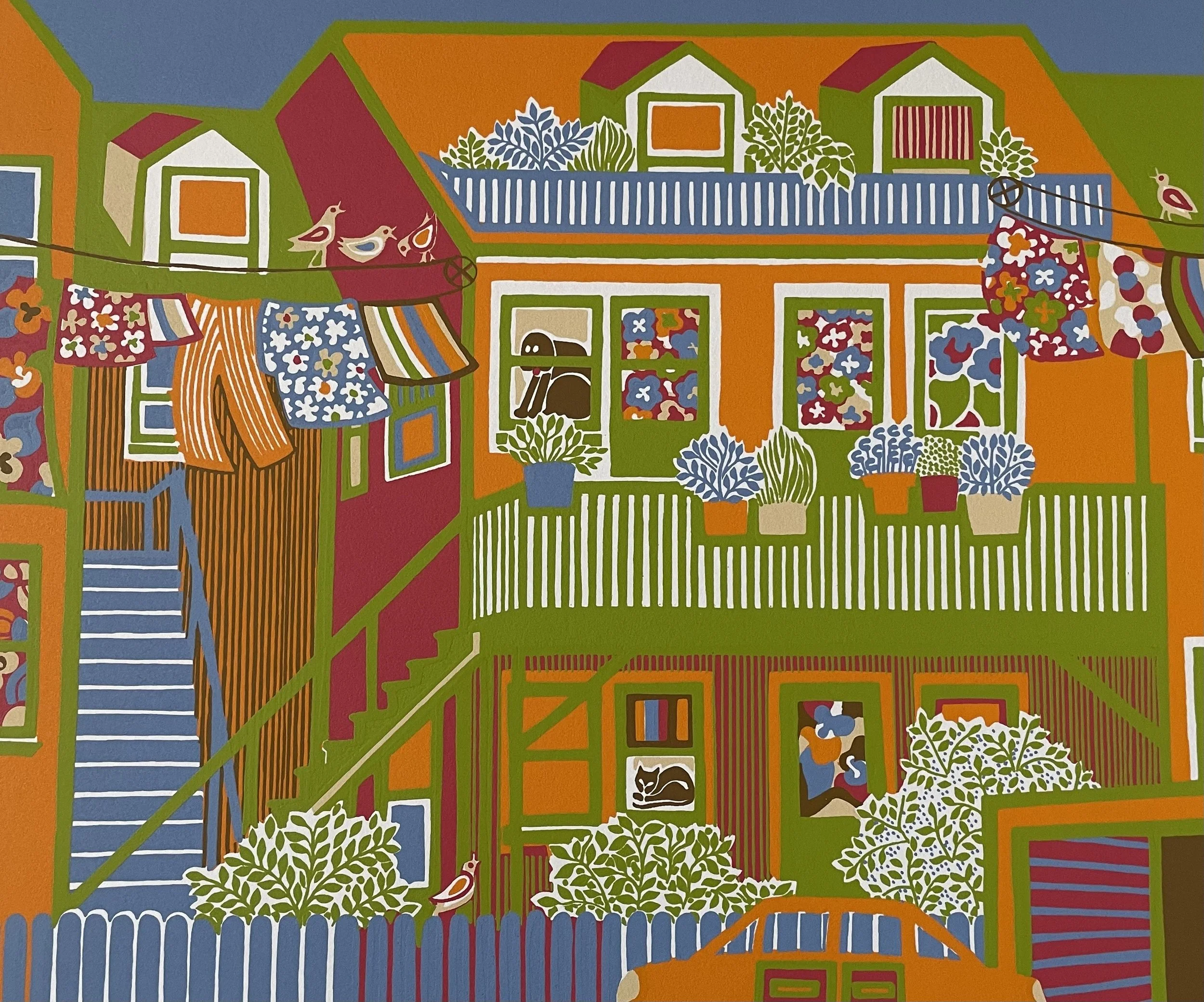
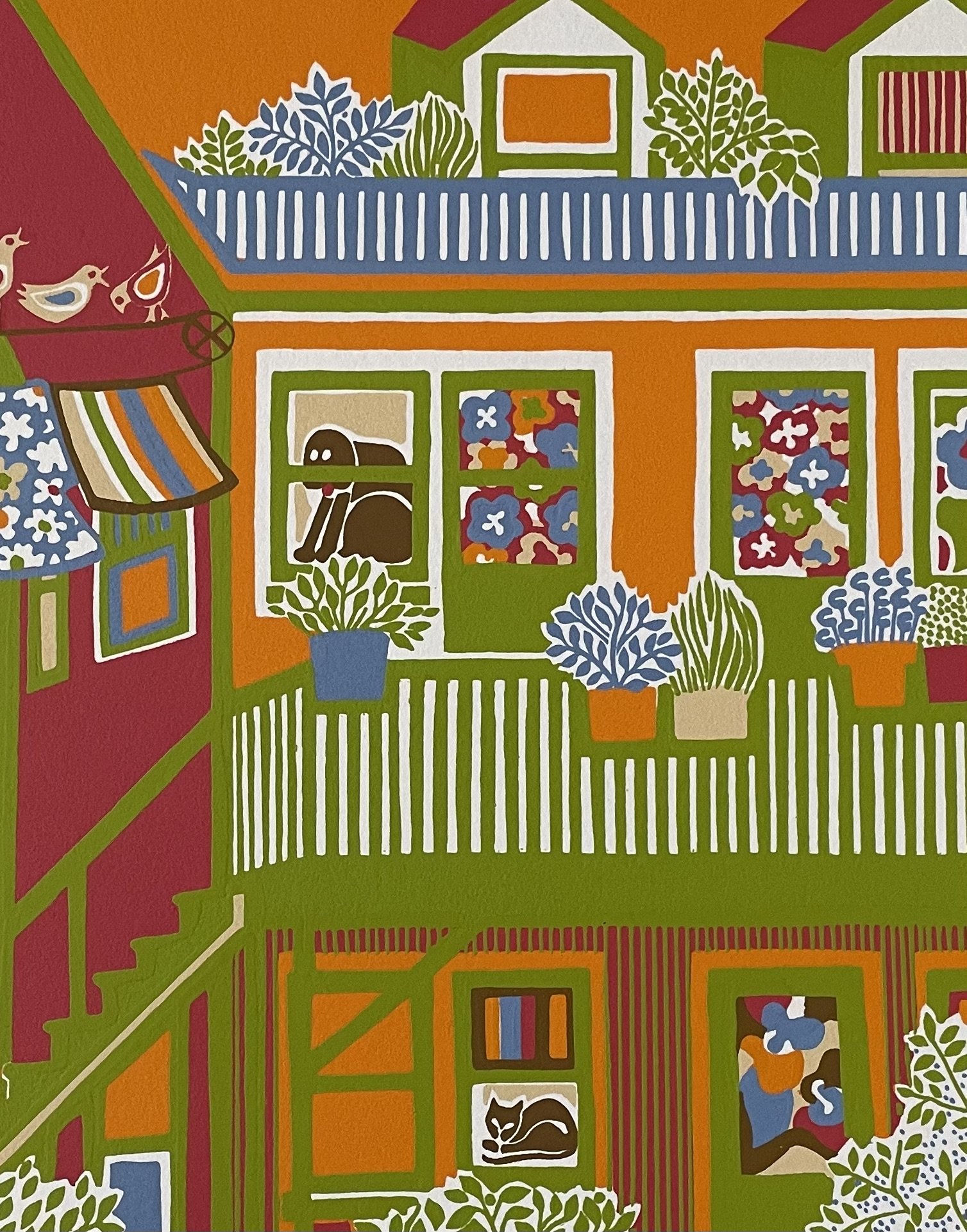
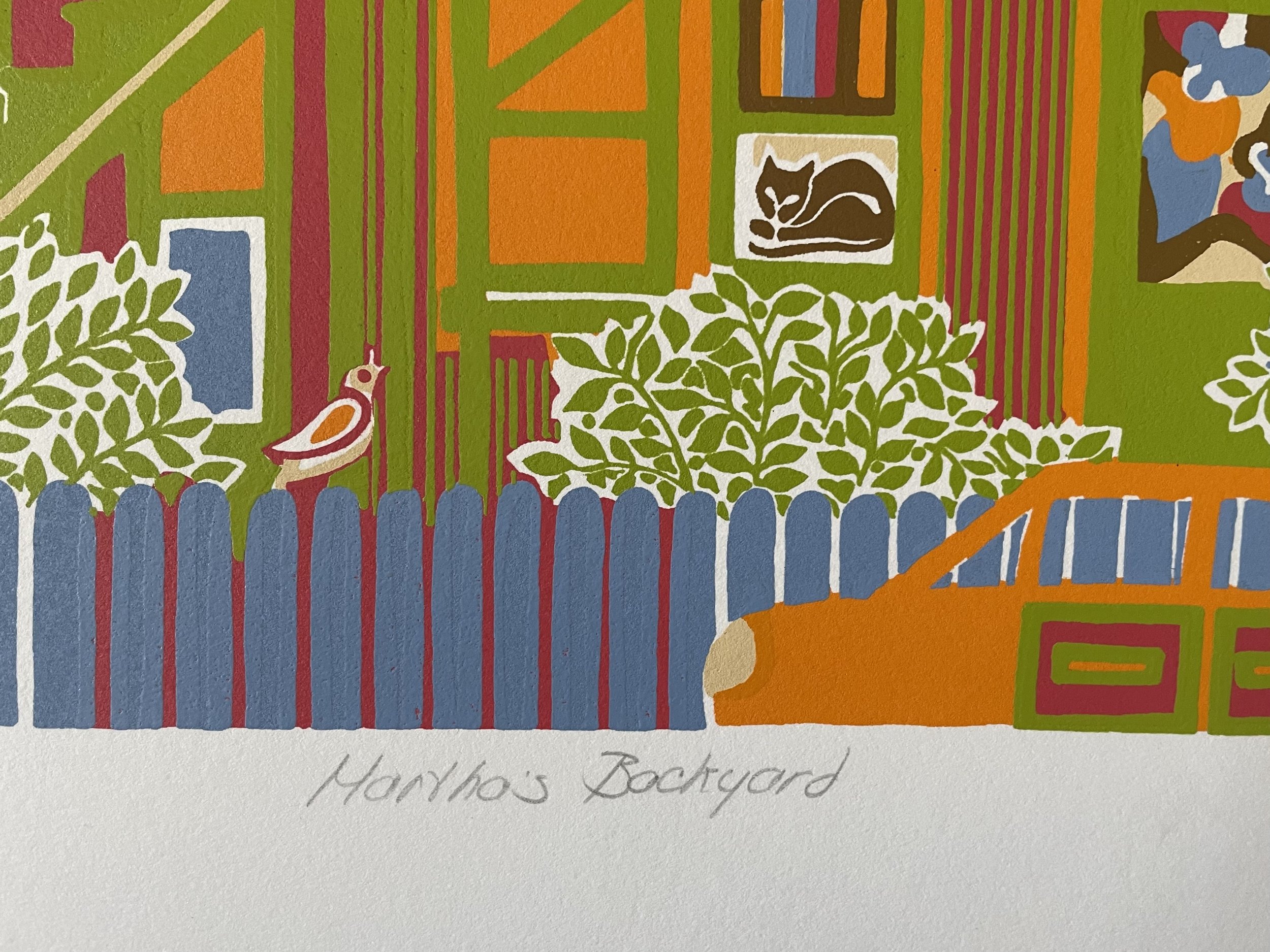
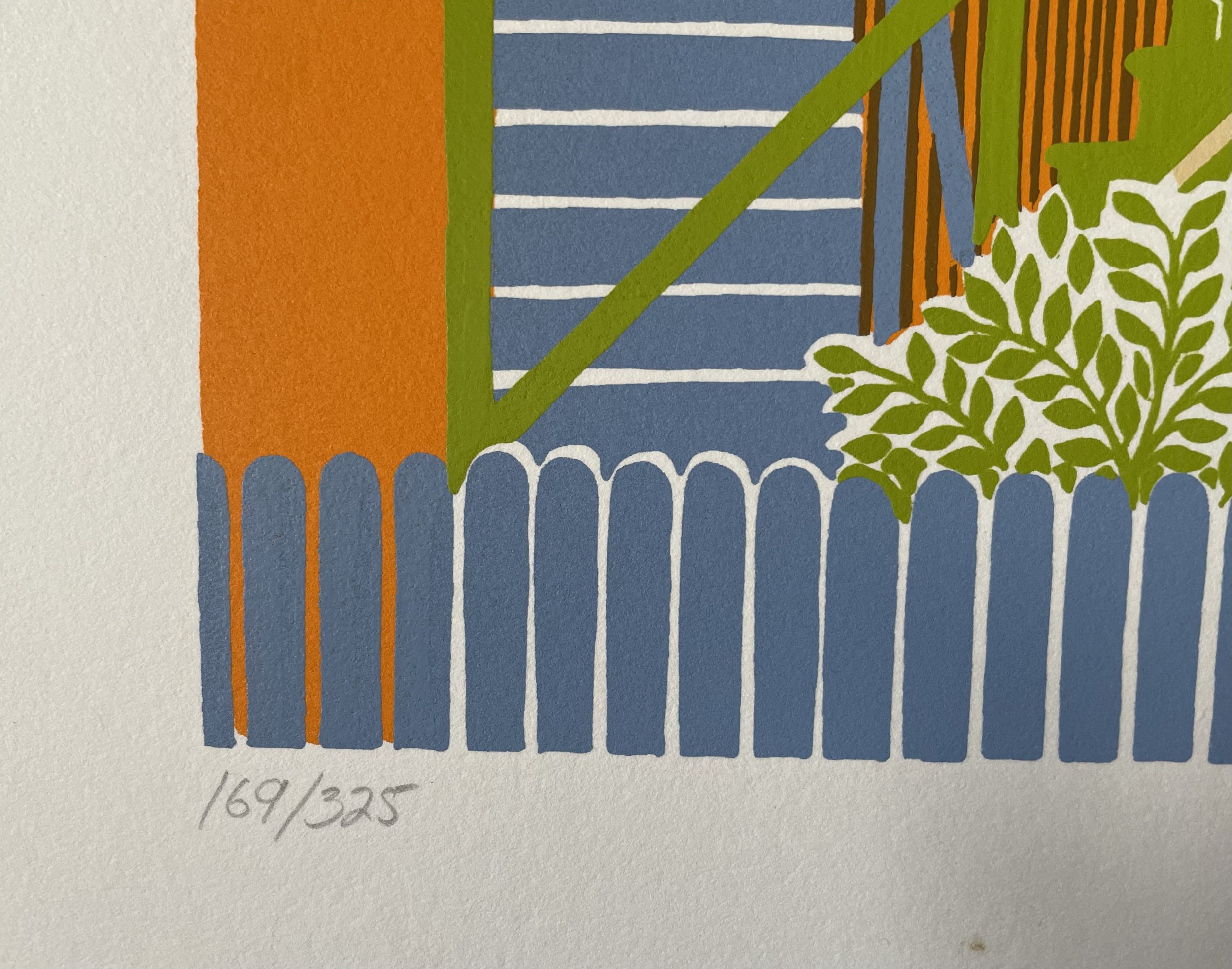
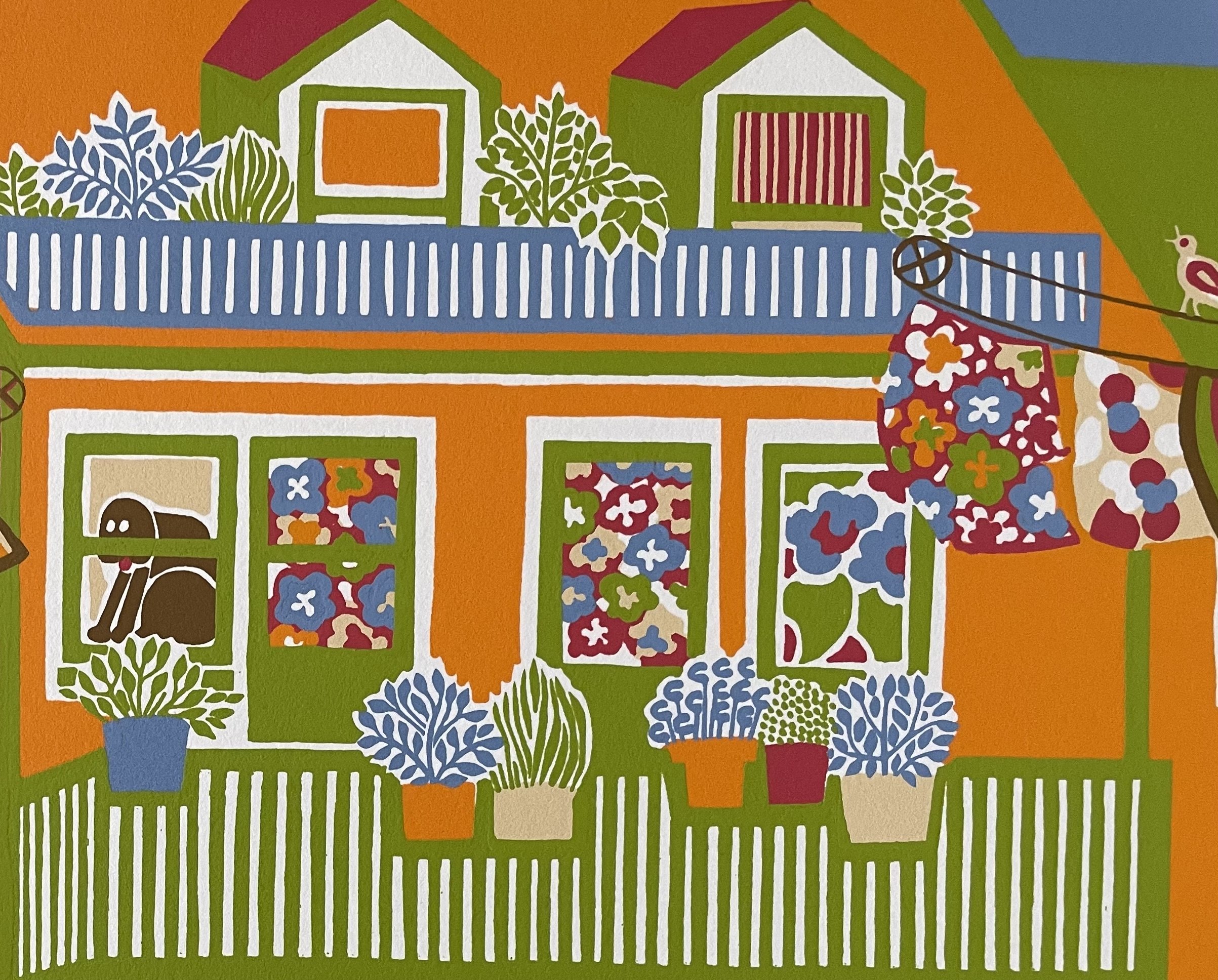
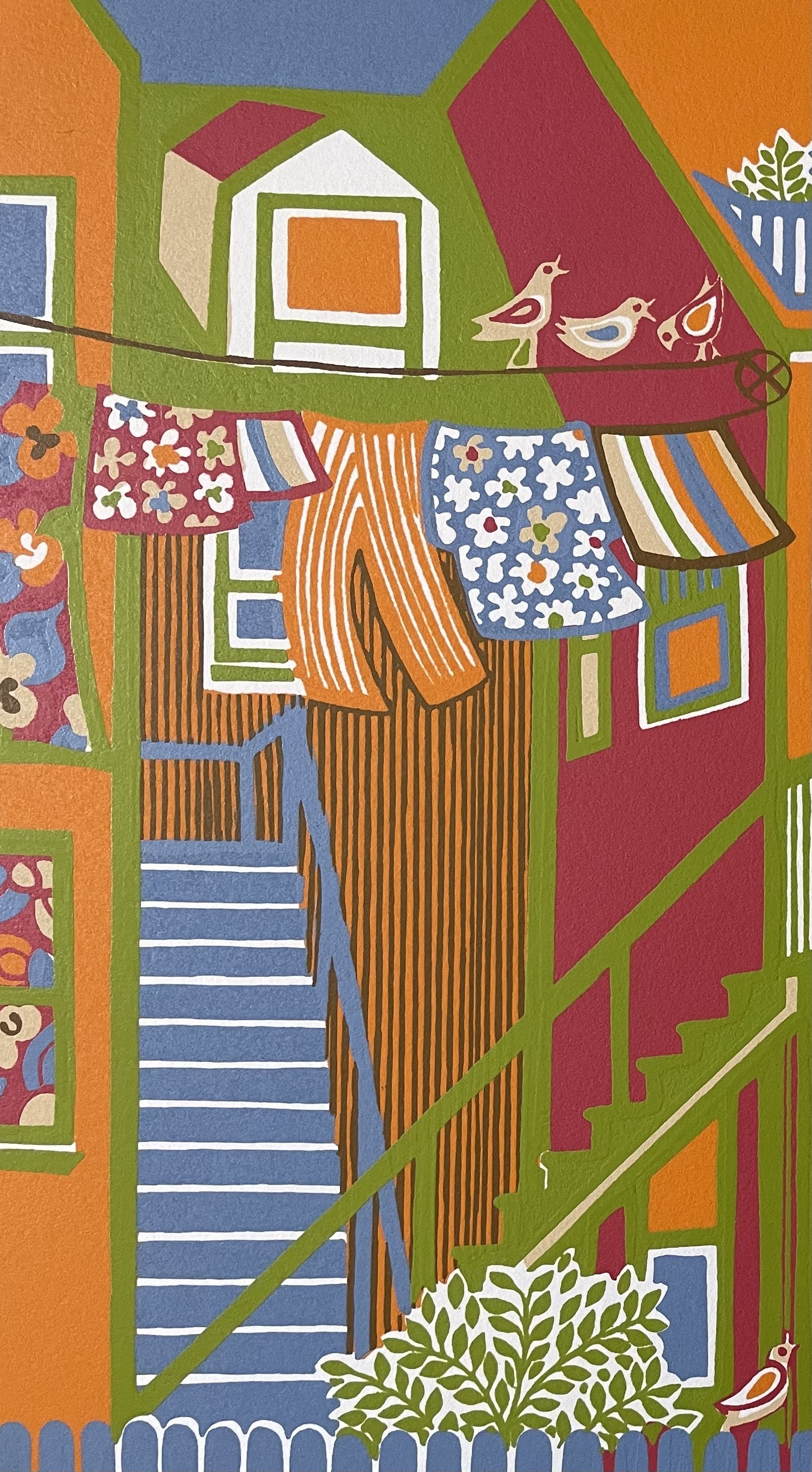
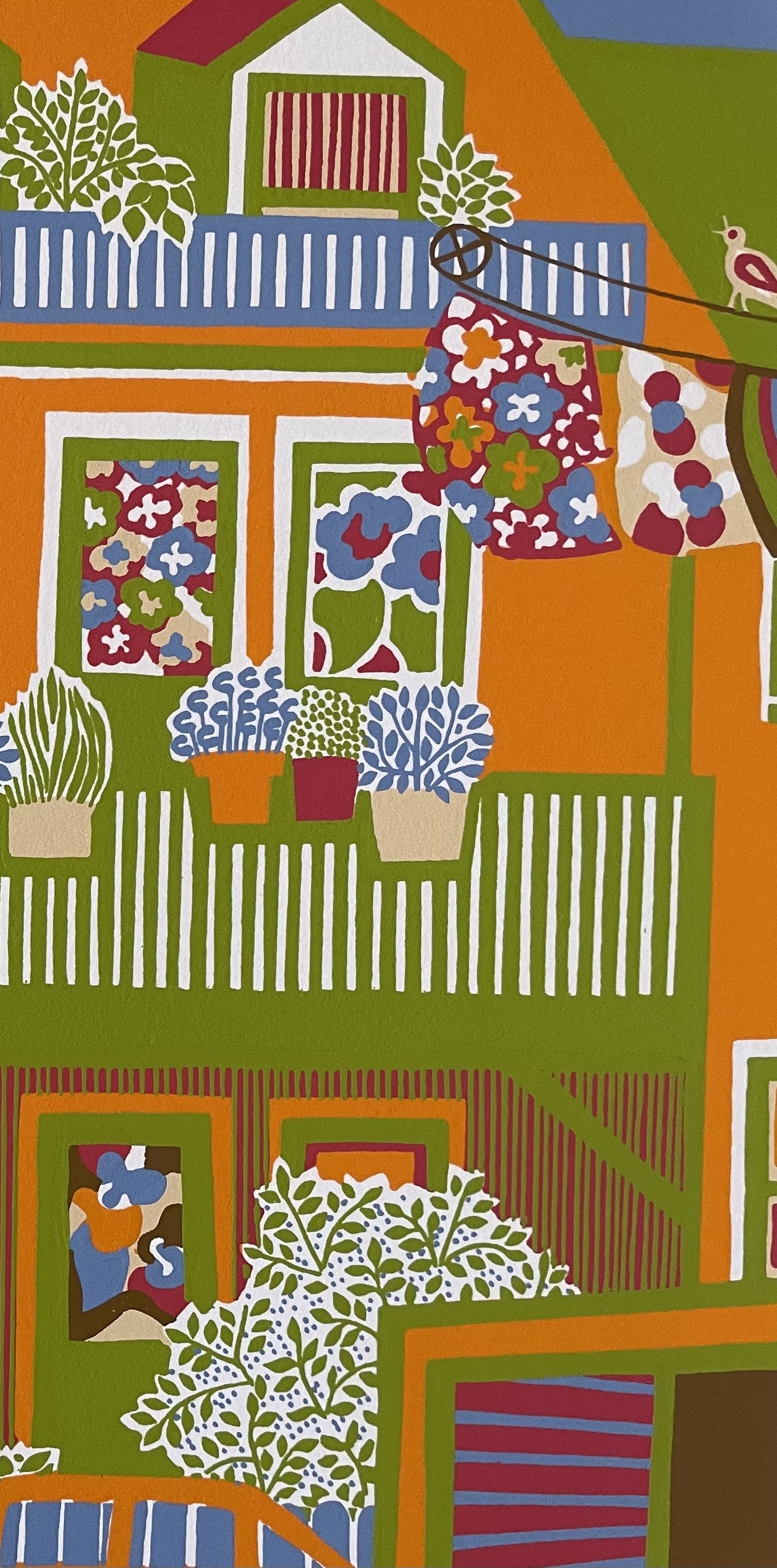
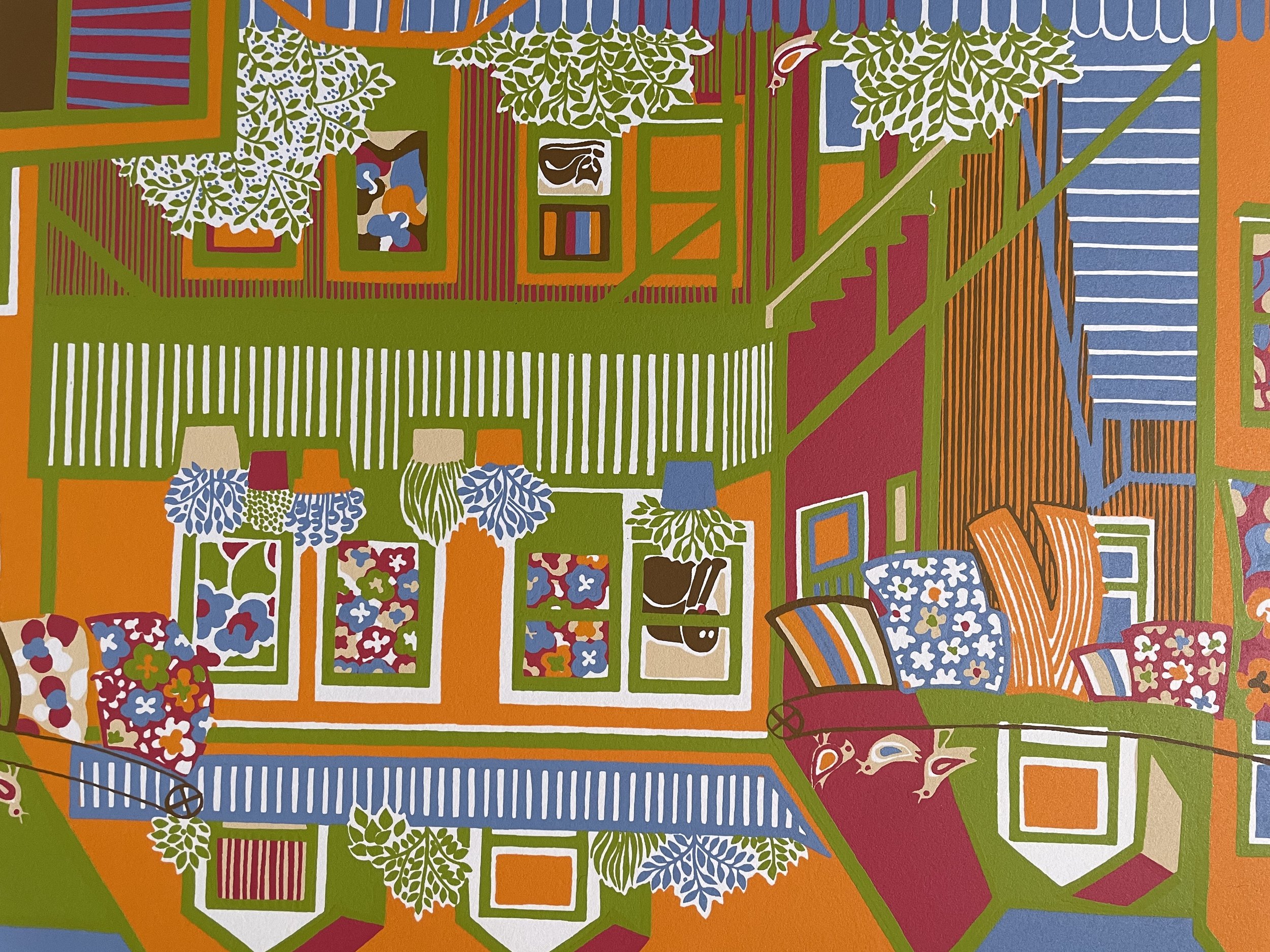
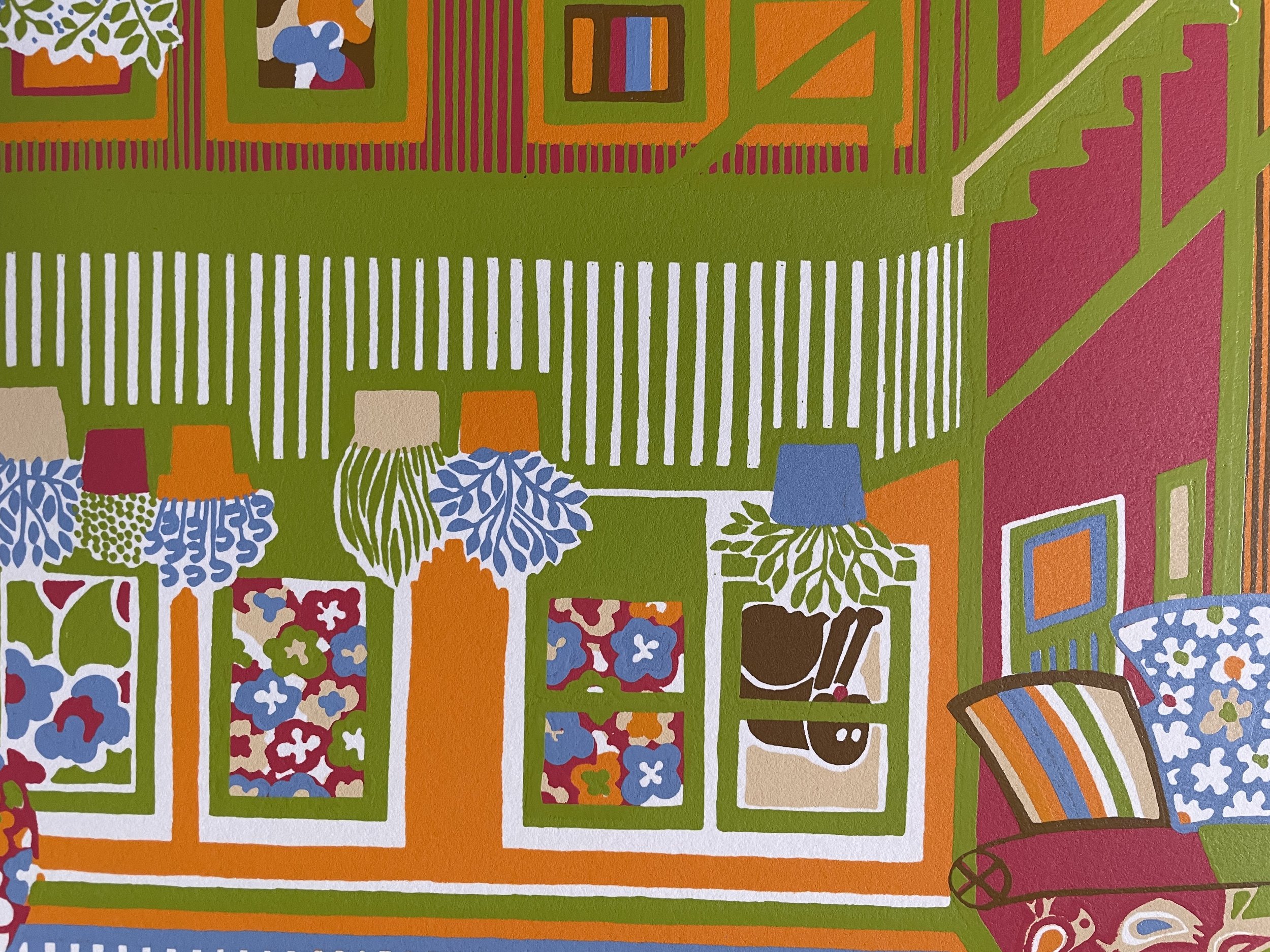
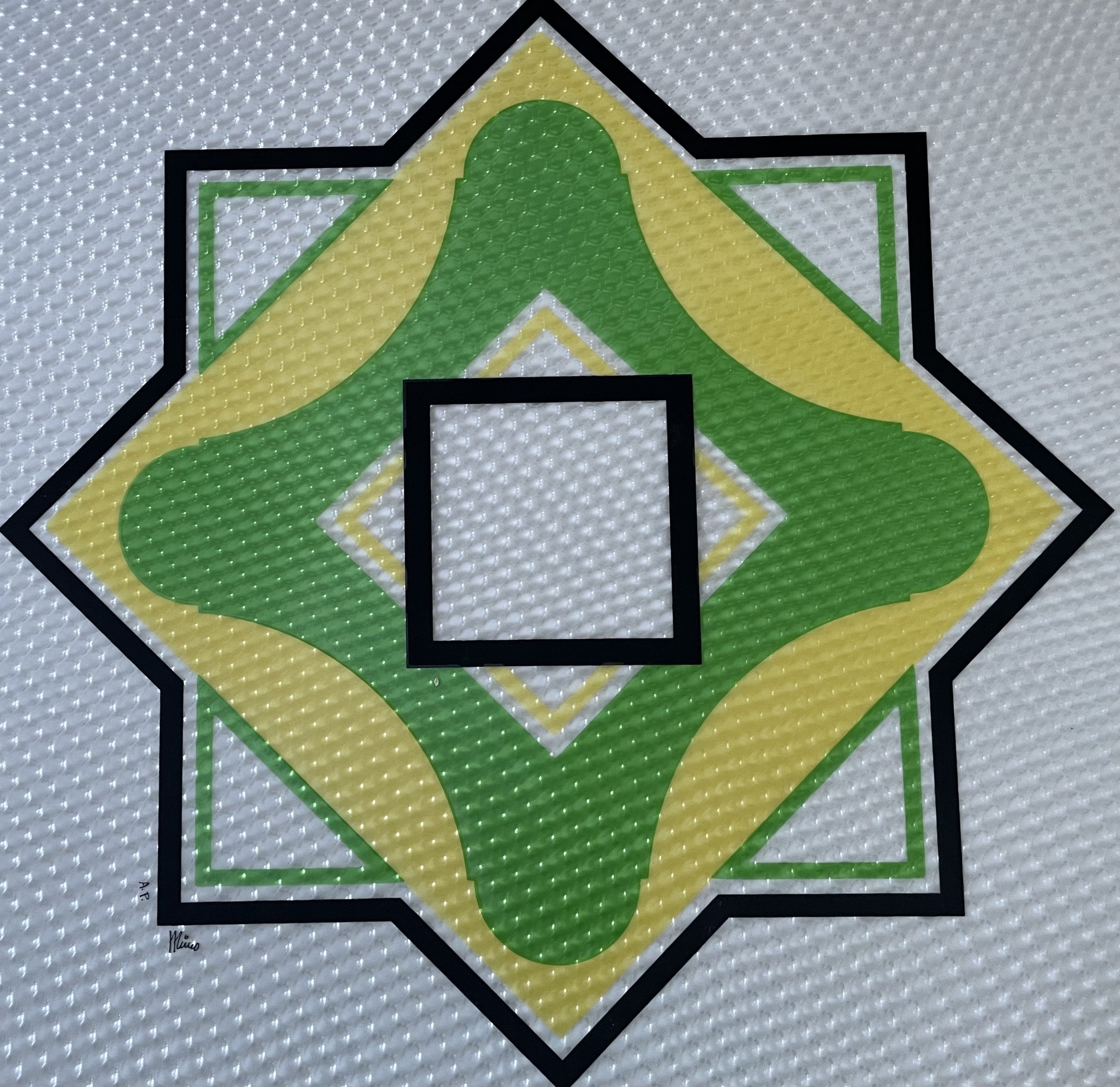
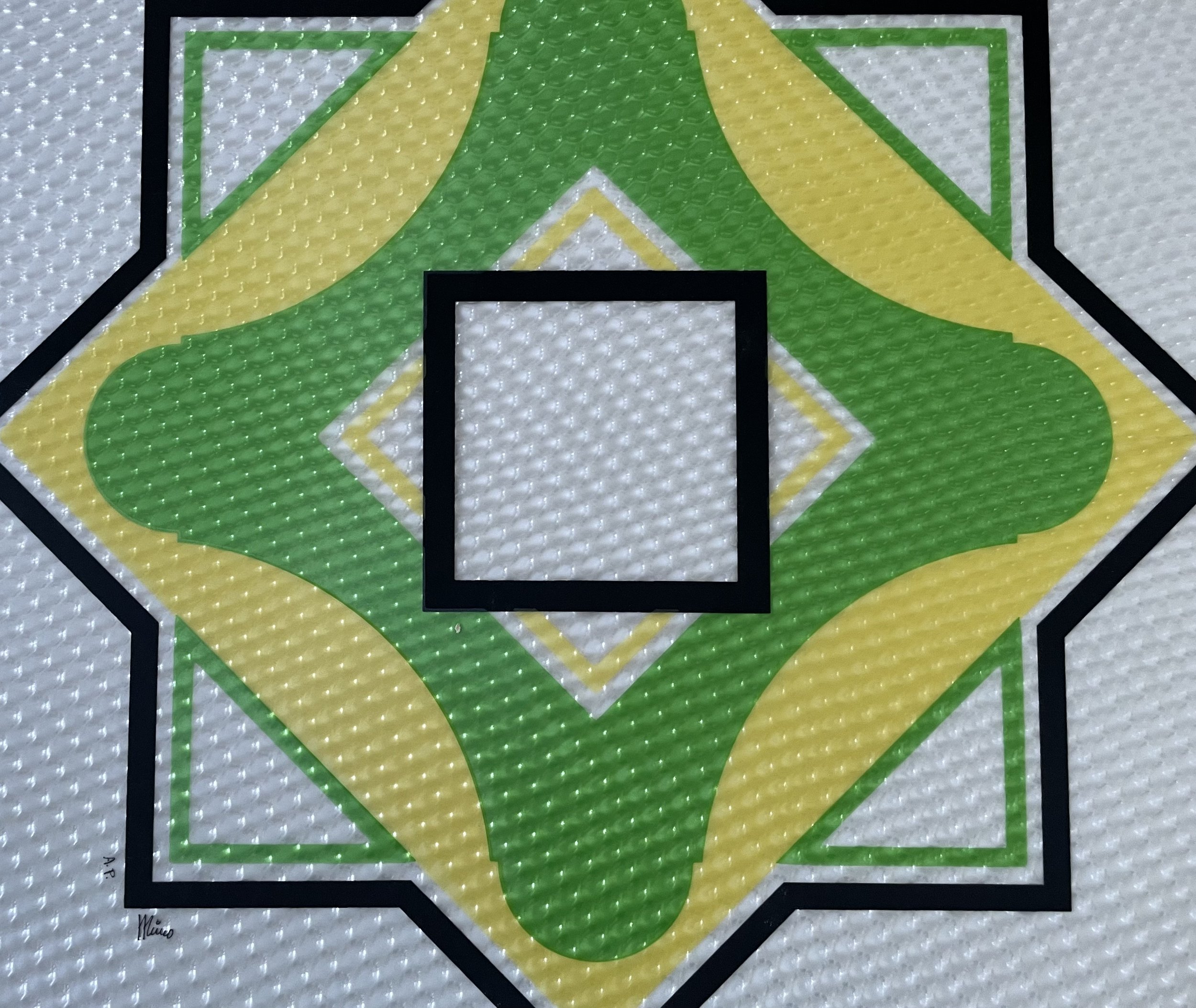
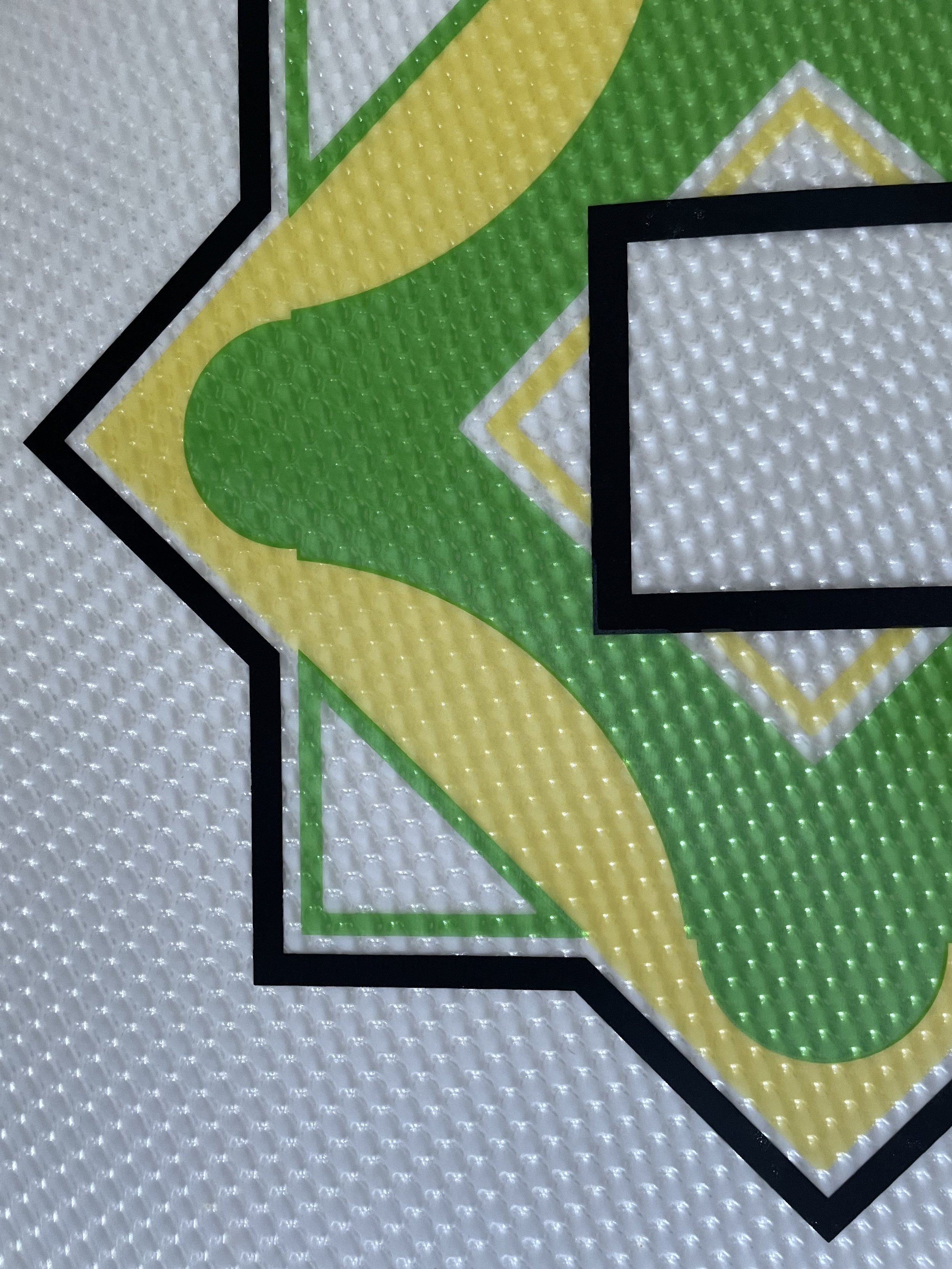
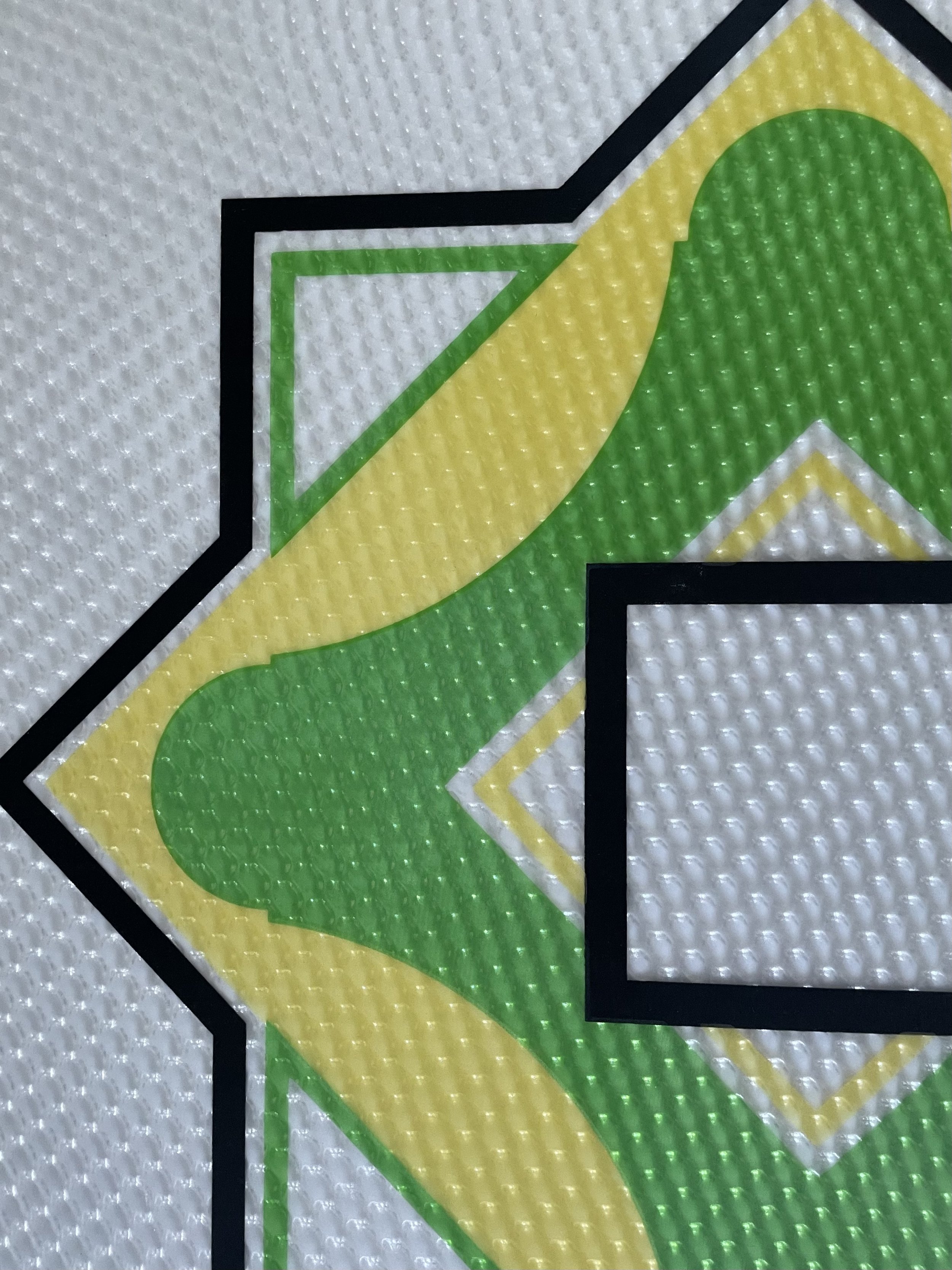
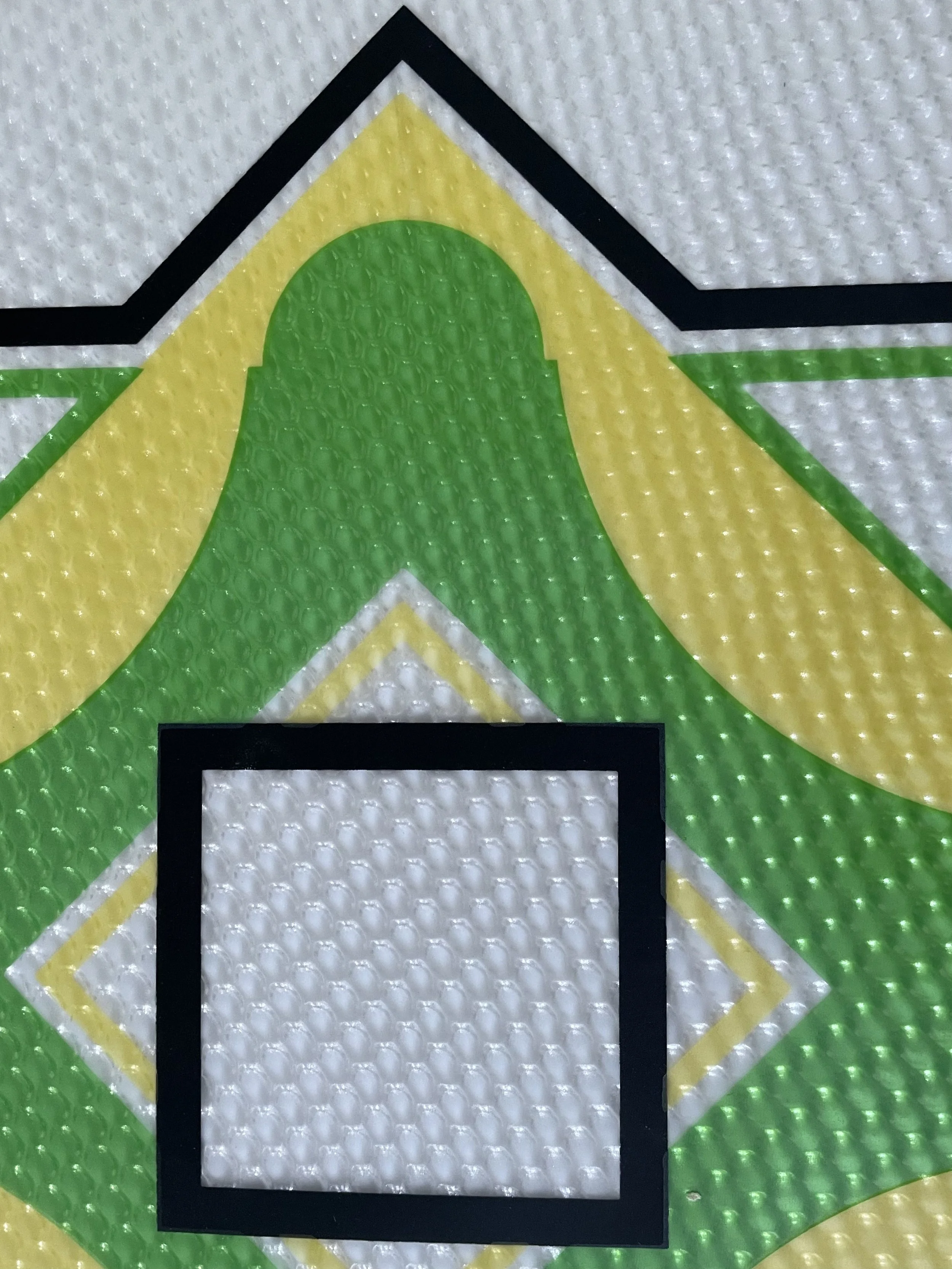
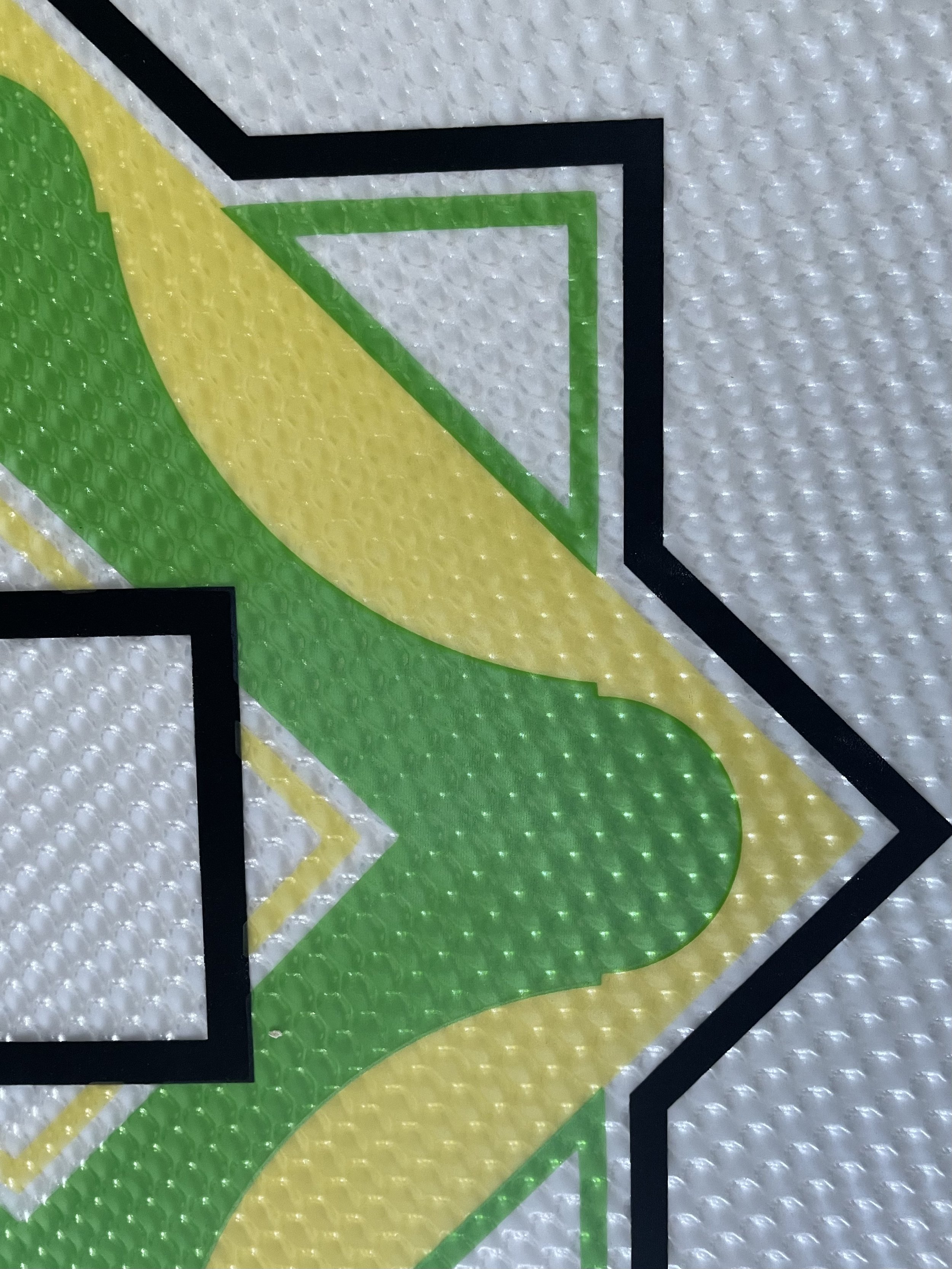
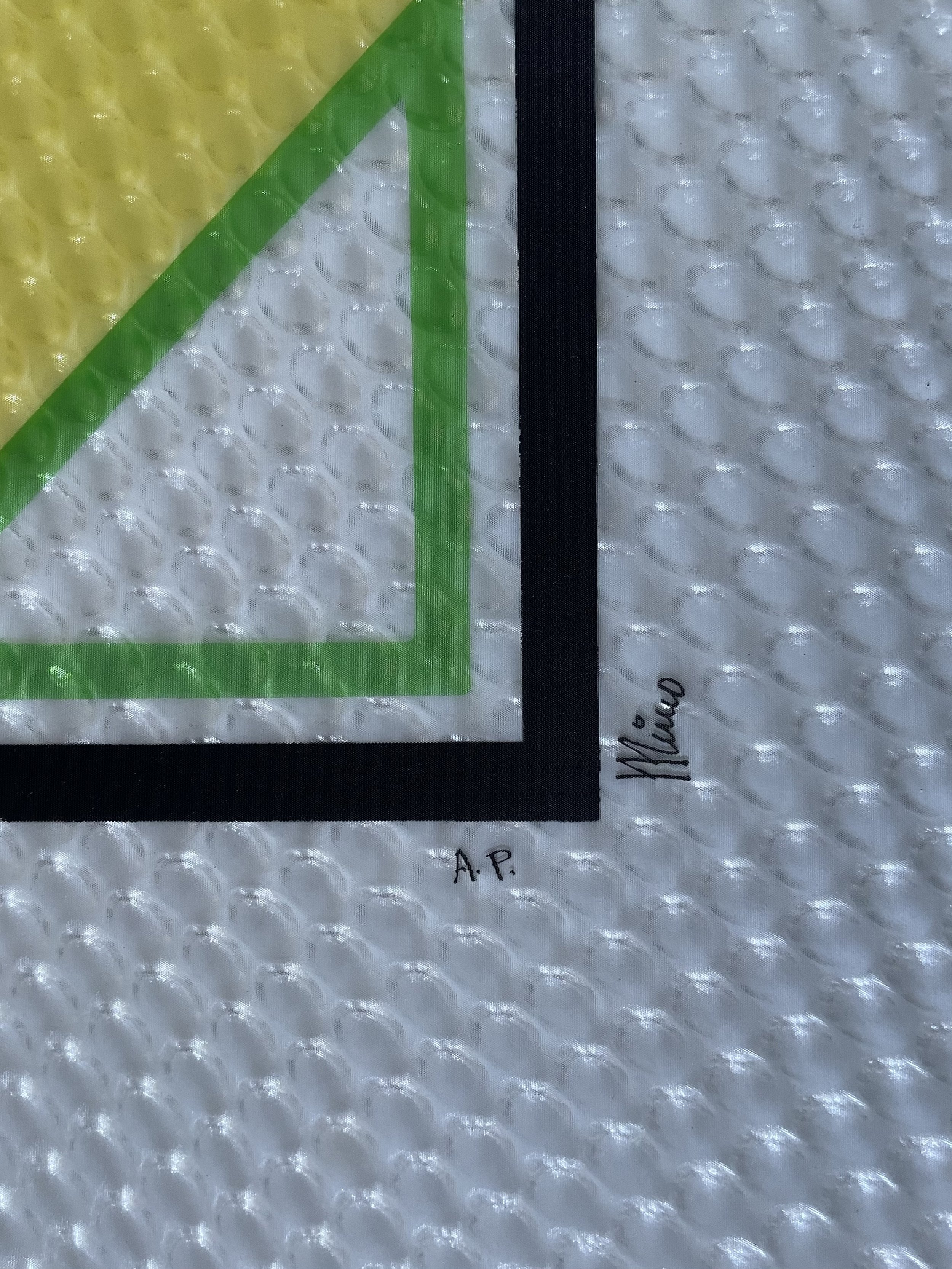
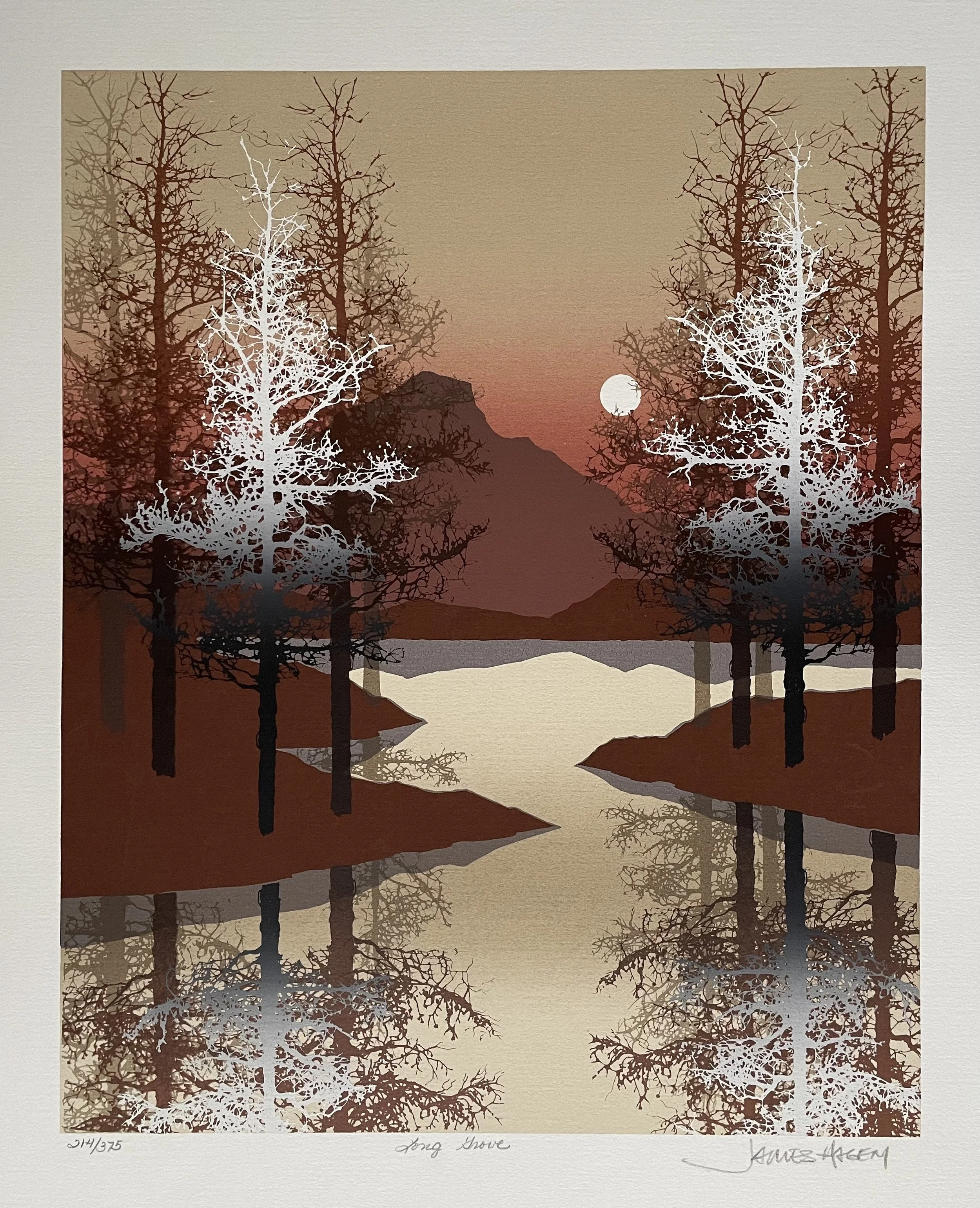
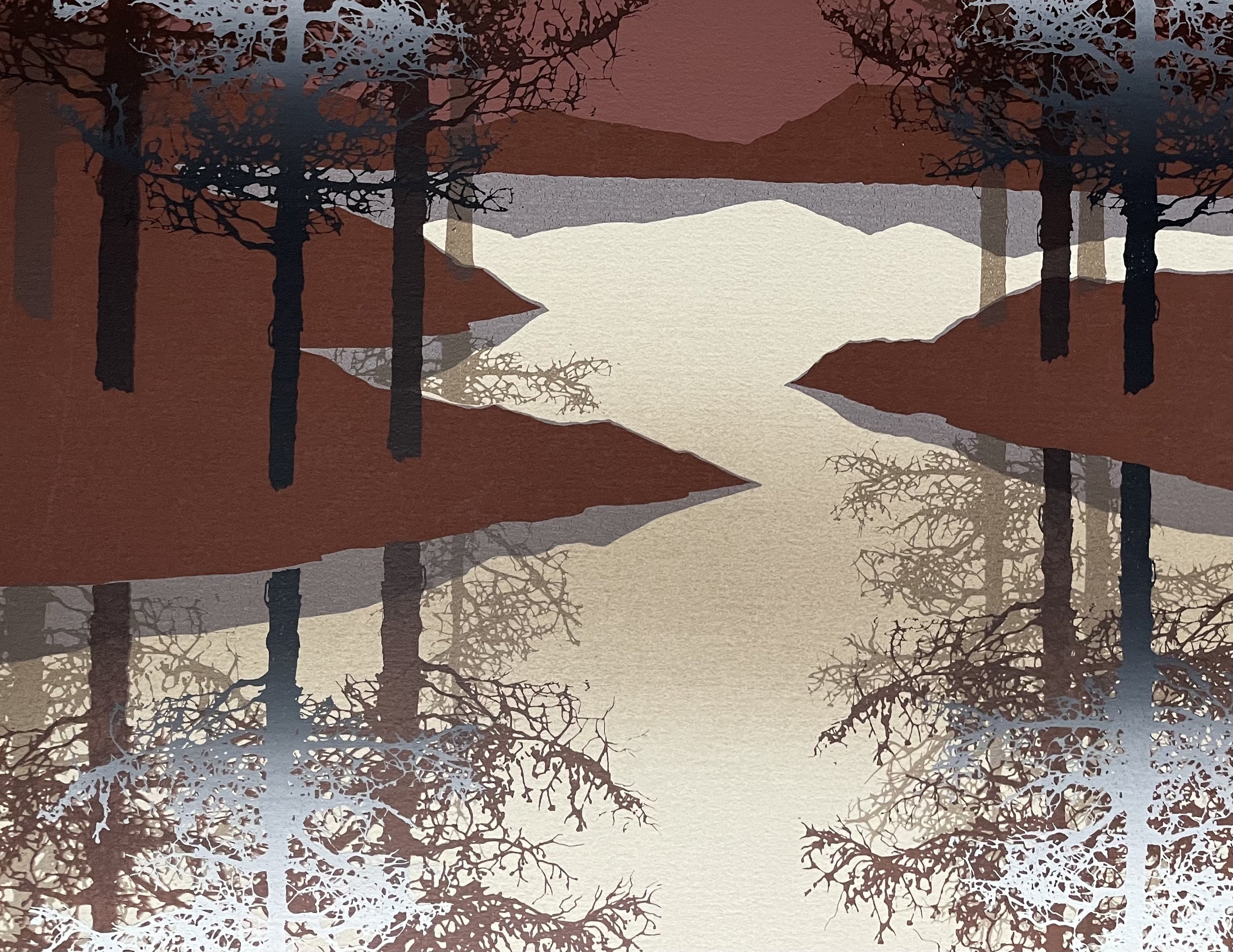
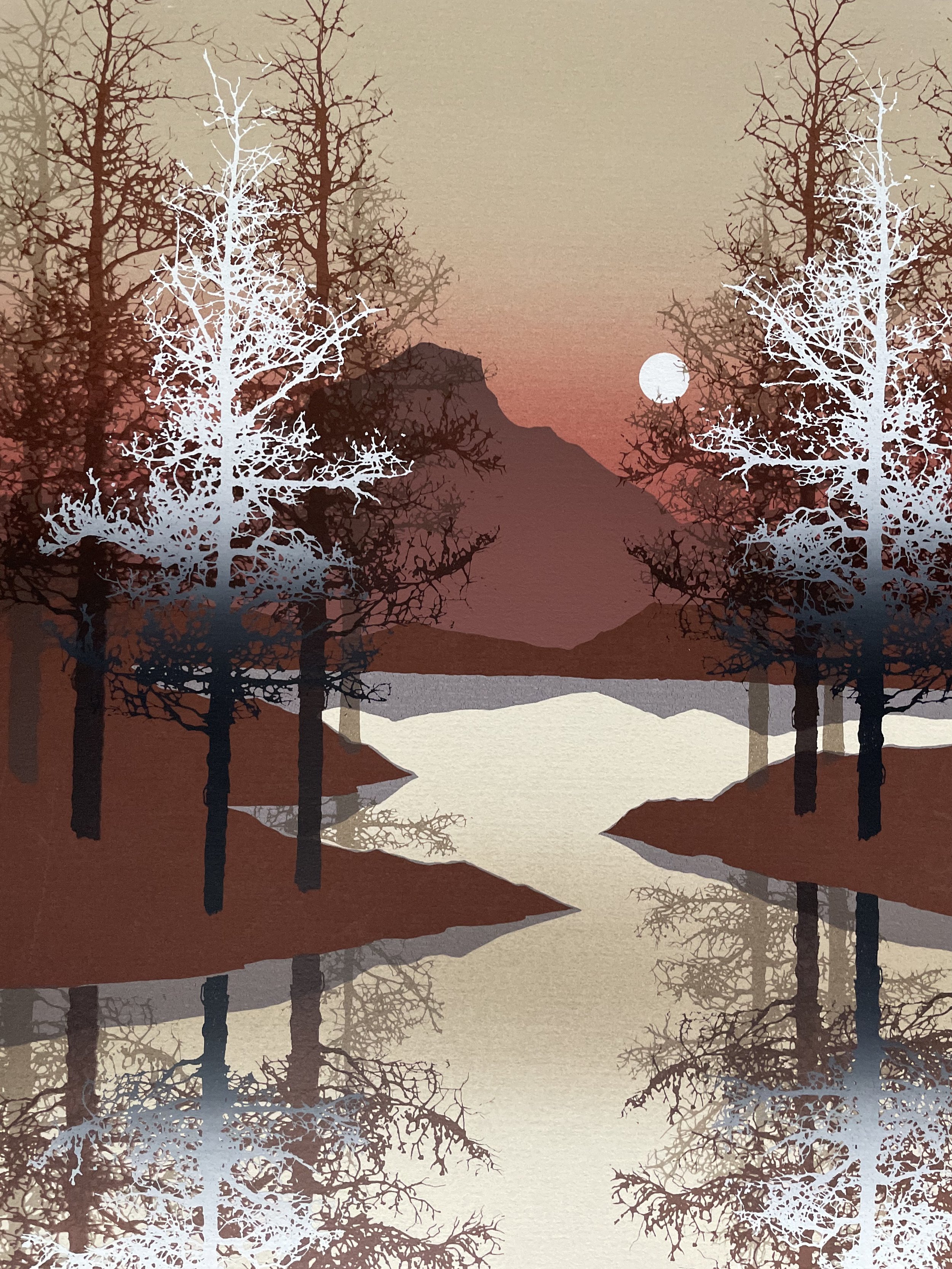
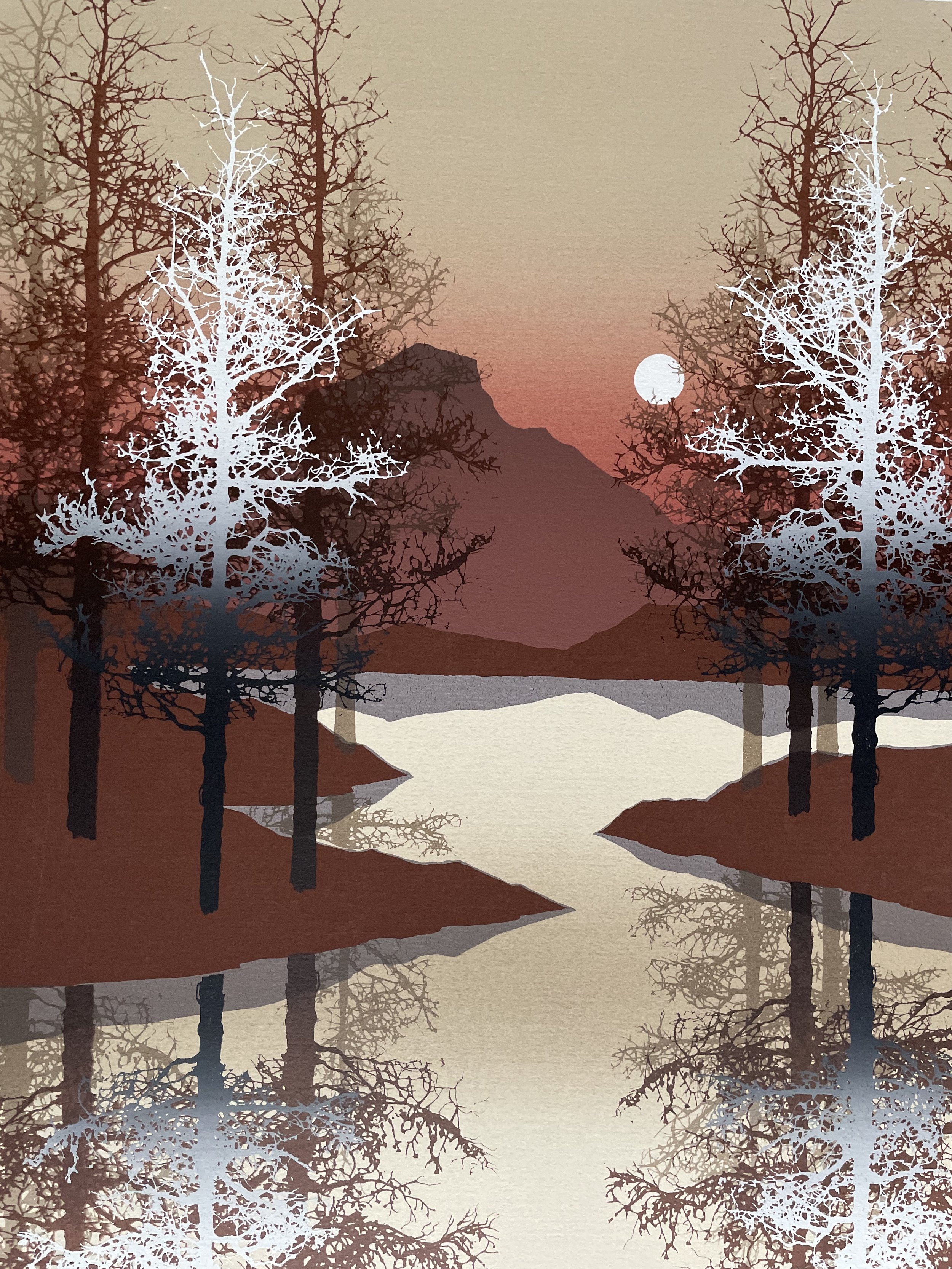
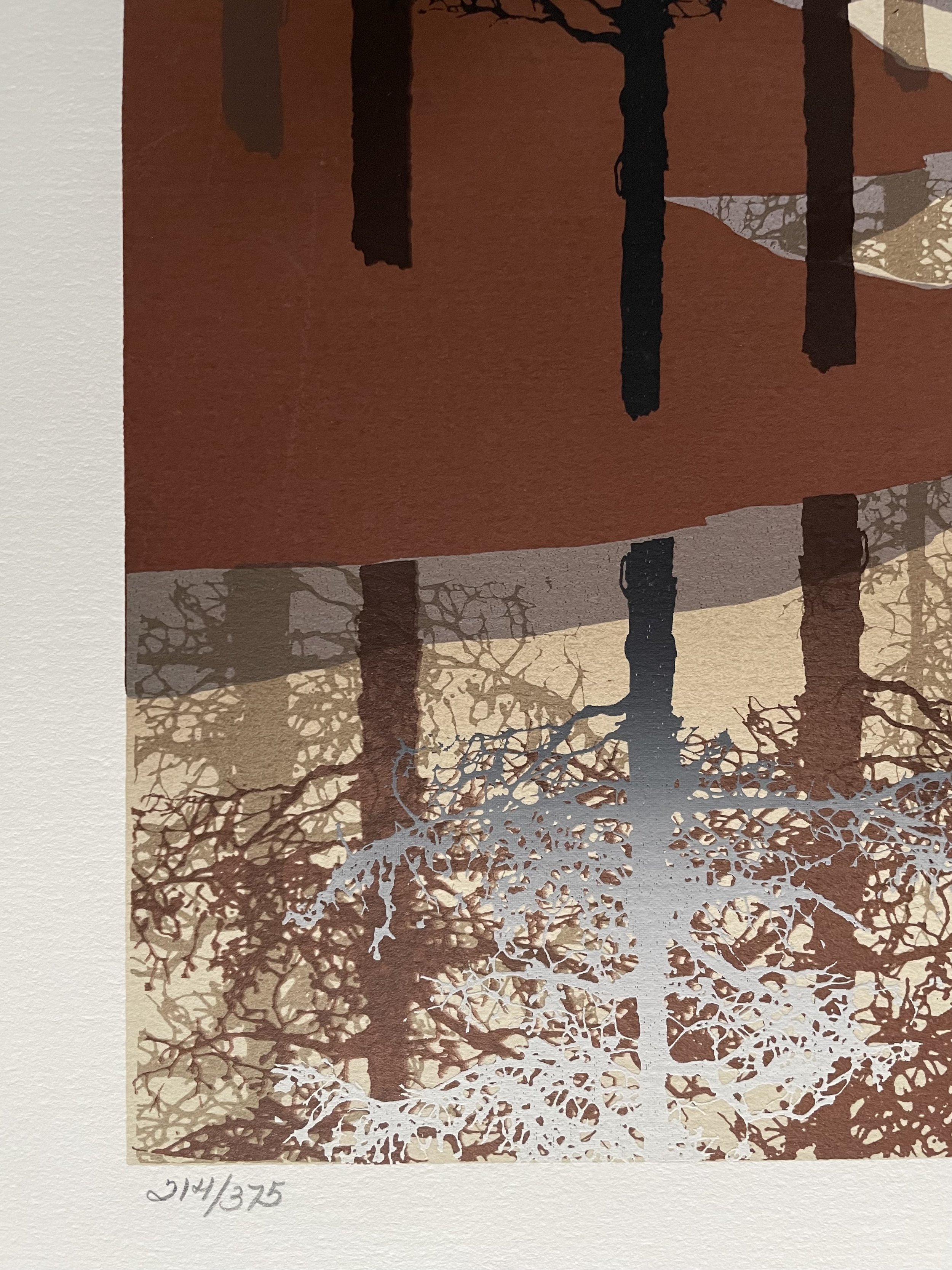
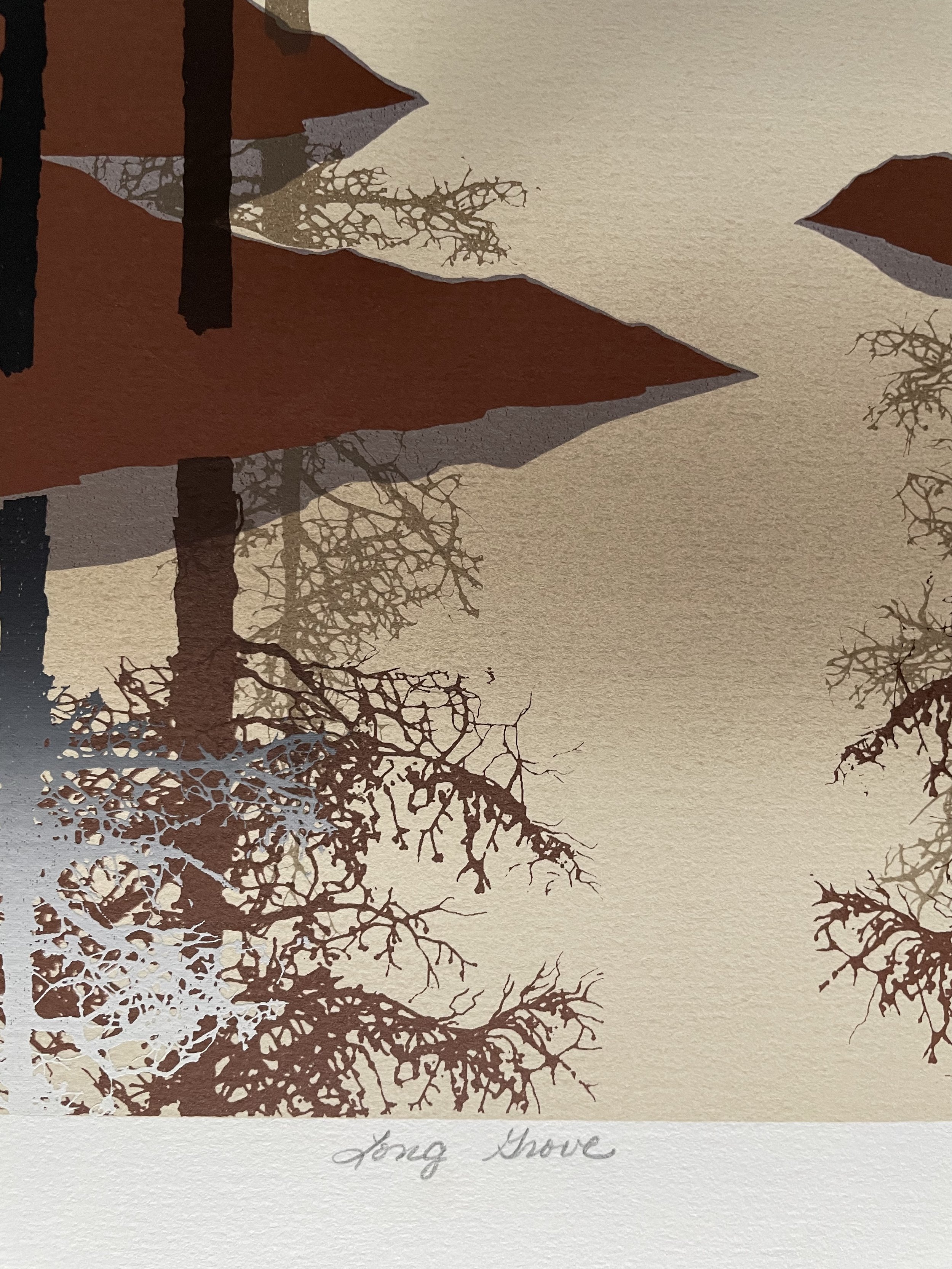
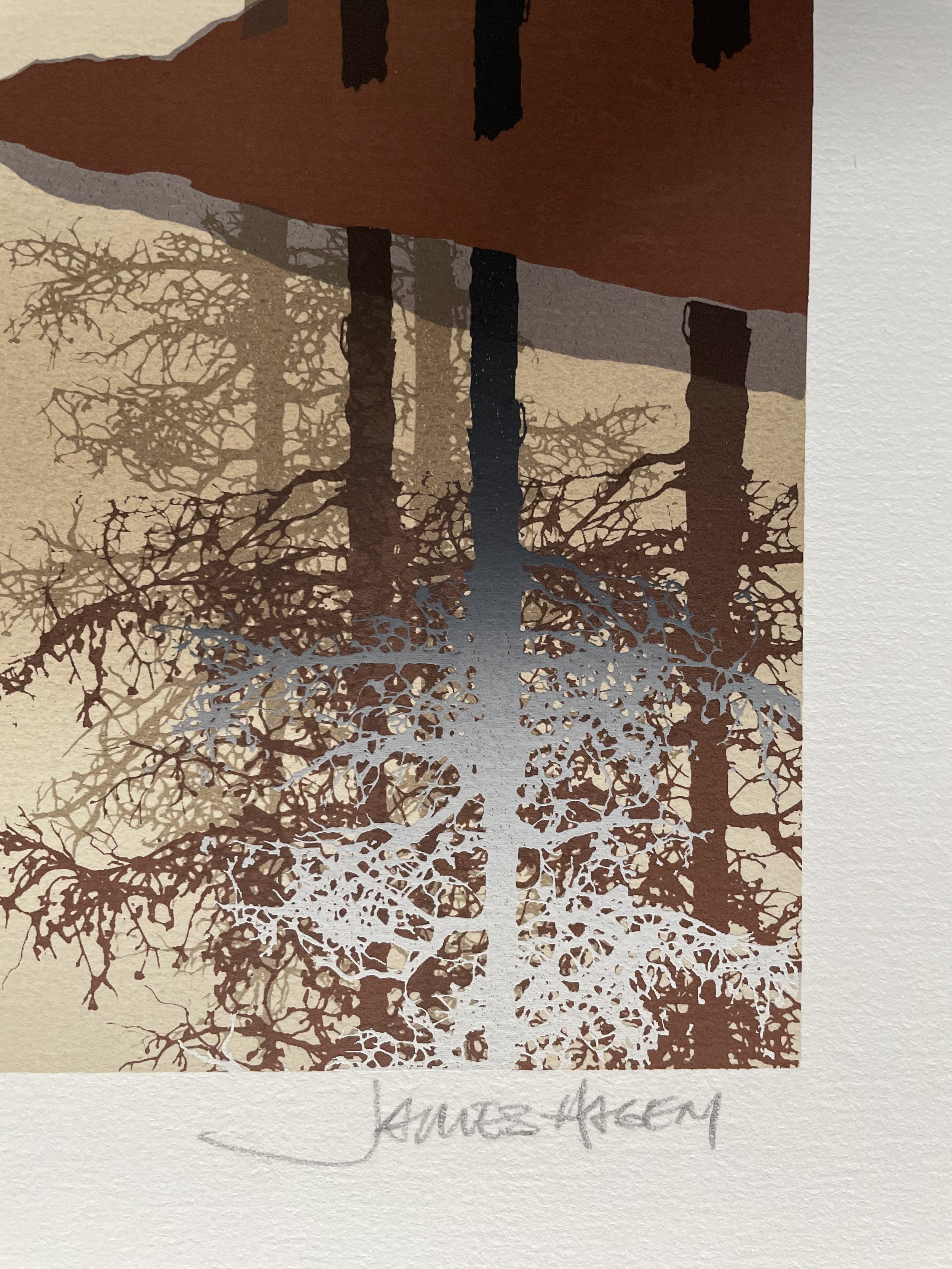
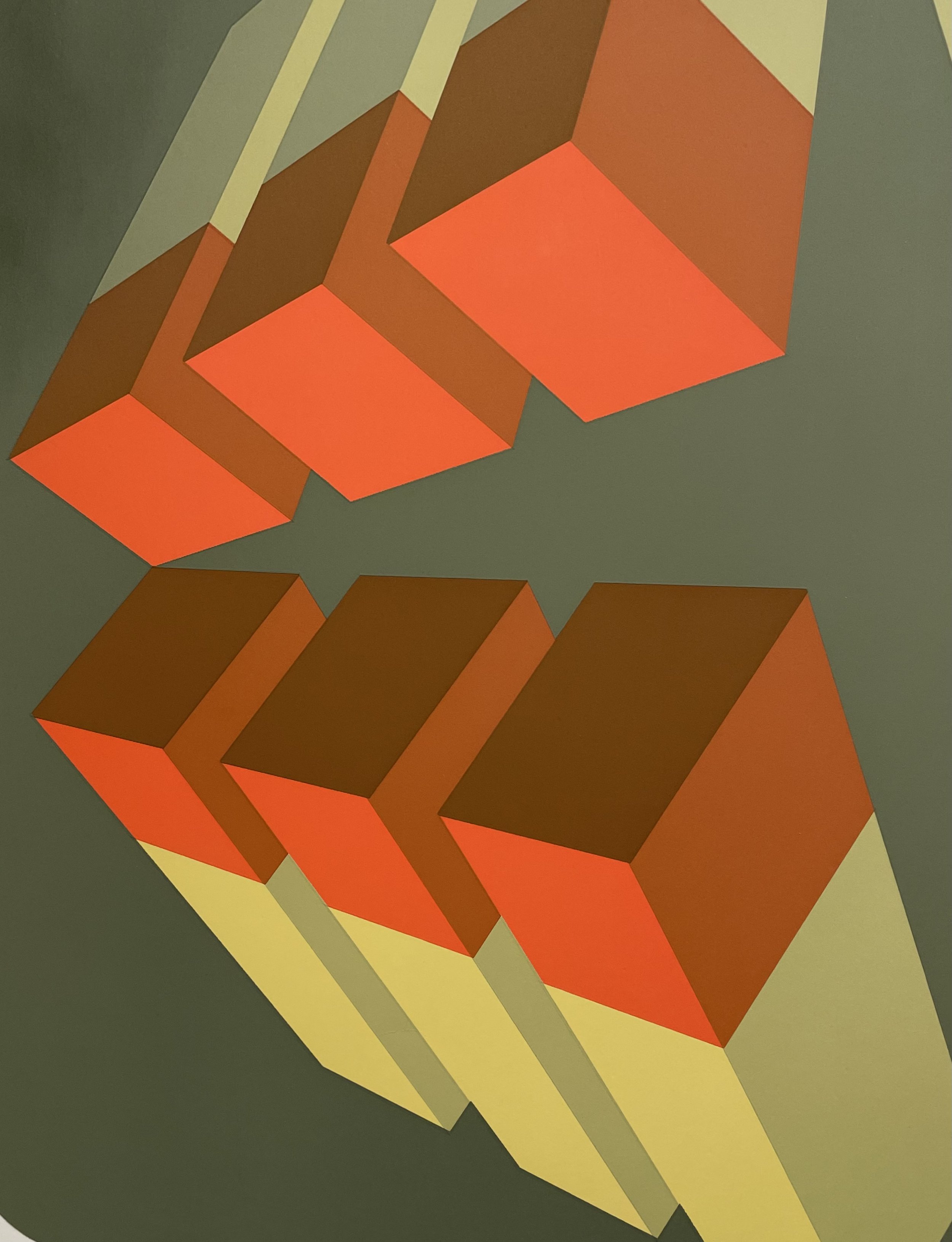
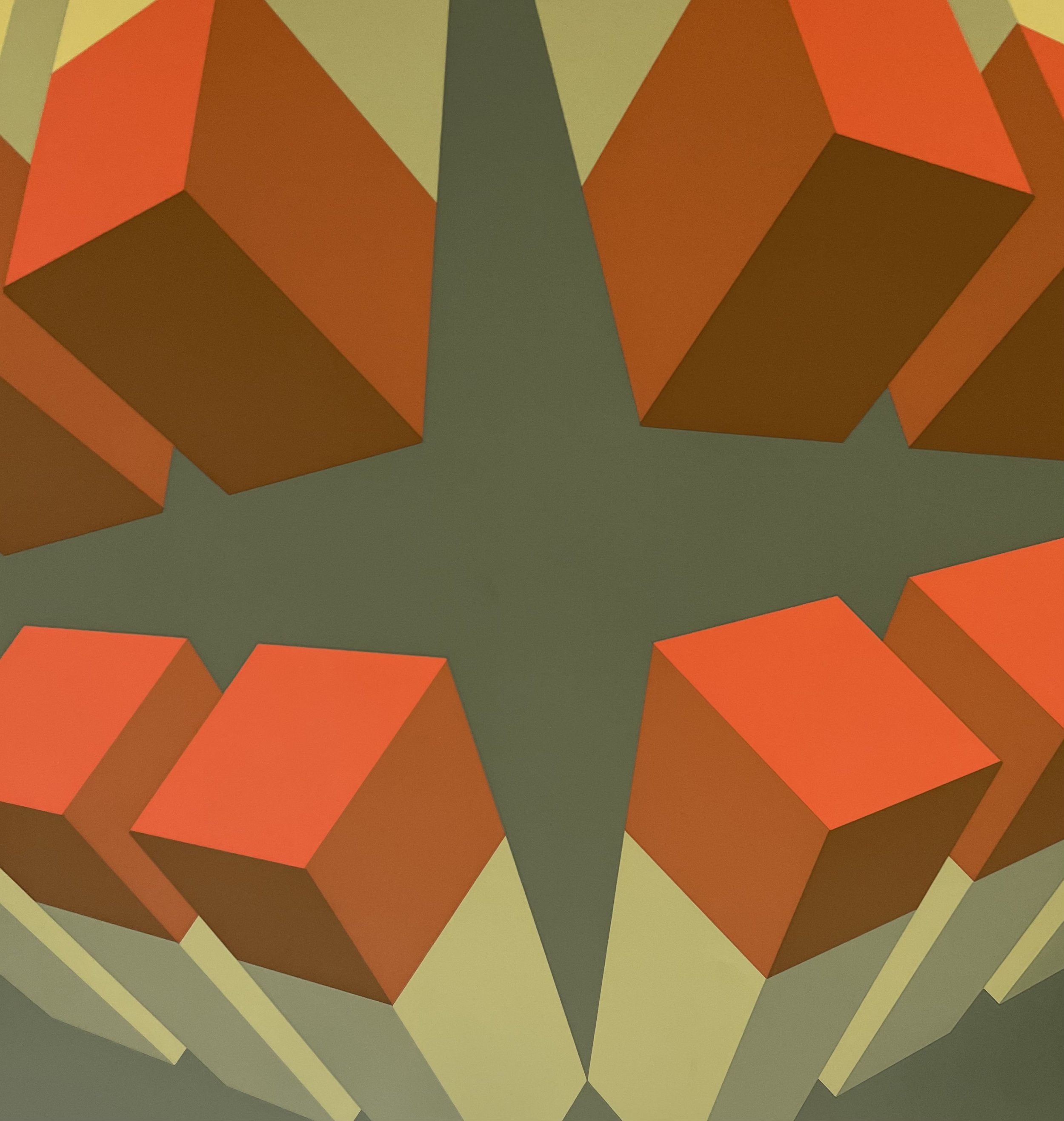
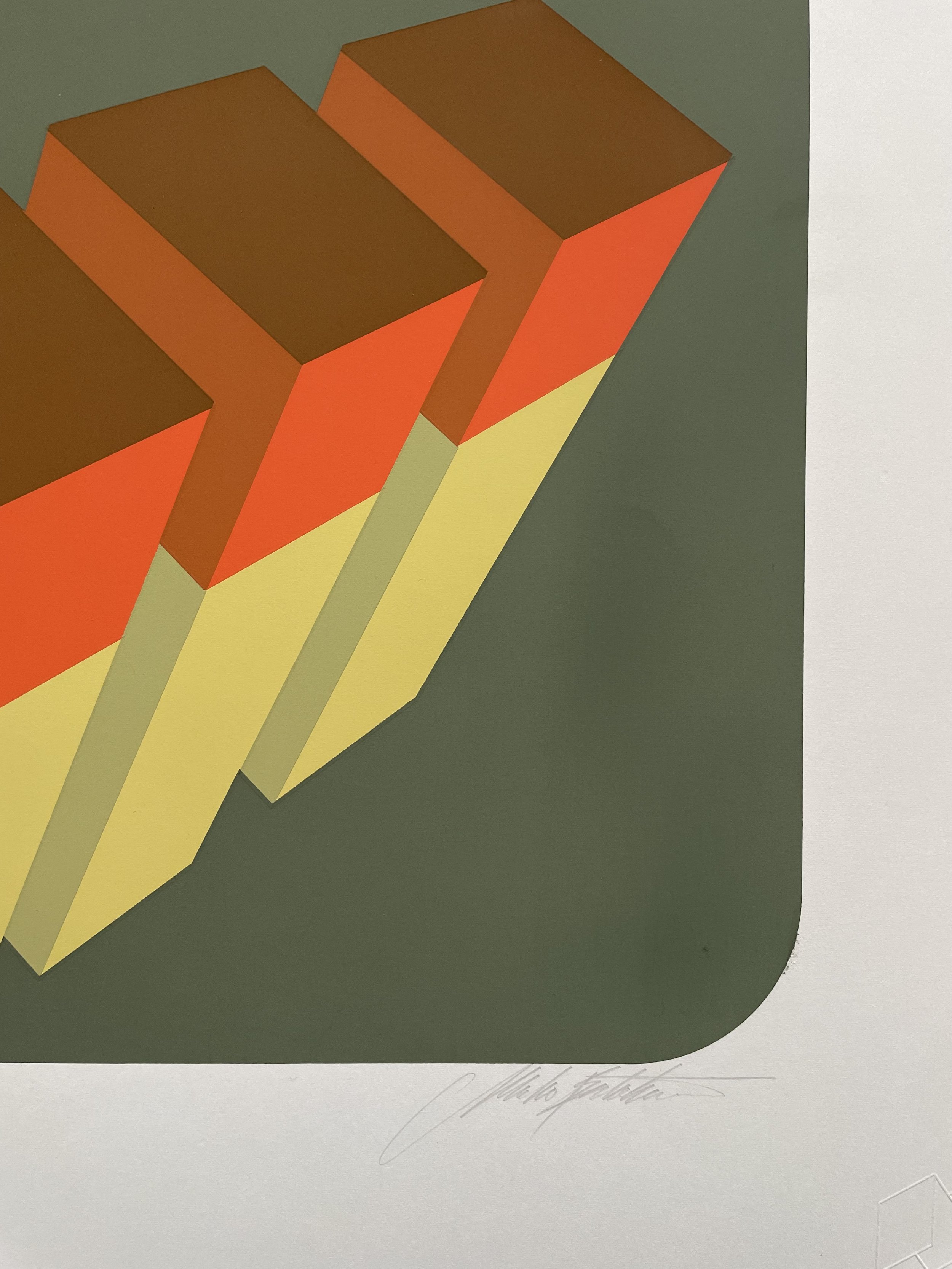
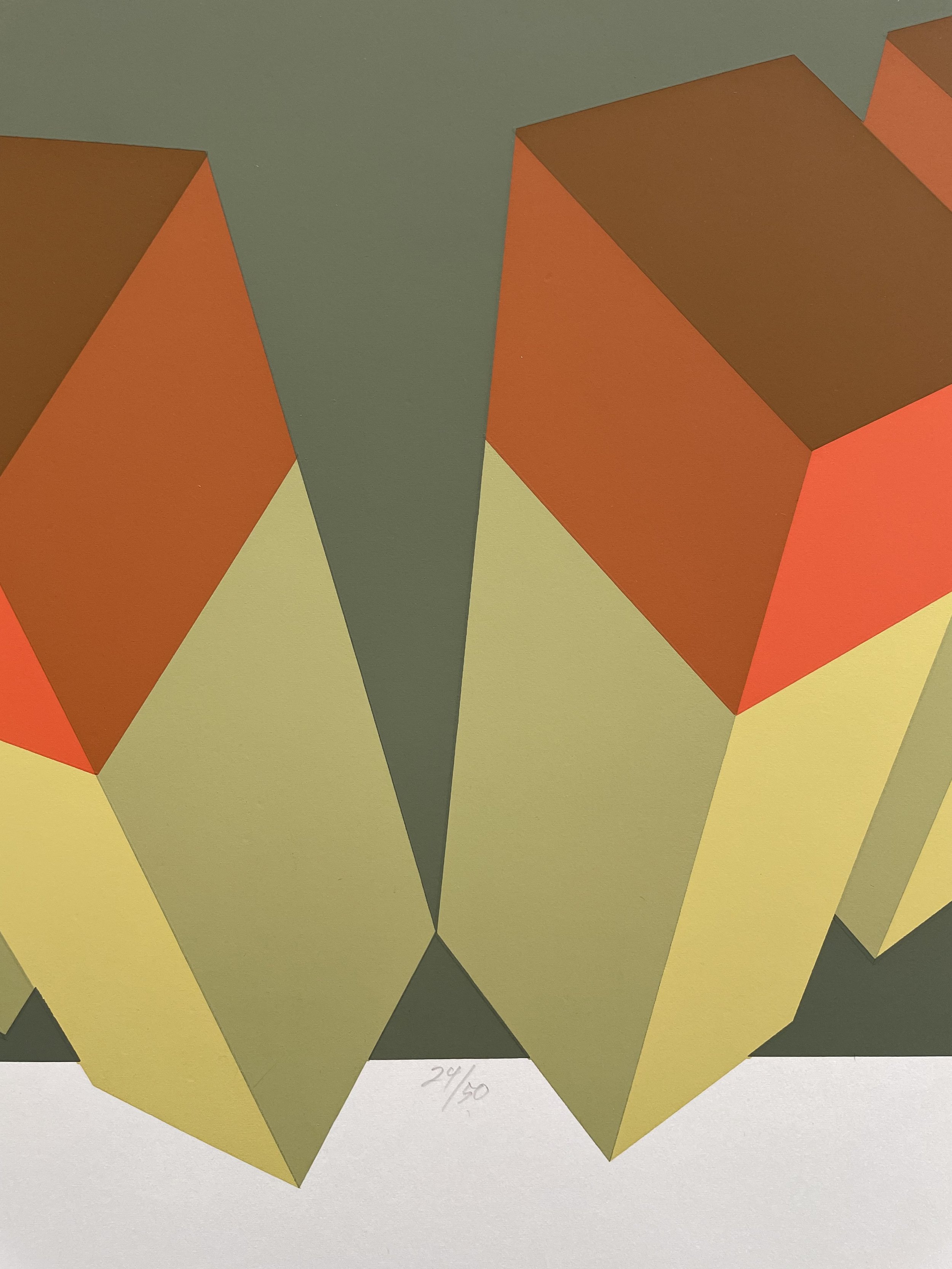
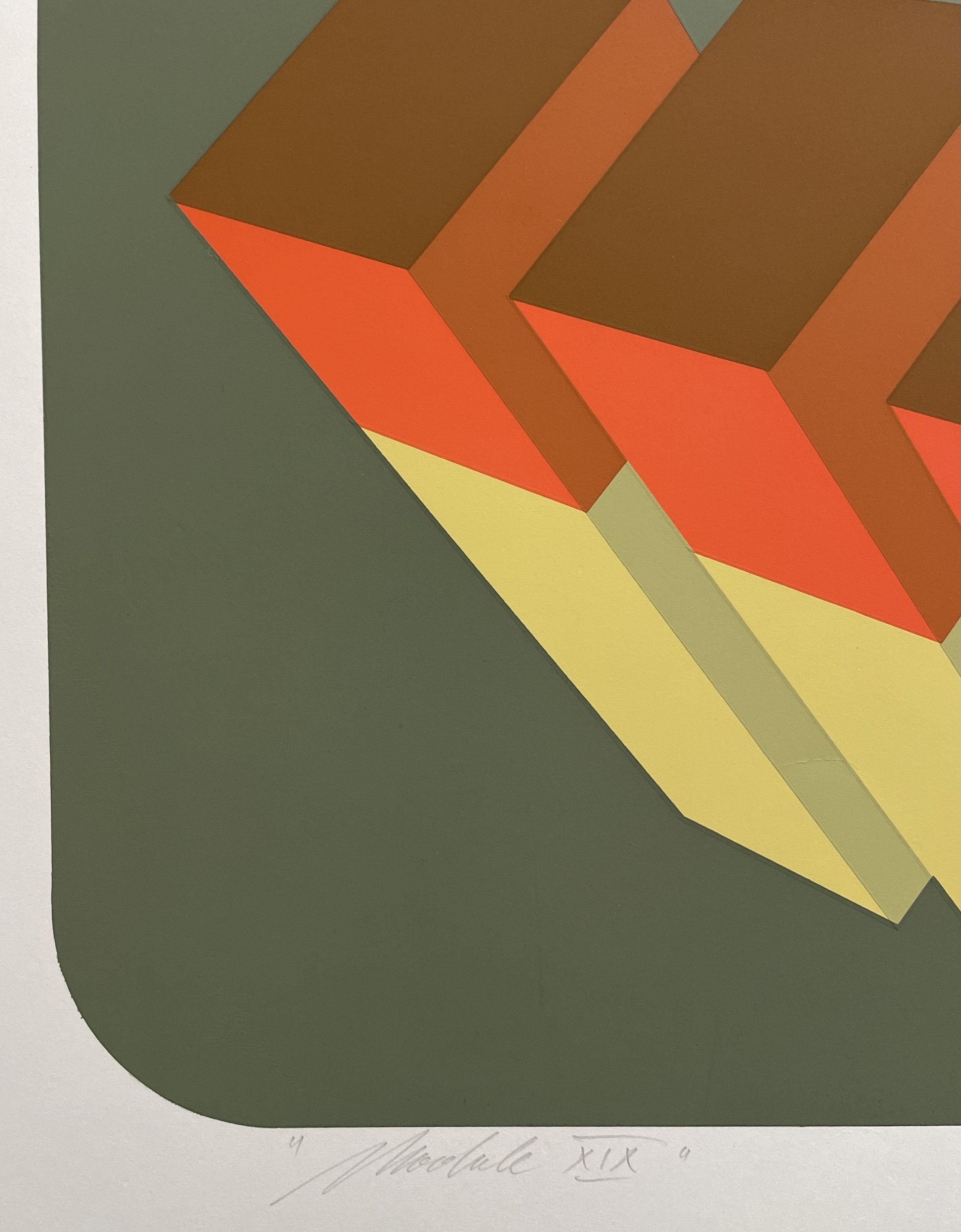
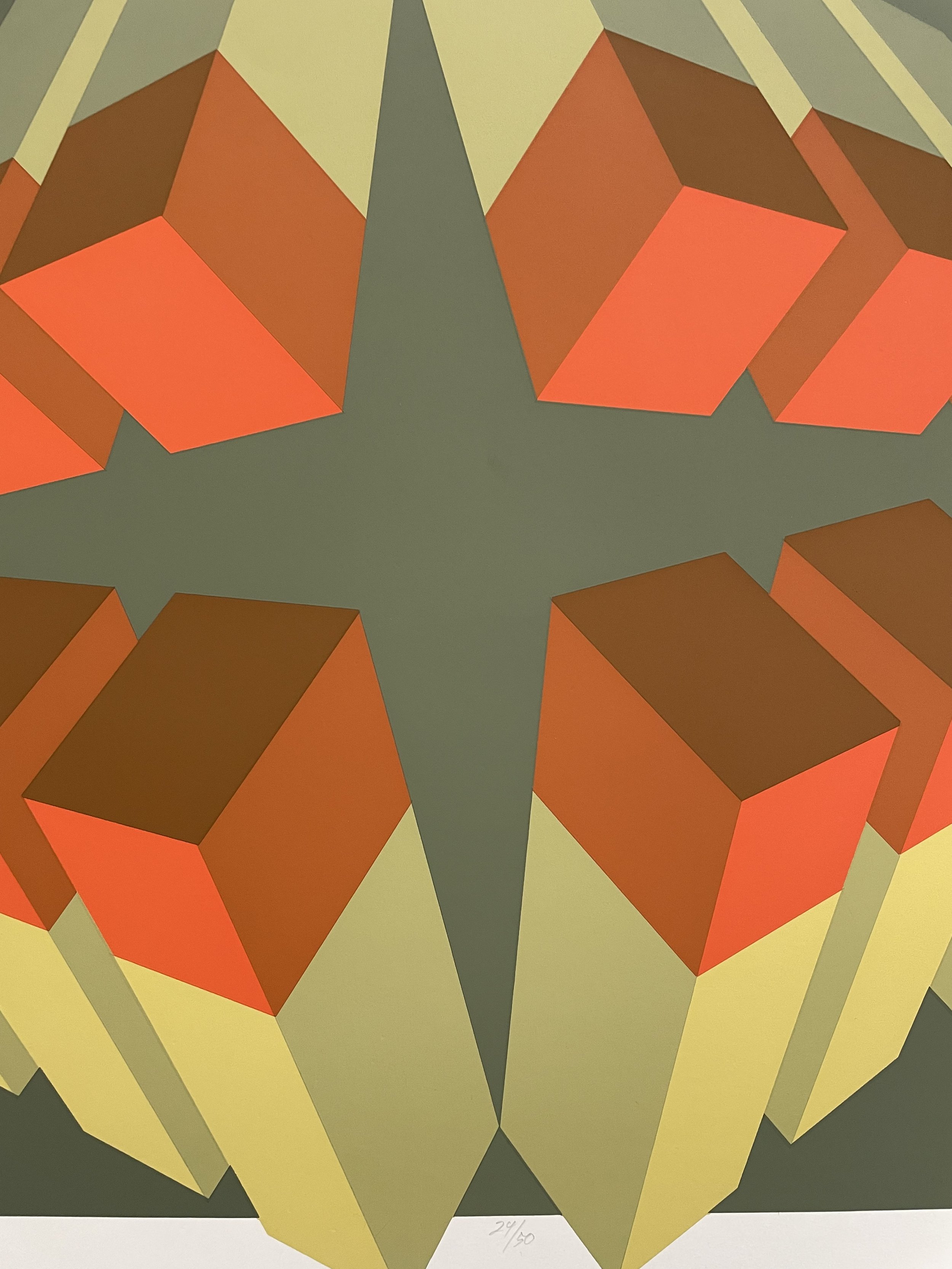
“Rocky Reach” (attributed), Robert Wilson (b. 1952), c.1970s–1980s, serigraph, 25 × 32 inches, pencil-signed and numbered 164/300.
“Rocky Reach” by Robert Wilson is a serene late-20th-century landscape serigraph depicting monumental canyon walls and still water, rendered in softly layered tones that reflect Wilson’s meditative approach to nature and space.
Artwork Description
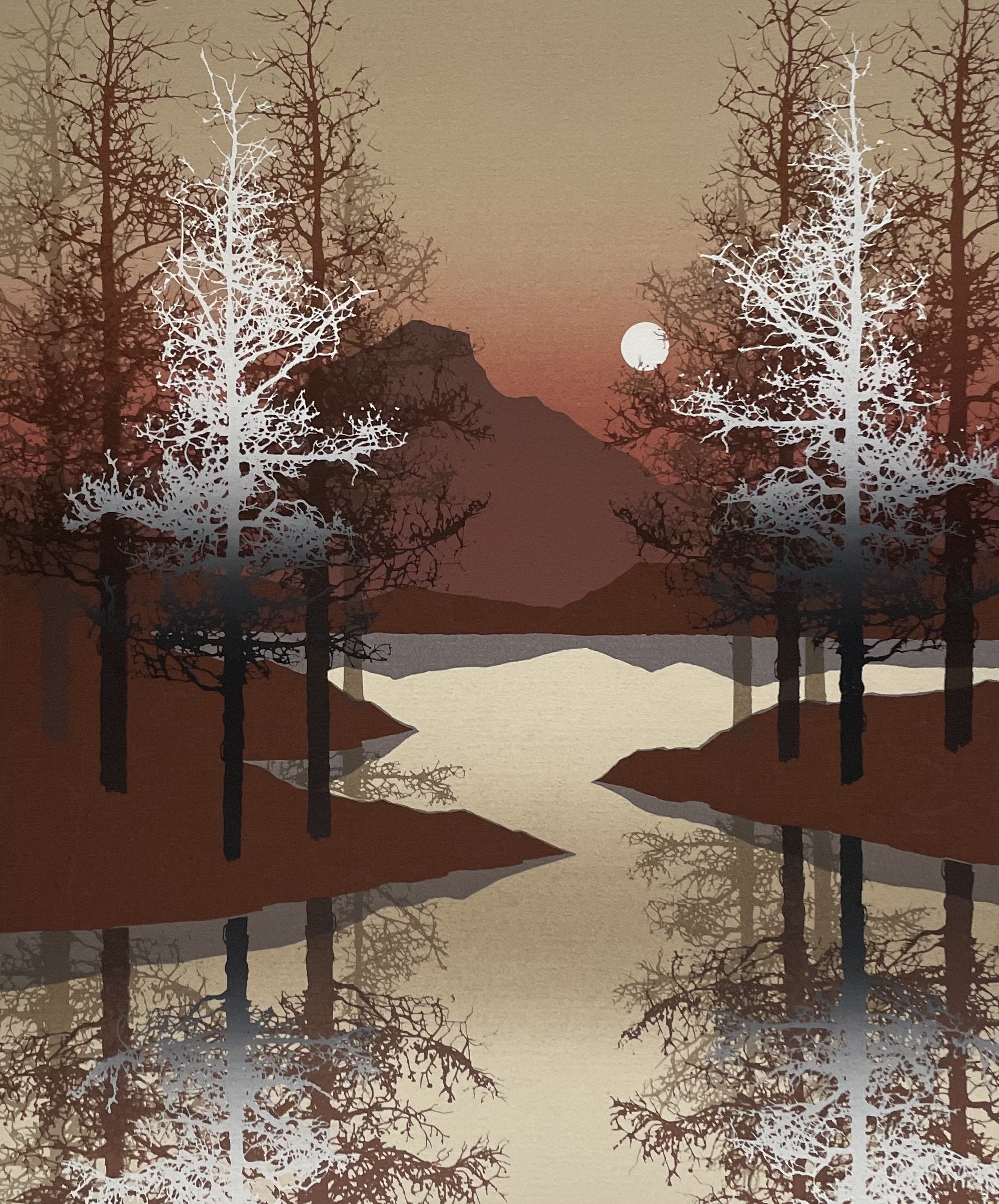
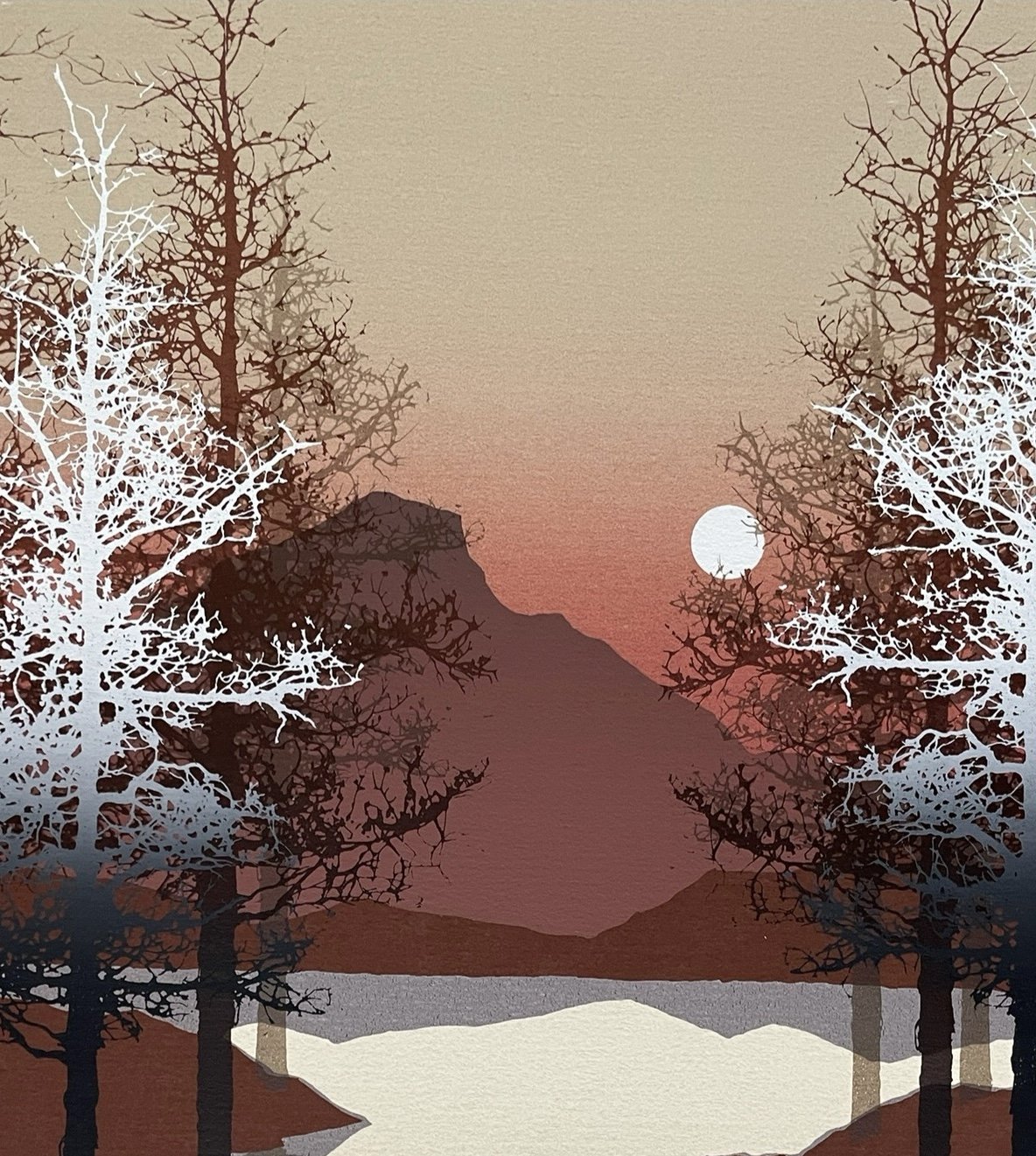
“Rocky Reach” presents a tranquil canyon scene defined by towering rock formations that descend into calm, reflective water. The composition emphasizes symmetry, depth, and quiet balance, drawing the viewer’s eye through a narrow water passage toward distant landforms beneath a pale, atmospheric sky. The restrained palette of cool blues, grays, and muted earth tones reinforces a sense of stillness and timelessness.
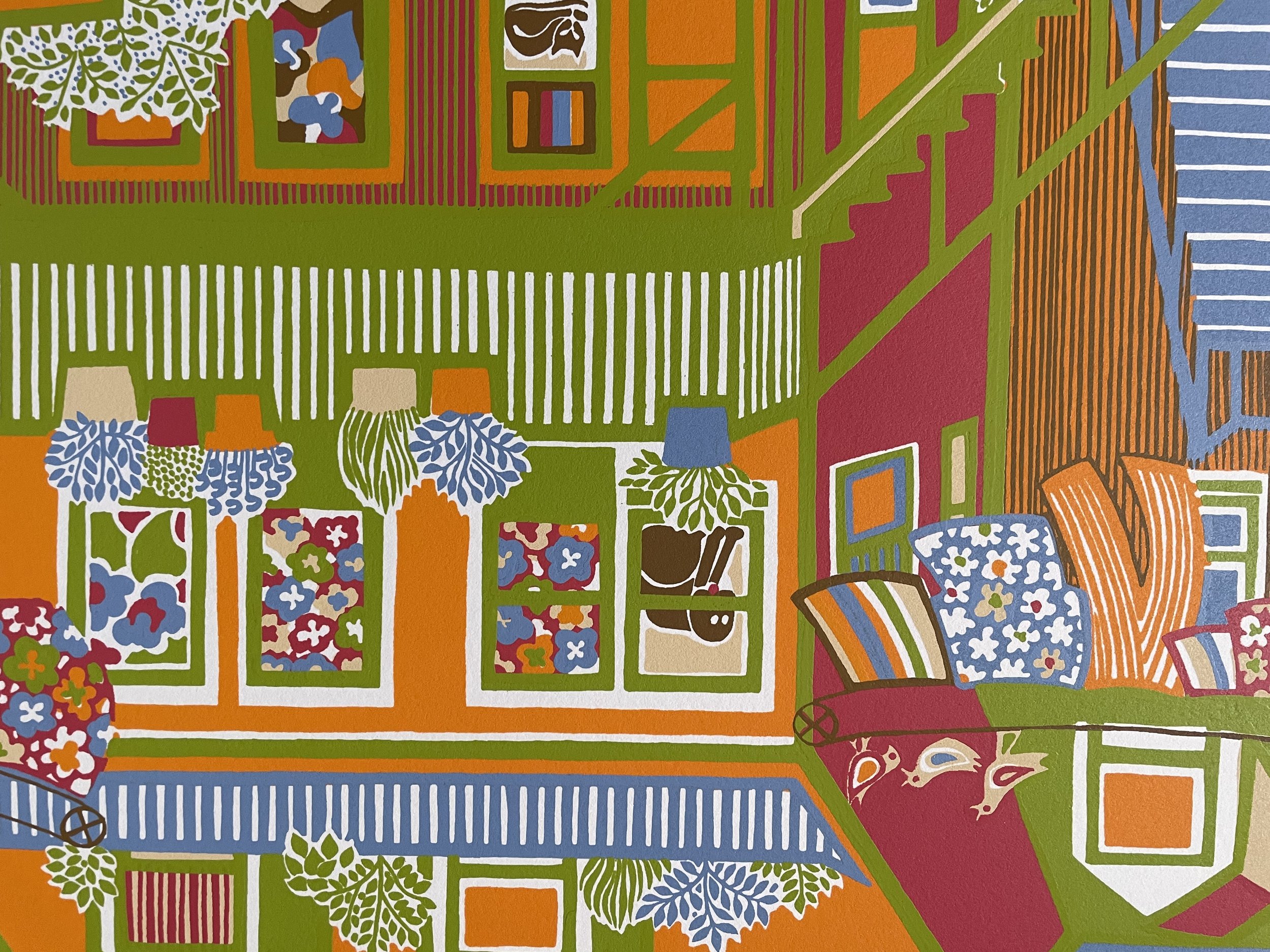
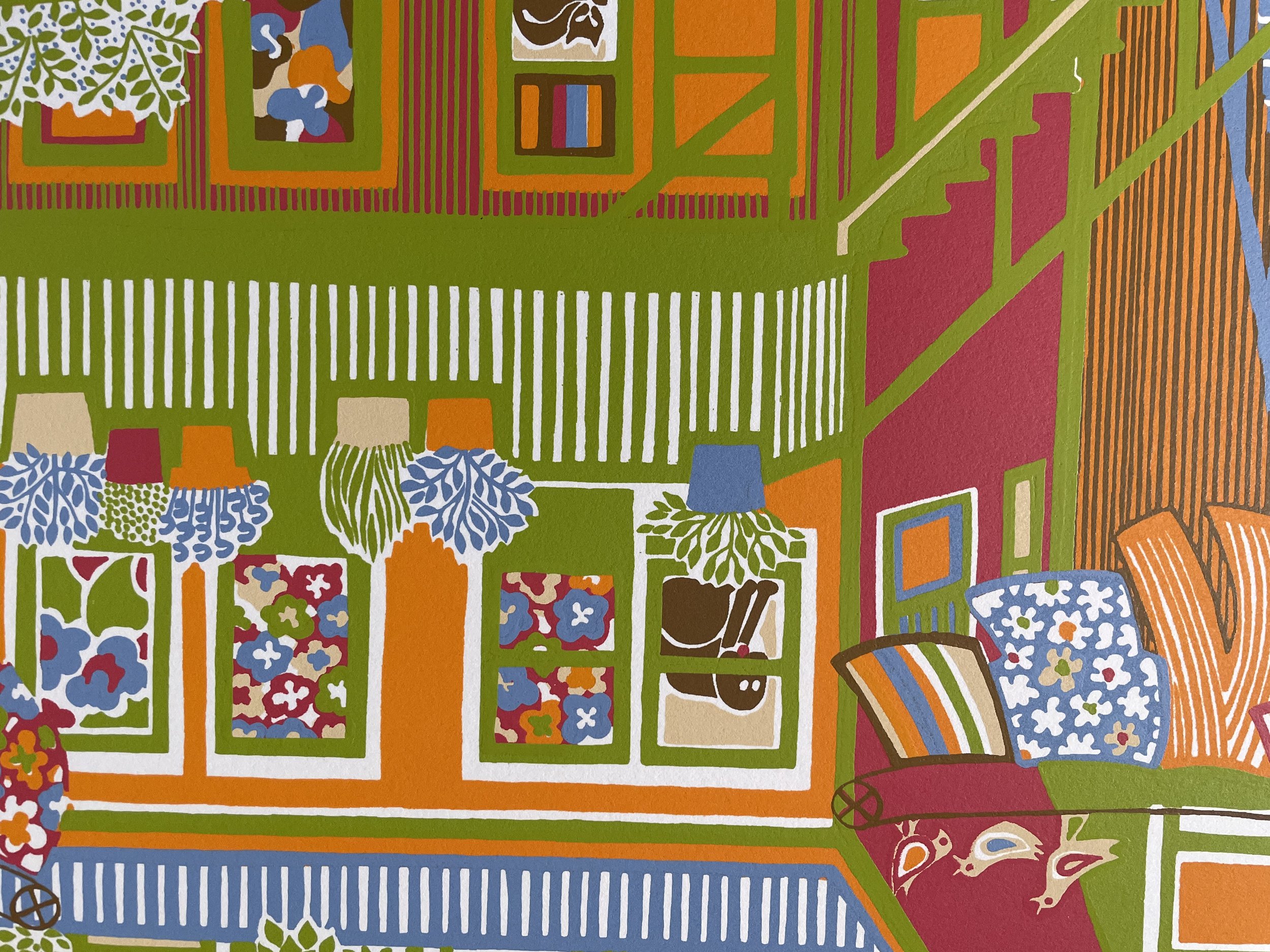
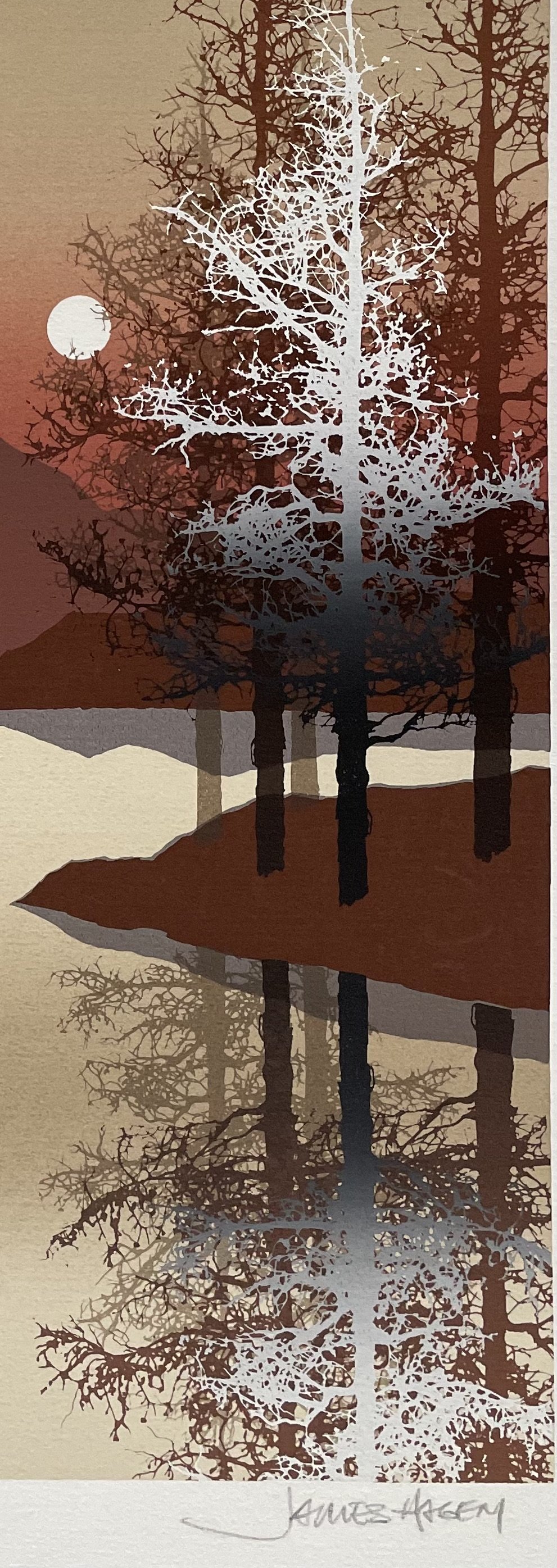
The work exemplifies Robert Wilson’s signature style: simplified forms, carefully modulated color fields, and smooth transitions rather than painterly gesture. Each color area is cleanly separated, with no tonal blending within shapes—an approach well suited to screen printing. The surface texture and flat color application are consistent throughout, with crisp edges and layered ink passes visible upon close inspection.
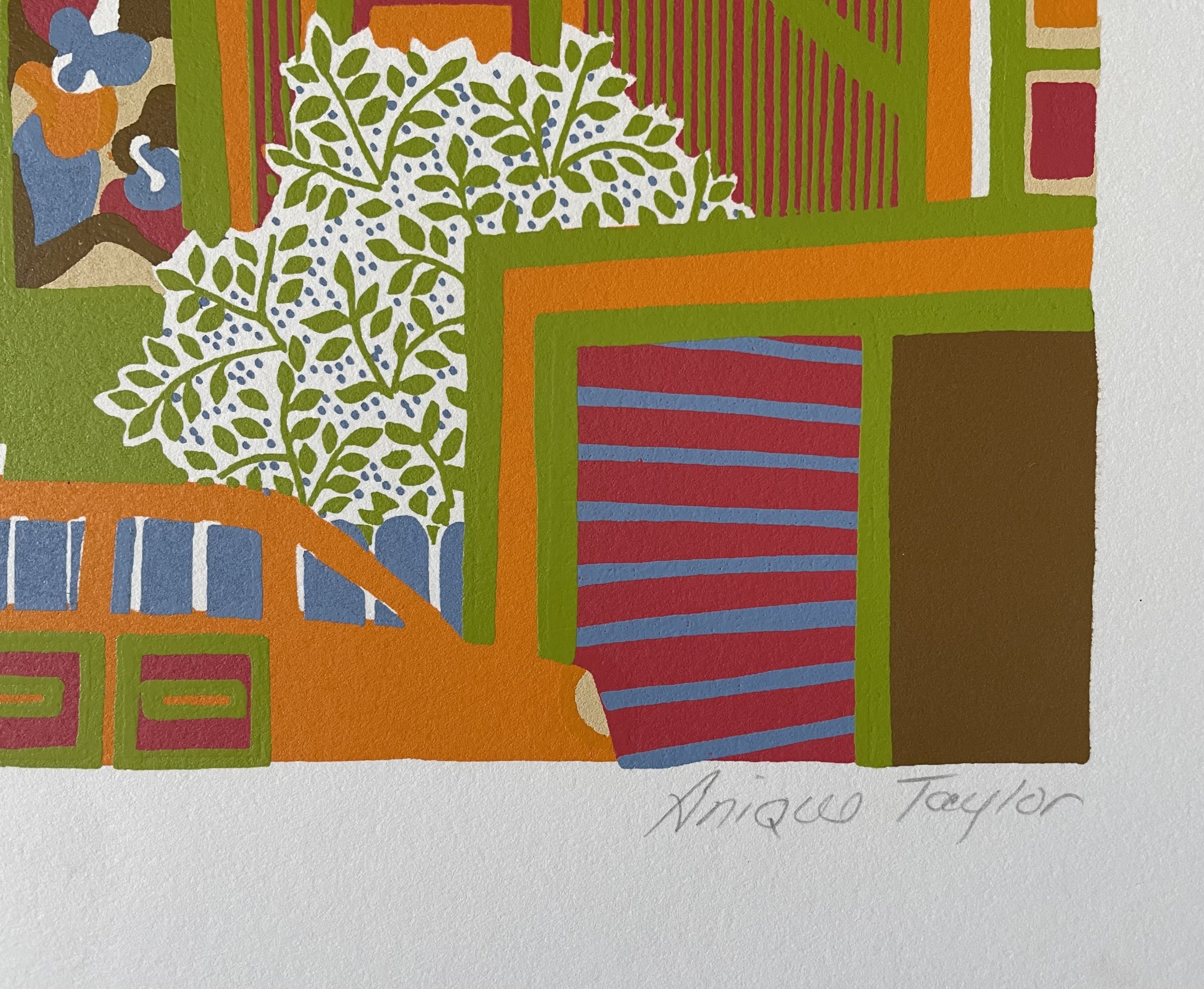
The print is pencil-signed “Robert Wilson” along the lower margin and numbered 164/300, indicating a standard limited edition. Based on visual analysis—specifically the flat, opaque color fields, uniform ink density, and absence of lithographic crayon or stone-grain artifacts—this work is best identified as a serigraph (silkscreen) rather than a lithograph.
Artist Biography: Robert Wilson
Robert Wilson was born in Phoenix, Arizona in 1952. From an early age, he developed a deep connection to the natural landscape of the American Southwest, particularly its mountains, canyons, and shifting light. This lifelong fascination with nature became the foundation of his artistic practice.
Wilson studied with various instructors during his formative years, gradually refining a style that moved away from literal representation toward simplified, contemplative interpretations of landscape. Rather than capturing specific locations with photographic realism, he sought to convey the emotional and spiritual resonance of place—distilling nature into essential forms, balanced compositions, and harmonious color relationships.
Throughout his career, Wilson worked primarily in painting and printmaking, embracing serigraphy as a medium well suited to his aesthetic. The precision and clarity of screen printing allowed him to achieve the smooth color fields and structural clarity that define his work. His imagery often conveys silence, distance, and introspection, inviting viewers to pause and reflect rather than observe narrative action.
Robert Wilson exhibited extensively throughout the United States, with shows in Chicago, Detroit, Atlanta, Denver, San Jose, Scottsdale, and other major art centers. His work became widely collected during the 1970s and 1980s, appealing to audiences drawn to contemporary landscape art that balanced modern design sensibilities with reverence for nature.
Wilson was represented by Mitch Morse Gallery, which played a significant role in distributing his work nationally. Many of his prints, including “Rocky Reach,” entered private collections through this channel, often acquired in New York City and other major art markets. His work remains appreciated for its timeless calm, strong compositional design, and meditative spirit.
Robert Wilson (American, b. 1952), Rocky Reach, c.1970s–1980s. Serigraph on paper, 25 × 32 inches, signed and numbered 164/300. Landscape composition with canyon and water motif.
Certificate of Value & Authentication
This certifies that Rocky Reach is an authentic original limited-edition serigraph by Robert Wilson, created circa the 1970s–1980s. The work is pencil-signed by the artist and numbered 164 from an edition of 300. Based on stylistic analysis, printing characteristics, and provenance, the work is confirmed as an original screen print and not a reproduction.
Provenance
Mitch Morse Gallery, New York City (and European acquisitions)
Private Collection
Current Owner: Artfind Gallery, Washington, DC
“Rocky Reach” (attributed), Robert Wilson (b. 1952), c.1970s–1980s, serigraph, 25 × 32 inches, pencil-signed and numbered 164/300.
“Rocky Reach” by Robert Wilson is a serene late-20th-century landscape serigraph depicting monumental canyon walls and still water, rendered in softly layered tones that reflect Wilson’s meditative approach to nature and space.
Artwork Description
“Rocky Reach” presents a tranquil canyon scene defined by towering rock formations that descend into calm, reflective water. The composition emphasizes symmetry, depth, and quiet balance, drawing the viewer’s eye through a narrow water passage toward distant landforms beneath a pale, atmospheric sky. The restrained palette of cool blues, grays, and muted earth tones reinforces a sense of stillness and timelessness.
The work exemplifies Robert Wilson’s signature style: simplified forms, carefully modulated color fields, and smooth transitions rather than painterly gesture. Each color area is cleanly separated, with no tonal blending within shapes—an approach well suited to screen printing. The surface texture and flat color application are consistent throughout, with crisp edges and layered ink passes visible upon close inspection.
The print is pencil-signed “Robert Wilson” along the lower margin and numbered 164/300, indicating a standard limited edition. Based on visual analysis—specifically the flat, opaque color fields, uniform ink density, and absence of lithographic crayon or stone-grain artifacts—this work is best identified as a serigraph (silkscreen) rather than a lithograph.
Artist Biography: Robert Wilson
Robert Wilson was born in Phoenix, Arizona in 1952. From an early age, he developed a deep connection to the natural landscape of the American Southwest, particularly its mountains, canyons, and shifting light. This lifelong fascination with nature became the foundation of his artistic practice.
Wilson studied with various instructors during his formative years, gradually refining a style that moved away from literal representation toward simplified, contemplative interpretations of landscape. Rather than capturing specific locations with photographic realism, he sought to convey the emotional and spiritual resonance of place—distilling nature into essential forms, balanced compositions, and harmonious color relationships.
Throughout his career, Wilson worked primarily in painting and printmaking, embracing serigraphy as a medium well suited to his aesthetic. The precision and clarity of screen printing allowed him to achieve the smooth color fields and structural clarity that define his work. His imagery often conveys silence, distance, and introspection, inviting viewers to pause and reflect rather than observe narrative action.
Robert Wilson exhibited extensively throughout the United States, with shows in Chicago, Detroit, Atlanta, Denver, San Jose, Scottsdale, and other major art centers. His work became widely collected during the 1970s and 1980s, appealing to audiences drawn to contemporary landscape art that balanced modern design sensibilities with reverence for nature.
Wilson was represented by Mitch Morse Gallery, which played a significant role in distributing his work nationally. Many of his prints, including “Rocky Reach,” entered private collections through this channel, often acquired in New York City and other major art markets. His work remains appreciated for its timeless calm, strong compositional design, and meditative spirit.
Robert Wilson (American, b. 1952), Rocky Reach, c.1970s–1980s. Serigraph on paper, 25 × 32 inches, signed and numbered 164/300. Landscape composition with canyon and water motif.
Certificate of Value & Authentication
This certifies that Rocky Reach is an authentic original limited-edition serigraph by Robert Wilson, created circa the 1970s–1980s. The work is pencil-signed by the artist and numbered 164 from an edition of 300. Based on stylistic analysis, printing characteristics, and provenance, the work is confirmed as an original screen print and not a reproduction.
Provenance
Mitch Morse Gallery, New York City (and European acquisitions)
Private Collection
Current Owner: Artfind Gallery, Washington, DC
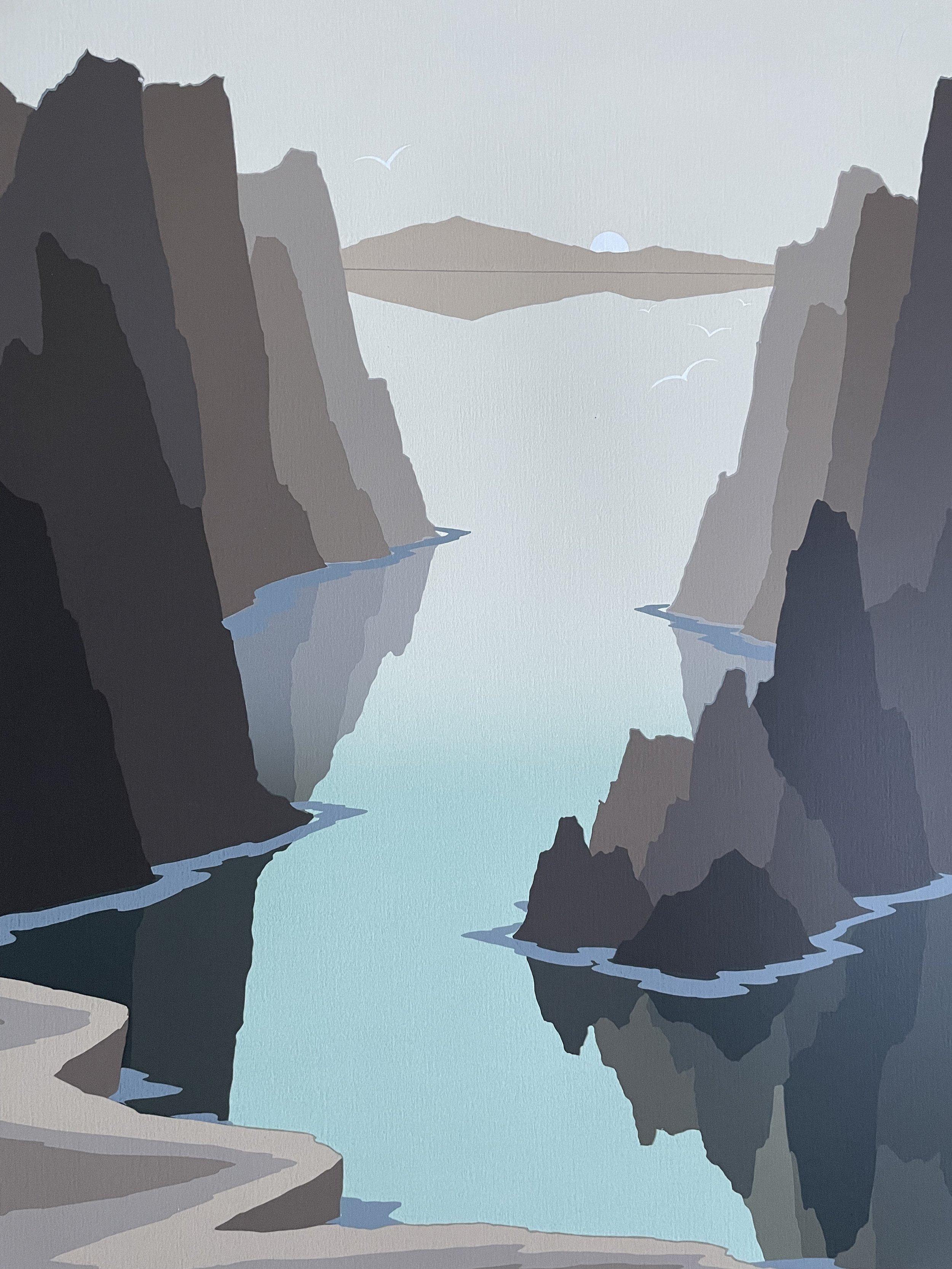 Image 1 of 11
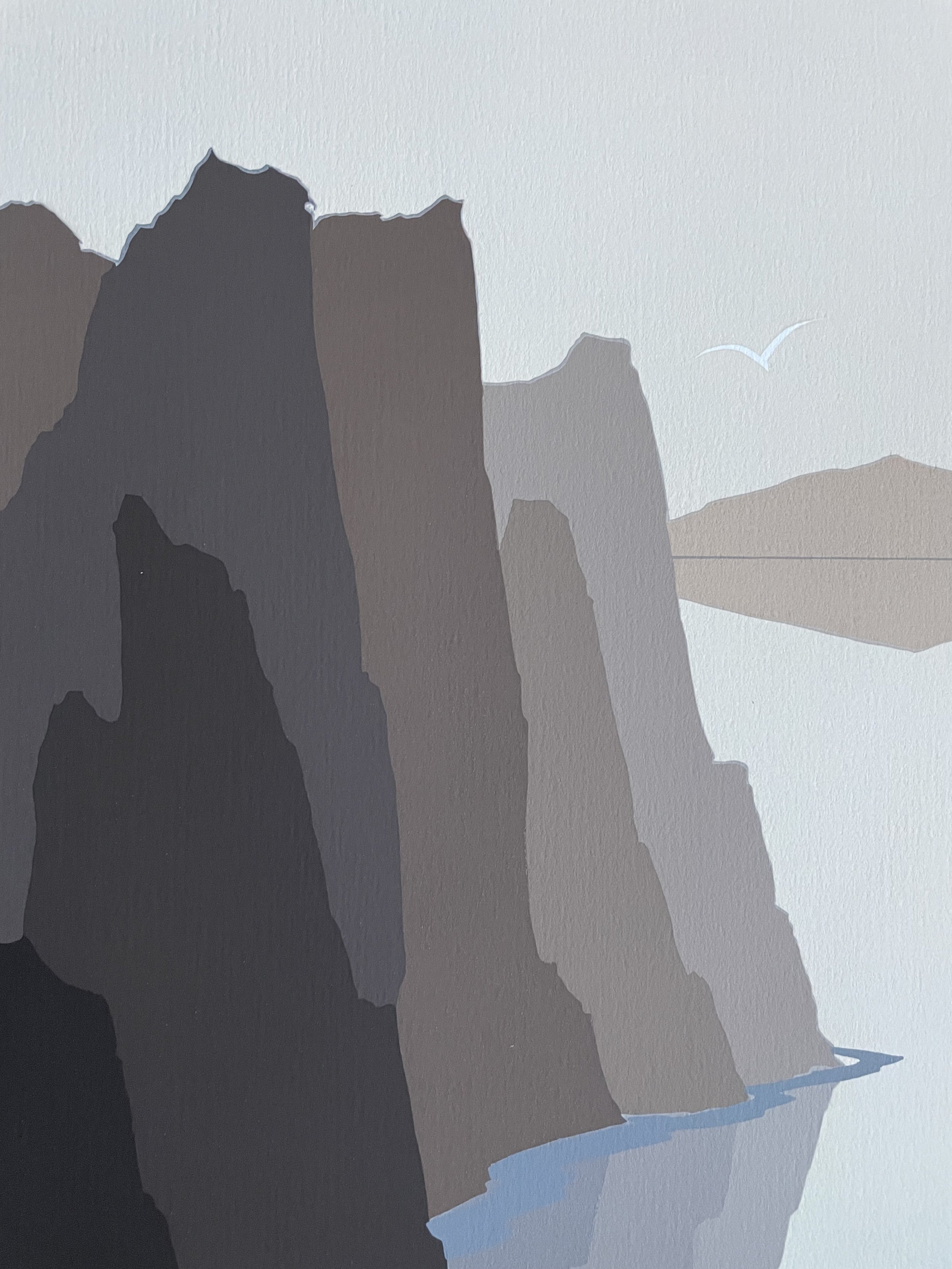 Image 2 of 11
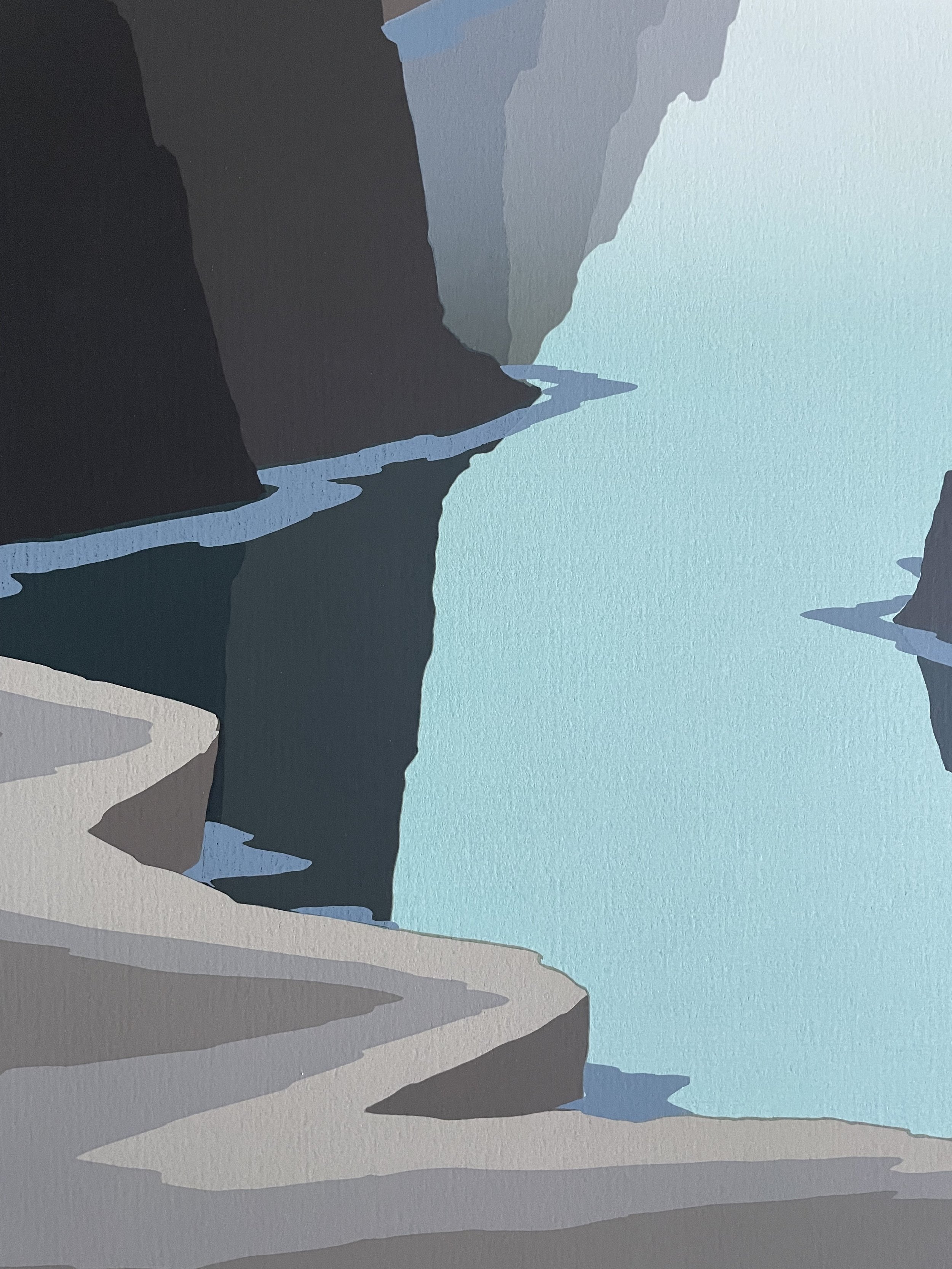 Image 3 of 11
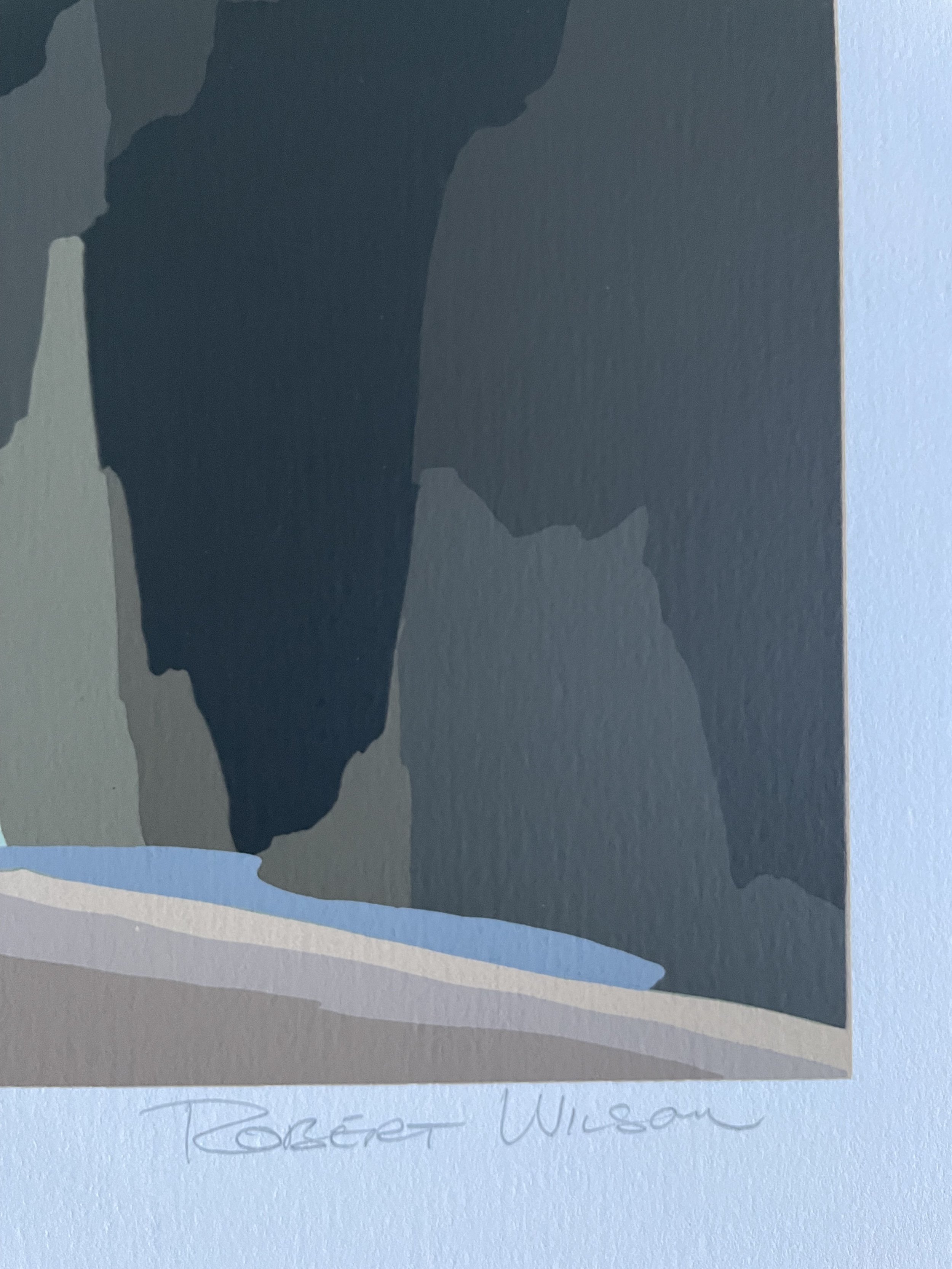 Image 4 of 11
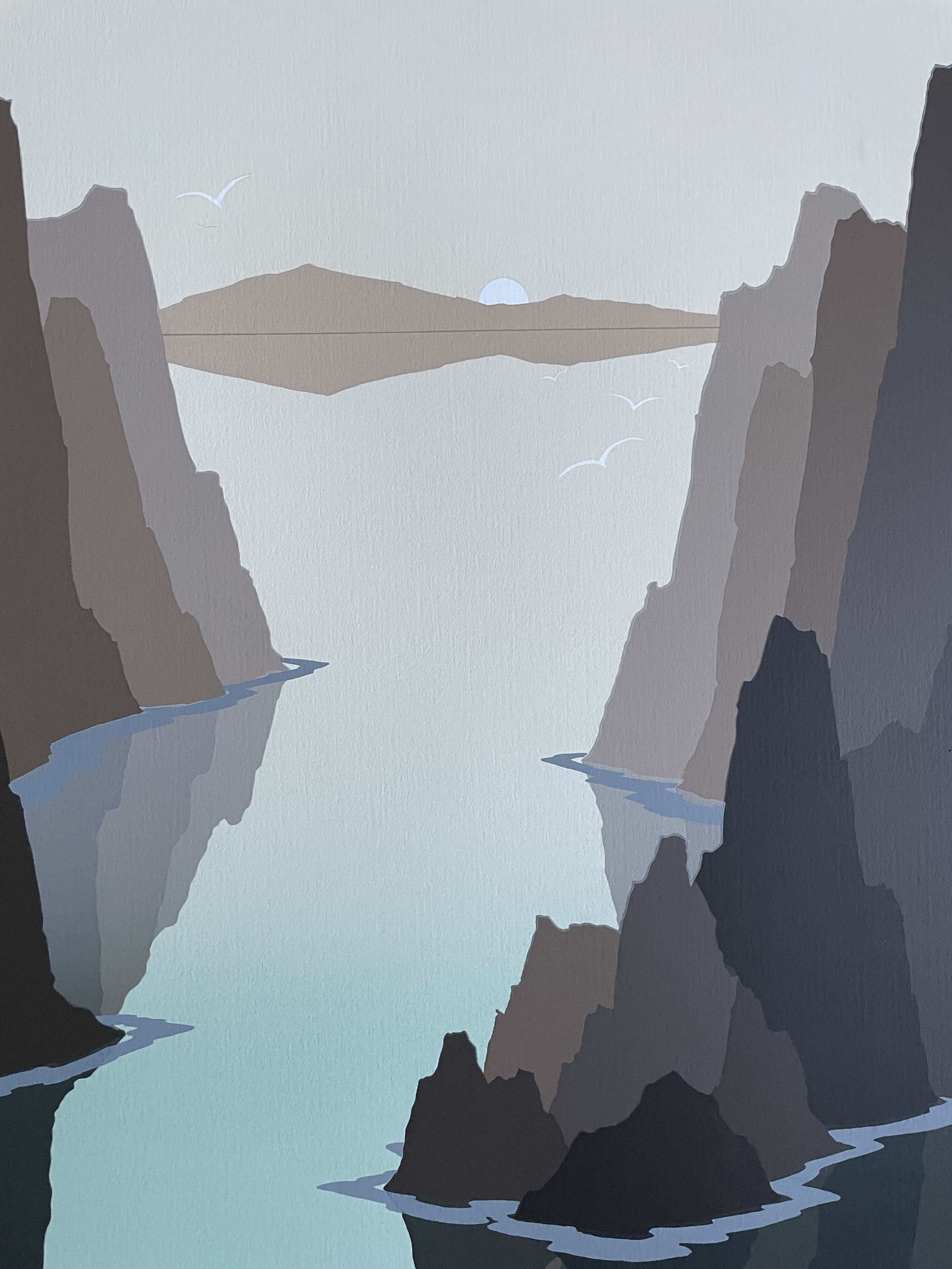 Image 5 of 11
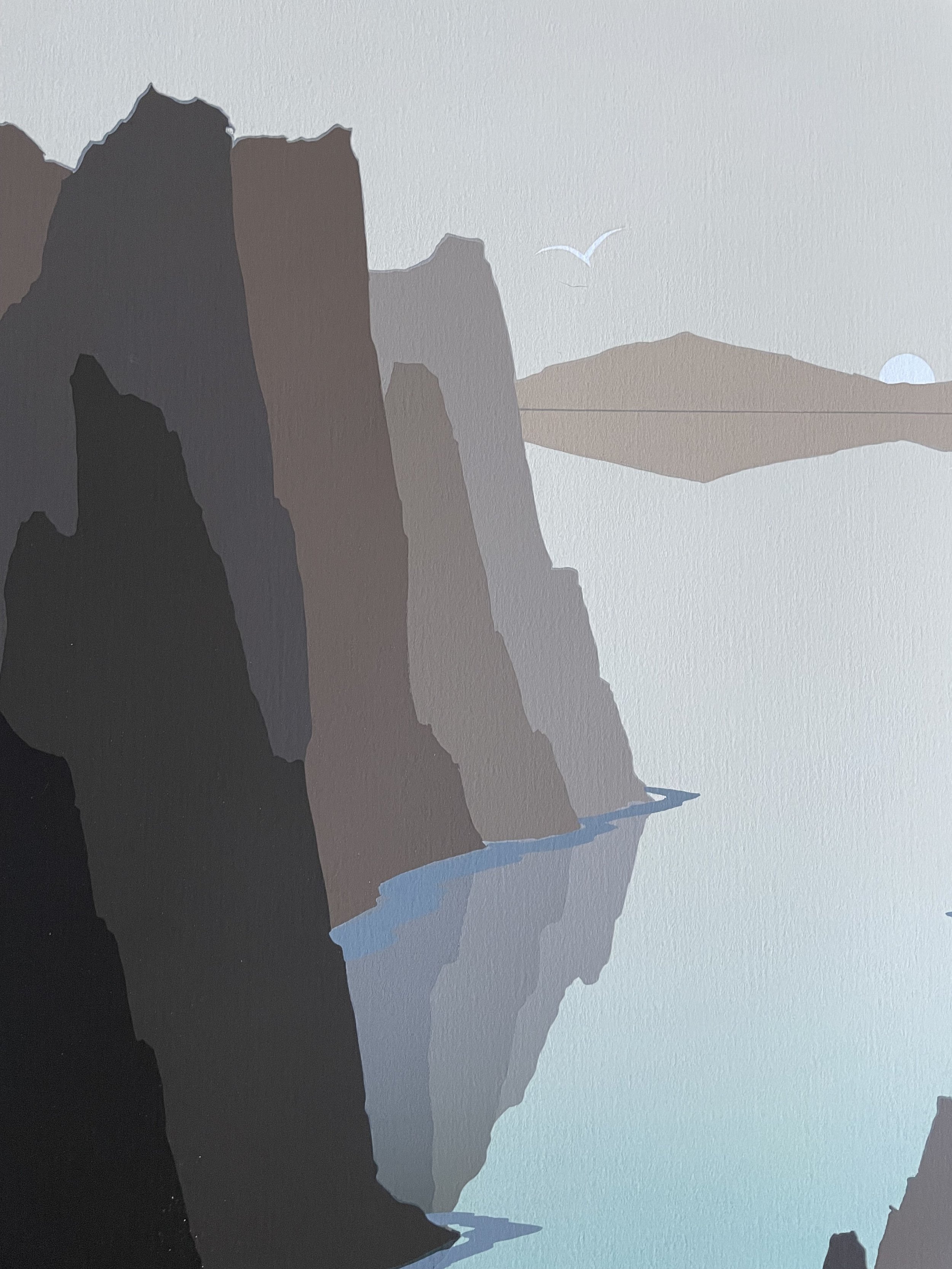 Image 6 of 11
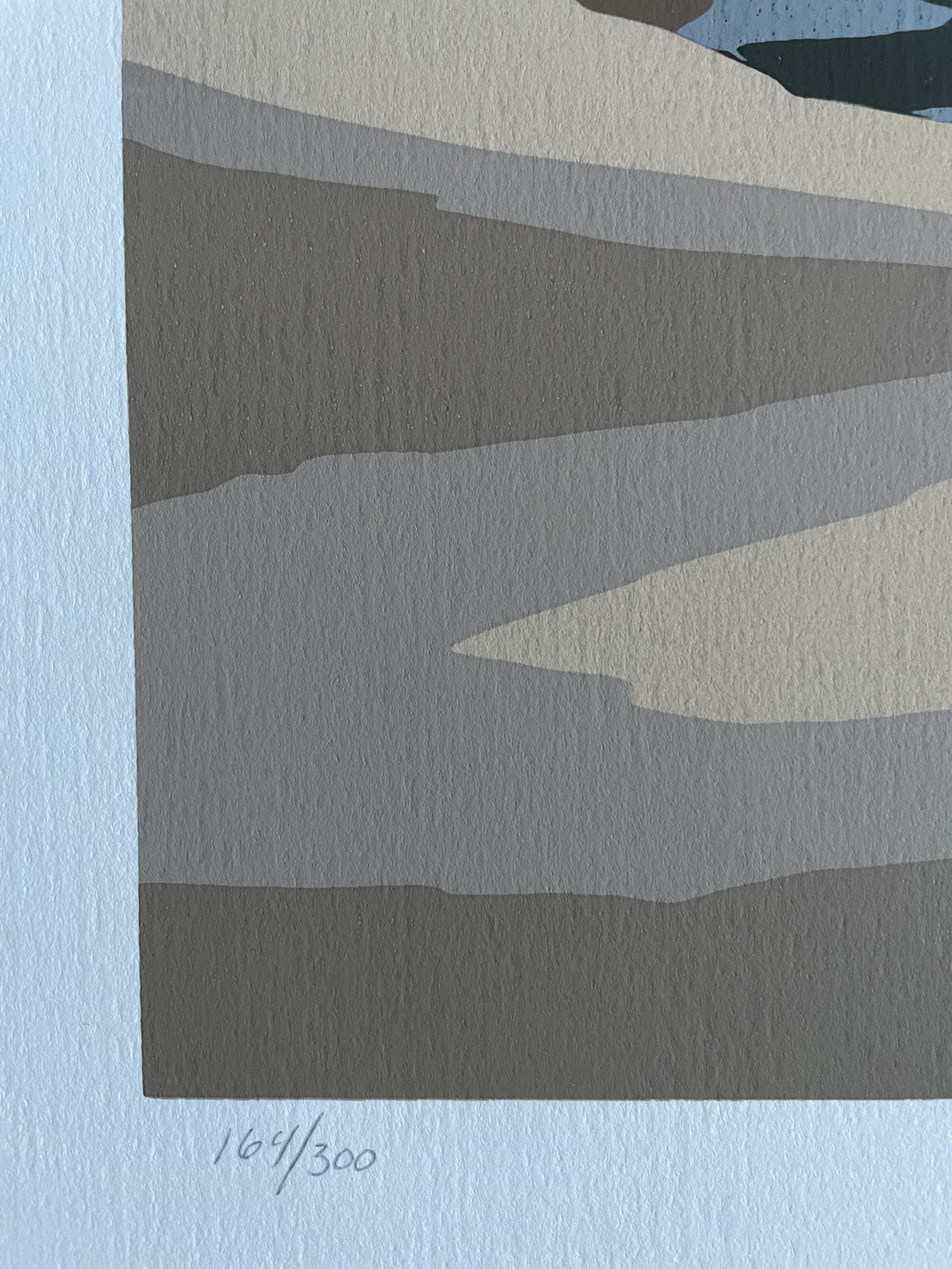 Image 7 of 11
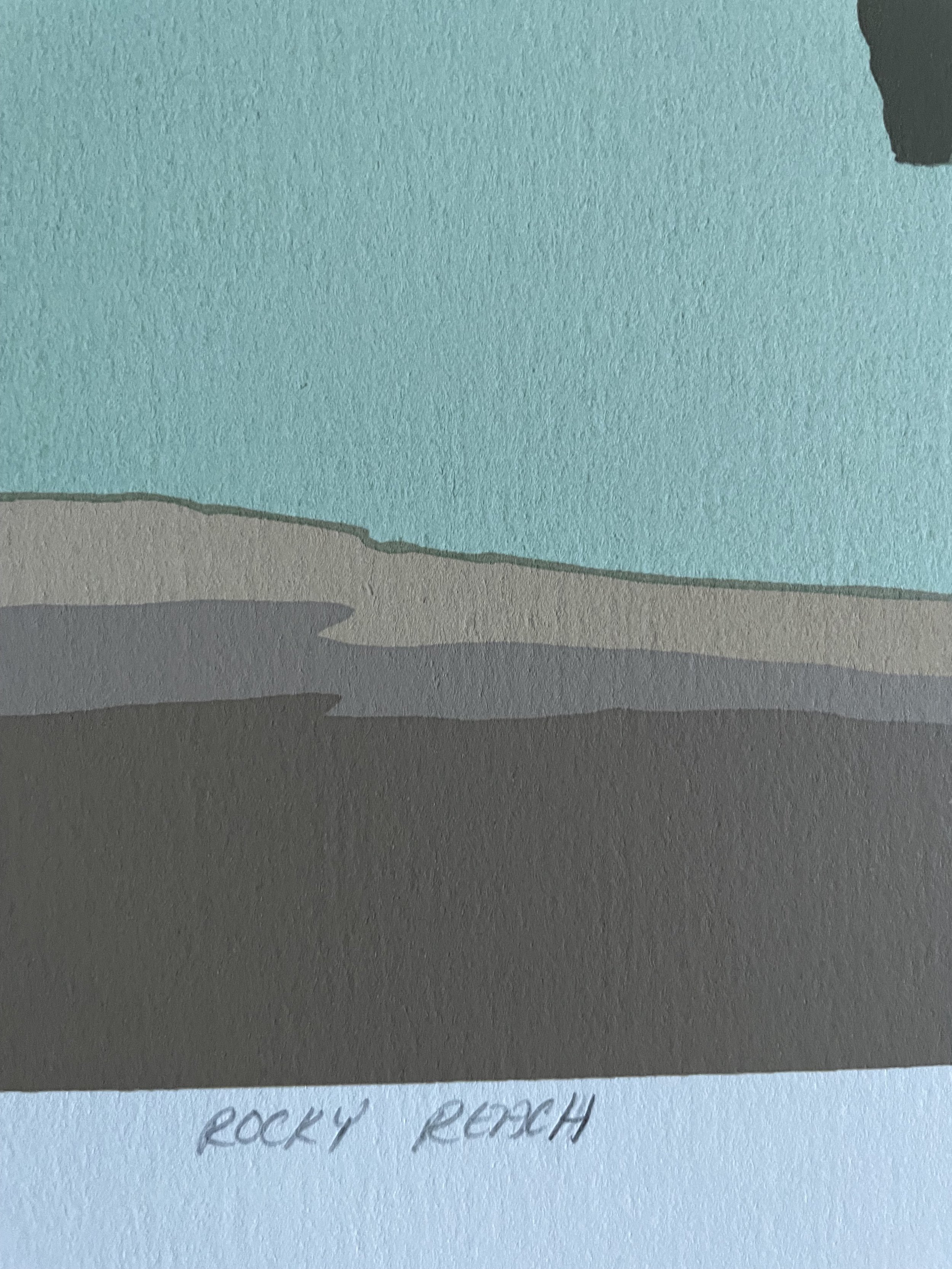 Image 8 of 11
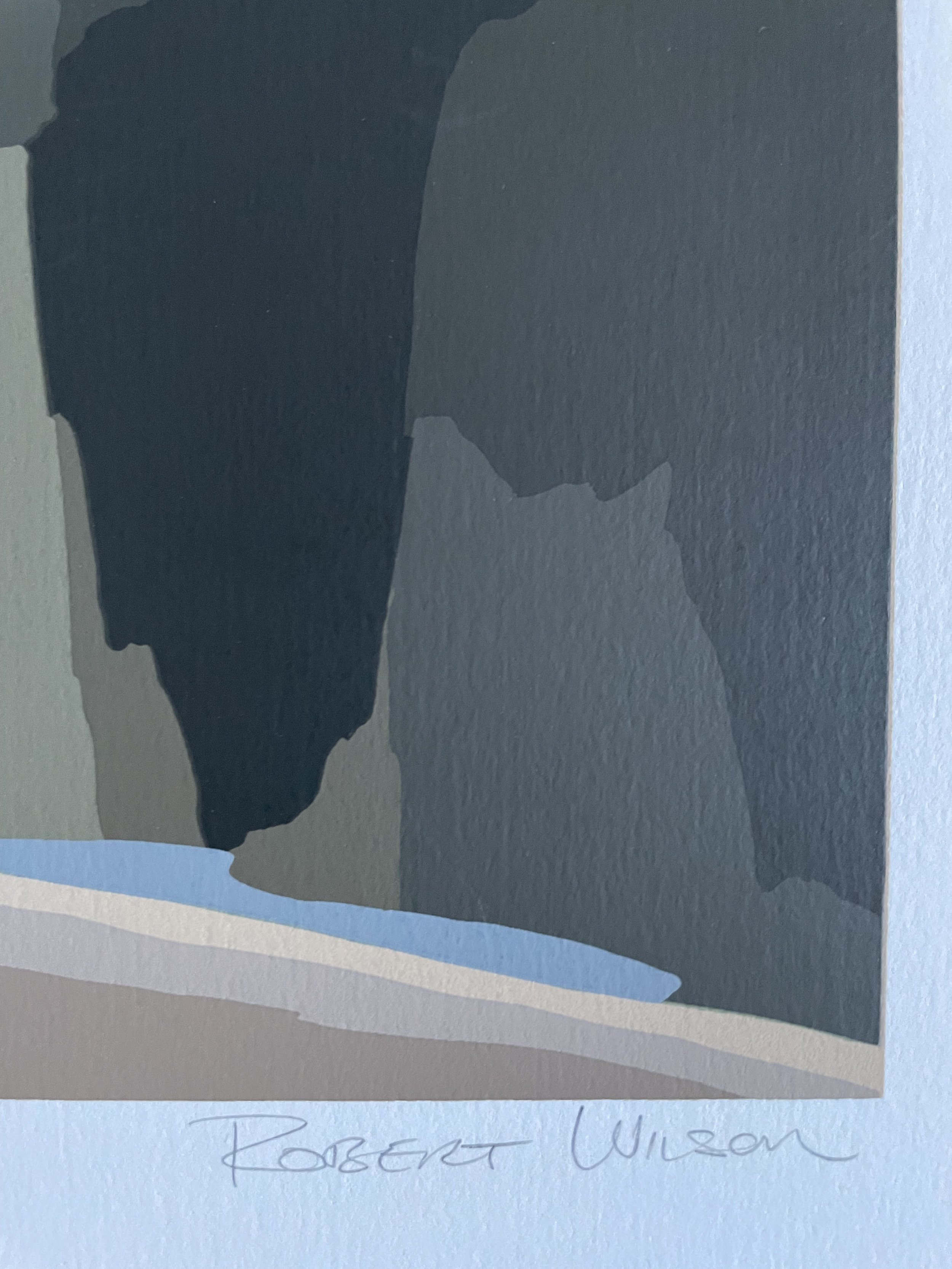 Image 9 of 11
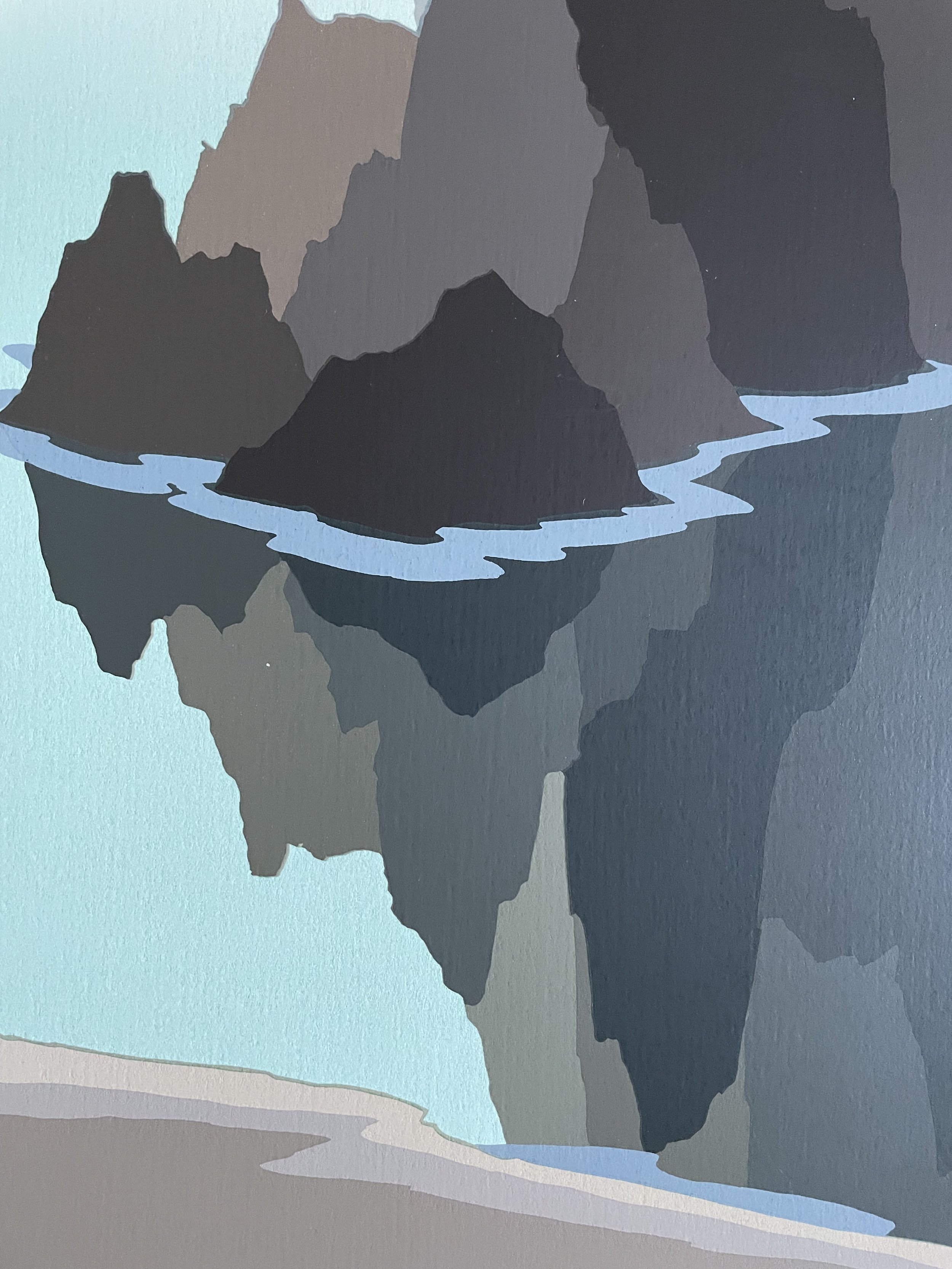 Image 10 of 11
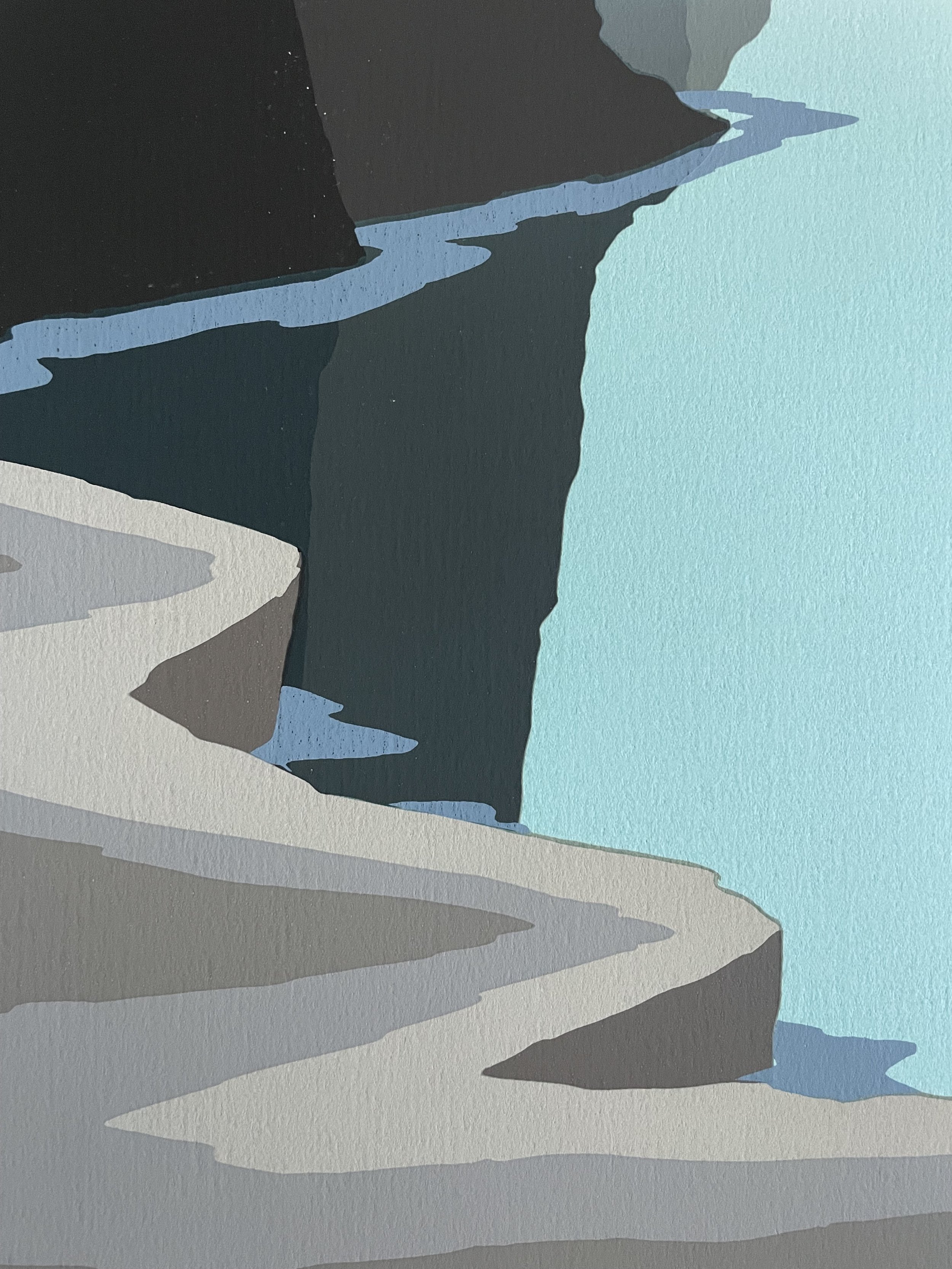 Image 11 of 11