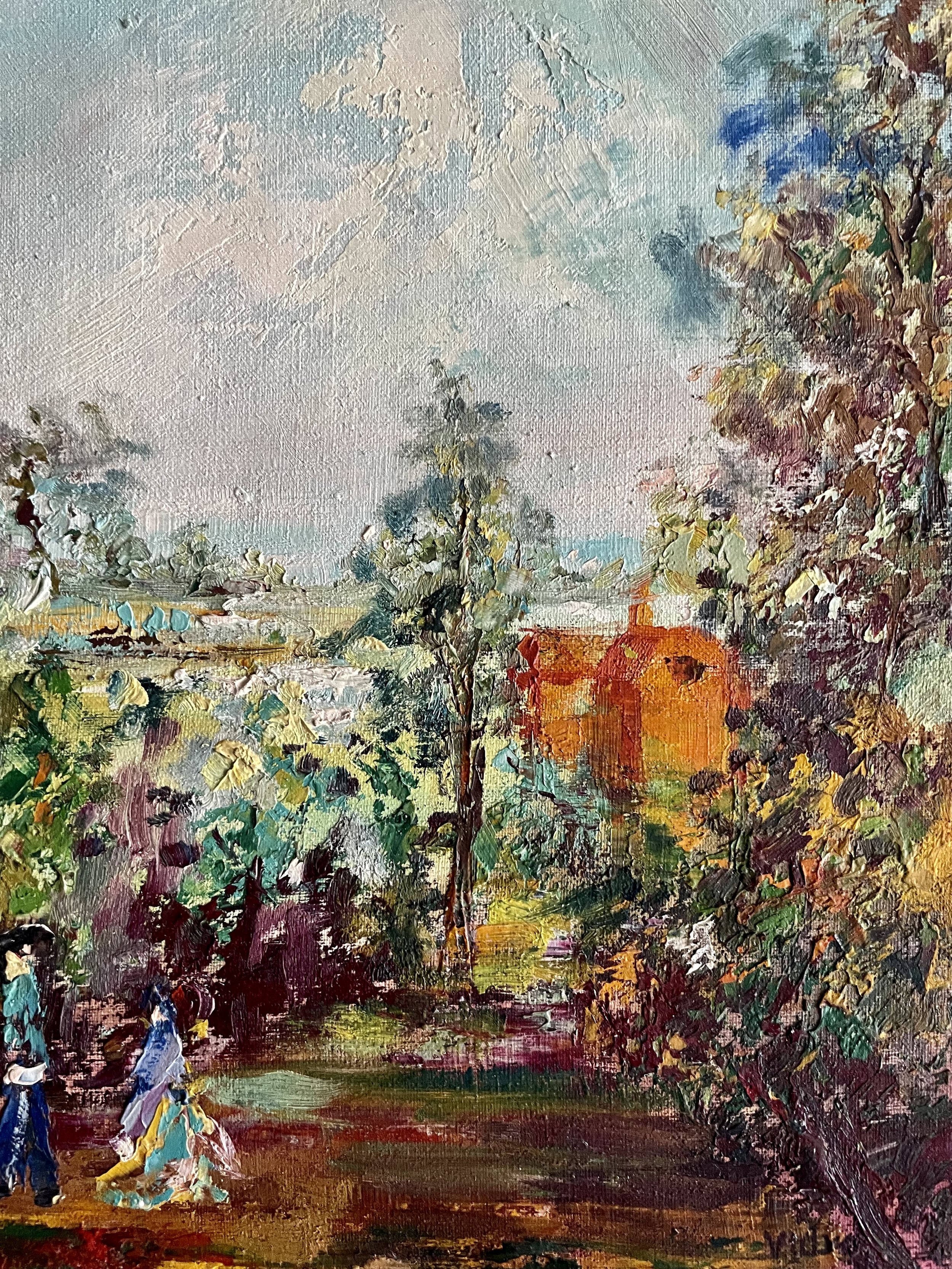
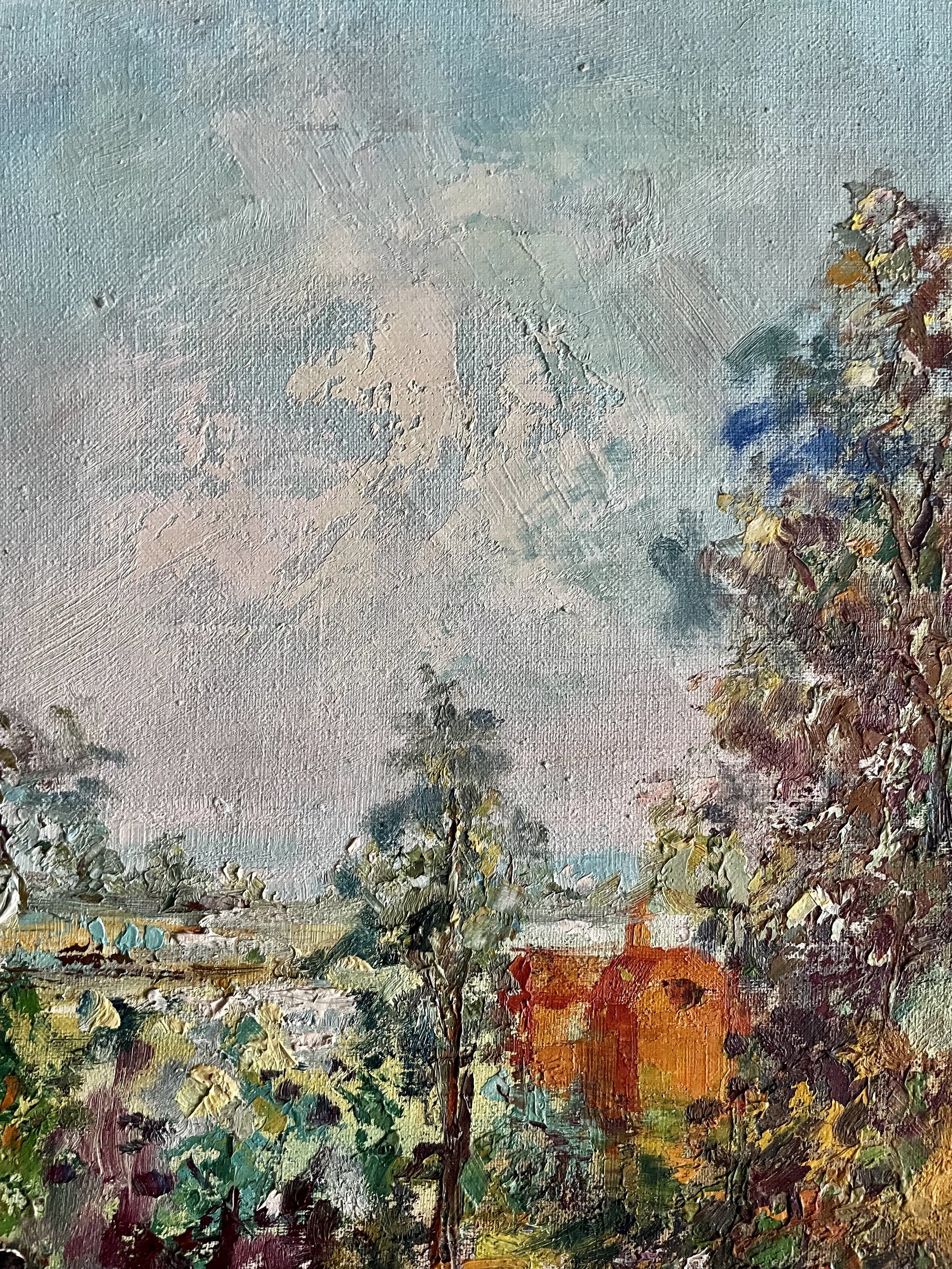
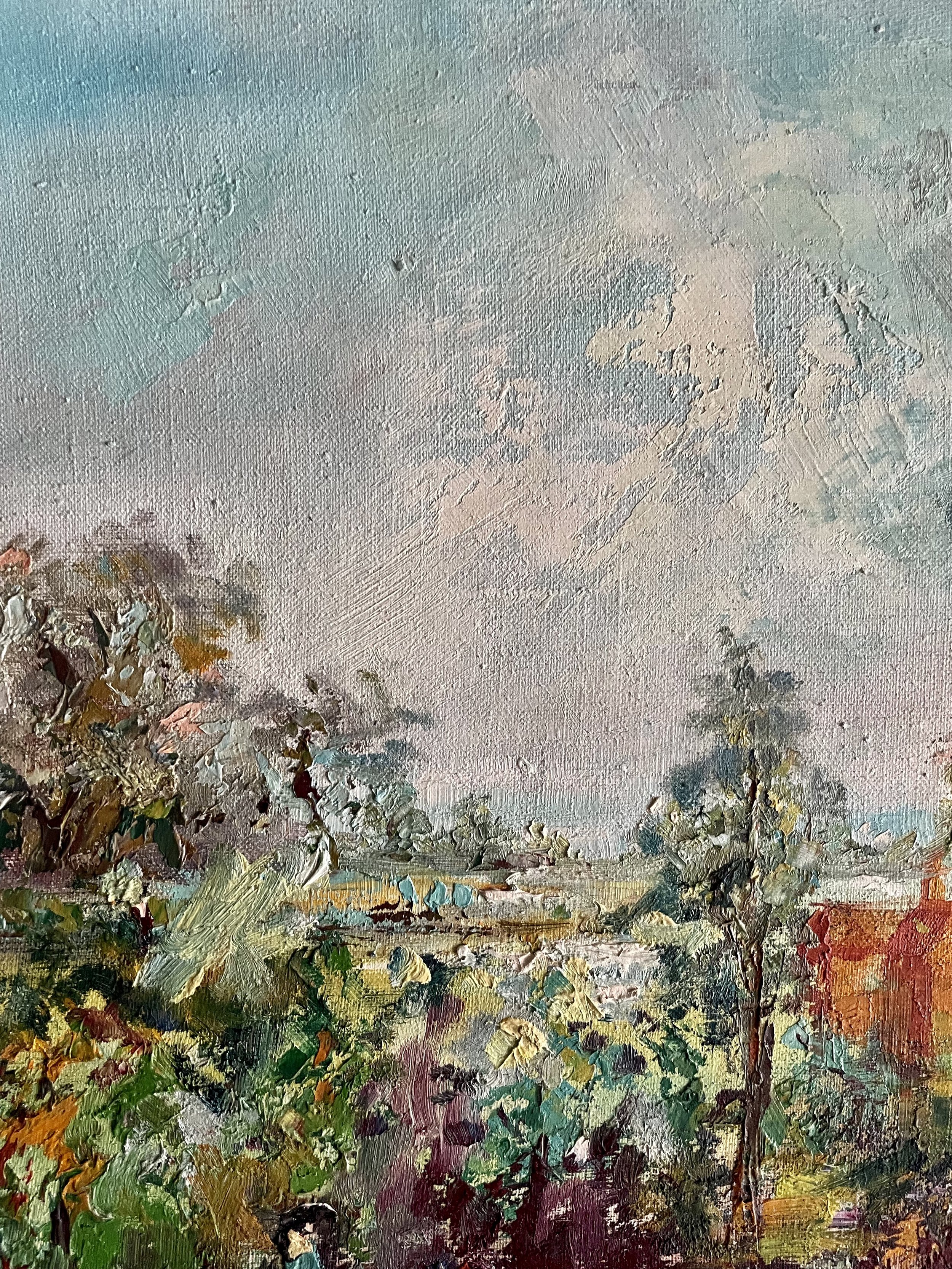
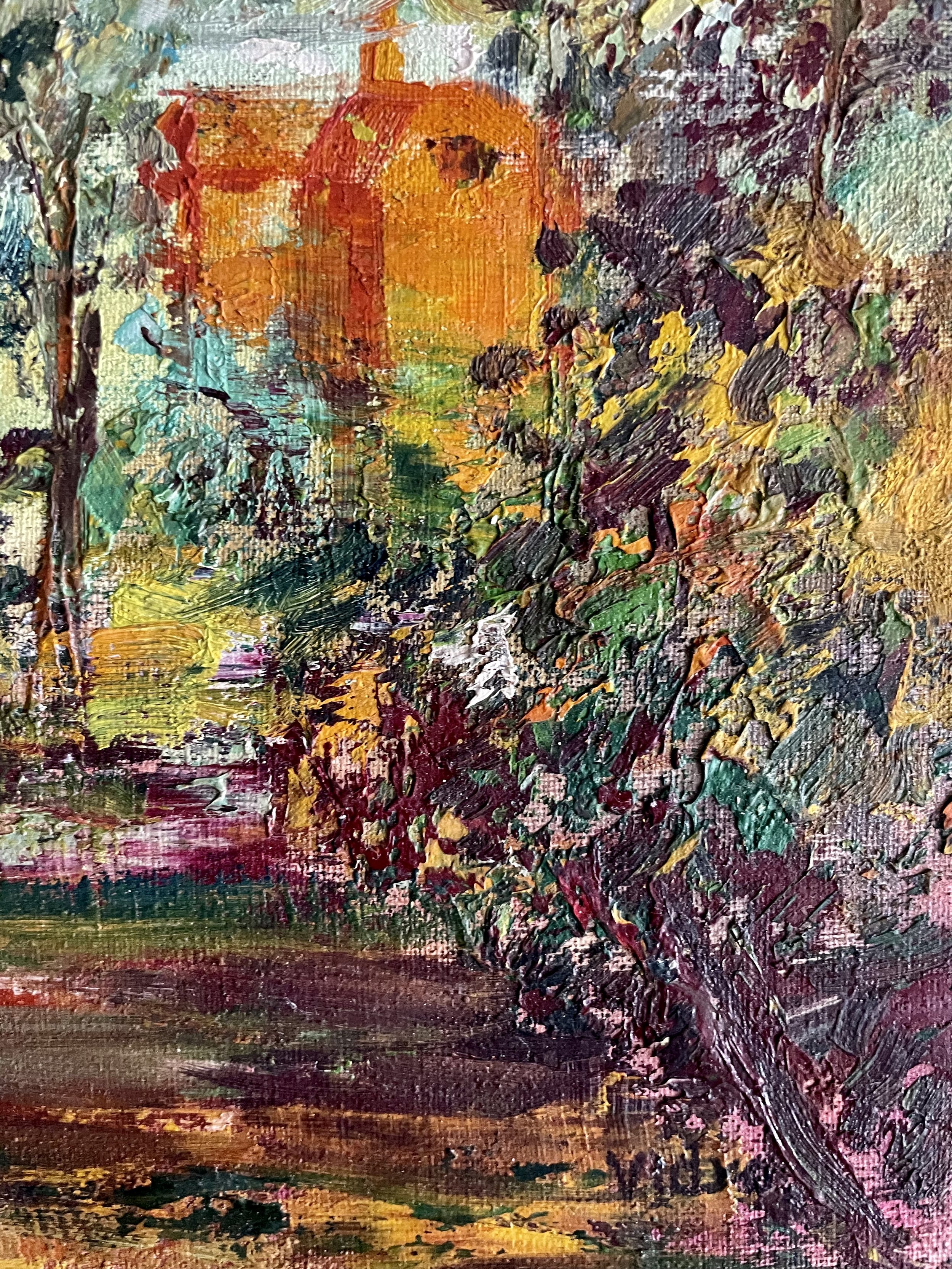
 Image 1 of 10
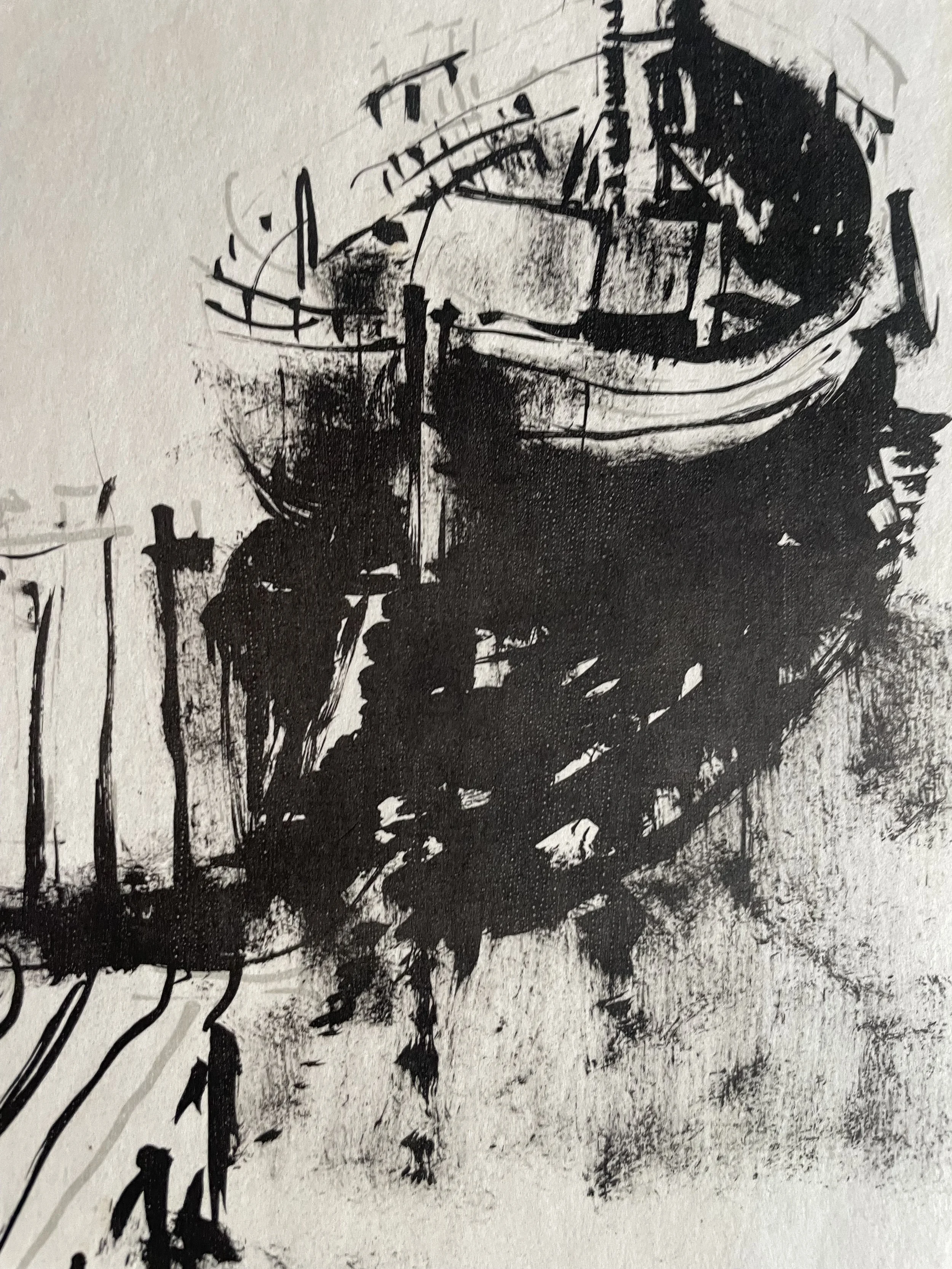 Image 2 of 10
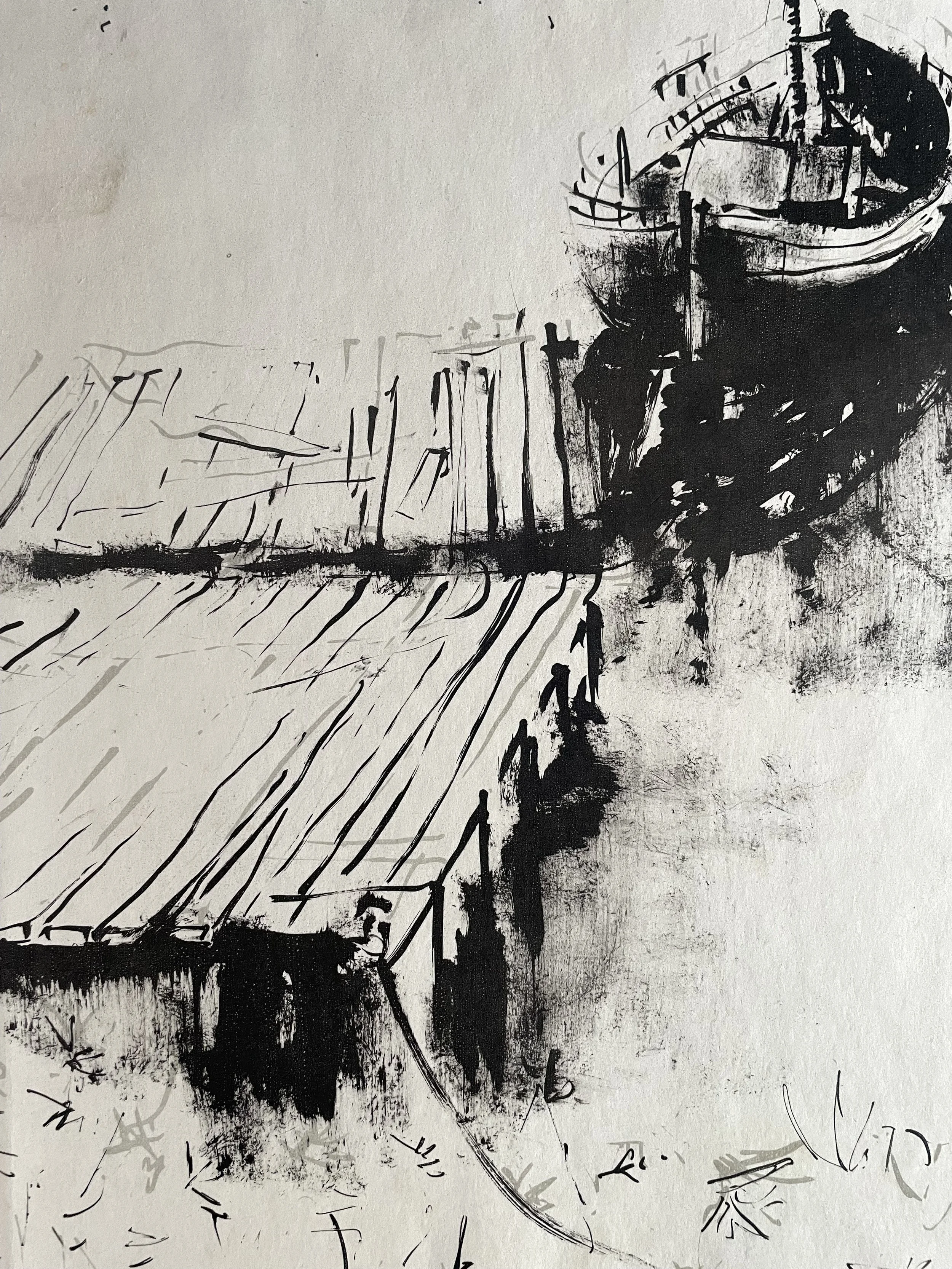 Image 3 of 10
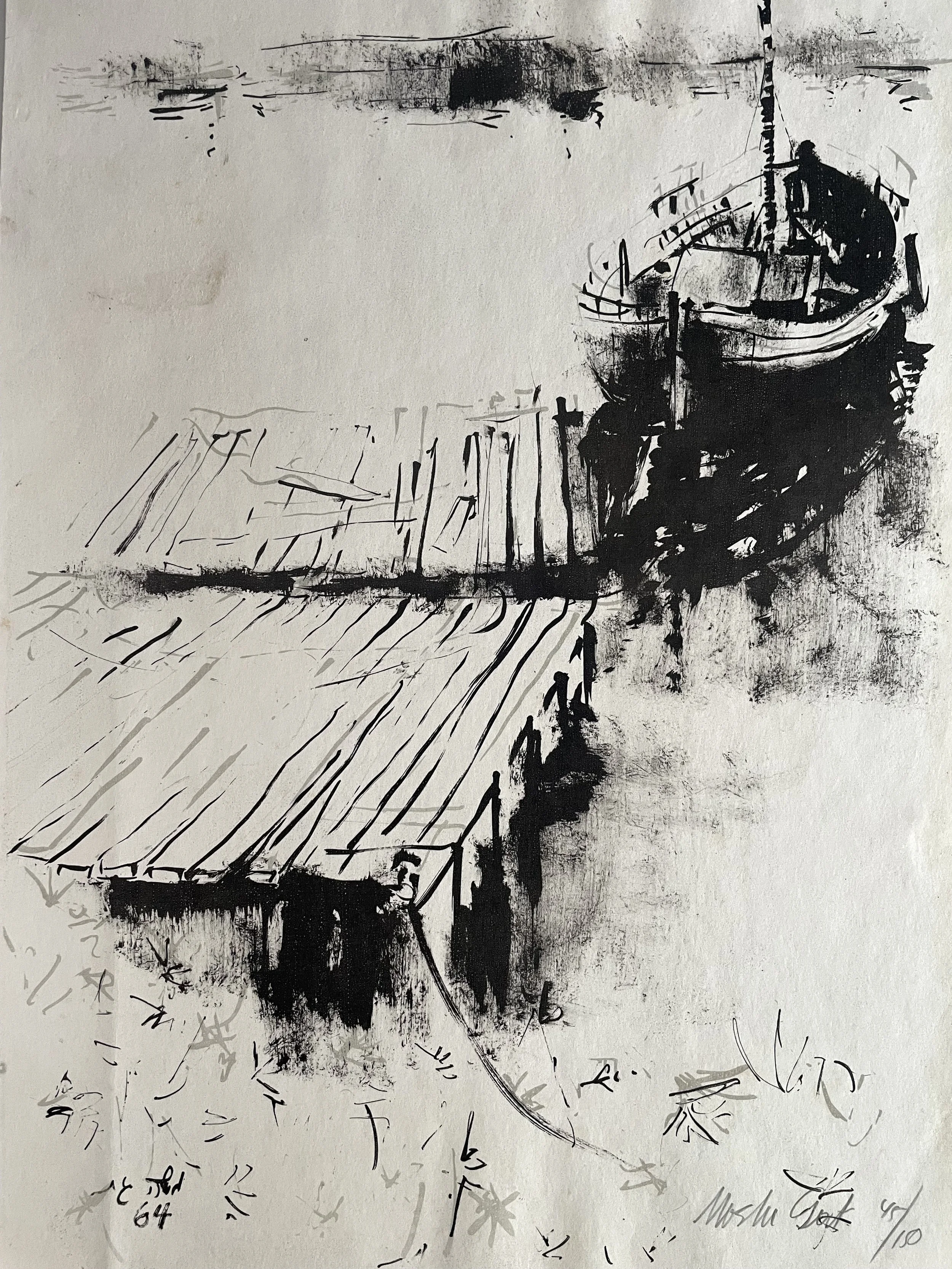 Image 4 of 10
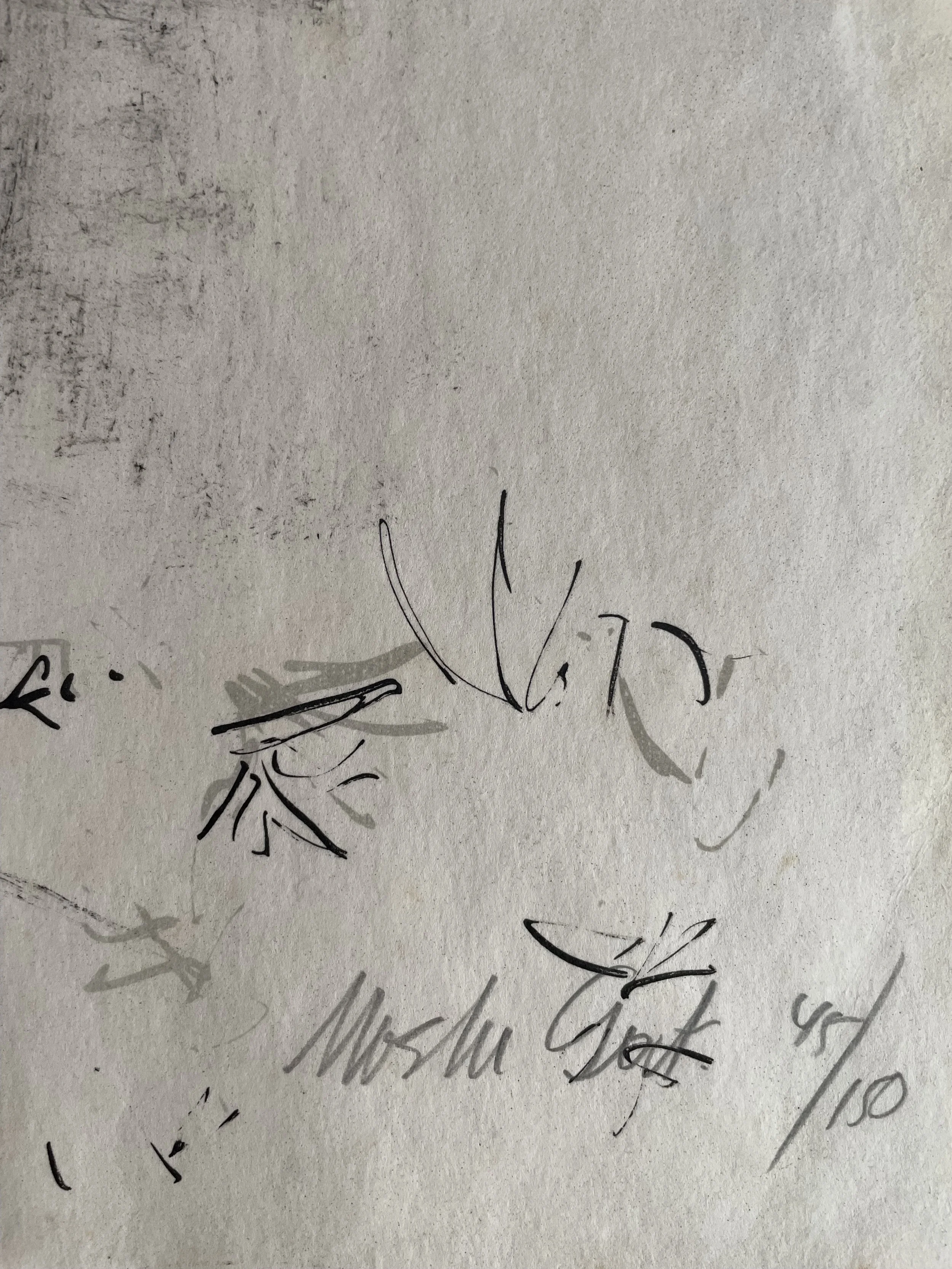 Image 5 of 10
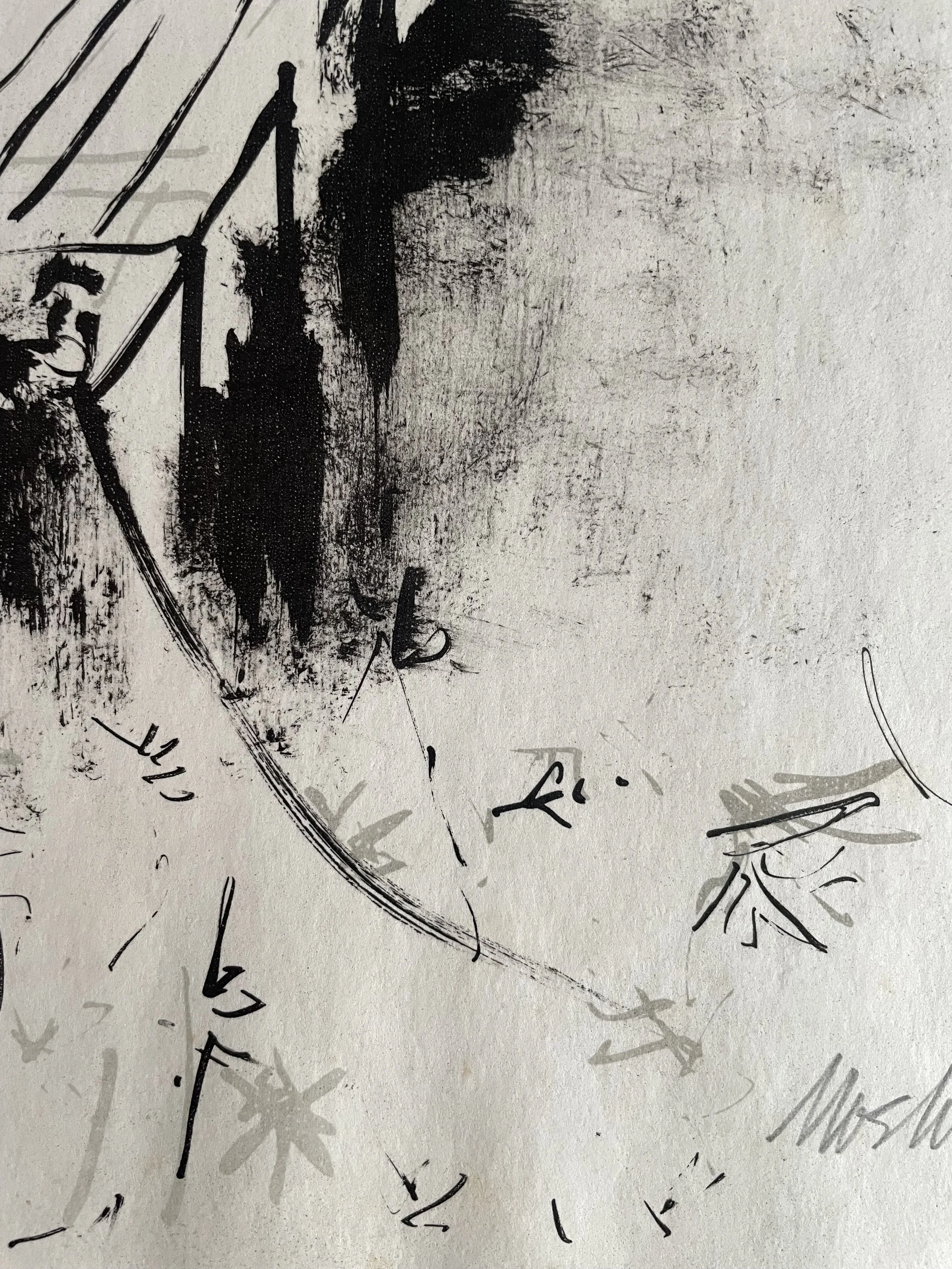 Image 6 of 10
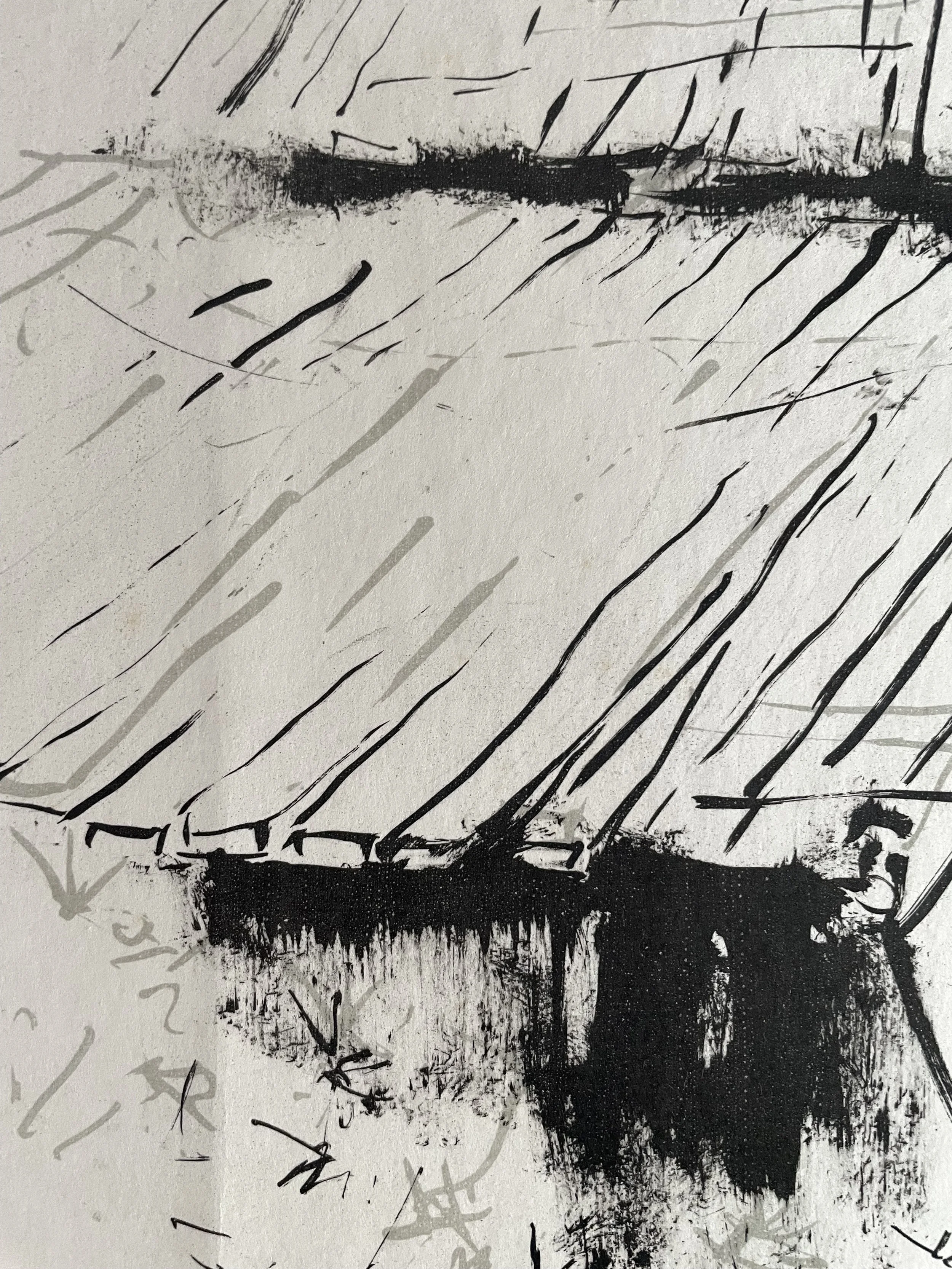 Image 7 of 10
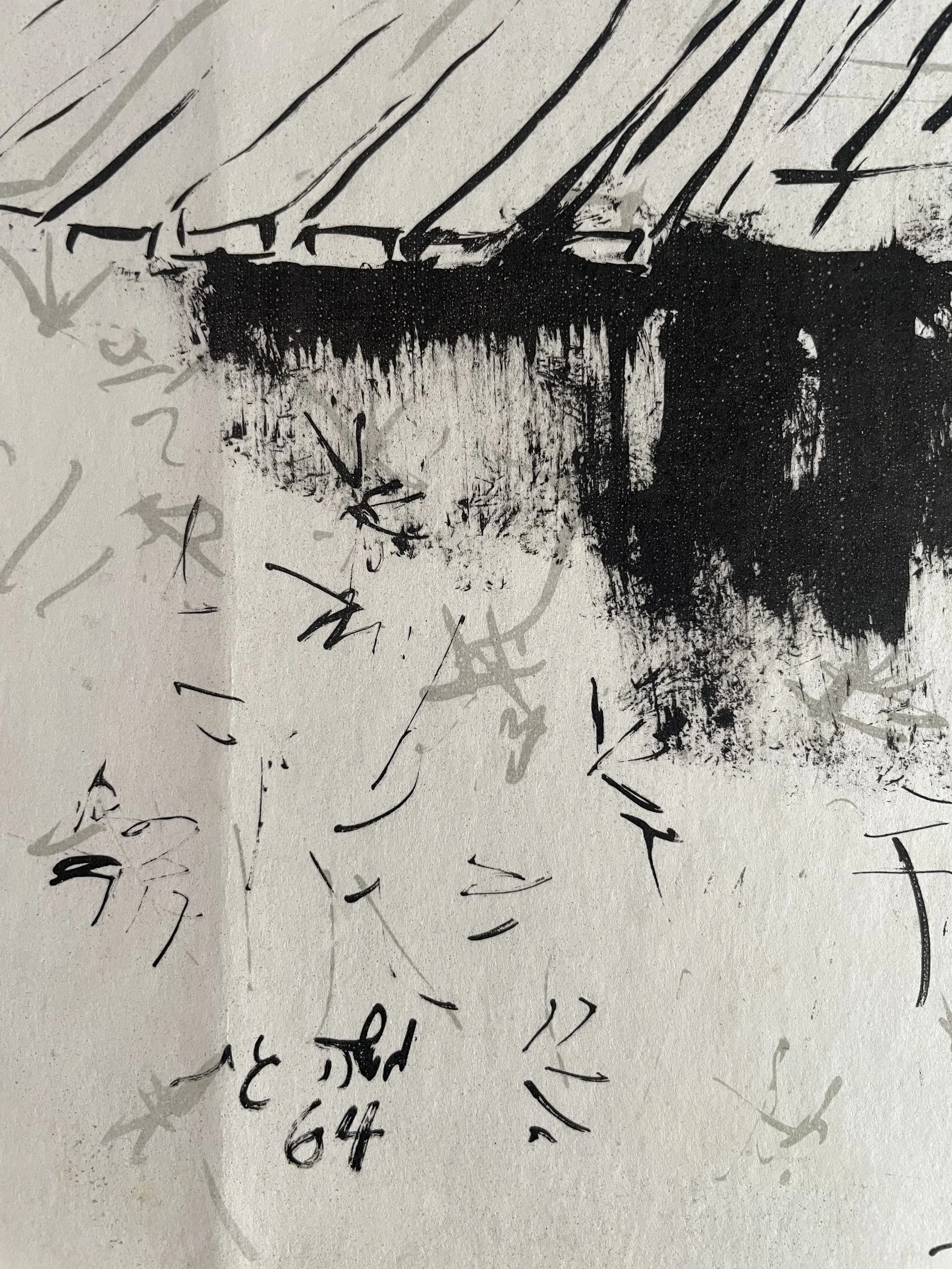 Image 8 of 10
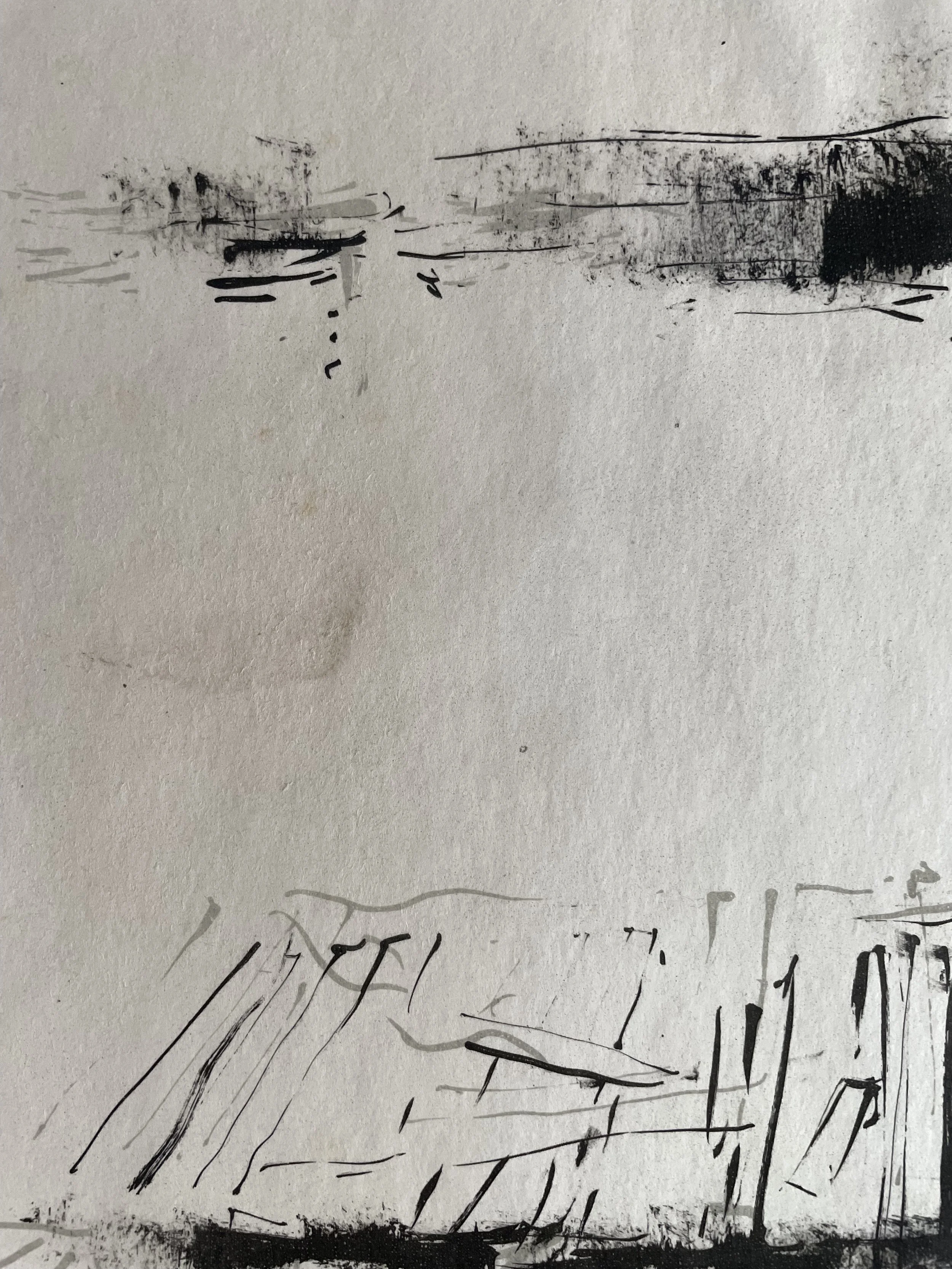 Image 9 of 10
 Image 10 of 10
Moshe Gat (1935–2022)
Israeli Painter • Printmaker • Traveler • Humanist Storyteller
Moshe Gat stands today as one of the most quietly influential yet under-recognized masters of 20th-century Israeli art. His works occupy an intersection rarely achieved with such natural fluency: the emotional realism of post-war figurative art; the expressive linework of European draftsmanship; and the lyrical, social, and folkloric sensibilities of both Middle Eastern and Latin American traditions.
His career traces the arc of an artist deeply in tune with humanity—one who consistently depicted ordinary people with dignity, introspection, and a subtle but unmistakable empathy.
Early Life & Foundations (Haifa → Jerusalem)
Born in Haifa in 1935, Moshe Gat came of age in a young, rapidly transforming Israel. These surroundings—urban life, ports, laborers, immigrants, and multicultural neighborhoods—became the visual vocabulary that shaped nearly all of his later work.
He studied at the Bezalel Academy of Art and Design, the cradle of Israeli modernism, where he was trained in:
Academic drawing and draftsmanship
Techniques of classical European printmaking
Observational realism rooted in early Israeli figurative traditions
Landscape traditions mingled with humanistic portraiture
By his early twenties, Gat had already established himself as a technically formidable draftsman with a deep interest in lithography, woodblock-inspired mark-making, and tonal storytelling.
Transformational Period Abroad: Mexico, Europe, & the Birth of His Mature Style
In the late 1950s and early 1960s, Gat embarked on a series of study and work trips that permanently broadened his artistic voice.
Mexico — A Turning Point
His time in Mexico profoundly influenced him. There he encountered:
The Mexican Muralists (Orozco, Rivera, Siqueiros)
The Taller de Gráfica Popular printmaking collective
A culture where art was inseparable from social identity and the dignity of the working class
This exposure ignited in Gat a lifelong affinity for portraying everyday people—fishermen, musicians, dockworkers, mothers, laborers—through a lens of emotional authenticity. His mark-making also grew freer, more rhythmic, and more symbolic during this period.
Paris & Italy — Refinement, Structure, and Expression
While in Paris and Italy, Gat absorbed:
European expressionism
Postwar realism and figurative abstraction
Classical compositional balance
The vitality of modern graphic experimentation
These influences fused with his earlier training, allowing him to shift seamlessly between delicate linearity and bold gestural work, between quiet introspection and dramatic contrast.
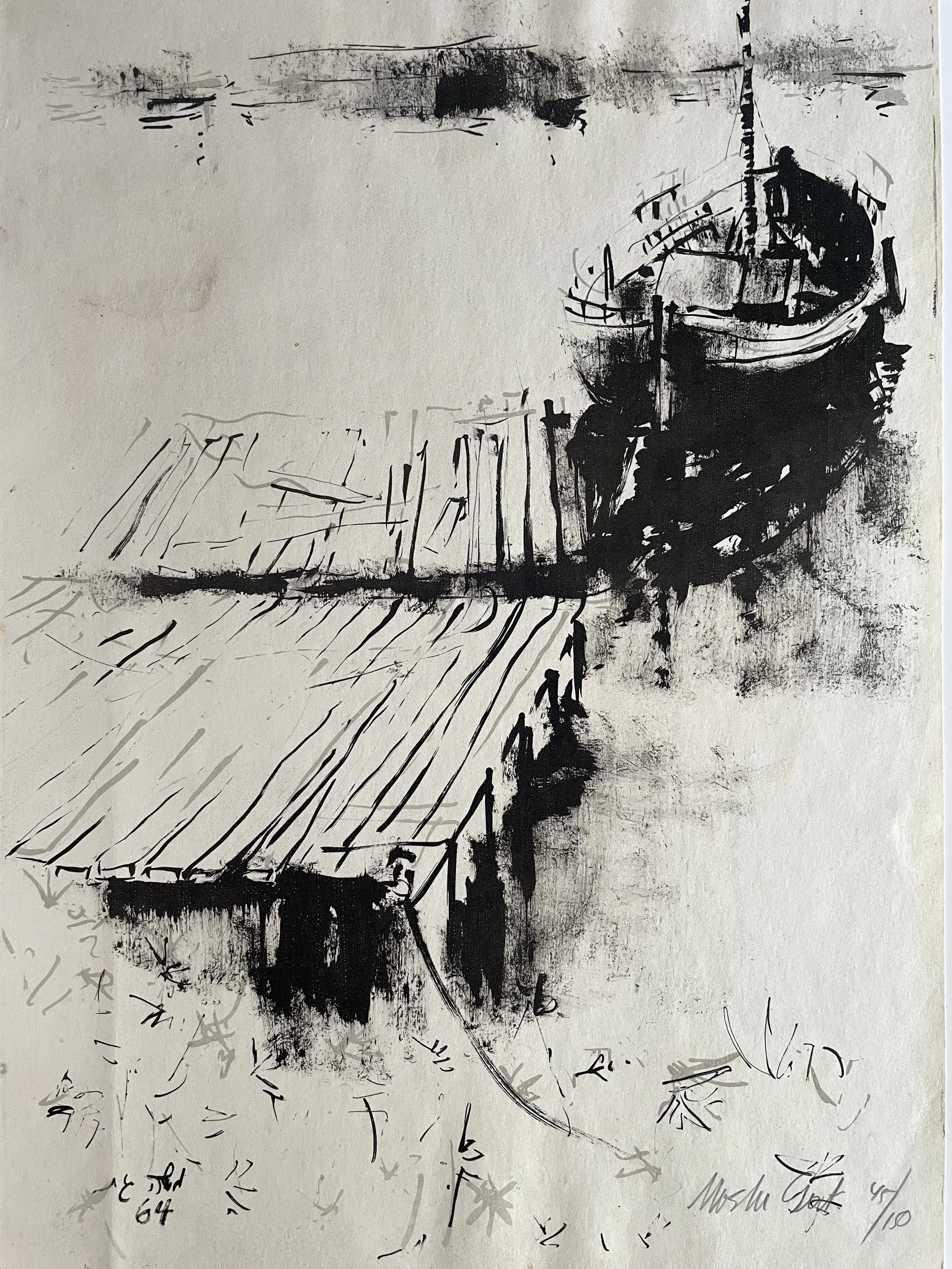
His 1960s lithographs—including your 1964 example—are considered among his most compelling works, balancing expressive looseness with precision.
Signature Themes & Visual Language
Moshe Gat’s art is recognized for several defining characteristics:
Humanity & Modest Subjects
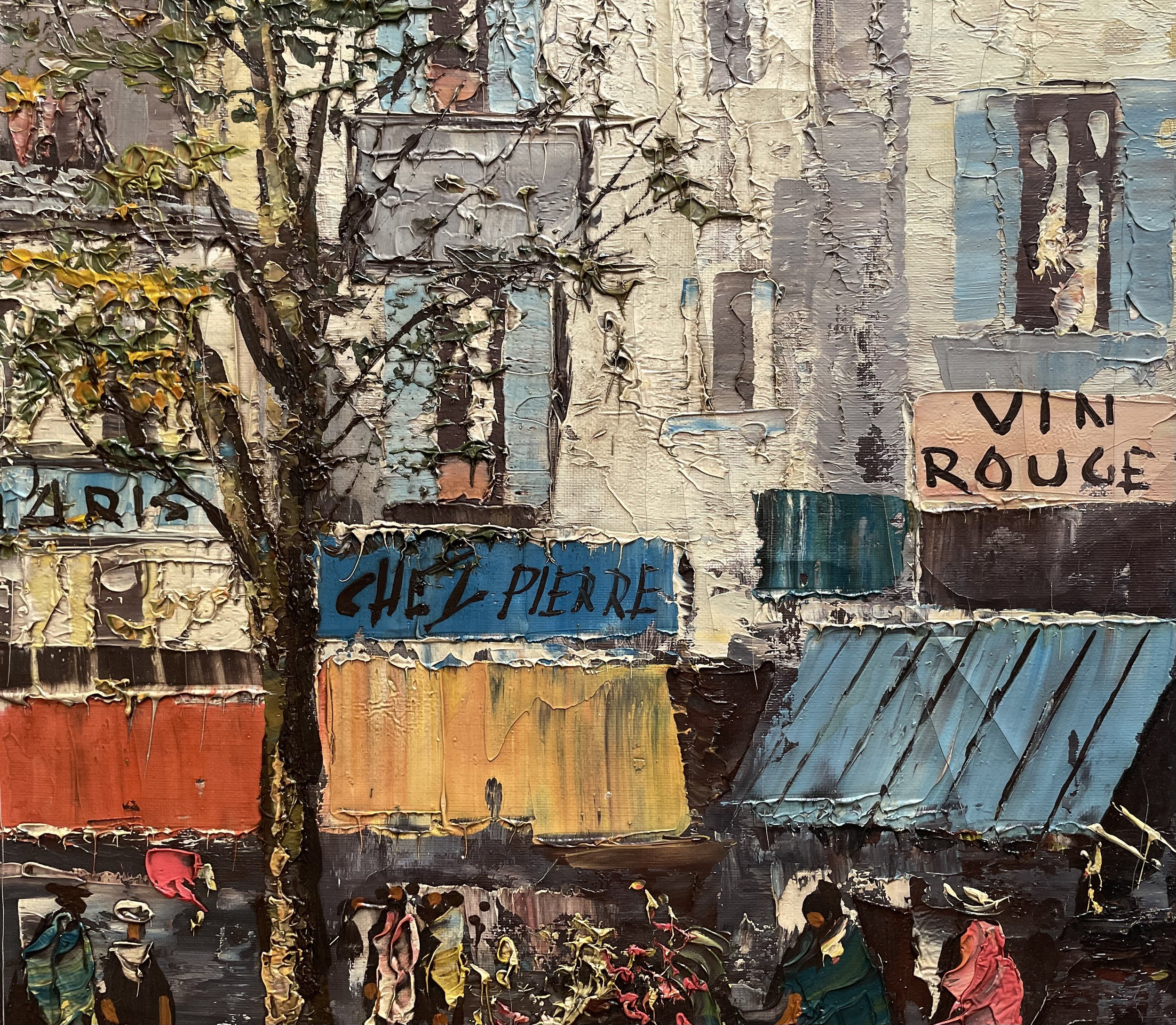
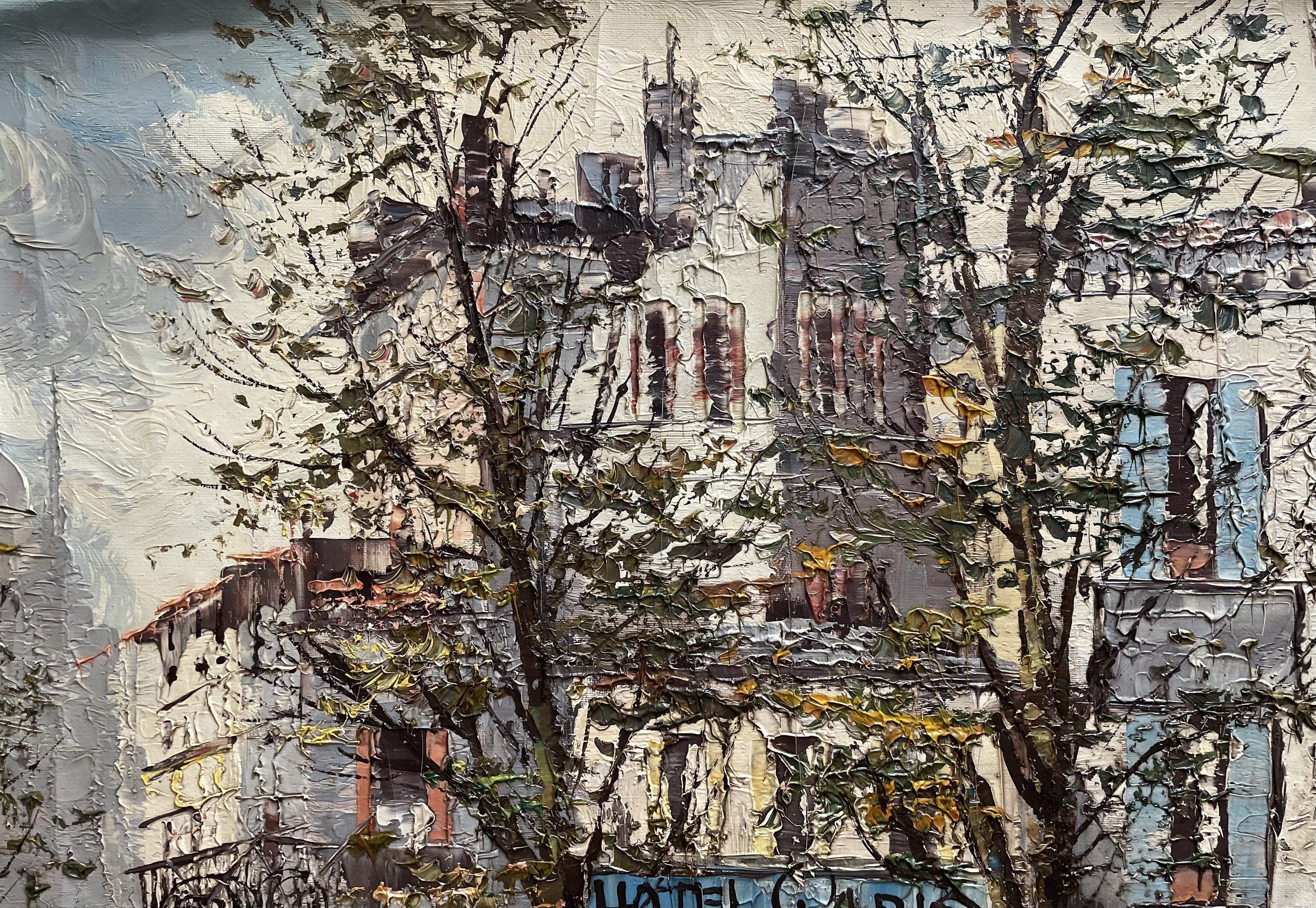
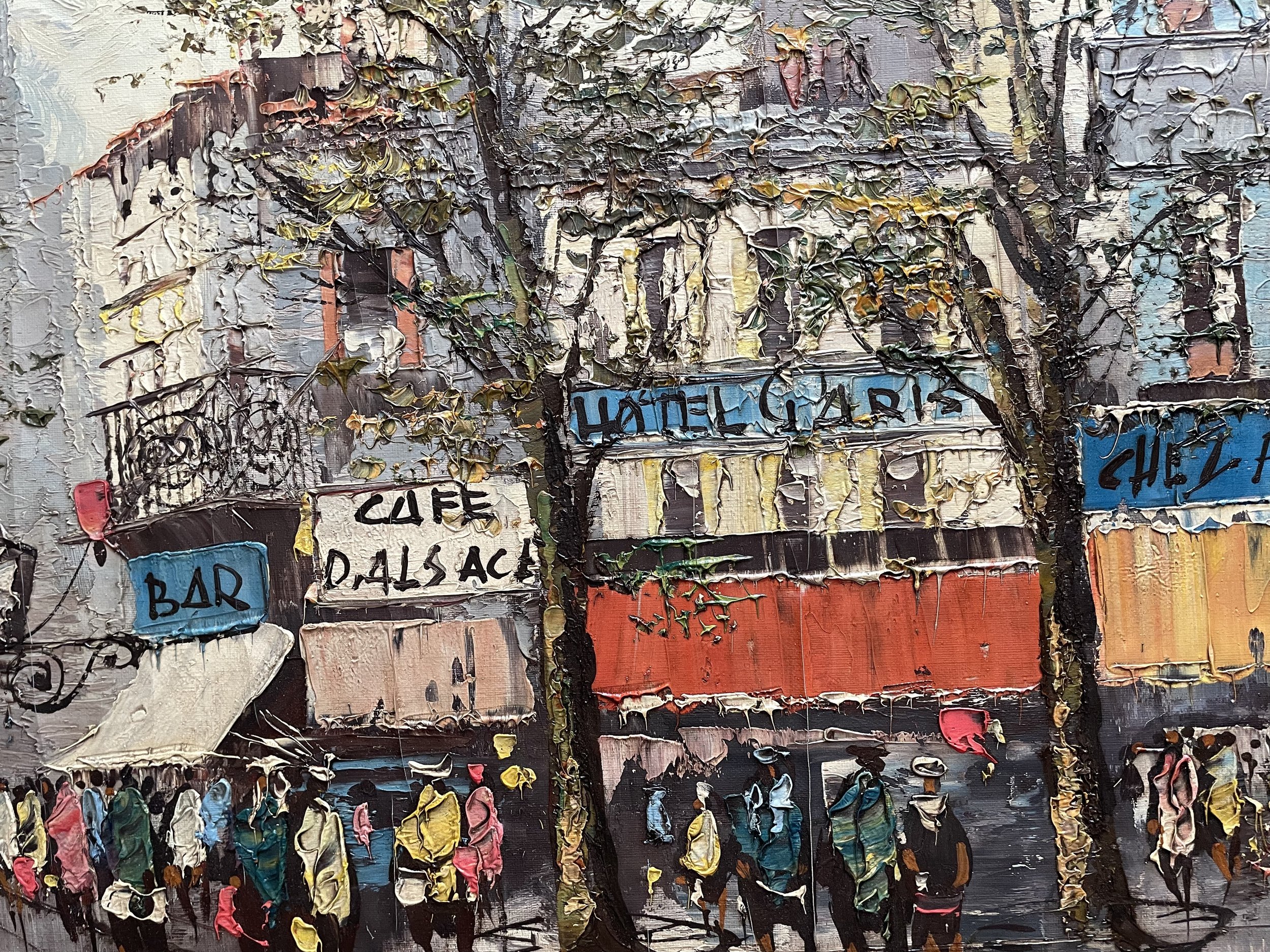
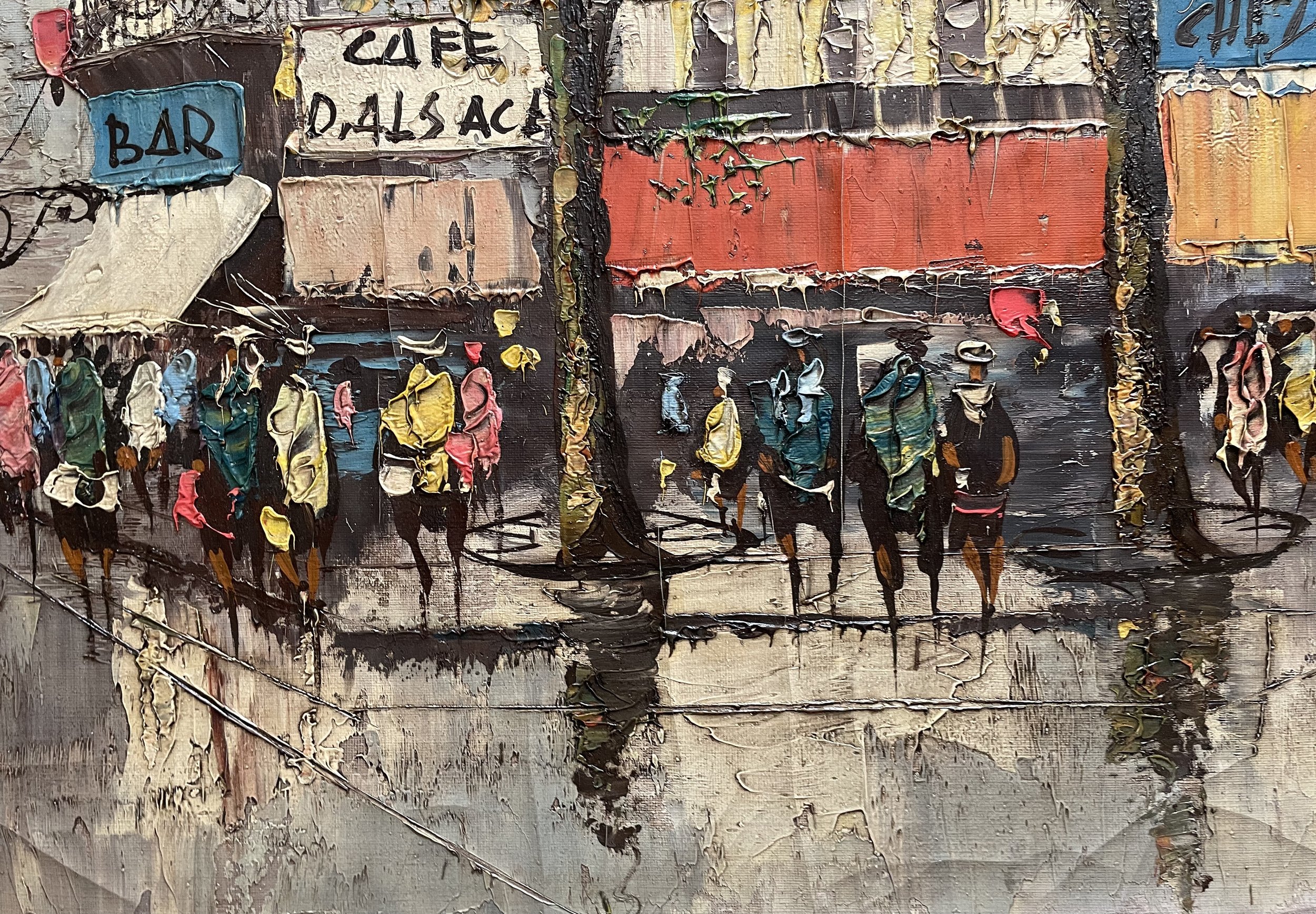
Whether portraying a dockside figure, a fisherman, a café scene, or a village musician, Gat imbued his subjects with an introspective, human depth. He rarely idealized; instead, he captured people in their natural emotional states—tired, contemplative, hopeful, or quiet.
Gestural, Calligraphic Linework
Gat’s hallmark is his fusion of:
Israeli realism
Japanese-influenced simplicity
Mexican graphic directness
European expressionist calligraphy
This creates a line quality that feels both spontaneous and deeply intentional.
Lithographic Mastery
His prints are distinguished by:
Dense, velvety blacks
Controlled washes of midtone
Raw, textured paper revealing atmospheric depth
Free-floating marks that feel symbolically charged
Your 1964 lithograph beautifully exemplifies this balance of realism and abstraction.
Return to Israel & Artistic Recognition
After his travels, Gat returned to Israel with a mature, internationally informed voice. His work resonated widely due to its accessibility, emotional honesty, and cultural authenticity.
He exhibited extensively, and his works entered significant collections, including:
Israeli museums
University collections
International private collectors
Cultural institutions in Europe and North America
Gat also taught, influencing a generation of Israeli artists by demonstrating how personal narrative and social storytelling could coexist with modernist graphic expression.
Late Career & Legacy
Gat remained artistically active for decades, continuing to create paintings, drawings, and prints that maintained:
A love for the human figure
A poetic approach to everyday subjects
A deep connection to laboring and working-class individuals
His passing in 2022 marked the end of a long, richly productive life in which he helped shape the identity of Israeli realist and expressionist printmaking.
Today, collectors increasingly re-evaluate his mid-century works—especially 1950s–1970s lithographs—as historically important examples of Israeli postwar graphic art.