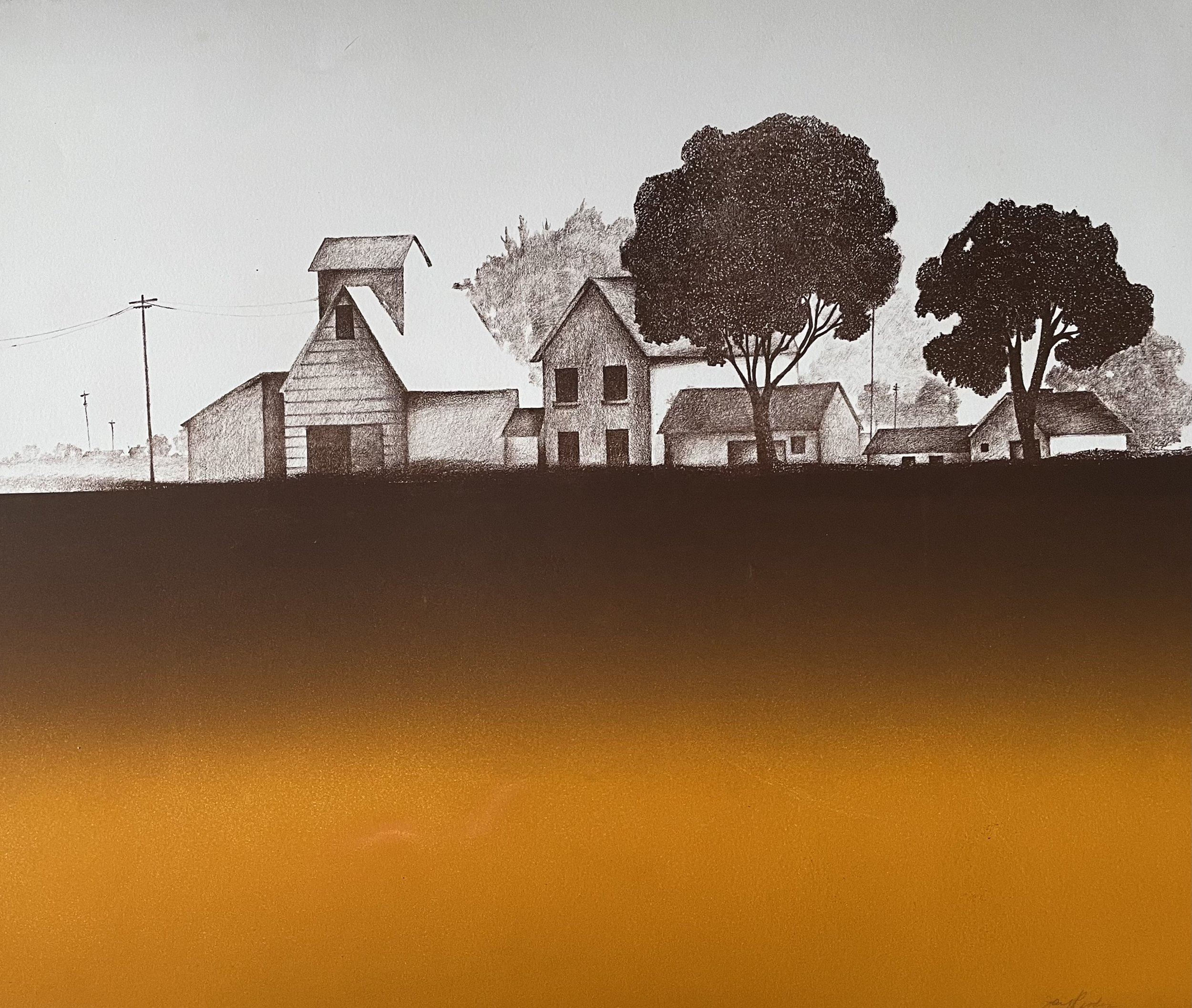
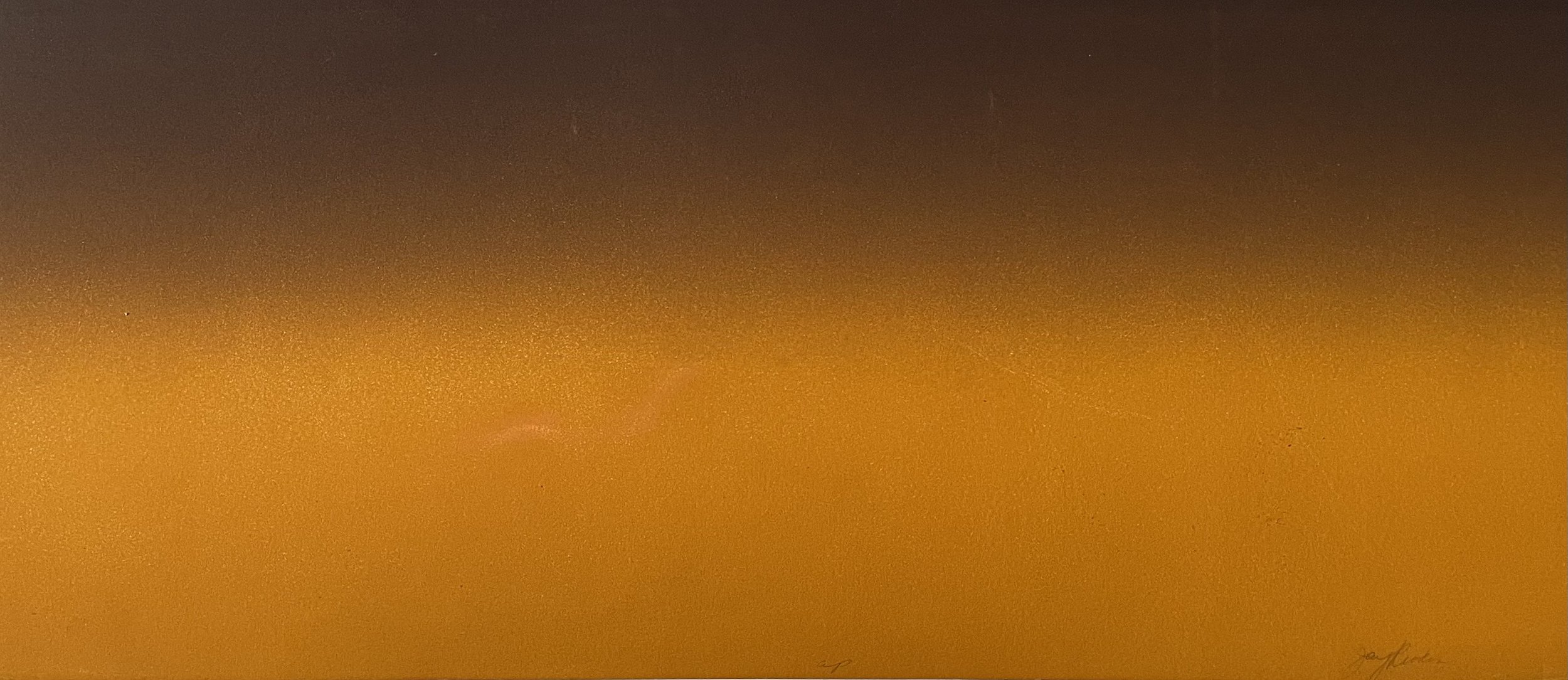
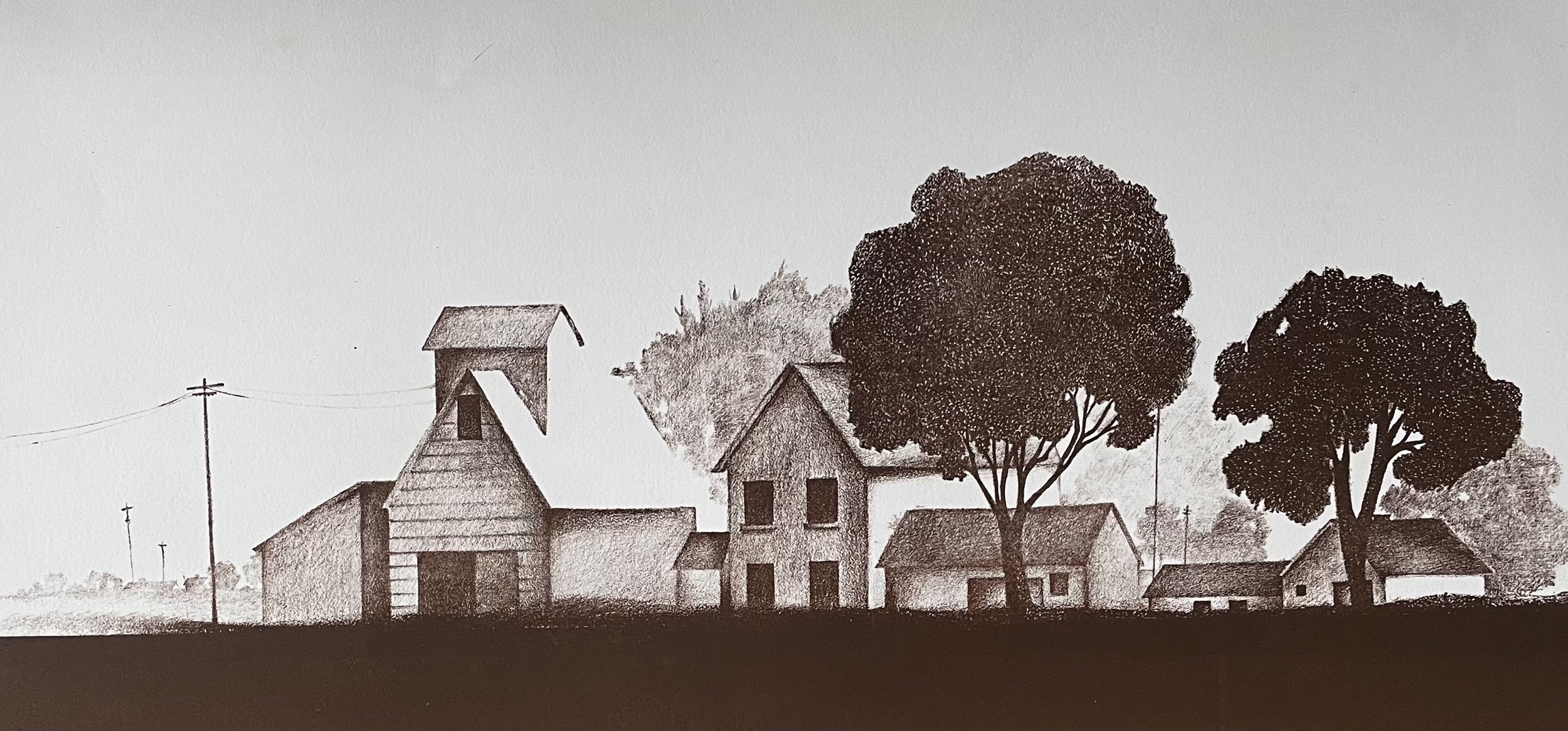
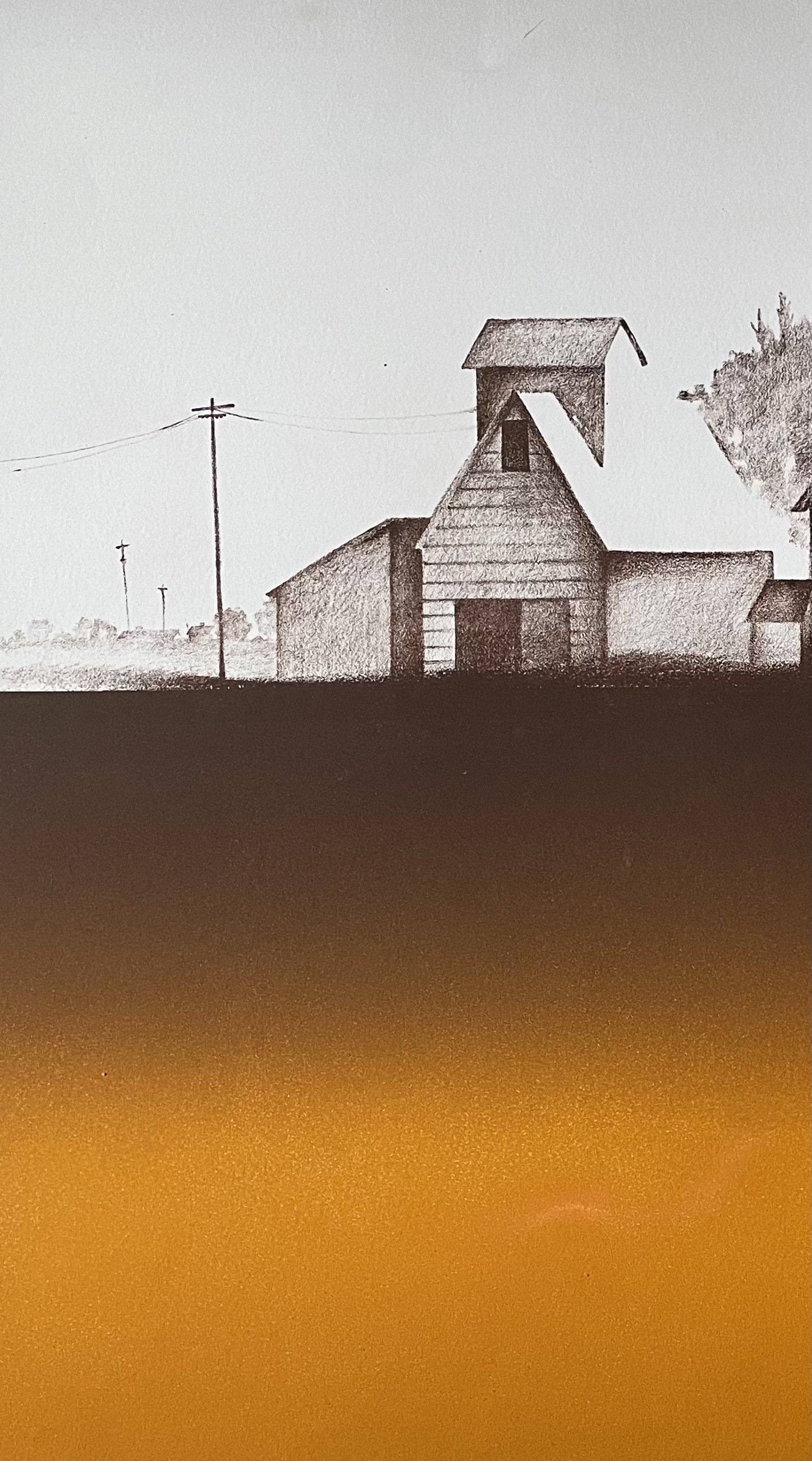
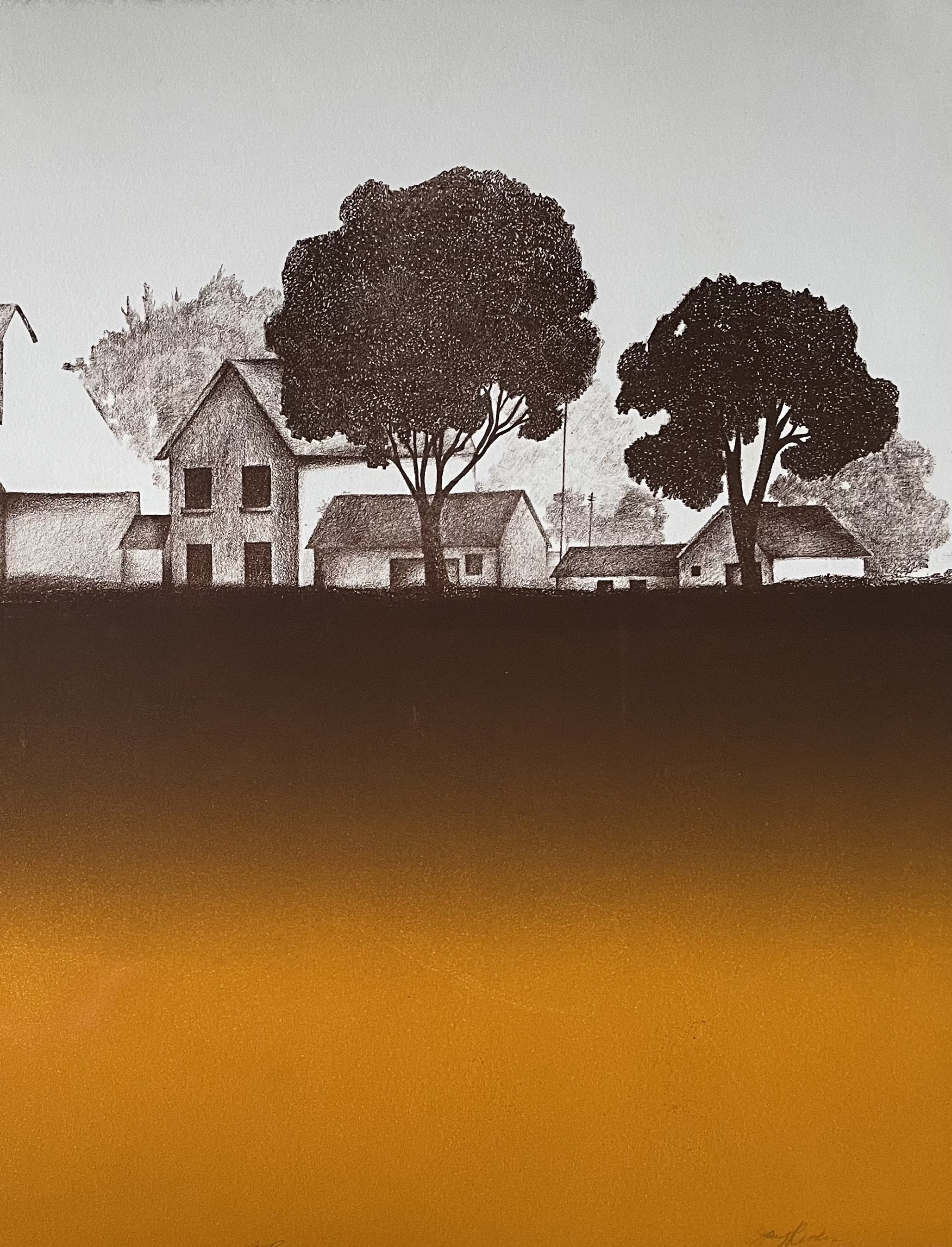
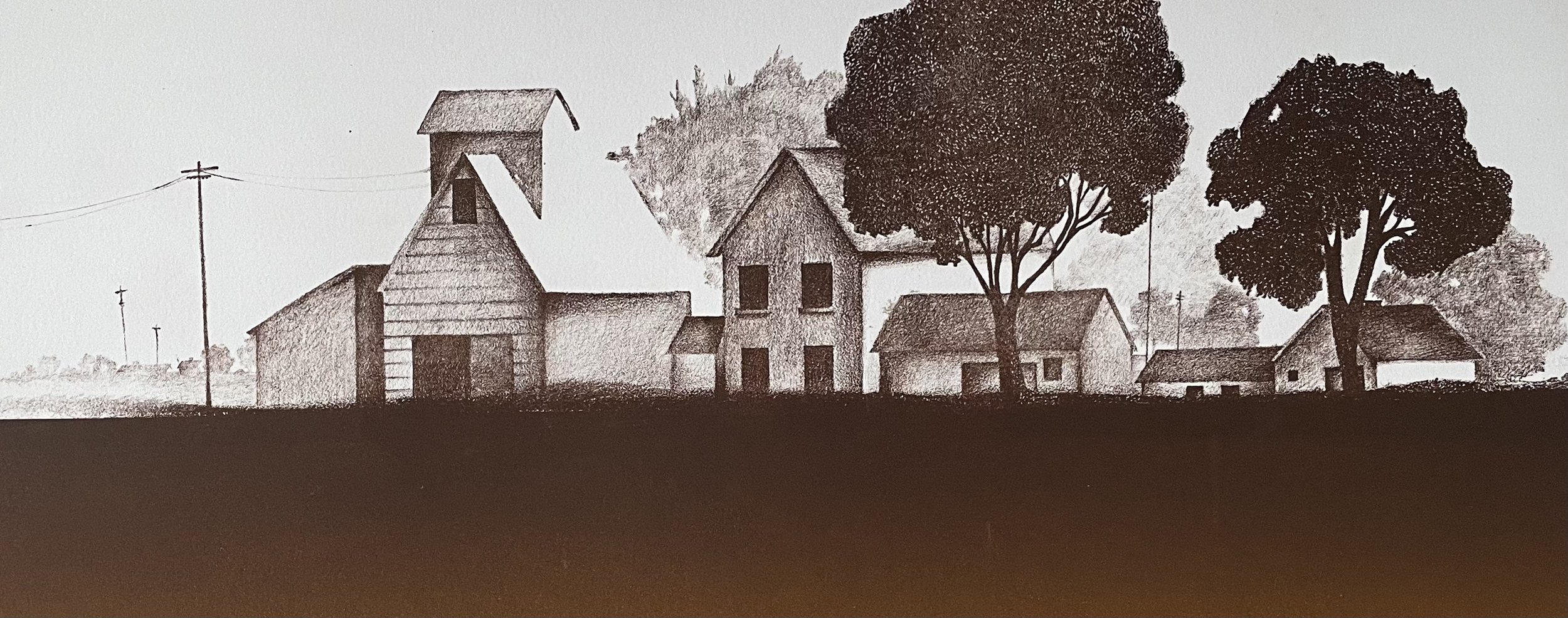
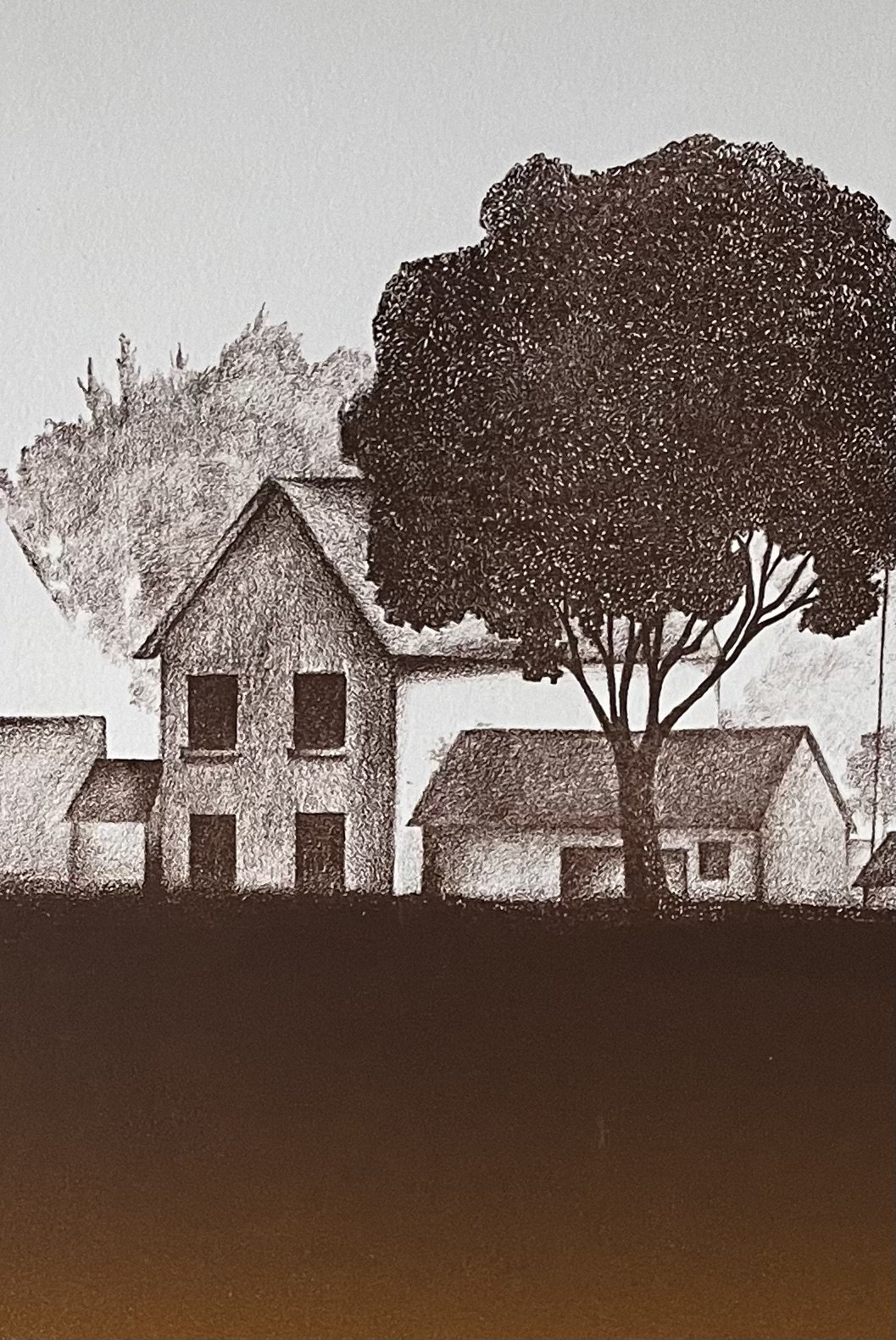
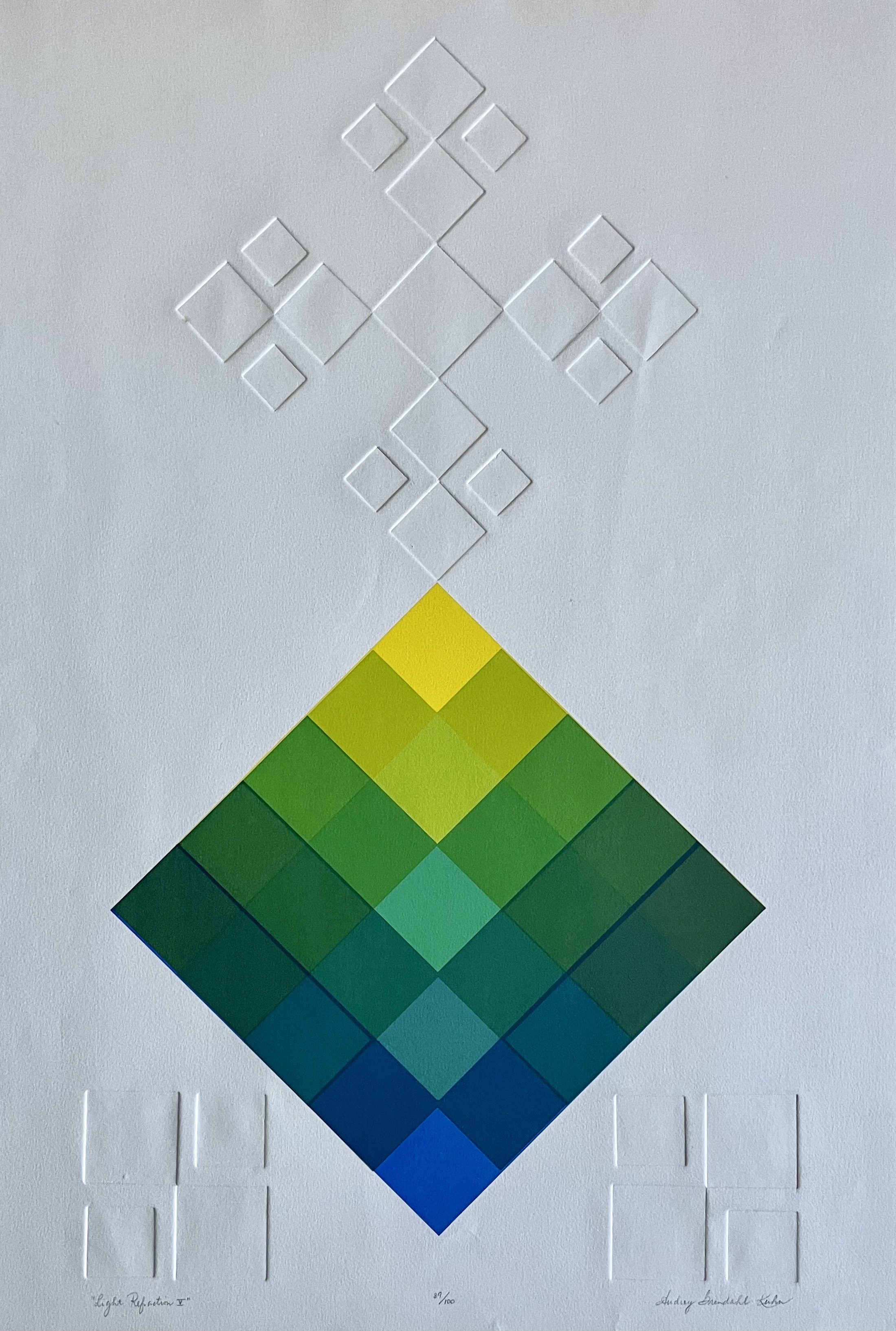
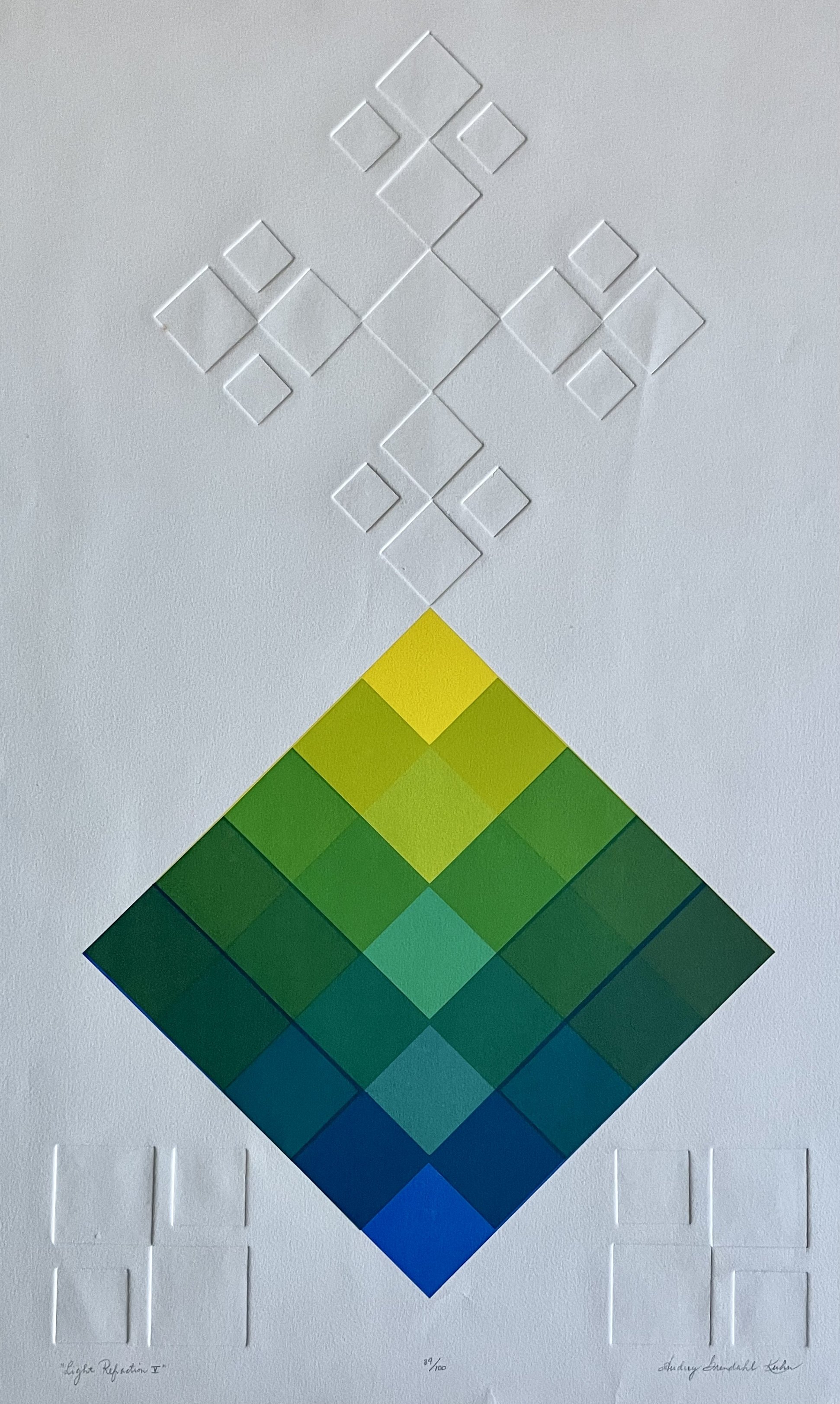
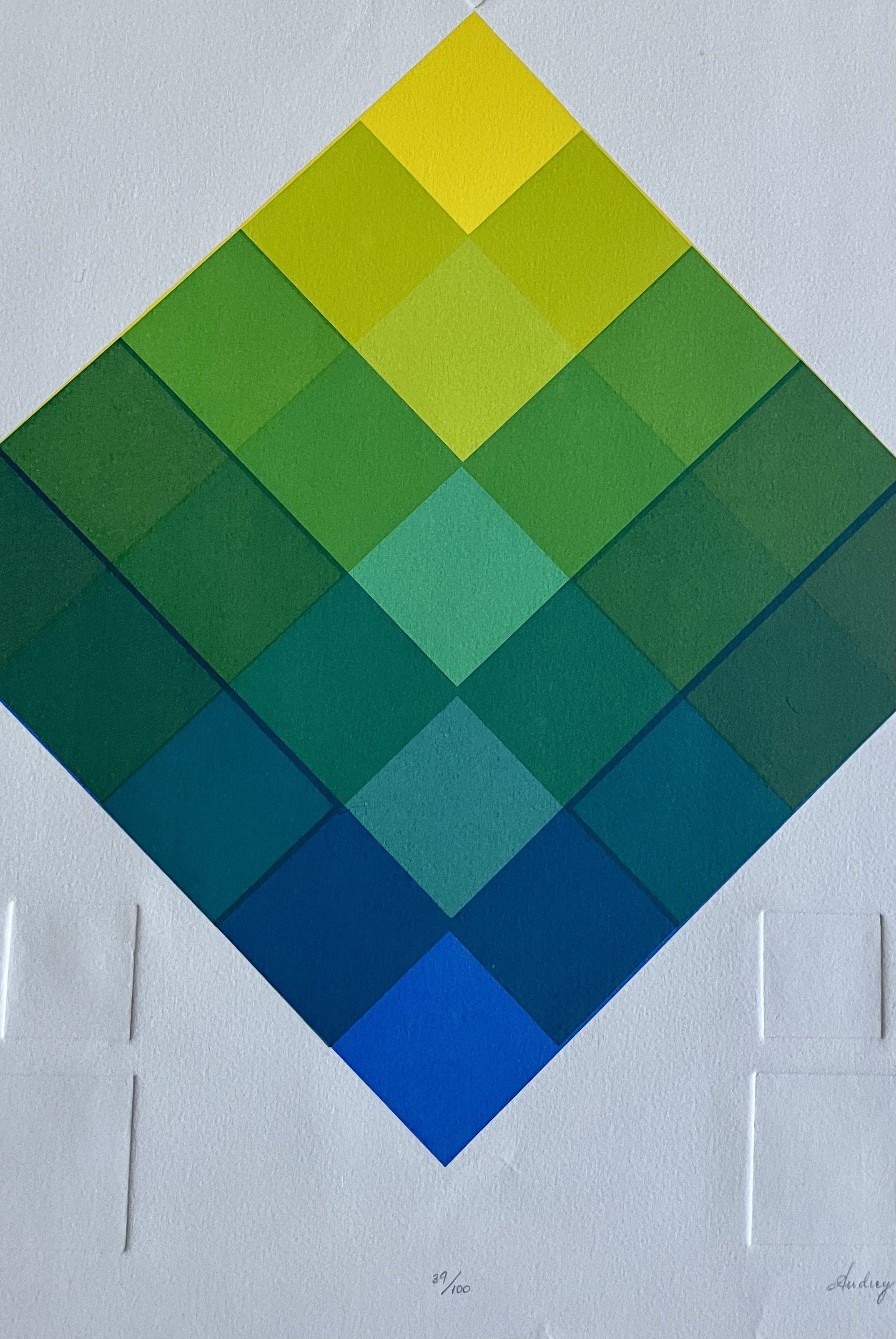
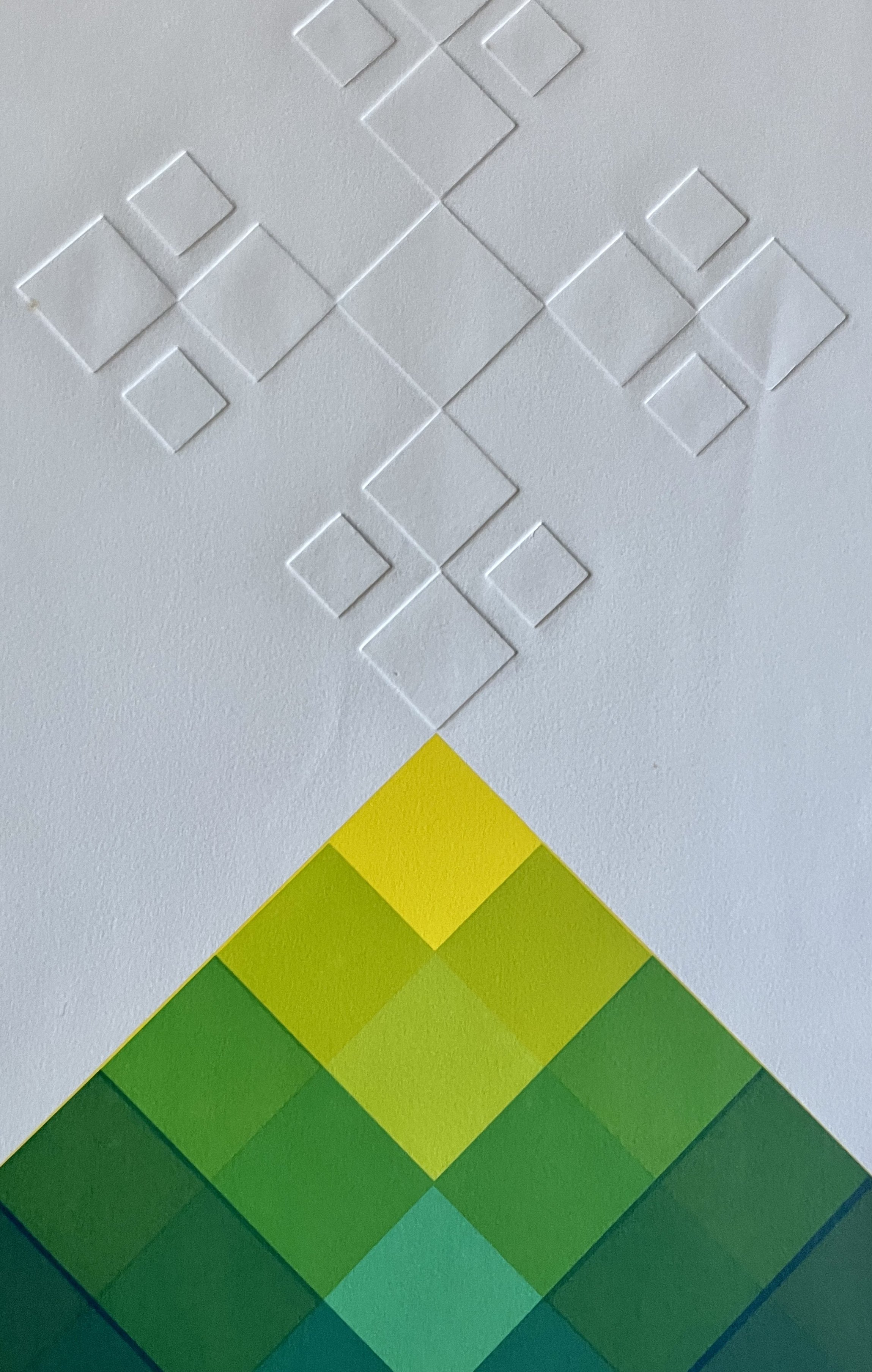
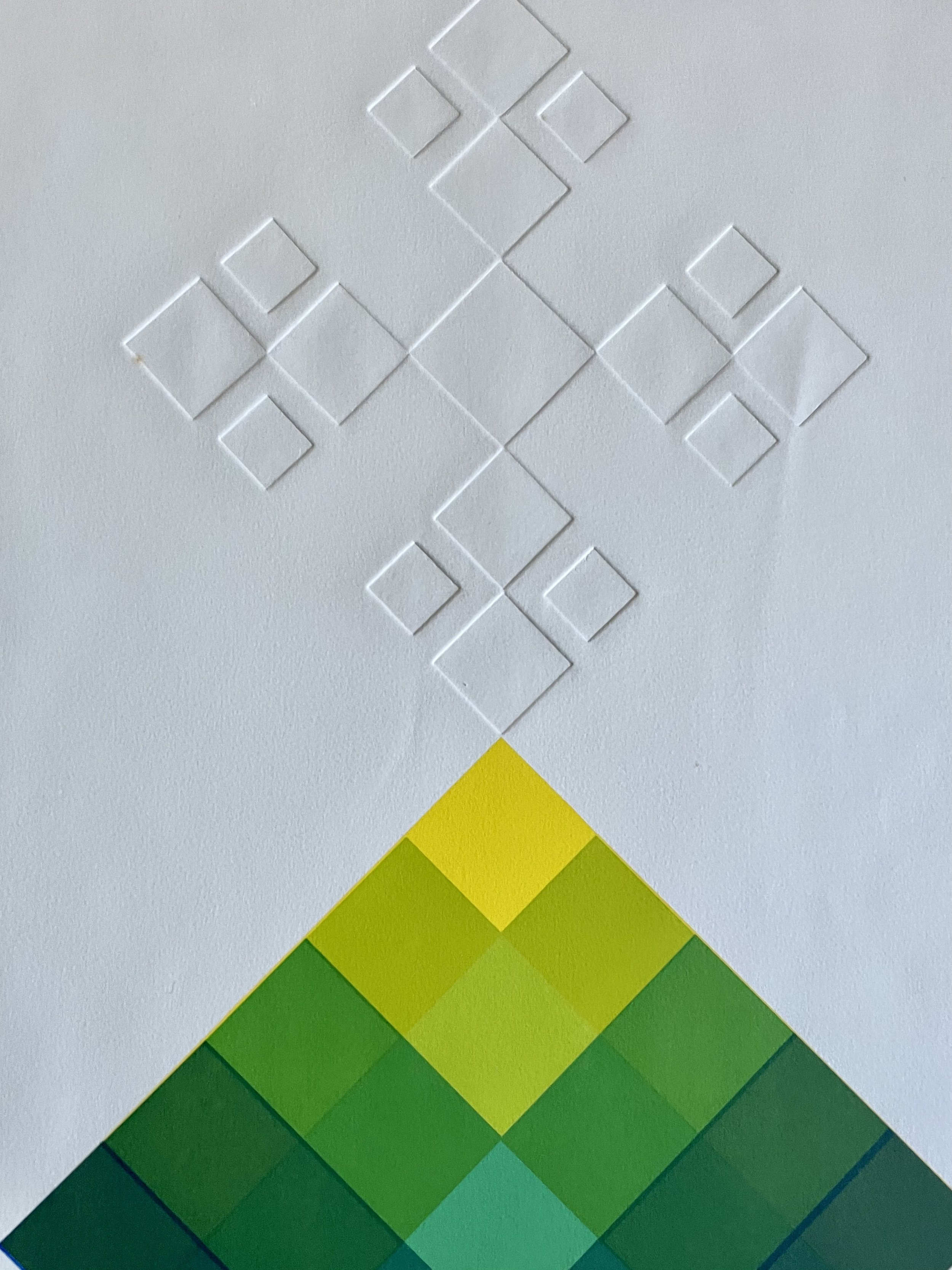
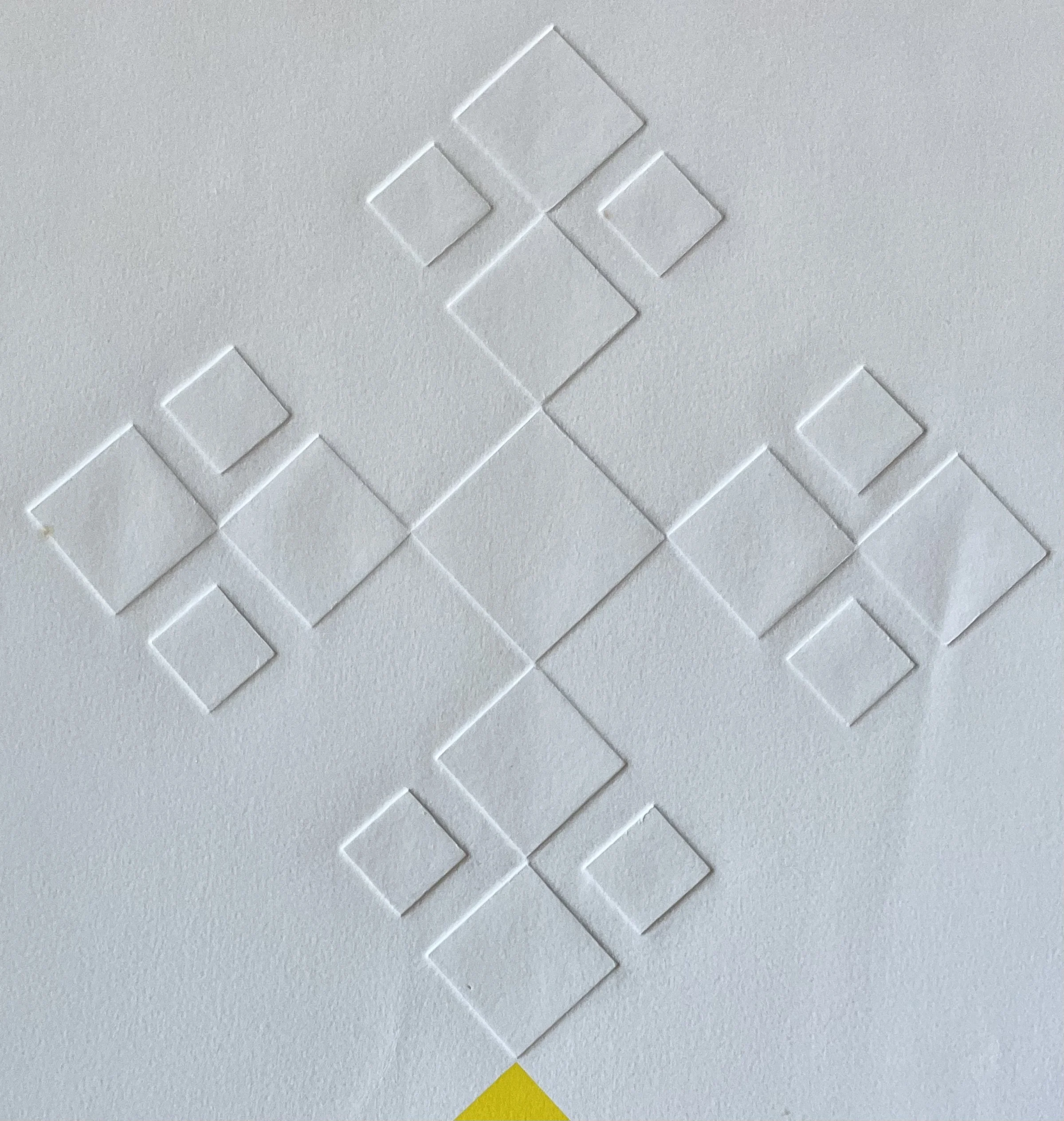
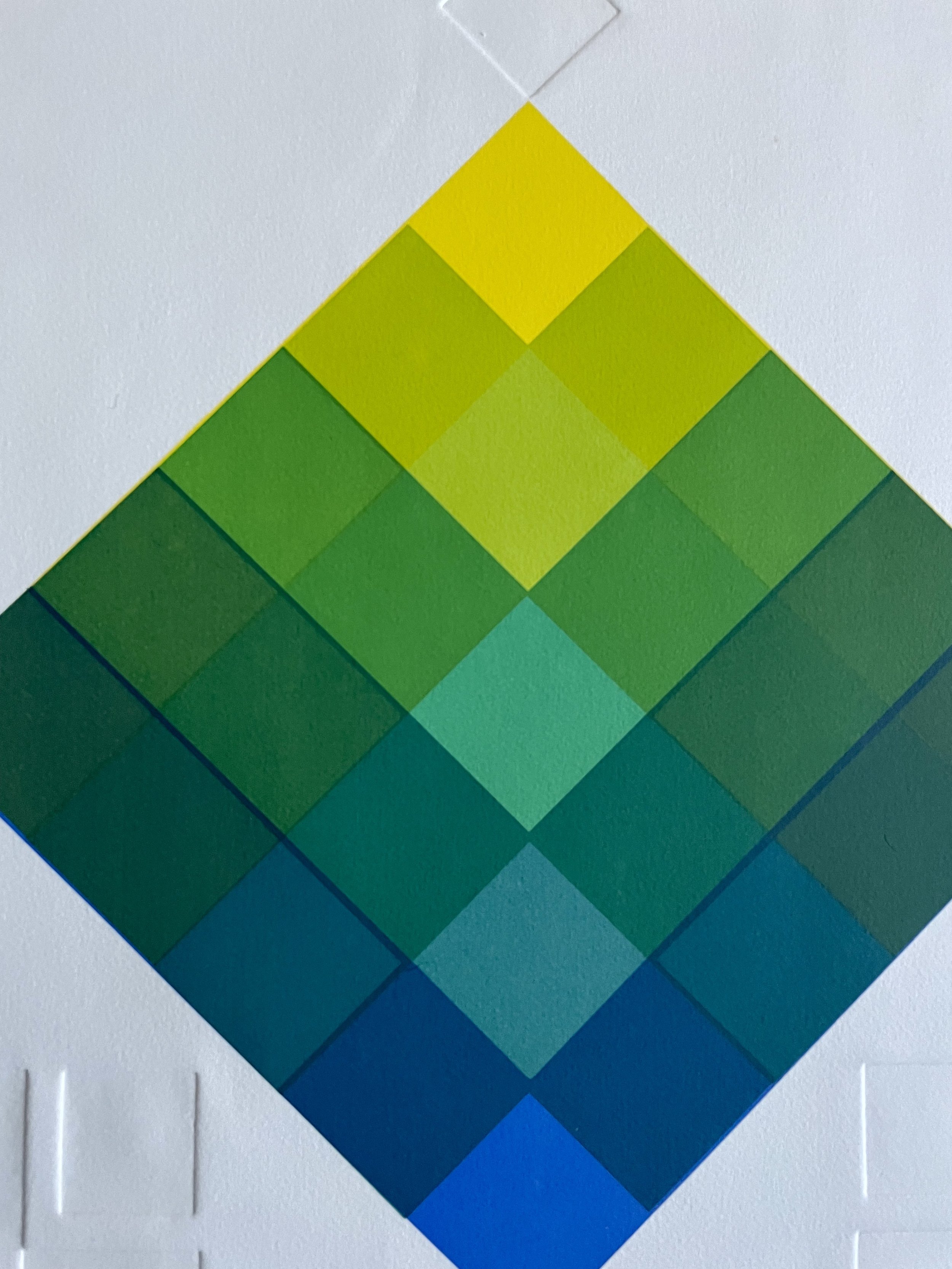
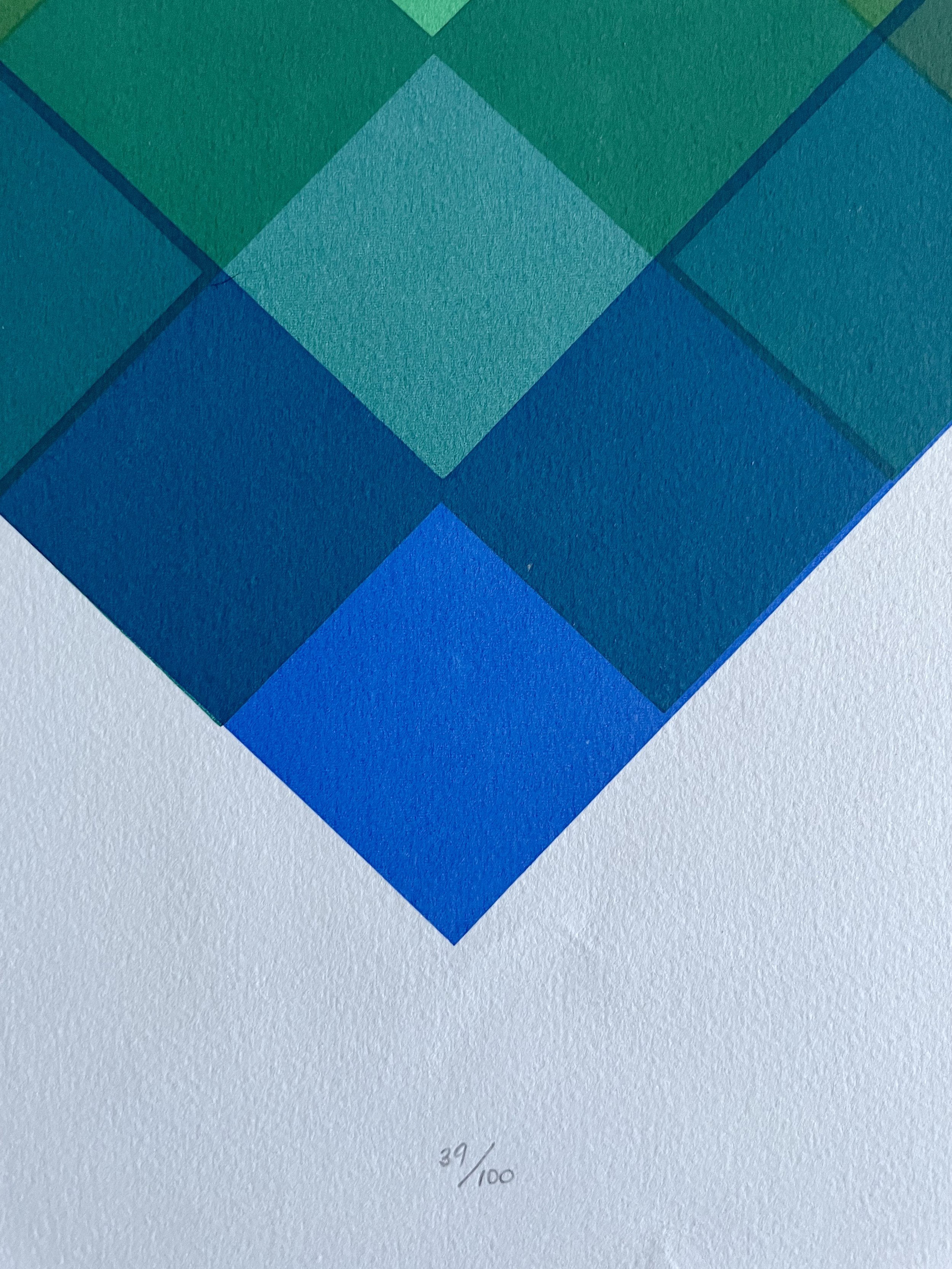
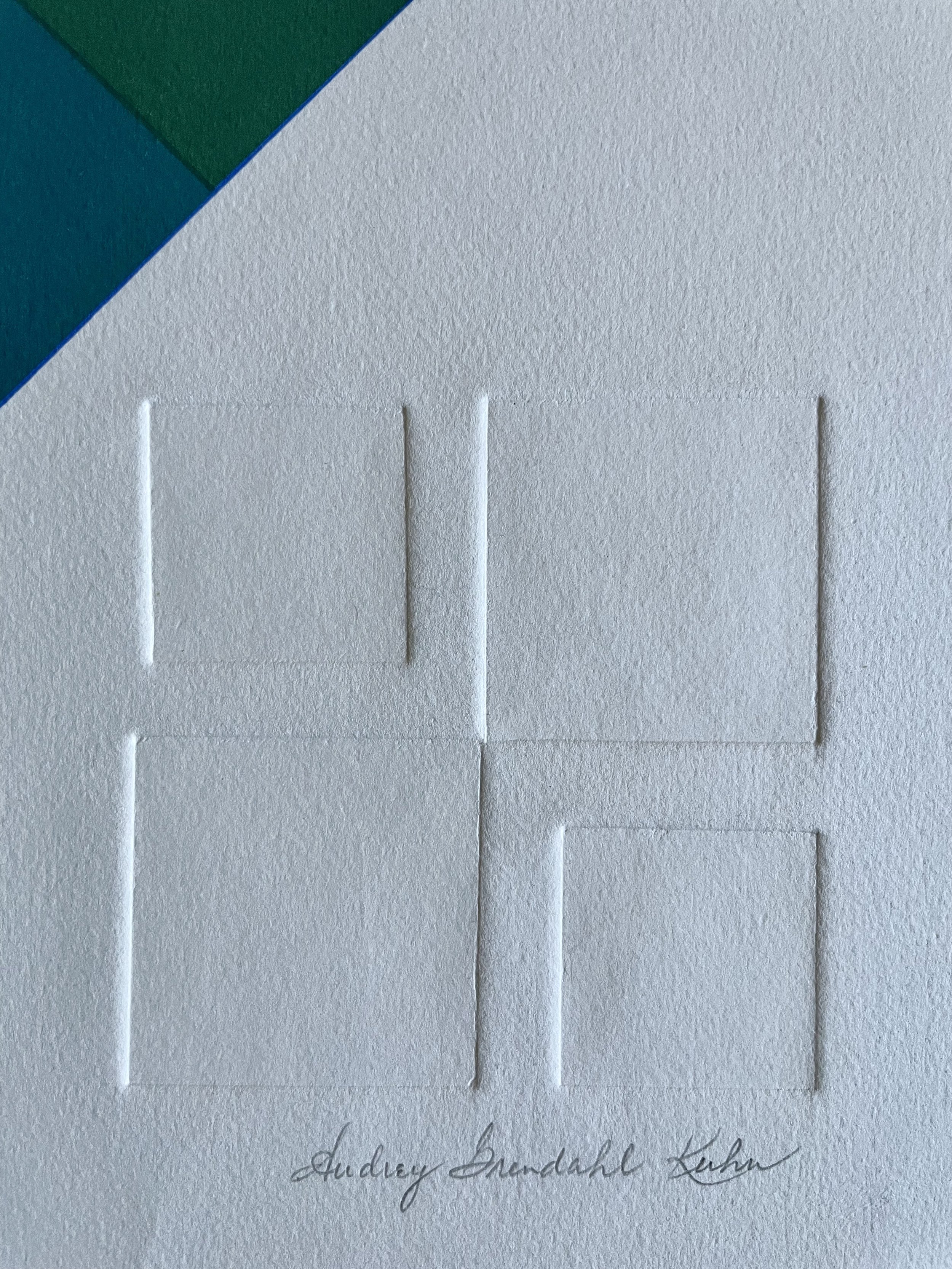
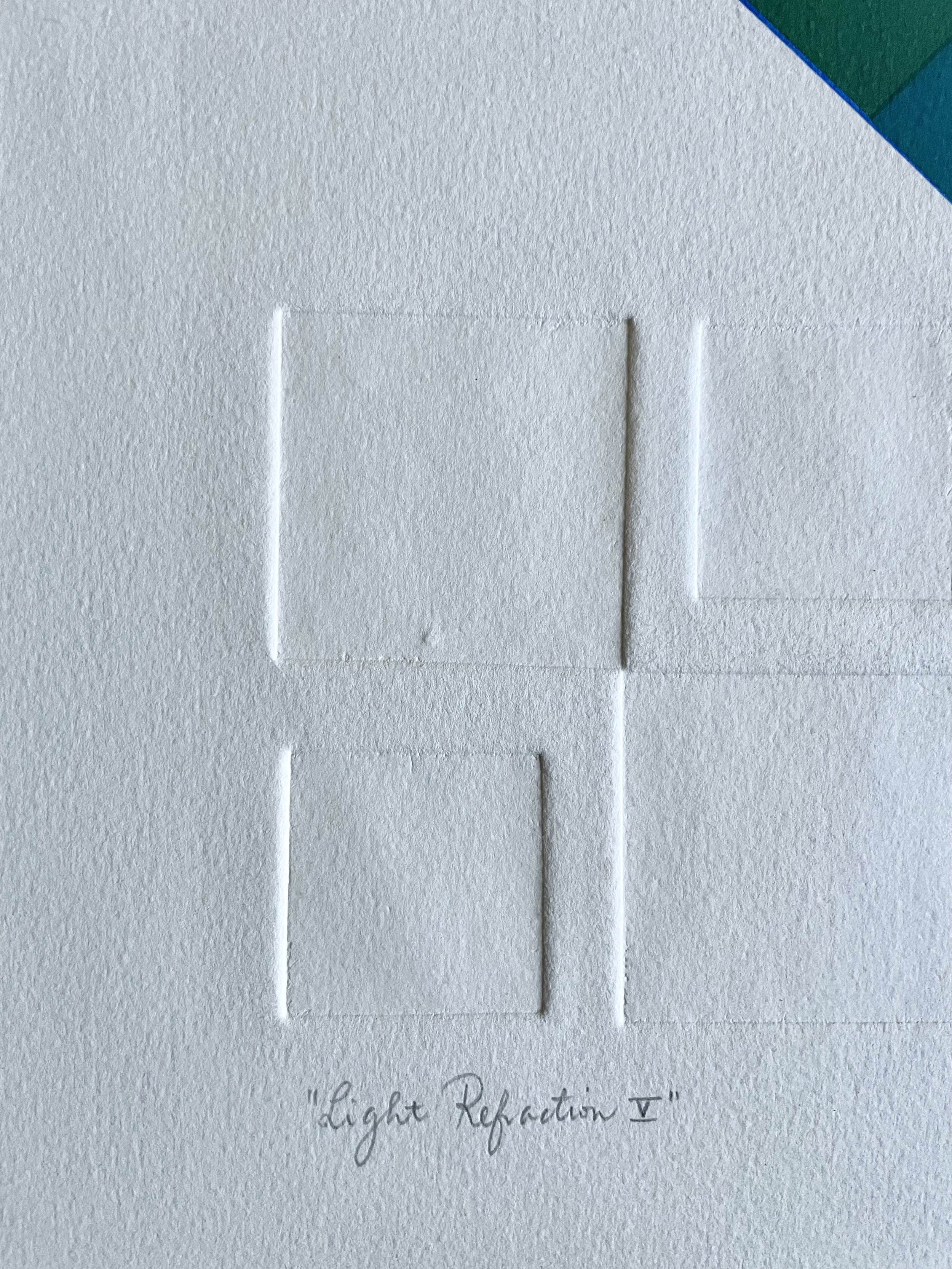
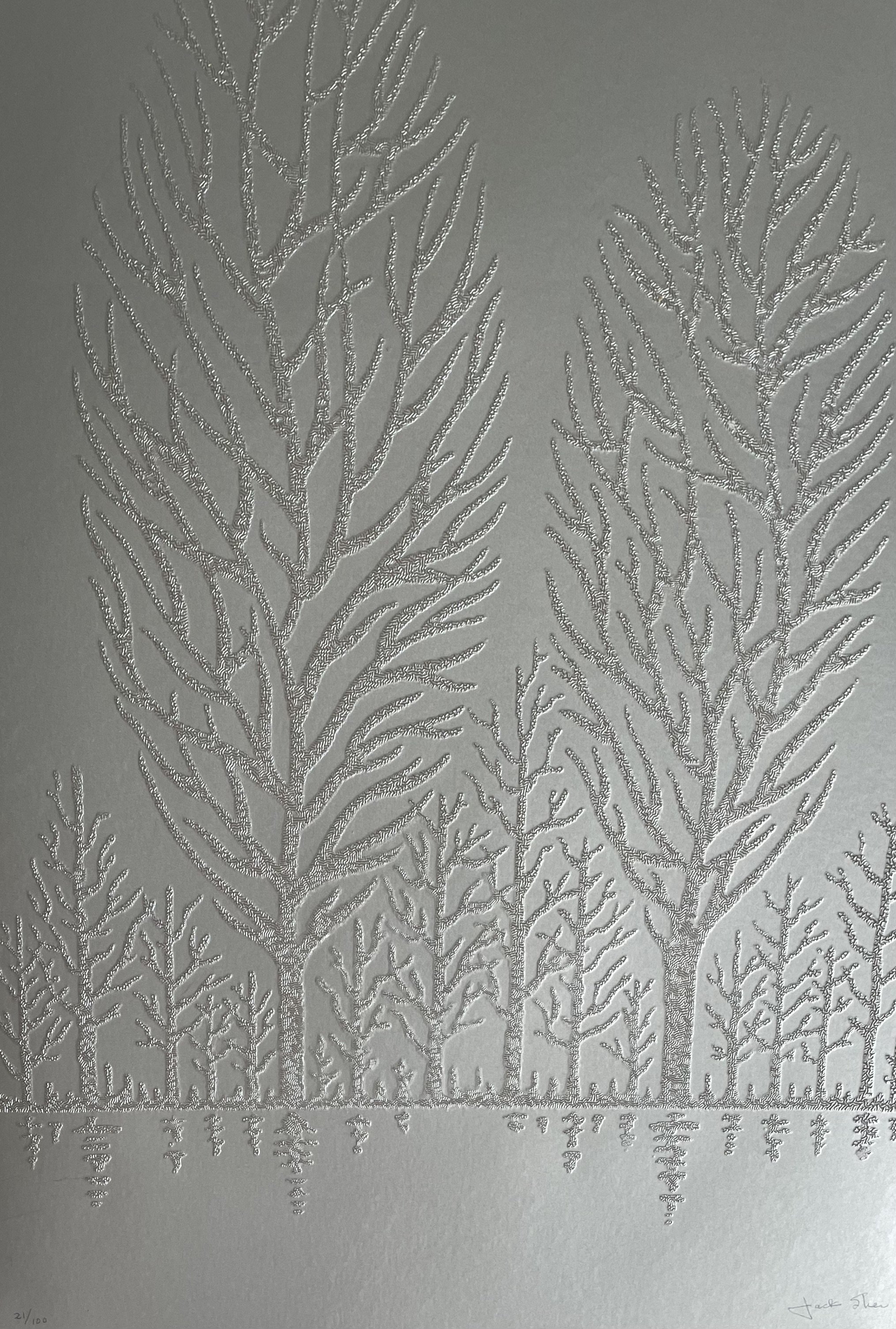
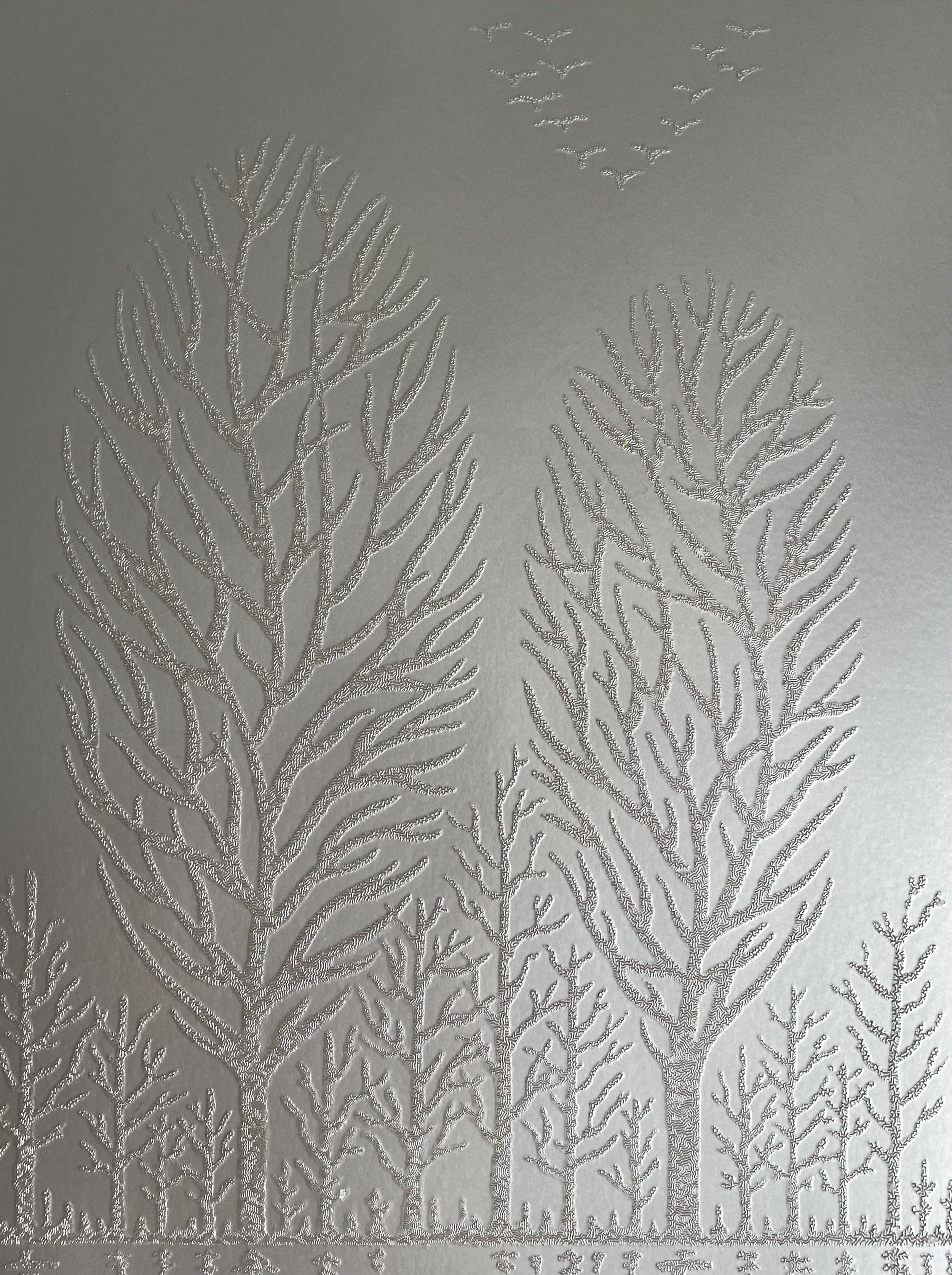
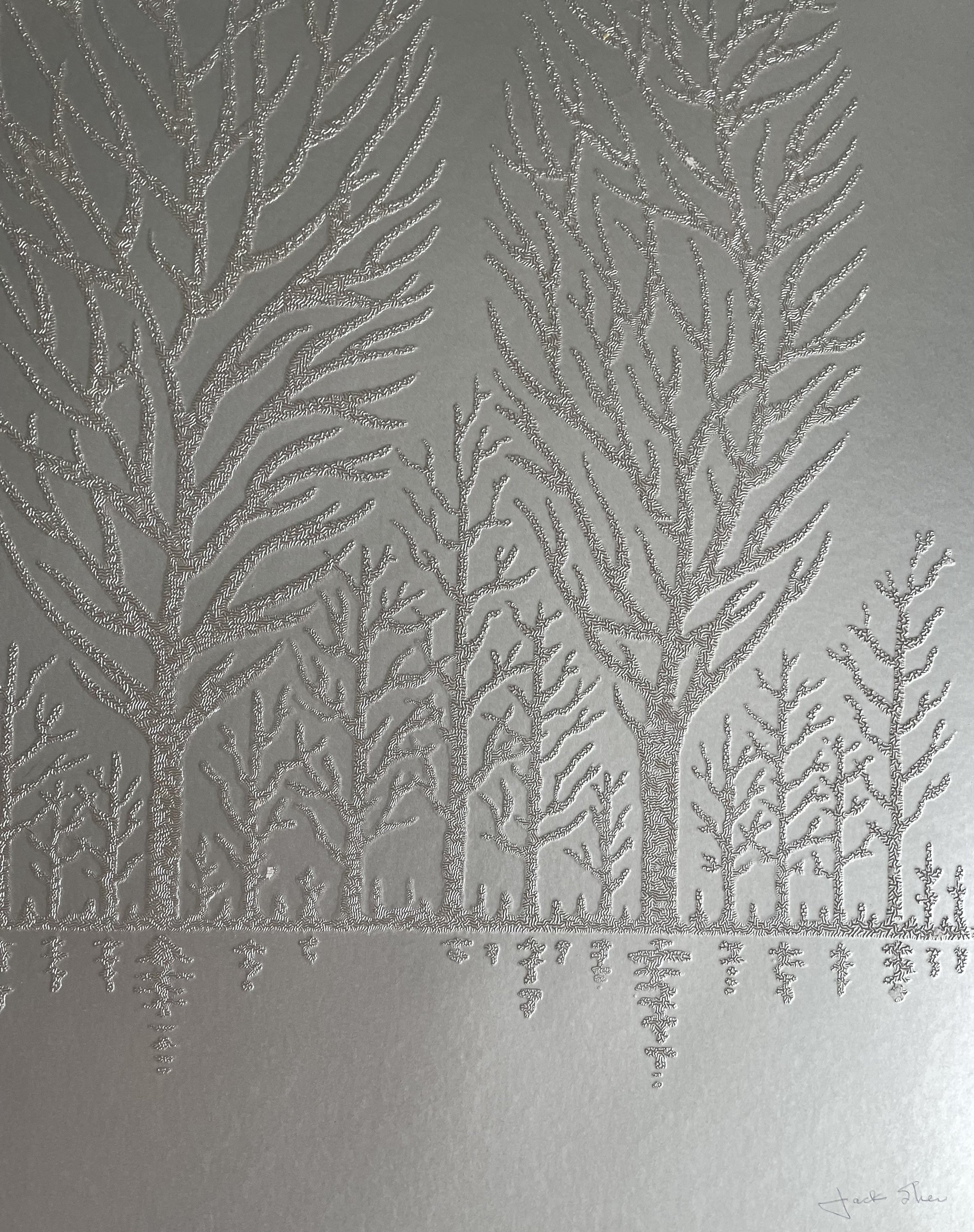
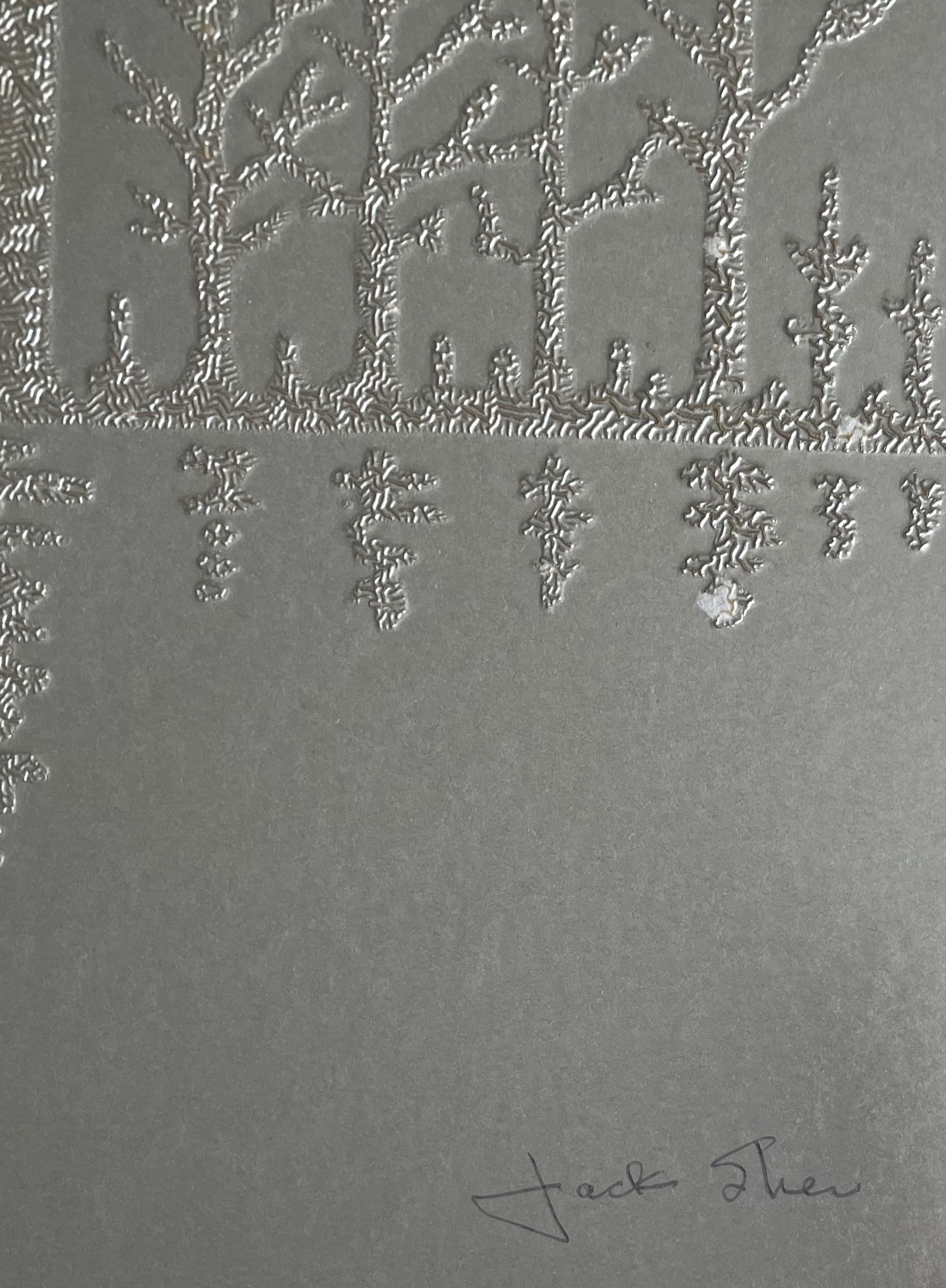
“Spark,” Boris Chezar (1913–2008), c.1970s, 22×30 in. hand-drawn intaglio serigraph, image 18×27 in., pencil-signed and numbered 49/125.
Spark is a powerful hand-drawn intaglio serigraph by American artist Boris Chezar (1913–2008), a listed painter best known for his innovative sand-textured paintings and bold abstract work. Printed on a full 22×30 inch sheet (image 18×27 in.), this limited-edition original is hand pulled, pencil-signed and numbered 49/125. Vibrant bands of red, orange and yellow erupt from a central vertical axis, echoing Chezar’s 1970s shift into modern abstraction and space-and-nature themes. From the retired Mitch Morse Gallery, NYC, this vintage print is a striking, frame-ready piece of mid-century American abstract art.
Artwork description
In Spark, Boris Chezar channels the energy of light and motion into a symmetrical, vertical composition. Two tall fields of gradated crimson and umber flank a central “flare” of white, orange and yellow. Jagged, flame-like silhouettes bite inward from each side, as if a brilliant beam is burning through the darkness. The image area (approx. 18×27 inches) is crisply printed on a 22×30 inch sheet, with generous margins that emphasize the work’s monumentality.
Technically, Spark is described by the gallery as a hand-drawn intaglio etching serigraph—a hybrid process in which Chezar first created an intaglio plate and then built up layered, screen-printed color. The print is limited to 125 impressions, each hand-pulled, pencil-signed “Chezar” and numbered 49/125 along the lower margin.
The piece belongs to Chezar’s early 1970s phase of abstract constructions and “space and nature” themed prints, where he moved away from figuration toward pure color, rhythm and structure. The title Spark suggests ignition and inspiration; visually, the work reads as both a cosmic event and a visceral emotional burst—very much in keeping with Chezar’s belief that art’s real value is spiritual rather than utilitarian.
Condition: image area is in very good, frame-ready vintage condition, never framed or displayed, from stored gallery inventory.
Artist biography – Boris Chezar (1913–2008)
Boris Chezar was an American artist born in New York City in 1913 to Russian-Jewish immigrant parents. He began painting in his teens and went on to study at The Cooper Union in New York, receiving rigorous training in drawing and design.
Chezar’s early career included extensive travels in Mexico and Nova Scotia, where he sketched and painted local scenes. In Mexico he encountered and painted alongside muralist José Clemente Orozco, whose bold symbolism and dramatic compositions left a lasting impression on his visual language.
During World War II, Chezar served in the Army Air Forces, painting large-scale murals with inspirational military themes. One commission at Ft. Dix, New Jersey was a 5×17-foot hospital mural; Chezar later joked that he demanded, and received, four assistants and two months to complete it.
After the war, he returned to New York, married his wife Faye, and worked in commercial art for J. Walter Thompsonbefore establishing himself as a portrait artist in pastel, charcoal and oil. Summers were spent painting in the Catskills “Borscht Belt”, while winters often found him on cruise ships, painting passenger portraits and teaching classes.
In the early 1970s, Chezar’s practice shifted decisively toward abstract modernism—including painted constructions and prints exploring space, energy and natural forces. By the mid-1980s he was creating large dimensional paintings, some over seven feet square, built from cut plywood shapes that projected from the wall. In 1997 he relocated to Sun City, Arizona, where he developed his “Random Modalities” series, integrating the frame as an active sculptural element (a technique he even pursued patent protection for).
Chezar is particularly celebrated for his unique sand-textured oil technique, in which he mixed sand into oil paint to create richly tactile surfaces—works regularly described in galleries and auction listings as highly distinctive and collectible.
Over a career lasting more than 80 years, he worked across watercolor, oil, acrylic, portraits, still lifes, landscapes, abstracts, mixed-media constructions, and printmaking. His work has been shown in:
National Gallery, Washington, D.C.
St. Louis Art Museum, Missouri
Brooklyn Museum–sponsored National Print Exhibition
National Gallery–related and other group shows
Numerous New York galleries, including Mitch Morse Gallery and others
Chezar remained intensely productive into his 90s, reportedly rising at 5 a.m. to sketch, saw wood, refine earlier works, and pursue new ideas until shortly before his death in 2008 (some sources list 2009, but multiple biographical references and auction records agree on 2008).
He is recognized today as a listed, highly acclaimed American modernist with a distinctive voice, admired for his color sense, experimentation, and refusal to settle into a single style.
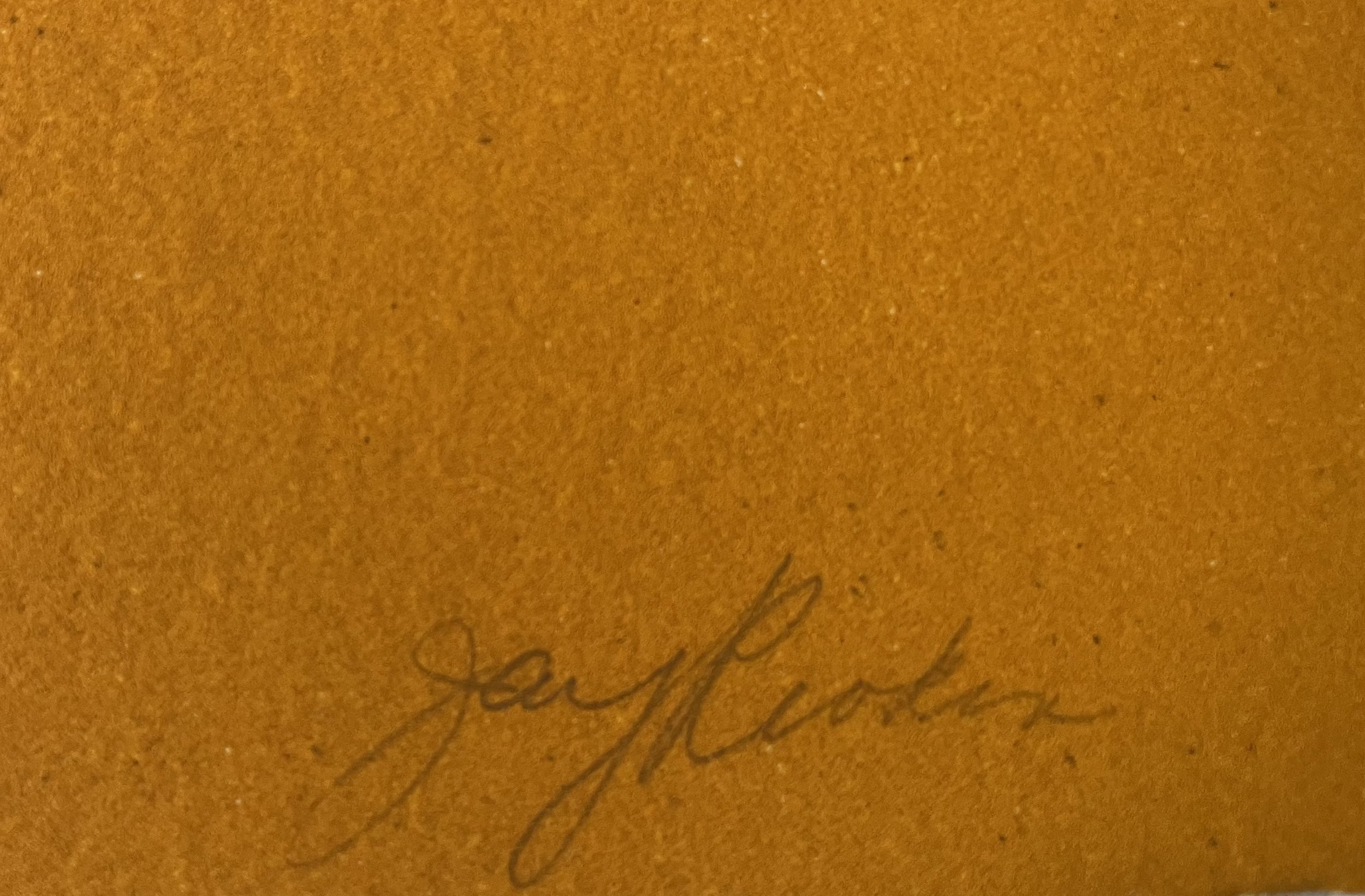
Boris Chezar (1913–2008), Spark, c.1970s. Hand-drawn intaglio etching/serigraph, 22×30 in. (image 18×27 in.), pencil-signed lower right and numbered 49/125. Dynamic abstract composition with fiery red and yellow vertical beam; excellent, unframed vintage condition from Mitch Morse Gallery inventory.
CERTIFICATE OF VALUE & AUTHENTICATION
For Fine Art Appraisal / Insurance / Gallery Documentation
Artist: Boris Chezar (American, 1913–2008)
Title: Spark
Approx. Date: c. early 1970s
Medium: Hand-drawn intaglio etching / serigraph (hand-pulled original print)
Paper Size: 22 × 30 in.
Image Size: 18 × 27 in.
Edition: 49/125
Signature: Pencil-signed “Chezar” lower right; numbered lower left
Condition: Very good vintage condition; strong color, clean sheet, never framed or displayed (from gallery stock).
Authenticity:
– Limited-edition original print, not a reproduction.
– Consistent with other documented impressions of Spark and Chezar’s 1970s abstract print series.
Provenance chain
Artist’s Studio, Boris Chezar, United States (c. early 1970s)
Mitch Morse Gallery, New York City – original dealer / publisher (gallery inventory)
Artfind Gallery, Washington, DC – current owner
“Spark,” Boris Chezar (1913–2008), c.1970s, 22×30 in. hand-drawn intaglio serigraph, image 18×27 in., pencil-signed and numbered 49/125.
Spark is a powerful hand-drawn intaglio serigraph by American artist Boris Chezar (1913–2008), a listed painter best known for his innovative sand-textured paintings and bold abstract work. Printed on a full 22×30 inch sheet (image 18×27 in.), this limited-edition original is hand pulled, pencil-signed and numbered 49/125. Vibrant bands of red, orange and yellow erupt from a central vertical axis, echoing Chezar’s 1970s shift into modern abstraction and space-and-nature themes. From the retired Mitch Morse Gallery, NYC, this vintage print is a striking, frame-ready piece of mid-century American abstract art.
Artwork description
In Spark, Boris Chezar channels the energy of light and motion into a symmetrical, vertical composition. Two tall fields of gradated crimson and umber flank a central “flare” of white, orange and yellow. Jagged, flame-like silhouettes bite inward from each side, as if a brilliant beam is burning through the darkness. The image area (approx. 18×27 inches) is crisply printed on a 22×30 inch sheet, with generous margins that emphasize the work’s monumentality.
Technically, Spark is described by the gallery as a hand-drawn intaglio etching serigraph—a hybrid process in which Chezar first created an intaglio plate and then built up layered, screen-printed color. The print is limited to 125 impressions, each hand-pulled, pencil-signed “Chezar” and numbered 49/125 along the lower margin.
The piece belongs to Chezar’s early 1970s phase of abstract constructions and “space and nature” themed prints, where he moved away from figuration toward pure color, rhythm and structure. The title Spark suggests ignition and inspiration; visually, the work reads as both a cosmic event and a visceral emotional burst—very much in keeping with Chezar’s belief that art’s real value is spiritual rather than utilitarian.
Condition: image area is in very good, frame-ready vintage condition, never framed or displayed, from stored gallery inventory.
Artist biography – Boris Chezar (1913–2008)
Boris Chezar was an American artist born in New York City in 1913 to Russian-Jewish immigrant parents. He began painting in his teens and went on to study at The Cooper Union in New York, receiving rigorous training in drawing and design.
Chezar’s early career included extensive travels in Mexico and Nova Scotia, where he sketched and painted local scenes. In Mexico he encountered and painted alongside muralist José Clemente Orozco, whose bold symbolism and dramatic compositions left a lasting impression on his visual language.
During World War II, Chezar served in the Army Air Forces, painting large-scale murals with inspirational military themes. One commission at Ft. Dix, New Jersey was a 5×17-foot hospital mural; Chezar later joked that he demanded, and received, four assistants and two months to complete it.
After the war, he returned to New York, married his wife Faye, and worked in commercial art for J. Walter Thompsonbefore establishing himself as a portrait artist in pastel, charcoal and oil. Summers were spent painting in the Catskills “Borscht Belt”, while winters often found him on cruise ships, painting passenger portraits and teaching classes.
In the early 1970s, Chezar’s practice shifted decisively toward abstract modernism—including painted constructions and prints exploring space, energy and natural forces. By the mid-1980s he was creating large dimensional paintings, some over seven feet square, built from cut plywood shapes that projected from the wall. In 1997 he relocated to Sun City, Arizona, where he developed his “Random Modalities” series, integrating the frame as an active sculptural element (a technique he even pursued patent protection for).
Chezar is particularly celebrated for his unique sand-textured oil technique, in which he mixed sand into oil paint to create richly tactile surfaces—works regularly described in galleries and auction listings as highly distinctive and collectible.
Over a career lasting more than 80 years, he worked across watercolor, oil, acrylic, portraits, still lifes, landscapes, abstracts, mixed-media constructions, and printmaking. His work has been shown in:
National Gallery, Washington, D.C.
St. Louis Art Museum, Missouri
Brooklyn Museum–sponsored National Print Exhibition
National Gallery–related and other group shows
Numerous New York galleries, including Mitch Morse Gallery and others
Chezar remained intensely productive into his 90s, reportedly rising at 5 a.m. to sketch, saw wood, refine earlier works, and pursue new ideas until shortly before his death in 2008 (some sources list 2009, but multiple biographical references and auction records agree on 2008).
He is recognized today as a listed, highly acclaimed American modernist with a distinctive voice, admired for his color sense, experimentation, and refusal to settle into a single style.
Boris Chezar (1913–2008), Spark, c.1970s. Hand-drawn intaglio etching/serigraph, 22×30 in. (image 18×27 in.), pencil-signed lower right and numbered 49/125. Dynamic abstract composition with fiery red and yellow vertical beam; excellent, unframed vintage condition from Mitch Morse Gallery inventory.
CERTIFICATE OF VALUE & AUTHENTICATION
For Fine Art Appraisal / Insurance / Gallery Documentation
Artist: Boris Chezar (American, 1913–2008)
Title: Spark
Approx. Date: c. early 1970s
Medium: Hand-drawn intaglio etching / serigraph (hand-pulled original print)
Paper Size: 22 × 30 in.
Image Size: 18 × 27 in.
Edition: 49/125
Signature: Pencil-signed “Chezar” lower right; numbered lower left
Condition: Very good vintage condition; strong color, clean sheet, never framed or displayed (from gallery stock).
Authenticity:
– Limited-edition original print, not a reproduction.
– Consistent with other documented impressions of Spark and Chezar’s 1970s abstract print series.
Provenance chain
Artist’s Studio, Boris Chezar, United States (c. early 1970s)
Mitch Morse Gallery, New York City – original dealer / publisher (gallery inventory)
Artfind Gallery, Washington, DC – current owner
 Image 1 of 11
 Image 2 of 11
 Image 3 of 11
 Image 4 of 11
 Image 5 of 11
 Image 6 of 11
 Image 7 of 11
 Image 8 of 11
 Image 9 of 11
 Image 10 of 11
 Image 11 of 11