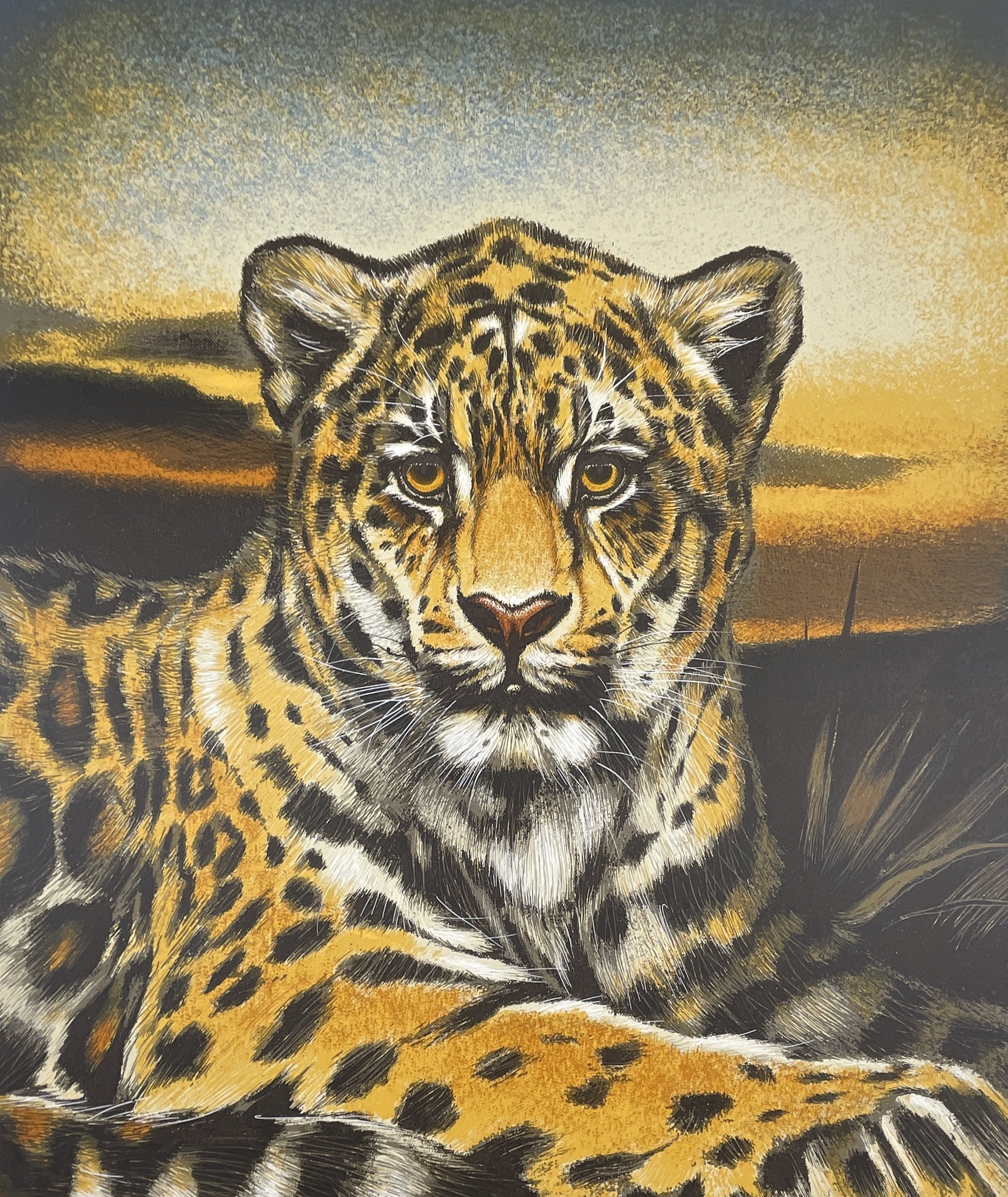
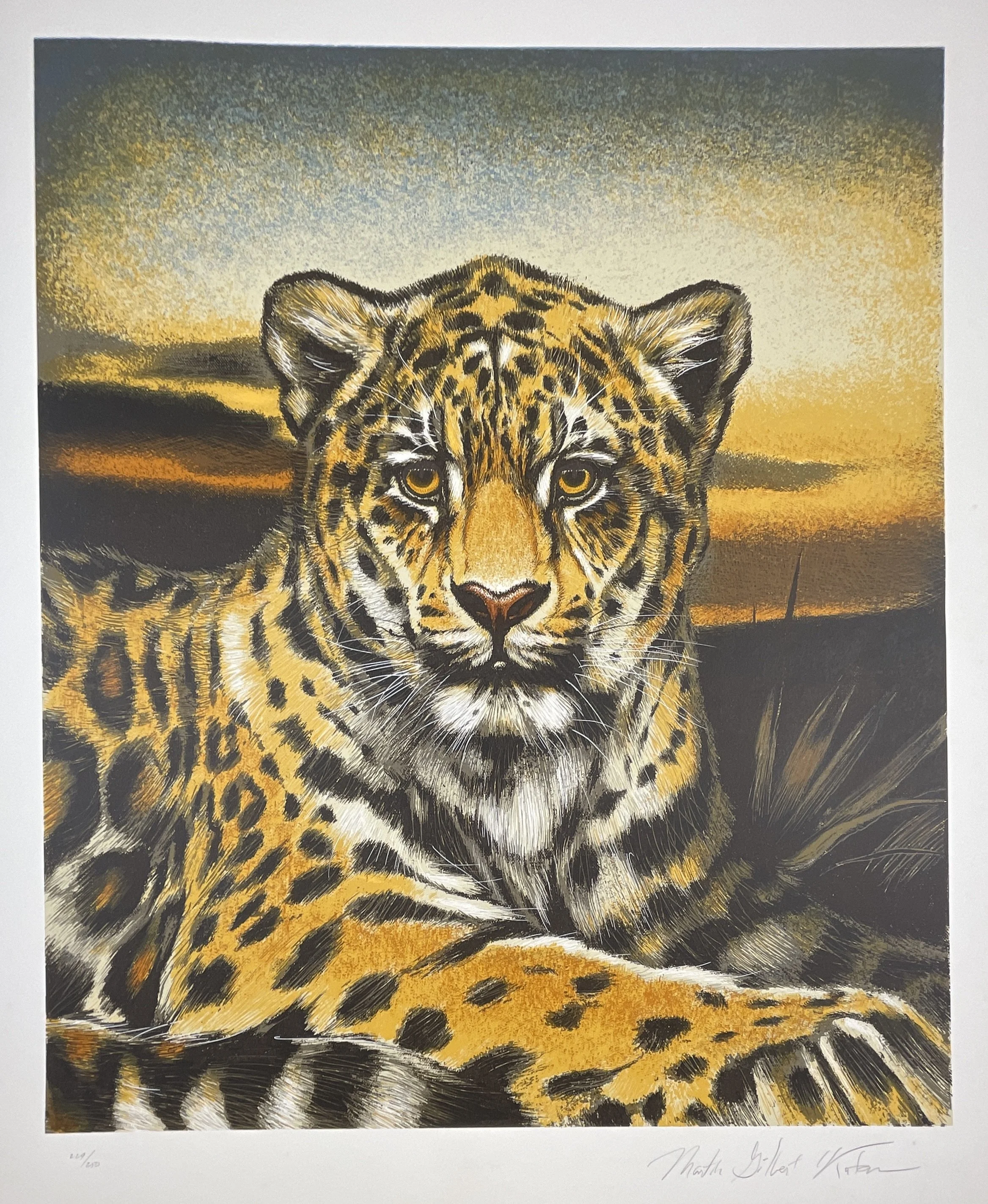
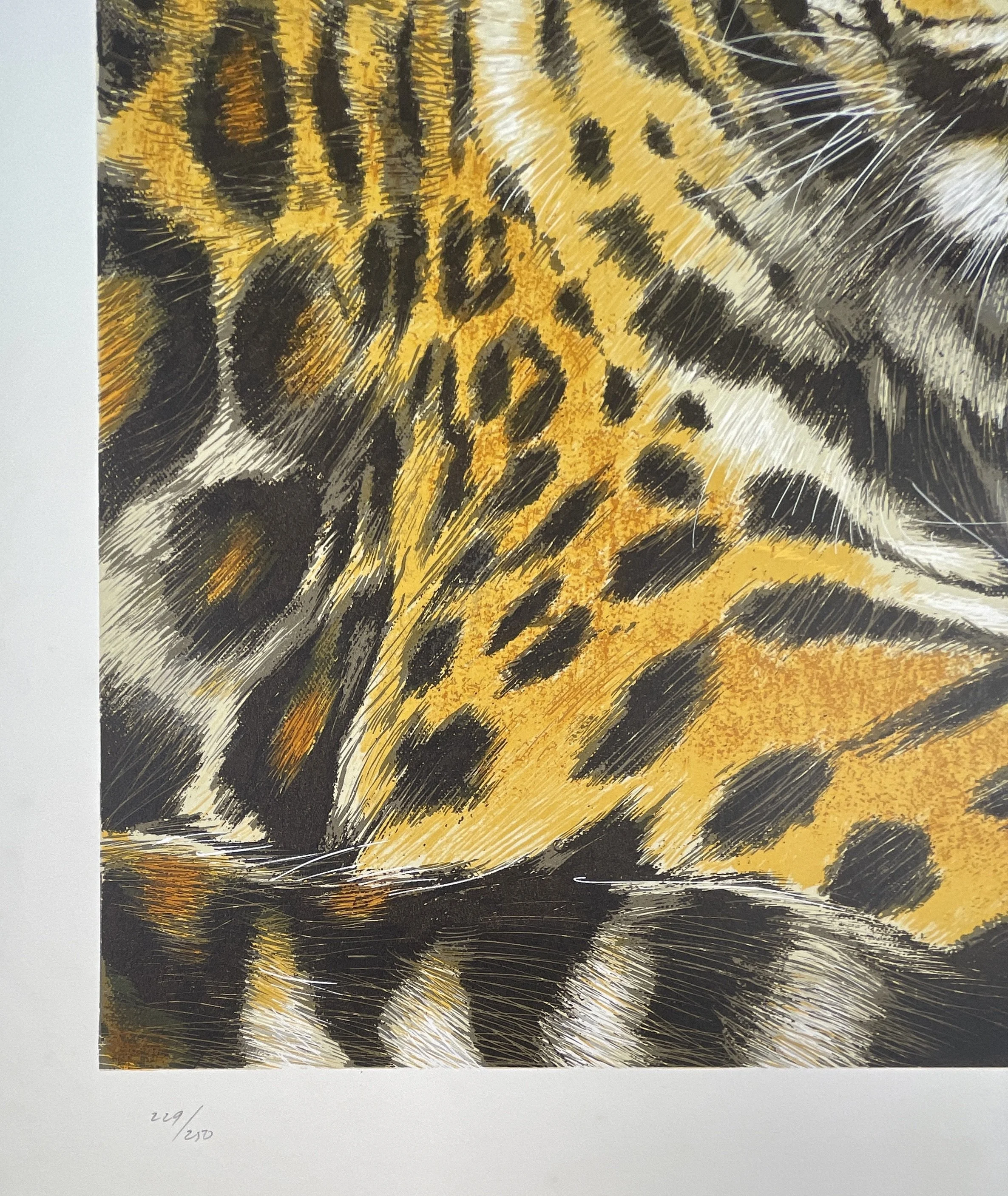
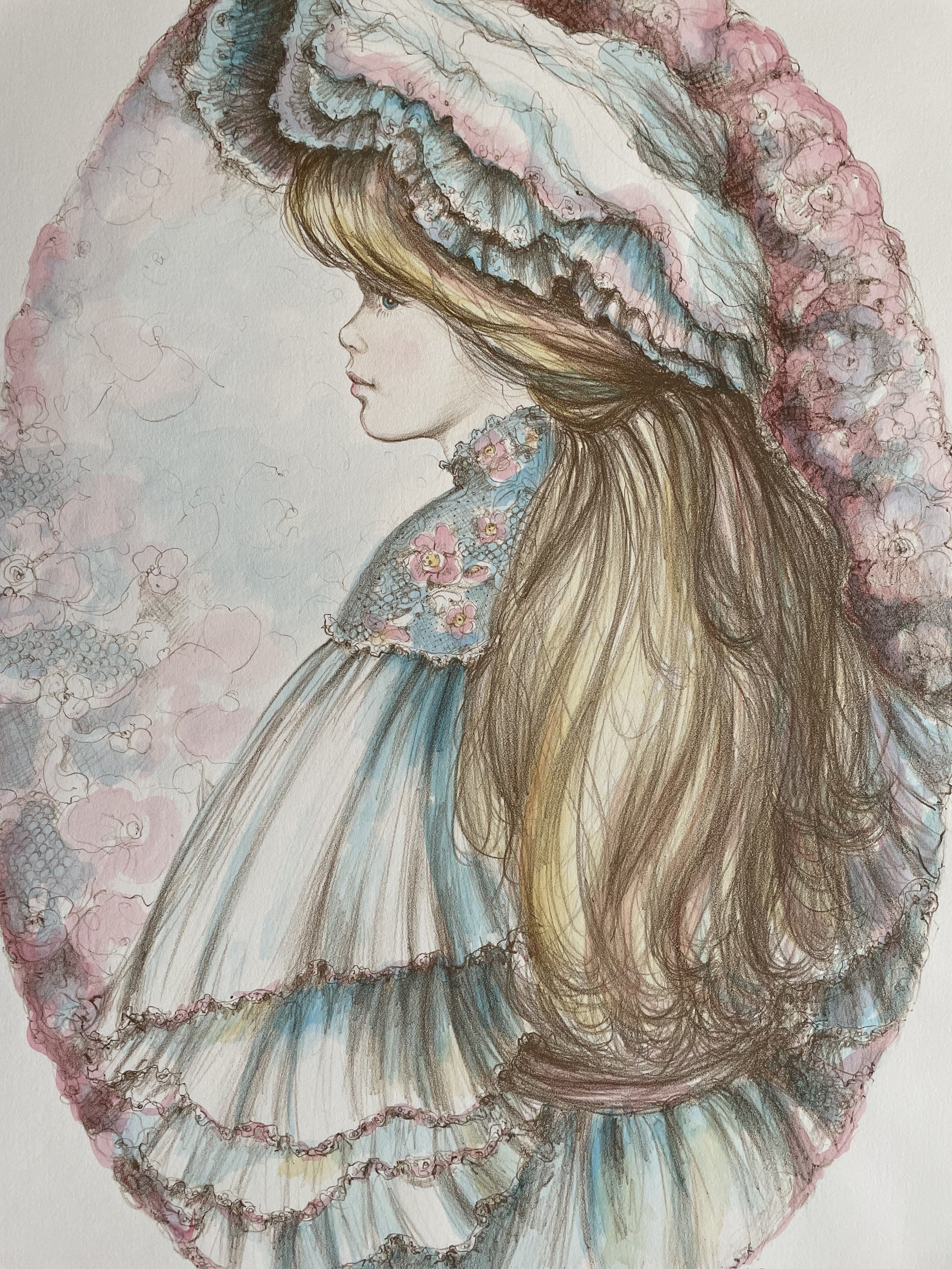
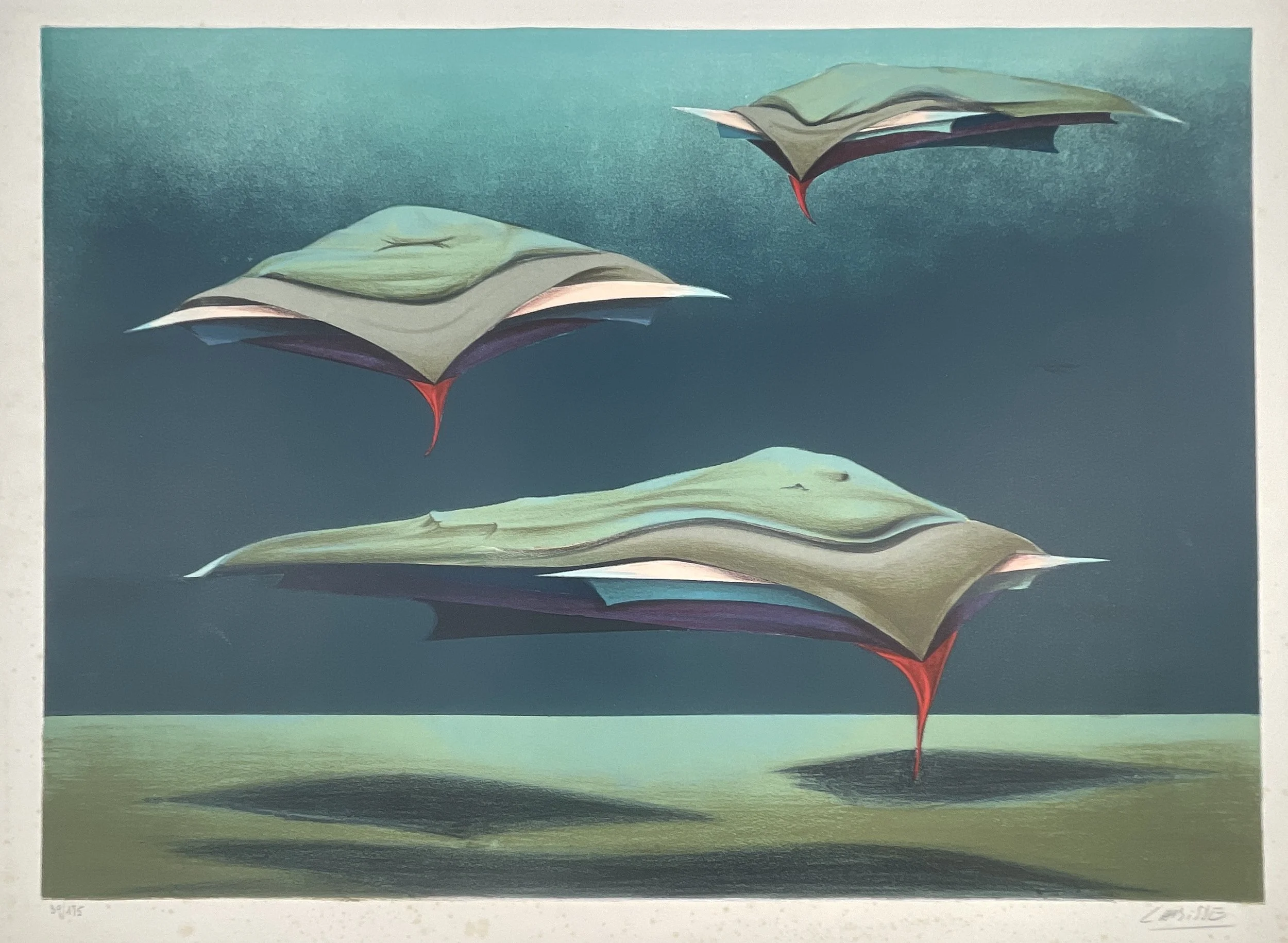
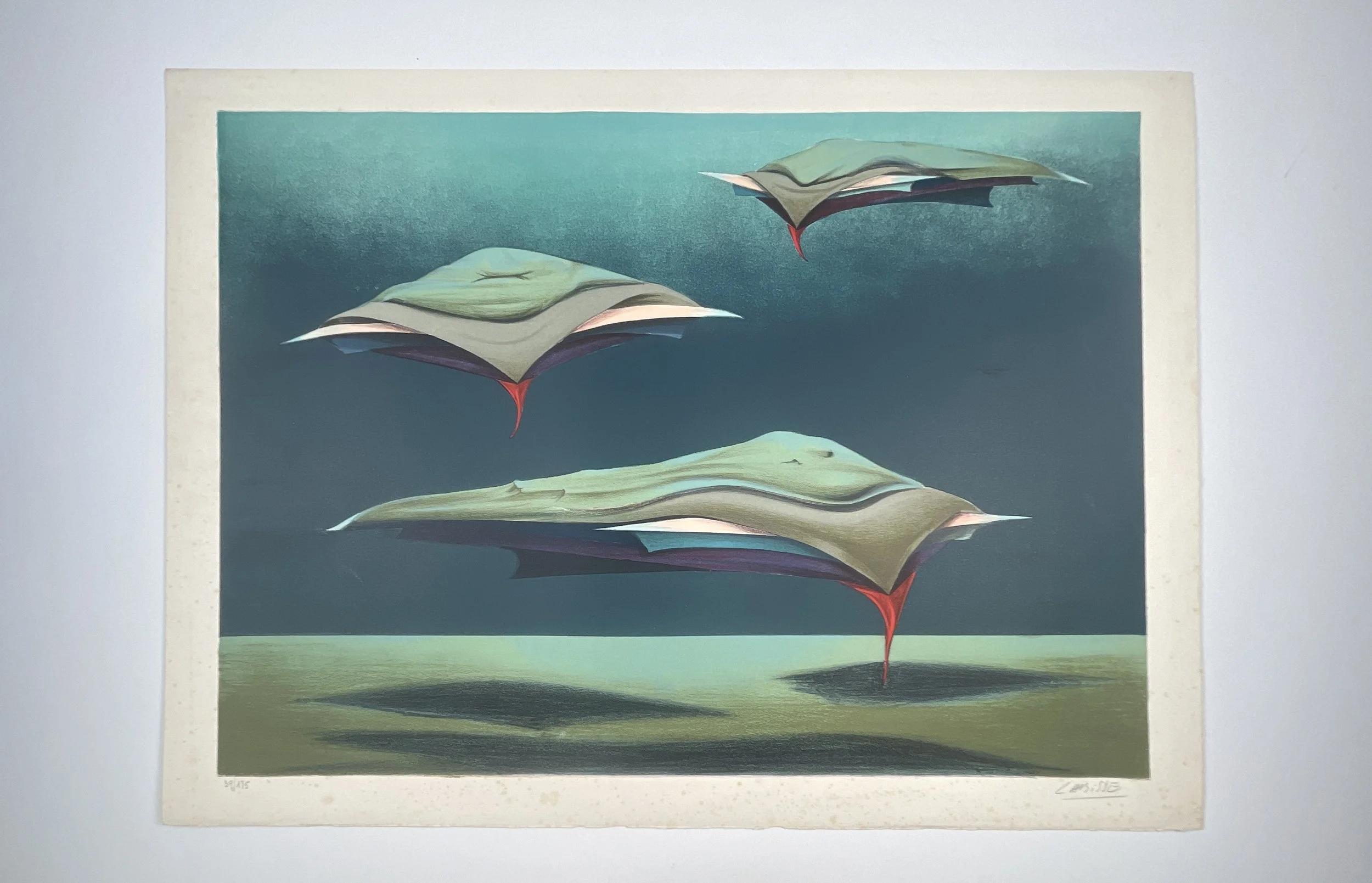
Abstract Still Life, Tony (Peter) Agostini (1916–1990), c. 1960s, color lithograph on paper, signed "Tony Agostini" lower right in image and "Agostini" lower right in margin, numbered 83/175 in pencil lower left.
Artwork Description
A vigorously composed cubist still life built from interlocking planes of deep cobalt blue, warm ochre, burnt orange, cream, and teal — the dominant blue both unifying the composition and creating a powerful sense of nocturnal atmosphere. At the center a tall bottle or carafe, rendered in overlapping arcs of blue, rises as the compositional anchor. Around it Agostini fragments the tabletop objects — vessels, fruit, a bowl, angular background planes suggesting studio walls or draped fabric — into a dynamic arrangement of faceted forms that simultaneously advance and recede.
The influence of Cézanne's structural approach to the still life is immediately apparent — objects are not depicted as they appear from a single viewpoint but reconstructed from multiple angles, their essential geometry revealed rather than their surface appearance recorded. The cubist inflection adds further fragmentation, dissolving the boundary between object and background so that the composition reads as a unified field of color and form rather than objects sitting in space.
What distinguishes Agostini's approach here is the warmth and painterly texture beneath the geometric structure. The blue field is not flat but layered with visible brushwork and tonal variation — warmer in some areas, cooler in others — suggesting the actual handling of paint translated faithfully into the lithographic medium. Flashes of red-orange and yellow punctuate the composition like musical accents, preventing the blue dominance from becoming static.
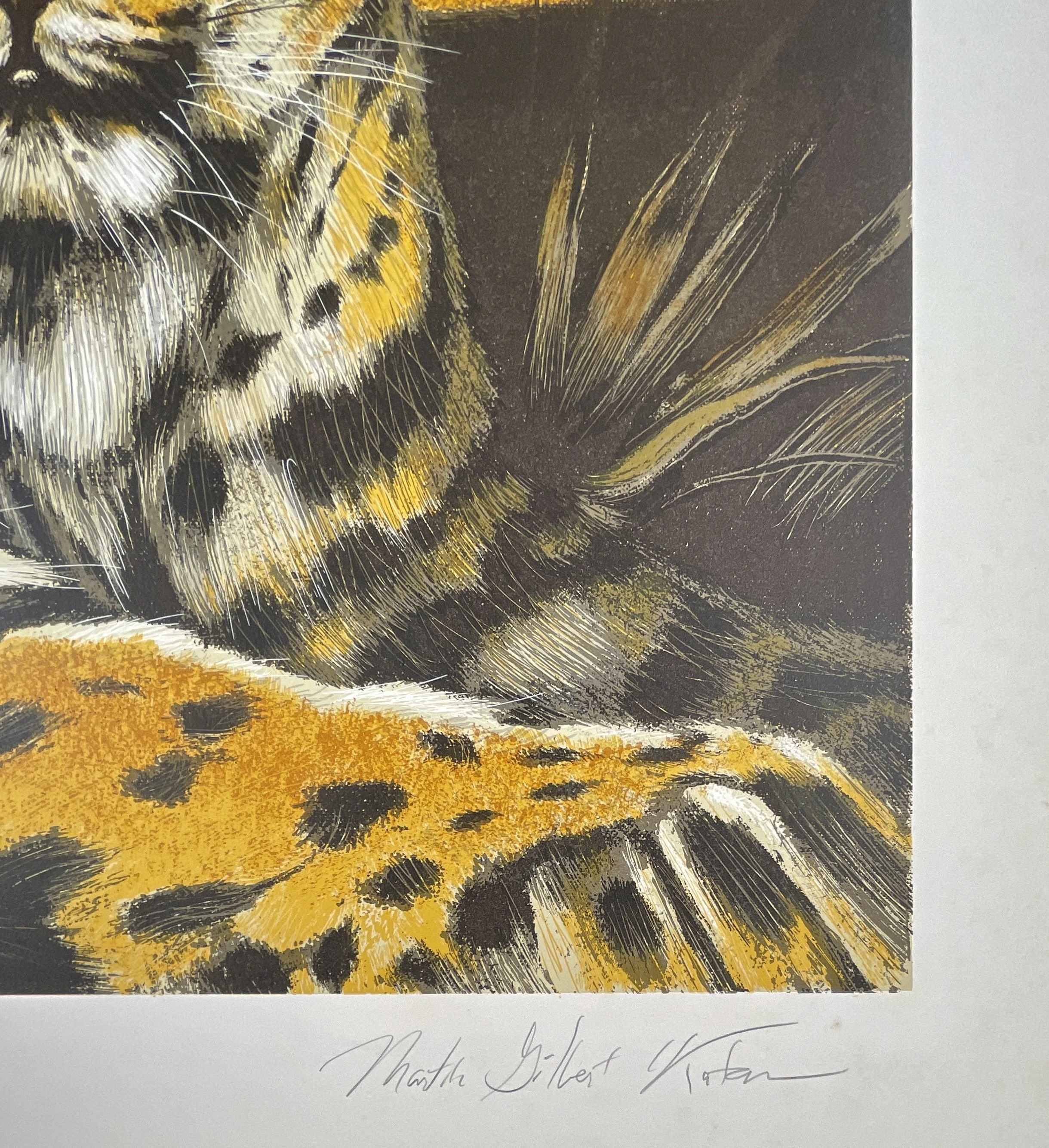
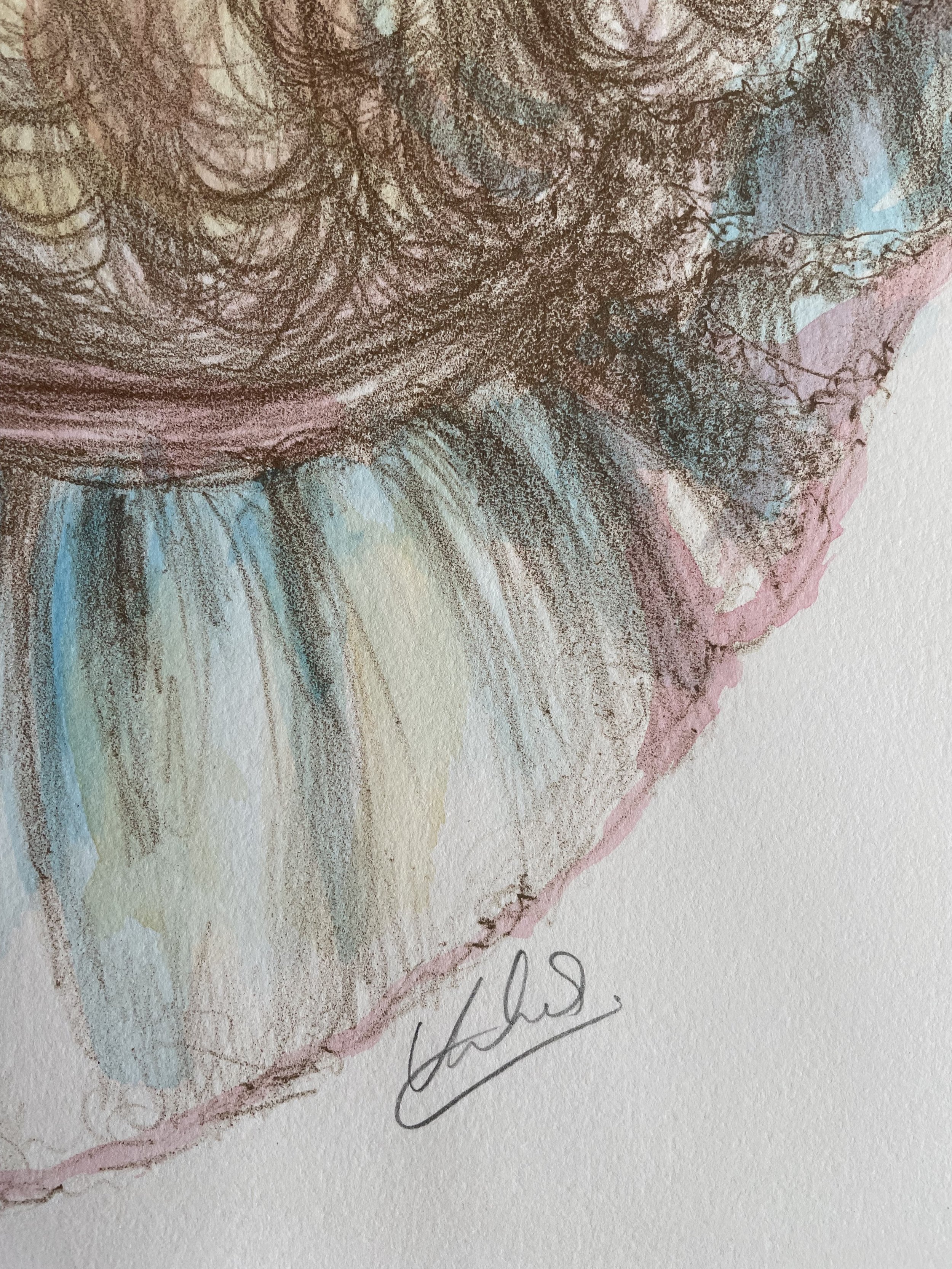
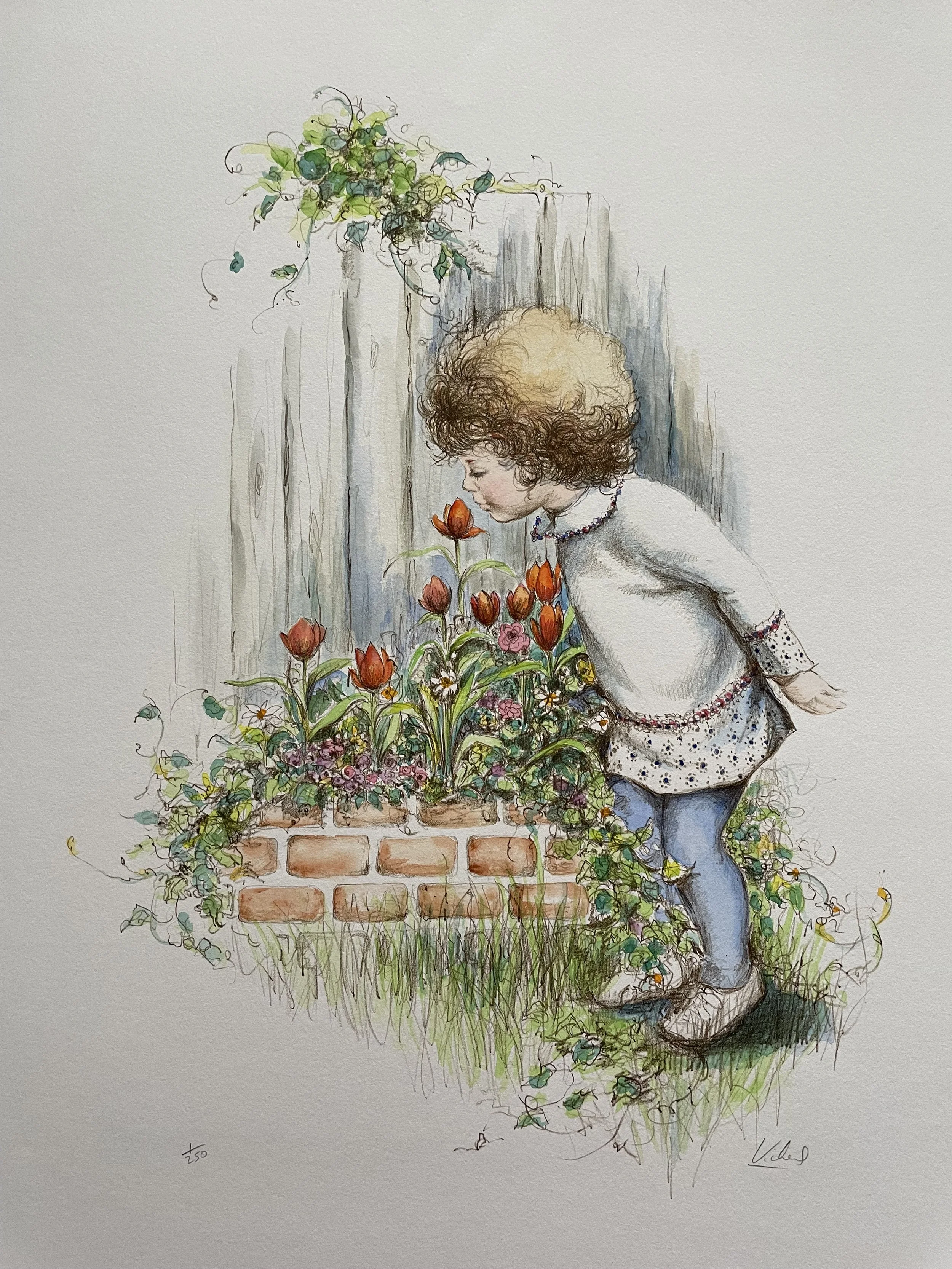
The double signature — "Tony Agostini" inscribed within the image area and "Agostini" in the margin — is consistent with Agostini's practice on his numbered lithographic editions and confirms this as an authentic hand-signed impression from the edition of 175.
Artist Biography
Tony (Peter) Agostini (1916–1990) was a French painter and lithographer, born on April 29, 1916, in Bastia, Corsica. A self-taught artist, he began painting in 1946, initially focusing on the movements of crowds and nocturnal scenes of Paris. Over time he shifted towards landscapes, studio interiors, and especially still life, a major theme in his lithographic work. Great Banyan Art
In 1944, after an early administrative career, he met Gen Paul, Francis Carco, and Marcel Aymé in Montmartre, which inspired him to dedicate his life to painting. Great Banyan Art This encounter proved decisive — the circle of Montmartre artists and writers surrounding Gen Paul introduced Agostini to the coloristic and structural principles that would define his mature work.
Agostini was significantly influenced by Gen Paul in his use of color and adhered to the strict principles of form as dictated by Cézanne, sometimes incorporating elements of Cubism. Great Banyan Art The tension between Cézannian structure and the more fragmented vocabulary of Cubism animates his best still life work, producing compositions that feel both rigorously organized and dynamically alive.
From 1953 he exhibited at the Salon: Painters Witnesses of Time, in 1955 at the annual School of Paris at Galerie Charpentier, and participated in thematic exhibitions including Discover 1955, the 1957 Greenshields Prize exhibition, and Shapes and Colors in 1961. He also showed at the Salon des Tuileries and in group exhibitions abroad. AskART
His solo exhibition history was extensive: beginning with his first solo show in 1947 and a second in 1948, he continued with shows at the Paris Gallery Visconti in 1951 and 1952, Galerie Charpentier from 1957 to 1963, and exhibitions in New York and San Francisco from 1959 to 1962. AskART
Agostini's lithographic output — of which this still life is a prime example — represents some of his most concentrated and resolved work. The medium suited his preoccupations perfectly: the layering of color planes, the translation of painterly texture into print, and the discipline of working within a defined edition all aligned with his Cézannian instinct for structure and his colorist's eye for resonance.
Tony Agostini died in 1990 in Antony, Hauts-de-Seine, France. His work continues to appear regularly at international auction and is held in private collections throughout Europe and the United States.
Abstract Still Life, Tony (Peter) Agostini (1916–1990), c. 1960s, color lithograph on paper, signed "Tony Agostini" lower right in image and "Agostini" lower right in margin, numbered 83/175 in pencil lower left.
Artwork Description
A vigorously composed cubist still life built from interlocking planes of deep cobalt blue, warm ochre, burnt orange, cream, and teal — the dominant blue both unifying the composition and creating a powerful sense of nocturnal atmosphere. At the center a tall bottle or carafe, rendered in overlapping arcs of blue, rises as the compositional anchor. Around it Agostini fragments the tabletop objects — vessels, fruit, a bowl, angular background planes suggesting studio walls or draped fabric — into a dynamic arrangement of faceted forms that simultaneously advance and recede.
The influence of Cézanne's structural approach to the still life is immediately apparent — objects are not depicted as they appear from a single viewpoint but reconstructed from multiple angles, their essential geometry revealed rather than their surface appearance recorded. The cubist inflection adds further fragmentation, dissolving the boundary between object and background so that the composition reads as a unified field of color and form rather than objects sitting in space.
What distinguishes Agostini's approach here is the warmth and painterly texture beneath the geometric structure. The blue field is not flat but layered with visible brushwork and tonal variation — warmer in some areas, cooler in others — suggesting the actual handling of paint translated faithfully into the lithographic medium. Flashes of red-orange and yellow punctuate the composition like musical accents, preventing the blue dominance from becoming static.
The double signature — "Tony Agostini" inscribed within the image area and "Agostini" in the margin — is consistent with Agostini's practice on his numbered lithographic editions and confirms this as an authentic hand-signed impression from the edition of 175.
Artist Biography
Tony (Peter) Agostini (1916–1990) was a French painter and lithographer, born on April 29, 1916, in Bastia, Corsica. A self-taught artist, he began painting in 1946, initially focusing on the movements of crowds and nocturnal scenes of Paris. Over time he shifted towards landscapes, studio interiors, and especially still life, a major theme in his lithographic work. Great Banyan Art
In 1944, after an early administrative career, he met Gen Paul, Francis Carco, and Marcel Aymé in Montmartre, which inspired him to dedicate his life to painting. Great Banyan Art This encounter proved decisive — the circle of Montmartre artists and writers surrounding Gen Paul introduced Agostini to the coloristic and structural principles that would define his mature work.
Agostini was significantly influenced by Gen Paul in his use of color and adhered to the strict principles of form as dictated by Cézanne, sometimes incorporating elements of Cubism. Great Banyan Art The tension between Cézannian structure and the more fragmented vocabulary of Cubism animates his best still life work, producing compositions that feel both rigorously organized and dynamically alive.
From 1953 he exhibited at the Salon: Painters Witnesses of Time, in 1955 at the annual School of Paris at Galerie Charpentier, and participated in thematic exhibitions including Discover 1955, the 1957 Greenshields Prize exhibition, and Shapes and Colors in 1961. He also showed at the Salon des Tuileries and in group exhibitions abroad. AskART
His solo exhibition history was extensive: beginning with his first solo show in 1947 and a second in 1948, he continued with shows at the Paris Gallery Visconti in 1951 and 1952, Galerie Charpentier from 1957 to 1963, and exhibitions in New York and San Francisco from 1959 to 1962. AskART
Agostini's lithographic output — of which this still life is a prime example — represents some of his most concentrated and resolved work. The medium suited his preoccupations perfectly: the layering of color planes, the translation of painterly texture into print, and the discipline of working within a defined edition all aligned with his Cézannian instinct for structure and his colorist's eye for resonance.
Tony Agostini died in 1990 in Antony, Hauts-de-Seine, France. His work continues to appear regularly at international auction and is held in private collections throughout Europe and the United States.
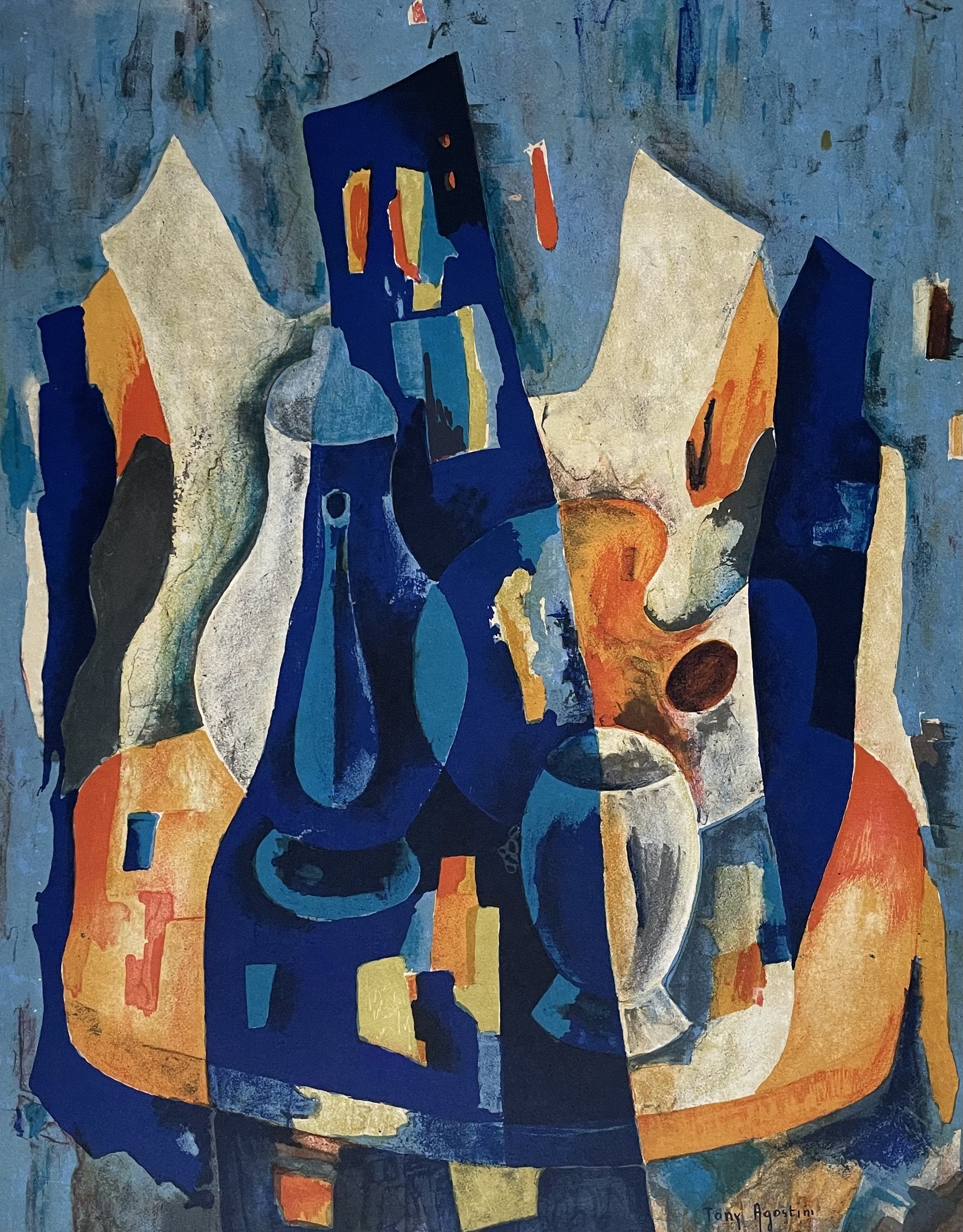 Image 1 of 6
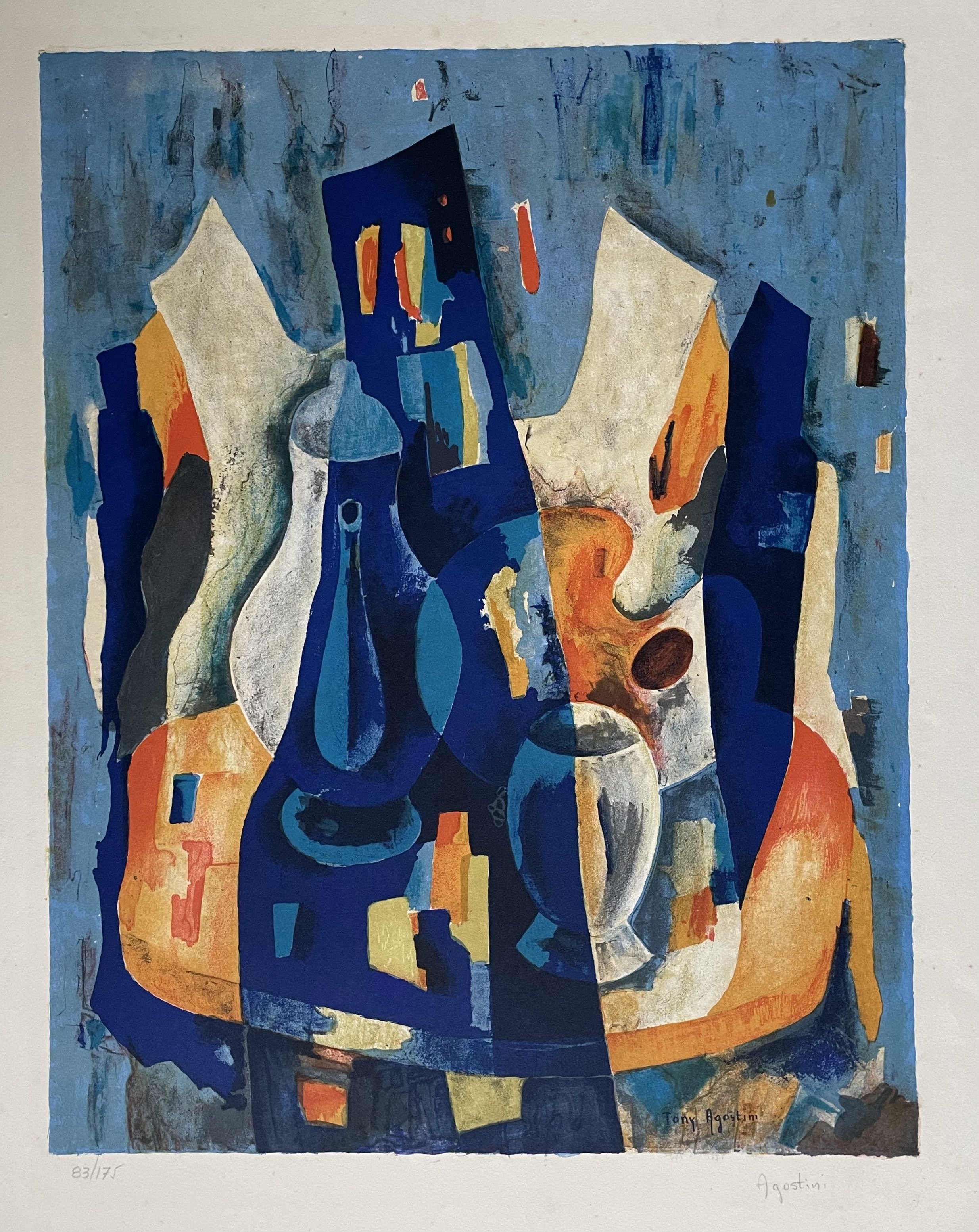 Image 2 of 6
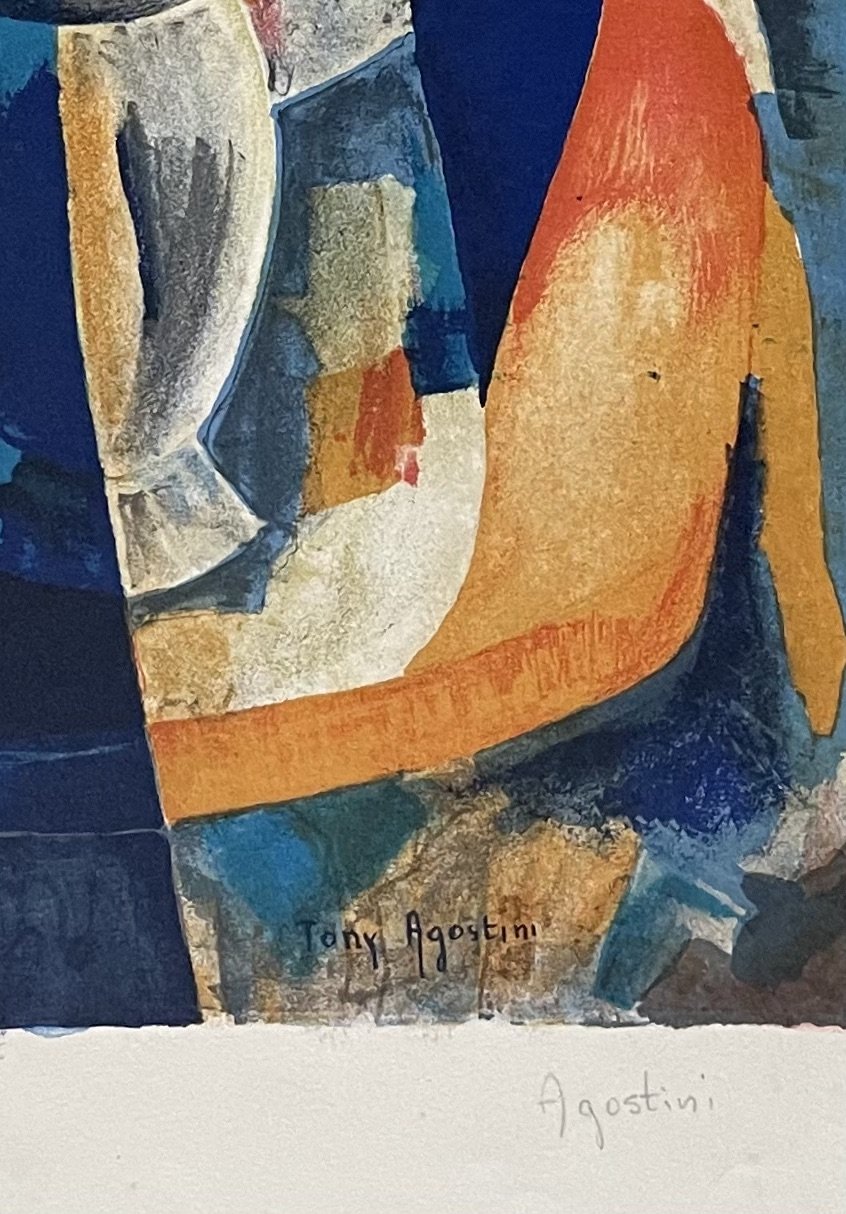 Image 3 of 6
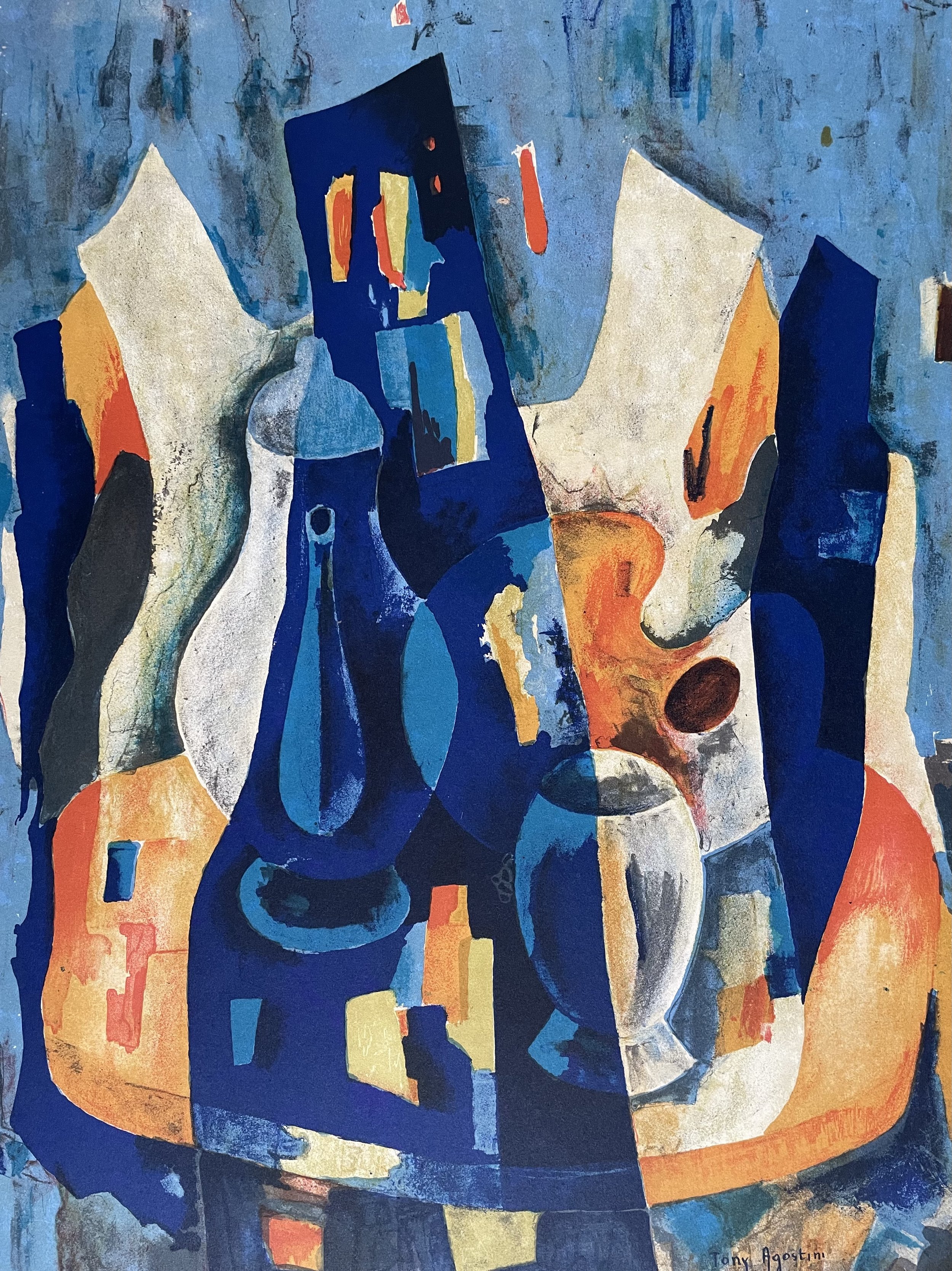 Image 4 of 6
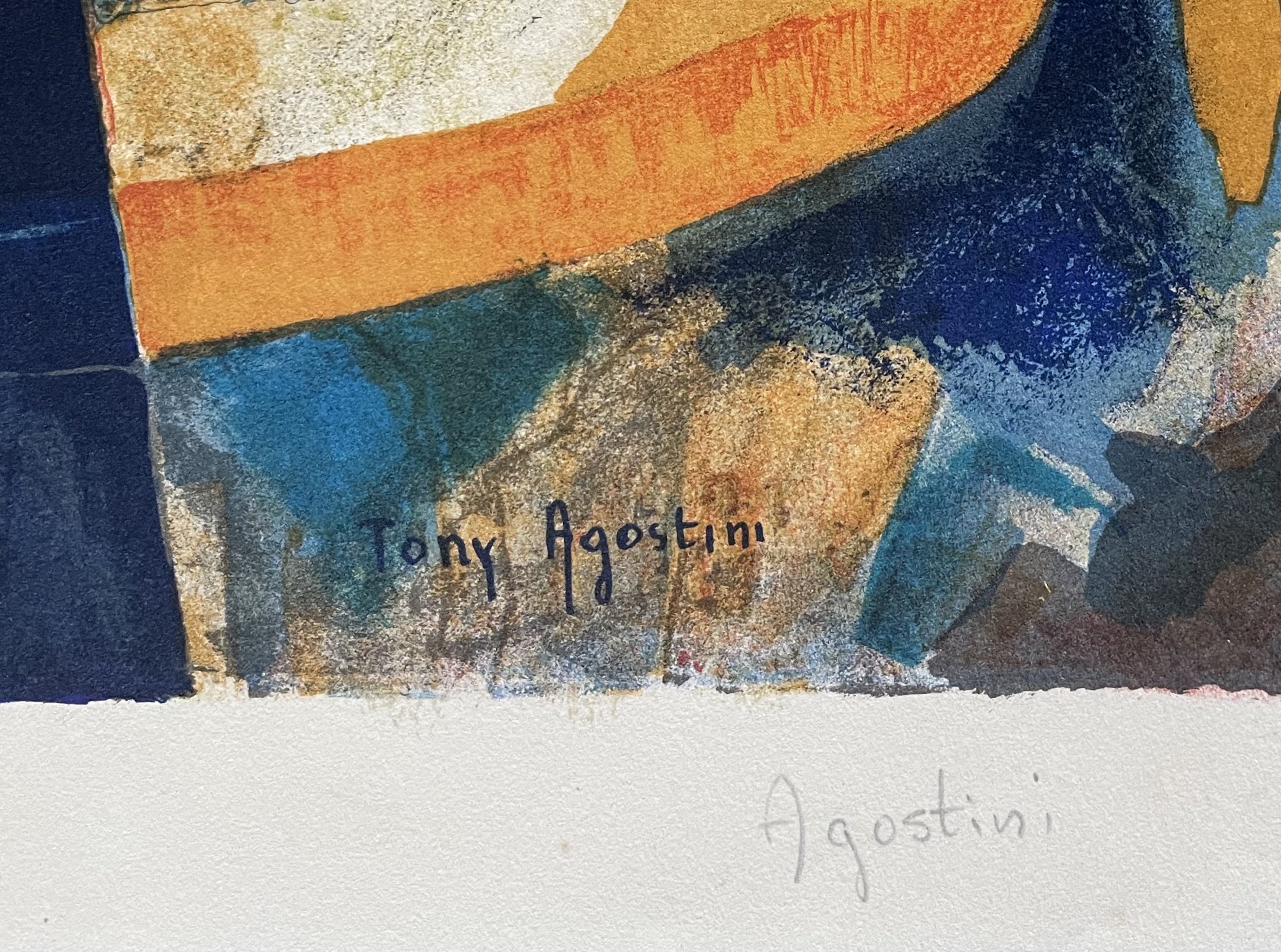 Image 5 of 6
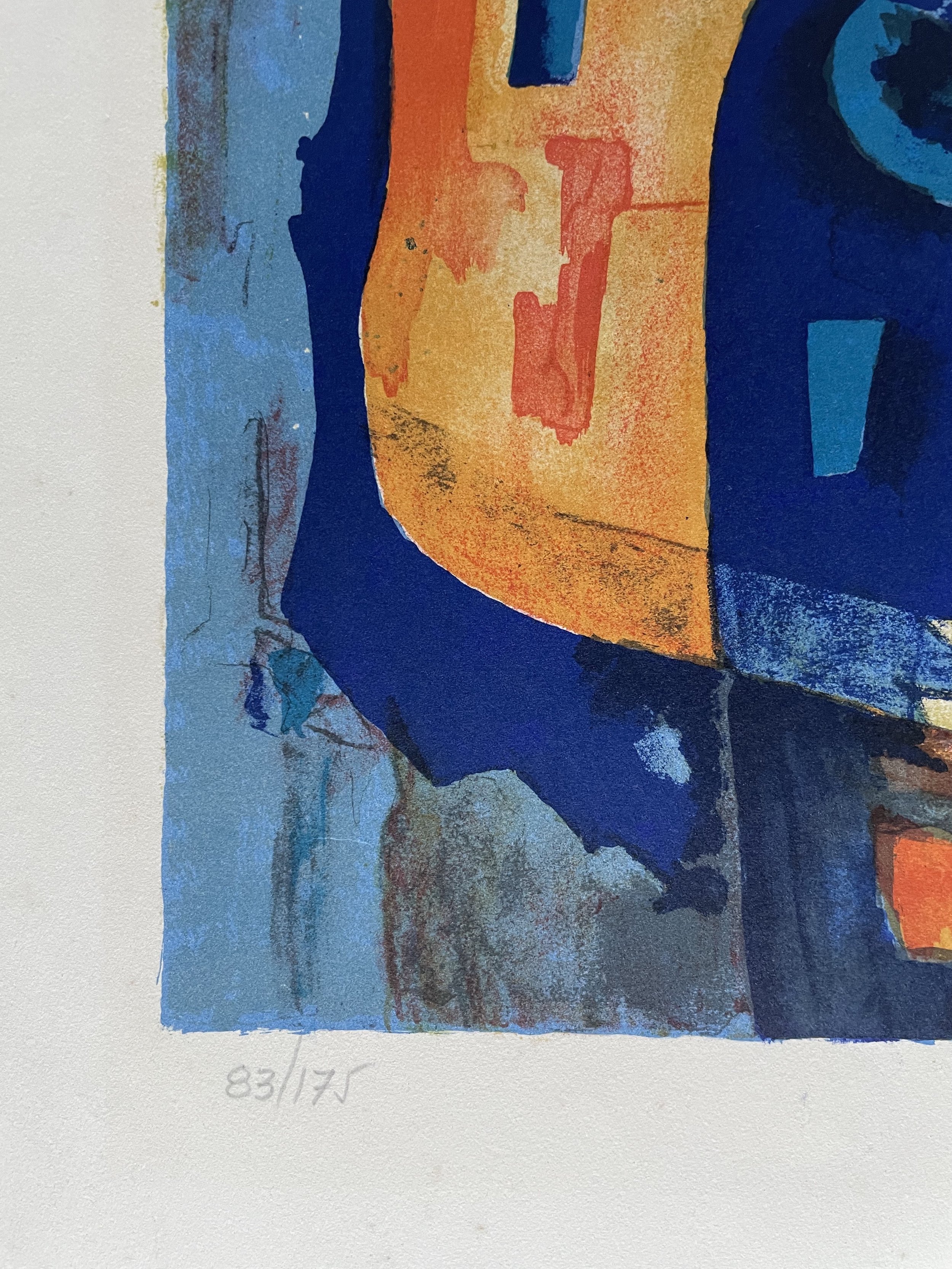 Image 6 of 6