 Image 1 of 4
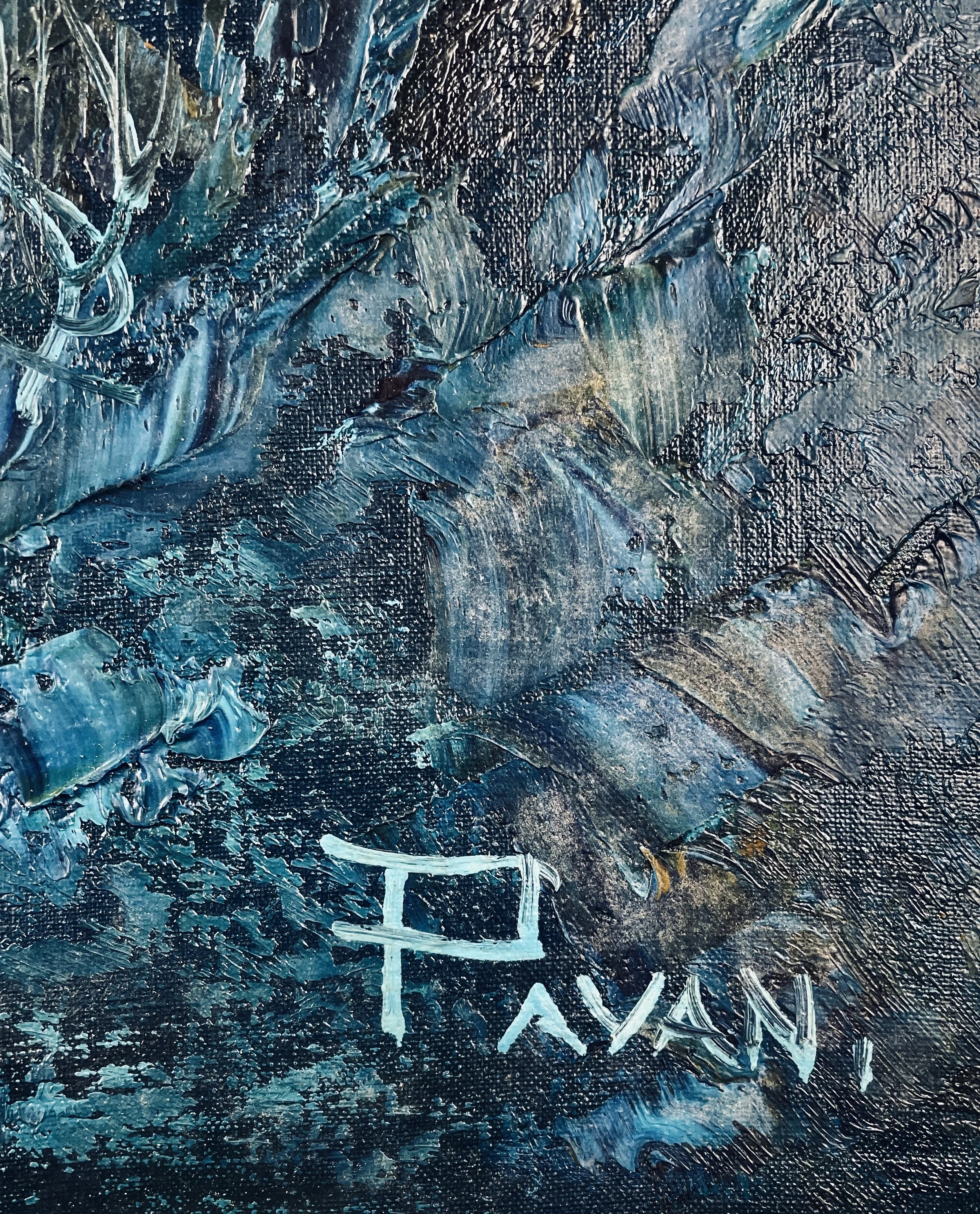 Image 2 of 4
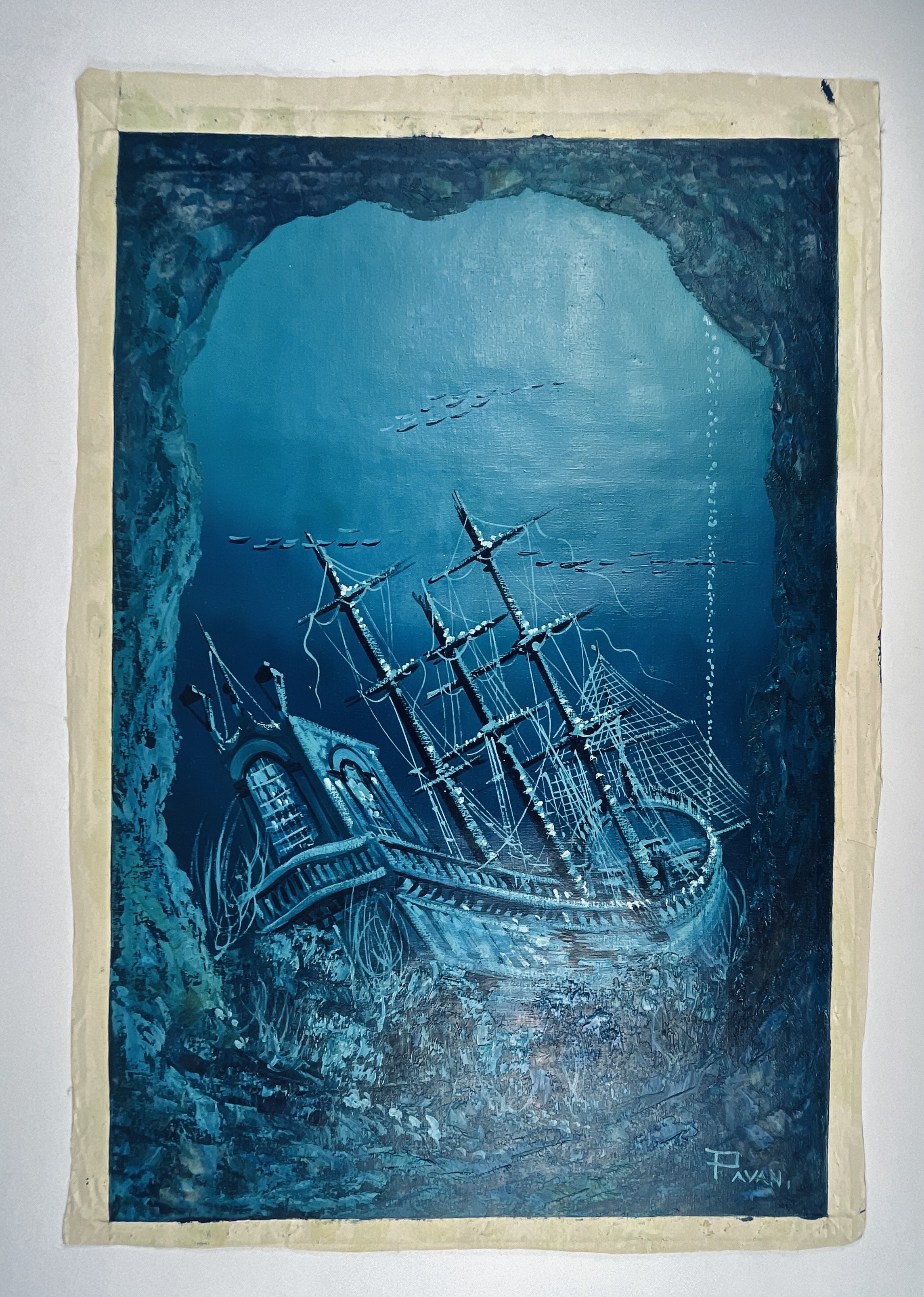 Image 3 of 4
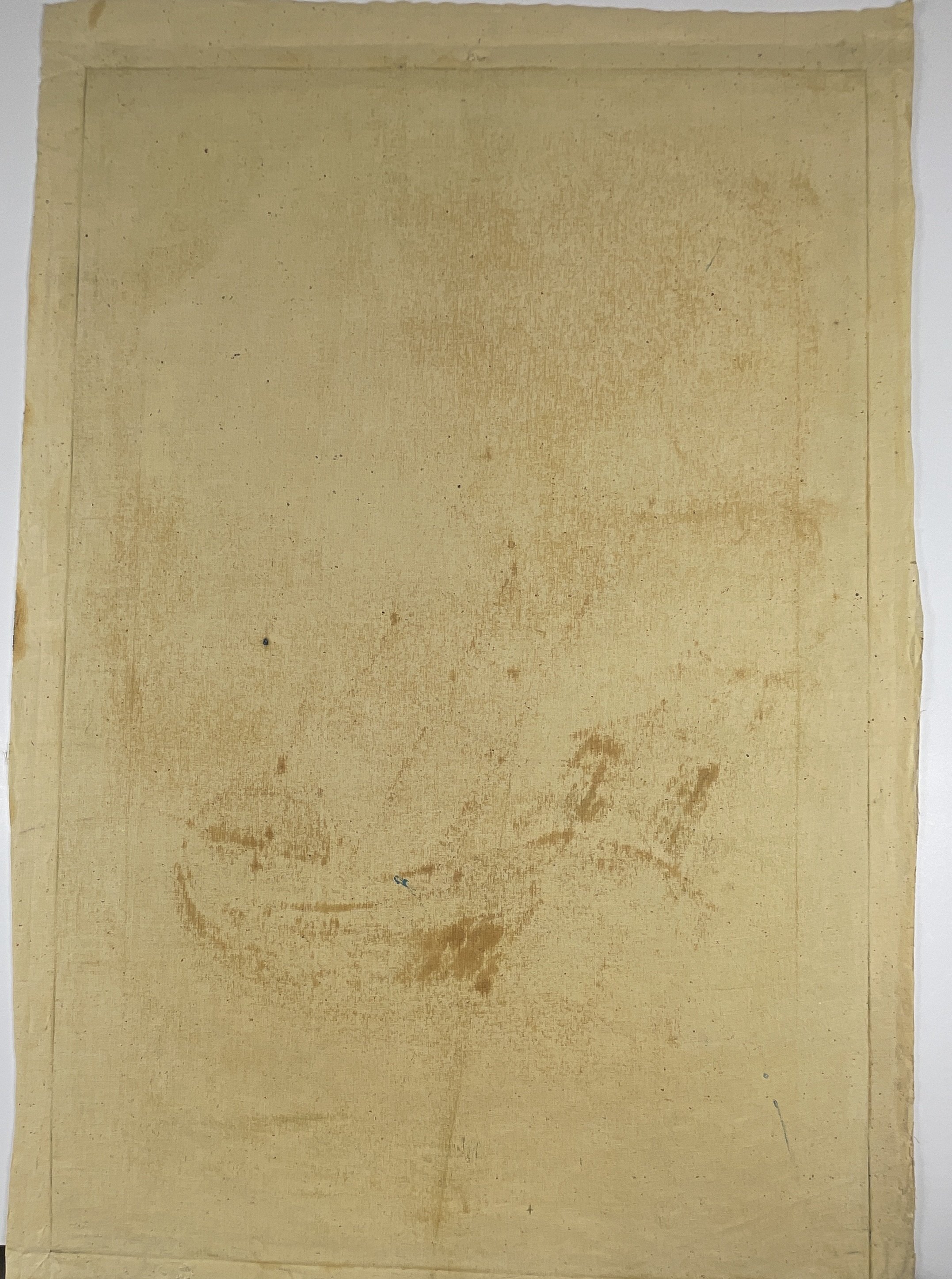 Image 4 of 4
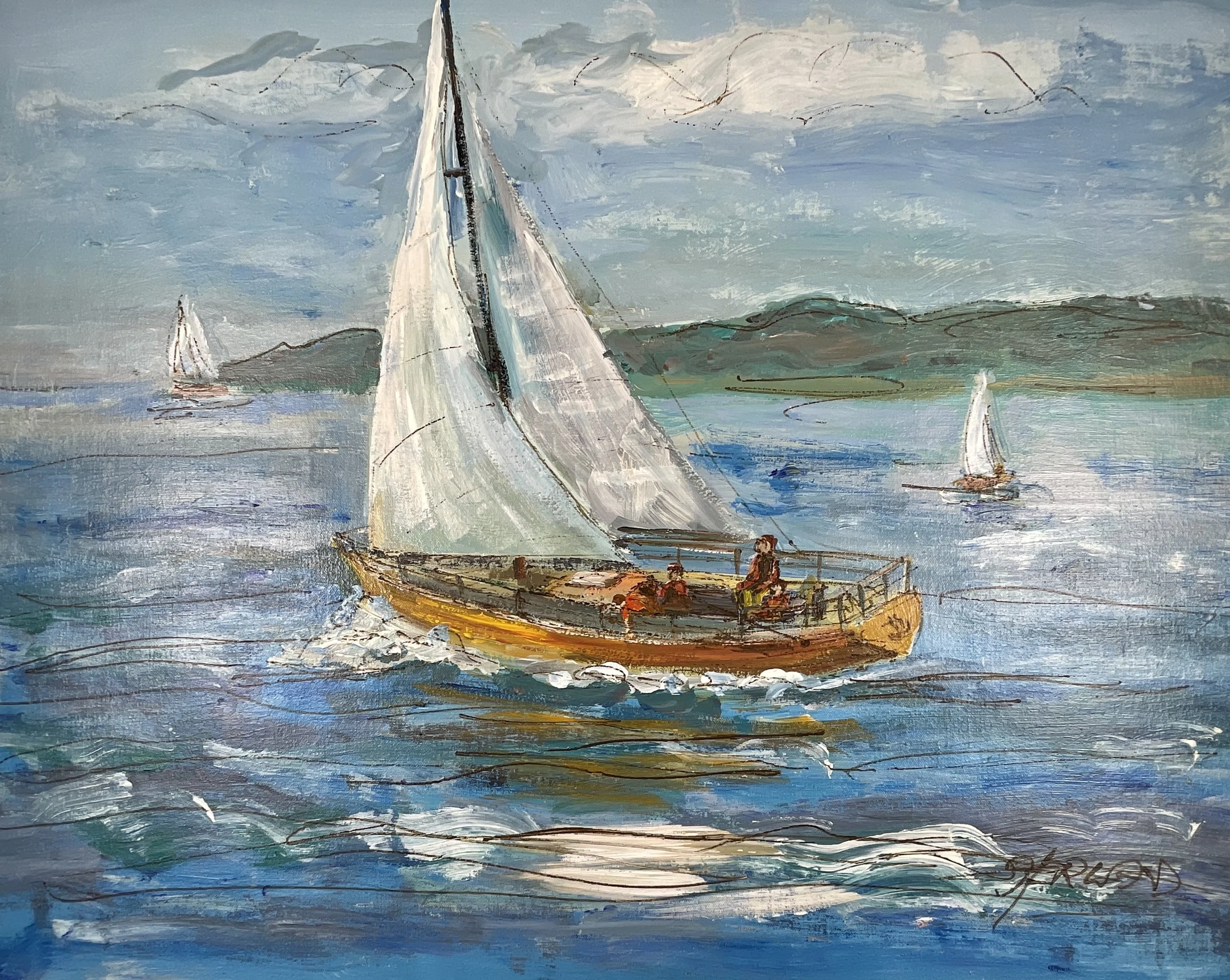
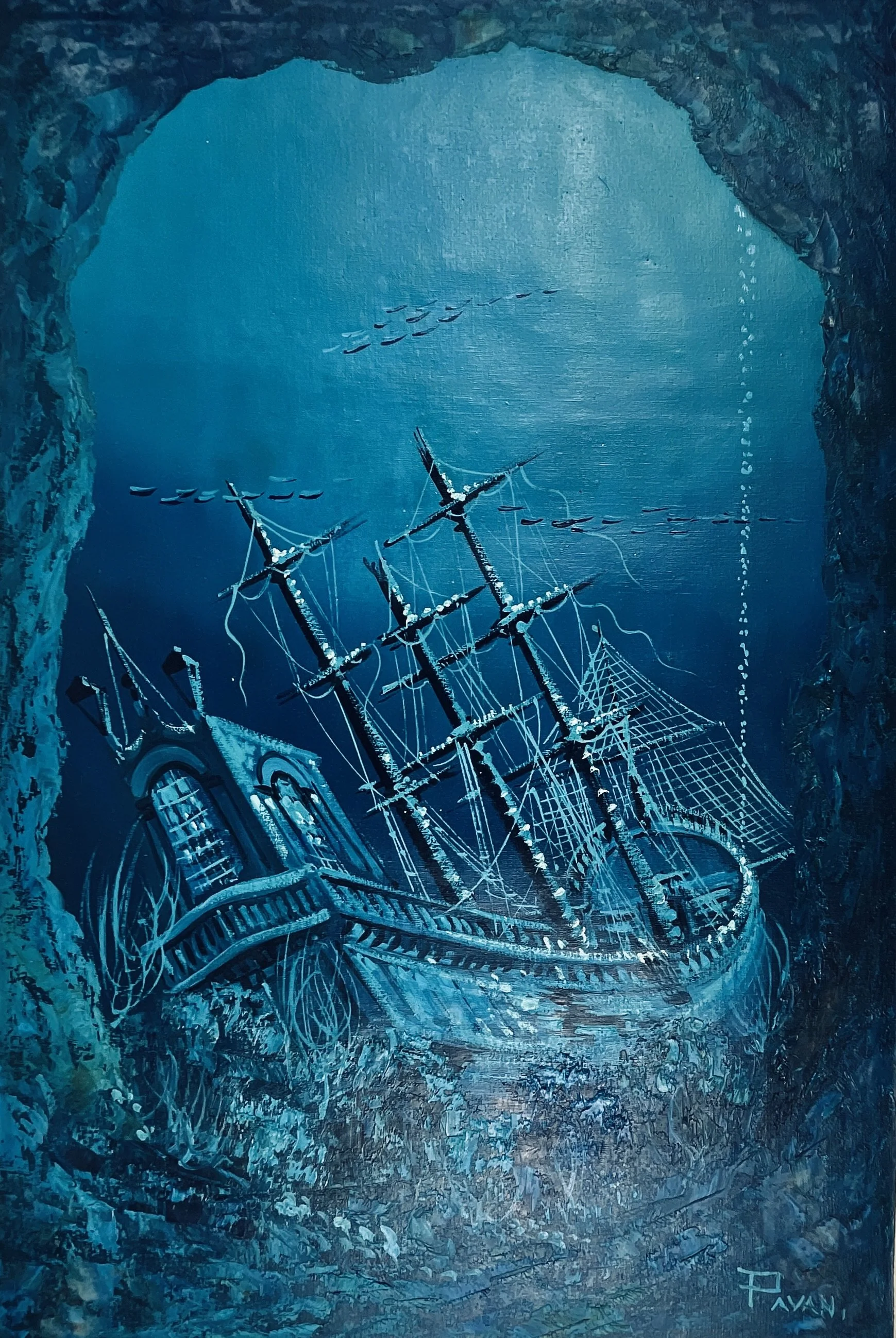
Sunken Galleon (attributed), Pavan (20th century), c.1970–1985, oil impasto on canvas, 24 × 36 in., signed lower right.
A dramatic surreal seascape by Pavan depicting a sunken galleon resting on the ocean floor, viewed through a cavern opening. Rendered in luminous monochrome blues with thick palette-knife impasto and delicate linear rigging, the work evokes mystery, maritime legend, and the haunting beauty of submerged ruins.
Artwork Description
This evocative maritime composition presents a haunting underwater vision of a wrecked galleon resting on the ocean floor, framed by the mouth of a rocky cavern. Painted entirely in deep tonal blues and turquoise highlights, the scene creates an immersive sense of depth and quiet suspension beneath the sea.
The viewer’s perspective appears to be inside a grotto looking outward into open water. The cave walls form a natural frame around the composition, guiding the eye toward the tilted hull of the shipwreck lying partially buried in marine sediment. The vessel’s masts rise diagonally upward into the water column, their rigging rendered with fine linear strokes that contrast with the heavy impasto of the surrounding rock formations.
A school of fish drifts calmly across the open water above the wreck, reinforcing the sense of stillness and passage of time. Delicate dotted highlights suggest streams of bubbles or filtered light descending from the ocean surface. These subtle narrative elements transform the scene from simple marine imagery into a poetic meditation on lost voyages and submerged history.
Technically, the work is executed in pronounced impasto using a palette knife. Thick, sculptural strokes create the rocky cave walls and seabed, producing a tactile relief that catches light across the paint surface. In contrast, smoother layered passages in the water create atmospheric depth and luminosity. The artist achieves a dramatic chiaroscuro effect through tonal variations of ultramarine, teal, and pale aqua.
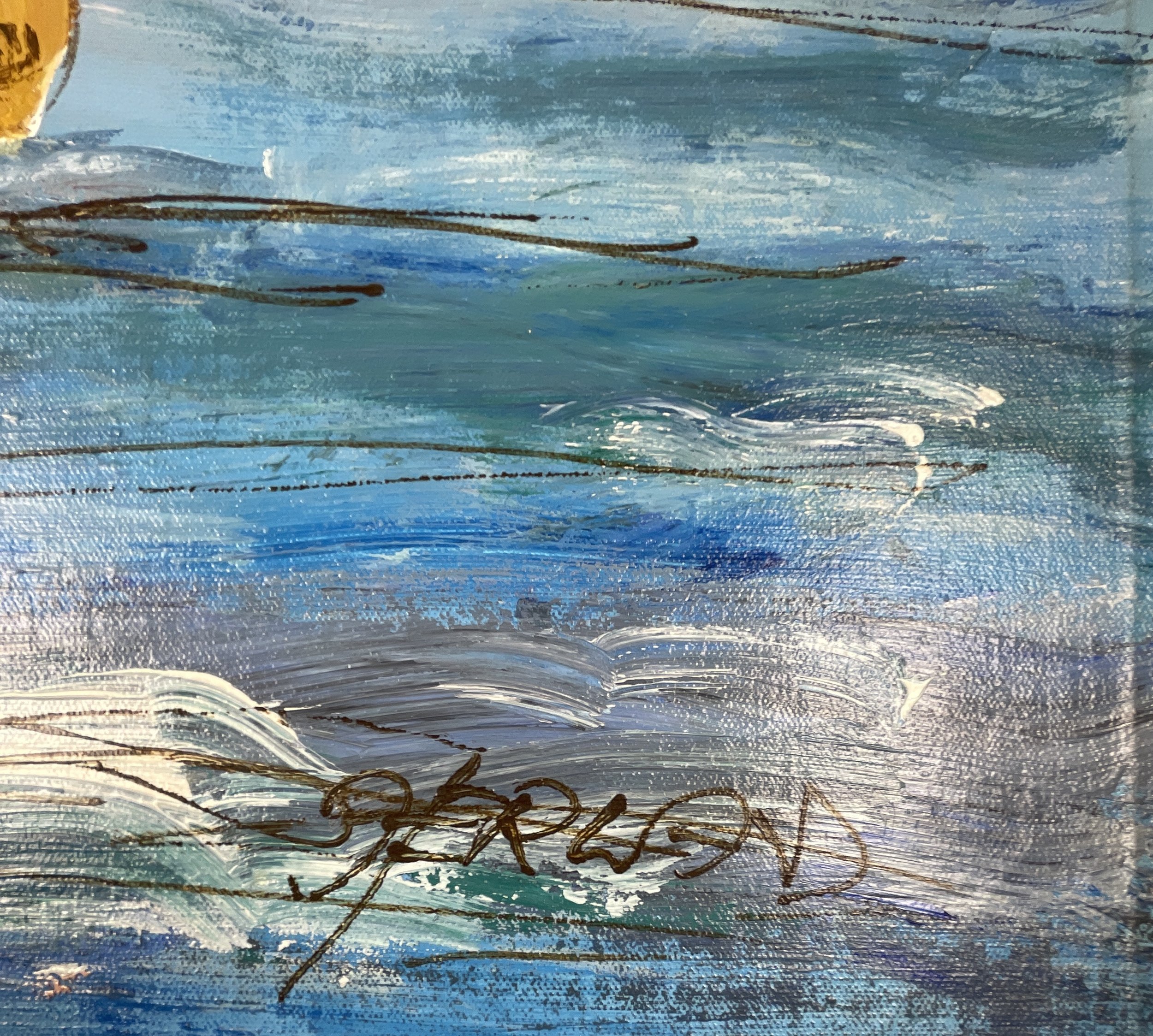
The signature “Pavan” appears in the lower right corner executed in a pale turquoise pigment. The overall composition reflects a mid-to-late twentieth-century decorative surrealist marine style frequently associated with European studio painters producing atmospheric fantasy seascapes for international galleries.
The scale of the work (24 × 36 inches) enhances the immersive quality of the composition, allowing the viewer to experience the underwater cavern as though peering through a window into a forgotten maritime world.
Artist Biography
The painter known as Pavan appears to have been active during the latter half of the twentieth century, producing atmospheric marine and fantasy landscapes characterized by dramatic lighting, monochromatic color schemes, and pronounced palette-knife impasto. Although comprehensive archival documentation on the artist remains limited, works bearing the signature “Pavan” have appeared periodically in gallery inventories and secondary markets from the 1970s through the 1990s.
The style strongly reflects the mid-century European decorative painting tradition that flourished after World War II. During this period numerous painters working in Italy, France, Spain, and Central Europe specialized in atmospheric landscapes, maritime subjects, and surreal environments designed for gallery distribution across Europe and the United States.
Pavan’s work demonstrates a distinctive visual language centered on mood and atmosphere. Instead of depicting traditional seascapes with surface waves and horizon lines, the artist frequently explores more imaginative environments—submerged shipwrecks, grottoes, underwater ruins, and mysterious coastal formations. These subjects connect the paintings to a broader twentieth-century fascination with maritime exploration, lost civilizations, and the romantic mythology of the sea.
Technically, Pavan’s paintings are notable for their combination of heavy impasto and precise linear detailing. The rocky environments are constructed with palette-knife strokes that create textured surfaces reminiscent of geological formations. In contrast, the ships and rigging are drawn with delicate brushwork that gives the vessels an almost skeletal elegance.
This juxtaposition of sculptural paint and graphic detail produces a strong visual tension between organic natural forms and the engineered structure of ships. It also allows the artist to create dramatic depth within a limited color palette.
Paintings signed “Pavan” have circulated primarily through gallery networks that distributed European decorative paintings internationally. Dealers in New York, London, and continental Europe frequently imported such works during the late twentieth century, particularly those depicting romantic maritime themes that appealed to collectors interested in nautical imagery.
Although the artist has not yet been extensively documented in academic art historical literature, the surviving works demonstrate considerable technical confidence and a consistent stylistic identity. Today these paintings are appreciated for their evocative atmosphere, decorative impact, and their connection to the enduring cultural fascination with the mysteries of the sea.
Pavan (20th century)
Sunken Galleon (attributed)
Oil impasto on canvas
24 × 36 inches
Signed lower right
Atmospheric underwater shipwreck scene in monochrome blue palette.
Certificate of Authentication
Artwork: Sunken Galleon (attributed)
Artist: Pavan
Medium: Oil on canvas with palette-knife impasto
Dimensions: 24 × 36 inches
Signature: Signed lower right
This artwork has been examined and catalogued by Artfind Gallery, Washington DC. Based on stylistic analysis, materials, and signature, the work is attributed to the artist Pavan and represents a late twentieth-century surreal maritime composition executed in oil impasto technique.
Artfind Gallery
Washington, DC
Condition
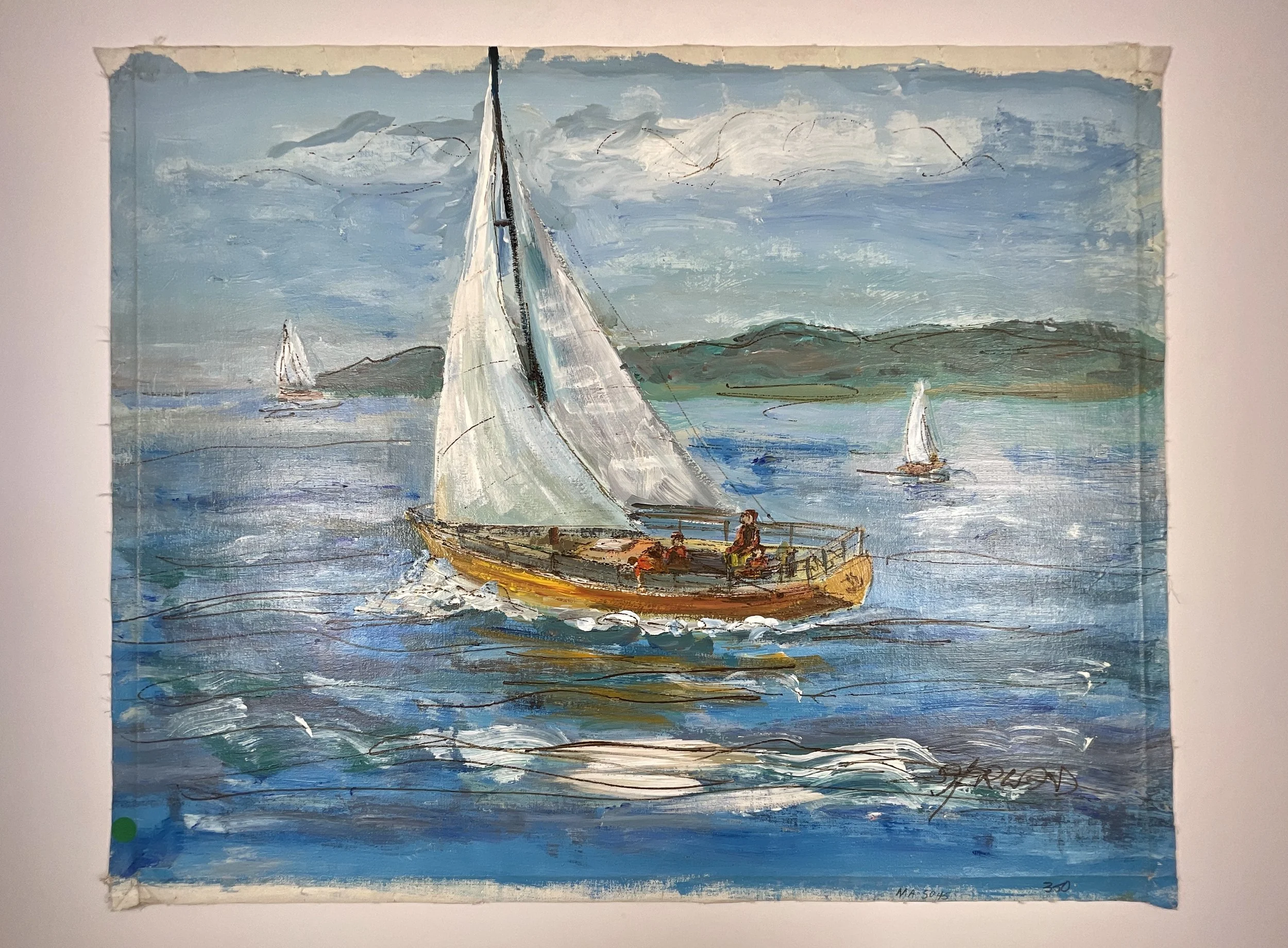
Very good vintage condition. Paint surface stable with strong impasto texture and vibrant color. Minor edge wear along margins consistent with previous mounting. Canvas structurally sound with no visible tears or major paint loss.
Provenance
Private European collection
Acquired by Mitch Morse Gallery, New York
Acquired through gallery networks in New York, United States and Europe
Artfind Gallery, Washington DC (current owner)
Provenance Note: Mitch Morse Gallery Collection
This artwork originates from the inventory of Mitch Morse Gallery, a respected New York–based gallery and publisher active during the mid-to-late 20th century. Mitch Morse was an established figure in the American art market, serving as an artist’s agent, publisher of original graphics, art dealer, distributor, and fine art restorer. He was also a Design Affiliate of A.S.I.D., listed in Who’s Who in the East, and a guest lecturer in graphics at New York University, with appearances on radio and television discussing art and design.
Through his gallery and associated publishing operations, Morse acquired paintings, prints, and original works from artists and studios across New York, Europe, and international art markets, assembling a broad inventory representing a wide range of artistic traditions and mediums. Works from this collection circulated through galleries and collectors throughout the United States.
The present painting was acquired through this network and is now held in the collection of Artfind Gallery, Washington DC, continuing the documented chain of gallery provenance from Mitch Morse’s original acquisitions.
Sunken Galleon (attributed), Pavan (20th century), c.1970–1985, oil impasto on canvas, 24 × 36 in., signed lower right.
A dramatic surreal seascape by Pavan depicting a sunken galleon resting on the ocean floor, viewed through a cavern opening. Rendered in luminous monochrome blues with thick palette-knife impasto and delicate linear rigging, the work evokes mystery, maritime legend, and the haunting beauty of submerged ruins.
Artwork Description
This evocative maritime composition presents a haunting underwater vision of a wrecked galleon resting on the ocean floor, framed by the mouth of a rocky cavern. Painted entirely in deep tonal blues and turquoise highlights, the scene creates an immersive sense of depth and quiet suspension beneath the sea.
The viewer’s perspective appears to be inside a grotto looking outward into open water. The cave walls form a natural frame around the composition, guiding the eye toward the tilted hull of the shipwreck lying partially buried in marine sediment. The vessel’s masts rise diagonally upward into the water column, their rigging rendered with fine linear strokes that contrast with the heavy impasto of the surrounding rock formations.
A school of fish drifts calmly across the open water above the wreck, reinforcing the sense of stillness and passage of time. Delicate dotted highlights suggest streams of bubbles or filtered light descending from the ocean surface. These subtle narrative elements transform the scene from simple marine imagery into a poetic meditation on lost voyages and submerged history.
Technically, the work is executed in pronounced impasto using a palette knife. Thick, sculptural strokes create the rocky cave walls and seabed, producing a tactile relief that catches light across the paint surface. In contrast, smoother layered passages in the water create atmospheric depth and luminosity. The artist achieves a dramatic chiaroscuro effect through tonal variations of ultramarine, teal, and pale aqua.
The signature “Pavan” appears in the lower right corner executed in a pale turquoise pigment. The overall composition reflects a mid-to-late twentieth-century decorative surrealist marine style frequently associated with European studio painters producing atmospheric fantasy seascapes for international galleries.
The scale of the work (24 × 36 inches) enhances the immersive quality of the composition, allowing the viewer to experience the underwater cavern as though peering through a window into a forgotten maritime world.
Artist Biography
The painter known as Pavan appears to have been active during the latter half of the twentieth century, producing atmospheric marine and fantasy landscapes characterized by dramatic lighting, monochromatic color schemes, and pronounced palette-knife impasto. Although comprehensive archival documentation on the artist remains limited, works bearing the signature “Pavan” have appeared periodically in gallery inventories and secondary markets from the 1970s through the 1990s.
The style strongly reflects the mid-century European decorative painting tradition that flourished after World War II. During this period numerous painters working in Italy, France, Spain, and Central Europe specialized in atmospheric landscapes, maritime subjects, and surreal environments designed for gallery distribution across Europe and the United States.
Pavan’s work demonstrates a distinctive visual language centered on mood and atmosphere. Instead of depicting traditional seascapes with surface waves and horizon lines, the artist frequently explores more imaginative environments—submerged shipwrecks, grottoes, underwater ruins, and mysterious coastal formations. These subjects connect the paintings to a broader twentieth-century fascination with maritime exploration, lost civilizations, and the romantic mythology of the sea.
Technically, Pavan’s paintings are notable for their combination of heavy impasto and precise linear detailing. The rocky environments are constructed with palette-knife strokes that create textured surfaces reminiscent of geological formations. In contrast, the ships and rigging are drawn with delicate brushwork that gives the vessels an almost skeletal elegance.
This juxtaposition of sculptural paint and graphic detail produces a strong visual tension between organic natural forms and the engineered structure of ships. It also allows the artist to create dramatic depth within a limited color palette.
Paintings signed “Pavan” have circulated primarily through gallery networks that distributed European decorative paintings internationally. Dealers in New York, London, and continental Europe frequently imported such works during the late twentieth century, particularly those depicting romantic maritime themes that appealed to collectors interested in nautical imagery.
Although the artist has not yet been extensively documented in academic art historical literature, the surviving works demonstrate considerable technical confidence and a consistent stylistic identity. Today these paintings are appreciated for their evocative atmosphere, decorative impact, and their connection to the enduring cultural fascination with the mysteries of the sea.
Pavan (20th century)
Sunken Galleon (attributed)
Oil impasto on canvas
24 × 36 inches
Signed lower right
Atmospheric underwater shipwreck scene in monochrome blue palette.
Certificate of Authentication
Artwork: Sunken Galleon (attributed)
Artist: Pavan
Medium: Oil on canvas with palette-knife impasto
Dimensions: 24 × 36 inches
Signature: Signed lower right
This artwork has been examined and catalogued by Artfind Gallery, Washington DC. Based on stylistic analysis, materials, and signature, the work is attributed to the artist Pavan and represents a late twentieth-century surreal maritime composition executed in oil impasto technique.
Artfind Gallery
Washington, DC
Condition
Very good vintage condition. Paint surface stable with strong impasto texture and vibrant color. Minor edge wear along margins consistent with previous mounting. Canvas structurally sound with no visible tears or major paint loss.
Provenance
Private European collection
Acquired by Mitch Morse Gallery, New York
Acquired through gallery networks in New York, United States and Europe
Artfind Gallery, Washington DC (current owner)
Provenance Note: Mitch Morse Gallery Collection
This artwork originates from the inventory of Mitch Morse Gallery, a respected New York–based gallery and publisher active during the mid-to-late 20th century. Mitch Morse was an established figure in the American art market, serving as an artist’s agent, publisher of original graphics, art dealer, distributor, and fine art restorer. He was also a Design Affiliate of A.S.I.D., listed in Who’s Who in the East, and a guest lecturer in graphics at New York University, with appearances on radio and television discussing art and design.
Through his gallery and associated publishing operations, Morse acquired paintings, prints, and original works from artists and studios across New York, Europe, and international art markets, assembling a broad inventory representing a wide range of artistic traditions and mediums. Works from this collection circulated through galleries and collectors throughout the United States.
The present painting was acquired through this network and is now held in the collection of Artfind Gallery, Washington DC, continuing the documented chain of gallery provenance from Mitch Morse’s original acquisitions.