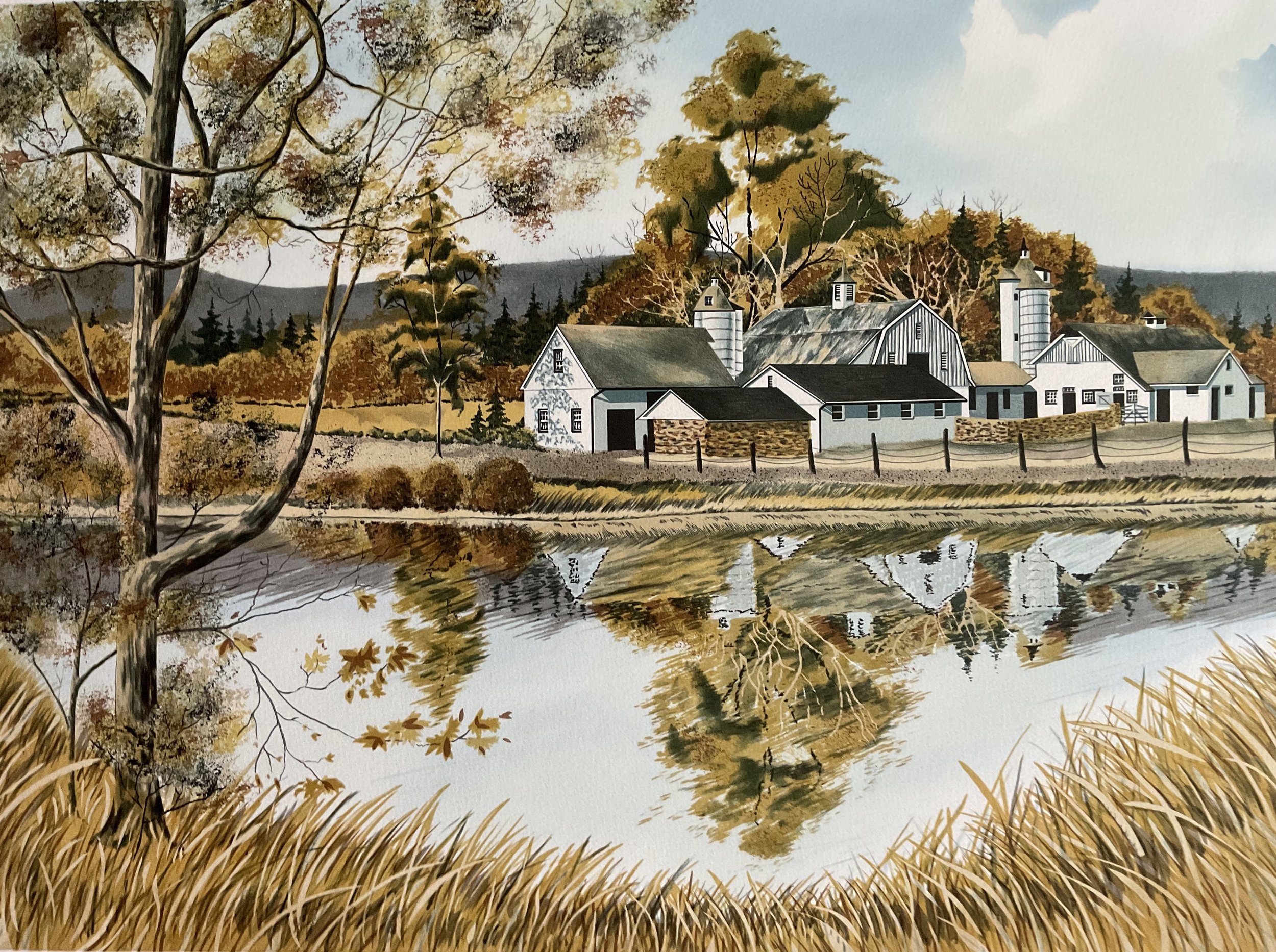
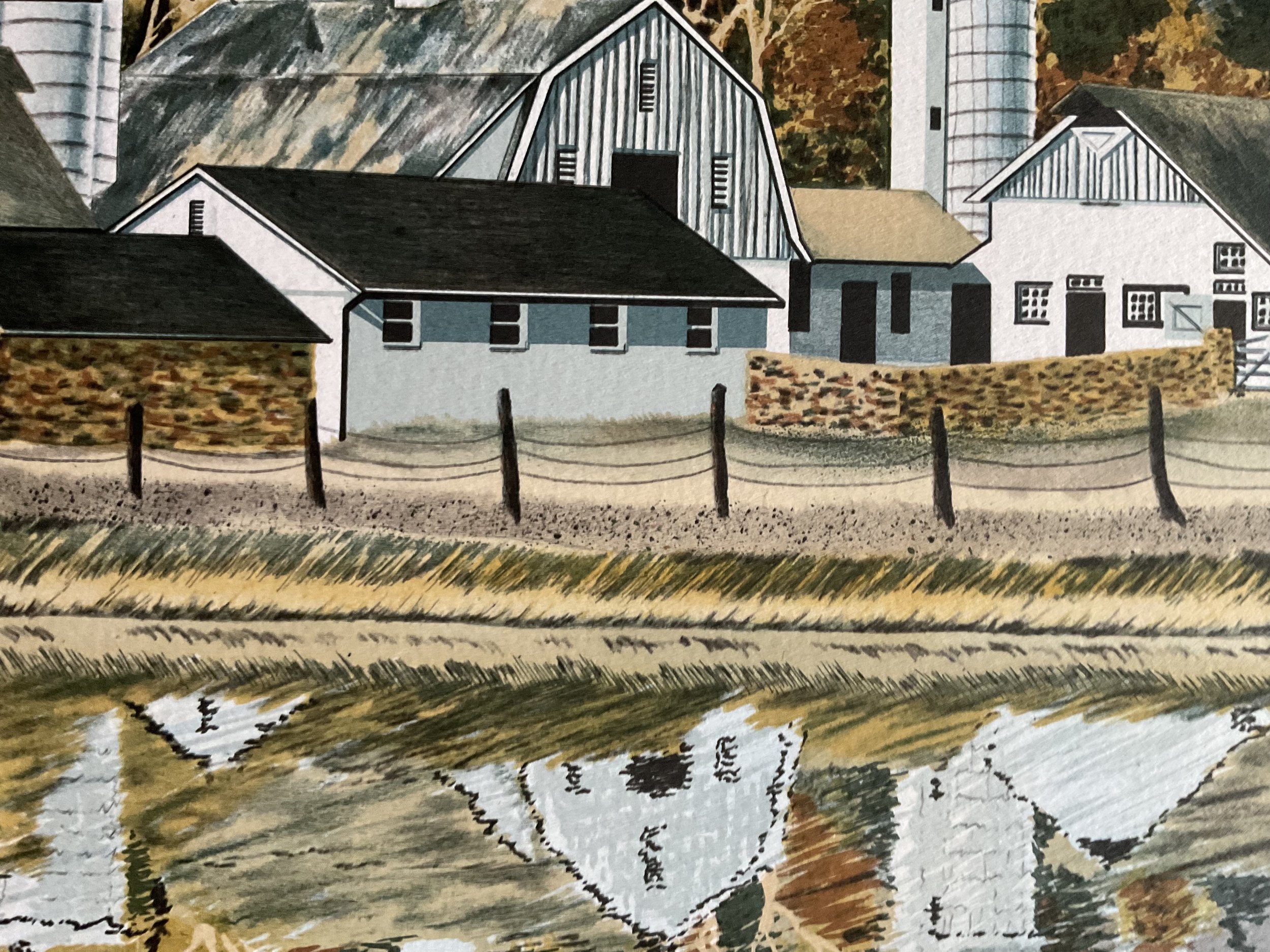
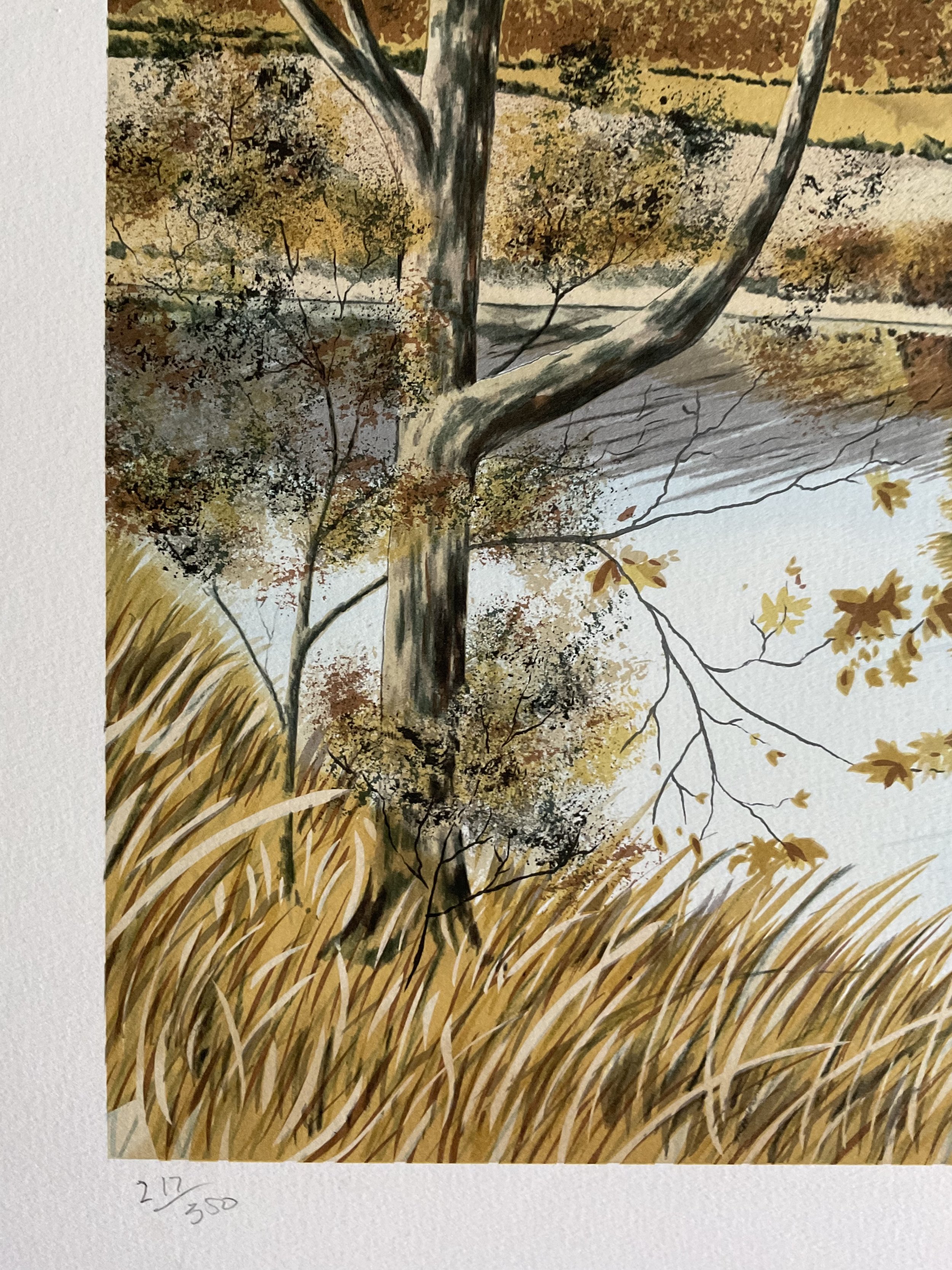
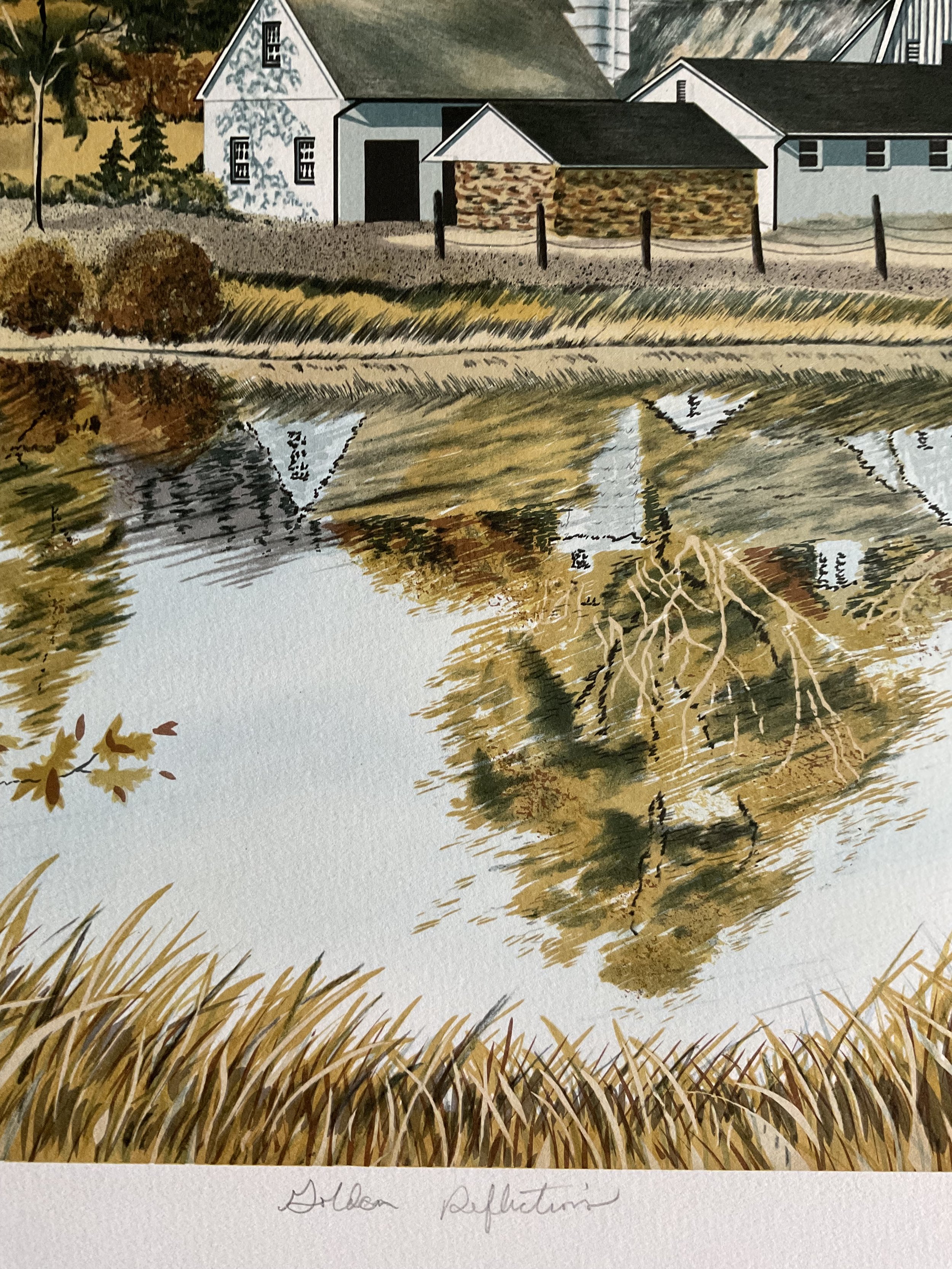
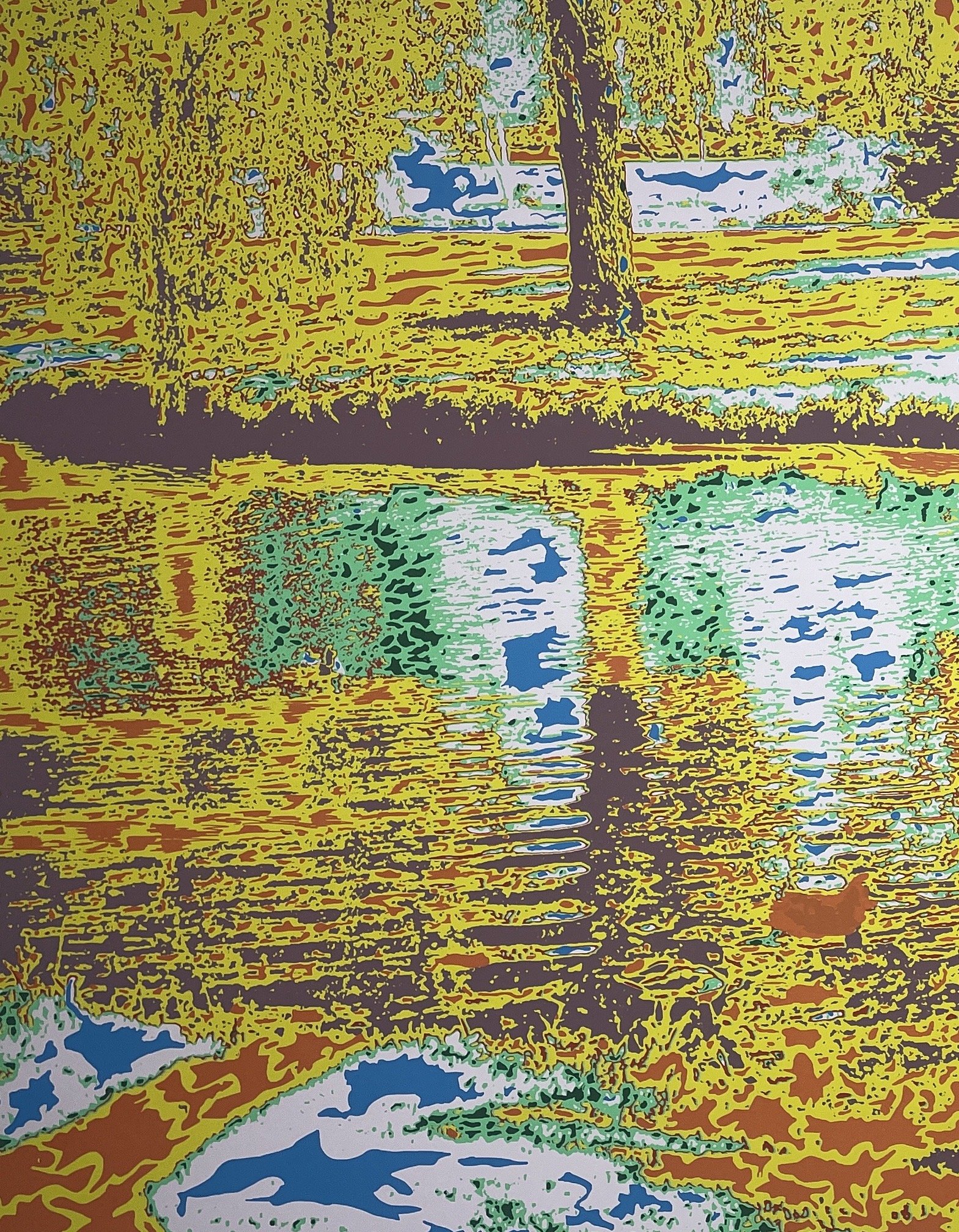
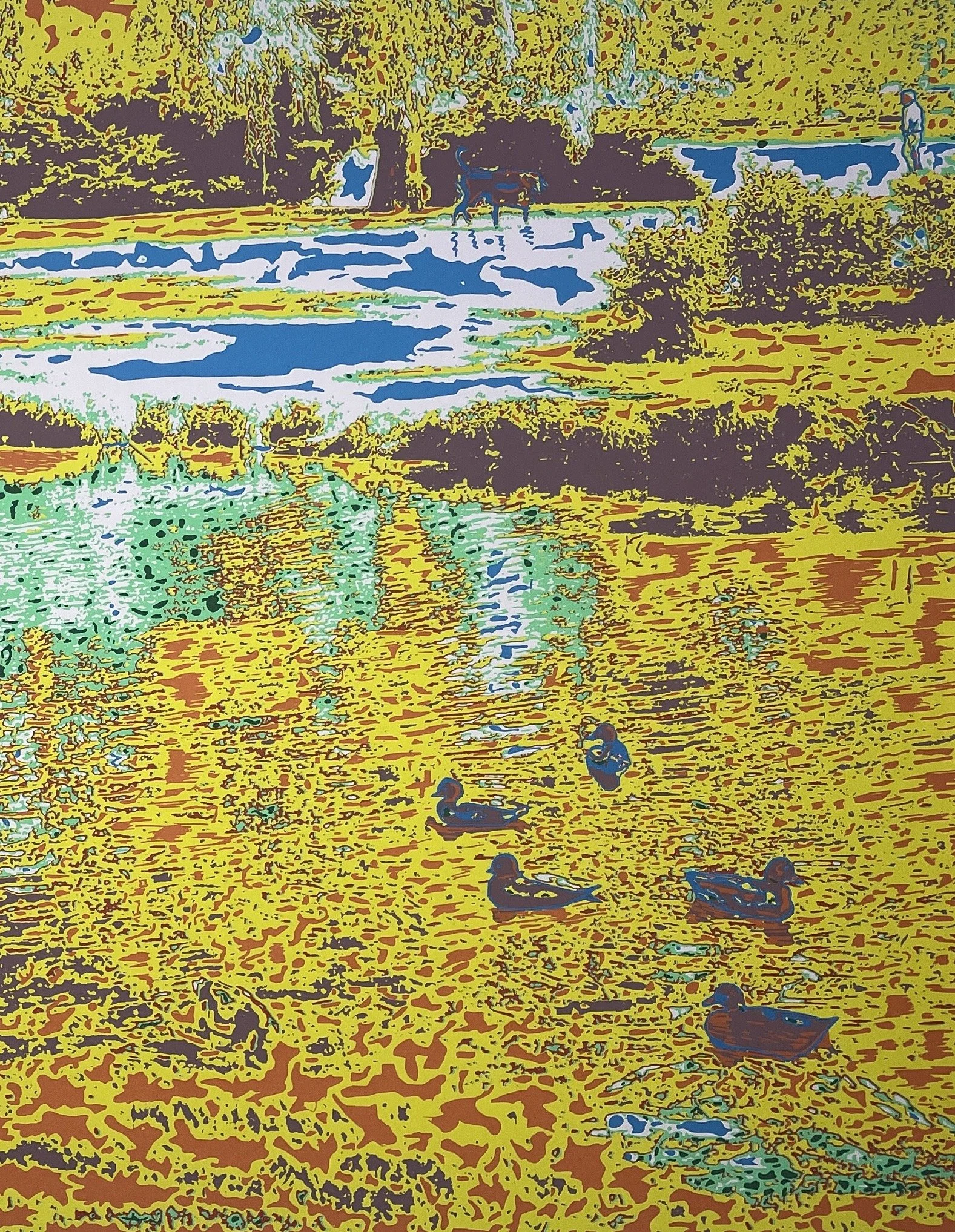
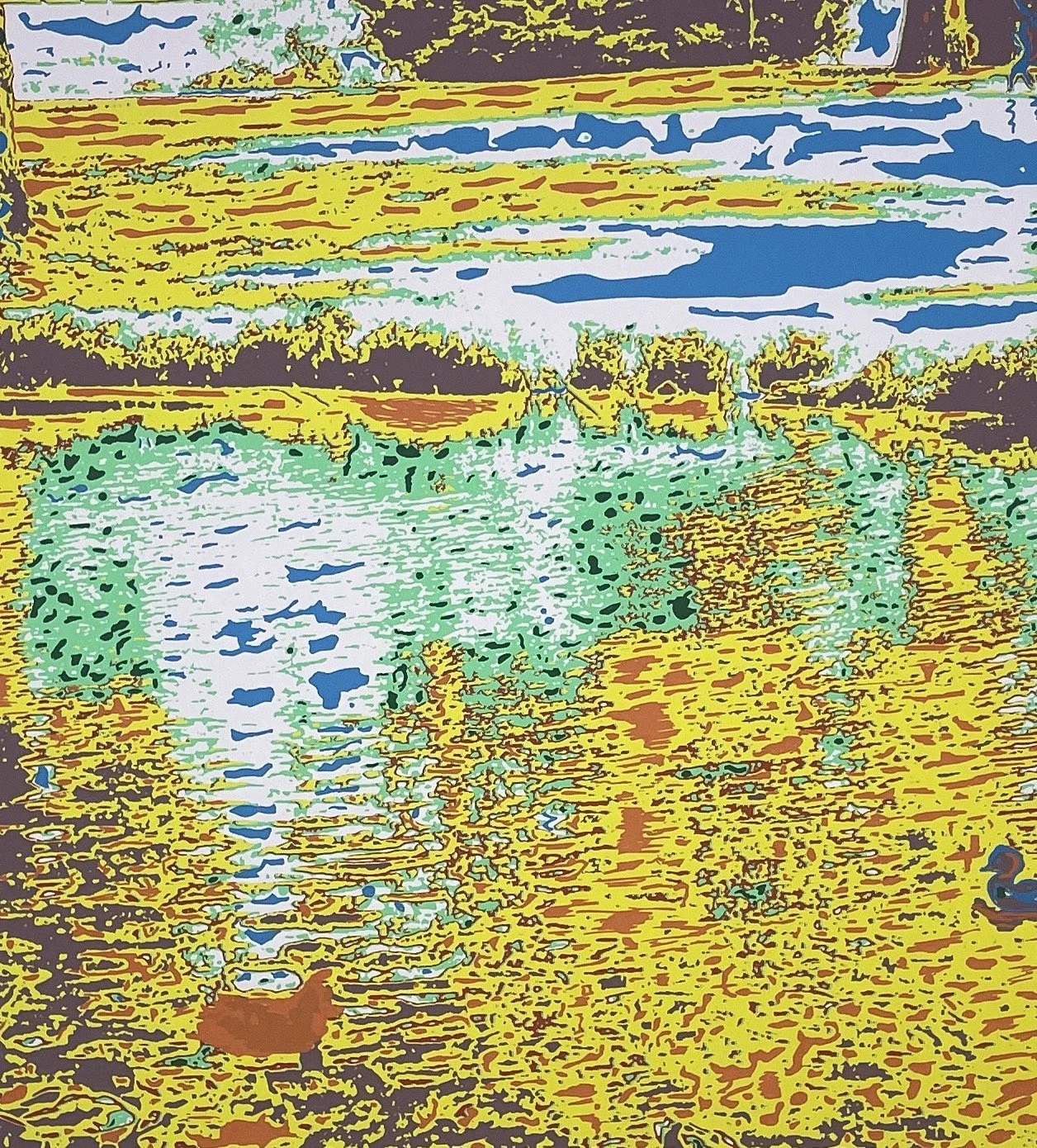
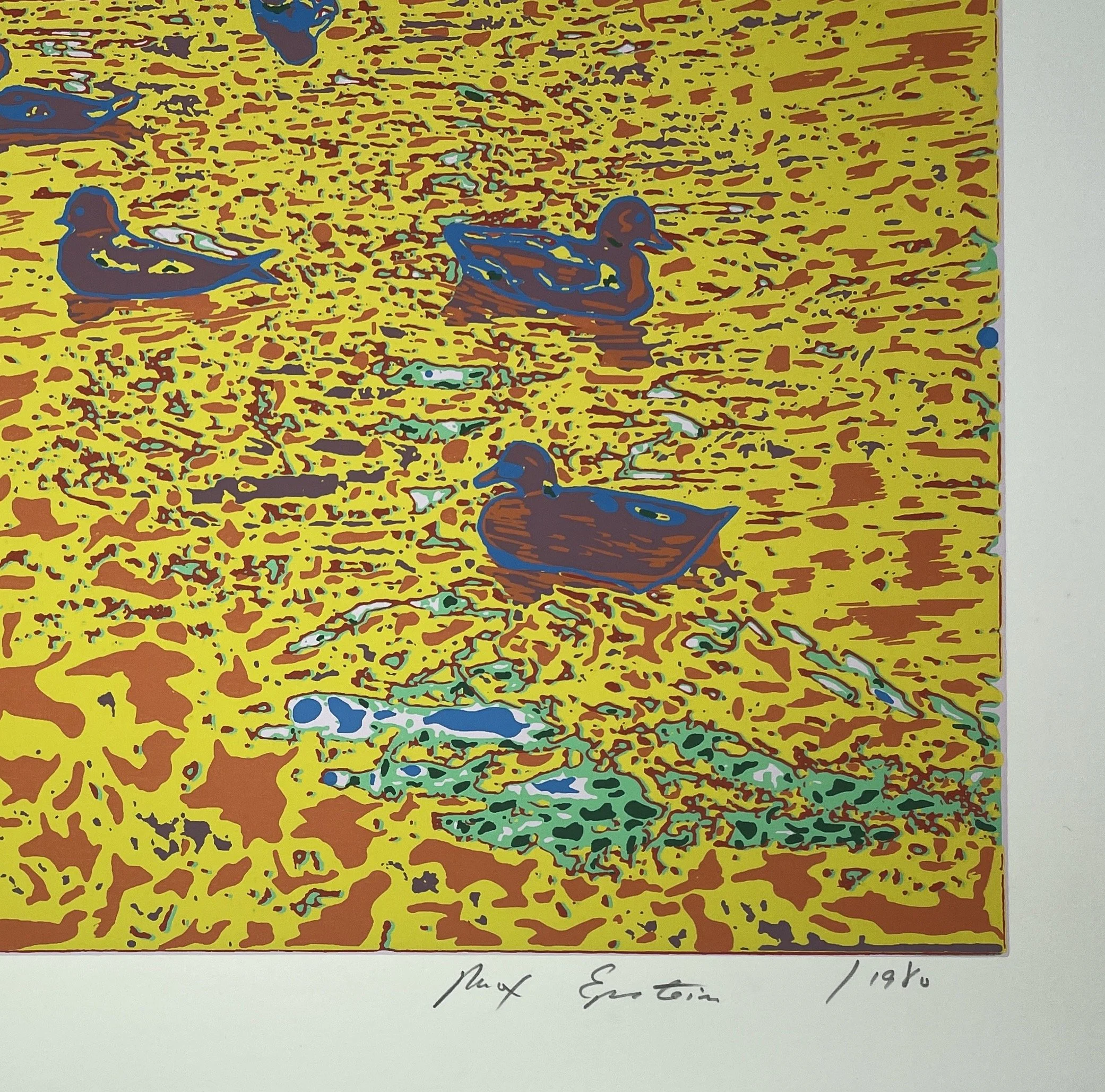
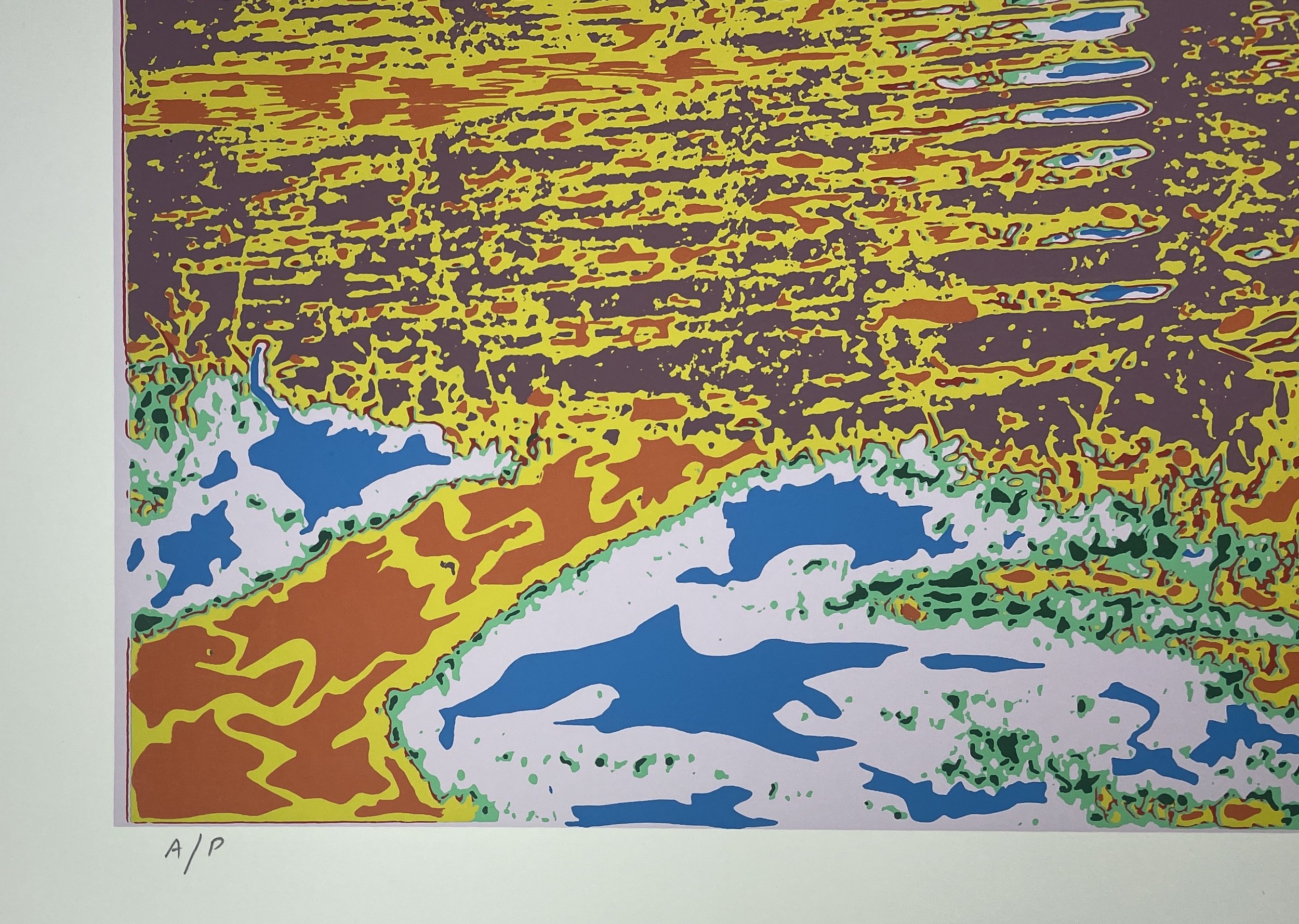
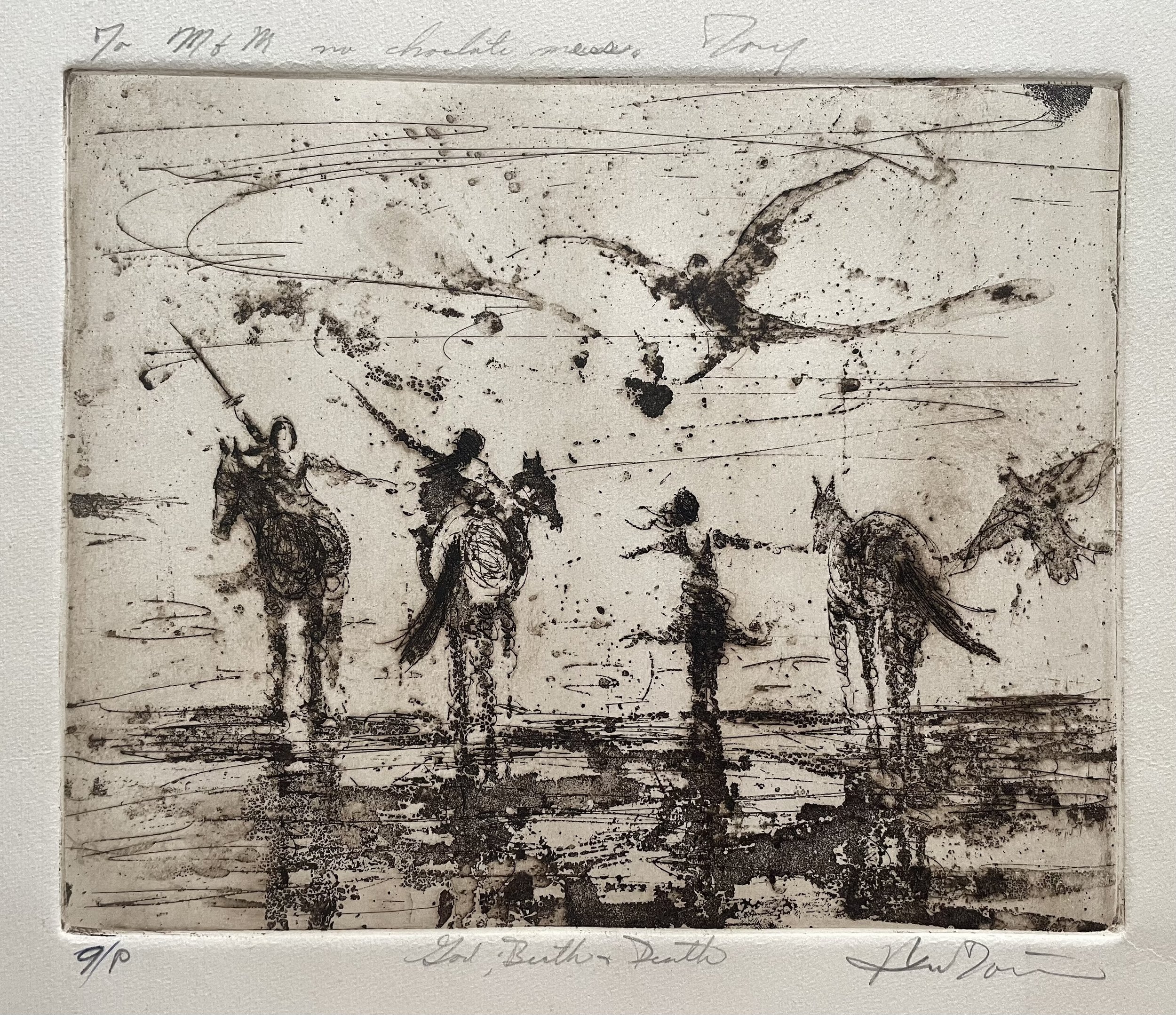
“Garden Arcade with Fruit and Birds,” Raoul Dufy (1877–1953), c.1950s color offset lithograph after the artist, 25×18 in., plate-signed lower right.
“Garden Arcade with Fruit and Birds” is a vibrant mid-century color offset lithograph after Raoul Dufy, the celebrated French Fauvist master of joy, light, and color. Measuring 25×18 inches and plate-signed in the image, this print bursts with lush foliage, exotic birds, and ripe fruit rendered in Dufy’s unmistakable decorative style. A wonderful opportunity to collect a vintage Dufy lithograph that brings the atmosphere of a sun-drenched Mediterranean garden into any interior.
Artwork Description
This lively composition transports the viewer into a fantastical garden where nature and architecture intertwine. On the left, a pale green masonry arcade, striped with bright red brick, rises like a whimsical stage set. Its rounded arches frame hints of blue sky, while climbing plants and trailing vines curl around the columns. The rest of the image is filled with oversized, heart-shaped leaves outlined in dark calligraphic lines, creating a dense pattern that spreads across the surface like a tapestry.
Among the leaves, colorful birds hop and flutter—deep blue bodies accented with yellow and green wings—adding movement and musicality. At the bottom right, an abundant still life of grapes, figs, melons, and an orange pumpkin spills across the foreground, grounding the scene in the pleasures of harvest and feast. Dufy’s palette is characteristically joyful: cool greens and aquas offset by flashes of red, orange, and yellow, with black linework that animates every leaf and feather.
The print is a color offset lithograph after an original work by Raoul Dufy, produced in the mid-20th century when many of his watercolors and gouaches were translated into high-quality printed editions for an international audience. The image is signed “Raoul Dufy” in the plate at lower right, typical for authorized reproductions rather than hand-signed original lithographs. The offset lithographic process allows for smooth, even color fields and crisp linework, capturing Dufy’s fluid drawing and transparent watercolor washes with remarkable fidelity.
Stylistically, the piece reflects Dufy’s mature decorative language: flattened space, rhythmic contour lines, and a tapestry-like all-over pattern in which architecture, vegetation, animals, and still life coexist. It belongs to the broader Fauvist and post-Fauvist tradition he helped shape—prioritizing color, pleasure, and lyrical sensation over strict naturalism. The “story” is less narrative than atmospheric: a celebration of abundance, leisure, and the Mediterranean garden as a paradise of light and life.
Biography of Raoul Dufy
Raoul Dufy (1877–1953) was a French painter, printmaker, illustrator, textile designer, and decorative artist, best known for his brightly colored, elegantly linear depictions of modern leisure and the sun-soaked French coast.
He was born on June 3, 1877, in Le Havre, Normandy, into a large family of modest means. As a teenager he worked in a coffee-importing firm by day while taking evening classes at the École des Beaux-Arts in Le Havre, where he studied with Charles Lhuillier and sketched paintings by Eugène Boudin in the local museum with his friend Othon Friesz.
In 1900, after a year of military service, Dufy won a scholarship that allowed him to move to Paris and enroll in the École Nationale Supérieure des Beaux-Arts, studying under the academic painter Léon Bonnat. His early work was Impressionist in character, with interest in harbor scenes and everyday urban life. A decisive turning point came in 1905, when he encountered Henri Matisse’s Luxe, calme et volupté at the Salon des Indépendants. The painting “converted” him to Fauvism, encouraging a bolder, more arbitrary use of color; he soon exhibited with the Fauves, including Matisse and André Derain.
Around 1908–1910, under the influence of Paul Cézanne and in dialogue with Georges Braque, Dufy temporarily adopted a more structured, Cubist-inflected approach. After World War I, however, he developed the distinctive personal style for which he is now famous: lightly washed, radiant backgrounds overlaid with calligraphic contour lines, capturing regattas, racecourses, orchestras, markets, and coastal towns in a buoyant, decorative manner.
Dufy’s creativity extended far beyond easel painting. He designed textiles for the couturier Paul Poiret, created ceramics and tapestries, illustrated books, and executed large-scale decorative schemes for public buildings. Notable commissions include murals for the Palais de Chaillot and, most famously, La Fée Electricité (The Electricity Fairy), a monumental mural created for the 1937 International Exposition in Paris, celebrating the history and promise of electricity.
Throughout his career he exhibited in major salons and galleries in Paris and abroad, and his works entered important museum collections worldwide, including the Musée d’Art Moderne de Paris, the Musée d’Orsay, the Museum of Modern Art in New York, and the Hermitage in St. Petersburg. In 1952 he received the International Grand Prize for Painting at the Venice Biennale, capping his international reputation.
From the mid-1930s Dufy suffered from severe rheumatoid arthritis, which gradually limited his mobility but did not extinguish his creative drive. He divided his later years between the south of France and various health retreats, continuing to paint luminous landscapes and interiors. He died on March 23, 1953, in Forcalquier, France, leaving behind a prolific body of work that epitomizes 20th-century French joie de vivre and the decorative potential of modern painting.
Raoul Dufy (French, 1877–1953), Garden Arcade with Fruit and Birds (attributed title), c.1950s. Color offset lithograph after the artist, 25×18 in. (sheet). Plate-signed “Raoul Dufy” lower right. Unnumbered edition. Very good vintage condition. Provenance: Mitch Morse Gallery, NYC; private collection (Artfind Gallery, Washington, DC).
Certificate of Value & Authentication
Artist: Raoul Dufy (French, 1877–1953)
Title: Garden Arcade with Fruit and Birds (attributed)
Date: c.1950s (posthumous or late-lifetime edition after an earlier work)
Medium: Color offset lithograph after an original painting/gouache
Signature: Plate-signed “Raoul Dufy” lower right (not hand-signed)
Dimensions: 25 × 18 inches (sheet, approx.)
Edition: Open or unrecorded edition; typical for mid-century Dufy reproductive prints
Condition: Vintage print in very good condition overall, with bright color; minor age-related toning or handling consistent with age
Authenticity Statement:
Based on stylistic analysis, printing technique, plate signature, and comparison with known mid-century printed editions after Raoul Dufy, this work is consistent with an authentic vintage offset lithograph authorized from the artist’s original design. It should be classified as a period reproduction after Dufy, rather than an original hand-signed fine-art lithograph.
Provenance chain (formatted for collectors)
Artist / Estate of Raoul Dufy – original design created in the first half of the 20th century; subsequently authorized for printed reproduction.
Publisher / Printer (France, mid-20th century) – production and distribution of color offset lithographs after Dufy.
Mitch Morse Gallery, New York City – acquired in the course of gallery activities and European sourcing (mid- to late-20th century).
Artfind Gallery, Washington, DC – acquired from Mitch Morse Gallery; current owner and representative.
“Garden Arcade with Fruit and Birds,” Raoul Dufy (1877–1953), c.1950s color offset lithograph after the artist, 25×18 in., plate-signed lower right.
“Garden Arcade with Fruit and Birds” is a vibrant mid-century color offset lithograph after Raoul Dufy, the celebrated French Fauvist master of joy, light, and color. Measuring 25×18 inches and plate-signed in the image, this print bursts with lush foliage, exotic birds, and ripe fruit rendered in Dufy’s unmistakable decorative style. A wonderful opportunity to collect a vintage Dufy lithograph that brings the atmosphere of a sun-drenched Mediterranean garden into any interior.
Artwork Description
This lively composition transports the viewer into a fantastical garden where nature and architecture intertwine. On the left, a pale green masonry arcade, striped with bright red brick, rises like a whimsical stage set. Its rounded arches frame hints of blue sky, while climbing plants and trailing vines curl around the columns. The rest of the image is filled with oversized, heart-shaped leaves outlined in dark calligraphic lines, creating a dense pattern that spreads across the surface like a tapestry.
Among the leaves, colorful birds hop and flutter—deep blue bodies accented with yellow and green wings—adding movement and musicality. At the bottom right, an abundant still life of grapes, figs, melons, and an orange pumpkin spills across the foreground, grounding the scene in the pleasures of harvest and feast. Dufy’s palette is characteristically joyful: cool greens and aquas offset by flashes of red, orange, and yellow, with black linework that animates every leaf and feather.
The print is a color offset lithograph after an original work by Raoul Dufy, produced in the mid-20th century when many of his watercolors and gouaches were translated into high-quality printed editions for an international audience. The image is signed “Raoul Dufy” in the plate at lower right, typical for authorized reproductions rather than hand-signed original lithographs. The offset lithographic process allows for smooth, even color fields and crisp linework, capturing Dufy’s fluid drawing and transparent watercolor washes with remarkable fidelity.
Stylistically, the piece reflects Dufy’s mature decorative language: flattened space, rhythmic contour lines, and a tapestry-like all-over pattern in which architecture, vegetation, animals, and still life coexist. It belongs to the broader Fauvist and post-Fauvist tradition he helped shape—prioritizing color, pleasure, and lyrical sensation over strict naturalism. The “story” is less narrative than atmospheric: a celebration of abundance, leisure, and the Mediterranean garden as a paradise of light and life.
Biography of Raoul Dufy
Raoul Dufy (1877–1953) was a French painter, printmaker, illustrator, textile designer, and decorative artist, best known for his brightly colored, elegantly linear depictions of modern leisure and the sun-soaked French coast.
He was born on June 3, 1877, in Le Havre, Normandy, into a large family of modest means. As a teenager he worked in a coffee-importing firm by day while taking evening classes at the École des Beaux-Arts in Le Havre, where he studied with Charles Lhuillier and sketched paintings by Eugène Boudin in the local museum with his friend Othon Friesz.
In 1900, after a year of military service, Dufy won a scholarship that allowed him to move to Paris and enroll in the École Nationale Supérieure des Beaux-Arts, studying under the academic painter Léon Bonnat. His early work was Impressionist in character, with interest in harbor scenes and everyday urban life. A decisive turning point came in 1905, when he encountered Henri Matisse’s Luxe, calme et volupté at the Salon des Indépendants. The painting “converted” him to Fauvism, encouraging a bolder, more arbitrary use of color; he soon exhibited with the Fauves, including Matisse and André Derain.
Around 1908–1910, under the influence of Paul Cézanne and in dialogue with Georges Braque, Dufy temporarily adopted a more structured, Cubist-inflected approach. After World War I, however, he developed the distinctive personal style for which he is now famous: lightly washed, radiant backgrounds overlaid with calligraphic contour lines, capturing regattas, racecourses, orchestras, markets, and coastal towns in a buoyant, decorative manner.
Dufy’s creativity extended far beyond easel painting. He designed textiles for the couturier Paul Poiret, created ceramics and tapestries, illustrated books, and executed large-scale decorative schemes for public buildings. Notable commissions include murals for the Palais de Chaillot and, most famously, La Fée Electricité (The Electricity Fairy), a monumental mural created for the 1937 International Exposition in Paris, celebrating the history and promise of electricity.
Throughout his career he exhibited in major salons and galleries in Paris and abroad, and his works entered important museum collections worldwide, including the Musée d’Art Moderne de Paris, the Musée d’Orsay, the Museum of Modern Art in New York, and the Hermitage in St. Petersburg. In 1952 he received the International Grand Prize for Painting at the Venice Biennale, capping his international reputation.
From the mid-1930s Dufy suffered from severe rheumatoid arthritis, which gradually limited his mobility but did not extinguish his creative drive. He divided his later years between the south of France and various health retreats, continuing to paint luminous landscapes and interiors. He died on March 23, 1953, in Forcalquier, France, leaving behind a prolific body of work that epitomizes 20th-century French joie de vivre and the decorative potential of modern painting.
Raoul Dufy (French, 1877–1953), Garden Arcade with Fruit and Birds (attributed title), c.1950s. Color offset lithograph after the artist, 25×18 in. (sheet). Plate-signed “Raoul Dufy” lower right. Unnumbered edition. Very good vintage condition. Provenance: Mitch Morse Gallery, NYC; private collection (Artfind Gallery, Washington, DC).
Certificate of Value & Authentication
Artist: Raoul Dufy (French, 1877–1953)
Title: Garden Arcade with Fruit and Birds (attributed)
Date: c.1950s (posthumous or late-lifetime edition after an earlier work)
Medium: Color offset lithograph after an original painting/gouache
Signature: Plate-signed “Raoul Dufy” lower right (not hand-signed)
Dimensions: 25 × 18 inches (sheet, approx.)
Edition: Open or unrecorded edition; typical for mid-century Dufy reproductive prints
Condition: Vintage print in very good condition overall, with bright color; minor age-related toning or handling consistent with age
Authenticity Statement:
Based on stylistic analysis, printing technique, plate signature, and comparison with known mid-century printed editions after Raoul Dufy, this work is consistent with an authentic vintage offset lithograph authorized from the artist’s original design. It should be classified as a period reproduction after Dufy, rather than an original hand-signed fine-art lithograph.
Provenance chain (formatted for collectors)
Artist / Estate of Raoul Dufy – original design created in the first half of the 20th century; subsequently authorized for printed reproduction.
Publisher / Printer (France, mid-20th century) – production and distribution of color offset lithographs after Dufy.
Mitch Morse Gallery, New York City – acquired in the course of gallery activities and European sourcing (mid- to late-20th century).
Artfind Gallery, Washington, DC – acquired from Mitch Morse Gallery; current owner and representative.
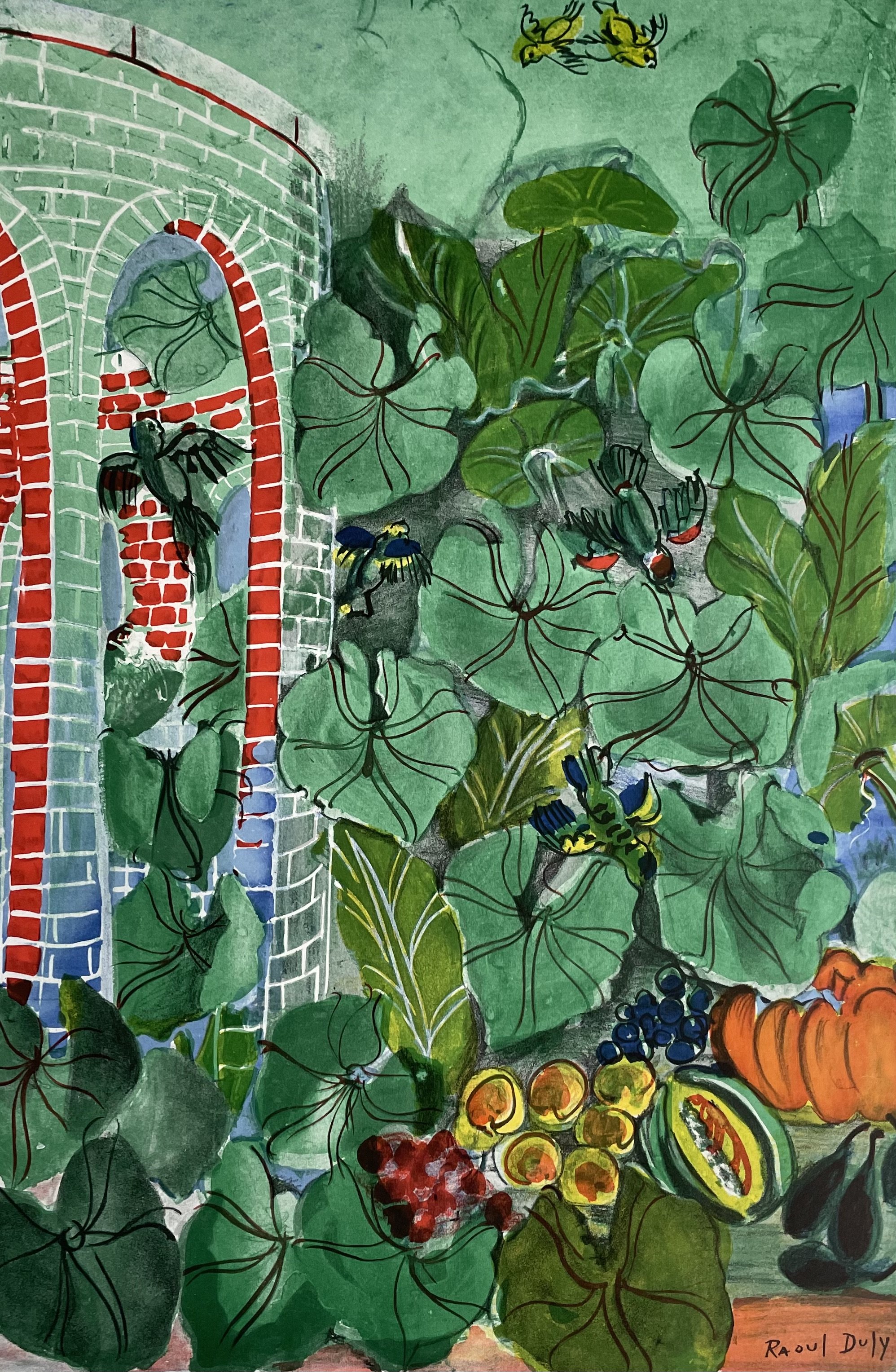 Image 1 of 8
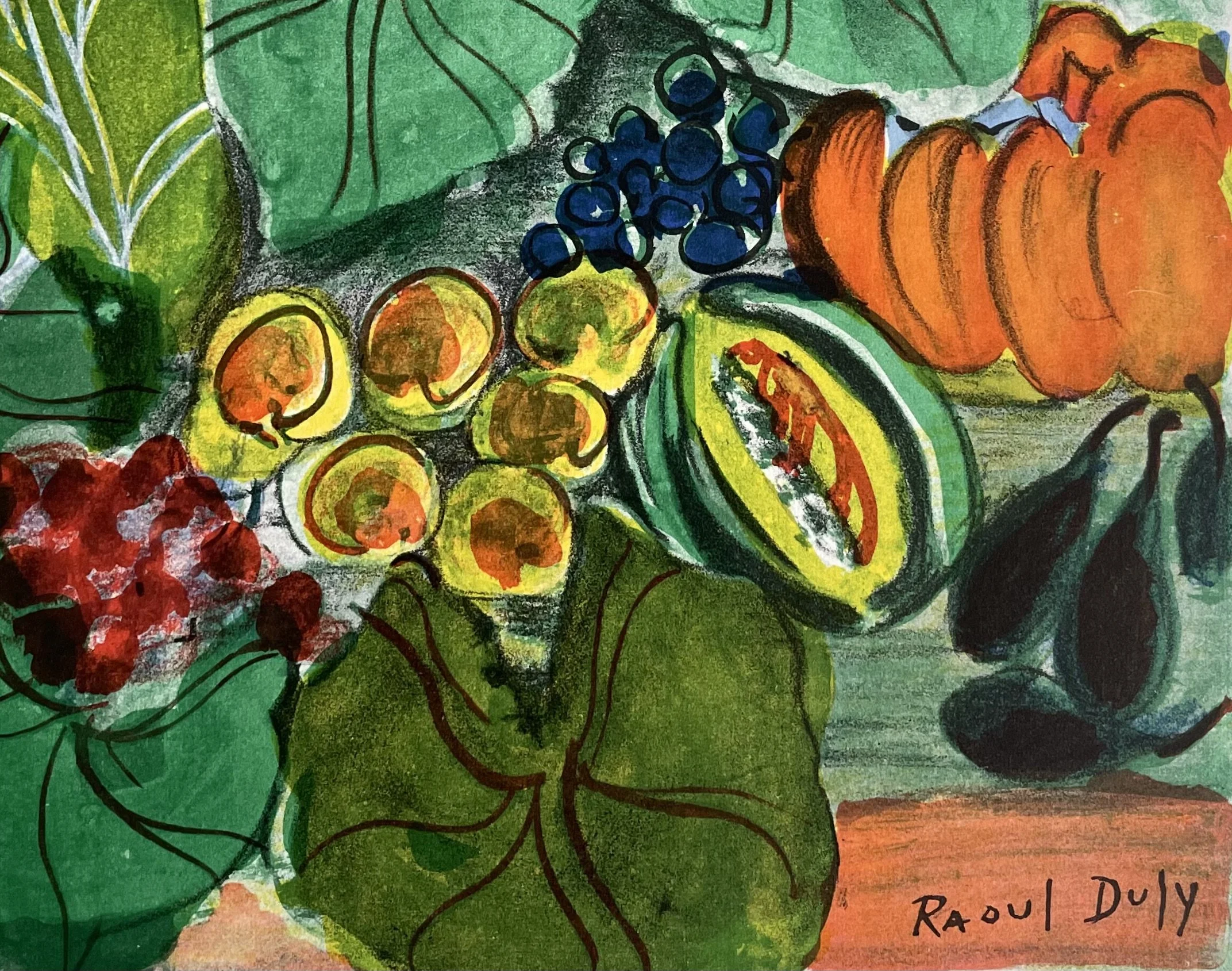 Image 2 of 8
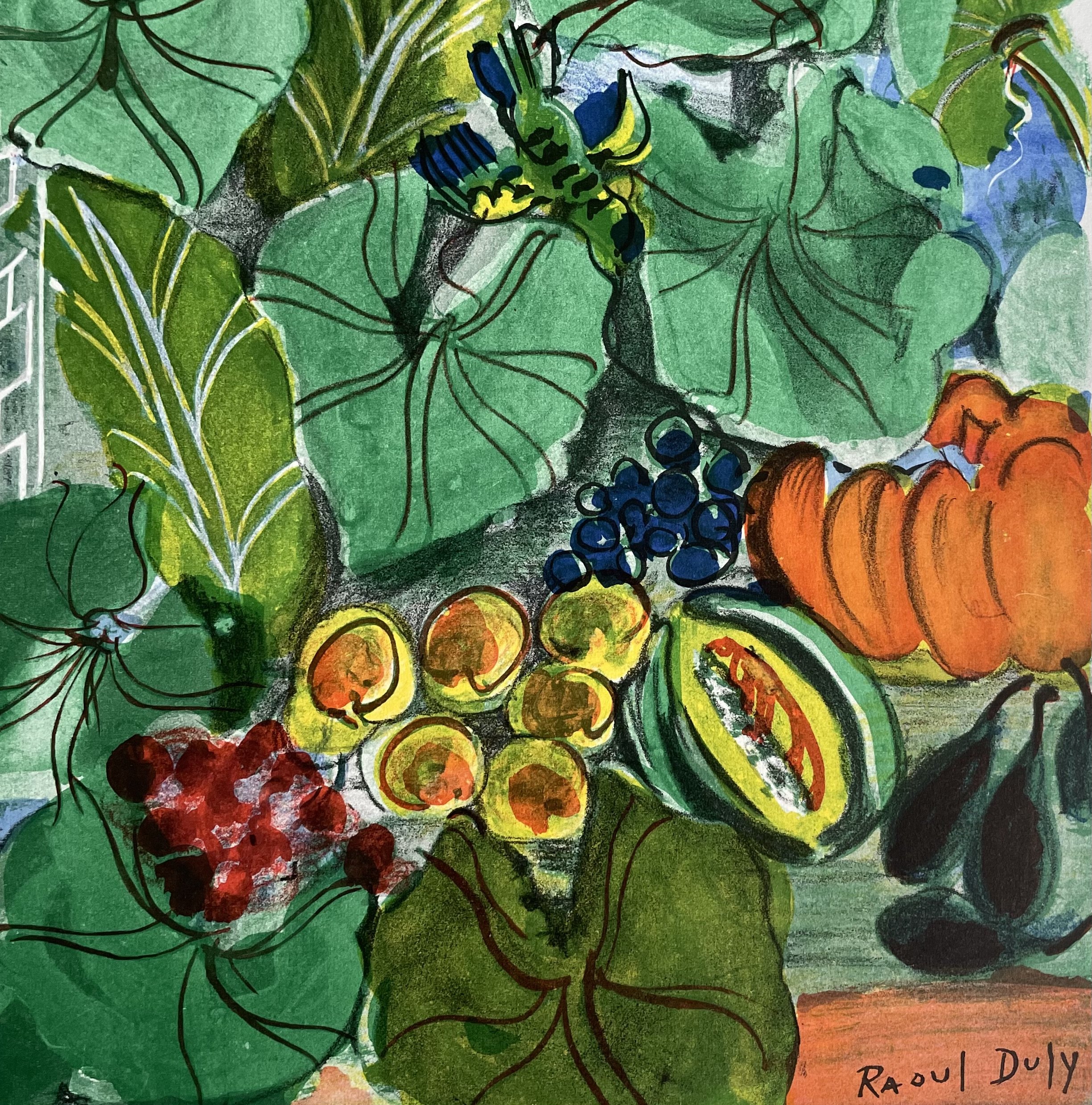 Image 3 of 8
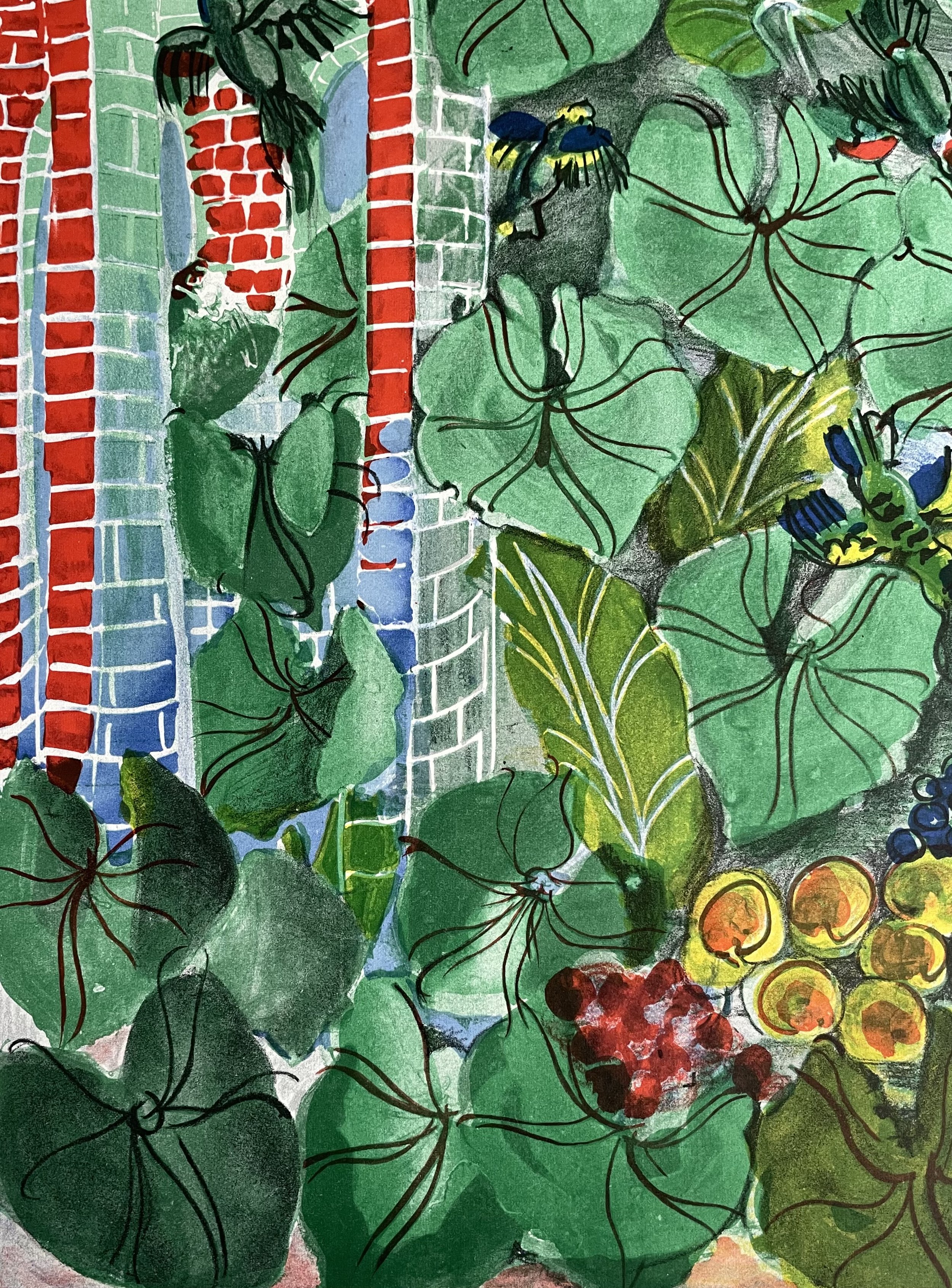 Image 4 of 8
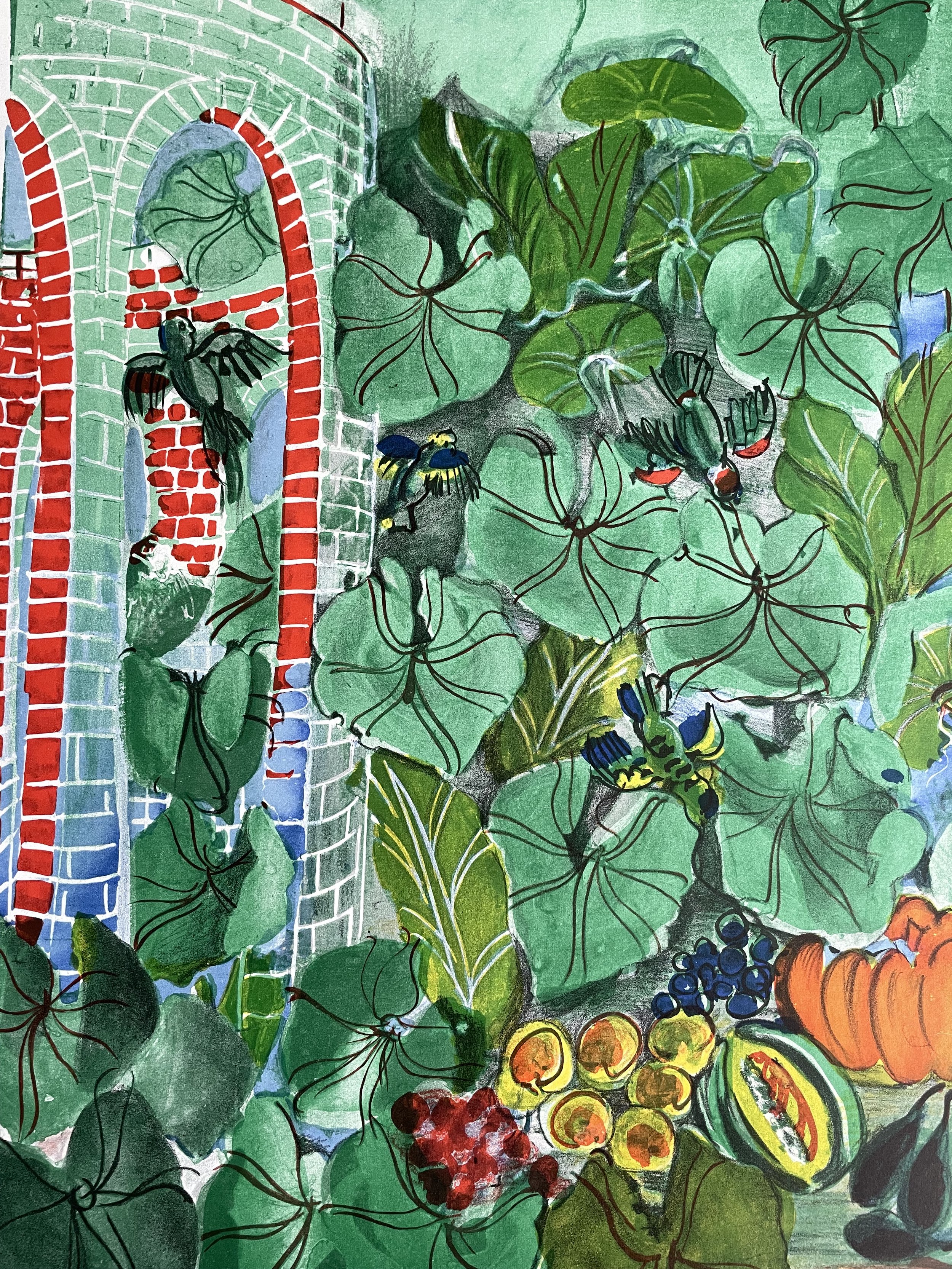 Image 5 of 8
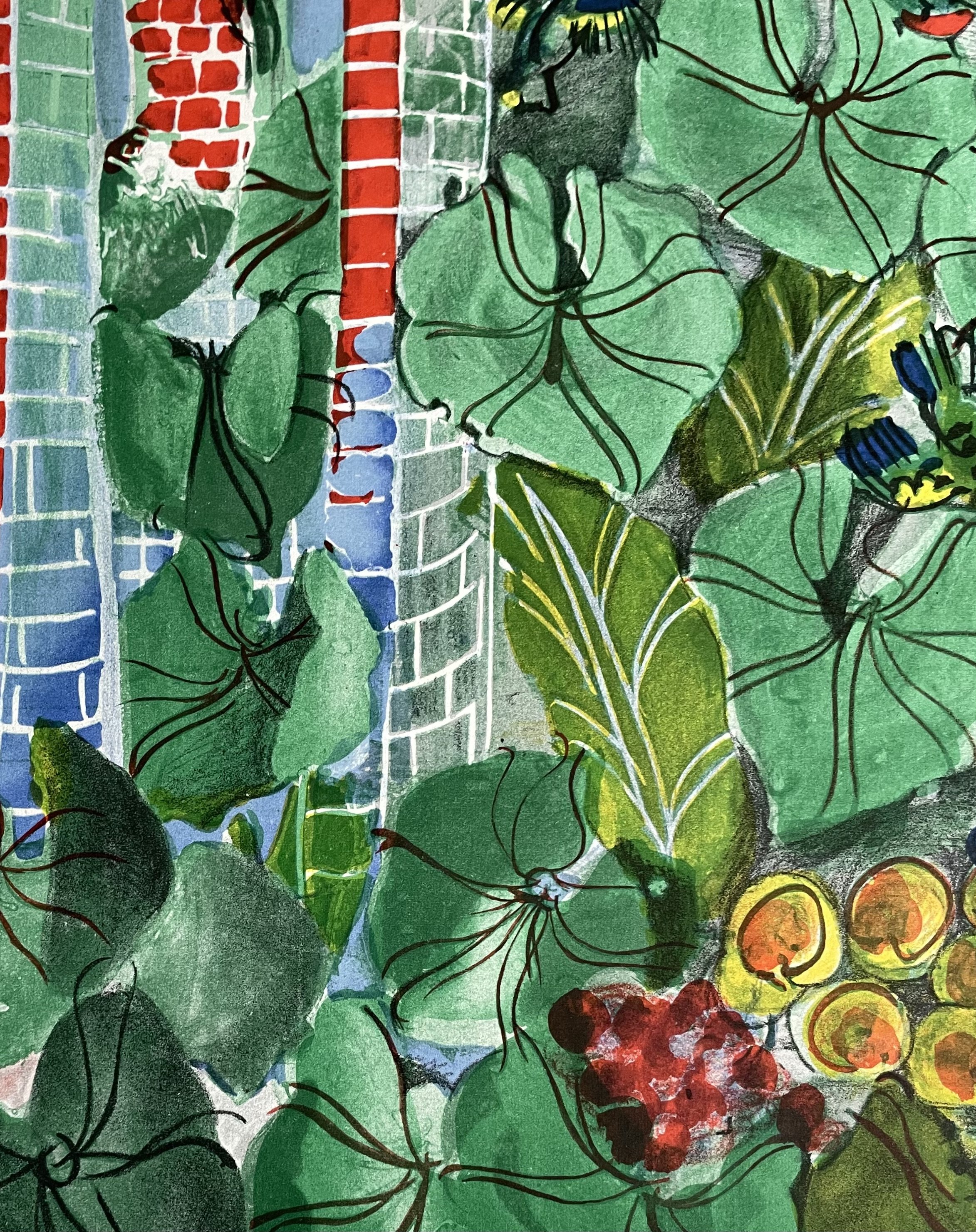 Image 6 of 8
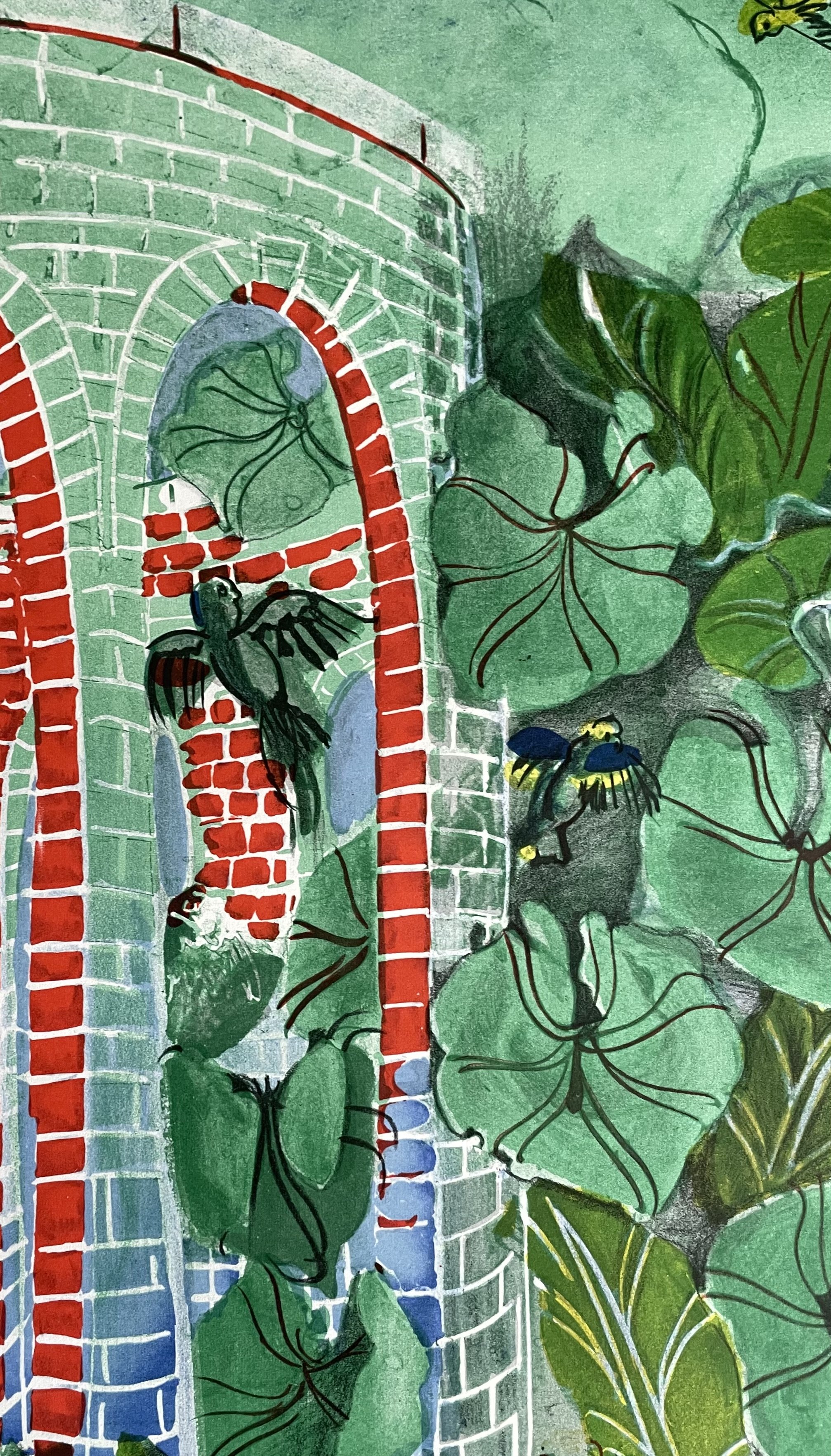 Image 7 of 8
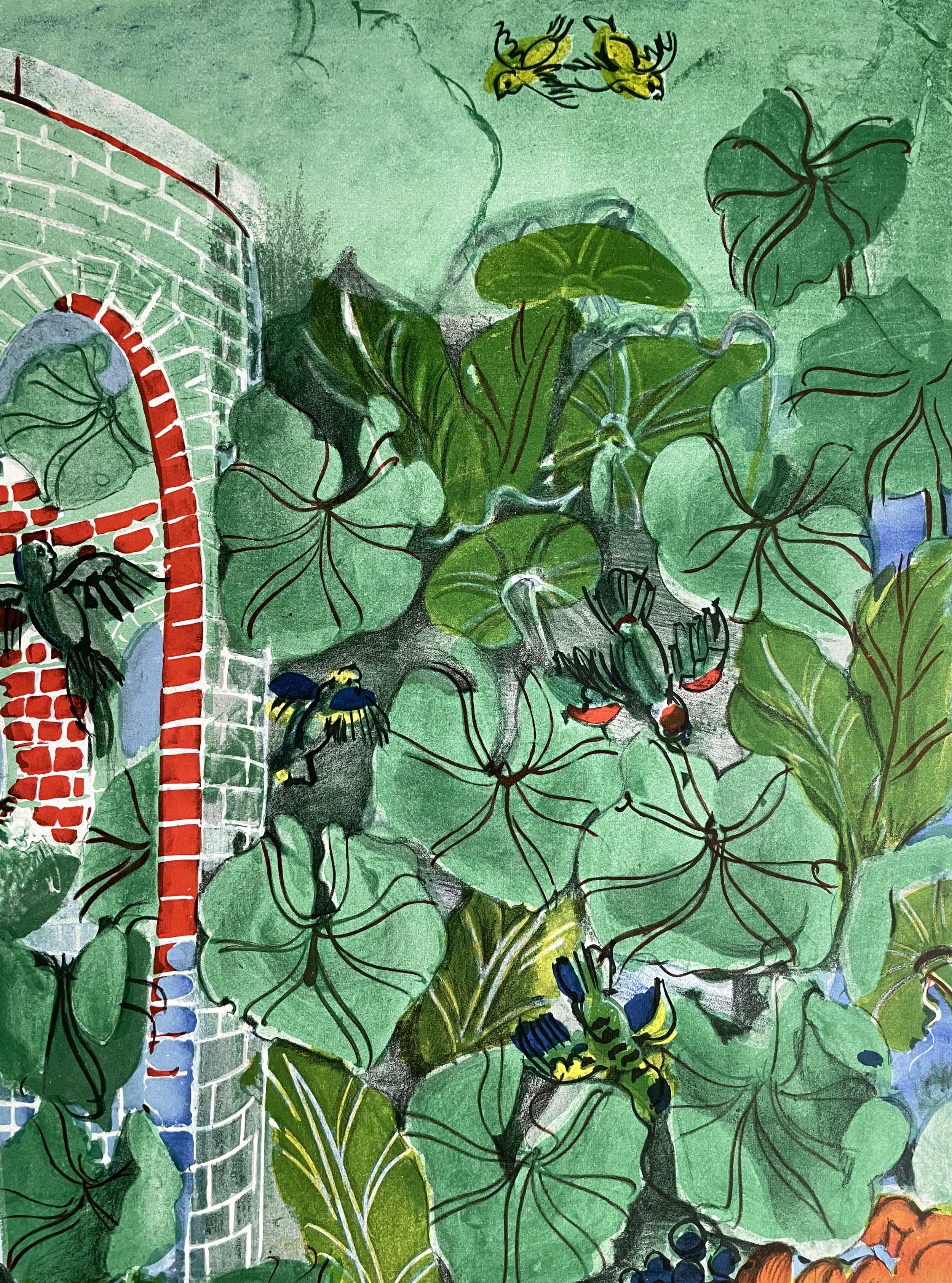 Image 8 of 8